Article

The Influence of Surface State and Weldment on the Corrosion Behavior of X65 Steel in Seawater and Production Water Environments


1
CCCC First Harbor Engineering Co., Ltd., Tianjin 300461, China
2
Tianjin Key Laboratory for Advanced Mechatronic System Design and Intelligent Control, School of Mechanical Engineering, Tianjin University of Technology, Tianjin 300384, China
3
National Demonstration Center for Experimental Mechanical and Electrical Engineering Education, Institute of Mechanical Engineering, Tianjin University of Technology, Tianjin 300384, China
4
College of Mechanical and Transportation Engineering, China University of Petroleum-Beijing, Beijing 102249, China
*
Author to whom correspondence should be addressed.
J. Manuf. Mater. Process. 2026, 10(1), 35; https://doi.org/10.3390/jmmp10010035
Submission received: 13 December 2025 / Revised: 12 January 2026 / Accepted: 13 January 2026 / Published: 14 January 2026

Abstract

In this study, the service behavior of an X65 oil and gas pipeline in seawater and production water environments was simulated by a corrosion experiment, and the influence of surface treatment (polishing and scratching) on its corrosion behavior was systematically analyzed. The corrosion resistance of the material was evaluated by means of scanning electron microscopy (SEM), an electrochemical test, and uniform corrosion rate calculations. The results show that the corrosion degree of X65 steel in an oilfield production water environment is significantly higher than that in a seawater environment. The uniform corrosion rate of the welding area is as high as 1.05 mm/y, which is more sensitive than that of the matrix material. The surface treatment has a significant effect on the corrosion behavior. The polishing treatment reduces the corrosion current density of the matrix material from 472.44 μA/cm2 to 313.10 μA/cm2, and the polarization resistance increases to 14.07 kΩ·cm2, which effectively improves its corrosion resistance. The scratch treatment significantly reduces the corrosion resistance of the material, and the corrosion current density of the welding area at the scratch site is as high as 313.00 μA/cm2, even more than that of the untreated matrix material. The study further points out that the scratches and welding areas generated during the pipeline cleaning process will significantly aggravate the tendency of local corrosion and pitting corrosion due to their microstructure heterogeneity. This study provides a clear theoretical basis and engineering guidance for the anti-corrosion design and maintenance of offshore oil and gas pipelines in complex water quality environments.

1. Introduction

Offshore pipeline transportation of oil and gas is an important part of the global energy infrastructure, but these systems are facing severe challenges caused by marine corrosion environments and production water environments [1]. As a high-strength low-alloy (HSLA) steel, X65 steel is widely used in such pipelines due to its excellent mechanical properties and cost [2]. However, the welded areas of these pipes—especially those made using the high-frequency welding (HFW) process—are more sensitive to corrosion than the base metal, which not only threatens the structural integrity but also affects the service life of the equipment [3].
In the marine environment, H2S in seawater is an important cause of metal corrosion. When a corrosion fatigue test was carried out in a H2S-rich environment, it was found that the fatigue life is significantly reduced in an acidic environment, and a corrosion pit caused by pitting corrosion is the main corrosion form [4]. In the corrosion process of X65 steel in the same H2S environment, when comparing two X65 steels with different element contents, one of them exhibited lower corrosion resistance due to the lower pH of the corrosion product. It was concluded that H2S mainly affects the service performance of X65 steel by affecting the PH value in the environment [5]. In addition, CO2 in the environment also has a certain effect on the properties of X65 steel [6]. At present, the commonly used anti-corrosion methods, such as temperature and artificially added corrosion inhibitors, lack pertinence in different production environments [7]. Recent studies have highlighted the critical role of microstructure heterogeneity in welded joints. In the process of studying the stress corrosion cracking behavior of X65 pipeline steel and its welded joints in a simulated deep-sea environment, it was found that there is a synergistic effect between high-pressure deep-sea environments and hydrogen, which together aggravates the SCC sensitivity of materials [8]. However, in the corrosion process of simulating a 1000 m deep-sea environment (high pressure of 10 MPa, low temperature of 4 °C, and low dissolved oxygen of 2 mg/L) and shallow-sea environment (normal pressure, normal temperature of 25 °C, and high dissolved oxygen of 7 mg/L) in the laboratory, only the deep-sea environment samples produced SCC cracks near the fusion line, indicating that the SCC sensitivity of the welded joint in the deep-sea environment is much higher than that in the shallow sea [9]. In the comparison of corrosion resistance between the welded part and the base metal, the welded joint is more prone to local corrosion due to the heterogeneity of its composition and microstructure [10]. At present, the simulation of the marine environment only controls some variables and does not consider other important factors in the actual ocean, meaning that it is different from the real environment. These microstructural features create localized electrochemical activity, leading to accelerated corrosion rates in weld regions [11]. Surface treatments, such as polishing or mechanical abrasion, significantly influence corrosion resistance by altering defect density and oxide film stability. For example, polished surfaces reduce active sites for corrosion initiation, whereas scratches or surface damage exacerbate pitting and crevice corrosion.
The synergistic effects of environmental factors, such as Cl, CO2, and H2S, further complicate corrosion mechanisms. In sour environments, hydrogen embrittlement (HE) driven by H2S adsorption and hydrogen permeation can dominate crack propagation, while in sweet environments, anodic dissolution (AD) at crack tips plays a primary role [6]. Additionally, fatigue crack growth rates (FCGRs) in corrosive media are highly sensitive to loading frequency and temperature, with lower frequencies and ambient temperatures often resulting in non-conservative engineering assessments if not properly accounted for [12,13]. Compared with the metal base material, the welding area shows higher corrosion sensitivity. The SCC sensitivity of the base material area, the fine-grain heat-affected zone, the coarse-grain heat-affected zone (CGHAZ), and the weld metal area is as follows: FGHAZ > BM > WM > CGHAZ. CGHAZ exhibits the highest SCC susceptibility due to the presence of coarse grains, a low dislocation density, and a large number of M/A islands [14,15]. In addition, damage such as scratches on the inner wall of the pipeline during the daily cleaning process of the oil and gas pipeline will also reduce the corrosion resistance of the pipeline substrate and cause serious pitting corrosion [16,17]. In addition to environmental factors, microbial corrosion also significantly affects the quality of steel in pipelines deep underground and under the sea for oil and gas transportation. The environment is often accompanied by a large number of microorganisms, such as sulfate-reducing bacteria. Among the many microorganisms that exist, sulfate-reducing bacteria (SRBs) are particularly important in anaerobic MICs because they reduce S O 4 2 to S 2 for energy. Hydrogen sulfide is the end product of SRB metabolism, which is corrosive, toxic, and increases the corrosion rate of steel [18,19]. An antibacterial strategy is to reduce the number of microorganisms surviving on the surface of the pipeline by changing the surface roughness [20], surface charge [21,22], and the composition of the pipeline elements. Studies have been performed to assess whether copper contained in a surface pipe will destroy the living conditions of microorganisms on the metal surface, thereby reducing the biological corrosion [23,24]. Despite advancements in understanding pipeline steel corrosion, gaps remain in quantifying the combined effects of surface treatments, welding parameters, and environmental conditions on X65 steel weldments. In this study, the corrosion behavior of X65 substrate metal and HFW joints in simulated seawater and production water environments was systematically studied by integrating electrochemical analysis, SEM-EDS characterization, and corrosion kinetics modeling. This study analyzed the differences in the corrosion of pipes under different service environments and proposed targeted corrosion protection strategies for offshore pipeline applications.

2. Experiment

2.1. Sample Preparation

The experimental material was X65 steel used for offshore oil and gas transportation, which is welded by high-frequency resistance welding (HFW). The HFW steel base metal and weld part were selected for the experiment. The content of C and S elements was analyzed by a carbon and sulfur analyzer, and other elements were analyzed by an inductively coupled plasma mass spectrometer (7000 DVη, Inc., Waltham, MA, USA). The elemental composition of the base material is shown in Table 1. The welding parameters are shown in Table 2.
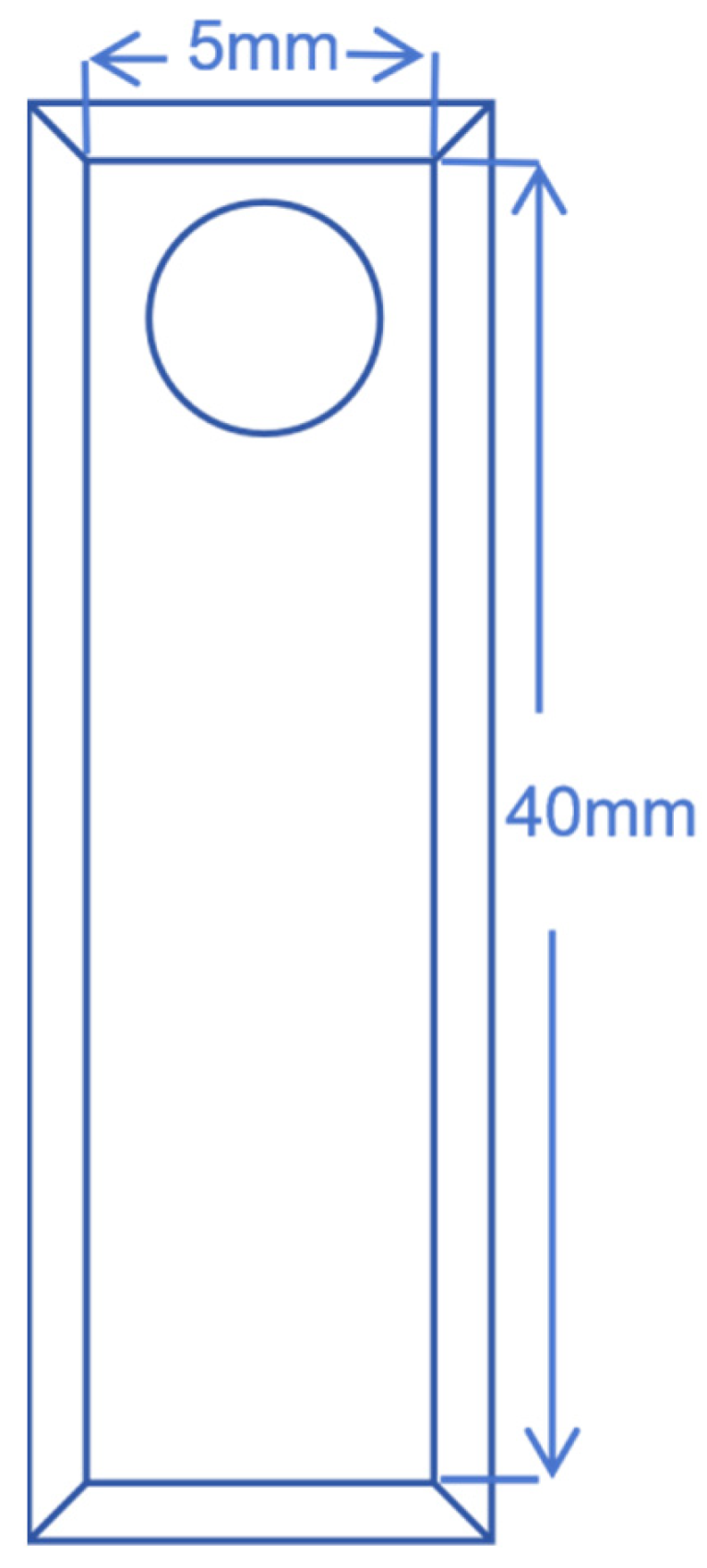
In the process of simulating the corrosion behavior of HFW during service, the experimental sample was processed into a rectangular pendant pituitary with a size of 40 mm × 10 mm × 5 mm, and a hole with a diameter of 4 mm was opened at the top to facilitate its suspension in the corrosive medium, as shown in Figure 1.
In the early stage of service, the surface of the steel pipe is relatively smooth, which is more in line with the surface state after polishing. With the increase in service time, the surface may produce a little oxidation. After using the pipe-cleaning ball to clean the pipe, which will cause damage such as scratches on the surface of the pipe, this surface state will have an impact on the corrosion of the pipe. In order to simulate the change in the surface of HFW steel at different service times, a part of the sample surface was polished to simulate the initial state of service, a part of the sample was not treated and compared with it, and the remaining pipeline samples were given artificially made scratches to simulate the damage caused to the pipeline surface during the cleaning process. All samples were cleaned by the ethanol–acetone–ethanol ultrasonic cleaning method to remove oil, and the remaining five surfaces were wrapped with epoxy resin adhesive to prevent the effects of mechanical cutting, processing parts, and backing materials on corrosion. Under all experimental conditions, three sets of sample experiments were performed to reduce errors.

2.2. Immersion Test

The immersion corrosion test was carried out by using a CJ-10 hydrothermal reactor and a hanger with a coupon. The stainless steel hanger was sprayed with polytetrafluoroethylene material for anti-corrosion treatment. The prepared hanger was suspended on the corrosion test hanger by using polytetrafluoroethylene line and then put into the kettle, and production water and simulated seawater was added, which was taken from the Tianjin Bohai Sea. The composition of the produced aqueous solution is shown in Table 3 below. The amount of seawater added to the corrosion test was not less than 20 mL per cm2 of the sample surface area. In order to simulate the service conditions of oil and gas pipelines in the real marine environment, the pressure of the reactor was adjusted to 2.6 MPa and the temperature was 85 °C, and a 14-day corrosion test was carried out. After the corrosion coupon was taken out of the reactor, it was gently soaked with anhydrous ethanol to dehydrate the corrosion surface to prevent oxidation, and then the sample was dried with high-purity nitrogen, and the sample was placed in a sealed bag for use.

2.3. Morphology of Corrosion Products

A field emission environmental scanning electron microscope (FEI Quanta 200F, CIQTEK, Hefei, China) equipped with an energy dispersive spectrometer (EDS) was employed to examine the sample surface. The analysis was conducted at a magnification of 2000× and an acceleration voltage of 20.00 kV to characterize the morphology and composition of the corrosion products.

2.4. Uniform Corrosion Rate

Following the corrosion experiment, the corrosion products were removed using a chemical solution consisting of 500 mL HCl, 500 mL deionized water, and 3.5 g hexamethylenetetramine. The exposed specimen surface was then sequentially rinsed with distilled water and anhydrous ethanol and subsequently dried with high-purity nitrogen. The weight change was measured using an analytical balance, and the average corrosion rate was calculated according to Equation (1).
CR = ω × 365 × 1000 A × T × D
CR is the corrosion rate in mm/y; ω is the weight loss in g; A is the exposed surface area in mm2; T is the soaking time in days; and D is the density of the steel in g/mm3.

2.5. Electrochemical Performance

The electrochemical performance test was conducted using a Gamry 600+ workstation (Shanghai Chenhua Instrument Co., Ltd., Shanghai, China) with a three-electrode configuration. A medium carbon steel sample served as the working electrode, while a platinum foil with a large surface area was used as the counter electrode. A saturated calomel electrode (SCE), connected to the cell via a salt bridge, functioned as the reference electrode.
After the sample was immersed in the electrolyte for a specified duration, the open circuit potential (OCP) was monitored until it stabilized. Subsequently, a potentiodynamic polarization test was performed at a scan rate of 0.5 mV/s. The potentiodynamic polarization test was performed by scanning from approximately −0.8 V to −0.4 V and comparing results with the SCE, covering both cathodic and anodic regions relative to the stabilized OCP.

3. Results

3.1. Seawater Corrosion Experiment

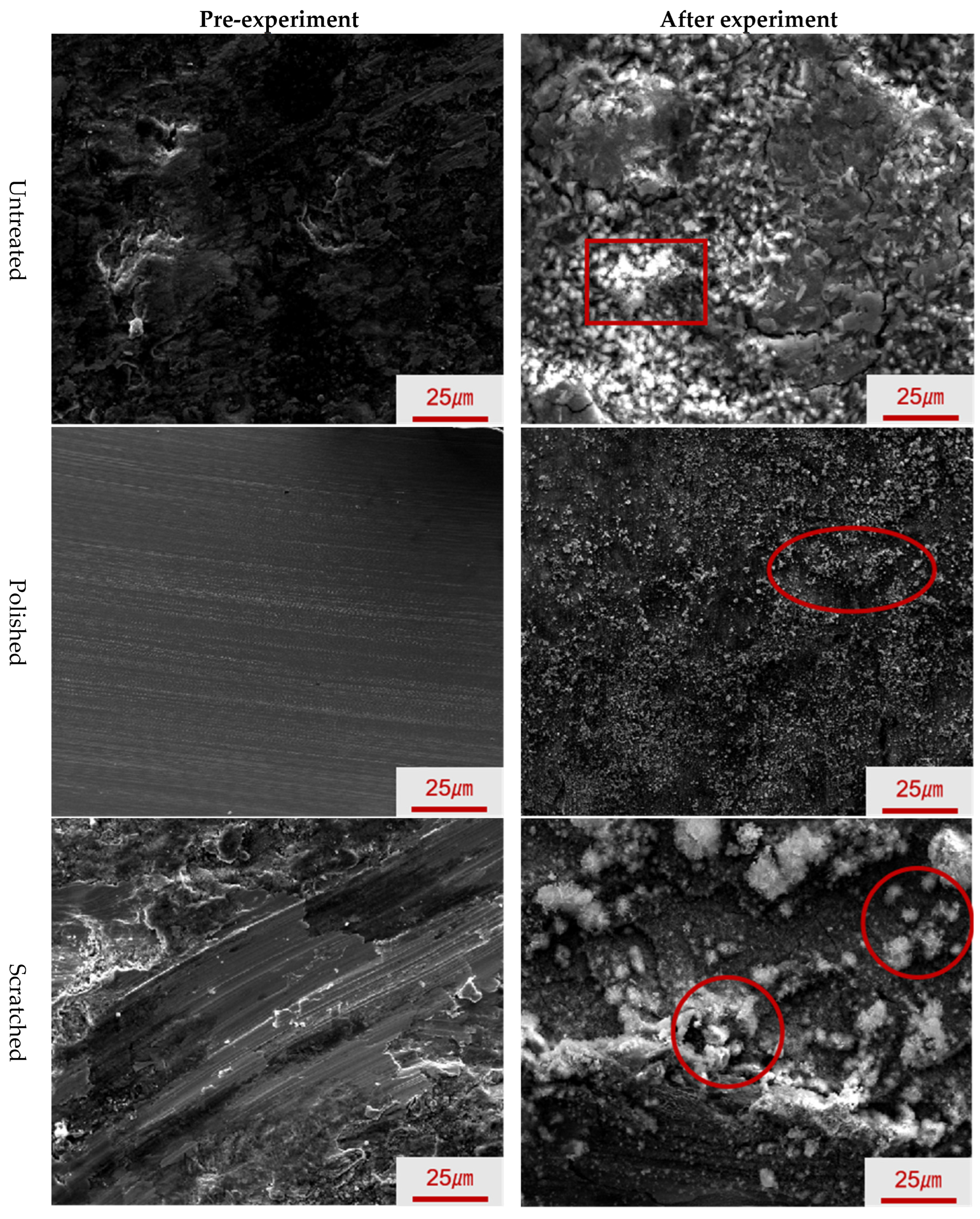
As shown in Figure 2 and Table 4, SEM images and EDS element examination showed that after seawater corrosion, the surface of the untreated HFW base metal sample changed from dark to bright, and the product showed bright flakes (rectangular region marking). After the corrosion of the polished HFW base metal sample, the SEM image shows that there is a large area of floccules (elliptical region marking) and that there are more corrosion products in the scratch area of the simulated ball HFW base metal sample than in the matrix before corrosion, and they are bright and spherical (circular region marking); EDS elements show that the element composition of the sample before corrosion is relatively simple. After corrosion, the surface oxygen content is significantly improved compared with that before corrosion, and the element types are increased. The main reaction products were C, O, Fe, and so on. After seawater corrosion, the content of Fe in the corrosion products on the surface of the sample decreased, but the Fe element was still detected, indicating that the corrosion products on the surface of the sample were iron oxides. Compared with the untreated sample surface, the polished sample surface had fewer corrosion products, and the polishing treatment enabled X65 steel to obtain higher corrosion resistance. On the surface of the sample after scratch treatment, there were more products at the scratch site, and the scratch destroyed the sample, producing a significant pitting corrosion phenomenon.
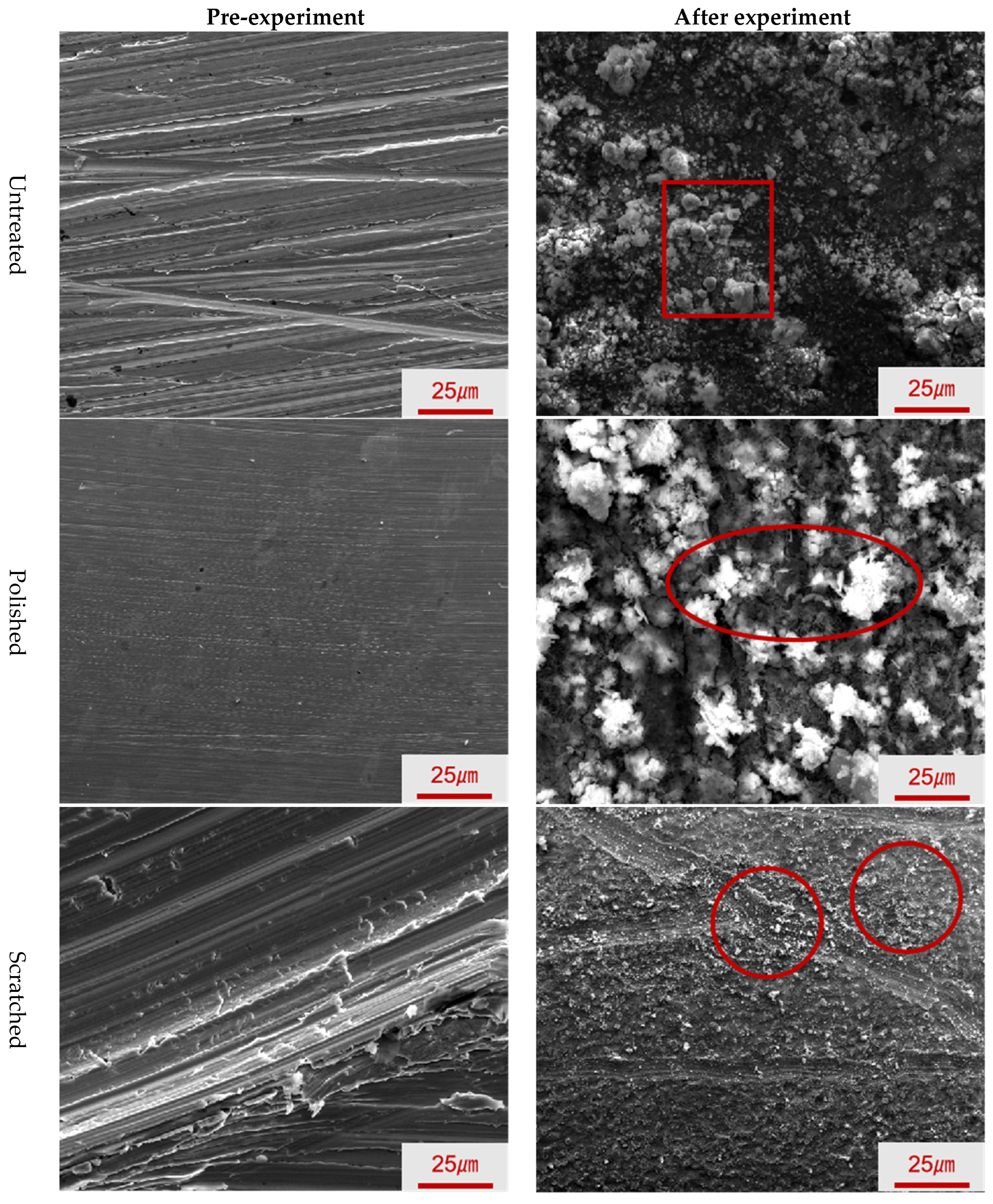
As shown in Figure 3 and Table 5, the surface of untreated HFW steel welding parts after seawater corrosion was dim, and gray balls appeared (rectangular region marking). The surface of the polished sample was smooth before the reaction (elliptical region marking). After the reaction, the surface corrosion products showed bright balls, accompanied by dark flakes. After the simulated ball treatment, there were more corrosion products in the scratches, which were flocculent and accompanied by cracks. The EDS data in Table 5 show that there is no obvious difference in the elements of the samples under different surface treatment methods after corrosion. After the simulated ball treatment, the iron content of the samples after corrosion is higher than that of the samples without ball treatment, and the oxygen content is low, indicating that the iron oxide content in the corrosion products is low and the corrosion resistance is strong.

3.2. Production Water Corrosion Experiment

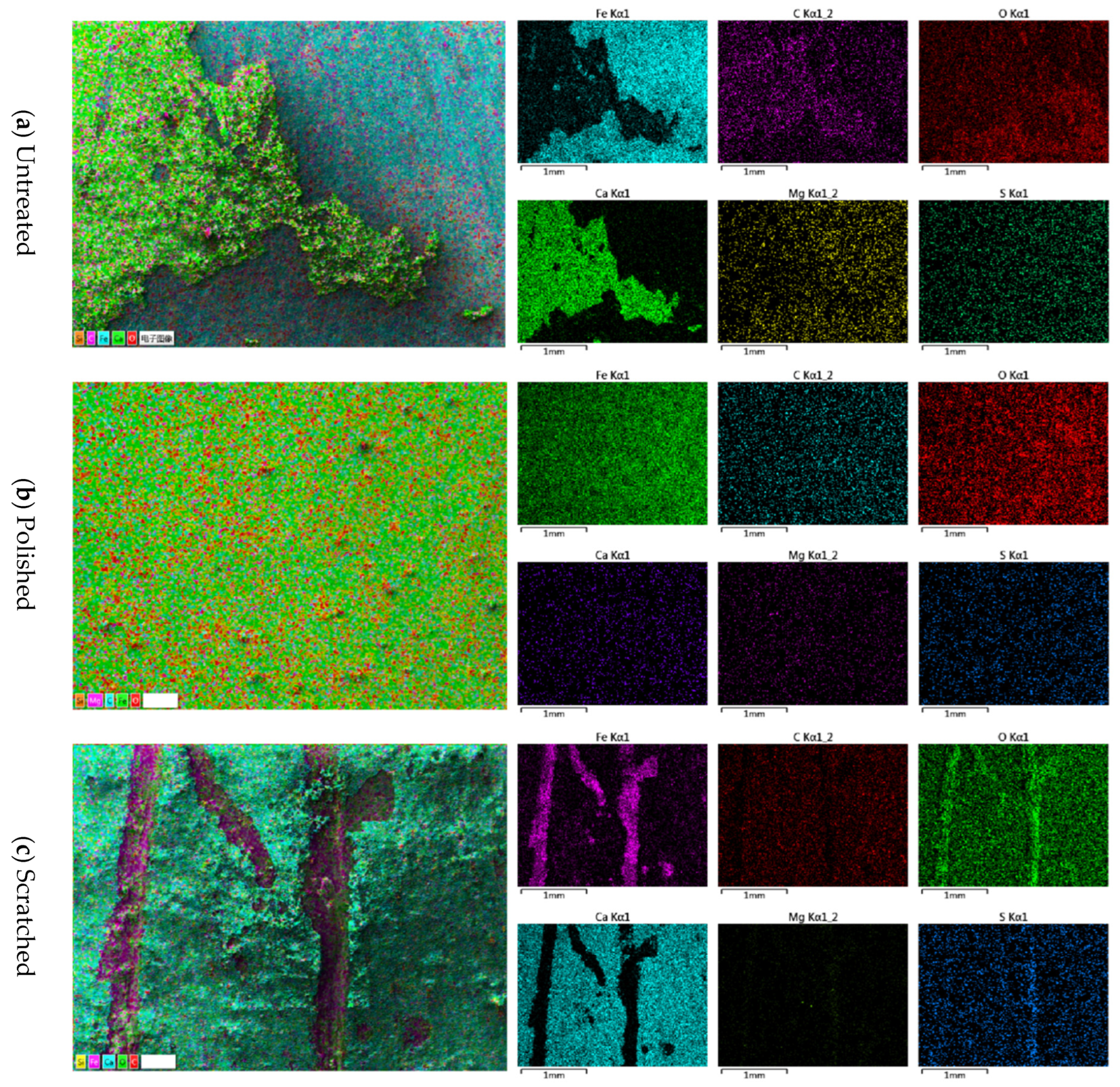
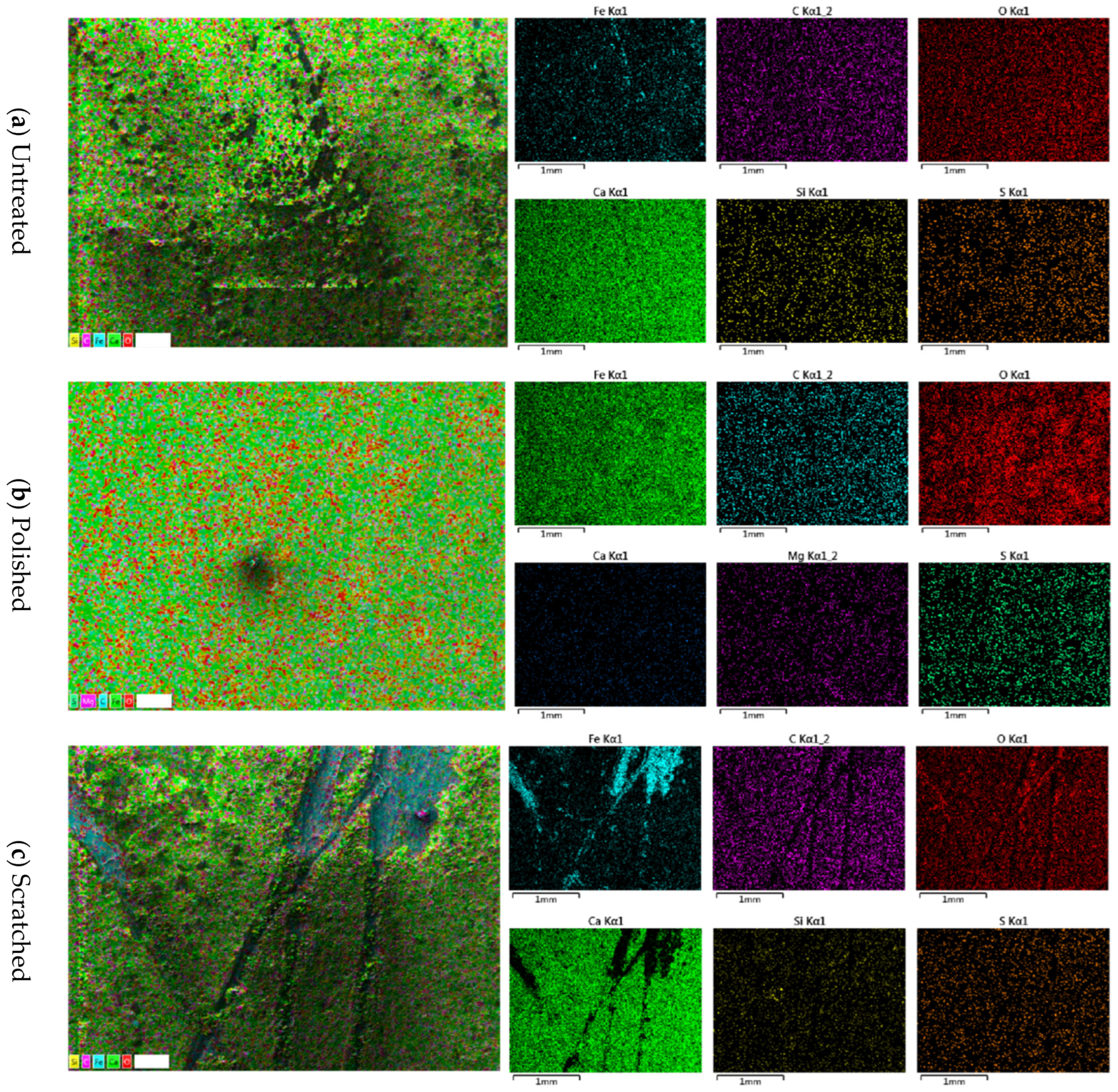
As shown in Figure 4, after the soaking experiment of HFW base metal under simulated production water quality, EDS surface scanning showed that C, O, Mg, and S elements were uniformly attached to the surface of the sample, and a large number of Fe, O, and Ca elements were detected locally, indicating that under the corrosion of production water, the corrosion products contained iron oxide and calcium oxide. Compared with the original surface, the surface corrosion of the polished sample was more uniform and there were fewer corrosion products, while for the sample treated by the ball, a higher O content was detected in the scratch of the sample. It can be seen that the scratch produced by the ball treatment will reduce the corrosion resistance of the metal.
As shown in Figure 5, HFW pipe steel after high-frequency resistance welding is corroded by production water. Compared with the surface of the base metal sample, more corrosion products are produced and the corrosion degree is higher. After the scratch treatment, the corrosion resistance of the welded part is also decreased compared with the polishing treatment, whose resistance is the same as the corrosion resistance of the base metal.

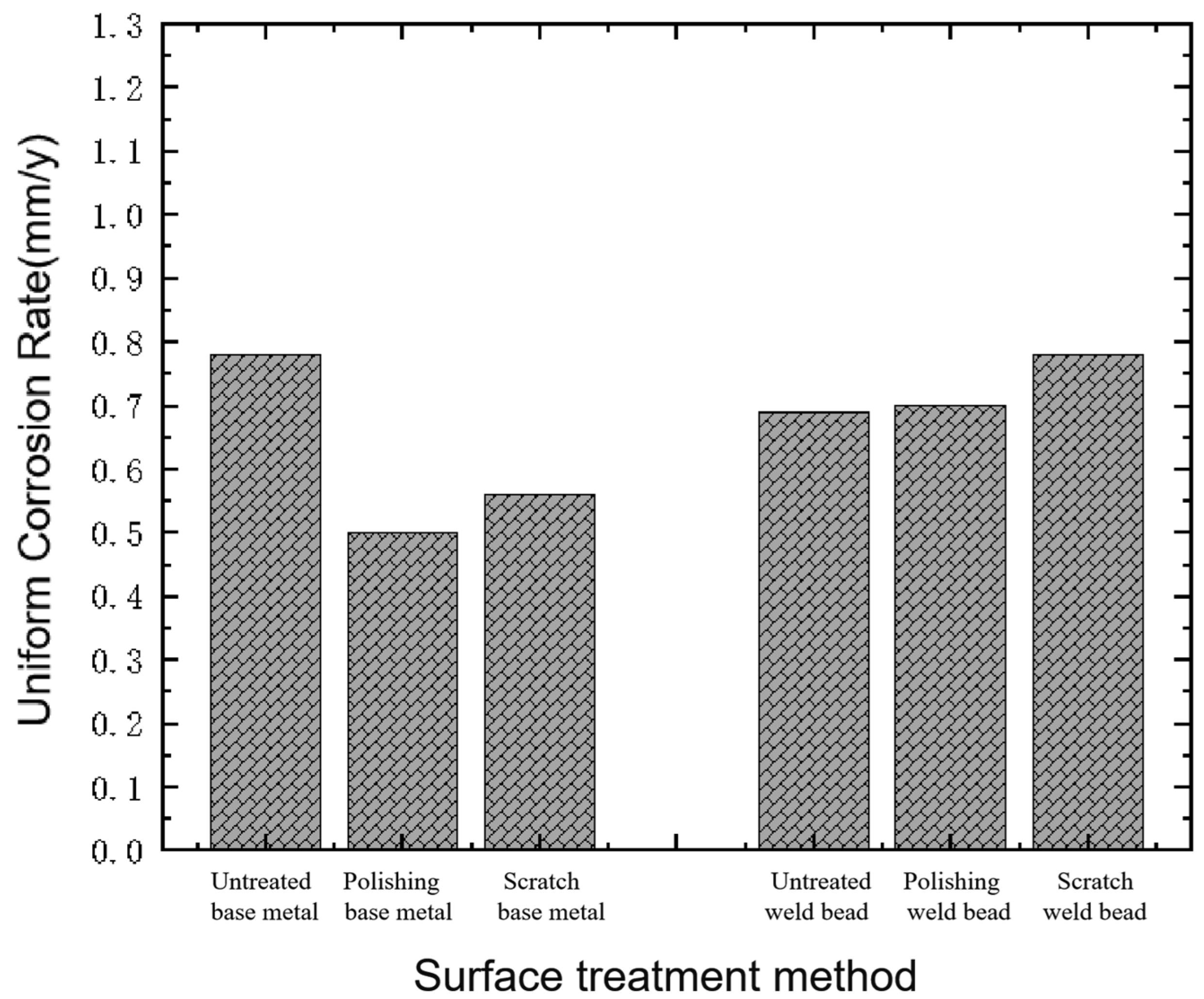
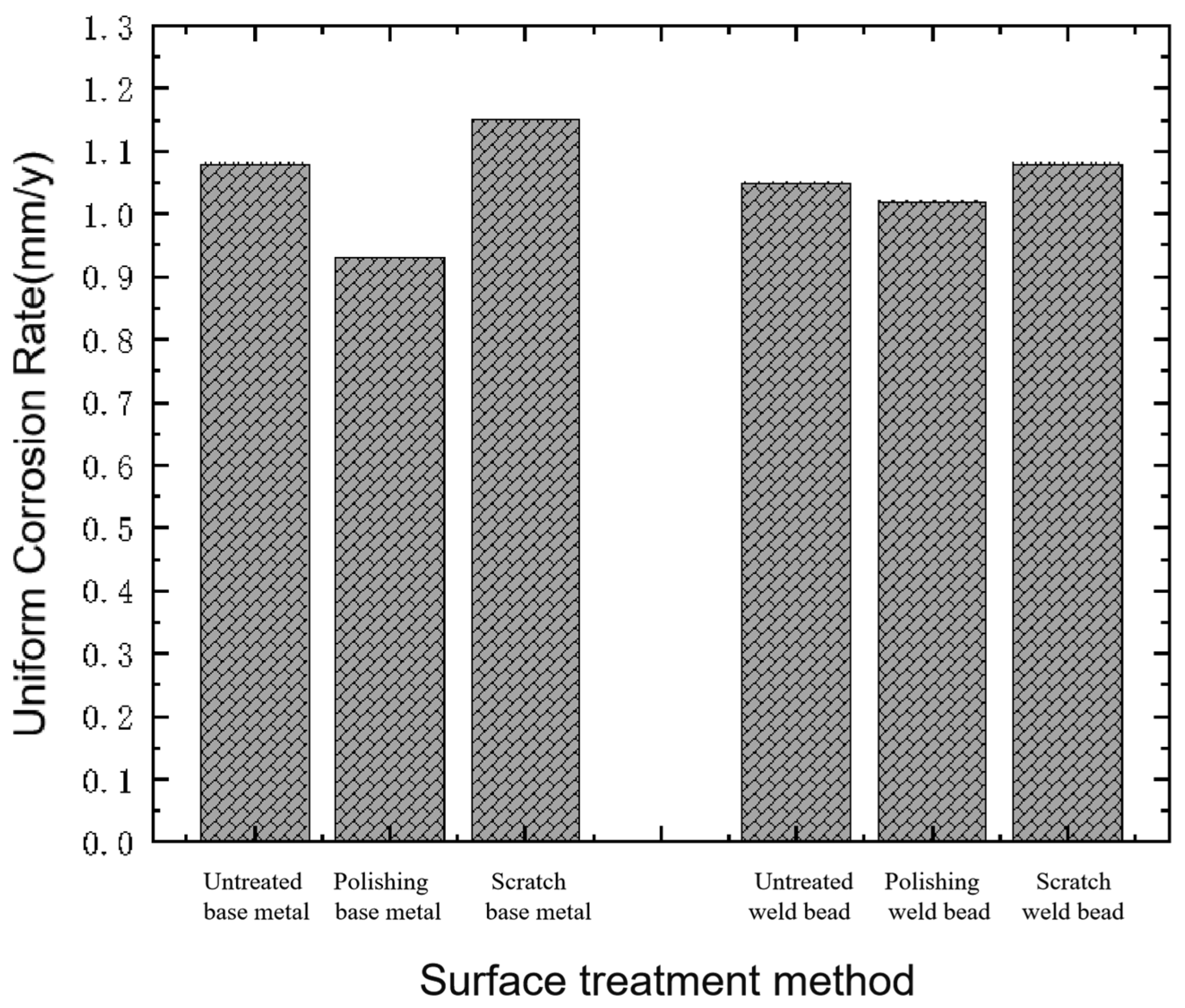
3.3. Uniform Corrosion Rate

As shown in Figure 6 and Figure 7, different surface treatment methods have a certain influence on the corrosion rate in two corrosive media. In the seawater environment, the uniform corrosion rate of the HFW base metal without surface treatment is higher and the corrosion resistance is poor. The HFW base metal with surface polishing treatment has a lower uniform corrosion rate and better corrosion resistance. In the production water environment, the uniform corrosion rate increases as a whole, and the HFW base material also has a lower uniform corrosion rate under the condition of a higher polishing degree, while the HFW weld sample increases with the increase in polishing degree. The uniform corrosion rate increases, and the lower surface roughness makes the corrosion resistance of the HFW weld decrease.
Figure 6 and Figure 7 show the uniform corrosion rate of different samples. The annual average corrosion depth of an X65 steel surface was counted. In the simulated production water quality environment, the samples with artificial scratches on the surface had the highest uniform corrosion rate, followed by the untreated samples, and the polished samples had the lowest uniform corrosion rate.

3.4. Electrochemical Analysis

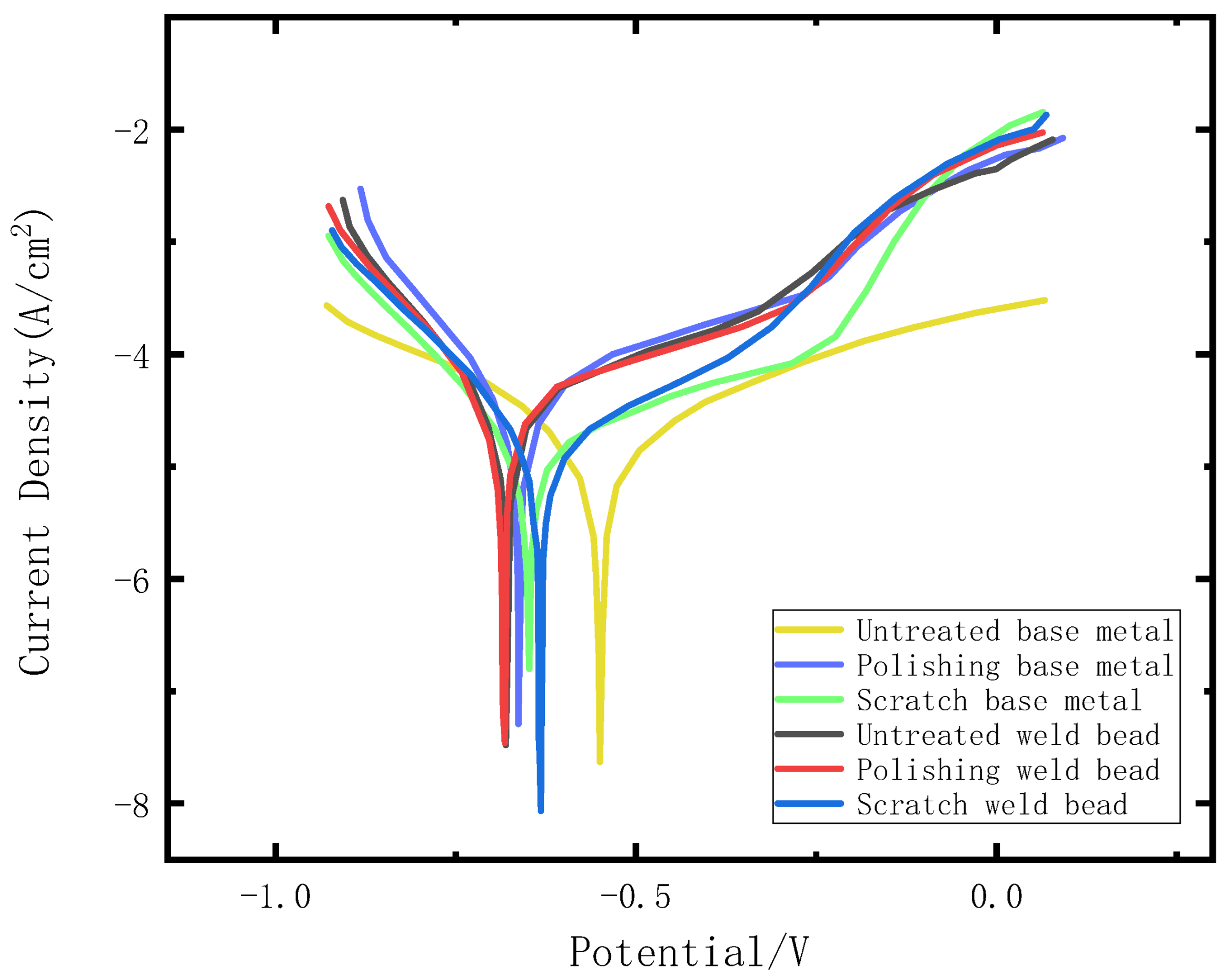
According to Figure 8 and Table 6, which contain the electrochemical corrosion experimental data analysis, the effects of different treatment conditions on the corrosion resistance of the substrate and the welding part show the following rules: Polishing treatment generally improves the corrosion resistance of the material. After polishing, the corrosion current density (Icorr) of both the substrate and the welding part decreased significantly, and the polarization resistance increased significantly, indicating that polishing inhibited the corrosion rate by reducing surface defects and active sites. However, the corrosion potential shifted slightly negatively after polishing, which may be related to the change in surface oxide film or passivation layer characteristics. The scratches significantly deteriorated the corrosion resistance. The Rp of the substrate and the weldment after scratching decreased to 6.84 kΩ·cm2 and 8.12 kΩ·cm2, respectively, and the Icorr of the weldment scratches was even higher than that of the untreated substrate, indicating that the stress concentration and micro-defects introduced by the scratches aggravated the local corrosion. It is worth noting that the Ecorr (−0.630 V) of the welded part after scratching was corrected compared with that without treatment, which may be related to the mixed potential shift caused by local active dissolution, but the high Icorr confirms that the overall corrosion rate was higher. The welding part was more sensitive to scratches, and the Icorr increased by 108% after scratching (the Icorr of the substrate scratch was only reduced by 27%), indicating that the corrosion resistance of the welding part material decreases sharply when it is damaged.

4. Discussion

In this study, the corrosion behavior and failure mechanism of X65 steel substrate and its high-frequency welding (HFW) parts in simulated seawater and oilfield production water environments were systematically investigated. The experimental results show that the corrosion sensitivity of the welding site was significantly higher than that of the matrix material, especially in the oilfield production water environment, where the uniform corrosion rate reached 1.05 mm/y, far exceeding the corrosion rate in the seawater environment. This difference may be related to the heterogeneity of the microstructure in the welding area. For example, the grain boundary segregation and residual stress in the heat-affected zone lead to the enhancement of local electrochemical activity, which accelerates the corrosion process. EDS analysis showed that iron oxides (FeO and Fe2O3) and calcium and magnesium salts (CaO and MgO) coexisted in the corrosion products, indicating that the corrosion process was accompanied by the dynamic competition between the sediment and the oxide film, resulting in the inhomogeneity of the protective film.
The effect of surface treatment on corrosion behavior was significantly different. After polishing treatment, the surface defects of the matrix material reduced, the density of active sites reduced, the corrosion current density (Icorr) reduced from 472.44 μA/cm2 to 313.10 μA/cm2, and the polarization resistance (Rp) increased to 14.07 kΩ·cm2, showing the improvement effect of polishing on the corrosion resistance of the matrix. However, the corrosion rate of the welded area increased slightly after polishing, which may be related to the mechanical damage of the oxide film on the surface of the welded area or the change in local passivation characteristics. In contrast, the surface scratch treatment significantly deteriorated the corrosion resistance of the material. The polarization resistance of the substrate and the welded part decreased to 6.84 kΩ·cm2 and 8.12 kΩ·cm2, respectively, and the corrosion current density of the welded part at the scratch site (313.00 μA/cm2) was even higher than that of the untreated substrate material (472.44 μA/cm2). This indicates that the stress concentration and micro-cracks caused by scratches provide a priority path for the penetration of corrosive media, accelerating the development of local pitting and crevice corrosion, while and that the welding site is more sensitive to surface defects due to the higher brittleness of the structure.
Electrochemical analysis further reveals the characteristics of corrosion thermodynamics. The corrosion potential (Ecorr) of both the substrate and the welding site shifted negatively after polishing (e.g., the substrate decreased from −0.553 V to −0.633 V), which may be related to the re-formation of the surface passivation film or the change in chemical stability. However, the increase in polarization resistance indicates that the overall inhibition effect of the corrosion reaction is dominant. The scratch treatment caused the corrosion potential of the welded part to shift positively to −0.630 V, but the corrosion current density increased by 108%, indicating that the local active dissolution dominated the corrosion process, and the mixed potential theory could explain this apparent contradiction. On the whole, the welding site is more sensitive to the surface state, and attention needs to be paid to the significant fluctuation of its corrosion resistance in engineering applications.
Based on the above results, it is recommended that the polishing treatment of the substrate material should be prioritized in the design and maintenance of offshore oil and gas pipelines to reduce the risk of uniform corrosion. At the same time, more stringent surface protection measures (such as coating or cathodic protection) should be implemented on the welded parts, and local defects caused by mechanical damage should be avoided. Future research can further explore the influence of welding process optimization (such as post-heat treatment) on microstructure homogenization, as well as the long-term corrosion evolution of materials under multi-factor coupling environments (such as temperature, flow rate, and microbial action), so as to provide theoretical support for the life cycle management of deep-sea oil and gas pipelines.

5. Conclusions

In this paper, the corrosion resistance of X65 steel in a seawater environment is verified by a simulated corrosion experiment. The results of SEM-EDS, an electrochemical experiment, and uniform corrosion rate show that the X65 steel matrix and welding part are corroded to varying degrees after corrosion by seawater and production water. The following conclusions are drawn:
  • The corrosion degree of X65 steel in the production water environment is higher than that in the seawater environment. The SEM results show that there are many elements related to the corrosion products, such as O and Fe produced by the corrosion samples under the production water condition. In the production process, improving the pertinence of the production water environment might be considered.
  • The matrix sample after scratch treatment has a higher self-corrosion potential than other samples, and the corrosion products are also higher. Compared with the matrix, the self-corrosion potential of the welding part is higher, and the current density decreases, indicating that both the scratches left by the cleaning with the pipe ball and the welds generated by welding reduce the corrosion resistance of X65 steel.
  • By comparing the uniform corrosion rates, it is found that under the quality of production water, the uniform corrosion rate of X65 is higher than under the quality of seawater, as it is increased by 59% on average, while the corrosion of the base metal and weld zone in the production water environment is not much different. In the seawater environment, the corrosion rate of the weld zone is 18% higher than that of the base metal, showing more sensitive corrosion. In several different surface treatments, scratch corrosion is more obvious, with an average increase of 70%, greatly reducing the corrosion resistance.

Author Contributions

Conceptualization, P.L.; Methodology, Y.W.; Software, Q.L.; Validation, Y.L.; Formal analysis, Z.S. All authors have read and agreed to the published version of the manuscript.

Funding

This research received no external funding.

Data Availability Statement

Data are contained within the article.

Conflicts of Interest

Authors Pei Li was employed by the company CCCC First Harbor Engineering Co., Ltd. The remaining authors declare that the research was conducted in the absence of any commercial or financial relationships that could be construed as a potential conflict of interest.

References

  1. Dong, H.; Du, M.; Li, G.; Wang, J. Study on the corrosion mechanism of X65 steel by manganese-oxidizing bacteria in marine environment. Corros. Sci. 2024, 245, 112669. [Google Scholar] [CrossRef]
  2. de Oliveira, M.C.; Figueredo, R.M.; Acciari, H.A.; Codaro, E.N. Corrosion behavior of API 5L X65 steel subject to plastic deformation. J. Mater. Res. Technol. 2018, 7, 314–318. [Google Scholar] [CrossRef]
  3. Nooriun, H.; Hamidi, A.G.; Momeni, A. The effect of SMAW welding parameters on stress corrosion cracking of the X65 gas pipelines steel. Mater. Corros. 2024, 75, 914–923. [Google Scholar] [CrossRef]
  4. Farhad, F.; Smyth-Boyle, D.; Zhang, X. Fatigue of X65 steel in the sour corrosive environment—A novel experimentation and analysis method for predicting fatigue crack initiation life from corrosion pits. Fatigue Fract. Eng. Mater. Struct. 2021, 44, 1195–1208. [Google Scholar] [CrossRef]
  5. Hincapié-Ladino, D.; Calderón-Hernández, J.W.; Araujo, J.V.d.S.; Magnabosco, R.; Alonso-Falleiros, N. The influence of H2S on the microstructure of API 5 L X65 pipeline steel: An electrochemical approach. Int. J. Electrochem. Sci. 2025, 20, 100967. [Google Scholar] [CrossRef]
  6. Cheng, Y.; Bai, Y.; Li, Z.; Liu, J. The corrosion behavior of X65 steel in CO2/oil/water environment of gathering pipeline. Anti-Corros. Methods Mater. 2019, 66, 174–187. [Google Scholar] [CrossRef]
  7. Govender, K.; Zhang, Y. Fatigue crack growth rate parametric study on subsea X65 pipeline steel girth welds in H2S/CO2 environments. Int. J. Fatigue 2022, 163, 107078. [Google Scholar] [CrossRef]
  8. Wan, H.; Du, C.; Liu, Z.; Song, D.; Li, X. The effect of hydrogen on stress corrosion behavior of X65 steel welded joint in simulated deep sea environment. Ocean Eng. 2016, 114, 216–223. [Google Scholar] [CrossRef]
  9. Wan, H.; Liu, Z.; Cuiwei, D.; Song, D.; Xiaogang, L. Stress Corrosion Behavior of X65 Steel Welded Joint in Marine Environment. Int. J. Electrochem. Sci. 2015, 10, 8437–8446. [Google Scholar] [CrossRef]
  10. Sharma, S.K.; Maheshwari, S. A review on welding of high strength oil and gas pipeline steels. J. Nat. Gas Sci. Eng. 2017, 38, 203–217. [Google Scholar] [CrossRef]
  11. Hassan, S.F.; Al-Hawaj, M.Y.; AlWadei, H.; Ogunlakin, N.O.; Sorour, A. Heterogeneous Ferritic Microstructure in Low-Carbon Micro-alloyed Pipeline Steel: Impacts on Mechanical and Corrosion Properties. JOM 2025, 77, 5737–5746. [Google Scholar] [CrossRef]
  12. Quej-Ake, L.M.; Contreras, A.; Liu, H.; Alamilla, J.L.; Sosa, E. The effect of the hydrodynamic and temperature on corrosion rate of API steels exposed to oilfield produced water. Anti-Corros. Methods Mater. 2019, 66, 101–114. [Google Scholar] [CrossRef]
  13. Lin, H.; Chen, X.; Luo, Z.; Xu, J.; Lu, P.; Xie, T.; Tang, J.; Wang, H. Corrosion Inhibition Properties of Corrosion Inhibitors to Under-Deposit Corrosion of X65 Steel in CO2 Corrosion Conditions. Molecules 2024, 29, 2611. [Google Scholar] [CrossRef]
  14. Deng, P.; Li, Z.; Li, X.; Hu, J.; Wang, G. Vertical galvanic corrosion of pipeline steel in simulated marine thermocline. Ocean Eng. 2020, 217, 107584. [Google Scholar] [CrossRef]
  15. Zhang, C.; He, Y.; Zheng, W. Stress-Corrosion-Cracking Sensitivity of the Sub-Zones in X80 Steel Welded Joints at Different Potentials. Materials 2024, 17, 3481. [Google Scholar] [CrossRef] [PubMed]
  16. Papavinasam, S.; Revie, W.; Friesen, W.I.; Doiron, A.; Panneerselvan, T. Review of Models to Predict Internal Pitting Corrosion of Oil and Gas Pipelines. Corros. Rev. 2006, 24, 173–230. [Google Scholar] [CrossRef]
  17. Papavinasam, S.; Doiron, A.; Revie, R.W. Model to Predict Internal Pitting Corrosion of Oil and Gas Pipelines. Corrosion 2010, 66, 035006-1–035006-11. [Google Scholar] [CrossRef]
  18. Qin, M.; Liao, K.; He, G.; Ye, N.; Zhao, S.; Zhang, S. Flow Influenced Initiation and Propagation of SRB Corrosion on L360N Carbon Steel. Arab. J. Sci. Eng. 2021, 47, 11469–11480. [Google Scholar] [CrossRef]
  19. Ismail, M.; Noor, N.M.; Yahaya, N.; Abdullah, A.; Rasol, R.M.; Rashid, A.S.A. Effect of pH and Temperature on Corrosion of Steel Subject to Sulphate-reducing Bacteria. J. Environ. Sci. Technol. 2014, 7, 209–217. [Google Scholar] [CrossRef]
  20. Chinnaraj, S.B.; Jayathilake, P.G.; Dawson, J.; Ammar, Y.; Portoles, J.; Jakubovics, N.; Chen, J. Modelling the combined effect of surface roughness and topography on bacterial attachment. J. Mater. Sci. Technol. 2021, 81, 151–161. [Google Scholar] [CrossRef]
  21. Zhao, L.; Chen, R.; Lou, L.; Jing, X.; Liu, Q.; Liu, J.; Yu, J.; Liu, P.; Wang, J. Layer-by-Layer-Assembled antifouling films with surface microtopography inspired by Laminaria japonica. Appl. Surf. Sci. 2020, 511, 145564. [Google Scholar] [CrossRef]
  22. Bao, J.; Li, H.; Xu, Y.; Chen, S.; Wang, Z.; Jiang, C.; Li, H.; Wei, Z.; Sun, S.; Zhao, W.; et al. Multi-functional polyethersulfone nanofibrous membranes with ultra-high adsorption capacity and ultra-fast removal rates for dyes and bacteria. J. Mater. Sci. Technol. 2021, 78, 131–143. [Google Scholar] [CrossRef]
  23. Ogawa, A.; Takakura, K.; Hirai, N.; Kanematsu, H.; Kuroda, D.; Kougo, T.; Sano, K.; Terada, S. Biofilm Formation Plays a Crucial Rule in the Initial Step of Carbon Steel Corrosion in Air and Water Environments. Materials 2020, 13, 923. [Google Scholar] [CrossRef]
  24. Galarce, C.; Fischer, D.; Díez, B.; Vargas, I.T.; Pizarro, G.E. Dynamics of Biocorrosion in Copper Pipes Under Actual Drinking Water Conditions. Water 2020, 12, 1036. [Google Scholar] [CrossRef]
Figure 1. Size diagram of test sample.
Jmmp 10 00035 g001
Figure 2. SEM images of HFW base metal before and after seawater corrosion under different surface treatments.
Jmmp 10 00035 g002
Figure 3. SEM images of HFW welds before and after seawater corrosion under different surface treatments.
Jmmp 10 00035 g003
Figure 4. Comparison of morphology and element distribution of HFW matrix metal after corrosion in production water under different surface treatment methods: (a) untreated, (b) polished, (c) scratched.
Jmmp 10 00035 g004
Figure 5. Comparison of morphology and element distribution after corrosion of HFW weldment in production water under different surface treatment methods: (a) untreated, (b) polished, (c) scratches.
Jmmp 10 00035 g005
Figure 6. Effects of different surface treatment methods on the uniform corrosion rate of the base metal and weld of HFW steel samples corroded by seawater.
Jmmp 10 00035 g006
Figure 7. Effects of different surface treatment methods on the uniform corrosion rate of the base metal and weld of HFW steel samples corroded by production water.
Jmmp 10 00035 g007
Figure 8. The electrochemical performance curve of HFW samples after corrosion under different surface treatment conditions.
Jmmp 10 00035 g008
Table 1. The mass percentage of element content in the base metal of the HFW steel pipe (wt.%).
CSiMnPSCrMoNiNbCuTiAlBVN
4.5717.11.140.670.07716.25.710.24.1118.51.313.260.040.160.39
Table 2. High-frequency resistance welding parameters.
Welding Current (A)Arc Voltage (V)Wire Feed Rate
m/min
Protective Gas RatioGas FlowPreheating MethodPreheating Temperature (°C)
255–27025–25.510.5–12.550% Ar: 50% CO2±5%50–60 L/mininduction heating65
180
Table 3. Simulated production water and seawater element content (g/1000 mL).
ComponentNaClKClCaCl2MgCl2MgSO4NaHCO3
Simulated production water24.720.671.364.666.290.18
Seawater27.50.751.22.73.50.21
Table 4. The EDS results of untreated, polished, and scratched base metal samples before and after seawater corrosion were compared (wt.%).
Pre-ExperimentAfter Experiment
UntreatedPolishingScratchedUntreatedPolishingScratched
C09.2304.8304.2109.1106.3005.88
O22.17--37.2919.3241.05
Ca---08.90 02.06
Mg---00.8303.54
S----01.0101.09
Fe66.0493.6294.0243.1564.9148.75
Table 5. The EDS results of untreated, polished, and scratched weld samples before and after seawater corrosion were compared (wt.%).
Pre-ExperimentAfter Experiment
UntreatedPolishingScratchedUntreatedPolishingScratched
C04.0804.2604.0803.2108.2208.35
O- 35.0533.0722.93
Ca- 01.0703.1400.99
Mg- 02.7501.0904.48
S- -
Fe93.8593.9493.8547.4945.5061.49
Table 6. Fitting results of electrochemical properties of HFW samples after corrosion under different surface treatments.
Ecorr (V)Icorr (μA/cm2)Rp (KΩ·cm2)
Untreated base metal−0.553472.4410.55
Polished base metal−0.633313.1014.07
Scratched base metal−0.650345.706.84
Untreated weld bead−0.682150.1815.36
Polished weld bead−0.68687.0825.21
Scratched weld bead−0.630313.008.12
Disclaimer/Publisher’s Note: The statements, opinions and data contained in all publications are solely those of the individual author(s) and contributor(s) and not of MDPI and/or the editor(s). MDPI and/or the editor(s) disclaim responsibility for any injury to people or property resulting from any ideas, methods, instructions or products referred to in the content.