
Microscopic Thermal Behavior of Iron-Mediated Platinum Group Metal Capture from Spent Automotive Catalysts
 ,
,
Abstract
1. Introduction
2. Principal Analysis
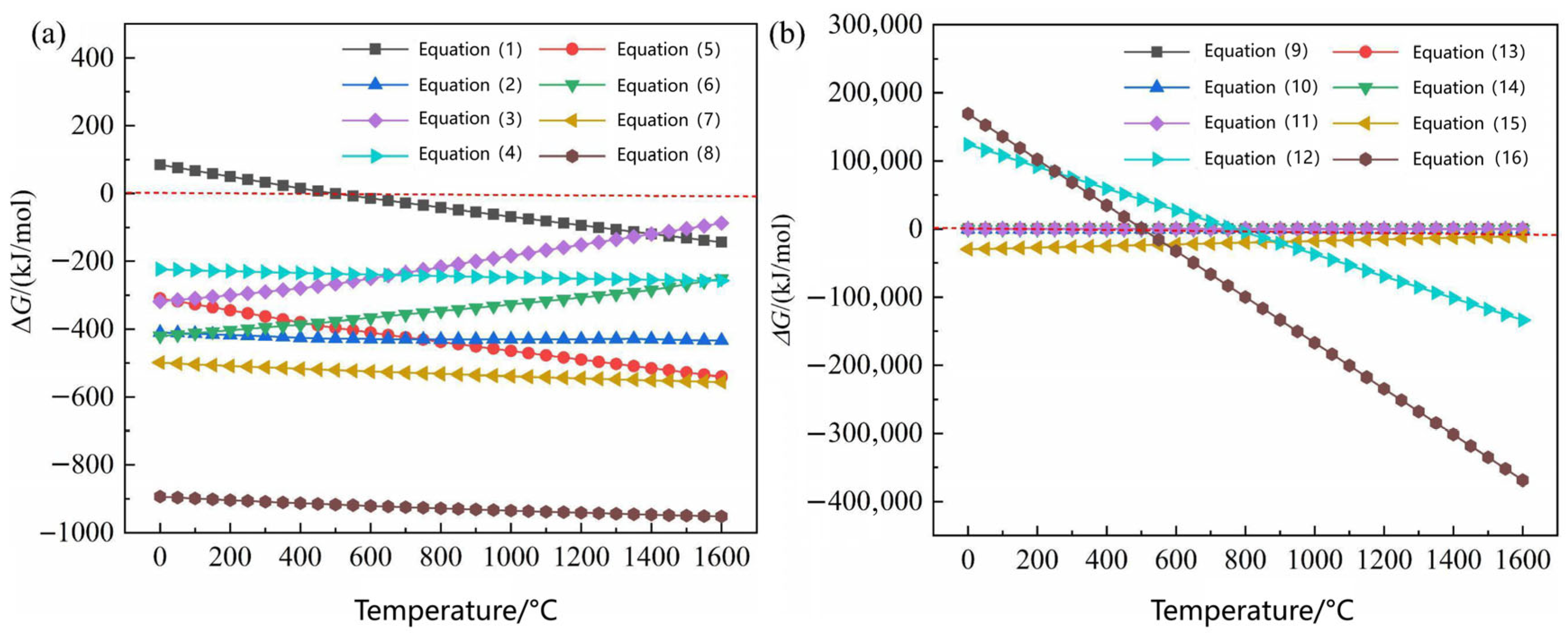
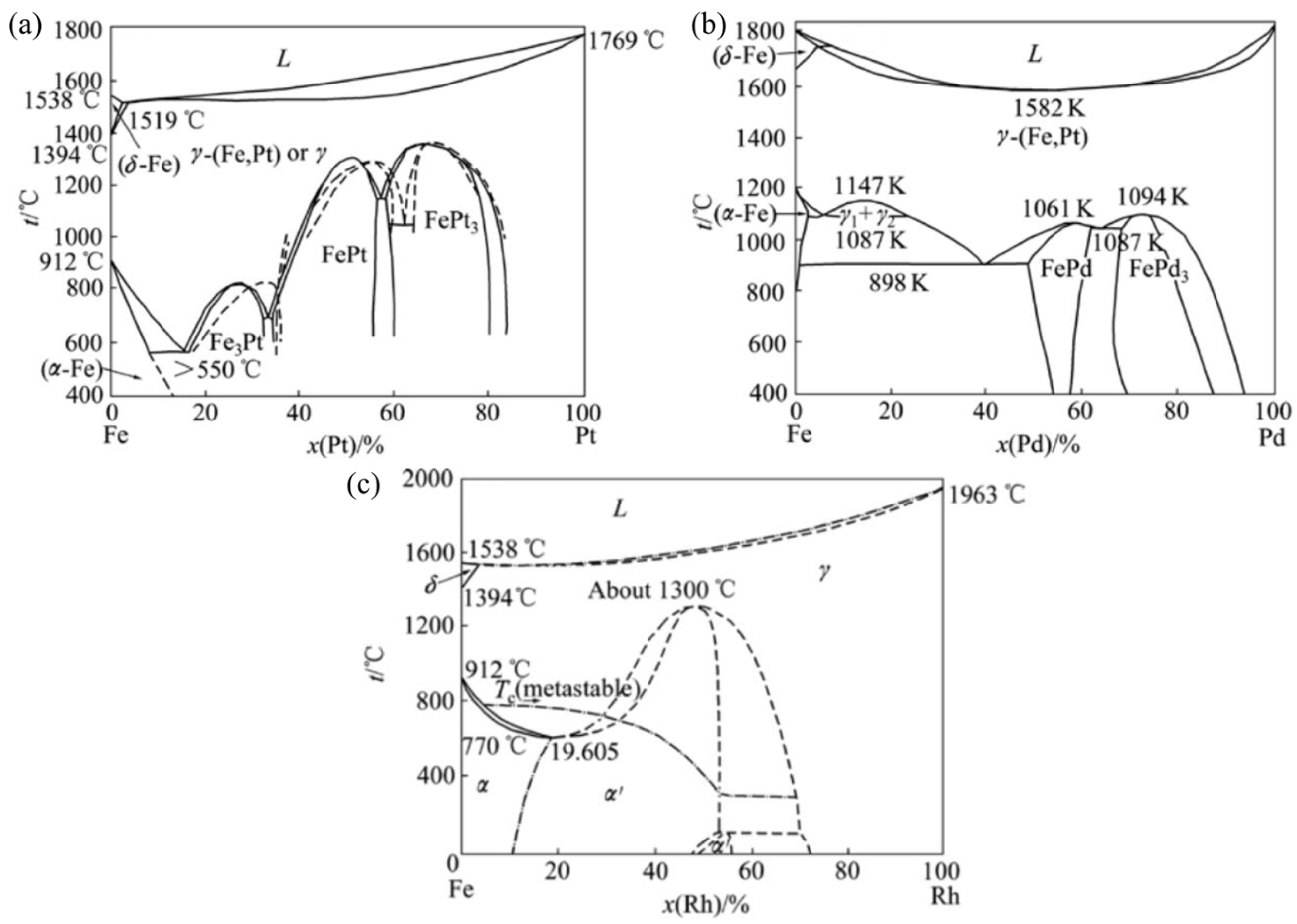
2.1. Thermodynamic Calculations
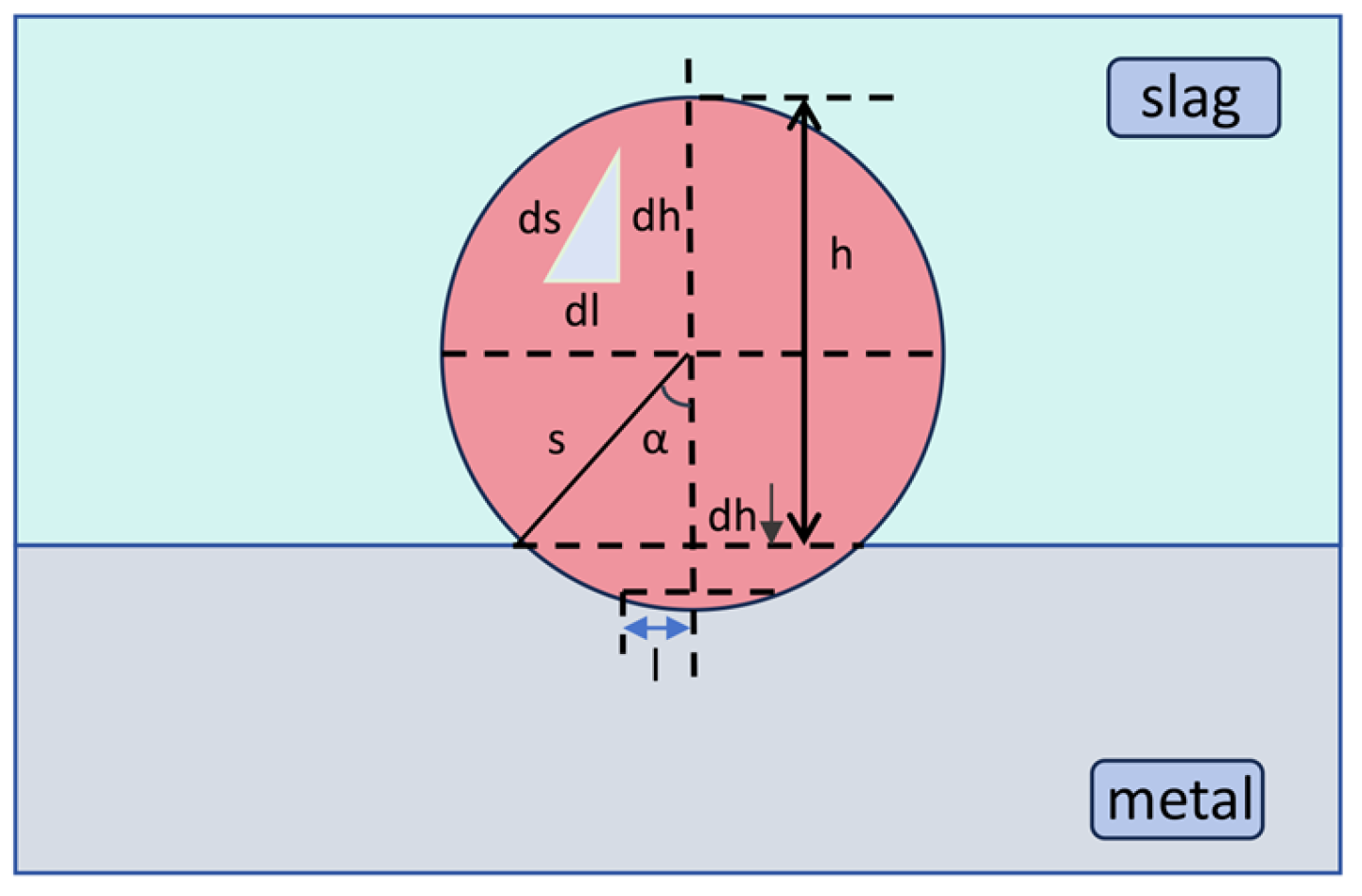
2.2. Migration Drivers of PGMs
3. Materials and Methods
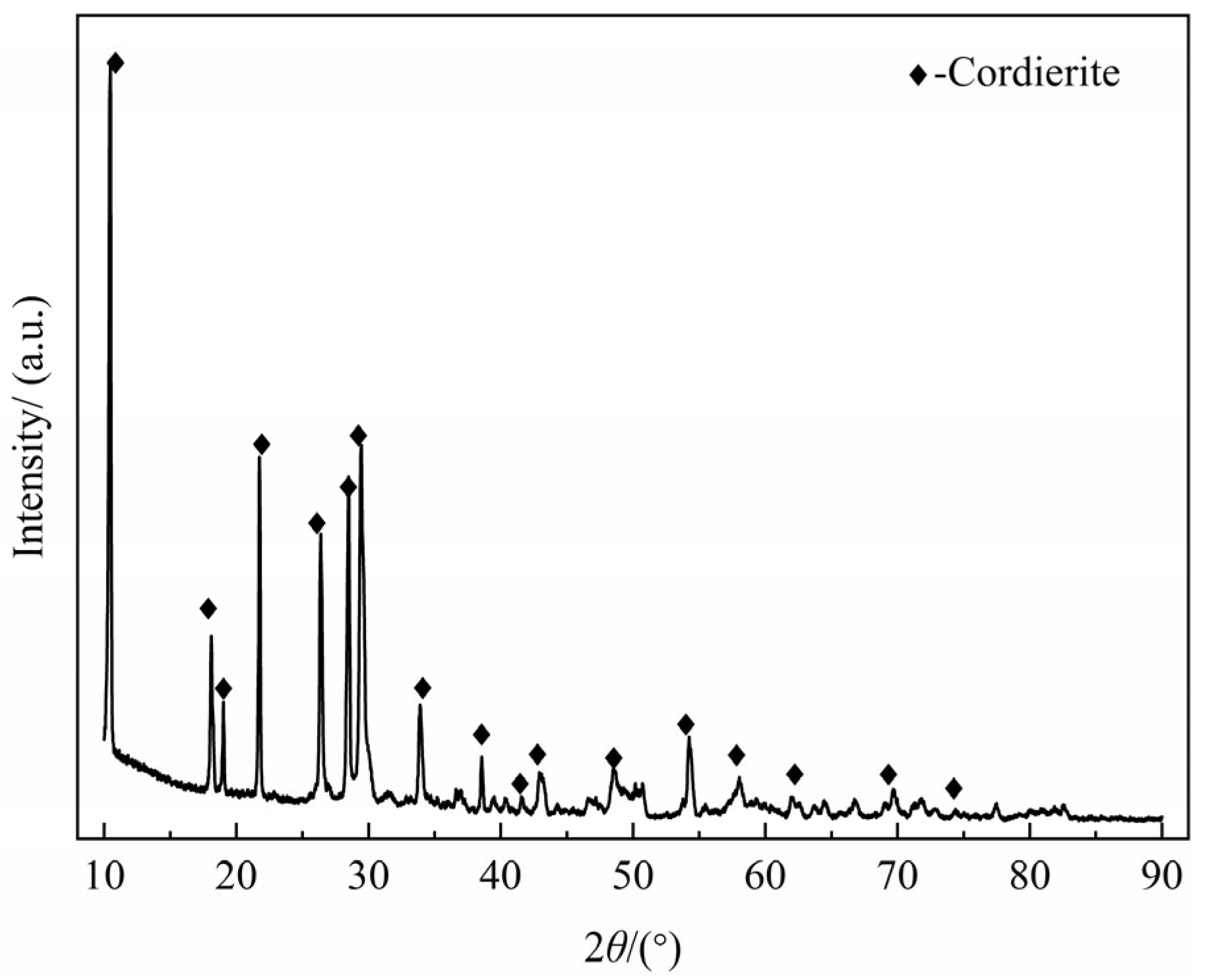
3.1. Materials
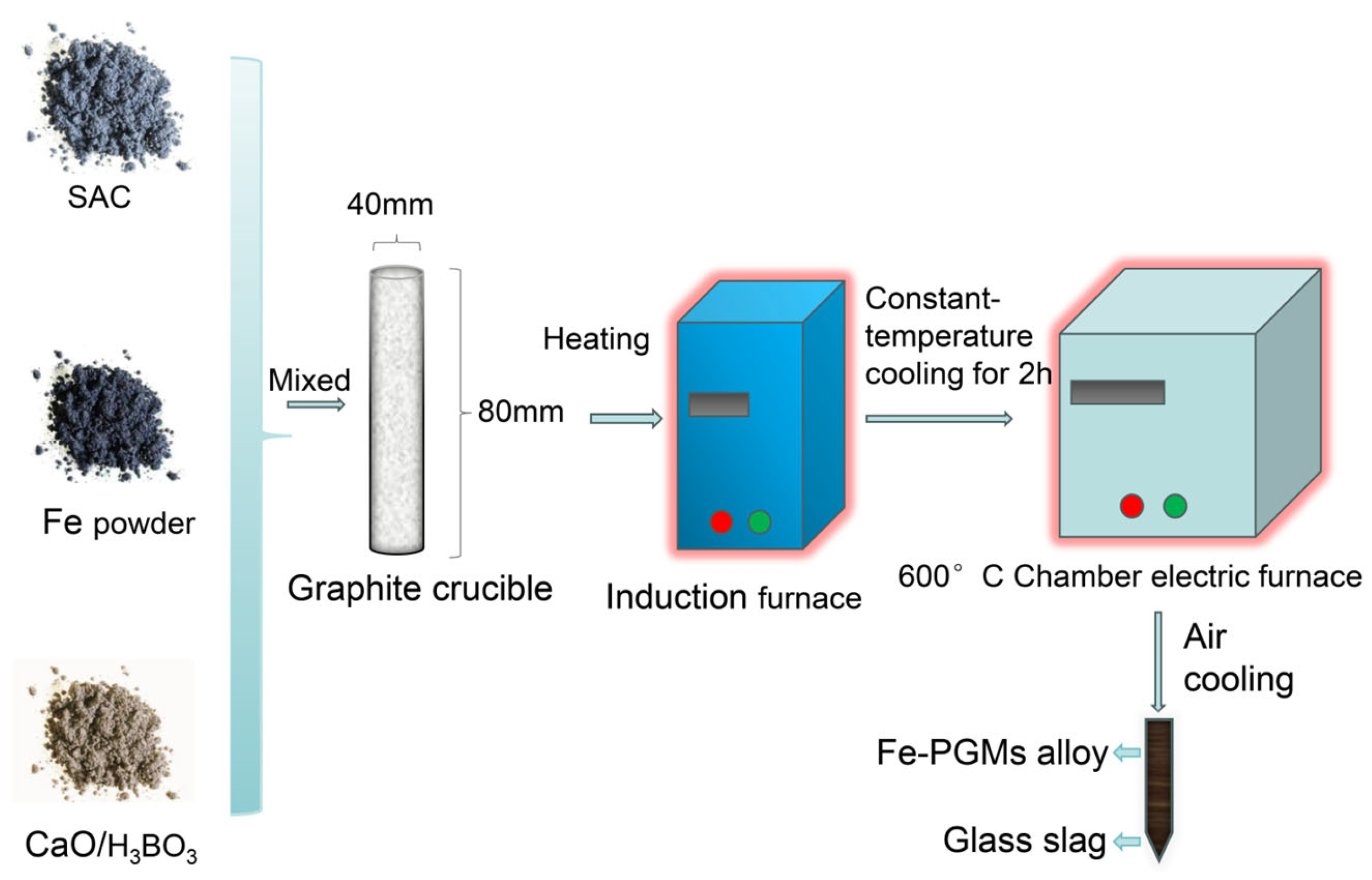
3.2. Experimental Procedures
3.3. Characterization
4. Results and Discussion
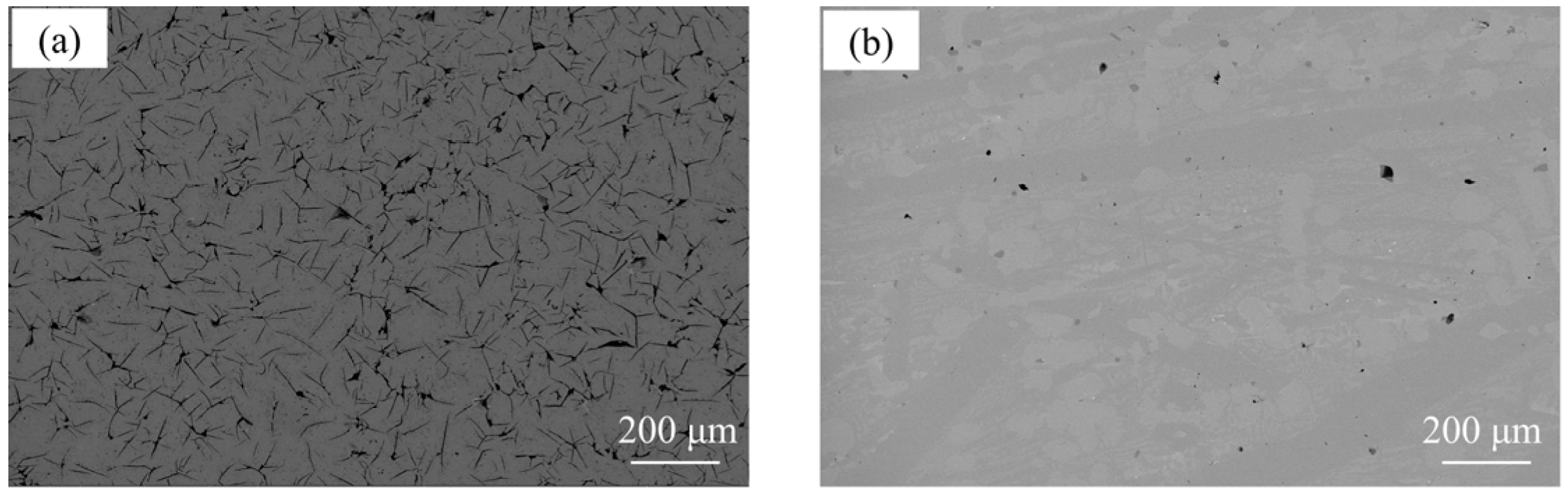
4.1. The Dynamic Evolution of Iron-Capturing PGMs
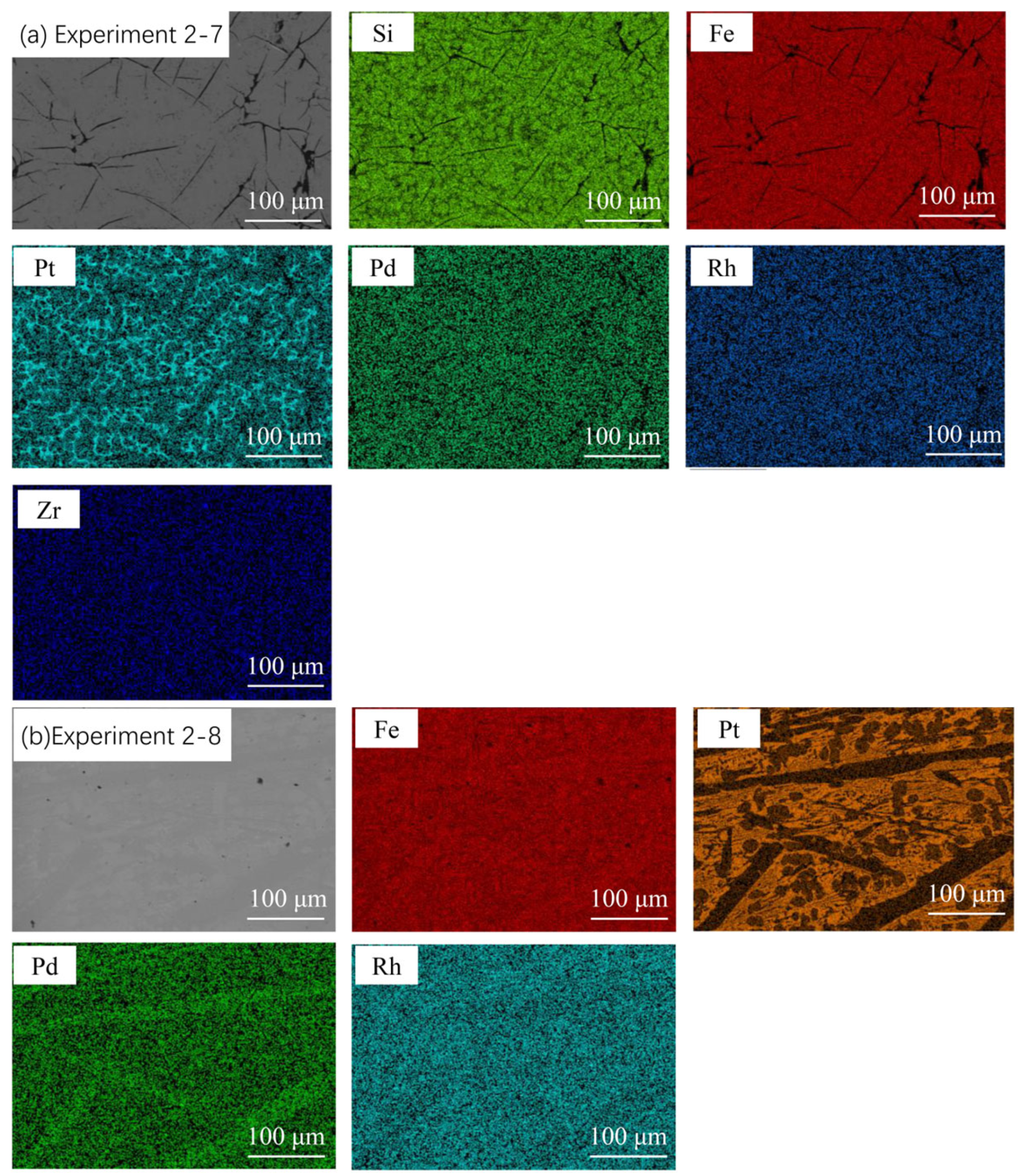
4.2. Multidimensional Regulatory Effects of Flux Agents
4.3. State of PGMs in Iron Matrix
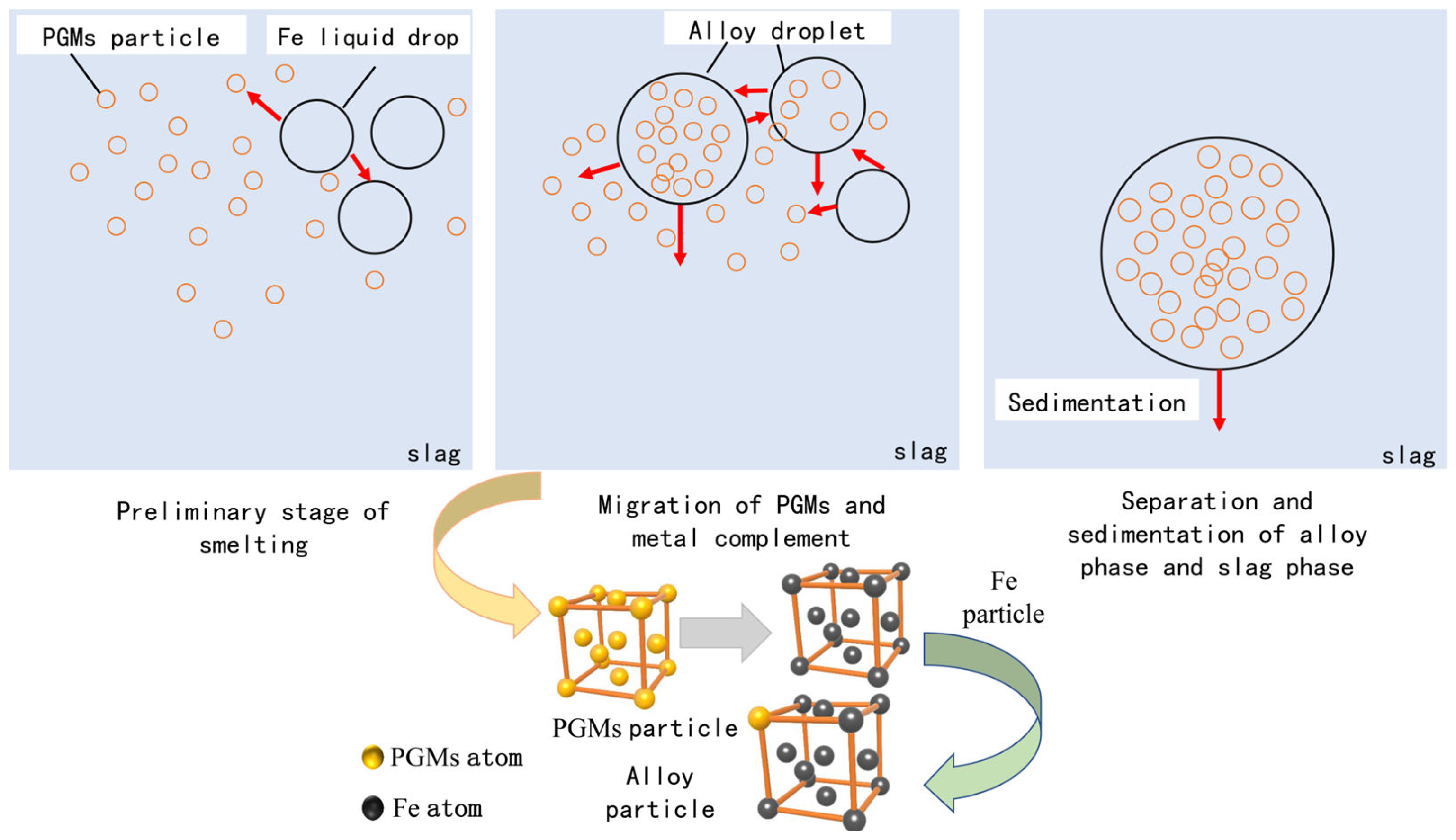
4.4. Iron-Capture Mechanism Model
5. Conclusions
- (1)
- Without iron-based collectors, PGMs remain nanoscale-dispersed in the slag phase and cannot spontaneously aggregate and settle, confirming that adding metal collectors is essential for efficient recovery.
- (2)
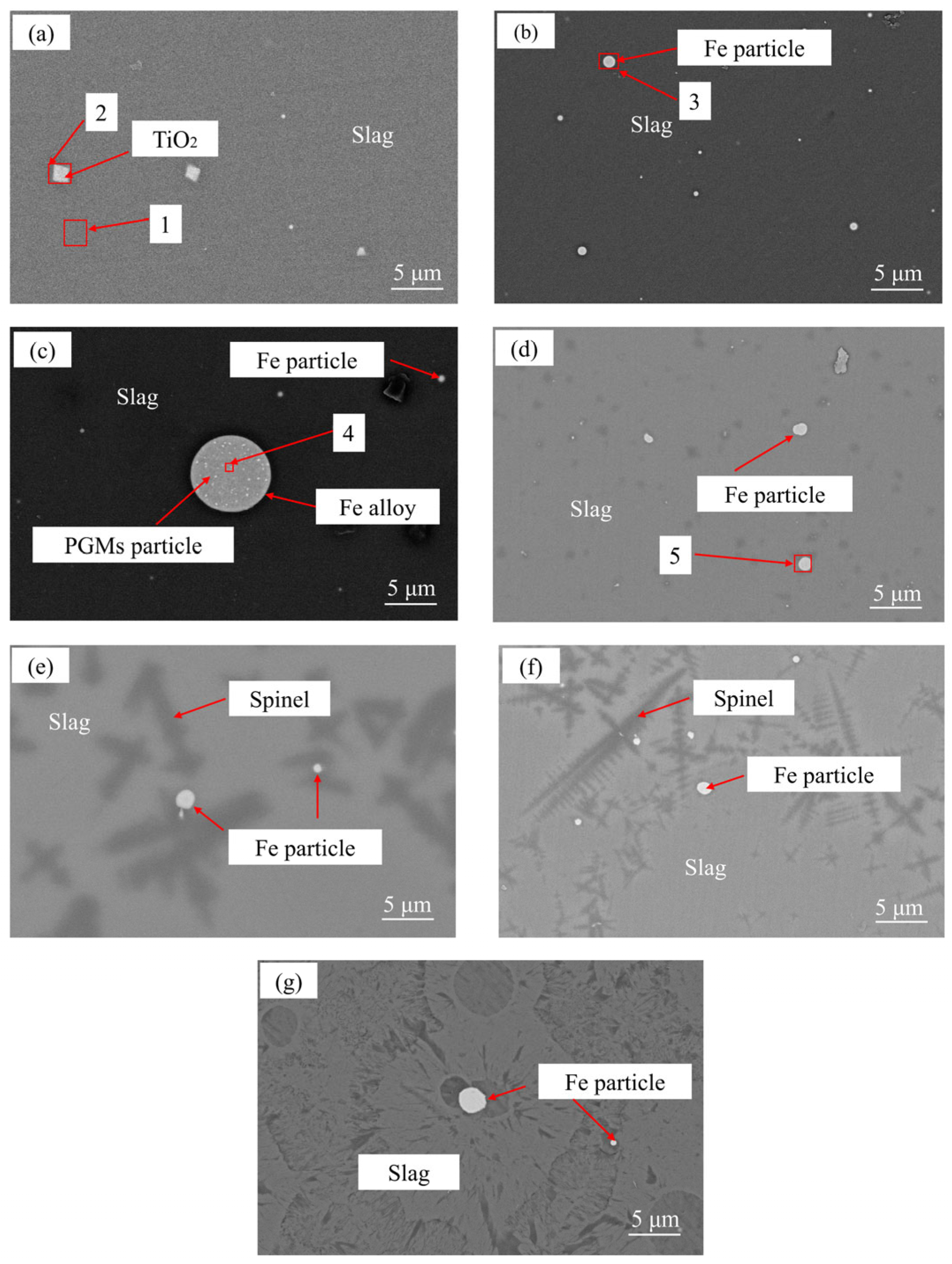
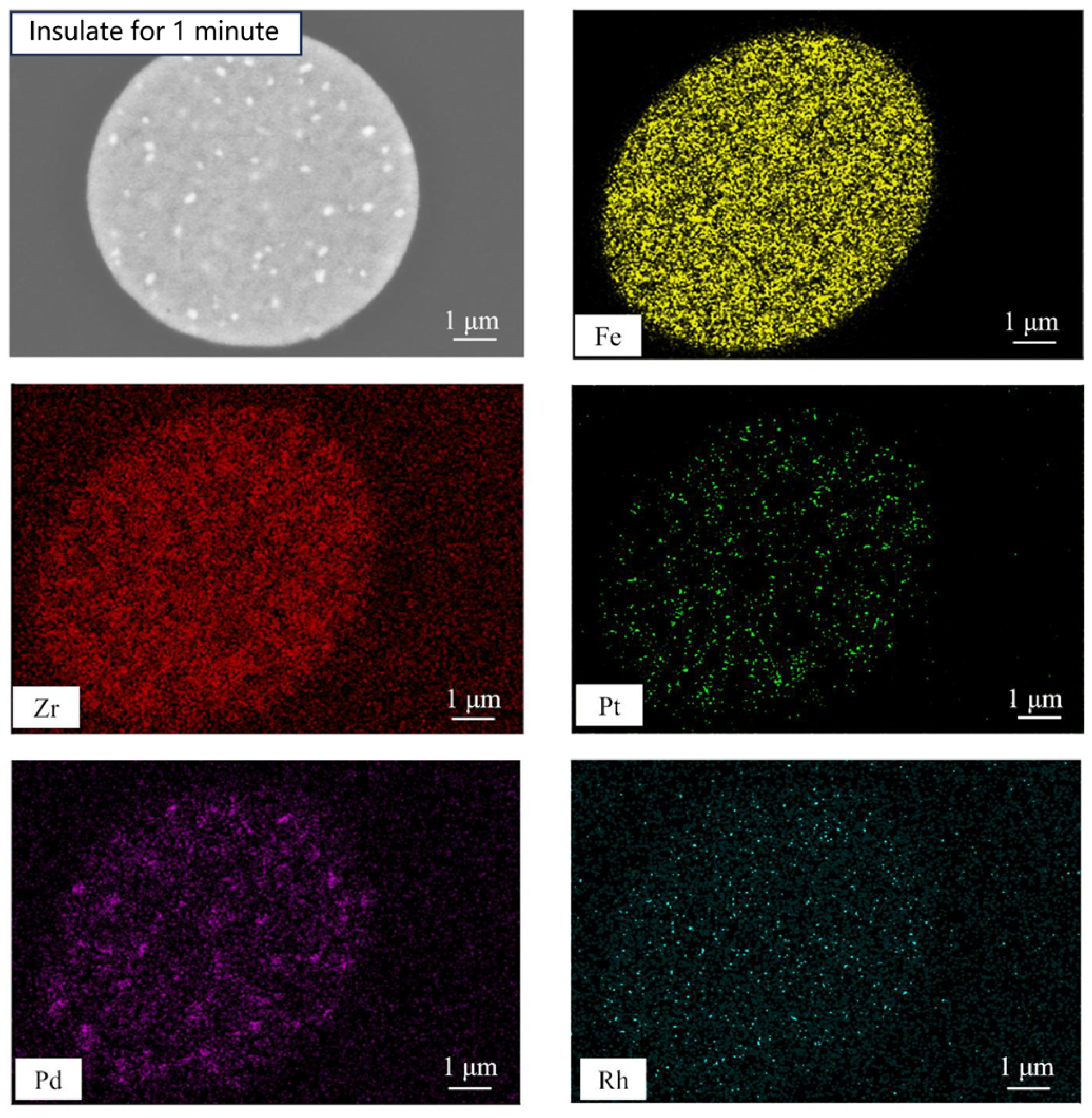
- With the addition of collectors, PGMs tend to migrate toward the iron phase driven by interfacial energy. They are subsequently captured, resulting in the formation of alloy droplets with a platinum group metal (PGM) content exceeding 4 wt.%. Over time, these droplets undergo aggregation, growth, and ultimately settle and separate.
- (3)
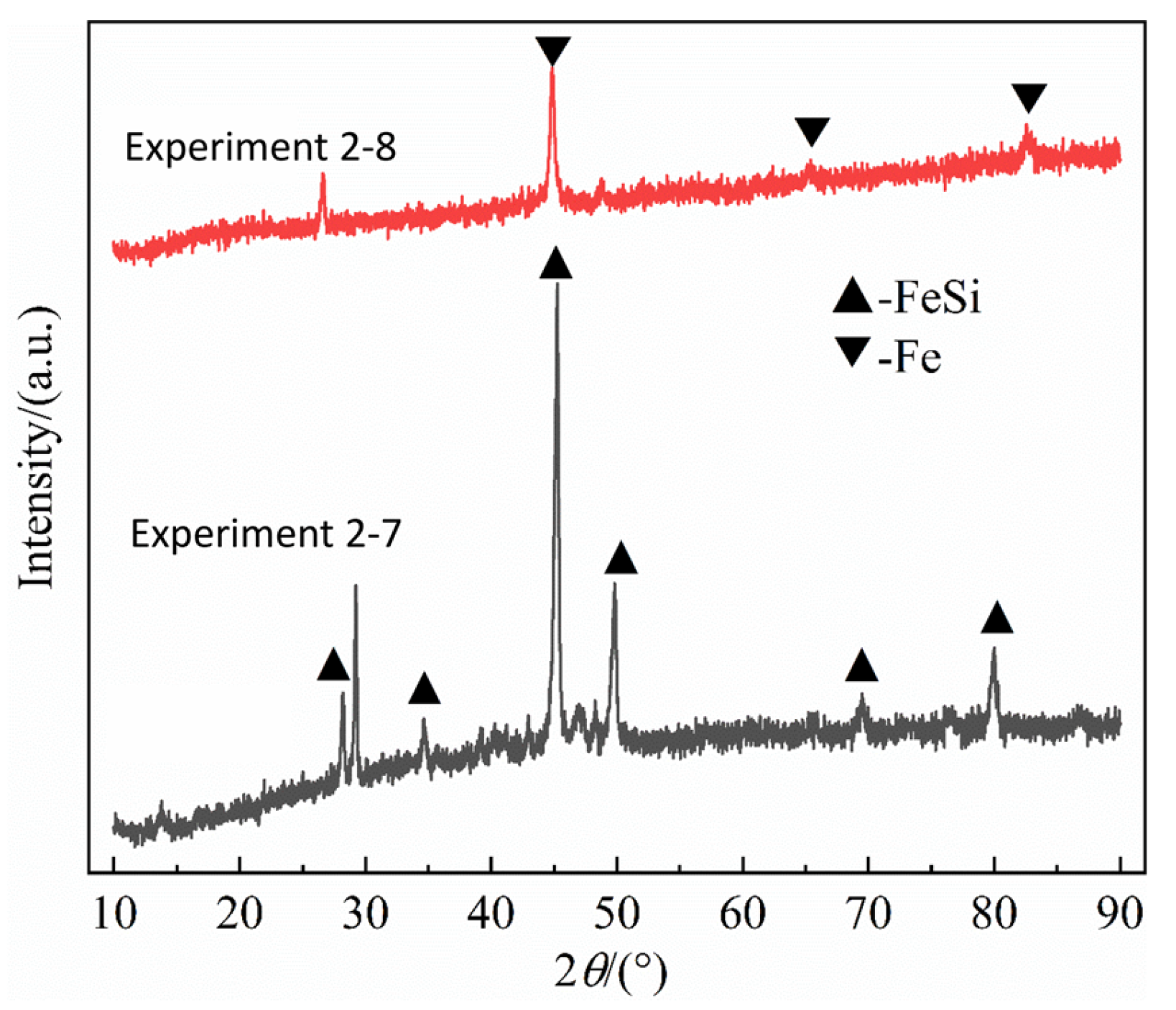
- The flux-free system demonstrates notable disadvantages: the excessive reduction of SiO2 at elevated temperatures (1700 °C) results in the formation of FeSi alloy; the high viscosity of the slag (η = 0.824 Pa·s) impedes complete slag–metal separation; and the precipitation of spinel phases obstructs slag vitrification.
- (4)
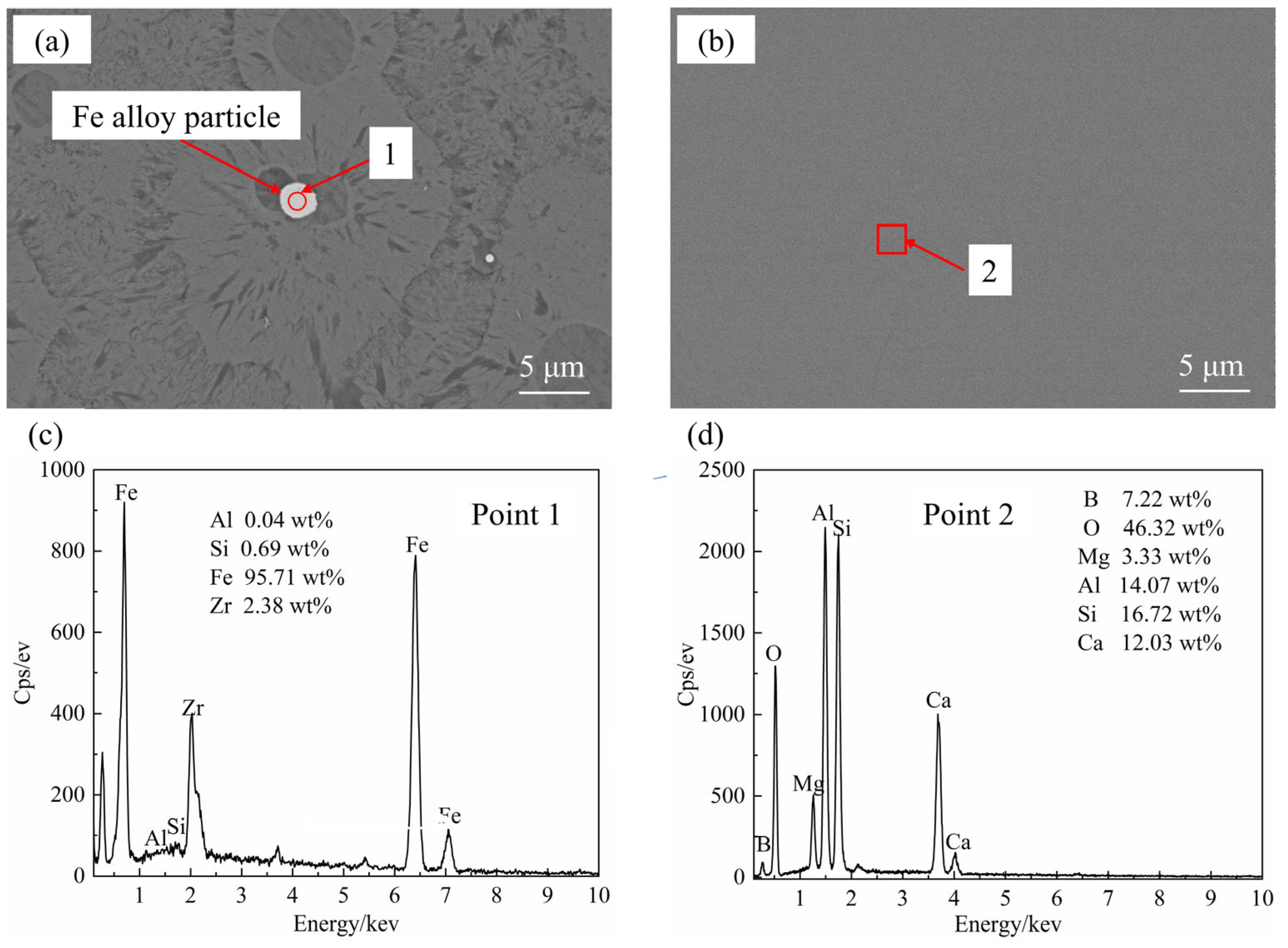
- The composite flux (CaO/H3BO3) facilitates multidimensional optimization by markedly decreasing slag viscosity and enhancing the density difference between slag and metal, thereby promoting droplet settling in accordance with Stokes’ law. Additionally, it lowers the effective capture temperature to 1500 °C to inhibit FeSi formation, assists in slag vitrification to minimize PGM inclusions, and results in a pure α-Fe-based solid solution alloy suitable for subsequent processing.
Author Contributions
Funding
Data Availability Statement
Conflicts of Interest
References
- Liu, C.; Sun, S.; Zhu, X.; Tu, G. Metals smelting-collection method for recycling of platinum group metals from waste catalysts: A mini review. Waste Manag. Res. 2021, 39, 43–52. Available online: https://pubmed.ncbi.nlm.nih.gov/33198602/ (accessed on 19 December 2025). [CrossRef]
- Wan, X.; Zhou, L.; Chen, Z.; Shen, L.; Chen, M. Review on Pyrometallurgical Smelting Options for Recycling Precious and Platinum Group Metals from Secondary Resources. Metall. Mater. Trans. B 2025, 56, 6118–6144. [Google Scholar] [CrossRef]
- Zhang, S.; Chen, J.; He, S. Novel Ultrasound Detector Based on Small Slot Micro-Ring Resonator with Ultrahigh Q Factor. Opt. Commun. 2017, 382, 113–118. [Google Scholar] [CrossRef]
- Ding, Y.-J.; Zhang, S.-G. Status and research progress on recovery of platinum group metals from spent catalysts. Chin. J. Eng. 2020, 42, 257–269. [Google Scholar] [CrossRef]
- Merget, R.; Rosner, G. Evaluation of the Health Risk of Platinum Group Metals Emitted from Automotive Catalytic Converters. Sci. Total Environ. 2001, 270, 165–173. [Google Scholar] [CrossRef] [PubMed]
- Karim, S.; Ting, Y.-P. Recycling Pathways for Platinum Group Metals from Spent Automotive Catalyst: A Review on Conventional Approaches and Bio-Processes. Resour. Conserv. Recycl. 2021, 170, 105588. [Google Scholar] [CrossRef]
- Alekseeva, T.Y.; Karpov, Y.A.; Dal’nova, O.A.; Es’kina, V.V.; Baranovskaya, V.B.; Gorbatova, L.D. Current State and Problems of Analytical Control of Spent Automobile Catalysts (Review). Inorg. Mater. 2018, 54, 1421–1429. [Google Scholar] [CrossRef]
- Li, R.; Liu, K.; Zhang, X.; Zhang, H.; Li, J.; Xie, Y.; Qi, T. Comprehensive Recycling of Slag from the Smelting of Spent Automotive Catalysts. Sep. Purif. Technol. 2024, 350, 127661. [Google Scholar] [CrossRef]
- Tang, H.; Peng, Z.; Tian, R.; Ye, L.; Zhang, J.; Rao, M.; Li, G. Platinum-Group Metals: Demand, Supply, Applications and Their Recycling from Spent Automotive Catalysts. J. Environ. Chem. Eng. 2023, 11, 110237. [Google Scholar] [CrossRef]
- Zuzanna, W.; Rzelewska-Piekut, M.; Regel-Rosocka, M. Recovery of platinum group metals from spent automotive converters by leaching with organic and inorganic acids and extraction with quaternary phosphonium salts. Sep. Purif. Technol. 2022, 280, 119933, ISSN 1383-5866. [Google Scholar] [CrossRef]
- Xu, H.; Miao, J.; Chen, P.; Zhan, L.; Wang, Y. Chemical and Geotechnical Properties of Solidified/Stabilized MSWI Fly Ash Disposed at a Landfill in China. Eng. Geol. 2019, 255, 59–68. [Google Scholar] [CrossRef]
- Huang, R.; Zhou, S.; Chen, J.; Zeng, X.; Han, Y.; Qin, J.; Huang, Y.; Lin, F.; Yu, X.; Liao, S.; et al. A Novel Method for Efficiently Recycling Platinum Group Metals and Copper by Co-Smelting Spent Automobile Catalysts with Waste-Printed Circuit Boards. J. Clean. Prod. 2024, 447, 141517. [Google Scholar] [CrossRef]
- Ding, Y.J.; Zhang, S.G. Recovery of Precious Metals from Electronic Waste and Spent Catalysts: A Review. Resour. Conserv. Recycl. 2019, 141, 284–298. [Google Scholar] [CrossRef]
- Paiva, A.P.; Piedras, F.V.; Rodrigues, P.G.; Nogueira, C.A. Hydrometallurgical Recovery of Platinum-Group Metals from Spent Auto-Catalysts—Focus on Leaching and Solvent Extraction. Sep. Purif. Technol. 2022, 286, 120474. [Google Scholar] [CrossRef]
- Zheng, H.; Ding, Y.; Wen, Q.; Liu, B.; Zhang, S. Separation and Purification of Platinum Group Metals from Aqueous Solution: Recent Developments and Industrial Applications. Resour. Conserv. Recycl. 2021, 167, 105417. [Google Scholar] [CrossRef]
- Wongsawa, T.; Traiwongsa, N.; Pancharoen, U.; Nootong, K. A Review of the Recovery of Precious Metals Using Ionic Liquid Extractants in Hydrometallurgical Processes. Hydrometallurgy 2020, 198, 105488. [Google Scholar] [CrossRef]
- Benson, M.; Bennett, C.R.; Harry, J.E.; Patel, M.K.; Cross, M. The Recovery Mechanism of Platinum Group Metals from Catalytic Converters in Spent Automotive Exhaust Systems. Resour. Conserv. Recycl. 2000, 31, 1–7. [Google Scholar] [CrossRef]
- He, X.-F.; Yin, X.-P.; Ding, Y.-J.; Shi, Z.-S.; Zhao, B.-H.; Zheng, H.-D.; Jian, J.-X.; Zhang, S.-G.; Chang, C.-C. Slag Design and Optimization for Iron Capturing Platinum Group Metals from Alumina-Based Spent Catalysts. Rare Met. 2023, 42, 2093–2103. [Google Scholar] [CrossRef]
- Zheng, H.; Ding, Y.; Wen, Q.; Zhao, S.; He, X.; Zhang, S.; Dong, C. Slag Design and Iron Capture Mechanism for Recovering Low-Grade Pt, Pd, and Rh from Leaching Residue of Spent Auto-Exhaust Catalysts. Sci. Total Environ. 2022, 802, 149830. [Google Scholar] [CrossRef]
- He, X.; Ding, Y.; Shi, Z.; Zhao, B.; Zhang, C.; Han, F.; Ren, J.; Zhang, S. Optimization of Synergistic Capturing Platinum Group Metals by Fe–Sn and Its Mechanism. J. Environ. Manage. 2024, 358, 120847. [Google Scholar] [CrossRef]
- Gu, H.; Tan, C.; Yu, Y.; Jiang, W.; Wang, H.; Hu, J.; Wang, H. Co-Treatment of Spent Catalyst Leaching Residue with Low-Grade Pt/Pd and Copper Slag to Recover Valuable Metals. Sep. Purif. Technol. 2025, 375, 133792. [Google Scholar] [CrossRef]
- Ding, Y.J. Study on the Enrichment Mechanism and Applications of Platinum Group Metals in Spent Catalysts. Doctoral Dissertation, University of Science and Technology Beijing, Beijing, China, 2019. [Google Scholar]
- Chen, J. Discussion on the Principles of Precious Metal Recovery from Base Metals and Pyrites in Pyrometallurgy. Eng. Sci. 2007, 9, 11–16. Available online: https://qikan.cqvip.com/Qikan/Article/Detail?id=24565982 (accessed on 19 December 2025).
- Kirichenko, A.S.; Nekhamin, S.M.; Samotaev, N.N.; Antonov, A.A. New Mechanism for Depositing Platinum, Palladium, and Rhodium on Iron Metal Collector. Metallurgist 2020, 64, 460–466. [Google Scholar] [CrossRef]
- Zhang, L.; Song, Q.; Liu, Y.; Xu, Z. An Integrated Capture of Copper Scrap and Electrodeposition Process to Enrich and Prepare Pure Palladium for Recycling of Spent Catalyst from Automobile. Waste Manag. 2020, 108, 172–182. [Google Scholar] [CrossRef] [PubMed]
- Liu, Y.; Zhang, L.; Song, Q.; Xu, Z. Recovery of Palladium and Silver from Waste Multilayer Ceramic Capacitors by Eutectic Capture Process of Copper and Mechanism Analysis. J. Hazard. Mater. 2020, 388, 122008. [Google Scholar] [CrossRef]
- Murata, T.; Yamaguchi, K. Recovery of Palladium and Platinum Particles Suspended in the Al2O3–CaO–SiO2 Slag Using Copper-Based Extractants at 1723 K. Mater. Trans. 2021, 62, 1495–1501. [Google Scholar] [CrossRef]
- Xin, J.J.; Yu, L.; Jiao, L.N. A Simple Calculation Model for the Density of the SiO2-Al2O3-CaO-MgO Quaternary Slag System. J. Process Eng. 2017, 17, 395–399. Available online: https://qikan.cqvip.com/Qikan/Article/Detail?id=671893796 (accessed on 19 December 2025).
- Choi, J.-Y.; Lee, H.-G. Thermodynamic Evaluation of the Surface Tension of Molten CaO-SiO2-Al2O3 Ternary Slag. ISIJ Int. 2002, 42, 221–228. [Google Scholar] [CrossRef]
- Nakamoto, M.; Tanaka, T.; Holappa, L.; Hämäläinen, M. Surface Tension Evaluation of Molten Silicates Containing Surface-Active Components (B2O3, CaF2, or Na2O). ISIJ Int. 2007, 47, 211–216. [Google Scholar] [CrossRef]
- Nakamoto, M.; Kiyose, A.; Tanaka, T.; Holappa, L.; Hämäläinen, M. Evaluation of the Surface Tension of Ternary Silicate Melts Containing Al2O3, CaO, FeO, MgO, or MnO. ISIJ Int. 2007, 47, 38–43. [Google Scholar] [CrossRef]
- Heikkinen, E.-P.; Riipi, J.; Fabritius, T.; Pajarre, R.; Koukkari, P. Computational Modelling of Oxide Surface Tensions in Secondary Metallurgy and Continuous Casting. Steel Res. Int. 2010, 81, 959–964. [Google Scholar] [CrossRef]
- Predel, B. Phase Equilibria, Crystallographic and Thermodynamic Data of Binary Alloys: Group 4; Springer: Berlin/Heidelberg, Germany, 2013; Available online: https://link.springer.com/book/9783642249761 (accessed on 19 December 2025).



| SiO2 | Al2O3 | CaO | MgO | MnO | K2O | TiO2 | ZrO2 | TFe | Pt/Pd/Rh a | LOI b |
|---|---|---|---|---|---|---|---|---|---|---|
| 34.6 | 31.0 | 1.7 | 8.9 | 0.6 | 0.3 | 0.7 | 4.1 | 2.5 | 97.0/642.0/118.0 | 12.6 |
| Sam | SAC/g | Fe/g | (CaO/H3BO3, g) | Temperature/°C | Time/Min |
|---|---|---|---|---|---|
| 2-1 | 50 | 0 | 0/0 | 1700 | 40 |
| 2-2 | 50 | 2.5 | 0/0 | 1700 | 0.5 |
| 2-3 | 50 | 2.5 | 0/0 | 1700 | 1 |
| 2-4 | 50 | 2.5 | 0/0 | 1700 | 3 |
| 2-5 | 50 | 2.5 | 0/0 | 1700 | 10 |
| 2-6 | 50 | 2.5 | 0/0 | 1700 | 20 |
| 2-7 | 50 | 2.5 | 0/0 | 1700 | 40 |
| 2-8 | 50 | 2.5 | 30/15 | 1500 | 40 |
| Rig | O | Si | Al | Ca | Mg | Ti | Ce | Fe | Zr | Pt | Pd | Rh |
|---|---|---|---|---|---|---|---|---|---|---|---|---|
| 1 | 46.60 | 10.87 | 11.72 | 3.88 | 25.27 | - | 1.65 | - | - | - | - | - |
| 2 | 7.86 | 1.88 | 2.25 | - | - | 82.44 | - | - | - | - | - | - |
| 3 | - | 6.10 | 0.17 | - | - | - | - | 93.73 | - | - | - | - |
| 4 | - | 6.64 | - | - | - | - | 1.66 | 85.08 | 2.39 | 0.08 | 4.04 | 0.11 |
| 5 | - | 22.47 | - | - | - | 4.68 | 0.10 | 66.58 | 6.16 | - | - | - |
| Oxide | Partial Molar Volume/(cm3/mol) | References |
|---|---|---|
| SiO2 | [28,29] | |
| CaO | [28,29] | |
| Al2O3 | [28,29] | |
| MgO | [29] | |
| B2O3 | [30] | |
| TiO2 | [31] | |
| FeO | [32] | |
| ZrO2 | [4] |
| Sam | SiO2 | Al2O3 | CaO | MgO | B2O3 | TiO2 | ZrO2 | FeO |
|---|---|---|---|---|---|---|---|---|
| 2-7 | 41.54 | 34.85 | 2.32 | 10.68 | 0 | 0.45 | 1.89 | 3.13 |
| 2-8 | 28.32 | 26.27 | 26.28 | 6.36 | 7.64 | 0.43 | 0.47 | 1.63 |
| Temperature/°C | Slag Viscosity/(Pa·s) | |
|---|---|---|
| 2-7 | 2-8 | |
| 1300 | 36.305 | 1.375 |
| 1350 | 19.156 | 0.966 |
| 1400 | 10.735 | 0.694 |
| 1450 | 6.341 | 0.510 |
| 1500 | 3.923 | 0.381 |
| 1550 | 2.527 | 0.290 |
| 1600 | 1.688 | 0.225 |
| 1650 | 1.163 | 0.176 |
| 1700 | 0.824 | 0.140 |
Disclaimer/Publisher’s Note: The statements, opinions and data contained in all publications are solely those of the individual author(s) and contributor(s) and not of MDPI and/or the editor(s). MDPI and/or the editor(s) disclaim responsibility for any injury to people or property resulting from any ideas, methods, instructions or products referred to in the content. |
© 2026 by the authors. Licensee MDPI, Basel, Switzerland. This article is an open access article distributed under the terms and conditions of the Creative Commons Attribution (CC BY) license.
Share and Cite
Zhu, X.; Shi, K.; Liu, C.; Yang, Y.; Zhao, J.; Sai, X.; Wen, S.; Sun, S. Microscopic Thermal Behavior of Iron-Mediated Platinum Group Metal Capture from Spent Automotive Catalysts. J. Manuf. Mater. Process. 2026, 10, 34. https://doi.org/10.3390/jmmp10010034
Zhu X, Shi K, Liu C, Yang Y, Zhao J, Sai X, Wen S, Sun S. Microscopic Thermal Behavior of Iron-Mediated Platinum Group Metal Capture from Spent Automotive Catalysts. Journal of Manufacturing and Materials Processing. 2026; 10(1):34. https://doi.org/10.3390/jmmp10010034
Chicago/Turabian StyleZhu, Xiaoping, Ke Shi, Chuan Liu, Yige Yang, Jinrong Zhao, Xiaolong Sai, Shaobo Wen, and Shuchen Sun. 2026. "Microscopic Thermal Behavior of Iron-Mediated Platinum Group Metal Capture from Spent Automotive Catalysts" Journal of Manufacturing and Materials Processing 10, no. 1: 34. https://doi.org/10.3390/jmmp10010034
APA StyleZhu, X., Shi, K., Liu, C., Yang, Y., Zhao, J., Sai, X., Wen, S., & Sun, S. (2026). Microscopic Thermal Behavior of Iron-Mediated Platinum Group Metal Capture from Spent Automotive Catalysts. Journal of Manufacturing and Materials Processing, 10(1), 34. https://doi.org/10.3390/jmmp10010034