1. Introduction
Our work presents, in this first section, the worldwide situation concerning the aircraft and drone propulsion transition from fossil fuels to electric propulsion. In the second section, we provide an overview of the literature configurations for drone hybrid power systems with their advantages and disadvantages. After this, we present some issues concerning the components intended to be used in the system: fuel cells, batteries, electric motors, etc. In
Section 3, the proposed power system is modeled and implemented in MATLAB/SIMULINK in order to evaluate its performances. Along with the power system, in the implemented model, we took into account the drone aerodynamic configuration and mission profile to assess the drone’s performance, not just the power system qualities. In the final part of
Section 3, we present the simulation results.
Section 4 presents the conclusions of the work
The global aviation industry has a substantial effect on climate change, primarily due to emissions resulting from the combustion of fossil fuels, especially during cruise flights at high altitudes. These emissions, along with their impact on cloud formation, affect the chemical and microphysical properties of the upper troposphere and lower stratosphere at altitudes ranging from 8 to 13 km. These changes persist for varying durations, from minutes (as in the case of contrails) to years (as with methane-related changes), causing alterations in radiative forcing and contributing to climate change. In turn, these changes have adverse effects on social well-being [
1,
2,
3]. Unlike internal combustion engines, electrical propulsion completely eliminates pollutant emissions. Alongside this advantage, there are also other advantages of electric propulsion: a reduced noise level (very appropriate for surveillance applications), simpler mechanical components, fewer moving parts, lower vibration level, simpler and cheaper maintenance, higher efficiency, and so on. The new electric motors with axial magnetic flux offer a higher power-to-weight ratio than internal combustion engines. Along with fuel cells and hydrogen fuel, this results in a higher power-to-weight ratio for the entire propulsion system. It is true that if batteries are used as energy sources, this power-to-weight ratio decreases dramatically, below the level of classical propulsion systems.
In 2022, the aviation sector was responsible for about 2% of global CO2 emissions related to energy. As international travel demand rebounded after the COVID-19 pandemic, aviation emissions in 2022 reached nearly 800 million tons of CO2, representing approximately 80% of pre-pandemic levels.
To halt the growth of emissions and ultimately reduce them to reach the “Net Zero Emissions” target by 2050, numerous technical measures are required. These include advancements in fuel technology, the development of new aircraft and engine designs, and the optimization of ground operations [
3].
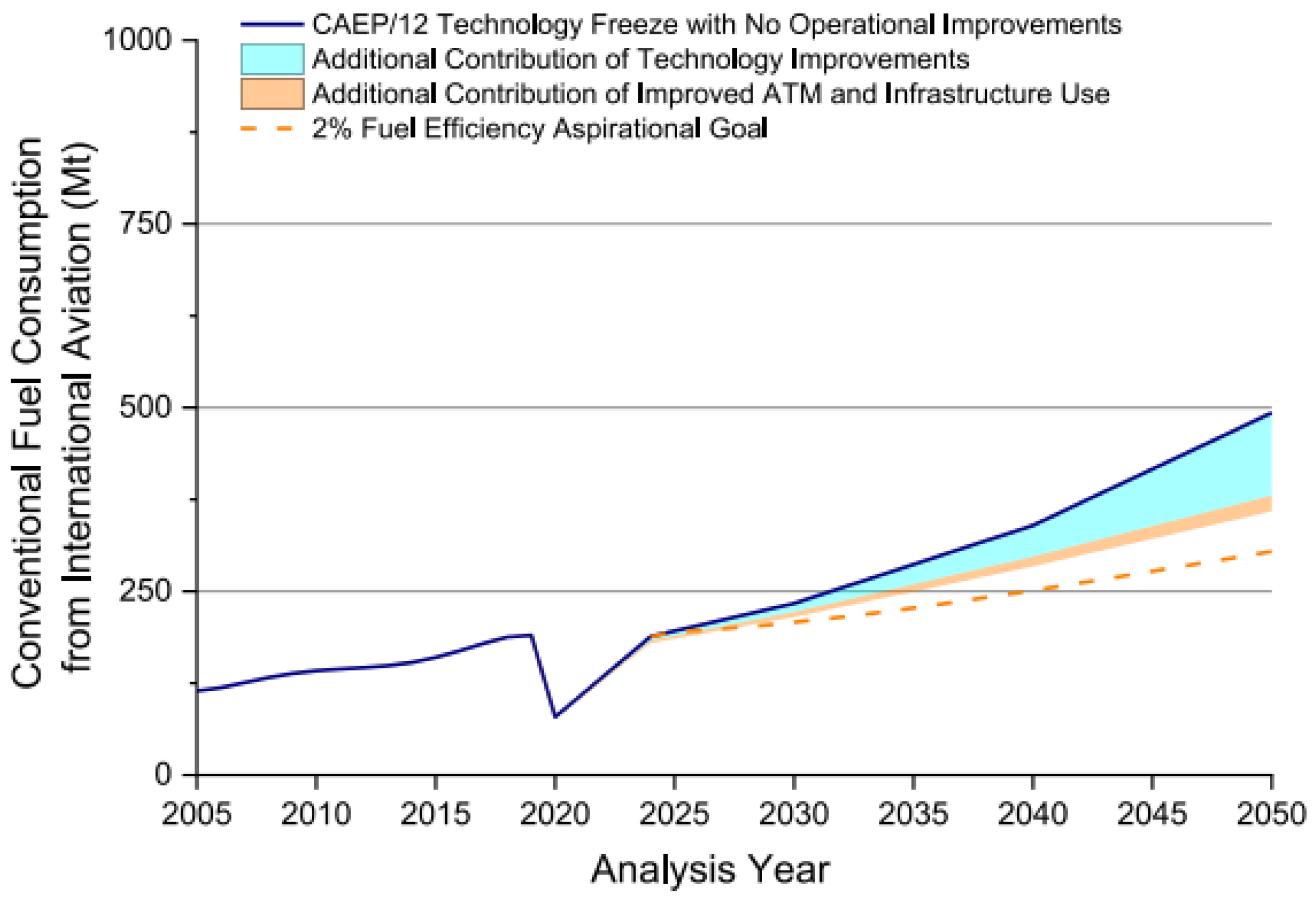
The International Civil Aviation Organization (ICAO) has set its primary goal to optimize aviation fuel efficiency by 2% annually until 2050.
Figure 1 illustrates the trends in fuel consumption for international aviation between 2005 and 2040, with an extrapolation up to 2050, based on the ICAO’s projections [
1].
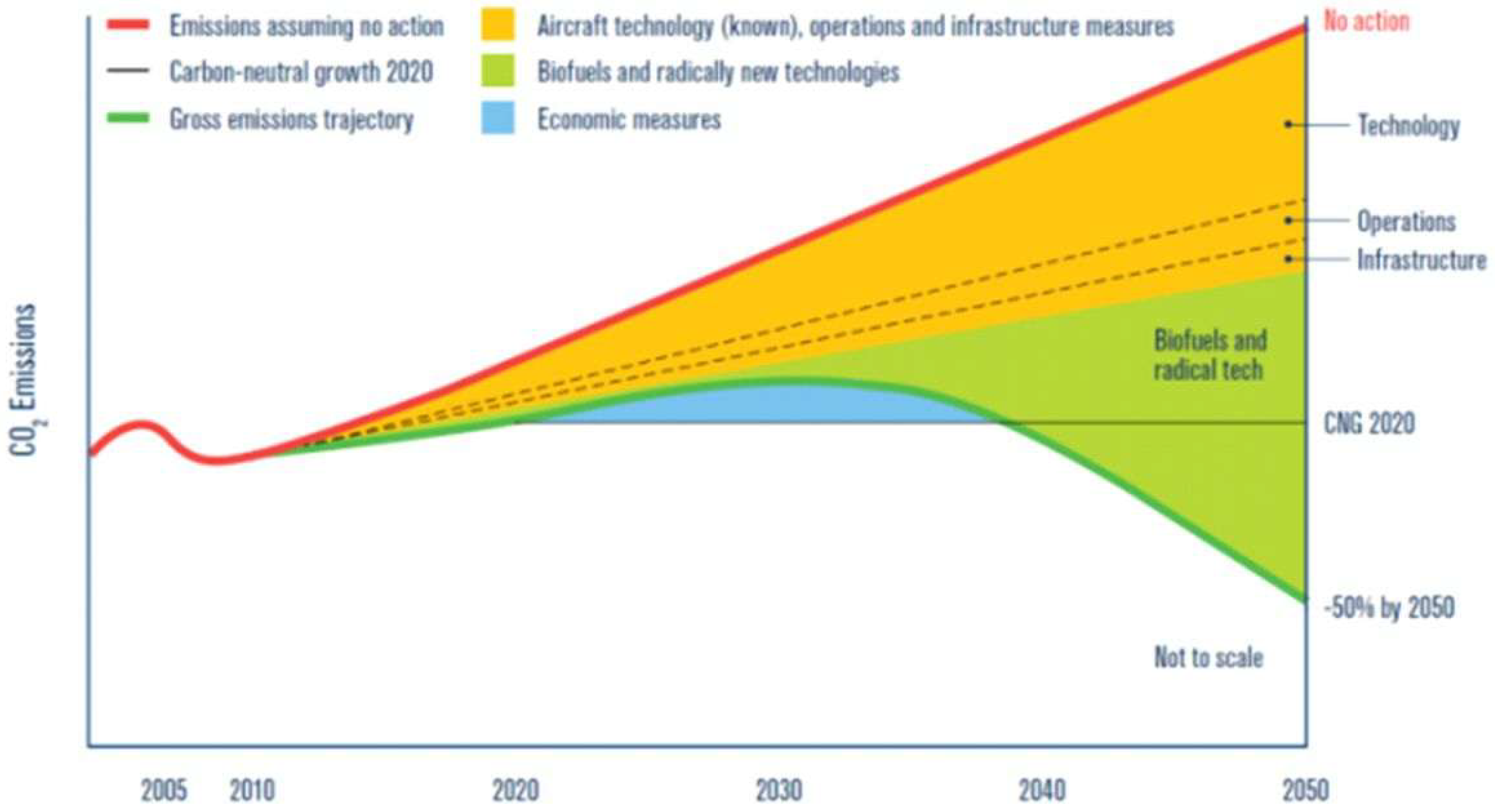
Figure 2, provided by the International Air Transport Association (IATA), presents a roadmap for reducing CO
2 emissions, reflecting these ambitious targets [
4].
Without the implementation of new policies, CO
2 emissions are projected to rise by 1.9 to 4.5 times by 2050 compared to the levels recorded in 2005 [
4].
Nitrogen oxides (NOx) remain a major pollution concern for aviation. This issue has driven significant reductions in combustion emissions in new drone engine technologies, as stricter NOx emission standards have been adopted. NOx emissions from aviation impact local air quality and human health, both through emissions around airports and at a high altitude, which influence background concentrations. Additionally, NOx emissions affect the climate by altering atmospheric ozone (O
3) and methane (CH
4) levels, two significant greenhouse gases, thereby influencing Earth’s radiative balance [
4,
5,
6].
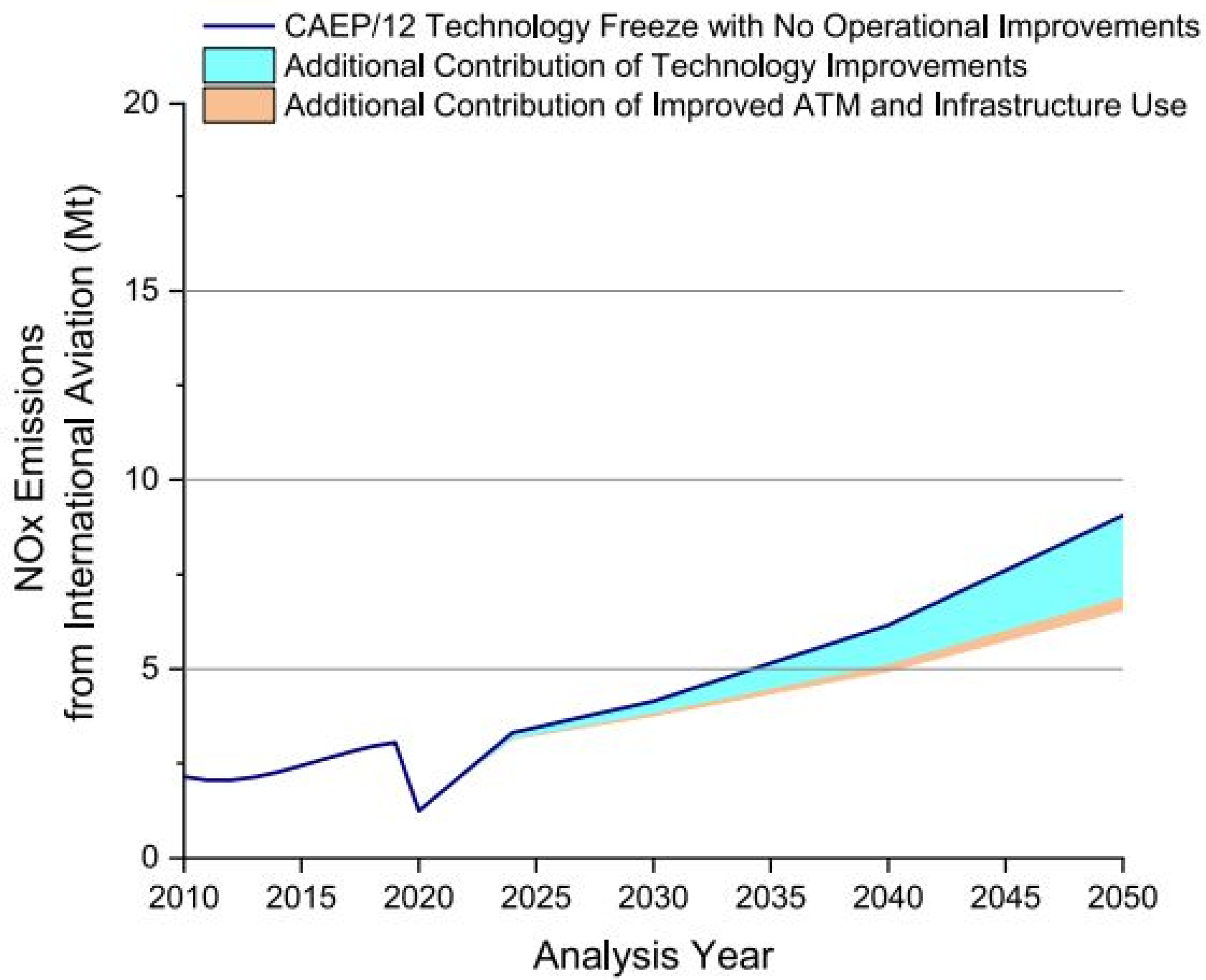
Figure 3 illustrates the quantity of NOx emissions from the aviation sector under two scenarios: one where ICAO objectives (net-zero emissions and decarbonization of the aviation sector by 2050) are adopted and another where these objectives are not implemented [
1].
An increasingly significant aspect of the aeronautical field is the use of drones, which have expanded into various sectors that were previously reserved for crewed aircraft. The considerably lower production and operational costs, the ability to carry out hazardous missions without risking human lives, and the faster implementation of innovative solutions compared to crewed aircraft are key advantages driving the continued use and development of drone technology.
The integration of drones into the modern economy is also a focus of international organizations. The European Commission, through the Drones Leader Group, has developed a strategy for advancing this sector [
7]. Additionally, the International Transport Forum (ITF), headquartered in Paris, has published the report “Ready for Take-Off? Integrating Drones into the Transport System“ [
8], which explores strategies and opportunities for the large-scale implementation of drones in freight transport.
The goal of supporting natural resources and reducing environmental pollution drives research fields to develop aerospace propulsion technologies with lower fuel consumption. The most feasible solution is the shift toward electric propulsion systems. In electric or hybrid-electric drone configurations, the internal combustion engine (ICE) is replaced with an electric motor.
The benefits of electric drones include zero emissions, the decarbonization of air transport, engine performance that remains unaffected by altitude, design flexibility in distributing and positioning the propulsion system since there is no change in weight during flight, and no alteration in the center of gravity.
The environmental impact of drone usage is examined, among many other related aspects, in [
9]. In [
10], it is noted that for medium-range distances, drones produce lower CO
2 emissions compared to trucks. This suggests the potential benefits of developing medium-capacity cargo drones, which are capable of transporting several hundred kilograms over distances of a few hundred kilometers.
Implementing electric propulsion systems for these drones could entirely eliminate CO2 emissions while also offering a faster transportation alternative compared to traditional trucking.
Additionally, new electric motors with axial flux offer excellent efficiency across a wide range of operating conditions, simpler system architecture, and reduced complexity (with fewer parts, particularly fewer rotating parts). The primary challenges include the thermal management of all electrical power components, magnetic fields, electromagnetic compatibility (EMC) and electromagnetic interference (EMI) concerns, as well as insulation issues for higher voltages.
A detailed overview of drone applications is provided in [
11]. Further information on the sizing of various drone components based on their intended applications can be found in [
12]. Notable civilian applications include medical transport, firefighting, and food delivery.
One particularly interesting drone application, currently in development and nearing commercialization, is the NUUVA 300, designed for medium-range cargo transport. Pipistrel has developed the NUUVA V300 drone, capable of carrying payloads of up to 300 kg over distances of up to 300 km [
13]. This drone features an innovative hybrid propulsion system: vertical takeoff and landing (VTOL) are powered by eight battery-operated electric motors, while a conventional internal combustion engine is used for cruise flight. The two systems operate independently, with their functions overlapping during the transition phases between cruise and takeoff/landing.
For lighter payloads of around 50 kg, the drone’s range extends to 2500 km. Its VTOL capability makes it ideal for operations in remote or constrained environments, such as offshore oil platforms or rugged mountainous regions. The drone has a maximum onboard fuel capacity of 65 kg, ensuring extended operational efficiency.
The Nauru 500 [
14] is a drone built on the same concept as the NUUVA 300 but in a smaller size, being capable of carrying a useful payload of only 65 kg.
In [
15], a study is presented regarding the transition of a Brazilian-made Atoba surveillance drone from internal combustion propulsion to either a series hybrid-electric propulsion system with an internal combustion engine or a fully electric propulsion system powered by fuel cells. The studied drone is a surveillance UAV with a maximum takeoff weight of 500 kg and a payload capacity of 75 kg. It features a fixed-wing configuration with conventional takeoff and an 11 m wingspan. The study concludes that the series hybrid propulsion system is disadvantageous in terms of fuel consumption, making the fully electric fuel cell-powered system a preferable choice.
In this work, we propose an electric propulsion system powered by a fuel cell and battery for a cargo drone. The objective is to combine the relatively high payload capacity of the NUUVA 300 with the conventional takeoff capability of the Atoba drone. The intended use of the drone is for cargo transport in remote areas that have accessible terrain for drone landings. Eventually, the drone could be designed in an amphibious configuration, allowing for its use in isolated areas covered by water. In such regions, there is sufficient space for the takeoff and landing of amphibious drones.
The conventional takeoff of the drone significantly reduces the power requirements for the takeoff and landing phases compared to the NUUVA 300 drone, which features vertical takeoff and landing (VTOL) capability. This approach allows for the entire propulsion system to be designed for lower power outputs, leading to significant weight reductions. The reduced power demand during takeoff and landing also has a major impact on energy consumption in these phases, further influencing the size reduction of energy storage devices, whether hydrogen tanks or batteries.
A potentially advantageous solution could involve designing a configuration with both conventional and vertical takeoff/landing capabilities. To optimize energy efficiency, VTOL would only be used in cases where space for takeoff and landing is extremely limited. A multi-tilt rotor configuration could address this issue. However, in this study, we limit our research to a conventional takeoff configuration, with future studies potentially analyzing the impact of implementing VTOL capabilities on drone performance.
The targeted parameters for the studied drone are as follows: structural weight: ~253 kg; maximum takeoff weight: ~545 kg; and wing surface area: ~12 m2.
2. Electric and Hybrid-Electric Propulsion Based on Fuel Cells
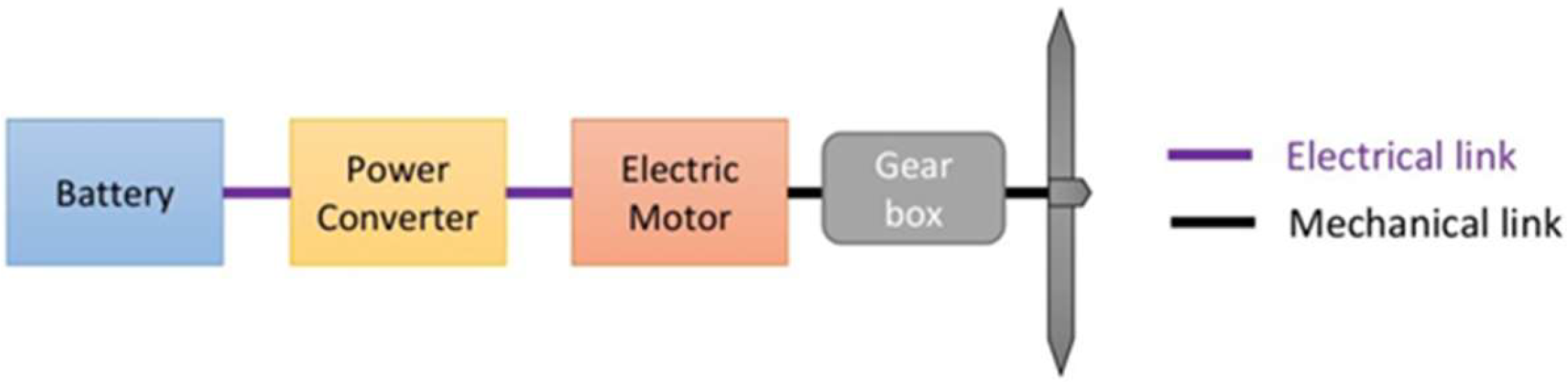
The key components of a fully electric drone configuration include the energy source (either a battery or fuel cell), the electric motor, and the power converter (comprising the energy management and distribution system), as depicted in
Figure 4 [
16,
17,
18,
19,
20]. The energy source supplies electrical power to the power converter, which then drives the electric motor. The electric motor transforms this electrical energy into mechanical energy (power for the shaft). For a direct-drive electric motor, such as the Siemens SP260D electric motor used on an aircraft, a propeller speed reduction unit (PSRU) is unnecessary between the electric motor and the propeller [
21].
Hybrid-electric propulsion configurations integrate a fuel engine (gas turbine or internal combustion engine). Compared to fully electric systems (EP—Electric Powertrain), they require fewer modifications to the energy supply infrastructure, but their complexity is increased. Although they produce emissions, these are significantly reduced compared to conventional systems, and their fuel consumption is lower. Hybrid-Electric Powertrain (HEP) systems represent an intermediate step between conventional and fully electric systems, potentially offering autonomy similar to or even identical to that of drones with internal combustion engines. The combustion engine in a HEP system can operate at its most efficient mode, helping to reduce emissions and fuel consumption. It is also possible to completely shut down the internal combustion engine, allowing the drone to function as a fully electric one. The ratio of power provided by the electric motors to the total power is determined by the hybridization factor (level of hybridization). There are four types of configurations: series, parallel, series–parallel, and complex hybrid [
16].
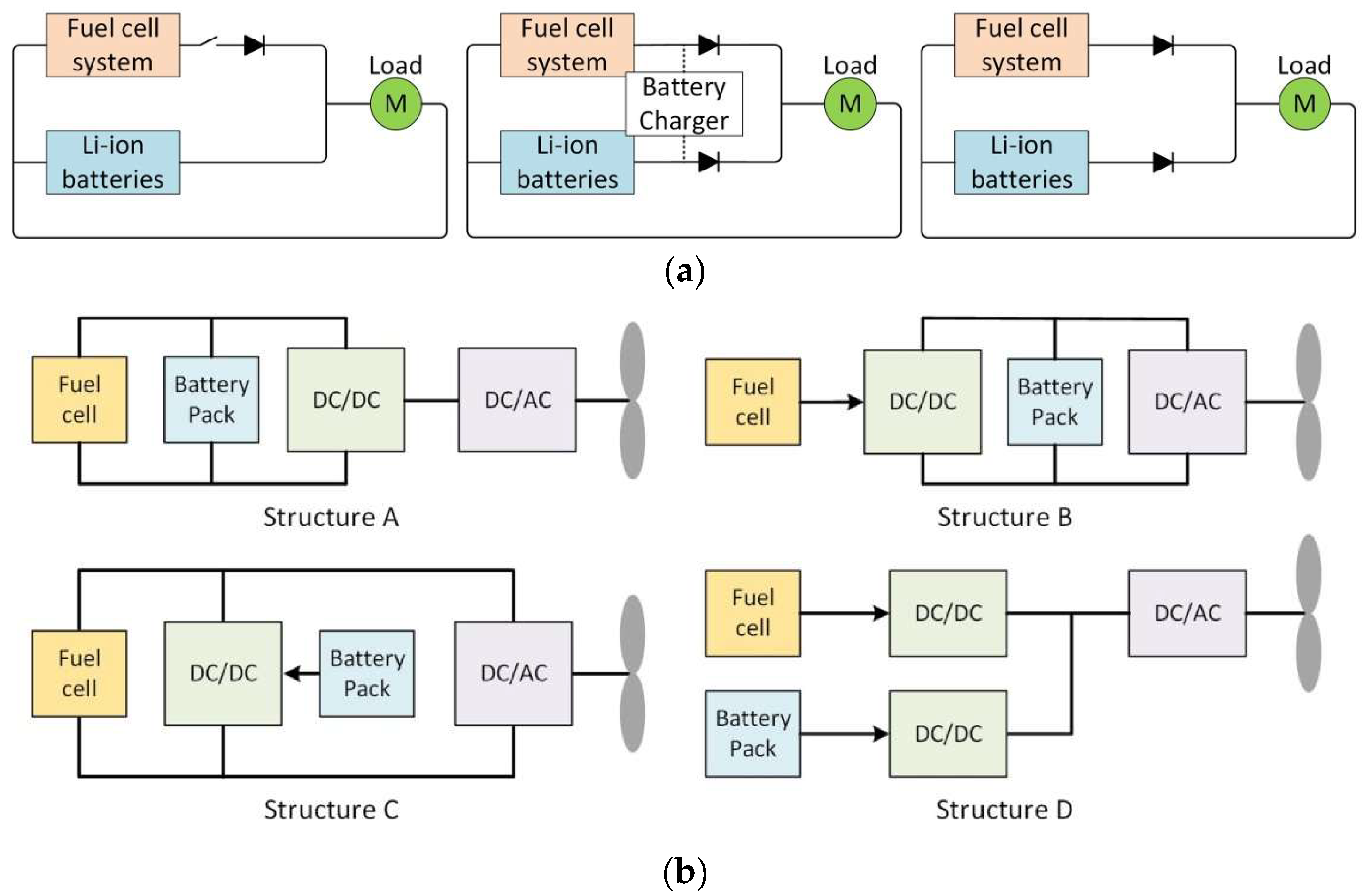
In the specialized literature, seven hybrid structures of hybrid powertrain propulsion systems are presented, which can be in active or passive configuration depending on the connection method [
17,
18,
19,
20]. In the passive structure, no converters are used to connect the power sources, as shown in
Figure 5a, while the active ones contain these converters [
22,
23,
24,
25,
26].
Figure 5b presents the main four active structures [
22]. A fully active and functional structure means that each power source can be actively regulated through individual DC-DC converter control. However, adding more DC-DC converters increases the overall system cost. Moreover, their considerable size and weight do not contribute to improving the power supply system’s performance or fuel efficiency.
In Structure A, the battery is directly connected to the fuel cell system, and the DC-DC converter is positioned between the DC bus and the load, which, in this case, is the DC-AC converter shown in the figure. The battery pack serves as an energy buffer, handling transient loads while also acting as part of the load under steady-state conditions. The fuel cell system operates without direct power control. When the battery’s output voltage falls below that of the fuel cell, charging occurs. Consequently, the DC-DC converter is required to regulate power from both sources, necessitating a design capable of handling high current levels [
26].
In Structure B, the fuel cell system is connected to the battery through a DC-DC converter, requiring the voltage of the high-voltage battery to match that of the DC bus. Several similarities exist between Structures A and B, such as the batteries being directly connected to the DC bus, allowing for a quick response to transient loads. However, this design also makes the charging and discharging process uncontrollable, potentially causing overcharging or deep discharging of the battery, which accelerates its degradation [
26].
Structure C is the reverse of Structure B. Here, the DC-DC converter is linked to the battery, while the fuel cell system is directly connected in parallel with the DC-DC front-end converter. This configuration allows for precise control of the battery’s charging and discharging processes, extending its lifespan and eliminating fuel cell current ripple. However, the weak power response of the fuel cell system limits the overall system’s dynamic performance. Additionally, in high-voltage operating conditions, an extra DC-DC converter is required, leading to increased costs [
26].
In Structure D, both the fuel cell system and the battery are linked through a DC-DC converter. This setup enables precise control over power distribution between the two energy sources, ensuring efficient power management. Additionally, the battery’s discharge and charge processes are well controlled, ensuring that the battery always operates in an optimal state. Furthermore, this structure allows for a more flexible selection of the fuel cell system and battery compared to the other three configurations. However, since the battery is not directly connected to the DC bus, the overall system’s dynamic performance may be slightly compromised. To mitigate this drawback, it is essential to develop effective energy management strategies (EMSs) and implement suitable control algorithms. Unfortunately, the overall system cost will increase, and reliability may degrade [
26].
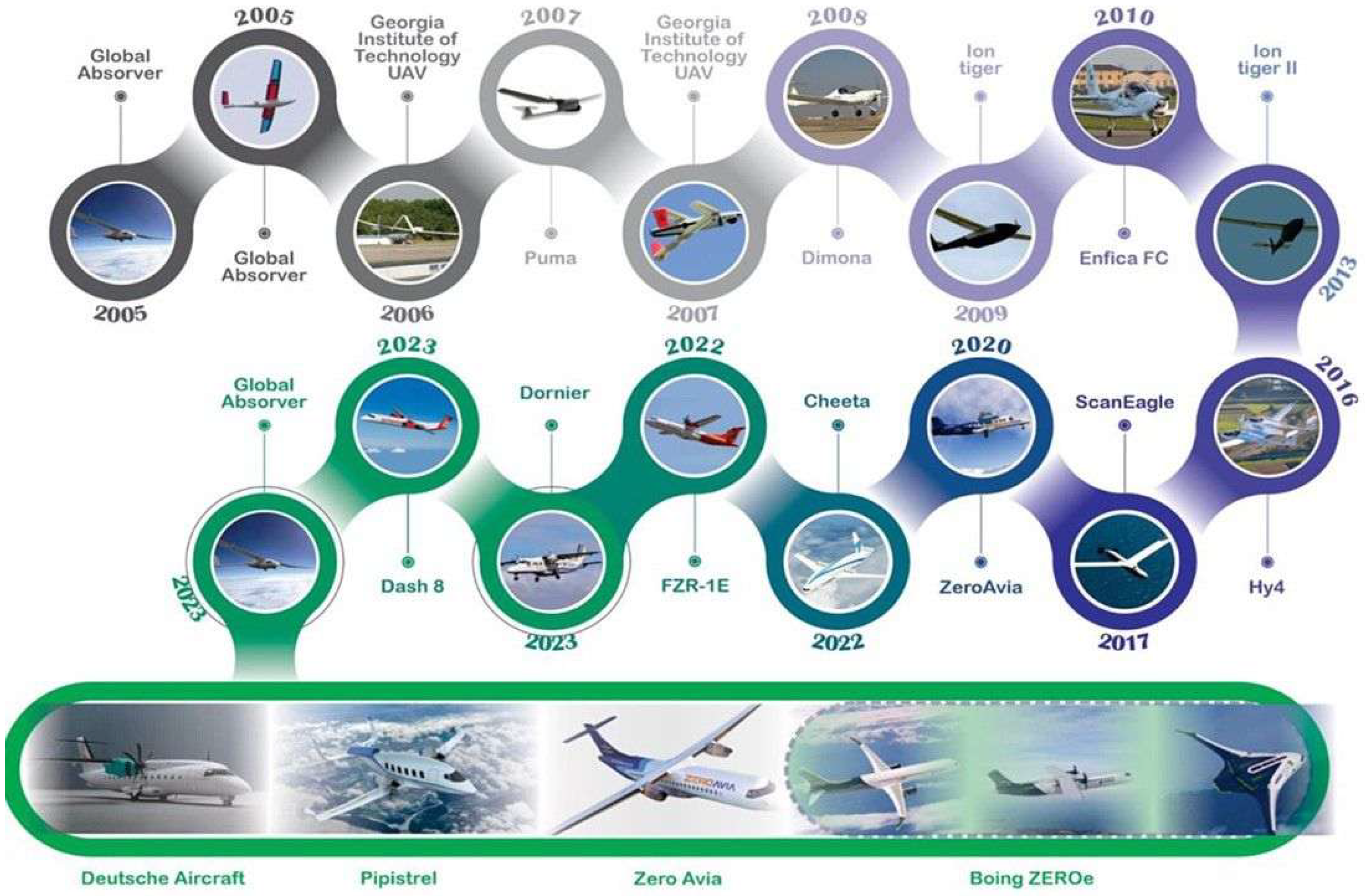
Many researchers have focused on applying fuel cell technology in electric aircraft and drone propulsion systems. Specifically, partnership efforts between ZeroAvia and Alaska Air Group, as emphasized in 2021, have the potential to introduce fuel cell-powered aircraft into the regional market.
Figure 6 presents an overview of the development and application of fuel cells in aircraft and drones from 2005 to 2023 [
26].
2.1. Fuel Cells
Hydrogen can significantly help decrease aviation’s carbon footprint when utilized as fuel in the combustion chamber. Furthermore, it can be applied in fuel cell (FC)-based systems within hybrid-electric propulsion, where hydrogen’s high specific energy (33.3 kWh/kg) offers a significant benefit for drones, especially considering weight as a critical factor.
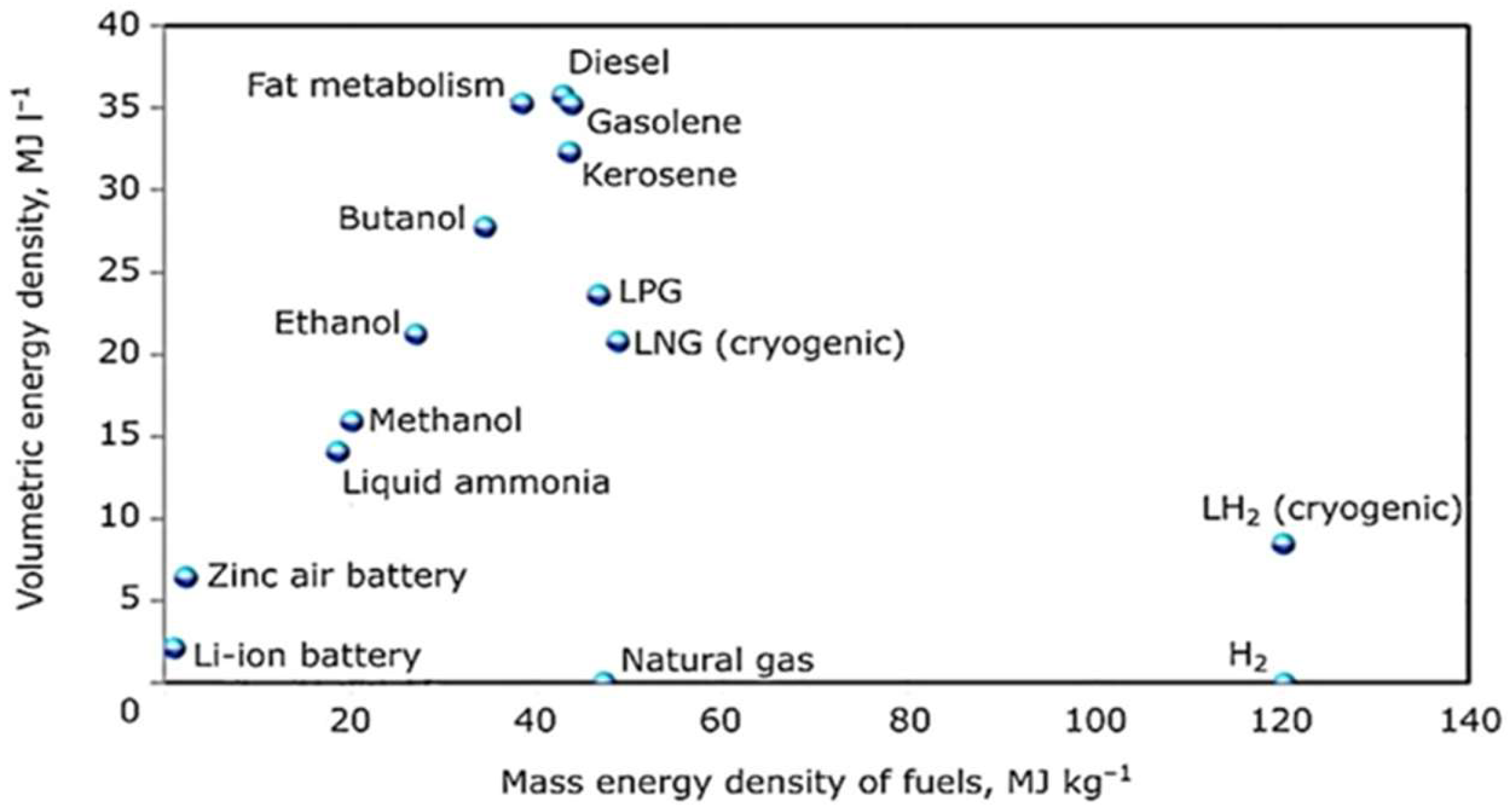
Figure 7 illustrates a comparison of the specific energy and volumetric energy density of hydrogen fuel with that of batteries and traditional fuels. As depicted in the figure, hydrogen demonstrates a much higher specific energy, indicating its great potential as a preferred fuel for drones. However, its volumetric energy density is relatively low, presenting a challenge, and should be considered when determining the onboard hydrogen energy for the drone.
Fuel cells have emerged as an innovative technology and have attracted attention in the aerospace industry due to their potential. Fuel cells serve as power sources across a wide range of commercial, industrial, and residential uses, including homes, spacecraft, and space research stations. Their reliability and durability make them particularly valuable in remote areas, as they have no moving parts, ensuring long-lasting performance.
Under ideal manufacturing conditions, a fuel cell provides reliability of up to 99.9999%, equivalent to less than 60 s of downtime over a six-year period, which fully justifies the costs of developing this technology [
26].
In aviation, fuel cells present a promising substitute for internal combustion engines, offering a cleaner and more efficient energy solution. The industry is investigating the incorporation of fuel cells to decrease environmental impact, enhance energy efficiency, and tackle the challenges posed by the reliance on fossil fuels. This technology not only holds the potential to cut greenhouse gas emissions but also aims to alleviate concerns related to noise pollution and fuel usage within the aviation sector.
In [
27], an extensive analysis is conducted of technologies employed for aircraft propulsion to decrease harmful emissions and CO
2 levels. The analysis concludes that fuel cell technology in hybrid-electric propulsion systems could be implemented on aircraft and drones just after 2045, when Li–air battery technology and cryogenic H
2 tanks will be well developed. Regarding the use of Li-S battery technology and pressurized H
2 tank technology, this could be feasible for incorporating a hybrid-electric propulsion system based on fuel cells and batteries on aircraft around 2035.
In [
28], the performance objectives for systems based on fuel cells and onboard hydrogen storage were explored for regional aircraft and drones. The study determined that to reach 1000 nautical miles in regional aircraft, the fuel cell system must have a specific power of 2 kW/kg, and the tank should have a gravimetric index of 50%.
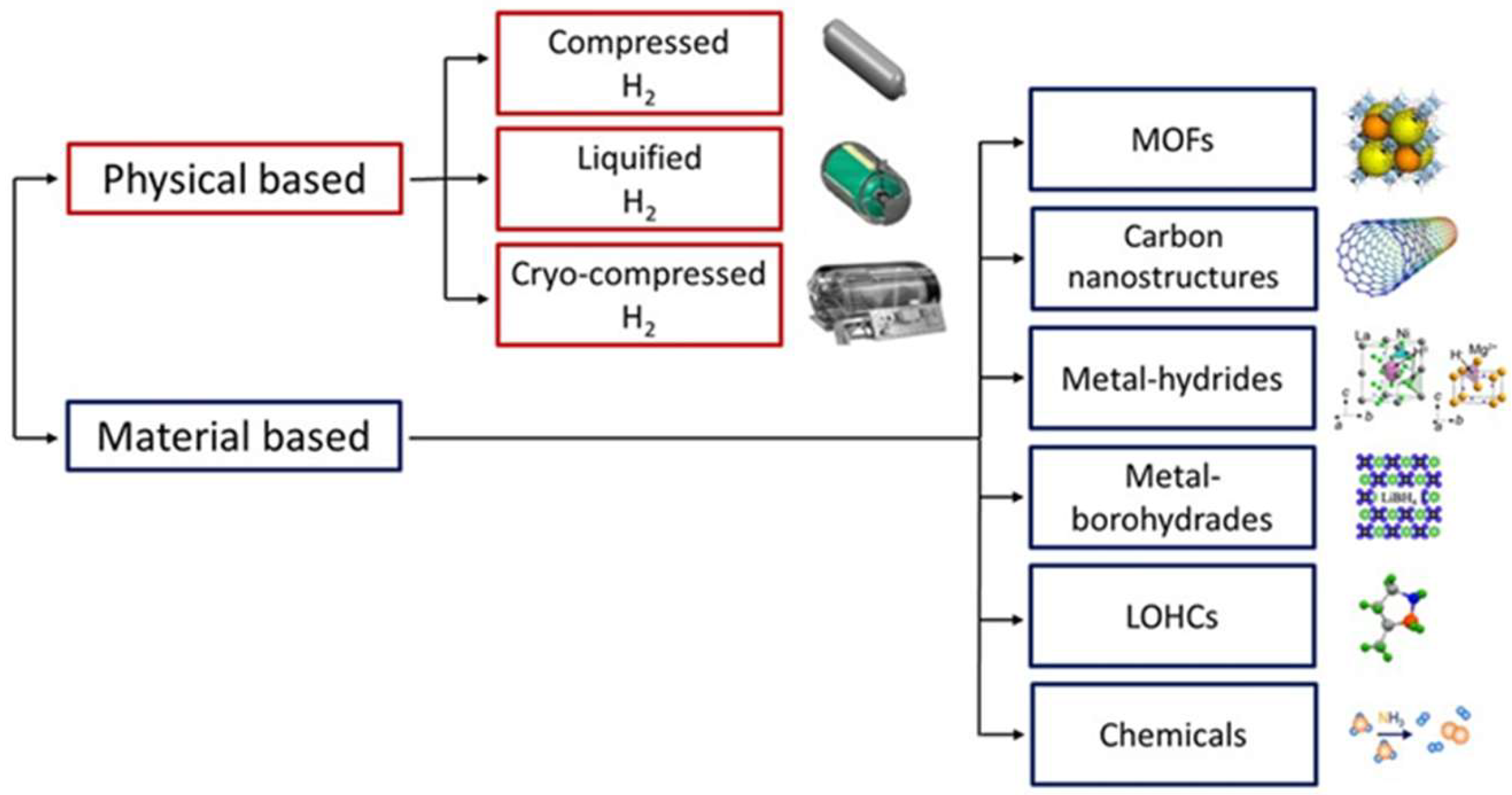
A significant challenge for the application of propulsion systems based on fuel cells is finding a proper solution for storing the hydrogen onboard. Hydrogen can be stored either as a gas or liquid in tanks or within a specialized material, with each storage method posing unique challenges. The current industry standard assumes that storing GH
2 at 700 MPa (700 bar, roughly 700 times atmospheric pressure) and at ambient temperature is a common method. Although higher-pressure storage is possible, the improvement in energy density diminishes with further increases. It is known that hydrogen boils at −253 °C (20 K) at atmospheric pressure. Currently, LH
2 is stored just above atmospheric pressure (1.01–1.5 bar or 101–150 kPa) at cryogenic temperatures ranging from −253 °C to −248 °C [
26,
27,
28,
29].
Figure 8 presents the two main approaches to hydrogen storage [
28].
2.2. Batteries
In the transportation field, several types of batteries are used, such as lead–acid (PbA), nickel–metal hydride (NiMH), and lithium-ion cells. PbA batteries were predominantly utilized in the past. They have a lower capacity and specific energy, as well as a higher weight compared to NiMH batteries. NiMH batteries are ideal for hybrid systems, as they are safer than lithium-ion cells because of their reduced flammability risk, as well as being more permissive of overcharging, with a wider thermal operating range. Lithium-ion batteries, which were developed in recent years, offer the most notable features among the mentioned battery technologies, but they come at a higher cost [
30,
31].
While the weight of batteries is not a critical factor for electric vehicles, in aviation, the weight of the battery system reduces the drone’s payload. The energy density of the most recent batteries in use is 5–6 times lower than that of aviation fuel.
Additionally, it should be noted that in electric propulsion systems powered by batteries, the mass of the source, i.e., the batteries, remains the same throughout the flight, unlike kerosene-powered propulsion systems or hybrid-electric propulsion systems powered by fuel cells.
Table 1 presents a detailed comparison between the three types of batteries [
30].
From
Table 1 shows that the current cutting-edge Li-ion battery technology offers the highest energy density of approximately 200 Wh/Kg. Lithium-based batteries are expanding rapidly, with researchers searching for new cathode materials to improve their performance. The greatest interest is focused on lithium–oxygen (Li–air) batteries and lithium–sulfur (Li-S) batteries, where the cathode reactions differ from those in Li-ion batteries. In these two types of batteries, the reduction of oxygen or sulfur is a reversible process. The main challenge in developing these batteries is increasing specific energy. Theoretically, the lithium–sulfur battery can reach values of 2567 Wh/kg, while practically, it is estimated to range between 350 and 500 Wh/kg [
32,
33]. Lithium–air batteries are divided into two types—aqueous and non-aqueous—with their specific energy varying based on the electrolyte type, reaching around 3500 Wh/kg [
31,
32,
34]. A new type of battery is the solid-state battery with solid electrolytes. Their advantages consist of higher specific energy than the present battery and very fast charge. Many companies conducted research in this domain and launched, on the market, this type of battery, even for drone application. These technologies are in the development stage and face challenges such as having a large voltage gap and rapid degradation, requiring the use of special membranes to block CO
2 and water, which affect the performance. Although the technology is still in development, lithium–air batteries could be used in the future on drones, where a low weight is essential. In comparison to a fuel cell, the battery performs more efficiently under both high- and low-power conditions, as well as when the power demand fluctuates, which is why FCs are equipped with an energy storage system, including supercapacitors and batteries. Additionally, batteries have a limited lifespan, which is affected by their age and the number of charge/discharge cycles. At present, the only solution is to replace depleted batteries with new batteries. Due to the growing presence of electric vehicles, battery recycling is becoming crucial. In the design of an electric drone, it is essential to consider the environmental repercussions generated by the battery’s life cycle, from the extraction of raw materials to recycling, and the performance of the battery over time will also be taken into account [
33,
35].
2.3. Electric Motors
Whether powered by fuel cells or batteries, electric drones require electric propulsion motors. In the past, electric drives were avoided on drones because electric motors were too heavy; this is why hydraulic and pneumatic drives were preferred instead. However, recent technological advancements have solved this issue. Today, there are electric motors on the market having power densities starting from 6 kW/Kg [
33]. Companies specializing in electric motors have developed axial-flux motors with power densities suited to aviation power demands, providing compact and small designs [
36,
37].
Focusing on reliability, these motors incorporate advanced cooling systems to efficiently dissipate heat generated during operation, along with redundant configurations and fault detection mechanisms to mitigate potential failures during flight. Perfectly integrated with sophisticated power electronics, such as inverters and controllers, these motors allow for precise energy management, enabling optimal efficiency and traction control.
Additionally, electric motors in aircraft are equipped with features such as regenerative braking, which enables energy recovery during descent and deceleration, thus increasing overall energy efficiency. Their low noise and reduced emissions compared to traditional combustion engines make them environmentally friendly, especially in the context of urban air mobility. Beyond their functional attributes, electric motors offer unique opportunities to optimize flight performance, including distributed propulsion systems that enhance aerodynamic efficiency and maneuverability.
Several companies around the world have created axial-flux electric motors, including Siemens, which developed the SP260D motor with a power output of 260 kW and a weight of just 50 kg [
21]; Magni, which offers propulsion motors of 350 kW weighing 128 kg, including inverters and controls, and 650 kW motors weighing 220 kg; and the YASA 750 R motor, with key specifications including a 200 kW power output and a weight of 34 kg [
33].
To expand the range of electric drone, the key element is the motor. Understanding how design decisions impact the thermal, mechanical, and electromagnetic attributes of motor performance is essential for optimizing the efficiency of an electric propulsion system [
38,
39].
Storing hydrogen in pressurized tanks at 700 bar appears to offer the best balance between the complexity of the hydrogen system and its volume. This technology is practically available throughout the entire chain, from hydrogen production via electrolysis to high-efficiency electric motors powered by hydrogen fuel cells. However, further improvements to the technology and an expansion of hydrogen production capabilities are still needed.
The adoption of a hybrid propulsion system that combines fuel cells and batteries offers advantages over a system powered solely by fuel cells. This hybrid configuration between the two power sources not only reduces hydrogen waste but also enhances efficiency when fuel cells are inactive. These hybrid systems incorporate lithium–polymer batteries as an auxiliary storage system for energy, primarily because of their lightweight properties.
3. Matlab/Simulink Model and Simulations for a Hybrid-Electric Propulsion System Based on Fuel Cells
Similar to the existing model in Matlab/Simulink, Simscape, called
Electrical Component Analysis for Hybrid and Electric Aircraft [
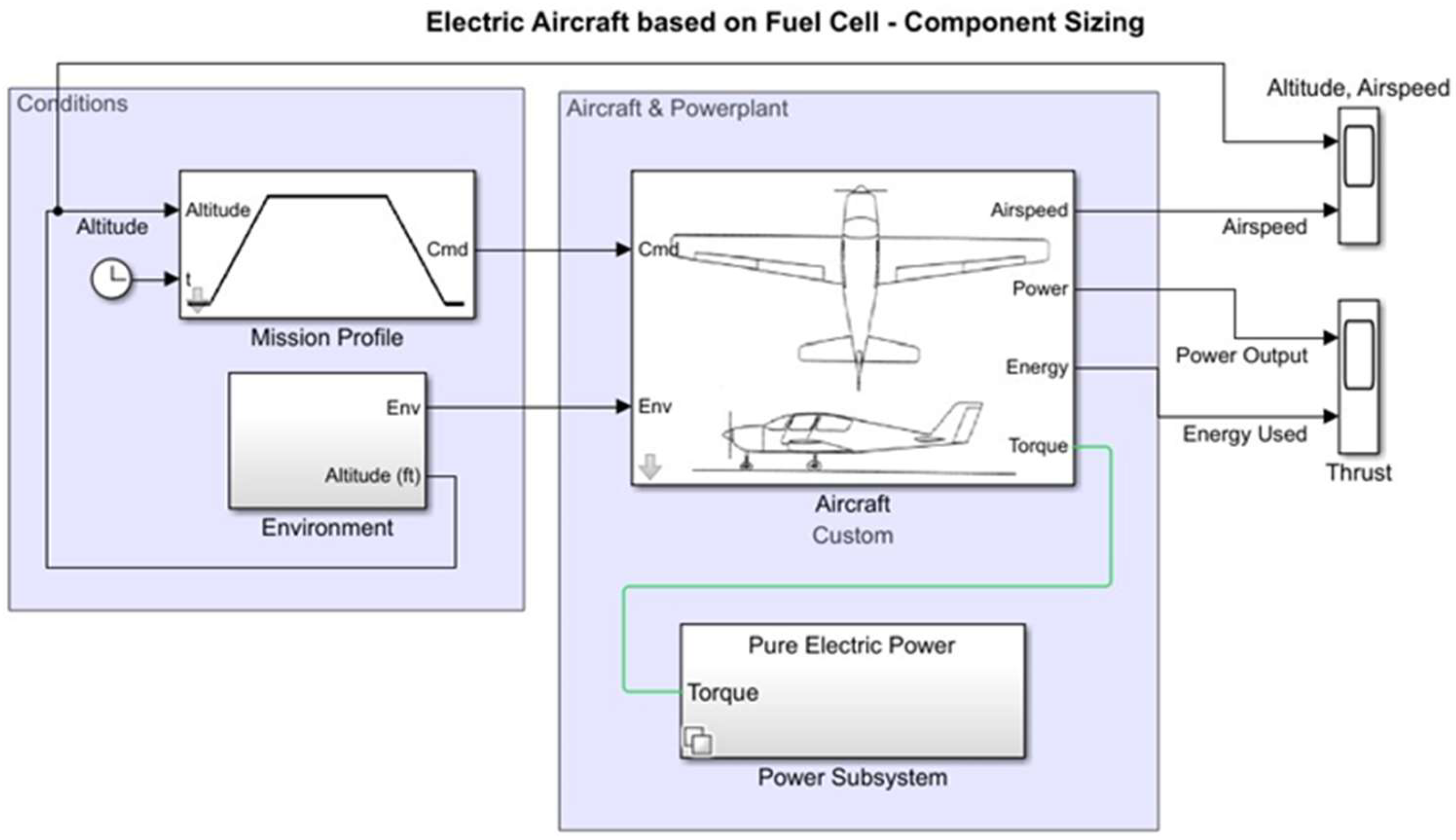
40], a numerical simulation model has been developed for a hybrid-electric power system based on a fuel cell for a medium dimension drone. This model is presented in
Figure 9 [
40]. Substantial modifications have been made to the propulsion system based on FCs. The existing model in Matlab/Simulink includes a pure electric propulsion system based on batteries, as well as a hybrid propulsion system comprising an electric and thermal engine.
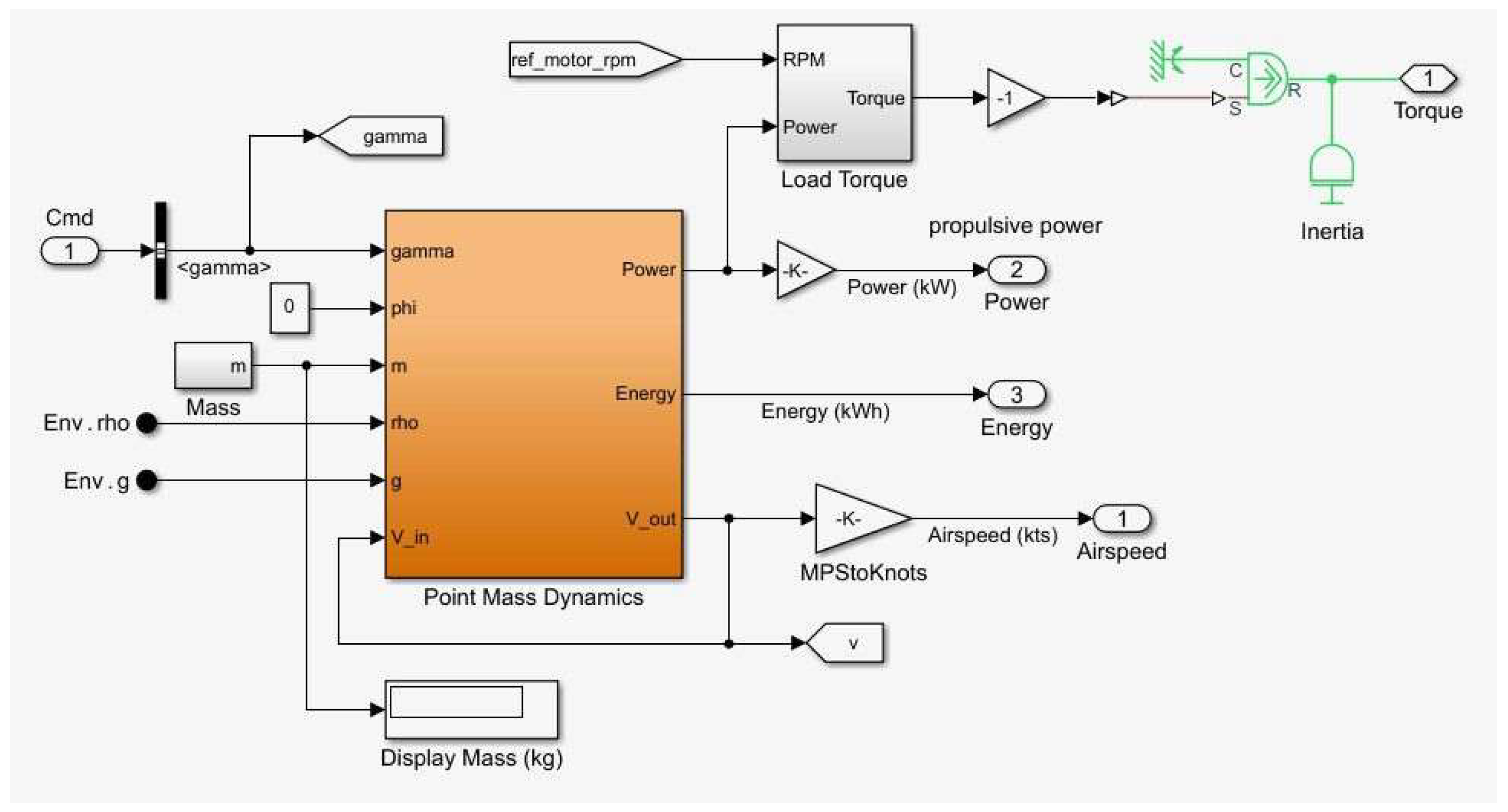
The AIRCRAFT subsystem, shown in
Figure 10, simulates the drone as a load for the engine based on an abstract approach to the flight cycle. It is assumed that the pilot takes the appropriate steps to adhere to the desired flight cycle, defined by the angle of attack (α) and the flight trajectory angle (γ) in relation to the Earth’s reference system. The subsystem then calculates the necessary thrust force to sustain lift. By following this flight cycle, the mechanical power required to generate the thrust is determined and converted into the load torque on the electric motor’s shaft. The subsystem takes these values as inputs and, based on them, determines the required thrust and lift forces needed to sustain flight. This subsystem ensures that power is distributed and utilized optimally during each flight phase, contributing to maintaining lift and improving the drone’s range. This approach is designed to model the forces and energy requirements involved in the different flight phases (takeoff, climb, cruise, descent, and landing) to enable the electric motor to deliver the required power at each stage.
The LOAD TORQUE subsystem transforms the necessary mechanical power into load torque on the electric motor’s shaft. The abstract model assumes that a predetermined portion of the motor’s mechanical power is converted into thrust. The motor control system adapts to ensure the required shaft speed is maintained under varying load conditions.
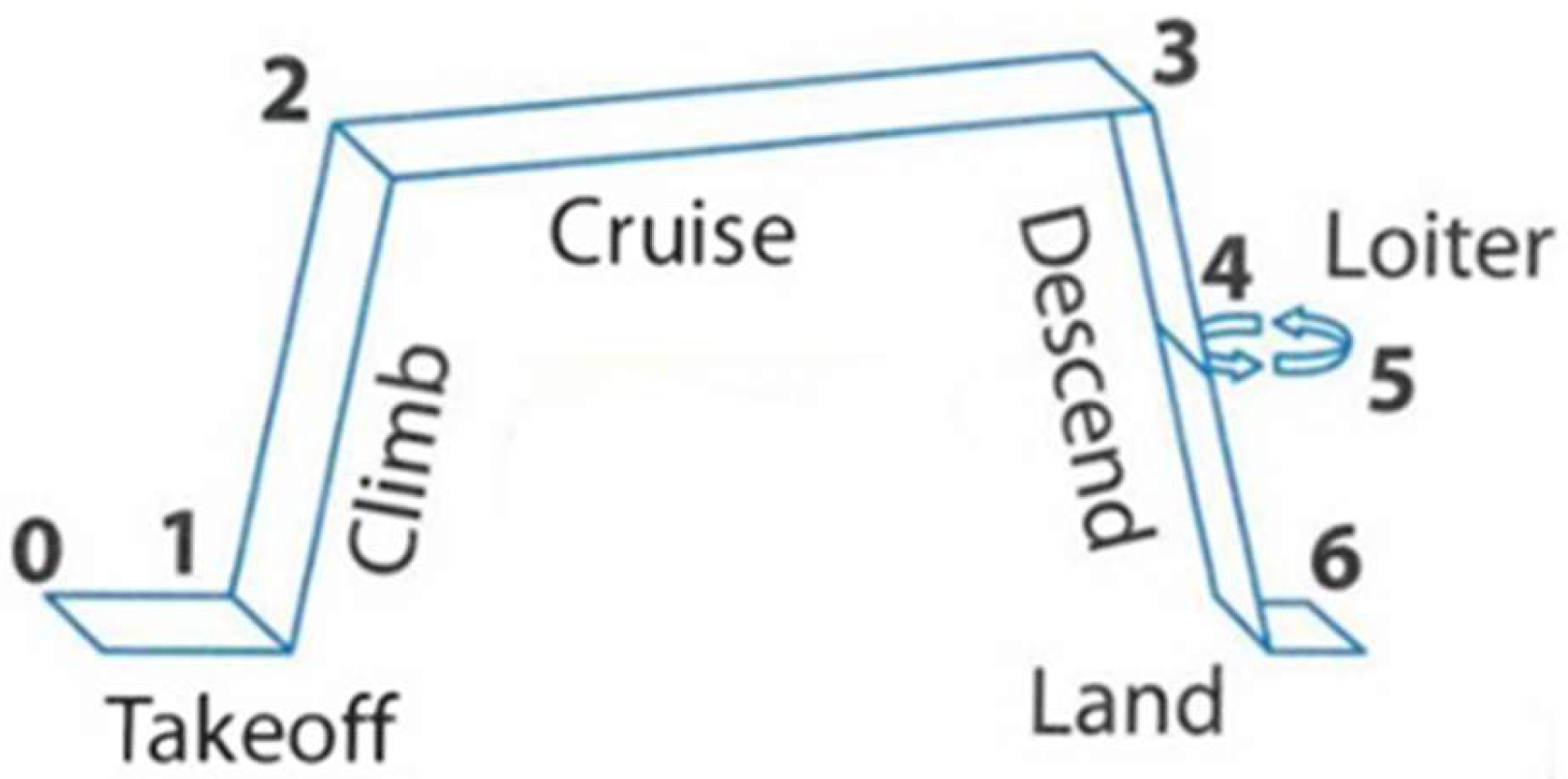
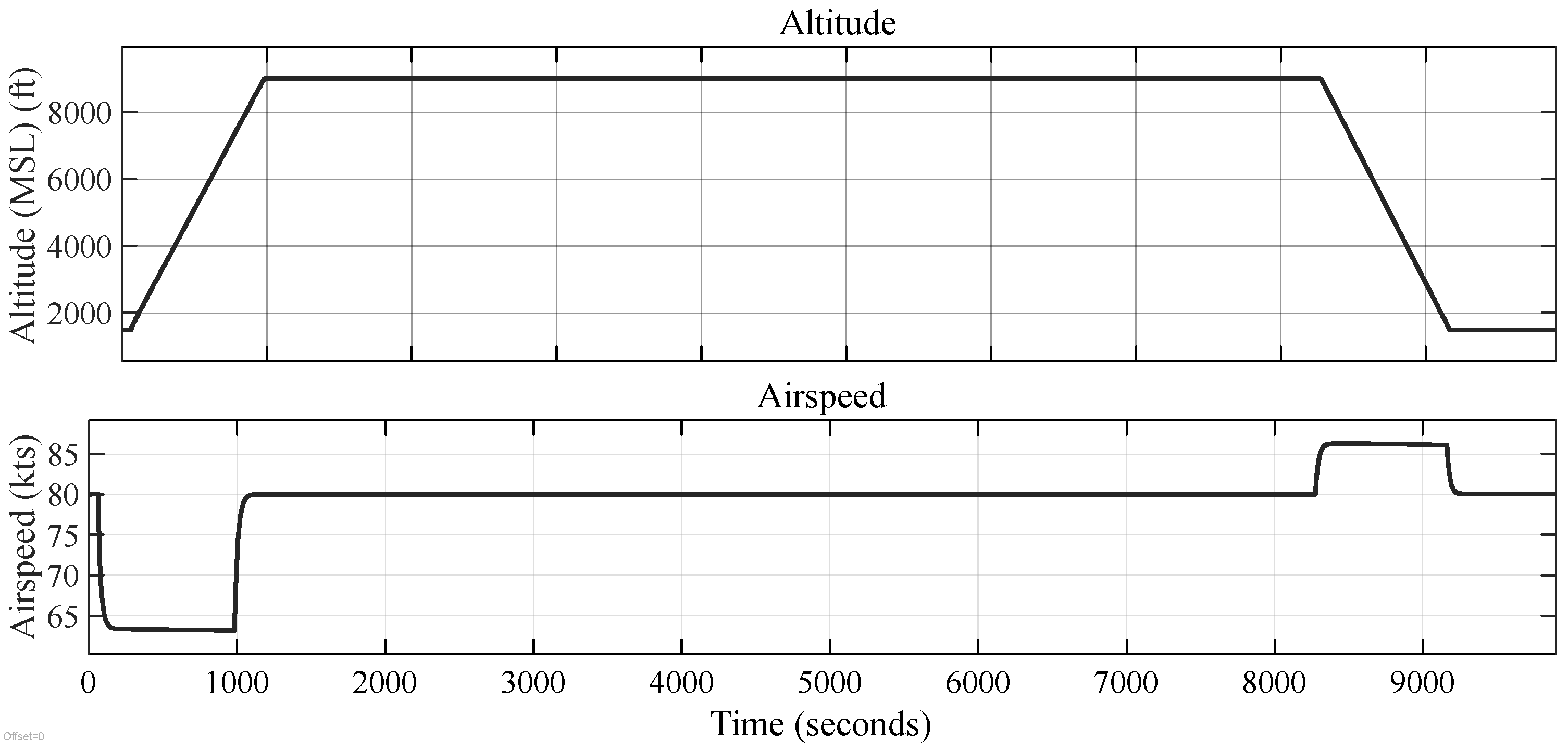
The MISSION PROFILE subsystem calculates the flight trajectory angle based on the flight stage, whether the drone is in takeoff, climb, cruise, or descent. The duration of the climb, cruise, and descent phases is determined using the mission altitude inputs, speed in each segment, and the climb and descent rates. The mission profile calls code from Matlab.
Figure 11 shows a variant of the flight mission used in the numerical simulation [
41].
The ENVIRONMENT subsystem calculates the drone’s altitude using the vehicle’s speed and angle, then sets the altitude within a COESA atmospheric model (Standard Atmosphere Model—Committee on Extension to the Standard Atmosphere). The COESA Atmosphere Model block implements the mathematical representation of the 1976 Committee on Extension to the Standard Atmosphere (COESA) United States standard lower atmospheric values for the absolute temperature, pressure, density, and speed of sound for the input geopotential altitude [
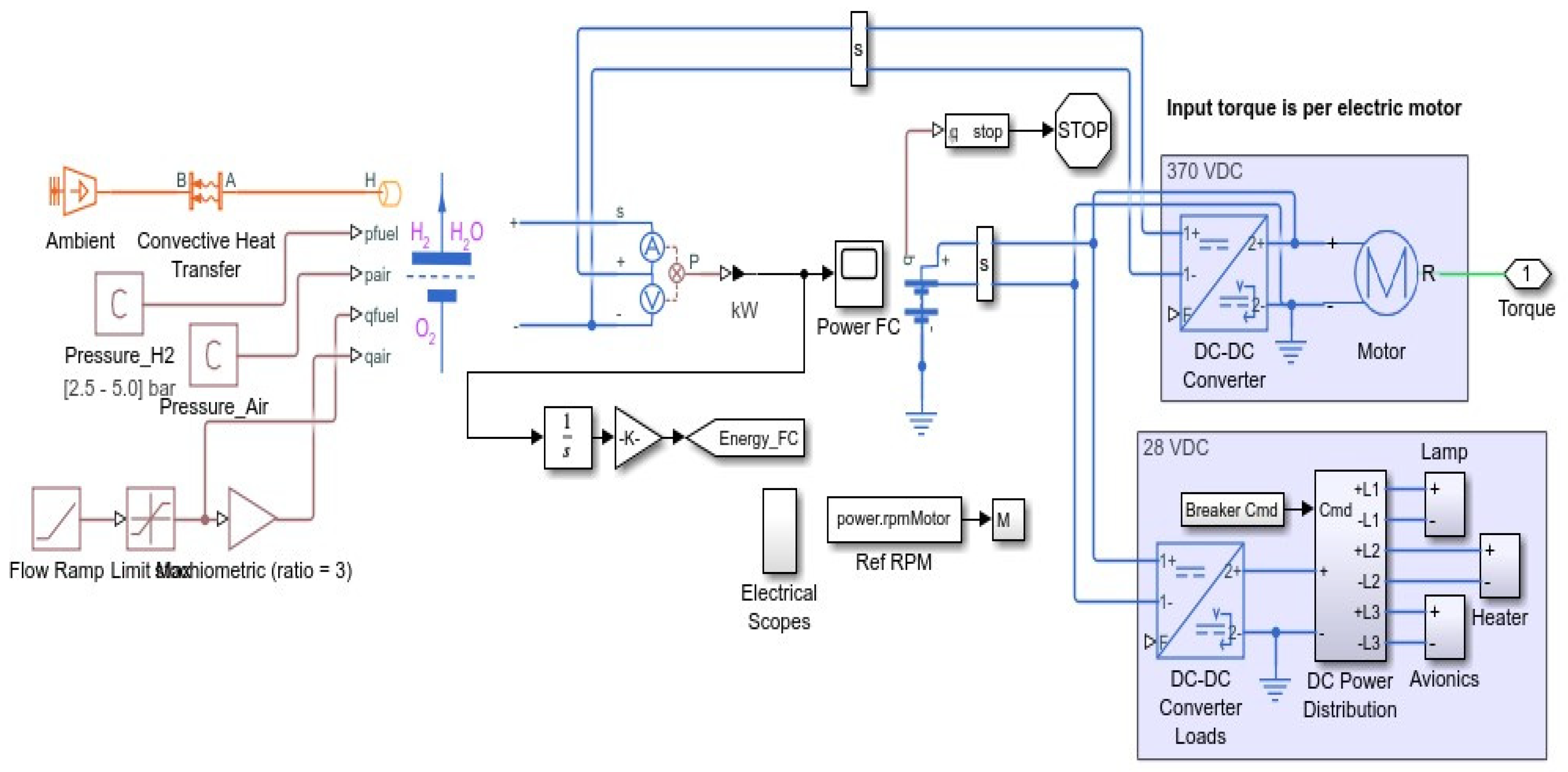
40]. The proposed model returns the absolute temperature of the air, density, and pressure for use in the drone’s subsystem’s point mass dynamics block. Depending on the speed and trajectory angle values, the subsystem integrates the altitude as the drone climbs, descends, or maintains level flight, continuously adjusting this parameter based on flight conditions. The design at first assumes the speed of the wind and angular velocities as zero to simplify calculations. This allows the ENVIRONMENT subsystem to focus exclusively on the drone’s motion parameters, eliminating the additional complexity of wind influence and extra rotations. The POWER subsystem, shown in
Figure 12, contains the two power sources, the fuel cell and the battery, the bidirectional DC-DC converter, the electric motor, and the loads. The hybridization of the electrical system is carried out at the source level. It can be observed that an active hybrid-electric propulsion system has been adopted, similar to the version presented in
Figure 5b, Structure B.
The fuel cell system runs under stoichiometric ratios and nominal parameters. The power supplied changes depending on the hydrogen pressure. The fuel cell block operates at two levels of fidelity: simplified and detailed. In the simplified mode, it calculates the Nernst voltage under nominal temperature and pressure conditions. In the detailed mode, it calculates the Nernst voltage by taking into account the pressures and flow rates of both fuel and air.
In this simulation, the simplified model is used. This block models a hydrogen fuel cell. The voltage consists of three components: the reactant term (pressure of H2 and O2), the activation term (Tafel), and the concentration term. The last two terms account for electrokinetic losses due to overpotential and high currents. The parameters of the fuel cell used in the simulation are as follows: open-circuit voltage: 65 V; Tafel slope: 0.23 V; internal resistance: 0.05 Ohm; nominal exchange current: 80 A; collapse current: 200 A; number of cells per module: 30; module units (series): 20; nominal H2 pressure: 1.5 ·105 Pa; nominal O2 pressure: 1 ·105 Pa; concentration of H2 in fuel (%): 99; and concentration of O2 in air (%): 21.
The battery modeling is conducted using a series internal resistance and a defined voltage source, according to the relation [
41]
where
Vnom represents the nominal voltage of the battery,
SOC is the State of Charge, and β is a parameter that stands for the internal characteristics of the battery.
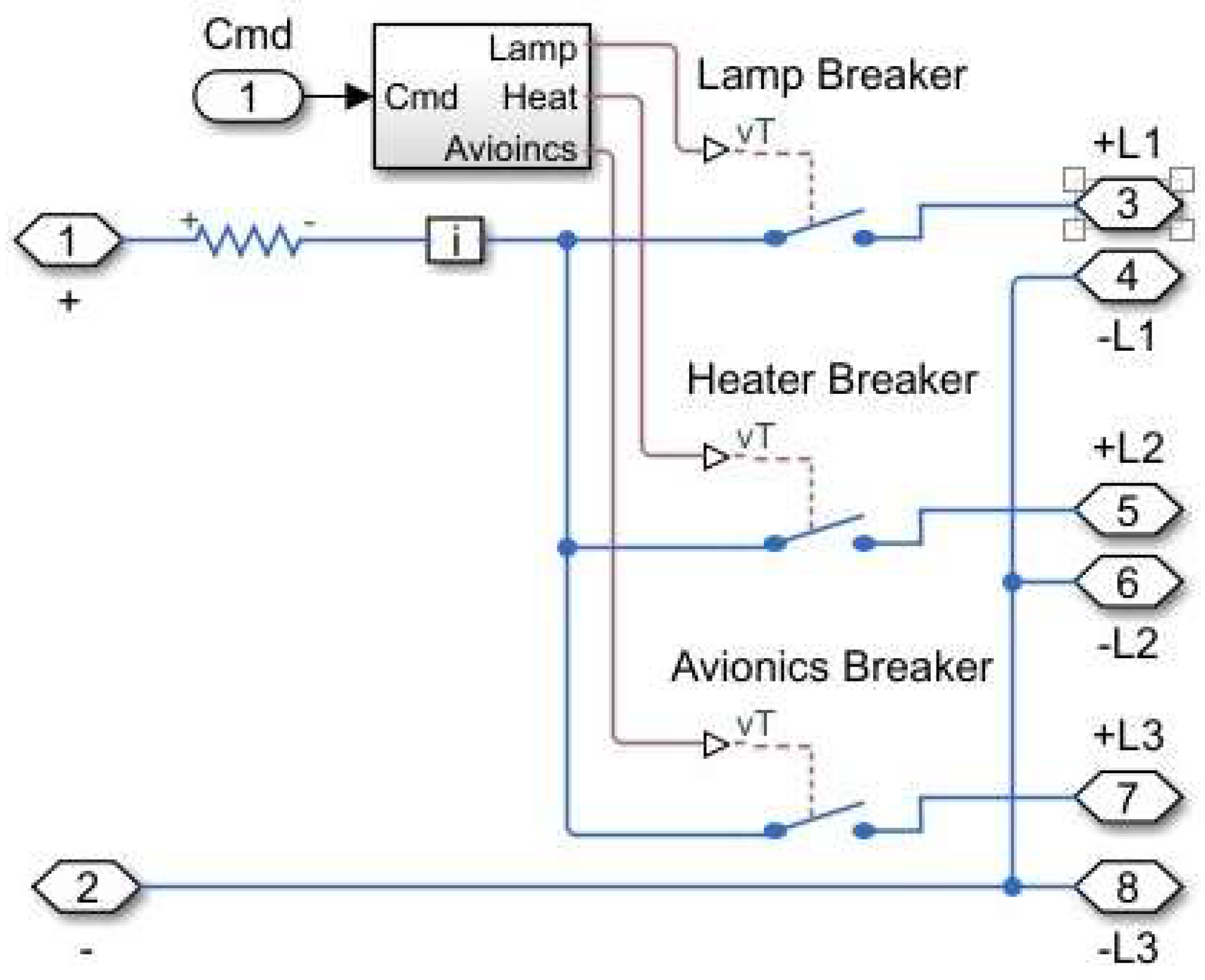
The DC POWER DISTRIBUTION subsystem represents the circuit breakers that control the connection and disconnection of loads from the low-voltage DC network by opening and closing, such as lights, avionics, and cabin heating. The loads are powered by a Buck-type DC-DC converter with an output voltage of 28 VDC, as shown in
Figure 13. Variable conditions influence the power drawn from the network, the drone’s autonomy, and the power requirements for the electrical lines in the drone. Variable conditions such as the outside temperature, altitude, speed, and the operating requirements of each load directly affect the required power and how the energy is distributed to various components. An increase in the power requested by auxiliary loads, such as the heating system or lighting, can reduce overall autonomy. Careful energy consumption management becomes essential to extend the flight range. The MOTOR subsystem, shown in
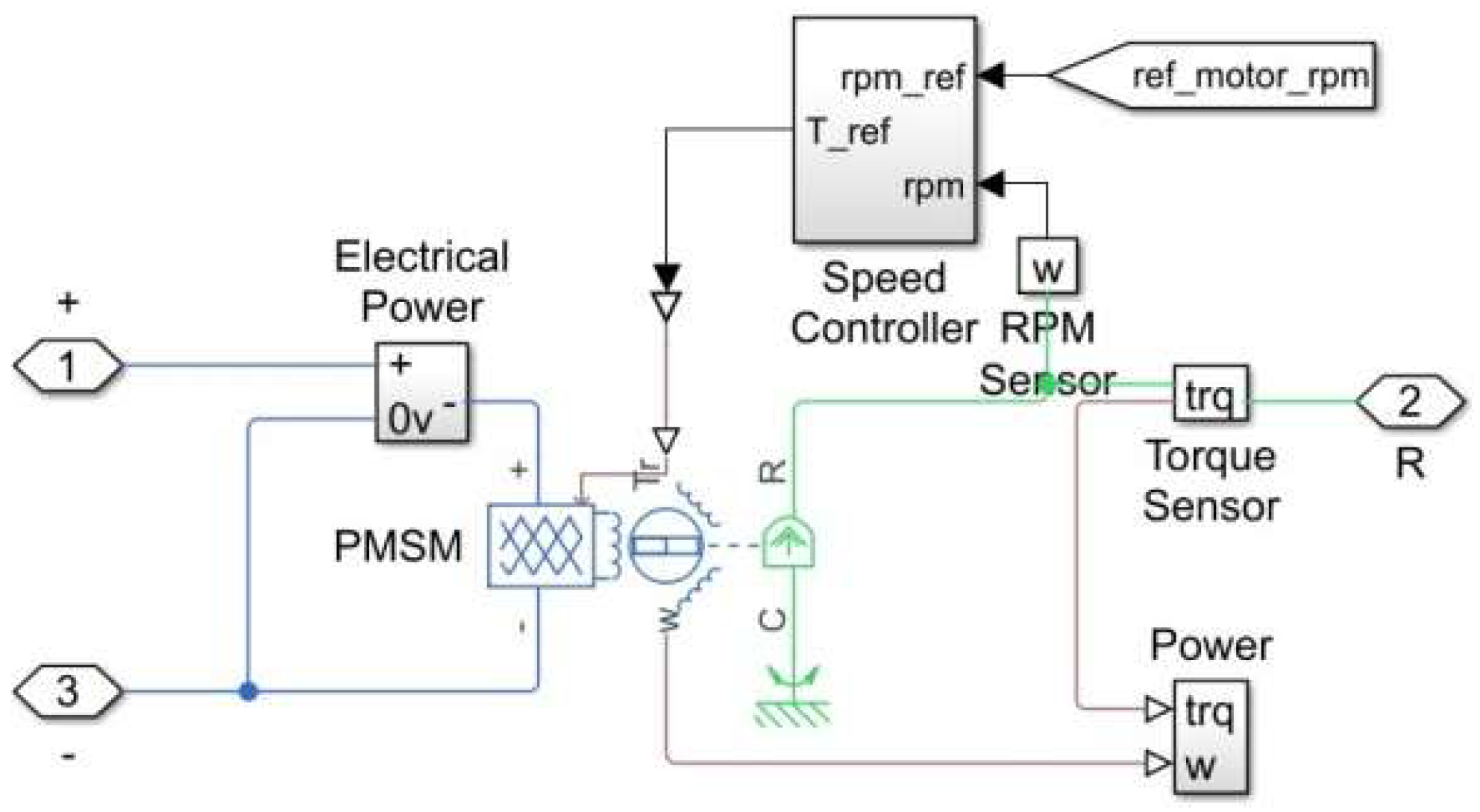
Figure 14, is modeled using a Permanent Magnet Synchronous Motor (PMSM).
In the numerical simulation, a variant of the drone is studied with the dimensions shown in
Table 2. The proposed power source in this study is hybrid, consisting of batteries and fuel cells. The batteries play an important role during the takeoff phase, where high power is required, as well as in emergency situations. They essentially play a secondary role, while the fuel cells, after the startup phase, take on the primary role. A battery with a capacity of 80 Ah and a bus voltage of 370 V is used, and the fuel cell delivers a power output of 20 kW, according to the parameters mentioned earlier.
The electrical system comprises a PEM-type fuel cell operating in parallel with a battery, both supplying energy to the input of a controlled DC-DC converter. This converter powers the electric motor, which drives the propeller. The motor’s operation is managed by a PID loop control system, designed to maintain a constant propeller speed. The torque at the propeller shaft is adjustable, enabling power variations as previously described. The fuel cell model is compatible with the parameters of the Ballard FCgen-HPS fuel cell [
42]. This fuel cell type is highly suitable for aviation applications, offering a volumetric power density of 4.3 kW/L, a mass power density of 4.7 kW/kg, a maximum power output of 140 kW, and a weight of 55 kg. Using a Ballard FCgen-HPS fuel cell, with the specified data and a power of 20 kW, scaling results in a fuel cell mass of approximately 8 kg. According to data from [
33], for a Ballard FCgen-HPS fuel cell with a power of 20 kW, when hydrogen is stored at 700 bar pressure, a tank volume of approximately 28.5 L is required.
The Mission Profile introduces a flight scenario with the following parameters required by the Matlab code called for simulation:
Airport elevation (MSL ft): 1500;
Cruise altitude (MSL ft): 9000;
Total distance (NM): 220.
The weight of the empty drone with the engine is set to approximately 253 kg. The drone mission graph, when successfully completed, will take the shape of a trapezoid (
Figure 11). The drone’s mission requires a minimum flight distance of 220 nautical miles to be considered a complete mission. The drone will take off from a runway and begin climbing at a rate of 500 ft/min. After reaching cruise altitude, the drone stabilizes its speed at 80 knots (approximately 150 km/h). Based on the numerical simulation, the characteristics presented in
Figure 15,
Figure 16,
Figure 17,
Figure 18,
Figure 19,
Figure 20,
Figure 21,
Figure 22,
Figure 23 and
Figure 24 were obtained.
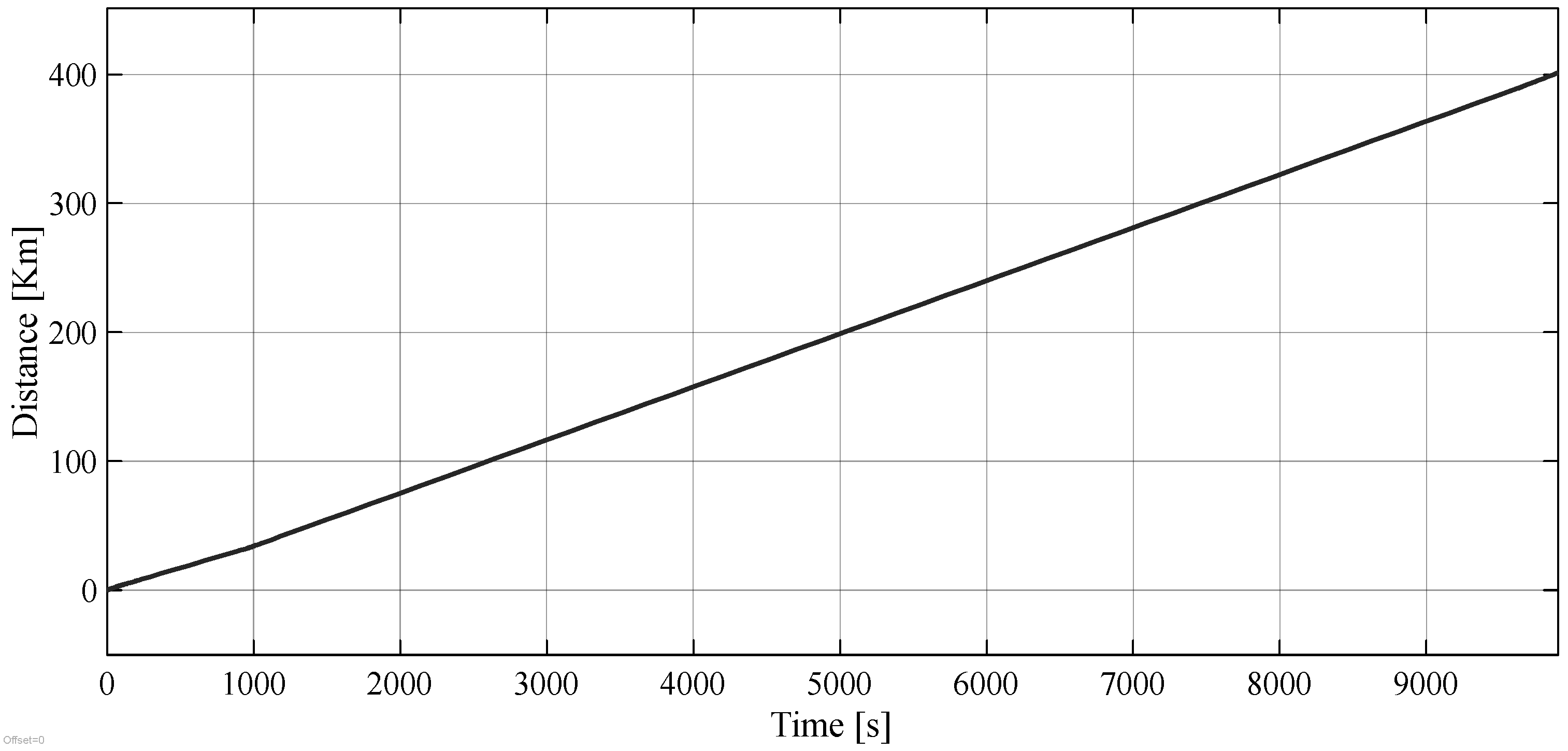
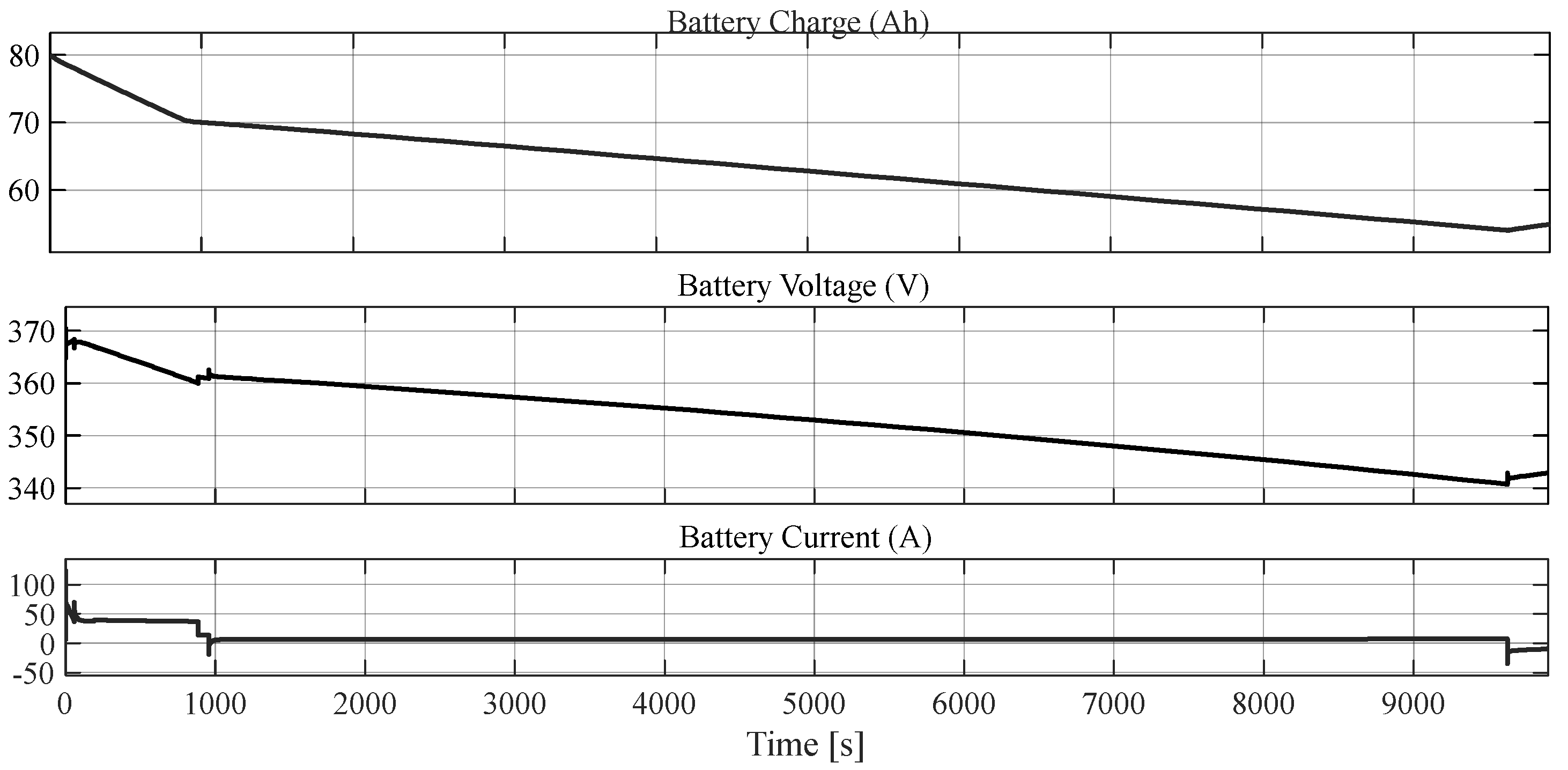
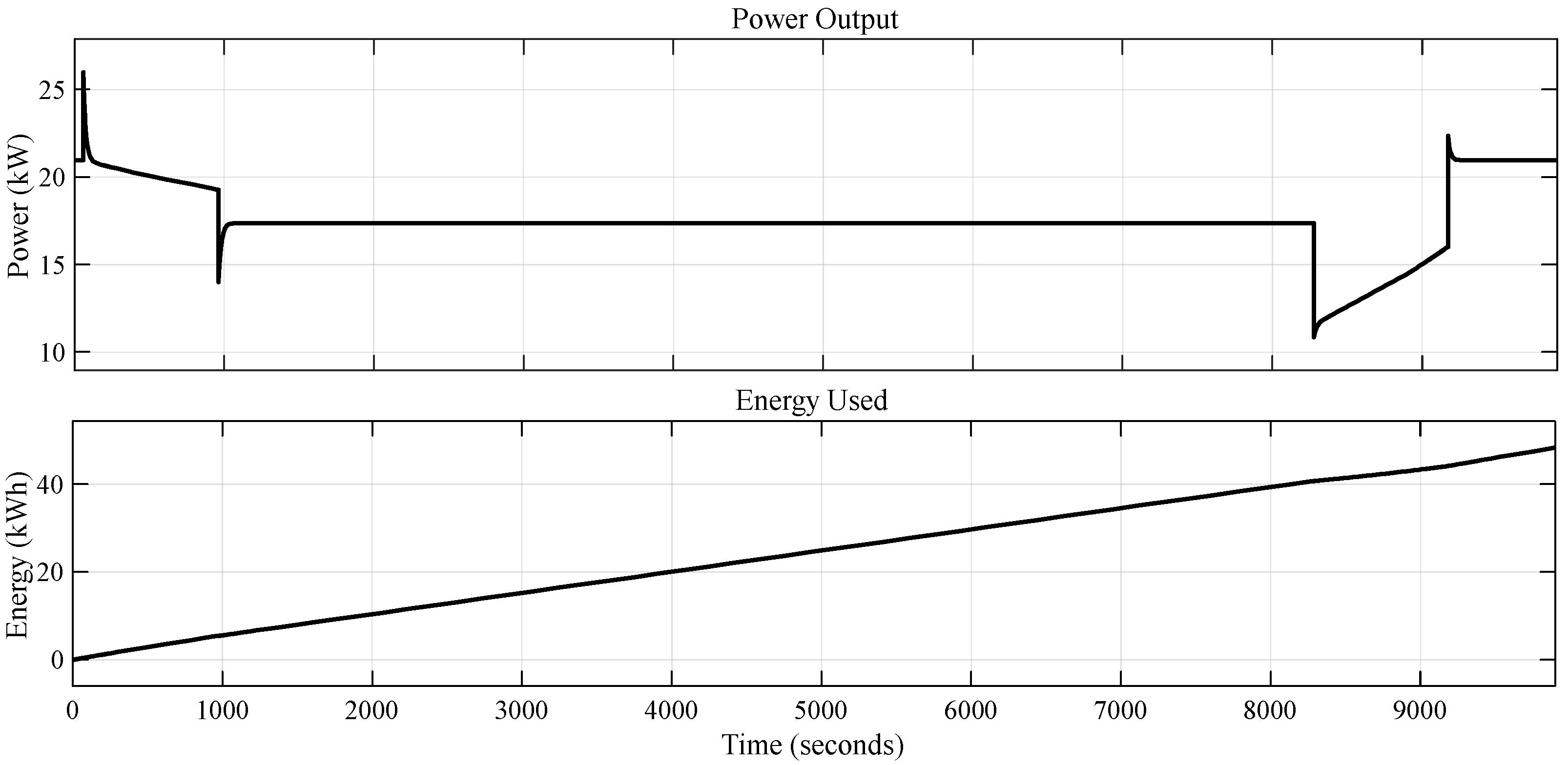
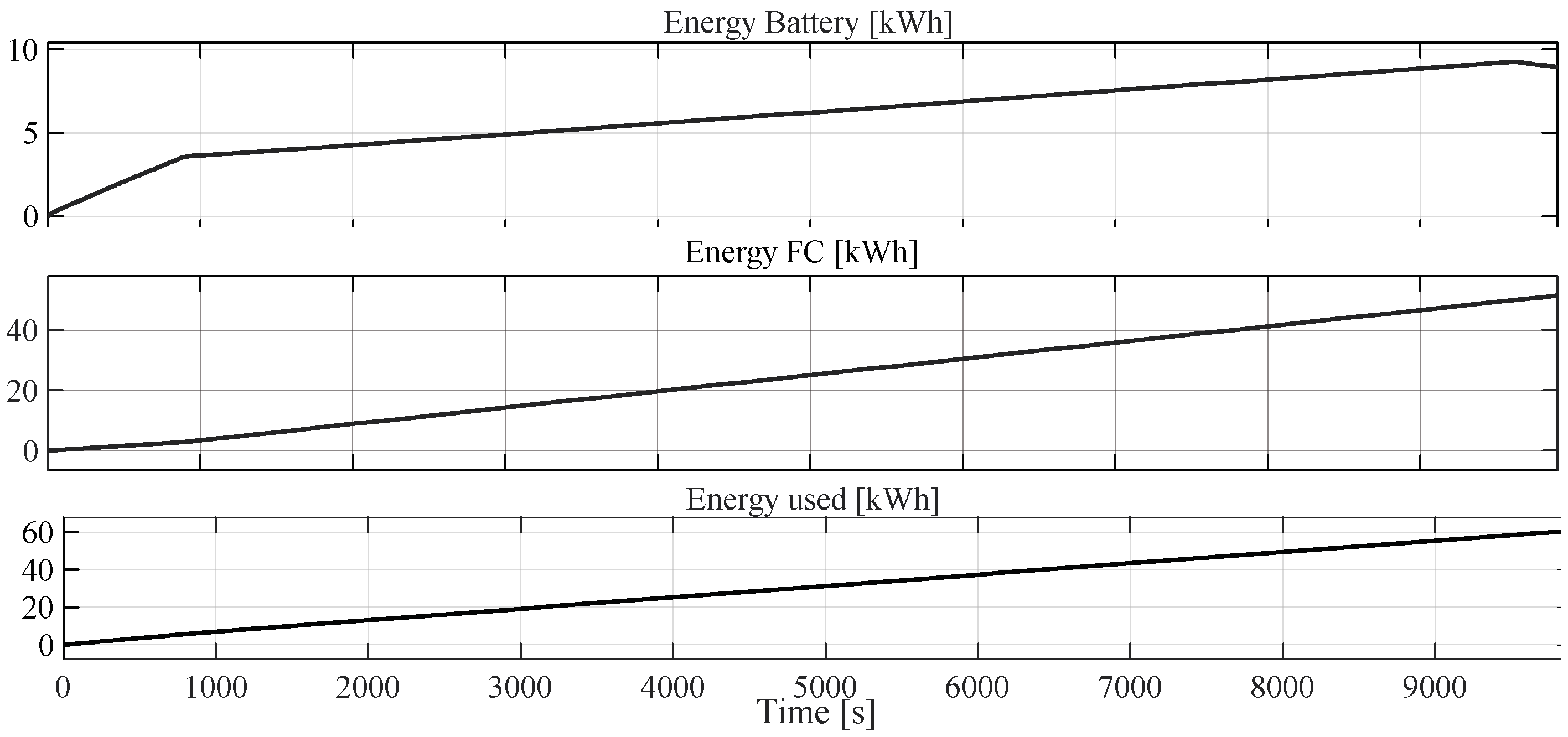
Based on the parameters variations obtained from the numerical simulation for a hybrid-electric propulsion fuel cell-based system, it is found that a complete 9900 s mission requires approximately 60 kWh of energy to cover a distance of about 400 km. Through the hybridization of the two sources—battery and fuel cell—the system ensures power for the full 9900 s. Initially, the battery is used, and then the system is mainly powered by the fuel cell. The battery also has a limitation of 20 Ah; however, this limitation is not reached during this operational period, as shown in the graph in
Figure 22, where the battery still has a capacity of 45 Ah at the end. Limiting the battery to 20 Ah would mean a remaining charge percentage of 25%. This limitation would provide additional autonomy in case of multiple landing retries or emergency situations.
Figure 15 presents the mission profile adopted for this study.
Figure 16 presents the power and the energy consumed by the system.
From the results shown in
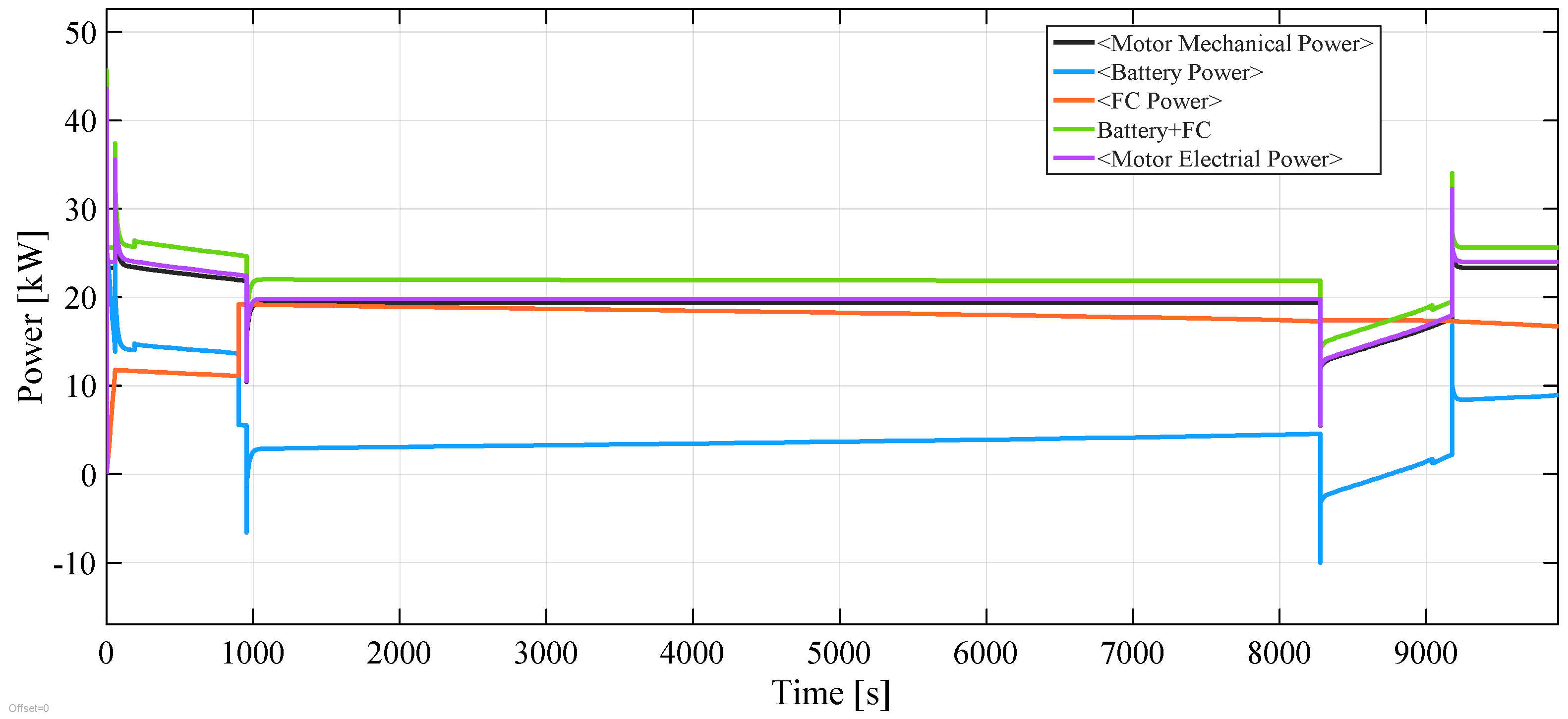
Figure 17, it is observed that the propulsion system performs well. This figure presents four types of power—motor mechanical power, battery power, fuel cell power, and motor electrical power—as well as the total of the battery and cell powers. It is noted that the battery and fuel cell adequately supply the required electric power.
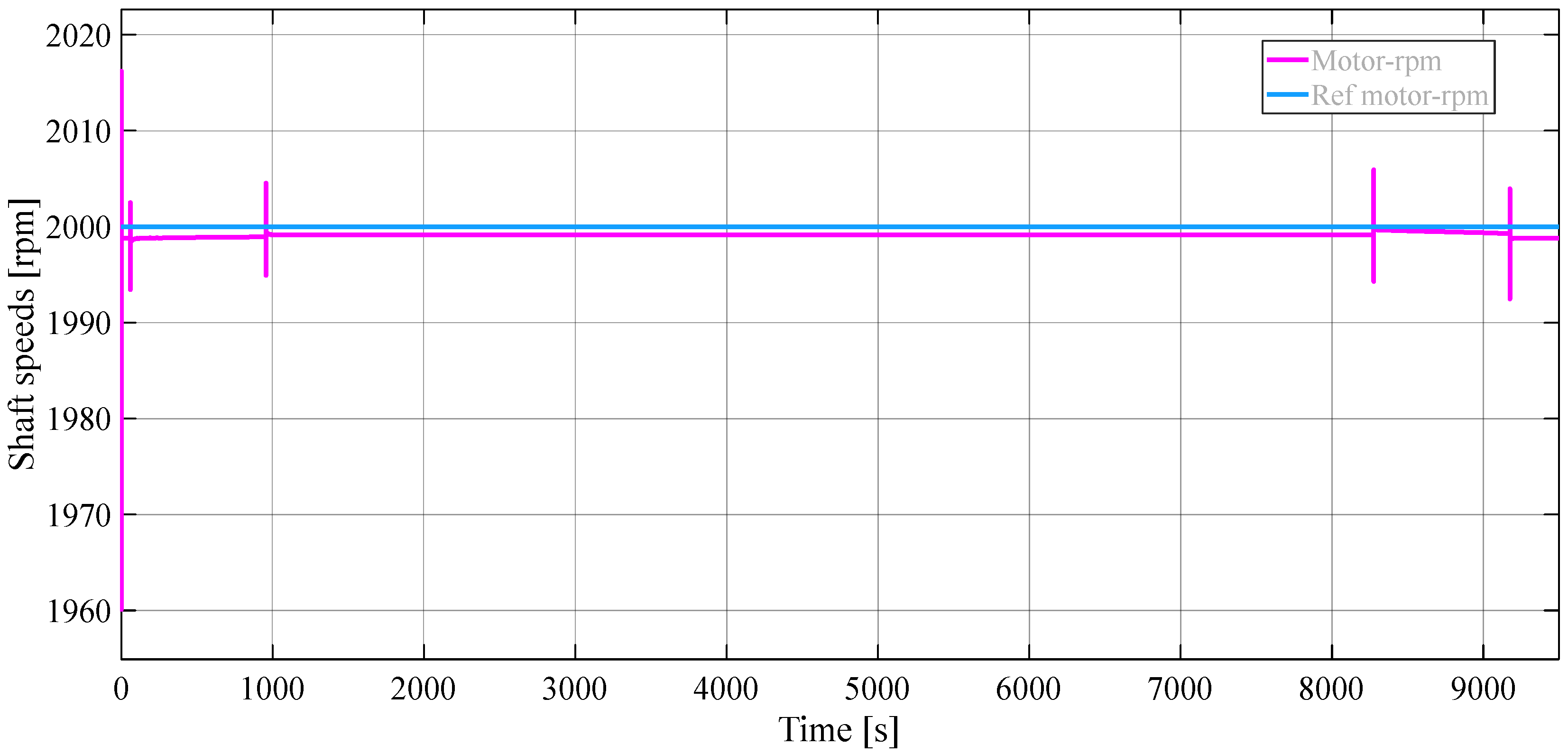
Figure 18 shows the shaft rotations,
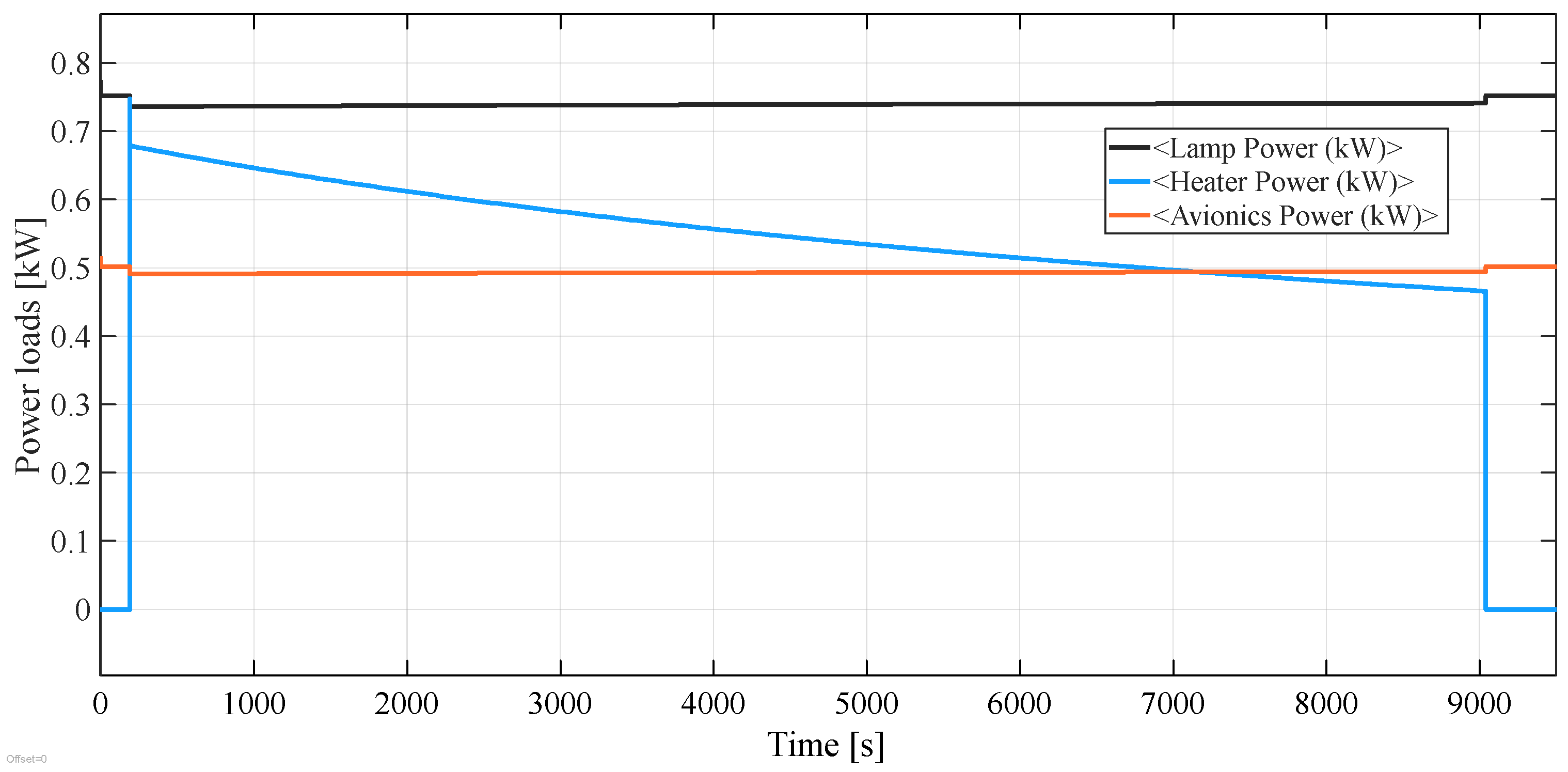
Figure 19 presents the loads power variation, and
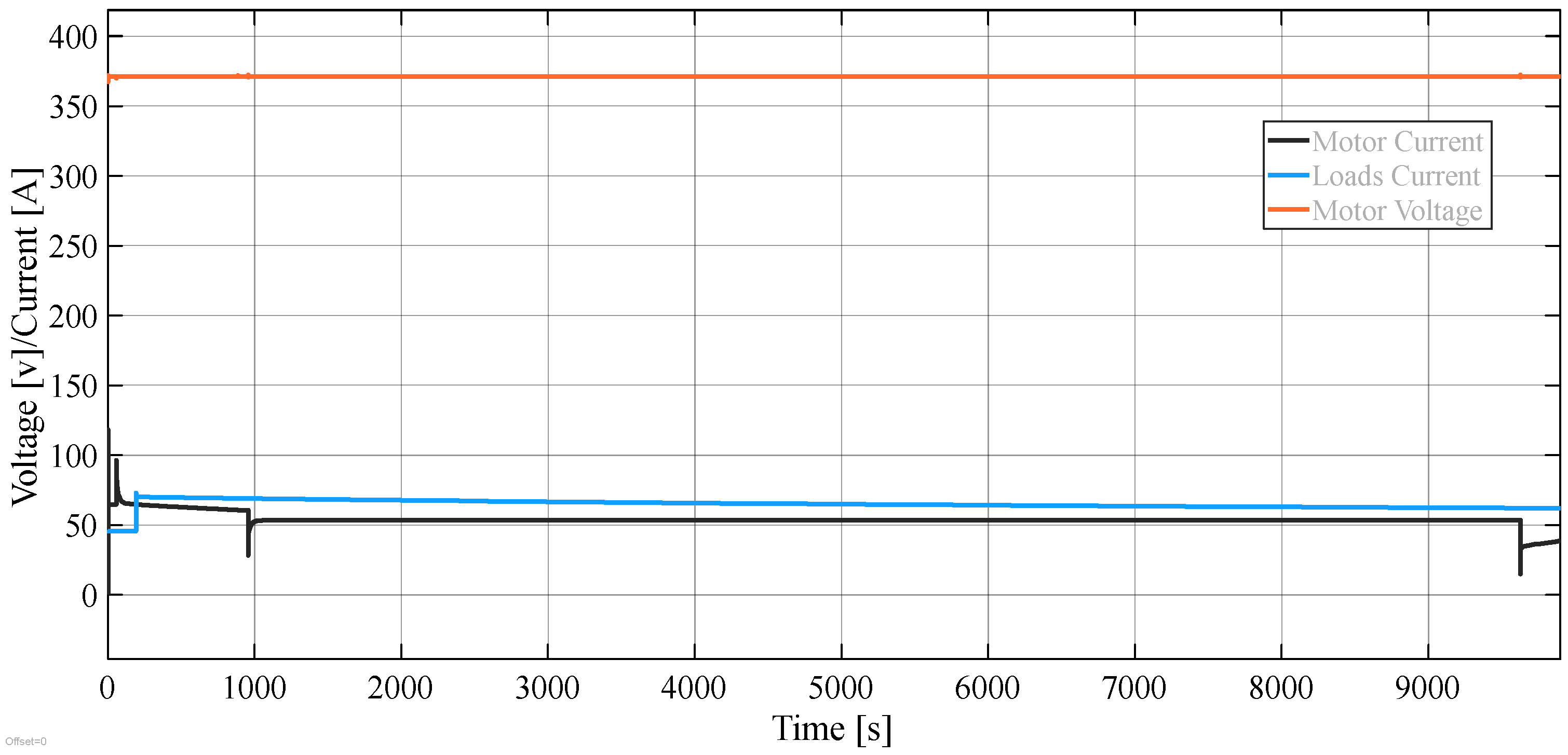
Figure 20 illustrates the current curves for the motor and the drone’s loads over time, as well as the motor supply voltage. Initially, the motor current is high and then gradually decreases. The current of the loads is relatively constant, with minor variations. Sudden jumps are observed in both curves, indicating changes in the drone’s operation and the system’s response during the takeoff, cruising, and landing phases. For instance, the first jump occurs in the initial minutes of flight, corresponding to the climb to cruising altitude, requiring a higher instantaneous power demand from the motor.
Figure 21 presents the flight distance variation.
Figure 22 synthetizes the battery parameter behaviors.
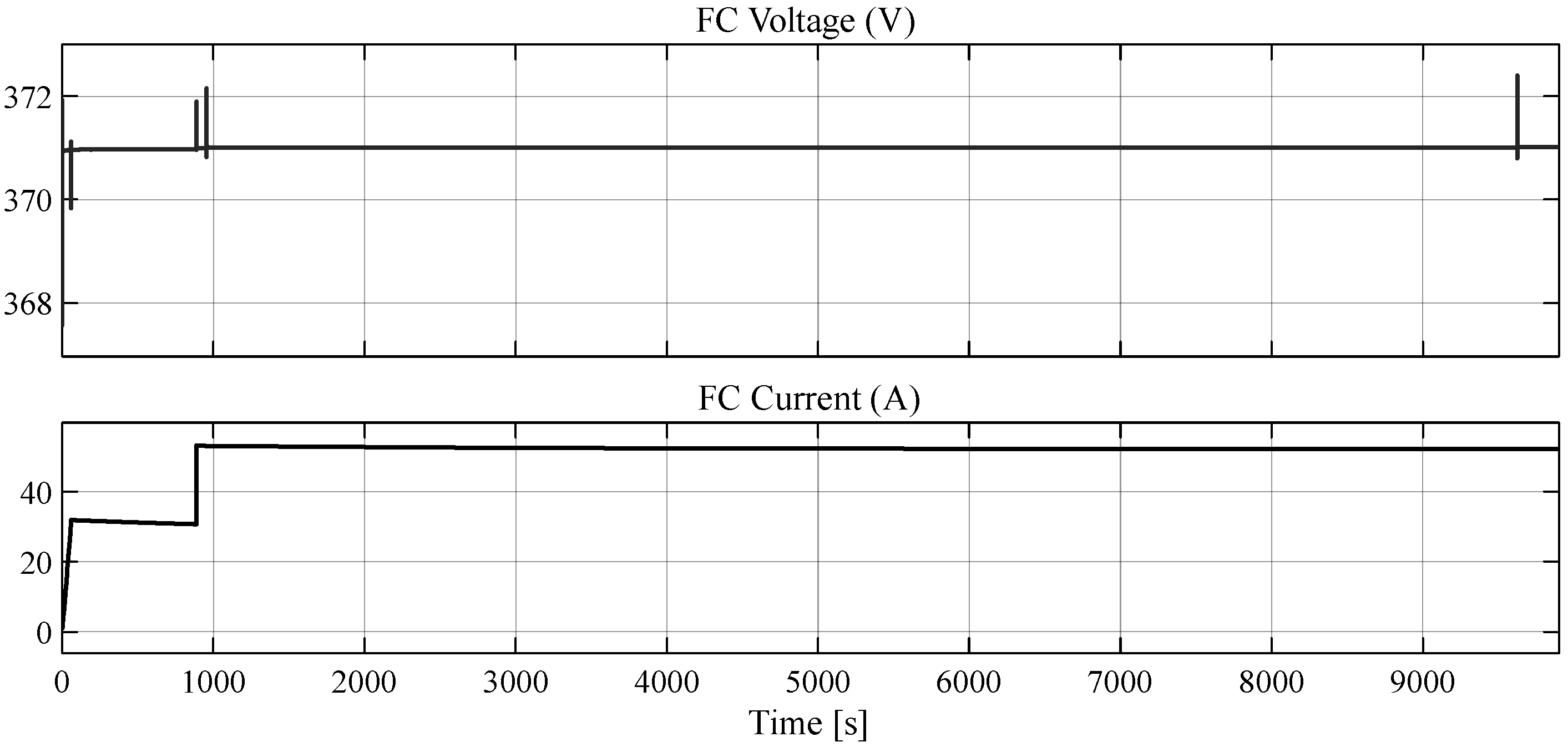
Figure 23 presents the output parameters of the fuel cells.
Figure 24 presents the energy flows in the system.
Based on the outcomes, it can be inferred that for a drone with an empty weight of 253 kg, an 80 Ah battery capacity weighing 70 kg, and a fuel cell with 20 kW power and a total weight of 15 kg (including the auxiliary systems and hydrogen tank), along with a load of 207 kg, the total weight amounts to 545 kg. With this version of the fuel cell-based propulsion system, a range of 400 km is achieved. Thus, it can be concluded that this configuration is feasible for medium-weight medium-range drones.
4. Conclusions
The aerospace industry is facing major challenges in the context of the global need to reduce environmental impact. Given the continuous increase in air traffic and greenhouse gas emissions, the development of sustainable solutions for aviation becomes imperative. Following the success of electric cars, trucks, buses, and trains, the clear target is drone regional transport. This paper presents recent developments and future prospects for sustainable aviation, with a special focus on electric and hybrid-electric drones. Using the “Electrical Component Analysis for Hybrid and Electric Aircraft” model in Matlab/Simulink [
40], a hybrid propulsion system based on fuel cells was developed for a medium-weight transport drone.
The proposed configuration is a classic airplane one with normal takeoff and landing. Taking the advantage of this configuration, we can obtain an extended range. Comparing with the performances of NUUVA 300, we can obtain a better range by giving up to the vertical takeoff and landing. In some applications, this is a benefit, but in other applications, this could be a disadvantage. Some geographic regions have many fields to use as takeoff and landing runways, but in other areas, these facilities are completely missing. The end user will select the appropriate configuration for their situation.
The proposed configuration with the full-electric propulsion system ensures a flight range of 400 km with a payload of 207 kg and needs a maximum power of 25 kW. It is an important advantage compared with NUUVA 300, which, for takeoff, uses eight electrical motors of 57.6 kW each. Moreover, the proposed system uses hydrogen fuel cells that have no pollutant emissions compared to NUUVA 300, which uses ICE for cruising. As drawback, the proposed configuration has no vertical takeoff capability.
A confirmation of our results can be the comparison with the airplane HY4 with electric propulsion. In the version with hydrogen fuel cells, it can fly 1500 km with four persons on board. Four persons, according to the calculation standards, means 80 × 4 = 320 kg, a payload higher than our consideration. In this situation, we can say our estimations are a little bit pessimistic. It is possible that our drone has a longer range than we estimate, or it is possible that this configuration can support some features concerning vertical takeoff and landing [
43].
An interesting future study can target the repowering of a NUUVA 300 class drone with completely electric propulsion and replace its cruise ICE with an electric one fed also from fuel cells. The results of this study show that it may be possible and efficient. A part of the cruise energy will be used in the takeoff and landing phases, and the range will decrease, but we appreciate that the overall performance will be attractive for this kind of drone.
The proposed procedure, while much simpler than the methods used for fuel cell-powered propulsion systems in automotive applications, is highly suitable for electric drones, where the propulsion power remains constant during cruise flight. As a result of numerical simulations, the fuel cell propulsion system offers the advantage of achieving a more complex flight profile. We can say that using fuel cells recently introduced to the market offers the prospect of better performance for an electric propulsion drone. Therefore, we can conclude that the success of hydrogen-powered aviation will depend on concentrated efforts to reduce the current gap in green hydrogen production and accelerate the development of hydrogen-specific technologies for aviation.