Article

BRA-YOLOv10: UAV Small Target Detection Based on YOLOv10

1
Xi’an Institute of Optics and Precision Mechanics, Chinese Academy of Sciences, Xi’an 710119, China
2
University of Chinese Academy of Sciences, Beijing 100049, China
3
Key Laboratory of Space Precision Measurement Technology, Chinese Academy of Sciences, Xi’an 710119, China
*
Author to whom correspondence should be addressed.
Drones 2025, 9(3), 159; https://doi.org/10.3390/drones9030159
Submission received: 20 January 2025 / Revised: 18 February 2025 / Accepted: 18 February 2025 / Published: 21 February 2025

Abstract

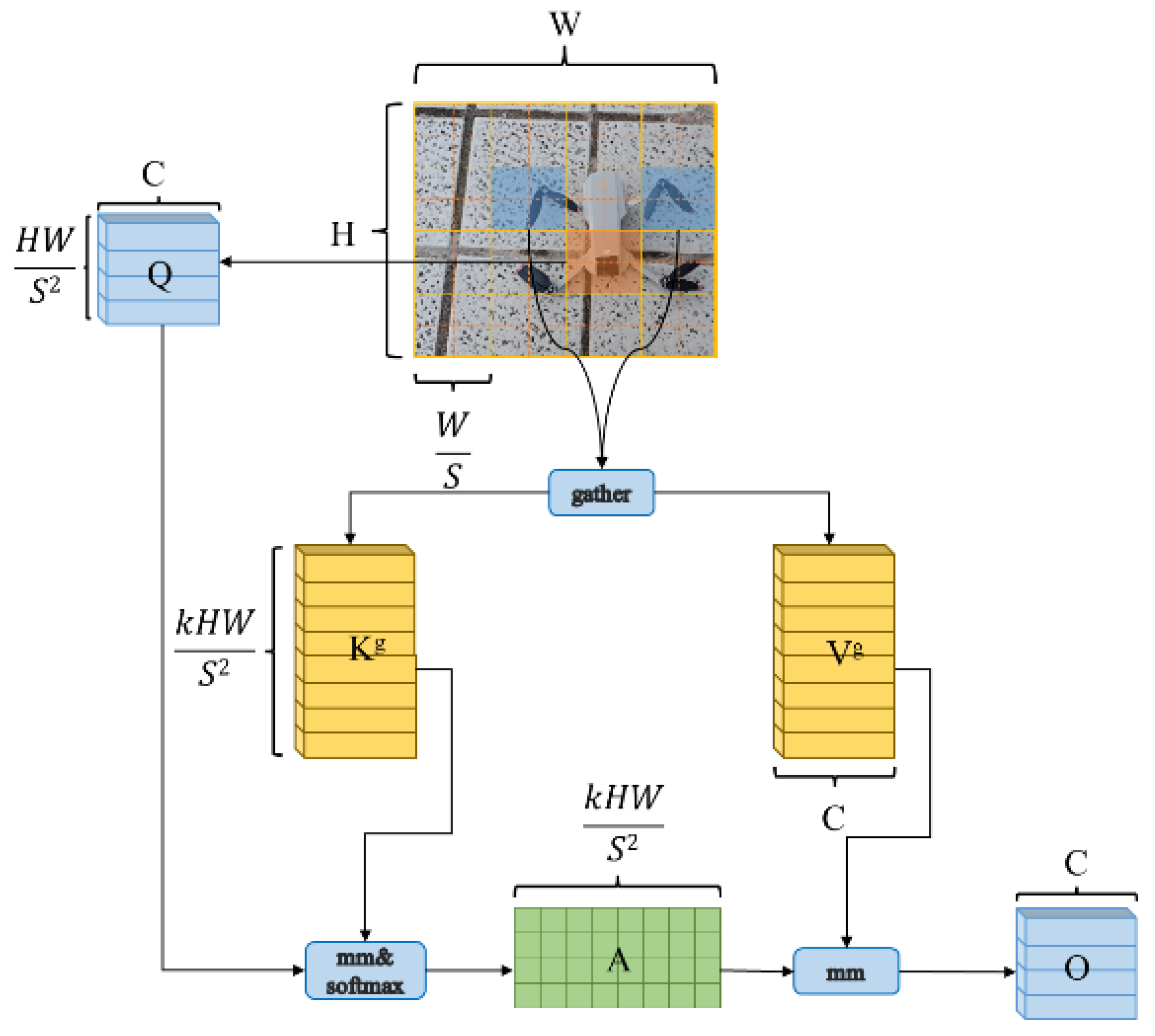
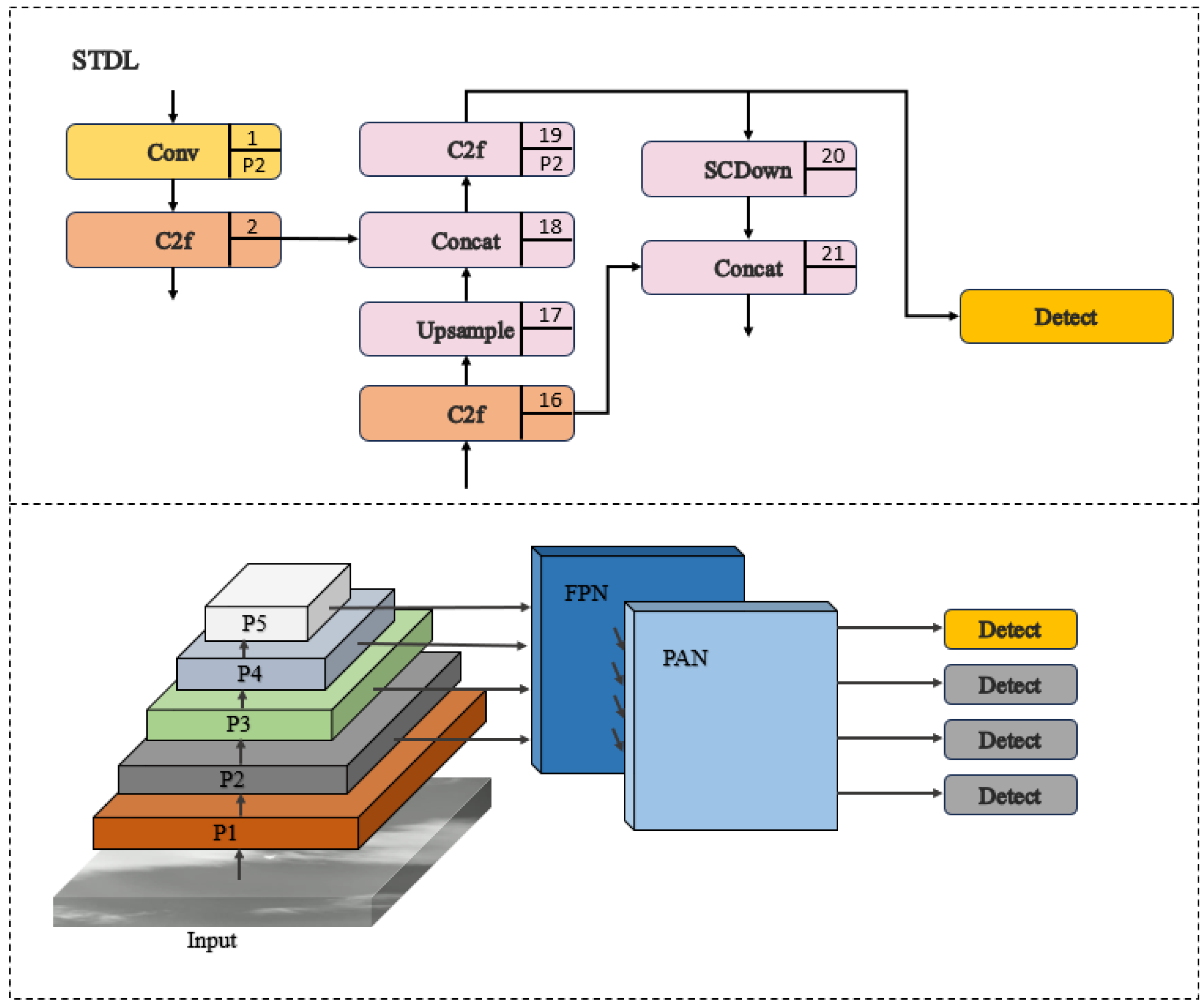
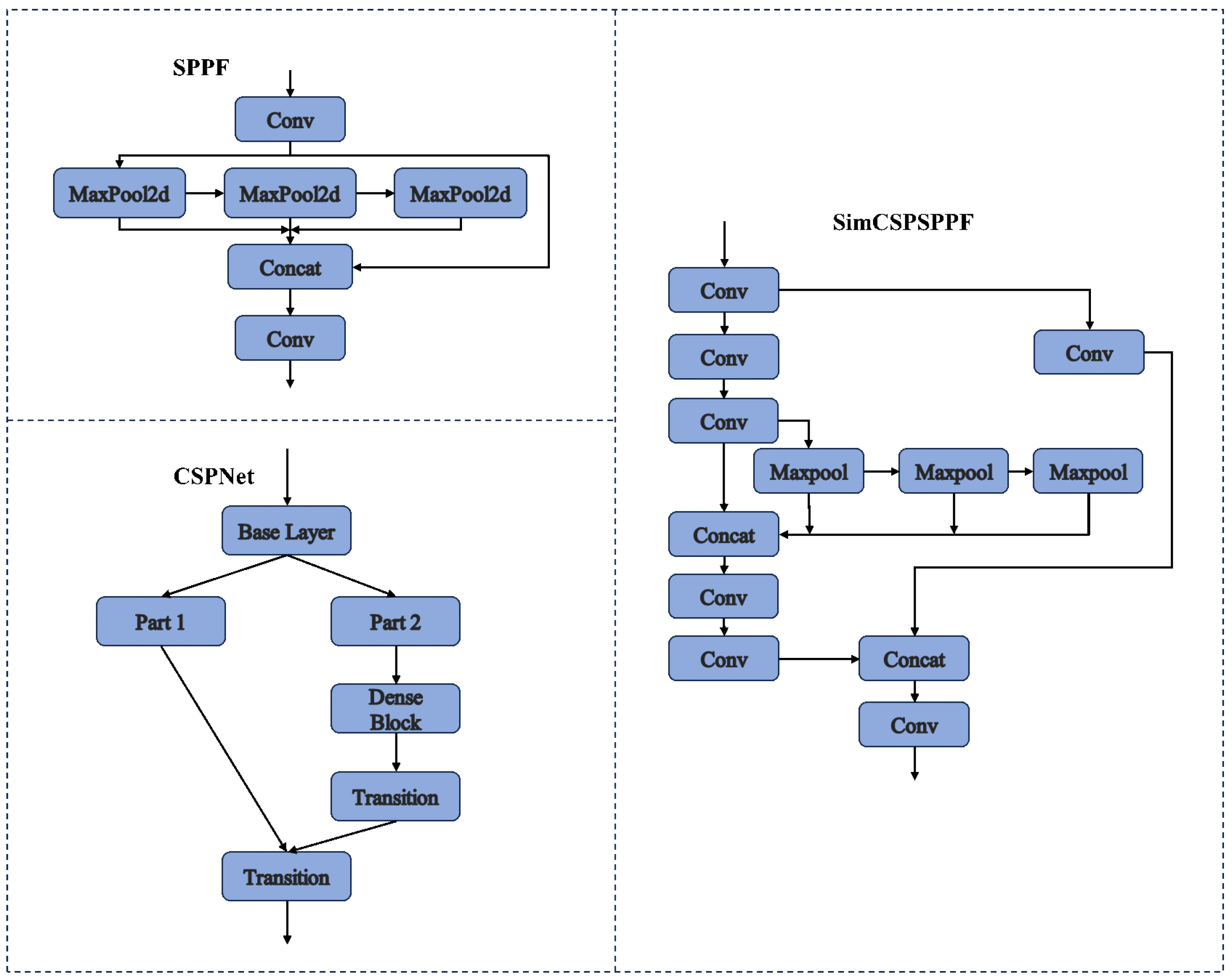
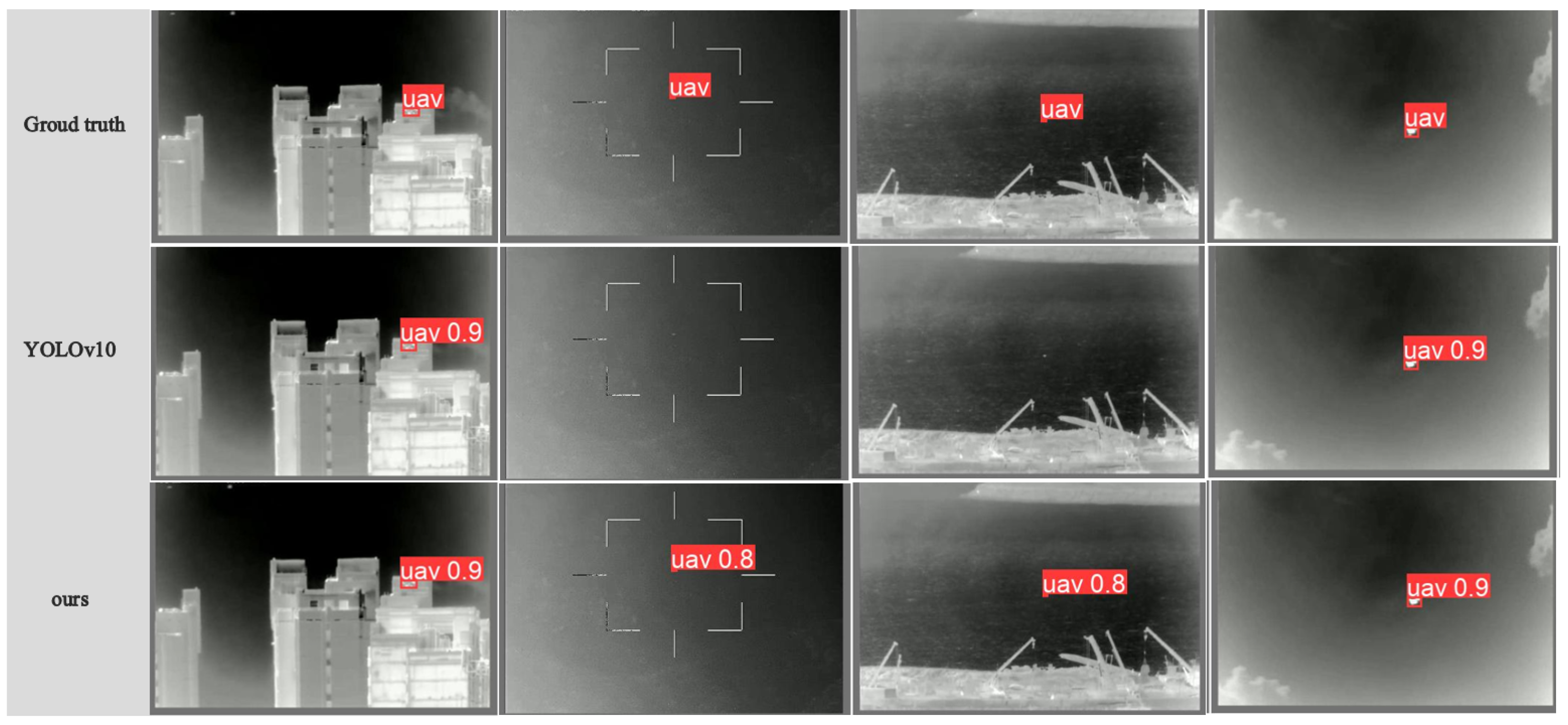
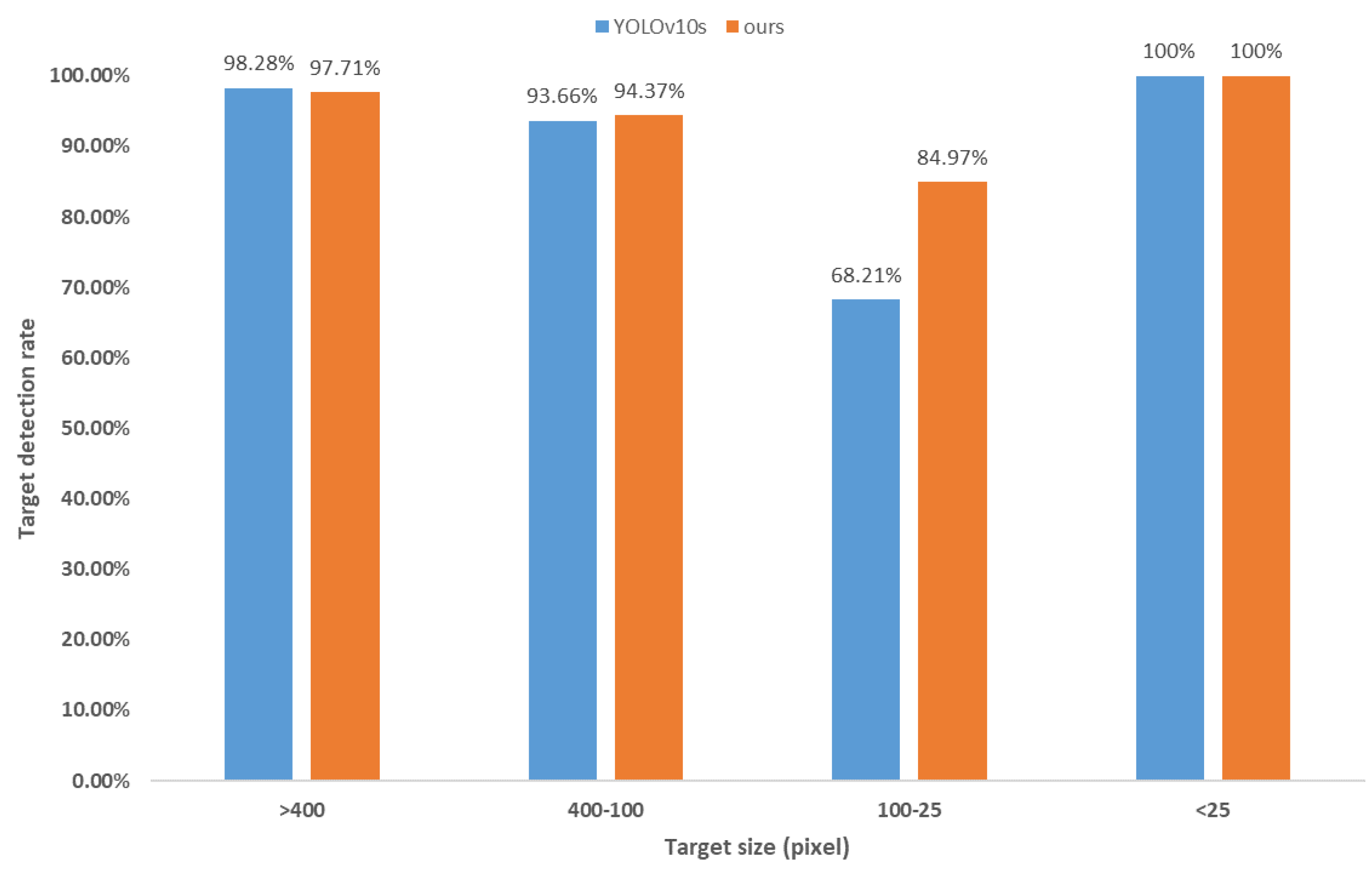
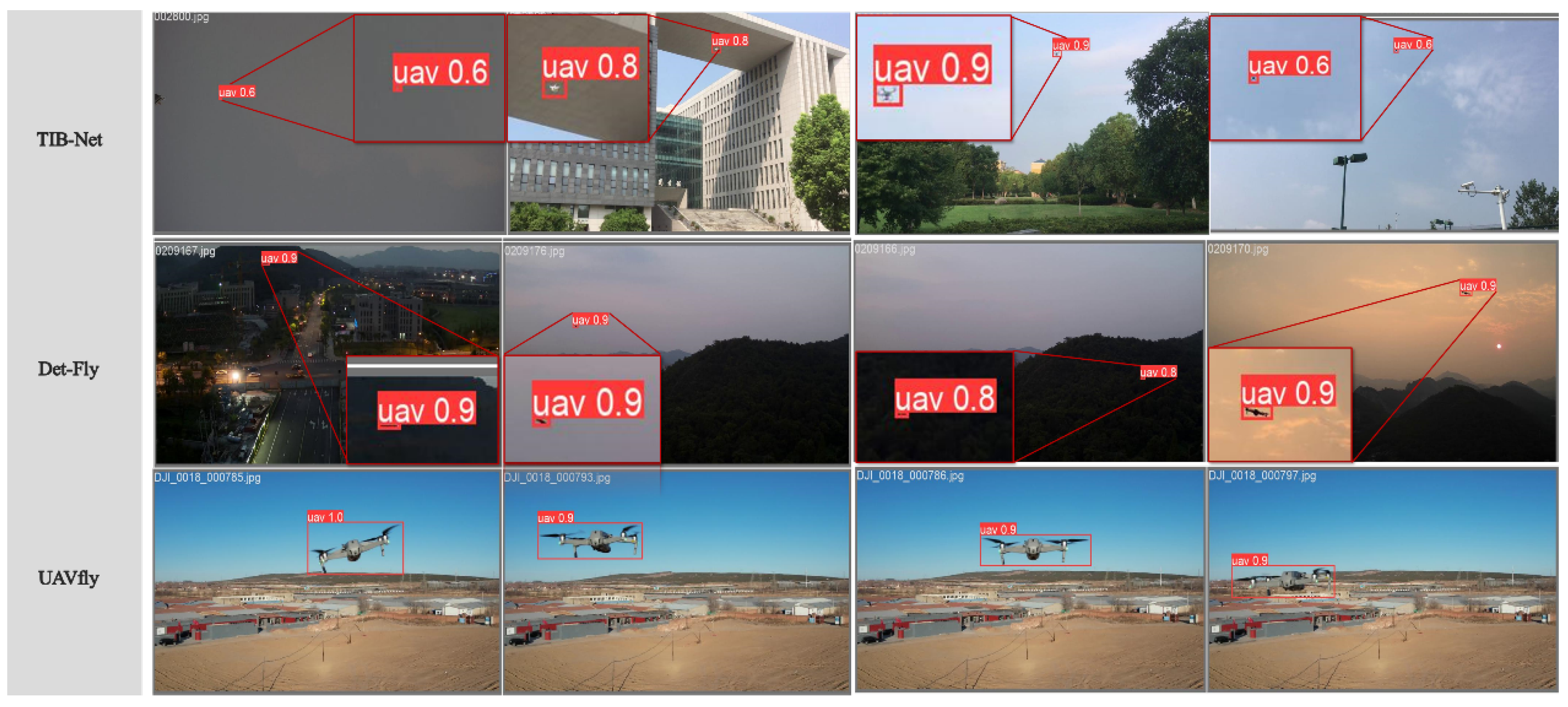
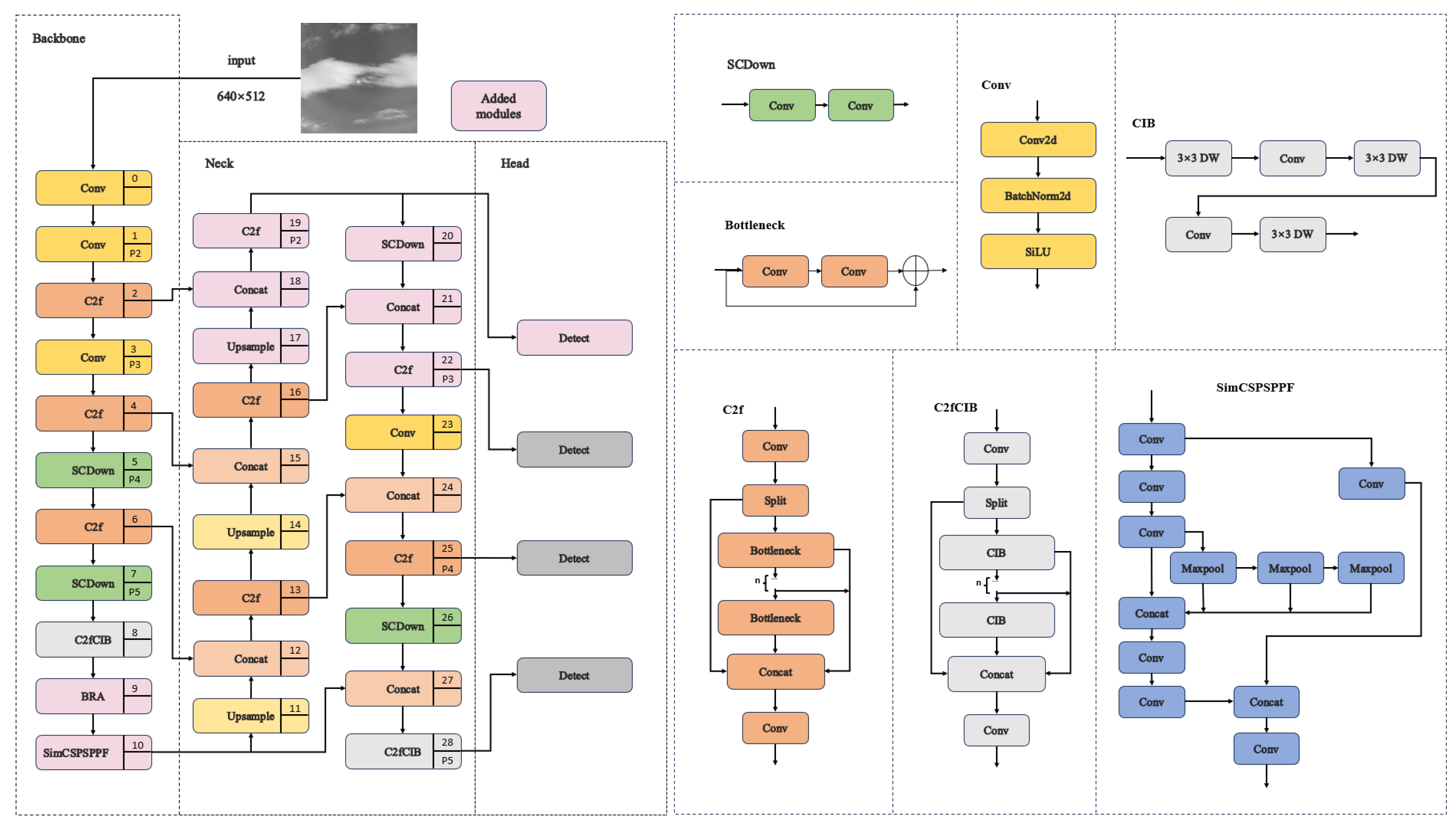
Unmanned aerial vehicle (UAV) targets are typically small in size, occupy only a limited pixel area, and are often located in complex environments. Existing models, however, tend to overlook smaller targets in complex backgrounds, making it easy to miss important information and resulting in missing targets. This paper proposes an innovative UAV detection method called BRA-YOLOv10. Firstly, Bi-Level Routing Attention (BRA) is used during the feature extraction stage to effectively reduce background interference. By focusing on the target’s key information, the model optimizes overall detection performance. Secondly, based on this improvement, adding a high-resolution small target detection layer (STDL) enhances the model’s detection accuracy by providing more detailed target information. Then, the SimCSPSPPF module is incorporated to further improve the model’s performance, particularly with regard to small targets on complex backgrounds, to effectively retain low-level feature information. Finally, training and testing are conducted on the SIDD dataset, and its generalization performance is shown on a variety of datasets (TIB-Net, Det-Fly, and UAVfly). Experimental results show that BRA-YOLOv10 has superior performance to existing models on 98.9% precision, 92.3% recall, and 96.5% mAP50, respectively, representing an improvement of 2.5%, 2.9%, and 1.7% over YOLOv10. For targets with target sizes between 10×10 and 5×5, the detection rate reached 84.97%, an increase of 16.76% compared with YOLOv10.
Keywords: UAV; small target detection; YOLOv10; SimCSPSPPF UAV; small target detection; YOLOv10; SimCSPSPPF