1. Introduction
The deployment of UASs is escalating across diverse sectors, including logistics, precision agriculture, infrastructure inspection, and emergency response, driven by rapid technological advancements and a demand for efficient airborne operations. Market projections estimate that the UAS market will reach USD 69.9 billion by 2030 [
1], and the commercial UAS segment alone is expected to grow from USD 9.39 billion in 2022 to approximately USD 41.78 billion by 2030 [
2].
These market dynamics reflect both an increased investment in UAS technologies and the integration of autonomy-enabling capabilities such as Artificial Intelligence (AI) [
3,
4], sensor fusion [
5], and 5G communications [
6], paving the way for next-generation operations including BVLOS and fully autonomous missions.
In this field, the positioning system is one of the most important components for enabling a wider range of autonomous operations. GNSS-based navigation continues to be the primary positioning method for UAS operations, valued for its cost-efficiency and global coverage. However, GNSSs are vulnerable to spoofing, multipath interference, and signal obstruction, particularly in urban or low-altitude environments [
7]. All these degradations severely compromise navigation integrity, as will be shown in this work.
Given the criticality of GNSSs as the main source in UAS positioning, it is fundamental, depending on the risk associated with the intended operation, to monitor the Position, Velocity, and Time (PVT) solution performance in real time and to alert in case it is not suitable to be used. To address this, the navigation integrity concept is introduced, defined as the measure of trust in the correctness of the PVT solution [
8]. This concept has already been developed in airborne navigation equipment, where a standard has already been established (DO-229) [
9] using GPS augmented by Satellite-Based Augmentation Systems (SBASs).
In recent years, several research efforts have addressed this topic, developing algorithms to improve both the performance and the integrity of GNSSs. In this context, several RAIM (Receiver Autonomous Integrity Monitoring) algorithms have been presented, which can be categorised into three classes: error probability distribution models, set representation methods, and machine learning-based approaches [
10]. Traditional RAIM methods, including residual-based and solution-separation RAIM, have long provided the foundation for PL computations in GNSS integrity monitoring [
11]. In urban or obstructed scenarios, the performance of both RAIM and ARAIM (Advanced RAIM) degrades significantly due to insufficient satellite visibility [
12]. To counteract these limitations, Vision-Aided RAIM (VA-RAIM) has been proposed for improving integrity monitoring performance in low-visibility phases such as approach and landing [
13]. Another promising development is Kalman Filter RAIM for the GNSS/Inertial Navigation System (INS) with range domain formulation, which achieves PLs within 10 m of solution-separation RAIM for at least 95 % of the time [
14].
In Europe, the SORA framework, adopted by the European Union Aviation Safety Agency (EASA) as an Acceptable Means of Compliance (AMC) [
15], is the foundational risk analysis methodology for UAS operations conducted in the specific category, such as BVLOS or operations over people. EASA has already adopted SORA 2.5 [
16], which introduces some changes regarding the previous version. SORA presents several challenges regarding the application of OSOs, since the use of GNSSs is not fully defined.
This work has two main objectives: the first one is to analyse the requirements defined by the different OSOs in SORA 2.5 and how they affect GNSSs in SAIL III operations, and the second is to present real GNSS data acquisitions in different environments and analyse the results. The conclusions present general insights on how GNSSs can be used to fulfil the requirements defined in SORA 2.5 and, more specifically, on how GNSS sensors can be monitored during operations. This work was performed by members of the European Organisation for Civil Aviation Equipment (EUROCAE) WG-105 SG-6 [
17], whose aim is to develop standards and guidelines for the use of GNSSs and development of UASs and related systems to comply with the regulatory framework. This work is complementary to a guideline currently under development, expected to be published in early 2026, that aims to define a methodology for the use of GNSSs in SAIL III operations.
This work is composed of four sections.
Section 1 makes a general introduction to the topic addressed.
Section 2 introduces a general review of SORA 2.5, focused on the OSOs that especially affect GNSSs.
Section 3 shows the obtained results of GNSS data acquisitions in different environments, both static and dynamic, and analyses the results.
Section 4 contains the conclusions and suggestions about how to monitor GNSSs during the flight in specific category SAIL III operations.
2. SORA 2.5
In the current European regulatory framework, there are three different categories defined for civil UAS operations [
18], depending on their level of risk:
‘Open’ category: This addresses the lower-risk civil drone operations, where the safety is ensured provided the civil drone operator complies with the relevant requirements for its intended operation.
‘Specific’ category: This covers riskier civil drone operations, where safety is ensured by the drone operator by obtaining an operational authorization from the national competent authority before starting the operation. In this case, a risk assessment is required.
‘Certified’ category: The safety risk is considerably high; therefore, the certification of the drone operators and their drones, as well as the licencing of the remote pilot(s), is always required to ensure safety.
Focusing on the ‘Specific’ category, there are four options to operate or obtain flight authorization from the competent authority, usually the National Aviation Authority (NAA) or EASA:
Submit a declaration based on a Standard Scenario (STS).
Obtain an operational authorization following a Predefined Risk Assessment (PDRA).
Obtain/operate under a Light UAS operator Certificate (LUC).
Obtain an operational authorization using SORA as an Acceptable Means of Compliance.
The first option refers to those operations that fit into one of the current predefined Standard Scenarios: STS 01—VLOS over a controlled ground area in a populated environment; and STS 02—BVLOS with Airspace Observers over a controlled area. In both scenarios, the limitations of these standard operations are defined.
The second option refers to those operations for which EASA has already carried out the risk assessment and has published AMC. In this case, there are five PDRAs published by EASA, most of which are focused on agricultural or aerial inspection applications.
For the third option, obtaining an LUC, the operators must demonstrate to the NAA that they are capable of independently assessing the risk of their operations. If granted, it provides certain privileges, the most important being the possibility to conduct operations on a specific category without needing operational authorisation by the NAA, subject to the LUC’s scope limitations. With the LUC, the UAS operator can only conduct the operations described within the LUC terms of approval, so, for new operations with a different risk or in new zones different from the ones approved on the LUC, the UAS operator has to apply for the flight authorization. Obtaining an LUC is especially important or valuable for those operations that will be repeated over time.
The fourth option covers operations within the specific category that do not fit into one of the previous options. It is the one that requires the largest amount of substantiation evidence, since the UAS operator must carry out a risk assessment of the desired operation following the SORA methodology, apply all the mitigations needed, and generate all the documentation and evidence required to apply for the flight authorization with the NAA.
Focusing on this fourth option, which encompasses the majority of the operations to be performed in the specific category, a SORA analysis is required in order to classify the operational risk and identify the operational requirements. SORA is a methodology developed to provide a risk-proportionate method to determine the required evidence and assurance needed for a UAS to be acceptably safe within the ‘Specific’ category. It systematically analyses operational risks, defining both GRC (Ground Risk Class) and ARC (Air Risk Class), and identifies operational requirements to meet the Target Level of Safety (TLOS). The result of a SORA is the classification of the operational risk in one of six risk classes called SAIL (Specific Assurance and Integrity Levels). SAIL I represents the lowest risk class; SAIL VI identifies the highest risk class in the specific category. The SAIL drives the operational requirements, in the form of OSOs. At the moment of publishing this work, EASA, which is in charge of defining the regulatory framework at the European level for UAS operations, has already adopted SORA 2.5, developed by the Joint Authorities for Rulemaking on Unmanned Systems (JARUS) and published in May 2024. SORA 2.5 defines 17 OSOs, which establish a series of operational requirements as well as the evidence to be provided to obtain an operational authorization. OSOs cover different areas and entities such as UAS designer, UAS operator, and other entities involved in maintenance, training, or related services. Depending on the SAIL level, each OSO has a different level of robustness, which can be Not Required, Low, Medium, or High, giving stricter requirements as the level of robustness increases.
In this context, the objective of this paper is to analyse the role of GNSSs within SORA 2.5 and highlight the challenges to be overcome for the correct use of GNSSs in the specific category. The GNSS is a complex element of UAS operations, since it encompasses both the receiver equipment integrated into the UAS and an external service (i.e., satellite signals of the different GNSS constellations). Because of this, the GNSS must be considered in both ways: a component of the UAS and an external service supporting the operation. These two aspects of GNSSs are tightly intertwined. In fact, the position of the UAS/GNSS antenna is not directly provided by the external system, but it is calculated onboard by the UAS using the information provided by the external system.
According to the scope of the paper, the analysis will be focused on SAIL III, the SAIL level for which EASA is currently developing an MoC (Means of Compliance), and which is of significant business interest. Moreover, the requirements and OSOs applicable to GNSSs remain consistent across higher SAIL levels. However, the required level of robustness may vary accordingly. Many different OSOs apply to the GNSS directly or indirectly, but the most important ones are the following:
OSO#5: The UAS is designed considering system safety and reliability.
OSO#8: Operational procedures are defined, validated, and adhered to.
OSO#13: The external services supporting UAS operations are adequate to the operation.
OSO#23: The environmental conditions for safe operations are defined, measurable, and adhered to.
OSO#24: The UAS is designed and qualified for adverse environmental conditions.
Within these OSOs, some fall entirely under the responsibility of the manufacturer (OSO#5 and OSO#24), others under the UAS operator (OSO#13, OSO#23), and, in certain cases, the responsibility is shared between both parties.
OSO#05 is focused on ensuring that the contribution of the UAS, or any external system supporting the operations to the loss of control of the operation inside the operational volume, is commensurate with the acceptable level of risk associated with each SAIL. In December 2024, EASA published an MoC for this OSO for SAIL III [
19], which provides guidance on how the requirements associated with OSO#5 can be fulfilled. This document endorses the use of ED-280 [
20] as a reference to perform the safety assessment.
OSO#8 is focused on the definition and validation of operational procedures to address normal, abnormal, and emergency situations that can result from technical issues or human errors. In SORA 2.5 Annex E, in the Level of Integrity table of this OSO, the obligation to identify the external systems supporting the operations and the need to monitor these external systems to detect deterioration in their performance are established.
Regarding OSO#23 and OSO#24, both are focused on the environmental conditions for safe operations. In this case, OSO#23 is focused on defining the limits of environmental conditions (such as wind or rain) that ensure safe operations, while OSO#24 is focused on demonstrating that the UAS and its systems are qualified for these environmental condition limits. In December 2024, EASA published an MoC for OSO#24 [
19], which provides guidance on how to fulfil the requirements associated with hardware qualification.
OSO#13 is focused on defining the requirements associated with the external services supporting the operation. In SORA 2.5 Annex E, some examples of external services, such as communication services, Unmanned Aircraft System Traffic Management (UTM) service providers, or GNSSs, are defined. The main objective of this OSO is to first define the required level of performance for these external services and then monitor their performance in real time and activate adequate contingencies in case of degradation of the service.
Within this context, showing compliance with OSO#13 can be challenging for UAS operators because the GNSS does not fit perfectly into the definition of the requirements of this OSO as defined in SORA 2.5. To understand how to frame GNSS services in the scope of OSO#13, the following subsections offer answers to some fundamental questions. In
Section 3, real data acquisitions with GNSS sensors in different environments are shown and analysed to address these challenges.
2.1. Does OSO#13 Apply to GNSS Service?
In SORA 2.5 Annex E, in the Level of Assurance table for OSO#13, it is defined that this OSO only applies to the ‘services critical for the safety of the flight’, defining these critical services as ‘a service whose loss would directly lead to a loss of control of the operation as identified per OSO#05’. At this point, two main challenges are presented.
The first one to be solved is what is considered a loss of service. SORA 2.5 does not give a definition for loss of service. For the specific case of GNSS service, it is used to calculate the positioning of the UAS, so, not only the loss of the satellite signals can be considered a loss of the service, but also those degradations that affect the signal, making the positioning error higher than that required for the intended operation.
The second challenge to be solved is whether a GNSS loss of service, as defined previously, would directly lead to a loss of control of the operation. The SORA 2.5 Main Body, in Section 2.3.2, defines what is considered a loss of control of the operation. Also, it must be considered that the whole SORA methodology is based on the UAS location in order to calculate the GRC and the ARC, so the positioning system is critical for UAS operations that are not under direct manual control of the remote crew. In these cases, the point to be addressed is what the contribution of the GNSS sensor is to the entire positioning system, since the UAS usually relies on a hybrid positioning system with different sensors, such as Inertial Measurement Unit (IMU) sensors plus the GNSS. In these hybrid solutions, the criticality of the GNSS would depend on how GNSS degradations affect the entire positioning system.
2.2. How to Define the Required Level of Performance of the GNSS Service
The second main challenge in the application of OSO#13 to the GNSS service is how the GNSS service performance can be measured. As described in SORA 2.5 Annex E, OSO#13 states three main requirements for the level of assurance:
The applicant has to ensure that the level of performance of the external service is adequate for the intended operation.
The applicant has means to monitor during the mission the performance of these external services.
The applicant takes appropriate actions if the performance in real time could lead to a loss of control of the operation.
According to the requirements, it is mandatory to specify how the GNSS service performance is measured, defining the minimum performance needed for the intended operation. As mentioned before, the GNSS service is used to calculate the position of the UAS. However, the service itself does not provide the position, but it does provide a series of satellite signals that are used by the GNSS sensor to calculate the position of the GNSS antenna, which makes it hard to separate the service from the sensor itself. In order to define the GNSS service performance, it is first necessary to define which parameters are used to measure the performance. There are two main options (all these parameters are explained in
Section 3):
Signal in Space (SiS) Indicators: The values provided by the receiver indicate the quality of the SiS (i.e., Signal-to-Noise Ratio) and the number of satellites and their geometry (DOP).
Sensor parameters: The values are provided by the position sensor computation algorithm, which can be used for real-time monitoring of the position solution to ensure the safety of the operation. These parameters take into account the satellite geometry and all error sources, and they are usually a statistical bound or reference on the positioning error (i.e., Protection Levels or Position Error estimation).
OSO#13 is focused on external services, so the idea is to monitor the service itself. At the time of writing of this paper, there is no tailored GNSS service for UASs, and the current GNSS services (e.g., GPS, Galileo, EGNOS…) do not provide a tailored service for UAS users to specifically meet the above-mentioned requirements for OSO#13. Consequently, the main problem at this point is that it is not feasible to link the service parameters mentioned before with the positioning error. In the next section, several data acquisitions are presented, showing the values of the different parameters mentioned.
3. GNSS Data Acquisitions Analysis
The main objective of this work is to demonstrate, using real GNSS data acquisitions, how GNSS can be employed to meet the aforementioned requirements, and to identify the key parameters that should be monitored during flight to assess its performance.
To this end, several data acquisition campaigns were conducted in different environments to illustrate the types of signal degradations that a GNSS may experience and how such degradations impact its performance. In order to measure the real positioning errors, a ground truth was generated using a Post-Processing Kinematic (PPK) calculation where the high-end receiver records its own position, and the data of a known fixed reference base station are incorporated. This method to generate the ground truth was used in both the static and dynamic tests, as it provides a reliable reference trajectory with centimetre-level accuracy. The data acquisitions carried out include the following:
Static tests: Tests of various sensors placed in a known, fixed position were conducted in different environments with different sources of signal degradation. Each test lasted 24 h.
- ○
Nominal Scenario: This is a scenario where the UAS travels in open sky and the Signal in Space does not present any anomaly.
- ○
Ionospheric perturbance scenario: This is a scenario in which the high ionospheric activity impacts the GNSS positioning. Tropospheric perturbation scenarios were not considered, given their comparatively minor influence on GNSS positioning accuracy.
- ○
Multipath scenario: This is a scenario in which the UAS is located in an urban location close to high buildings without direct visibility to GNSS satellites.
- ○
Multipath + Ionospheric perturbance scenario: This is a scenario where both degraded situations occurred.
- ○
L1 Interference scenario: This is a scenario where the receiver is impacted by another signal in the L1 frequency, impacting the GNSS positioning performance.
Dynamic tests: Tests are carried out onboard a UAS in different environments with different durations.
All tests were performed using the following configuration: World Geodetic System 1984 (WGS84) as reference system, 5° elevation mask, a 1 Hz data sampling rate, multi-frequency L1/L2 for GPS (except when using EGNOS) and E1/E5 for Galileo, and the Least Squares method as the positioning algorithm. Only the GPS and Galileo constellations were considered, as they are the constellations recommended by European aviation standards and regulations. For the tests mentioned above, four different sensors were used. Three of them are commonly employed in UAS operations, featuring Size, Weight, and Power (SWaP) characteristics suitable for onboard integration. The fourth sensor is an aviation-certified unit, used as a reference for comparison:
High-end receiver: This refers to a high-precision GNSS receiver designed for applications requiring accurate and reliable positioning. These receivers use signals from multiple satellite constellations and advanced algorithms to deliver accurate and reliable positioning, even in challenging environments. This receiver includes integrity monitoring (in accordance with the DO-229 when SBAS corrections are available) and computes Protection Levels in horizontal and vertical directions, being able to trigger an alarm if the Protection Level exceeds the configured alarm limit. Its price is approximately one thousand euros.
Mid-range receiver: This is a GNSS receiver that offers moderate positioning accuracy and performance at a more affordable price than high-end models. It also provides integrity monitoring (not according to DO-229) and computes Protection Levels for both horizontal and vertical axes. Its price is approximately two hundred euros.
Low-end receiver: This mass-market receiver is a basic GNSS receiver designed for everyday consumer use, offering GNSS positioning at a low cost. This receiver does not compute Protection Levels and does not provide advanced integrity monitoring for the computed position. Its price is below one hundred euros.
TSO receiver: A TSO-certified aviation receiver is a GNSS receiver approved under a Technical Standard Order (TSO) by aviation authorities such as the FAA (Federal Aviation Administration) or EASA. A TSO is a minimum performance standard for the specified materials, parts, and appliances used on a civil aircraft. This receiver is not used onboard a UAS, but its performance is presented only for comparison.
The analysis shows a statistics table (mean, 95th percentile, and/or maximum) for different GNSS metrics:
HDOP and VDOP (P95): These refer to the Horizontal Dilution of Precision (HDOP) value and Vertical Dilution of Precision (VDOP) value below which 95% of all observed values fall within the dataset.
NSV used (mean): This refers to the average number of GNSS satellites that a receiver actively uses to calculate a position fix over the time frame.
C/N0 mean [dB-Hz]: This corresponds to the average Carrier-to-Noise Density Ratio of GNSS signals, expressed in decibels–Hertz (dB-Hz).
HPE/VPE Error [m]: The Horizontal/Vertical Position Error (HPE/VPE) refers to the difference in metres between the GNSS-calculated horizontal/vertical position and the true or reference position. In the tables, PE values greater than 4 m are shown in light red.
HPL/VPL [m]: The Horizontal/Vertical Protection Level is a statistical bound that defines the maximum Horizontal/Vertical Position Error that a GNSS receiver could experience with a very high level of confidence, typically 99.999% (integrity risk of 10−5), but it can also be configured for some receivers. It is used in safety-critical applications, especially in aviation, to ensure the integrity of the positioning solution.
In the tables, HPL values greater than 40 m and VPL values greater than 35 m (corresponding to alarm limits in LPV200 [
9]) are shown in blue. Only the values of the EGNOS configuration are calculated according to the DO-229 standard. Manufacturers do not explain in the datasheets how they calculate PLs in other configurations.
HPE-HPL and VPE-VPL: These are the differences between the positioning error value and the Protection Level value for each epoch. In this case, only the maximum value of this difference observed during the entire test is shown. Negative values indicate that the PL was always greater than the positioning error, and therefore no MI events were generated, as will be explained later. Positive values show how much the positioning error exceeded the PL, and, consequently, an MI event occurred.
Hacc/Vacc [m]: This is the estimated horizontal and vertical accuracy calculated by the sensor in real time. For the horizontal and vertical estimated accuracies, these values are upper bounds on the horizontal and vertical positioning errors, with a probability of at least 95%. Due to the receivers’ configurations, these values were only recorded for the high-end receiver in the EGNOS configuration.
Integrity Monitoring Alarm: In cases where the receiver reports an integrity monitoring flag, this represents the number of alarms identified. For the high-end receiver, it was identified that this alarm is triggered when position solution cannot be computed or Protection Levels are very high. For the TSO receiver, SBAS is not available when HPL > HAL and/or VPL > VAL, reporting these events in this parameter. The TSO receiver was configured with an HAL of 40 m and VAL of 35 m, referring to the LPV200 precision approach.
MI events: This is the number of Misleading Information (MI) epochs (at 1 Hz), analysed in post-processing, which occur when the Horizontal/Vertical Position Error (HPE/VPE) exceeds the Horizontal/Vertical Protection Level (HPL/VPL). This parameter shows the union of the Horizontal MIs (HPE > HPL) and Vertical MIs (VPE > VPL). It is shown as the total number of epochs where this happened, and as the percentage of times this occurred due to the horizontal or vertical component, relative to the entire number of epochs of the data acquisition.
Est. Acc. Alarms: This is the number of epochs (at 1 Hz), calculated in post-processing, when the Horizontal/Vertical Position Error (HPE/VPE) exceeds the Horizontal/Vertical Estimated Error (Hacc/Vacc). This parameter shows the sum of both the horizontal (HPE > Hacc) and vertical (VPE > Vacc) alarms.
3.1. Static Tests
This section shows the static tests performed, as described before, the results obtained, and the analysis of the data.
3.1.1. Nominal Scenario
This section indicates the nominal performance of a high-end receiver specifically configured for different constellations, and a comparison between different UAS market receivers (including a TSO) configured in SBAS mode in order to assess their performance under fully open-sky conditions, with no L1 interferences, no ionospheric perturbances, a 5-degree receiver mask angle, and without any type of signal anomaly. The values obtained are consistent with the expected performance for these sensors, as described in their datasheets.
High-End Receiver with Different GNSS Positioning Modes
As an example, the parameters obtained by a high-end receiver on 06.05.2025 (24 h) are presented for different types of GNSS positioning modes: GPS L1 + EGNOS, GPS Standalone (L1/L2), GPS + GAL (L1/L2 + E1/E5), and Galileo (E1/E5).
Table 1 shows the results obtained during the test.
Considering that this scenario does not present any type of anomaly, the Position Errors were nominal, and the receiver did not trigger integrity monitoring alarms. Additionally, there were neither MI events nor Est. Acc. Alarms. The Protection Levels computed for Galileo fluctuated significantly, reaching peaks that were quite far from the Position Error values. As can be seen in the table, the values of the estimated accuracy are lower than the PLs.
3.1.2. Ionospheric Perturbance Scenario
With the aim of understanding the potential impact of ionospheric perturbances on GNSS positioning, an assessment was performed during a day of high ionospheric activity. In this scenario, the receiver was located in the open sky with no signal shadowing and without any L1 interference. The ionospheric perturbance used for the analysis occurred on 14 February 2025. During this day, the Kp index reached values greater than 3.
Table 3 shows the results obtained.
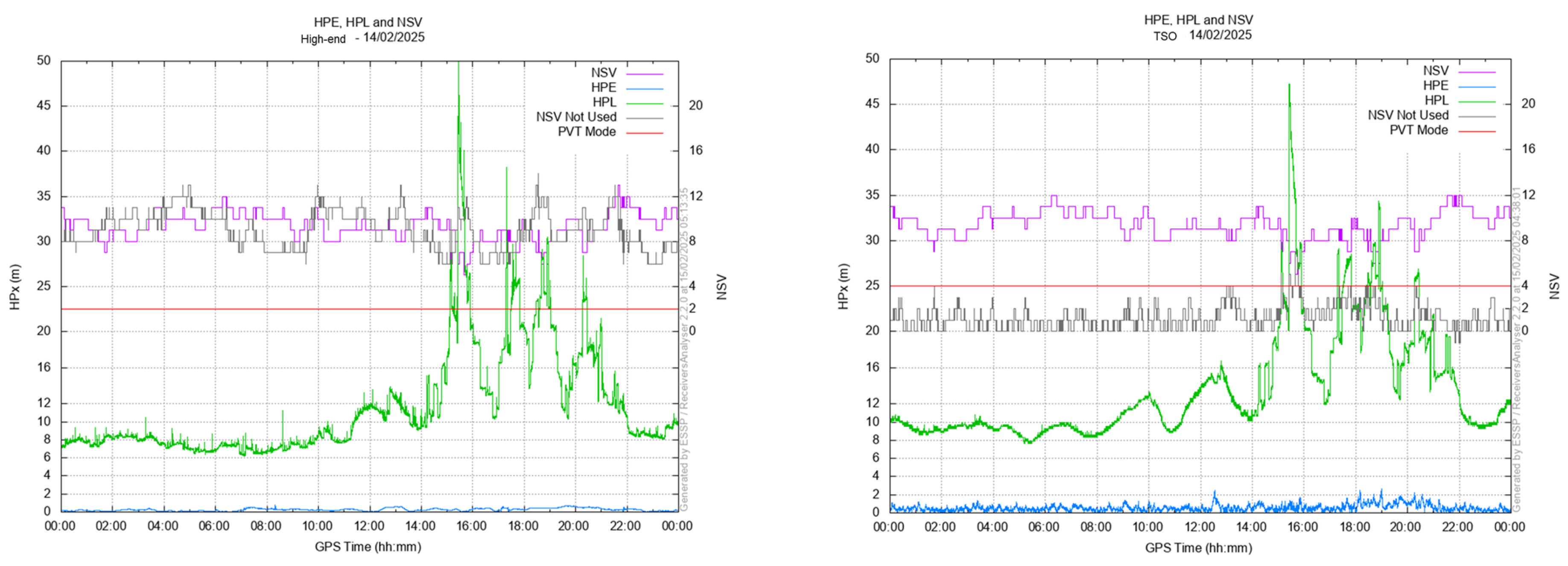
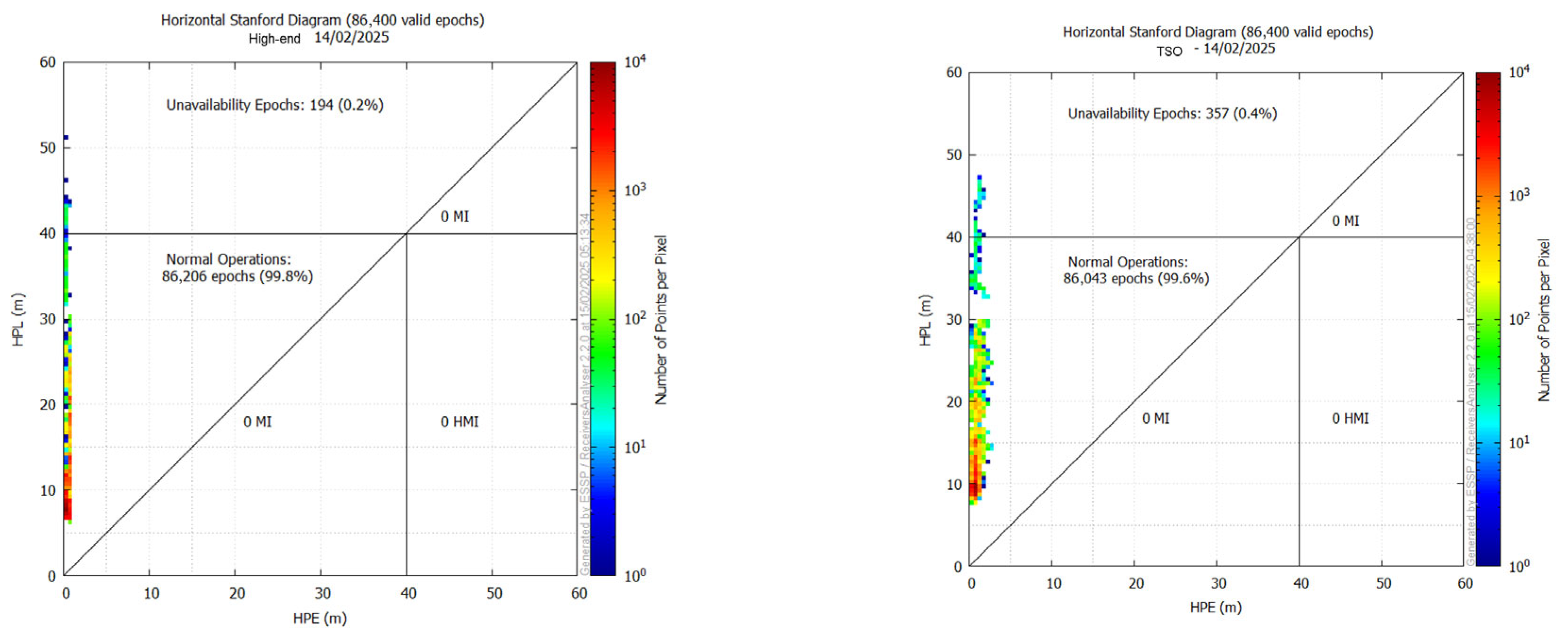
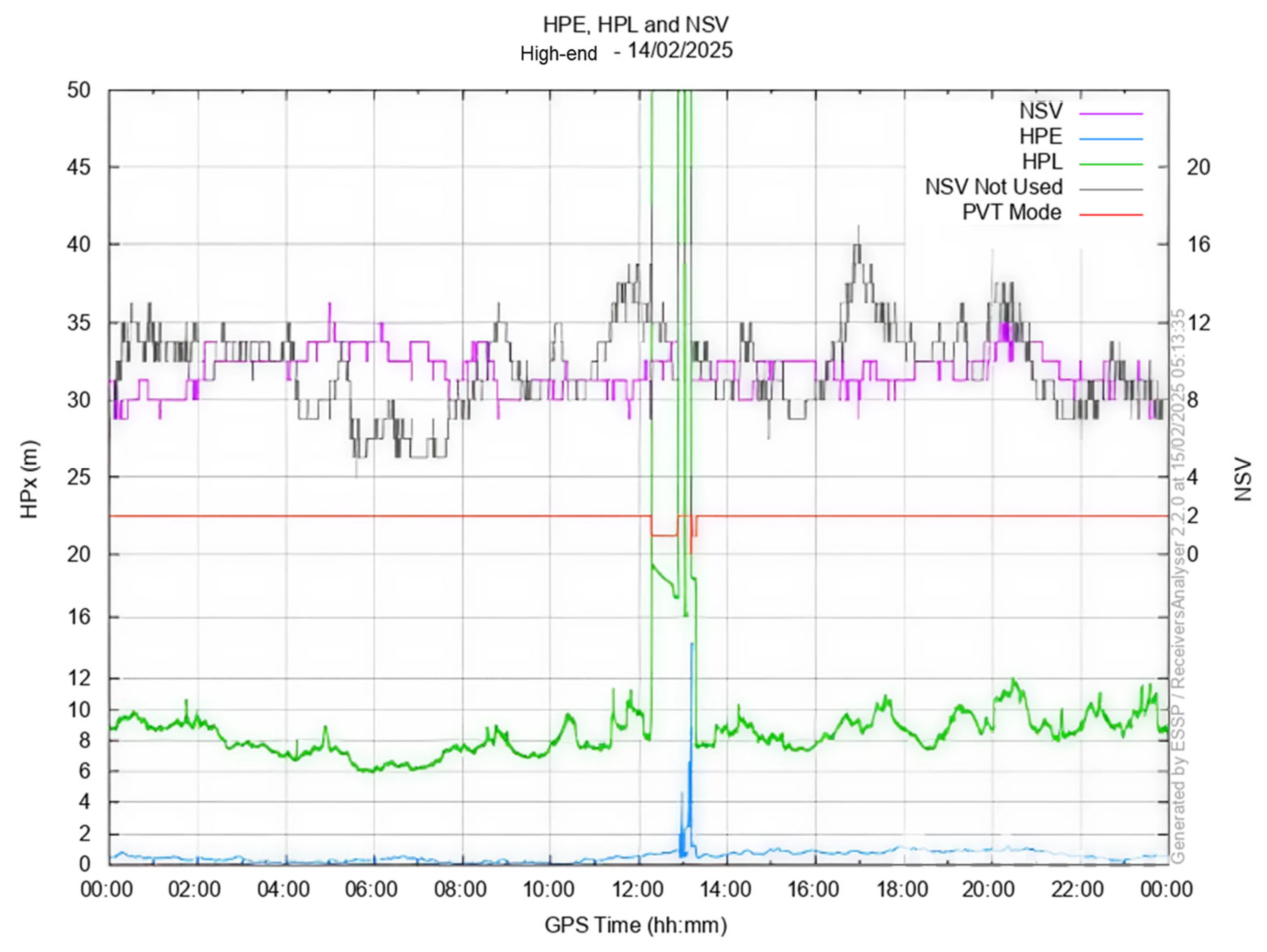
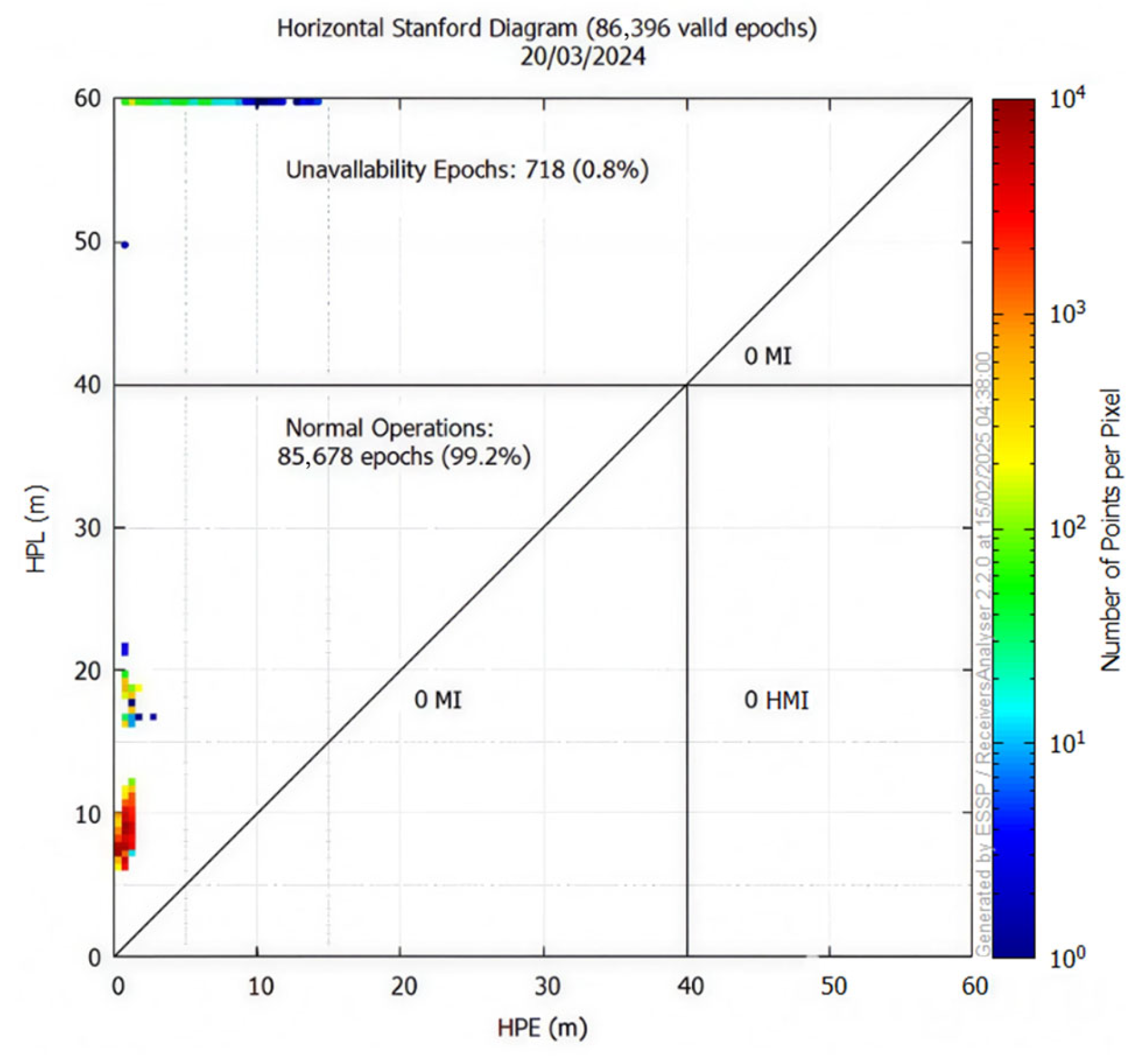
Receivers with Protection Levels in line with RTCA DO-229 (high-end and TSO receivers) presented several epochs in which the Position Errors were impacted by the ionospheric perturbance, reaching maximum Horizontal Position Errors of 0.74 and 2.69 m, respectively. The Protection Levels from both receivers increased significantly (
Figure 1), and in both cases the user was alerted and protected when the GNSS position was degraded (
Figure 2). SBAS monitors the ionosphere in real time, and the resulting Protection Levels secure the position solution in cases of high ionospheric activity.
Also, as can be seen in
Table 3, the estimated accuracy calculated by the high-end receiver remained above the positioning error (Hacc > HPE and Vacc > VPE) during the entire data acquisition, generating no estimated accuracy alarms.
The mid-range receiver, which does not compute Protection Levels in line with DO-229, provided values that did not increase sufficiently to remain above the Position Errors provoked by the ionospheric perturbance. In consequence, 638 Horizontal MIs (HPE > HPL) and 7414 Vertical MIs (VPE > VPL) were detected (8052 in total). In that period with high errors, the Vertical Position Error reached up to 10.4 m and the number of satellites or DOP did not vary substantially (HDOP and VDOP max of 1.3, respectively) compared to the nominal day, but the Horizontal Position Error doubled its value without triggering an alert to the user for those receivers that did not compute the Protection Levels using the SBAS-based standard residual errors.
3.1.3. Multipath Scenario
In this case, the receivers were located statically in an urban location, where a tall building nearby blocked a portion of the sky. Therefore, there was no direct visibility to all GNSS satellites, and several multipath signals were received. The data acquisition was conducted over 24 h on 26 March 2025, showing performance in GPS Standalone (L1/L2), GPS + GAL (L1/L2 + E1/E5), and Galileo (E1/E5) using high-end and mid-range receivers.
Due to the poor satellite visibility, the Position Errors were higher than in the nominal scenario in both the horizontal and vertical axes. Among those receiver configurations, the high-end receiver triggered 4326 alerts because the Protection Levels were high, warning the user about the degraded GNSS position. The mid-range receiver computes Protection Levels not in line with DO-229, and it produced Protection Levels that did not exceed the corresponding Position Errors in all the epochs. In fact, in post-processing, it is observed that there were 413 epochs in which HPE > HPL or VPE > VPL.
As shown in
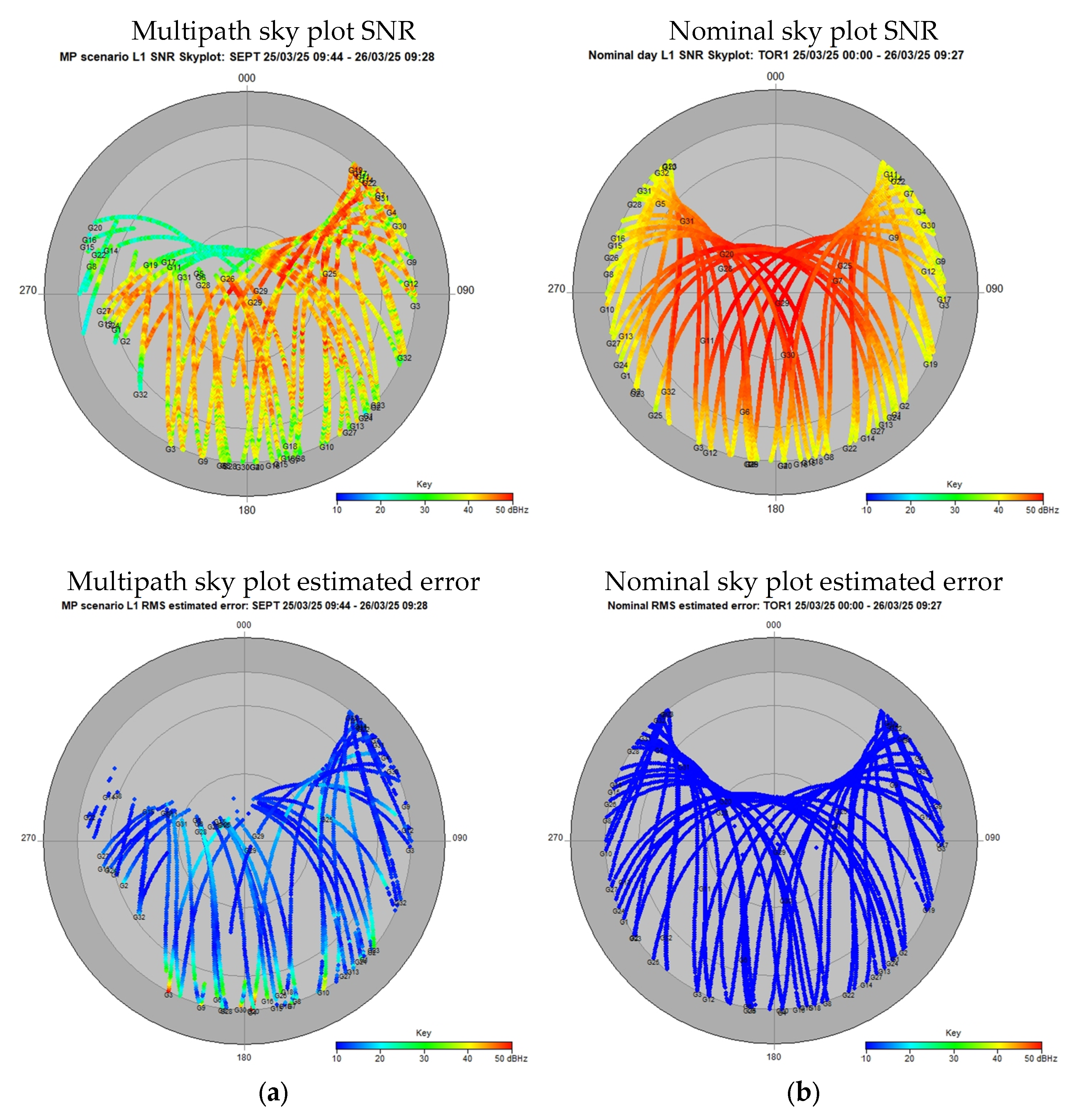
Table 4, the mean number of satellites used dropped for all position modes (i.e., in EGNOS, from 9.28 in the nominal scenario down to 7.13) and the HDOP and VDOP increased (i.e., HDOP in EGNOS, from 1.08 in the nominal scenario up to 2.83), but not substantially enough to trigger an alert to the user. Additionally, C/N0 values were affected by the multipath, presenting lower values, but it is not easy to identify if it is the direct signal or the reflected one. It clearly shows that the receiver was located in a position where a tall building blocked the direct GNSS signal received from the northwest, as can be seen in
Figure 3, where it is compared to a nominal open-sky antenna during the same time period. In the top figure of each scenario, the quality of each signal, shown in the figure as the Signal-to-Noise Ratio (SNR), is worse in the multipath scenario than in the open-sky scenario. Also, the bottom figures show the pseudorange estimated error of each satellite, which, in the case of the multipath scenario, is higher, even resulting in a loss of signal for the satellites shadowed in the northwest.
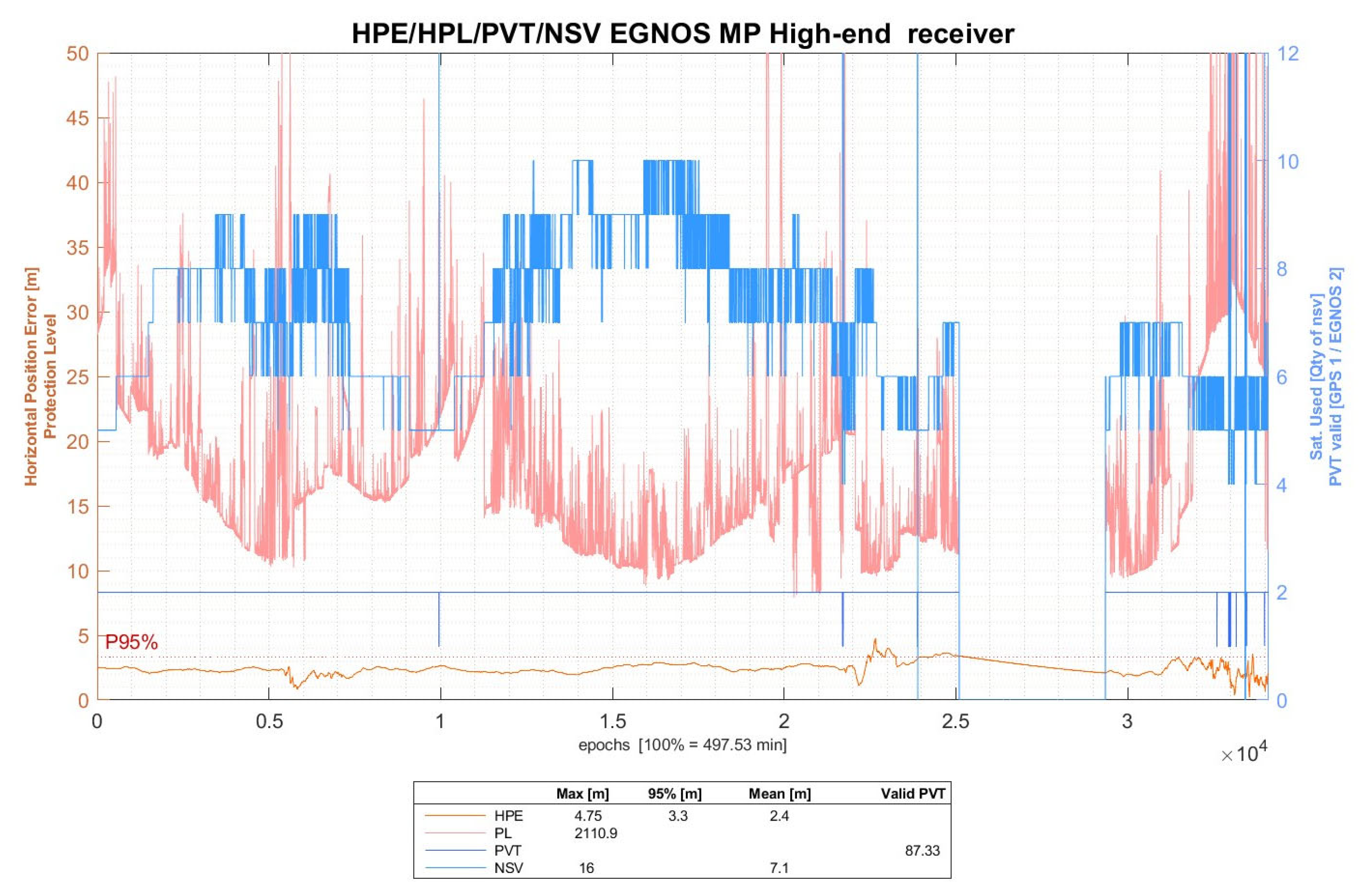
Analysing this scenario, the SBAS receiver that provides Protection Levels in line with DO-229 triggered integrity alarms when the receiver was impacted by multipath, providing high Position Errors (
Figure 4). The mid-range receiver provided Protection Levels not in line with DO-229, which were not able to exceed the Position Errors throughout the dataset, presenting 413 epochs in which the horizontal or vertical errors exceeded the Protection Levels (post-processing analysis). Also, it is important to highlight that, between the epochs 2.5 × 10
4 and 3 × 10
4 in
Figure 4, the value of HPL is high and exceeds the limits of the figure (50 m), so it is not shown during these epochs.
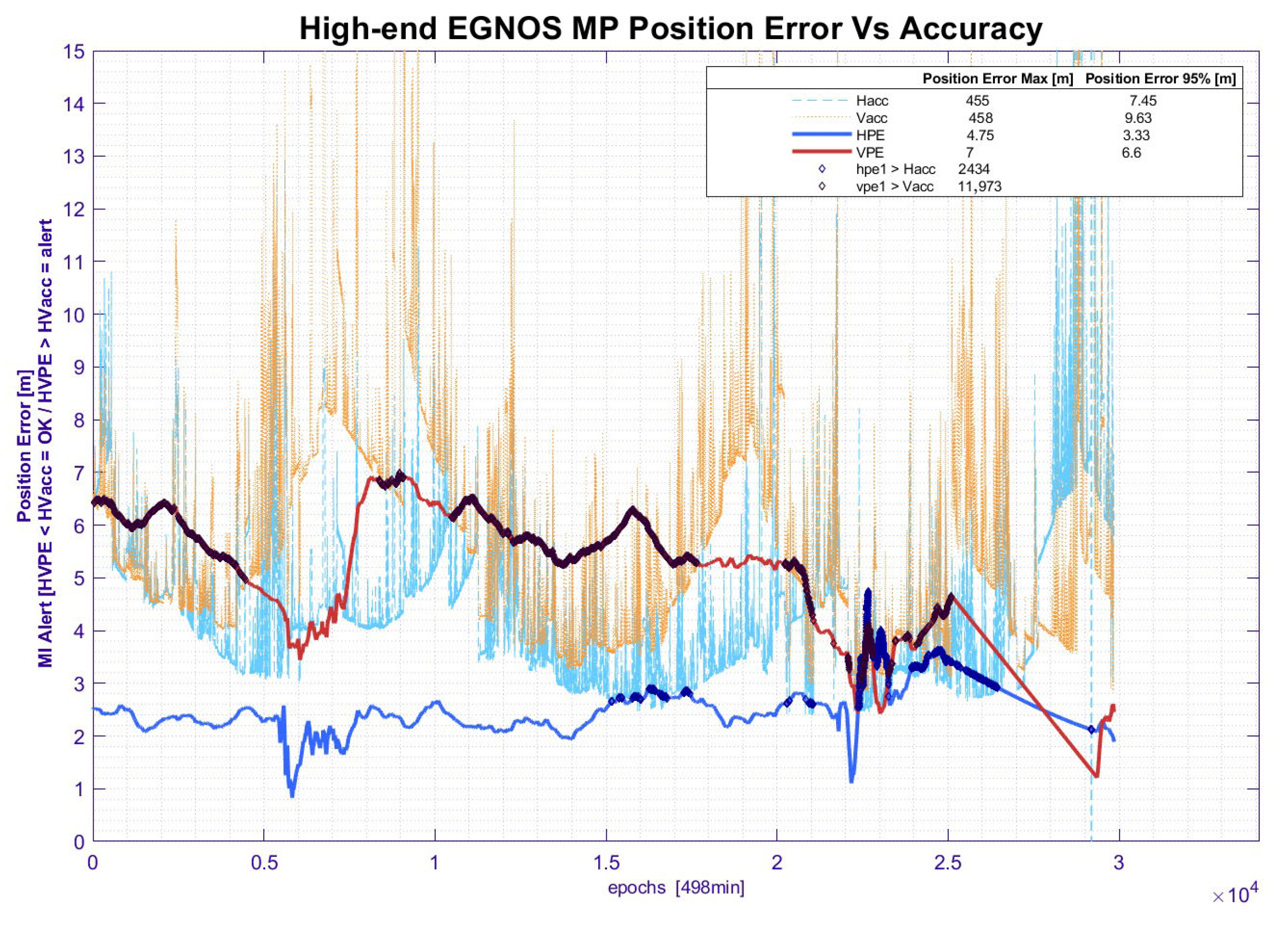
Regarding the estimated accuracy (Hacc/Vacc), shown in
Table 4, there are 14,405 epochs (at 1 Hz) where the Position Error is greater than the estimated accuracy (HPE > Hacc or VPE > Vacc), as shown in
Figure 5. In most of this epochs, this discrepancy is due to the vertical component. As expected, the value of the estimated accuracy is lower than the HPL value.
3.1.4. Multipath + Ionospheric Perturbance Scenario
During the multipath test presented in the previous section, an ionospheric perturbance occurred on 25.03.25, and it was recorded using a high-end receiver configured in GPS Standalone (L1/L2), GPS + GAL (L1/L2 + E1/E5), and Galileo (E1/E5), and a mid-range configured only in EGNOS. The results are shown in
Table 5.
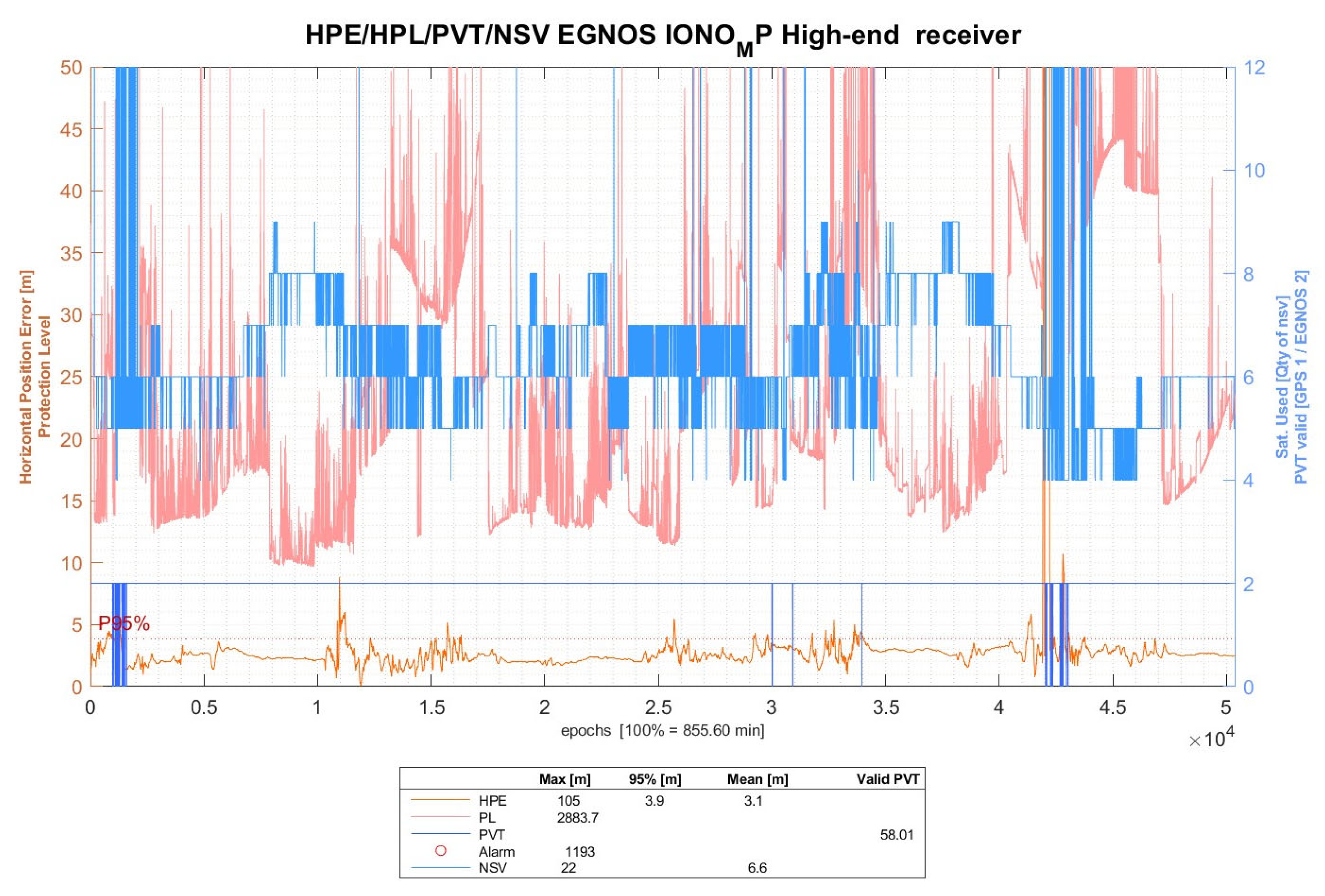
The scenario described above (multipath + the ionospheric perturbances) is one of the harshest environments for a GNSS receiver using one or various constellations. The results indicate both receivers had increased the Protection Levels and the Position Errors due to this situation. The high-end receiver triggered 1193 integrity alarms when using the SBAS position (
Figure 6), successfully warning the user (
Table 5). In fact, the position switched from EGNOS to GPS when it was not possible to compute a reliable SBAS position. However, GPS and Galileo configurations presented several MI events. The mid-range PL receiver presented 1103 MIs because the Protection Levels (not computed according to DO-229) were not able to exceed the Position Errors.
3.1.5. L1 Interference Scenario
This scenario shows the data acquired during an L1 interference that occurred on 22.09.2024 (
Table 6). The assessment was recorded using all the GNSS receivers used in this study, described in
Section 3, all configured in EGNOS.
An analysis of the L1 frequency interference shows that the high-end receiver triggered 369 integrity monitoring alarms (
Figure 7) and the mid-range receiver had 46 MIs due to PE > PL (not in line with DO-229). For the high-end receiver, the Protection Levels increased by around 1000 m, and there were 369 s (epochs) in which the operator was alerted about the unreliable position. The TSO was configured for LPV200 (int. monitoring alarm when HPL> 40 m or VPL > 35 m). Then, the number of epochs in which the TSO alerted that the SBAS position was not available for LPV200 operation was higher: 2051 epochs (seconds).
In a nutshell, it is concluded that SBAS receivers that compute Protection Levels in line with DO-229 are able to alert users when the SBAS position is degraded (
Figure 8), presenting high Position Errors, or even when the GNSS position cannot be computed. The Protection Levels aid by raising horizontal and vertical alerts when the receiver is impacted by ionospheric perturbances, signal shadows, multipath, etc., alerting the UAS so that the system or the operator could perform specific flight procedures in these situations.
3.2. UAS Dynamic Testing
This section shows two different tests performed onboard a UAS. The main objective of these tests is to show how the attitude of the UAS during flight affects GNSS performance. Two different tests were performed: the first one follows a typical simple grid flight pattern, commonly used for photogrammetric missions, while the second test follows a chaotic flight pattern, where the attitude of the UAS varies significantly during the flight. Both tests were performed using a multirotor UAS.
3.2.1. Smooth Flight
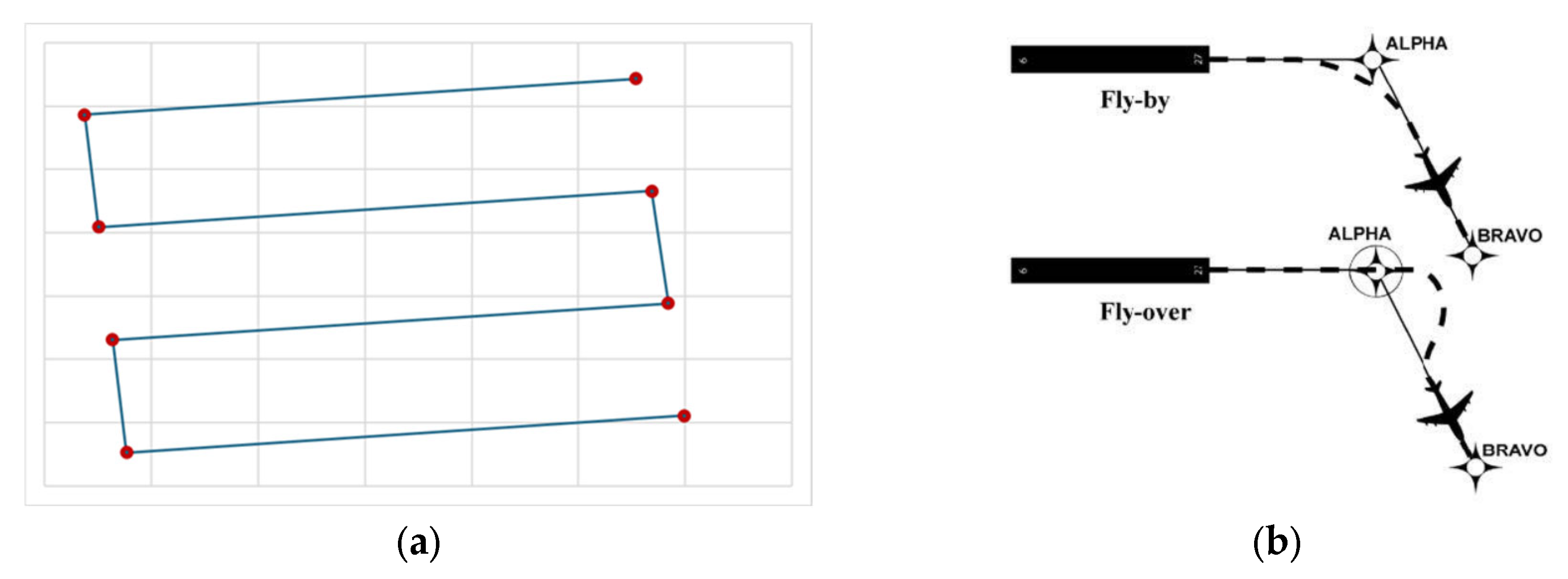
This test was performed using an EH-1 hexacopter following simple grid path planning (
Figure 9a) in autonomous mode on the 28th of November 2024 in Pozuelo del Rey, Madrid (Spain). The flight was performed in the open category in line with European regulatory requirements. Specifically, the operations were performed in the A3 sub-category, far from uninvolved people and away from residential, commercial, industrial, or recreational areas. This category is intended for drones weighing less than 25 kg, for which the operator must ensure a minimum distance of 150 m from congested areas and must not fly over uninvolved people.
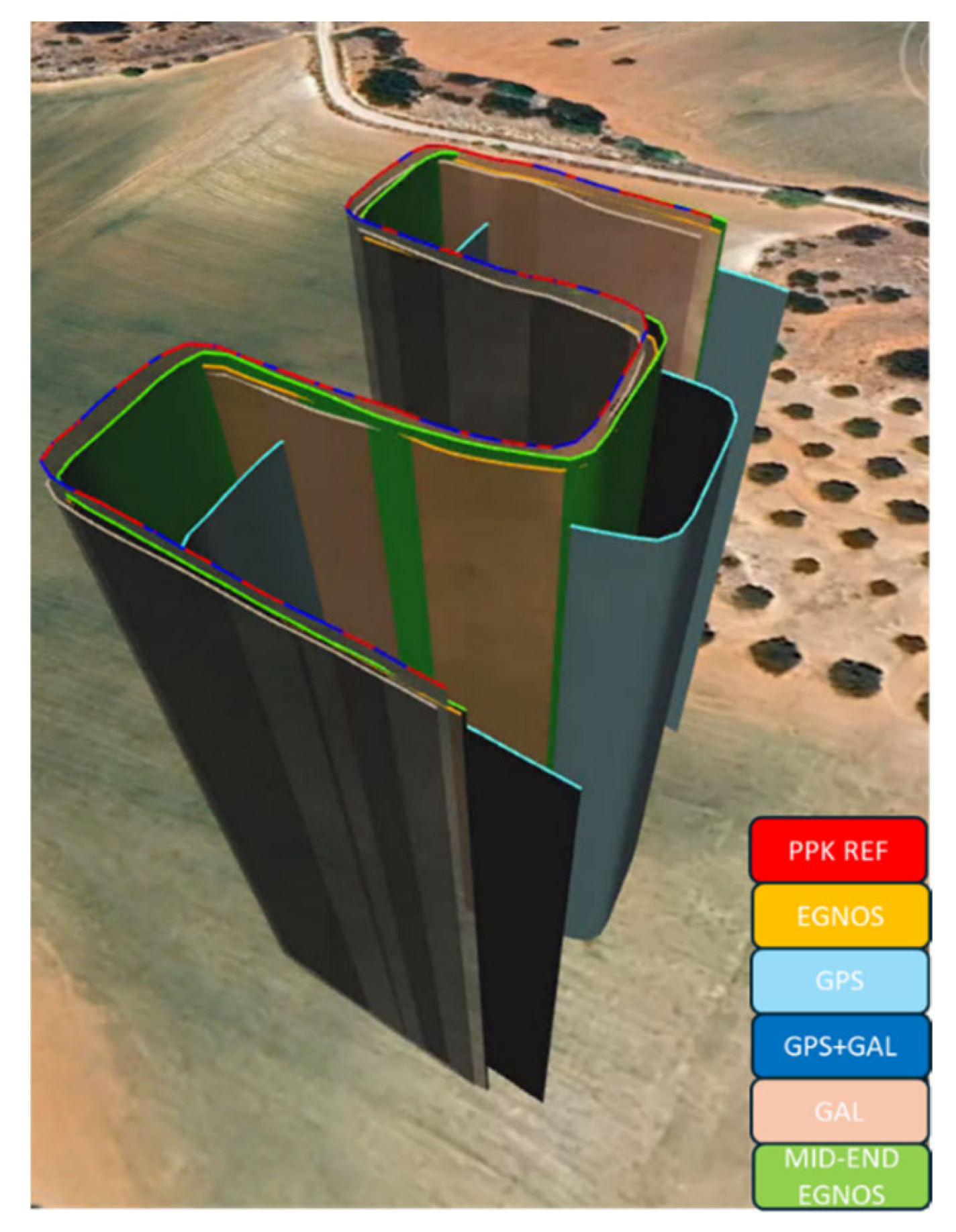
The environmental conditions were a fully open sky, no interferences, no ionospheric perturbances, and a 0° antenna mask angle. A flight of 4 min duration was repeated six times using the flight pattern shown in
Figure 9, where the drone direction of movement is always forward; the drone controller configuration is a fly-by (not fly-over). The turns are performed smoothly, so that the bank angle does not obstruct the reception of the GNSS satellite signals. Finally, the different GNSS configurations of one flight comparison are shown in
Figure 10. In this case, a PPK solution obtained in post-processing was used as the ground truth.
The analysis of the flight in
Table 7 shows the nominal values for a flight in an open-sky scenario, with no perturbances of any kind nor signal shadows. The results in EGNOS show HDOP/VDOP-P95 < 1 and HPE/VPE-P95 are 1 m and 1.40 m, respectively. No MIs or Integrity alarms were detected. For this specific scenario, the values were not affected by excessive antenna turns and high-speed banking, which could affect the mask angle and the high-rate receiver signal processor.
3.2.2. Flight with High Dynamics
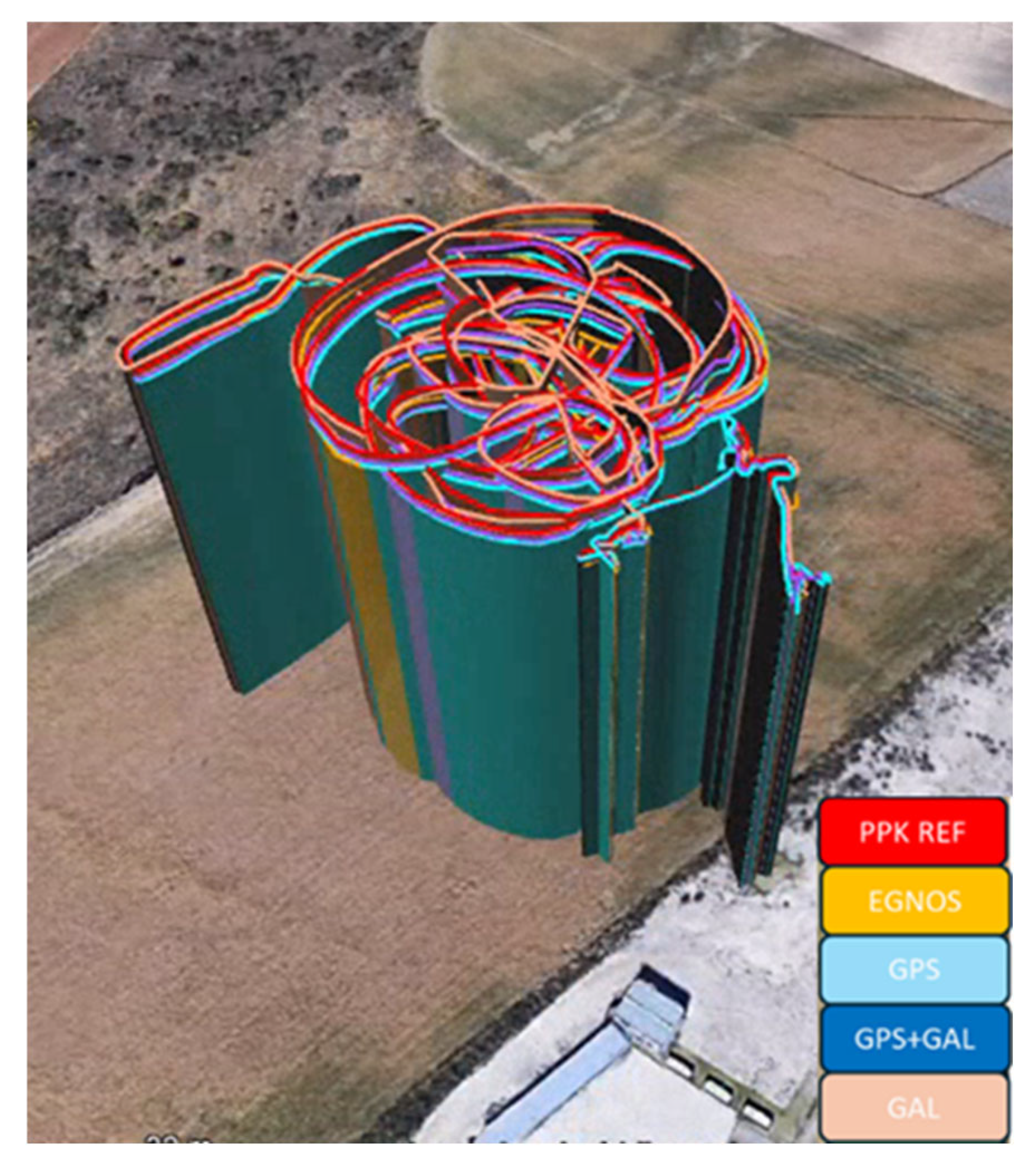
A DJI-350 quadcopter was used for this test, flying in manual mode (
Figure 11) on the 7th of August 2024 in Bohadilla del Monte, Madrid (Spain). The flight was performed in the open category in line with European regulatory requirements. Specifically, the operations were performed in the A3 sub-category, far from uninvolved persons and away from residential, commercial, industrial, or recreational areas.
The environmental conditions were a fully open sky with no interferences, no ionospheric perturbances, and a 0° antenna mask angle. The 47 min flight presented abrupt turns and hard banks. This is an example of a difficult flight scenario, where at several moments the satellite signal is shadowed by the drone angle itself.
The parameters obtained by a high-end receiver are presented for different types of GNSS position modes: SBAS/EGNOS, GPS Standalone (L1/L2), GPS + GAL (L1/L2 + E1/E5), and Galileo (E1/E5). Then, the results of the Horizontal and Vertical Position Error (HPE/VPE) are shown in
Table 8.
This test is an example of common UAS operations where the UAS, and therefore the GNSS antenna, is turning and banking rapidly. Although it is not as hard an environment as those shown in previous sections, the operation itself affects the receiver performance. The analysis indicates that the high-end receiver provided increased Protection Levels and Position Errors due to this situation. The receiver triggered 808 alarms using EGNOS with no MIs, warning the operator that the GNSS position may be degraded. The satellite geometry was worse in all configurations, increasing the HDOP/VDOP values and the number of used satellites. Additionally, the C/N0 decreased compared to the nominal flight.
4. Conclusions
This work presents the challenges of applying SORA 2.5 High Level Requirements to a GNSS and shows the results obtained from several GNSS data acquisitions in different environments, showing the differences between a nominal scenario, without any degradation, and scenarios in which various degradation sources affect the GNSS performance.
As was discussed in
Section 2, according to SORA 2.5, OSO#13 applies to those external services that are critical for the safety of the flight. In the specific case of a GNSS as an external service, it cannot be considered critical for all the UAS architectures, since some systems use other positioning systems as the main navigation source. However, it should also be noted that most of the commercial UASs available on the market use a hybrid system with a GNSS sensor and an Inertial Navigation System (INS) sensor, commonly integrated through an Extended Kalman Filter (EKF). In these cases, the criticality of the GNSS system would depend on the drift of the INS sensor and the remaining duration of the operation. For Micro Electro Mechanical System (MEMS) INS sensors, the drift is usually very high, presenting significant values within a few seconds. Each UAS architecture has to be analysed individually in order to determine the GNSS criticality, and the UAS operator is in charge of this task.
For those systems where the GNSS is considered critical for the safety of the flight, OSO#13 defines the requirement of both defining the minimum performance needed and monitoring the service during the mission, for SAIL III and higher-risk specific category operations. Then, it is necessary to define how to measure the performance of these external services. The main problem of the GNSS as an external service is that, as shown in
Section 3, its performance depends on the SiS quality, on the sensor itself, which calculates the position using the service signals, as well as on the environment, which has a high impact on the positioning performance. In order to monitor the service during the operation, different alternatives are available, all of them explained in
Section 3, such as VDOP, HDOP, NSV, C/N0, estimated accuracy, or HPL and VPL. As can be seen in the tables from the different tests performed in this work, although DOP, NSV, and C/N0 parameters give indications about GNSS performance, they do not reliably indicate when the GNSS signal is degraded, and so are not suitable as a basis to alert the pilot/auto-pilot or activate a predefined contingency manoeuvre.
For instance, DOP, which indicates the quality of the satellite geometry, could lead to the conclusion that, with good geometry (low DOP), good positioning performance can be expected. However, in this case, DOP does not provide any additional information when different degradation sources appear, such as ionospheric perturbance or multipath scenarios. Even when VDOP and HDOP are good, as shown on
Section 3.1.2 and
Section 3.1.3, the resultant positioning performance is worse than in the nominal scenario.
On the other hand, there are other parameters that can be used to monitor the positioning performance that consider the service itself, the sensor, and the environment. These parameters are the estimated accuracy and Horizontal Protection Level (HPL) and Vertical Protection Level (VPL). As shown in the results of the tests, the estimated accuracy is not able to remain above the PE in all the epochs when the GNSS signal is degraded. For the same degraded scenarios, the Protection Levels calculated according to the most demanding implementation of DO-229 are able to exceed the navigation errors throughout the operation, alerting when the Protection Levels are exceeding the required accuracy for the operation. It should be noted that DO-229 does not require Fault Detection (FD) capabilities for all users and operations, but in the context of this work it has been considered an integrity monitoring detector at every epoch. Then, they can be used to alert the pilot or activate any mitigation needed to ensure the safety of the operation (i.e., switch to other navigation mode).
In the tests, several receivers were used, and two different methodologies are applied to calculate the PL. In the case of the high-end receiver configured in EGNOS, the method is aligned with the DO-229 standard, but, in the case of the mid-range receiver and other configurations of the high-end receiver, the calculation does not follow this standard. As can be seen in the results, the high-end receiver is able to detect degradations and raise an alarm in case the PVT solution cannot be trusted. The mid-range receiver has shown that, when the signal is degraded, several MIs appear. This means that, in some epochs, the real positioning error, calculated in post-processing, is greater than the PL calculated for that epoch, indicating that the system was not able to raise an alarm. These values could be used as a reference of the expected error in an optimal environment, but not as Protection Levels for high-risk UAS operations. Further analysis on the inability of these PLs to serve as a reliable upper bound on the positioning error cannot be performed, since the manufacturer does not provide technical information about the algorithm used for their computation.
As can be seen in the results of the different tests, the PLs calculated by the high-end receiver according to DO-229 are able to avoid MIs, but their values tended to be high. Specifically, under nominal conditions (
Table 1), the difference between the PL and the actual positioning error reaches up to 12 m, increasing to nearly 1 km in degraded scenarios (
Table 4). Such discrepancies are excessively large for UAS operations beyond SAIL III, where the required positioning performance is expected to remain within the metre-level range, since these kinds of operations are expected to be performed in more confined spaces. This happens because this standard has been developed for manned aviation (with a confidence level of 10
−7), where these values are compliant with the requirements of these kinds of operations and aircrafts. In addition, this standard was defined for open-sky environments using SBAS corrections for GPS L1. However, for UAS navigating in non-open-sky environments, where the orography or structures can shadow the GNSS signal, the number of GPS satellites in view can be significantly reduced, thereby limiting the performance of the system. With this in mind, it is always advisable to use multi-constellation solutions in this type of environment in order to increase the number of satellites in view. Also, applying this standard to UASs can restrict the kind of operations that can be performed. In high-risk operations, where the UAS is flying in confined areas, as in urban areas or neighbourhoods of buildings, these high values will limit the operations. Taking this into account with the available algorithms for PL computation, it is recommended to generate a new standard for the PLs specifically for UASs.
Furthermore, although SAIL III operations have already been developed in some European countries and the number of such operations is expected to increase, it is noteworthy that the GNSS sensors currently available on the market have not yet implemented PLs in accordance with DO-229 (especially mid-range and low-end receivers). The use of the estimated accuracy parameter, with the addition of a safety margin to bound the positioning error, offers a viable option for monitoring GNSS service in mid-risk specific categories (SAIL III), at least until more commercial receivers apply Protection Levels.
Finally, the results obtained in different scenarios, from static tests in degraded areas to dynamic tests with no degradations, have shown that GNSS cannot be considered a general sensor, since its performance depends on many different factors that can cause a loss of control of the operation (depending on the architecture of the UAS and the criticality of GNSS). This makes it mandatory to monitor these systems during the operation in order to detect when the performance is below the required level for the safety of the flight, triggering an alarm to advise the UAS operator or activate the necessary mitigations. In the opinion of the authors, implementing real-time monitoring of GNSS navigation performance by means of PLs, Alert Limits, and Time To Alert will be necessary to support operations beyond SAIL III.
The present analysis is limited to PL computations based on the DO-229 standard or on unknown algorithms from different GNSS manufacturers, and under a limited number of scenarios. Therefore, future research should focus on experimental validation under different operational and environmental conditions, as well as comparisons between different PL algorithms, which would further strengthen the conclusions of this study. Finally, the development of tailored integrity algorithms, capable of reducing the conservatism of the DO-229 approach while maintaining the required safety levels, is strongly recommended.




 ,
,