Article

UAV Trajectory and Energy Efficiency Optimization in RIS-Assisted Multi-User Air-to-Ground Communications Networks


1
Key Laboratory of Information and Communication Systems, Ministry of Information Industry, Beijing Information Science and Technology University, Beijing 100101, China
2
Key Laboratory of Modern Measurement Control Technology, Ministry of Education, Beijing Information Science and Technology University, Beijing 100101, China
3
Key Laboratory of Universal Wireless Communications, Ministry of Education, Beijing University of Posts and Telecommunications, Beijing 100876, China
4
School of Computing, Engineering and Mathematical Sciences, La Trobe University, Melbourne, VIC 3086, Australia
5
College of Science and Engineering, James Cook University, Cairns, QLD 4878, Australia
*
Author to whom correspondence should be addressed.
Drones 2023, 7(4), 272; https://doi.org/10.3390/drones7040272
Submission received: 22 March 2023 / Revised: 9 April 2023 / Accepted: 13 April 2023 / Published: 15 April 2023
(This article belongs to the Section Drone Communications)

Abstract

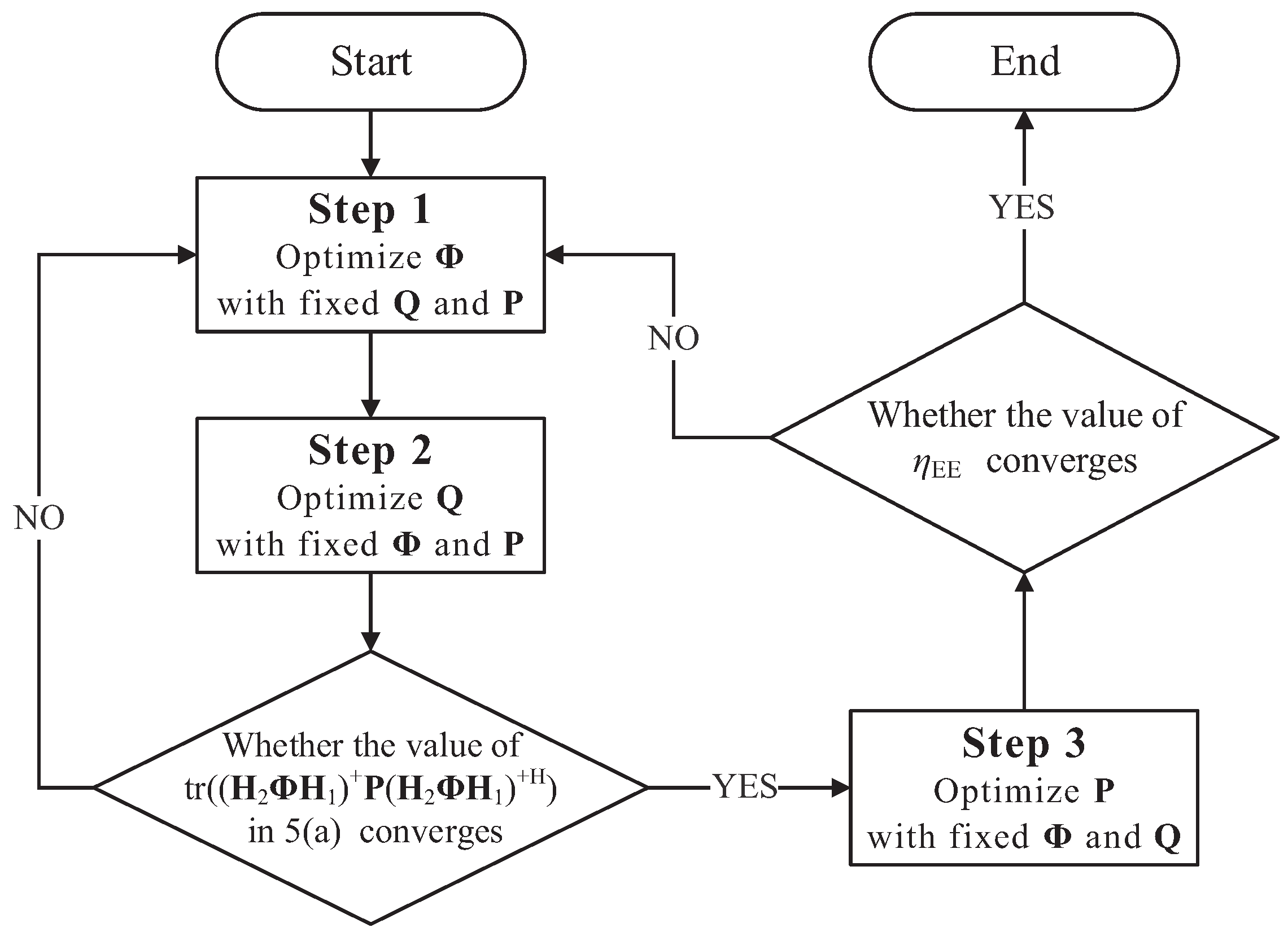
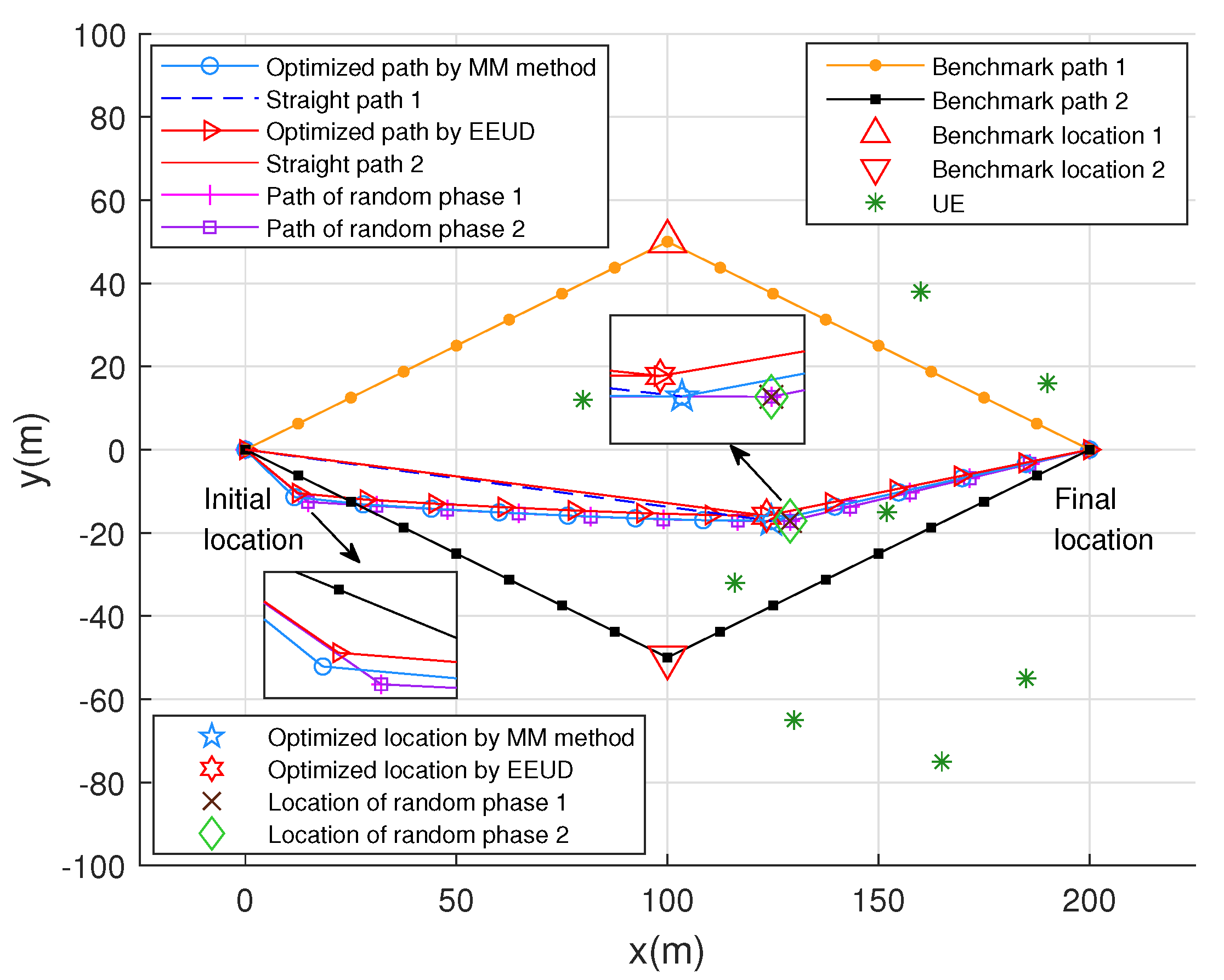
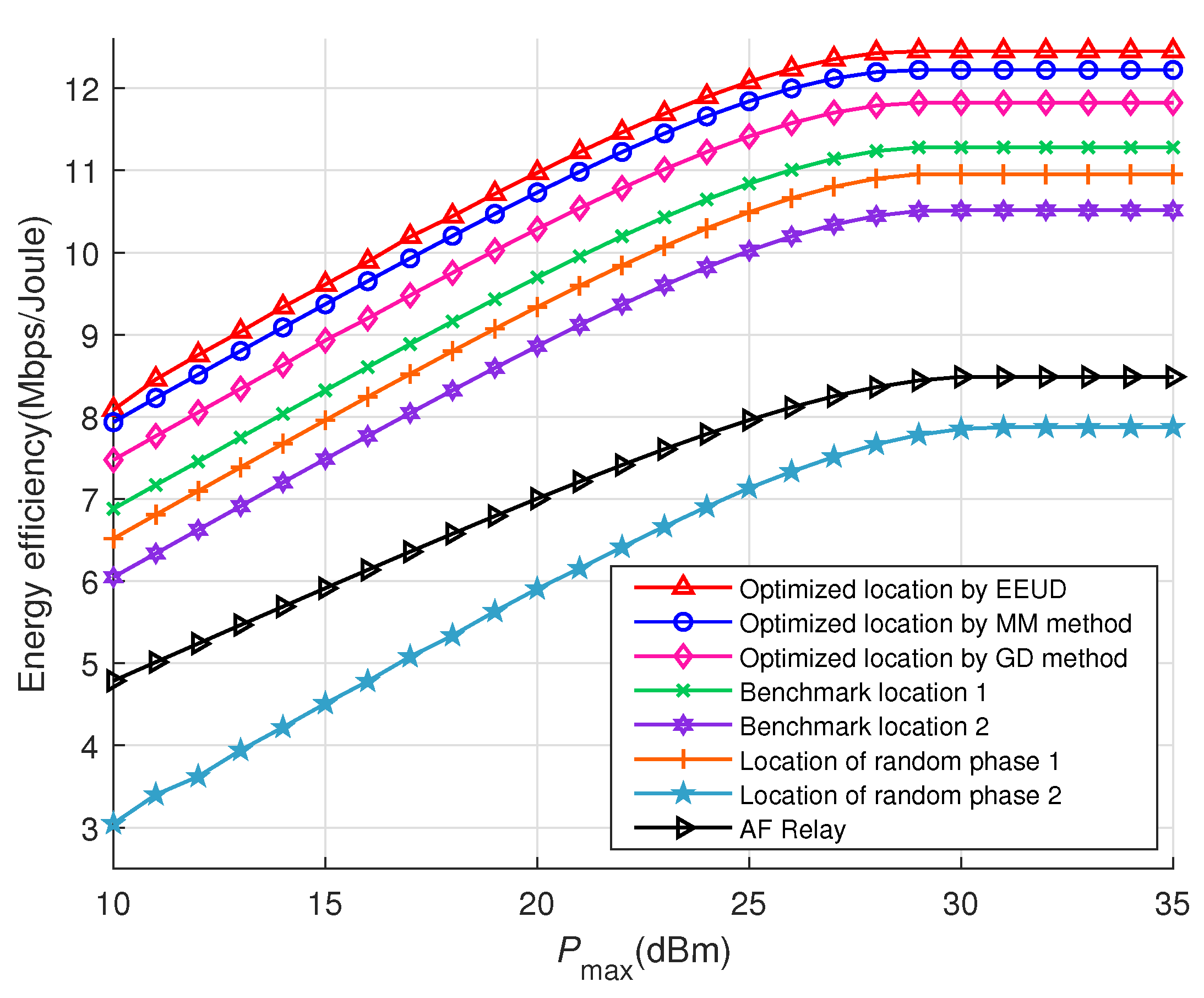
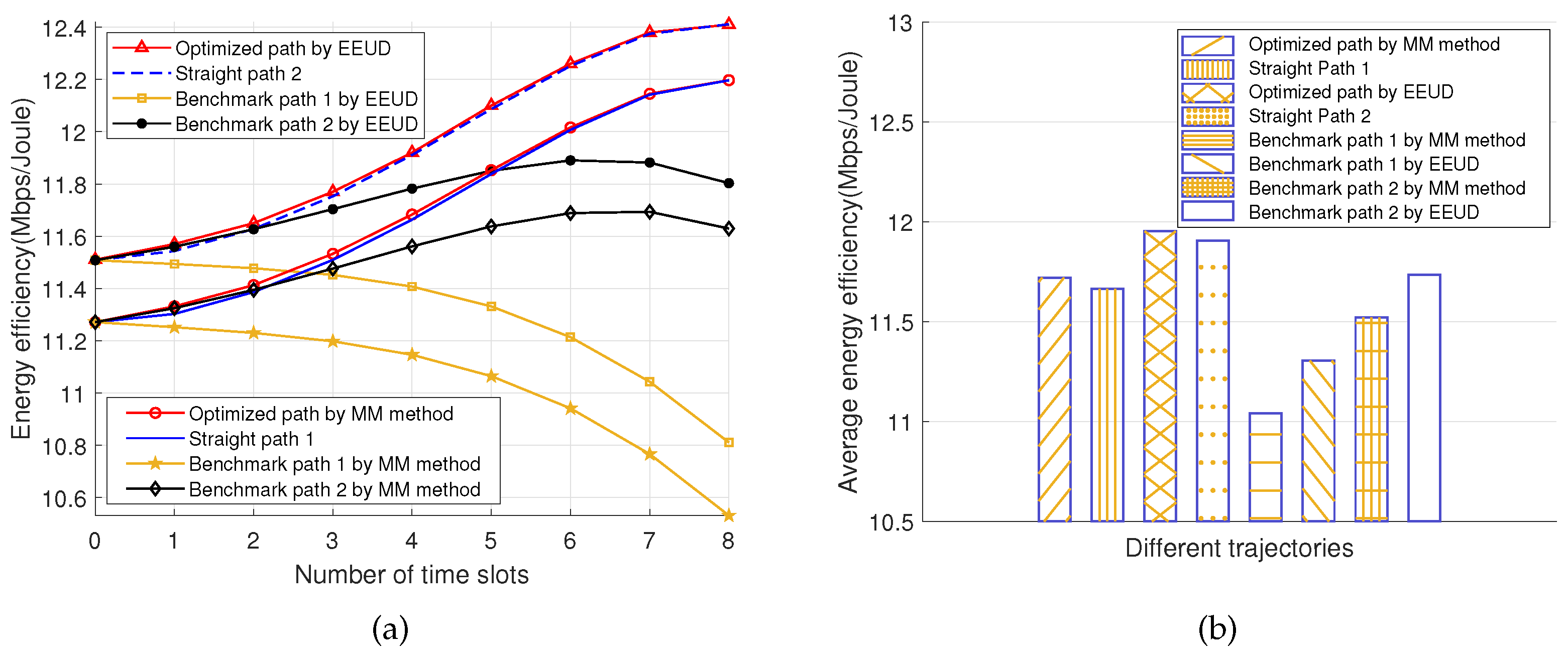
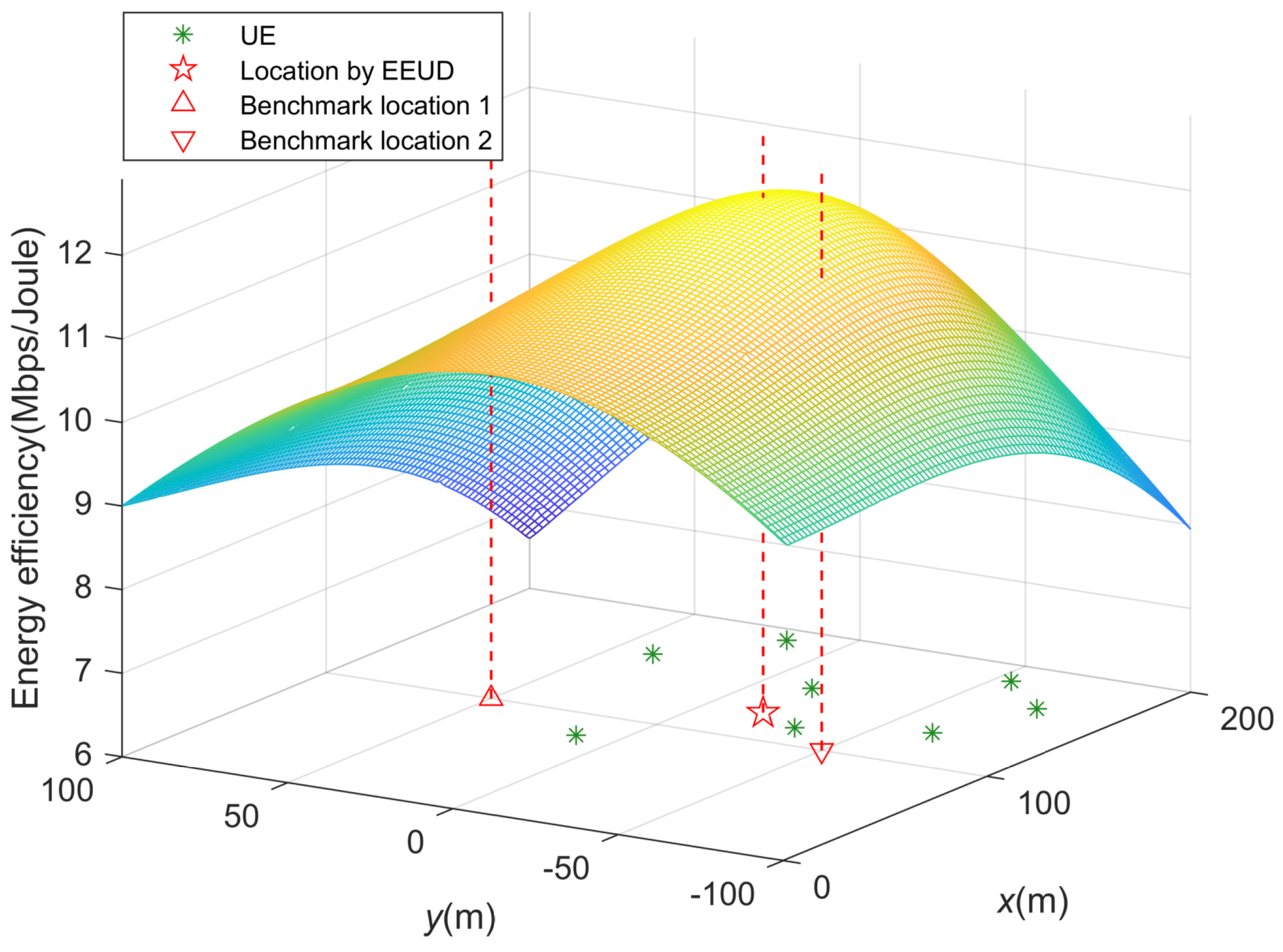
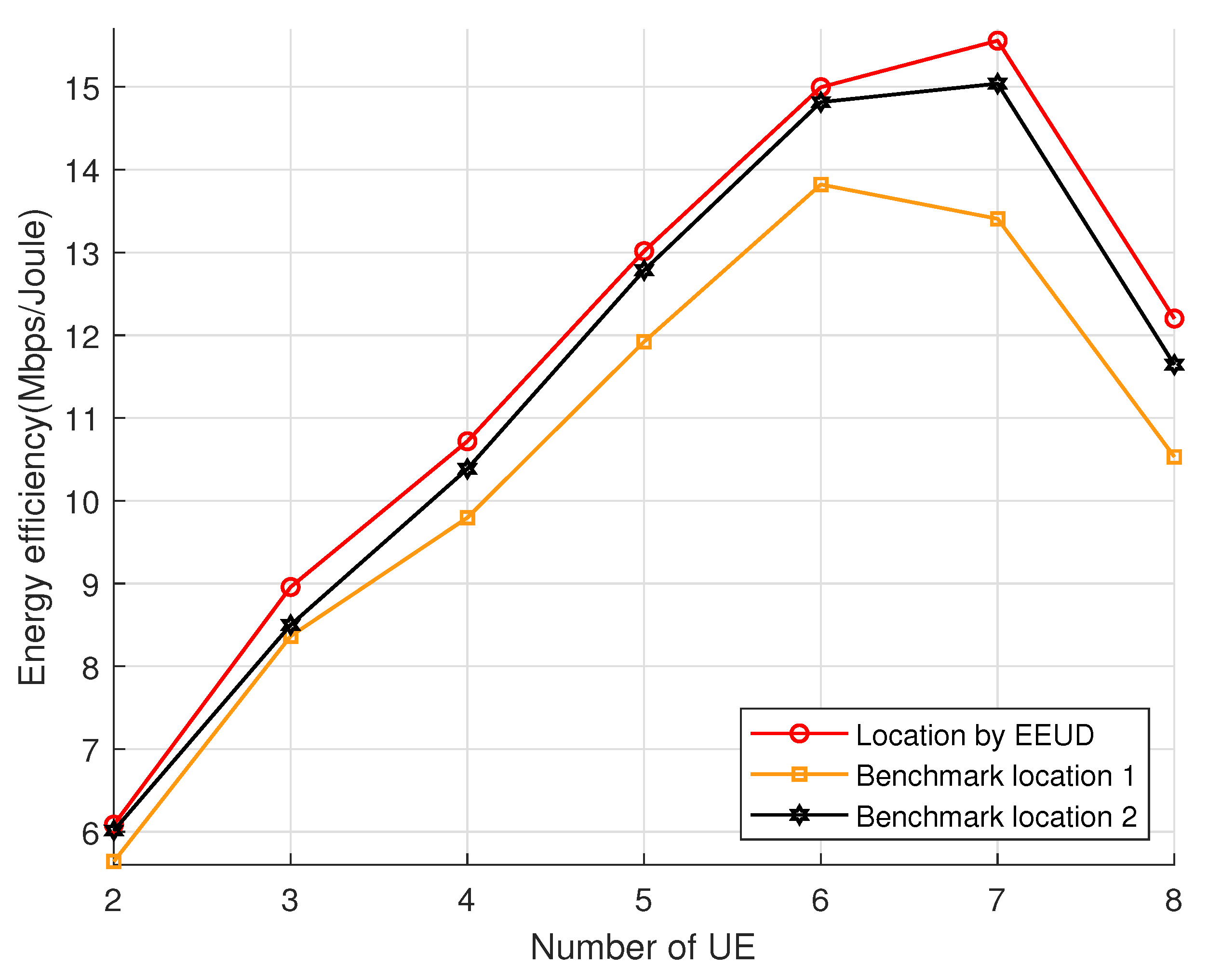
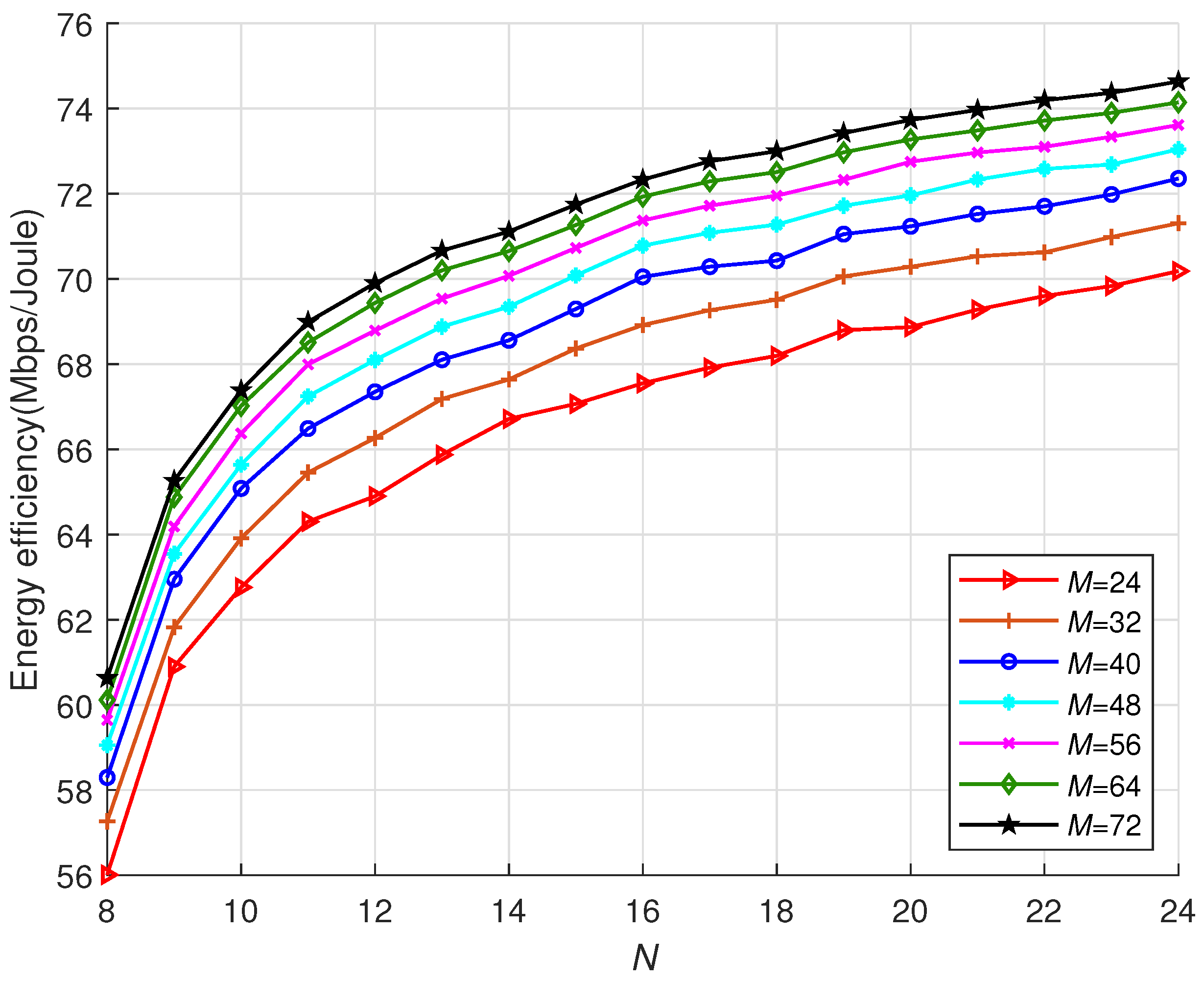
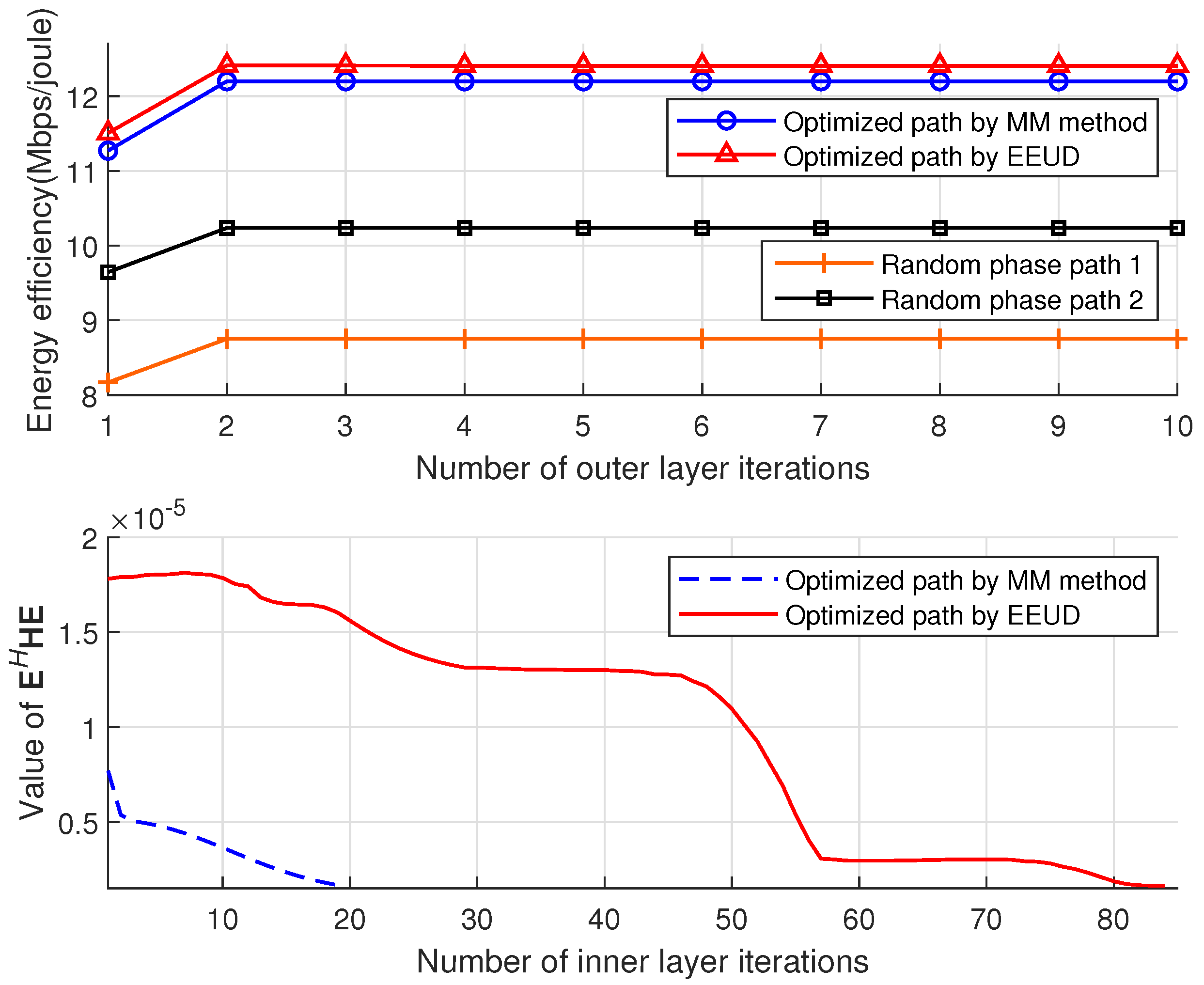
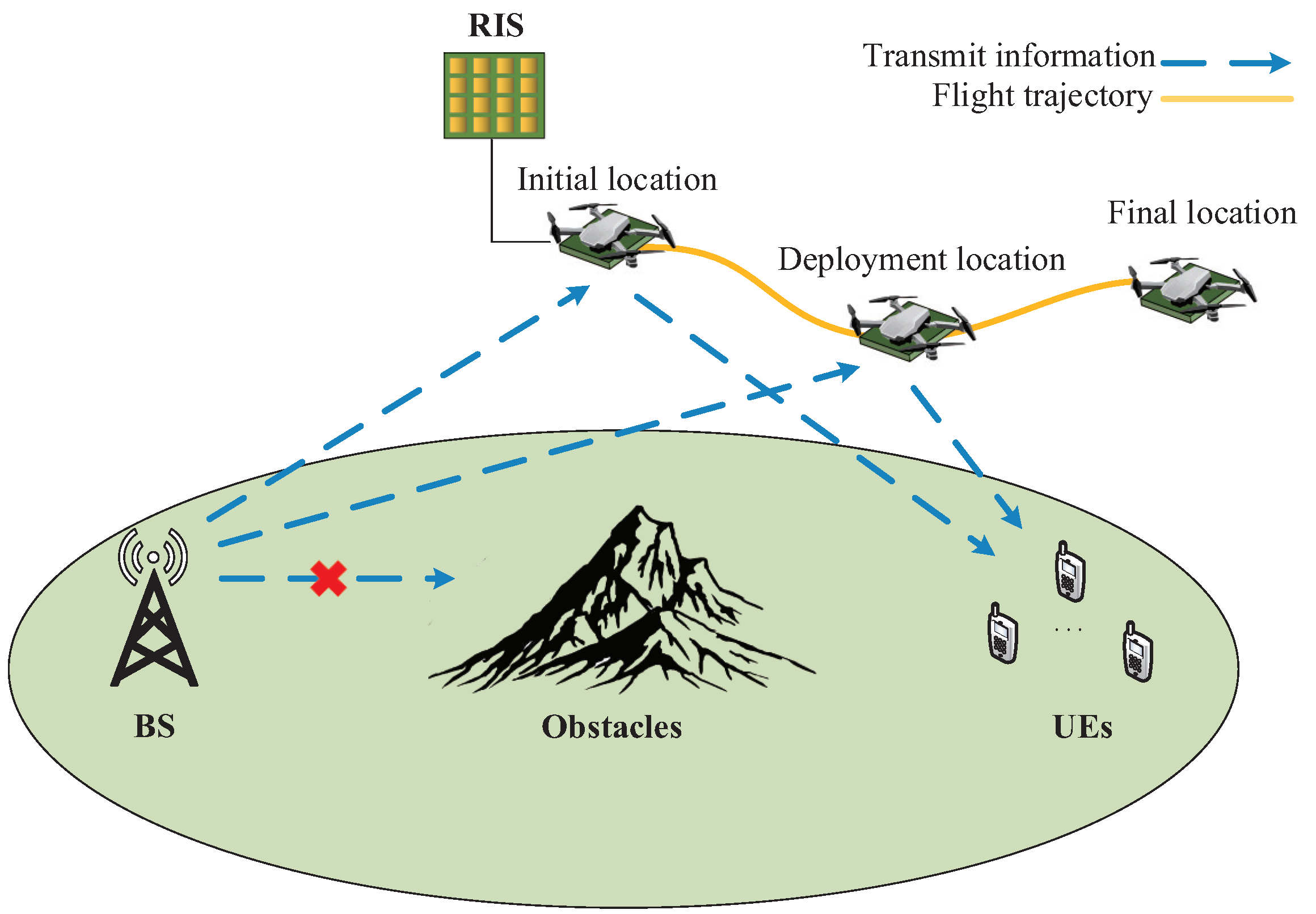
An air-to-ground downlink communication network consisting of a reconfigurable intelligent surface (RIS) and unmanned aerial vehicle (UAV) is proposed. In conjunction with a resource allocation strategy, the system’s energy efficiency is improved. Specifically, the UAV equipped with a RIS starts from an initial location, and an energy-efficient unmanned aerial vehicle deployment (EEUD) algorithm is deployed to jointly optimize the UAV trajectory, RIS phase shifts, and BS transmit power, so as to obtain a quasi-optimal deployment location and hence improve the energy efficiency. First, the RIS phase shifts are optimized by using the block coordinate descent (BCD) algorithm to deal with the nonconvex inequality constraint, and then integrated with the Dinkelbach algorithm to address the resource allocation problem of the BS transmit power. Finally, for solving the UAV trajectory optimization problem, the complex objective function is transformed into a convex function, and the optimal UAV flight trajectory is obtained. Our simulation results show that the quasi-optimal deployment location obtained by the EEUD algorithm is superior to other deployment strategies in energy efficiency. Moreover, the instantaneous energy efficiency of the UAVs along the trajectory of searching the deployment location is better than other comparison trajectories. Furthermore, the RIS-assisted multi-user air-to-ground communication network can offer up to 145% improvement in energy efficiency over the traditional amplify-and-forward (AF) relay.
Keywords: reconfigurable intelligent surface (RIS); unmanned aerial vehicle (UAV) trajectory; UAV deployment; energy efficiency maximization; convex optimization reconfigurable intelligent surface (RIS); unmanned aerial vehicle (UAV) trajectory; UAV deployment; energy efficiency maximization; convex optimization