Article

A Method for Selecting Strategic Deployment Opportunities for Unmanned Aircraft Systems (UAS) for Transportation Agencies


1
Purdue University School of Aviation and Transportation Technology, Purdue University Polytechnic Institute, West Lafayette, IN 47907, USA
2
Purdue University School of Construction Management Technology, Purdue University Polytechnic Institute, West Lafayette, IN 47907, USA
*
Author to whom correspondence should be addressed.
Drones 2020, 4(3), 29; https://doi.org/10.3390/drones4030029
Submission received: 16 June 2020 / Revised: 26 June 2020 / Accepted: 30 June 2020 / Published: 2 July 2020

Abstract

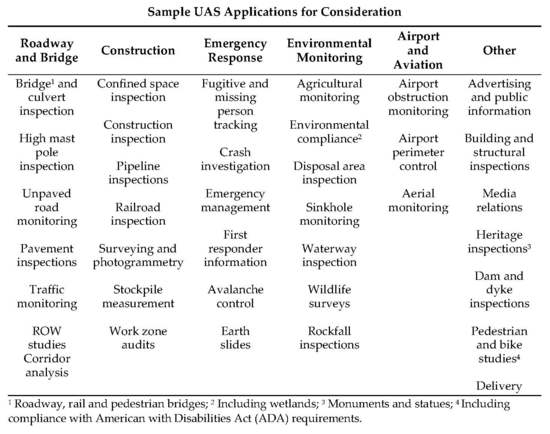
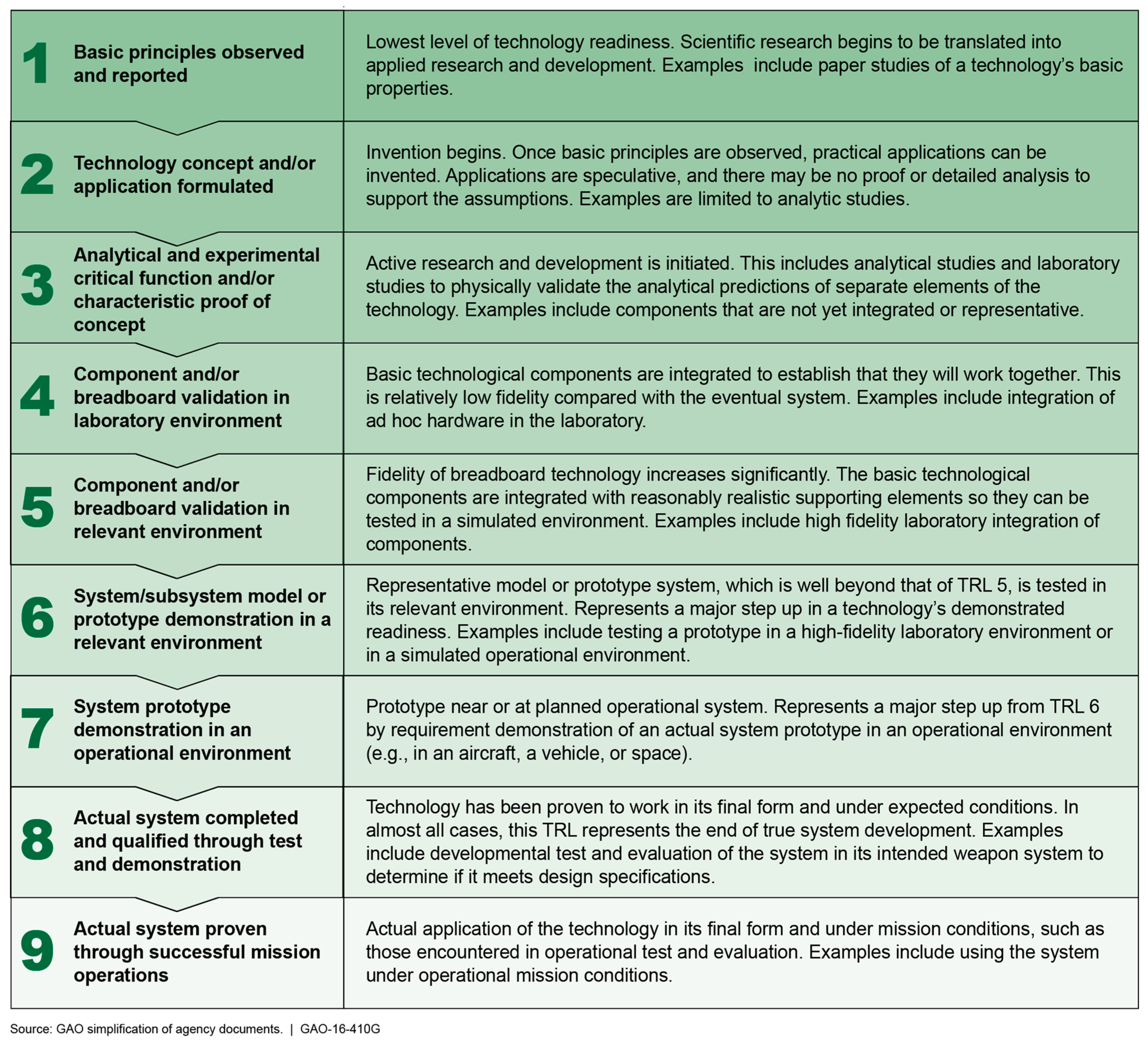
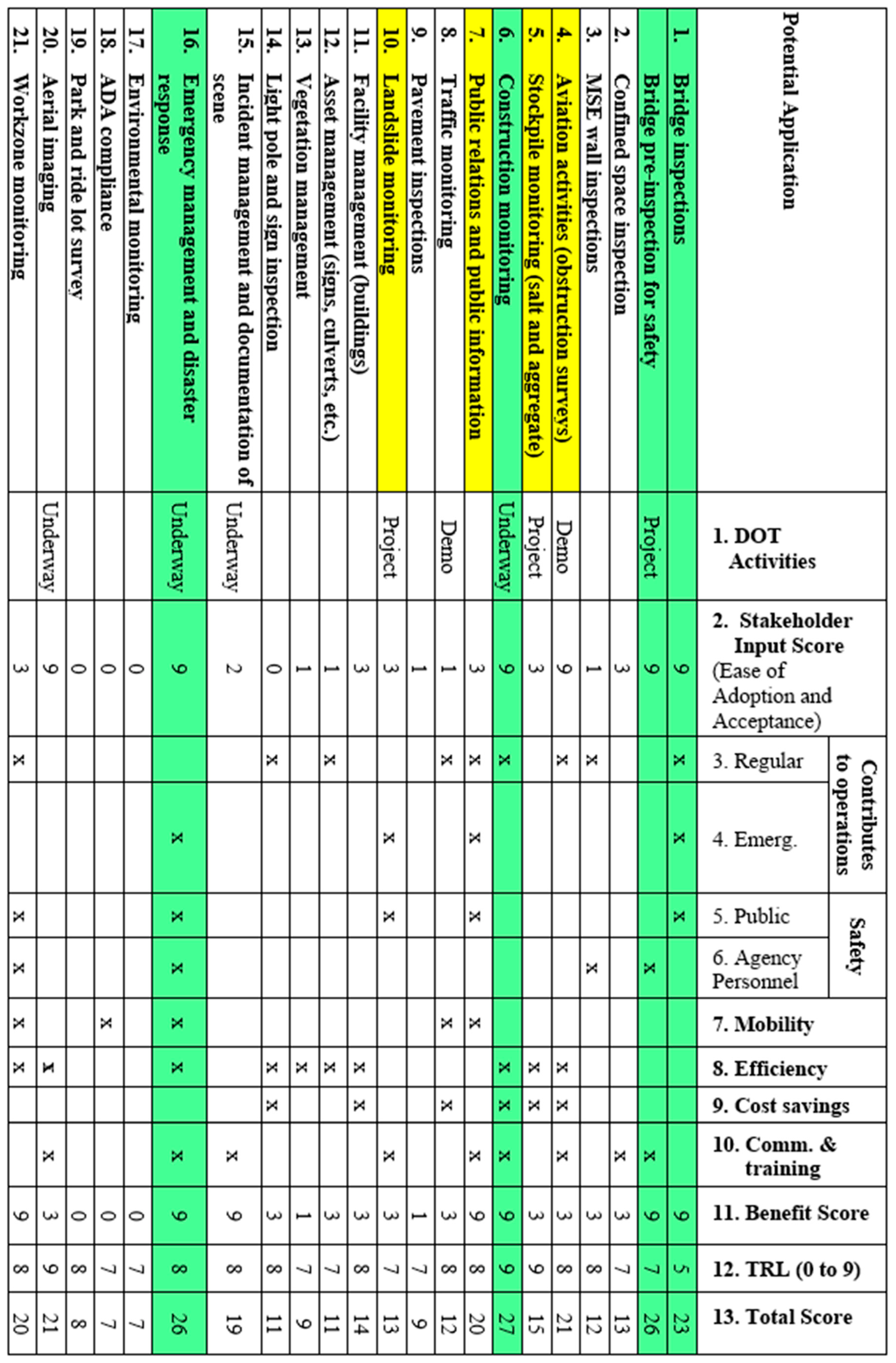
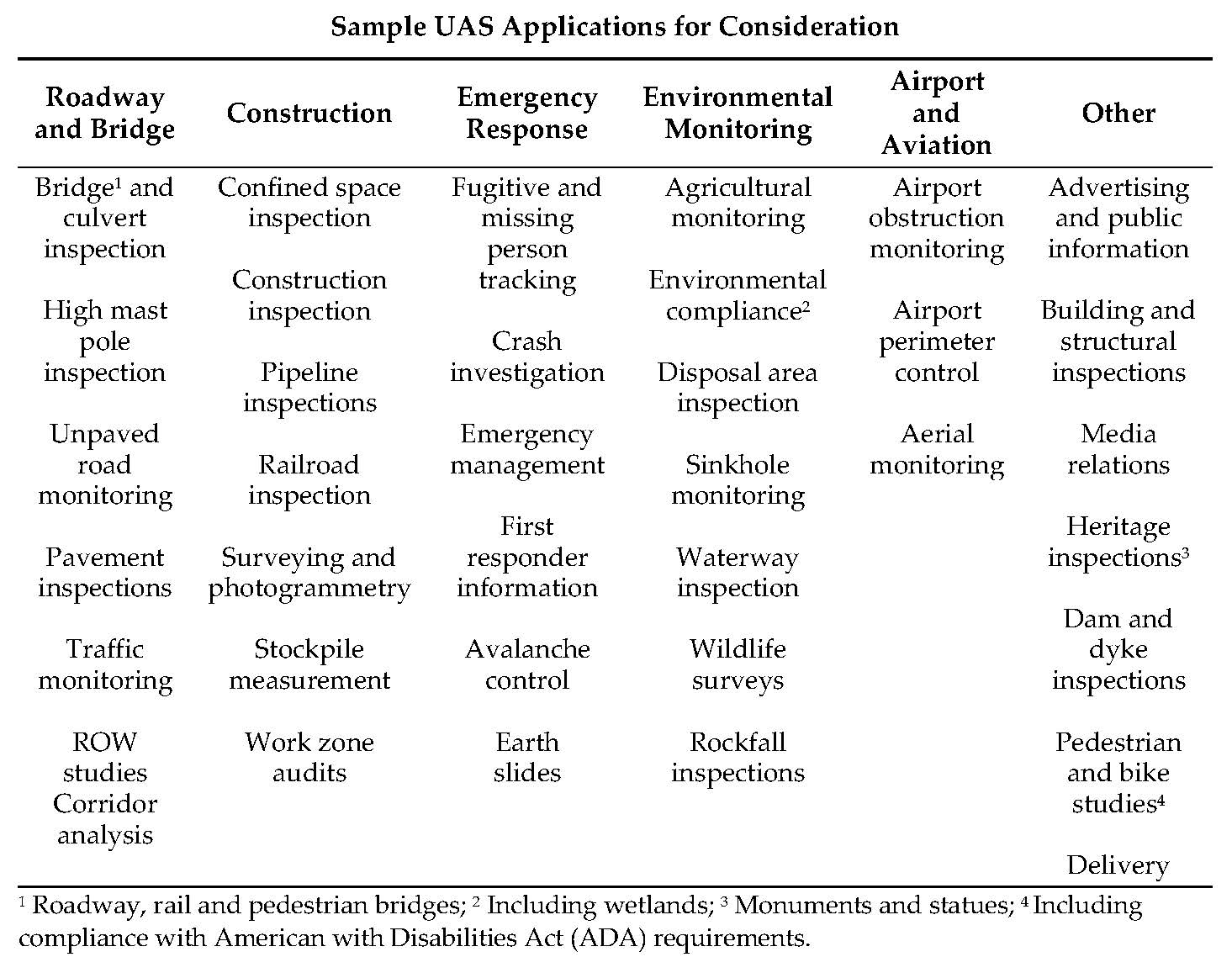
Unmanned aircraft systems (UAS) are increasingly used for a variety of applications by state Departments of Transportation (DOT) and local transportation agencies due to technology advancements, lower costs, and regulatory changes that have simplified operations. There are numerous applications (e.g., bridge inspection, traffic management, incident response, construction and roadway mapping) and agencies find it challenging to prioritize which applications are most appropriate. Important factors to consider when prioritizing UAS applications include: (1) benefits, (2) ease of adoption, (3) stakeholder acceptance, and (4) technical feasibility. These factors can be evaluated utilizing various techniques such as the technology acceptance model, benefit analysis, and technology readiness level (TRL). This paper presents the methodology and results for the prioritization of UAS applications’ quality function deployment (QFD), which reflects both qualitative and quantitative components. The proposed framework can be used in the future as technologies mature, and the prioritization can be revised on a regular basis to identify future strategic implementation opportunities. Numerous transportation agencies have begun to use UAS, some have developed UAS operating policies and manuals, but there has been no documentation to support identification of the UAS applications that are most appropriate for deployment. This paper fills that gap and documents a method for identification of UAS applications for strategic deployment and illustrates the method with a case study.
Keywords: unmanned aircraft systems; UAS; drone; strategic planning; technology innovation; DOT; prioritization unmanned aircraft systems; UAS; drone; strategic planning; technology innovation; DOT; prioritization
Graphical Abstract