Review

Advances in Unoccupied Aerial Systems for Cetacean Monitoring

1
Key Laboratory of Fisheries Remote Sensing, Ministry of Agriculture and Rural Affairs, East China Sea Fisheries Research Institute, Chinese Academy of Fishery Sciences, Shanghai 200090, China
2
College of Oceanography and Ecological Science, Shanghai Ocean University, Shanghai 201306, China
3
Tianjin Tuyue Technology Co., Ltd., Tianjin 300384, China
4
Aquatic Conservation and Rescue Center of Jiangxi Province, Nanchang 330096, China
*
Authors to whom correspondence should be addressed.
Drones 2026, 10(9), 711; https://doi.org/10.3390/drones10090711 (registering DOI)

Submission received: 16 July 2026 / Revised: 3 September 2026 / Accepted: 16 September 2026 / Published: 19 September 2026

Abstract

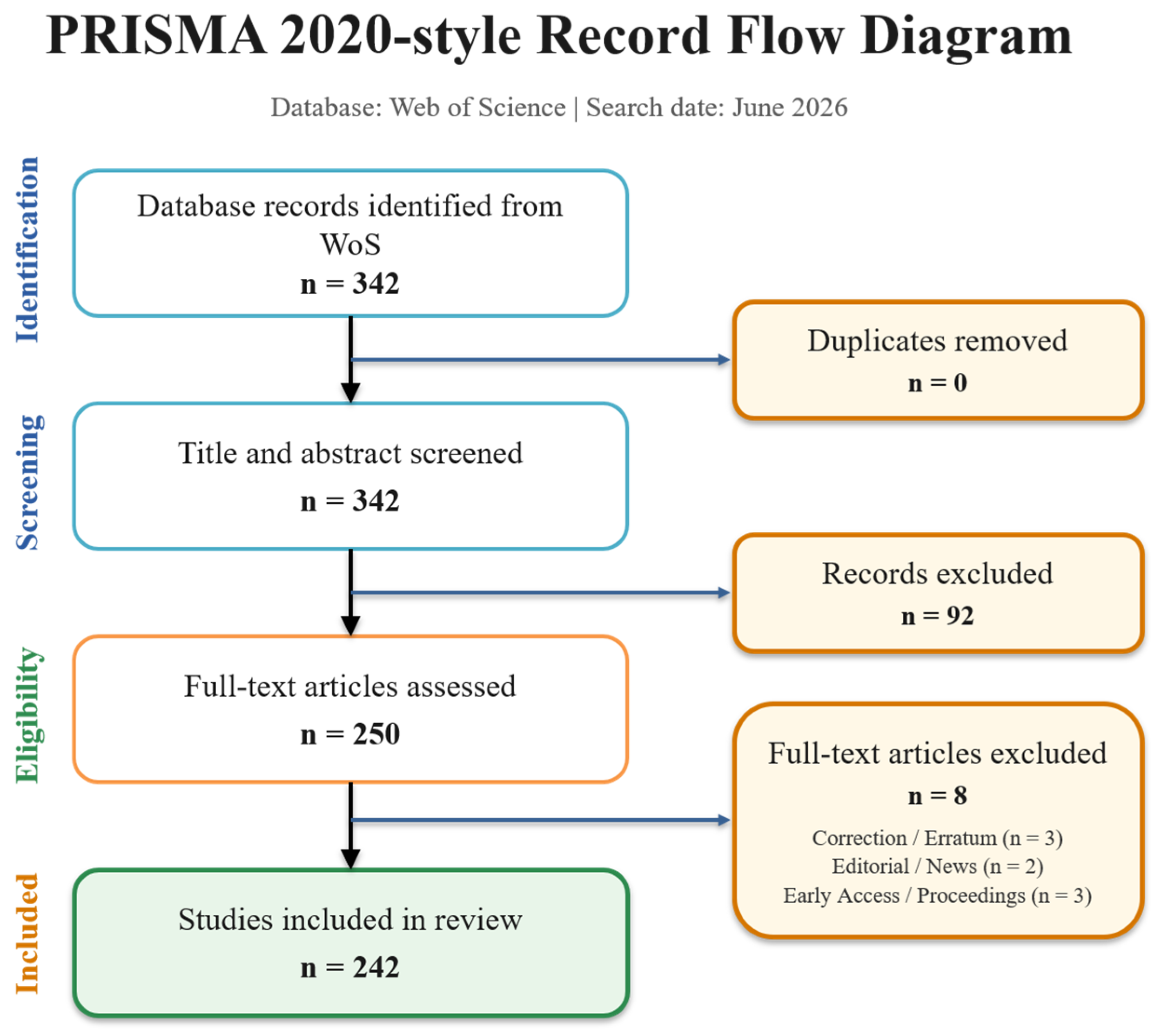
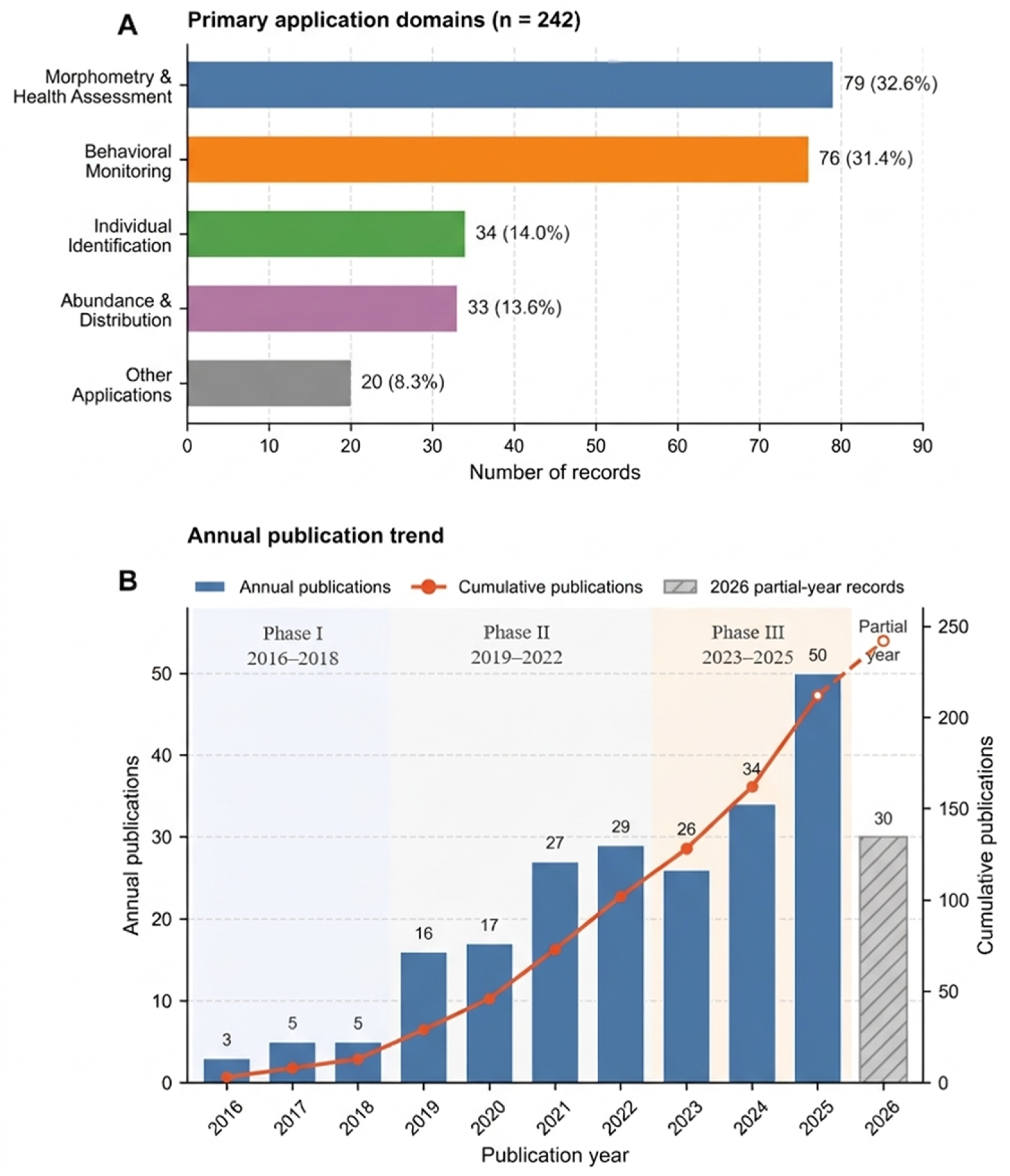
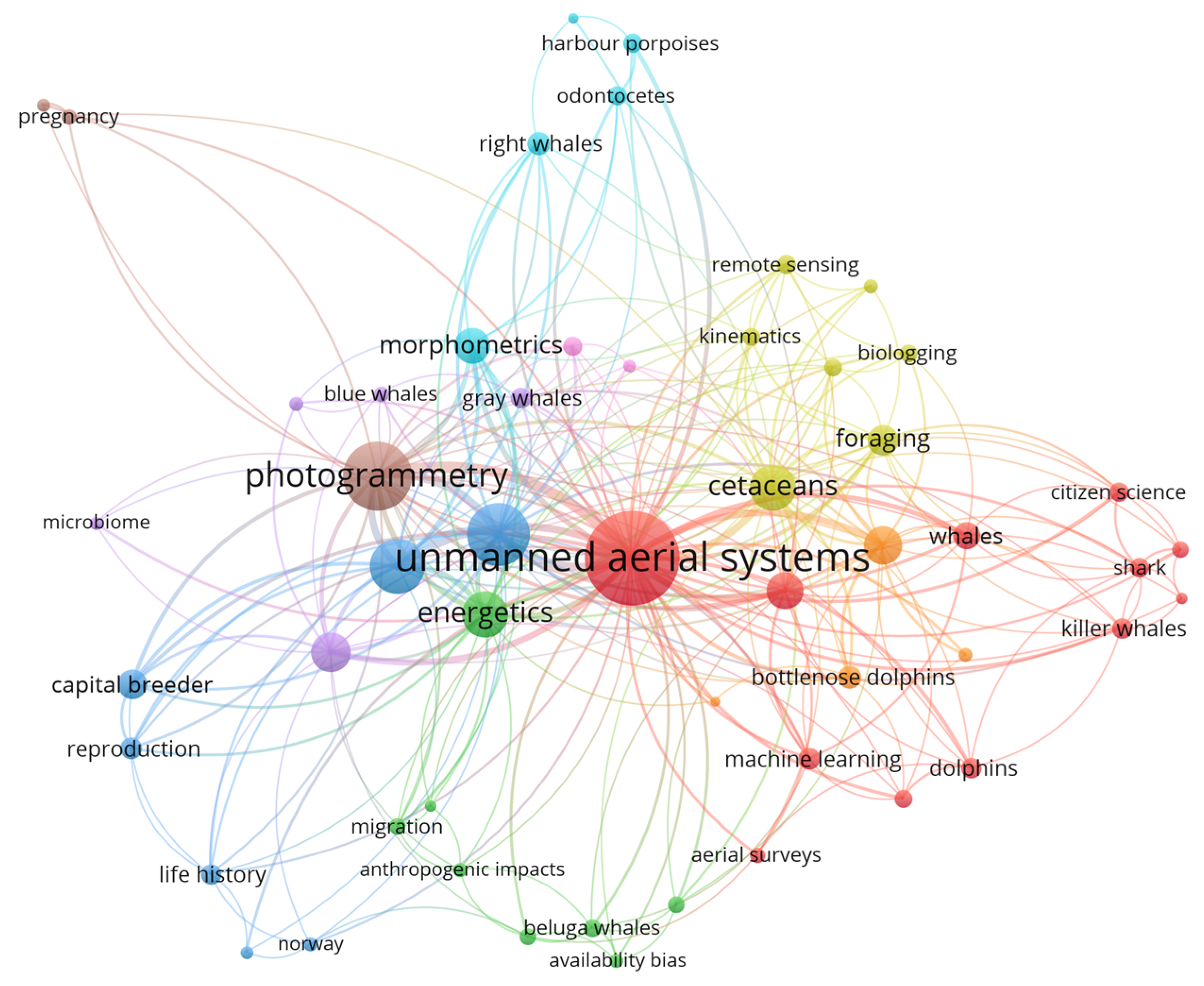
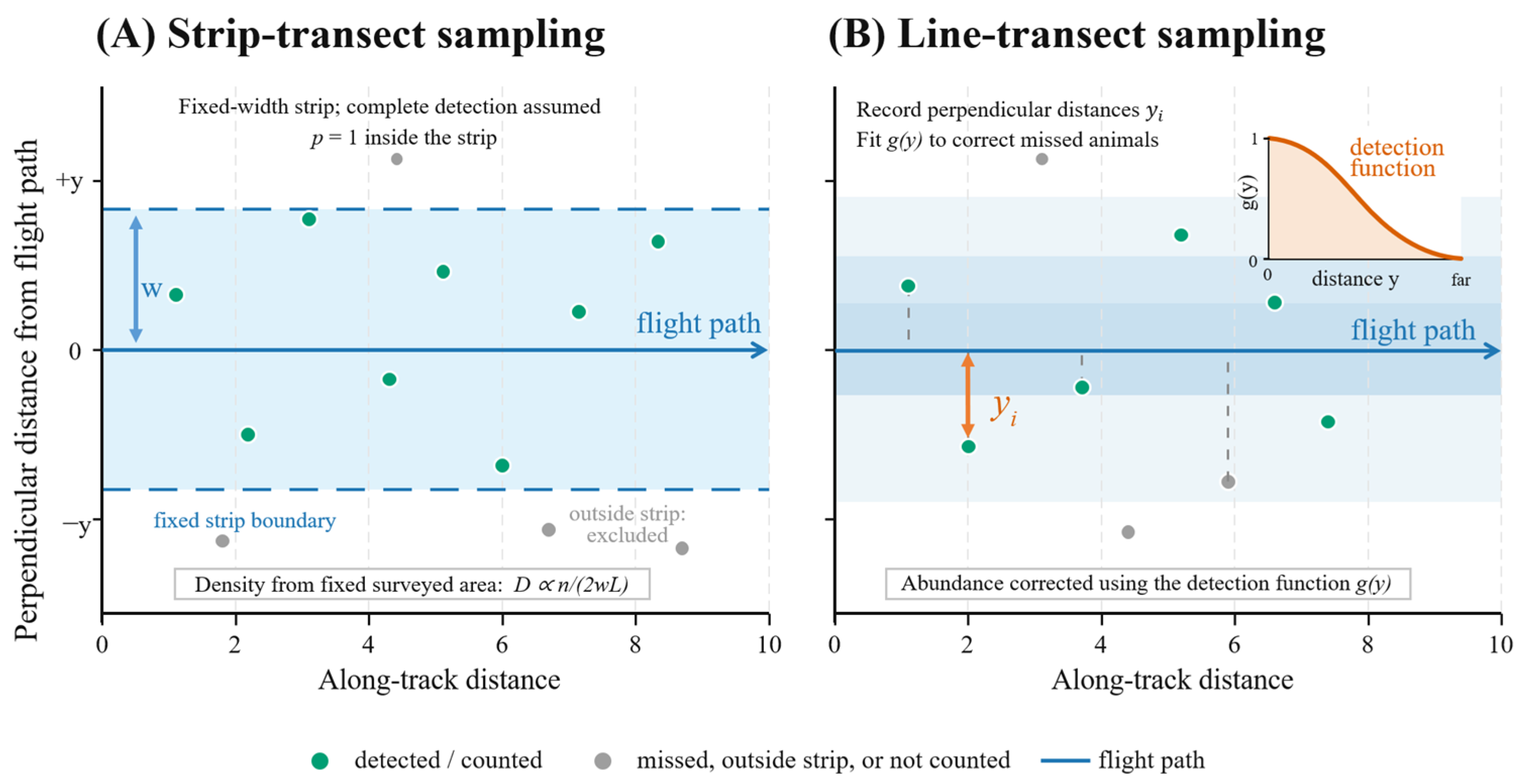
Most unoccupied aerial systems (UAS) research in cetacean monitoring has shown that drones can acquire high-resolution imagery, but the conditions under which such imagery becomes auditable ecological evidence remain less clearly defined. A structured narrative synthesis (evidence map) was conducted using 242 Web of Science Core Collection records retained from a final export dated 23 June 2026, with search transparency supported by index specification, sentinel-paper recall checking, and predefined evidence and validation maturity coding. Five application domains were identified: morphometrics and health assessment (79 records, 32.6%), behavioral monitoring (76, 31.4%), individual identification (34, 14.0%), abundance and distribution monitoring (33, 13.6%), and multimodal or operational applications (20, 8.3%). Across these domains, the field is shifting from opportunistic visual documentation toward calibrated photogrammetry, computer-vision-assisted detection and re-identification, behavior quantification, and targeted health or molecular sampling. However, ecological inference remains constrained by availability bias, perception bias, group-size error, measurement uncertainty, algorithmic-transfer bias, and disturbance-induced bias. UAS monitoring is therefore evaluated as an observation-to-inference workflow linking platform design, sensor geometry, image preprocessing, annotation, model validation, and uncertainty propagation to management-relevant cetacean evidence.
Keywords: unoccupied aerial systems; cetaceans; marine mammal monitoring; photogrammetry; abundance estimation; individual identification; computer vision; body condition; health assessment; environmental DNA unoccupied aerial systems; cetaceans; marine mammal monitoring; photogrammetry; abundance estimation; individual identification; computer vision; body condition; health assessment; environmental DNA