Article

A Multi-Sensor Fusion-Based Remaining Useful Life Prediction Model for UAV Engines

1
Shijiazhuang Campus, Army Engineering University of PLA, Shijiazhuang 050003, China
2
College of National Defence Engineering, Army Engineering University of PLA, Nanjing 210007, China
*
Author to whom correspondence should be addressed.
Drones 2026, 10(9), 705; https://doi.org/10.3390/drones10090705

Submission received: 1 July 2026 / Revised: 13 August 2026 / Accepted: 20 August 2026 / Published: 16 September 2026

Abstract

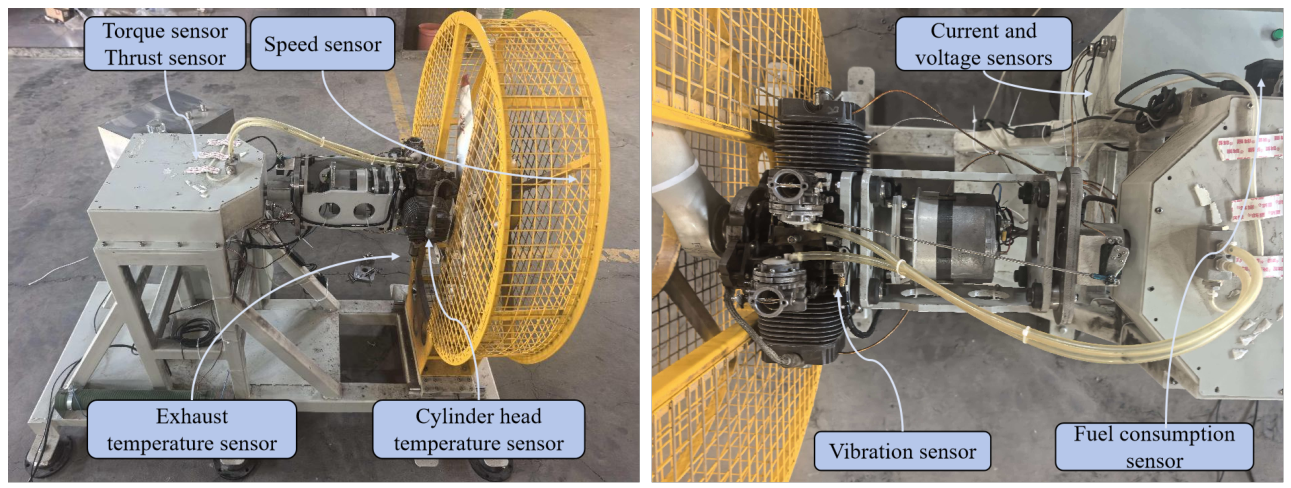
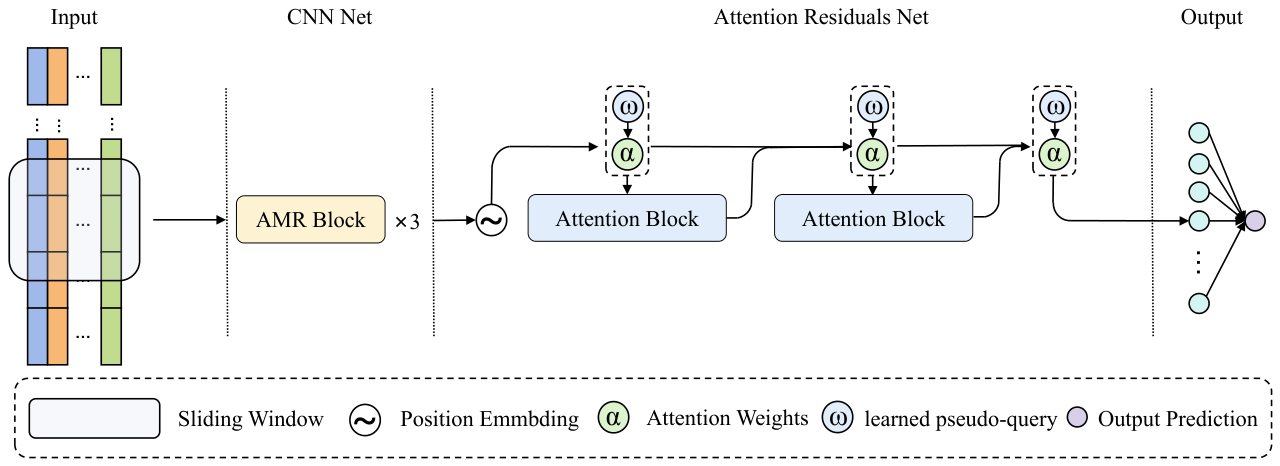
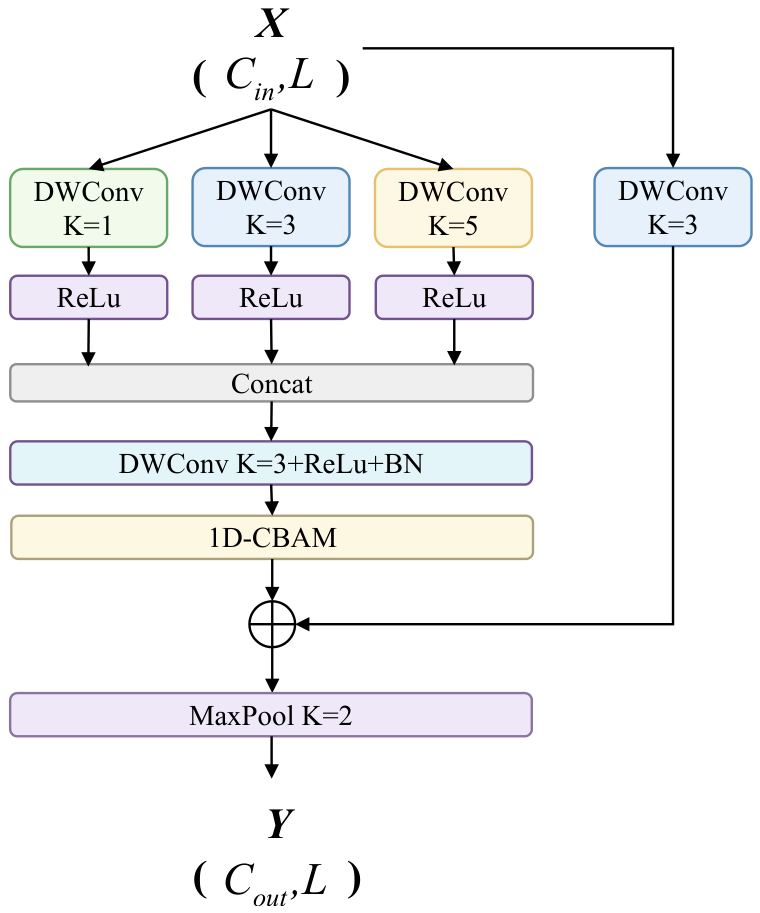
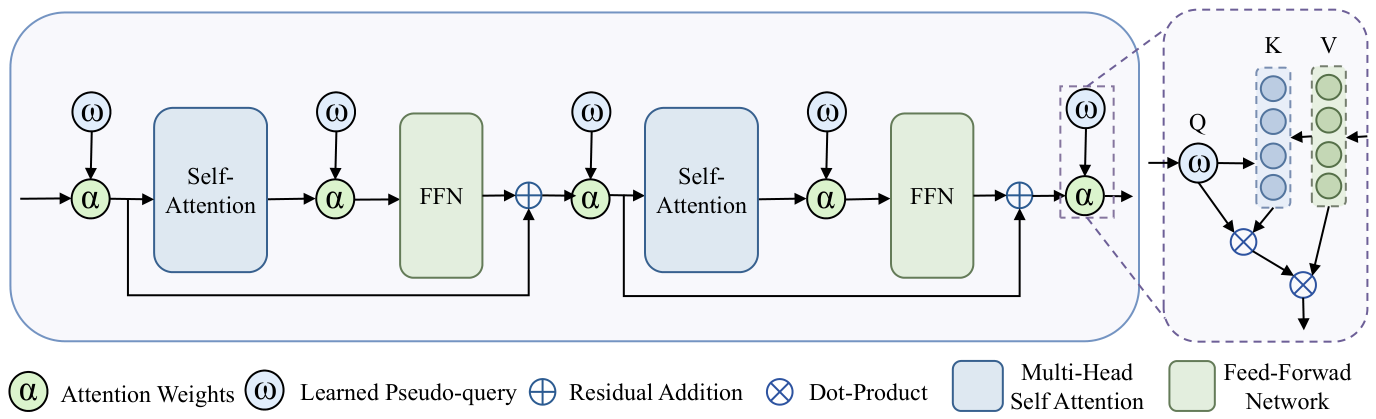
With the widespread application of unmanned aerial vehicles (UAVs) across various domains, the reliability and lifespan prediction of their core power units—the engines—has become a critical research focus. This study addresses the degradation characteristics of UAV engines under complex operating conditions, including high temperature, high pressure, high rotational speed, and severe vibration, and proposes a remaining useful life (RUL) prediction model based on multi-sensor data fusion. First, a multi-sensor data acquisition platform for UAV engines was established, enabling synchronized collection of multi-dimensional parameters across the entire life cycle, including thrust, torque, temperature, vibration, current, and voltage. Subsequently, a multi-sensor fusion-based RUL prediction model for UAV engines was developed, employing an attention-guided multi-scale residual convolution module to extract local multi-scale degradation features, and integrating a residual-attention Transformer to enhance the modeling of long-sequence dependencies. Experimental results demonstrate that the proposed method outperforms conventional CNN, RNN, and fusion models in terms of RMSE, R2, and Score metrics, significantly improving the accuracy and training stability of UAV engine lifespan prediction. This study provides both data support and methodological innovation for predictive maintenance of UAV engines, contributing to enhanced flight safety and mission assurance.
Keywords: remaining useful life prediction; engine; residual attention; UAV remaining useful life prediction; engine; residual attention; UAV