Article

Numerical Study on Aerodynamic Characteristics of Dual-Ducted Fan System for UAVs Under Coupled Effects of Ground Clearance and Duct Gap

School of Mechanical and Electrical Engineering, North University of China, No. 3 Academy Road, Taiyuan 030051, China
*
Author to whom correspondence should be addressed.
Drones 2026, 10(5), 314; https://doi.org/10.3390/drones10050314
Submission received: 5 March 2026 / Revised: 16 April 2026 / Accepted: 20 April 2026 / Published: 22 April 2026
(This article belongs to the Section Drone Design and Development)

Highlights

What are the main findings?
  • A critical ground clearance threshold for the thrust of a signle-ducted fan is identified as h / D = 0.75 , where h denotes ground clearance and D denotes the rotor disk diameter. Under ground-effect-free conditions, the optimal duct gap for the maximum total thrust of the dual-ducted fan system is six times the rotor disk radius. The coupling effect between ground clearance and duct gap exhibits significant nonlinear characteristics: as ground clearance increases, the system thrust first decreases and then increases, with a sensitive variation range of h / D = 0.5 1.0 .
  • The ground effect regulates thrust variation through flow field confinement and jet rebound, while duct gap dominates the aerodynamic interference pattern between the two ducts. The dynamic balance between these two factors determines the overall thrust and stability of the dual-ducted fan system.
What are the implications of the main findings?
  • The quantitative conclusions and coupling mechanisms obtained provide key guidelines for the layout optimization of ducted-fan UAVs and the design of flight control laws during near-ground hover and landing phases.
  • These findings establish a theoretical foundation for defining safe flight envelopes, thereby ensuring the reliable operation of ducted-fan UAVs in confined near-ground environments.

Abstract

Due to their low noise and high efficiency, ducted fans are extensively used in unmanned aerial vehicles (UAVs). As the core lift and propulsion units, the aerodynamic performance of dual-ducted fans critically determines propulsion efficiency and flight stability. However, when operating near the ground, variations in ground clearance and the gap between ducts disrupt the isolated flow fields, introducing ground effect and aerodynamic coupling that pose significant stability risks. To address this, we developed a high-fidelity numerical model using the Unsteady Reynolds-Averaged Navier–Stokes approach with sliding mesh technology and the Shear-Stress Transport k- ω turbulence model. This study reveals the macroscopic aerodynamic characteristics of dual-ducted fans as functions of ground clearance and duct gap, and clarifies the underlying flow mechanisms. The research results indicate that the performance of a signle-ducted fan is highly sensitive to ground clearance: a critical threshold of thrust occurs when the ground clearance (h) at the duct outlet is 0.75 times the rotor disk diameter (D). Under ground-effect-free conditions, the dual duct gap dominates the aerodynamic interference pattern: the total thrust of the system reaches its maximum value when the minimum spacing between the outer edges of the two ducts is 6 times the rotor disk radius. The coupling effect of ground clearance and duct gap exhibits significant nonlinear characteristics: thrust first decreases and then increases with increasing ground clearance, and the sensitive range of gap variation is h / D = 0.5 1.0 . These findings are crucial for optimizing the layout of ducted UAVs and enhancing UAV flight control to ensure safe and efficient operation under near-ground conditions.

1. Introduction

In recent decades, unmanned aerial vehicles (UAVs) have become indispensable equipment in both civilian and military fields owing to their excellent maneuverability and versatility [1,2,3]. As a high-performance propulsion device, ducted fans have attracted extensive attention from researchers worldwide [4,5,6]. A typical ducted fan consists of a duct and rotor blades. Compared with isolated propellers, they exhibit advantages in efficiency, safety, and noise reduction, rendering them highly competitive in aeronautical applications [7,8,9]. Among these, ducted fan unmanned aerial vehicles (UAVs) have emerged as a pivotal configuration for multi-rotor and vertical take-off and landing (VTOL) aircraft owing to their high aerodynamic efficiency, superior safety, and excellent adaptability. Furthermore, the multi-ducted layout serves as a key solution to enhance payload capacity, system redundancy, and maneuverability. Nevertheless, it is noteworthy that during the take-off and landing phases of UAVs, the ducted system simultaneously confronts the dual challenges of blockage interference induced by ground effect and aerodynamic coupling effects between adjacent ducts. The interaction of these two factors tends to trigger thrust fluctuations, which severely impair the safety and reliability of the aircraft during take-off and landing; the underlying mechanisms governing their combined effects remain to be further investigated.
Currently, academic discussions on the aerodynamic characteristics of ducted fans are mostly limited to isolated studies on single influencing factors. NASA confirmed through scaled model tests [10] that the ducted thrust increased by 8 % when the ground clearance (h) was equal to 0.8 times the rotor disk diameter (D), but did not investigate the tip separation phenomenon under the condition of h / D < 0.5 . Team Bricteux, L. et al. used wall-resolved Large Eddy Simulation (LES) to investigate the transport and decay of wake vortices of various strengths under ground effect and turbulent crosswind, analyzed the interactions between the vortices, the wind, and the ground, and identified key patterns [11]; however, it did not quantify the extent to which this interaction affects thrust. Mi et al. [12] analyzed the aerodynamic interference of rigid ground and static water surfaces on a signle-ducted fan using the volume of fluid (VOF) model and a sliding mesh technique. The results showed that when the ground clearance (h) was 0.5 times the rotor disk radius (R), the rotor thrust gain reached 10 % but the duct thrust loss exceeded 20 % , resulting in a final total thrust decrease of 12 % . However, this study did not involve modulation of ground effect via duct spacing in multi-duct configurations. Paz et al. [13] reproduced the near-ground flight flow field using dynamic mesh and captured the interaction between ground vortices and tip vortices when h / R = 0.4 ; however, their research object was a quadrotor UAV, and the study did not extend to the gap-ground effect coupling scenario of multi-ducted fans. Luo et al. [14] found based on the unsteady Reynolds-averaged Navier–Stokes (URANS) method and Shear Stress Transport (SST) k- ω turbulence model, that stall cells appear at the blade root when a signle-ducted fan is near the ground with h / R = 0.8 , which can cause total thrust fluctuations of up to 37 % . Nevertheless, the study did not explore the influence of gap effects on the evolution of stall cells for s / D ranging from 1.0 to 3.0 in multi-ducted systems. Luo et al. [15] further analyzed the dynamic near-ground process and found that the descending motion of the fan can enhance the ground effect, leading to a total thrust loss of 63 % for a signle-ducted fan when h / R = 0.2 . However, this study only focused on the single-duct configuration and did not consider the reconstruction of ground vortex structures caused by wake superposition induced by gaps in multi-duct systems. Additionally, when analyzing the ground effect of distributed ducted fans, Zhao et al. [16,17] only established the correlation between ground vortex systems and thrust, but did not explore the influence of gap factors.
In the field of multi-duct gap research, Airbus’ simulation studies have shown that wake interference is minimized when s / D = 2.0 under the condition without ground effect [18]. The Georgia Institute of Technology found that the inflow deflection angle of the inner duct ranges from 5 to 8 [19]. However, these studies did not consider the reconstruction of gap effects by the near-ground, and most of the models used were simplified (e.g., omitting the duct lip structure). Ohya et al. [20] systematically investigated multi-rotor systems (MRS) composed of 2, 3, and 5 ducted fans with edge diffusers (WLT) through wind tunnel tests and LES simulations. They found that when the gap ratio s / D brim = 0.2 , the average power of the 5 WLTs increased by 21 % compared to a single unit. The core mechanism is that gap flow acceleration and the interaction of edge vortices form a low-pressure region to attract more incoming flow. Yet this study was completely limited to scenarios without ground effect. Li Zhuoyuan et al. [21] further explored the near-ground effect of distributed integrated ducted fan groups and found that the total force efficiency loss reached 7.77 % at a ground clearance of 2 R , with the inner ducts suffering more significant performance loss due to the effect of ground vortex rings. They also analyzed the influence of gaps ( Gap = 0.04 R to 0.8 R ) on the force efficiency of non-integrated ducted fan groups, revealing that force efficiency loss exceeded 3 % when Gap < 0.4 R . However, this study only analyzed the individual effects of gap and ground clearance, without an in-depth quantitative analysis of their coupling mechanism.
Existing studies mostly focus on the isolated analysis of individual effects of either ground effect or duct gap, and have not yet systematically revealed the macroscopic aerodynamic laws and flow mechanisms under the coupling interference of gap-induced wake and ground recirculation vortex. Consequently, it is difficult to support the collaborative design and performance optimization of multi-ducted fan systems for UAVs in the near-ground complex flow field.
In view of this, this study takes the dual-ducted fan system of UAVs as the research object and conducts a systematic numerical investigation focusing on the core issue of the coupling effect between ground clearance and duct gap. The Unsteady Reynolds-Averaged Navier–Stokes (URANS) approach based on sliding mesh technology is adopted, coupled with the Shear Stress Transport (SST) k- ω turbulence model, to establish a high-fidelity numerical simulation framework. Convective fluxes are discretized via the second-order upwind scheme, and time marching is implemented with the second-order implicit scheme to accurately capture unsteady flow characteristics. Three categories of numerical simulations are carried out in this study: first, investigating the aerodynamic characteristics of a signle-ducted fan at different ground clearances to identify the critical threshold of thrust variation; second, exploring the interference mechanisms of dual-ducted fans under different gap configurations in the ground-effect-free condition to distinguish the influences of gap-induced constructive and destructive interference on the total thrust of the system; third, analyzing the aerodynamic responses of dual-ducted fans under the coupled working conditions of various ground clearances and duct gaps to reveal the macroscopic flow mechanisms and nonlinear variation laws under the synergistic effect of ground clearance and duct gap. The findings of this study are expected to provide important references for optimizing the layout design of ducted fan UAVs and improving their near-ground flight control performance.
The rest of the paper is organized as follows: Section 2 describes the computational method. Section 3 presents the validation of the computational method based on experiments and simulations. Section 4 introduces the computational model. Section 5 focuses on the analysis of simulation results. Section 6 draws conclusions.

2. Numerical Simulation

2.1. Governing Equations and Solution Framework

Addressing the unsteady flow problem of the ducted fan ground effect, which involves rotational motion and complex interference, this study adopts the URANS approach as the solution framework [22].
The governing equations are the three-dimensional compressible Navier–Stokes equations subjected to Reynolds averaging, and their conservative formulation in integral form is given by:
t Ω W d Ω + Ω F c F v · n d S = 0
where Ω denotes the volume of the control volume and Ω represents its boundary surface; W = [ ρ , ρ u , ρ v , ρ w , ρ E ] T is the conservative variable vector; F c and F v are the convective flux vector and the viscous flux vector, respectively; and n is the unit outward normal vector on the surface of the control volume. To adapt to the complex geometric profiles of the duct and blade, the computational domain is discretized using unstructured/hybrid meshes, and the cell-centered finite volume method (FVM) is employed. This method ensures the intrinsic conservation property of the numerical scheme by strictly satisfying the mass, momentum and energy conservation laws on the discretized control volumes, and thus exhibits excellent adaptability to unsteady flows involving moving boundaries.

2.2. Turbulence Model

To close the Reynolds stress terms in the URANS equations, this study selects the SST k- ω turbulence model. This model utilizes a blending function to adopt the standard k- ω model in the near-wall region, ensuring high-precision prediction of boundary layer flows with adverse pressure gradients, and switches to the k- ε model in the far-field free shear layer region to enhance numerical stability.
The core advantage of the SST k- ω model lies in its active constraint on turbulent shear stress, which physically prevents it from exceeding the turbulent kinetic energy (TKE), thereby significantly improving the prediction accuracy for flows with strong adverse pressure gradients and flow separation (e.g., rotating machinery and airfoil dynamic stall). This model has been widely validated for the simulation of complex flows such as ducted fans and rotors, and is capable of effectively capturing the large-scale separated vortices and flow evolution characteristics associated with ground effect and duct gap interference. Compared with scale-resolving simulation methods (e.g., Large Eddy Simulation, LES) that require resolving turbulent fluctuations, the URANS approach coupled with the SST k- ω model achieves significantly higher computational efficiency while ensuring engineering accuracy, making it a suitable choice for revealing the macroscopic aerodynamic laws and dominant flow mechanisms in this study.

2.3. Spatial and Temporal Discretization Schemes

In terms of spatial discretization, the second-order upwind scheme is employed to compute the convective fluxes F c . This scheme obtains the interfacial flux values via linear reconstruction of upstream physical quantities; it significantly reduces numerical dissipation compared with the first-order scheme while ensuring numerical robustness, thereby enabling clearer capture of key flow structures such as tip vortices and jet shear layers.
The viscous fluxes F v are discretized using the central difference scheme, which possesses second-order accuracy and allows for the precise calculation of diffusion effects.
For time marching, the second-order implicit time marching scheme is adopted to solve the transient terms. This scheme exhibits excellent numerical stability, permits the use of relatively large time steps, and simultaneously maintains second-order accuracy in the temporal domain. It is thus suitable for simulating long-duration unsteady physical processes including the rotation of ducted propellers and the evolution of flow fields.

2.4. Thrust Calculation Method

After the convergence of the flow field solved by the aforementioned URANS framework and SST k- ω turbulence model, the total thrust of the ducted fan is obtained by integrating the aerodynamic loads on all solid walls along the axial direction (thrust direction). The solid surfaces include the blade surfaces, duct inner wall, hub, and fairing, where both wall static pressure and viscous shear stress contribute to the total thrust.
The numerical thrust is calculated as:
T = S solid p n x + τ n x d S
where T is the total thrust; S solid denotes the solid wall surface; p is the time-averaged static pressure on the wall; n x is the axial component of the unit outward normal vector of the wall surface; τ n x is the axial component of the wall viscous shear stress; and d S is the infinitesimal surface area element.
This integral method fully considers the actual aerodynamic load distribution and ensures consistency between the numerical thrust and the experimentally measured overall thrust, providing a reliable basis for the quantitative comparison between numerical and experimental results.

3. Case Validation

3.1. NASA Ducted Fan

The ducted fan model provided in NASA-TN-D-995 was selected as the object for case validation [23], as shown in Figure 1. To ensure direct comparability and quantitative consistency between numerical simulations and experimental results, the simulation setup strictly replicates the benchmark operating conditions reported in the literature: an angle of attack of 0°, an advance ratio of 0.595, a rotational speed of 8000 RPM, and an inflow velocity of 30.226 m/s. To quantify the aerodynamic performance of the ducted fan, the torque coefficient ( C Q ) and the thrust coefficient ( C T ) are defined as:
C Q = Q ρ n 2 D 5 , C T = T ρ n 2 D 4
where T denotes the thrust generated by the propeller; Q is the torque; ρ is the fluid density; n represents the rotational speed; and D is the propeller diameter. The comparison between experimental and computed values of C Q , C T , thrust T and torque Q is summarized in Table 1.
Table 1 presents the comparison between the calculated values and experimental values. The error of C Q does not exceed 4 % , the error of C T is within 7 % , the error of T is less than 4 % , and Q does not exceed 7 % . Overall, the errors of all components are within 10 % , indicating that the established numerical method exhibits high simulation accuracy.

3.2. Qunxi Five-Bladed Ducted Fan

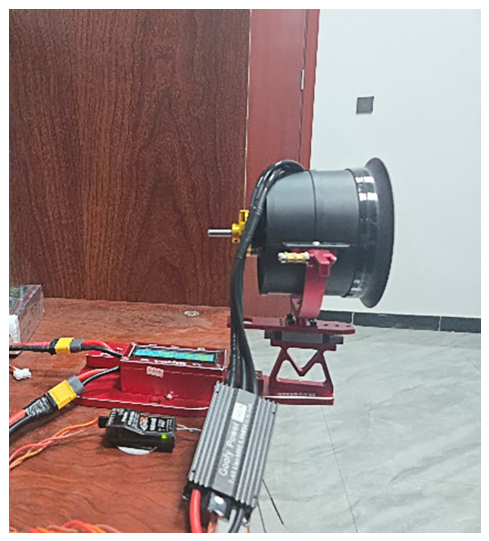
A single Qunxi five-bladed ducted fan is chosen as the validation model to verify the reliability of the numerical simulation approach. Figure 2 shows the single-ducted fan test bench. The test employs a Mayatech ducted fan thrust dynamometer (Mayatech Intelligent Technology Co., Ltd., Jingzhou, Hubei, China), which records the thrust, current, and power of the ducted fan with a thrust accuracy of 0.01 N, a current error of 0.01 A, and a power resolution of 0.1 W. The test conditions were set as an inflow wind speed of V = 0 m / s and a test rotational speed ranging from n = 30,000 to 60,000 r/min. The numerical simulation method introduced earlier was adopted for calculations.
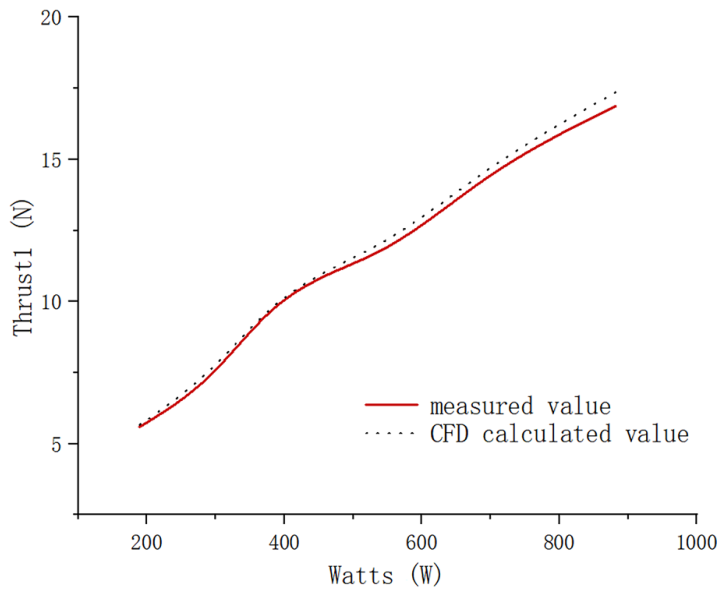
Figure 3 presents the comparison between the experimental values and the numerical simulation results. It can be observed that the calculated values show good agreement with the experimental values, and all relative errors are within 5 % , indicating that the computational method employed in this paper has high reliability.

4. Computational Model

4.1. Research Object

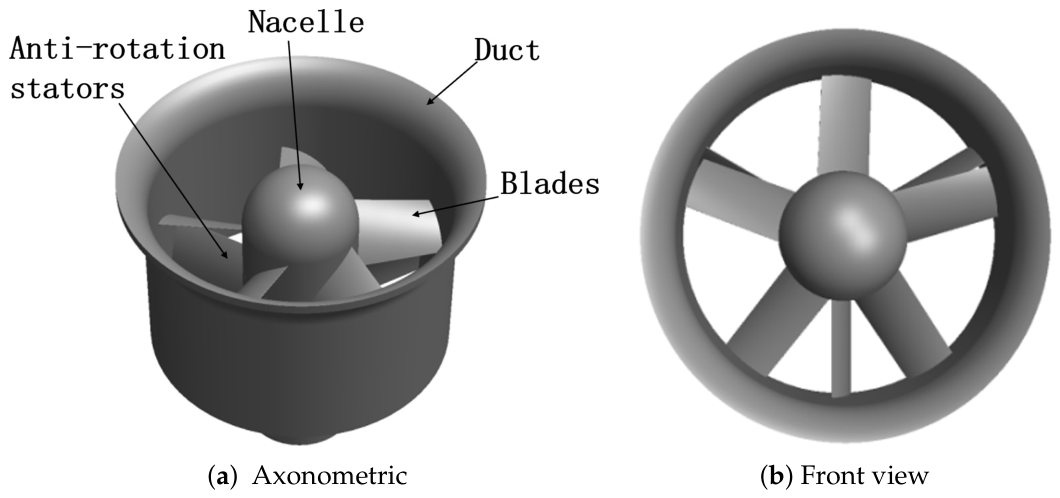
The unit ducted fan consists of four main components: the duct, blades, nacelle, and anti-rotation stators, whose geometric configuration is shown in Figure 4. The computational model includes a five-bladed fan rotor and three anti-rotation stators that support the duct. The duct diameter is 64 mm, the blade profile adopts the NACA 0008 airfoil, and the propeller rotates in the positive direction around the Y-axis.
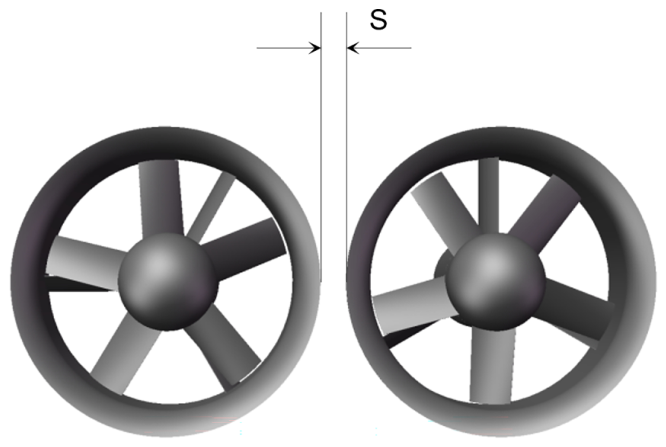
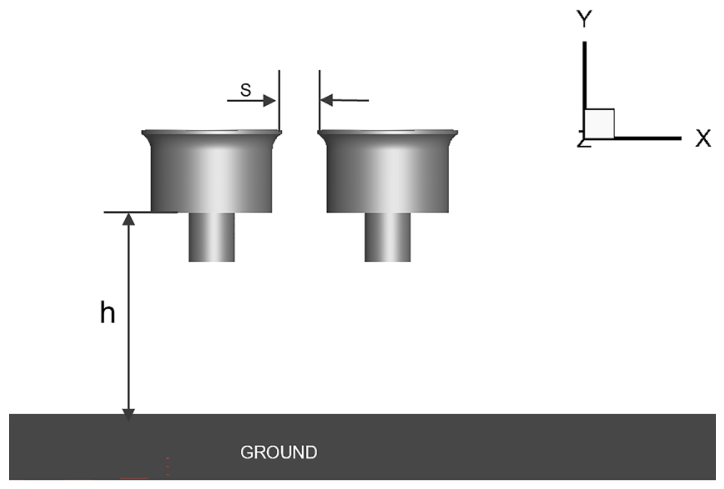
The geometric configuration of the dual-ducted fan group is shown in Figure 5. When viewed from front to back, the ducts are designated as the left duct and the right duct from left to right, where S denotes the minimum distance between the outer diameters of the ducted fans.

4.2. Case Setup

Considering the structural characteristics and application requirements of the 64 mm ducted fan, to balance thrust performance and aerodynamic noise level, with reference to the technical specification sheet of this ducted fan model, the hover condition is adopted with an inflow velocity of V = 0 m/s, an angle of attack of 0 , and a rotational speed of 40,000 r/min. At this rotational speed, the ducted fan can ensure sufficient thrust output while keeping aerodynamic noise within a reasonable range, meeting the comprehensive requirements of the study for dynamic and noise characteristics.
As shown in Figure 6, the ground clearance is defined as the distance from the trailing edge of the duct diffuser to the ground (denoted as h), and this ground clearance is non-dimensionalized using the duct diameter (D) as the reference length. In this figure, the coordinate system is defined with the X-axis parallel to the line connecting the two duct centers as the gap direction coordinate, the Y-axis along the duct axial as the vertical upward height coordinate, and the Z-axis perpendicular to the duct arrangement plane as the spanwise coordinate. To investigate the differences in aerodynamic characteristics of the duct between different ground clearances and the hovering state without ground effect, four types of ground effect conditions with different ground clearances from the duct bottom surface are set with reference to existing literature, where h / D values are set to 2.0, 1.0, 0.75, and 0.5, respectively. Meanwhile, the hovering condition without ground effect is also calculated for comparison.
To further expand the research scope of the aerodynamic characteristics of dual-ducted fans, this paper establishes additional research cases for dual-ducted fans. In line with the practical engineering design requirements of ducted UAVs, the two ducted fans are set to rotate in opposite directions to achieve the design goal of counter-torque cancellation. The research cases are specifically divided into two categories. The first category is the hovering gap conditions of dual-ducted fans. This category adjusts the gap between the ducts in the hovering state, with the ratio G of the minimum distance S between the outer diameters of the ducted fans to the duct radius R as the control parameter (as shown in Figure 6). A total of 5 gap specifications are set, i.e., G = 0.04 , 0.2 , 0.4 , 0.6 and 6, aiming to investigate the independent impact of gap size on the aerodynamic characteristics of dual-ducted fans. The second category is the “ground clearance-gap” coupling conditions of dual-ducted fans. This category simultaneously controls two parameters, h / D (height-to-diameter ratio) and G (as shown in Figure 6), where h / D is set to 4.0, 3.0, 2.0, and 1.0, and G adopts the existing specifications of 0.2 , 0.4 , 0.6 , and 6, thereby forming a combination of multi-parameter coupling conditions. The detailed research conditions and corresponding control parameters are listed in Table 2.
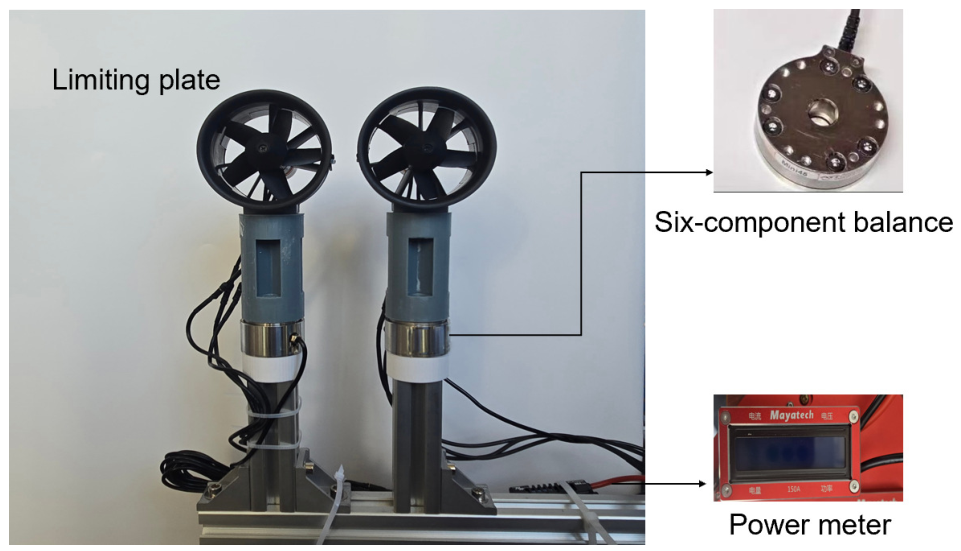
As shown in Figure 7, this study adopts the Decent (Decent Sensing System Engineering Co., Ltd., Shenzhen, Guangdong, China) six-component force/torque sensor to measure the thrust and torque generated by the ducted fan under various operating conditions. The nominal accuracy of the sensor is maintained at better than 0.3% FS (Full Scale). The integrated data acquisition system supports a baud rate range of 2400 to 460,800 and achieves a maximum sampling rate of 640 Hz. Meanwhile, a Mayatech 150 A aeromodelling power meter (Mayatech Intelligent Technology Co., Ltd., Jingzhou, Hubei, China) is utilized to measure the electrical parameters of the ducted fan, with a current measurement error within ±0.01 A and a power resolution of 0.1 W.
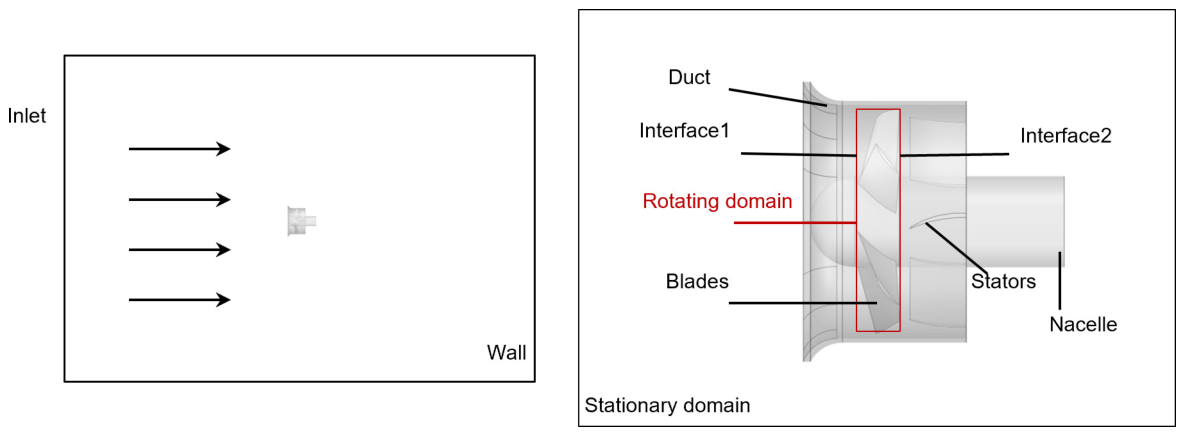
The boundary condition setup for the unit ducted fan is shown in Figure 8. The inlet and outlet boundary conditions are applied to the far-field inflow and outflow directions, while the open boundary conditions are used for the far-field side surfaces. The duct, stators, nacelle, and blades adopt no-slip wall boundary conditions. Interface conditions are employed at the front and rear interfaces of the rotating domain. Similarly, the boundary condition setup for the ducted fan group is similar to that of the unit ducted fan. The settings of inlet, outlet, far-field, and component boundary conditions are consistent with those of the unit ducted fan. Four pairs of boundary conditions are used to correspond to the rotating domains and stationary domains of the left and right ducted fans, respectively.

4.3. Computational Grid

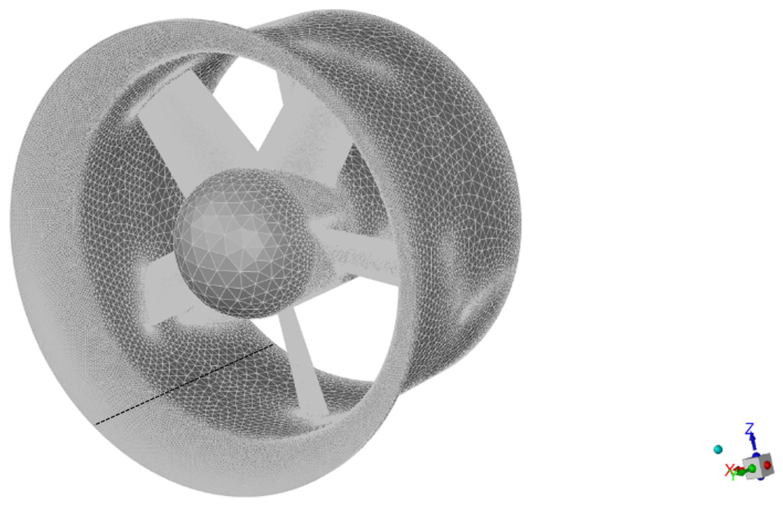
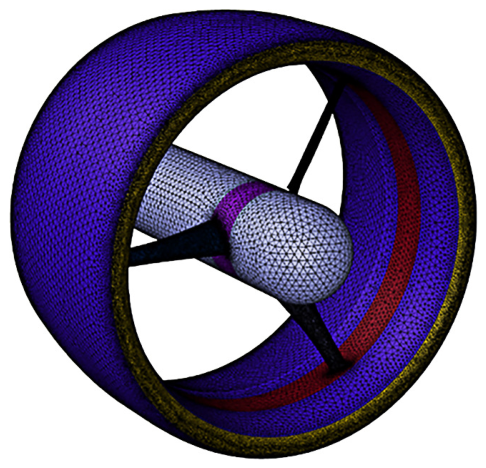
Figure 9 shows the grid of the unit ducted fan. Cartesian grids are used to generate the flow field grids of the ducted fan. The stationary domain includes the duct, anti-rotation stators, and nacelle; the rotating domain includes the blades. The diameter of the computational domain and the length from the inlet boundary to the duct lip are both 15 times the duct diameter, while the length from the outlet boundary to the duct expansion section is 20 times the duct diameter. The distance from the height of the first grid layer to the wall surface is 4 × 10 6 m , satisfying the wall grid condition of y + 1 . Meanwhile, the leading and trailing edges of the blades and the wake region are refined to better capture flow field details. The number of grids in the stationary domain is 4.47 million, and that in the rotating domain is 4.72 million, with a total of 9.19 million. Two transversely arranged unit ducted fans form one ducted fan group, and the schematic diagram of the spacing is shown in Figure 2. The arrangement of surface nodes is consistent with that of the unit ducted fan. The number of grids in a single rotating domain is 5.40 million, and that in the stationary domain is 1.39 million, with a total of 12.19 million.
To verify the grid independence of the numerical method with respect to the ground and duct gap coupling effect (the core research object of this study), a grid independence verification is performed for the coupled working condition with G = 0.2 and h / D = 1.0 . Three sets of meshes are generated with the total number of cells increasing systematically, and all meshes maintain consistent topological structures, boundary layer settings, and local refinement strategies.
Table 3 compares the total thrust coefficient ( C T ) and blade torque coefficient ( C Q ) after computational convergence under different meshes. The results show that when refining from the medium mesh (G2) to the fine mesh (G3), the variation rates of both C T and C Q are less than 1%.
Based on this verification, it can be confirmed that the resolution of the medium mesh G2 is sufficient to accurately capture the characteristics of this complex coupled flow. Thus, the mesh generation strategy equivalent to G2 is adopted for all subsequent numerical simulations of coupled working conditions, which ensures computational accuracy while balancing computational efficiency.

5. Results and Analysis

5.1. Basic Aerodynamic Characteristic Laws of a Single-Ducted Fan

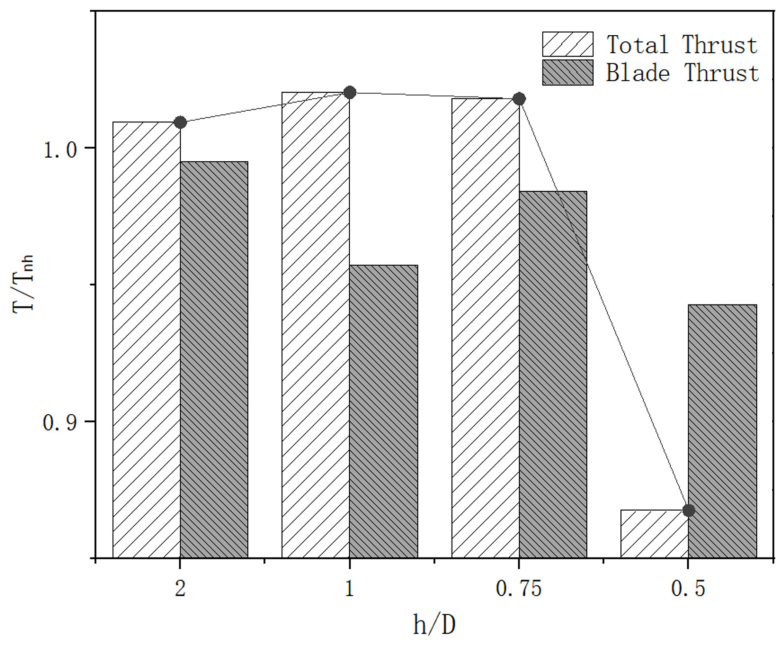
Under the operating conditions of h / D = 2.0 , 1.0 , 0.75 , and, 0.5 , the total thrust of the duct and the blade thrust are shown in Figure 10, where T is the thrust under ground effect and T n h is the thrust in the hovering state without ground effect. The variation trend of total thrust can be clearly observed from the line chart. It can be observed that the total thrust has changed by 0.95 % , 2.04 % , 1.81 % , and 13.24 % compared with that in the hovering state without ground effect, respectively.
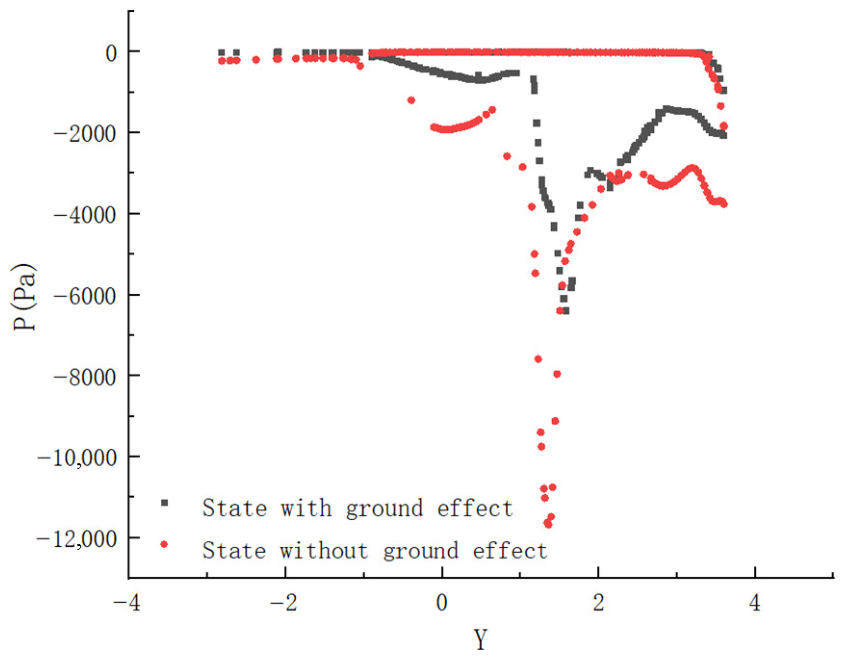
Figure 11 presents the comparison curves of the surface pressure distribution of each duct under conditions with/without ground effect. As detailed in Figure 6, Y denotes the axial direction of the duct. The monitoring points, as shown in Figure 9, are located at the Z = 0 cross-section of the duct. Under the ground effect condition, the internal pressure of the duct increases significantly; the increased pressure at the duct leading edge directly leads to the thrust reduction of the duct components. This indicates that when operating near the ground, the duct is affected by the ground effect, resulting in thrust loss.
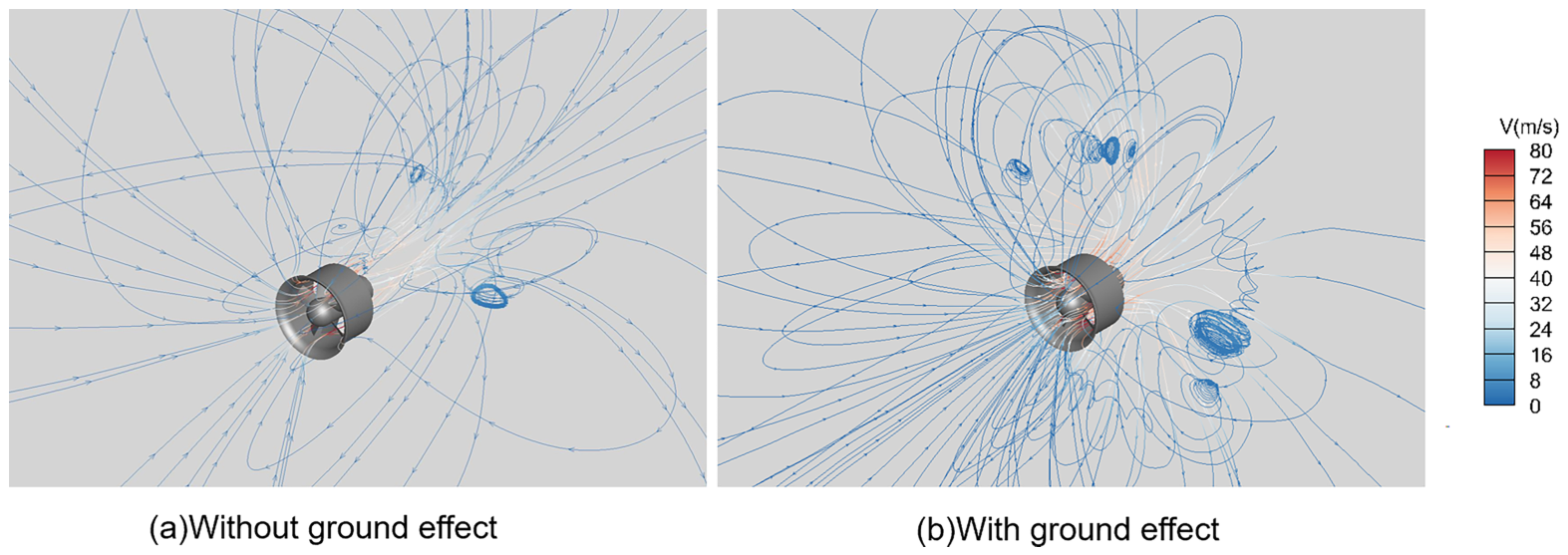
Figure 12b presents the spatial streamline diagram of the ducted fan under the ground effect condition. Compared with Figure 12a (the spatial streamline diagram under the condition without ground effect), it can be observed that due to the introduction of the ground, the airflow ejected from the duct is emitted obliquely, and collides with the ground to form upward rebounded airflow, which significantly affects the propulsion performance of the middle ducted fan.
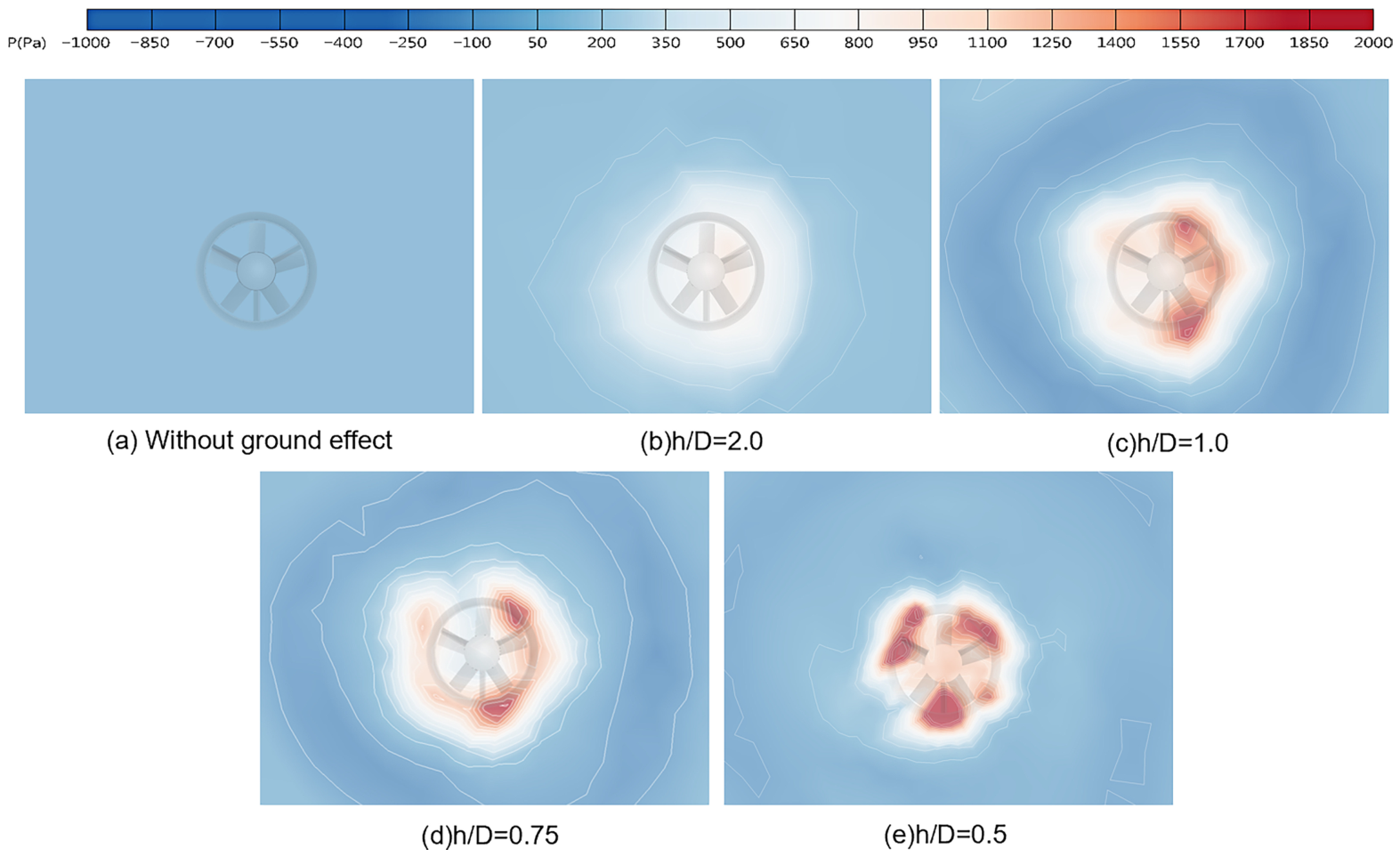
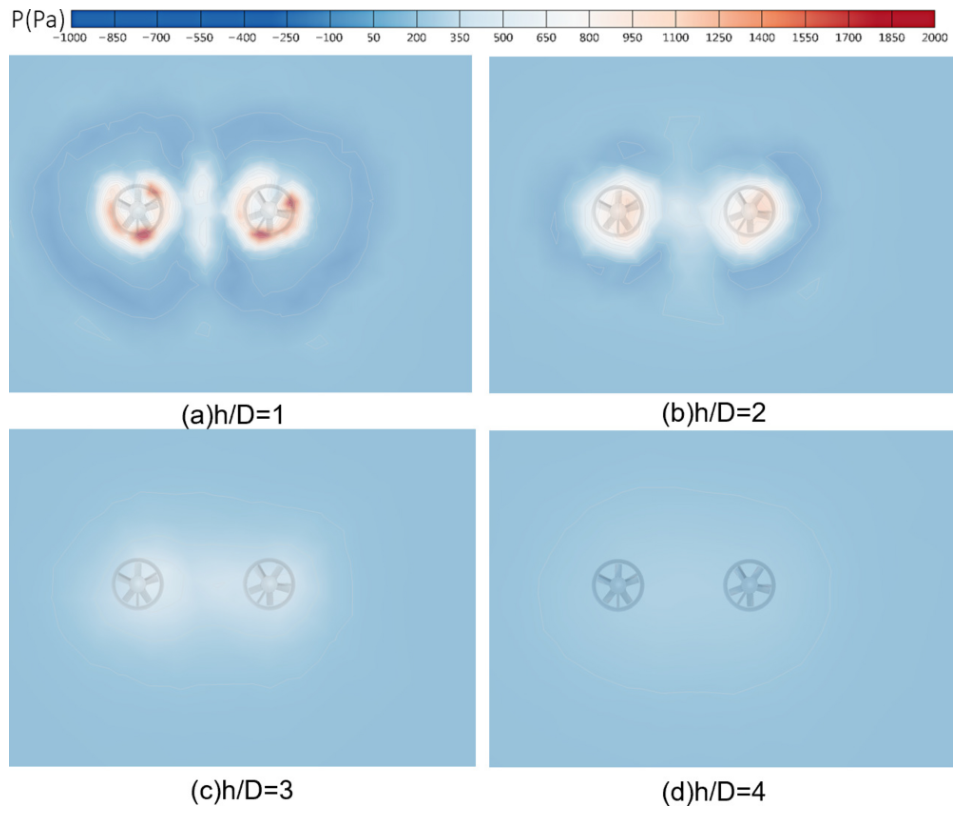
As shown in Figure 13, which presents ground static pressure contours at various heights, the ground blockage effect significantly suppresses the downwash velocity and creates a prominent high-pressure region beneath the fan. The positive pressure magnitude on the ground increases monotonically as the height above ground decreases. This macroscopic flow phenomenon fundamentally alters the aerodynamic performance of all components of the ducted fan in ground effect.
Notably, the ground pressure distribution exhibits a distinct circumferential asymmetry, rather than being uniform or axisymmetric. Such asymmetric behavior of the isolated ducted fan arises from the coupling between ground effect and fan rotor rotation. Specifically, the ground blockage induces a circumferentially non-uniform high-pressure zone, which imposes spatially varying constraints on the downwash flow. This, in turn, leads to asymmetric aerodynamic loading distributions over the rotor blades and the duct wall at different circumferential positions.
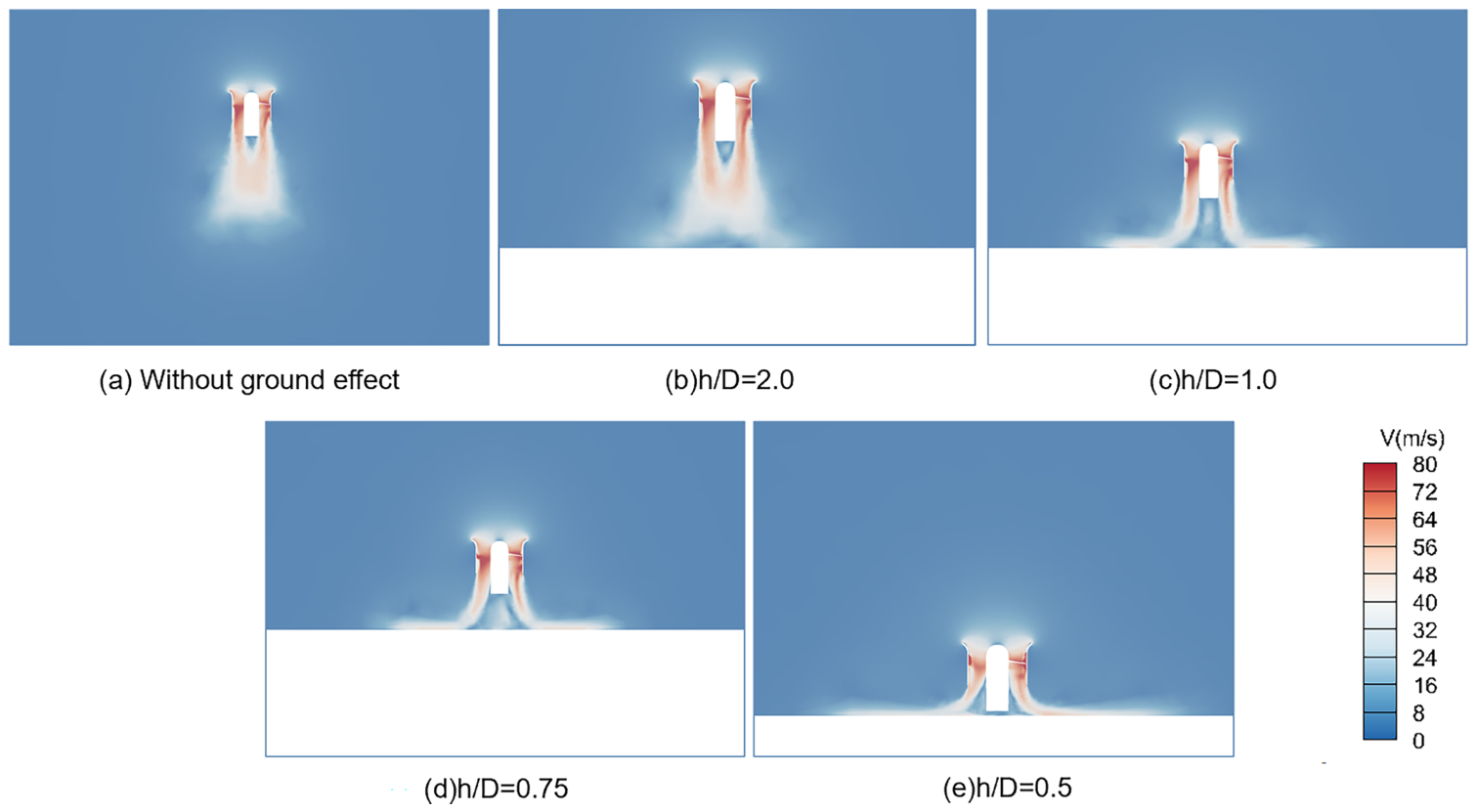
Based on the presentation of the ducted fan flow field at different ground clearances ( h / D ) in the velocity contour maps of Figure 14, the degree of constraint exerted by the ground effect on the downwash flow field is the core mechanism for thrust variation. At high ground clearance ( h / D = 2.0 ), the downwash airflow exhibits an extended divergent pattern in the velocity contour maps. The ground exerts extremely weak constraint on the airflow, and the flow field characteristics are close to the “hovering without ground effect” state. At moderate ground clearances ( h / D = 1.0 and 0.75 ), the velocity contour maps show that the ground forms moderate constraint on the downwash airflow. The diffusion range of the airflow is restricted, and the airflow acts more concentratedly on the areas around the duct and blades. This “constraint and compression” effect improves the effective action degree of the airflow on the aerodynamic components and optimizes the aerodynamic work efficiency, resulting in an upward trend of total thrust. At low ground clearance ( h / D = 0.5 ), the downwash airflow is strongly obstructed by the ground, showing obvious congestion characteristics, and the normal downwash flow field pattern is damaged. The aerodynamic work conditions of the blades and duct are disturbed due to flow field imbalance, leading to a significant decrease in aerodynamic efficiency.

5.2. Aerodynamic Interference Effect of Dual-Ducted Fans with Different Spacings

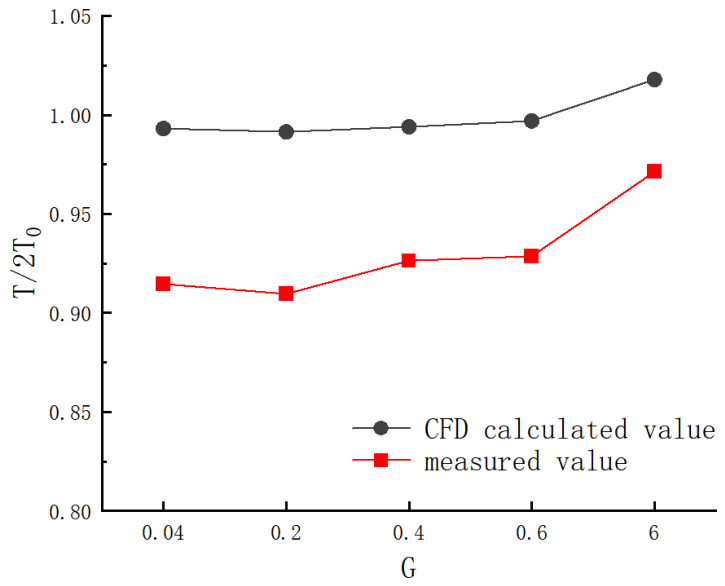
Figure 15 shows the variation of total duct thrust with gap under the conditions of G = 0.04 , 0.2 , 0.4 , 0.6 , and 6. where: 2 T 0 denotes the total thrust of two signle-ducted fans under the gap-free condition, taken as the baseline reference value. The CFD numerical simulation results show that the total thrust under different conditions exhibits a variation of 0.68 % , 0.85 % , 0.60 % , 0.30 % , and 1.79 % relative to 2 T 0 , respectively.
To further verify the reliability of the established numerical method for dual-ducted fan simulations, experimental tests were carried out on the dedicated dual-ducted fan test bench shown in Figure 7 under the same spacing conditions as those in the simulations. The experimental results are compared with numerical predictions in Figure 15, where the numerical and experimental thrust values are in good agreement, and the maximum relative error is within 8.45%. This confirms that the established numerical method can predict the thrust characteristics of dual-ducted fans with different spacings.
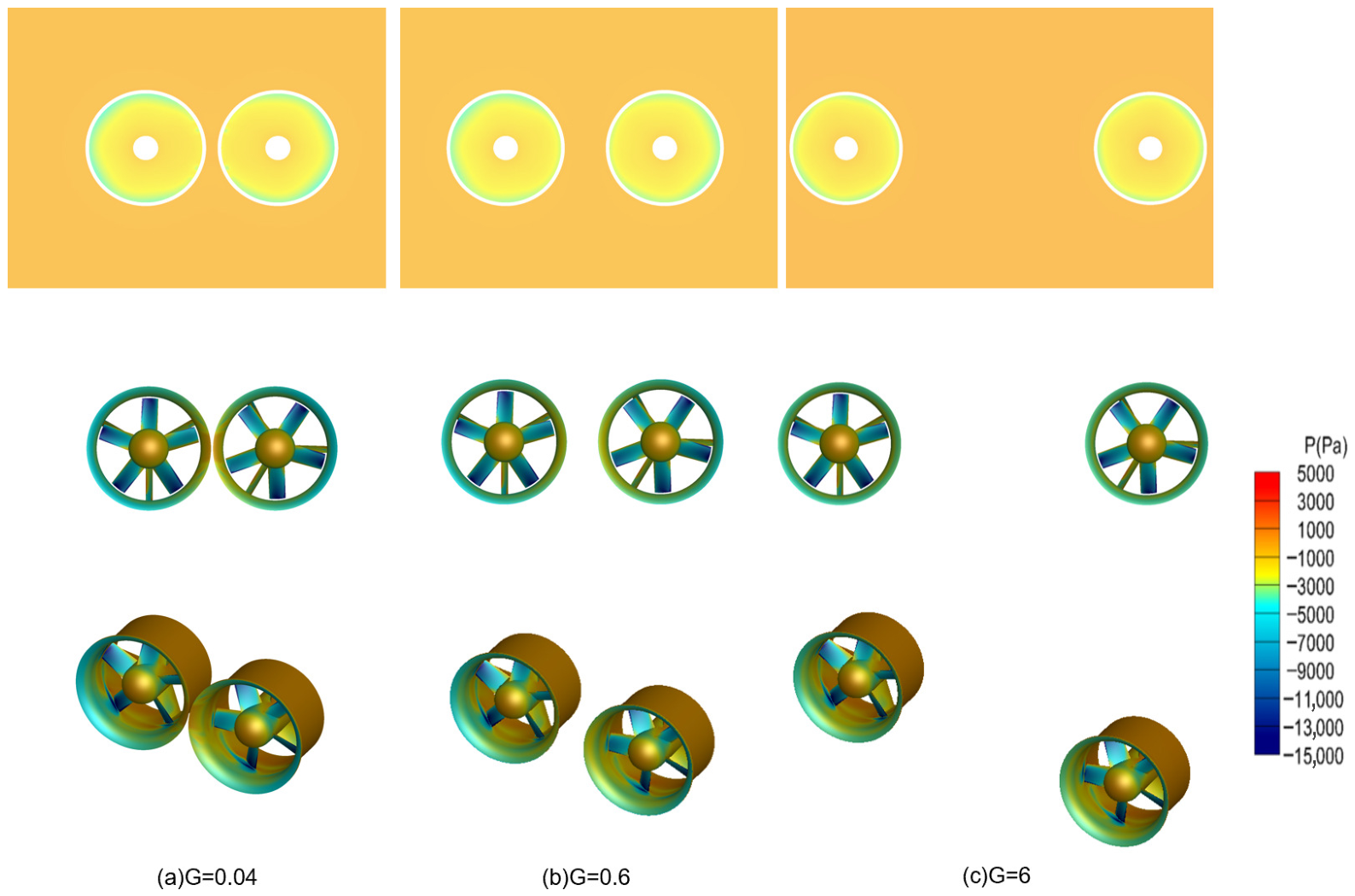
Figure 16 presents the cross-sectional pressure contours at the duct leading edge of ducted fan groups with different spacings. The duct leading edges of all ducted fan groups exhibit distinct low-pressure regions, while these low-pressure regions change significantly with varying gaps.
Comparing Figure 16a with Figure 16c, distinct high-pressure regions are generated at the duct lips near the gap in Figure 16a. Since duct thrust is mainly induced by the low pressure at the duct leading edge, the occurrence of high-pressure regions directly leads to duct thrust reduction. In the duct leading edge region, the low-pressure region of the 6 ducted fan group shows a uniform circular distribution. However, the left and right ducted fans of the 0.04 and 0.6 ducted fan groups form crescent-shaped low-pressure regions at the duct leading edge, and as the gap decreases, the range of these low-pressure regions gradually shrinks.
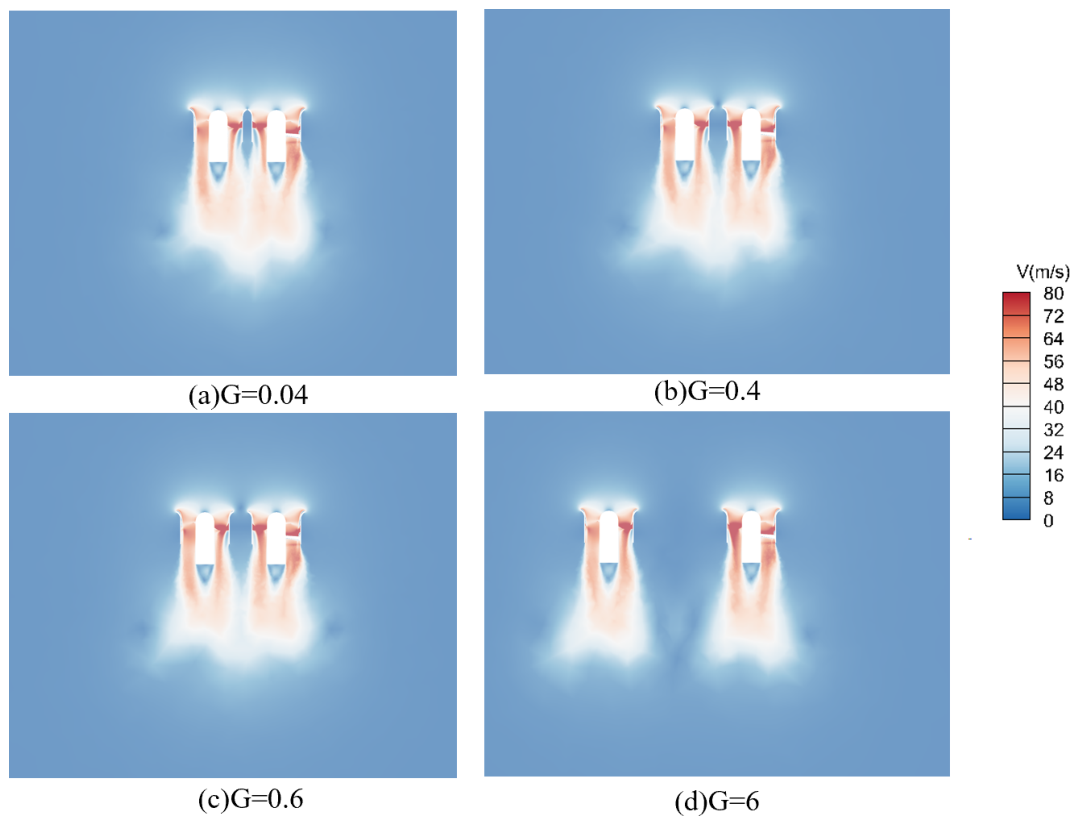
The jet region is the “work zone” where airflow momentum is converted into thrust, and flow field characteristics determine the momentum transfer efficiency. For small-gap cases ( G = 0.04 , 0.4 , 0.6 ), the two jets interact rapidly downstream with momentum field superposition, leading to an increased jet diffusion angle. The high-speed core region is compressed, and velocity decay accelerates. Part of the kinetic energy dissipates into vortex energy during jet interaction, failing to be effectively converted into thrust. For the large-gap case ( G = 6 ), the jet exhibits a free jet pattern, with a clear and far-extending high-speed core region, a small jet diffusion angle, and minimal airflow momentum loss, enabling efficient conversion of momentum into thrust.
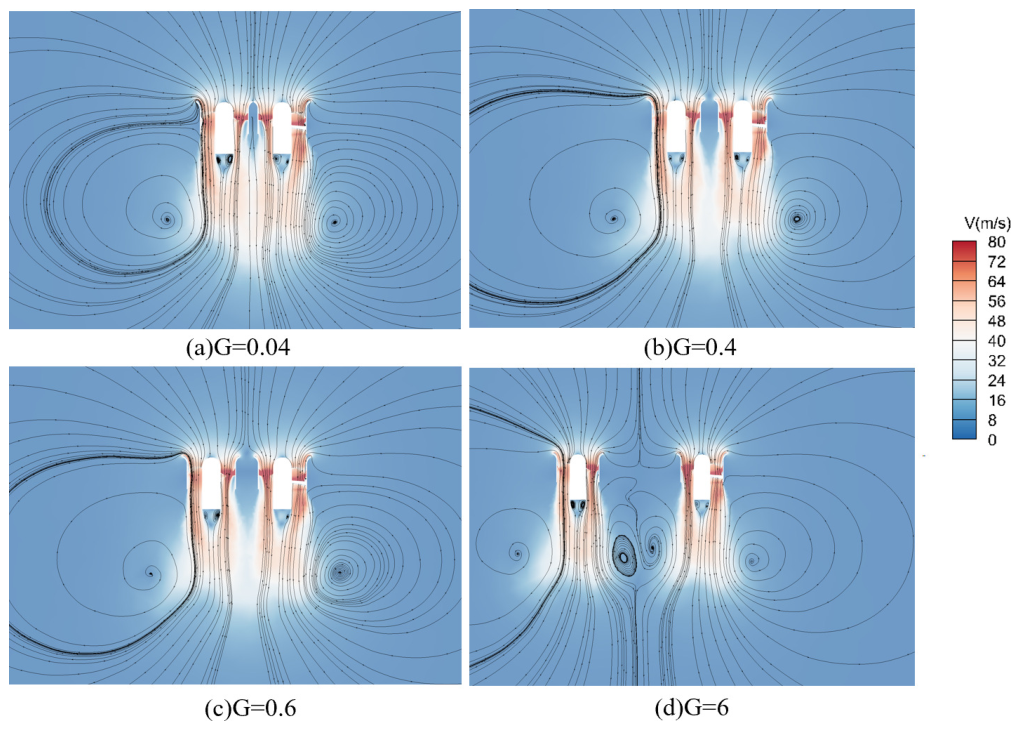
Combined with Figure 17 and Figure 18, in terms of flow field patterns, under small gap conditions ( G = 0.04 , 0.4 and 0.6 ), the two jet flows interact rapidly and their momentum fields superimpose in the downstream region. This leads to an increased jet diffusion angle, with the high-speed core region being compressed and the velocity decay accelerating; part of the kinetic energy is dissipated into vortex energy and cannot be effectively converted into thrust. In contrast, under the large gap condition ( G = 6 ), the jet flows exhibit a free jet pattern, where the high-speed core region is distinct and extends over a long distance with a small jet diffusion angle. The aerodynamic momentum loss is minimal, enabling the efficient conversion of momentum into thrust. Further analysis of the flow evolution characteristics using velocity streamline diagrams reveals that at large gaps, the flow fields between the two ducts are basically independent, with the wakes presenting a symmetric diffusion pattern and the streamlines extending smoothly. The inflow at the duct leading edge deflects significantly under the suction effect of the blades to form an effective angle of attack, thereby generating a strong low-pressure region at the leading edge of the lip. The flow field is thus stable without flow separation, and the aerodynamic performance is in an ideal state. When the gap decreases to G = 0.6 and 0.4 , the deflection degree of the inner inflow weakens, resulting in a reduction in the effective angle of attack at the duct section and a weakening of the intensity of the leading-edge suction peak. Meanwhile, streamlines detach from the wall at the rear part of the duct diffuser, accompanied by the formation of low-speed reverse flow vortices. This induces local flow separation, which increases flow loss and impairs the pressure recovery capability.

5.3. Influence of Gap-Ground Clearance Coupling on Aerodynamic Performance

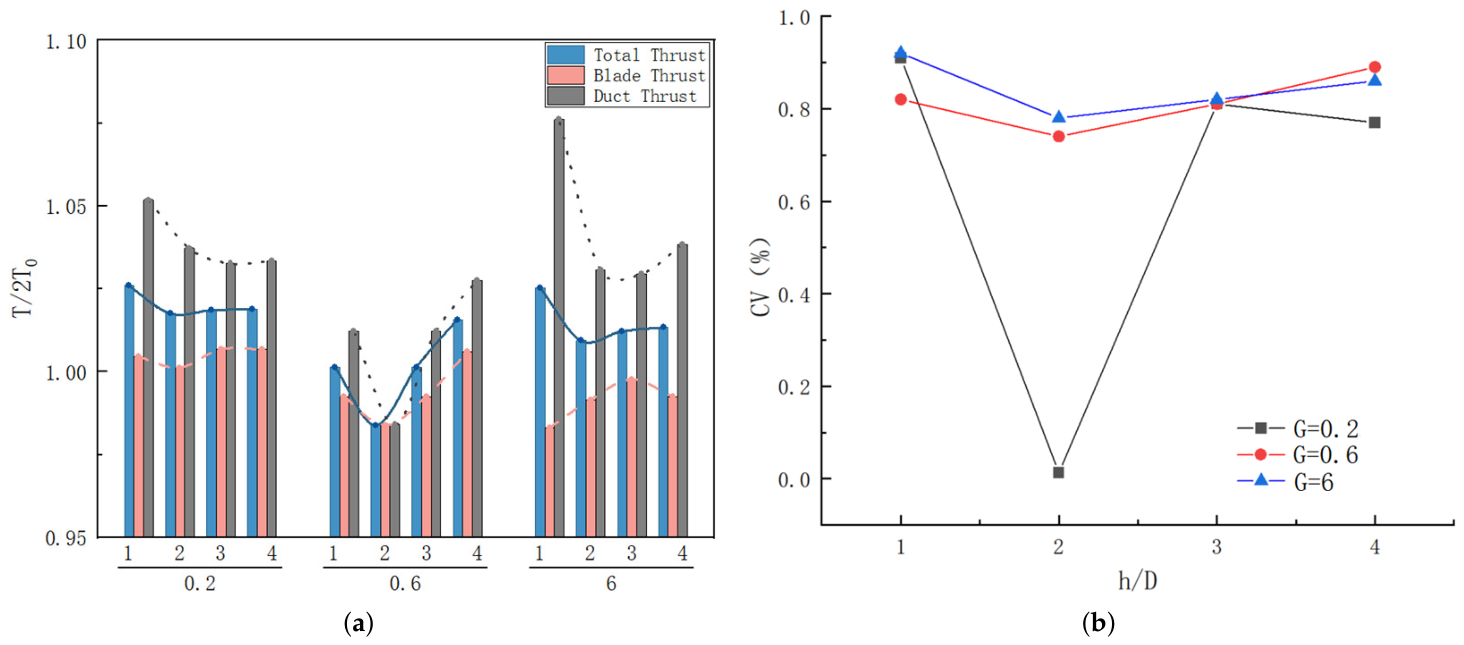
To reveal the coupling influence mechanism between duct gap G and ground clearance h, considering that experimental tests are difficult to fully cover such dual-parameter coupled working conditions, this study adopts the numerically reliable method validated in the previous section and conducted systematic simulation and convergence analysis on the total thrust of the two ducts under four configurations ( G = 0.2 , 0.4 , 0.6 , 6 ) and different ground clearance conditions ( h / D = 4.0 , 3.0 , 2.0 , 1.0 ). The results indicate that the aerodynamic performance exhibits non-monotonic and non-linear characteristics with the variation of G and h, and there exist obvious coupling effects and an optimal combination range.
As shown in Figure 19, under various combined G-h operating conditions, the thrust value T of each component in the dual-ducted fan system and the thrust coefficient of variation CV (which characterizes thrust stability) both exhibit significant coupling characteristics. Herein, T represents the thrust under coupled operating conditions, and T 0 denotes the thrust of a signle-ducted fan without ground effect; CV is used to evaluate thrust stability, and a smaller CV value indicates more stable thrust. For different duct gaps, the influence of ground clearance on the mean thrust follows a common trend: as the ground clearance increases, the mean thrust first decreases and then increases; meanwhile, regardless of the duct gap, the thrust stability reaches its optimal level at h / D = 2 .
Under the large gap condition of G = 6 , the interference between the two ducts is negligible, and the system behavior is dominated primarily by the ground effect. As h decreases, the total thrust decreases first and then increases, reaching its peak at h / D = 1.0 , whereas the CV rises to 0.92%. This indicates that the strong ground constraint significantly intensifies flow field disturbances while enhancing the thrust.
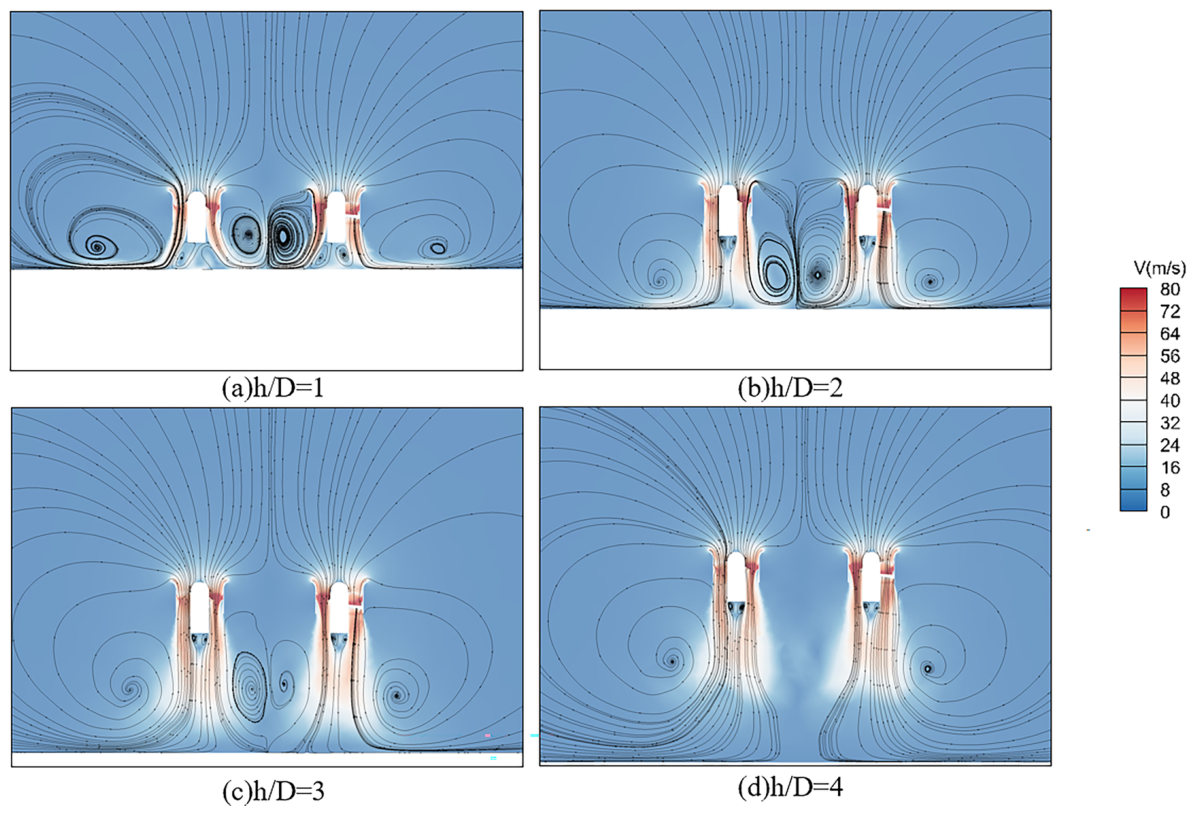
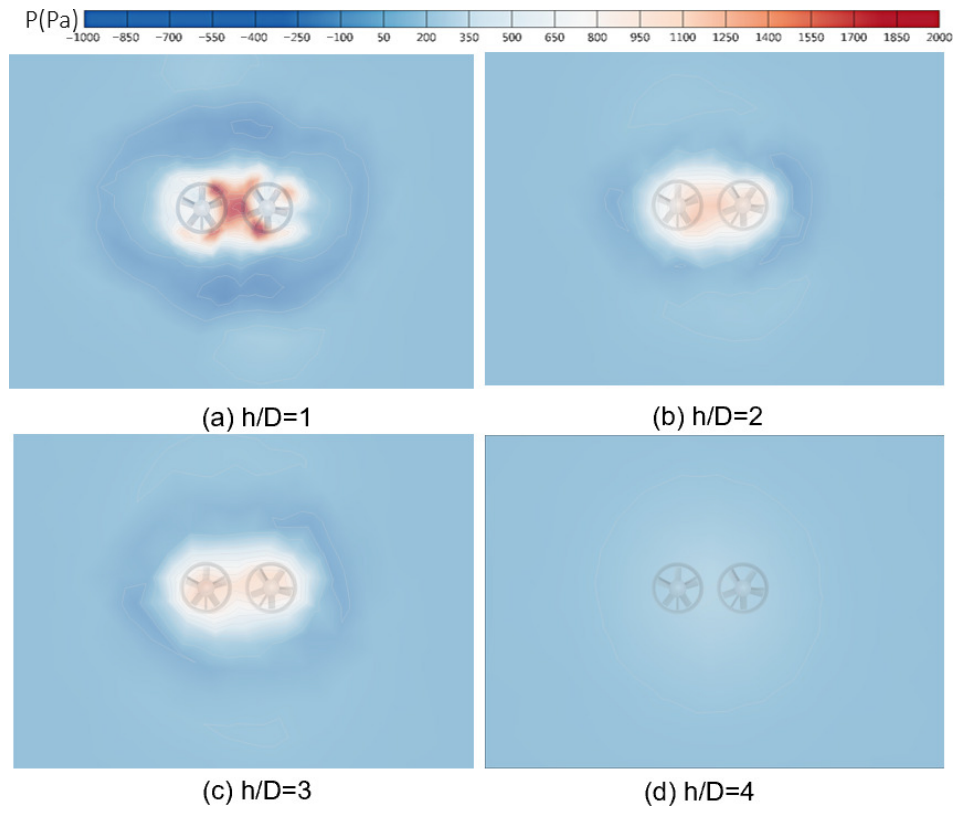
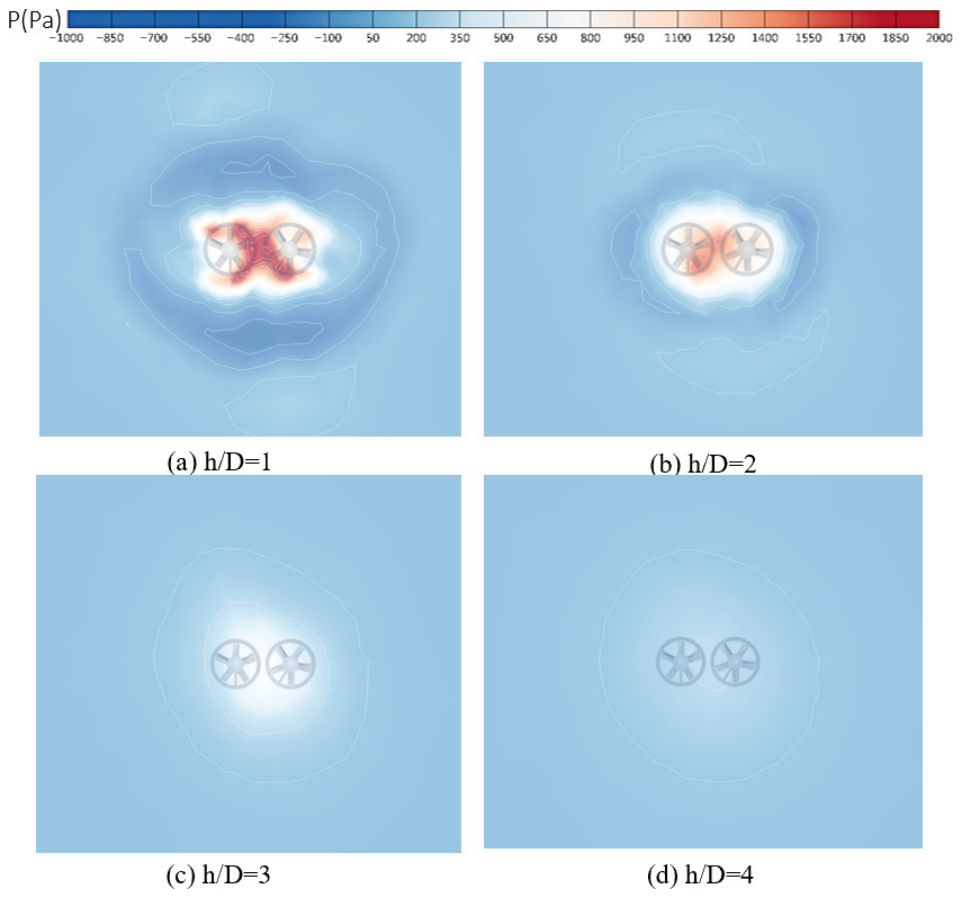
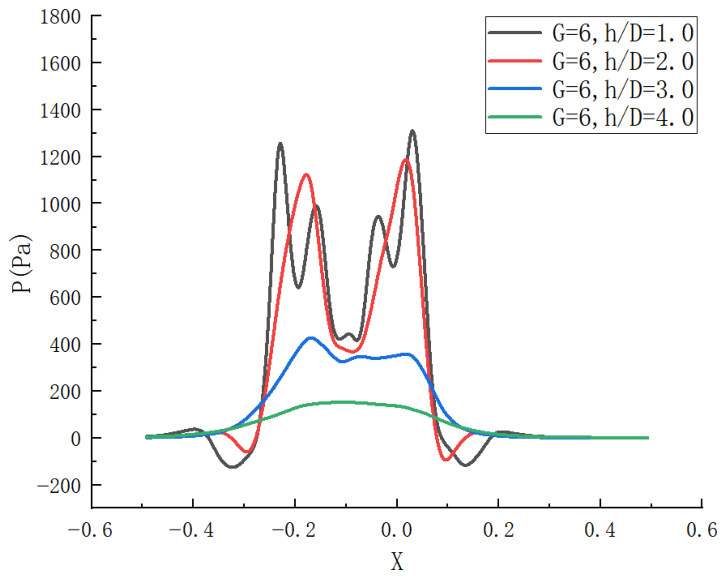
Figure 20 presents the ground pressure distribution along the X-axis of the dual-ducted fan at different ground clearances, where X denotes the intersection line between the Z = 0 cross-section and the ground plane, parallel to the line connecting the centers of the two ducts. Figure 21 presents the ground pressure contour plot of the dual-ducted fan. As shown in Figure 20 and Figure 21, under the condition of G = 6 , the ground pressure at various ground clearances exhibits a typical structure of a central high-pressure region and a peripheral low-pressure ring. At h / D = 1.0 , the peak value of the central high pressure exceeds 1300 Pa and the peripheral low pressure is approximately 200 Pa, which clearly verifies that the intense reflection generated by the jet impinging on the ground is the direct cause for the formation of the high-pressure region.
As the ground clearance increases, the intensity of the high-pressure region attenuates continuously and its area shrinks significantly: the peak value drops to 1200 Pa at h / D = 2.0 , 500 Pa at h / D = 3.0 , and only 100 Pa at h / D = 4.0 ; the positive pressure region shrinks from the range of X 0.4 to 0.2 at h / D = 1.0 to a nearly zero range at h / D = 4.0 . When h / D > 3.0 , the peak positive pressure approaches the ambient pressure, and the high-pressure region tends to be diffused.
At h / D = 1.0 , the intense ground back pressure is more than 10 times that at h / D = 4.0 , which can effectively suppress the escape of downwash flow and increase the pressure difference across the duct, serving as the dominant mechanism for thrust enhancement. However, the pressure gradient is the most intense under this condition, with the pressure difference between positive and negative pressure exceeding 1500 Pa, which induces significant thrust fluctuations.
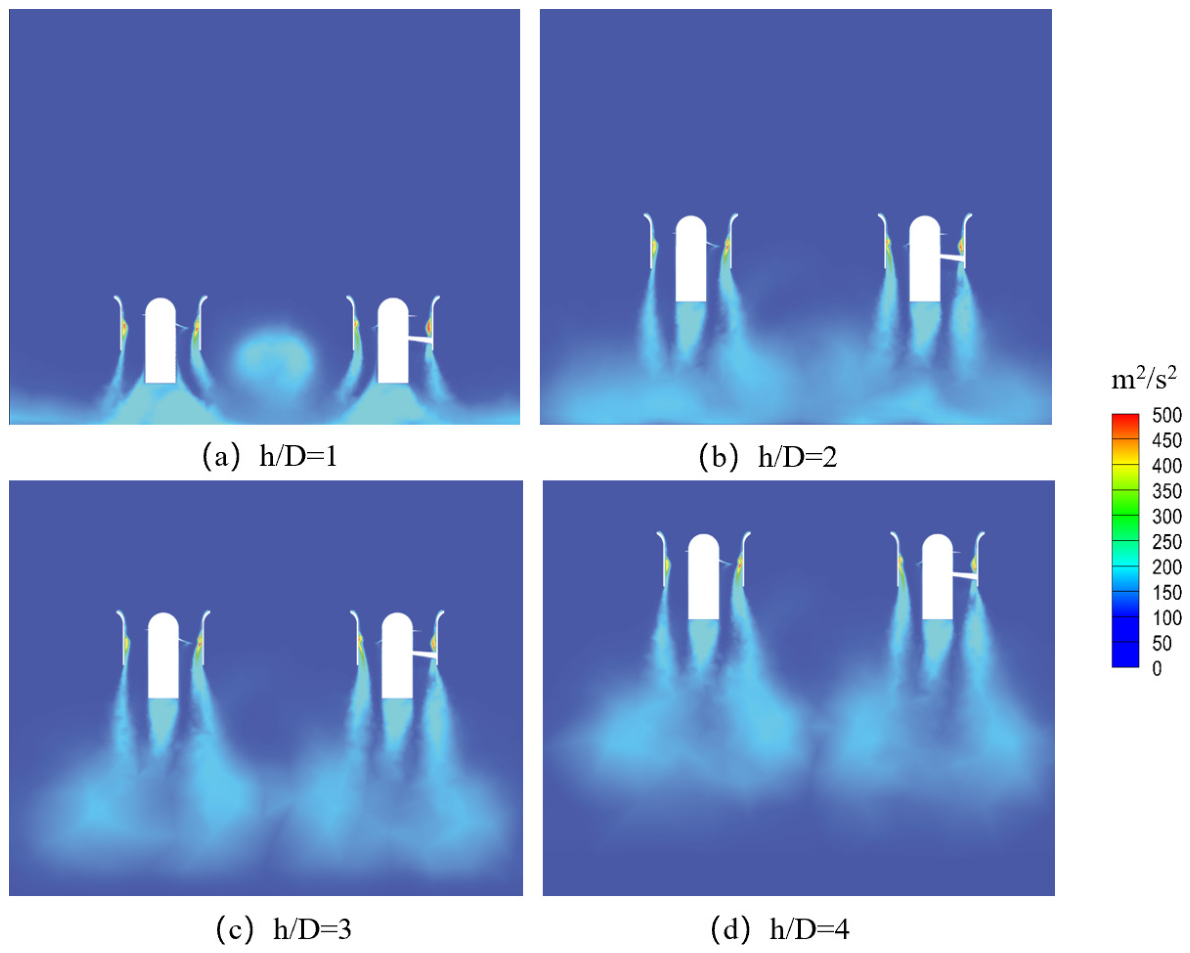
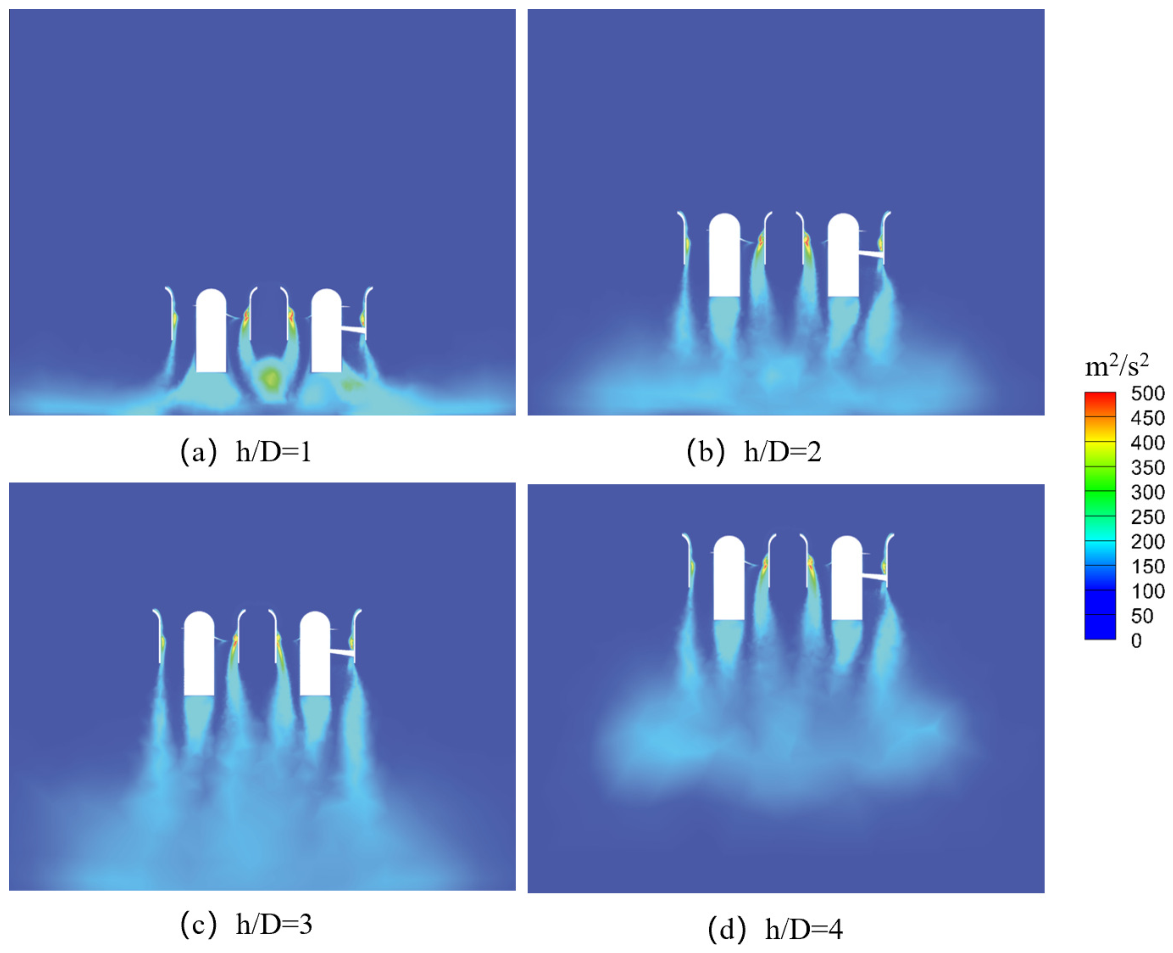
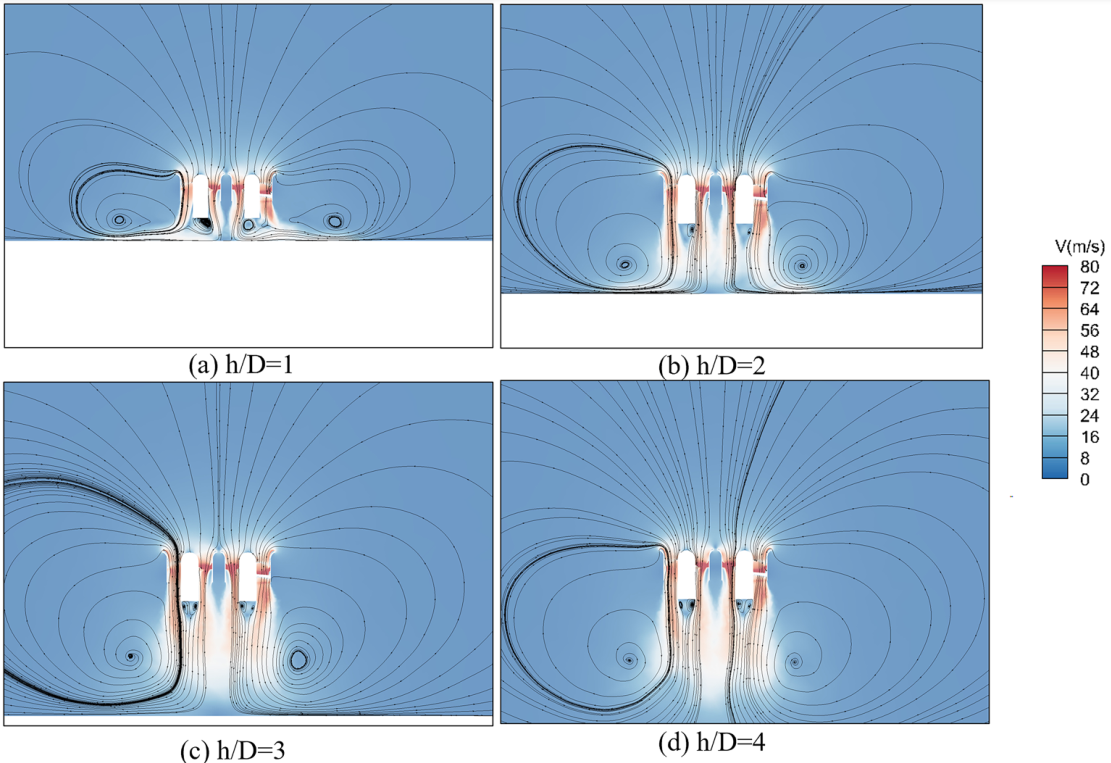
To quantitatively reveal the relationship between flow unsteadiness and thrust stability, turbulent kinetic energy (TKE) is analyzed in this section. First, it can be observed from the velocity streamlines in Figure 22 that, as the ground clearance increases, the jet diffusion effect is enhanced, thereby weakening the shear layer and simplifying the vortex structure. On this basis, as shown in Figure 23, when h / D = 1.0 , the TKE peak approaches 500 m 2 / s 2 , corresponding to the maximum thrust coefficient of variation (CV) of 0.92%. This indicates that intense jet-ground shear induces strong turbulent fluctuations, which maximize thrust but significantly reduce thrust stability. With a further increase in ground clearance, the TKE peak drops below 200 m 2 / s 2 at h / D = 2.0 and below 100 m 2 / s 2 at h / D = 4.0 , and the CV decreases synchronously, confirming that a lower TKE effectively improves thrust stability.
As G is reduced to 0.6 , lateral interference and the ground effect exhibit characteristics of coupling interaction. As shown in Figure 19, the total thrust still shows a trend of decreasing first and then increasing, with the valley value appearing at h / D = 2.0 and the peak value at h / D = 4.0 . This pattern stems from the combined action of ground constraint and inter-duct airflow interference at low ground clearances, which restricts thrust enhancement. In contrast, as the ground clearance increases and the ground effect weakens significantly, the duct configuration with a moderate gap enables airflow interaction between individual ducts and thus promotes performance improvement. Notably, the CV remains at an overall low level with a gentle variation trend under this configuration, indicating that lateral interference and the ground effect are more likely to achieve a dynamic equilibrium under the moderate gap condition. The system performance thus has reduced sensitivity to variations in ground clearance, which is more conducive to the realization of robust design.
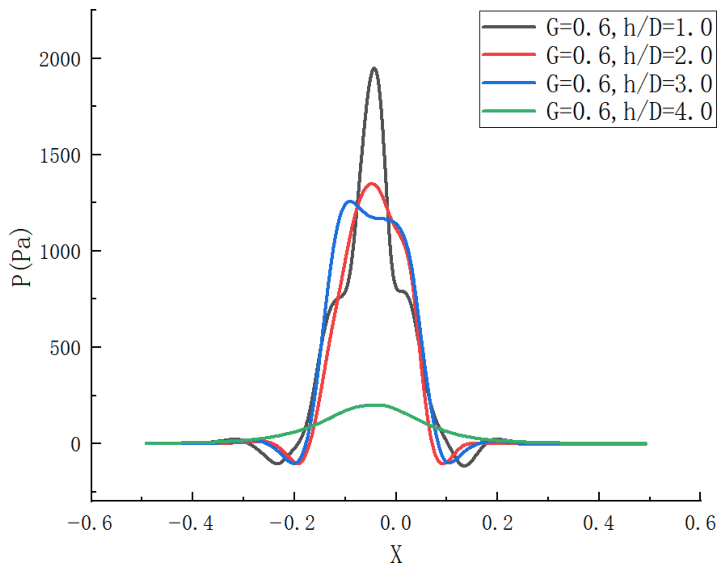
The ground pressure (Figure 24 and Figure 25) and velocity streamlines (Figure 26) reveal the underlying flow mechanisms, while the TKE distribution (Figure 27) directly explains the behavior of CV.
At a low ground clearance of h / D = 1.0 , the ground constraint is the strongest. The merged high-pressure zone reaches a peak of approximately 2000 Pa, and the TKE peak in the impingement and inter-duct entrainment regions approaches 1000 m 2 / s 2 . At this point, the jets rebound rapidly and strongly entrain the airflow between the ducts, forming large-scale multi-scale vortex structures. This intense turbulent fluctuation, reflected by the high TKE, leads to a slight increase in CV. Consequently, although the thrust level is moderate, the combined effect of strong ground constraint and inter-duct interference limits further thrust enhancement.
At h / D = 2.0 , the ground constraint is moderate, and the merged high-pressure zone has a peak of approximately 1200 Pa with a uniform distribution; the TKE peak is about 500 m 2 / s 2 with a symmetric distribution. The gentle pressure gradient between the ducts effectively suppresses unsteady separation and reverse flow. The velocity streamlines present a regular pattern, the scale and quantity of vortices are reduced, and flow disorder is diminished. This state corresponds to the valley point of thrust variation, indicating that the restrictive effect begins to abate, the coupling of lateral interference and the ground effect tends to a dynamic equilibrium, and thus the CV under this condition is optimal.
For h / D 3.0 , the ground effect weakens significantly, with the peak of the merged high-pressure zone dropping to 1000 Pa (at h / D = 3.0 ) and 200 Pa (at h / D = 4.0 ); the TKE peak falls to below 200 m 2 / s 2 with a uniform distribution.At this time, the weakened ground effect results in smooth airflow and simplified vortex structures between the ducts, the CV remains low, and the thrust increases steadily, confirming that the reduced TKE and simplified flow structure improve both aerodynamic efficiency and stability.
Under the small gap condition of G = 0.2 , the total thrust exhibits a trend of decreasing first and then increasing as the ground clearance decreases, reaching its peak at h / D = 1.0 with a thrust level close to that at the large gap of G = 6 . However, due to the inter-duct interference intensity being the highest among all gap conditions, the magnitude of its thrust enhancement is slightly lower than that at G = 6 . Meanwhile, the CV under this condition varies drastically: it drops to an exceptional trough near zero at h / D = 2.0 and then rises rapidly, with a marked increase at h / D = 1.0 under strong ground constraint. This characteristic reflects that inter-duct interference dominates the flow field behavior at small gaps, and its coupling with the ground effect induces abnormal fluctuations in flow field stability. Although strong ground constraint enhances the thrust, the significant inter-duct interference exacerbates flow field disturbances, ultimately resulting in a lower magnitude of thrust enhancement compared with the large gap condition.
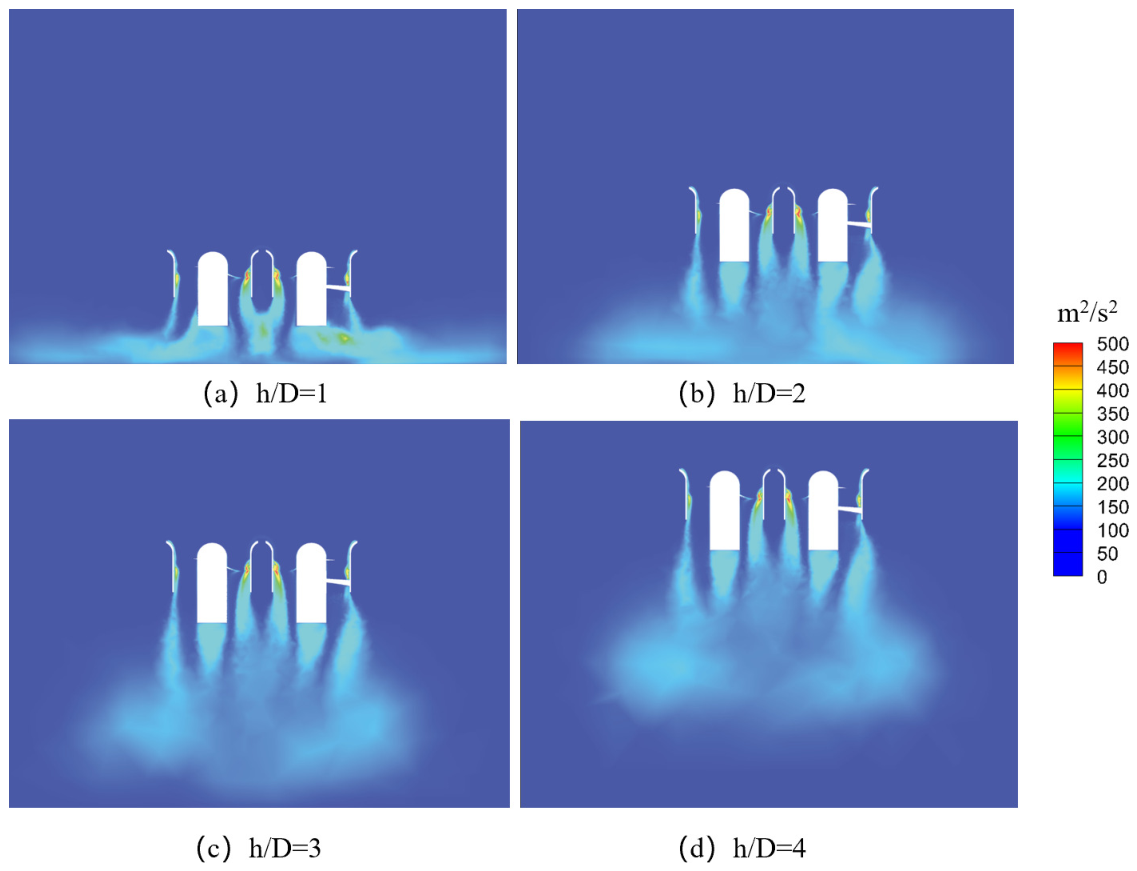
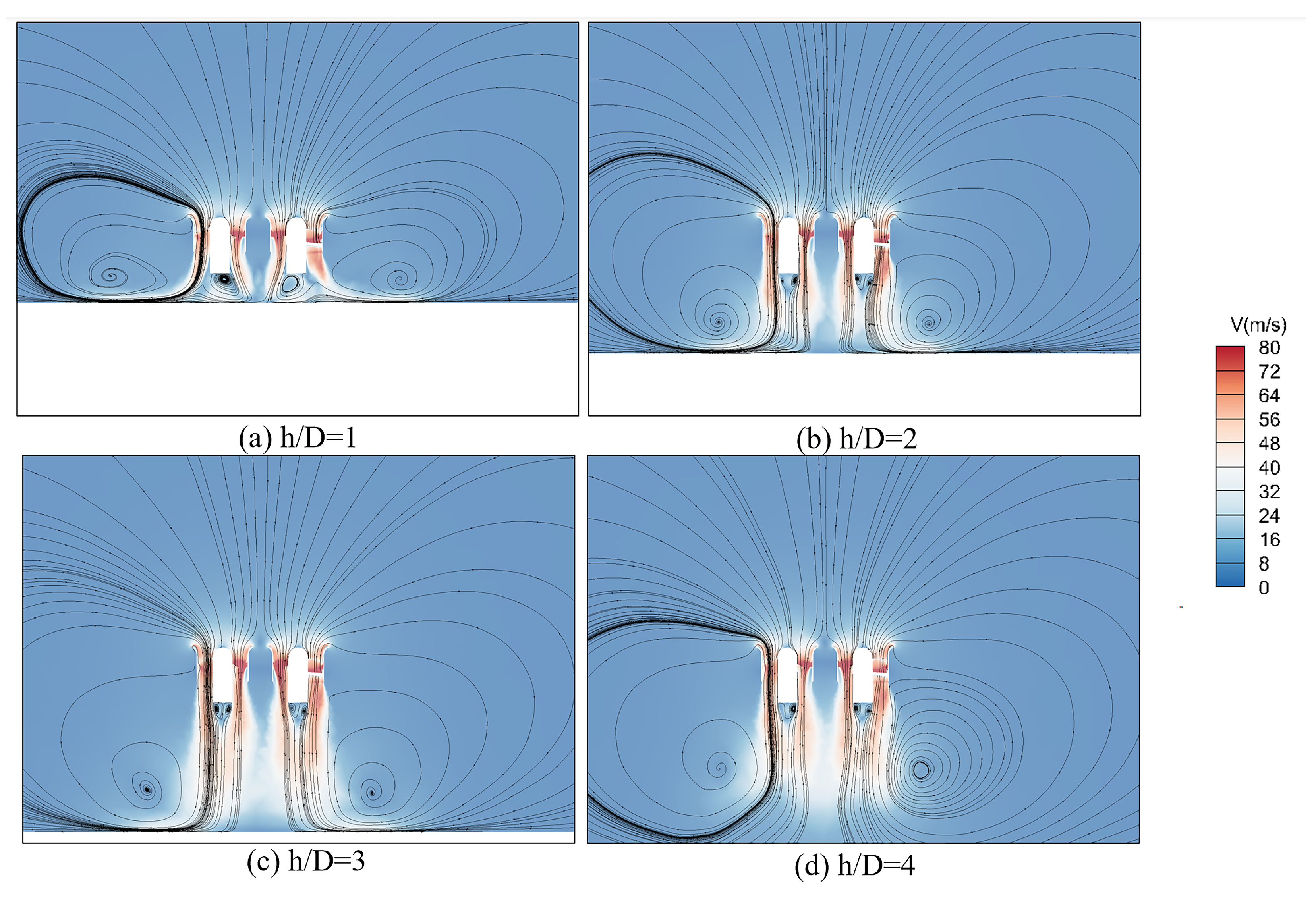
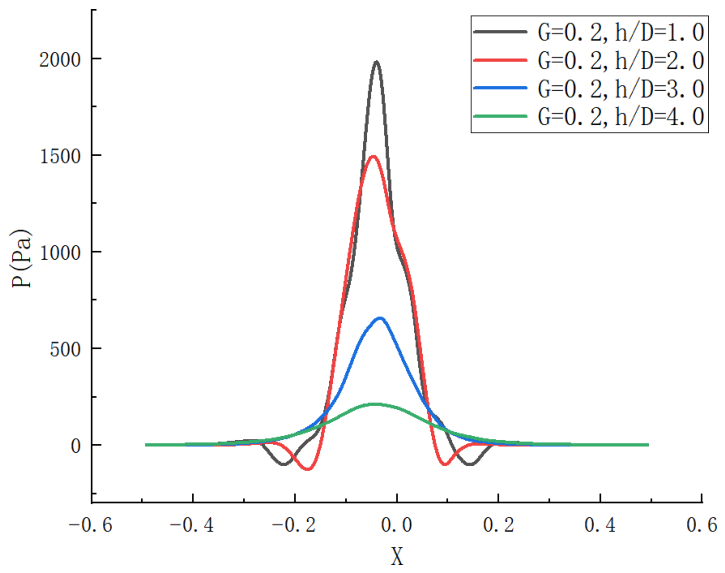
It can be concluded from Figure 28, Figure 29, Figure 30 and Figure 31 that the coupling effect of ground clearance and duct gap under the condition of G = 0.2 exerts a significant regulatory influence on ground pressure distribution, flow field structure and aerodynamic performance.
At h / D = 1.0 , the ground constraint is the strongest, the high-pressure regions merge and distort with a peak pressure of approximately 2200 Pa—the highest across all operating conditions; the TKE is nearly 1100 m 2 / s 2 , with intense fluctuations in the impingement regions and inter-duct entrainment regions, and the flow field features a chaotic vortex system. This phenomenon arises from the coupling of strong ground constraint and extreme inter-duct interference, and while the thrust is relatively high, the high TKE induces significant thrust fluctuations, corresponding to a marked increase in CV.
At h / D = 2.0 , the pressure distribution is regular and symmetric with a sharp drop in peak value to 800 Pa, and the TKE peak falls to 300 m 2 / s 2 with a symmetric distribution. The flow field presents a quasi-symmetric structure, which corresponds to the critical state of negative feedback balance between the ground-reflected airflow and inter-duct interference airflow. The mutual offset of fluctuations by these two counter-directional flow fields yields the optimal stability, and thus the CV drops to an exceptionally low trough near zero. However, the sharp pressure drop reflects a reduction in kinetic energy conversion efficiency, and the increased energy loss directly leads to a drastic drop in thrust.
For h / D 3.0 , the ground effect weakens significantly, with the peak pressure dropping to 400 Pa (at h / D = 3.0 ) and 150 Pa (at h / D = 4.0 ), and the TKE peak falling to below 200 m 2 / s 2 with a uniform distribution. The flow evolves toward ordered coordination, and the coupling effect moderates. At this time, the CV remains low, and the thrust gradually recovers with good stability, confirming that the reduced TKE and ordered flow structure improve both momentum transfer efficiency and stability.


6. Conclusions

This study is exclusively conducted within the framework of ducted fan UAVs, focusing on the aerodynamic performance of the dual-ducted fan components by investigating the coupling effects of ground clearance and duct spacing. The key findings are summarized as follows:
(1) The aerodynamic performance of a signle-ducted fan is sensitive to ground clearance. The ground effect regulates thrust variation by adjusting the degree of flow field constraint, and h / D = 0.75 is identified as the critical thrust threshold. The thrust of the ducted fan shows a trend of first increasing slightly and then decreasing significantly as the ground clearance decreases. Under the ground effect condition: the internal pressure of the duct increases significantly, and in particular, the increase in pressure at the leading edge directly results in thrust loss of the duct components. Meanwhile, the introduction of the ground causes the airflow ejected from the duct to be emitted obliquely; this airflow collides with the ground to form upward rebounded airflow, which significantly changes the flow field structure. Additionally, the ground blocks the downwash flow and forms a high-pressure region below it. The lower the ground clearance, the stronger the intensity of the ground positive pressure distribution, and the degree of constraint exerted by this ground effect on the downwash flow field serves as the core mechanism for thrust variation. This finding indicates that control laws for hover and landing phases must consider the nonlinear thrust behavior near h / D = 0.75 to ensure flight stability.
(2) The interference effect of dual-ducted fans under ground-effect-free conditions is predominantly destructive. The total thrust of dual-ducted fans exhibits a trend from loss to enhancement as the duct gap increases. Strong interference occurs at small gaps, where a high-pressure region forms at the duct lip and compresses the critical low-pressure region; the superposition of jet momentum leads to kinetic energy dissipation, and flow separation is also prone to occur, resulting in thrust loss. In contrast, no significant interference is observed at large gaps: the low-pressure region has an optimal morphology, the jets exist in a free state with efficient kinetic energy conversion, and the flow field maintains stability, all of which contribute to thrust enhancement. This trend requires compact dual-fan configurations to avoid the small-gap regime to prevent performance degradation.
(3) The coupling between the dual duct gap and ground clearance exhibits non-monotonic and nonlinear characteristics, where the thrust first decreases and then increases with increasing ground clearance, and h / D = 2.0 is the key interval for the CV. The coupling effect is achieved through the dynamic balance between the ground effect and lateral interference: the ground effect regulates jet reflection intensity, ground pressure distribution (such as the structure of central high-pressure region and peripheral low-pressure ring), and the degree of flow field constraint; lateral interference affects airflow entrainment between ducts, pressure field fusion, and vortex structures. Together, they determine the thrust magnitude and stability. Under different G-h combinations, the ratio μ of the total thrust of the two ducts to the thrust of a single duct and the CV exhibit significant regularities: for all gaps, the influence of ground clearance on the average thrust shows a trend of first decreasing and then increasing with increasing ground clearance, and the stability is optimal at h / D = 2 . These coupling laws provide a theoretical basis for optimizing ducted UAV layouts and defining safe flight envelopes in confined environments.
(4) The URANS method adopted in this study effectively reveals the macroscopic coupling laws of the dual-ducted fan components in the ducted fan UAV. However, to capture the mesoscale details of nonlinear interactions between the wake and ground vortex systems, higher-fidelity numerical methods such as Scale-Adaptive Simulation and Detached Eddy Simulation are recommended for in-depth investigation in future research. In addition, the effects of varying thrust levels (i.e., changing rotational speed) on ground clearance and fan-to-fan distance will also be systematically explored in our follow-up work.

Author Contributions

Conceptualization, S.Z., F.X. and X.G.; Methodology, S.Z., F.X. and X.G.; Software, S.Z.; Validation, S.Z.; Formal analysis, S.Z.; Investigation, S.Z. and J.W.; Data curation, S.Z.; Writing—original draft, S.Z.; Writing—review & editing, H.Z. and Z.P.; Visualization, S.Z. and J.W.; Project administration, H.Z. and Z.P.; Funding acquisition, H.Z. and Z.P. All authors have read and agreed to the published version of the manuscript.

Funding

This study was supported by the Shanxi Provincial Graduate Education Innovation Program (No. 2025SJ025).

Data Availability Statement

The data that support the findings of this study are available from the corresponding authors upon reasonable request.

Conflicts of Interest

The authors have no conflicts to disclose.

References

  1. Kan, Z.; Yao, Z.; Li, D.; Bie, D.; Wang, Z.; Li, H.; Xiang, J. Design and flight test of the fixed-flapping hybrid morphing wing aerial vehicle. Aerosp. Sci. Technol. 2023, 143, 108705. [Google Scholar] [CrossRef]
  2. Qian, Y.; Luo, Y.; Hu, X.; Zeng, Z.; Zhang, Y. Improving the performance of ducted fans for VTOL applications: A review. Sci. China Technol. Sci. 2022, 65, 2521–2541. [Google Scholar] [CrossRef]
  3. Zhang, T.; Barakos, G.N. Review on ducted fans for compound rotorcraft. Aeronaut. J. 2020, 124, 941–974. [Google Scholar] [CrossRef]
  4. Luo, Y.; Qian, Y.; Zeng, Z.; Zhang, Y. Simulation and analysis of operating characteristics of power battery for flying car utilization. eTransportation 2021, 8, 100111. [Google Scholar] [CrossRef]
  5. Li, Y.; Li, Q.; Fan, T.; Wen, X.; Xiong, J. Design and Experiment on Heat Dissipation Structures of Ducted Fan Motor for Flying Electric Vehicle. World Electr. Veh. J. 2024, 15, 274. [Google Scholar] [CrossRef]
  6. Chakraborty, I.; Mishra, A.A.; van Dommelen, D.; Anemaat, W.A.J. Design and Sizing of an Electrified Lift-Plus-Cruise Ducted Fan Aircraft. J. Aircr. 2022, 60, 817–834. [Google Scholar] [CrossRef]
  7. Chu, H.Q.; Dinh, Q.N.; Vu, T.S.; Pham, V.Y.; Bui, V.T.; Hoang, N.M.; Nguyen, T.K.; Nguyen, D.; Pham, G.D.; Dinh, C.T. Static Aero-Propulsion Experiment of an Electric Ducted Fan. Aerospace 2025, 12, 509. [Google Scholar] [CrossRef]
  8. Zhang, T.; Barakos, G.N. High-Fidelity CFD Validation and Assessment of Ducted Propellers for Aircraft Propulsion. J. Am. Helicopter Soc. 2021, 66, 012008. [Google Scholar] [CrossRef]
  9. Li, H.; Kan, Z.; Bie, D.; Li, D.; Zhao, S. Aerodynamic interference analysis of multiple rotors in a heterogeneous unmanned aircraft system. Phys. Fluids 2023, 35, 115120. [Google Scholar] [CrossRef]
  10. NASA Armstrong Flight Research Center. Ducted Fan Ground Effect Test Report; Technical Report NASA-TM-2023-220045; NASA Armstrong Flight Research Center: Edwards, CA, USA, 2023.
  11. Bricteux, L.; Duponcheel, M.; De Visscher, I.; Winckelmans, G. LES investigation of the transport and decay of various-strengths wake vortices in ground effect and subjected to a turbulent crosswind. Phys. Fluids 2016, 28, 065105. [Google Scholar] [CrossRef]
  12. Mi, B. Numerical investigation on aerodynamic performance of a ducted fan under interferences from the ground, static water and dynamic waves. Aerosp. Sci. Technol. 2020, 100, 105821. [Google Scholar] [CrossRef]
  13. Paz, C.; Suárez, E.; Gil, C.; Baker, C. CFD analysis of the aerodynamic effects on the stability of the flight of a quadcopter UAV in the proximity of walls and ground. J. Wind Eng. Ind. Aerodyn. 2020, 206, 104378. [Google Scholar] [CrossRef]
  14. Luo, Y.W.; Ai, T.F.; He, Y.H.; Xu, B.; Qian, Y.P.; Zhang, Y.J. Numerical investigation on unsteady characteristics of ducted fans in ground effect. Chin. J. Aeronaut. 2023, 36, 79–95. [Google Scholar] [CrossRef]
  15. Luo, Y.; He, Y.; Ai, T.; Xu, B.; Qian, Y.; Zhang, Y. Numerical study on dynamic performance of a ducted fan moving in proximity to ground and ceiling. Phys. Fluids 2024, 36, 115151. [Google Scholar] [CrossRef]
  16. Zhao, Y.; Tian, Y.; Wan, Z. Longitudinal Aerodynamic Characteristics of Ducted Fan Propelled Fixed-Wing VTOL Aircraft Hovering in Ground Effect. Aerospace 2023, 10, 659. [Google Scholar] [CrossRef]
  17. Zhao, Y.; Tian, Y.; Wan, Z. Aerodynamic Characteristics of a Ducted Fan Hovering and Transition in Ground Effect. Aerospace 2022, 9, 572. [Google Scholar] [CrossRef]
  18. AIRBUS Innovation Center. Numerical Study on Multi-Ducted Fan Spacing Effect; Technical Report AIRBUS-TR-2023-007; AIRBUS Innovation Center: San Francisco, CA, USA, 2023. [Google Scholar]
  19. Park, J.; Smith, M.J. Experimental Investigation of Ducted Fan Interference in Tandem Configuration. J. Aircr. 2024, 61, 678–691. [Google Scholar]
  20. Watanabe, K.; Ohya, Y. Multi-Rotor Systems Using Ducted Wind Turbines for Power Output Increase (Multi Lens Turbine). In Proceedings of the AIAA SciTech Forum and Exposition, San Diego, CA, USA, 7–11 January 2019. [Google Scholar]
  21. Li, Z.; Yang, X.; Sun, K.; Xiong, J.; Shi, S. Aerodynamic configuration of distributed ducted fan with complex strong interference effect and performance influence. Acta Aeronaut. Astronaut. Sin. 2025, 46, 130805. [Google Scholar] [CrossRef]
  22. Luo, Y.; Ai, T.; He, Y.; Xu, B.; Qian, Y.; Zhang, Y. Numerical analysis of wind effects on aerodynamic characteristics of a ducted fan. Chin. J. Aeronaut. 2024, 37, 263–280. [Google Scholar] [CrossRef]
  23. NASA Langley Research Center. Aerodynamic Loads on an Isolated Shrouded-Propeller Configuration for Angles of Attack from-10 Degrees to 110 Degrees; Technical Note AD0268842; NASA Langley Research Center: Hampton, VA, USA, 1972.
Figure 1. The ducted fan model provided in NASA-TN-D-995.
Drones 10 00314 g001
Figure 2. Single-ducted fan test bench for single-fan numerical validation.
Drones 10 00314 g002
Figure 3. Measured vs. CFD Values for Ducted Fan.
Drones 10 00314 g003
Figure 4. Unit Ducted Fan.
Drones 10 00314 g004
Figure 5. Geometry of the Dual-Ducted Fan Group.
Drones 10 00314 g005
Figure 6. Definition of Ground Clearance and Gap Parameters for Dual-Ducted Fans.
Drones 10 00314 g006
Figure 7. Dual-ducted fan test bench.
Drones 10 00314 g007
Figure 8. Boundary condition setup for the unit ducted fan.
Drones 10 00314 g008
Figure 9. Grid of the Unit Ducted Fan (Dashed line: surface pressure monitoring region).
Drones 10 00314 g009
Figure 10. Thrust Variation at Different Ground Clearances.
Drones 10 00314 g010
Figure 11. Surface Pressure on Each Duct: With/Without Ground Effect.
Drones 10 00314 g011
Figure 12. Ducted Fan Streamline Distribution (With/Without Ground Effect).
Drones 10 00314 g012
Figure 13. Contours of Ground Pressure Distribution at Different Heights.
Drones 10 00314 g013
Figure 14. Duct Flow at Different Heights.
Drones 10 00314 g014
Figure 15. Normalized thrust T/ 2 T 0 versus G for dual-ducted fans (CFD vs. experiment).
Drones 10 00314 g015
Figure 16. Pressure Contours Comparison of Dual-Ducted Fans (Different Gaps).
Drones 10 00314 g016
Figure 17. Velocity Contours Comparison of Dual-Ducted Fan Groups (Different Gaps).
Drones 10 00314 g017
Figure 18. Streamline Diagrams Comparison of Dual-Ducted Fan Groups (Different Gaps).
Drones 10 00314 g018
Figure 19. (a) Variation Characteristics of Thrust ( T / 2 T 0 ) and (b) Thrust Coefficient of Variation (CV) under Different Gh Combinations.
Drones 10 00314 g019
Figure 20. Ground Pressure Profile Along X-axis at Different Clearances ( G = 6 ).
Drones 10 00314 g020
Figure 21. Ground Pressure Contours at Different Clearances ( G = 6 ).
Drones 10 00314 g021
Figure 22. Velocity Contours and Streamline Diagrams at Different Ground Clearances ( G = 6 ).
Drones 10 00314 g022
Figure 23. Turbulent Kinetic Energy (TKE) at Different Ground Clearances ( G = 6 ).
Drones 10 00314 g023
Figure 24. Ground Pressure Profile Along X-axis at Different Clearances ( G = 0.6 ).
Drones 10 00314 g024
Figure 25. Ground Pressure Contours at Different Clearances ( G = 0.6 ).
Drones 10 00314 g025
Figure 26. Velocity Contours and Streamline Diagrams at Different Ground Clearances ( G = 0.6 ).
Drones 10 00314 g026
Figure 27. Turbulent Kinetic Energy (TKE) at Different Ground Clearances ( G = 0.6 ).
Drones 10 00314 g027
Figure 28. Ground Pressure Profile Along X-axis at Different Clearances ( G = 0.2 ).
Drones 10 00314 g028
Figure 29. Ground Pressure Contours at Different Clearances ( G = 0.2 ).
Drones 10 00314 g029
Figure 30. Velocity Contours and Streamline Diagrams at Different Ground Clearances ( G = 0.2 ).
Drones 10 00314 g030
Figure 31. Turbulent Kinetic Energy (TKE) at Different Ground Clearances ( G = 0.2 ).
Drones 10 00314 g031
Table 1. Results of Experimental Values and Calculated Values.
Comparison Item C Q C T TQ
Experimental Value0.14100.026264.74.58
Computed Value0.13650.027862.664.86
Error (%)3.196.113.156.06
Table 2. Research Conditions and Corresponding Control Parameters.
CategoryCaseKey Control Parameter(s)Parameter Values
Baseline CasesHover (Out-of-Ground
Effect)
Single-Duct StudyGround EffectHeight-to-Diameter Ratio
h / D
2.0, 1.0, 0.75, 0.5
Dual-Duct Study1. Gap EffectGap Ratio G = S / R 0.04, 0.2, 0.4, 0.6, 6
2. Ground clearance-
Gap coupling Effect
1. Height to Diameter Ratio
h / D
2. Gap Ratio G
h / D : 4.0, 3.0, 2.0, 1.0
G: 0.2, 0.4, 0.6, 6
Table 3. Comparison of Aerodynamic Coefficients Under Different Mesh Schemes.
Grid SchemeTotal Cells (Million)Thrust Coefficient ( C T ) C T VariationTorque Coefficient ( C Q ) C Q Variation
G17.310.1681−4.48%0.02766−4.49%
G212.190.17710.63%0.029120.55%
G318.280.17600.02896
Disclaimer/Publisher’s Note: The statements, opinions and data contained in all publications are solely those of the individual author(s) and contributor(s) and not of MDPI and/or the editor(s). MDPI and/or the editor(s) disclaim responsibility for any injury to people or property resulting from any ideas, methods, instructions or products referred to in the content.