5.1. Basic Aerodynamic Characteristic Laws of a Single-Ducted Fan
Under the operating conditions of
,
,
, and,
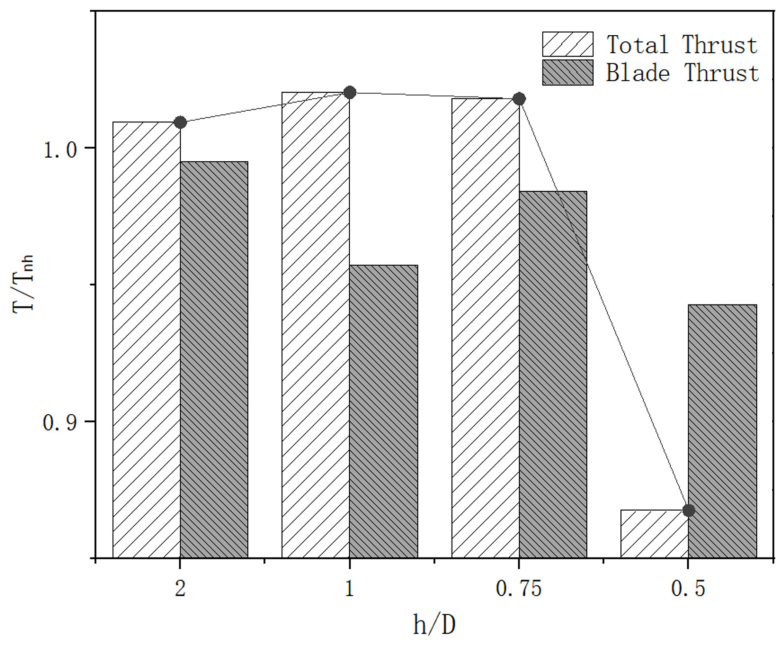
, the total thrust of the duct and the blade thrust are shown in
Figure 10, where
T is the thrust under ground effect and
is the thrust in the hovering state without ground effect. The variation trend of total thrust can be clearly observed from the line chart. It can be observed that the total thrust has changed by
,
,
, and
compared with that in the hovering state without ground effect, respectively.
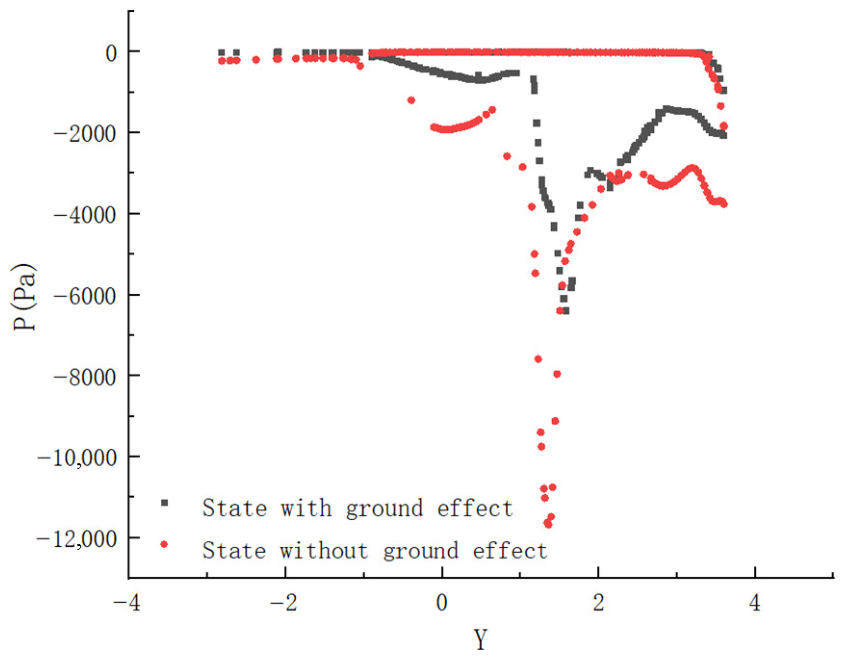
Figure 11 presents the comparison curves of the surface pressure distribution of each duct under conditions with/without ground effect. As detailed in
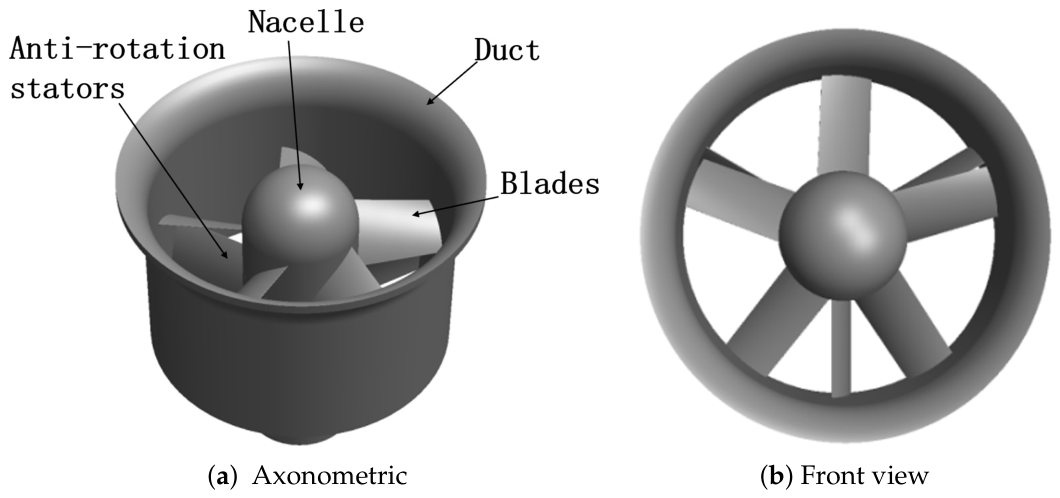
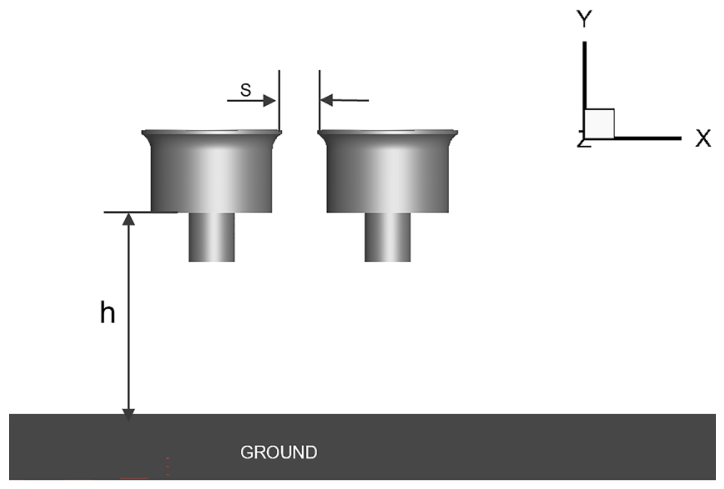
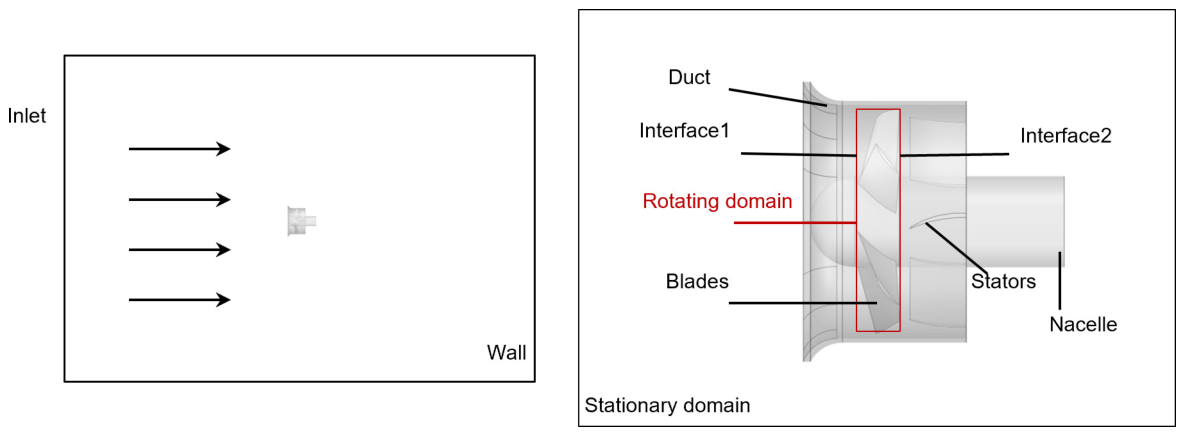
Figure 6, Y denotes the axial direction of the duct. The monitoring points, as shown in
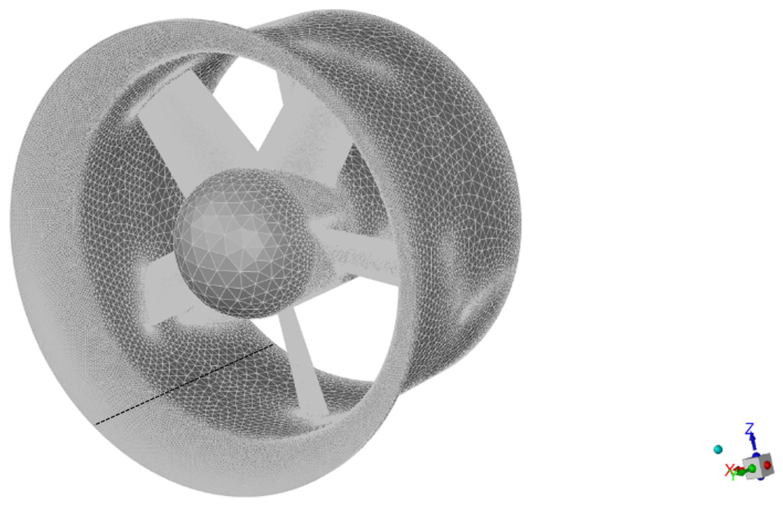
Figure 9, are located at the Z = 0 cross-section of the duct. Under the ground effect condition, the internal pressure of the duct increases significantly; the increased pressure at the duct leading edge directly leads to the thrust reduction of the duct components. This indicates that when operating near the ground, the duct is affected by the ground effect, resulting in thrust loss.
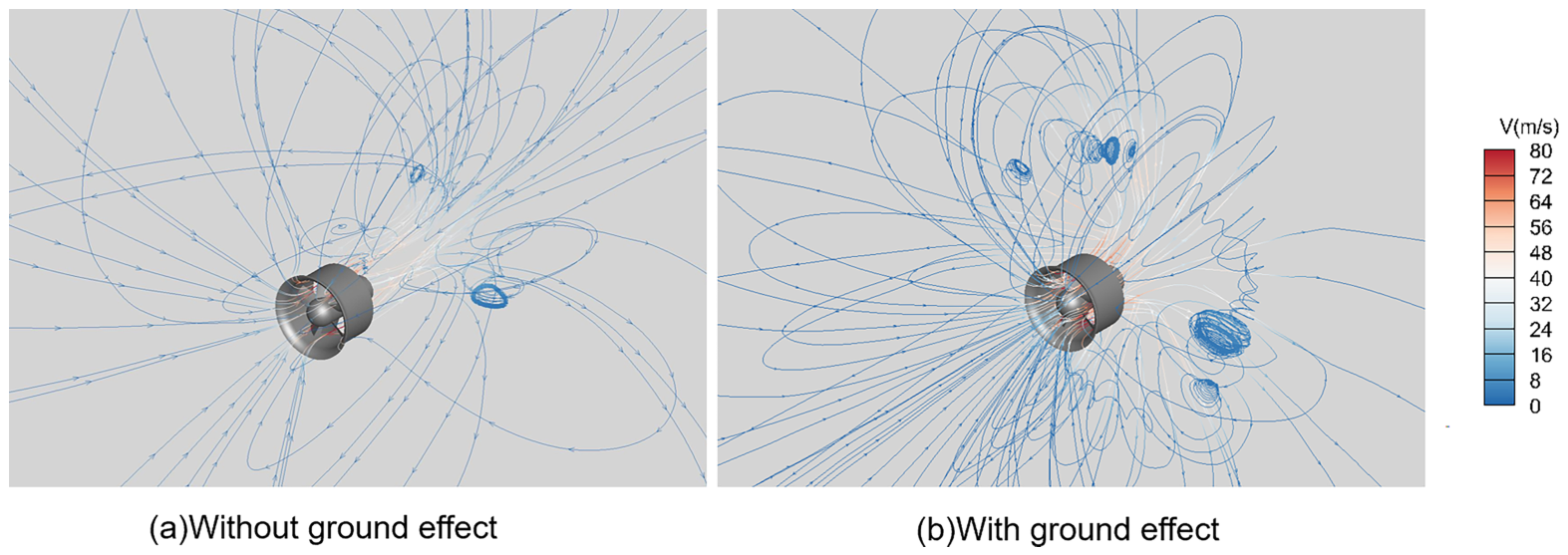
Figure 12b presents the spatial streamline diagram of the ducted fan under the ground effect condition. Compared with
Figure 12a (the spatial streamline diagram under the condition without ground effect), it can be observed that due to the introduction of the ground, the airflow ejected from the duct is emitted obliquely, and collides with the ground to form upward rebounded airflow, which significantly affects the propulsion performance of the middle ducted fan.
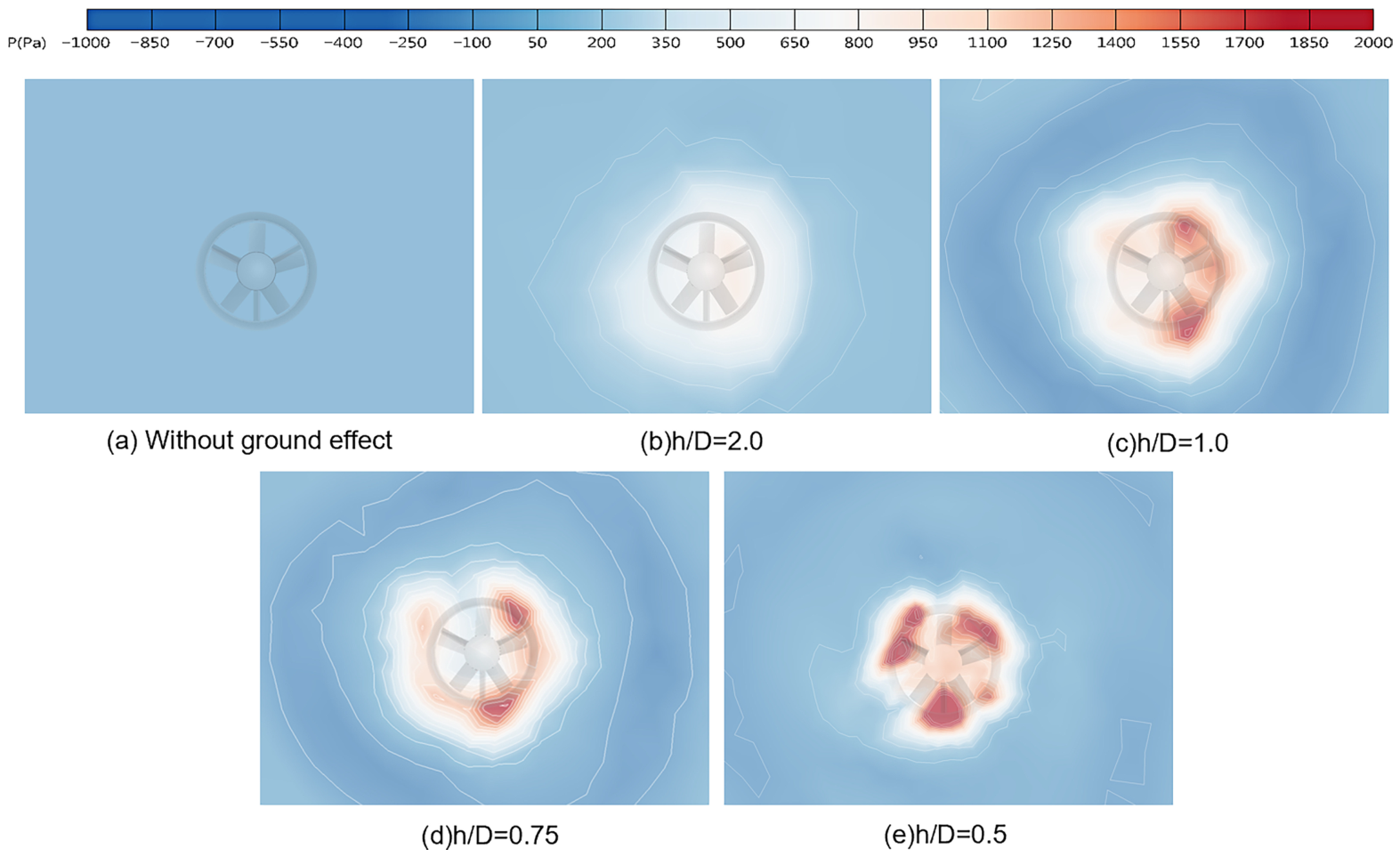
As shown in
Figure 13, which presents ground static pressure contours at various heights, the ground blockage effect significantly suppresses the downwash velocity and creates a prominent high-pressure region beneath the fan. The positive pressure magnitude on the ground increases monotonically as the height above ground decreases. This macroscopic flow phenomenon fundamentally alters the aerodynamic performance of all components of the ducted fan in ground effect.
Notably, the ground pressure distribution exhibits a distinct circumferential asymmetry, rather than being uniform or axisymmetric. Such asymmetric behavior of the isolated ducted fan arises from the coupling between ground effect and fan rotor rotation. Specifically, the ground blockage induces a circumferentially non-uniform high-pressure zone, which imposes spatially varying constraints on the downwash flow. This, in turn, leads to asymmetric aerodynamic loading distributions over the rotor blades and the duct wall at different circumferential positions.
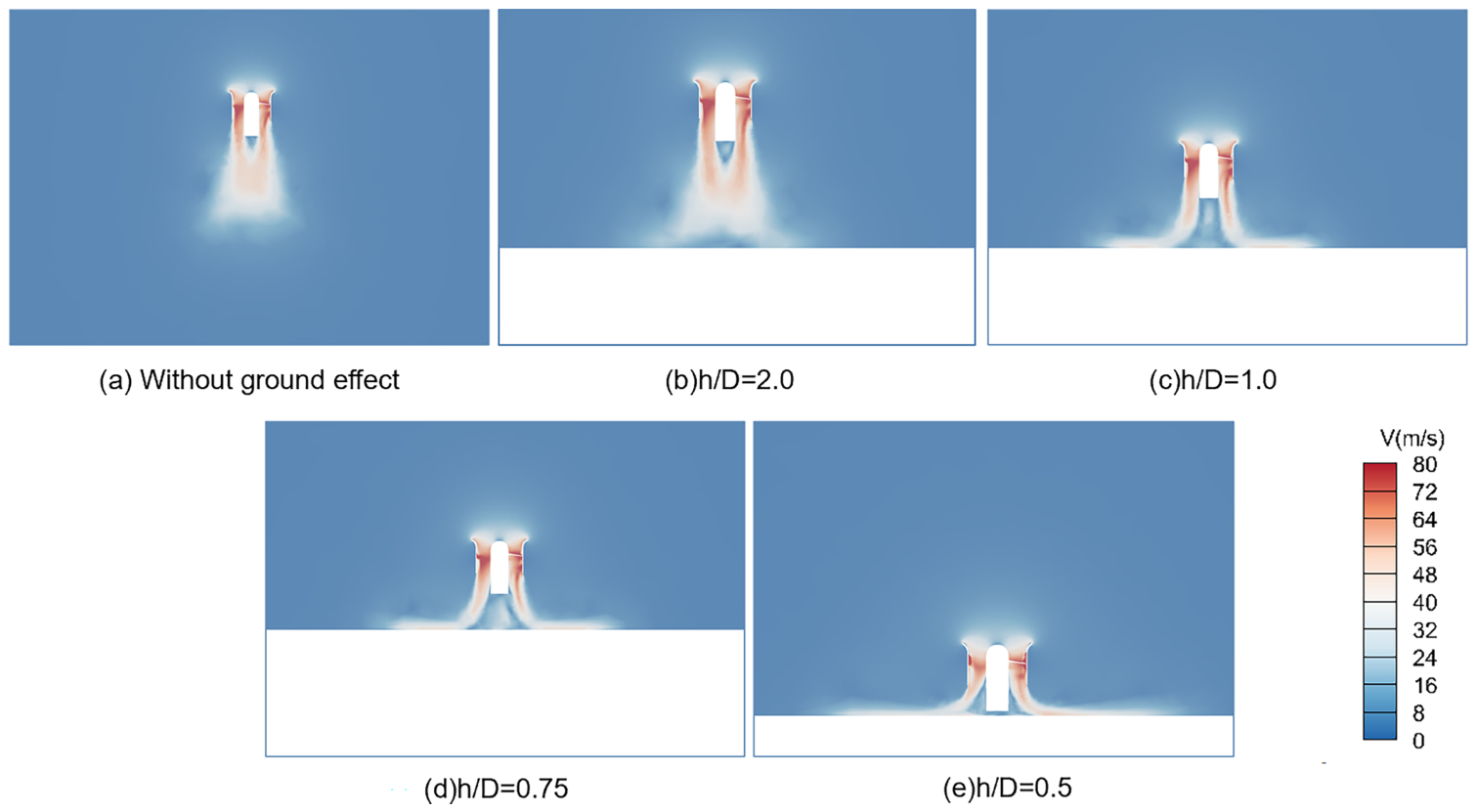
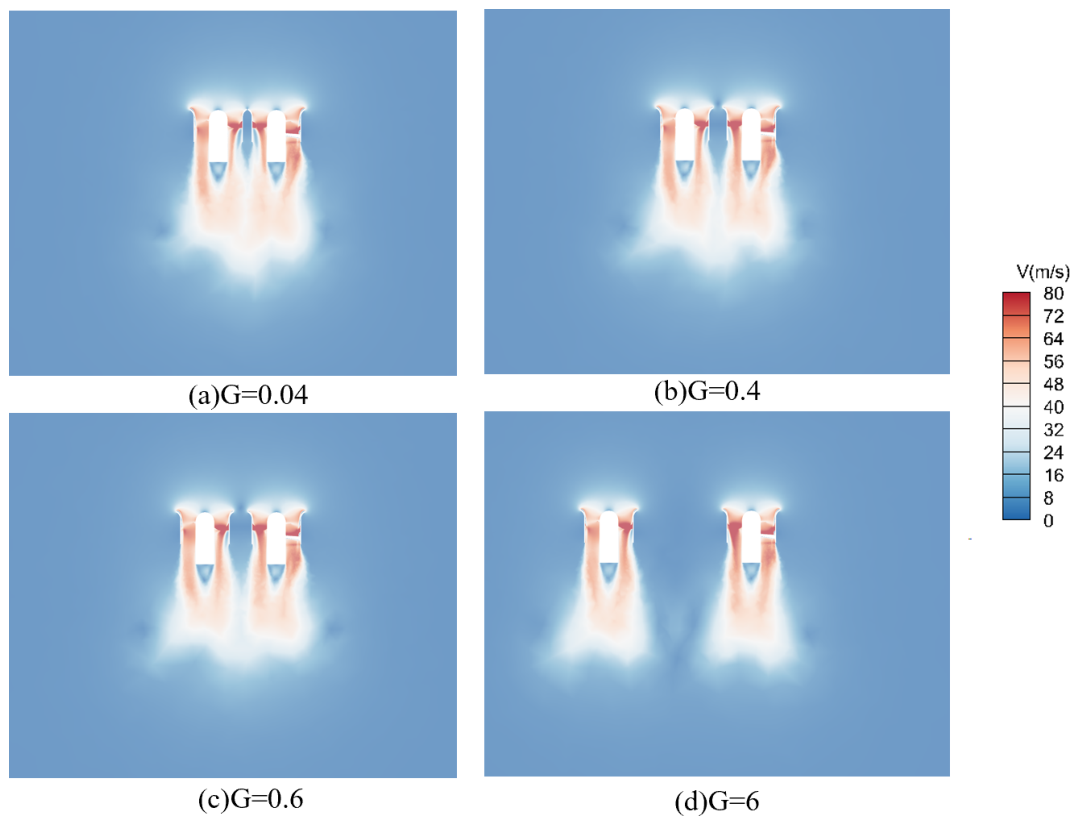
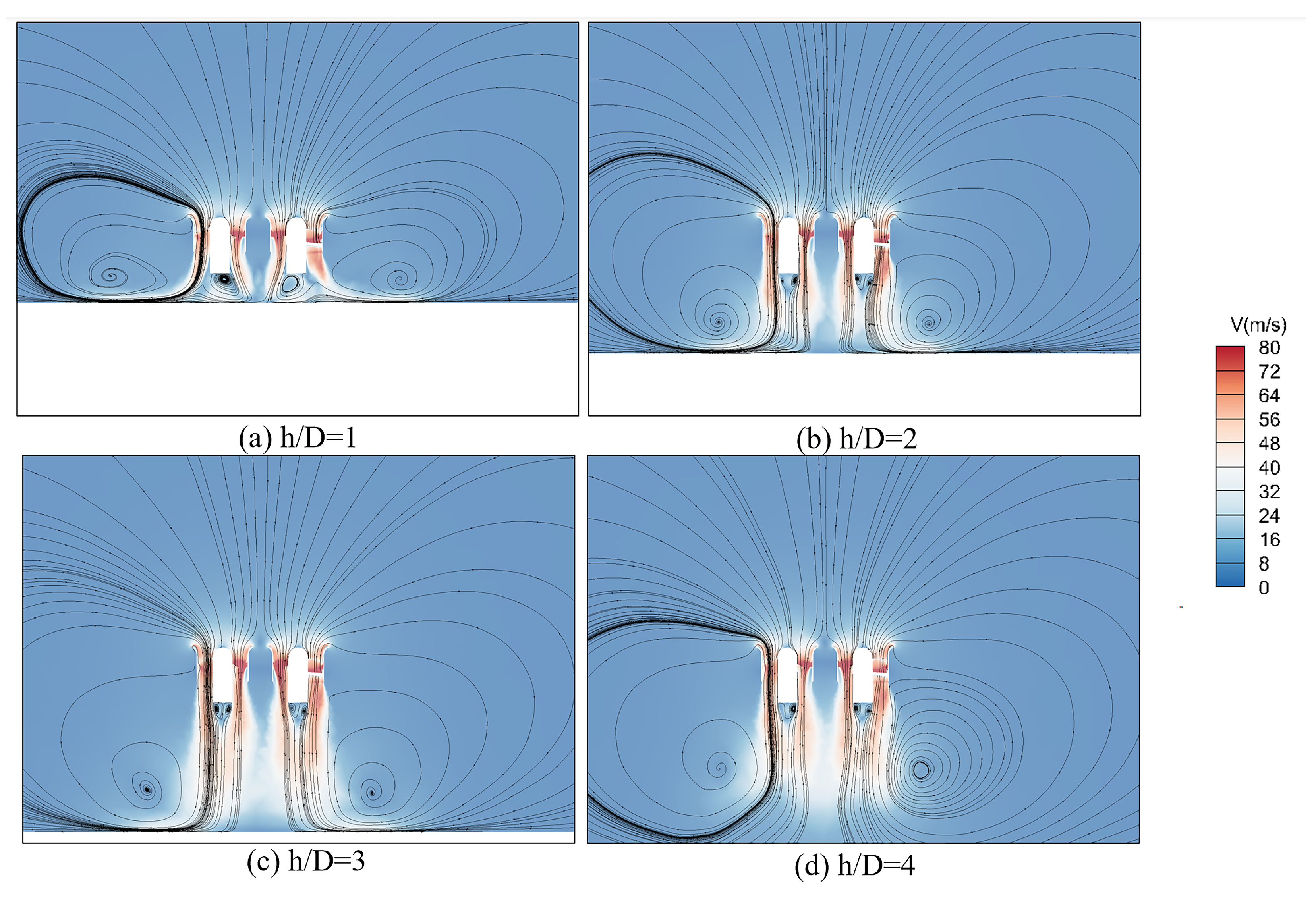
Based on the presentation of the ducted fan flow field at different ground clearances (
) in the velocity contour maps of
Figure 14, the degree of constraint exerted by the ground effect on the downwash flow field is the core mechanism for thrust variation. At high ground clearance (
), the downwash airflow exhibits an extended divergent pattern in the velocity contour maps. The ground exerts extremely weak constraint on the airflow, and the flow field characteristics are close to the “hovering without ground effect” state. At moderate ground clearances (
and
), the velocity contour maps show that the ground forms moderate constraint on the downwash airflow. The diffusion range of the airflow is restricted, and the airflow acts more concentratedly on the areas around the duct and blades. This “constraint and compression” effect improves the effective action degree of the airflow on the aerodynamic components and optimizes the aerodynamic work efficiency, resulting in an upward trend of total thrust. At low ground clearance (
), the downwash airflow is strongly obstructed by the ground, showing obvious congestion characteristics, and the normal downwash flow field pattern is damaged. The aerodynamic work conditions of the blades and duct are disturbed due to flow field imbalance, leading to a significant decrease in aerodynamic efficiency.
5.2. Aerodynamic Interference Effect of Dual-Ducted Fans with Different Spacings
Figure 15 shows the variation of total duct thrust with gap under the conditions of
,
,
,
, and 6. where:
denotes the total thrust of two signle-ducted fans under the gap-free condition, taken as the baseline reference value. The CFD numerical simulation results show that the total thrust under different conditions exhibits a variation of
,
,
,
, and
relative to
, respectively.
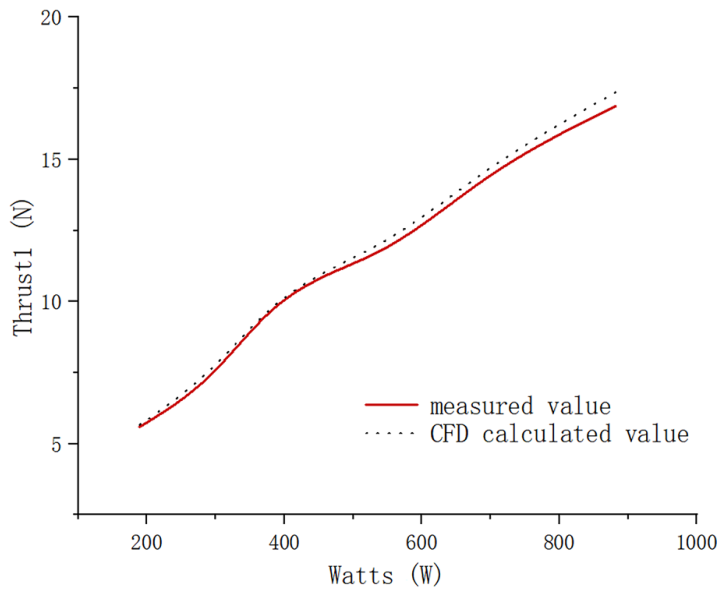
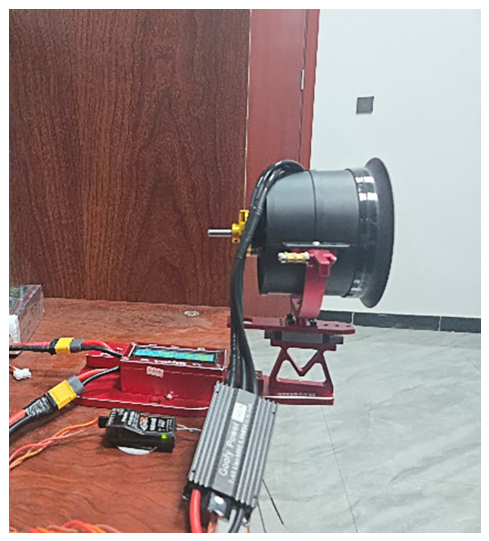
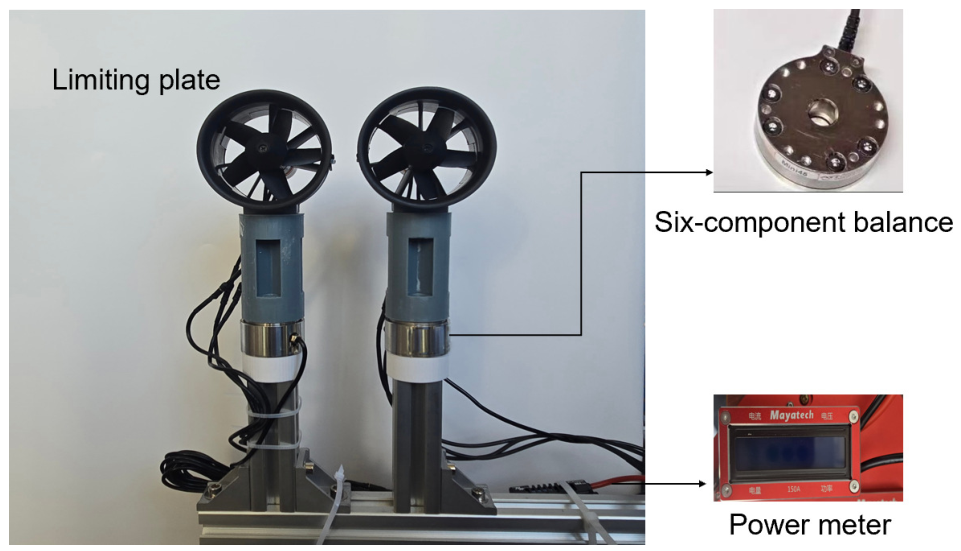
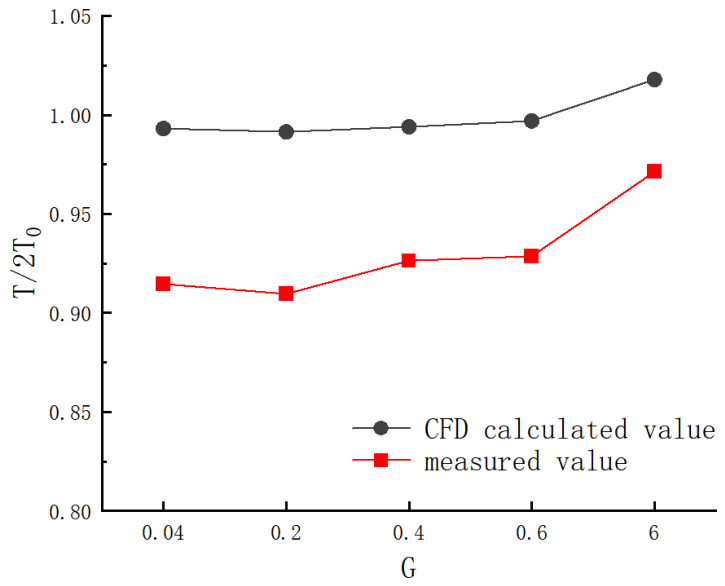
To further verify the reliability of the established numerical method for dual-ducted fan simulations, experimental tests were carried out on the dedicated dual-ducted fan test bench shown in
Figure 7 under the same spacing conditions as those in the simulations. The experimental results are compared with numerical predictions in
Figure 15, where the numerical and experimental thrust values are in good agreement, and the maximum relative error is within 8.45%. This confirms that the established numerical method can predict the thrust characteristics of dual-ducted fans with different spacings.
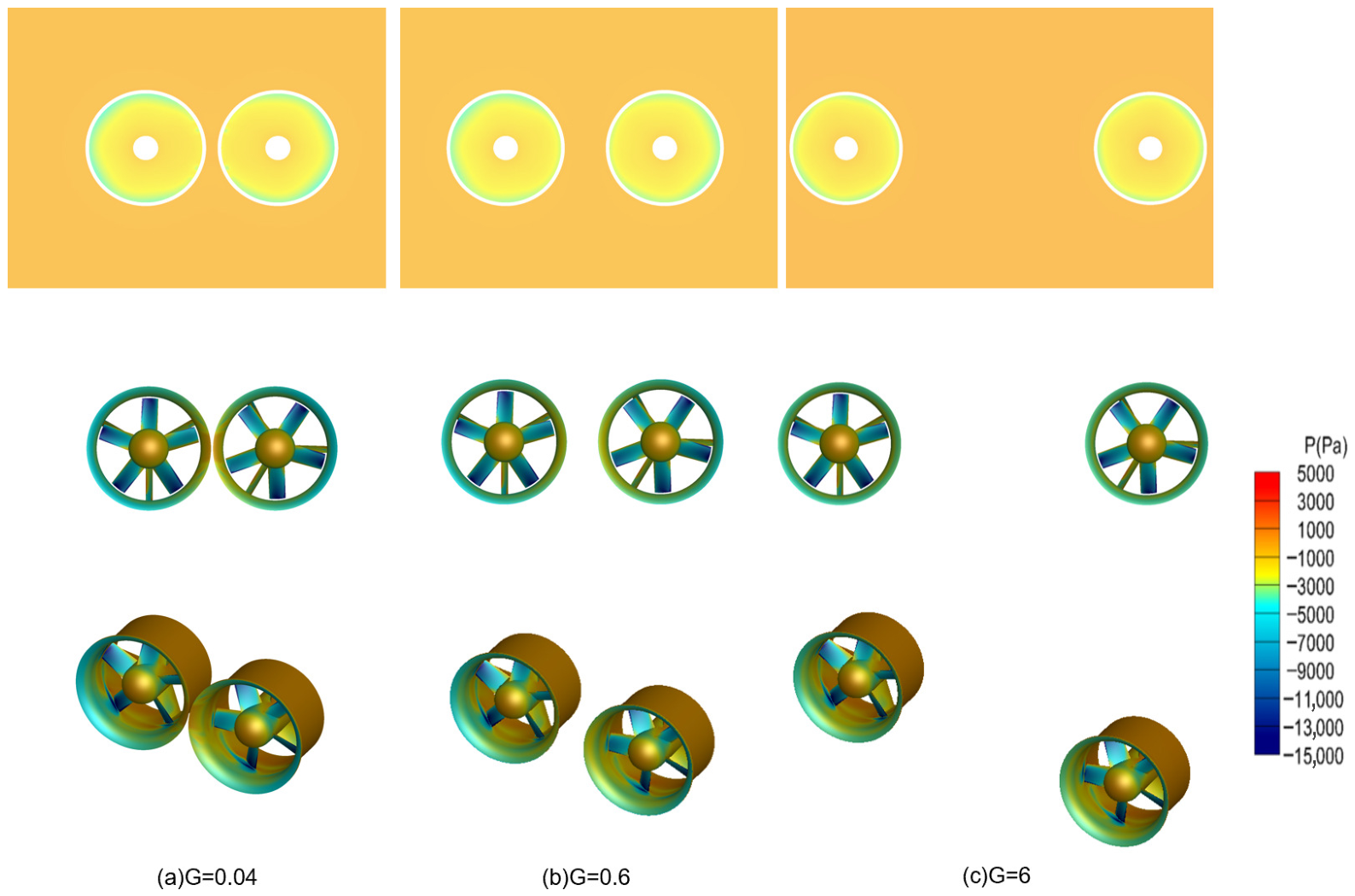
Figure 16 presents the cross-sectional pressure contours at the duct leading edge of ducted fan groups with different spacings. The duct leading edges of all ducted fan groups exhibit distinct low-pressure regions, while these low-pressure regions change significantly with varying gaps.
Comparing
Figure 16a with
Figure 16c, distinct high-pressure regions are generated at the duct lips near the gap in
Figure 16a. Since duct thrust is mainly induced by the low pressure at the duct leading edge, the occurrence of high-pressure regions directly leads to duct thrust reduction. In the duct leading edge region, the low-pressure region of the 6 ducted fan group shows a uniform circular distribution. However, the left and right ducted fans of the
and
ducted fan groups form crescent-shaped low-pressure regions at the duct leading edge, and as the gap decreases, the range of these low-pressure regions gradually shrinks.
The jet region is the “work zone” where airflow momentum is converted into thrust, and flow field characteristics determine the momentum transfer efficiency. For small-gap cases (, , ), the two jets interact rapidly downstream with momentum field superposition, leading to an increased jet diffusion angle. The high-speed core region is compressed, and velocity decay accelerates. Part of the kinetic energy dissipates into vortex energy during jet interaction, failing to be effectively converted into thrust. For the large-gap case (), the jet exhibits a free jet pattern, with a clear and far-extending high-speed core region, a small jet diffusion angle, and minimal airflow momentum loss, enabling efficient conversion of momentum into thrust.
Combined with
Figure 17 and
Figure 18, in terms of flow field patterns, under small gap conditions (
,
and
), the two jet flows interact rapidly and their momentum fields superimpose in the downstream region. This leads to an increased jet diffusion angle, with the high-speed core region being compressed and the velocity decay accelerating; part of the kinetic energy is dissipated into vortex energy and cannot be effectively converted into thrust. In contrast, under the large gap condition (
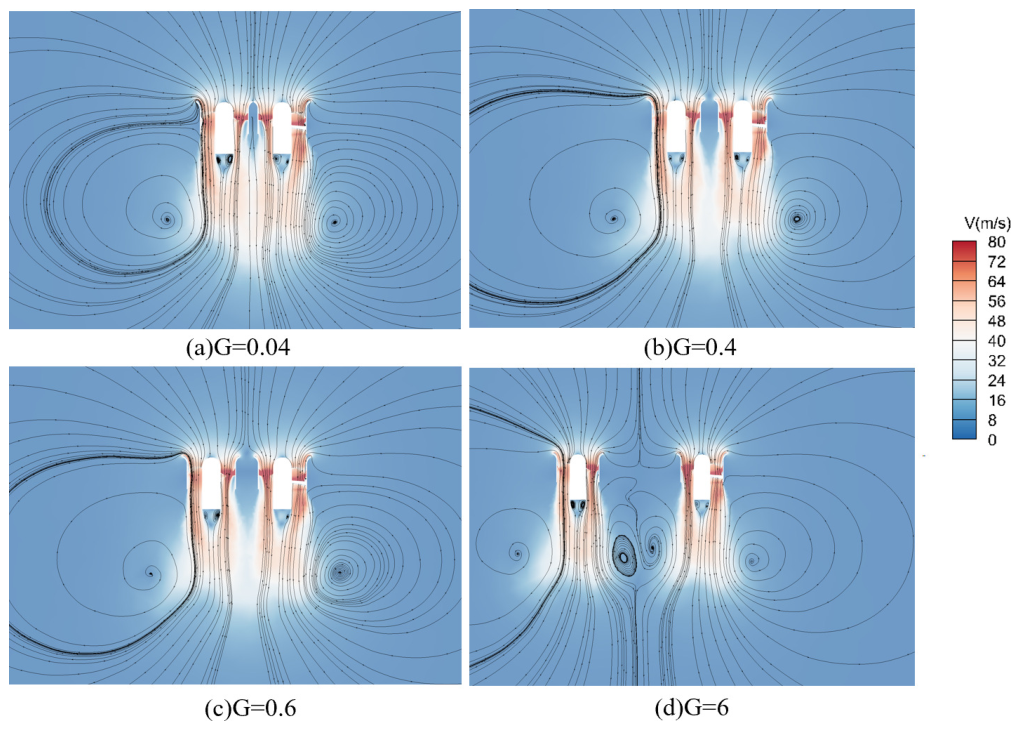
), the jet flows exhibit a free jet pattern, where the high-speed core region is distinct and extends over a long distance with a small jet diffusion angle. The aerodynamic momentum loss is minimal, enabling the efficient conversion of momentum into thrust. Further analysis of the flow evolution characteristics using velocity streamline diagrams reveals that at large gaps, the flow fields between the two ducts are basically independent, with the wakes presenting a symmetric diffusion pattern and the streamlines extending smoothly. The inflow at the duct leading edge deflects significantly under the suction effect of the blades to form an effective angle of attack, thereby generating a strong low-pressure region at the leading edge of the lip. The flow field is thus stable without flow separation, and the aerodynamic performance is in an ideal state. When the gap decreases to
and
, the deflection degree of the inner inflow weakens, resulting in a reduction in the effective angle of attack at the duct section and a weakening of the intensity of the leading-edge suction peak. Meanwhile, streamlines detach from the wall at the rear part of the duct diffuser, accompanied by the formation of low-speed reverse flow vortices. This induces local flow separation, which increases flow loss and impairs the pressure recovery capability.
5.3. Influence of Gap-Ground Clearance Coupling on Aerodynamic Performance
To reveal the coupling influence mechanism between duct gap G and ground clearance h, considering that experimental tests are difficult to fully cover such dual-parameter coupled working conditions, this study adopts the numerically reliable method validated in the previous section and conducted systematic simulation and convergence analysis on the total thrust of the two ducts under four configurations () and different ground clearance conditions (). The results indicate that the aerodynamic performance exhibits non-monotonic and non-linear characteristics with the variation of G and h, and there exist obvious coupling effects and an optimal combination range.
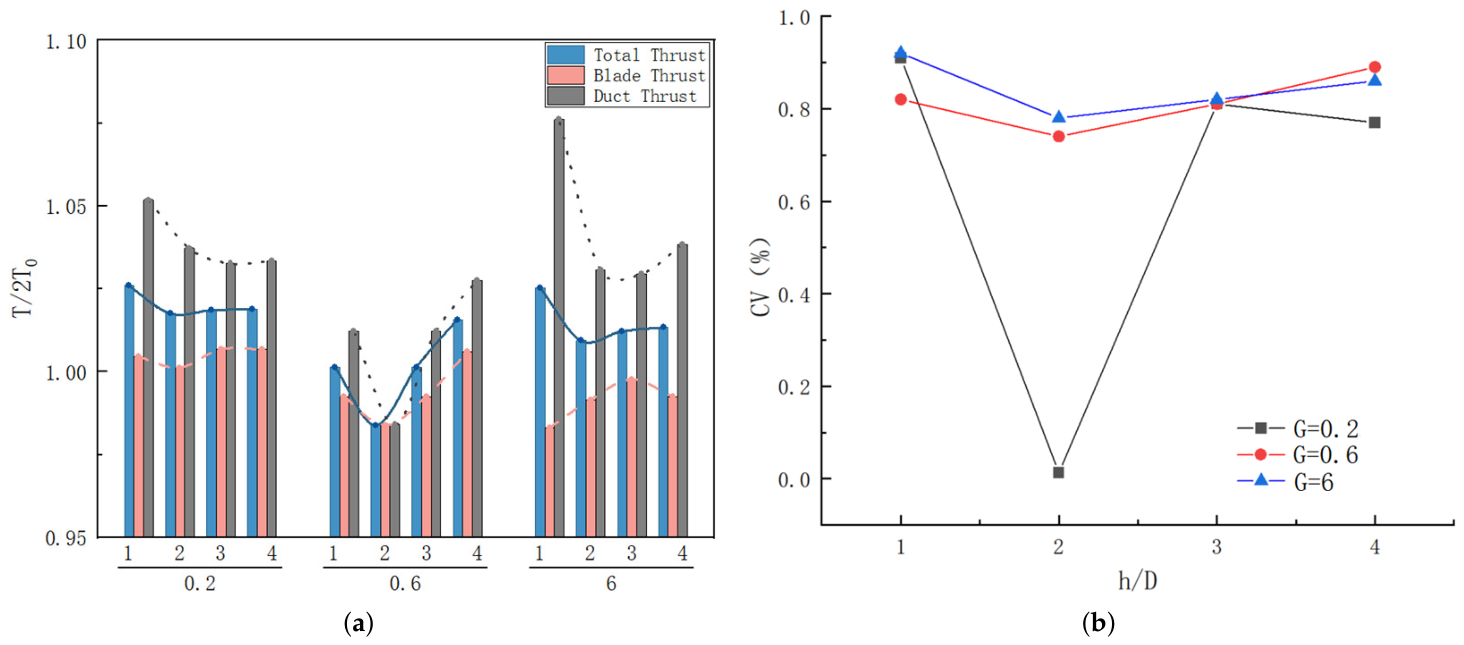
As shown in
Figure 19, under various combined
G-
h operating conditions, the thrust value
T of each component in the dual-ducted fan system and the thrust coefficient of variation CV (which characterizes thrust stability) both exhibit significant coupling characteristics. Herein,
T represents the thrust under coupled operating conditions, and
denotes the thrust of a signle-ducted fan without ground effect; CV is used to evaluate thrust stability, and a smaller CV value indicates more stable thrust. For different duct gaps, the influence of ground clearance on the mean thrust follows a common trend: as the ground clearance increases, the mean thrust first decreases and then increases; meanwhile, regardless of the duct gap, the thrust stability reaches its optimal level at
.
Under the large gap condition of , the interference between the two ducts is negligible, and the system behavior is dominated primarily by the ground effect. As h decreases, the total thrust decreases first and then increases, reaching its peak at , whereas the CV rises to 0.92%. This indicates that the strong ground constraint significantly intensifies flow field disturbances while enhancing the thrust.
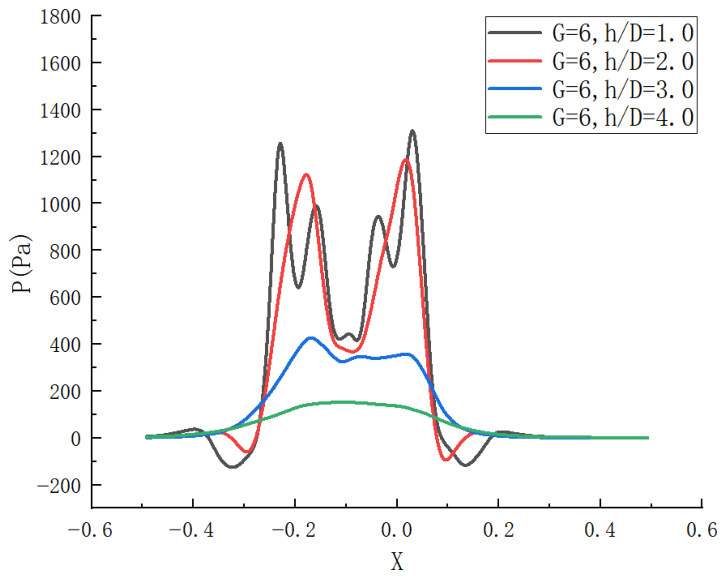
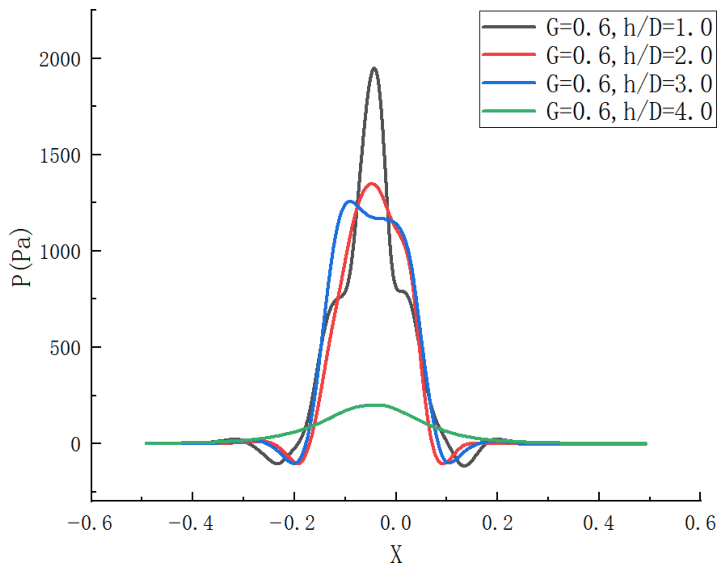
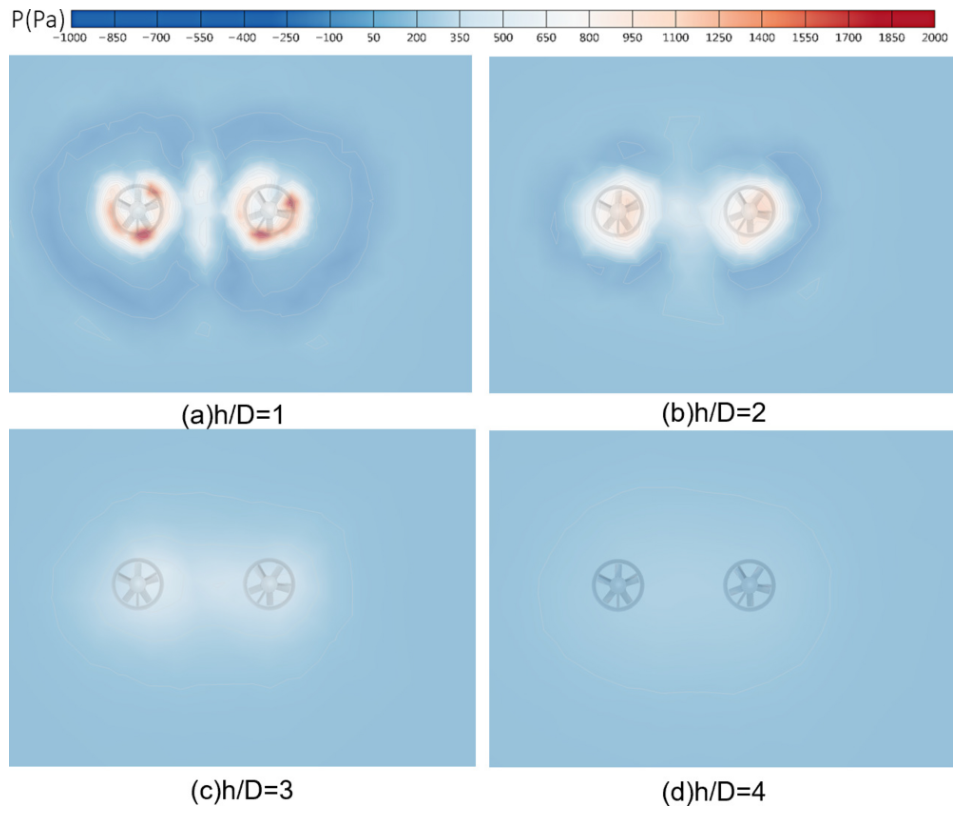
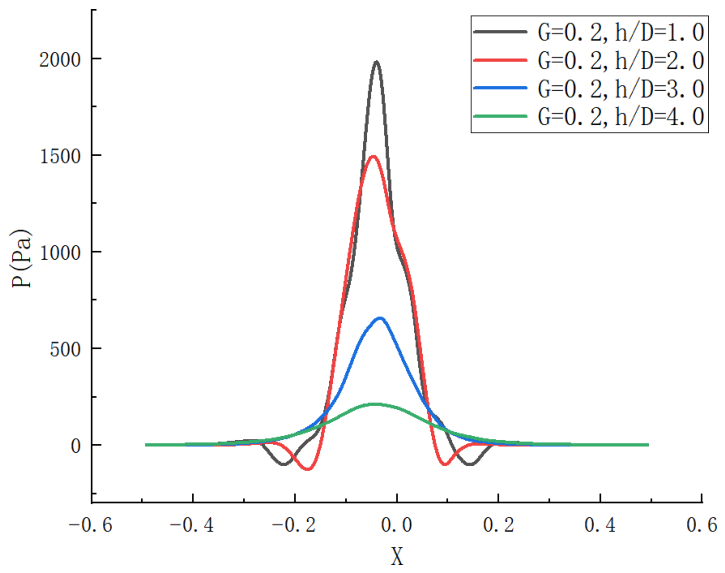
Figure 20 presents the ground pressure distribution along the X-axis of the dual-ducted fan at different ground clearances, where X denotes the intersection line between the Z = 0 cross-section and the ground plane, parallel to the line connecting the centers of the two ducts.
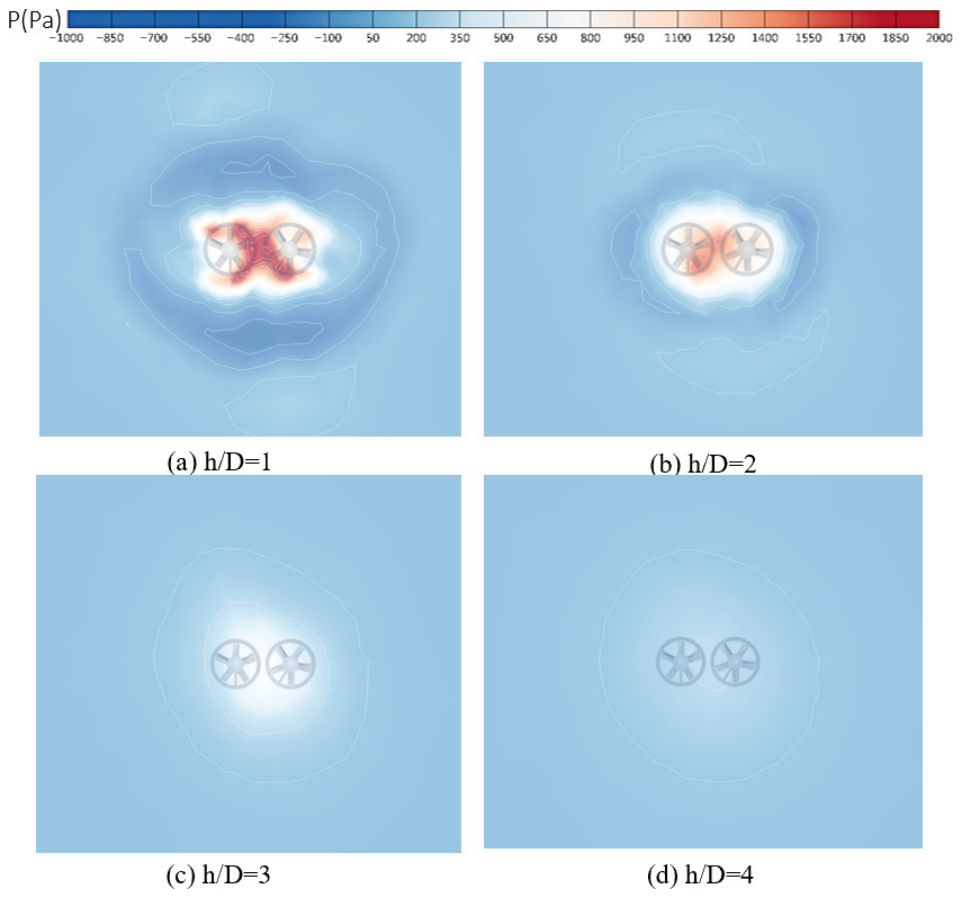
Figure 21 presents the ground pressure contour plot of the dual-ducted fan. As shown in
Figure 20 and
Figure 21, under the condition of
, the ground pressure at various ground clearances exhibits a typical structure of a central high-pressure region and a peripheral low-pressure ring. At
, the peak value of the central high pressure exceeds 1300 Pa and the peripheral low pressure is approximately
Pa, which clearly verifies that the intense reflection generated by the jet impinging on the ground is the direct cause for the formation of the high-pressure region.
As the ground clearance increases, the intensity of the high-pressure region attenuates continuously and its area shrinks significantly: the peak value drops to 1200 Pa at , 500 Pa at , and only 100 Pa at ; the positive pressure region shrinks from the range of to at to a nearly zero range at . When , the peak positive pressure approaches the ambient pressure, and the high-pressure region tends to be diffused.
At , the intense ground back pressure is more than 10 times that at , which can effectively suppress the escape of downwash flow and increase the pressure difference across the duct, serving as the dominant mechanism for thrust enhancement. However, the pressure gradient is the most intense under this condition, with the pressure difference between positive and negative pressure exceeding 1500 Pa, which induces significant thrust fluctuations.
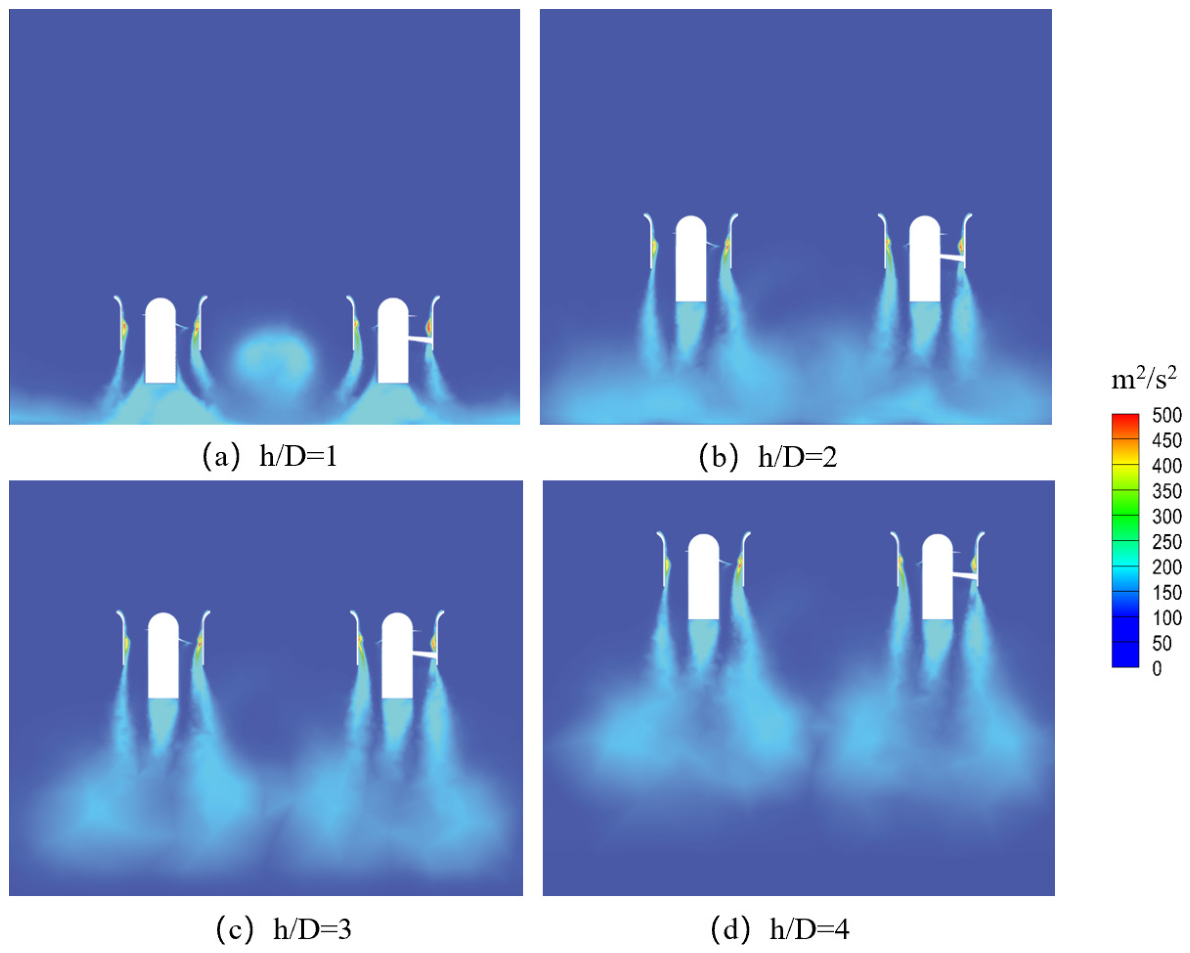
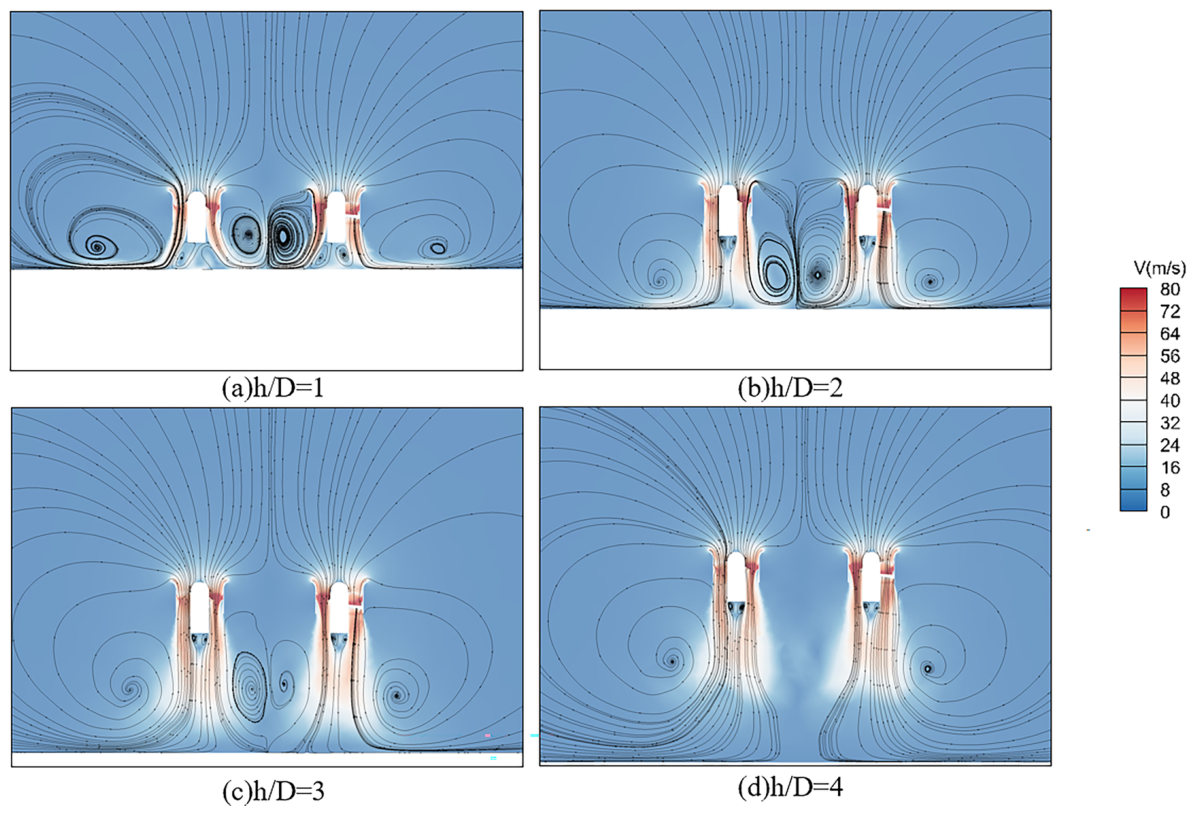
To quantitatively reveal the relationship between flow unsteadiness and thrust stability, turbulent kinetic energy (TKE) is analyzed in this section. First, it can be observed from the velocity streamlines in
Figure 22 that, as the ground clearance increases, the jet diffusion effect is enhanced, thereby weakening the shear layer and simplifying the vortex structure. On this basis, as shown in
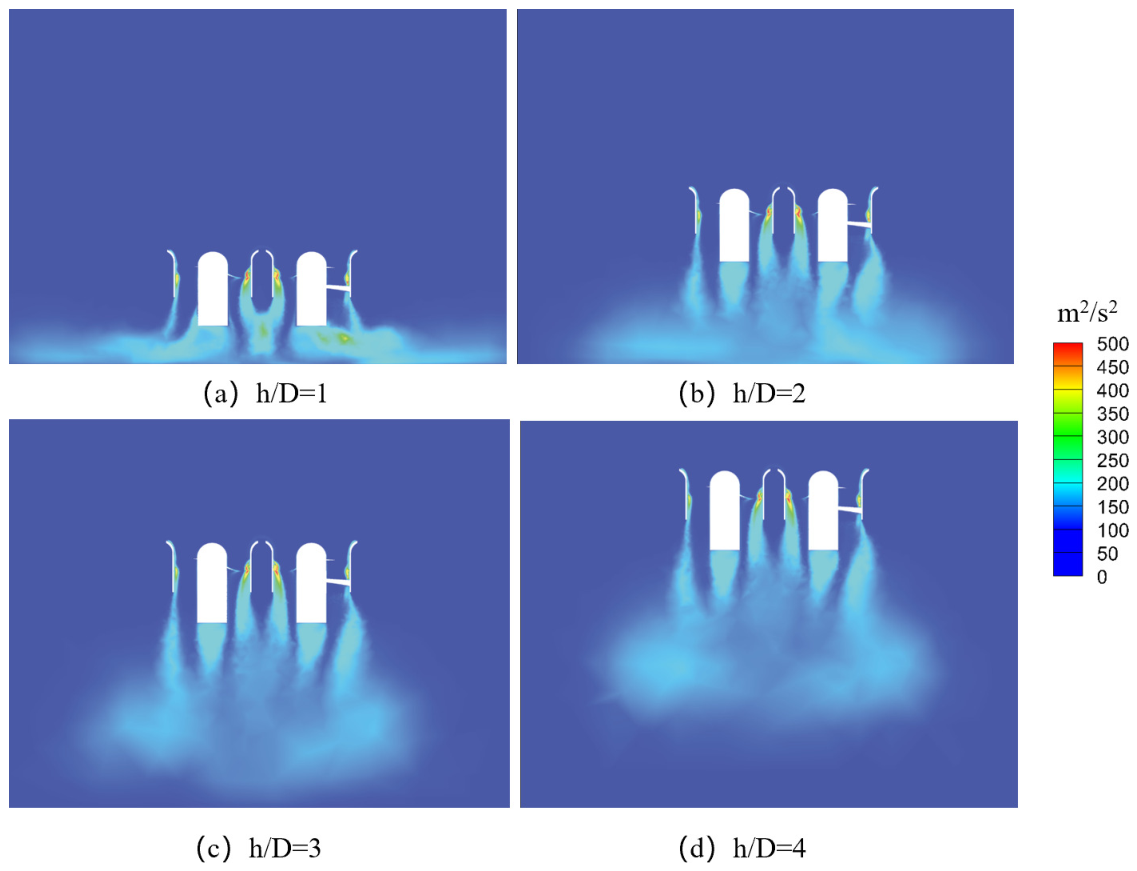
Figure 23, when
, the TKE peak approaches 500
/
, corresponding to the maximum thrust coefficient of variation (CV) of 0.92%. This indicates that intense jet-ground shear induces strong turbulent fluctuations, which maximize thrust but significantly reduce thrust stability. With a further increase in ground clearance, the TKE peak drops below 200
/
at
and below 100
/
at
, and the CV decreases synchronously, confirming that a lower TKE effectively improves thrust stability.
As
G is reduced to
, lateral interference and the ground effect exhibit characteristics of coupling interaction. As shown in
Figure 19, the total thrust still shows a trend of decreasing first and then increasing, with the valley value appearing at
and the peak value at
. This pattern stems from the combined action of ground constraint and inter-duct airflow interference at low ground clearances, which restricts thrust enhancement. In contrast, as the ground clearance increases and the ground effect weakens significantly, the duct configuration with a moderate gap enables airflow interaction between individual ducts and thus promotes performance improvement. Notably, the CV remains at an overall low level with a gentle variation trend under this configuration, indicating that lateral interference and the ground effect are more likely to achieve a dynamic equilibrium under the moderate gap condition. The system performance thus has reduced sensitivity to variations in ground clearance, which is more conducive to the realization of robust design.
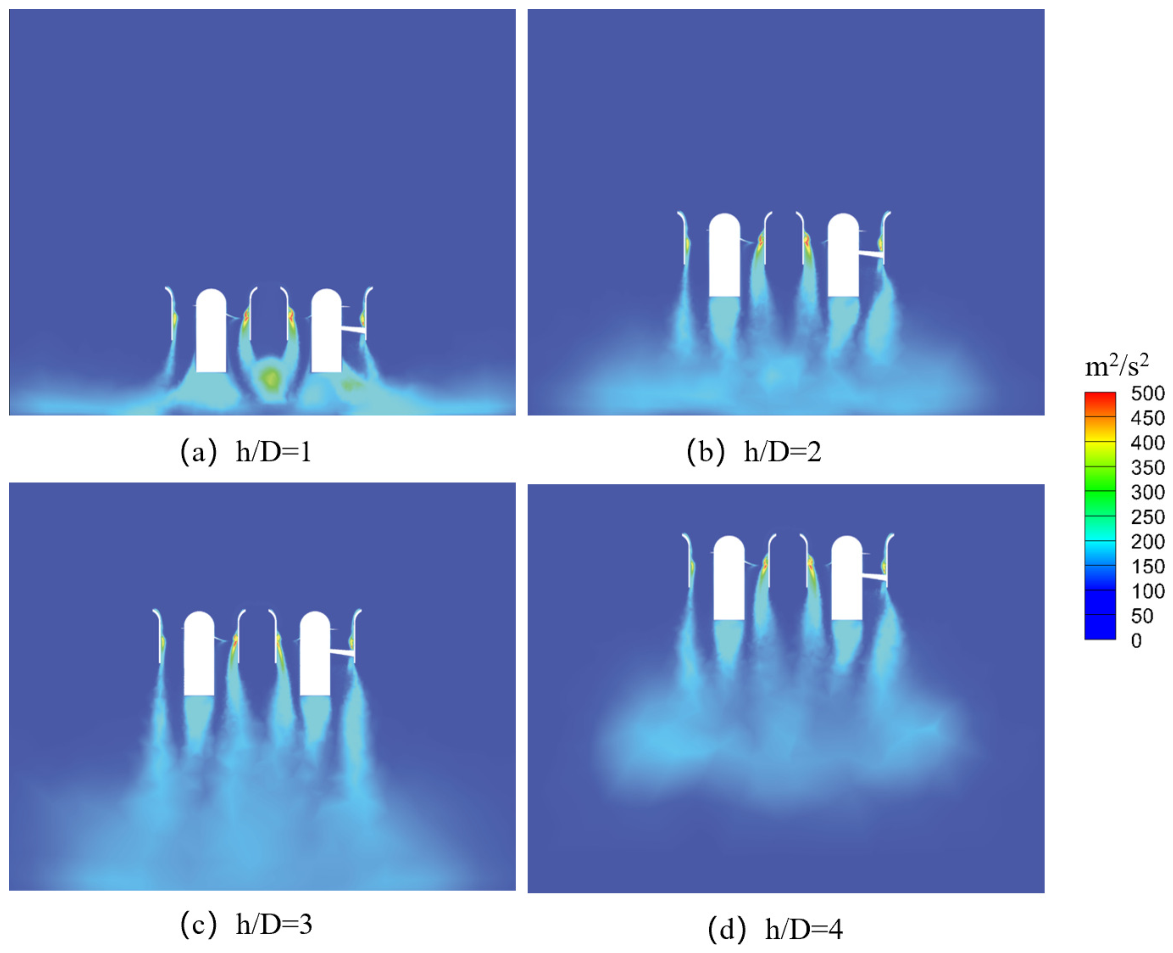
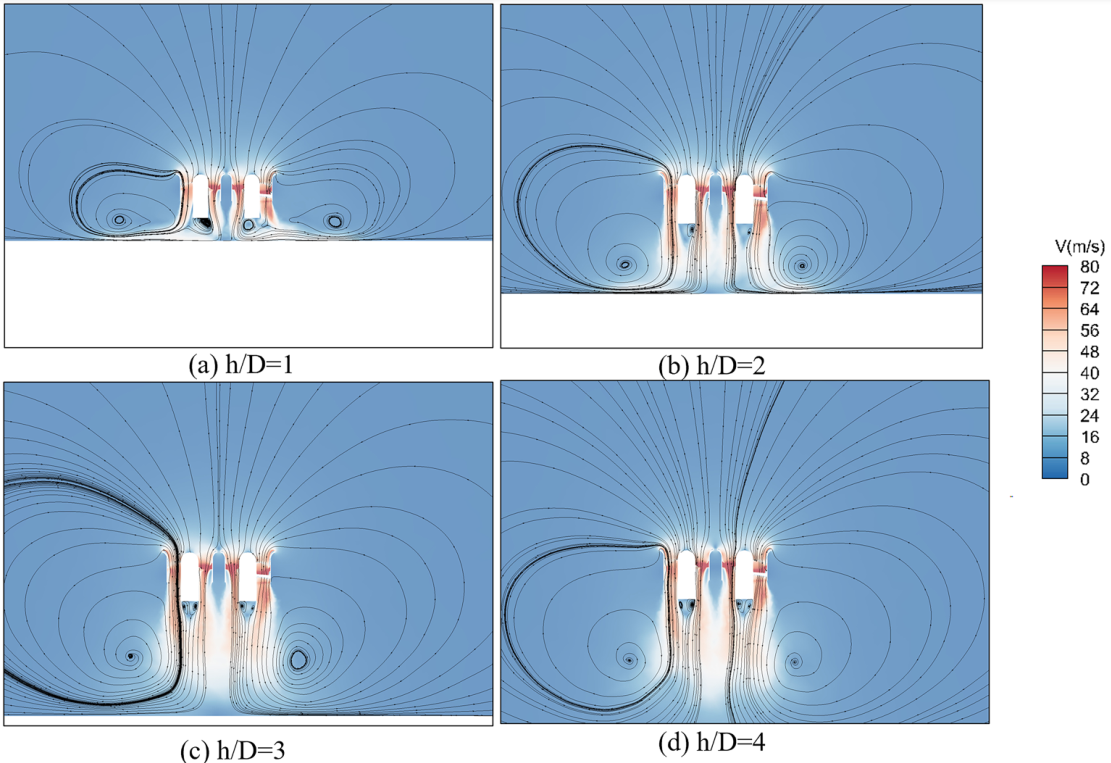
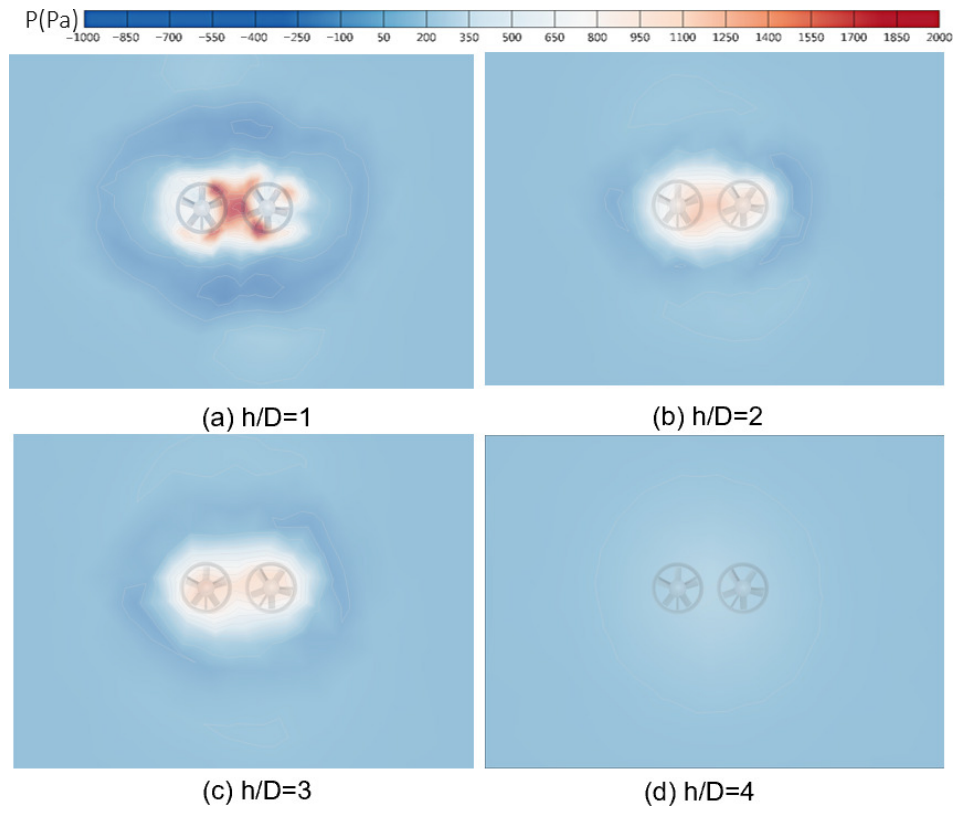
The ground pressure (
Figure 24 and
Figure 25) and velocity streamlines (
Figure 26) reveal the underlying flow mechanisms, while the TKE distribution (
Figure 27) directly explains the behavior of CV.
At a low ground clearance of , the ground constraint is the strongest. The merged high-pressure zone reaches a peak of approximately 2000 Pa, and the TKE peak in the impingement and inter-duct entrainment regions approaches 1000 /. At this point, the jets rebound rapidly and strongly entrain the airflow between the ducts, forming large-scale multi-scale vortex structures. This intense turbulent fluctuation, reflected by the high TKE, leads to a slight increase in CV. Consequently, although the thrust level is moderate, the combined effect of strong ground constraint and inter-duct interference limits further thrust enhancement.
At , the ground constraint is moderate, and the merged high-pressure zone has a peak of approximately 1200 Pa with a uniform distribution; the TKE peak is about 500 / with a symmetric distribution. The gentle pressure gradient between the ducts effectively suppresses unsteady separation and reverse flow. The velocity streamlines present a regular pattern, the scale and quantity of vortices are reduced, and flow disorder is diminished. This state corresponds to the valley point of thrust variation, indicating that the restrictive effect begins to abate, the coupling of lateral interference and the ground effect tends to a dynamic equilibrium, and thus the CV under this condition is optimal.
For , the ground effect weakens significantly, with the peak of the merged high-pressure zone dropping to 1000 Pa (at ) and 200 Pa (at ); the TKE peak falls to below 200 / with a uniform distribution.At this time, the weakened ground effect results in smooth airflow and simplified vortex structures between the ducts, the CV remains low, and the thrust increases steadily, confirming that the reduced TKE and simplified flow structure improve both aerodynamic efficiency and stability.
Under the small gap condition of , the total thrust exhibits a trend of decreasing first and then increasing as the ground clearance decreases, reaching its peak at with a thrust level close to that at the large gap of . However, due to the inter-duct interference intensity being the highest among all gap conditions, the magnitude of its thrust enhancement is slightly lower than that at . Meanwhile, the CV under this condition varies drastically: it drops to an exceptional trough near zero at and then rises rapidly, with a marked increase at under strong ground constraint. This characteristic reflects that inter-duct interference dominates the flow field behavior at small gaps, and its coupling with the ground effect induces abnormal fluctuations in flow field stability. Although strong ground constraint enhances the thrust, the significant inter-duct interference exacerbates flow field disturbances, ultimately resulting in a lower magnitude of thrust enhancement compared with the large gap condition.
It can be concluded from
Figure 28,
Figure 29,
Figure 30 and
Figure 31 that the coupling effect of ground clearance and duct gap under the condition of
exerts a significant regulatory influence on ground pressure distribution, flow field structure and aerodynamic performance.
At , the ground constraint is the strongest, the high-pressure regions merge and distort with a peak pressure of approximately 2200 Pa—the highest across all operating conditions; the TKE is nearly 1100 /, with intense fluctuations in the impingement regions and inter-duct entrainment regions, and the flow field features a chaotic vortex system. This phenomenon arises from the coupling of strong ground constraint and extreme inter-duct interference, and while the thrust is relatively high, the high TKE induces significant thrust fluctuations, corresponding to a marked increase in CV.
At , the pressure distribution is regular and symmetric with a sharp drop in peak value to 800 Pa, and the TKE peak falls to 300 / with a symmetric distribution. The flow field presents a quasi-symmetric structure, which corresponds to the critical state of negative feedback balance between the ground-reflected airflow and inter-duct interference airflow. The mutual offset of fluctuations by these two counter-directional flow fields yields the optimal stability, and thus the CV drops to an exceptionally low trough near zero. However, the sharp pressure drop reflects a reduction in kinetic energy conversion efficiency, and the increased energy loss directly leads to a drastic drop in thrust.
For , the ground effect weakens significantly, with the peak pressure dropping to 400 Pa (at ) and 150 Pa (at ), and the TKE peak falling to below 200 / with a uniform distribution. The flow evolves toward ordered coordination, and the coupling effect moderates. At this time, the CV remains low, and the thrust gradually recovers with good stability, confirming that the reduced TKE and ordered flow structure improve both momentum transfer efficiency and stability.