Article

Energy-Harvesting-Assisted UAV Swarm Anti-Jamming Communication Based on Multi-Agent Reinforcement Learning


1
School of Future Transportation, Nanjing Vocational Institute of Railway Technology, Nanjing 210031, China
2
School of Electronic and Optical Engineering, Nanjing University of Science and Technology, Nanjing 210094, China
3
Military Industry Research Institute of Jiangxi Guoke Defence Group Co., Ltd., Nanchang 330114, China
*
Authors to whom correspondence should be addressed.
Drones 2026, 10(4), 294; https://doi.org/10.3390/drones10040294

Submission received: 12 February 2026 / Revised: 27 March 2026 / Accepted: 14 April 2026 / Published: 16 April 2026
(This article belongs to the Special Issue Intelligent Spectrum Management in UAV Communication)

Abstract

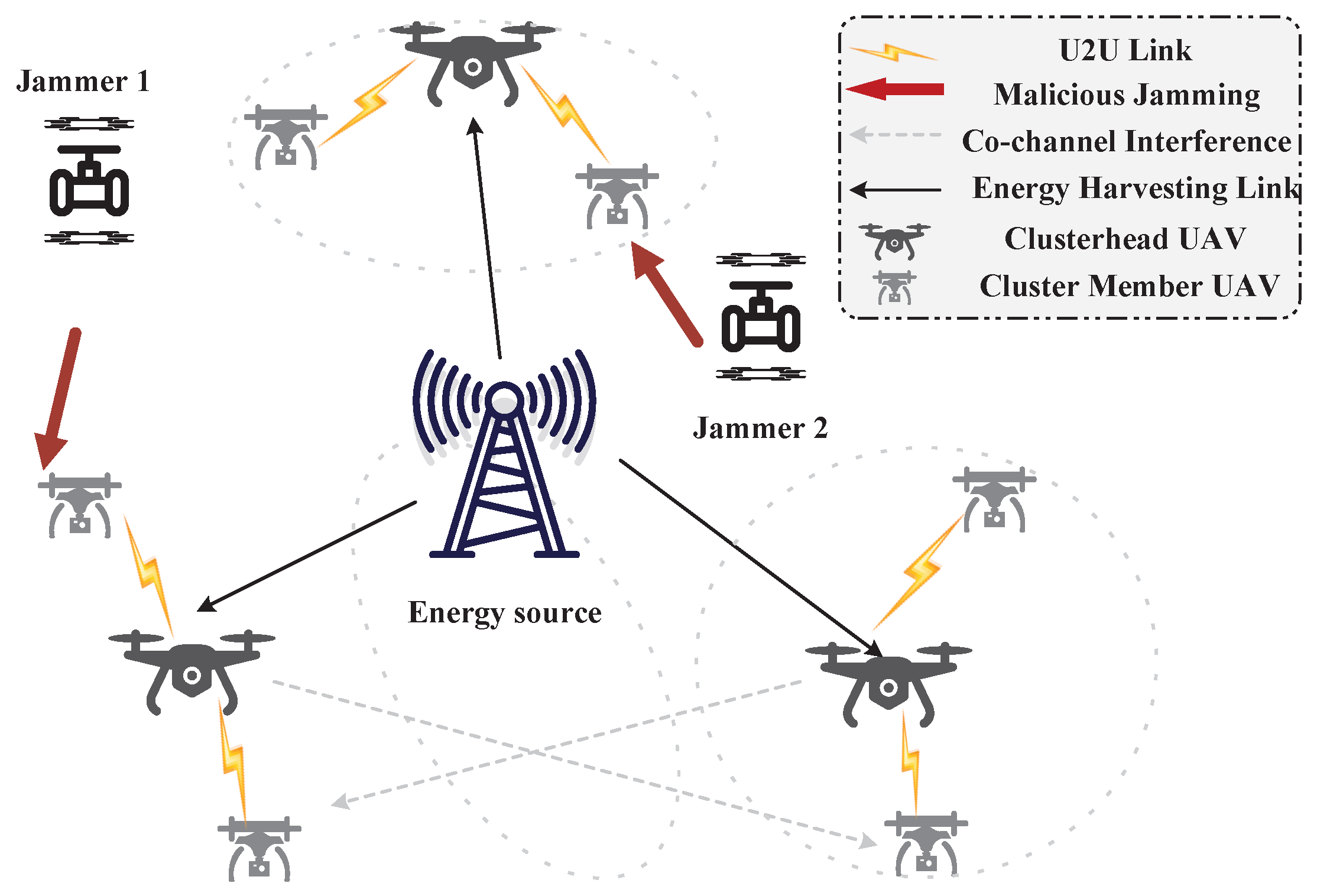
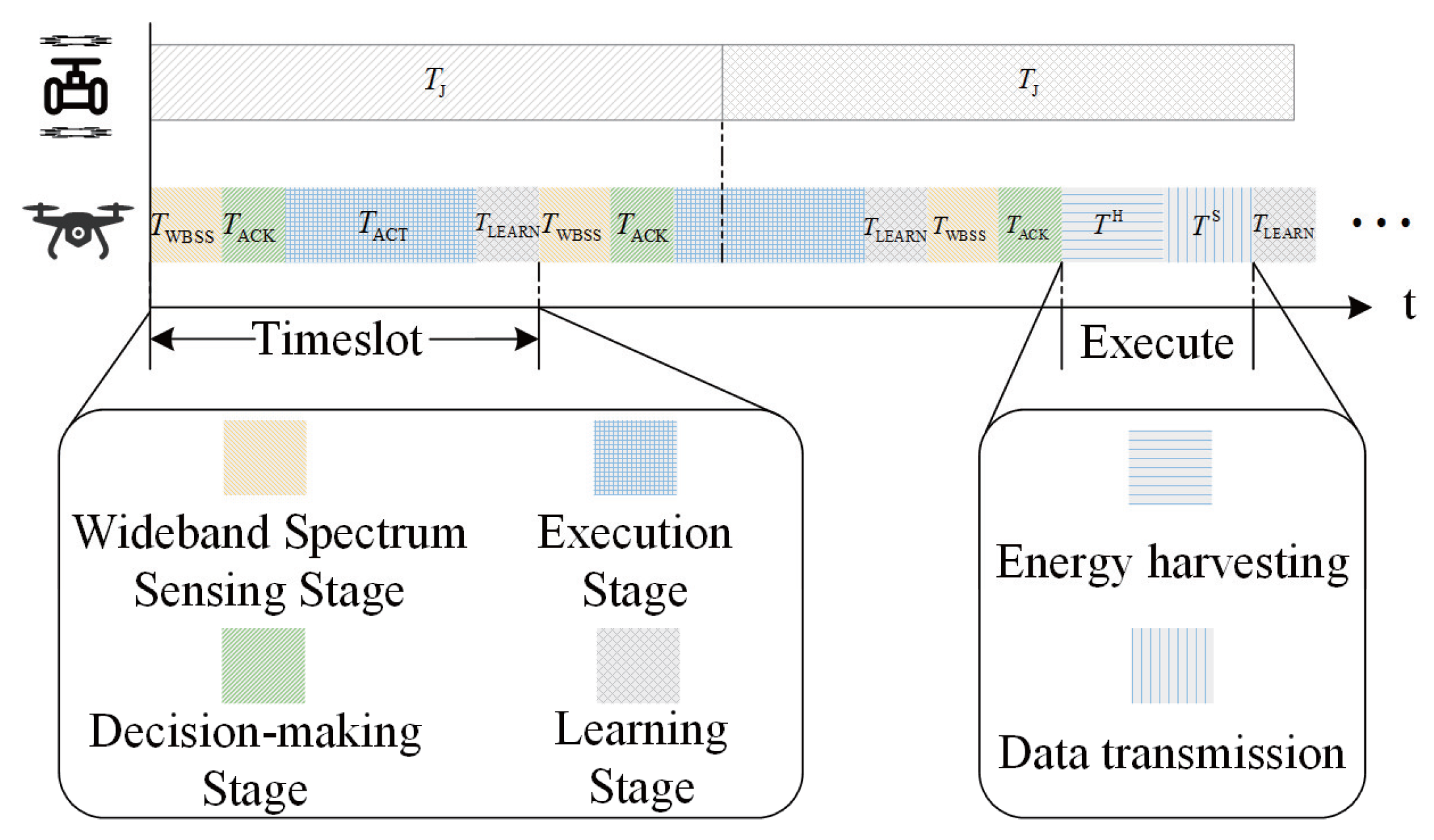
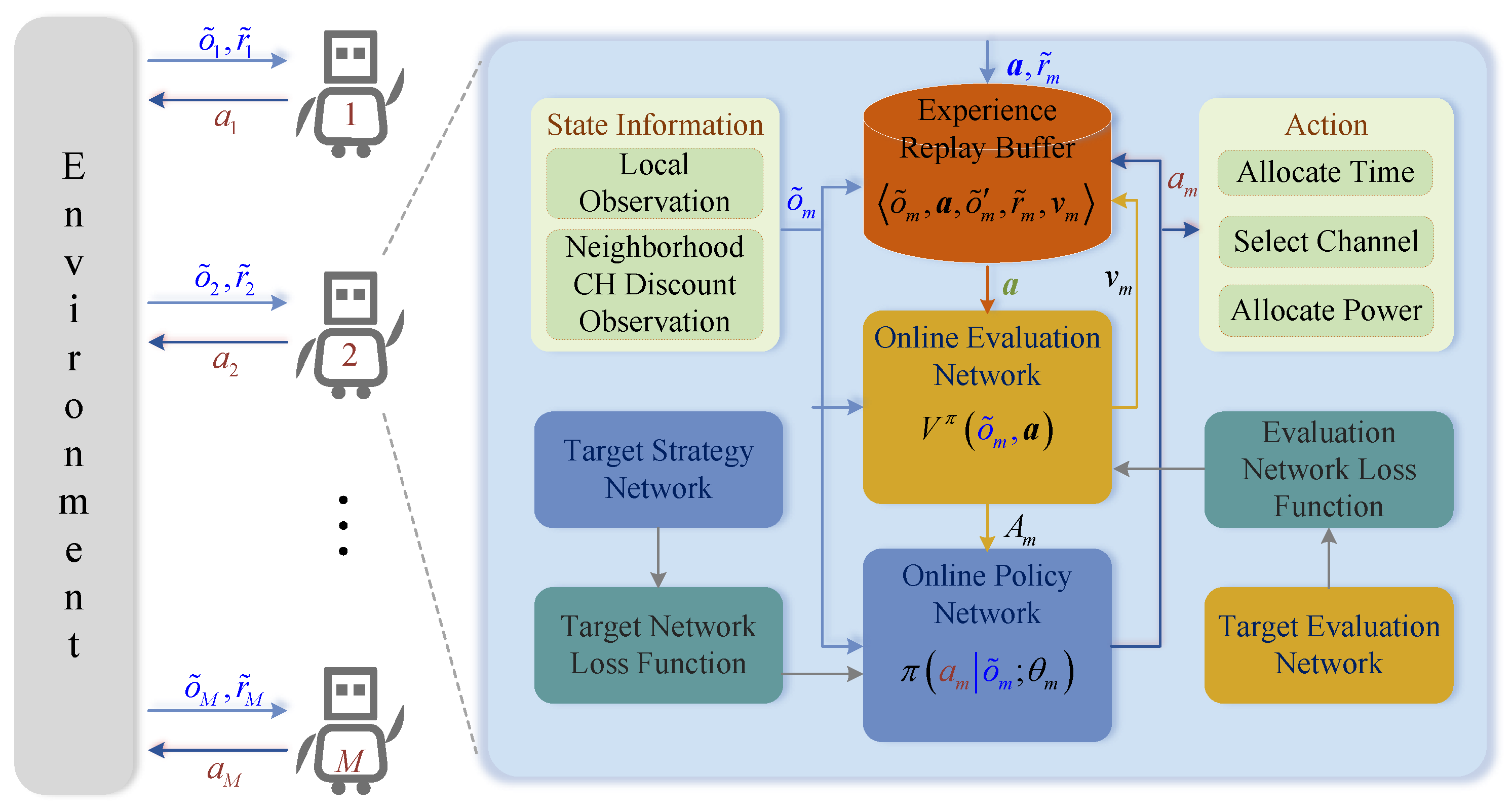
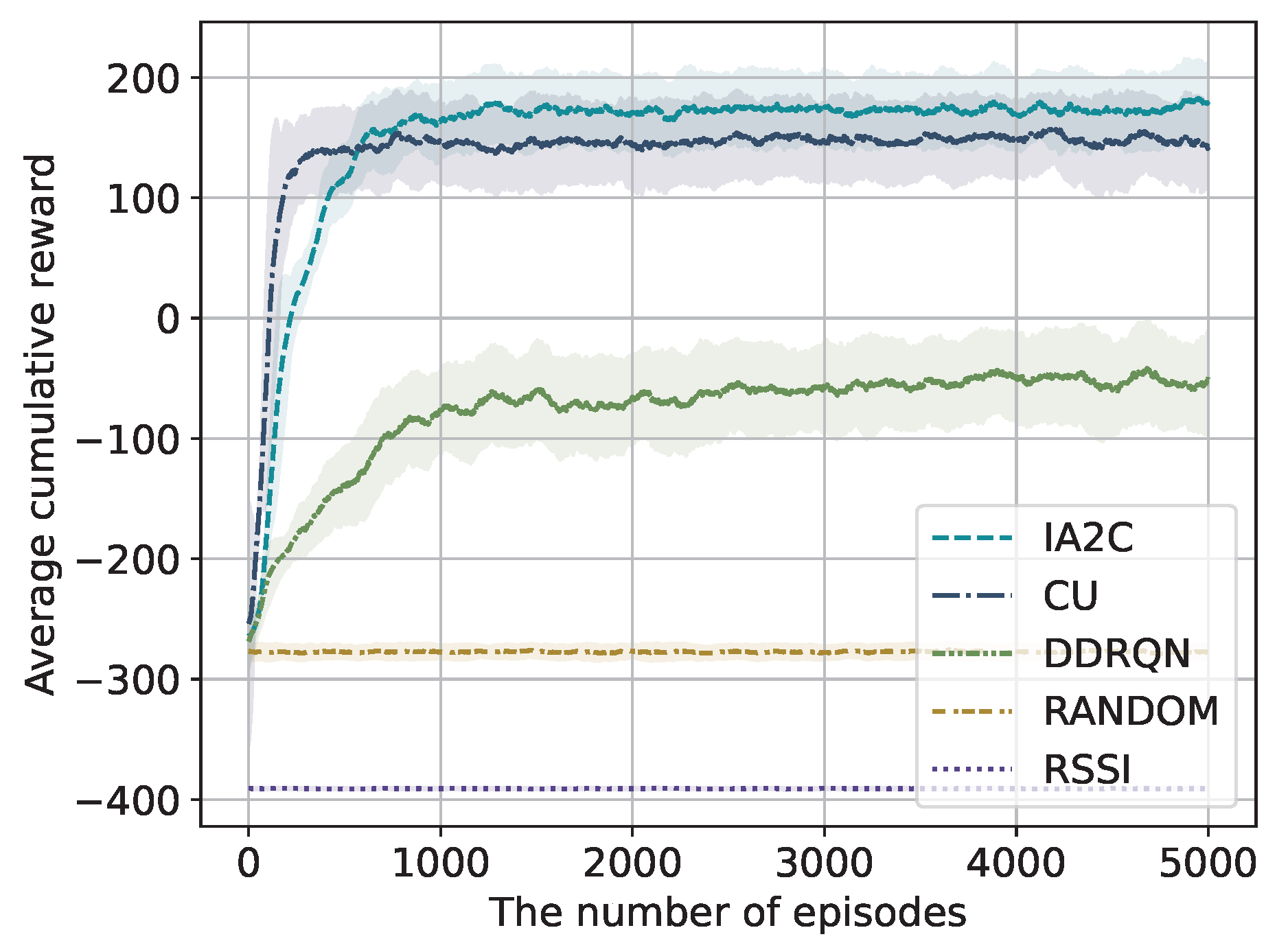
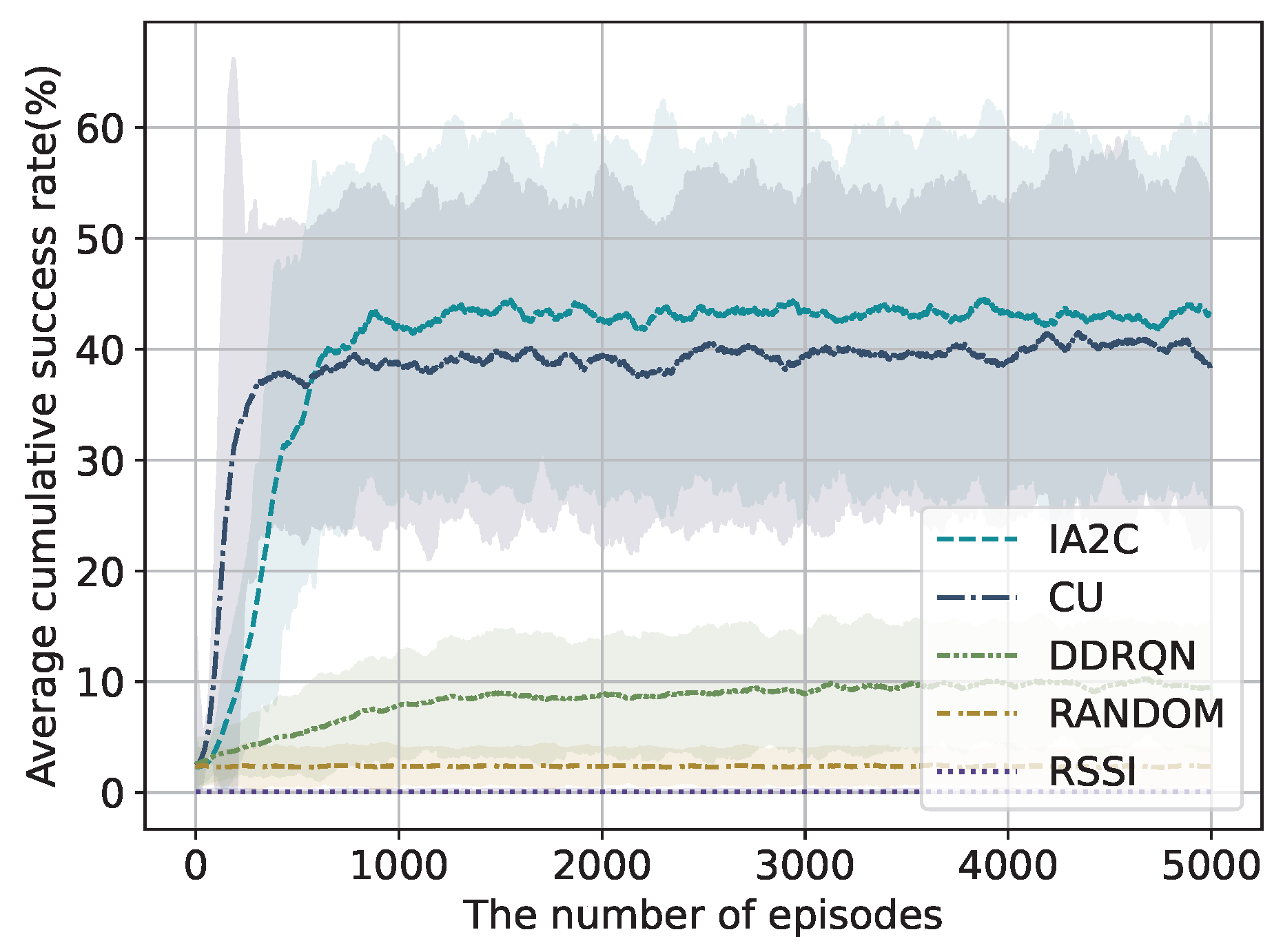
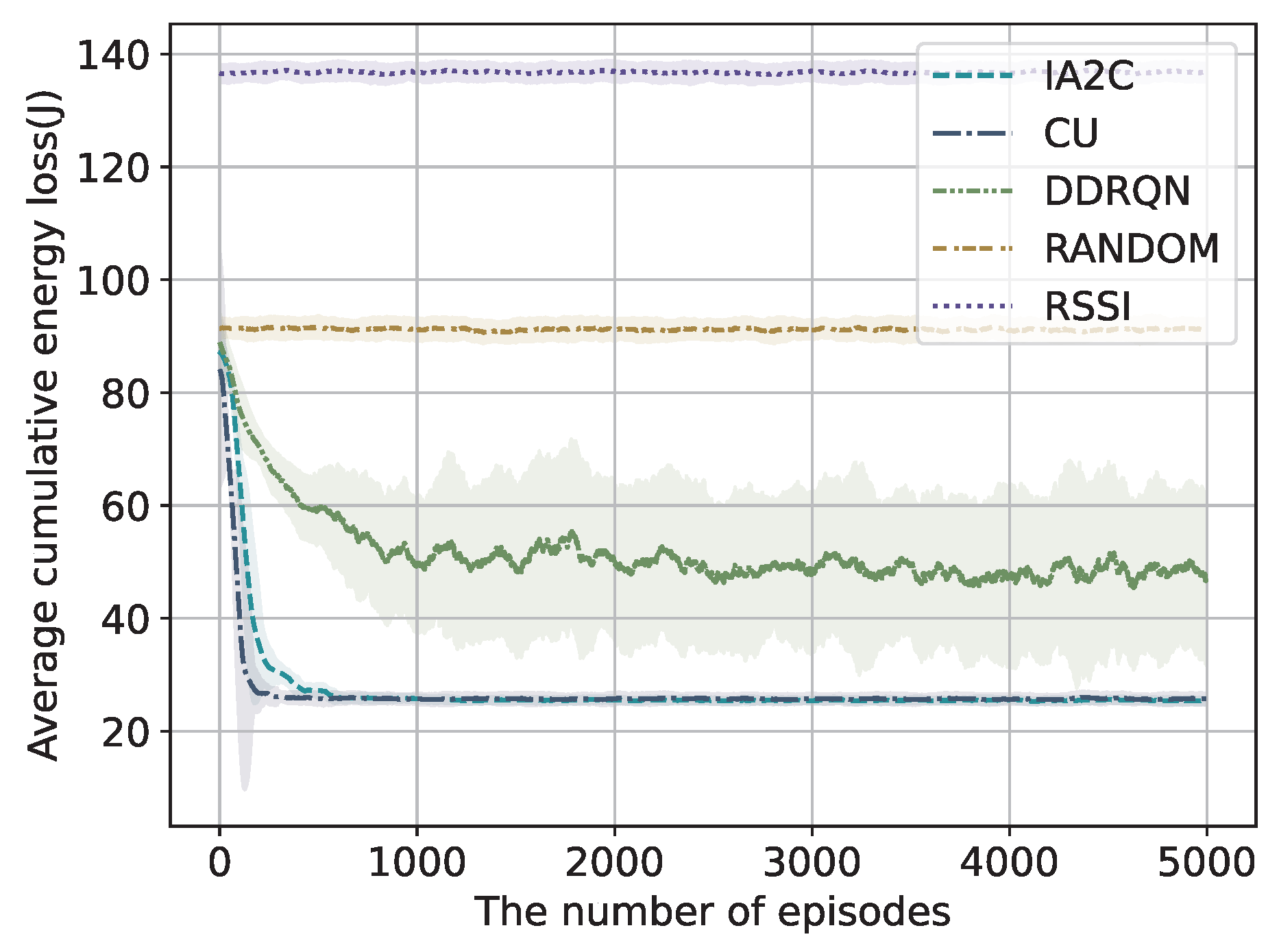
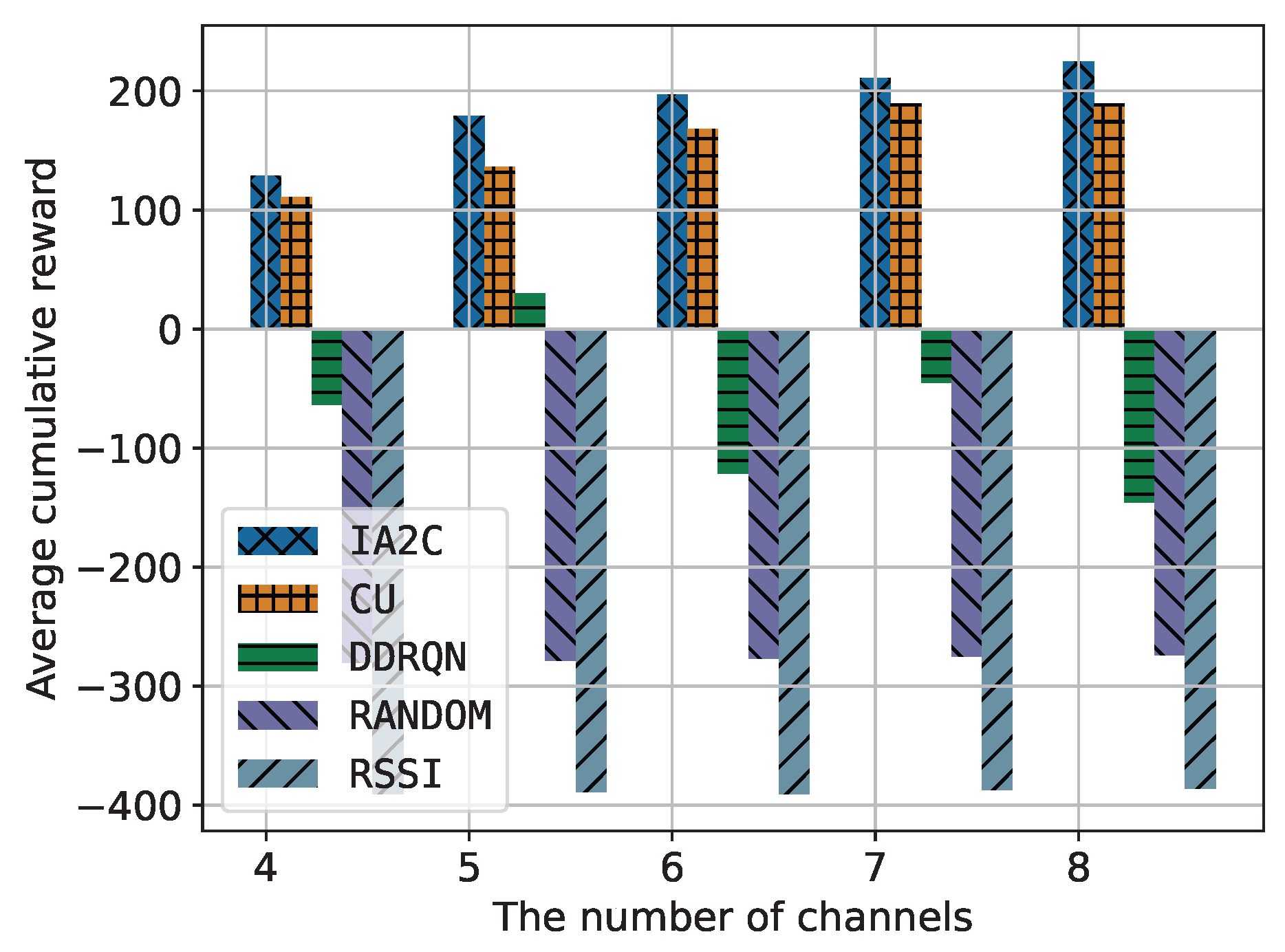
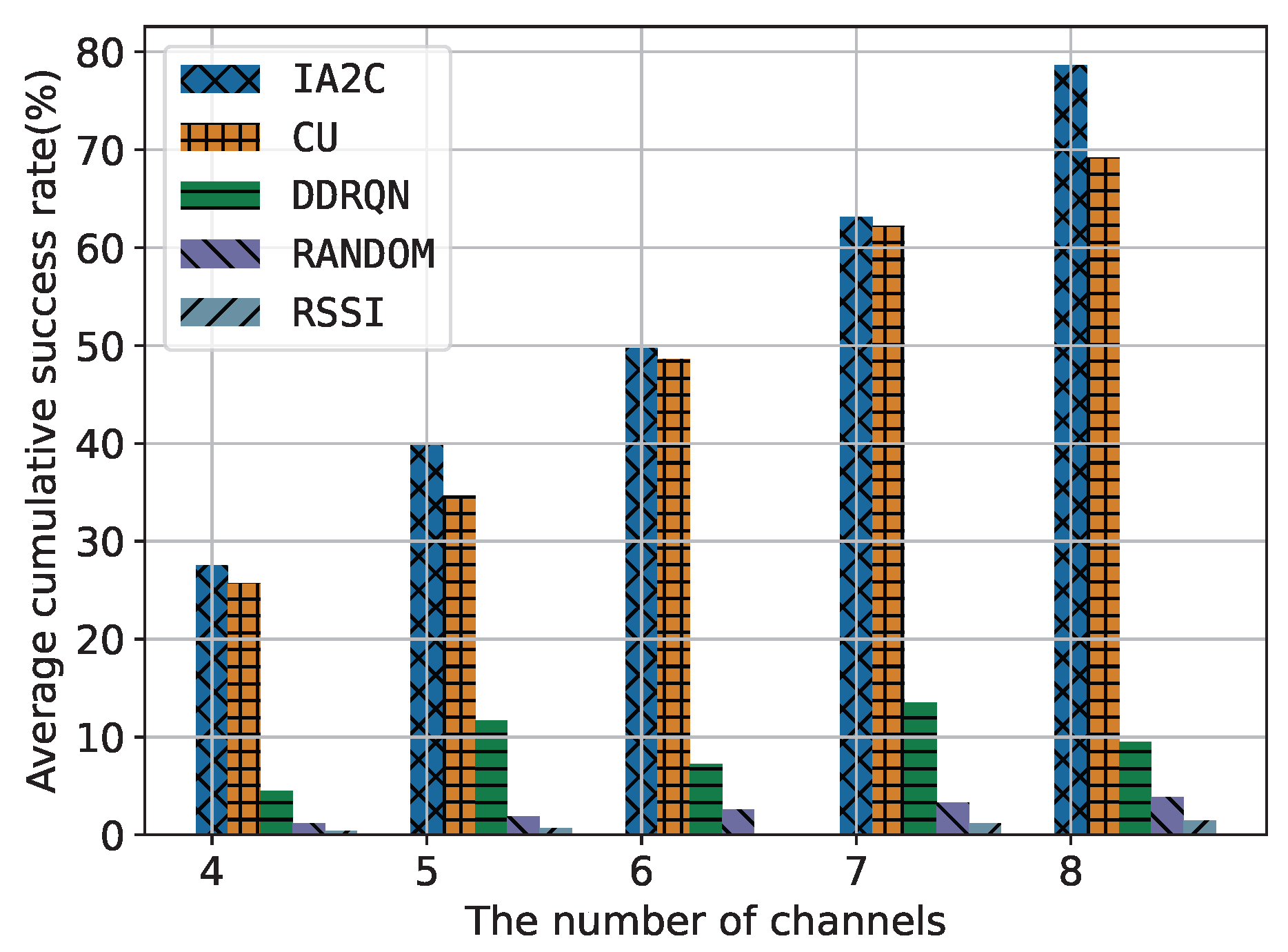
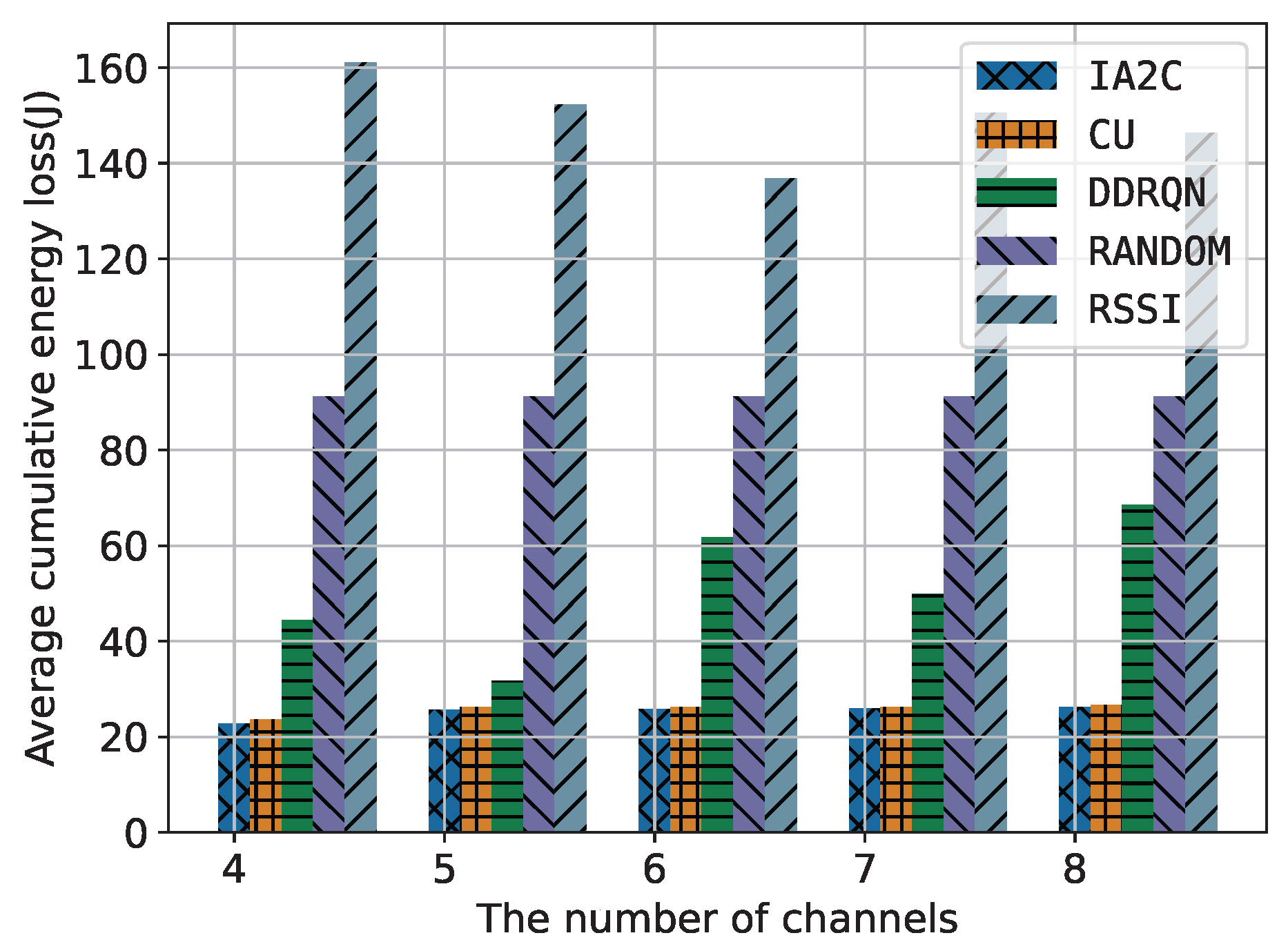
Considering that the unmanned aerial vehicles (UAVs) are susceptible to both co-channel interference and malicious jamming with limited onboard battery energy, this paper proposes an energy-harvesting-assisted anti-jamming communication framework for UAV swarm networks. Specifically, we first model the problem as a decentralized partially observable Markov decision process (Dec-POMDP), aiming to achieve a long-term trade-off between data transmission success rate and energy consumption. Then we propose a multi-agent independent advantage actor–critic (IA2C)-based energy-harvesting-assisted anti-jamming communication solution, which enables each cluster head (CH) to learn its transmit channel, power, and energy harvesting time policy independently. By constructing a time-space-based extended Dec-POMDP, the spatiotemporal correlations among neighboring nodes are learned by allowing adjacent agents to share discounted local observations. Extensive simulations show that, compared with the benchmark schemes, the proposed scheme improves the average cumulative reward and average cumulative success rate by 17.26% and 10.37%, respectively, while achieving a higher transmission success rate with lower energy consumption under different numbers of available channels.
Keywords: UAV; anti-jamming communication; energy harvesting; multi-agent reinforcement learning UAV; anti-jamming communication; energy harvesting; multi-agent reinforcement learning