Article

Design of an Autonomous Airborne Recovery System: A Fixed-Wing UAV–Quadrotor Platform Using Improved NMPC and Vision-Based Control


1
School of Engineering Mathematics and Technology, University of Bristol, Bristol BS8 2PN, UK
2
School of Civil, Aerospace and Design Engineering, University of Bristol, Bristol BS8 2PN, UK
*
Author to whom correspondence should be addressed.
Drones 2026, 10(3), 212; https://doi.org/10.3390/drones10030212
Submission received: 20 January 2026 / Revised: 25 February 2026 / Accepted: 10 March 2026 / Published: 18 March 2026
(This article belongs to the Section Drone Design and Development)

Highlights

What are the main fundings?
  • A GPS–vision integrated airborne recovery framework is proposed, combining velocity-penalized NMPC rendezvous control with ArUco marker array-based relative pose alignment.
  • An actively actuated V-shaped docking plate is designed to compensate pitch and residual misalignment, improving docking robustness.
What are the implications of the main findings?
  • The GPS + vision relative-recognition architecture supports reliable staged guidance for small UAV recovery with limited sensing capability, using GPS for coarse rendezvous and vision for precise terminal docking.
  • The active V-shaped mechanical docking structure increases tolerance to alignment errors and enhances the reliability of child–mother UAV recovery.

Abstract

Aerial docking is a crucial capability for extending the autonomy and functionality of uncrewed aerial vehicles (UAVs), yet practical and robust docking mechanisms remain underdeveloped. Mid-air recovery also enables flexible multi-UAV cooperation across diverse mission scenarios. To address the core challenge of achieving reliable and precise airborne rendezvous, this paper proposes a control-driven approach supported by a complementary mechanical design. A Nonlinear Model Predictive Control (NMPC) framework is developed for the follower UAV, incorporating a velocity-penalty strategy to ensure the smooth and accurate tracking of the leader UAV based on GNSS guidance during the rendezvous phase. In the terminal docking stage, alignment accuracy is further enhanced through vision-based pose estimation using an ArUco marker array mounted on the leader UAV. Building on these algorithmic components, an improved active V-shaped docking mechanism is introduced to compensate for the follower UAV’s pitch angle during engagement, providing robustness against residual alignment errors. The feasibility and performance of the proposed system are validated through static ground docking experiments of the mechanical module and AirSim dynamic simulations evaluating the autonomous docking controller.

1. Introduction

Uncrewed aerial vehicles (UAVs) are increasingly vital in civil domains such as environmental monitoring [1], precision agriculture [2], disaster management [3], and infrastructure inspection [4]. As missions grow in complexity, demand rises for adaptable aerial systems. Hybrid configurations combining fixed-wing UAVs with quadcopters exploit complementary strengths: endurance and range from fixed-wings and maneuverability and precision hovering from quadcopters. Although quadcopter deployment from fixed-wing platforms has been demonstrated, mainly in military contexts [5], these systems are typically disposable rather than recoverable. Research on enabling quadcopter return and docking with fixed-wing UAVs remains limited. Recovery technology could benefit civil applications including post-disaster response, environmental monitoring, and payload transport. Yet, most studies focus narrowly on components such as vision or docking mechanisms, lacking integrated evaluations within a unified framework.

1.1. Contribution

This study presents a reusable aerial docking framework where a fixed-wing UAV acts as the mothership and a quadcopter autonomously returns for mid-air recovery. The overall recovery mechanism is illustrated in Figure 1. The contributions are threefold: a redesigned V-shaped docking plate that improves geometric guidance and tracking robustness (Section 2.2); a nonlinear model predictive controller with velocity-penalizing terms for safe and stable rendezvous during interception (Section 2.4.2); and a vision-based proportional–derivative controller using ArUco marker array recognition for precise final alignment (Section 2.4.3). The framework is validated in AirSim, demonstrating the feasibility of cooperative guidance and airborne recovery under realistic conditions.

1.2. Related Work

Early work on airborne aircraft recovery can be traced to the McDonnell XF-85 Goblin program, in which a compact fighter was launched and retrieved mid-air using a trapeze system deployed from a modified EB-29 [6]. Although the Goblin never entered service, it demonstrated the technical feasibility and operational challenges of mid-air docking, including stability during capture and the sensitivity of the retrieval envelope. Building on this foundation, the later FICON program combined a modified GRB-36 bomber with a reconnaissance-optimized RF-84F carried beneath the aircraft. FICON conducted repeated launch-and-recovery trials and represented one of the most mature early attempts to operationalize airborne retrieval of manned aircraft [7].
Another well-known but ultimately unrealized concept from this lineage was Lockheed’s CL-1201 nuclear-powered airborne carrier study in the 1960s, which envisioned hosting and recovering multiple F-4 Phantom aircraft as part of a reusable airborne system [8]. With advances in UAV technology, ideas that once appeared speculative, such as the mid-air recovery of unmanned systems, have regained attention. A prominent modern example is DARPA’s Gremlins program (mid-2010s), which developed low-cost, reusable UAVs designed for airborne launch and mid-air retrieval using platforms such as the C-130 Hercules, enabling up to 20 reuse cycles [9].
A parallel, technologically mature domain is aerial refueling, which shares challenges with UAV mid-air recovery, including precise positioning, dynamic docking, and coordinated flight. Two main systems dominate: the flying boom, employing a rigid steerable boom, and the probe-and-drogue, using a flexible hose and drogue. Widely deployed in military aviation, these systems offer valuable insights for autonomous UAV docking.

1.2.1. Docking Mechanism

Rigid mechanisms involve mechanically locked connections requiring precise positioning. A canonical example is the flying boom system. Among non-refueling recovery approaches, the open-deck configuration—where a child UAV lands on a designated surface of the mothership—remains widely studied due to its simplicity. Fu et al. [10] developed a low-cost open-deck release and recall system integrating GNSS, UWB, and vision fusion, achieving sub-6 cm landing accuracy and 8 s recovery cycles in simulation and indoor tests. Du et al. [11] proposed a similar VTOL-based platform using AprilTags, but validation was limited to stationary and simulated conditions. However, such approaches often overlook post-landing locking, leaving UAVs vulnerable to instability under airflow disturbances or during multi-UAV recovery. Wu et al. [12] proposed a cable-driven parallel robot inspired by spider web casting, in which a vision-guided end-effector actively intercepts UAVs. Their spatial cable model incorporating elasticity and aerodynamics enabled optimized performance with significant error and energy reductions. While primarily designed for larger UAVs, adaptation to smaller platforms remains possible, albeit with increased control complexity. Caruso et al. [13] introduced a V-shaped docking plate that enlarges the contact area and passively compensates for minor positional and angular errors. This lightweight design enhances post-docking stability while reducing control demands.
Flexible mechanisms rely on compliant structures to accommodate motion uncertainty. The probe-and-drogue system exemplifies passive receptacle engagement. Tether-based approaches extend this idea: Klausen et al. [14] demonstrated autonomous interception of a fixed-wing UAV using a suspended net, succeeding in four of five flight trials, while Bornebusch et al. [15] achieved reliable engagement across 17 tests using a line-based tether system. Although flexible systems improve capture tolerance, they often limit redeployment capability and remain sensitive to airflow disturbances due to structural compliance.
In anticipation of more demanding operational scenarios, future UAV aerial recovery systems should exhibit the following characteristics:
  • Environmental Robustness: Reliable operation under wind, turbulence, vibration, and varying illumination.
  • Low System Complexity: Simplified mechanical and control architectures to enhance reliability and maintainability.
  • Tolerance to Positioning Error: Accommodation of moderate navigation inaccuracies during docking.
  • Deployment Capability: Secure docking combined with safe release functionality.
  • Physical Interface Compatibility: Support for post-docking functions such as battery charging or payload transfer.

1.2.2. State Estimation

In the context of UAV recovery, target positioning refers to estimating the relative state—position, velocity, and possibly orientation—of the docking target with respect to the child UAV. Existing approaches can be broadly divided into two categories.
In active sensing, the child UAV directly measures the target’s relative state using onboard sensors such as monocular or stereo cameras [16,17], LiDAR [18], infrared sensors [19], radio positioning [20], or an integrated vision–INS fusion systems [21]. Vision-based methods are sensitive to environmental conditions (e.g., illumination, fog, rain), with monocular systems suffering from scale ambiguity and stereo systems constrained by baseline and calibration accuracy. LiDAR performance degrades for small or distant targets and in adverse weather, while infrared sensing depends on clear thermal contrast and typically provides limited spatial resolution. Radio-based positioning requires cooperative transponders and may be affected by multipath effects.
Alternatively, some approaches utilize navigation data transmitted from the target platform, such as GNSS + INS [22], DGPS/RTK-enhanced GNSS [23,24], or hybrid GNSS–vision solutions [11,25]. In these schemes, the child UAV fuses its own measurements with shared state information from the target. Because standalone GNSS is susceptible to bias and multipath effects, it is commonly augmented with differential corrections or integrated with inertial and vision-based estimates to enhance robustness and continuity.
Reliable aerial recovery requires accurate and robust relative state estimation, particularly during close-range docking under dynamic conditions. Accordingly, the estimation framework should satisfy the following requirements:
  • High-Precision Relative Positioning: Centimeter-level accuracy during the final docking phase to satisfy tight mechanical tolerances.
  • Low-Latency, High-Rate Estimation: Sufficient update frequency and minimal delay to respond to rapid relative motion and disturbances.
  • Multi-Modal Fusion Capability: Integration of complementary sensing modalities to maintain robustness across varying ranges and environmental conditions.
  • Drift Mitigation and Long-Range Consistency: Mechanisms to limit GNSS bias, INS drift, and vision scale ambiguity over extended approach distances.

1.2.3. Approach Trajector Controller

Once the relative state is obtained, approach trajectory planning aims to generate a collision-free and dynamically feasible trajectory guiding the child UAV toward the target. Proposed strategies range from simple geometric guidance to advanced optimization-based control. Vector-based guidance, such as a direct line-of-sight pursuit or proportional navigation [26], is computationally lightweight and straightforward to implement, enabling fast reaction in simple environments, but it generally ignores dynamic constraints and may generate aggressive maneuvers or oscillations in the presence of disturbances. Artificial Potential Field (APF) methods model attractive forces toward the target and repulsive forces from obstacles to achieve smooth convergence [27]. APF is conceptually intuitive and allows real-time local replanning, yet it is prone to local minima and overshoot in target tracking, particularly when the attractive gain is high or when the target is moving. Model Predictive Control (MPC) formulates the approach as an optimization problem over a prediction horizon [28], balancing tracking accuracy, obstacle avoidance, and dynamic feasibility under constraints; its main drawbacks are high computational cost and sensitivity to model mismatch. Nonlinear MPC (NMPC) further improves handling of nonlinear dynamics and complex constraints but increases computational burden [11]. Sampling-based planners such as RRT* (Rapidly exploring Random Trees) [29] and PRM (Probabilistic Roadmaps) [30] can find paths in cluttered, high-dimensional spaces and provide probabilistic guarantees, but their raw outputs are often non-smooth and require post-processing for dynamic feasibility. Reinforcement learning-based controllers can adapt to highly dynamic and uncertain docking scenarios without explicit modeling, yet they require extensive training data, careful reward shaping, and may generalize poorly to unseen environments without additional online adaptation [31].
During the airborne recovery approach, the trajectory controller should generate stable and well-behaved motion that the child UAV can follow reliably. In practice, the controller is expected to meet the following requirements:
  • Trajectory Smoothness: The generated approach path should be sufficiently smooth in position, velocity, and acceleration to avoid abrupt commands that could destabilize the child UAV or exceed actuator limits.
  • Limited Overshoot: The controller should avoid excessive overshoot or oscillatory behavior when converging toward the docking interface, particularly in the presence of disturbances or motion uncertainty.
  • Dynamic Feasibility: Planned trajectories must respect the UAV’s dynamic capabilities, including thrust limits, attitude constraints, and safe deceleration rates, ensuring that the child UAV can reliably follow the commanded motion.
  • Disturbance Tolerance: The controller should maintain stable convergence under moderate wind disturbances, target motion variations, and sensing noise, without producing aggressive or erratic maneuvering.

2. Methodology

2.1. Autonomous Airborne Recovery Procedure

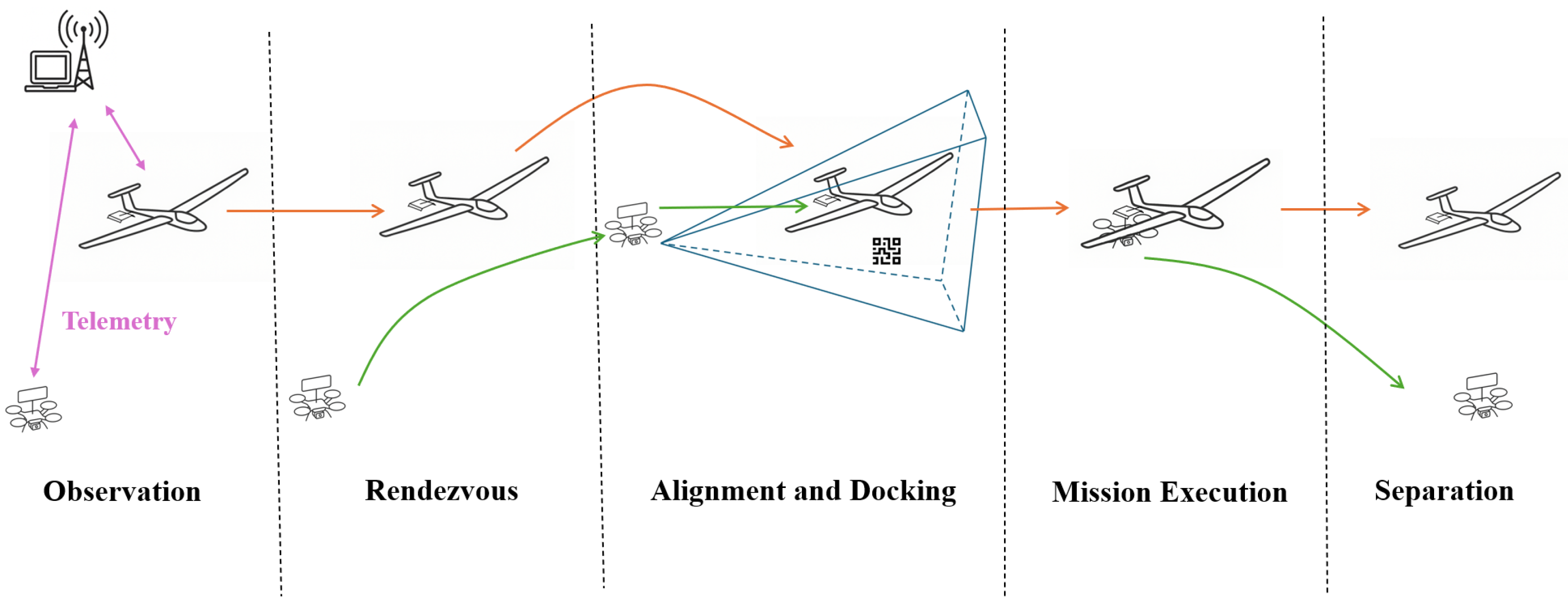
In this study, the child quadcopter UAV operates in an actively guided flight mode, while the mother fixed-wing UAV is loitering. A docking plate equipped with a visual localization tag is mounted beneath the mother UAV, providing the recovery interface.The child UAV assumes the primary role in the recovery and landing sequence, as it must autonomously manage the rendezvous trajectory, conduct fine alignment with the mothership, and perform active attitude compensation to ensure a stable capture. At present, there is no unified procedural standard defining the complete airborne recovery process, particularly in emerging domains such as autonomous UAV retrieval. To support research and system development, an analogous and well-established operation—namely, aerial refueling—offers a relevant reference. As illustrated in Figure 2, the proposed airborne recovery process can be organized into the following phases [32,33]:
  • Observation: The mothership UAV follows a predefined loiter pattern along its assigned trajectory, periodically transmitting real-time telemetry (position and velocity) to the ground station. The ground station relays this to the child UAV to establish situational awareness.
  • Rendezvous: Using the received telemetry, the child UAV estimates its relative position and velocity with respect to the loitering mothership based on the mothership’s transmitted GNSS data, and it performs a coarse approach to enter the rendezvous vicinity.
  • Alignment and Docking: Once within visual range, the child UAV’s camera detects the ArUco marker array mounted on the mothership. Visual measurements drive closed-loop pose refinement to align the docking interfaces within specified tolerances. The child UAV then performs mechanical latching/locking.
  • Mission Execution: With a secure attachment, mission tasks such as payload transfer or battery charging are carried out while maintaining coupled-flight stability.
  • Separation: After completing the mission tasks, a commanded release achieves safe disengagement. The child UAV returns to base or the mothership resumes its mission, as required.

2.2. Docking System Design

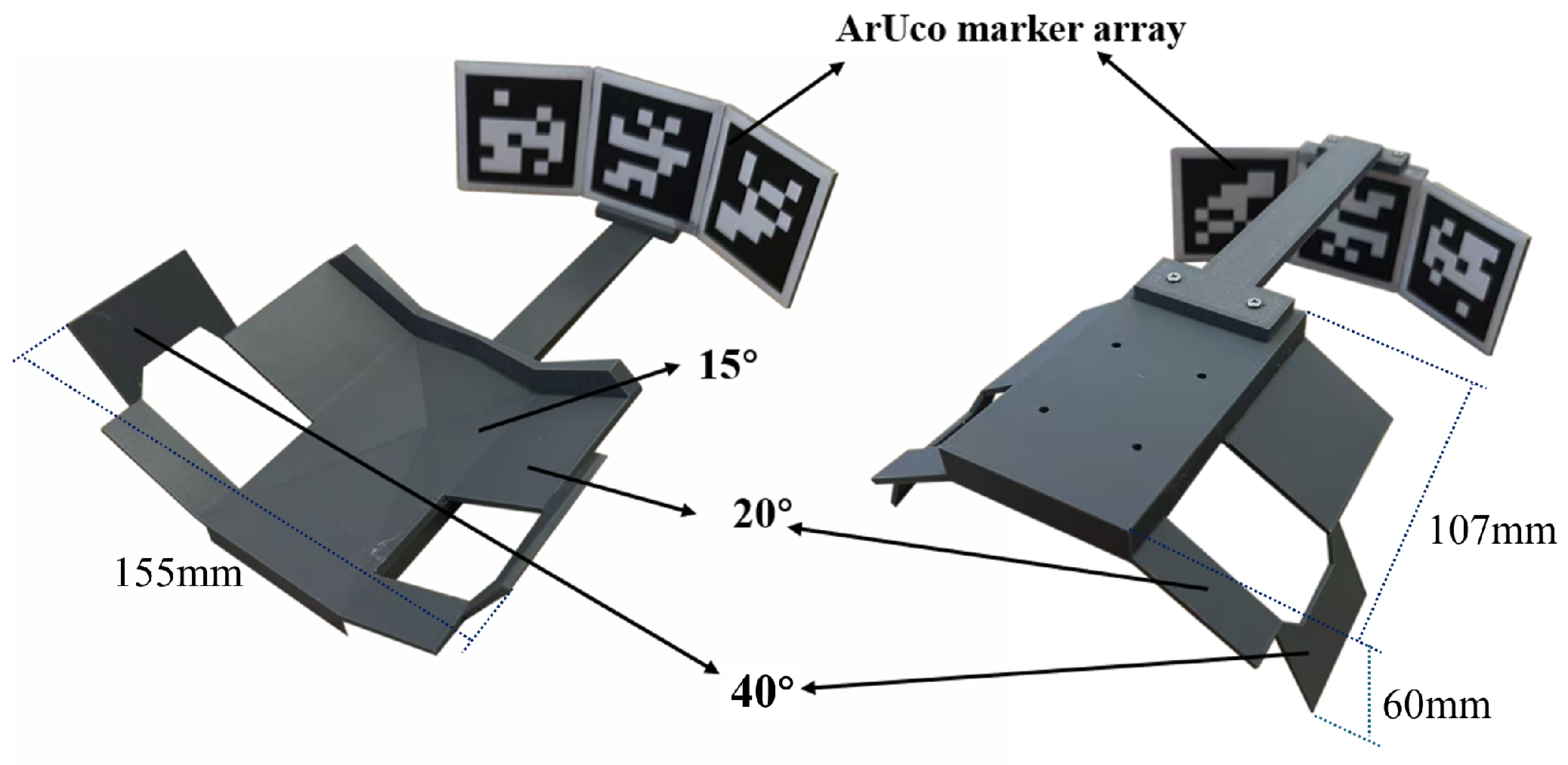
Building upon the docking plate proposed by Caruso et al. [13], the mothership docking structure was redesigned to improve passive guidance and load support. The redesigned docking module measures 107 mm × 155 mm × 60 mm (L × W × H). The uniform 15 ° inclined edge was replaced with a three-segment configuration, incorporating additional 20 ° and 40 ° sections (Figure 3). The 20 ° section facilitates smoother alignment of the child UAV within the approach envelope, while the 40 ° section both enhances guidance and supports the load transferred through the locking mechanism. The modular design also preserves the potential integration of charging or data-transfer connectors at the docking interface.
To provide robust pose estimation during docking, an ArUco marker array was deployed in front of the mothership docking plate (Figure 3). The array consists of three markers of 5 cm side length with 0.5 cm white margins. The two side markers are inclined at 30 ° relative to the central marker, improving recognition accuracy under wide viewing angles. The array is positioned 15 cm ahead of the docking plate, establishing a stable visual reference for the child UAV.
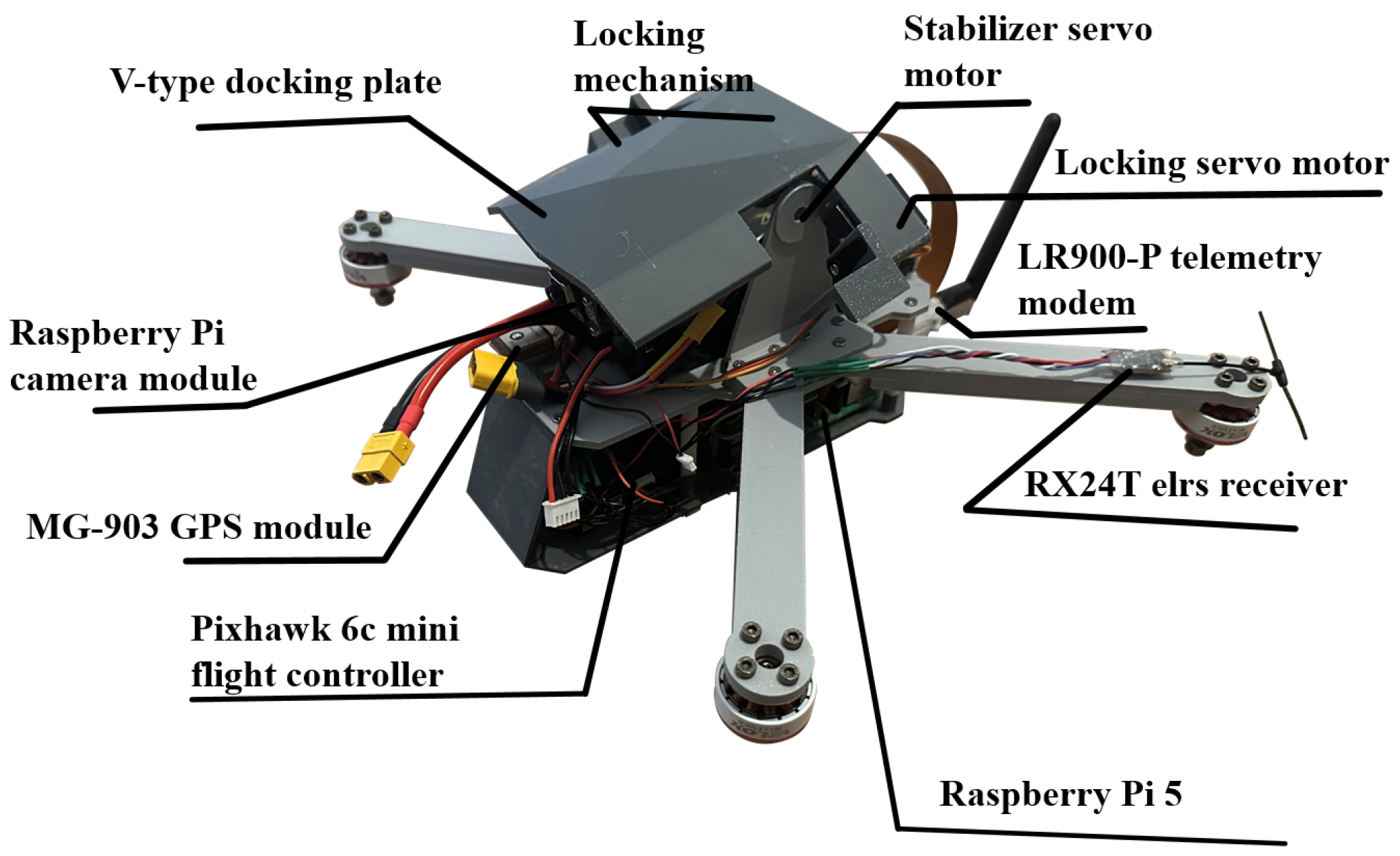
On the child UAV side, the docking plate is a square frustum composed of two 15 ° panels, one 20 ° panel, and one ∼ 10 ° panel (Figure 4). A closed-position-loop servo motor (torque capacity 6 kg·cm) stabilizes the plate by adjusting its pitch to compensate for attitude variations in forward flight. The locking mechanism comprises two L-shaped trapezoidal elements actuated by SG90 servos.
Guidance and physical locking are realized through a staged passive–active mechanism. As the child UAV enters the docking interface, the outermost 40 ° panels provide coarse lateral guidance and limit misalignment, enlarging the effective capture envelope. With further insertion, the 20 ° inclined panel refines left–right alignment by inducing lateral centering forces, while the inner 15 ° panel restricts minor lateral and longitudinal position deviations. Upon visual confirmation that the docking plate lies within predefined positional and angular thresholds, the locking servo motors symmetrically drives the mechanism to clamp the V-shaped plate against the mating surfaces of the mothership. Meanwhile, the L-shaped trapezoidal elements supply additional front–rear and lateral constraints, ensuring repeatable positioning accuracy and structural stability after engagement.
Static docking experiments demonstrated that the mechanism tolerates ± 1 cm misalignment in the forward/backward direction and ± 3 cm vertically. In addition, successful locking can be achieved under a yaw misalignment of approximately 8– 10 ° .
In summary, the proposed docking system achieves environmental robustness, geometric tolerance, and mechanical simplicity while ensuring compatibility with potential charging and data-transfer modules. The integrated visual guidance and locking mechanisms collectively support reliable docking operations from fixed wings to quadcopter UAVs.

2.3. Quadrotor Longitudinal Dynamics in Forward Flight

Consider a quadrotor UAV in steady, level forward flight at constant altitude and velocity. Let the thrust T act along the z-axis of the body frame, with a pitch angle θ (positive nose-down). The vertical and horizontal force balances are
T cos θ = m g , T sin θ = D ,
where m is the UAV mass, g gravity, and D the aerodynamic drag. Dividing yields the pitch–drag relation:
θ = arctan D m g .
The drag is decomposed into contributions from the frontal and upper surfaces, with reference areas A forward and A upper and drag coefficients C D f and C D u . For air density ρ and forward speed V,
D ( V , θ ) = 1 2 ρ V 2 C D f A forward cos θ + C D u A upper sin θ ,
where the trigonometric terms project each surface area into the flow-normal plane. Pressure and skin-friction effects are combined into the empirical coefficients C D f and C D u , with higher-order details neglected.
Substituting (3) into (2) gives the implicit pitch–velocity relation:
θ = arctan 1 2 ρ V 2 ( C D f A forward cos θ + C D u A upper sin θ ) m g .
Equation (4) defines a nonlinear equation in θ for a given velocity V and is solved using a Newton–Raphson method. A continuation strategy is employed, where the converged solution at the previous velocity serves as the initial guess for the next velocity step. This approach ensures rapid convergence; for all velocities considered, the iteration converges to a tolerance of 10 8 rad within three Newton steps.
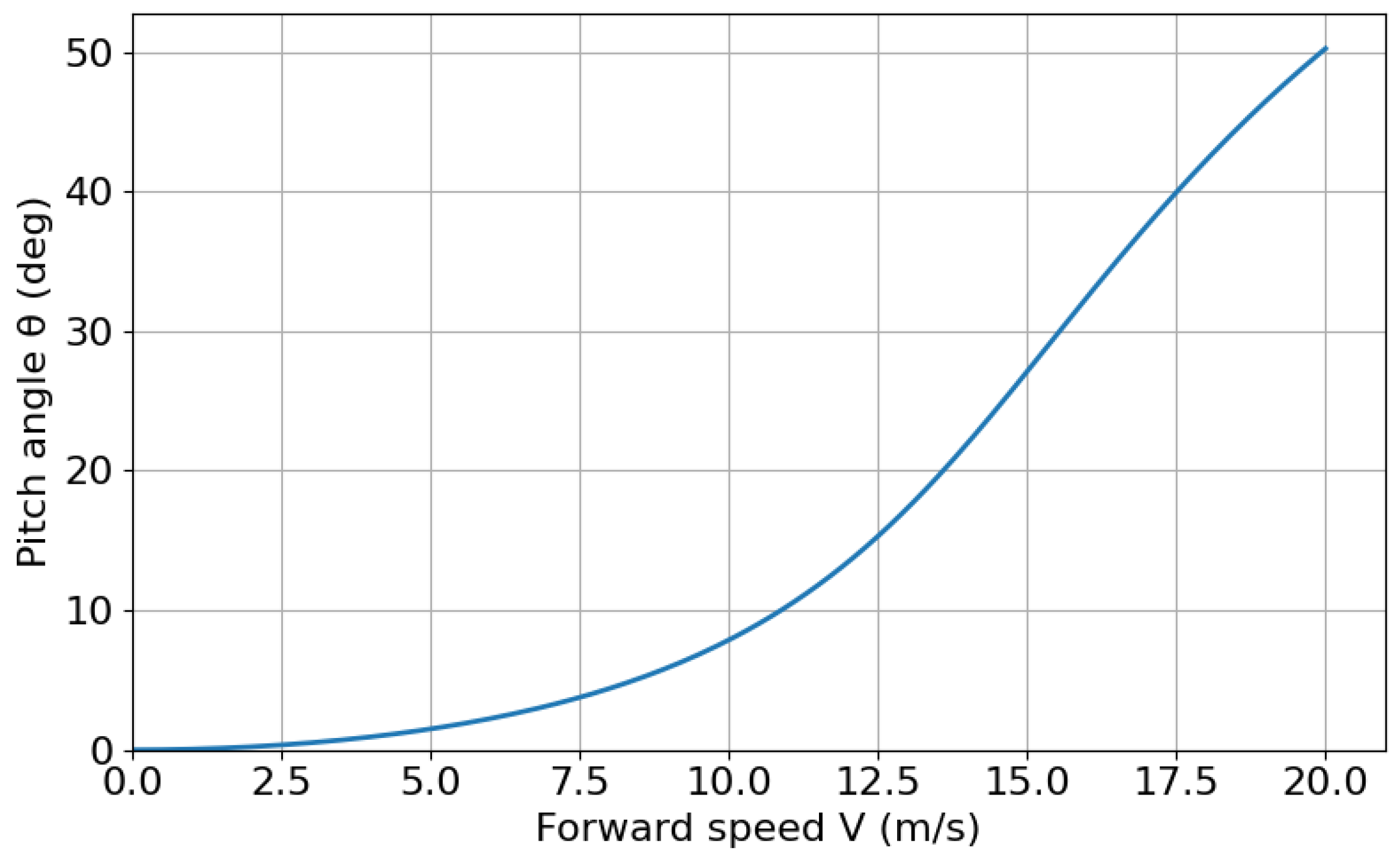
Figure 5 shows the pitch–velocity relation for a quadrotor under the drag–weight equilibrium model. The geometric and physical parameters are derived from the child UAV docking platform illustrated in Figure 4. Specifically, the air density is ρ = 1.225 kg / m 3 (ISA sea level), gravity is g = 9.81 m / s 2 , the vehicle mass is m = 1.5 kg , the effective frontal area is A forward = 0.0116 m 2 , and the upper-surface area is A upper = 0.0373 m 2 . The drag coefficients are assumed as C D f = C D u = 2 . The resulting drag characteristics are consistent with the experimental results reported by Hattenberger et al. [34].
At V = 17 m / s the quadrotor requires a pitch angle of ∼ 40 ° . By contrast, small/medium gliders such as the Pteryx UAV typically operate between stall ≈ 9.5 m / s and cruise 15 m / s [35]. For recovery operations, an operational speed near cruise (∼ 15 m / s ) is therefore adopted, ensuring a margin above stall and stable dynamics. At this velocity the glider’s pitch is negligible, so only the quadrotor attitude needs consideration. However, the large pitch excursions at higher speeds would misalign a rigid docking interface, highlighting the need for the compliant stabilizer described in Section 2.2.

2.4. Rendezvous Control Strategy

2.4.1. System Dynamics with Wind Disturbance

The child UAV’s state vector is defined as
x = p c v c = x c y c z c v x , c v y , c v z , c R 6 , u = a x a y a z R 3 .
The discrete-time system dynamics are modeled as
x k + 1 = f ( x k , u k ) = p k + v k Δ t + 1 2 u k Δ t 2 v k + u k Δ t .
where x denotes the child UAV state, consisting of position p c = [ x c , y c , z c ] , velocity v c = [ v x , c , v y , c , v z , c ] , and u = [ a x , a y , a z ] represents the commanded translational acceleration.
Given the total air velocity composed of the mean wind, the wake induced flow, and stochastic turbulence,
v k wind = v k + v k wake + w k ,
the velocity of the vehicle relative to the surrounding air is defined as
v k rel = v k v k wind .
The drag acceleration is written compactly as
a drag ( v k rel ) = Γ ϕ ( v k rel ) v k rel , Γ = diag ( γ x , γ y , γ z ) ,
where Γ is a diagonal matrix of drag coefficients. For the classical quadratic drag model, the shaping operator is defined element-wise as
ϕ ( v ) = diag | v x | , | v y | , | v z | ,
so that the drag acceleration reduces to the component-wise form
a drag ( v k rel ) = γ x | v x , k rel | v x , k rel γ y | v y , k rel | v y , k rel γ z | v z , k rel | v z , k rel .
To ensure compatibility with gradient-based NMPC optimization, the drag model is expressed in a smooth, differentiable form. Replacing | v i | with v i 2 + ε 2 gives the smooth formulation
a drag ( v k rel ) = γ x ( v x , k rel ) 2 + ε 2 v x , k rel γ y ( v y , k rel ) 2 + ε 2 v y , k rel γ z ( v z , k rel ) 2 + ε 2 v z , k rel .
where the square root and the product are both applied element-wise.
The drag gains follow the standard quadratic-drag scaling
γ i = 1 2 ρ C d , i A i m , i { x , y , z } ,
enabling anisotropic drag properties along different axes.
To capture the wake interaction generated by the fixed-wing mothership, an additional wake-induced air velocity v k wake is introduced and applied only in the downstream region behind the mothership. Let p m , k and v m , k denote the mothership position and velocity, and p c , k denote the child UAV position. Define the unit downstream axis as
e x , k = v m , k v m , k ,
and the downstream distance as
x down , k = p c , k p m , k e x , k .
If x down , k 0 , the child UAV is not affected by the wake and v k wake = 0 .
For x down , k > 0 , the wake is modeled as a counter-rotating vortex pair in the cross-flow plane normal to e x , k , with vortex centers located at ( y , z ) = ( ± b 0 / 2 , 0 ) . Using the Burnham–Hallock core model, the tangential speed induced by each vortex is
v θ ( r ; x down , k ) = Γ ( x down , k ) 2 π r r 2 + r c 2 ( x down , k ) ,
where the core radius grows linearly with downstream distance,
r c ( x down , k ) = r c 0 + k r x down , k ,
and the circulation decays exponentially:
Γ ( x down , k ) = Γ 0 exp x down , k L Γ , Γ 0 = m eq g ρ v m , k b ,
with b representing the mothership wingspan and m eq an equivalent mass parameter. The wake-induced velocity v k wake is obtained by superposing the two vortices and mapping the resulting cross-plane components back to the inertial frame.
In the simulation, the wake effect is incorporated via the relative air velocity dependence of the drag term, resulting in an equivalent incremental acceleration defined as incremental acceleration
a k wake = a drag v k v k wake a drag v k ,
Atmospheric turbulence is modeled using the Dryden stochastic wind model [36]. For each spatial axis, the one-dimensional Dryden model evolves as
w ˙ ( t ) = w ( t ) L + σ 2 L · η ( t ) , η ( t ) N ( 0 , 1 )
Using Euler discretization, the wind acceleration becomes
w k + 1 = w k w k L Δ t + σ 2 Δ t L η k , η k N ( 0 , 1 )
where η k is the discrete-time counterpart of the continuous white-noise process η ( t ) .
The full wind acceleration vector applied to the child UAV is
w k = w x w y w z k R 3
In this work, only the position measurement of the child UAV is affected by sensor uncertainty, while velocity measurements are assumed to be noise-free. Let p k and v k denote the true position and velocity at time step k. The measured state is modeled as
p ^ k = p k + δ k , v ^ k = v k ,
where δ k represents the GNSS measurement error. Following common practice for low-cost UAV navigation, the GNSS error is modeled as an independent zero-mean Gaussian noise:
δ k N 0 , σ gnss 2 I 3 , σ gnss = 1 m .

2.4.2. Nonlinear Model Predictive Control with Velocity Penalty (NMPC-VP)

At each time step, a receding-horizon NMPC problem is solved with a prediction horizon N. Let X = [ x 0 , x 1 , , x N ] and U = [ u 0 , , u N 1 ] be the predicted state and control sequences, respectively.
The cost function to minimize is
J = k = 0 N 1 [ ( x k x k ref ) T Q ( x k x k ref ) + u k T R u k ] + ( x N x N ref ) T Q ( x N x N ref )
It is subject to the following constraints:
x k + 1 = f ( x k , u k ) , k = 0 , , N 1 x 0 = x init u min u k u max , k
The reference trajectory is generated based on the mothership’s previewed path, with the desired trailing distance d and constant speed v m . Let d m ( t k ) R 3 be the normalized direction of the mothership’s motion at time t k , then
x k ref = p m ( t k ) d · d m ( t k ) v m · d m ( t k )
To improve stability during aggressive following, the NMPC cost function is augmented with a velocity synchronization term. The child UAV is encouraged to match the velocity of the mothership, especially when it is in close proximity.
Let the tracking errors be
e p ( k ) = p k p k ref ,
e v ( k ) = v k v k ref .
In the conventional NMPC formulation, the optimization focuses solely on minimizing the trajectory tracking error. This may result in potential collisions at certain encounter angles. Moreover, large-angle approaches can lead to velocity overshoot in the follower’s motion. To mitigate these effects, a distance-aware velocity-penalty weight is introduced:
w v ( k ) = 1 + α · exp e p ( k ) 2 β
Here, α controls the strength of the velocity penalty when close to the mothership, and β determines the sensitivity of the weight increase.
The augmented cost function is formulated as
J = k = 0 N 1 [ e p ( k ) Q p e p ( k ) + w v ( k ) · e v ( k ) Q v e v ( k ) + u k R u k ] + e p ( N ) Q p e p ( N ) + w v ( N ) · e v ( N ) Q v e v ( N ) .
Solving this optimization problem yields the optimal control sequence U * = { u 0 * , , u N 1 * } . From the associated optimal state trajectory X * , the velocity at the first prediction step is defined as
v NMPC = v 1 * ,
which is adopted as the nominal velocity command for the child UAV during the rendezvous phase.
The control loop at each time step operates as follows:
  • Preview N + 1 future mothership positions to compute x k ref and its velocity direction;
  • Solve the NMPC problem using CasADi with the IPOPT interior-point algorithm;
  • Apply only the first control input u 0 to the child UAV;
  • Sample 3D wind acceleration w k from the Dryden model and apply it to the dynamics.

2.4.3. PD Controller with Image Positioning

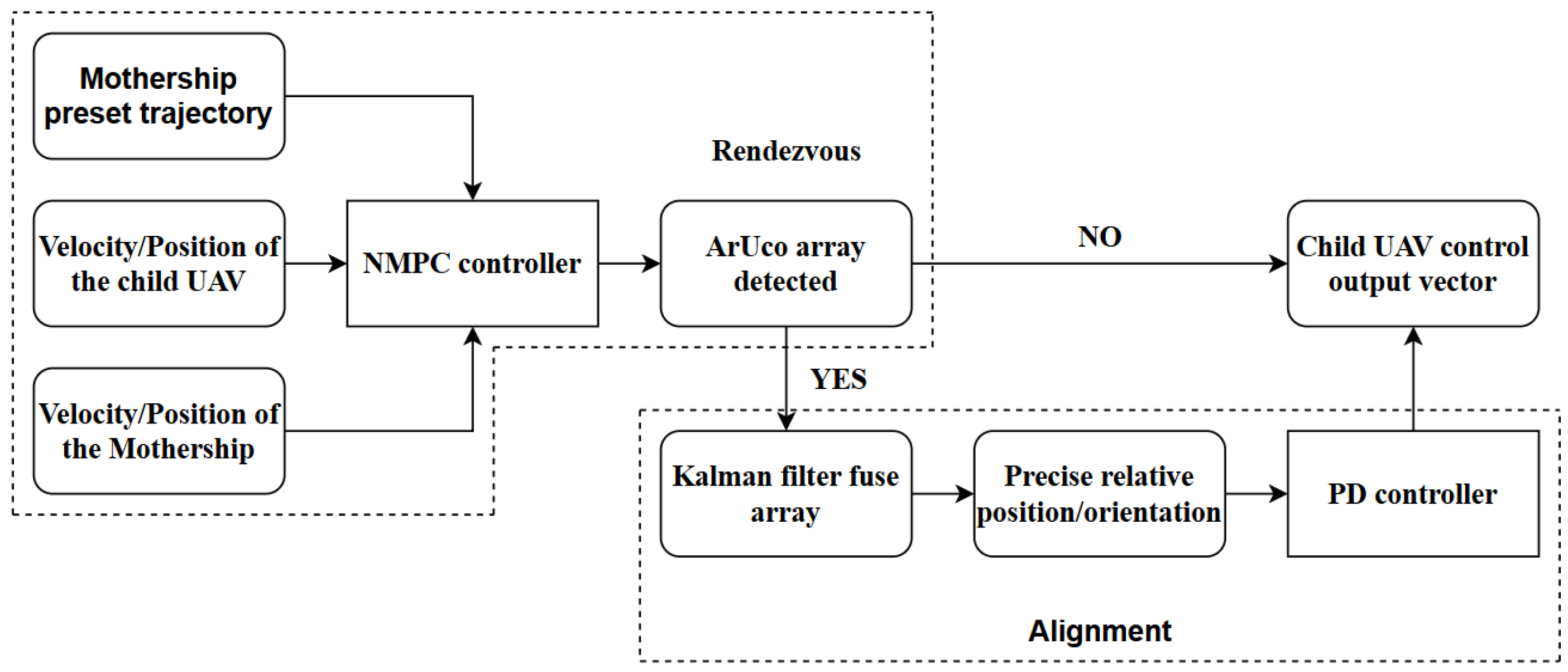
As shown in Figure 6, the mothership follows a predefined loiter trajectory, while the child UAV executes a two-stage recovery process (rendezvous and alignment).
In the rendezvous stage, the NMPC-VP controller generates commands for child UAV based on the states of both vehicles and the mothership’s reference path.
When the ArUco marker array is detected, the system switches to the alignment stage, where a Kalman filter fuses multi-marker observations to provide the relative pose e cam R 3 in the camera frame. In this phase, relative positioning is derived primarily from the onboard vision system, since GNSS measurements on both platforms may exhibit bias, particularly at close range. As a result, the vision-based estimate is treated as the most reliable short-range localization source, enabling the controller to maintain accurate convergence toward the docking interface despite degraded GNSS positioning.
The PD controller computes a corrective velocity,
v PD = K p e cam + K d e ˙ cam ,
with K p ,   K d diagonal gain matrices.
This is combined with the NMPC velocity prediction v NMPC through a distance-dependent linear blending mechanism. The final command is given by
v cmd = v NMPC + α ( d ) v PD ,
where d = e cam denotes the relative distance to the docking interface. The blending factor α ( d ) [ 0 , 1 ] is defined as
α ( d ) = 0 , d d on , d on d d on d full , d full < d < d on , 1 , d d full .
Far from the docking interface ( d d on ), the control action is dominated by NMPC to ensure global convergence and velocity synchronization. As the child UAV approaches the docking region, the contribution of the PD term gradually increases, allowing vision-based corrections to progressively dominate fine alignment. This distance-based allocation ensures a smooth transition between rendezvous and docking phases while preventing abrupt control switching.

3. Results

3.1. Rendezvous Trajectory Controller Evaluation

The rendezvous experiments were conducted in a simulated 3D space with a moving mothership UAV following a predefined closed-loop trajectory and a child UAV attempting to achieve and maintain a desired rendezvous configuration. The child UAV started from the origin ( 0 , 0 , 0 ) and was commanded to reach the rendezvous point relative to the moving mothership. The mothership’s motion was generated as a uniform-speed circular path of radius 50 m at a constant altitude of 20 m , with a forward velocity of 10 m / s . The child UAV’s rendezvous reference position was set 2 m behind the mothership along its instantaneous heading direction.
In evaluating the proposed controller, APF and conventional NMPC are adopted as baseline methods because they represent two widely studied paradigms for UAV guidance and docking. APF provides a lightweight, reactive, and computationally inexpensive solution, and is often used as a baseline in real-time guidance due to its simplicity and general applicability [27]. In contrast, NMPC represents a more advanced optimization-based control framework that accounts for vehicle dynamics and constraints, and has been explored in UAV trajectory tracking and recovery scenarios [11].
Both NMPC controllers(traditional and velocity-penalty) used a discrete-time six-state (position–velocity) point-mass model, solved over a 20-step prediction horizon at a 0.1 s timestep, with acceleration constraints of ± 8 m / s 2 .
To evaluate robustness, all controllers were tested under Dryden turbulence disturbances in three axes. The turbulence intensities were determined according to MIL-HDBK-1797 [36] for low-altitude flight at approximately 20 m AGL. Using the standard low-altitude formulation, the resulting turbulence intensities were ( σ x , σ y , σ z ) ( 1.39 , 1.39 , 0.77 ) m / s for light turbulence conditions. The corresponding scale lengths were set to ( L x , L y , L z ) = ( 117 , 58 , 10 ) m . The disturbance was injected as an additional acceleration in the child UAV dynamics (Section 2.4.1).
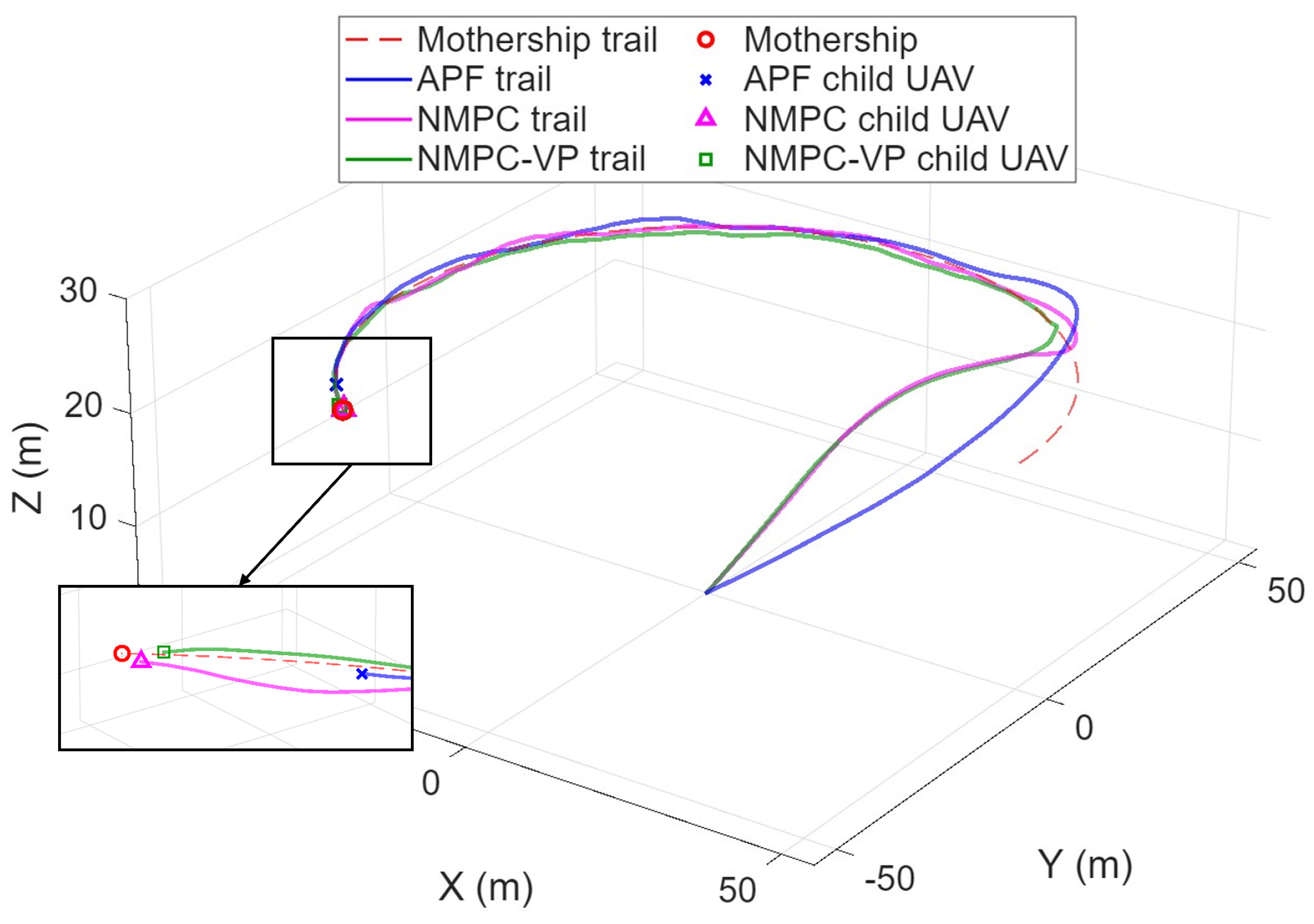
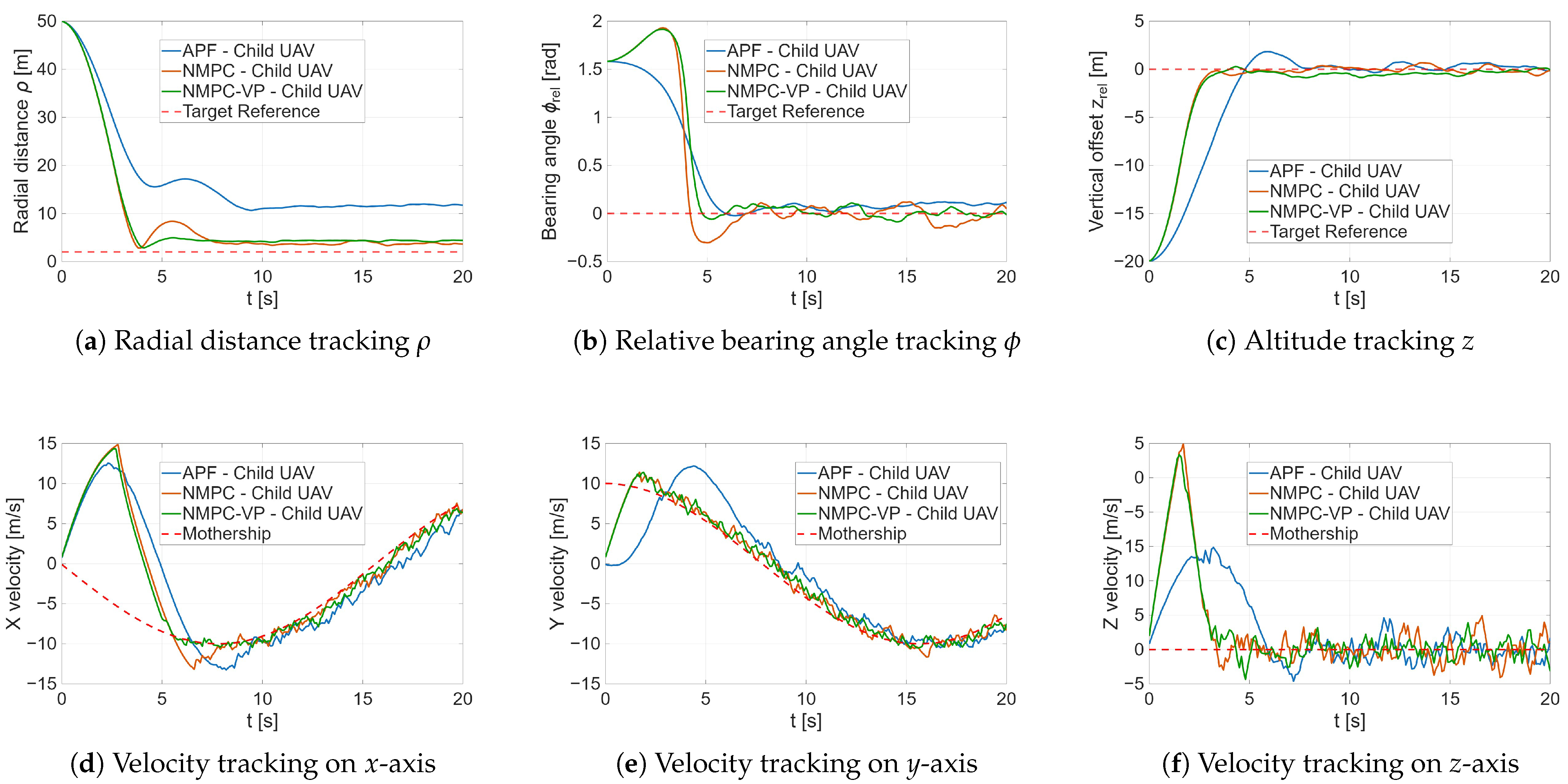
The three-dimensional motion of the child UAV relative to the rendezvous reference and the mothership is illustrated by decomposing the trajectory into the X, Y, and Z directions. The position profiles are expressed in a cylindrical coordinate frame centered at the mothership’s aft reference point, whereas the velocity profiles are reported in the world coordinate frame.
As shown in Figure 7 and Figure 8, the quantitative comparison highlights the differences among the three controllers. Figure 8a–c present the rendezvous reference and child UAV position tracking along the three axes of the cylindrical coordinate frame. while Figure 8d–f show the corresponding child UAV velocity compared with that of the mothership. Under the APF controller, the trajectory exhibits significant overshoot, with the maximum deviation in the z-direction reaching 1.9 m at around t = 5.9 s, and the horizontal deviation in the x y -plane peaking at 2.4 m near t = 5.5 s. With conventional NMPC, the vertical overshoot is almost eliminated, while the horizontal response exhibits a level of overshoot nearly comparable to that of the APF controller, though achieving an average improvement of approximately 22%. In this scenario, the NMPC-VP controller demonstrates overall superior performance compared to standard NMPC, primarily due to the relatively large rendezvous angle between the child UAV and the mothership. Under such conditions, the additional velocity penalty effectively moderates aggressive lateral corrections and improves trajectory smoothness. It should be emphasized that this advantage depends on the specific scenario. When the rendezvous angle is small, for example when the target point is defined 5 m directly behind the mothership, standard NMPC may exhibit slightly better performance because it allows faster directional adjustment and involves less conservative constraint handling.
In the cylindrical coordinate frame centered on the mothership (Figure 8a–c), the APF controller exhibits the weakest tracking performance among the three methods. It maintains a large steady error in radial distance tracking and shows a notably slow response in the z-axis, failing to bring the child UAV close to the rendezvous reference within the desired time window. The conventional NMPC achieves substantially improved tracking accuracy, converging toward the rendezvous state but displaying a pronounced overshoot in the relative bearing angle at around 6.6 s. The NMPC-VP formulation demonstrates the best overall performance. It guides the child UAV to the rendezvous reference within approximately 6 s in radial distance, relative bearing angle, and altitude tracking, without noticeable overshoot in any of the three dimensions. This represents a modest improvement over the conventional NMPC and a significant performance advantage over the APF method. Notably, the oscillatory behavior observed in the response primarily appears in the relative bearing angle, which can be explained by the fact that NMPC and NMPC-VP achieve closer proximity to the reference point, where the child UAV is more strongly affected by the wake of the mothership, leading to intensified aerodynamic disturbances in the angular dynamics.
In the velocity responses (Figure 8d–f), the benefit of the velocity-penalty term becomes more evident. Around t 6.6 s, a clear reduction in v x overshoot is observed for NMPC-VP compared with NMPC, demonstrating the damping effect of the penalty. The v y response remains comparable to NMPC, indicating that the additional cost does not degrade lateral performance. However, in v z , the velocity penalty introduces small oscillations, reflecting the trade-off between aggressive correction and smooth convergence. Overall, these results confirm that NMPC-VP achieves the fastest convergence (∼6 s) with controlled overshoot, while NMPC converges more slowly (∼7 s) and APF exhibits poor performance (>7 s). The velocity penalty thus provides a favorable balance between tracking accuracy and dynamic smoothness, especially in the critical longitudinal axis.
The performance of three rendezvous trajectory control algorithms—Artificial Potential Field, standard Nonlinear Model Predictive Control, and NMPC with a velocity penalty—were evaluated in order to examine their robustness against external disturbances, with turbulence being the primary source. In each trial, the follower UAV was subjected to identical turbulence conditions. Starting from the origin, the UAV began tracking the mothership’s trajectory and, after reaching a stable state (approximately at the first crossing of x = 0 ), subsequently completed 50 laps along the reference path.
For quantitative evaluation, the position error was defined as the Euclidean distance between the UAV’s actual position and the corresponding reference point, computed in the x y -plane, along the z-axis, and for the total three-dimensional displacement. Two statistical measures of this error were employed: the root mean square error (RMSE) and the mean absolute error (MAE). The results of this comparative analysis are summarized in Table 1.
As shown in Table 1, the use of NMPC almost eliminated the tracking latency observed in the APF method. Incorporating a velocity penalty into the NMPC prevented collisions without significantly degrading the controller’s performance. The average tracking accuracy of the velocity-penalized NMPC at 1.18 m is considered acceptable for coarse rendezvous operations. Based on a geometric field-of-view analysis, even with a relatively narrow camera FOV (e.g., 60 ° ), the ArUco marker array remains within the observable region at 2 m away, ensuring reliable visual capture under the reported tracking error.

3.2. Experimental Evaluation of Image Recognition

An evaluation of the detection performance of the deployed ArUco marker array was conducted across distances ranging from 0.15 m to 4 m, under varying viewing angles. Image sequences were recorded at 30 fps with a resolution of 1920 × 1080. The camera was configured with lens position 10.0, corresponding to a focus distance of approximately 1 m. The entire detection pipeline was deployed on a Raspberry Pi 5 platform, which was able to support stable real-time recognition at 1080p and 30 fps throughout the experiments. The quantitative results are presented in Table 2. At the closest distance of 0.15 m, 100% of the captured frames were successfully recognized. When the distance increased to 0.5 m, the recognition rate remained high at 95%, and a similar rate of 95 % was also observed at 1 m, suggesting stable detection performance at close range. From 1.5 m onward, recognition reliability gradually decreased, with success rates of 90% at 1.5 m and 85% at 2 m. At 2.5 m, the detection rate remained high at 84%, indicating that reliable recognition performance was maintained across the tested range from 0.5 m to 2.5 m. Beyond this distance, however, recognition performance dropped sharply, with only 45% of frames detected at 3 m, 15% at 3.5 m, and complete detection failure (0%) at 4 m.
Within the 0.5–3 m range, the predominant cause of detection failure was motion blur induced by excessive camera motion speed in combination with the rolling shutter of the Raspberry Pi Camera Module 3 Wide, which distorted the marker patterns and reduced recognition consistency. Beyond 3 m, the main limiting factor shifted to the imaging geometry: the wide 120° FoV reduced the apparent size of the markers in the image plane, thereby lowering pixel density and degrading recognition reliability.
To improve pose estimation robustness, a Kalman filter (KF) was applied to fuse multi-marker observations. Compared with single-marker estimation, the EKF improved yaw angle accuracy by approximately 22% at 2 m, maintaining errors within 10° under most conditions, which remains well within the design tolerance of the docking plate (Section 2.2). At 1 m, the improvement was smaller (around 13%), since single-marker yaw estimation was already reliable at short range. In contrast, translational accuracy degraded significantly beyond 1.5 m, with deviations exceeding 20% relative to the ground-truth distance. This degradation became increasingly pronounced as the camera-to-target distance grew, indicating that a larger distance imposes a substantial negative impact on translation estimation even when yaw accuracy remains relatively stable.

3.3. AirSim Recovery Simulation

In the AirSim environment, a limited simulation of airborne recovery was conducted, with the primary objective of validating the proposed control and perception architecture rather than reproducing the complete physical and aerodynamic complexities of a real airborne recovery scenario. The mothership was represented solely as an ArUco marker array, without a full aircraft model, and the flight dynamics were restricted to a quadrotor configuration due to the current limitations of AirSim (i.e., no fixed-wing model is available).
For improved recognition in vision-based pose estimation, the ArUco marker array model was enlarged tenfold during import, resulting in a marker side length of 50 cm. Consequently, the docking-point z-axis offset from the marker was also scaled from its nominal 15 cm to 1.5 m .
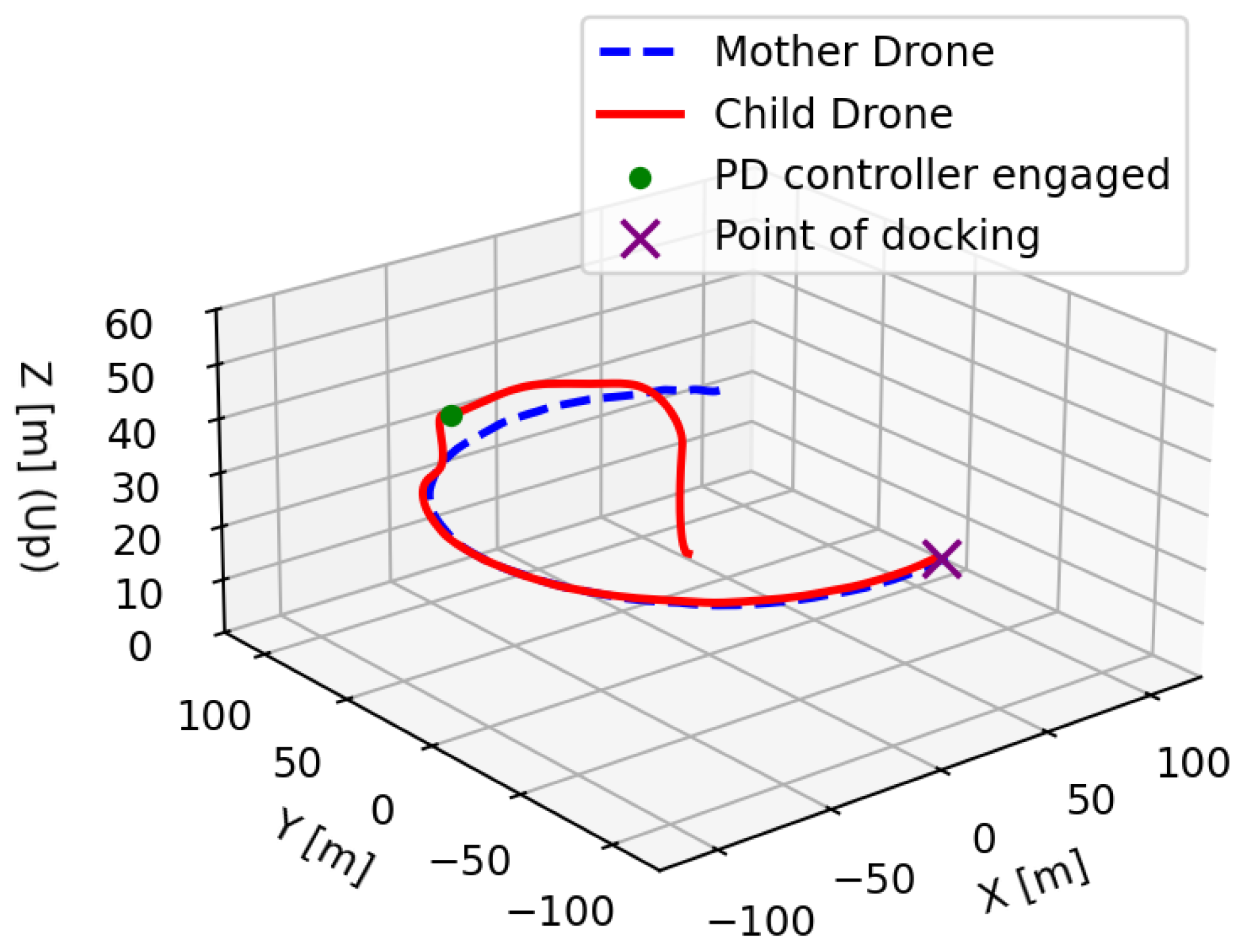
After takeoff, the mothership maintained a velocity of 10 m / s , following a prescribed circular trajectory with a radius of 100 m at an altitude of 30 m . Ten seconds after the mothership’s takeoff, the child UAV initiated its own ascent, reaching an altitude of 20 m . From this point onward, the positions of both UAVs were recorded simultaneously. The child UAV was configured with a maximum velocity of 16 m / s , and once airborne, it engaged the NMPC-VP with velocity-penalty control to perform the rendezvous maneuver.
The transition from the rendezvous phase to the docking phase was determined based on vision-based detection stability. The onboard camera operated at 30 fps and continuously evaluated the detection of the complete ArUco marker array. When the full marker array was successfully detected with a recognition rate exceeding 90 % over a short consecutive time window, the system classified the visual perception as stable. Upon satisfying this condition, the control strategy switched to a vision-assisted docking mode, in which the image-based PD controller was activated to refine relative alignment while NMPC-VP continued to provide global motion regulation.
The resulting trajectory, from the initiation of rendezvous to the final alignment, is shown in Figure 9, with the entire process requiring 43 s .
When compared with the idealized rendezvous trajectory discussed in Section 3.1, the child UAV still exhibited overshoot relative to the mothership’s path. This behavior can be attributed to the quadrotor’s deceleration characteristics and the fact that AirSim does not allow direct acceleration control; instead, velocity commands are internally regulated by a PID scheme, leading to additional transients. During deceleration, the quadrotor also experienced pitch-up behavior, which induced unintended altitude fluctuations. As a result, the UAV temporarily gained height, at times even exceeding the effective field of view(FoV) of the onboard camera, thereby reducing the reliability of visual detections.
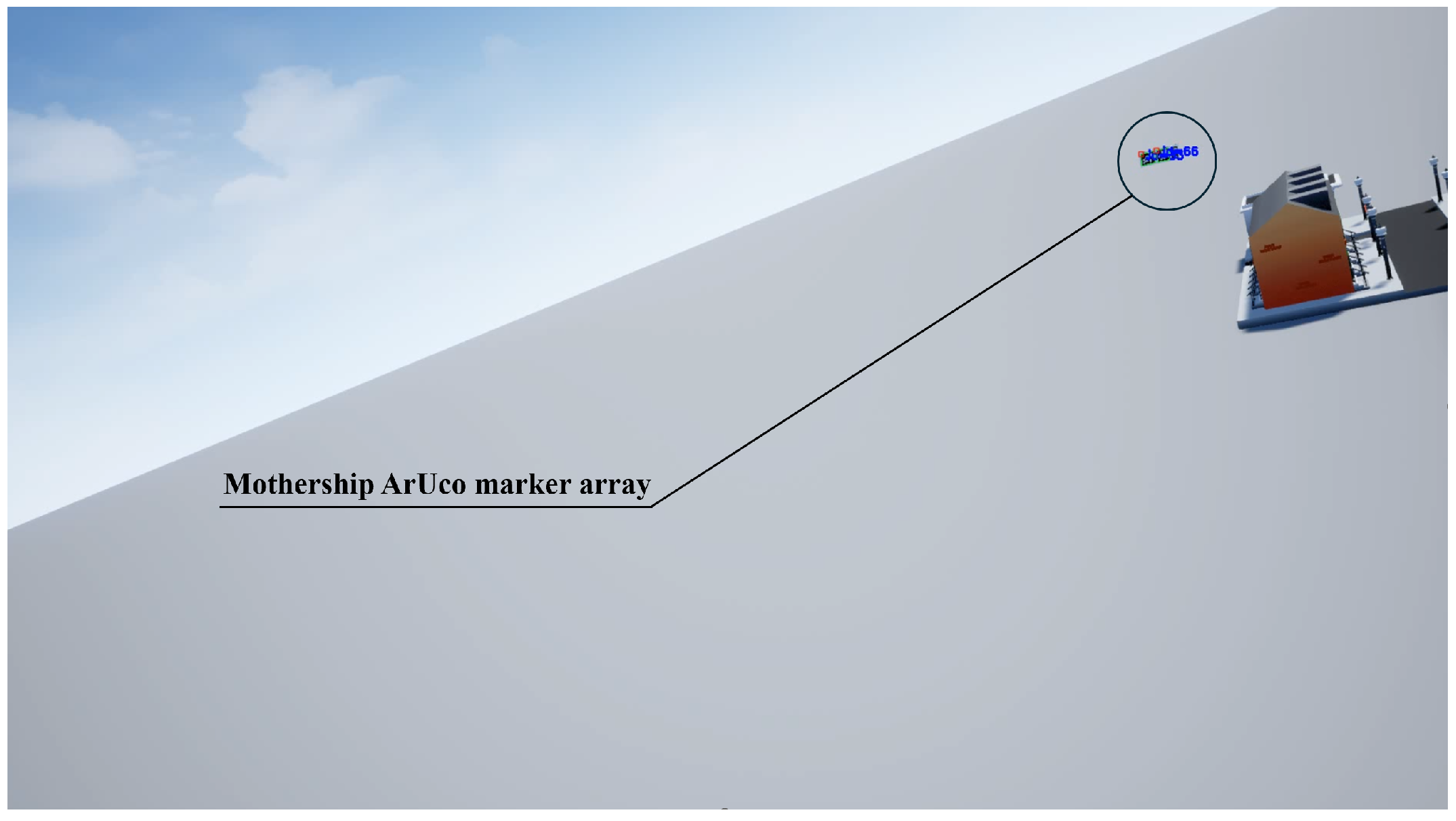
As illustrated in Figure 9 and Figure 10, the child UAV achieved stable recognition of the ArUco marker array at the position ( x , y , z ) = ( 36.5 , 104.8 , 33.4 ) . From this point onward, the detections were sufficiently reliable to trigger the auxiliary PD controller, which subsequently intervened to refine both lateral and vertical alignment with the mothership. This outcome further demonstrates the necessity of mounting the camera beneath the stabilizer-equipped docking plate, as discussed in Section 2.2, ensuring continuous marker visibility during the docking process.
Experimental evaluation at the 1.5 m docking point (ten trials) yielded an average error of 23 mm along the x-axis (horizontal) and 8 mm along the y-axis (vertical). The vertical error falls within the tolerance margin of the docking plate design, confirming consistency with the static docking tests. By contrast, the horizontal error is less straightforward to interpret, since the V-shaped plate is theoretically capable of guiding the child UAV into alignment as long as the approach vector is within ± 45 mm. The larger horizontal deviation observed in the simulation can be primarily attributed to the mothership’s preset circular trajectory, which was discretized into 100 waypoints to emulate the waypoint based trajectory typically followed by the mothership in real missions. This discretization introduced discontinuities in the marker orientation during turns, requiring the child UAV to apply continuous corrective feedback. Furthermore, the yaw misalignment between the child UAV and the marker remained within an average of 5°, indicating adequate heading consistency at the docking point.
Overall, this modeling simplification—representing the mothership by a scaled ArUco array and enlarging the docking-point offset—was deemed acceptable, as the primary objective was to validate the integration of vision-based pose recognition with NMPC using a velocity-penalty and the auxiliary PD controller.

4. Discussion and Conclusions

Compared with the studies of Du et al. [11] and Caruso et al. [13], this work introduces several novel contributions to the field of aerial recovery. First, a velocity-penalty term was incorporated into the NMPC formulation, enabling the controller to better reflect the operational constraints of aerial recovery scenarios while preserving overall performance. Compared with conventional NMPC, the proposed velocity-penalized NMPC achieves comparable tracking performance while providing greater suitability for aerial recovery, where speed regulation and synchronization are critical. Furthermore, relative to Artificial Potential Field methods, the NMPC approach exhibits improved robustness against external turbulence and environmental disturbances within the simulation environment.
Second, the docking plate was redesigned by relocating the angular compensation mechanism from the mothership to the child UAV and converting it into an actively actuated component; static validation confirmed the docking and locking effectiveness of this configuration.
Third, the proposed aerial recovery framework was validated within the AirSim simulator, demonstrating the feasibility of integrating NMPC with velocity-penalty and image-based PD control using an ArUco marker array in a simulation-based setting. Overall, the proposed GNSS–vision integrated framework shows robustness and accuracy for autonomous mid-air docking in simulation. While the individual contributions of GNSS and vision-based estimation cannot be fully disentangled in this study, the combined system highlights the complementary benefits of global positioning for coarse rendezvous guidance and vision-based feedback for precise docking alignment. This integrated approach therefore provides a promising pathway toward reliable autonomous UAV recovery, subject to further experimental verification.
Nevertheless, several limitations remain. For example, camera FoV trade-offs may influence detection distance, and the robustness of image-based detection under extreme illumination conditions has not yet been verified. Furthermore, the potential integration of image-based fixed-wing mothership detection requires further investigation. In addition, throttle response delays of quadrotors in real-world conditions may differ from those observed in AirSim or idealized simulations. More fundamentally, the complete airborne recovery process and physical docking operation have not yet been validated through real-world flight experiments. Transitioning from simulation to physical implementation introduces further challenges, particularly the aerodynamic effects generated by the mothership during docking. Sudden turbulence and angular perturbations induced by the mothership’s wake may affect the stability of the child UAV and compromise the reliability of the locking mechanism. Future work will therefore focus on conducting controlled flight experiments to validate the rendezvous and docking processes, evaluating the dynamic docking mechanism under realistic operating conditions, and addressing these integration challenges.

Author Contributions

Conceptualization, T.Z.; data curation, T.Z.; formal analysis, T.Z.; investigation, T.Z.; methodology, T.Z.; software, T.Z.; validation, T.Z.; visualization, T.Z.; writing—original draft, T.Z.; writing—review and editing, T.Z., T.S.R. and K.M.; supervision, T.S.R.; project administration, T.S.R. All authors have read and agreed to the published version of the manuscript.

Funding

This research received no external funding.

Data Availability Statement

The key simulation algorithms and the CAD model of the docking device presented in this study are openly available at https://github.com/paradoxztj/Autonomous-Airborne-Recovery-of-a-Quadrotor (accessed on 3 September 2025).

Conflicts of Interest

The authors declare no conflicts of interest.

Abbreviations

The following abbreviations are used in this manuscript:
UAVUncrewed Aerial Vehicle
GNSSGlobal Navigation Satellite System
UWBUltra-Wideband
VTOLVertical Take-Off and Landing
LIDARLight Detection and Ranging
INSInertial Navigation System
DGPSDifferential Global Positioning System
RTKReal-Time Kinematic
APFArtificial Potential Field
MPCModel Predictive Control
NMPCNonlinear Model Predictive Control
RRT*Rapidly-exploring Random Trees
PRMProbabilistic Roadmaps
NEDNorth-East-Down
NMPC-VPNonlinear Model Predictive Control with Velocity Penalty
PDProportional–Derivative
MAEMean Absolute Error
RMSERoot Mean Square Error

References

  1. Asadzadeh, S.; de Oliveira, W.J.; de Souza Filho, C.R. UAV-based Remote Sensing for the Petroleum Industry and Environmental Monitoring: State-of-the-art and Perspectives. J. Pet. Sci. Eng. 2022, 208, 109633. [Google Scholar] [CrossRef]
  2. Saini, P.; Nagesh, D. A Review of Deep Learning Applications in Weed Detection: UAV and Robotic Approaches for Precision Agriculture. Eur. J. Agron. 2025, 168, 127652. [Google Scholar] [CrossRef]
  3. Song, B.D.; Park, H.; Park, K. Toward Flexible and Persistent UAV Service: Multi-period and Multi-objective System Design with Task Assignment for Disaster Management. Expert Syst. Appl. 2022, 206, 117855. [Google Scholar] [CrossRef]
  4. Lyu, C.; Lin, S.; Lynch, A.; Zou, Y.; Liarokapis, M. UAV-based Deep Learning Applications for Automated Inspection of Civil Infrastructure. Autom. Constr. 2025, 177, 106285. [Google Scholar] [CrossRef]
  5. Stepanenko, K. The Battlefield AI Revolution Is Not Here Yet: The Status of Current Russian and Ukrainian AI Drone Efforts; Institute for the Study of War: Washington, DC, USA, 2025. [Google Scholar]
  6. Powers, R.D. Monstro and the Goblins. Am. Aviat. Hist. Soc. J. 1973, 18, 146–159. [Google Scholar]
  7. O’Connell, J. The Lost Mission: Fairchild’s Bombers and the FICON Project; Official United States Air Force: Washington, DC, USA, 2015. [Google Scholar]
  8. Authods, F.; Rom, C.; Masser, C. Large Nuclear-Powered Subsonic Aircraft for Transoceanic Commerce; NASA: Washington, DC, USA, 1971. [Google Scholar]
  9. DARPA. Progress Toward an Ability to Recover Unmanned Aerial Vehicles on the Fly; DARPA: Arlington, VA, USA, 2017. [Google Scholar]
  10. Fu, X.; Zuo, S.; Lin, J.; Li, H.; Tu, Z.; Li, D.; Xiang, J. Mid-Air Autonomous Release and Recall System for Mother-Daughter UAVs. In Proceedings of the AIAA Scitech 2022 Forum, San Diego, CA, USA, 3–7 January 2022. [Google Scholar] [CrossRef]
  11. Du, D.; Chang, M.; Tang, L.; Zou, H.; Tang, C.; Bai, J. Trajectory Planning and Control Design for Aerial Autonomous Recovery of a Quadrotor. Drones 2023, 7, 648. [Google Scholar] [CrossRef]
  12. Wu, J.; Sun, Y.; Yue, H.; Yang, J.; Yang, F.; Zhao, Y. Design and Optimization of UAV Aerial Recovery System Based on Cable-Driven Parallel Robot. Biomimetics 2024, 9, 111. [Google Scholar] [CrossRef]
  13. Caruso, B.; Fatakdawala, M.; Patil, A.; Chen, G.; Wilde, M. Demonstration of In-Flight Docking Between Quadcopters and Fixed-Wing UAV. In Proceedings of the 2021 IEEE Aerospace Conference (50100), Big Sky, MT, USA, 6–13 March 2021. [Google Scholar] [CrossRef]
  14. Klausen, K.; Fossen, T.I.; Johansen, T.A. Autonomous Recovery of a Fixed-wing UAV Using a Net Suspended by Two Multirotor UAVs. J. Field Robot. 2017, 35, 717–731. [Google Scholar] [CrossRef]
  15. Bornebusch, M.F.; Johansen, T.A. Autonomous Recovery of a Fixed-Wing UAV Using a Line Suspended Between Two Multirotor UAVs. IEEE Trans. Aerosp. Electron. Syst. 2021, 57, 90–104. [Google Scholar] [CrossRef]
  16. Brunet, M.N.; Ribeiro, G.A.; Mahmoudian, N.; Rastgaar, M. Stereo Vision for Unmanned Aerial Vehicle Detection, Tracking, and Motion Control. arXiv 2020, arXiv:2005.04183. [Google Scholar] [CrossRef]
  17. Opromolla, R.; Fasano, G.; Accardo, D. A Vision-Based Approach to UAV Detection and Tracking in Cooperative Applications. Sensors 2018, 18, 3391. [Google Scholar] [CrossRef]
  18. Nguyen, T.M.; Yuan, S.; Cao, M.; Lyu, Y.; Nguyen, T.H.; Xie, L. VIRAL-Fusion: A Visual-Inertial-Ranging-Lidar Sensor Fusion Approach. IEEE Trans. Robot. 2020, 38, 958–977. [Google Scholar] [CrossRef]
  19. Pereira, A.; Warwick, S.; Moutinho, A.; Suleman, A. Infrared and Visible Camera Integration for Detection and Tracking of Small UAVs: Systematic Evaluation. Drones 2024, 8, 650. [Google Scholar] [CrossRef]
  20. Cui, Y.; Wang, C.; Hu, Q.; Xu, B.; Song, X.; Yuan, Z.; Zhu, Y. A Novel Positioning Method for UAV in GNSS-Denied Environments Based on Mechanical Antenna. IEEE Trans. Ind. Electron. 2024, 71, 13461–13469. [Google Scholar] [CrossRef]
  21. Deng, Z.; Luo, H.; Gao, X.; Liu, P. Fusion-Based Localization System Integrating UWB, IMU, and Vision. Appl. Sci. 2025, 15, 6501. [Google Scholar] [CrossRef]
  22. Arreola, L.; Caro, A.D.; Flores, A.N.; Sanchez, J.G.; Flores, G. Improvement in the UAV Position Estimation with Low-cost GPS, INS and Vision-based System: Application to a Quadrotor UAV. arXiv 2018, arXiv:2018.8453349. [Google Scholar] [CrossRef]
  23. Vetrella, A.R.; Causa, F.; Renga, A.; Fasano, G.; Accardo, D.; Grassi, M. Multi-UAV Carrier Phase Differential GPS and Vision-based Sensing for High Accuracy Attitude Estimation. J. Intell. Robot. Syst. 2019, 93, 245–260. [Google Scholar] [CrossRef]
  24. Gross, J.N.; Gu, Y.; Rhudy, M.B. Robust UAV Relative Navigation With DGPS, INS, and Peer-to-Peer Radio Ranging. IEEE Trans. Autom. Sci. Eng. 2015, 12, 935–944. [Google Scholar] [CrossRef]
  25. Song, J.; Sanchez-Cuevas, P.J.; Richard, A.; Rajan, R.T.; Olivares-Mendez, M. GPS-VIO Fusion with Online Rotational Calibration. In Proceedings of the 2024 IEEE International Conference on Robotics and Automation (ICRA), Yokohama, Japan, 13–17 May 2024. [Google Scholar]
  26. Layman, T.; Fields, T.; Yakimenko, O.A. Evaluation of Proportional Navigation for Multirotor Pursuit. In Proceedings of the AIAA Scitech 2021 Forum, Virtual, 11–15 & 19–21 January 2021. [Google Scholar] [CrossRef]
  27. Ma, B.; Ji, Y.; Fang, L. A Multi-UAV Formation Obstacle Avoidance Method Combined with Improved Simulated Annealing and an Adaptive Artificial Potential Field. Drones 2025, 9, 390. [Google Scholar] [CrossRef]
  28. Bangura, M.; Mahony, R. Real-time Model Predictive Control for Quadrotors. IFAC Proc. Vol. 2014, 47, 11773–11780. [Google Scholar] [CrossRef]
  29. Huang, Y.; Li, H.; Dai, Y.; Lu, G.; Duan, M. A 3D Path Planning Algorithm for UAVs Based on an Improved Artificial Potential Field and Bidirectional RRT. Drones 2024, 8, 760. [Google Scholar] [CrossRef]
  30. Li, W.; Wang, L.; Zou, A.; Cai, J.; He, H.; Tan, T. Path Planning for UAV Based on Improved PRM. Energies 2022, 15, 7267. [Google Scholar] [CrossRef]
  31. Pfeiffer, M.; Shukla, S.; Turchetta, M.; Cadena, C.; Krause, A.; Siegwart, R.; Nieto, J. Reinforced Imitation: Sample-Efficient Deep Reinforcement Learning for Map-less Navigation by Leveraging Prior Demonstrations. arXiv 2018, arXiv:1805.07095. [Google Scholar] [CrossRef]
  32. Dibley, R.; Allen, M.; Nabaa, N. Autonomous Airborne Refueling Demonstration, Phase I Flight-Test Results; NASA: Washington, DC, USA, 2007. [Google Scholar]
  33. Ren, J.; Quan, Q. Progress in Modeling and Control of Probe-and-drogue Autonomous Aerial Refueling. Chin. J. Aeronaut. 2023. [Google Scholar] [CrossRef]
  34. Hattenberger, G.; Bronz, M.; Condomines, J.P. Evaluation of Drag Coefficient for a Quadrotor Model. Int. J. Micro Air Veh. 2023, 15, 175682932211483. [Google Scholar] [CrossRef]
  35. Trigger Composites. Samoloty Bezzałogowe Pteryx. Available online: https://www.t-cs.pl/EN/our-products0.html#Pteryx (accessed on 25 August 2025).
  36. MathWorks. Dryden Wind Turbulence Model (Discrete). Available online: https://www.mathworks.com/help/aeroblks/drydenwindturbulencemodeldiscrete.html (accessed on 3 August 2025).
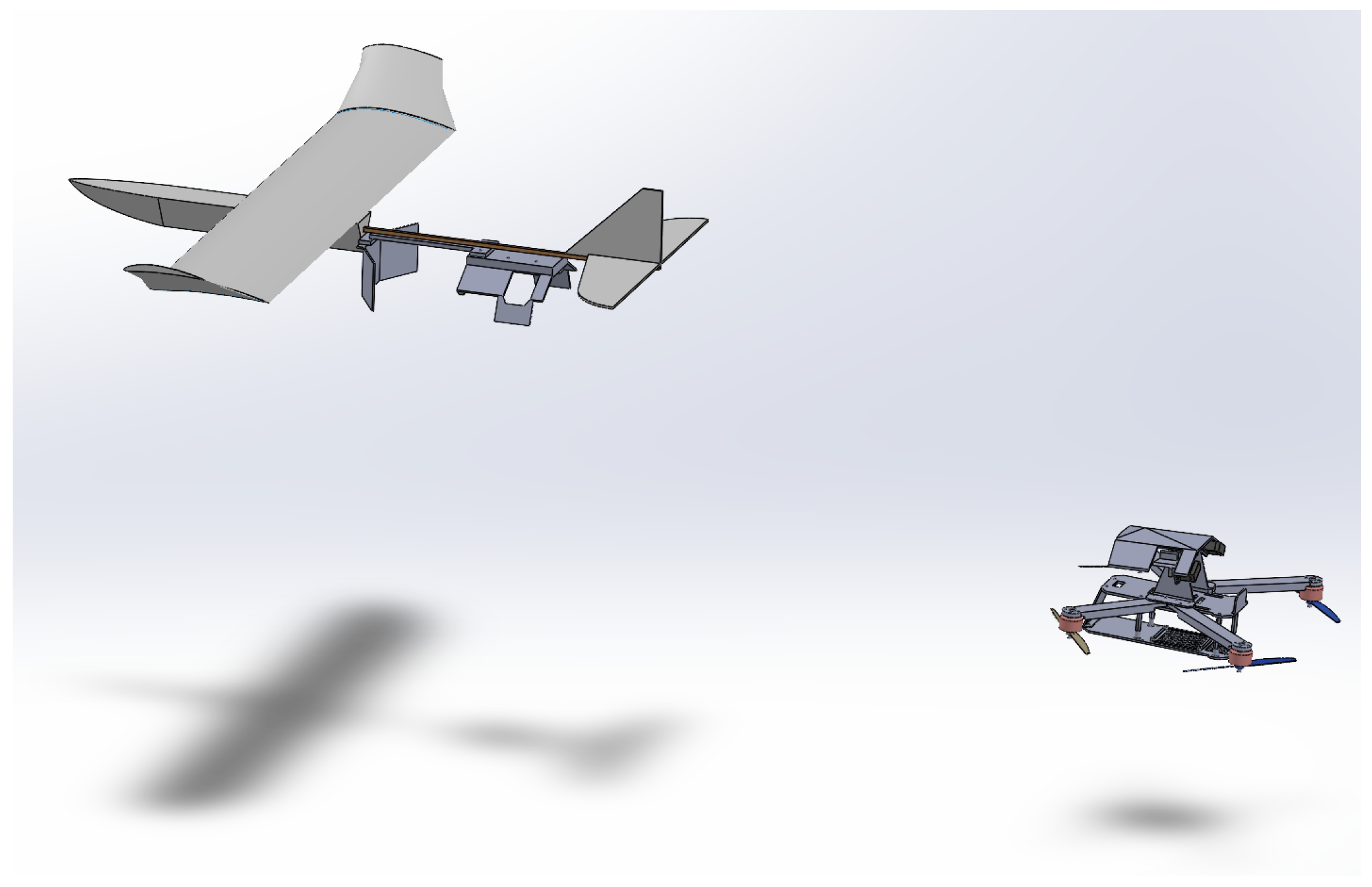
Figure 1. Overall airborne recovery configuration.
Drones 10 00212 g001
Figure 2. Autonomous aerial recovery procedure. (The orange arrows represent the operational path of the mothership, the green arrows indicate the operational path of the child UAV).
Drones 10 00212 g002
Figure 3. Docking system on mothership.
Drones 10 00212 g003
Figure 4. Docking system on child UAV.
Drones 10 00212 g004
Figure 5. Relationship between forward velocity and pitch angle for quadrotor UAV.
Drones 10 00212 g005
Figure 6. Integrated NMPC and PD controller architecture for rendezvous and alignment.
Drones 10 00212 g006
Figure 7. Trajectories of different controllers for child UAV rendezvous under Dryden wind turbulence.
Drones 10 00212 g007
Figure 8. Tracking performance of the child UAV relative to the mothership. (ac) Position tracking expressed in the cylindrical coordinate system defined behind the mothership. (df) Velocity tracking expressed in the global cartesian coordinate frame.
Drones 10 00212 g008
Figure 9. Rendezvous and alignment trajectory in AirSim.
Drones 10 00212 g009
Figure 10. Stable detected ArUco array in AirSim.
Drones 10 00212 g010
Table 1. Robustness comparison of rendezvous controllers.
MethodRMSExy (m)MAExy (m)RMSEz (m)MAEz (m)RMSE3D (m)
APF6.616.570.420.336.62
NMPC1.101.020.350.271.16
NMPC-VP1.281.180.290.231.31
Table 2. ArUco array recognition results at different distances.
Dist. (m)Total ImagesDetectedRate (%)Yaw Error (°)
0.152020100<1
0.5201995<1
1.0201995<3
1.5201890<5
2.0201785<10
2.5201785<12
3.020945<15
3.520315<15
4.02000
Disclaimer/Publisher’s Note: The statements, opinions and data contained in all publications are solely those of the individual author(s) and contributor(s) and not of MDPI and/or the editor(s). MDPI and/or the editor(s) disclaim responsibility for any injury to people or property resulting from any ideas, methods, instructions or products referred to in the content.