1. Introduction
The use of Uncrewed Aerial Vehicles (UAVs), commonly known as drones, in logistics for delivering payloads is an emerging and growing area of interest within the expanding global commercial drone sector [
1,
2,
3,
4,
5]. The interest exists because there are several potential advantages associated with this application, such as reduced transit times and costs, enhanced accessibility in areas that are difficult to reach via conventional surface infrastructure, and reduced energy consumption and emissions [
4,
5,
6,
7,
8,
9].
When used for logistics purposes, drone payloads may contain substances that are classified by the United Nations (UN) as dangerous goods (DGs) when transported by air, particularly for medical use cases, e.g., patient pathology specimens or certain medicines. However, drones are a new mode of transport for logistics, and consequently, the associated regulatory environment is also new and evolving [
4,
9], including the regulations relating to the carriage of DGs [
10].
Historically, DG regulations for air transport have been developed primarily with crewed aviation in mind, and their applicability to drone operations remains insufficiently explored and yet to be comprehensively defined with certainty [
10]. In the context of this background, the aims of this study were three-fold: (i) to provide a comprehensive review of the current regulatory environment related to the carriage of DGs by logistics drones; (ii) to quantify the potential for drone payloads to contain DGs, particularly for the medical use case through a novel AI-based interpretation of safety data sheets from pharmaceutical manufacturers; and (iii) to investigate some of the key practical challenges of meeting the requirements of the current regulatory environment for DG transportation by drone through developing a compatible medical carrier.
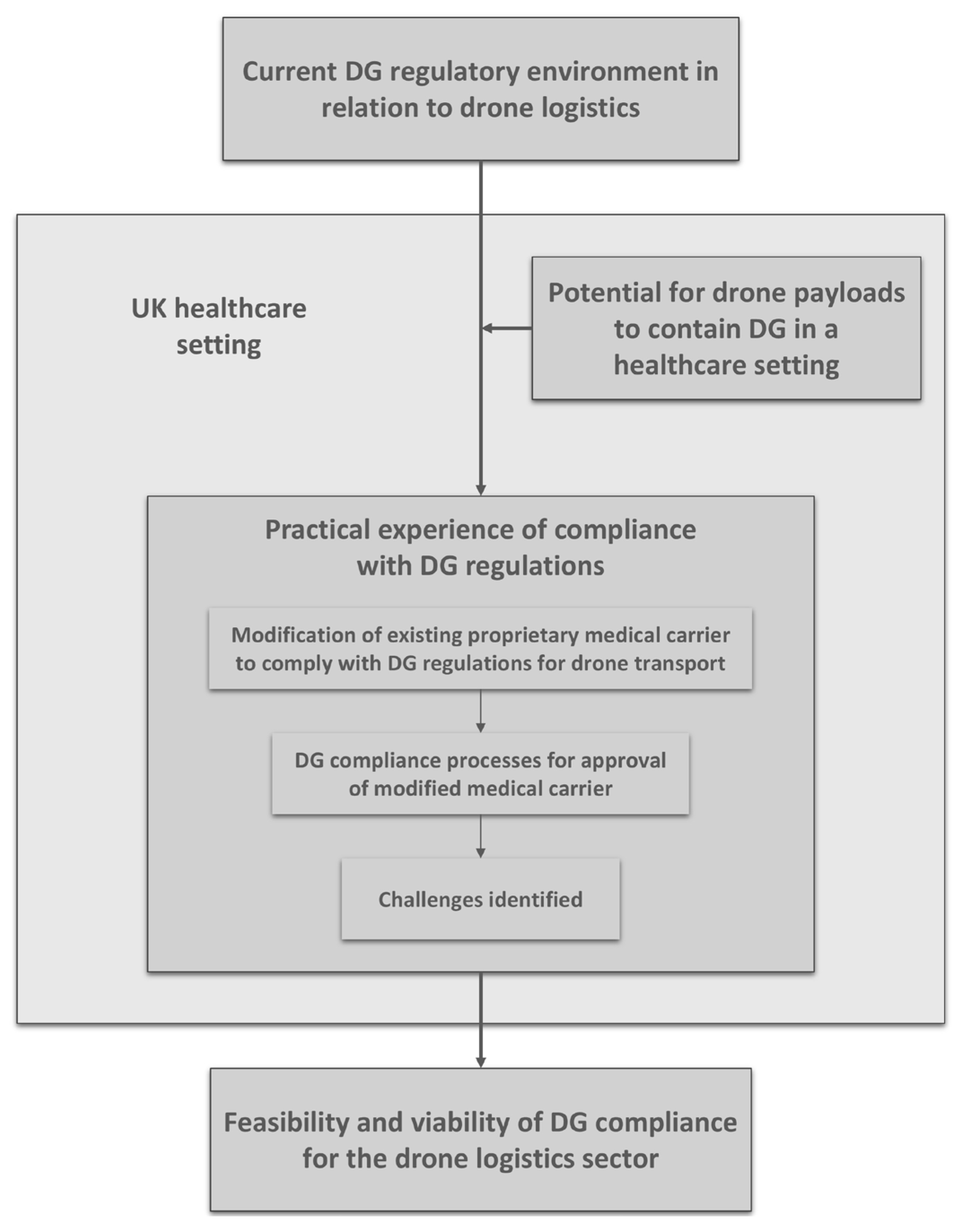
A conceptual framework illustrating the components of the study and their relationships to each other is shown in
Figure 1. The study aims have been translated into the following three research questions:
What is the current state of regulations relating to the transport of DG payloads by drone?
What is the potential for drone payloads to contain DGs in a healthcare setting?
What are the practical challenges associated with meeting the requirements of the DG regulations when developing a medical carrier for drone transport?
2. Dangerous Goods Regulations and Drones: A Review
Annex 18 to the Convention on International Civil Aviation, known as the Chicago Convention, contains the global principles for the safe carriage of DGs by air [
11]. These principles have been expanded into a set of regulations published biennially by the International Civil Aviation Organization (ICAO). The regulations are called the ‘Technical Instructions for the Safe Transport of Dangerous Goods by Air (Doc 9284)’, usually abbreviated to the ‘Technical Instructions’ (TIs) [
12]. The TIs describe in detail the requirements for each of the ~3000 substances classified as DGs to be moved by air, including allowable quantities, packing instructions, labelling/marking, documentation, leak/spill procedures, and training requirements for the personnel involved.
International civil aviation must comply with the TIs. Domestic aviation (i.e., intranational) is encouraged to do likewise, with countries typically adopting the regulations through their own national legislation [
13,
14]. However, domestic interpretations of the overarching international regulations as they relate to drone operations tend to vary from country-to-country [
13], presenting a complex picture for any logistics providers that may want to operate across national borders.
Over the years, the TIs have developed exclusively from the perspective of crewed aviation and are principally relevant to the large airliners that are used to transport airfreight, without any explicit references to drones. Consequently, the regulations need interpretation and adaptation to be applied sensibly to uncrewed logistics drones as an emerging mode. National Aviation Authorities (NAAs) may grant alleviations for drone operations to deviate from the TIs on a case-specific basis, provided they are satisfied that an equivalent level of safety is achieved. Typically, case-specific approval to carry DGs by drone involves application for authorisation by the drone operator, and then assessment and approval of that application by the NAA. This is an onerous process, but important from a safety perspective, consuming substantial time, human and financial resources for all parties involved [
10,
12].
In general, the need for drone-specific DG regulations has been sparsely addressed, but some progress has been made in the United States (USA), the European Union (EU) and the United Kingdom (UK). In the USA, drone operations that carry property for hire or reward on flights Beyond Visual Line of Sight (BVLOS) must be authorised by the Federal Aviation Administration (FAA), the NAA in the USA, under Title 14, Part 135 of the Code of Federal Regulations (14 CFR Part 135). As part of this authorisation process, the FAA’s Office of Aviation Safety and Office of Hazardous Materials work with the applicant (i.e., drone operator) to ensure all safety standards relating to DGs are met, including the development of a DG training programme and manual. These are the same requirements as for any crewed aircraft operations authorised under 14 CFR Part 135 [
15,
16,
17].
In the European Union (EU) and the UK, DG regulations relating to drones tend to be similar because the UK left the EU only relatively recently in 2020. Drone operations are divided into three categories: (i) open, which do not require NAA approval because they present a low risk to third parties; (ii) specific, which require case-specific NAA approval, known as an operational authorisation, because one or more of the requirements of the open category are exceeded (e.g., Max. Take-Off Mass > 25 kg, BVLOS operations); and (iii) certified, which apply to operations that present a high risk to third parties in the event of an accident, such as the carriage of DGs, because these are the only drones certified to the same rigorous airworthiness standards as crewed aircraft [
18,
19].
The certified category is not yet fully developed, and consequently, most commercial drone operations or trials take place in the specific category [
10,
19]. A recent development implemented in early 2021 in both the EU and UK was the introduction of a requirement for a Crash-Protected Container (CPC) that prevents the escape of DGs in the event of an accident, which would allow drones operating in the specific category to carry DGs. Without the use of a CPC, there may be a high risk to third parties in the event of an accident, and therefore, carriage of DGs would revert to the certified category [
18,
20]. CPCs were introduced by the regulators for reasons of practicality to accommodate drone logistics operators, mostly operating in the specific category, who sought to transport payloads containing DG, particularly for healthcare applications.
As the name implies, operations in the specific category are assessed by the NAA on a case-specific basis for the issuance of an operational authorisation. This includes the applicant (i.e., drone operator) demonstrating that any DGs in the payload will not cause damage/harm to third parties or the environment in the event of an accident. An important part of this is the use of a CPC, but it also includes aspects such as DG handling competency/risks, DG quantity/class, characteristics of the DG packaging used inside the CPC, geographical area of flight, and a DG training programme for the personnel involved [
18].
In Europe, no detailed guidance or procedure is provided by the European Union Aviation Safety Agency (EASA) on exactly how compliance with the requirement for a CPC should be demonstrated. Instead, assessment of compliance is left to European NAAs on a case-specific basis as part of their evaluation of a drone operator’s operational authorisation application. This tends to put the onus on the drone operator to devise their own method of demonstrating compliance that satisfies the NAA.
In contrast, the NAA in the UK (the Civil Aviation Authority; CAA) has developed a procedure specifically for the approval of carriers as CPCs, which is independent of the case-specific operational authorisation process. Development of the procedure was delegated to the Vehicle Certification Agency (VCA), the UK’s authority for the certification of packaging used for transporting DGs. Carriers that successfully satisfy the requirements of the procedure may be approved at the discretion of the CAA as CPCs. The procedure is intended to be conducted by the manufacturer of the carrier or their representatives, allowing a drone operator applying for an operational authorisation to reference a specific manufacturer’s carrier that has already been pre-approved as a CPC [
21].
The UK test procedure involves dropping a container onto a hard standing from the maximum operational height specified by the CAA for a drone, which is usually 122 m (400 ft) in the UK, or from a height from which the container will reach terminal velocity before impact if this is lower when a 10% safety margin is included. Terminal velocity is the constant speed eventually achieved by an object in freefall when increasing air resistance prevents further acceleration. After impact and in order to pass, the container must suffer no major structural disruption or visible hole/gap and must prevent any escape of the contents, which must remain the case for up to 8 h post drop in the case of liquid contents when placed in its most compromised orientation [
21].
In recent discussions with the authors in 2025, a drone logistics platform provider working in a healthcare setting in Europe suggested that several European NAAs, specifically Italy and Portugal, were reluctant to accept the UK’s CPC drop test procedure as an adequate demonstration of CPC performance for operations within their jurisdictions. The reason given was that the UK procedure is based on the container falling in isolation, ignoring the consequences of any interaction between the container and drone falling to the ground together, such as the drone landing on top of the container. The VCA’s opinion is that the UK procedure adopts a realistic approach to demonstrating CPC compliance that does not claim to be exhaustive, providing a reasonable level of safety but not necessarily guaranteeing complete containment of DGs in 100% of potential scenarios, and that including the container/drone interaction may not be the worst case, e.g., a fixed-wing drone providing a glide descent leading to a lower impact speed or a drone cargo hold providing additional impact protection for a CPC contained within.
Following the requirement for CPCs introduced in 2021, the CAA issued an exemption in the UK in 2023 for DGs that are specifically classified as ‘Biological substance, Category B, UN3373’. This exemption also applied to DGs in Excepted Quantities, referring to very small amounts, i.e., <30 g/30 mL per inner packaging and <1 kg/1 L per outer packaging [
20]. A possible reason for exempting UN3373 items was practicality, in that there were very few manufacturers of CPCs that were market ready and commercially available. This was at odds with the requirements of UK drone logistics operators who were seeking to proceed with trials involving the transport of patient pathology specimens, typically classified as UN3373, e.g., see [
22,
23,
24].
The one manufacturer known to have developed a CPC (Viking Drone Packaging) was reportedly the world’s first to gain approval [
25]. The patent for this CPC suggests it was designed specifically to carry up to 150 medical sample tubes containing patient pathology specimens, either UN3373 or possibly the more dangerous but far less common ‘Infectious substance, affecting humans, UN2814’ [
26,
27]. Any adaptation or re-configuration of the carrier necessary to carry any other DG would require a new CPC approval under the UK’s drop test procedure [
21]. The requirement for CPCs for drones operating in the specific category followed by the exemption for UN3373 items, may limit the market potential for Viking Drone Packaging’s CPC in the UK and highlights the consequences of the evolving regulatory environment.
In summary, the application of DG regulations to drone operations has been sparsely addressed by many regulators around the world. In those regions where progress has been made in this respect, the regulatory environment still tends to lack clarity, can be subject to frequent changes and updates, and is reliant on case-specific approval processes. The key aspects of DG regulations relating to drone logistics in different world regions, particularly in a healthcare setting, are summarised in
Table 1. Furthermore, there is a lack of relevant studies reported in the academic literature that specifically examine the issues of compliance with the new and evolving DG regulations applicable to drones, and the associated practical challenges involved for medical carriers in a healthcare setting. This is inconsistent with the growing interest in logistics drones and the increasing number of trials of drone services involving items classified as DGs for healthcare use cases [
28]. Contributing to addressing this research gap was the entry point for this study. The innovations of the study have both theoretical and practical significance: theoretical through providing a review of the current state of DG regulations relating to drone logistics and an indication of the potential for drone payloads to contain DG; and practical through identifying the real-world challenges involved with regulatory compliance.
3. Materials and Methods
3.1. Review of Regulations and Scale of Need
The initial phases of the research were a review of the current DG regulations as they relate to logistics drones (
Section 2), and an assessment of the potential demand for transporting DG payloads by drones in a healthcare setting. The main DGs likely to be transported by drone in medical use cases are (i) items classified as UN3373, such as patient pathology specimens; and (ii) medicines classified as DGs [
10]. To evaluate the potential for payloads containing UN3373 items, the number of pathology specimens taken from patients in the UK was obtained from statistics published by the Royal College of Pathologists.
To evaluate the potential for payloads containing medicines classified as DGs, the Safety Data Sheets (SDSs) for over 40,000 different medicines were analysed. This involved downloading SDSs produced by pharmaceutical manufacturers (including AmGen, AstraZeneca, Boehringer Ingelheim, Bristol Myers Squibb, Eli Lilly, GlaxoSmithKline, MSD, Novo Nordisk, Pfizer, and Roche) from publicly available repositories, as well as from a large multi-national supplier of medical chemicals (MedChemExpress). Each SDS was individually parsed to determine if it represented a substance that was classified as a DG for the purposes of transportation. This was achieved through the use of a Large Language Model (LLM), Gemini 2.0 Flash, configured to return structured output.
Given the non-deterministic nature of the LLM outputs, the extraction fields within the structured output were designed to be inherently overlapping in nature in order to serve as a partial error control mechanism for the extracted data. For instance, a substance would not have a class or packing group, both characteristics related to being a DG, associated with it, if it was not already classified as a DG for transportation purposes. The four-digit UN number (e.g., UN3373) was also extracted and used to identify the nature of the DG. This approach aimed to mitigate the LLM outputting subjective assessments of a particular substance based on its prior training data. The standardised nature of the SDS contents allowed the LLM to focus solely on the DG information, which is always contained in Section 14, ‘Transport Information’. The variety in SDS formatting did not allow a more traditional data extraction method to be used. The results across all SDS were aggregated and cleaned using the overlapping fields as a logical basis to remedy incorrectly classified substances. In particular, the existence of an extracted UN number was the most accurate indication that a substance was a DG.
A subset of the data was selected for manual verification in order to validate the extraction process. The validation set was stratified across different SDS sources and substance manufacturers to ensure effectiveness of the data extraction across different SDS formatting styles. This involved cross checking the extracted data from the LLM output against the source SDS to determine if the corresponding fields had been correctly parsed and whether the substance was considered a DG or not. Of the sample set of 55 SDSs, 53 (96%) were correctly parsed and identified as DGs using the UN ID by the LLM.
3.2. Carrier Development Objectives
The next phase of the research was to identify the practical challenges associated with complying with the DG regulations by undertaking some of the key processes involved, specifically through the development of a novel insulated medical carrier compatible with drone transport of DGs. This was undertaken as part of the Future Transport Zone ‘Drones for Medical Logistics’ project, funded by the UK Government’s Department for Transport via Solent Transport, a partnership of Local Government Authorities in the Solent region on the south coast of the UK.
An insulated medical carrier already widely used for transporting healthcare payloads such as UN3373 items (e.g., patient pathology specimens) and medicines throughout the UK’s National Health Service (NHS) is manufactured by Versapak International Ltd., Erith, UK [
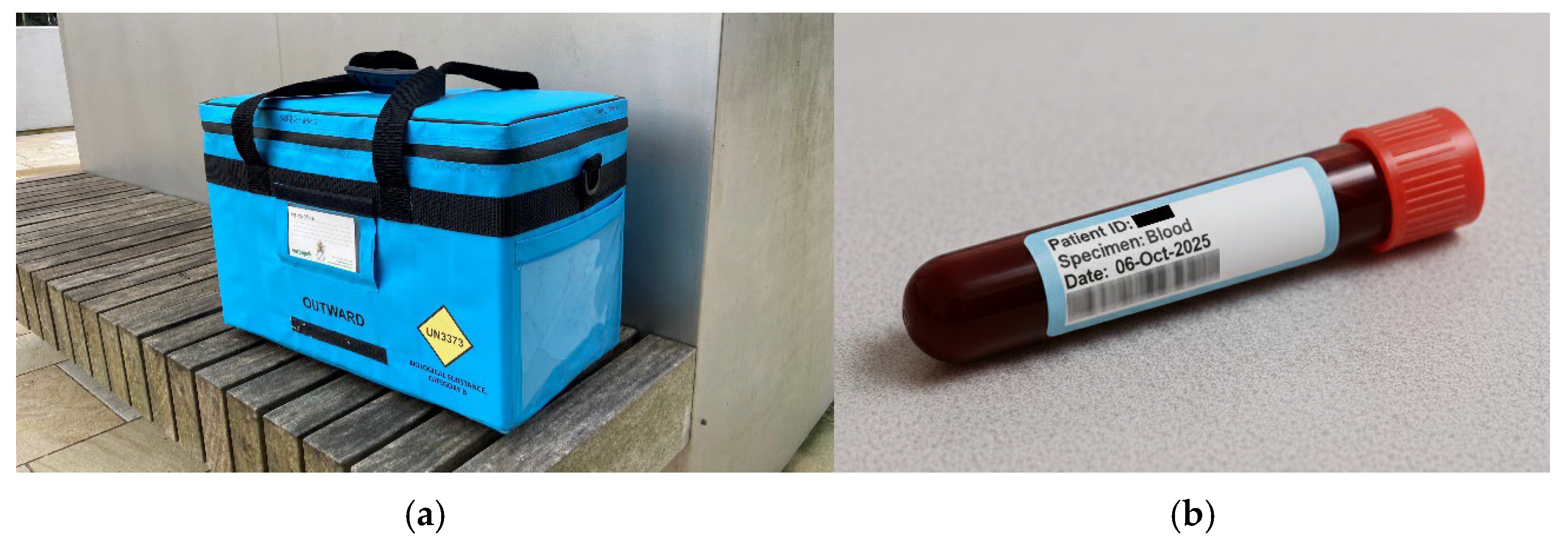
27]. The carrier, known as the ‘Versapak’, has a zipped lid, with all six faces, i.e., top lid, bottom, and four sides, having a thickness of ~45 mm consisting of a layered construction of plastic stiffener board, foam padding, insulating foil, and PVC covering (
Figure 2). Typically, transport is by road vehicles, and these carriers are already compliant with the relevant regulations governing the transport of DGs by road [
29].
The research reported here was based on the development of the existing, standard medium-sized Versapak, which has external dimensions of 460 × 305 × 255 mm and an empty mass of 2.151 kg. This approach would act as an enabler to the future integration of drones into NHS logistics, whereby drones would be able to transport approved carriers of the style already in use across the system. The research was conducted in collaboration with Versapak International Ltd., who provided design and manufacturing support.
Development of the new insulated medical carrier involved modification of the existing Versapak to comply with two separate sets of regulations: (1) the TIs; and (2) the CPC drop test procedure. Regarding (1), the most common usage of the carrier is for transporting UN3373 items (hence the diamond-shaped mark for UN3373 is printed directly onto the Versapak’s exterior,
Figure 2). Therefore, it was compliance with the TIs in relation to UN3373 that was the relevant concern. When carried by air in any type of aircraft, the provisions of the TIs state that UN3373 items must be packaged in compliance with Packing Instruction 650 (PI650). PI650 requires that the packaging must consist of three components: (i) a primary receptacle; (ii) a secondary packaging; and (iii) a rigid outer packaging. In this configuration, the Versapak functions as the outer packaging component. However, the equivalent DG regulations for road do not require the outer packaging to be rigid, and therefore, this was an area where the carrier required modification for air transport.
Regarding (2), achieving CPC compliance enables the carrier to be used to carry any type of DG, not just UN3373, when transported by drone in the UK or Europe, although it is worth noting that UN3373 is currently exempt from the requirement for a CPC in the UK (
Section 2). The most flexible approval under the CPC drop test procedure is for a carrier with a payload consisting of solids or liquids placed/poured directly into the carrier without the use of any liner or inner packaging, which constitutes preparation as in Section 6.II or 6.III of the procedure, respectively. A carrier passing the drop test in this configuration would be approved to carry any package containing DGs, packaged according to its specific packing instruction given in the TIs, and then placed inside the carrier for transport by drone. For example, a medicine that is a DG classified as ‘UN3077, environmentally hazardous substance, solid, not otherwise specified (n.o.s.)’ must be packaged for transport by air in accordance with PI956 detailed in the TIs. It must then be placed inside a CPC if the air transport is to be by drone rather than crewed aircraft, for which a CPC-compliant Versapak could be used.
The procedure also allows any specific TI-compliant packaging configuration (i.e., packaged according to a specific packing instruction given in the TIs for a specific DG) itself to be tested as a CPC, which constitutes preparation as in Section 6.I of the procedure. However, this means a pass is then only valid for the exact configuration of packaging tested. Due to the flexibility, drop testing for CPC compliance in this research was conducted with solids/liquids placed/poured directly into the carrier. Carrier compliance requirements for DG regulations in the UK are summarised in
Table 2.
3.3. Carrier Modifications and Demonstrating Compliance
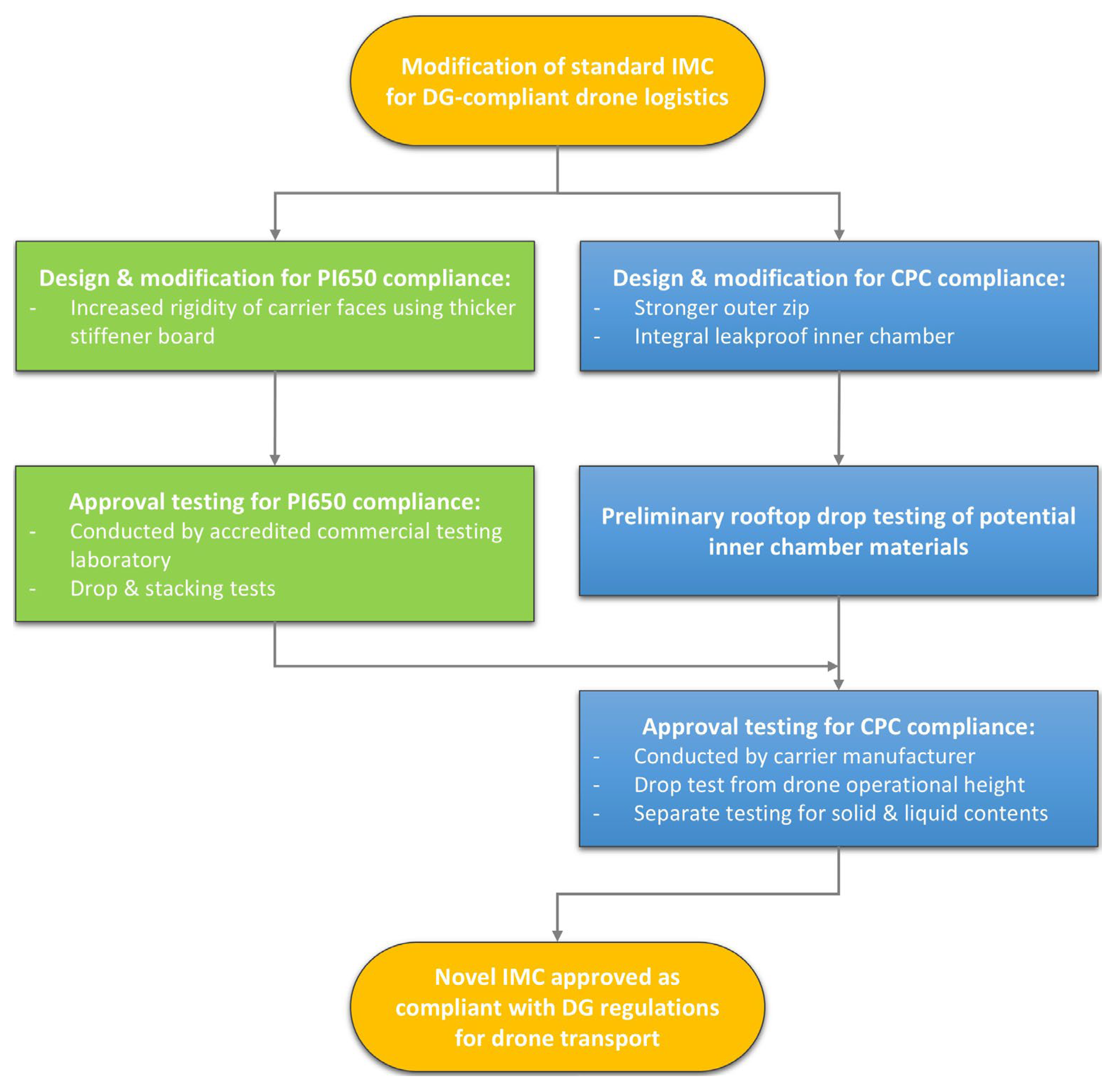
Design work was undertaken to modify the existing Versapak to achieve both PI650 and CPC compliance. A flow chart illustrating the process from carrier design through to compliance is shown in
Figure 3.
3.3.1. PI650 Compliance
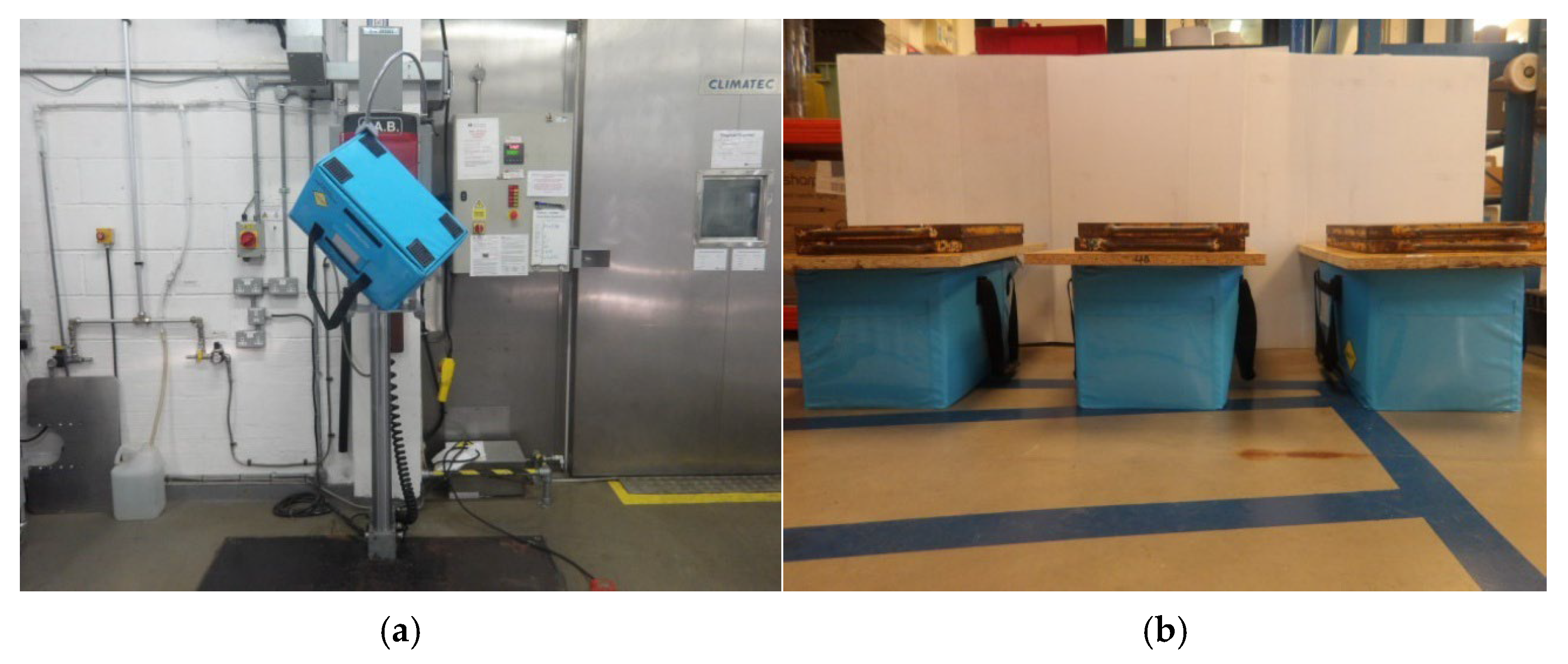
The thickness of the plastic stiffener board used in the construction of all the faces of the carrier was increased from 1.2 to 1.7 mm. This increased the rigidity to achieve compliance with the PI650 requirement for a rigid outer packaging. Industry standard practice for demonstrating PI650 compliance is for the required test procedures to be conducted by an accredited commercial testing laboratory. Two test procedures were required (
Figure 4): (i) the drop test, as specified in PI650; and (ii) the stacking test, not specifically specified in PI650 but specified elsewhere in the TI, the reasons for which form part of the discussions (
Section 4).
During the drop test, five identical specimens of the carrier must be dropped onto a flat, rigid surface from 1.2 m in five different orientations (flat on the base, flat on the top, flat on the longest side, flat on the shortest side, and on a corner) when prepared as for transport, which constituted containing a representative load of water contained in primary receptacles and secondary packaging. There must be no leakage from the primary receptacles post drop.
During the stacking test, three identical specimens of the carrier must be subjected to a force applied to the top surface for 24 h equivalent to the total weight of identical carriers, prepared as for transport, stacked to a height of 3 m without any leaks or distortion occurring liable to cause instability in stacks of packages. No distortion occurring liable to cause instability is assessed by the testing laboratory as no more than 5° deflection from horizontal, observed in the rigid top plate used to support the applied load.
3.3.2. CPC Compliance
Previous experimentation based on the CPC drop test procedure conducted by the authors on the standard Versapak [
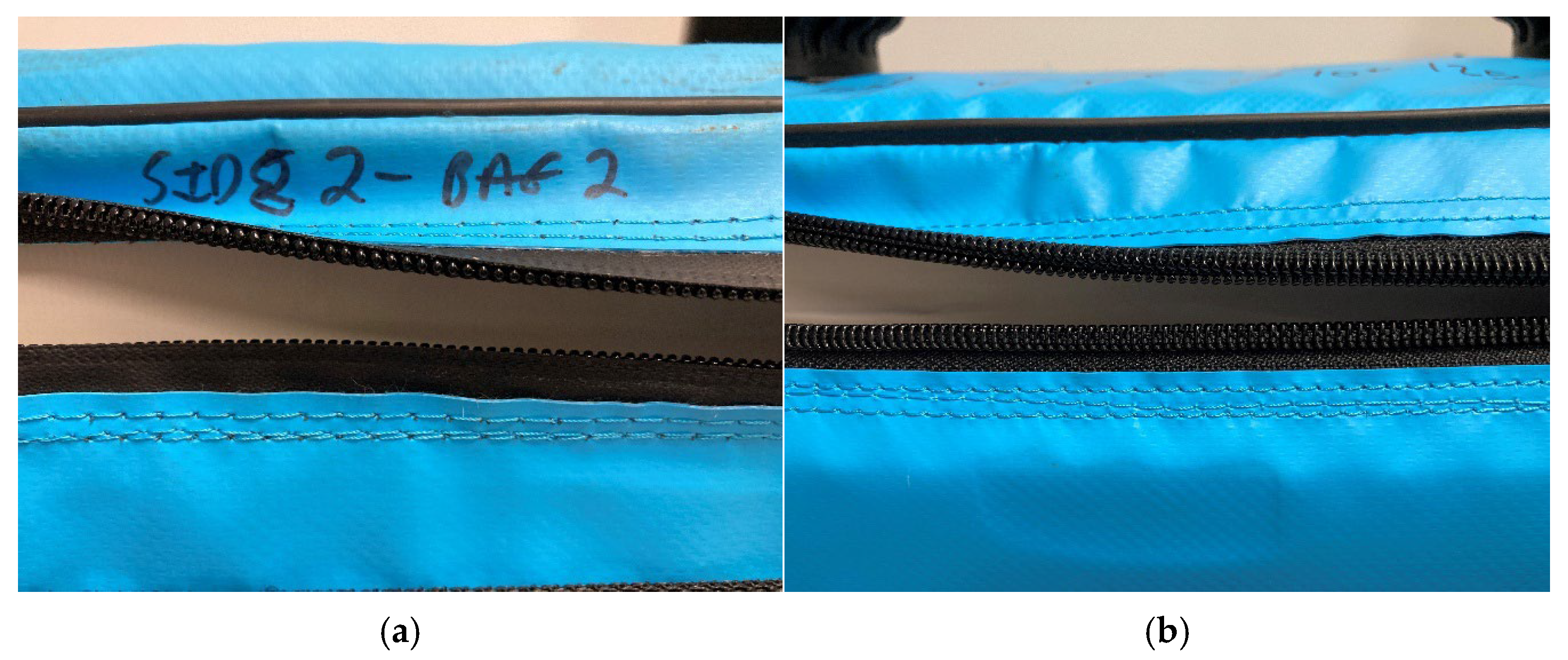
27] already revealed that the outer zip was prone to bursting on impact and that the carrier itself was not leakproof, with water poured directly into a standard carrier leaking out through the seams. Therefore, the outer zip was replaced with a stronger, anti-tamper zip with dual rows of teeth (
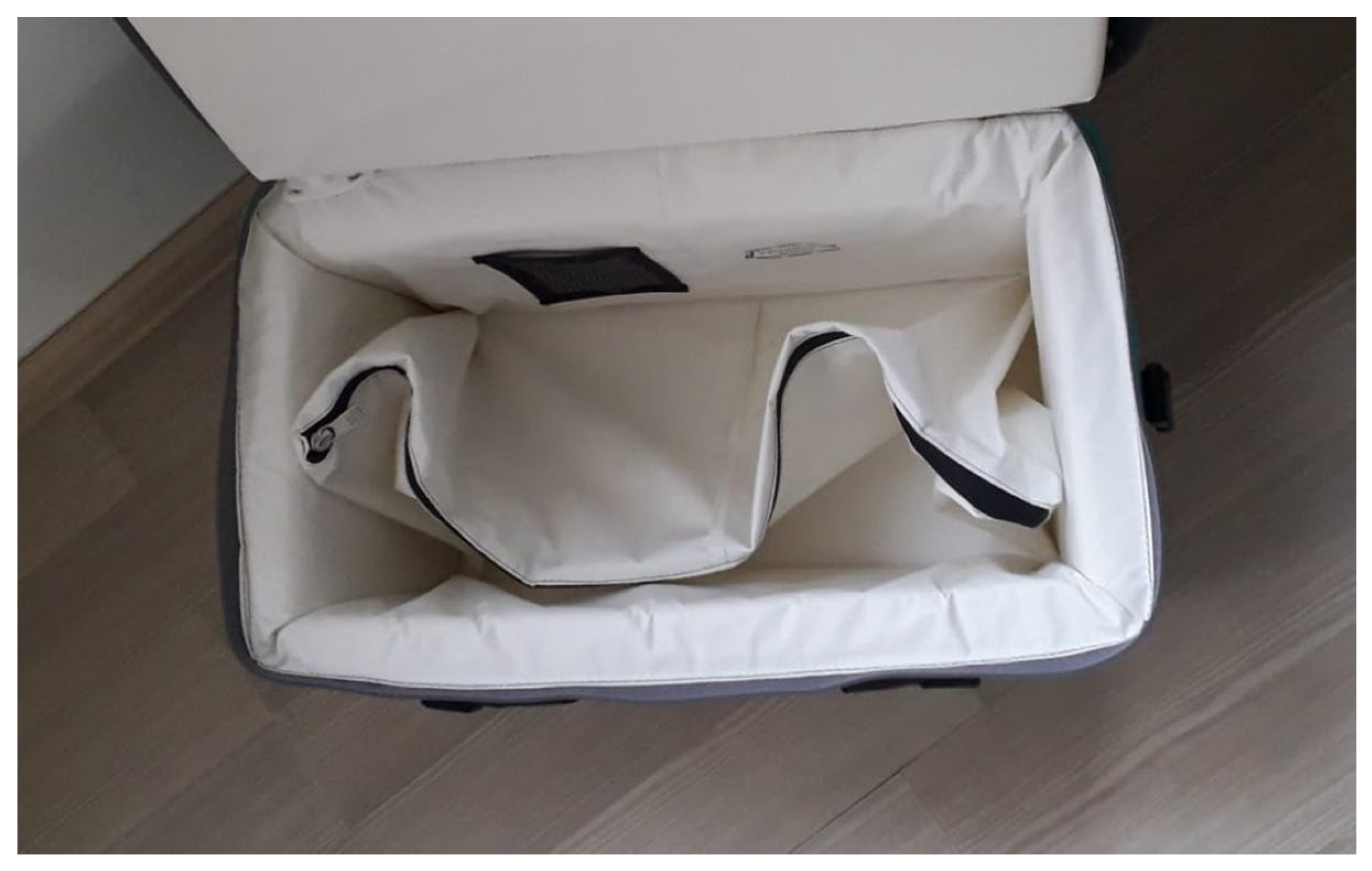
Figure 5), and a leakproof inner chamber with a leakproof zip closure was designed for installation inside the carrier (
Figure 6). The inner chamber had to be integral to the carrier, fixed in such a way so as not to be removeable, because otherwise it would be viewed by the authorities as a liner. The definition of a liner in the TIs is a “separate tube or bag inserted into a packaging but not forming an integral part of it”, the use of which is prohibited under Section 6.II/III of the CPC drop test procedure. The simplest solution was to fix the bottom of the inner chamber to the inner surface of the bottom of the carrier (
Figure 6).
The gross mass of the carrier plus its contents during the test dictates the maximum gross mass of any approval granted under the CPC drop test procedure. In this research, 2.5 kg was selected as the mass of the contents for both the solid and liquid test based on the authors’ experience of the typical maximum masses of patient pathology specimens and aseptic medicines payloads transported by Versapaks in the NHS [
30]. This gave a gross mass of 5 kg for the modified carrier. Dry sand with a typical grain size ≤ 0.5 mm was used for testing with solids, and water containing coloured dye to aid leak detection was used for liquids.
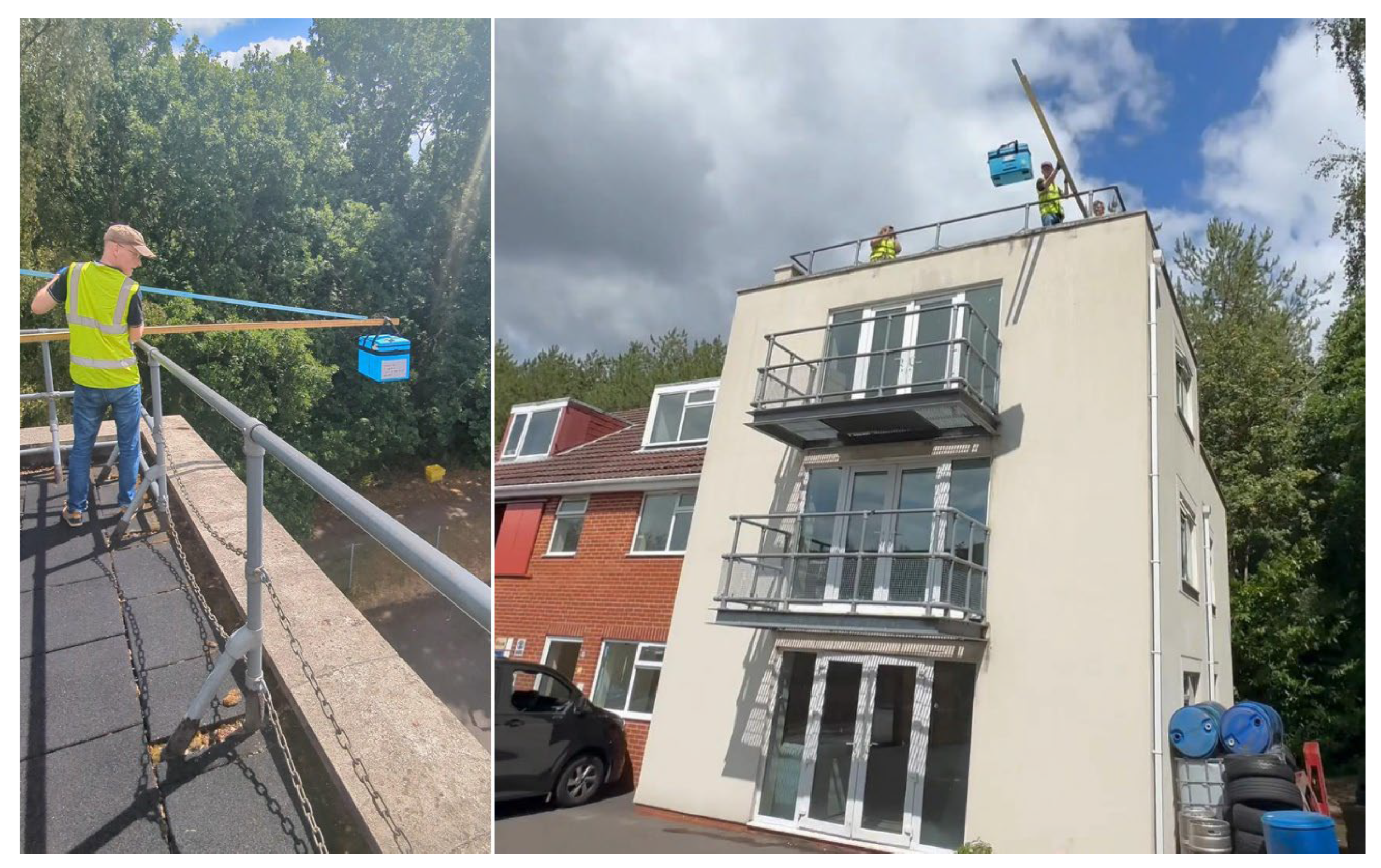
Prior to settling on a satisfactory full design, initial investigations involved experimenting to find a suitable material for the manufacture of the leakproof inner chamber. Various leakproof materials were identified based on a review of off-the-shelf items designed to be waterproof, such as water carriers and drinks bladders. These items were filled with 2.5 kg of water, placed inside a Versapak (one item per Versapak), and subjected to preliminary drop testing to assess performance on impact from a much lower height of 10 m from a rooftop (
Figure 7). Based on this initial screening process, items that successfully passed without rupturing or leaking on impact were taken forward for testing from the full height required by the CPC drop test procedure.
In contrast to the PI650 compliance test procedure, which is normally conducted by an accredited testing laboratory, the CPC drop test procedure is intended to be conducted by the manufacturer of the carrier or their representatives, with approval based on a detailed test report compiled by the manufacturer and submitted to the authorities, i.e., the VCA, for technical review and approval. All testing in relation to CPC compliance in this research was conducted by the research team working in collaboration with the carrier manufacturer (Versapak International Ltd., Erith, UK) and a drone operator (Motion Robotics, Southampton, UK) with specific approval from the CAA for dropping items from their drone.
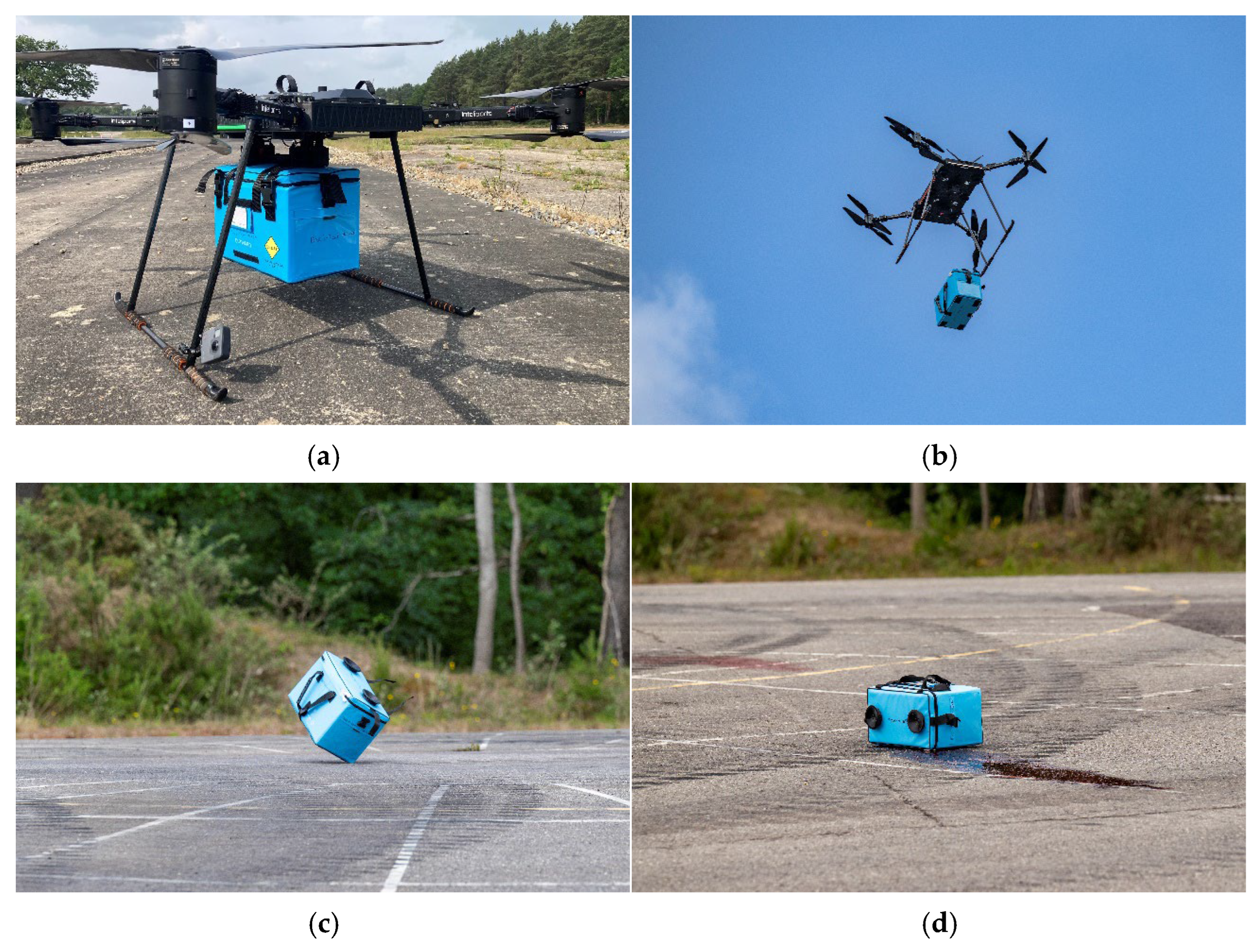
Testing involved attaching a carrier containing an inner chamber filled with 2.5 kg of sand or water to the drone via a suitable attachment/release mechanism and flying the drone to 122 m, where the carrier was then released to fall on to a hard standing below, i.e., a smooth, level and flat area of asphalt conforming to the general requirements of a public highway (
Figure 8). The height from which the carrier would reach terminal velocity, calculated as 22 m/s for the fastest possible descent with the smallest face towards the ground, was calculated as 98 m. This calculation was performed using the same method as described in [
27]. Even when the 10% safety margin was added to give a drop height of 108 m, this was still lower than 122 m. The reason 122 m was used as the drop height in this research, rather than the lower terminal velocity height, is discussed in
Section 4.
Immediately post-impact, the carrier was visually inspected for leaks and comprehensively photographed before being removed for more detailed assessment. Carriers containing liquids were placed in a secure area on-site for 8 h in an orientation most likely to cause leaks before re-inspection. To obtain a pass, the test procedure requires that a set of three identical specimens of the carrier, known as the test set, each achieve the required performance when dropped as part of the same batch.
The modified carrier has passed PI650 compliance but work to achieve CPC compliance was still ongoing at the time of writing because, whilst the inner chamber successfully prevented escape of solids, further drop test experimentation is required to identify the best combination of material, zip closure and fixing for the inner chamber to prevent escape of liquids.
The results from the carrier development reported and discussed in
Section 4 relate to the challenges identified, rather than the performance of the carrier per se, which was only pertinent for the carrier’s manufacturer (Versapak International Ltd., Erith, UK).
4. Results and Discussion
4.1. Possible Future Demand for DG-Compatible Medical Carriers
An indication of the possible future demand for DG-compatible medical carriers for drones was explored in a healthcare setting, with payloads containing patient pathology specimens or medicines considered. Statistics published by the Royal College of Pathologists show that there are over 300,000 patients tested in the NHS each working day in the UK, generating pathology specimens usually classified as UN3373 that typically require transport from doctors’ offices in the community to central pathology laboratories often located in large hospitals for analysis [
31]. This sizeable demand for specimen transport could benefit from a mode shift to transport by drone rather than conventional transport by van. The suggested advantages of drone transport include reduced transit times, costs, energy consumption and emissions, and enhanced accessibility for locations that are difficult to reach (
Section 1). However, it should be noted that some research comparing drones with more conventional transport modes has indicated that these advantages can be difficult to achieve in practice and only possible in particular situations, e.g., when doctors’ offices are in remote and isolated locations [
3,
32,
33].
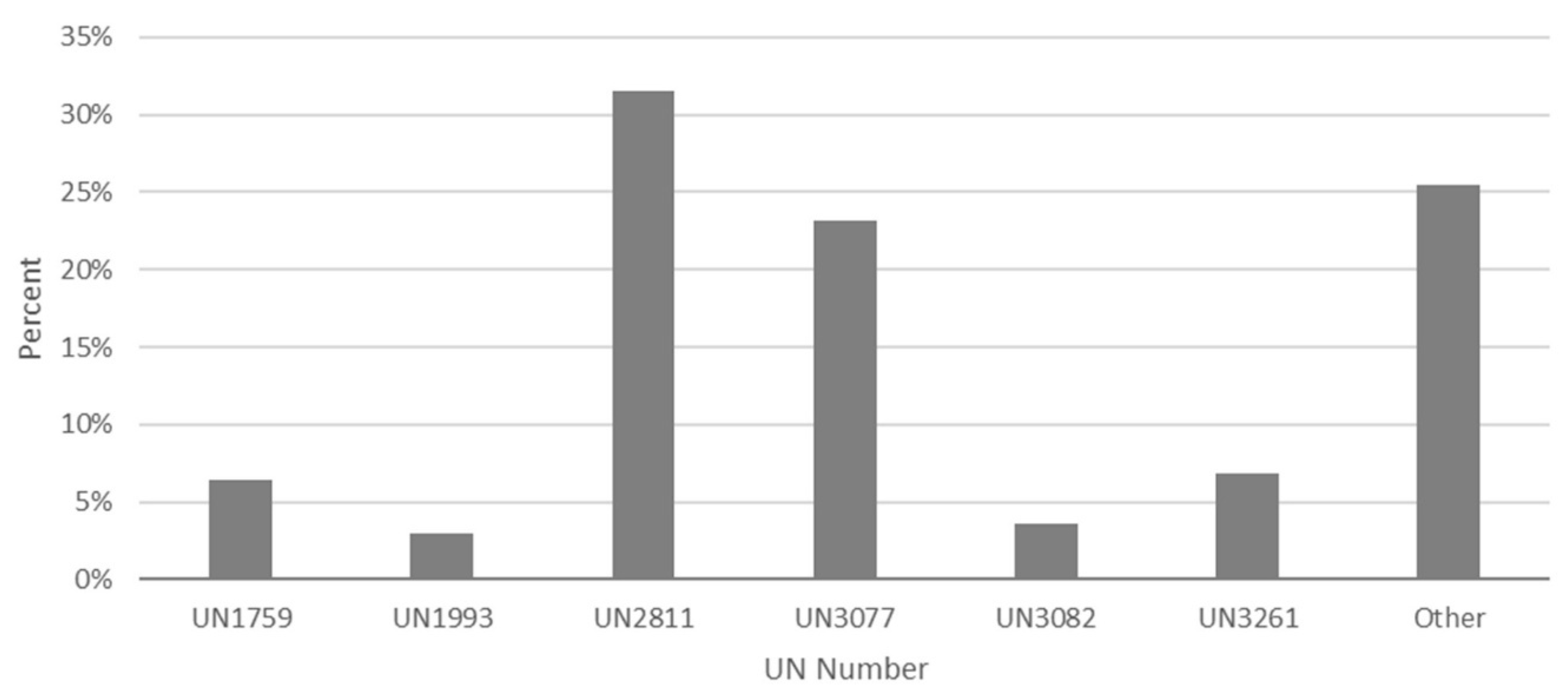
With respect to drone payloads containing medicines that are DGs, results from the analysis of Safety Data Sheets (SDSs) for over 44,000 different medicines showed that ~10% (
n = 4368) were classified as DGs. Of those, the main classifications were as follows: UN1759, corrosive solid, n.o.s. (6%); UN1993, flammable liquid, n.o.s. (3%); UN2811, toxic solid, organic, n.o.s. (32%); UN3077, environmentally hazardous substance, solid, n.o.s. (23%); UN3082, environmentally hazardous substance, liquid, n.o.s. (4%); and UN3261, corrosive solid, acidic, organic, n.o.s. (7%). The other 25% included 115 different UN classifications, each constituting fewer than 3% of the medicines that are DGs (
Figure 9).
Whilst it provides some indication of the scale of the potential, the number of medicines classified as DGs does not necessarily provide the entire picture. This is because it does not account for the frequency with which each medicine might need to be transported, nor for whether or not transporting the medicine by drone would provide any advantage over conventional transport by van, e.g., a time-critical medicine where rapid transit time would be beneficial.
Results from the patient pathology specimens and the medicine SDSs suggest that there may be potential for logistics drones to carry payloads containing DGs. However, it is important to note that the results remain indicative, because other determinants of demand are likely to have considerable impact, such as transport frequency, urgency, and benefits of drones over conventional transport modes.
4.2. PI650 Compliance Process
The process for demonstrating PI650 compliance was less challenging than that for CPC compliance (
Section 4.3), as testing packaging for TI compliance is a long-established process, using experienced accredited commercial testing laboratories. One issue that did arise was related to the requirement in PI650 for the carrier to provide a ‘rigid outer packaging’, which is not a requirement of the equivalent regulations for road transport. This led to discussions with the authorities, i.e., the VCA, who were of the opinion that the standard carrier was insufficiently rigid, but there is no test for rigidity specified in PI650. This created uncertainty regarding the question of how rigid is ‘rigid’?
Through further consultation with the VCA aimed at resolving this question, it was agreed that the stacking test (
Section 3.3.1), specified elsewhere in the TIs but not in PI650, would be a suitable method to demonstrate acceptable rigidity of the modified carrier, which was the method adopted in this research. However, the requirement for an outer packaging rigid enough to pass the stacking test is not particularly relevant for drones. This is because it relates to the situation where packages are stacked for transport in the holds of crewed aircraft, a situation that is unlikely to occur in drone transport where holds are far smaller (e.g., typical capacity of ~5 kg) or loads are underslung. The requirement could be removed if a version of PI650 was adapted specifically for drones. The PI650 rigidity requirement was also potentially in conflict with the requirements of the CPC drop test procedure, compromising the carrier’s ability to survive the fall and pass the test by absorbing the force of the impact through allowable deformation of its structure.
4.3. CPC Compliance Process
The process for demonstrating CPC compliance was challenging and raised many issues. A number of these stemmed from using a drone as the method for elevating the carrier to the required height for dropping, which was the obvious method to choose given that the carrier was designed specifically with drone logistics in mind. The drone operator must have approval for dropping from the NAA, with only one operator suitably authorised in the UK at the time of the research. Obtaining this approval can be a lengthy and expensive process. In the UK, this involves the drone operator submitting a Specific Operations Risk Assessment to the CAA for an operational authorisation, which costs ~3500 GBP and can take a period of months. It is unlikely that drone operators would be able to justify the expense of obtaining and maintaining the required dropping approval unless the demand for drop testing services is sufficient to offset the associated costs.
Drone flights can be more affected by adverse weather because they tend to have quite restrictive operational limitations compared to crewed aircraft, typically ~10 m/s wind speed and <50 mm/h precipitation [
34]. Compounding this, the dropping authorisation from the NAA is likely to have weather limits imposed that are more restrictive than the drone’s operational limitations. For example, the dropping authorisation for the operator used in this research had limits of 5 m/s wind speed and no precipitation, which led to 40% (2 out of 5) of the scheduled testing days being cancelled. This was in the summer months, and the issue of cancellations due to weather would be expected to get worse in the autumn/winter months as the weather deteriorates. Cancellations waste both time and financial resources, particularly when cancelling at short notice where a refund for the rental of the drop site is forfeited. Rental of the drop site used in this research (QinetiQ Hurn Proving Ground) cost ~1400 GBP per day and required at least 48 h’ notice for cancellation free-of-charge, which meant weather conditions had to be assessed well in advance when forecasts are less reliable.
Even when the weather conditions were within established limits for drop testing, it was still a challenge to allow for the lateral drift of a falling carrier so that it impacted the ground safely within the intended target area on every occasion in conditions of constantly varying wind speed and direction. Pre-test calculations, confirmed by observations taken during the tests, showed that a 5 kg loaded carrier could drift by up to ~18 m when dropped from 122 m at the maximum authorised wind speed for dropping (5 m/s). Furthermore, it was relatively easy to measure instantaneous surface wind speed accurately with a hand-held anemometer, but it was not possible to know with any certainty the instantaneous wind speed at release height. Instead, it was necessary to rely on the general weather reporting for the region surrounding the drop site based on reports from a nearby active airfield. This did not account for wind effects local to the drop site and therefore introduced uncertainty into the drift calculations.
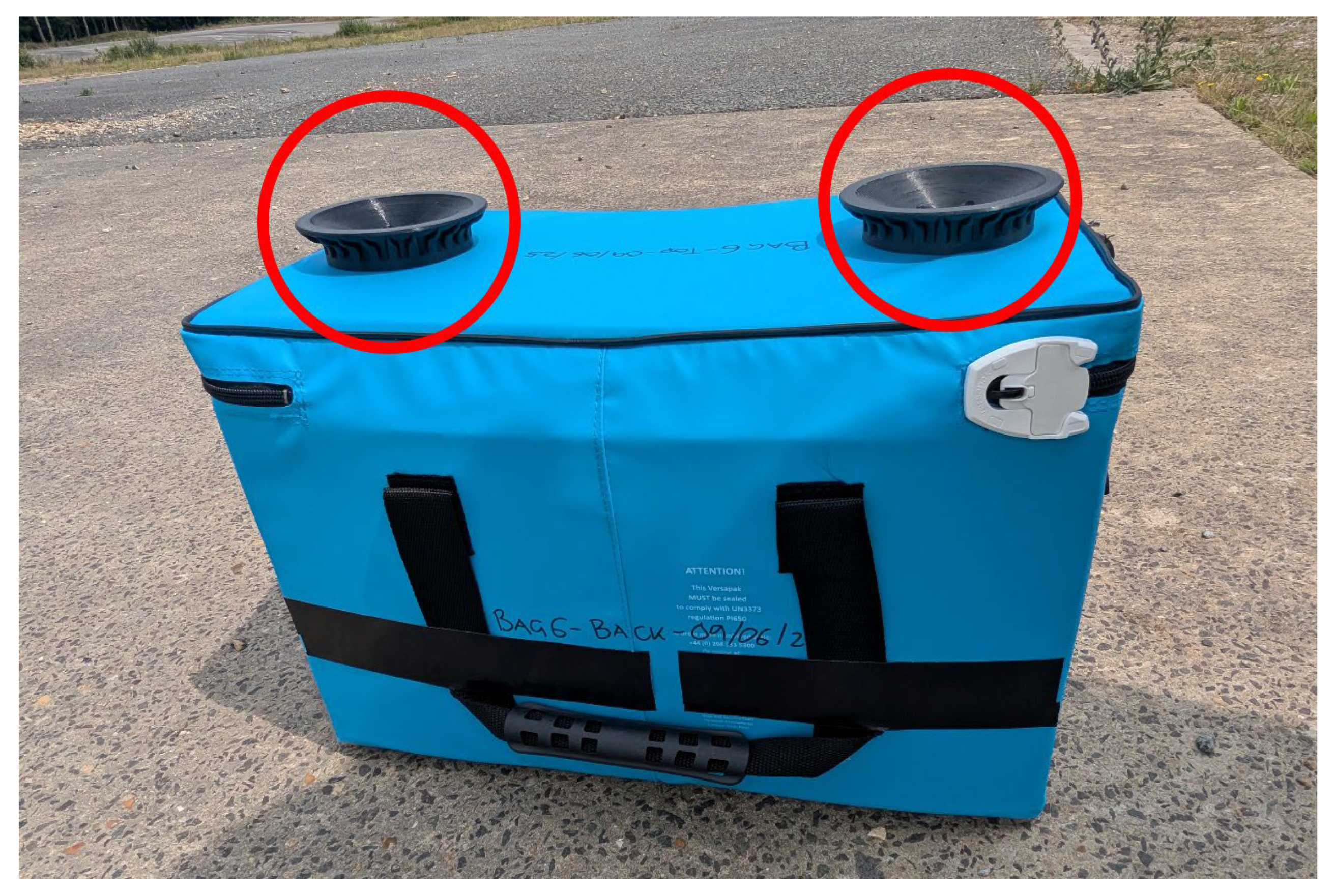
Drones can be prone to technical reliability issues that prevent flying because they tend not to be certified to the same airworthiness standards as crewed aircraft, with commercial drone operations in the UK and Europe tending to be in the specific rather than certified category. Drones used for drop testing must have a suitable attachment/release mechanism so that carriers can be lifted to the required height and then released cleanly. Dropping payloads from altitude is not generally the primary purpose of logistics drones. Therefore, drones tend not to have such mechanisms fitted as standard, or have a mechanism fitted that is for delivering a specific design of payload container that cannot be adapted to suit other shapes and sizes, such as a medical carrier. The drone operator in this research designed their own bespoke mechanism, but this required each carrier scheduled for testing to have bespoke attachment cups pre-fitted to the top surface of the lid (
Figure 10), which necessitated additional planning and manufacturing works.
An earlier mechanism designed by the drone operator involved the carrier being attached by a harness. This required ratchet straps to be wrapped tightly around the carrier that were not part of its construction but, it could be argued, provided additional protection against the carrier rupturing on impact. The mechanism involving attachment cups was developed as a more practical alternative that eliminated the ratchet straps, but the regulator may view the cups as an integral part of the carrier’s structure when presented for CPC approval using this particular drone’s attachment/release mechanism, even though the cups did not provide additional impact protection and would not form part of the commercially available product.
Drop testing activities using a drone can be vulnerable to interruptions from the potential collision danger represented by other crewed air traffic passing overhead the test site at unknown heights, as was the case in this research. Unless it is necessary for take-off or landing, crewed aircraft are generally prohibited by the rules of the air from flying within 152 m (500 ft) of any person, vessel, vehicle, or structure, which is above the typical maximum height of 122 m used for drop testing. In addition, drop testing activities can be promulgated to other airspace users by Notice to Aviation (NOTAM) and/or conducted in a volume of airspace from which other air traffic are excluded, e.g., a restricted area. Despite such protections, it is impossible to rule-out the chance of navigational errors on the part of crewed aircraft pilots. Given that drones are typically small and difficult to spot, the only safe course of action is to pause drop testing activities until all crewed aircraft are observed to be clear of the site.
The UK’s CPC drop test procedure allows testing from heights lower than the typical maximum drone operational height if it has been determined that the carrier will reach terminal velocity before impact (
Section 2), as was the case in this research (
Section 3.3.2). However, discussions between the authors and the authorities, i.e., the VCA, revealed that there was a strong preference for drop testing from operational height regardless of whether terminal velocity can be reached from a lower height. The reason for this was given as the public relations (PR) perspective, whereby the concern stemmed from the potential reputational and public image damage if a CPC were to fail in service after falling from 122 m when the carrier had only been tested and approved from a lower height. In the authors’ opinion, it is debatable whether PR reasons should be allowed to dictate testing procedure if it makes the procedure more difficult to achieve safely, with dropping from higher making it more challenging to hit the intended target area, and if it creates uncertainty around the acceptable way to comply with the procedure. Moreover, there is no guidance or approved method provided in the drop test procedure for calculating either the height from which a carrier will reach terminal velocity or the lateral drift of falling carriers in given wind conditions. Instead, it is left to those carrying out the drop testing to develop a suitable method of their own for these calculations, which could be vulnerable to errors or miscalculations.
There are options other than drones for drop testing. Structures such as buildings, bridges, and cranes could be used but are typically not tall enough. For example, the National Lift Tower in Northampton, UK, is a research and development facility originally built to test lifts, and is 127 m tall but could only offer drop tests from a maximum of 59 m when contacted. Helicopters, as certified crewed aircraft, tend to be more reliable than drones and are able to fly in more adverse weather conditions, having less restrictive wind and precipitation limits. However, they are typically expensive, e.g., ~10,000 GBP per day vs. ~1800 GBP per day for a drone [
35], may need to be flown from their base to the test site rather than easily transported in a road vehicle as for drones, still require permission from the NAA for dropping, although this is a quicker approval process than for drones, and are still subject to the difficulties associated with hitting the intended target area with a drifting carrier. Finding and renting a suitable drop testing site, be that a site for dropping from a drone or helicopter (e.g., a disused airfield with a hard-surface runway), or a sufficiently tall structure, is a challenging and expensive process, e.g., up to 4750 GBP per day for the site options considered in this research [
36], particularly when subject to fees for cancellations due to weather or drone technical unserviceability. In addition, the procedure requires dropping onto a hard standing as the assumed worst case, but drones may fly over other surfaces such as grass, arable land, or water bodies, raising interesting questions about whether carrier damage patterns could be different when dropped onto such surfaces.
In general, the CPC drop test procedure is a challenging process, which is expensive, time-consuming and labour-intensive. This suggests that it may not be viable for commercial companies intending to manufacture and sell CPCs to undertake such a process on a routine basis, particularly where iterative testing of design solutions is required. Preliminary drop testing from a rooftop was used in this research for initial screening of potential inner chamber materials (
Section 3.3.2), precisely because of the challenges inherent in conducting drop testing from full height.
Laboratory-based tests may represent the best option for demonstrating CPC compliance, i.e., similar to those used for PI650 compliance. This would eliminate the need for drones, helicopters or tall structures, and would provide repeatability of testing. The CPC drop test procedure requires a set of three identical carriers to be successfully tested as part of the same batch to obtain approval (
Section 3.3.2). However, there is no requirement to verify the extent to which the three tests are exact repeats of each other, e.g., impact orientation, weather conditions and lateral drift. In general, all carriers demonstrated similar robustness in each test, in that there was little damage visible on any of them. Only occasional deformations of the plastic stiffener board were observed within the outer PVC covering, but never any holes through which the contents could escape. A lack of repeatability verification is a weakness of the procedure which the introduction of a laboratory-based test could counter. However, this would require accredited commercial testing laboratories to invest in equipment that can accelerate carriers, potentially in many different shapes and sizes, to terminal velocity in a laboratory environment, something they may be reluctant to do ahead of proven demand for CPC compliance testing. In addition, changing to a laboratory-based test would require regulatory approval from the VCA as an acceptable alternative to the existing CPC drop test procedure.
Standard industry practice is to use laboratory-based tests to demonstrate packaging compliance with PI650, and most other TI provisions, because these regulations are long-established and well understood, with considerable demand for testing from the air freight industry. In contrast, the CPC requirement was introduced in 2021 and is for the currently niche area of drone logistics with DG payloads. Testing laboratories have not yet had the time or seen sufficient demand to warrant investment in the development of commercial CPC testing services to offer to manufacturers, even though laboratory-based testing may be the better alternative in the longer-term. A comparison of the key aspects of the PI650 and CPC compliance processes is summarised in
Table 3.
4.4. Summary of Challenges Identified
In general, the challenges associated with complying with DG regulations for the drone logistics sector tend to arise because drones are a novel mode of payload transport that requires the development of a new regulatory environment to ensure safe operations. The sector is forecast to grow at a 66% Compound Annual Growth Rate over the period from 2024 to 2034 [
37], which means clearly understood regulatory regimes for DGs are urgently needed. In response, some authorities have managed to implement procedures for demonstrating compliance within relatively short timescales. These procedures tend to be feasible, in that they are challenging but possible with current resources and at current scale. However, the challenges involved mean the procedures tend not to be viable, in that they are not capable of scalable growth on a longer-term, sustainable, commercial basis due to being excessively resource intensive.
There were a number of challenges identified during this research in complying with DG regulations as currently specified. These can be conveniently summarised as follows:
Region- or nation-specific regulations: The interpretation of DG regulations in relation to drone operations tends to be region- (e.g., the EU) or nation-specific, often varying from country-to-country. The need to comply with multiple, different regulatory regimes is likely to be an impediment to actors within the drone sector who operate internationally.
Superseding regulations: New and evolving regulatory regimes such as those governing the transport of DGs by drone are prone to short time intervals before existing regulations are superseded by subsequent iterations.
Interpreting regulations: The applicability of DG regulations to drone logistics must be interpreted by authorities, often on a case-specific basis, which can create uncertainty over appropriate methods of compliance.
Burden on resources: A new and evolving regulatory environment places a burden on the resources of all parties involved. Authorities must provide advice and guidance to reduce uncertainty about appropriate methods of compliance, which require frequent updating. Case-specific approvals from authorities can often involve lengthy and expensive processes. Manufacturers and operators must invest resources in understanding and complying with new requirements.
Reliability of drones for the CPC drop test procedure: Drones are susceptible to being unable to fly due to adverse weather exceeding limitations, either for the drone itself or more likely for the dropping approval, or due to technical reliability issues. Other, more reliable, options for conducting drop testing are available but are either more expensive, e.g., helicopters, or not readily available, e.g., sufficiently tall structures.
Practical difficulties realising the CPC drop test procedure: Testing for CPC compliance is a newly established procedure overseen and/or conducted by the manufacturers themselves, who are not necessarily experts in such matters. There are a number of difficulties inherent in the CPC drop test procedure, for example,
Lack of accumulated experience regarding the most effective way to conduct it;
Drones must have a suitable attachment/release mechanism, which often requires a bespoke system;
Ensuring the carrier impacts the ground within the intended target area is challenging, particularly as accurately measuring the wind speed at release height is impractical;
Lack of official guidance on drift or terminal velocity calculations;
The danger of collisions with over-flying crewed aircraft.
Based on the challenges identified, there are several recommendations to help improve the viability of DG compliance procedures. Explicit provisions relating to drones should be included in the TIs. This would help clarify how the DG regulations should be interpreted and applied for all involved in the drone logistics sector, simplifying case-specific approval processes. Such provisions could include a requirement for CPCs and a procedure to demonstrate associated compliance if international agreement could be secured. Harmonisation and standardisation of DG regulations in relation to drones should be sought, which would be facilitated by explicit inclusion of drones in the TIs. This would help to avoid the inefficient situation where the multi-national drone logistics sector must comply with a patchwork of different regulations in different jurisdictions, e.g., where Versapak International Ltd. sell their carriers in multiple countries. Compliance approval testing should be conducted by accredited facilities, using laboratory-based procedures. This would reduce the challenges of testing by providing repeatability, staff who are experts in testing, and centralised facilities generating economies of scale, rather than each manufacturer testing their own product.
Regarding transferability, the study findings are likely to have wider relevance beyond the UK. Both the review of DG regulations and the analysis of medicine SDSs are relevant multi-nationally. There is also likely to be demand for transport of patient pathology specimens in other nations similar to the UK. The PI650 compliance requirements for UN3373 items such as pathology specimens are part of the TIs, which are international regulations published by the ICAO. The CPC requirement is published by the EASA and is applicable Europe-wide. The UK is the only jurisdiction to date to publish an explicit procedure to demonstrate CPC compliance, but acceptable methods to demonstrate compliance are likely to be required in other European countries. These methods may not be exactly the same as the procedure in the UK, but they could benefit from the study findings regarding understanding of the challenges of the UK procedure. Moreover, in the global evolving environment of DG regulations related to drones, any jurisdiction considering the introduction of a requirement for a CPC, or similar, could benefit from being informed by the experience already encountered in the UK, particularly if convergence and harmonisation of regulations is to be achieved.
5. Conclusions
Given the many challenges involved, it appears unlikely that the current regimes for the drone logistics sector to demonstrate compliance with DG regulations, involving procedures for the establishment, testing and approval of DG-compliant drone operations and packaging solutions, can be viably scaled to accommodate the sector’s anticipated expansion. In many parts of the world, there has been little or no development of DG regulations specifically in relation to drones, and in jurisdictions where development is more advanced, such as the USA, EU and UK, procedures tend to be unwieldy and resource-intensive.
The UK’s CPC drop test procedure, in particular, is a good example of a newly established procedure that does not appear to be commercially viable in its current form, although it could be argued that the UK has, at least, produced a procedure, whereas in Europe, the onus is on the drone operator to demonstrate CPC compliance on a case-specific basis without any guidance on an acceptable method to do this. Compliance with DG regulations is an important aspect of drone logistics, particularly in a healthcare setting, and identifying the challenges involved is a vital first step if drones are to become a routine part of logistics systems of the future. Based on the challenges identified, recommendations to help improve the viability of the DG regulatory environment include the inclusion of explicit drone provisions in the TIs, global harmonisation of DG regulations in relation to drones and laboratory-based testing for compliance approvals.