
Cave of Altamira (Spain): UAV-Based SLAM Mapping, Digital Twin and Segmentation-Driven Crack Detection for Preventive Conservation in Paleolithic Rock-Art Environments

 ,
,  , , , , , and
Highlights
- The UAV-based inspection enabled highly precise 3D reconstruction of the inaccessible rock wall above the La Hoya Hall, overcoming severe geometric, lighting and safety constraints that prevent conventional geomatics surveys.
- This study reports the first documented deployment of a LiDAR-SLAM confined-space UAV inside a Paleolithic World Heritage cave for structural monitoring, revealing active fractures, unstable blocks and sediment accumulations inaccessible to conventional methods.
- The integration of LiDAR–SLAM, videogrammetry, and deep learning–based crack detection demonstrates the potential of an integrated geomatics workflow to support the identification and assessment of geological instabilities in fragile subterranean environments under severe operational constraints.
- The incorporation of these datasets into a Digital Twin framework provides a structured basis for multitemporal analysis, expert-driven annotation, and informed decision-making, contributing to the development of long-term preventive conservation and monitoring strategies.
Abstract
1. Introduction
2. Materials and Methodology
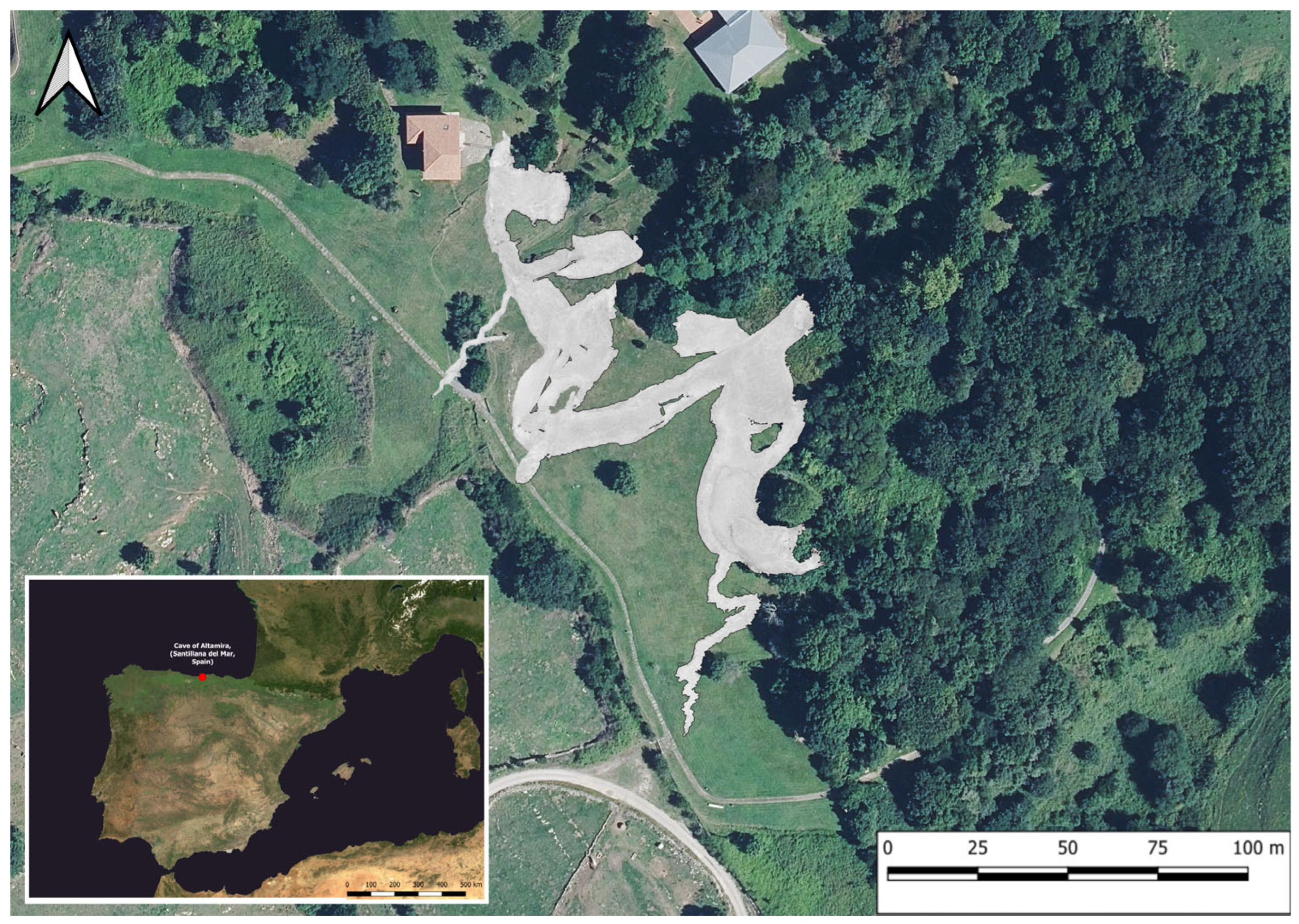
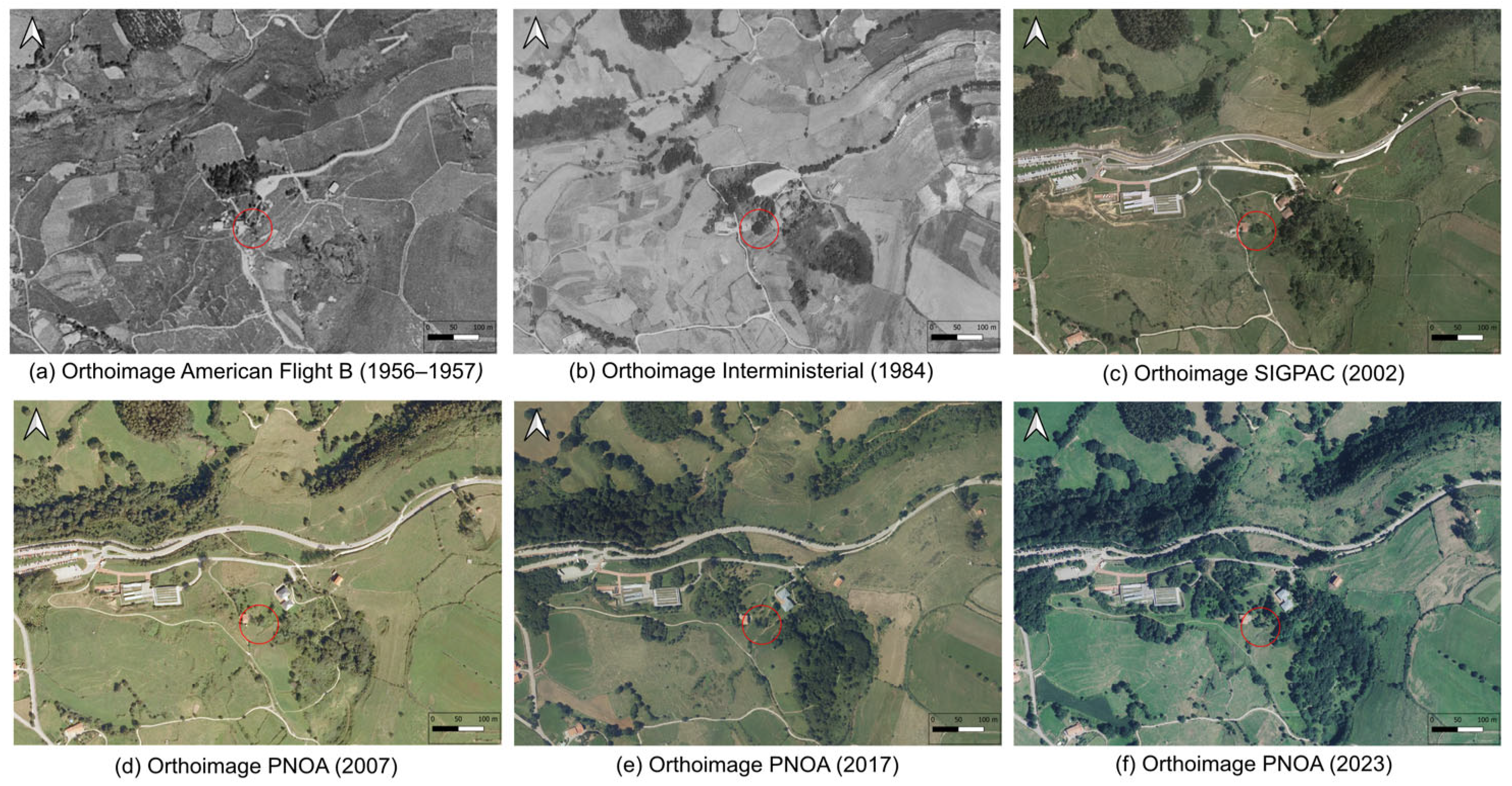
2.1. Study Area
2.2. Geological and Historical Background
2.3. Evidence of Instability and Previous Monitoring at La Hoya Hall
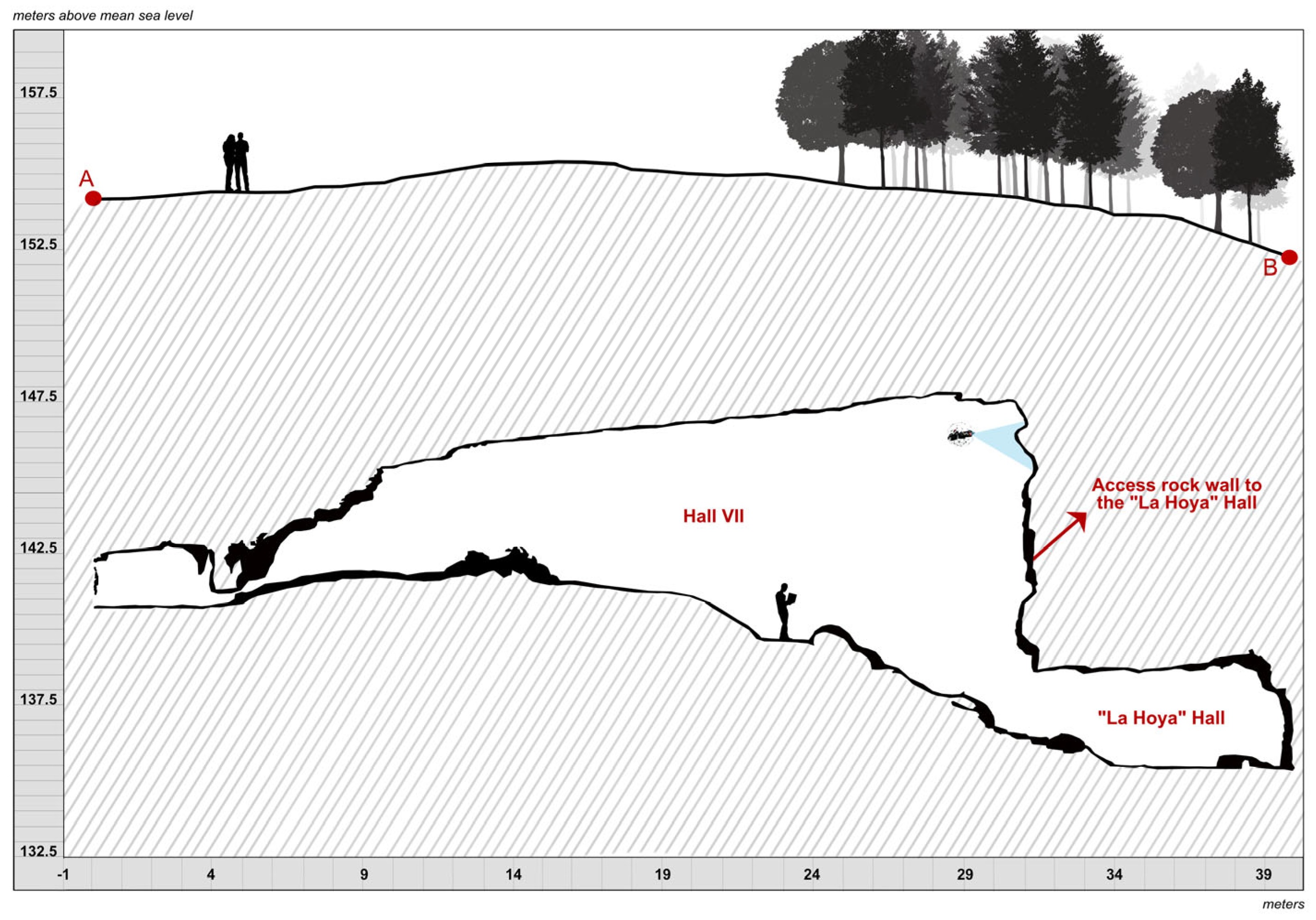
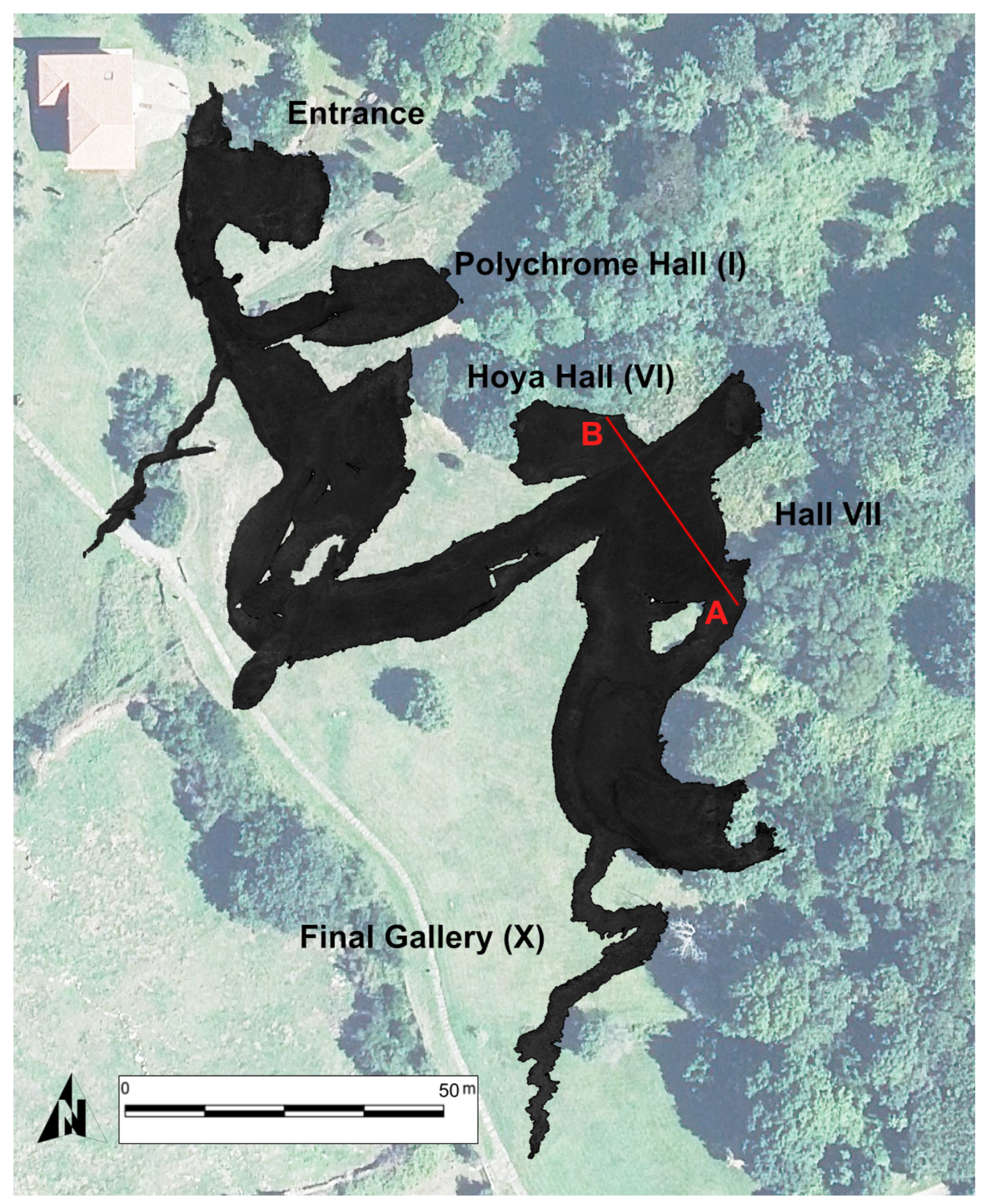
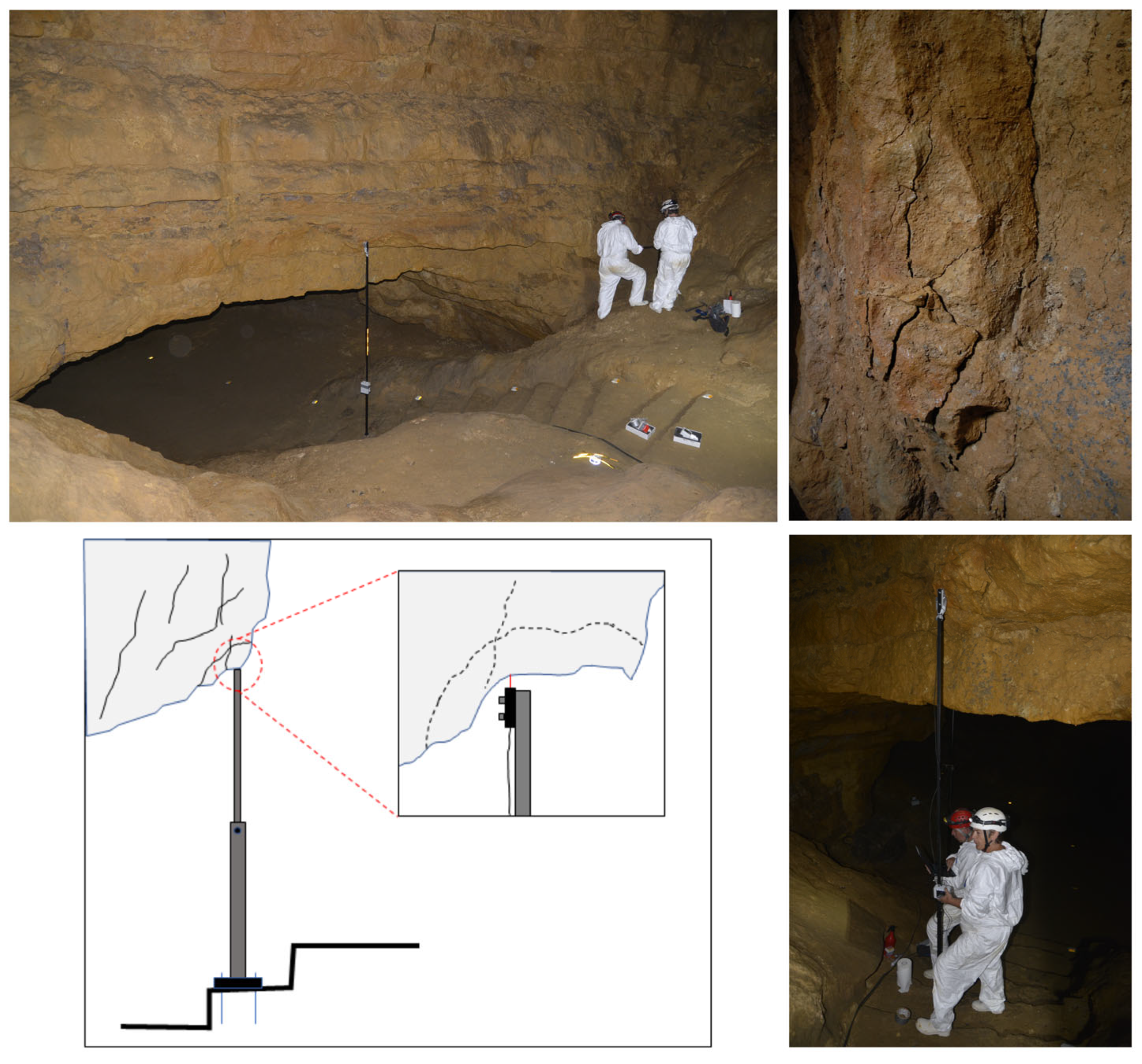
2.4. Description of the Study Wall and Site-Specific Constraints
2.5. Methodological Challenges and Contributions
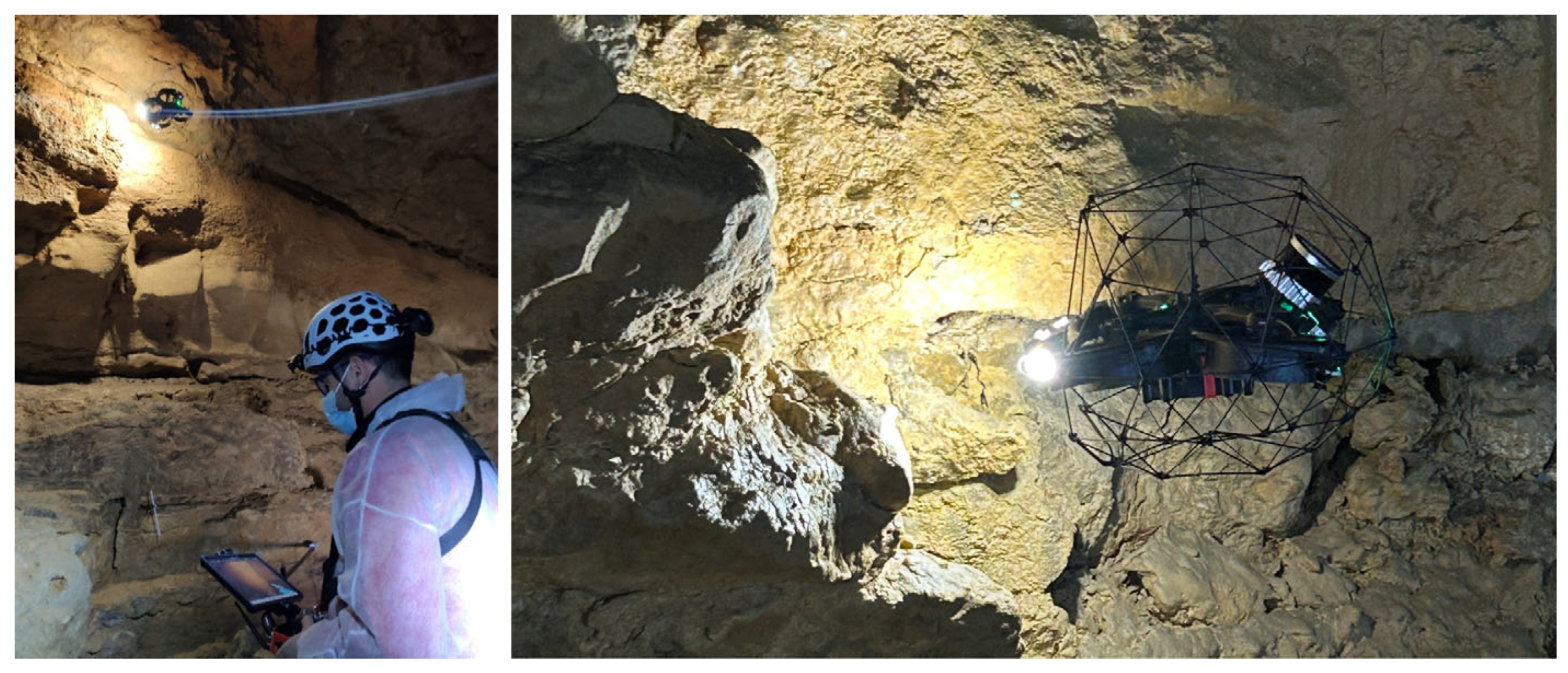
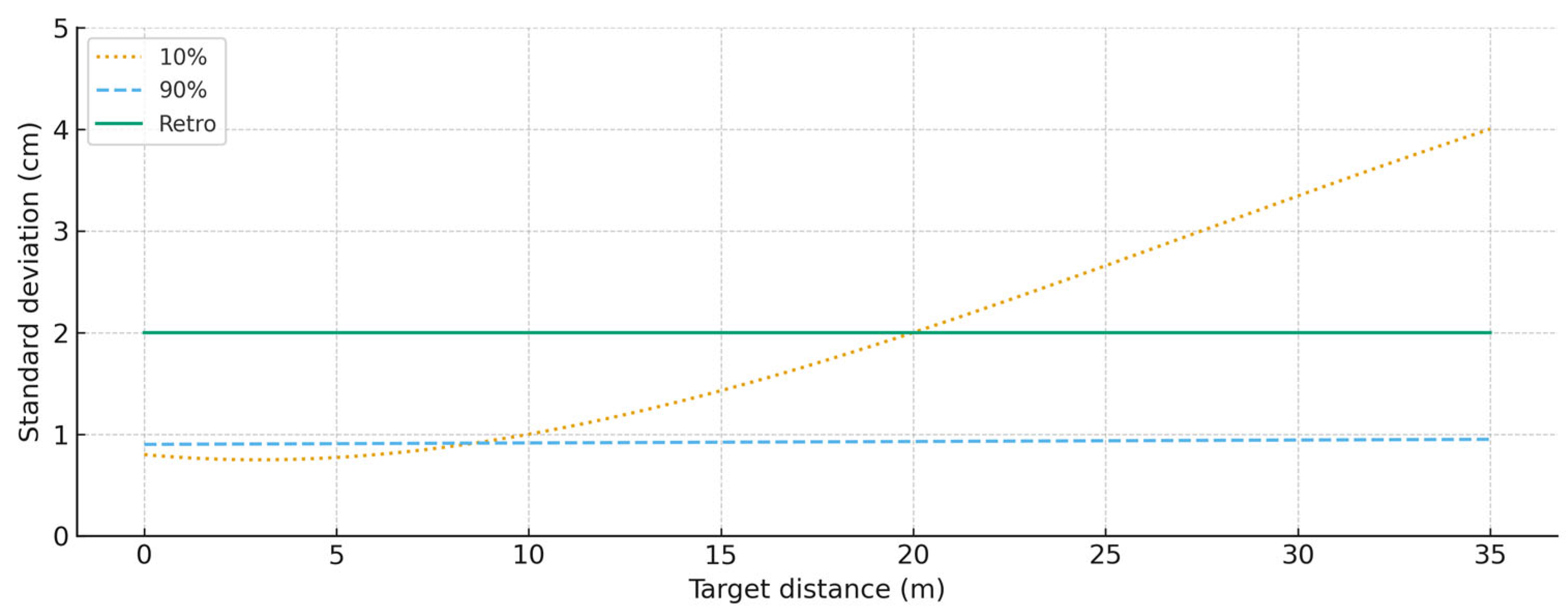
2.6. Materials

| Elios 3 | |
|---|---|
| Manufacturer | Flyability (SA, Paudex, Switzerland) |
| Weight (g) | Approx. 1900 g includes battery, payload and protection |
| Max. payload (g) | 2350 g |
| Power source | 4350 mAh LiPo |
| Endurance (min) | 9–12 min |
| Camera | 2.71 mm focal length. Fixed focal |
| Thermal Camera | Sensor Lepton 3.5 FLIR |
| LiDAR Sensors | Ouster OS0-32 beams sensor 1 |
| Flight control sensors | IMU, magnetometer, barometer, LiDAR, 3 computer vision cameras and a ToF distance sensor |
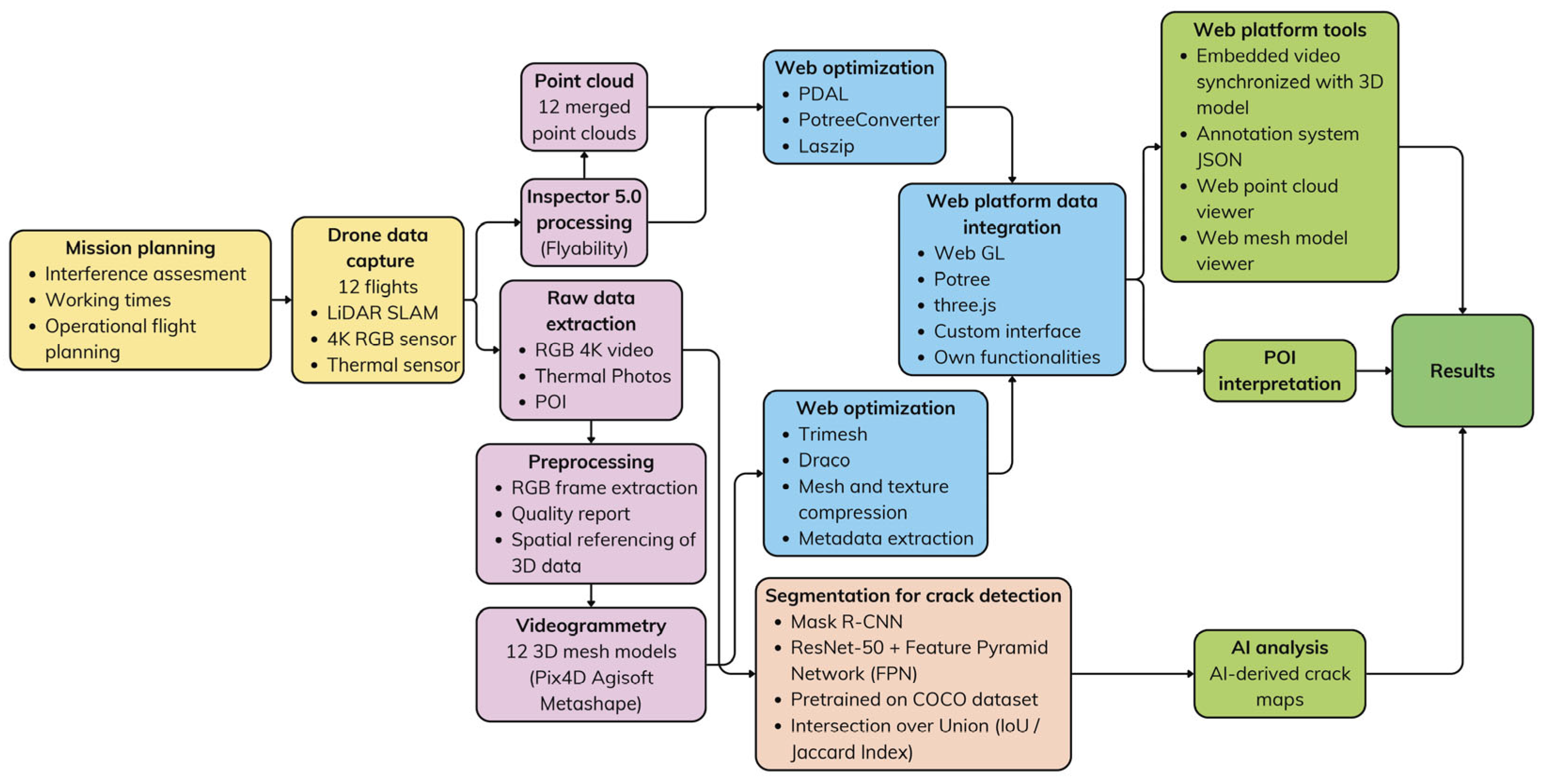
2.7. Methodology and Workflow Overview
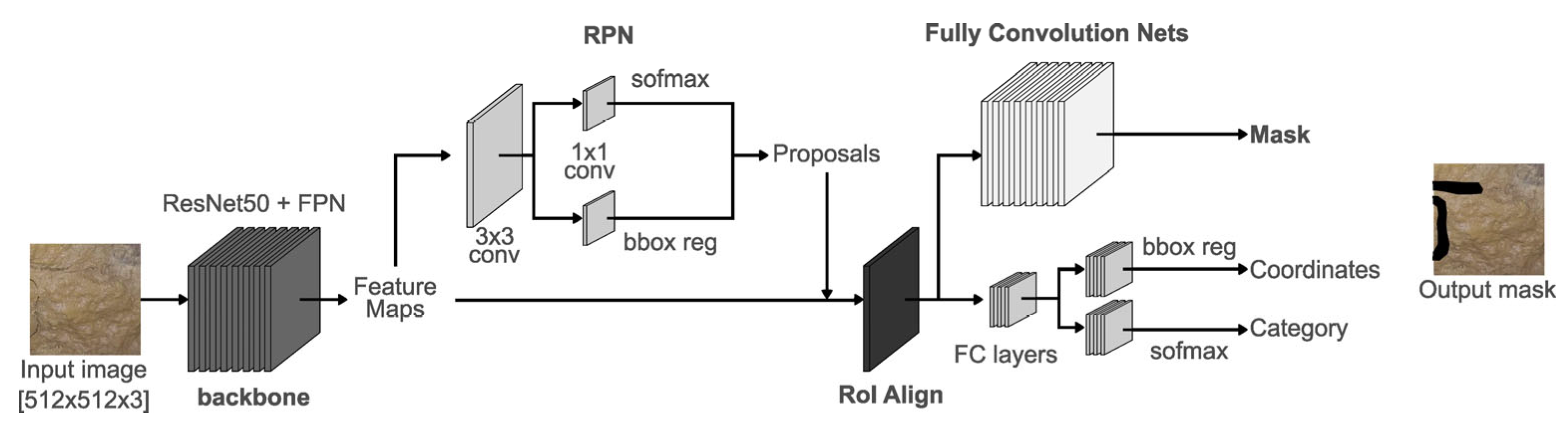
2.7.1. Crack Segmentation Workflow (Mask R-CNN)
2.7.2. Mask R-CNN in Crack Detection: Capabilities and Limitations
2.7.3. Automated Point Cloud Comparison and Structural Assessment Algorithm
3. Results
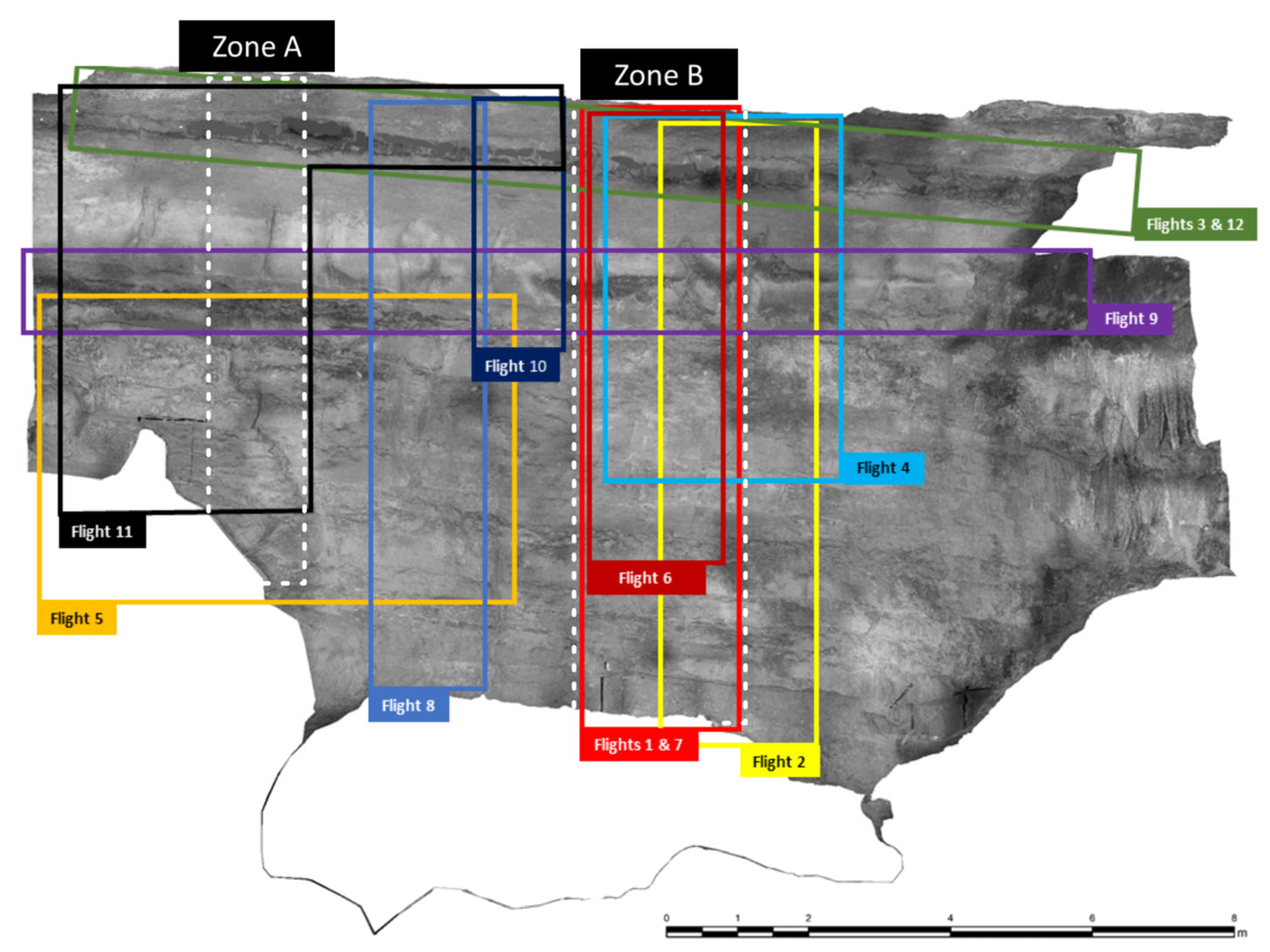
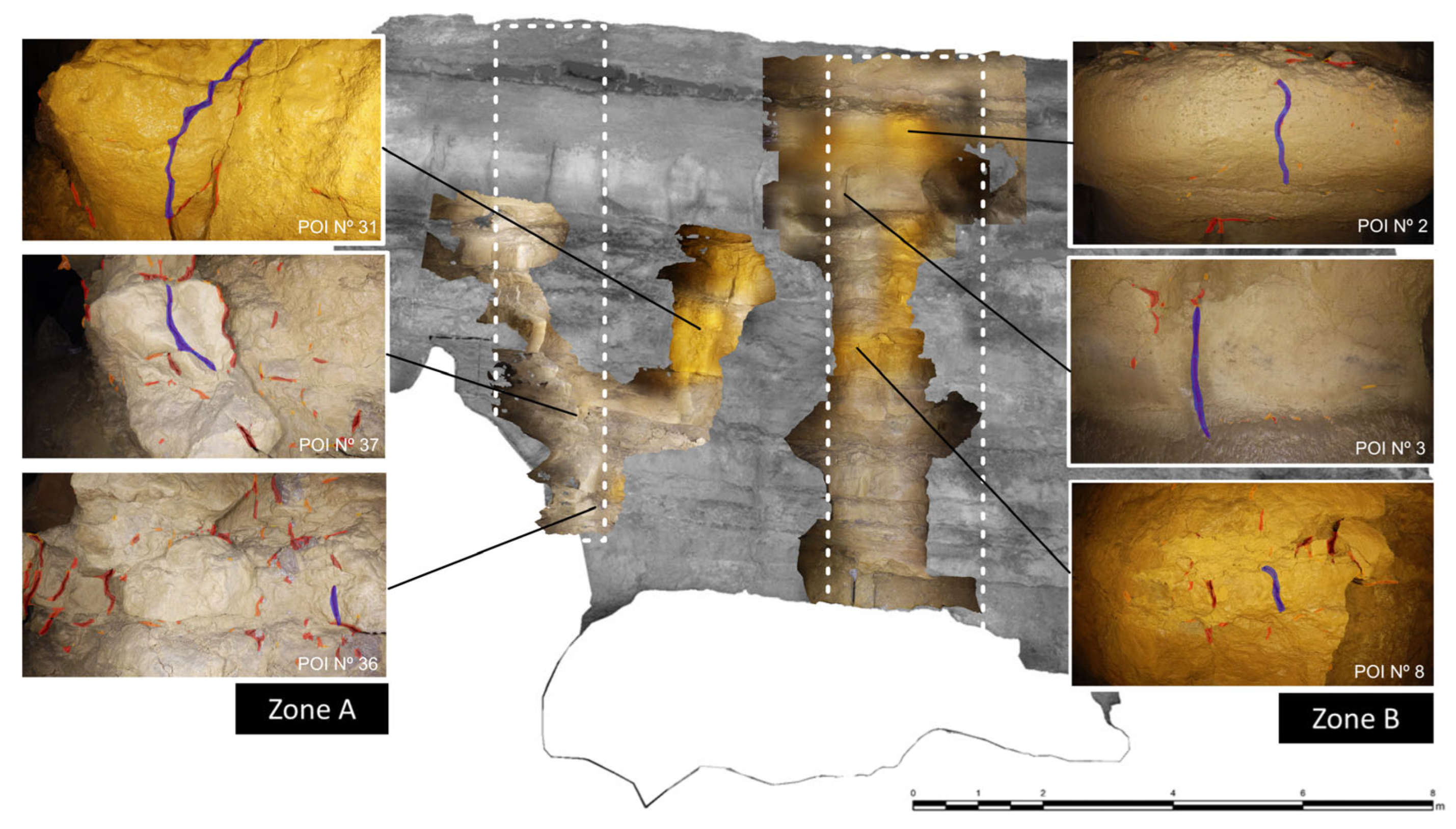
3.1. Spatial Coverage, Geometric Completeness, and POI-Based Inspection
3.2. Videogrammetry Results: Flight-Wise Mesh Models
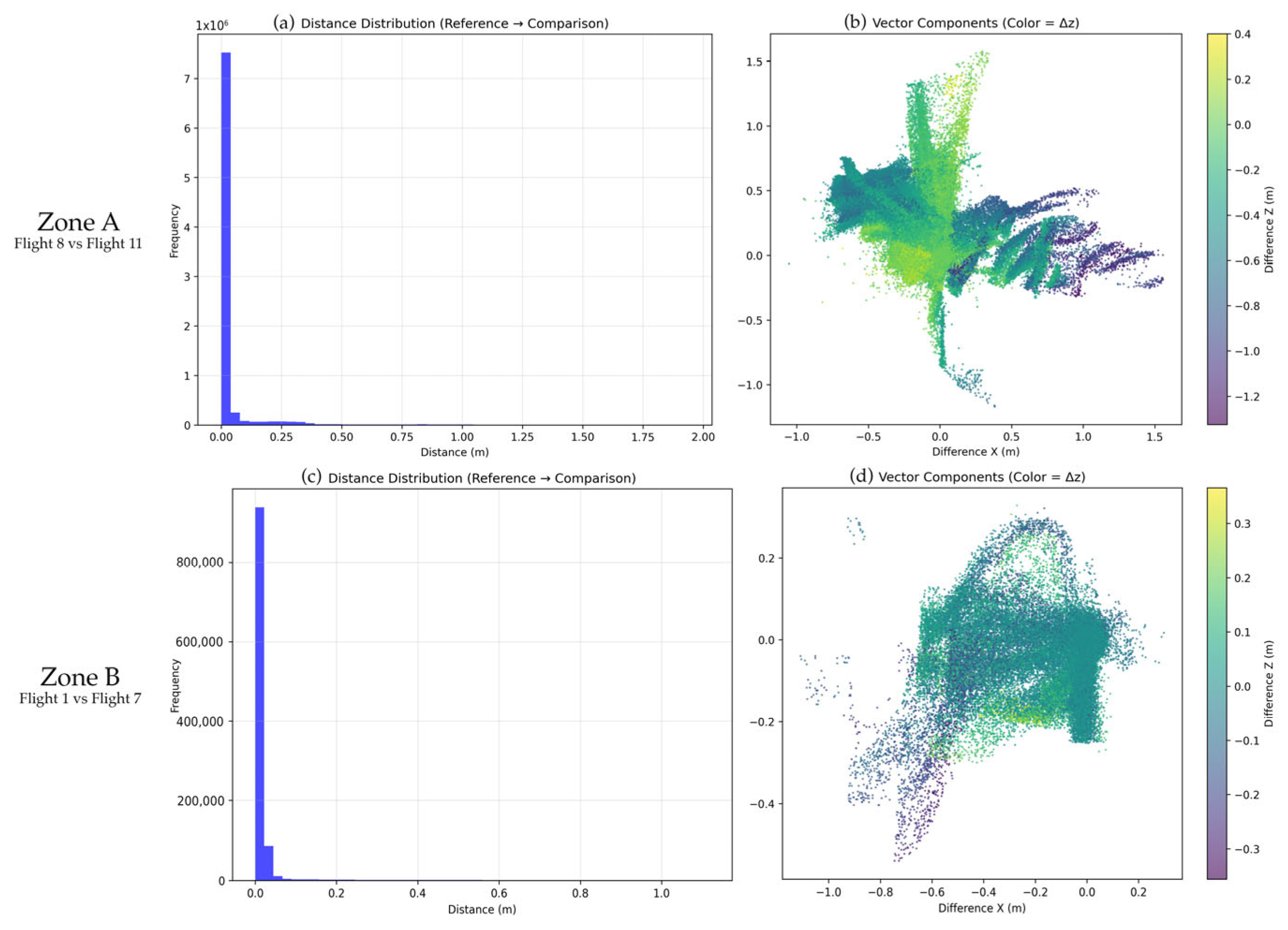
3.3. LiDAR–SLAM Point Clouds, Integrated Meshes, and Geometric Consistency Checks
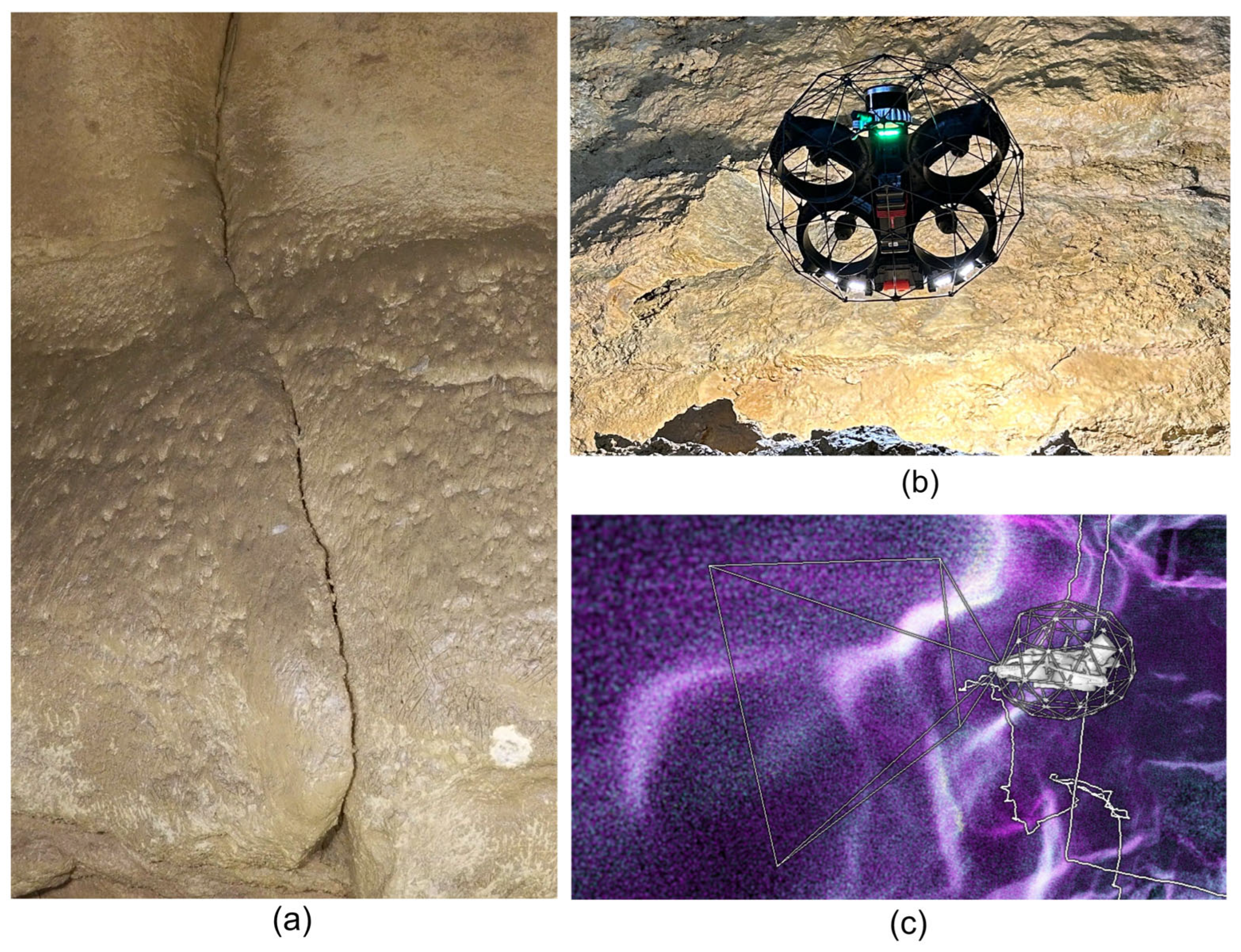
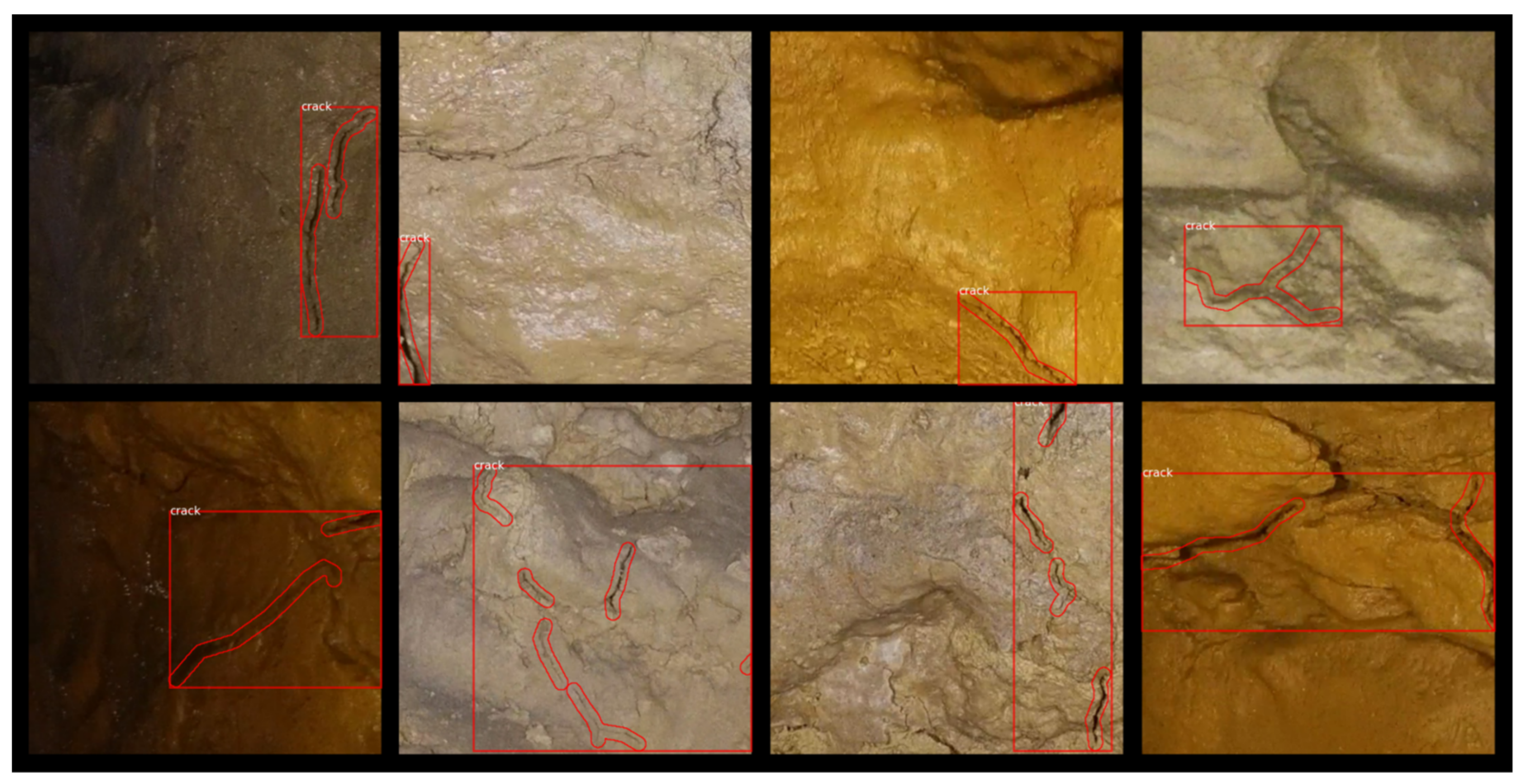
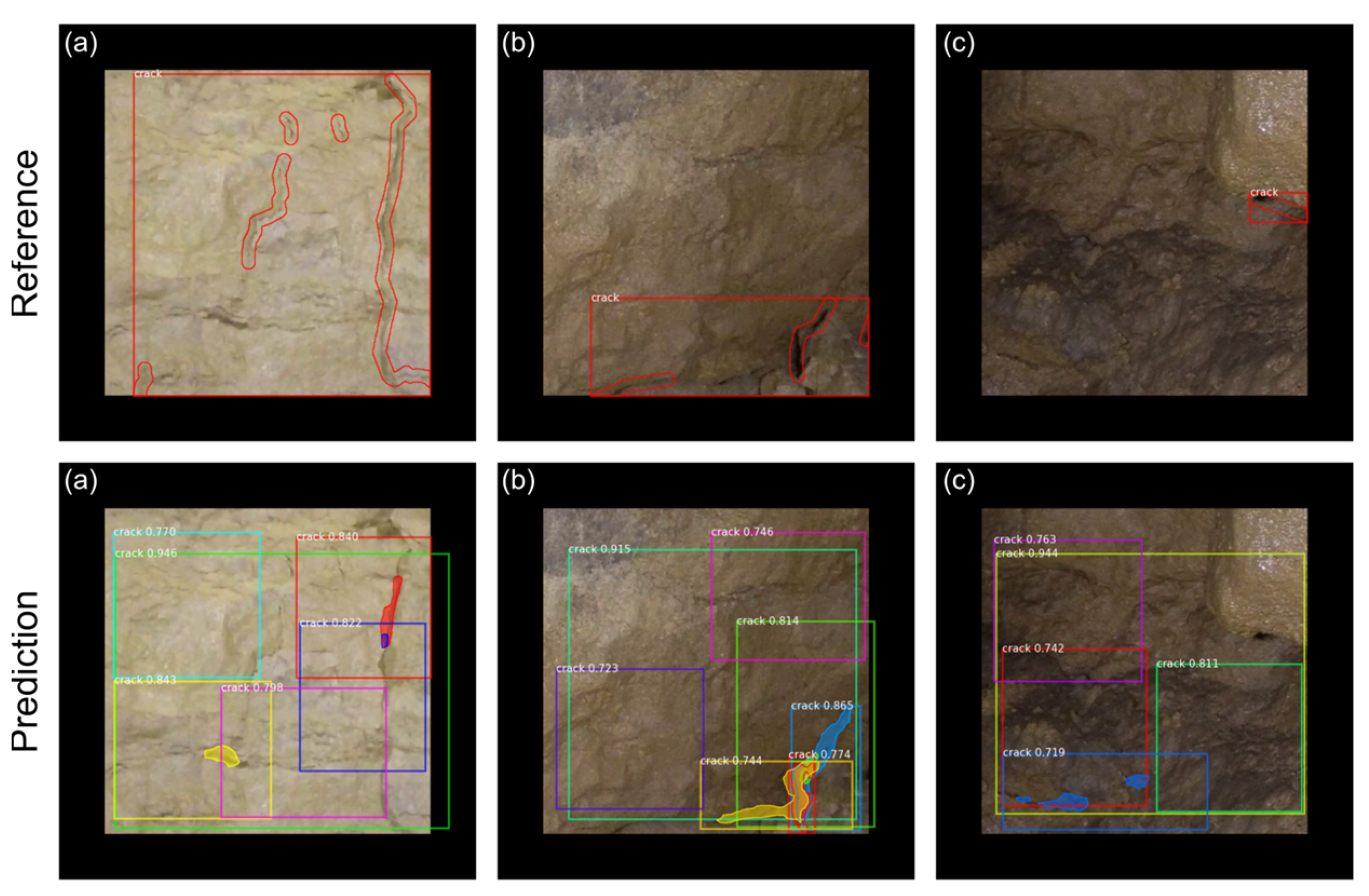
3.4. Exploratory AI-Based Crack Detection Results Under Cave Conditions
4. Discussion
4.1. Analysis of the AI Model for Automated Crack Detection
4.2. Integration of Geospatial Data into a Digital Twin Framework: Infrastructure and Hierarchical Model
4.3. Point Cloud Integration and Web-Based Visualization
4.4. Mesh Integration and Semantic Enrichment
4.5. Deployment Strategy and System Scalability
4.6. Overall Interpretation
5. Conclusions
Author Contributions
Funding
Data Availability Statement
Acknowledgments
Conflicts of Interest
Abbreviations
| C2C | Cloud-to-Cloud (point-cloud distance comparison) |
| C2M | Cloud-to-Mesh (point-cloud to surface/mesh distance comparison) |
| CLI | Command-Line Interface |
| CNIG | Centro Nacional de Información Geográfica |
| COCO | Common Objects in Context dataset |
| FAIR | Findable, Accessible, Interoperable and Reusable |
| FCN | Fully Convolutional Network |
| FPS | Frames per Second |
| FPN | Feature Pyramid Network |
| GLB | Binary form of glTF |
| glTF | GL Transmission Format |
| IGN | Instituto Geográfico Nacional |
| IMU | Inertial Measurement Unit |
| IoT | Internet of Things |
| IoU | Intersection over Union |
| JSON | JavaScript Object Notation |
| KTX2 | Khronos Texture 2.0 |
| M2M | Mesh-to-Mesh (surface-to-surface distance comparison) |
| MVS | Multi-View Stereo |
| NGINX | NGINX Web Server |
| PDAL | Point Data Abstraction Library |
| PNOA | Plan Nacional de Ortofotografía Aérea |
| POI | Point Of Interest |
| R-CNN | Region-based Convolutional Neural Network |
| ResNet | Residual Network |
| RoI | Region of Interest |
| RPN | Region Proposal Network |
| SfM | Structure from Motion |
| SLAM | Simultaneous Localization and Mapping |
| ToF | Time-of-Flight |
| YOLO | You Only Look Once |
References
- Fatás Monforte, P. Altamira, símbolo, identidad y marca. In El Patrimonio Cultural Como Símbolo. Actas del Simposio Internacional; Garrote, L., Ed.; Fundación del Patrimonio Histórico de Castilla y León: Valladolid, Spain, 2011; pp. 163–186. [Google Scholar]
- de las Heras, C.; Montes, R.; Lasheras, J.A. Altamira: Nivel gravetiense y cronología de su arte rupestre. In Pensando el Gravetiense: Nuevos Datos Para la Región Cantábrica en su Contexto Peninsular y Pirenaico; de las Heras, C., Lasheras, J.A., Arrizabalaga, Á., de la Rasilla, M., Eds.; Monografías del Museo Nacional y Centro de Investigación de Altamira; Ministerio de Educación, Cultura y Deporte: Madrid, Spain, 2013; pp. 476–491. [Google Scholar]
- Sanz de Sautuola, M. Breves Apuntes Sobre Algunos Objetos Prehistóricos de la Provincia de Santander; Imprenta y Litografía de Telesforo Martínez: Santander, Spain, 1880. [Google Scholar]
- Lasheras, J.A. El arte paleolítico de Altamira. In Redescubrir Altamira; Lasheras, J.A., Ed.; Turner: Madrid, Spain, 2002; pp. 65–92. [Google Scholar]
- Lasheras, J.A.; de las Heras, C.; Fatás Monforte, P. El nuevo museo de Altamira. Boletín De La Soc. De Investig. Del Arte Rupestre De Boliv. 2002, 16, 23–28. [Google Scholar]
- Lasheras, J.A.; de las Heras, C. Estudio introductorio a Sanz de Sautuola, M. 1880. Breves apuntes sobre algunos objetos prehistóricos de la Provincia de Santander. In Breves Apuntes Sobre Algunos Objetos Prehistóricos de la Provincia de Santander; Botín, E., Ed.; Grupo Santander: Madrid, Spain, 2004. [Google Scholar]
- Lasheras, J.A.; de las Heras, C.; Montes, R.; Rasines, P.; Fatás Monforte, P. La Altamira del siglo XXI (el nuevo Museo y Centro de Investigación de Altamira); Museo Nacional y Centro de Investigación de Altamira: Patrimonio histórico de Castilla y León, Spain, 2002; pp. 23–34. [Google Scholar]
- Fatás Monforte, P.; Lasheras Corruchaga, J.A. La cueva de Altamira y su museo/The cave of Altamira and its museum. Cuad. De Arte Rupestre 2014, 7, 25–35. [Google Scholar]
- Sánchez-Moral, S.; Cuezva, S.; Fernández Cortés, Á.; Janices, I.; Benavente, D.; Cañaveras, J.C.; González Grau, J.M.; Jurado, V.; Laiz Trobajo, L.; Portillo Guisado, M.d.C.; et al. Estudio Integral del Estado de Conservación de la Cueva de Altamira y Su Arte Paleolítico (2007–2009); Perspectivas Futuras de Conservación; Ministerio de Educación Cultura y Deporte, Secretaría General Técnica: Madrid, Spain, 2014. [Google Scholar]
- Sánchez, M.A.; Foyo, A.; Tomillo, C.; Iriarte, E. Geological Risk Assessment of the Area Surrounding Altamira Cave: A Proposed Natural Risk Index and Safety Factor for Protection of Prehistoric Caves. Eng. Geol. 2007, 94, 180–200. [Google Scholar] [CrossRef]
- Sanchez-Moral, S.; Cuezva, S.; Garcia-Anton, E.; Fernandez-Cortes, A.; Elez, J.; Benavente, D.; Cañaveras, J.C.; Jurado, V.; Rogerio-Candelera, M.A.; Saiz-Jimenez, C. Microclimatic Monitoring in Altamira Cave: Two Decadesof Scientific Projects for Its Conservation. In The Conservation of Subterranean Cultural Heritage; CRC Press: Boca Raton, FL, USA, 2014. [Google Scholar]
- de Guichen, G. Programa de Investigación Para La Conservación Preventiva y Régimen de Acceso de La Cueva de Altamira (2012–2014); Ministerio de Cultura: Madrid, Spain, 2014; Volume 4. [Google Scholar]
- Bayarri, V.; Prada, A.; García, F.; Ibáñez, M.; Benavente, D. Integration of Remote-Sensing Techniques for the Preventive Conservation of Paleolithic Cave Art in the Karst of the Altamira Cave. Remote Sens. 2023, 15, 1087. [Google Scholar] [CrossRef]
- Bontemps, Z.; Crovadore, J.; Sirieix, C.; Bourges, F.; Gessler, C.; Lefort, F. Dark-Zone Alterations Expand throughout Paleolithic Lascaux Cave despite Spatial Heterogeneity of the Cave Microbiome. Environ. Microbiome 2023, 18, 31. [Google Scholar] [CrossRef]
- Peña-Trabalon, A.; Moreno-Vegas, S.; Estebanez-Campos, M.B.; Nadal-Martinez, F.; Garcia-Vacas, F.; Prado-Novoa, M. A Low-Cost Validated Two-Camera 3D Videogrammetry System Applicable to Kinematic Analysis of Human Motion. Sensors 2025, 25, 4900. [Google Scholar] [CrossRef] [PubMed]
- Matuzevičius, D.; Serackis, A. Three-Dimensional Human Head Reconstruction Using Smartphone-Based Close-Range Video Photogrammetry. Appl. Sci. 2022, 12, 229. [Google Scholar] [CrossRef]
- Quispe-Enriquez, O.C.; Valero-Lanzuela, J.J.; Lerma, J.L. Craniofacial 3D Morphometric Analysis with Smartphone-Based Photogrammetry. Sensors 2024, 24, 230. [Google Scholar] [CrossRef] [PubMed]
- Teixeira Coelho, L.C.; Pinho, M.F.C.; Martinez de Carvalho, F.; Meneguci Moreira Franco, A.L.; Quispe-Enriquez, O.C.; Altónaga, F.A.; Lerma, J.L. Evaluating the Accuracy of Smartphone-Based Photogrammetry and Videogrammetry in Facial Asymmetry Measurement. Symmetry 2025, 17, 376. [Google Scholar] [CrossRef]
- Marčiš, M.; Fraštia, M.; Hideghéty, A.; Paulík, P. Videogrammetric Verification of Accuracy of Wearable Sensors Used in Kiteboarding. Sensors 2021, 21, 8353. [Google Scholar] [CrossRef]
- Sun, Z.; Zhang, Y. Accuracy Evaluation of Videogrammetry Using a Low-Cost Spherical Camera for Narrow Architectural Heritage: An Observational Study with Variable Baselines and Blur Filters. Sensors 2019, 19, 496. [Google Scholar] [CrossRef]
- Ortiz-Coder, P.; Sánchez-Ríos, A. An Integrated Solution for 3D Heritage Modeling Based on Videogrammetry and V-SLAM Technology. Remote Sens. 2020, 12, 1529. [Google Scholar] [CrossRef]
- Pepe, M.; Alfio, V.S.; Costantino, D.; Herban, S. Rapid and Accurate Production of 3D Point Cloud via Latest-Generation Sensors in the Field of Cultural Heritage: A Comparison between SLAM and Spherical Videogrammetry. Heritage 2022, 5, 1910–1928. [Google Scholar] [CrossRef]
- Alsadik, B.; Khalaf, Y.H. Potential Use of Drone Ultra-High-Definition Videos for Detailed 3D City Modeling. ISPRS Int. J. Geo-Inf. 2022, 11, 34. [Google Scholar] [CrossRef]
- Currà, E.; D’Amico, A.; Angelosanti, M. HBIM between Antiquity and Industrial Archaeology: Former Segrè Papermill and Sanctuary of Hercules in Tivoli. Sustainability 2022, 14, 1329. [Google Scholar] [CrossRef]
- He, K.; Gkioxari, G.; Dollár, P.; Girshick, R. Mask R-CNN. IEEE Trans. Pattern Anal. Mach. Intell. 2020, 42, 386–397. [Google Scholar] [CrossRef] [PubMed]
- Yu, Y.; Zhang, K.; Yang, L.; Zhang, D. Fruit Detection for Strawberry Harvesting Robot in Non-Structural Environment Based on Mask-RCNN. Comput. Electron. Agric. 2019, 163, 104846. [Google Scholar] [CrossRef]
- Zhang, Q.; Chang, X.; Bian, S. Vehicle-Damage-Detection Segmentation Algorithm Based on Improved Mask RCNN. IEEE Access Pract. Innov. Open Solut. 2020, 8, 6997–7004. [Google Scholar] [CrossRef]
- Wu, S.; Fu, F. Crack Control Optimization of Basement Concrete Structures Using the Mask-RCNN and Temperature Effect Analysis. PLoS ONE 2023, 18, e0292437. [Google Scholar] [CrossRef]
- Ameli, Z.; Nesheli, S.J.; Landis, E.N. Deep Learning-Based Steel Bridge Corrosion Segmentation and Condition Rating Using Mask RCNN and Yolov8. Infrastructures 2023, 9, 3. [Google Scholar] [CrossRef]
- Yang, F.; Huo, J.; Cheng, Z.; Chen, H.; Shi, Y. An Improved Mask R-CNN Micro-Crack Detection Model for the Surface of Metal Structural Parts. Sensors 2023, 24, 62. [Google Scholar] [CrossRef]
- Bonhage, A.; Eltaher, M.; Raab, T.; Breuß, M.; Raab, A.; Schneider, A. A Modified Mask Region-Based Convolutional Neural Network Approach for the Automated Detection of Archaeological Sites on High-Resolution Light Detection and Ranging-Derived Digital Elevation Models in the North German Lowland. Archaeol. Prospect. 2021, 28, 177–186. [Google Scholar] [CrossRef]
- Hatır, M.E.; İnce, İ.; Korkanç, M. Intelligent Detection of Deterioration in Cultural Stone Heritage. J. Build. Eng. 2021, 44, 102690. [Google Scholar] [CrossRef]
- Liu, Y.; Yao, J.; Lu, X.; Xie, R.; Li, L. DeepCrack: A Deep Hierarchical Feature Learning Architecture for Crack Segmentation. Neurocomputing 2019, 338, 139–153. [Google Scholar] [CrossRef]
- Li, G.; Ma, B.; He, S.; Ren, X.; Liu, Q.; Li, G.; Ma, B.; He, S.; Ren, X.; Liu, Q. Automatic Tunnel Crack Detection Based on U-Net and a Convolutional Neural Network with Alternately Updated Clique. Sensors 2020, 20, 717. [Google Scholar] [CrossRef] [PubMed]
- Ren, Y.; Huang, J.; Hong, Z.; Lu, W.; Yin, J.; Zou, L.; Shen, X. Image-Based Concrete Crack Detection in Tunnels Using Deep Fully Convolutional Networks. Constr. Build. Mater. 2020, 234, 117367. [Google Scholar] [CrossRef]
- Sohaib, M.; Arif, M.; Kim, J.-M.; Sohaib, M.; Arif, M.; Kim, J.-M. Evaluating YOLO Models for Efficient Crack Detection in Concrete Structures Using Transfer Learning. Buildings 2024, 14, 3928. [Google Scholar] [CrossRef]
- Song, Y.; Su, Y.; Zhang, S.; Wang, R.; Yu, Y.; Zhang, W.; Zhang, Q.; Song, Y.; Su, Y.; Zhang, S.; et al. CrackdiffNet: A Novel Diffusion Model for Crack Segmentation and Scale-Based Analysis. Buildings 2025, 15, 1872. [Google Scholar] [CrossRef]
- Yu, G.; Dong, J.; Wang, Y.; Zhou, X.; Yu, G.; Dong, J.; Wang, Y.; Zhou, X. RUC-Net: A Residual-Unet-Based Convolutional Neural Network for Pixel-Level Pavement Crack Segmentation. Sensors 2022, 23, 53. [Google Scholar] [CrossRef]
- Bayarri, V.; Prada, A.; García, F. A Multimodal Research Approach to Assessing the Karst Structural Conditions of the Ceiling of a Cave with Palaeolithic Cave Art Paintings: Polychrome Hall at Altamira Cave (Spain). Sensors 2023, 23, 9153. [Google Scholar] [CrossRef]
- Rock Characterization, Testing and Monitoring: ISRM Suggested Methods; Brown, E.T., Ed.; Pergamon Press: Oxford, UK, 1981. [Google Scholar]
- Sánchez, M.A.; Bruschi, V.; Iriarte, E. Evaluación del riesgo geológico en las cuevas de Altamira y Estalactitas. In Monografías del Museo y Centro de Investigación Altamira; Ministerio de Cultura: Madrid, Spain, in press. [Google Scholar]
- Ouster, Inc. OS0 Ultra-Wide View High-Resolution Imaging Lidar: Datasheet (Rev7, v3.1); Ouster, Inc.: San Francisco, CA, USA, 2025. [Google Scholar]
- Wilkinson, M.; Dumontier, M.; Aalbersberg, I.J.; Appleton, G.; Axton, M.; Baak, A.; Blomberg, N.; Boiten, J.-W.; Bonino da Silva Santos, L.O.; Bourne, P.; et al. The FAIR Guiding Principles for Scientific Data Management and Stewardship. Sci. Data 2016, 3, 160018. [Google Scholar] [CrossRef]
- Lin, T.-Y.; Maire, M.; Belongie, S.; Bourdev, L.; Girshick, R.; Hays, J.; Perona, P.; Ramanan, D.; Zitnick, C.L.; Dollár, P. Microsoft COCO: Common Objects in Context. arXiv 2015, arXiv:1405.0312. [Google Scholar] [CrossRef]
- Jaikumar, P.; Vandaele, R.; Ojha, V. Transfer Learning for Instance Segmentation of Waste Bottles Using Mask R-CNN Algorithm. arXiv 2022, arXiv:2204.07437. [Google Scholar] [CrossRef]
- Jaccard, P. The Distribution of the Flora in the Alpine Zone. New Phytol. 1912, 11, 37–50. [Google Scholar] [CrossRef]
- Luo, S.; Wang, H. Digital Twin Research on Masonry–Timber Architectural Heritage Pathology Cracks Using 3D Laser Scanning and Deep Learning Model. Buildings 2024, 14, 1129. [Google Scholar] [CrossRef]
- Xu, X.; Zhao, M.; Shi, P.; Ren, R.; He, X.; Wei, X.; Yang, H. Crack Detection and Comparison Study Based on Faster R-CNN and Mask r-CNN. Sensors 2022, 22, 1215. [Google Scholar] [CrossRef] [PubMed]
- Flyability. How Accurate Are the 3D Models You Can Make with FlyAware? Flyability Blog. Available online: https://www.flyability.com/blog/flyaware-accuracy (accessed on 3 January 2026).
- Benedetto, A.D.; Fiani, M.; Gujski, L.M. U-Net-Based CNN Architecture for Road Crack Segmentation. Infrastructures 2023, 8, 90. [Google Scholar] [CrossRef]
- PostgreSQL Global Development Group. PostgreSQL; Relational Database Management System; PostgreSQL Global Development Group: Santa Barbara, CA, USA, 2025. [Google Scholar]
- Django Software Foundation. Django Web Framework; Web Application Framework for Python; Django Software Foundation: Huntersville, NC, USA, 2025. [Google Scholar]
- Schütz, M. Potree: Rendering Large Point Clouds in Web Browsers. Ph.D. Thesis, Technische Universität Wien, Vienna, Austria, 2015. [Google Scholar]
- PDAL Contributors PDAL: Point Data Abstraction Library; Point Cloud Processing Library; PDAL Project, 2025. Available online: https://pdal.io/en/2.9.0/project/contributors.html (accessed on 1 January 2026).
- NGINX, Inc. NGINX Web Server 2025. Available online: https://nginx.org/ (accessed on 1 January 2026).
- Smithsonian Institution Digitization Program Office. Smithsonian Voyager/DPO-Voyager Tools; 3D Visualization and Annotation Toolkit; Smithsonian Institution: Washington, DC, USA, 2025. [Google Scholar]
- Khronos Group. glTF: GL Transmission Format; 3D Scene and Model Transmission Format; Khronos Group: Beaverton, OR, USA, 2025. [Google Scholar]
- Trimesh Developers Trimesh: Python Library for Loading and Processing 3D Geometry. 2025. Available online: https://trimesh.org/ (accessed on 1 January 2026).
- Google LLC. Draco Compression Library; 3D Geometry Compression Library; Google LLC: Mountain View, CA, USA, 2025. [Google Scholar]
- McCurdy, D. glTF-Transform: Toolkit for glTF Optimization. 2025. Available online: https://gltf-transform.dev/ (accessed on 1 January 2026).
- Docker, Inc. Docker; Containerization Platform; Docker, Inc.: Palo Alto, CA, USA, 2025. [Google Scholar]


| Flight | Duration (min:s) | POIs (n) | FPS (frames/s) | Extracted Frames (px) | Mean Reprojection Error (px) 1 |
|---|---|---|---|---|---|
| 1 | 5:20 | 12 | 3 | 796 (3840 × 2160) | 0.21 (Pix4D) |
| 2 | 6:21 | 7 | 3 | 807 (3840 × 2160) | 1.32 (Metashape) |
| 3 | 6:49 | 5 | 3 | 738 (3840 × 2160) | 2.80 (Metashape) |
| 4 | 8:00 | 5 | 3 | 921 (3840 × 2160) | 0.21 (Pix4D) |
| 5 | 6:43 | 8 | 3 | 920 (3840 × 2160) | 1.23 (Metashape) |
| 6 | 5:15 | 11 | 3 | 726 (3840 × 2160) | 1.46 (Metashape) |
| 7 | 6:22 | 13 | 2 | 765 (3840 × 2160) | 1.34 (Metashape) |
| 8 | 7:08 | 12 | 2 | 858 (3840 × 2160) | 1.51 (Metashape) |
| 9 | 7:21 | 11 | 2 | 885 (3840 × 2160) | 0.21 (Pix4D) |
| 10 | 6:35 | 3 | 2 | 649 (3840 × 2160) | 0.21 (Pix4D) |
| 11 | 7:35 | 3 | 2 | 807 (3840 × 2160) | 1.49 (Metashape) |
| 12 | 7:06 | 6 | 2 | 763 (3840 × 2160) | 0.22 (Pix4D) |
| Flight | Total Points (LiDAR) | Mean LiDAR Point Validity (%) 1 | Surface Area (m2) | Number of Triangles (3D GLB) | Equivalent Mean Edge Length (mm) |
|---|---|---|---|---|---|
| 1 | 14,455,526 | 81.36 | 30.238 | 12,170,988 | 2.40 |
| 2 | 17,098,313 | 46.95 | 11.426 | 10,837,834 | 1.56 |
| 3 | 17,306,464 | 34.81 | 6.498 | 3,625,552 | 2.03 |
| 4 | 19,442,588 | 53.22 | 23.384 | 4,825,395 | 3.35 |
| 5 | 17,301,812 | 73.66 | 8.247 | 9,507,768 | 1.41 |
| 6 | 13,879,239 | 67.41 | 22.208 | 9,321,681 | 2.35 |
| 7 | 17,767,492 | 70.95 | 13.440 | 4,701,385 | 2.60 |
| 8 | 19,139,884 | 65.31 | 21.900 | 6,570,000 | 2.40 |
| 9 | 18,831,330 | 43.15 | 18.826 | 4,847,764 | 2.99 |
| 10 | 17,057,076 | 50.95 | 23.997 | 4,877,966 | 3.37 |
| 11 | 19,868,249 | 35.04 | 16.129 | 6,198,498 | 2.45 |
| 12 | 16,673,922 | 40.16 | 15.514 | 4,939,250 | 2.69 |
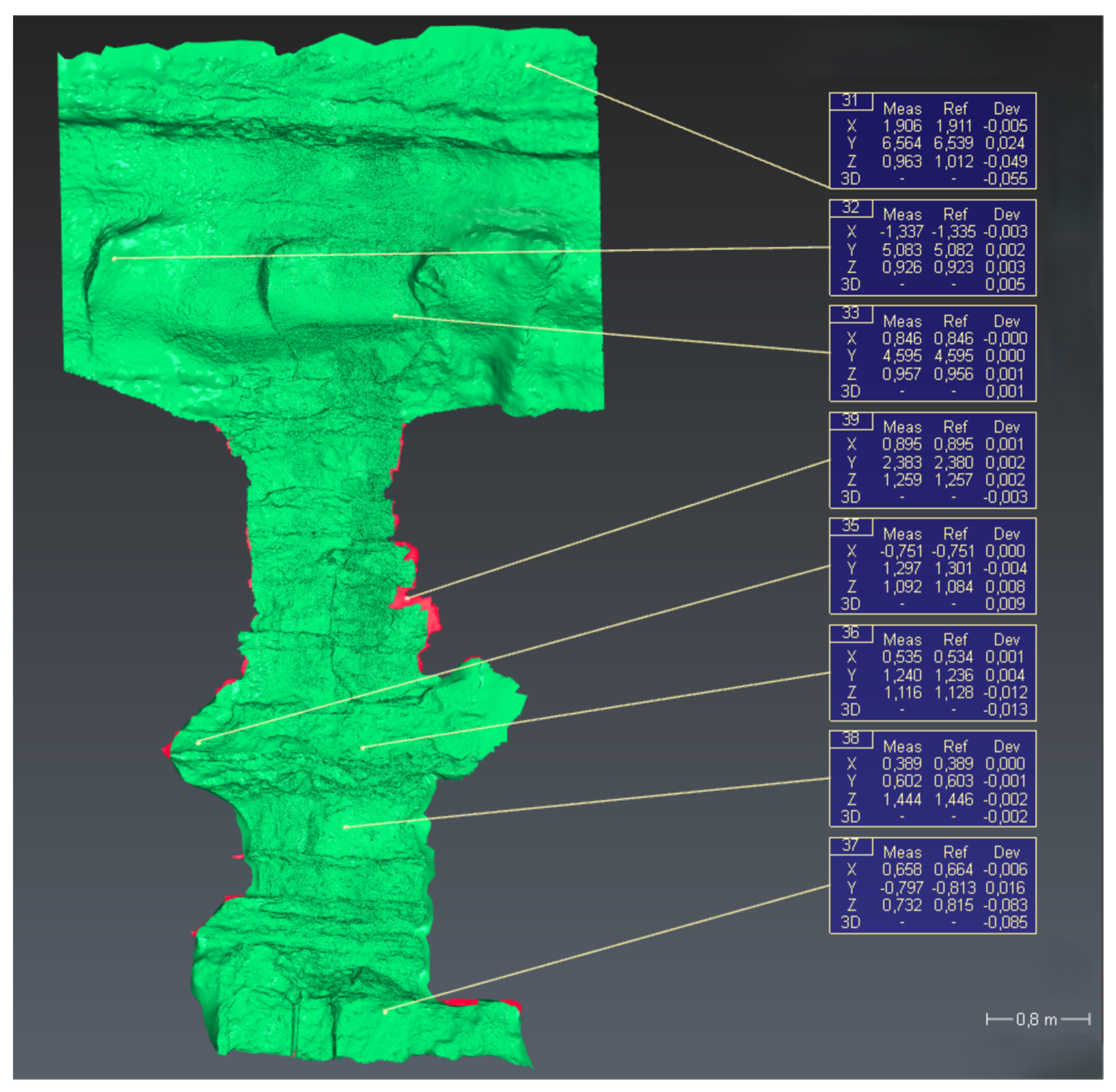
| Checkpoint | Meas X (m) | Meas Y (m) | Meas Z (m) | Ref X (m) | Ref Y (m) | Ref Z (m) | Dev X (m) | Dev Y (m) | Dev Z (m) | Dev 3D (m) |
|---|---|---|---|---|---|---|---|---|---|---|
| Label #31 | 1.906 | 6.564 | 0.963 | 1.911 | 6.539 | 1.012 | −0.005 | 0.024 | −0.049 | −0.055 |
| Label #32 | −1.337 | 5.083 | 0.926 | −1.335 | 5.082 | 0.923 | −0.003 | 0.002 | 0.003 | 0.005 |
| Label #33 | 0.846 | 4.595 | 0.957 | 0.846 | 4.595 | 0.956 | −0.000 | 0.000 | 0.001 | 0.001 |
| Label #35 | −0.751 | 1.297 | 1.092 | −0.751 | 1.301 | 1.084 | 0.000 | −0.004 | 0.008 | 0.009 |
| Label #36 | 0.535 | 1.240 | 1.116 | 0.534 | 1.236 | 1.128 | 0.001 | 0.004 | −0.012 | −0.013 |
| Label #37 | 0.658 | −0.797 | 0.732 | 0.664 | −0.813 | 0.815 | −0.006 | 0.016 | −0.083 | −0.085 |
| Label #38 | 0.389 | 0.602 | 1.444 | 0.389 | 0.603 | 1.446 | 0.000 | −0.001 | −0.002 | −0.002 |
| Label #39 | 0.895 | 2.383 | 1.259 | 0.895 | 2.380 | 1.257 | 0.001 | 0.002 | 0.002 | −0.003 |
| POI | Measurement (mm) 1 | Margin of Error (mm) | Mean Prob. | Q1 (25th) | Q2 (Median) | Max Prob. |
|---|---|---|---|---|---|---|
| 2 | 264 | ±9 | 0.77 | 0.76 | 0.79 | 0.91 |
| 3 | 599 | ±15 | 0.81 | 0.78 | 0.82 | 0.92 |
| 8 | 101 | ±5 | 0.84 | 0.78 | 0.85 | 0.96 |
| 31 | 479 | ±17 | 0.82 | 0.77 | 0.83 | 0.90 |
| 36 | 260 | ±7 | 0.85 | 0.84 | 0.88 | 0.93 |
| 37 | 110 | ±11 | 0.82 | 0.76 | 0.83 | 0.92 |
Disclaimer/Publisher’s Note: The statements, opinions and data contained in all publications are solely those of the individual author(s) and contributor(s) and not of MDPI and/or the editor(s). MDPI and/or the editor(s) disclaim responsibility for any injury to people or property resulting from any ideas, methods, instructions or products referred to in the content. |
© 2026 by the authors. Licensee MDPI, Basel, Switzerland. This article is an open access article distributed under the terms and conditions of the Creative Commons Attribution (CC BY) license.
Share and Cite
Angás, J.; Bea, M.; Valladares, C.; Iranzo, C.; Ruiz, G.; Fatás, P.; de las Heras, C.; Sánchez-Carro, M.Á.; Bruschi, V.; Prada, A.; et al. Cave of Altamira (Spain): UAV-Based SLAM Mapping, Digital Twin and Segmentation-Driven Crack Detection for Preventive Conservation in Paleolithic Rock-Art Environments. Drones 2026, 10, 73. https://doi.org/10.3390/drones10010073
Angás J, Bea M, Valladares C, Iranzo C, Ruiz G, Fatás P, de las Heras C, Sánchez-Carro MÁ, Bruschi V, Prada A, et al. Cave of Altamira (Spain): UAV-Based SLAM Mapping, Digital Twin and Segmentation-Driven Crack Detection for Preventive Conservation in Paleolithic Rock-Art Environments. Drones. 2026; 10(1):73. https://doi.org/10.3390/drones10010073
Chicago/Turabian StyleAngás, Jorge, Manuel Bea, Carlos Valladares, Cristian Iranzo, Gonzalo Ruiz, Pilar Fatás, Carmen de las Heras, Miguel Ángel Sánchez-Carro, Viola Bruschi, Alfredo Prada, and et al. 2026. "Cave of Altamira (Spain): UAV-Based SLAM Mapping, Digital Twin and Segmentation-Driven Crack Detection for Preventive Conservation in Paleolithic Rock-Art Environments" Drones 10, no. 1: 73. https://doi.org/10.3390/drones10010073
APA StyleAngás, J., Bea, M., Valladares, C., Iranzo, C., Ruiz, G., Fatás, P., de las Heras, C., Sánchez-Carro, M. Á., Bruschi, V., Prada, A., & Díaz-González, L. M. (2026). Cave of Altamira (Spain): UAV-Based SLAM Mapping, Digital Twin and Segmentation-Driven Crack Detection for Preventive Conservation in Paleolithic Rock-Art Environments. Drones, 10(1), 73. https://doi.org/10.3390/drones10010073