
Proceeding Paper

Development of a New Strawberry Cultivation Zone in Northern Greece: Agronomic, Physiological, and Economic Evaluation of Day-Neutral Genotypes †
by
Marina-Rafailia Kyrou
,
Dimos Stouris
,
Ioannis Chatzieffraimidis
,
Georgia Koutouzidou
and
Evangelos Karagiannis
*
Department of Agriculture, School of Agricultural Sciences, University of Western Macedonia, 53100 Florina, Greece
*
Author to whom correspondence should be addressed.
Presented at the 18th International Conference of the Hellenic Association of Agricultural Economists, Florina, Greece, 10–11 October 2025.
Proceedings 2026, 134(1), 48; https://doi.org/10.3390/proceedings2026134048
Published: 15 January 2026

Abstract

This study evaluates the feasibility of establishing a new strawberry cultivation zone in the Region of Florina, Northern Greece, as a strategy to support rural revitalization and agricultural diversification. Day-neutral strawberry genotypes were cultivated under net-house conditions at the University of Western Macedonia and assessed for physiological traits (SPAD index, chlorophyll fluorescence) and fruit quality (weight, color, firmness, °Brix, titratable acidity); while postharvest behavior was evaluated after seven days of cold storage. Statistical analysis identified genotypes with superior physiological performance and storability. Preliminary economic analysis suggests that their adoption could increase growers’ income by 20–30% compared to conventional varieties. The findings support the development of a strawberry production zone in Florina, with broader implications for sustainable agricultural intensification and rural development in underutilized European regions.

1. Introduction

The diversification of agricultural production through the introduction of high-value crops presents a strategic opportunity to revitalize rural economies, particularly in underutilized regions of Europe. In this context, strawberries offer a promising option due to their high market demand, nutritional value, and suitability for extended season cultivation [1]. This study investigates the potential for establishing a new strawberry cultivation zone in the Region of Florina, Northern Greece, by leveraging the area’s favorable climatic and soil conditions in combination with innovative cultivation methods [2]. The research focuses on the agronomic, physiological, and economic performance of day-neutral strawberry genotypes grown under net-house conditions at the University of Western Macedonia [3]. These genotypes are evaluated for their adaptability, fruit quality, postharvest behavior, and potential economic return, with the goal of promoting sustainable rural development and production diversification in Western Macedonia region.

2. Methods

Day-neutral strawberry genotypes were cultivated in a net-house environment at the University of Western Macedonia, Florina. Plant physiological performance was evaluated through nondestructive measurements: leaf chlorophyll content was assessed using a SPAD-502 Plus chlorophyll meter (Konica Minolta, Osaka, Japan), while chlorophyll fluorescence parameters (Fv/Fm) were measured with an OS5p fluorometer (Opti-Sciences, Tyngsboro, MA, USA) to determine photosynthetic efficiency. Fruit quality was assessed at harvest based on fresh weight which was determined with an electronic balance, skin color parameters (L*, a*, b*) were obtained with a CR410 Chroma Meter (Konica Minolta, Tokyo, Japan), and chroma (Chroma) and hue angle (Hue°) were derived mathematically from a* and b* values, firmness was measured with FTA GS-25 Fruit Texture Analyser (UP Umweltanalytische Produkte GmbH, Cottbus, Germany), soluble solid concentration (SSC, °Brix) was measured using a portable electronic refractometer (Atago Co., Ltd., Tokyo, Japan)., and titratable acidity (%, citric acid) was determined by titration with 0.1 N NaOH with an automatic titrator (HI 84532, Hanna Instruments, Woonsocket, RI, USA). Postharvest performance was evaluated after seven days of cold storage at 4°C, focusing on quality retention and marketability. Statistical analysis was conducted using one-way ANOVA followed by Duncan’s multiple range test (p ≤ 0.05) to identify significant differences among genotypes in physiological and quality parameters.

3. Results and Discussion

Throughout this text, the values assigned to the letters A, B, C, D, E, and F are as follows: A represents PLN 15.25, B represents PLN 0822, C represents Valiant, D represents Aethra, E represents Royal Royce, and F represents Monterey. These letter codes are employed as shorthand to refer to the corresponding values in the analysis.
The evaluation of day-neutral strawberry genotypes cultivated in a net-house environment revealed significant differences in physiological performance, fruit quality, and postharvest behavior.

3.1. Physiological Performance

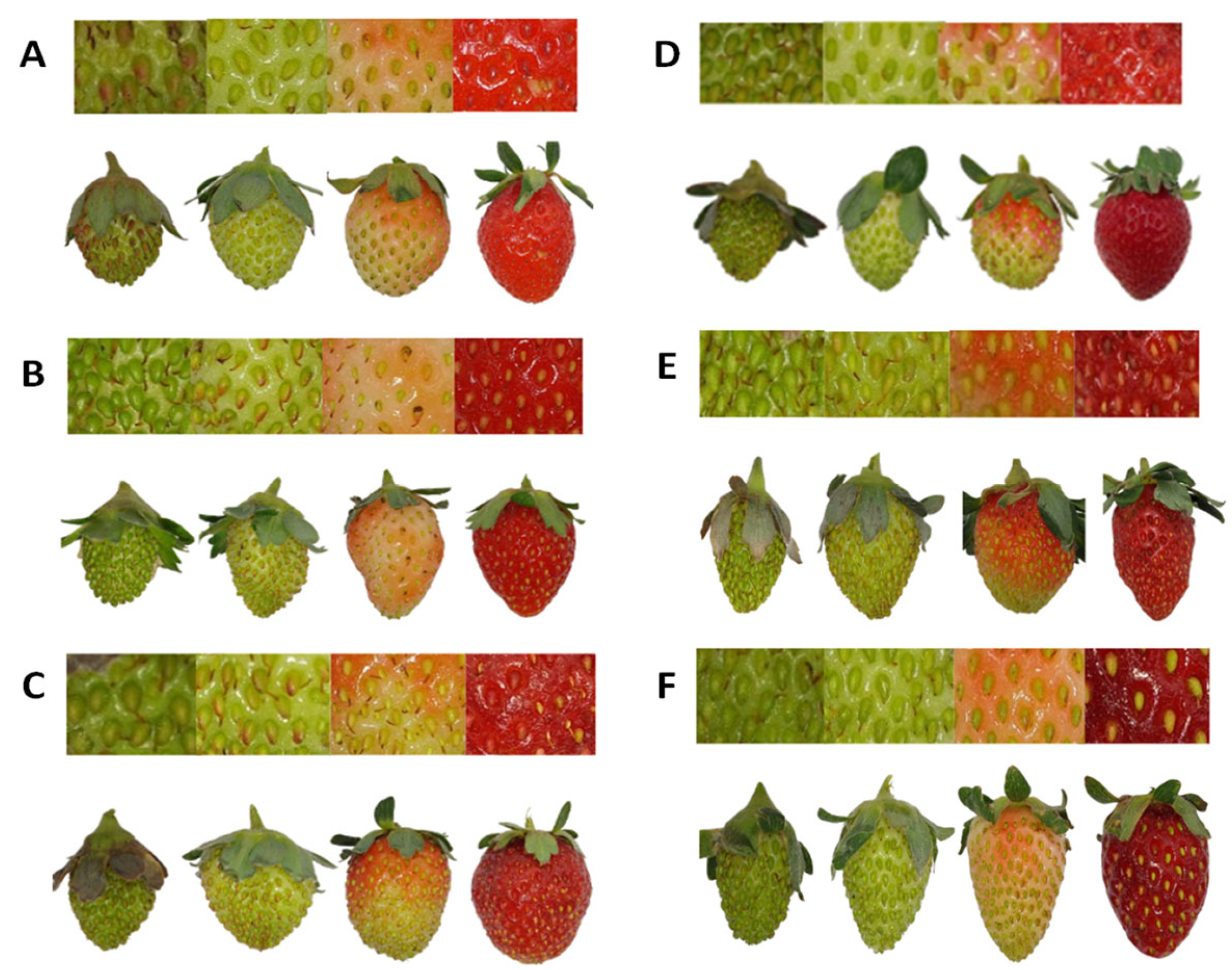
All genotypes demonstrated normal fruit development patterns, with sequential color development from immature green to fully ripe red (Figure 1), providing the foundation for comprehensive quality evaluation.
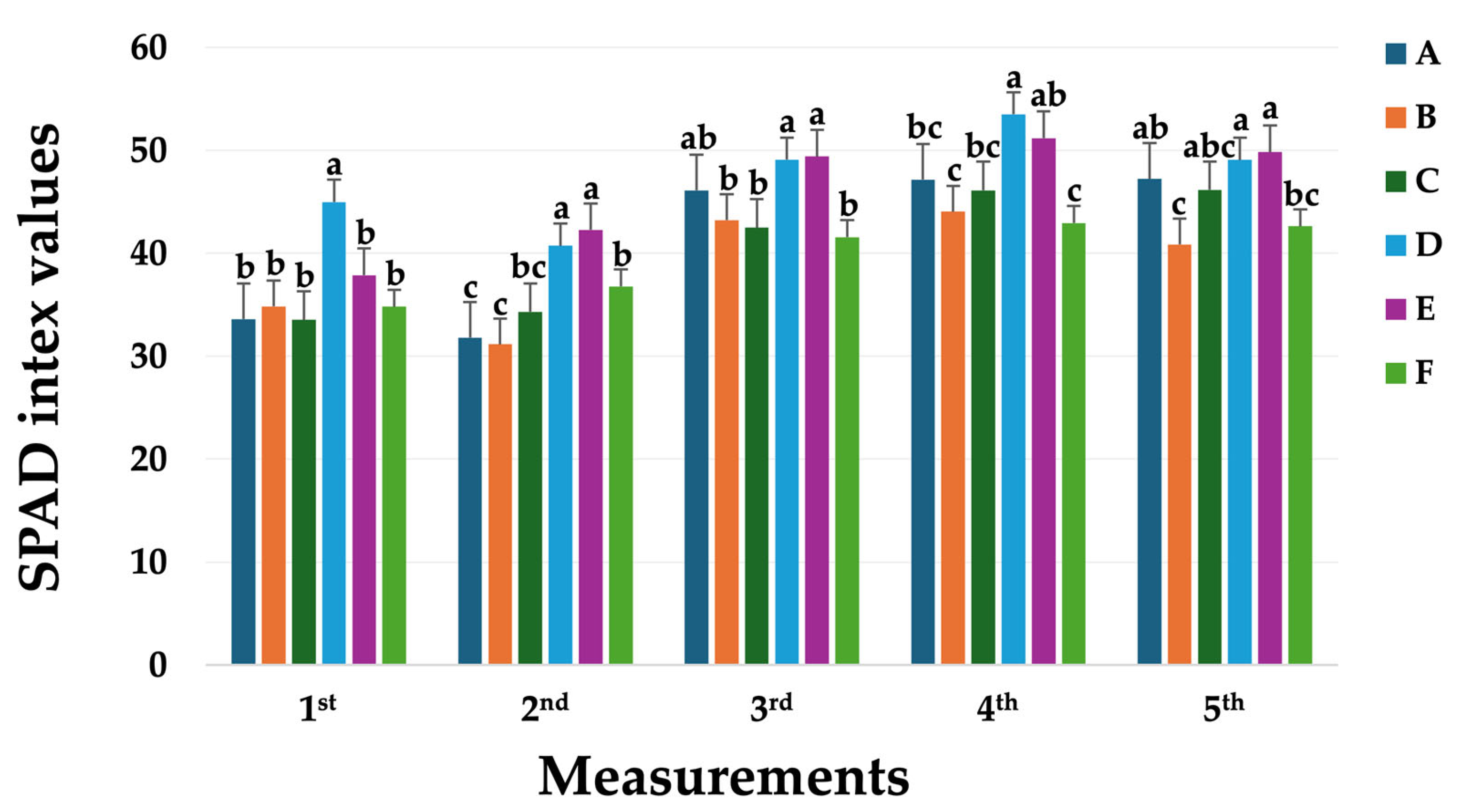
A significant variation in leaf chlorophyll content (SPAD index) was observed among the genotypes and across the sampling periods (Figure 2). At the initial measurement, genotype D exhibited the highest SPAD value (approximately 45), which was significantly greater than the values recorded for genotypes B, C, and F (approximately 33–36). SPAD values exhibited a slight decline at the second measurement, with genotype E maintaining the highest level (approximately 45), while C and F remained at the lowest levels. From the third to the fifth measurements, SPAD values increased steadily, with genotypes A and E consistently showing higher chlorophyll contents (>45), indicating superior chlorophyll retention capacity. In contrast, B and F exhibited significantly lower SPAD values across most of the sampling periods.
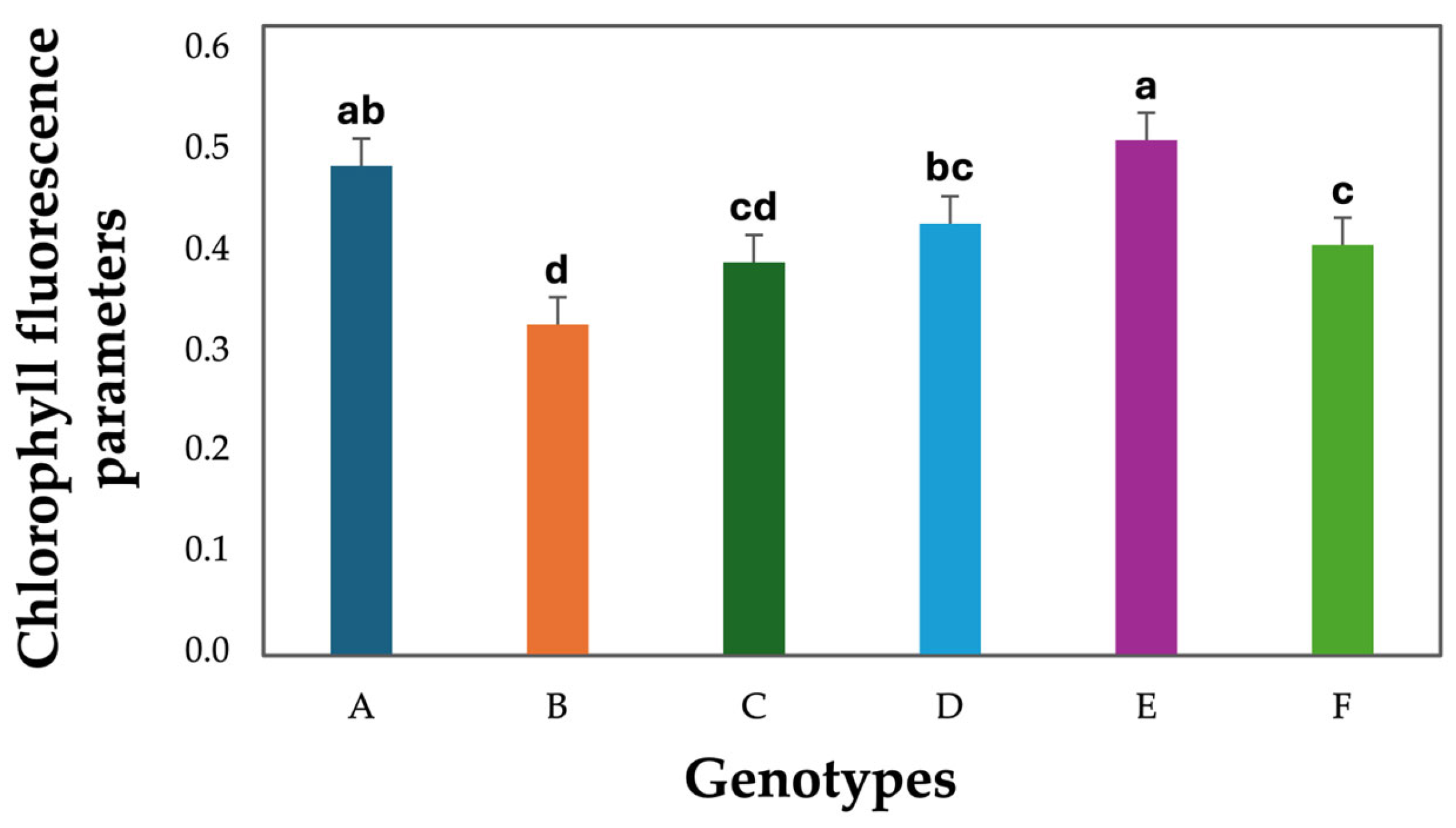
Chlorophyll fluorescence parameters (Fv/Fm) also exhibited genotypic variation (Figure 3). Genotype E demonstrated the highest efficiency (approximately 0.50), followed by A (approximately 0.47). Intermediate values were recorded for D and C (approximately 0.38–0.41), while B and F displayed the lowest values (approximately 0.31–0.36). These results suggest that genotypes A and E maintained superior photosynthetic efficiency under controlled conditions, which likely contributed to enhanced plant vigor and fruit development [4].

3.2. Fruit Quality

A substantial variation was observed in fruit color attributes (Table 1). At the initial harvest, genotype A exhibited the highest lightness (L* = 30.4), while genotype F demonstrated the lowest (L* = 23.0). Genotype E exhibited the highest redness intensity (a* = 67.3), while genotype F showed the lowest intensity (a* = 60.7). Chroma exhibited a parallel trend, with genotype E demonstrating the most pronounced coloration (69.3), which was significantly higher than that of genotype F (62.0). The hue values ranged from 15.8 (A) to 11.9 (F). Across successive harvests, genotype A exhibited consistent high colorimetric values, while B, C, and D demonstrated lower intensity.
Fruit weight exhibited variation among genotypes, with genotype C demonstrating the heaviest fruits at the initial harvest (14.6 g), while D and E exhibited a tendency to produce lighter fruits (approximately 9–10 g) in subsequent harvests. Firmness levels remained relatively low overall, while genotype B demonstrated a marginally higher firmness value (0.5 kg) compared to the other genotypes [5].
A subsequent analysis of flavor-related parameters revealed significant differences. The soluble solids content (SSC) ranged from 9.5 to 14.6 °Brix. Genotype F exhibited a consistent tendency to produce fruits with higher soluble solids content (SSC) values, reaching up to 14.6%, while genotype E demonstrated the lowest mean SSC value of 9.5% at the initial harvest. Titratable acidity (TA) exhibited relative stability across genotypes, with a range of approximately 1.0–1.4%, citric acid, and the genotype F demonstrated the highest value in the third harvest, reaching 1.2%. The SSC/TA ratio, a critical metric of flavor balance, demonstrated that genotypes C and F exhibited the most optimal ratios (>12), while B exhibited the least favorable ratio (≈10).
After seven days of cold storage at 4°C, alterations were detected in the quality attributes of the fruit (Table 1). Although minor decreases in firmness and SSC were observed in certain genotypes, A and E exhibited high color intensity (Chroma = 61–67) and balanced SSC/TA ratios. Genotype D exhibited a notable increase in SSC/TA ratio (14.1), while B showed a significant decline (9.8). These findings indicate that genotypes A, D, and E maintain the quality traits that are preferred by the market during short-term cold storage, suggesting enhanced storability and an extended shelf life.

3.3. Correlation Analysis

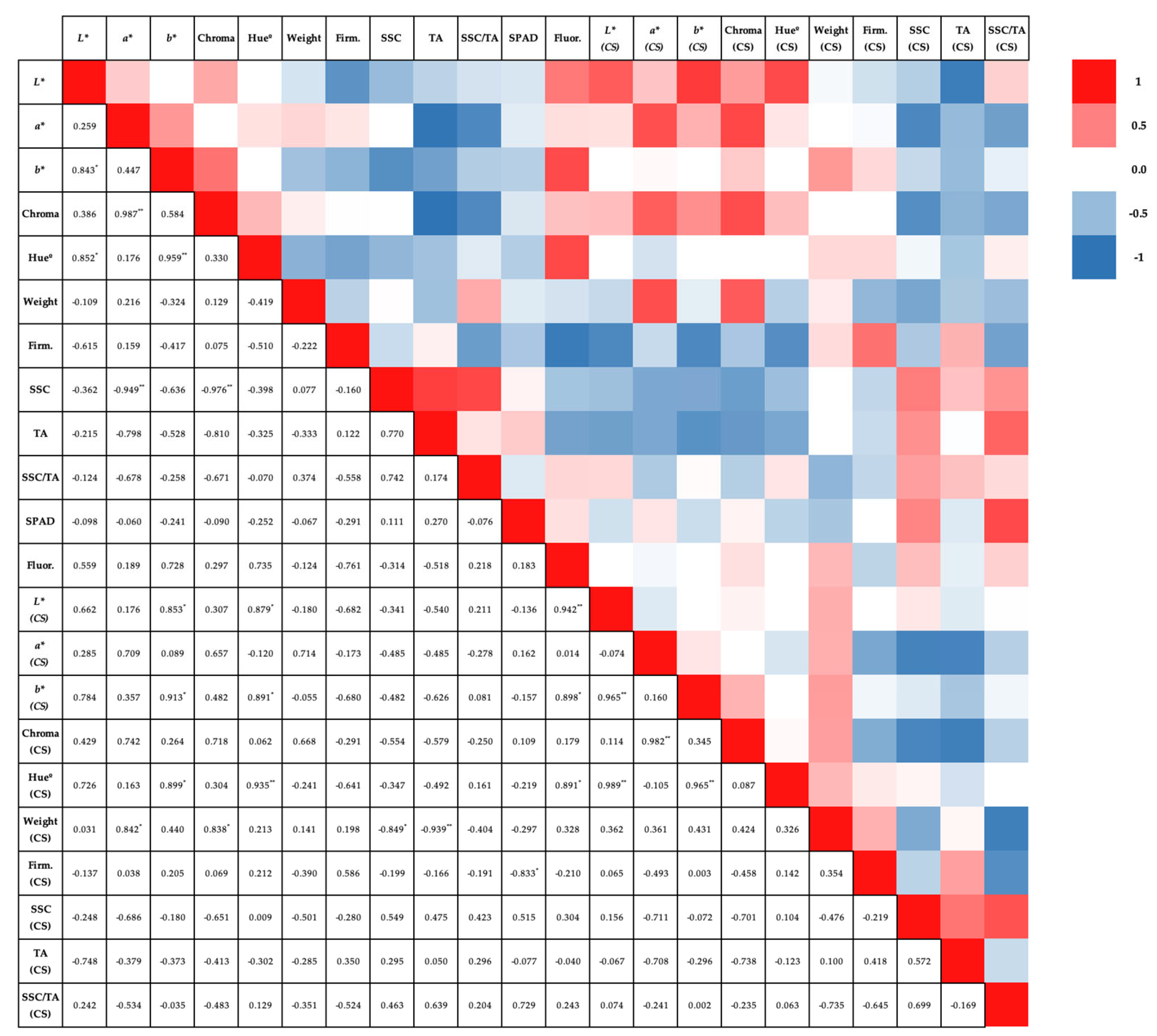
Correlation analysis revealed strong relationships among fruit traits and plant physiological parameters (Figure 4). Lightness (L*) correlated positively with Hue° (r = 0.852, p < 0.05) and b* (r = 0.843, p < 0.05). Redness (a*) was highly correlated with Chroma (r = 0.987, p < 0.01). In contrast, SSC showed strong negative correlations with a* (r = −0.949, p < 0.01) and Chroma (r = −0.976, p < 0.01), indicating that more intensely colored fruits tended to have lower soluble solids content [6].
At the quality level, strong interrelationships were observed. L* (CS) correlated positively with fluorescence (r = 0.942, p < 0.01) and Hue° (r = 0.879, p < 0.05). Strong associations were detected among color parameters, including b* (CS)–L* (CS) (r = 0.965, p < 0.01) and Chroma (CS)–a* (CS) (r = 0.982, p < 0.01). Conversely, weight (CS) was negatively correlated with SSC (r = −0.849, p < 0.05).

4. Conclusions

This study demonstrates the strong potential of day-neutral strawberry genotypes for successful cultivation under net-house conditions in Florina, Northern Greece. Physiological assessments revealed that certain genotypes, particularly A and E, maintained higher SPAD index values and superior chlorophyll fluorescence (Fv/Fm), indicating enhanced photosynthetic efficiency and better adaptation to local climatic conditions.
These physiological advantages translated into improved fruit quality. Genotype A consistently produced fruits with superior color intensity, weight, and balanced acidity, while genotype F displayed the most favorable SSC/TA ratios, contributing to consumer-preferred flavor profiles. Postharvest evaluations highlighted the ability of genotypes A, D, and E to retain firmness, attractive coloration, and flavor balance after cold storage, confirming their storability and extended marketability.
Correlation analysis further clarified the interrelationships among traits, revealing strong positive associations between color parameters, but inverse relationships between fruit coloration and SSC.
Overall, the integration of physiological, physicochemical, and postharvest data supports the identification of high-performing genotypes that combine superior photosynthetic efficiency, fruit quality, and storability. Preliminary economic assessments suggest that adopting these genotypes could extend the production season and increase growers’ income by 20–30%. Establishing a dedicated strawberry cultivation zone in Florina could enhance agricultural productivity, create employment opportunities, and contribute to rural revitalization, offering a replicable model for sustainable intensification in other underutilized regions of Europe [7].

Author Contributions

All authors have made substantial contributions to the work reported in this manuscript. M.-R.K.: Conceptualization, Methodology, Investigation, Data acquisition, Data curation, Visualization, Formal analysis, Validation, Writing—original draft. D.S.: Methodology, Investigation, Data acquisition, Visualization. I.C.: Methodology, Investigation, Data acquisition. G.K.: Investigation, Writing—review & editing. E.K.: Project administration, Supervision, Funding acquisition, Writing—original draft, Writing—review & editing. All authors have read and agreed to the published version of the manuscript.

Funding

This research was carried out in the context of the project “Flor4Berries”, funded through the program “Funding of Research Proposals via the UOWM Special Account for Research Grants (ELKE UOWM)”.

Institutional Review Board Statement

Not applicable.

Informed Consent Statement

Not applicable.

Data Availability Statement

The datasets generated and analyzed during the current study are available from the corresponding author upon reasonable request.

Conflicts of Interest

The authors declare no conflict of interest.

References

  1. Prasad, R. Strawberry-More than a Popular Summer Fruit: A Mini-Review. Adv. Nutr. Food Sci. 2022, 2022, 1–5. [Google Scholar] [CrossRef]
  2. Heide, O.M. Physiology and genetics of flowering in cultivated and wild strawberries—A review. J. Hortic. Sci. Biotechnol. 2013, 88, 1–18. [Google Scholar] [CrossRef]
  3. Menzel, C.M. A review of strawberry under protected cultivation: Yields are higher under tunnels than in the open field. J. Hortic. Sci. Biotechnol. 2025, 100, 286–313. [Google Scholar] [CrossRef]
  4. Haghighat, F. Morpho-physiological performance of seven short-day and day-neutral strawberry cultivars in the soilless culture. J. Plant Physiol. Breed. 2020, 10, 127–139. [Google Scholar]
  5. Hernández-Martínez, N.R. Current state and future perspectives of commercial strawberry production: A review. Sci. Hortic. 2023, 312, 111893. [Google Scholar] [CrossRef]
  6. Charoenwoodhipong, P. Strawberry (Fragaria x Ananassa) intake on human health and disease outcomes: A comprehensive literature review. Crit. Rev. Food Sci. Nutr. 2024, 65, 4884–4914. [Google Scholar] [CrossRef] [PubMed]
  7. Hancock, J.F. Strawberrie, 2nd ed.; CAB International: Wallingford, UK, 2020. [Google Scholar]
Figure 1. Fruit ripening stages of day-neutral strawberry genotypes (AF) showing color development from immature green to fully ripe red, illustrating the transformation of both fruit surface and achene (seed) coloration.
Proceedings 134 00048 g001
Figure 2. SPAD index values of six strawberry genotypes (A–F) across five measurement periods (1st to 5th). Bars represent mean ± SE. Different letters indicate significant differences among genotypes (Duncan’s test, p ≤ 0.05).
Proceedings 134 00048 g002
Figure 3. Chlorophyll fluorescence (Fv/Fm) of six strawberry genotypes (A–F) under net-house conditions. Bars represent mean ± SE. Different letters indicate significant differences (Duncan’s test, p ≤ 0.05).
Proceedings 134 00048 g003
Figure 4. Pearson correlation heatmap of physiological and fruit quality parameters across six strawberry genotypes (A–F) during the 1st harvest and the postharvest periods. Positive and negative correlations are indicated in red and blue, respectively. p< 0.05 (*), p< 0.01 (**).
Proceedings 134 00048 g004
Table 1. Fruit quality attributes (L*, a*, b*, chroma, h°, weight, firmness, SSC, TA, SSC/TA) of six strawberry genotypes (A–F) across three harvests periods plus seven days of cold storage at 4 °C (only from the 1st harvest period). Values are means ± SE. Different letters indicate significant differences (Duncan’s test, p ≤ 0.05).
1st Harvest Period
L*a*b*ChromaHueºWeightFirmnessSSCTASSC:TA
A30.4±1.3a62.2±2.2b17.7±1.2a64.7±2.5ab15.8±0.5a11.3±0.4b0.3±0.0c11.2±0.7ab1.0±0.0ab11.5±1.0a
B25.7±0.2bc65.3±0.9ab14.0±0.6b66.8±1.0ab12.1±0.4c12.4±0.8ab0.5±0.0a10.4±0.7bc1.0±0.0a10.1±0.5a
C27.9±0.3ab62.3±1.5b13.9±0.5b63.8±1.5b12.6±0.5bc14.6±0.7a0.3±0.0c12.4±0.1a1.0±0.0a12.4±0.4a
D26.6±1.7b61.4±1.1b13.4±0.9b62.9±1.2b12.3±0.8bc12.5±0.8ab0.3±0.0c12.4±0.1a1.1±0.1a11.6±0.6a
E28.1±0.7ab67.3±1.0a16.6±0.4a69.3±1.0a13.9±0.4b13.6±1.1ab0.3±0.0c9.5±0.8c0.8±0.0b11.2±1.0a
F23.0±1.0c60.7±1.4b12.8±0.8b62.0±1.5b11.9±0.5c12.7±1.0ab0.4±0.0b12.6±0.2a1.0±0.1a12.4±1.0a
2nd harvest period
A30.2±0.2a64.9±0.3a19.0±0.2a67.7±0.3a16.3±0.1a9.3±0.5b0.5±0.0b12.1±0.2bc1.0±0.0a11.6±0.1a
B17.7±0.6d50.5±0.4e9.4±1.4c51.4±0.6e10.6±1.5c10.8±0.3ab0.6±0.0ab12.8±0.6bc1.2±0.0a10.6±0.5a
C22.0±1.7c60.3±0.6bc11.8±1.2c61.4±0.8bc11.0±1.0bc12.0±0.6a0.4±0.0c11.7±0.3c1.1±0.0a11.0±0.6a
D20.6±0.4c56.3±1.5cd10.6±0.5c57.3±1.5cd10.6±0.5c10.6±0.1ab0.4±0.0c14.3±0.4a1.3±0.1a11.4±1.4a
E25.6±0.7b60.7±2.3b14.7±0.7b62.5±2.4b13.6±0.1b11.7±1.2a0.4±0.1c13.0±0.4b1.1±0.1a12.0±1.0a
F23.2±1.1bc52.6±1.5de11.2±1.1c53.7±1.7de11.9±0.9bc10.7±0.6ab0.7±0.0a14.6±0.3a1.2±0.1a12.7±1.6a
3rd harvest period
A30.5±0.5a68.0±0.8a19.2±0.4a70.7±0.9a15.8±0.1a11.3±0.7a0.3±0.0b11.4±0.5c1.1±0.2a10.8±1.9a
B20.5±0.8d59.8±1.0cd10.8±0.7d60.8±1.1cd10.2±0.5d10.1±0.2abc0.5±0.0a12.1±0.2bc1.2±0.0a10.2±0.6a
C25.2±0.8bc64.8±1.5ab15.0±0.8bc66.6±1.5b13.0±0.7bc10.7±0.3ab0.3±0.0b11.5±0.2c1.0±0.4a17.2±8.3a
D22.7±1.1cd63.0±1.1bc12.8±0.9cd64.3±1.3bc11.5±0.6cd9.1±0.2c0.3±0.0b12.7±0.1ab1.1±0.0a11.2±0.1a
E27.3±0.4b61.8±0.4cd16.2±0.3b63.9±0.3bc14.7±0.3ab9.6±0.4bc0.3±0.0b13.5±0.2a1.4±0.0a9.8±0.2a
F24.1±1.1c57.5±1.3d13.2±1.0c59.0±1.5d12.9±0.8bc9.5±0.4bc0.5±0.0a13.6±0.5a1.2±0.0a11.5±0.2a
Cold Storage after 7 days at 4 °C (from the 1st harvest period)
A27.3±1.3a58.8±3.7bc15.9±1.3a61.0±3.9ab15.1±0.4a10.7±0.6a0.4±0.0ab12.3±0.1bc1.0±0.1b12.0±0.8ab
B19.7±1.1c62.5±0.4abc10.3±0.9b63.3±0.5ab9.3±0.7c11.2±1.0a0.4±0.0a9.7±0.4c1.0±0.1b9.8±0.7b
C22.5±0.9bc64.1±0.5ab12.7±0.7b65.4±0.5a11.2±0.6b10.4±0.6a0.3±0.0ab9.9±0.1c0.9±0.1b10.7±0.8b
D22.0±1.4c61.6±1.7abc11.5±0.8b62.6±1.8ab10.5±0.5ab9.9±1.4a0.2±0.0c13.7±0.4a1.0±0.1b14.1±0.9a
E26.6±0.3ab65.0±1.0a16.0±0.3a66.9±1.0a13.8±0.1a12.2±1.6a0.3±0.0bc10.6±0.4c1.0±0.0b10.1±0.2b
F22.7±2.1bc57.9±0.7c11.2±0.4b59.0±0.8b11.0±0.3b10.9±1.0a0.4±0.0ab13.3±0.3a1.3±0.0a10.4±0.2b
Disclaimer/Publisher’s Note: The statements, opinions and data contained in all publications are solely those of the individual author(s) and contributor(s) and not of MDPI and/or the editor(s). MDPI and/or the editor(s) disclaim responsibility for any injury to people or property resulting from any ideas, methods, instructions or products referred to in the content.