2. Literature Review
Work plays a pivotal role in people’s lives which makes it crucial for organizations to maintain a satisfied workforce. Employee satisfaction is defined as the sense of self-motivation and fulfillment derived from one’s work, stemming from feelings of accomplishment and job performance [
2]. Furthermore, professional satisfaction is additionally enhanced by the recognition and reward of employee achievements, which is inextricably linked to increased efficiency and a positive work environment. Moreover, flexibility plays a significant role in satisfaction in general [
3]. Finally, organizational culture positively affects employees, highlighting the existence of a correlation between organizational culture on the one hand and commitment and performance on the other [
4].
According to previous studies [
5], additional factors that influence employee satisfaction include the following:
Work stress levels: Excessive work stress can negatively impact employee satisfaction and well-being.
Training and development opportunities: Providing employees with opportunities for professional growth and development can enhance their satisfaction and motivation.
Promotion and advancement opportunities: Employees who feel that they have the potential to advance within the organization are more likely to be satisfied with their jobs.
Safety and security: A safe and secure work environment is essential for employee satisfaction and well-being.
Research has shown that HR policies that focus on motivation and reward, empowerment, and communication have a significant impact on employee satisfaction [
6]. Overall, it has been suggested that HRM practices and total quality management (TQM) highly affect employee satisfaction [
7].
Beyond HRM practices, there are additional factors that influence employee work satisfaction. Many researchers argue that social and demographic characteristics, such as age, marital status, gender, family income, and education level [
8,
9] have a significant impact on employee work satisfaction.
Recently, the public sector has been slowly following the lead of the private sector in terms of HRM practices. The concept of New Public Management (NPM) has become increasingly important in the research community, despite the lack of a universally accepted definition. Broadly speaking, the theoretical framework describes NPM as a tool to improve the function of public organizations by adopting and relying on certain practices borrowed from the private sector. These practices, introduced in the 1990s, entail performance evaluation, decentralized budgeting, flexibility in the application of public budgeting, separation of responsibilities and services, downsizing of the public administration, and a results-based management culture, as well as the provision of quality services by public entities and the promotion of market principles [
10,
11].
In Greece, Law No. 3871/2010 was seen as the cornerstone for putting the principles of New Public Management into practice [
12]. Public sector organizations in Greece, however, may face several HR challenges, including employee overload, inappropriate behavior, high levels of bureaucracy, and low productivity. These potential challenges are a result of factors such as stagnation in promotions and unexpected salary cuts. A report published by the OECD [
13] in 2012 indicated that the HRM framework in the Greek public sector included legal provisions for the protection of employee rights. These included the practices of providing social security and pensions to employees, and the right to strike and form a union, as well as guarantees for long-term employment opportunities. Of course, the Greek public sector requires modernization and the adoption of HR practices and measures from the private sector [
14]. According to KPMG [
15], Greece ranks 55th globally and has been steadily improving in recent years. The OECD reports that Greece tends to outsource HR management to other government entities to a lesser extent than the OECD average. In terms of strategic HR management, Greece makes little to no use of this.
This paper explores the relationship between human resource management (HRM) practices and employee job satisfaction in the Greek public sector and more specifically, within the Region of Crete. It specifically examines the relation between HRM practices and job satisfaction, as well as the correlation between specific work characteristics and demographic factors with job satisfaction and satisfaction with HRM practices. More specifically, we examined the extent to which these characteristics influenced the overall level of employee satisfaction.
Delving deeper, this paper investigates the following key questions:
Does the level of HR satisfaction affect the level of job satisfaction?
Is the level of job satisfaction influenced by the participants’ work profiles?
Is the level of job satisfaction affected by the participants’ demographic characteristics?
Is the level of HR satisfaction influenced by the participants’ work profiles?
Is the level of HR satisfaction affected by the participants’ demographic characteristics?
We tried to answer these questions by providing empirical evidence concerning a Greek public organization.
3. Research Methodology
The survey was conducted in the Region of Crete, one of the 13 administrative regions of Greece. Located in the southern part of the country, the Region of Crete includes the island of Crete and smaller islands such as Gavdos, Chrissi, and Koufonisi, among others, and covers a total area of 8303 square kilometers. The capital of the region is Heraklion, where the Headquarter Services of the Regional Government are located. The Region is further divided into four administrative units: the regional units of Heraklion, Lasithi, Rethymno, and Chania.
For the purposes of this study, a structured questionnaire was developed based on a comprehensive literature review. All questionnaire items were measured using a five-point Likert scale. The questionnaire consisted of four parts, with 17 questions in total. It was distributed to all employees of the Region of Crete, a total population of 764 employees, with a response deadline of approximately two weeks. Data were collected from 5 December 2023 to 18 December 2023, resulting in a final sample of 116 responses. The research sample included a diverse range of participants, from all administrative units, and of both genders, reflecting a broad spectrum of age groups, educational backgrounds, marital status, and salary levels.
4. Results
The sample consisted of 116 employees from the Region of Crete. The specific demographic and working profile data are presented in
Table 1 and
Table 2:
Cronbach’s alpha coefficient was used to confirm the reliability and internal consistency for each individual question, as well as for the overall questionnaire. The results of the reliability analysis, conducted using IBM® SPSS® Statistics 29 statistical software, allowed the creation of seven grouping variables, as follows:
Factors of job satisfaction;
Total satisfaction/commitment;
HR programming factors;
Motivation practices;
Evaluation of productivity;
Program of training and personal development;
Employee involvement/participation.
Cronbach’s alpha values for the individual questions ranged from 0.787 to 0.890, while the overall Cronbach’s alpha value was 0.952. The factors for each constructed variable are presented in
Table 3:
Two additional composite variables were derived from these variables, following an additional Cronbach’s alpha reliability test. The first variable named “job satisfaction” aggregated the factors of “factors of job satisfaction” and “total satisfaction/commitment”. The second variable named “satisfaction with HR practices”, aggregated the factors of “HR planning, motivation practices”, “evaluation of productivity”, “program of training and personal development”, and “employee involvement/participation”. These variables were subsequently used to investigate and answer the research questions.
As presented on
Table 4, the factors with the highest levels of job satisfaction were “relationships with colleagues” (M = 4.21, SD = 0.75) and “relationships with supervisors” (M = 4.17, SD = 0.87).
Regarding the overall satisfaction and commitment (
Table 5), it was found that the overall satisfaction level was more than adequate (M = 3.58, SD = 0.85), whereas the overall commitment was high (M = 4.35, SD = 0.66).
Furthermore, the results in
Table 6 show that the HR department only investigated the needs of its personnel in a moderate extent (M = 3.01, SD = 1.05), while it was inadequate to predict the needs (M = 2.43, SD = 1.16) and actually hire qualified and suitable personnel (M = 2.91, SD = 1.13). In conclusion, the HR planning was limited, and improvements were required.
In the
Table 7 it is shown that the most prevalent motivation practice was the effort to create/maintain a positive working atmosphere (M = 3.75, SD = 0.92).
Moreover, the participants reported that the evaluation procedure was moderately perceived as a process of improvement (M = 3.02, SD = 1.06) (
Table 8).
Regarding the training programs (
Table 9), they were provided to employees to a quite large extent (M = 3.73, SD = 0.88).
Finally, regarding employee involvement/participation levels, the analysis (
Table 10) concluded that there was a sufficiently open communication between employees and supervisors (M = 3.78, SD = 0.94).
Regarding the overall level of the job satisfaction of employees in the Region of Crete (
Table 11), it was sufficiently high (M = 3.63, SD = 0.57), while the overall satisfaction from the applied HR practices was lower (M = 3.19, SD = 0.73).
The distribution of the means of the grouping variables, in terms of working profile data and demographic data, are presented in
Table 12 and
Table 13.
Based on these results, it can be concluded that the highest levels of job satisfaction and satisfaction from the HRM practices were reported by the following:
Employees in the Headquarters Services (MJobSatisfaction = 3.82, MHRMpractices = 3.43);
New employees with 1–8 years of experience (MJobSatisfaction = 3.68, MHRMpractices = 3.36);
Those in managerial positions in terms of job satisfaction levels (MJobSatisfaction = 3.68) but not in terms of HRM practices satisfaction levels (M.O. HR = 3.20);
Employees in relatively small directorates of 6–9 people (MJobSatisfaction = 3.80, MHRMpractices = 3.45);
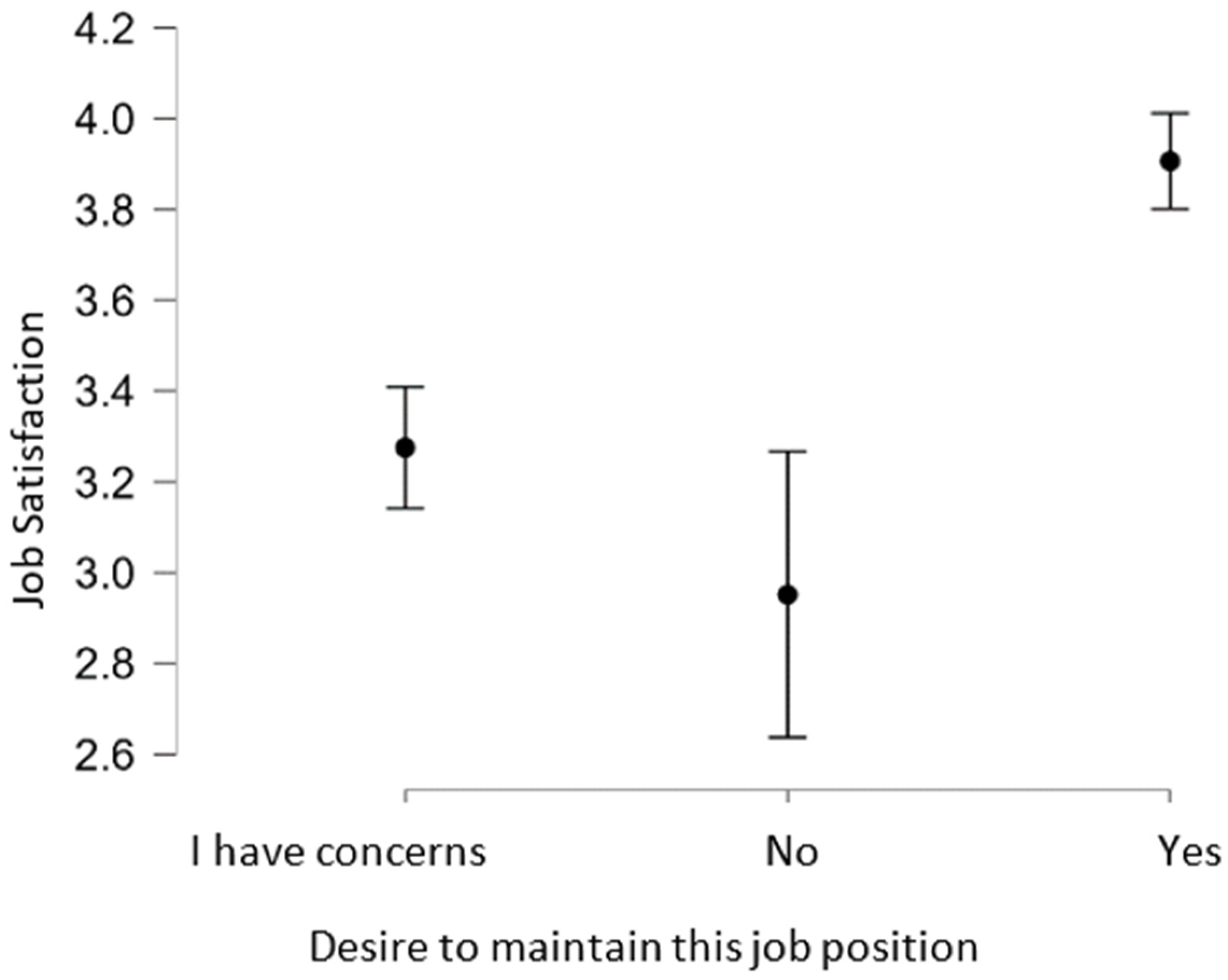
Employees with desire to maintain their job position, (MJobSatisfaction = 3.91, MHRMpractices = 3.50);
Those paid EUR 1001–1250 in terms of job satisfaction levels (MJobSatisfaction = 3.68) but those paid over EUR 1501 in terms of HRM practices satisfaction levels (MHRMpractices = 3.24);
Women in terms of work satisfaction levels (MJobSatisfaction = 3.64) but men in terms of HRM practices satisfaction levels (M.O. HR = 3.21);
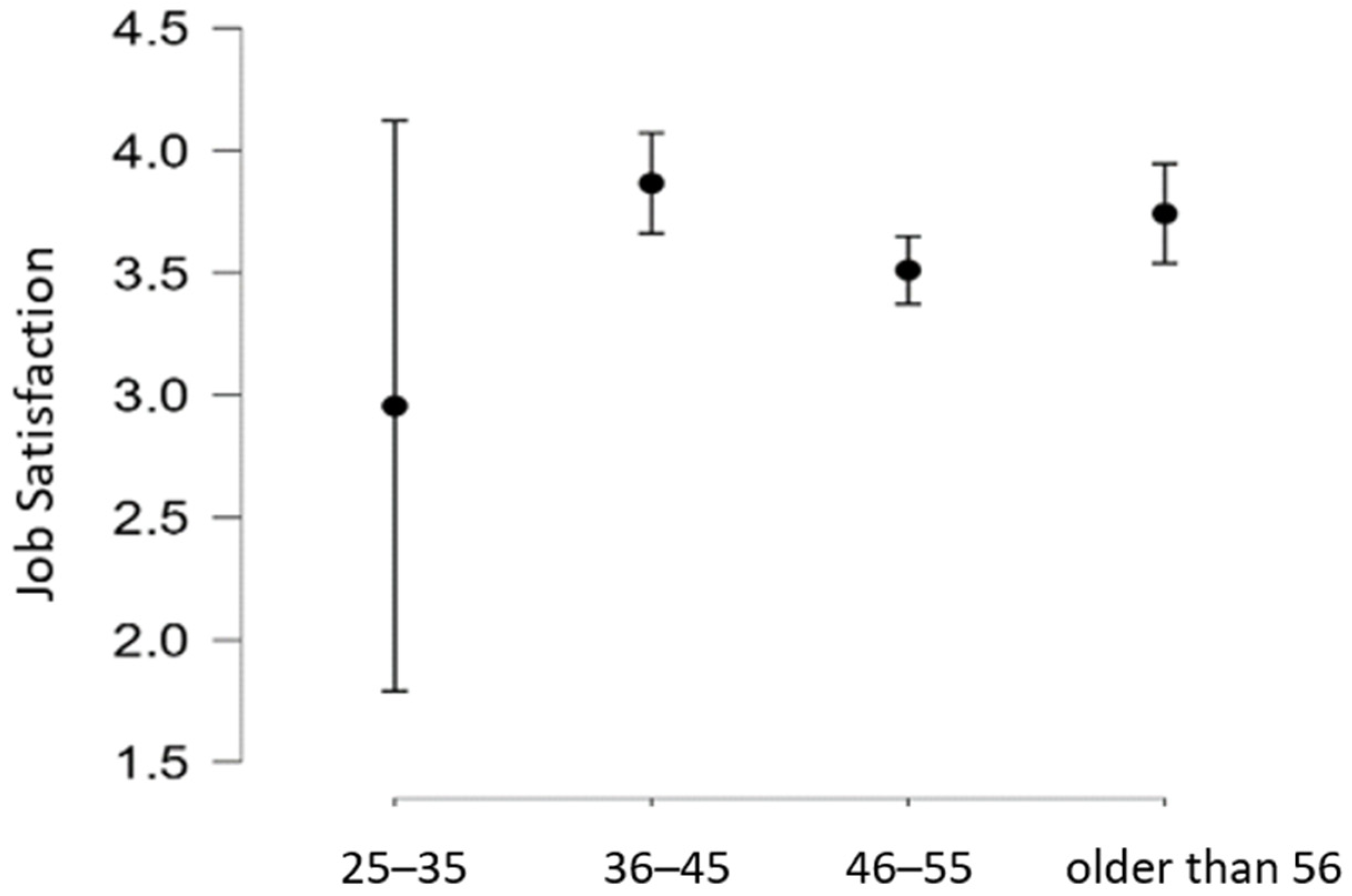
Employees aged 36–45 (MJobSatisfaction = 3.87, MHRMpractices = 3.54);
Single employees (MJobSatisfaction = 3.78, MHRMpractices = 3.42);
Employees with a university degree (MJobSatisfaction = 3.78, MHRMpractices = 3.35).
Subsequently, a normality test was conducted to determine the appropriate method for conducting the correlation analysis. The results of the normality test showed that the sample did not follow the normal distribution (
Table 14), as the skewness and Kurtosis values exceeded the demanded value range. Therefore, the Spearman’s rho correlation coefficient was chosen for this correlation analysis.
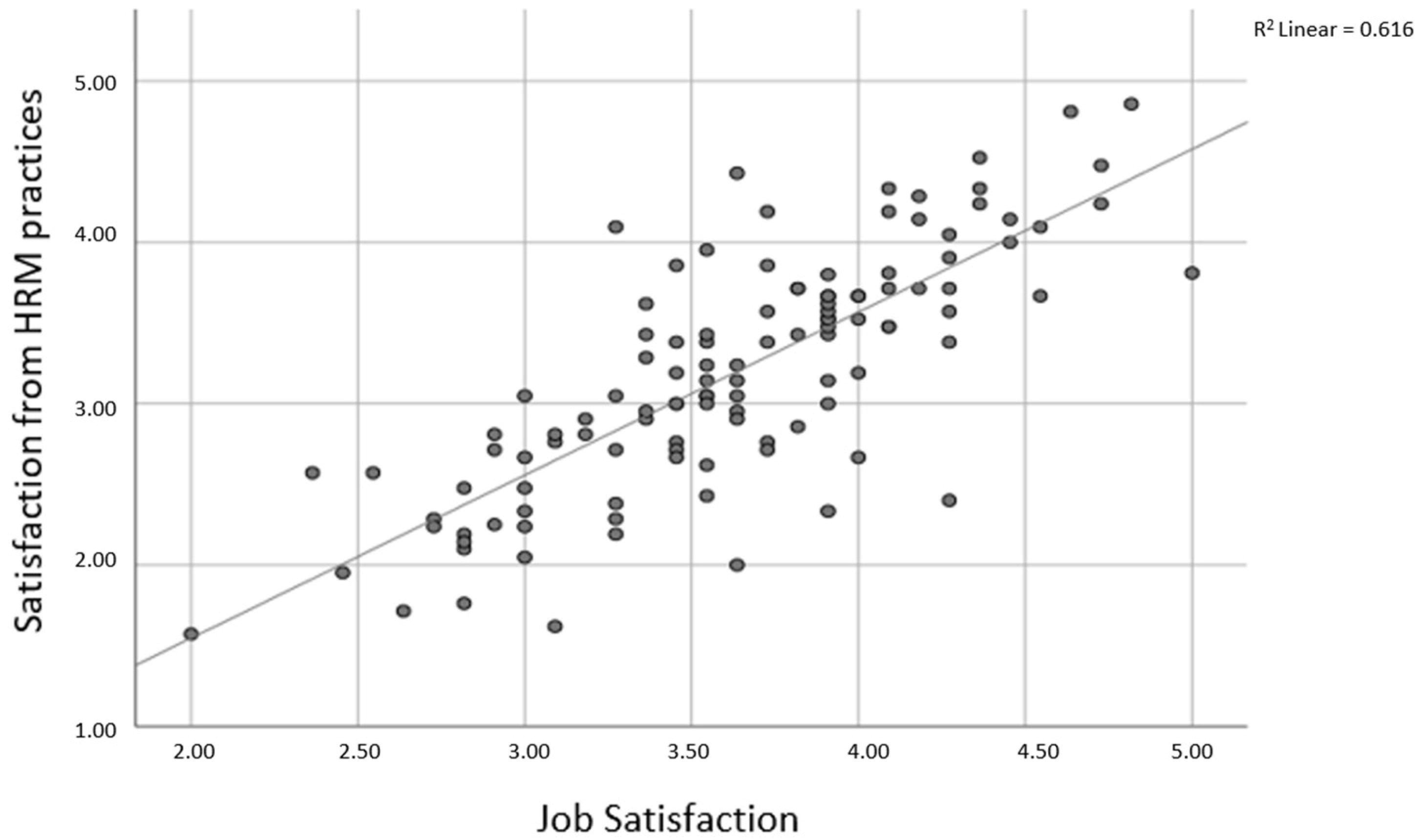
Regarding the first research hypothesis “Does the level of HR satisfaction affect the level of job satisfaction?”, the results in
Table 15 indicate that there was a statistically significant correlation between the level of job satisfaction and the levels of satisfaction with HRM practices.
Examining the second research hypothesis “Is the level of job satisfaction influenced by the participants’ work profiles?” (
Table 16) the level of job satisfaction was statistically significant in terms of the variable “desire to maintain the job position” (F = 37.220, Sig. = 0.000).
In
Figure 2 the aforementioned results are visually presented.
Throughout the examination of the third research hypothesis “Is the level of job satisfaction affected by the participants’ demographic characteristics?” (
Table 17) the level of job satisfaction was statistically significant only in terms of the variable “age” (F = 3.897, Sig. = 0.011).
In
Figure 3 it is shown that participants aged 36–45 and more than 56 years reported higher job satisfaction.
Regarding the fourth research hypothesis “Is the level of HR satisfaction influenced by the participants’ work profiles?” (
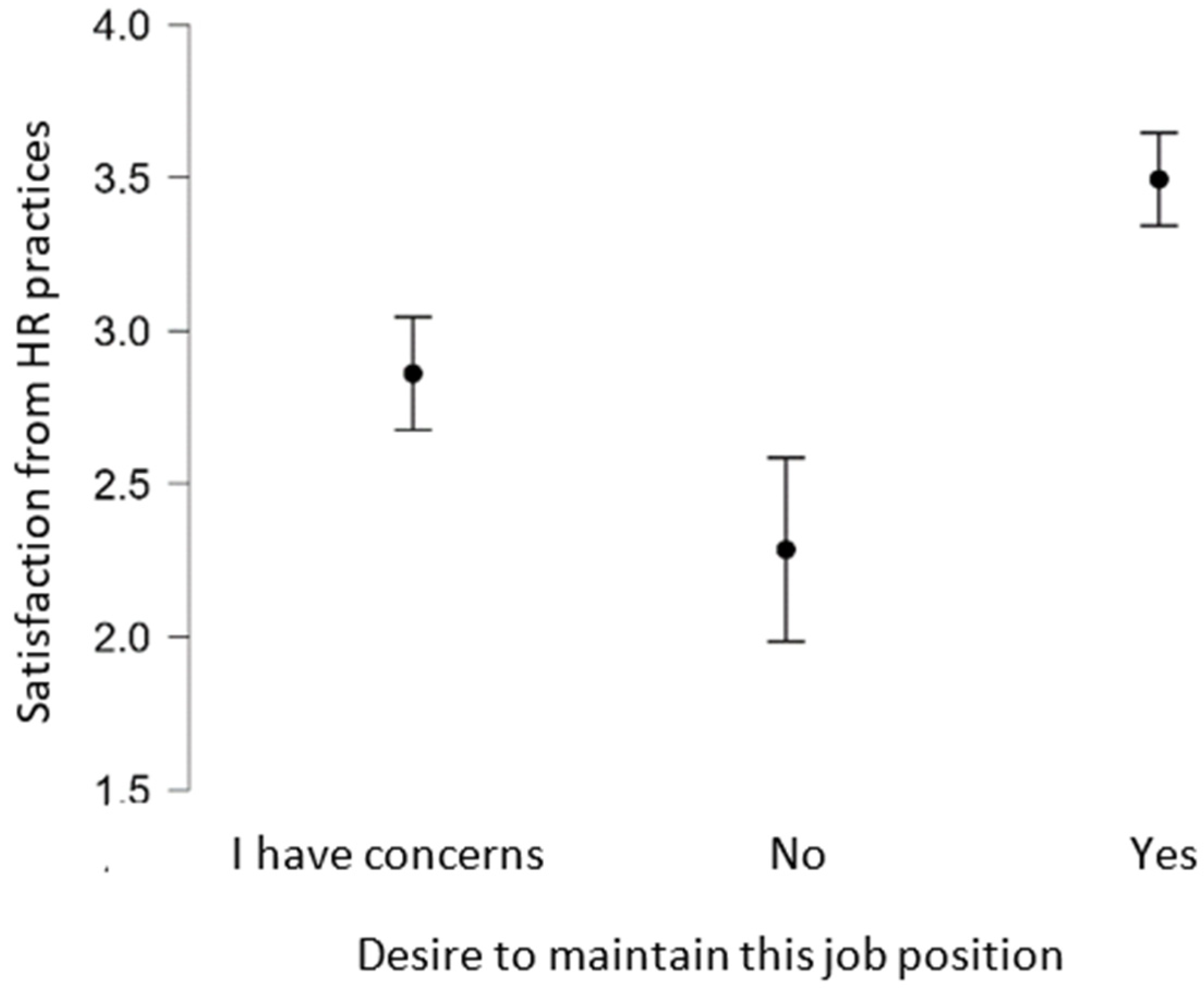
Table 18), it was confirmed only in terms of the variable “desire to maintain their job position” (F = 25.726, Sig. = 0.000).
In addition to the above findings,
Figure 4 shows that satisfaction with HR practices was influenced by the desire to maintain their job position. More specifically, the more positive the participants’ responses were about their desire to remain in their current job position, the higher their satisfaction with HR practices.
Regarding the fifth research hypothesis “Is the level of satisfaction with HR practices affected by the participants’ demographic characteristics?” (
Table 19), it was not confirmed in this research.
5. Discussion
Job satisfaction is a critical issue with significant implications for both employees and organizations. The factors that influence job satisfaction, considering possible variations at the individual and collective levels, were investigated and the findings clearly demonstrate that the level of job satisfaction was significantly affected by the applied HRM practices. A direct correlation between satisfaction with HR practices and the average value of job satisfaction was confirmed. These results are in line with those of a number of notable researchers [
16,
17,
18].
Further analysis of the statistical data revealed that relationships with colleagues and supervisors were among the most important factors in shaping job satisfaction for this survey sample, followed by the variables of the work environment/conditions, job security, and the balance between work and personal life. It is noteworthy that payment ranked last. The results of the empirical research also indicated that demographic and work-related factors had a clear influence on job satisfaction. Several studies document the impact of factors such as age, education, current work experience [
19], gender, salary [
20], and education level [
21].
In this study, it was confirmed that the factors of “age” and the “desire to maintain job position” are of statistical significance. The factors of gender, salary, position of responsibility, education level, marital status, and number of colleagues were found to be statistically insignificant.
6. Conclusions
The role of HRM is recognized as crucial for the effectiveness and smooth operation of organizations. One of the most important issues in the implementation of HRM is the achievement of employee satisfaction. Factors that affected the level of job satisfaction include work stress, opportunities for training and development of staff, promotion and advancement of employees, and a sense of security at work. Particularly in the Greek public sector, it was widely acknowledged that there were significant dysfunctions in the exercise of leadership, while the Greek public sector often used incomplete performance appraisal processes in human resource decisions when compared to other OECD countries.
However, the situation has gradually changed, due particularly to the introduction of the law of the “Common Assessment Framework” and the change in the way public servants are assessed and promoted. This article investigates the relationship between HR and job satisfaction and illustrates the correlation between work characteristics and demographic factors that lead to job satisfaction.
The most significant finding of our research was the strong correlation between HR satisfaction and job satisfaction. Therefore, it can be safely concluded that a good HRM system undoubtedly affects employee satisfaction. With regards to other surveyed parameters, age appeared to affect job satisfaction.
Finally, in the case of the Region of Crete, although overall job satisfaction and satisfaction from the applied HRM practices was at a moderately satisfactory level, there were clearly areas for concern and further improvement.