Article

Nitrogen-Fixing and Phosphate-Solubilizing Bacillus stercoris CMB2 from Baby Maize Roots

by
Liem Thanh Tran
1,2 and
Chuong Van Nguyen
1,2,*
1
Department of Crop Science, An Giang University, An Giang, Vietnam
2
Vietnam National University, Ho Chi Minh City, Vietnam
*
Author to whom correspondence should be addressed.
Nitrogen 2026, 7(2), 38; https://doi.org/10.3390/nitrogen7020038
Submission received: 18 February 2026 / Revised: 23 March 2026 / Accepted: 26 March 2026 / Published: 30 March 2026

Abstract

Baby maize (Zea mays L.) is widely cultivated across Asia due to its short growth cycle and adaptability to diverse agroecological conditions. However, its production is frequently constrained by low soil fertility, leading to the excessive use of chemical fertilizers, which in turn contributes to environmental degradation. Endophytic bacteria with the ability to fix atmospheric nitrogen and solubilize inorganic phosphate represent a sustainable alternative for improving nutrient availability. This study aimed to isolate and characterize endophytic bacteria exhibiting dual nitrogen-fixing and phosphate-solubilizing capabilities from baby maize roots. A total of ten bacterial isolates were obtained and screened using nitrogen-free Burk medium and NBRIP medium. Among these, strain CMB2 demonstrated superior functional traits. Molecular identification based on 16S rRNA gene sequencing confirmed that the isolate belongs to Bacillus stercoris. In vitro assays revealed that B. stercoris CMB2 exhibited significant nitrogenase activity, as determined by the acetylene reduction assay, and strong phosphate-solubilizing ability, indicated by a clear halo zone and a high solubilization index. These findings suggest that B. stercoris CMB2 is a promising multifunctional endophytic bacterium for enhancing nutrient availability under controlled conditions. Further validation under greenhouse and field conditions is required to assess its potential for improving plant growth and nutrient uptake in baby maize.

1. Introduction

Baby maize (Zea mays L.), harvested at the immature stage prior to pollination, has emerged as a high-value horticultural crop in both domestic and international markets. Unlike grain maize, it is cultivated for its tender ears, which are consumed fresh or processed [1]. Global production of baby maize has expanded significantly in Asia, Africa, and Latin America, driven by its short growth duration (60–70 days), high market demand, and compatibility with intensive cropping systems. Major producers such as India, Thailand, and China supply both fresh and processed products to international markets, particularly in Europe and North America [2]. In Vietnam, baby maize cultivation has increased rapidly, particularly in the Red River Delta and Mekong Delta regions, contributing to income diversification and rural economic development. Its adaptability and compatibility with crop rotation systems further enhance its role in sustainable agricultural production [3,4].
Despite its economic importance, baby maize productivity has become increasingly unstable due to both agronomic and environmental constraints. Intensive farming practices, particularly the excessive application of chemical fertilizers, have resulted in soil degradation and reduced nutrient-use efficiency [5]. Nitrogen fertilizers, especially urea, are often applied beyond crop requirements, leading to soil acidification, nitrate leaching, and greenhouse gas emissions. Similarly, excessive phosphorus inputs can result in nutrient fixation, thereby reducing availability to plants and increasing production costs [6,7]. Long-term overuse of fertilizers has also been shown to disrupt soil microbial communities and diminish beneficial rhizosphere populations, ultimately accelerating soil degradation [8,9].
In addition, inefficient nitrogen management contributes to substantial nutrient losses through leaching, volatilization, and denitrification, thereby reducing nitrogen use efficiency and exacerbating environmental pollution [10]. In Vietnam, intensive cropping systems with multiple growing cycles per year further intensify soil nutrient depletion. Continuous monocropping without sufficient organic amendments reduces soil organic matter, weakens soil structure, and limits microbial biomass. Climate variability, including prolonged droughts and irregular rainfall patterns, further compounds these challenges by imposing abiotic stress on maize production systems [11,12]. These combined factors threaten the sustainability of baby maize cultivation, highlighting the urgent need for alternative strategies that enhance nutrient-use efficiency while restoring soil health [13].
Sustainable agricultural practices increasingly emphasize the use of environmentally friendly approaches to reduce reliance on synthetic inputs. Among these, plant growth-promoting microorganisms have gained considerable attention due to their ability to enhance plant growth through multiple mechanisms, including biological nitrogen fixation, phosphate solubilization, phytohormone production, and stress tolerance [14,15]. Nitrogen fixation and phosphate solubilization are particularly critical for maize, given its high nutrient demand [16,17]. Biological nitrogen fixation converts atmospheric nitrogen into bioavailable forms via nitrogenase activity, thereby reducing dependence on synthetic fertilizers [18,19]. Meanwhile, phosphate-solubilizing bacteria increase phosphorus availability by releasing organic acids and phosphatases that mobilize insoluble phosphate compounds [20,21,22,23].
Among beneficial microorganisms, Bacillus species are particularly promising due to their resilience, spore-forming ability, and multifunctional plant growth-promoting traits. These bacteria can effectively colonize plant tissues and tolerate a wide range of environmental conditions [24]. Several Bacillus strains have been reported to possess both nitrogen-fixing and phosphate-solubilizing capabilities, making them suitable candidates for biofertilizer development [18,24]. Moreover, endophytic Bacillus strains often establish stable associations within plant tissues, enhancing nutrient acquisition and stress tolerance compared with free-living rhizobacteria [25].
However, the effectiveness of microbial inoculants is highly strain-specific and influenced by environmental conditions. Indigenous strains adapted to local agroecosystems are generally more effective under field conditions [26]. Therefore, isolating and characterizing native endophytic bacteria from baby maize roots represents a strategic approach for identifying efficient plant growth-promoting strains. Molecular identification using 16S rRNA gene sequencing provides reliable taxonomic resolution and facilitates the selection of promising candidates for further evaluation [27].
In this study, we isolated and characterized an endophytic bacterium, Bacillus stercoris CMB2, exhibiting both nitrogen-fixing and phosphate-solubilizing capabilities. The study aims to provide a scientific basis for the development of environmentally sustainable biofertilizer strategies for baby maize production systems in Vietnam.

2. Materials and Methods

2.1. Collection and Processing of Baby Maize Root Samples

Baby maize root samples were collected from Cho Moi commune, An Giang Province, Vietnam. Immediately after collection, the roots were aseptically cut into small segments using sterile scissors without prior washing in order to preserve the native rhizosphere-associated microbial communities. The root fragments were then macerated and homogenized in approximately 100 mL of sterile distilled water to facilitate the release of both epiphytic and endophytic bacteria. The resulting suspension was transferred into centrifuge tubes and agitated on an orbital shaker for 30 min to ensure uniform cell dispersion. Subsequently, the mixture was centrifuged at 1500 rpm for 1 min, and the supernatant containing bacterial cells was collected and spread onto yeast extract mannitol agar (YMA) medium [27,28,29]. Serial tenfold dilutions (10−2 to 10−6) were prepared, and aliquots from each dilution were plated in triplicate onto YMA plates. The inoculated plates were incubated at room temperature for 4–5 days. Colony development was monitored throughout the incubation period, and morphologically distinct colonies were repeatedly subcultured to obtain pure bacterial isolates [24,30].

2.2. Isolation and Functional Assessment of B. stercoris CMB2

Nitrogen-fixing bacteria were isolated from rhizosphere soil and root tissues using serial dilution and selective culturing techniques. For rhizosphere soil, 10 g of fresh soil was suspended in 90 mL of sterile distilled water and homogenized by shaking at 150 rpm for 20–30 min. The resulting suspension was serially diluted from 10−1 to 10−6 to obtain an appropriate range of colony densities for accurate enumeration and efficient isolation. Aliquots (100 µL) of selected dilutions were spread onto nitrogen-free selective media (N-free agar or Jensen’s medium) to screen for diazotrophic bacteria. The plates were incubated at 30 °C for 3–5 days under aerobic conditions. Colonies exhibiting morphological characteristics typical of free-living nitrogen-fixing bacteria were selected and purified through repeated streaking on fresh medium to obtain pure cultures [24].
For endophytic bacterial isolation, baby maize roots were first thoroughly washed under running tap water to remove adhering soil particles. Surface sterilization was carried out by sequential immersion in 70% ethanol for 1 min, followed by 2% sodium hypochlorite for 3–5 min, and subsequently rinsed five times with sterile distilled water. The effectiveness of surface sterilization was verified by imprinting the treated roots onto nutrient agar plates to confirm the absence of microbial growth [28,31]. Sterilized root tissues (approximately 1–2 g) were aseptically macerated in sterile phosphate-buffered saline using a mortar and pestle. The homogenate was serially diluted, and aliquots were spread onto nitrogen-free agar medium. Plates were incubated at 30 °C for 3–5 days, and emerging colonies were selected based on distinct morphological features and purified by repeated streaking [20,28]. Pure isolates were maintained on yeast extract mannitol agar (YMA) slants at 4 °C for short-term storage and preserved in 20% glycerol at −80 °C for long-term storage. Preliminary screening for nitrogen-fixing potential was performed by assessing bacterial growth on nitrogen-free media, followed by confirmation of ammonia production and/or acetylene reduction activity in subsequent assays [18,29].
Rhizosphere Bacterial Isolation Procedure: Approximately 1–2 g of fresh baby maize root samples was used for bacterial isolation. To eliminate epiphytic microorganisms, surface sterilization was performed prior to processing. Root samples were gently rinsed with sterile water to remove loosely attached soil particles while minimizing tissue damage. The samples were then immersed in 95% ethanol for 3 min, followed by treatment with 0.1% HgCl2 solution for 5 min. This step ensured effective removal of residual surface microorganisms, allowing for selective isolation of endophytic bacteria. Subsequently, the roots were rinsed five to six times with sterile distilled water to completely remove residual disinfectants. The sterilized root tissues were aseptically macerated using a sterile mortar and pestle, and 2 mL of sterile distilled water was added to obtain a homogenate [30,31,32]. Then, 1 mL of the homogenate was transferred into 9 mL of sterile distilled water to obtain a 10−1 dilution. Serial dilutions were prepared up to 10−6. From each dilution, 100 µL aliquots were spread onto yeast extract mannitol agar (YMA) plates sterilized at 121 °C for 15 min. Each dilution was plated in triplicate. The plates were incubated at 28–30 °C for 3–7 days to allow for the formation of well-isolated colonies [28,33].
Purification of Isolates: Selected colonies were repeatedly streaked onto fresh solid medium to obtain single colonies. This process was performed two to three times to ensure culture purity. Pure isolates were subsequently transferred onto agar slants for preservation and further characterization [28,34].

2.3. Morphological Characterization of B. stercoris CMB2

Colony morphology was evaluated after incubation on YMA medium. Characteristics including colony color, shape, elevation, margin, surface texture, and size were systematically recorded.
Wet Mount Preparation: A wet mount was prepared using the drop-slide method described by 34. Sanders [34]. A small amount of fresh bacterial culture was suspended in a drop of sterile distilled water on a clean glass slide and covered with a coverslip. Cellular morphology and motility were observed under a light microscope at 100× magnification [35].
Measurement of Cell Size: Following the assessment of cell shape and motility, bacterial cell dimensions were measured using an ocular micrometer calibrated with a stage micrometer under a light microscope, in accordance with the method described by Osiro et al. [36].
Gram Staining: Nitrogen-fixing bacterial isolates were cultured on YMA medium, and colonies appearing after 2–7 days were used for staining. A small amount of bacterial biomass was transferred with a sterile inoculating loop into a drop of sterile distilled water on a glass slide to prepare a smear. The smear was heat-fixed and sequentially stained with crystal violet (30 s), followed by rinsing and application of Lugol’s iodine (1 min). Decolorization was performed using ethanol for approximately 30 s. The slide was then rinsed and counterstained with safranin for 1 min. After air-drying, the stained smears were examined under a light microscope. Gram-positive bacteria retained the crystal violet–iodine complex and appeared purple, whereas Gram-negative bacteria appeared pink due to safranin uptake [37].

2.4. Biochemical Characterization

Motility Test: Bacterial motility was determined using the semi-solid agar stab method. A sterile inoculating needle was used to inoculate the culture into semi-solid YMA medium. Tubes were incubated at 30 °C in an upright position. Motility was assessed after 3 days based on the pattern of growth, where diffuse spreading from the inoculation line indicated motility, whereas growth confined to the stab line indicated non-motility [38].
Catalase Test: Catalase activity was assessed based on the ability of bacterial isolates to decompose hydrogen peroxide (H2O2) into water and oxygen. A small portion of a fresh colony was transferred onto a clean glass slide, and a few drops of 3% H2O2 were added. The formation of visible oxygen bubbles within approximately 15 s indicated a positive catalase reaction [39].

2.5. Determination of Nitrogen-Fixing Ability

The nitrogen-fixing potential of rhizosphere isolates was evaluated using both qualitative and quantitative approaches. Qualitative screening was conducted by culturing isolates on nitrogen-free media, including Ashby’s mannitol agar, NFb medium, and Burk’s N-free medium. Bacterial growth under nitrogen-deficient conditions was considered indicative of potential diazotrophic capability [28]. Quantitative assessment of nitrogenase activity was performed using the acetylene reduction assay (ARA), which measures the enzymatic conversion of acetylene (C2H2) to ethylene (C2H4) catalyzed by nitrogenase [39,40]. Bacterial cultures were incubated in nitrogen-free medium for 48 h, followed by the injection of 10% (v/v) acetylene gas into sealed serum vials. The vials were incubated at 30 °C for 24 h. Gas samples (1 mL) were collected from the headspace and analyzed using a gas chromatography (GC) system (Agilent 7890B, Agilent Technologies, Santa Clara, CA, USA) equipped with a flame ionization detector (FID) to quantify ethylene production. Ethylene concentration was determined using an external standard curve, and nitrogenase activity was expressed as nmol C2H4 produced mL−1 h−1.
Each treatment consisted of four biological replicates, and measurements were conducted with technical replicates to ensure accuracy. Data were expressed as mean ± standard deviation. Statistical differences among treatments were analyzed using analysis of variance (ANOVA), followed by appropriate post hoc tests at p < 0.05. In addition, total nitrogen accumulation was determined using the Kjeldahl digestion method or CHN elemental analysis to estimate biologically fixed nitrogen under the experimental conditions [40]. Ammonia production was qualitatively evaluated by incubating bacterial cultures in peptone water at 30 °C for 60–80 h, followed by detection using Nessler’s reagent. For nitrogenase analysis, bacterial cells were pre-cultured in YMA broth and then transferred to nitrogen-free medium at an optical density (OD600) of 0.8. Cultures were incubated at 30 °C with shaking (160 rpm), including uninoculated control. Total nitrogen content was determined after centrifugation as described by Kifle et al. [41]. Environmental factors, including pH, temperature, oxygen availability, and carbon sources, were carefully considered due to their known influence on nitrogenase activity.

2.6. Evaluation of Phosphate-Solubilizing Capacities

The phosphate-solubilizing capacity of the bacterial isolates was evaluated following the protocol described by Nautiyal [42]. The National Botanical Research Institute’s phosphate (NBRIP) medium, developed by Nautiyal, contains glucose and 5.0 g L−1 tricalcium phosphate (TCP) as the insoluble phosphorus source, along with magnesium chloride hexahydrate, magnesium sulfate heptahydrate, potassium chloride, ammonium sulfate, and distilled water. This medium is widely used for assessing phosphate-solubilizing efficiency [43].
Phosphate solubilization on solid medium was assessed by measuring the diameter of the clear halo zone formed around bacterial colonies following inoculation of a fresh suspension of B. stercoris CMB2 onto NBRIP agar plates. The solubilization index (SI) was calculated after 7, 14, and 21 days of incubation at 28 ± 2 °C using the following formula [43,44]:
SI = (CD + HD)/CD
where CD represents the colony diameter and HD denotes the diameter of the halo zone. Quantitative estimation of soluble phosphate was performed using a colorimetric assay in liquid NBRIP medium. Briefly, 50 mL of NBRIP broth supplemented with 0.5% TCP was inoculated with 200 µL of a freshly prepared bacterial suspension adjusted to an optical density (OD600) of 0.8 (approximately 5 × 10⁸ CFU mL−1). The cultures were incubated at 28 ± 2 °C for 7 days under shaking conditions (180 rpm) [43,44,45]. After incubation, the cultures were centrifuged at 10,000 rpm for 10 min, and the supernatant was collected for soluble phosphorus determination using the vanado–molybdate yellow colorimetric method at 430 nm [45]. Measurements were recorded at 0, 3, and 7 days of incubation. All treatments were conducted in triplicate.

2.7. Molecular Identification and Genetic Analysis

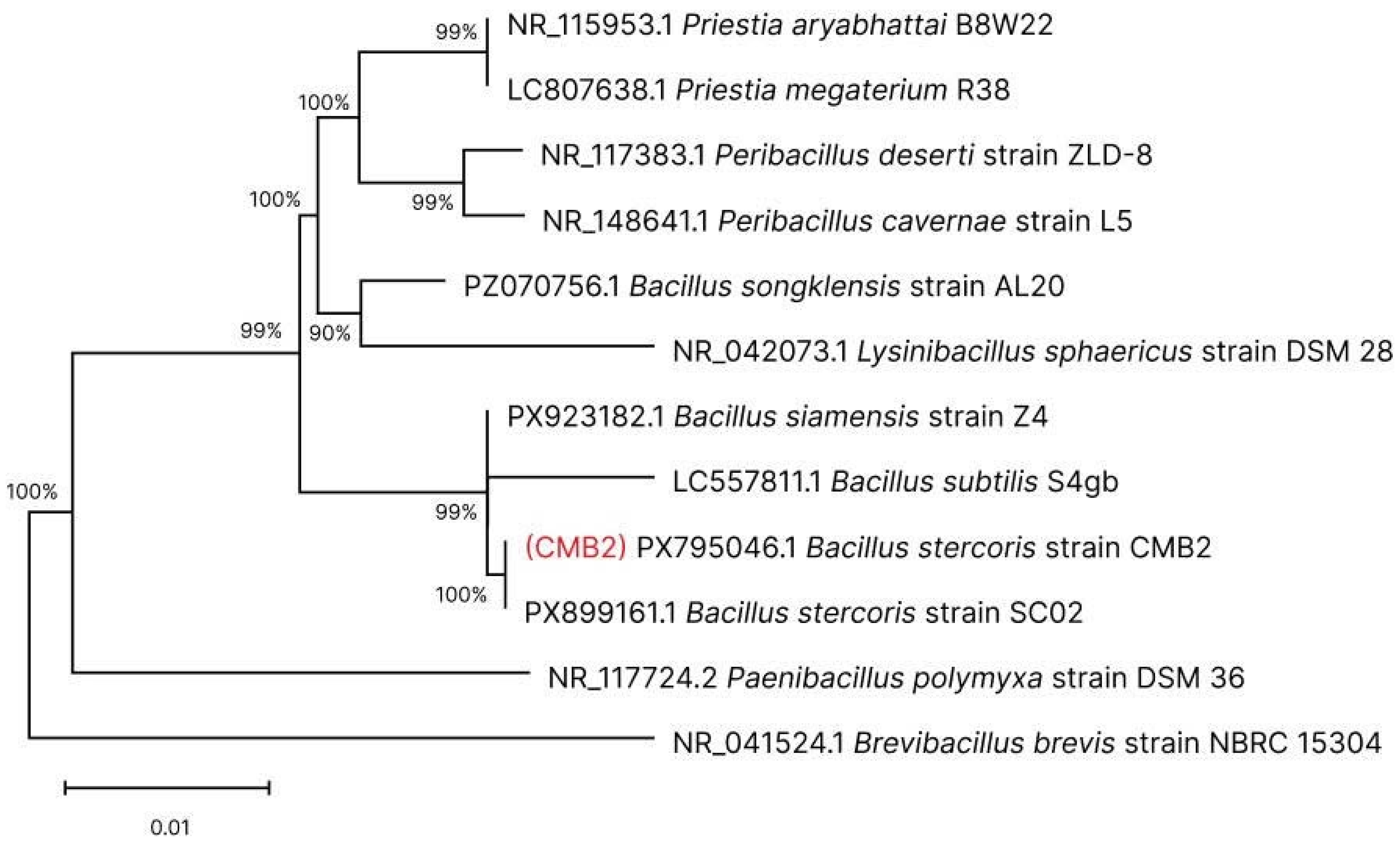
A single purified colony of B. stercoris CMB2 was transferred into sterile microcentrifuge tubes for total genomic DNA extraction using the GeneJET Genomic DNA Purification Kit ((Thermo Scientific™, Thermo Fisher Scientific, Waltham, MA, USA), following the manufacturer’s instructions. The 16S rRNA gene was amplified by polymerase chain reaction (PCR) (Figure 1c), yielding an amplicon of approximately 1334 bp. The obtained sequences were edited and aligned using MEGA software (version 11.0, Molecular Evolutionary Genetics Analysis, University Park, PA, USA) and subsequently compared with reference sequences available in the GenBank database using the BLAST 2.16.x algorithm. The nucleotide sequence of strain CMB2 was deposited in GenBank under accession number PX795046.1 and is publicly accessible. Phylogenetic analysis (Figure 2) revealed that B. stercoris CMB2 clustered within the genus Bacillus, confirming its taxonomic identity. Furthermore, the strain exhibited high sequence similarity to Bacillus stercoris and showed a close phylogenetic relationship with Bacillus stercoris SG25 [9,18,27].

2.8. Phenotypic Characterization of B. stercoris CMB2

Strain CMB2 was subjected to morphological and biochemical characterization following purification. Gram staining, catalase, and oxidase assays were performed to determine its fundamental physiological properties. Colony morphology and cellular structure were examined through both macroscopic and microscopic observations. Growth characteristics were further evaluated on yeast mannitol agar (YMA) supplemented with bromothymol blue to assess metabolic activity. In addition, the strain was tested for tolerance to key environmental factors, including temperature, salinity, and pH, which are critical for the selection of rhizosphere nitrogen-fixing bacteria (RNFB) suitable for application in degraded soils.
For temperature tolerance, bacterial cultures were inoculated into nitrogen-free broth and incubated at 15, 37, 40, and 45 °C for 48 h. Salinity tolerance was assessed by culturing the strain in the same medium supplemented with 0, 1, 2, 3, and 5% (w/v) NaCl. The effect of pH was evaluated by adjusting the medium to pH 5, 6, 7, and 8 prior to sterilization. Bacterial growth under each condition was monitored by measuring optical density at 600 nm (OD600) using a spectrophotometer and by determining colony counts on agar plates (CFU mL−1) after incubation. Growth was considered positive when OD600 ≥ 0.1 and visible colonies were observed on agar plates compared with the uninoculated control.

3. Results

3.1. Morphological and Molecular Characterization of B. stercoris CMB2

Figure 1 presents the morphological and molecular characteristics of strain CMB2 isolated from baby maize roots. Colonies grown on yeast extract mannitol agar (YMA) appeared creamy-white, circular, and smooth, with slightly raised margins, which are typical features of Bacillus spp. (Figure 1a). Microscopic observation revealed rod-shaped cells, further supporting its affiliation with the genus Bacillus (Figure 1b). Molecular analysis using agarose gel electrophoresis confirmed the successful amplification of the 16S rRNA gene, as indicated by a clear and distinct band of approximately 1.3 kb, consistent with the expected amplicon size and suitable for downstream taxonomic identification (Figure 1c). In addition, the strain exhibited a positive reaction for ammonia production in peptone-enriched broth (Figure 1d), indicating its potential involvement in nitrogen metabolism. Overall, the combined morphological, molecular, and functional evidence supports the classification of strain CMB2 within the genus Bacillus and highlights its potential role in nitrogen transformation.

3.2. Evaluation of Nitrogen Fixation Capacity

Twenty-five baby maize root samples were collected from Cho Moi Commune, An Giang Province, during the vegetative growth stage. Sampling focused on the rhizosphere by collecting root segments together with closely adhering soil, representing a biologically active interface characterized by intensive root–microbe interactions. Compared with bulk soil, the rhizosphere typically harbors a higher density and greater metabolic activity of microbial communities. Immediately after collection, samples were transported under refrigerated conditions and processed within 24 h to preserve the integrity of the native microbial populations and minimize potential community shifts. Serial dilution and culture-based isolation techniques were subsequently employed, resulting in the recovery of ten morphologically distinct bacterial isolates, designated CMB1–CMB10. Preliminary identification was conducted based on Gram staining and detailed morphological characterization, and the corresponding results are presented in Table 1.
The comparative evaluation of morphological characteristics and biochemical responses of the ten isolates (Table 1 and Table 2) revealed clear differentiation among strains. All isolates were rod-shaped and Gram-positive, as confirmed by Gram staining. Growth performance and biochemical responses were assessed on multiple culture media, including yeast extract mannitol agar (YMA), YMA supplemented with bromothymol blue (YMA–BTB), glucose peptone agar (GPA), Hofer’s alkaline medium, and nitrogen-free Burk agar. Reaction intensity was recorded as (+), indicating a positive response or moderate growth; (++), indicating a strong response or high growth intensity; and (−), indicating no observable reaction. Among the isolates, CMB2 consistently exhibited strong responses (++) across several media, including YMA, YMA–BTB, and GPA. In contrast, CMB4 demonstrated the strongest growth (++) on nitrogen-free Burk agar, indicating a high capacity to proliferate under nitrogen-deficient conditions and suggesting pronounced diazotrophic potential. Biochemical characterization further identified CMB2 as the most metabolically active strain, exhibiting strong (++) activities for oxidase, catalase, urea hydrolysis, nitrate reduction, and citrate utilization. Although CMB4 showed superior qualitative growth on nitrogen-free medium, the broader range of biochemical activities observed in CMB2 indicates greater overall metabolic versatility. Based on the combined evaluation of growth under nitrogen-free conditions and biochemical profiles, CMB4 appears to possess strong nitrogen-fixing potential, whereas CMB2 demonstrates the highest overall functional versatility. All experiments were conducted with four replicates, and consistent results were obtained across replicates.
The comparative tolerance analysis presented in Table 3 reveals distinct differences in environmental adaptability among the ten isolates. All strains exhibited strong growth (++) at 1–3% NaCl and at temperatures of 37–40 °C, confirming their mesophilic and moderately halotolerant characteristics. Notably, CMB2 demonstrated superior resilience by maintaining vigorous growth (++) at 4% NaCl and sustaining positive growth even at 5%, whereas most other isolates showed reduced growth or inhibition at higher salinity levels. With respect to temperature tolerance, CMB2 was the only strain that exhibited strong growth across the entire tested range, including both low (15 °C) and high (45 °C) temperatures. In terms of pH adaptability, although most isolates showed optimal growth at pH 6.0–7.0, CMB2 maintained consistently strong growth (++) across a broader pH range of 5.0–8.0. Given its broad tolerance to salinity, temperature, and pH—key environmental factors that directly influence nitrogenase activity—CMB2 appears to have the greatest potential for stable nitrogen fixation under variable environmental conditions.
The phylogenetic tree (Figure 2), constructed based on 16S rRNA gene sequences, clearly indicates that strain CMB2 is robustly positioned within the B. stercoris clade. The isolate exhibited very high sequence similarity (up to 100%) with B. stercoris strain SC02, exceeding the commonly accepted threshold for species-level identification. This close relationship is strongly supported by high bootstrap values (100%) at the corresponding nodes, indicating the reliability of the inferred phylogenetic placement. Furthermore, strain CMB2 clustered tightly with other B. stercoris reference strains and was clearly separated from closely related species, such as Bacillus subtilis and Bacillus siamensis. The short branch lengths observed within the B. stercoris cluster suggest minimal genetic divergence among members of this species. Overall, these findings provide robust molecular evidence supporting the taxonomic identification of CMB2 as Bacillus stercoris, consistent with its previously described morphological and biochemical characteristics.

3.3. Assessment of Phosphate-Solubilizing Capacity

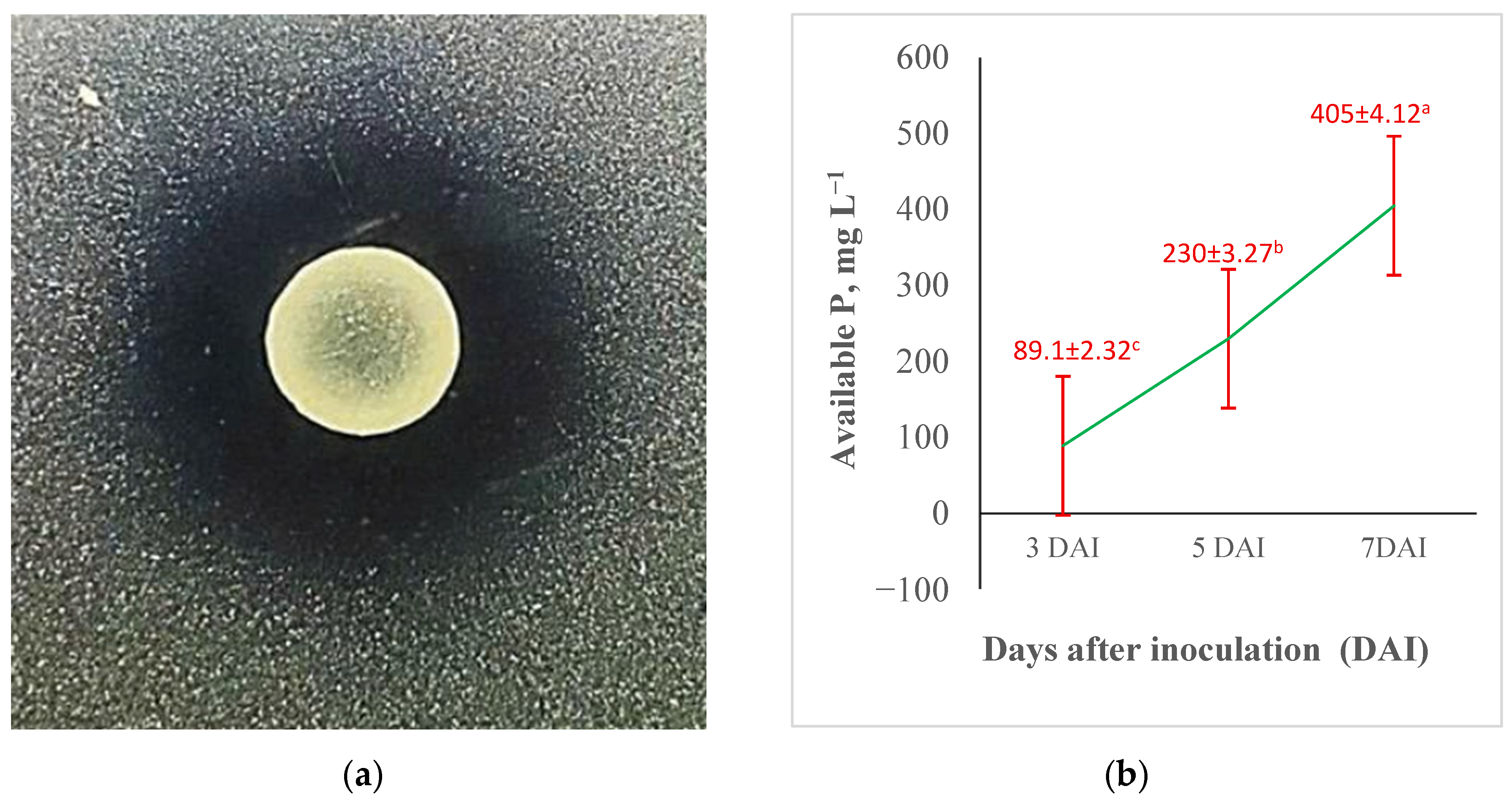
Ten rhizospheric bacterial isolates, previously selected based on their nitrogen-fixing potential and designated CMB1 to CMB10, were further evaluated for their phosphate-solubilizing ability. The isolates were assessed over a 7-day incubation period by measuring the diameter of the phosphate-solubilization halo. After 7 days of incubation, only strain CMB2 produced a distinct solubilization halo, with a halo diameter of 24.6 mm and a colony diameter of 7.2 mm, corresponding to a D/d ratio of 3.42 (Figure 3).
Figure 3 illustrates the phosphate-solubilizing capacity of CMB2 on NBRIP medium. The formation of a distinct halo zone surrounding the bacterial colonies confirms the ability of CMB2 to mobilize insoluble phosphate, suggesting the active secretion of solubilizing compounds. Quantitative analysis further demonstrated a time-dependent increase in soluble phosphorus concentration, with values progressively rising from day 3 to day 7 of incubation. This trend indicates sustained metabolic activity and the continuous release of organic acids and/or phosphatases into the medium. The highest soluble phosphorus concentration was recorded on day 7, suggesting that phosphate solubilization efficiency increases during the later stages of bacterial growth, likely corresponding to the late exponential phase. Together, these results provide both qualitative (halo formation) and quantitative (phosphorus concentration) evidence of effective phosphate solubilization. Compared with typical phosphate-solubilizing bacteria, the progressive increase observed over time suggests strong metabolic activity and functional stability of B. stercoris CMB2 under in vitro conditions.

3.4. Assessment of Nitrogen Fixation Capacity of B. stercoris CMB2

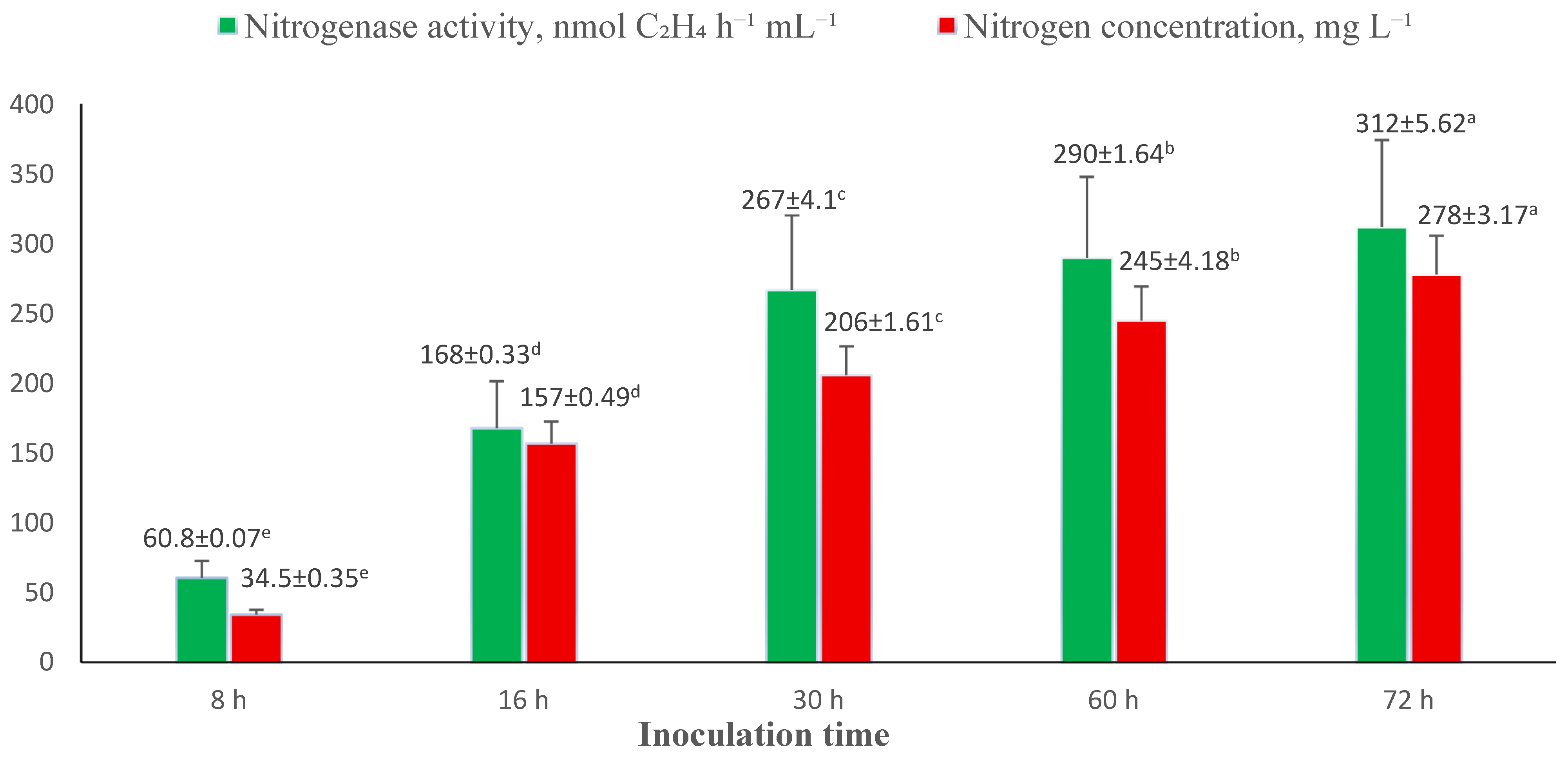
Figure 4 illustrates the temporal dynamics of nitrogen accumulation in B. stercoris CMB2. Nitrogenase activity increased progressively during the early stages of incubation, reaching a maximum at the mid-logarithmic phase, followed by a gradual decline during the later stages. A similar trend was observed for total nitrogen concentration in the culture medium, indicating a positive relationship between nitrogenase activity and nitrogen fixation efficiency. The peak in nitrogenase activity coincided with the period of highest metabolic activity, suggesting optimal energy availability for the functioning of the nitrogenase enzyme complex. The subsequent decline in activity may be attributed to the oxygen sensitivity of nitrogenase and feedback inhibition associated with the accumulation of fixed nitrogen compounds.

4. Discussion

4.1. Physiological Characteristics and Environmental Adaptability of the Selected Isolates

The ability of bacterial isolates to grow on nitrogen-free media is widely used as a preliminary indicator for identifying potential diazotrophic microorganisms, as sustained growth under nitrogen-deficient conditions suggests the possible presence of nitrogen-fixing activity [46]. Previous studies have demonstrated that isolates capable of growing on Burk’s or Ashby’s nitrogen-free media may exhibit nitrogenase activity when further evaluated using quantitative approaches, such as the acetylene reduction assay or total nitrogen determination [47,48]. In the present study, the selected isolates exhibited clear growth on nitrogen-free medium, indicating their ability to persist under nitrogen-limited conditions and supporting their selection for subsequent evaluation of nitrogen-fixing capacity. In addition to growth under nitrogen-deficient conditions, several isolates exhibited positive biochemical activities, including catalase and oxidase reactions. These physiological traits are commonly reported among rhizosphere-associated bacteria and may contribute to their survival under fluctuating soil environments [48,49]. Notably, B. stercoris CMB2 displayed consistent growth and multiple positive biochemical responses, indicating a relatively broad metabolic capacity compared with the other isolates. These characteristics suggest that CMB2 possesses physiological attributes favorable for survival in the rhizosphere, thereby justifying its selection for further functional characterization [50,51].
Environmental adaptability represents a critical criterion for selecting microbial strains for agricultural applications. In this study, the selected isolate demonstrated growth across a range of temperature, salinity, and pH conditions. Previous reports have shown that rhizosphere bacteria capable of tolerating moderate salinity and environmental fluctuations are more likely to persist in soils affected by abiotic stresses such as salinization and climate variability [18,24,27,51]. Similarly, the ability to grow across a broad pH range may enhance bacterial survival in soils with dynamic chemical properties. Although these physiological observations provide valuable insights into environmental adaptability, further studies under plant-associated conditions are required to confirm the ecological performance of the strain.
Molecular identification based on 16S rRNA gene sequencing revealed 100% similarity with reference sequences of Bacillus stercoris. This level of similarity is commonly considered sufficient for preliminary species-level identification. However, recent taxonomic frameworks emphasize that genome-based metrics, such as average nucleotide identity, provide higher resolution for species delineation, particularly among closely related taxa within the genus Bacillus [18,20,24,27,51]. Therefore, while the present findings strongly support the classification of the isolate as B. stercoris, further genome-based analyses would be required for definitive taxonomic confirmation.

4.2. Evaluation of Phosphate Solubilization Potential and Nitrogen Fixation Capacity of B. stercoris CMB2

The formation of distinct halo zones on NBRIP agar, together with the observed increase in soluble phosphorus concentration during incubation, indicates that the isolate possesses phosphate-solubilizing activity under the tested conditions. Halo formation on NBRIP medium is widely used as a qualitative indicator of phosphate solubilization in vitro, and similar observations have been reported for several Bacillus species used in biofertilizer research [52,53,54]. In the present study, soluble phosphorus concentration increased progressively up to day 7, suggesting sustained metabolic activity throughout the incubation period. However, the specific biochemical mechanisms underlying phosphate solubilization were not directly investigated. Although previous studies commonly attribute phosphate solubilization to the production of organic acids and associated pH reduction, the present study did not quantify organic acid production or monitor pH changes in the culture medium. Therefore, the mechanisms responsible for the observed solubilization remain to be elucidated in future investigations.
Nitrogenase activity, determined using the acetylene reduction assay, reached a maximum during the exponential growth phase and subsequently declined as the culture approached the stationary phase. This temporal pattern is consistent with previous reports on diazotrophic bacteria and is generally associated with physiological changes during microbial growth [55,56]. However, the present study focused on quantifying nitrogenase activity rather than examining the regulatory mechanisms controlling enzyme expression [57,58]. Consequently, mechanistic insights into nitrogen fixation regulation remain beyond the scope of this study. Overall, the results demonstrate that B. stercoris CMB2 exhibits measurable nitrogenase activity in vitro, along with phosphate-solubilizing capability and tolerance to a range of environmental conditions. These findings suggest that the strain possesses promising functional traits related to plant nutrient cycling under controlled conditions. Nevertheless, further validation under greenhouse and field conditions is required to assess its effectiveness in promoting plant growth and improving nutrient-use efficiency in agricultural systems [59,60].

5. Conclusions

This study isolated and characterized an endophytic bacterium, B. stercoris CMB2, from baby maize roots cultivated in the Mekong Delta, Vietnam. The strain demonstrated the ability to grow on nitrogen-free media, exhibited measurable nitrogenase activity, and increased total nitrogen concentration in the culture medium, indicating its capacity for biological nitrogen fixation under laboratory conditions. Among the ten isolates evaluated, B. stercoris CMB2 also showed clear phosphate-solubilizing activity on NBRIP agar and a progressive increase in soluble phosphorus concentration during incubation. In addition, the strain tolerated a relatively broad range of salinity, temperature, and pH conditions, suggesting strong environmental adaptability. Collectively, these findings indicate that B. stercoris CMB2 possesses multiple functional traits associated with nutrient mobilization under in vitro conditions. Therefore, this strain represents a promising candidate for further investigation to evaluate its plant growth-promoting potential under greenhouse and field conditions prior to its potential application as a biofertilizer.

Author Contributions

L.T.T. collected samples and contributed all research funds and wrote down the whole manuscript; L.T.T. and C.V.N. carried out the laboratory work (both isolation and molecular identification). All authors have read and agreed to the published version of the manuscript.

Funding

This research is funded by Vietnam National University Ho Chi Minh City (VNU-HCM) under grant number C2026-16-09.

Data Availability Statement

The data used to support the findings of this study are available from the corresponding author upon reasonable request.

Conflicts of Interest

There are no conflicts of interest among the authors.

References

  1. Aarizoo, M.; Abida, J.; Monisa, Y.; Mudasir, A.M.; Taha, M.; Tawheed, A.; Shabnam, S.; Asima, R. Post-Harvest Quality Management of Sweet Corn: Disorders, Losses and Preservation Strategies. Food Nutr. 2025, 1, 100007. [Google Scholar] [CrossRef]
  2. Sidahmed, H.; Vad, A.; Nagy, J. Advances in Sweet Corn (Zea mays L. saccharata) Research from 2010 to 2025: Genetics, Agronomy, and Sustainable Production. Agronomy 2025, 15, 1260. [Google Scholar] [CrossRef]
  3. Phuong, T.T.; Vien, T.D.; Son, C.T.; Thuy, D.T.; Greiving, S. Impact of Climate Change on Agricultural Production and Food Security: A Case Study in the Mekong River Delta of Vietnam. Sustainability 2024, 16, 7776. [Google Scholar] [CrossRef]
  4. Kirui, E.C.; Kidoido, M.M.; Akutse, K.S.; Wanyama, R.; Boni, S.B.; Dubois, T.; Dinssa, F.F.; Mutyambai, D.M. Factors Influencing the Adoption of Agroecological Vegetable Cropping Systems by Smallholder Farmers in Tanzania. Sustainability 2025, 17, 1148. [Google Scholar] [CrossRef]
  5. Liu, Z.; Guo, Z.; Wang, Z.; Xie, W.; Yang, Z.; He, L.; Chen, D.; Wu, X.; Zhou, H. Response of Maize Yield and Water Productivity to Different Long-Term Fertilization Strategies in Semi-arid Regions in Northern China. Agriculture 2025, 15, 2396. [Google Scholar] [CrossRef]
  6. Rajan, B.; Kunal, D.M.; Viliam, B.; Marian, B.; Ahmed, G.; Milan, S.; Akbar, H. Sustainable Strategies to Limit Nitrogen Loss in Agriculture Through Improving Its Use Efficiency Aiming To Reduce Environmental Pollution. J. Agric. Food Res. 2025, 22, 101957. [Google Scholar] [CrossRef]
  7. Manono, B.O.; Kimiti, J.M.; Musyoka, D.K. Landscape Determinants of Nitrogen Leaching Risk: Mechanisms, Impacts, and Mitigation Strategies. Nitrogen 2026, 7, 20. [Google Scholar] [CrossRef]
  8. Liu, J.; Yu, Z.; Gong, Y.; Chen, J.; Zhou, L.; Zhang, W.; Jia, L. Fertilization Induced Soil Microbial Shifts Show Minor Effects on Sapindus mukorossi Yield. Microorganisms 2025, 13, 173. [Google Scholar] [CrossRef]
  9. Van Chuong, N.; Tri, T.L.K.; Vu, T.M.; Tuan, L.M.; Liem, T.T.; Trang, N.N.P. Isolation and Identification of Bacillus aryabhattai M2C: Its Effects with Vermicompost on Yield and Nutrients of Peanut (Arachis hypogaea L.). Int. J. Microbiol. 2025, 10, 9923279. [Google Scholar]
  10. Nguyen, C.V.; Tran, T.L.K. Molecular Identification and Characterization of Peribacillus simplex LT4 Isolated from the Roots of Baby Maize (Zea mays L.). Nitrogen 2026, 7, 28. [Google Scholar] [CrossRef]
  11. Ma, K.; Wang, Y.; Jin, X.; Zhao, Y.; Yan, H.; Zhang, H.; Zhou, X.; Lu, G.; Deng, Y. Application of Organic Fertilizer Changes the Rhizosphere Microbial Communities of a Gramineous Grass on Qinghai–Tibet Plateau. Microorganisms 2022, 10, 1148. [Google Scholar] [CrossRef] [PubMed]
  12. Qiang, W.; Ai, P.; Ma, Y.; Zhao, J. The Impact of Water Deficit at Various Growth Stages on Physiological Characteristics, Fruit Yield, and Quality of Drip-Irrigated Jujube Trees. Agronomy 2025, 15, 1205. [Google Scholar] [CrossRef]
  13. Dang, P.T.H.; Chuong, N.V. Priestia megaterium Thr45 Reduces Nitrogen and Potassium Fertilizer Inputs While Enhancing Soil Fertility and Baby Maize Yield. Nitrogen 2026, 7, 32. [Google Scholar] [CrossRef]
  14. Țopa, D.-C.; Căpșună, S.; Calistru, A.-E.; Ailincăi, C. Sustainable Practices for Enhancing Soil Health and Crop Quality in Modern Agriculture: A Review. Agriculture 2025, 15, 998. [Google Scholar] [CrossRef]
  15. Van Chuong, N.; Thanh Liem, T.; Le Kim Tri, T.; Ngoc Phuong Trang, N.; Tran Hai Dang, P. Effects of Bacillus songklensis and Bacillus siamensis WD-32 Combined with Vermicompost on Soil Fertility, Growth, Yield, and Arsenic Accumulation in Peanut. Asian J. Agric. Biol. 2025, 4, e2025142. [Google Scholar] [CrossRef]
  16. Ansabayeva, A.; Makhambetov, M.; Rebouh, N.Y.; Abdelkader, M.; Saudy, H.S.; Hassan, K.M.; Nasser, M.A.; Ali, M.A.A.; Ebrahim, M. Plant Growth-Promoting Microbes for Resilient Farming Systems: Mitigating Environmental Stressors and Boosting Crops Productivity: A Review. Horticulturae 2025, 11, 260. [Google Scholar] [CrossRef]
  17. Chuong, N.V.; Nguyen Ngoc Phuong, T.; Nguyen Van, T. Nitrogen Fertilizer Use Reduction by Two Endophytic Diazotrophic Bacteria for Soil Nutrients and Corn Yield. Commun. Sci. Technol. 2024, 9, 348–355. [Google Scholar] [CrossRef]
  18. Chuong, N.V.; Vu, T.M.; Tuan, L.M.; Son, N.T.T.; Tri, T.L.K.; Thuan, N.V.; Dang, P.T.H.; Liem, T.T.; Trang, N.N.P. Enhanced Soil Fertility and Baby Maize Yield Through Bacillus megaterium CM2 under Reduced Nitrogen Input. Commun. Sci. Technol. 2025, 10, 411–421. [Google Scholar] [CrossRef]
  19. Bolla, P.K.; Panozzo, A.; Minozzi, E.; Valente, F.; Potestio, S.; Visioli, G.; Martinez-Sañudo, I.; Vamerali, T. Effects of Foliar-Sprayed Bio-Fertilizer with N-Fixing Methylobacterium symbioticum On Morpho-Physiological Traits of Maize Under Varying N Fertilization Rates. Front. Plant Sci. 2025, 16, 1661290. [Google Scholar] [CrossRef]
  20. Nguyen, V.C.; Nguyen, N.P.T.; Tran, T.L.; Phan, T.H.D. Effect of Bacillus sonklengsis Associated with Cattle Manure Fertilization on the Farmland Health and Peanut Yield. Int. J. Agric. Biosci. 2025, 14, 629–636. [Google Scholar]
  21. Pan, L.; Cai, B. Phosphate-Solubilizing Bacteria: Advances in Their Physiology, Molecular Mechanisms and Microbial Community Effects. Microorganisms 2023, 11, 2904. [Google Scholar] [CrossRef] [PubMed]
  22. Mamo, B.; Wubayehu, G. Phosphate Solubilizing Bacteria in Optimizing Phosphorous Acquisition and Crop Production. Am. J. Biosci. 2022, 10, 61–68. [Google Scholar] [CrossRef]
  23. Maciel-Rodríguez, M.; Moreno-Valencia, F.D.; Plascencia-Espinosa, M. The Role of Plant Growth-Promoting Bacteria in Soil Restoration: A Strategy to Promote Agricultural Sustainability. Microorganisms 2025, 13, 1799. [Google Scholar] [CrossRef] [PubMed]
  24. Chuong, N.V.; Tri, T.L.K.; Liem, T.T.; Thuan, N.V.; Em, T.V.T.; Trang, N.N.P. Four Newly Identified Endophytic Bacillus megaterium Strains with Biofertilizer Potential for Enhancing Maize Growth and Productivity. Trends Sci. 2026, 23, 11347. [Google Scholar] [CrossRef]
  25. Ramírez-López, M.; Bautista-Cruz, A.; Toledo-López, A.; Aquino-Bolaños, T. Rhizospheric and Endophytic Plant Growth-Promoting Bacteria Associated with Coffea arabica L. and Coffea canephora Pierre ex Froehner: A Review of Their Agronomic Potential. Microorganisms 2025, 3, 2567. [Google Scholar] [CrossRef]
  26. Díaz-Rodríguez, A.M.; Parra Cota, F.I.; Cira Chávez, L.A.; García Ortega, L.F.; Estrada Alvarado, M.I.; Santoyo, G.; de Los Santos-Villalobos, S. Microbial Inoculants in Sustainable Agriculture: Advancements, Challenges, and Future Directions. Plants 2025, 14, 191. [Google Scholar] [CrossRef]
  27. Van Chuong, N.; Le Kim Tri, T. Isolation and Characterization Identification of Edophytic Nitrogen-Fixing Bacteria from Peanut Nodules. Int. J. Microbiol. 2024, 2024, 8973718. [Google Scholar] [CrossRef]
  28. Wekesa, C.; Furch, A.C.U.; Ralf, O. Isolation and Characterization of High-Efficiency Rhizobia from Western Kenya Nodulating with Common Bean. Front. Microbiol. 2021, 10, 697567. [Google Scholar] [CrossRef]
  29. Somasegaran, P.; Hoben, H.J. Methods in Legume-Rhizobium Technology; NifTAL Project and MIRCEN; Department of Agronomy, 2nd Soil Science Hawaii Institute Tropical Agriculture Human Research, University of Hawaii: Honolulu, HI, USA, 1985. [Google Scholar]
  30. Davis, K.E.; Joseph, S.J.; Janssen, P.H. Effects of Growth Medium, Inoculum Size, and Incubation Time on Culturability and Isolation of Soil Bacteria. Appl. Environ. Microbiol. 2005, 71, 826–834. [Google Scholar] [CrossRef]
  31. Van Chuong, N. The impact of Klebsiella quasipneumoniae inoculation with nitrogen fertilization on baby corn yield and cob quality. Eurasian J. Soil Sci. 2024, 13, 133–138. [Google Scholar] [CrossRef]
  32. Agunbiade, V.F.; Fadiji, A.E.; Agbodjato, N.A.; Babalola, O.O. Isolation and Characterization of Plant-Growth-Promoting, Drought-Tolerant Rhizobacteria for Improved Maize Productivity. Plants 2024, 13, 1298. [Google Scholar] [CrossRef] [PubMed]
  33. Nguyen, V.C. Influences of Enterobacter asburiae, Vermicompost Rates and Irrigation Water Types on the Soil Fertility, Peanut Yield and Quality. Curr. Appl. Sci. Technol. 2025, 25, e0260428. [Google Scholar] [CrossRef]
  34. Sanders, E.R. Aseptic Laboratory Techniques: Plating Methods. J. Vis. Exp. 2012, 11, e3064. [Google Scholar] [PubMed]
  35. Sharma, A.; Lomba, P.S.; Mishra, B.; Bhasin, A.; Reshi, S. Diagnostic Significance of Wet Mount Microscopy—A Retrospective Observational Study. J. Clin. Diagn. Res. 2022, 16, DC14–DC19. [Google Scholar] [CrossRef]
  36. Osiro, D.; Filho, R.B.; Assis, O.B.; Jorge, L.A.; Colnago, L.A. Measuring Bacterial Cells Size with AFM. Braz. J. Microbiol. 2012, 43, 341–347. [Google Scholar] [CrossRef]
  37. Tripathi, N.; Zubair, M.; Sapra, A. Gram Staining. [Updated 2025 Mar 28]. In StatPearls [Internet]; StatPearls Publishing: Treasure Island, FL, USA, 2026. [Google Scholar]
  38. Palma, V.; Gutiérrez, M.S.; Vargas, O.; Parthasarathy, R.; Navarrete, P. Methods to Evaluate Bacterial Motility and Its Role in Bacterial-Host Interactions. Microorganisms 2022, 10, 563. [Google Scholar] [CrossRef]
  39. Iwase, T.; Tajima, A.; Sugimoto, S.; Okuda, K.; Hironaka, I.; Kamata, Y.; Takada, K.; Mizunoe, Y. A Simple Assay for Measuring Catalase Activity: A Visual Approach. Sci. Rep. 2013, 3, 3081. [Google Scholar] [CrossRef]
  40. Fulweiler, R.W.; Heiss, E.M.; Rogener, M.K.; Newell, S.E.; LeCleir, G.R.; Kortebein, S.M.; Wilhelm, S.W. Examining The Impact of Acetylene On N-Fixation and The Active Sediment Microbial Community. Front. Microbiol. 2015, 6, 418. [Google Scholar] [CrossRef]
  41. Kifle, M.H.; Laing, M.D. Isolation and Screening of Bacteria for Their Diazotrophic Potential and Their Influence on Growth Promotion of Maize Seedlings in Greenhouses. Front. Plant Sci. 2016, 6, 1225. [Google Scholar] [CrossRef]
  42. Santos, J.; Cardoso, P.; Rocha, R.; Pinto, R.; Lopes, T.; Patinha, C.; Guilherme, R.; Ferreira, A.; Figueira, E. Phosphate-Solubilizing Bacteria from Different Genera, Host Plants, and Climates: Influence of Soil pH on Plant Growth and Biochemistry. Land 2025, 14, 2065. [Google Scholar]
  43. Aliyat, F.Z.; Maldani, M.; El Guilli, M.; Nassiri, L.; Ibijbijen, J. Phosphate-Solubilizing Bacteria Isolated from Phosphate Solid Sludge and Their Ability to Solubilize Three Inorganic Phosphate Forms: Calcium, Iron, and Aluminum Phosphates. Microorganisms 2022, 10, 980. [Google Scholar] [CrossRef]
  44. Edi Premono, M.; Moawad, A.M.; Vlek, P.L.G. Effect of Phosphate-Solublizing Pseudomonas Putida on The Growth of Maize and Its Survival in The Rhizosphere. Indonasian J. Crop Sci. 1996, 11, 13–23. [Google Scholar]
  45. Berza, B.; Sekar, J.; Vaiyapuri, P.; Pagano, M.C.; Assefa, F. Evaluation of Inorganic Phosphate Solubilizing Efficiency and Multiple Plant Growth Promoting Properties of Endophytic Bacteria Isolated from Root Nodules Erythrina Brucei. BMC Microbiol. 2022, 22, 276. [Google Scholar] [CrossRef] [PubMed]
  46. Koirala, A.; Alshibli, N.A.; Das, B.K.; Brözel, V.S. Bacterial Isolation from Natural Grassland on Nitrogen-Free Agar Yields Many Strains Without Nitrogenase. Microorganisms 2025, 13, 96. [Google Scholar] [CrossRef] [PubMed]
  47. Haskett, T.L.; Knights, H.E.; Jorrin, B.; Mendes, M.D.; Poole, P.S. A Simple in situ Assay to Assess Plant-Associative Bacterial Nitrogenase Activity. Front. Microbiol. 2021, 12, 690439. [Google Scholar] [CrossRef]
  48. Singh, R.K.; Singh, P.; Sharma, A.; Guo, D.-J.; Upadhyay, S.K.; Song, Q.-Q.; Verma, K.K.; Li, D.-P.; Malviya, M.K.; Song, X.-P.; et al. Unraveling Nitrogen Fixing Potential of Endophytic Diazotrophs of Different Saccharum Species for Sustainable Sugarcane Growth. Int. J. Mol. Sci. 2022, 23, 6242. [Google Scholar] [CrossRef]
  49. Imran, A.; Hakim, S.; Tariq, M.; Nawaz, M.S.; Laraib, I.; Gulzar, U.; Hanif, M.K.; Siddique, M.J.; Hayat, M.; Fraz, A.; et al. Diazotrophs for Lowering Nitrogen Pollution Crises: Looking Deep into the Roots. Front. Microbiol. 2021, 12, 637815. [Google Scholar] [CrossRef]
  50. Pankievicz, V.C.S.; do Amaral, F.P.; Ané, J.M.; Stacey, G. Diazotrophic Bacteria and Their Mechanisms to Interact and Benefit Cereals. MPMI-Mol. Plant-Microbe Interact. 2021, 34, 491–498. [Google Scholar] [CrossRef]
  51. Cialli, S.; Carmassi, G.; Maggini, R.; Brizzolara, S.; Ferrante, A.; Incrocci, L.; Mensuali, A.; Trivellini, A. Physiological and Hormonal Responses Underlying Salinity Tolerance In Wild Tomatoes: Insights For Cultivated Varieties. Environ. Exp. Bot. 2026, 241, 106296. [Google Scholar] [CrossRef]
  52. Teles, E.A.P.; Xavier, J.F.; Arcenio, F.S.; Amaya, R.L.; Gonc¸alves, J.V.S.; Rouws, L.F.M.; Zonta, E.; Coelho, I.S. Characterization And Evaluation of Potential Halotolerant Phosphate Solubilizing Bacteria from Salicornia Fruticosa Rhizosphere. Front. Plant Sci. 2024, 14, 1324056. [Google Scholar] [CrossRef]
  53. Thaqi, S.K.; Siani, R.; Chiba, A.; Peine, M.; Baum, C.; Witting, M.; Walch, S.; Leinweber, P.; Schloter, M.; Schulz, S. Strain-Specific Strategies Underlie Convergent Phosphate Solubilization in Bacillus. ISME Commun. 2025, 5, ycaf208. [Google Scholar] [CrossRef]
  54. Peng, L.; Yiming, W.; Yazhuo, W.; Fei, T.; Zhansheng, W. Biochar-Based Slow-Release Fertilizers: From Nutrient Carrier to Intelligent Regulator in Soil-Plant Systems-A Review and Perspective. J. Environ. Chem. Eng. 2026, 14, 121720. [Google Scholar]
  55. Liu, X.; Li, P.; Bao, K.; Wang, Y.; Wang, H.; Wang, Y.; Jiang, Z.; Yang, Y.; Yuan, S.; Kappler, A.; et al. Synergistic Interaction Between Microbial Nitrogen Fixation And Iron Reduction In The Environment. ISME J. 2025, 19, wraf212. [Google Scholar] [CrossRef]
  56. Chuong, N.V. The Impact of Bacillus sp. NTLG2-20 and Reduced Nitrogen Fertilization on Soil Properties and Peanut Yield. Commun. Sci. Technol. 2024, 9, 112–120. [Google Scholar] [CrossRef]
  57. Nawaz, T.; Fahad, S.; Gu, L.; Xu, L.; Zhou, R. Harnessing Nitrogen-Fixing Cyanobacteria for Sustainable Agriculture: Opportunities, Challenges, and Implications for Food Security. Nitrogen 2025, 6, 16. [Google Scholar] [CrossRef]
  58. Herrero, J.; Ramírez-Santos, A.; Díaz-Santos, E.; Torres-Cortés, G. Biofertilizers for Enhanced Nitrogen Use Efficiency: Mechanisms, Innovations, and Challenges. Nitrogen 2025, 6, 111. [Google Scholar] [CrossRef]
  59. Ughamba, K.T.; Ndukwe, J.K.; Lidbury, I.D.E.A.; Nnaji, N.D.; Eze, C.N.; Aduba, C.C.; Groenhof, S.; Chukwu, K.O.; Anyanwu, C.U.; Nwaiwu, O.; et al. Trends in the Application of Phosphate-Solubilizing Microbes as Biofertilizers: Implications for Soil Improvement. Soil Syst. 2025, 9, 6. [Google Scholar] [CrossRef]
  60. Bansal, R.; Vyas, P.; Sharma, S. Formulation and field performance of liquid phosphate-solubilizing bacterial biofertilizer for improved growth, yield, and nutrient content of potato. Front. Microbiol. 2025, 16, 1734471. [Google Scholar] [CrossRef]
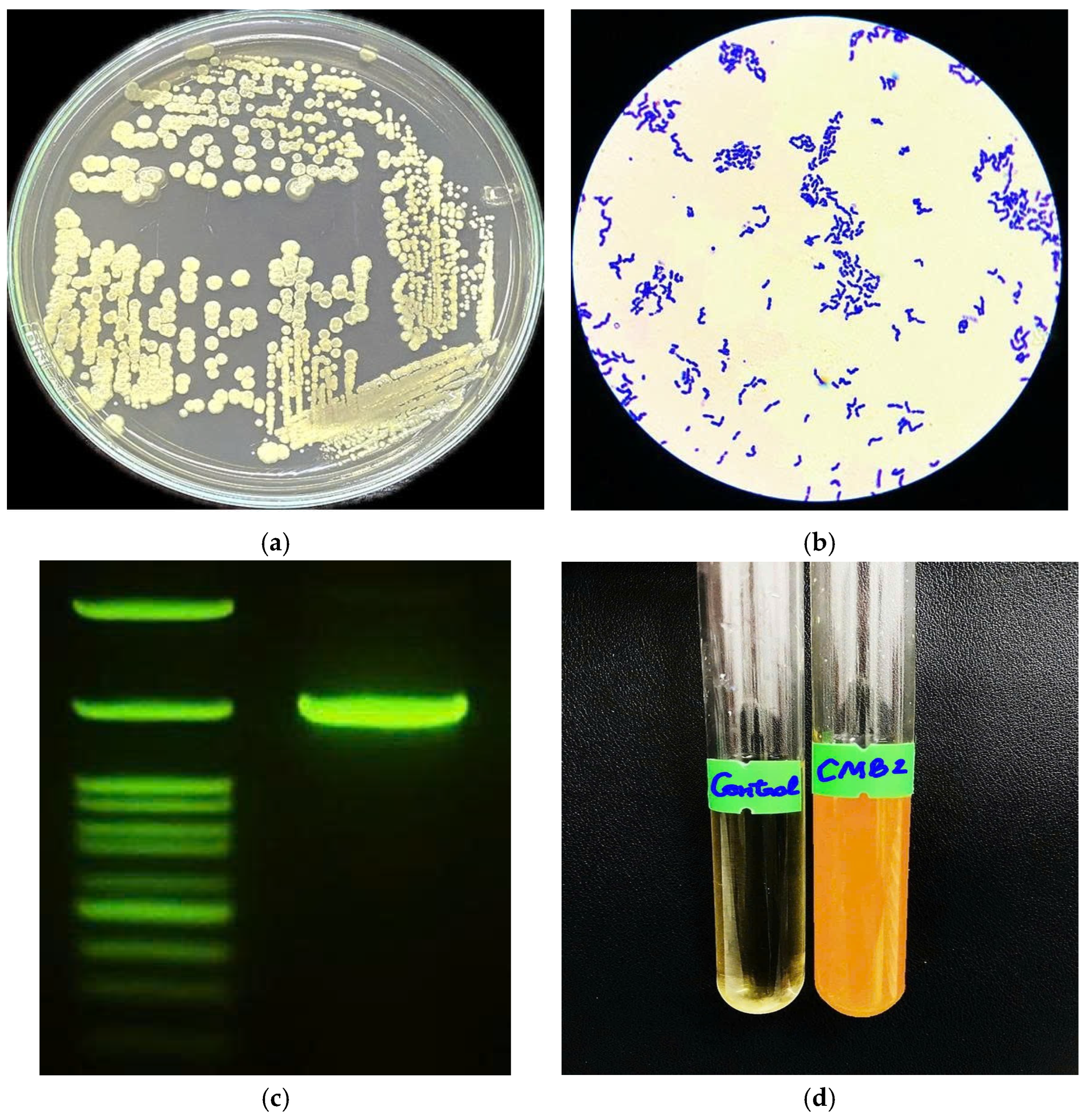
Figure 1. Morphological and functional characterization of Bacillus stercoris CMB2: (a) colony morphology on yeast extract mannitol agar (YMA); (b) cellular morphology observed under light microscopy (100× magnification) with scale bar indicated; (c) agarose gel electrophoresis of the PCR-amplified 16S rRNA gene fragment showing lane labels and molecular weight markers (bp); (d) qualitative evaluation of ammonia production in peptone-enriched broth.
Nitrogen 07 00038 g001
Figure 2. Phylogenetic tree based on 16S rRNA gene sequences showing the taxonomic position of strain CMB2 among closely related species within the genera Bacillus, Priestia, Peribacillus, Lysinibacillus, Paenibacillus, and Brevibacillus. The tree was constructed using the Neighbor-Joining method, and bootstrap values (%) based on 1000 replications are indicated at branch nodes. Strain CMB2 is highlighted in red. The scale bar represents 0.01 substitutions per nucleotide position.
Nitrogen 07 00038 g002
Figure 3. Phosphate-solubilizing activity of Bacillus stercoris CMB2 on NBRIP agar, showing a clear halo zone (a) and soluble phosphorus concentration at 3, 5, and 7 days after inoculation (DAI) (b). Data represent four replicates (n = 4) for each sampling time. Different lowercase letters indicate significant differences among treatments at p ≤ 0.05.
Nitrogen 07 00038 g003
Figure 4. Temporal changes in nitrogenase activity and nitrogen concentration in the culture of Bacillus stercoris CMB2 during the incubation period. Values represent the mean ± SD (n = 4). Error bars indicate standard deviation. Different lowercase letters indicate significant differences among treatments at p ≤ 0.05.
Nitrogen 07 00038 g004
Table 1. Identification of 10 selected colonies from baby maize roots.
StrainsIdentity
(Rod Shape), Gram
YMA
(Clear Pink)
YMA-BTB
(Yellow Color)
GPAHofer AgarBurk Agar
CMB1(+)(+)(+)(+)(−)(+)
CMB2(++)(++)(++)(++)(−)(−)
CMB3(+)(+)(+)(+)(−)(−)
CMB4(+)(+)(+)(+)(−)(++)
CMB5(+)(+)(+)(+)(−)(+)
CMB6(+)(+)(+)(+)(−)(+)
CMB7(+)(+)(+)(+)(−)(−)
CMB8(+)(+)(+)(+)(−)(−)
CMB9(+)(+)(+)(+)(−)(−)
CMB10(+)(+)(+)(+)(−)(−)
Note: (−) no detectable growth or reaction; (+) moderate response, indicated by visible but limited colony development or low biochemical activity; (++) strong response, indicated by dense colony growth, larger colony diameter, or high biochemical activity. These categories were assigned based on comparative assessment of colony morphology, growth intensity, and biochemical reactions under identical experimental conditions.
Table 2. Biochemical tests of 10 selected colonies.
StrainsOxidaseCatalaseUrea HydrolysisNitrate ReductionCitrate Utilization
CMB1(+)(+)(+)(−)(+)
CMB2(++)(++)(++)(++)(++)
CMB3(++)(+)(++)(+)(+)
CMB4(+)(+)(+)(+)(+)
CMB5(+)(+)(+)(+)(+)
CMB6(+)(+)(+)(+)(+)
CMB7(+)(+)(+)(+)(+)
CMB8(+)(+)(+)(+)(+)
CMB9(+)(+)(+)(+)(+)
CMB10(+)(+)(+)(+)(−)
Note: (−) no detectable growth or reaction; (+) moderate response, indicated by visible but limited colony development or low biochemical activity; (++) strong response, indicated by dense colony growth, larger colony diameter, or high biochemical activity. These categories were assigned based on comparative assessment of colony morphology, growth intensity, and biochemical reactions under identical experimental conditions.
Table 3. Tolerance of ten microbial strains (V1–V10) to varying NaCl concentrations (%), temperatures (°C), and pH levels.
Strains NaCl (%)Temperature (°C)pH
12345153740455.06.07.08.0
CMB1++++++++++++++++++++
CMB2+++++++++++++++++++++++++
CMB3+++++++++++++++++++++
CMB4++++++++++++++++++
CMB5++++++++++++++++++++
CMB6+++++++++++++++++
CMB7+++++++++++++++++++
CMB8++++++++++++++++++++
CMB9+++++++++++++++++
CMB10++++++++++++++++++++
Note: (−) no detectable growth or reaction; (+) moderate response, indicated by visible but limited colony development or low biochemical activity; (++) strong response, indicated by dense colony growth, larger colony diameter, or high biochemical activity. These categories were assigned based on comparative assessment of colony morphology, growth intensity, and biochemical reactions under identical experimental conditions.
Disclaimer/Publisher’s Note: The statements, opinions and data contained in all publications are solely those of the individual author(s) and contributor(s) and not of MDPI and/or the editor(s). MDPI and/or the editor(s) disclaim responsibility for any injury to people or property resulting from any ideas, methods, instructions or products referred to in the content.