Systematic Review

The Impacts of Palm Kernel Cake on Nitrogen Dynamics in Confined Ruminants: A Systematic Review and Meta-Analysis


by
Julián Andrés Castillo Vargas
1,* and
Anaiane Pereira Souza
2
1
Center for Agrarian and Biological Sciences, Universidade Estadual Vale do Acaraú, Acaraú 62580-000, CE, Brazil
2
Embrapa Caprinos e Ovinos, Sobral 62103-905, CE, Brazil
*
Author to whom correspondence should be addressed.
Nitrogen 2026, 7(2), 37; https://doi.org/10.3390/nitrogen7020037
Submission received: 28 February 2026 / Revised: 12 March 2026 / Accepted: 20 March 2026 / Published: 25 March 2026

Abstract

Nitrogen (N) utilization by ruminants affects production efficiency, feeding costs, and environmental N losses in confined production systems. Palm kernel cake (PKC), an abundant agro-industrial by-product in tropical regions, has been increasingly used in ruminant diets, although its effects on nitrogen dynamics remain inconsistent. In this study, we systematically reviewed and meta-analyzed the effects of dietary PKC inclusion on N intake, excretion, absorption, and retention in confined cattle, goats, and sheep. Eleven studies published between 1995 and 2025, comprising 44 treatment means and 322 experimental units, were included in the meta-analysis. A random-effects model was applied, and the ruminant species was used as a moderator, defining a significant level at 0.05. Overall, the pooled effects indicated that species significantly influenced N intake (p < 0.01) and N absorption (p < 0.01). Species also showed a tendency to influence N in feces (p = 0.062) and manure N (p = 0.073), whereas N in urine (p = 0.194) and N retention (p = 0.170) were not affected. In subgroup analysis, PKC inclusion reduced N intake in goats (Standardized Mean Difference (SMD)) = −0.792; 95% CI (Confidence Interval) = −1.428 to −0.155; I2 (Heterogeneity) = 76.7%) and cattle (SMD = −1.576; 95% CI = −2.250 to −0.902; I2 = 65.7%), N in urine in cattle (SMD = −0.478; 95% CI = −0.806 to −0.150; I2 = 0%), N absorption (SMD = −0.873; 95% CI = −1.517 to −0.229; I2 = 77.1%), and N retention (SMD = −0.875; 95% CI = −1.338 to −0.412; I2 = 64.1%) in goats. Conversely, PKC had a positive effect on N absorption in sheep (SMD = 1.137; 95% CI = 0.016 to 2.258; I2 = 72.4%). Overall, this study highlights the species-dependent responses of N dynamics to PKC inclusion, emphasizing the importance of species-specific dietary strategies when using agro-industrial by-products to improve nitrogen utilization efficiency and potentially mitigate N losses in confined ruminant systems.

1. Introduction

Nitrogen dynamics in ruminant production animals are a global topic of exploration, considering their environmental and economic impacts [1]. Manure nitrogen (i.e., N excretion via feces and urine) can pollute soil and water systems as well as the atmosphere through nitrogenous compounds [2]. N excretion is a metabolic process that demands a high energy expenditure level in the ruminant, thereby affecting its production efficiency [3]. This condition is particularly critical in confined systems, resulting in significant economic losses [4]. Thus, a better understanding of the relationship between dietary N inputs and N excretion in animals may provide valuable insights to optimize dietary N utilization in confined ruminants, thereby positively impacting their productivity [5,6].
In this regard, diet composition is considered one of the most important factors affecting N metabolism in animals [7]. Feedstuffs with adequate fermentable carbohydrates and crude protein (CP) levels tend to optimize microbial protein production in ruminants, which mainly reduces fecal N excretion [8]. Inadequate CP: Energy supply in the diets may enhance N excretion [9]. Hence, exploring the impacts of different feedstuffs on N dynamics may help optimize N balance in ruminant production systems.
Palm kernel cake (PKC) is a co-product derived from palm oil extraction known worldwide, whose production has increased ~60% in the last 20 years [10], making it a potential pollutant. However, it can also be a suitable feedstuff in the ruminant’s diet due to its neutral detergent fiber (NDF; ~717 g/kg DM) and CP (~180 g/kg DM) levels [11]. Consequently, diverse studies have explored its nutritional effects in cattle, sheep, and goat production [12,13,14]. In particular, the production system type [15] and species in confined systems [16] have been reported to affect the relationship between PKC inclusion and nutrient utilization and performance in ruminants. Nevertheless, from an integrative standpoint, the impacts of PKC on N dynamics in confined ruminants remain unclear, resulting in contrasting results across different ruminant species. Specifically, uncertainty persists regarding the magnitude and direction of PKC effects on nitrogen (N) dynamics in cattle, goats, and sheep. This gap can be successfully explored through a meta-analysis that isolates intra- and inter-study random effects, resulting in inferences with wider ranges than those defined in the original studies [17,18]. Thus, this study explored the effects of dietary PKC inclusion levels (i.e., 50 to 800 g/kg DM) on N dynamics (i.e., N intake, N in feces, N in urine, manure N, N absorption, and N retention) across different ruminant productive species (i.e., cattle, goats, and sheep) under confinement using a meta-analytical approach. Effect sizes were calculated by comparing PKC-supplemented treatments with a zero-PKC control group within the same study, allowing the overall magnitude and direction of PKC effects to be evaluated across experiments, rather than modeling formal dose–response relationships.

2. Materials and Methods

2.1. Literature Search

A literature search of scientific documents was performed through different repository and search engines (Web of Science, PubMed, Google Scholar, Scopus, and CAPES library of theses and dissertations). The initial selection was made within the last 30 years (from January 1995 to September 2025), and 2095 records were obtained. The search strategy was developed using Boolean operators and adapted to the syntax requirements of each database. The core search string applied was as follows: (“palm kernel cake” OR “PKC”) AND (“cattle” OR “bovine” OR “goat” OR “caprine” OR “sheep” OR “ovine” OR “lamb”) AND (“nitrogen balance” OR “nitrogen intake” OR “nitrogen excretion” OR “nitrogen utilization”) AND (“confined” OR “confinement”). Searches were conducted within titles, abstracts, and keywords when allowed by the database filters. Database-specific adaptations were accordingly applied. At this point, it is important to mention that the selection was expanded to the gray literature (e.g., dissertations and theses) to reduce potential publication bias in the meta-analysis [19,20]. After the initial literature filtering, duplicates were removed before screening. Two independent reviewers screened titles and abstracts for eligibility, followed by a full-text assessment of relevant studies. Discrepancies were resolved through discussion and consensus. Finally, the documents were transferred to Mendeley® Desktop 1.19.8 for further processing and evaluation.

2.2. Study Selection and Dataset Development

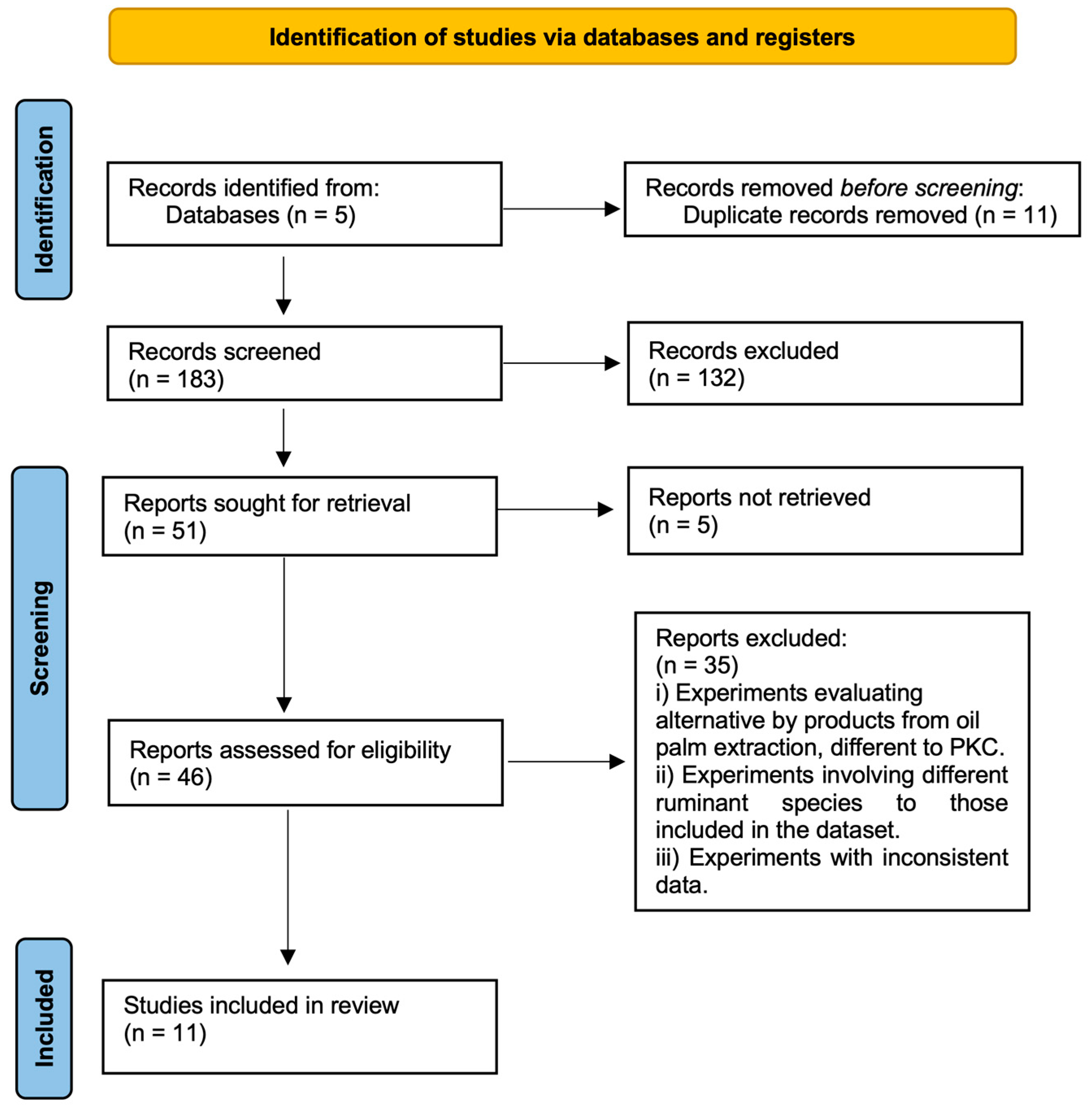
A preliminary selection of studies was conducted, taking the objective of meta-analysis as a guide. Additional screening was performed for duplicate papers or those with titles out of the scope, which were deleted in the second filtering process, resulting in the selection of 183 scientific documents, which were transferred into Mendeley software for additional screening. The data search was conducted using the Preferred Reporting Items for Systematic Review and Meta-Analysis (PRISMA 2020) protocol to ensure the integrity of the extracted data [21,22]. A completed PRISMA 2020 checklist is provided in the Supplementary Materials (Table S1), and the PRISMA flow diagram (Figure 1) details study selection process. The eligibility criteria were as follows: (i) studies conducted between 1995 and 2025; (ii) studies that passed through a peer review process (i.e., published articles, dissertations, and theses); (iii) studies in different languages (translated to English when necessary), including Portuguese and English; and (iv) studies that explored the effects of dietary PKC inclusion on N intake, excretion in feces and urine, retention and/or absorption in confined cattle, sheep, or goats. A structured risk-of-bias assessment was also performed at the study level. The following domains were evaluated: the adequacy of randomization procedures, clarity of treatment allocation, completeness of outcome reporting, consistency of nitrogen measurement methodology, and potential selective reporting bias. In general, the majority of studies showed a low risk of bias for the evaluated domains (Table S2).
A dataset of 44 experiments derived from 11 publications was constructed (Table 1). Several publications included multiple PKC inclusion levels compared with a common 0% PKC control group within the same experiment.
The dataset encompassed descriptive variables that comprised the characteristics of each study (i.e., bibliographic data, number of experimental units, study objective, and species under evaluation (i.e., cattle, sheep, or goat)), and experimental design used (i.e., randomized complete design (RCD) or Latin square design (LSD)). Quantitative variables such as PKC inclusion level (g/kg DM) and variables related to N metabolism (N intake, N in feces, N in urine, N excretion in feces plus urine (manure N), N retention, and N absorption) were expressed in g/day. When multiple treatment arms shared a common control group within a study, statistical non-independence among comparisons was accounted for by including study identity as a random effect in the meta-analytic model, thereby controlling for the clustering of effect sizes within studies and avoiding unit-of-analysis error.
The mean; standard deviation (SD), or standard error of the mean (SEM); and the number of replicates per treatment were extracted from the selected publications for each study and parameter evaluated. When SD values were reported, they were used directly in the analyses. Otherwise, when only the SEM was provided, the SD was calculated using the equation SD = SEM × √p, where p is the number of observations [23]. For instance, if a study mean reported an SEM of 0.7 with p = 8, the corresponding SD would be 0.7 × √8 = 1.58. For studies employing Latin square designs, the SEM values correspond to the residual error term of the model, which accounts for the animal and period effects inherent to crossover structures. Because within-subject correlation coefficients were not reported in the original studies, paired-data adjustments could not be reconstructed; therefore, to ensure methodological consistency across experimental designs, SD values were derived from the reported SEM. All included studies had multiple PKC inclusion levels. Thus, to consider all treatments, the study was entered n times, where n represents the number of distinct treatments. Finally, all PKC quantitative levels were expressed in the total diet, regardless of the manner of PKC inclusion (i.e., in the total mixed ration or in the supplement).
Table 1. The characteristics of the studies used to conduct the meta-analysis 1, 2, 3.
NoStudyPalm Kernel Cake Inclusion Levels
(g/kg DM Diet)
SpeciesBreedSample SizeExperimental Design 4
1Martins [24]0, 61, 127, and 187CattleHolstein × Zebu (½:¾)8LSD
2Sani [25]0, 50, 100, 150, and 200CattleFulani15RCD
3Abreu et al. [26]0, 100, 200, and 300CattleNellore48RCD
4Abubakr et al. [27]0 and 506GoatBoer × Catcang16RCD
5Silva et al. [28]0, 120, 240, and 360GoatUndefined genetic composition32RCD
6Rodrigues et al. [13]0, 120, 240, and 360GoatBoer × Mixed breed32RCD
7Ferreira et al. [29]0, 80, 160, and 240GoatSaanen and Anglo-Nubian12LSD
8Lakshmi and Krishna [30]0, 50, 100, and 150SheepNellore brown4LSD
9Bringel et al. [31]0, 200, 400, 600, and 800SheepUndefined genetic composition20RCD
10Visoná-Oliveira et al. [32]0, 75, 150, and 225SheepUndefined genetic composition18RCD
11Oliveira [33]0, 70, 140, and 210Goat½ Boer40RCD
1 The animals across all the experiments were housed in individual pens, except for Abreu et al. [26], in which they were housed in group pens. 2 Palm kernel cake was provided in the total mixed ration across all experiments, except for Abubakr et al. [27], in which palm kernel cake was provided in the supplement. 3 The mean chemical composition of PKC (g/kg dry matter; mean ± standard deviation) across the studies included in the dataset: dry matter: 919.1 ± 18.1; crude protein: 156.7 ± 9.60; fat: 103.7 ± 28.2; neutral detergent fiber: 622.5 ± 54.0; acid detergent fiber: 425.8 ± 95.1; ash: 51.7 ± 20.1; and non-fiber carbohydrate: 116.8 ± 45.3. 4 LSD = Latin square design; RCD = randomized complete design.

2.3. Statistical Analysis

Data analysis was conducted using R® software (version: 4.5.1) in the RStudio environment (version: 2025.9.1.401, [34]). The psych package (version: 2.5.6) was used to obtain descriptive statistics of the dataset, and meta-analysis was conducted using the metafor package (version: 4.8.0). Forest plots for different variables were produced using the “forest” function of the metafor package, and the effects of PKC dietary inclusion on N dynamics in ruminants were explored by examining the standardized mean difference (SMD), which gives an overview of the overall effect size. Although nitrogen-related variables were uniformly expressed in g/day, marked differences in absolute intake and variability across ruminant species justified the use of the SMD to enable comparison across heterogeneous experimental conditions [35]. A small-sample bias correction was applied to reduce the potential overestimation of effect sizes in studies with limited replication. An SMD lower or greater than zero indicates a harmful or positive effect of PKC on a variable, respectively, whereas an SMD statistically equal to zero (i.e., including zero in the confidence interval) indicates a non-significant effect of PKC.
Considering that the dataset was constructed from a random sampling process, the data were analyzed using a random-effects model. Between-study variance was estimated using the restricted maximum likelihood (REML) method. Nevertheless, the forest plots contained fixed-effects model data for additional information purposes. Prediction intervals were calculated to estimate the expected range of true effects in future studies under heterogeneous conditions.
The ruminant species type (i.e., cattle, sheep, and goats) and experimental design (i.e., RCD and LSD) were evaluated by subgroup analysis as moderators of the effect size of N variables across different experiments included in the dataset. For this purpose, the metacont element produced for each dependent variable tested was updated using the “update” function of the metafor package.
Heterogeneity was analyzed under a random-effects model using Higgins’ and Thompson’s statistics (I2), its percentage representation, and the p-value for testing heterogeneity significancy [36]. Publication bias was analyzed using funnel plots, and the symmetry of the graph was evaluated using the Egger’s test with the metabias function from the meta package (version: 8.2.0) in R [37]. Given the limited number of studies included (k = 11), the results of Egger’s test were interpreted cautiously due to its reduced statistical power to detect funnel plot asymmetry. To further explore the potential impact of small-study effects, the trim-and-fill method was applied using the “trimfill” function in the metafor package in R. Additionally, influence diagnostics were conducted using the “influence” function, and leave-one-out sensitivity analyses were performed using the “leave1out” function. These analyses did not identify any influential studies, and the pooled estimates remained stable, indicating that no single study disproportionately affected the overall results. Effects were considered statistically significant at p < 0.05, whereas p-values between 0.05 and 0.10 were interpreted as statistical tendencies.

3. Results and Discussion

3.1. Description of Dataset Used

The dataset included 11 published studies comprising 322 experimental units and 44 treatment means (Table 2). In general, 29.5% of the treatments involved data of confined cattle (body weight (BW): 312.5 ± 152.4 kg) and sheep (BW: 26.2 ± 7.9 kg), and 40.9% of the treatments included data of confined goats (BW: 28.7 ± 10.5 kg), with PKC levels ranging from 0 to 800 g/kg DM. Heterogeneity in the nutritional composition of experimental diets (Table 3) suggests that diet composition could be a potential moderator to be explored during the evaluation of the impacts of PKC on N dynamics [35]. However, it was not possible to include this source of variation in the model due to low data available in the literature, converting this into a potential limitation of this study. Thus, an exploration of this source of heterogeneity can be appointed for future studies exploring the impacts of alternative by-products on N dynamics in ruminants.
Data were mainly obtained from tropical countries (i.e., Brazil, Nigeria, Malaysia, and India), and most studies comparing PKC inclusion levels were conducted under an RCD (72.7%) compared to LSD (27.3%). Although this geographical and methodological variability increases the dataset’s relevance within tropical production systems, the predominance of studies conducted in tropical regions limits the external validity of the findings to non-tropical conditions. Therefore, the conclusions of this study should be interpreted primarily within the context of tropical production systems, which may be interesting for tropical countries considering the palm tree (Elaeis guineensis) abundance in those locations [38]. Caution is warranted when extrapolating these results to temperate production systems with different feeding strategies, environmental conditions, and management practices.
The use of a systematic approach for locating studies exploring the objective of this meta-analysis allowed us to clearly state that the impact of dietary PKC inclusion on N dynamics in ruminants remains poorly explored (eleven studies). This can be stated as this approach allows us to gather most of the literature available on this study’s objective [22], and the application of meta-analytic statistical techniques enables the obtention of robust quantitative responses on the impacts of PKC on N dynamics in ruminants [17]. Diverse meta-analyses involving a low number of studies exploring the impacts of PKC and other alternative by-products on nutrient utilization, milk quality, and performance in ruminants can be found in the literature [15,39,40]. Nevertheless, those meta-analyses and the studies included in our dataset indicated a crescent interest in understanding how plant by-products affect ruminant production and the quality of its derived products (e.g., milk and meat). This may be because these feedstuffs can reduce production costs and optimize animal production and sustainability [41]. Particularly, PKC is an inexpensive by-product that offers between 140 and 180 g/kg DM of CP, making it a potential low cost-protein source and energy supplement for livestock [11].

3.2. Publication Bias

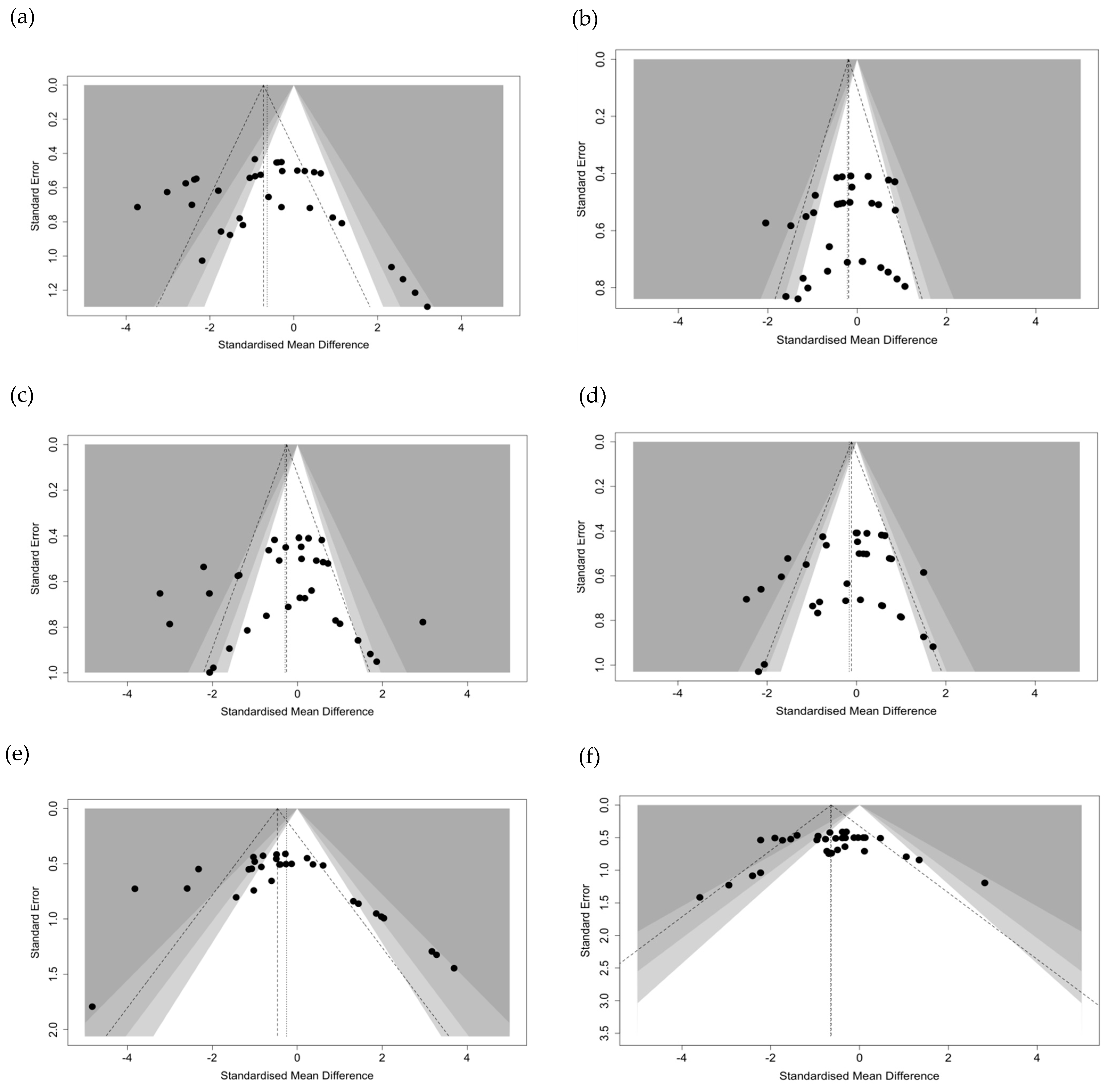
Publication bias is an important issue to be explored when conducting a systematic review and meta-analysis. This is particularly associated with the fact that some studies that fit the objective are not included in the tested dataset [20]. This could be due to several factors but especially because some studies that meet the meta-analysis objective cannot be located within the scientific background of the literature. For example, in some cases, peer-reviewed journals tend to publish large studies or those reporting significant results. Moreover, several technical reports and documents associated with the gray literature cannot be easily located in repositories [42]. These limitations can be overcome by exploring all the available scientific literature, expanding the number of dataset sources, and identifying publication characteristics (e.g., articles, MSc theses, PhD dissertation, etc.). This strategy was used in the current study, which resulted in no statistically significant funnel plot asymmetry according to the Egger test (Figure 2) for N intake (p = 0.383), N in urine (p = 0.355), N in feces (p = 0.635), manure N (p = 0.362), N absorption (p = 0.162), and N retention (p = 0.253). However, given the limited number of studies and observed heterogeneity, these results should be interpreted cautiously, as the Egger test may have reduced power to detect small-study effects [35]. Other meta-analyses that explored the impacts of nutritional feedstuffs on ruminant nutrition used the same search strategy, with similar results [16,39,40]. Hence, the meta-analysis conducted herein tended to cover the complete frame of studies exploring the impacts of PKC on N dynamics in ruminants.

3.3. The Effects of Subgroup Analysis on the Relationship Between PKC Inclusion and N Dynamics in Ruminants, Including Species Evaluation and Experimental Design as Moderators

Heterogeneity is another important research issue to be considered in meta-analysis because it allows for the exploration of potential sources of variation intrinsically associated with a general summary effect [35]. It can also be related to the diversity in data attributed to the variation within and across studies [20]. An initial meta-analysis without subgroup analysis (Figure S1) revealed significant heterogeneity (p < 0.01) for all variables related to N dynamics. Therefore, a random-effects model was adopted to account for between-study variability [43]. Given that data were analyzed without discriminating by ruminant species and multiple nutritional scenarios were considered across the studies, heterogeneity was expected [15]. Sensitivity analyses and influence diagnostics were performed, and no single study materially altered the pooled estimates. Hence, heterogeneity can be explained from a biological standpoint, as N metabolism by rumen microorganisms is an intrinsic heterogeneous process affected by diverse factors, including the animal species and diet [8,44,45]. Therefore, subgroup meta-analysis could help in understanding the patterns of PKC effects on N dynamics in ruminants.
First, a subgroup analysis was conducted considering the ruminant species as the moderator (Table 4, Figure S2). This analysis revealed that ruminant species influenced N intake (p < 0.01) and N absorption (p < 0.01), with tendencies observed for N in feces (p = 0.062) and manure N (p = 0.073). This agrees with the classic literature findings, which suggest that N intake and N in feces could differ between sheep and goats [46]. In addition, other studies have suggested that N intake, N in feces, and thereby N absorption (N absorption = N intake − N in feces) can differ between ruminant species due to variations in body size, digestive anatomy, diet selection, and physiological adaptations [5,47,48].
The data revealed that N in urine (p = 0.194) and N retention (p = 0.170) levels were not affected by the ruminant species (Table 4, Figure S2). In ruminants, N in urine is more variable than N in feces [49,50]. In addition, N in urine (mostly in the form of urea) is strongly affected by the dietary CP level [51], which can vary across PKC inclusion levels [52] considering that data involved a great diversity of dietary conditions. Thus, the aforementioned facts could explain the lack of statistical differences in N in urine and N retention (N retention = N intake − (N in feces + N in urine)) across cattle, sheep, and goats. This suggests that data on urine and retained N should be analyzed with caution when PKC is included in the diet. Furthermore, the potential of the future implementation of potent sensor-based techniques for reducing the variability in N in urine and N retention determination is emphasized [53].
The PKC inclusion level did not affect (p > 0.100) N in feces or manure N (Table 4, Figure S2), regardless of the ruminant species. According to Vargas and Souza [16], CP intake and digestibility (utilization) from PKC did not differ across confined ruminant species, regardless of CP variation in the experimental diets. Hence, this pattern possibly favors a constant flux of non-degraded CP into the large intestine, thereby limiting the variations in N excretion via feces. Importantly, PKC inclusion did not increase manure N, indicating that its use does not appear to intensify N-related environmental outputs. Therefore, although no significant reduction in manure N was observed, PKC may be considered environmentally neutral regarding N excretion, which may support its inclusion within integrated manure reduction management strategies in ruminant production systems [51,54].
Dietary PKC inclusion had detrimental effects on N intake in goats and cattle (p < 0.01) but not in sheep (p > 0.100). The differences in N intake between species may be explained from a physiological perspective, since the rumen micro-ecosystem (i.e., bacteria, fungi, protozoa, and archaea) in sheep exhibits a relatively stable composition in response to dietary changes compared with other ruminant species [55]. Thus, considering the impacts of rumen microbial populations changes on N rumen metabolism [56], a differential response of PKC inclusion in N intake could also be expected. Also, this explanation fits with the fact that PKC inclusion had detrimental effects on N absorption in goats (p < 0.01), positive effects in sheep (p < 0.01), and no influence in cattle (p > 0.100). In addition, the observed responses can be explained from the already known differences on urea recycling efficiency and impacts of diet on N utilization across ruminant species [57,58,59], all of which have direct effects on quantitative changes in N intake and absorption in ruminants [60].
PKC inclusion negatively affected (p < 0.01) N in urine and N retention in cattle and goats, respectively, but not in sheep (p > 0.100). This suggests that cattle and goats under confinement and fed PKC may have similarities in terms of N excretion metabolic processes via urine and N retention compared with sheep. N in urine represents a major route of N excretion in ruminants [61]; therefore, species-specific differences in this pathway are biologically relevant. The extent of N in urine excretion is associated with metabolic energy expenditure [62] and has been linked to environmental N losses in confined production systems [63]. Although energetic costs and environmental emissions were not directly quantified in this meta-analysis, these physiological considerations provide context for interpreting the observed interspecies differences in confined ruminants. Hence, these results indicate that species is an important factor to be considered when exploring N dynamics in ruminants under confinement with PKC inclusion.
Heterogeneity between studies for N variables ranged from 64.1% to 82.7%, 27.1% to 72.4%, and 0% to 70.7% for experiments conducted with goats, sheep, and cattle, respectively. However, it was significant for all variables tested across goats, sheep, and cattle, except for N in urine in cattle and manure N in sheep (p > 0.100). Understanding the effects of PKC inclusion levels on heterogeneity in manure N could be particularly interesting from a practical standpoint as it contributes to the impacts of animal production on pullulation and the design of more sustainable strategies for producing milk and meat [1].
Thus, data suggest that variations in experimental characteristics across studies could impact the N responses explored, confirming the suitability of the random-effects model approach for data analysis [42]. It is also important to note that the random-effects model is more adequate considering that the data were obtained from a series of independent studies. In addition, this type of model allows for the generalization of the results to a broader range of scenarios than the fixed model [20].
Another interesting issue that was not covered by the objective of this study but was tested considering the available data was seen in the potential impacts of the experimental design on the effect size variation. In general, animal science studies use diverse experimental designs, each involving advantages and limitations [64,65], which justify the exploration of this moderator factor in the current meta-analysis. Our dataset included studies conducted under the RCD and LS design. The former assumes that all experimental units are homogeneous (e.g., animal, feed sample, etc.), whereas the latter considers that experimental units are heterogeneous and controls for two sources of variation (e.g., animal and period effects) [66]. These differences between experimental designs are critical considering that variables associated with N dynamics can be subjected to huge variation, associated with experimental conditions and data acquisition techniques [49,67].
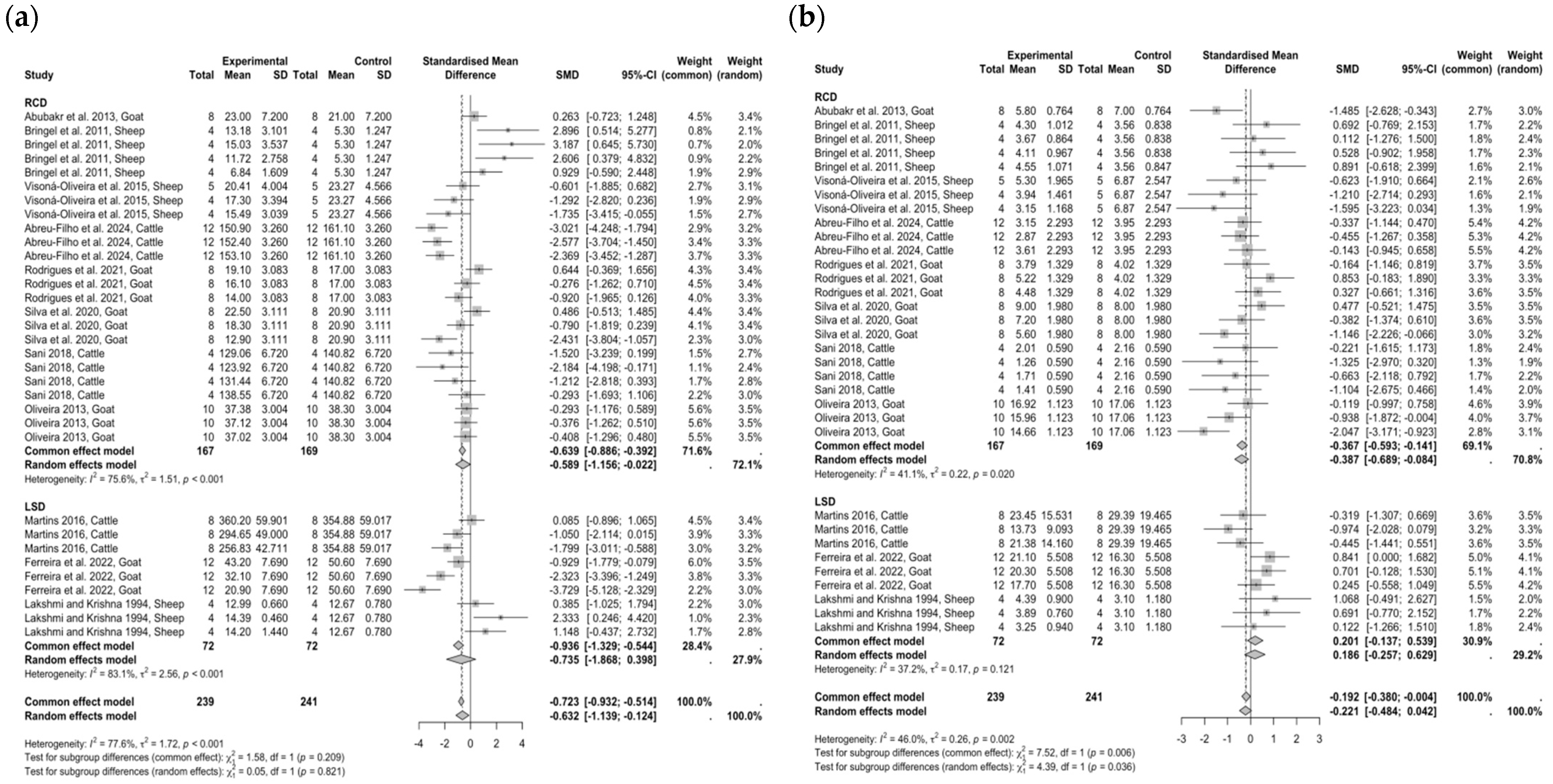
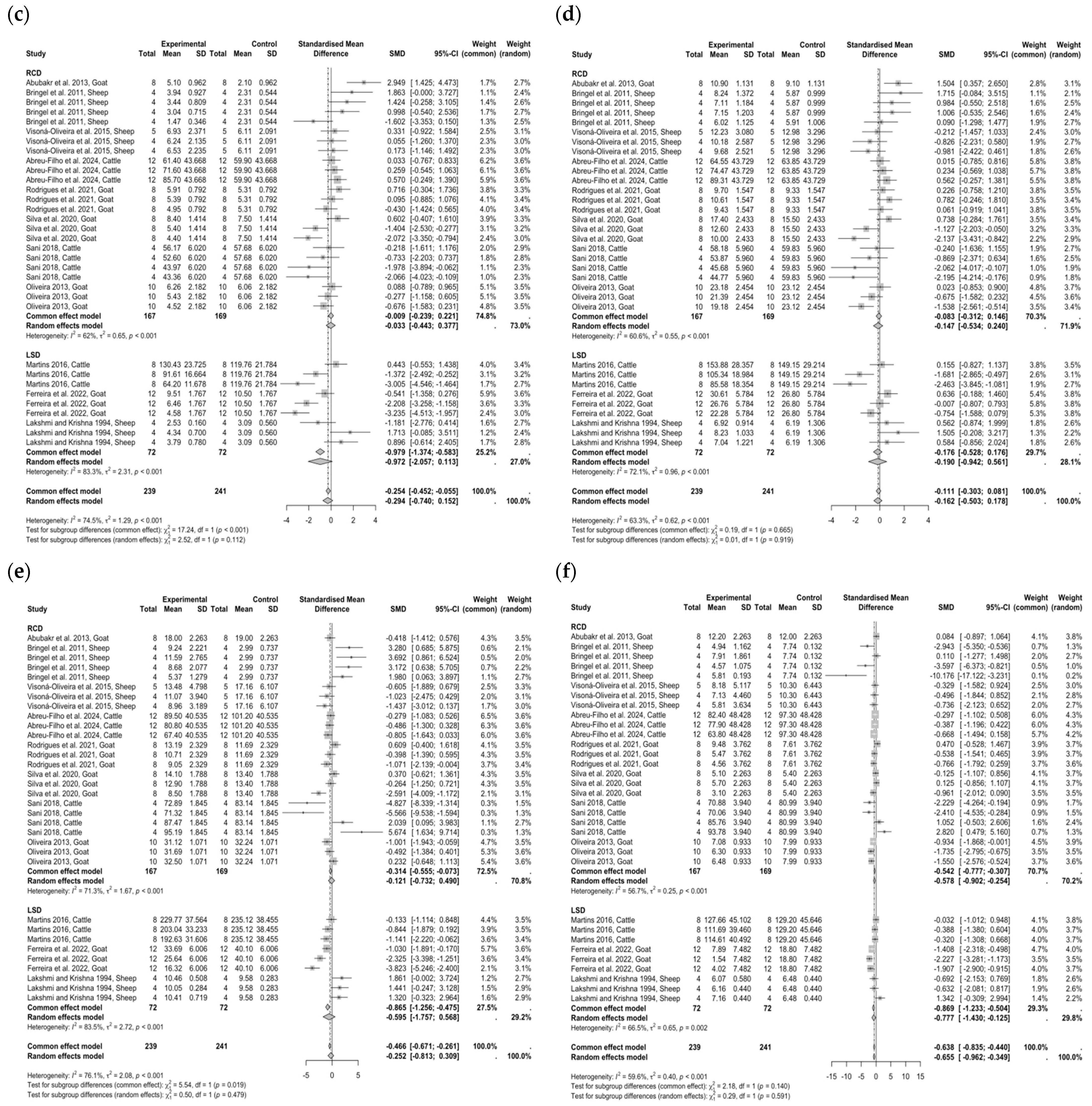
Considering a mixed model approach, subgroup analysis revealed that the experimental design as moderator did not affect (p > 0.100; Figure 3) most of the variables related to N dynamics across the tested ruminant species, except for N in urine (p = 0.036). Effect sizes were calculated using reported treatment means and their associated measures of variability (SD or SE), which inherently reflect the variance structure adopted within each individual study, including randomized complete and Latin square (crossover) designs. In addition, heterogeneity within studies for most of the variables determined under the RCD and LSD was significant (p < 0.05), ranging from 37.1% to 83.5%, except for studies exploring the effects of PKC on N in urine under the LSD (p = 0.121). Because study-level variance estimates were extracted as reported, no additional variance restructuring was applied across the experimental designs.
The lack of an effect of experimental design on PKC studies agrees with that observed by Zanton [68], who also stated that experimental design did not affect N metabolism responses for variations in metabolizable protein in dairy cows. Hence, this meta-analysis preliminarily revealed that there are no reasons to restrict the statistical design to an RCD or LSD when studying the effects of PKC on N dynamics in ruminants. However, this assumption should be considered with caution because continuous (e.g., RCD) and changeover or crossover (e.g., LSD) design experiments have diverse advantages and disadvantages [48]. Nevertheless, the results obtained herein could be pivotal for conducting more robust research to confirm our assumptions.

4. Conclusions

The inclusion of PKC alters nitrogen dynamics in confined ruminants in a species-dependent manner, with goats and cattle showing reduced N intake, whereas sheep exhibit improved N absorption without consistent changes in N retention. PKC did not consistently increase N in urine, indicating no systematic aggravation of environmentally sensitive N losses. Hence, from a practical perspective, PKC may represent a potentially useful feed ingredient within strategies aimed at managing N excretion in confined systems, particularly in tropical regions, although responses appear to be context- and species-dependent. However, the moderate-to-high between-study heterogeneity observed for several outcomes suggests that these findings should be interpreted with caution and may reflect variability among experimental conditions. To avoid inefficiencies in N utilization, PKC inclusion levels should therefore be adjusted according to species. Thus, species-specific formulation is essential to maximize economic benefits while potentially contributing to improved nitrogen utilization rather than assuming the universal mitigation of nitrogen losses in ruminant production systems.

Supplementary Materials

The following supporting information can be downloaded at https://www.mdpi.com/article/10.3390/nitrogen7020037/s1, Table S1: Prisma 2020 Check list [69]; Table S2: Risk-of-bias assessment of the studies included in the meta-analysis; Figure S1: Effects of palm kernel cake (PKC) on N dynamics in ruminants; Figure S2: Subgroup analysis by species (i.e., goat, sheep, and cattle) exploring the effects of PKC on N dynamics in ruminants.

Author Contributions

Conceptualization, J.A.C.V.; methodology, J.A.C.V. and A.P.S.; software, J.A.C.V.; validation, J.A.C.V. and A.P.S.; formal analysis, J.A.C.V.; investigation, J.A.C.V. and A.P.S.; data curation, J.A.C.V. and A.P.S.; writing—original draft preparation, J.A.C.V.; writing—review and editing, J.A.C.V. and A.P.S.; visualization, J.A.C.V.; project administration, J.A.C.V. All authors have read and agreed to the published version of the manuscript.

Funding

This research received no external funding.

Data Availability Statement

The data presented in this study are available from the corresponding author upon reasonable request.

Acknowledgments

The authors would like to thank the Universidade Estadual Vale do Acaraú (UVA) and Empresa Brasileira de Pesquisa Agropecuária for providing financial support in the form of a salary during this study.

Conflicts of Interest

The authors have no conflicts of interest to declare.

References

  1. Marini, J.C.; Van Amburgh, M.E. Partition of Nitrogen Excretion in Urine and the Feces of Holstein Replacement Heifers. J. Dairy Sci. 2005, 88, 1778–1784. [Google Scholar] [CrossRef]
  2. Cameron, K.C.; Di, H.J.; Moir, J.L. Nitrogen Losses from the Soil/Plant System: A Review. Ann. Appl. Biol. 2013, 162, 145–173. [Google Scholar] [CrossRef]
  3. Silva, L.F.P.; Dixon, R.M.; Costa, D.F.A. Nitrogen Recycling and Feed Efficiency of Cattle Fed Protein-Restricted Diets. Anim. Prod. Sci. 2019, 59, 2093. [Google Scholar] [CrossRef]
  4. Bastos, M.P.V.; de Carvalho, G.G.P.; Pires, A.J.V.; Silva, R.R.; Filho, A.E.; dos Santos, E.D.J.; Chagas, D.M.T.; Barroso, D.S.; Filho, G.A. Ingestive Behavior and Nitrogen Balance of Confined Santa Ines Lambs Fed Diets Containing Soybean Hulls. Asian-Australas. J. Anim. Sci. 2014, 27, 24–29. [Google Scholar] [CrossRef] [PubMed][Green Version]
  5. Obitsu, T.; Taniguchi, K. Quantitative Comparison of Diversity and Conformity in Nitrogen Recycling of Ruminants. Asian-Australas. J. Anim. Sci. 2009, 22, 440–447. [Google Scholar] [CrossRef]
  6. Spanghero, M.; Kowalski, Z.M. Updating Analysis of Nitrogen Balance Experiments in Dairy Cows. J. Dairy Sci. 2021, 104, 7725–7737. [Google Scholar] [CrossRef] [PubMed]
  7. Sadeghi, M.; Ghasemi, E.; Sadeghi, R.; Hashemzadeh, F.; Kahyani, A.; Kalantari-Dehaghi, S.; Ahmadi, F.; Ghaffari, M.H. Dietary Macronutrient Composition and Partial Soybean Meal Replacement with Slow-Release Urea: Effects on Performance, Digestibility, Rumen Fermentation, and Nitrogen Metabolism in Dairy Cows. J. Dairy Sci. 2025, 108, 511–526. [Google Scholar] [CrossRef]
  8. Kand, D.; Castro-Montoya, J.; Selje-Assmann, N.; Dickhoefer, U. The Effects of Rumen Nitrogen Balance on Intake, Nutrient Digestibility, Chewing Activity, and Milk Yield and Composition in Dairy Cows Vary with Dietary Protein Sources. J. Dairy Sci. 2021, 104, 4236–4250. [Google Scholar] [CrossRef]
  9. Erickson, M.G.; Reinhardt, L.A.; Svaren, L.; Sullivan, M.L.; Zanton, G.I.; Wattiaux, M.A. Crude Protein Oscillation in Diets Adequate and Deficient in Metabolizable Protein: Effects on Nutrient Digestibility, Nitrogen Balance, Plasma Amino Acids, and Greenhouse Gas Emissions. J. Dairy Sci. 2024, 107, 3558–3572. [Google Scholar] [CrossRef] [PubMed]
  10. FAOStat. FAOSTAT Statistical Database 2025; FAOStat: Rome, Italy, 2025. [Google Scholar]
  11. Abdeltawab, A.M.; Khattab, M.S.A. Utilization of Palm Kernel Cake as a Ruminant Feed for Animal: A Review. Asian J. Biol. Sci. 2018, 11, 157–164. [Google Scholar] [CrossRef]
  12. Costa, D.A.D.; Ferreira, G.D.G.; Araújo, C.V.; Colodo, J.C.N.; Moreira, G.R.; Figueiredo, M.R.P. Consumo e Digestibilidade de Dietas com Níveis de Torta de Dendê para Ovinos. Rev. Bras. Saúde E Produção Anim. 2010, 11, 783–792. [Google Scholar]
  13. Carvalho Rodrigues, T.C.G.; Santos, S.A.; Cirne, L.G.A.; dos Santos Pina, D.; Alba, H.D.R.; de Araújo, M.L.G.M.L.; Silva, W.P.; de Oliveira Nascimento, C.; Rodrigues, C.S.; Tosto, M.S.L.; et al. Palm Kernel Cake in High-Concentrate Diets for Feedlot Goat Kids: Nutrient Intake, Digestibility, Feeding Behavior, Nitrogen Balance, Blood Metabolites, and Performance. Trop. Anim. Health Prod. 2021, 53, 454. [Google Scholar] [CrossRef]
  14. Fereira, A.C.; Lopes, R.O.; Regina, A.B.; de Carvalho, G.G.P.; Nunes Vaz, R.S.; Andrade, P.O. Intake, Digestibility and Intake Behaviour in Cattle Fed Different Levels of Palm Kernel Cake. Rev. MVZ Córdoba 2012, 17, 3105–3112. [Google Scholar] [CrossRef]
  15. Vargas, J.A.C.; Mezzomo, R. Effects of Palm Kernel Cake on Nutrient Utilization and Performance of Grazing and Confined Cattle: A Meta-Analysis. Trop. Anim. Health Prod. 2023, 55, 110. [Google Scholar] [CrossRef] [PubMed]
  16. Vargas, J.A.C.; Souza, A.P. Effects of Palm Kernel Cake on Nutrient Utilization and Performance in Confined Cattle, Sheep and Goats: A Comparative Meta-Analytical Approach. Animals 2025, 15, 2764. [Google Scholar] [CrossRef] [PubMed]
  17. Sauvant, D.; Schmidely, P.; Daudin, J.J.; St-Pierre, N.R. Meta-Analyses of Experimental Data in Animal Nutrition. Animal 2008, 2, 1203–1214. [Google Scholar] [CrossRef] [PubMed]
  18. St-Pierre, N.R. Invited Review: Integrating Quantitative Findings from Multiple Studies Using Mixed Model Methodology. J. Dairy Sci. 2001, 84, 741–755. [Google Scholar] [CrossRef]
  19. Landerdahl Stridsberg, S.; Richardson, M.X.; Redekop, K.; Ehn, M.; Wamala Andersson, S. Gray Literature in Evaluating Effectiveness in Digital Health and Health and Welfare Technology: A Source Worth Considering. J. Med. Internet Res. 2022, 24, e29307. [Google Scholar] [CrossRef]
  20. Borenstein, M.; Hedges, L.V.; Higgins, J.P.T.; Rothstein, H.R. Introduction to Meta-Analysis; Wiley: Hoboken, NJ, USA, 2009. [Google Scholar]
  21. Moher, D.; Liberati, A.; Tetzlaff, J.; Altman, D.G. Preferred Reporting Items for Systematic Reviews and Meta-Analyses: The PRISMA Statement. PLoS Med. 2009, 6, e1000097. [Google Scholar] [CrossRef]
  22. Liberati, A.; Altman, D.G.; Tetzlaff, J.; Mulrow, C.; Gøtzsche, P.C.; Ioannidis, J.P.A.; Clarke, M.; Devereaux, P.J.; Kleijnen, J.; Moher, D. The PRISMA Statement for Reporting Systematic Reviews and Meta-Analyses of Studies That Evaluate Health Care Interventions: Explanation and Elaboration. PLoS Med. 2009, 6, e1000100. [Google Scholar] [CrossRef]
  23. Higgins, J.P.; Li, T.; Deeks, J.J. Choosing Effect Measures and Computing Estimates of Effect. In Cochrane Handbook for Systematic Reviews of Interventions; Wiley: Hoboken, NJ, USA, 2019; pp. 143–176. [Google Scholar]
  24. Martins, L.F.D. Torta de Dendê Em Dietas Para Vacas Lactantes Confinadas. Master’s Thesis, Universidade Estadual do Sudoeste da Bahia, Vitória da Conquista, Brasil, 2016. [Google Scholar]
  25. Sani, T. 720 RUN-12 Nutrient Digestibility and Nitrogen Balance in Yearling Bunaji Bulls Fed Diets Containing Graded Levels of Palm Kernel Cake. In Proceedings of the 43rd Annual Conference of the Nigerian Society for Animal Production, Owerri, Nigeria, 18–22 March 2018. [Google Scholar]
  26. Abreu, G.; Silva, F.F.D.; Azevêdo, J.A.G.; Silva, J.W.D.; Paixão, T.R.; da Costa, G.D.; Santos, L.V.; da Silva, A.P.G.; de Carvalho, G.G.P.; de Lima, D.M.; et al. Effect of Palm Kernel Cake Inclusion on Intake, Digestibility, Nitrogen Balance, Feeding Behavior, and Weight Gain of Feedlot Heifers. Rev. Bras. Zootec. 2024, 53, e20230132. [Google Scholar] [CrossRef]
  27. Abubakr, A.R.; Alimon, A.R.; Yaakub, H.; Abdullah, N.; Ivan, M. Growth, Nitrogen Metabolism and Carcass Composition of Goats Fed Palm Oil by-Products. Small Rumin. Res. 2013, 112, 91–96. [Google Scholar] [CrossRef]
  28. Silva, L.O.; de Carvalho, G.G.P.; Tosto, M.S.L.; Lima, V.G.O.; Cirne, L.G.A.; Pina, D.D.S.; Santos, S.A.; Rodrigues, C.S.; Ayres, M.C.C.; Azevedo, J.A.G. Digestibility, Nitrogen Metabolism, Ingestive Behavior and Performance of Feedlot Goats Fed High-Concentrate Diets with Palm Kernel Cake. Livest. Sci. 2020, 241, 104226. [Google Scholar] [CrossRef]
  29. Ferreira, F.G.; Leite, L.C.; Alba, H.D.R.; Pina, D.D.S.; Santos, S.A.; Tosto, M.S.L.; Rodrigues, C.S.; de Lima Júnior, D.M.; de Oliveira, J.S.; de Freitas Júnior, J.E.; et al. Palm Kernel Cake in Diets for Lactating Goats: Intake, Digestibility, Feeding Behavior, Milk Production, and Nitrogen Metabolism. Animals 2022, 12, 2323. [Google Scholar] [CrossRef]
  30. Lakshmi, P.V.; Krishna, N. Evaluation of Complete Rations Containing Varying Levels of Palm Kernel-Cake as a Replacement for Groundnut-Cake in Sheep. Indian J. Anim. Sci. 1995, 65, 1161–1164. [Google Scholar]
  31. Bringel, L.D.M.L.; Neiva, J.N.M.; de Araújo, V.L.; Bomfim, M.A.D.; Restle, J.; Ferreira, A.C.H.; Lôbo, R.N.B. Consumo, Digestibilidade e Balanço de Nitrogênio Em Borregos Alimentados Com Torta de Dendê Em Substituição à Silagem de Capim-Elefante. Rev. Bras. Zootec. 2011, 40, 1975–1983. [Google Scholar] [CrossRef]
  32. Visoná-Oliveira, M.; Ferreira, I.C.; Macedo Junior, G.D.L.; Sousa, L.F.; de Sousa, J.T.L.; Santos, R.P. dos Consumo e Digestibilidade de Nutrientes Da Torta de Dendê Na Dieta de Ovinos. Ciência Anim. Bras. 2015, 16, 179–192. [Google Scholar] [CrossRef]
  33. Oliveira, R.L. Torta de Dendê Oriunda da Produção de Biodiesel Na Alimentação de Cabritos Mestiços Boer. Master’s Thesis, Universidade Federal da Bahia, Salvador, BA, Brazil, 2013. [Google Scholar]
  34. R Core Team. R: A Language and Environment for Statistical Computing. Open J. Soil Sci. 2025, 15, 4. [Google Scholar]
  35. Stogiannis, D.; Siannis, F.; Androulakis, E. Heterogeneity in Meta-Analysis: A Comprehensive Overview. Int. J. Biostat. 2024, 20, 169–199. [Google Scholar] [CrossRef] [PubMed]
  36. Higgins, J.P.T.; Thompson, S.G.; Deeks, J.J.; Altman, D.G. Measuring Inconsistency in Meta-Analyses. BMJ 2003, 327, 557–560. [Google Scholar] [CrossRef] [PubMed]
  37. Egger, M.; Smith, G.D.; Schneider, M.; Minder, C. Bias in Meta-Analysis Detected by a Simple, Graphical Test. BMJ 1997, 315, 629–634. [Google Scholar] [CrossRef]
  38. Vijay, V.; Pimm, S.L.; Jenkins, C.N.; Smith, S.J. The Impacts of Oil Palm on Recent Deforestation and Biodiversity Loss. PLoS ONE 2016, 11, e0159668. [Google Scholar] [CrossRef]
  39. Santos, G.C.D.L.; Gonzaga Neto, S.; Bezerra, L.R.; de Medeiros, A.N.; Cavalcante, E.O.; Signoretti, R.D. Palm Oil Cake in Milk Production and Quality of Dairy Cows: Systematic Review, Meta-Analysis and Principal Component Analysis. Livest. Sci. 2021, 254, 104760. [Google Scholar] [CrossRef]
  40. Nudda, A.; Carta, S.; Correddu, F.; Caratzu, M.F.; Cesarani, A.; Hidalgo, J.; Pulina, G.; Lunesu, M.F. A Meta-Analysis on Use of Agro-Industrial by-Products Rich in Polyphenols in Dairy Small Ruminant Nutrition. Animal 2025, 19, 101522. [Google Scholar] [CrossRef] [PubMed]
  41. Salami, S.A.; Luciano, G.; O’Grady, M.N.; Biondi, L.; Newbold, C.J.; Kerry, J.P.; Priolo, A. Sustainability of Feeding Plant By-Products: A Review of the Implications for Ruminant Meat Production. Anim. Feed Sci. Technol. 2019, 251, 37–55. [Google Scholar] [CrossRef]
  42. Schwarzer, G.; Carpenter, J.R.; Rücker, G. Meta-Analysis with R; Springer International Publishing: Cham, Switzerland, 2015. [Google Scholar]
  43. St-Pierre, N.R. Meta-Analyses of Experimental Data in the Animal Sciences. Rev. Bras. Zootec. 2007, 36, 343–358. [Google Scholar] [CrossRef]
  44. Harun, A.Y. Factors Affecting Rumen Microbial Protein Synthesis: A Review. Vet. Med. Open J. 2019, 4, 27–35. [Google Scholar] [CrossRef]
  45. Tan, P.; Liu, H.; Zhao, J.; Gu, X.; Wei, X.; Zhang, X.; Ma, N.; Johnston, L.J.; Bai, Y.; Zhang, W.; et al. Amino Acids Metabolism by Rumen Microorganisms: Nutrition and Ecology Strategies to Reduce Nitrogen Emissions from the inside to the Outside. Sci. Total Environ. 2021, 800, 149596. [Google Scholar] [CrossRef]
  46. Choirunnisa, R.; Luthfi, N.; Prima, A.; Restitrisnani, V.; Subagyo, W.; Arifin, M.; Rianto, E.; Purnomoadi, A. Comparison of N Excretion between Goat and Sheep. IOP Conf. Ser. Earth Environ. Sci. 2019, 247, 012018. [Google Scholar] [CrossRef]
  47. Waldo, D.R. Nitrogen Metabolism in the Ruminant. J. Dairy Sci. 1968, 51, 265–275. [Google Scholar] [CrossRef] [PubMed]
  48. Hristov, A.N.; Bannink, A.; Crompton, L.A.; Huhtanen, P.; Kreuzer, M.; McGee, M.; Nozière, P.; Reynolds, C.K.; Bayat, A.R.; Yáñez-Ruiz, D.R.; et al. Invited Review: Nitrogen in Ruminant Nutrition: A Review of Measurement Techniques. J. Dairy Sci. 2019, 102, 5811–5852. [Google Scholar] [CrossRef]
  49. Bougouin, A.; Hristov, A.; Dijkstra, J.; Aguerre, M.J.; Ahvenjärvi, S.; Arndt, C.; Bannink, A.; Bayat, A.R.; Benchaar, C.; Boland, T.; et al. Prediction of Nitrogen Excretion from Data on Dairy Cows Fed a Wide Range of Diets Compiled in an Intercontinental Database: A Meta-Analysis. J. Dairy Sci. 2022, 105, 7462–7481. [Google Scholar] [CrossRef]
  50. Reed, K.F.; Moraes, L.E.; Casper, D.P.; Kebreab, E. Predicting Nitrogen Excretion from Cattle. J. Dairy Sci. 2015, 98, 3025–3035. [Google Scholar] [CrossRef] [PubMed]
  51. Nasiru, A.; Ibrahim, M.H.; Ismail, N. Nitrogen Losses in Ruminant Manure Management and Use of Cattle Manure Vermicast to Improve Forage Quality. Int. J. Recycl. Org. Waste Agric. 2014, 3, 57. [Google Scholar] [CrossRef]
  52. Zubaidah, S.; Hanim, C.; Ariyadi, B.; Baskara, A.P.; Zuprizal, Z. Nutrient Composition and Cell-Wall Structure of Palm Kernel Cake Supplemented with Enzymes. Adv. Anim. Vet. Sci. 2024, 12, 1191–1198. [Google Scholar] [CrossRef]
  53. Shorten, P.R.; DeVantier, B.P.; Welten, B.G. Urine Sensor-Based Determination of Repeatable Cow Urination Traits in Autumn, Winter and Spring. Sci. Total Environ. 2022, 818, 151681. [Google Scholar] [CrossRef]
  54. De Vries, J.W.; Hoogmoed, W.B.; Groenestein, C.M.; Schröder, J.J.; Sukkel, W.; De Boer, I.J.M.; Groot Koerkamp, P.W.G. Integrated Manure Management to Reduce Environmental Impact: I. Structured Design of Strategies. Agric. Syst. 2015, 139, 29–37. [Google Scholar] [CrossRef]
  55. Huws, S.A.; Creevey, C.J.; Oyama, L.B.; Mizrahi, I.; Denman, S.E.; Popova, M.; Muñoz-Tamayo, R.; Forano, E.; Waters, S.M.; Hess, M.; et al. Addressing Global Ruminant Agricultural Challenges Through Understanding the Rumen Microbiome: Past, Present, and Future. Front. Microbiol. 2018, 9, 2161. [Google Scholar] [CrossRef]
  56. Bach, A.; Calsamiglia, S.; Stern, M.D. Nitrogen Metabolism in the Rumen. J. Dairy Sci. 2005, 88, E9–E21. [Google Scholar] [CrossRef]
  57. Lapierre, H.; Lobley, G.E. Nitrogen Recycling in the Ruminant: A Review. J. Dairy Sci. 2001, 84, E223–E236. [Google Scholar] [CrossRef]
  58. Pfau, F.; Clauss, M.; Hummel, J. Is There a Difference in Ruminal Fermentation Control between Cattle and Sheep? A Meta-Analytical Test of a Hypothesis on Differential Particle and Fluid Retention. Comp. Biochem. Physiol. A Mol. Integr. Physiol. 2023, 277, 111370. [Google Scholar] [CrossRef]
  59. Souza, V.C.; White, R.R. Variation in Urea Kinetics Associated with Ruminant Species, Dietary Characteristics, and Ruminal Fermentation: A Meta-Analysis. J. Dairy Sci. 2021, 104, 2935–2955. [Google Scholar] [CrossRef]
  60. VanSoest, P.J. Nutritional Ecology of the Ruminant; Cornell University Press: Ithaca, NY, USA, 1994. [Google Scholar]
  61. Marshall, C.J.; Beck, M.R.; Garrett, K.; Barrell, G.K.; Al-Marashdeh, O.; Gregorini, P. Urine and Fecal Excretion Patterns of Dairy Cows Divergent for Milk Urea Nitrogen Breeding Values Consuming Either a Plantain or Ryegrass Diet. J. Dairy Sci. 2022, 105, 4218–4236. [Google Scholar] [CrossRef] [PubMed]
  62. Reed, K.F.; Bonfá, H.C.; Dijkstra, J.; Casper, D.P.; Kebreab, E. Estimating the Energetic Cost of Feeding Excess Dietary Nitrogen to Dairy Cows. J. Dairy Sci. 2017, 100, 7116–7126. [Google Scholar] [CrossRef] [PubMed]
  63. Clough, T.J.; Cardenas, L.M.; Friedl, J.; Wolf, B. Nitrous Oxide Emissions from Ruminant Urine: Science and Mitigation for Intensively Managed Perennial Pastures. Curr. Opin. Environ. Sustain. 2020, 47, 21–27. [Google Scholar] [CrossRef]
  64. McNamara, J.P.; Hanigan, M.D.; White, R.R. Invited Review: Experimental Design, Data Reporting, and Sharing in Support of Animal Systems Modeling Research. J. Dairy Sci. 2016, 99, 9355–9371. [Google Scholar] [CrossRef]
  65. Cangür, Ş. General Principles, Designs, and Statistical Analyses in Experimental Animal Studies. Düzce Tıp Fakültesi Derg. 2024, 26, 14–18. [Google Scholar] [CrossRef]
  66. Cochran, W.G.; Cox, G.M. Experimental Designs; Wiley: Hoboken, NJ, USA, 1992. [Google Scholar]
  67. Broderick, G.A.; Huhtanen, P.; Ahvenjärvi, S.; Reynal, S.M.; Shingfield, K.J. Quantifying ruminal nitrogen metabolism using the omasal sampling technique in cattle--a meta-analysis. J. Dairy Sci. 2010, 93, 3216–3230. [Google Scholar] [CrossRef] [PubMed]
  68. Zanton, G.I. Effect of Experimental Design on Responses to 2 Concentrations of Metabolizable Protein in Multiparous Dairy Cows. J. Dairy Sci. 2019, 102, 5094–5108. [Google Scholar] [CrossRef]
  69. Page, M.J.; McKenzie, J.E.; Bossuyt, P.M.; Boutron, I.; Hoffmann, T.C.; Mulrow, C.D.; Shamseer, L.; Tetzlaff, J.M.; Akl, E.A.; Brennan, S.E.; et al. The PRISMA 2020 statement: An updated guideline for reporting systematic reviews. BMJ 2021, 372, n71. [Google Scholar] [CrossRef]
Figure 1. A graphical description of the study selection included in the dataset under the Preferred Reporting Items for Systematic Review and Meta-Analysis protocol.
Nitrogen 07 00037 g001
Figure 2. Funnel plots for exploring N dynamics in ruminants with different PKC inclusion levels. Variables: (a) N intake, (b) N in urine, (c) N in feces, (d) manure N (feces plus urine), (e) N absorption, and (f) N retention. The circles represent different levels of individual studies, and their symmetry position in the funnel indicates no evidence of publication bias. The confidence intervals are shown as shaded regions, categorized into ranges (˃90% (light gray), 90%−95% (gray), 95%−99% (dark gray)) for each study. The standardized mean difference is displayed on the x-axis, and the vertical line indicates the global standard error estimate.
Nitrogen 07 00037 g002
Figure 3. Subgroup analysis by experimental design (i.e., RCD = randomized complete design and LSD = Latin square design) to explore the effects of PKC on N dynamics in ruminants. Studies with the same author and year indicate different PKC levels within the same study and represent multiple treatment comparisons derived from a single experimental dataset rather than independent experiments. The gray squares and their horizontal bars depict the effect sizes and their respective 95% confidence intervals (CIs) for each study comparison. Comparisons originating from the same study are displayed separately to reflect distinct dietary inclusion levels, although they share a common experimental context. In the random-effects model, a negative CI indicates a detrimental effect of PKC, a positive CI indicates a benefit for the treatment group (i.e., diets including palm kernel cake), and a CI including zero indicates that PKC did not affect the N dynamics. The gray diamond represents the pooled effect across all studies. Abbreviations: SMD = standardized mean difference; I2 = Higgins’ and Thompson’s statistics, which represents the percentage of heterogeneity; τ2 = Tau (τ), which represents the estimated standard deviation of the underlying effects across the studies (τ2 is shown only in the random-effects model). The p-value is the probability for examining the between-study heterogeneity by a χ2 test. Variables: (a) N intake, (b) N in urine, (c) N in feces, (d) manure N, (e) N absorption, and (f) N retention.
Nitrogen 07 00037 g003aNitrogen 07 00037 g003b
Table 2. Descriptive statistics of study dataset.
SpeciesN Variable (g/Day)MeanStandard DeviationMinimumMaximum
Cattle (n = 13)N intake73.0093.465.30360.20
N in urine8.287.181.2629.39
N in feces25.0034.181.47130.43
manure N33.2836.875.87153.88
N absorption48.0160.872.99235.12
N retention32.3941.301.54129.20
Goats (n = 18)N intake26.7511.2612.9050.60
N in urine11.126.173.7921.10
N in feces5.991.972.1010.50
manure N17.107.219.1030.61
N absorption20.7710.238.5040.10
N retention7.263.981.5418.80
Sheep (n = 13)N intake14.064.805.3023.27
N in urine4.161.023.106.87
N in feces4.141.781.476.93
manure N8.302.325.8712.98
N absorption9.933.432.9917.16
N retention6.791.534.5710.30
n = number of treatments.
Table 3. Chemical composition of experimental diets (g/kg DM).
VariableMeanStandard DeviationMinimumMaximum
Dry matter713.7207.3194.1947.0
Crude protein134.819.081.4163.0
Fat39.321.17.5091.0
Neutral detergent fiber521.1146.9199.6723.0
Acid detergent fiber356.0133.389.4548.0
Non-fiber carbohydrates324.1147.393.3608.6
Table 4. Subgroup analysis considering species as a moderator.
SpeciesVariable (g/Day)Standard Mean Difference95% Confidence IntervalHeterogeneity I2 (%)p-Value (Heterogeneity)p-Value (Moderator = Species)
N intakeGoat−0.792−1.428; −0.15576.7<0.001<0.001
Sheep0.803−0.255; 1.86270.4<0.001
Cattle−1.576−2.250; −0.90265.70.002
N in urineGoat−0.179−0.667; 0.31068.9<0.0010.194
Sheep0.074−0.454; 0.60227.50.191
Cattle−0.478−0.806; −0.15000.937
N in fecesGoat−0.500−1.288; 0.28782.7<0.0010.062
Sheep0.427−0.210; 1.06543.80.067
Cattle−0.631−1.362; 0.10170.7<0.001
manure NGoat−0.155−0.676; 0.36570.8<0.0010.073
Sheep0.345−0.195; 0.88527.10.194
Cattle−0.672−1.366; 0.02369.0<0.001
N absorptionGoat−0.873−1.517; −0.22977.1<0.001<0.001
Sheep1.1370.016; 2.25872.4<0.001
Cattle−0.542−1.681; 0.59670.7<0.001
N retentionGoat−0.875−1.338; −0.41264.1<0.0010.170
Sheep−0.663−1.338; 0.01259.00.009
Cattle−0.335−0.674; 0.00550.10.035
Disclaimer/Publisher’s Note: The statements, opinions and data contained in all publications are solely those of the individual author(s) and contributor(s) and not of MDPI and/or the editor(s). MDPI and/or the editor(s) disclaim responsibility for any injury to people or property resulting from any ideas, methods, instructions or products referred to in the content.