
Article

Evaluating the Drainage Capacity and Nitrate Loading of Modified Blind Inlets in Row Crop Catchments

by
Matthew T. Streeter
* and
Elliot S. Anderson
Iowa Geological Survey, University of Iowa, Iowa City, IA 52242, USA
*
Author to whom correspondence should be addressed.
Nitrogen 2026, 7(1), 31; https://doi.org/10.3390/nitrogen7010031
Submission received: 6 February 2026 / Revised: 2 March 2026 / Accepted: 17 March 2026 / Published: 20 March 2026

Abstract

Standing tile inlets are commonly used to drain unwanted surface water from croplands but can exacerbate pollution by facilitating the transport of nutrients to waterways. Blind inlets have increasingly been viewed as a beneficial alternative to standing inlets since they control erosion and capture particulate nutrients. However, conventional blind inlets do little to limit dissolved nutrient transport, and modified blind inlet (MBI) designs have been proposed that incorporate woodchips—a medium that facilitates denitrification. While initial investigations have highlighted MBIs’ remediation potential, their ability to meet prescribed drainage standards has not been well-documented. In this study, we designed and installed MBIs composed of pea gravel and woodchips in two eastern Iowa fields under row crop cultivation. Flow and nitrate were continuously monitored using in situ equipment directly downstream of the MBIs (February 2023–June 2025). Observed flows were very ephemeral, consisting of ~25 distinct events at both sites, with no flow recorded in between. During several wet weather events, flow rates exceeded the MBIs’ design requirements, confirming their sufficient drainage capacity to prevent in-field ponding. Nitrate concentrations varied considerably, with long-term averages of 11.6 and 19.1 mg/L and overall loadings of 4.94 and 7.10 kg during our 28-month study. We also measured phosphate and sulfate during select wet weather events, and discrepancies in concentrations between inlets and outlets suggested that groundwater was often present alongside surficial drainage in our monitoring setup. We believe our results argue for increased adoption of MBIs in conservation and further quantification of their remediation capabilities.

1. Introduction

Over the past several decades, subsurface drainage networks have become a staple of row crop agricultural practices [1]. These systems, which are designed to convey in-field surface water and subsurface groundwater to nearby ditches or streams [2], have proven highly effective at boosting crop yields by expediting operations associated with cultivation [3,4]. Most modern networks transport water via gravitational drainage using a series of perforated plastic tile lines and standing tile inlets. Perforated tile lines gather water from saturated soils, and standing inlets collect surface runoff that directly enters the subsurface tile system [5,6]. Once water enters the tiles, it flows through the subsurface network until it is discharged at an edge-of-field location. Subsurface drainage networks are sized to transport water from the landscape in a timely manner, preventing the inhibition of crop growth or weakening of structural practices (e.g., terraces). Common design standards used by the National Resource Conservation Service (NRCS) specify that these systems have the capacity to convey a 25-year 24-h storm event [7].
While subsurface drainage networks have many agronomic benefits, they often degrade water quality. Tile lines and inlets short-circuit natural hydrologic pathways, thus bypassing several mechanisms that stem the transport of sediment and the nutrients: N and P [8]. Tile discharge in agricultural watersheds is a leading source of dissolved nutrients, namely nitrate [9,10,11] and phosphate [12,13,14]. Surface inlets can exacerbate sediment and particulate P pollution, especially during large rain events [15,16,17]. Furthermore, standing tile inlets present several managerial concerns, as they can be easily damaged by operational equipment or plugged by debris or rodent infestations [18]. To address these issues, numerous alternative inlet designs have been developed, such as dense pattern tiling, modified perforated risers, and multiple versions of modified blind inlets [19].
Blind inlets are one of the most common design alternatives and have proven highly effective at reducing sediment export [20]. A conventional blind inlet replaces a standard standing inlet located behind a terrace or water and sediment control basin (WASCOB) with a large pit backfilled with gravel and/or sand. This pit acts as a drainage field that filters out sediment before water enters the subsurface network. In addition to their ability to remove particulate pollutants, blind inlets also have the benefit of improving field management. Blind inlets’ flat profile allows farmers to drive directly over them, increasing operational efficiency and reducing the risk of equipment damage. Their gravel pit limits the influx of debris into the subsurface, thereby reducing incidents of clogging [21].
Blind inlets are an approved conservation practice in several water quality initiatives, including the Iowa Nutrient Reduction Strategy (INRS). The INRS designates blind inlets as an erosion control practice that reduces particulate P loss [22], with documented removal rates ranging from 40 to 98% [21,23]. However, conventional gravel- or sand-filter blind inlets are not effective for removing dissolved nutrients, and distinct practices have traditionally been used to target nitrate pollution. Among the most common are woodchip bioreactors, which is an INRS-approved practice where a large pit is dug at the edge of an agricultural field and then backfilled with woodchips. Tile water is then directed through the carbon-rich woodchip medium, which induces denitrification, before being discharged downstream [24]. This practice has been shown to reduce nitrate losses by 43% on average [22], but edge-of-field bioreactors generally have a high initial investment cost and do not capture sediment and sediment-bound P [25].
Recent work has investigated the effectiveness of a newly engineered modified blind inlet (MBI) that incorporates a “woodchip bioreactor” at the base of a conventional in-field blind inlet. This design—often referred to as a stacked practice—essentially merges the sediment-filtering capability of a gravel pit drainage field with the denitrifying capability of a woodchip bioreactor, thereby reducing both particulate and dissolved nutrients. Initial studies investigating MBIs found that they maintain sediment reduction rates comparable to those of conventional blind inlets [23,26]. More recently, in-field trials of two MBIs reported concentration reductions of nitrate (43%) and phosphate (17%), suggesting considerable remediation of dissolved nutrients within MBIs [27].
While these findings bode well for MBIs’ effectiveness, the drainage capacities and nutrient loading rates of MBIs have not been well-studied; quantifying them in-field is therefore the intent of this study. Comprehensive assessments of MBI flow rates are critical for ensuring that this practice has sufficient capacity to remove surface water at rates that comply with inlet design standards. Likewise, documenting the nitrate loading associated with MBIs is crucial for comparing long-term performance of the practice with that of more traditional agricultural drainage components. Both criteria are necessary to further demonstrate the utility of this novel practice and ultimately include it within official conservation standards, such as the NRCS Underground Outlet Practice Standard or suite of INRS-approved practices.
In this study, we installed two MBIs in conventional croplands in eastern Iowa and instrumented these practices with continuous sensors to quantify their outflow rates and nitrate loads. Additionally, we investigated whether the flow and nitrate observed in these MBIs were solely from surface water drainage or if lateral groundwater movement affected our measurements. While experimental setups for in-field inlets usually attempt to isolate the behavior of surface water passing through the inlet, such monitoring setups can be complicated by mixing of surface and groundwater. So, we wanted to explore if this readily occurred in an MBI monitoring arrangement utilizing in situ equipment. Specifically, our objectives were to: (1) collect continuous in situ measurements to calculate multiyear flow volumes and nitrate loads, (2) explore the short-term dynamics of flow and nitrate within an MBI, and (3) collect discrete water quality samples to investigate the influence of groundwater in our monitoring framework.

2. Materials and Methods

2.1. Study Area

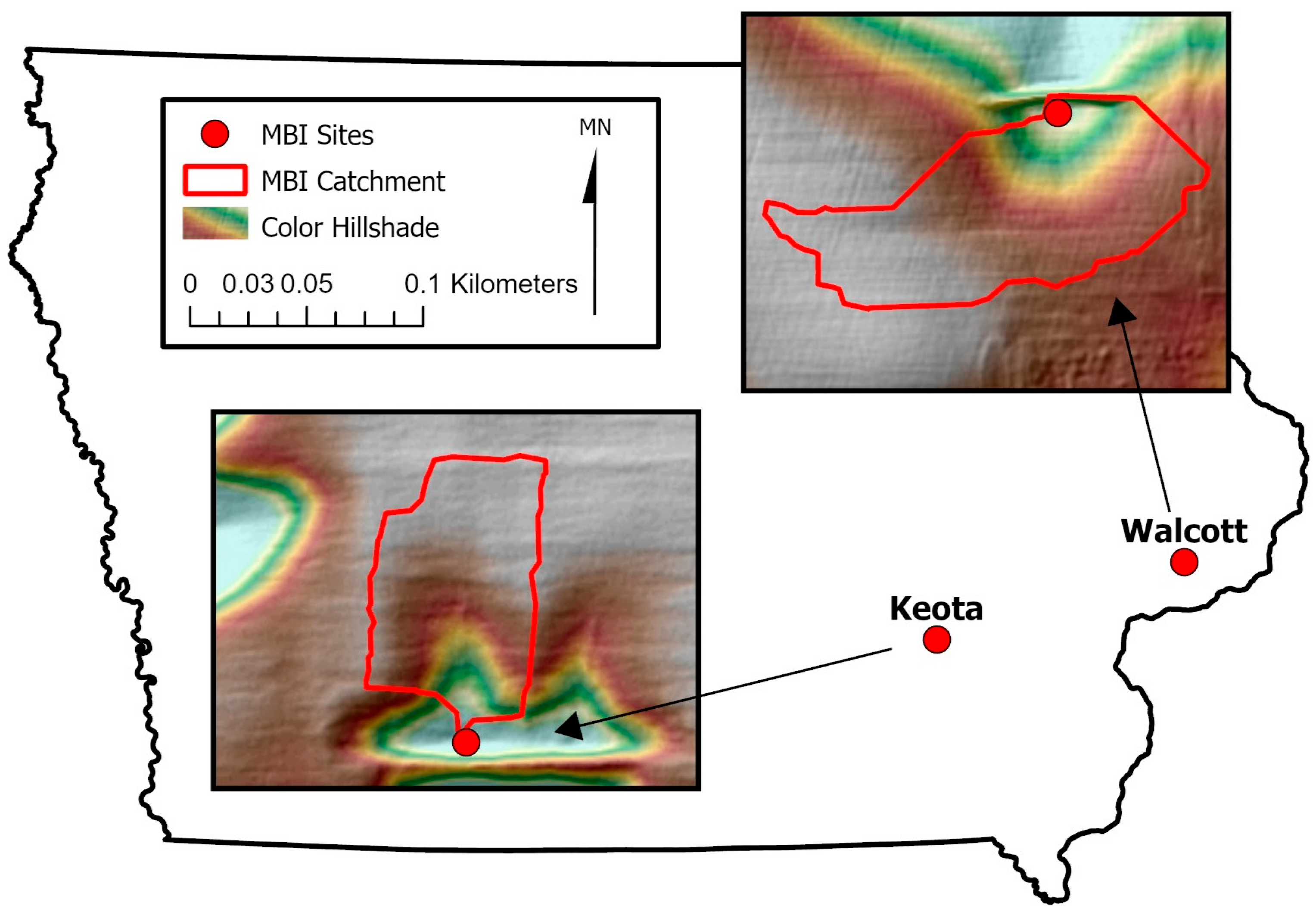
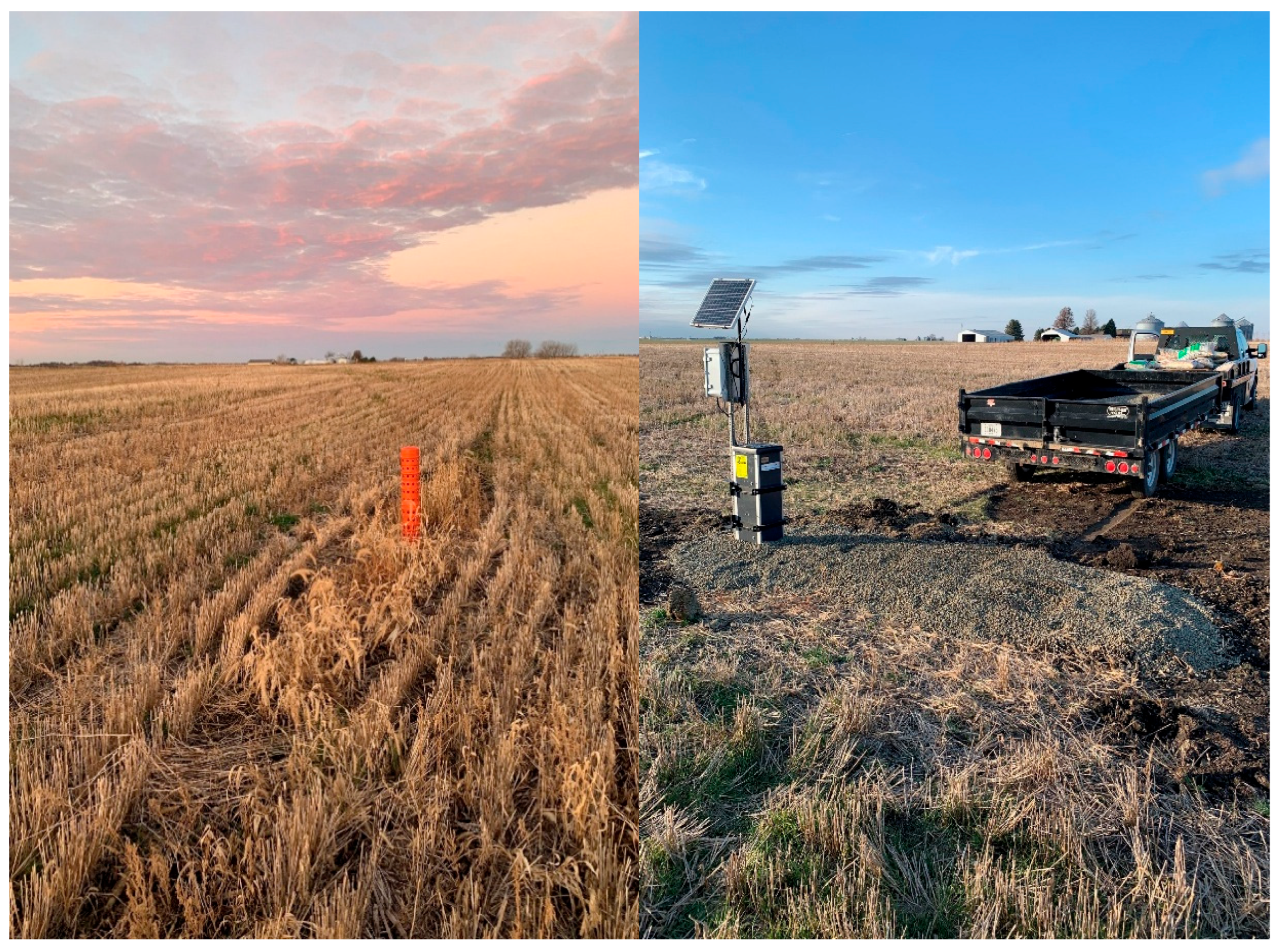
MBIs were installed in Scott (Walcott) and Keokuk (Keota) counties in eastern Iowa. These sites were chosen based on the landowners possessing traditional standing tile inlets and their willingness to convert those inlets to MBIs for research purposes (Figure 1). Both sites are located in local low spots within row crop fields that were previously tiled and terraced in accordance with NRCS standards. Terraces at both locations were graded (i.e., farmable) and originally equipped with standing tile inlets (Figure 2). Fertilizer management, crop rotation, and drainage area varied among the sites (Table 1). The Keota site drained a 0.69 ha catchment and was managed under a corn/soybean rotation using only synthetic fertilizer. The Walcott site drained 0.97 ha and was managed under a corn-only rotation utilizing both manure and synthetic fertilizer. Soil properties at both sites were similar. The Keota MBI was installed in a Mahaska silty clay loam, which is a deep, somewhat poorly drained soil formed in loess (Figure 2), and the Walcott MBI was installed in a Tama silty clay loam, which is a very deep, well-drained soil formed in loess. Both catchment areas contained runoff coefficients of approximately 0.83 [28].
Each MBI was sized according to the methods described in Wilson, Streeter, Ettema, Abban, Gonzalez, Schilling and Papanicolaou [27]. For this study, both MBIs were approximately 0.6 m wide by 2.4 m long and extended to a total depth of 1.2 m, which coincided with the depth of the existing drainage tile. The pit was excavated using a backhoe, and a new perforated drainage tile was placed at the base of the pit where it extended to a newly installed AgriDrain control box at the pit’s lower end, thereby intercepting water immediately as it exited the practice. The pit was then lined with geotextile fabric, and oak woodchips were placed approximately 0.3 m thick in the pit. The remainder of the pit was filled with washed pea gravel with an approximate diameter of 1 cm, which finalized the installation (Figure 2). The MBIs were intentionally oversized to provide a factor of safety to prevent a potential terrace breach if modeled MBI flows were underestimated. The as-built design capacities for the MBIs were estimated at 1140 and 1130 L/min for Keota and Walcott, respectively, and were higher than the required NRCS practice standard rates of 667 and 943 L/min. Therefore, the as-built design rates would theoretically drain the specified 25-year 24-h storm event in 14 and 20 h.

2.2. Data Collection

On-site monitoring was conducted from February 2023 to June 2025 (~28 months) at both sites. AgriDrain control structures were installed along the tile lines draining the MBIs to provide access to the water just downstream of the practices (i.e., the “post-treatment” water at the outlet of the practice). Partial AgriDrain Smart Drainage Systems within the structures, which included a compound v-notch weir and radar sensor, measured water level elevations every 10 min [29]. Similarly, a Hach Nitratax Plus SC sensor was placed in the structure to measure coincident nitrate concentrations [30]. Continuous rainfall data were also monitored at each site using dual-tipping-bucket rain gages that recorded precipitation to the nearest hundredth inch.
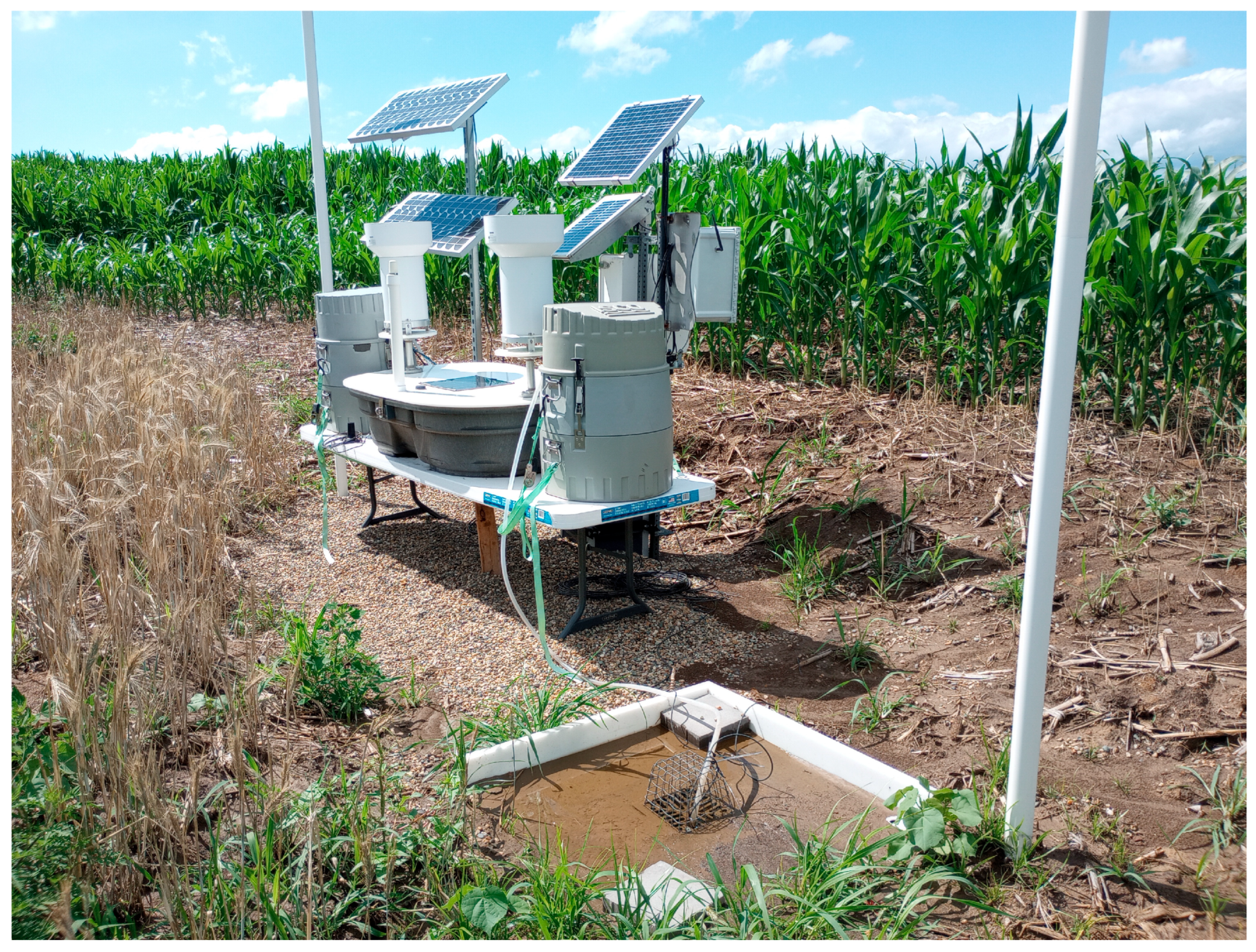
In addition to continuous high-resolution monitoring, several discrete water quality samples were collected during wet weather events. Samples were taken both upstream and downstream of the MBIs using Teledyne ISCO automatic sampling devices [31]. To facilitate upstream sample collection, we constructed surface water sumps adjacent to the drainage field (Figure 3). Sampling at this sump thus provided access to “pre-treatment” water at the inlet of the MBI. Downstream water quality data were collected by sampling water within the AgriDrain structures (i.e., the “post-treatment” water at the MBI outlet). ISCO devices were triggered using liquid level actuators placed within the surface sump to identify the presence of surface runoff, and samples were collected in 10-min increments for a maximum of 4 h (24 samples per event at the MBI inlet and outlet). All samples were analyzed for phosphate and sulfate using ion chromatography. Phosphate was selected for analysis because it is another problematic dissolved nutrient form associated with agricultural drainage [13,32], and there is interest in better understanding MBIs’ ability to remediate it. Sulfate was chosen due to its ability to indicate the presence of groundwater, as it is fairly ubiquitous within Iowa’s shallow groundwater but largely absent in surface runoff [33,34].

2.3. Data Analysis

Water elevation measurements within each AgriDrain structure were converted to corresponding flow values using a modified version of the compound weir equation. The coefficients for these equations were determined via guidance from Katuwal, et al. [35], who developed several calibrations specific to weir flow in AgriDrain structures. Preliminary analysis of the flow data at the Keota site revealed that during select heavy rainfall events, significant in-field ponding occurred atop the MBI. After consulting with the local landowner, we determined that the tile drainage network downstream of the blind inlet was undersized, resulting in water backing up in the field. This ponding was problematic for our experimental setup, as it was not indicative of flow through the MBI but rather the limited downstream drainage capacity. Through further discussions with the landowner and AgriDrain engineers, we estimated that the maximum downstream drainage capacity was approximately 750 L/min. To eliminate the influence of these ponded events, we excluded all flow measurements (~9 events) at the Keota site that exceeded 750 L/min from our calculations. Our summary values for flows and nitrate loads at the Koeta site are thus lower bounds that only incorporate the periods when the AgriDrain structure remained under open channel flow conditions.
Following the calculation of flow rates, the high-resolution nitrate and rainfall datasets were post-processed and joined with the AgriDrain flows at every 10-min increment. High-resolution nitrate loads were calculated by multiplying flow rates by corresponding nitrate concentrations. Data were then aggregated and summarized on a monthly basis (Table 2 and Table 3). On-site monitoring was continuous throughout our study period (February 2023–June 2025), but occasional periods of minimal rainfall led to the water within the AgriDrain structure drying out, resulting in missing nitrate concentrations. However, the nitrate sensors remained operational anytime flow was present, resulting in robust estimates of flow and load. The “Avg nitrate during flow” columns in Table 2 and Table 3 contain only the values measured during periods of flow.

3. Results

3.1. Flow

For the vast majority of the study period (~95% of days), no flow was observed in the AgriDrain structures. Rather, the flow rates leaving the MBIs largely consisted of short episodic events—generally following rainfall at each site. However, flow was recorded in four months at Keota and two months at Walcott when rainfall did not occur. These instances occurred in January and February, when warmer temperatures produced snowmelt and runoff despite the lack of rainfall. In total, 24 flow events were recorded at Keota, and 28 were recorded at Walcott. Peak flow rates during these events ranged from 0.08 to 733 L/min at Keota, with an average of 218 ± 264 L/min. At Walcott, peak flows ranged from 0.02 to 1220 L/min, with an average of 135 ± 312 L/min. These flow rates accounted for approximately 36% and 34% of the total rainfall volume at Keota and Walcott, respectively. In other words, we estimated that 64% and 66% of the rainfall at Walcott and Keota did not produce flow at the MBIs.
Total rainfall throughout the study was 1560 mm at the Keota site (Table 2) and 1470 mm at Walcott (Table 3). The wettest period occurred from April to August in 2024 (544 mm at Keota, 535 mm at Walcott). Minor drought conditions in 2023 led to lower-than-average rainfall that year, with several months in late 2023 containing no precipitation. In some instances, gradual intermittent rainfall resulted in a series of smaller flow events. This occurred at the Walcott site in April 2024, when 120 mm of rainfall produced five distinct events—the most of any month. Conversely, rapid heavy rainfall episodes resulted in isolated large events at both locations. July 2024 produced the largest rainfall event (110 mm) at the Walcott site, which resulted in one corresponding flow event at the MBI. In that same month, approximately 110 mm of precipitation fell at the Keota site, yielding two events. It should be noted that while flow events almost always followed appreciable rainfall, the interplay between precipitation and MBI flow was not straightforward. The magnitude, timing, and antecedent moisture conditions associated with each precipitation event greatly influenced the amount of water reaching the MBI, so the relationship between rainfall and flow is generally neither monotonic nor linear.

3.2. Nitrate

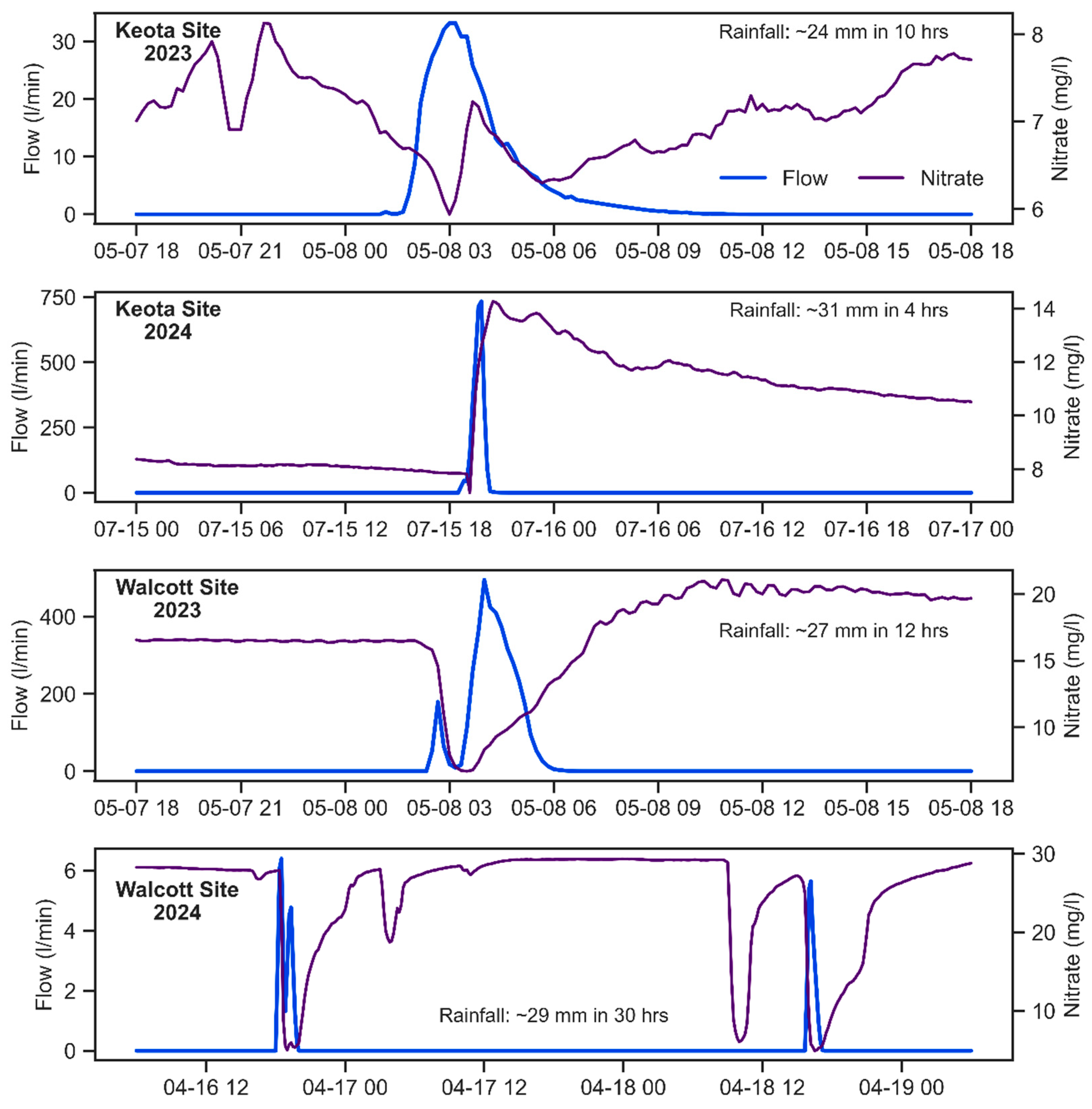
Nitrate concentrations and load varied greatly at both sites throughout the study period. Average concentrations at Keota ranged from 1.63 (February 2024) to 20.0 mg/L (July 2024), with a long-term average of 11.6 mg/L (Table 2). Concentrations were generally higher at Walcott, ranging from 3.42 (October 2023) to 42.1 mg/L (May 2025), with an average of 19.1 mg/L (Table 3). Total nitrate loads were 4.94 kg at Keota and 7.10 kg at Walcott, corresponding to nitrate yields of 7.16 and 7.34 kg/ha, respectively. Monthly nitrate loads ranged from 0.00–1.39 kg/month at Keota (mean of 0.17 kg/month) and 0.00–2.94 kg/month at Walcott (mean of 0.24 kg/month). Nitrate concentrations were often dynamic during flow events and exhibited a wide range of behavior depending on the season, flow magnitude, and initial nitrate concentration. In many cases, nitrate dynamics were characterized by initial dilution followed by a gradual or sharp increase to concentrations above pre-event levels. Figure 4 contains several examples of short-term nitrate behavior following wet weather events.

3.3. Analytes from Discrete Event Sampling

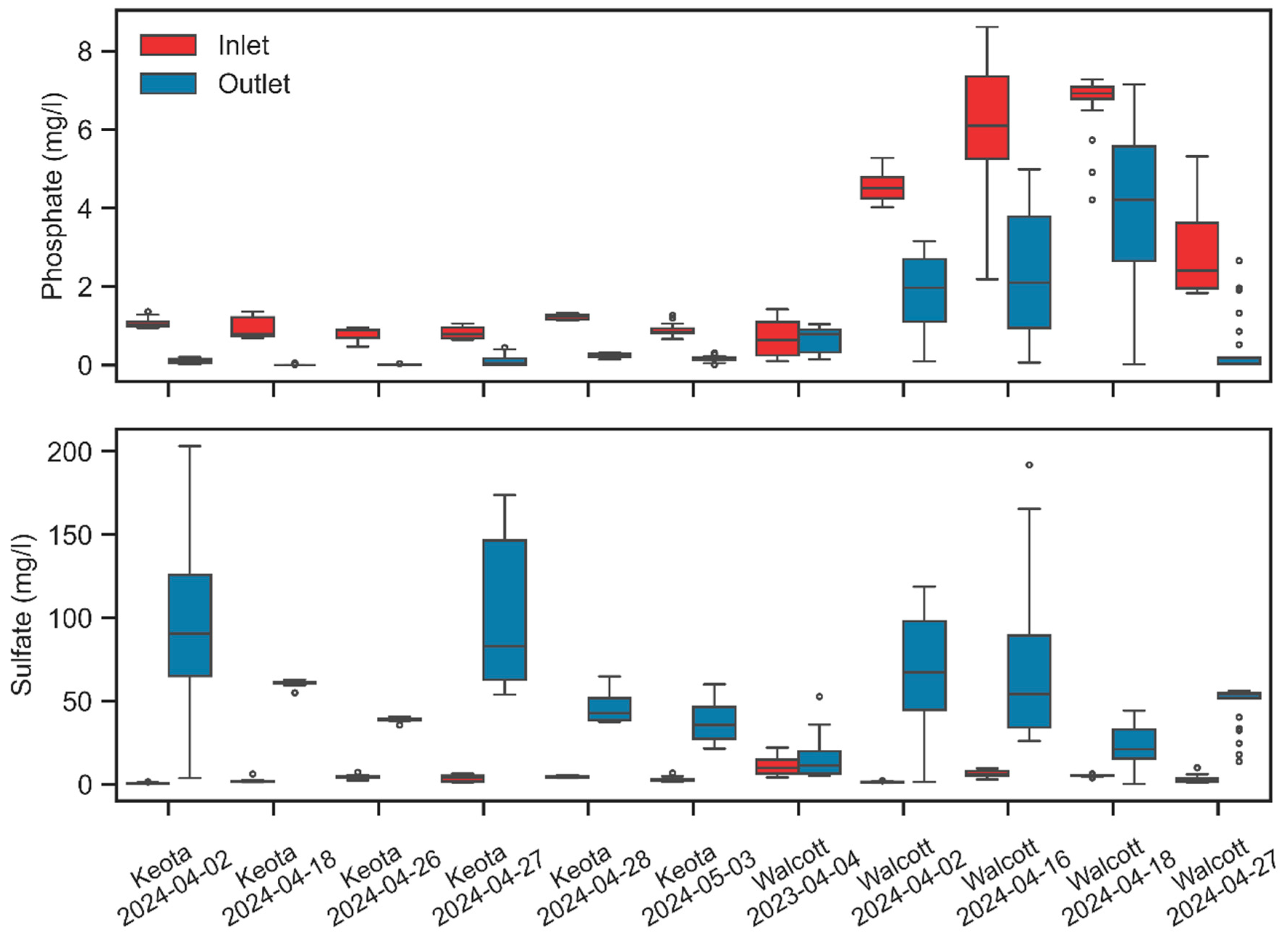
The ISCO sampling devices successfully collected data for 11 unique events throughout the study: six at Keota and five at Walcott. While the maximum number of samples per device per event was 24, some events were short enough not to warrant the full 4-h sampling timeframe and thus included fewer samples (with a minimum of 10). Table 4 summarizes the descriptive statistics of phosphate and sulfate for each event, and Figure 5 displays their range of concentrations. Phosphate concentrations at the inlet were consistently higher than those at the outlet. This behavior was reversed for sulfate, with outlet concentrations consistently higher than at the inlet. Phosphate was notably higher at Walcott than at Keota, whereas sulfate was roughly equivalent between the sites. For the Keota events, average phosphate ranged from 0.79–1.23 mg/L at the inlet and 0.01–0.25 mg/L at the outlet. At Walcott, phosphate ranged from 0.71–6.70 mg/L at the inlet and 0.41–3.91 mg/L at the outlet. Sulfate concentrations ranged from 0.63–11.4 mg/L at the inlet (overall mean of 4.26 mg/L) while spanning 17.0–104 mg/L at the outlet (overall mean of 55.6 mg/L).

4. Discussion

4.1. Drainage Capacity

A primary objective of this study was to determine if the novel MBI design could successfully convey water from the landscape at rates compliant with NRCS standards. Specifically, design criteria require that blind inlets have sufficient capacity to drain their catchment’s runoff for the 25-year 24-h storm event, which is equivalent to 140 mm/day in eastern Iowa. We estimated the total runoff associated with the 25-year 24-h event at both sites and determined that the MBI would need to drain water at a rate of 667 L/min at Keota and 943 L/min at Walcott to meet this standard. While our flow monitoring efforts spanned a wide range of rainfall behavior, we were able to capture flow conditions above the design standard during some of the wettest events. At the Koeta site, storm events in May and July 2024 produced maximum flow rates of 700 and 733 L/min, respectively, with the latter of these 10% above the required capacity. In February 2023 at Walcott, despite no rainfall occurring, meltwater produced an event peaking at 1220 L/min—nearly 30% above the requirement. Flows also exceeded Walcott’s design criteria in April 2023, reaching a peak of 1150 L/min. These instances of observed flow rates exceeding the required capacity indicate that the MBI’s were able to meet their chief hydraulic design criteria and thus suggest that installing MBIs will not result in unwanted in-field ponding. This is an important result, as confirmation of MBIs’ drainage capacity may enable their increased adoption, despite ongoing uncertainty about their expected nutrient removal rates.
It is important to note that the ponding we observed at the Keota site was almost certainly due to the inadequate capacity of the downstream tile line, not the MBI drainage field. During ponding, standing water overwhelmed our flow-measurement weir, leading to inaccurate flow data. This necessitated the use of an upper bound (750 L/min) for flow rates included in our summary calculations. Ettema, Papanicolaou, Wilson and Abban [26] determined via physical modeling that the maximum flow rate through the MBIs was approximately 1700 L/min. This is more than double the maximum flow rate for the drainage tile at Keota, which was conservatively estimated at 750 L/min. Therefore, the ponding at Keota was likely a throttling effect originating with the drainage tile, rather than a restriction of flow within the MBI. Unfortunately, because the compound weir equation was not valid during ponding, we could not reliably quantify flow rates through the MBI that exceeded the tile’s maximum capacity, even though certain rainfall events could have produced higher discharges. Unlike Keota, no ponding occurred at Walcott. The Walcott site contained a slightly larger downstream drainage tile with a maximum capacity of approximately 1330 L/min, which successfully conveyed all water flowing through the MBI.

4.2. Groundwater Intrusion

Another major objective of our field investigation was to explore the presence of groundwater within our MBI monitoring framework. To our knowledge, this study represents the first attempt at utilizing in situ equipment to obtain continuous high-resolution observations of flow and nitrate export from a MBI. Previous studies on MBIs have assessed their ability to remove pollutants by taking discrete measurements of nutrient concentrations upstream and downstream of the practice [27]. While such experiments are useful for gauging the performance of MBIs as a conservation practice, continuous monitoring is necessary to ensure their suitability as a component of agricultural drainage systems by empirically demonstrating their post-construction drainage capabilities. The installation of AgriDrain control structures and nitrate sensors enabled thorough documentation of MBI drainage and nutrient export over a variety of seasons and hydrologic conditions.
Standard monitoring setups for conservation practices aim to isolate measurements to the system’s throughput. In the case of MBIs, this involves solely evaluating the water passing through the practice’s drainage field. In practice, however, it is difficult to restrict all continuous flow measurements to water flowing vertically downwards through a blind inlet, as water can also make its way to many of these inlets via subsurface lateral movement [27,36]. Therefore, we wanted to determine whether the flows and loads reported in our AgriDrain structures were confined to surface water throughput or if they contained any groundwater alongside the runoff component.
The timing and magnitude of flow events revealed that water transport through the MBIs is primarily driven by runoff. Flow events always occurred directly after rainfall or snowmelt and were highly ephemeral—usually lasting a few hours. The fact that zero flow was recorded for the vast majority of observations demonstrates that these systems do not contain a groundwater-driven baseflow component that sustains water transport between wet weather events. However, analysis of discrete-event samples and the dynamics exhibited by the continuous nitrate concentrations suggest that some lateral groundwater seepage occurred in our setup.
Most importantly, the consistently high sulfate levels in the MBI outlets indicate groundwater intrusion. Sulfate in the surficial water measured at the practices’ inlets was low, averaging 4.26 mg/L across the 11 events (Figure 5)—a concentration comparable to other midwestern runoff-based estimates [37]. Sulfate at the outlets was considerably higher (overall average 55.6 mg/L), which is consistent with measurements of Iowa’s shallow groundwater and streams during baseflow-driven conditions [33]. Indeed, Schilling, Streeter, Vogelgesang, Jones and Seeman [34] measured sulfate concentrations in tile and groundwater in northern Iowa and reported values ranging from 10.8 to 203 mg/L. Therefore, the elevated subsurface sulfate concentrations at our study sites almost certainly originated from groundwater transport. It was also notable that, while sulfate remained consistently low at the inlets, concentrations at the outlets varied greatly during some events. For example, during the event at Keota on 27 April 2024, concentrations at the outlet spanned 50–170 mg/L. Modern sulfate levels in Iowa streams are primarily influenced by a watershed’s local geology that delivers consistent amounts of sulfate to waterways via groundwater transport. Riverine concentrations typically remain stable, except when diluted during runoff events [33]. We thus believe the varied levels of sulfate observed during some events reflect surface water mixing with and diluting the groundwater seepage.
The phosphate sampling results might also suggest groundwater influence, but the situation is more complex. Phosphate was consistently higher at the MBI inlets than at the outlets (Figure 5), which may imply that the groundwater is diluting the surficial phosphate. Typical levels of phosphate in Iowa groundwater are approximately 0.15 mg/L [38]—much lower than the runoff-based values observed in our study. Surficial phosphate tends to be elevated in agricultural fields due to the application of synthetic fertilizer and mineralization of biomass [39]. Concentrations were also considerably higher at Walcott, likely reflecting the application of hog manure, which was used there but not at Keota. Therefore, it is likely that the aforementioned groundwater intrusion contributed to the decrease in concentrations at the outlet. However, some remediation of phosphate may also have taken place within the practice. Wilson, Streeter, Ettema, Abban, Gonzalez, Schilling and Papanicolaou [27] noted that stacked practices have the potential to immobilize phosphate by fostering biological uptake or promoting immobilization to stable particulate P. A number of these environmental processes may be at play within the MBIs, but given our monitoring limitations, it is difficult to determine how much of the noted phosphate declines are due to retention and not groundwater dilution.

4.3. Nitrate Loading

The water discharged by subsurface agricultural drainage systems has long been identified as a significant driver of eutrophication [40], and tile drainage has been shown to account for nearly 80% of overall nitrate loads in eastern Iowa rivers [41]. Schilling, Streeter, Vogelgesang, Jones and Seeman [34] found that tile lines contributed 98% of the nitrate load to a local stream in a subwatershed with land use largely comprising row crop fields drained by tiles. In most midwestern watersheds with substantial pattern tile systems, lateral groundwater is the primary contributor of nitrate in tile effluent [42], which can routinely range from 10–20 mg/L [43]. In contrast, nitrate concentrations in surface water runoff are typically much lower (1–3 mg/L) in evaluations of runoff at the watershed scale [44,45]. However, some studies have shown that nitrate concentrations in runoff at in-field inlets are similar to or higher than groundwater concentrations following fertilizer application to conventional row crops [27].
Our MBI design replaced a traditional standing tile inlet with a layer of large pea gravel and a woodchip filter bed. This allowed the relatively low nitrate surface water to enter the woodchip medium alongside the relatively high nitrate groundwater. Therefore, nitrate was often present at high concentrations throughout our study period, and downstream loadings were significant. Nitrate at Walcott was consistently higher than at Keota, likely due to greater N application through manure and to the field operating under a continuous corn rotation. Despite differences in concentration, daily nitrate yields were roughly equivalent (~0.10 kg/ha/day) at both sites. These yields are similar to those reported by Hay et al. [46] for row crop catchments within the same landform regions as Keota (0.11 kg/ha/day) and Walcott (0.07 kg/ha/day). It was also notable that some of the largest nitrate loads were generated during snowmelt events in the winter months. While nitrate in Iowa is often considered to be most problematic in the summer, some wintertime conditions can result in high concentrations and loads that burden downstream environments [11]. Monitoring of conservation practices should continue to record nitrate during the winter, especially within practices like MBIs that can receive appreciable flows from snowmelt.
Additionally, our high-resolution observations of flow and nitrate revealed several interesting nitrate fluctuations over the course of wet weather events (Figure 4). A recurring pattern was a drop in nitrate levels at the beginning of an event as rain permeated the soil and flow levels rose. As flows within the AgriDrain structure receded and rainfall ceased, nitrate rose to concentrations greater than the pre-event condition. We hypothesize that the initial declines in nitrate were due to dilution from runoff. Then, as surface water infiltrated the soil macropores, it mobilized nitrate, resulting in a more concentrated groundwater pulse moving through the MBI. This behavior is consistent with nitrate variations in riverine systems that receive large portions of flow from tile lines draining agricultural fields, where this pattern of dilution followed by increased nitrate has been well documented [11]. The timing and magnitude of these nitrate dynamics within the MBI were rarely consistent, as factors specific to each event (e.g., rainfall rates, soil temperature, and antecedent soil N) undoubtedly affected nitrate remediation and mobilization. Still, the ability to document high-resolution nitrate and flow underscores much about the fate and transport of nitrate within these systems. Ultimately, the MBIs were not processing water from a single source as a traditional standing inlet or buried drainage tile would, but rather, they received both runoff and groundwater during rainfall events, which combined to produce nitrate loads typical of agricultural drainage tile, albeit somewhat muted by dilution from runoff water.

4.4. Implications for Future Conservation

Our results suggest that MBIs are a viable conservation practice that should continue to be implemented and studied. Since the flow rates we observed verified that this study’s MBIs operate within their design capacities and do not lead to unwanted or detrimental in-field ponding, a valuable next step would be considering the MBI design for inclusion in the current Iowa NRCS underground outlet practice standard [47]. Including the MBI in the existing standard would create cost-share opportunities that will facilitate future installations of MBIs and advance our understanding of this practice across Iowa’s landscape. As MBIs provide many practical advantages to agricultural management, in addition to water quality benefits, many farmers recognize their potential value and are interested in installing them.
A key goal of MBI development was to create a practice that could receive surface water as a traditional standing inlet and provide nitrate remediation benefits. Current MBI design and placement provide them with routine opportunities to intercept nitrate-laden water. Since nitrate levels in rainfall are not inherently high, MBIs are best placed in fields where they can intercept surface runoff carrying higher levels of dissolved nutrients. Further, our study has shown that MBIs can intercept significant amounts of groundwater in addition to surface runoff. As currently constructed, it is difficult to specifically isolate the impact of the woodchips on denitrification since we were unable to account for groundwater nitrate contributions to the overall incoming load. To address this issue, future studies may wish to install an impermeable liner rather than geotextile fabric when installing the MBI to remove the influence of groundwater seepage. However, we also recognize that groundwater seepage may play an important role in woodchip longevity and productivity. Since flow was highly correlated with rainfall, the MBIs received no surface runoff for most of our study, and the woodchip bioreactor portion of the MBI was only partially saturated. By modifying the MBI design to utilize groundwater seepage, the MBIs could maintain saturated conditions within the bioreactor for a greater percentage of time. This could be accomplished by deepening the MBI trench and creating an impermeable sump below the perforated tile within which the woodchip medium would be placed. Groundwater seepage from above the sump promotes saturated conditions in the bioreactor, even when rainfall is not occurring.
The ability of MBIs to capture dissolved P is less clear, although the gravel bed certainly captures significant portions of particulate P, which was verified by [23]. While Wilson, Streeter, Ettema, Abban, Gonzalez, Schilling and Papanicolaou [27] did identify a 17% reductions in dissolved P, these results were likely confounded by groundwater intrusion similar to what we identified. Still, some sorption or mineralization may occur within the woodchip medium, thereby removing some dissolved P, similar to results described by Sanchez Bustamante-Bailon et al. [48] in a traditional woodchip bioreactor setup.

5. Conclusions

This study involved the design and installation of two MBIs, a novel extension of the conventional blind inlet, in eastern Iowa. These MBIs consisted of a drainage field containing pea gravel above a layer of woodchips, thereby functioning as a stacked conservation practice, with the pea gravel immobilizing particulate nutrients and the woodchips reducing nitrate. These practices were designed to convey the 25-year 24-h design storm and outfitted with equipment to continuously measure flow and nitrate export. Flow and nitrate were continuously monitored using in situ equipment directly downstream of the MBIs (February 2023–June 2025). Observed flows were very ephemeral, consisting of ~25 distinct events at both sites, with no flow recorded in between. During several wet weather events, flow rates exceeded the MBIs’ design requirements, confirming their sufficient drainage capacity to pre-vent in-field ponding. Nitrate loads at both sites were comparable to those of row crop catchments in eastern Iowa. Nitrate concentrations varied considerably, with long-term averages of 11.6 and 19.1 mg/L and overall loadings of 4.94 and 7.10 kg during our 28-month study. The dynamics of measured nitrate concentrations and presence of sulfate in the tile line discharge indicated that a mix of groundwater and surface water runoff was present in our experimental setup. Future experimental designs should consider the long-term implications of MBI adoption. These considerations include investigating the longevity of woodchips as a carbon source to understand how MBI performance changes over time and whether routine maintenance needs are required. Currently, experimental MBIs exist that have been installed for more than a decade, but their performance has not been re-evaluated. These sites, as well as new MBI installations, should be thoroughly monitored to quantify the capture of particulate and dissolved nutrient loads using continuous flow, nitrate, and turbidity sensors. Our study has shown that these systems experience highly variable runoff and flow conditions, and we reiterate that any future experiments should utilize continuous monitoring to fully understand the performance of this unique in-field practice. Ultimately, MBIs benefit landowners by reducing pollutant transport and minimizing operational considerations and warrant greater consideration as a conservation practice since our results suggest they adequately drain fields.

Author Contributions

Conceptualization, M.T.S.; methodology, M.T.S.; formal analysis, E.S.A.; investigation, M.T.S. and E.S.A.; data curation, M.T.S. and E.S.A.; writing—original draft preparation, M.T.S. and E.S.A.; writing—review and editing, M.T.S. and E.S.A.; project administration, M.T.S.; funding acquisition, M.T.S. All authors have read and agreed to the published version of the manuscript.

Funding

This work was supported by the Iowa Nutrient Research Center grant 2022-07.

Data Availability Statement

The data presented in this study are available on request from the corresponding author. The data are not publicly available due to privacy restrictions.

Conflicts of Interest

The authors declare no conflicts of interest.

References

  1. Edwards, E.C.; Thurman, W.N. Agricultural Drainage. In American Agriculture, Water Resources, and Climate Change; University of Chicago Press: Chicago, IL, USA, 2024; p. 29. [Google Scholar]
  2. Schilling, K.E.; Helmers, M. Effects of subsurface drainage tiles on streamflow in Iowa agricultural watersheds: Exploratory hydrograph analysis. Hydrol. Process. Int. J. 2008, 22, 4497–4506. [Google Scholar] [CrossRef]
  3. Drury, C.; Tan, C.; Reynolds, W.; Welacky, T.; Oloya, T.; Gaynor, J. Managing tile drainage, subirrigation, and nitrogen fertilization to enhance crop yields and reduce nitrate loss. J. Environ. Qual. 2009, 38, 1193–1204. [Google Scholar] [CrossRef] [PubMed]
  4. Fraser, H.; Fleming, R.; Eng, P. Environmental Benefits of tile Drainage; Prepared for: LICO—Land Improvement Contractors of Ontario; Ridgetown College, University of Guelph: Ridgetown, ON, Canada, 2001. [Google Scholar]
  5. Adelsperger, S.R.; Ficklin, D.L.; Robeson, S.M. Tile drainage as a driver of streamflow flashiness in agricultural areas of the Midwest, USA. Hydrol. Process. 2023, 37, e15021. [Google Scholar] [CrossRef]
  6. Zucker, L.; Brown, L. Agricultural Drainage: Water Quality Impacts and Subsurface Drainage Studies in the Midwest; Ohio State University Extension Bulletin 871; Ohio State University Extension: Columbus, OH, USA, 1998; p. 40. [Google Scholar]
  7. NRCS. Part 650 Engineering Field Handbook National Engineering Handbook; Natural Resources Conservation Service: Washington, DC, USA, 2021. [Google Scholar]
  8. Dinnes, D.L. Assessments of Practices to Reduce Nitrogen and Phosphorus Nonpoint Source Pollution of Iowa’s Surface Waters; USDA-ARS, National Soil Tilth Laboratory: Ames, IA, USA, 2004. [Google Scholar]
  9. Ikenberry, C.D.; Soupir, M.L.; Schilling, K.E.; Jones, C.S.; Seeman, A. Nitrate-nitrogen export: Magnitude and patterns from drainage districts to downstream river basins. J. Environ. Qual. 2014, 43, 2024–2033. [Google Scholar] [CrossRef]
  10. Jaynes, D.; Hatfield, J.; Meek, D. Water quality in Walnut Creek watershed: Herbicides and nitrate in surface waters. J. Environ. Qual. 1999, 28, 45–59. [Google Scholar] [CrossRef]
  11. Jones, C.S.; Davis, C.A.; Drake, C.W.; Schilling, K.E.; Debionne, S.H.; Gilles, D.W.; Demir, I.; Weber, L.J. Iowa statewide stream nitrate load calculated using in situ sensor network. JAWRA J. Am. Water Resour. Assoc. 2018, 54, 471–486. [Google Scholar] [CrossRef]
  12. King, K.W.; Williams, M.R.; Fausey, N.R. Contributions of systematic tile drainage to watershed-scale phosphorus transport. J. Environ. Qual. 2015, 44, 486–494. [Google Scholar] [CrossRef]
  13. Schilling, K.E.; Streeter, M.T.; Isenhart, T.M.; Beck, W.J.; Tomer, M.D.; Cole, K.J.; Kovar, J.L. Distribution and mass of groundwater orthophosphorus in an agricultural watershed. Sci. Total Environ. 2018, 625, 1330–1340. [Google Scholar] [CrossRef]
  14. Smith, D.R.; King, K.W.; Johnson, L.; Francesconi, W.; Richards, P.; Baker, D.; Sharpley, A.N. Surface runoff and tile drainage transport of phosphorus in the midwestern United States. J. Environ. Qual. 2015, 44, 495–502. [Google Scholar] [CrossRef] [PubMed]
  15. Gentry, L.; David, M.; Royer, T.; Mitchell, C.; Starks, K. Phosphorus transport pathways to streams in tile-drained agricultural watersheds. J. Environ. Qual. 2007, 36, 408–415. [Google Scholar] [CrossRef] [PubMed]
  16. Jiang, X.; Livi, K.J.; Arenberg, M.R.; Chen, A.; Chen, K.-Y.; Gentry, L.; Li, Z.; Xu, S.; Arai, Y. High flow event induced the subsurface transport of particulate phosphorus and its speciation in agricultural tile drainage system. Chemosphere 2021, 263, 128147. [Google Scholar] [CrossRef]
  17. Laubel, A.; Jacobsen, O.H.; Kronvang, B.; Grant, R.; Andersen, H.E. Subsurface Drainage Loss of Particles and Phosphorus from Field Plot Experiments and a Tile-Drained Catchment; 0047-2425; Wiley Online Library: Hoboken, NJ, USA, 1999. [Google Scholar]
  18. Cooley, E.T.; Ruark, M.D.; Panuska, J.C. Tile Basics and Discovery Farms Tile Findings. In 2010 Wisconsin Crop Production Association Distinguished Service Awards; American Society of Agricultural and Biological Engineers: St. Joseph, MO, USA, 2010; p. 50. [Google Scholar]
  19. Minnesota Department of Agriculture. Alternative Tile Intakes. In The Agricultural BMP Handbook for Minnesota; Minnesota Department of Agriculture: St. Paul, MN, USA, 2012; p. 67. [Google Scholar]
  20. Feyereisen, G.W.; Francesconi, W.; Smith, D.R.; Papiernik, S.K.; Krueger, E.S.; Wente, C.D. Effect of replacing surface inlets with blind or gravel inlets on sediment and phosphorus subsurface drainage losses. J. Environ. Qual. 2015, 44, 594–604. [Google Scholar] [CrossRef] [PubMed]
  21. Penn, C.; Gonzalez, J.; Williams, M.; Smith, D.; Livingston, S. The past, present, and future of blind inlets as a surface water best management practice. Crit. Rev. Environ. Sci. Technol. 2020, 50, 743–768. [Google Scholar] [CrossRef]
  22. Iowa Department of Agriculture. Iowa Nutrient Reduction Strategy: A Science and Technology-Based Framework to Assess and Reduce Nutrients to Iowa Waters and the Gulf of Mexico; Iowa Department of Agriculture and Land Stewardship: Des Moines, IA, USA; Iowa Department of Natural Resources: Des Moines, IA, USA; Iowa State University: Ames, IA, USA, 2013. [Google Scholar]
  23. Wilson, B.N.; Nguyen, H.V.; Singh, U.B.; Morgan, S.; Van Buren, P.; Mickelson, D.; Jahnke, E.; Hansen, B. Evaluations of alternative designs for surface tile inlets using prototype studies. In Final Report: Minnesota Department of Agriculture; Minnesota Department of Agriculture: St. Paul, MN, USA, 1999. [Google Scholar]
  24. Cooke, R.; Doheny, A.; Hirschi, M. Bio-reactors for edge-of-field treatment of tile outflow. In Proceedings of the 2001 ASAE Annual Meeting, Sacramento, CA, USA, 29 July–1 August 2001; p. 1. [Google Scholar]
  25. Christianson, L.; Castelló, A.; Christianson, R.; Helmers, M.; Bhandari, A. Hydraulic property determination of denitrifying bioreactor fill media. Appl. Eng. Agric. 2010, 26, 849–854. [Google Scholar] [CrossRef]
  26. Ettema, W.; Papanicolaou, T.; Wilson, C.; Abban, B. Alternative tile intake design for tile drainage: A case study. In Proceedings of the World Environmental and Water Resources Congress 2014, Portland, OR, USA, 1–5 June 2014; pp. 1272–1281. [Google Scholar]
  27. Wilson, C.G.; Streeter, M.T.; Ettema, W.D.; Abban, B.K.; Gonzalez, A.; Schilling, K.E.; Papanicolaou, A.N. Assessing the Effectiveness of Alternative Tile Intakes on Agricultural Hillslopes. Water 2024, 16, 309. [Google Scholar] [CrossRef]
  28. NRCS, U. Description of SSURGO Database. Available online: https://www.nrcs.usda.gov/wps/portal/nrcs/detail/soils/survey/?cid=nrcs142p2_053627 (accessed on 10 December 2025).
  29. AgriDrain. Smart Drainage System. Available online: https://smartdrainagesystem.com (accessed on 10 December 2025).
  30. Hach. Available online: https://www.hach.com (accessed on 10 December 2025).
  31. Teledyne. Teledyne ISCO. Available online: https://www.teledyneisco.com/en-us (accessed on 10 December 2025).
  32. King, K.W.; Williams, M.R.; Macrae, M.L.; Fausey, N.R.; Frankenberger, J.; Smith, D.R.; Kleinman, P.J.; Brown, L.C. Phosphorus transport in agricultural subsurface drainage: A review. J. Environ. Qual. 2015, 44, 467–485. [Google Scholar] [CrossRef]
  33. David, M.B.; Gentry, L.E.; Mitchell, C.A. Riverine response of sulfate to declining atmospheric sulfur deposition in agricultural watersheds. J. Environ. Qual. 2016, 45, 1313–1319. [Google Scholar] [CrossRef]
  34. Schilling, K.E.; Streeter, M.T.; Vogelgesang, J.; Jones, C.S.; Seeman, A. Subsurface nutrient export from a cropped field to an agricultural stream: Implications for targeting edge-of-field practices. Agric. Water Manag. 2020, 241, 106339. [Google Scholar] [CrossRef]
  35. Katuwal, S.; Johnson, G.M.; Craig, A.J.; Rogovska, N.P.; Isenhart, T.M.; Malone, R.W. Calibration of v-notch and compound weirs for subsurface drainage water level control structures. Appl. Eng. Agric. 2024, 40, 453–463. [Google Scholar] [CrossRef]
  36. Penn, C.; Livingston, S.; Shedekar, V.; King, K.; Williams, M. Performance of field-scale phosphorus removal structures utilizing steel slag for treatment of subsurface drainage. Water 2020, 12, 443. [Google Scholar] [CrossRef]
  37. Sharpley, A.N.; Smith, S.; Jones, O.; Berg, W.; Coleman, G. Transport and Prediction of Sulfate in Agricultural Runoff; 0047-2425; Wiley Online Library: Hoboken, NJ, USA, 1991. [Google Scholar]
  38. Schilling, K.E.; Jacobson, P.J.; Clair, M.S.; Jones, C.S. Dissolved Phosphate Concentrations in Iowa Shallow Groundwater; 0047-2425; Wiley Online Library: Hoboken, NJ, USA, 2020. [Google Scholar]
  39. Tomer, M.; Moorman, T.; Kovar, J.; Cole, K.; Nichols, D. Eleven years of runoff and phosphorus losses from two fields with and without manure application, Iowa, USA. Agric. Water Manag. 2016, 168, 104–111. [Google Scholar] [CrossRef]
  40. Randall, G.; Goss, M. Nitrate losses to surface water through subsurface, tile drainage. In Nitrogen in the Environment; Elsevier: Amsterdam, The Netherlands, 2008; pp. 145–175. [Google Scholar]
  41. Arenas Amado, A.; Schilling, K.; Jones, C.; Thomas, N.; Weber, L. Estimation of tile drainage contribution to streamflow and nutrient loads at the watershed scale based on continuously monitored data. Environ. Monit. Assess. 2017, 189, 426. [Google Scholar] [CrossRef]
  42. Tomer, M.; Burkart, M. Long-term effects of nitrogen fertilizer use on ground water nitrate in two small watersheds. J. Environ. Qual. 2003, 32, 2158–2171. [Google Scholar] [CrossRef]
  43. Schilling, K.E.; Jones, C.S.; Seeman, A. How paired is paired? Comparing nitrate concentrations in three Iowa drainage districts. J. Environ. Qual. 2013, 42, 1412–1421. [Google Scholar] [CrossRef] [PubMed]
  44. Cambardella, C.; Moorman, T.; Jaynes, D.; Hatfield, J.; Parkin, T.; Simpkins, W.; Karlen, D. Water quality in Walnut Creek watershed: Nitrate-nitrogen in soils, subsurface drainage water, and shallow groundwater. J. Environ. Qual. 1999, 28, 25–34. [Google Scholar] [CrossRef]
  45. Zhou, X.; Helmers, M.J.; Asbjornsen, H.; Kolka, R.; Tomer, M.D.; Cruse, R.M. Nutrient removal by prairie filter strips in agricultural landscapes. J. Soil Water Conserv. 2014, 69, 54–64. [Google Scholar] [CrossRef]
  46. Hay, C.H.; Kiel, A.; Seeman, A.; Kyveryga, P. Monitoring tile systems in Iowa: Overview and results. In Proceedings of the 2016 10th International Drainage Symposium Conference, Minneapolis, MN, USA, 6–9 September 2016; pp. 1–6. [Google Scholar]
  47. NRCS. Conservation Practice Standard 620; Natural Resources Conservation Service: Washington, DC, USA, 2020. [Google Scholar]
  48. Sanchez Bustamante-Bailon, A.P.; Margenot, A.; Cooke, R.A.; Christianson, L.E. Phosphorus removal in denitrifying woodchip bioreactors varies by wood type and water chemistry. Environ. Sci. Pollut. Res. 2022, 29, 6733–6743. [Google Scholar] [CrossRef]
Figure 1. Location map of MBI sites in Iowa including detailed map of catchment area for each site.
Nitrogen 07 00031 g001
Figure 2. Pre- and post-installation photos at the Keota site. (Left): conventional standing tile inlet (pre-installation). (Right): modified blind inlet (post-installation); n.b., the AgriDrain equipment is present for monitoring purposes.
Nitrogen 07 00031 g002
Figure 3. Discrete sampling setup at the Walcott site highlighting sample collection at the inlet.
Nitrogen 07 00031 g003
Figure 4. Examples of select flow events at the Keota (top) and Walcott (bottom) sites. The x-axis shows the date and time in “month–day–hour” format.
Nitrogen 07 00031 g004
Figure 5. Boxplots summarizing phosphate (top) and sulfate (bottom) concentrations during event sampling.
Nitrogen 07 00031 g005
Table 1. Study site drainage and agricultural management information.
SiteDrainage Area (ha)As-Built Design Capacity (L/Min)NRCS Required Capacity (L/Min)Crop RotationN Applied as Manure (kg/yr)N Applied as Synthetic (kg/yr)
Keota0.691140667Corn/Soybean077
Walcott0.971130943Corn/Corn4343
Table 2. Monthly results at the Keota site.
MonthAvg Temp (°C)Events (#)Rainfall (mm)Flow (L) *Avg Nitrate During Flow (mg/L)Nitrate Load (kg/Month) *
2023-02−1.710.00340,0008.221.39
2023-032.100.769339.240.01
2023-0410031.80.00-0.00
2023-0517143.348606.670.03
2023-0622079.00.0-0.00
2023-0722156.03785.170.00
2023-0822072.90.0-0.00
2023-0920023.50.0-0.00
2023-1012043.60.0-0.00
2023-113.500.130.0-0.00
2023-122.100.000.0-0.00
2024-01−5.810.007063.280.00
2024-022.830.0044201.630.01
2024-035.8051.30.0-0.00
2024-04112118109,00014.20.82
2024-0518312062,20017.71.38
2024-0623072.10.0-0.00
2024-0722216136,40020.00.44
2024-0823072.80.0-0.00
2024-092005.630.0-0.00
2024-1014083.80.0-0.00
2024-115.9185.014,9005.810.08
2024-12−0.8287.03558.430.00
2025-01−6.7129.711,7008.310.09
2025-02−5.010.0092907.600.09
2025-037.1297.8303010.80.03
2025-0411289.071,3008.930.58
2025-0516160.61.3415.60.00
2025-0623073.70.0-0.00
Sum-241560669,000-4.94
Average110.8353.723,10011.60.17
* flow and load values are minimum bounds, as a maximum flow threshold of 750 L/min was used to exclude ponded events from our calculations.
Table 3. Monthly results at the Walcott site.
MonthAvg Temp (°C)Events (#)Rainfall (mm)Flow (L)Avg Nitrate During Flow (mg/L)Nitrate Load (kg/Month)
2023-020.010.00248,00025.42.94
2023-033.214.95115,00015.71.61
2023-0411140.987,50011.10.72
2023-0518135.439,70012.00.38
2023-0622038.40.0-0.00
2023-0723173.930525.70.00
2023-0823038.10.0-0.00
2023-0920049.00.0-0.00
2023-1013183.20.03.420.00
2023-115.100.000.0-0.00
2023-122.900.000.0-0.00
2024-01−4.620.0033617.90.01
2024-023.400.380.0-0.00
2024-036.4160.25412.40.00
2024-0411512422,10010.80.15
2024-0518164.863.126.30.00
2024-0623068.50.0-0.00
2024-0722111337319.70.01
2024-08224165144013.20.03
2024-091905.000.0-0.00
2024-1014054.00.0-0.00
2024-116.4045.30.0-0.00
2024-12−0.8032.00.0-0.00
2025-01−6.4018.10.0-0.00
2025-02−4.102.540.0-0.00
2025-037.0068.40.0-0.00
2025-0411278.421114.00.00
2025-0516410528,00042.11.10
2025-0623299.7114038.70.14
Sum-281470544,000-7.10
Average110.9750.618,80019.10.24
Table 4. Mean and standard deviations for each discrete sampling event.
EventPhosphate (mg/L)Sulfate (mg/L)
InletOutletInletOutlet
Keota 2024-04-021.07 ± 0.100.11 ± 0.060.63 ± 0.3296.2 ± 49.0
Keota 2024-04-180.95 ± 0.260.01 ± 0.012.33 ± 1.5460.7 ± 1.99
Keota 2024-04-260.79 ± 0.190.02 ± 0.014.65 ± 1.5238.7 ± 1.50
Keota 2024-04-270.83 ± 0.150.12 ± 0.143.75 ± 1.92104 ± 45.4
Keota 2024-04-281.23 ± 0.060.25 ± 0.064.51 ± 0.6546.1 ± 8.82
Keota 2024-05-030.89 ± 0.140.15 ± 0.082.91 ± 1.2237.5 ± 12.6
Walcott 2023-04-040.71 ± 0.510.65 ± 0.3411.4 ± 6.2317.0 ± 15.1
Walcott 2024-04-024.57 ± 0.371.88 ± 0.871.47 ± 0.3671.0 ± 31.8
Walcott 2024-04-166.03 ± 1.652.38 ± 1.606.48 ± 1.9168.8 ± 46.0
Walcott 2024-04-186.70 ± 0.733.91 ± 2.205.30 ± 0.5122.7 ± 13.4
Walcott 2024-04-272.96 ± 1.210.41 ± 0.743.52 ± 2.8848.1 ± 12.9
Average2.430.904.2655.6
Disclaimer/Publisher’s Note: The statements, opinions and data contained in all publications are solely those of the individual author(s) and contributor(s) and not of MDPI and/or the editor(s). MDPI and/or the editor(s) disclaim responsibility for any injury to people or property resulting from any ideas, methods, instructions or products referred to in the content.