Article

Molecular Identification and Characterization of Peribacillus simplex LT4 Isolated from the Roots of Baby Maize (Zea mays L.)


by
Chuong Van Nguyen
1,2,* and
Tri Le Kim Tran
1,2
1
Department of Crop Science, An Giang University, An Giang, Vietnam
2
Vietnam National University, Ho Chi Minh City 70000, Vietnam
*
Author to whom correspondence should be addressed.
Nitrogen 2026, 7(1), 28; https://doi.org/10.3390/nitrogen7010028
Submission received: 18 February 2026 / Revised: 7 March 2026 / Accepted: 11 March 2026 / Published: 13 March 2026

Abstract

Rhizosphere nitrogen-fixing bacteria play a critical role in sustainable crop production by enhancing nitrogen availability and improving soil fertility. This study aimed to isolate and characterize native rhizospheric nitrogen-fixing bacteria (NRNFB) associated with baby maize (Zea mays L.) roots and evaluate their nitrogen-fixing potential. Thirty root samples were collected, and ten bacterial isolates (V1–V10) were obtained using selective media. Morphological, biochemical, and physiological analyses identified strain V3 as the most promising candidate, exhibiting strong growth on nitrogen-free Burk medium and high oxidase, catalase, and urea hydrolysis activities. The strain demonstrated broad environmental tolerance, including salinity up to 4% NaCl, temperatures ranging from 15 to 45 °C, and pH values between 5.0 and 8.0. Molecular identification based on 16S rRNA gene sequencing revealed 100% sequence similarity with Peribacillus simplex LT4 (strain LT4). Nitrogenase activity analysis showed a peak during the exponential growth phase, accompanied by increased nitrogen accumulation in the culture medium, confirming active biological nitrogen fixation. These findings highlight the physiological adaptability and functional efficiency of strain LT4, supporting its potential development as a biofertilizer for sustainable maize production systems.

1. Introduction

Agricultural soil plays a pivotal role in sustaining global food production. However, intensive cultivation practices and continuous cropping systems have led to the excessive exploitation of arable soils. To maintain crop productivity, farmers have relied heavily on inorganic fertilizers over many consecutive years, which has resulted in serious degradation of soil health and deterioration of agricultural product quality [1]. Strains of NRNFB associated with crop root systems have attracted increasing scientific interest due to their ability to establish beneficial interactions with host plants and contribute to biological nitrogen fixation [2,3]. In non-leguminous crops such as baby maize, NRNFB colonize internal root tissues rather than forming nodules, where they promote plant growth by enhancing nutrient availability, biomass accumulation, and yield performance [4,5]. These bacteria can convert atmospheric nitrogen (N2) into ammonia/ammonium (NH3/NH4+) through biological nitrogen fixation, which subsequently may be transformed into nitrate (NO3) via nitrification processes in soil, thereby contributing to plant-available nitrogen and partially compensating for mineral nitrogen inputs [6].
The NRNFB application represents an economically viable and environmentally sustainable strategy for increasing crop productivity, as it reduces dependence on synthetic fertilizers and chemical pesticides [7]. Previous studies have demonstrated that the association between crops and RNFB improves soil fertility by enriching nitrogen pools and enhancing nutrient cycling within agroecosystems [8,9]. In cereal crops such as baby maize, RNFB residing within root tissues play a significant role in improving nitrogen use efficiency and supporting plant growth under intensive farming conditions [10]. Biological nitrogen fixation mediated by plant-associated bacteria is a key ecological process influencing soil fertility, nutrient dynamics, microbial diversity, and long-term agricultural sustainability. Globally, biological nitrogen fixation contributes approximately 100–290 million tons of nitrogen annually to agricultural systems, supporting crop production while mitigating environmental impacts associated with chemical fertilizers [8,10]. Moreover, plant–microbe interactions facilitate balanced nutrient cycling by coupling carbon allocation from plants with nitrogen acquisition from microbial partners [11].
The rising cost of chemical fertilizers and the adverse environmental effects of pesticide overuse have reduced farm profitability and product quality, necessitating alternative approaches based on organic inputs and biological plant protection strategies [12]. Consequently, the use of plant growth-promoting bacteria has emerged as a promising solution for sustainable agriculture due to their low cost, environmental compatibility, and ability to improve soil quality while reducing reliance on non-renewable fertilizer resources [13]. Based on these considerations, the present study aimed to isolate and characterize native root-associated nitrogen-fixing bacteria from baby maize. The selected strains may serve as potential bio-inoculants to enhance crop productivity and improve soil fertility under sustainable agricultural systems.

2. Materials and Methods

2.1. Collection and Processing of Baby Maize Root Samples

Baby maize root samples were collected from Cho Moi commune, An Giang province. After sampling, the roots were cut into small segments using sterile scissors without prior washing to preserve the native rhizosphere soil. The root fragments were then homogenized in approximately 100 mL of sterile distilled water to release both epiphytic and endophytic bacteria. The resulting suspension was transferred to centrifuge tubes and shaken on an orbital shaker for 30 min. Subsequently, the suspension was centrifuged at 1500 rpm for 1 min, and the supernatant containing bacterial cells was collected and inoculated onto yeast extract mannitol agar (YMA) medium [14,15]. The bacterial suspension was serially diluted from 10−2 to 10−6, and aliquots were spread onto three Petri dishes containing YMA medium. The inoculated plates were incubated at room temperature for 4–5 days, after which colony development was monitored, recorded, and subjected to repeated subculturing to obtain pure isolates [16].

2.2. Isolation of Strain LT4

Yeast extract mannitol agar (YMA) medium was prepared using yeast extract, mannitol, K2HPO4, MgSO4, NaCl, and agar, adjusted to pH 7.0, and supplemented with Congo Red to a final concentration of 25 mg L−1. YMA plates containing putative NRNFB colonies were incubated at 28 °C for 4 days. Individual colonies were repeatedly streaked until pure cultures were obtained. The purified NRNFB colonies ranged in color from white to pink and exhibited a smooth, mucoid, and glossy appearance. Although YMA is commonly used for the isolation of rhizosphere-associated bacteria, the presence of organic nitrogen sources in this medium means that it is not strictly selective for nitrogen-fixing bacteria. Therefore, YMA was used primarily for initial bacterial isolation and colony differentiation, while the nitrogen-fixing potential of the isolates was subsequently evaluated using Nitrogen-free Burk medium (HiMedia Laboratories Pvt. Ltd., Mumbai, India) was used for the isolation of nitrogen-fixing bacteria and biochemical characterization [14,15].
The NRNFB isolates were further characterized using several selective and differential media. Most NRNFB strains were Gram-negative, rod-shaped bacteria.
(i)
YMA–BTB medium: This medium enabled rapid identification of NRNFB colonies based on a gradual color change in the agar to light blue.
(ii)
GPA–BCP medium: NRNFB strains exhibited poor growth on this medium due to its high pH, and it was therefore used to assess the purity of the isolates [17].
(iii)
Lactose agar medium: The presence of a yellow halo around colonies following the addition of Benedict’s reagent indicated the conversion of lactose to 3-ketolactose, confirming NRNFB activity (ketolactose test) [18].
(iv)
Hofer’s alkaline medium: This medium was used to identify NRNFB strains capable of growth under alkaline conditions (pH > 6.5) [19].
(v)
Burk’s nitrogen-free medium: This medium was employed to evaluate free-living NRNFB based on their ability to utilize atmospheric nitrogen for protein synthesis. The growth of isolates on nitrogen-free medium was used as an indicator of nitrogen-fixing potential [20]. Biochemical characterization of the isolates was conducted according to the methods described in [21].
All culture media used in this study, including Yeast Mannitol Agar (YMA), Glucose Peptone Agar (GPA), Lactose agar medium, Hofer’s alkaline medium, and nitrogen-free Burk medium, were obtained from HiMedia Laboratories Pvt. Ltd., Mumbai, India.

2.3. Molecular Identification and Characterization

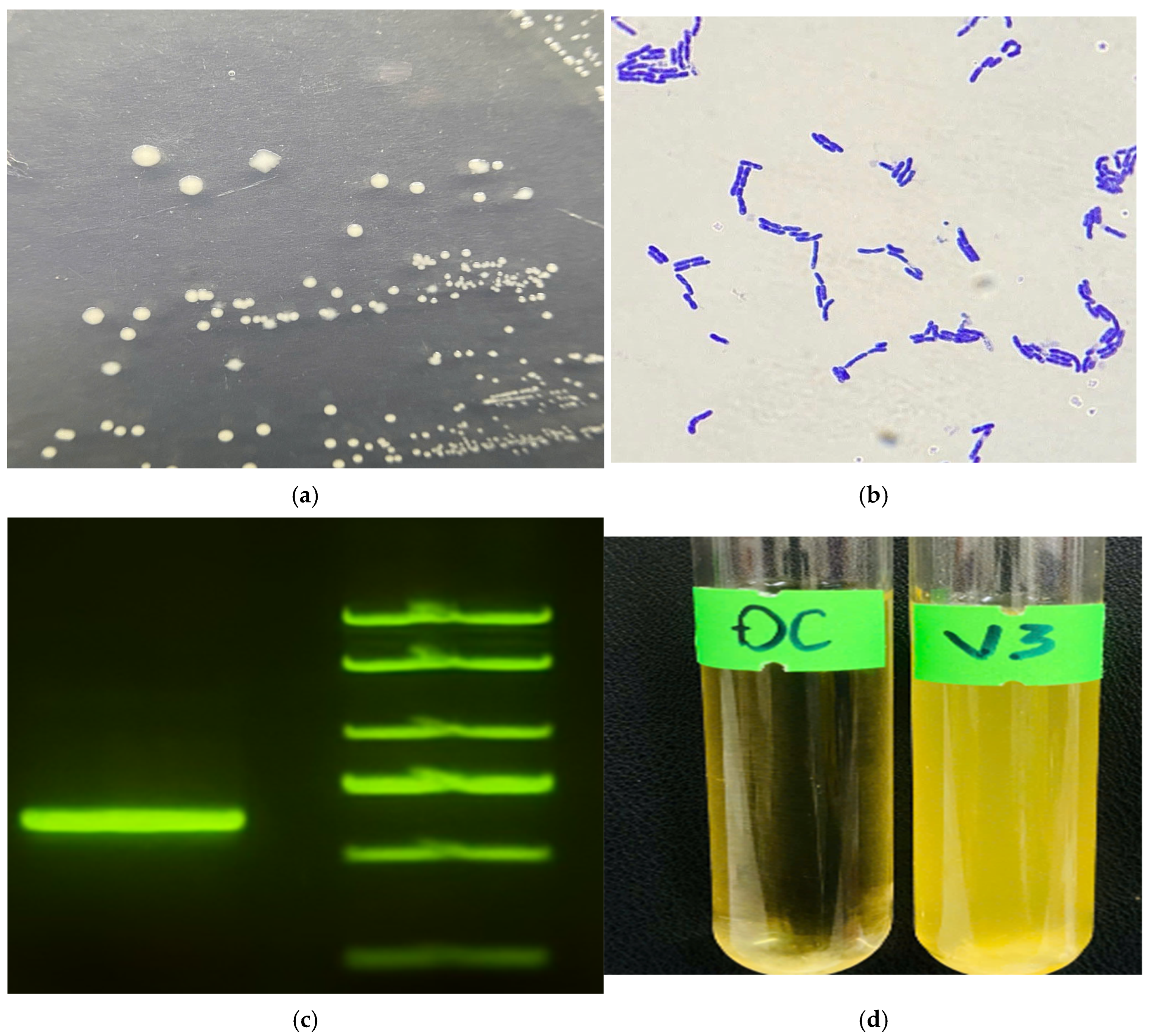
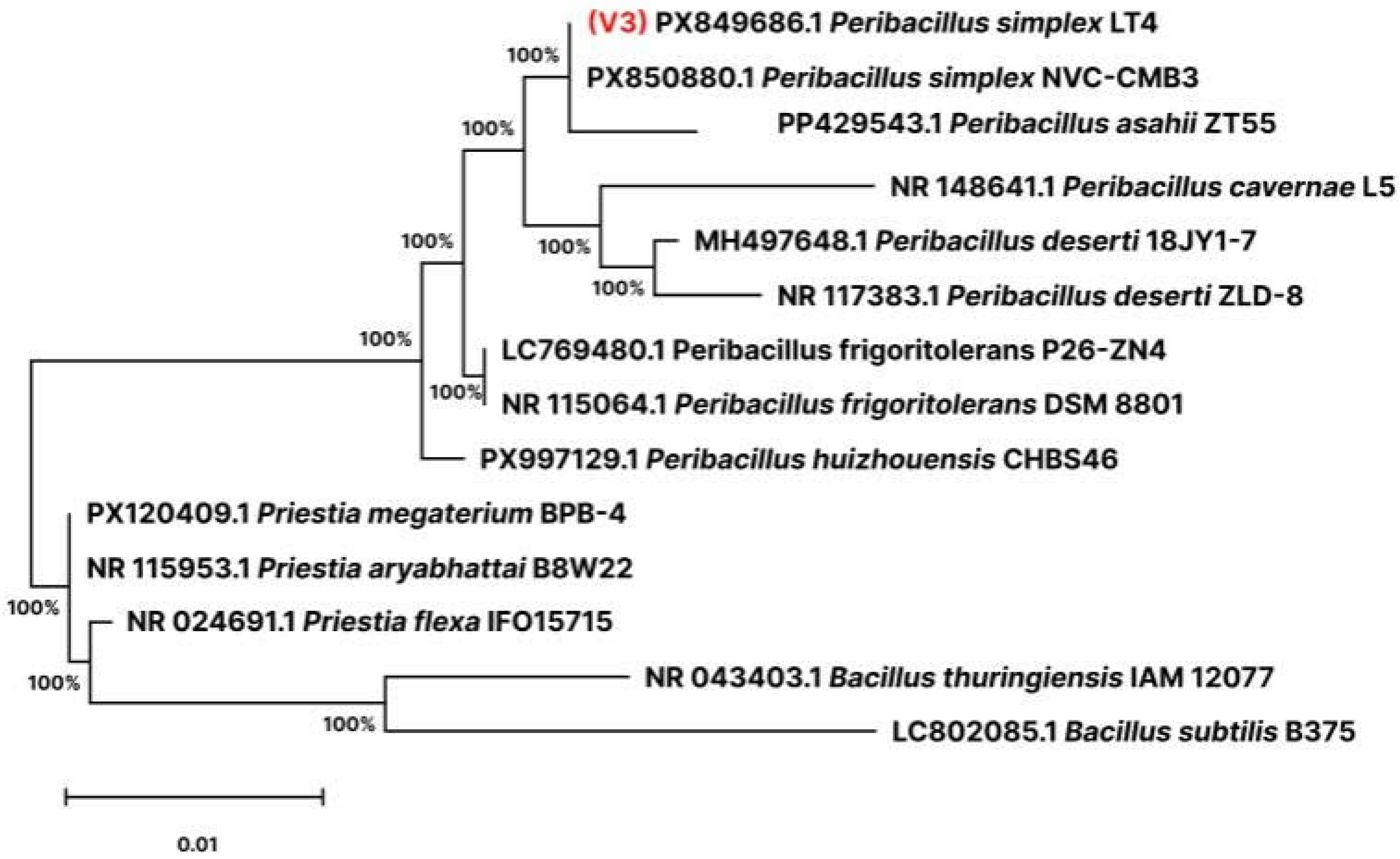
Pure colonies of strain LT4 were collected into Eppendorf tubes for total genomic DNA extraction using the GeneJET Genomic DNA Purification Kit of Thermo Scientific™ (Thermo Fisher Scientific, Waltham, MA, USA). The 16S rDNA gene of the isolated strains was amplified by PCR (Figure 1c), yielding an amplicon of approximately 1338 bp. The obtained nucleotide sequences were processed and analyzed using MEGA software and subsequently compared with closely related sequences available in the GenBank database using the version of the BLAST software 2.16.x (NCBI BLAST). Strain LT4 was registered in GenBank under the accession number PX849686 on 14 January 2026 (https://www.ncbi.nlm.nih.gov/nuccore/PX849686) and showed 100% sequence identity with reference sequences, allowing reliable species-level identification. [22]. Phylogenetic analysis further confirmed that the isolate clustered within the genus Peribacillus, corresponding to Peribacillus simplex LT4 (Figure 2). Genomic DNA of the bacterial isolate was extracted and the 16S rRNA gene was amplified using universal primers. The obtained sequence was compared with reference sequences available in the NCBI GenBank database using the BLAST algorithm to identify closely related taxa. Multiple sequence alignment was performed using ClustalW, and a phylogenetic tree was constructed using the neighbor-joining (NJ) method implemented in MEGA software (version 11). The Kimura two-parameter model was applied to estimate evolutionary distances. The robustness of the phylogenetic tree topology was evaluated by bootstrap analysis with 1000 replicates, and bootstrap values above 50% were indicated at the nodes. An appropriate outgroup sequence was included to root the phylogenetic tree and provide evolutionary context.

2.4. Characterization of Strain LT4

A colony of strain LT4 was purified and characterized using Gram staining, catalase and oxidase assays, together with macroscopic and microscopic observations. Bacterial growth behavior on YMA medium supplemented with bromothymol blue was also evaluated. In addition, the isolate was assessed for its tolerance to temperature and salinity stresses, which are considered key criteria for selecting NRNFB strains with potential applications in the rehabilitation of degraded soils.

2.5. Thermal, Salinity, and pH Tolerance of Strain LT4

Thermal tolerance of strain LT4 was assessed by streaking the isolate onto YMA plates and incubating at temperatures ranging from 14 to 48 °C. Each temperature treatment was performed in quadruplicate. Colony growth was observed and documented after 7 days of incubation [23]. Salinity tolerance was determined by culturing the strain on YMA supplemented with NaCl concentrations of 0–4% (w/v). Plates were incubated at 28 °C with four independent replicates per treatment, and bacterial growth was recorded after one week. For pH tolerance evaluation, YMA broth was adjusted to pH 4.5 (using 0.1 N HCl), 7.0, and 8.5 (using 0.1 N NaOH), and the pH values were confirmed with a calibrated pH meter. Cultures were incubated at 28 °C, and growth was assessed after 7 days of incubation [24].

2.6. Ammonia Production, Nitrogenase Activity, and Nitrogen Accumulation

Ammonia production was qualitatively assessed by incubating the bacterial strain in peptone water at 30 °C for 60–80 h, followed by detection of color development after the addition of Nessler’s reagent [25]. Nitrogenase activity was determined using the acetylene reduction assay as described by Van Chuong et al. [25]. Briefly, cells were pre-cultured in YMA broth for 24 h, subsequently transferred to nitrogen-free medium, adjusted to an optical density of OD600 = 0.8, and incubated at 30 °C under shaking conditions (160 rpm). Uninoculated nitrogen-free medium was included as a negative control. For total nitrogen determination, strain 153-1 was grown in nitrogen-free medium supplemented with 0.05% malate at 30 °C. After centrifugation at 3000 rpm for 1 min, the supernatant was collected and analyzed according to the protocol of Zhang et al. [26].

3. Results

3.1. Isolation and Characterization Identification

Samples were collected from the rhizosphere of baby maize plants in Cho Moi commune, An Giang Province, Vietnam, during the vegetative growth stage. Root material together with soil tightly adhering to the root surface was sampled from the rhizosphere, a zone characterized by high microbial activity and intense interactions between plant roots and microorganisms. After collecting, the samples were refrigerated and processed within 24 h to preserve the native microbial community. From these samples, pure bacterial isolates were obtained and designated as V1 to V10. Gram staining and morphological characterization were subsequently performed, and the results are summarized in Table 1. Based on preliminary physiological screening, particularly the ability of the isolates to grow on nitrogen-free medium, these strains were considered potential nitrogen-fixing bacteria. However, this classification should be interpreted with caution, as physiological assays alone cannot definitively confirm atmospheric nitrogen fixation. Therefore, additional molecular or functional analyses would be necessary to further validate their nitrogen-fixing capability.
Based on the morphological, physiological, and biochemical characteristics presented in Table 1 and Table 2, Colony V3 exhibited the most prominent traits associated with nitrogen-fixing potential among the ten NRNFB isolates. All strains were Gram-positive, rod-shaped, and showed growth on YMA and YMA-BTB media, confirming their affiliation with the NRNFB group. However, strain V3 distinctly showed strong positive reactions (++) on Burk agar, a selective medium indicative of enhanced nitrogen fixation capability, whereas most other strains exhibited weak or negative responses. In addition, V3 demonstrated superior biochemical activity, displaying strong oxidase, catalase, urea hydrolysis, and citrate utilization reactions (++), reflecting high metabolic versatility and enzymatic capacity. In contrast, the remaining isolates mainly showed only moderate (+) responses. The combination of strong nitrogen-fixation-related growth and robust biochemical performance suggests that strain V3 possesses the highest functional potential, justifying its selection for further detailed biochemical and molecular characterization.
Table 3 demonstrates distinct differences in environmental tolerance among the ten isolates. All strains (V1–V10) exhibited strong growth at 1–3% NaCl, indicating moderate halotolerance; however, only strain V3 maintained vigorous growth at 4% NaCl, whereas the remaining isolates showed reduced growth or complete inhibition at higher salinity levels. Temperature assays revealed optimal proliferation at 37–40 °C for all strains, confirming their mesophilic nature. Although most isolates survived at 45 °C and 15 °C with reduced growth, strains V5, V7, and V10 were unable to grow at 15 °C, suggesting narrower thermal adaptability. Regarding pH tolerance, all strains performed optimally at pH 6.0–7.0, while growth declined under alkaline conditions (pH 8.0) for most isolates. Notably, strain V3 sustained strong growth across the entire tested pH range (5.0–8.0). Collectively, these findings highlight the superior physiological plasticity of strain V3, indicating its suitability for application in environmentally variable agroecosystems.

3.2. Functional Characterization of Nitrogen-Fixing Activity in Strain LT14

Phylogenetic analysis based on 16S rRNA gene sequences (Figure 2) conclusively assigned strain P. simplex LT4 to the species P. simplex. The strain exhibited 100% sequence similarity with P. simplex NVC-CMB3, exceeding the widely accepted threshold for species-level discrimination. The inferred phylogenetic tree topology demonstrated strong nodal support, with high bootstrap values confirming the robustness and statistical reliability of evolutionary relationships. Strains LT4 and NVC-CMB3 formed a well-supported subcluster with extremely short branch lengths, indicating negligible genetic divergence and a very close evolutionary affiliation. In contrast, other closely related taxa within the genus Peribacillus were clearly separated into distinct clades, highlighting interspecific differentiation. Collectively, these molecular data provide compelling evidence for the precise taxonomic placement of strain LT4 and substantiate its classification within a stable and evolutionarily coherent P. simplex lineage, consistent with previously described morphological and biochemical characteristics.
Nitrogenase activity and nitrogen concentration increased markedly with the extension of incubation time (Table 4). At the early stage (8–16 h), nitrogenase activity remained relatively low, ranging from 12.1 to 23.4 nmol C2H4 h−1 mL−1, accompanied by a modest nitrogen concentration of 23.1–37.2 mg L−1. A sharp increase was observed after 30 h, when nitrogenase activity reached 145 nmol C2H4 h−1 mL−1 and continued to rise to 207 nmol C2H4 h−1 mL−1 at 72 h. A similar pattern was recorded for nitrogen concentration, which increased to 234 mg L−1 at 72 h. Statistical analysis indicated significant differences among incubation times (F-test **), demonstrating that prolonged incubation significantly enhanced the nitrogen-fixing capacity of the bacterial strain.

4. Discussion

4.1. Isolation and Phenotypic Characterization of the Selected Isolates

The phenotypic, biochemical, and molecular analyses presented in Table 1, Table 2 and Table 3 collectively provide strong evidence for the identification and functional characterization of RNFB. Growth in Hofer medium, which maintains alkaline conditions, served as an initial selective criterion. The ability of the isolates to proliferate under elevated pH suggests physiological adaptability commonly associated with diazotrophic bacteria [27]. Colony morphology on yeast mannitol agar (YMA) revealed uniform pink pigmentation among the ten isolates, a characteristic frequently reported for Peribacillus simplex and related taxa, as previously described by Somasegaran and Hoben (1985) [15]. The use of GPA-BCP medium further confirmed culture purity and metabolic vigor. All isolates demonstrated strong growth responses, whereas non-target genera have been reported to grow weakly under similar conditions [28]. The decisive evidence for diazotrophic capacity was obtained from growth on nitrogen-free Burk medium. The sustained development of all isolates under nitrogen-limited conditions indicates active nitrogen fixation systems and justifies their prioritization for subsequent functional and field evaluations [29,30]. Positive oxidase and catalase reactions across strains are consistent with previously documented physiological profiles of Peribacillus simplex LT4 [31], reflecting active aerobic respiration and the capacity to mitigate oxidative stress. Variations observed in other biochemical traits likely represent metabolic specialization shaped by environmental adaptation [32].

4.2. Functional Analysis of Nitrogen Fixation in Strain LT14

The metabolic characteristics shown in Table 2 provide important insights into the physiological capabilities of the bacterial isolate. Nitrate reduction indicates the presence of nitrate reductase enzymes involved in nitrogen transformation processes. This trait allows bacteria to utilize nitrate as an alternative nitrogen source and maintain metabolic activity under variable soil nitrogen conditions, which may enhance their ecological adaptability and persistence in the rhizosphere [33]. In addition, citrate utilization reflects the metabolic versatility of the isolate, enabling it to use organic acids as carbon sources. Organic acids such as citrate are commonly found in root exudates, and the ability to metabolize these compounds may improve bacterial colonization and survival in the rhizosphere [34]. Together, these metabolic traits suggest that the isolate possesses adaptive physiological mechanisms that may indirectly support nitrogen-fixing efficiency and plant–microbe interactions in soil environments [35].
Among the tested isolates, strain V3 exhibited superior physiological resilience. It tolerated NaCl concentrations up to 4%, temperatures ranging from 15 to 45 °C, and pH conditions between 5.0 and 8.0, maintaining consistent growth intensity. Such halotolerance aligns with previous reports indicating that certain soil bacteria withstand 3–5% NaCl through osmotic adjustment mechanisms [34]. Thermal tolerance up to 45 °C suggests mesophilic robustness suitable for fluctuating agroecosystems. While most strains performed optimally at near-neutral pH, the ability of V3 to maintain growth at pH 8 indicates enhanced stress-response regulation [35,36]. These adaptive traits increase their suitability for application in saline or environmentally variable soils.
The subsequent decline in activity may be attributed to the oxygen sensitivity of the nitrogenase complex and feedback regulation from accumulated nitrogenous compounds in the culture medium [36,37]. The positive correlation between nitrogenase activity and total nitrogen concentration confirms the efficient biological nitrogen fixation capacity of strain LT4 [37,38]. Similar temporal patterns have also been reported in Peribacillus and other members of the Bacillaceae used as biofertilizers [39,40]. The progressive increase in nitrogenase activity and nitrogen accumulation indicates strong diazotrophic potential of the strain during culture development (Table 4). Nitrogenase activity is closely associated with the metabolic status of nitrogen-fixing bacteria and typically increases during the exponential growth phase. The peak observed at 72 h demonstrates stable enzymatic activity and efficient nitrogen fixation under the tested conditions. The high activity (>200 nmol C2H4 h−1 mL−1) highlights the strain’s strong nitrogen-fixing capacity and its potential as a bioinoculant to enhance soil nitrogen availability and reduce dependence on chemical fertilizers in sustainable agriculture [41,42].

5. Conclusions

This study successfully isolated and characterized ten NRNFB colonies from baby maize roots, among which strain V3, molecularly identified as P. simplex LT4, exhibited notable physiological and functional characteristics. The strain demonstrated stable growth on nitrogen-free Burk medium, positive oxidase and catalase activities, and tolerance to a wide range of environmental conditions, including salinity (up to 4% NaCl), temperature (15–45 °C), and pH (5.0–8.0). Phylogenetic analysis based on 16S rRNA gene sequences showed 100% similarity with P. simplex strain LT4, supporting its taxonomic identification. In addition, nitrogenase activity was highest during the exponential growth phase and was positively associated with nitrogen accumulation, indicating its capacity for biological nitrogen fixation. Although these results suggest that strain LT4 possesses promising physiological traits and nitrogen-fixing potential, the present findings are based primarily on laboratory-scale observations. Therefore, further studies, including greenhouse and field evaluations, are required to comprehensively assess its effectiveness and practical applicability as a biofertilizer for sustainable baby maize production.

Author Contributions

Conceptualization, C.V.N.; methodology, C.V.N. and T.L.K.T.; software, T.L.K.T.; validation, T.L.K.T.; formal analysis, C.V.N. and T.L.K.T.; investigation, T.L.K.T.; resources, C.V.N. and T.L.K.T.; data curation, C.V.N. and T.L.K.T.; writing–original draft preparation, C.V.N.; writing–review and editing, C.V.N.; visualization, C.V.N. and T.L.K.T.; funding acquisition, C.V.N. All authors have read and agreed to the published version of the manuscript.

Funding

This research was funded by Vietnam National University Ho Chi Minh City (VNU-HCM), grant number C2026-16-09.

Data Availability Statement

The data used to support the findings of this study are available from the corresponding author upon reasonable request.

Acknowledgments

The authors would like to gratefully acknowledge the financial support from Vietnam National University Ho Chi Minh City (VNU-HCM) under grant number C2026-16-09.

Conflicts of Interest

There are no conflicts of interest among the authors.

References

  1. Țopa, D.-C.; Căpșună, S.; Calistru, A.-E.; Ailincăi, C. Sustainable Practices for Enhancing Soil Health and Crop Quality in Modern Agriculture: A Review. Agriculture 2025, 15, 998. [Google Scholar] [CrossRef]
  2. Li, Z.; Henawy, A.R.; Halema, A.A.; Fan, Q.; Duanmu, D.; Huang, R. A Wild Rice Rhizobacterium Burkholderiacepacia BRDJ Enhances Nitrogen Use Efficiency in Rice. Int. J. Mol. Sci. 2023, 23, 10769. [Google Scholar] [CrossRef] [PubMed]
  3. Mahdhi, M.; Yami, B.; Al Abboud, M.; Abada, E.; Khemira, H. Genetic Diversity and Plant Growth-Promoting Activities of Root-Nodulating Bacteria in Guar Plants Across Jazan Province. Soil Syst. 2025, 9, 39. [Google Scholar] [CrossRef]
  4. Fahde, S.; Boughribil, S.; Sijilmassi, B.; Amri, A. Rhizobia: A Promising Source of Plant Growth-Promoting Molecules and Their Non-Legume Interactions: Examining Applications and Mechanisms. Agriculture 2023, 13, 1279. [Google Scholar] [CrossRef]
  5. Wang, J.; Liu, Z.; Yang, Z.; Yang, B.; Zhang, W. Distribution Characteristics Of Endophytic Bacteria and Endophytic Nitrogen-Fixing Bacteria in Vicia Faba Root Nodules In Rocky Desertification Areas of Southwest China. Sci. Rep. 2025, 15, 24887. [Google Scholar] [CrossRef]
  6. Guo, K.; Yang, N.; Yu, N.; Luo, L.; Wang, E. Biological Nitrogen Fixation in Cereal Crops: Progress, Strategies, and Perspectives. Plant Commun. 2023, 4, 100499. [Google Scholar] [CrossRef]
  7. Hassan, M.A.; Raza, A.; Bashir, S.; Song, J.; Sajad, S.; Khan, A.; Malik, L.; Awan, Z.A. Regenerative Agriculture and Sustainable Plant Protection: Enhancing Resilience Through Natural Strategies. Plants 2025, 15, 113. [Google Scholar] [CrossRef]
  8. Astiko, W.; Fauzi, M.T.; Susilowati, L.E.; Zulkifli, L.; Fahrurozi. Improving Nitrogen Availability and Crop Productivity Using Bioameliorants in Maize–Soybean Intercropping on Suboptimal Land. Nitrogen 2025, 6, 89. [Google Scholar] [CrossRef]
  9. Wu, H.; Chen, S.; Huang, Z.; Huang, T.; Tang, X.; He, L.; Li, Z.; Xiong, J.; Zhong, R.; Jiang, J. Effects of Intercropping and Nitrogen Application on Soil Fertility and Microbial Communities in Peanut Rhizosphere Soil. Agronomy 2024, 14, 635. [Google Scholar] [CrossRef]
  10. Chuong, N.V.; Vu, T.M.; Tuan, L.M.; Son, N.T.T.; Tri, T.L.K.; Thuan, N.V.; Dang, P.T.H.; Liem, T.T.; Trang, N.N.P. Enhanced Soil Fertility and Baby Maize Yield Through Bacillus Megaterium CM2 under Reduced Nitrogen Input. Commun. Sci. Technol. 2025, 10, 411–421. [Google Scholar] [CrossRef]
  11. Jiao, X.; Wei, Y.; Chen, Y.; Zhang, C.; Du, H.; Yu, W.; Kang, H. Coupled N and P Cycling as Driven by Microbial Taxa and Interactions. Front. Microbiol. 2026, 16, 1743883. [Google Scholar] [CrossRef]
  12. Chuong, N.V.; Nguyen Ngoc Phuong, T.; Nguyen Van, T. Nitrogen Fertilizer Use Reduction by Two Endophytic Diazotrophic Bacteria for Soil Nutrients and Corn Yield. Commun. Sci. Technol. 2024, 9, 348–355. [Google Scholar] [CrossRef]
  13. Pérez-Montaño, F.; Aparicio, N.; Arenas, F.; Arjona, J.M.; Camacho, M.; Fernández-García, N.; García-Fraile, P.; Goicoechea, N.; Macías-Naranjo, S.; Matías, J.; et al. Emerging Crops and Plant Growth-Promoting Bacteria (PGPB): A Synergistic Approach to Climate-Resilient Agriculture. Microbiome 2025, 13, 228. [Google Scholar] [CrossRef]
  14. Wekesa, C.; Furch, A.C.U.; Ralf, O. Isolation and Characterization of High-Efficiency Rhizobia from Western Kenya Nodulating with Common Bean. Front. Microbiol. 2021, 10, 697567. [Google Scholar] [CrossRef]
  15. Somasegaran, P.; Hoben, H.J. Methods in Legume-Rhizobium Technology; NifTAL Project and MIRCEN, Department of Agronomy and Soil Science, Hawaii Institute of Tropical Agriculture and Human Resources, University of Hawaii: Honolulu, HI, USA, 1985. [Google Scholar]
  16. Davis, K.E.; Joseph, S.J.; Janssen, P.H. Effects of Growth Medium, Inoculum Size, and Incubation Time on Culturability and Isolation of Soil Bacteria. Appl. Environ. Microbiol. 2005, 71, 826–834. [Google Scholar] [CrossRef] [PubMed]
  17. Van Chuong, N.; Tri, T.L.K.; Vu, T.M.; Tuan, L.M.; Liem, T.T.; Trang, N.N.P. Isolation and Identification of Bacillus aryabhattai M2C: Its Effects with Vermicompost on Yield and Nutrients of Peanut (Arachis hypogaea L.). Int. J. Microbiol. 2025, 10, 9923279. [Google Scholar] [CrossRef] [PubMed]
  18. Hernández-López, A.; Sánchez Félix, D.A.; Zuñiga Sierra, Z.; García Bravo, I.; Dinkova, T.D.; Avila-Alejandre, A.X. Quantification of Reducing Sugars Based on the Qualitative Technique of Benedict. ACS Omega 2020, 5, 32403–32410. [Google Scholar] [CrossRef]
  19. Hofer, A. Methods for Distinguishing Between Legume Bacteria and Their Most Common Contaminant. Agron. J. 1935, 27, 228–230. [Google Scholar] [CrossRef]
  20. Stella, M.; Suhaimi, M. Selection of Suitable Growth Medium for Free-Living Diazotrophs Isolated from Compost (Pemilihan medium pertumbuhan yang sesuai untuk bakteria pengikat nitrogen hidup bebas yang dipencil daripada kompos). J. Trop. Agric. Food Sci. 2010, 38, 211–219. [Google Scholar]
  21. Pham, V.C.; Nguyen, P.H. Effect of Culture Conditions on Nitrogen-Fixing Activity of Bacteria Isolated from Cassava Cultivated Soils of Vietnam. Acad. J. Biol. 2021, 43, 27–35. [Google Scholar] [CrossRef]
  22. Del-Canto, A.; Sanz-Saez, A.; Sillero-Martínez, A.; Mintegi, E.; Lacuesta, M. Selected Indigenous Drought Tolerant Rhizobium Strains as Promising Biostimulants for Common Bean in Northern Spain. Front. Plant Sci. 2023, 14, 1046397. [Google Scholar] [CrossRef] [PubMed]
  23. Wang, Y.; Hua, S.; Wang, L.; Bao, C.; Chen, X.; Wei, X.; Yu, Y. Isolation and Characterization of a Thermotolerant Acetic Acid Bacteria Strain for Improved Zhenjiang Aromatic Vinegar Production. Foods 2025, 14, 719. [Google Scholar] [CrossRef]
  24. Ilyas, N.; Mazhar, R.; Yasmin, H.; Khan, W.; Iqbal, S.; Enshasy, H.E.; Dailin, D.J. Rhizobacteria Isolated from Saline Soil Induce Systemic Tolerance in Wheat (Triticum aestivum L.) against Salinity Stress. Agronomy 2020, 10, 989. [Google Scholar] [CrossRef]
  25. Zhao, C.C.; Eun, J.B. Isolation And Identification of Hyper-Ammonia-Producing Bacteria from Commercial Fermented Skates (Raja kenojei). J. Food Sci. Technol. 2018, 55, 5082–5090. [Google Scholar] [CrossRef]
  26. Liu, J.; Wang, D.; Tong, R.; Ye, S.; Zhao, Y.; Wu, J.; Gan, Y. Engineered Rhizobia with Trehalose-Producing Genes Enhance Peanut Growth Under Salinity Stress. Agronomy 2025, 15, 974. [Google Scholar] [CrossRef]
  27. Nguyen, V.C.; Tran, L.K.T.; Tran, T.L.; Nguyen, V.T.; Trinh, V.T.E.; Nguyen, N.P.T. Four Newly Identified Endophytic Bacillus megaterium Strains with Biofertilizer Potential for Enhancing Maize Growth and Productivity. Trends Sci. 2026, 23, 11347. [Google Scholar]
  28. Lee, S.; Kim, Y.K.; Nie, H. Functional Characterization of A Novel Plant Growth-Promoting Rhizobacterium Enhancing Root Growth and Salt Stress Tolerance. Sci. Rep. 2025, 15, 30405. [Google Scholar] [CrossRef]
  29. Nguyen, V.C.; Nguyen, N.P.T.; Tran, L.K.T.; Tran, T.L. Isolation and Molecular Characterization of Bacillus Megaterium ATCC 14581 and Its Effect on Nitrogen Fertilizer Use Reduction, Growth and Yield of Baby Corn. Plant Sci. Today 2026, 13, 1–10. [Google Scholar] [CrossRef]
  30. Nguyen, V.C.; Nguyen, N.P.T.; Tran, T.L.; Phan, T.H.D. Effect of Bacillus sonklengsis Associated with Cattle Manure Fertilization on the Farmland Health and Peanut Yield. Int. J. Agric. Biosci. 2025, 14, 629–636. [Google Scholar]
  31. Saeed, S.W.Z.; Naseer, I.; Zahir, Z.A.; Hilger, T.; Shahid, S.; Iqbal, Z.; Ahmad, M. Bacillus Strains with Catalase Enzyme Improve the Physiology and Growth of Rice (Oryza sativa L.). Stresses 2023, 3, 736–748. [Google Scholar] [CrossRef]
  32. Barreto, P.; Koltun, A.; Nonato, J.; Yassitepe, J.; Maia, I.G.; Arruda, P. Metabolism and Signaling of Plant Mitochondria in Adaptation to Environmental Stresses. Int. J. Mol. Sci. 2022, 23, 11176. [Google Scholar] [CrossRef]
  33. Xiong, Q.; Hu, J.; Wei, H.; Zhang, H.; Zhu, J. Relationship between Plant Roots, Rhizosphere Microorganisms, and Nitrogen and Its Special Focus on Rice. Agriculture 2021, 11, 234. [Google Scholar] [CrossRef]
  34. Martins, S.; Brito, C.; Baltazar, M.; Dinis, L.-T.; Pereira, S. Exploring the Role of Root Exudates in Shaping Plant–Soil–Microbe Interactions to Support Agroecosystem Resilience. Horticulturae 2026, 12, 90. [Google Scholar] [CrossRef]
  35. Chauhan, P.; Sharma, N.; Tapwal, A.; Kumar, A.; Verma, G.S.; Meena, M.; Seth, C.S.; Swapnil, P. Soil Microbiome: Diversity, Benefits and Interactions with Plants. Sustainability 2023, 15, 14643. [Google Scholar] [CrossRef]
  36. Panwar, A.; Choudhary, S.; Sharma, M.; Shrama, Y.K.; Meena, R.S.; Malhotra, S.K.; Mehta, R.S.; Aishwath, O.P. Morphological and Biochemical Characterization of Rhizobium Isolates Obtained From Fenugreek (Trigonella foenum). Seed Res. 2012, 40, 196–200. [Google Scholar]
  37. Meza, C.; Valenzuela, F.; Yáñez, M.; Cabeza, R.A.; Ramos, P.; Plaza, A.; Carrasco, B.; Flores-Castañón, N.; Mesquita-Neto, J.; Arce-Johnson, P.; et al. Auxin Producing Plant Growth Promoting Bacteria Enhance Temperature Stress Tolerance in Chilean Common Bean Landraces. Sci. Rep. 2025, 15, 30359. [Google Scholar] [CrossRef]
  38. Bavykin, S.G.; Lysov, Y.P.; Zakhariev, V.; Kelly, J.J.; Jackman, J.; Stahl, D.A.; Cherni, A. Use Of 16S Rrna, 23S Rrna, And Gyrb Gene Sequence Analysis to Determine Phylogenetic Relationships of Bacillus cereus Group Microorganisms. J. Clin. Microbiol. 2004, 42, 3711–3730. [Google Scholar] [CrossRef]
  39. Avila Clasen, L.; Permin, A.; Horwath, A.B.; Metcalfe, D.B.; Rousk, K. Do Nitrogen and Phosphorus Additions Affect Nitrogen Fixation Associated with Tropical Mosses? Plants 2023, 12, 1443. [Google Scholar] [CrossRef]
  40. Garcia, A.K.; Harris, D.F.; Rivier, A.J.; Carruthers, B.M.; Pinochet-Barros, A.; Seefeldt, L.C.; Kaçar, B. Nitrogenase Resurrection and the Evolution of a Singular Enzymatic Mechanism. Elife 2023, 17, e85003. [Google Scholar] [CrossRef]
  41. Ao, Z.; Xia, J.; Seino, H.; Inaba, K.; Takahashi, Y.; Hayakawa, C.; Hirai, H.; Maeda, I. Adaptations of Potential Nitrogenase Activity and Microbiota with Long-Term Application of Manure Compost to Paddy Soil. Environments 2023, 10, 103. [Google Scholar] [CrossRef]
  42. Wu, L.; Misselbrook, T.H.; Feng, L.; Wu, L. Assessment of Nitrogen Uptake and Biological Nitrogen Fixation Responses of Soybean to Nitrogen Fertiliser with SPACSYS. Sustainability 2020, 12, 5921. [Google Scholar] [CrossRef]
Figure 1. Morphological characteristics and functional traits of strain LT4: (a) colony morphology of strain LT4 grown on a YMA medium; (b) cellular morphology observed under a light microscope at 100× magnification; (c) agarose gel electrophoresis image showing the PCR-amplified 16S rDNA fragment visualized using a Gel Documentation system; (d) ammonia production test of strain LT4 in peptone-supplemented liquid medium.
Nitrogen 07 00028 g001
Figure 2. Phylogenetic tree based on 16S rRNA gene sequences showing that Peribacillus simplex LT4 (V3) clustered with P. simplex NVC-CMB3 with 100% sequence similarity. Bootstrap values (%) are shown at the nodes. Here, V3 represents the sample code of the isolate.
Nitrogen 07 00028 g002
Table 1. Identification of 10 RNFB colonies from baby maize roots.
StrainsIdentity
(Rod Shape) Gram
YMA
(Clear Pink)
YMA-BTB
(Yellow Color)
GPAHofer AgarBurk AgarGenus
V1(+)(+)(+)(+)(−)(+)RNFB
V2(+)(+)(+)(+)(−)(+)RNFB
V3(+)(+)(+)(+)(−)(++)RNFB
V4(+)(+)(+)(+)(−)(−)RNFB
V5(+)(+)(+)(+)(−)(+)RNFB
V6(+)(+)(+)(+)(−)(+)RNFB
V7(+)(+)(+)(+)(−)(−)RNFB
V8(+)(+)(+)(+)(−)(−)RNFB
V9(+)(+)(+)(+)(−)(−)RNFB
V10(+)(+)(+)(+)(−)(−)RNFB
Note: Gram-negative (−); (−): no reaction; (+): positive reaction; (++): strong reaction.
Table 2. Biochemical tests of 10 NRNFB colonies.
StrainsOxidaseCatalaseUrea HydrolysisNitrate ReductionCitrate Utilization
V1(+)(+)(+)(−)(+)
V2(+)(+)(+)(+)(+)
V3(++)(++)(++)(−)(++)
V4(+)(+)(+)(+)(+)
V5(+)(+)(+)(+)(+)
V6(+)(+)(+)(+)(+)
V7(+)(+)(+)(+)(+)
V8(+)(+)(+)(+)(+)
V9(+)(+)(+)(+)(+)
V10(+)(+)(+)(+)(−)
Note: (−): no reaction; (+); reaction and (++): strong reaction.
Table 3. Tolerance of ten microbial strains (V1–V10) to vary NaCl concentrations (%), temperatures (°C), and pH levels.
Strains Nacl (%)Temperature (°C)pH
12345153740455.06.07.08.0
V1+++++++++++++++++++++
V2+++++++++++++++++++++
V3+++++++++++++++++++++++++
V4++++++++++++++++++++
V5+++++++++++++++++
V6++++++++++++++++++++
V7++++++++++++++++
V8++++++++++++++++++
V9++++++++++++++++++++
V10+++++++++++++++++
Note: (−): no reaction; (+); reaction and (++): strong reaction.
Table 4. Temporal changes in nitrogenase activity and nitrogen concentration during bacterial incubation.
Inoculation Time
(h)
Nitrogenase Activity
(nmol C2H4 h−1 mL−1)
Nitrogen Concentration
(mg L−1)
812.1 ± 0.081 e23.1 ± 0.353 e
1623.4 ± 0.326 d37.2 ± 0.439 d
30145 ± 4.08 c167.0 ± 1.63 c
60178 ± 1.63 b205.0 ± 4.08 b
72207 ± 5.72 a234.0 ± 3.27 a
F-test****
Note: Values represent the mean ± standard deviation (SD) of three biological replicates. Different lowercase letters within each column indicate significant differences among incubation times according to the F-test (p ≤ 0.01). ** indicates highly significant differences at p ≤ 0.01. Nitrogenase activity was determined using the acetylene reduction assay and expressed as nmol C2H4 h−1 mL−1.
Disclaimer/Publisher’s Note: The statements, opinions and data contained in all publications are solely those of the individual author(s) and contributor(s) and not of MDPI and/or the editor(s). MDPI and/or the editor(s) disclaim responsibility for any injury to people or property resulting from any ideas, methods, instructions or products referred to in the content.