

Article

Nitrogen Rate Optimization Improves Nitrogen Partitioning, Chlorophyll Status, and Vegetative Growth in Vanilla × tahitensis

1
Department of Horticultural Sciences, Tropical Research and Education Center, University of Florida, Homestead, FL 33031, USA
2
Department of Soil, Water, and Ecosystem Sciences, Tropical Research and Education Center, University of Florida, Homestead, FL 33031, USA
*
Author to whom correspondence should be addressed.
Nitrogen 2026, 7(1), 29; https://doi.org/10.3390/nitrogen7010029
Submission received: 30 January 2026 / Revised: 27 February 2026 / Accepted: 10 March 2026 / Published: 17 March 2026

Abstract

Nitrogen (N) management is a critical factor influencing growth and physiological performance of vanilla. However, quantitative information on N requirements for Vanilla × tahitensis remains limited. This study evaluated six N application rates (0, 2, 4, 8, 16, and 32 g N plant−1 yr−1) on tissue N partitioning, leaf chlorophyll index (LCI), vegetative growth, and biomass under controlled container conditions. Plants were arranged in a randomized complete block design (RCBD), and final analyses were conducted on destructively sampled plants (three plants per treatment; total n = 18). N concentration increased in all tissues with increasing N supply, but responses differed among tissues. Stem N concentration exhibited the greatest proportional increase at high N rates, whereas leaf N increased more gradually. Growth traits and LCI followed curvilinear patterns, with intermediate N rates generally associated with improved vegetative performance. Quadratic models estimated optimal N rates between 13 and 21 g N plant−1 yr−1, with predicted leaf N concentrations of 1.5–2.2%. However, confidence intervals indicated substantial uncertainty for variables with low model fit. LCI was strongly correlated with leaf N concentration, supporting its use as a nondestructive indicator of plant N status. Because the study was conducted under controlled conditions, field validation is required before broader recommendations are made.

1. Introduction

Vanilla (Vanilla spp.) has high economic value primarily for its aroma, which is widely used in food, cosmetics, and pharmaceutical industries. The genus Vanilla (Orchidaceae) comprises over 140 known species [1], although only a few are cultivated commercially. Among these, Vanilla planifolia and Vanilla × tahitensis are recognized as the main sources of natural vanilla flavor and represent two of the most costly flavoring products on the market [2]. Compared with V. planifolia, V. × tahitensis has thinner stems, narrower leaves, and shorter fruit, but is distinguished by a more complex flavor profile characterized by strong anise and caramel notes, which contribute to its high market value [3,4]. Despite its economic importance, vanilla cultivation remains challenging due to limited scientific information on optimal nutrient management and to its susceptibility to biotic and abiotic stresses [5].
Vanilla is a perennial climbing vine characterized by slow but continuous vegetative growth, with repeated production of leaves and stems over extended production cycles [6]. This growth habit suggests a sustained demand for N to support canopy expansion, chlorophyll formation, and long-term biomass accumulation. Nitrogen, whether absorbed from the soil through fertilizer application or organic matter decomposition, or taken up by leaves via foliar fertilizer application, is assimilated by plants as amino acids, primarily within green tissues. Increased N availability enhances protein synthesis, stimulates leaf development, and consequently expands the photosynthetic surface area [7].
Nutrient management is a key factor influencing vanilla growth and productivity. In most production regions, vanilla cultivation relies on the slow decomposition of organic matter within the growing substrate as the primary nutrient source [8]. Previous studies have demonstrated that chemical fertilization enhances vegetative growth in terms of stem elongation, leaf production, and biomass in V. planifolia [5]. However, information regarding N requirements and growth responses of V. × tahitensis remains limited. Given the economic importance of V. × tahitensis and the limited experimental data on its N requirements, there is a need to quantify plant growth and physiological responses to N fertilization. Therefore, the objective of this study was to evaluate the effects of increasing N rates on tissue N concentrations, growth, and the leaf chlorophyll index of young V. × tahitensis plants under controlled conditions. The broader goal was to contribute to the development of science-based N fertilization guidelines to support vanilla cultivation.

2. Materials and Methods

2.1. Plant Material and Experimental Design

This study was conducted from September 2023 to November 2024, at the University of Florida, Tropical Research and Education Center (UF-TREC), in Homestead, FL, USA (latitude: 25.5126° N; longitude: −80.5031° W; elevation: 2.4 m).
Uniform 1.5-year-old V. × tahitensis plants were established in 3.78 L plastic containers filled with 900–1200 g of dry PRO-MIX® potting medium (Premier Tech, Rivière-du-Loup, QC, Canada), which was pre-wetted with 3.8–4.2 L of water (approximately 50–55% v/v) applied incrementally to avoid leaching at planting. Irrigation volume (200 mL per plant per day) was maintained below the water-holding capacity of the substrate, and no measurable leachate was observed under routine irrigation conditions. Therefore, nitrogen losses through leaching were considered negligible during the experimental period. A U- shaped bamboo trellis was inserted into each container to allow vines to climb vertically.
Plants were arranged in a randomized complete block design (RCBD) consisting of fourteen spatial blocks. Blocks were positioned sequentially along the right side of the growth container, extending from the entrance toward the back, to account for potential environmental gradients (e.g., light and airflow) within the container. Within each of 14 blocks, one plant from each N application rate: 0, 2, 4, 8, 16, or 32 g N plant−1 yr−1 was randomly assigned, resulting in six plants per block.
Nitrogen was supplied as urea ammonium nitrate solution (UAN, 28% N) diluted in water and applied monthly. Phosphorus (P) and potassium (K) were applied to all plants at rates of 3 and 9 g, respectively, using triple superphosphate (0–46–0) and sulfate of potash (0–0–50).
The experiment was conducted inside a retrofitted shipping container to maintain uniform environmental conditions. Air temperature was kept at 24–28 °C, with relative humidity at approximately 70%. The growth container was equipped with SunBlaster 6400K Prism LED strip lights (SunBlaster Lighting, Vancouver, BC, Canada). The photo period was set at 16 h of light and 8 h of darkness.
Three plants per N rate were randomly selected for destructive harvest and complete tissue nutrient analysis at the end of the experiment.

2.2. Growth Parameters

Several growth parameters of vanilla were recorded monthly to evaluate the effects of the different N rates. Vine length (cm) was measured from the base of the plant to the apical meristem. Leaf number was determined by manual counting. Basal stem diameter (mm) was measured at the base of the plant using a digital caliper.

2.3. Leaf Chlorophyll Index (LCI)

The LCI was recorded on the adaxial side of five leaves per plant (between the 5th and 15th nodes from the stem apex) using a SPAD-502 m (Minolta Instruments, Osaka, Japan), and the five measurements were averaged for each replication.

2.4. Plant Tissue Nutrient Analyses

Leaf, root, and stem samples were collected at the end of the study from three randomly selected plants per N treatment. These plants were selected from the established experimental units and treated as an independent replicate for nutrient analysis; samples were not pooled.
Fresh weight of each tissue was recorded for each plant sample. Tissues were washed and oven-dried to a constant weight, and the dry weight of each tissue was measured. Tissue was ground and stored in plastic bags prior to N determination using the Kjeldahl method [9]. Nitrogen analysis was conducted at the UF/IFAS Analytical Services Laboratories (ANSERV Labs, Gainesville, FL, USA).

2.5. Statistical Analyses

Statistical analyses were conducted on the subset of plants selected for destructive harvest (total n = 18). For the analyzed dataset, nitrogen rate was treated as a fixed effect, and data were analyzed using one-way analysis of variance (ANOVA) in SAS (v.9.4).
When the effect of N rate was significant (p ≤ 0.05), quadratic regression models were fitted to describe plant responses to increasing N application rates. These models were selected as a priori to reflect the biologically expected response pattern of increasing growth followed by plateau or decline at high N supply. Linear models were also evaluated but did not adequately describe the observed response patterns.
The vertex of each quadratic regression model was used to estimate the optimal N rate for individual plant parameters. Ninety-five percent confidence intervals for estimated optimal N rates were calculated using the delta method based on the variance covariance matrix of regression coefficients. For response variables with low coefficients of determination (R2), estimated optimal N rates were interpreted with caution.
Pearson correlation analysis was conducted to assess relationships among growth traits, LCI, tissue N concentrations. These analyses were based exclusively on the destructively sampled plants, for which all variables were measured. Correlation analyses were performed using R statistical software (v.4.4.1).

3. Results

3.1. Tissue N Concentration in Response to N Application Rate

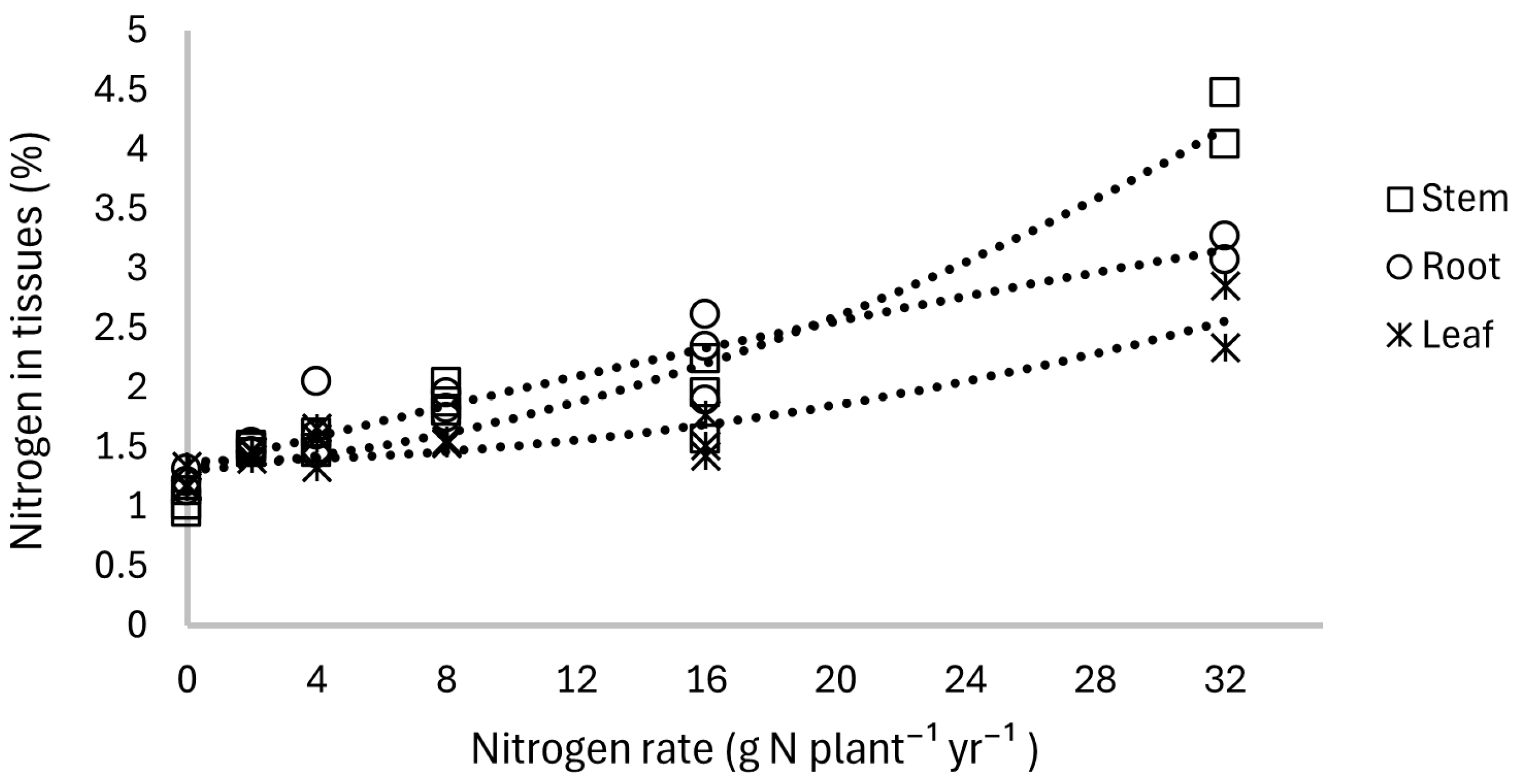
Nitrogen concentration in leaf, root, and stem tissues increased with increasing N application rate (Figure 1). All tissues exhibited a positive response to N supply; however, the magnitude of N accumulation differed among tissues. Stem N concentration showed the strongest response, particularly at higher N application rates, increasing sharply between 16 and 32 g N plant−1 yr−1. Root N concentration increased steadily across N application rates, but to a lesser extent than stem tissue. Leaf N concentration increased more gradually and remained lower than root and stem N concentrations throughout the range of N treatments.
These results indicate differential N partitioning among tissues, with stem tissue acting as the primary N sink under increasing N availability (Figure 1).

3.2. LCI Response to N Rate

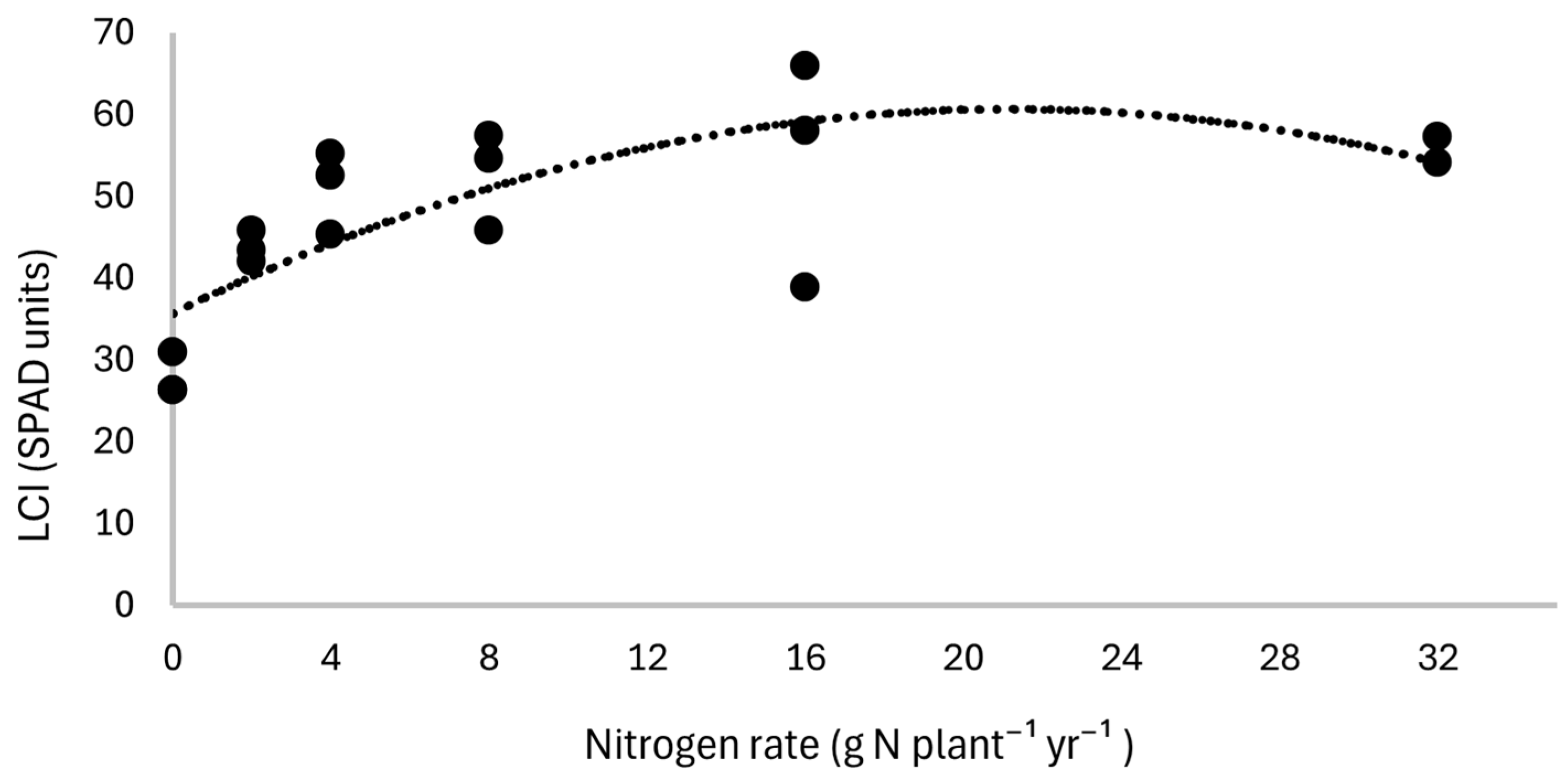
LCI followed a curvilinear response to N application rate, increasing up to 16 g N plant−1 yr−1, then decreasing (Figure 2).
Figure 2. Leaf chlorophyll index (LCI) affected by N application rate. Symbols represent individual plants (n = 18). The dotted line indicates the fitted quadratic regression model. The quadratic model was significant for LCI (p = 0.0046). Regression equations, R2 values, and 95% confidence intervals for estimated optimal N rates are presented in Table 1.
Nitrogen 07 00029 g002
Table 1. Quadratic regression equations fitted to individual plant observations, coefficients of determination (R2), estimated optimal N rates, and predicted leaf N concentration ranges at the optimal N rate (based on the 95% confidence interval).
VariableEquationR2Optimal N Rate
(g N Plant−1 yr−1)
(95% CI)
Predicted Leaf N at Optimal N Rate
(95% CI) (%)
LCIy = −0.0557x2 + 2.3568x + 35.6950.5421 (15.5–26.8)(1.67–2.22)
Vine length (cm)y = −0.323x2 + 9.4901x + 170.410.1415 (8.4–21.0)(1.47–1.91)
Leaf Numbery = −0.0625x2 + 1.6421x + 21.2810.3813 (9.1–17.0)(1.49–1.73)
Fresh weight (g)y = −0.232x2 + 6.7788x + 47.150.3115 (10.8–18.4)(1.53–1.79)
Dry weight (g)y = −0.0281x2 + 0.9241x + 8.49180.2716 (12.1–20.7)(1.56–1.88)
Range (g) 13–21
Average (g) 16
Leaf N (%)y = 0.0011x2 + 0.002x + 1.37830.83
Range (%) 1.5–2.2
Average (%) 1.7
Optimal N rate was calculated as the vertex of each quadratic regression model fitted to individual plant data (n = 18). Ninety-five percent confidence intervals were estimated using the delta method based on the variance covariance matrix of regression coefficients. Predicted leaf N concentrations were obtained by substituting the lower and upper limits of the 95% confidence interval of the optimal N rate into the regression equation relating N rate to leaf N concentration. The average predicted leaf N concentration represents the mean of the midpoint values of these ranges across variables.

3.3. Relationship Between LCI and Leaf N Concentration

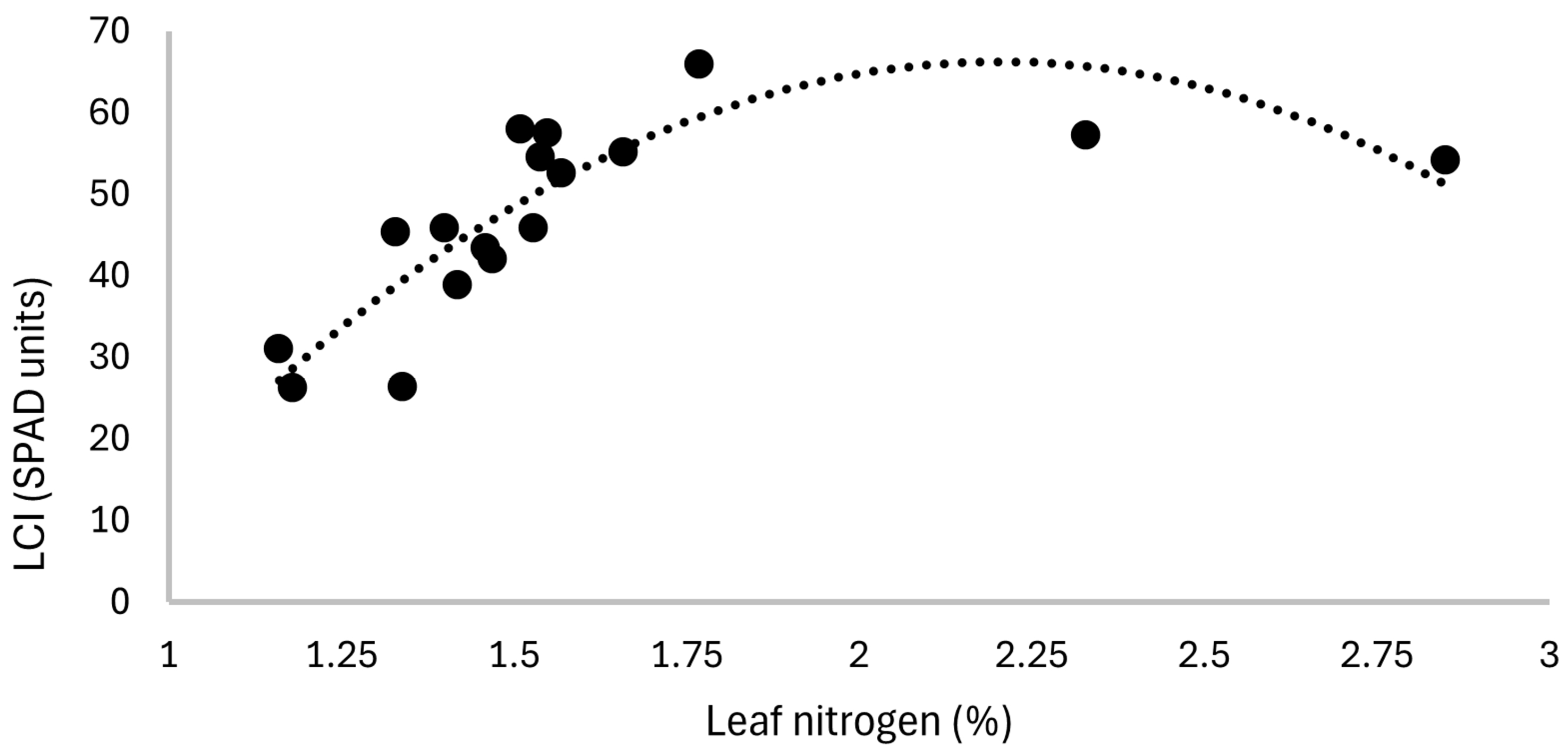
The LCI was positively related to leaf N concentration and exhibited a curvilinear relationship (Figure 3). LCI values increased with leaf N concentration up to an intermediate range, beyond which additional increases in leaf N did not result in higher SPAD readings. The quadratic regression explained a substantial proportion of the variation in LCI values (R2 = 0.73), indicating a strong association between chlorophyll index and leaf N concentration status.

3.4. Vegetative Growth Responses to N Rate

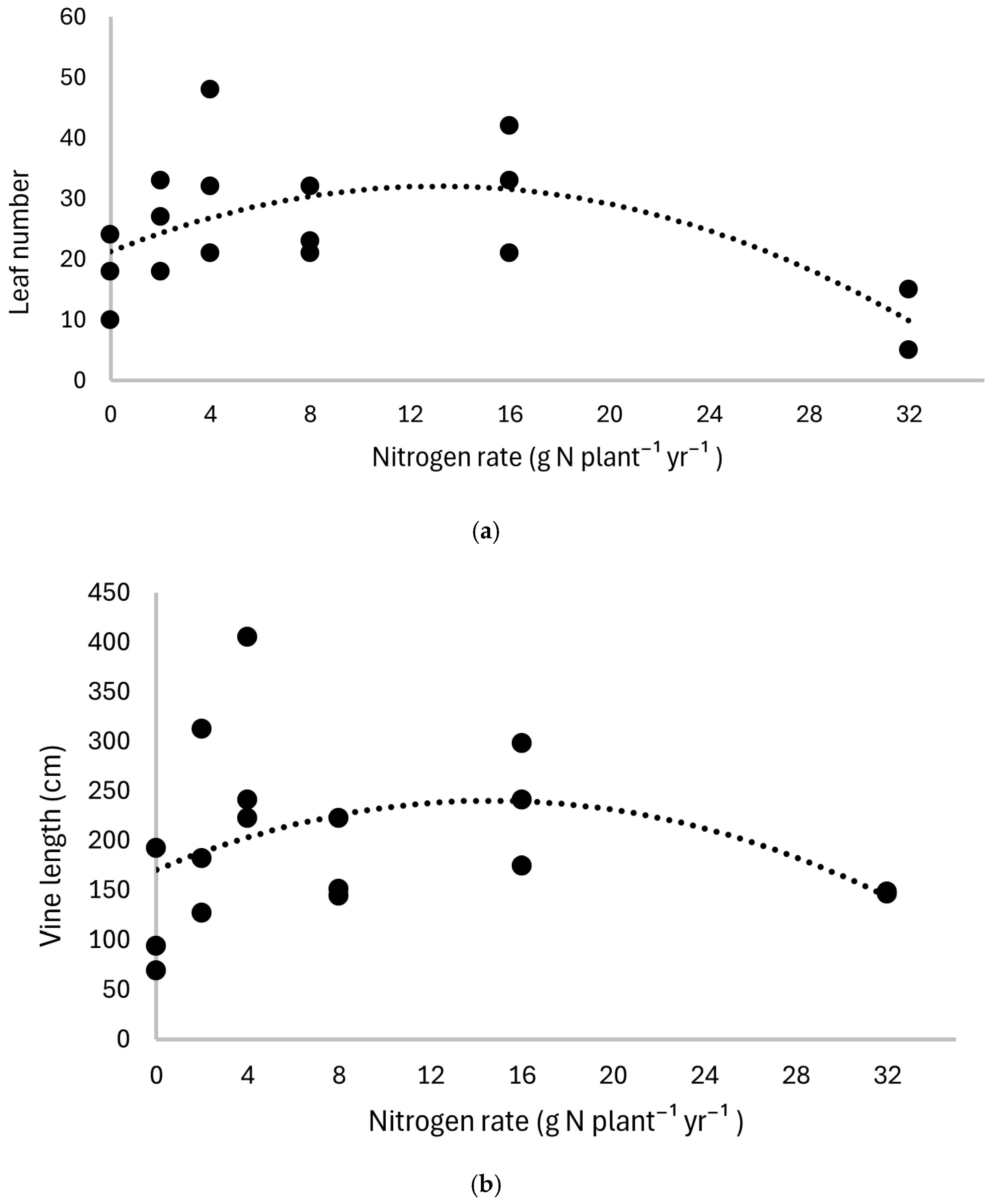
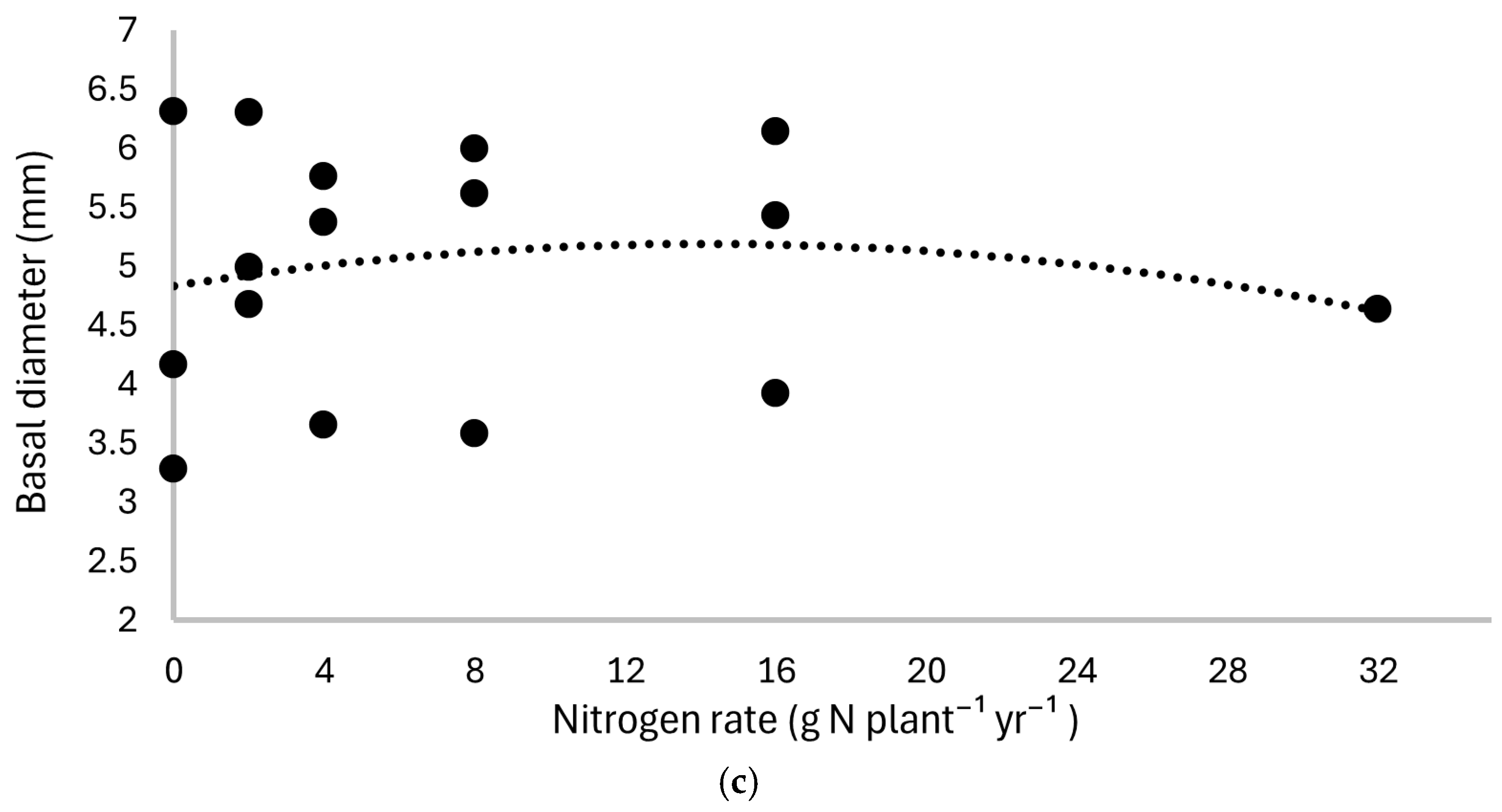
Vegetative growth variables responded curvilinearly to N application rate (Figure 4). Leaf number increased as N application rate increased, with maximum values observed between 8 and 16 g N plant−1 yr−1. At the highest N rate (32 g N plant−1 yr−1), leaf number declined (Figure 4a).
Vine length increased with N application rate up to approximately 16 g N plant−1 yr−1. Beyond this rate, vine length declined (Figure 4b).
Basal stem diameter showed a modest response to N application rate but followed a similar curvilinear pattern as the other growth variables, with maximum diameter observed at approximately 13–16 g N plant−1 yr−1. At the highest N rate, basal diameter decreased slightly (Figure 4c).

3.5. Biomass Responses to N Rate

Fresh and dry biomass varied numerically among N application rates (Table 2). Fresh weight tended to increase from 0 to intermediate N rates and declined at the highest N rate (32 g N plant−1 yr−1), although the overall effect of N rate was marginally non-significant (p = 0.0712).
Dry weight followed a similar pattern, with numerically greater values at intermediate N rates; however, differences among treatments were not statistically significant (p = 0.1519).
Despite the lack of statistical significance, the observed numerical trends were generally consistent with vegetative growth responses, with intermediate N rates supporting greater biomass accumulation than either deficient (0 g N) or excessive (32 g N) supply.

3.6. Correlations Among Growth, LCI, and Tissue N Concentrations

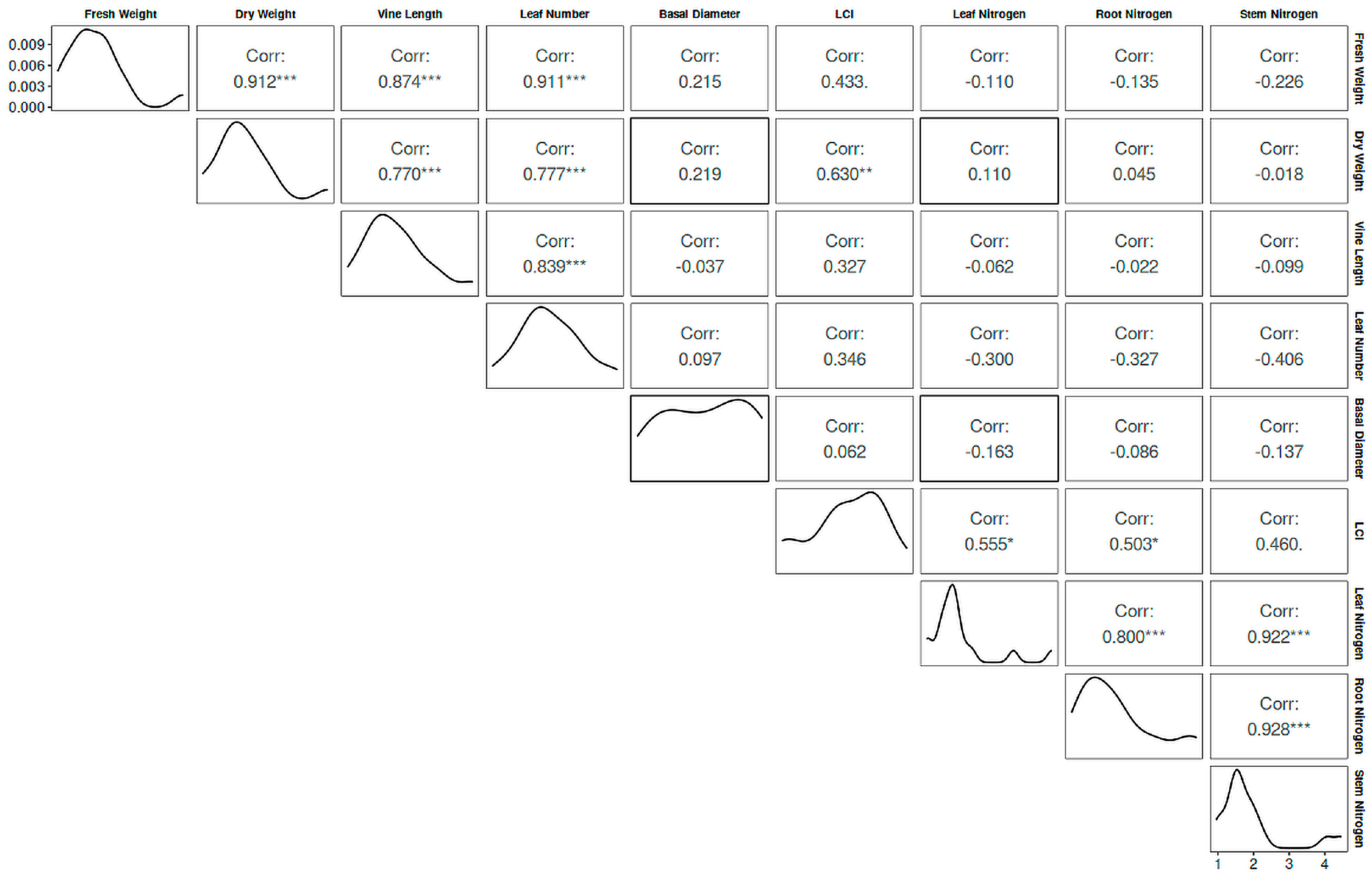
Correlation analysis, based on destructively sampled plants, revealed strong positive relationships among biomass variables and tissue N concentrations (Figure 5). Fresh and dry weight were highly correlated with vine length and leaf number. Tissue N concentrations were strongly correlated with one another, particularly between root and stem N. LCI was positively correlated with leaf N concentration, supporting its use as an indicator of leaf N status. In contrast, weak or nonsignificant correlations were observed between basal diameter and tissue N concentrations.

3.7. Estimation of Optimal N Rate and Predicted Leaf N Concentration

Quadratic regression models were fitted using individual plant observations for growth, LCI, and biomass variables to estimate optimal N application rates (Table 1). The strength of model fit varied among response variables, with coefficients of determination (R2) ranging from 0.14 (vine length ) to 0.83 (leaf N concentration).
Estimated optimal N rates, calculated as the vertex of each quadratic function, ranged from 13 to 21 g N plant−1 yr−1. However, 95% confidence intervals indicated moderate to substantial uncertainty for some variables, particularly those with low explanatory power (e.g., vine length). For variables with R2 ≥ 0.30, optimal N estimates were more constrained, with confidence intervals generally spanning approximately 9 to 27 g N plant−1 yr−1. The average optimal N rate across all measured parameters was 16 g N plant−1 yr−1.
Predicted leaf N concentration derived from 95% confidence intervals of optimal N rates ranged from 1.5 to 2.2%, with an overall average of 1.7%. A strong curvilinear relationship was observed between N application rate and leaf N concentration (R2 = 0.83), indicating that N supply was a strong predictor of leaf N status (Table 1).

3.8. Nitrogen Classification Based on Leaf N Concentration

Based on the relationship between N rate and leaf N concentration, N sufficiency levels were defined (Table 3). Leaf N concentrations below 1.6% were classified as low N status and were associated with higher N requirements. Leaf N concentrations around 1.7% represented adequate N status, corresponding to an optimal N rate of approximately 16 g N plant−1 yr−1. Leaf N concentrations above 1.9% were classified as high N status, indicating excessive N supply.

4. Discussion

Nitrogen availability strongly influenced tissue N concentration, LCI, and vegetative growth in V. × tahitensis, highlighting the central role of this element in regulating plant performance. The positive and predominantly curvilinear responses observed across variables indicate that N supply enhanced plant function up to an optimal range, beyond which additional N provided limited or negative benefits.

4.1. Tissue N Accumulation and Partitioning

Nitrogen concentration increased in all measured tissues with increasing N application rate, although the magnitude of response differed among plant tissues. Stem tissue exhibited the greatest increase in N concentration, particularly at higher N rates. Between 0 and 32 g N plant−1 yr−1, stem N concentration increased approximately fourfold (1.03% to 4.26%), compared with 2.6-fold and twofold increases in roots (1.22% to 3.17%) and leaves (1.23% to 2.59%), respectively. These quantitative differences indicate that stem tissue functioned as the primary N sink under elevated N supply in this study, consistent with reports that a substantial proportion of N uptake in crops occurs during stem elongation and is associated with structural growth [10].
Root N concentration increased with N rate at low to moderate applications but showed a comparatively smaller proportional increase at the highest N rate, suggesting that excessive N supply may have affected root function or uptake capacity. Leaf N concentration increased more gradually, indicating tighter regulation of N allocation to photosynthetically active tissues. Previous reports indicate that vanilla roots are highly sensitive to elevated fertilizer rates, with positive growth responses occurring only at moderate fertilizer levels, whereas higher doses negatively affect root development and overall plant performance [11]. Such sensitivity to excessive N supply may contribute to altered nutrient partitioning and shoot nutrient accumulation observed in other members of the Orchidaceae family [12]. Collectively, these results indicate that N partitioning among tissues is dynamic and responsive to N availability, with stem tissue serving as the dominant sink under excessive N supply. The pronounced increase in stem N concentration at high N rates suggests preferential accumulation in structural tissues. Although altered allocation patterns at elevated N supply may reflect redistribution of absorbed N among plant organs, the underlying physiological mechanisms were not directly measured in this study. It is therefore possible but not confirmed that such redistribution could help moderate N accumulation in leaves and mitigate potential metabolic imbalances under excessive N conditions [13].

4.2. LCI as an Indicator of Leaf N Status

The LCI increased with N application rate and was positively associated with leaf N concentration, supporting the use of LCI as a rapid, nondestructive indicator of leaf N concentration status. This response is consistent with previous studies showing that increased N availability enhances chlorophyll biosynthesis and improves photosynthetic performance [14,15], thereby reinforcing the physiological basis for the observed LCI responses.
The curvilinear relationship between LCI and leaf N concentration indicates that chlorophyll accumulation responds strongly to N supply up to an intermediate range, after which additional N does not result in proportional increases in LCI. This pattern reflects the central role of N in the photosynthetic apparatus, where a substantial proportion of leaf N is allocated to chlorophyll and photosynthetic proteins [16,17]. Once the N requirements of the photosynthetic system are satisfied, further N accumulation does not translate into increased chlorophyll content, resulting in reduced sensitivity of LCI to increasing leaf N concentration. Consistent with this interpretation, nonlinear relationships between LCI and leaf N content have been reported and attributed to physiological and structural constraints within leaves [18].
The observed plateau in LCI values at the highest N rate suggests that excessive N does not enhance photosynthetic potential and may indicate inefficient N use. Similar saturation responses have been reported for other leaf greenness indices. For example, Costa et al. [19], reported an increase followed by a plateau in green color index values with increasing nutrient concentrations in other orchids, indicating that leaf greenness indices become less responsive beyond an optimal N range. Together, these findings support the value of LCI measurements for monitoring N sufficiency while also highlighting their limitations at high N levels.

4.3. Vegetative Growth Responses and N Optimization

Vegetative growth variables, including leaf number, vine length, and basal stem diameter, responded positively to increasing N supply but exhibited clear curvilinear patterns. Maximum values for most growth traits were observed at intermediate N application rates, indicating that vegetative development was optimized within a specific N range. Similar quadratic responses of vegetative traits have been reported for other orchids when N was applied in different rates, with plant size, stem diameter, leaf number, and dry matter accumulation highest at intermediate ammonium proportions and reduced at higher levels [12].
The growth inhibition at the highest N application rate observed in the present study is consistent with previous reports showing negative effects of high N on vegetative growth traits, in Phalaenopsis Blume × Taisuco Kochdian [20], Chinese cabbage [21], and Solanum lycopersicum [22].
Biomass responses followed a comparable numerical trend. Fresh and dry weight were generally greater at intermediate N rates and declined at the highest N treatment; however, treatment effects were not statistically significant (fresh weight, p = 0.0712; dry weight, p = 0.1519). The absence of statistical significance likely reflects the limited replication available for destructive harvest (n = 3) and associated variability among plants. Therefore, biomass-based optimization estimates should be interpreted cautiously.
Although quadratic models were used to estimate optimal N rates, the strength of model fit varied among growth variables, with some traits exhibiting relatively low coefficients of determination. Consequently, optimal N values derived from individual regressions, particularly those with R2 < 0.30 should be interpreted cautiously due to wider confidence intervals. Nevertheless, estimated optima across multiple growth, physiological, and tissue N parameters generally converged within an intermediate range (13–21 g N plant−1 yr−1). Rather than relying on any single regression model, the overall consistency across parameters supports an intermediate N supply as optimal for maximizing vegetative performance in V. × tahitensis under controlled container conditions.

4.4. Integration of Growth, LCI, and Tissue N

There were strong positive relationships among growth traits, biomass, and tissue N concentrations, demonstrating tight coupling between N uptake, internal N concentration, and overall plant performance. Similar coordinated responses among vegetative traits and plant pigment indices have been reported in Phalaenopsis, where leaf number, leaf area, biomass allocation, and chlorophyll-based indices were strongly influenced by nutrient supply and exhibited significant interrelationships [23].
Positive correlations among plant height, leaf area, LIC, and biomass or yield have been reported in agronomic crops such as maize (Zea mays L.) and soybean (Glycine max L.). In maize, N fertilization has been shown to enhance vegetative growth, leaf development, and chlorophyll content, resulting in increased biomass accumulation and grain yield through improved radiation use efficiency and photosynthetic capacity [24,25]. Similarly, in soybeans, increases in vegetative growth and photosynthetic performance were positively associated with yield responses under improved N availability and cropping system management [26]. These findings support the relationships observed in the present study, suggesting that coordinated increases in canopy development, leaf N status, and biomass production are common indicators of improved N use across diverse crop species, including perennial specialty crops such as vanilla. In contrast, weaker correlations between basal stem diameter and tissue N concentrations in the present study suggest that structural traits may be regulated by additional factors beyond N availability, including carbon partitioning, developmental constraints, or hormonal signaling.
Together, these findings indicate that N availability influences plant performance through coordinated effects on N accumulation, chlorophyll concentration, and vegetative growth, rather than through isolated pathways, reinforcing the integrative nature of N nutrition in plant growth regulation.

4.5. Implications for N Management

Nitrogen requirements vary substantially among orchid species and growing media [27]. The convergence of optimal N rates across growth, physiological, and tissue N variables suggests that an intermediate N supply (13–21 g N plant−1 yr−1) maximizes plant performance while avoiding excess N accumulation in V. × tahitensis. Similar growth response to N supply has been reported in other orchid species, such as Dendrobium, where vegetative development and reproductive traits were maximized at intermediate N rates, supporting the concept of an optimal N range rather than maximal input for vegetative growth optimization [28].
Predicted leaf N concentrations associated with optimal N application rates in the present study were 1.5–2.2%, which fall within previously established sufficiency ranges for vanilla [29]. An earlier investigation reported an optimal leaf N range of 1.10–2.43% for V. planifolia based on nutrient absorption and growth responses [30], indicating that leaf N thresholds can serve as reliable indicators for diagnosing N status and guiding fertilization strategies.
These results underscore the importance of N optimization to improve N-use efficiency and reduce the risk of excessive N input. LCI measurements readings provide a rapid, nondestructive estimate of leaf N concentration; however, because their interpretation is influenced by environmental conditions and leaf traits, combining LCI measurements with destructive tissue analysis offers a more robust framework for N monitoring and management [18].

5. Conclusions

Nitrogen availability significantly influenced tissue N partitioning, leaf chlorophyll index (LCI), and vegetative growth of young V. × tahitensis plants under controlled container conditions. Most growth and physiological responses followed curvilinear patterns, with intermediate N rates promoting greater vegetative performance than either deficient or excessive supply. Stem tissue exhibited the greatest proportional increase in N concentration at high N rates, indicating that stems functioned as a major N sink under excessive N supply.
Quadratic regression models estimated optimal N rates between 13 and 21 g N plant−1 yr−1, with an overall average near 16 g N plant−1 yr−1. Predicted leaf N concentrations derived from the confidence intervals at these optima ranged from 1.5 to 2.2%. However, confidence intervals were wide for some variables with low R2 values, and these optimization estimates should therefore be interpreted cautiously. The convergence of estimated optima across multiple parameters nevertheless supports an intermediate N supply as a biologically meaningful target range under the conditions evaluated.
The strong association between LCI and leaf N concentration further supports the use of nondestructive chlorophyll measurements as an indicator of plant N status in V. × tahitensis.
Because this study was conducted under controlled conditions, validation under commercial shade-house or field production systems is required before broader recommendations are made.

Author Contributions

Conceptualization, A.T., J.P., X.W. and Y.L.; methodology, J.P. and P.M.; software, A.T., B.S. and P.M.; validation, J.P., X.W. and Y.L.; formal analysis and data curation, A.T. and P.M.; writing—original draft preparation, A.T.; writing—review and editing, A.T., J.P., P.M., B.S., X.W. and Y.L.; visualization, A.T.; supervision, X.W.; project administration, A.T.; funding acquisition, X.W. and Y.L. All authors have read and agreed to the published version of the manuscript.

Funding

This material is based upon work that is supported by the National Institute of Food and Agriculture, U.S. Department of Agriculture, under award number 2022-38640-37488 and 2020-38640-31521 through the Southern Sustainable Agriculture Research and Education program under subaward number LS23-381 and GS21-238. USDA is an equal opportunity employer and service provider.

Data Availability Statement

Data presented in this study are contained within the article.

Acknowledgments

The authors sincerely appreciate the support from the 2024 S-SARE Young Scholar Enhancement.

Conflicts of Interest

The authors declare no conflicts of interest.

Abbreviations

The following abbreviations are used in this manuscript:
NNitrogen
LCILeaf chlorophyll index
UF/IFASUniversity of Florida Institute of Food and Agricultural Sciences
TRECTropical Research and Education Center
ANSERVAnalytical Services Laboratories

References

  1. Karremans, A.P.; Chinchilla, I.F.; Rojas-Alvarado, G.; Cedeño-Fonseca, M.; Damián, A.; Léotard, G. A Reappraisal of Neotropical Vanilla. With a Note on Taxonomic Inflation and the Importance of Alpha Taxonomy in Biological Studies. Lankesteriana 2020, 20, 395–497. [Google Scholar] [CrossRef]
  2. De Oliveira, R.T.; Da Silva Oliveira, J.P.; Macedo, A.F. Vanilla beyond Vanilla planifolia and Vanilla × tahitensis: Taxonomy and Historical Notes, Reproductive Biology, and Metabolites. Plants 2022, 11, 3311. [Google Scholar] [CrossRef]
  3. Soto Arenas, M.A.; Dressler, R.L. A Revision of the Mexican and Central American Species of Vanilla Plumier Ex Miller with a Characterization of Their Its Region of the Nuclear Ribosomal DNA. Lankesteriana Int. J. Orchid. 2013, 9, 285–354. [Google Scholar] [CrossRef]
  4. Brunschwig, C.; Collard, F.-X.; Lepers-Andrzejewski, S.; Raharivelomanana, P. Tahitian vanilla (Vanilla × tahitensis): A Vanilla Species with Unique Features. In Active Ingredients from Aromatic and Medicinal Plants; El-Shemy, H.A., Ed.; InTechOpen: London, UK, 2017. [Google Scholar] [CrossRef]
  5. Diez, M.C.; Osorio, N.W.; Moreno, F. Effect of Dose and Type of Fertilizer on Flowering and Fruiting of Vanilla Plants. J. Plant Nutr. 2016, 39, 1297–1310. [Google Scholar] [CrossRef]
  6. Sujatha, S.; Bhat, R. Response of Vanilla (Vanilla planifolia A.) Intercropped in Arecanut to Irrigation and Nutrition in Humid Tropics of India. Agric. Water Manag. 2010, 97, 988–994. [Google Scholar] [CrossRef]
  7. Uscola, M.; Villar-Salvador, P.; Oliet, J.; Warren, C.R. Foliar Absorption and Root Translocation of Nitrogen from Different Chemical Forms in Seedlings of Two Mediterranean Trees. Environ. Exp. Bot. 2014, 104, 34–43. [Google Scholar] [CrossRef]
  8. Hernández, J.; Lubinsky, P. Cultivation Systems. In Vanilla. Medicinal and Aromatic Plants—Industrial Profiles; CRC Press: Boca Raton, FL, USA, 2011; pp. 75–95. [Google Scholar]
  9. Bremner, J.M. Determination of Nitrogen in Soil by the Kjeldahl Method. J. Agric. Sci. 1960, 55, 11–33. [Google Scholar] [CrossRef]
  10. Souza, L.A.; Tavares, R. Nitrogen and Stem Development: A Puzzle Still to Be Solved. Front. Plant Sci. 2021, 12, 630587. [Google Scholar] [CrossRef]
  11. Osorio, A.I.; Osorio Vega, N.W.; Diez, M.C.; Moreno, F.H. Nutrient Status and Vegetative Growth of Vanilla planifolia Jacks Plants as Affected by Fertilization and Organic Substrate Composition. Acta Agronómica 2014, 63, 326–334. [Google Scholar] [CrossRef]
  12. Mantovani, C.; Prado, R.M.; Pivetta, K.F.L. Impact of Nitrate and Ammonium Ratio on Nutrition and Growth of Two Epiphytic Orchids. An. Acad. Bras. Ciênc. 2018, 90, 3423–3431. [Google Scholar] [CrossRef] [PubMed]
  13. Zhang, W.; Zhang, S.-B.; Fan, Z.-X. Quantifying the Nitrogen Allocation and Resorption for an Orchid Pseudobulb in Relation to Nitrogen Supply. Sci. Hortic. 2022, 291, 110580. [Google Scholar] [CrossRef]
  14. Qiang, B.; Zhou, W.; Zhong, X.; Fu, C.; Cao, L.; Zhang, Y.; Jin, X. Effect of Nitrogen Application Levels on Photosynthetic Nitrogen Distribution and Use Efficiency in Soybean Seedling Leaves. J. Plant Physiol. 2023, 287, 154051. [Google Scholar] [CrossRef]
  15. Qu, F.; Peng, T.; Jia, Y.; Yang, M.; Meng, X.; Mao, S.; Zhou, D.; Hu, X. Adjusting Leaf Nitrogen Allocation Could Promote Photosynthetic Capacity, and Nitrogen Accumulation in Cucumis sativus L. Environ. Exp. Bot. 2022, 198, 104855. [Google Scholar] [CrossRef]
  16. Feng, Y.-L.; Lei, Y.-B.; Wang, R.-F.; Callaway, R.M.; Valiente-Banuet, A.; Inderjit; Li, Y.-P.; Zheng, Y.-L. Evolutionary Tradeoffs for Nitrogen Allocation to Photosynthesis versus Cell Walls in an Invasive Plant. Proc. Natl. Acad. Sci. USA 2009, 106, 1853–1856. [Google Scholar] [CrossRef]
  17. Makino, A.; Sakuma, H.; Sudo, E.; Mae, T. Differences between Maize and Rice in N-Use Efficiency for Photosynthesis and Protein Allocation. Plant Cell Physiol. 2003, 44, 952–956. [Google Scholar] [CrossRef] [PubMed]
  18. Xiong, D.; Chen, J.; Yu, T.; Gao, W.; Ling, X.; Li, Y.; Peng, S.; Huang, J. SPAD-Based Leaf Nitrogen Estimation Is Impacted by Environmental Factors and Crop Leaf Characteristics. Sci. Rep. 2015, 5, 13389. [Google Scholar] [CrossRef] [PubMed]
  19. Costa, M.G.; Mantovani, C.; De Mello Prado, R. Optimizing Nutrient Solution for Vegetative Growth of Dendrobium Tubtim Siam and Phalaenopsis Taisuco Swan through Plant Tissue Nutrient Balance Estimation. BMC Plant Biol. 2024, 24, 280. [Google Scholar] [CrossRef]
  20. Wang, Y.-T. High NO3-N to NH4-N Ratios Promote Growth and Flowering of a Hybrid Phalaenopsis Grown in Two Root Substrates. HortScience 2008, 43, 350–353. [Google Scholar] [CrossRef]
  21. Zhu, Y.; Qi, B.; Hao, Y.; Liu, H.; Sun, G.; Chen, R.; Song, S. Appropriate NH4+/NO3 Ratio Triggers Plant Growth and Nutrient Uptake of Flowering Chinese Cabbage by Optimizing the pH Value of Nutrient Solution. Front. Plant Sci. 2021, 12, 656144. [Google Scholar] [CrossRef]
  22. Borgognone, D.; Colla, G.; Rouphael, Y.; Cardarelli, M.; Rea, E.; Schwarz, D. Effect of Nitrogen Form and Nutrient Solution pH on Growth and Mineral Composition of Self-Grafted and Grafted Tomatoes. Sci. Hortic. 2013, 149, 61–69. [Google Scholar] [CrossRef]
  23. Cho, A.; Chung, S.W.; Kim, Y.J. Calcium Ammonium Nitrate Applications for Improved Leaf Growth and Photosynthetic Responses in the CAM Orchid Phalaenopsis under Elevated CO2 in a Greenhouse. Sci. Hortic. 2024, 324, 112601. [Google Scholar] [CrossRef]
  24. Habibi, N.; Sharaf, Z.; Fakoor, M.Y.; Aryan, S.; Mahmoodzada, A.B.; Fakhri, A.; Faqiri, S.M. Nitrogen Matters: Assessing the Effects of Nitrogen Fertilization on Maize Growth and Grain Productivity. Nitrogen 2025, 6, 115. [Google Scholar] [CrossRef]
  25. Liu, Z.; Gao, J.; Zhao, S.; Sha, Y.; Huang, Y.; Hao, Z.; Ke, L.; Chen, F.; Yuan, L.; Mi, G. Nitrogen Responsiveness of Leaf Growth, Radiation Use Efficiency and Grain Yield of Maize (Zea mays L.) in Northeast China. Field Crops Res. 2023, 291, 108806. [Google Scholar] [CrossRef]
  26. Jo, S.-G.; Kang, Y.-I.; Om, K.-S.; Cha, Y.-H.; Ri, S.-Y. Growth, Photosynthesis and Yield of Soybean in Ridge-Furrow Intercropping System of Soybean and Flax. Field Crops Res. 2022, 275, 108329. [Google Scholar] [CrossRef]
  27. Poole, H.A.; Seeley, J.G. Nitrogen, Potassium and Magnesium Nutrition of Three Orchid Genera. J. Am. Soc. Hortic. Sci. 1977, 103, 485–488. [Google Scholar] [CrossRef]
  28. Bichsel, R.G.; Starman, T.W.; Wang, Y.-T. Nitrogen, Phosphorus, and Potassium Requirements for Optimizing Growth and Flowering of the Nobile Dendrobium as a Potted Orchid. HortScience 2008, 43, 328–332. [Google Scholar] [CrossRef]
  29. Cibes, H.R.; Childers, N.F.; Loustalot, A.J. Influence of Mineral Deficiencies on Growth and Composition of Vanilla Vines. Plant Physiol. 1947, 22, 291–299. [Google Scholar] [CrossRef]
  30. Monnin, M.E.; Perret, J. Absorption of Nutrients and Growth of Vanilla (Vanilla planifolia). Tierra Trop. Sostenibilidad Ambiente Soc. 2013, 9, 29–37. [Google Scholar]
Figure 1. Nitrogen concentration (%) in stem, root, and leaf tissues in response to N application rate. Symbols represent individual observations (n = 18), and dotted lines indicate fitted quadratic regression models (R2 values range from 0.42 to 0.83; p < 0.05).
Nitrogen 07 00029 g001
Figure 3. Relationship between LCI and leaf N concentration (%). Symbols represent individual observations (n = 18). The dotted line represents the fitted quadratic regression model (R2 = 0.73, p = 0.0001).
Nitrogen 07 00029 g003
Figure 4. Vegetative growth responses to N application rate: (a) leaf number, (b) vine length (cm), and (c) basal stem diameter (mm). Points represent individual plants (n = 18). Dotted lines indicate fitted quadratic regression models. The quadratic model was significant for leaf number (p = 0.0357), but not for vine length (p = 0.3454) or basal stem diameter (p = 0.6539). Regression equations, R2 values, and 95% confidence intervals for estimated optimal N rates are presented in Table 1.
Nitrogen 07 00029 g004aNitrogen 07 00029 g004b
Figure 5. Pearson correlation matrix shows relationships among growth traits, Leaf chlorophyll index (LCI), biomass, and tissue N concentration. Correlation analysis was performed using 18 individual plant observations. Numbers indicate Pearson correlation coefficients (r). Dotted ellipses represent the direction and strength of correlations, with narrower ellipses indicating stronger relationships. Asterisks denote significant correlations (* p < 0.05, ** p < 0.01, *** p < 0.001).
Nitrogen 07 00029 g005
Table 2. Mean fresh and dry biomass (g plant−1) of V. × tahitensis at each N application rate (n = 3).
N Rate
(g N Plant−1 yr−1)
Fresh Weight (g)Dry Weight (g)
028.89 ± 9.215.57 ± 1.17
263.31 ± 8.4410.70 ± 1.66
4107.18 ± 40.4116.33 ± 5.40
863.42 ± 9.2612.81 ± 2.03
1696.71 ± 8.2514.91 ± 1.48
3227.63 ± 7.389.70 ± 1.27
Values represent mean ± standard error (n = 3).
Table 3. Fertilizer application rates (g N plant−1 yr−1) recommended based on leaf N levels (low, medium, and high).
LowMediumHigh
Leaf N (%)<1.51.7>2.2
N rate (g N plant−1 yr−1)21160
Leaf N concentration was classified as low (<1.5%), adequate (≈1.7%), or high (>2.2%) based on regression-derived relationships between N rate and leaf N content.
Disclaimer/Publisher’s Note: The statements, opinions and data contained in all publications are solely those of the individual author(s) and contributor(s) and not of MDPI and/or the editor(s). MDPI and/or the editor(s) disclaim responsibility for any injury to people or property resulting from any ideas, methods, instructions or products referred to in the content.