Review

Application of Water Hyacinth for Phytoremediation of Ammoniacal Nitrogen

1
Department of Environmental Science, Asutosh College, Kolkata 700026, West Bengal, India
2
Department of Environmental Studies, Visva-Bharati University, Santiniketan 731235, West Bengal, India
3
Natural and Applied Sciences Department, Bentley University, Waltham, MA 02452, USA
*
Authors to whom correspondence should be addressed.
Nitrogen 2026, 7(1), 27; https://doi.org/10.3390/nitrogen7010027
Submission received: 22 January 2026 / Revised: 28 February 2026 / Accepted: 6 March 2026 / Published: 10 March 2026

Abstract

Ammoniacal nitrogen (NH3-N) is a major pollutant in municipal, industrial, and agricultural wastewaters and is a key driver of eutrophication and aquatic ecosystem degradation. This review paper assessed the potential of water hyacinth (Eichhornia crassipes) as a sustainable phytoremediation option for removing ammoniacal nitrogen from wastewater. This paper focused on the plant’s biological characteristics, nutrient uptake pathways, and adaptability to varying environmental conditions. Specific mechanisms examined include direct root uptake of ammonium, internal translocation, and microbial-assisted nitrification and denitrification within the rhizosphere. The influence of pH, temperature, salinity, retention time, and plant density on removal efficiency was also assessed in this study. Across laboratory, pilot, and field-scale studies, water hyacinth achieved ammoniacal nitrogen removal efficiencies ranging from 74% to 97% under favorable conditions, alongside significant reductions in biochemical oxygen demand (BOD), chemical oxygen demand (COD), and total dissolved solids (TDS). Integration with constructed wetlands, microbial systems, and hybrid treatment approaches further enhanced nitrogen removal and process stability. This paper also highlighted opportunities for biomass valorization through biogas, bioethanol, and compost production while identifying challenges related to salinity sensitivity and biomass management. Overall, water hyacinth emerges as a cost-effective, nature-based solution for decentralized wastewater treatment, with strong potential to support sustainable water management and circular bioeconomy initiatives.

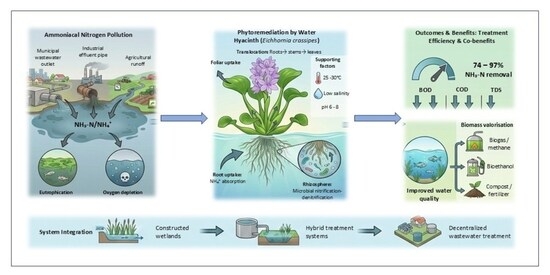
Graphical Abstract

1. Introduction

Nitrogen as a water pollutant exists in several forms, including total nitrogen, nitrate, nitrite, organic nitrogen, and ammoniacal nitrogen [1]. Out of these, ammonia is an important part of the biogeochemical N-cycle as well as in biological cycles of organisms, and it is both formed and utilized in these processes [2]. Two chemical forms of ammonia, ionized ammonium (NH4+) and unionized ammonia (NH3), exist in water and are combinedly called total ammonia nitrogen (TAN) [3,4,5]. The NH3 to NH4+ ratio in water varies with pH, temperature, and different minerals, favoring NH3 at higher temperatures and pH [4,6,7]. Ammoniacal nitrogen is known to be a water odorant formed during N-containing organic matter decomposition, resulting in the production of black and odorous water (BOW) [8].
One of the most efficient, cost-effective, and environmentally friendly processes for the removal of different pollutants is phytoremediation. It is a natural process where plants help clean and stabilize contaminated soil and water. It involves various methods using vegetation for in situ treatment of soil and water polluted by hazardous substances. Phytoremediation mainly includes five different types of mechanisms for the removal of pollutants, namely (i) phytoextraction, where plants uptake contaminants (e.g., heavy metals or nutrients) and accumulate them in harvestable tissues; (ii) phytostabilization, which immobilizes contaminants in the rhizosphere and reduces their mobility and bioavailability; (iii) phytovolatization, in which plants absorb contaminants and release them into the atmosphere in volatile forms; (iv) rhizofiltration, where plant roots adsorb or absorb contaminants directly from aqueous media; and (v) phytodegradation, which involves enzymatic breakdown or transformation of organic pollutants within plant tissues or the rhizosphere [9,10]. The characteristics that an ideal phytoremediator should have include high-biomass production, resistance to heavy metal toxicity, a resilient nature, highly efficient absorption, and being unattractive to herbivores [11,12,13,14]. Some plants that are efficient phytoremediators include Eichornia crassipes, Medicago sativa [9], Lolium perenne, Pistia stratiotes [15], Ipomoea aquatica, Lemna minor, Centella asiatica, Salvinia minima [16], and Chrysopogon zizanioides [17,18].

1.1. Background on Ammoniacal Nitrogen Pollution

Excessive nitrogen in the aquatic environment seriously damages water supplies and associated industries globally. Except for nitrate and nitrite nitrogen, numerous investigations have demonstrated that ammonia-nitrogen pollution is the most dangerous [19]. At ranges above 0.5 mg/L, both ammonia and ammonium, the two types of ammonia nitrogen found in wastewater, negatively impact biological organisms [19,20,21]. Unionized ammonia (NH3) is toxic, as it may readily permeate biological membranes, change intracellular pH, and interfere with critical enzyme processes [4,22]. Excessive free ammonia can suppress microbial activity and nitrifying bacteria in wastewater treatment facilities, which can impact treatment efficacy. Ammonia toxicity in fish and invertebrates can cause gill damage, disruptions in ion and oxygen transport, abnormalities in growth and reproduction, and even death [23,24]. High ammonium ion concentrations can also decrease metazoan populations, boost algae abundance, induce eutrophication, and deplete dissolved oxygen, all of which have an effect on aquatic food webs [25]. A type of inorganic nitrogen known as ammoniacal nitrogen is commonly found as a contaminant in a variety of aquatic habitats, such as municipal sewage, industrial wastewater, and agricultural runoff [26,27,28,29]. Conventional techniques like nitrification and denitrification, which remove ammoniacal nitrogen, are expensive and energy intensive [28].

1.2. Environmental Impact and Health Risks

Numerous health and environmental problems can result from high ammoniacal nitrogen levels in water [27]. Algal blooms and hypoxia caused by excess nitrogen can degrade aquatic environments and reduce biodiversity. Water’s dissolved oxygen is consumed by ammonia nitrogen. Ammonia nitrogen in drinking water sources will also raise the cost of water treatment as it increases the chlorine requirement, as ammonia reacts directly with chlorine during disinfection to produce chloramines and impose a considerable oxidant demand; breakpoint chlorination may require 8–11 mg Cl2 per mg NH3-N to achieve a free chlorine residual [30,31]. Furthermore, nitrate, a byproduct of ammoniacal nitrogen, is associated with several illnesses, like gastrointestinal disorders and liver and kidney problems, which can be hazardous to human health, especially for young children. Municipal wastewater, industrial wastewater, wastewater from livestock and poultry, and landfill leachate are the primary causes of ammoniacal nitrogen pollution in water bodies. The content and concentration of these pollutants vary depending on the source [32].

1.3. Overview of Phytoremediation

Phytoremediation, the use of living plants to remove, transfer, stabilize, or degrade environmental contaminants, has emerged as a cost-effective and environmentally friendly approach to addressing various forms of pollution, including ammoniacal nitrogen [33]. This method provides a sustainable way to clean up the environment by taking advantage of some plants’ innate capacity to absorb and retain contaminants. Numerous factors, including the number of pollutants in the growing environment, the age and density of the plants, the plants’ genetic compatibility with the contaminants that are accessible, and the reactor design, affect how effective plants are when used for phytoremediation applications [14,18,34]. A phytoremediation system’s maximum efficiency can also be attained by controlling several variables, including temperature, time, wastewater loads, pH, and loading rates, among others [35].

1.4. Aquatic Macrophytes for Ammoniacal Nitrogen Removal

Aquatic macrophytes, particularly floating species, have been widely investigated for nutrient-rich wastewater treatment. Species such as Eichhornia crassipes, Pistia stratiotes, Trapa natans, Azolla pinnata, Chrysopogon zizanioides, and Typha latifolia have demonstrated substantial nutrient uptake capacity in laboratory, pilot, and field-scale systems [10,18,36]. These plants were used to treat effluents from paper processing, sugar mills, textile industries, dairy operations, slaughterhouses, pharmaceutical facilities, and other industrial sources [37,38,39,40,41,42].
Among these species, Eichhornia crassipes has received particular attention due to its rapid growth, high biomass yield, and tolerance to nutrient-rich environments. Many studies have demonstrated high ammoniacal nitrogen removal efficiencies in water hyacinth-based systems. However, significant inconsistencies exist in the interpretation of these results. In several cases, ammonium reduction occurs simultaneously with increases in nitrite and nitrate concentrations, indicating the substantial role of microbial nitrification rather than exclusive plant assimilation. Furthermore, removal efficiencies are often compared across studies with markedly different influent concentrations, hydraulic retention times, system configurations, and environmental conditions, without normalization or nitrogen mass balance evaluation.
Previous reviews have largely emphasized overall nutrient removal performance but have not systematically distinguished between plant assimilation, microbial nitrification–denitrification, ammonia volatilization under alkaline conditions, and temporary nitrogen retention through sorption processes. The absence of a mechanistic differentiation and standardized comparative framework has led to potential overestimation of plant-mediated ammoniacal nitrogen removal.
Therefore, a critical synthesis integrating mechanistic analysis and a conceptual nitrogen mass balance approach is required. This study aimed to (i) differentiate plant assimilation from microbial transformation pathways in Eichhornia crassipes-based systems, (ii) evaluate the influence of operational parameters on nitrogen dynamics, and (iii) propose a nitrogen mass balance framework to improve interpretation, comparison, and standardization of reported ammoniacal nitrogen removal efficiencies.

2. Water Hyacinth: Botanical and Biological Characteristics

Native to the Amazon Basin, water hyacinth (Eichhornia crassipes) is a free-floating aquatic plant that is renowned for its exceptional capacity to multiply quickly and generate large amounts of biomass [26,27,43]. It is a member of the Pontederiaceae family and is a great candidate for wastewater remediation applications since it can grow in extremely contaminated water bodies [44]. The potential of this plant in phytoremediation, specifically in the removal of nutrients such as ammoniacal nitrogen and heavy metals, has been well investigated. Water hyacinth is a viable option for the remediation of ammoniacal nitrogen pollution because of its quick growth rate, high biomass production, and capacity to accumulate pollutants [26,27,45]. According to earlier studies, E. crassipes can clean up large amounts of different types of wastewaters from the glass and sugar mill industries, including trace (Cd, Pb, Cr, Pb, Ni), minor (Fe, Zn, Cu), and major (P, N, Ca, Mg) contaminants [37,38].

2.1. Taxonomy and Morphology

Water hyacinth is an aquatic, free-floating plant species that finds its origin in the Amazon Basin of South America [46]. This perennial macrophyte is an herbaceous monocot belonging to the Pontederiaceae family [47,48]. It is characterized by rounded green leaves, bluish lavender-colored flowers that are self-fertile [49], and black–dark purple roots and is accompanied by rhizomes and stolons for propagation [47,48]. There is a presence of air-filled tissues in the leaves as well as in the shoots of the plant, aiding it to float in water due to buoyancy [50]. The plant typically grows to 40 cm but can reach up to 1 m, forming dense mats up to 2 m thick by spreading through stolons [50].

2.2. Growth and Reproduction

Under ideal circumstances, water hyacinth can double its biomass in as little as 5–15 days, making it famous for its quick growth rate [51]. Water hyacinth seeds can survive for up to 20 years submerged in water under unfavorable conditions (such as low temperatures and low light levels). The plant’s effective utilization of resources, ability to adapt to a variety of environmental situations, and extremely effective reproductive strategies, including both sexual and asexual reproduction, are all responsible for its prolific development [27]. The plant reproduces by sexual as well as asexual means, and since a single parent can reproduce quickly via vegetative means, there is rapid growth and spread of the plant in less time [52]. The large populations thus formed due to this rapid growth have interconnected shoots and complex root structures, resulting in the formation of interlocking mats [53].
The spread of the plant is via water currents, winds, or movement by boats and fishing nets, invading freshwater bodies, and the growth accelerates when there is no natural enemy present [54]. The plant can grow in tropical as well as temperate environments in an optimal pH condition of 6–8 and an optimal temperature range of 25–27 °C [55].
The factors that primarily influence the reproduction and growth of water hyacinth are nutrients and temperature. The growth of water hyacinth is limited by high salinity, as seen in the case of coastal areas and estuaries [56]. Environmental disturbances, pH, light availability, and the reproduction system also influence the growth of water hyacinth [57].

2.3. Nutrient Uptake Mechanisms

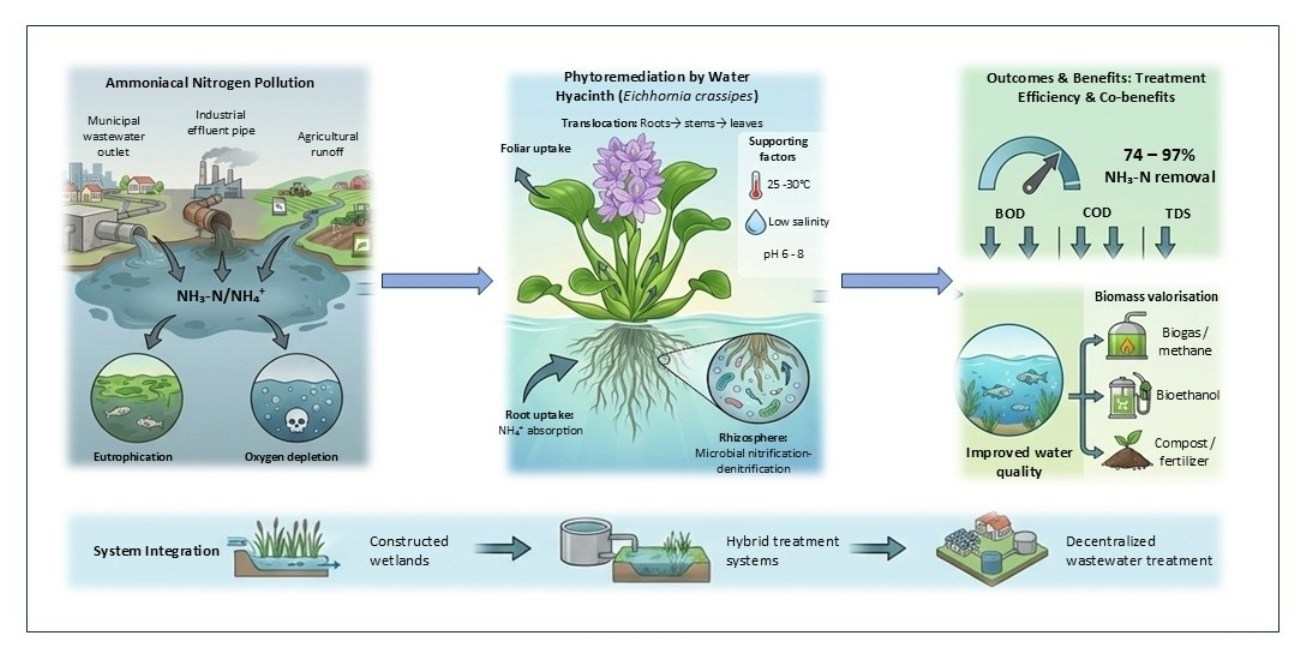
Water hyacinth is well known for its phytoremediation properties due to its ability to absorb various heavy metals and nutrients from wastewater. Figure 1 shows overall nutrient uptake mechanisms of water hyacinth.
Water hyacinth removes metals from water by the process of root surface adsorption. Studies showed that metals like Cu2+, Hg2+, As(V), Fe2+/Fe3+, Mn2+ and Zn2+ can be removed from water through root adsorption and absorption processes. It was also found that metals like Cu2+, Hg2+, Fe2+/Fe3+, Mn2+ and Zn2+ can be removed from water by the process of shoot absorption [58]. The root absorption process in water hyacinth is both by passive uptake and through active diffusion [59]. A study done on organophosphate esters revealed that water hyacinth is capable of nutrient uptake through anion channels and aquaporins by passive diffusion and, at the same time, can also uptake nutrients in the presence of a concentration gradient, proving the active transport capability of the plant. Properties like hydrophilicity also influence the plant uptake mechanism, and hydrophilic substances have higher upward movement and translocation rates, while hydrophobic substances tend to stay in the root cell wall region, showing lower translocation rates.
It was observed that water hyacinth was able to remove 99.5% of hexavalent chromium from a chromite mine area in 15 days [60]. The same study observed an increase in dissolved oxygen (DO) based on the decrease in chemical oxygen demand (COD) by 34% and biochemical oxygen demand (BOD) by 50% in wastewater. The study showed that the bioaccumulation of Cr (VI) was highest in the roots of water hyacinth, followed by the leaves and stems, respectively. The movement of metals from roots to shoots mainly takes place by the process of translocation, which is mainly governed by the root pressure and the transpiration of the leaves. At times, various metals accumulated in the roots due to some physiological barrier preventing the metals from reaching the aerial part of the plant [61,62].
Water hyacinth can also enhance its nutrient uptake capacity when it is in a mycorrhizal association. A study revealed that, with the inoculation of Arbuscular Mycorrhizal Fungi (AMF), the plant could take up higher cadmium (Cd) concentrations [63]. AMF also facilitates the trapping of heavy metals in the root and mycorrhizosphere region, thus preventing the translocation of the heavy metals to the shoot. The study also showed that the growth rate of water hyacinth is higher with AMF inoculation than non-inoculated ones in cadmium concentration within the range of 20 ppm to 50 ppm.
The plant also uptakes nutrients via foliar uptake (uptake by the leaves), which can happen via absorption, deposition (wet or dry), or by substance exchange at the air–leaf interface [64]. Basipetal migration of substances from leaves to stalks and roots has also been observed in water hyacinth [64].

2.4. Adaptability to Different Water Conditions

The degree of water hyacinth growth depends differently on various water conditions in a water body. In the case of the water body being eutrophic, the rate of water hyacinth proliferation is much higher than that of mesotrophic (intermediate-nutrient conditions) and oligotrophic (low-nutrient conditions) water bodies, and the plant biomass increases in the eutrophic water conditions [65]. A study reported that changes in growth measurements over time declined in low- and medium-nutrient treatments [66]. The leaf nitrogen content and the phosphorus levels increased in high-nutrient growth, and it also enhanced carbon gain, with increased surface area for photosynthesis. The growth of water hyacinth is also influenced by the salinity of water, and for optimum growth of the plant, <2% salinity in water is required. Water having a good quantity of dissolved sulfates, phosphates, and nitrates is favorable for the growth of the plant. Slightly alkaline water (pH 6.5–8.5) is optimal for water hyacinth growth [57].
In an experimental setup of domestic wastewater treatment, water hyacinth reduced BOD by 96%, overall salinity by 15%, and TDS and NH3-N as well within three weeks [67]. In another study of domestic sewage purification with water hyacinth, it was observed that, after a treatment period of 28 days, pungent sewage odor as well as deep yellow color disappeared, allowing for its safe discharge into a stream. The pH value of the sewage was decreased from 8.58 to 7.81, along with a 34% reduction in the color grade, and the turbidity value also decreased from 48.5 to 35.9 NTU [68]. Water hyacinth was also used in the treatment of effluent water from a sago mill, showing high removal efficiencies for COD (86.4–97.2%), ammonia (91.4–97.2%), and phosphorus (80.4–97.2%) in 30 days [69].
Accordingly, studies continually report that water hyacinth has a wide ecological adaptability to variable trophic conditions, salinity, and pH. Indeed, it is very effective in removing organic matter, nutrients, and other pollutants from various aquatic and wastewater environments.

3. Mechanisms of Ammoniacal Nitrogen Removal

3.1. Uptake and Assimilation by Water Hyacinth

Water hyacinth has demonstrated the ability to efficiently absorb and assimilate ammoniacal nitrogen from aqueous environments [27]. The plant’s extensive root system and high biomass production contribute to its capacity to remove significant quantities of ammoniacal nitrogen from the water column. The pace of plant growth, culture density, and environmental factors like temperature and solar radiation will all affect how much nitrogen is removed by plant uptake. Both ammonium and nitrate can be absorbed by water hyacinth, although, like many aquatic plants, ammonium is preferred over nitrate even when both ions are present in the wastewater at the same time [70].

3.2. Conversion Processes

In addition to direct uptake, water hyacinth can help reduce the environmental impact of ammoniacal nitrogen pollution by facilitating the nitrification process, which is carried out by specialized bacteria present in the plant’s rhizosphere and converts ammoniacal nitrogen into less harmful forms, such as nitrate [71].

3.3. Distinguishing Plant Assimilation and Microbial Transformation

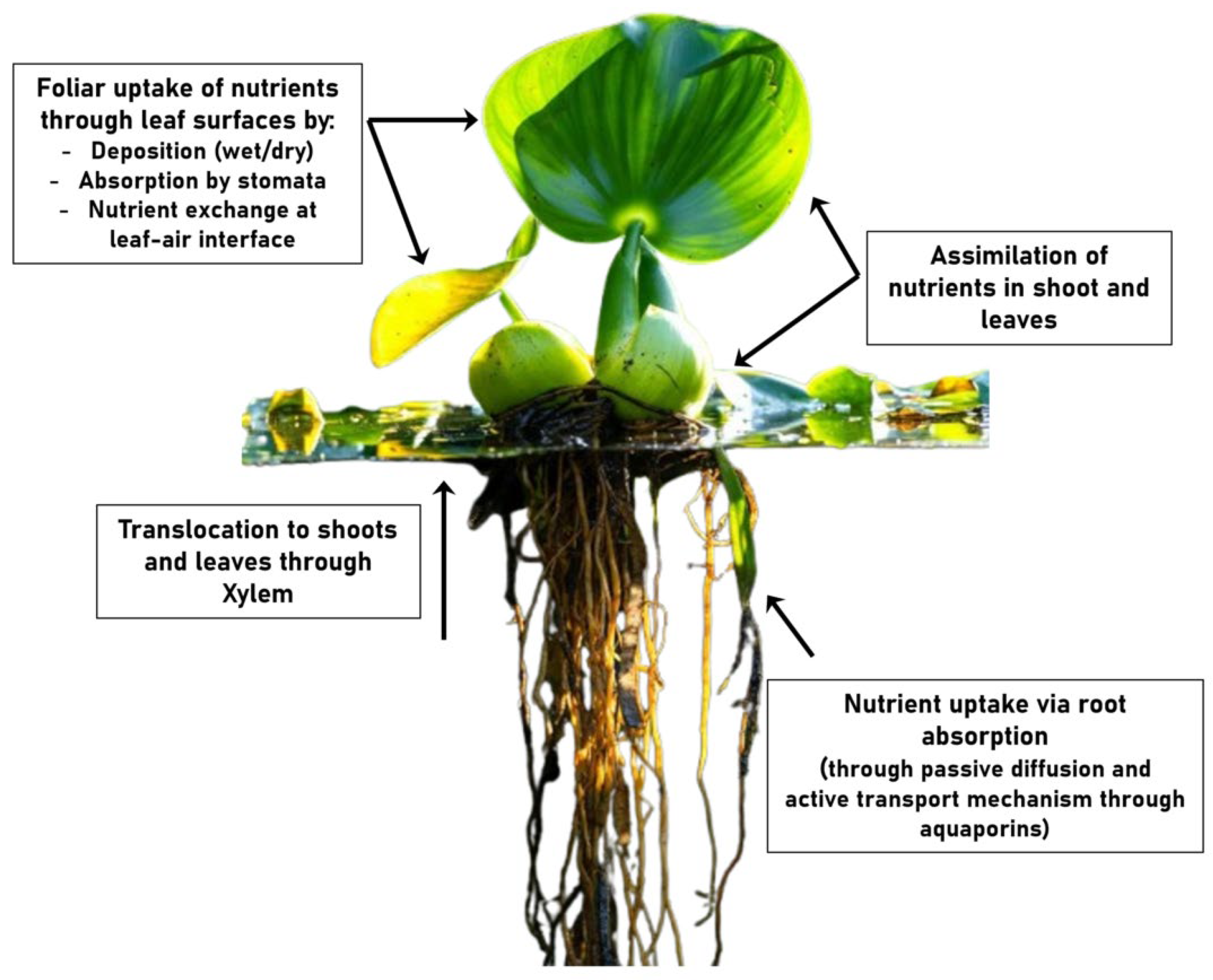
Ammoniacal nitrogen removal in Eichhornia crassipes-based systems results from multiple concurrent processes rather than plant assimilation alone. Although water hyacinth absorbs NH4+ through root uptake and incorporates it into biomass, several studies reported a simultaneous increase in nitrite and nitrate concentrations during ammonium decline, indicating active microbial nitrification [72,73]. Nitrification is strongly influenced by dissolved oxygen, pH, temperature, and hydraulic retention time, which regulates the growth and activity of ammonia-oxidizing bacteria [72].
While plant assimilation contributes to nitrogen sequestration, it represents temporary storage unless biomass harvesting is implemented [74]. In contrast, microbial denitrification, when nitrate is reduced to gaseous nitrogen under anoxic conditions, results in permanent nitrogen removal. Therefore, reductions in ammonium concentration alone cannot be interpreted as direct plant-mediated removal. A mechanistic distinction between plant uptake and microbial transformation is essential for accurately evaluating system performance.
Elevated heavy metal concentrations may inhibit nitrifying and denitrifying microorganisms in the rhizosphere, potentially reducing nitrogen transformation efficiency. Metals such as Cd, Cu, and Pb are known to suppress ammonia-oxidizing bacteria. Standardized assays like Organization for Economic Co-operation and Development (OECD) 209:2010 and International Organization for Standardization (ISO) nitrification inhibition tests (ISO 9509:2006) are commonly used to assess such microbial inhibition and should be considered when interpreting treatment performance in mixed-contaminant wastewater [75,76,77].

3.4. Conceptual Nitrogen Mass Balance in Water Hyacinth Systems

Accurate interpretation of ammoniacal nitrogen removal requires a conceptual nitrogen mass balance framework. In water hyacinth systems, ammonium reduction may result from (i) plant assimilation, (ii) microbial nitrification, (iii) subsequent denitrification, (iv) ammonia volatilization under elevated pH conditions, and (v) temporary retention through sorption to sediments or biofilms.
Nitrification converts NH4+ to NO3 but does not remove total nitrogen; permanent removal occurs only if denitrification produces gaseous nitrogen species [72]. Moreover, free ammonia formation at higher pH may inhibit nitrifiers and contribute to physicochemical nitrogen loss. Environmental parameters such as dissolved oxygen, pH, and hydraulic retention time, therefore, determine the relative contribution of each pathway.
Accordingly, assessment of treatment efficiency should consider ammonium, nitrate, total nitrogen, and biomass nitrogen accumulation simultaneously. A generalized nitrogen cycle scheme is presented in Figure 2 to illustrate the interaction between plant assimilation and microbial transformation processes in macrophyte-based systems.

3.5. Impact on Nitrogen Cycle

The integration of water hyacinth into aquatic ecosystems can have a positive influence on the overall nitrogen cycle. The plant’s ability to absorb and transform ammoniacal nitrogen (NH3-N) can help to maintain a balanced distribution of nitrogen species, reducing the risk of eutrophication and other detrimental environmental effects.
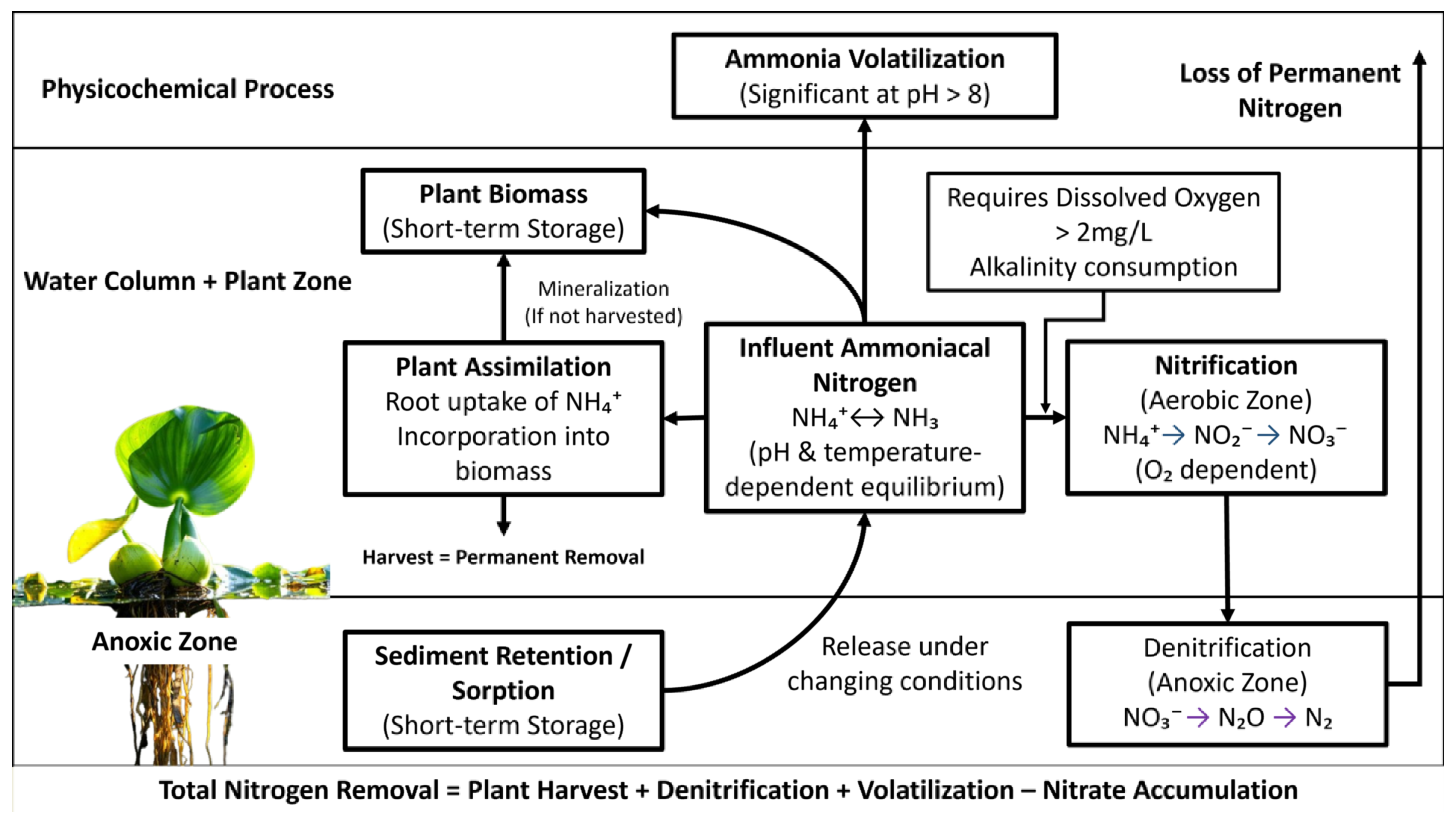
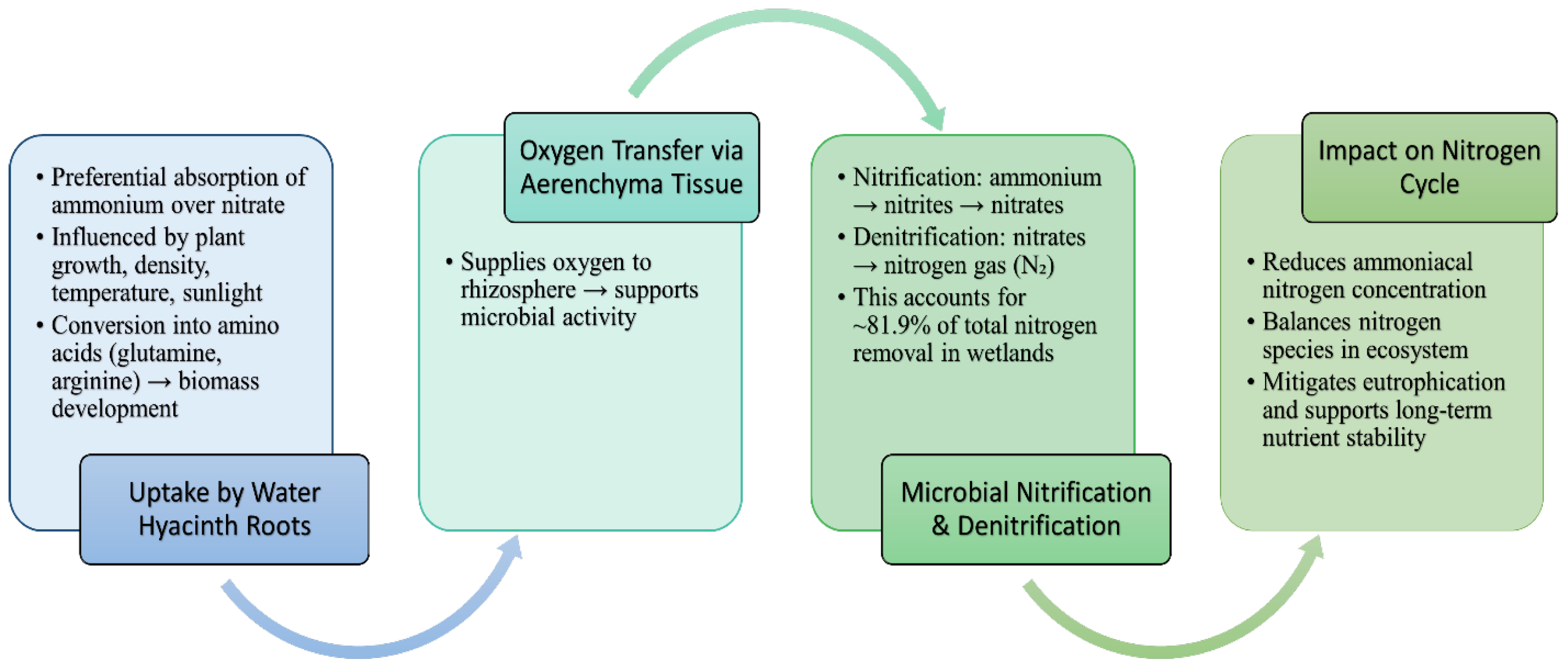
Figure 3 shows mechanism of ammoniacal nitrogen removal by water hyacinth. It primarily assimilates NH3-N through direct root uptake, converting it into amino acids such as glutamine and arginine that contribute to biomass development [1]. This uptake preference positions water hyacinth as an efficient first-line scavenger for NH3-N, only resorting to nitrate absorption when ammoniacal nitrogen becomes scarce [70]. Moreover, the plant’s aerenchyma tissue facilitates oxygen transfer to the rhizosphere, promoting microbial nitrification and denitrification processes essential for complete nitrogen cycling. Microbial interactions lead to the conversion of NH3-N into nitrites, nitrates, and ultimately inert nitrogen gas through denitrification, identified as the dominant removal pathway, accounting for up to 81.9% of total nitrogen loss in constructed wetlands [78]. This synergistic interplay of plant uptake and microbial transformation not only mitigates eutrophication but also sustains long-term nutrient balance in aquatic ecosystems.
In real wastewater matrices, xenobiotic organic pollutants (e.g., pharmaceuticals, pesticides, industrial organics) can directly affect nitrogen transformation pathways by inhibiting or altering nitrifying and denitrifying microorganisms and, in some cases, are co-transformed by ammonia-oxidizing microbes [79]. These micropollutants are also taken up and adsorbed by Eichhornia crassipes (primarily in roots with variable translocation to shoots), which can induce physiological stress and change plant nutrient uptake efficiency [80]. Finally, xenobiotics can shift rhizospheric microbial community composition and reduce nitrification/denitrification rates (sometimes causing nitrite accumulation), so interpretation of NH3-N removal in complex wastewaters must consider coupled plant–microbe–pollutant interactions [81].

4. Effectiveness of Water Hyacinth in Ammoniacal Nitrogen Phytoremediation

Several studies were performed on the role and efficiency of water hyacinth in ammoniacal nitrogen phytoremediation (Table 1). A study was conducted to observe the phytoremediation potential of water hyacinth in wastewater [82]. Using three different samples (river water, detention pond, and WTP effluent), various parameters were evaluated, with ammoniacal nitrogen being one of them. The river water sample had the highest ammonia nitrogen concentration of 5.5 mg/L, while the WTP effluent and detention pond had an initial ammonia nitrogen concentration of 1.75 mg/L and 1.25 mg/L, respectively. After treatment of the samples for a period with water hyacinth, the concentration of ammonia nitrogen for river water was found to be 0.14 mg/L after 14 days, while in the case of WTP effluent and the detention pond, it was 0.33 mg/L and 0.54 mg/L respectively on the 2nd day of the treatment. The removal efficiency was highest for the river sample (96.91%), followed by pond water (95.20%) and WTP effluent (94.29%), respectively. Out of the different types of nitrogen, the degree of ammonia nitrogen removal was the largest. It was also noticed that, due to fluctuations in water level owing to rainfall, there may be modifications in the microbial community of water, which could also significantly affect the nitrogen removal process. The decrease in ammonia nitrogen was accompanied by a corresponding increase in both nitrite as well as nitrate concentrations. It was evident that ammonia was converted into nitrite and then successively into nitrate through the process of nitrification. For complete removal of nitrates as well, further treatment like denitrification is necessary along with the phytoremediation process. The study also showed a significant reduction in pH, TSS, phosphorus, COD, BOD, and E. coli as well, thereby highlighting the effectiveness of water hyacinth in phytoremediation. A similar reduction in ammoniacal nitrogen was observed in a study at the Skudai River, Malaysia [83]. It was observed in the study that a higher plant density of water hyacinth resulted in better absorption of ammoniacal nitrogen. The setup had three containers having six, eight, and ten water hyacinth plants, respectively, where in 9 days, all three containers showed reductions in NH3-N from 12 mg/L to less than 4 mg/L. The container with 10 plants showed the highest reduction rate due to a higher number, leading to better absorption and an accelerated process. It was also observed that the concentration of NH3-N stabilized, but after 9 days, it increased slightly due to the nitrification process. The increase in ammonia is also due to a decrease in water level, increasing nitrification, inadequate management in removing dried leaves of the plant, and algal presence in the setup after the 9-day study period.
Various parameters affect the NH3-N removal capacity of water hyacinths, such as pH, retention time, salinity, and macrophyte density, and the relationship between these factors is a key aspect to understanding the ideal conditions of NH3-N removal (Table 2). The equilibrium distribution between NH4+ and free NH3 is strongly pH- and temperature-dependent, with the fraction of toxic, volatile NH3 increases exponentially above pH 8 [4]. Another study analyzed several combinations of different variables by response surface methodology (RSM) to understand their combined effect on NH3-N removal [84]. Even with a shorter retention time, high NH3-N removal (>80%) could be achieved if the pH is higher than 8, as higher pH leads to faster ammonia volatilization. With low levels of pH (pH less than 4), water hyacinth shows less NH3-N removal efficiency. There is also higher NH3-N removal in low saline and high macrophyte density conditions at a fixed neutral pH over a period of 8 days. It was also observed that, even in high saline conditions, NH3-N removal could be done efficiently if the stress is compensated by a significantly higher macrophyte density. In the case of a fixed pH and low saline conditions, higher retention time in a high macrophyte density condition boosts the NH3-N removal. While observing the interactive effect of salinity and retention time at a fixed pH and macrophyte density, higher salinity was observed to be the dominant factor that negatively influenced the NH3-N removal. The plant was observed to develop negative biomass along with dead and wilted parts over time in high salinity conditions, which lead to a decrease in NH3-N removal. In a higher pH condition, NH3-N removal would increase but would simultaneously decrease the density of the plant, thus showing its insignificant effect in NH3-N removal in alkaline conditions. Overall, the optimum condition for NH3-N removal of almost 77.48% could be achieved by combining the interaction of all the factors at a pH of 8.51 and salinity of 0 g NaCl/L, with a macrophyte density of 21.39 g/L in a retention time of 8.47 days.
Water hyacinth effectively absorbs and transforms ammonium (NH4+) into other forms of nitrogen, such as nitrate and nitrite [8]. In different concentrations of black and odorous water containing ammonia and other pollutants, it was observed, after a 10-day cultivation, by Fourier transform infrared (FT-IR) spectroscopy that water hyacinth showed characteristic peaks of ammonium, nitrate, and nitrite in the root structure, highlighting the absorption characteristics of water hyacinth. It was also observed that, in the FT-IR spectroscopy of the stem, the peak of NH4+ was reduced, signifying its conversion into nitrate and nitrite, and in the further FT-IR analysis of the leaf, a minimal concentration of nitrite and ammonia was observed, and nitrate was seen in the highest concentration in the leaves due to faster conversion of other N-ions into nitrates. The entire migration route of the nitrogen species was from roots to leaves via the stem. Further, on an analysis of the same parameters after a 20-day cultivation, the analysis showed a very low presence of NH4+ and NO2, confirming weak absorption in roots, followed by weak migration in the stem, and slight concentration of NO3 in the leaves. This highlights that the absorption and remediation abilities of water hyacinth decrease with higher retention time. However, in the same study, two other plants, Acorus calamus and Canna indica, were observed to be more efficient than water hyacinth for the entire study period.
However, the direct comparison of the removal efficiency of ammoniacal nitrogen across different studies (Table 3) is inherently challenged by the significant variability in influent ammoniacal nitrogen concentration, hydraulic retention time (HRT), macrophyte density, environmental factors, and operational scale (laboratory, pilot, or full-scale). In fact, removal efficiency is usually given as a percentage reduction only, without providing normalized performance data such as volumetric removal rate (mg NH3-N L−1 day−1), areal removal rate (g NH3-N m−2 day−1), or biomass-specific removal rate (mg NH3-N g−1 dry biomass day−1). In fact, the lack of normalization of removal efficiency makes quantitative comparisons across studies difficult. It may lead to an overemphasis on differences in removal efficiency that are actually due to differences in loading rate or retention time rather than phytoremediation potential per se.
Table 1. Ammoniacal nitrogen removal efficiencies of aquatic macrophytes under varied treatment conditions.
StudyMacrophyteDuration/HRTInfluent NH3-N (mg/L)Effluent NH3-N (mg/L)Removal (%)System ContextMechanistic IndicationsKey Notes
[15]Pistia stratiotes14 days12.143.4971.25 ± 5.8Mixed wastewaterLikely assimilation + adsorptionAlso reduced Cu (76.7%) and TDS (22.6%)
[16]Ipomoea aquatica8 days10.20.2897.3Batch systemHigh uptake; short HRT suggests strong assimilationBest NH3-N removal among tested species
Salvinia minima8 days10.21.0389.9BatchLikely assimilationBetter COD removal
Lemna minor8 days10.22.0080.4BatchSurface assimilation dominant
Centella asiatica8 days10.22.1379.1BatchLikely assimilation
[85]Canna lily18 weeks45.65–100Constructed wetlandVariable; influenced by flooding and decayNH3 increase during weeks 14 and 18
[8]Eichhornia crassipes20 days24 (first 10 d)~8 (first 10 d)>80 (first phase)Comparative plant studyLikely assimilation; efficiency declined over timeInferior to A. calamus and C. indica
Acorus calamus/Canna indica20 days24<2>90Rooted emergent systemLikely sustained uptakeBetter long-term performance
[86]Eichhornia crassipes14 days4.20 ± 0.103.174WastewaterAssimilation + possible microbial roleBest phosphate removal (98%)
[87]Eichhornia crassipes1 month2.5<0.01~99Aquaculture waterLikely assimilation; low loading65% plant survival
[41]Eichhornia crassipes2 monthsTKN: 42.230.8Pond systemLower NH3-N removal vs. duckweedBetter COD removal
Table 2. Factors affecting the efficiency of ammoniacal nitrogen removal by water hyacinth.
FactorOptimal Range/ConditionImpact on Efficiency
Water Temperature25–30 °CEnhances metabolic activity and nutrient uptake; growth slows below 15 °C
pH Level6.0–8.0Neutral to slightly alkaline pH supports optimal growth and NH3-N uptake
Ammoniacal Nitrogen (NH3-N)100–150 mg/L (optimal); >200 mg/L (toxic)High NH3-N boosts uptake but may inhibit growth if excessive
Salinity<1.66% NaClHigh salinity causes chlorosis and necrosis, limiting plant survival
Plant AgeYoung plants preferredYounger roots have higher oxygen release and nutrient absorption capacity
Harvest FrequencyEvery 2–3 weeks (varies by system)Prevents decay and nutrient release; maintains optimal biomass productivity
Sunlight AvailabilityHigh solar radiationBoosts photosynthesis and biomass growth; rainy seasons reduce efficiency
Retention Time8–44 days (depending on wastewater type)Longer retention improves NH3-N removal but may slow throughput
Nutrient LoadModerate nutrient levelsExcessive nutrients may cause toxicity; balanced load supports steady uptake
Water Depth14–15 cm (recommended)Prevents anaerobic conditions and odor; supports aerobic microbial activity
Table 3. List of various case studies showing ammoniacal nitrogen removal efficiency by water hyacinth.
Sl. No.Case StudyWater Type/LocationScaleDuration/Retention TimeNH3-N Removal EfficiencyReference
1.Domestic wastewaterPond effluent (India)Laboratory24 days67% removal[88]
2.Domestic wastewaterInstitutional WWTP (Malaysia)Pilot21 days85% removal[74]
3.Municipal wastewaterCity effluent (Tanzania)Pilot44 days81% removal[78]
4.Polluted riverWaigang River (China)Field1 yearFrom 5.2 mg/L to 3.5 mg/L (48.6% removal)[89]
5.Polluted riverWaigang River (China)Field3 years86.5% removal[90]

5. Benefits and Limitations

5.1. Environmental and Economic Benefits

Water hyacinth (Eichhornia crassipes) has demonstrated remarkable efficacy in the phytoremediation of ammoniacal nitrogen (NH3-N), offering significant environmental and economic benefits. Its fast growth, large biomass, and extensive root systems make it ideal for absorbing nutrients, particularly nitrogenous compounds, from aquatic systems. Multiple studies confirm its ability to reduce ammonium, nitrate, and nitrite by over 95% in controlled experiments, demonstrating a highly efficient nutrient uptake potential [91]. Economically, water hyacinth systems are relatively low-cost compared to conventional wastewater treatment methods, such as nitrification–denitrification, ion exchange, or membrane filtration (Table 4). These traditional approaches often require significant energy inputs, chemical reagents, and sophisticated infrastructure, which can be financially burdensome, especially for low- and middle-income regions. In contrast, phytoremediation using water hyacinth offers a low-input, eco-friendly alternative [84]. Furthermore, water hyacinth grows abundantly in tropical and subtropical climates without the need for fertilizers or pesticides, making it readily available and self-sustaining.
The application of water hyacinth in real-world scenarios has shown promising results. For example, in a municipal wastewater pilot plant, water hyacinth achieved an NH3-N removal efficiency of 81% and 85% over retention periods of 44 and 21 days, respectively, depending on influent concentrations and plant density [1]. These results are not limited to synthetic systems; validation experiments using real semiconductor effluents revealed an NH3-N removal efficiency of 77.48% under optimized conditions (pH 8.51, 8.47 days retention time, and plant density of 21.39 g/L) [84].
Besides its purification potential, harvested water hyacinth biomass can be converted into value-added products. An experimental study reported successful conversion into bioethanol (yielding 0.09 mL/mL culture) and nutrient-rich vermicompost with a microbial nitrogen content ranging from 104.4 to 254.9 µg/g and a germination index of 84.3%, demonstrating its potential in circular bioeconomy applications [91]. These co-benefits reduce environmental waste and offer alternative energy and agricultural solutions.

5.2. Challenges and Limitations

Despite its benefits, the use of water hyacinth for phytoremediation presents multiple challenges. Water hyacinth is known to multiply rapidly up to 50 kg/m2, leading to the obstruction of waterways, reduced light penetration, and decreased oxygen levels, ultimately harming aquatic ecosystems [91]. Its proliferation can displace native flora and fauna, demanding careful monitoring and regular harvesting to maintain ecological balance. Maintenance is another significant issue. Improper management can result in decaying biomass, which may reintroduce nutrients into the water column, thereby reversing the remediation process.
Phytoremediation using water hyacinth also demands adequate surface area and favorable climatic conditions. The plant thrives in tropical environments but is sensitive to cold, salinity, and extreme pH values. It was evident that salinity levels exceeding 2.5 g NaCl/L resulted in phytotoxic effects, such as leaf chlorosis, twisting, and necrosis, drastically reducing biomass and nitrogen uptake [84]. Additionally, acidic conditions (pH < 5) inhibited plant growth and nitrogen assimilation due to physiological stress and nutrient imbalance.
Another logistical challenge is biomass disposal. Since the plant may accumulate not only nutrients but also heavy metals and other contaminants, careless disposal can lead to environmental recontamination. Strategies such as composting, anaerobic digestion, or controlled incineration are required to manage biomass safely [91].

5.3. Potential for Large-Scale Implementation

The potential for large-scale implementation of water hyacinth in phytoremediation is promising but context dependent (Table 5). In developing countries with abundant aquatic weeds and inadequate wastewater treatment systems, integrating phytoremediation into decentralized infrastructure could be transformative.
In long-term studies, extensive water bodies have been remediated effectively using water hyacinth. For instance, a year-long phytoremediation project in a eutrophic lake covering 10.5 km2 demonstrated substantial reductions in NH3-N concentration, with biomass periodically harvested to prevent saturation [1]. In another case, a three-year riverine project covering 5000 m2 of water surface achieved 86.5% NH3-N removal using 90% plant coverage and systematic harvesting.
Research-driven optimization using response surface methodology (RSM) has made scalability more feasible. Studies showed that, even with fluctuating influent concentrations and weather conditions, performance remained consistent when process parameters were carefully tuned [84]. Innovations such as automated harvesting systems and integrated multi-stage treatment (e.g., combining water hyacinth with sedimentation or filtration units) can further enhance viability.
However, large-scale application requires strong institutional frameworks and policy backing. Guidelines must address environmental risks, safe biomass handling, and system maintenance. Moreover, integrating community participation in biomass harvesting and reuse (e.g., compost production or biofuel generation) could improve public acceptance and economic sustainability. For better scalability and comparability, future large-scale applications should measure ammoniacal nitrogen removal using standardized volumetric or areal performance metrics like mg NH3-N L−1 day−1 or g NH3-N m−2 day−1, which would facilitate more robust analysis of treatment efficiency.
Table 5. Viability of large-scale implementation of water hyacinth for wastewater treatment.
AspectDetails and ExamplesReferences
Environmental BenefitsEfficient removal of ammoniacal nitrogen (NH3-N), nitrate, and nitrite (>95% under controlled conditions). Reduction in nutrient pollution in wastewater and improvement of water quality in lakes, rivers, and industrial effluents.[1,91]
Economic BenefitsLow-cost alternative compared to conventional nitrification–denitrification systems; minimal energy, chemical, and infrastructure requirements. Harvested biomass can be converted into bioethanol (0.09 mL/mL culture) and nutrient-rich vermicompost.[84,91]
Key Challenges and LimitationsRapid proliferation (up to 50 kg/m2) may obstruct waterways, reduce light penetration and dissolved oxygen, and displace native species. Decaying biomass can reintroduce nutrients if not harvested. Performance is sensitive to climatic conditions; salinity > 2.5 g NaCl/L and pH < 5 induce phytotoxic stress and reduce nitrogen uptake. Biomass may accumulate contaminants, requiring safe disposal through composting, anaerobic digestion, or controlled incineration.[84,91]
Real-World PerformanceMunicipal wastewater treatment achieved 81–85% NH3-N removal over 21–44 days depending on influent concentration and plant density. Semiconductor effluent treatment achieved 77.48% NH3-N removal under optimized conditions (pH 8.51, 8.47 days retention, 21.39 g/L plant density).[1,84]
Large-Scale Implementation PotentialSuitable for decentralized wastewater treatment in developing regions. Long-term remediation projects demonstrated substantial NH3-N reduction in a 10.5 km2 eutrophic lake and 5000 m2 riverine system (86.5% removal with systematic harvesting). Performance stability enhanced through response surface methodology (RSM) optimization and integration with multi-stage systems.[1,84]
Requirements for Large-Scale SuccessStrong institutional frameworks, environmental monitoring, regulated biomass harvesting and safe reuse strategies (composting, bioenergy generation), and community participation are essential for sustainable implementation.[91,92]

6. Advances and Innovations

6.1. Integration with Other Remediation Technologies

Trends in Eichhornia crassipes-based treatment systems include the integration of such processes with other complementary biological and physicochemical processes for enhanced removal of ammoniacal nitrogen (Table 6). Notwithstanding the nutrient removal capacity and resistance to complex wastewater composition of the water hyacinth, its efficiency is highly sensitive to hydraulic retention time, oxygen concentration, and system design.
In integrated systems, the dense root system of E. crassipes contributes to the development of biofilm and enhances oxygen transfer across the water–root interface, thus facilitating microbial nitrification. At the same time, anoxic microhabitats in sediments and root tissues can facilitate denitrification, thus enabling permanent nitrogen removal. These plant–microbe interactions can enhance overall nitrogen conversion processes, apart from plant assimilation [93].
Hybrid phytoremediation systems have also demonstrated the potential to reduce co-occurring wastewater variables. For example, the treatment of coir retting wastewater using E. crassipes demonstrated progressive removals of nitrate, sulphate, total suspended solids (TSS), and biochemical oxygen demand (BOD), with the removal efficiency increasing with increasing retention times [94]. Although these findings indicate improvements in wastewater treatment, they also underscore the importance of optimal hydraulic retention time and design for efficient nitrogen removal.
In addition, plant exudates and rhizosphere interactions facilitate microbial growth associated with nitrogen cycling. This suggests that the removal of ammoniacal nitrogen in macrophyte-based systems involves both plant assimilation and microbial processes [93].
Table 6. Integrated wastewater treatment approaches involving water hyacinth and their pollutant removal performance.
Integration TypeMechanism and Synergistic AdvantageKey Pollutants RemovedRemoval EfficiencyOutcome and BenefitReferences
Water Hyacinth + Constructed WetlandRhizosphere oxygenation enhances microbial nitrification–denitrification; combined plant–microbe action stabilizes the nitrogen cycle
-
NH3-N
-
nitrate
-
nitrite
-
BOD
-
COD
85–95% N removal
90–95% COD/BOD reduction
Improved nutrient and organic load removal, which reduces eutrophication[78,94]
Water Hyacinth + Microbial BiofilmsBiofilm formation on roots supports nitrifiers and denitrifiers; faster conversion of NH4+ → NO3 → N2
-
NH3-N
-
nitrite
-
nitrate
80–90% total nitrogenBoosted microbial nitrogen cycling and stability under variable loads[93,95]
Water Hyacinth + Physicochemical TreatmentAdsorption via hydroxyl, carbonyl, and carboxyl groups; acts as a polishing stage post-coagulation or filtration
-
Heavy metals (Cd, Pb, Cr)
-
residual NH3-N
-
TSS
70–90% metal and nutrient removalReduced toxicity, lower effluent TSS, improved water clarity[59,96]
Water Hyacinth + Anaerobic DigestionBiomass used as feedstock for methane generation; digestate reused as fertilizer
-
Biomass residues
-
organic matter
58% CH4 in the produced biogasCircular bioeconomy: renewable energy and nutrient recycling[91,93]
Water Hyacinth + Multi-Stage Hybrid System (e.g., with Canna indica/Acorus calamus)Sequential plant use: E. crassipes for rapid uptake, rooted macrophytes for long-term polishing
-
NH3-N
-
phosphate
-
COD
>95% N and P removal in optimized systemsHigh resilience, long-term sustainability[8,84]

6.2. Policy and Management Strategies

Effective implementation of Eichhornia crassipes systems requires careful biomass management to ensure sustained ammoniacal nitrogen removal. Since plant assimilation represents temporary nitrogen storage, periodic harvesting is essential to prevent nitrogen re-release during senescence. Ex situ systems provide greater operational control compared to unmanaged infestations, allowing optimization of hydraulic loading and retention time.
Beyond pollutant removal, harvested biomass presents opportunities for resource recovery. Due to its favorable C/N ratio (20–30:1) and high organic matter content, E. crassipes has been investigated as a substrate for biogas production, producing methane-rich gas streams suitable for energy recovery [93]. Such valorization strategies can enhance the sustainability of nitrogen treatment systems by coupling nutrient removal with bioenergy generation.
Control of excessive water hyacinth proliferation remains an important management consideration. Biological agents such as Neochetina sp. and fungal pathogens were employed previously to regulate overgrowth in natural systems [93]. While primarily used for invasive management, these strategies highlight the need for balanced biomass control in engineered treatment applications.
In the context of nutrient pollution mitigation, macrophyte-based systems contribute to broader water quality improvement goals, including those aligned with the United Nations Sustainable Development Goal 6 on clean water and sanitation [92]. However, effective deployment requires integrating biomass harvesting, operational control, and nitrogen mass balance considerations to ensure long-term treatment efficiency.

7. Conclusions

The presence of a highly developed root system, fast growth, and high biomass make water hyacinth very effective in nitrogen uptake through root absorption, microbial-assisted nitrification–denitrification, and foliar assimilation. This study clearly showed that water hyacinth is an efficient and sustainable macrophyte for NH3-N removal from various sources of wastewater. The removal efficiency of NH3-N by water hyacinth is in the range of 74–97%, and a significant reduction in BOD, COD, and TDS can be achieved under favorable conditions of pH 6–8 and temperature 25–30 °C. However, as some other macrophytes like Canna indica and Acorus calamus gave better performance than water hyacinth after longer or high salinity exposures, the overall performance of water hyacinth remains favorable in rapid treatment systems with short retention periods. Further integration with microbial and physicochemical processes enhances its performance by adding support to resource recovery via bioethanol, compost, or biogas production.
The outcome of this critical review has clearly shown that water hyacinth can assist in managing wastewater sustainably because it will provide an economic and ecological alternative to other conventional modes of treatment methods. Its application fits well into concepts of integrated water resource management and circular bioeconomy, especially in those areas where advanced treatment infrastructure is still lacking. Its production under controlled conditions in constructed wetlands or floating systems could remove much of the nutrient loading with a minimum of ecological risk, provided regular harvesting and safe disposal or reuse of biomass to prevent re-release of nutrients. Its integration into other macrophytes or microbial systems in such a way enhances long-term stability while supporting balanced ecosystem functioning in aquatic environments.
Water hyacinth can be effectively and safely applied in an engineered system that is regularly monitored to prevent uncontrolled proliferation. Protocols on biomass collection, valorization, and methods of valorization, such as composting, bioethanol, or biogas production, shall be developed with a view to supporting the circularity of resources. Hybrid treatment systems in which phytoremediation is combined with microbial or physicochemical methods for enhanced pollutant removal must be favored by policymakers. The regulatory framework must address design standards, monitoring frequency, ecological safety, and effluent discharge norms. Further studies should focus on enhancing salinity and pH stress tolerance of the plant, optimizing retention time, and testing long-term performance of the plant under field conditions. Community participation must be fostered in cultivation and biomass utilization aspects for sustainability and local ownership of the wastewater management programs.
Water hyacinth offers a practical, natural solution for the removal of ammoniacal nitrogen from aquatic systems. It is highly suitable for decentralized and small-scale approaches to wastewater treatment owing to its low operational cost, high nutrient removal efficiency, and adaptability in tropical climate conditions. Ecological control, sustainable biomass management, and institutional support are required for its successful implementation. With a well-regulated policy framework, water hyacinth can play a useful contributory role in improving water quality, enhancing the circular bioeconomy, and providing options toward long-term environmental sustainability.

Author Contributions

S.K. and K.H. contributed to the conceptualization, study design, and supervision of the work. S.P. (Souvik Paul) carried out the formal analysis and investigation and prepared the original draft of the manuscript. R.K.S. and S.P. (Saba Parveen) were responsible for the methodology. S.K., K.H. and A.R. interpreted the data. A.R., along with S.K. and K.H., contributed to writing, reviewing, and editing. All authors have read and agreed to the published version of the manuscript.

Funding

This research received no external funding.

Data Availability Statement

All data generated or analyzed during this study are included in this published article.

Acknowledgments

The authors want to acknowledge the support provided by Asutosh College for conducting this study. Also, the authors want to acknowledge the support provided by Bentley University for this study. The authors acknowledge the use of AI-based tool (Google Gemini3 image generation tool) for assisting in the conceptualization and design of the graphical abstract and Figure 1. The AI tools were used to support visualization and layout development only. All scientific content, data interpretation, and final figure preparation were reviewed and approved by the authors, who take full responsibility for the accuracy and integrity of the work.

Conflicts of Interest

The authors declare no conflict of interest.

References

  1. Ting, W.H.T.; Tan, I.A.W.; Salleh, S.F.; Wahab, N.A. Application of Water Hyacinth (Eichhornia crassipes) for Phytoremediation of Ammoniacal Nitrogen: A Review. J. Water Process Eng. 2018, 22, 239–249. [Google Scholar] [CrossRef]
  2. Edwards, T.M.; Puglis, H.J.; Kent, D.B.; Durán, J.L.; Bradshaw, L.M.; Farag, A.M. Ammonia and Aquatic Ecosystems—A Review of Global Sources, Biogeochemical Cycling, and Effects on Fish. Sci. Total Environ. 2024, 907, 167911. [Google Scholar] [CrossRef] [PubMed]
  3. Francis-Floyd, R.; Watson, C.; Petty, D.; Pouder, D.B. Ammonia in Aquatic Systems; IFAS University of Florida (UF)/Institute of Food and Agricultural Sciences (IFAS): Gainesville, FL, USA, 2009; Volume 16, pp. 1–4. [Google Scholar]
  4. Emerson, K.; Russo, R.C.; Lund, R.E.; Thurston, R.V. Aqueous Ammonia Equilibrium Calculations: Effect of PH and Temperature. J. Fish. Res. Board Can. 1975, 32, 2379–2383. [Google Scholar] [CrossRef]
  5. Boyd, C.E. Determination of Total Ammonia Nitrogen and Chemical Oxygen Demand in Fish Culture Systems. Trans. Am. Fish. Soc. 1979, 108, 314–319. [Google Scholar] [CrossRef]
  6. Kent, D.B. Simulating Changes in the Distribution of Ammonium and Ammonia Versus Physical and Chemical Conditions Using PHREEQC with Applications to Toxicity to Fish; US Geological Survey (USGS): Reston, VA, USA, 2023.
  7. Shammas, N.K. Interactions of Temperature, pH, and Biomass on the Nitrification Process. Water Pollut. Control Fed. 1986, 58, 52–59. [Google Scholar]
  8. Huangfu, S.; Zhou, F.; Zheng, X.; Zhang, X.; Hu, L. Removal of Ammonia Nitrogen from Black and Odorous Water by Macrophytes Based on Laboratory Microcosm Experiments. RSC Adv. 2023, 13, 3173–3180. [Google Scholar] [CrossRef]
  9. Paz-Alberto, A.M.; Sigua, G.C. Phytoremediation: A Green Technology to Remove Environmental Pollutants. Am. J. Clim. Change 2013, 2, 71–86. [Google Scholar] [CrossRef]
  10. Roychowdhury, A.; Mukherjee, P.; Panja, S.; Datta, R.; Christodoulatos, C.; Sarkar, D. Evidence for Phytoremediation and Phytoexcretion of NTO from Industrial Wastewater by Vetiver Grass. Molecules 2021, 26, 74. [Google Scholar] [CrossRef]
  11. Adesodun, J.K.; Atayese, M.O.; Agbaje, T.A.; Osadiaye, B.A.; Mafe, O.F.; Soretire, A.A. Phytoremediation Potentials of Sunflowers (Tithonia diversifolia and Helianthus annuus) for Metals in Soils Contaminated with Zinc and Lead Nitrates. Water Air Soil Pollut. 2010, 207, 195–201. [Google Scholar] [CrossRef]
  12. Sakakibara, M.; Ohmori, Y.; Ha, N.T.H.; Sano, S.; Sera, K. Phytoremediation of Heavy Metal-Contaminated Water and Sediment by Eleocharis Acicularis. CLEAN Soil Air Water 2011, 39, 735–741. [Google Scholar] [CrossRef]
  13. Shabani, N.; Sayadi, M.H. Evaluation of Heavy Metals Accumulation by Two Emergent Macrophytes from the Polluted Soil: An Experimental Study. Environmentalist 2012, 32, 91–98. [Google Scholar] [CrossRef]
  14. RoyChowdhury, A.; Datta, R.; Sarkar, D. Heavy Metal Pollution and Remediation. In Green Chemistry: An Inclusive Approach; Elsevier: Amsterdam, The Netherlands, 2018; pp. 359–373. [Google Scholar] [CrossRef]
  15. Apritama, M.R.; Wayan, I.; Suryawan, K.; Afifah, A.S.; Septiariva, I.Y. Phytoremediation of Effluent Textile WWTP for NH3-N and Cu Reduction Using Pistia stratiotes. Plant Arch. 2020, 20, 2384–2388. [Google Scholar]
  16. Aziz, N.I.H.A.; Hanafiah, M.M.; Halim, N.H.; Fidri, P.A.S. Phytoremediation of TSS, NH3-N and COD from Sewage Wastewater by Lemna minor L., Salvinia minima, Ipomea aquatica and Centella asiatica. Appl. Sci. 2020, 10, 5397. [Google Scholar] [CrossRef]
  17. RoyChowdhury, A.; Sarkar, D.; Datta, R. Remediation of Acid Mine Drainage-Impacted Water. Curr. Pollut. Rep. 2015, 1, 131–141. [Google Scholar] [CrossRef]
  18. Roychowdhury, A.; Sarkar, D.; Datta, R. A Combined Chemical and Phytoremediation Method for Reclamation of Acid Mine Drainage–Impacted Soils. Environ. Sci. Pollut. Res. 2019, 26, 14414–14425. [Google Scholar] [CrossRef]
  19. Fu, Q.; Zheng, B.; Zhao, X.; Wang, L.; Liu, C. Ammonia Pollution Characteristics of Centralized Drinking Water Sources in China. J. Environ. Sci. 2012, 24, 1739–1743. [Google Scholar] [CrossRef]
  20. Clément, B.; Merlin, G. The Contribution of Ammonia and Alkalinity to Landfill Leachate Toxicity to Duckweed. Sci. Total Environ. 1995, 170, 71–79. [Google Scholar] [CrossRef]
  21. Wang, W. Ammonia Toxicity to Macrophytes (Common Duckweed and Rice) Using Static and Renewal Methods. Environ. Toxicol. Chem. 1991, 10, 1173–1177. [Google Scholar] [CrossRef]
  22. Liu, Y.; Ngo, H.H.; Guo, W.; Peng, L.; Wang, D.; Ni, B. The Roles of Free Ammonia (FA) in Biological Wastewater Treatment Processes: A Review. Environ. Int. 2019, 123, 10–19. [Google Scholar] [CrossRef]
  23. Zhang, T.X.; Li, M.R.; Liu, C.; Wang, S.P.; Yan, Z.G. A Review of the Toxic Effects of Ammonia on Invertebrates in Aquatic Environments. Environ. Pollut. 2023, 336, 122374. [Google Scholar] [CrossRef]
  24. Parvathy, A.J.; Das, B.C.; Jifiriya, M.J.; Varghese, T.; Pillai, D.; Rejish Kumar, V.J. Ammonia Induced Toxico-Physiological Responses in Fish and Management Interventions. Rev. Aquac. 2023, 15, 452–479. [Google Scholar] [CrossRef]
  25. Yan, L.; Mu, X.; Han, B.; Zhang, S.; Qiu, C.; Ohore, O.E. Ammonium Loading Disturbed the Microbial Food Webs in Biofilms Attached to Submersed Macrophyte Vallisneria Natans. Sci. Total Environ. 2019, 659, 691–698. [Google Scholar] [CrossRef] [PubMed]
  26. Munive-Olarte, A.; Rosano-Ortega, G.; Schabes-Retchkiman, P.; Martínez-Gallegos, M.; El Kassis, E.; González-Pérez, M.; Pacheco-García, F. Assessment of Biomass of Leaves of Water Hyacinth (Eichhornia crassipes) as Reducing Agents for the Synthesis of Nanoparticles of Gold and Silver. Int. J. Adv. Eng. 2017, 3, 239822. [Google Scholar] [CrossRef]
  27. Mishra, V.K.; Tripathi, B.D. Accumulation of Chromium and Zinc from Aqueous Solutions Using Water Hyacinth (Eichhornia crassipes). J. Hazard. Mater. 2009, 164, 1059–1063. [Google Scholar] [CrossRef] [PubMed]
  28. Yogev, U.; Gross, A. Reducing Environmental Impact of Recirculating Aquaculture Systems by Introducing a Novel Microaerophilic Assimilation Reactor: Modeling and Proof of Concept. J. Clean. Prod. 2019, 226, 1042–1050. [Google Scholar] [CrossRef]
  29. Mitsch, W.J.; Day, J.W.; Zhang, L.; Lane, R.R. Nitrate-Nitrogen Retention in Wetlands in the Mississippi River Basin. Ecol. Eng. 2005, 24, 267–278. [Google Scholar] [CrossRef]
  30. White, G.C. Chlorination and Dechlorination: A Scientific and Practical Approach. J. AWWA 1968, 60, 540–561. [Google Scholar] [CrossRef]
  31. Lytle, D.A.; Williams, D.; Muhlen, C.; Riddick, E.; Pham, M. The Removal of Ammonia, Arsenic, Iron and Manganese by Biological Treatment from a Small Iowa Drinking Water System. Environ. Sci. 2020, 6, 3142–3156. [Google Scholar] [CrossRef]
  32. Ahmed, F.N.; Lan, C.Q. Treatment of Landfill Leachate Using Membrane Bioreactors: A Review. Desalination 2012, 287, 41–54. [Google Scholar] [CrossRef]
  33. Macek, T.; Francová, K.; Kochánková, L.; Lovecká, P.; Ryslavá, E.; Rezek, J.; Surá, M.; Triska, J.; Demnerová, K.; Macková, M. Phytoremediation: Biological Cleaning of a Polluted Environment. Rev. Environ. Health 2004, 19, 63–82. [Google Scholar] [CrossRef]
  34. Kumar, M.; Singh, R. Assessment of Pollutant Removal Processes and Kinetic Modelling in Vertical Flow Constructed Wetlands at Elevated Pollutant Loading. Environ. Sci. Pollut. Res. 2019, 26, 18421–18433. [Google Scholar] [CrossRef]
  35. Varma, M.; Gupta, A.K.; Ghosal, P.S.; Majumder, A. A Review on Performance of Constructed Wetlands in Tropical and Cold Climate: Insights of Mechanism, Role of Influencing Factors, and System Modification in Low Temperature. Sci. Total Environ. 2021, 755, 142540. [Google Scholar] [CrossRef] [PubMed]
  36. Hualpa-Cutipa, E.; Acosta, R.A.S.; Sangay-Tucto, S.; Beingolea, X.G.M.; Gutierrez, G.T.; Zabarburú, I.N. Recent Trends for Treatment of Environmental Contaminants in Wastewater: An Integrated Valorization of Industrial Wastewater. In Integrated Environmental Technologies for Wastewater Treatment and Sustainable Development; Elsevier: Amsterdam, The Netherlands, 2022; pp. 337–368. [Google Scholar] [CrossRef]
  37. Singh, J.; Kumar, V.; Kumar, P.; Kumar, P.; Yadav, K.K.; Cabral-Pinto, M.M.S.; Kamyab, H.; Chelliapan, S. An Experimental Investigation on Phytoremediation Performance of Water Lettuce (Pistia stratiotes L.) for Pollutants Removal from Paper Mill Effluent. Water Environ. Res. 2021, 93, 1543–1553. [Google Scholar] [CrossRef]
  38. Kumar, V.; Singh, J.; Kumar, P.; Kumar, P. Response Surface Methodology Based Electro-Kinetic Modeling of Biological and Chemical Oxygen Demand Removal from Sugar Mill Effluent by Water Hyacinth (Eichhornia crassipes) in a Continuous Stirred Tank Reactor (CSTR). Environ. Technol. Innov. 2019, 14, 100327. [Google Scholar] [CrossRef]
  39. Adelodun, A.A.; Olajire, T.; Afolabi, N.O.; Akinwumiju, A.S.; Akinbobola, E.; Hassan, U.O. Phytoremediation Potentials of Eichhornia crassipes for Nutrients and Organic Pollutants from Textile Wastewater. Int. J. Phytoremediat. 2021, 23, 1333–1341. [Google Scholar] [CrossRef]
  40. Goala, M.; Yadav, K.K.; Alam, J.; Adelodun, B.; Choi, K.S.; Cabral-Pinto, M.M.S.; Hamid, A.A.; Alhoshan, M.; Ali, F.A.A.; Shukla, A.K. Phytoremediation of Dairy Wastewater Using Azolla Pinnata: Application of Image Processing Technique for Leaflet Growth Simulation. J. Water Process Eng. 2021, 42, 102152. [Google Scholar] [CrossRef]
  41. Alam, R.; Ullah Khan, S.; Basheer, F.; Haq Farooqi, I. Nutrients and Organics Removal from Slaughterhouse Wastewater Using Phytoremediation: A Comparative Study on Different Aquatic Plant Species. IOP Conf. Ser. Mater. Sci. Eng. 2021, 1058, 012068. [Google Scholar] [CrossRef]
  42. Shikha, S.; Gauba, P. Phytoremediation of Industrial and Pharmaceutical Pollutants. Recent Adv. Biol. Med. 2016, 02, 113. [Google Scholar] [CrossRef]
  43. Wani, R.A.; Ganai, B.A.; Shah, M.A.; Uqab, B. Heavy Metal Uptake Potential of Aquatic Plants through Phytoremediation Technique—A Review. J. Bioremediat. Biodegrad. 2017, 8, 2. [Google Scholar] [CrossRef]
  44. Mustafa, H.M.; Hayder, G. Recent Studies on Applications of Aquatic Weed Plants in Phytoremediation of Wastewater: A Review Article. Ain Shams Eng. J. 2021, 12, 355–365. [Google Scholar] [CrossRef]
  45. Ma, T.; Zhang, W.; Fan, H.; Huang, L.; Xu, Q.; Ma, G.; Zhou, G.; Meng, Y.; Sun, J.; Qiu, J.; et al. Study on Phytoremediation for Heavy Metal Contaminated Sediments by Hydrophytes. E3S Web Conf. 2020, 143, 02020. [Google Scholar] [CrossRef]
  46. Hill, M.P.; Coetzee, J.A. Integrated Control of Water Hyacinth in Africa. EPPO Bull. 2008, 38, 452–457. [Google Scholar] [CrossRef]
  47. Patel, S. Threats, Management and Envisaged Utilizations of Aquatic Weed Eichhornia crassipes: An Overview. Rev. Environ. Sci. Biotechnol. 2012, 11, 249–259. [Google Scholar] [CrossRef]
  48. Gettys, L.A.; Tipping, P.W.; Della Torre, C.J., III; Sardes, S.N.; Thayer, K.M. Can Herbicide Usage Be Reduced by Practicing IPM for Waterhyacinth (Eichhornia crassipes) Control? In Proceedings of the Florida State Horticultural Society; Florida State Horticultural Society: Alexandria, VA, USA, 2014; Volume 127, pp. 213–216. [Google Scholar]
  49. Degaga, A.H. Water Hyacinth (Eichhornia crassipes) Biology and Its Impacts on Ecosystem, Biodiversity, Economy and Human Well-Being. J. Nat. Sci. Res. 2019, 9, 24–30. [Google Scholar] [CrossRef]
  50. Gaurav, G.K.; Mehmood, T.; Cheng, L.; Klemeš, J.J.; Shrivastava, D.K. Water Hyacinth as a Biomass: A Review. J. Clean. Prod. 2020, 277, 122214. [Google Scholar] [CrossRef]
  51. Guna, V.; Ilangovan, M.; Anantha Prasad, M.G.; Reddy, N. Water Hyacinth: A Unique Source for Sustainable Materials and Products. ACS Sustain. Chem. Eng. 2017, 5, 4478–4490. [Google Scholar] [CrossRef]
  52. Rakotoarisoa, T.; Waeber, P.; Richter, T.; Mantilla-Contreras, J. Water Hyacinth (Eichhornia crassipes), Any Opportunities for the Alaotra Wetlands and Livelihoods? Madag. Conserv. Dev. 2015, 10, 128–136. [Google Scholar] [CrossRef]
  53. Mitchell, D.S. Surface-Floating Aquatic Macrophytes. In The Ecology and Management of African Wetland Vegetation; Denny, P., Ed.; Geobotany; Springer: Dordrecht, The Netherlands, 1985; Volume 6, pp. 109–124. [Google Scholar]
  54. Edwards, D.; Musil, C.J. Eichhornia crassipes in South Africa—A General Review. J. Limnol. Soc. S. Afr. 1975, 1, 23–27. [Google Scholar] [CrossRef]
  55. Sharma, V.; Prasanna, R.; Hossain, F.; Muthusamy, V.; Nain, L.; Das, S.; Shivay, Y.S.; Kumar, A. Priming Maize Seeds with Cyanobacteria Enhances Seed Vigour and Plant Growth in Elite Maize Inbreds. 3 Biotech 2020, 10, 154. [Google Scholar] [CrossRef]
  56. Mangas-Ramírez, E.; Elías-Gutiérrez, M. Effect of Mechanical Removal of Water Hyacinth (Eichhornia crassipes) on the Water Quality and Biological Communities in a Mexican Reservoir. Aquat. Ecosyst. Health Manag. 2004, 7, 161–168. [Google Scholar] [CrossRef]
  57. Gaikwad, R.P.; Gavande, S. Major Factors Contributing Growth of Water Hyacinth in Natural Water Bodies. Int. J. Eng. Res. 2017, 6, 304. [Google Scholar] [CrossRef]
  58. Newete, S.W.; Erasmus, B.F.N.; Weiersbye, I.M.; Byrne, M.J. Sequestration of Precious and Pollutant Metals in Biomass of Cultured Water Hyacinth (Eichhornia crassipes). Environ. Sci. Pollut. Res. 2016, 23, 20805–20818. [Google Scholar] [CrossRef] [PubMed]
  59. Lao, Z.L.; Wu, D.; Li, H.R.; Liu, Y.S.; Zhang, L.W.; Feng, Y.F.; Jiang, X.Y.; Wu, D.W.; Hu, J.J.; Ying, G.G. Uptake Mechanism, Translocation, and Transformation of Organophosphate Esters in Water Hyacinth (Eichhornia crassipes): A Hydroponic Study. Environ. Pollut. 2024, 341, 122933. [Google Scholar] [CrossRef]
  60. Saha, P.; Shinde, O.; Sarkar, S. Phytoremediation of Industrial Mines Wastewater Using Water Hyacinth. Int. J. Phytoremediat. 2017, 19, 87–96. [Google Scholar] [CrossRef] [PubMed]
  61. Rahman, M.A.; Hasegawa, H.; Ueda, K.; Maki, T.; Rahman, M.M. Arsenic Uptake by Aquatic Macrophyte Spirodela polyrhiza L.: Interactions with Phosphate and Iron. J. Hazard. Mater. 2008, 160, 356–361. [Google Scholar] [CrossRef] [PubMed]
  62. Bose, S.; Vedamati, J.; Rai, V.; Ramanathan, A.L. Metal Uptake and Transport by Tyaha angustata L. Grown on Metal Contaminated Waste Amended Soil: An Implication of Phytoremediation. Geoderma 2008, 145, 136–142. [Google Scholar] [CrossRef]
  63. Gunathilakae, N.; Yapa, N.; Hettiarachchi, R. Effect of Arbuscular Mycorrhizal Fungi on the Cadmium Phytoremediation Potential of Eichhornia crassipes (Mart.) Solms. Groundw. Sustain. Dev. 2018, 7, 477–482. [Google Scholar] [CrossRef]
  64. Li, H.; Lao, Z.; Liu, Y.; Feng, Y.; Song, A.; Hu, J.; Liao, Z.; Zhang, L.; Liu, M.; Liu, Y.; et al. Uptake, Accumulation, and Translocation of Organophosphate Esters and Brominated Flame Retardants in Water Hyacinth (Eichhornia crassipes): A Field Study. Sci. Total Environ. 2023, 874, 162435. [Google Scholar] [CrossRef]
  65. Roopnarain, A.; Adeleke, R.; Makofane, R.; Obi, L.; Lubinga, M. The Potential of Water Hyacinth (Eicchornia crassipes) from Hartbeespoort Dam in Biogas and Soil Ameliorant Production, as a Solution to Water Weed Challenges; Water Research Commission: Pretoria, South Africa, 2018.
  66. Bownes, A. Evaluation of a Plant-Herbivore System in Determining Potential Efficacy of a Candidate Biological Control Agent, Cornops Aquaticum for Water Hyacinth, Eichhornia crassipes Core. Doctoral Dissertation, Rhodes University, Grahamstown, South Africa, 2008. [Google Scholar]
  67. Rezania, S.; Ponraj, M.; Fadhil Md Din, M.; Chelliapan, S.; Md Sairan, F. Effectiveness of Eichhornia crassipes in Nutrient Removal from Domestic Wastewater Based on Its Optimal Growth Rate. Desalin. Water Treat. 2016, 57, 360–365. [Google Scholar] [CrossRef]
  68. Alade, G.A.; Ojoawo, S.O. Purification of Domestic Sewage by Water-Hyacinth (Eichhornia crassipes). Int. J. Environ. Technol. Manag. 2009, 10, 286–294. [Google Scholar] [CrossRef]
  69. Nash, D.A.H.; Abdullah, S.R.S.; Hasan, H.A.; Idris, M.; Muhammad, N.F.; Al-Baldawi, I.A.; Ismail, N.I. Phytoremediation of Nutrients and Organic Carbon from Sago Mill Effluent Using Water Hyacinth (Eichhornia crassipes). J. Eng. Technol. Sci. 2019, 51, 573–584. [Google Scholar] [CrossRef]
  70. Reddy, K.R.; Tucker, J.C. Productivity and Nutrient Uptake of Water Hyacinth, Eichhornia crassipes I. Effect of Nitrogen Source. Econ. Bot. 1983, 37, 237–247. [Google Scholar] [CrossRef]
  71. Prosser, J.I. Autotrophic Nitrification in Bacteria. Adv. Microb. Physiol. 1990, 30, 125–181. [Google Scholar] [CrossRef]
  72. Strotmann, U.J.; Windecker, G. Kinetics of Ammonium Removal with Suspended and Immobilized Nitrifying Bacteria in Different Reactor Systems. Chemosphere 1997, 35, 2939–2952. [Google Scholar] [CrossRef]
  73. Bhattacharya, R.; Mazumder, D. Kinetic Study on Nitrification of Ammonium Nitrogen-Enriched Synthetic Wastewater Using Activated Sludge. Water Sci. Technol. 2020, 81, 62–70. [Google Scholar] [CrossRef]
  74. Rezania, S.; Din, M.F.M.; Taib, S.M.; Dahalan, F.A.; Songip, A.R.; Singh, L.; Kamyab, H. The Efficient Role of Aquatic Plant (Water Hyacinth) in Treating Domestic Wastewater in Continuous System. Int. J. Phytoremediat. 2016, 18, 679–685. [Google Scholar] [CrossRef]
  75. Strotmann, U.; Durand, M.J.; Thouand, G.; Eberlein, C.; Heipieper, H.J.; Gartiser, S.; Pagga, U. Microbiological Toxicity Tests Using Standardized ISO/OECD Methods—Current State and Outlook. Appl. Microbiol. Biotechnol. 2024, 108, 454. [Google Scholar] [CrossRef]
  76. OECD. Test No. 209: Activated Sludge, Respiration Inhibition Test (Carbon and Ammonium Oxidation). In OECD Guidelines for the Testing of Chemicals; Section 2; OECD Publishing: Paris, France, 2010. [Google Scholar] [CrossRef]
  77. ISO 9509:2006; Water Quality—Toxicity Test for Assessing the Inhibition of Nitrification of Activated Sludge Microorganism. ISO: Geneva, Switzerland, 2006.
  78. Mayo, A.W.; Hanai, E.E. Modeling Phytoremediation of Nitrogen-Polluted Water Using Water Hyacinth (Eichhornia crassipes). Phys. Chem. Earth 2017, 100, 170–180. [Google Scholar] [CrossRef]
  79. Fernandez-Fontaina, E.; Gomes, I.B.; Aga, D.S.; Omil, F.; Lema, J.M.; Carballa, M. Biotransformation of Pharmaceuticals under Nitrification, Nitratation and Heterotrophic Conditions. Sci. Total Environ. 2016, 541, 1439–1447. [Google Scholar] [CrossRef]
  80. Madikizela, L.M. Removal of Organic Pollutants in Water Using Water Hyacinth (Eichhornia crassipes). J. Environ. Manag. 2021, 295, 113153. [Google Scholar] [CrossRef]
  81. Pániková, K.; Weigelhofer, G.; Bílková, Z.; Malá, J. Denitrification Assays for Testing Effects of Xenobiotics on Aquatic Denitrification and Their Degradation in Aquatic Environments. Water 2023, 15, 2536. [Google Scholar] [CrossRef]
  82. Kasmuri, N.; Malik, S.A.A.; Yaacob, Z.; Miskon, M.F.; Ramli, N.H.; Zaini, N. Application of Water Hyacinth in Phytoremediation of Wastewater. IOP Conf. Ser. Earth Environ. Sci. 2023, 1135, 012008. [Google Scholar] [CrossRef]
  83. Nazri, M.A.A.; Zainol, M.R.R.M.A.; Riwayat, A.I.; Zin, M.H.M. Reducing Ammoniacal Nitrogen through Aquatic Plant Absorption (Water Hyacinth) at Skudai River. AIP Conf. Proc. 2020, 2291, 020064. [Google Scholar] [CrossRef]
  84. Ting, W.H.T.; Tan, I.A.W.; Salleh, S.F.; Abdul Wahab, N. Ammoniacal Nitrogen Removal by Eichhornia crassipes-Based Phytoremediation: Process Optimization Using Response Surface Methodology. Appl. Water Sci. 2020, 10, 80. [Google Scholar] [CrossRef]
  85. Guevarra, N.G.; Cuevas, D.G.; Pescos, C.J.; Sibal, A.; Carrillo, L. Performance Evaluation of Pilot Phyto-Vortex Integrated System in the Reduction of Wastewater Pollutants. IOP Conf. Ser. Earth Environ. Sci. 2024, 1372, 012052. [Google Scholar] [CrossRef]
  86. Nizam, N.U.M.; Hanafiah, M.M.; Noor, I.M.; Karim, H.I.A. Efficiency of Five Selected Aquatic Plants in Phytoremediation of Aquaculture Wastewater. Appl. Sci. 2020, 10, 2712. [Google Scholar] [CrossRef]
  87. Mustaqim, M.; Mustasar, M.; Akmal, Y.; Wahyuni, M.; Fajri, T.I.; Ritaqwin, Z. Reducing Ammonia Levels in Catfish Cultivation Water Using Several Aquatic Plants. DEPIK 2022, 11, 295–298. [Google Scholar] [CrossRef]
  88. Anandha Varun, R.; Kalpana, S. Performance Analysis of Nutrient Removal in Pond Water Using Water Hyacinth and Azolla with Papaya Stem. Int. Res. J. Eng. Technol. 2015, 2, 444–448. [Google Scholar]
  89. Wang, H.; Zhang, H.; Cai, G. An Application of Phytoremediation to River Pollution Remediation. Procedia Environ. Sci. 2011, 10, 1904–1907. [Google Scholar] [CrossRef][Green Version]
  90. Hu, C.; Ou, Y.; Zhang, D.; Zhang, H.; Yan, C.; Zhao, Y.; Zheng, Z. Phytoremediation of the Polluted Waigang River and General Survey on Variation of Phytoplankton Population. Environ. Sci. Pollut. Res. 2012, 19, 4168–4175. [Google Scholar] [CrossRef]
  91. Punitha, A.M.; Priyatharshini, C.J.; Alghmdi, M.A.; Al Farraj, D.A.; Elshikh, M.S.; Ali, M.A.; Arokiyaraj, S.; Hamlin, S.R. Water Hyacinth: A Sustainable Resource for Water Phytoremediation, Ethanol Production, Soil Nutrient Improvement, and the Dynamics of Microbial C and N in Vermicompost. BioResources 2025, 20, 1614. [Google Scholar] [CrossRef]
  92. United Nations. Sustainable Development Goal 6 Synthesis Report 2018 on Water and Sanitation; United Nations: New York, NY, USA, 2018. [Google Scholar]
  93. Monroy-Licht, A.; Carranza-Lopez, L.; De la Parra-Guerra, A.C.; Acevedo-Barrios, R. Unlocking the Potential of Eichhornia crassipes for Wastewater Treatment: Phytoremediation of Aquatic Pollutants, a Strategy for Advancing Sustainable Development Goal-06 Clean Water. Environ. Sci. Pollut. Res. 2024, 31, 43561–43582. [Google Scholar] [CrossRef]
  94. Mol, R.; Murugesan, A.G. Phytoremediation of Nutrients from the Coir Retting Westwater by Water Hyacinth, Eichhornia crassipes. Pollut. Res. 2022, 41, 1282–1287. [Google Scholar] [CrossRef]
  95. Mohebi, Z.; Nazari, M. Phytoremediation of Wastewater Using Aquatic Plants, A Review. J. Appl. Res. Water Wastewater 2021, 8, 50–58. [Google Scholar] [CrossRef]
  96. Nandiyanto, A.B.D.; Ragadhita, R.; Hofifah, S.N.; Al Husaeni, D.F.; Al Husaeni, D.N.; Fiandini, M.; Luckiardi, S.; Soegoto, E.S.; Darmawan, A.; Aziz, M. Progress in the Utilization of Water Hyacinth as Effective Biomass Material. Environ. Dev. Sustain. 2024, 26, 24521–24568. [Google Scholar] [CrossRef]
Figure 1. Nutrient uptake mechanisms of water hyacinth (Eichhornia crassipes). [Source: AI-based tool (Google Gemini3 image generation tool) used to support visualization and layout development only].
Nitrogen 07 00027 g001
Figure 2. Schematic diagram of nitrogen cycle in macrophyte-based systems.
Nitrogen 07 00027 g002
Figure 3. Mechanism of ammoniacal nitrogen removal by water hyacinth (Eichhornia crassipes).
Nitrogen 07 00027 g003
Table 4. Comparison of water hyacinth with conventional wastewater treatment methods.
Treatment MethodEfficiency for NH3-N RemovalAdvantagesLimitationsRelative Performance of Water HyacinthReferences
Nitrification–Denitrification (Activated Sludge)80–95%Reliable and consistent; controlled biological processHigh energy demand; chemical inputs; skilled operation requiredWater hyacinth achieves comparable removal (81–97%) under optimized conditions but with lower operational cost and slower kinetics[1,28,84]
Ion Exchange/Adsorption Systems85–95%Rapid and selective removalExpensive resins; regeneration wasteWater hyacinth provides a low-cost, low-maintenance alternative but offers less precise process control[1]
Membrane Bioreactors (MBR)90–99%High precision; compact designMembrane fouling; high maintenance and energy costWater hyacinth may serve as pre-treatment to reduce nutrient loading prior to MBR application[28]
Constructed Wetlands (Rooted Macrophytes)70–95%Sustainable; low energy requirementLarge land area required; limited hydraulic capacityIntegration with floating water hyacinth can enhance nitrogen removal via combined assimilation and microbial processes[10,18]
Chemical Precipitation/Air Stripping60–80%Rapid removal; suitable for high concentrationsChemical sludge production; pH adjustment requiredWater hyacinth avoids chemical sludge generation but requires longer retention times[84]
Water Hyacinth (Eichhornia crassipes)77–97% (system-dependent)Low cost; minimal energy input; biomass valorization potentialSlower treatment rate; requires harvesting; performance depends on environmental conditions[1,84,91]
Disclaimer/Publisher’s Note: The statements, opinions and data contained in all publications are solely those of the individual author(s) and contributor(s) and not of MDPI and/or the editor(s). MDPI and/or the editor(s) disclaim responsibility for any injury to people or property resulting from any ideas, methods, instructions or products referred to in the content.