1. Introduction
China possesses abundant coalbed methane (CBM) reserves, making it a core strategic area for the exploration and development of unconventional natural gas [
1]. The Linxing-Shenfu block in the Ordos Basin is located in the western Shanxi fold belt on the eastern margin of the basin. Well-developed coal-bearing strata are present in the area; the main coal seams (8 + 9#) exhibit a wide range of burial depths and a well-developed dual-pore and fracture structure. Subject to the combined effects of tectonic stress, formation temperature and pressure, and gas-bearing fluids, this reservoir serves as a key pilot area for coalbed methane exploration and development in China. However, due to complex pore-fracture–fluid coupling effects, the in situ stress, temperature and fluid conditions in CBM reservoirs are complex. Consequently, conducting a detailed seismic evaluation of the fracture development and gas content of coal reservoirs still poses numerous theoretical and technical challenges [
2,
3,
4,
5]. The pore-fracture structure and fluid state of CBM reservoirs determine the fluid flow, friction, and skeletal relaxation processes during seismic wave propagation, which manifest specifically as velocity dispersion and energy attenuation [
6,
7], which are key geophysical parameters for predicting reservoir fractures, identifying fluids, and quantitatively evaluating gas content [
8,
9,
10].
The dispersion and attenuation responses of rocks within the seismic frequency band are jointly governed by the type of medium and the frequency range. For dry coal, energy dissipation within the seismic frequency band primarily stems from inelastic deformation of the rock matrix, friction at fracture interfaces, and thermoelastic mechanisms [
11]. In contrast, the dispersion and attenuation characteristics of fluid-saturated porous media are primarily governed by the wave-induced fluid flow (WIFF) mechanism, which is the core controlling mechanism of the solid–fluid coupled seismic response in reservoirs [
12].
Although the classical Biot macro-porosity elasticity theory can describe the dispersion and attenuation laws induced by fluid flow, macro-scale flow effects are primarily activated in the high-frequency range above 10 kHz, making it difficult to apply to conventional seismic exploration frequency bands. In contrast, pore-scale wave-induced fluid flow and jet flow mechanisms can effectively explain attenuation phenomena within the seismic and acoustic frequency bands, thereby refining the interpretive framework for broadband attenuation [
13,
14]. Currently, scholars worldwide are continuing to advance model optimization and applied research, further enhancing the ability to quantitatively characterize seismic attenuation features in fluid-bearing reservoirs [
15,
16].
In coalbed methane reservoirs, effective stress, temperature and adsorbed gases simultaneously alter fracture aperture, fluid migration resistance, and the mechanical state of the coal matrix, thereby governing multi-mechanism energy dissipation processes in a coupled manner. Conventional single-attenuation models struggle to distinguish between the contributions of dispersion and attenuation from different physical sources. Therefore, it is necessary to establish a dispersion–attenuation model capable of distinguishing between different sources of dissipation.
Coal exhibits a typical dual-porosity structure consisting of matrix pores and fractures [
17,
18], and the pore-fracture system exhibits a multiscale, hierarchical structure ranging from the nanometer to the meter scale. The matrix pores primarily serve adsorption and storage functions, while cleavages and fractures mainly control seepage. These two components are coupled through fluid exchange and stress transfer. When fluid-saturated, coal rock simultaneously exhibits multiple mechanisms, including viscoelastic relaxation of the organic matrix skeleton and dissipation from jet flows within fractures. Traditional integer-order viscoelastic models, such as Maxwell and Kelvin-Voigt, lack a decoupled description of the rock matrix and pores, and their relatively single relaxation time makes it difficult to accurately characterize the cross-frequency dynamic response of coal [
19,
20]. Existing coal rock physics experiments have primarily focused on the ultrasonic frequency range. The dispersion effects in the seismic frequency range prevent laboratory data from being directly applied to seismic inversion, thereby limiting the accuracy of seismic prediction for coalbed methane reservoirs [
21,
22]. Therefore, it is necessary to conduct low-frequency experiments covering the seismic frequency range and to establish a relationship between experimental responses and fractional-order model parameters.
Since the 1990s, fractal theory has been gradually introduced into the field of rock mechanics, providing new research approaches for describing the complex mechanical behavior of strongly heterogeneous rocks such as coal [
23,
24,
25]. The pore-fracture system in coal exhibits natural self-similar fractal characteristics, displaying a clear hierarchical structure from the macroscopic to the microscopic levels: joints at the coal seam scale → cleavages at the core scale → fractures at the CT observation scale → microfractures at the SEM scale (
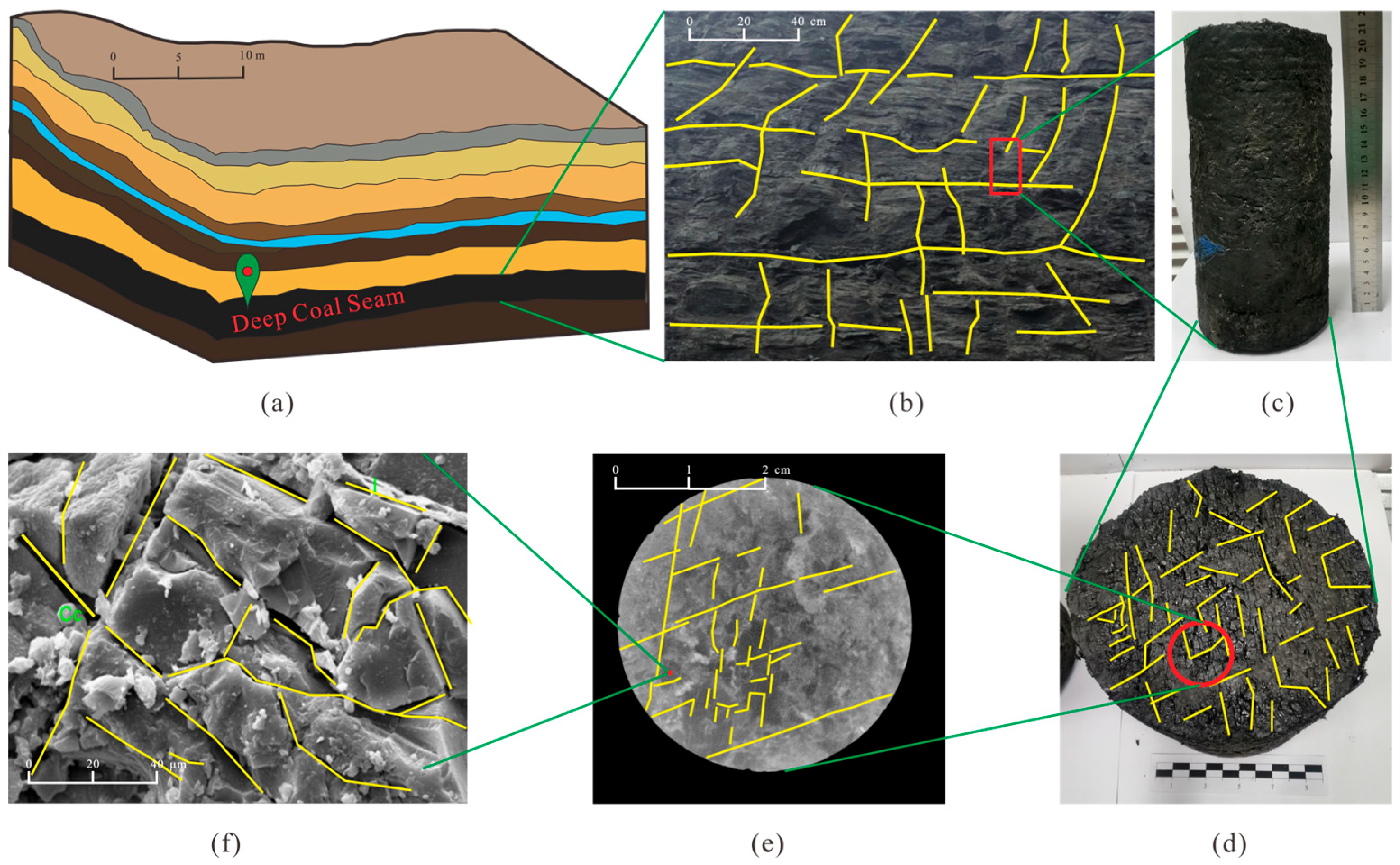
Figure 1). The hierarchical, heterogeneous, and approximately self-similar characteristics observed within a finite scale range provide a structural basis for describing its dynamic response using fractal networks.
In recent years, researchers worldwide have conducted a series of studies on fractal viscoelastic models of rock and their dispersion and attenuation characteristics [
26,
27,
28,
29]. Although traditional phenomenological fractal models can fit experimental data reasonably well, their parameters are mostly tuning parameters without clear physical significance. To overcome this limitation, Zhao et al. developed a two-component physical fractal viscoelastic model based on the interlaced cubic structure of coal, which effectively captured the precise dynamic response of dry coal at low frequencies [
30].
However, this model only considers the elastic deformation of the matrix and the viscous dissipation due to friction at microfracture surfaces. It does not account for the influence of pore fluids and is therefore unable to characterize the differentiated attenuation mechanisms in fluid-saturated coal reservoirs. Therefore, this paper constructs a three-component fractal viscoelastic model by introducing independent fractal fluid viscous dissipation elements, thereby enabling the decoupled quantitative characterization of skeletal and fluid relaxation mechanisms. The two fractional orders, α and β, defined in the model have clear physical meanings. The fractional order α characterizes the intrinsic fractal properties of the coal-rock matrix–fracture skeleton system and is used to quantitatively describe the solid dissipation behavior resulting from organic matrix skeleton friction and matrix relaxation; the fractal order β characterizes the fractal topological features of fluid flow within the fracture network and is used to describe fluid viscous dissipation induced by pore fluid flow and jet effects. The two fractal orders are independent of each other, enabling the differentiated quantitative characterization of the two physical processes: solid skeleton dissipation and fluid dissipation. Currently, fractal coupling models that account for the unique pore structure of coal and gas adsorption effects still require further development. Simultaneously, there is a relative lack of systematic low-frequency experimental data on the multifactorial coupling of effective stress, temperature, and gas adsorption capacity under coal seam stress conditions. A unified understanding of the regulatory mechanisms and evolutionary patterns of these factors on fractal model parameters has yet to be established.
This study focuses on two coal samples from the Linxing-Shenfu block in the Ordos Basin. The pore structure and physical properties of the samples were systematically characterized through multiscale experiments. Building upon the two-component physical fractal model for dry coal, an independent fluid viscosity term was introduced to establish a three-component physical fractal viscoelastic model. Through low-frequency rock physics experiments, the effects of effective stress, temperature and gas adsorption conditions on dispersion and attenuation were compared within the 4–320 Hz frequency range. Finally, the study revealed the differential regulatory mechanisms of various factors on fractal parameters, providing theoretical support for seismic dispersion inversion and reservoir characterization of coalbed methane.
The remainder of this paper is organized as follows.
Section 2 describes the basic physical properties and pore-fracture structural characteristics of coal samples from the study area.
Section 3 presents a three-component physical fractal viscoelastic model that accounts for skeleton–fluid bifractal dissipation and derives its theoretical formula for frequency-dependent damping.
Section 4 introduces the instrumentation used for low-frequency rock physics experiments.
Section 5 describes the low-frequency rock physics experiments conducted under various conditions and presents the model parameter fitting and mechanism analysis. Finally, the conclusions of the study are summarized.
2. Experiment on Rock Physical Properties
The two coal samples used in this experiment were both taken from the 8 + 9# coal seams (LS-1 and LS-2) in the Linxing-Shenfu block of the Ordos Basin. To establish the relationship between coal composition, pore-fracture structure, and dynamic response, their basic physical properties and pore characteristics were characterized through experimental testing. Basic physical property parameters included industrial analysis and coal microstructural composition testing to determine coal quality and lithological characteristics, while pore structure was characterized at multiple scales using the helium porosity method, a transient permeability meter, low-temperature nitrogen adsorption, and 3D CT imaging.
2.1. Testing of Physical Properties
The testing of fundamental physical properties centered on industrial analysis and coal microstructural composition. In accordance with GB/T 212-2008 and GB/T 8899-2008 [
31,
32], the moisture content, ash content, volatile matter, and fixed carbon content of the coal and rock were systematically determined to accurately identify the proportions of microstructural components, thereby providing a foundation for analyzing the influence of the matrix composition on elastic parameters. The experimental results are shown in
Table 1.
The industrial analysis results indicate that the ash contents of LS-1 and LS-2 are 13.22% and 10.74%, respectively, classifying the coal as medium-ash. Inorganic mineral content was 7.19% and 9.12%, respectively, consisting primarily of clay minerals, quartz and other clastic minerals. These fine-grained minerals are mostly present as fillers within the matrix pores and fractures, which can cause localized interference in helium porosity test results. On the one hand, fine clay minerals have the property of adsorbing and retaining helium, which slightly increases the gas adsorption capacity and results in higher porosity test values. On the other hand, mineral filling blocks some interconnected pores, disrupts pore flow pathways, and reduces the effective interconnected pore volume, leading to a certain degree of deviation in the measured effective porosity. The volatile matter contents were 16.01% and 20.20%, respectively, corresponding to LS-1 as lean coal–poor lean coal and LS-2 as fat coal–coking coal with a relatively low degree of thermal metamorphism. Microstructural analysis shows that both samples are dominated by the vitrinite group, with poorly developed pore structures in the inertinite group and extremely low contents of the liptinite group and natural coke, whose impact on overall properties is negligible.
The nanoscale pore system formed through thermal evolution serves as the primary carrier for gas adsorption, providing a solid foundation for the experiments. Industrial analysis and microscopic composition characteristics jointly determine the differences in pore structure between the two samples.
Due to its relatively higher degree of metamorphism, LS-1 exhibits enhanced rearrangement and polycondensation of coal macromolecules, resulting in the formation of more developed nanoscale micropores (<2 nm) and mesopores (2–50 nm) with a larger specific surface area. However, the high content of inert matter and ash, coupled with a significant mineral filling effect, reduces its effective porosity and gas diffusion capacity, thereby lowering the effective porosity.
Although LS-2 exhibits a slightly lower degree of metamorphism, it has a higher vitrinite content. Its thermally induced pore system is also dominated by adsorbent micropores, with a relatively higher proportion of mesopores (50–1000 nm) and better pore connectivity.
Overall, both samples are suitable for experiments involving the adsorption of different gases and low-frequency response comparisons. Furthermore, the differences between them in terms of metamorphic degree, microscopic composition, and the resulting pore structures provide ideal comparative samples for a systematic study of the intrinsic relationship among coal metamorphic degree, pore characteristics, and adsorption-mechanical responses.
2.2. Pore Characterization Tests
Pore structure was characterized with a combined multi-method approach. Total porosity was measured with a helium porosimeter and permeability with a transient permeability meter (
Table 2). Low-temperature nitrogen adsorption quantified the mesopore size distribution, specific surface area, and pore volume, while 3D CT imaging visualized the macropores and fracture systems and provided their structural parameters. It should be noted that, due to the resolution limitations of the experimental equipment, there are scale-related limitations in the integration of these two testing methods: low-temperature liquid nitrogen adsorption can only accurately identify nanoscale pores ranging from 2 nm to 50 nm and cannot characterize micron-scale fissures; meanwhile, CT imaging has a lower detection limit of tens of micrometers and fails to identify nanoscale pore structures. Both methods have observational blind spots at the submicron scale. However, these observational blind spots at this scale do not affect the core research and model construction in this paper and provide guidance for the selection of model parameters.
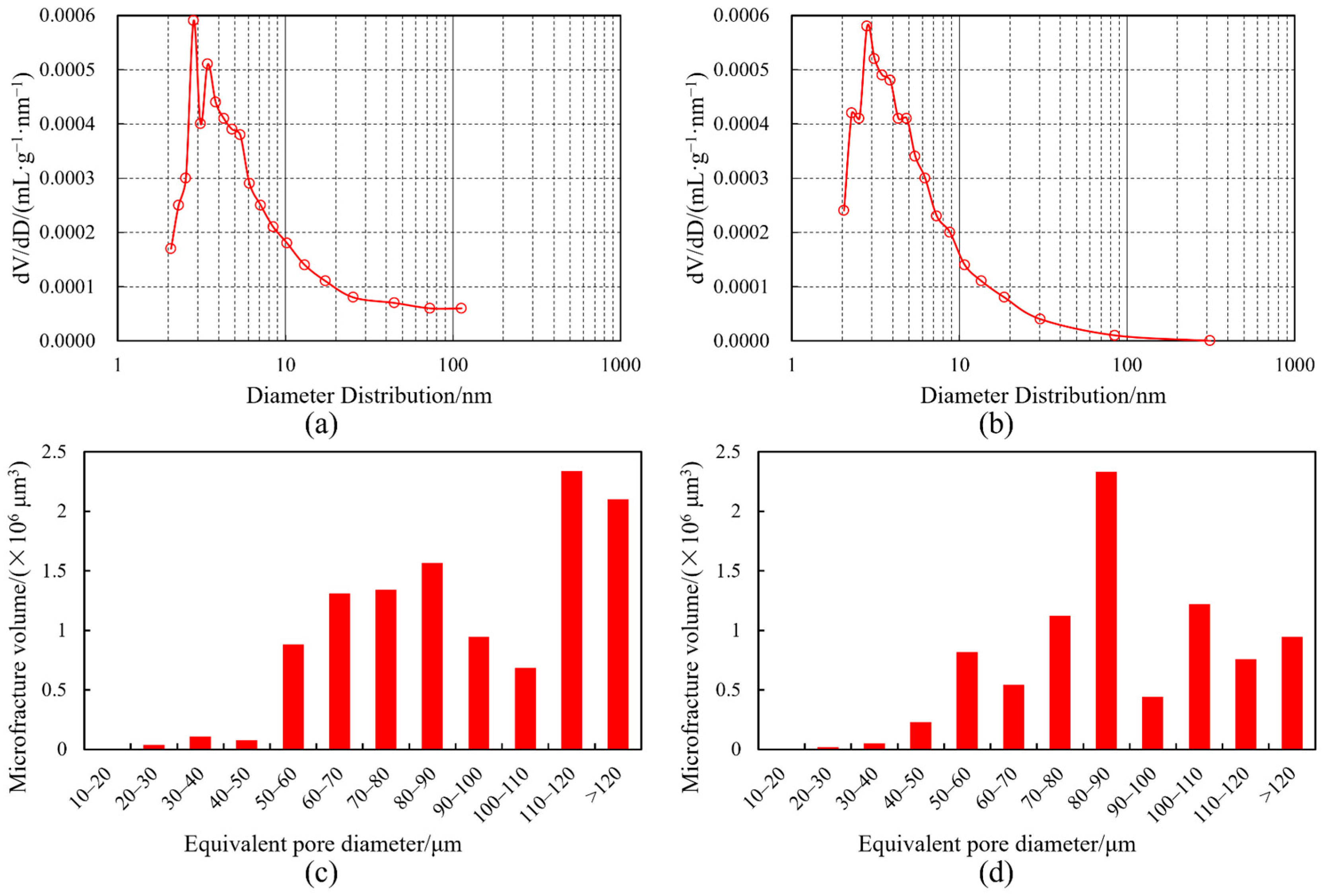
As shown in
Figure 2a,b, the differential pore distribution curves of the nanoscale matrix pores for the two samples, obtained from low-temperature liquid nitrogen adsorption experiments, exhibit highly consistent characteristics: the minimum pore diameter is around 3.0 nm for both, and the peak differential pore volume reaches 0.0006 mL·g
−1·nm
−1 for both. This indicates that during the deposition of Coal Seams 8 + 9 in the Linxing-Shenfu block, the aquatic environment was stable and the supply of organic matter was uniform. Consequently, the degree to which compaction and cementation during the early diagenetic stage modified the pores in the coal-rock matrix throughout the entire area tended to be consistent. At the same time, tectonic movements in the study area were dominated by weak tectonic uplift, with no intense tectonic compression or shear deformation occurring. Subsequent tectonic modifications had a limited impact on the destruction and alteration of the nanoscale primary matrix pores, ultimately resulting in the uniform development of matrix pores and a consistent pore size distribution across all coal samples in the region. This confirms the evolutionary pattern in the study area, where the primary matrix pores of the coal and rock were primarily controlled by sedimentary and diagenetic processes, with subsequent tectonic modifications playing a secondary role.
In stark contrast to the uniformity of the matrix porosity, the developmental characteristics of the micron-scale microfracture systems in the two samples differ fundamentally (
Figure 2c,d), reflecting the differential remodeling effects of late-stage tectonic deformation. The microfracture pore size distribution in the LS-1 sample is relatively broad and uniform, with a peak in the 110–120 μm range. Whereas the micropore distribution in the LS-2 sample exhibits a distinct single-peak concentration, with the peak in the 80–90 μm range. This difference stems from the differential tectonic stresses acting during the late diagenetic stage of Coal Seams 8 and 9; variations in the intensity of local tectonic stresses led to differences in the initiation and expansion of coal-rock fractures, resulting in significant distinctions in fracture scale and development density between the two sample types.
The differences in pore structure provide direct microscopic experimental evidence for the physical significance of the parameters in the fractal viscoelastic model: finer microcrack pore sizes increase fluid flow resistance, leading to longer fluid relaxation times; a higher microcrack volume fraction increases the number of fracture surfaces involved in sliding friction, resulting in longer skeletal relaxation times. The cross-frequency dynamic elastic-mechanical response characteristics of coal are governed by the development features of the pore-fracture system, which provides an important theoretical basis for inferring the degree of pore-fracture development in coal reservoirs based on seismic data.
3. Construction of a Physical Fractal Model for Fluid-Saturated Coal
The three-component physical fractal viscoelastic model proposed in this paper is a general theoretical framework applicable to fluid-saturated coal bodies with self-similar pore-fracture hierarchical structures, and is not limited to specific mining areas or coal seams; the model’s core modeling logic, the form of the constitutive operators, and the derivation process of the complex moduli are universally applicable to all types of fluid-saturated coalbed methane reservoirs. The samples from the Linxing-Shenfu block serve only as a case study for validation.
Fluid-saturated coal is a complex two-phase medium composed of a solid coal matrix and pore-fracture fluids. Its internal pore-fracture system exhibits a cross-scale, multi-level self-similar topological structure ranging from nanoscale matrix pores to meter-scale macroscopic joints, satisfying the infinite-level self-similarity characteristic of physical fractal theory; that is, the mechanical conduction behavior of pore-fracture units at any scale remains consistent with that of the bulk coal.
The existing two-component physical fractal model proposed by Zhao et al.applies only to dry coal, describing single-component friction dissipation in the matrix [
30]. It fails to distinguish between the two independent relaxation processes of the matrix and pore fluid, lacks a fractal component for fluid viscosity, and thus struggles to quantitatively predict the frequency dispersion and attenuation of fluid-saturated coal seams in the seismic frequency range. Therefore, based on the physical fractal modeling framework proposed by Yin Yajun’s team, this study adds an independent fluid viscous dissipation element to the two-component fractal network for dry coal, thereby constructing a three-component fractal viscoelastic model that incorporates skeletal elasticity, skeletal viscosity, and fluid viscosity.
The elastic deformation of the solid coal matrix is modeled as an elastic component, while the viscous dissipation resulting from the internal friction of organic molecular chains and the friction at microfracture surfaces is modeled as one viscous component, and the viscous dissipation caused by the flow of pore fluid through the fractal fracture network is modeled as another viscous component. By introducing independent fractional orders α for the skeleton and β for the fluid, we fully derive the analytical solutions for the time-domain fractional-order constitutive equations and the frequency-domain complex moduli, thereby achieving quantitative decoupling of matrix friction dissipation and fracture fluid dissipation. Through numerical parameter sensitivity tests, we elucidate the differentiated control mechanisms of the two types of fractional orders and the relaxation time. By comparing these results with existing fractal models of dry coal, we provide a comprehensive theoretical framework for fitting low-frequency multiphysics experiments.
3.1. Physical Fractal Constitutive Operator
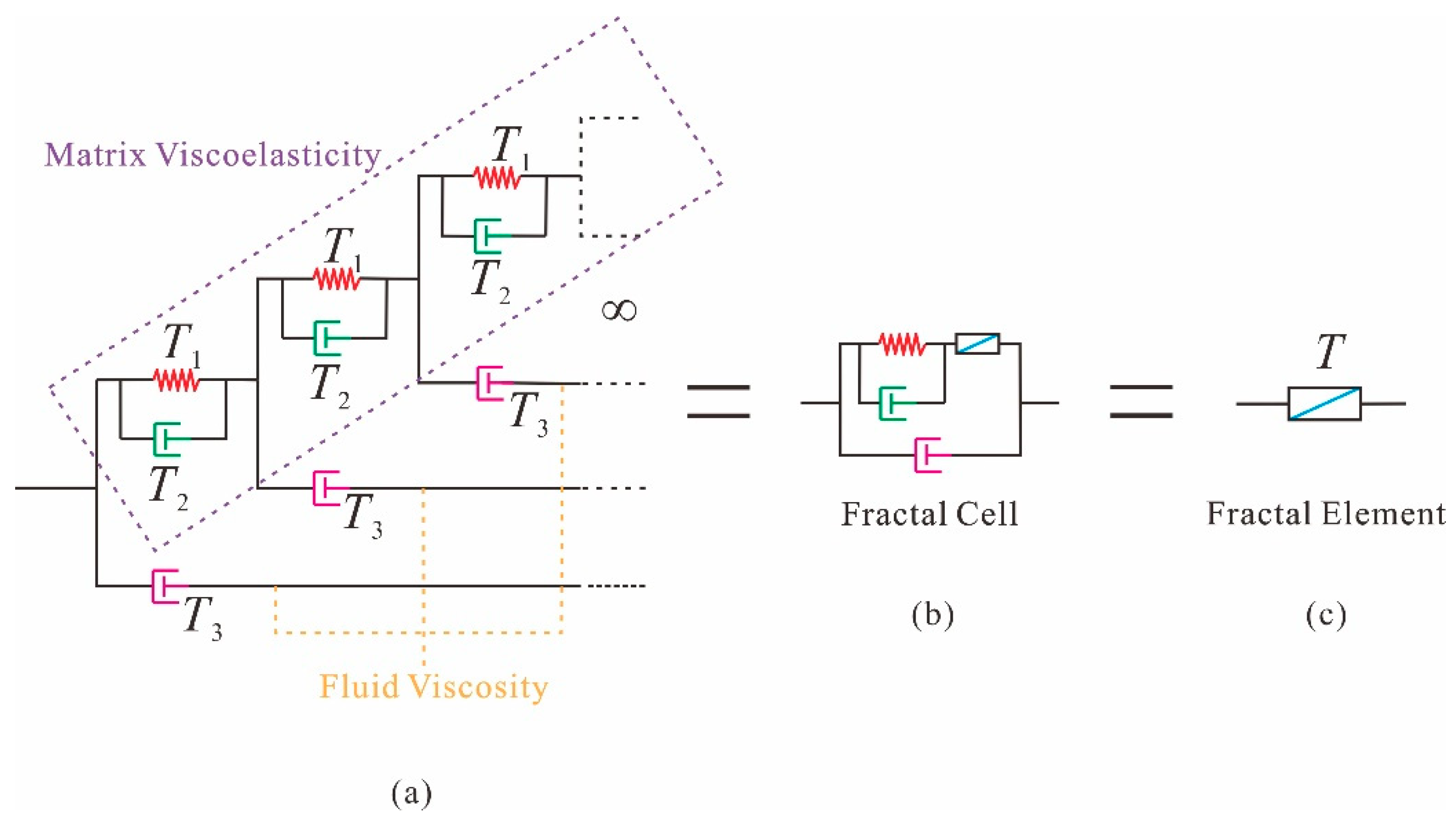
Fluid-saturated coal is a two-phase fractal medium consisting of a solid skeleton and pore fluid, with fractures ranging from nanoscale micropores to meter-scale joints. The mechanical behavior of any local fracture unit satisfies the self-similarity hypothesis of the fractal medium as a whole. A multi-scale fractal fracture network can be equivalently characterized by infinitely nested basic fractal cells. Each cell contains three types of mechanical units: the elastic element describes the instantaneous elastic deformation of the coal organic matter matrix, while the matrix viscosity element characterizes energy dissipation caused by internal friction within organic matter molecular chains and friction at microfracture surfaces, corresponding to matrix fractal relaxation and introduced via a fractional order α. The fluid viscosity element characterizes viscous dissipation generated by fluid seepage and jet flow within the fractal fracture network, corresponding to fluid fractal relaxation and introduced via a fractional order β.
The constitutive equations for each element are shown in
Table 3.
G is the elastic modulus,
η2 is the matrix viscosity coefficient,
η3 is the fluid viscosity coefficient,
τ2 =
η2/
G is the characteristic relaxation time of the matrix, and
τ3 =
η3/
G is the characteristic relaxation time of the fluid.
Common definitions of fractional-order derivatives include the Caputo definition and the Riemann-Liouville definition. Although the Riemann-Liouville definition is mathematically more concise, its fractional-order initial conditions lack physical significance and lead to the contradiction of nonzero stresses arising from static strains; therefore, it is not suitable for describing constitutive equations. In contrast, the initial conditions in the Caputo definition involve integer-order derivatives, which have clear physical significance and can be measured experimentally. Furthermore, the Caputo derivative of a constant is 0, which is consistent with the fundamental laws of elasticity. Therefore, in this paper, the Caputo definition of fractional-order derivatives in the time-domain constitutive equations is adopted as defined by Equation (1):
where
m = [
γ] is the smallest integer greater than
α, Γ(·) is the Gamma function, and
f(m)(
τ) denotes the
mth-order derivative of
f(
τ).
t0 represents the lower limit of integration for Caputo’s fractional-order derivative and determines the starting time for accumulating deformation history information. Under cyclic seismic-like loading conditions, the integration accumulates the entire prior strain history within the interval [
t0,
t], which is the physical basis for the memory-viscoelastic behavior of the fractional-order model. Setting
t0 = 0 fully preserves all deformation memory starting from the stress-free initial state, consistent with the zero-initial-condition setting used in the experiments in this paper. If a nonzero
t0 is selected, the historical memory would be artificially truncated, resulting in erroneous stress results under periodic cyclic excitation. Therefore, all calculations in this paper uniformly adopt
t0 = 0, this setting also satisfies the zero-initial-condition requirement for the subsequent Fourier transform.
A self-similar mechanical network model was abstracted from fluid-saturated coal exhibiting physical fractal characteristics, as shown in
Figure 3a. The abstracted fractal is a type of physical fractal first proposed by Professor Yin Yajun of Tsinghua University, which focuses on physical phenomena and processes and is more conducive to revealing physical mechanisms [
33,
34].
Figure 3a: The series-parallel nested fractal network is not merely a mathematical construct, but a physical abstraction of the self-similar mechanical behavior of the multiscale pore-fracture network in coal. From nanoscale microfractures to meter-scale cleavages, three universal mechanical behaviors are present at every level of coal fracture units: instantaneous elastic compression of the coal matrix, dissipation in the solid framework due to friction at fracture interfaces, and viscous dissipation caused by localized fluid flow within the pores. Each fractal unit represents a representative fracture unit at a specific scale. The parallel combination of
T1 and
T2 characterizes the simultaneous elastic deformation and skeletal friction occurring within a coal block. Series coupling enables the transmission of stress to self-similar fracture subsets at smaller scales. The parallel arrangement of the viscous fluid element
T3 depicts localized fluid flow across fractures at different scales. Based on the principle of physical fractal equivalence, infinitely nesting fractal elements with consistent mechanical behavior allows for the equivalent simulation of the macroscopic viscoelastic response of real multi-scale fractured coal media. This mechanical network model satisfies the principle: 1 fractal cell = fractal element = the entire fluid-saturated coal mass.
The internal component connections within the fractal cell element are shown in
Figure 3b. First, the skeletal elastic element
T1 and the skeletal viscous element
T2 are connected in parallel to characterize the elastic-friction coupling response of the coal-rock matrix. The total constitutive operator
T12 of the parallel combination is expressed as:
the total constitutive operator
T′ of the parallel combination
T12 connected in series with the fractal element
T is expressed as:
according to the self-duality condition, the total constitutive operator of the system formed by the series combination
T′ in parallel with the fluid viscous element
T3 equals the fractal element constitutive operator
T:
simplifying yields a univariate quadratic equation in
T:
Taking the positive root with clear physical significance (the constitutive operator is positive):
3.2. Constitutive Equations of the Fractal Model
Substituting
T1 = 1,
T2 =
τ2αpα, and
T3 =
τ3βpβ into the constitutive mapping gives the operator-form time-domain constitutive equation, Equation (7):
when
α =
β = 1, the model degenerates into the traditional integer-order three-component viscoelastic model, verifying the degeneracy consistency of the fractal operators in this paper.
Substituting the fractal operator expressions into the constitutive equation (stress–strain mapping
σ =
T(
p)
ε) yields the operator-form time-domain constitutive equation:
based on fractional calculus, by introducing a Caputo-form fractional differential expression, the time-domain constitutive equation with clear physical meaning can be expressed as:
Performing a Fourier transform on the time-domain constitutive equation and utilizing the Fourier transform properties of the Caputo differential under zero-initial conditions
(where
is the angular frequency and
F(
ω) is the Fourier transform of
f(
t)), we obtain the frequency-domain constitutive equation:
where
σ*(
ω) is the Fourier transform of stress,
ε*(
ω) is the Fourier transform of strain, and
M*(
ω) is the complex modulus, which is the core physical quantity describing viscoelastic behavior in the frequency domain:
it should be noted that numerically solving for the complex fractional powers (
iω)
α and (
iω)
β in Equation (11) across the frequency range of earthquakes presents issues of numerical singularity at low frequencies. As
ω → 0, small angular frequencies amplify the relative computational errors of fractional orders
α and
β, which can easily introduce noise into the loss modulus. MATLAB software with double-precision floating-point arithmetic was used, and the lower limit of the calculation frequency was set to 1 Hz to mitigate the problem of low-frequency numerical singularity.
Using Euler’s formula, the complex modulus can be separated into its real and imaginary parts:
where
M′(
ω) = Re[
M*(
ω)] is the storage modulus, describing the energy stored during elastic deformation.
M″(
ω) = Im[
M*(
ω)] is the loss modulus, describing the energy dissipated due to viscosity.
To verify that the physical fractal model can describe the dispersion and attenuation of elastic waves in fluid-saturated coal, a numerical simulation of dispersion and attenuation is required. The exact formula for the P-wave velocity is:
where
ρ is the density of the medium. For coal, attenuation is relatively weak, satisfying
M″(
ω) <<
M′(
ω). In this case,
, yielding the following approximate expression for the P-wave velocity:
The attenuation coefficient is defined as the reciprocal of the quality factor
Q. It is a dimensionless parameter that quantitatively describes the degree of attenuation in a medium. In the field of geophysics, it is generally defined as:
3.3. Influence of Model Parameters
Univariate numerical experiments were conducted in the 1–10
4 Hz frequency range. All calculations were performed on a standard workstation (AMD Ryzen 7 5800H processor: Advanced Micro Devices, Inc., Santa Clara, CA, USA, 16 GB of RAM, Windows 10 operating system). The numerical code was developed by the authors using in-house scripts based on MATLAB R2019a: MathWorks, Inc., Natick, MA, USA (no commercial solvers were used). The computational process is based on the analytical complex modulus formula derived in
Section 3.2, which does not require iterative discretization or the setting of convergence criteria. The calculations employed a univariate control method: only one target parameter (skeleton fractional order
α, fluid fractional order
β, skeleton relaxation time
τ2, or fluid relaxation time
τ3) was adjusted at a time, while the remaining parameters were held constant, in order to isolate their independent regulatory effects on velocity dispersion and attenuation. The simulation results of the newly developed three-component model were quantitatively compared with those of the two-component dry coal model by Zhao et al. [
30]. The baseline parameters and their bounds used in the numerical simulation are shown in
Table 4.
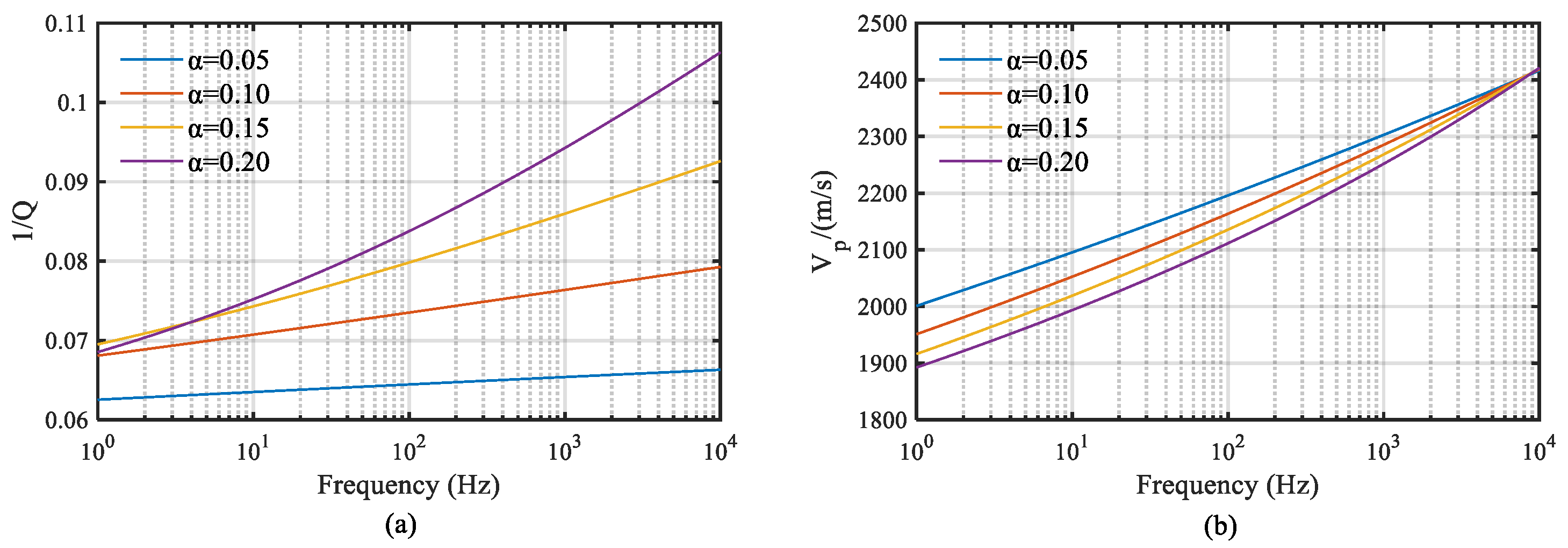
Figure 4 shows the effects of the skeletal fractal order
α on the attenuation and P-wave velocity of the physical fractal model for fluid-saturated coal. Within the simulation frequency range, both the attenuation coefficient 1/
Q and the P-wave velocity
Vp exhibit a monotonically increasing trend with rising frequency. Where an increase in
α significantly elevates the attenuation level while simultaneously enhancing the frequency dependence of attenuation (
Figure 4a). Meanwhile, the P-wave velocity curve shown in
Figure 4b indicates that
α exerts a more pronounced regulatory effect on low-frequency velocities: the higher the value of
α, the lower the low-frequency P-wave velocity. As frequency increases, the velocity curves corresponding to different values of
α gradually converge.
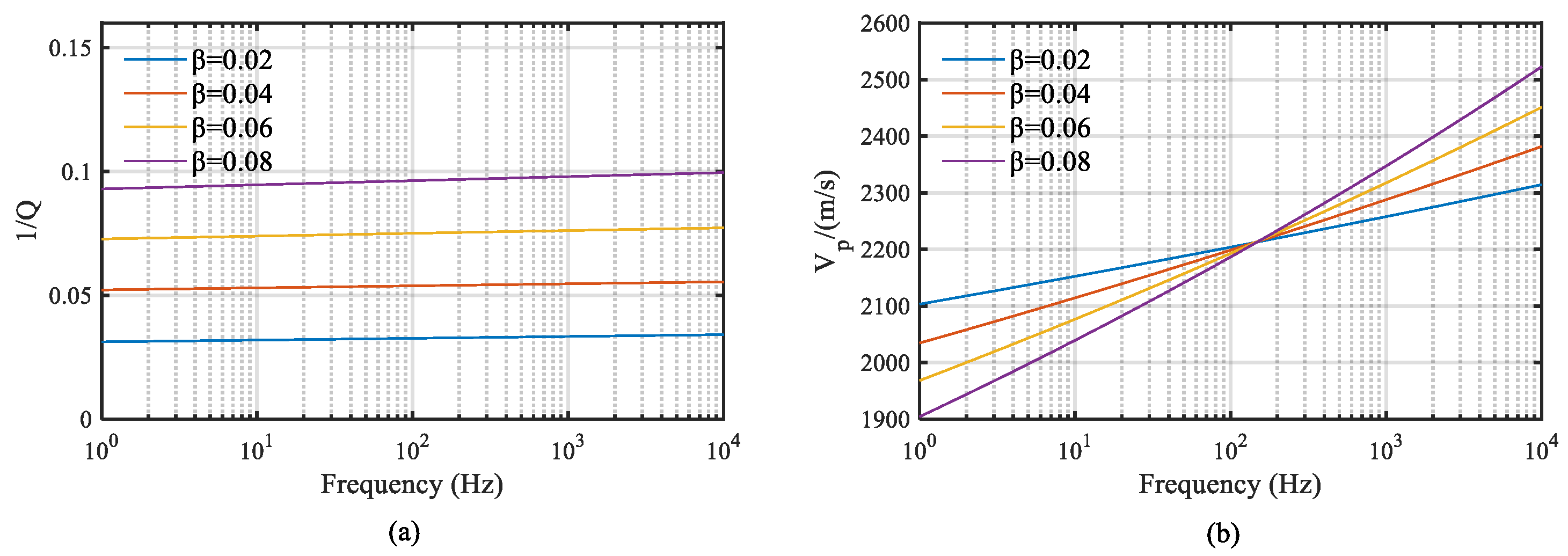
Figure 5 illustrates the influence of the fluid fractal order
β on the attenuation coefficient and P-wave velocity in a fractal viscoelastic model of fluid-saturated coal.
β exerts a significant positive regulatory effect on the attenuation baseline. Higher values of
β result in higher attenuation levels within the simulation frequency range (
Figure 5a). Unlike the effect of the skeleton fractal order
α,
β not only raises the overall attenuation level but also alters the slope of attenuation versus frequency. However, its controlling effect is significantly weaker than that of
α.
Figure 5b shows that
β is the key parameter controlling the intensity of dispersion: as
β increases, the dispersion phenomenon in the frequency-dependent P-wave velocity becomes increasingly pronounced.
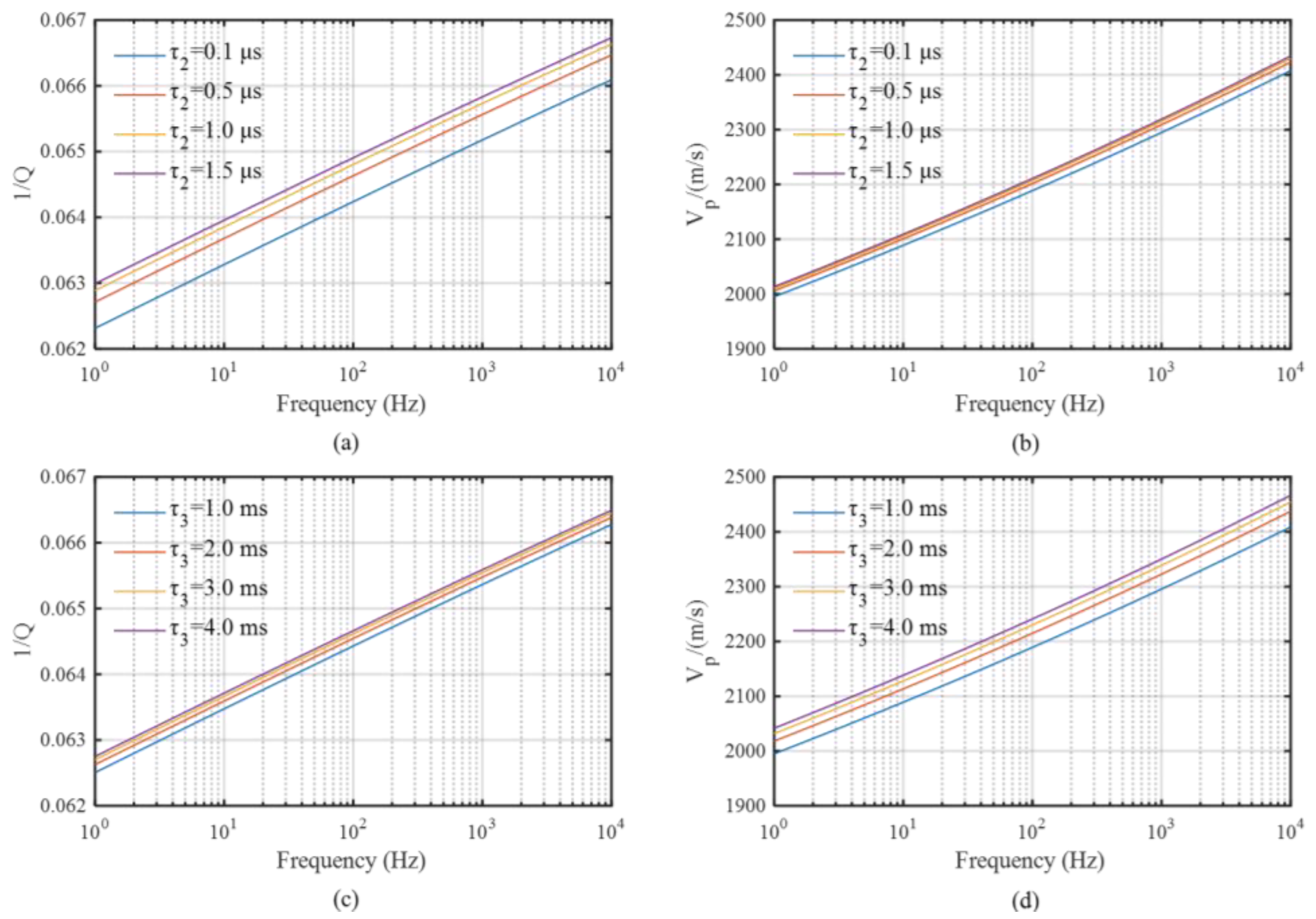
Figure 6 illustrates the effects of the matrix relaxation time
τ2 and the fluid relaxation time
τ3 on the attenuation coefficient and P-wave velocity of the fractal viscoelastic model for fluid-saturated coal. Both
τ2 and
τ3 exert a regulating effect on attenuation and P-wave velocity characterized by an overall upward shift; they cause only a slight translation of the attenuation and velocity curves without altering the overall shape or growth trend of the curves. Their regulatory effects are far smaller than those of the skeleton fractal order
α and the fluid fractal order
β, classifying them as weakly sensitive parameters. However, there are differences in their influence on attenuation and P-wave velocity:
τ2 exerts a stronger control over attenuation, while
τ3 has a stronger influence on P-wave velocity.
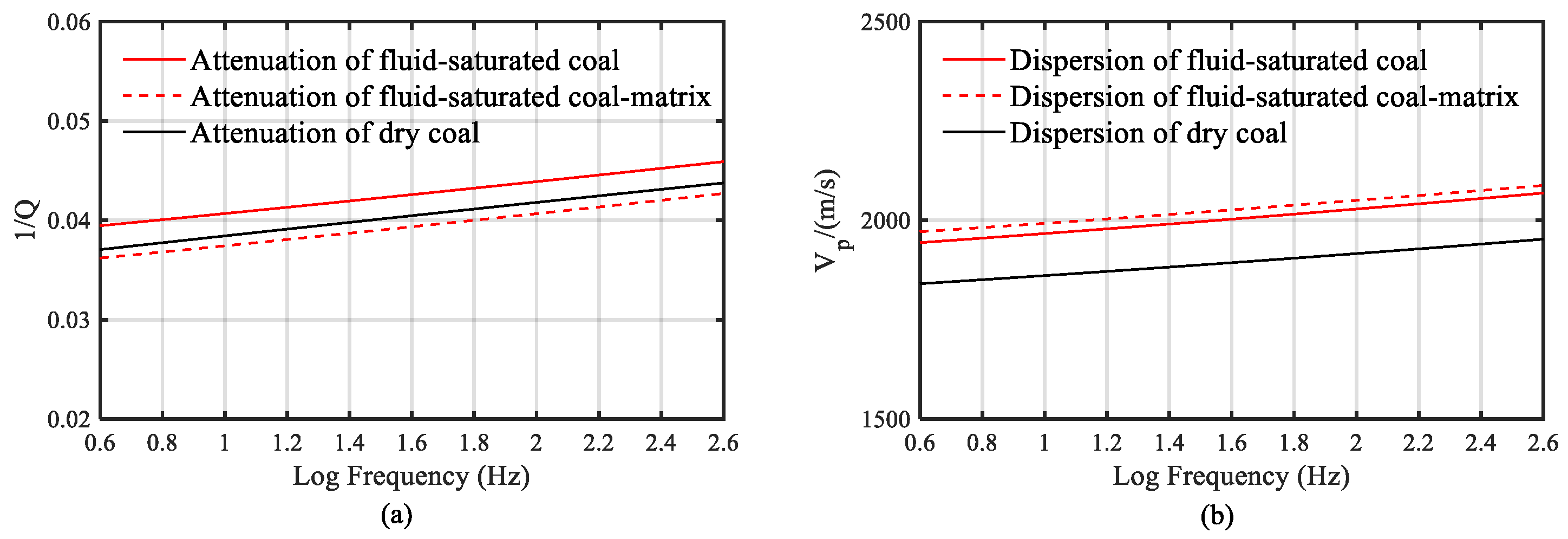
A comparison of the attenuation coefficients and P-wave velocities of the newly developed three-component physical fractal model characterizing the dispersion attenuation of fluid-saturated coal with those of the two-component self-similar viscoelastic model for dry coal characterized by Zhao et al. [
30], which characterizes the dissipation coefficients and P-wave velocities of dry coal, is shown in
Figure 7. The black solid line represents the simulation curve from the Zhao et al.’ model, the red solid line represents the simulation curve from the newly developed three-component model, and the red dashed line represents the simulation curve from the newly developed model that ignores the fluid effect. It can be seen that the equivalent viscosity coefficient of the two-component self-similar viscoelastic model combines both skeletal and fluid dissipation, making it impossible to separate the two types of attenuation; whereas the three-component model presented in this paper can independently decompose the skeletal and fluid attenuation components.
As shown in
Figure 7a, the attenuation values from Zhao et al.’s model fall between the skeletal attenuation and the overall attenuation curves identified by the newly developed model. This is because their model does not distinguish between the origins of dissipation and follows an “overall equivalent” modeling approach. The equivalent viscosity coefficient incorporates dual contributions from both the skeleton and the pore fluid, whereas the newly developed three-component model performs a detailed decomposition of coal dissipation mechanisms. The pure skeleton term corresponds solely to friction at fracture surfaces, while pore fluid dissipation is assigned to another component for coupled characterization. Consequently, the amplitude of the decomposed pure skeleton attenuation is lower, while the amplitude of the overall attenuation, which includes the fluid component, is higher, resulting in a clearer physical interpretation of each parameter.
As shown in
Figure 7b, the P-wave velocity in Zhao et al.’s dry coal model is generally the lowest because the air in the dry coal fissures cannot provide effective support to the fissure walls, resulting in a relatively low overall equivalent stiffness of the coal matrix. In contrast, the simulated P-wave velocity curve that ignores the fluid effect is at the highest point because it reflects only the intrinsic stiffness of the coal matrix. The stiffness reduction caused by fractures and the additional supporting effect of the fluid are integrated into the fluid relaxation module for coupled calculation, resulting in an overall P-wave velocity curve that is slightly lower than that of the two-component model.
4. Low-Frequency Rock Physics Experiments
Dispersion and attenuation are important dynamic properties of rocks; they are not only closely related to the rock’s pore structure, fluid type, and saturation, but are also directly linked to environmental conditions such as stress state and temperature [
11]. In seismic exploration, the operational frequency range is concentrated between a few hertz and several hundred hertz; high-frequency ultrasonic experiments cannot directly match the wave propagation dynamics of subsurface reservoirs, and dispersion effects can cause significant discrepancies between theoretical predictions and measured data [
35]. Therefore, conducting low-frequency rock physics experiments in the seismic frequency range and establishing a quantitative mapping relationship between laboratory measurements and in situ seismic responses has become a key foundation for detailed reservoir characterization, fluid identification, and the quantitative interpretation of seismic attributes.
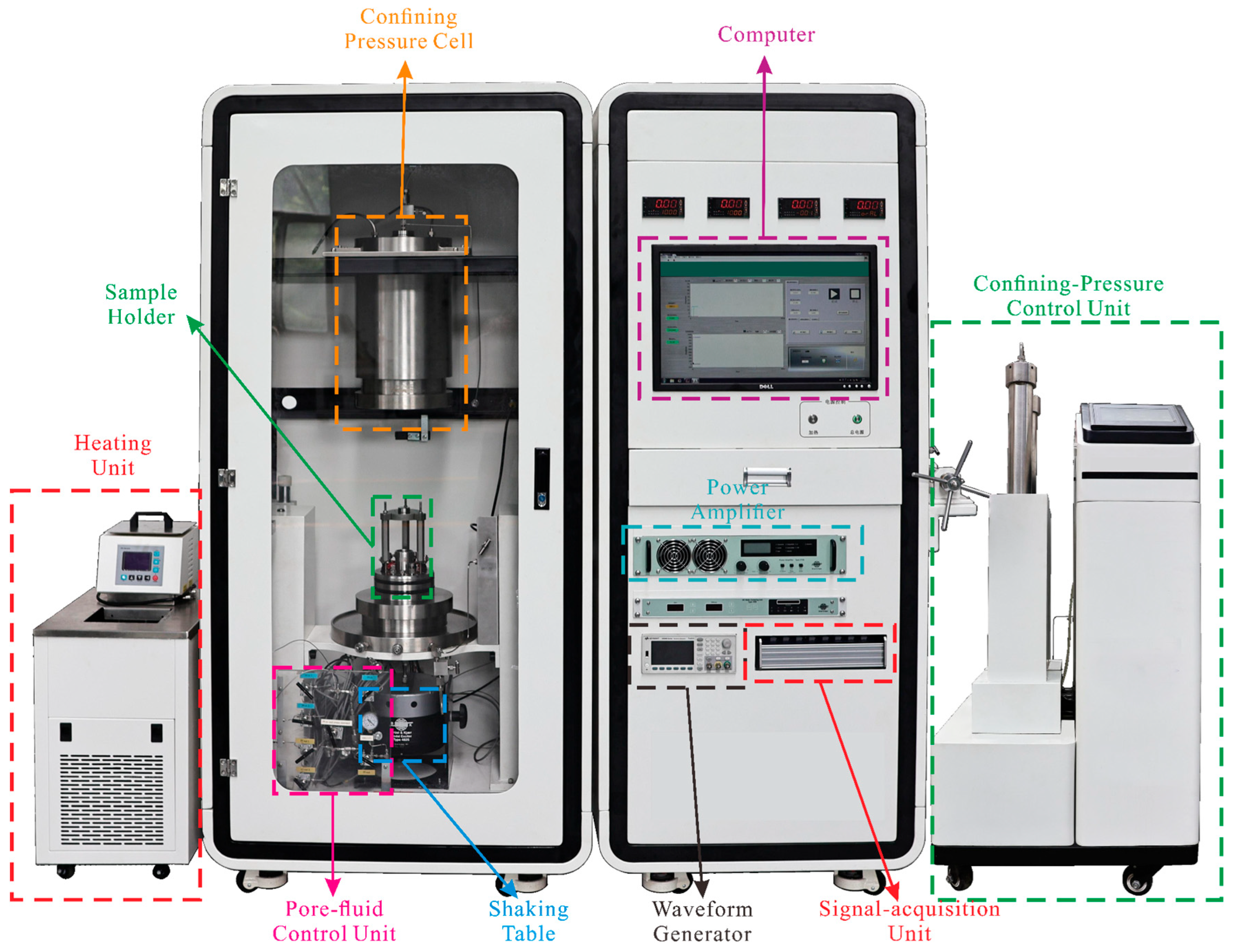
The low-frequency rock physics testing system comprises four functional units: vibration excitation, confining and pore pressure control, temperature regulation and signal acquisition (
Figure 8).
The vibration excitation unit consists of a function generator, a power amplifier, and a shaker. It generates sine excitation signals with stable amplitude and a maximum excitation force of 200 N, ensuring the rock remains within the linear elastic deformation regime and precluding measurement artifacts caused by nonlinear deformation under large strains. To address the attenuation of low-frequency (4 Hz) excitation forces, this can be compensated for by increasing the gain of the power amplifier, thereby mitigating the loss in signal-to-noise ratio caused by the decrease in signal amplitude at the excitation end. Additionally, our research group has published a study in which we developed an amplitude- and phase-preserving FIR bandpass filter algorithm for weak signals for this acquisition system. This algorithm suppresses broadband noise without introducing spurious phase shifts, ensuring reliable calculation of the phase difference and attenuation 1/
Q [
36].
Highly stable silicone oil is adopted as the confining pressure medium, with a confining pressure control range of 0–70 MPa. Compared with conventional gas media, this configuration delivers superior pressure stability and operational safety. Under high-stress cyclic loading conditions, mechanical strain in the apparatus is caused by deformation of the pressure cell and frictional forces within the internal clearances of the sample holder. Prior to formal testing, calibration experiments are conducted on aluminum samples at the target confining pressure to evaluate the background strain introduced by the hardware. The calibration results indicate that the magnitude of the strain introduced by the apparatus is significantly lower than the effective strain signal of the rock samples and thus has a limited impact on the analysis of dispersion–attenuation behavior.
The pore fluid servo system supports a maximum operating pressure of 15 MPa. Given the significant differences in the molecular dynamic diameters of He, N2, and CO2, as well as in the adsorption kinetics of the coal matrix, this experiment did not employ a uniform equilibration time at a constant pore pressure. Instead, differentiated equilibration times were set. Since helium is hardly adsorbed by the coal matrix, the equilibration time was set to 120 min; nitrogen, being a gas with moderate adsorption, required 240 min; CO2 exhibits strong adsorption and was set at 480 min. A real-time pore pressure drift of less than ±0.02 MPa/h was used as the criterion for dynamic equilibrium to ensure that the pore fluid–adsorption system reached a stable state.
The pressure autoclave regulates temperature via a circulating silicone oil bath, with an operating range of 5 °C to 70 °C. During continuous testing lasting several hours, after the target temperature is reached, maintain the temperature for at least 120 min before initiating the frequency scan to ensure that the temperature distribution within the coal sample is sufficiently uniform. For test conditions involving temperature changes, an additional thermal soak of no less than 120 min must be performed after each adjustment of the temperature setpoint to eliminate internal temperature gradients in the sample. Throughout the entire testing process, real-time temperature fluctuations must be controlled within ±0.2 °C.
The signal acquisition unit includes an 8-channel Wheatstone bridge, differential amplifiers, and a high-speed data acquisition card. Strain signals are amplified by a gain of 2000, and the sampling frequency is adaptively tuned to match the excitation frequency [
36].
To validate the three-component, double-fractal-order viscoelastic model presented in this paper and to quantitatively distinguish the differential control mechanisms of four external conditions (effective stress, pore fluid, temperature, and gas adsorption) on coal P-wave velocity, attenuation coefficient, and fractal model parameters, we selected the 4–320 Hz seismic frequency band and conducted six sets of cross-frequency-band rock physics measurements on two samples under different experimental conditions. The standardized control variables are shown in
Table 5.
In Groups 1 and 2, only the effective stress was varied without fluid interference, allowing for a separate analysis of the impact of fracture closure-induced fractal topological changes on coal dispersion attenuation. The comparison between Groups 2 and 3 is used to distinguish between skeletal attenuation and fluid attenuation, comparing the effects of fluid presence on coal dispersion attenuation. The comparison between Groups 3 and 4 maintains identical effective stress and fluid conditions while varying only temperature, independently analyzing how temperature’s scaling effect on relaxation time influences coal dispersion attenuation. Comparisons between Groups 3, 5, and 6, with effective stress and temperature held constant, use a dual-factor design involving adsorption capacity (He representing a non-adsorbing gas, N2 representing a moderately adsorbing gas, and CO2 representing a strongly adsorbing gas) and fluid viscosity to analyze the effect of fluid adsorption properties on coal dispersion attenuation.
5. Effect of Environmental Conditions on Coal Dispersion and Attenuation
Based on frequency-modulated experimental data ranging from 4 to 320 Hz, a newly developed three-component double-fractal model was used to fit each set of operating conditions. By combining the pore structure characteristics of the two coal samples, an intrinsic relationship between macroscopic dynamic responses and microscopic pores and fractures was established. Sample LS-1 has higher porosity and a higher fractal proportion of pores and fractures; accordingly, the fitting skeleton fractal order α is naturally greater than that of sample LS-2, which is consistent with microscopic observations.
Across all loading conditions, the three-component model reproduces the measured P-wave velocity, with a coefficient of determination (
R2) for P-wave velocity greater than 0.91, while the prediction accuracy for the attenuation coefficient is slightly lower than that for P-wave velocity, with an average coefficient of determination for the attenuation coefficient of 0.72. This confirms the reliability of the fit (
Table 6,
Table 7,
Table 8 and
Table 9). In all fits, the elastic modulus
G was fixed for each sample, so that the observed changes in velocity and attenuation are attributed solely to the fractal orders (
α,
β) and relaxation times (
τ2,
τ3); this isolates the dissipation-related parameters from the instantaneous elastic response.
5.1. Effect of Effective Stress on Dispersion and Attenuation
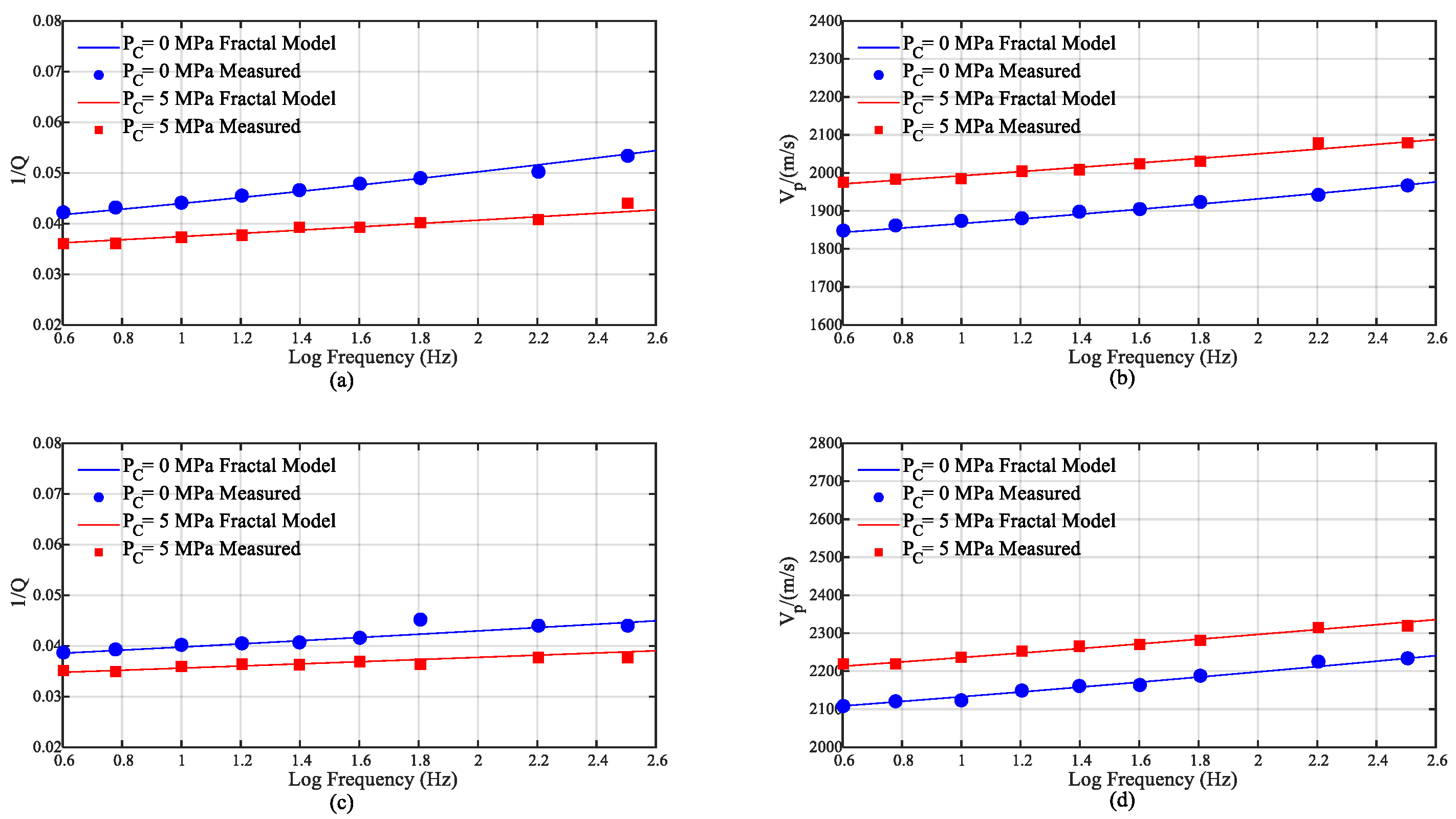
Figure 9 shows the curves of attenuation coefficients and P-wave velocities as a function of frequency for the two coal samples (LS-1 and LS-2) from the Linxing-Shenfu block under different effective stress conditions. The discrete points in the figure represent measured data, while the solid lines show the fitting results from the three-component physical fractal viscoelastic model. The corresponding model fitting parameters are shown in
Table 6. A comparison of the fitting results for P-wave velocity and attenuation coefficient reveals that the coefficient of determination for the attenuation fit is generally lower than that for the velocity fit. This phenomenon stems from the combined effects of the inherent characteristics of the test system’s phase measurement and the microscopic physical mechanisms of coal and rock.
For this low-frequency stress–strain rock physics testing system, the P-wave velocity is calculated from the real part of the complex modulus (energy storage modulus), primarily utilizing information from the strain signal amplitude, and is thus less affected by random noise and bridge drift. In contrast, attenuation is highly dependent on the minute phase difference between stress and strain, and this phase difference is more sensitive to noise in the acquisition chain, residual DC drift in the Wheatstone bridge, and parasitic strain in the apparatus. Although a constant-amplitude, constant-phase FIR bandpass filtering algorithm is used to suppress broadband noise and eliminate spurious phase shifts caused by filtering, faint random noise in the raw signal is still transmitted to the phase difference calculation, leading to discretization of the attenuation measurements, while having limited impact on amplitude-dominated velocity measurements.
Furthermore, from a rock physics perspective, velocity characterizes the volume-averaged equivalent stiffness of a sample and is subject to only limited disturbances from local, minute inhomogeneities; however, attenuation is dominated by localized energy-dissipating processes such as friction at fracture surfaces, pore jet flow, and friction within the organic matrix. It is highly sensitive to local fracture contact conditions and microscopic fluid distribution, and the natural microscopic inhomogeneities of coal rock further increase the dispersion of attenuation data. The combination of these two factors results in an R
2 value for attenuation fitting that is generally lower than that for velocity fitting. The accuracy characteristics of phase measurements in this system can be found in existing literature [
37].
The experimental results show that the P-wave velocities of both coal samples increase monotonically with rising frequency, consistent with the dispersion characteristics of viscoelastic porous media. As the effective stress increased from 0 to 5 MPa, the average P-wave velocity of the LS-1 sample increased by 118 m/s, and that of the LS-2 sample increased by 100 m/s, resulting in an overall upward shift in the curves. Effective stress drives the gradual closure of cleavages and microfractures; the proportion of soft pores within the coal decreases and the equivalent stiffness increases, causing the velocity curve to shift upward overall. Sample LS-2 has lower porosity, a denser matrix, and less developed fractures, resulting in a higher overall velocity. The attenuation coefficient (1/Q) increases monotonically with frequency following a power-law relationship. After the effective stress increased, the average attenuation amplitude decreased by 0.008 for the LS-1 sample and by 0.005 for the LS-2 sample; furthermore, the slope of the increase in attenuation with frequency decreased for both samples, indicating a weakened frequency dependence.
After the effective stress forces the fractures to close, the range of pore and fracture size distributions narrows, directly altering the self-similar topological structure of the coal’s pores and fractures. Consequently, the fitted skeletal fractal order α and fluid fractal order β decrease simultaneously. An increase in effective stress simultaneously reduces fracture opening, leading to increased seepage resistance, and causing the skeletal relaxation time τ2 and fluid relaxation time τ3 to increase in tandem. The LS-1 sample exhibits a wider distribution range of micro-fissures, and the changes resulting from fissure closure are more pronounced; consequently, its stress sensitivity is slightly higher than that of the LS-2 sample. It is evident that effective stress reshapes the pore structure and seepage conditions through fissure closure, modulating the characteristic time and spectral width of two fractal relaxation, thereby achieving systematic control over dispersion attenuation. Coal samples with a higher degree of fissure development exhibit greater stress sensitivity.
5.2. Effect of Pore Fluid on Dispersion and Attenuation
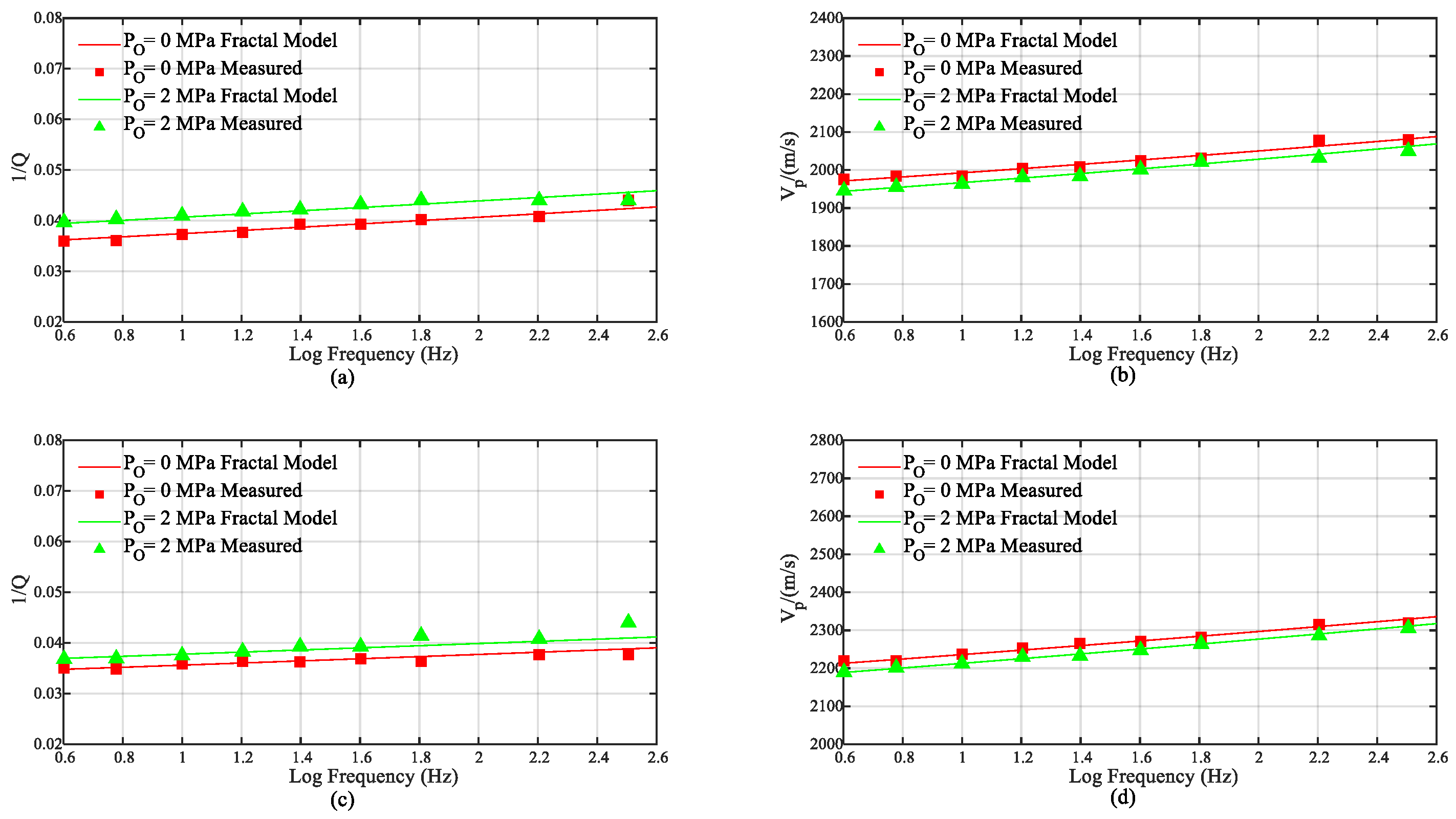
Figure 10 shows the cross-frequency test results for two coal samples under fluid-free and fluid-saturated conditions.
Figure 10a,c depict the variation in the attenuation coefficient 1/Q with frequency, while
Figure 10b,d show the variation in the P-wave velocity
Vp with frequency. The corresponding model fitting parameters are shown in
Table 7. The measured data for both samples exhibit good agreement with the fractal model curves, indicating that this model can effectively characterize the influence of pore fluid on viscoelastic dispersion and attenuation in coal.
Experimental results indicate that the introduction of pore fluid increases pore pressure and correspondingly reduces effective stress, causing the compacted fractures to gradually reopen. This broadens the distribution range of fracture sizes and increases the number of fluid flow pathways. P-wave velocity exhibits a synergistic evolution characterized by an overall decrease in velocity and an increase in dispersion intensity. The increase in free fluid participating in local seepage enhances viscous dissipation, driving an overall rise in the total attenuation amplitude. Sample LS-2 has a denser matrix and less developed fractures; consequently, the amplitude of changes in fracture opening caused by fluid pressure fluctuations is smaller, resulting in a higher overall P-wave velocity.
The model fitting parameters reveal that the fluid fractal order β increases monotonically with rising pore pressure, while the fluid relaxation time τ3 decreases monotonically with rising pore pressure. In contrast, the fractal order α of the matrix and the matrix relaxation time τ2 show no significant changes. This is because, when the pore pressure was increased to 2 MPa, the effective stress remained at 3 MPa. At this condition, the pore fluid pressure primarily altered the opening degree of pre-existing natural fractures within the sample, thereby regulating the fluid flow pathways, without fracturing the intact coal matrix to produce new microcracks. The fact that the skeleton-related fractal exponent α and skeleton relaxation time τ2 are largely unaffected by changes in pore pressure further supports the conclusion that pore pressure does not cause significant damage to the solid skeleton; its primary effect is on the fracture fluid system.
5.3. Effect of Temperature on Dispersion and Attenuation
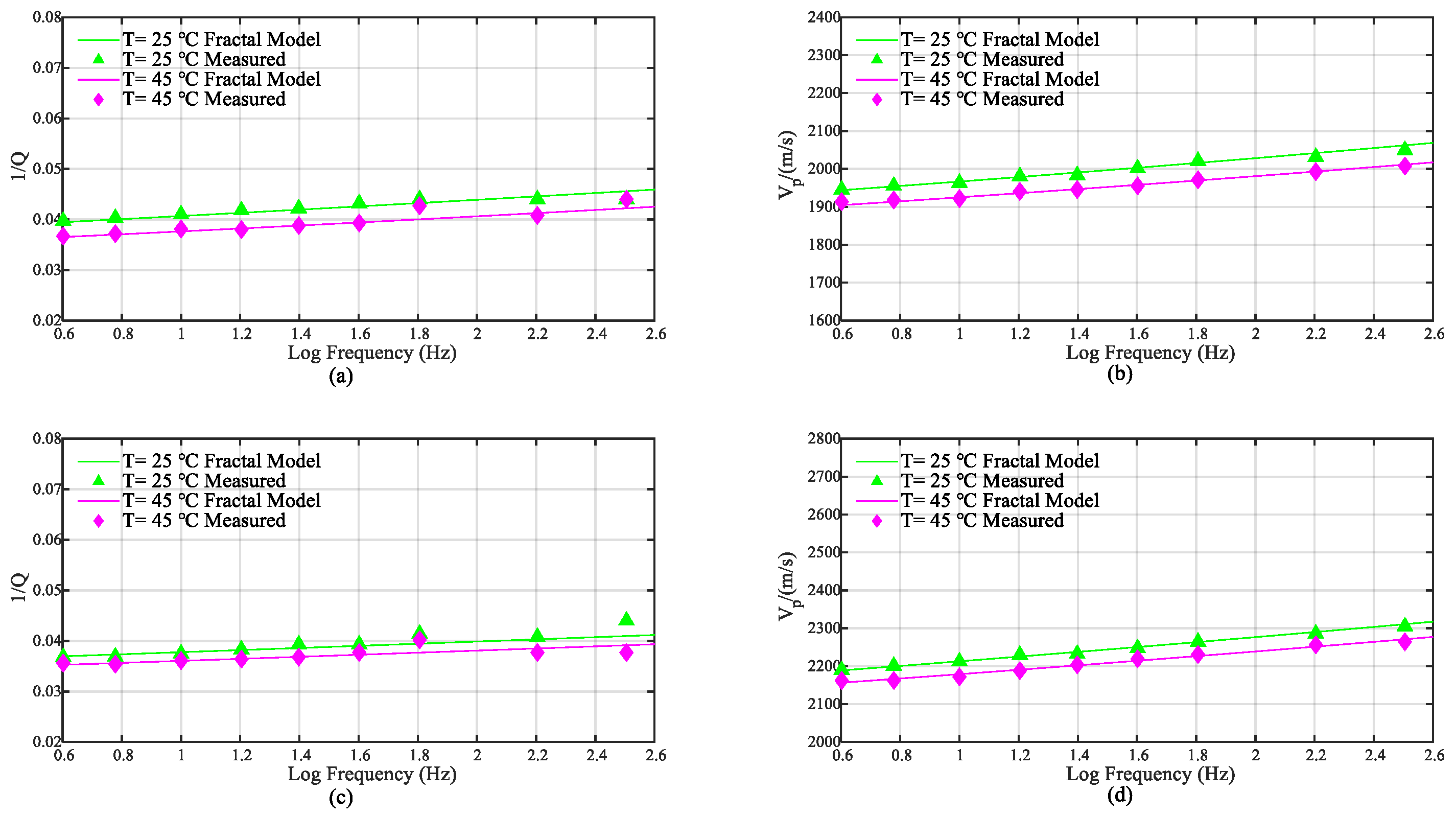
Under conditions of constant confining pressure, pore pressure, and He as the pore fluid, two sets of temperature conditions (25 °C and 45 °C) were established, and comparative experiments were conducted on two fluid-saturated coal rock samples, LS-1 and LS-2. The test results for the attenuation coefficient and P-wave velocity are shown in
Figure 11. The corresponding model fitting parameters are shown in
Table 8.
The experimental data indicate that after a temperature increase of 20 °C, the attenuation coefficients and P-wave velocities of samples LS-1 and LS-2 across the entire frequency range exhibit an overall downward shift, with the curves shifting downward in an approximately parallel manner. This differs fundamentally from the characteristic change in dispersion slope under effective stress control.
In theory, differences in the coefficients of thermal expansion between the organic matrix of coal and clay and quartz-type mineral particles can lead to thermal mismatch stresses when the temperature rises. However, under the conditions of this experiment, the temperature increase was only 20 °C, and a confining pressure of 5 MPa was applied throughout the experiment. The external compressive stress constrained the material, offsetting a portion of the tensile stress generated by thermal mismatch; therefore, this was insufficient to induce the large-scale formation of new thermally induced microcracks.
Analysis of the fitting results indicates that the temperature effect primarily manifests as changes in molecular and fluid dynamic properties, rather than alterations in the fractal topology of coal rock pores and fractures. Consequently, the fractional orders α and β, which represent the pore-fracture topological characteristics, remain unchanged, further corroborating that temperature changes did not result in the formation of a large number of new microfractures.
An increase in temperature accelerates molecular thermal motion, reduces fluid viscosity, and decreases seepage resistance; the skeleton relaxation time τ2 and the fluid relaxation time τ3 shorten simultaneously. This represents the core distinction between the temperature- and effective stress-based regulation mechanisms.
Theoretically, an increase in temperature leads to a decrease in the instantaneous elastic modulus G of the coal matrix, resulting in a reduction in P-wave velocity. The overall downward shift in the velocity curves observed in our experiments is the combined effect of modulus weakening and shorter relaxation times. During model fitting, to isolate parameters related to dispersion, the elastic modulus G was held constant, thereby incorporating the temperature-induced modulus change into the skeleton relaxation time τ2 of the constitutive operator.
5.4. Effect of Gas Adsorption on Coal Frequency Dispersion and Attenuation
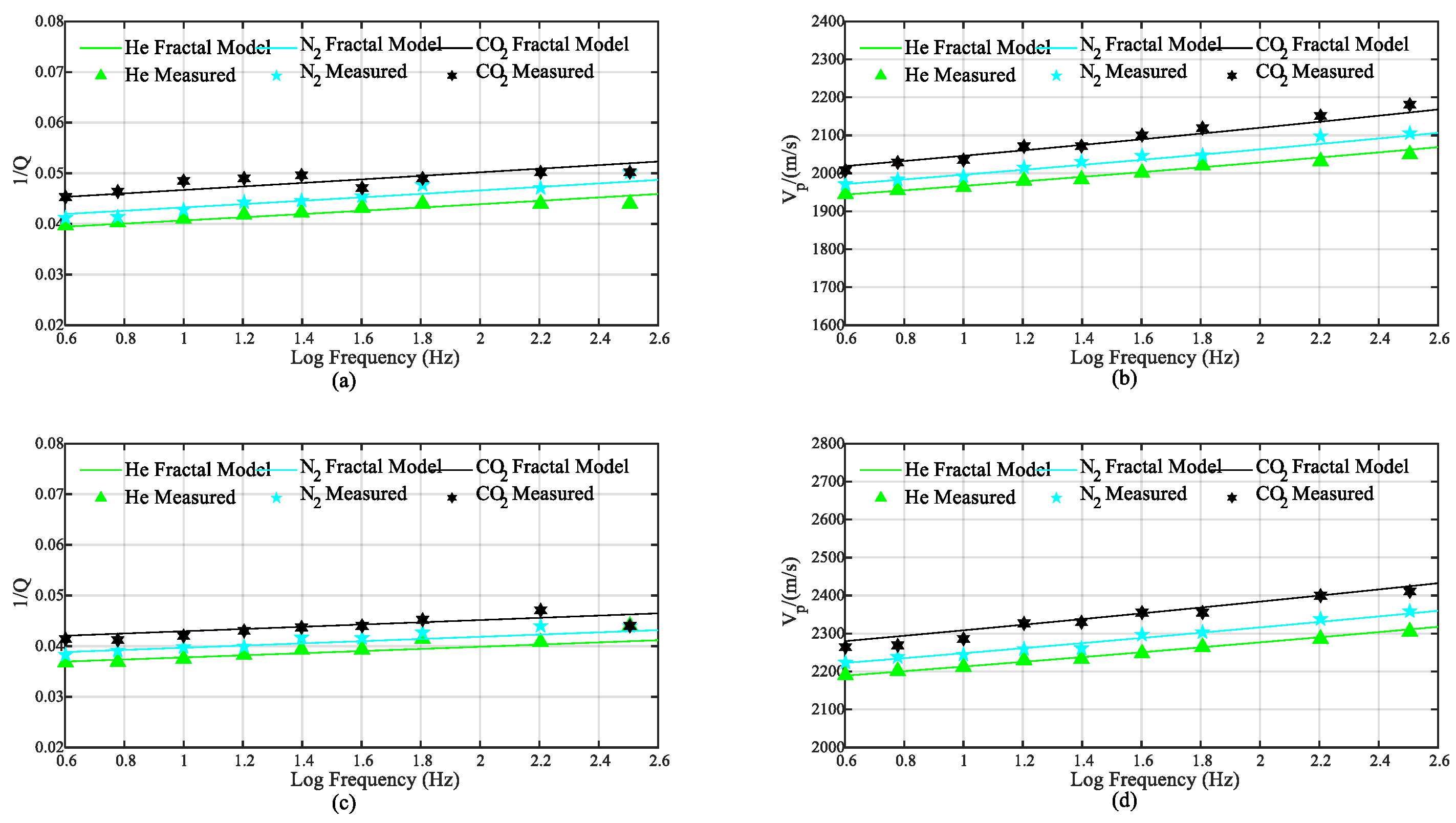
Under conditions of 5 MPa confining pressure, 2 MPa pore pressure, and a constant temperature of 25 °C, He (no adsorption), N
2 (weak adsorption), and CO
2 (strong adsorption) were sequentially introduced as saturated fluids to measure the frequency-dependent attenuation coefficient and P-wave velocity. The experimental results and model-fitted curves are shown in
Figure 12, and the model fitting parameters are listed in
Table 9.
The measured data show that as fluid adsorption gradually increases, the P-wave velocity shifts upward stepwise overall, following the order VP,CO2 > VP,N2 > VP,He, with an average velocity increase of 40–90 m/s. There are two competing mechanisms by which increased fluid adsorption controls the coal matrix: the adsorption plasticization effect and the adsorption swelling effect. Under low effective stress conditions, helium, being an inert gas, exhibits virtually no adsorption, maintaining the fractures in their initial open state and resulting in the lowest overall stiffness. Weak adsorption of N2 causes slight matrix swelling, which slightly closes the fissures and leads to a slight increase in effective stiffness. Strong CO2 adsorption causes significant matrix swelling, forcing a large number of cleavages and microfractures to close. The proportion of soft pores within the coal rock decreases substantially, and the increase in stiffness resulting from fracture closure exceeds the decrease in skeleton modulus caused by adsorption plasticization, ultimately manifesting as a monotonic increase in P-wave velocity as fluid adsorption increases.
The total attenuation amplitude increases stepwise as fluid adsorption strength increases, satisfying the relationship 1/QCO2 > 1/QN2 > 1/QHe. The core mechanism behind this increase in attenuation is that adsorption plasticization enhances intra-chain friction within the organic matrix, as gas molecules embedded in the gaps between macromolecular segments weaken intermolecular forces and increase the degrees of freedom of segment motion, leading to a simultaneous increase in internal friction dissipation under periodic stress. Although fracture closure slightly reduces dissipation in the fluid jet, the increase in skeletal dissipation is overwhelmingly dominant; therefore, the total attenuation amplitude monotonically increases with increasing adsorption.
The adsorption plasticization and adsorption swelling effects only alter the skeleton relaxation time τ2 and the fluid relaxation time τ3, the intrinsic scale distribution of the pore-fracture network remains unchanged, so the skeletal fractal exponent α and the fluid fractal exponent β remain constant, indicating that fluid adsorption merely scales the relaxation times globally, and only factors that alter the fractal topological characteristics of the pore-fracture network (effective stress) can modulate the fractal exponents.
In
Table 9, the coefficient of determination for the decay fit under CO
2 adsorption conditions for Group 6 of the LS-1 sample was only 0.3930. However, as shown in
Figure 12, the model is still able to reasonably reproduce the overall trend of decay increasing with rising logarithmic frequency, and it also accurately reflects the relative magnitude of decay under CO
2 conditions, which is generally higher than that under N
2 and He conditions. However, the measured data points for CO
2 exhibit significantly greater dispersion, resulting in a lower coefficient of determination for the fit.
This phenomenon stems from a combination of the dispersion in the experimental data and the limitations of the model’s simplification. Even though the experiments were conducted with sufficiently long periods of pore pressure equilibrium, the transient heterogeneity caused by local adsorption-swelling induced by strong CO2 adsorption during testing could not be completely eliminated. Furthermore, attenuation is highly sensitive to local fracture friction and fluid jets, which in turn causes the measured attenuation data to be dispersed.
On the other hand, the core assumption of the three-component physical fractal model presented in this paper is that gas adsorption does not alter the fractal order; instead, the adsorption effect is characterized solely by the global scaling of the relaxation time. This simplification results in inherent limitations of the model when applied to conditions involving strongly adsorbing gases. It is worth noting that under these conditions, the P-wave velocity still maintains a high level of fitting accuracy; since velocity is a volume-averaged elastic parameter that is less susceptible to local heterogeneity perturbations, this indirectly indicates that fitting deviations primarily stem from local energy dissipation processes, while the sample’s overall elastic response and trends in dispersion can still be well described by this model.
To further quantitatively evaluate the model’s ability to fit the elastic energy storage and viscous dissipation components of the complex modulus,
Table 10 summarizes the root-mean-square error (RMSE) and coefficient of determination (
R2) for the energy storage modulus
M′ and the loss modulus
M″ under all six sets of experimental conditions, serving as supplementary evaluation metrics to the coefficient of determination used for fitting the P-wave velocity and attenuation coefficient.
6. Conclusions
The mechanism of dispersion and attenuation in fluid-saturated coal reservoirs in the seismic frequency range has not yet been fully elucidated, and existing fractal viscoelastic models are unable to independently distinguish between energy dissipation in the matrix and in the fluid. To address these two research gaps, we utilized the natural self-similar fractal characteristics of coal pores and fractures to construct a three-component, double-fractal-order physical viscoelastic model. Using coal samples from the Linxing-Shenfu block as the subject of study, we conducted multiple sets of low-frequency experiments with controlled variables in the 4–320 Hz frequency range and obtained the following key insights:
- (1)
The newly developed model introduces an independent fractal viscous fluid component, enabling the quantitative decoupling of friction dissipation in the matrix from jet flow dissipation in the fissures. Validation through experimental data fitting revealed that this model outperforms existing two-component dry-coal models in matching the low-frequency dynamic response of fluid-saturated coal, successfully capturing both the dispersion law of P-wave velocity and the attenuation characteristics. The model’s decoupling capability provides petrophysical prior constraints for coalbed methane seismic inversion; the fractal exponents α and β can be used as constraints for the inversion of fracture topology, while the relaxation times τ2 and τ3 can aid in identifying fluid adsorption properties. However, upscaling from the core scale to the seismic scale and adapting to field noise remain challenges for practical implementation.
- (2)
Experimental conditions exert two fundamentally different regulatory mechanisms on the viscoelastic response of coal. The first mechanism is a topological restructuring effect dominated by effective stress. This reshapes the fractal topology of pores and fissures, causing the fractal exponents α and β to vary in tandem with the relaxation times τ2 and τ3, thereby altering both the dispersion and the amplitude of attenuation, as well as the slope of the dispersion curve. Coal samples with a higher degree of fissure development exhibit greater sensitivity to changes in stress. The effect of pore fluid pressure is limited solely to the fractal parameters of the fluid, and its variation pattern is exactly opposite to that of effective stress. The second mechanism involves the scaling of relaxation time scales due to the effects of temperature and gas adsorption. The pore-fracture fractal topology remains essentially unchanged, with only global scaling of τ2 and τ3; macroscopically, this manifests as an approximately parallel shift in the dispersion–attenuation curve, with the dispersion slope remaining essentially constant. As temperature increases, both P-wave velocity and attenuation amplitude decrease synchronously, while at low effective stresses, stronger gas adsorption causes both P-wave velocity and the attenuation coefficient to increase synchronously.
- (3)
The three-component model framework and the two-fractional-order determination method presented in this paper are applicable to saturated coal masses with self-similar pore-fracture systems. It should be emphasized that α, β, τ2, τ3, and the elastic modulus G are all sample- and region-dependent parameters. This study used only two coal samples from the Linxing-Shenfu block; therefore, the parameter ranges obtained from the fitting cannot be directly generalized as universal statistical results for coalfields worldwide.
This study provides theoretical support at the level of fractal rock physics for seismic disperse on inversion in coalbed methane reservoirs, the prediction of fracture development, and fluid type identification. Future work will focus on establishing cross-scale relationships between core and seismic scales, deriving three-dimensional viscoelastic constitutive models, and optimizing fractal kernel functions. Additionally, the study will expand the sample set to include specimens from different coal ranks and geological settings to further validate the model’s applicability limits, with the aim of adapting the current one-dimensional core constitutive model to three-dimensional full-waveform inversion.
Author Contributions
Conceptualization, G.Z., Y.Y. and T.Z.; methodology, G.Z. and Y.C.; software, Y.C.; validation, Y.C. and G.Z.; formal analysis, X.W. and T.Z.; investigation, X.W.; resources, G.Z.; data curation, Y.C.; writing—original draft preparation, Y.C.; writing—review and editing, G.Z. and Y.Y.; supervision, Y.L.; project administration, Y.L.; funding acquisition, G.Z. All authors have read and agreed to the published version of the manuscript.
Funding
This research was funded by the National Natural Science Foundation of China, grant number 42274165.
Data Availability Statement
The original contributions presented in this study are included in the article. Further inquiries can be directed to the corresponding author.
Acknowledgments
The author would like to thank Tianyi Zhou of the School of Aerospace Engineering at Tsinghua University for his guidance in developing the theoretical model. The author would also like to thank the anonymous reviewers for their valuable suggestions.
Conflicts of Interest
Author Yanhai Liu was employed by CHN Energy Shendong Coal Group Co., Ltd. The remaining authors declare that the research was conducted in the absence of any commercial or financial relationships that could be construed as a potential conflict of interest.
References
- He, Q.; Xu, S.; Feng, Y.; Gou, Q. Mechanism of coalbed methane enrichment in the multi-layer superimposed of the longtan formation in the western guizhou region and delineation of favorable layers. Eng. Geol. 2026, 369, 108830. [Google Scholar] [CrossRef] [Scilit]
- Guo, Q.; Chen, Y.; Huang, Y.; Ba, J. Seismic rock-physics inversion for petrophysical parameters in deep coalbed methane reservoirs with complex pore structures. J. Appl. Geophys. 2026, 251, 106338. [Google Scholar] [CrossRef] [Scilit]
- Liu, J.; Chang, S.; Zhang, S.; Li, Y.; Hao, Y.; He, G.; He, Y.; Liu, B. Prediction of coalbed methane content based on seismic identification of key geological parameters: A case in a study area, southern qinshui basin. Acta Geophys. 2023, 71, 2645–2662. [Google Scholar] [CrossRef] [Scilit]
- Chen, K.; Li, Z.; Wang, M.; Sacchi, M.D. Theoretical calculation of dispersion and attenuation curves of deep-guided wave in viscoelastic media. Geophys. J. Int. 2025, 243, ggaf393. [Google Scholar] [CrossRef] [Scilit]
- Jia, Y.; Shi, J.; Zhang, L.; Li, W.; He, Y.; Li, Y.; Cao, J.; Ji, C.; Huang, H. An analytical method for timely predicting of coal seam pressure during gas production for undersaturated coalbed methane reservoirs. Processes 2024, 12, 777. [Google Scholar] [CrossRef] [Scilit]
- Carcione, J.M.; Mainardi, F.; Qadrouh, A.N.; Alajmi, M.; Ba, J. The rheological models of becker, scott blair, kolsky, lomnitz and jeffreys revisited, and implications for wave attenuation and velocity dispersion. Surv. Geophys. 2024, 45, 695–720. [Google Scholar] [CrossRef] [Scilit]
- Popoola, A.K.; Chapman, S.; Ògúnsàmì, A.; Fortin, J.; Grasselli, G. Impact of thermally induced cracks on elastic modulus dispersion and attenuation in fluid-saturated granite. J. Geophys. Res. Solid Earth 2025, 130, e2024JB030977. [Google Scholar] [CrossRef] [Scilit]
- Zong, Z.-Y.; Feng, Y.-W.; Chen, F.-B.; Zhang, G.-Z. Effects of multi-scale wave-induced fluid flow on seismic dispersion, attenuation and frequency-dependent anisotropy in periodic-layered porous-cracked media. Pet. Sci. 2025, 22, 684–696. [Google Scholar] [CrossRef] [Scilit]
- Sun, C.; Fortin, J.; Tang, G.; Wang, S. Prediction of dispersion and attenuation on elastic wave velocities in partially saturated rock based on the fluid distribution obtained from three-dimensional (3d) micro-ct images. Front. Earth Sci. 2023, 11, 1267522. [Google Scholar] [CrossRef] [Scilit]
- Ortega-Arenas, R.; Meléndez-Martínez, J.; Nicolás-López, R.; Valdiviezo-Mijangos, O.C.; Sabina, F.J. Modeling the effects of pore aspect ratio, porosity, and seismic anisotropy on wave velocity dispersion and attenuation patterns in oil- and brine-saturated carbonates using a dynamic self-consistent anisotropic approach. Acta Geophys. 2025, 73, 1217–1240. [Google Scholar] [CrossRef] [Scilit]
- Müller, T.M.; Gurevich, B.; Lebedev, M. Seismic wave attenuation and dispersion resulting from wave-induced flow in porous rocks—A review. Geophysics 2010, 75, 75A147–75A164. [Google Scholar] [CrossRef] [Scilit]
- Biot, M.A. Theory of propagation of elastic waves in a fluid-saturated porous solid. I. Low-frequency range. J. Acoust. Soc. Am. 1956, 28, 168–178. [Google Scholar] [CrossRef] [Scilit]
- Dvorkin, J.; Mavko, G.; Nur, A. Squirt flow in fully saturated rocks. Geophysics 1995, 60, 97–107. [Google Scholar] [CrossRef] [Scilit]
- Pride, S.R.; Berryman, J.G.; Harris, J.M. Seismic attenuation due to wave-induced flow. J. Geophys. Res. Solid Earth 2004, 109, B01201. [Google Scholar] [CrossRef] [Scilit]
- Ba, J.; Carcione, J.M.; Nie, J.X. Biot-rayleigh theory of wave propagation in double-porosity media. J. Geophys. Res. Solid Earth 2011, 116, B06202. [Google Scholar] [CrossRef] [Scilit]
- Chen, F.; Zong, Z.; Rezaee, R.; Yin, X. Pressure effects on plane wave reflection and transmission in fluid-saturated porous media. Surv. Geophys. 2024, 45, 1245–1290. [Google Scholar] [CrossRef] [Scilit]
- Wang, H.; Hong, L.; Gao, D.; Wang, L.; Sun, C. A confinement-contribution dual-porosity da model for low-pressure nitrogen adsorption in coal: Implications for micropore characterization. Fuel 2026, 428, 140388. [Google Scholar] [CrossRef] [Scilit]
- Xu, H.; Qin, Y.; Yang, D.; Wang, G.; Huang, Q.; Wu, F. Quantification of gas transport behavior during coalbed methane extraction in a coal seam considering a dual-porosity/single-permeability model. Nat. Resour. Res. 2024, 33, 321–345. [Google Scholar] [CrossRef] [Scilit]
- Nogueira, P.; Silva, L.; de Jesus, L.; Porsani, M. A comparative analysis between viscoacoustic forward and adjoint wave equations based on maxwell, kelvin-voigt, and sls rheological models. J. Appl. Geophys. 2023, 214, 105065. [Google Scholar] [CrossRef] [Scilit]
- Wang, G.; Faes, M.G.R.; Shi, T.; Cheng, F.; Pan, Y. Investigation on impact behavior with viscous damping and tensile force inspired by kelvin-voigt model in granular system. Mech. Syst. Signal Process. 2025, 227, 112399. [Google Scholar] [CrossRef] [Scilit]
- She, J.; Zou, G.; Gong, F.; Zeng, H.; Liu, Y.; Teng, D.; Li, J. Predicting sandstone water abundance using seismic dispersion attribute inversion: A case study of yuwang coal mine, China. Geophys. Prospect. 2024, 72, 2357–2376. [Google Scholar] [CrossRef] [Scilit]
- Wei, Y.; Zhao, L.; Liu, W.; Zhang, X.; Guo, Z.; Wu, Z.; Yuan, S. Coalbed methane reservoir parameter prediction and sweet-spot comprehensive evaluation based on 3d seismic exploration: A case study in western guizhou province, China. Energies 2022, 16, 367. [Google Scholar] [CrossRef] [Scilit]
- Ari, A.; Akbulut, S. Investigation of sand-geomaterial interface response using fractal theory: Particle shape, gradation and surface roughness effects. Adv. Powder Technol. 2025, 36, 105072. [Google Scholar] [CrossRef] [Scilit]
- Dinç Göğüş, Ö.; Avşar, E.; Develi, K.; Çalık, A. Quantifying the rock damage intensity controlled by mineral compositions: Insights from fractal analyses. Fractal Fract. 2023, 7, 383. [Google Scholar] [CrossRef] [Scilit]
- Zhao, Y.; Li, Y.-L.; She, L.; Yao, Y.; Li, X.-J.; Wang, H.-T.; Sun, X.-J.; He, M.-M. Experimental investigation·of damage constitutive model for granite under triaxial compression: Insights from acoustic emission technology and fractal theory. Eng. Geol. 2026, 369, 108826. [Google Scholar] [CrossRef] [Scilit]
- Taufiqurrahman, T.; Gabriel, A.-A.; Ulrich, T.; Valentová, L.; Gallovič, F. Broadband dynamic rupture modeling with fractal fault roughness, frictional heterogeneity, viscoelasticity and topography: The 2016 mw 6.2 amatrice, italy earthquake. Geophys. Res. Lett. 2022, 49, e2022GL098872. [Google Scholar] [CrossRef] [Scilit]
- Kato, N.; Lei, X. Interaction of parallel strike-slip faults and a characteristic distance in the spatial distribution of active faults. Geophys. J. Int. 2001, 144, 157–164. [Google Scholar] [CrossRef] [Scilit]
- Mashayekhi, S.; Hussaini, M.Y.; Oates, W. A physical interpretation of fractional viscoelasticity based on the fractal structure of media: Theory and experimental validation. J. Mech. Phys. Solids 2019, 128, 137–150. [Google Scholar] [CrossRef] [Scilit]
- Mashayekhi, S.; Miles, P.; Hussaini, M.Y.; Oates, W.S. Fractional viscoelasticity in fractal and non-fractal media: Theory, experimental validation, and uncertainty analysis. J. Mech. Phys. Solids 2018, 111, 134–156. [Google Scholar] [CrossRef] [Scilit]
- Zhao, T.; Zou, G.; Peng, S.; Zeng, H.; Gong, F.; Yin, Y. Analysis of the viscoelasticity in coal based on the fractal theory. Geophysics 2023, 88, WA177–WA187. [Google Scholar] [CrossRef] [Scilit]
- GB/T 212-2008; Proximate Analysis of Coal. China Standards Press: Beijing, China, 2008.
- GB/T 8899-2013; Determination of Maceral Group Composition and Minerals in Coal. China Standards Press: Beijing, China, 2013.
- Yin, Y.; Guo, J.; Peng, G.; Yu, X.; Kong, Y. Fractal operators and fractional dynamics with 1/2 order in biological systems. Fractal Fract. 2022, 6, 378. [Google Scholar] [CrossRef] [Scilit]
- Yin, Y.; Peng, G.; Yu, X. Algebraic equations and non-integer orders of fractal operators abstracted from biomechanics. Acta Mech. Sin. 2022, 38, 521488. [Google Scholar] [CrossRef] [Scilit]
- Batzle, M.L.; Han, D.-H.; Hofmann, R. Fluid mobility and frequency-dependent seismic velocity—Direct measurements. Geophysics 2006, 71, N1–N9. [Google Scholar] [CrossRef] [Scilit]
- Zeng, H.; Yeh, H.-G.; Zou, G.-G.; Gong, F.; Peng, S.-P.; She, J.-S.; Zhao, T.-L. Phase analysis of signals using frequency-dependent attenuation for measurements of seismic waves. Geophysics 2023, 88, V139–V154. [Google Scholar] [CrossRef] [Scilit]
- Zeng, H. Study on Influencing Factors of Coal Elastic Parameters and Avo Response Characteristics. Doctoral Dissertation, China University of Mining & Technology, Beijing, China, 2023. [Google Scholar] [CrossRef]
Figure 1.
Schematic diagram of the hierarchical structure of coal pores and fractures: (a) Schematic diagram of a stratigraphic section containing a coal seam. (b) A coal seam containing joints. (c) A large coal specimen containing cleavages. (d) Cross-section of a specimen containing cleavages. (e) CT-scanned specimen containing fractures. (f) SEM-scanned specimen containing microfractures.
Figure 1.
Schematic diagram of the hierarchical structure of coal pores and fractures: (a) Schematic diagram of a stratigraphic section containing a coal seam. (b) A coal seam containing joints. (c) A large coal specimen containing cleavages. (d) Cross-section of a specimen containing cleavages. (e) CT-scanned specimen containing fractures. (f) SEM-scanned specimen containing microfractures.
Figure 2.
Pore size distribution characteristics: (a) Pore size distribution from the low-temperature liquid nitrogen adsorption experiment on the LS-1 sample. (b) Pore size distribution from the low-temperature liquid nitrogen adsorption experiment on the LS-2 sample. (c) Pore size distribution from the CT scan experiment on the LS-1 sample (statistics for N = 127 fractures). (d) Pore size distribution characteristics of the LS-2 sample from the CT scan experiment (statistics for N = 96 fractures).
Figure 2.
Pore size distribution characteristics: (a) Pore size distribution from the low-temperature liquid nitrogen adsorption experiment on the LS-1 sample. (b) Pore size distribution from the low-temperature liquid nitrogen adsorption experiment on the LS-2 sample. (c) Pore size distribution from the CT scan experiment on the LS-1 sample (statistics for N = 127 fractures). (d) Pore size distribution characteristics of the LS-2 sample from the CT scan experiment (statistics for N = 96 fractures).
Figure 3.
Physical fractal mechanical network and physical fractal cell of fluid-saturated coal: (a) Physical fractal mechanical network. (b) Physical fractal cell. (c) Fractal element.
Figure 3.
Physical fractal mechanical network and physical fractal cell of fluid-saturated coal: (a) Physical fractal mechanical network. (b) Physical fractal cell. (c) Fractal element.
Figure 4.
Regulation laws of the model by the fractional-order α of the matrix: (a) The attenuation coefficient varies with α. (b) The P-wave velocity varies with α.
Figure 4.
Regulation laws of the model by the fractional-order α of the matrix: (a) The attenuation coefficient varies with α. (b) The P-wave velocity varies with α.
Figure 5.
Regulation laws of the model by the fractional-order β of the fluid: (a) The attenuation coefficient varies with β. (b) The P-wave velocity varies with β.
Figure 5.
Regulation laws of the model by the fractional-order β of the fluid: (a) The attenuation coefficient varies with β. (b) The P-wave velocity varies with β.
Figure 6.
Regulation laws of the model by the matrix relaxation time τ2 and the fluid relaxation time τ3: (a) The attenuation coefficient varies with τ2. (b) The P-wave velocity varies with τ2. (c) The attenuation coefficient varies with τ3. (d) The P-wave velocity varies with τ3.
Figure 6.
Regulation laws of the model by the matrix relaxation time τ2 and the fluid relaxation time τ3: (a) The attenuation coefficient varies with τ2. (b) The P-wave velocity varies with τ2. (c) The attenuation coefficient varies with τ3. (d) The P-wave velocity varies with τ3.
Figure 7.
Comparison of simulation results from the three-component and two-component models: (a) Comparison of attenuation coefficient curves. (b) Comparison of P-wave velocity curves.
Figure 7.
Comparison of simulation results from the three-component and two-component models: (a) Comparison of attenuation coefficient curves. (b) Comparison of P-wave velocity curves.
Figure 8.
Low-frequency rock elastic parameter testing system.
Figure 8.
Low-frequency rock elastic parameter testing system.
Figure 9.
Curves showing the variation in P-wave velocity and attenuation coefficient with effective stress for fluid-saturated coal across different frequency bands: (a) Effect of effective stress on the attenuation coefficient of sample LS-1. (b) Effect of effective stress on the P-wave velocity of sample LS-1. (c) Effect of effective stress on the attenuation coefficient of sample LS-2. (d) Effect of effective stress on the P-wave velocity of sample LS-2.
Figure 9.
Curves showing the variation in P-wave velocity and attenuation coefficient with effective stress for fluid-saturated coal across different frequency bands: (a) Effect of effective stress on the attenuation coefficient of sample LS-1. (b) Effect of effective stress on the P-wave velocity of sample LS-1. (c) Effect of effective stress on the attenuation coefficient of sample LS-2. (d) Effect of effective stress on the P-wave velocity of sample LS-2.
Figure 10.
Effect of pore fluid on the P-wave velocity and attenuation coefficient of coal across different frequency bands: (a) Effect of pore fluid on the attenuation coefficient of sample LS-1. (b) Effect of pore fluid on the P-wave velocity of sample LS-1. (c) Effect of pore fluid on the attenuation coefficient of sample LS-2. (d) Effect of pore fluid on the P-wave velocity of sample LS-2.
Figure 10.
Effect of pore fluid on the P-wave velocity and attenuation coefficient of coal across different frequency bands: (a) Effect of pore fluid on the attenuation coefficient of sample LS-1. (b) Effect of pore fluid on the P-wave velocity of sample LS-1. (c) Effect of pore fluid on the attenuation coefficient of sample LS-2. (d) Effect of pore fluid on the P-wave velocity of sample LS-2.
Figure 11.
Curves showing the variation in P-wave velocity and attenuation coefficient with temperature for fluid-saturated coal rock across different frequency bands: (a) Effect of temperature on the attenuation coefficient of sample LS-1. (b) Effect of temperature on the P-wave velocity of sample LS-1. (c) Effect of temperature on the attenuation coefficient of sample LS-2. (d) Effect of temperature on the P-wave velocity of sample LS-2.
Figure 11.
Curves showing the variation in P-wave velocity and attenuation coefficient with temperature for fluid-saturated coal rock across different frequency bands: (a) Effect of temperature on the attenuation coefficient of sample LS-1. (b) Effect of temperature on the P-wave velocity of sample LS-1. (c) Effect of temperature on the attenuation coefficient of sample LS-2. (d) Effect of temperature on the P-wave velocity of sample LS-2.
Figure 12.
Curves showing the variation in P-wave velocity and attenuation coefficient in fluid-saturated coal rock across different frequency bands as the fluid type changes: (a) Effect of fluid adsorption on the attenuation coefficient curve for Sample LS-1. (b) Effect of fluid adsorption on the P-wave velocity curve for Sample LS-1. (c) Effect of fluid adsorption on the attenuation coefficient curve for Sample LS-2. (d) Effect of fluid adsorption on the P-wave velocity curve for Sample LS-2.
Figure 12.
Curves showing the variation in P-wave velocity and attenuation coefficient in fluid-saturated coal rock across different frequency bands as the fluid type changes: (a) Effect of fluid adsorption on the attenuation coefficient curve for Sample LS-1. (b) Effect of fluid adsorption on the P-wave velocity curve for Sample LS-1. (c) Effect of fluid adsorption on the attenuation coefficient curve for Sample LS-2. (d) Effect of fluid adsorption on the P-wave velocity curve for Sample LS-2.
Table 1.
Test results for industrial composition and microscopic composition of coal samples.
Table 1.
Test results for industrial composition and microscopic composition of coal samples.
| Industrial Composition Testing | Microscopic Composition Analysis |
|---|
| | LS-1 | LS-2 | | LS-1 | LS-2 |
| Moisture % | 0.90 | 1.06 | Vitrinite % | 75.36 | 79.30 |
| Ash % | 13.22 | 10.74 | Inertinite % | 16.01 | 8.60 |
| Volatile Matter % | 16.01 | 20.20 | Liptinite % | 1.26 | 2.63 |
| Fixed Carbon % | 69.88 | 68.01 | Mineral % | 7.19 | 9.12 |
| | | | Natural Coke % | 0.18 | 0.18 |
Table 2.
Basic parameters of samples.
Table 2.
Basic parameters of samples.
| Sample Number | Length (mm) | Diameter (mm) | Density (g/cm3) | Porosity (%) | Specific Surface Area (m2/g) |
|---|
| LS-1 | 59.41 | 37.51 | 1.37 | 4.83 | 1.560 |
| LS-2 | 56.00 | 37.56 | 1.36 | 3.28 | 1.108 |
Table 3.
Stress–strain constitutive equations for basic mechanical elements.
Table 3.
Stress–strain constitutive equations for basic mechanical elements.
| Element | Physical Significance | Constitutive Equation | Constitutive Operator |
|---|
| Matrix Elastic Element | Instantaneous elastic deformation of organic matter | | T1 = 1 (zero-order operator) |
| Matrix Viscous Element | Friction in fractures and dissipation due to intramolecular chain friction | | T2 = τ2αpα (α-order Caputo operator) |
| Fluid Viscous Element | Pore fluid viscosity | | T3 = τ3βpβ (β-order Caputo operator) |
| Parameter | Baseline Value | Lower Bound | Upper Bound |
|---|
| G | 3.453 × 10⁹ Pa | - | - |
| ρ | 1.37 g/cm3 | - | - |
| α | 0.05 | 0.05 | 0.20 |
| β | 0.05 | 0.05 | 0.08 |
| τ2 | 0.5 × 10⁻⁶ s | 0.1 × 10⁻⁶ s | 1.5 × 10⁻⁶ s |
| τ3 | 1.2 × 10⁻³ s | 1.0 × 10⁻³ s | 4.0 × 10⁻³ s |
Table 5.
Design of low-frequency experimental conditions.
Table 5.
Design of low-frequency experimental conditions.
| Group | Confining Pressure/MPa | Pore Pressure/MPa | Temperature/°C | Fluid Type |
|---|
| 1 | 0 | 0 | 25 | - |
| 2 | 5 | 0 | 25 | - |
| 3 | 5 | 2 | 25 | He |
| 4 | 5 | 2 | 45 | He |
| 5 | 5 | 2 | 25 | N2 |
| 6 | 5 | 2 | 25 | CO2 |
Table 6.
Model fitting parameters under different effective stress conditions.
Table 6.
Model fitting parameters under different effective stress conditions.
| Sample | Group | G/Pa | τ2/s | α | τ3/s | β | R21/Q | R2VP |
|---|
| LS-1 | 1 | 3.215 × 10⁹ | 5.0 × 10⁻⁵ | 0.15 | 2.0 × 10⁻⁸ | 0.0200 | 0.9733 | 0.9816 |
| 2 | 3.215 × 10⁹ | 5.0 × 10⁻⁴ | 0.10 | 2.0 × 10⁻⁷ | 0.0150 | 0.9273 | 0.9626 |
| LS-2 | 1 | 3.690 × 10⁹ | 4.0 × 10⁻⁴ | 0.10 | 6.0 × 10⁻⁷ | 0.0175 | 0.7747 | 0.9781 |
| 2 | 3.690 × 10⁹ | 4.0 × 10⁻³ | 0.08 | 3.0 × 10⁻⁵ | 0.0150 | 0.6431 | 0.9759 |
Table 7.
Effect of pore fluid on model fitting parameters.
Table 7.
Effect of pore fluid on model fitting parameters.
| Sample | Group | G/Pa | τ2/s | α | τ3/s | β | R21/Q | R2VP |
|---|
| LS-1 | 2 | 3.215 × 10⁹ | 5.0 × 10⁻⁴ | 0.10 | 2.0 × 10⁻⁷ | 0.015 | 0.9273 | 0.9626 |
| 3 | 3.215 × 10⁹ | 5.0 × 10⁻⁴ | 0.10 | 1.5 × 10⁻⁷ | 0.018 | 0.7975 | 0.9639 |
| LS-2 | 2 | 3.690 × 10⁹ | 4.0 × 10⁻³ | 0.08 | 3.0 × 10⁻⁵ | 0.015 | 0.6431 | 0.9759 |
| 3 | 3.690 × 10⁹ | 4.0 × 10⁻³ | 0.08 | 1.0 × 10⁻⁵ | 0.017 | 0.6909 | 0.9901 |
Table 8.
Model fitting parameters under variable temperature conditions.
Table 8.
Model fitting parameters under variable temperature conditions.
| Sample | Group | G/Pa | τ2/s | α | τ3/s | β | R21/Q | R2VP |
|---|
| LS-1 | 3 | 3.215 × 10⁹ | 5.0 × 10⁻⁴ | 0.10 | 1.5 × 10⁻⁷ | 0.018 | 0.7975 | 0.9639 |
| 4 | 3.215 × 10⁹ | 5.0 × 10⁻⁵ | 0.10 | 5.0 × 10⁻⁸ | 0.018 | 0.7841 | 0.9814 |
| LS-2 | 3 | 3.690 × 10⁹ | 4.0 × 10⁻³ | 0.08 | 1.0 × 10⁻⁵ | 0.017 | 0.6909 | 0.9901 |
| 4 | 3.690 × 10⁹ | 6.0 × 10⁻⁴ | 0.08 | 5.0 × 10⁻⁶ | 0.017 | 0.4388 | 0.9811 |
Table 9.
Model fitting parameters for fluids with different adsorption properties.
Table 9.
Model fitting parameters for fluids with different adsorption properties.
| Sample | Group | G/Pa | τ2/s | α | τ3/s | β | R21/Q | R2VP |
|---|
| LS-1 | 3 | 3.215 × 10⁹ | 5.0 × 10⁻⁴ | 0.10 | 1.5 × 10⁻⁷ | 0.018 | 0.7975 | 0.9639 |
| 5 | 3.215 × 10⁹ | 3.0 × 10⁻³ | 0.10 | 2.0 × 10⁻⁷ | 0.018 | 0.8763 | 0.9622 |
| 6 | 3.215 × 10⁹ | 3.0 × 10⁻² | 0.10 | 5.0 × 10⁻⁷ | 0.017 | 0.3930 | 0.9515 |
| LS-2 | 3 | 3.690 × 10⁹ | 4.0 × 10⁻³ | 0.08 | 1.0 × 10⁻⁵ | 0.017 | 0.6909 | 0.9901 |
| 5 | 3.690 × 10⁹ | 3.0 × 10⁻² | 0.08 | 1.5 × 10⁻⁵ | 0.017 | 0.7823 | 0.9784 |
| 6 | 3.690 × 10⁹ | 8.0 × 10⁻¹ | 0.08 | 2.0 × 10⁻⁵ | 0.017 | 0.6141 | 0.9194 |
Table 10.
Errors in the fitting of the storage modulus and loss modulus for all experimental groups.
Table 10.
Errors in the fitting of the storage modulus and loss modulus for all experimental groups.
| Sample | Group | Storage Modulus M′ | Loss Modulus M″ |
|---|
| RMSEM′/GPa | R2M′ | RMSEM″/GPa | R2M″ |
|---|
| LS-1 | 1 | 0.0302 | 0.9746 | 0.0039 | 0.9771 |
| 2 | 0.0583 | 0.9169 | 0.0035 | 0.9716 |
| 3 | 0.0651 | 0.8751 | 0.0057 | 0.8723 |
| 4 | 0.0411 | 0.9398 | 0.0053 | 0.9194 |
| 5 | 0.0414 | 0.9722 | 0.0058 | 0.9534 |
| 6 | 0.0643 | 0.9574 | 0.0061 | 0.9314 |
| LS-2 | 1 | 0.0371 | 0.9780 | 0.0071 | 0.9084 |
| 2 | 0.0334 | 0.9757 | 0.0049 | 0.8817 |
| 3 | 0.0224 | 0.9899 | 0.0084 | 0.8793 |
| 4 | 0.0302 | 0.9811 | 0.0076 | 0.7738 |
| 5 | 0.0401 | 0.9785 | 0.0071 | 0.9189 |
| 6 | 0.0894 | 0.9211 | 0.0112 | 0.8147 |
| Disclaimer/Publisher’s Note: The statements, opinions and data contained in all publications are solely those of the individual author(s) and contributor(s) and not of MDPI and/or the editor(s). MDPI and/or the editor(s) disclaim responsibility for any injury to people or property resulting from any ideas, methods, instructions or products referred to in the content. |