Article

Analysis of Grout Diffusion Law in 3D Rough Fractures Based on Fractal Characteristics of JRC Curves


1
School of Geology and Environment, Xi’an University of Science and Technology, Xi’an 710600, China
2
School of Energy Engineering, Xi’an University of Science and Technology, Xi’an 710600, China
*
Author to whom correspondence should be addressed.
Fractal Fract. 2026, 10(6), 352; https://doi.org/10.3390/fractalfract10060352
Submission received: 9 April 2026 / Revised: 21 May 2026 / Accepted: 21 May 2026 / Published: 22 May 2026
(This article belongs to the Section Engineering)

Abstract

Understanding grout diffusion behavior in rough-walled rock fractures is essential for optimizing grouting design in mining and geotechnical engineering. This study couples fractal surface reconstruction with three-dimensional volume-of-fluid (VOF) simulation to systematically investigate grout diffusion in fractures characterized by the Weierstrass–Mandelbrot fractal function. Twelve simulation cases, comprising four JRC profiles and three grout viscosities, are analyzed to elucidate the spatiotemporal evolution of grout filling. The results reveal a consistent three-stage diffusion pattern—initial filling, rapid diffusion, and stable equilibrium—across all conditions. Fracture fractal dimension emerges as the dominant factor controlling seepage velocity and diffusion zoning, while grout viscosity plays a secondary, roughness-modulated regulatory role. The equivalent hydraulic aperture is identified as the core parameter governing zone proportions. Engineering guidelines for viscosity selection and injection strategy under different roughness conditions are proposed.

1. Introduction

Grouting in natural rough-walled rock fractures is a widely used reinforcement and sealing technique in mining and geotechnical engineering. During grouting, the slurry migrates from the injection hole into the rock fractures and propagates along the fracture channels. The flow behavior of the slurry within rough fractures directly governs the grouting effectiveness, sealing efficiency, and permeability of the rock mass. Therefore, elucidating the propagation behavior of slurry in rough fractures is essential for accurately predicting grouting effectiveness, optimizing process parameters, and improving construction design.
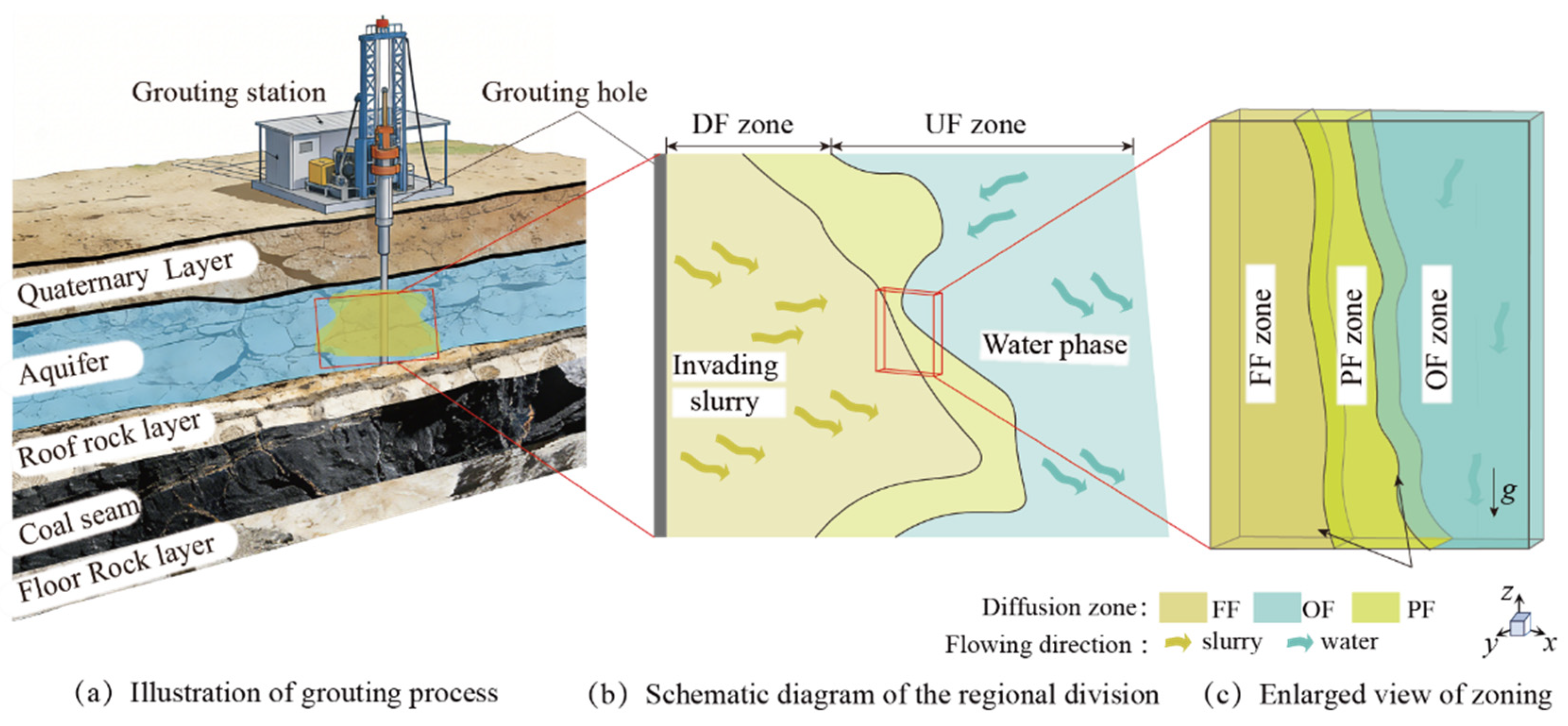
Extensive research has been conducted on grout diffusion behavior in rough rock fractures. Li [1,2] proposed a sequential diffusion–solidification method that accounts for the spatiotemporal evolution of grout viscosity, elucidating the diffusion characteristics of cement grout in wide fractures. Zou et al. [3,4] established a propagation model for cement grout in homogeneous, water-saturated fractures and derived an analytical solution describing the spatiotemporal evolution of the grout front. Xu et al. [5,6] analyzed grout propagation behavior within fracture networks during tunnel pre-grouting using the numerical manifold method, providing a robust foundation for subsequent research. Zhang et al. [7] developed a dynamic simulation experimental device and systematically investigated the influence of dominant fractures and slurry viscosity on grout diffusion in fractured aquifers, revealing that higher viscosity reduces the diffusion area and that dominant fractures significantly alter the diffusion pattern. In addition, previous studies have observed that upon completion of grouting, the grout distribution can be clearly divided into three regions (Figure 1): the diffusion zone (DF zone) and the undiffused zone (UF zone). The diffusion zone can be further subdivided into a fully filled zone (FF zone) and a partially filled zone (PF zone). This classification provides an important basis for analyzing the zoning characteristics of grout diffusion in the present study.
However, grout diffusion within natural rough fractures is a complex physico-mechanical process. The joint roughness coefficient (JRC) curve proposed by Barton [8] quantifies the roughness of fracture surfaces and has become a cornerstone for such research. Subsequent scholars have simulated three-dimensional rough fractures by extruding two-dimensional rough surfaces (i.e., translating one-dimensional JRC profiles) to investigate their influence on groutability, yielding novel insights. For instance, Wang et al. [9] constructed a 3D fracture model using this method and found that the anisotropy of fracture roughness significantly affects the grout diffusion rate, with more uniform diffusion observed in fractures of low roughness. Ma et al. [10] further verified the applicability of this model under low-to-medium pressure grouting conditions, providing a preliminary reference for optimizing grouting parameters. Strictly speaking, however, this 2D extrusion modeling method constitutes a “pseudo-3D” rough fracture model because it lacks roughness characteristics in the extrusion direction and therefore cannot accurately represent the actual diffusion paths of grout in natural fractures. Accordingly, transitioning from 2D JRC profiles to true 3D rough fracture surfaces that capture the spatial heterogeneity and complex flow pathways within fractures is essential for understanding the mechanical mechanisms underlying grout permeation and sealing.
Fractal geometry provides a promising theoretical framework for modeling three-dimensional rough fractures. Xie et al. [11,12] adopted the traditional Koch curve to establish a theoretical fractal model of joint profiles for simulating their roughness, offering a new approach for the quantitative estimation of JRC values in rock mechanics. On this basis, the present study employs the Weierstrass–Mandelbrot (W–M) fractal function to construct three-dimensional fracture surfaces that more accurately capture the roughness characteristics of natural fractures, thereby bridging the gap between two-dimensional JRC-based representations and true three-dimensional fractal surfaces. A water–cement two-phase flow model is then established using the volume of fluid (VOF) method to explicitly account for the coupled effects of fracture roughness and grout viscosity on the formation of grout-filled zones. Finally, the engineering significance and limitations of this study are discussed. The results provide a reference for understanding the cement grouting process in rough rock fractures and offer theoretical support and a technical basis for optimizing grouting construction parameters and improving grouting quality.

2. Methods

2.1. JRC Curve and Fractals

2.1.1. Characterization of Rough Fractures

(1) JRC-Based Characterization of Rough Fractures
The joint roughness coefficient (JRC) proposed by Barton is a widely recognized quantitative index for evaluating the surface roughness of rock fractures [8]. By comparing the actual fracture profile with the standard JRC profile, it comprehensively reflects the degree of undulation and irregularity of the fracture surface. In this study, JRC is adopted as the fundamental indicator for characterizing the roughness of natural rock fractures, providing a reliable basis for the subsequent parameterization of rough fractures and the construction of three-dimensional models.
(2) Relationship Between Fractal Dimension (D) and JRC
Fractal geometry provides an effective mathematical tool for describing the irregular characteristics of rough fracture surfaces [13]. Fractal dimension (D) quantitatively characterizes the complexity and roughness of fracture surfaces; a larger fractal dimension (D) corresponds to a more complex and rougher fracture surface. A significant positive correlation exists between fractal dimension (D) and JRC: as JRC increases, fractal dimension (D) also increases. This indicates that fractal dimension can accurately quantify the roughness information contained in JRC profiles, thereby providing a theoretical basis for transforming two-dimensional JRC profiles into three-dimensional fractal fracture surfaces.
(3) Influence of Aspect Height and Base Length on Roughness
Aspect height (peak height h ) and base length (characteristic length L) are important geometric parameters that influence the roughness of fracture surfaces and are closely related to the JRC value and fractal dimension [14]. Aspect height reflects the undulation amplitude of the fracture surface; a larger aspect height corresponds to more significant surface undulation. Base length reflects the spatial scale of surface undulation and influences the overall distribution characteristics of fracture roughness. The synergistic effect of these two parameters jointly determines the comprehensive roughness of the fracture surface and also influences the flow paths and diffusion behavior of grout within fractures, thereby providing an important basis for the subsequent parameterization of rough fractures.

2.1.2. Geometrical Setup and Roughness Parameterization

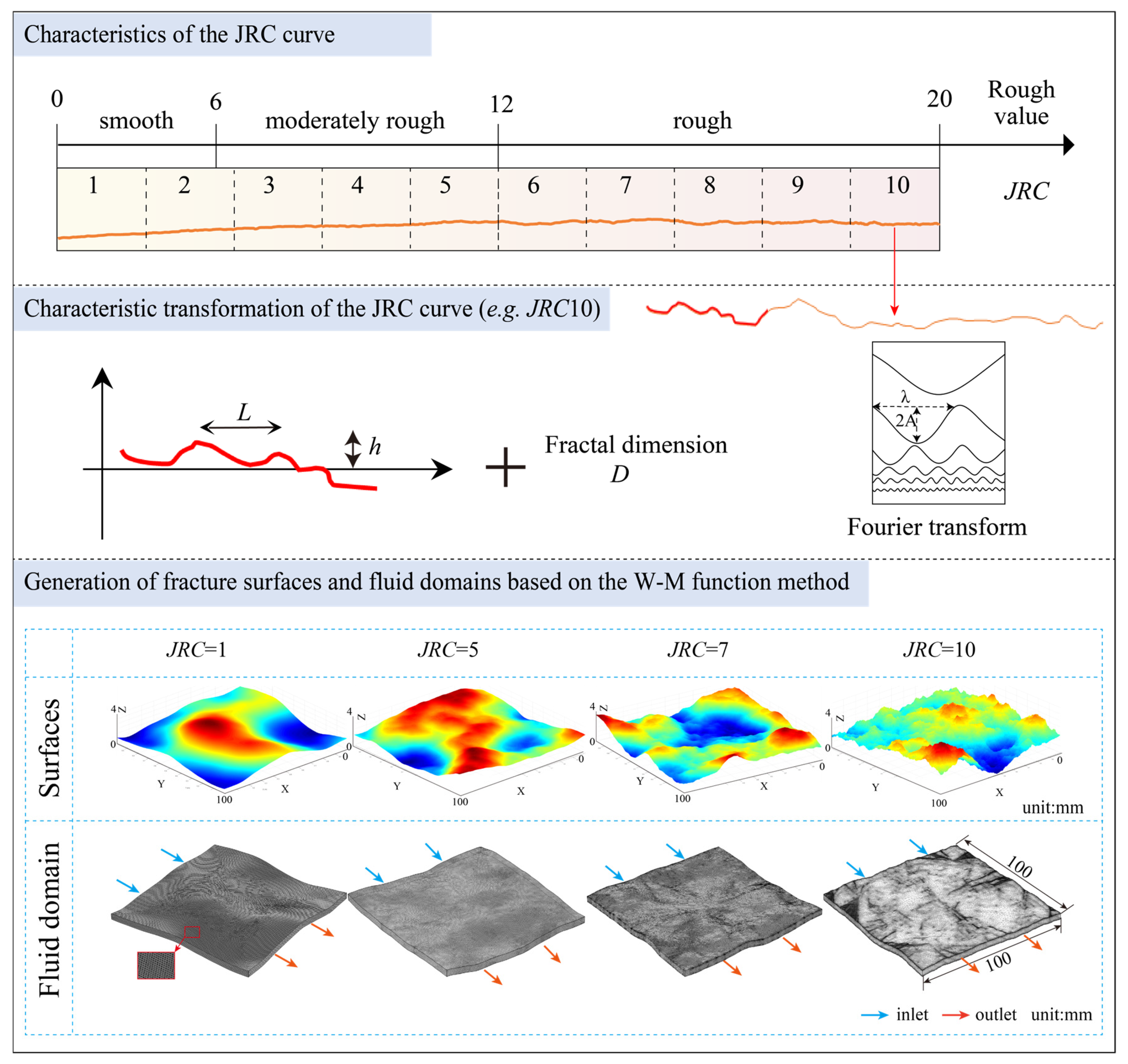
Barton classified a total of ten standard JRC profiles. To ensure scientific rigor and minimize redundancy, four representative roughness profiles were selected from the standard JRC curves. These profiles correspond to typical JRC ranges of 0–2, 8–10, 12–14, and 18–20, and are designated as P1, P5, P7, and P10, respectively. The four selected profiles cover low, medium, and high roughness grades of natural rock fractures, enabling a comprehensive investigation of the influence of roughness level on grout diffusion behavior.
Fractal geometry was adopted to parameterize the roughness of each profile, with three key parameters selected: fractal dimension (D), characteristic length (L), and peak height (h). All parameters were derived from the work of Xie et al. [11], which has been validated through numerous experiments and exhibits high reliability and generalizability. The specific values of each parameter are listed in Table 1.

2.1.3. Fractal Surface Generation Using the Weierstrass–Mandelbrot (W–M) Function

Three-dimensional rough fracture surfaces with fractal characteristics can be generated using the W–M function, which effectively overcomes the limitations of “pseudo-3D” models constructed by extruding two-dimensional JRC profiles, specifically their inability to reflect the spatial heterogeneity of natural fractures. The W–M function is a continuous but non-differentiable fractal function expressed as the superposition of an infinite number of cosine functions with varying frequencies and amplitudes. It features strong controllability and high simulation accuracy, enabling the irregularity and randomness of natural fracture surfaces to be accurately reproduced by adjusting the fractal parameters. The function is expressed as follows [15,16]:
z ( x , y ) = L ( G L ) D f 2 ( ln η M ) 1 / 2 m = 1 M n = 0 n * m a x η ( D f 3 ) n × cos ϕ m , n cos 2 π η n ( x 2 + y 2 ) 1 / 2 L × cos tan 1 y x π m M + ϕ m , n
where L is the sample length and G is the frequency-independent fractal roughness amplitude parameter; n controls the frequency density; M is the number of superimposed ridges used to construct the surface; ϕ m , n is the random phase; and n max is the maximum frequency, defined as:
n max = int ( log ( L / L s ) / log η )
where L s is the cutoff frequency and int ( log ( L / L s ) / log η ) denotes the integer function. The fractal dimension and multi-scale characteristics are represented by the parameters Df and M, respectively, while ϕ m , n captures the randomness of the rough surface, enabling a robust description of the morphological features of fracture surfaces.
This formulation enables the generation of a three-dimensional fractal surface whose roughness parameters (D, L, h) are directly derived from the corresponding two-dimensional JRC profiles listed in Table 1, thereby establishing the quantitative link between the JRC characterization and the fractal mathematical representation. These parameters then serve as inputs to the W-M function, which reconstructs a three-dimensional fractal surface whose cross-sectional profiles statistically match the original two-dimensional JRC curves. In essence, the JRC value provides the standardized roughness category, while the W-M function provides the three-dimensional geometric realization bearing that roughness. This coupling forms the foundation of the present study.

2.2. Numerical Simulation Method

2.2.1. Modeling Procedure

The numerical simulation modeling is based on the three-dimensional rough fracture surfaces generated by the W–M function in Section 2.1, following the core workflow: geometric modeling → meshing → parameter setting → boundary condition definition → solution calculation → result validation. The detailed steps are as follows: First, the three-dimensional rough fracture geometric model generated by the W–M function is imported, and the spatial morphology and fractal parameters of the fracture are defined. Second, structured meshes are generated for the fracture model. The mesh size is optimized based on the fracture characteristics and the required calculation accuracy to ensure that the mesh quality meets the convergence criteria for numerical computation. Third, the material properties are defined. Subsequently, boundary conditions are defined, including the grouting hole, fluid outlet, and rock surface, and the initial calculation parameters are set. Finally, the numerical simulation is executed, the grout diffusion process is monitored in real time, and the validity of the results is verified upon completion of the calculation. The research technical roadmap is shown in Figure 2.

2.2.2. Solution Method and Governing Equations

The aquifer is under confined water conditions, and the grout exhibits two-phase flow behavior after entering the fractured rock mass. The dilution and filtration effects of the cement are not considered in this study; therefore, the propagation process can be modeled as a two-phase immiscible flow problem between the cement slurry and groundwater.
The volume of fluid (VOF) model [17,18,19] tracks the interface between immiscible fluids by computing the volume fraction of each phase in every computational cell, enabling accurate capture of the grout–water interface during propagation. It is a surface tracking technique applied extensively in multiphase flow simulations.
For the VOF simulation, the geometric reconstruction scheme (PLIC, Piecewise Linear Interface Calculation) was adopted to track the grout–water interface with high fidelity and minimize numerical diffusion of the phase boundary. The pressure–velocity coupling was resolved using the PISO (Pressure Implicit with Splitting of Operators) algorithm, which provides improved stability for transient multiphase flows. A fixed time step of Δt = 1 × 10⁻⁴ s was employed, with the Courant–Friedrichs–Lewy (CFL) number constrained below 0.25 to ensure temporal accuracy and interface tracking stability. The residual convergence criterion was set to 1 × 10⁻⁵ for all transport equations. Additionally, the implicit body force formulation was enabled to account for the density difference between the grout and water phases, improving the accuracy of the pressure gradient calculation at the phase interface.
α s + α w = 1  
The continuity equation is given by
t α s ρ s + · α s ρ s v = S α s
where α s is the volume fraction of the slurry phase, ρ s is the density of the slurry, v is the velocity vector, and S α s is a source term.
The momentum equation is given by
t ρ v + · ρ v v = p + · μ v + v T + ρ g + F
where ρ is the mixed density of slurry and water, μ is the dynamic viscosity, p is the pressure, F is the volume force vector, and g is the gravity acceleration vector.
The properties that appear in the momentum equations are volume-fraction-averaged. Density and dynamic viscosity are given by
ρ = α s ρ s + α w ρ w
μ = α s μ s + α w μ w
Here, the dynamic viscosity of the fluid mixture is approximated by a volume-fraction-weighted arithmetic average [7]. This linear mixing rule is the standard approach in the VOF framework for immiscible two-phase flows where the interface is sharply defined [20], and it provides numerical stability and adequate accuracy for the laminar grout flows considered in this study.

2.2.3. Boundary Conditions and Initial Conditions

Based on the actual conditions of the in-situ grouting project (Figure 1) and the requirements of the numerical simulation, the boundary conditions for the numerical simulation of grouting in fractured rock masses are set as summarized in Table 2.

2.2.4. Mesh Validation and Reference Case

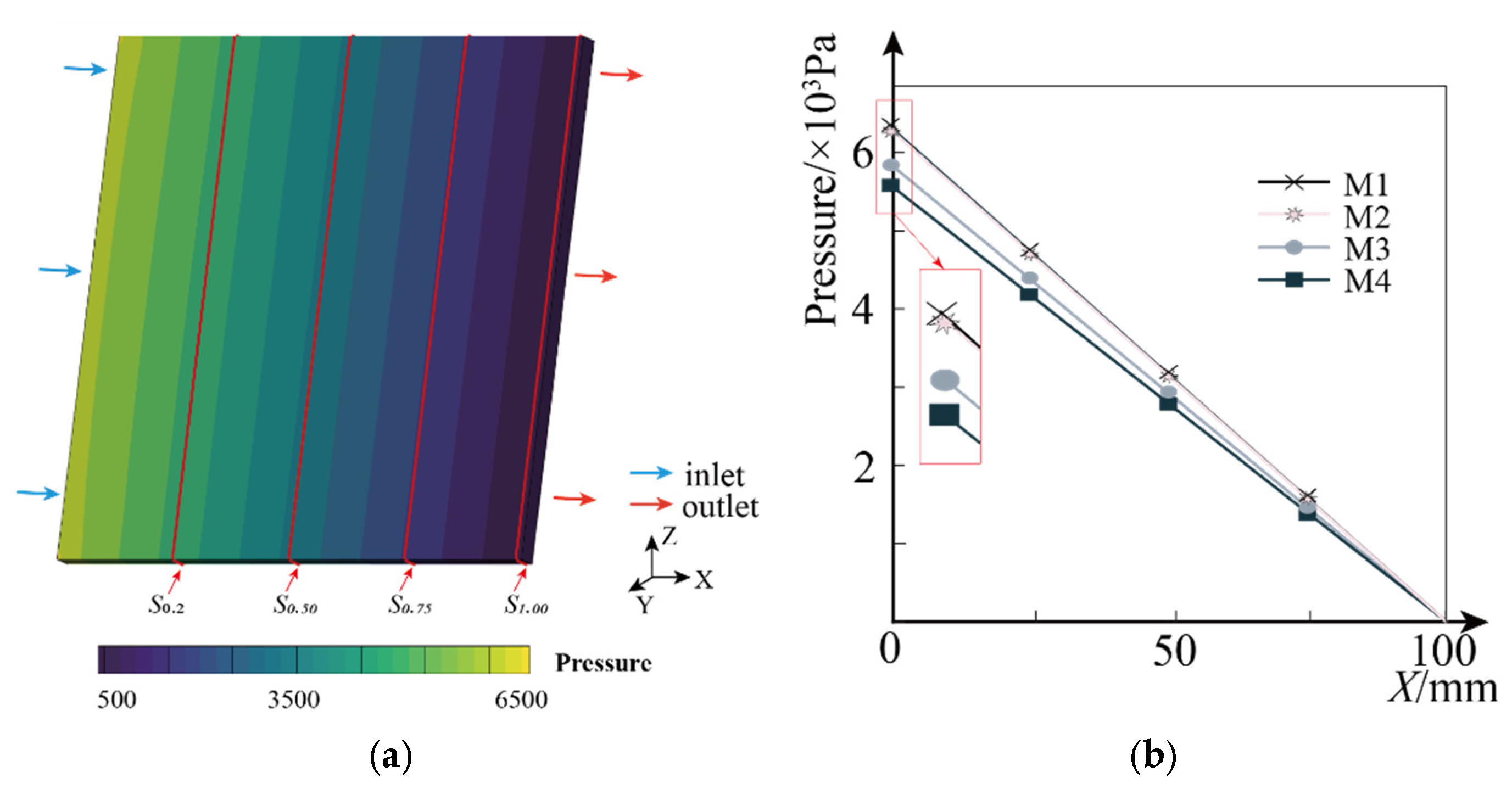
In computational fluid dynamics (CFD) analysis, a finer mesh with a greater number of elements generally yields higher simulation accuracy [3,21]. Thus, mesh generation involves a trade-off between computational accuracy and efficiency. This inherent balance reflects the relationship between mesh density and solution accuracy. Mesh independence validation was conducted using a grout diffusion experiment in a smooth fracture. This experiment served two purposes: it validated the correctness of the parameters and boundary conditions, and it also provided a reference case for the series of simulations in this study.
Four mesh systems with different resolutions were selected for the validation test. The corresponding mesh parameters are listed in Table 3. Four observation paths were established within the fracture, denoted as S0.25, S0.50, S0.75, and S1.00 (shown in Figure 3a). These paths are parallel to the grout inlet, corresponding to normalized distances of 0.25, 0.50, 0.75, and 1.00 from the inlet, respectively.
In the reference case, the pressure distribution of grout within the fracture is shown in Figure 3a. The pressure distribution along the fracture bottom is presented in Figure 3b. Through comparison, the M3 mesh parameters were determined to be sufficient for the subsequent CFD simulations. The final selected parameters were mesh size scale factor = 1.0 and seed size = 0.5. In summary, the numerical method adopted in this study is reasonable and feasible, and has been effectively validated.

2.2.5. Simulation Parameter Matrix

In this study, comprehensive simulations were conducted on four JRC profiles with different roughness levels and three grouts with different viscosities, yielding a total of 12 simulation cases, as summarized in Table 4. The grout properties selected for simulation correspond to commonly used cement-based grout formulations in engineering practice. The four JRC profiles span the full practical range of natural fracture roughness encountered in the field—from polished, smooth joints to highly irregular, rough fractures—while the three water–cement ratios correspond to standard cement grout formulations specified in both Chinese (GB/T 50448) and international (API RP 10B) grouting practice.

3. Results and Discussion

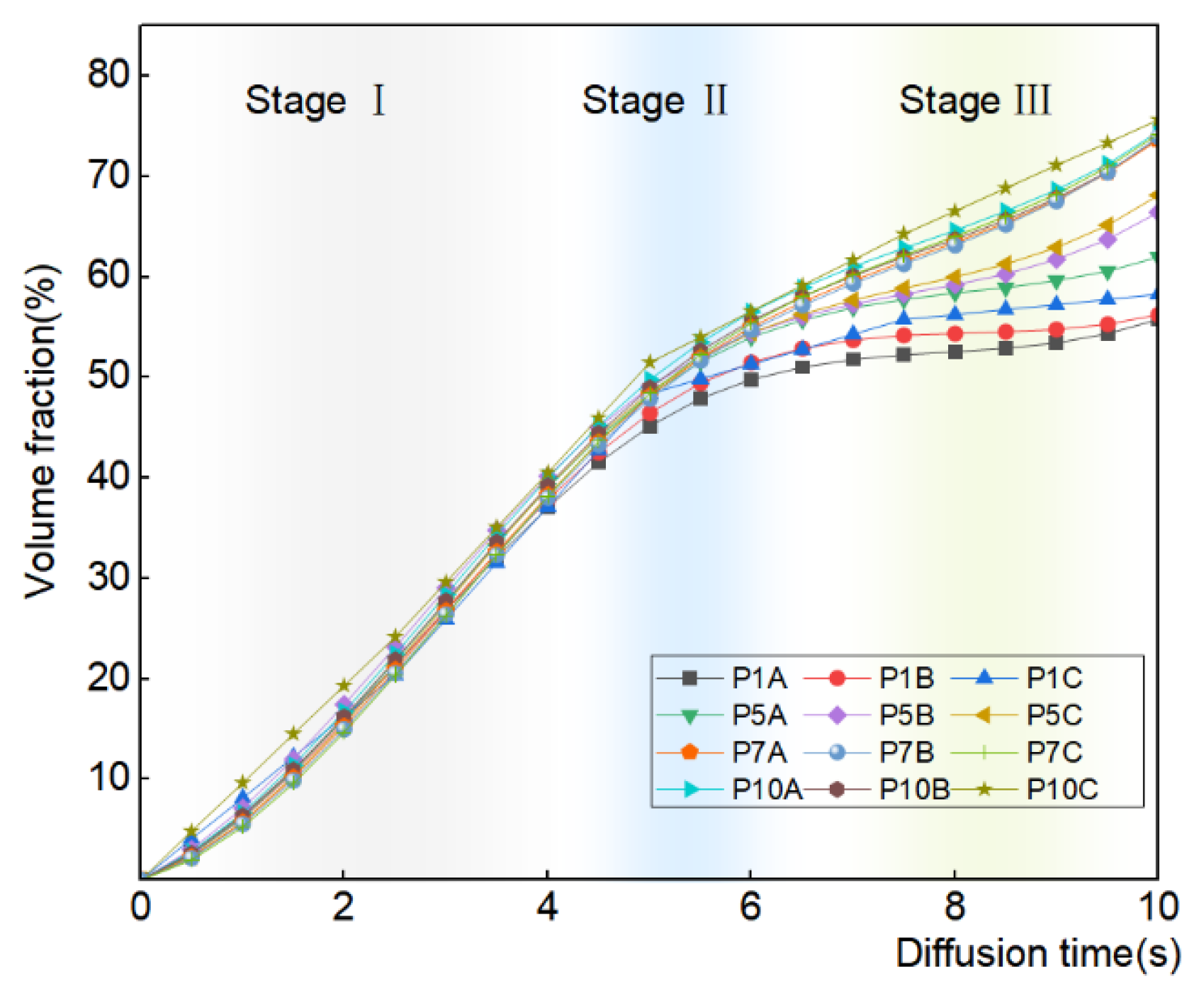
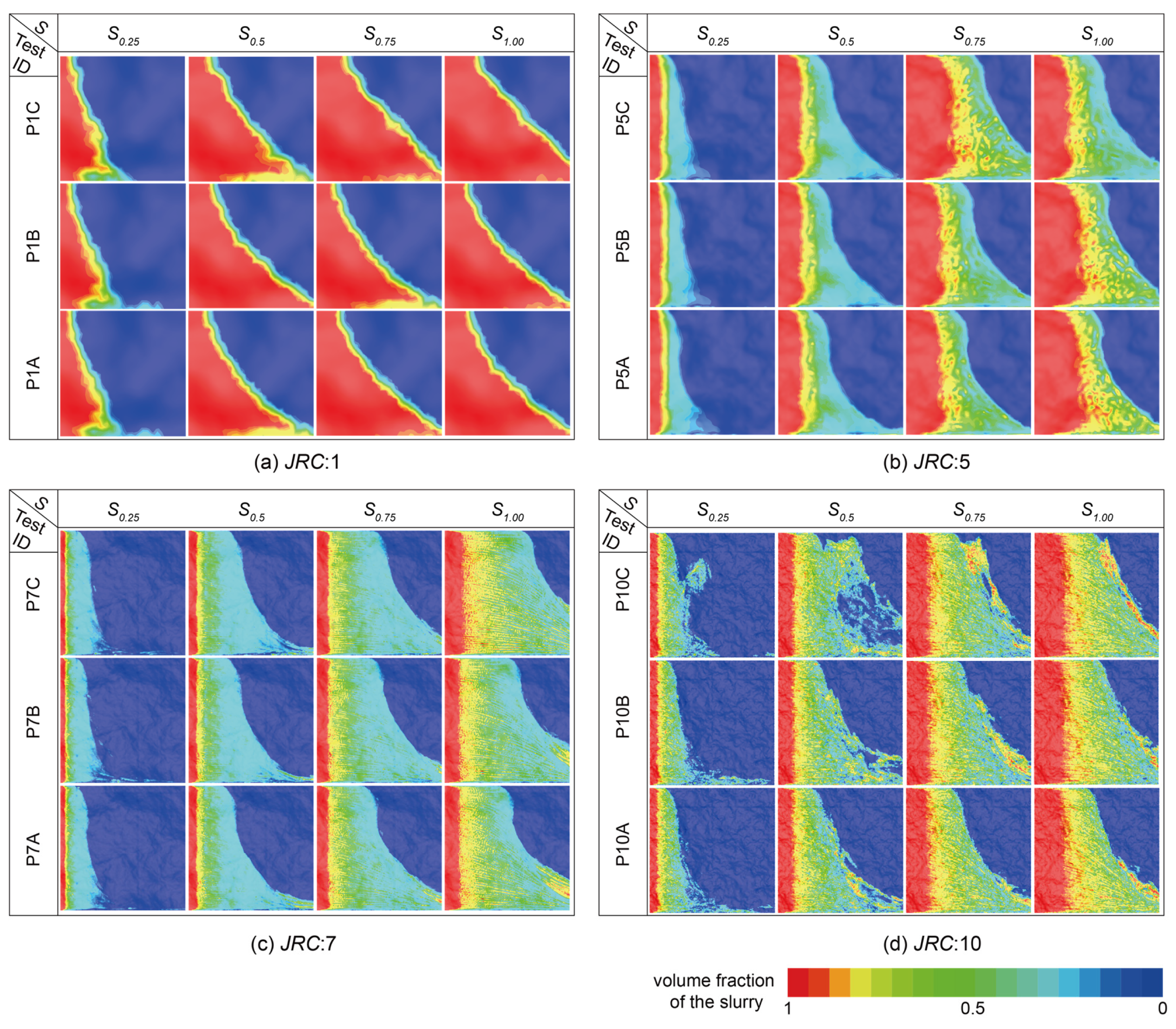
Grout volume fraction is a key indicator of the filling degree within fractures. Its temporal evolution directly reflects grout diffusion efficiency. Figure 4 presents the curves of grout diffusion ratio versus time for the 12 simulation cases. Figure 5 presents the grout diffusion cloud diagrams for the 12 simulation cases at four distinct time instants.

3.1. Spatiotemporal Evolution of Grout Diffusion in Fractal Rough Fractures

3.1.1. Spatiotemporal Evolution of Grout Diffusion in Rough Fractures

(1) Initial filling stage (Stage I)
The VOF cloud diagrams show that, during this stage, the grout is concentrated near the injection port, forming a clearly defined diffusion front. The proportion of the fully filled zone (FF) remains relatively small, while most areas within the fracture remain as undiffused zones (UF). Across all cases, the DF proportion falls within the range of 20–25%, with the maximum difference between groups being less than 2%. At this stage, the regulating effects of fracture fractal dimension and grout viscosity have not yet emerged. During this stage, the grout is dominated by radial inertial flow. It has not yet fully contacted the complex micro-asperities and concave structures of the fracture surface, and the overall flow resistance remains relatively low. The diffusion process is driven entirely by the inertial force of the injection pressure.
This also indicates that the traditional “pseudo-3D” fracture model yields relatively small prediction deviations during the initial injection stage. However, its inherent limitation in capturing the spatial heterogeneity of natural fractures will gradually become more pronounced as the grout fully interacts with the complex fracture structure [22].
(2) Rapid diffusion stage (Stage II)
This is the core period during which the fractal structure of the fractures and the regulating effect of grout properties become prominently evident. The range of the partially filled zone (PF) increases significantly, while the high-volume-fraction regions gradually expand from the injection port toward the fracture edges. The undulating characteristics of the diffusion front become increasingly apparent with increasing fracture roughness.
During this stage, the proportion of the diffusion zone (DF) exhibits nearly linear and rapid growth across all cases. For the P1 cases, the DF proportions for the three viscosity groups rose to 45.20%, 46.50%, and 48.40%, respectively. For the P5 cases, the proportions were 48.30%, 49.10%, and 48.60%, respectively. For the P7 cases, the proportions were 48.20%, 47.90%, and 48.40%, respectively. For the P10 cases, the proportions reached 49.80%, 49.00%, and 51.50%, respectively. Notably, the DF proportion for the P10-C case was significantly higher than that for the P1-A case. These results indicate that the regulating effects of fractal dimension and viscosity gradually emerged during this stage.
For fractures with higher roughness (P7 and P10), the distribution of grout volume fraction during this stage is more uniform, and the proportion of the partially filled zone (PF) increases more significantly. This is primarily because the rough fracture surface provides more space for grout contact and retention. Consequently, the overall diffusion range expands at a significantly faster rate compared with that observed for smooth fractures (P1).
Concurrently, the influence of grout viscosity begins to emerge. Higher-viscosity grout exhibits stronger adhesion and consequently a higher retention rate within the fracture structure [23].
(3) Stable equilibrium stage (Stage III)
This is the dynamic equilibrium period of grout diffusion. During this stage, the distribution of grout volume fraction undergoes no significant changes. The VOF cloud pattern stabilizes, with only minor local areas undergoing dynamic adjustments. This indicates that the grouting driving force and the fracture flow resistance have reached a dynamic equilibrium.
The cloud patterns and quantitative data reveal that, for high-roughness fractures (P7 and P10), the final proportion of the fully filled zone (FF) is higher, while the proportion of the undiffused zone (UF) is smaller. The uniformity of grout volume fraction distribution is significantly better than that observed in low-roughness fractures.
Moreover, increased viscosity enhances the adhesion and retention capacity of the grout. Consequently, under the same roughness condition, the final DF proportion for high-viscosity grout (Group C) is slightly higher than that for medium- and low-viscosity grout (Groups A and B). This demonstrates the coupling mechanism: fracture roughness determines the upper limit of the diffusion space, while grout viscosity regulates filling stability and the final retention rate [24].
In summary, the distribution of the volume fraction of the slurry fluid within the fractal rough fractures shows a typical evolution pattern of “rapid increase–slowdown of growth rate–stabilization” over time. The diffusion range of the slurry and the uniformity of filling are simultaneously controlled by the grouting time, the fractal roughness of the fractures, and the viscosity of the slurry. As the fractal dimension and roughness of the fractures increase, the proportion of the DF zone significantly increases, while the proportion of the UF zone continuously decreases. This indicates that the fractal rough structure can effectively improve the filling effect of the slurry, and the viscosity of the slurry mainly affects the filling stability and the final retention rate, and this effect is more prominent under high roughness conditions.
The three-stage diffusion pattern identified in our simulations is qualitatively consistent with experimental observations reported in the literature. Zhang et al. [7] conducted dynamic grouting experiments in fractured aquifers and observed a similar “rapid spread–deceleration–stabilization” sequence for cement slurry diffusion. Ding et al. [23] also reported three distinct diffusion phases in their single-rough-fracture grouting tests, with the fully-filled zone stabilizing after an initial growth period.

3.1.2. Gravity Influence Mechanism

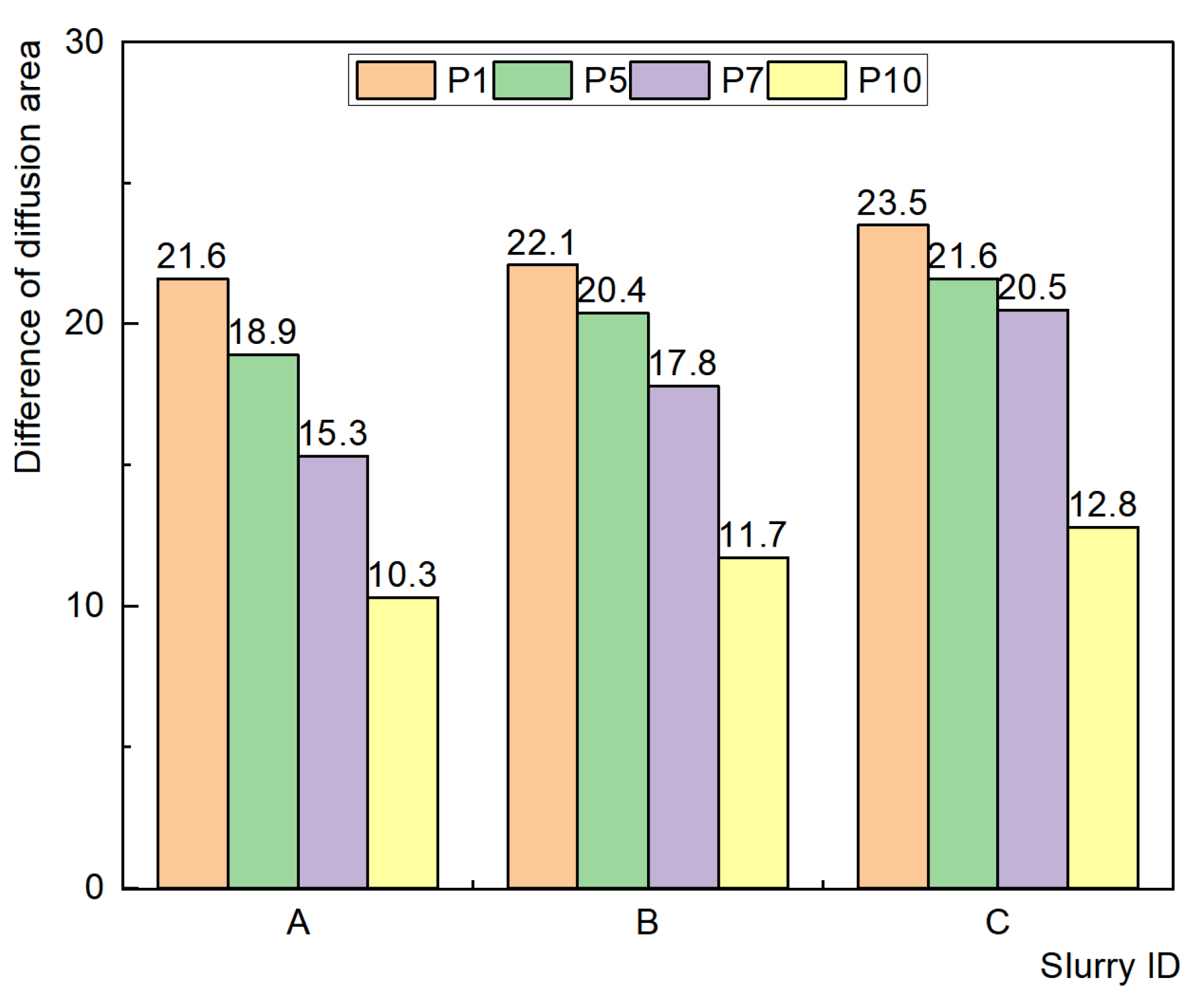
In natural rock masses, vertical or inclined fractures often extend along a preferred direction. Gravity is an important driving factor that governs grout diffusion behavior in vertical fractures [25]. Figure 6 illustrates the difference in grout volume fraction of the fully filled zone (FF) between the upper and lower parts of the fracture. By comparing the numerical results with those of the reference cases, the regulating effect of gravity on grout volume fraction distribution and diffusion front advancement is systematically analyzed.
(1) Gravity significantly enhances the vertical heterogeneity of grout volume fraction, resulting in a “sedimentation accumulation” pattern. The grout volume fraction at the bottom of the fracture is significantly higher than that at the top. Taking the P5-B case as an example, at 10 s, the average volume fraction of the fully filled zone (FF) at the fracture bottom is 78.3%, whereas that at the top is only 56.7%, representing a difference of 21.6% between the two parts. In contrast, when gravity is neglected, the volume fraction distribution in the upper and lower parts is uniform, showing no significant difference (reference case, Figure 3).
(2) The intensity of the gravitational effect is jointly governed by fracture fractal characteristics and grout viscosity. Under the same roughness condition, higher grout viscosity leads to a larger difference in volume fraction between the upper and lower parts. High-viscosity grout exhibits lower fluidity and is more susceptible to gravity, leading to sedimentation and accumulation. Under the same viscosity condition, a higher fracture fractal dimension results in a smaller difference in volume fraction between the upper and lower parts. For the P1 case, the difference between the upper and lower parts reaches 21.6%, whereas for the P10 case, it is only 10.3%. The underlying mechanism lies in the dense asperity structure of high-fractal-dimension fractures, which significantly impedes grout sedimentation and effectively mitigates gravity-induced heterogeneity.
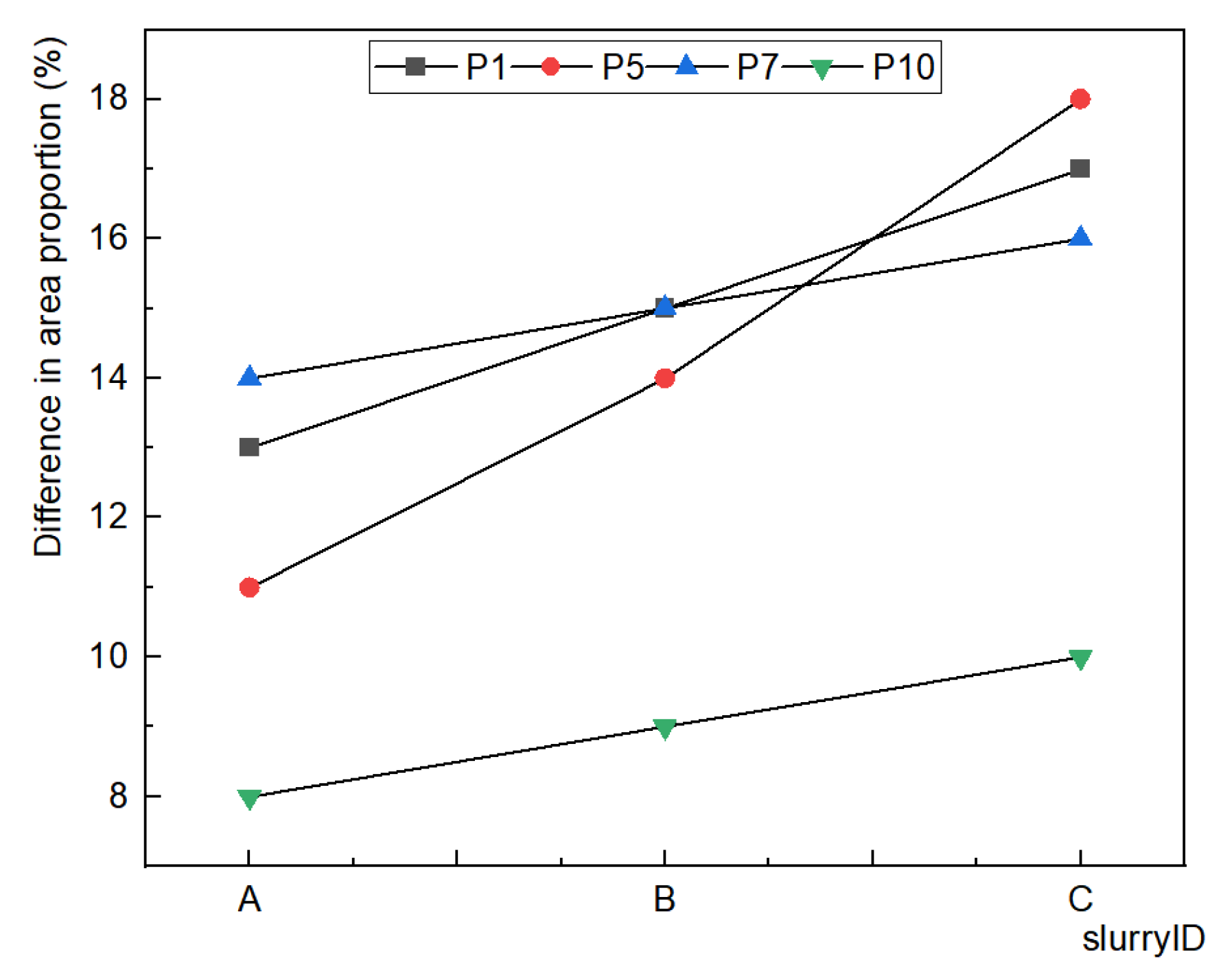
(3) Gravity exerts a significant bidirectional regulating effect on the propagation of the grout diffusion front. Figure 7 shows the difference in propagation distance between the lower and upper parts of the diffusion front at 10 s under different viscosity conditions. Taking the P7-A case as an example, at 10 s, the lower part of the diffusion front propagates to a relative distance of 0.72 under gravity, whereas the upper part reaches only 0.58, resulting in a gap of 0.14. Meanwhile, the bidirectional regulating effect of gravity is positively correlated with grout viscosity. For the high-viscosity grout (Group C), the gap between the upper and lower parts reaches a maximum of 0.18, whereas for the low-viscosity grout (Group A), the gap is only 0.11. These results indicate that gravity not only accelerates the propagation of the lower part of the diffusion front but also restrains that of the upper part, thereby creating a significant difference between the two.

3.2. Dominant Effect of Fractal Characteristics of Fractures on Fluid Flow

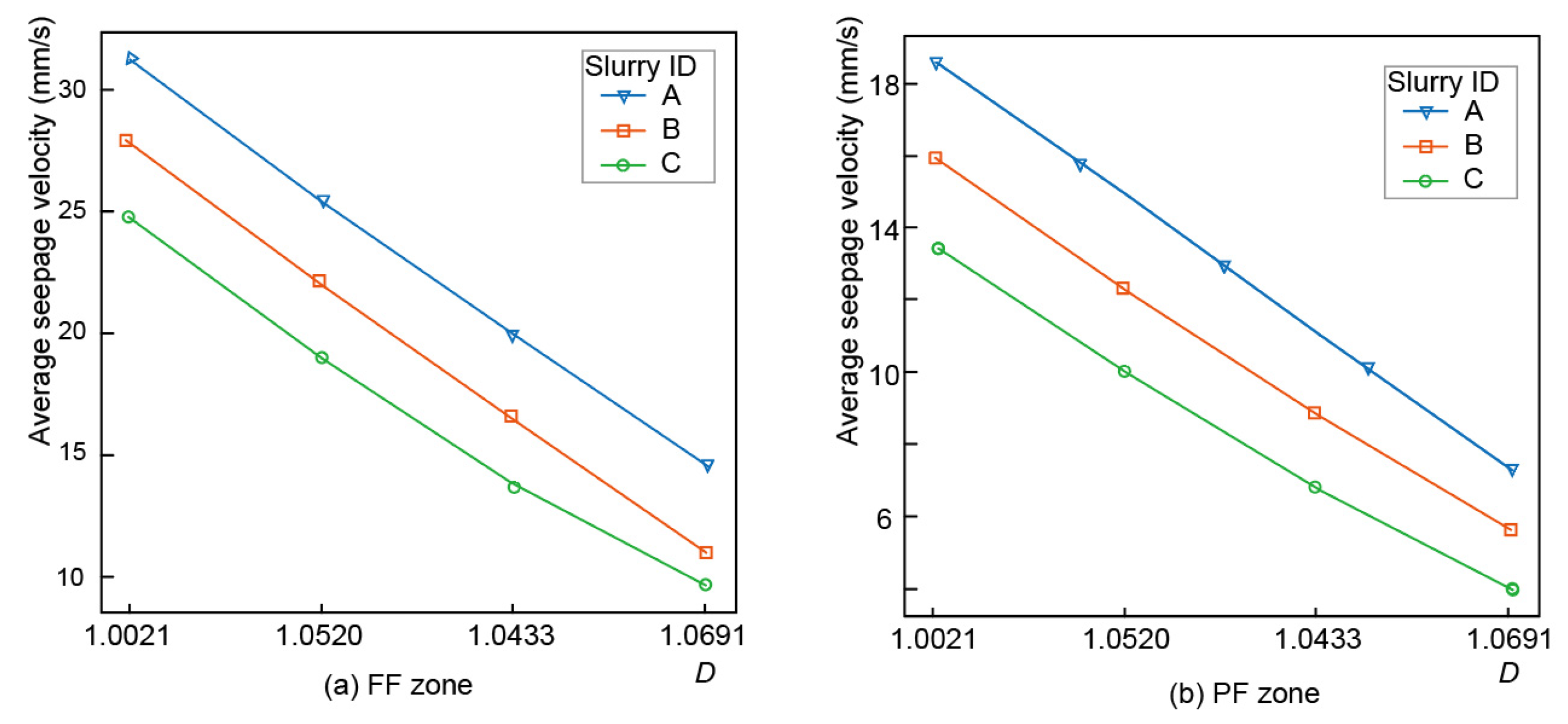
Fracture fractal characteristics are the primary controlling factor of grout flow behavior [26]. Figure 8 presents the variation in average seepage velocity with fractal dimension in the fully filled zone (FF) and the partially filled zone (PF). Figure 9 illustrates the relationship between the joint roughness coefficient (JRC) and the steady-state pressure drop for grouts with different viscosities.
The results demonstrate that, regardless of grout viscosity, the seepage velocities in both the FF and PF zones exhibit a significant decreasing trend with increasing fractal dimension D, and the rate of decline intensifies with increasing grout viscosity. As the fractal dimension D increases from 1.00206 to 1.06940, the seepage velocity of the low-viscosity Group A grout (7.32 cP) in the FF zone decreases from 0.0312 m/s to 0.0145 m/s, representing a reduction of 53.5%; the reduction for the high-viscosity Group C grout (16.67 cP) reaches 60.7%. The underlying physical mechanism is that grout within the FF zone makes more extensive contact with the fracture surfaces, such that the frictional resistance and eddy-current losses induced by the fractal asperities are more pronounced, and the shear-thickening effect of high-viscosity grout further amplifies this frictional loss [27].
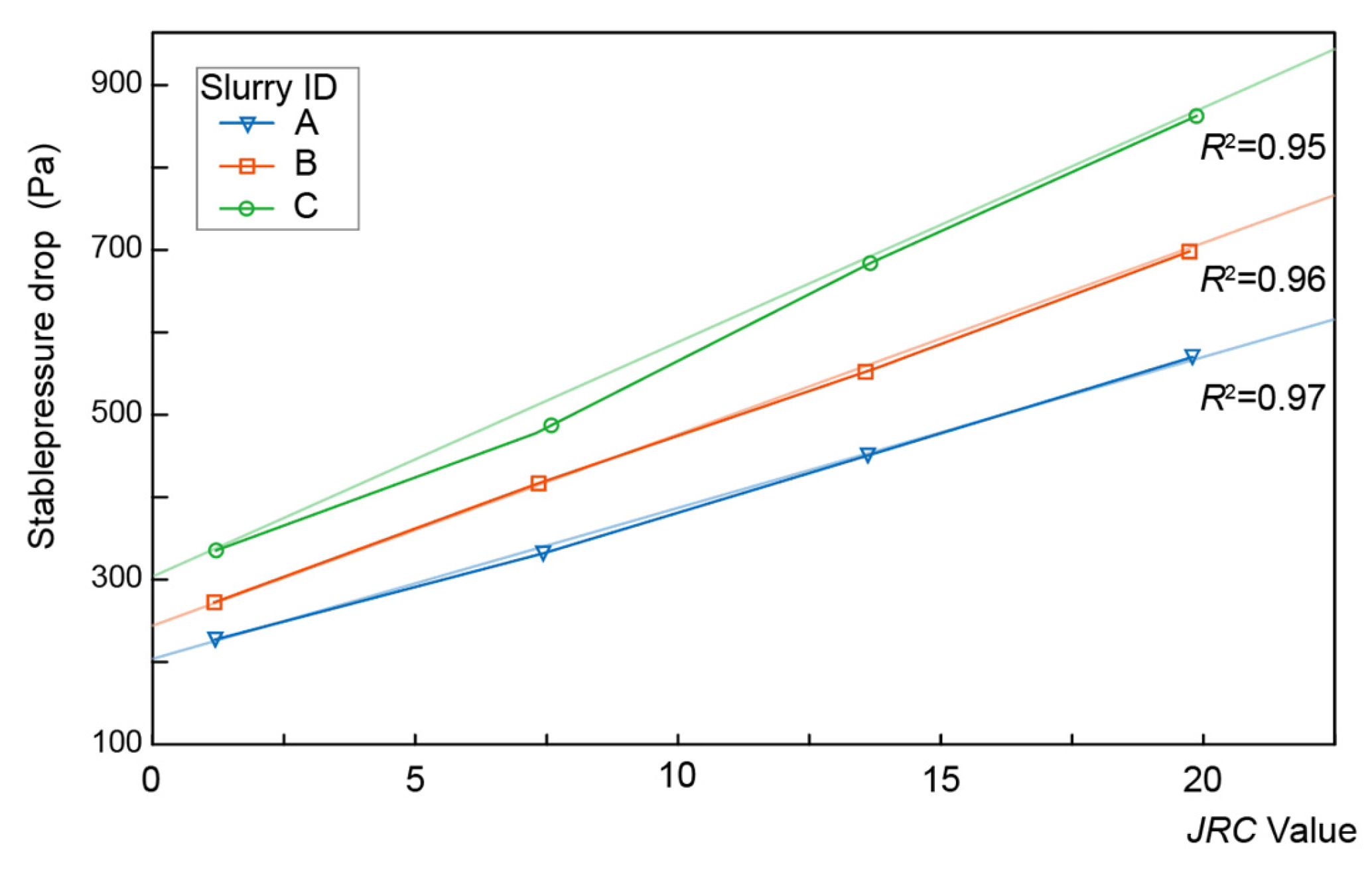
For all three viscosity groups, the steady-state pressure drop increases significantly and linearly with JRC. Moreover, the fitting slope increases with grout viscosity. The R2 values of all fitting equations exceed 0.95 (Figure 9). Specifically, the fitting equation for Group A (low viscosity) is ΔP = 18.67 × JRC + 198.32 (R2 = 0.97); for Group B (medium viscosity), ΔP = 23.45 × JRC + 240.18 (R2 = 0.96); and for Group C (high viscosity), ΔP = 28.72 × JRC + 298.56 (R2 = 0.95).
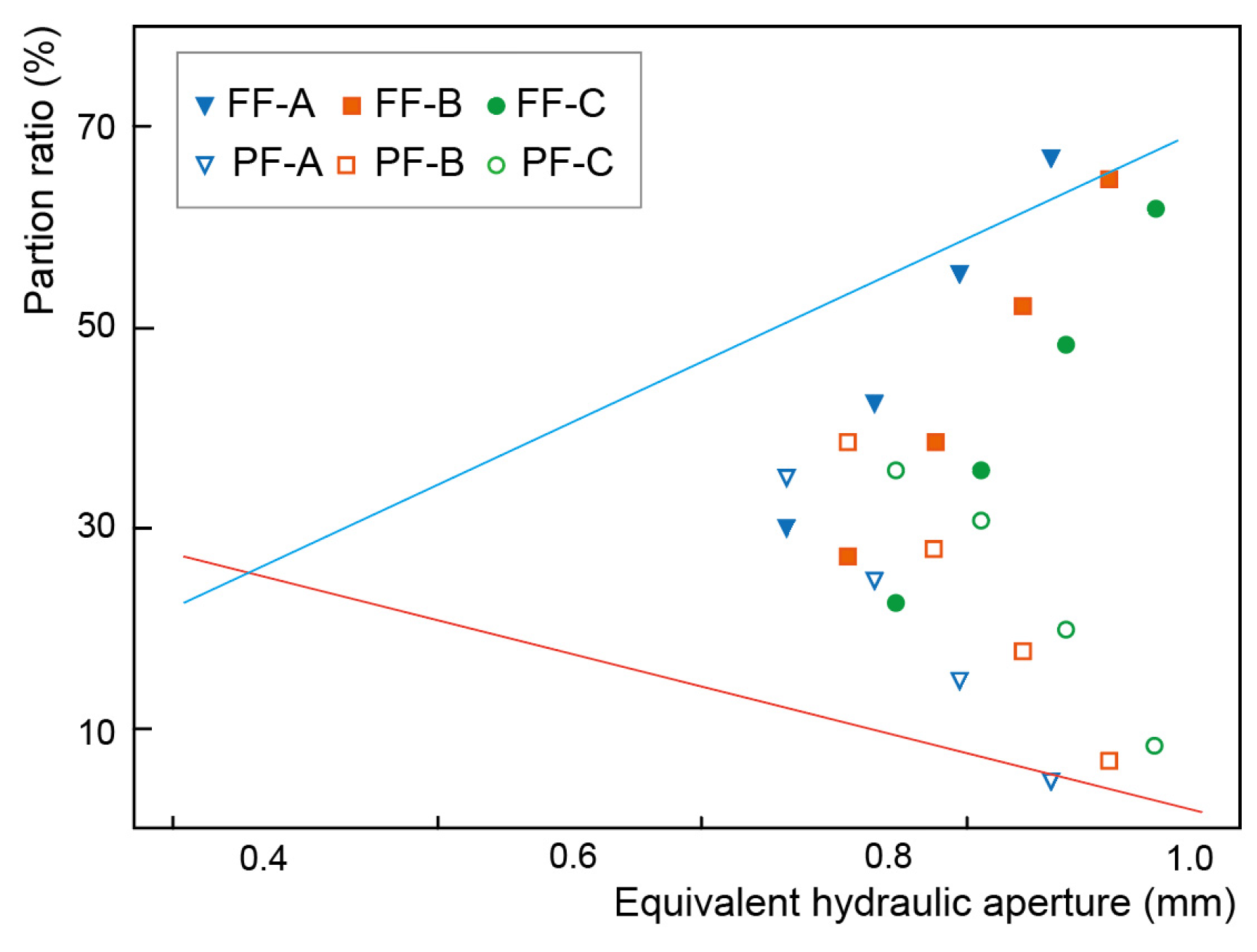
The underlying mechanism is that, under high-roughness conditions, local clogging effects occur within the grout. These effects partially restrain the rapid increase in local flow resistance. This study further systematically analyzes the influence of fracture fractal characteristics on grout diffusion zones. Figure 10 shows the fitting relationship between the zone proportions and the equivalent hydraulic aperture.
The results indicate that, as the fractal dimension D increases, the proportion of the fully filled zone (FF) decreases significantly. In contrast, the proportion of the undiffused zone (UF) increases markedly. Meanwhile, the proportion of the partially filled zone (PF) first rises and then declines. Under the P1-A condition, the FF proportion reaches 67.2%, whereas the UF proportion is only 5.2%. In contrast, under the P10-C condition, the FF proportion drops to 22.8%, and the UF proportion rises to 35.9%. Fitting analysis reveals a significant positive correlation between the FF proportion and the equivalent hydraulic aperture, as well as a significant negative correlation between the UF proportion and the equivalent hydraulic aperture. These findings confirm that the equivalent hydraulic aperture is the most critical parameter controlling grout diffusion zoning. In contrast, fracture fractal characteristics influence grout diffusion zones indirectly by altering the equivalent hydraulic aperture.

3.3. Synergistic Mechanism of Grout Viscosity and Fracture Fractal Characteristics

As a secondary regulating factor, grout viscosity does not act independently; rather, it is significantly influenced by fracture fractal characteristics. This section systematically analyzes the synergistic coupling mechanism between these two factors.
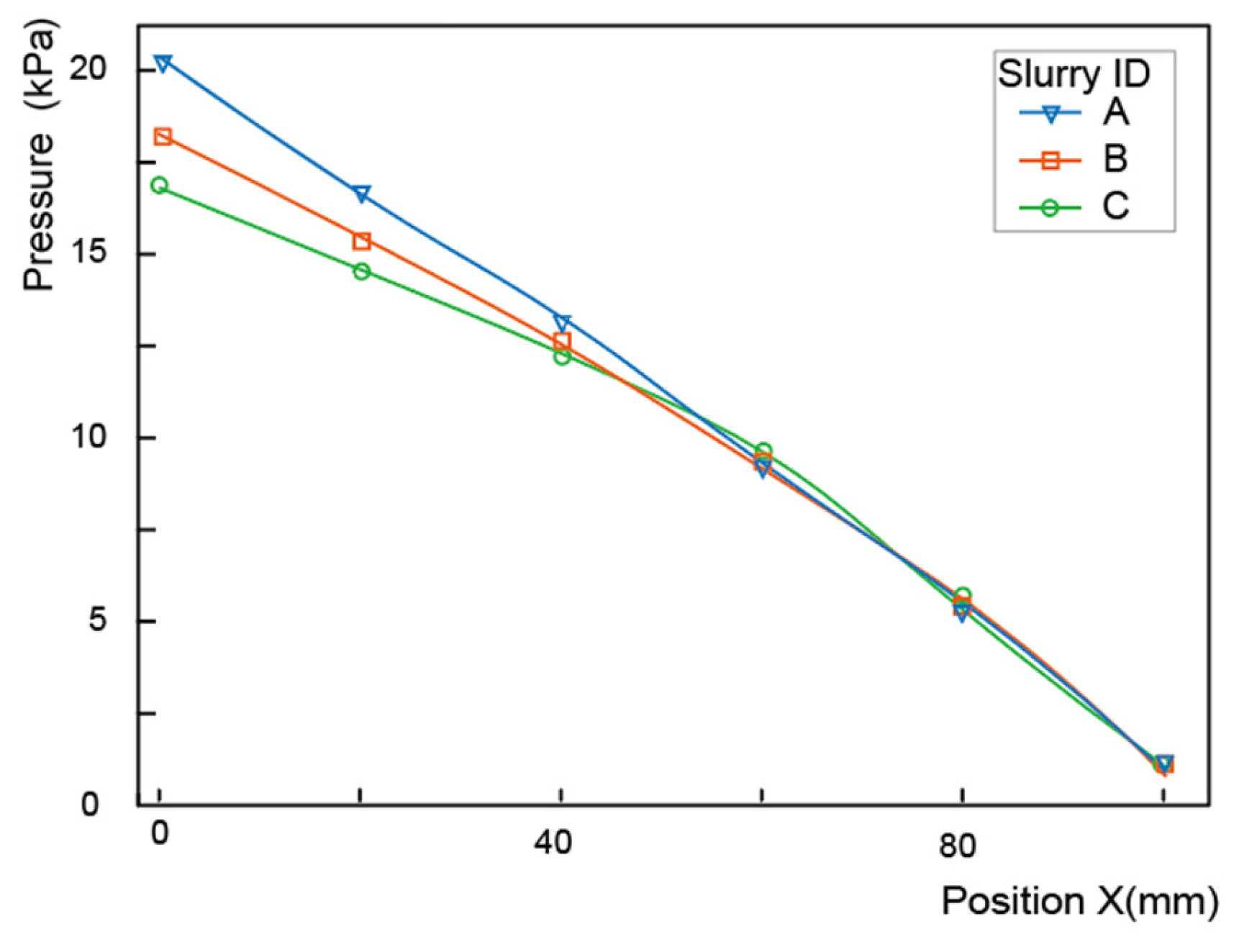
Taking the P7 case as an example, Figure 11 presents the pressure distribution along the fracture centerline for different grout viscosities. The results show that, for a given roughness, higher grout viscosity results in a smaller pressure gradient in the vertical inlet section and a lower pressure drop in the horizontal bottom section.
The underlying mechanism is that higher-viscosity grout exhibits stronger flow stability, which effectively weakens local disturbances induced by the fractal fracture structure. Consequently, this leads to a more uniform grout distribution and milder pressure attenuation [28].
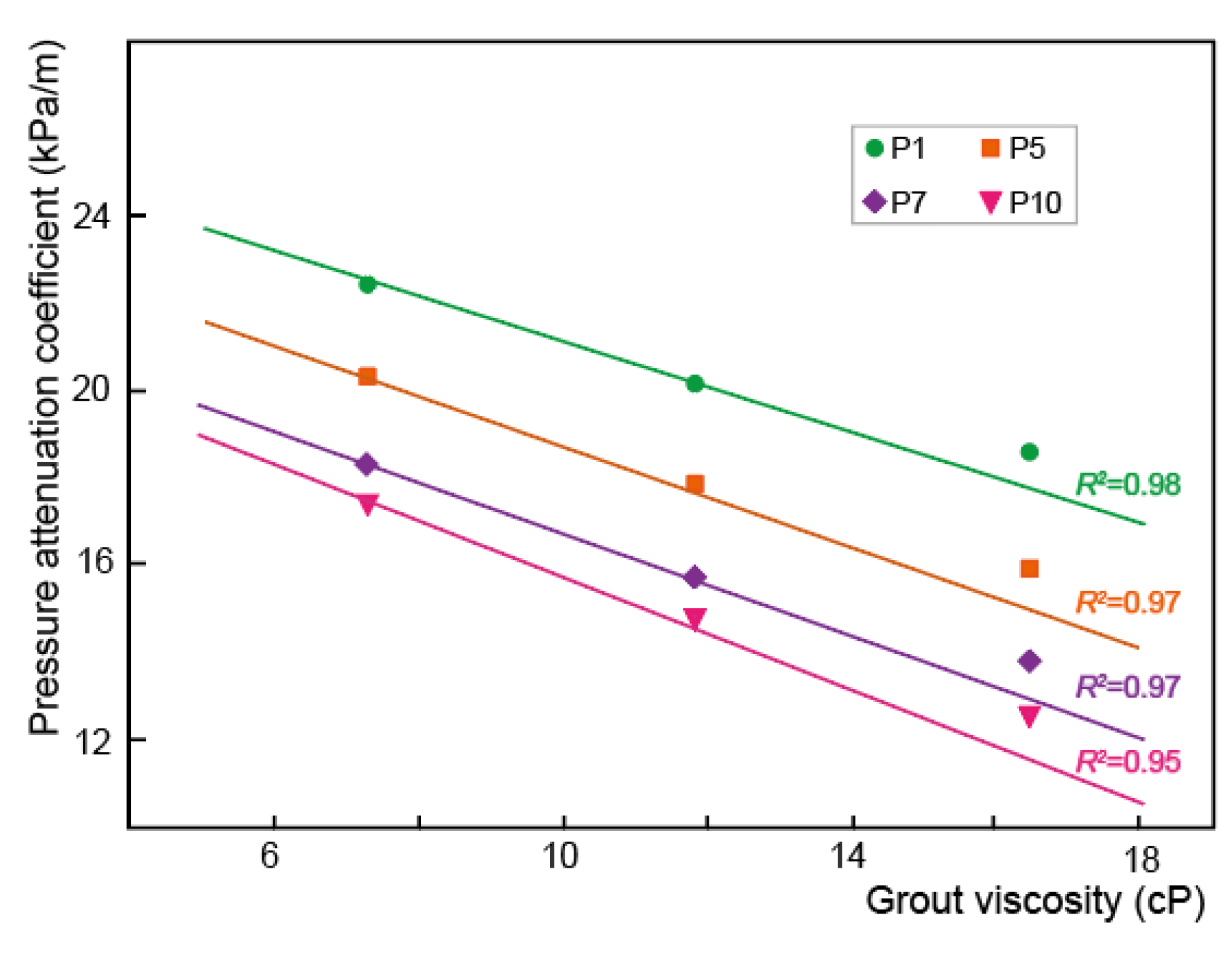
The scatter fitting results presented in Figure 12 further confirm this pattern. Under all roughness conditions, the pressure attenuation coefficient exhibits a significant negative linear relationship with grout viscosity (R2 = 0.96–0.98). The absolute value of the fitting slope increases with roughness: from −0.52 for Group P1 to −0.65 for Group P10. This indicates that fractures with higher roughness are more sensitive to viscosity variations.
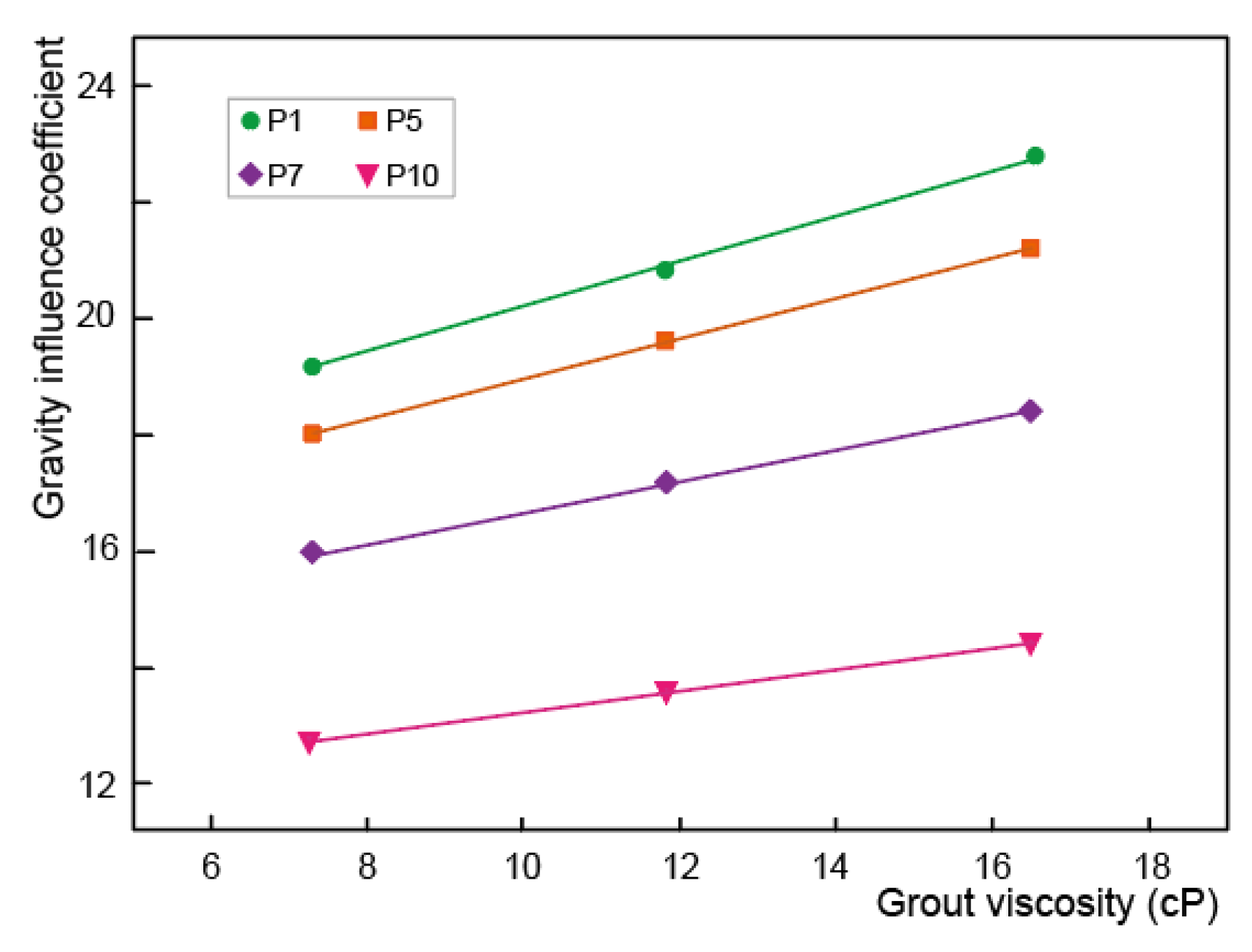
Additionally, Figure 13 demonstrates that the gravity influence coefficient is positively correlated with grout viscosity: high-viscosity grout amplifies the gravity-induced heterogeneity of grout distribution. However, higher fracture fractal dimensions attenuate this amplifying effect of viscosity on the gravity response. Under the P10 condition (D = 1.06940), the gravity influence coefficient of the high-viscosity grout is only marginally higher than that of the low-viscosity grout, whereas under the P1 condition (D = 1.00206), the difference between the two is substantially more pronounced. High-fractal-dimension fractures generate stronger spatially varying resistance fields, which dampen the gravity-driven flow component and reduce the differential effect of viscosity [29,30,31].
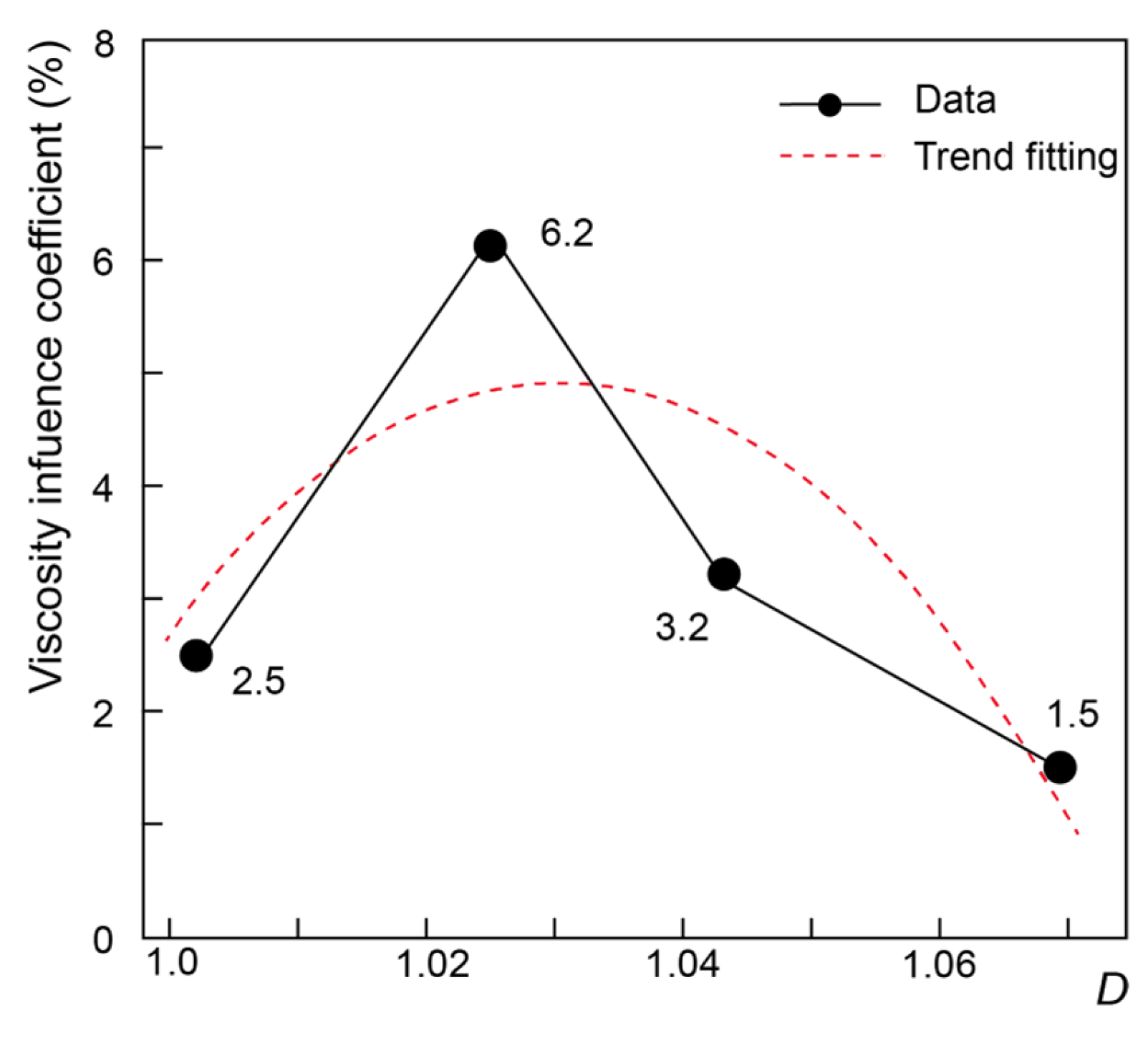
Figure 14 further shows that the viscosity influence coefficient exhibits a parabolic decay trend as the fractal dimension increases. Under the P1 condition, the viscosity influence coefficient is 6.2%. It decreases to 3.2% under the P7 condition and further declines to 1.5% under the P10 condition.
This indicates that the regulating effect of grout viscosity on flow behavior gradually weakens as fracture roughness increases [32,33,34]. In engineering applications, viscosity optimization is the most effective approach to improving the propagation uniformity of grout in low-roughness fractures. However, for high-roughness fractures, the benefit of viscosity adjustment becomes negligible. Instead, attention should be shifted to fracture surface pretreatment and grouting pressure optimization.
In summary, grout viscosity and fracture fractal characteristics form a coupled regulatory system in which the two factors mutually modulate each other. Fracture fractal characteristics establish the dominant spatial framework governing grout flow, while viscosity further modulates flow behavior within this framework through its effects on flow stability, pressure decay, gravity response, and diffusion zoning. This synergistic mechanism provides a theoretical basis for the integrated optimization of grouting parameters in rock masses with complex fracture networks.

3.4. Limitations and Future Research

This study investigates grout diffusion in rough fractal fractures but has limitations. A weakness is the lack of experimental laboratory research results. Additionally, several physico-chemical mechanisms that are significant in real cement grouting operations were not incorporated in this model. Filtration of cement particles at fracture constrictions can reduce the effective aperture, especially in high-JRC fractures where narrow asperity contacts act as filter screens. Particle settling under gravity may amplify the “sedimentation accumulation” pattern observed in our vertical fracture simulations, particularly for high water–cement ratio grouts.
Future work should couple stress-fracture–grout interaction to clarify flow in deformable fractures, and should incorporate the aforementioned mechanisms for application to a broader range of grout types and injection conditions. Despite this, practical implications are offered. In-situ roughness parameters (from borehole imaging, profilometry, fractal analysis) can guide grout selection and design, replacing empirical methods and reducing “pseudo-3D” prediction errors. For high-fractal-dimension fractures, low-viscosity grout with moderately elevated pressure reduces resistance and improves diffusion. For low-fractal-dimension fractures, medium- to high-viscosity grout prevents over-diffusion and waste. For vertical fractures, a staged or variable-pressure strategy based on the identified gravity regulation law alleviates vertical asymmetry.
Despite these limitations, this study offers direct and actionable practical implications for production tasks, particularly the annular cementing of oil exploration and engineering wells, as well as mine working face stabilization and geotechnical slope reinforcement.
The dominant control of fracture fractal dimension on grout diffusion zones provides a theoretical basis for optimizing annular cementing design. In-situ roughness parameters—derived from borehole imaging, profilometry, and fractal analysis of the wellbore wall—can replace empirical “experience-based” cement volume estimation methods, thereby reducing “pseudo-3D” prediction errors. These engineering recommendations also extend to cement stabilization of mine workings in rock burst risk zones, quarry wall reinforcement, and slope treatment in fractured rock masses prone to collapse, where optimized grouting parameters based on fracture roughness characterization can improve both safety and efficiency.

4. Conclusions

This study systematically investigates grout diffusion in three-dimensional rough fractures by coupling VOF simulation with fractal surface reconstruction. The main conclusions are as follows:
(1) The grout diffusion process exhibits a distinct three-stage pattern: initial filling, rapid diffusion, and stable equilibrium. The effects of fractal dimension and viscosity emerge only after the initial filling stage. Higher-roughness fractures promote grout filling efficiency, whereas viscosity primarily governs filling stability and retention rate. The inherent limitations of two-dimensional fracture models become significant in the later diffusion stages, confirming that three-dimensional representations are essential for accurate long-term predictions.
(2) Fracture fractal dimension exerts dominant control over seepage velocity, which decreases significantly with increasing roughness. The pressure drop along the fracture exhibits a strong linear correlation with JRC across all viscosity groups. Notably, beyond a critical JRC threshold (~13.4), the rate of pressure drop increase decelerates due to local throttling effects at asperity contacts, indicating that the enhancement of flow resistance gradually diminishes with additional roughness.
(3) Viscosity plays a secondary yet non-negligible role, modulated by fracture roughness. Higher viscosity promotes more uniform pressure distribution and enhances flow stability. However, the regulating effect of viscosity on diffusion progressively weakens as fractal dimension increases, while rough fracture geometry can partially mitigate gravity-induced heterogeneity in vertical fractures.
(4) Zoning classification based on fracture roughness parameterization reveals that fast-flow zones decrease and unfilled zones increase with fractal dimension. In-situ fracture roughness characterization can guide the selection of cement slurry viscosity and injection strategy: low-viscosity slurry with elevated pressure for high-roughness well sections to enhance displacement efficiency, and medium- to high-viscosity slurry for low-roughness sections to ensure complete annular fill-up.

Author Contributions

Writing—original draft, E.Z.; Methodology, L.L.; Funding acquisition, L.L. and E.Z.; Investigation, Y.L.; Writing—review & editing, H.Q. All authors have read and agreed to the published version of the manuscript.

Funding

The authors acknowledge the joint support from the National Natural Science Foundation of China (Grant No. 52504147; 52074212), the Natural Science Foundation of Shaanxi Province (Grant No. 2024JC-YBQN-0528), and the Shaanxi Province Postdoctoral Research Foundation (Grant No. 2023BSHEDZZ295).

Data Availability Statement

The original contributions presented in this study are included in the article. Further inquiries can be directed to the corresponding author.

Conflicts of Interest

The authors declare that they have no known competing financial interests or personal relationships that could have appeared to influence the work reported in this paper.

References

  1. Liu, X.; Hu, C.; Liu, Q.; He, J. Grout penetration process simulation and grouting parameters analysis in fractured rock mass using numerical manifold method. Eng. Anal. Bound. Elem. 2021, 123, 93–106. [Google Scholar] [CrossRef]
  2. Fransson, A. Characterisation of a fractured rock mass for a grouting field test. Tunn. Undergr. Space Technol. 2001, 16, 331–339. [Google Scholar] [CrossRef]
  3. Zou, L.; Håkansson, U.; Cvetkovic, V. Two-phase cement grout propagation in homogeneous water-saturated rock fractures. Int. J. Rock. Mech. Min. Sci. 2018, 106, 243–249. [Google Scholar] [CrossRef]
  4. Zou, L.; Håkansson, U.; Cvetkovic, V. Radial propagation of yield-power-law grouts into water-saturated homogeneous fractures. Int. J. Rock. Mech. Min. Sci. 2020, 130, 104308. [Google Scholar] [CrossRef]
  5. Zhang, G.; Karakus, M.; Tang, H.; Ge, Y.; Jiang, Q. Estimation of Joint Roughness Coefficient from Three-Dimensional Discontinuity Surface. Rock. Mech. Rock. Eng. 2017, 50, 2535–2546. [Google Scholar] [CrossRef]
  6. Fransson, Å.; Gustafson, G. Characterization of Fractured Rock for Grouting Design Using Hydrogeological Methods. In Proceedings of the 3rd International Conference on Grouting and Ground Treatment, New Orleans, LA, USA, 10–12 February 2003; pp. 1082–1088. [Google Scholar] [CrossRef]
  7. Zhang, E.; Xu, Y.; Fei, Y.; Shen, X.; Zhao, L.; Huang, L. Influence of the dominant fracture and slurry viscosity on the slurry diffusion law in fractured aquifers. Int. J. Rock. Mech. Min. Sci. 2021, 141, 104731. [Google Scholar] [CrossRef]
  8. Barton, N.; Wang, C.; Yong, R. Advances in joint roughness coefficient (JRC) and its engineering applications. J. Rock. Mech. Geotech. Eng. 2023, 15, 3352–3379. [Google Scholar] [CrossRef]
  9. Wang, X.C.; Zhang, L.Z.; Zhang, Q.S.; Liu, R.T.; Huang, C.X. A stepwise calculation method for grouting penetration in rough rock fracture based on fracture segment division. Tunn. Undergr. Space Technol. 2025, 158, 106382. [Google Scholar] [CrossRef]
  10. Ma, G.; Wang, Z.; Wang, H. Grouting Geological Model (GGM): Definition, Characterization, Modeling, and Application in Determining Grouting Material and Pressure. Rock. Mech. Rock. Eng. 2025, 58, 6513–6538. [Google Scholar] [CrossRef]
  11. Xie, H.; Wang, J.; Xie, W. Fractal Properties of Rock Fracture Surfaces. Acta Mech. Sin. 1994, 26, 351–357. [Google Scholar]
  12. Xie, H. Fractals in Rock Mechanics; A.A. Balkema: Rotterdam, The Netherlands, 1993. [Google Scholar]
  13. Li, Y.; Huang, R. Relationship between joint roughness coefficient and fractal dimension of rock fracture surfaces. Int. J. Rock. Mech. Min. Sci. 2015, 75, 15–22. [Google Scholar] [CrossRef]
  14. Wang, Y.; Bai, X.; Pei, Q.; Yuan, H.; Wang, J.; Zhang, P.; Qiu, X. Characterization of rough structural surface models and seepage characteristics based on 3D engraving technology. Bull. Eng. Geol. Environ. 2026, 85, 129. [Google Scholar] [CrossRef]
  15. Cui, W.; Wang, L.; Luo, Y. Modeling of three-dimensional single rough rock fissures: A study on flow rate and fractal parameters using the Weierstrass–Mandelbrot function. Comput. Geotech. 2022, 144, 104655. [Google Scholar] [CrossRef]
  16. Xu, K.; Yang, S.; Zheng, S.; Zhang, X. Fractal Study on the Influence of Surface Morphology on Seepage Characteristics in the Rough Fracture Network. J. Porous Media 2024, 27, 67–84. [Google Scholar] [CrossRef]
  17. Ferer, M.; Crandall, D.; Ahmadi, G.; Smith, D. Two-phase flow in a rough fracture: Experiment and modeling. Phys. Rev. E 2011, 84, 016316. [Google Scholar] [CrossRef] [PubMed]
  18. Brush, D.J.; Thomson, N.R. Fluid flow in synthetic rough-walled fractures: Navier-Stokes, Stokes, and local cubic law simulations. Water Resour. Res. 2003, 39, 1085. [Google Scholar] [CrossRef]
  19. Ding, W.; Duan, C.; Zhang, Q. Experimental and Numerical Study on a Grouting Diffusion Model of a Single Rough Fracture in Rock Mass. Appl. Sci. 2020, 10, 7041. [Google Scholar] [CrossRef]
  20. Wang, Y.H.; Yang, P.; Li, Z.T.; Wu, S.J.; Zhao, Z.X. Experimental-numerical investigation on grout diffusion and washout in rough rock fractures under flowing water. Comput. Geotech. 2020, 126, 103717. [Google Scholar] [CrossRef]
  21. Wang, F.; Zhang, J.; Qin, X.; Yuan, C.; Meng, X.; Zhang, H. Diffusion mechanism of fracture grouting in rock mass with flowing water. Alex. Eng. J. 2024, 105, 44–55. [Google Scholar] [CrossRef]
  22. Zhang, X.; Wu, B.; Dontsov, E.; Jeffrey, R.G.; Han, Y.; Quinlan, K. A New Pseudo-3D Model for Hydraulic Fracture Height Growth in Multilayered Rocks. In Proceedings of the ARMA US Rock Mechanics/Geomechanics Symposium, San Francisco, CA, USA, 25–28 June 2017. [Google Scholar]
  23. Ding, W.; Lei, B.; Duan, C.; Zhang, Q. Grout diffusion model for single fractures in rock considering influences of grouting pressure and filling rate. Tunn. Undergr. Space Technol. 2025, 158, 106392. [Google Scholar] [CrossRef]
  24. Zhu, G.; Guo, S.; Shi, J.; Zhang, Q. Study on the diffusion mechanism of columnar-hemispherical infiltration grouting form of quick-setting slurry considering spatial and temporal variations of slurry viscosity. Phys. Fluids 2025, 37, 017101. [Google Scholar] [CrossRef]
  25. Hao, M.; Song, T.; Li, X.; Zou, L.; Zhong, Y.; Zhang, B.; Wang, L. Propagation Analysis of Polymer Grout in Vertical Fractures: An Experimental and Numerical Study. KSCE J. Civ. Eng. 2024, 28, 10. [Google Scholar] [CrossRef]
  26. Cao, C.; Chen, D.; Xu, Z.; Chai, J.; Li, Y.; Fu, H. Experimental and numerical investigation on grout in geotechnical two-dimensional random fracture network of rock mass. Eng. Geol. 2025, 355, 108187. [Google Scholar] [CrossRef]
  27. Gao, H.; Qing, L.; Ma, G.; Zhang, D.; Wei, C. Numerical investigation into effects of rheological properties on grout flow in rock fracture using Herschel-Bulkley model. Eng. Geol. 2024, 329, 107402. [Google Scholar] [CrossRef]
  28. Zhang, X.; Qiao, L.; Liu, J.; Li, K.; Wang, Z.; Li, W. Flow Models and Characteristics of Grout Flow in Rock Fractures Considering Both the Inertia Effects and Time-Varying Viscosity. Rock. Mech. Rock. Eng. 2026, 1–21. [Google Scholar] [CrossRef]
  29. Chen, Y.; Sun, D.; Shao, Y.; Ma, G. A model of cement grout flow in a fracture network system. Comput. Geotech. 2024, 175, 106698. [Google Scholar] [CrossRef]
  30. Jin, L.; Sui, W. Experimental investigation on chemical grouting in rough 2D fracture network with flowing water. Bull. Eng. Geol. Environ. 2021, 80, 8519–8533. [Google Scholar] [CrossRef]
  31. Miyoshi, T.; Yasuhara, H.; Kishida, K. CFD Simulation of Grout Flow in Rough-Walled Rock Fractures: Influence of Water–Cement Ratio. Geotech. Geol. Eng. 2025, 43, 394. [Google Scholar] [CrossRef]
  32. Tong, F.; Yang, J.; Duan, M.Q.; Ma, X.F.; Li, G.C. The numerical simulation of rock mass grouting: A literature review. Eng. Comput. 2021, 39, 1902–1921. [Google Scholar] [CrossRef]
  33. Hirt, C.W.; Nichols, B.D. Volume of Fluid (VOF) Method for the Dynamics of Free Boundaries. J. Comput. Phys. 1981, 39, 201–225. [Google Scholar] [CrossRef]
  34. Lavrov, A. Numerical modeling of steady-state flow of a non-Newtonian power-law fluid in a rough-walled fracture. Comput. Geotech. 2013, 50, 101–109. [Google Scholar] [CrossRef]
Figure 1. Underground grouting and zone diagram.
Fractalfract 10 00352 g001
Figure 2. Research on the technical roadmap.
Fractalfract 10 00352 g002
Figure 3. Results of reference case in a smooth fracture. (a) Pressure distribution in the fracture. (b) Pressure distribution along bottom.
Fractalfract 10 00352 g003
Figure 4. Time-dependent variation in the grout diffusion ratio.
Fractalfract 10 00352 g004
Figure 5. Series of experimental slurry diffusion cloud charts.
Fractalfract 10 00352 g005
Figure 6. The difference in volume fraction between the upper and lower parts of the FF zone.
Fractalfract 10 00352 g006
Figure 7. The difference in the advancing distance between the upper and lower parts of the diffusion front (t = 10 s).
Fractalfract 10 00352 g007
Figure 8. Average seepage velocity changes in the FF area and the PF area.
Fractalfract 10 00352 g008
Figure 9. Relationship between JRC value and stable pressure drop for grout with different viscosities.
Fractalfract 10 00352 g009
Figure 10. Scatter plots of zone proportions versus equivalent hydraulic aperture under all working conditions.
Fractalfract 10 00352 g010
Figure 11. Comparison of pressure distribution curves along the fracture centerline for different grout viscosities (Case P7).
Fractalfract 10 00352 g011
Figure 12. Scatter fitting plots of pressure attenuation coefficient versus grout viscosity under all roughness conditions.
Fractalfract 10 00352 g012
Figure 13. Variation curves of the gravity influence coefficient under different grout viscosities.
Fractalfract 10 00352 g013
Figure 14. Variation in the viscosity influence coefficient with fracture fractal dimension.
Fractalfract 10 00352 g014
Table 1. Fractal parameters used to represent JRC profiles [11].
JRC CurveJRC Value RangeFractal Dimension (D)Characteristic Length
(L/×10−2 mm)
Peak Height
(h/×10−2 mm)
10–21.0020684.04.50
58–101.0250115.22.92
712–141.0432814.53.75
1018–201.0694015.55.25
Table 2. Boundary conditions of grouting numerical simulation.
PositionBoundary Type
grouting inletvelocity-inlet (slurry volume fraction—100%)
outletpressure-outlet (total pressure)
upper/lower/surfacestationary wall/no slip
internal boundarysolid
Table 3. Mesh parameters for independence validation.
NumberGlobal Mesh SizeTotal ElementsTotal Nodes
Scale FactorSeed Size
M13119,5293690
M22185,41715,436
M310.5582,154123,595
M40.50.54,466,636760,772
Table 4. Experimental parameter sheet (23 °C).
Test IDJRCSlurry IDw:c ρ (g/cm3)μeff (cP)
P1A1A1.8:11.187.32
P1BB1.5:11.2611.82
P1CC1.2:11.3716.67
P5A5A1.8:11.187.32
P5BB1.5:11.2611.82
P5CC1.2:11.3716.67
P7A7A1.8:11.187.32
P7BB1.5:11.2611.82
P7CC1.2:11.3716.67
P10A10A1.8:11.187.32
P10BB1.5:11.2611.82
P10CC1.2:11.3716.67
Disclaimer/Publisher’s Note: The statements, opinions and data contained in all publications are solely those of the individual author(s) and contributor(s) and not of MDPI and/or the editor(s). MDPI and/or the editor(s) disclaim responsibility for any injury to people or property resulting from any ideas, methods, instructions or products referred to in the content.