HR-UMamba++: A High-Resolution Multi-Directional Mamba Framework for Coronary Artery Segmentation in X-Ray Coronary Angiography
Abstract
1. Introduction
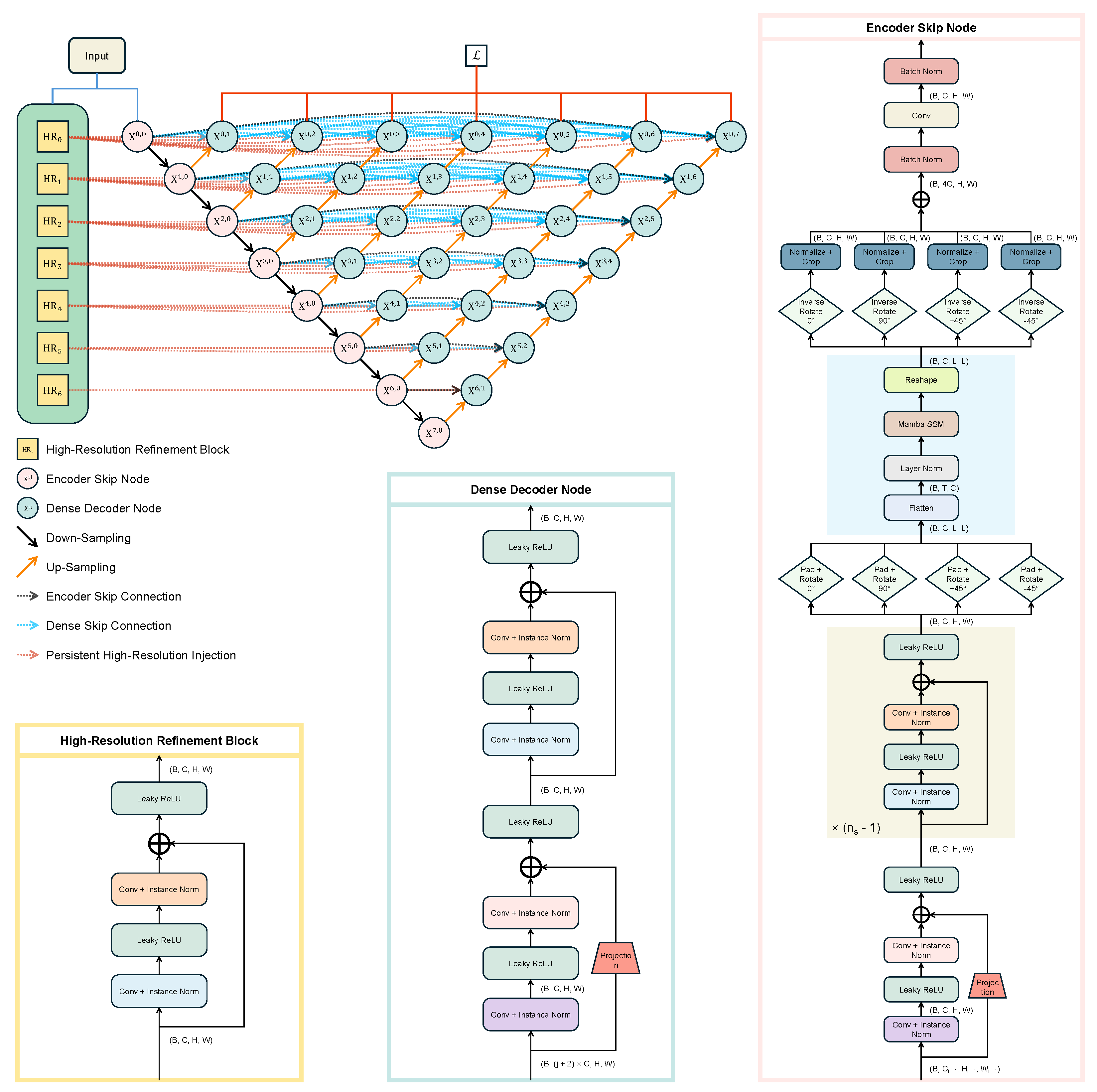
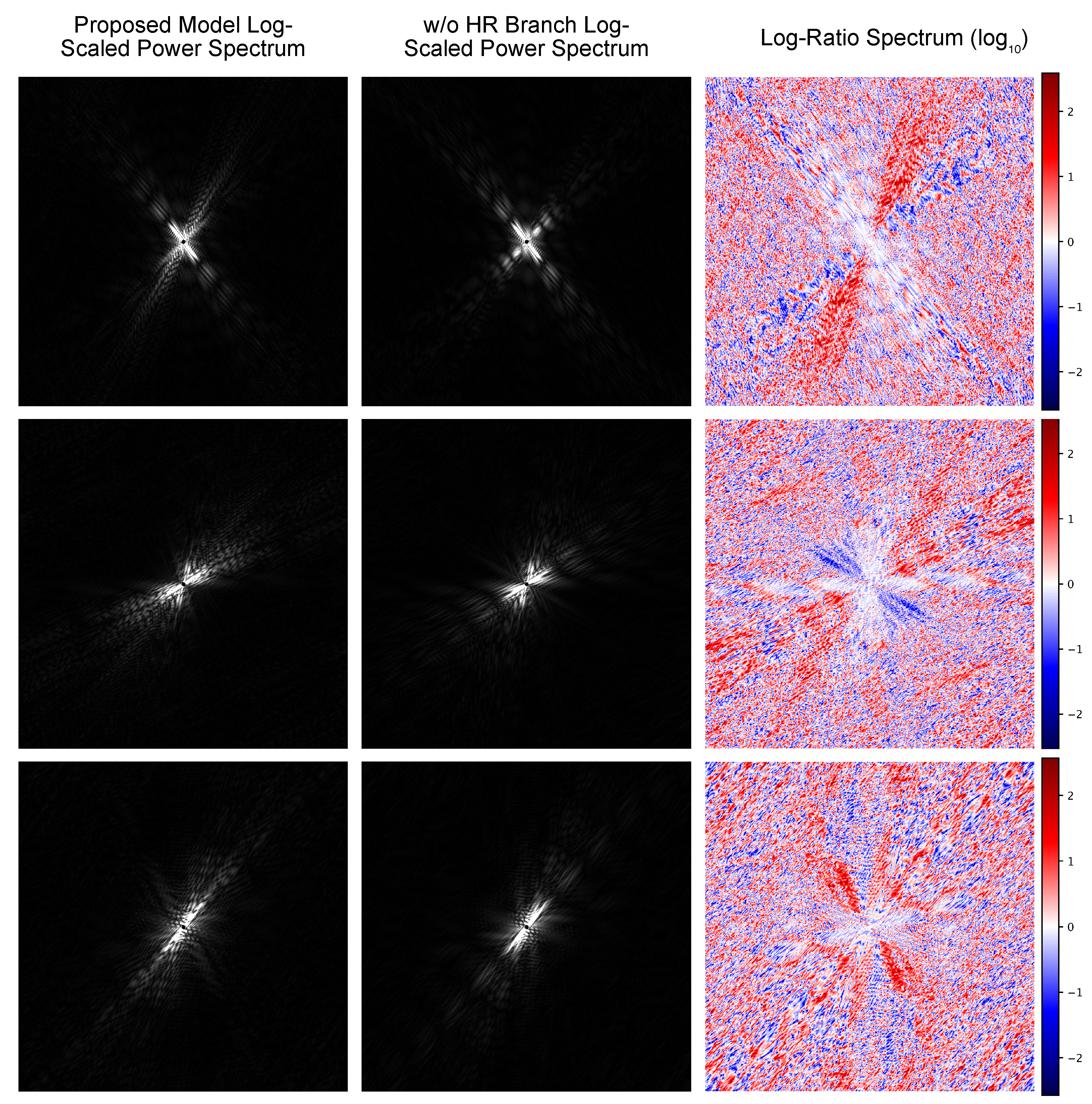
- Inspired by the segregated processing of magnocellular and parvocellular pathways in the primate retina [36], we construct a persistent high-resolution branch that continuously injects non-downsampled structural details along the entire decoding path, thereby markedly enhancing the spatial discriminability of fine vessels and distal terminal branches.
- We introduce a UNet++-style densely connected decoding topology that enables cross-level and multi-scale semantic feature fusion, strengthening the model’s ability to represent multi-level vascular bifurcations and the complete coronary artery tree.
2. Related Work
3. Materials and Methods
3.1. Dataset Description
3.2. Overall Architecture of HR-UMamba++
3.3. Persistent High-Resolution Branch in HR-UMamba++
3.4. Encoder Module with Residual Convolutions and Multi-Directional Mamba
3.4.1. Stem Residual Block
3.4.2. Multi-Stage Residual Down-Sampling
3.4.3. Rotation-Aligned Multi-Directional Mamba Scanning Mechanism
3.5. Decoder and Dense Connection Module in HR-UMamba++
4. Experiments and Results
4.1. Implementation Details
4.2. Evaluation Metrics
4.3. Ablation Studies
4.3.1. Effect of Dense Connections
4.3.2. Effect of the Persistent High-Resolution Branch
4.3.3. Effect of the Rotation-Aligned Multi-Directional Mamba Module
4.4. Performance Comparison with Canonical Baselines
4.5. Fractal-Geometry-Based Topological Assessment of Coronary Arterial Trees
4.6. Clinical Usability Evaluation
4.7. Computational Complexity Analysis
5. Discussion
5.1. Summary of Main Findings
5.2. Limitations and Future Work
6. Conclusions
Author Contributions
Funding
Institutional Review Board Statement
Informed Consent Statement
Data Availability Statement
Conflicts of Interest
References
- Golub, I.S.; Termeie, O.G.; Kristo, S.; Schroeder, L.P.; Lakshmanan, S.; Shafter, A.M.; Hussein, L.; Verghese, D.; Aldana-Bitar, J.; Manubolu, V.S.; et al. Major Global Coronary Artery Calcium Guidelines. JACC Cardiovasc. Imaging 2023, 16, 98–117. [Google Scholar] [CrossRef] [PubMed]
- Shehu, M.N.; Adamu, U.G.; Ojji, D.B.; Ogah, O.S.; Sani, M.U. The Pandemic of Coronary Artery Disease in the Sub-Saharan Africa: What Clinicians Need to Know. Curr. Atheroscler. Rep. 2023, 25, 571–578. [Google Scholar] [CrossRef] [PubMed]
- Khan, M.A.; Hashim, M.J.; Mustafa, H.; Baniyas, M.Y.; Al Suwaidi, S.K.B.M.; AlKatheeri, R.; Alblooshi, F.M.K.; Almatrooshi, M.E.A.H.; Alzaabi, M.E.H.; Al Darmaki, R.S.; et al. Global Epidemiology of Ischemic Heart Disease: Results from the Global Burden of Disease Study. Cureus 2020, 12, e9349. [Google Scholar] [CrossRef] [PubMed]
- Stark, B.; Johnson, C.; Roth, G.A. Global prevalence of coronary artery disease: An update from the global burden of disease study. J. Am. Coll. Cardiol. 2024, 83, 2320. [Google Scholar] [CrossRef]
- Hay, S.I.; Ong, K.L.; Santomauro, D.F.; A, B.; Aalipour, M.A.; Aalruz, H.; Ababneh, H.S.; Abaraogu, U.O.; Abate, B.B.; Abbafati, C.; et al. Burden of 375 diseases and injuries, risk-attributable burden of 88 risk factors, and healthy life expectancy in 204 countries and territories, including 660 subnational locations, 1990–2023: A systematic analysis for the Global Burden of Disease Study 2023. Lancet 2025, 406, 1873–1922. [Google Scholar] [CrossRef]
- Vos, T.; Allen, C.; Arora, M.; Barber, R.M.; Bhutta, Z.A.; Brown, A.; Carter, A.; Casey, D.C.; Charlson, F.J.; Chen, A.Z.; et al. Global, regional, and national incidence, prevalence, and years lived with disability for 310 diseases and injuries, 1990–2015: A systematic analysis for the Global Burden of Disease Study 2015. Lancet 2016, 388, 1545–1602. [Google Scholar] [CrossRef]
- Wang, H.; Naghavi, M.; Allen, C.; Barber, R.M.; Bhutta, Z.A.; Carter, A.; Casey, D.C.; Charlson, F.J.; Chen, A.Z.; Coates, M.M.; et al. Global, regional, and national life expectancy, all-cause mortality, and cause-specific mortality for 249 causes of death, 1980–2015: A systematic analysis for the Global Burden of Disease Study 2015. Lancet 2016, 388, 1459–1544. [Google Scholar] [CrossRef]
- Gurgoglione, F.L.; Denegri, A.; Russo, M.; Calvieri, C.; Benatti, G.; Niccoli, G. Intracoronary Imaging of Coronary Atherosclerotic Plaque: From Assessment of Pathophysiological Mechanisms to Therapeutic Implication. Int. J. Mol. Sci. 2023, 24, 5155. [Google Scholar] [CrossRef]
- Nammour, A.Y.; Tabl, M.A.; Elrabat, K.E.; Wadie, M.T. Distal left main stenting versus coronary artery bypass graft in intermediate syntax score. Int. J. Cardiol. Sci. 2024, 6, 124–128. [Google Scholar] [CrossRef]
- Lubrano, V.; Balzan, S. Status of biomarkers for the identification of stable or vulnerable plaques in atherosclerosis. Clin. Sci. 2021, 135, 1981–1997. [Google Scholar] [CrossRef]
- Li, C.; Deng, C.; Shi, B.; Zhao, R. Thin-cap fibroatheroma in acute coronary syndrome: Implication for intravascular imaging assessment. Int. J. Cardiol. 2024, 405, 131965. [Google Scholar] [CrossRef] [PubMed]
- Byrne, R.A.; Rossello, X.; Coughlan, J.J.; Barbato, E.; Berry, C.; Chieffo, A.; Claeys, M.J.; Dan, G.A.; Dweck, M.R.; Galbraith, M.; et al. 2023 ESC Guidelines for the management of acute coronary syndromes: Developed by the task force on the management of acute coronary syndromes of the European Society of Cardiology (ESC). Eur. Heart J. Acute Cardiovasc. Care 2023, 13, 55–161. [Google Scholar] [CrossRef]
- Athreyas, A.G.; Nayak, S.R.; Chimmalagi, S.V.; Chachadi, K. Detection of CAD using XCA images(CADICA). In Proceedings of the 2025 International Conference on Biomedical Engineering and Sustainable Healthcare (ICBMESH), Manipal, India, 8–9 August 2025; pp. 1–5. [Google Scholar] [CrossRef]
- Marano, R.; Rovere, G.; Savino, G.; Flammia, F.C.; Carafa, M.R.P.; Steri, L.; Merlino, B.; Natale, L. CCTA in the diagnosis of coronary artery disease. La Radiol. Medica 2020, 125, 1102–1113. [Google Scholar] [CrossRef] [PubMed]
- Almagal, N.; Leahy, N.; Alqahtani, F.; Alsubai, S.; Elzomor, H.; Del Sole, P.A.; Sharif, R.; Sharif, F. Review of Optical Imaging in Coronary Artery Disease Diagnosis. J. Cardiovasc. Dev. Dis. 2025, 12, 288. [Google Scholar] [CrossRef]
- Mintz, G.S.; Guagliumi, G. Intravascular imaging in coronary artery disease. Lancet 2017, 390, 793–809. [Google Scholar] [CrossRef]
- Shivaie, S.; Tohidi, H.; Loganathan, P.; Kar, M.; Hashemy, H.; Shafiee, M.A. Interobserver Variability of Coronary Stenosis Characterized by Coronary Angiography: A Single-Center (Toronto General Hospital) Retrospective Chart Review by Staff Cardiologists. Vasc. Health Risk Manag. 2024, 20, 359–368. [Google Scholar] [CrossRef]
- Généreux, P.; Palmerini, T.; Caixeta, A.; Cristea, E.; Mehran, R.; Sanchez, R.; Lazar, D.; Jankovic, I.; Corral, M.D.; Dressler, O.; et al. SYNTAX Score Reproducibility and Variability Between Interventional Cardiologists, Core Laboratory Technicians, and Quantitative Coronary Measurements. Circ. Cardiovasc. Interv. 2011, 4, 553–561. [Google Scholar] [CrossRef]
- Serrano-Antón, B.; Villa, M.I.; Pendón-Minguillón, S.; Paramés-Estévez, S.; Otero-Cacho, A.; López-Otero, D.; Díaz-Fernández, B.; Bastos-Fernández, M.; González-Juanatey, J.R.; Muñuzuri, A.P. Unsupervised clustering based coronary artery segmentation. BioData Min. 2025, 18, 21. [Google Scholar] [CrossRef]
- Tran, D.S.; Huynh, A.K.; Huynh, A.D.; Nguyen-Thoi, T. Anatomy-specific two-stage YOLOv8 approach for improved coronary segmentation using the ARCADE dataset. Opt. Contin. 2025, 4, 303–317. [Google Scholar] [CrossRef]
- Zhang, H.; Mu, L.; Hu, S.; Nallamothu, B.K.; Lansky, A.J.; Xu, B.; Bouras, G.; Cohen, D.J.; Spertus, J.A.; Masoudi, F.A.; et al. Comparison of Physician Visual Assessment With Quantitative Coronary Angiography in Assessment of Stenosis Severity in China. JAMA Intern. Med. 2018, 178, 239–247. [Google Scholar] [CrossRef]
- Suzuki, N.; Asano, T.; Nakazawa, G.; Aoki, J.; Tanabe, K.; Hibi, K.; Ikari, Y.; Kozuma, K. Clinical expert consensus document on quantitative coronary angiography from the Japanese Association of Cardiovascular Intervention and Therapeutics. Cardiovasc. Interv. Ther. 2020, 35, 105–116. [Google Scholar] [CrossRef] [PubMed]
- Sen, T.; Kilit, C.; Astarcioglu, M.A.; Asarcikli, L.D.; Aksu, T.; Kafes, H.; Parspur, A.; Gozubuyuk, G.; Amasyali, B. Comparison of quantitative and qualitative coronary angiography: Computer versus the eye. Cardiovasc. J. Afr. 2018, 29, 278–282. [Google Scholar] [CrossRef] [PubMed]
- Gao, Z.; Wang, L.; Soroushmehr, R.; Wood, A.; Gryak, J.; Nallamothu, B.; Najarian, K. Vessel segmentation for X-ray coronary angiography using ensemble methods with deep learning and filter-based features. BMC Med. Imaging 2022, 22, 10. [Google Scholar] [CrossRef] [PubMed]
- Zhou, X.; Wang, H.; Zhang, L. A multi-backbone cascade and morphology-aware segmentation network for complex morphological X-ray coronary artery images. Comput. Med. Imaging Graph. 2025, 125, 102629. [Google Scholar] [CrossRef]
- Shakeri, S.; Almasganj, F. Online tree-structure-constrained RPCA for background subtraction of X-ray coronary angiography images. Comput. Methods Programs Biomed. 2025, 258, 108463. [Google Scholar] [CrossRef]
- Tu, S.; Koning, G.; Jukema, W.; Reiber, J.H.C. Assessment of obstruction length and optimal viewing angle from biplane X-ray angiograms. Int. J. Cardiovasc. Imaging 2010, 26, 5–17. [Google Scholar] [CrossRef][Green Version]
- Lalinia, M.; Sahafi, A. Coronary Vessel Segmentation in X-ray Angiography Images Using Edge-Based Tracking Method. Sens. Imaging 2024, 25, 32. [Google Scholar] [CrossRef]
- He, Y.; Lyu, Z.; Mai, Y.; Li, S.; Hu, C.k. VM-CAGSeg: A vessel structure-aware state space model for coronary artery segmentation in angiography images. Front. Med. 2025, 12, 1661680. [Google Scholar] [CrossRef]
- Yang, S.; Kweon, J.; Roh, J.H.; Lee, J.H.; Kang, H.; Park, L.J.; Kim, D.J.; Yang, H.; Hur, J.; Kang, D.Y.; et al. Deep learning segmentation of major vessels in X-ray coronary angiography. Sci. Rep. 2019, 9, 16897. [Google Scholar] [CrossRef]
- Thuy, L.N.L.; Trinh, T.D.; Anh, L.H.; Kim, J.Y.; Hieu, H.T.; Bao, P.T. Coronary Vessel Segmentation by Coarse-to-Fine Strategy Using U-nets. BioMed Res. Int. 2021, 2021, 5548517. [Google Scholar] [CrossRef]
- Han, T.; Xiong, J.; Lin, T.; An, T.; Wang, C.; Zhu, J.; Li, Z.; Lu, L.; Zhang, Y.; Teng, G.J. Multiscale attention network via topology learning for cerebral vessel segmentation in angiography images. EngMedicine 2024, 1, 100004. [Google Scholar] [CrossRef]
- Nannini, G.; Saitta, S.; Baggiano, A.; Maragna, R.; Mushtaq, S.; Pontone, G.; Redaelli, A. A fully automated deep learning approach for coronary artery segmentation and comprehensive characterization. APL Bioeng. 2024, 8, 016103. [Google Scholar] [CrossRef] [PubMed]
- Xu, R.; Dai, L.; Wang, J.; Zhang, L.; Wang, Y. SADiff: Coronary Artery Segmentation in CT Angiography Using Spatial Attention and Diffusion Model. J. Imaging 2025, 11, 192. [Google Scholar] [CrossRef] [PubMed]
- Shit, S.; Paetzold, J.C.; Sekuboyina, A.; Ezhov, I.; Unger, A.; Zhylka, A.; Pluim, J.P.W.; Bauer, U.; Menze, B.H. clDice-a Novel Topology-Preserving Loss Function for Tubular Structure Segmentation. In Proceedings of the 2021 IEEE/CVF Conference on Computer Vision and Pattern Recognition (CVPR), Nashville, TN, USA, 20–25 June 2021; pp. 16555–16564. [Google Scholar] [CrossRef]
- Edwards, M.; Goodhew, S.C.; Badcock, D.R. Using perceptual tasks to selectively measure magnocellular and parvocellular performance: Rationale and a user’s guide. Psychon. Bull. Rev. 2021, 28, 1029–1050. [Google Scholar] [CrossRef] [PubMed]
- Gharleghi, R.; Chen, N.; Sowmya, A.; Beier, S. Towards automated coronary artery segmentation: A systematic review. Comput. Methods Programs Biomed. 2022, 225, 107015. [Google Scholar] [CrossRef]
- Qin, B.; Jin, M.; Hao, D.; Lv, Y.; Liu, Q.; Zhu, Y.; Ding, S.; Zhao, J.; Fei, B. Accurate vessel extraction via tensor completion of background layer in X-ray coronary angiograms. Pattern Recognit. 2019, 87, 38–54. [Google Scholar] [CrossRef]
- Cruz-Aceves, I.; Cervantes-Sanchez, F.; Hernandez-Aguirre, A.; Perez-Rodriguez, R.; Ochoa-Zezzatti, A. A novel Gaussian matched filter based on entropy minimization for automatic segmentation of coronary angiograms. Comput. Electr. Eng. 2016, 53, 263–275. [Google Scholar] [CrossRef]
- Vakilkandi, M.J.; Ahmadzadeh, M.R.; Amirfattahi, R.; Sadri, S. Accurate Coronary Vessel Extraction Using Fast Directional Filter Bank. In Proceedings of the 2011 7th Iranian Conference on Machine Vision and Image Processing, Tehran, Iran, 16–17 November 2011; pp. 1–5. [Google Scholar] [CrossRef]
- Yang, G.; Kitslaar, P.; Frenay, M.; Broersen, A.; Boogers, M.J.; Bax, J.J.; Reiber, J.H.C.; Dijkstra, J. Automatic centerline extraction of coronary arteries in coronary computed tomographic angiography. Int. J. Cardiovasc. Imaging 2012, 28, 921–933. [Google Scholar] [CrossRef]
- Sheng, X.; Fan, T.; Jin, X.; Jin, J.; Chen, Z.; Zheng, G.; Lu, M.; Zhu, Z. Extraction Method of Coronary Artery Blood Vessel Centerline in CT Coronary Angiography. IEEE Access 2019, 7, 170690–170702. [Google Scholar] [CrossRef]
- Huang, Y.; Yang, J.; Sun, Q.; Ma, S.; Yuan, Y.; Tan, W.; Cao, P.; Feng, C. Vessel filtering and segmentation of coronary CT angiographic images. Int. J. Comput. Assist. Radiol. Surg. 2022, 17, 1879–1890. [Google Scholar] [CrossRef]
- Chen, L.; Liu, W.; Balu, N.; Mossa-Basha, M.; Hatsukami, T.S.; Hwang, J.N.; Yuan, C. Deep Open Snake Tracker for Vessel Tracing. In Proceedings of the Medical Image Computing and Computer Assisted Intervention—MICCAI 2021, Strasbourg, France, 27 September–1 October 2021; de Bruijne, M., Cattin, P.C., Cotin, S., Padoy, N., Speidel, S., Zheng, Y., Essert, C., Eds.; Springer: Cham, Switzerland, 2021; pp. 579–589. [Google Scholar] [CrossRef]
- Jeon, B. Deep Recursive Bayesian Tracking for Fully Automatic Centerline Extraction of Coronary Arteries in CT Images. Sensors 2021, 21, 6087. [Google Scholar] [CrossRef]
- Jawaid, M.M.; Liatsis, P.; Narejo, S. Automated Extraction of the Coronary Tree by Integrating Localized Aorta-Based Intensity Distribution Statistics in Active Contour Segmentation. In Proceedings of the 2015 International Conference on Developments of E-Systems Engineering (DeSE), Dubai, United Arab Emirates, 13–14 December 2015; pp. 83–87. [Google Scholar] [CrossRef]
- Chen, X.; Jiang, J.; Zhang, X. Automatic 3D coronary artery segmentation based on local region active contour model. J. Thorac. Dis. 2024, 16, 2563. [Google Scholar] [CrossRef] [PubMed]
- Gao, R.; Hou, Z.; Li, J.; Han, H.; Lu, B.; Zhou, S.K. Joint Coronary Centerline Extraction And Lumen Segmentation From Ccta Using Cnntracker And Vascular Graph Convolutional Network. In Proceedings of the 2021 IEEE 18th International Symposium on Biomedical Imaging (ISBI), Nice, France, 13–16 April 2021; pp. 1897–1901. [Google Scholar] [CrossRef]
- Lv, T.; Yang, G.; Zhang, Y.; Yang, J.; Chen, Y.; Shu, H.; Luo, L. Vessel segmentation using centerline constrained level set method. Multimed. Tools Appl. 2019, 78, 17051–17075. [Google Scholar] [CrossRef]
- Ma, G.; Yang, J.; Zhao, H. A coronary artery segmentation method based on region growing with variable sector search area. Technol. Health Care 2020, 28, 463–472. [Google Scholar] [CrossRef] [PubMed]
- Xia, S.; Zhu, H.; Liu, X.; Gong, M.; Huang, X.; Xu, L.; Zhang, H.; Guo, J. Vessel Segmentation of X-Ray Coronary Angiographic Image Sequence. IEEE Trans. Biomed. Eng. 2020, 67, 1338–1348. [Google Scholar] [CrossRef]
- Imran, A.; Li, J.; Pei, Y.; Yang, J.J.; Wang, Q. Comparative Analysis of Vessel Segmentation Techniques in Retinal Images. IEEE Access 2019, 7, 114862–114887. [Google Scholar] [CrossRef]
- L Srinidhi, C.; Aparna, P.; Rajan, J. Recent Advancements in Retinal Vessel Segmentation. J. Med. Syst. 2017, 41, 70. [Google Scholar] [CrossRef]
- Zai, S.; Abbas, A. An Effective Enhancement and Segmentation of Coronary Arteries in 2D Angiograms. In Proceedings of the 2018 International Conference on Smart Computing and Electronic Enterprise (ICSCEE), Shah Alam, Malaysia, 11–12 July 2018; pp. 1–4. [Google Scholar] [CrossRef]
- Longo, A.; Morscher, S.; Najafababdi, J.M.; Jüstel, D.; Zakian, C.; Ntziachristos, V. Assessment of hessian-based Frangi vesselness filter in optoacoustic imaging. Photoacoustics 2020, 20, 100200. [Google Scholar] [CrossRef]
- Fazlali, H.R.; Karimi, N.; Soroushmehr, S.M.R.; Shirani, S.; Nallamothu, B.K.; Ward, K.R.; Samavi, S.; Najarian, K. Vessel segmentation and catheter detection in X-ray angiograms using superpixels. Med. Biol. Eng. Comput. 2018, 56, 1515–1530. [Google Scholar] [CrossRef]
- Zai, S.; Ansari, M.A.; Moon, Y.S. Automatic and Effective Delineation of Coronary Arteries from CTA Data Using Two-Way Active Contour Model. IEICE Trans. Inf. 2017, 100, 901–909. [Google Scholar] [CrossRef]
- Aljuaid, A.; Anwar, M. Survey of Supervised Learning for Medical Image Processing. SN Comput. Sci. 2022, 3, 292. [Google Scholar] [CrossRef]
- Aslani, S.; Sarnel, H. A new supervised retinal vessel segmentation method based on robust hybrid features. Biomed. Signal Process. Control 2016, 30, 1–12. [Google Scholar] [CrossRef]
- He, H.; Banerjee, A.; Choudhury, R.P.; Grau, V. Deep learning based coronary vessels segmentation in X-ray angiography using temporal information. Med. Image Anal. 2025, 102, 103496. [Google Scholar] [CrossRef] [PubMed]
- Zhao, C.; Esposito, M.; Xu, Z.; Zhou, W. HAGMN-UQ: Hyper association graph matching network with uncertainty quantification for coronary artery semantic labeling. Med. Image Anal. 2025, 99, 103374. [Google Scholar] [CrossRef] [PubMed]
- Iyer, K.; Najarian, C.P.; Fattah, A.A.; Arthurs, C.J.; Soroushmehr, S.M.R.; Subban, V.; Sankardas, M.A.; Nadakuditi, R.R.; Nallamothu, B.K.; Figueroa, C.A. AngioNet: A convolutional neural network for vessel segmentation in X-ray angiography. Sci. Rep. 2021, 11, 18066. [Google Scholar] [CrossRef] [PubMed]
- Lee, C.K.; Hong, J.W.; Wu, C.L.; Hou, J.M.; Lin, Y.A.; Huang, K.C.; Tseng, P.H. Real-time coronary artery segmentation in CAG images: A semi-supervised deep learning strategy. Artif. Intell. Med. 2024, 153, 102888. [Google Scholar] [CrossRef]
- Chang, S.S.; Lin, C.T.; Wang, W.C.; Hsu, K.C.; Wu, Y.L.; Liu, C.H.; Fann, Y.C. Optimizing ensemble U-Net architectures for robust coronary vessel segmentation in angiographic images. Sci. Rep. 2024, 14, 6640. [Google Scholar] [CrossRef]
- Gao, Y.; Ai, D.; Wang, Y.; Cao, K.; Song, H.; Fan, J.; Xiao, D.; Zhang, T.; Wang, Y.; Yang, J. Spatio-Temporal correspondence attention network for vessel segmentation in X-ray coronary angiography. Biomed. Signal Process. Control 2025, 99, 106792. [Google Scholar] [CrossRef]
- Ramos-Cortez, J.S.; Alvarado-Carrillo, D.E.; Ovalle-Magallanes, E.; Avina-Cervantes, J.G. Lightweight U-Net for Blood Vessels Segmentation in X-Ray Coronary Angiography. J. Imaging 2025, 11, 106. [Google Scholar] [CrossRef]
- Wei, G.; Zeng, X.; Zhang, Q. FlowVM-Net: Enhanced Vessel Segmentation in X-Ray Coronary Angiography Using Temporal Information Fusion. J. Imaging Inform. Med. 2025. [Google Scholar] [CrossRef]
- Wang, J.; Lei, D.; Zhang, Y.; Yuan, J.; Liu, C.; Luo, B.; Liu, Q.; Wang, G. MedMamba: Multi-scale deformable attention via state space models for robust medical image segmentation. Biomed. Signal Process. Control 2026, 112, 108363. [Google Scholar] [CrossRef]
- Ma, J.; Li, F.; Wang, B. U-Mamba: Enhancing Long-range Dependency for Biomedical Image Segmentation. arXiv 2024, arXiv:2401.04722. [Google Scholar] [CrossRef]
- Liu, J.; Yang, H.; Zhou, H.Y.; Xi, Y.; Yu, L.; Li, C.; Liang, Y.; Shi, G.; Yu, Y.; Zhang, S.; et al. Swin-UMamba: Mamba-Based UNet with ImageNet-Based Pretraining. In Proceedings of the Medical Image Computing and Computer Assisted Intervention—MICCAI 2024, Marrakesh, Morocco, 6–10 October 2024; Linguraru, M.G., Dou, Q., Feragen, A., Giannarou, S., Glocker, B., Lekadir, K., Schnabel, J.A., Eds.; Springer: Cham, Switzerland, 2024; pp. 615–625. [Google Scholar] [CrossRef]
- Liu, J.; Yang, H.; Zhou, H.Y.; Yu, L.; Liang, Y.; Yu, Y.; Zhang, S.; Zheng, H.; Wang, S. Swin-UMamba†: Adapting Mamba-Based Vision Foundation Models for Medical Image Segmentation. IEEE Trans. Med. Imaging 2025, 44, 3898–3908. [Google Scholar] [CrossRef] [PubMed]
- Dang, S.; Matsumoto, T.; Takeuchi, Y.; Kudo, H. U-Mamba-Net: A highly efficient Mamba-based U-net style network for noisy and reverberant speech separation. In Proceedings of the 2024 Asia Pacific Signal and Information Processing Association Annual Summit and Conference (APSIPA ASC), Macau, Macao, 3–6 December 2024; pp. 1–5. [Google Scholar] [CrossRef]
- Yuan, Y.; Cheng, Y. Medical image segmentation with UNet-based multi-scale context fusion. Sci. Rep. 2024, 14, 15687. [Google Scholar] [CrossRef] [PubMed]
- Ouyang, J.; Liu, S.; Peng, H.; Garg, H.; Thanh, D.N.H. LEA U-Net: A U-Net-based deep learning framework with local feature enhancement and attention for retinal vessel segmentation. Complex Intell. Syst. 2023, 9, 6753–6766. [Google Scholar] [CrossRef]
- Wang, R.; Lei, T.; Cui, R.; Zhang, B.; Meng, H.; Nandi, A.K. Medical image segmentation using deep learning: A survey. IET Image Process. 2022, 16, 1243–1267. [Google Scholar] [CrossRef]
- Wang, J.; Sun, K.; Cheng, T.; Jiang, B.; Deng, C.; Zhao, Y.; Liu, D.; Mu, Y.; Tan, M.; Wang, X.; et al. Deep High-Resolution Representation Learning for Visual Recognition. IEEE Trans. Pattern Anal. Mach. Intell. 2021, 43, 3349–3364. [Google Scholar] [CrossRef]
- Kesieme, E.B.; Omoregbee, B.; Ngaage, D.L.; Danton, M.H.D. Comprehensive Review of Coronary Artery Anatomy Relevant to Cardiac Surgery. Curr. Cardiol. Rev. 2025, 21, 27–41. [Google Scholar] [CrossRef]
- Zhou, Z.; Rahman Siddiquee, M.M.; Tajbakhsh, N.; Liang, J. UNet++: A Nested U-Net Architecture for Medical Image Segmentation. In Proceedings of the Deep Learning in Medical Image Analysis and Multimodal Learning for Clinical Decision Support, Granada, Spain, 20 September 2018; Stoyanov, D., Taylor, Z., Carneiro, G., Syeda-Mahmood, T., Martel, A., Maier-Hein, L., Tavares, J.M.R., Bradley, A., Papa, J.P., Belagiannis, V., et al., Eds.; Springer: Cham, Switzerland, 2018; pp. 3–11. [Google Scholar] [CrossRef]
- Isensee, F.; Jaeger, P.F.; Kohl, S.A.A.; Petersen, J.; Maier-Hein, K.H. nnU-Net: A self-configuring method for deep learning-based biomedical image segmentation. Nat. Methods 2021, 18, 203–211. [Google Scholar] [CrossRef]
- Fagerland, M.W.; Lydersen, S.; Laake, P. The McNemar test for binary matched-pairs data: Mid-p and asymptotic are better than exact conditional. BMC Med. Res. Methodol. 2013, 13, 91. [Google Scholar] [CrossRef]
- Ronneberger, O.; Fischer, P.; Brox, T. U-Net: Convolutional Networks for Biomedical Image Segmentation. In Proceedings of the Medical Image Computing and Computer-Assisted Intervention—MICCAI 2015, Munich, Germany, 5–9 October 2015; Navab, N., Hornegger, J., Wells, W.M., Frangi, A.F., Eds.; Springer: Cham, Switzerland, 2015; pp. 234–241. [Google Scholar] [CrossRef]
- Oktay, O.; Schlemper, J.; Folgoc, L.L.; Lee, M.; Heinrich, M.; Misawa, K.; Mori, K.; McDonagh, S.; Hammerla, N.Y.; Kainz, B.; et al. Attention U-Net: Learning Where to Look for the Pancreas. arXiv 2018, arXiv:1804.03999. [Google Scholar] [CrossRef]
- Chen, L.C.; Zhu, Y.; Papandreou, G.; Schroff, F.; Adam, H. Encoder-Decoder with Atrous Separable Convolution for Semantic Image Segmentation. In Proceedings of the Computer Vision—ECCV 2018, Munich, Germany, 8–14 September 2018; Ferrari, V., Hebert, M., Sminchisescu, C., Weiss, Y., Eds.; Springer: Cham, Switzerland, 2018; pp. 833–851. [Google Scholar] [CrossRef]
- Pokhrel, S.; Bhandari, S.; Vazquez, E.; Shrestha, Y.R.; Bhattarai, B. Cross-Task Data Augmentation by Pseudo-Label Generation for Region Based Coronary Artery Instance Segmentation. In Proceedings of the Data Engineering in Medical Imaging, Vancouver, BC, Canada, 8 October 2023; Bhattarai, B., Ali, S., Rau, A., Caramalau, R., Nguyen, A., Gyawali, P., Namburete, A., Stoyanov, D., Eds.; Springer: Cham, Switzerland, 2025; pp. 166–175. [Google Scholar] [CrossRef]
- Liu, T.; Lin, H.; Katsaggelos, A.K.; Kline, A. YOLO-Angio: An Algorithm for Coronary Anatomy Segmentation. arXiv 2023, arXiv:2310.15898. [Google Scholar] [CrossRef]
- Díaz-Gaxiola, E.; Yee-Rendon, A.; Vega-Lopez, I.F.; Campos-Leal, J.A.; García-Aguilar, I.; López-Rubio, E.; Luque-Baena, R.M. Experimental Assessment of YOLO Variants for Coronary Artery Disease Segmentation from Angiograms. Electronics 2025, 14, 2683. [Google Scholar] [CrossRef]
- Jocher, G.; Qiu, J. Ultralytics YOLO11. 2024. Available online: https://yolo11.com/ (accessed on 5 January 2026).
- Dérimay, F.; Kassab, G.S.; Finet, G. Chapter 24-Structure-function relation in the coronary artery tree: Theory and applications in interventional cardiology. In Biomechanics of Coronary Atherosclerotic Plaque; Ohayon, J., Finet, G., Pettigrew, R.I., Eds.; Academic Press: Cambridge, MA, USA, 2021; Volume 4, pp. 545–554. [Google Scholar] [CrossRef]
- Finet, G.; Gilard, M.; Perrenot, B.; Rioufol, G.; Motreff, P.; Gavit, L.; Prost, R. Fractal geometry of arterial coronary bifurcations: A quantitative coronary angiography and intravascular ultrasound analysis. EuroIntervention 2008, 3, 490–498. [Google Scholar] [CrossRef]
- Liew, G.; Mitchell, P.; Rochtchina, E.; Wong, T.Y.; Hsu, W.; Lee, M.L.; Wainwright, A.; Wang, J.J. Fractal analysis of retinal microvasculature and coronary heart disease mortality. Eur. Heart J. 2010, 32, 422–429. [Google Scholar] [CrossRef]
- Koo, T.K.; Li, M.Y. A Guideline of Selecting and Reporting Intraclass Correlation Coefficients for Reliability Research. J. Chiropr. Med. 2016, 15, 155–163. [Google Scholar] [CrossRef]
- Kaba, Ş.; Haci, H.; Isin, A.; Ilhan, A.; Conkbayir, C. The Application of Deep Learning for the Segmentation and Classification of Coronary Arteries. Diagnostics 2023, 13, 2274. [Google Scholar] [CrossRef] [PubMed]
- Zhang, X.; Sun, K.; Wu, D.; Xiong, X.; Liu, J.; Yao, L.; Li, S.; Wang, Y.; Feng, J.; Shen, D. An Anatomy- and Topology-Preserving Framework for Coronary Artery Segmentation. IEEE Trans. Med. Imaging 2024, 43, 723–733. [Google Scholar] [CrossRef] [PubMed]
- Park, J.; Kweon, J.; Kim, Y.I.; Back, I.; Chae, J.; Roh, J.H.; Kang, D.Y.; Lee, P.H.; Ahn, J.M.; Kang, S.J.; et al. Selective ensemble methods for deep learning segmentation of major vessels in invasive coronary angiography. Med. Phys. 2023, 50, 7822–7839. [Google Scholar] [CrossRef] [PubMed]
- Wang, H.; Chen, Y.; Chen, W.; Xu, H.; Zhao, H.; Sheng, B.; Fu, H.; Yang, G.; Zhu, L. Serp-Mamba: Advancing High-Resolution Retinal Vessel Segmentation with Selective State-Space Model. IEEE Trans. Med. Imaging 2025, 44, 4811–4825. [Google Scholar] [CrossRef]
- Shao, D.; Xu, R.; Ma, L.; Yi, S. Tubular-aware mamba for accurate retinal vessel segmentation: Preserving fine details and topological connectivity. Multimed. Syst. 2025, 31, 182. [Google Scholar] [CrossRef]
- Collet, C.; Onuma, Y.; Cavalcante, R.; Grundeken, M.J.; Généreux, P.; Popma, J.J.; Costa, R.A.; Stankovic, G.; Tu, S.; Reiber, J.H.; et al. Quantitative angiography methods for bifurcation lesions: A consensus statement update from the European Bifurcation Club. EuroIntervention 2017, 13, 115–123. [Google Scholar] [CrossRef]
- Avram, R.; Olgin, J.E.; Ahmed, Z.; Verreault-Julien, L.; Wan, A.; Barrios, J.; Abreau, S.; Wan, D.; Gonzalez, J.E.; Tardif, J.C.; et al. CathAI: Fully automated coronary angiography interpretation and stenosis estimation. NPJ Digit. Med. 2023, 6, 142. [Google Scholar] [CrossRef]
- Kruzhilov, I.; Mazanov, G.; Ponomarchuk, A.; Zubkova, G.; Shadrin, A.; Utegenov, R.; Blinov, P.; Bessonov, I. CoronaryDominance: Angiogram dataset for coronary dominance classification. Sci. Data 2025, 12, 341. [Google Scholar] [CrossRef]



| Item | Value |
|---|---|
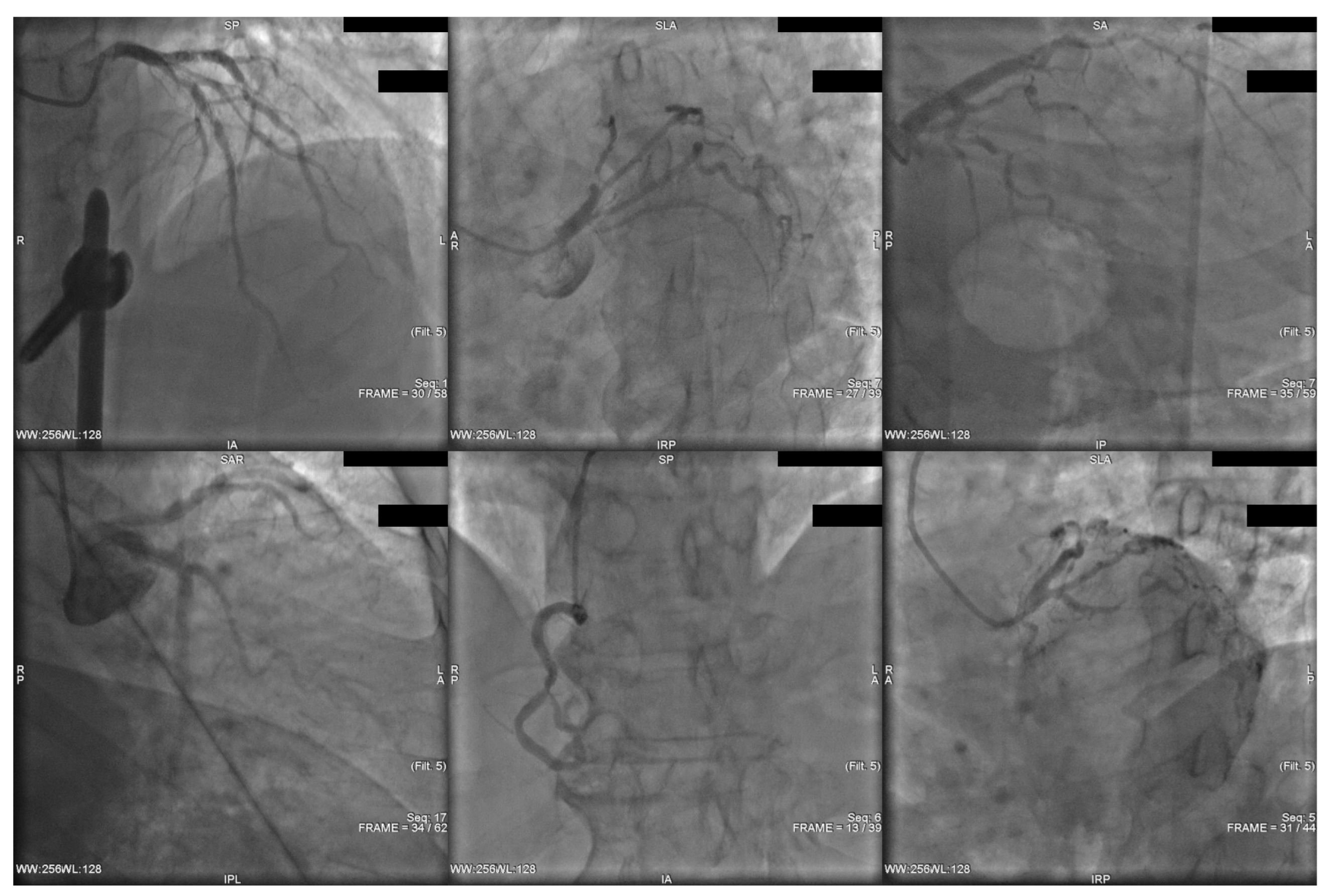
| Number of images | 739 |
| Number of patients | 374 |
| Number of male patients | 211 |
| Number of female patients | 163 |
| Mean patient age (years) | 59.7 |
| Image resolution | |
| Tube voltage | 75–110 kVp |
| Tube current | 4–7 mA |
| Study | Patients (n) | Annotated Frames | Input Form | Image Size |
|---|---|---|---|---|
| Lee et al., 2024 [63] | 213 | 500 | Single frame | 512 × 512 |
| Chang et al., 2024 [64] | 100 | 619 | Single frame | 512 × 512 |
| Gao et al., 2025 [65] | – | 180 | 2-frame sequence | 512 × 512 |
| Ramos-Cortez et al., 2025 [66] | – | 750 | Single frame | 300 × 300 512 × 512 |
| Wei et al., 2025 [67] | 110 | 542 | 3-frame sequence | 800 × 800 |
| Ours | 374 | 739 | Single frame | 512 × 512 |
| Item | Parameter |
|---|---|
| Intensity normalization | Z-score |
| Multiplicative brightness perturbation | |
| Additive brightness perturbation | |
| Contrast perturbation | |
| Gamma correction | |
| Gaussian noise | |
| Gaussian blur | kernel size , |
| Random scaling | |
| Random rotation | |
| Bidirectional mirroring | axes |
| Low-resolution simulation | down-sampling factor |
| Model Variant | Accuracy | Sensitivity | Specificity | PPV | NPV | Dice | IoU | HD95 |
|---|---|---|---|---|---|---|---|---|
| Proposed Model | 0.9877 | 0.8179 | 0.9975 | 0.9461 | 0.9895 | 0.8706 | 0.7794 | 16.9943 |
| Single-module ablations | ||||||||
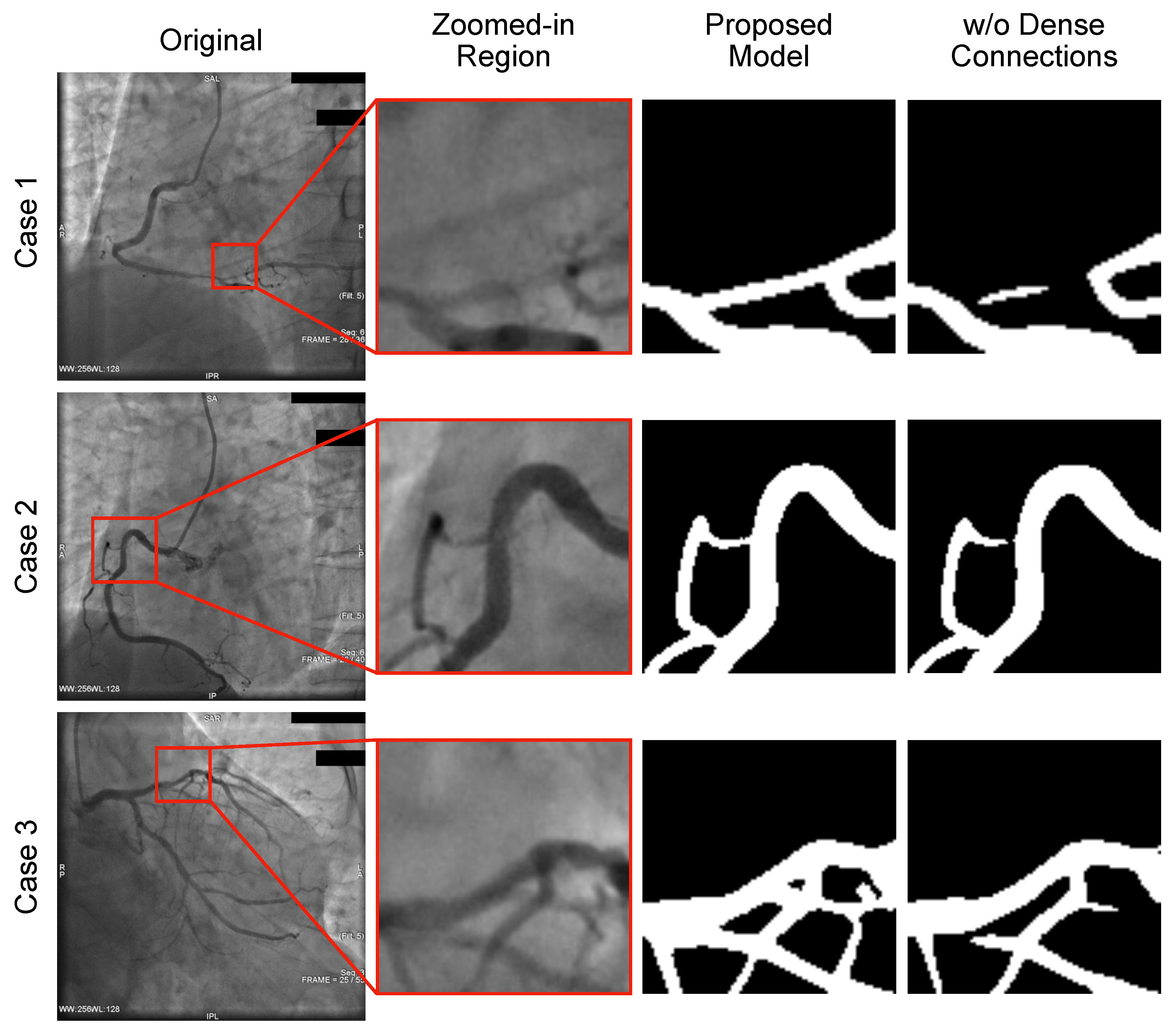
| w/o Dense conn. | 0.9843 | 0.7746 | 0.9968 | 0.9293 | 0.9867 | 0.8364 | 0.7300 | 20.3191 |
| w/o HR branch | 0.9844 | 0.8003 | 0.9955 | 0.9002 | 0.9880 | 0.8413 | 0.7375 | 18.7250 |
| w/o MD SSM | 0.9852 | 0.7954 | 0.9969 | 0.9259 | 0.9876 | 0.8478 | 0.7470 | 17.2209 |
| Double-module ablations | ||||||||
| w/o Dense conn. & HR Branch | 0.9842 | 0.7677 | 0.9963 | 0.9156 | 0.9871 | 0.8294 | 0.7164 | 20.3458 |
| w/o Dense conn. & MD SSM | 0.9837 | 0.7672 | 0.9964 | 0.9174 | 0.9865 | 0.8275 | 0.7161 | 19.5036 |
| w/o HR branch & MD SSM | 0.9842 | 0.7852 | 0.9960 | 0.9139 | 0.9873 | 0.8379 | 0.7303 | 18.7881 |
| U-Mamba (baseline) | 0.9833 | 0.7768 | 0.9952 | 0.8852 | 0.9872 | 0.8215 | 0.7005 | 20.3530 |
| Ablation Correct | Ablation Wrong | |
|---|---|---|
| Full Model Correct | 172 | 15 |
| Full Model Wrong | 3 | 10 |
| Model Variant | Accuracy | Sensitivity | Specificity | PPV | NPV | Dice | IoU | HD95 |
|---|---|---|---|---|---|---|---|---|
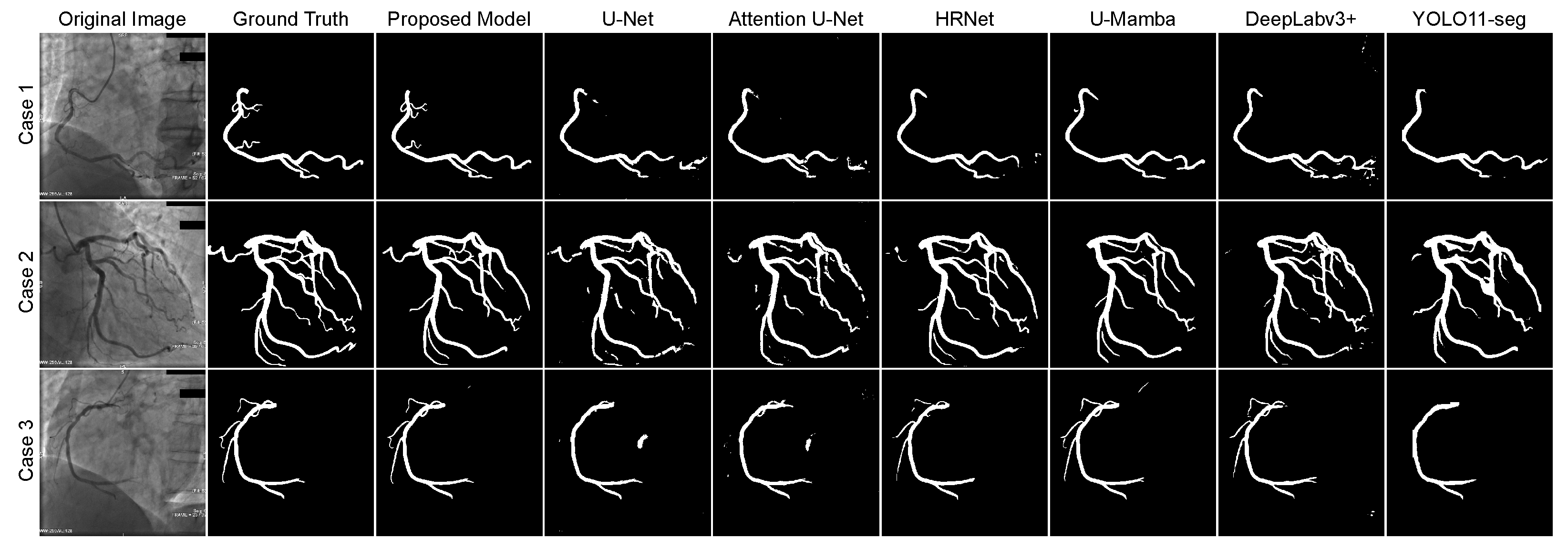
| U-Net | 0.9804 | 0.7189 | 0.9938 | 0.8530 | 0.9855 | 0.7758 | 0.6362 | 27.6258 |
| Attention U-Net | 0.9802 | 0.7153 | 0.9941 | 0.8616 | 0.9851 | 0.7777 | 0.6389 | 23.0382 |
| HRNet | 0.9827 | 0.7684 | 0.9942 | 0.8790 | 0.9874 | 0.8184 | 0.6962 | 23.1386 |
| U-Mamba | 0.9833 | 0.7768 | 0.9952 | 0.8852 | 0.9872 | 0.8215 | 0.7005 | 20.3530 |
| DeepLabv3+ | 0.9804 | 0.7692 | 0.9920 | 0.8290 | 0.9872 | 0.7937 | 0.6624 | 17.2217 |
| YOLO11-seg | 0.9802 | 0.7490 | 0.9916 | 0.8364 | 0.9874 | 0.7882 | 0.6519 | 18.7155 |
| Proposed Model | 0.9877 | 0.8179 | 0.9975 | 0.9461 | 0.9895 | 0.8706 | 0.7794 | 16.9943 |
| Method | ||
|---|---|---|
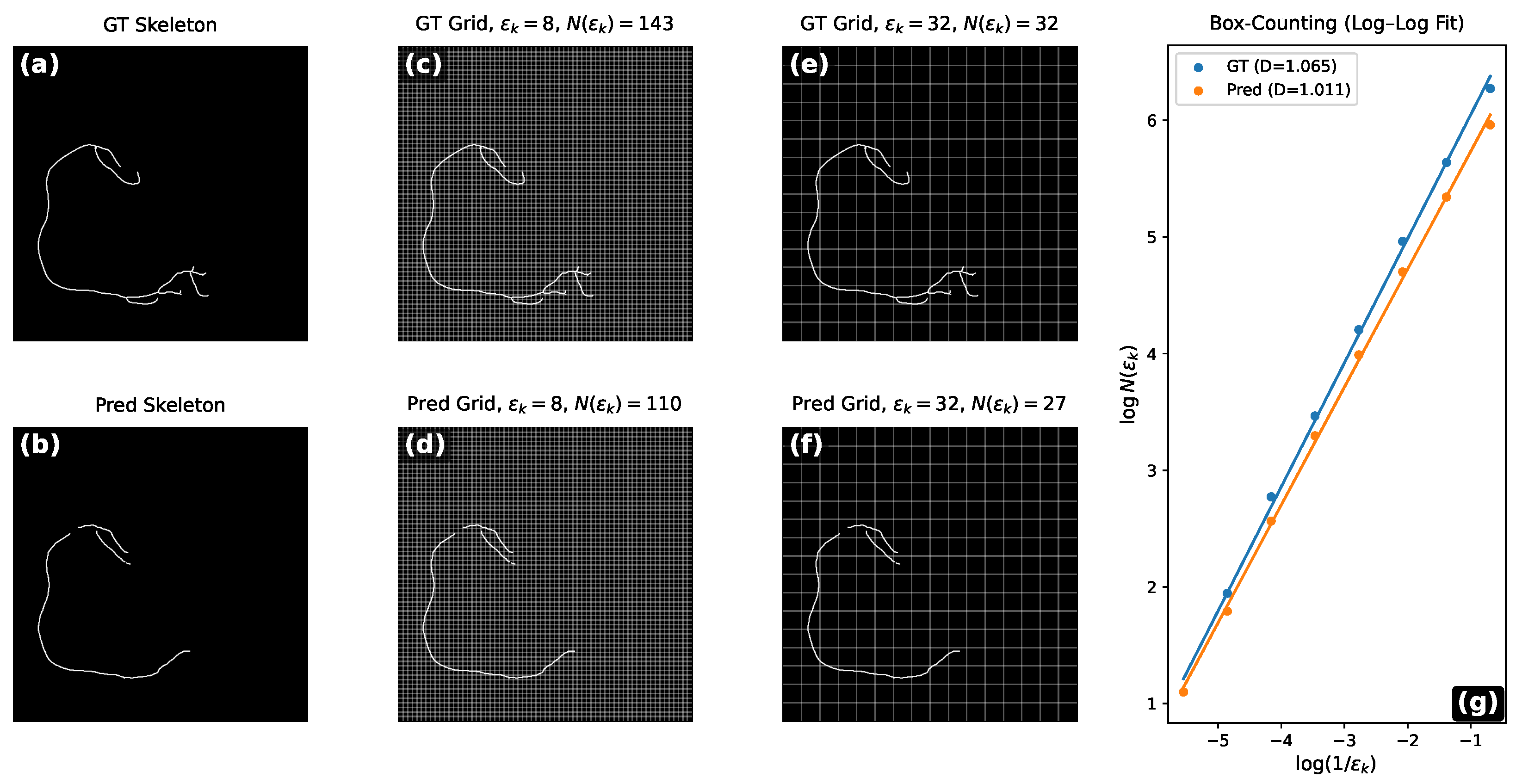
| U-Net | 1.0258 | 0.0818 ± 0.0390 |
| Attention U-Net | 1.0327 | 0.0811 ± 0.0367 |
| HRNet | 1.0697 | 0.0468 ± 0.0245 |
| U-Mamba | 1.0712 | 0.0377 ± 0.0193 |
| DeepLabv3+ | 1.0714 | 0.0531 ± 0.0301 |
| YOLO11-seg | 1.0506 | 0.0614 ± 0.0346 |
| Proposed Model | 1.0721 | 0.0355 ± 0.0178 |
| Score | Clinical Interpretation |
|---|---|
| 1 | Completely unusable; segmentation is severely erroneous and cannot be used for any diagnostic reference. |
| 2 | Partially usable, but with substantial errors that may mislead clinical judgment. |
| 3 | Basically usable; segmentation contains noticeable errors but can still assist decision-making when interpreted with caution. |
| 4 | Good; segmentation is reliable in most regions and can serve as stable auxiliary diagnostic information. |
| 5 | Excellent; segmentation closely matches visual assessment and can be directly used as a reference for clinical decision-making. |
| View | Mean Score ± SD | ICC (2,1) | ICC (2,3) |
|---|---|---|---|
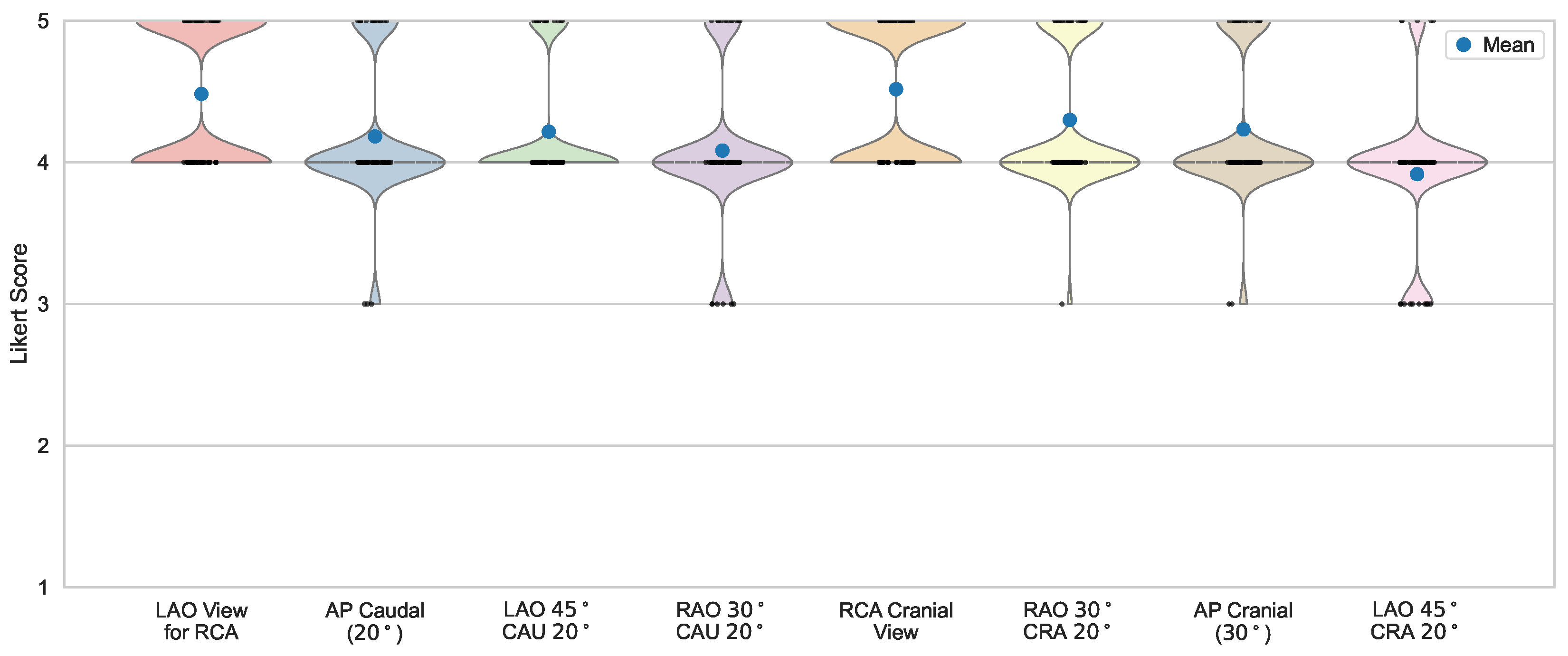
| LAO view for RCA | 4.48 ± 0.48 | 0.808 | 0.927 |
| AP caudal () | 4.18 ± 0.48 | 0.808 | 0.927 |
| LAO + CAU (spider view) | 4.22 ± 0.39 | 0.812 | 0.928 |
| RAO + CAU | 4.08 ± 0.51 | 0.827 | 0.935 |
| RCA cranial view | 4.52 ± 0.48 | 0.809 | 0.927 |
| RAO + CRA | 4.30 ± 0.47 | 0.803 | 0.925 |
| AP cranial () | 4.23 ± 0.47 | 0.806 | 0.926 |
| LAO + CRA | 3.92 ± 0.47 | 0.804 | 0.925 |
| Overall | 4.24 ± 0.49 | 0.828 | 0.935 |
| Method | Params (M) | FLOPs (G) | Memory (GB) | Inference (ms/img) |
|---|---|---|---|---|
| Baseline U-Mamba | 64.01 | 411.13 | 0.87 | 12.96 |
| + Multi-directional SSM | 67.17 | 518.68 | 1.21 | 24.45 |
| + HR Branch | 88.88 | 639.63 | 1.16 | 16.19 |
| + Dense Connections | 131.87 | 2117.77 | 1.78 | 32.04 |
| HR-UMamba++ | 184.02 | 2557.98 | 2.33 |
Disclaimer/Publisher’s Note: The statements, opinions and data contained in all publications are solely those of the individual author(s) and contributor(s) and not of MDPI and/or the editor(s). MDPI and/or the editor(s) disclaim responsibility for any injury to people or property resulting from any ideas, methods, instructions or products referred to in the content. |
© 2026 by the authors. Licensee MDPI, Basel, Switzerland. This article is an open access article distributed under the terms and conditions of the Creative Commons Attribution (CC BY) license.
Share and Cite
Zhang, X.; Lu, P.; Zheng, Z.; Li, W. HR-UMamba++: A High-Resolution Multi-Directional Mamba Framework for Coronary Artery Segmentation in X-Ray Coronary Angiography. Fractal Fract. 2026, 10, 43. https://doi.org/10.3390/fractalfract10010043
Zhang X, Lu P, Zheng Z, Li W. HR-UMamba++: A High-Resolution Multi-Directional Mamba Framework for Coronary Artery Segmentation in X-Ray Coronary Angiography. Fractal and Fractional. 2026; 10(1):43. https://doi.org/10.3390/fractalfract10010043
Chicago/Turabian StyleZhang, Xiuhan, Peng Lu, Zongsheng Zheng, and Wenhui Li. 2026. "HR-UMamba++: A High-Resolution Multi-Directional Mamba Framework for Coronary Artery Segmentation in X-Ray Coronary Angiography" Fractal and Fractional 10, no. 1: 43. https://doi.org/10.3390/fractalfract10010043
APA StyleZhang, X., Lu, P., Zheng, Z., & Li, W. (2026). HR-UMamba++: A High-Resolution Multi-Directional Mamba Framework for Coronary Artery Segmentation in X-Ray Coronary Angiography. Fractal and Fractional, 10(1), 43. https://doi.org/10.3390/fractalfract10010043