1. Introduction
With the development of social media, the way people search and consume news has changed as well [
1]. According to the
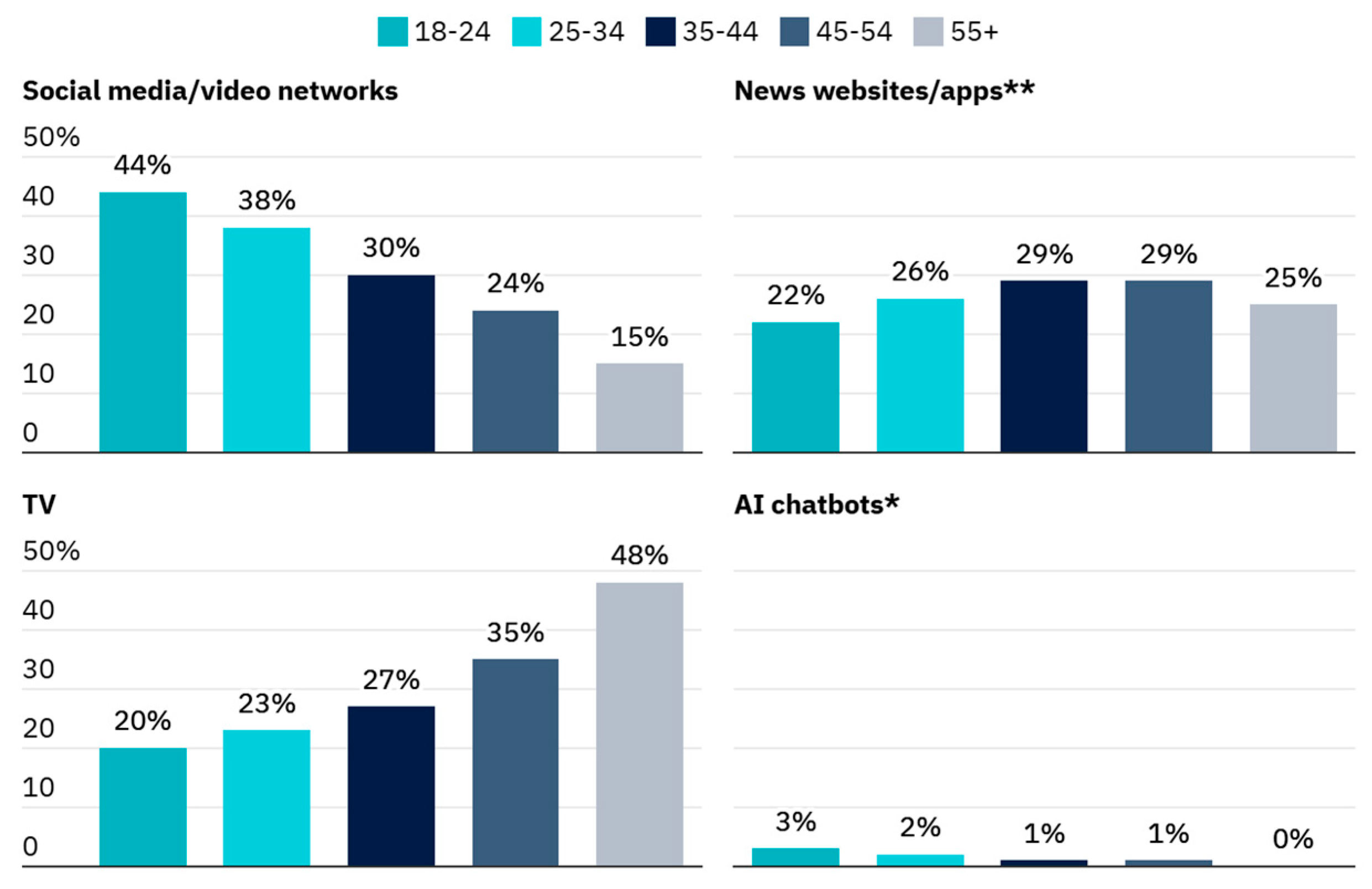
Reuters Institute Digital News Report (2025), there is a global trend towards declining engagement with traditional media sources, such as television, print publications, and news websites, while dependence on social media is growing rapidly [
2].
As can be seen in
Figure 1 [
2], social media is used most frequently by respondents aged between 18 and 44 compared with alternative news sources. Most respondents explain these changes by referring to the convenience of social media.
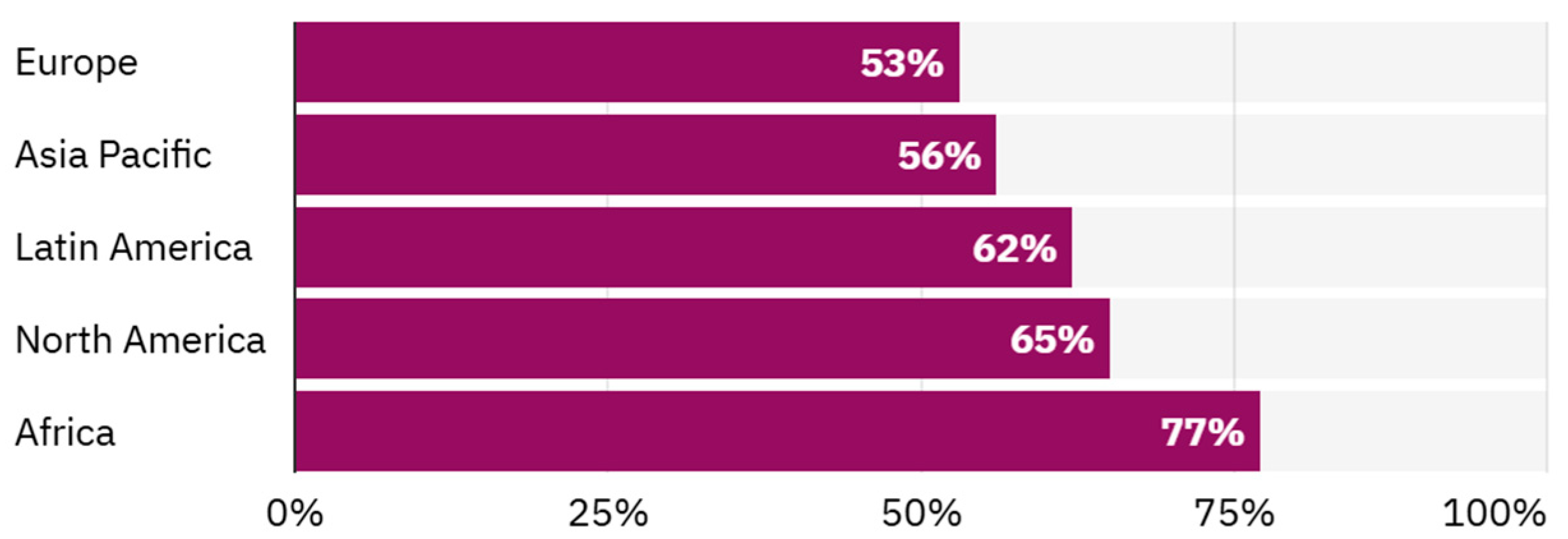
This tendency has its downsides, because anyone can create a social media account, write a post, and share it. This leads to an increased amount of disinformation on social media. Over the past year, more than half of those surveyed (56%) reported that they were concerned about distinguishing between real and fake news. This trend has risen by 2% compared with last year’s surveys. The greatest concerns were expressed by those who use social media as a primary source of news. The statistics shown in
Figure 2 illustrate how these concerns are reflected across different parts of the world [
2].
This can be explained by the fact that social media platforms lack proper editorial fact-checking mechanisms, which is why they often become a channel for the dissemination of false or manipulative messages. This risk is confirmed by
the Global Risks Report (2025) published by the World Economic Forum, which identifies disinformation and false information as the biggest risks for the next two years [
3].
The study [
4] examined in detail the concept of fake news itself through an analysis of around 117 articles, looked at the problem of its rapid spread via social media, and identified the risks it poses. Furthermore, many of the studies reviewed defined fake news as false information spread mainly via the internet with the aim of misleading readers and gaining an advantage from doing so.
One of the reasons why people are often prone to believing fake news is confirmation bias. In other words, news stories that align with their opinions and beliefs appear credible to the reader, regardless of whether they are actually true [
5].
Given this negative trend, particular attention should be paid to news verification services, which respond quickly to trending news stories, verify them and publish the results of such verification.
One example of such a service is Snopes–one of the oldest fact-checking platforms, founded in the 1990s. When it launched, it was a service that investigated rumors and urban legends, but as its popularity grew, the service began to fact-check a wider range of information, including political news, fake quotes, and dubious photos, and to cover topics related to disinformation [
6].
FactCheck.org is a non-profit project of the Annenberg Public Policy Center at the University of Pennsylvania, founded in 2003, with the aim of protecting news consumers and reducing the level of misinformation in US politics [
7].
Another notable example is Vox Ukraine–an independent Ukrainian analytical platform, part of which is Vox Check, one of the best Ukrainian fact-checking projects, specializing in the analysis of politicians’ statements, economic myths, propaganda and PSYOP [
8].
Despite the high accuracy of the fact-checks performed by these services, they all share one common limitation-they rely on manual fact-checking of news stories. In other words, there is a team of experts which analyzes the sources and makes a verdict, and there is no automation of this process. Moreover, the majority of services operate according to this principle. This leads to a problem of insufficient human resources for news validation, as the volume of news each day is enormous and it is impossible to manually verify everything quickly, not to mention the potential wave of newly created fake news stories that can spread rapidly.
Consequently, the development of models using NLP methods is frequently considered as an alternative method for detecting unreliable news. These models would take a news item as input and return the verification result as output.
If we review recent publications on the topic of fake news detection, we can notice that transformer models such as Bidirectional Encoder Representations from Transformer (BERT) currently deserve particular attention; thanks to their ability to analyze the left and right context of a word and their self-attention mechanism, they are demonstrating promising results in detecting false information [
9].
As evidence of this, a BERT-based hybrid architecture was proposed in a study [
10], which demonstrated a significant advantage in the accuracy of fake news detection compared to traditional machine learning algorithms.
This means that, with enough high-quality data, models based on the Transformer architecture have become one of the best tools for detecting textual disinformation. They are actively used by many researchers around the world and will form the basis of our work.
If we attempt to classify texts in Ukrainian, we encounter the problem of a lack of high-quality datasets, which complicates the process of training the model and achieving satisfactory accuracy. In other words, there are plenty of high-quality datasets in English, but for certain languages, including Ukrainian, there is a critical shortage of public datasets suitable for training models. We should immediately reject the option of creating our own dataset, as this is a time-consuming and complex process.
It makes sense, then, to utilize cross-lingual knowledge transfer from English to Ukrainian, which should help solve the problem of a critical shortage of high-quality Ukrainian-language datasets.
The aim of this study is to test the effectiveness of the developed three-stage algorithm for cross-lingual knowledge transfer from English to Ukrainian for the task of detecting unreliable information in Ukrainian.
The following research questions (RQs) were formulated to guide our research:
RQ1: Can cross-lingual knowledge transfer (from English to Ukrainian) effectively compensate for the critical shortage of training datasets in fake news detection?
RQ2: Does the proposed three-stage training approach outperform a single-stage baseline model in terms of classification accuracy and stability?
The main contribution of this study can be summarized as follows:
A three-stage algorithm has been proposed for detecting Ukrainian-language fake news based on the XLM-RoBERTa model and cross-lingual knowledge transfer, which effectively addresses the problem of a critical shortage of training data;
A comprehensive, phased training methodology has been developed: initial fake news detection on an English-language dataset (ISOT), intermediate adaptation on machine-translated texts, and final calibration on authentic Ukrainian news articles;
The effectiveness of the approach has been experimentally confirmed: the proposed model achieved a 9.7% accuracy improvement over the baseline single-stage model in extreme low-resource scenarios (500 records), while maintaining a high ability to detect English-language fake news as well.
The rest of this paper is organized sequentially.
Section 2 analyzes existing approaches to detecting fake news and the use of large language models.
Section 3 describes the data, the proposed three-stage algorithm, and the experimental setup.
Section 4 presents the research results, which are analyzed in detail in
Section 5. The main conclusions are presented in
Section 6.
2. Related Works
The problem of identifying fake news and misinformation, in general, is considered one of the greatest challenges of the information age. With the growing popularity of social media and digital media, disinformation has begun to spread more rapidly and over greater distances, making this threat even more dangerous.
The rapid spread of disinformation in the digital sphere presents a serious threat to social stability, having a negative impact on political stability, economic security, public opinion and so on.
The study [
11] examined the structure of fake news, identifying certain characteristics of its writing style, including exaggeration (often negative), attempts to evoke emotions in users, the use of popular topics, and clickbait. Fake news also has its own distinctive writing characteristics. In particular, researchers note that fake news stories are often shorter than genuine ones, contain fewer technical terms, punctuation marks and quotations, and have a high amount of lexical redundancy; to capture the user’s interest, they are simpler and do not require the reader to think deeply.
It is also worth highlighting the study [
12], which examined the impact of fake news on the tourism sector and the service sector as a whole. The article analyzed more than 30 publications on this topic. Research shows the negative impact of unreliable information, which can create false expectations among tourists, cause economic losses, reduce the popularity of tourist destinations or damage their reputation, and much more.
At the same time, traditional approaches to content verification–in particular, manual fact-checking and basic lingual analysis–have proved ineffective [
13] when dealing with large volumes of data, highlighting the need to develop new automated systems. It has become particularly difficult to use traditional methods effectively to validate news following the spread of generative artificial intelligence (AI), which allows hundreds of false news stories to be created, making their validation more difficult due to the massive volumes of information and limited human capabilities. AI, and machine learning in particular, play an important role [
14] in detecting disinformation, as they enable the creation of models capable of analyzing and classifying information based on its credibility.
Traditional machine learning models for detecting disinformation in news include Decision Tree, Naive Bayes, Random Forests, Support Vector Machine (SVM) and kNN, which were examined in study [
14]. Despite their simplicity of implementation, these methods have their drawbacks, as they are unable to capture the syntactic context and semantic relationships between words in a sentence, which complicate the analysis of complex texts. These limitations led to a shift towards the concept of large language models, in particular transformer models from the BERT family.
The first BERT model was introduced by Google in 2019, and its key feature is the model’s particular focus on understanding context, as it is capable of analyzing a word’s left and right context simultaneously at all levels of the architecture [
15]. Consequently, the pre-trained model can be easily fine-tuned using a single input layer to create state-of-the-art models for a wide range of tasks, one of which is the detection of fake news. A study [
16] carried out a comparative analysis of large language models for the task of detecting misinformation in news articles, where models from the BERT family demonstrated promising accuracy of over 90–95%.
In the paper [
17], a comparison of the performance of graph neural networks (GNNs) and transformer networks was performed on several datasets. As a result, transformer models (BERT, RoBERTa, GPT-2) demonstrated accuracy ranging from 85% to 99%, depending on the dataset, while GNNs (GCN, GraphSAGE, GIN, GAT) achieved an accuracy of around 71–75%, which on some datasets can drop to approximately 50%, demonstrating the superiority of the transformer architecture.
In the study [
18], the BERT model was applied to the task of detecting fake news in Romanian, achieving an accuracy of around 96.5%. Meanwhile, the traditional methods considered demonstrated lower accuracy, specifically: SVM–94.6%, logistic regression–90.9%, and Naive Bayes–82.9%.
Another popular approach is ensemble learning or the creation of hybrid networks, which involves training several models with the aim of obtaining a single model that outperforms these models when used individually [
19]. For example, in the architecture proposed in [
20], BERT’s capabilities for deep semantic analysis are combined with those of the BiLSTM-GRU recurrent network for capturing sequential dependencies to reach a joint decision. In addition, a study [
21] demonstrated the superiority of a model ensemble for the Arabic language, where a combination of five Transformer models was used; aggregating their predictions enabled the ensemble to significantly outperform the individual models. In particular, aggregating their predictions using the weighted-average method demonstrated an F1-score of around 94%.
In [
22], the task of detecting fake news in Arabic was examined across various datasets and using different models, including large language models and combinations of them. As a result, the combination of MARBERT and a CNN achieved the best F1-score of 0.956.
A key reason why large language models and the BERT family models are able to achieve such good results is the availability of large, high-quality training datasets. Accordingly, the studies mentioned above had enough data and produced high-quality models. However, for certain languages where there are insufficient datasets for such a task, a solution must be found to avoid a decline in classification accuracy.
The reason for this is that modern approaches to detecting fake news focus specifically on English-language content, which makes it difficult to tackle this problem for other languages, where the necessary publicly available datasets may not be available [
13].
One study [
23] describes how the authors manually collected and annotated data for the Amharic language, involving a large number of specialists. However, to avoid a huge waste of time, a more modern approach can be applied–transfer learning. The idea is to improve the learner’s (model’s) knowledge in one domain by transferring knowledge from a related domain [
24].
In the study [
25], an attempt was made to tackle the problem of detecting fake news related to COVID-19, but no suitable dataset could be found. Instead, knowledge transfer was applied. In other words, the model was trained on a dataset of fake news on general topics, and only then it was calibrated on another, smaller dataset of manually collected news articles about COVID-19. As a result, the model achieved an accuracy of 78.8%.
One alternative approach to addressing the problem of insufficient or severely imbalanced training data is the use of data augmentation techniques. For example, in a study by Keya et al. [
26], the AugFake-BERT architecture was proposed, which utilizes BERT-based data augmentation techniques to balance the dataset. This significantly improved the performance of fake news classification. However, this approach may be less effective for low-resource languages due to limited capabilities in generating high-quality synonyms and preserving context.
Transfer learning is highly relevant for our task of detecting fake news in Ukrainian. As there is a lack of high-quality public datasets for our language, we will adopt an approach involving final calibration on a small Ukrainian-language dataset. Nevertheless, cross-lingual knowledge transfer will be utilized. This means that an English-language dataset will be used to train the multilingual XLM-RoBERTa model on the general structure of fake news, followed by additional calibration using news articles in Ukrainian.
The high effectiveness of cross-lingual knowledge transfer in solving the problem of a shortage of high-quality training data has been successfully demonstrated for other low-resource languages, in particular Asian and Dravidian languages [
27,
28].
A similar approach, utilizing the multilingual XLM-RoBERTa model, was applied in the study [
29], where knowledge was transferred from English to four low-resource Indian languages—Bangla, Hindi, Malayalam, and Tamil—to improve the accuracy of a model for detecting fake news.
The authors’ experiments demonstrated that, without fine-tuning the model on news articles in the target languages, the models achieved a peak Macro-F1 score of approximately 0.649 for Hindi. However, fine-tuning using just 200 news articles in Bengali improved detection performance for Hindi to 0.795. At the same time, the study noted that an attempt at cross-lingual fine-tuning based on just one language led to a degradation of metrics for the other tested languages, confirming the sensitivity of transformers to the volume and specificity of local data.
The knowledge transfer algorithm presented for the Ukrainian language, the model training process, and the selection of the dataset will be described in more detail in the next section.
3. Materials and Methods
This section outlines the sequence of steps carried out in our study. These include the selection and processing of datasets for training the model, a description of the model development algorithm with hyperparameter tuning, and a description of the metrics used to evaluate the performance of the resulting models at various stages of the study.
To develop a model for detecting unreliable information in Ukrainian, we used the Python (version 3.9.24) programming language alongside a set of libraries for machine learning and NLP, notably PyTorch (version 2.5.1), Hugging Face Transformers (version 4.57.1), and Scikit-learn (version 1.4.2). The development was performed in the Jupyter Notebook (version 7.4.5) environment.
To ensure the reproducibility of the experiments and to optimize model training time, the computations were carried out using CUDA hardware acceleration on an NVIDIA GeForce RTX 3050 laptop GPU (4 GB VRAM, NVIDIA Corporation, Santa Clara, CA, USA).
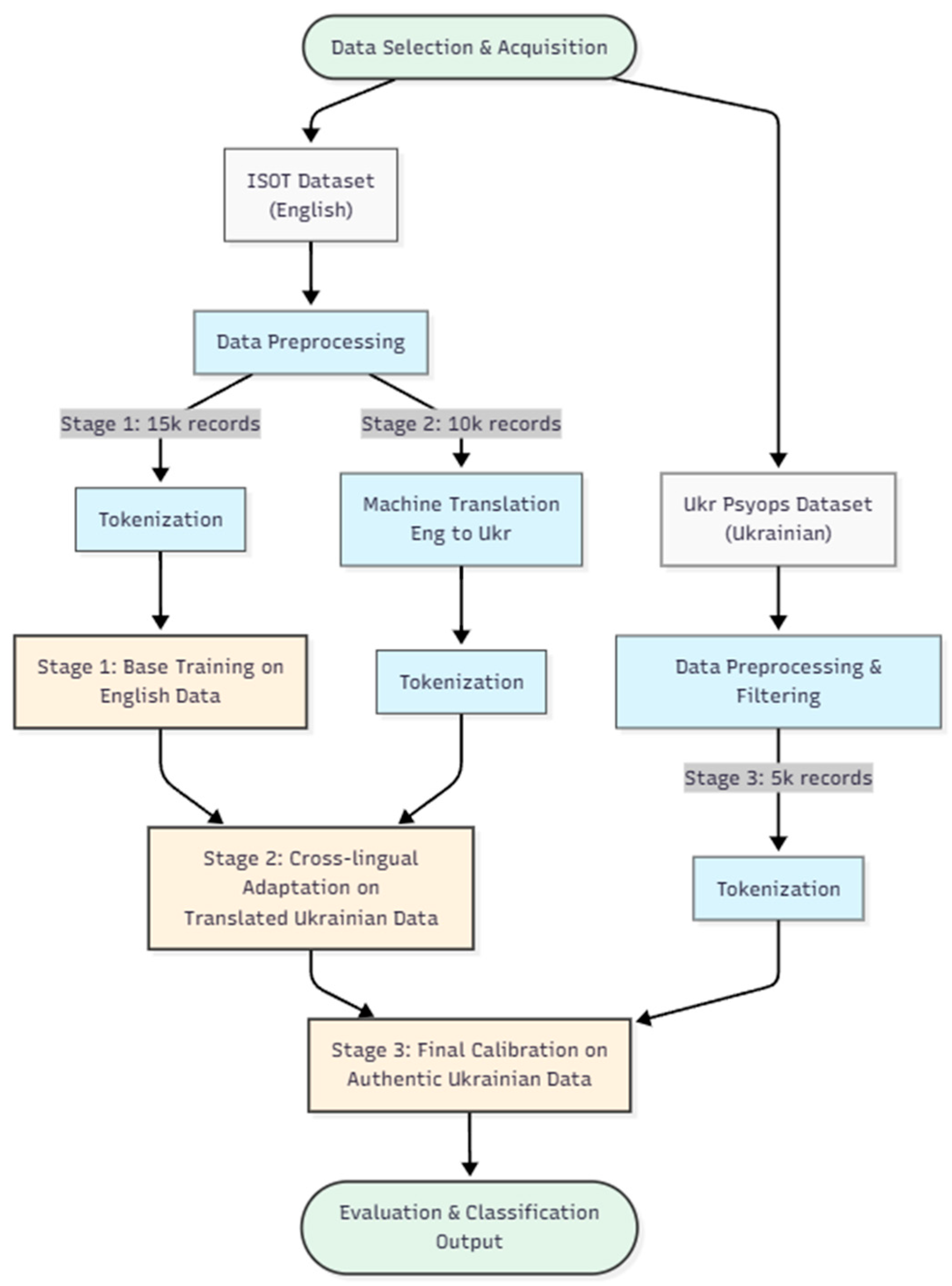
Figure 3 shows a general diagram of the proposed three-stage algorithm for detecting fake news in Ukrainian using cross-lingual knowledge transfer. A detailed description of all implementation steps, from data preparation to model tuning and quality assessment, is provided in the following sections.
3.1. Proposed Model Implementation and Training Algorithm
The proposed algorithm for detecting fake news in Ukrainian is based on the idea of cross-lingual knowledge transfer from English, where there are many high-quality datasets for the task of detecting fake news, to Ukrainian, where such datasets are limited.
For such knowledge transfer to be successful, it is important to use a multilingual transformer model. In our case, we selected XLM-RoBERTa [
30,
31], which has significant advantages over the standard Multilingual BERT (mBERT) [
26]. XLM-RoBERTa provides a better semantic understanding of the Ukrainian language compared to mBERT, as it was pre-trained on the massive CC-100 web corpus rather than on limited Wikipedia dumps, enabling it to capture the complex syntax, morphology, and stylistic nuances of contemporary news media.
The first stage of training the base XLM-RoBERTa model will involve training on a large, high-quality English-language dataset in order to teach the model how to understand the general concept of fake and real news.
The next stage will require training on news articles translated from English into Ukrainian. The plan is to use part of the dataset from the first stage, with half of the data for translation taken from the sample on which the model was trained in the first stage, and the other half containing data that are new to the model. The translation was carried out using a specialized model, Helsinki-NLP [
32]. In this way, after the first stage, the model will encounter some news stories that are already familiar to it, but in Ukrainian, which should help it transfer its understanding of deception patterns to the Ukrainian language.
The final stage of training will involve final calibration on a small dataset consisting exclusively of Ukrainian-language text, to enable the model to analyze authentic Ukrainian news stories.
Accordingly, the proposed algorithm involves a three-stage training process, following which a model capable of detecting fake news in Ukrainian will be produced.
3.2. Selection and Processing of Datasets
The selection and processing of datasets are an extremely important stage in model development. This is particularly important for models based on the Transformer architecture, which will be used in this study.
As noted earlier, we first applied cross-lingual knowledge transfer from English to Ukrainian, and only then will we perform fine-tuning on Ukrainian news. Therefore, it was critically important to select a high-quality and balanced dataset in English for the task of detecting fake news.
After reviewing the publicly available datasets, we decided to select the ISOT Fake News Dataset [
33], created by a team from the University of Victoria in Canada [
34,
35]. A distinctive feature of this dataset is the high quality of the collected news articles, as the true articles were sourced from Reuters, while the false news comes from unreliable domains verified by expert fact-checking organizations. The dataset is quite large, comprising approximately 44,900 records, with a nearly perfect class balance—which is crucial for training the model. Additionally, the dataset contains full articles, allowing the models to thoroughly analyze the context and identify the characteristics of fake news. The dataset focuses primarily on political topics, where fake news is always most common and clearly identifiable—which is a definite advantage. This dataset will form the core of our work and is designed to demonstrate the power of cross-lingual knowledge transfer.
Data processing [
36] is a crucial step of model training preparation, allowing us to eliminate unwanted noise in the data and maximize the effectiveness of the training process. In this study, several data preprocessing methods were applied to the ISOT:
News source removal: The ISOT is known for the fact that almost every genuine news article begins with a “Reuters” source marker, which was removed using a regular expression;
Standardization of spaces: Multiple spaces were replaced with single spaces;
Standardization of quotation marks and apostrophes: Using a regular expression, all quotation marks and apostrophes were standardized to the same characters;
Removal of information noise: Using regular expressions, information noise was removed from the text: hyperlinks (URLs), hashtags, user mentions (using the @ symbol), as well as metadata in square brackets (e.g., timestamps such as [0640 EDT]). All non-alphanumeric characters and extraneous symbols that do not function as standard punctuation marks were removed;
Removal of duplicates;
Removal of empty records;
Removal of short records: Texts containing fewer than 20 words were removed because they lack sufficient context for high-quality analysis.
The result was a processed dataset consisting of 37,000 records, from which we selected 7500 genuine news stories and 7500 fake news stories, shuffled them, and created a dataset for training the model.
Data tokenization was performed using the AutoTokenizer tool from the Hugging Face library [
37], with a length limit of 512 tokens. The tokenizer automatically handled text padding and truncation, converting the texts into PyTorch tensors for training on a graphics card. The same tokenization approach was applied to all datasets.
To create the dataset for the second stage, we used the previously processed ISOT, from which we selected 5000 familiar records from the dataset of the first iteration, along with an equal number of records the model had not seen before, ensuring a balanced distribution of classes.
These 10,000 entries were translated into Ukrainian using the pre-trained Helsinki-NLP/opus-mt-en-uk model based on the MarianMT architecture. The translation was performed by breaking the news articles down into sentences, with each sentence translated separately and then combined into the final translated text. This approach helped avoid the problem of attention degradation, where the model could lose entire sentences. Although this sentence-by-sentence strategy disrupts inter-sentence contextual dependencies, preserving the complete semantic content was prioritized at this intermediate stage. The third training stage on unfragmented Ukrainian news is specifically designed to compensate for this and restore the model’s ability to evaluate document-level context. After translation, the spacing was re-standardized.
The final dataset is the purely Ukrainian Ukr Psyops False News Dataset [
38], available on Hugging Face. This dataset, which contains approximately 25,000 entries, was further processed; in addition to the techniques used for ISOT processing, the following were applied:
Removing records shorter than 150 tokens: Such records are too short for a meaningful analysis;
Removing records not in Ukrainian: The langdetect library (version 1.0.9) was used to filter texts by language;
After processing the dataset, contextual filtering based on keywords was applied to ensure the thematic consistency of the texts and to verify that the resulting dataset contained only news articles. A specialized dictionary of markers was created, covering five categories: government agencies, political figures, military terminology, geographical names, and markers of news propaganda. Texts were verified and retained in the dataset only if they contained at least one target marker. This step made it possible to create a high-quality, balanced news corpus for further model training.
To prevent overfitting of classification models to non-semantic lexical labels, a strategy to minimize statistical bias in the data was implemented. In the first stage, a frequency analysis of the text corpus was conducted for both target classes, and a word proportionality coefficient was calculated. Words whose frequency within one class exceeded that of the other by a factor of three or more were identified as anomalous lexical anchors. Using regular expressions, these tokens were removed from the corpus without disrupting the overall structure of the text. It is important to note that this procedure was performed on the entire filtered corpus before splitting it into training, validation, and test sets.
After processing the dataset, only about 6000 high-quality data entries remained, of which 5500 were included in the final sample with an even distribution of classes. Consequently, three datasets were formed to carry out each stage of model training.
To provide a transparent overview of the dataset construction and preprocessing procedure,
Table 1 summarizes the source, original size, filtered size, and final class distribution for each training stage. To form the final subsets, we applied a random stratified sampling procedure, ensuring a perfectly balanced 50/50 ratio of genuine and fake news across all stages.
3.3. Experimental Setup and Model Configuration
To ensure the reproducibility of the study results, the experiment configurations are provided below. Across all experiments, the random seed was fixed at 42, and the exact xlm-roberta-base checkpoint from the Hugging Face model hub was utilized. For the first two training stages, the 80/10/10 data split (80% for training, 10% for validation, and 10% for testing) was performed. For the third stage and base model comparison, validation and testing sets were fixed at 500 and 1000 records, respectively, while training sets were evaluated from 500 to 1500 records with a step of 250 (500, 750, 1000, 1250, and 1500 records). All data splits were performed immediately after all translation and text preprocessing steps were completed. The native tokenizer for xlm-roberta-base, based on the SentencePiece algorithm, was used. This tokenizer standardized all sequences to a fixed length of 512 tokens by dynamically truncating long articles and padding shorter entries with zero vectors.
Due to hardware constraints, a systematic GridSearch for hyperparameter optimization was not feasible. Parameters were selected based on established best practices for the RoBERTa architecture.
Table 2 shows all parameters that directly affect the specifics and quality of model training and were passed to the TrainingArguments class constructor.
Among the important parameters, it is worth mentioning that training takes place over two epochs, and the epoch with the best F1 score is saved, which allows us to obtain a model with the best performance without overfitting.
The parameters shown above are nearly identical for all three training stages; however, for the second and third stages, the learning_rate is set to 1 × 10⁻⁵, and warmup_ratio has been replaced with warmup_steps set to 100. Additionally, the third training stage will consist of three training epochs, as the dataset is small, and several iterations may be needed to fully adapt to the characteristics of disinformation in Ukrainian news.
The learning rate was reduced so that the model would take more cautious steps while adjusting the weights and would not forget the structure of fake news it had already learned in the first stage.
A fixed warm-up of 100 steps was used due to the smaller size of the Ukrainian-language datasets, which helps ensure the stability of gradient descent and avoid sharp error jumps at the beginning of training.
3.4. Classification Quality Assessment Metrics
To quantitatively assess the quality of disinformation detection, we selected four standard metrics that allow for a comprehensive analysis of the classifier’s performance:
- 2.
Recall—indicates the model’s ability to find and identify manipulative content from the entire set of fakes available in the dataset. Here, we calculate recall (R) using the formula from Equation (2):
- 3.
The F1-score is a harmonic mean of precision and recall, which provides a balanced assessment of a model’s performance under class imbalance. Here, we calculate the F1-score (F1) using the formula from Equation (3):
- 4.
Accuracy—reflects the overall proportion of correct answers given by the neural network relative to the total volume of test data. Here, we calculate the accuracy (A) using the formula from Equation (4):
These metrics make it possible to evaluate the models’ ability to make accurate predictions while minimizing errors [
39].
4. Results
In this section, we analyze and compare the training results of the models from all three stages described in
Section 3.1. For all training stages, we used the corresponding datasets described in
Section 3.2 and the model settings from
Section 3.3.
Model training was performed on an NVIDIA RTX 3050 (laptop) GPU with 4 GB of video memory. The choice of this hardware required optimization of VRAM usage when working with the XLM-RoBERTa architecture. The presence of hardware Tensor Cores enabled the use of mixed-precision (FP16) computations, which significantly accelerated the model training process.
To properly document our hardware constraints,
Table 3 presents the exact training times across all stages. These results show that while the initial training (Stage 1) requires over 6 h, making a GridSearch on a laptop GPU prohibitive, the final calibration (Stage 3) remains efficient, taking under 19 min for the 500-record configuration using pre-defined hyperparameters to prevent catastrophic forgetting.
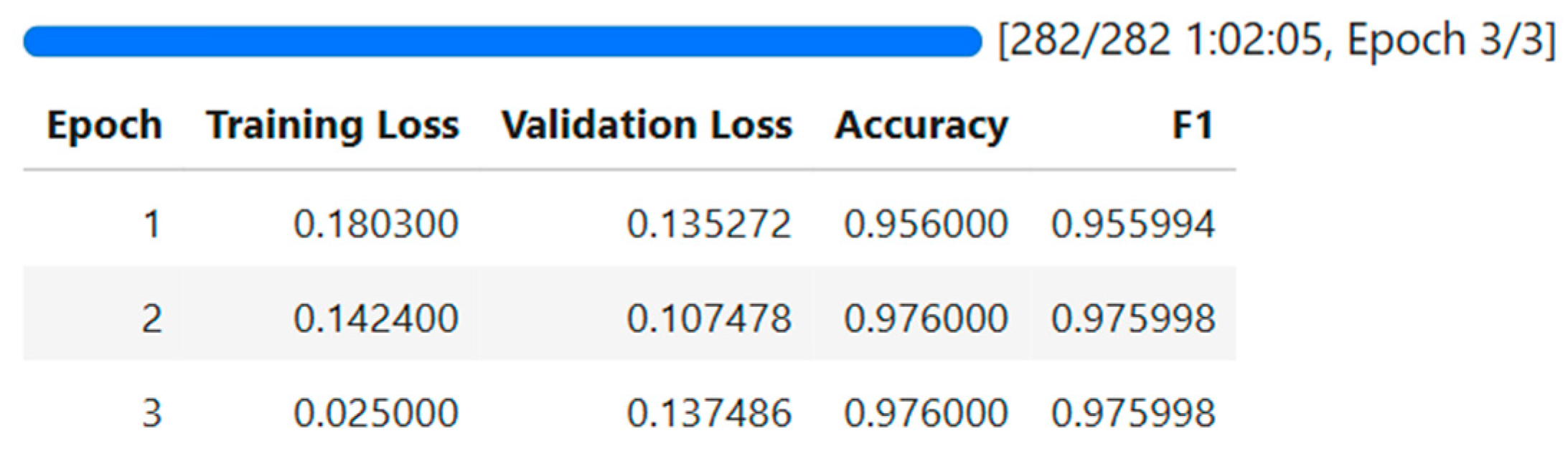
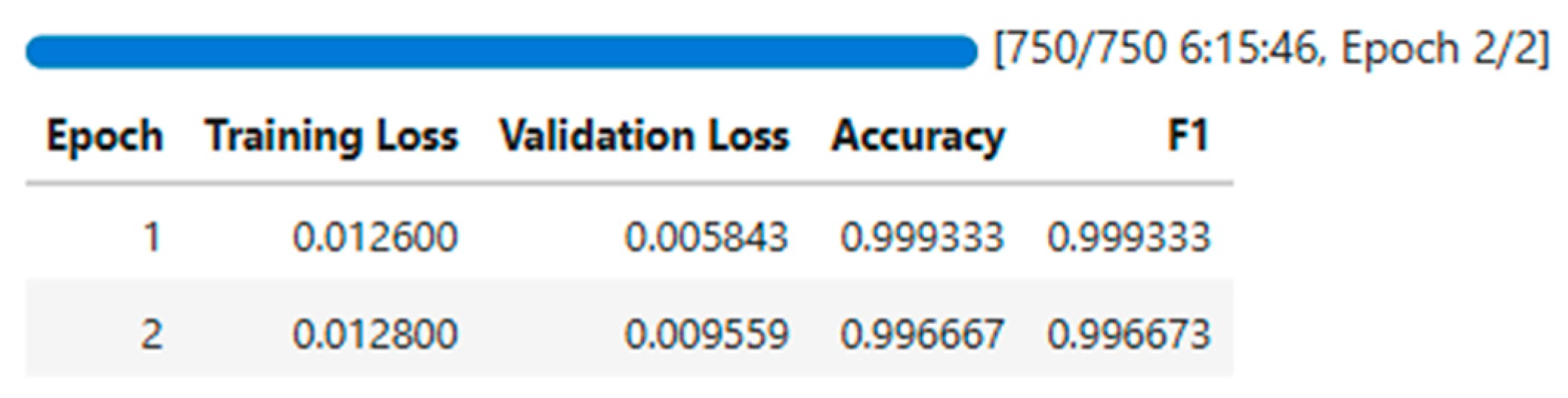
Figure 4 shows the results of the first training stage of the base XLM-RoBERTa model on the English-language ISOT.
Since the accuracy metrics for the second training epoch showed a decline in accuracy, indicating overfitting, the result from the first epoch was saved as the result for this stage.
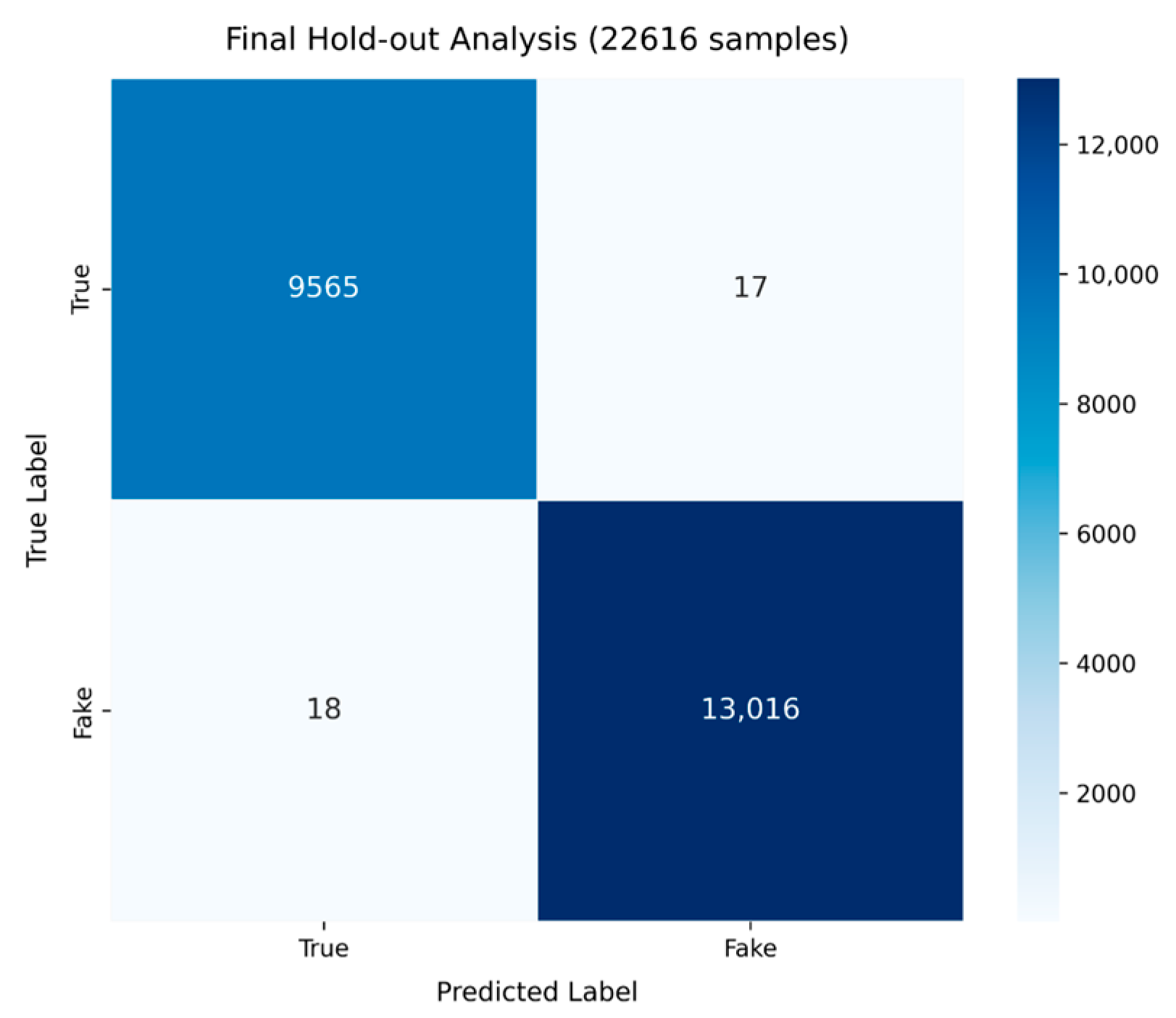
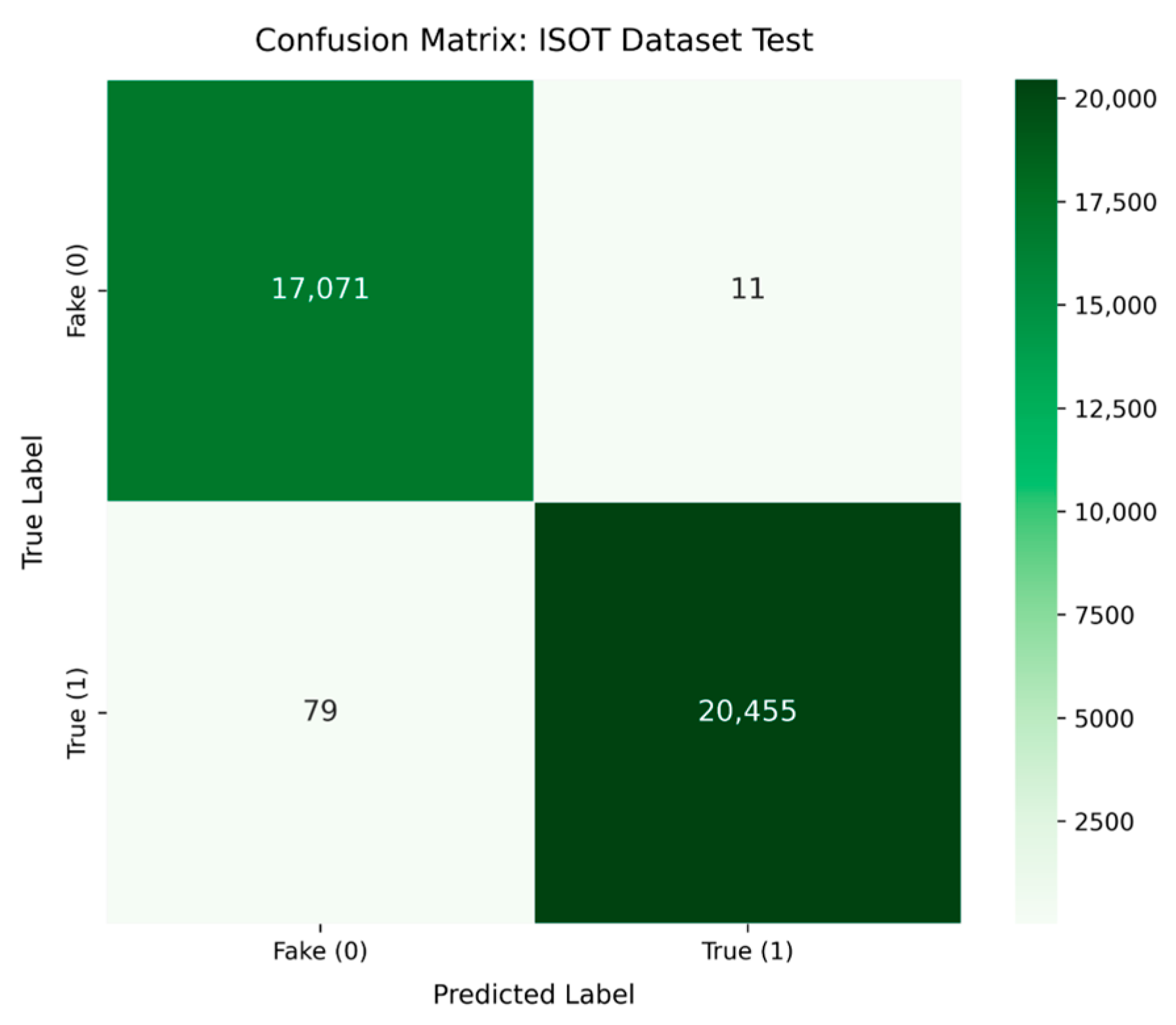
Figure 5 shows an additional accuracy analysis of the resulting model. Approximately 23,000 records from the ISOT dataset that were not included in the training dataset from the first stage were selected and used for additional testing of the resulting model.
As a result, the model made only 35 errors out of more than 22,000 news articles analyzed, which can be considered an excellent result. At this stage, we can conclude that we have reached the optimal performance from the first stage and can move on to the second step.
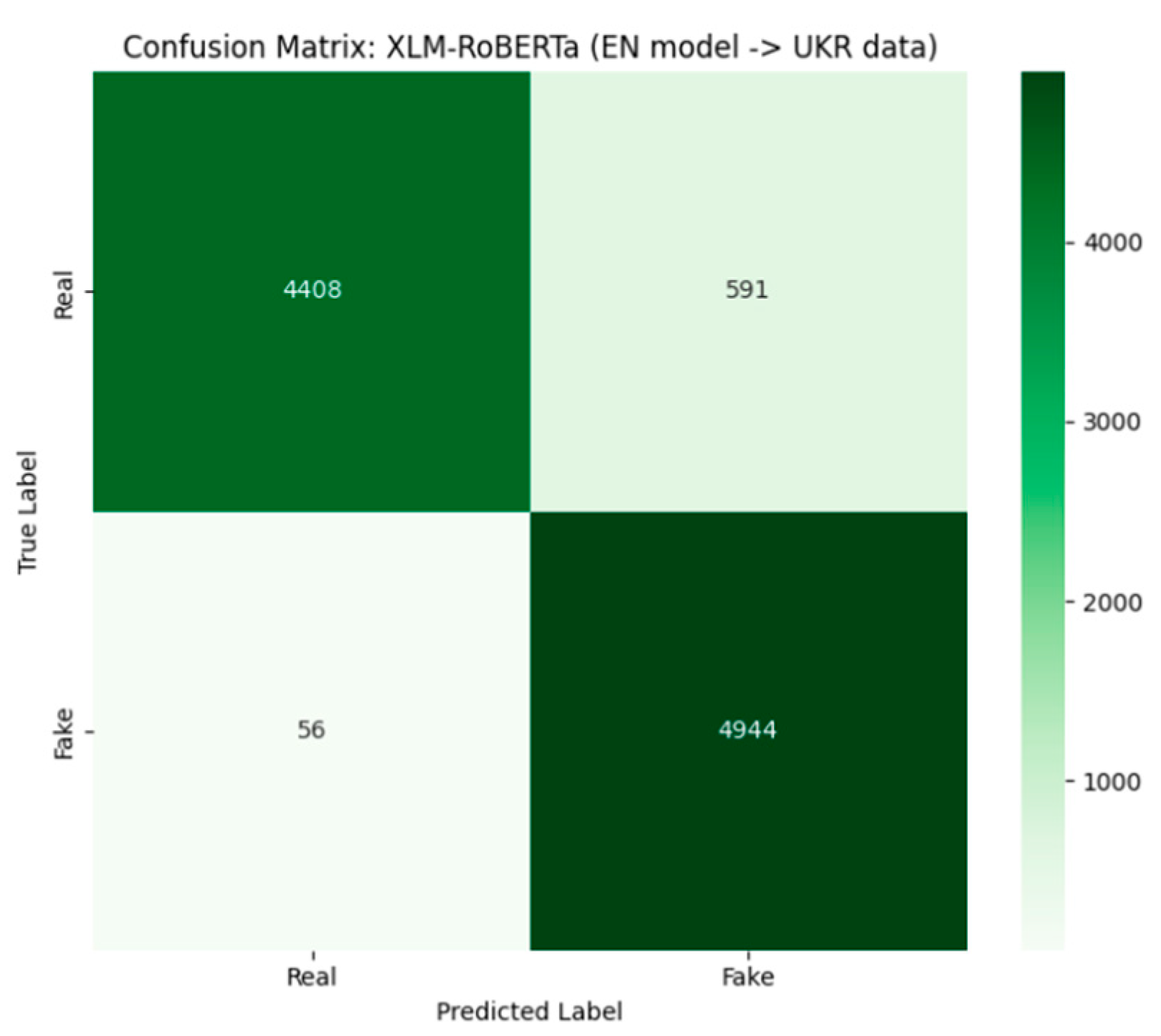
Before training the model for the second stage, we will verify the model’s ability to analyze news articles translated into Ukrainian.
Figure 6 shows the results of testing the model on the entire dataset for the second stage of training.
The results show a drop in the model’s classification accuracy to 94%, although the English-language news test demonstrated an accuracy of over 99%. This demonstrates the need for further training on this translated dataset in order to transfer the model’s knowledge about fake news to the Ukrainian language.
Notably, many of these errors are false positives, which risk unwarranted censorship. This elevated false positive rate, observed when applying the English-trained model to translated texts, is likely caused by machine translation artifacts, further justifying the necessity of the subsequent fine-tuning stages.
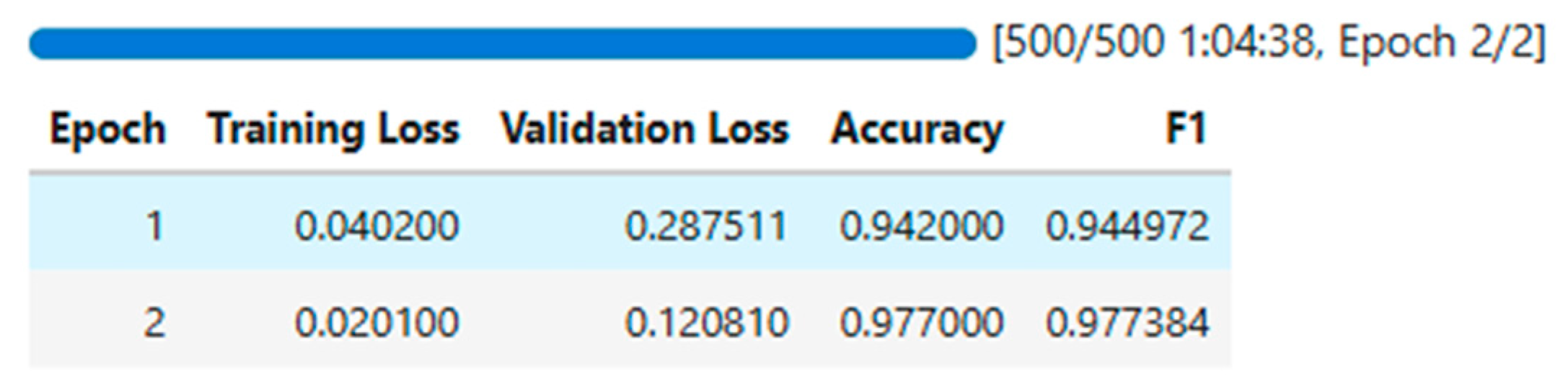
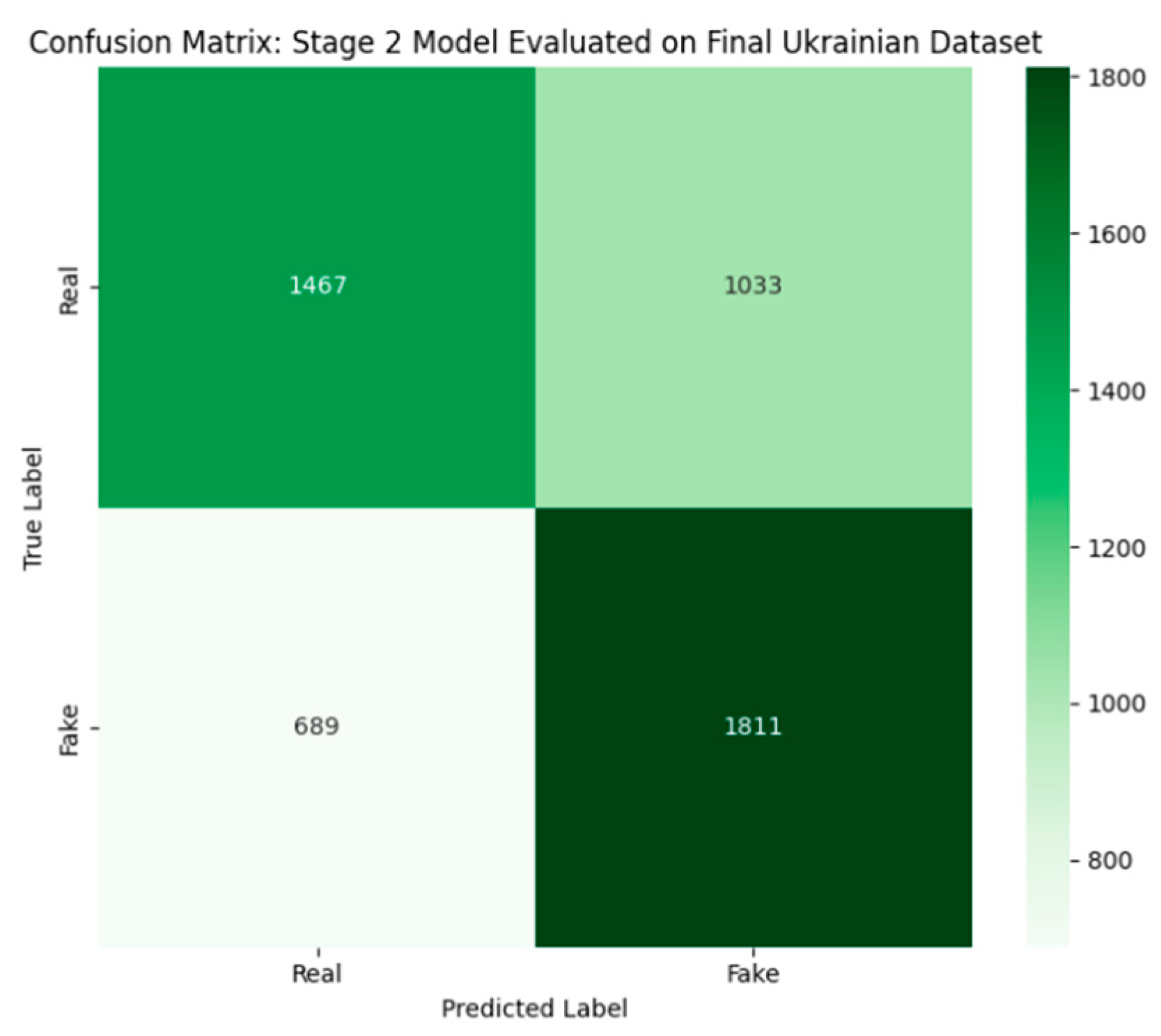
Figure 7 shows the results of training the model in the second stage. As can be seen, the model from the second epoch achieves an accuracy of 97.7%, which is 3.7% higher than that of the model from the first stage. This demonstrates the effectiveness of this stage.
Figure 8 shows the results of testing the model from the second stage on an authentic Ukrainian-language dataset, which will be used for the third stage of training. The results show a significant drop in classification accuracy to 66%, indicating that the general language adaptation used in the first and second stages is insufficient to capture all the nuances of local manipulations. Therefore, it is important to apply the final stage with calibration on real-world data.
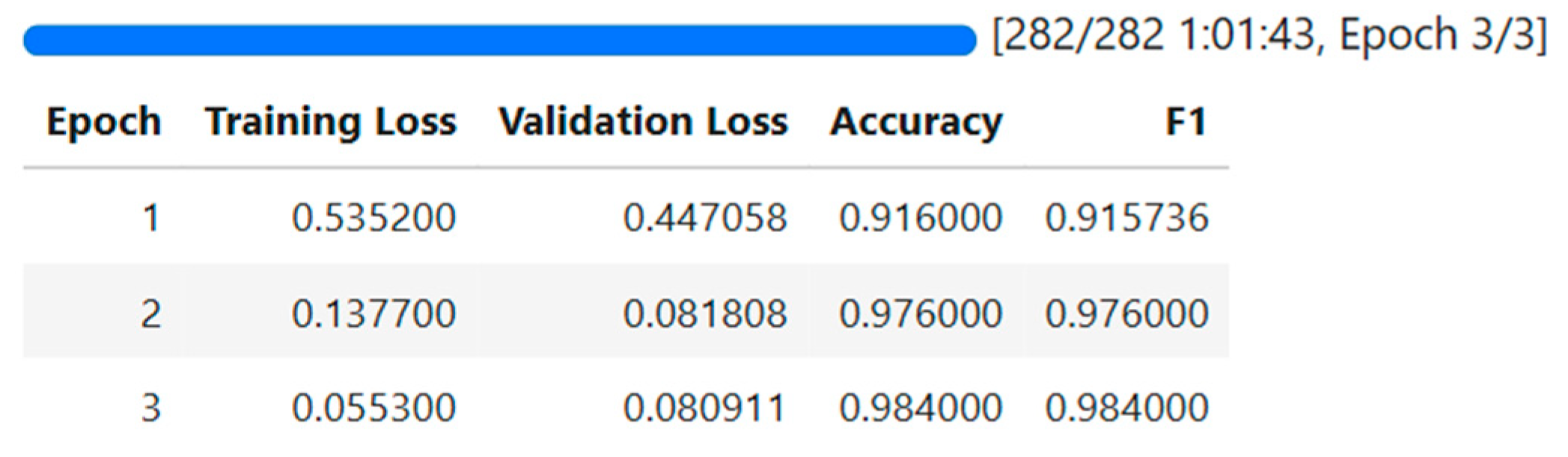
Figure 9 shows the results of the third training stage of the model using the 500-record training set. The second epoch was saved as the final result.
For comparison,
Figure 10 shows the training results of the baseline XLM-RoBERTa on the third-stage dataset using the same settings and training split.
As can be seen, the baseline model with a single fine-tuning stage on the 500 training set achieved its best performance in the third epoch. A comprehensive comparison of the final test metrics for both models across different training set sizes, including F1-score, Precision and Recall, is presented in
Table 4. As shown in the table, at the maximum evaluated configuration of 1500 training records, both models achieve an identical accuracy of 95.6%, reaching an absolute performance parity and a clear performance plateau where further dataset scaling yields diminishing returns.
As shown in
Table 4, both models reach an absolute performance parity at exactly 1500 training records, where further scaling of the training dataset yields diminishing returns. However, the proposed three-stage approach demonstrates a critical advantage under extreme data scarcity. With only 500 training records, the proposed model achieves 90.7% accuracy compared to the baseline’s 81.0%, representing a massive 9.7% absolute improvement. Intermediate step configurations (750 and 1250 records) further illustrate a smooth convergence trajectory toward this parity point. It is also worth noting that the final three-stage model trained on 1500 records successfully preserved its knowledge of English-language fakes, demonstrating an accuracy of approximately 99% on the full ISOT (see
Figure 11).
6. Conclusions
In this article, we have presented a three-stage model training algorithm for detecting fake news in Ukrainian, based on cross-lingual knowledge transfer from English to Ukrainian. The concept of the algorithm, the selection and processing of datasets, and the model configuration described in
Section 3 enable the development of a highly data-efficient model. Our evaluation demonstrated that the proposed method outperforms a single-stage baseline in extreme low-resource scenarios, achieving 90.7% accuracy compared to 81.0% for the baseline (a 9.7% absolute improvement) when trained on just 500 records. Furthermore, as both architectures reach a performance plateau at 1500 records (95.6% accuracy), further scaling of the training set yields diminishing returns, suggesting that acceptable accuracy can be achieved without the immediate need for massive target-language datasets. This may also be important if there are no large datasets in Ukrainian for a particular news category. The proposed model will be effective not only for the Ukrainian language, but also for other languages that lack a sufficient training dataset, unlike English.
Despite its high efficiency, the proposed solution has certain limitations: it is heavily dependent on the specific characteristics of the datasets used and the quality of the machine translation, so accuracy may vary in real-world conditions. Additionally, while the heuristic removal of words with a >3:1 frequency ratio was a necessary step to prevent the model from overfitting to source-specific artifacts common in scraped datasets, it remains a rigid method that might unintentionally discard some relevant context. Future research will focus on expanding the Ukrainian-language datasets to improve the model’s flexibility.
Furthermore, we acknowledge that for an applied automated moderation tool, providing a “black-box” binary verdict is insufficient and limits operational trust and ethical deployment. Therefore, a primary direction for our future research is the application of explainable artificial intelligence (Explainable AI) methods, in particular visualization using the LIME algorithm, to interpret the hidden decision-making mechanisms of our model and ensure transparent, trustworthy content moderation.