1. Introduction
Education is an integral part of people’s lives. It represents the basis for continuous personal and professional development in a rapidly changing environment. Because of proper education, individuals are better prepared to tackle new challenges. Additionally, employees’ further learning increases the organization’s competitiveness and efficiency [
1,
2]. Modern organizations perceive learning and development as a specific form of investment. Therefore, they must pay attention to assessing the effectiveness of the funds spent this way [
3]. The utilization of various forms of learning and development is crucial in organizations, as it leads to the promotion of employees’ loyalty, flexibility, cooperation, and workforce quality [
4,
5]. Learning includes various forms of training or specialized courses. Employees often prefer training to be performed directly at their workplace, as it allows them to acquire skills during their daily tasks. However, e-learning is also a popular method, allowing individual or group education tailored to the employees’ needs [
6]. Via continuous learning and development, employees have higher motivation [
7], and they are able to achieve higher performance [
8].
With increasing digitalization and the associated changes in employee demands and the broader work environment, new tools are being developed in human resources management to support organizations’ competitiveness [
9,
10,
11,
12]. Supported by technological developments, e-learning has become an integral part of learning and development systems. It enables flexible, adaptable, and accessible education that goes beyond traditional forms of teaching. Digital platforms and online courses allow students and employees to acquire new skills faster and more interactively [
13].
Within current research on athletes’ learning and development, most studies focus on improving sports performance, training methods, and physical preparation [
14]. Research also focuses on analyzing dependencies in relation to the reputation of a sports club. This concerns the perception of reputation, for example, from the perspective of fans, sponsors, or residents. Sports clubs use the support of athletes’ learning as a form of building their positive reputation [
15]. However, less attention is paid to systematic lifelong learning, which would prepare athletes for a successful transition to other careers after leaving sports. Additionally, research narrowly focused on education within the sports environment often neglects the potential of applying corporate education models and modern ICTs as sources of inspiration for the creation of flexible, digital systems for athletes’ further learning and development. This delimits our study’s research gap, pointing to the need to transfer proven principles and practices from the corporate learning environment, such as autonomy, gamification, specialized training, and courses, to the sports environment. Our study aims to fill the identified research gap by analyzing selected examples from practice, while adapting these approaches to the needs of athletes’ learning and development.
The main objective of our study is to design an athletes’ learning and development process using ICT tools and video content, inspired by effective corporate approaches to employees’ further learning. The intention is to create a model that connects digital educational platforms, video content, appropriate feedback forms, and gamification elements. This should support the acquisition and development of professional skills necessary for athletes’ employment after the end of their active sports careers. The study’s main objective was further elaborated into the following four research questions. RQ1—What are the practices from corporate learning and development that are transferable into the athletes’ education model? RQ2—What should be included in the educational video content created for the pilot phase of new athletes’ learning and development to draw their attention and provide meaningful support for athletes’ future career prospects? RQ3—What added value can be brought into the design of a new athlete’s learning and development model by a design thinking workshop, including the important stakeholder groups? RQ4—What elements need to be incorporated in the new athletes’ learning and development model to support its overall effectiveness?
The study gradually presents the importance of ICTs in education, the methods we used, and examples of corporate learning. These create the basis for the design of the athletes’ learning and development model. The originality of our study is supported by our own video content, including scripts for educational videos targeted to the target group. The added value lies in applying the design thinking method in a workshop involving key stakeholders. The workshop was conducted using the Scene2Model (S2M) tool within the OMiLAB platform, directly on one of the network’s nodes (Žilina, Slovakia). The study follows with a discussion section and recommendations for practice and concludes with a summary of the main findings.
2. Theoretical Background
In connection with the study’s topic, we needed to define the area of learning and development supported by appropriate ICT tools, as well as the area of video content and its benefits in educational processes. We deliberately focused on an overview of knowledge in learning outside of sports to identify effective forms and approaches that are currently absent in the athletes’ education.
2.1. The Base for Digital Learning in Sports and Its Desired Development
The general perspective of the educational process emphasizes its significant impact on career building. Organizational managers must understand the uniqueness and differences of employees, as well as their preferences for building a professional career. Career growth depends on motivation factors, including the use of one’s own skills, personal development, prestige, and self-fulfilment [
16]. It is therefore necessary to build on similar factors when educating athletes during their active sports careers. If athletes expand their skills beyond sports (such as management and financial literacy), their employability will increase. The educational process itself is based on learning theories. These are used in pedagogical practice as the fundamental element, even in the field of sports. Despite their theoretical relevance, some learning theories are often considered too abstract. Therefore, it is crucial to focus not only on the theories themselves, but also on the motivational and affective aspects [
17]. It is important to choose an appropriate theory in relation to the situation, the content being explained, and the students’ background when setting the learning and development process. Examples of learning theories include online instruction, cognitivism, connectivism, and social learning theory [
18]. However, the education can be further enhanced by collaborative learning processes. In the context of sports, research describes the use of this learning in physical education. The application leads students to identify and acknowledge the benefits of learning theories [
19]. The educational process needs to include some form of evaluation. It is an assessment of students’ results regarding the progress in acquiring knowledge or skills. In higher education, evaluation is conducted in three phases: initial, continuous, and final. Based on demonstrated results, students develop the ability to apply acquired knowledge in practice [
20]. Only some of the courses aimed at athletes’ learning are prepared similarly.
Pedagogical practice can then be supported by proper technology. This offers new opportunities to improve data collection and analysis [
21] or increase the efficiency of the educational process. Learning supported by technology is also known as digital education. The most common technologies applied within digital education include e-learning, m-learning, Learning Management Systems, and social media services. Based on perceived ease of use and usefulness, the Technology Acceptance Model explains users’ behaviour in adopting technologies that support the learning process [
22]. Other digital education tools include virtual reality (VR), which provides students with the opportunity for interactive engagement. With VR, it is possible to create virtual excursions or complex simulations that support the transfer of knowledge through experience [
23]. The use of VR transforms the educational process, especially when it connects with theories of constructivism, experiential learning, or collaborative learning. This process leads to a personalized and interactive experience [
24]. Such aspects are particularly important when designing the learning and development process for athletes who want to succeed in life after their sports careers. Some digital education technologies are already used in sports learning, but this area still needs further development. Online courses, flexible curricula, and the use of artificial intelligence are currently part of athletes’ learning and preparation for career transitions [
25]. However, the need for a comprehensive approach linking sports, education, and career planning using innovative digital tools is emphasized. In creating this approach, sports organizations could be inspired by the corporate environment and the learning and development process businesses provide for their employees.
While trying to help athletes with their education, multiple countries reach for dual career support programmes. These focus on directly linking sports activities and education. The results of retrospective research indicate that even these programmes still need to be combined with other ways of educating athletes to yield desired results [
26]. Many educational programmes supported by digital tools focus on the development of athletes only in an area closely related to their active sports careers. Examples include an online learning tool on concussion designed for athletes from Canadian universities [
27] or the nutrition education programmes for athletes [
28]. The knowledge on athletes’ education in the literature is fragmented, lacking a comprehensive and strategic perspective. There is still space for finding more effective ways of helping the athletes become better prepared for their future careers outside sports. Our study is therefore exploring the corporate learning and development models and their aspects that could be an inspiration for the setting of the athletes’ education process.
2.2. Learning and Development with the Support of ICT Tools
Teaching using ICT tools innovates the way students learn and develop their skills. ICT tools used for educational purposes include computers, tablets, interactive whiteboards, educational software, online collaboration platforms, and various multimedia materials such as videos and e-books [
29]. These modern tools provide access to materials and courses via the Internet, bringing high flexibility and expanding the possibilities of interactive learning [
30]. In education, ICTs are a fundamental factor in transforming the education system, as they affect the content, methods, and organization of learning. The effective implementation of ICTs is conditioned by technical support, professional preparation of lecturers, and institutional support, which enables the formation of an inclusive and innovative learning environment [
31].
The basic forms of ICT in learning are CBT (Computer-Based Training), which uses offline computer programmes, and WBT (Web-Based Training), which delivers content via the Internet. The highest level is formed by LMS (Learning Management System) and LCMS (Learning Content Management System), which ensure not only the distribution of learning materials, but also the management of the entire educational process and the provision of feedback. These platforms increase the individualization of learning and support more effective control of results [
32]. A part of the development of ICTs in education is the expansion of the mobile learning concept (M-learning). Students are increasingly replacing traditional learning aids with digital devices, saving notes in cloud storage and collaborating using online tools [
33]. Intelligent interactive learning platforms adapt education to individual needs and use technologies such as deep neural networks to support digital skills and digital intelligence [
34].
In this context, several dimensions of digital competences can be defined [
35]. The first is ICT skills, which include the command of computer and office applications [
36]. The second dimension is information literacy. This involves searching for relevant information and avoiding misinformation [
37]. The next is creativity, used in the creation of digital content, innovation through technology, and effective visualization of ideas [
38]. The last dimension is adaptability. This refers to the ability to integrate new tools and flexibly adapt to digital environments [
39].
An important part of the utilization of ICTs in learning and development is computational thinking associated with problem solving and system design. However, it is still essential to focus on understanding human behaviour to effectively set the educational process itself [
40]. The development of digital competencies requires soft skills that support effective leadership, communication, conflict management, and teamwork development [
41]. ICTs enable flexible and personalized learning, essential for athletes who often face time and geographical constraints. They play a significant role in improving athletes’ performance, optimizing training strategies, and supporting sustainability in sports. The effective use of modern technologies can contribute to better preparation of athletes for life after the end of their professional sports careers [
42].
2.3. Video Content and Its Benefits for Learning and Development
One of the multimedia tools used in learning that combines visual and audio elements to effectively convey educational messages is video content. Its use allows students to access various forms of information, such as lectures or interactive tasks. Within learning and development, video content is becoming a popular tool to support active learning and improve academic performance. Video applied in the educational process allows for the visualization of complex phenomena using a combination of images, sound, and animations. This reduces the abstractness of the curriculum and helps students better understand difficult-to-imagine concepts [
43].
Cognitive theory of multimedia learning (originally presented by Mayer; referenced in [
44]) claims that people understand information better when it is presented not only in words, but via a combination of words and images. This theory assumes that human cognition has two separate channels, visual and auditory. These channels process different types of information [
44]. Video also provides flexibility in learning and development. Students can follow materials at their own pace or watch difficult passages repeatedly, which supports individualization in learning. Teachers report that video can provide students with content that cannot be included in regular classroom instruction [
45].
The main benefit of video content for learning and development is the fast and clear transmission of information, improving the ability to remember the knowledge acquired. Video materials support the presentation of real-life situations and practical examples, leading to active participation of students in the analysis and evaluation of the content. Additionally, it provides a connection between theory and practice. This motivates students to continue learning [
46]. Focusing on athletes, videos can be used as an effective tool to support learning and skill development. Digital video content can include training instructions, performance analyses, interviews with experts, or examples supporting successful transitions of athletes to civilian life. Such videos help athletes better understand and manage the challenges associated with their future career transitions [
47].
3. Materials and Methods
This study’s objective is to propose an athlete’s learning and development process using video content and other suitable ICT tools. This proposal is based on current knowledge and best practices from the field of employees’ learning in organizations, which can be adapted to the sports environment. The study is inspired by existing models of digital learning and skills development used in corporate practice and applies them to the needs of athletes to support their lifelong learning and career transition readiness after the end of their active sports careers.
We are building on the results of previous research aimed at revealing the key skills that athletes need for easier employment in the labour market. We also follow up on the already-identified preferred learning styles within the selected target group [
48,
49]. An example of a direct link to previous results is the inclusion of one’s own video content (
Section 4.2). The study was specifically designed to gradually present answers to all four defined research questions (presented in the introduction).
The study’s methodological procedure consisted of the following steps:
The selection of the study’s scope is based on previous results within the research project, with the scope defined as a set of research questions.
Theoretical background elaboration, supporting the gap this study is focusing on.
Selection and analysis of relevant secondary data sources—cases from corporate learning and development. The analysis included comparing similar and different elements present in the companies’ learning models and identifying transferable practices.
Selection of areas for the creation of own educational video content; preparing the scripts for the videos, shooting the videos; post-processing the videos; making the videos accessible online.
Selection of participants for the design thinking workshop; conducting the workshop; interpreting the results—describing the designed athletes’ learning and development process, consisting of the modelled scenes.
Evaluation of the designed solution using experts’ opinions and qualitative approaches.
Confrontation of the study’s results with other relevant pieces of research; summarization of main conclusions and implications.
3.1. Data Sources
Secondary data used in this study were extracted from scientific articles indexed in renowned worldwide databases, relevant web portals, and case studies covering current corporate education practices. These references helped identify the most frequently used ICT tools, learning forms, and approaches, which were reflected in the design of the learning and development process for athletes. The data are processed to identify which digital approaches, ICT tools, and learning methods are most effective in practice and how their principles can be applied to the process of athletes’ further development.
Primary data for the study were collected during interviews with participants in the design thinking workshop, representing important stakeholder groups. The list of questions is presented in
Appendix A. Written consent was obtained from all participants. The collected data was stored anonymously for later interpretation of the scenes created during the workshop. This part of the study strictly adhered to the ethical requirements of the university where the study was conducted (see the ethical standards included at the end of this article).
From a data perspective, our study also included the generation of our own original content. This is related to the approach of creating a case study within a defined environment and conditions. The specifics are represented by the education of athletes focused on acquiring selected skills. We created original content in the form of educational videos based on designed scripts. This study describes the structure of individual videos and focuses on identifying and describing the knowledge and skills the videos were designed to develop. (The videos were created in the Slovak language. They are intended primarily for Slovak athletes, but they can also serve as an inspiration for athletes in other countries, thanks to subtitles.
3.2. Methods Applied
The study uses a combination of approaches. The methods we used included analysis, synthesis, induction, deduction, comparison of examples from practice, content analysis of documents, creation of our own case study, and modelling using Scene2Model technology. This enables the creation of conceptual models [
50]. In our study, the conceptual model created is a digital twin version of the proposed athletes’ education process. A design thinking workshop was included in the design of the digital twin model to ensure that the opinions of the connected stakeholders could be considered in the result. The stakeholders were represented by active young athletes, a sports organization’s management, and potential lecturers. The entire design thinking workshop was conducted according to the structure used within the “New generations of founders” organization from the Grow with Google programme [
51]. The workshop participants were assigned the following roles: interviewers, observers, timekeepers, solution users, and presenters. The solution’s users were the stakeholders described above. These members also answered questions formed by the group (the complete list is attached in
Appendix A). The questions were generated directly at the workshop after the presentation of the problem being solved. During the dialogues between the interviewers and the solution’s users, the observers filled the empathy maps with the following structure: what the interviewees say, what they do, what they think, and how they feel. The collected information was later applied directly by the workshop participants within the creation of a solution’s prototype in the form of a digital twin model.
Due to the use of the S2M software tool (version 1.0) [
52] within the OMiLAB platform [
53], a library of applicable elements was created before the workshop. When creating it, keywords related to the topic obtained from previous materials and supplemented by the workshop members were considered. The elements from the library were created for the needs of the modelled process, and their exact meaning in the created scenes was specified during the creation of the prototype by the workshop participants themselves.
The overall validity of our study is supported by its grounding in multiple other studies that used a similar methodological framework. This creates justification for each method and concept we applied in our research. A suitable example is the study by Cengiz and Güler [
54], who used a combination of analysis and design thinking in the physical education environment. Leeder [
55] used a case-study comparison and a workshop approach to develop educational models for coaches. The effectiveness of modelling, supported by content analysis of relevant documents, in researching educational processes in sports was confirmed by Zhang et al. [
56]. We used these methodological approaches, supplemented by other relevant methods, to ensure the study’s originality and distinction from the existing body of research. Our methodology follows proven scientific approaches and combines them into a comprehensive framework, with a step-by-step description of its procedure, focused on the design of the educational process for athletes using modern ICT tools and video content. The OMiLAB platform, with its design thinking and agile modelling layers, was used in the studies conducted by Karagiannis et al. [
57] and Bork et al. [
58]. The validity and research soundness of the design thinking concept, with the application of the OMiLAB tools, are corroborated in our study by their thorough descriptions in [
59,
60].
3.3. Design Thinking Workshop’s Participants and Details
For the design thinking workshop, 14 participants were selected. These represented three differentiated major stakeholder groups in relation to the study’s topic: athletes (2 participants), lecturers (2 participants), sports organization’s representative (1 participant). The other 9 workshop participants were master’s students in a managerial study programme at the university, due to their age similarities with the current athletes, and the applicability of the courses they were studying to athletes’ education. These nine participants were assigned the role of observers during the interviews with the stakeholder groups, capturing their observations in the empathy map structure. This way, the information from the interviewees’ non-verbal communication could be used later in the workshop.
The process of designing the outputs used the design thinking methodology. This is an approach that puts the person at the centre of the process. First, the users’ thoughts, feelings, actions, and needs are analyzed; then, ideas are generated. The description of feelings and reactions was captured using empathy maps; summaries are described below.
Athlete representatives answered questions about the form, price, distance, and their willingness to study in their free time. They prefer interactive education and are willing to pay a maximum of €15 per lesson. The biggest issue for them is the inability to concentrate. They are willing to travel two to three times a month and devote 4 to 8 h a week to self-study. When answering, they reacted immediately but appeared thoughtful (a physical manifestation of tapping their feet). They think it would be better if the courses were funded by the sports clubs. They are willing to learn if it brings them benefits. They are motivated and perceive education positively.
The questions aimed at the lecturers concerned their preferred educational approach. The lecturers expressed their willingness to provide blended learning (a combination of attendance-based and online formats). However, they feel less interaction with students online. In connection with providing a blended learning format, the lecturers feel the need for appropriate technical equipment. They perceive high potential in education for athletes through courses conducted for up to 3 h per week. They are willing to travel, but not often, due to their other workload. According to the lecturers involved in the workshop, the lecturers in the proposed education process should have at least a PhD. They consider it pivotal that the courses are interactive and that the athletes participate in discussions. During the conversation, the lecturers complement each other and use gestures to non-verbally supplement their ideas.
The workshop participant representing the sports organization’s management stated that the best approach is to fund educational courses with sponsors’ support. At a particular basketball club, English language courses were previously offered, but they are no longer available to athletes. This participant does not consider the provision of educational spaces to be an issue. However, athletes’ willingness to pay for courses is questionable. According to this participant, the promotion of courses, funding, and PR is the most important aspect of athletes’ learning and development. It is essential to conduct a survey of interest in further education before it is actually conducted. Given his experience in the field, the representative of the sports club’s management doubts that the club would allocate funds for athletes’ learning and development if it does not bring benefits to the club and its sponsors. In terms of non-verbal communication, this participant seemed slightly nervous when asked some questions, folded his arms, and adjusted his speech pace.
4. Results
Building on previous research on learning and development and the use of information technologies in this process, our study presents the results of an analysis of corporate learning and development models. These were transformed into a design of the learning process for athletes through the creation of videos within the framework of our own case study, and into a design of the learning and development process developed during a design thinking workshop. The results consist of five parts:
Section 4.1—Analysis of examples of corporate learning and development.
Section 4.2—Own case study reflecting the knowledge from the models analyzed.
Section 4.3—Design of the process of athletes’ learning and development via S2M.
Section 4.4—Answers to the defined research questions.
Section 4.5—Results’ evaluation. The results point to the connection between the principles of modern corporate learning and the athletes’ educational needs.
4.1. Analysis of Learning and Development in Selected Organizations
Employees’ learning and development are strategic elements in modern organizations, affecting their performance, employee loyalty, and long-term sustainability. Successful organizations focus on an environment that supports professional skills, personal growth, and employees’ internal motivation. Netflix, Amazon, and L’Oréal can be considered leaders in corporate development, and their approaches can inspire managers of sports organizations in shaping their learning and development processes. By using these examples, sports managers can recognize the importance of building not only the physical but also the mental readiness of athletes. The following subsections analyze the development strategies of the selected organizations, demonstrating that learning and development have become integral to organizational culture and overall success.
4.1.1. Learning and Development in Netflix
Netflix’s approach to employees’ development is based on the principle of “Freedom and Responsibility” [
61]. This concept is based on the belief that people work best when they have enough space for creativity, can use their own initiative, but stay responsible for the results of their work. Netflix does not emphasize precise rules or strict control, but rather trust, freedom, and employees’ intrinsic motivation. This creates an environment in which employees can decide how they will develop and achieve their goals [
62]. Netflix does not create traditional educational programmes with a fixed structure but supports natural learning via daily tasks, projects, experimentation, and mutual experience sharing. Employees can learn from practice, gain new knowledge from real situations, and constantly improve through feedback from colleagues or superiors. This approach supports initiative and independence and strengthens employees’ sense of responsibility for their own decisions [
63].
Netflix’s corporate culture promotes open communication and mutual respect. The organization believes that success depends on teams’ ability to collaborate, discuss, and inspire each other. Every employee is encouraged to share their ideas, contribute to problem-solving, and express their opinions. Therefore, learning is not seen as a stand-alone activity but as a continuous process that occurs during work [
64]. This approach to learning and development was reflected in the creation of our original content described in
Section 4.2. Creativity, experimentation, and independence were used in the creation of our support materials, video scripts, filming, and post-production to find the most suitable solution and design the proposed learning content aimed at active athletes.
4.1.2. Learning and Development in Amazon
Amazon belongs to large and innovative organizations, and its approach to employees’ learning is deeply rooted in the “Leadership Principles” philosophy [
65]. These principles are not just a formal list of values. They represent a practical framework according to which employees learn to lead themselves and others, accept responsibility for their decisions, and contribute to team success. It is a set of rules that allows employees to develop the skills necessary for leadership, problem-solving, and continuous improvement in their work.
Amazon especially emphasizes practical learning that takes place directly in the work environment. Courses, training, and workshops are designed to help employees address situations that often arise at work. Activities are delivered through simulations, model crisis scenarios, or exercises that require rapid decision-making and stress management. This approach allows employees to gain experience in conditions like those they will encounter in practice [
64]. Just like athletes during competitions, Amazon’s employees learn to stay calm, concentrate, and react quickly to situations that arise.
In addition to developing professional skills, Amazon focuses on developing soft skills—communication, team leadership, effective planning, and conflict resolution. The internal platform “Amazon Career Choice” allows employees to choose training and certifications according to their own interests and needs. This individual approach shows that the organization perceives education as an investment in a long-term career, not just as a one-time training, and supports the employees’ motivation to learn and develop in a continuous manner [
66,
67]. This practical approach to education inspired the creation of educational videos for athletes (described in detail in
Section 4.2). The principles of practical learning were translated into videos that provide not only theoretical background but also enable practical skill acquisition. A simulation of a real organizational environment was selected for this. The situations were specifically chosen to help athletes develop the skills needed in both personal and professional life. For instance, we prepared a job interview simulation that showed the proper preparation and the job interview itself, including appropriate attire and effective communication.
4.1.3. Learning and Development in L’Oréal
In L’Oréal, employees’ professional development is considered crucial not only to achieving performance improvements but also to supporting social responsibility. The organization is aware that its success depends on the skills and commitment of its employees, which is why each employee completes at least one training session per year. In addition to traditional courses, the “My Learning” portal provides access to a wide range of online courses, including MOOC courses provided by prestigious universities around the world. This approach ensures that employees can develop their skills flexibly and adapt learning to their own pace and interests. Additionally, L’Oréal uses the Klaxoon Box tool, which brings digital interaction during learning and thus increases the participants’ engagement. The learning process is more fun and more effective [
68,
69]. Other learning options offered by the organization include “L’Oréal ACCESS”. This is a training centre for hairdressing professionals. It provides information about topical trends and techniques via digital educational programmes [
70].
L’Oréal faced the challenge of effectively training consultants operating in eighteen countries and speaking different languages. To solve this issue, the organization responded by establishing a collaboration with Growth Engineering. Together, they managed to create a gamified mobile application allowing access to education anywhere. It represents an opportunity to share knowledge among employees. Using this application, L’Oréal exceeded its original training and engagement goals within the first ten months. The effectiveness of education and employees’ motivation gradually increased in the long term [
71].
The described approach to learning and development emphasizes that L’Oréal sees learning as a continuous process. Learning is performed not only during formal training sessions, but also via practical activities, interactions, and the sharing of experiences among employees. We harnessed the principles applied in L’Oréal’s employees’ development while creating recommendations for the athletes’ learning and development in this study. We have used a practical and interactive approach in the creation of the video content that will contribute to the development of athletes’ skills in multiple areas (human resources, business-related skills, and time management). To support the sharing of experience, we included an element of mentoring in the proposed learning and development model.
4.1.4. Comparison of the Learning and Development Examples and Identification of Interconnections
A comparison of the learning and development process implemented in selected organizations revealed that although each of them approaches this differently, they all share a common goal. This is the development of independence, responsibility, and long-term motivation of employees to learn. Netflix emphasizes individual freedom and responsibility. Amazon focuses on systematicity, decision-making, and practical situations in employees’ development. L’Oréal connects learning with digital technologies and gamification. All three approaches are transferable to the sport’s educational environment. Here, they could significantly contribute to the development of soft and hard skills of athletes during their active sports careers, making it easier for them to become employed in the labour market after leaving professional sports.
Table 1 summarizes the main principles of learning and development in selected organizations and their potential application in sports.
The summary shows that the Netflix model can serve as an inspiration for sports management, as it emphasizes personal responsibility for one’s own development and continuous learning through practice. Athletes should apply a similar approach, developing not only physically but also academically. This will better prepare them for life after their sports careers. Netflix shows that education and adaptability are crucial for long-term success in any field.
In the learning environment within sports, Amazon’s philosophy values emphasize the importance of continuous development throughout an active career. Just as Amazon prepares employees for new challenges, athletes should be continuously educated to ensure that they are ready for different employment in the labour market after leaving sports. Education increases their confidence and ability to adapt to changes in their future professional lives.
Similarly, athletes can use online training, courses, and gamified educational platforms that have proven successful at L’Oréal. This system would enable the development of professional and personal skills throughout the athletes’ careers and would motivate them to regularly learn and prepare for life outside of sports. Gamification brings an interactive and fun form of learning that maintains motivation, attention, and engagement. Together, these approaches form a comprehensive framework for the athletes’ learning and development model.
4.2. Creation of the Educational Video Content—Own Case Study
Based on the conclusions arising from previous research and analyzed examples of learning processes from selected organizations, we created scripts for educational video content. The videos are tailored to what will benefit athletes, with the potential to help them educate themselves or build their careers outside of sports. Four videos with different purposes were created, focusing on key areas of human resources, business idea generation, and time management (available on the Sportman web portal [
72]). Anonymization of the actors’ faces in the following figures is not necessary from an ethical perspective, since the figures are actual screenshots from publicly available videos made via the professional web portal, and the actors’ consent for publication was properly obtained.
4.2.1. Human Resources
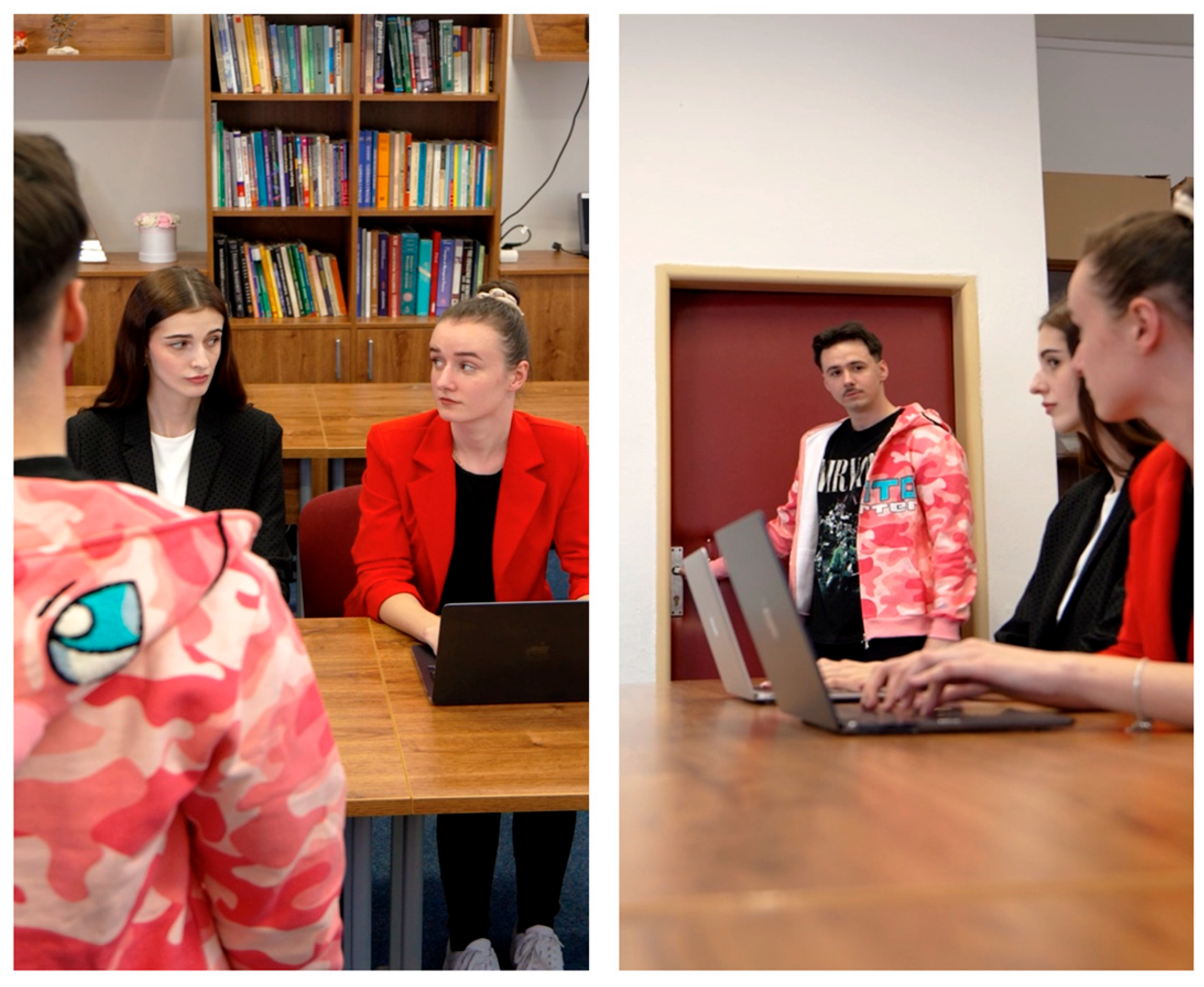
Two videos were created within this area with the aim of preparing candidates for a job interview. The first video was titled “How to write your CV?” Preparing a high-quality CV is not just a technical task. It is a process that develops several personal skills and qualities, such as the following:
self-reflection—awareness of one’s own strengths and weaknesses;
self-presentation—the ability to present oneself;
communication—in the written form;
creativity—the appearance of the CV adapted to the job position and personality of the applicant reflects creative thinking.
The first HR video focuses on CVs and contains a brief guide aimed at teaching potential candidates how to prepare a professional and clear CV. The video’s structure is divided into nine steps that explain what a CV should contain and how to form each section correctly (a screenshot from the video is in
Figure 1). These steps include personal data, personal profile, education, work experience, skills, certificates and other training, language skills, personal interests (optional), and references (optional). The video helps viewers understand the correct CV form and structure. It contains steps that clearly describe what should and should not be performed when writing a CV.
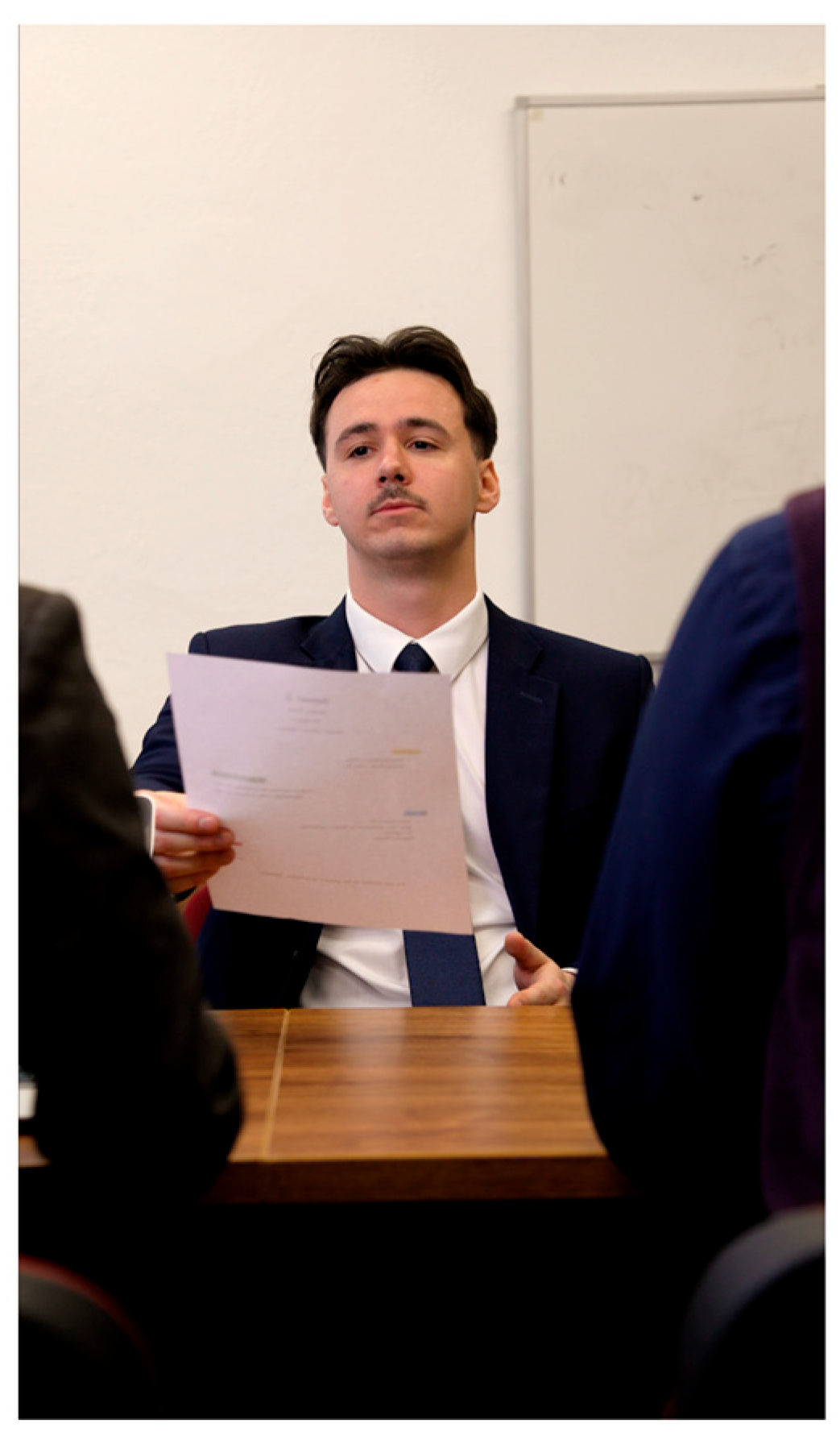
The second video within the HR area is the video with the title “How to dress properly for a job interview?” When creating a CV and choosing clothes for a job interview, the impression the organization’s HR specialist perceives plays an important role. This video will help the applicant set a good first impression with appropriate clothing for a job interview. When choosing appropriate clothing, the applicant develops personal skills and aspects such as the following:
self-confidence—proper clothing increases the feeling of confidence;
non-verbal communication—clothing and overall posture provide the HR specialist (and other interview participants) with important information even before the candidate starts speaking;
preparation and planning—these indicate that time management was set correctly and the candidate was prepared for the interview.
The video’s structure includes a situation of failure at a job interview with a participant who came to the interview unprepared and in casual clothing (a screenshot from the video in
Figure 2). Then, it was emphasized that the first step to a candidate’s success is planning and preparing for the job interview.
In this video, we wanted to highlight the difference between an unprepared and a prepared job applicant. We emphasized the first impression and highlighted the right choice of clothing. This should reflect the desired job position, which is a part of representing oneself in front of the organization. This way, the viewers (current athletes) can be better prepared for a job interview and can plan their first impression in advance.
4.2.2. Capturing an Original Business Idea
After their active sports careers end, athletes may want to leverage their name and reputation by starting their own business. The Lean Canvas tool can help them clearly capture their business idea. It is a simple conceptual model that makes it easier to plan the launch of a new business. Using such tools helps develop several strategic, analytical, and soft skills:
strategic thinking—it is necessary to think about future long-term goals (employment after the end of a sports career);
planning—plan a sequence of specific steps to achieve the goal (being realistic);
critical thinking—evaluating only the most important factors (prioritization);
creative thinking—developing a model in an original way.
The video contains a brief guide on how an athlete (student) can develop a Lean Canvas model for planning their business. First, we focused on identifying a problem that could be solved by developing a business model. The video and a separate instruction document explain what the Lean Canvas model is. We then explained this model’s structure using a practical example. We referred to active participation in completing one’s own model using a QR code. The video explains the principles of the model, shows its practical application, and emphasizes the development of strategic, critical, and creative thinking when designing your own business plan.
4.2.3. Time Management
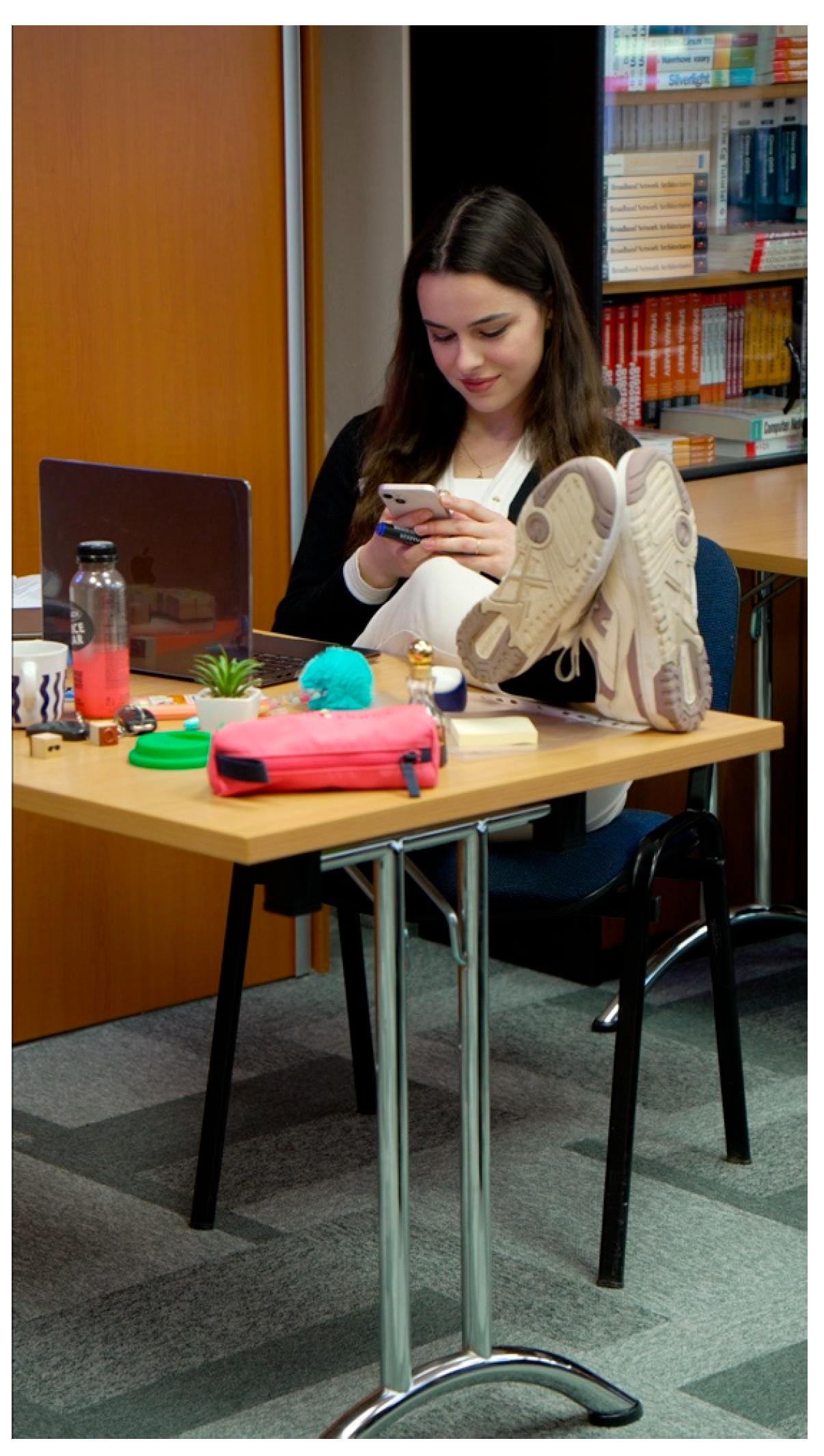
Another important skill the athletes need to master to be prepared for their future work activities, but also for setting a balance between personal life and sports training, competitions, and other activities, is time management. Long-term productivity can be achieved when employees (current athletes) are aware of the distracting elements in the environment and are able to fight their procrastination. In connection with inefficient work and other related issues, we have created a video showing how to fight procrastination. This video contains a specific tool suitable for the correct setting of one’s time management. The title of the video is “Procrastination! How to fight it?” Working on eliminating this issue leads to improving one’s skills and qualities, such as the following:
self-reflection—awareness of a problem and determination to eliminate it;
self-control—the ability to control impulses leading to procrastination;
organizational skills—developing one’s own system for working efficiently;
assertiveness—the ability to say “no” to tasks with low or no priority.
The video highlights the problem of procrastination and the ways to tackle it (a screenshot from the video is in
Figure 3). The Trello tool was used to organize time management, which helps with planning tasks or responsibilities and creates an overview of which tasks need to be conducted as a priority [
73].
The video’s structure includes illustrating the problem of procrastination, identifying possible distractions, becoming aware of the problem, removing distractions, and using Trello to organize one’s time management. It also emphasizes the importance of self-reflection, self-control, and organizational skills for long-term productivity.
4.3. Design of the Athletes’ Learning and Development Process via S2M
We then incorporated the created video content into the design of the entire process of athletes’ learning and development to better prepare them for their future careers after leaving sports. We decided to model this process using S2M technology within the OMiLAB platform. This involved the conduction of a digital design thinking workshop with a digital twin approach and direct involvement of relevant stakeholders.
Following the findings from the stakeholder interviews and the information captured in the empathy maps, visual outputs were generated using the Scene2Model technology. The application of the S2M tool enabled the transition from physical representations of elements to digital models. Physical paper figures were laid out by the workshop participants to capture the logic of a specific scene within the athletes’ learning and development process. Via the image provider in combination with the recognition component, these were transformed into an online environment.
Figure 4,
Figure 5 and
Figure 6 represent digital models of scenes related to the athletes’ learning and development process.
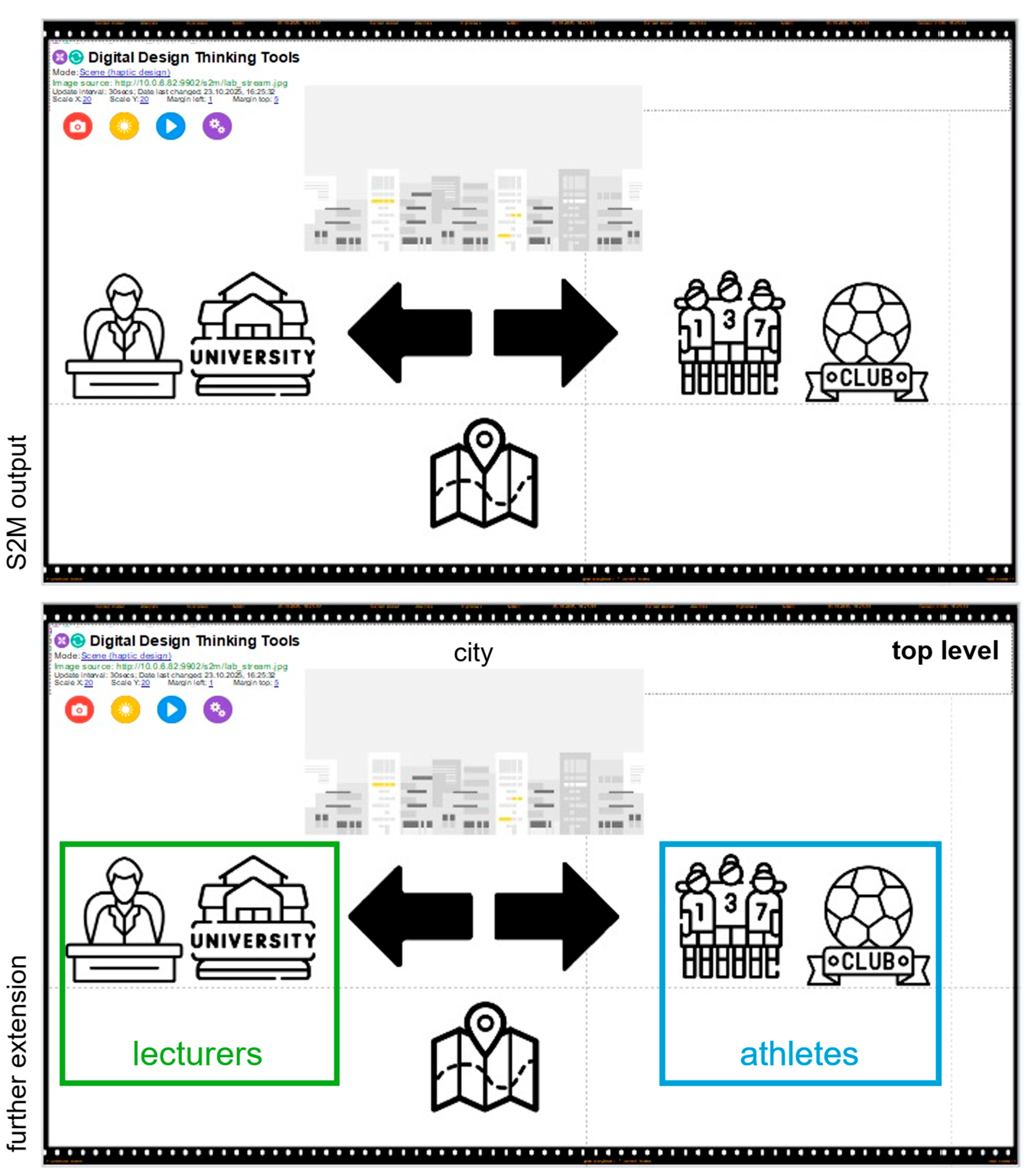
The visualization in
Figure 4 shows a two-way collaboration between the lecturers (education providers) and athletes (students in the proposed process). This is a top-level view (broader perspective) that needs to be understood and set before further specifics of the education process can be determined. On the left, there are the university and lecturers’ elements, on the right, there are athletes and sports clubs’ elements. The two opposing arrows represent the communication flow and capture the willingness that participants need to show. Lecturers will be willing to travel to the clubs as part of the educational activities, and the athletes will sometimes come to the university for the dedicated lessons. The image of the city in the upper part of the scheme represents the city in which the learning activity will take place. The map icon symbolizes the mobility and connection of both environments (the university/training centre and the sports club). Each of the elements used in the graphical representation of the education process’s first scene (
Figure 4) was subsequently further characterized in the S2M modelling tool. It was clearly named, its category was determined, and necessary details were added via supplementary notes.
After capturing the top level of the athletes’ learning and development process, we focused on the second scene regarding the lecturers and their position in the analyzed process.
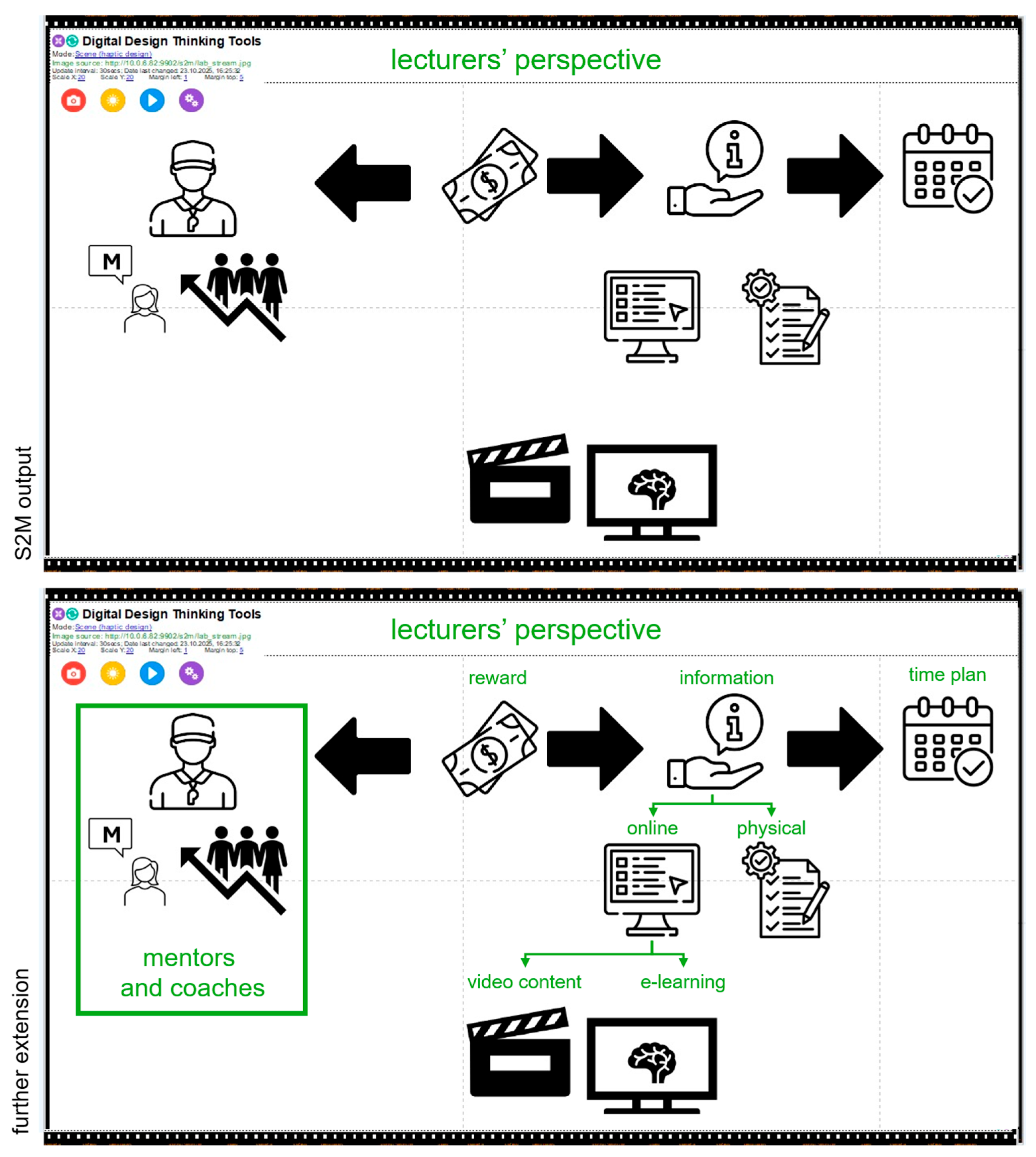
Figure 5, a digital model created at a design thinking workshop, describes lecturers as mentors and coaches (left side). They are financially rewarded for providing the training. Other elements (information and calendar icons) represent the need to define specific learning conditions. For example, this concerns the form of education, specific training dates, the length of the course, and its focus. The basic forms of athletes’ learning and development include online form (computer icon) and physical form (paper icon). As revealed by the empathy map, lecturers are willing to provide both options, i.e., a combined form of education. The lower part of
Figure 5 presents various online learning methods. These include video content (preferred by athletes according to a questionnaire survey conducted in previous research) and e-learning. From this perspective, the lecturers implement the educational process and provide athletes with specific training within the planned course, combining multiple methods. Athletes gain new information and knowledge that will help them in their current active careers, but also in their employment after the end of their sports careers.
The third scene was created to focus on athletes and their positions in the analyzed learning and development process.
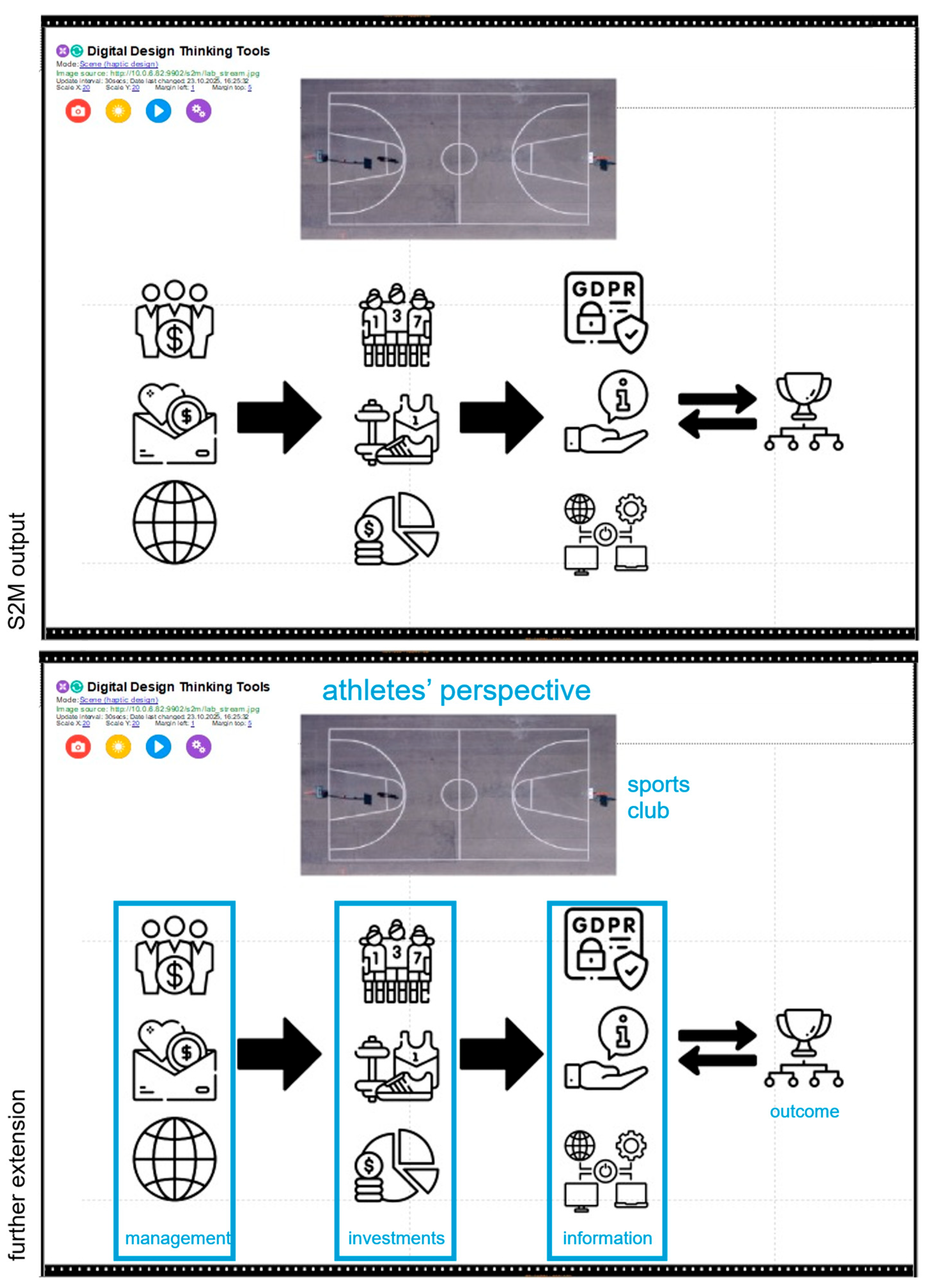
Figure 6 shows the environment of a sports club that considers educating its athletes. Based on the available information, managers decide whether to invest in a learning and development course (first column of the model, left). Subsequently, the decision-making focuses on identifying athletes who would participate in the learning. Managers also consider redistributing the budget among education and other areas (such as sports equipment) and creating partnerships with potential sponsors (the second column on the left in the model). The results of the empathy maps indicated that the club would not be able to fund the entire learning process without the help of sponsors (or the athletes’ co-payment for educational activities).
Then it is necessary to define, store, and share key information about the learning and development process. This involves determining the areas of education, the forms and methods, as well as the type of information that will be available online as part of promoting the whole learning programme (e.g., on social networks). Therefore, it is necessary to ensure compliance with all regulations, such as GDPR. In relation to the model shown in
Figure 6, learning occurs with the support of modern information technologies (the third column from the left). The last icon in the model on the right (trophy) represents the final state after the completion of the learning and development process. During the learning and development, athletes develop their knowledge and skills. Stakeholder satisfaction manifests in several ways. Sponsors will gain media presence; their support for education will be promoted, e.g., on social networks and the club’s website. After the course supported by the sponsors, sports clubs will have evidence declaring their care for the athletes, making them better prepared for the future outside sports. This strengthens the clubs’ overall reputation and public popularity. Athletes have better prospects for employment after finishing their sports careers. Satisfaction should also be achieved among mentors and coaches who will receive both direct and mediated feedback on their work.
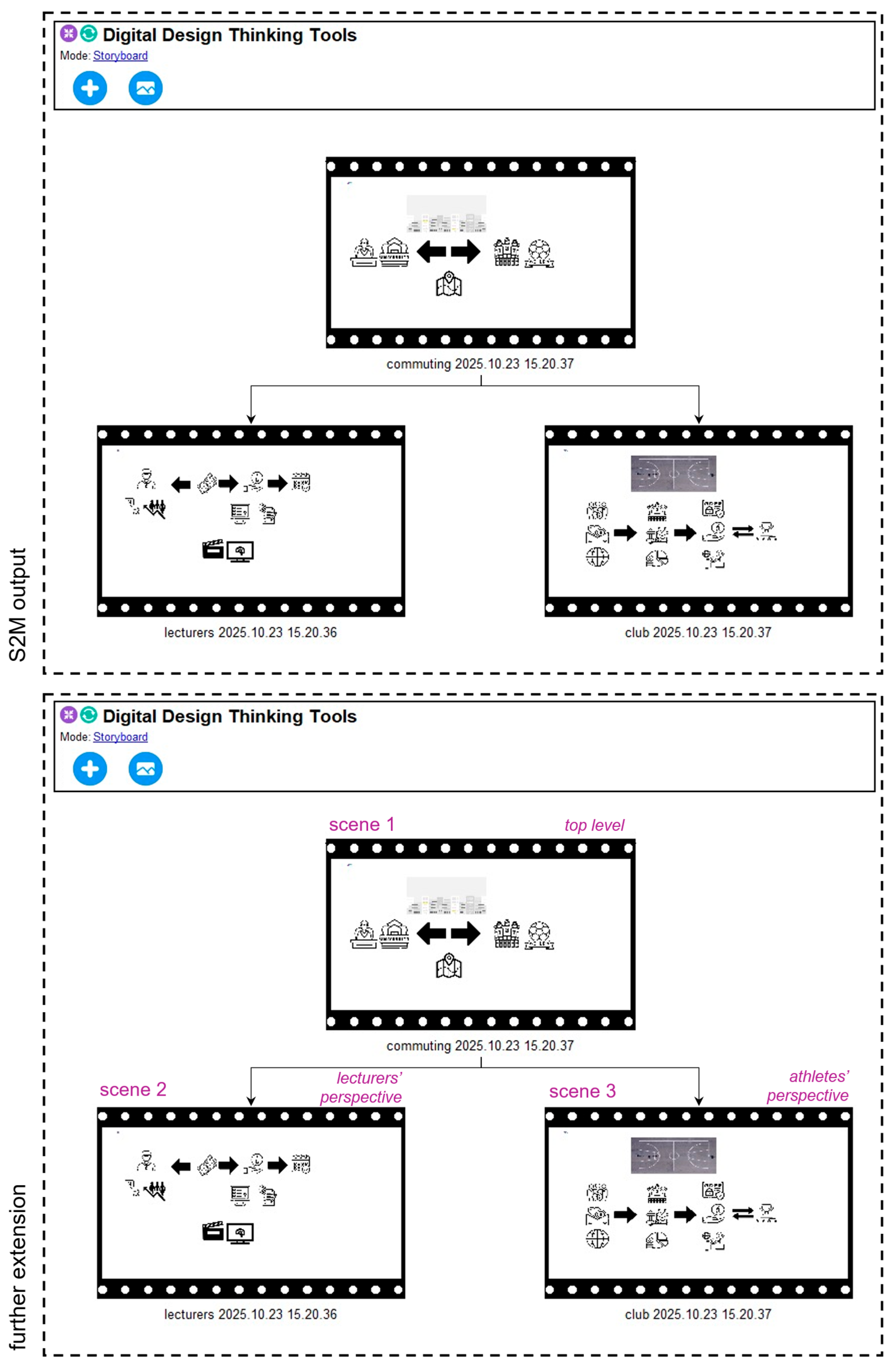
In the presented partial models, scenes (captured in
Figure 4,
Figure 5 and
Figure 6) can be linked within one comprehensive model (
Figure 7). This represents a storyboard of the athletes’ learning and development process.
The creation of the athletes’ learning and development process via the design thinking methodology in combination with the Scene2Model tool made it possible to design a practical and user-oriented model reflecting the needs of all major stakeholders. Based on the identified emotions, needs, and barriers of athletes, lecturers, and sports managers, visual outputs were created to illustrate mutual cooperation between universities/educational institutions and sports clubs. They present the importance of interactive and technologically supported education and stress the financial and motivational factors influencing the success of such a process. Via the interconnection of the resulting visual scenes into one complex model (storyboard), a broader picture of the entire athletes’ educational ecosystem was created. The model clearly shows the mutual ties between representatives of various stakeholder groups and underlines the importance of proper communication, compliance with regulations, involvement of technologies, and motivation of all partners.
4.4. Answers to the Research Questions
The study’s focus and the four research questions were described in the introduction. After presenting and interpreting the actual results, this section brings a concise summary of the main results to ensure that the answers to the research questions can be formulated.
The first research question was defined as follows: RQ1—What practices from corporate learning and development are transferable to the athletes’ education model? These practices include an emphasis on learners’ autonomy and responsibility, the practical applicability of acquired knowledge and skills, and support from suitable digital learning tools.
The second research question was defined as follows: RQ2—What should be included in the educational video content created for the pilot phase of new athletes’ learning and development to draw their attention and provide meaningful support for athletes’ future career prospects? The initial video content should focus on the athletes’ soft skills related to recognizing their own strengths, even those developed through the sports they practice. This will support the motivation to continue engaging in continuous learning and development.
The third research question was defined as follows: RQ3—What added value can be brought to the design of a new athletes’ learning and development model through a design thinking workshop involving key stakeholder groups? The added value was identified in the focus on more concrete aspects of the learning and development process, including its time requirements, the location of educational activities, lecturers’ commuting to sports sites, and athletes’ commuting to the university premises, in line with a realistic overall learning schedule. A significant part of the added value of the final design was the identification of benefits for the sports organization, supporting its athletes in their further development and better preparation for the labour market.
The last research question was defined as follows: RQ4—What elements need to be incorporated in the new athletes’ learning and development model to support its overall effectiveness? These elements include e-learning, video content, suitable forms of feedback and progress evaluation, and a hybrid combination of digital education and face-to-face interaction with the lecturers.
4.5. Evaluation—Expert Feedback
The evaluation of our case study’s results was based on qualitative feedback from sports management practice experts representing two national associations overseeing lower-level sports organizations in two major sports (tennis and football). The results were presented to the representative from the Slovak Football Association, since the whole research project was originally inspired by the association’s current interest in reducing the unemployment rate among former football players. The Slovak Tennis Association is another national sports governing body that sees great potential for improving former athletes’ employability. Representatives from both large sports organizations shared their positive feedback on the designed learning process and the accessible video content. They appreciate the connection with digital technologies, the emphasis on autonomy, and the hybrid form combining e-learning activities with direct interaction with the lectures. The videos were highly positively received by the experts. Their actual effectiveness will be continuously monitored alongside the nationwide further promotion of the portal through which they are accessible. Therefore, the future evaluation of the results is planned within the post-project management phase.
5. Discussion
This section compares our research findings with relevant scientific references, with an emphasis on how modern ICTs, especially video content, can support athletes’ further learning and development. We specifically focused on directly confronting our results with potential barriers to their implementation. Finally, we focus on the actual practical transferability of the identified elements of corporate learning and development into the athletes’ education and on the study’s theoretical implications.
Education has been studied and described in great detail in the past [
74]. It can be characterized as a process of formal and informal acquisition of knowledge, skills, values, and habits. It aims to support individuals’ personal growth and the use of acquired skills in practice. Gradually, other aspects of this process have been studied, and its specificities are still being presented in the literature today, e.g., regarding the COVID-19 pandemic [
75,
76]. The process has also been further analyzed and described regarding new technologies influencing it. Terms such as digitalization of education, intelligent techniques, or Smart e-learning have emerged [
77,
78]. Sources characterizing the education process often focus on healthcare. They point out that it is essential to develop educators’ roles directly among health professionals [
79]. In comparison, research on education in other areas is still not as developed, with a lack of concrete results and resources, especially applicable in the environment of sports. Therefore, our study points to the possibility of applying the principles and practices of learning and development from corporations [
80] to sports organizations. This is how the study’s results expand the existing body of literature on education, and, more narrowly, on athletes’ education for higher future employability. The rest of the discussion section is structured according to the study’s research questions.
5.1. Discussion Related to the Answer to RQ1
Modern ICT tools increase the efficiency, flexibility, and accessibility of education, which is especially important for athletes with their time constraints. Research confirms that ICTs support interactivity, relevance, and overall attractiveness of education [
81]. We extend these findings to the context of education within the sports environment and show that ICTs can support continuous and lifelong learning if coaches and managers are appropriately prepared for the implementation. We have identified several organizational learning principles, such as autonomy, micro-learning, gamification, and leadership, as suitable for sports environments. We believe that these support athletes’ motivation and continuous learning, based on previous research focused on different target groups [
82,
83]. Other elements from corporate learning and development that we find smoothly transferable to the sports environment include short learning modules, quick feedback, and clearly defined objectives. These increase the overall effectiveness of educational cycles. However, studies we compared warn that technology can act as a barrier if not used correctly. Technology can become an issue when there is a lack of properly set initial instruction, technical support, or clearly defined impact metrics [
84,
85]. Therefore, these are additional substantial barriers that need to be properly addressed during the further implementation of the athletes’ learning and development process we have designed.
5.2. Discussion Related to the Answer to RQ2
Video content is particularly suitable in sports, helping individualize the pace of learning, increasing the understanding of the curriculum, and motivating athletes to participate in further development. The use of video content management modernizes education and allows for repeated explanation, feedback, and practical connection of theory with its application [
86]. Our results build on this background, presenting original videos we created within the case study, focusing on CV, job interview, Lean Canvas, and time management. We argue that these particular areas should be included in the pilot implementation of a new athletes’ learning and development model to increase their professional and soft skills necessary for the support of their career transition. The videos in our study lead to greater development of self-reflection, communication, and self-presentation, which is in line with research on video-based training as a tool for developing communication skills via interactive testing and feedback [
87].
5.3. Discussion Related to the Answer to RQ3
The application of the design thinking approach for the design of the athletes’ learning and development process led to the inclusion of critically important aspects related to major stakeholder groups (athletes themselves, sports organization’s managers, lecturers). The elements of our design for the athletes’ learning process align with the finding that digital competencies, learning agility, and individual coaching help sustain and adapt athletes’ careers even after the end of active sports activities [
88]. In practice, ICTs allow athletes to learn at their own pace during the season and more effectively transfer theory into practice [
89]. However, if athletes cannot find suitable space to apply newly acquired knowledge or skills soon after learning them, this can represent a major obstacle to the effectiveness of the overall learning process.
5.4. Discussion Related to the Answer to RQ4
Our results highlight the need for microlearning, educational videos, continuous feedback, and a clear task structure (e.g., a CV, a mock interview, a business plan based on the Lean Canvas). Ensuring the aspects listed above increase the efficiency of knowledge transfer and the development of soft skills. Similarly to organizational learning, we have collected arguments that continuous learning through small steps and gamified activities also works for athletes’ learning and development, in line with the results reported in [
90]. At the same time, we draw attention to the need to use data from educational platforms (LMS/VCM). These include data on module completion, time spent on the educational platform, and the number of returns to it, and their connection to the assessment of outcomes in practice. Fast and specific feedback during the course is especially important. However, without technical preparation, support, and basic digital literacy, technology can be counterproductive [
84], acting as a barrier to efficient learning rather than supporting it.
5.5. Research Limitations
The limitations of this case study include the focus on the selected sample of the designed learning and development users (athletes) and the choice of four particular educational modules covered within the pilot video content. Another limitation stems from the selection of the design thinking workshop participants. Another relevant stakeholder group not included in our study is representatives of former athletes’ employers. Including this stakeholder group could further enhance the targeting of the learning content. The limited choice of educational forms and methods is another limitation of this study. Lastly, the evaluation of the results has been limited by the number of experts addressed and by the ongoing promotion of the published video content, awaiting new interactions from the current athletes.
6. Conclusions
Our case study’s main objective was to design the athletes’ learning and development process using ICT tools and video content, drawing on effective corporate approaches to learning and development. We created an educational model that connects digital platforms, video content, suitable lecturers’ feedback, and gamification elements. All these aspects were identified as effective and transferable within our examples from the practice analysis. This model supports the development of professional and soft skills necessary for the athletes’ employment after the end of their active sports careers. Our study’s approach highlighted the importance of ICTs in education, described the methods we applied, and analyzed selected corporate learning and development examples, based on which we designed an optimal process for athletes’ further development.
The elements we found transferable from corporate learning and development to effective athletes’ education include a focus on learners’ autonomy, flexibility provided by suitable digital tools and e-learning, and the emphasis on the practical applicability of the knowledge and skills being acquired. The study revealed that short, practical videos, combined with reflection and feedback, will allow athletes to develop key professional and communication skills in a way that aligns with their training regimen. The modules of video content we prepared (CV creation, interview preparation, Lean Canvas, and time management) showed that video content, when combined with a clear activity after watching (e.g., designing your own CV), supports self-reflection and enables practical transfer of acquired skills. The results presented in the corresponding subchapter confirmed that ICT tools are beneficial not only for athletes’ learning but also for their engagement and focus on their future careers after leaving sports. Along with the videos themselves and the athletes’ learning and development model designed via the workshop with important stakeholders (
Section 4.3), further practical implications of our study include the following recommendations for the sports clubs and other sports organizations:
integrate digital learning platforms and video content into athletes’ development during their active sports careers;
use short learning modules linked to practical tasks and immediate feedback;
integrate gamification tools to increase students’ engagement and motivation to learn;
ensure proper explanation, instruction, and technical support for both coaches and athletes before using new learning platforms;
continuously check the impact of learning and development using clear performance indicators (e.g., CV quality, mock interview’s success, course completion).
Future research directions within the topic include expanding the educational topics to include financial literacy, personal branding, or digital security. It would also be appropriate to expand the target audience for the educational courses to include coaches and managers of sports organizations. Additionally, different forms of education shall be compared as well (including virtual reality and interactive simulations). Other benefits would stem from monitoring the long-term impact of such learning and development initiatives on athletes’ adaptability and employability after leaving sports.
This study expands the existing body of knowledge in the field of sports management and athletes’ learning and development, showing that ICT solutions, if properly designed and linked to practical tasks and feedback, can significantly support the development of athletes beyond their sports performance. The proposed model serves as inspiration for sports clubs, universities, and other organizations in creating modern educational systems responding to the demands of the labour market and the needs of athletes as future professionals.
Author Contributions
Conceptualization, M.M., D.T., and M.K.; methodology, M.M., D.T., and M.K.; software, D.T. and M.K.; validation, M.M.; formal analysis, T.P., K.I., and K.Š.; investigation, A.M., I.B., L.K., and T.F.; resources, M.M. and D.T.; data curation, M.M. and D.T.; writing—original draft preparation, M.M., D.T., T.P., K.I., K.Š., A.M., I.B., L.K., and T.F.; writing—review and editing, M.M., D.T., and M.K.; visualization, D.T.; supervision, M.M.; project administration, M.K.; funding acquisition, M.K. All authors have read and agreed to the published version of the manuscript.
Funding
This research was funded by the EU NextGenerationEU through the Recovery and Resilience Plan for Slovakia under the project No. 09I05-03-V02-00011.
Institutional Review Board Statement
The study was conducted in accordance with the Declaration of Helsinki and approved by the Ethics Committee of the University of Žilina. Compliance with the ethical standards and requirements of the study was assured in accordance with the Ethics Committee UNIZA Directive 1/0409/23, 31 May 2024, as the applicable regulation.
Informed Consent Statement
Informed consent was obtained from all subjects involved in the study.
Data Availability Statement
The data will be available on request from the corresponding author.
Conflicts of Interest
The authors declare no conflicts of interest.
Appendix A
List of questions asked during the design thinking workshop.
Questions for lecturers:
What forms of education would you provide?
What are the biggest challenges you see in motivating students/athletes?
What qualifications do other lecturers need to have to provide the courses?
How much time per week can you dedicate to providing the course for athletes?
Are you willing to travel as part of providing courses for athletes?
What type of support or tools would make your work easier?
Questions for students (current athletes):
Do you prefer interactive forms of education?
Are you willing to pay for learning courses? If this is the case, how much are you willing to pay for one lecture?
What motivates you to study/participate in courses?
What is your biggest problem with learning?
Are you willing to travel for a learning course?
How much time per week are you willing to spend on learning?
What feedback from the lecturers do you find most beneficial?
Questions for a sports organization’s manager:
Is there currently any form of athletes’ learning and development in your club?
Is it possible for you to provide learning for the athletes? Capacity-wise, financially?
Could the learning be implemented online regarding the club’s conditions?
Would the learning be paid for entirely by your sports organization, or would the athletes also have to pay a portion of the costs?
What do you consider the most important element of a well-designed athlete’s learning process?
What type of support would you need, and who would provide it to ensure that you can engage in the athletes’ learning and development process?
References
- Carrera, R.M.H. Training in Companies, Permanent Training and Adult Learning: An Epistemological Approach. Procedia Soc. Behav. Sci. 2014, 139, 434–440. [Google Scholar] [CrossRef] [Scilit]
- Wang, Y.; Xu, Q.; Yin, P.H.; Zhang, J.; Zhang, L.H. Development of the core occupational adaptabilities through the learning-orientated interaction of employees’ proactivity and organizational support. Humanit. Soc. Sci. Commun. 2024, 11, 1551. [Google Scholar] [CrossRef] [Scilit]
- Malichová, E. The decision-making on investment in industrial enterprises—Case study. In Proceedings of the 36th International Scientific Conference on Economic and Social Development (ESD)—Building Resilient Society, Zagreb, Croatia, 14–15 December 2018. [Google Scholar]
- Vetráková, M.; Smerek, L.; Wlodarczyk, K.; Mazur-Wierzbicka, E.; Misiak-Kwit, S. The implementation of personnel processes in Poland and Slovakia. Entrep. Sustain. Issues 2021, 8, 148–163. [Google Scholar] [CrossRef] [Scilit]
- Collins, C.; Murphy, R.; Brown, M. The power of coaching in the professional learning and development of school leaders: An ecological framework and critical insights from a systematic review. Front. Educ. 2025, 10, 1601455. [Google Scholar] [CrossRef] [Scilit]
- Lachvajderová, L.; Kadarova, J.; Rybárová, D. Importance and Methods of Education in Companies. In Proceedings of the Trends and Innovative Approaches in Business Processes Conference, The Area of the Herlany Historical Spa, Košice, Slovakia, 24–26 October 2022. [Google Scholar]
- Hitka, M.; Schmidtová, J.; Lorincová, S.; Starchon, P.; Weberová, D.; Kampf, R. Sustainability of Human Resource Management Processes through Employee Motivation and Job Satisfaction. Acta Polytech. Hung. 2021, 18, 7–26. [Google Scholar] [CrossRef] [Scilit]
- Rivaldo, Y.; Nabella, S.D. Employee Performance: Education, Training, Experience, and Work Discipline. Qual. Access Success 2023, 24, 182–188. [Google Scholar] [CrossRef] [Scilit]
- Stacho, Z.; Lizbetinova, L.; Stachova, K.; Starecek, A. The Application of Progressive HR Tools in the Environment of Slovak Enterprises. J. Compet. 2022, 14, 173–190. [Google Scholar] [CrossRef] [Scilit]
- Koman, G.; Borsos, P.; Kubina, M. The Possibilities of Using Artificial Intelligence as a Key Technology in the Current Employee Recruitment Process. Adm. Sci. 2024, 17, 157. [Google Scholar] [CrossRef] [Scilit]
- Kucharcikova, A.; Durisova, M.; Staffenova, N. Implementation of the human capital management concept: An empirical study of small trading company. Humanit. Soc. Sci. Commun. 2024, 11, 1620. [Google Scholar] [CrossRef] [Scilit]
- Stringer, L.R.; Lee, K.M.; Sturm, S.; Giacaman, N. The impact of professional learning and development on primary and intermediate teachers’ digital technologies knowledge and efficacy beliefs. Aust. Educ. Res. 2025, 52, 315–341. [Google Scholar] [CrossRef] [Scilit]
- González-Salamanca, J.C.; Agudelo, O.L.; Salinas, J. Key Competences Education for Sustainable Development and Strategies for the Development of 21st Century Skills: A Systematic Literature Review. Sustainability 2020, 12, 10366. [Google Scholar] [CrossRef] [Scilit]
- Moulds, K.; Lascu, A.; Bai, A.; Davidson, J. Removing the straight jacket in practice approach: An investigation into coach learning and development in Australian female tennis. Int. J. Sports Sci. Coach. 2025, 20, 102–115. [Google Scholar] [CrossRef] [Scilit]
- Takamatsu, S. The effect of sport team reputation on team attachment and community attachment: A comparison of fans, local residents, and sponsors. Sport Manag. Rev. 2021, 24, 620–641. [Google Scholar] [CrossRef] [Scilit]
- Hitka, M.; Starchon, P.; Lorincová, S.; Caha, Z. Education as a key in career building. J. Bus. Econ. Manag. 2021, 22, 1065–1083. [Google Scholar] [CrossRef] [Scilit]
- Siegel, S.T.; Daumiller, M. Students’ and Instructors’ Understandings, Attitudes and Beliefs about Educational Theories: Results of a Mixed-Methods Study. Educ. Sci. 2021, 11, 197. [Google Scholar] [CrossRef] [Scilit]
- Brieger, E.; Arghode, V.; McLean, G. Connecting theory and practice: Reviewing six learning theories to inform online instruction. Eur. J. Train. Dev. 2020, 44, 321–339. [Google Scholar] [CrossRef] [Scilit]
- Kjerland, G.O.; Annerstedt, C. Applying learning theories in learning how to teach physical education: A study of teacher education students collaborative learning processes in a project. Sport Educ. Soc. 2021, 27, 689–702. [Google Scholar] [CrossRef] [Scilit]
- Durisová, M.; Kucharciková, A.; Tokarciková, E. Assessment of higher education teaching outcomes (Quality of higher education). In Proceedings of the International Conference on New Horizons in Education (INTE 2014), Paris, France, 25–27 June 2014. [Google Scholar]
- Morocho, L.R.L.; Baquerizo, C.P.J. The Role of the Inductive Method as a Link Between Educational Theories and Classroom Practices. Sophia-Colecc. Filos. Educ. 2025, 38, 51–77. [Google Scholar] [CrossRef] [Scilit]
- Wu, Y.; Nagy, A.; Rajnai, Z.; Fregan, B. Advancing Digital Education: Technologies, Opportunities, Challenges, and Future Directions. Acta Polytech. Hung. 2025, 22, 365–380. [Google Scholar] [CrossRef] [Scilit]
- Marougkas, A.; Troussas, C.; Krouska, A.; Sgouropoulou, C. Virtual Reality in Education: A Review of Learning Theories, Approaches and Methodologies for the Last Decade. Electronics 2023, 12, 2832. [Google Scholar] [CrossRef] [Scilit]
- Mallek, F.; Mazhar, T.; Shah, S.F.A.; Ghadi, Y.Y.; Hamam, H. A review on cultivating effective learning: Synthesizing educational theories and virtual reality for enhanced educational experiences. PEERJ Comput. Sci. 2024, 10, e2000. [Google Scholar] [CrossRef] [Scilit]
- Biró, A. Gamification, GenAI and Reinforcement Learning as Motivational Assets in Performance Sports. In Proceedings of the 18th International Symposium on Applied Computational Intelligence and Informatics, SACI 2024, Timisoara, Romania, 23–25 May 2024. [Google Scholar]
- Nyberg, C.; Wagnsson, S.; Gustafsson, H.; Strahlman, O. Dual career support among world-class athletes in Sweden: Performance, education, and employment. Front. Psychol. 2023, 13, 1093562. [Google Scholar] [CrossRef] [Scilit]
- Black, A.M.; Turcotte, K.; Fidanova, A.; Sadler, K.; Bruin, S.; Cheng, P.; Karmali, S.; Taylor, T.; Halliday, D.; Babul, S. Development of a tailored concussion education program for athletes: A pragmatic multimethods design and integrated knowledge translation approach from needs assessment to design. BMJ Open 2023, 13, e075080. [Google Scholar] [CrossRef] [Scilit]
- Boidin, A.; Tam, R.; Mitchell, L.; Cox, G.R.; O’Connor, H. The effectiveness of nutrition education programmes on improving dietary intake in athletes: A systematic review. Br. J. Nutr. 2021, 125, 1359–1373. [Google Scholar] [CrossRef] [Scilit]
- Bruntha, P.; Subaithani, S.; Shabana, S. Effectiveness of ICT Tools in Education. Available online: https://www.scribd.com/document/755169705/Effectiveness-of-i-Ct-Tools-in-Education (accessed on 11 November 2025).
- Armila, P.; Sivenius, A.; Stanković, B.; Juutilainen, L. Digitalization of Education: Commodification Hidden in Terms of Empowerment? Postdigit Sci. Educ. 2022, 6, 556–571. [Google Scholar] [CrossRef] [Scilit]
- Wang, X. An Overview of ICT and Educational Change: Develompment, Impacts, and Factors. J. Contemp. Educ. Res. 2022, 6, 1–8. [Google Scholar] [CrossRef] [Scilit]
- Burgerová, J.; Piskura, V.; Petrasová, A. Elektronické učebné prostredie ako alternatívny model vzdelávania. In Výchova k Zdraviu v Edukácii Rómskych Žiakov zo Sociálne Znevýhodneného Prostredia: Zborník Vedeckých Štúdií, 1st ed.; Liba, J., Ed.; Prešovská univerzita v Prešove: Prešov, Slovakia, 2022; pp. 96–132. [Google Scholar]
- Xiaonan, Y.; Yang, D. The Influence of Mobile Technology on STEM Education Student Learning Outcomes. Int. J. Interact. Mob. Technol. 2024, 18, 37–50. [Google Scholar] [CrossRef] [Scilit]
- Pornpongtechavanich, P.; Wannapiroon, P. Intelligent Interactive Learning Platform for Seamless Learning Ecosystem to Enhance Digital Citizenship’s Lifelong Learning. Int. J. Emerg. Technol. Learn. 2021, 16, 232–248. [Google Scholar] [CrossRef] [Scilit]
- Nastasia, S.; Moroianu, N.; Constantin, A.; Stana, C. Building Digital Skills through Digitalisation of Education. Building Digital Skills through Digitalisation of Education. In Proceedings of the International Conference on Economics and Social Sciences. Bucharest University of Economic Studies, Bucharest, Romania, 13–14 June 2024. [Google Scholar]
- European Labour Authority, Directorate-General for Employment, Social Affairs and Inclusion. The Most in-Demand ICT Skills Companies Require Today. 2018. Available online: https://eures.europa.eu/top-ict-skills-demand-companies-today-2018-05-02_sk (accessed on 5 October 2025).
- Hrdináková, Ľ. Modely Informačnej Gramotnosti. 2011. Available online: https://itlib.cvtisr.sk/clanky/clanek732/ (accessed on 20 October 2025).
- Brestenská, B.; Nagy, T. Kreatívna Digitálna Gramotnosť Učiteľa. Available online: https://e-eruditio.ujs.sk/archive/2020/1/Eru-Edu_2020_1_02_Study_013-023.pdf (accessed on 9 November 2025).
- Hollander, A.; Hollander, M. On Soft Skills: Digital Adaptability. 2024. Available online: https://www.notesfromthefield.us/p/on-soft-skills-digital-adaptability (accessed on 22 September 2025).
- González-Pérez, L.I.; Ramírez-Montoya, M.S. Components of Education 4.0 in 21st Century Skills Frameworks: Systematic Review. Sustainability 2022, 14, 1493. [Google Scholar] [CrossRef] [Scilit]
- Xanthopoulou, P.; Zakopolous, V. Developing Management Skills via E-Learning: A Pilot Study on a Cultural Foundation. Eur. Res. Stud. J. 2023, XXVI, 771–793. [Google Scholar] [CrossRef] [Scilit]
- Soriotulla, S. ICT in Enhancing Athletes’ Performance, and Sustainability in Sports: A Review study. In Proceedings of the Conference on Innovative thoughts and Ideas on Performance Sports for Athletes and Fitness Activities for Hollistics Community Health, University of Kalyani, West Bengal, India, 12–13 March 2024. [Google Scholar]
- Brame, C.J. Effective Educational Videos: Principles and Guidelines for Maximizing Student Learning from Video Content. CBE—Life Sci. Educ. 2017, 15, es6. [Google Scholar] [CrossRef] [Scilit] [PubMed]
- Sorden, S.D. The Cognitive Theory of Multimedia Learning. Available online: https://www.researchgate.net/profile/Stephen-Sorden/publication/267991109_The_Cognitive_Theory_of_Multimedia_Learning/links/5786d15f08ae3949cf5564c7/The-Cognitive-Theory-of-Multimedia-Learning.pdf (accessed on 10 November 2025).
- Shek, D.T.L.; Wong, T.; Li, X.; Yu, L. Use of instructional videos in leadership education in higher education under COVID-19: A qualitative study. PLoS ONE 2023, 18, e0291861. [Google Scholar] [CrossRef] [Scilit]
- Votruba, V. Specifics of the Development and Use of Educational Video. Bachelor’s Thesis, Univerzita Karlova-Pedagogická fakulta-Katedra informačních technologií a technické výchovy, Praha, Czechia, 10 July 2024. [Google Scholar]
- Burrows, E.; McArdle, S. Psychoeducation through digital video for Olympic and Paralympic athletic career transition. Health Educ. J. 2019, 79, 516–528. [Google Scholar] [CrossRef] [Scilit]
- Mičiak, M.; Toman, D.; Adámik, R.; Kufová, E.; Škulec, B.; Mozolová, N.; Hoferová, A. Effective Education System for Athletes Utilising Big Data and AI Technology. Data 2025, 10, 102. [Google Scholar] [CrossRef] [Scilit]
- Varmus, M.; Mičiak, M.; Toman, D.; Jastraban, M.; Kuljovský, M.; Sobol, J.; Tongel, I.; Zahumenská, A. Athletes’ Education for Their Successful Future Career After Sports—Perspective of Former Athletes and Potential Employers. Adm. Sci. 2025, 15, 46. [Google Scholar] [CrossRef] [Scilit]
- Utz, W.; Burzynski, P.; Buchmann, R.A. How to Develop and Realize Conceptual Models? The Bee-Up Research & Education Support Tool. In Proceedings of the 17th International Conference on Research Challenges in Information Science-RCIS-Annual, Corfu, Greece, 23–26 May 2023. [Google Scholar]
- Grow with Google. Creative Skills for Innovation, Google (New Generation of Founders). Online Workshop—With Certificate of Completion. 10 December 2021. Available online: https://grow.google/intl/sk/#filter (accessed on 15 December 2025).
- Scene2model. Available online: https://scene2model.omilab.org (accessed on 13 January 2026).
- Omilab. Available online: https://www.omilab.org (accessed on 13 January 2026).
- Cengiz, C.; Güler, D.; Güler, Y.; Tuncel, S. The effect of design thinking on the creative thinking of physical education and sports teachers. Afr. Educ. Res. J. 2023, 11, 56–63. [Google Scholar] [CrossRef] [Scilit]
- Leeder, T. Learning to mentor in sports coaching: A design thinking approach. Sport Educ. Soc. 2018, 24, 208–211. [Google Scholar] [CrossRef] [Scilit]
- Zhang, Y.; Fu, X.; Wu, Z. A Case Study of Big Data and Artificial Intelligence in Physical Education. J. Cases Inf. Technol. 2025, 27, 1–20. [Google Scholar] [CrossRef] [Scilit]
- Karagiannis, D.; Buchmann, R.A.; Utz, W. The OMiLAB Digital Innovation environment: Agile conceptual models to bridge business value with Digital and Physical Twins for Product-Service Systems development. Comput. Ind. 2022, 138, 103631. [Google Scholar] [CrossRef] [Scilit]
- Bork, D.; Buchmann, R.A.; Karagiannis, D.; Lee, M.; Miron, E.T. An Open Platform for Modeling Method Conceptualization: The OMiLAB Digital Ecosystem. Commun. Assoc. Inf. Syst. 2019, 44, 673–697. [Google Scholar] [CrossRef] [Scilit]
- Karagiannis, D.; Mayr, H.C.; Mylopoulos, J. Domain-Specific Conceptual Modeling Concepts, Methods and Tools, 1st ed.; Springer: Cham, Switzerland, 2016; pp. 1–584. [Google Scholar]
- Karagiannis, D.; Lee, M.; Hinkelmann, K.; Utz, W. Domain-Specific Conceptual Modeling Concepts, Methods and ADOxx Tools, 1st ed.; Springer: Cham, Switzerland, 2022; pp. 1–643. [Google Scholar]
- Netflix-About Impact. Available online: https://about.netflix.com/en/impact (accessed on 11 November 2025).
- McCord, P. Powerful-Building a Culture of Freedom and Responsibility, 1st ed.; Missionday: Richmond, VA, USA, 2018; 228p. [Google Scholar]
- Netflix-About Programs. Available online: https://about.netflix.com/en/programs (accessed on 12 November 2025).
- Ho, J. The 5 Best Examples of Employee Training Courses and Development Programs. 2024. Available online: https://360learning.com/blog/training-and-development-programs/ (accessed on 20 October 2025).
- Amazon-Leadership Principles. Available online: https://www.amazon.jobs/content/en/our-workplace/leadership-principles (accessed on 12 November 2025).
- Logistics Systems. 2018. Available online: https://www.systemylogistiky.sk/2018/10/04/amazon-na-slovensku-predstavuje-program-career-choice (accessed on 10 November 2025).
- Amazon-Career Choice. Available online: https://www.amazoncareerchoice.com/Home?country=GBR (accessed on 12 November 2025).
- L‘Oréal-Learning and Development. Available online: https://www.loreal.com/en/articles/l-oreal-for-the-future/prioritising-learning-and-development/ (accessed on 11 November 2025).
- My L‘Oréal Academy. Available online: https://www.mylorealacademy.com/learn (accessed on 7 November 2025).
- L‘Oréal-Access. Available online: https://www.lorealaccess.com (accessed on 2 October 2025).
- Cloke, H. Top 12 Powerful Examples of Gamification in the Business World. 2021. Available online: https://www.growthengineering.co.uk/top-12-examples-of-gamification-in-business/ (accessed on 9 November 2025).
- Sportman. Available online: https://www.sportman.sk/materialy (accessed on 2 November 2025).
- Trello. Available online: https://trello.com/home (accessed on 10 October 2025).
- Marshall, J.D. What is Education? An Introduction to the Philosophy of Education, 2nd ed.; Dunmore Press: Auckland, New Zeland, 1983; pp. 1–164. [Google Scholar]
- Jackson, P.W. What Is Education? 3rd ed.; University of Chicago Press: Chicago, IL, USA, 2024; pp. 1–136. [Google Scholar]
- Wood, K. Education, The Basics, 2nd ed.; Routledge: Abingdon, UK, 2025; pp. 1–206. [Google Scholar]
- Jain, L.C.; Howlett, R.J.; Uskov, V.L. Smart Education and Smart E-Learning, 2nd ed.; Springer International Publishing: New York, NY, USA, 2015; pp. 1–514. [Google Scholar]
- Klašnja-Milićević, A.; Jain, L.C.; Ivanović, M. Handbook on Intelligent Techniques in the Educational Process, Vol 1 Recent Advances and Case Studies, 2nd ed.; Springer International Publishing: New York, NY, USA, 2022; pp. 1–392. [Google Scholar]
- Bastable, S.B.; Gramet, P.; Jacobs, K.; Sopczyk, D. Health Professional as Educator: Principles of Teaching and Learning, 2nd ed.; Jones & Bartlett Learning: Boston, MA, USA, 2010; pp. 1–628. [Google Scholar]
- Morgan, L. Corporate Training, 1st ed.; Publifye AS: Oslo, Norway, 2025; pp. 1–130. [Google Scholar]
- Bakalis, A.; Anastasopoulou, E.; Spanou, A.; Travlou, C.; Tseremegklis, C. The integration of information and communication technologies (ICT) in education: Benefits, challenges, and future prospects. In Proceedings of the International Scientific and Practical Conference, Tallinn, Estonia, 26–27 June 2025. [Google Scholar]
- Uhrich, S.; Behrens, A.; Kang, T.A.; Matsuoka, H.; Uhlendorf, K. Segmenting Satellite Supporters Based on Their Value for Team Sport Organizations. J. Glob. Sport Manag. 2023, 8, 252–280. [Google Scholar] [CrossRef] [Scilit]
- Evanick, J. Transferable Best Practices and Mutual Learning Opportunities Between Instructional Design in Higher Education and the Corporate World. Int. J. Adv. Corp. Learn. 2024, 17, 63–75. [Google Scholar] [CrossRef] [Scilit]
- Bridgeman, J.; Giraldez-Hayes, A. Using artificial intelligence-enhanced video feedback for reflective practice in coach development: Benefits and potential drawbacks. Coach. Int. J. Theory Res. Pract. 2023, 17, 32–49. [Google Scholar] [CrossRef] [Scilit]
- Swim, N.; Presley, R.; Thompson, E. Digital Development and Technology in Sport: A Course to Improve Digital Literacy in the Sport Management Curriculum. Sport Manag. Educ. J. 2023, 13, 87–93. [Google Scholar] [CrossRef] [Scilit]
- Laya, A.B. Exploring the role of video content management in teacher education: Strategies and challenges. J. Vis. Perform. Arts 2024, 5, 1505–1510. [Google Scholar] [CrossRef] [Scilit]
- Mitrovic, A.; Galster, M.; Malinen, S.; Holland, J.; Musa, J.; Mohammadhassan, N.; Lumapas, R.V. Effectiveness of Video-based Training for Face-to-face Communication Skills of Software Engineers: Evidence from a Three-year Study. ACM Trans. Comput. Educ. 2023, 23, 1–25. [Google Scholar] [CrossRef] [Scilit]
- Macedo, R.R.d.; Veloso, E.F.R.; Pinsky, V.; Trevisan, L. Career management in digital age: A study of leadership’s competencies and practices applied for IT professionals. Rev. Adm. UFSM 2023, 16, e3. [Google Scholar] [CrossRef] [Scilit]
- Ghavifekr, S.; Rosdy, W.A.W. Teaching and Learning with Technology: Effectiveness of ICT Integration in Schools. Int. J. Res. Educ. Sci. 2015, 1, 175–191. [Google Scholar] [CrossRef] [Scilit]
- Trabelsi, O.; Romdhani, A.; Ghorbel, A.; Bouchiba, M.; Souissi, M.A.; Scharenberg, S.; Gharbi, A. A review of best practices in video modeling for sport pedagogues. Int. J. Sports Sci. Coach. 2025, 20, 1749–1760. [Google Scholar] [CrossRef] [Scilit]
| Disclaimer/Publisher’s Note: The statements, opinions and data contained in all publications are solely those of the individual author(s) and contributor(s) and not of MDPI and/or the editor(s). MDPI and/or the editor(s) disclaim responsibility for any injury to people or property resulting from any ideas, methods, instructions or products referred to in the content. |




 ,
,