Effect of Physical Exercise on Fluid Intelligence Among the Elderly with or Without Dementia: A Systematic Review of Randomized Control Trials

 , , , , and
Abstract
1. Introduction
Objectives
2. Materials and Methods
2.1. Procedure
2.2. Eligibility Criteria
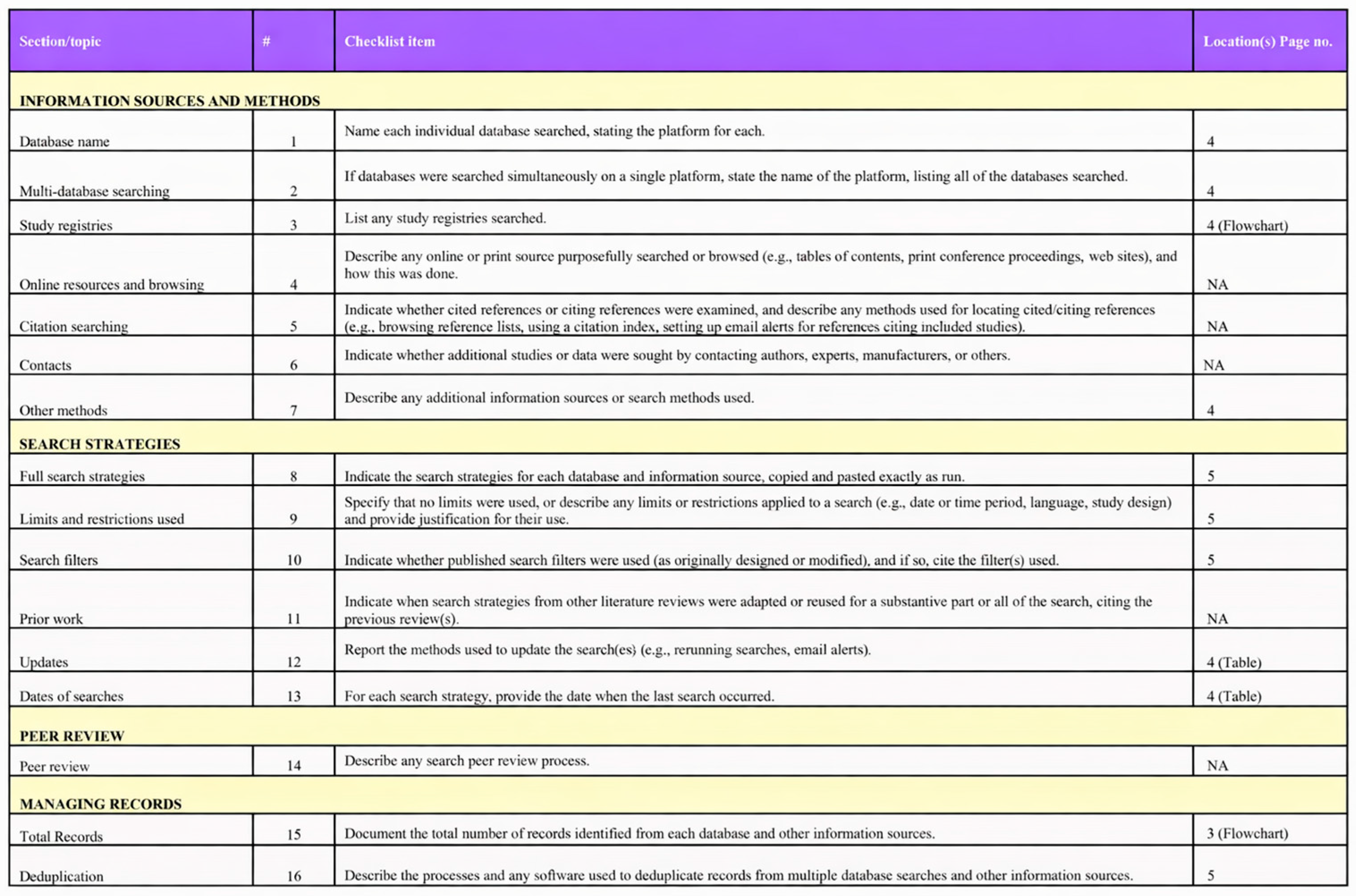
2.3. Search Strategy
2.4. Study Selection
2.5. Data Extraction
2.6. Quality Assessment
2.7. Risk of Bias Assessment
3. Results
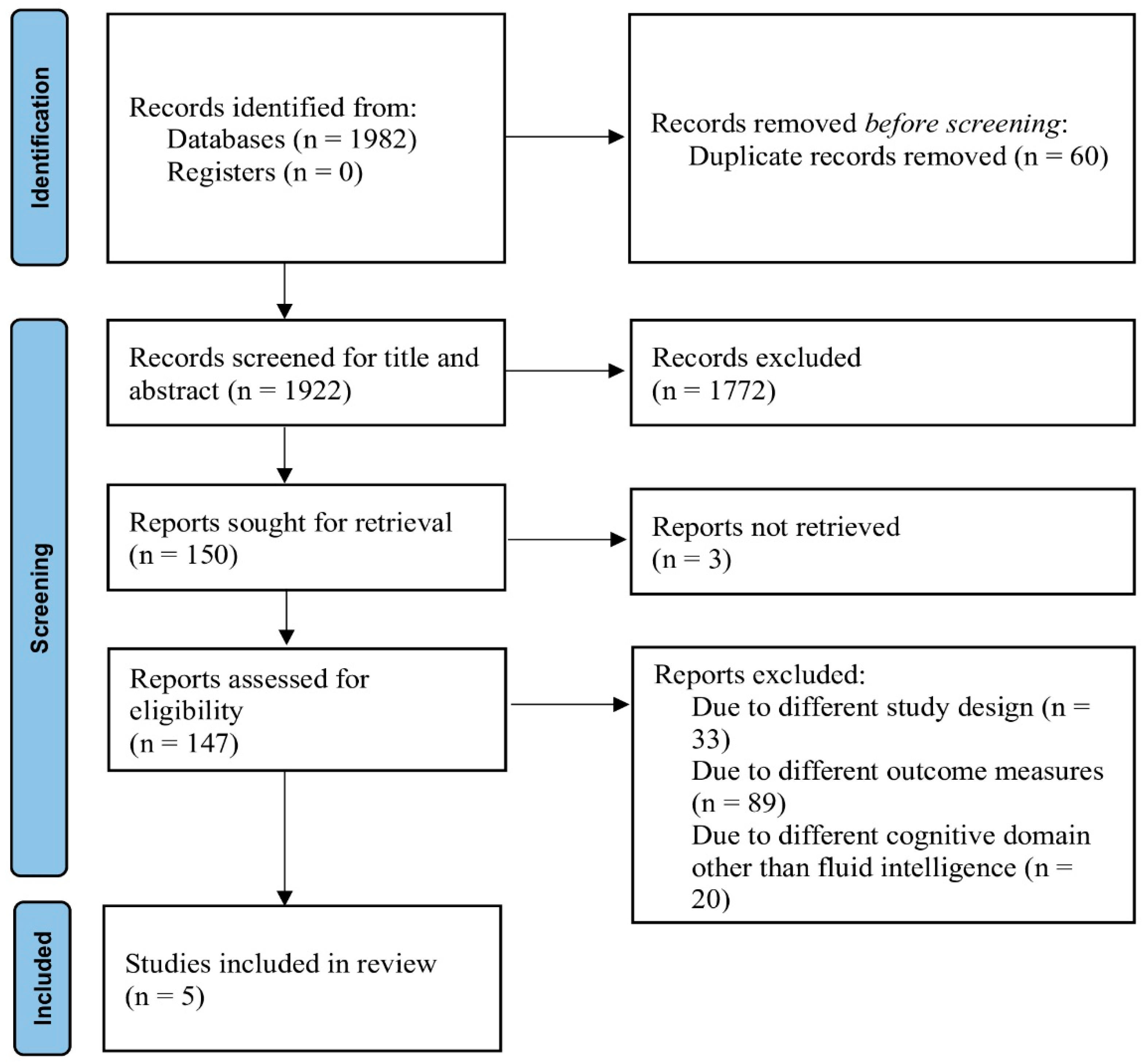
3.1. Search Result
3.2. Qualitative Assessment
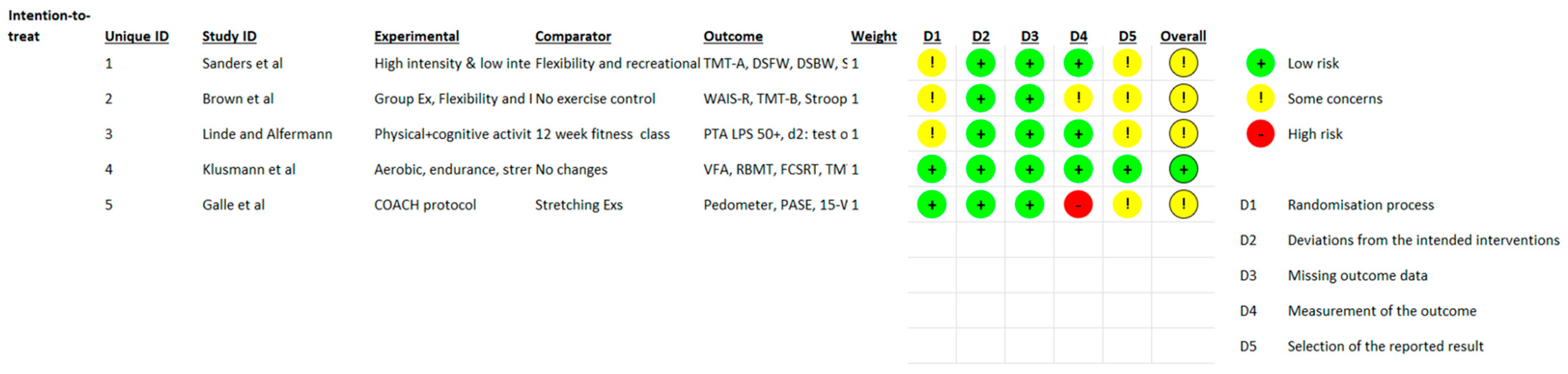
3.3. Assessment of Risk of Bias
3.4. Characteristics of the Participants
3.5. Intervention
3.6. Control
3.7. Outcome Measures
3.8. Effects on Fluid Intelligence
4. Discussion
4.1. Strengths
4.2. Limitations
4.3. Future Scope
Author Contributions
Funding
Data Availability Statement
Conflicts of Interest
References
- McKhann, G.M.; Knopman, D.S.; Chertkow, H.; Hyman, B.T.; Jack, C.R., Jr.; Kawas, C.H.; Klunk, W.E.; Koroshetz, W.J.; Manly, J.J.; Mayeux, R.; et al. The diagnosis of dementia due to Alzheimer’s disease: Recommendations from the National Institute on Aging-Alzheimer’s Association workgroups on diagnostic guidelines for Alzheimer’s disease. Alzheimer’s Dement. 2011, 7, 263–269. [Google Scholar] [CrossRef] [Scilit]
- Better, M.A. Alzheimer’s disease facts and figures. Alzheimer’s Dement. 2023, 19, 1598–1695. [Google Scholar] [CrossRef] [Scilit]
- Reitz, C.; Mayeux, R. Alzheimer disease: Epidemiology, diagnostic criteria, risk factors and biomarkers. Biochem. Pharmacol. 2014, 88, 640–651. [Google Scholar] [CrossRef] [Scilit]
- WHO. Overweight. 2023. Available online: https://www.who.int/en/news-room/fact-sheets/detail/obesity-and-overweight (accessed on 27 May 2024).
- Sheehan, B. Assessment scales in dementia. Ther. Adv. Neurol. Disord. 2012, 5, 349–358. [Google Scholar] [CrossRef] [Scilit] [PubMed]
- Horn, J.L.; Cattell, R.B. Refinement and test of the theory of fluid and crystallized general intelligences. J. Educ. Psychol. 1966, 57, 253–270. [Google Scholar] [CrossRef] [Scilit] [PubMed]
- Isingrini, M.; Vazou, F. Relation between Fluid Intelligence and Frontal Lobe Functioning in Older Adults. Int. J. Aging Hum. Dev. 1997, 45, 99–109. [Google Scholar] [CrossRef] [Scilit]
- Salthouse, T.A. Speed mediation of adult age differences in cognition. Dev. Psychol. 1993, 29, 722–738. [Google Scholar] [CrossRef]
- Gray, J.R.; Chabris, C.F.; Braver, T.S. Neural mechanisms of general fluid intelligence. Nat. Neurosci. 2003, 6, 316–322. [Google Scholar] [CrossRef] [Scilit] [PubMed]
- Gray, J.R.; Thompson, P.M. Neurobiology of intelligence: Science and ethics. Nat. Rev. Neurosci. 2004, 5, 471–482. [Google Scholar] [CrossRef] [Scilit]
- Thorsen, C.; Gustafsson, J.; Cliffordson, C. The influence of fluid and crystallized intelligence on the development of knowledge and skills. Br. J. Educ. Psychol. 2014, 84, 556–570. [Google Scholar] [CrossRef] [Scilit]
- Deary, I.J.; Corley, J.; Gow, A.J.; Harris, S.E.; Houlihan, L.M.; Marioni, R.E.; Penke, L.; Rafnsson, S.B.; Starr, J.M. Age-associated cognitive decline. Br. Med. Bull. 2009, 92, 135–152. [Google Scholar] [CrossRef] [Scilit]
- Fjell, A.M.; Westlye, L.T.; Amlien, I.; Tamnes, C.K.; Grydeland, H.; Engvig, A.; Espeseth, T.; Reinvang, I.; Lundervold, A.J.; Lundervold, A.; et al. High-Expanding Cortical Regions in Human Development and Evolution Are Related to Higher Intellectual Abilities. Cereb. Cortex 2015, 25, 26–34. [Google Scholar] [CrossRef] [Scilit] [PubMed]
- Wongupparaj, P.; Kumari, V.; Morris, R.G. The relation between a multicomponent working memory and intelligence: The roles of central executive and short-term storage functions. Intelligence 2015, 53, 166–180. [Google Scholar] [CrossRef] [Scilit]
- Iso-Markku, P.; Kujala, U.M.; Knittle, K.; Polet, J.; Vuoksimaa, E.; Waller, K. Physical activity as a protective factor for dementia and Alzheimer’s disease: Systematic review, meta-analysis and quality assessment of cohort and case–control studies. Br. J. Sports Med. 2022, 56, 701–709. [Google Scholar] [CrossRef] [Scilit]
- Yamasaki, T. Preventive Strategies for Cognitive Decline and Dementia: Benefits of Aerobic Physical Activity, Especially Open-Skill Exercise. Brain Sci. 2023, 13, 521. [Google Scholar] [CrossRef] [Scilit]
- Moher, D.; Liberati, A.; Tetzlaff, J.; Altman, D.G. Preferred Reporting Items for Systematic Reviews and Meta-Analyses: The PRISMA Statement. PLoS Med. 2009, 6, e1000097. [Google Scholar] [CrossRef] [Scilit]
- de Morton, N.A. The PEDro scale is a valid measure of the methodological quality of clinical trials: A demographic study. Aust. J. Physiother. 2009, 55, 129–133. [Google Scholar] [CrossRef] [Scilit] [PubMed]
- Sterne, J.A.C.; Savović, J.; Page, M.J.; Elbers, R.G.; Blencowe, N.S.; Boutron, I.; Cates, C.J.; Cheng, H.Y.; Corbett, M.S.; Eldridge, S.M.; et al. RoB 2: A revised tool for assessing risk of bias in randomised trials. BMJ 2019, 366, l4898. [Google Scholar] [CrossRef] [Scilit]
- Galle, S.A.; Deijen, J.B.; Milders, M.V.; De Greef, M.H.G.; Scherder, E.J.A.; van Duijn, C.M.; Drent, M.L. The effects of a moderate physical activity intervention on physical fitness and cognition in healthy elderly with low levels of physical activity: A randomized controlled trial. Alzheimers Res. Ther. 2023, 15, 12. [Google Scholar] [CrossRef] [Scilit]
- Linde, K.; Alfermann, D. Single Versus Combined Cognitive and Physical Activity Effects on Fluid Cognitive Abilities of Healthy Older Adults: A 4-Month Randomized Controlled Trial with Follow-Up. J. Aging Phys. Act. 2014, 22, 302–313. [Google Scholar] [CrossRef]
- Sanders, L.M.J.; Hortobágyi, T.; Karssemeijer, E.G.A.; Van der Zee, E.A.; Scherder, E.J.A.; van Heuvelen, M.J.G. Effects of low- and high-intensity physical exercise on physical and cognitive function in older persons with dementia: A randomized controlled trial. Alzheimers Res. Ther. 2020, 12, 28. [Google Scholar] [CrossRef] [Scilit]
- Brown, A.K.; Liu-Ambrose, T.; Tate, R.; Lord, S.R. The effect of group-based exercise on cognitive performance and mood in seniors residing in intermediate care and self-care retirement facilities: A randomised controlled trial. Br. J. Sports Med. 2009, 43, 608–614. [Google Scholar] [CrossRef] [Scilit]
- Klusmann, V.; Evers, A.; Schwarzer, R.; Schlattmann, P.; Reischies, F.M.; Heuser, I.; Dimeo, F.C. Complex Mental and Physical Activity in Older Women and Cognitive Performance: A 6-month Randomized Controlled Trial. J. Gerontol. A Biol. Sci. Med. Sci. 2010, 65A, 680–688. [Google Scholar] [CrossRef] [Scilit]
- Kachouri, H.; Fay, S.; Angel, L.; Isingrini, M. Influence of current physical exercise on the relationship between aging and episodic memory and fluid intelligence. Acta Psychol. 2022, 227, 103609. [Google Scholar] [CrossRef] [Scilit] [PubMed]
- Hess, N.C.; Dieberg, G.; McFarlane, J.R.; Smart, N.A. The effect of exercise intervention on cognitive performance in persons at risk of, or with, dementia: A systematic review and meta-analysis. Healthy Aging Res. 2014, 3, 1–10. [Google Scholar] [CrossRef] [Scilit]
- Colcombe, S.; Kramer, A.F. Fitness Effects on the Cognitive Function of Older Adults. Psychol. Sci. 2003, 14, 125–130. [Google Scholar] [CrossRef] [Scilit] [PubMed]
- Erickson, K.I.; Kramer, A.F. Aerobic exercise effects on cognitive and neural plasticity in older adults. Br. J. Sports Med. 2009, 43, 22–24. [Google Scholar] [CrossRef] [Scilit]
- Park, D.C.; Reuter-Lorenz, P. The Adaptive Brain: Aging and Neurocognitive Scaffolding. Annu. Rev. Psychol. 2009, 60, 173–196. [Google Scholar] [CrossRef] [Scilit]
- Etnier, J.L.; Nowell, P.M.; Landers, D.M.; Sibley, B.A. A meta-regression to examine the relationship between aerobic fitness and cognitive performance. Brain Res. Rev. 2006, 52, 119–130. [Google Scholar] [CrossRef] [Scilit]
- Scisco, J.L.; Leynes, P.A.; Kang, J. Cardiovascular fitness and executive control during task-switching: An ERP study. Int. J. Psychophysiol. 2008, 69, 52–60. [Google Scholar] [CrossRef] [Scilit]
- Ho, B.; Gullett, J.; Anton, S.; Alexander, G.; Jessup, C.; Levin, B.; Rundek, T.; Visscher, K.; Woods, A.; Cohen, R. 3 Associations Between Exercise Type, Fluid Intelligence, and Processing Speed in the Oldest-Old. J. Int. Neuropsychol. Soc. 2023, 29, 672–673. [Google Scholar] [CrossRef] [Scilit]
- Ho, B.D.; Gullett, J.M.; Anton, S.; Franchetti, M.K.; Bharadwaj, P.K.; Raichlen, D.A.; Alexander, G.E.; Rundek, T.; Levin, B.; Visscher, K.; et al. Associations between physical exercise type, fluid intelligence, executive function, and processing speed in the oldest-old (85 +). Geroscience 2023, 46, 491–503. [Google Scholar] [CrossRef] [Scilit]
- Lv, X.; Ren, X.; Guo, C.; Tang, L. Tai Chi exercise training enhances executive function and fluid intelligence of healthy older adults: Cross-sectional and longitudinal evidence. Psychol Sport Exerc. 2022, 58, 102105. [Google Scholar] [CrossRef] [Scilit]
- Tranter, L.J.; Koutstaal, W. Age and Flexible Thinking: An Experimental Demonstration of the Beneficial Effects of Increased Cognitively Stimulating Activity on Fluid Intelligence in Healthy Older Adults. Aging Neuropsychol. Cogn. 2008, 15, 184–207. [Google Scholar] [CrossRef] [Scilit] [PubMed]
- Ferrucci, L.; Guralnik, J.M.; Marchionni, N.; Costanzo, S.; Lamponi, M.; Baroni, A. Relationship between health status, fluid intelligence and disability in a non demented elderly population. Aging Clin. Exp. Res. 1993, 5, 435–443. [Google Scholar] [CrossRef] [Scilit] [PubMed]
- Jones, R.N.; Manly, J.; Glymour, M.M.; Rentz, D.M.; Jefferson, A.L.; Stern, Y. Conceptual and Measurement Challenges in Research on Cognitive Reserve. J. Int. Neuropsychol. Soc. 2011, 17, 593–601. [Google Scholar] [CrossRef] [Scilit]
- Gates, N.; Fiatarone Singh, M.A.; Sachdev, P.S.; Valenzuela, M. The Effect of Exercise Training on Cognitive Function in Older Adults with Mild Cognitive Impairment: A Meta-analysis of Randomized Controlled Trials. Am. J. Geriatr. Psychiatry 2013, 21, 1086–1097. [Google Scholar] [CrossRef] [Scilit]



| Database | Search Strategy | Filter(s) |
|---|---|---|
| Scopus | “Elderly” AND “Physical activity” OR “Exercise” AND “fluid intelligence” AND “Dementia” AND “Physical activity” OR “Exercise” AND “Fluid intelligence” | Document type: Articles including case reports and trials Language: English |
| Web Of Science | https://www.webofscience.com/wos/woscc/summary/0b483cd4-5924-4dc8-9f5e-3f0e39cdbc4eea056ddb/relevance/5 (accessed on 24 October 2024) | Document type: Articles including case reports and trials Language: English |
| PubMed | ((((Elderly) AND (Physical activity)) OR (Exercise)) AND (fluid intelligence)) AND ((((Dementia) AND (Physical activity)) OR (Exercise)) AND (Fluid intelligence)) | Document type: Articles including case reports and trials Language: English |
| Physiotherapy Evidence Database (PEDro) | Exercise AND Fluid Intelligence | Document type: Articles including case reports and trials Language: English |
| Criteria | Galle et al., 2023 [20] | Linde and Alfermann, 2014 [21] | Sanders et al., 2020 [22] | Brown et al., 2009 [23] | Klusmann et al., 2010 [24] |
|---|---|---|---|---|---|
| 1. Eligibility criteria were specified | yes | yes | yes | yes | yes |
| 2. Subjects were randomly allocated to groups (in a crossover study, subjects were randomly allocated an order in which treatments were received) | yes | yes | yes | yes | yes |
| 3. Allocation was concealed | no | yes | no | yes | yes |
| 4. The groups were similar at baseline regarding the most important prognostic indicators | yes | yes | yes | yes | yes |
| 5. There was blinding of all subjects | no | no | no | no | yes |
| 6. There was blinding of all therapists who administered the therapy | no | no | no | no | yes |
| 7. There was blinding of all assessors who measured at least one key outcome | no | no | no | no | yes |
| 8. Measures of at least one key outcome were obtained from more than 85% of the subjects initially allocated to groups | yes | yes | yes | yes | yes |
| 9. All subjects for whom outcome measures were available received the treatment or control condition as allocated or, where this was not the case, data for at least one key outcome was analyzed by “intention to treat” | yes | yes | yes | no | no |
| 10. The results of between-group statistical comparisons are reported for at least one key outcome | yes | yes | yes | yes | yes |
| 11. The study provides both point measures and measures of variability for at least one key outcome | yes | yes | yes | yes | yes |
| Total | 6/10 | 6/10 | 6/10 | 6/10 | 9/10 |
| Trials | Participant Characteristics | Experimental Group Intervention | Control Group Intervention | Outcome Measures | Major Findings |
|---|---|---|---|---|---|
| Galle et al., 2023 [20] | n = 102 Age: 55+ yrs M/F: 25/77 | COACH-based moderate physical activity intervention (walking, cycling, housekeeping, gardening) | Stretching exercises | Pedometer, PASE, 15-WT, TMT, Stroop test, SPPB, and 6MWT | Participants in the COACH-based physical activity group maintained cognitive function better than controls, with statistically significant improvements in gait speed and step counts (p < 0.05) and trends toward cognitive benefit |
| Linde and Alfermann, 2014 [21] | n = 70 Age: 67.06 ± 3.55 yrs M/F: 41/29 | Gr1: Aerobic endurance + strength training. Gr2: Cognitive activity Gr3: Combined physical activity + cognitive activity | Usual routine + fitness class | PTS, LPS 50+, d2 test of attention, TMTA, DSST, and CVF | Cognitive speed significantly improved in the combined intervention group compared to control (p = 0.01), with a large effect post-intervention (d = 0.86) and moderate at follow-up (d = 0.56). Concentration improved in all intervention groups post-intervention (highest in the cognitive group, d = 0.88), but at follow-up, only the physical activity group maintained the effect (d = 0.46). No significant changes were observed in short-term memory, reasoning, spatial relations, or processing speed (p > 0.05) |
| Sanders et al., 2020 [22] | n = 91 Age: 82 ± 7.0 yrs M/F: 32/59 | Gr1: Combined aerobic (walking) + lower limb strengthening exercises | Flexibility exercises + recreational activities | 6MWT, SPPB, FICSIT-4, MMSE, TMT-A, DSFW, DSBW, Stroop test, VMSFW, and VMSBW | Significant improvements in delayed story recall in the combined aerobic and strength group compared to control (p < 0.001) and improvements in executive function (Trail Making Test B/A) (p = 0.04) |
| Brown et al., 2009 [23] | n = 154 Age: 62–95 yrs M/F: 19/135 | Gr1: General group-based exercise (GE)—resistance training and balance training. Gr2: Flexibility and relaxation (FR)—gentle joint movements, trunk/neck rotation, and rhythmic breathing | No-exercise control group | 6MWT, WAIS-R, TMT-B, Stroop–CW, COWAT, WMS-R, GDS, and PANAS-P | Group-based exercise significantly enhanced memory and cognitive flexibility compared to both a stretching control and a passive group, with main effects showing p < 0.05 for most outcomes |
| Klusmann et al., 2010 [24] | n = 259 Age: 70–93 yrs M/F: 0/259 | Gr1: Aerobic endurance, strength, flexibility, balance, and coordination exercise | Computer training; continued routine daily activities | VFA, RBMT, FCSRT, TMT A&B, and Stroop test | Both physical exercise and computer training significantly improved episodic memory (RBMT immediate recall: p = 0.007; delayed recall: p = 0.01) and preserved working memory, with no significant difference between the two active groups |
| Study | Exercise Mode | Intensity | Frequency | Session Duration | Intervention Duration | Relevant to the Elderly Population |
|---|---|---|---|---|---|---|
| Galle et al., 2023 [20] | COACH-based moderate physical activity (walking, cycling, household activities) | Moderate intensity guided by pedometer-based step goals | 2x/week + daily activity encouragement | 45–60 min | 24 weeks + 9-month follow-up | Progressive increase in daily steps made activity feasible and safe for sedentary elderly people |
| Linde & Alfermann, 2014 [21] | Aerobic endurance + strength training ± cognitive training | Moderate intensity (not quantified) | 2x/week (physical); 1x/week (cognitive) | 60 min (physical)/30 min (cognitive) | 16 weeks | Combined physical + cognitive training showed the largest gains; intensity was kept moderate to avoid fatigue |
| Sanders et al., 2020 [22] | Walking (aerobic) + lower limb resistance training | Weeks 1–12: 57–63% HRmax (RPE 9–11, low) Weeks 13–24: 83–89% HRmax (RPE 15–16, high) | 3x/week | 30 min/session | 24 weeks | High-intensity phase is tolerated only after 12-week gradual conditioning; low-intensity is a suitable baseline for frail adults with dementia |
| Brown et al., 2009 [23] | Group-based strength + balance exercises | Not reported explicitly; supervised low-moderate effort | 2x/week | 60 min | 24 weeks | Group format improved adherence; resistance was kept low initially for institutionalized seniors |
| Klusmann et al., 2010 [24] | Multimodal: aerobic, strength, balance, flexibility, coordination | Moderate, progressively increased | 2x/week | 50–60 min | 24 weeks | Exercises are scalable for very old adults (70–93 yrs); multimodal design avoided exertion overload |
Disclaimer/Publisher’s Note: The statements, opinions and data contained in all publications are solely those of the individual author(s) and contributor(s) and not of MDPI and/or the editor(s). MDPI and/or the editor(s) disclaim responsibility for any injury to people or property resulting from any ideas, methods, instructions or products referred to in the content. |
© 2026 by the authors. Published by MDPI on behalf of the Italian Society of Gerontology and Geriatrics (SIGG). Licensee MDPI, Basel, Switzerland. This article is an open access article distributed under the terms and conditions of the Creative Commons Attribution (CC BY) license.
Share and Cite
Jha, S.; Khatun, T.; Azharuddin, M.; Sehgal, C.A.; Parveen, S.; Noohu, M.M. Effect of Physical Exercise on Fluid Intelligence Among the Elderly with or Without Dementia: A Systematic Review of Randomized Control Trials. J. Gerontol. Geriatr. 2026, 74, 3. https://doi.org/10.3390/jgg74010003
Jha S, Khatun T, Azharuddin M, Sehgal CA, Parveen S, Noohu MM. Effect of Physical Exercise on Fluid Intelligence Among the Elderly with or Without Dementia: A Systematic Review of Randomized Control Trials. Journal of Gerontology and Geriatrics. 2026; 74(1):3. https://doi.org/10.3390/jgg74010003
Chicago/Turabian StyleJha, Somya, Tabbashum Khatun, Muhammad Azharuddin, Chhavi Arora Sehgal, Sarah Parveen, and Majumi M. Noohu. 2026. "Effect of Physical Exercise on Fluid Intelligence Among the Elderly with or Without Dementia: A Systematic Review of Randomized Control Trials" Journal of Gerontology and Geriatrics 74, no. 1: 3. https://doi.org/10.3390/jgg74010003
APA StyleJha, S., Khatun, T., Azharuddin, M., Sehgal, C. A., Parveen, S., & Noohu, M. M. (2026). Effect of Physical Exercise on Fluid Intelligence Among the Elderly with or Without Dementia: A Systematic Review of Randomized Control Trials. Journal of Gerontology and Geriatrics, 74(1), 3. https://doi.org/10.3390/jgg74010003