1. Introduction
Schistosomiasis is a chronic parasitic disease of major public health importance and remains one of the World Health Organization’s priority neglected tropical diseases [
1]. It is caused by trematode worms of the genus
Schistosoma and is transmitted through contact with freshwater contaminated by cercariae that are released from infected intermediate host snails [
2]. Human infection occurs during routine water-contact activities, while transmission is maintained through specific snail–parasite–environment interactions that define local ecological suitability [
1,
3]. Although sustained control efforts have resulted in significant global reductions in prevalence and morbidity, schistosomiasis continues to pose challenges in countries transitioning from control to elimination, where transmission becomes focal, case numbers are low, and surveillance data require careful interpretation [
3,
4]. In such settings, distinguishing sustained progress from residual transmission or re-emergence is essential for guiding elimination-maintenance strategies.
Globally, schistosomiasis remains a significant public health concern, with an estimated 200 million people currently infected and more than 700 million living in areas at risk of transmission [
1]. As an increasing number of countries enter low-burden or post-control phases, strategic priorities have shifted from morbidity reduction toward interruption of transmission and sustained elimination [
3]. In this context, long-term surveillance data, impact assessment, and robust analytical methods are increasingly important for evaluating progress and informing targeted interventions [
4].
Saudi Arabia represents a distinctive epidemiological setting for schistosomiasis. Historically, both intestinal and urogenital schistosomiasis, caused primarily by
Schistosoma mansoni and
Schistosoma haematobium, respectively, were endemic in the Kingdom. They concentrated particularly in western and southwestern regions where freshwater systems supported suitable intermediate host snails [
5,
6,
7,
8,
9]. Transmission of
S. mansoni is associated with
Biomphalaria snail species, mainly
Biomphalaria pfeifferi, whereas
S. haematobium transmission involves
Bulinus species, including
Bulinus truncatus,
B. beccarii, and
B. wrighti, which thrive in irrigation channels, slow-moving streams, dams, and other freshwater habitats [
7,
9]. These ecological conditions historically facilitated sustained transmission in localized agricultural and rural settings. The two clinical forms differ in patterns of morbidity, exposure risk, and detectability, with important implications for surveillance sensitivity and interpretation of temporal trends as countries approach elimination thresholds [
2,
9].
In response to this burden, national reviews documented widespread transmission during the mid-20th century, prompting the establishment of structured schistosomiasis control programs beginning in the 1970s [
8]. These programs incorporated preventive chemotherapy with praziquantel, snail control and environmental modification, improvements in water supply and sanitation, and health education, later integrated into primary health care services, resulting in a marked and sustained decline in disease burden [
7,
8].
Within the Gulf Cooperation Council region, Saudi Arabia’s experience is broadly consistent with that of neighboring countries that have achieved substantial reductions in schistosomiasis transmission. Oman provides a notable regional example, having documented a sustained decline in
S. mansoni transmission and achieved elimination benchmarks through long-term national monitoring and surveillance [
10]. Recent official reports indicating the absence of detected intestinal schistosomiasis cases over eight consecutive years highlight both the feasibility of elimination in the region and the importance of continued observance in historically endemic or ecologically suitable areas [
11].
Although several studies have examined schistosomiasis in Saudi Arabia, important gaps remain in the characterization of long-term national trends. Previous investigations have largely focused on localized prevalence estimates, specific clinical presentations, or short-term retrospective analyses [
12,
13,
14]. More recent studies and reviews have documented progress toward elimination; however, they have not consistently applied analytical approaches capable of identifying statistically significant change points in temporal trends or projecting future trajectories to support elimination-maintenance planning [
15,
16,
17,
18]. Therefore, the present study analyzes national schistosomiasis surveillance data in Saudi Arabia from 2002 to 2024 to provide a comprehensive assessment of long-term epidemiological trends. By integrating descriptive analyses with joinpoint regression to identify significant changes in temporal patterns and time-series forecasting to assess future trajectories, this study aims to support monitoring and evaluation, strengthen impact assessment, and inform targeted surveillance strategies as Saudi Arabia advances toward sustained schistosomiasis elimination.
2. Materials and Methods
2.1. Study Design and Data Source
The study employed a retrospective longitudinal design based on publicly available national schistosomiasis surveillance data in Saudi Arabia covering the period from 2002 to 2024. Data were obtained from officially reported annual records of the Saudi Ministry of Health (MoH), which compiles nationwide notifications of schistosomiasis cases as part of routine communicable disease surveillance activities [
19].
The dataset included annual counts of confirmed schistosomiasis cases reported across the Kingdom, along with population-based incidence rates where available. Surveillance data were aggregated at the national and regional levels and did not contain individual-level identifiers, clinical records, or personal information.
2.2. Study Area and Regional Classification
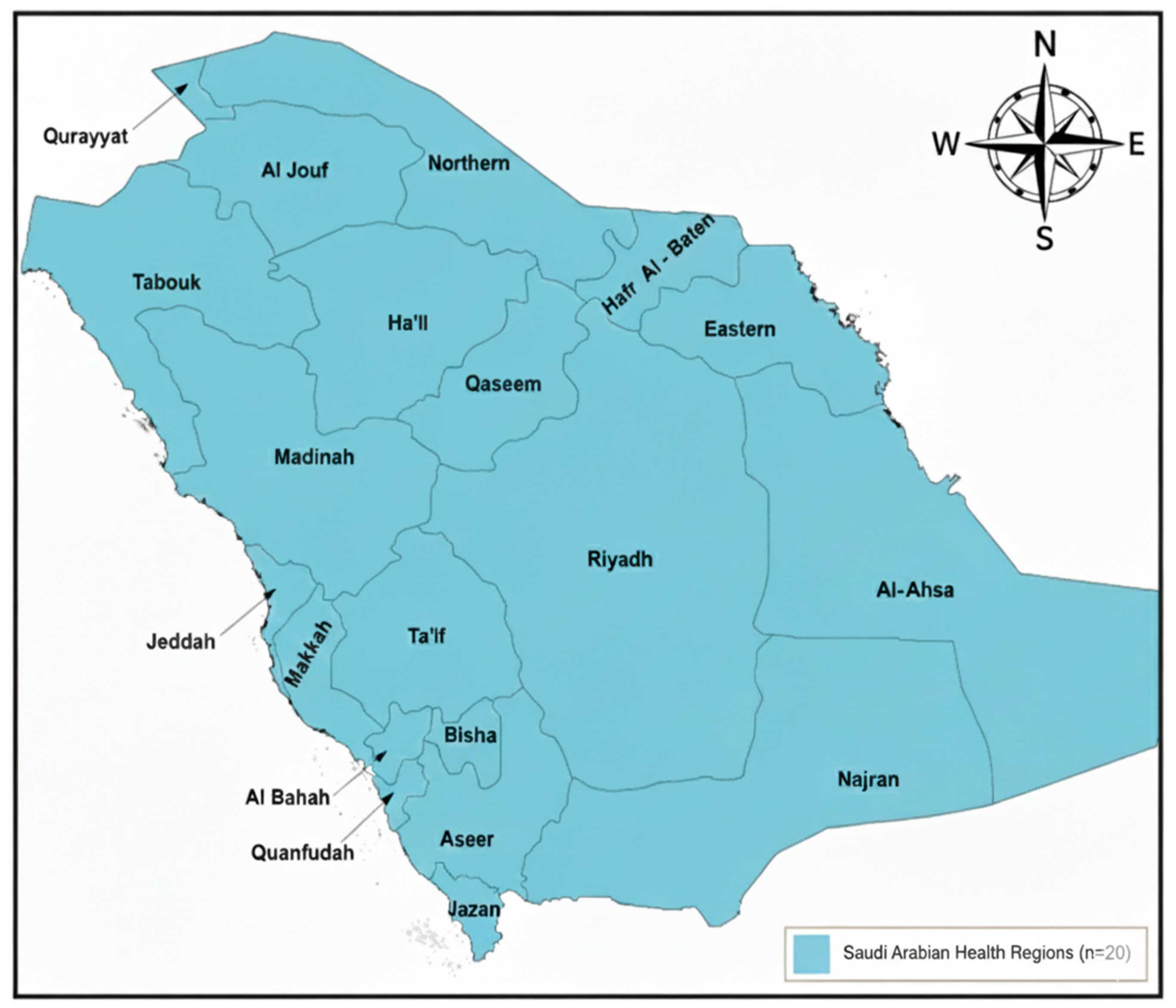
Saudi Arabia is administratively divided into 13 regions; however, public health surveillance and disease reporting by the Ministry of Health (MoH) are organized according to 20 health regions corresponding to major cities. Accordingly, all regional analyses in this study were conducted using the MoH health-region framework applied in routine schistosomiasis surveillance to ensure full alignment with official reporting practices. The geographic framework used for health-region classification is illustrated in
Figure 1 and was applied consistently across all regional epidemiological analyses. The map presents the officially recognized 20 health regions and was prepared using publicly available boundary data, with health-region delineations and labels defined to reflect the MoH surveillance structure [
19].
2.3. Case Definition and Classification
Reported schistosomiasis cases were classified according to the clinical form recorded in national surveillance reports. These included intestinal schistosomiasis, predominantly caused by S. mansoni; urogenital (urinary) schistosomiasis, caused by S. haematobium; and mixed infections, defined as cases with evidence of both intestinal and urinary involvement. Demographic variables extracted from surveillance records included sex, nationality (Saudi vs. non-Saudi), and age group (<5, 5–14, 15–39, and ≥40 years), where available. Subnational demographic and regional analyses were restricted to the period 2010–2024, reflecting improvements in the completeness and consistency of health-region reporting during this timeframe. Cases classified as non-Saudi include both non-citizen residents living in Saudi Arabia and visitors, as nationality status is recorded without distinction between residency and travel status. Individual-level information on duration of stay, travel history, or place of infection acquisition was not available in the aggregated dataset.
2.4. Descriptive Analysis
Descriptive analyses were performed to summarize national temporal trends, clinical subtype distribution, and demographic characteristics of reported schistosomiasis cases. Regional distributions were assessed using aggregated data from health regions with available reporting. Graphical and tabular visualizations were used to explore temporal, spatial, and demographic patterns in disease burden.
2.5. Temporal Trend Analysis
Long-term temporal trends in national schistosomiasis case counts were evaluated using joinpoint regression implemented through segmented linear models. Annual case counts were modeled as a function of calendar year, allowing the identification of a single joinpoint representing a statistically significant change in trend slope. The joinpoint location was estimated iteratively by minimizing model residuals, and fitted values were used to characterize temporal patterns before and after the identified breakpoint. This approach was selected to objectively assess trend transitions in elimination-phase surveillance data without imposing predefined breakpoints.
2.6. Time-Series Forecasting
Forecasting of national and regional schistosomiasis case counts was conducted using autoregressive integrated moving average (ARIMA) models applied to log-transformed annual case counts to stabilize variance [
20]. Model selection was performed using an automated approach based on information criteria, as implemented in the
auto.arima() function, which evaluates multiple candidate models and selects the most parsimonious specification that best fits the observed data [
20]. Formal external or out-of-sample validation was not performed since the analysis was based on complete national surveillance time series rather than independent datasets. Instead, model adequacy was assessed internally through consistency between observed and fitted values and by explicitly quantifying forecast uncertainty using prediction intervals. Forecast uncertainty was quantified using both 80% and 95% prediction intervals to reflect plausible ranges of future case counts under continued surveillance conditions. All statistical analyses were conducted using R software (version 4.5.2) [
21]. The
forecast package was used for ARIMA model fitting and time-series forecasting [
20],
segmented for change-point (joinpoint) regression analysis [
22],
ggplot2 for data visualization [
23], and
sf for handling and visualizing spatial data [
24].
2.7. Statistical Software
Data management, preliminary cleaning, and validation were conducted using Microsoft Excel (Microsoft Corporation, Redmond, WA, USA). Statistical analyses, data visualization, segmented regression, and time-series modeling were performed using R statistical software (R Foundation for Statistical Computing, Vienna, Austria) within the RStudio integrated development environment (Posit Software, version 2026.01.0+392, Boston, MA, USA), employing standard and widely used R packages for descriptive analysis, joinpoint regression, and ARIMA modeling.
2.8. Data Availability
All data used in this study were obtained from publicly available annual surveillance reports published by the Saudi Ministry of Health. Aggregated national and regional datasets analyzed during the current study are available from the corresponding author upon reasonable request. No accession numbers apply, as the data are derived from routinely published governmental surveillance summaries [
19].
2.9. Ethical Considerations
This study utilized aggregated, anonymized secondary surveillance data obtained from publicly available Ministry of Health records. No individual-level identifiers were accessed. Ethical approval was not required in accordance with national regulations governing the use of non-identifiable public health surveillance data.
3. Results
3.1. National Burden and Incidence of Schistosomiasis (2002–2024)
National schistosomiasis cases, incidence rates, clinical subtypes, and demographic characteristics from 2002 to 2024 are summarized in
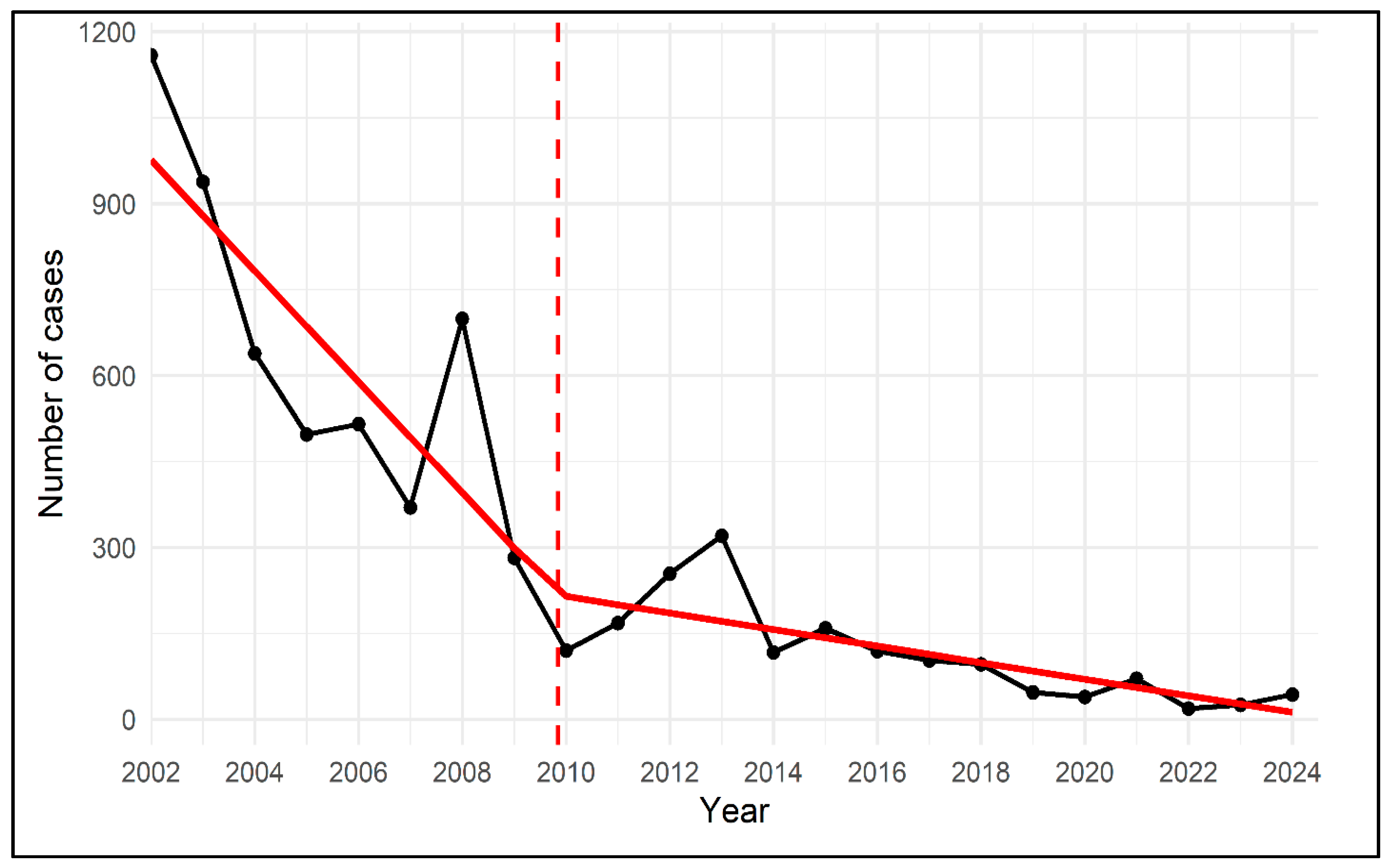
Table 1. A marked and sustained decline in national schistosomiasis burden was observed over the study period. In 2002, a total of 1159 cases were reported nationwide, corresponding to an incidence of 5.5 cases per 100,000 population. Annual case counts declined steadily over subsequent years, reaching 120 cases (0.50 per 100,000 population) by 2010.
From 2011 onward, national incidence remained consistently below 1 case per 100,000 population, despite minor year-to-year fluctuations. During this period, annual reported cases ranged from a minimum of 19 cases in 2022 (0.06 per 100,000 population) to a maximum of 320 cases in 2013 (1.07 per 100,000 population). In the most recent surveillance year (2024), 43 cases were reported nationally, corresponding to an incidence of 0.12 per 100,000 population. Overall, the national time series demonstrates a transition from moderate endemic transmission in the early 2000s to sustained low-level case detection in recent years.
3.2. Temporal Trend and Joinpoint Analysis
National temporal trends in reported schistosomiasis cases are shown in
Figure 2. Joinpoint regression analysis showed a statistically significant change in the national trend around 2010. Prior to this point, annual case counts declined gradually from 1159 cases in 2002 to 120 cases in 2010. Following the identified joinpoint, the decline became more pronounced and was followed by stabilization at low levels, with no sustained increase observed through 2024. No additional statistically significant joinpoints were detected across the study period.
3.3. Clinical Subtypes of Schistosomiasis
As shown in
Table 1, intestinal schistosomiasis was the predominant clinical subtype throughout the study period. Between 2002 and 2024, intestinal schistosomiasis accounted for 4580 of 6301 reported cases (72.7%). Urogenital (urinary) schistosomiasis accounted for 2299 cases (36.5%), while mixed infections were uncommon, representing 32 cases (0.5%). Following 2010, intestinal schistosomiasis consistently accounted for the majority of reported cases, frequently exceeding 80% of annual notifications.
3.4. Demographic Characteristics of Reported Cases
Across the study period, a consistent male predominance was observed. Males accounted for 5051 of 6301 reported cases (80.2%), while females accounted for 1250 cases (19.8%). With respect to nationality, Saudi nationals accounted for 3136 cases (49.8%), while non-Saudi nationals accounted for 3165 cases (50.2%). The proportion of cases among non-Saudi nationals increased over time, rising from 42.2% (489/1159) in 2002 to 81.4% (35/43) in 2024.
Age-specific data available from 2006 onward indicated that schistosomiasis predominantly affected adults. Individuals aged 15–39 years accounted for 2912 cases, while those aged ≥40 years accounted for 634 cases. Pediatric cases were infrequent in later years, with 11 cases reported among children aged <5 years and 497 cases among those aged 5–14 years.
3.5. Temporal Patterns in National Indicators
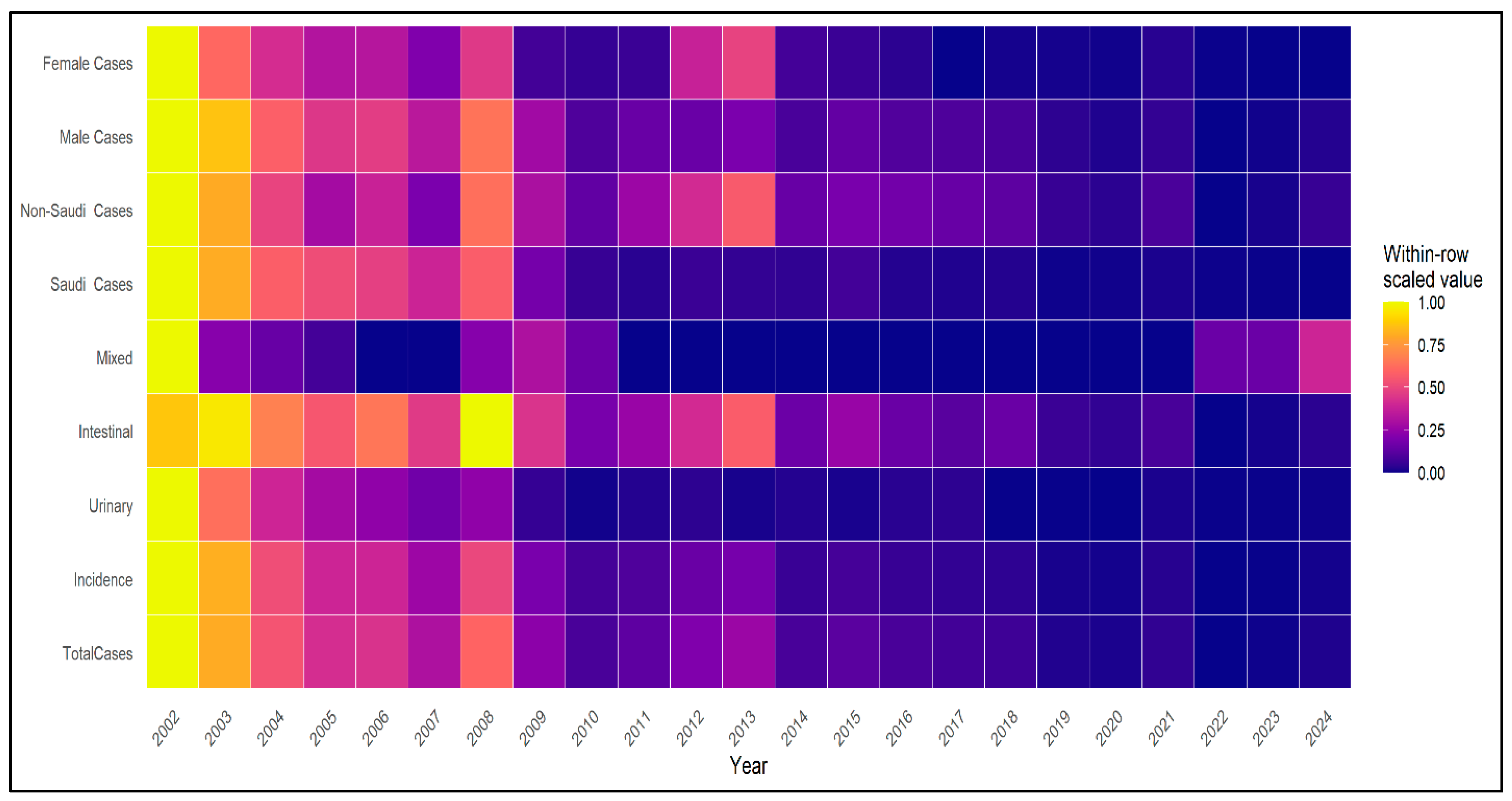
Temporal patterns in schistosomiasis burden and demographic indicators are illustrated in
Figure 3. Heatmap analysis showed higher case counts and incidence rates during the early years of surveillance, followed by substantially lower intensity after 2010. Demographic indicators demonstrated a shift toward adult age groups and non-Saudi populations over time, with minimal contribution from pediatric cases in later years.
3.6. Regional Distribution of Schistosomiasis (2010–2024)
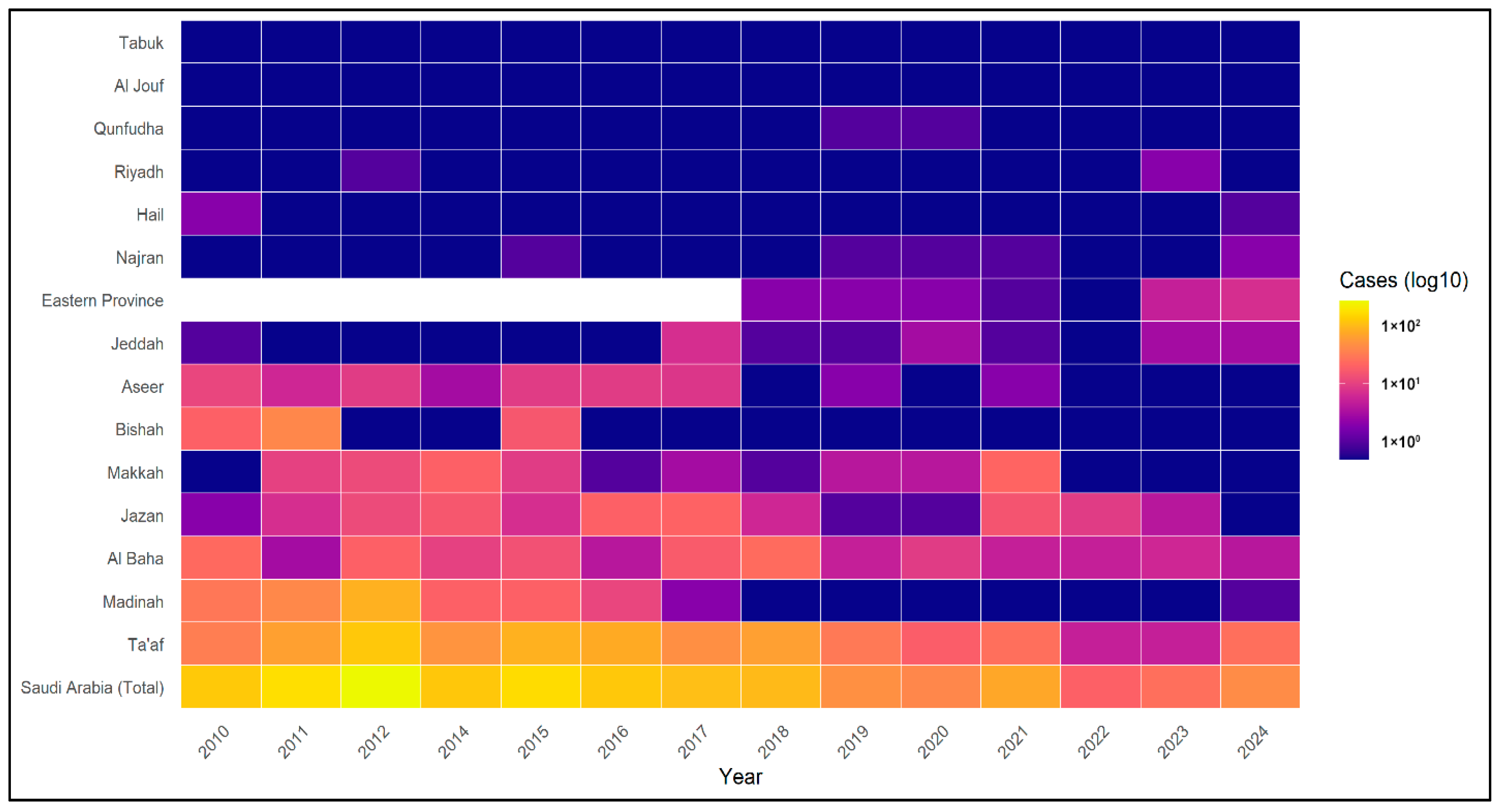
Regional distributions of schistosomiasis cases are summarized in
Table 2 and visualized in
Figure 4. Marked geographical heterogeneity was observed across health regions from 2010 to 2024. The highest cumulative case counts were reported in Ta’if, Madinah, Al Baha, and Jazan, which together accounted for 1110 of 1924 regionally reported cases (57.7%). In contrast, several regions reported very low case counts over the same period. Riyadh and Hail, for example, reported only three cases each. Regions with no reported cases during the available reporting period were not included in the table or figure, such as Al-Qurayyat and the Northern Borders; however, Al Jouf and Tabuk were retained in the figure for comparative purposes.
3.7. Regional Comparison of Clinical and Demographic Patterns
Across higher-burden regions, intestinal schistosomiasis predominated. In Ta’if, intestinal cases accounted for 421 of 639 cases (65.9%), while in Madinah they accounted for 196 of 204 cases (96.1%). Male predominance was consistent across regions, exceeding 80% in most settings. Non-Saudi nationals constituted a considerable proportion of cases in urban regions such as Makkah (71.4%) and Jeddah (70.0%), whereas Saudi nationals accounted for the majority of cases in regions such as Jazan (95.8%) and Bishah (91.9%).
3.8. Forecasted National Trend
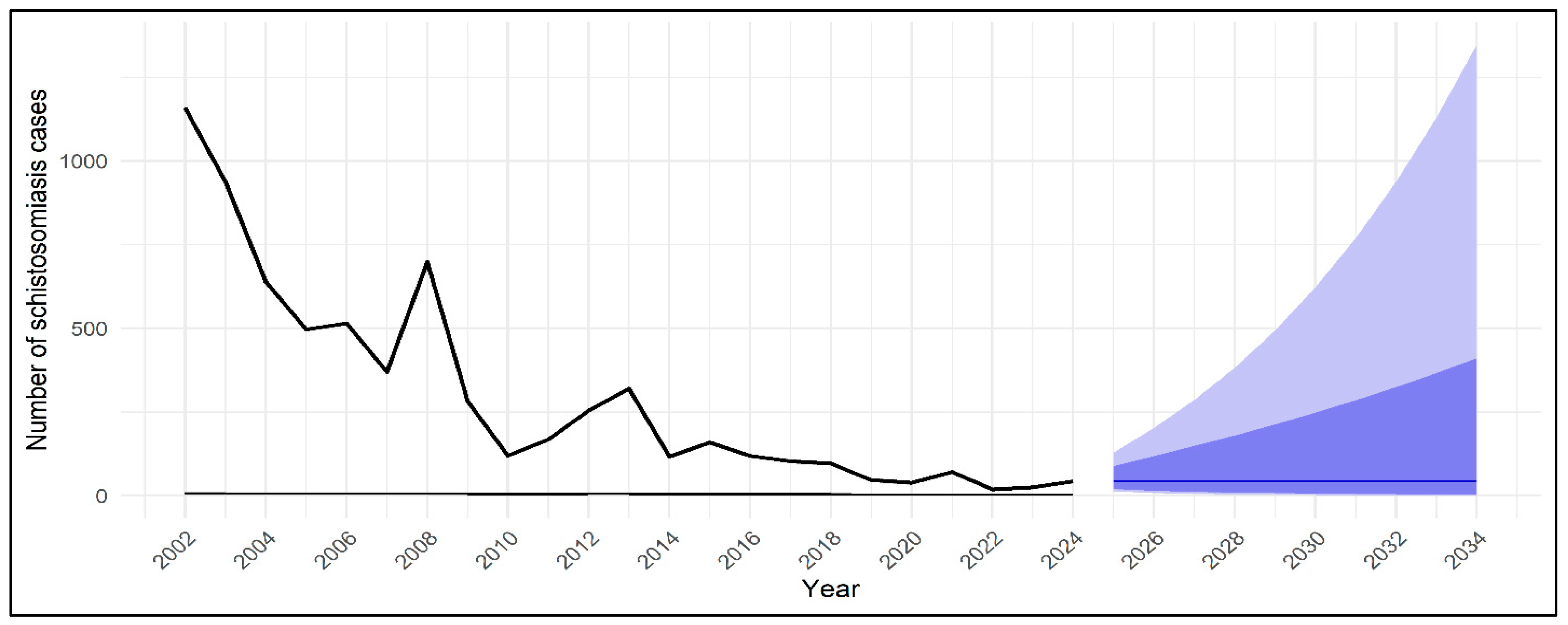
National ARIMA-based forecasts are presented in
Figure 5. Projections indicated continued low-level detection of schistosomiasis cases over the forecast horizon. The projected mean remained stable, and both the 80% and 95% prediction intervals are shown. The forecasts do not indicate a return to the higher incidence levels that were observed during the early years of the study.
3.9. Regional Forecasts
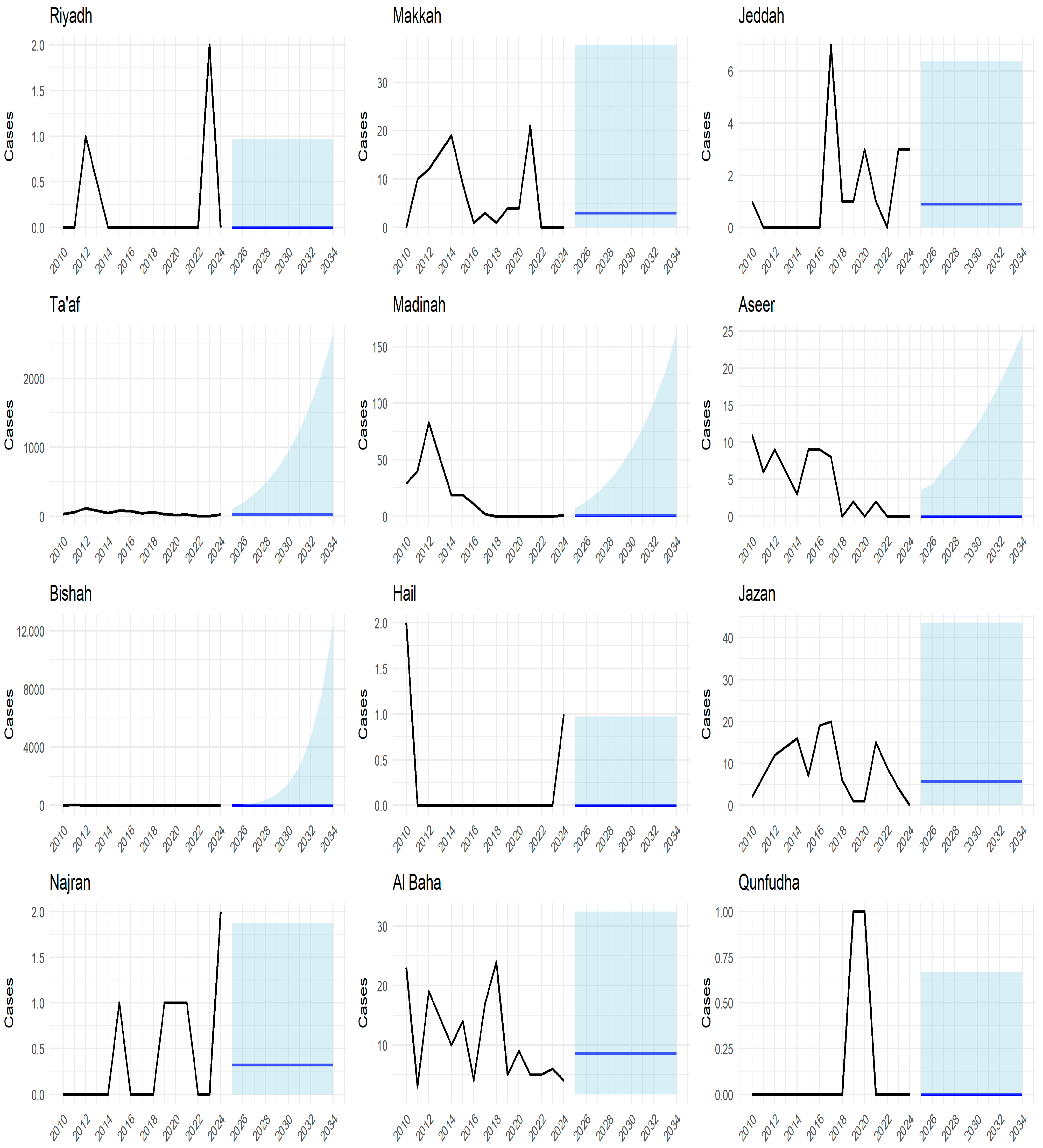
Regional ARIMA projections are shown in
Figure 6 and demonstrate heterogeneous but stable trajectories across selected health regions. Across regions, forecasted mean case counts remained low throughout the projection period, with most trajectories fluctuating close to zero. Regions with higher historical case counts showed slightly higher projected means and wider prediction intervals, whereas regions with fewer reported cases exhibited flatter projections with narrow uncertainty bands.
Importantly, no region demonstrated a sustained upward trajectory or widening trend suggestive of re-emergence during the forecast period. Overall, the regional projections are consistent with continued low-level detection and stable patterns across health regions during the elimination-maintenance phase.
4. Discussion
This study provides a comprehensive long-term assessment of schistosomiasis epidemiology in Saudi Arabia using national surveillance data covering more than two decades. The findings demonstrate a sustained decline in reported cases and incidence, with joinpoint analysis identifying a significant change in trend around 2010, after which case numbers declined more steeply and stabilized at low levels. Collectively, these patterns indicate a transition from historical endemic transmission to an elimination-maintenance phase characterized by sporadic and focal case detection rather than widespread transmission.
This epidemiological transition aligns with the strategic direction of the World Health Organization (WHO) Neglected Tropical Diseases Road Map 2021–2030, which emphasizes progression from morbidity control toward interruption of transmission, impact-based monitoring, and integration of NTD programs into national health systems [
3]. In elimination-phase settings, low case numbers, temporal fluctuations, and geographic heterogeneity are expected, and careful interpretation of surveillance data is required to distinguish sustained progress from re-emergence [
3,
4]. The stable post-2010 trends observed in Saudi Arabia are consistent with these expectations.
The observed decline reflects the cumulative impact of long-standing national control efforts, including environmental modification, snail control, expanded diagnostic capacity, and sustained access to praziquantel. The identification of a single major change point suggests a gradual, programmatically driven transition rather than an abrupt interruption of transmission. The absence of subsequent change points or sustained upward trends supports the durability of these gains and argues against ongoing widespread transmission, consistent with WHO criteria for countries approaching elimination [
3].
In recent years, incidence remained consistently below one case per 100,000 population, accompanied by increasing spatial focality. Such patterns are typical of elimination-maintenance settings, where remaining cases often reflect residual transmission in limited ecological niches, occupational or travel-related exposure, or imported infections rather than continuous community-level transmission [
2,
9]. However, the national schistosomiasis surveillance data used in this study does not include individual-level exposure or travel histories, limiting the ability to distinguish imported from locally acquired infections. Unlike malaria surveillance in Saudi Arabia, which routinely captures importation status, schistosomiasis reporting remains aggregated, emphasizing the need for cautious interpretation and targeted surveillance [
3].
Analysis of clinical subtypes further supports this transition. Intestinal schistosomiasis accounted for the majority of reported cases throughout the study period and an even higher proportion in recent years. This predominance reflects historical transmission patterns in western and southwestern Saudi Arabia, where
S. mansoni was dominant, and aligns with earlier studies documenting declines in urogenital schistosomiasis following sustained control efforts [
7,
13]. The rarity of mixed infections and declining contribution of urinary schistosomiasis are consistent with reduced transmission intensity and fragmented transmission cycles typical of late-phase elimination settings [
9].
A key finding is the near absence of schistosomiasis among pediatric populations after 2010. Children younger than 15 years accounted for only a very small proportion of reported cases, contrasting sharply with earlier periods when pediatric infections were common during active transmission. Hospital-based studies previously documented pediatric schistosomiasis in Saudi Arabia during periods of higher endemicity [
14]. The marked reduction in pediatric cases observed in this study strongly suggests interruption of local transmission, a pattern widely recognized as a hallmark of elimination-phase epidemiology [
25].
On the contrary, cases became increasingly concentrated among adults, particularly those aged 15–39 years, and among non-Saudi nationals. The shift in nationality patterns observed after 2009 likely reflects sustained reductions in local transmission among Saudi nationals following long-term control efforts, alongside an increasing contribution of infections among non-Saudi adults, including expatriates originating from endemic countries, and enhanced surveillance sensitivity during the elimination-maintenance phase. This demographic shift suggests alternative exposure pathways, including occupational exposure and population mobility, rather than ongoing community-level transmission. Similar patterns have been documented internationally as countries approach elimination, where remaining infections are increasingly detected among mobile adult populations rather than locally exposed children [
2,
3]. These findings support WHO recommendations for people-centered, risk-based surveillance approaches in elimination settings [
3].
Despite low national incidence, schistosomiasis in Saudi Arabia remains geographically heterogeneous. Since 2010, most cases were concentrated in a limited number of western and southwestern regions, particularly Ta’if, Al Baha, Jazan, and Madinah, corresponding to areas of historical endemicity and ecological suitability for intermediate host snails. Localized studies from Al Baha documented measurable prevalence as recently as the early 2010s, highlighting the persistence of focal transmission in ecologically favorable settings despite national declines [
13]. In contrast, many regions reported few or no cases over extended periods, indicating sustained interruption of transmission. This pattern highlights the need for region-specific surveillance in addition to the uniform national interventions. These findings highlight the continuing influence of environmental and ecological factors, such as freshwater availability, irrigation practices, and snail habitats, in shaping residual transmission risk. Future surveillance strategies would benefit from integrating environmental and ecological data to better characterize sub-regional heterogeneity beyond administrative boundaries.
Saudi Arabia’s trajectory is consistent with international and regional elimination experiences. Oman provides a relevant regional benchmark, having documented sustained declines in
S. mansoni transmission and no reported intestinal schistosomiasis cases in recent years [
10,
11]. While direct comparison is limited by differences in geography and surveillance systems, Oman’s experience demonstrates the feasibility of elimination in the Gulf region. Saudi Arabia’s progress is particularly notable given its larger land area, population size, and ecological diversity.
Recent national analyses further support these findings. Ahmed and Alharbi [
15], examining schistosomiasis trends from 2021 to 2023, reported continued low-level detection and emphasized the importance of sustained surveillance during the elimination phase. By extending the temporal scope to over two decades and applying formal change-point detection and forecasting methods, the present study strengthens evidence that observed declines represent a durable epidemiological transition rather than short-term fluctuation.
Time-series forecasting indicates continued low-level detection without evidence of resurgence at either the national or regional level. Although forecasting in elimination settings must be interpreted cautiously, the absence of upward trends aligns with WHO expectations for countries operating within an elimination-maintenance phase [
3,
4].
Several limitations should be acknowledged. Surveillance data were aggregated and derived from routine reporting systems, which may be subject to underreporting or variation in diagnostic practices. Individual-level exposure and travel histories were unavailable, limiting differentiation between imported and residual local infections. Regional reporting was also incomplete in earlier years. Nevertheless, the consistency of findings across multiple indicators and analytical approaches supports the robustness of the conclusions.