1. Introduction
The Camino de Santiago, a centuries-old pilgrimage route traversing northern Spain, has evolved into one of Europe’s most iconic spiritual and cultural journeys [
1]. With over 400,000 registered pilgrims annually, many of them international, the route has transformed into a unique blend of heritage tourism, spiritual experience, and mass mobility [
2]. Its enduring popularity presents both opportunities and challenges for local communities and municipal authorities along the trail.
Despite its cultural richness, the Camino is under increasing pressure due to fluctuating visitor volumes, seasonal peaks, and limited infrastructure in small rural towns. Municipalities struggle to anticipate the demand for critical services such as water, waste disposal, emergency care, and lodging [
3]. These operational issues are compounded by the lack of real-time data on pilgrim movement, leading to reactive rather than proactive management strategies.
While pilgrimage tourism has been widely studied from religious, cultural, and experiential perspectives, there is a noticeable gap in the application of smart tourism technologies to pilgrimage management [
4]. Existing smart city tools and visitor flow analytics have not been systematically adapted to low-tech, heritage-rich environments like the Camino de Santiago [
5]. Moreover, most approaches to tourism data collection remain static, retrospective, or fragmented.
This paper proposes a conceptual framework for smart pilgrim management on the Camino de Santiago, based on the integration of flux measurement systems and data-driven planning tools. By harnessing technologies such as infrared counters, Global Positioning System (GPS) tracking, and Wi-Fi analytics, the framework aims to support municipalities and regional authorities, amongst other decision-making players, in optimizing resource allocation, enhancing the pilgrim experience and preserving the route’s cultural integrity.
The study contributes to the growing discourse on smart tourism by bridging traditional pilgrimage dynamics with emerging technologies. It offers a replicable model for other heritage routes facing similar pressures, emphasizing sustainable and ethical data practices. Ultimately, this research addresses how smart tourism tools can be adapted for sacred and slow-tourism contexts—domains typically overlooked in technology-led innovation.
This work is positioned at the intersection of digital innovation in smart territories, technology-enabled decision-support systems, and the sustainable management of high-density mobility flows. The proposed framework is informed by perspectives from technology adoption and digital transformation in public-sector contexts, where the integration of data-driven tools supports more efficient and responsive governance processes. In this sense, the system aligns with established views that emphasize the role of information systems in enhancing situational awareness and enabling evidence-based decision-making in complex environments.
Additionally, the framework is conceptually related to sustainability transition approaches, particularly in its focus on optimizing resource use, reducing congestion, and improving the overall management of tourist and pilgrim flows in sensitive and high-demand contexts. By combining heterogeneous data sources with real-time monitoring and adaptive response mechanisms, the proposed approach contributes to the ongoing shift from static and reactive management practices toward dynamic, anticipatory, and system-oriented solutions.
Within this context, the main contribution of this paper lies in the definition of a modular and scalable architecture that operationalizes these theoretical perspectives in the specific domain of pilgrimage and religious tourism, which remains comparatively underexplored in the literature. The framework thus provides a structured basis for future empirical validation and contributes to bridging the gap between conceptual advances in smart systems and their practical implementation in real-world settings.
Ultreia Project and Camino de Santiago
The ULTREIA SUDOE project is a transnational initiative funded by the European Interreg Sudoe program, aiming to revitalize the rural territories crossed by the Camino de Santiago in the southwest of Europe, particularly in Portugal, Spain, and France. The name “Ultreia”, a traditional greeting among pilgrims, reflects the spirit of moving forward together in the enhancement of these historic paths. The main objectives for this project are:
- •
Promotion of sustainable tourism to valorize local, natural, and cultural resources, focusing on agro-food traditions and crafts to attract tourists and pilgrims in an authentic and conscious way.
- •
Inclusion and accessibility to develop a “Good Practices Guide for Inclusivity” for Camino de Santiago managers, ensuring that everyone, regardless of their conditions, can fully participate in the Camino experience.
- •
Economic and social development aim to create local hubs and digital platforms to promote local products and services, boosting entrepreneurship and sustainability in rural communities.
2. Technologies for Pedestrian Counting in Outdoor Environments: Relevance for the Camino de Santiago
People-counting technologies encompass a range of electronic methods and devices designed to measure the number of individuals entering or exiting a defined area. Widely used in diverse settings, from retail stores to public buildings, transportation hubs, and event venues, these technologies have also proven to be effective in more remote and open-air environments, such as trails and walking routes, for monitoring pedestrian traffic [
6].
A variety of technologies can be employed for pedestrian counting. These range from passive detection systems, which rely on sensors such as video cameras, thermal imagers, infrared beams, or radar, to active detection methods that track elements carried by the individual, such as mobile devices, Radio Frequency Identification (RFID) tags, or Nnear-field communication (NFC)-enabled objects [
7,
8]. In addition to simply detecting a person, many systems are capable of determining directionality, which is particularly relevant when the goal is to measure entries versus exits or movement in one direction along a trail versus another [
9].
Each technology presents distinct advantages and limitations, and their suitability varies depending on the deployment environment. Key factors in selecting an appropriate system include not only technical performance, such as detection accuracy and reliability, but also economic feasibility, ensuring that the selected solution aligns with the available budget and operational conditions [
10].
This paper presents a synthesis of the most widely used pedestrian-counting technologies, highlighting their technical characteristics, strengths and weaknesses and their potential for outdoor implementation. Special emphasis is placed on evaluating these systems within the specific context of the Camino de Santiago, where long-distance pedestrian movement intersects with heritage preservation and rural service planning.
An overview of current market technologies, presented in
Table 1, discloses a diverse landscape of technical approaches, each with varying capabilities and constraints. Understanding this range is essential to identifying suitable solutions for smart pilgrim flow monitoring and destination management in pilgrimage contexts.
From an innovation theory perspective, people-counting technologies can be interpreted as part of a broader trajectory of incremental and disruptive innovations within digital sensing and smart infrastructure systems. Traditional solutions such as photocells or pressure sensors represent incremental innovations, improving efficiency in controlled environments, while advanced technologies such as LiDAR, AI-based computer vision, and sensor fusion systems embody more radical or architectural innovations, reshaping how data is collected and interpreted.
This evolution aligns with the shift from standalone devices to integrated digital ecosystems, where value is not generated solely by the sensing technology itself but by its role within interconnected platforms enabling real-time analytics and decision-making. In this sense, innovation is increasingly systemic, emerging from the interaction between hardware, software, data, and governance structures.
2.1. Techonologies SoA
An analysis of people-counting technologies reveals a spectrum of solutions ranging from simple, low-cost sensors to advanced, three-dimensional imaging systems. Basic devices such as photocells, pressure plates, and Passive Infrared (PIR) sensors provide economical and unobtrusive options for controlled environments. These systems are well suited for narrow passageways or single-entry points, but they exhibit limitations in crowded or complex spaces where multiple individuals pass simultaneously or where ambient conditions influence accuracy [
7,
9,
10].
Intermediate solutions, including radar, thermal sensors, and mobile device tracking, address some of these limitations by enabling deployment in outdoor or large-scale environments. Radar and thermal systems are robust to lighting and weather conditions, while device-based approaches allow for wide-area monitoring and integration with urban analytics [
11,
12,
13]. However, these methods either face challenges in precision (e.g., overlapping individuals) or introduce dependencies on external factors such as smartphone signal availability and regulatory privacy requirements.
At the high end, camera-based systems, stereo vision, time-of-flight (ToF) cameras, and Light Detection and Ranging (LiDAR) offer advanced capabilities. They enable the accurate detection, differentiation, and tracking of individuals, even in dense crowds, by generating rich visual or spatial data. These technologies, however, come at a higher cost, require significant computational resources, and, in the case of cameras, may raise privacy concerns. LiDAR and ToF, in particular, represent the current frontier in people counting, combining precision with respect for privacy, making them promising for large-scale smart city and transportation applications [
14,
15].
Table 1.
Overview of current market technologies.
Table 1.
Overview of current market technologies.
| Technology | Principle of Operation | Advantages | Limitations | Typical Applications |
|---|
Photocells
[16] | Detect interruption of an optical beam (emitter–receiver). | Low cost, simple, reliable in narrow passages, and real-time. | Limited to narrow/controlled areas, cannot distinguish object types, and direction requires 2 sensors. | Elevators, narrow corridors, and basic entrance counting. |
Pressure/Piezoelectric Sensors
[17] | Detect force/weight applied on floor-mounted sensors. | Discreet, non-intrusive, and accurate in controlled areas; can classify objects by weight. | Limited to passage points, risk of missed steps, and wears under heavy use. | Entrances/exits with channeled flow (e.g., transport, events). |
Passive Infrared (PIR)
[18,19] | Detect changes in infrared radiation (body heat) with Fresnel lenses. | Low cost, low energy, unobtrusive, and immune to visible light. | Sensitive to ambient temperature shifts, reduced accuracy if objects have similar temperature, and direction requires 2 sensors. | Indoor monitoring, energy-saving systems, and small shops. |
Radar (Radio Waves)
[20,21] | Detect movement and presence via radio wave reflection. | Robust, works in darkness and adverse weather, and low maintenance. | High cost, limited resolution, and installation is harder in rural areas. | Outdoor passages ≤10 m, high-traffic zones. |
Mobile Device Tracking (Wi-Fi/Bluetooth)
[22,23] | Detect signals from smartphones/devices. | Large coverage, real-time analysis, and scalable. | Only counts people carrying active devices, privacy issues, and signal interference. | Urban analytics, retail, and smart cities. |
Thermal Sensors
[13] | Detect variations in emitted body heat (infrared thermal radiation). | Non-intrusive, works in darkness/extreme temps, and low maintenance. | Difficulty distinguishing individuals in dense crowds; limited if ambient temp ≈ body temp. | Outdoor areas, security, and crowd monitoring. |
Cameras with Image Analysis
[24] | Capture images/video and apply computer vision algorithms. | Detailed visual data, accurate in complex scenarios. | Expensive, privacy concerns, and requires high processing. | Smart cities, transport hubs, retail analytics. |
Stereo Vision Cameras
[25] | Two cameras create 3D depth maps for counting/tracking. | High precision, robust to lighting variations, and tracks trajectories. | Complex installation, high processing, and costly. | Dense crowds, events, and smart buildings. |
Time-of-Flight (ToF) Cameras
[15] | Emit IR light and measure return time to create 3D depth maps. | Compact, real-time, works in low light, and good for dynamic flows. | Limited range (2–10 m), sensitive to reflective/absorbing surfaces, and requires computing power. | Retail, offices, and small indoor spaces. |
LiDAR
[15] | Emit laser pulses to generate dense 3D point cloud maps. | Very high accuracy, separates close individuals, and privacy friendly. | Very expensive, heavy data processing, and sensitive to weather. | Transport stations, open squares, and high-density events. |
2.2. Theoretical Positioning: Adoption, Socio-Technical Systems, and Smart Tourism
The deployment and use of people flow measurement technologies can be understood through a combination of technology adoption frameworks, socio-technical systems theories, smart tourism concepts, and sustainability transition perspectives. This multi-layered theoretical lens enables a more comprehensive interpretation of how these technologies are selected, integrated, and leveraged in real-world contexts, particularly in distributed and resource-constrained environments such as rural tourism corridors.
From the perspective of technology adoption models, particularly the Technology Acceptance Model and the Unified Theory of Acceptance and Use of Technology, adoption is not solely driven by technical performance. Instead, it depends on multiple factors: perceived usefulness, reflected in the technology’s ability to deliver accurate, actionable, and reliable data (e.g., for predictive analytics or flow optimization); perceived ease of use, relating to installation, maintenance, and integration complexity; and facilitating conditions, including energy availability, connectivity infrastructure, and interoperability with digital platforms. Additionally, social and institutional factors, such as regulatory compliance (e.g., GDPR) and public acceptance, play a crucial role, particularly in systems that process sensitive or personal data.
Complementing this, a socio-technical perspective highlights that technologies are embedded within specific spatial and social contexts (urban vs. rural, high-density vs. remote areas), and their effectiveness depends not only on technical specifications but also on how they are used, maintained, and governed. Data collection and processing must respect ethical norms, privacy expectations, and regulatory requirements. This underscores the importance of co-design and stakeholder engagement, where multiple actors—including municipalities, tourism operators, citizens, and pilgrims—interact with and influence the system.
Within smart tourism frameworks, people-counting technologies serve as enablers of data-driven destination management. They support real-time monitoring of visitor flows, the optimization of infrastructure and services, enhancement of visitor experiences, and reduction in congestion and environmental pressure. The value of these technologies lies not merely in data collection but in their integration into decision-support systems that facilitate predictive and adaptive management strategies, aligning operational efficiency with sustainable tourism goals.
Finally, from a sustainability transition perspective, particularly the Multi-Level Perspective (MLP), people flow monitoring systems can be viewed as niche innovations emerging in pilot settings. Their adoption and scaling are shaped by regime structures (existing tourism management practices and infrastructure systems), while landscape pressures (e.g., overtourism, climate change, and digital transformation) create conditions conducive to systemic change. When properly integrated into broader governance and planning frameworks, these systems contribute to more efficient resource allocation, reduced environmental impacts, and evidence-based policymaking, thus supporting sustainable and smart tourism transitions.
By integrating these perspectives, this study adopts a system-oriented and interdisciplinary approach. Technology selection is understood as a multi-criteria decision process, solutions are embedded within complex socio-technical systems, and innovation is treated as systemic and integrative rather than device-centric. This theoretical positioning strengthens the paper’s contribution by linking the empirical analysis of sensing technologies with established academic frameworks, addressing a critical gap in the literature where technological comparisons are often disconnected from broader conceptual models.
2.3. Sensor Selection
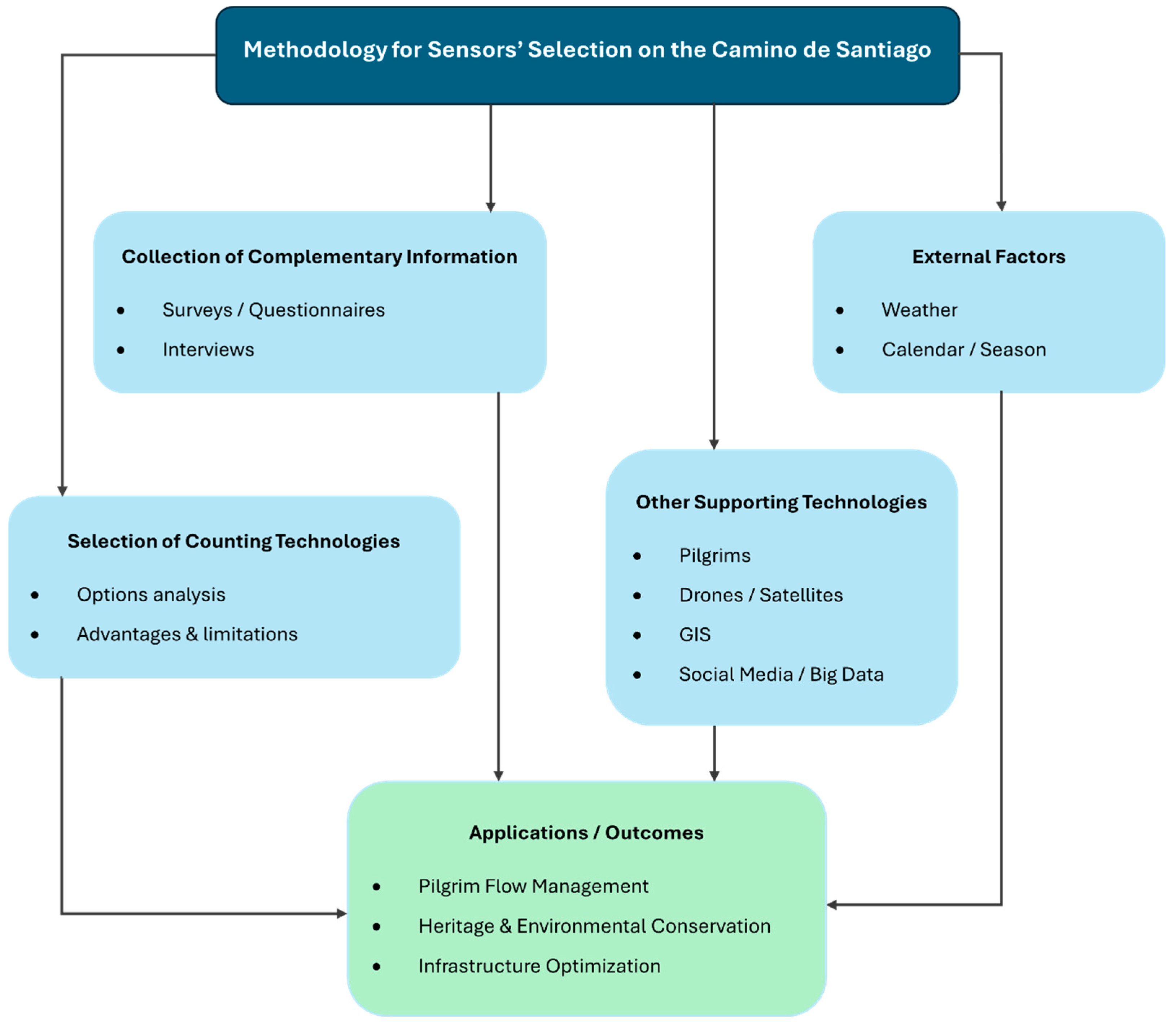
Considering the specific characteristics and dynamics of the Camino de Santiago, an appropriate data collection methodology will be established to support the effective management of the route and the pilgrim flows, as shown in
Figure 1. The objective is to enhance service provision and mitigate overcrowding at critical points along the Camino. Furthermore, this approach seeks to generate valuable information regarding pilgrims, routes, and the associated environmental, cultural, and economic impacts, among other relevant aspects. The following section outlines the proposed methodological framework for this purpose.
The collection of data on the Camino de Santiago requires a comprehensive strategy that combines technological tools with qualitative approaches to capture both quantitative flows and the lived experiences of pilgrims. The process begins with the selection of appropriate people-counting technologies, following a prior analysis of the advantages and limitations of each option. Depending on the characteristics of specific locations such as whether they are rural paths, urban squares, or narrow passages, the most suitable sensors are deployed to ensure reliable information about the number of visitors, their direction of movement, and temporal patterns of use. This technological foundation makes it possible to build an evidence base for better management and planning.
In parallel, complementary information sources enrich the understanding of pilgrim dynamics. Surveys and questionnaires can provide data on satisfaction levels, motivations, and perceived difficulties, while interviews with pilgrims, hostel managers, and local residents offer deeper qualitative insights into individual and community experiences. Direct field observation allows researchers to evaluate behaviors and interactions with the environment and existing records, and statistics from local offices, hostels, or institutions provide historical context. These traditional methods can be expanded with advanced digital solutions such as mobile applications for real-time geolocation, drones and satellite imagery to monitor trail conditions and infrastructure, a Geographic Information System (GIS) for mapping and spatial analysis, and social media or big data analytics to capture perceptions and trends. Additionally, Radio Frequency Identification (RFID) or NFC devices, along with open data sources, can be integrated to produce a 360° view of mobility and usage patterns across the Camino.
Finally, external factors must be incorporated into the analysis, since they strongly influence flows. Weather conditions shape daily decisions on stage planning, while seasonality and the calendar of religious or cultural events affect the overall volume of pilgrims. By integrating technological data, complementary field information, and contextual factors, it becomes possible to develop applications that respond to practical challenges. These include redistributing flows to reduce congestion, preserving heritage and natural environments by identifying pressure points, optimizing infrastructure and services to meet real needs, designing targeted tourism promotion strategies, and generating evidence for research and policymaking. In this way, the data collected not only support operational management but also contribute to the long-term sustainable development of the Camino de Santiago.
Sensor Selection per Pilot
Previous analyses compared various people-counting technologies, outlining their advantages, limitations, and modes of data acquisition. Building on this assessment and considering the specific management needs of each pilot site, the most appropriate sensing technologies were selected for deployment within the smart pilgrim management framework.
The selection process began with the identification and characterization of Points of Interest (PoIs) along the Camino de Santiago considering the pilots of the project. Each site was evaluated according to a set of environmental and infrastructural criteria that influence the suitability and performance of different sensing systems:
- •
Power availability: In locations without a stable power source, sensors with autonomous operation and sufficient energy capacity were prioritized to ensure uninterrupted data collection.
- •
Mobile network coverage: In areas with limited or no connectivity, devices were required to include local data storage capabilities to buffer information until transmission to the remote server was possible.
- •
Environmental integration: In contexts where visual discretion and resistance to vandalism are essential, sensors were selected to minimize visual impact and blend with the surroundings. Technologies such as Passive Infrared (PIR) sensors, footprint pressure sensors, or radar-based systems were preferred for their unobtrusive nature.
- •
Passage width: The physical characteristics of the monitored pathway strongly determine the required sensing approach. For narrow passages, low-cost photoelectric or infrared sensors provide sufficient accuracy. Wider or more complex areas, however, require advanced systems such as thermal or stereoscopic cameras, video analytics, or ToF sensors. These typically demand continuous power supply or solar panels, which may increase maintenance complexity and exposure to vandalism.
The most relevant PoIs identified along the Camino are pilgrim hostels and Tourist Information Centers. These locations generally have access to electricity and mobile network coverage, enabling the use of more advanced and accurate people-counting systems. In these cases, the main constraint shifts from technical feasibility to economic sustainability, as installation and maintenance costs can vary significantly across technologies.
Beyond simple counting, the framework also integrates location-based data as a complementary information layer to support advanced behavioral and flow analyses. Although geolocation technologies were not included in the initial taxonomy of counting systems, they provide valuable contextual insights that enhance decision-making. Implementing a location tracking system allows Camino managers to derive several indicators, including:
- •
Most frequently used routes by pilgrims;
- •
Average travel time between two reference points;
- •
Duration of stay at specific locations (e.g., hostels, monuments, or rest areas);
- •
Density and temporal clustering of visitors within specific zones.
For this purpose, Wi-Fi and Bluetooth receivers can be installed at selected PoIs. Each device covers an area of approximately 70 m, detecting any mobile device with active Wi-Fi or Bluetooth signals without requiring user interaction or network connection. All sensor and location data will be transmitted to a central remote server, where they are processed, aggregated, and integrated into the project’s dashboard. This enables the generation of high-value indicators to support the strategic planning, visitor management and real-time monitoring of the Camino de Santiago.
Considering this, a set of sensors were selected to be installed in each of the pilots:
- •
Belorado, Burgos, Spain;
- •
Camino Lebaniego, Cantabria, Spain;
- •
Eauze, France;
- •
Vila Pouca de Aguiar, Portugal.
As shown in
Table 2, four different sensors were considered.
The proposed system is designed to be context-adaptive, with its primary application in pilgrimage routes and high-density religious tourism environments, such as those considered within the ULTREIA project (e.g., segments of the Camino de Santiago).
Rather than being location-specific, the system follows a scalable and modular architecture, enabling its adaptation to a variety of spatial contexts, including linear routes (e.g., pilgrimage paths), bounded areas (e.g., sanctuaries or heritage sites), and urban zones characterized by dynamic and fluctuating tourist densities.
To account for variability in spatial scale and configuration, the framework incorporates mechanisms for spatial segmentation and dynamic zoning. These features allow for tailored deployment and operation according to the physical and functional characteristics of each site.
Finally, the proposed system relies on heterogeneous data sources, including infrastructure-based sensors (e.g., infrared counters) and anonymized mobile data. Data collection is primarily conducted at the infrastructure level, thereby not requiring the active participation of individual tourists.
When mobile-based data is utilized, it is processed in an aggregated and anonymized manner, in full compliance with GDPR and relevant data protection regulations. The information generated by the system will be disseminated through user-facing applications and public interfaces (e.g., mobile applications and digital signage), providing value-added services such as congestion alerts, route recommendations, and safety notifications.
These outputs are particularly relevant for the municipal authorities and decision-makers responsible for managing pilgrim flows, supporting timely and informed interventions. At the same time, end users may benefit either passively or through optional digital services without any mandatory engagement.
Therefore, the operation of the system does not require the distribution or adoption of any specific platform or service by tourists in order to enable data collection.
3. Framework Proposed for Smart Pilgrim Management
This section presents the high-level architecture of the Integral Control Panel developed for the ULTREIA SUDOE project. The architecture is derived from the system requirements, data sources, user needs, and functional objectives described in previous chapters. It defines how the platform is structured, how components interact, and how data flows from sensors and external sources to indicators and user-facing dashboards.
3.1. Framework Overview
The platform follows a modular, scalable, and service-oriented architecture built using Django 5.2 (back-end) and PostgreSQL 18 (database), with the front-end consuming REST APIs 3.27. This architecture ensures real-time monitoring, secure access control, reliable data ingestion, and the efficient generation of indicators for each pilot.
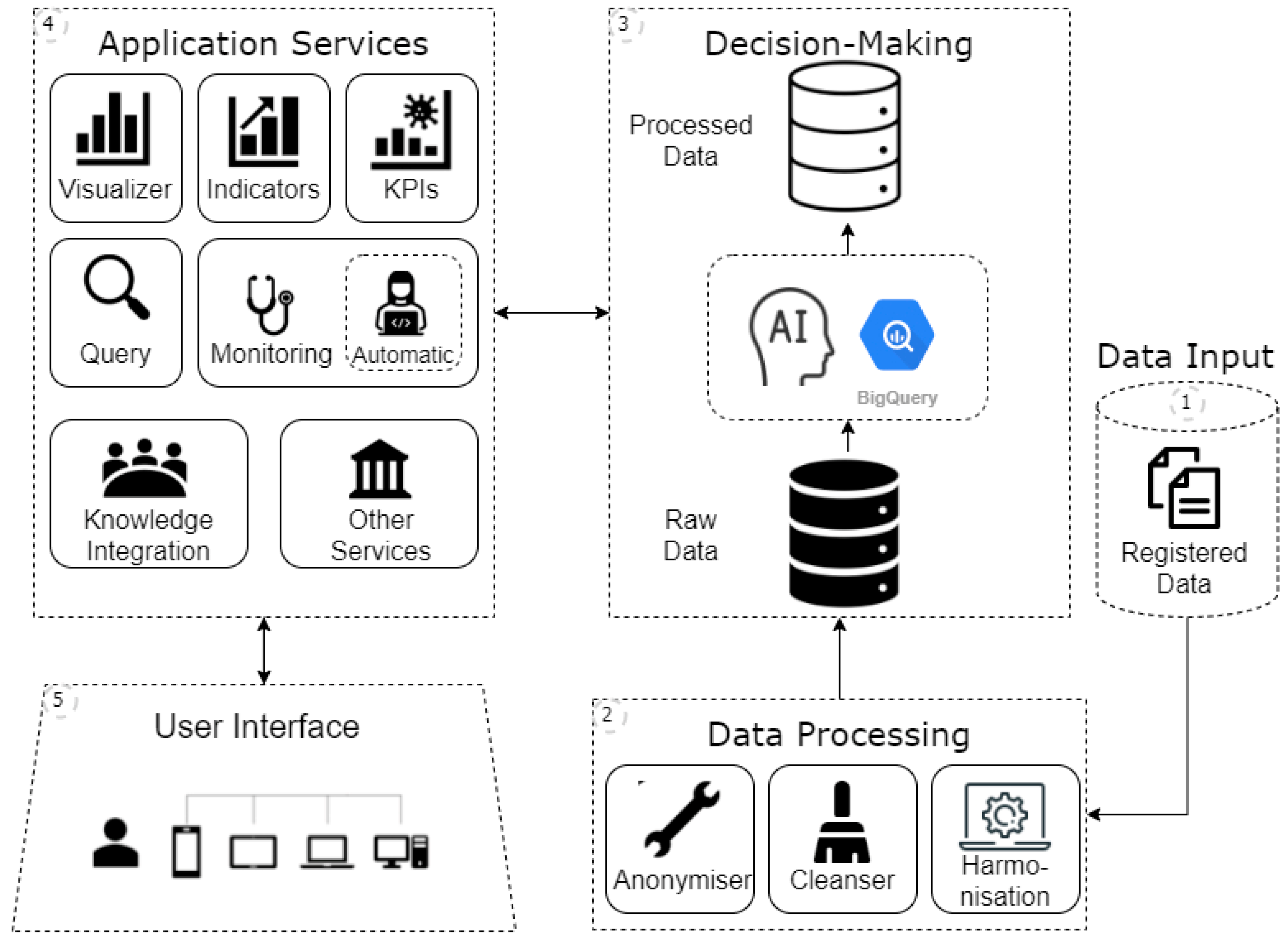
The architecture of the ULTREIA SUDOE platform was designed after a detailed analysis of all technical requirements. It consists of several interconnected components, each responsible for specific aspects of the platform’s functionality, as illustrated in
Figure 2.
The platform is structured into five core modules. The Data Input component acts as the main entry point for information, aggregating data from pilot sites, local authorities, sensors, stakeholders, and complementary public sources. These datasets may optionally pass through the data processing module before being stored or analyzed. This processing layer is composed of three functional components: the Anonymizer, the Cleanser, and the Harmonizer.
The Anonymizer is an optional service that protects sensitive information by masking personal data, confidential municipal datasets, or any content that cannot be shared beyond specific user groups.
The Cleanser is used when raw datasets contain noise, errors, or inconsistencies. It supports both basic and advanced operations such as type conversions, removal, or the transformation of out-of-range values and management of missing entries through interpolation or extrapolation.
The Harmonizer extracts and structures usable data, generating an organized, tabular representation of the inputs. It removes values irrelevant to ULTREIA SUDOE workflows, resolves privacy-sensitive fields when required, and can process structured formats (XML, JSON), semi-structured sources (CSV), database extracts, or streaming data. When processing is unnecessary, datasets can be uploaded directly into the storage layer.
After processing, data flows into the data storage layer of the decision-making module. This component stores all datasets and semantic metadata used by the platform. As with any large-scale data system, the storage infrastructure must ensure scalability, availability, and flexibility. It must efficiently manage large and heterogeneous datasets, while offering high-performance indexing, querying capabilities, and secure content management. The system must also support the fast and reliable upload of large datasets.
In parallel, processed and enriched data become available to the Query Builder, which provides real-time indexing and advanced querying. Data is stored using predefined structural formats, and indexing occurs during processing to ensure fast retrieval for subject-based queries.
The platform also incorporates additional decision-support features to manage diverse data sources, including human inputs and contextual parameters. The Query Builder provides an intuitive graphical interface that allows users to create simple or advanced queries, select data sources, apply filters, and refine parameters. Results are displayed with pagination, can be further filtered, and may be passed to the Visualizer for additional analysis. When a decision-support process requires parameter inputs, the decision-making layer collects these parameters and sends them to the Query Builder Controller for execution.
Finally, all outputs and analytical services are accessed through the User Interface Module, which provides visualization dashboards, monitoring tools, knowledge-integration features, and KPI and indicator reporting.
The initial version of the architecture was developed as a direct translation of the project’s technical requirements into a structured design and specification of the ULTREIA SUDOE components. This first architectural version ensured that all identified needs were addressed and that the platform delivered the essential functionalities required for the initial release of the system.
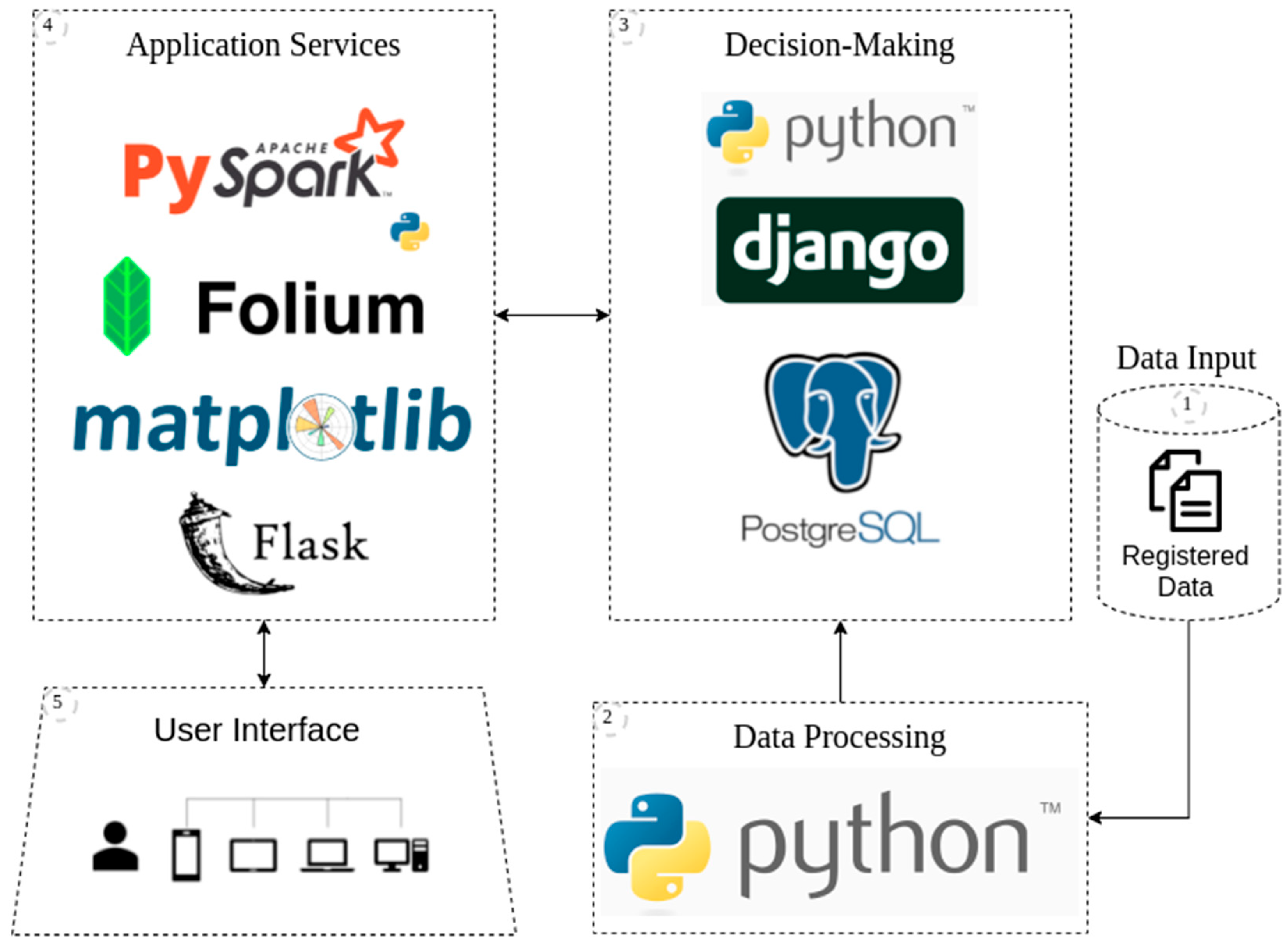
To support this architecture, a set of tools and technologies was selected according to the platform’s processing, storage, and visualization requirements, as shown in
Figure 3.
For the data processing layer, Python 3.14 is used as the primary language, offering flexibility and strong analytical capabilities. The platform’s core decision-making and management functionalities are implemented using Django with a PostgreSQL database. At the service level, PySpark 4.1 supports scalable processing tasks, complemented by Flask for lightweight service endpoints. For visualization and geospatial analysis, the platform integrates Folium and Matplotlib, providing clear, interactive, and informative visual outputs.
3.2. Back-End Components (API, Processing)
The back-end of the ULTREIA SUDOE platform is designed to ensure secure data access, efficient processing workflows, and reliable communication between system components. It combines a core Django-based API, specialized processing modules, and auxiliary microservices to support scalable and flexible data management. The following elements form the foundation of this architecture:
- •
RESTful API Layer (Django REST Framework): Provides secure endpoints for data exchange, enforcing authentication, validation, and controlled access for all platform resources.
- •
Data Ingestion Services: Handle inputs from sensors, pilot uploads, municipal datasets, and field sources. These services validate formats, prevent corrupted entries, and support both batch and near real-time ingestion.
- •
Processing and Transformation Module (Python/PySpark): Executes cleansing, harmonization, and enrichment tasks, including handling missing values, removing noise, normalizing formats, and computing aggregated indicators for analysis.
- •
Decision-Making Logic (Django Services): Computes analytical metrics such as mobility patterns, visitor flows, and environmental summaries and provides structured outputs to dashboards and monitoring tools.
- •
Auxiliary Microservices (Flask): Manage specialized or computationally heavy tasks (e.g., geospatial transformations or background analysis), ensuring workload isolation and improved scalability.
- •
Database Layer (PostgreSQL + PostGIS): Stores both raw and processed data, supports efficient geospatial querying, and ensures fast retrieval for map-based visualizations.
Together, these components enable a back-end architecture capable of processing heterogeneous data, delivering actionable insights, and supporting the operational needs of the ULTREIA SUDOE platform in a reliable and scalable manner.
3.3. Data Structure
The data structure of the ULTREIA SUDOE platform was designed to organize heterogeneous information from sensor measurements to user-generated insights into a coherent, scalable, and interoperable model. Its primary goal is to ensure efficient storage, fast querying, and the meaningful transformation of raw data into actionable indicators for the dashboard.
At its core, the system is built on a relational architecture using PostgreSQL enhanced with PostGIS for geospatial support. Data is structured into well-defined entities that reflect the operational needs of the project and the diversity of inputs from pilot sites.
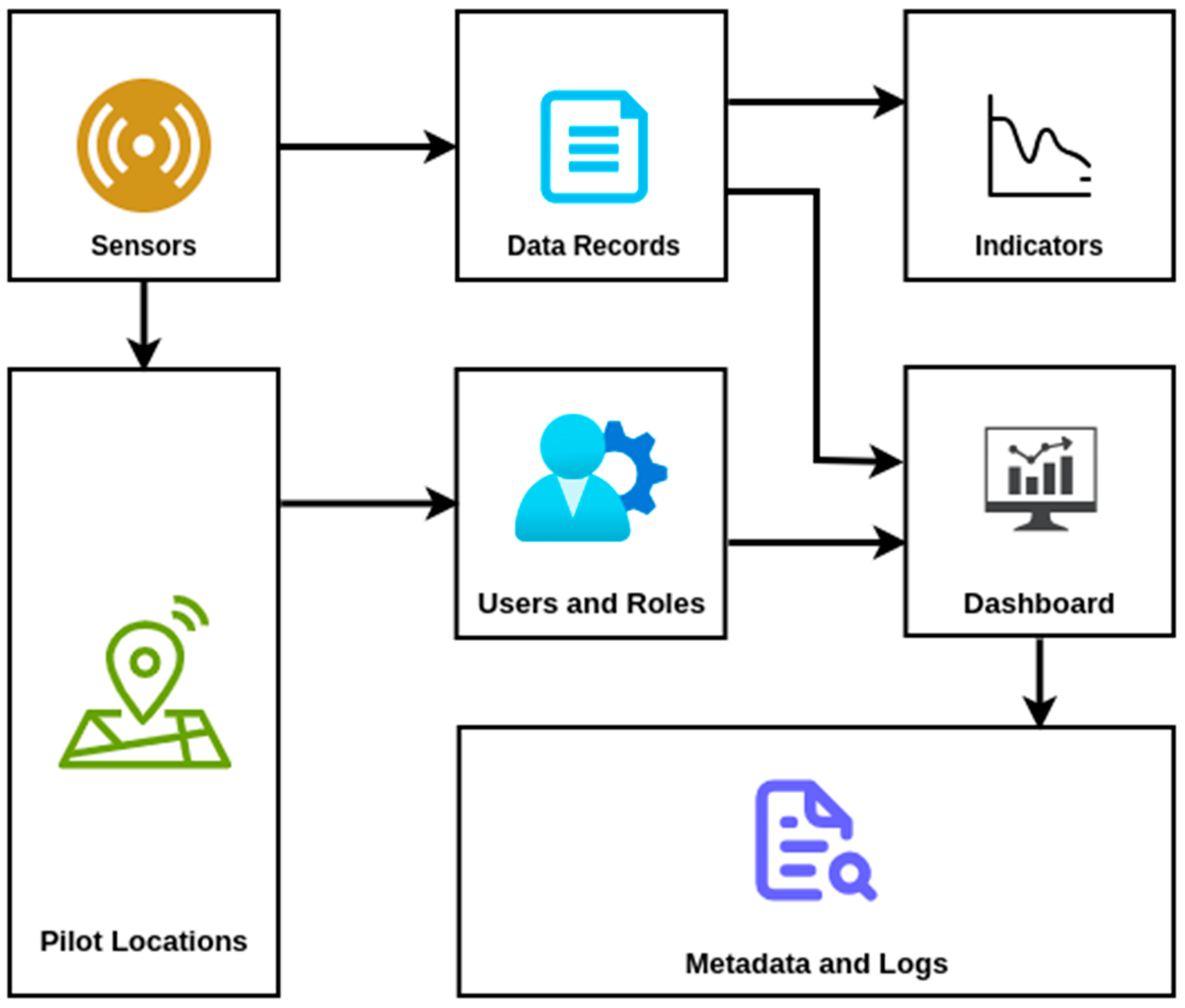
Figure 4 illustrates the high-level structure and relationships between the main components of the database.
The main elements of the data structure include:
- •
Sensors: Store metadata about each deployed device (type, location, pilot area, and variables measured) and enable the traceability of data to its source.
- •
Sensor Data Records: Contain timestamped measurements including counts, environmental variables, and mobility metrics structured for efficient aggregation and time-series analysis.
- •
Pilots/Locations: Represent geographical zones within the SUDOE region, allowing for grouping, comparison, and cross-pilot analytics.
- •
Indicators: Store derived metrics produced by the processing pipeline (e.g., daily visitor counts, environmental averages). These tables serve as optimized inputs for visualization and reporting tools.
- •
Dashboard: It centralizes the visualization and interpretation of processed data, transforming measurements and metrics into actionable information through charts, maps, and interactive reports. It serves as the main interface for users to analyze trends and patterns.
- •
Users and Access Profiles: Define authentication roles, permissions, and access levels to protect sensitive information and enable multi-stakeholder collaboration.
- •
Supporting Metadata: Include configuration tables, sensor status logs, integration details, and harmonization rules that ensure consistency across data sources.
To complement the structural description, the following high-level data flow illustrates how information moves through the ULTREIA SUDOE system:
Sensors → Raw Data → Indicator Engine → PostgreSQL → Dashboard Visualizations
This flow ensures the following:
- •
Traceability of data from source to final indicators;
- •
Coherent and standardized indicator generation;
- •
Flexibility to integrate new sensors or processing modules as the platform evolves.
This structured, modular design enables the seamless integration of new datasets, accommodates future expansion of sensor networks, and supports fast access to the analytical outputs required by the ULTREIA SUDOE dashboard.
3.4. Evaluation Framework
Although the present work focuses on the conceptual design and architectural definition of the proposed system, an evaluation framework has been established to guide its future validation once full deployment is achieved.
The system performance will be assessed through a set of key performance indicators (KPIs), defined to capture both technical accuracy and operational effectiveness in the context of pilgrim flow management. These include the following:
- •
Crowd density estimation accuracy: Evaluating the reliability of sensing and data fusion mechanisms in representing real-world conditions;
- •
Flow monitoring and prediction performance: Measuring the system’s ability to detect and anticipate variations in pilgrim movement patterns;
- •
System responsiveness: Reflecting the latency between data acquisition, processing, and information delivery;
- •
Spatial and temporal resolution: Assessing the granularity at which crowd dynamics can be monitored;
- •
Data integration and fusion efficiency: Evaluating the consistency and interoperability of heterogeneous data sources.
In addition to KPI-based assessment, the system will be evaluated under a set of representative operational scenarios, including peak demand periods, normal flow conditions, and potential disruption events. These scenarios are designed to reflect realistic conditions observed in pilgrimage and high-density tourism environments.
A comprehensive quantitative evaluation, including measured values and scenario-based analysis, will be conducted in future work once data from the pilot deployments becomes available. This will enable the validation of the proposed framework under real operational conditions.
4. Discussion and Conclusions
This study demonstrates the relevance and feasibility of integrating smart tourism technologies into heritage pilgrimage routes such as the Camino de Santiago. Although traditionally characterized as low-tech, rural, and culturally sensitive environments, the Camino presents a unique opportunity for municipalities to adopt data-driven management strategies that enhance service provision while safeguarding the authenticity of the experience. The framework proposed in this paper, rooted in people-counting technologies, contextual data, and modular digital architecture, provides a replicable methodology for understanding and managing pedestrian flows across geographically dispersed territories.
A key contribution of this work is the demonstration that sensor-based flux measurement, when combined with qualitative and contextual data, can support municipalities in transitioning from reactive to proactive management. The diversity of technologies analyzed, ranging from PIR sensors to LiDAR, as well as mobile signal detection, tells us that no single solution is universally optimal; instead, suitability depends on environmental, infrastructural, and operational characteristics specific to each pilot site. The integration of these heterogeneous data sources into a unified platform, as implemented in the ULTREIA SUDOE dashboard, allows for the comprehensive monitoring of flows, detection of congestion patterns, and generation of meaningful KPIs that inform decision-making.
For heritage conservation, this technological approach holds significant implications. Understanding peak loads, temporal usage patterns, and pressure points enables local authorities to mitigate the degradation of sensitive cultural sites, optimize maintenance schedules, and strategically distribute visitor pressure. The insights generated through the dashboard can also support emergency planning, environmental protection, and long-term preservation strategies. Importantly, the framework remains mindful of privacy and ethical considerations, favoring anonymous data collection approaches and providing mechanisms for data cleansing, harmonization, and secure handling.
From the perspective of pilgrim experience, the adoption of smart management tools contributes to improved comfort, safety, and information accessibility. The ability to forecast crowding conditions, identify popular or alternative routes, and enhance service allocation directly supports the quality of the journey. Municipalities may also leverage insights from the platform to tailor communication strategies, develop user-oriented mobile applications, or design interpretative content that enriches the cultural and spiritual dimensions of the Camino.
Despite its potential, the framework faces several limitations. The accuracy and availability of sensor data depend on environmental conditions, infrastructure constraints, and the reliability of power and connectivity in rural areas. Additionally, the investment required for advanced sensing technologies may pose challenges for smaller municipalities with limited budgets. Ensuring long-term maintenance, calibration, and protection against vandalism also remains crucial for sustainable implementation.
Finally, although the framework combines both quantitative and qualitative methods, further work is needed to deepen the integration of behavioral, motivational, and experiential dimensions of pilgrimage, which remain central to understanding user dynamics on the Camino.
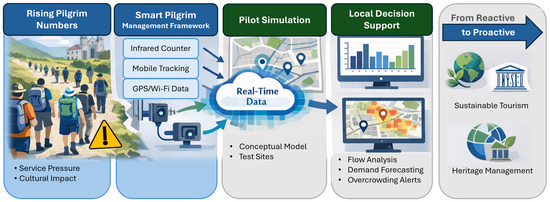
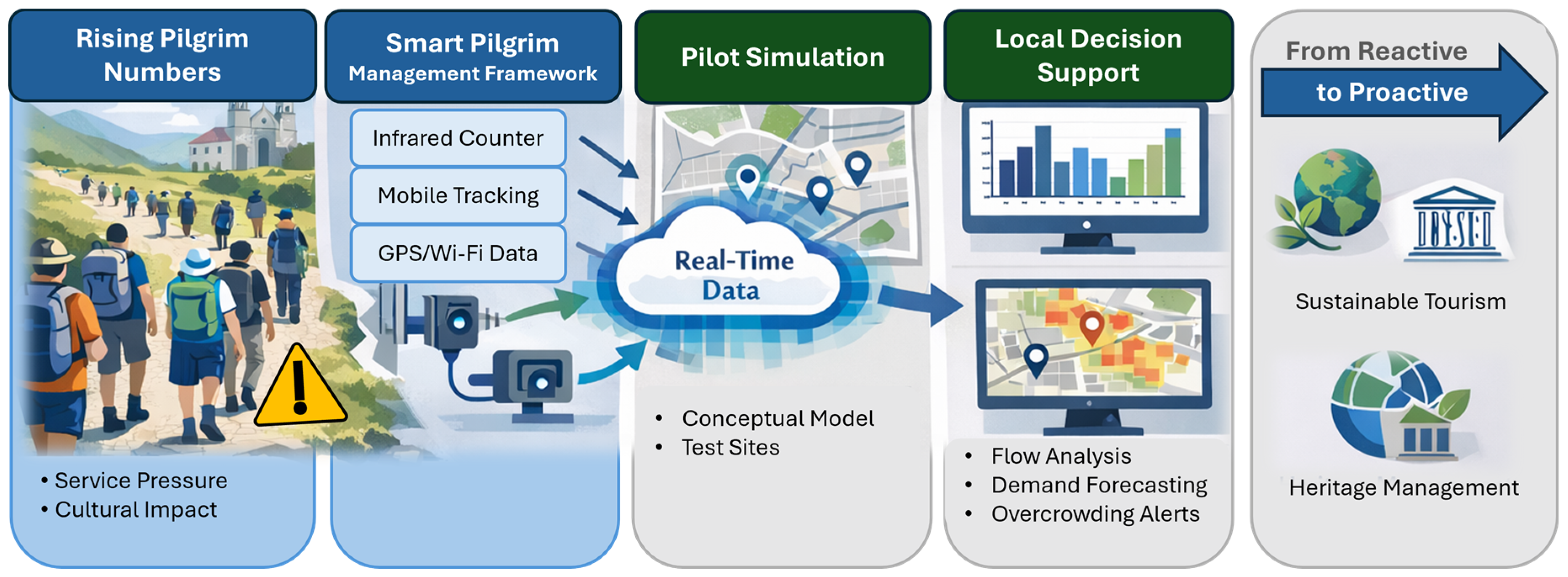
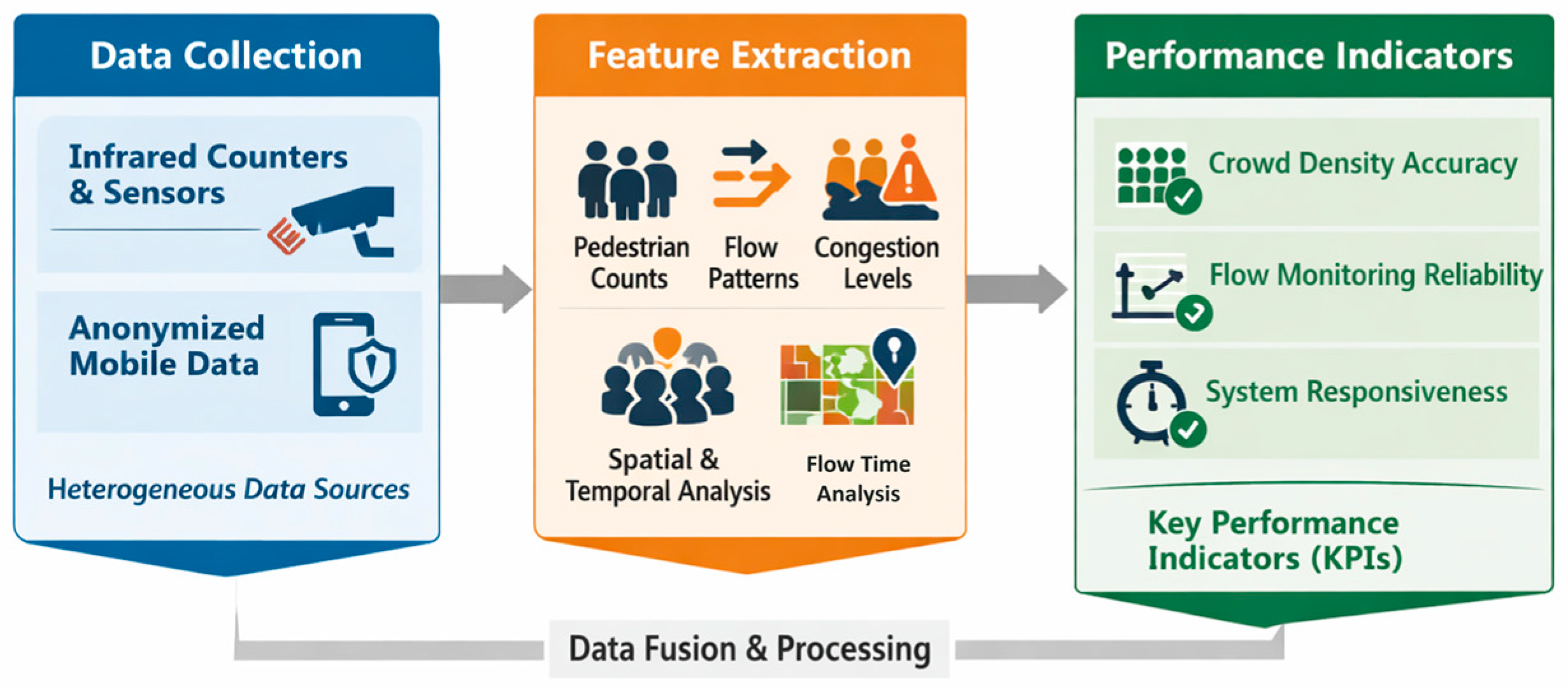
The proposed system is designed to enable the extraction of relevant features from heterogeneous data sources to support the monitoring and management of pilgrim flows, as shown in
Figure 5. These features are derived through the integration and processing of data collected from infrastructure-based sensors (e.g., infrared counters), as well as aggregated mobile-based data. The feature extraction process focuses on transforming raw data into meaningful indicators that describe both the spatial and temporal dynamics of crowd behavior.
Key extracted features include pedestrian counts, flow rates, and directional movement patterns, which are used to estimate crowd density and identify congestion levels across different segments of the monitored area. Temporal patterns, such as peak periods and flow variability, are also derived to support anticipatory analysis. In addition, spatial distribution metrics enable the identification of critical zones and bottlenecks within pilgrimage routes or high-density areas.
These features form the basis for the definition of key performance indicators (KPIs), including crowd density estimation accuracy, flow monitoring reliability, and system responsiveness. While quantitative performance values are not yet available due to the ongoing deployment of the sensing infrastructure, these indicators establish a structured foundation for future evaluation and validation once real-world data becomes available. Feature extraction is supported by data fusion techniques that combine multiple sensing modalities to improve robustness and reduce uncertainty.
Looking ahead, several avenues for future research and technological development emerge. As a practical continuation of this work, the next phase will focus on completing the full implementation of the proposed smart pilgrim management framework and finalizing the installation of sensors across all pilot sites. This stage will allow the integrated system, comprising counting technologies, mobile signal detection, data processing pipelines, and the dashboard, to be tested under real operating conditions. Deploying sensors in diverse environmental and infrastructural contexts will provide essential validation of their performance, robustness, and interoperability. Once operational, the combined dataset will enable pilot municipalities to evaluate the effectiveness of the framework in producing actionable indicators, supporting decision-making, and enhancing situational awareness along the Camino de Santiago. This implementation and testing phase will therefore be critical not only to refine technical components but also to assess the system’s overall value and scalability for long-term adoption across the wider pilgrimage network.
In conclusion, this study bridges the gap between traditional pilgrimage dynamics and contemporary smart tourism approaches by proposing a structured, ethical, and scalable framework for pilgrim flow monitoring and management. By combining sensor technologies, contextual data, and a robust decision-support architecture, the ULTREIA SUDOE platform provides municipalities with an innovative tool for enhancing sustainability, preserving cultural heritage, and improving the overall experience of pilgrims traveling along the Camino de Santiago.




 ,
,