1. Introduction
Global economic restructuring, rapid technological progress, and the development of knowledge-based industries have provided new guidelines for urban development strategies over the past three decades [
1,
2]. In this context, many post-industrial cities are following a new path in order to revitalize their societies by integrating cultural and creative industries into their local economies. Creative reindustrialization is a multidimensional process through which post-industrial cities combine cultural production, creative industries, technological innovation and heritage-led regeneration to engage new types of economic, social and spatial development. These cities use creativity, place-based identity, and strategies of innovation to reuse industrial legacies and aid shifts to more sustainable and diversified urban economies, which are culturally embedded. Creative reindustrialization is not just connected with economic progress, but extends to cultural, social and governance aspects that, collectively, determine the new ways in which post-industrial change may be shaped [
3,
4,
5]. While major urban centers often dominate discussions surrounding industrial renewal, the potential of second-tier cities in driving innovation and economic development through creative reindustrialization is increasingly recognized [
6,
7]. Second-tier cities frequently become focal points of decentralization policies aimed at spreading economic growth and urban development beyond top-tier cities, and they are often the subject of creative reindustrialization and urban regeneration efforts [
8].
In accordance with internationalization in sustainable and circular urban development, a number of international frameworks have underlined the significance of the lifecycle thinking in terms of renewing post-industrial environments. Adaptive reuse in the city, resource efficiency, and resiliency are the key principles of the city transformation supported by the UN 2030 Agenda on Sustainable Development, especially Goal 9 (Industry, Innovation and Infrastructure) and Goal 11 (Sustainable Cities and Communities) [
9]. Also, the Circular Economy Action Plan [
10] by the European Union states that to improve the environmental footprint, it is necessary to recycle old buildings and infrastructures by renovating them, re-purposing them, and recovering materials, thus enhancing the reindustrialization process through innovation. To support these policy directions, the ISO 15686 standard on Buildings and Constructed Assets-Service Life Planning gives methodological direction on how to assess and optimize the performance of building lifecycle by incorporating economic, environmental, and social aspects of sustainability [
11]. Collectively, the frameworks constitute a universal baseline of integrating lifecycle economics into creative reindustrialization, whereby redevelopment of old industrial sites would help in long-term sustainability of urban areas and efficiency of resources.
Although there is a growing research interest in culture-led regeneration and creative economy, research in the context of creative reindustrialization in the second-tier cities remains scarce. First, much of the existing literature is focused on national capital cities, i.e., first-tier cities like London or Berlin, highlighting them as universal models for creative transformation while neglecting unique resources in smaller cities [
12]. Second-tier cities usually have limited financial assets, governance resources, and lower global visibility, so the implementation of creative policies cannot be the same. Bearing this in mind, these differences are still not examined enough in comparative research [
13,
14], nor are the impacts of local factors like industrial legacies, demographic trends, or local identity on creative reindustrialization [
15]. Another significant gap is reflected in how the impact of creative industries is measured, since only a few studies used quantitative data to connect creative reindustrialization with positive indicators such as employment, GDP growth, small business development, or creation of tourism income, especially outside metropolitan areas [
10,
16]. Furthermore, the social dimension of creative transformation is insufficiently explained since most research focuses on how a city can build its image and increase competitiveness, while negative effects such as gentrification, social exclusion, or neglecting vulnerable local groups are overlooked [
17,
18]. Empirically testing these indicators is important because they can be even more pronounced in second-tier cities [
19]. Additionally, there is a gap to address in terms of policy implementation: although frameworks such as the EU’s Smart Specialization Strategy [
20] or UNESCO’s Creative Cities Network [
21] encourage second-tier cities to leverage creativity for development, there is limited understanding of how local governments adapt these top-down models to their specific contexts, what institutional barriers they face, and how governance dynamics influence outcomes [
22,
23]. The literature does not provide many long-term studies that trace the effects of creative strategies over time, nor cross-sectoral analyses that connect cultural policy with tourism planning, urban design, or industrial innovation [
24,
25]. Finally, although some researchers have criticized the “creative city” idea since it focuses on branding and symbolic capital over inclusivity [
26,
27], very few studies suggest alternative models or policy approaches that balance external visibility with internal fairness [
28,
29], a balance that is essential if creative reindustrialization is to become a sustainable, socially fair, and well-balanced development strategy for second-tier cities.
To respond to these research gaps, our paper adopts a systematic critical review approach to develop a comprehensive, structured, and rigorous synthesis of existing research on creative reindustrialization in second-tier cities. This approach is important for several reasons. First, given the fragmented nature of the literature (concept of creative reindustrialization applied in disciplines such as urban studies, economic geography, cultural policy, tourism, and regional development), a systematic review provides a clearer framework for collecting, organizing and critically examining existing research, revealing, as a result, patterns, main differences, and theory gaps. Second, by examining studies performed in different countries or with different methodological approaches, the review can identify which contextual factors (industrial heritage, policy design, socio-spatial dynamics, etc.) can shape or lead to success or failure of creative strategies, while mostly single case studies cannot. Third, the critical perspective adopted in our review allows questioning of the dominant ideas from the creative city literature. Much of this literature is highly optimistic and often draws conclusions from single case studies, without addressing issues of fairness, social inclusion, or long-term sustainability. Furthermore, this review addresses the methodological gap by synthesizing empirical evidence that links creative interventions to measurable outcomes such as employment, GDP growth, tourism development, and social well-being, thereby providing a more evidence-based foundation for future policy and research. By integrating conclusions from more than two decades of research, our paper not only maps the current state, but also constructs a conceptual framework that situates creative reindustrialization within broader debates on sustainable urban development and territorial cohesion.
This study provides several significant contributions to the understanding of creative reindustrialization and its role in transforming second-tier cities. Creative reindustrialization is viewed as a multidimensional process that includes economic restructuring, cultural production, spatial regeneration, community development, and innovation in management practices. The systematic review of 103 articles allowed us to identify the most common thematic dimensions, addressing theoretical and methodological gaps in the literature. The proposed CRE-TRANS model provides a framework for understanding how these dimensions interact, while our suggestions for a related research agenda outlines directions for future research. Also, since the existing literature on creative reindustrialization is fragmented and spans multiple disciplines, the research questions were formulated after the thematic review, rather than prior to data collection. These questions emerged from identifying research gaps across the 103 articles included in the review. Finally, the study offers insights relevant to policymakers, showing how creative reindustrialization can be a strategic tool for the sustainable development of second-tier cities.
2. Conceptual Background
2.1. Second-Tier Cities: Definition and Criteria
There is no single, universally accepted definition of second-tier cities. Different researchers and organizations rely on varying criteria, including demographic scale (e.g., 200,000–2 million residents) and management instruments (these cities usually depend on national or regional funding and have limited decision-making autonomy). Another important criterion is their global visibility, as most of these cities have limited presentation in international rankings [
30,
31,
32]. The European Observation Network for Territorial Development and Cohesion (ESPON) describes second-tier cities as non-capital major cities that have an important role in the national economy, often acting as centers for regional government, education, and industry [
33]. They are seen as cities with the potential to enhance national growth and support decentralization processes, even though they do not have the same visibility or global influence as the first-tier cities. Second-tier does not mean ‘second-class’ or less important city, and it also does not always mean the country’s second biggest city. Rather, these cities are seen as places whose economy and society matter for the country, even if they are not the main centers of global finance, politics, or culture [
34]. Parkinson et al. [
31] pointed out that second-tier cities can be very different in size and role: some are big regional centers like Barcelona, Munich, or Lyon, while others are much smaller but still important in their country. Taken together, second-tier cities make up the ‘middle’ of the urban system: they stand between the capital cities that hold most of the resources and the smaller towns that have less influence. ESPON’s study of 127 European second-tier cities showed that together they make up nearly 80% of Europe’s metropolitan population, highlighting how large and important they are for the economy [
33]. At the same time, these cities are very different from each other, which makes them interesting to compare, especially in how they deal with reindustrialization, creative renewal, and cultural identity. Furthermore, they became the focus of policies that try to increase economic growth more evenly across countries, recognizing, at the same time, creativity and culture as key tools for this renewal [
34].
2.2. Creative Effort and Industries in Second-Tier Cities
The development of second-tier cities was mostly under the influence of their industrial legacies. In many parts of Europe, North America, and East Asia, these cities expanded rapidly during the 19th and 20th centuries due to the growth of heavy industries like coal mining, steel, shipbuilding, and textiles production [
35,
36]. This pattern was not universal since the industrial composition and urban growth varied across continents, reflecting different historical, economic, and political circumstances. These industries were the main source of jobs and local income, and they also shaped the communities’ identity and the physical landscape. However, from the 1970s onwards, globalization, outsourcing, and new technologies caused deindustrialization. Many second-tier cities, unlike capitals or top global cities, were affected when traditional industries collapsed. This led to job losses, social problems, and large abandoned industrial areas [
37]. In response to this, the concept of reindustrialization emerged as a new framework for urban renewal. Instead of bringing back old heavy industries, reindustrialization in second-tier cities was seen as shifting industry toward new technologies, knowledge-based work, and especially cultural and creative sectors [
7,
38]. Old industrial sites like factories, docks, and warehouses, as well as symbolic resource rooted in collective memory, have been increasingly seen as valuable for bringing new life to cities. This has guide many second-tier cities in finding a new place in national and international networks through culture-led renewal [
39].
Although related, the concepts of creative reindustrialization, culture-led regeneration, and the creative economy should not be seen as the same. Creative reindustrialization is understood as a transformation process that integrates culture, creativity, innovation, and heritage. Its economic aspect (led by art, design, cultural production, and new technologies), is one of the key mechanisms in the broader process. Such economic transformation cannot be considered as an isolated phenomenon, but rather, it interacts with cultural, spatial and social processes to produce new developmental trajectories within the post-industrial cities [
5,
40]. Culture-led regeneration is a part of this greater process and it uses cultural programs, arts initiatives, and heritage reuse to regenerate certain districts or neighborhoods. The creative economy, in turn, is the subsystem of the economy, which is composed of creative industries, cultural production, design, and digital technologies that may enable this transformation. In this respect, culture-led regeneration and creative economy are one of the components/drivers of creative reindustrialization. Creative reindustrialization often means the conversion of old industrial sites into cultural spaces and creative areas, like the Zollverein Coal Mine in Essen [
41]. It can also include building creative clusters, where artists, designers, and start-ups work side-by-side in old factory zones, generating new ideas and businesses [
6]. Festivals, exhibitions, and cultural events make these cities more visible, while makerspaces and digital hubs give people opportunities to try out new ideas, mixing traditional skills with digital tools. These efforts help in diversification of the economy and also build local identity and improve the city’s image internationally [
42,
43]. At the same time, creative reindustrialization in second-tier cities can bring challenges. Critics pointed out that culture-led projects can lead to gentrification, turn heritage into a marketing product, and displace vulnerable groups if not managed properly. Also, relying on big projects like landmark museums or major festivals can lead to weak development models that cannot secure long-term sustainability [
44,
45,
46]. Even so, second-tier cities act as important case studies on how an industrial past connects with creative futures.
Cultural and creative industries are marked as key drivers of urban change, especially in post-industrial cities. Over the last 25 years, researchers have shown that creativity, knowledge, and material and symbolic production led cities to economic development, replacing traditional and heavy industries as main source of competitiveness [
3,
47,
48,
49]. With the initial idea of Richard Florida’s [
50] creative class theory, which argues that cities that attract skilled and creative people are more likely to see economic growth, and innovation, second-tier cities started to build creative environments by offering cultural amenities and creating an open and tolerant atmosphere [
51]. Another theory has found its application in development of second-tier cities—cognitive-cultural economy developed by Allen J. Scott [
3]. Based on this theory, second-tier cities have started to cluster symbolic production activities such as fashion, film, or design into creative ecosystems in order to initiate production, consumption, and innovation [
52]. This approach also aligns with ideas of path creation and related variety, which indicates how cities can support existing cultural assets to diversify their economic base and create higher values for all participants [
53]. At the same time, creative reindustrialization strategies have often been intertwined with culture-led regeneration, a concept grounded in the theory of urban entrepreneurialism [
54]. Municipal and regional governments across Europe have adopted cultural investments, heritage reuse, and creative clustering as tools to revitalize post-industrial landscapes and stimulate local economies [
55,
56]. Moreover, some researchers pointed out that there are contradictions when it comes to the idea of creative city. For example, Peck [
57] and Booyens [
58] argued that if the focus is mostly put on creating brands and symbolic capital, it can cause socio-spatial inequalities since the priority is given to image-making and elite consumption over sustainable development. This problem is particularly prevalent in second-tier cities, since resources are limited and the risk of uneven benefit distribution is high. For this reason, the need for balancing external visibility with internal fairness is even more pronounced, since the creative strategies should support social inclusion, cultural diversity, and the needs of local residents.
2.3. Policy Context
Second-tier cities are increasingly becoming the focus of national and supranational policy frameworks that try to balance growth, cohesion, and innovation across territories. The European Union, in particular, has emphasized the role of these cities in fostering more polycentric development. One example is the ESPON’s document Second Tier Cities Matter showing that cities’ demographic and economic characteristics make them significant for national competitiveness and territorial cohesion [
33]. Previous research [
8,
59] indicated that policies directed toward second-tier cities aim to strengthen regional economies and promote balanced national growth by decreasing overconcentration of resources and opportunities in capital cities. One of the most influential policy framework in the EU, when it comes to second-tier cities, is the Smart Specialisation Strategy (S3) that serves as a guideline for how second-tier cities should identify their strongest assets (research, innovation, and entrepreneurial areas) in order to build competitive advantage [
20]. It is important to acknowledge that such frameworks reflect EU-specific institutional, political, and economic conditions and that their applicability may differ in non-European contexts, especially in regions such as Africa, Asia, or Latin America. Research showed that second-tier cities mostly used this policy tool to invest in creative industries, preserving cultural heritage, developing technology-driven clusters, and positioning themselves as hubs of innovation and cultural production [
60,
61], and to align their local policies with wider EU priorities like sustainability or digitalization [
62]. On the other hand, some researchers emphasized that absence and/or inadequate institutional capacities can limit second-tier cities in the successful application of these policies [
63,
64].
Another significant policy framework is UNESCO’s Creative Cities Network, which helps second-tiers cities with directives on how to increase international visibility by strengthening local creative sectors [
21]. A case study from Katowice (Poland) showed that culture, especially music, helped the city transform from an industrial city into a creative metropolis [
65]. At the same time, some scholars warn that the network can sometimes have a stronger focus on visualization and prestige creation, which can lead to unequal benefit to local residents, and even to the neglect of deeper social needs [
66]. Finally, municipal and regional authorities use strategies for local regeneration to encourage creative reindustrialization and to cope with post-industrial decline, by using heritage resources and creative cluster for reshaping and repositioning on the national and even global stage [
52,
67]. However, studies also indicated that if the focus is put only on high-profile projects or carnivalization, it cannot secure the long-term sustainability of the community, demonstrating the importance of integrating such plans and activities into cities’ strategic documents [
68,
69,
70].
3. Materials and Methods
The methodology of our research was in line with the guidelines outlined in the Systematic Review and Meta-Analyses (PRISMA 2020) Statement [
71], ensuring rigor and transparency in the review process (the review was registered under the registration number—OSF Registration No.: osf.io/dbgz7, while PRISMA 2020 Checklist can be checked in
supplementary material, Table S1). PRISMA 2020 provides clearer instructions on finding, selecting, evaluating, and summarizing studies within a systematic review. Prior to initiating the database searches, key concepts were formulated to encompass all pertinent research, accounting for potential synonyms, acronyms, and abbreviations. Those concepts were “creative reindustrialization”, “second-tier cities”, “cultural and creative industries”, and “urban and tourism development” (
Table 1). The search strategy utilized a mix of keywords, Boolean operators [
72], and subject headings relevant to various themes. The subject headings for the research were carefully selected to ensure thorough coverage and relevance to the core themes and to align with the key areas of urban development and creative industry strategies outlined in the research objectives. To capture a broad range of literature, synonyms and related terms, such as “industrial resurgence” and “cross-sectoral collaboration,” were included to avoid excluding relevant studies. Additionally, prior research, including systematic reviews and empirical studies on similar topics, was consulted to refine the subject headings and ensure they aligned with current academic discourse. We thoroughly searched the literature using two primary academic databases: Scopus and Web of Science. This decision was guided by their proven utility in prior research, ensuring uniformity and relevance [
73]. All the search processes took place in July 2024. In accordance with the PRISMA guidelines, the following criteria were used to refine the search results:
Articles on creative reindustrialization in second-tier cities were included;
Articles with primary empirical research design, including quantitative, qualitative or mixed methods, were incorporated;
Peer-reviewed journal articles were included;
Articles written in the English language.
The searches were conducted in Scopus and Web of Science Core Collection, where the conceptual strategy from
Table 1 was translated into complete Boolean queries. In Scopus, the following search string was used: TITLE-ABS-KEY (“creative reindustrialization” OR “industrial renewal” OR “industrial resurgence” OR “post-industrial transformation” OR “industrial heritage reuse” OR “industrial regeneration”) AND (“second-tier city” OR “medium-sized city” OR “regional city” OR “non-capital city” OR “urban system” OR “polycentric development”) AND (“creative industries” OR “cultural economy” OR “creative clusters” OR “cultural regeneration” OR “creative ecosystem” OR “symbolic production”) AND (“urban regeneration” OR “tourism development” OR “industrial tourism” OR “cultural tourism” OR “placemaking” OR “destination competitiveness”). The same reasoning was used in the Web of Science Core Collection where the TS = field tag was used to search titles, abstracts and keywords. The syntax was slightly modified to suit database-specific needs but maintained the same conceptual structure. All the retrieved records were exported into a single dataset, and duplicates were eliminated manually and using auto-filtering. The screening was performed in two stages. First, title and abstract screening was conducted so as to eliminate papers that were not concerning creative reindustrialization, second-tier cities, cultural and creative industries, and urban and tourism development. Second, the predefined inclusion and exclusion criteria were used to conduct full-text screening. The screening was performed by one reviewer and he re-examined all borderline cases and ambiguous cases twice to maintain consistency for decision-making.
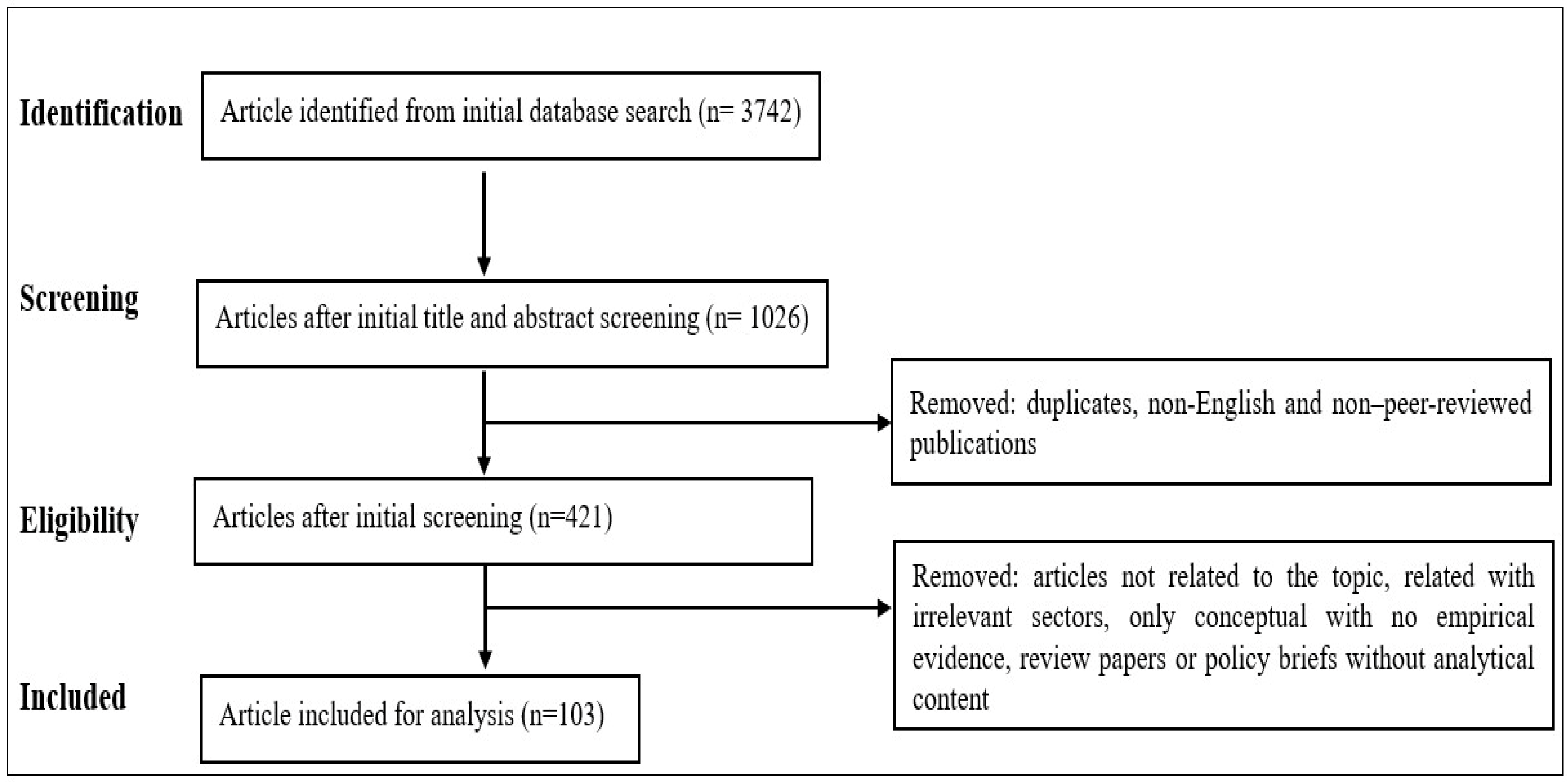
Using the defined search strategy, the initial search retrieved 3742 articles from major academic databases, Web of Science and Scopus. After removing duplicate entries and excluding non-English and non-peer-reviewed publications, a total of 1026 articles remained for further screening. Titles and abstracts were reviewed to assess their relevance to the topic of creative reindustrialization, second-tier cities, cultural and creative industries, and urban and tourism development. Articles that were unrelated to these core themes, or that addressed industrial change without any link to cultural or creative strategies, were excluded at this stage.
Following the initial screening, 421 articles were selected for full-text review. Of these, studies were further excluded for several reasons: some were purely conceptual without empirical evidence, others focused on unrelated sectors such as manufacturing without a cultural or urban dimension, and several examined creative industries in contexts unrelated to reindustrialization or urban development. Additionally, review papers and publications that did not engage with policy, planning, or spatial transformation aspects were excluded. Finally, a total of 103 articles were included in the review (
Table A1), with the earliest article published in 2005. The search protocol for the systematic literature review is presented in
Figure 1. We used thematic analysis, as one of the analytic tools, to analyze and bring together the key findings from the existing studies, and to identify directions for future work.
In order to determine thematic patterns, we conducted an inductive topic analysis of the selected 103 articles. The process included several steps. The results, discussion, and conclusion section of each article were first imported into an Excel coding sheet and the open coding was performed to identify the concepts regarding cultural, technological, economic, social, and spatial components of creative reindustrialization. Interactive comparison was then used to determine codes that were conceptually similar and then to put them into broader categories. In this process, four broad dimensions were created. A single reviewer did the coding but all the uncertainties were re-examined in two other coding rounds to achieve internal consistency. No inter-coder reliability coefficient was calculated, and internal cross-checking was used as a reliability-enhancing method. Simultaneously, we conducted a bibliometric co-occurrence research of keywords using VOSviewer 1.6.x. Indexed keywords (Scopus/WoS) and author keywords were extracted and a minimum frequency value of 3 was set to make the search concentrate on meaningful and recurrent keywords. Manual elimination of general methodological words (e.g., study, analysis, model) and domain-unspecific words was performed. It utilized the normalization approach of the association strength and the default VOS clustering algorithm that automatically detects clusters when they are similar to each other in terms of co-occurrence patterns. The clusters created were visually examined and correlated using the inductively coded themes in order to achieve conceptual validity and cross-support the process of determining the four final dimensions.
The research was based on an exploratory and theory-building approach. The research questions were not formulated before the review process; they were created as a result of synthesis of the reviewed literature, which led to the emergence of conceptual gaps and theme directions that guided the development of the ultimate research agenda.
4. Results and Discussion
This section provides the most important results of the systematic literature review and its interpretation. First, it describes descriptive findings, such as publication pattern, geographical distribution, and methodologies. Second, it presents the key thematic patterns determined as a result of the synthesis of 103 reviewed studies, which are included in four main themes. Lastly, these empirical findings are combined into a multidimensional conceptual model, the CRE-TRANS model, which is discussed in
Section 5, and explains how creative reindustrialization works on the cultural, technological, sustainable, and social levels in second-tier cities.
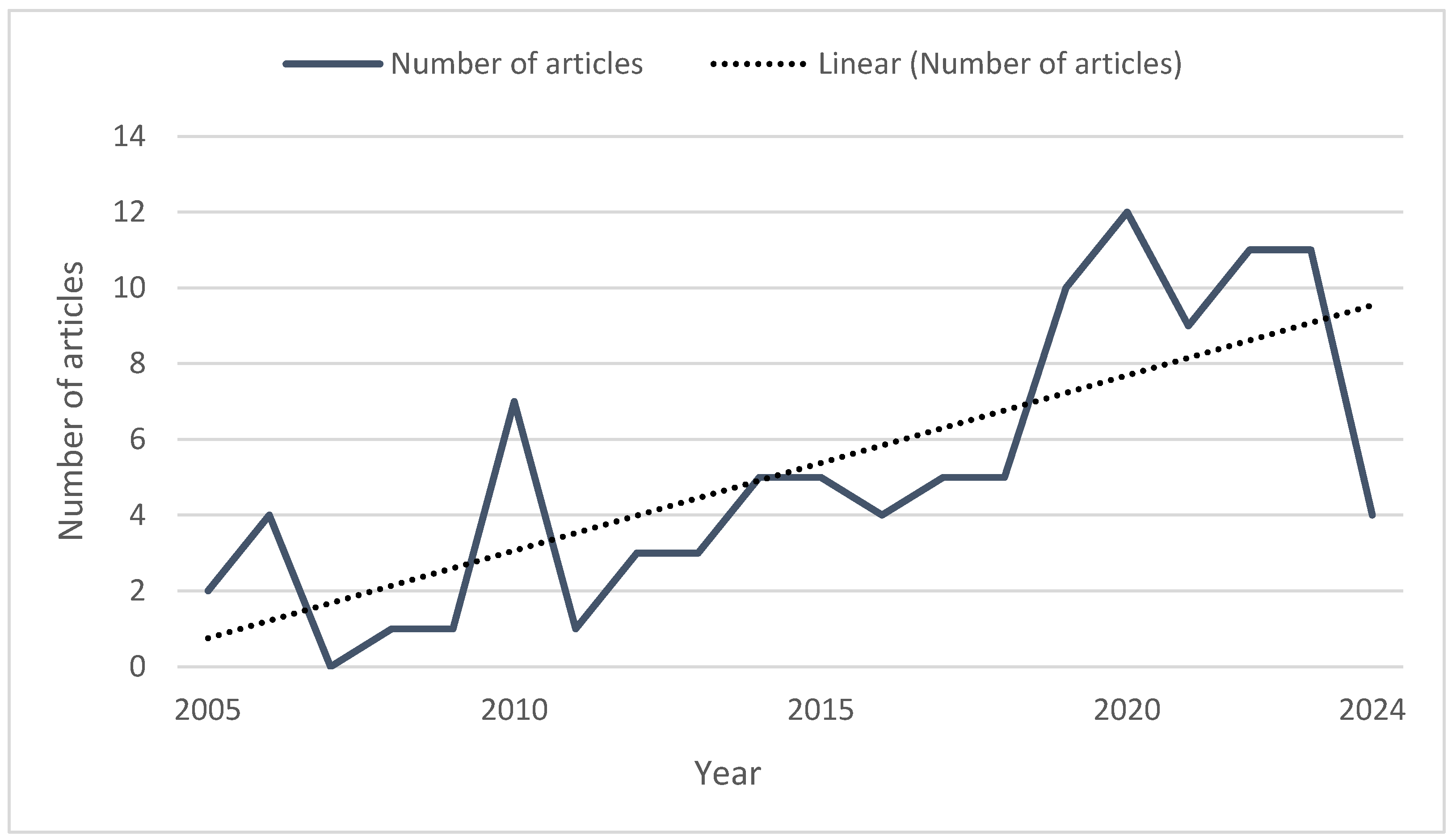
Research on creative reindustrialization and its intersections with cultural industries, urban regeneration, and second-tier cities began to emerge in the mid-2000s, reflecting growing scholarly and policy interest in how culture and creativity can drive post-industrial transformation. Early contributions appeared in 2005, serving as a basis for discussions on cultural regeneration and heritage development. Academic attention was intensified after 2015, reaching a peak in 2020 when 12 studies were published (
Figure 2). This was followed by 2022 and 2023, when 11 papers were published each year. The rise in the number of published papers reflect the shift in urban policy and planning, where creativity, adaptive reuse, and cultural strategies were seen as the most important tools for enhancing competitiveness, revitalizing abandoned industrial areas, and for the diversification of local economy. Also, second-tier and medium-sized cities gained significance for boosting innovation growth and place-making, while topics such as gentrification, governance, and community participation have increasingly attracted attention. Journals that published the highest number of articles and contributed to the popularization of this topic were Sustainability (13 articles), Urban Studies (6 articles), European Planning Studies (6 articles), and Cities (3 articles) (
Table A1).
The geographical distribution of the reviewed articles showed a strong concentration on European contexts. Many studies focus on Western and Northern Europe—particularly the United Kingdom, Germany, Spain, and Norway—where policies and practices around creative clusters, cultural strategies, and place-making have been integrated into broader urban development agendas (
Table S2). Central and Eastern European cities such as Gdańsk (Poland) and Novi Sad (Serbia) received significant attention as well, often in the context of post-socialist transitions and their influence on regeneration strategies and industrial heritage reuse (
Table S2). In recent years, the literature has diversified geographically, with a significant rise in studies focusing on Asian contexts, especially China, South Korea, and Thailand, where rapid urbanization and economic restructuring have induced innovative approaches to creative regeneration and second-tier city development (
Table S2). The high level of concentration of research in Europe and East Asia can be partially attributed to the regional policy settings and institutional capabilities. Culturally led regeneration, industrial heritage reuse, and development led by innovation have been core aspects of urban policy over the last 20 years and are currently backed by policies like the EU Smart Specialisation Strategy, which specifically promotes regional creative and knowledge-based transformation. Rapid post-industrial urbanization and national policies in East Asia, especially in China, including new urbanization, digital transformation, and innovation zones, have created a large academic interest in the creative industries and urban regeneration in second-tier cities. Conversely, the low coverage of Latin America and Africa seems to be connected to the difference in the economy, higher priorities regarding urban development, and the lack of published (non-English) research that is visible to global databases.
When it comes to the methodology, a clear preference for qualitative approaches can be observed in the selected articles. Approximately 62% of the articles employed qualitative methods such as case studies, interviews, policy document analysis, and discourse analysis, reflecting the field’s focus on context-specific processes like cultural regeneration, industrial heritage reuse, and governance dynamics (
Table S2). Furthermore, 38% of the studies used quantitative techniques, including statistical modeling, survey-based analysis, spatial data examination, and network analysis, often aiming to measure economic impacts, spatial patterns, or stakeholder perceptions (
Table S2).
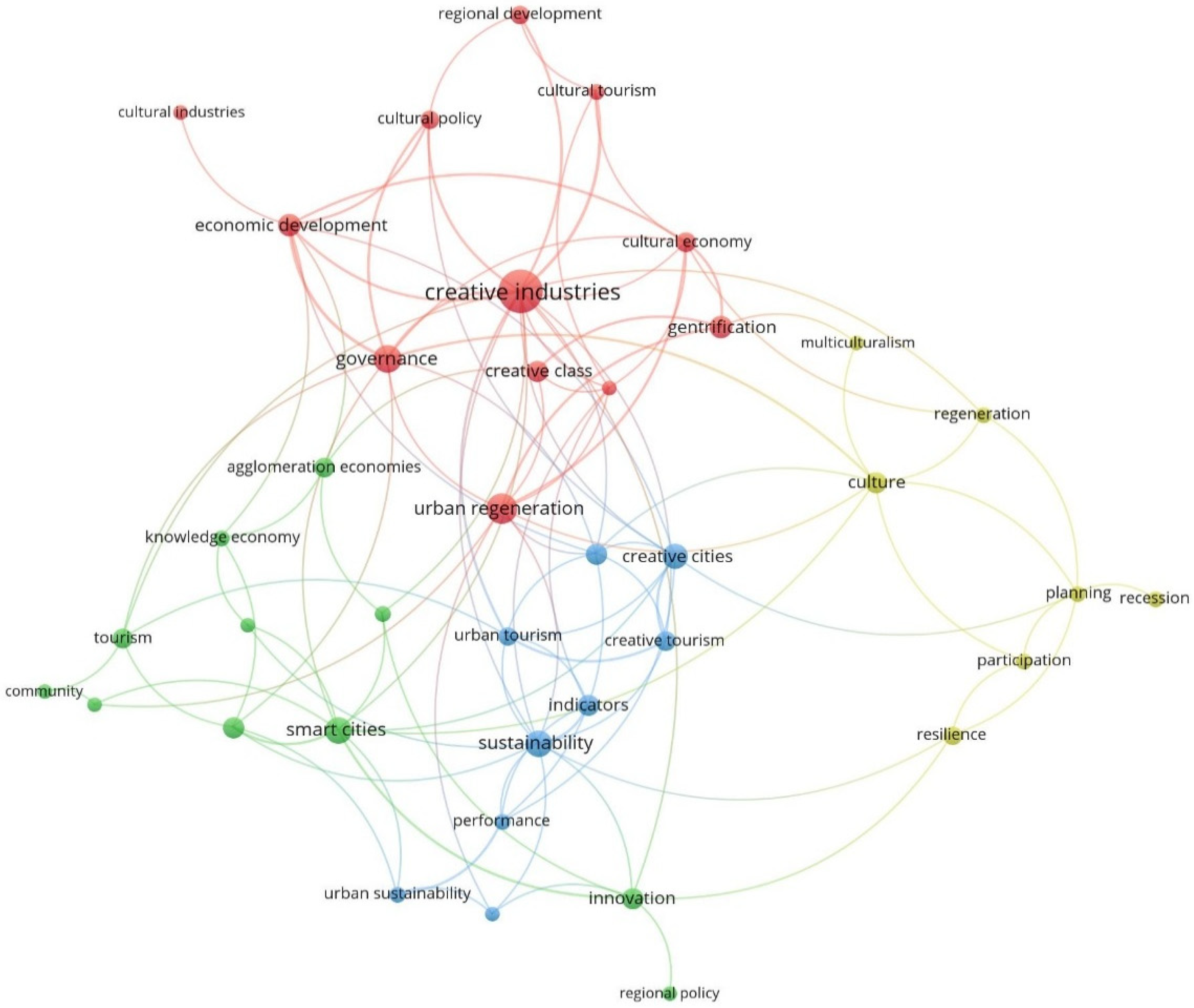
A network clustering analysis was conducted using VOSviewer in order to reveal keywords that were frequently used in all articles and how they are interconnected. As
Figure 3 shows, there were 39 nodes (keywords) grouped into four thematic clusters (
Table A2 provides additional corresponding centrality measures). Cluster 1 contains 12 nodes and is marked in red. It can be named “Cultural and creative industries and urban regeneration”. Within this cluster, key terms such as creative industries, cultural economy, cultural policy, regional development, and urban regeneration show that cultural and creative industries have the central role in shaping the urban transformation and socio-economic development of second-tier cities, while governance and institutional strategies can foster cities’ creative ecosystems. Cluster 2 is marked in green and has 11 nodes, such as community, knowledge-based urban development, smart cities, and urban planning. It can be called “Smart cities, knowledge economies and spatial development”, reflecting the importance of technological and spatial dimensions for urban transformation. Cluster 3 includes nine nodes and is colored in blue with keywords like creative tourism, sustainable development, urban tourism, urban sustainability, and regional planning. The cluster can be named “Sustainability, tourism and urban performance” since it shows that sustainability and creative practices should be intersected with urban development and tourism industry. Finally, Cluster 4 contains six nodes and is marked in yellow. Keywords such as participation, multiculturalism, and resilience show that inclusive governance and cultural policies are necessary for adaptive urban futures. Therefore, the last cluster was named “Culture, participation, and social resilience”.
Subsection Thematic Patterns in Research on Creative Reindustrialization in Second-Tier Cities
Thematic analysis, as an effective way of examining patterns within data, was used to explore key topics from the selected articles. Based on the results, four themes were identified: (1) Cultural and creative industries to drive urban regeneration (37 articles, 35.9%), (2) Knowledge-based urban development and smart transformation (26 articles, 25.2%), (3) Urban strategies related to sustainability, creative tourism and performance (24 articles, 23.3%), and (4) Urban transformation led by social participation, culture and resilience (16 articles, 15.5%). Each of the topics were discussed in more detail below.
Cultural and creative industries to drive urban regeneration—The largest number of the reviewed articles positioned cultural and creative industries at the central spot, since they revealed that those industries were some of the key drivers for urban regeneration and socio-economic transformation. Using culture, creativity, and symbolic production helped second-tier cities to increase their competitiveness and renew the city’s image after industrial decline (
Table S2). Cultural policy interventions, creative clusters and cultural projects became crucial instruments for giving another purpose to abandoned industrial areas, to attracting investments, and reshaping urban identities on the regional, state, or even global stage (
Table S2). Creative and cultural industries did not just make contributions to economic diversification and job creation, but also induced new governance approaches, partnerships, and institutional arrangements that supported creative ecosystems and innovation networks in second-tier cities (
Table S2). Although positive effects of creative industries were recognized, their integration into cities’ urban strategies was not without consequences. While creative-led regeneration often delivered tangible benefits such as enhanced cultural visibility, increased tourism, and revitalized neighborhoods, it also produced negative effects like spatial inequalities, higher level of gentrification, and the commercialization of local heritage (
Table S2). Several studies emphasized the importance of inclusive policy design and civic engagement that will mitigate these risks and ensure that the benefits of creative development extend beyond elite cultural consumers and central districts (
Table S2).
Knowledge-based urban development and smart transformation—A second group of articles focused on the knowledge-based urban development and the transition of second-tier cities into smart and innovation-driven hubs. As post-industrial economies increasingly rely on intangible assets, technological infrastructures, and human capital, scholars argue that second-tier cities must strategically reposition themselves as hubs of knowledge production and innovation to remain competitive (
Table S2). The included articles highlight the role of smart city strategies, digital transformation, and innovation ecosystems in shaping new urban development and governance models (
Table S2). Research also emphasizes the importance of urban planning and spatial policy in guiding these transitions not only by attracting knowledge-intensive industries but also by integrating research institutions, creative clusters, and digital infrastructure into broader urban development frameworks (
Table S2). However, while the benefits of knowledge-based urban development are widely recognized, researchers indicated the existence of a number of challenges that second-tier cities may face. The uneven distribution of knowledge assets often induces spatial and socio-economic inequalities, particularly between major urban centers and smaller cities or post-industrial regions (
Table S2). Moreover, the implementation of smart technologies raises questions about privacy, accessibility, and the democratic governance in second-tier cities (
Table S2). Furthermore, some studies argued that in order to be successful, knowledge-based transformation requires collaboration between different sectors, policies that will be in line with local needs and identities, and inclusive governance (
Table S2).
Urban strategies related to sustainability, creative tourism and performance—A third group of research analyzed how cultural resources, tourism development, and innovation can be used to support long-term urban resilience. As noted by some researchers, second-tier cities use economic diversification, social inclusion, and cultural vitality to enhance urban regeneration and secure its sustainable future (
Table S2), while creative tourism proves to be an effective mechanism for connecting heritage conservation, local identity, and economic development (
Table S2). Studies showed how the adaptive reuse of industrial heritage sites as cultural venues, creative districts, or tourism attractions can foster sustainable development and enhance place branding (
Table S2). Moreover, scholars highlight the growing use of performance indicators and sustainability metrics to assess the outcomes of creative strategies, showing that decisions should be made based on results that can be measured (
Table S2). At the same time, research belonging to this thematic pattern revealed several conceptual and practical challenges. While creative tourism can stimulate regeneration and contribute to local economies, it may also lead to commodification, over-tourism, or cultural assimilation if not managed properly (
Table S2). Furthermore, many second-tier cities struggle to integrate sustainability goals into regeneration strategies, often giving priority to short-term economic benefits over long-term ecological and social outcomes (
Table S2). Researchers call for a more comprehensive approach that will embed sustainability principles into the planning, implementation, and evaluation of creative projects, and that will at the same time include planning, inclusive governance, and stronger linkages between cultural policy and environmental objectives.
Urban transformation led by social participation, culture and resilience—The last group of research underlines participation, inclusion, and resilience as the most important elements of social and cultural dimensions that can lead to successful urban transformation. In this regard, local communities, local actors, and civil society are marked as key contributors in reimagining post-industrial spaces, while bottom-up cultural initiatives and collaborative practice can strengthen place identity and decrease divisions within the local community (
Table S2). Also, the active participation of local people is seen as an instrument in dealing with problems that arise from profit-driven projects, gentrification, or exclusion of the vulnerable local population (
Table S2). Besides participation, a growing body of research addresses the concept of urban resilience as a critical outcome of creative transformation strategies. Furthermore, researchers argue that cultural practices and community-led initiatives can significantly enhance a city’s capacity to more easily adapt to economic and population changes and environmental challenges (
Table S2), while resilience reflects local communities’ ability to preserve their cultural diversity and social networks. However, several studies note that these outcomes are often dependent upon the presence of supportive governance frameworks and long-term policy commitments because they can integrate participation and resilience into urban strategies (
Table S2).
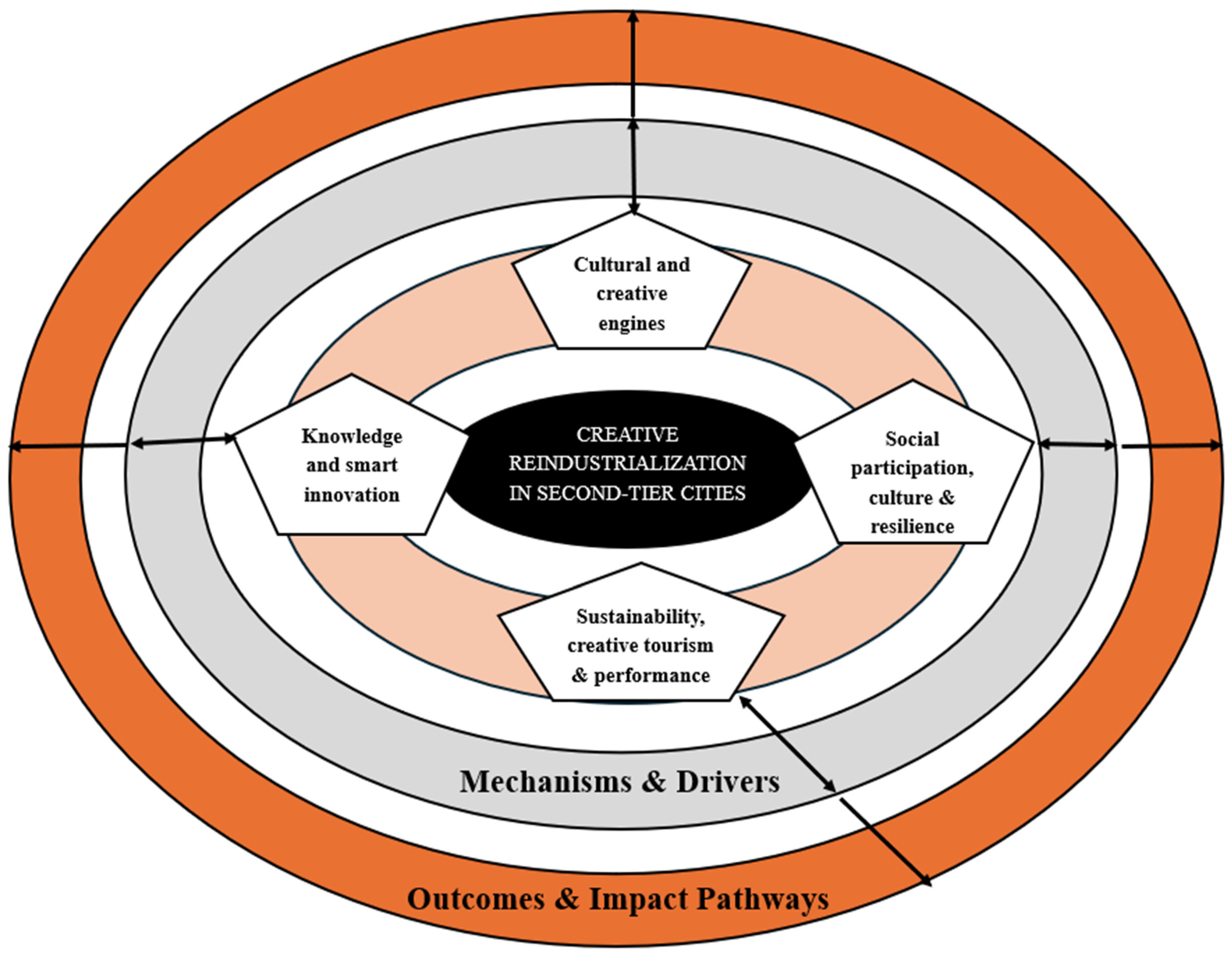
These four thematic patterns demonstrate that creative reindustrialization of second-tier cities is not a unidimensional phenomenon but a system of interconnected mechanisms. Each of the themes focuses on one dominant direction, such as economic, technological, environmental, or social, yet the studies that have been reviewed also demonstrate a common overlap between them. The presentation of these interconnections and the integration of them into a cohesive multidimensional framework are visualized and synthesized through the use of the following section, known as the CRE-TRANS model (
Figure 4).
5. Creative Reindustrialization in Second-Tier Cities—A Multidimensional Model
The findings of this review allow us to propose a comprehensive conceptual model that captures the multifaceted nature of creative reindustrialization in second-tier cities. Based on the four thematic clusters found using the keyword network and analysis of the themes, the CRE-TRANS model transfers the empirical results to a conceptual framework. The model covers the following dimensions, i.e., Cultural and Creative Industries, Knowledge-Based Urban Development and Smart Innovation, Sustainability and Creative Tourism, and Social Participation and Resilience that directly correspond to one of the major themes that were identified during the review. The arrows linking these dimensions indicate their dynamic relationships, e.g., creative industries can lead to smart innovation, which contributes to sustainable development, and participatory culture can help to become more resilient, to become more a part of the community. These linkages taken together demonstrate the process of creative reindustrialization as a cumulative, adaptive process that determines the transformation of second-tier cities. As illustrated in
Figure 4 and
Table 2, creative reindustrialization is a multidimensional and dynamic process shaped by the interaction of four mutually connected dimensions: Cultural and creative industries, Knowledge-based urban development and smart innovation, Sustainability, creative tourism and performance, and Social participation, culture and resilience. Each of these dimensions connects directly to the central idea of transforming post-industrial urban spaces through creativity, while also intersecting with one another to generate cumulative and synergistic effects on urban regeneration and territorial development. The first dimension, Cultural and Creative Industries, is introduced because culture and creativity are recognized as powerful drivers of urban regeneration and economic development (
Table S2). Creative industries which include design, media, architecture, and heritage-based enterprises can provide an alternative path for economic diversification. Mechanisms such as the adaptive reuse of industrial heritage, creative clustering, and cultural policy support not only stimulate local innovation ecosystems but also strengthen symbolic capital and international visibility (
Table S2). They have two roles, to foster economic development and to strengthen cultural identity and community pride. The second dimension, Knowledge-Based Urban Development and Smart Innovation, is essential because technological innovation and knowledge can significantly increase urban competitiveness in the post-industrial era (
Table S2). For second-tier cities, using creativity within knowledge-based development strategies can help in overcoming structural disadvantages that second-tier cities have compared to first-tier cities. Mechanisms such as digital infrastructure investment, smart city platforms, R&D hubs, and university–industry collaboration enable cities to attract high-value industries, support entrepreneurship, and enhance human capital (
Table S2). The significance of this dimension lies in its capacity to build adaptive, innovation-oriented urban economies that can be resilient to technological global competition.
The third dimension, Sustainability, Creative Tourism and Performance, is included because the long-term success of creative reindustrialization depends on integrating environmental, social, and economic sustainability principles (
Table S2). Creative tourism has an important role in diversifying urban economies while promoting sustainable development. Mechanisms such as adaptive reuse, sustainable urban planning, and the development of performance metrics allow cities to balance growth with environmental management and cultural preservation (
Table S2). The importance of this dimension lies in its long-term resilience and balanced development, ensuring that creative reindustrialization does not produce just short-term economic benefits but leaves long-term impact on local communities.
The fourth dimension, Social Participation, Culture and Resilience, addresses the social foundations of transformation. The inclusion of this dimension reflects a growing consensus that creative reindustrialization must be socially inclusive to achieve lasting impact (
Table S2). Mechanisms such as participatory governance, community co-creation, and social innovation platforms empower local actors, reduce social exclusion, and strengthen community resilience (
Table S2). This dimension is particularly important for second-tier cities, where resource limitations and uneven development can increase the risks of gentrification, displacement, and inequality. Our conceptual framework (
Figure 4) highlights that transformative urban change arises not from the impact of one single dimension, but from their joint interplay. This framework provides a lens through which policymakers, planners, and researchers can design, implement, and evaluate creative reindustrialization strategies that will be in line with the unique challenges and opportunities of second-tier cities.
Interrelationships between the dimensions. The four dimensions of CRE-TRANS model are linked with one another in a number of supporting processes. Cultural and creative industries are the agents that commonly drive the knowledge development through attracting talent, promoting cooperation, and creating new types of cultural innovation. The strategies that have an orientation on sustainability affect cultural production and spatial development, and how creative districts, green infrastructure, and adaptive reuse projects are developed. The social participation is a cross-cutting mechanism and its dynamics mediate the interactions between communities and creative initiatives and governance arrangements that facilitate or restrict experimentation. The combination of these interactions forms a dynamic system where the development of one aspect reinforces the development of the others, which eventually forms the path of creative reindustrialization of second-tier cities.
6. Future Research Directions
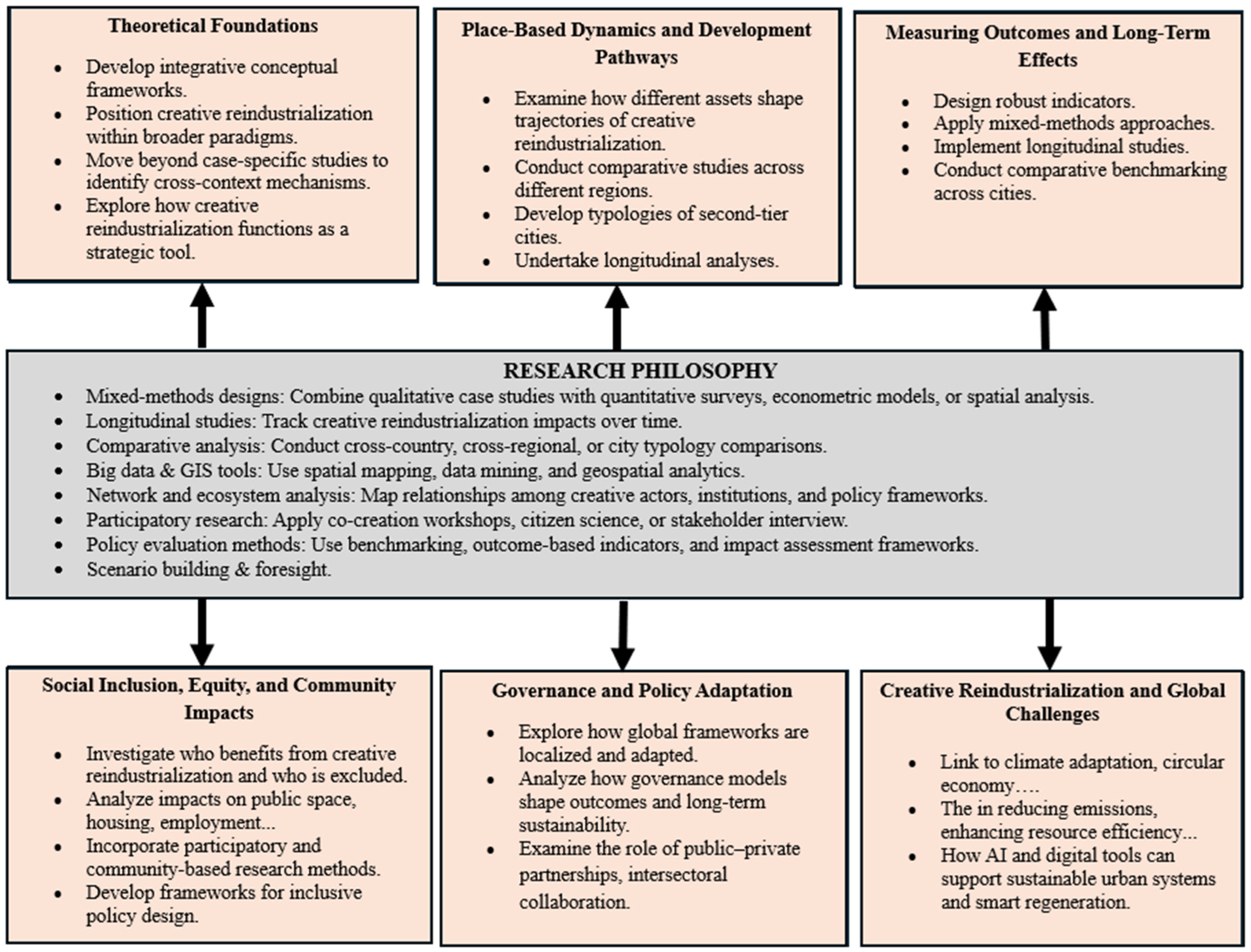
The research questions in this section were formulated on the basis of the thematic synthesis of the 103 articles analyzed, and the conceptual relationships were formed through the CRE-TRANS model. Instead of being used as the guiding questions, they indicate the major theoretical, methodological, and policy gaps in the review process and map possible directions of the future research on creative reindustrialization in second-tier cities (
Figure 5). In the following sections, our suggested research agenda states the current situation in the field and possible directions for future research that could help in responding to the defined questions.
6.1. Theoretical Foundation of Creative Reindustrialization
RQ1. How might future research define creative reindustrialization in a broader way, moving away from a current narrow, fragmented disciplinary approach? Can it be defined by including different dimensions—cultural, economic, spatial, social, and governance?
Research on creative reindustrialization is still conceptually fragmented, shaped by different disciplines like urban studies, cultural policy, economic geography, and tourism ([
50,
54], and
Table S2). Most of the studies often examine this phenomenon using one component (for example, creative clusters, industrial heritage reuse) without connecting it to the other ones (
Table S2). This kind of approach has limits since, as seen from our article review, creative reindustrialization is a complex category that connects spatial transformation, economic restructuring, community development, and governance innovation (
Table S2). Moreover, researchers tend to draw conclusions based on individual cases, neglecting mechanisms that can secure success or lead to a failure across different urban contexts (
Table S2). Future research should rely on integrative conceptual models that will connect cultural production, industrial transformation, technological innovation, and socio-spatial change (
Table S2). Also, researchers could analyze how creative reindustrialization can fit within different transformation paradigms such as circular economy or smart city development; in order to see it, this concept can be treated as a strategic tool for second-tier cities’ long-term development.
6.2. Place-Based Dynamics and Development Pathways
RQ2.
How do historical industrial legacies, demographic structures, and cultural identities shape the direction and success of creative reindustrialization? Why do similar policies produce different outcomes in different territorial and institutional contexts?
Research on creative reindustrialization in second-tier cities are mainly oriented toward case studies that investigate specific geographic, historical, cultural, or institutional settings, but without a systemic approach and a more detailed analysis of how they can shape the outcomes of this process (
Table S2). The existing studies emphasize the role of industrial heritage, cultural assets, demographics, and governance models mostly as background factors, ignoring their potential to be central variables (
Table S2). For these reasons, it is difficult to draw conclusions and understand why one policy succeeded in one second-tier city and not in another (
Table S2). Furthermore, as most research has focused on Europe and Asia (mainly China), it remains unclear what is driving the process of creative reindustrialization in Latin America, Africa, and the Middle East, in countries where industrial legacy, socio-economic opportunities, and governance capacity differ from developed countries (
Table S2). For that reason, comparative studies on country or regional/local levels are necessary to uncover mechanisms that shape the process of creative reindustrialization in second-tier cities ([
32] and
Table S2). Future studies should try to develop categories of second-tier cities based on factors such as their industrial heritage, creative sector characteristics, and institutional context, and this will provide insights into how existing conditions can shape the future development of second-tier cities. Also, monitoring the reindustrialization process over a longer period of time can provide insight into the characteristics of the development process, but also how reindustrialization moved in parallel with global processes such as globalization or deindustrialization [
5,
58]. Such comparative analyses would not only provide a better theoretical understanding of the process of creative reindustrialization in secondary cities, but would also allow the results of these studies to be used to develop policy models that would be applicable in different urban environments.
6.3. Measuring Outcomes and Long-Term Effects of Creative Reindustrialization
RQ3. How can the impacts of creative reindustrialization in second-tier cities be measured and evaluated? What are the short- and long-term effects on economic, social, and cultural indicators?
Although selected articles have shown positive effects of creative reindustrialization on the development of second-tier cities, such as economic diversification or the renewal of cultural assets (
Table S2), the creation of development strategies is rarely based on measurable outcomes. Most researchers have applied qualitative methods in data collection, using descriptive case studies or indicators such as improved city brand and cultural visibility (
Table S2), while quantitative indicators such as the number of employees, the number of opened/closed small and medium-sized enterprises, GDP contribution, and tourism revenue are very rare ([
6] and
Table S2). Moreover, there is a lack of studies that follow the development of creative strategies in second-tier cities and their impact on different target groups (
Table S2). All of this raises the question of whether creative reindustrialization produces short-term or long-term benefits for the local community and beyond. Future research should work on creating indicators that will encompass both economic indicators (such as the number of jobs, capacity for innovation) and social and cultural indicators (e.g., quality of life, inclusivity). Long-term studies would make it possible to monitor the development of the reindustrialization process over time and to determine whether it can bring sustainable benefits to the local environment or whether these effects will disappear after the first completed cycle. Using a combined approach, i.e., applying both qualitative and quantitative research methods, would provide a more comprehensive picture of the potential success or problems in implementing development strategies (
Table S2). Also, comparative studies would provide better insight into the similarities and differences between second-tier cities and determine the best practices that could be used ([
3],
Table S2).
6.4. Social Inclusion, Equity and Community Impact
RQ4. Who benefits from creative reindustrialization and who is excluded? How can policies avoid the creation of socio-spatial inequalities, gentrification, or cultural commodification?
Most of the studies analyzed prioritized economic performance and the branding of cultural assets, while social dimensions such as local community well-being or social justice were neglected (
Table S2). Studies have drawn conclusions about creative clusters and districts and projects, but they have not critically analyzed who has and who has not benefited from these development strategies (
Table S2). There is a limited number of studies that have examined the impact on different social groups, especially the more vulnerable ones, or how the process of reindustrialization has affected the development of local identity and a sense of belonging to a community (
Table S2). Future research should be more based on local community experience and emphasize social justice, inclusivity, and equity, and analyze how creative policies affect the availability of public spaces, employment opportunities, prices and number of houses for housing, and especially how all this is reflected on vulnerable groups such as migrants, the elderly, or those with lower incomes. Using the results obtained from community-based research or workshops with local community members can provide useful insights into the impact of creative reindustrialization on social resilience, cohesion, and collective identity, and they can be used in the creation of intervention measures that would contribute to balanced development.
6.5. Governance and Policy Adaptation
RQ5. How do local governments adapt international frameworks (e.g., S3, UNESCO Creative Cities) to their own realities? What institutional capacities, partnerships, and governance models could enable successful policy implementation?
The importance of governance and policy frameworks for the development of creative reindustrialization has been highlighted in many studies, but there is still not enough evidence provided on how these policies have performed in practice (
Table S2). Several major transnational strategies have been implemented so far, such as the EU’s Smart Specialisation Strategy or UNESCO’s Creative Cities Network, but with limited visibility into how these strategies have been implemented and adapted to local contexts ([
32] and
Table S2). Also, it is not sufficiently known how local authorities balance the development of competing goals such as economic competitiveness and the preservation of cultural heritage, nor whether and how the approach has changed over time due to increasing political, economic, and social changes (
Table S2). All this leads to the question of how policies were implemented from paper to reality and how concrete measures shaped the implementation of creative strategies. Future research could provide more information about the architecture of the police frameworks themselves, especially how they can be adapted in certain situations. Also, research could examine how different governance models, from centralized to collaborative approaches or participatory systems, impact strategic planning and long-term goals, and how public–private partnerships and intersectoral linkages can contribute to more successful policy implementation.
6.6. Global Challenges and Second-Tier Cities
RQ6. How can creative reindustrialization contribute to sustainability issues such as climate adaptation, circular economy, and digital transition? In what ways can second-tier cities position themselves for better use of sustainable and inclusive innovation?
Research on creative reindustrialization in secondary cities has usually been conducted at the local or regional level, while its connection to global phenomena such as climate change, digitalization, and post-pandemic recovery is significantly limited (
Table S2). Therefore, the full potential of creative reindustrialization to contribute to the vibrant transition of secondary cities remains incompletely recognized (
Table S2). In this regard, future research could analyze how creative strategies can contribute to carbon dioxide reduction, more efficient use of resources, and the development of powders that would reduce negative environmental impact. Also, the impact of digital technologies, especially artificial intelligence and its capabilities in creating a sustainable urban system, is one of the possible research areas.
7. Conclusions
This paper analyses 103 articles on the topic of creative reindustrialization published in the past two decades, showing how culture, creativity, and innovation can guide development in post-industrial cities. Our findings show that creative reindustrialization cannot be viewed as a simple process, but rather as a multidimensional process that should connect economic diversification, cultural transformation, spatial renewal, and innovation in management. Also, our analyses show that, although secondary cities are seen as places where creative urban strategies can be applied, most research has focused on individual case studies without integrating a wider range of elements into theoretical and practical frameworks. Furthermore, the dominant qualitative approach in research and the geographical concentration in Europe and East Asia do not allow for a wider understanding of the path that secondary cities may take in the process of their integration at the global scale. With the proposed CRE-TRANS model and research agenda, this paper provides a basis for further research that should connect the creative sector with sustainability, global challenges, and urban policy.
With its results, our review makes several significant contributions. In terms of theoretical implications, our findings show that creative reindustrialization should be viewed as a multidimensional process that should integrate frameworks such as spatial restructuring, economic diversification, governance innovation, community engagement, and technology transformation. Further, it was shown that instead of using traditional frameworks for development studies, theory should be built on combined insights from institutional theory, cultural policy economy, and urban governance. One of the important contributions of our work is that it shows that second-tier cities cannot be seen as passive followers of creative economy dynamics, but rather as live laboratories for innovative policies and community-based approaches. Finally, our review offers new perspectives on the temporal dynamics and path-dependent nature of creative reindustrialization. By examining how historical industrial legacies, institutional capacities, and cultural identities shape trajectories, it suggests that creative reindustrialization is not a linear process but rather deeply embedded in place-specific contexts and historical pathways. Additionally, our research offers valuable insights for industry practitioners and policymakers. When new policies are created, policymakers need to adopt place-based, context-sensitive strategies that reflect each city’s industrial legacy, cultural assets, governance capacity, and socio-economic conditions, instead of applying standardized models. Policies should be integrated and cross-sectoral, connecting cultural industries with innovation, entrepreneurship, sustainability, and digital transformation agendas, while also ensuring multi-level coordination between local, regional, national, and international actors. Crucially, participatory approaches that involve citizens, local communities, and private stakeholders throughout the planning and implementation process can enhance legitimacy, equity, and effectiveness. To guide decision-making and adapt policies over time, robust systems for monitoring, evaluation, and comparative learning are needed, supported by clear indicators and longitudinal data. Ultimately, embedding creative reindustrialization within broader sustainability and resilience frameworks can enable second-tier cities to leverage creativity not only for economic diversification but also for climate action, social inclusion, and long-term urban transformation.
Our review has several limitations that could serve as guidelines for future research. First, only publications written in English were included, which contributed to the limited presentation of studies from regions like Africa, Latin America, or some parts of Asia, where relevant research is often published in local languages. Consequently, the geographical distribution that we have found might be partly due to the linguistic scope of the review and not the volume of research taken in these areas. Future research could increase the geographical coverage by including articles published in major languages of the region like Spanish, Portuguese, French, Mandarin, or Arabic. This would assist in capturing locally published studies and enhance the geographical balance of evidence, as well as provide a more thorough picture of the creative reindustrialization processes in currently underrepresented areas. Second, the use of peer-reviewed journal articles might have excluded insights from sources such as policy reports, local planning documents, or grey literature, which, in fact, tend to influence creative reindustrialization activities in practice. Future reviews should include those sources in order to gain more practical insights and locally based views, which are not usually found in the peer-reviewed literature. Third, the articles reviewed belong to various disciplines such as urban studies, geography, cultural policy, economic development, and tourism, which use different definitions, operationalizations, and theoretical assumptions. This theoretical heterogeneity has the potential to question the comparability between studies and can affect the synthesis of themes into groups and interpretation within a synthesis. Future research should strive to propose more integrated and working definitions of creative reindustrialization, as well as collective measurement systems, to facilitate greater cross-study generalization and cumulative theory construction. Finally, as much as the review contains studies that utilize both qualitative, quantitative, and mixed methods, the evidence base is still dominated by the usage of qualitative case studies. This restricts the possibility of generalizing results to other areas and diminishes the presence of similar indicators on the social, economic, and spatial performance of creative reindustrialization. It is also more challenging to measure the causal processes or measure long-term effects because of the absence of systematic quantitative assessments. Future studies could expand the approaches to methodology, including an increased number of comparative, quantitative, and mixed-method designs, and including cross-city statistical, longitudinal, and multi-case comparative studies. These methods would allow enhancing of the evidence base, allowing more extensive generalization and more robust evaluation of the drivers and consequences of creative reindustrialization.





 ,
,