1. Introduction
The rapid growth of urban regions has elevated environmental, social, and economic stresses [
1], making it essential to establish frameworks for urban planning and development. Issues such as unsustainable energy consumption, greenhouse gas (GHG) emissions, air and water pollution, insufficient mobility systems, and social inequality already affect existing built environments [
2]. These challenges are intensified by the presence of outdated, non-digital infrastructures that limit the effective operation and management of urban systems [
3].
In response to these complexities, the concept of smart and sustainable cities has emerged as a fundamental approach to urban development by integrating technology, sustainability, and efficient resource management to enhance the quality of life [
2]. Sustainable cities prioritize environmental stewardship, energy efficiency, and community well-being, while smart cities leverage digital technologies, data analytics, and Internet of Things (IoT) solutions to optimize urban services [
4]. Combining the principles of sustainable cities and smart cities will ensure that the needs of current and future generations are met [
5]. As these cities continue to grow, neighborhoods become essential units in translating larger urban sustainability initiatives into practical and localized action [
6]. By applying these principles at the neighborhood scale, smart and sustainable neighborhoods ensure that urban growth aligns with long-term ecological and socio-economic goals. These neighborhoods play a crucial role in advancing urban sustainability by addressing environmental challenges, conserving resources, and promoting social inclusivity [
7].
Saudi Arabia is currently undergoing a transformative phase under Vision 2030, which prioritizes sustainable urban development and the integration of smart city concepts [
8]. This makes it crucial to create a framework that ensures smart and sustainable development [
9]. The nation’s commitment to technology-driven and environmentally responsible urbanization is evident in large-scale initiatives such as the NEOM megacity, the Red Sea Project, ROSHN’s residential developments, and the Saudi Green initiative [
10]. These projects aim to redefine urban living by incorporating cutting-edge technologies and sustainable design principles.
Despite the Kingdom’s efforts, there is a lack of standardized frameworks for assessing and benchmarking smart and sustainable city development in Saudi Arabia. Existing rating systems, such as Leadership in Energy and Environmental Design Neighborhood Development (LEED-ND) [
11,
12], Building Research Establishment Environmental Assessment Methodology (BREEAM) Community [
13], Qatar Sustainability Assessment System (QSAS), and MOSTADAM, primarily focus on sustainability without fully accounting for the country’s unique cultural, environmental, and urban characteristics. For instance, MOSTADAM, Saudi Arabia’s national rating system, evaluates sustainability performance mainly at the building scale but lacks indicators for digital infrastructure, data-driven governance, or smart mobility. Similarly, many urban projects, including Vision 2030 giga projects, are guided by global sustainability benchmarks rather than standardized smart and sustainable benchmarks.
While models like the Smart City Index and ISO 37122 [
14] provide valuable global benchmarks, they do not sufficiently align with the distinct urban and socio-economic context of Saudi Arabia. Consequently, Saudi neighborhoods are evaluated inconsistently, relying on fragmented criteria that overlook the integration of smart technologies and localized sustainability priorities. Currently, there is no comprehensive, localized framework that evaluates both the smartness and sustainability of neighborhoods within the Saudi context.
This study aims to address this problem by developing a comprehensive platform that evaluates smart and sustainable neighborhoods in Saudi Arabia. The objectives of this study are to:
By focusing on the neighborhood scale, this research provides a more detailed and practical approach to urban development and ensures that projects align with Vision 2030’s sustainability and smart city goals. The proposed platform will serve as a standardized assessment tool, enabling policymakers, real estate developers, and urban planners to make informed, data-driven decisions. It will integrate key environmental, technological, and socio-economic factors to ensure that urban developments are both smart and sustainable.
This study addresses a significant gap in the field of urban planning in Saudi Arabia. This study offers urban planners, developers, and government officials a structured methodology for guiding future developments by creating an evaluation model tailored to the region. The framework will aid in enhancing resource efficiency, upgrading digital infrastructure, and encouraging sustainable growth, ensuring that new neighborhoods align with Saudi Arabia’s evolving urban priorities.
This research not only impacts the nation but also adds to the worldwide conversation about smart and sustainable cities by providing a framework that can be adapted to other Gulf and Middle Eastern nations facing similar urbanization issues. It also aligns with international sustainability goals, such as the United Nations Sustainable Development Goals (SDGs), specifically Goal 11: Sustainable Cities and Communities. By bridging the gap between sustainability and smart city development, this study promotes data-driven, technology-enabled urban planning, encouraging more resilient, efficient, and livable communities in Saudi Arabia.
The remainder of this paper is structured as follows:
Section 2 reviews the literature on smart and sustainable neighborhoods, analyzing existing rating systems and their applicability to Saudi Arabia.
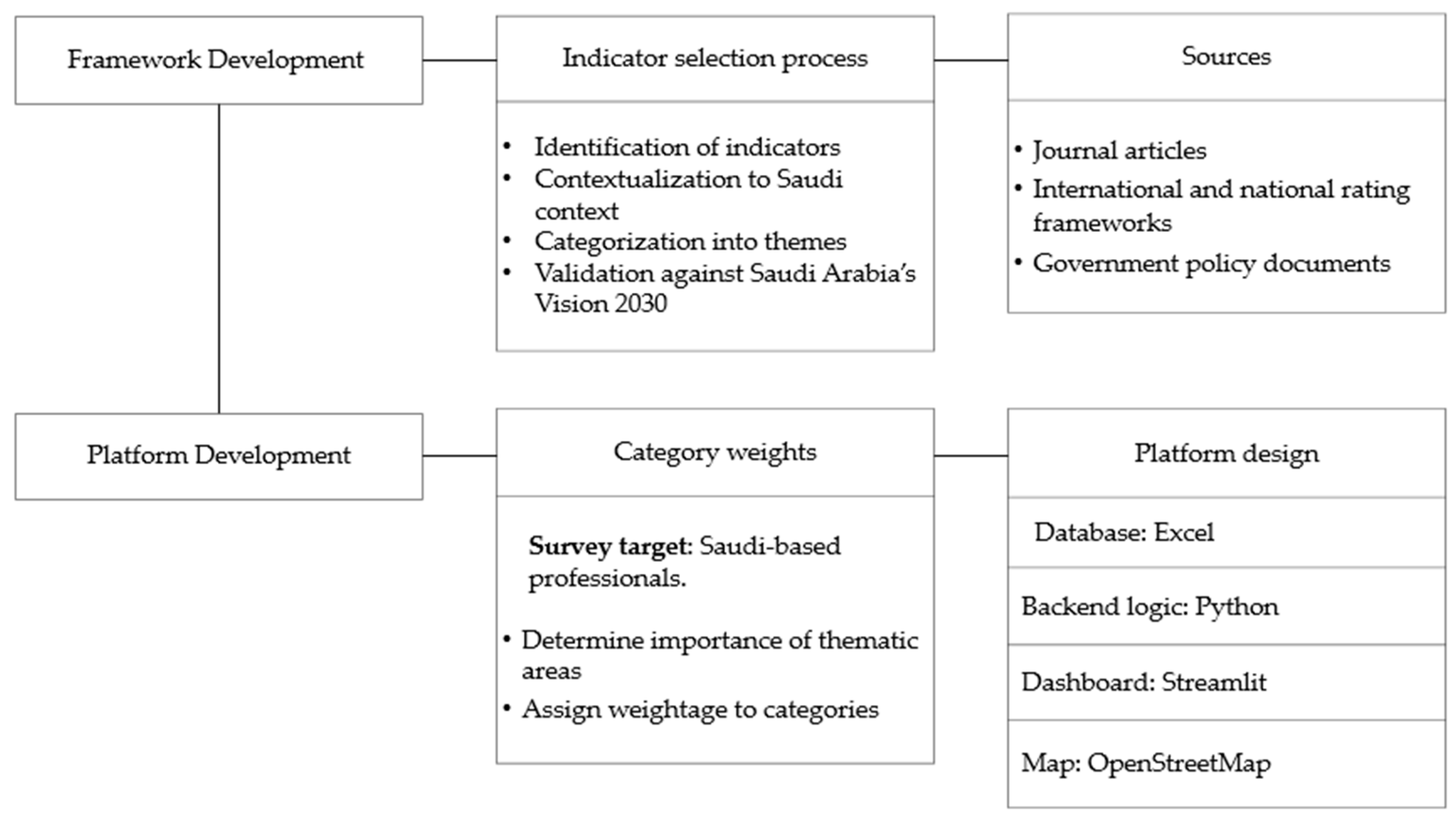
Section 3 outlines the research methodology, framework development, and the design of the proposed digital platform.
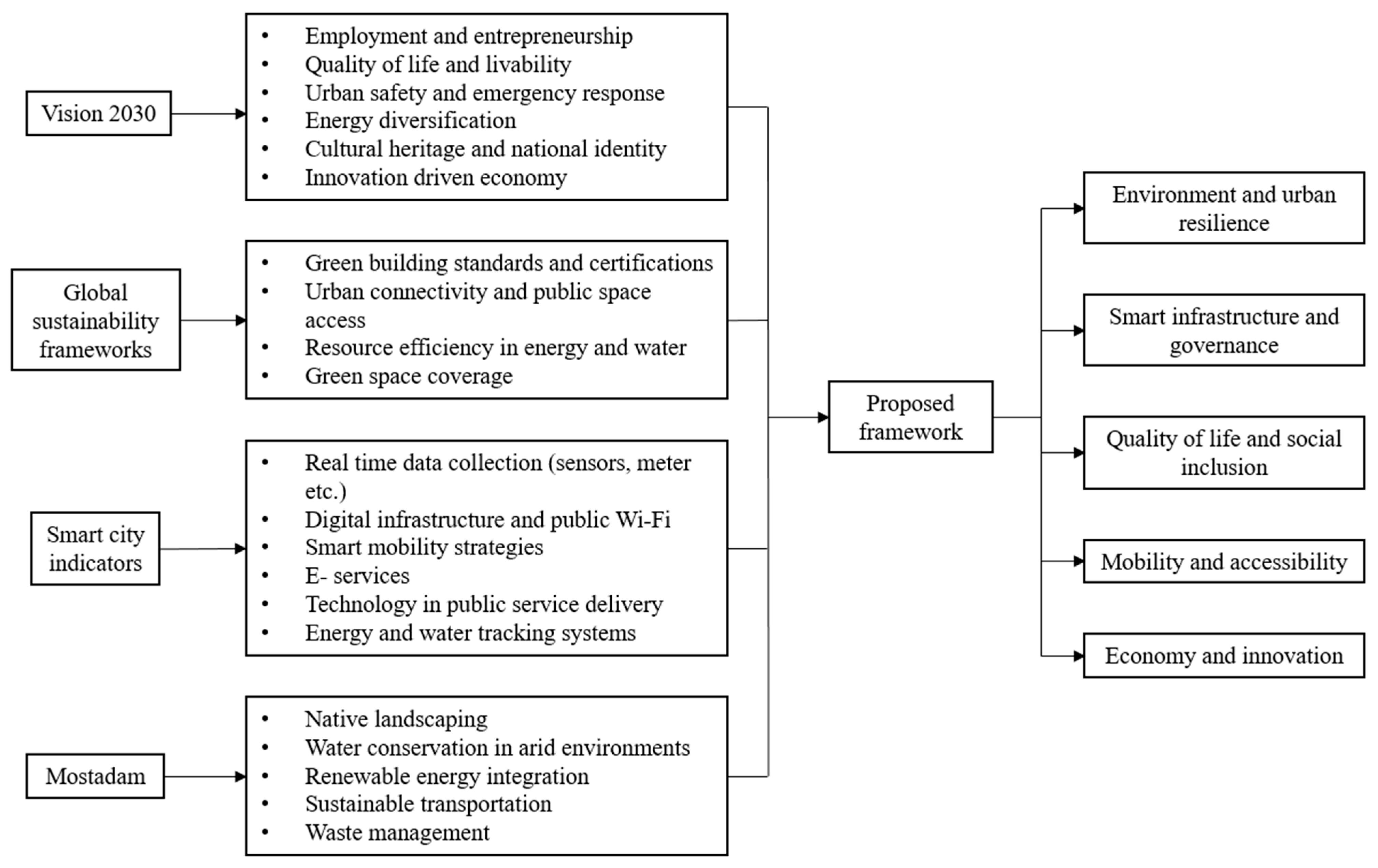
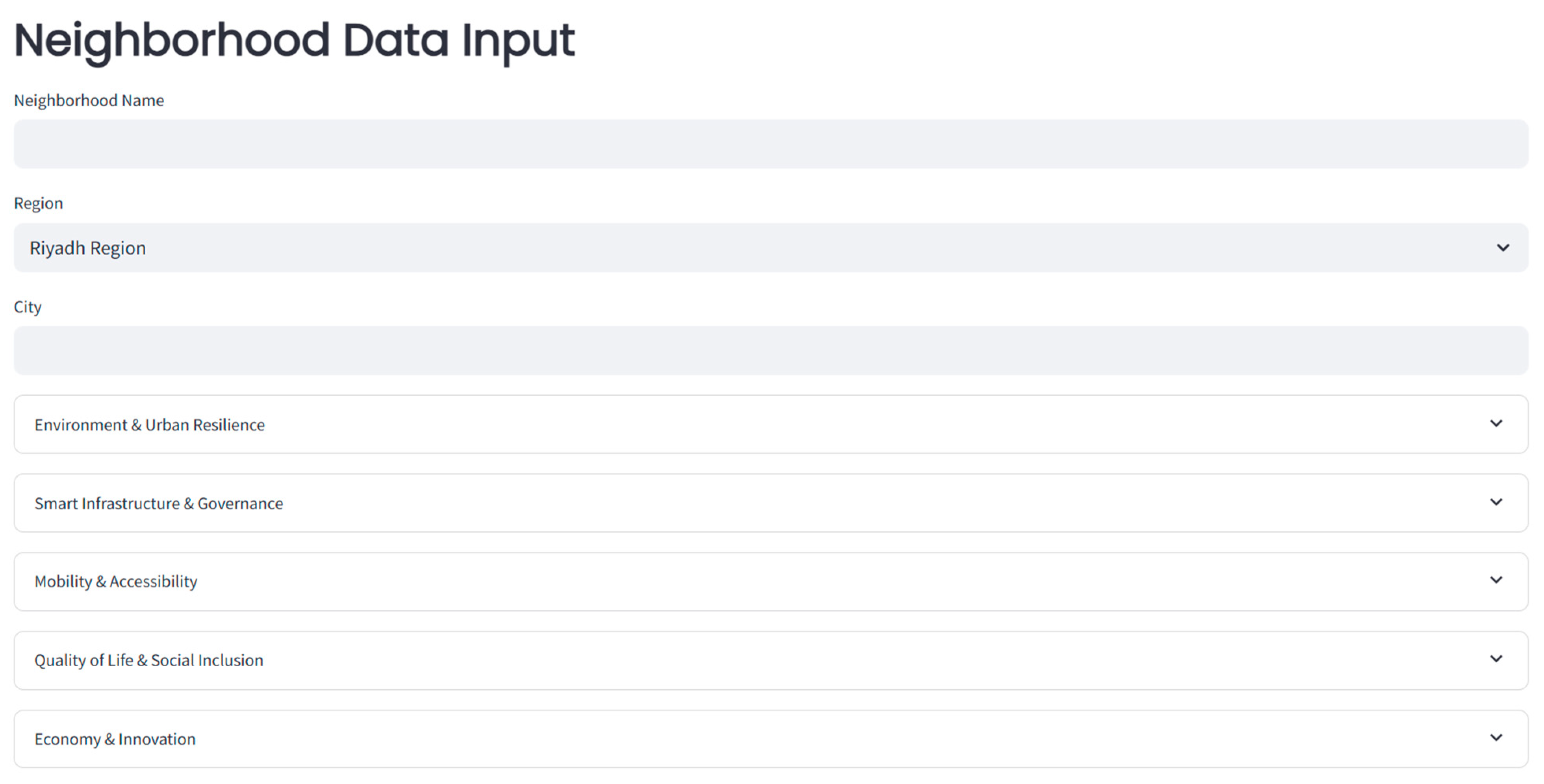
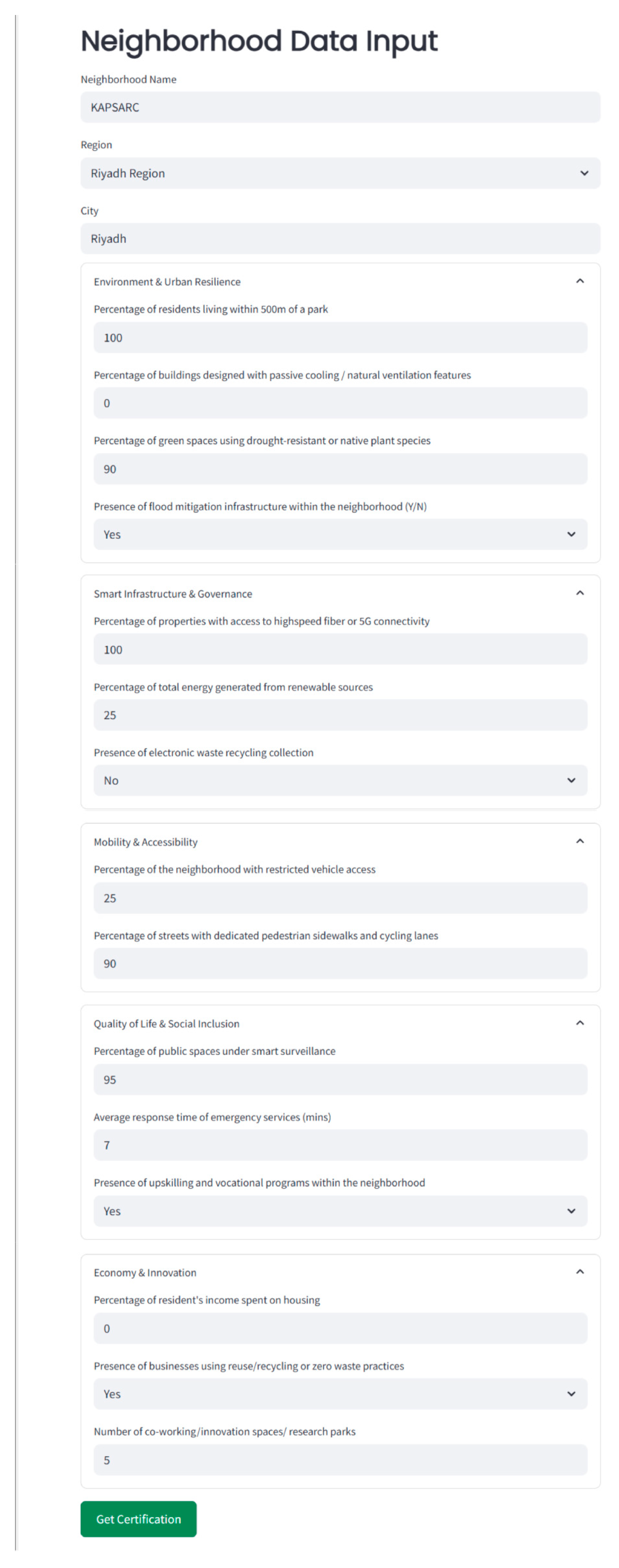
Section 4 presents the development of the HayyScore framework and platform, including indicator selection, evaluation methods, and the certification system.
Section 5 discusses the findings in relation to existing literature and highlights the framework’s relevance, strengths, and potential applications. Finally,
Section 6 concludes the study.
2. Literature Review
This literature review examines smart and sustainable urban development, focusing on the integration of digital technologies and sustainable design to address urbanization challenges. This review aims to thoroughly assess existing global and regional frameworks, identify their limitations, and justify the development of a new model aligned with the objectives of Saudi Vision 2030.
2.1. Smart and Sustainable Neighborhoods
The concept of smart and sustainable cities is most effectively applied at the neighborhood scale, given its manageable size, its potential for experimenting with sustainability initiatives, and a high level of interaction between residents [
15]. Neighborhoods are where people truly experience urban life through living, working, and interacting with their communities. As such, smart and sustainable neighborhoods represent smaller, more focused reflections of what entire cities aim to achieve. Smart neighborhoods use technological tools to improve the functionality of daily services and infrastructure. These tools help monitor and manage systems like energy, mobility, and waste to make neighborhoods more efficient and responsive. In contrast, sustainable neighborhoods prioritize long-term environmental health, social equity, and community well-being [
16]. This is evident in strategies promoting renewable energy use, emissions reduction, and walkability. When combined, these two dimensions work together to create livable, resilient, and adaptable neighborhoods that are supported by digital tools and focused on environmental, social, and economic sustainability goals.
2.1.1. Sustainable Neighborhoods
Sustainable neighborhoods represent a vital building block in the pursuit of urban sustainability. They serve as localized models where environmental, social, and economic considerations intersect at a scale that is manageable and impactful. These neighborhoods focus on greener spaces and energy-efficient buildings while fostering inclusive communities, promoting health and well-being, and encouraging civic participation. As cities worldwide deal with the consequences of climate change, resource scarcity, and urban inequality, neighborhoods are seen as a key place for transformative action [
17,
18].
At the core of sustainable neighborhood planning is the integration of the three pillars of sustainability: environmental, social, and economic factors, with a growing recognition of a fourth, i.e., institutional pillar, which emphasizes governance, transparency, and stakeholder inclusion [
17,
19]. These neighborhoods strive to balance livability and resilience by encouraging mixed land uses, walkability, local economic vitality, access to public spaces, and infrastructure that supports ecological goals. Moreover, they often promote innovation in mobility, renewable energy integration, waste management, and community engagement [
20].
Despite broad agreement on what sustainability means in theory, real-world implementation remains fragmented. As several studies indicate, sustainable neighborhood initiatives often reflect the priorities of the developers or municipalities behind them. This may lead to an overemphasis on certain aspects, such as urban form or green technologies, at the expense of social inclusion or participatory governance [
17,
21]. For instance, large-scale developments may prioritize energy efficiency and architectural esthetics, while smaller, community-led projects are more likely to incorporate local participation and social cohesion. This divergence reveals a gap between the ideals of sustainability and what is achieved in practice.
Another challenge is the expansion of frameworks and terminologies, such as eco-neighborhoods, green developments, and resilient communities, each highlighting different sustainability goals without always achieving a comprehensive balance [
22,
23]. Some rely heavily on certification systems like LEED-ND or BREEAM, which provide useful standards but may not fully address the cultural, economic, or climatic contexts in which neighborhoods exist [
24]. As a result, the success of sustainable neighborhoods often depends on how well these principles are adapted to local conditions, with a focus on stakeholder engagement and long-term impact [
16].
2.1.2. Smart Neighborhoods
Smart neighborhoods are a growing area of interest in both research and real-world urban development. These neighborhoods bring together technology, sustainability, and community engagement at the scale where people experience city life most directly. At their foundation, smart neighborhoods are urban areas where digital tools like sensors, connected infrastructure, mobile applications, and data platforms are integrated to improve everyday living, environmental efficiency, service delivery, and local governance [
25].
However, smart neighborhoods are not just about being technologically advanced. Their true value lies in how well they serve the people who live in them. A smart neighborhood uses innovation not only to optimize infrastructure, but also to promote inclusion, safety, sustainability, and participation [
26]. Technology becomes a tool—not an end goal—for enhancing social connection, improving access to services, and fostering a stronger sense of place.
Recent research highlights how residents themselves are key to making neighborhoods smart. In a study conducted in Hong Kong [
26], the author found that even simple digital tools such as neighborhood apps or group messaging platforms can play a transformative role when used to coordinate activities, share local news, or strengthen social ties. This process reflects how people actively shape smartness through everyday interactions, rather than relying only on top-down technology deployments.
To guide implementation and track progress, researchers have begun developing evaluation frameworks. Another study [
27], for example, proposes a practical method for measuring neighborhood-level smartness based on key performance indicators (KPIs) that include digital infrastructure, environmental performance, resident satisfaction, and governance. His work also introduces a five-level maturity scale, which allows planners to evaluate where a neighborhood stands and what improvements are needed. This kind of structure helps move smart neighborhoods from abstract vision to measurable reality.
The environmental role of smart neighborhoods is also receiving increasing attention. Neighborhoods are found to be ideal spaces for promoting low-carbon lifestyles through smart mobility, energy-efficient buildings, and real-time monitoring of resources [
7]. But these outcomes are most likely to succeed when residents feel a strong sense of ownership over their neighborhood. Factors like community trust, local pride, and place attachment are just as important as the presence of advanced technology [
28].
Despite these advances, the field of smart neighborhoods is still developing. The current smart city research focuses on city-wide strategies, with fewer frameworks specifically designed for neighborhoods [
29]. Additionally, the lack of a universal definition of “smart” continues to create confusion in both academia and policy circles. Many smart initiatives remain pilot projects or isolated experiments, with limited integration into broader urban planning systems.
2.2. Urban Sustainability Rating Systems
Urban sustainability rating systems have become essential tools for guiding and evaluating the environmental and social performance of neighborhoods and cities. These systems are built upon the three core pillars of sustainability: environmental protection, social inclusion, and economic development [
30]. They provide structured frameworks and standardized indicators that enable evidence-based decision-making to support long-term sustainable development [
31]. The most prominent rating systems include:
2.2.1. Global Urban Sustainability Rating Systems
LEED for Neighborhood Development (LEED-ND)
Developed by the U.S. Green Building Council (USGBC), LEED-ND is among the most widely recognized sustainability evaluation systems for neighborhoods. It assesses urban developments based on various criteria, such as smart location, neighborhood design, and green infrastructure [
31]. While LEED-ND offers a comprehensive sustainability assessment, it does not fully incorporate smart technology indicators such as IoT, AI, and real-time data monitoring, which are crucial for modern smart neighborhood evaluations [
24]. There have been efforts to digitize LEED-ND, with tools such as the LEED online platform that help users track projects, submit documentation, and gain certification. However, the system still predominantly focuses on sustainability, with little integration of the technological advancements needed for smart city evaluations.
BREEAM Communities
BREEAM communities, developed in the UK, provide a sustainability assessment method focusing on community design, environmental performance, and resource efficiency. It promotes low-carbon development, biodiversity conservation, and sustainable transportation [
32]. Though it is extensively utilized in Europe and elsewhere, its emphasis is primarily on environmental sustainability, with minimal incorporation of smart technologies or sophisticated digital solutions. BREEAM Communities, similar to LEED-ND, has worked to implement digital processes. With the introduction of the BREEAM online platform, users can digitally monitor their projects, access resources, and submit documentation. Nonetheless, the system continues to prioritize sustainability criteria, with no formal assessment of digital infrastructure, data integration, or smart service delivery [
13].
2.2.2. Gulf Urban Sustainability Rating Systems
QSAS
QSAS is a sustainability rating system developed specifically for the Gulf region, and it is particularly relevant for Saudi Arabia due to its emphasis on the climatic and socio-economic challenges faced by Gulf countries. QSAS evaluates sustainability based on multiple criteria, including energy efficiency, water conservation, and urban connectivity. It is designed for the hot desert climate of the region and seeks to enhance the environmental performance of buildings and neighborhoods in a context that is culturally and environmentally specific [
21]. QSAS, however, lacks the integration of advanced technologies like IoT and real-time monitoring, which are essential for assessing smart neighborhoods within the framework of contemporary urbanization. The system’s paper-based format limits its adaptability and responsiveness to dynamic urban data flows.
MOSTADAM
MOSTADAM is Saudi Arabia’s localized sustainability rating system, developed to align with the urban development objectives of Vision 2030. Launched with support from the Ministry of Housing and the Cleantech consulting firm Alpin, MOSTADAM aims to improve water and energy sustainability across the country [
33]. It is specifically designed to address Saudi Arabia’s regional needs, local climate, and environmental conditions [
34]. However, MOSTADAM has not yet incorporated smart technologies into its evaluation framework. Its main focus is on environmental sustainability, resulting in a significant gap in the evaluation of smart urban development. The absence of digitalization and urban data management tools limits its usefulness in guiding the smart transformation of neighborhoods.
Pearl Rating System
The Pearl Rating System is the United Arab Emirates (UAE)’s sustainability framework for buildings and communities. It emphasizes resource efficiency, cultural identity, and livability in arid environments. The system includes requirements for water, energy, and material conservation, but similar to QSAS and MOSTADAM, it does not incorporate smart technology benchmarks or real-time monitoring mechanisms [
35].
2.3. Smart City Tools
While numerous frameworks have been developed to assess the sustainability of neighborhoods, there is still a lack of comprehensive frameworks specifically designed to evaluate or implement neighborhood-level smartness [
27]. Sustainability rating systems have long been used to measure environmental and urban performance, but smart city assessment frameworks have emerged more recently to capture how cities leverage technology, data, and innovation to enhance urban living. The smart city concept is still evolving, and there is no universally accepted definition. However, it is broadly understood that smart cities employ information and communication technologies (ICT) to improve service delivery, enhance citizen well-being, promote sustainability, and drive economic development [
36]. The most widely used smart city assessment tools and frameworks include:
2.3.1. Smart City Index
The Smart City Index (SCI), developed by the Institute for Management Development (IMD) and the Singapore University of Technology and Design, evaluates cities based on their smart infrastructure and technological integration. It assesses smart city development across key areas such as mobility, health and safety, governance, environment, and economic opportunities [
37]. The ranking is based on both hard data and residents’ perceptions of how technology improves their quality of life. While the SCI provides a broad assessment of smart city capabilities, it primarily focuses on cities rather than neighborhoods [
29]. Moreover, it does not account for region-specific sustainability challenges, making it less applicable as a standalone tool for evaluating smart and sustainable neighborhoods in Saudi Arabia.
2.3.2. ISO 37122: Indicators for Smart Cities
ISO 37122 [
14] was developed by the International Organization for Standardization (ISO) and provides a set of indicators to evaluate the smartness of cities. It focuses on elements like governance, infrastructure, mobility, economic growth, and environmental sustainability. ISO 37122 [
14] aims to assist cities in measuring and enhancing their smart city initiatives by offering a clear framework for evaluating urban services and systems [
29]. ISO 37122 [
14] offers useful insights into the smartness of urban areas, but it lacks a specific framework for neighborhoods and is primarily focused on city-wide infrastructure and policies rather than localized, neighborhood-scale assessments.
2.4. Comparison of Global and Local Rating Systems
The review of existing rating systems presented in
Table 1 shows a divide between sustainability- and technology-oriented frameworks. While global rating systems provide valuable insights, none address both dimensions at the neighborhood level, nor do they accommodate Saudi Arabia’s cultural or climatic context. This research seeks to add to the ongoing conversation around smart and sustainable urbanization in Saudi Arabia by presenting a tailored model that addresses the gap between global practices and local needs.
2.5. Cultural Context and Adaptation of Rating Systems in Saudi Arabia
The unique cultural, environmental, and socio-economic context of Saudi Arabia plays a significant role in shaping urban development within the country. In Saudi society, traditional values, family structures, and social cohesion are of utmost importance, and urban planning frameworks must reflect these priorities. Saudi Arabia’s rapid urbanization and commitment to Vision 2030 also bring forth new challenges that necessitate the adaptation of global rating systems to better align with local needs.
The current rating systems frequently overlook the unique cultural and environmental conditions present in Saudi Arabia. For instance, family-centric urban spaces, community engagement, and public safety are critical components that should be incorporated into the evaluation of smart and sustainable neighborhoods in Saudi Arabia. The desert climate, which brings extreme heat, limited water resources, and high energy demand, also requires a customized approach to energy efficiency and resource conservation.
Any rating system adopted in Saudi Arabia must also address the nation’s rapid technological advancements, which are central to Vision 2030. The digitalization of public services and the integration of smart technologies into daily life must be incorporated into these frameworks to ensure that smart city initiatives align with the needs and aspirations of Saudi citizens. This includes the integration of IoT, digital connectivity, and real-time data collection into the assessment of neighborhoods, allowing for a more dynamic and adaptable urban planning process.
5. Discussion
This section interprets the findings presented in
Section 4 in light of the comprehensive literature review. It evaluates the strengths of the proposed framework and HayyScore platform, critically reflects on its alignment with global and local practices, and explores the practical potential for implementation in Saudi Arabia.
5.1. Localizing Global Framework
Developing the smart and sustainable neighborhood framework is an important step toward aligning global best practices with the unique priorities of Saudi Arabia. As highlighted in the literature [
15,
29], adaptation to local spatial, cultural, and governance contexts is essential for the success of smart city and neighborhood initiatives.
The five-category structure of the framework reflects a well-rounded view of what contributes to smart and sustainable neighborhoods, in line with approaches discussed in the literature [
25,
27]. Instead of concentrating on a single aspect, it thoughtfully combines environmental, social, technological, and economic factors into an integrated model. This helps overcome the limitations seen in systems like QSAS and MOSTADAM, which often overlook the importance of smart technologies in urban development [
21,
33].
By embedding indicators that respond specifically to Saudi Arabia’s climatic challenges, cultural traditions, and rapid digital transformation ambitions under Vision 2030, HayyScore delivers a framework that is not only globally informed but contextually relevant. It aligns with calls for neighborhood-scale assessments that consider institutional and governance pillars alongside environmental and social factors [
17,
27].
5.2. Advantage over Existing Tools
A significant contribution of HayyScore is its integration of smart technology indicators that are often missing in traditional sustainability rating systems [
13,
24]. The framework moves beyond the smart-versus-sustainable debate by offering a synthesis that captures the dynamic interplay between technology and sustainability at the neighborhood level. Furthermore, HayyScore includes socio-cultural dimensions, recognizing that the success of smart neighborhoods depends on resident participation, cultural preservation, and social cohesion, which are often overlooked in international tools [
26,
42]. This focus resonates with Vision 2030’s Vibrant Society pillar, emphasizing family values, heritage, and community engagement. The framework’s attention to climate-specific challenges, such as heat mitigation, water scarcity, and desert-adapted landscaping, also addresses environmental realities unique to Saudi Arabia, which many global systems fail to incorporate [
21].
Unlike existing tools such as LEED-ND or BREEM communities, which primarily emphasize environmental performance, HayyScore integrates smart infrastructure, governance, and cultural adaptability within a unified evaluation model. It also bridges the gap between international best practices and local policy frameworks, enabling a more contextually grounded and operationally relevant assessment for Saudi neighborhoods.
5.3. Implementation in Saudi Arabia
The implementation of HayyScore has significant implications for urban policy and real estate field in Saudi Arabia. It offers a practical tool that urban consultants and developers can use to guide design decisions and monitor progress. Its alignment with Vision 2030 reinforces its relevance, particularly in relation to national goals for smart governance, sustainable development, and regional equity.
In this prototype version of HayyScore, 15 representative indicators were selected from the full framework to demonstrate the core scoring and certification logic in a streamlined and time-efficient manner. However, the platform is fully scalable and capable of integrating the complete set of 54 indicators to provide a comprehensive assessment in future iterations. This scalability ensures that HayyScore can evolve alongside emerging data availability and stakeholder needs. In addition to that, by integrating culturally relevant indicators such as heritage site preservation and community event participation, the platform supports the social fabric of Saudi neighborhoods. This addresses critiques that many global smart frameworks neglect local values, traditions, and informal dynamics [
26,
42].
While the research presents a practical contribution to urban evaluation in the Saudi context, certain limitations must be acknowledged. The framework was developed using secondary sources, expert surveys, and testing the platform across multiple neighborhoods. These steps provided an initial level of empirical validation, ensuring that the indicators and scoring logic are grounded in both theory and practice. However, broader empirical testing remains necessary to further validate and refine the framework’s applicability across diverse urban contexts in Saudi Arabia.
Additionally, the platform currently relies on user-submitted data, which introduces risks related to accuracy, consistency, and potential bias. Without a built-in verification mechanism, the results may be skewed. Future research should focus on expanding the application of HayyScore by integrating real-time data collection methods, such as IoT sensors and GIS platforms, to improve the accuracy and timeliness of assessments while reducing reliance on manual input. Additionally, the platform’s policy relevance would be strengthened by developing third-party verification processes, establishing minimum baseline criteria for certification, and integrating the framework within municipal planning systems. The following roadmap outlines key areas of advancement:
6. Conclusions
This study set out to address a growing gap in the evaluation of smart and sustainable urban development at the neighborhood level within Saudi Arabia. Global sustainability frameworks and smart city assessment tools offer useful foundations for evaluating environmental and technological performance. However, they often fail to address the spatial, climatic, and cultural realities of specific national contexts. In Saudi Arabia, the combination of rapid urban expansion, extreme environmental conditions, and an ambitious national digital transformation agenda necessitates the creation of a localized and adaptable framework that measures sustainability and also captures the evolving smartness of neighborhoods.
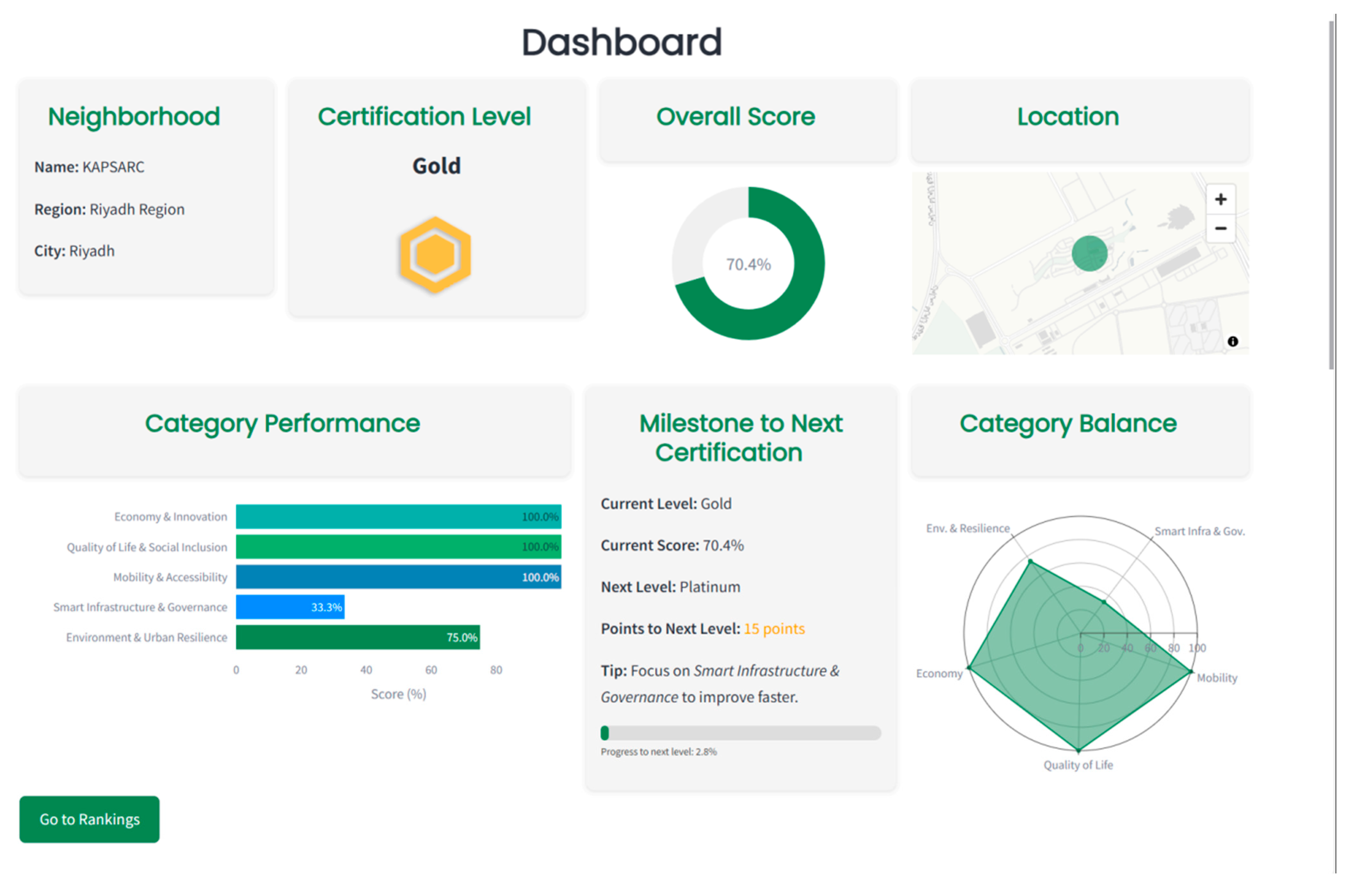
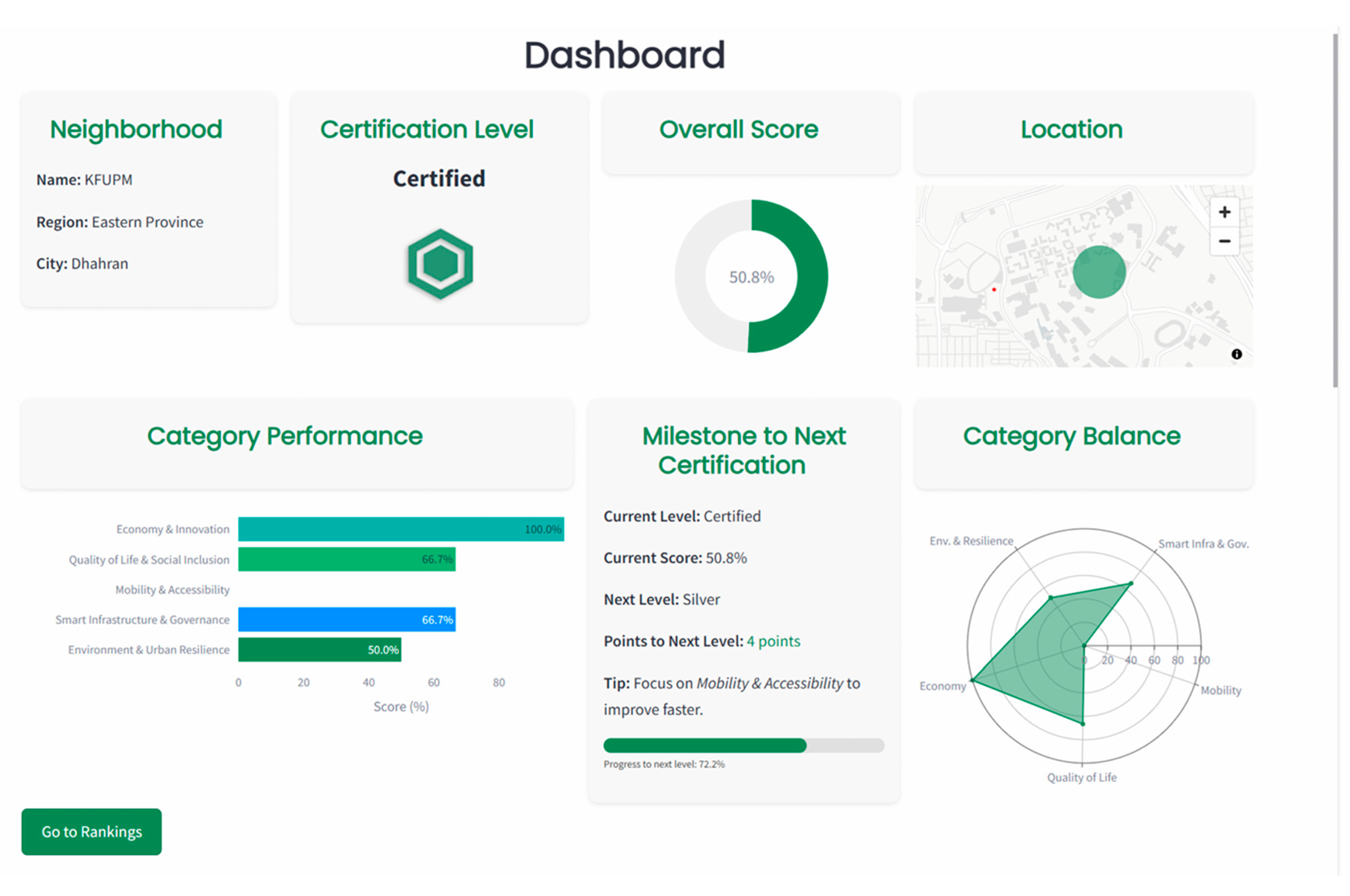
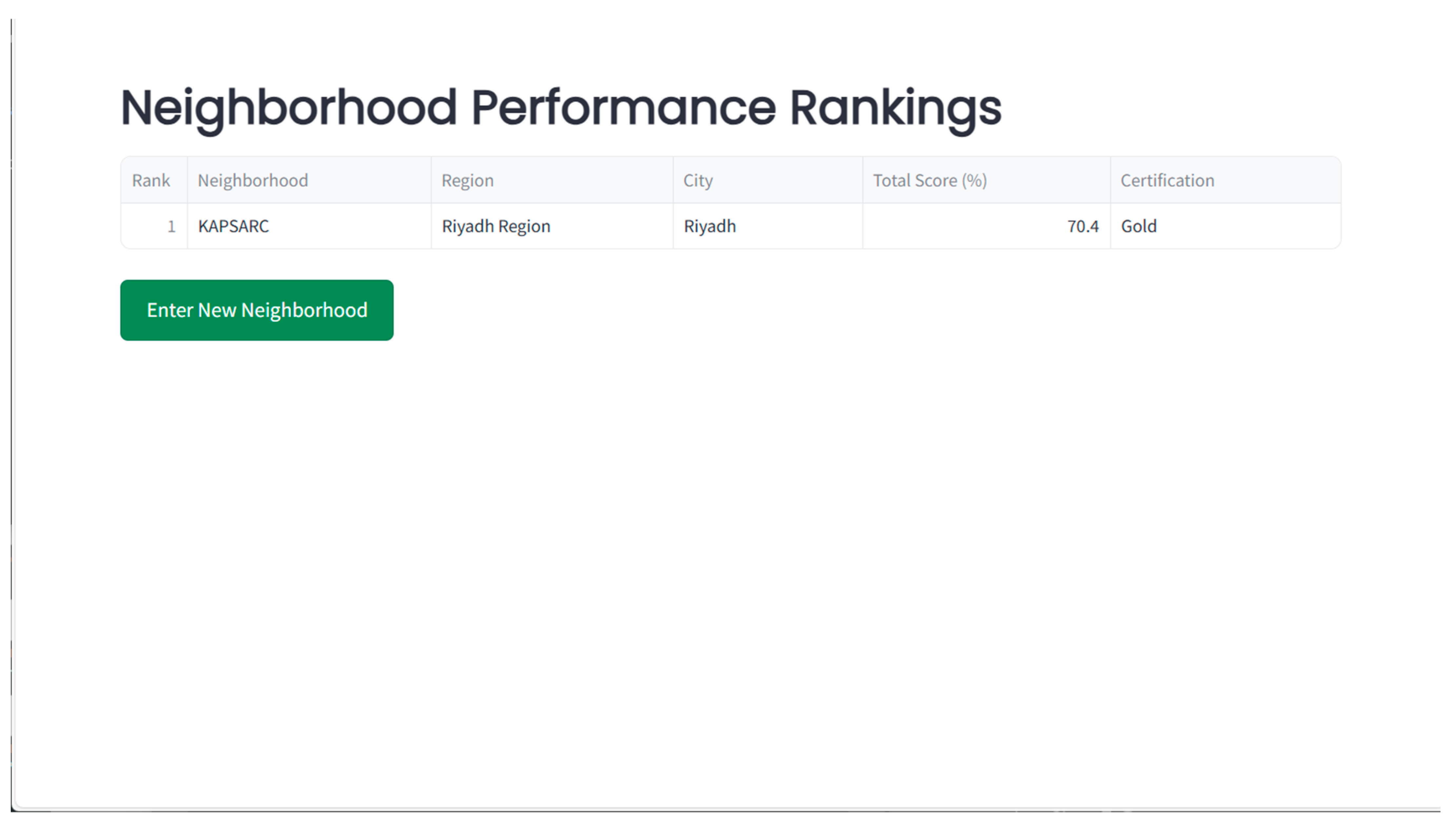
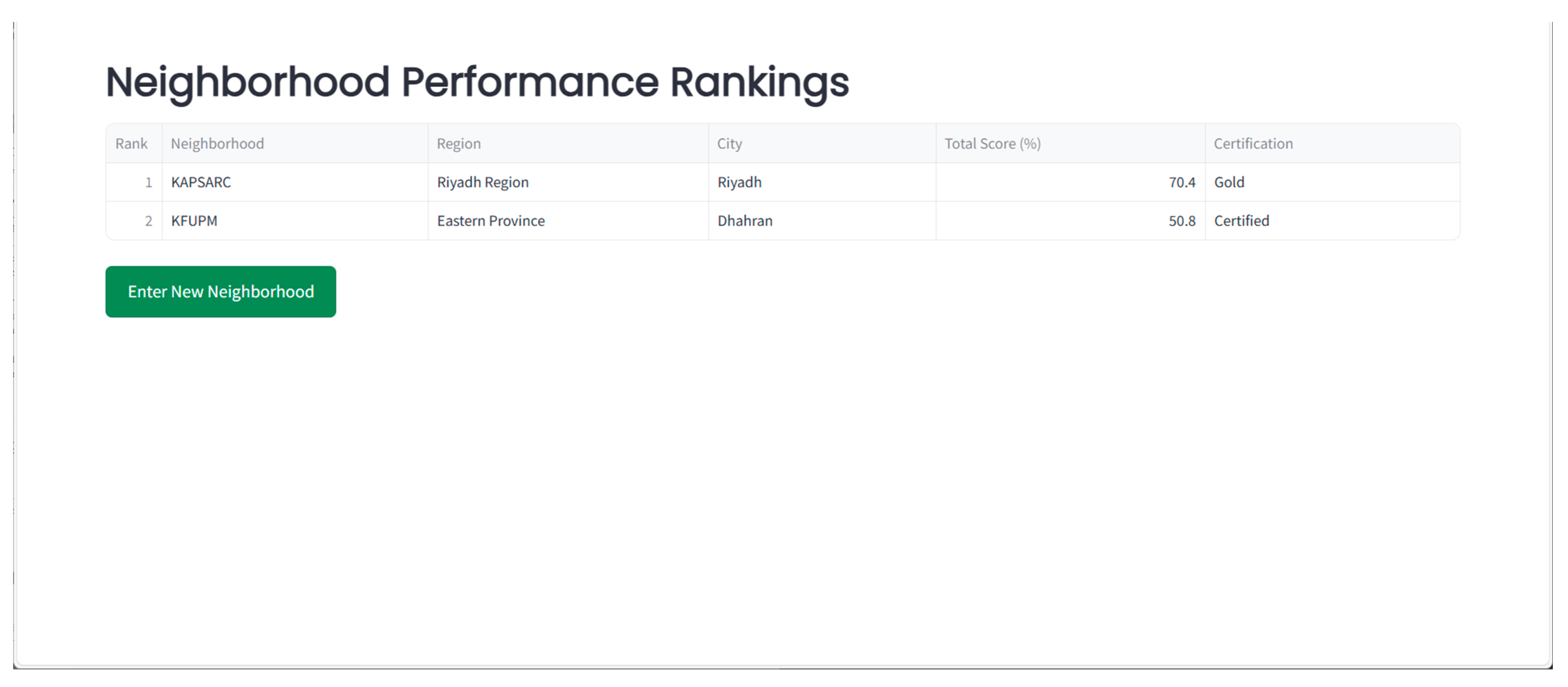
To respond to this need, the research developed an evaluation framework designed specifically to assess the smart and sustainable performance of Saudi neighborhoods. The framework consists of five categories: (i) Environment and Urban Resilience, (ii) Smart Infrastructure and Governance, (iii) Mobility and Accessibility, (iv) Quality of Life and Social Inclusion, and (v) Economy and Innovation. Within these categories, the indicators were selected to evaluate a range of physical, technological, social, and institutional factors that together define the performance of a smart and sustainable neighborhood. The framework was operationalized through the development of the HayyScore platform, which features automated dashboards, ranking systems, and category-level breakdowns to facilitate comparative analysis and decision making.
In conclusion, this study offers a step towards operationalizing smart and sustainable neighborhood assessment in Saudi Arabia. By combining global frameworks with local priorities and providing a scalable digital platform, it lays the groundwork for more informed, inclusive, and future-ready urban development in the Kingdom.