Land-Use Restructuring in Quasi-Industrial Districts Under Deindustrialization: Evidence from Kitakyushu, Japan


Abstract
1. Introduction
2. Materials and Methods
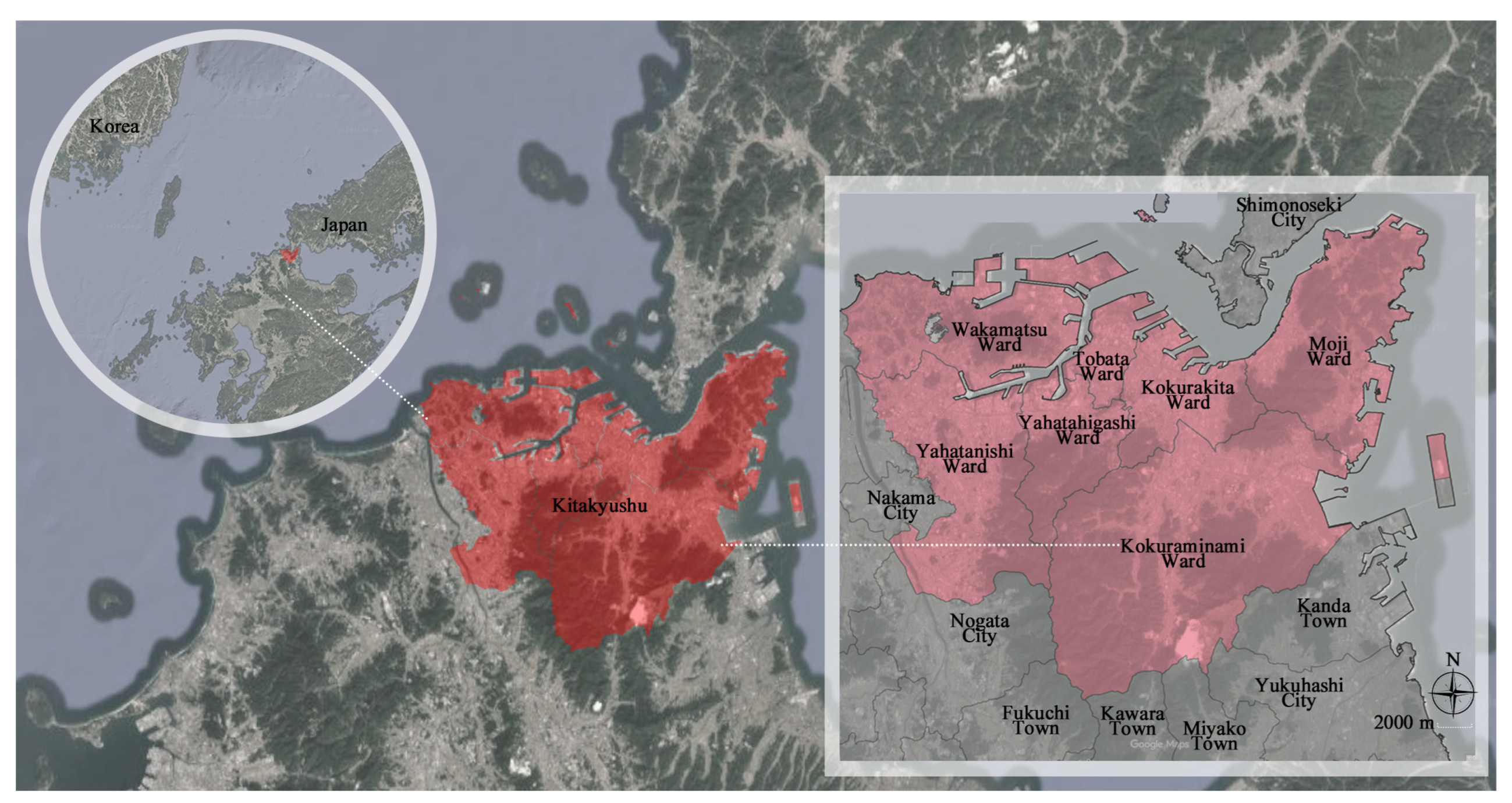
2.1. Geographic Location of Kitakyushu
2.2. Historical Development of the QIDs in Kitakyushu
2.2.1. Emergence and Formation Period (1901–1960s)
2.2.2. Institutional Establishment Period (1968–2000)
2.2.3. Deindustrialization and Functional Shift (2000–Present)
2.3. Methodology
3. Results
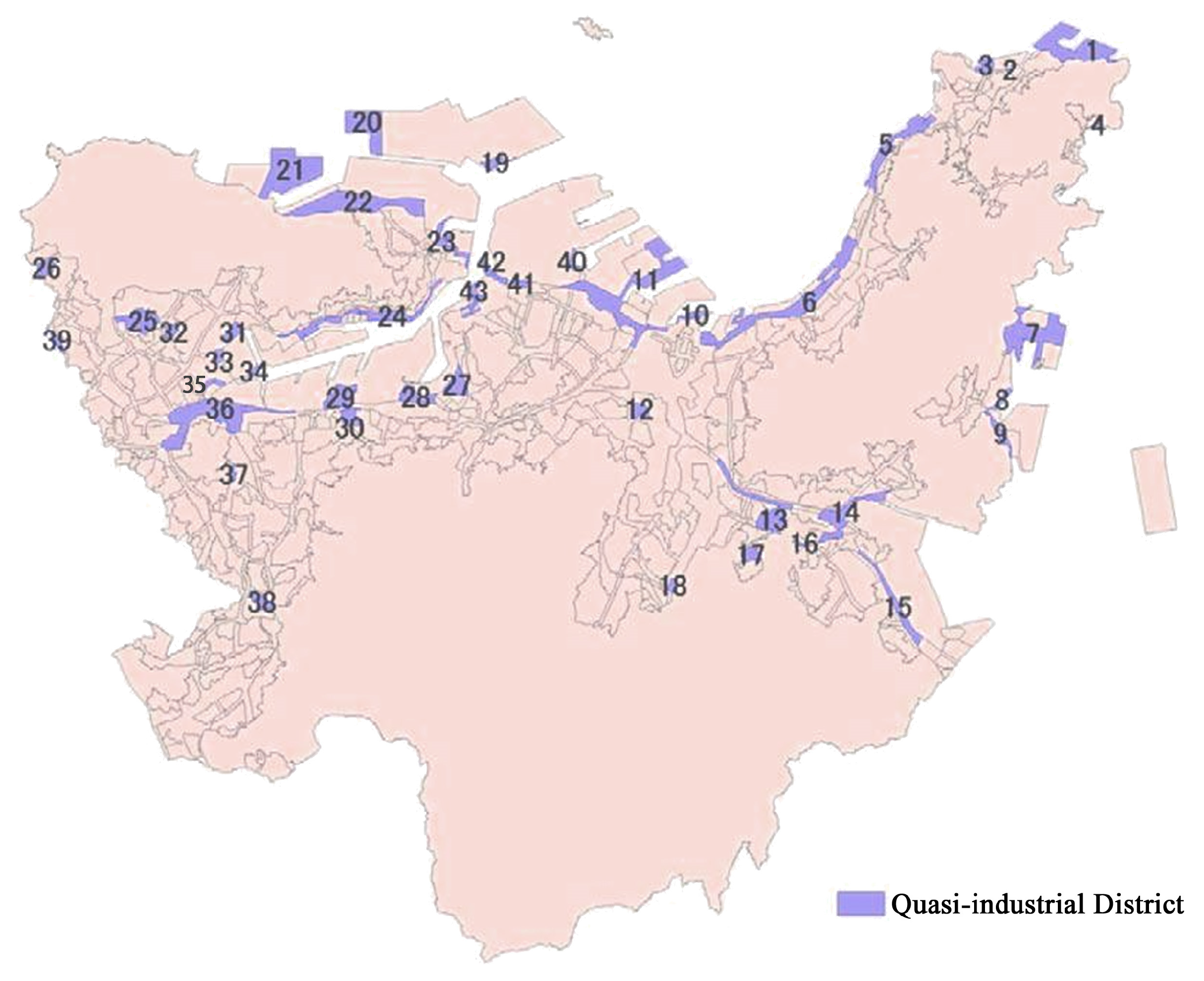
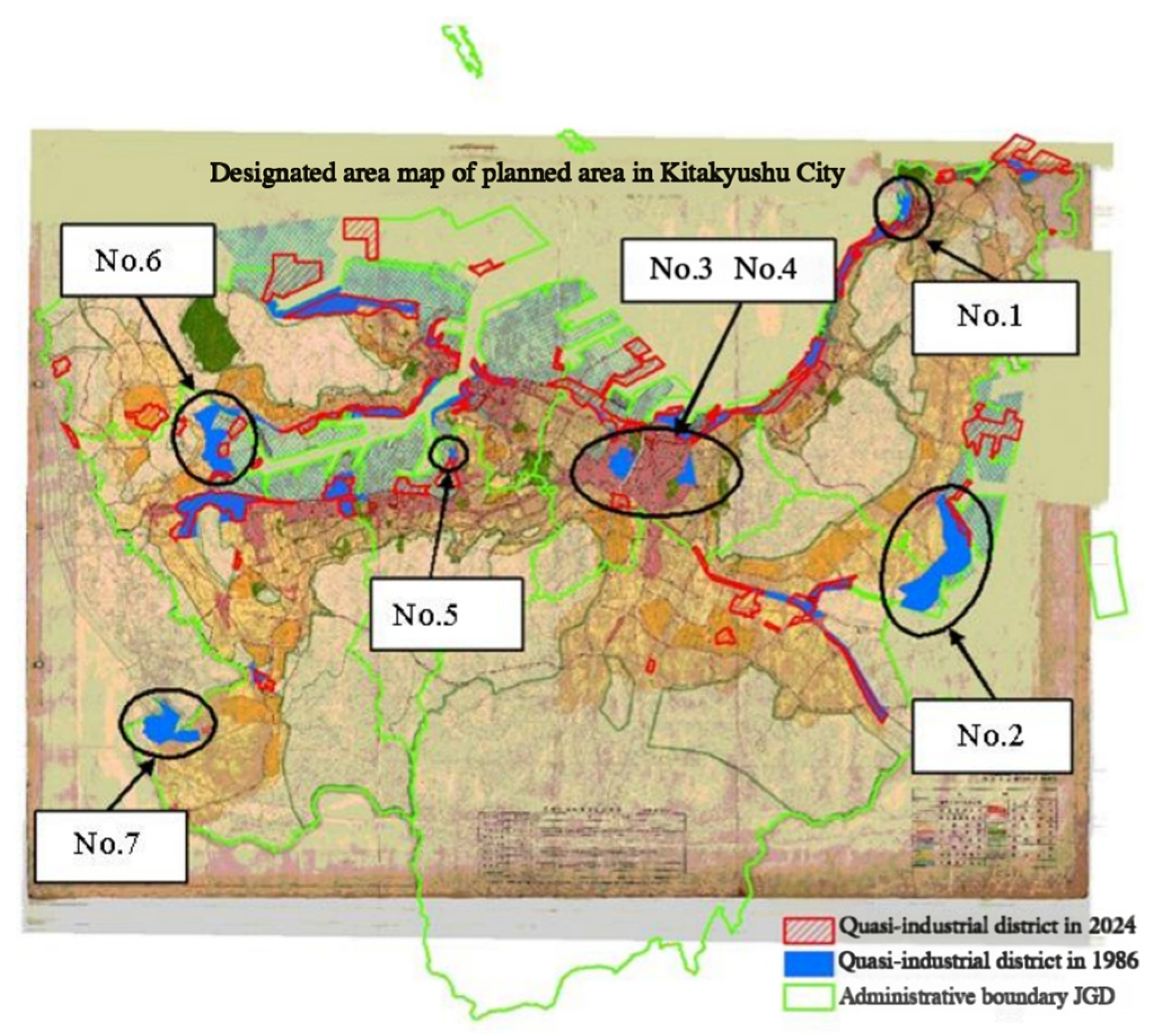
3.1. Spatiotemporal Evolution Characteristics
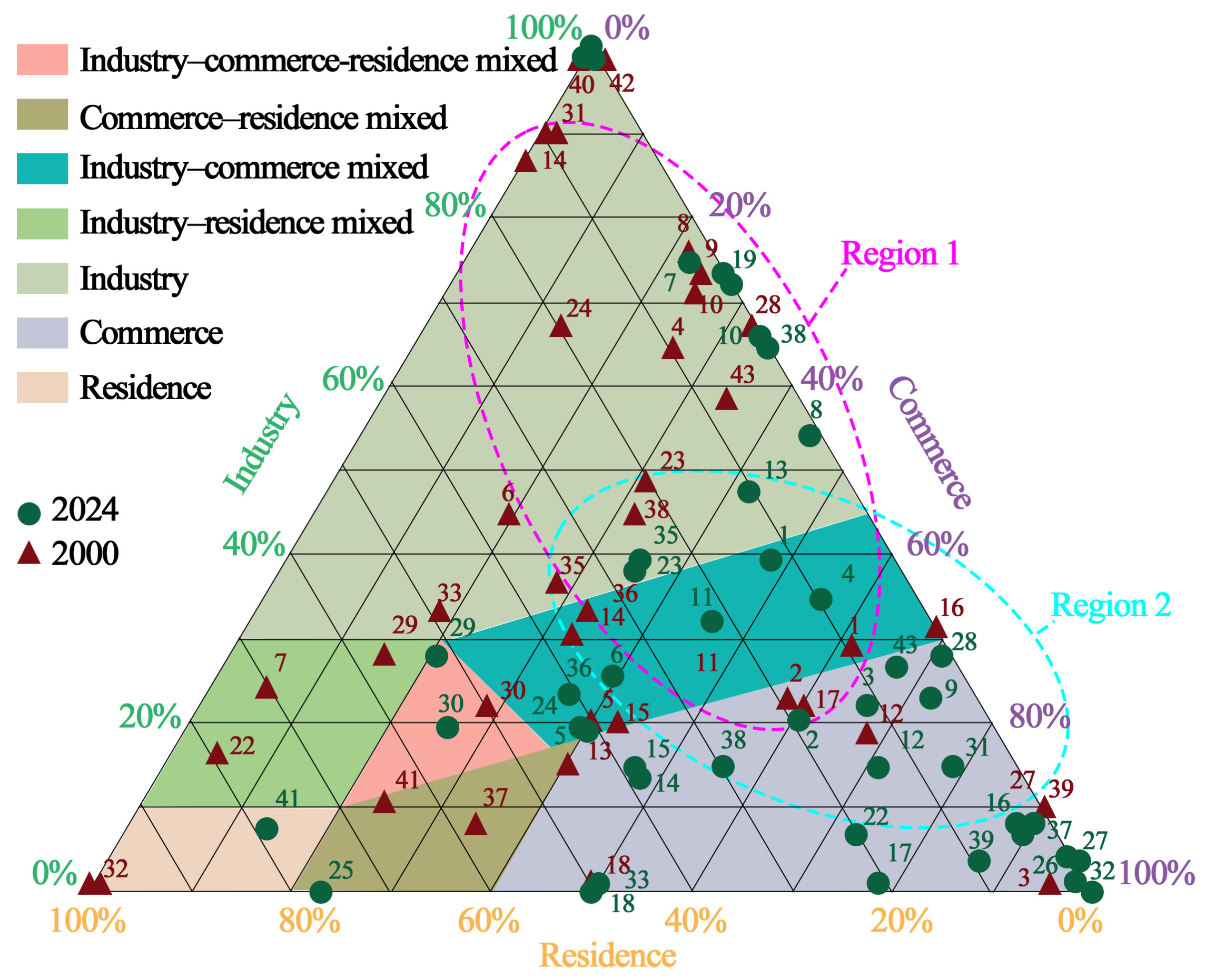
3.2. Functional Composition Analysis
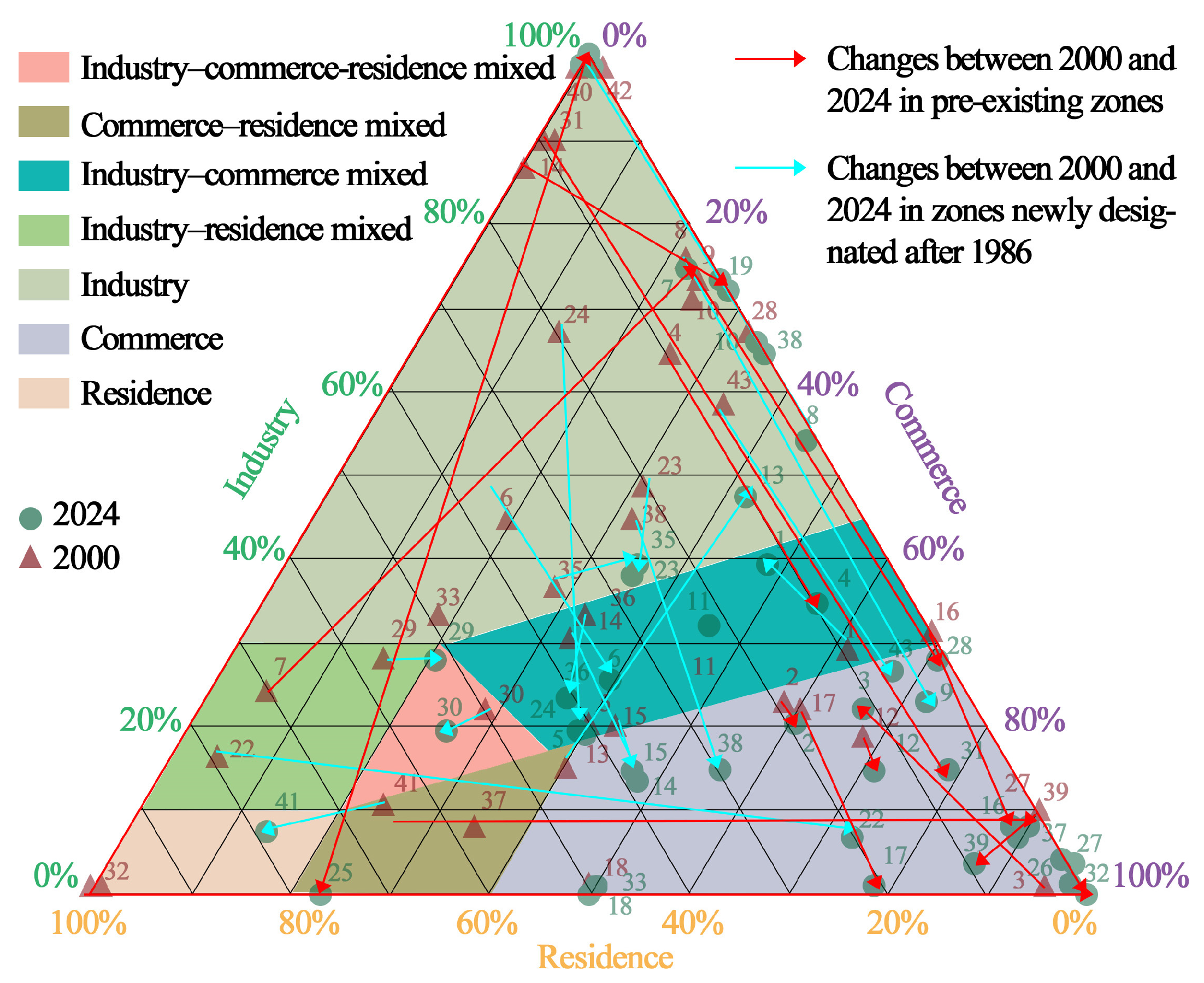
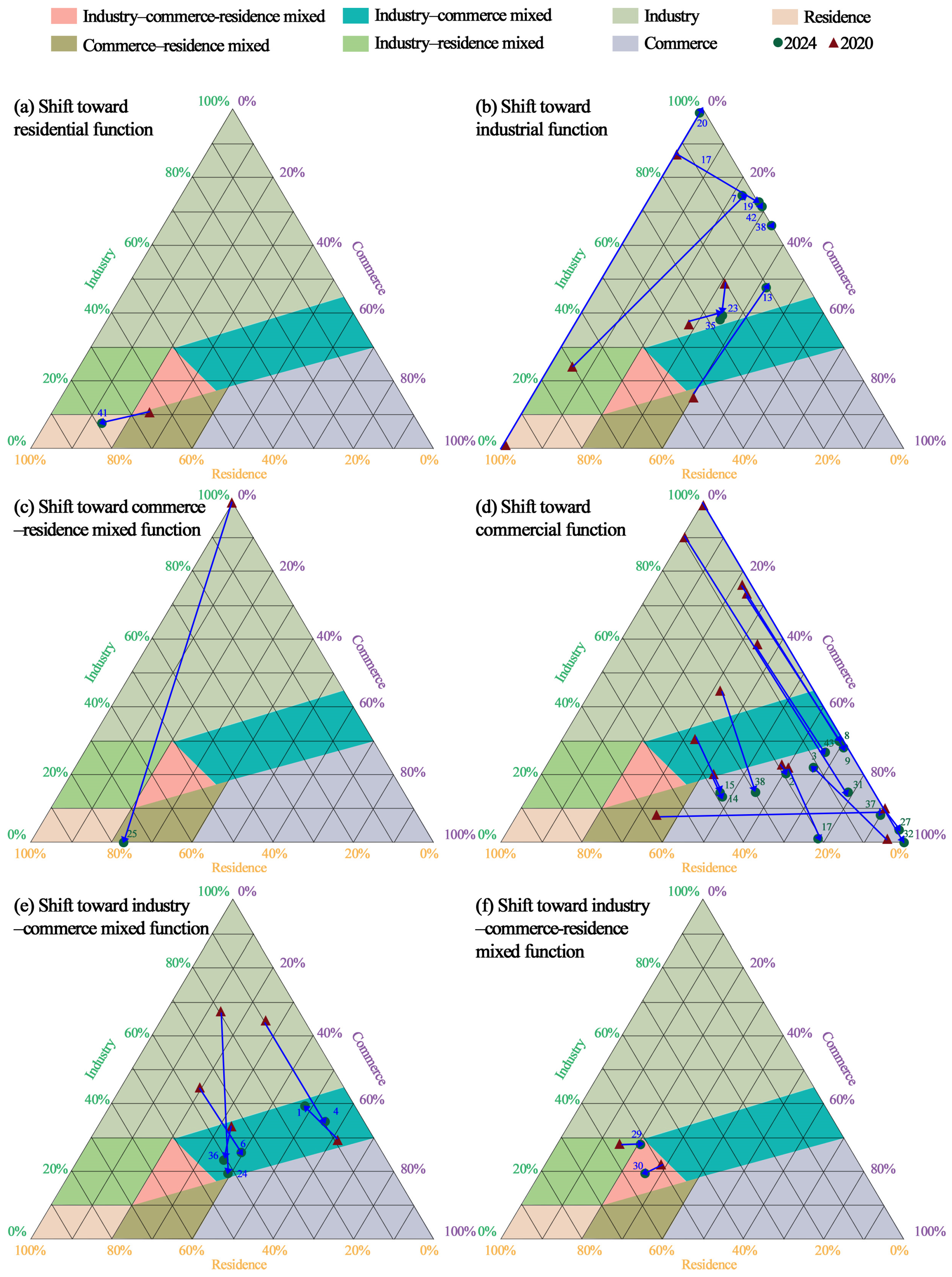
3.3. Structural Evolution Pathways
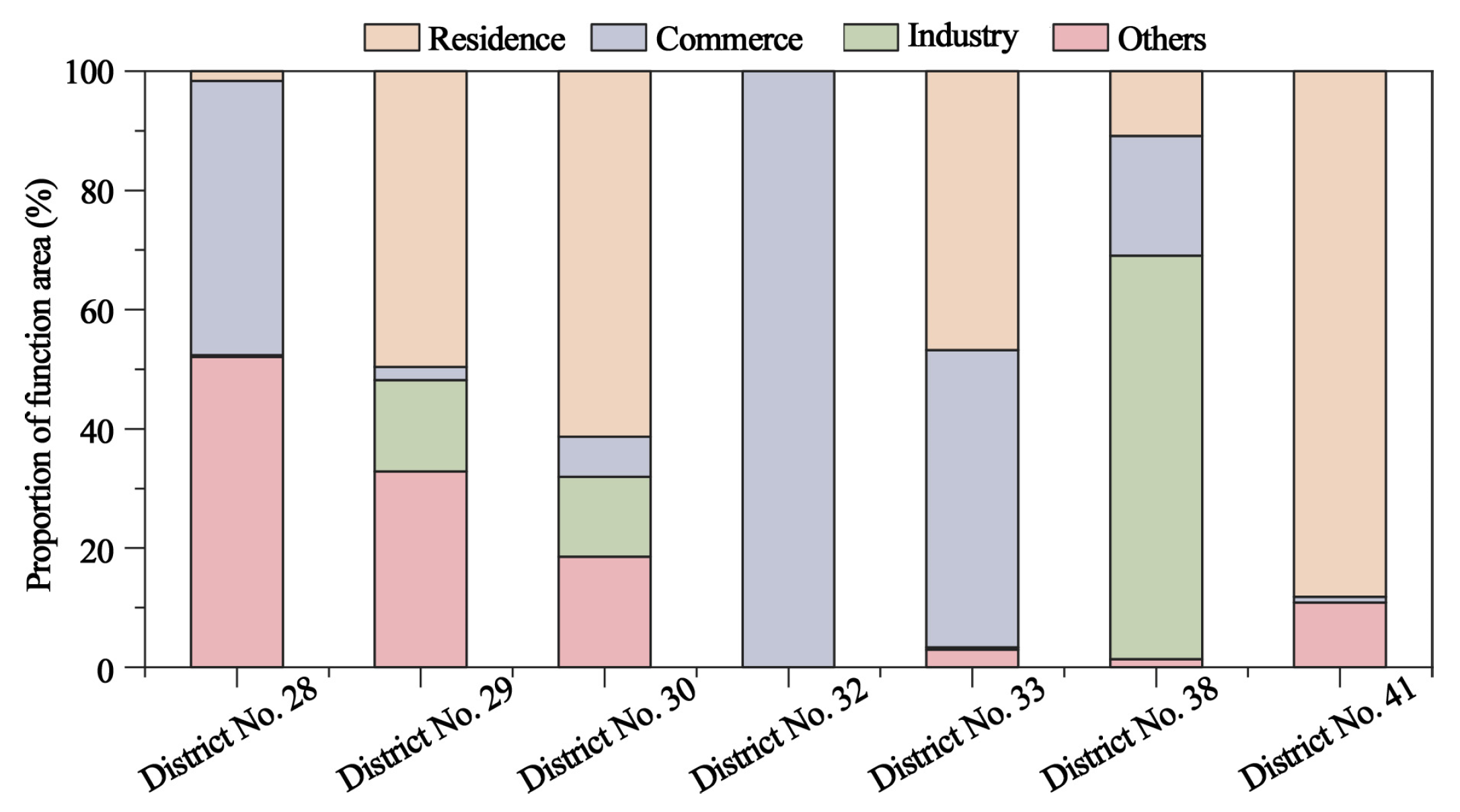
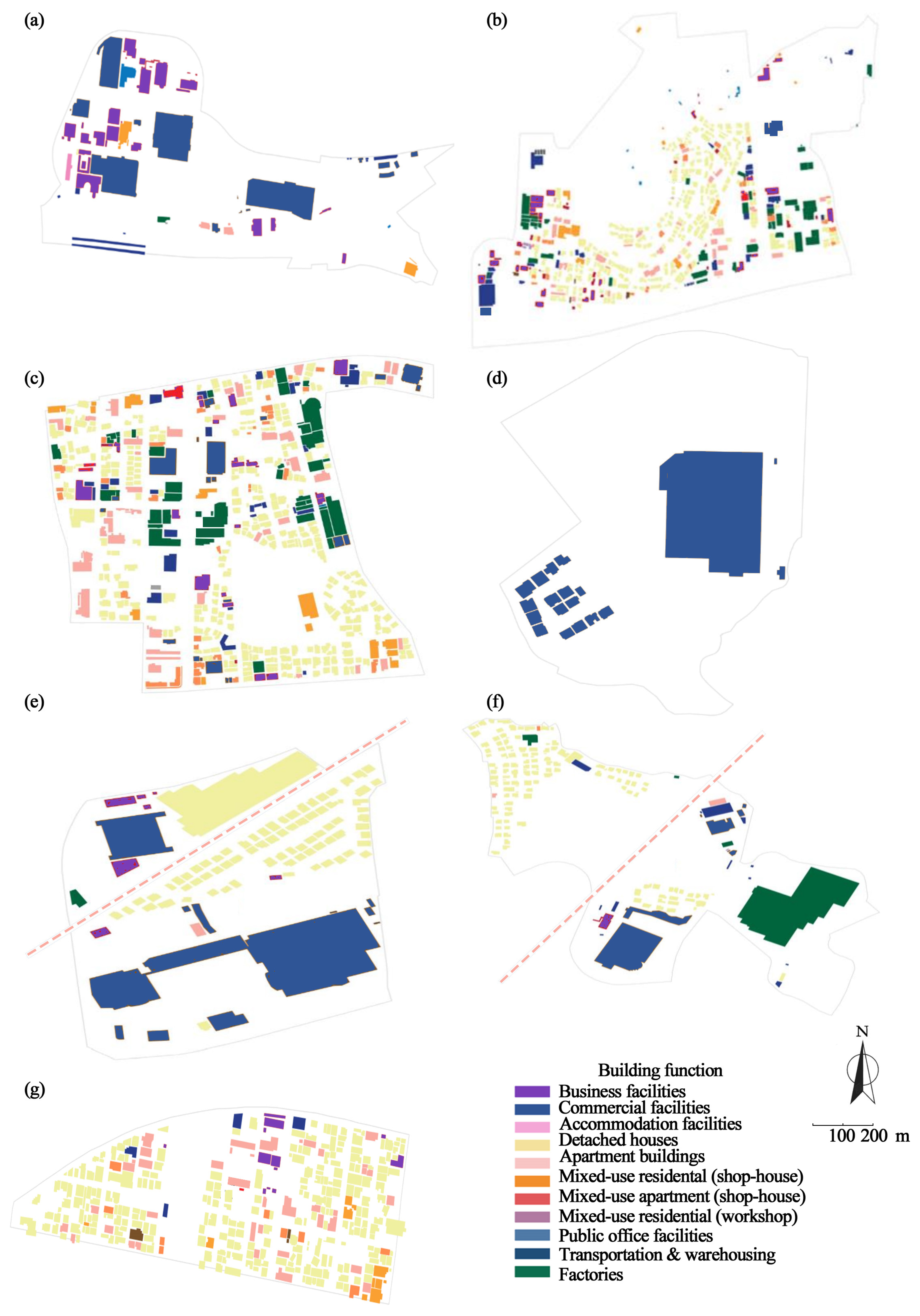
3.4. Key Areas with Significant Structural Shift
- When residential use dominates within a QID and the proportion of industrial function becomes minimal, rezoning to a C1-RD or a QRD is recommended.
- When residential use is dominant but limited industrial or commercial functions remain, a phased or segmented rezoning strategy should be adopted. Peripheral areas may retain quasi-industrial status or transitional functions to mitigate abrupt land-use conflicts.
- When commercial use becomes dominant and the district benefits from favorable transportation accessibility, rezoning to a NCD is appropriate.
- When business facilities are highly concentrated and the district serves a subregional or district-level service function, reclassification as a CD should be considered.
- For districts exhibiting clear internal spatial differentiation, a gradient transition structure—comprising residential, residential–commercial mixed, and industrial zones—should be established, rather than maintaining a long-term ambiguous mixed-use configuration.
4. Discussion
4.1. Spatial Manifestation of QIDs and Driving Factors of Land-Use Restructuring
4.2. Implications for Land-Use Governance in Shrinking Industrial Cities
4.3. Limitations and Future Research
5. Conclusions
Author Contributions
Funding
Institutional Review Board Statement
Informed Consent Statement
Data Availability Statement
Acknowledgments
Conflicts of Interest
Appendix A

| No. | Land-Use Type | Resident (%) | Commerce (%) | Industry (%) |
|---|---|---|---|---|
| 1 | Resident | 65–100 | 0–25 | 0–15 |
| 2 | Commerce | 0–65 | 35–100 | 0–35 |
| 3 | Industry | 0–75 | 0–60 | 25–100 |
| 4 | Resident–commerce Mixed | 40–85 | 15–45 | 0–20 |
| 5 | Commerce–Industry Mixed | 0–55 | 15–75 | 10–50 |
| 6 | Resident–Industry Mixed | 45–95 | 0–25 | 5–35 |
| 7 | Resident–Commerce–Industry Mixed | 40–75 | 15–45 | 5–35 |
| No. | Land-Use Type | Resident (%) | Commerce (%) | Industry (%) |
|---|---|---|---|---|
| 1 | Resident | 75–100 | 0–15 | 0–5 |
| 2 | Commerce | 0–55 | 45–100 | 0–25 |
| 3 | Industry | 0–65 | 0–50 | 35–100 |
| 4 | Resident–commerce Mixed | 50–75 | 25–35 | 0–10 |
| 5 | Commerce–Industry Mixed | 0–45 | 25–65 | 20–40 |
| 6 | Resident–Industry Mixed | 55–85 | 0–15 | 15–25 |
| 7 | Resident–Commerce–Industry Mixed | 50–65 | 25–35 | 15–25 |
| Land-Use Type | Original Thresholds | Relaxed Thresholds | Stricter Thresholds | |||
|---|---|---|---|---|---|---|
| 2000 | 2024 | 2000 | 2024 | 2000 | 2024 | |
| Resident | 0 | 1 | 1 | 1 | 0 | 1 |
| Commerce | 7 | 20 | 8 | 22 | 6 | 18 |
| Industry | 19 | 12 | 21 | 13 | 17 | 10 |
| Resident–commerce Mixed | 0 | 2 | 0 | 2 | 1 | 3 |
| Commerce–Industry Mixed | 7 | 7 | 6 | 5 | 8 | 8 |
| Resident–Industry Mixed | 2 | 0 | 2 | 0 | 1 | 0 |
| Resident–Commerce–Industry Mixed | 8 | 1 | 5 | 0 | 10 | 3 |
References
- Jepson, E.J., Jr.; Haines, A.L. Zoning for sustainability: A review and analysis of the zoning ordinances of 32 cities in the United States. J. Am. Plan. Assoc. 2014, 80, 239–252. [Google Scholar] [CrossRef]
- Zeitner, R.; Marchionini, M.; Neumann, G.; Irmscher, H. Baunutzungsverordnung (BauNVO). In Flächenmanagement in der ImMobilienwirtschaft: Grundlagen und Konkrete Anwendung; Springer: Berlin/Heidelberg, Germany, 2019; pp. 7–48. [Google Scholar]
- Tang, W.-S. Chinese urban planning at fifty: An assessment of the planning theory literature. J. Plan. Lit. 2000, 14, 347–366. [Google Scholar] [CrossRef]
- Shapira, P.; Masser, I.; Edgington, D.W. Planning for Cities and Regions in Japan; Liverpool University Press: Liverpool, UK, 1994; pp. 38–42. [Google Scholar]
- Alden, J. Some strengths and weaknesses of Japanese urban planning. Town Plan. Rev. 1986, 57, 127–140. [Google Scholar] [CrossRef]
- Edgington, D.W. Comprehensive planning in Japanese large cities. Plan. Perspect. 2019, 34, 115–132. [Google Scholar]
- Callies, D. Land use planning and control in Japan. In Planning for Cities and Regions in Japan; Liverpool University Press: Liverpool, UK, 1994; pp. 59–70. [Google Scholar]
- Miyauchi, T.; Setoguchi, T. Does low urban density increase municipal expenditure? J. Urban Manag. 2023, 12, 375–384. [Google Scholar] [CrossRef]
- Sorensen, A. The Making of Urban Japan: Cities and Planning from Edo to the Twenty First Century; Routledge: London, UK, 2005; pp. 67–78. [Google Scholar]
- Mano, Y.; Otsuka, K. Agglomeration economies and geographical concentration of industries: A case study of manufacturing sectors in postwar Japan. J. Jpn. Int. Econ. 2000, 14, 189–203. [Google Scholar] [CrossRef]
- Huang, Z.; Du, X. Strategic interaction in local governments’ industrial land supply: Evidence from China. Urban Stud. 2017, 54, 1328–1346. [Google Scholar]
- Van Der Krabben, E.; Jacobs, H.M. Public land development as a strategic tool for redevelopment: Reflections on the Dutch experience. Land Use Policy 2013, 30, 774–783. [Google Scholar] [CrossRef]
- Hamnett, C.; Whitelegg, D. Loft conversion and gentrification in London: From industrial to postindustrial land use. Environ. Plan. A 2007, 39, 106–124. [Google Scholar] [CrossRef]
- Curran, W. From the frying pan to the oven: Gentrification and industrial displacement in Williamsburg. Urban Stud. 2007, 44, 1427–1440. [Google Scholar] [CrossRef]
- Curran, W. In defense of old industrial spaces: Manufacturing, creativity and innovation in Williamsburg. Int. J. Urban Reg. Res. 2010, 34, 871–885. [Google Scholar] [CrossRef]
- Kucera, D.; Milberg, W. Deindustrialization and changes in manufacturing trade. Rev. World Econ. 2003, 139, 601–624. [Google Scholar] [CrossRef][Green Version]
- Shelton, B. Learning from the Japanese City: Looking East in Urban Design; Routledge: London, UK, 2012; pp. 89–93. [Google Scholar]
- Woo, A.; Lee, S. Illuminating the impacts of brownfield redevelopments on neighboring housing prices: Case of Cuyahoga County, Ohio in the US. Environ. Plan. A Econ. Space 2016, 48, 1107–1132. [Google Scholar] [CrossRef]
- Van Duijn, M.; Rouwendal, J.; Boersema, R. Redevelopment of industrial heritage: Insights into external effects on house prices. Reg. Sci. Urban Econ. 2016, 57, 91–107. [Google Scholar] [CrossRef]
- Nagao, K.; Edgington, D.W. Local industrial displacement, zoning conflicts and monozukuri planning. Land Use Policy 2023, 134, 106937. [Google Scholar] [CrossRef]
- Sacirovic, S.; Ketin, S.; Vignjevic, N. Eco-industrial zones in the context of sustainability development of urban areas. Environ. Sci. Pollut. Res. 2019, 26, 24346–24356. [Google Scholar]
- Shirokova, M.I.; Slepnev, P.A. Reorganization of industrial zones into a comfortable urban environment. E3S Web Conf. 2023, 457, 03002. [Google Scholar] [CrossRef]
- Chen, H.; Zhan, C.; Liu, S.; Zhang, J.; Liu, H.; Liu, Z.; Liu, T.; Liu, X.; Xiao, W. Pollution characteristics and human health risk of heavy metals. Int. J. Environ. Res. Public Health 2022, 19, 10970. [Google Scholar] [CrossRef] [PubMed]
- Wcisło, E.; Bronder, J.; Bubak, A.; Rodríguez-Valdés, E.; Gallego, J.L.R. Human health risk assessment in restoring safe and productive use of abandoned contaminated sites. Environ. Int. 2016, 94, 436–448. [Google Scholar] [CrossRef] [PubMed]
- Carsjens, G.J.; Ligtenberg, A. A GIS-based support tool for sustainable spatial planning in metropolitan areas. Landsc. Urban Plan. 2007, 80, 72–83. [Google Scholar] [CrossRef]
- Hartmann, B.; Török, S.; Börcsök, E.; Groma, V.O. Multi-objective method for energy purpose redevelopment of brownfield sites. J. Clean. Prod. 2014, 82, 202–212. [Google Scholar] [CrossRef]
- Hou, D.; Song, Y.; Zhang, J.; Hou, M.; O’Connor, D.; Harclerode, M. Climate change mitigation potential of contaminated land redevelopment: A city-level assessment method. J. Clean. Prod. 2018, 171, 1396–1406. [Google Scholar] [CrossRef]
- Koch, F.; Bilke, L.; Helbig, C.; Schlink, U. Compact or cool? The impact of brownfield redevelopment on inner-city micro climate. Sustain. Cities Soc. 2018, 38, 31–41. [Google Scholar] [CrossRef]
- Ma, X.; Chen, H.; Lu, Y.; Luo, Q.; Yan, F.; Li, T.; Zhao, J.; Ding, H. Evaluating blue-green infrastructure for outdoor thermal comfort and energy efficiency in a university campus microclimate: A case study from Xi’an, China. Energy Build. 2025, 350, 116640. [Google Scholar]
- Briassoulis, H. Land-use policy and planning, theorizing, and modeling: Lost in translation, found in complexity? Environ. Plan. B Plan. Des. 2008, 35, 16–33. [Google Scholar] [CrossRef]
- Van Schrojenstein Lantman, J.; Verburg, P.H.; Bregt, A.; Geertman, S. Core principles and concepts in land-use modelling: A literature review. In Land-Use Modelling in Planning Practice; Springer: Dordrecht, The Netherlands, 2011; pp. 35–57. [Google Scholar]
- Wang, T.; Kazak, J.; Han, Q.; de Vries, B. A framework for path-dependent industrial land transition analysis using vector data. Eur. Plan. Stud. 2019, 27, 1391–1412. [Google Scholar] [CrossRef]
- Hansen, H.S. Empirically derived neighbourhood rules for urban land-use modelling. Environ. Plan. B Plan. Des. 2012, 39, 213–228. [Google Scholar] [CrossRef]
- Elgohary, A.S.; Samra, M.; El-Madawy, A.E.-T. Sustainable urban treatments for mixed-use areas. Civ. Eng. Archit. 2024, 12, 1124–1142. [Google Scholar] [CrossRef]
- Zhou, X.; Yeh, A.G.; Yue, Y.; Li, W. Residential-employment mixed use and jobs-housing balance. Land Use Policy 2022, 119, 106201. [Google Scholar] [CrossRef]
- Im, H.N.; Choi, C.G. The hidden side of the entropy-based land-use mix index: Clarifying the relationship between pedestrian volume and land-use mix. Urban Stud. 2019, 56, 1865–1881. [Google Scholar]
- Song, Y.; Merlin, L.; Rodriguez, D. Comparing measures of urban land use mix. Comput. Environ. Urban Syst. 2013, 42, 1–13. [Google Scholar] [CrossRef]
- Zhao, X.; Xia, N.; Li, M. 3-D multi-aspect mix degree index. Comput. Environ. Urban Syst. 2023, 104, 102005. [Google Scholar] [CrossRef]
- Lai, Y.; Chen, K.; Zhang, J.; Liu, F. Transformation of industrial land in urban renewal in Shenzhen, China. Land 2020, 9, 371. [Google Scholar] [CrossRef]
- Duan, J.; Wang, H.; Liu, L.; Zhang, J. Attraction gradient of urban functions and urban vitality. Cities 2025, 156, 105516. [Google Scholar] [CrossRef]
- Liang, J.; Chenal, J.; Xia, N.; Pan, S.; Wang, Z.; Chen, W.; Li, M. Rethinking mixed land use measurement and its driving mechanisms: Beyond traditional frameworks and linear assumptions. Cities 2026, 170, 106681. [Google Scholar] [CrossRef]
- Nakanishi, H.; Shibata, H. Kitakyushu, Japan. In Partnerships for the Sustainable Development of Cities in the APEC Region; APEC Policy Support Unit: Singapore, 2017; pp. 183–201. [Google Scholar]
- Thompson, J.H. Manufacturing in the Kitakyushu industrial zone of Japan. Ann. Assoc. Am. Geogr. 1959, 49, 420–442. [Google Scholar] [CrossRef]
- Shiroyama, H.; Kajiki, S. Eco-town project in Kitakyushu. In Governance of Urban Sustainability Transitions; Springer: Tokyo, Japan, 2016; pp. 113–132. [Google Scholar]
- Zhao, Z.; Liu, Z. Development path of industrial heritage tourism in Kitakyushu. Sustainability 2021, 13, 12099. [Google Scholar] [CrossRef]
- Herrador, M.; De Jong, W.; Nasu, K.; Granrath, L. Circular cities in Japan. Sci. Total Environ. 2023, 894, 165052. [Google Scholar] [CrossRef] [PubMed]
- Gregory, I.N.; Healey, R.G. Historical GIS: Structuring and analysing geographies of the past. Prog. Hum. Geogr. 2007, 31, 638–653. [Google Scholar] [CrossRef]
- Herrault, P.A.; Sheeren, D.; Fauvel, M.; Monteil, C.; Paegelow, M. A comparative study of geometric transformation models for the historical “Map of France” registration. Geogr. Tech. 2013, 1, 34–46. [Google Scholar]
- Zahari, M.A.Z.; Majid, M.R.; Ho, C.S.; Kurata, G.; Nadhirah, N.; Irina, S.Z. Land use composition and PM10 concentrations. Clean Technol. Environ. Policy 2016, 18, 2429–2439. [Google Scholar] [CrossRef]
- Ye, Y.; Van Nes, A. Quantitative tools in urban morphology. Urban Morphol. 2014, 18, 97–118. [Google Scholar] [CrossRef]
- Watari, K. Evaluation and Utilization of Land Use and Public Transport in Kitakyushu by Using Geographic Information System. Ph.D. Thesis, The University of Kitakyushu, Kitakyushu, Japan, March 2015. Available online: https://kitakyu.repo.nii.ac.jp/records/438 (accessed on 17 May 2026).
- Luo, J.; Wu, Y.; Zhang, L. Prediction and evaluation of industrial land intensive use: Adding policy impact to system dynamics model. Systems 2024, 12, 464. [Google Scholar] [CrossRef]
- Paulsen, K. The effects of land development on municipal finance. J. Plan. Lit. 2014, 29, 20–40. [Google Scholar]
- Nagahara, M. A research project of Society 5.0 in Kitakyushu, Japan. In Proceedings of the 2019 IEEE Conference on Control Technology and Applications (CCTA), Hong Kong, China, 19–21 August 2019; IEEE: Piscataway, NJ, USA, 2019; pp. 56–74. [Google Scholar]
- Peng, W.; Fan, Z.; Duan, J.; Gao, W.; Wang, R.; Liu, N.; Li, Y.; Hua, S. Assessment of interactions between influencing factors on city shrinkage based on geographical detector: A case study in Kitakyushu, Japan. Cities 2022, 131, 103958. [Google Scholar] [CrossRef]
- Ortiz-Moya, F.; Moreno, N. Filming industrial Japan: Kitakyushu, rise and decline of the iron town. Reg. Stud. Reg. Sci. 2015, 2, 480–488. [Google Scholar] [CrossRef]
- Takeuchi, A.; Motoki, H. Environmental symbiosis and renewal of old industrial districts in Japan: Cases of Kawasaki and Kitakyushu. In New Economic Spaces: New Economic Geographies; Routledge: London, UK, 2017; pp. 146–153. [Google Scholar]
- Lechner, C.; Kirisits, C. The effect of land-use categories on traffic noise annoyance. Int. J. Environ. Res. Public Health 2022, 19, 15444. [Google Scholar] [CrossRef] [PubMed]
- Grodach, C.; Martin, D. A productive mix? Urban manufacturing in planned industrial zones and mixed-use districts. J. Plan. Educ. Res. 2025, 45, 401–413. [Google Scholar]
- Green, J.W. Manufacturing in Place: Industrial Preservation in the US; Portland State University: Portland, OR, USA, 2019; pp. 60–70. [Google Scholar]
- Coupland, A. Reclaiming the City: Mixed Use Development; Routledge: London, UK, 2005; pp. 101–106. [Google Scholar]
- Hamnett, C. Unequal City: London in the Global Arena; Routledge: London, UK, 2004; pp. 39–43. [Google Scholar]
- Chan, H.H.; Hu, T.-S.; Fan, P. Social sustainability of urban regeneration led by industrial land redevelopment in Taiwan. Eur. Plan. Stud. 2019, 27, 1245–1269. [Google Scholar] [CrossRef]
- Geyer, H., Jr. The theory and praxis of mixed-use development: An integrative literature review. Cities 2024, 147, 104774. [Google Scholar] [CrossRef]
- Ferm, J.; Jones, E. Mixed-use “regeneration” of employment land in the post-industrial city: Challenges and realities in London. Eur. Plan. Stud. 2016, 24, 1913–1936. [Google Scholar] [CrossRef]
- Grodach, C.; Taylor, E.; Hurley, J.; Martin, D. Industrial district transitions: Agglomeration and gentrification in urban industrial zones. Int. J. Urban Reg. Res. 2026, 50, 170–190. [Google Scholar]
- Kong, W.; Huang, J.; Niu, L.; Chen, S.; Zhou, J.; Zhang, Z.; Guo, S. Innovative framework for identification and spatiotemporal dynamics analysis of industrial land at parcel scale with multidimensional attributes. Cities 2025, 162, 105958. [Google Scholar] [CrossRef]
- Xue, B.; Zhang, L.; Geng, Y.; Mitchell, B.; Ren, W. Extended land-use coding system and its application in urban brownfield redevelopment: Case study of Tiexi district in Shenyang, China. J. Urban Plan. Dev. 2016, 142, 05015014. [Google Scholar] [CrossRef]
- Burke, H.; Hough, E.; Morgan, D.; Hughes, L.; Lawrence, D. Approaches to inform redevelopment of brownfield sites: An example from the Leeds area of the West Yorkshire coalfield, UK. Land Use Policy 2015, 47, 321–331. [Google Scholar] [CrossRef]
- He, J.-L.; Gebhardt, H. Space of creative industries: A case study of spatial characteristics of creative clusters in Shanghai. Eur. Plan. Stud. 2014, 22, 2351–2368. [Google Scholar]


| Land-Use Distinct | Area (ha) | Perception (%) | Land-Use Distinct | Area (ha) | Perception (%) |
|---|---|---|---|---|---|
| C1-LRD | 3469 | 16.9 | NCD | 788 | 3.8 |
| C2-LRD | 303 | 1.5 | CD | 1180 | 5.7 |
| C1-MRD | 2988 | 14.5 | QID | 2055 | 10.0 |
| C2-MRD | 7 | 0.0 | ID | 620 | 3.0 |
| C1-RD | 4525 | 22.0 | EID | 3891 | 18.9 |
| C2-RD | 731 | 3.5 | Total | 20,582 | 100.0 |
| QRD | 25 | 0.1 |
| Change Type | Number of Districts | Sub-Classification | |
|---|---|---|---|
| Type | District ID | ||
| Newly designated (Absent in 1986 → Present in 2024) | 23 | Port area | 2,3,4,7,8,19,20,21,27,28,31,33,34,40 |
| Inland area | 12,18,25,26,32,37,39 | ||
| Railway/expressway corridor | 16,17 | ||
| No change | 1 | 5 | |
| Area changed | 19 | Significant area increase | 1,6,11,13 |
| Significant area decrease | 9,10,43 | ||
| Minor change | 14,15,22,23,24,29,30,35,36,38,41,42 | ||
| No. | Land-Use Type | Resident (%) | Commerce (%) | Industry (%) |
|---|---|---|---|---|
| 1 | Resident | 70–100 | 0–20 | 0–10 |
| 2 | Commerce | 0–60 | 40–100 | 0–30 |
| 3 | Industry | 0–70 | 0–55 | 30–100 |
| 4 | Resident–commerce Mixed | 45–80 | 20–40 | 0–15 |
| 5 | Commerce–Industry Mixed | 0–50 | 20–70 | 15–45 |
| 6 | Resident–Industry Mixed | 50–90 | 0–20 | 10–30 |
| 7 | Resident–Commerce–Industry Mixed | 45–70 | 20–40 | 10–30 |
Disclaimer/Publisher’s Note: The statements, opinions and data contained in all publications are solely those of the individual author(s) and contributor(s) and not of MDPI and/or the editor(s). MDPI and/or the editor(s) disclaim responsibility for any injury to people or property resulting from any ideas, methods, instructions or products referred to in the content. |
© 2026 by the authors. Licensee MDPI, Basel, Switzerland. This article is an open access article distributed under the terms and conditions of the Creative Commons Attribution (CC BY) license.
Share and Cite
Zhang, Y.; Gao, W.; Zhang, N.; Tan, W. Land-Use Restructuring in Quasi-Industrial Districts Under Deindustrialization: Evidence from Kitakyushu, Japan. Urban Sci. 2026, 10, 333. https://doi.org/10.3390/urbansci10060333
Zhang Y, Gao W, Zhang N, Tan W. Land-Use Restructuring in Quasi-Industrial Districts Under Deindustrialization: Evidence from Kitakyushu, Japan. Urban Science. 2026; 10(6):333. https://doi.org/10.3390/urbansci10060333
Chicago/Turabian StyleZhang, Yan, Weijun Gao, Nan Zhang, and Wei Tan. 2026. "Land-Use Restructuring in Quasi-Industrial Districts Under Deindustrialization: Evidence from Kitakyushu, Japan" Urban Science 10, no. 6: 333. https://doi.org/10.3390/urbansci10060333
APA StyleZhang, Y., Gao, W., Zhang, N., & Tan, W. (2026). Land-Use Restructuring in Quasi-Industrial Districts Under Deindustrialization: Evidence from Kitakyushu, Japan. Urban Science, 10(6), 333. https://doi.org/10.3390/urbansci10060333