1. Introduction
Rapid urbanization, climate change, and resource limitations are exacerbating strains on cities, especially in emerging nations where institutional and infrastructural capacities frequently trail behind growth dynamics [
1]. In Egypt, numerous cities are hindered by conventional strategic plans that concentrate solely on land use and construction laws, neglecting to incorporate modern sustainability concepts or address evolving environmental and socio-economic issues [
2]. Sea level rise, coastline erosion, seasonal tourism, and speculative real estate development pose additional hazards to coastal communities like Gamasa, which is situated on the Mediterranean Sea. These factors collectively endanger long-term environmental quality and urban livability. These circumstances highlight the necessity of integrated planning strategies that can guide urban change toward sustainability in an organized and quantifiable manner [
3].
By integrating environmental performance, social well-being, and economic viability into urban form, infrastructure, and governance, green urbanism has become a holistic paradigm for reorienting urban development. Compact and mixed-use development, sustainable mobility, green and blue infrastructure, energy and resource efficiency, and high-quality public space, bolstered by participatory and adaptable governance, are among its tenets. However, operationalizing these principles necessitates context-sensitive frameworks that convert general notions into criteria, indicators, and spatial objectives, particularly in Global South medium-sized cities where planning gaps and data limitations still exist [
4,
5,
6].
A helpful framework for organizing complicated urban sustainability issues including several, sometimes conflicting, environmental, social, and economic goals is provided by multi-criteria decision-making (MCDM) techniques. Since it breaks down decision problems into hierarchical levels, obtains expert opinions through pairwise comparisons, and produces consistent weights for criteria and alternatives, the Analytic Hierarchy Process (AHP) is frequently employed in this context. The AHP has been used to prioritize indicators, assess strategic options, and assist in the creation of more adaptable and feasible plans in the context of sustainable urban development. However, there is still a need to use AHP-based assessments in coastal urban contexts that are marked by fast development and environmental fragility, and to more clearly connect them with green urbanism principles [
7]. Prior AHP applications in sustainable urban development can be classified into three main categories: (i) indicator prioritization for strategic frameworks focusing on general sustainability metrics [
8]; (ii) spatial alternative ranking in specific contexts like heritage reuse or waterfront revitalization [
9,
10]); and (iii) policy evaluation with limited spatial integration [
11]. While these studies demonstrate the AHP’s utility, they remain largely case-specific, descriptive, or disconnected from comprehensive green urbanism dimensions in coastal settings.
The coastal city of Gamasa in the Dakahlia Governorate is a prime example of both difficulties and possibilities. The city has rapidly expanded due to real estate and tourism, but this has also resulted in fragmented open spaces, few organized green spaces, car-oriented roadway networks, and increased vulnerability to climate and coastal hazards. Significant gaps between current development patterns and the requirements of sustainable, green urban growth have been identified by earlier examinations of Gamasa’s urban fabric, including evaluations of land use, building heights, solid-void patterns, green space distribution, and a SWOT diagnostic. Nevertheless, this study addresses this gap by integrating the AHP with green urbanism’s six core dimensions [
12,
13] for the first time in a Global South coastal city, linking spatial diagnostics (GIS/SWOT of land use, street hierarchy, green space) directly to prioritized, actionable design/policy recommendations. Unlike prior works, our framework operationalizes coastal-specific challenges (e.g., sea-level rise vulnerability) into quantifiable priorities for urban transformation, offering a transferable template for similar contexts [
14,
15,
16].
In order to fill these gaps, this study uses the Analytic Hierarchy Process (AHP) to produce a multicriteria assessment of Gamasa’s urban transformation possibilities based on green urbanism. Sustainable mobility, green and blue infrastructure, energy and resource efficiency, urban form and density, social livability and public space quality, and governance and implementation feasibility are the six dimensions that are defined [
17,
18]. These dimensions are synthesized from international sustainability and green urbanism literature and tailored to Gamasa’s particular challenges. The three goals of the study are to (i) develop a framework of context-sensitive criteria that operationalizes green urbanism principles for a coastal Egyptian city; (ii) determine expert-based weights for these dimensions and apply them to important Gamasa urban areas; and (iii) rank priority zones for green urban transformation, offering planners and policymakers a transparent, decision-supporting tool. By doing this, the study helps to bridge the gap between conceptual green urbanism and realistic strategic planning in coastal situations that are quickly urbanizing.
Recent scholarship (2022–2025) conceptualizes green urbanism as transformation governance rather than static metrics [
19,
20,
21,
22]. Portfolio approaches emphasize multi-site experimentation [
23,
24], while Global South studies highlight institutional barriers requiring hybrid models. Building upon Egyptian AHP applications limited to indicators or heritage, Gamasa integrates diagnostics, AHP, and transformation portfolios, addressing implementation gaps prevalent in urban experimentation literature.
2. Materials and Methods
2.1. Research Design
In order to assist strategic urban transformation in Gamasa, Egypt, this study uses an applied, case-based multi-criteria decision-making (MCDM) approach that integrates green urbanism concepts with spatial and diagnostic analysis. The methodological framework is based on a thorough examination of earlier research and global frameworks pertaining to sustainable urban development and green urbanism criteria and indicators. It is then tailored to the particular circumstances of a quickly expanding coastal metropolis. The primary steps are as follows: (i) creating a framework of criteria based on green urbanism principles; (ii) assessing Gamasa’s existing urban state; (iii) building an Analytic Hierarchy Process (AHP) model; and (iv) determining priorities for important urban regions.
2.2. Review of Green Urbanism Criteria and Indicators
The first step involved a systematic examination of earlier research, frameworks, and instruments that use criteria and indicators to operationalize green urbanism and urban sustainability. The principles and indicators pertaining to sustainable mobility, green and blue infrastructure, energy and resource efficiency, urban form and density, public space and livability, and governance were identified by analyzing academic sources (books, journal articles, conference papers) and documents from international organizations and professional bodies. This research made it possible to combine disparate ideas into a cohesive set of dimensions and quantifiable indicators (
Table 1) that are appropriate for assessing green urban transformation in places like Gamasa.
Table 1 synthesizes these into six dimensions tailored to Gamasa, building on but extending prior AHP–urban studies. The novelty lies in the hierarchical linkage of diagnostics-to-AHP-to-design, validated via expert judgments and sensitivity tests (
Section 3.4), enabling policy translation absent in earlier Egyptian cases.
2.3. Study Area: Gamasa City
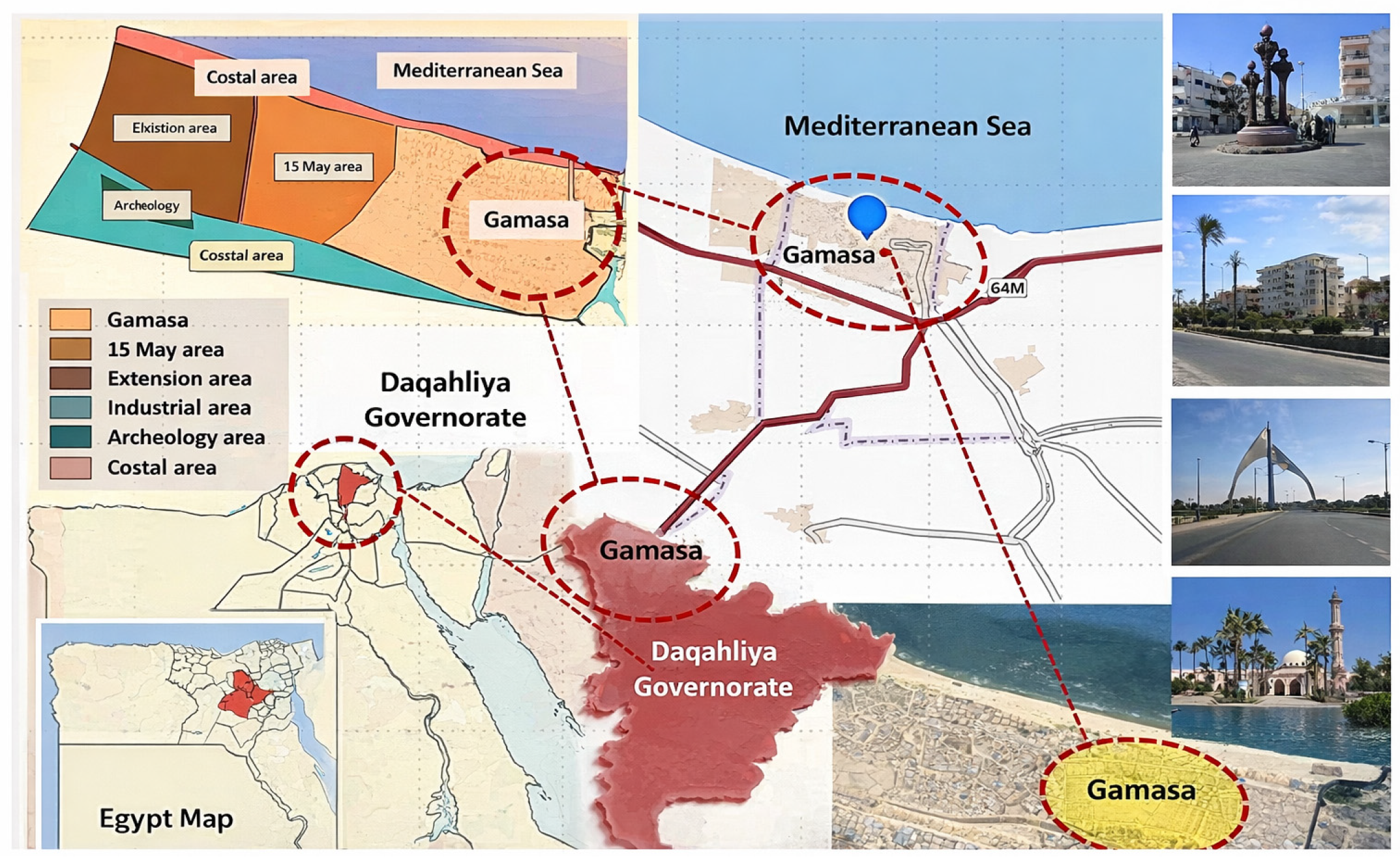
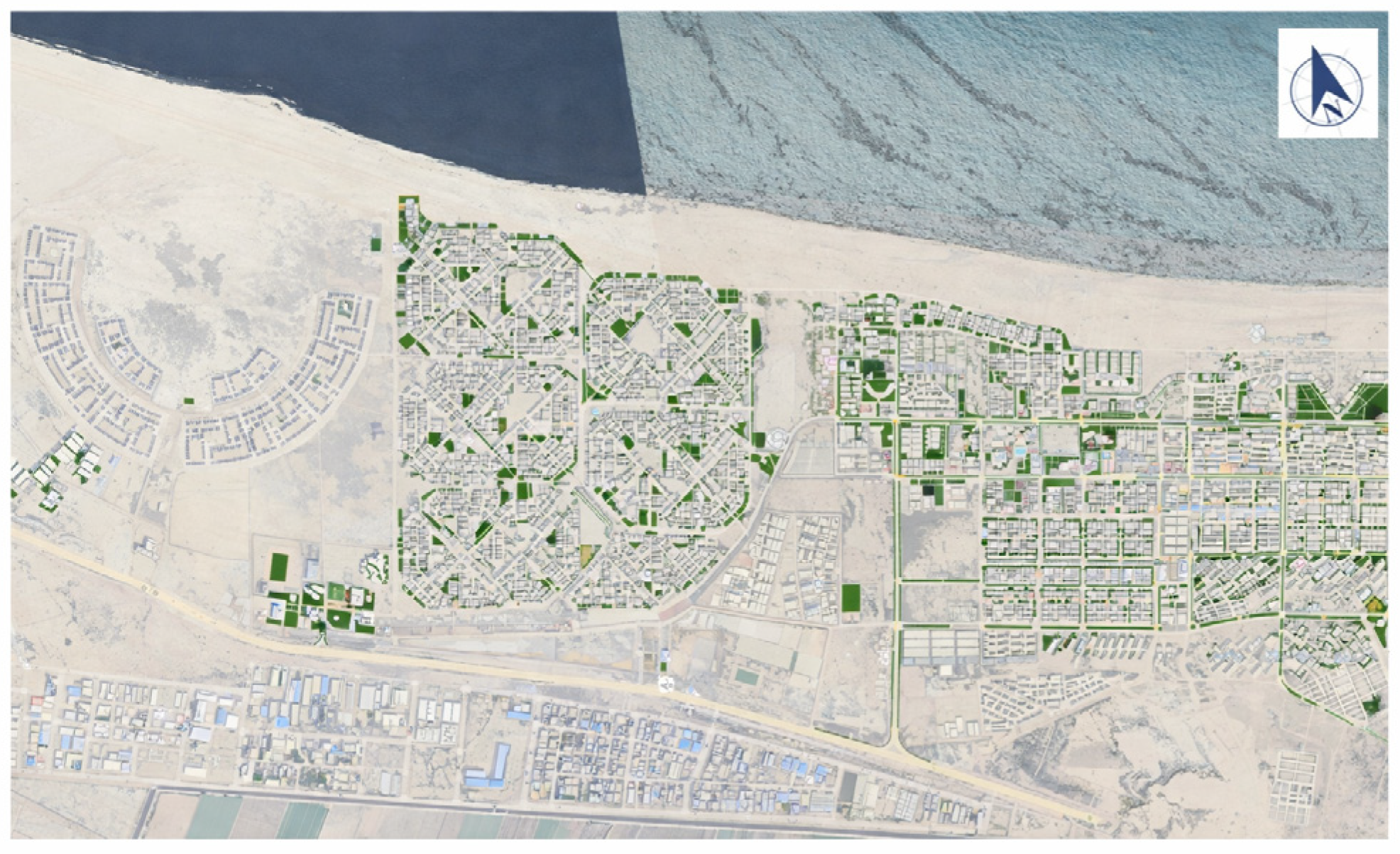
Gamasa was chosen as a representative coastal city (
Figure 1) that has planning inadequacies, environmental stress, and fast development driven by real estate and tourism. Local planning papers, satellite imagery interpretation, and field surveys were used to assemble spatial data on land use, building heights, street hierarchy, and existing green and open areas. The distribution of residential, commercial, tourism, and service uses; the ratio of built-up to unoccupied land; patterns of vertical development; and the layout of main, secondary, and local streets were among the indicators that were extracted from these datasets. In collaboration with local experts and stakeholders, a diagnostic investigation was carried out to identify the institutional, environmental, and functional difficulties Gamasa faces. This included a SWOT analysis of the company’s internal strengths and weaknesses as well as external opportunities and threats [
11].
A thorough grasp of Gamasa City’s spatial and functional organization can be obtained by analyzing its urban features using maps. In order to ensure accessibility and connectivity, the street network features an organized plan that links residential, commercial, and recreational areas. The city is dotted with green spaces that improve urban aesthetics and contribute to environmental sustainability. A solid and void analysis, which reflects a combination of open, undeveloped land and dense urban blocks, emphasizes the harmony between built-up regions and open spaces, and land-use patterns maps. The city’s functional diversity is also demonstrated by maps that show how buildings are used, with distinct divisions between residential areas, commercial centers, and mixed-use complexes. These assessments are crucial for sustainable development projects and urban planning because they shed light on the spatial distribution and growth dynamics of cities [
35].
2.3.1. Land Use Structure and Functional Pattern
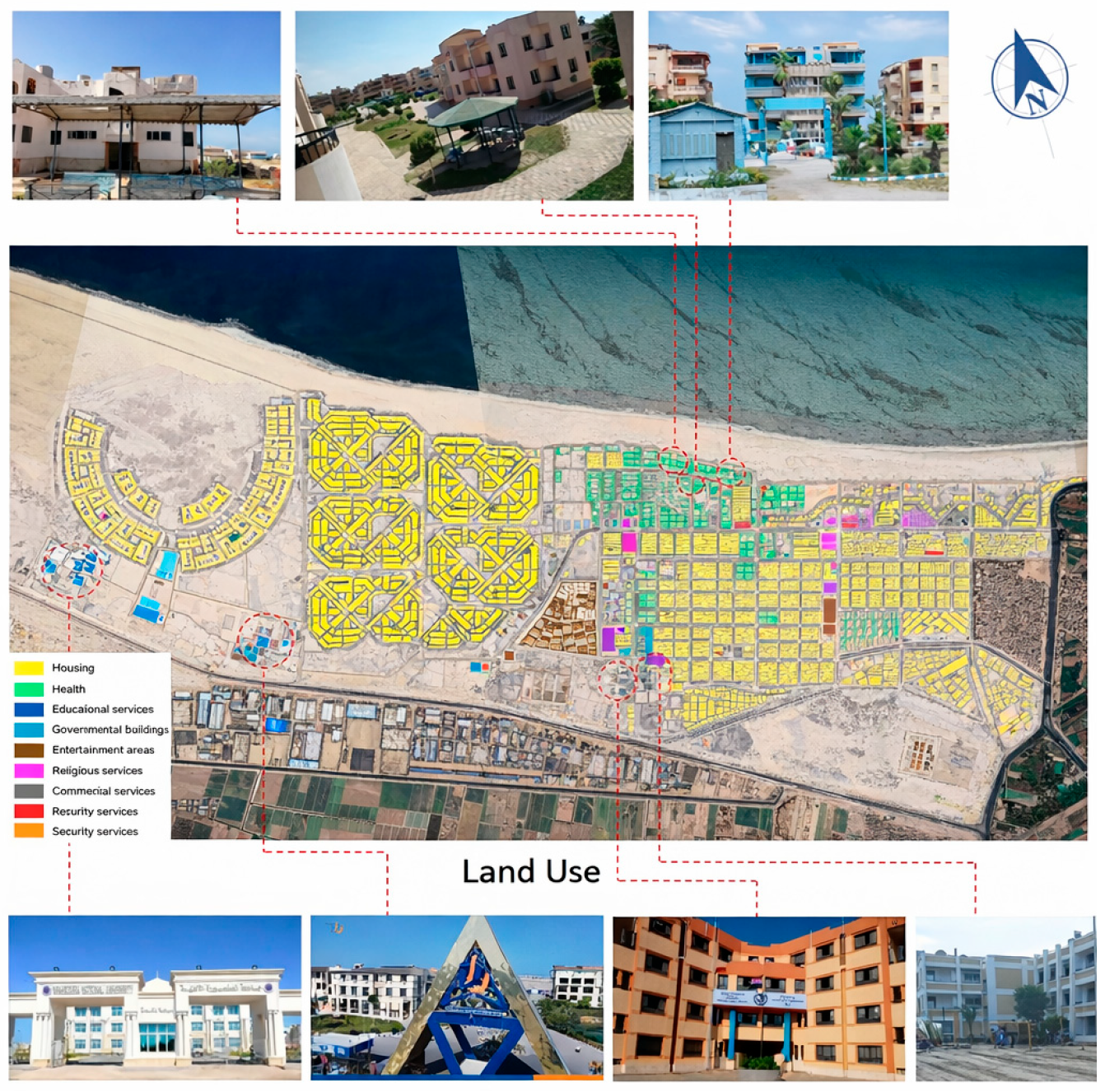
The uses vary between residential, commercial, hotels, religious buildings, health, and educational services. It has been noted that residential occupies a large percentage of the city, as well as commercial. The city lacks medical and recreational services, while the green areas are considered few in comparison to the standards of green urbanism as
Figure 2.
2.3.2. Solid and Void Pattern and Land Consumption
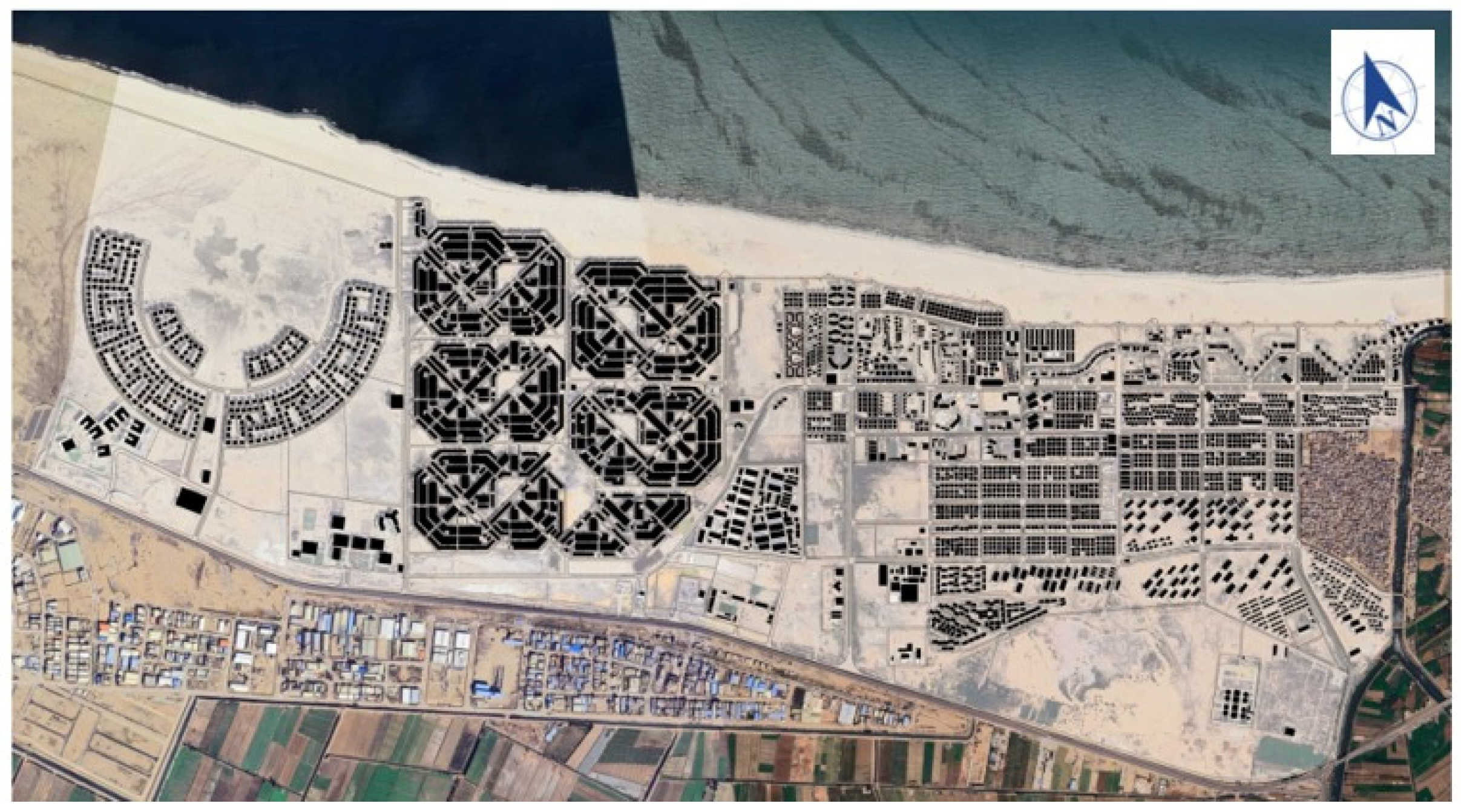
A solid and void analysis highlights the balance between built-up areas and open spaces, reflecting a mix of dense urban blocks and open, undeveloped land as in
Figure 3.
2.3.3. Street Hierarchy, Connectivity, and Mobility
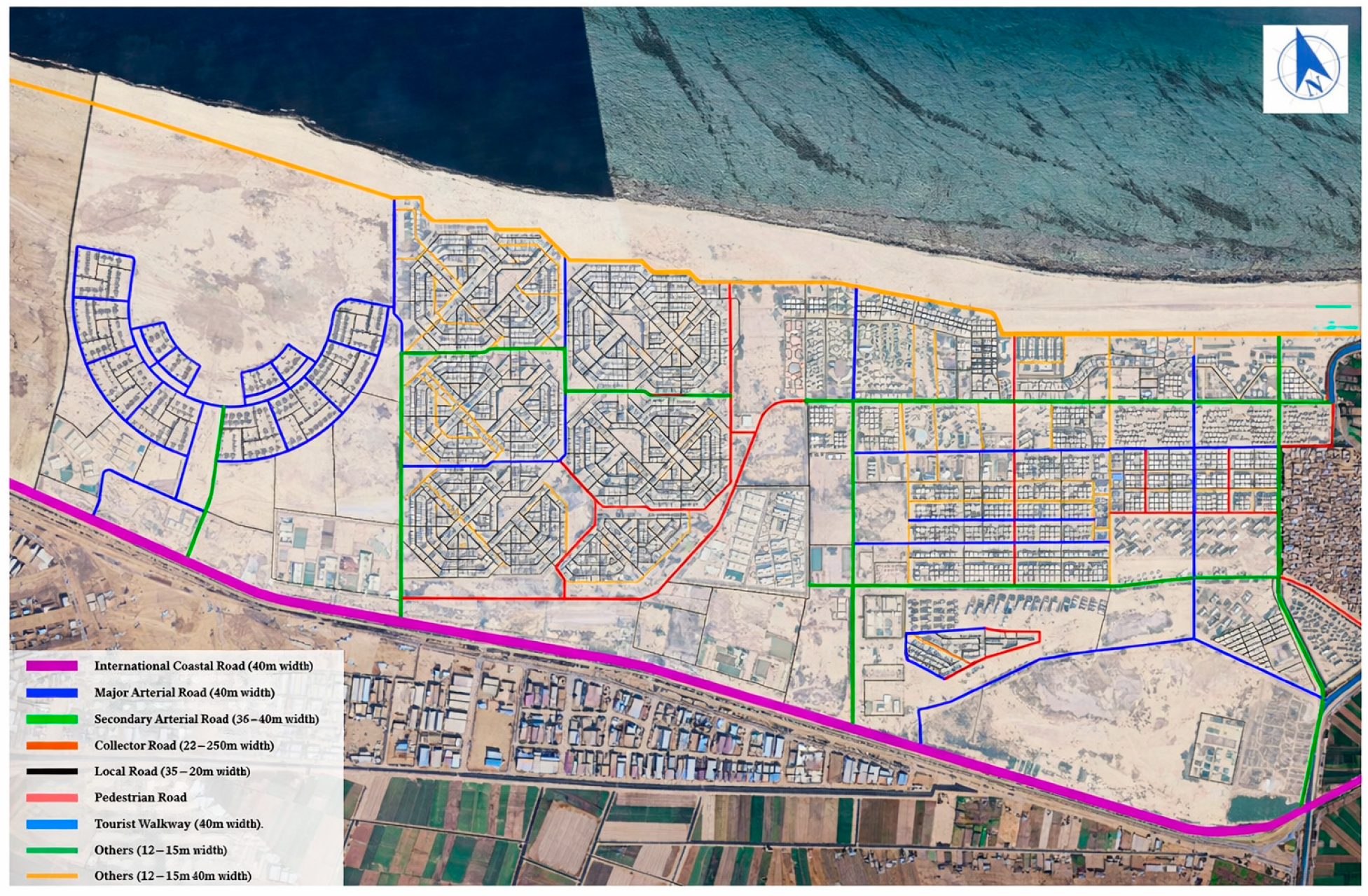
The street hierarchy in Gamasa City, as depicted in the map as
Figure 4, follows a well-structured layout that includes various types of roads such as international coastal roads, major arterial roads, secondary arterial roads, and local roads. However, to enhance the city’s functionality and sustainability, it is crucial to further develop these streets by incorporating pedestrian-friendly features like pavements, green areas, and cycling lanes. The addition of green spaces along roadsides would help mitigate the urban heat island effect, improve air quality, and provide recreational spaces for residents. Additionally, the creation of dedicated cycling paths would encourage eco-friendly transportation and reduce traffic congestion. Integrating these elements into the street network will not only improve accessibility but also contribute to the overall livability and sustainability of Gamasa, aligning with global urban development trends that prioritize environmental and social well-being.
2.3.4. Green and Blue Infrastructure Distribution
The current situation of green areas in Gamasa City reveals a limited distribution of open, vegetated spaces amidst expanding urban development. While some green areas exist, they are insufficient to meet the ecological and recreational needs of the growing population. Urban expansion and real estate projects have further reduced the availability of green spaces, impacting the city’s environmental balance and livability. To transform Gamasa into a sustainable city, it is crucial to maximize green areas by integrating parks, green belts, and urban gardens into the city’s planning. Expanding green spaces not only enhances air quality and biodiversity but also provides residents with recreational opportunities, reduces urban heat, and improves climate resilience. Strategic planning and the incorporation of sustainable urban design principles can ensure the preservation and expansion of green areas, fostering a healthier and more sustainable urban environment as in
Figure 5.
2.3.5. Swot Analysis of the City
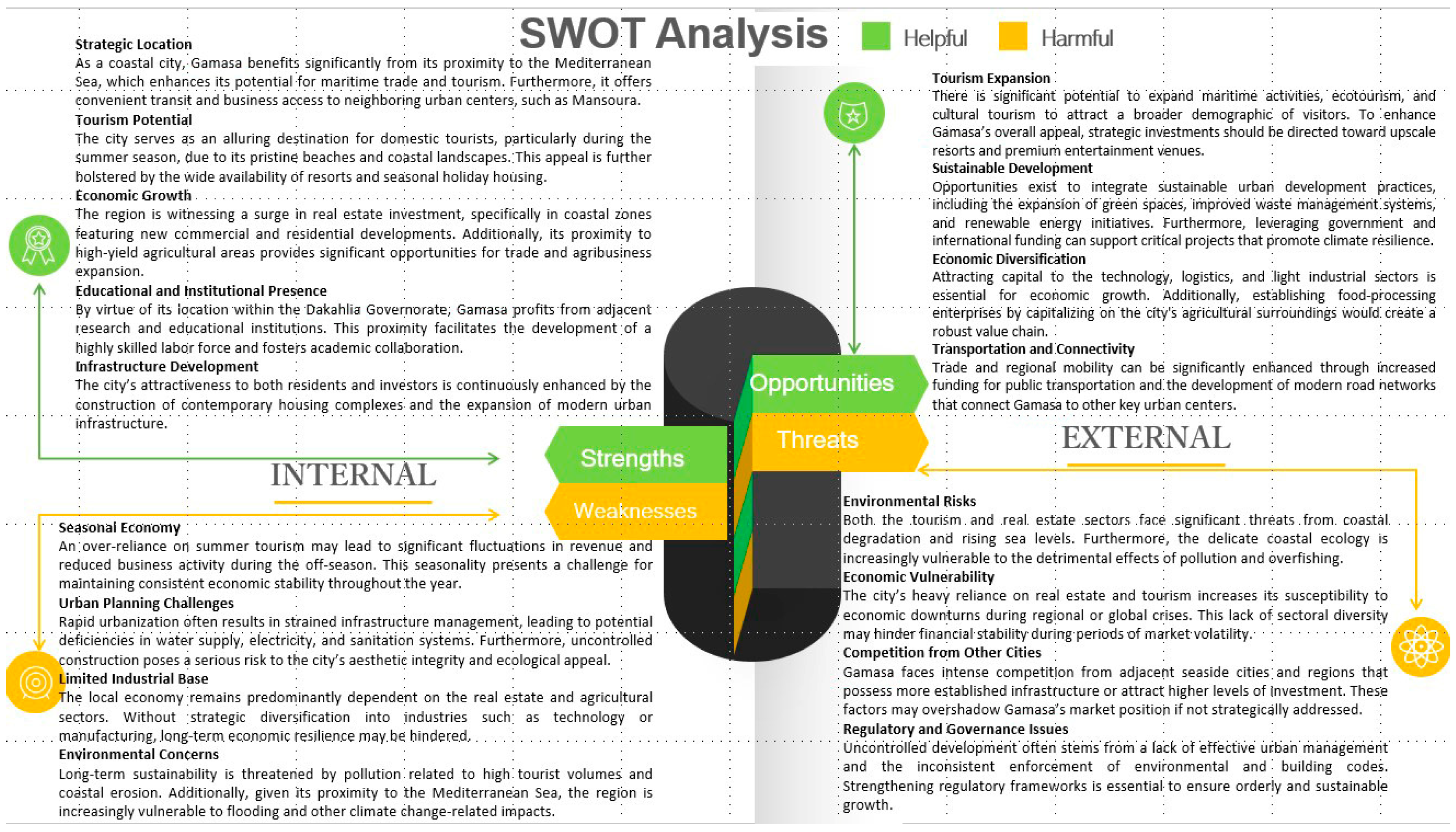
Gamasa, a coastal city in Egypt’s Dakahlia Governorate, holds significant geographical and economic potential. Positioned on the Mediterranean Sea, its strategic location facilitates trade, tourism, and agricultural connections. The city benefits from proximity to Mansoura and major transportation routes, enhancing its connectivity. Gamasa’s natural attractions, including sandy beaches and a mild climate, make it a prime destination for tourism, particularly in summer. Moreover, it serves as a hub for real estate growth and agribusiness, supported by its fertile surroundings. However, challenges such as coastal erosion, environmental risks, and urban planning limitations highlight the need for sustainable development and regulatory measures to ensure its long-term prosperity as
Figure 6.
2.4. Green Urbanism Criteria Framework
A criteria framework based on well-established green urbanism concepts was created based on the diagnostic analysis and the literature review. (i) Sustainable mobility (walking, cycling, and public transportation); (ii) green and blue infrastructure (parks, urban greenery, and coastal environmental quality); (iii) energy and resource efficiency (water management, waste handling, and renewable energy potential); (iv) urban form and density (compactness, mixed use, and building height patterns); (v) social livability and public space quality; and (vi) governance and implementation feasibility. One or more indicators from the spatial study (such as green space per capita, street connections, and mixed-use ratios) and qualitative expert input on institutional and implementation elements were used to represent each dimension. It is important to note that not all indicators listed in
Table 1 were quantified in the same way. For the spatially explicit dimensions (sustainable mobility, green and blue infrastructure, urban form and density), indicators such as street hierarchy, intersection density, green space per capita, and land-use mix were derived from GIS analysis, satellite imagery, and field mapping of Gamasa. In contrast, some aspects of social livability, governance, and implementation feasibility—such as institutional capacity, regulatory support, and perceived quality of public space—were assessed qualitatively by the expert panel based on their local knowledge and review of planning documents.
2.5. Definition of Alternatives
Four major urban areas in Gamasa were chosen as choices for examination in order to convert the criterion framework into spatial decision-making: (A1) residential districts; (A2) the main urban corridor; (A3) the waterfront zone; and (A4) Ibn Lokman Garden and its surrounding fabric. These regions were picked because they show various combinations of land use, morphology, and environmental conditions, concentrate current development pressures, and have a great deal of potential for putting green urbanism solutions into practice.
2.6. AHP Model Construction and Expert Elicitation
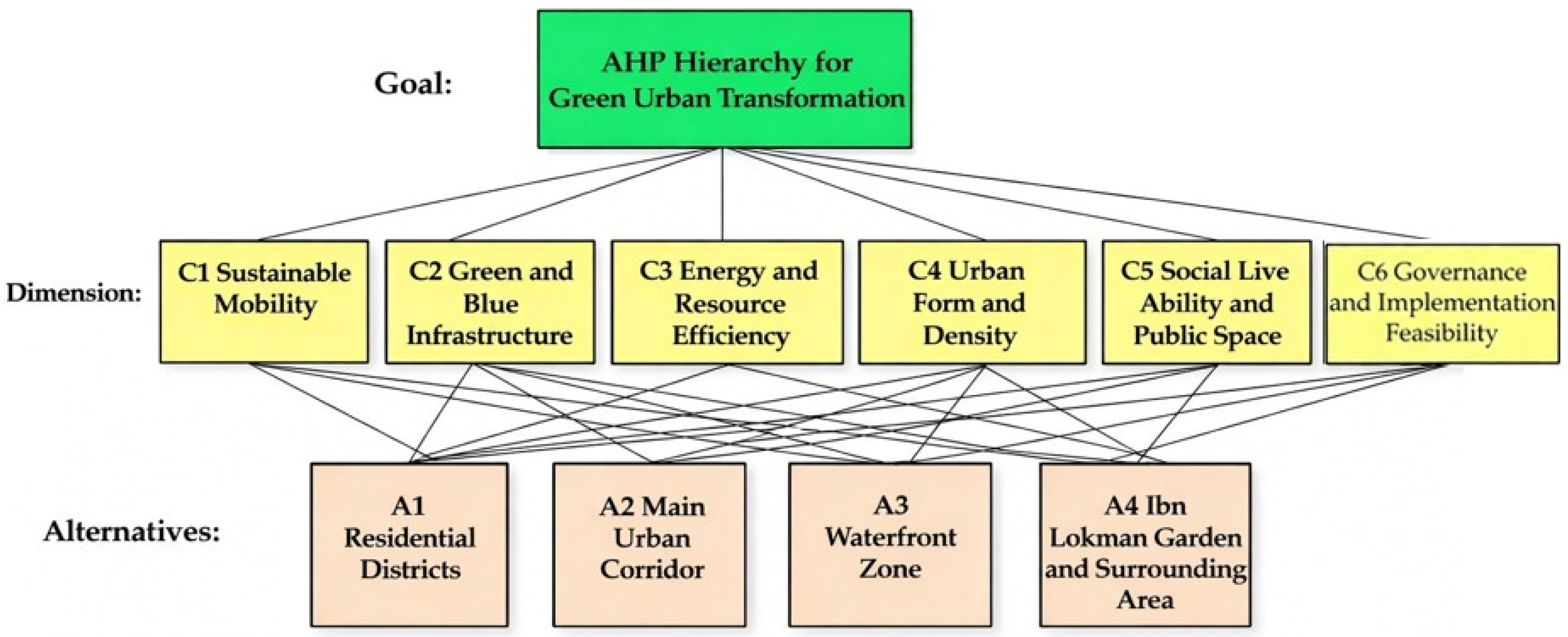
The decision problem was organized in a three-level AHP pyramid: Level 1 (the goal is to prioritize the green urbanism transformation of Gamasa). Level 2 (six criteria/dimensions of green urbanism). Level 3 (four spatial alternatives). An expert panel (
n = 12) was formed based on purposeful selection to provide judgments of pairwise comparisons in
Figure 7 and
Table 2. The expert selection criteria provide a representative selection: six academics (individuals with faculty in urban planning or architecture), four professionals (individuals in local government or consulting on coastal projects), and two external experts (international sustainability or coastal planners); each having ten years or more experience with the Egyptian coastal area. The distribution of expert panel members (50% academic, 33% professional, 17% external) minimizes bias and creates relevance at the local level [
14]. The number of panel members is in the range identified in the AHP group decision literature (typical range of 8–15) [
36,
37]. The experts were provided with a method description, maps of Gamasa, and the key diagnostic indicators (
Table 1,
Figure 2,
Figure 3,
Figure 4,
Figure 5 and
Figure 6), and completed the matrices independently using Saaty’s 1–9 scale. The geometric mean of each panel member’s individual matrix was used to aggregate the data in accordance with the AHP standard. The following bias mitigation processes were followed: (i) anonymous independent completion; (ii) discussion between the experts would only take place concerning matrices that had a CR > 0.10, which resulted in two of the eighteen total matrices being revised; and (iii) all calculated CR values for the final round of calculations were ≤0.10. This process produces a robust set of consistent weights [
38,
39].
2.7. Weight Derivation, Consistency Checking, and Priority Ranking
A set of pairwise comparison matrices was first created at both the criteria and alternative levels in order to operationalize the green urbanism criteria framework within the Analytic Hierarchy Process. These matrices captured expert opinions regarding the relative significance of each element for directing Gamasa’s urban transformation. Sustainable mobility, green and blue infrastructure, energy and resource efficiency, urban form and density, social livability and public space quality, and governance and implementation feasibility were the six dimensions in
Table 3 that were compared in pairs at the criteria level using the standard 1–9 Saaty scale. At the alternative level, the four major urban areas (residential districts, main urban corridor, waterfront zone, and Ibn Lokman Garden and surroundings) were compared pairwise under each criterion (
Table 4,
Table 5,
Table 6,
Table 7,
Table 8,
Table 9 and
Table 10). A ranked set of urban areas in terms of their contribution and priority for advancing green urban transformation in Gamasa was obtained by aggregating individual comparison matrices using the geometric mean to obtain group matrices. Eigenvector methods were then used to compute local priority weights and the associated consistency index (CI) and consistency ratio (CR), with CR ≤ 0.10 adopted as the threshold for acceptable consistency; matrices exceeding this value were reconsidered with the experts to improve coherence. Global priority scores for each alternative were then multiplied by the corresponding criteria weights and summed across all dimensions.
Finally, context-sensitive recommendations were derived by interpreting the AHP results in conjunction with the geographical and SWOT-based diagnostic findings. To develop targeted green urbanism strategies for the waterfront, main corridor, residential areas, and Ibn Lokman Garden, priority scores for each alternative were analyzed in relation to observed deficits and potentials in mobility, green and blue infrastructure, resource use, urban form, and governance.
Detailed AHP Calculations and Reproducibility
Eigenvector Derivation (Criteria Level—
Table 3 Example):
- 1-
Pairwise Matrix (geometric mean of 12 experts):
| C1 | C2 | C3 | C4 | C5 | C6 |
| C1 | 1 | 1/3 | 5 | 3 | 5 | 5 |
| C2 | 3 | 1 | 5 | 3 | 5 | 5 |
| C3 | 1/5 | 1/5 | 1 | 1/3 | 3 | 3 |
| C4 | 1/3 | 1/3 | 3 | 1 | 5 | 5 |
| C5 | 1/5 | 1/5 | 1/3 | 1/5 | 1 | 3 |
| C6 | 1/5 | 1/5 | 1/3 | 1/5 | 1/3 | 1 |
- 2-
Column Normalization: Divide each column by its sum.
- 3-
Row Averages (Priority Vector): C1 = 0.269, C2 = 0.389, C3 = 0.083, C4 = 0.166, C5 = 0.055, C6 = 0.038.
- 4-
Consistency Check: λ_max = 6.095, CI = (λ_max-n)/(n − 1) = 0.019, CR = CI/RI = 0.019/0.90 = 0.021 ✓ (<0.10).
- 5-
Local Weights Calculation (
Table 11): Alternative-level pairwise matrices (urban areas A1–A4 vs. criteria C1–C6) yield. Waterfront (A3) dominates C2 (0.39) and C4 (0.35), informing spatial prioritization.
Global Priorities (
Table 12): Σ (Criteria Weight × Local Alt. Priority).
77 individual matrices (12 experts × 7 matrices)
Geometric mean aggregation formulas
Eigenvector calculations (MMULT function)
Downloadable from the journal repository; raw data verifiable [
14,
15,
36].
Table 11.
Local weights of urban areas under each green urbanism dimension (AHP results).
Table 11.
Local weights of urban areas under each green urbanism dimension (AHP results).
| Criterion/Alternative | A1 Residential | A2 Main Corridor | A3 Waterfront | A4 Ibn Lokman Garden | CR |
|---|
| C1 Sustainable mobility | 0.144 | 0.490 | 0.289 | 0.077 | 0.051 |
| C2 Green and blue infrastructure | 0.055 | 0.118 | 0.565 | 0.262 | 0.043 |
| C3 Energy and resources | 0.498 | 0.302 | 0.125 | 0.075 | 0.079 |
| C4 Urban form and density | 0.499 | 0.155 | 0.286 | 0.060 | 0.092 |
| C5 Livability and public space | 0.066 | 0.149 | 0.460 | 0.325 | 0.038 |
| C6 Governance and feasibility | 0.129 | 0.247 | 0.074 | 0.550 | 0.073 |
Table 12.
Global priority scores of urban areas (aggregated across all criteria).
Table 12.
Global priority scores of urban areas (aggregated across all criteria).
| Alternative | Global Weight | Rank |
|---|
| A3 Waterfront | 0.299 | 1 |
| A2 Main corridor | 0.244 | 2 |
| A1 Residential districts | 0.232 | 3 |
| A4 Ibn Lokman Garden & vicinity | 0.224 | 4 |
Table 13.
Sensitivity analysis results (±20% on C1, C2 weights).
Table 13.
Sensitivity analysis results (±20% on C1, C2 weights).
| Scenario | C1 Weight | C2 Weight | A3 Waterfront | A2 Corridor | A1 Residential | A4 Garden |
|---|
| Baseline | 0.269 | 0.389 | 0.299 | 0.244 | 0.232 | 0.224 |
| C1 20% + | 0.323 | 0.389 | 0.277 | 0.265 | 0.265 | 0.193 |
| C1 20% − | 0.215 | 0.389 | 0.321 | 0.223 | 0.199 | 0.257 |
| C2 20% + | 0.269 | 0.467 | 0.325 | 0.233 | 0.219 | 0.223 |
| C2 20% − | 0.269 | 0.311 | 0.273 | 0.255 | 0.245 | 0.226 |
3. Results
The accompanying tables, which show the derived weights for the green urbanism characteristics, the local priorities of the four urban areas for each criterion, and their combined global scores, provide a summary of the quantitative results of the AHP analysis. First, the criteria-level results demonstrate how experts ranked the six dimensions according to their significance for furthering Gamasa’s green urban transformation, together with the corresponding consistency ratio, demonstrating the validity of the assessments. Second, the relative performance of the spatial options from the standpoint of particular green urbanism characteristics is shown by the local priority weights of the residential districts, main urban corridor, waterfront zone, and Ibn Lokman Garden under each criterion. Lastly, an overall ranking of the four regions is provided by the global priority scores, which are produced by combining criteria weights with local alternative weights. This indicates which sections of the city should be prioritized first in order to optimize the impact of interventions focused on green urbanism.
3.1. Criteria Weights for Green Urbanism Dimensions
The six green urbanism dimensions were weighted differently by the AHP study, indicating their assessed significance for guiding Gamasa’s urban change. Improving non-motorized and public transportation choices and expanding/qualifying green-blue networks are seen as the most important levers for change in the city, as seen by the highest-weighted criteria being sustainable mobility and green and blue infrastructure. The need to balance physical–environmental interventions with social and institutional considerations is highlighted by the slightly lower but still significant weights given to social livability, public space quality, governance, and implementation feasibility, while energy and resource efficiency and urban form and density occupied an intermediate position.
3.2. Local Priorities of Urban Areas Under Each Criterion
At the alternative level, the four major urban centers had different prioritization patterns at the alternative level. The main urban corridor received the highest local priority for sustainable mobility due to its function as the main movement spine and its capacity to support improved infrastructure for pedestrians, bicyclists, and public transportation. The waterfront zone and Ibn Lokman Garden received the highest scores under the green and blue infrastructure criterion because of their advantageous coastal location and capacity to serve as anchor green–blue areas within the larger urban fabric. Given their concentration of built-up area and the potential for enhancing building performance, compactness, and mixed-use patterns at the neighborhood scale, residential districts ranked reasonably high in terms of energy and resource efficiency as well as urban design and density.
3.3. Overall Priority Ranking of Urban Areas
A clear ranking of the four categories was produced by combining local alternative weights with the criteria weights to get global priority ratings. Due to its great performance under the highly weighted green and blue infrastructure and sustainable transportation dimensions, as well as its sensitivity to coastal and climatic threats that necessitate climate-responsive design, the waterfront zone became the top priority for green urban transformation. The main urban corridor came in second, which is indicative of how important it is to reconfigure mobility patterns and reorganize street space to facilitate public transportation, walking, and cycling. Residential districts came in third, emphasizing their significance for enhancing everyday livability, neighborhood-scale green spaces, and energy/resource efficiency in the housing stock. Ibn Lokman Garden and its environs, while locally significant, came in fourth overall because of the more limited scope of their anticipated impact in comparison to the citywide leverage of the waterfront and main corridor.
3.4. Consistency of Expert Judgements
Acceptable levels of internal consistency were attained by all criteria-level and alternative-level pairwise comparison matrices. Expert judgments were consistent and reliable for determining priorities, as evidenced by the consistency ratios (CR) for the criteria matrix and the six alternative matrices under each criterion being below the 0.10 threshold often advised for AHP applications. After discussing cases with the expert panel where the initial CR values were marginally above the threshold, a small number of comparisons were modified, and the consistency measures were subsequently improved. The robustness of the derived criteria weights and global priority scores for the assessed urban regions is strengthened as a result.
In establishing how well rankings remained stable when weightings of the top two evaluation factors (C1 sustainable mobility ±20%, and C2 green/blue infrastructure ±20%) were adjusted with others held constant, a simple sensitivity analysis was conducted. As shown in (
Table 13), the waterfront zone continues to be the highest-ranked zone in every scenario examined (ranging from a global weight of 0.27 to 0.32), the main corridor continues to have the second highest-ranking (ranging from a weight of 0.23 to 0.26). The residential neighborhoods and Ibn Lokman Park also rank consistently well, confirming that the AHP model can be expected to exhibit little sensitivity to moderate restrictiveness/expansion rate changes. Thus, it will provide additional certainty regarding the certainty of priorities for Gamasa planners.
3.5. Interpretation in Light of Diagnostic Findings
The geographical and SWOT-based diagnostic analyses of Gamasa closely match the AHP findings. The waterfront and main urban corridor have been given high priority because of previously identified deficiencies such as underutilized green–blue assets, car-dominated arterials, and fragmented coastal access, as well as dangers from sea-level rise and tourism-related pressures. Similarly, reported deficiencies in neighborhood green space, public space quality, and service provision—all of which are essential for livability but have a more limited impact on the entire urban system—correspond to the intermediate ranking of residential districts and Ibn Lokman Garden. When combined, the findings show that the best way to advance green urbanism in Gamasa is to link citywide mobility and green-blue networks with improved local livability by combining structural interventions in the waterfront and main corridor with focused neighborhood-scale improvements in residential areas and important parks.
3.6. Integrated Framework Implementation
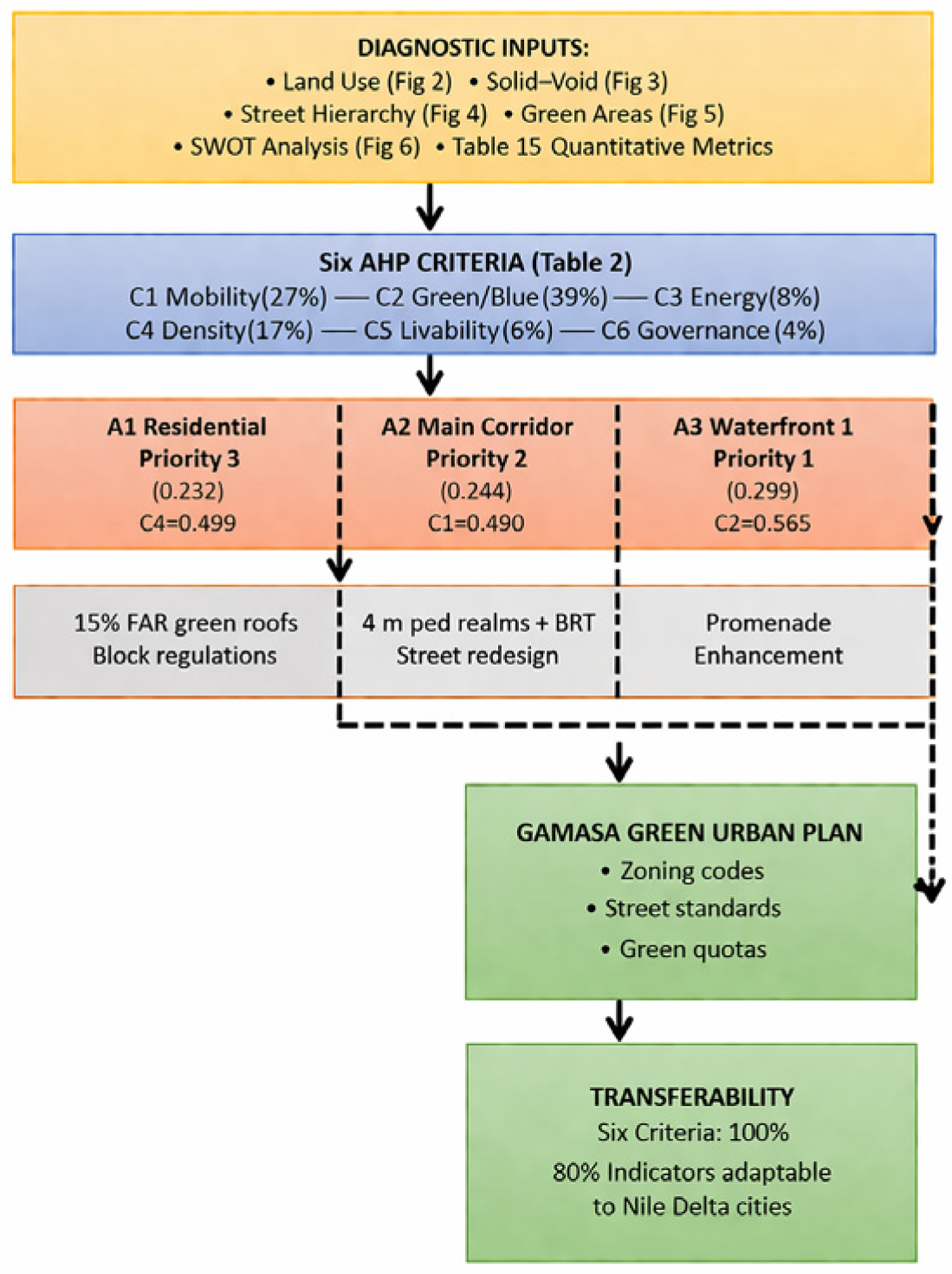
The AHP analysis results in creating the Green Urbanism Framework (
Figure 8), which provides a systematic method for converting diagnostic findings through six weighted criteria into spatially prioritized interventions across Gamasa’s four focal areas. The integrated structure of this framework assists to ensure that each proposed design intervention (see
Section 3.6.1,
Section 3.6.2,
Section 3.6.3 and
Section 3.6.4) directly relates to the specific global AHP priority ranking and dominated criteria weights for each of the target areas as established in
Table 14, and creates well-defined analytical relationships between the quantitative results of the interventions and the practical strategies used to transform urban areas.
Figure 8.
Green urbanism AHP framework for Gamasa City transformation: “Complete methodological structure systematically translating eight diagnostic inputs (
Figure 2,
Figure 3,
Figure 4,
Figure 5 and
Figure 6;
Table 15) through six weighted AHP criteria (
Table 3) into spatially prioritized interventions for four key urban areas (
Table 14), forming an integrated citywide Green Urban Plan. Transferability: Framework structure is 100% adaptable; 80% of indicators are context-specific for Nile Delta coastal cities.”
Figure 8.
Green urbanism AHP framework for Gamasa City transformation: “Complete methodological structure systematically translating eight diagnostic inputs (
Figure 2,
Figure 3,
Figure 4,
Figure 5 and
Figure 6;
Table 15) through six weighted AHP criteria (
Table 3) into spatially prioritized interventions for four key urban areas (
Table 14), forming an integrated citywide Green Urban Plan. Transferability: Framework structure is 100% adaptable; 80% of indicators are context-specific for Nile Delta coastal cities.”
Table 15.
Diagnostic maps and SWOT → Quantitative AHP inputs. PT = Public Transport.
Table 15.
Diagnostic maps and SWOT → Quantitative AHP inputs. PT = Public Transport.
| AHP Criterion | Key Input Indicator | Gamasa Measured/Observed | International Best Practice/WHO Target | Normalized Score (0–1) | Source: Map/SWOT | Interpretation |
|---|
| C1: Sustainable Mobility (Weight 0.269) | Street Connectivity Index (intersections/km2) | 1.8 int/km2 (sparse network) | 3.0–4.5 (compact urban) | 0.60 | Figure 4 (Street Hierarchy) | Low connectivity—car-dependent streets |
| Walking Distance to Nearest Transit (m) | 850 m avg | ≤600 m WHO walkability std | 0.71 (600 ÷ 850) | Figure 4 and Figure 6 (SWOT) | Limited pedestrian access to PT |
| Pedestrian Infrastructure Continuity (%) | 45% continuous | 95–100% required | 0.47 (45 ÷ 95) | Figure 4 and SWOT Weakness | Fragmented sidewalks, unsafe walking |
| C2: Green and Blue Infrastructure (Weight 0.389) | Green Space per Capita (m2/person) | 3.2–4.2 m2/capita | 9–15 m2 WHO standard | 0.42 (4 ÷ 9.5 avg) | Figure 5 and SWOT | Critical gap: insufficient urban parks |
| Distance to Nearest Park (m) | 620 m average | ≤400 m walkability standard | 0.65 (400 ÷ 620) | Figure 5 and SWOT Threat | Unequal access; concentrated in Ibn Lokman only |
| Waterfront Public Access (% continuous) | 38% fragmented/car-dominated | 100% continuous public access | 0.38 | Figure 3 and Figure 5, and SWOT Weakness | Waterfront isolated; tourism/private encroachment |
| Urban Tree Canopy Coverage (%) | 12% estimated | 20–25% target for coastal cities | 0.55 (12 ÷ 22 avg) | Field observation and SWOT | Minimal green buffers on streets |
| C3: Energy and Resource Efficiency (Weight 0.083) | Renewable Energy Potential Score | Coastal: High wind + solar exposure | High renewable potential standard | 0.68 | SWOT Opportunity: coastal location | Opportunity underutilized; no solar systems yet |
| Green Building Density (% stock adopting sustainability) | 2% green-compliant buildings | 20% green building target | 0.10 (2 ÷ 20) | SWOT Weakness: informal construction | Traditional materials; no passive design standards |
| C4: Urban Form and Density (Weight 0.166) | Solid–Void Ratio (built ÷ open space %) | 65:35 (dense blocks, limited open space) | 50:50 optimal mixed form | 0.58 (50 ÷ 65) | Figure 3 (Solid–Void) | Overcrowded; limited breathing room |
| Land Use Mix Index | 0.38 (mono-functional zoning) | 0.5–0.7 mixed-use index | 0.61 (0.38 ÷ 0.62 avg) | Figure 2 (Building Use) and SWOT | Segregated zones: residential, commercial services |
3.6.1. Waterfront Zone (A3, Global Priority #1 = 0.299)
Per AHP results (
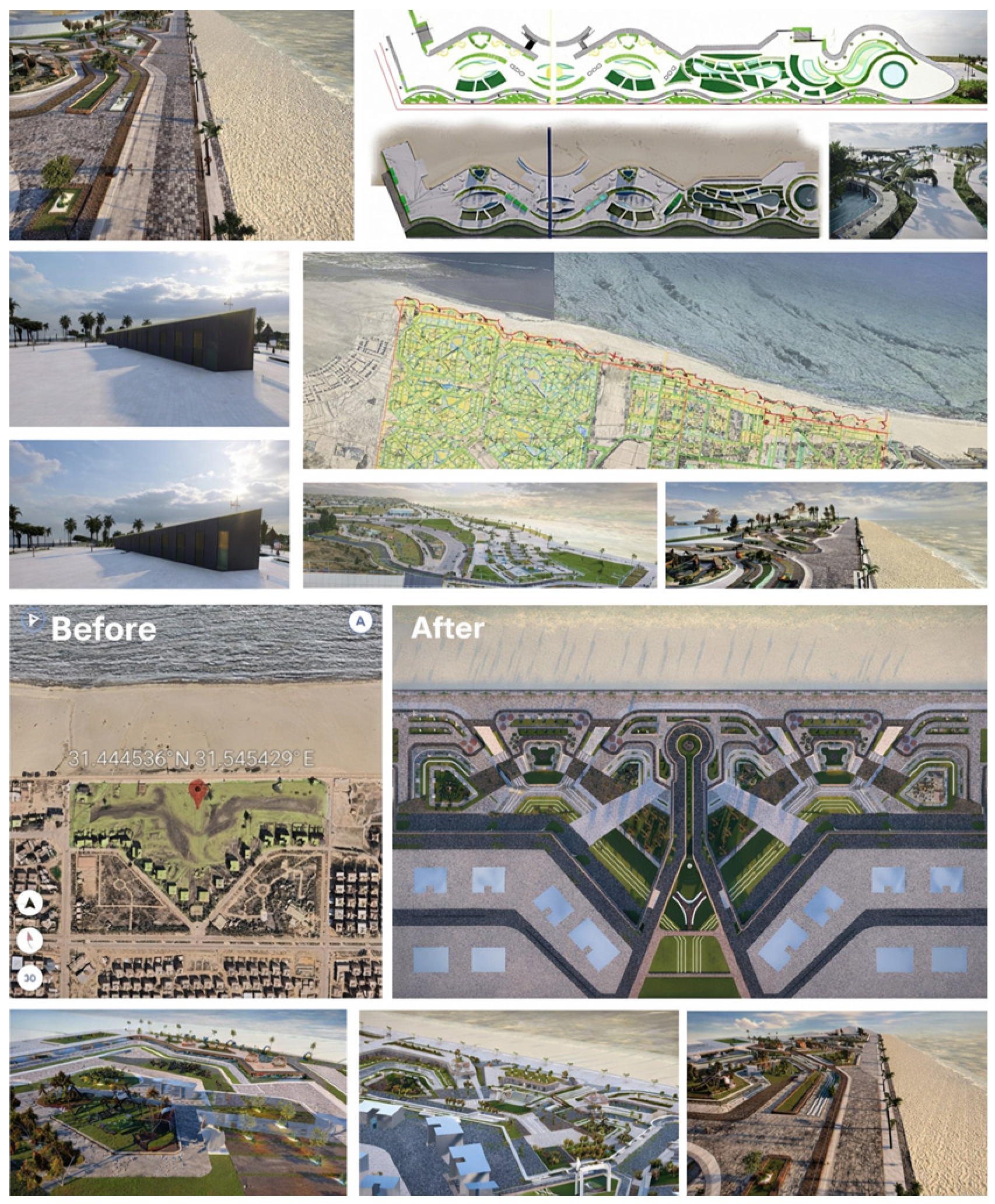
Table 14), C2 Green/Blue Infrastructure dominates (39% criteria weight, local priority 0.565). Interventions target coastal resilience. By creating a continuous, resilient public waterfront, the waterfront development project addresses Gamasa’s close physical and economic ties to the Mediterranean coast. In order to provide a variety of vistas, seating terraces, and protection from high tides while preserving unhindered public access, the design incorporates a slightly elevated, sloping promenade that follows the sea edge. Large green spaces with lots of flora and water features increase the quality of the environment, lower urban heat, and generate a number of areas for peaceful leisure, entertainment, and hospitality applications that are serviced by lightweight kiosks. In addition to connecting the shoreline to the city’s internal network, designated bike lanes and pedestrian pathways support sustainable mobility. Coastal zoning laws should provide public access, establish building setbacks and height restrictions, and mandate that new projects support the ecological performance and continuity of the green–blue waterfront system in order to maintain these results as in
Figure 9.
3.6.2. Main Urban Corridor (A2, Global Priority #2 = 0.244)
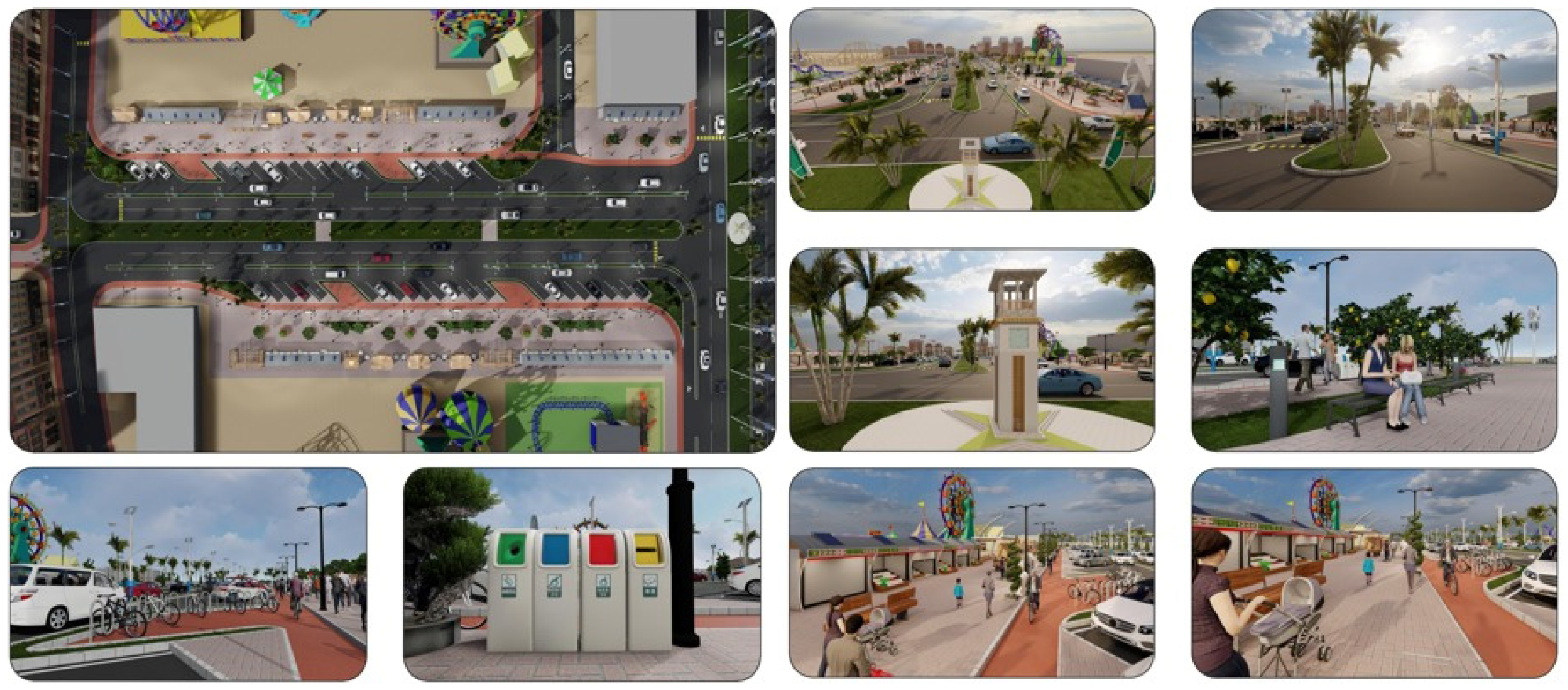
AHP identifies C1 Sustainable Mobility as a priority (27% criteria weight, local priority 0.490). A model for converting Gamasa’s major corridor into a sustainable, multipurpose urban area is provided by the remodeling of the main thoroughfare, such as the Hadeer thoroughfare. The design incorporates modular market stalls that promote local business while permitting flexible use of public space, linear green spaces to enhance environmental performance and aesthetics, and planned parking places to lessen haphazard traffic. The corridor’s function as a low-carbon movement and activity spine is strengthened with solar-powered lighting poles, which further lower energy use and emissions. Adopting “complete street” principles that specify goal cross-sections, green features, lighting requirements, and regulations for temporary markets, as well as connecting business licenses and façade improvements along the corridor to adherence to these guidelines, are some of the policy consequences as
Figure 10.
3.6.3. Residential Districts (A1, Global Priority #3 = 0.232)
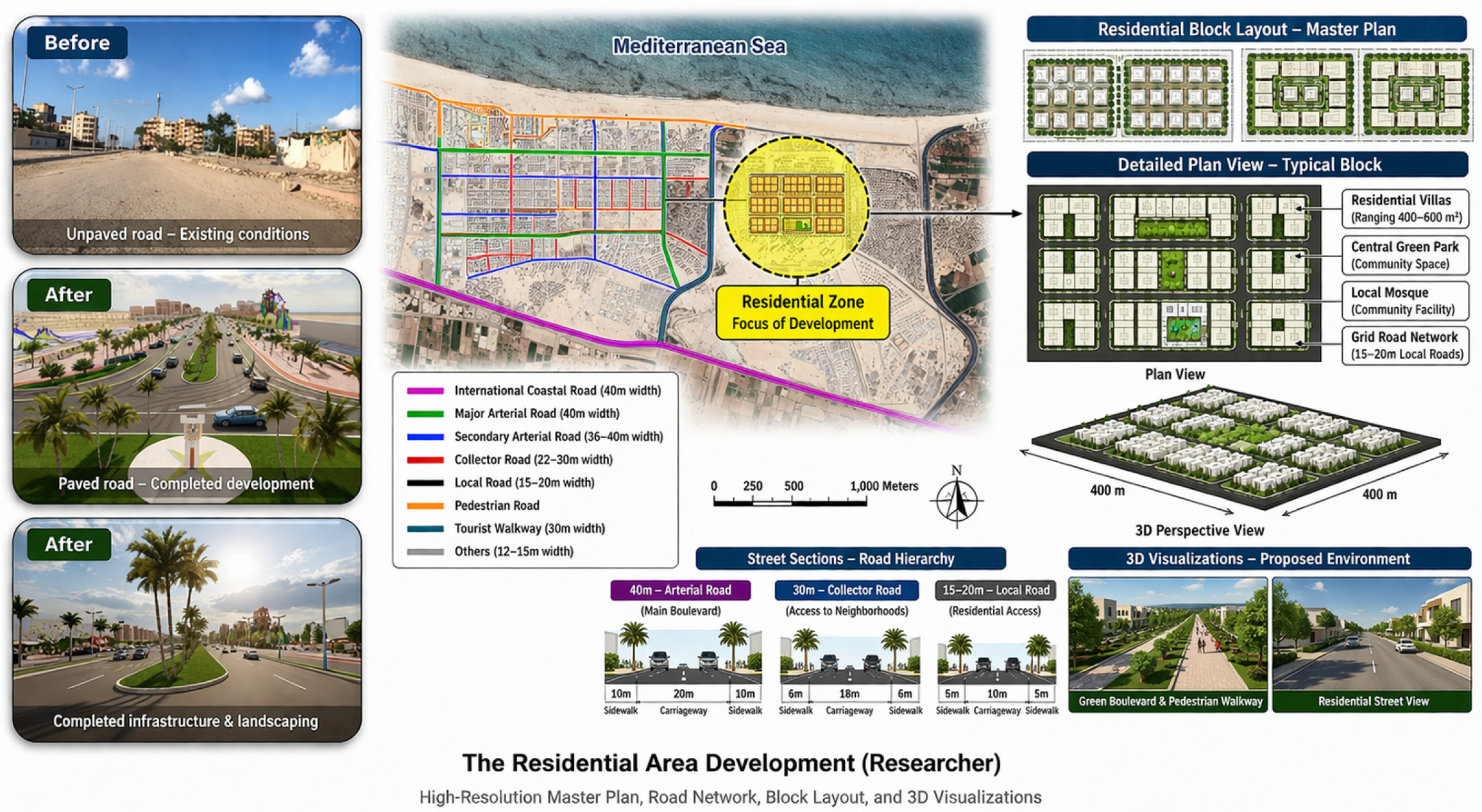
Table 14 shows that C4 Urban Form and Density drives priority (17% criteria weight, local priority 0.499). By integrating green infrastructure into the neighborhood fabric and reorganizing streets to balance vehicular needs with environmental and social functions, the proposed residential area expansion in Gamasa employs green urbanism. In order to create shaded, human-scaled spaces that improve visual quality and moderate microclimate, streets between 7 and 20 m in length are separated into lanes for traffic, side parking, and continuous greenery. While surrounding blocks with green spaces enhance air quality, biodiversity, and acoustic comfort, integrated bike lanes and pedestrian walkways between residential buildings increase internal connectivity and promote walking and cycling. Local regulations that establish minimum green ratios within blocks, mandate tree-lined roadways and pedestrian pathways in newly constructed and renovated areas, and encourage passive design and locally sourced, low-embodied-energy materials through revised construction requirements are examples of how these interventions can be implemented as
Figure 11.
3.6.4. Ibn Lokman Garden (A4, Global Priority #4 = 0.225)
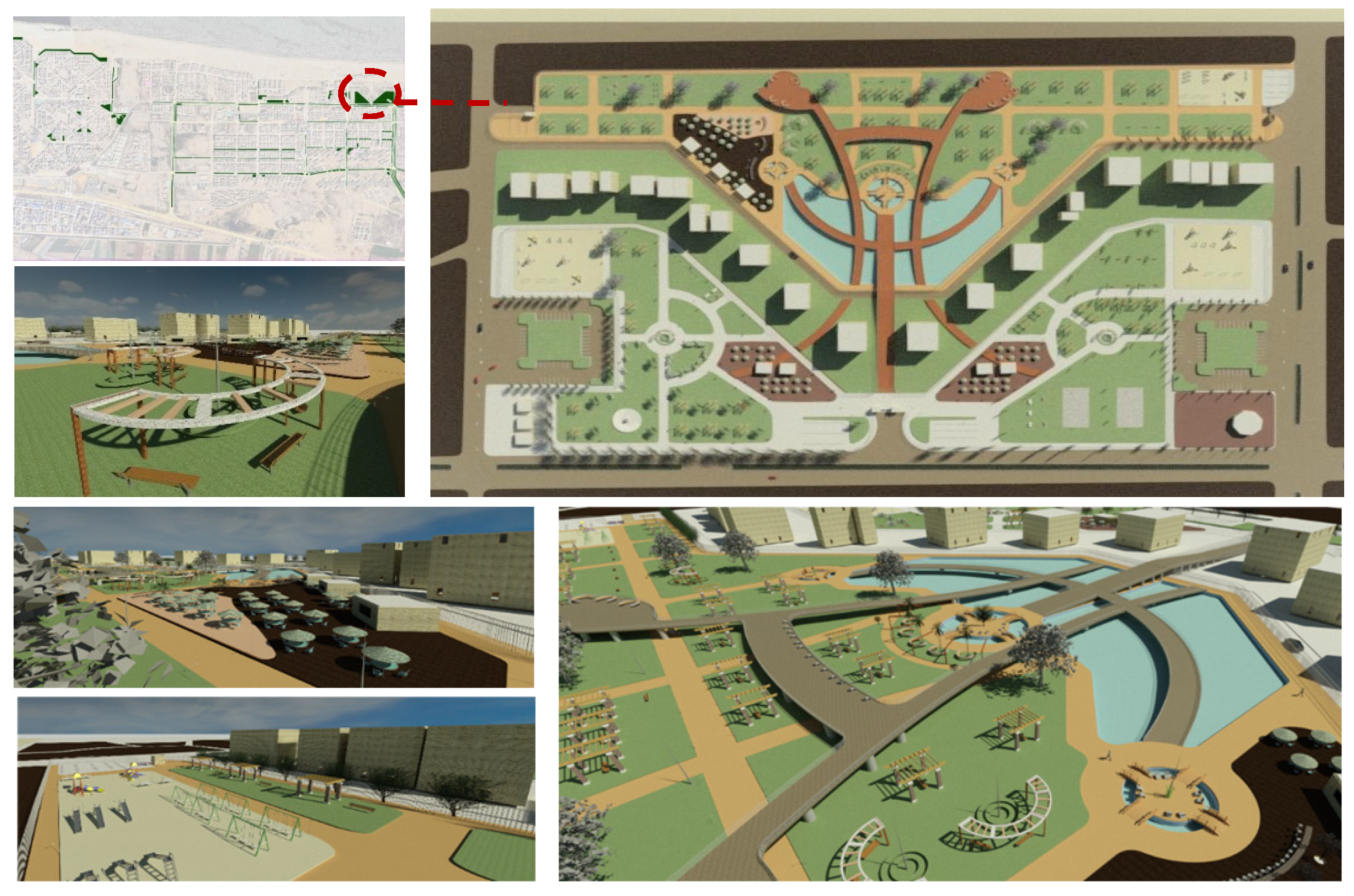
C2 Green Infrastructure opportunity (local priority 0.262) informs park-focused interventions. In order to make Gamasa a green city, it is necessary to enhance green spaces and solve the reported scarcity of urban parks, which is why Ibn Lokman Garden is being redeveloped. The design incorporates artificial lakes that improve the microclimate, attract birds, and increase pedestrian and bicycle circulation. It also resolves issues caused by residential developments encroaching on the park. While moving parking outside the park promotes walking and protects internal green spaces, playgrounds, entertainment areas, and commercial facilities (restaurants, cafés, children’s play areas) are dispersed to accommodate a variety of user groups. The garden and the shoreline remain visually and practically cohesive thanks to an elevated boardwalk that connects the park to views of the sea. In terms of policy, the garden should be recognized as a protected urban green anchor and backed by a management plan that regulates activities, land use, upkeep, and safety to guarantee its long-term status as an important social and environmental asset as
Figure 12.
3.6.5. Integrated Strategic Direction
When viewed in light of the AHP results, these design ideas come together to create a cohesive green urbanism framework for Gamasa that connects a continuous coastal green–blue spine, a reorganized sustainable mobility corridor, greener residential areas, and a reinforced central park. The multi-criteria assessment can be translated into a phased, implementable pathway toward a more resilient and livable coastal city by incorporating this framework into the city’s strategic and detailed plans, such as through park protection instruments, complete-street standards, neighborhood greening requirements, and coastal protection and access regulations.
3.7. Limitations and Future Work
The study has certain limitations that should be considered. First, since the AHP structure depends only on the judgement of a small panel of experts, as opposed to a more inclusive process that includes local residents, businesses, and civil society organizations as part of the overall process. Expert-based assessments are suitable for developing an initial strategic framework; however, future work would benefit from the inclusion of more broadly representative stakeholder groups and, indeed, the co-production of priorities. Secondly, the criteria and thresholds for indicators used are specifically designed for the physical and institutional settings of Gamasa. Contextualized elements include coastal erosion indicators and local street hierarchies that are specific to Gamasa’s Nile Delta vulnerabilities; expert opinion reflects the realities of Egyptian institutions. Transferable elements include the Six Dimensions of Green Urbanism, the AHP hierarchy structure, the spatial diagnostic template (GIS/SWOT), and the policy translation process (priorities to zoning/street standards), which can be modified to fit a different set of medium-sized coastal cities that face rapid urbanization and climate risks similar to those of the Nile Delta towns in North Africa. Future applications should be recalibrated by adjusting indicator values (as evidenced by the strong sensitivity results presented in
Table 13). Local expert panels should be reconvened. And any use of the AHP models in other coastal cities would therefore require recalibration of the indicators and choice of data sources and value ranges. Finally, the analysis is static and does not take into consideration future simulated impacts of climate change, increased population growth or changes in the tourism and real estate industry. Examining the interface between the AHP structure, scenario-based modeling and dynamic spatial simulations is a future research avenue.
5. Conclusions
In order to guide the sustainable development of Gamasa, an Egyptian seaside city that is expanding quickly, this paper has shown how green urbanism concepts can be operationalized into a systematic decision-support framework. Six key dimensions—sustainable mobility, green and blue infrastructure, energy and resource efficiency, urban form and density, social livability and public space quality, and governance and implementation feasibility—were identified and translated into an Analytic Hierarchy Process (AHP) model by synthesizing international literature on green urbanism and urban sustainability with a context-specific diagnostic analysis.
The findings indicate that the most important levers for promoting a green urban transition in Gamasa are sustainable mobility and green and blue infrastructure, followed by energy/resource efficiency and urban form and density. Social and governmental factors are still crucial for implementation, despite having a slightly smaller weight. The coastline and main urban corridor are the top spatial targets for intervention, according to the aggregated priorities. Residential areas and the Ibn Lokman Garden also play significant, albeit more localized, roles in enhancing neighborhood livability and environmental performance. These results highlight the need for integrated strategies that connect mobility restructuring, expanded green–blue networks, and climate-responsive coastal design. These findings align with the city’s identified weaknesses, which include car-dominated streets, fragmented open spaces, and exposure to coastal risks.
Beyond the particular Gamasa scenario, the study offers a reproducible, indicator-based framework that connects multi-criteria decision-making in medium-sized coastal towns of the Global South with green urbanism concepts. The AHP-based approach facilitates communication between planners, decision makers, and stakeholders, improves transparency in the prioritization of criteria and areas, and can be expanded or improved through more data, participatory procedures, or integration with spatial modeling in subsequent work. Therefore, it provides a useful approach to transition from general sustainability rhetoric to evidence-based, context-sensitive planning for green urban transformation.
The AHP Green Urbanism framework provides strong recommendations for Urban policy actions; (a) the Municipal Zoning Ordinance should require that 30% of the waterfront development area must be green or blue space (A3-priority 1); (b) redesign of streets on the major corridors must create a minimum of 4 m pedestrian realm (A2-priority 2); and (c) there shall be a minimum requirement for green space of 10 m
2 per capita for each neighborhood (A1-priority 3), which will be enforced through block-level regulations. The translation from the spatial priorities into enforceable planning codes will bridge the gap between the analytical studies and the implementation of the findings that have been lacking in Egypt. The stability of the resulting rankings (
Table 13) has been confirmed through sensitivity analysis, and the transferable six-dimensional structure of the AHP framework means that other cities along the Nile Delta coast can easily adapt to it. The recommendations made for immediate application to the existing Urban Development General/Strategic Plans will allow the city of Gamasa to begin to align itself with the UN Sustainable Development Goals—SDG 11.
The framework has a direct connection to existing planning. Strategic and detailed plans are the two documents that municipalities produce when they create a plan for their area, and they will be updated in conjunction with revising strategic and detailed plans based on the results of the analysis conducted using the proposed framework. The weighted criteria and the corresponding priorities (e.g., waterfront, major roads/routes, residential areas, Ibn Lokman Park) for investment in public transit, green/blue infrastructure, and public space will guide the next round of plan updates by showing which areas should have priority for transit system improvements and investments in those areas where transit is the most beneficial to the people living in those areas. The ranking of the recommended actions will enable the local government to phase and budget capital projects, allowing the local government to provide additional funding for the actions that yield the greatest benefit for the area surrounding the planned actions. From a regulatory standpoint, the design principles developed for each priority area can be incorporated into new zoning ordinances, streetscape design guidelines (complete streets cross-section examples), and land development regulations, resulting in the integration of green urbanism into day-to-day land use planning. Additionally, the Analytic Hierarchy Process (AHP) can serve as a basis for ongoing monitoring and evaluation of criteria weightings, spatial priorities, and associated changes in policy, as well as stakeholder feedback, latently influencing future updates to the framework based on new information.



 ,
,