
Article

Evaluating Circularity of Plastic Use in Traditional and Modular Urban Construction Through Micro-Indicators

1
Institute of Polymers and Composites (IPC), University of Minho, 4800-058 Guimarães, Portugal
2
AI and School of Design, Polytechnic Institute of Cávado and Ave (IPCA), 4750-810 Barcelos, Portugal
*
Author to whom correspondence should be addressed.
Urban Sci. 2026, 10(5), 261; https://doi.org/10.3390/urbansci10050261
Submission received: 24 December 2025 / Revised: 13 February 2026 / Accepted: 14 February 2026 / Published: 11 May 2026

Abstract

The transition to a circular economy (CE) is a critical challenge for the urban built environment, particularly within the Building and Construction sector. This study explores the application of circularity micro-indicators to assess the use of plastic materials in two Portuguese construction approaches: traditional (CS1) and modular (CS2). A set of four relevant micro-indicators—Material Circularity Indicator (MCI), Recycled Content Performance Indicator (RPI), Circular Design Guidelines (CDG), and Circular Economy Implementation Potential (CEIP)—was selected to evaluate material circularity at the product and system levels. The novelty of this study lies in selecting and applying the most relevant circularity indicators from the literature to plastic products in construction, providing the first practical demonstration of their use and offering actionable tools to support stakeholders in material selection, design decisions, and circularity assessment. Findings show that modular construction demonstrates a stronger alignment with CE principles compared to traditional methods, although both cases present low overall levels of circularity. For instance, the Material Circularity Indicator (MCI) ranged from 8.4% in the traditional building (CS1) to 15.2% in the modular building (CS2), quantitatively illustrating the circularity potential of modular construction. Key strategic opportunities for improvement include design for disassembly, the elimination of toxic or scarce materials, improved recyclability of plastic components, and the integration of on-site material separation and recovery zones. Strengthening waste management systems is also essential to enhance the quality and reliability of recycled plastic materials. The study highlights the value of micro-indicators as practical tools to support evidence-based decision-making in material selection, design strategies, and circular construction planning. By guiding more sustainable practices in urban construction, these indicators can play a pivotal role in accelerating the sector’s transition toward a circular and resource-efficient economy. Methodologically, the study adopts a collaborative case-study approach with an industry partner, involving brainstorming sessions with experts in CE and circularity indicators to select representative buildings, and identify indicators from the literature based on data availability and relevance for construction plastic products, which are then applied to real project data, complemented by exploratory improvement scenarios.

1. Introduction

The building and construction sector is responsible for around 9% of Europe’s Gross Domestic Production (GDP) and 18 million jobs [1]. This sector is highly intensive in resource consumption and waste generation [2], being responsible for about 39% of greenhouse gas (GHG) emissions in Europe [3], primarily due to the embodied emissions associated with the production and construction of building materials The environmental impact of this sector in Europe is 50% of the total use of raw materials, 40% of the final global energy, 30% of water consumption, and 35% of the waste generated [2,4,5], making it particularly suitable for identification of more sustainable approaches and practices.
Construction is the second-largest sector responsible for plastic demand in Europe, representing more than 20% of the total demand [6,7], which includes pipes, ducts, window frames, insulations, floor and wall coverings, paints, glues, and others [6,8,9,10]. The total consumption of plastics per floor area, is estimated to be 6 and 28 kg per gross m2 for concrete residential buildings and concrete daycare centers, respectively. Between 58 and 79% of these plastics are placed originally during building construction phases, and their weight is less than 1% when compared to the total weight of the building [6].
Global population growth, up to 9.6 billion people by 2050 [11] and increasing urbanization are expected to intensify demand for housing, materials, and energy [12,13], leading to higher resource extraction [14] and waste generation [15]. This trend reinforces the urgency of transitioning the construction sector toward more resource-efficient and circular practices.
Another important issue is the increase in raw material costs that encourages the construction industry to use alternative materials more efficiently, for example, reused or recycled materials [16]. Future demand for minerals, particularly those heavily used in construction, raises concerns regarding resource scarcity and highlights the importance of exploring substitution pathways and alternative materials to ensure sustainable building practices [17].
Plastics, metals, and cardboard correspond to the second fraction of construction and demolition waste (CDW) collected [18,19]. While CDWs such as concrete and steel are increasingly retained in the materials cycle through recycling, the remaining CDWs that include plastics are still landfilled, although being technologically viable to be recycled with existing practices [6,10,20].
In 2018, 5 million metric tons of plastic waste were recycled in Europe, where 4 million metric tons re-entered the European economy in order to manufacture new products [21]. About 46% of this recycled plastic is used in the building and construction sector, as the base and sub-base of road construction, components of asphalt, fillers in cementitious composites and asphalt mixtures, wood replacement, door panels, insulation material, walls, and bricks. This sector is the largest consumer of recycled plastic in Europe [21].
According to Awoyera and Adesina [22], the use of recycled plastic waste in building and construction applications is often considered sustainable, circular, and environmentally friendly. It offers a potential solution to both solid waste management issues and the depletion of raw materials in construction. However, this perspective can be misleading. While many life cycle assessments (LCAs) suggest this approach as the most advantageous path forward, such studies often fail to fully assess and weight the potential negative consequences. As a result, incorporating plastic waste into building materials does not necessarily create a circular solution nor does it address the core issue of plastic pollution [23]. The potential limitations include contamination of plastics with incompatible materials, the non-recyclability of thermoset plastics, downcycling into low-value applications, and design lock- in, which prevents disassembly or reuse.
Unlike LCAs, which quantifies environmental impacts, circularity indicators focus on material flows, resource efficiency, and design strategies that enhance product circularity, providing complementary insights for the development of more circular construction systems. Note the results presented in this study refer to circularity performance and should not be interpreted as full system-scale environmental impact assessments.
In this context, to prevent excessive extraction of fossil fuels and the irreversible damage it can cause to the production and exploitation of natural resources, there is an urgent need for the construction industry to shift toward a more sustainable and circular model [16]. Implementing Circular Economy (CE) practices is an approach capable of halting the extraction of new resources by maximizing the use of those already in circulation [15,20,24,25].
Transitioning to a circular economy in construction aims to reduce dependence on non-renewable resources, minimize waste generation, lower energy consumption, and strengthen resilience to environmental and economic pressures [2,16]. Achieving this requires closing material loops, extending product lifetimes, and prioritizing reuse over recycling whenever feasible [16,20].
The progress of the CE transition can be measured using circularity indicators [26,27]. Among those, Matos et al. selected 28 micro-level CE indicators for assessing the circularity of products or companies [28] related to plastics. However, not all of them are suitable for evaluating plastic applications in the building and construction sector. However, the evaluation of circularity for plastic applications in construction remains scarce. Many indicators exist in the literature, but there is no standardized way to select the most relevant for each product type or to calculate and interpret their results. This study provides a practical tool to support the selection and application of circularity indicators in construction plastics. In the present work, a collaborative study between academics, building and construction companies and plastics industries helped identify the micro-level circularity indicators that were most relevant in this area. Two different construction typologies were analyzed, namely traditional construction and modular. As highlighted by Li and Chen [6], modular construction systems offer significantly higher circularity potential due to their reliance on prefabrication, which enables better control over material flows, facilitates disassembly, and supports the reuse of components.
These features position modular construction as a strategic approach for advancing CE principles within urban development, especially when contrasted with conventional construction methods. The selection of CE indicators was based on the gaps observed in the implementation of CE within the sector and also on the calculation methodologies and data availability or ease of data collection. Through this process, improvements needed for plastic applications were identified and proposed best practices to encourage circularity adoption in the Building and Construction sector, using hypothetical scenarios based on the studied typologies.
This study presents a conceptual and applied approach to assess the circularity of plastics in construction, focusing on two case studies and selected micro-level circularity indicators. It is not intended as a systematic or scoping review, but aims to provide actionable guidance for material selection and design strategies within a CE. Specifically, it investigates (i) whether modular construction achieves higher plastic circularity than traditional construction, and (ii) how circularity indicators can support improved material and design decisions in the construction sector.

2. Literature Review

2.1. Legislation to CE Implementation in Building and Construction Sector

To promote the transition to a CE in the building and construction sector, the EU has established various directives, agreements, and protocols aimed at achieving a more sustainable management of CDW. In 2008, the EU enacted the Waste Framework Directive (Directive 2008/98/CE), setting a 70% recycling target for CDW by 2030 [6]. Later, in 2012, the European Commission introduced the “Strategy for the Sustainable Competitiveness of the Construction Sector and Its Companies” highlighting that sustainability in construction is essential for achieving the EU’s long-term goal of reducing greenhouse gas (GHG) emissions by 80–85% [29,30].
The Paris Agreement, signed in 2016, further aimed to cut GHG emissions from buildings by 8% annually until 2030 [29,31]. According to the roadmap for a transition to a low-carbon economy by 2050, the construction and real state sectors are expected to reduce their emissions by 40–50% by 2030 and approximately 90% by 2050 for this transition to remain economically viable [32]. Currently, the building and construction industry is responsible for 38% (9.95 gigatons) of global CO2 emissions [33]. Also in 2016, the European Commission launched the EU Construction and Demolition Waste Management Protocol [33]. As part of the broader “Opportunities for Efficiency Gains in the Use of Resources in the Construction Sector” communication, this protocol integrates packaging related to CE measures and includes legislative proposals to advance the European CE, boost global competitiveness, foster sustainable growth, and create jobs. These actions support the Waste Framework Directive’s objectives for 2030 [34].
The decree-law in Portugal for construction and demolition waste (DL46/2008) was updated in 2020 with DL120-D/2020, redefining CDW to include uncontaminated soil and other natural materials used in building and construction at their original site [35]. CDW now encompasses waste from construction, expansion, alteration, demolition activities, and building collapse. DL120-D/2020 aims to reduce non-urban civil construction and public works waste per GDP unit by nearly 5% by 2025 and 10% by 2030 compared to 2018 levels (0.056 t/k€). It also mandates that at least 10% of materials used in public infrastructure projects be recycled. Waste management remains the responsibility of the waste producer, except for minor repairs or Do-it-Yourself works carried out by owners or tenants, which fall under the municipal waste collection system [35].
Despite these policy advances, EU legislation, particularly in the European and Portuguese contexts, largely focuses on overall CDW recovery, providing limited attention to material-specific circularity. As a result, qualitative aspects such as the reuse potential of materials, design for disassembly, and product-level circularity (especially for plastics) remain insufficiently addressed.

2.2. Construction and Building CE Implementation Gaps

Implementing a CE approach in the building and construction sector is urgently needed to meet targets for waste recovery and the reintegration of materials into the economic cycle. Recent research also emphasizes the significance of localized circular strategies to improve CDW recovery in dense urban contexts. García and Pérez [36] highlight how the lack of adequate waste segregation and recovery planning in urban construction projects undermines CE objectives and perpetuates resource inefficiencies. Mahpour [36] identified 22 potential barriers to this transition, prioritizing those related to behavioural, technical, and legal challenges. The most critical issues include a limited use of recyclable construction materials and inefficient processes for disassembly, sorting, transport, and recovery CDW. Additionally, some key obstacles such as agency and ownership issues in CDW management, lack of integration of sustainable practices, and uncertainties about the outcomes of adopting CE principles in CDW management rank among the highest priorities for practical changes to take place.
Beyond the barriers noted by [36], further gaps have been highlighted in the literature [2,15,16,25], including:
  • Challenges in coordinating multiple stakeholders in the building a value chain to ensure that all products or materials are circular.
  • Insufficient information on how to aggregate products and materials for reuse at the end of the lifespan of a building.
  • Difficulties in accessing and disassembling products for refurbishment without resorting to demolition.
  • Lack of effective separation and sorting processes to fully recover waste when it contains diverse and incompatible materials.
  • Preference for virgin materials, driven by the high costs of recycled materials compared to cheaper resource extraction and landfill disposal of CDW.
  • Resistance from builders to adopt new materials and construction methods, especially those that focus on reuse or controlled deconstruction.
The application of circularity micro-indicators provides a practical tool to address these gaps, assess material flows, and guide specific improvements for plastic products in the construction industry, enabling stakeholders to address the most critical barriers to circularity.

2.3. Plastics in the Building and Construction Sector

Plastics play a vital role in modern building construction, in large part to their low weight, durability across various environments (offering good chemical and mechanical resistance), and excellent performance in thermal, moisture, gas, and electrical insulation, while delivering all this at a relatively low cost [6,19]. The types and quantities of plastics in use vary depending on the building typology. For example, in concrete residential buildings, 18% of the used plastics are PVC (Polyvinyl chloride), 13% PP (Polypropylene), 11% EPS (Expanded Polystyrene), 9% PE-HD (High-Density Polyethylene), and 8% PU (Polyurethane). In contrast, in concrete daycare centres, 28% of the plastics consumed are EPS, 20% PU, 16% EPDM (Ethylene Propylene Diene Monomer), 12% PE-HD, and 8% PVC. Other plastics, such as Melamine Urea Formaldehyde Resins (MUF), Polyester, Epoxy Resins, Polycarbonate (PC), Polyvinyl Butyral (PVB), Silicone, Thermoplastic Elastomers (TPEs), and phenolic resins are used in smaller quantities in both building types [6].
Plastics such as EPS, PU, and Polyester are commonly used in plastic-based insulation materials [8,37]. PVC and PE are used in cable ducts, electrical insulation, moisture barriers, and for damp-proofing floors, walls, and roofs [38]. Also, PVC is often used in window frames [8], and PE is found in the packaging of construction materials, as well as in covers and tarpaulins that protect buildings and materials from weather and dirt. PP is primarily used in air conditioning pipes, sewer pipes, and floor drains [39].
Various resins are also commonly used in building materials, including glass wool (to bind fibers), medium-density fiberboard (MDF), particle boards, laminates, glues, varnishes, waxes, paints, and lacquers [38]. The application of plastics in construction products is summarized in Table 1. The incorporation of plastic waste as filler or aggregate in construction, here referred to as plastic-modified construction materials, generally represents low-value recycling. Polymer contamination, limited recyclability of thermosets, and potential degradation of mechanical performance constrain true circularity despite apparent waste diversion. It should be noted that, while circularity indicators evaluate material flows and potential reuse, they do not account for the actual circular performance of plastics, which depends on their recyclability and long-term material properties.
Häkkinen et al., studied plastic consumption in different building types, including residential buildings, schools, and daycare centers, across their life cycle (between 50 and 75 years) [6]. Although the percentage of plastics used in these buildings is fairly low (less than 1%) due to their light weight, the total plastic consumption in the studied buildings ranged from 6 to 28 kg per gross m2. Plastics are used extensively in insulation, drainage pipes, and electrical components, while their use in structural parts is minimal. It should be noted that plastic waste accounted for no more than 1% of the total CDW, despite being one of the largest consumers of plastic materials.

3. Methodology

To assess the circularity of plastic materials used in construction, a collaboration study with DST Group S.A. was made. This company is specialized in building and public works engineering, with additional expertise in areas synergistic with its core business, such as environment, renewable energy, telecommunications, real estate, and ventures.
Brainstorming sessions were held between the authors of this study and the company collaborators, including researchers in CE and circularity indicators, civil and environmental engineers, purchasing and quality managers, and architects—a total of 10 participants.
During these sessions, two buildings with distinct construction typologies were selected as case studies (referred to as Case Study 1 and Case Study 2) to evaluate the circularity of the plastic materials used. The specific characteristics of each building are described in Section 3.1.
The selection of both case studies was driven by their representativeness of common traditional and modular construction practices and by the availability of detailed, project-specific data on plastic materials and end-of-life management, provided by an industry partner. All material quantities, CDW classifications, and end-of-life routes are based on real project data currently applied in Portugal, rather than on estimated or assumed scenarios.
Based on the participants’ knowledge and experience, the feasibility of calculating and applying various micro-indicators from the literature to plastic products in the construction industry was assessed. For each case study, and based on the data available from the company, a set of micro-indicators was selected for implementation. The selection of relevant indicators for evaluating the circularity of plastic products in the construction sector, along with the specific indicators chosen for each case study, is detailed in Section 3.2. For one of the micro-indicators applied, we propose several hypothetical scenarios aimed at exploring ways to enhance circularity. These scenarios allow us to better communicate potential measures to the industrial partner and demonstrate how each action could contribute to optimize the circularity of the product.

3.1. Case Study

Case Study 1 (CS1) involves renovating a school/daycare centre with a traditional construction approach. The focus is on the circularity of the plastic materials planned to be used by the engineering and architectural team. The total anticipated mass of plastics for this renovation is 4680 kg, comprising different types, namely XPS for insulation boards, PVC for “Sanimate” mats and waterproofing membranes, and phenolic resin for laminated panels used in WC cabin construction.
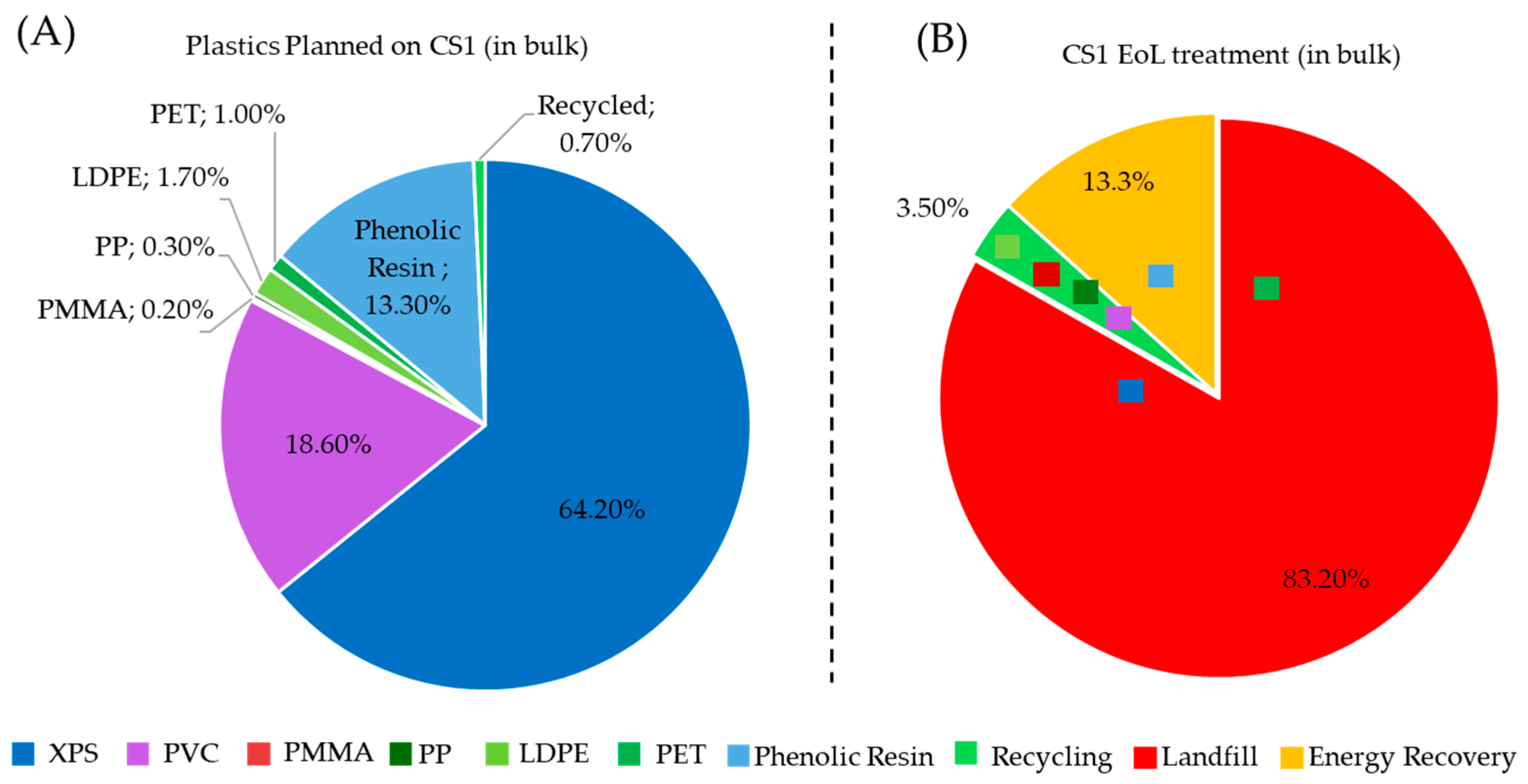
Recycled materials are used in acoustic panels covering plasterboard walls and ceilings. Although they incorporate 40% of recycled PET, which accounts for only 0.7% of the total plastic mass in CS1. In terms of end-of-life treatment, only some plastics (PP, LDPE, PMMA, and some PVC) are suitable for recycling, while phenolic laminates are sent for energy recovery via incineration. As a result of this situation, only about 16.8% of the total plastic mass is recovered through recycling (3.5%) and incineration (13.3%). The remaining plastics, namely PET, XPS, and the majority of PVC (83.2%), is sent to landfill due to their contamination with materials that are incompatible with current recovery processes, such as plaster, mortar, glues, concrete, and cement. The amount (in percentage) of each type of plastic expected to be incorporated into CS1 and their respective End of Life (EoL) approach are illustrated in Figure 1A and Figure 1B, respectively. These percentages were calculated based on the proportion of each type of plastic relative to the total mass of plastics used in the building under study.
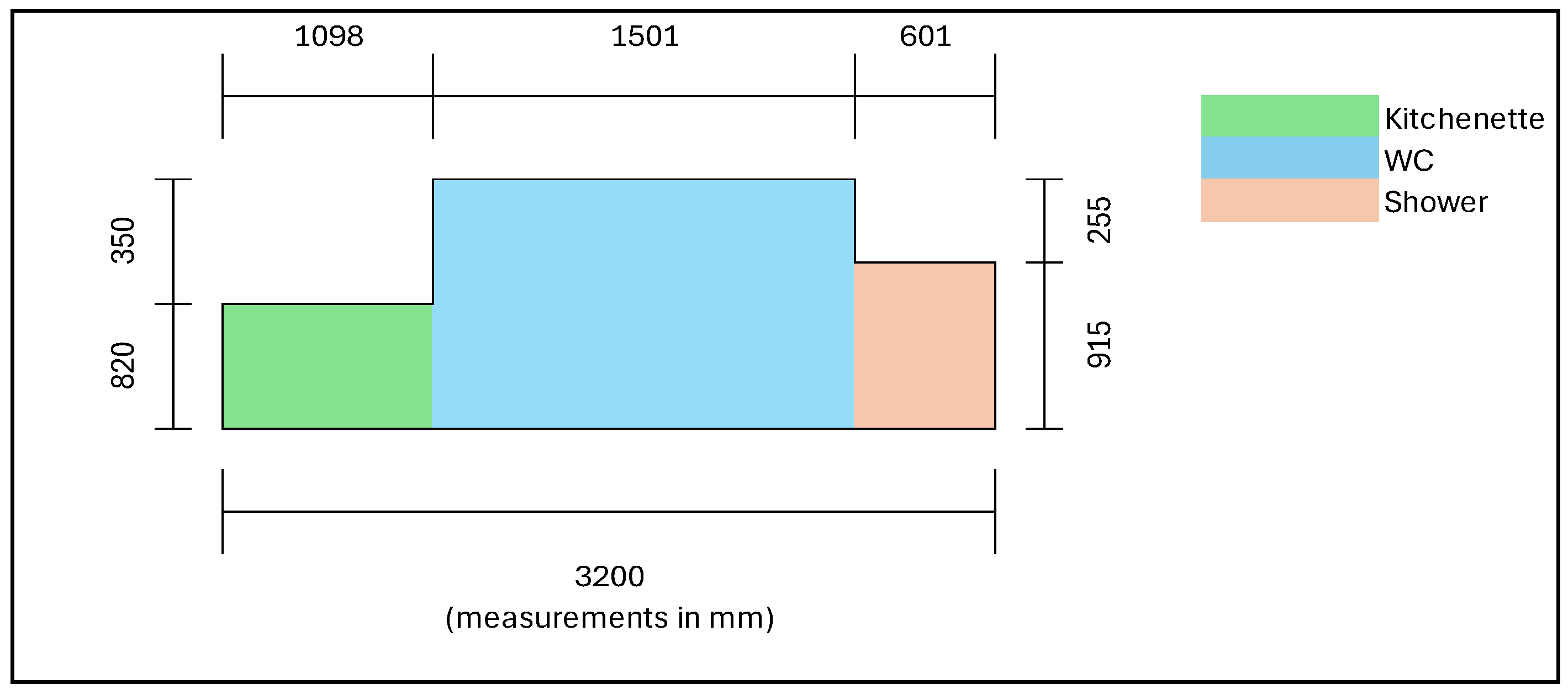
Case Study 2 (CS2) consists of a bathroom and kitchenette module, fully equipped and built based on a modular construction approach. The schematic of the module composition and its measurements is shown in Figure 2.
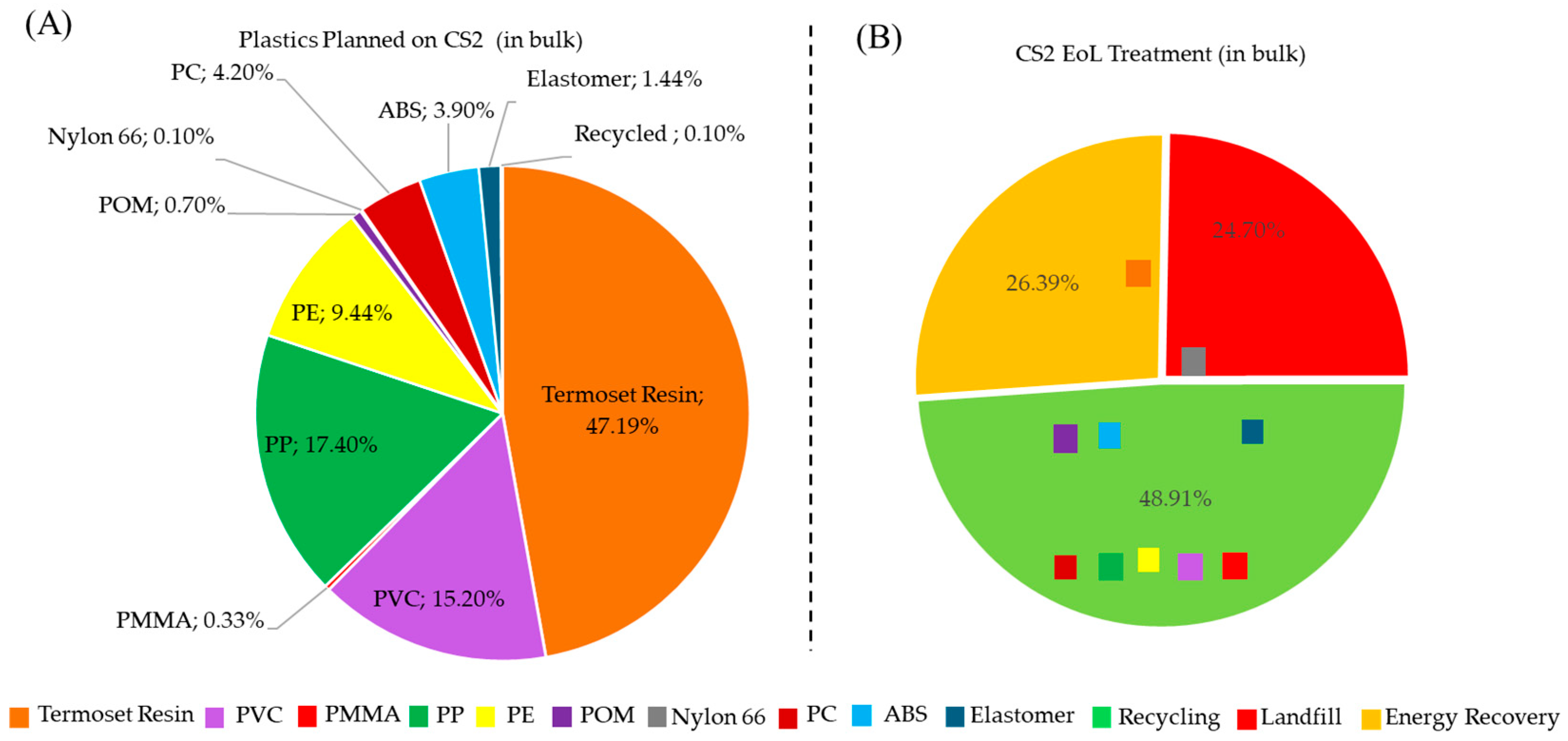
In this case study, plastics account for 5.2% of the total module weight (1316 kg). The majority of these plastics are thermosetting resins (47%), such as melamine and formaldehyde, used in compact agglomerates for furniture and kitchen/bathroom countertops. Additionally, PVC (15%) is found in wastewater system pipes, switches, and sockets, while PP (17%) is used in hot and cold-water systems, toilet seats, hollow boxes, and electrical wiring. PE (9.44%) is used in pipe insulation and flush tanks, and PC (4.2%) is present in the electrical panel. Other plastics, such as PMMA, POM, PA 66 (Nylon), ABS, and elastomers, are present in trace amounts relative to the total plastic mass in the module.
In terms of recycled content, only the PVC switches contain 20% recycled material, resulting in an overall recycled content of just 0.1% of the total plastic mass, which is nearly negligible. Unlike CS1, most plastics in this module can be recovered at the end of their life cycle, either through recycling or energy recovery via incineration. Figure 3A,B illustrate the types of plastic present in CS2, as well as the amount of each of them and their EoL approach, respectively. Percentages for CS2 were calculated using the same approach as described for CS1.

3.2. Selection of Circularity Micro-Indicators for Plastic Products in the Building and Construction Sector

The selection of circularity micro-indicators in this study focuses specifically on the plastic materials used in the construction and building sector. Based on a previous review, although there are over 100 micro-indicators of circularity, only 28 are frequently cited in reviews [28]. Upon further analysis of their calculation methodologies, we confirmed that these indicators, much like those used in other sectors such as packaging [40] and automotive [41], depend heavily on the sector and typical product life cycles being evaluated.
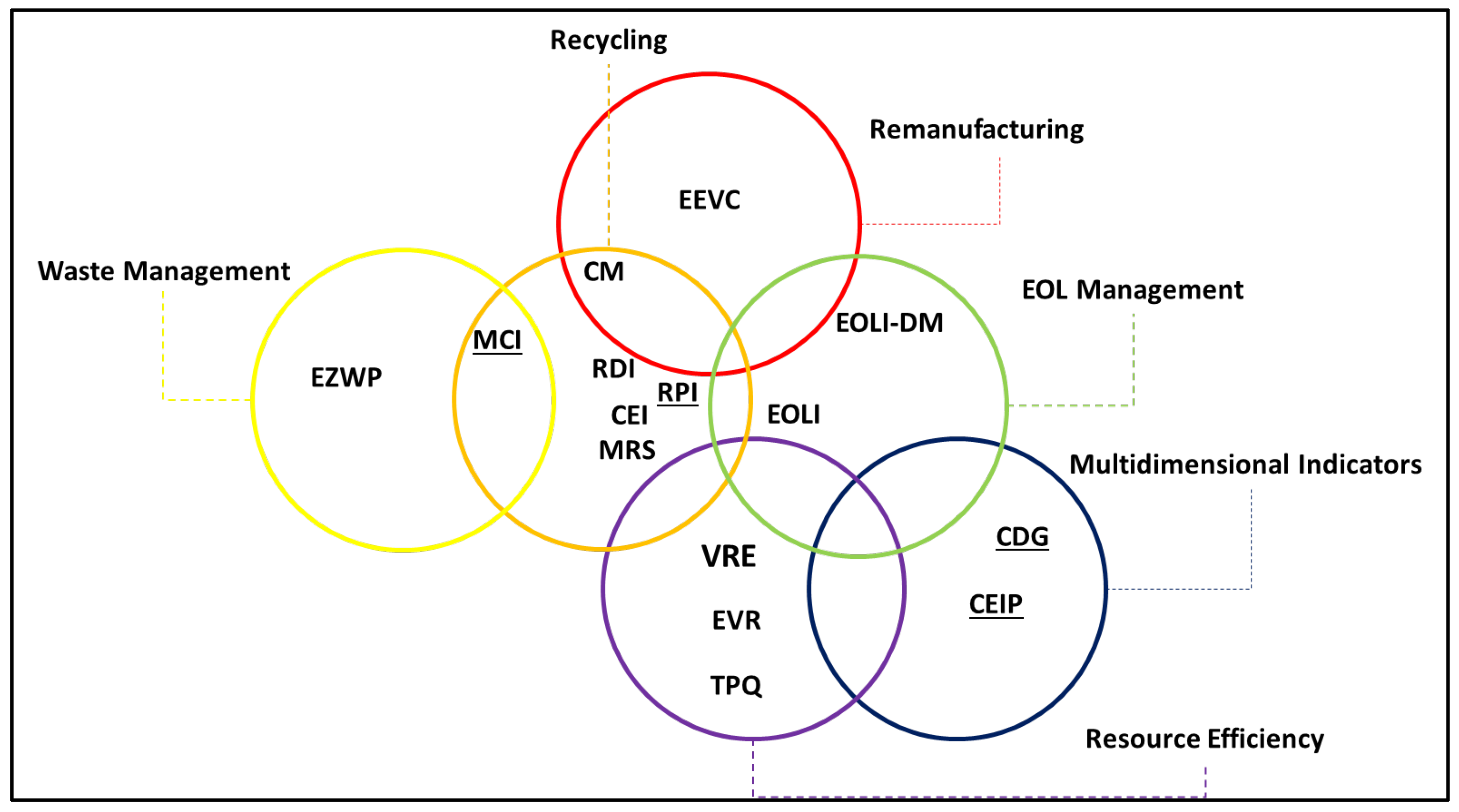
Initially, we assessed the indicators according to nine CE categories defined by Kristensen and Mosgaard [42]: Life Extension, Recycling, Waste Management, Disassembly, Reuse, Resource Efficiency, Remanufacturing, EoL Management, and Multidimensional Indicators. Indicators categorized under Disassembly and Life Extension were excluded because most plastic products in construction are not designed to be disassembled; they are fixed using adhesives, resins, or mortar. During renovation or refurbishment, these products are often destroyed or contaminated by fasteners or other incompatible materials, making reuse or recycling difficult. Furthermore, Life Extension is less relevant in construction due to the long-life cycles of buildings (>75 years) and construction plastics (>60 years), which means multiple reuse cycles are not a focus. Ultimately, only 15 micro-indicators were found to be directly applicable to the typical life cycle of plastics used in construction, such as pipes, flooring, roofing laminates, and insulation materials. A schematic representation of the relevant and most applicable circularity micro-indicators for plastic products in construction is provided in Figure 4.
Upon detailed analysis of each micro-indicator, several were rejected. For instance, Sustainability Indicators in CE (SICE) [43], Product Recovery Multi-criteria Decision Tool (PR-MCDT) [44], and End-of-use Product Value Recovery (EPVR) [45] were excluded as they evaluate circularity based on the costs of end-of-life processes such as reuse. Although buildings undergo some remanufacturing (e.g., repairs, refurbishment), plastic components are generally not repurposed. Likewise, buildings are demolished, not disassembled, making recovery of plastic components impractical. This also led to the rejection of the Decision Support Tool for Remanufacturing (DSTR) [46]. The separation of plastics from construction and demolition (C&D) waste is often difficult due to contamination with organic and mineral materials, reducing the performance of recycled plastics. Consequently, indicators like the Product-Level Circularity Metric (PLCM) [47] and Remanufacturing Product Profiles (REPRO2) [48] were excluded. Indicators focusing on closed-loop recycling or minimal reconfiguration of components, such as the Circularity Calculator (CC) [49] and SICE, were also deemed unsuitable for construction, where plastics come from Municipal Solid Waste (MSW) and are often incinerated or landfilled due to difficulties in separation. Last, Recycling Indices (RI) [50] and Sustainable Design and End-of-life Options (SDEO) [51] were rejected due to their high complexity, making them impractical for typical industrial applications in the construction sector.
The exclusion of these indicators was carefully justified based on specific industry constraints, including plastic contamination, the non-recyclability of thermoset components, and the practical limitations of demolition and renovation processes, and was not an arbitrary exclusion.
The micro-indicators most relevant for estimating the circularity of plastics in construction include the Material Circularity Index (MCI) [52], Reuse Potential Indicator (RPI) [53], Recycling Desirability Index (RDI) [54], Material Reutilization Score (MRS) [55], Circular Economy Index (CEI) [56], Combination Matrix (CM) [57], Model of Expanded Zero Waste Practice (EZWP) [58], End-of-Life Index (EOLI) [59], End-of-Life Indices—Design Methodology (EOLI-DM) [60], Value-based Resource Efficiency Indicator (VRE) [61], Eco-cost and Value Creation (EVR) [62], Typology for Quality Properties (TQP) [63], Circularity Design Guidelines (CDG) [64], and Circular Economy Indicator Prototype (CEIP) [65]. These indicators focus on recycling, resource efficiency, waste management, remanufacturing, and multidimensional factors, with most of them emphasizing environmental and economic considerations. Additionally, the EZWP stands out for integrating all three dimensions of sustainability—social, environmental, and economic.
Table 2 presents a cross-analysis showing how these selected micro-indicators address gaps in the building and construction sector, particularly in plastics. Notably, 60% of the selected micro-indicators aim to address challenges such as the lack of waste recovery in the building and construction value chain and the limited confidence in using recycled raw materials for new products.
Additionally, 40% of the selected micro-indicators aim to address the lack of integration between the various products that make up a building. However, there are few micro-indicators with methodologies that tackle the challenges of coordinating multiple suppliers and improving communication between stakeholders within the building and construction value chain.
Only two micro-indicators, CDG and CEIP, have methodologies capable of addressing all the limitations that hinder the implementation of a CE. Two other micro-indicators, MCI and RPI, cover more than 60% of these limitations.
Therefore, the most relevant circularity micro-indicators for effectively assessing the circularity of plastic applications in building and construction are MCI, RPI, CDG, and CEIP. These four indicators were selected because they cover the majority of sector-specific gaps in implementing a CE, with each addressing over 60% of the identified limitations in building and construction plastics (Table 2), ensuring a comprehensive assessment of circularity.

3.3. Selection of Micro-Indicators for the Case Studies

Despite the conclusion made on Table 2, the selection process for the micro-indicators applied to the case studies involved two iterations. Initially, a list of the most relevant indicators was provided to the company, along with a detailed description of the data required to calculate each indicator. During the first brainstorming meeting, several indicators were excluded, namely Eco-efficient Value Creation (EEVC), CEI, EOLI-DM, EOLI, EVR, TQP, and EZWP, as their application to the case studies would not yield significant information for implementing the circularity from the company’s perspective.
In a second meeting, additional indicators were excluded due to the lack of available data from the company. These included the RDI, MRS, VRE, CM, and CEIP.
Consequently, the MCI, RPI, and CDG indicators were selected for both case studies. In addition, hypothetical scenarios were applied to the MCI to explore which measures could effectively increase the circularity of the plastics used in both cases. This information is valuable for plastic component manufacturers and the construction industry, providing insights into practices that can be adopted to enhance the circularity of buildings and materials.

4. Results and Discussion

The results for each micro-indicator selected for the two case studies are presented. The calculation methodology for each indicator is detailed and discussed. Through the analysis of various hypothetical scenarios, general guidelines are proposed for improving the circularity of plastics in the construction sector.

4.1. Material Circularity Indicator

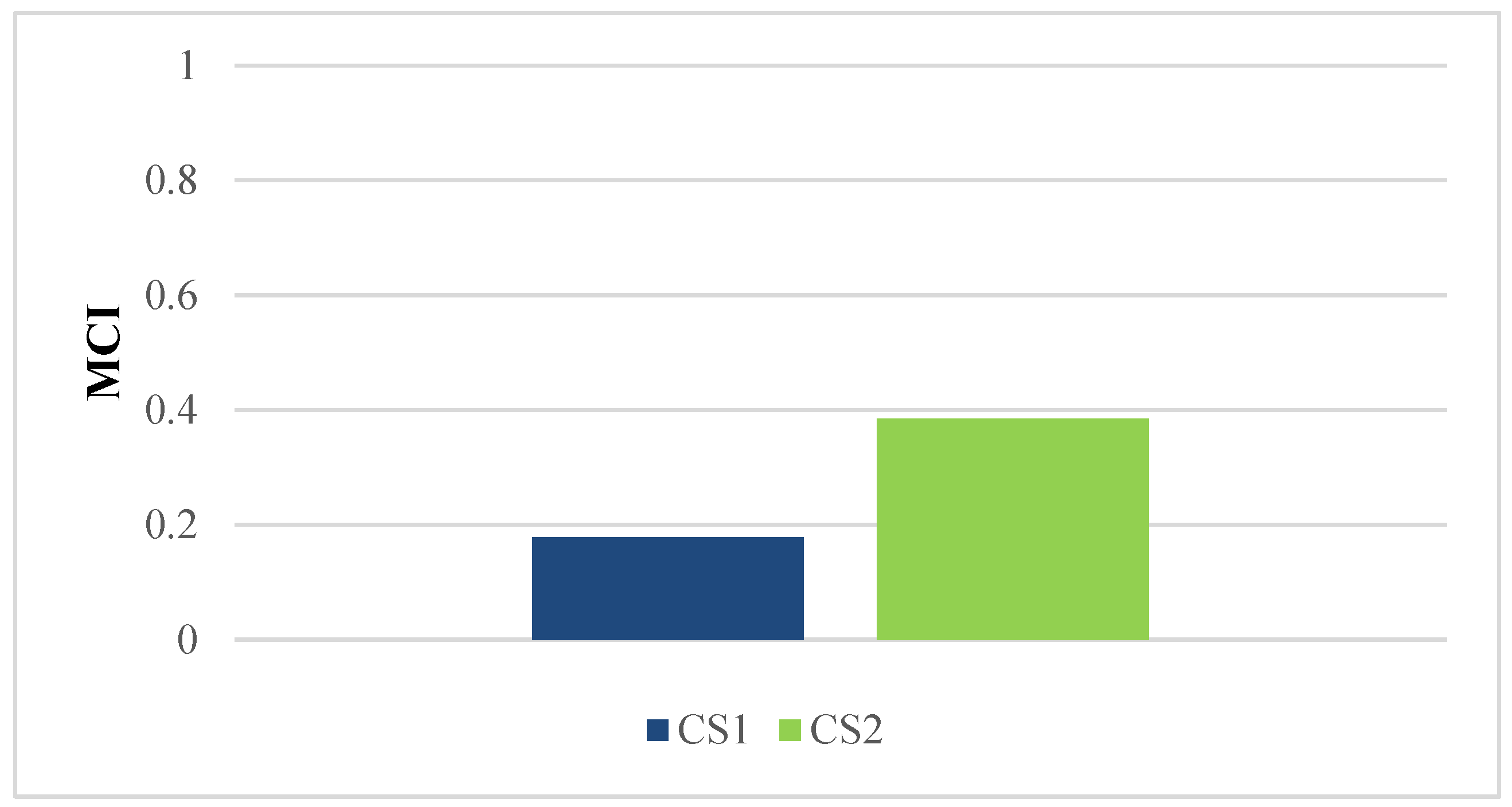
The MCI is one of the most widely used indicators for assessing a product’s circularity and was developed by the Ellen MacArthur Foundation in collaboration with ANSYS Granta [52]. This micro-indicator evaluates circularity by analyzing the material flows associated with a product. The calculation method considers all input flows (recyclable, biological, and reused materials) and output flows (recycling, biodegradation, reuse, incineration, or landfill), while also factoring in the product’s useful lifespan compared to similar products on the market. The MCI result is expressed on a scale from 0 to 1, where 1 indicates that the product is fully circular. The formula for calculating this indicator, as outlined by the [52], along with the necessary data for each case study, is provided in Appendix A. The results are shown in Figure 5.
The application of this indicator in the case studies reveals that the flow of plastic materials in CS2 exhibits higher circularity compared to CS1. However, both cases still largely follow a linear economy model and fall significantly short of the 50% CE benchmark. This disparity can be attributed to the lower proportion of plastic materials recovered through recycling and incineration in CS1 compared to CS2. Additionally, the production of plastics in both case studies relies almost entirely on virgin materials, as only the acoustic insulation panels in CS1 and the switches in CS2 incorporate any recycled content.
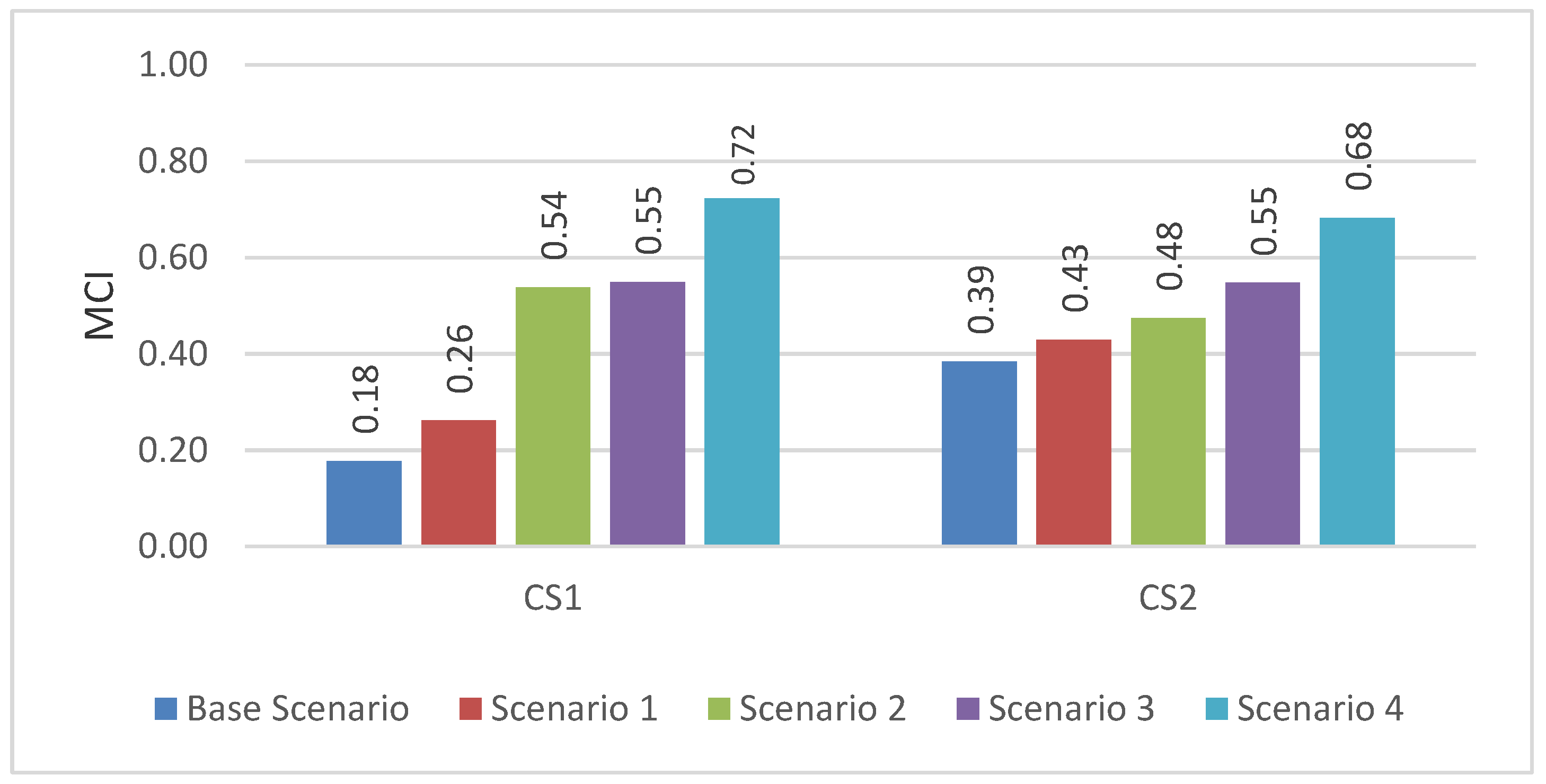
To enhance the circularity of the plastic materials used in CS1, various scenarios were defined. The base scenario represents the current circularity of CS1. Scenario 1 involves incorporating 20% recycled materials into several types of thermoplastic materials used in the renovation, while maintaining the same end-of-life treatment as the base scenario. Scenario 2 focuses on improving material recovery at the end of life. In this scenario, recycling remains the same as in the base scenario, but all clean thermoplastics are recycled. Thermosets and contaminated thermoplastics (not bonded to plaster or concrete) are incinerated for energy recovery, while plastics contaminated with plaster or concrete are sent to landfill. Often in renovation or repair projects, components in good condition are demolished to access those that need replacement. Scenario 3 explores the possibility of dismantling materials without damaging or contaminating individual parts, thus allowing for the reconditioning of damaged plastics and the reuse of components in good condition. In this scenario, 20% of plastic products are reused at the end of their life, all thermoplastics are recycled, and thermosets are incinerated, resulting in the recovery of all plastic components. Finally, Scenario 4 simulates a renovation combining Scenarios 1, 2, and 3 to achieve maximum circularity.
The same procedure was applied to CS2. The base scenario reflects the current circularity of the module in CS2. only large thermoplastic materials are separated for recycling, thermosets (used in particleboard panels and high-pressure laminates) are incinerated, and small plastics (e.g., rubber seals), plastics bonded to fibers (found in insulation mats), and plastics bonded to plasterboard and concrete (e.g., paints, waterproofing mats, bushings) are sent to landfill. The Scenario 1, 2, and 3 are analogous to those developed for CS1. Finally, Scenario 4 simulates a module requalification that combines all previous scenarios to achieve the highest possible circularity for plastics in CS2.
The assumed values for recycled content and reuse reflect commonly reported thresholds in the literature and current industrial practice. A recycled content of 20% was adopted as a conservative baseline, given that conventional plastic products can typically incorporate up to around 30% recycled material without significant degradation of mechanical, thermal, or functional properties [66]. The 20% reuse assumption reflects the specific characteristics of the case studies analyzed, in which certain plastic components can realistically be reused during refurbishment or repair.
The data used to calculate the MCI for each of the described scenarios for each case study are presented in Appendix A, Table A1 and Table A2. A visual representation and the results obtained are graphically presented in Figure 6.
The scenarios used helped concluding that selecting plastic materials with 20% recycled content (base scenario) would not significantly increase the circularity of plastics in both case studies (8.4% in CS1 and 4.5% in CS2), nor would it significantly help the construction sector transitioning to a CE. It should be noted that the circularity indicators applied in this study do not account for property degradation across recycling cycles of polymeric materials, although the literature reports that the mechanical and thermal properties of plastic materials can degrade with multiple recycling cycles, potentially affecting their reuse and recyclability [67]. Moreover, uncertainty related to recycling performance, service life variability, and end-of-life recovery assumptions, typically addressed in full LCA modelling, is beyond the scope of this indicator-based work.
However, by improving the disposal of plastics at the end of their life or during renovations—focusing on recovery and valorization through recycling or incineration—the results in CS1’s Scenario 2 surpass the CE threshold (54%). If all plastics on-site were easily dismantled and separated without contamination or damage to individual components, allowing for 20% reuse of plastic products during renovation, the CE threshold (55%) would be exceeded. However, the increase observed in Scenario 3 would be nearly the same as in Scenario 2.
The 50% circularity threshold corresponds to the midpoint of the MCI scale (0–1), separating predominantly linear from more circular material flows. An uncertainty analysis was not conducted, as only one scenario per indicator was evaluated.
In contrast, in CS2, Scenario 2 did not enable the plastics to surpass the CE threshold, as the base scenario already included significant plastic recovery, and the improvements in Scenario 2 were insufficient to achieve circularity. Nonetheless, the ability to separate plastics without contamination or damage, along with the reuse of 20% of end-of-life plastics during requalification, allows CS2 to exceed the CE threshold (55%).
To achieve a circularity rate of around 70% for the plastics in both case studies, it would be necessary to combine all scenarios. This would involve selecting plastic products with at least 20% recycled content and, during a new renovation at the end of life, reusing 20% of the plastics on-site (e.g., pipes, wiring, wall coverings) while recovering the remaining plastics through incineration or recycling, with no waste sent to landfill.
Overall, both CS1 and CS2 case studies remain predominantly linear; however, modular construction consistently demonstrates higher circularity potential across recovery, reuse feasibility, and design adaptability, indicating that construction typology is a primary driver of plastic circular performance.
These scenario-based thresholds should therefore be interpreted as indicative benchmarks for improving circularity in construction material flows rather than universal performance targets.

4.2. Reuse Potential Indicator

To assess the similarity of end-of-life material flows in each case study, the RPI was calculated. This indicator is designed to evaluate the opportunity for reusing waste generated by a product. The RPI measures the usefulness of waste, ranging from 0 to 1, based on the extent of technological development in waste recovery [53].
To calculate this indicator, data from CDW recovery and storage percentages provided by the Portuguese Environment Agency (APA) from the year 2018 [68] were used. Based on these data, the plastic products from each case study were classified into relevant waste categories according to how they are treated at the end of life. The recoverable quantity for each CDW category was estimated by multiplying the percentage of recovered and stored waste, as defined by the APA, by the quantity (in kg) of that waste in the case studies. By summing the recoverable and stored waste from all categories and dividing it by the total mass of plastic waste in each case study, the percentage of plastic waste that can be considered a resource and continue the product cycle was estimated. The formula used to calculate the RPI is provided in Equation (1). The data and results for this indicator are shown in Table 3.
R P I = [ % R e c o v e r e d W a s t e C a t e g o r y i + % S t o r e d W a s t e C a t e g o r y i m W a s t e C a t e g o r y i i n c a s e s t u d y ] m T o t a l o f p l a s t i c s i n c a s e s t u d y
When evaluating the waste from CS1 and CS2, approximately 65% and 96%, respectively, can be considered a resource and that can be recovered, allowing these materials to continue their life cycle. In other words, nearly all plastics that are not bonded to plaster or insulation materials can be recycled or incinerated. The remaining waste can be repurposed through fragmentation and used in applications such as road paving, filling excavation voids, or producing agglomerates, thus giving the material at least one additional life cycle.
Given the current percentage of plastic waste in these case studies, there is a clear need to improve the valorisation of CDW. This can be achieved by promoting better waste separation and enhancing recycling techniques, ensuring that waste is effectively recovered and becomes a highly valuable resource.
However, it is important to note that in modular and interior constructions, as in the case of CS2, the potential for recovering waste materials is much higher. This is due to the controlled nature of modular construction, which results in more effective waste separation and cleaner (less contaminated materials) making them easier to reuse.

4.3. Circularity Design Guidelines

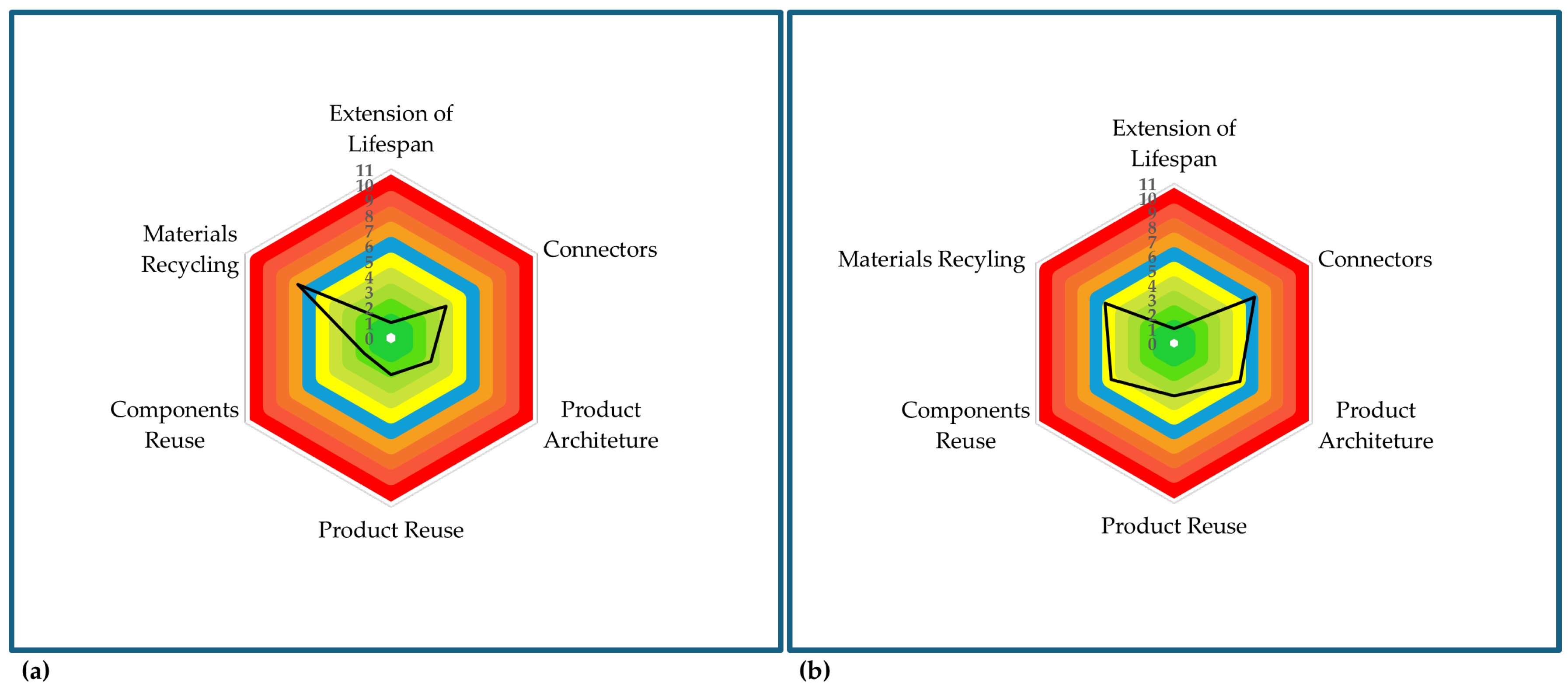
The CDG indicator is a holistic tool that identifies design approaches to improve a product by evaluating the potential for enhancement and the relevance of a set of circular design guidelines [65]. These guidelines are divided into five groups corresponding to the fundamental principles of the CE: extension of useful life, disassembly, reuse of products, reuse of components, and recycling of materials. For each guideline, an improvement level is assigned, ranging from 1 to 3 (1 being not relevant and 3 being highly relevant for the product under study). This process is repeated for each of the five groups. The average improvement level for each group of guidelines is then calculated and multiplied by the relevance score attributed to each group. The improvement level for each circular design group ranges from 0 to 9. The guidelines with the highest improvement levels are those that should be prioritized to enhance the product’s circularity. The spider diagrams in Figure 7a,b illustrate the guidelines that require improvement and their respective improvement levels. The levels of improvement and relevance assigned to each guideline and group are presented in Appendix B in Table A3.
For the plastics in CS1 to become more circular, the primary focus should be on improving the recycling processes for the materials involved (Level 6). In contrast, for CS2, the key improvements needed is relate to disassembly—both for connectors (Level 7) and product architecture (Level 5)—as well as material recycling (Level 6). The guidelines for enhancing the circularity of plastics in CS1 and CS2 are summarized in Table 4.
Although CS2 represents a more modern construction typology, it is clear that this example of modular construction still requires significant improvements to achieve a truly circular design. This is partly due to the fact that CS2 corresponds to an interior building module, which contains many more components than a construction focused primarily on the exterior, such as CS1. Also, many of the plastics used are not easily accessed for replacements and recovery.

4.4. Summary

By comparing the results of the two case studies, the plastics used in the modular construction in CS2 are closer to achieving CE principles than those in the traditional construction in CS1. The construction in CS2 relies on standardized and prefabricated materials, utilizing assembly methods that generate minimal waste. In contrast, CS1 focuses more on exterior requalification, where plastics are more likely to be contaminated with materials incompatible with recovery processes.
To improve the circularity of plastics used both inside and outside buildings, collaboration between industries is essential. Plastic manufacturing industries need to understand the construction industry’s requirements and develop products that are easy to assemble, disassemble, and incorporate higher recycled content. On the other hand, the construction industry must prioritize recycling at the end of a product’s life by using construction methods and connection elements that avoid permanently fixing plastics to materials incompatible with recovery. These methods should allow for easy removal without damage, enabling reuse and recovery. With these improvements, traditional construction can evolve to replace or repair only damaged components, avoiding demolition and unnecessary waste. The modular construction approach seen in CS2 offers a valuable example to follow.

5. Conclusions

Within the limits of the circularity indicators applied in this study, improving circularity of plastic applications in construction requires design-stage decisions that enable safe material selection, reversible connections, and feasible end-of-life recovery across the building life cycle.
Another critical consideration for builders is the management of waste, whether it originates from the construction phase or the demolition of a building. Without an efficient waste management system that produces high-quality recycled materials, plastic-transforming industries will struggle to gain the confidence needed to recycle construction materials into new products, whether for construction applications or other uses. At the present, while most plastic products are collected for recovery (as indicated from the RPI results, CS2), they cannot be effectively recycled using mechanical methods to achieve the required quality of recycled materials. In the construction sector, the common practice of incorporating plastics waste into concrete aggregates, mortars, and agglomerates (plastic-modified construction materials), merely as filler or acting as matrix, cannot be regarded as a circular or sustainable solution. This approach only postpones the eventual deposition of these materials in landfill and is downgrading the use of valuable plastic materials.
A more effective solution to enhance the circularity of plastics in construction would involve designing assembly and fixing methods that allow for easy access and removal of plastics during maintenance or reconstruction. This would reduce unnecessary waste, minimize damage to components, and prevent contamination with materials that are incompatible with recycling processes. Additionally, the current CDW management system needs to be revised so that reduction, reuse, and recycling are prioritized for all waste streams, with incineration as a last resort. Achieving this requires collaboration and coordination between stakeholders to close the material loops cycle and foster sustainability within the sector.
The use of circularity micro-indicators, as presented in this study, can serve as a valuable tool to support the transition to a CE and the creation of more sustainable and circular networks. These micro-indicators guide decision-making through the building’s development process, particularly in the selection of materials, construction processes, connecting elements, whether for plastics or other materials.
A complete and irreversible shift to a CE will only be achieved if changes are made at the legislative level. For example, introducing incentives for builders who use recycled materials and prioritize waste reuse, could accelerate this transition.
Practical levers to improve plastic circularity include targeted design and construction strategies, improved waste management processes, responsible procurement practices, and supportive policy instruments.
In summary, this study directly addressed its two main objectives by comparing the circularity of plastic materials in traditional and modular construction through the application of selected micro-level indicators (MCI, RPI, CDG and CEIP). The results demonstrate that modular construction exhibits higher circularity potential than traditional construction, confirming the first research question. Additionally, the application of circularity indicators proved effective in identifying design, material selection, and end-of-life strategies that can support improved decision-making in the construction sector, thus addressing the second research question. Overall, improving plastic circularity requires a combination of strategies, including increased recycled content, effective end-of-life recovery, and circular design. Limitations include reliance on national CDW data and the exploratory nature of the proposed scenarios. Future research should incorporate updated regional data, additional building typologies, and integrated LCA–circularity approaches.

Author Contributions

Conceptualization, R.S. and J.M.; Data curation, R.S.; Investigation, J.M.; Methodology, J.M.; Resources, R.S.; Supervision, C.I.M. and R.S.; Writing—original draft, J.M.; Writing—review and editing, C.I.M. and R.S. All authors have read and agreed to the published version of the manuscript.

Funding

Portuguese Foundation for Science and Technology, under the scope of the project UID/05549/2025 (https://doi.org/10.54499/UID/05549/2025) and LASI-LA/P/0104/2020 (https://doi.org/10.54499/LA/P/0050/2020) and the PhD grant UI/BD/150827/2021 (JM).

Institutional Review Board Statement

Not applicable.

Informed Consent Statement

Not applicable.

Data Availability Statement

The original contributions presented in this study are included in the article. Further inquiries can be directed to the corresponding author.

Acknowledgments

Catarina Lopes and Patrícia Pinto, from DST SGPS, for providing data and information on the case-studies.

Conflicts of Interest

The authors declare that they have no known competing financial interests or personal relationships that could have appeared to influence the work reported in this paper.

Abbreviations

The following abbreviations are used in this manuscript:
ABSAcrylonitrile Butadiene Styrene
APAPortuguese Environment Agency
CDGCircularity Design Guidelines
C&DConstruction and Demolition
CDWConstruction and Demolition Waste
CECircular Economy
CEICircular Economy Index
CEIPCircular Economy Indicator Prototype
CMCombination Matrix
CO2Carbon Dioxide
EEVCEco-efficient Value Creation
EOLIEnd-of-Life Index
EOLI-DMEnd-of-Life Indices—Design Methodology
EoLEnd-of-Life
EPDMEthylene Propylene Diene Monomer
EPVREnd-of-use Product Value Recovery
EPSExpanded Polystyrene
EUEuropean Union
EVREco-cost and Value Creation
EZWPExpanded Zero Waste Practice
GDPGross Domestic Product
GHGGreenhouse Gas
HVACHeating, Ventilation, and Air Conditioning
LCALife Cycle Assessment
LDPELow-Density Polyethylene
LFILinear Flow Index
MCIMaterial Circularity Indicator
MDFMedium-Density Fiberboard
MSWMunicipal Solid Waste
MRSMaterial Reutilization Score
MUFMelamine Urea Formaldehyde Resins
PA 66Polyamide 66 (Nylon)
PCPolycarbonate
PEPolyethylene
PE-HDHigh-Density Polyethylene
PETPolyethylene Terephthalate
PIRPolyisocyanurate
PMMAPolymethyl Methacrylate
POMPolyoxymethylene
PPPolypropylene
PUPolyurethane
PURRigid Polyurethane
PVCPolyvinyl Chloride
PVC-PPlasticized Polyvinyl Chloride
PVC-UUnplasticized Polyvinyl Chloride
PVBPolyvinyl Butyral
RDIRecycling Desirability Index
RIRecycling Indices
RPIReuse Potential Indicator
SDEOSustainable Design and End-of-life Options
SICESustainability Indicators in Circular Economy
TQPTypology for Quality Properties
TPEThermoplastic Elastomers
VREValue-based Resource Efficiency Indicator
XPSExtruded Polystyrene
F(x)Utility Function
M Mass of a product
F R Fraction of product’s feedstock from recycled sources
F U Fraction of product’s feedstock from reused sources
F S Fraction of product’s biological feedstock from sustained production;
C R Fraction of a product being collected to go into a recycling process;
C U Fraction of a product going into a component reuse;
C C Fraction of a product being collected to go into a composting process;
C E Fraction of a product being collected for energy recovery;
E F Efficiency of recycling process used to produce recycled feedstock;
E C Efficiency of recycling process for the portion of product collected for recycling;
L Actual average lifetime of a product;
L a v Average lifetime of an industry-average product of the same type;
U Actual average number of functional units achieved during the use phase.

Appendix A

Calculation of MCI

Equation (A1) was used to calculate the MCI. It consists in the subtraction of the product of Linear Flow Index (LFI) with the Utility Function ( F x ) to the unity.
M C I p = 1 L F I F x = 1 M 1 F R F U F S + M 1 C R C U C C C E 2 M + W F W C 2 0.9 L L a v . U U a v
Legend: FR: Fraction of product’s feedstock from recycled sources; FU: Fraction of product’s feedstock from reused sources; FS: Fraction of product’s biological feedstock from sustained production; CR: Fraction of a product being collected to go into a recycling process; CU: Fraction of a product going into a component reuse; CC: Fraction of a product being collected to go into a composting process; CE: Fraction of a product being collected for energy recovery; EF: Efficiency of recycling process used to produce recycled feedstock; EC: Efficiency of recycling process for the portion of product collected for recycling; L: actual average lifetime of a product; Lav: average lifetime of an industry-average product of the same type; U: actual average number of functional units achieved during the use phase; Uav: average number of functional units achieved during the use phase of an industry-average product of the same type.
The data needed for the calculation of the MCI is presented in Table A1 and Table A2, respectively, according to the case studied and also the scenarios considered.
Table A1. Data for MCI calculation for each scenario considered in CS1—Traditional reconstruction of a building.
DataBase ScenarioScenario 1Scenario 2Scenario 3Scenario 4
  • 40% of Recycled material incorporated into PET acoustic panels;
  • 3.5% of plastics recycling (plastics clean of contaminants)
  • 13.3% of energy recovery trough incineration of thermosets clean of contaminants
  • Min use of 20% of recycled material in all thermoplastic components;
  • The plastic end of life management maintaining the same of Base scenario.
  • Incorporate 20% of reused plastic products;
  • The incorporation of recycling material and the plastic end of life management maintaining the same of Base Scenario
  • 40% of Recycled material incorporated into PET acoustic panels;
  • All the thermoplastic clean of contaminants are recycled
  • All thermoset and thermoplastic materials with contaminants are incinerated;
  • Only materials that are agglomerated, plasterboard and concrete go to landfill.
  • Min use of 20% of recycled material in all thermoplastic components;
  • 20% of the plastic products incorporated in buildings are reused.
  • All thermoplastics are recycled
  • All thermosets are incinerated;
  • 20% of plastic products are reused for other applications at the end of life.
M4680.27 Kg4680.27 Kg4680.27 Kg4680.27 Kg4680.27 Kg
FR0.7%18.23%0.7%0.7%18.23%
FU0%0%20%0%20%
FS0%0%0%0%0%
CR3.5%3.5%3.5%55%53%
CU0%0%0%0%20%
CC0%0%0%0%0%
CE13.3%13.3%13.3%43%27%
EF95%95%95%95%95%
EC95%95%95%95%95%
L25 anos25 anos25 anos25 anos25 anos
Lav25 anos25 anos25 anos25 anos25 anos
U/Uav11111
Table A2. Data for MCI calculation for each one the scenarios studies for CS2.
DataBase ScenarioScenario 1Scenario 2Scenario 3Scenario 4
  • Incorporated only 20% of Recycled material into switches;
  • The thermoplastic material of considerable dimensions is recycling,
  • The thermoset plastics are incinerated;
  • Plastics with short dimensions, plastics aggregate to fibers or aggregated of plasterboards and concrete are disposal into landfill.
  • Min use of 20% of recycled material in all thermoplastic components;
  • The plastic end of life management maintaining the same of Base scenario.
  • Incorporate 20% of reused plastic products;
  • The incorporation of recycling material and the plastic end of life management maintaining the same of Base Scenario
  • 40% of Recycled material incorporated into PET acoustic panels;
  • All the thermoplastic clean of contaminants are recycled
  • All thermoset and thermoplastic materials with contaminants are incinerated;
  • Only materials that are agglomerated, plasterboard and concrete go to landfill.
  • Min use of 20% of recycled material in all thermoplastic components;
  • 20% of the plastic products incorporated in buildings are reused.
  • All thermoplastics are recycled
  • All thermosets are incinerated;
  • 20% of plastic products are reused for other applications at the end of life
M68.98 Kg68.98 Kg68.98 Kg68.98 Kg68.98 Kg
FR0.1%9.9%0.1%0.1%9.9%
FU0%0%20%0%20%
FS0%0%0%0%0%
CR43.7%43.7%43.7%49.049%
CU0%0%0%0%20%
CC0%0%0%0%0%
CE20.2%20.2%20.2%26%31%
EF95%95%95%95%95%
EC95%95%95%95%95%
L25 anos25 anos25 anos25 anos25 anos
Lav25 anos25 anos25 anos25 anos25 anos
U/Uav11111

Appendix B

The attribution of improvement level and relevance level for each circular design guideline and category, used for the calculation of CDG for CS1 and CS2 are presented into Table A3.
Table A3. Improvement and relevance levels for each circular design guideline and category, used for the calculation of the CDG for CS1 and CS2.
GroupCircular Design GuidelinesCS1CS2
Margin of ImprovementRelevanceCDG LevelMargin of ImprovementRelevanceCDG Level
Life Cycle ExtensionTimeless design;111111
Adaptability;11
Upgrading;11
DisassemblyConnectorsUse standardized joints;134136
Use joints than can be disassembled rather than fixed joints;33
Use screws with the same metrics;12
Minimise type of joints;13
Use easily accessible joints;23
Minimize the number of joints;12
Minimize the number of tools to be used;12
Use standardized tools;11
Product ArchitectureAdopt modular designs;223235
Minimize the number of components;21
Be able to quickly identify disassembly joints;11
Minimize length of wires and cables;13
Size components to make their handling easier;23
Facilitate the accessibility of essential components (for their potential reuse/recycling);11
Avoid the disassembly of parts in opposite directions;12
Design to make disassembly automatic;21
Product ReuseDesign to avoid accumulation of dirt;122224
Use materials that resist cleaning processes;12
Minimize the use of parts that require frequent repairs/replacements;11
Use components with a similar life span;21
Incorporate systems to monitor failing components;13
Components ReuseUse standardized components;122225
Minimize variations of tools13
Materials RecyclingUnify materials in the components joined by fixed joints;337236
Use materials with a low environmental impact (recyclable/low energy content/etc.);31
Avoid using surface treatments;23
Label materials;11
Minimize the EU hazardous materials;31
Promote monomaterial designs;23

References

  1. European Commission. Construction Sector. Available online: https://single-market-economy.ec.europa.eu/sectors/construction_en (accessed on 7 August 2024).
  2. González, A.; Sendra, C.; Herena, A.; Rosquillas, M.; Vaz, D. Methodology to assess the circularity in building construction and refurbishment activities. Resour. Conserv. Recycl. Adv. 2021, 12, 200051. [Google Scholar] [CrossRef]
  3. Agency, E.E. Greenhouse Gas Emissions from Energy Use in Buildings in Europe. Available online: https://www.eea.europa.eu/en/analysis/indicators/greenhouse-gas-emissions-from-energy (accessed on 7 August 2024).
  4. European Circular Economy Stakeholder Platform (ECESP). Circular Buildings and Infrastructure; State of Play Report Ecesp Leadership Group on Buildings and Infrastructure: Brussels, Belgium, 2021. [Google Scholar]
  5. Çimen, Ö. Construction and built environment in circular economy: A comprehensive literature review. J. Clean. Prod. 2021, 305, 127180. [Google Scholar] [CrossRef]
  6. Häkkinen, T.; Kuittinen, M.; Vares, S. Plastics in Buildings. 2019. Available online: https://ym.fi/documents/1410903/122689634/Plastics+in+buildings.+A+study+of+Finnish+blocks+of+flats+and+daycare+centres.pdf/9bf6e496-fd8f-1a84-f12a-b19fbcbc906e/Plastics+in+buildings.+A+study+of+Finnish+blocks+of+flats+and+daycare+centres.pdf?t=1687434923078 (accessed on 7 August 2024).
  7. Plastic Europe. Plastics the Fast Facts 2023: A Review on Plastic Contributions to European Economy; Plastic Europe: Brussels, Belgium, 2023; p. 2023. [Google Scholar]
  8. Mudgal, S.; Lyons, L.; Bain, J.; Dias, D.; Faninger, T.; Johansson, L. Plastic Waste in the Environment—Final Report; European Commission, Directorate-General for Environment: Brussels, Belgium, 2011; Available online: https://ceeii.org/environment/waste/studies/pdf/plastics.pdf (accessed on 29 November 2024).
  9. Sadat-Shojai, M.; Bakhshandeh, G.R. Recycling of PVC wastes. Polym. Degrad. Stab. 2011, 96, 404–415. [Google Scholar] [CrossRef]
  10. Santos, G.; Esmizadeh, E.; Riahinezhad, M. Recycling Construction, Renovation, and Demolition Plastic Waste: Review of the Status Quo, Challenges and Opportunities. J. Polym. Environ. 2024, 32, 479–509. [Google Scholar] [CrossRef]
  11. United Nations Population Fund. As the World’s Population Hits 8 Billion People, UN Calls for Solidarity in Advancing Sustainable Development for All. Available online: https://www.unfpa.org/press/worlds-population-hits-8-billion-people-un-calls-solidarity-advancing-sustainable-development (accessed on 29 November 2024).
  12. Ritchie, H.; Samborska, M.; Roser, V. Urbanization. Our World in Data. Available online: https://ourworldindata.org/urbanization (accessed on 29 November 2024).
  13. Venditti, B. This Chart Shows the Impact Rising Urbanization Will Have on the World. World Economic Forum. Available online: https://www.weforum.org/stories/2022/04/global-urbanization-material-consumption/ (accessed on 29 November 2024).
  14. United Nations. Sustainable Consumption and Production (Sustainable Development Goal 12). United Nations Sustainable Development. 2016. Available online: https://www.un.org/sustainabledevelopment/sustainable-consumption-production/ (accessed on 20 October 2025).
  15. Konstantinovas, B.; Bento, N.V.; Sanches, T. Economia Circular No Setor Da Construção Civil I-Ciclo dos Materiais; Comissão de Coordenação e Desenvolvimento Regional de Lisboa e Vale do Tejo (CCDR LVT, I.P.): Lisbon, Portugal, 2019. [Google Scholar]
  16. Norouzi, M.; Chàfer, M.; Cabeza, L.F.; Jiménez, L.; Boer, D. Circular Economy in the Building and Construction Sector: A Scientific Evolution Analysis. J. Build. Eng. 2021, 44, 102704. [Google Scholar] [CrossRef]
  17. Vasić, M.; Grubeša, I.N.; Awoyera, P.; Barišić, I. Clays in transition: Addressing resource challenges and sustainable innovations in the construction sector. Sci. Prog. 2025, 108, 368504251376483. [Google Scholar] [CrossRef] [PubMed]
  18. Briassoulis, D.; Hiskakis, M.; Babou, E. Technical specifications for mechanical recycling of agricultural plastic waste. Waste Manag. 2013, 33, 1516–1530. [Google Scholar] [CrossRef] [PubMed]
  19. Liikanen, M.; Grönman, K.; Deviatkin, I.; Havukainen, J.; Hyvärinen, M.; Kärki, T.; Varis, J.; Soukka, R.; Horttanainen, M. Construction and demolition waste as a raw material for wood polymer composites—Assessment of environmental impacts. J. Clean. Prod. 2019, 225, 716–727. [Google Scholar] [CrossRef]
  20. O’Grady, T.; Minunno, R.; Chong, H.Y.; Morrison, G.M. Design for disassembly, deconstruction and resilience: A circular economy index for the built environment. Resour. Conserv. Recycl. 2021, 175, 105847. [Google Scholar] [CrossRef]
  21. Plastics Europe. Plastics—The Facts 2020. 2020. Available online: https://plasticseurope.org/knowledge-hub/plastics-the-facts-2020/ (accessed on 7 August 2024).
  22. Awoyera, P.O.; Adesina, A. Plastic wastes to construction products: Status, limitations and future perspective. Case Stud. Constr. Mater. 2020, 12, e00330. [Google Scholar] [CrossRef]
  23. Cirino, E.; Curtis, S.; Wallis, J.; Thys, T.; Brown, J.; Rolsky, C.; Erdle, L.M. Assessing benefits and risks of incorporating plastic waste in construction materials. Front. Built Environ. 2023, 9, 1206474. [Google Scholar] [CrossRef]
  24. Fonseca, P.; Pedroso, M.; Tavares, V.; Costa, A.A.; Santos, L.; Laranjeira, L. Relatório do Estado Atual da Circularidade no Setor da Construção em Portugal. 2023. Available online: https://circularidade.builtcolab.pt/ (accessed on 7 August 2024).
  25. Gasparri, E.; Arasteh, S.; Kuru, A.; Stracchi, P.; Brambilla, A. Circular economy in construction: A systematic review of knowledge gaps towards a novel research framework. Front. Built Environ. 2023, 9, 1239757. [Google Scholar] [CrossRef]
  26. Lonca, G.; Lesage, P.; Majeau-Bettez, G.; Bernard, S.; Margni, M. Assessing scaling effects of circular economy strategies: A case study on plastic bottle closed-loop recycling in the USA PET market. Resour. Conserv. Recycl. 2020, 162, 105013. [Google Scholar] [CrossRef]
  27. Saidani, M.; Yannou, B.; Leroy, Y.; Cluzel, F.; Kendall, A. A taxonomy of circular economy indicators. J. Clean. Prod. 2019, 207, 542–559. [Google Scholar] [CrossRef]
  28. Matos, J.; Martins, C.; Simões, C.L.; Simoes, R. Comparative analysis of micro level indicators for evaluating the progress towards a circular economy. Sustain. Prod. Consum. 2023, 39, 521–533. [Google Scholar] [CrossRef]
  29. Parracho, D.F.R.; El-Din, M.N.; Esmaeili, I.; Freitas, S.S.; Rodrigues, L.; Martins, J.P.; Corvacho, H.; Delgado, J.M.P.Q.; Guimarães, A.S. Modular construction in the digital age: A systematic review on smart and sustainable innovations. Buildings 2025, 15, 765. [Google Scholar] [CrossRef]
  30. Commission of the European Communities. Strategy for the Sustainable Competitiveness of the Construction Sector and Its Companies; European Commission: Brussels, Belgium, 2012. [Google Scholar]
  31. Associação Portuguesa do Ambiente (APA). Acordo de Paris. Available online: https://apambiente.pt/clima/acordo-de-paris (accessed on 22 March 2022).
  32. IRENA. Global Energy Transformation: A Roadmap to 2050; International Renewable Energy Agency: Abu Dhabi, United Arab Emirates, 2019. [Google Scholar]
  33. United Nations Environment Programme. Towards a zero-emissions, efficient and resilient buildings and construction sector. In Global Status Report for Buildings and Construction 2020; United Nations Environment Programme: Nairobi, Kenya, 2020; pp. 9–10. Available online: https://globalabc.org/sites/default/files/inline-files/2020 Buildings GSR_FULL REPORT.pdf (accessed on 2 February 2022).
  34. European Commission. Protocolo de Gestão de Resíduos de Construção e Demolição da UE. 2016. Available online: https://ec.europa.eu/docsroom/documents/20509/attachments/1/translations/pt/renditions/native (accessed on 2 February 2022).
  35. Laboratório Nacional de Engenharia Civil (LNEC); Agência Portuguesa do Ambiente (APA); Instituto dos Mercados Públicos, do Imobiliário e da Construção (IMPIC). Legislação de RCD—O que muda? 1o Webinar Closer|Auditorias Pré-Demolição—Construir e Desconstrução. Available online: http://closer.lnec.pt/Legislacao_RCD_o_que_muda.pdf (accessed on 18 November 2021).
  36. Mahpour, A. Prioritizing barriers to adopt circular economy in construction and demolition waste management. Resour. Conserv. Recycl. 2018, 134, 216–227. [Google Scholar] [CrossRef]
  37. Cosentino, L.; Fernandes, J.; Mateus, R. A Review of Natural Bio-Based Insulation Materials. Energies 2023, 16, 4676. [Google Scholar] [CrossRef]
  38. Cousins, K. Polymers in Building and Construction; iSmithers Rapra: Shawbury, UK, 2022. [Google Scholar]
  39. Wassenaar, J. Polypropylene Materials for Sewerage & Drainage Pipes with Reduced Energy and Carbon Footprints. J. Mater. Sci. Eng. B 2016, 6, 283–290. [Google Scholar] [CrossRef]
  40. Matos, J.; Martins, C.I.; Simoes, R. Circularity Micro-Indicators for Plastic Packaging and Their Relation to Circular Economy Principles and Design Tools. Sustainability 2024, 16, 2182. [Google Scholar] [CrossRef]
  41. Matos, J.; Santos, S.; Simões, C.L.; Martins, C.I.; Simoes, R. Practical application of circularity micro-indicators to automotive plastic parts in an industrial context. Sustain. Prod. Consum. 2023, 43, 155–167. [Google Scholar] [CrossRef]
  42. Kristensen, H.S.; Mosgaard, M.A. A review of micro level indicators for a circular economy—Moving away from the three dimensions of sustainability? J. Clean. Prod. 2020, 243, 118531. [Google Scholar] [CrossRef]
  43. Mesa, J.; Esparragoza, I.; Maury, H. Developing a set of sustainability indicators for product families based on the circular economy model. J. Clean. Prod. 2018, 196, 1429–1442. [Google Scholar] [CrossRef]
  44. Alamerew, Y.A.; Brissaud, D. Evaluation of Remanufacturing for Product Recovery: Multi-criteria Decision Tool for End-of-Life Selection Strategy. In Proceedings of the 3rd International Conference on Remanufacturing, Linköping, Sweden, 17–19 October 2017; Available online: https://hal.univ-grenoble-alpes.fr/hal-01627790v1 (accessed on 18 November 2021).
  45. Cong, L.; Zhao, F.; Sutherland, J.W. Product Redesign for Improved Value Recovery via Disassembly Bottleneck Identification and Removal. Procedia CIRP 2017, 61, 81–86. [Google Scholar] [CrossRef]
  46. van Loon, P.; Van Wassenhove, L.N. Assessing the economic and environmental impact of remanufacturing: A decision support tool for OEM suppliers. Int. J. Prod. Res. 2018, 56, 1662–1674. [Google Scholar] [CrossRef]
  47. Linder, M.; Sarasini, S.; van Loon, P. A Metric for Quantifying Product-Level Circularity. J. Ind. Ecol. 2017, 21, 545–558. [Google Scholar] [CrossRef]
  48. Zwolinski, P.; Lopez-Ontiveros, M.A.; Brissaud, D. Integrated design of remanufacturable products based on product profiles. J. Clean. Prod. 2006, 14, 1333–1345. [Google Scholar] [CrossRef]
  49. IDEAL & CO Explore. Circularity Calculator. Available online: http://www.circularitycalculator.com/ (accessed on 1 February 2021).
  50. Van Schaik, A.; Reuter, M.A. Recycling indices visualizing the performance of the circular economy. World Metall.—Erzmetall 2016, 69, 5–20. [Google Scholar]
  51. Ameli, M.; Mansour, S.; Ahmadi-javid, A. A simulation-optimization model for sustainable product design and efficient end-of-life management based on individual producer responsibility. Resour. Conserv. Recycl. 2019, 140, 246–258. [Google Scholar] [CrossRef]
  52. Ellen MacArthur Foundation; ANSYS Granta. Circularity Indicators—An Approach to Measuring Circularity—Methodolofy; Ellen MacArthur Foundation: Cowes, UK, 2019; pp. 1–64. [Google Scholar]
  53. Park, J.Y.; Chertow, M.R. Establishing and testing the ‘reuse potential’ indicator for managing wastes as resources. J. Environ. Manag. 2014, 137, 45–53. [Google Scholar] [CrossRef]
  54. Sultan, A.A.M.; Lou, E.; Mativenga, P.T. What should be recycled: An integrated model for product recycling desirability. J. Clean. Prod. 2017, 154, 51–60. [Google Scholar] [CrossRef]
  55. Cradle to Cradle. Version 3.1 Cradle to Cradle Certified Product Standard; Cradle to Cradle Products Innovation Institute: Oakland, CA, USA, 2016; Available online: https://s3.amazonaws.com/c2c-website/resources/certification/standard/C2CCertified_ProductStandard_V3.1_160107_final.pdf (accessed on 13 February 2026).
  56. Di Maio, F.; Rem, P.C. A Robust Indicator for Promoting Circular Economy through Recycling. J. Environ. Prot. 2015, 6, 1095–1104. [Google Scholar] [CrossRef]
  57. Figge, F.; Thorpe, A.S.; Givry, P.; Canning, L.; Franklin-Johnson, E. Longevity and Circularity as Indicators of Eco-Efficient Resource Use in the Circular Economy. Ecol. Econ. 2018, 150, 297–306. [Google Scholar] [CrossRef]
  58. Veleva, V.; Bodkin, G.; Todorova, S. The need for better measurement and employee engagement to advance a circular economy: Lessons from Biogen’s ‘zero waste’ journey. J. Clean. Prod. 2017, 154, 517–529. [Google Scholar] [CrossRef]
  59. Lee, H.M.; Lu, W.F.; Song, B. A framework for assessing product End-Of-Life performance: Reviewing the state of the art and proposing an innovative approach using an End-of-Life Index. J. Clean. Prod. 2014, 66, 355–371. [Google Scholar] [CrossRef]
  60. Favi, C.; Germani, M.; Luzi, A.; Mandolini, M. A design for EoL approach and metrics to favour closed-loop scenarios for products A design for EoL approach and metrics to favour closed-loop scenarios for products. Int. J. Sustain. Eng. 2017, 10, 136–146. [Google Scholar] [CrossRef]
  61. Di Maio, F.; Carlo, P.; Baldé, K.; Polder, M. Measuring resource efficiency and circular economy: A market value approach. Resour. Conserv. Recycl. 2017, 122, 163–171. [Google Scholar] [CrossRef]
  62. Vogtlander, J.; Mestre, A.; Scheepens, A.; Wever, R. Eco-Efficient Value Creation, Sustainable Design and Business Strategies, 2nd ed.; Delft Academic Press/VSSD: Delft, The Netherlands, 2014. [Google Scholar]
  63. Lacovidou, E.; Velenturf, A.P.M.; Purnell, P. Science of the Total Environment Quality of resources: A typology for supporting transitions towards resource efficiency using the single-use plastic bottle as an example. Sci. Total Environ. 2019, 647, 441–4489. [Google Scholar] [CrossRef]
  64. Bovea, M.D.; Pérez-Belis, V. Identifying design guidelines to meet the circular economy principles: A case study on electric and electronic equipment. J. Environ. Manag. 2018, 228, 483–494. [Google Scholar] [CrossRef]
  65. Cayzer, S.; Griffiths, P.; Beghetto, V. Design of indicators for measuring product performance in the circular economy. Int. J. Sustain. Eng. 2017, 10, 289–298. [Google Scholar] [CrossRef]
  66. Vilaplana, F.; Karlsson, S. Quality Concepts for the Improved Use of Recycled Polymeric Materials: A Review. Macromol. Mater. Eng. 2008, 293, 274–297. [Google Scholar] [CrossRef]
  67. Silva, R.J.O.; Graf, K.; Leite Ribeiro Okimoto, M. Plastic waste recycling: An overview of the mechanical, chemical, and thermal technologies. J. Eng. Appl. Sci. 2025, 72, 251. [Google Scholar] [CrossRef]
  68. Agência Portuguesa do Ambiente (APA). Resíduos de Construção e Demolição—Resultados 2018 e Evolução 2016–2018; Agência Portuguesa do Ambiente: Amadora, Portugal, 2019; p. 4. [Google Scholar]
Figure 1. Plastics involved in CS1: (A) Plastic types and respective mass weight percentage; (B) EoL routes for each type of plastics and total percentage of plastics addressed for each EoL route.
Urbansci 10 00261 g001
Figure 2. Layout of spaces and measurements of the CS2 module.
Urbansci 10 00261 g002
Figure 3. Plastics involved in CS2. (A) type of plastics involved in the CS2 and their respective weight in the total mass of plastics involved; (B) EoL routes for each of the plastics involved in the CS1 and total percentage of plastics addressed for each EoL route.
Urbansci 10 00261 g003
Figure 4. Micro-indicators relevant for estimating the circularity of plastic products involved into civil construction (micro-indicators in bold black text and underlined are the most relevant, in bolt black text are relevant for construction sector) (adapted by [42]).
Urbansci 10 00261 g004
Figure 5. Results of application of MCI in both of case studies.
Urbansci 10 00261 g005
Figure 6. Evolution of MCI results according to each scenario applied in both case studies.
Urbansci 10 00261 g006
Figure 7. Spider diagram representing the groups of design guidelines that require improvements in each case study: (a) CS1; (b) CS2. The color gradient represents the product’s improvement level according to the circular design guidelines, with green indicating that few improvements are needed and red indicating that substantial improvements are required.
Urbansci 10 00261 g007
Table 1. Plastic applications on building and construction applications [6,8,38,39].
Building & Construction ApplicationPlastic Type
InsulationPlastic-based Insulation MaterialEPS, XPS, PU, PIR and PUR
Mineral-based insolation materialsPhenolic and phenol formaldehyde-urea copolymer resin
Sanitation and irrigation systemsPipes, drainpipes, surface water and storm water applications and conduitsPVC-U, PVC-P, PE, PP
Electric and Communication SystemsCables coating and ductsPVC-U, PVC-P
WindowsWindows profiles, window blinds and other profilesPVC-U
Coverings, Flooring and RoofFlooring sheets, Roofing sheets, sidings and guttersPVC-U
Damp proofing, and coverings of floors, walls and roofsPE, UF and MUF resins
Urea-formaldehyde,
MDFs, particle boards, flooring and laminatesMelamine-urea formaldehyde
HVAC systemsVentilation and AC conduitsPP
Lighting and households’ applications-ABS, PC, PET
CoatingsGlues, varnishes, waxesAcrylic and Epoxy resin
Paints and lacquersAcrylate copolymers, Epoxy and PU
Table 2. Cross analyses between the relevant Micro-indicators for building and construction and the gaps for CE implementation. The letter “X” indicates that the methodology of the respective micro-indicator addresses the identified gap in the building and construction sector.
Construction and Building CE Implementation Gaps
Lack of Coordination of Multiple Suppliers of a BuildingDifficulty in Communication Between Stakeholders in the Building and Construction Value ChainLack of Available Information on How to Aggregate Products and Materials So That They Can Be RecoveredLack of Recovery of Waste Within the Building and Construction Value ChainLack of Product Confidence in Implementing Recycled Raw Materials in New Products%Gaps Addressed by Each Indicator
Micro-indicatorsMCI XXX60%
RPI XXX 60%
VRE XX40%
CDGXXXXX100%
CEIPXXXXX100%
EZWPXX 40%
EEVC XX40%
CM X20%
RDI X 20%
CEI XX40%
MRS X20%
EOLI X 20%
EOLI-DM X 20%
EVR XX40%
TQPX X 40%
% indicators that address each gap27%27%40%67%60%
Table 3. Data used for calculating the RPI and RPI result for each case study.
CDW’s Waste Typology% Waste in CS1% Waste in CS2% Recoverable *% Stored *RPI
CS1CS2
B (Plastic, wood and glass materials)1.8%40.2%79%20%64.6%96.1%
D (Metals, Cables not containing hazardous materials)0%23.0%78%22%
F (non-hazardous insulation materials)95.2%4.2%32%32%
G (Plaster)1.7%6.2%52%38%
H (CDW mix)1.3%26.4%76%19%
* Data taken from the APA CDW valuation report [68].
Table 4. Guidelines for improving the circularity of Plastics for each case study: CS1—traditional construction and CS2—Modular construction.
Guidelines for Improving the Circularity of Plastics
CS1CS2
Avoid contamination of plastics with materials that are incompatible with plastic recycling processes, such as plaster, concrete, glues, mortars, and cement
Minimize the use of surface treatments (paints) in plastics
Reduce the use of materials with a high environmental impact, such as plaster.
Ensure insulation materials are properly separated from other waste, allowing recovery by recycling/incinerating;
Avoid permanent fastening/anchoring of plastics to facilitate disassembly and recycling.
Ensure easy access to components that require frequent repair or replacement.
Use connecting elements instead of permanent fixation.
Minimize the type and number of connecting elements.
Avoid disassembly in opposing directions, especially if they compromise access to products with greater wear and tear.
Minimize or avoid surface treatments like painting over plastic materials.
Reduce the use of high-impact materials such as plaster.
Ensure insulation materials are properly separated from other waste, allowing recovery by recycling/incinerating.
Disclaimer/Publisher’s Note: The statements, opinions and data contained in all publications are solely those of the individual author(s) and contributor(s) and not of MDPI and/or the editor(s). MDPI and/or the editor(s) disclaim responsibility for any injury to people or property resulting from any ideas, methods, instructions or products referred to in the content.