1. Introduction
Gentrification, first conceptualized to describe the transformations occurring in London’s working-class neighborhoods [
1], was originally understood as the displacement of low-income residents by high-income residents. While academic debate focused for decades on real estate and residential dynamics [
2,
3], recent urban transformations have intensified scientific interest in retail gentrification [
4,
5].
Retail gentrification is defined as the process by which new retail capital monetizes shopfronts, characterized by the direct and indirect displacement of traditional shops that are replaced by new retail establishments targeting a newer and wealthier clientele [
5,
6]. This phenomenon has become a highly visible sign of urban gentrification, manifesting itself in the emergence of restaurants, cafés, and luxury or high-end shops [
5].
This process involves structural changes in the retail sector, such as the rise of chain stores and the disappearance of small, individually owned shops. These new consumer spaces not only satisfy the material needs of more affluent residents, but also their less tangible needs for social and cultural capital [
5]. A key feature of retail gentrification is the alteration of the business mix. Distinctive (idiosyncratic) local shops that generate high consumer surplus are eliminated. In their place, businesses emerge that specialize in services that save time for wealthier residents, such as coffee shops [
7], fitting the pattern known as the ‘ABC of gentrification’: art, boutiques and cafés [
8,
9].
In addition to rising rental costs, the adverse impact of retail gentrification can go beyond the economic aspect, including the destruction of neighborhood character and social cohesion, which can, in principle, reduce overall social surplus. Some solutions are identified, related to the shopkeeper’s ability to retain customers and the neighborhood engagement to protect their shops [
7].
Since the 2000s, English-speaking researchers have begun to consider commercial transformations as essential components of gentrification processes [
2,
10].
The study of this phenomenon has intensified since then. One of the main driving forces behind this change is the ‘rent gap,’ defined as the difference between the current capitalized rent of a piece of land and the potential rent that could be obtained under a ‘higher and better’ use [
11]. In retail, this gap, coupled with a changing consumer environment, encourages the investment of new retail capital [
4].
Initial studies on retail gentrification have identified two main stages: first, ‘pioneers’ establish independently owned businesses in disinvested neighborhoods [
12], taking advantage of low rents and central locations. Second, the success of these boutiques attracts corporate capital, leading to the emergence of chain stores and an increase in rents [
4,
5]. Recent research implies that there are three commercial gentrification stages: pre-gentrification, ongoing gentrification and mature gentrification [
13,
14], following the process of replacing local shops with emerging brands and, finally, corporate and international brands.
Europe has stood out in processes of retail gentrification, often linked to housing privatization and the rise of tourism. In Paris, and more specifically in working-class suburbs such as Montreuil, there has been an increase in high-end food, culture and leisure shops, replacing shops aimed at low-income residents [
2]. Another example is Lisbon, where the rehabilitation of traditional retail markets has shown clear signs of retail gentrification. The Campo de Ourique Market, for example, underwent rehabilitation, following models implemented in Barcelona and Madrid [
15]. The process in Lisbon is closely linked to ‘touristification’ [
16]. The gentrified Campo de Ourique market behaves like a ‘fortress’, showing a disconnection from the surrounding commercial fabric [
17]. This undermines the quality of life of the local population, as products are sold at higher prices, geared towards entertainment and leisure consumption [
18].
Commercial gentrification in Spain is a widely documented phenomenon, especially in its large urban and historic centers, and manifests itself as the gradual replacement of traditional and local businesses with new establishments aimed at middle- and high-income sectors, often directly linked to tourism [
19,
20,
21,
22].
This process is seen as one of the spatial facets of urban neoliberalism and has become a strategy to ‘reclaim the city for businesses and the middle/upper classes [
20,
23].
Examples can be found in Barcelona, as is the case in Casc Antic (or El Born), where a commercial census revealed that 41% of businesses were categorized as gentrified (boutiques, art galleries, and restaurants), and 10% were linked to tourism (souvenir shops and global franchises). These establishments displaced traditional businesses (bakeries and haberdasheries), which accounted for only 21% of the premises [
20].
Another example is the historic center of Seville, which experienced a 72% increase in tourism between 2010 and 2019, higher than other Spanish cities, thus leading to changes such as hotel activities (accommodation and catering) growing by 47% between 2011 and 2018. In contrast, local activities for residents, such as ‘household goods’ and ‘medical and dental activities,’ declined [
21].
The island of Mallorca is no stranger to these phenomena of gentrification. In this regard, commercial gentrification is particularly noticeable in the capital, Palma. The process is most intensely visible in its historic center, where the rising real estate prices have driven commercial rents to unsustainable levels for traditional businesses like bakeries, butcheries and small shops [
24,
25]. Instead, new businesses emerge, such as global fashion brands, jewelry stores and souvenir shops. Another change can be seen in the catering sector, where traditional cuisine restaurants are disappearing and being replaced by gastropubs, wine bars and restaurants aimed at tourists only [
26].
While the literature has extensively examined retail gentrification in global metropolises and regional capitals, there is a significant gap concerning its dynamics in medium-sized tourist towns, particularly those embedded in insular or peripheral contexts. Existing studies often focus on large-scale urban transformations, where commercial change is one component of a broader metropolitan restructuring. Less attention has been paid to how these processes unfold in smaller, tourism-dependent municipalities, where the local economy, social structure, and retail landscape may be more vulnerable to monolithic transformation.
This paper addresses this gap by examining the case of Sóller, a mid-sized tourist town in Mallorca. The study investigates whether and how the commercial gentrification processes observed in cities like Barcelona, Lisbon, or Palma manifest in a smaller urban setting. The initial hypothesis is that tourism intensifies retail gentrification in small municipalities, adversely affecting the local population.
The objectives or research questions are as follows:
Does tourism-driven retail change follow the same patterns and stages in medium-sized towns?
What are the specific mechanisms of displacement and replacement in a context where the commercial fabric is smaller-scale and potentially more community-embedded?
By answering these questions, this research contributes a nuanced, locality-sensitive perspective to the gentrification literature, demonstrating that retail gentrification is not solely a metropolitan phenomenon but a scalable process that can profoundly alter the commercial and social landscapes of non-metropolitan tourist destinations. The findings highlight the accelerated vulnerability of such towns to retail homogenization and the erosion of local-serving commerce, offering insights for urban planning and policy in similar contexts worldwide.
2. Materials and Methods
2.1. Research Area
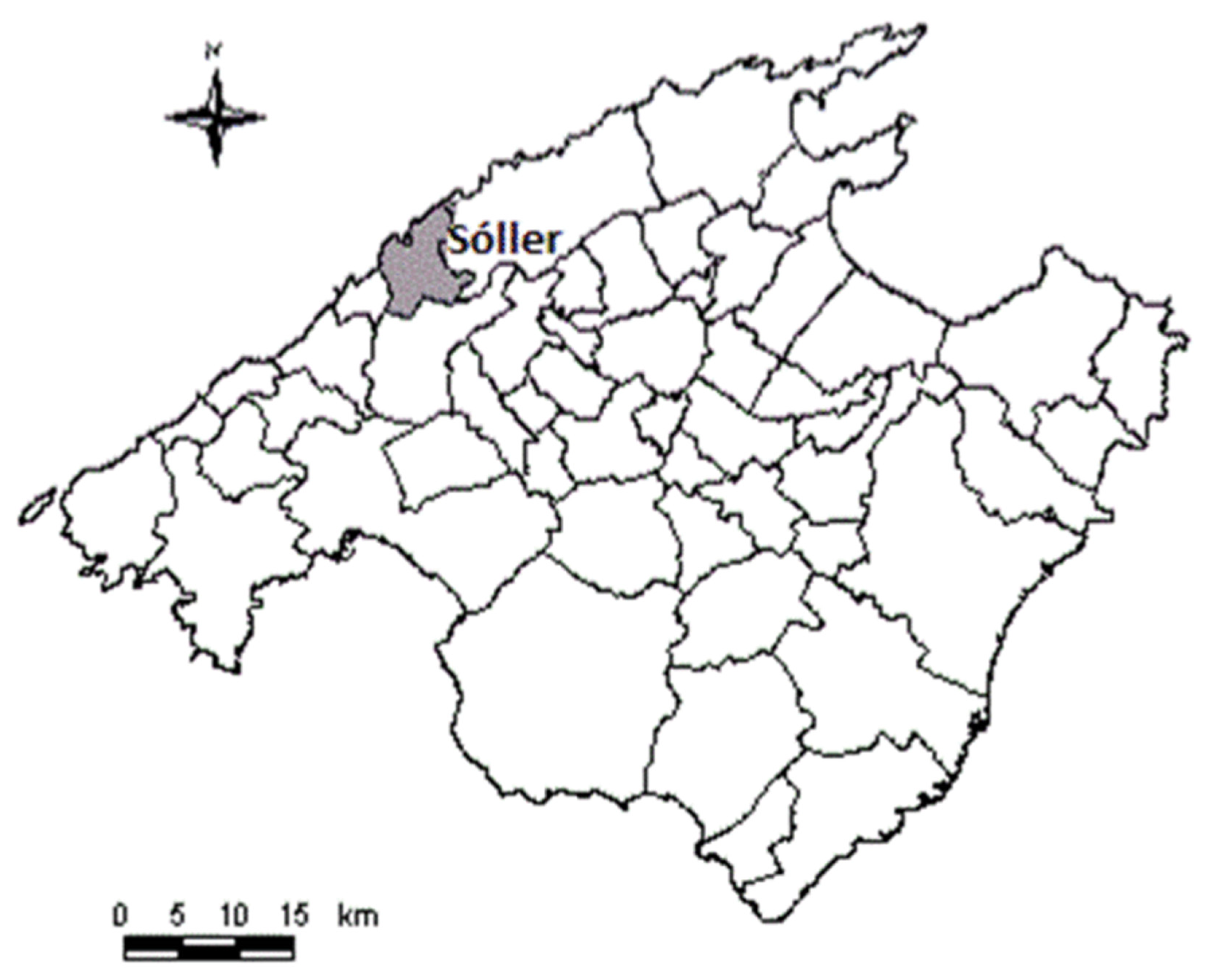
The municipality of Sóller is located in the Northwestern area of Mallorca, between the Tramuntana mountain range (
Figure 1). As of 2024, it has a population of 13,244 [
27], and the main economic activity is tourism, with a notable number of hotels located in the municipality, recording one of the highest occupation rates in Mallorca (
Table 1), usually over 70% in the past [
28] and even the highest in Spain in April 2024 [
29]. There is also a high number of restaurants and bars, as well as tourist dwellings, marketed on specialized websites. The increase in tourism-related activities led to a gentrification of the area, which, in turn, has led to episodes of tourism phobia [
30].
The municipality’s geographical location caused it to be isolated from the rest of Mallorca, as it is situated between the island’s highest mountains. This isolation was reflected in the economy, as agriculture, first, and then the textile industry in the late 19th and mid-20th centuries, were the most important activities, thanks to communication by boat with the mainland and the south of France [
31].
The arrival of mass tourism in the 1960s and 1970s led to social and economic changes that have become more prominent over time [
32]. One of these changes has been the gradual decline in local trade, which was initially affected by the opening of faster transport links, making it easier to reach Palma and its large shopping centers. It was also affected by a lack of generational renewal, as it was more profitable to work in the tourism sector than in one’s own business.
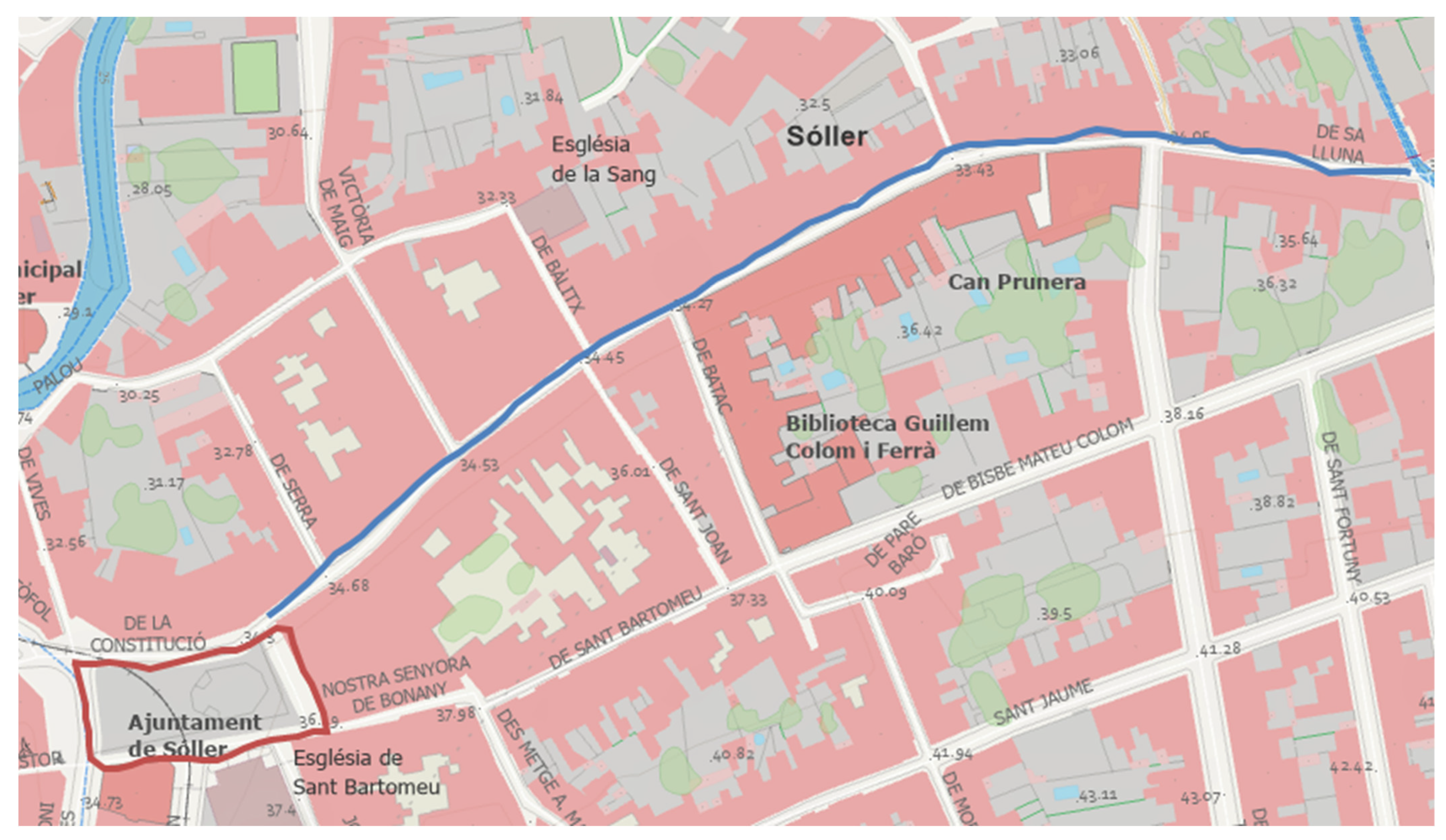
The specific area of study is located in Plaza de la Constitució and Carrer sa Lluna, which have historically been the urban and commercial center of the city (
Figure 2).
It is in this area where political power (town hall), religious power (church) and economic power (banks, offices and shops) are concentrated since the 19th century. In that sense, the research area is the main retail axis of the town since neither the outlying neighborhoods nor the tourist area of the port have such a high concentration of shops.
This research focuses on a new change related to the retail sector, the disappearance of traditional and family-run shops, which are being replaced by businesses aimed at tourism-related consumption, and which may lead to the loss of local historical heritage by creating a monochrome commercial landscape [
33].
2.2. Data
As ref. [
34] points out, there is a systematic lack of information about commercial activities at the municipal level. Municipal documentation often does not indicate the type of business or is somewhat generic, nor does it identify the owner, especially if it is a public limited company, and the dates of the opening permits are usually later than the actual start of the activity. This makes it difficult to conduct studies related to the mobility and variability of these businesses.
Thus, in order to carry out this research in Sóller, municipal information was used, based on data from Agenda Local XXI studies, which have not been published but are available for consultation. Agenda Local XXI is a municipal plan, which observes the current situation of the municipality in order to prepare an action plan to improve the environmental, economic and societal quality of the town, finally reaching a sustainable development. In addition, information from the local Traders’ Association was reviewed, which includes data on changes in business type, although these data are incomplete and scattered over time. To complete the retail picture, a regional newspaper interview with the Trader’s Association president was used to assess the current situation of the retail sector in Sóller.
Finally, in order to obtain a picture of the previous year’s situation, images from the Google Street View (GSV) platform were visualized, taking advantage of campaigns carried out during the years 2012 and 2022. The use of this source is now commonplace for urban and tourism-related studies, even if some biases, such as the image quality and urban coverage, can affect its use [
35,
36].
2.3. Methods
To begin with, a literature review on the subject was conducted in order to contextualize the case study. Secondly, a classification of commercial activities was developed, following the proposal by [
33]. Thus, eight categories appear (
Table 2), the first ones being those most closely linked to tourism and the last ones being those most closely linked to local residents.
As some of the observed businesses could not be included in the previous list, a new category was added, called others. It includes bank branches, estate agent offices and establishments with no apparent use.
Once the businesses were grouped into each category, we quantified these activities by percentage to determine their relationship with tourism. To do this, categories 1, 2 and 3 were considered to be highly tourist-oriented, categories 4 and 5 as moderately tourist-oriented, and the last three as not very tourist-oriented [
33].
The next phase involved compiling a list of businesses based on available written sources, which was completed by viewing GSV data for the first reference year. This list was then compared with data obtained from the second GSV viewing and fieldwork carried out during 2025. The fieldwork consisted of two walking tours around the research area, noting the changes from the previously compiled data from the GSV viewing. The tour’s methodology consisted of a round trip, first observing the shops on the left side of the street, and then observing the ones located on the right side during the return walk.
This made it possible to observe the transformation process of the commercial network in the area studied and to relate this transformation to the phenomenon of tourism. An informal meeting with the Trader’s Association president was scheduled in order to obtain more details about the observed changes and their impacts, both affecting local owners and residents.
3. Results
As of 2010, the city of Sóller had 178 retail activities, representing 30% of the total economic business of the municipality. Of this total, 30 shops sell clothing and 27 sell food, while 30 are gift and souvenir shops. Meanwhile, 139 establishments belong to the catering sector, with a notable presence of restaurants of different categories. These data present the problem of referring to the municipality as a whole and are not broken down by area.
In relation to the area under study, in 2012, sa Lluna Street had 43 open businesses (
Table 3), of which 16 were dedicated to the clothing and footwear sector. Linked to the tourism sector, there was a restaurant, a pizzeria, a tavern, and two souvenir shops, as well as a gourmet food shop. Meanwhile, Plaça Constitució had 24 open businesses (
Table 4), with 15 belonging to the restaurant and bar sector, representing 65% of the total.
The viewing of 2022 images enables the identification of changes in the commercial landscape of the area under study. The Plaça Constitució maintains its predominance in activities linked to catering, although it has lost a restaurant that has been converted into a hotel. A hairdresser/clothes shop has closed as well, while a vacant space has become a cafe bar.
Regarding sa Lluna Street, it has gained a business (nowadays 44), but the change compared with 10 years ago is evident. There is one more hotel and restaurant, as well as two souvenir shops for tourists. A furniture shop and a toy shop have disappeared, and several clothing and footwear shops have been converted into tourist shops, although they sell the same type of product. The bookshop has also disappeared, converted into a hairdresser’s, and the bank branch is now a luxury goods shop. It is also worth noting that former residential ground floors have changed their use and are now used for commercial activities, as is the case with the new hotel and two premises that were vacant in 2012 and are now a shoe shop and a souvenir shop. Conversely, it can be noted that a gourmet food shop disappeared during this period, leaving the premises vacant.
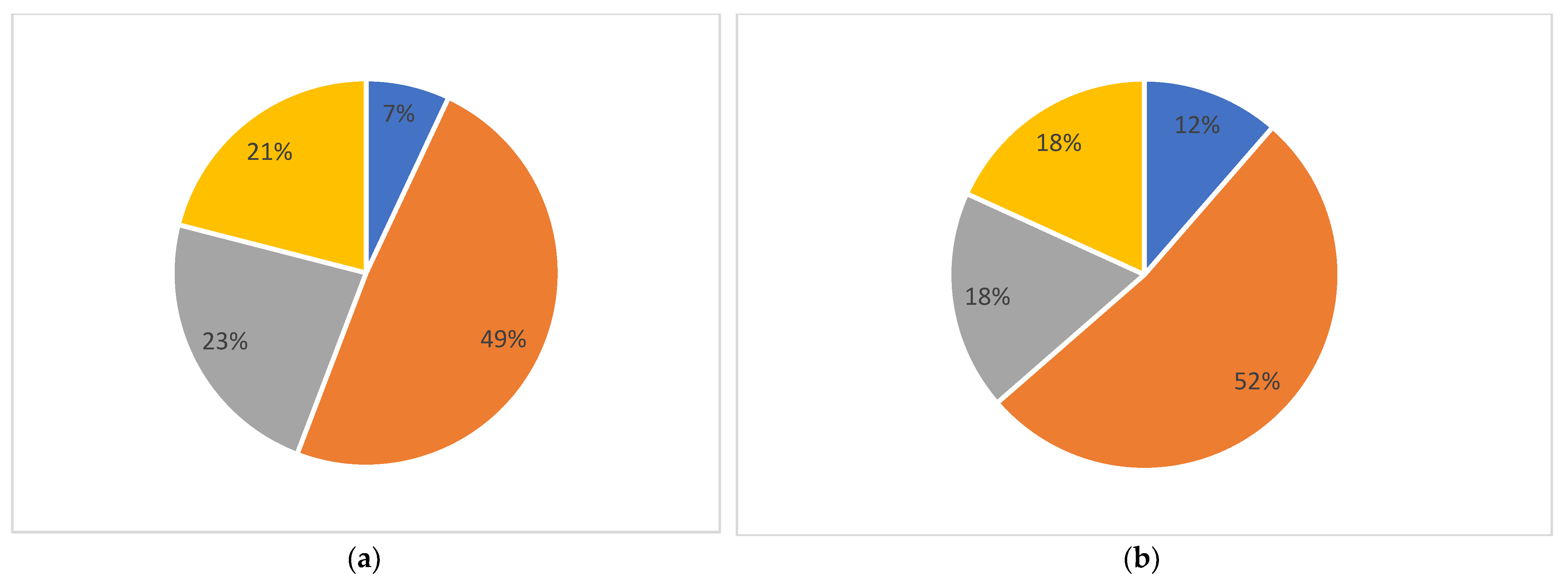
If we observe the evolution of the commercial landscape between 2012 and 2022 and its relationship with tourism, we can see how in sa Lluna Street there was a slight increase in highly-related tourist activities (from 7% to 11%), but the largest increase was in the second group of business, the medium-related one, that increased its percentage from 48% to 52%. Both increases are the result of the loss of businesses not closely linked to tourism, as well as other activities (
Figure 3).
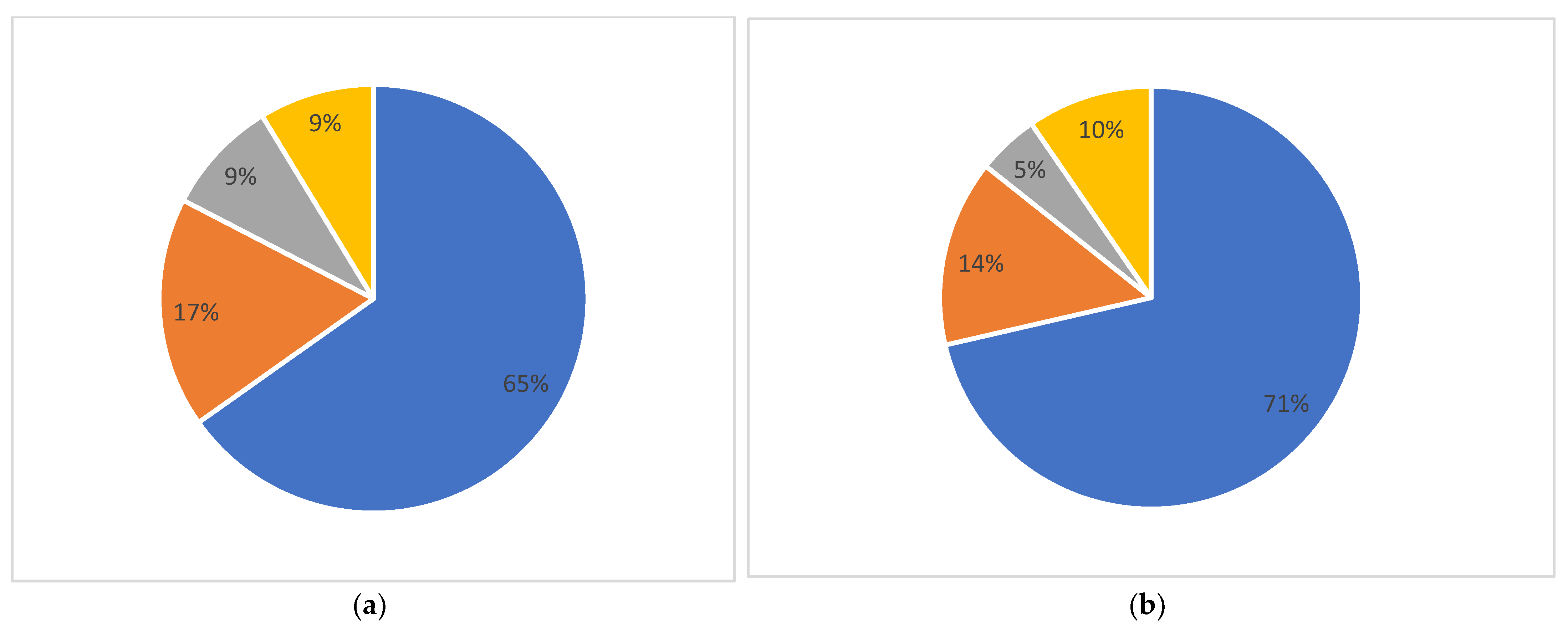
The other studied space, Plaça Constitució, also showed a similar behavior regarding the decadal evolution of businesses. In that case, the importance of the catering services did not change between 2012 and 2022, even if, as stated before, there was a loss of a restaurant. More than 60% of the Plaça activity was related to catering in 2012, while in 2022, it reached 71%. Meanwhile, moderate and not very tourist-oriented services lost ground as the food-related trade increased (
Figure 4).
To complete the commercial characterization of the study area, two walking tours were conducted, one before the 2025 tourist season (29 May 2025) and one at the end of the season (1 November 2025). The results are shown in
Table 5, but at first glance, clear changes can be seen compared with the GSV images of previous years.
Sa Lluna Street had 54 businesses in 2025, ten more than in 2022, as some vacant premises have been reopened, and, more importantly, some residential ground floors have been rented out and are now commercial premises. There has been a significant increase in souvenir shops (5), and there is even a bicycle rental shop, all dedicated to tourism. In addition, a supermarket and several delicatessens complete the offering aimed at the non-resident population. Even so, the main commercial offering is clothing and shoes, but with a price range that normally exceeds the purchasing power of residents.
However, the catering offer remains unchanged, with four establishments, but shops catering to local consumers, such as the photography shop, a food shop and the hairdresser’s, have been lost, now converted into a jewelry shop, a souvenir shop and a perfumery.
Moreover, during the final observation walk, two more businesses were announcing their closure, a clothing shop and another selling household appliances, both with more than 30 years of activity.
In Plaça Constitució, as the available space is what it is, 22 businesses remain active. As stated before, both in 2012 and 2022, the largest number is related to catering, bars and restaurants. One of the bank branches has been substituted by a gourmet shop, selling typical food and delicatessen from Mallorca, while one of the hotels located in the plaça has reopened its restaurant on the ground floor. Another fact that highlights the retail gentrification linked to tourism is that the opening period of those catering businesses follows the tourist season, so they close for two or three months (usually from November to February), thus leaving local inhabitants without a place to drink or eat.
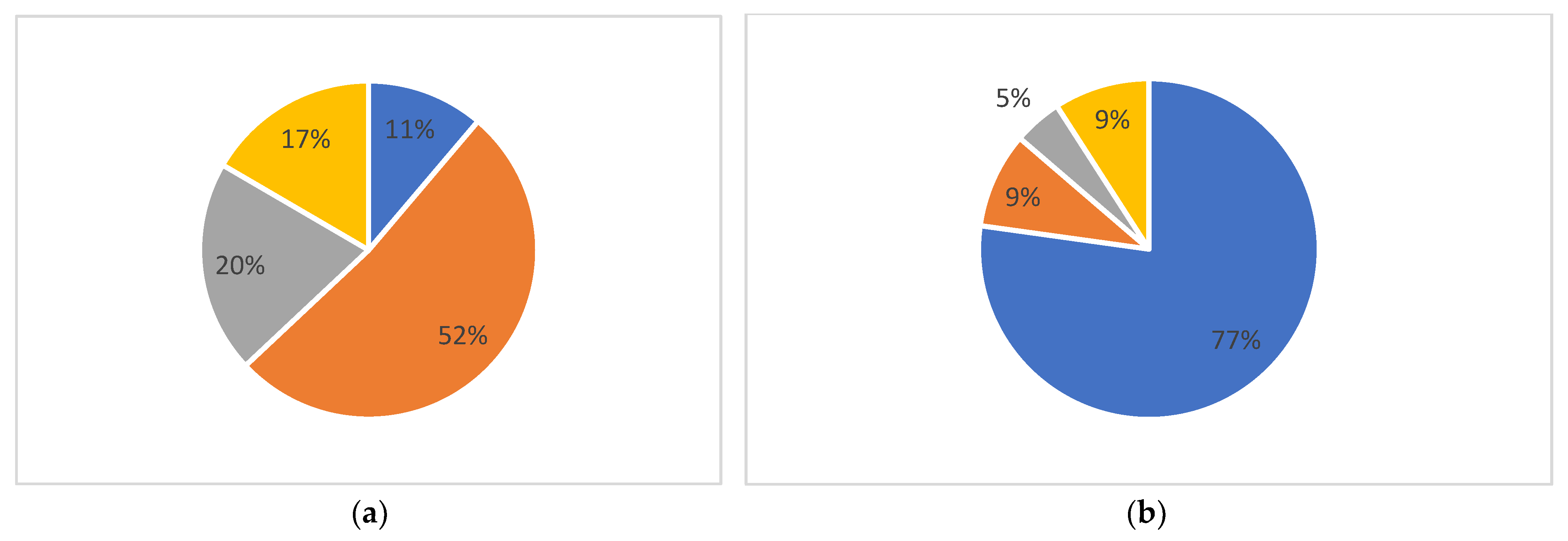
In 2025, the relationship between the commercial landscape and tourism becomes more evident (
Figure 5). On sa Lluna Street, 63% of the retail activity has a high or moderate tourist orientation, while in 2012 the value was 54%. Meanwhile, in Plaça Constitució, almost an 88% of the businesses located there are highly oriented towards tourism consumption, due to the large number of bars and restaurants located there.
4. Discussion
The results of this study confirm that commercial gentrification in Sóller is strongly driven by tourism, aligning with findings from earlier research in Southern European contexts [
21,
24,
37,
38]. However, the phenomenon observed here is not geographically confined to the Mediterranean region. Internationally, similar patterns of retail transformation have been documented in cities across North America, Asia, and Northern Europe, often linked to processes of urban regeneration, tourism growth, and neoliberal urban policies [
4,
5,
39]. For instance, in New York City, Zukin et al. [
5] observed how boutiques and art galleries act as pioneers of gentrification, gradually displacing local retail and altering the social fabric of neighborhoods. Similarly, in Tokyo’s Shimokitazawa district, commercial gentrification has been accelerated by youth culture and tourism, leading to the loss of small-scale, traditional businesses in favor of fashion boutiques and cafes [
40]. These cases illustrate that commercial gentrification is a global urban strategy, often marketed as “revitalization,” yet resulting in the homogenization of retail landscapes and the marginalization of local consumption needs [
41].
Regarding the stage of the gentrification process, the town is in an ongoing stage, as franchising is only starting when, according to Lees [
42], franchising is the final stage of commercial gentrification. As of now, a majority of the new shops opening pertain to emerging brands, usually regional, while only three shops can be considered as corporate brands of national impact, one selling jewelry, another offering gourmet products and the last one is a perfumery.
The gathered data allow observing the percentage shift in activities. The main change was observed in Plaça Constitució, where catering activities, considered highly-tourist oriented, surged from 65% in 2012 to 88% in 2025. Meanwhile, sa Lluna Street did not show a similar increase, even if it rose from 54% in 2012 to 63% in 2025 regarding highly and moderate tourism-oriented businesses. Those changes correspond with an observed decline in businesses serving local residents. Even so, the shift, especially on sa Lluna Street, is not categorically significant as the process operates within the existing retail categories, such as clothes and shoes, but replacing the traditional stores with high-end boutiques.
The measurable decline in retail diversity is negatively impacting residents’ access to daily goods and services, a trend also noted in cities such as London, where high streets have become dominated by chain stores and leisure-oriented outlets [
3,
43]. This erosion of local retail ecosystems not only affects practical shopping capabilities but also undermines the social and cultural functions of neighborhood commerce, as traditional shops often serve as spaces of community interaction and identity formation [
44].
A newspaper interview with the president of the Traders Association highlighted the scope of the problem [
45]. According to her, the closure of locally owned shops and their substitution with larger brands or tourist-related stores affects the local economy and the societal fabric of the town. Moreover, the increase in rent, nowadays reaching 4000 or 5000 Euros a month, is unaffordable for local owners, thus facilitating the arrival of foreign-owned business and brand shops.
Several spatial and structural factors have facilitated this process in Sóller. The central location of Plaça Constitució and sa Lluna Street, adjacent to key heritage sites and transport nodes, increases their attractiveness to tourists and investors, a dynamic observed in historic districts worldwide. Furthermore, the pedestrianization of these areas, while enhancing urban livability, also accelerates commercial gentrification by boosting foot traffic and retail visibility [
46], a double-edged effect noted in studies from Istanbul [
47] and Madrid [
48].
Notably, while “foodification” [
49]—the excessive growth of gastronomic venues—has been a hallmark of gentrification in cities like Florence and Naples [
50,
51], this trend is less pronounced in Sóller, even if a relationship between the presence of gastronomic businesses and the highest tourism influx axes [
52].
Instead, the transformation is characterized by a shift toward souvenir shops, luxury goods, and clothing stores, reflecting a retail mix tailored to visitor consumption rather than resident needs. This aligns with what Guimaraes [
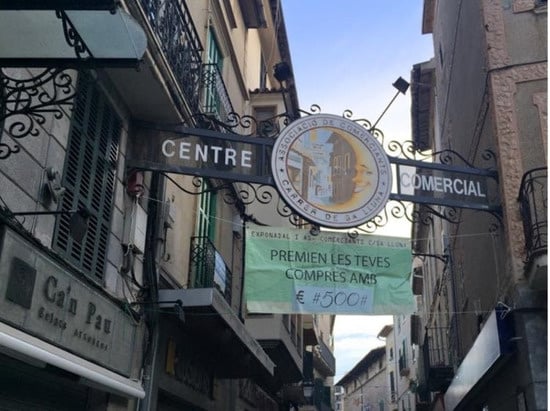
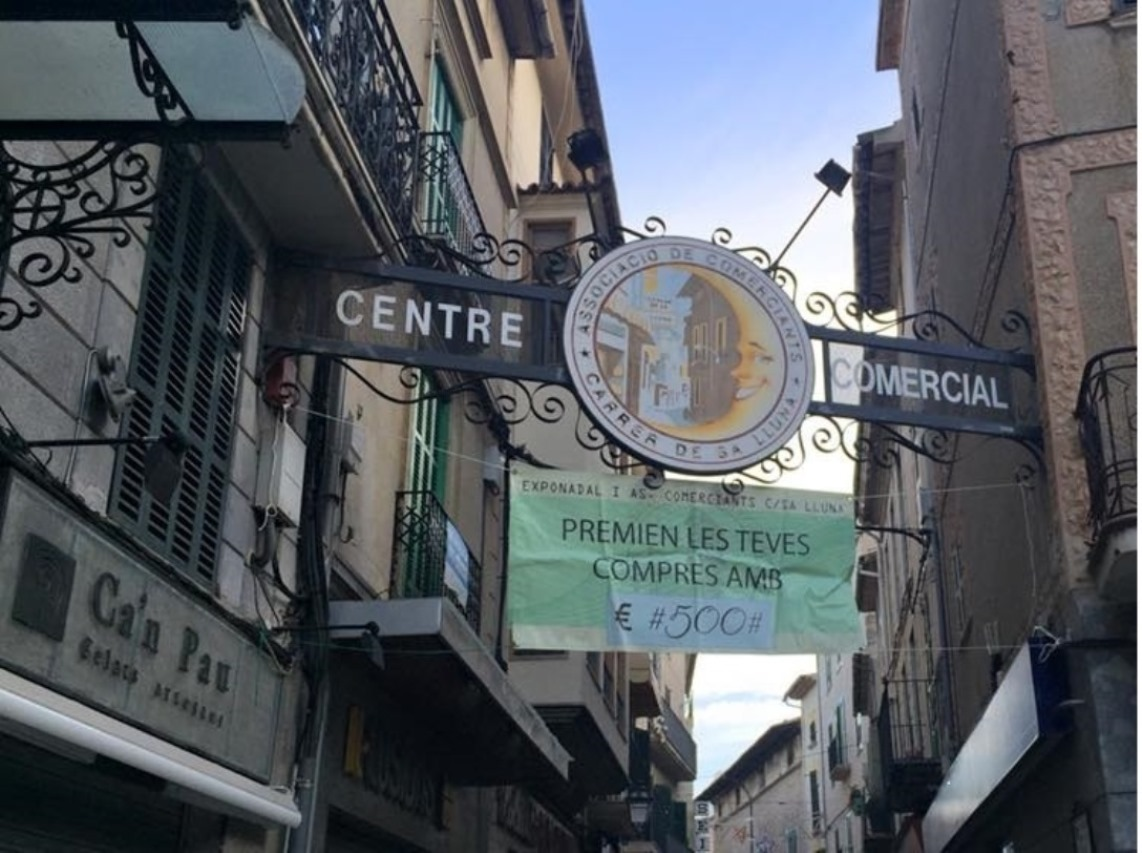
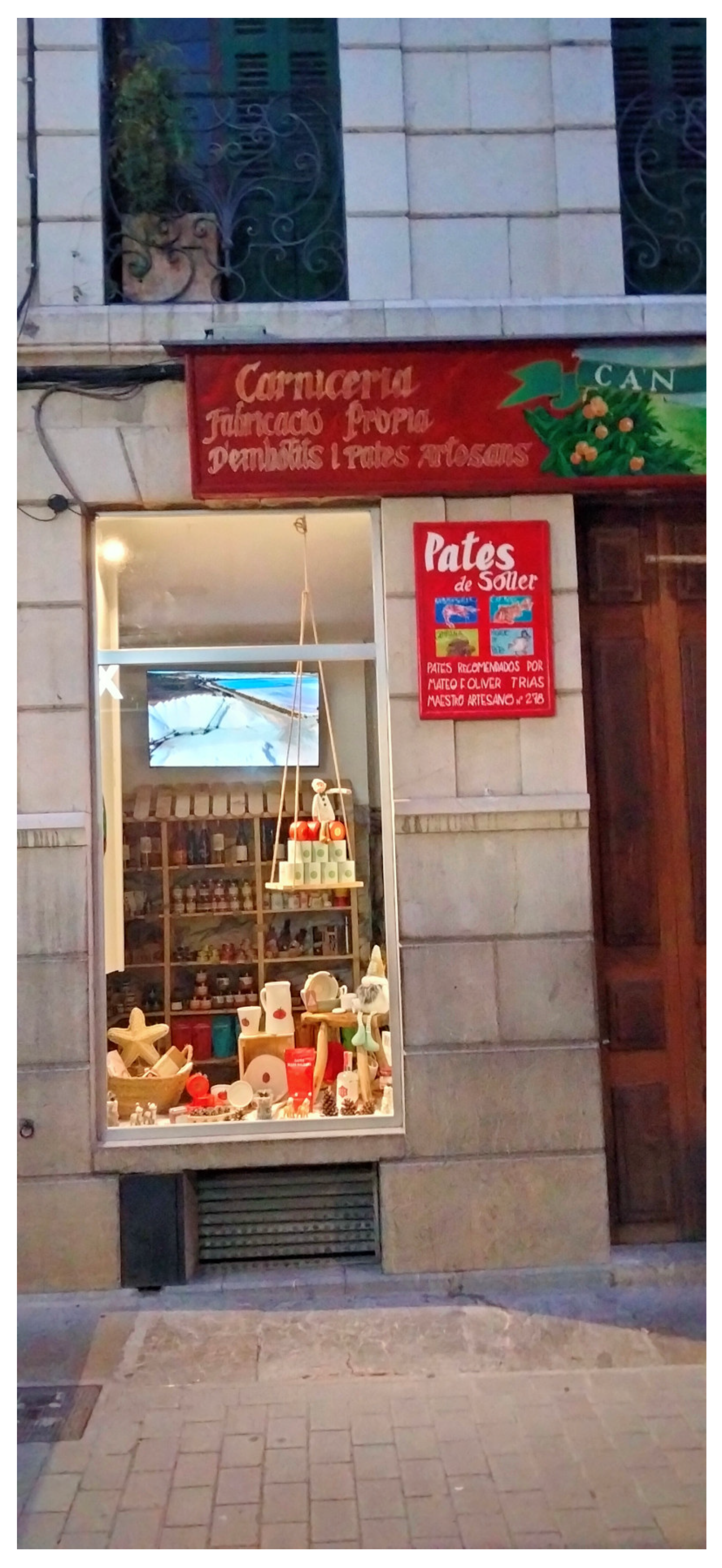
6] describes as the “touristification of retail,” where commercial spaces are reoriented toward symbolic and experiential consumption, often at the expense of utilitarian local services. Such a trend can be identified while regarding the signage of new businesses, which keep the old signs to attract customers’ attention, even though the product being sold is completely different (
Figure 6).
Theoretical implications of this case extend beyond the specifics of Sóller or Southern Europe. Commercial gentrification can be understood as a manifestation of what Smith [
11] termed the “rent gap,” where perceived underuse of urban space invites reinvestment and displacement. In tourist towns, this gap is widened not only by residential demand but also by the commodification of place itself [
53]. The resulting retail mutation represents a form of “spatial capital” accumulation, where urban space is optimized for exchange value rather than use value [
54]. This process is further amplified in the era of platform urbanism, where digital visibility (e.g., Google Street View and Airbnb) accelerates the valuation and turnover of commercial premises [
31,
42].
The findings from Sóller carry important implications for urban policy and planning in medium-sized tourist towns facing similar pressures. First, municipalities should consider the adoption of commercial mix regulations, which can help maintain functional diversity and curb the proliferation of mono-functional tourist retail [
24]. Second, fiscal and support instruments—such as reduced business rates for traditional or resident-serving shops, grants for facade preservation, or support for business succession—could enhance the resilience of local commerce against rising rents and speculative turnover. Third, strategic tourism planning should aim to decouple tourism growth from commercial displacement by promoting visitor dispersal beyond the historic core, encouraging product diversification (e.g., cultural, rural, or ecological tourism), and ensuring that tourism revenue supports rather than undermines local retail ecosystems [
23,
37]. Finally, participatory governance models that include residents, small business owners, and neighborhood associations in decision making can help ensure that commercial planning reflects local needs and preserves the socio-cultural functions of retail spaces. Without such interventions, medium-sized towns like Sóller risk becoming commercially homogenized enclaves, where tourism vitality comes at the expense of local livability and social cohesion [
55].
5. Conclusions
In conclusion, the results presented confirm the initial hypothesis and address the research objectives. This study demonstrates that commercial gentrification—driven by tourism—is not limited to major cities but also transforms medium-sized municipalities such as Sóller. The substitution of everyday, locally owned shops with tourism-oriented retail represents a shift toward a profit-driven urban economy, consolidating what can be termed the “touristification of commerce.” Data from 2012 to 2025 show a clear shift toward a tourism-driven economy, with highly tourist-oriented activities in Plaça Constitució and moderate-to-high tourist orientation on sa Lluna Street.
This shift directly aligns with the hypothesis by demonstrating that even in a medium-sized town, the “rent gap” and tourism demand drive the replacement of local-serving businesses with establishments catering to visitors. Such a change has tangible impacts on residents, who lose not only convenient shopping options but also socially embedded businesses that contribute to local identity and cohesion.
Regarding the research objectives, the results illustrate that retail change in the research area can be characterized as being in an “ongoing” stage, where regional emerging brands predominate. The specific mechanisms of displacement identified include the conversion of former residential ground floors into commercial spaces and the disappearance of idiosyncratic local shops. All those changes, including the seasonal closure of catering establishments during the winter months, confirm that the commercial fabric is being reoriented toward visitor consumption at the expense of local livability.
Methodologically, the combination of documentary analysis and GSV imagery proved effective for tracking retail change in contexts with limited official data, even if some bias must be acknowledged, and an improvement in terms of retail business identification should be enhanced. In that sense, the research walks provide an important insight for identifying shops and including them within the research categories. Regarding those categories, the nine-category classification could be too broad to capture the shift from resident-oriented to tourism-serving establishments, so a finer categorization would be needed in future investigations.
New lines of research should explore the temporal dynamics of business turnover, ownership transitions (particularly the rise of foreign investors), and the role of short-term rental platforms in reshaping retail demand. Moreover, structured interviews with stakeholders and owners could further improve the knowledge regarding the impacts faced both by local inhabitants and by shop owners when gentrification processes start affecting the city. Another research venue, related to the use of interviews, could analyze the retail shift and its effect on tourism, with two main questions to be answered: What do tourists prefer, gaining knowledge of the place’s culture and customs, or shopping in businesses with local ties? Meanwhile, do they prefer the security of well-known brands, even if they can find them in their homeland?
Additionally, comparative studies between Mediterranean and non-Mediterranean tourist towns could further illuminate how cultural, regulatory, and economic contexts moderate gentrification outcomes. A first step should expand this research to other municipalities of Mallorca, also affected by the tourism industry, in order to observe if the same process is affecting them, a shift towards a model that seeks to maximize profitability, even if this means increasing touristification and gentrification processes.