Article

Planning Resilient Territories Against Weather-Related Power Outages: Insights from Lombardia Region


1
Department of Architecture, Built Environment and Construction Engineering, Milano Politecnico, Piazza Leonardo Da Vinci 32, 20133 Milano, Italy
2
Lombardia Region (General Directorate of Safety and Civil Protection), Piazza Città di Lombardia 1, 20133 Milano, Italy
*
Author to whom correspondence should be addressed.
Urban Sci. 2026, 10(4), 186; https://doi.org/10.3390/urbansci10040186
Submission received: 12 December 2025 / Revised: 20 February 2026 / Accepted: 28 February 2026 / Published: 1 April 2026

Abstract

In response to worsening environmental challenges, ensuring the continuity of energy services during extreme weather events has become increasingly urgent. A proactive and coordinated approach is therefore required, encouraging cooperation among stakeholders to share knowledge, provide training, and adopt common strategies. Such an approach is intended to mitigate both direct and indirect impacts of power outages on territorial systems, while enhancing their ability to manage and promptly recover from disruptions, thereby reinforcing the protection and resilience of the energy sector infrastructures. Based on the experience gained with the Lombardia Region (Northern Italy), operational recommendations are proposed to strengthen territorial resilience and reduce power network vulnerabilities to weather-related power outages. These recommendations are elaborated in accordance with the current European and national regulatory frameworks on the topic and account for emerging exposure and vulnerability factors in Lombardia by explicitly addressing differences between mountain and plain areas. They provide local authorities with coordinated planning tools to manage blackout risks across all disaster phases, supporting risk prevention and preparedness, facilitating emergency management, and enabling the rapid restoration of normal conditions in territories potentially exposed and vulnerable to electrical blackouts.

1. Introduction

The power system constitutes a fundamental pillar of contemporary society. Even short interruptions can lead to operational disruptions, data loss, and significant economic impacts, underscoring the critical importance of uninterrupted electricity supply in maintaining modern social and economic functions. This strategic role became particularly evident during the COVID-19 pandemic, when reliance on continuous power for digital communication, remote work, administrative operations, and financial services intensified [1]. Currently, the risk of electrical blackouts is shaped by a complex interaction of multiple drivers spanning environmental, structural, and organizational dimensions. First of all, the rising frequency and intensity of extreme weather events associated with Climate Change (e.g., snowstorms, windstorms, floods, heatwaves) are increasingly driving adverse impacts on affected territories, including widespread power outages resulting from physical damage to energy infrastructure [2,3]. The high degree of interconnection among networked power services further amplifies these impacts, facilitating the cascading of disruptions across other critical systems, such as telecommunications and transport [4,5,6,7]. In addition to environmental stressors, network design and infrastructure characteristics—particularly the age and maintenance status of transmission and distribution lines—directly influence both the frequency and the duration of power outages [8]. Such vulnerability is heightened in contexts characterized by dense populations, concentrated industrial activity, and peak demand periods [9]. At the same time, operational and organizational dimensions (including utilities’ planning and response capabilities, grid management practices, and the degree of coordination among stakeholders) play a decisive role in shaping both the likelihood and the impact of blackout events [10]. Given the multiple dimensions involved in power blackouts, adopting a coordinated, proactive approach is currently essential for effective risk management, aiming to mitigate both direct and indirect impacts of power outages. Such an approach enhances the protection of power infrastructures and strengthens the capacity to foster stakeholder collaboration in comprehensive risk management and forward-looking planning. Furthermore, it promotes systematic knowledge exchange, a formulation of harmonized response strategies, and an efficient allocation and utilization of resources [11,12]. Despite the urgency of the issue, several gaps remain in implementing a coordinated, multi-level strategy framework that accounts for technical, organizational, and regulatory dimensions. In the coming years, EU Member States and their authorities will face significant challenges in implementing a unified strategy that defines strategic goals and policy actions to strengthen the resilience of critical entities across Europe. In this regard, urban and spatial planners are now encouraged to define measures and strategies to achieve disaster-resilience goals across multiple phases of action [13]. The present study addresses emerging gaps and normative requirements in this area by proposing operational guidelines to strengthen territorial resilience in the face of power blackouts associated with extreme weather phenomena, which can damage electricity networks and infrastructure, cause service interruptions, and hinder restoration operations. The study seeks to establish a comprehensive framework to reduce the impacts of power blackouts by integrating regulatory frameworks, emerging vulnerability factors, and local planning needs. It stems from a collaborative research project between Milano Politecnico (Department of Architecture, Built Environment and Construction Engineering) and the Lombardia Region (General Directorate for Territory and Civil Protection), aimed at developing guidelines to mitigate the risk of power blackouts in the region. In this context, the study actively engaged power stakeholders (i.e., operators, local authorities, and communities) to collect practical, evidence-based insights on enhancing the territorial resilience in the face of weather-related power outages.
The paper is structured as follows. Section 2 presents the study’s objectives and reviews the scientific background, identifying the main critical issues emerging from the literature. Drawing on these insights, Section 3 introduces an analytical framework to translate regulatory objectives into resilience-oriented planning measures. The Lombardia case study provides the spatial context for applying the framework. In this regard, Section 4 outlines the regulatory framework in force at the European and Italian level; Section 5 analyzes territorial specificities of the Lombardia region (Norther Italy), including hazard, exposure, and vulnerability factors, to identify its most vulnerable areas to blackout risk (Section 5.1) as well as the relevant stakeholders to be involved in the research (Section 5.2). Section 6 presents the integrated strategies and measures identified to mitigate blackout impacts across different spatial contexts, with particular attention to the distinction between mountain and plain areas. Section 7 concludes by summarizing the main findings and outlining directions for future research.

2. Rationale and Research Background

The main goal of this study is to provide guidelines to support local authorities, grid operators, and other stakeholders in implementing coordinated strategies and actions for civil protection purposes, strengthening territorial capacities to withstand, absorb, and recover from disruptive weather-related power outages. To address this, the present research considers the key issues and barriers currently identified in the literature by several experts from different disciplines through critical literature reviews [14,15,16,17,18,19,20,21,22]. First, these studies reveal that the field is largely constrained by inconsistent terminology, particularly regarding the concept of resilience [14,15,21]. From an engineering perspective, power system resilience primarily emerges as a key paradigm that is structured around three core criteria: (1) reducing the probability of failures, (2) mitigating their consequences, and (3) minimizing the recovery time required to restore services [17,20,23]. These criteria are further operationalized through four key attributes: (i) robustness, referring to resistance to functional degradation; (ii) redundancy, ensuring continuity under stress; (iii) resourcefulness, encompassing effective detection and response to disruptions; and (iv) rapidity, denoting the swift restoration of services to prevent broader systemic impacts [16,18]. Nowadays, it is ever more evident that power systems both support and are influenced by social and economic processes: while power outages affect daily life and economic performance, human, organizational, and institutional dynamics shape the system’s ability to anticipate, withstand, respond to, and recover from disturbances [16,24]. As a consequence, resilience must extend beyond a purely technical domain and requires a holistic understanding of the socio-technical environment in which power systems operate [25,26]. More recently, the concept of territorial resilience has gained prominence as an additional dimension, emphasizing the capacity of systems to anticipate, withstand, and recover from disruptions [17,19,27]. This encompasses social preparedness, continuity of critical services, and coordinated stakeholder engagement [28]. Nevertheless, the most recent approaches overlook interactions with social systems and governance, while existing guidelines are generic and insufficiently tailored to local contexts, thereby limiting their effectiveness. In fact, practical toolkits are scarce, stakeholder engagement is limited, and management is often reactive rather than proactive [14]. In many urban contexts, especially in developing countries, residents and local systems are often left to adapt autonomously to frequent power outages, revealing gaps in formal resilience governance [29,30]. In contrast, emerging evidence indicates that incorporating power resilience and blackout preparedness into policy instruments such as Sustainable Energy and Climate Action Plans (SECAPs) can significantly enhance local adaptive capacity [31]. This challenge is exacerbated by the predominance of sector-specific studies, which perpetuate fragmentation between spatial planning and energy sectors and limit the development of integrated, cross-sectoral resilience strategies [22]. Moreover, the lack of detailed spatial and infrastructural data, coupled with limited modelling capacity, hinders the simulation of blackout scenarios and the assessment of cascading failures across critical urban systems [7,20,21,32]. Regulatory frameworks often fail to mandate the incorporation of power resilience measures—such as distributed generation, microgrids, or backup systems—into urban plans or emergency protocols, leaving many urban territories exposed to systemic vulnerabilities [30].
Addressing these gaps requires adopting a comprehensive approach that standardizes terminology, integrates technical and social perspectives, and accounts for diverse environmental contexts. Accordingly, the following section introduces an analytical framework designed to enhance territorial resilience to weather-related power outages by aligning spatial planning and power infrastructure management.

3. Methodology

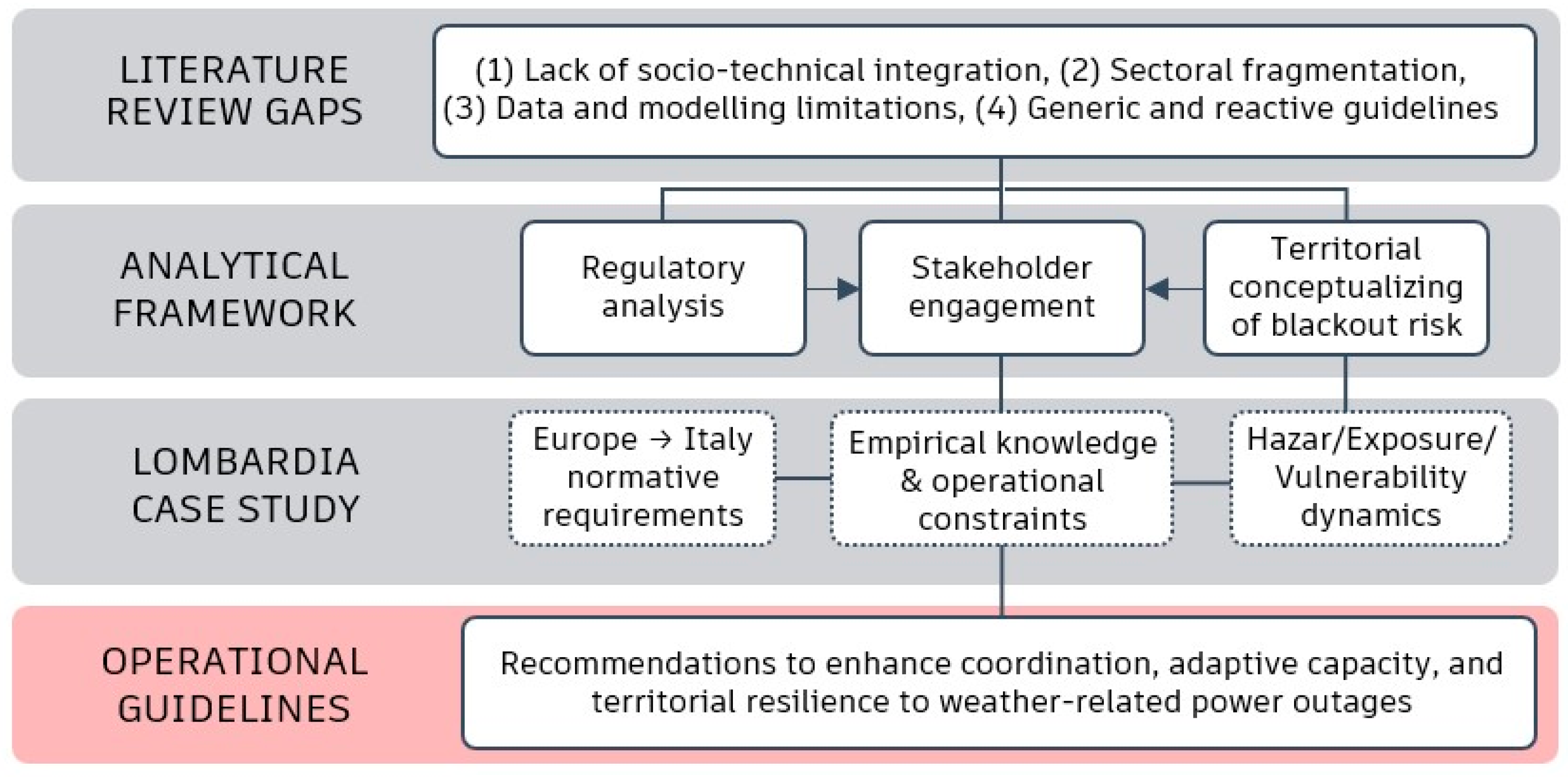
In the context of blackout risk management, adopting a spatial perspective is relevant, given the strong connection between power infrastructure and urbanization, as the vulnerability of critical infrastructure is determined not only by its inherent characteristics but also by its interactions with the surrounding built environment [29]. The research reframes the management of weather-related power blackout risk as a territorial resilience challenge, considering it as a context-dependent, territorially embedded process. Regulatory requirements are considered analytical inputs rather than prescriptive solutions, while the main contribution of the study lies in integrating these mandates with spatially explicit analyses and stakeholder engagement to inform resilience-oriented planning. The proposed framework (Figure 1) is structured around interrelated pillars.
  • REGULATORY AND CONCEPTUAL FRAMING based on a review of the scientific literature and relevant regulatory frameworks (from global to local scale) on power system resilience, Climate Change Adaptation, and Disaster Risk Reduction, identifies key principles/goals and normative requirements influencing the mitigation and management of weather-related power outages, underpinning the overall analytical framework.
  • TERRITORIAL CHARACTERIZATION conceptualizing blackout risk as the result of interactions between territorial conditions, hazard dynamics, and infrastructure characteristics, to differentiate resilience conditions across territorial contexts, thereby informing targeted planning and risk mitigation strategies. This involves several operational steps: i) analyzing hazard dynamics and local vulnerability factors; ii) mapping territorial and infrastructural assets to identify their exposure; iii) integrating these insights to locate critical areas and infrastructures.
  • STAKEHOLDER ENGAGEMENT, adopting a participatory and interpretive approach, complements regulatory and territorial analyses by involving diverse actors to gather experiential knowledge, institutional perspectives, and operational constraints related to electricity system management and emergency response, thereby supporting the co-production of strategic orientations, guidelines, and operational tools to enhance coordination, adaptive capacity, and territorial resilience to weather-related power outages.
Figure 1. Main analytical steps of the conceptual framework.
Urbansci 10 00186 g001
The Lombardia case study provides practical validation of this analytical framework, highlighting not only its potential for transferability but also the actionable recommendations it generates for resilience planning and offering an effective model for other contexts. The following sections aim to characterize the analytical steps: regulatory analysis ensures that strategies remain coherent with institutional and policy requirements (Section 4), while spatial assessments identify localized vulnerabilities and risk patterns (Section 5). Engaging local stakeholders, system operators, and authorities further incorporates experiential knowledge, operational constraints, and coping strategies embedded in the territory (Section 6).

4. Key Requirements for Enhancing Territorial Resilience to Power Outages

In recent years, key international policy frameworks, such as the Sendai Framework for Disaster Risk Reduction, the New Urban Agenda, and the Green Deal [33,34,35], have emphasized the need to embed power infrastructure resilience objectives within strategic spatial and planning instruments. These global agendas underscore the importance of institutional coordination and proactive preparedness, advocating for approaches that integrate the continuity of energy services as a core dimension of sustainable urban development. In Europe, this process has been supported by a comprehensive regulatory framework that promotes the integration of resilience objectives across multiple governance levels and offers a shared basis for strengthening the robustness, redundancy, resourcefulness, and rapidity of critical infrastructures [36,37]. This approach stands in contrast to international models, particularly those of the United States and China: while international strategies often rely on voluntary guidelines, standards (i.e., ISO 22301 [38] for business continuity, ISO 50001 [39] for energy management) or sector-specific frameworks (i.e., NIST Cybersecurity Framework in the USA), the European Union adopts a regulatory, prevention-oriented, and legally binding approach [40]. The EU framework also integrates cybersecurity, physical infrastructure protection, and disaster preparedness into coordinated, multi-level governance, promoting territorial resilience, cross-sectoral planning, and systemic integration. Then, social and cooperative dimensions (i.e., education programs, early warning systems, and data-sharing platforms) are institutionally embedded, enhancing community-based resilience [41]. The following sections offer a detailed analysis of the key requirements of the European approach, with a focus on their implementation in the Italian context.

4.1. From Critical Infrastructure Protection to Critical Entities Resilience in the Power Sector

Over time, EU-level policies have evolved significantly, playing a pivotal role in standardizing terminology and conceptual definitions. This evolution has established a common language for the identification, classification, and management of critical entities across EU Member States. The European Commission initially defined Critical Infrastructures (CIs) in Directive 2008/114/EC as assets or systems that are essential for the maintenance of vital societal functions [42]. The more recent Directive on the Resilience of Critical Entities (CER) (2022/2557) [37] shifts the focus from individual assets to the entities responsible for providing essential services, emphasizing that any disruption or failure of these entities can substantially hinder service delivery (art. 6). It draws significantly on the logic and mechanisms established by several sector-specific regulations, for instance the (EU) 2019/941 [43] on risk preparedness in the electricity sector that had already introduced several key principles underpinning the CER framework, such as: (1) a risk-based approach; (2) cross-border cooperation; (3) a formal information-sharing mechanism (both between competent authorities and with system operators); and (4) operator responsibilities. Compared to its predecessor, it is evident that the CER Directive represents a shift from a protection paradigm to a resilience paradigm, advocating a systemic perspective that acknowledges the potential for cascading failures and domino effects (including those triggered by climate change) that extend beyond national boundaries [44,45,46]. Building on this perspective, the European Commission has recently defined strategic goals to strengthen disaster resilience across critical sectors (2023/C56/01) [47]. Together with the CER Directive, the five Disaster Resilience Goals offer a coherent and structured approach to managing risks to Critical Infrastructures and ensuring the continuity of essential services [48]. As shown in Table 1, their alignment encompasses the full cycle of Disaster Risk Management (DRM), also according to the conceptual resilience framework associated with an event [14]:
  • In the prevention phase, the power system must be robust enough to withstand the initial impact before the occurrence of a disruptive event. This involves conducting regular risk assessments and scenario analyses to address multi-sectoral and cross-border threats (Row 1 of Table 1).
  • In the preparedness phase, a well-designed and managed system should possess sufficient resilience to handle a wide range of contingencies. Operational preparedness is critical, as it equips operators with the tools to configure the system in a resilient state. In this context, critical entities are required to develop resilience plans, conduct training exercises, and foster awareness among operators and authorities, including through secure, interoperable information exchange. Such measures enhance early warning capabilities and enable timely, coordinated responses to emerging hazards (Rows 2 and 3 of Table 1).
  • In the response phase, resilience relies on resourcefulness, redundancy, and adaptive self-organization, which are needed to manage evolving conditions (often unprecedented) and mitigate the impacts of the event. Promoting operational continuity and inter-sectoral cooperation is essential to support rapid and effective crisis management (Row 4 of Table 1).
  • In the recovery phase, the system enters a restorative phase, where it must demonstrate the capacity to recover quickly and reestablish resilient operation, in line with the objectives of the EU Civil Protection Mechanism. Post-event requirements, including business continuity and performance evaluation, contribute to long-term resilience by enabling continuous learning, adaptation, and improvement (Row 5 of Table 1).

In the coming years, EU Member States are expected to integrate these principles into their national strategic plans, where resilience must be understood through two fundamental dimensions: (1) adaptation, the capacity to change, enabling the system and its components to withstand new stress conditions better and absorb potential disturbances; and (2) restoration, the ability to return to normal operational conditions following a period of disruption [49,50].
Table 1. DRM cycle alignment with CER Directive and Disaster Resilience Goals.
DRM
Phase
Disaster Resilience Goal (2023/C56/01)CER Directive
(2022/2557)
ObjectiveActions
Prevention1—AnticipateRegular risk assessment and scenario planning to address multi-sectoral and cross-border risks (art.6–7)Minimize the likelihood of negative impacts resulting from extreme weather events.Risk scenario and impact analysis, network vulnerability mapping
Readiness2—PrepareResilience plans, training, and exercises (art. 10–12)Enhance the capacity to forecast and monitor the power network under extreme meteorological conditionsTraining programs, collaboration protocols with Civil Protection, and capacity building
3—AlertSecure and interoperable information flows between operators and authorities (art. 9)Integration of the alert system with smart grids and meteorological data, predictive dashboards for blackout risk management
Response4—RespondOperational continuity and inter-sectoral cooperation (art. 9)Enhance the capacity for planning and managing crisesCivil Protection plans
Recovery5—SecureBusiness continuity and post-event evaluation
(art. 13)
The ability of the electricity distribution network to quickly return to normal operating conditionsPost-event review and plan adaptation

4.2. Core Dimensions of Power Supply Service Management Within the Italian Context

In line with the current European regulatory framework (Section 4.1), Italy identifies power quality and system security (also known as reliability) as crucial aspects for ensuring the continuity of the power system [51]. The former concerns maintaining uninterrupted service and stable voltage; the latter, by contrast, concerns the network’s capacity to withstand sudden disturbances without exceeding operational limits. In addition to these core aspects, the concept of resilience has been formally integrated into the Italian regulatory framework since 2015, primarily driven by the efforts of the Italian Regulatory Authority for Energy, Networks and Environment (ARERA) to promote measures that reduce the impact of events leading to widespread and prolonged power outages (Resolution 646/2015/R/eel) [52]. According to the National Integrated Energy and Climate Plan (PNIEC) [53], ARERA requires grid operators to develop Resilience Plans with a minimum three-year horizon that outline strategies to strengthen the electricity distribution network and ensure continuity of service. These Resilience Plans must outline infrastructure upgrades, technological solutions, and measures to mitigate the impacts of extreme weather, while also ensuring coordinated action with institutional stakeholders—such as the Civil Protection Department, local authorities, and Prefectures—to enhance the effectiveness and efficiency of interventions aimed at reducing blackout risks (Resolution 126/2019/R/eel) [54]. To support resilience planning, the National Transmission Grid Operator (TERNA) developed a methodology to identify areas at highest risk of power blackouts due to adverse weather events and to define targeted measures for enhancing power-system resilience aimed at: (1) strengthening the network and mitigating weather impacts (prevention), (2) minimizing restoration times with emergency plans and specialized equipment (recovery) and (3) using advanced technologies to forecast critical weather conditions and enable timely preventive and corrective actions (monitoring) [55]. Such an operational approach supports the implementation of the National Risk Preparedness Plan by establishing coordinated measures and clarifying institutional responsibilities among national authorities, local administrations, and power system operators to safeguard critical energy infrastructures [43]. However, achieving effective national-level coordination in power blackout risk mitigation remains challenging due to the multiplicity of stakeholders, regional disparities, and the need to anticipate and manage cascading failures across interdependent critical systems. Additional challenges include integrating potential crisis scenarios into operational plans and ensuring timely access to reliable real-time data on grid status, infrastructure damage, and critical loads to support informed decision-making [56]. In the Italian context, the National Civil Protection system is intended to fulfil this role by framing coordinated strategies and actions to mitigate negative impacts and support territories before, during, and after hazardous events [57]. Compared with the past, when the Civil Protection system focused primarily on organizing resources and operational procedures during the emergency phase, the current approach assigns a more proactive and integrated role to a broad spectrum of public authorities and stakeholders involved in DRM across different territorial scales, according to their competencies [58]. In practice, however, only a limited number of local or regional plans explicitly consider scenarios involving widespread power outages or interruptions of essential services. In small and medium-sized municipalities, emergency planning often remains focused on traditional hazards such as floods, earthquakes, and landslides, without systematically integrating multi-infrastructure crises affecting energy, water, communications, and health services. When blackout risks are addressed, planning tends to be partial and reactive: municipal plans may identify vulnerable users (e.g., patients dependent on medical devices) or critical services, but rarely provide comprehensive, multi-infrastructure contingency strategies. Furthermore, the highly decentralized nature of civil protection planning—where each municipality prepares its plan independently, often relying on local technical staff and without mandatory reporting to national authorities—results in uneven coverage and variable quality nationwide [59]. The Lombardia region (Northern Italy) exemplifies fragmented planning and limited coordinated preparedness for large-scale power outages, serving as a testing ground for innovative blackout risk management methods. This initiative aims to address local authorities’ and grid operators’ practical challenges by fostering understanding of the electricity system under stress and strengthening coordination during failures. Building on such research experience, the following sections summarize key findings and offer recommendations to reduce blackout risks and support civil protection planning.

5. Case Study: Lombardia Region Initiative on Power Blackout Risk Mitigation

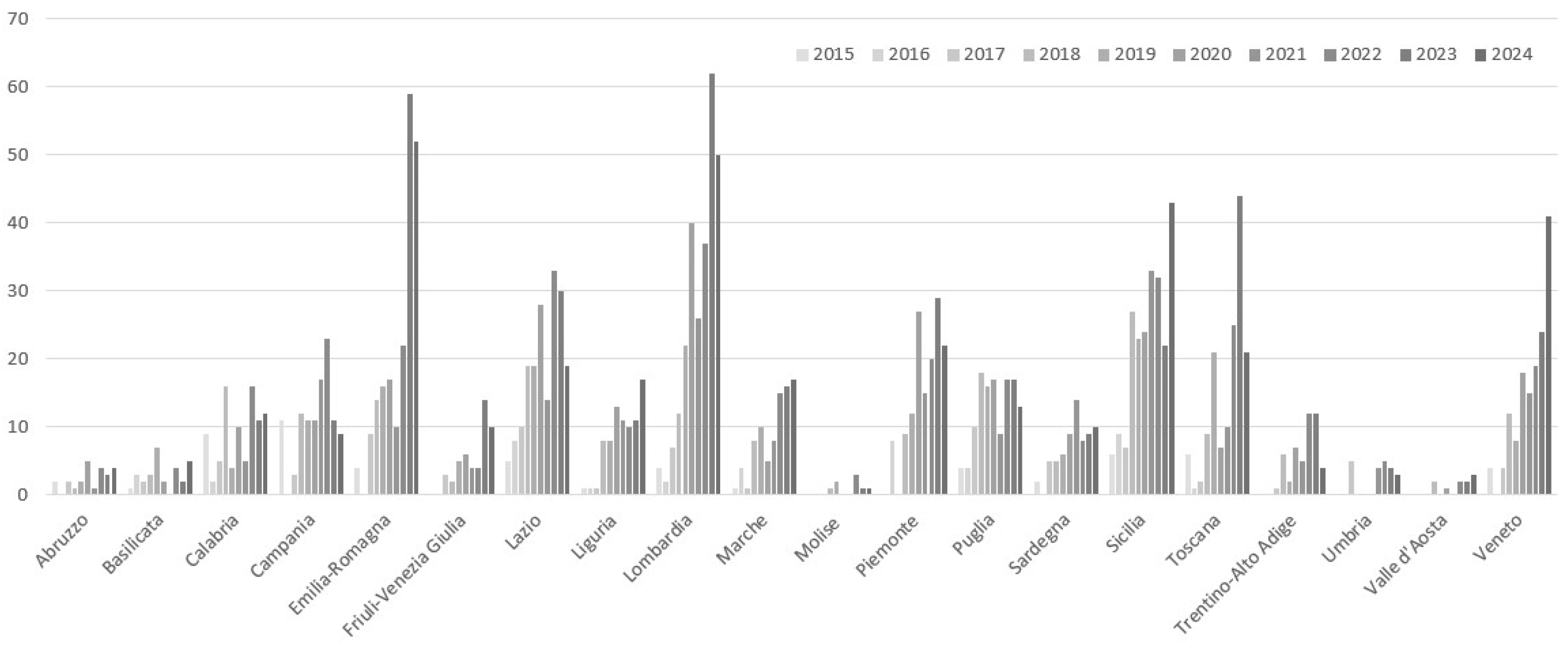
Lombardia represents one of the most densely populated and industrialized regions in Northern Italy, subject to extreme climatic events that frequently escalate the risk of blackouts. Climate data from the Legambiente Osservatorio Città Clima [60] show that Lombardia has the highest cumulative number of weather-climate events during 2015–2024, with 262 cases, including floods, winds, droughts, and fluvial overflows, indicating persistent hazard pressure on regional infrastructure. Its trajectory shows a marked escalation after 2019, with particularly high peaks in 2022–2024, highlighting a stronger and more persistent exposure compared with other highly affected regions such as Emilia-Romagna and Sicilia (Figure 2).
In 2022, the General Directorate for Territory and Civil Protection of the Lombardia Region established a formal collaboration with Politecnico di Milano (Department of Architecture, Built Environment and Construction Engineering) to mitigate the impacts of power outages caused by extreme climatic and environmental events. In line with the proposed analytical framework (Section 3), the initiative combined research, operational expertise, and local governance process to: identify climate hazards affecting power networks (see Section 5.1); engage local authorities and Distribution System Operators (DSOs) to ensure practical implementation and coordination (see Section 5.2); and develop tailored mitigation recommendations for vulnerable areas, in mountain and plain contexts (see Section 6). Below, the main results emerging from the collaboration activity are presented.

5.1. Climate Hazards Behind Power Outages in Mountain and Plain Areas

To evaluate how meteorological and climate events influence electricity blackouts in Lombardia, a multi-source approach combining regulatory data, utility records, and weather information is necessary. Although the current analysis does not formally establish a statistical link between extreme weather, blackouts, and territorial vulnerability, it offers a detailed overview of risk factors in mountain and lowland regions. This highlights existing patterns and vulnerabilities specific to each area. To further reinforce these insights, all findings have been qualitatively validated through stakeholder engagement, ensuring their relevance and usefulness for resilience planning.
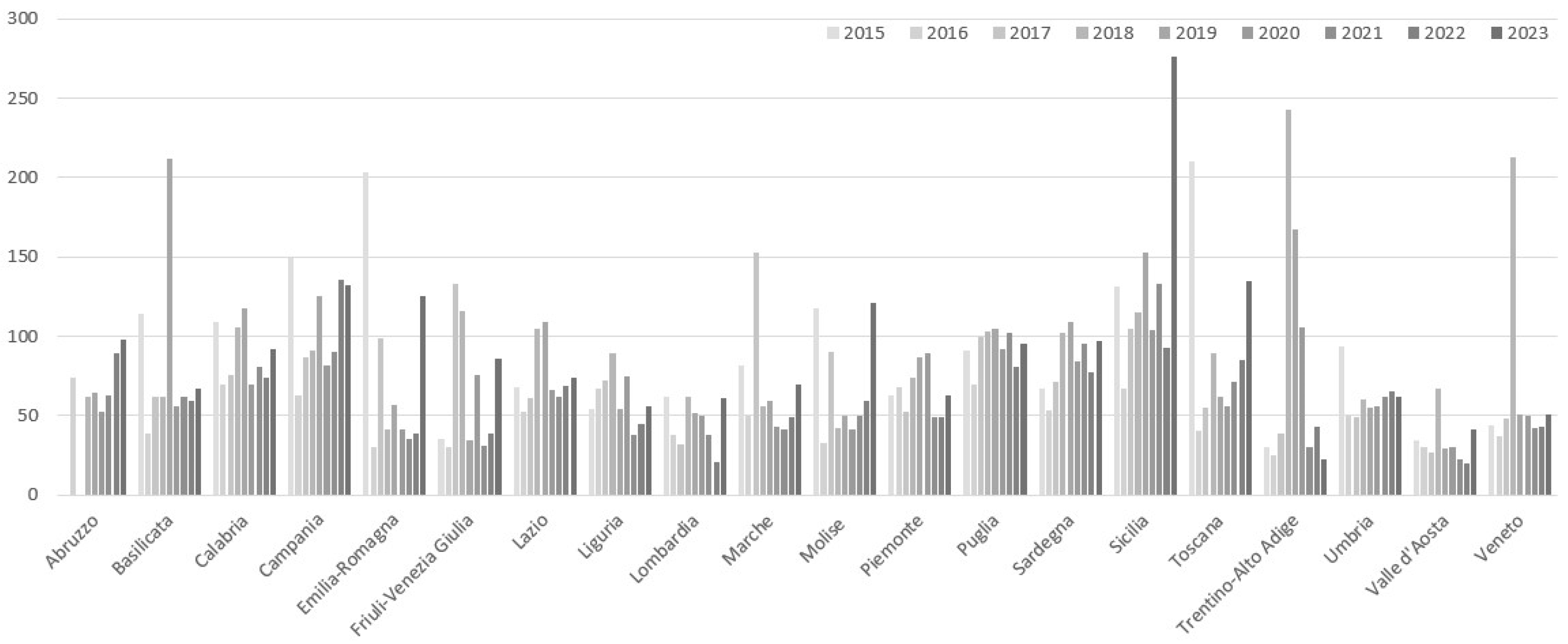
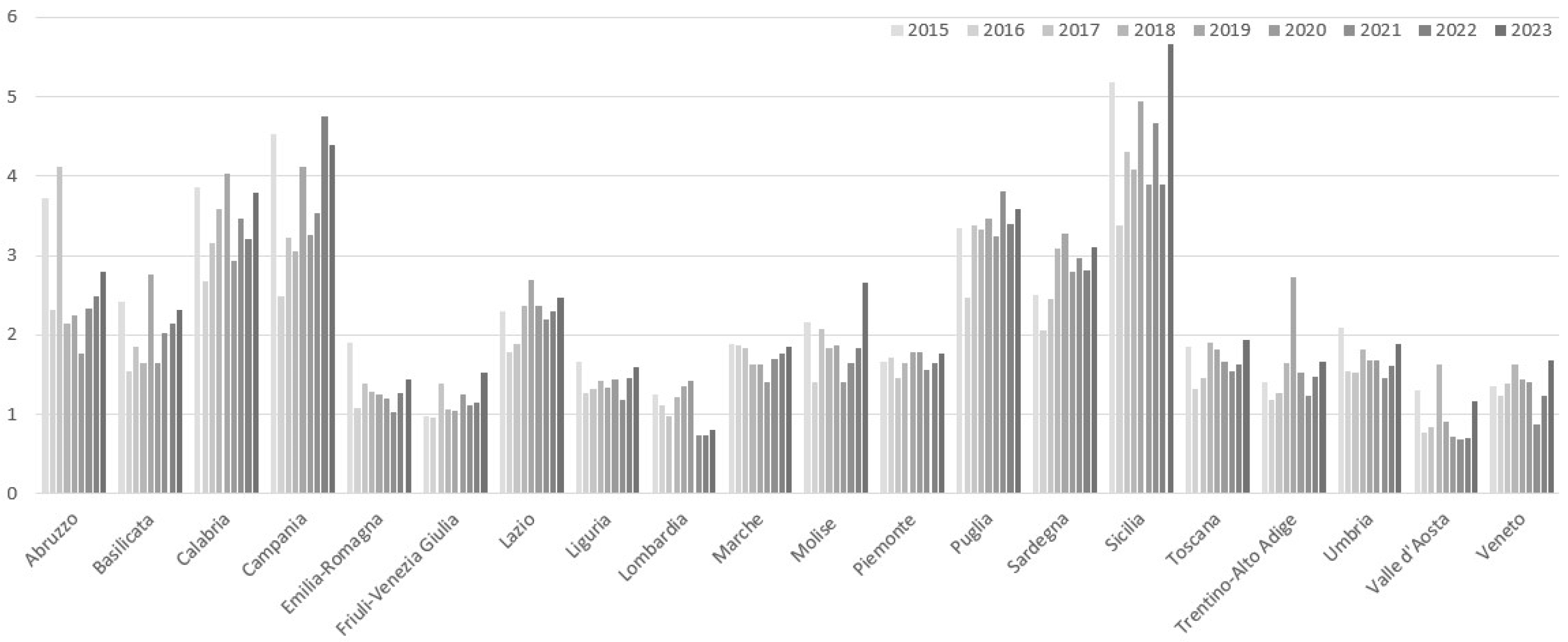
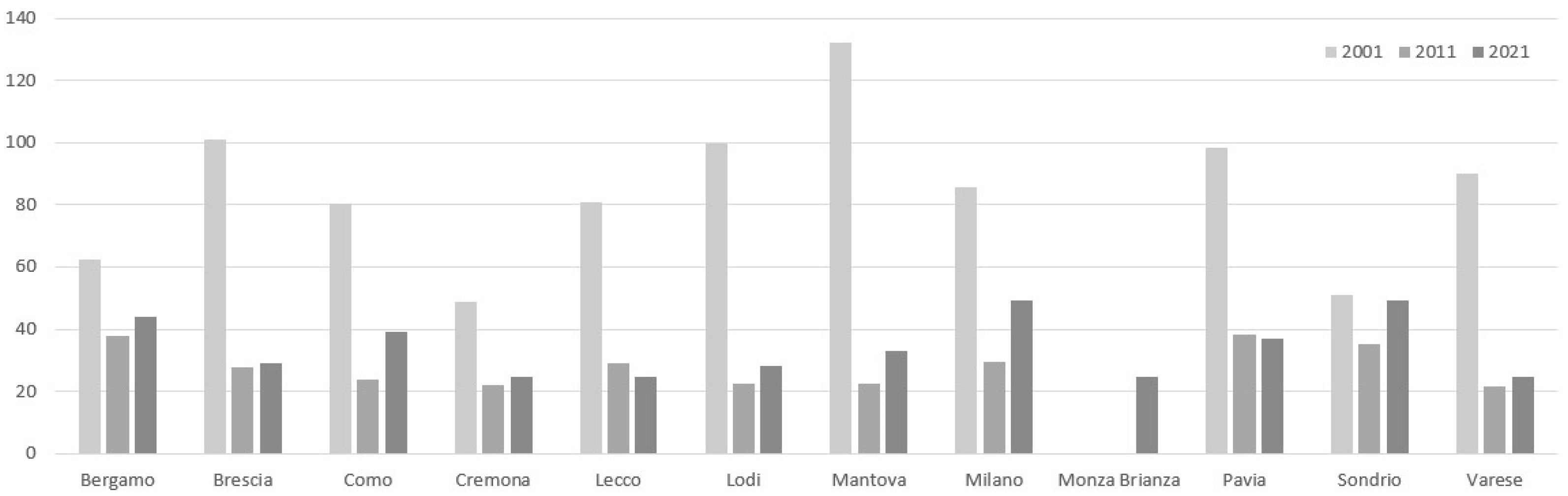
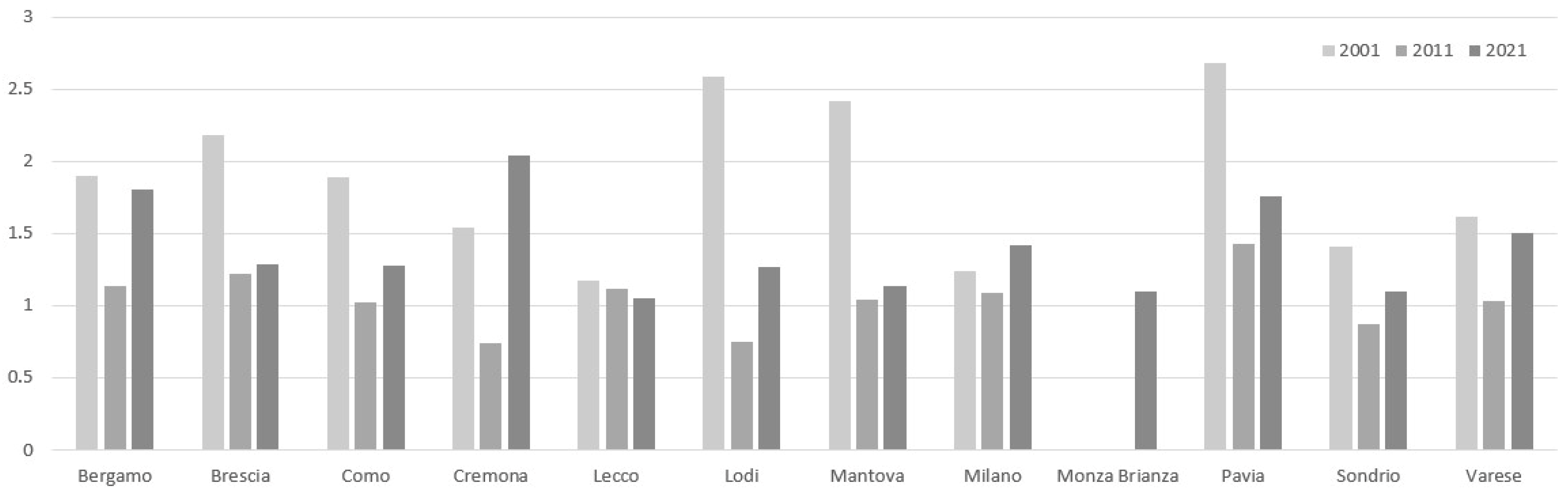
The Italian Regulatory Authority for Energy, Networks and Environment (ARERA) [61] publishes structured datasets on electricity service continuity, which serve as the primary official source for outage analysis. Key indicators include: (i) number and duration of unplanned interruptions, distinguished between short and long events; and (ii) geographical disaggregation at national, regional and provincial levels. Moreover, ARERA datasets allow filtering by: (iii) cause category (e.g., force majeure/external causes, operational causes), (iv) network type (overhead vs. underground), and (v) customer density (urban vs. rural areas). Events classified as force majeure/external causes represent the best proxy for climate- and weather-induced disruptions (e.g., storms, wind, heatwaves, snow, flooding, lightning). Focusing specifically on the long unplanned interruptions (lasting more than three minutes), the ARERA data analysis demonstrates that Lombardia consistently performs better than the national average. The temporal trend shows: (1) a low absolute durations relative to the majority of Italian regions: the typical range for Lombardia was approximately 30–60 min per user, whereas several regions (particularly Sicilia, Toscana, Campania and Basilicata) often registered durations exceeding 100 min, and in some years well above 200 min; and (2) a limited volatility across years (unlike regions such as Trentino-Alto Adige or Veneto, which exhibited large spikes in certain years) (Figure 3). Moreover, over the 2015–2023 period, Lombardia exhibits one of the lowest frequencies of long unplanned interruptions per low-voltage (BT) customer in Italy (Figure 4): it outperforms most Italian regions, especially in the Centre and South like Sicilia, Campania, Calabria, and Puglia, where interruption rates are 2–4 times higher. Compared to other Northern regions like Piemonte, Veneto, and Emilia-Romagna, Lombardia has lower interruption rates and less variability.
At the provincial level, territorial differences persist. Considering the temporal trend from 2001 to 2021, all provinces recorded a decrease in cumulative interruption duration (Figure 5). Bergamo, meanwhile, stands out as the province with the longest cumulative duration of lengthy interruptions. Cremona and Milan emerged as provinces with the largest increase in the number of long unplanned interruptions (Figure 6).
A more detailed attribution of outages caused by meteorological hazards can be obtained from the Resilience Plans submitted by Distribution System Operators (DSOs), which also include interruption registers. An examination of these plans indicates that Lombardia’s diverse geographical features influence its susceptibility to electricity-related vulnerabilities system: from the Alpine and pre-Alpine areas in the north to the Po Valley plain in the south, each part of the region faces different weather-related risks [62,63]. In mountain areas (e.g., in Sondrio, Bergamo, Brescia, Lecco, Como, and Varese), winter poses major challenges to the electricity grid. Heavy snow and ice overload lines, causing sagging or breakage. Strong winds increase faults and damage lines directly. These events often occur with heavy rain, flooding, or unstable slopes. Landslides and debris flows, triggered by rain or melting snow, damage pylons or block roads, delaying repairs. Snow, wind, falling trees, and landslides create interconnected risks: they damage lines and hinder emergency access. This is especially critical in remote mountain valleys with limited routes. In lowland areas (e.g., Milan, Monza Brianza, Lodi, Pavia, Cremona, and Mantua), a large share of the power network is underground; consequently, prolonged and increasingly frequent summer heatwaves—often accompanied by drought and very high daytime temperatures—make the system particularly vulnerable. Reduced cooling capacity of underground cables increases fault risks and the likelihood of multiple failures, while heatwaves simultaneously drive up electricity demand due to air conditioning. Persistently high nighttime temperatures further hinder heat dissipation, intensifying overall thermal stress on the network. Lowland areas are also exposed to significant flood risks. In Milan, intense rainfall can overwhelm drainage systems, inundate urban districts, and cause the Seveso and Lambro rivers to overflow, disrupting critical infrastructure. Similarly, in Cremona and Mantua, flooding of the Po River and its tributaries can damage substations and underground power networks.

5.2. Evidence from Stakeholder Engagement

To collect practice-based evidence on blackout risk management, the study involved several electricity network entities operating in Lombardia (i.e., e-distribuzione, Enel, Unareti, ACSM AGAM, LD Reti) and at the national level (i.e., Terna). The stakeholder engagement process was built on earlier regional efforts in blackout prevention and critical infrastructure protection, initiated in 2017 and paused two years later due to COVID-19. Over one year, four online meetings were conducted to develop a comprehensive framework to improve understanding and inform planning activities to mitigate the risk of electrical blackouts in Lombardia region. The stakeholder engagement has led to the identification of two case studies, namely the Valle Brembana and the Milan metropolitan area, which serve as representative cases for analyzing the phenomenon in specific contexts, namely mountain and plain contexts, respectively. The findings were cross-checked against datasets on electricity service continuity provided by ARERA (Section 5.1), as Distribution System Operators are required to annually report performance data on outages, service interruptions, and reliability indicators. Moreover, event reports and technical documentation shared by operators were examined to reconstruct the dynamics of specific disruption episodes, including severe weather events and heatwave-related failures. These reports provided detailed insights into failure mechanisms, restoration timelines, and operational constraints. All the outcomes (Table 2) have been synthesized across four risk dimensions:
  • Hazard drivers—In Valle Brembana, hazard drivers are primarily natural and climate-related, including heavy snowfall, intense rainfall, and falling trees. In the Milan metropolitan area, hazard drivers are also climate-related but manifest differently, notably through extreme rainfall events leading to flooding (e.g., 15 May 2020) and heatwaves that stress the network during peak demand periods.
  • Exposed assets—In Valle Brembana, exposed assets include overhead lines crossing forested areas and critical access routes necessary for restoration activities. In contrast, in Milan, exposure primarily concerns underground substations, basements, and medium-voltage joints embedded within a dense urban infrastructure. The spatial configuration of assets (dispersed and terrain-dependent in Valle Brembana versus concentrated and underground in Milan) shapes the nature of risk.
  • Physical and systemic vulnerabilities—Physical vulnerabilities in Valle Brembana stem from forest proximity, difficult terrain, and limited accessibility, all of which increase outage duration and complicate repairs. In Milan, vulnerabilities relate more to infrastructure aging, flood sensitivity of underground components, recurrent joint failures during heatwaves, limited remote monitoring capacity, and dependence on inter-agency coordination during emergencies. Here, systemic vulnerabilities are more closely tied to operational complexity and coordination requirements in a dense urban setting.
  • Resilience measures—Resilience strategies in Valle Brembana are largely anticipatory and spatially oriented, including forest monitoring, pre-identification of staging areas for mobile generators, assessment of route accessibility, mapping of priority users, and the use of historical and spatial data for planning. In Milan, resilience measures are more embedded in regulatory and operational frameworks, relying on systematic outage data analysis, spatial risk mapping, prioritization of interventions according to ARERA and Terna guidelines, PESSE procedures, and targeted operational planning for flood- and heat-prone areas.
Table 2. Evidence collected on blackout risk drivers and resilience solutions.
Area of Study
(Location & DSO)
Main CriticalitiesImplemented Solutions
Valle Brembana
(Bergamo province)
e-distribuzione
  • Exposure to severe weather like heavy snow, extreme rain, and falling trees.
  • Network vulnerability due to forests and tough terrain raises outage and repair times.
  • Access issues along key routes during bad weather delay restoration.
  • Monitor critical forests to reduce outages.
  • Pre-identify staging areas for mobile generators for supply.
  • Assess accessibility of key routes for emergencies.
  • Map priority users for targeted restoration.
  • Use historical data, spatial analyses, and local coordination for prevention and recovery.
Milan
(metropolitan area)
UNARETI
  • Flooding of underground substations and basements during heavy rainfall (e.g., 15 May 2020).
  • Recurrent failures in medium-voltage joints during heatwaves, especially during peak demand, affect network reliability.
  • Limited remote monitoring delays fault detection and repair.
  • Dependence on emergency services coordination can slow recovery during floods.
  • Systematic use of historical outage data and spatial risk mapping supports preparedness and planning.
  • Interventions are prioritized based on regulatory frameworks (ARERA/TERNA) and PESSE procedures.
  • Operational planning targets heatwave stress and flood-prone network areas.

6. Coordinated Actions to Support Civil Protection Activity in Blackout Risk Mitigation

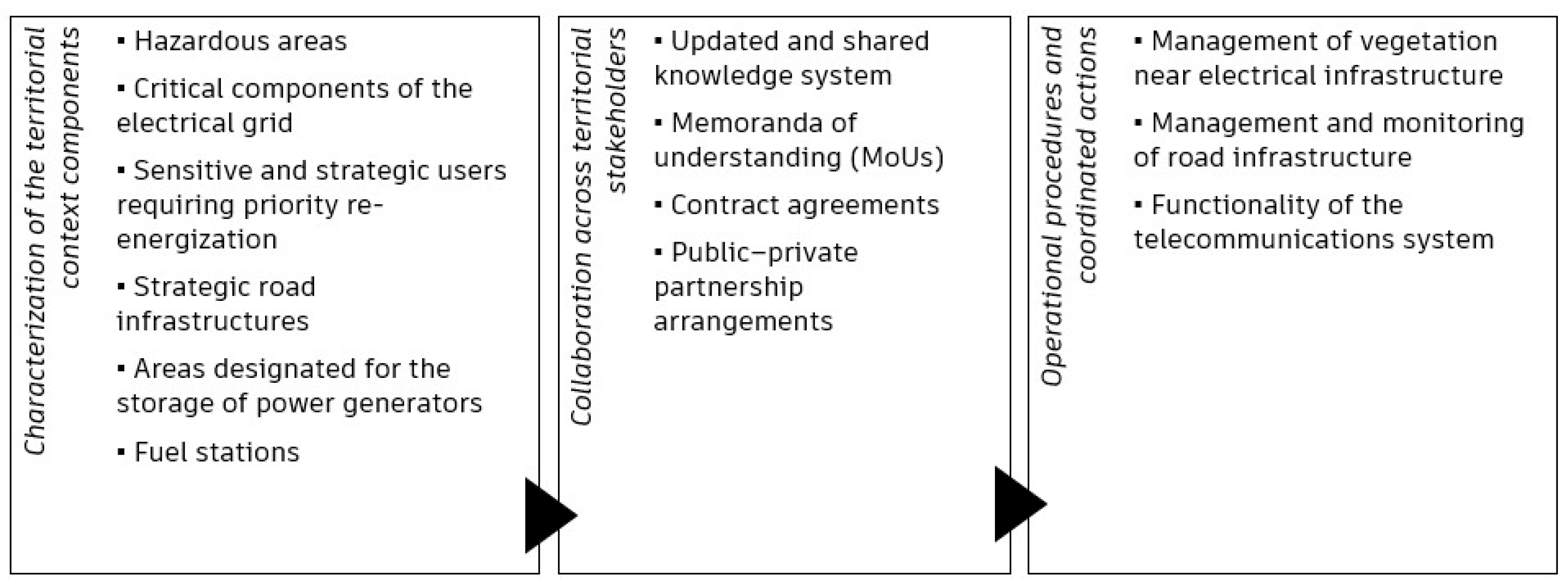
Within the collaborative experience with the Lombardia Region, knowledge-sharing activities with territorial stakeholders enabled also the identification of a set of strategic measures to enhance the resilience of territories against weather-related power outages. Some of these measures are explicitly tailored to mountain or plains contexts, while others apply to both. In line with current European and Italian regulations (see Section 3), they are organized according to the temporal scale of intervention (preparatory, preventive, response/recovery). The result consists of a catalogue of recommendations that provides operational guidance for managing blackout risk and consolidates the knowledge needed to reduce the territorial impacts of electrical blackouts. This includes identifying coordinated procedures and actions among the various territorial stakeholders involved in the different phases of blackout risk management, as illustrated in Figure 7. The recommendations aim to support civil protection authorities in planning for blackout risks. They are relevant to both the Framework Plan, which compiles information on power assets, their locations, hazard levels, and records of past events, and the Operational Plan, which defines risk scenarios and outlines procedures for alert, emergency response, post-emergency actions, and monitoring [64].

6.1. Preparedness Actions

Preparedness actions are designed to enhance the ability to predict and monitor the network under extreme weather conditions and to support the implementation of preventive solutions to reduce restoration times. These measures encompass the identification of areas susceptible to blackout events, considering hazard levels, exposure, and vulnerability, both for the various components of the electrical system (such as lines and primary/secondary substations, whether overhead or underground) and for strategic or sensitive facilities whose operability is crucial during emergencies. Choosing a suitable spatial scale of analysis should consider the potential impact of a power outage, such as the users affected.
  • Mapping hazardous areas based on the likelihood of potentially harmful events that could impact the territory, including the possibility of multiple events co-occurring (multi-hazard). In mountain regions, hazardous conditions to consider are: i) heavy snowfall and windstorms, which can affect overhead lines and/or external electrical substations due to ice buildup; ii) falling tall trees or branches, limiting access in case of road system disruptions; and iii) wildfires in areas with dense forests or vegetation. In plain regions, hazardous conditions include heat waves and flooding caused by very intense rainfall over short periods (commonly called “cloudbursts”). In this context, wildfire risk should be assessed along with heatwave and drought conditions. Local authorities and power operators prioritize actions to share knowledge and provide information on the most critical areas (Table 3).
  • Mapping critical components of the electrical network (overhead or underground lines and primary/secondary substations) to gather and share information about their exposure to heavy snowfall and/or strong winds, including damage caused by falling trees (in mountain areas) and heat waves and flooding (in plain areas), which could lead to road system disruptions and decreased accessibility (Table 4).
  • Mapping critical users and assets to prioritize power restoration, including human presence (e.g., urban and rural settlements), public health facilities (related to water supply, electricity, etc.), transportation infrastructure (such as roads, airports, and railroads), and environmental resources (Table 5).

6.2. Prevention Actions

Preventive measures aim to reduce risks from extreme weather and strengthen the resilience of power infrastructure, thereby lowering the likelihood of service outages. This is especially important in vegetation management near electrical lines, where falling trees or wildfires can pose serious dangers. Although regulations explicitly govern maintenance within power line rights-of-way, including rules for managing interference between trees and power lines [71], managing vegetation outside these areas is much more difficult. According to Italian law, landowners are responsible for vegetation that obstructs essential public utilities [72]. Electricity providers can intervene to protect infrastructure, but such efforts often require cooperation from landowners—many of whom are hard to find because they may be unaware heirs or residents abroad. One potential solution involves establishing public–private partnerships, such as Land Associations, to facilitate collective land management, particularly in regions characterized by land fragmentation or abandonment. These organizations operate on a non-profit basis, managing properties voluntarily contributed by members who retain ownership of their land. Acting on behalf of all members, these associations can streamline routine and specialized maintenance of fragmented parcels and, when economically feasible, enable their sustainable utilization through the reuse or sale of harvested timber, which may also generate revenue to support the association’s activities. Drawing inspiration from the French model of the Association foncière pastorale (AsFo), Italy has adopted analogous organizational structures. Lombardia Region formally recognizes land associations as valuable mechanisms for promoting sustainable vegetation management and risk mitigation (Table 6) [73].

6.3. Response Actions

Response actions are carried out after network faults caused by severe weather to minimize restoration times. They focus on quickly deploying local resources (personnel, equipment, and logistics), restoring roads and public transportation to support rescue efforts and maintain overall service continuity (including keeping tunnels operational and ensuring maintenance vehicles have fuel), and maintaining telecommunications, which are vital for coordination among civil protection, network operators, and other agencies during extended blackouts.
  • Identification and mapping of power generator storage areas, taking into account variations in generator features, including different power capacities and fuel types, as well as their configurations (open, enclosed, soundproofed, or trailer-mounted units). Local authorities and power network operators contribute to identifying such areas, considering their own competencies (Table 7).
  • Identification and mapping of fuel stations, as in the event of a power blackout, it is essential to maintain fuel reserves and ensure continuous refueling to support the operational continuity of emergency vehicles and equipment required to manage the emergency (e.g., generators, snowplows, etc.) (Table 8).
  • Identification and mapping of available local resources, including personnel (e.g., snowplow crews, local police, volunteer organizations), vehicles and equipment belonging to territorial actors, alerting systems (e.g., sirens, bells), emergency contractors for rapid response, and logistics centers for equipment storage (Table 9).
  • Mapping of strategic road infrastructures, essential for effective emergency response, defined as roads providing access to the relevant territorial area and connecting critical or sensitive elements, including electrical network infrastructure, generator storage areas, and fuel stations for refueling (Table 10).
  • Management and monitoring of road infrastructure with particular focus on hazardous areas that may affect access to electrical network infrastructure, critical or sensitive users, generator storage areas, fuel depots, and other key sites (Table 11).
  • Ensuring the functionality of the telecommunications system, as during a widespread blackout, TLC network services may be disrupted (Table 12).

7. Conclusions

The risk of blackouts is inherently linked to broader service disruptions caused by critical outages, which are increasingly exacerbated by extreme weather and climate-related events such as heatwaves, storms, floods, and wildfires. Improving the resilience of the electrical grid (in both its physical components and operational practices) is therefore essential for reducing significant impacts on both direct and indirect users of the electrical network [2,3,4,5,6,7]. While coordination-based approaches are central to enhancing resilience, previous studies have shown that they often fail due to misaligned incentives, limited resources, unclear responsibilities, and insufficient incorporation of local knowledge. These limitations reduce preventive investment, delay critical decision-making, and exacerbate cascading failures [74,75]. Coordination-based approaches to managing critical infrastructure risk—including those relevant to power system resilience—often fail in practice due to persistent barriers in information sharing, unclear accountability structures, and organizational constraints [76,77]. An analytical framework has been developed to guide all stakeholders involved in managing potential blackouts. The research newly proposes a territorially embedded, multi-dimensional framework for blackout risk management, which: i) uses context-sensitive planning logic to tailor resilience measures to local conditions; ii) implements participatory governance mechanisms for co-produced strategies and enhanced adaptive capacity, and iii) achieves analytical integration by combining regulatory mandates, spatial assessments, and stakeholder knowledge into a unified decision-support framework. The proposed framework addresses the limitations of conventional coordination-based approaches by explicitly combining participatory governance process, territorial analysis, and regulatory framework. Misaligned incentives are mitigated through co-production of strategies that involve diverse stakeholders in decision-making. Resource constraints are managed via context-sensitive planning, which prioritizes interventions based on local vulnerability and capacity. Clear responsibilities are defined, and structured operational steps enhance accountability. By incorporating experiential knowledge from operators and local actors, the framework ensures that resilience measures are practical and grounded in local realities. Finally, the integration of regulatory mandates, spatial assessments, and stakeholder input establishes a shared knowledge base, improving information flow and coordination among actors. Together, these features enhance the feasibility, effectiveness, and adaptive capacity of blackout risk management strategies. In addition to its methodological novelty, the study makes two key practical contributions. First, it systematizes the key requirements for enhancing territorial resilience to power outages from the perspective of existing regulatory frameworks, providing clarity on the principles, norms, and obligations currently in force across DRM cycle. Second, it offers an operationally applicable approach for other Italian regions, supporting blackout risk mitigation by identifying analytical steps to identify areas most at risk, context-specific intervention strategies for mountain and plain territories, and preliminary criticalities and shared solutions to facilitate coordinated risk management among multiple stakeholders. Overall, the study establishes a solid foundation for managing blackout risks, combining theoretical rigor and practical relevance. By addressing current limitations and pursuing the outlined avenues for future research, the framework has the potential to evolve into a robust, transferable, and actionable tool for policymakers, system operators, and urban planners seeking to enhance the resilience of critical electrical infrastructure and mitigate the broader societal impacts of power outages.
At the same time, the study is certainly open to further improvement in several aspects, particularly regarding performance evaluation, socio-economic impacts, and broader transferability. While the study presents recommendations, it has not yet systematically assessed their effectiveness in practice. The existing energy literature emphasizes the development and application of Key Performance Indicators (KPIs) for grid resilience, including technical, economic, and socio-behavioral metrics that enable comparative benchmarking across different resilience strategies [78]. Frameworks that integrate Cost–Benefit Analysis (CBA)—accounting for total net benefits, benefit–cost ratios, and expected unserved energy—have been proposed to quantify both economic and societal impacts of resilience interventions, including the effects of climate-driven outages and system disruptions [79]. Such structured performance and socio-economic indicators would strengthen the prioritization of interventions and provide more robust evidence on their real-world impact and cost-effectiveness. From a risk-based prioritization perspective, resilience measures can be differentiated according to both the probability of hazard occurrence and the severity of potential impacts. High-probability, low-impact events—such as recurrent weather-related outages—can be assessed using historical reliability data, whereas low-probability, high-impact events, including extreme climate hazards or compound disruptions, remain difficult to capture through conventional probabilistic approaches. Although the present study does not include a quantitative hazard probability analysis, distinguishing between frequent disruptions and rare, catastrophic events is essential for effective blackout risk mitigation, as insufficient preparedness for extreme events may lead to disproportionate social and economic consequences. In this context, stress testing represents a promising approach for evaluating system resilience under extreme and adverse conditions. Stress tests aim to identify latent vulnerabilities by simulating scenarios that push systems beyond normal operating ranges, shifting the analytical focus from event likelihood to system response and recovery dynamics [80]. Originally institutionalized in the banking sector after 2008, stress testing has increasingly been promoted in European-Commission-funded research and in international policy discussions as an advanced risk assessment tool applicable across critical infrastructures [81]. An illustrative example is provided by Horton et al.’s study on snow risk mitigation at Dallas Airport [82]. Following repeated disruptions from snowstorms, the airport increased its de-icing capacity as a preventive measure, enabling operations to continue longer during extreme events. However, post-event analyses also showed that full recovery still required significant time and resources, highlighting the complementary role of resilience measures when preventive actions are insufficient. This example illustrates that preventive investments can delay system failure, but adaptive and recovery-oriented capacities remain essential to manage prolonged disruptions, limit cascading effects, and mitigate social and economic impacts. In power systems, resilience stress testing enables a comprehensive assessment of the electrical grid’s robustness and adaptive capacity, going beyond traditional reliability metrics. By simulating extreme and compound events—such as simultaneous heatwaves, storms, or cascading failures—stress tests reveal latent vulnerabilities in physical infrastructure, operational processes, and organizational coordination. Metrics such as outage duration, recovery costs, and service-disruption impacts help system operators and policymakers identify critical nodes, prioritize investments, and design adaptive strategies that minimize cascading effects. When integrated within a territorially embedded, participatory framework, stress testing can incorporate local knowledge and contextual factors, guiding interventions that are both technically effective and socio-economically informed. In this way, resilience stress testing provides a practical decision-support tool that directly informs the prioritization of interventions and the design of adaptive strategies, strengthening the territorial system’s capacity to prevent, absorb, and recover from extreme disruptions affecting the power system network.

Author Contributions

Conceptualization, V.G., S.M., C.M. and M.B.; methodology, V.G.; formal analysis, V.G.; resources, C.M. and M.B.; writing—original draft, V.G.; writing—review & editing, V.G., S.M., C.M. and M.B.; supervision, S.M., project administration, S.M. and C.M., funding acquisition, S.M. All authors have read and agreed to the published version of the manuscript.

Funding

This research received no external funding.

Institutional Review Board Statement

Not applicable.

Informed Consent Statement

Not applicable.

Data Availability Statement

The data used in this study are publicly available from institutional sources, including ARERA and ARPA Lombardia, and the analyses presented are based on these datasets.

Acknowledgments

The authors gratefully acknowledge the Distribution System Operators (DSOs) involved in the stakeholder engagement process—e-distribuzione, Unareti, ACSM AGAM, and LD Reti—as well as the national Transmission System Operator (Terna), for sharing their valuable experience and technical insights that contributed to this research.

Conflicts of Interest

The authors declare no conflict of interest.

Abbreviations

ARERARegulatory Authority for Energy, Networks and Environment
ARPARegional Agency for Environmental Protection
AsFoAssociation Foncière pastorale
BTLow Voltage
CBACost–Benefit Analysis
CERCritical Entities Resilience
CisCritical Infrastructures
DRMDisaster Risk Management
DSODistribution System Operator
KPIKey Performance Indicators
PESSEEmergency Plan for the Safety of the Electrical System
PNIECNational Integrated Energy and Climate Plan
PRG/PGTGeneral Regulatory Plan/Territorial Government Plan
SECAPSustainable Energy and Climate Action Plan
TERNANational Electricity Transmission Grid
TLCTelecommunications

References

  1. Lazo, J.; Aguirre, G.; Watts, D. An impact study of COVID-19 on the electricity sector: A comprehensive literature review and Ibero-American survey. Renew. Sustain. Energy Rev. 2022, 158, 112135. [Google Scholar] [CrossRef]
  2. Koks, E.; Pant, R.; Thacker, S.; Hall, J.W. Understanding Business Disruption and Economic Losses Due to Electricity Failures and Flooding. Int. J. Disaster Risk Sci. 2019, 10, 421–438. [Google Scholar] [CrossRef]
  3. International Energy Agency (IEA). Climate Resilience, Power Systems in Transition. Available online: https://www.iea.org/reports/power-systems-in-transition/climate-resilience (accessed on 6 October 2025).
  4. Menoni, S.; Faiella, A.; Gazzola, V.; Boni, M.P.; Eklund, L.G.; Corban, C. Cross-Border Impacts on Networks Due to Natural Hazards; Publications Office of the European Union: Luxembourg, 2023. [Google Scholar]
  5. Gonçalves, A.C.R.; Costoya, X.; Nieto, R.; Liberato, M.L.R. Extreme weather events on energy systems: A comprehensive review on impacts, mitigation, and adaptation measures. Sustain. Energy Res. 2024, 11, 4. [Google Scholar] [CrossRef]
  6. Karagiannakis, G.; Panteli, M.; Argyroudis, S. Fragility Modeling of Power Grid Infrastructure for Addressing Climate Change Risks and Adaptation. WIREs Clim. Change 2025, 16, e930. [Google Scholar] [CrossRef]
  7. Pescaroli, G.; Turner, S.; Gould, T.; Alexander, D.; Wicks, R. Cascading Impacts and Escalations in Wide-Area Power Failures; UCL IRDR and London Resilience Special Report 2017-01; Institute for Risk and Disaster Reduction, University College London: London, UK, 2017. [Google Scholar]
  8. Pijarski, P.; Belowski, A. Outage Rates and Failure Removal Times for Power Lines and Transformers. Appl. Sci. 2025, 15, 8030. [Google Scholar] [CrossRef]
  9. World Bank. People in a Changing Climate: From Vulnerability to Action; World Bank Group: Washington, DC, USA, 2024. [Google Scholar]
  10. Vugrin, E.; Castillo, A.; Silva-Monroy, C. Resilience Metrics for the Electric Power System: A Performance-Based Approach; SAND Report No. SAND2017-1493; U.S. Department of Energy, Office of Scientific and Technical Information: Oak Ridge, TN, USA, 2017.
  11. Center for Climate and Energy Solutions (C2ES). Resilience Strategies for Power Outages; C2ES: Arlington, VA, USA, 2018; Available online: www.c2es.org/wp-content/uploads/2018/08/resilience-strategies-power-outages.pdf (accessed on 27 February 2026).
  12. Ashrafi, H.; Parhizkar, T. Electricity sector resilience in response to extreme weather and climate-related events: Tools and datasets. Electr. J. 2023, 36, 107290. [Google Scholar] [CrossRef]
  13. Menoni, S. Urban Planning for Disaster Risk Reduction and Climate Change Adaptation: A Review at the Crossroads of Research and Practice. Sustainability 2025, 17, 9092. [Google Scholar] [CrossRef]
  14. Panteli, M.; Mancarella, P. Influence of extreme weather and climate change on the resilience of power systems: Impacts and possible mitigation strategies. Electr. Power Syst. Res. 2015, 127, 259–270. [Google Scholar] [CrossRef]
  15. Bhusal, N.; Abdelmalak, M.; Kamruzzaman, M.; Benidris, M. Power System Resilience: Current Practices, Challenges, and Future Directions. IEEE Access 2020, 8, 18064–18086. [Google Scholar] [CrossRef]
  16. Jasiūnas, J.; Lund, P.D.; Mikkola, J. Energy system resilience—A review. Renew. Sustain. Energy Rev. 2021, 150, 111476. [Google Scholar]
  17. Chattopadhyay, D.; Panteli, M. Integrating resilience in power system planning: A note for practitioners. Electr. J. 2022, 35, 107201. [Google Scholar] [CrossRef]
  18. Wang, C.; Ju, P.; Wu, F.; Pan, X.; Wang, Z. A systematic review on power system resilience from the perspective of generation, network, and load. Renew. Sustain. Energy Rev. 2022, 167, 112567. [Google Scholar] [CrossRef]
  19. Hawker, G.; Bell, K.; Bialek, J.; MacIver, C. Management of extreme weather impacts on electricity grids: An international review. Prog. Energy 2024, 6, 032005. [Google Scholar] [CrossRef]
  20. Mohanty, A.; Ramasamy, A.K.; Verayiah, R.; Bastia, S.; Dash, S.S.; Cuce, E.; Yunus Khan, T.M.; Soudagar, M.E.M. Power system resilience and strategies for a sustainable infrastructure: A review. Alex. Eng. J. 2024, 105, 261–279. [Google Scholar] [CrossRef]
  21. Ghanbari, M.; Jiang, J. A comprehensive review on power system resilience: Definition, assessment, and enhancement strategies. Int. J. Electr. Power Energy Syst. 2025, 172, 111149. [Google Scholar] [CrossRef]
  22. Widyatmanto, J.N. Energy system resilience: Formulating a guiding concept for energy policymaking. Energy Res. Soc. Sci. 2025, 127, 104332. [Google Scholar] [CrossRef]
  23. Bruneau, M.; Chang, S.E.; Eguchi, R.T.; Lee, G.C.; O’Rourke, T.D.; Reinhorn, A.M.; Shinozuka, M.; Tierney, K.; Wallace, W.A.; von Winterfeldt, D. A framework to quantitatively assess and enhance the seismic resilience of communities. Earthq. Spectra 2003, 19, 733–752. [Google Scholar] [CrossRef]
  24. Manyena, S.B. The concept of resilience revisited. Disasters 2006, 30, 433–450. [Google Scholar] [CrossRef] [PubMed]
  25. Linkov, I.; Eisenberg, D.A.; Plourde, K.; Seager, T.P.; Allen, J.; Kott, A. Resilience metrics for cyber systems. Environ. Syst Decis. 2013, 33, 471–476. [Google Scholar] [CrossRef]
  26. Zio, E. Challenges in the vulnerability and risk analysis of critical infrastructures. Reliab. Eng. Syst. Saf. 2016, 152, 137–150. [Google Scholar] [CrossRef]
  27. Echave, C. Territorial Resilience: Pillars for a Holistic Approach of Resilience for Land Use Planning; Euro-Mediterranean Economists Association: Barcelona, Spain, 2022. [Google Scholar]
  28. Brunetta, G.; Ceravolo, R.; Barbieri, C.A.; Borghini, A.; de Carlo, F.; Mela, A.; Beltramo, S.; Longhi, A.; De Lucia, G.; Ferraris, S.; et al. Territorial Resilience: Toward a Proactive Meaning for Spatial Planning. Sustainability 2019, 11, 2286. [Google Scholar] [CrossRef]
  29. Menoni, S.; Galderisi, A.; Carrion, D.; Gerosa, C. Cross-Sectoral and Multilevel Dimensions of Risk and Resilience Management in Urban Areas Enabled by Geospatial Data Processing. Sustainability 2024, 16, 8712. [Google Scholar] [CrossRef]
  30. Danner, P.; Volkova, A.; de Meer, H. Two-Step Blackout Mitigation by Flexibility-Enabled Microgrid Islanding. In Proceedings of the 15th ACM International Conference on Future and Sustainable Energy Systems (e-Energy ‘24); Association for Computing Machinery: New York, NY, USA, 2024; pp. 596–605. [Google Scholar]
  31. Tedeschi, G. Integrating urban energy resilience in strategic urban planning: Sustainable energy and climate action plans and urban plans in three case studies in Italy. Land 2024, 13, 450. [Google Scholar] [CrossRef]
  32. Paul, S.; Poudyal, A.; Poudel, S.; Dubey, A.; Wang, Z. Resilience assessment and planning in power distribution systems: Past and future considerations. Renew. Sustain. Energy Rev. 2023, 189, 113991. [Google Scholar] [CrossRef]
  33. UNDRR. United Nations Office for Disaster Risk Reduction: Sendai Framework for Disaster Risk Reduction 2015–2030. 2015. Available online: https://www.undrr.org/publication/sendai-framework-disaster-risk-reduction-2015-2030 (accessed on 6 October 2025).
  34. New Urban Agenda. Available online: https://unhabitat.org/about-us/new-urban-agenda (accessed on 6 October 2025).
  35. European Green Deal. Available online: https://commission.europa.eu/strategy-and-policy/priorities-2019-2024/story-von-der-leyen-commission/european-green-deal_en (accessed on 6 October 2025).
  36. Pursiainen, C.; Kytömaa, E. From European critical infrastructure protection to the resilience of European critical entities: What does it mean? Sustain. Resilient Infrastruct. 2023, 8, 85–101. [Google Scholar] [CrossRef]
  37. Directive (EU) 2022/2557 of the European Parliament and of the Council of 14 December 2022 on the Resilience of Critical Entities and Repealing Council Directive 2008/114/EC. Available online: https://eur-lex.europa.eu/legal-content/EN/TXT/PDF/?uri=CELEX:32022L2557 (accessed on 6 November 2025).
  38. ISO 22301:2019; Security and Resilience—Business Continuity Management Systems—Requirements. International Organization for Standardization (ISO): Geneva, Switzerland, 2019.
  39. ISO 50001:2018; Energy Management Systems—Requirements with Guidance for Use. International Organization for Standardization (ISO): Geneva, Switzerland, 2018.
  40. de Jong-Chen, J.; O’Brien, B. A Comparative Study: The Approach to Critical Infrastructure Protection in the U.S., E.U., and China; Woodrow Wilson International Center for Scholars: Washington, DC, USA, 2017. [Google Scholar]
  41. Linkov, I.; Fox-Lent, C.; Read, L.; Allen, C.R.; Arnott, J.C.; Bellini, E.; Coaffee, J.; Florin, M.-V.; Hatfield, K.; Hyde, I.; et al. Tiered Approach to Resilience Assessment. Risk Anal. 2018, 38, 1772–1780. [Google Scholar] [CrossRef]
  42. Council Directive 2008/114/EC of 8 December 2008 on the Identification and Designation of European Critical Infrastructures and the Assessment of the Need to Improve Their Protection. Available online: https://eur-lex.europa.eu/eli/dir/2008/114/oj/eng (accessed on 28 October 2025).
  43. Regulation (EU) 2019/941; Regulation on Risk-Preparedness in the Electricity Sector and Repealing Directive 2005/89/EC. European Parliament and the Council of the European Union: Brussels, Belgium, 2019. Available online: https://eur-lex.europa.eu/eli/reg/2019/941/oj/eng (accessed on 28 October 2025).
  44. Pescaroli, G.; Alexander, D. Critical infrastructure, panarchies and the vulnerability paths of cascading disasters. Nat. Hazards 2016, 82, 175–192. [Google Scholar] [CrossRef]
  45. Menoni, S.; Boni, M.P. A systemic approach for dealing with chained damages triggered by natural hazards in complex human settlements. Int. J. Disaster Risk Reduct. 2020, 51, 101751. [Google Scholar] [CrossRef]
  46. Barquet, K.; Morsut, C.; Rhinard, M.; Englund, M.; Mees, H.; Hegland Engen, O.A.; Neby, S.; Jochemsen, N.; Angell, E. Variations of riskification: Climate change adaptation in four European cities. Risk Hazards Crisis Public Policy 2024, 15, 491–517. [Google Scholar] [CrossRef]
  47. Commission Recommendation of 8 February 2023 on Union Disaster Resilience Goals (2023/C56/01). Available online: https://eur-lex.europa.eu/legal-content/EN/TXT/?uri=uriserv%3AOJ.C_.2023.056.01.0001.01.ENG&toc=OJ%3AC%3A2023%3A056%3AFULL (accessed on 28 October 2025).
  48. E.DSO. Position Paper: Climate Resilience Metrics for Electricity Grids. Brussels, 2024. Available online: https://www.edsoforsmartgrids.eu/content/uploads/2024/06/e.dso-position-paper-climate-resilience-metrics-for-electricity-grids.pdf (accessed on 3 November 2025).
  49. Horrocks, L.; Beckford, J.; Hodgson, N.; Downing, C.; Davey, R.; O’Sullivan, A. Adapting the ICT Sector to the Impacts of Climate Change—Final Report; Defra contract number RMP5604; Defra: London, UK, 2010. [Google Scholar]
  50. Mukherjee, B.; Habib, M.F.; Dikbiyik, F. Network adaptability from disaster disruptions and cascading failures. IEEE Commun. Mag. 2014, 52, 230–238. [Google Scholar] [CrossRef]
  51. CEI EN 50160; Voltage Characteristics of Electricity Supplied by Public Electricity Networks. CEI: Trieste, Italy, 2020.
  52. ARERA Resolution 22 December 2015 646/2015/R/eel. Available online: https://www.arera.it/fileadmin/allegati/docs/15/646-15.pdf (accessed on 8 November 2025).
  53. National Integrated Energy and Climate Plan (PNIEC). Available online: https://www.mase.gov.it/portale/documents/d/guest/pniec_2024_revfin_01072024-pdf (accessed on 8 November 2025).
  54. ARERA Resolution 9 April 2019 126/2019/R/EEL. Available online: https://www.arera.it/fileadmin/allegati/docs/19/126-19.pdf (accessed on 8 November 2025).
  55. Abbate, R.; Dota, M.; Di Napoli, M. Increasing resilience against extreme events in distribution networks: The DSO’s experience with the new Italian regulatory framework. In Proceedings of the 25th International Conference on Electricity Distribution (CIRED), Madrid, Spain, 3–6 June 2019; pp. 1–5. [Google Scholar]
  56. Waseem, M.; Manshadi, S.D. Electricity grid resilience amid various natural disasters: Challenges and solutions. Electr. J. 2020, 33, 106864. [Google Scholar] [CrossRef]
  57. Legislative Decree No. 1 of 2 January 2018: Civil Protection Code. Available online: https://www.protezionecivile.gov.it/en/normativa/legislative-decree-no--1-of-january-2--2018--civil-protection-code/ (accessed on 3 November 2025).
  58. Menoni, S.; Pugliano, A. Civil Protection and Crisis Management. In Encyclopedia of Natural Hazards; Bobrowsky, P.T., Ed.; Springer: Berlin/Heidelberg, Germany, 2013; pp. 69–77. [Google Scholar]
  59. Majchrzak, D.; Michalski, K.; Reginia-Zacharski, J. Readiness of the Polish Crisis Management System to Respond to Long-Term, Large-Scale Power Shortages and Failures (Blackouts). Energies 2021, 14, 8286. [Google Scholar]
  60. National Climate Cities Observatory. Available online: https://cittaclima.it/mappa/ (accessed on 15 November 2025).
  61. Authority for Electricity, Gas, and Water Regulation (ARERA) Annual Reports. Available online: https://www.arera.it/chi-siamo/relazione-annuale/relazione-annuale-2025 (accessed on 8 November 2025).
  62. e-Distribuzione Resilience Plan 2022–2024. Available online: https://www.e-distribuzione.it/content/dam/e-distribuzione/documenti/e-distribuzione/Piano_Resilienza_E_distribuzione_2022_2024.pdf (accessed on 28 November 2025).
  63. UNARETI Development and Resilience Enhancement Plan. Available online: https://content.unareti.it/sites/default/files/2025-08/piano-sviluppo-pre-consultazione-2025.pdf (accessed on 11 December 2025).
  64. Gazzola, V.; Menoni, S.; Belloni, A.; Zuliani, C. Territorial aspects of emergency plans for dams. The case study of Lombardia Region. TEMA 2021, 2021, 93–108. [Google Scholar]
  65. Arpa Lombardia—Regional Agency for the Protection of the Environment. Hydro-Nivo-Meteorological Data Collection. Available online: www.arpalombardia.it/temi-ambientali/meteo-e-clima/form-richiesta-dati/ (accessed on 15 November 2025).
  66. Lombardia Geoportal. Available online: www.geoportale.regione.lombardia.it/ (accessed on 15 November 2025).
  67. Flood Risk Management Plan of the Po River District (Legislative Decree 49/2010). Available online: https://www.regione.lombardia.it/wps/portal/istituzionale/HP/DettaglioRedazionale/servizi-e-informazioni/Enti-e-Operatori/territorio/pianificazione-di-bacino/piano-gestione-rischio-alluvioni/piano-gestione-rischio-alluvioni (accessed on 15 November 2025).
  68. Forest Fire Prevention Plan (2020). Available online: www.regione.lombardia.it/wps/portal/istituzionale/HP/istituzione/Giunta/sedute-delibere-giunta-regionale/DettaglioDelibere/delibera-1710-legislatura-12 (accessed on 25 November 2025).
  69. Žgela, M.; Vavassori, A.; Brovelli, M.A. Predicting Air Temperature Patterns in Milan Using Crowdsourced Measurements and Earth Observation Data. Remote Sens. 2025, 17, 3520. [Google Scholar] [CrossRef]
  70. Lombardia Region, Directorate General for Territory and Civil Protection—Decree of the Director-General of 22 May 2019—No. 7237. Update of the Decree of 21 November 2013, No. 19904—Approval of the List of Types of Buildings and Infrastructural Works of Strategic Interest and Those That May Have Relevance Due to the Consequences of a Potential Collapse, in Implementation of Regional Government Resolution No. 19964 of 7 November 2003.003. Available online: https://www.regione.lombardia.it/wps/wcm/connect/3d3c39f5-0022-4b31-8809-e59e8e95c2af/decreto-7237-2019-aggiornamento-dduo-19904-2003.pdf?MOD=AJPERES (accessed on 18 November 2025).
  71. Lombardia Region Regulation No. 5 of 20 July 2007 (Art. 58). Available online: http://www.marenzi.it/gev/leggi/reg_reg%2020%20luglio%202007%20n%205.pdf (accessed on 18 November 2025).
  72. Italian Penal Code (Art. 340). Available online: https://www.gazzettaufficiale.it/atto/serie_generale/caricaArticolo?art.versione=3&art.idGruppo=27&art.flagTipoArticolo=1&art.codiceRedazionale=030U1398&art.idArticolo=340&art.idSottoArticolo=1&art.idSottoArticolo1=10&art.dataPubblicazioneGazzetta=1930-10-26&art.progressivo=0 (accessed on 18 November 2025).
  73. Lombardia Regional Law No. 9 of 6 June 2019. Available online: https://www.iusetnorma.it/normativa/legge_regionale_lomdardia_del_6_giugno_2019_n_9_legge_di_revisione_normativa_e_di_semplificazione_2019.asp (accessed on 25 November 2025).
  74. Körner, M.-F.; Sedlmeir, J.; Weibelzahl, M.; Fridgen, G.; Heine, M.; Neumann, C. Systemic risks in electricity systems: A perspective on the potential of digital technologies. Energy Policy 2022, 164, 112901. [Google Scholar] [CrossRef]
  75. Thompson, D.; Pescaroli, G. Financing electricity resilience in local communities: A review of the literature. Environ. Syst. Decis. 2024, 44, 740–762. [Google Scholar] [CrossRef]
  76. Petrenj, B.; Trucco, P. Simulation-based characterisation of critical infrastructure system resilience. Int. J. Crit. Infrastruct. 2014, 10, 347–374. [Google Scholar] [CrossRef]
  77. Aldrich, D.P. Challenges to Coordination: Understanding Intergovernmental Friction During Disasters. Int. J. Disaster Risk Sci. 2019, 10, 306–316. [Google Scholar] [CrossRef]
  78. Faria, P.; Lezama, F.; Vale, Z.; Khorram, M. A methodology for energy key performance indicators analysis. Energy Inf. 2021, 4, 6. [Google Scholar] [CrossRef]
  79. Ciapessoni, E.; Cirio, D.; Pitto, A. A Cost–Benefit Analysis Framework for Power System Resilience Enhancement Based on Optimization via Simulation Considering Climate Changes and Cascading Outages. Energies 2023, 16, 5160. [Google Scholar] [CrossRef]
  80. Linkov, I.; Trump, B.D.; Trump, J.; Pescaroli, G.; Hynes, W.; Mavrodieva, A.; Panda, A. Resilience stress testing for critical infrastructure. Int. J. Disaster Risk Reduct. 2022, 82, 103323. [Google Scholar] [CrossRef]
  81. Organisation for Economic Co-operation and Development (OECD). Assessing Global Progress in the Governance of Critical Risks; OECD Publishing: Paris, France, 2018. [Google Scholar] [CrossRef]
  82. Horton, R.; Trump, B.D.; Trump, J.; Knowles, H.S.; Linkov, I.; Jones, P.; Kiker, G. Performance metrics for resilience of airport infrastructure. Transp. Res. Part D Transp. Environ. 2025, 142, 104676. [Google Scholar] [CrossRef]
Figure 2. Number of weather-climate events recorded in Italy (at the regional level) from 2015 to 2024. Source: elaboration of the authors from Legambiente Osservatorio Città Clima [60].
Urbansci 10 00186 g002
Figure 3. Duration (in minutes) of long unplanned interruptions per user in BT in Italy, by region, due to force majeure, 2015–2023. Source: elaboration of the authors from ARERA [61].
Urbansci 10 00186 g003
Figure 4. Number of long unplanned interruptions per user in BT in Italy, by region, due to force majeure, 2015–2023. Source: elaboration of the authors from ARERA [61].
Urbansci 10 00186 g004
Figure 5. Duration (in minutes) of long unplanned interruptions per user in BT in Lombardia provinces, due to force majeure, 2001–2021. Source: elaboration of the authors from ARERA [61].
Urbansci 10 00186 g005
Figure 6. Number of long unplanned interruptions per user in BT in Lombardia provinces, due to force majeure, 2001–2021. Source: elaboration of the authors from ARERA [61].
Urbansci 10 00186 g006
Figure 7. Essential Components for Blackout Risk Reduction and Management.
Urbansci 10 00186 g007
Table 3. Preparedness actions for mapping of hazardous areas.
Mountain AreasPlain Areas
Local authorities
Consider the ARPA Lombardia [65] providing hydro-meteorological data, including “snow/avalanche maps.”
The Real Forest Types Map of Lombardia and the Land Use of Agricultural and Forest Areas from the Regional Topographic Database (DBTR) gather land use information, mainly vegetation, as shapefiles available for download from the Lombardia Geoportal [66].
Areas of hydrogeological criticality follow the Flood Risk Management Plan of the Po River District [67]. The shapefile, available for download from the Lombardia Geoportal [66], highlights these areas.
Highest wildfire risk areas are mapped via regional and national maps based on Lombardia Regional Wildfire Prevention Plan [68].
No extensive mapping exists for heat waves; territorial authorities are encouraged to use Copernicus satellite services for updated data on wildfires, heat waves [69], and storms.
Power
Share information on past events and use new monitoring tech like aerial drone surveys to identify forests near infrastructure.
A monitoring system is needed to track vegetation, updated every six months to a year, due to changing hazards.
Goal Hazard analysis ► Local/Provincial maps describing territorial hazard level
Table 4. Preparedness actions for mapping the critical components of the electrical network.
Mountain/Plain Areas
Local
Share updated information on power network infrastructure (e.g., the Infrastructure and Networks Registry).
Power
Identify electrical infrastructure components requiring attention based on past event frequency.
Share power network maps, differentiating areas managed remotely from those not. This speeds up fault detection and power restoration in remote-controlled zones, unlike situations requiring on-site inspections.
Update exposure maps every 6–12 months based on recent hazard criticalities (see Table 2).
Goal Exposure analysis ► Local/Provincial maps of spatial distribution of electrical network components like power lines, nodes, and transformation cabins.
Table 5. Preparedness actions for mapping critical users and assets to prioritize power restoration.
Mountain/Plain Areas
Local
Share info on strategic structures and sensitive users in their territory, aligned with the list of strategic buildings and infrastructure approved by the Lombardia Region in 2019 [70].
The mapping of individuals receiving home care is based on the lists maintained and updated in real time by the relevant Local Health Authority.
For each strategic/sensitive element, provide info on backup generators and capacity to ensure autonomy during power outages.
When necessary, maps or lists should indicate areas or structures for temporarily relocating strategic or critical assets.
Contacts for all users should be updated every six months or at least once a year, and as needed, prioritizing restoration. It is advisable to assign someone responsible for maintaining the list, including its geolocation and contact info.
During prolonged blackouts, public buildings should offer services like air conditioning for at-risk groups.
Power
Share details on strategic facilities, sensitive users, and their Electric System Emergency Plan (PESSE) 1, including planned disconnections by zones or user groups.
Goal Exposure analysis ► Local/Provincial maps of the spatial distribution of strategic/relevant/sensitive elements, accompanied by an updated list of available contacts.
1 The Emergency Plan for the Safety of the Electrical System (PESSE) manages load interruptions during demand and generation deficits, reducing loads via scheduled power cuts and avoiding blackouts. Disconnections of up to 1.5 h daily exclude critical services such as hospitals and airports. Geographical maps of affected areas are essential for operators, end users, and civil protection authorities.
Table 6. Preventive actions for managing vegetation in proximity to electrical infrastructure.
Mountain/Plain Areas
Local
To maintain and ensure safety outside overhead electrical lines where vegetation exists, municipal ordinances should notify owners with: (a) deadlines for maintenance and disposal; (b) methods for monitoring activities; (c) municipal notification for significant non-compliance [72]; (d) territorial authorities and operators agree on acceptable solutions if citizens do not comply.
Felled, properly debranched timber must be removed from the site to reduce fire risk. It can be offered to landowners or sold through agreements with companies.
They must play a key role in establishing Land Associations by promoting a culture among landowners and offering informational and technical support.
Power
Vegetation maintenance near power lines involves cutting trees and branches within the safety zone and access paths by electricity companies. Network operators periodically inspect and identify risky areas (see Table 2). These interventions must be announced in advance to local authorities and landowners.
GoalDefine methods for managing tree material near electrical infrastructure, causing service interruptions and blocking access ► Local/provincial maps of spatial distribution of vegetation near power lines; ordinances for property maintenance near power infrastructure; agreements among authorities, grid operators, and land owners.
Table 7. Response actions for the identification and mapping of power generator storage areas.
Mountain/Plain Areas
Local
When positioning generators, ensure a flat, paved area free from water, vegetation, and hazards. Protective shelters may be needed, based on the generator’s size/type, to protect from rain.
Identify areas for vehicle parking, transporting generators, and ensuring accessibility. Check the dimensions and load capacity of access roads and infrastructure, such as bridges, in advance.
Evaluate the proximity of generator storage areas to fuel stations for rapid refueling.
The areas should be clearly marked with signs and signals.
During an Orange Code alert, municipalities must remove obstructions in designated generator areas. For land uses per the municipal master plan (PRG/PGT), they should identify temporary sites or cancel events such as weekly markets.
Update thematic maps and sheets every 1–2 years to identify new areas for generator storage.
Power
Network operators help identify generator placement areas, considering transportation time influenced by generator characteristics.
GoalIdentification of areas for power generator storage ► Local/provincial maps of the identified areas with detailed information about size, current land use (from PRG/PGT), ownership (public/private), access roads and connecting infrastructure, type of paving, etc.
Table 8. Response actions for the identification and mapping of fuel stations.
Mountain/Plain Areas
Local▪ Site selection should consider operational needs and logistics.
▪ Fuel station sites can be secured with agreements to ensure electricity during blackouts or equipped with generators by civil protection.
▪ Regulatory acts like ordinances may be needed to activate strategic services quickly, restrict non-strategic use, and reduce civilian fuel demand.
▪ Thematic maps should be updated every 1–2 years to monitor fuel distribution points.
GoalMapping fuel stations to identify strategic ones for emergency stock availability ►Local and provincial maps, along with agreements between territorial authorities and fuel distribution operators.
Table 9. Response actions for the identification and mapping of local resources.
Mountain/Plain Areas
Local▪ Consider establishing agreements with companies for supplies like earth-moving equipment, salt, snowplows, shovels, etc.
▪ Every six months to a year, update contacts for all strategic and sensitive users on a priority basis. Identify the responsible person for updating the list, including their contact info and location.
GoalIdentification of resources devoted to risk preparation, response, and recovery ►Local/Provincial maps representing resource locations and quantities per Municipality or territorial area, an updated contact list of local suppliers for equipment, vehicles, and materials, and agreements with specialized equipment suppliers.
Table 10. Response actions for the mapping of strategic road infrastructure.
Mountain/Plain Areas
Local ▪ Provide geospatial data layers of roads (including highways, major roads, and intersections) to identify strategic roads that connect critical infrastructure like electrical networks, generator storage, and fuel stations.
▪ Updates should occur every six months to a year, reflecting changes in strategic users, generator locations, and fuel depots.
Power ▪ Share information regarding electrical infrastructure components that require special attention, taking into account the impacts and frequency of past events in the area.
GoalVulnerability analysis of the road system network ► Local and provincial maps of strategic roads categorized according to classification (in accordance with the ‘New Highway Code’, Legislative Decree 30 April 1992 No. 285, and subsequent amendments), as well as by size and capacity (specifically for bridges).
Table 11. Response actions for the management and monitoring of road infrastructure.
Mountain/Plain Areas
Local
Considering the importance of each road section for accessing key electrical network components during emergencies (see Table 9), sharing hazard evolution monitoring info with network operators is advisable.
Preventive measures should manage trees and vegetation near roads leading to critical infrastructure (see Table 6).
Agreements should be pre-established with local providers for 24/7 vehicles capable of reaching remote or rugged sites, like snowmobiles and tracked vehicles, especially in mountain areas.
Police
During a blackout, traffic on signalized roads should be controlled by police and volunteers if needed.
The road network should be monitored, especially at hazardous points and at night if the blackout lasts.
GoalRegulation of road traffic, especially concerning ‘strategic road infrastructures’ (see Table 9) ► Agreement among local stakeholders involved to define specific responsibilities in the implementation of the measure.
Table 12. Response actions for ensuring the functionality of the telecommunications system.
Mountain/Plain Areas
Local/Power▪ Establish redundant communication systems between authorities and electricity providers for current fault info and service times.
▪ Keep risk assessments and telecom infrastructure maps to support remote monitoring and identify issues.
▪ Implement a citizen info system to broadcast event updates on electricity status via loudspeakers, radio, flyers, notices, and public postings.
GoalEnsure the functionality of the telecommunications system, also by providing for the identification of an alternative system in order to have—at all levels—strategic and operational communication of the event ► Agreement between the involved local actors to define the specific responsibilities in implementing the measure.
Disclaimer/Publisher’s Note: The statements, opinions and data contained in all publications are solely those of the individual author(s) and contributor(s) and not of MDPI and/or the editor(s). MDPI and/or the editor(s) disclaim responsibility for any injury to people or property resulting from any ideas, methods, instructions or products referred to in the content.