1. Introduction
Public transportation is essential in metropolitan areas for efficiently addressing traffic congestion by enhancing urban mobility. However, mixed traffic on urban roads with traffic signals leads to transit delays and reduces the reliability of public transportation. Therefore, urban transportation authorities have shifted their attention toward transit-oriented initiatives to reduce obstacles to transit vehicle movement. One such initiative is the transit signal priority (TSP) system, which gives priority to transit vehicles at intersections. TSP has been used by transit agencies and their local partners worldwide since it was first implemented in 1968 [
1] and has since become one of the most widely deployed tools for improving surface transit operations. Under suitable conditions, TSP can reduce travel times, decrease delays, and lower travel time variability. It also improves schedule or headway adherence by modifying signal timings to favor buses and trains [
2]. Synthesis reports and implementation guides further document that agencies commonly use green extensions, red truncation, and other active priority strategies to achieve these benefits, while balancing impacts on cross-street traffic [
3,
4].
This technology allows transit vehicles to communicate with traffic signals to request priority, enabling them to move more efficiently through congested areas. As a result, TSP is now recognized as a key element in broader sustainable mobility and transit-oriented development strategies, particularly when matched with policies that prioritize public transport over private car use [
5]. Empirical evaluations in multiple cities have reported bus travel time savings on the order of 6–10% for rail operations and around 15% on average for buses, with maximum reductions in signal delay of up to 40% in some corridors [
6]. In addition, experiences from BRT systems in Brazil and other countries show that integrating TSP with dedicated bus corridors and well-designed stations can produce substantial travel time reductions and improve overall system reliability when coupled with supportive infrastructure and operational planning [
7].
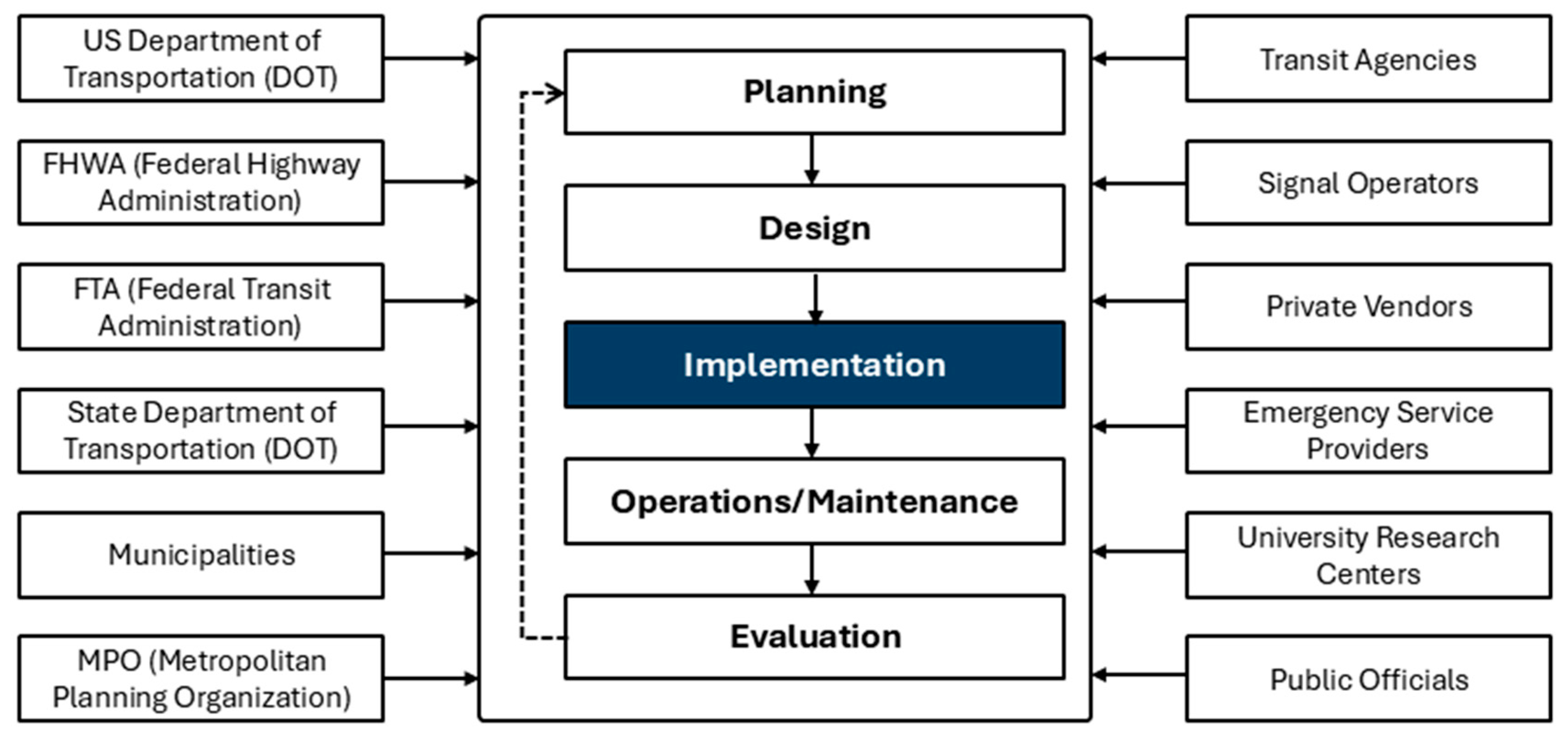
Various stakeholder groups play a critical role in the TSP process, including key government agencies such as the U.S. Department of Transportation (DOT), FHWA, FTA, state DOTs, municipalities, and Metropolitan Planning Organizations (MPOs). Additionally, transit agencies, signal operators, private vendors, emergency service providers, university research centers, and public officials are actively involved. Practice-oriented syntheses highlight that successful TSP programs typically rely on close collaboration between transit operators and traffic engineering agencies, supported by clear business rules, shared performance objectives, and agreed-upon procedures for operations and maintenance [
3,
4,
6]. Transit agencies, as the main executive entity, design bus routes and schedules based on factors such as delays, equity, and accessibility. They adjust service plans using TSP performance data, equip vehicles with the necessary communication hardware and software, and report system performance to funding partners. DOTs are responsible for establishing policies, guidelines, and standards for TSP implementation to ensure consistency and interoperability across jurisdictions. They also oversee the upgrade and maintenance of traffic signal infrastructure to accommodate TSP technologies, including installing or upgrading signal controllers and communication networks. In Pakistan, fragmented institutional responsibilities and limited coordination between land-use and transport authorities have been identified as barriers to fully leveraging TSP and related BRT or transit-oriented development initiatives, underscoring the need for stronger governance frameworks and clearer allocation of roles [
5]. DOTs usually hold the leadership role, facilitate coordination between different agencies, and ensure the integration of TSP with other traffic management systems.
Funding partners, such as federal agencies, metropolitan planning organizations (MPOs), and local governments, provide the necessary financial resources for TSP projects. They manage and distribute grant funds, ensuring that projects meet eligibility criteria and comply with funding requirements, and they increasingly emphasize performance monitoring and documented benefits as part of ongoing support [
3,
6]. Municipalities and counties are responsible for the local implementation of TSP in their territory, including adjusting traffic signal timing and maintaining signal equipment. They coordinate with transit agencies and DOTs to ensure seamless TSP operations within their jurisdiction. Vendors supply the hardware and software solutions required for TSP, including on-board equipment for transit vehicles and signal controllers for intersections. They ensure that TSP systems are integrated with existing traffic management and transit operations systems. In some states, they are responsible for providing technical support, upgrading TSP technologies and providing maintenance services to ensure the reliability and performance of TSP systems.
The increasing variation in TSP system designs, business rules, and implementation stages often causes coordination challenges among stakeholders. To address these challenges, there is a need to assess the existing practices of states that have implemented TSP, recognize the responsibilities and business procedures of each involved entity, identify the best practices, and customize an appropriate strategy to address specific operational issues. In this regard, the most significant state-of-practice study was published by Smith et al. [
8]; however, the field has since evolved significantly due to technological advances and shifts in interagency coordination practices. The primary contribution of this study is to identify stakeholder practices, challenges, and expectations based on interviews, aiming to develop more effective business procedures for TSP implementation. We conducted interviews with key stakeholders to examine their responsibilities, investigate implementation challenges, and identify effective practices using a SWOT (Strengths, Weaknesses, Opportunities, Threats) analysis. We evaluated the factors influencing TSP deployment using a structured classification approach. This allowed us to better understand how different implementation strategies affect system effectiveness, leading to more targeted recommendations for improvement.
Beyond TSP specialists, the findings offer practical guidance for urban and regional practitioners (DOTs, MPOs, municipalities, and transit agencies) on how to structure governance, permitting, funding, and data-management arrangements that allow operational strategies like TSP to scale and persist. This contributes to urban sustainability and equity goals by improving bus reliability and accessibility where transit dependence is highest [
2,
9].
2. Positioning Within Urban Science
Urban science investigates how urban systems operate and evolve through the interactions among infrastructure, institutions, governance, policy, technology, and human behavior. TSP is a useful case for this lens because it is positioned at the boundary between transportation technology and the urban institutional environment [
1]. Although TSP is deployed at individual signalized intersections, its ability to deliver reliable and sustained benefits depends on metropolitan-scale factors, including multi-jurisdictional coordination, operational priorities across modes, agency capacity, data governance, and long-term maintenance and monitoring. Accordingly, this study treats TSP not only as a traffic-control intervention, but also as an urban implementation and governance challenge whose outcomes are shaped by the broader urban context.
From an urban mobility standpoint, TSP is a citywide operational strategy aimed at improving bus speed and reliability on urban corridors. These corridor-level operational improvements accumulate into citywide effects that matter for urban living conditions, including access to employment and essential services, the quality and predictability of daily travel, and the attractiveness of public transport relative to private vehicles [
10]. Because bus service remains the primary transit mode in many cities and often serves neighborhoods with higher transit dependence, the ability to implement and sustain TSP has direct implications for accessibility and distribution of mobility benefits across the urban area.
The study also aligns with urban planning and sustainable cities objectives by examining how cities translate high-level policy goals into implementable actions. In practice, planning for TSP requires prioritizing corridors, balancing transit priority with pedestrian safety and multimodal design, coordinating with construction and roadway ownership constraints, and establishing performance measurement practices that support continuous program improvement [
7]. These planning and management realities help explain why promising mobility technologies may underperform or fail to scale, even when technical designs are available.
Finally, the work contributes to urban governance and resilience by documenting how institutional fragmentation and cross-agency processes influence the deployment, expansion, and durability of operational strategies. Large metropolitan areas routinely involve multiple public agencies and municipalities with different standards, funding streams, staff capacity, and operational objectives. These conditions affect not only initial deployment timelines, but also the long-run reliability of TSP through maintenance, software updates, signal retiming, and data integration. By synthesizing stakeholder perspectives on barriers and enabling mechanisms, this study translates those insights into actionable programmatic recommendations. These include coordination structures, data-sharing practices, and approaches for maintenance and performance monitoring. The findings are transferable at the level of governance mechanisms and implementation practices, although institutional forms differ across regions. The empirical findings in this study are grounded in the U.S. institutional setting, including the roles of state DOTs, MPOs, transit agencies, and signal-owning local jurisdictions, as well as the common reliance on federal and state funding and associated reporting practices. Accordingly, details such as cabinet access procedures, permitting pathways, liability concerns, and performance reporting tied to grant requirements should be interpreted as context-specific examples of how U.S. programs operate. At the same time, several insights are transferable at the level of governance and implementation mechanisms rather than specific laws. These include the need for a clearly assigned lead entity, formal agreements for access and data sharing, standardized workflows for routine changes, defined maintenance responsibilities, and continuous performance monitoring. These mechanisms are relevant in other regions that face multi-agency coordination, fragmented infrastructure ownership, and the need to sustain TSP over time, even if the regulatory structure and funding programs differ.
3. Literature Review
This section provides a brief overview of different studies on TSP implementation in two parts. The first part presents a brief investigation of TSP strategies, which serves as a basis for the second part, focusing on examples of the business procedures involved in adopting TSP in the states where it has been implemented. This review offers insight into the current state of practice, performance, and challenges of different agencies across the United States and other countries. It is also a valuable resource for designing the questionnaire for interviewing agencies in greater detail and supporting TSP implementation on state roadways.
The existing literature on TSP primarily concentrates on operational strategies and technological advancements aimed at improving system performance. Recent research has reaffirmed the substantial operational benefits of TSP in enhancing mobility outcomes. Ali et al. [
11] conducted a microsimulation-based study along a 10-mile corridor in Miami, Florida, and found that TSP reduced travel times by up to 8% and average vehicle delay times by up to 13.3%. They introduced the Mobility Enhancement Factor (MEF) as a novel metric to quantify corridor-wide performance, demonstrating that TSP benefits not only transit but also general traffic under certain conditions. Cesme et al. [
12] further advanced this by integrating AI-enhanced estimated time of arrival (ETA) predictions, resulting in a more adaptive, efficient TSP system that demonstrated substantial reductions in average bus delay and increased schedule adherence.
In general, there are two common TSP strategies: passive and active. Passive TSP uses predefined signal timing plans based on past transit routes and ridership patterns. When bus arrival patterns are consistent and frequent, the method works well. In most cases, this treatment causes unnecessary or even excessive delays for conflicting traffic. Active priority, on the other hand, recognizes approaching transit vehicles at a signalized intersection and alters the signal timing dynamically in response. In other words, active priority prioritizes buses by making the transit signal sensitive to the detection of an approaching bus [
8]. Although many studies focus on technical and operational aspects of TSP strategies, research on organizational and procedural implementation practices remains limited. Therefore, insights into implementation practices in some states are obtained from agency websites, handbooks, and interview-based research.
Table 1 presents a synthesis of some studies on TSP implementation, including their status of TSP implementation, strategy, and measure of effectiveness (MOE), followed by references to the business procedure examples of the states that implemented TSP in
Table 2. Prior research and practice syntheses repeatedly identified non-technical barriers to delivering and sustaining bus priority and TSP, especially interagency coordination, permitting and access procedures, maintenance responsibilities, data governance, and funding continuity [
3]. International evidence also shows that priority treatments can deliver accessibility gains but require governance arrangements that fit local institutional contexts (e.g., bus policy implementation barriers in Great Britain and tram signal-priority deployment in Warsaw, Poland) [
2,
9]. These findings motivate the present study’s focus on business procedures and stakeholder roles.
In the State of Illinois, public transit services in the City of Chicago are managed by the Chicago Department of Transportation (CDOT) and operated by the Chicago Transit Authority (CTA). In contrast, suburban and regional transit services within the broader Chicagoland area are overseen by the Illinois Department of Transportation (IDOT) and operated by Pace, the Suburban Bus Division of the Regional Transportation Authority (RTA). A key component of the TSP system in Illinois is the regional TSP implementation program (RTSPIP), which covers about 500 intersections along 100 miles of roadway in 13 priority corridors in the Chicago region. Several partners collaborate in this program, such as the Regional Transportation Authority (RTA), CTA, Pace Suburban Bus, IDOT, and CDOT [
13].
A study conducted by Vlachou et al. [
14] includes illustrative examples of business processes for TSP implementation in small and medium-sized cities. The TSP design and implementation in San Diego Metropolitan Transit System (MTS), which involves several agencies such as the City of San Diego, the City of Chula Vista, IBI Group, and SANDAG is carried out by both MTS and SANDAG, with SANDAG also serving as the coordinating agency. MTS is responsible for TSP hardware on transit buses, while the City of San Diego and Chula Vista install and maintain the system at their respective traffic signals. The signals owned by Caltrans follow a passive TSP, but there are future plans to implement TSP at ramp meters owned by Caltrans. The IBI Group, as a consulting firm, assists the cities with traffic signal operations and maintenance planning. MTS faced several implementation challenges, including TSP systems remaining active longer than intended, disruption of side street signal timing, coordination issues with signal software, and fluctuating traffic patterns. These challenges were addressed by IBI Group, as a monitoring contractor, by updating parameters based on field data observation. MTS has observed growing success in TSP implementation, while many neighboring agencies have expressed interest in adopting this technology.
The next example is the TSP implemented by the Rhode Island Public Transit Authority (RIPTA) with three local partners, including the Rhode Island Department of Transportation, the City of Pawtucket, and the City of Providence. RIPTA handles installing, operating, and maintaining the TSP software and hardware on buses. Similarly to MTS, the local partners are responsible for installing equipment at intersections and performing maintenance. The operation and monitoring of the TSP system are performed by RIPTA’s planning department. According to RIPTA, coordinating maintenance activities with local traffic signal owners is their most significant challenge.
As another example, the San Francisco Municipal Transportation Agency (SFMTA) is implementing TSP with a streamlined administrative structure. It is responsible for the entire process since it has its own transit fleet and traffic signals. One of its divisions, the Sustainable Streets division, is responsible for operating and maintaining traffic signals, as well as for TSP-associated hardware installed at intersections. Identifying the source of system anomalies (bus versus intersection hardware) has proven difficult. Furthermore, it is easier to secure funding for new intersections compared to the funding needed for the maintenance of existing intersections [
13].
The Massachusetts Bay Transportation Authority (MBTA), in collaboration with local traffic signal owner-operating agencies, operates a TSP system to enhance the on-time performance and operational efficiency of its transit services in the greater Boston area. TSP is a crucial strategy for improving the reliability and speed of both the MBTA bus and light rail services, thereby making public transportation a more viable and attractive option for commuters. The current state of TSP in MBTA (as a division of the Massachusetts Department of Transportation—MassDOT) is centralized, covering 26 corridors over a five- to seven-year implementation period, with a goal of improving equity and minimizing the existing delay in alignment with MassDOT objectives [
15].
Previous studies on the implementation of TSP generally highlight a lack of analytical evaluation of policies and operational parameters, with most case studies relying largely on interviews as their main research technique. Al-Hyasat in Jordan [
16] reviewed various international implementations, highlighting the need for flexible policies, adaptive infrastructure, and strong institutional coordination to address challenges such as inconsistent technological standards and inter-agency alignment.
These findings point to the necessity of clear governance and robust business models for sustainable deployment. In practice, many barriers remain institutional rather than technical, particularly fragmented stakeholder responsibilities and funding uncertainties, as also supported by the synthesis in Poland [
9], which emphasized the importance of early stakeholder collaboration and streamlined approval processes for effective deployment. Typically, these investigations use descriptive approaches to identify barriers and best practices. Given this gap, this study applies SWOT analysis to help stakeholders identify the key strengths, weaknesses, opportunities, and threats, enabling more strategic and coordinated efforts to improve project efficiency, reliability, and overall implementation success. However, there are a limited number of SWOT studies in the transportation field. Most of these studies focus on transportation modes [
17], freight plans [
18], and transportation demand management [
19].
Table 1.
Summary of TSP case studies.
Table 1.
Summary of TSP case studies.
| City/State | Approach | Situation | Strategy | Condition | MOEs |
|---|
| Average Bus Travel Time Reduction | Increase in Side Street Delay |
|---|
| Portland, Oregon [20] | Empirical | TSP Implemented | N/A | TSP granted to buses that
are behind schedule | 0.30% | _ |
Provo and Orem,
Utah [21] | Empirical | TSP Implemented | Phase Extension,
Red Truncation | A two-minute threshold for TSP requesting should pass for each bus. | _ | _ |
Nashville, Tennessee
[22] | Simulation | Theoretical Evaluation | Phase Extension,
Red Truncation | Unconditional | 4.5% to 14.4% | Up to 18% |
| Fargo, ND [23] | Simulation | Theoretical Evaluation | Phase Extension,
Red Truncation | Unconditional | Up to 14% | Up to 24.42% |
| Orlando, Florida [24] | Simulation | TSP Implemented | Phase Extension,
Red Truncation | TSP granted to buses that are few minutes behind their schedule | 5% to 23% | Up to 532% |
Michigan State
University campus [25] | Simulation | Theoretical Evaluation | Phase Extension,
Red Truncation | TSP granted If the bus can pass intersection within the extended green time, with red truncated | _ | −14% to 2% |
| Burlington, Vermont | Simulation | Theoretical Evaluation | Phase Extension | Unconditional | 2 to 7% improvement | Negligible |
Snohomish county,
Washington | Empirical Simulation | TSP Implemented | Phase Extension,
Red Truncation | TSP granted to buses that
are behind schedule | 3.0% | _ |
| Warsaw, Poland—tram network [9] | Empirical (GTFS & accessibility) | Tram signal priority Implemented | N/A | Network-wide deployment | 6.7% in network | _ |
| Portland, Oregon [12] | Empirical | TSP Implemented | Adaptive green extension | Priority based on real-time bus ETA using k-means | 29 s
per intersection | _ |
| South Florida [11] | Simulation + Field Trials | TSP Implemented | Integrated AVL, GPS, and SCADA | Conditional priority based on arrival prediction | Up to 8% | Up to 13.3% |
Table 2.
Literature on business procedures.
Table 2.
Literature on business procedures.
| | Coordinator | Business Procedure | SWOT Analysis |
|---|
| San Diego, Rhode Island and San Francisco | San Diego Association of Governments (SANDAG) | Continued TSP operation, skipping side streets, signal software losing coordination, and changing traffic conditions. | No |
| Rhode Island Public Transit Authority (RIPTA) | Coordination with local partners (traffic signal owners) for maintenance. | No |
| San Francisco Municipal Transportation Agency (SFMTA) | Identifying the source of an anomaly in the system, whether it originates from bus or intersection hardware. | No |
| Chicago [26] | Chicago Regional TSP implementation program (RTSPIP) | Lengthy (time-consuming) administrative and technical procedures for access and permit issuance. | No |
| MBTA [15] | The Massachusetts Bay Transportation Authority (MBTA) | Interoperability challenge with five TSP vendors in the region, emphasizing the need to ensure they are compatible with the MBTA within a decentralized governance structure. | No |
| Twin Cities, MN—Transit Advantages & TSP [27] | Metropolitan Council-US | Regional program combining bus shoulders, bus lanes, ramp-meter bypasses, and TSP at ~161 intersections. TSP embedded in long-range investment planning and formal reporting to the Minnesota Legislature, illustrating TSP as part of a comprehensive regional “transit advantages” strategy. | No |
| USDOT ITS—V2X-based TSP [28] | ITS Knowledge Resources | Describes V2X-enabled TSP: buses use OBUs to send standardized messages to roadside/central systems. Business implications: need for cross-department coordination (traffic, IT, transit), interoperable standards (e.g., SAE), cybersecurity policies, and long-term maintenance of connected vehicle infrastructure. | No |
| North American agencies [3] | TCRP Synthesis | Synthesis of 46 agencies and 5 case studies. Documents business rules (unconditional vs. late-bus conditional, minimum cycles between requests, early/extended green). Highlights difficulty quantifying benefits, lack of dedicated funding, and need for clear interagency roles, training, and implementation toolkits. | No |
| Global TSP research & practice review [6] | Global | Summarizes worldwide TSP deployments. Stresses institutional aspects: integration with adaptive signals, data management (AVL, ITS standards), and challenges of aligning transit and traffic objectives. Calls for more work on governance, evaluation frameworks, and institutional best practices. | No |
4. Methods
This section begins with an explanation of the interview process, followed by a description of the SWOT analysis. The research team identified and contacted relevant agencies by attending TSP implementation meetings at the state and national levels. A questionnaire was designed for both Illinois and out-of-state agencies (i.e., states other than Illinois), including questions about TSP business processes, current practices, and implementation challenges.
4.1. Data Collection
In line with the main objective of the study, we interviewed staff and stakeholders from both Illinois and other states. The goal was to understand the current state of (i) stakeholders’ responsibilities and involvement (ranging from communication equipment installation to TSP control strategy design), (ii) communication practices, (iii) jurisdictional partnerships for project coordination, and (iv) the development of TSP implementation standards and guidelines. Each interview was conducted via Zoom and lasted between 45 and 60 min. In this process, Illinois agencies responsible for TSP implementation were identified, and meetings were scheduled with their respective staff members. The interviewees, who were members of the TSP Peer Working Group, were selected by the research team using purposive “key-informant” sampling: agencies were identified via TSP coordination meetings, and interviewees were selected because they directly oversee, design, operate, or maintain TSP (e.g., program leads, signal operations staff, ITS staff, transit operations/planning managers). At minimum, three to four representatives per organization were interviewed; when agencies indicated distinct roles across units (e.g., planning vs. signal operations), additional participants were invited to reduce single-respondent bias and to cover both operational and administrative perspectives.
A detailed questionnaire was designed to guide discussions during the hour-long meetings, covering various aspects of TSP implementation. During the meetings, agency representatives shared insights and experiences related to TSP implementation, addressing project objectives, challenges, technological solutions, and lessons learned. Each interview was recorded and promptly transcribed by the research team following the conclusion of the session. The same approach was applied to out-of-state agencies with successful TSP implementation. Overall, the approach provides firsthand knowledge, informing an understanding of best practices and implementation across jurisdictions.
4.1.1. Selection of Agencies and Participants
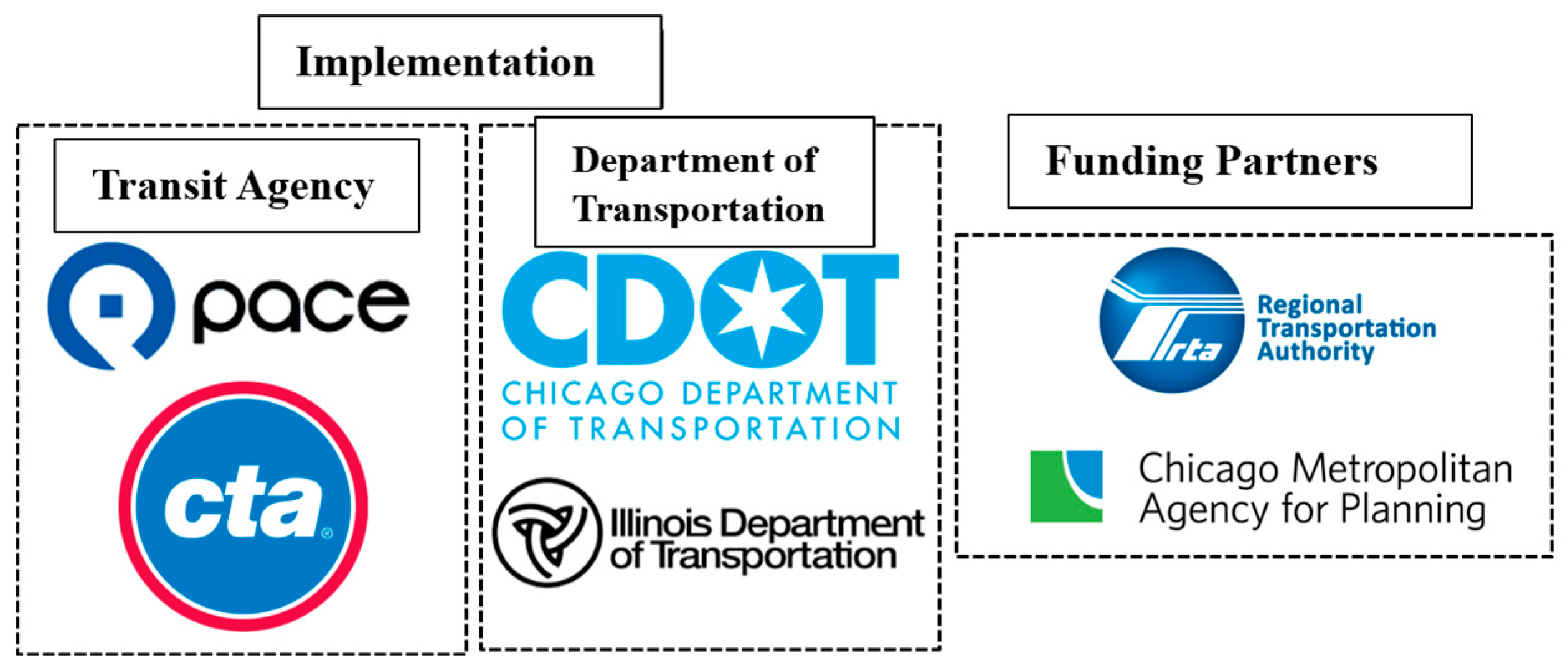
The research team identified Illinois participants through participation in TSP coordination meetings facilitated by the ICT (Illinois Center for Transportation) project team. In total, six public agencies of RTA, CTA, Pace, CDOT, IDOT, and the Chicago Metropolitan Agency for Planning (CMAP) (indicated in
Figure 1) and two planning organizations, including the Metropolitan Planning Council (MPC) and the Center for Neighborhood Technology (CNT), were interviewed from Illinois. Out-of-state agencies were selected based on documented success in regional TSP programs, referrals of professional networks, and recommendations made by early participants. We interviewed five out-of-state stakeholders: the San Francisco Municipal Transportation Agency (SFMTA, a combined transit agency and DOT), the New York City DOT (NYC DOT), the Massachusetts Bay Transportation Authority (MBTA), the Rhode Island Public Transit Authority (RIPTA), and King County Metro.
4.1.2. Questionnaire for Interviews
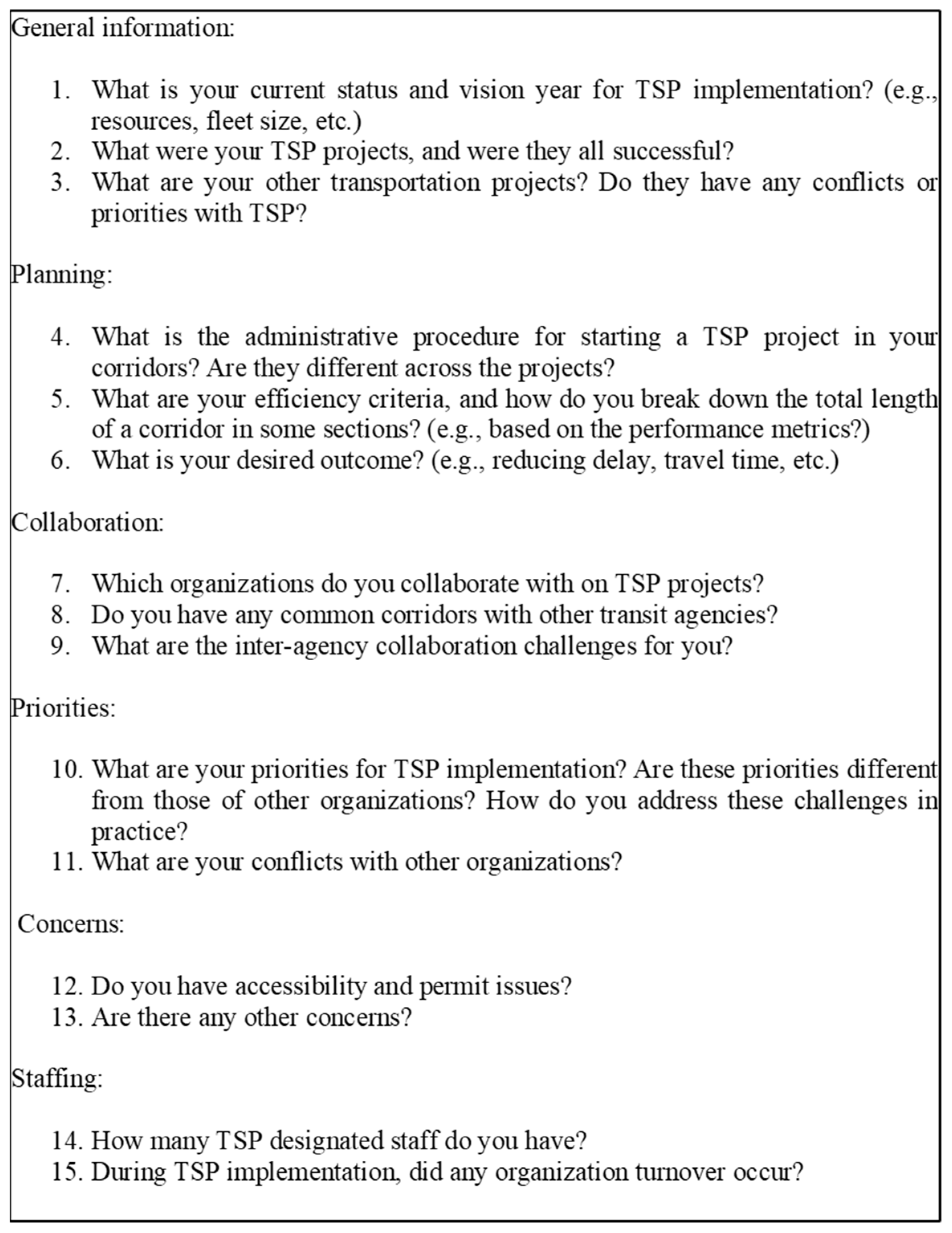
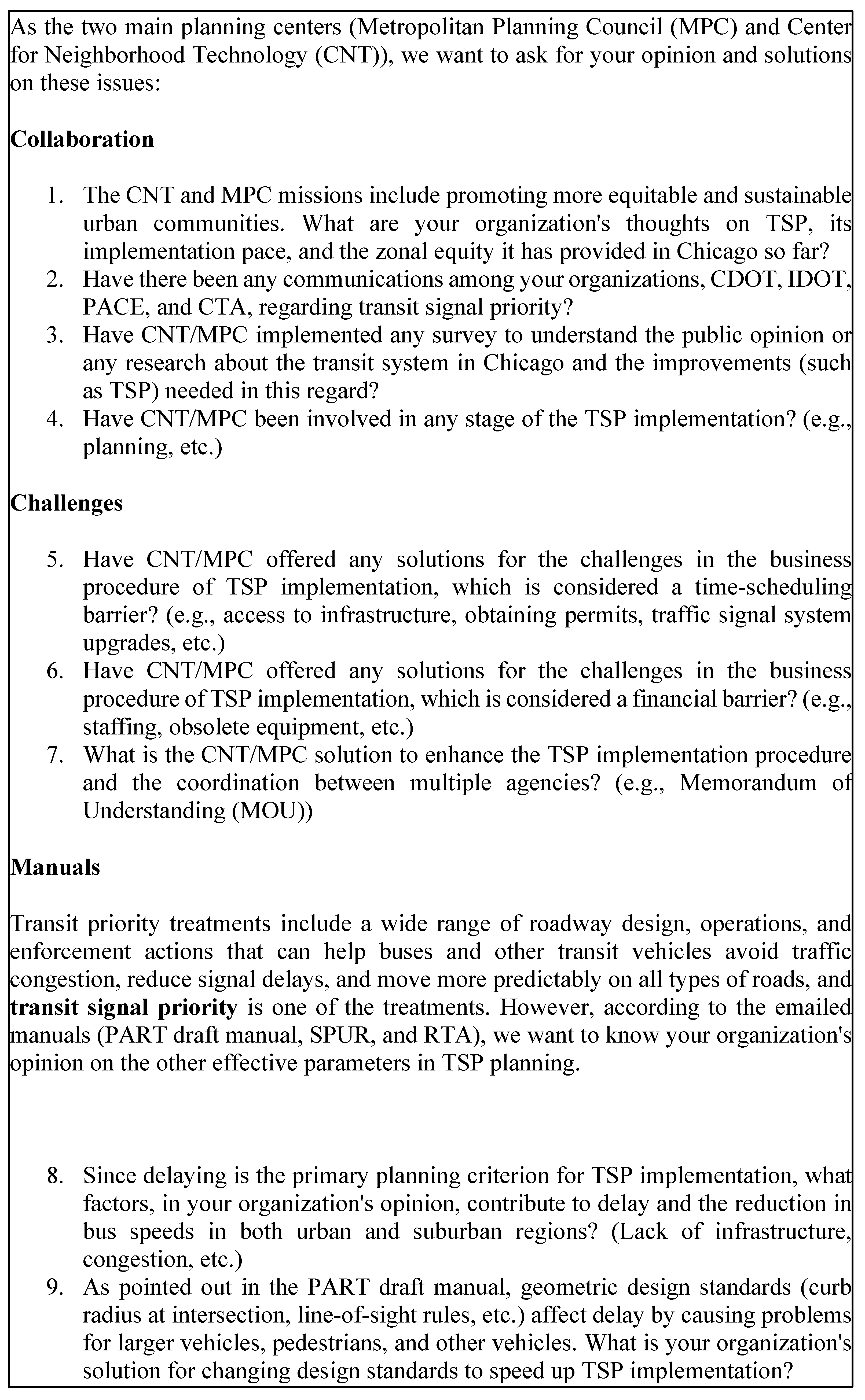
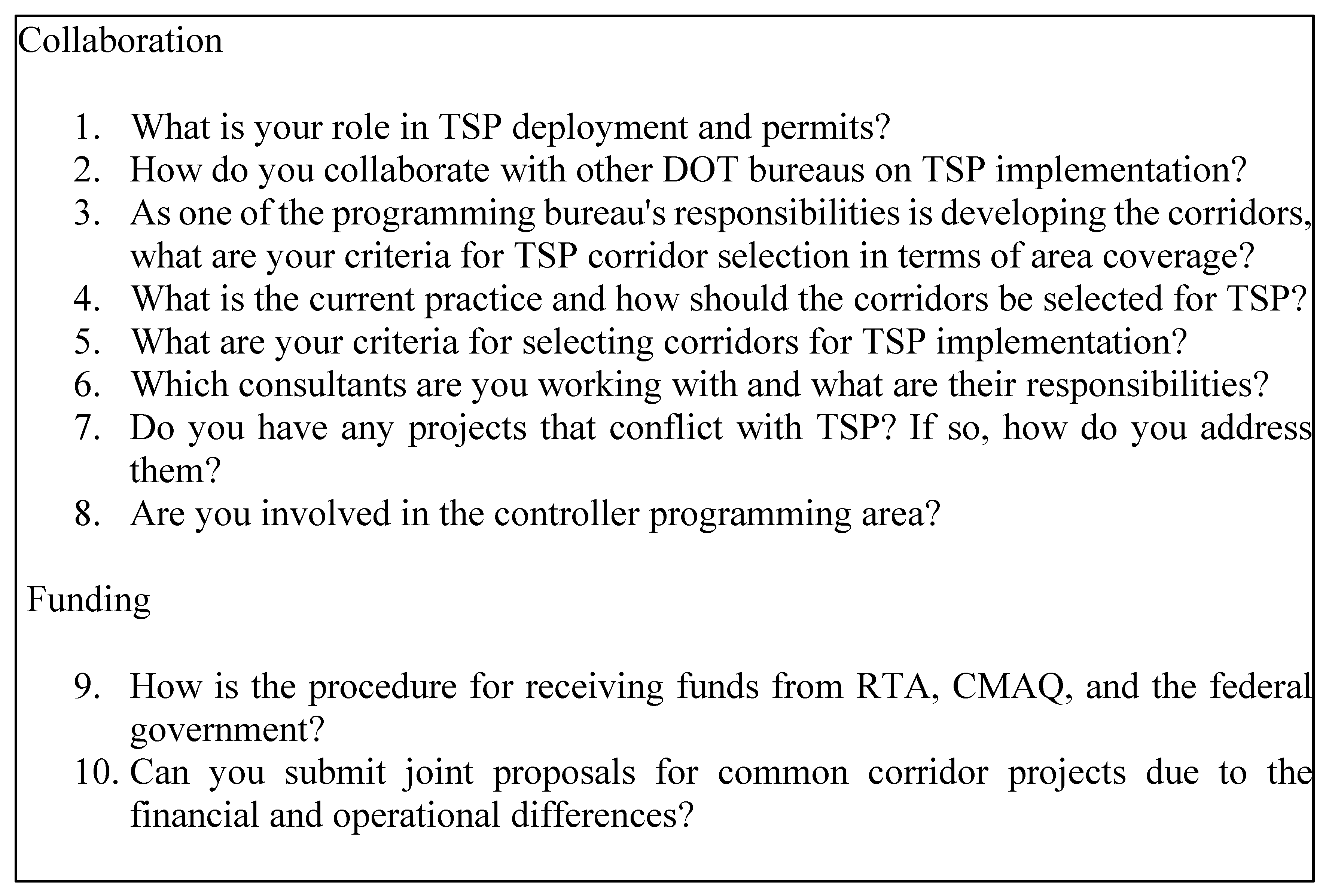
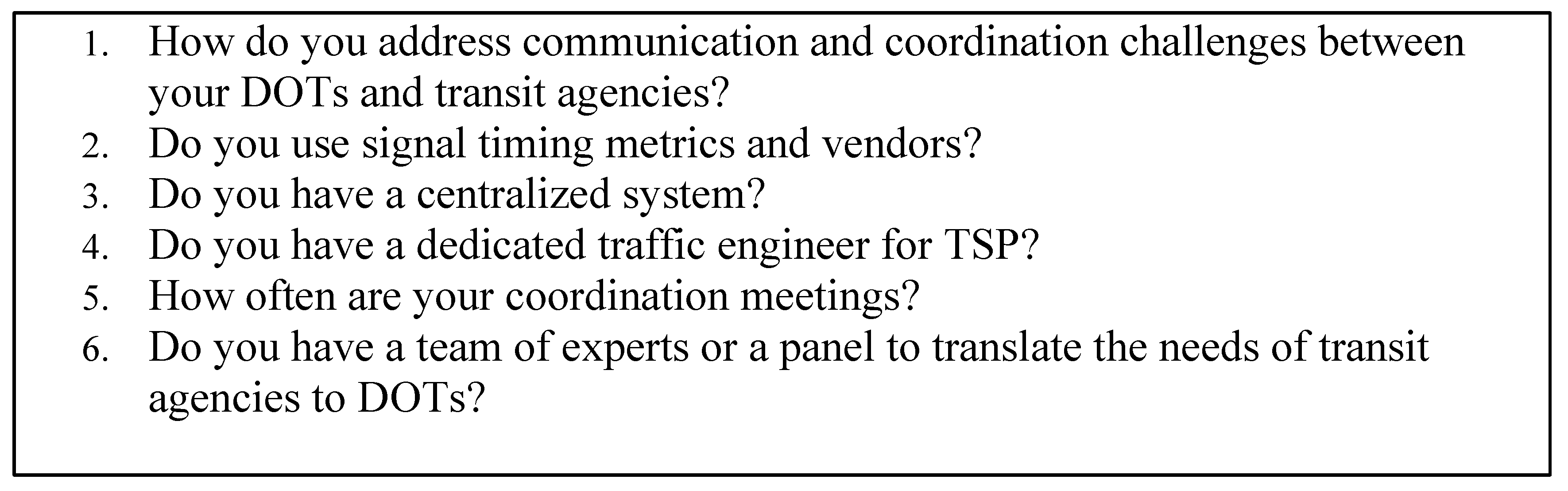
Three distinct questionnaires were developed for the state: one for Department of Transportation (DOT) representatives, one for transit agencies, and another for supporting planning organizations including MPC and CNT (see
Figure 2,
Figure 3 and
Figure 4). The questionnaires were carefully designed to gather comprehensive insights into TSP implementation, with an intent to capture information related to internal capabilities and limitations (strengths and weaknesses) as well as external drivers and barriers (opportunities and threats) that could be systematically categorized within a SWOT (Strengths, Weaknesses, Opportunities, Threats) framework.
Similar questions are posed to out-of-state agencies (
Figure 5), with a focus on understanding the factors contributing to successful or unsuccessful TSP implementation to address the challenges and concerns of Illinois.
4.2. SWOT Method
The SWOT framework was originally developed as the SOFT model (Satisfactory, Opportunity, Fault, Threat) at Stanford Research Institute [
29]. It was designed as a participatory planning tool that allowed managers to identify and contribute strategic issues grounded in their operational context. SWOT analysis is typically categorized into four components:
Strengths (S): Internal capabilities or assets that provide competitive advantages.
Weaknesses (W): Internal limitations or areas requiring improvement.
Opportunities (O): External conditions or trends that can be leveraged.
Threats (T): External risks or challenges that may negatively impact success.
In this study, the SWOT analysis was not only applied as a classification tool but as an interpretive framework to understand the organizational, regulatory, funding, and technical challenges surrounding TSP implementation. To ensure transparency and mitigate the subjectivity inherent in qualitative analysis, a structured coding approach was employed. Two coders from the author team, selected based on prior qualitative research experience and expertise in transportation systems, coded the interview transcripts. The coders did not conduct the interviews. They identified recurring themes and, through consensus discussions, assigned each theme to one of the four SWOT dimensions. Conflicts were discussed until agreement was reached, minimizing individual bias. The relative significance of each factor was determined based on its frequency of mention, the diversity of agencies referencing it, and its observed influence on project outcomes. The following section presents the findings of this structured analysis, offering a multidimensional understanding of TSP implementation challenges and opportunities across U.S. transit agencies.
5. Results and Discussion
In this section, we present the results of the interviews in two parts focusing on the responsibilities of: (i) state-level agencies in Illinois and (ii) out-of-state agencies. The second part presents the SWOT analysis findings, which highlight the strengths, weaknesses, opportunities, and threats related to current TSP deployment practices.
Figure 6 illustrates the TSP implementation process and identifies the key stakeholders involved in system operation.
5.1. Stakeholder Responsibilities
The following subsections present the findings for both Illinois and out-of-state agencies in four key categories: organizational, policy and regulatory, funding, and technical and technological factors. This structure provides a comprehensive view of how diverse agencies contribute to TSP implementation and management across different regions.
5.1.1. Organizational Factors
Organizational structure is a critical factor in streamlining communication and clarifying shared responsibilities among transit authorities, traffic signal operators, and state departments. In the Chicago region, transit agencies such as the CTA and Pace hold the primary responsibility for TSP implementation in the city and surrounding suburbs. Their duties include selecting suitable corridors, conducting evaluation studies, upgrading signal timing, and equipping buses. State DOTs, by contrast, are essential stakeholders as they typically own and maintain the signal controllers.
Another key planning authority is CMAP. As part of its long-range planning efforts, CMAP conducted a region-wide bus corridor study to support strategic corridor selection. Its role in identifying corridors is informed by data from CTA or Pace. CMAP’s planning activities are supported through funding from the Unified Work Program (UWP) and other sources. All of these agencies participate in monthly coordination meetings to address financial issues and TSP deployment challenges, providing a vital forum for effective implementation and improved transit efficiency.
Each transit agency follows its own process to obtain access to traffic signal controllers, which can vary significantly in complexity and duration. Pace must obtain permits from IDOT, while CTA requires access authorization from CDOT. These procedures, which include modifying cabinet access and obtaining permits, often lead to delays due to limited dedicated staff in the responsible agencies. Staff turnover further exacerbates these delays, highlighting the need for sustained staffing and designated TSP leadership within agencies. Across Illinois stakeholders, cabinet access (keys/credentials), permit routing, and identification of the responsible signal owner were consistently described as the dominant schedule risks because they block even small timing adjustments and require staff time across multiple agencies.
Notably, the organizational setup differed in other successful states. Some, like San Francisco, merged their transit agency and DOT, enabling them to internally develop and manage TSP systems. Others, like King County, relied on third-party vendors for technical support. In most cases, TSP leadership was centralized under either the DOT or a single transit agency. All states interviewed reported biweekly or monthly coordination meetings involving fewer agencies than in Illinois. For instance, in New York City, only the DOT, transit agency, and Metropolitan Transportation Authority (MTA) were involved, resulting in smoother decision-making and faster implementation. Each state had at least one designated TSP program lead per agency; New York alone had 12 staff members engaged in TSP projects.
Interviews revealed systematic differences in priorities. Transit agencies emphasized reliability and run-time benefits (and the value of rapid corridor expansion), while signal-owning jurisdictions emphasized cross-street performance, liability, and maintaining coordination plans. These differing objectives shaped how permissive agencies were about remote access, the use of unconditional vs. conditional priority, and how quickly they were willing to approve timing changes, underscoring why governance and business procedures are central to TSP outcomes.
5.1.2. Policies and Regulatory Factors
Policies and regulatory factors also contributed to TSP implementation difficulties. The absence of standardized regional TSP guidelines and concerns over equipment compatibility caused delays and inconsistencies across jurisdictions. Transit agencies’ proposed TSP timing adjustments must be approved by DOTs to ensure regulatory compliance. IDOT reviews traffic signal timing every five years as part of its standard policy. IDOT also supports the process through fieldwork, maintenance transfers, and testing to uphold regulatory standards. It is currently preparing a statewide transit plan, which recommends incorporating transit considerations into the design manual.
On the other hand, CMAP has enhanced TSP-related policy by integrating pedestrian and bicycle infrastructure into its road design manual. This update helps remove barriers for transit agencies and benefits the broader CMAP region and potentially others. Most agencies had remote access to the controller, removing the need for a formal permit structure. For signal timing upgrades, some agencies have moved away from requiring permits or have shifted this task to vendors. Others adopted real-time, innovative in-house strategies instead of traditional methods such as Synchro modeling. These efforts required collaboration across various DOT divisions, including timing, ITS, and traffic planning units.
5.1.3. Funding Factors
The main funding provider for TSP in Illinois is the FTA. Furthermore, CMAP and RTA play vital roles in funding and monitoring TSP initiatives. RTA and CTA are two of the primary grant recipients, with RTA collaborating with CTA and Pace to develop and implement systems engineering processes including requirement definition, high-level system specifications, and program management plans. Funding is allocated between CTA and Pace corridors, and CTA further distributes its share as some of the work is carried out by CDOT. CMAP distributes grants such as Congestion Mitigation and Air Quality Improvement (CMAQ) and also facilitates technology alignment to support coherent, efficient implementation.
Similarly, most agencies received grants from the FTA and the Federal Highway Administration (FHWA). A strong emphasis on data-driven decision-making was observed across agencies, with routine data reviews used to assess the performance of TSP interventions. Agencies can secure ongoing funding by submitting evaluation reports based on performance measures and receiving approval. Vendors and DOTs share data management responsibilities, ensuring robust analysis and evidence-based funding decisions.
5.1.4. Technical and Technological Factors
Technical and technological factors played a key role in determining TSP efficiency. Integrating TSP with legacy infrastructure proved to be challenging, as older traffic control systems often required major upgrades to support priority signaling. The complexity of TSP systems, particularly in decentralized environments, has limited their scalability. Additionally, transitioning to centralized or cloud-based traffic management systems demanded significant hardware and software investments. Both Pace and CTA are transitioning from decentralized to centralized systems by equipping their buses with Automated Vehicle Location (AVL) technology and switching to cellular-based communication. This integrated approach enables communication between traffic signals and transit vehicles through a central system, leveraging real-time data to dynamically optimize traffic signal timing and improve system reliability [
30,
31].
Most agencies interviewed benefited from launching the centralized TSP system to expedite deployment. They upgraded to cellular communication, equipped buses with GPS and communication devices, and transmitted vehicle location and speed data to the central system. The central system then analyzes current traffic conditions, schedules, and vehicle positions to make real-time decisions about granting priority to approaching transit vehicles. States like New York and Massachusetts have adopted centralized TSP networks. In New York, the system uses AVL and GPS data to determine detection zones and trigger points, without requiring extensive traffic modeling. For an initial set of 50 intersections, the process took around 60 to 75 days.
Several states still face barriers related to aging infrastructure, such as outdated signal controllers, which introduce financial and technical challenges. Differences in controller maintenance practices also impact the consistency and effectiveness of TSP programs. King County is upgrading all buses to use cellular connectivity, while continuing to support legacy systems that previously relied on radio communications. In some cases, legacy systems are being adapted to operate over cellular networks, enabling a transitional phase in which both old and new technologies coexist. On the technical side, many agencies reported minimal software changes for signal timing upgrades, though incompatibility among network signals remains a recurring challenge [
12,
31].
To avoid service disruptions during upgrades, agencies recommended a staged migration from pilot corridors to parallel operations and regionwide rollout, backward-compatible interfaces between legacy and new communications, configuration/version control for signal timing plans, and regression testing using archived AVL/GPS logs before deploying changes. Where possible, remote-access governance (role-based permissions, audit logs) can reduce the need for repeated cabinet visits while maintaining security.
5.2. SWOT Analysis
The implementation of the TSP involves a strategy that requires collaboration among multiple agencies and has various technical challenges. We analyzed input from all interviewed agencies using the SWOT framework, focusing on organizational, policy, funding, and technical factors to identify the most effective strategies for future TSP implementation. Beyond categorization, the analysis aimed to generate actionable insights by linking internal and external dimensions. Strategies were proposed to leverage strengths and opportunities, such as established interagency partnerships and funding mechanisms, while identifying interventions to address weaknesses and mitigate threats, including fragmented leadership, outdated infrastructure, and inconsistent permit procedures. This structured and strategic use of SWOT transforms it from a descriptive inventory into a diagnostic and prescriptive tool for advancing coordinated, resilient, and efficient TSP implementation across transportation agencies.
Table 3 presents the strengths, weaknesses, opportunities and threats identified during the interviews with different agencies in the SWOT analysis. The results of the SWOT analysis helped identify strategies to optimize the efficiency of TSP systems, supporting the development of more effective implementation approaches. The interview themes suggest that barriers are mutually reinforcing rather than independent. For example, staffing shortages slow permitting and maintenance, which delays corridor rollouts; these delays reduce the ability to produce performance evidence, which in turn weakens future funding applications. Similarly, fragmented governance increases vendor and interoperability complexity, raising upgrade costs and further constraining budgets. We therefore interpret SWOT results as a connected system of constraints that jointly determines whether TSP can scale and persist. These studies reinforce the importance of addressing both technical and institutional dimensions of TSP implementation.
5.2.1. Organizational Factors
Effective project management practices can help mitigate extended implementation timelines, ensuring that TSP systems are deployed efficiently and on schedule. In line with these organizational findings, agencies should establish regular monthly or bi-weekly coordination meetings with the DOTs. To ensure alignment of goals and strategies, these meetings should specifically address the following sub-factors:
- −
Staff Turnover and Labor Shortages
Assigning multiple designated staff members or engineers within each entity can improve project oversight and reduce delays.
Designated personnel focused exclusively on TSP can help prioritize project goals and minimize disruptions due to competing responsibilities.
- −
Interagency Interoperability of the TSP System
Incorporate an in-house coordination unit to manage permits and streamline implementation processes.
Appoint a dedicated facilitator to manage interagency communication.
Assess each stakeholder’s TSP priorities and establish a mid-point strategy for balancing competing interests.
Define a unified business procedure applicable to both DOTs and transit agencies to reduce procedural inconsistencies.
Emphasize the importance of securing agency buy-in on transit goals before addressing technical components.
Establish a central leadership structure, either within a lead agency or as a standalone entity, with decision-making authority to approve and execute TSP plans without excessive administrative barriers.
Translate technical requests into roadway-owner-friendly terms, offering support and assistance to ease implementation concerns.
5.2.2. Policies and Regulatory Factors
Policy and regulatory factors represent some of the most complex and time-intensive aspects of TSP implementation. Clear legal frameworks are essential for ensuring compliance, safety, and coordination across jurisdictions. Permit revisions and the ability to make remote changes remain significant challenges, primarily due to jurisdictional complexities. These challenges, however, can be more effectively managed through the following systematic approaches:
Implement blanket permits that authorize approximately 80% of anticipated tasks, with the remaining tasks assigned to a single contractor.
Introduce a structured tracking system for permit applications, assigning a unique reference number to each request and documenting the engineer responsible, review timelines, and status updates. This process should be bound by a target completion period, ideally within six months.
Establishing Regional TSP Guidelines
TSP guidelines are expected to cover areas ranging from signal optimization to design manuals and data-driven decision frameworks. A key recommendation is to enable signal timing adjustments without requiring formal permits. Additional recommendations include:
Revise the five-year timeline typically used for signal re-evaluation under traditional methods.
Adopt real-time signal performance metrics and leverage dynamic signal adjustment technologies through vendor collaboration. Traditional modeling approaches (e.g., using Synchro) often require up to two years; in contrast, in-house strategies utilizing real-time AVL and GPS data can expedite implementation by identifying trigger points and detection zones without extensive modeling [
12].
Incorporate predictive arrival technologies, such as those used by TriMet, which enable signal adjustments up to two minutes in advance, minimizing impacts on cross traffic and other modes.
Avoid software-level signal changes that deviate from pre-approved traffic signal plans. These changes can necessitate signal rebuilds, delay timelines, and introduce compatibility issues. To mitigate these risks during system updates, agencies should proactively coordinate with signal owners and traffic engineering teams early in the planning process. Using configurable, standards-based platforms, rather than custom-coded solutions, can help maintain compatibility with existing infrastructure. Additionally, field changes should be tested in simulation environments before deployment to avoid unintended consequences. Establishing blanket permits for expected software modifications, along with thorough documentation and internal review protocols, can further streamline the process and reduce administrative delays. Form cross-disciplinary review teams to oversee and align updates with technical and operational needs.
Revise existing design manuals, which are often biased toward automobile and active transportation modes, and fail to accommodate transit fleet dimensions and multimodal safety standards. These manuals are expected to be updated at both national and local levels to integrate transit-supportive design, pedestrian infrastructure, and public safety requirements.
5.2.3. Funding Factors
Funding is one of the most significant aspects of each project and can either drive progress or become a barrier when mismanaged. Research by Texas A&M University reveals that the cost of TSP equipment, installation, and software for transit vehicles and back-end transit management ranges from
$4484 to
$32,033, with a median cost of
$8133 per bus. The cost per intersection for signal equipment and software varies widely, from
$2350 to a high of
$100,000 [
3]. To support such a substantial investment, TSP deployment must leverage a diverse mix of funding sources, including:
The majority of agencies rely heavily on federal grants to invest in their TSP systems. However, when cost overruns deplete their budgets, they temporarily halt the implementation process. This issue leads to delays in project implementation. To address this, government agencies are required to explore alternative funding sources from both the public and private sectors, such as the ATC MTD grant, a discretionary federal award. Additionally, effective budget management is critical. The most persuasive approach to secure funding is to submit performance-based evaluation reports. These demonstrate the effectiveness of TSP initiatives, align with research findings, and highlight public benefits, thereby increasing the likelihood of continued support from funding partners.
5.2.4. Technical and Technological Factors
Providing passengers with accurate, real-time information about transit arrivals and delays using AVL systems, along with prioritizing service speed over strict schedule adherence, is the primary objective of this strategy. Expanding central traffic management systems and ensuring consistent coordination between transit agencies and DOTs can support this approach, ultimately reducing project completion timelines.
- −
Access to Technical Tools by Transit Providers
Remote access to the traffic signal controllers (“cabinet”) by participating agencies is a critical factor for effective TSP implementation. Different communication methods including wireless technologies (radio frequency, Wi-Fi, and cellular), infrared communication, the Global Positioning System (GPS), and centralized traffic management systems allow DOTs, transit agencies, and even third-party contractors to access the traffic controllers remotely. A centralized system enhances conventional signal timing through dynamic adjustment, enables cabinet access without on-site visits, and improves overall system performance. Given its importance, the following subsection provides a more detailed discussion on centralized system deployment.
- −
Launching centralized systems
Because of the significant budget and infrastructure upgrade requirements (e.g., expanding wireless communication networks, connecting signal controllers to a central system, and installing new servers), a phased approach to central system deployment is recommended. Specifically, priority should be given to intersections and bus routes that serve high-ridership corridors or experience significant delays, maximizing the return on investment.
However, equipment compatibility and system integration challenges must be addressed. The deployment of TSP also introduces concerns related to access and cybersecurity, including risks to data integrity, system vulnerabilities, and unauthorized access. To further enhance operational efficiency and security, a cloud-based centralized system is recommended. Such a system would enable real-time data sharing and adaptive decision-making, serving as a unified platform for agencies to monitor, manage, and dynamically adjust TSP parameters based on live traffic conditions, vehicle locations, and service priorities.
5.3. Implementation Pathways (Actionable Scenarios)
Implementation pathways are presented as three actionable scenarios that agencies can adopt based on local governance structure, staff capacity, and technology maturity. Each scenario specifies the lead entity, the minimum set of agreements or procedures needed to begin, and a practical sequence of steps that can be implemented in phases rather than requiring a full system redesign at the outset.
Scenario A (Regional lead-agency model). A single lead entity, hosted by a DOT or MPO, is designated to coordinate program delivery across jurisdictions. The lead entity establishes common program standards, prioritizes corridors and intersections using transparent criteria, and defines a shared reporting approach. Implementation begins by executing memoranda of understanding for cabinet access and data sharing, with clear roles for signal-owning agencies and transit operators. The lead entity then publishes a routine performance report that documents corridor-level benefits and implementation progress, and this reporting framework can be tied to eligibility for program funding or discretionary grants to sustain participation and continuity.
Scenario B (Permitting simplification). Agencies adopt a streamlined approval pathway for routine TSP-related timing and detection-zone adjustments that do not change the underlying, pre-approved signal plan structure. Implementation begins by defining a standard “blanket permit” or pre-approval template that specifies allowable adjustment ranges and required documentation. Requests that fall within these bounds follow an expedited workflow, while exceptions are routed through a defined review process using a ticketing or workflow system. To make the pathway operational, agencies define service targets for review and resolution (for example, 30 to 60 days), assign clear ownership for each step, and track cycle time as a program metric. This scenario reduces delay caused by fragmented permit routing and repeated re-approvals for low-risk changes.
Scenario C (Data and technology modernization). Agencies transition from fragmented legacy tools to a centralized platform that supports secure access, consistent data definitions, and repeatable performance monitoring. Implementation starts with role-based access and audit logging to enable appropriate remote work while maintaining security and accountability. The platform then integrates AVL or GPS feeds with signal performance measures to support routine diagnosis and continuous improvement. To reduce vendor lock-in and interoperability issues, agencies maintain a vendor-agnostic specification for data interfaces and priority requests, and they phase deployment beginning with high-ridership corridors or high-delay locations to maximize near-term return. These scenarios are intentionally modular. Agencies can adopt one scenario as a starting point or combine them in sequence, for example beginning with permitting simplification to reduce near-term procedural delay, then moving to a regional lead-agency structure for scaling, and finally implementing a centralized platform once governance and workflows are stable.
6. Conclusions
This study examined organizational, regulatory, procedural, funding, and technical constraints that shape the design, deployment, and long-term sustainability of TSP programs. Using interviews with practitioners across multiple U.S. agencies and synthesizing the evidence through a structured SWOT-based approach, this study focused on the “business procedures” that determine whether TSP can scale beyond pilots and remain operational over time.
The findings show that TSP outcomes are not driven by technology alone. Implementation success depends on how agencies coordinate across institutional boundaries, define responsibilities, and manage access, approvals, and maintenance. Stakeholders consistently described procedural bottlenecks, such as cabinet access, permitting workflows, and unclear signal ownership, as critical schedule risks because they can block even routine adjustments. The analysis also shows that barriers interact rather than occur in isolation. For example, limited staffing capacity can slow permitting and maintenance, which delays corridor rollouts and weakens the performance evidence needed to justify continued funding and modernization. These insights extend prior TSP work by providing a multi-agency view of implementation mechanisms and by translating stakeholder experience into implementable guidance. The study’s contributions are (i) a structured synthesis of recurring business-procedure barriers across organizational, regulatory, funding, and technical dimensions, (ii) an explanation of how these barriers reinforce one another and shape implementation outcomes, and (iii) actionable implementation pathways that agencies can adopt based on local capacity and governance conditions.
This study has limitations. The evidence is qualitative and based on interviews, so findings reflect the perspectives and roles of participating stakeholders. The sample is grounded in U.S. institutional and funding contexts, which may affect how specific procedures operate across regions. While the analysis used structured coding and consensus to reduce subjectivity, the SWOT synthesis remains interpretive and should be complemented by additional validation. Our findings complement this body of work by applying SWOT to stakeholder interviews and identifying structural challenges in implementation. While our SWOT analysis provides a foundational mapping of internal and external factors, future work may incorporate advanced weighting, factor ranking, or cross-comparison methods as demonstrated by Al-Hyasat et al., to strengthen strategic applicability.
Future research should test and extend these findings using mixed methods. A next step is to combine qualitative insights with program records and performance data to assess which procedural bottlenecks most strongly predict delays, cost growth, or performance variability. Additional interviews in non-U.S. contexts would help separate context-specific procedures from transferable governance mechanisms. Finally, future work should develop practical decision support for implementation sequencing, such as structured scoring or multi-criteria weighting of barriers and pathways, and evaluate these approaches through longitudinal case studies as agencies modernize communications, data systems, and remote-access practices.




 ,
,