Article

Health Risk Assessment of PM2.5, NO2, and BC Exposure on Adults and Children in Karachi, Pakistan


by
Najm Alsadat Madani
1,2,
David O. Carpenter
1,2 and
Haider A. Khwaja
1,3,*
1
Department of Environmental Health Science, College of Integrated Health Sciences, University at Albany, State University of New York, Pine Bush Building, 1400 Washington Avenue, Albany, NY 12222, USA
2
Institute for Health and the Environment, College of Integrated Health Sciences, University at Albany, State University of New York, Pine Bush Building, 1400 Washington Avenue, Albany, NY 12222, USA
3
Division of Environmental Health Sciences, Wadsworth Center, New York State Department of Health, Empire State Plaza, Albany, NY 12237, USA
*
Author to whom correspondence should be addressed.
Urban Sci. 2026, 10(2), 97; https://doi.org/10.3390/urbansci10020097
Submission received: 10 December 2025 / Revised: 26 January 2026 / Accepted: 30 January 2026 / Published: 4 February 2026
(This article belongs to the Section Urban Environment and Sustainability)

Abstract

Air pollution is a major environmental health hazard. This study evaluates the health risks of air pollution exposure in the megacity Karachi, Pakistan, using the cigarette-equivalent technique developed previously for translating air pollution exposure into passive cigarette equivalents. Sampling of fine particulate matter (PM2.5), nitrogen dioxide (NO2), and black carbon (BC) was performed at various fixed locations throughout the four seasons of the year. We evaluated the health risks of pollutants exposure using four different health endpoints including low birth weight (<2500 g at term after 37 weeks of gestation), decreased lung function (Forced Expiratory Volume in 1 s), cardiovascular mortality, and lung cancer in residents of Karachi. The average risks of low birth weight from PM2.5, NO2, and BC were 37.2, 14.8, and 1.01, respectively, (expressed as the equivalent number of passively smoked cigarettes, PSCs) while the average risks of decreased lung function were 93.9, 38.8, and 2.87. Risks of cardiovascular mortality were 51.9, 14.3, and 2.79, and those of lung cancer were 31.3, 6.47, and 1.32, respectively. The remarkably high risks are attributed to high concentrations of air pollutants. These results suggests that residents of Karachi may experience other adverse health effects beyond those typically attributed to air pollution. These PSC equivalent risks indicate a substantial potential health burden in Karachi and support the need for emission reduction efforts targeting traffic, industrial activity, and open burning. PM2.5 and BC were measured in 2008–2011 and NO2 in 2008–2009, so the results should be interpreted as baseline risk estimates for that period rather than current (2025) concentrations.

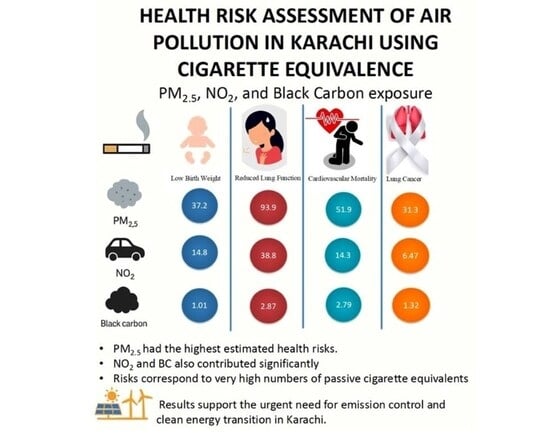
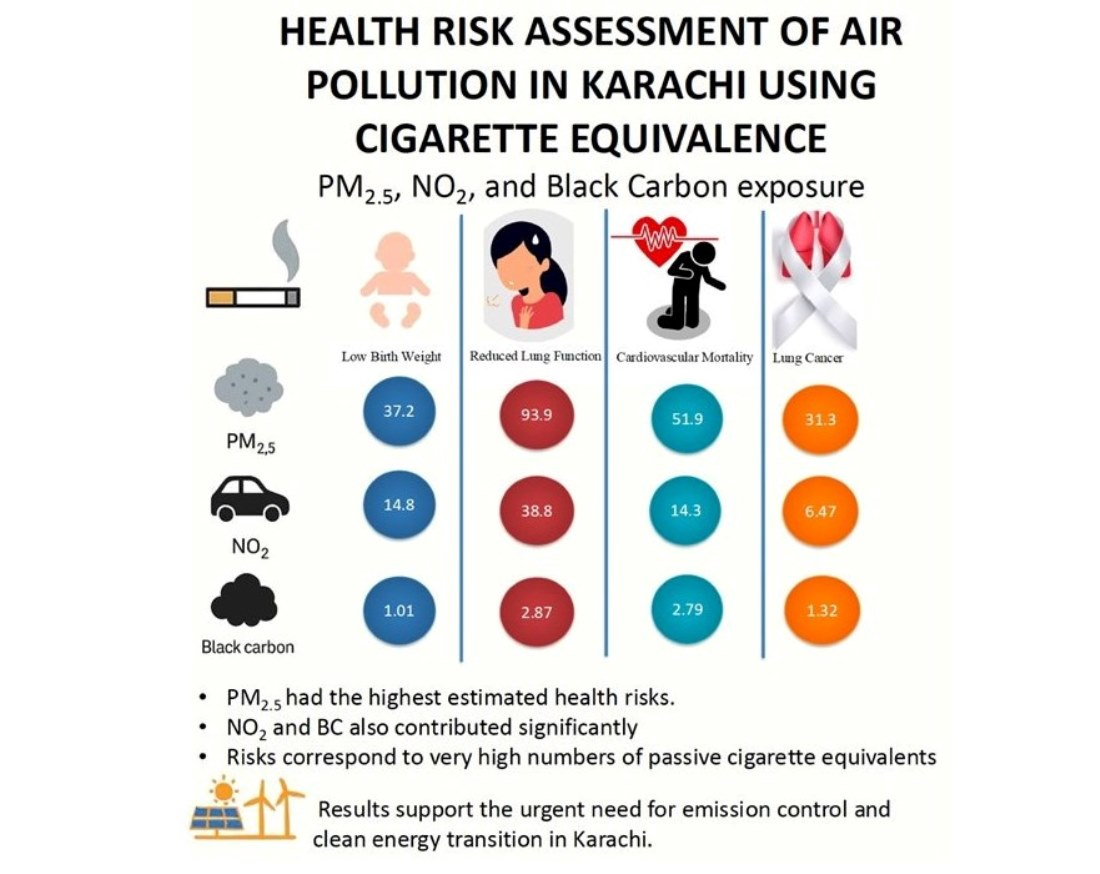
Graphical Abstract

1. Introduction

Air pollution significantly affects mortality and health, making it a major global public health concern [1]. Over 90% of people worldwide are breathing air that is considered unhealthy [2]. A recent report from the World Health Organization (WHO) identifies air pollution as the top environmental health risk worldwide, contributing to over 7 million premature deaths annually. Outdoor air pollution leads to 4.2 million deaths, and indoor air pollution accounts for around 3 million deaths. At the regional level, South Asia has become the world’s most polluted region, with 2.6 million deaths attributed to outdoor air pollution. This increase in estimated deaths is not due to a surge in pollution levels but rather to improved understanding of how air pollutants contribute to a range of health conditions, including cardiopulmonary diseases, cancer, diabetes, obesity, neurodegenerative disorders, mental health issues, low birth weight, respiratory diseases, tuberculosis, and reduced life expectancy [3,4,5,6,7]. Researchers recently estimated that poor air quality contributes to 349,681 pregnancy losses annually across India, Pakistan, and Bangladesh [8].
The simultaneous rise in population growth, urban development, industrial expansion, energy consumption, and vehicle numbers is leading to a dangerously high increase in air pollution, posing serious health risks in Pakistan’s urban areas, which have a population of 240 million. Among South Asian countries, Pakistan has the fastest urban growth and was ranked the third most polluted country in 2022 [9]. Nearly the entire population lives in urban areas where fine particulate matter (PM2.5) concentrations surpass the WHO’s recommended limit of 5 µg/m3 [10,11,12,13,14]. A wide range of premature deaths (22,064–159,200) and 163,432 DALYs (disability-adjusted life years) are caused by outdoor air pollution in Pakistan each year [11,15,16,17,18]. The health consequences of air pollution impose a significant economic burden. According to the WHO [18] estimate, the yearly cost of ambient air pollution in Pakistan could surpass USD 47 billion. Despite this burden, even in Pakistan’s largest cities, little is known about the full scope and health effects of environmental pollutants.
Karachi has a population of more than 30 million, representing ~13% of Pakistan’s total population. It ranks among the world’s most polluted megacities, posing significant risks to human health. This is primarily due to pollutants resulting from burning fossil fuels, a huge and varied industrial base, increased vehicular traffic (4.14 million vehicles), as well as open burning of city waste and incineration [14,19]. According to a 2019 study of 100 major cities, the city has the most inefficient public transport system in the world [20].
Previous evidence from Karachi and comparable South Asian megacities reported persistently elevated PM2.5 and traffic-related pollutants, with strong spatial contrasts driven by land use and proximity to major sources. In Karachi, contributions were attributed to resuspended soil and road dust, vehicular emissions from a rapidly growing fleet, large industrial estates, port and shipping activities, widespread operation of diesel-powered generators during electricity shortages, and open burning of municipal waste and biomass, with secondary aerosol formation and regional transport also influencing the urban pollution mixture [14,19]. These findings supported recurring recommendations for strengthened air quality management, including expanded and better distributed monitoring networks, tighter industrial emission controls, improved vehicle inspection and emission standards, cleaner fuels, restrictions on open burning, and investments in efficient public transportation. Despite this progress, much of the Karachi-focused literature reported pollutant levels and source contributions without translating multi-site exposure measurements into an easily interpretable health risk metric that could be communicated consistently across technical, policy, and public audiences.
Urban vegetation, including street trees and other forms of green infrastructure, has been described as an ecosystem service that can contribute to improved urban air quality by increasing dry deposition and capturing airborne pollutants on leaf surfaces and, in some contexts, by supporting removal of toxic contaminants from the urban atmosphere.
Ahmad et al. [10] modeled risk evaluation of environmentally persistent free radicals (EPFRs) by translating the inhaled EPFRs levels into an equivalent number of cigarettes smoked daily per person. EPFRs in both PM2.5 and cigarette smoke were shown to have comparable toxicity. Van der Zee et al. [1] created a method to quantify the health risks of air pollution from PM2.5, nitrogen dioxide (NO2), and black carbon (BC) in terms of the equivalent number of passively smoked cigarettes (PSCs), which we applied in the present study. Recently, Ambade and Sankar [21], Pani et al. [22], and Wu et al. [23] have used the approach of Van der Zee et al. [1] to evaluate the risk of other diseases relative to PSCs. Until now, there has been little information on the effects of air pollution on health outcomes like low birth weight. This study aims to evaluate the health risks faced by Karachi’s local population due to exposure to PM2.5, NO2, and BC, translating these risks into equivalent numbers of PSCs with a focus on four key health outcomes: low birth weight, impaired lung function, cardiovascular mortality, and lung cancer.
Because comprehensive multi-site monitoring remains limited in many settings, the present historical dataset provides a multi-site baseline for Karachi and motivates the need for updated measurements to evaluate how present-day conditions compare with the baseline reported here. In this study, we extended prior Karachi air pollution research by converting measured PM2.5, BC, and NO2 concentrations into passively smoked cigarette (PSC) equivalents for four policy relevant health endpoints: low birth weight, decreased lung function (FEV1), cardiovascular mortality, and lung cancer. This approach provided an accessible way to compare risks across pollutants, locations, and seasons, identify high burden settings within the city, and highlight emission sectors where interventions were likely to yield the greatest public health benefit, particularly traffic corridors, industrial zones, port influenced areas, and locations impacted by open burning. By linking measured concentrations to PSC-equivalent risks using established exposure–response functions, this study complemented existing source apportionment and monitoring efforts and strengthened the public health rationale for targeted emission reduction strategies in Karachi.

2. Materials and Methods

2.1. Sampling Site

Karachi, the largest, most industrialized, and wealthiest city in Pakistan, lies in the southeastern region of the country on the Arabian Sea (latitude 24°51′ N, longitude 67°02′ E). The city encompasses 18 urban and suburban towns, along with six cantonments, covering a total area of 3527 km2. Karachi has an arid climate, characterized by hot summers, mild winters, and limited rainfall (203 mm) during the monsoon season from June to August. Humidity levels are high, ranging from 58% in December (the driest month) to 85% in August (the wettest month). The average monthly temperature varies from 13 °C in January and February to 34 °C in May and June [24].
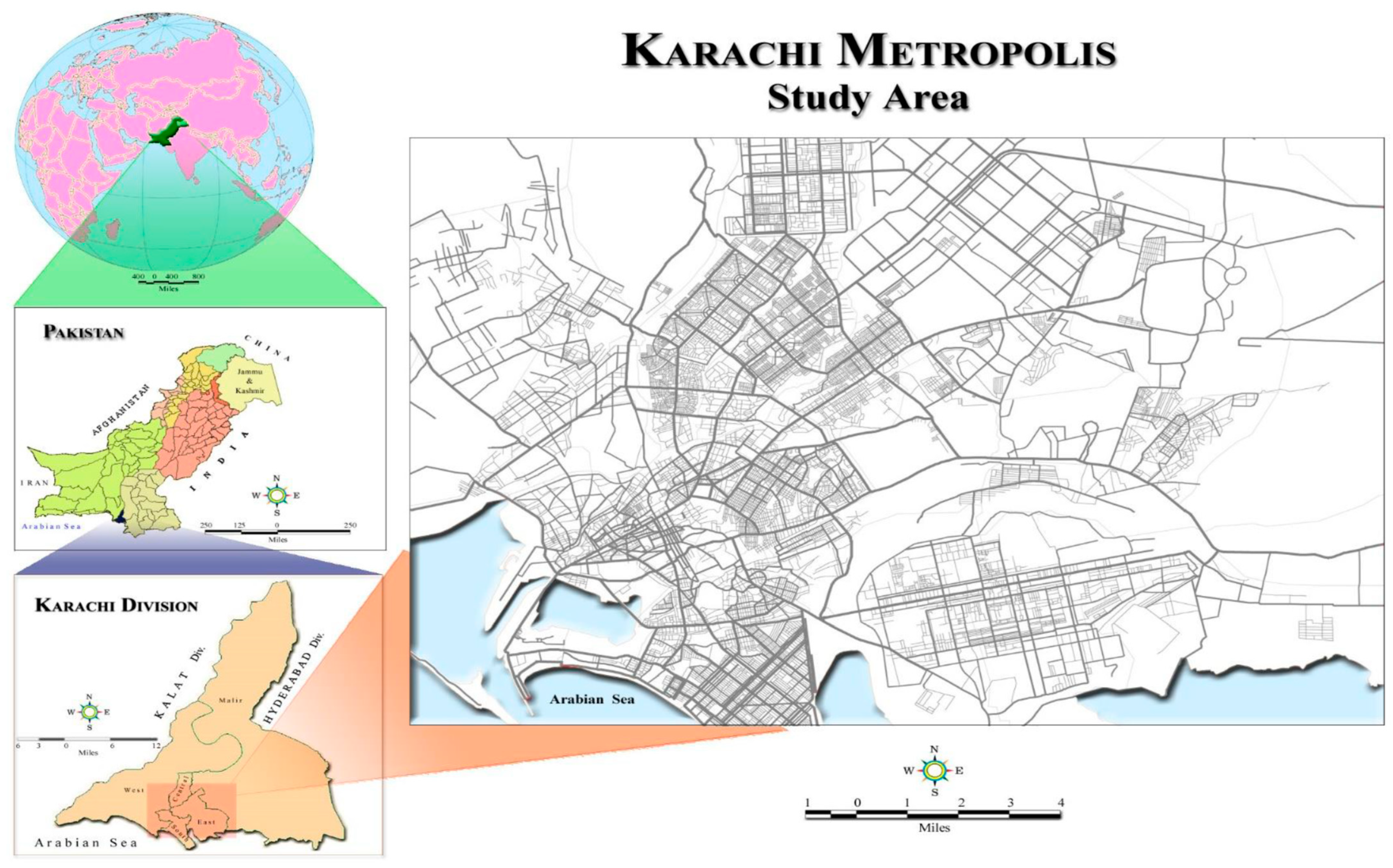
Karachi is home to a significant industrial base, both within the city and its surrounding areas, which includes four key industrial zones: the Sindh Industrial Trading Estate (SITE) with 2000 industrial units, the Korangi industrial area with 3000 facilities, the Landhi industrial area, and the North Karachi industrial area with 2000 units. Karachi’s industrial sector is diverse and includes key industries such as oil-fired power plants, cement, textiles, steel, scrap metal recycling, shipping, railroad yards, foundries, oil refineries, petrochemicals, automotive manufacturing, pharmaceuticals, printing and publishing, food processing, paper, chemicals, glass and ceramics, beverages, grain mills, batteries, tanneries, brick kilns, and various light industries. The city also faces issues related to solid waste incineration and the open burning of municipal waste, further contributing to air pollution [24]. For clarity in interpreting Figure 1, Karachi’s major industrial zones include the Sindh Industrial Trading Estate (SITE), Korangi, Landhi, and North Karachi, while port- and shipping-related industrial activity is concentrated in coastal districts such as Kemari. Our sampling design intentionally included sites influenced by these industrial and port-related activities (for example, Korangi, MAKRO, and Kemari) as well as mixed-use or residential settings (for example, Tibet Center, Malir, and Karachi University), as summarized in Table S1.
PM2.5 sampling was conducted at six fixed locations across all four seasons of the year. The first two sites, Tibet Center (commercial/residential in Saddar town) and Korangi (industrial/residential), were sampled between 2008 and 2009 (Figure 1). The six sites were intentionally chosen to represent a broad spectrum of Karachi’s air quality patterns, covering both high-pollution industrial zones (e.g., Korangi, Kemari) and relatively lower-pollution residential or mixed-use areas (e.g., Malir, KU). This approach minimizes bias toward only high-exposure areas while still capturing major emission sources. Kemari, Karachi’s primary coastal town, is situated in the western part of the city and includes the Port of Karachi, while Malir is in the east. Both the former fishing port of Kemari and the rural area of Malir have evolved into residential districts, driving the expansion of Karachi’s urban landscape. These sites were selected due to Kemari’s status as an industrial hub and major seaport involved in cargo and coal transport, while Malir is a residential area situated near Korangi, an industrial zone with numerous nearby factories. A detailed summary of the six sampling sites, including classification, coordinates, and sampling periods, is provided in Supplementary Table S1.
Daily meteorological data, including temperature, relative humidity, wind speed, wind direction, and precipitation, were obtained from the Pakistan Meteorological Department for the entire study period. These variables are known to influence the formation, dispersion, and accumulation of air pollutants and thus provided important background context for our analysis. Although we did not formally integrate these meteorological parameters into regression or normalization models due to the exploratory design of this study, they were systematically reviewed alongside pollutant measurements to help interpret seasonal and spatial variability. Low wind speeds and stable atmospheric conditions in the winter months are expected to limit dispersion and favor pollutant buildup, while stronger winds and increased precipitation during summer contribute to pollutant dilution and removal. By qualitatively considering these meteorological influences, we aimed to provide a more comprehensive understanding of the observed trends, while recognizing that a full meteorological adjustment lies beyond the scope of this initial multi-site assessment.

2.2. Sample Collection and Analysis

At each site, PM2.5 samples were collected for 24 h at a time, over a six-week period during each of the four quarters (January–March, April–June, July–September, and October–December). The sampling setup included a pre-weighted 47 mm 2.0 µm polytetrafluoroethylene (PTFE) filter and a pump operating at 16.7 L/min. Filters were conditioned in a temperature- and humidity-controlled room for at least 24 h before and after sampling. A microbalance was used to measure the filter weights (ATI CAHN, Model C-44, Madison, WI, USA). The microbalance (ATI CAHN, Model C-44) had a manufacturer-stated readability and was operated in a temperature- and humidity-controlled weighing room after at least 24 h of filter conditioning. PM2.5 mass concentrations were calculated in µg/m3 by subtracting the pre-sampling filter weight from the post-sampling weight and then dividing by the total volume of air sampled (m3).
BC on PM2.5 was measured with a non-destructive Dual-Wavelength Optical Transmissometer (Model OT-21, Magee Scientific Company, Berkeley, CA, USA), which uses two wavelengths: 370 nm (BCUV) and 880 nm (BCIR). To ensure the accuracy and reliability, all instruments were factory-calibrated before deployment, recalibrated every three months, and cross-checked between identical devices during site rotations. A stringent quality assurance/quality control (QA/QC) plan was implemented during the investigation. Further information on sample collection and analytical procedures is provided [14,24]. An approximate measurement uncertainty for PM2.5 mass concentration can be estimated by propagating uncertainty in filter mass (from balance readability and weighing conditions) and uncertainty in sampled air volume (from flow rate calibration and sampling duration). Specifically, uncertainty in PM2.5 concentration reflects the combined uncertainty of the mass difference between post-sampling and pre-sampling filter weights and the uncertainty in total sampled volume. This uncertainty estimate was intended to characterize measurement precision for PM2.5 determination and did not change the PSC equivalent risk calculations, which were based on the measured concentrations.
All sampling and laboratory procedures followed established ambient air monitoring practices for 24 h integrated PM2.5 sampling, including filter conditioning under controlled temperature and humidity, pre- and post-weighing using a calibrated microbalance, field handling procedures to minimize contamination, and routine instrument calibration and inter-comparison during site rotations. QA/QC included the use of conditioned filters, standardized flow operation, scheduled recalibration, and cross-checks among identical instruments to ensure measurement reliability and comparability across sites and seasons.
Missing values were primarily due to invalid or incomplete sampling days (for example, flow interruption, filter damage, or documented handling issues) identified during QA/QC review. Such observations were excluded, and missing data were not imputed. Descriptive statistics and PSC equivalent calculations were conducted using the available valid measurements for each site and campaign, so the effective number of observations could vary across sites and seasons.
Daily samples of NO2 concentrations were collected over six consecutive weeks across four seasons at the Tibet Center (Saddar Town; Figure 1), located along M.A. Jinnah Road—the busiest route in the area with over 300,000 vehicles passing daily. This site was selected for NO2 due to its central, high-traffic location, representing a conservative estimate of urban exposure. We acknowledge that single-site NO2 monitoring may not capture the full spatial variability across Karachi; this limitation is noted in the Discussion section. Although Tibet Center was chosen for NO2 monitoring because of its central location and high traffic density, we acknowledge that measurements from a single site may not fully represent spatial variability across Karachi. Therefore, NO2 values reported here should be interpreted as conservative estimates of exposure in high-traffic urban areas rather than citywide averages. Every effort was made to prevent contamination during the sampling, handling, and analysis processes. A comprehensive description of the sample collection, analysis procedures, and QA/QC measures can be found in Moyebi et al. [19].
Data sources were as follows: (i) PM2.5 mass concentrations were obtained from 24 h integrated filter based field sampling at six fixed sites, (ii) BC was quantified from the same PM2.5 filters using a dual wavelength optical transmissometer, (iii) NO2 concentrations were obtained from field sampling at the Tibet Center site following the procedures described in Moyebi et al. [19], and (iv) health risk conversion factors and PSC equivalence estimates were obtained from published epidemiological evidence as compiled by Van der Zee et al. [1]. No cooperating institution provided individual health records for this analysis.
Ethical considerations: This study relied on ambient air pollutant concentration measurements and literature-based exposure–response functions and did not involve human participants, medical records, or identifiable personal data. Therefore, institutional ethical approval and informed consent were not required.

2.3. Health Risk Assessment

This study did not collect or analyze individual-level human health outcome data, hospital records, birth registries, or survey data. Health risks were estimated using published exposure–response relationships and relative risks for environmental tobacco smoke and ambient air pollutants compiled by Van der Zee et al. [1] and supporting epidemiological studies cited therein. Therefore, the health endpoints evaluated in this manuscript represent modeled estimates derived from measured pollutant concentrations and literature-based concentration–response functions, not direct observations from Karachi health databases or field enrolled participants.

2.3.1. Choosing Health Outcomes

We assessed the health risks of the four categories of disease resulting from PM2.5, NO2, and BC exposure in adults and children. These are low birth weight (less than 2.5 kg at term), impaired lung function (Forced Expiratory Volume in 1 s), cardiovascular mortality, and lung cancer. These endpoints were selected based on strong and well-documented concentration–response relationships for the pollutants studied. While outcomes such as asthma incidence or COPD exacerbations are also relevant to traffic-related air pollution, they were excluded due to limited consistent epidemiological coefficients for conversion to PSC equivalents. We note in the Discussion section that excluding these outcomes may lead to an underestimation of total health burden.

2.3.2. Environmental Tobacco Smoke Exposure and Health Outcomes Using Exposure–Response Functions

Epidemiological studies often report environmental tobacco smoke (ETS) exposure in categories (e.g., low, moderate, or high exposure) rather than continuous data. Different studies used various cut-off points for categorizing exposure levels [1]. A summary of the risk estimates (with 95% confidence intervals) across these studies for selected health outcomes associated with ETS exposure indicates that the risk estimate for low birth weight is 1.38 (1.13–1.69), while that for impaired lung function in school-aged children is 1.4% (1.0–1.9%), that for ischemic heart disease mortality is 1.27 (1.19–1.36), and that for lung cancer is 1.21 (1.13–1.30).

2.3.3. Assessment of ETS Exposure

Based on WHO estimates, Van der Zee et al. [1] assumed that smokers in northwestern Europe and the U.S. smoke an average of 14 cigarettes daily, with half of their waking hours spent indoors. This results in an average indoor exposure of seven passively smoked cigarettes per day (PSCs). For children subjected to parental smoking, 32% are exposed to two smoking parents, leading to an estimated exposure of nine PSCs per day, assuming a linear relationship between PSCs and health outcomes.

2.3.4. Linking Air Pollution Levels to Health Outcomes

To understand the relationship between air pollution and various health outcomes, concentration–response functions were used. These functions quantify the impact of changes in pollutant levels on health by calculating a regression coefficient (β) for each pollutant and health outcome. The coefficient for air pollutants such as PM2.5, NO2, and black carbon (BC) was derived based on changes in concentration levels of 10 µg/m3 for PM2.5 and NO2, and 1 µg/m3 for BC. For ETS, a similar regression coefficient was calculated using an assumed daily exposure of nine passive cigarettes for children and seven passive cigarettes for adults [1]

2.3.5. Estimation of Passive Cigarette Equivalents

To facilitate the comparison of health risks across various pollutants, a ratio was calculated to express the concentration of pollutants in terms of passive cigarette equivalents. This ratio helps contextualize air pollution exposure by equating it to the risk associated with exposure to passive smoking. The ratio of passive cigarette equivalents to a 1 µg/m3 increase in pollutant concentration was determined by comparing the regression coefficients for air pollution and cigarette exposure. We acknowledge that PSC estimates may vary depending on the regression coefficients used; values were drawn from widely cited epidemiological studies to ensure comparability, but the absolute numbers should be interpreted with this variability in mind.
The standard error (SE) of the ratio was also computed to account for variability, providing a more precise estimate of passive cigarette equivalence. This allowed for the calculation of passive cigarette equivalence for any given change in pollutant concentration, along with its associated standard error [1].
Repeated validation strategies such as k-fold cross-validation, train–test splits, or bootstrap validation were not performed because PSC-equivalent risks were calculated deterministically using published coefficients rather than derived from a predictive model trained on the Karachi dataset. Consistency checks focused on measurement QA/QC, instrument calibration, and adherence to standardized sampling protocols, which ensured comparability of concentrations across sites and seasons.

2.3.6. Risks of PM2.5, BC, and NO2 in Terms of PSCs

The health risks of each of the four categories of diseases for PM2.5, BC, and NO2 were obtained as compiled by Van der Zee et al. [1]. Various studies providing relative risks and health outcomes for different pollutants may contribute to the variability in terms of secondhand cigarette equivalents. In terms of reductions in lung capacity, air pollution equals relatively large numbers of passive cigarette equivalents, while in terms of lung cancer, fewer passive cigarette equivalents are involved. PM2.5 health risk for low birth weight was calculated to be 3.8 (Standard error SE = 2.3), decreased lung function 9.6 (SE = 5.8), cardiovascular mortality 5.3 (SE = 1.5), and lung cancer 3.2 (SE = 1.0) [1], while NO2 health risk for low birth weight was 1.3 (SE = 0.7), decreased lung function 3.7 (SE = 2.0), cardiovascular mortality 3.6 (SE = 0.8), and lung cancer 1.7 (SE = 0.6). BC health risk for low birth weight was 3.2 (SE = 2.7), decreased lung function 8.4 (SE = 3.3), cardiovascular mortality 3.1 (SE = 1.1), and lung cancer 1.4 (SE = 1.4). PM2.5 has a higher health risk compared to BC and NO2 for all these diseases. We used R studio software Version 2025.05.1+513 to generate figures to depict the health risks for reduced birth weight, decreased lung function, cardiovascular mortality, and lung cancer, based on exposure to PM2.5, BC, and NO2 [1].

2.4. Statistical Analysis

This study was designed as an exposure characterization and health risk translation analysis based on measured ambient pollutant concentrations, rather than an inferential epidemiologic study that modeled individual health outcomes. Accordingly, the statistical analyses consisted of two components: (i) descriptive statistics to summarize measured concentrations of PM2.5, BC, and NO2 across sites, seasons, and sampling periods, and (ii) deterministic PSC equivalent risk estimation using published exposure–response functions and PSC conversion factors from Van der Zee et al. [1].
Because this study was based on fixed-duration seasonal monitoring campaigns and did not fit inferential models to estimate new exposure–response parameters, formal sample size or power calculations were not performed. The number of samples reflected the monitoring design of 24 h integrated measurements collected over six-week campaigns in each season at fixed sites, with additional QA/QC screening to retain valid samples. Variable selection procedures were not used because the PSC-equivalent risks were computed from measured pollutant concentrations using published exposure–response coefficients [1], rather than selecting predictors for a fitted statistical model. Likewise, significance test thresholds (for example, p value cutoffs) were not applicable because no hypothesis tests were conducted in this risk translation framework.
Descriptive statistics included site- and season-specific means, standard deviations, ranges, and time series visualization of pollutant concentrations and PSC-equivalent risks. Because PSC equivalents were computed directly from measured concentrations using fixed coefficients, no hypothesis tests were conducted and no p value thresholds were applied. We did not fit regression models, perform variable selection, or estimate new exposure–response parameters from these data.
Formal sample size or power calculations were not applicable because the analysis did not estimate effect sizes from a fitted statistical model and did not test statistical hypotheses. Similarly, inferential elements such as significance thresholds, confidence level selection for model parameters, repeated cross-validation, and external validation procedures were not performed because PSC equivalents were derived from published coefficients rather than trained or optimized using the Karachi dataset. Uncertainty information reported for PSC conversion factors followed Van der Zee et al. [1], including the standard errors used in those conversions.
Data completeness was assessed at the daily sample level for each pollutant. Samples that were invalid due to flow problems, filter damage, or documented handling issues were excluded according to the QA/QC protocol. Missing observations were not imputed; instead, descriptive summaries and PSC calculations were based on available valid measurements for each site and campaign. Therefore, denominators could vary slightly across sites and seasons, and the figures and tables reflect the set of valid samples retained after QA/QC screening.

3. Results and Discussion

3.1. Spatiotemporal Variation in PM2.5, BC, and NO2

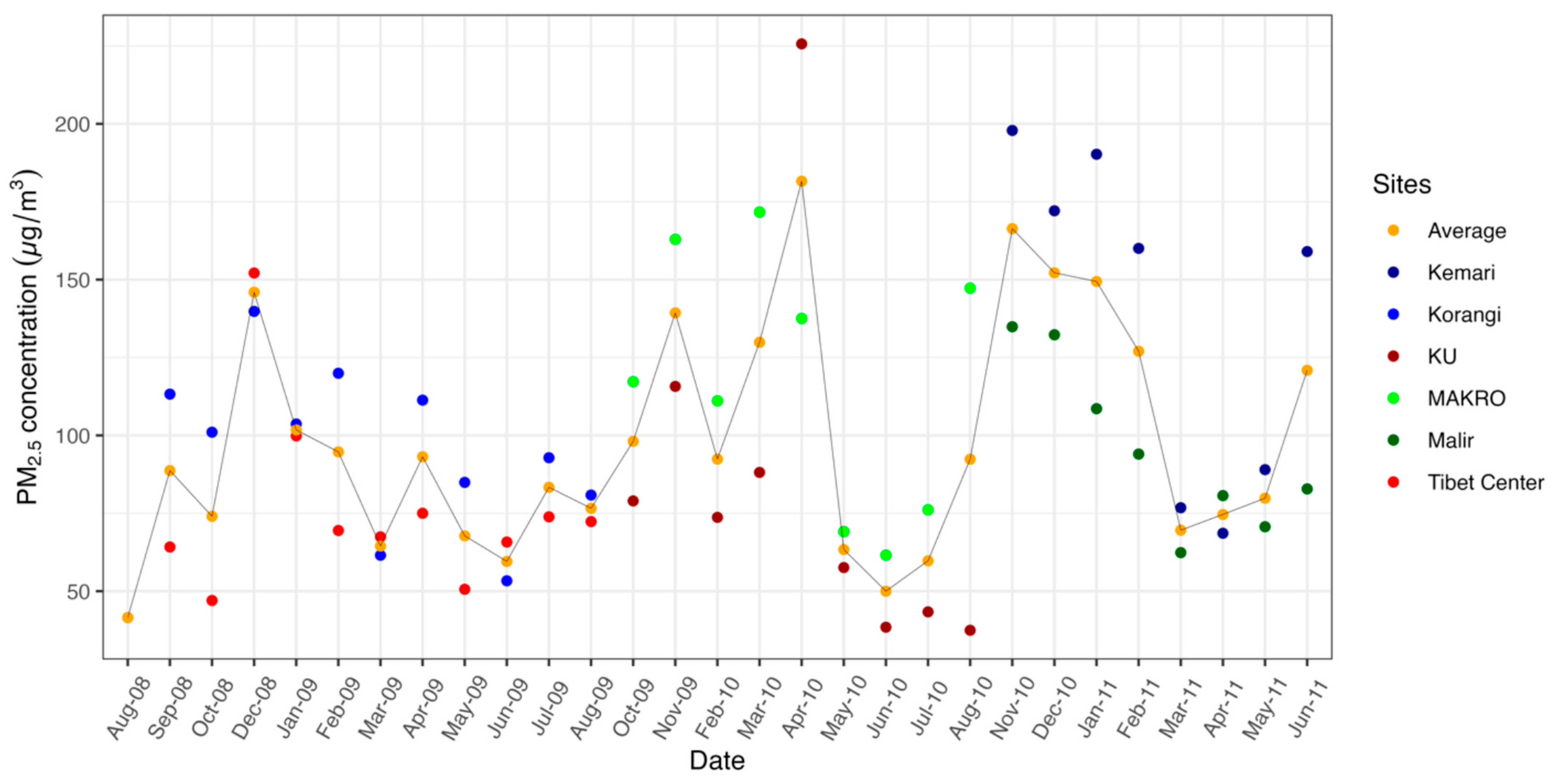
PM2.5 is among the most harmful air pollutants. Ambient PM2.5 was ranked as the fifth leading global mortality risk factor in 2015, contributing to 4.2 million deaths [16]. Figure 2 displays the variation in PM2.5 mass concentrations between different sites (Kemari, Korangi, KU, MAKRO, Malir, and Tibet Center) and campaigns. The yellow dots represent the average concentrations across six sites. PM2.5 levels in Karachi are consistently high, with daily pollution levels typically elevated. However, there are occasional sharp peaks in pollution, which sometimes surpass 200 μg/m3. These extreme peaks were temporally linked to short-term events such as periods of intensified vehicular and industrial activities and open burning of biomass. The WHO’s 24 h air quality guideline for PM2.5 is 15 μg/m3, meaning that the average PM2.5 concentrations in Karachi significantly exceed this recommended limit. A comparison of the PM2.5 concentrations with globally observed values shows that PM2.5 has remarkably high levels in Karachi (Europe and USA: 5.96 < CPM2.5 < 30 μg/m3; Asia: 26 < CPM2.5 < 169 μg/m3) [25,26,27,28,29]. Although concentration differences largely explain the magnitude of contrasts reported here, cross-city comparisons should also be interpreted in light of differences in baseline population health and demographics (for example, age structure and prevalence of cardiopulmonary conditions), as well as exposure patterns such as housing characteristics, ventilation, time spent outdoors, and co-exposures (including smoking prevalence). These contextual factors can influence susceptibility and real-world risk profiles, even when the same exposure–response framework is used for translation.
PM2.5 levels were generally different among the years of sampling and seasons, with higher levels during 2010. A noteworthy observation is that the Korangi, MAKRO, and Kemari sites are typically more polluted than Tibet Center, KU, and Malir, which is likely reflective of the industrial activity in Korangi and MAKRO and the industrial and port activity in Kemari. The PM2.5 mass concentration was higher during the winter season compared to the summer. This can be attributed to limited air dispersion. In contrast, BC levels at Korangi peaked in summer, likely due to greater use of diesel-powered industrial generators during widespread electricity shortages, while PM2.5 peaks in winter are mainly driven by reduced atmospheric mixing and increased stability.
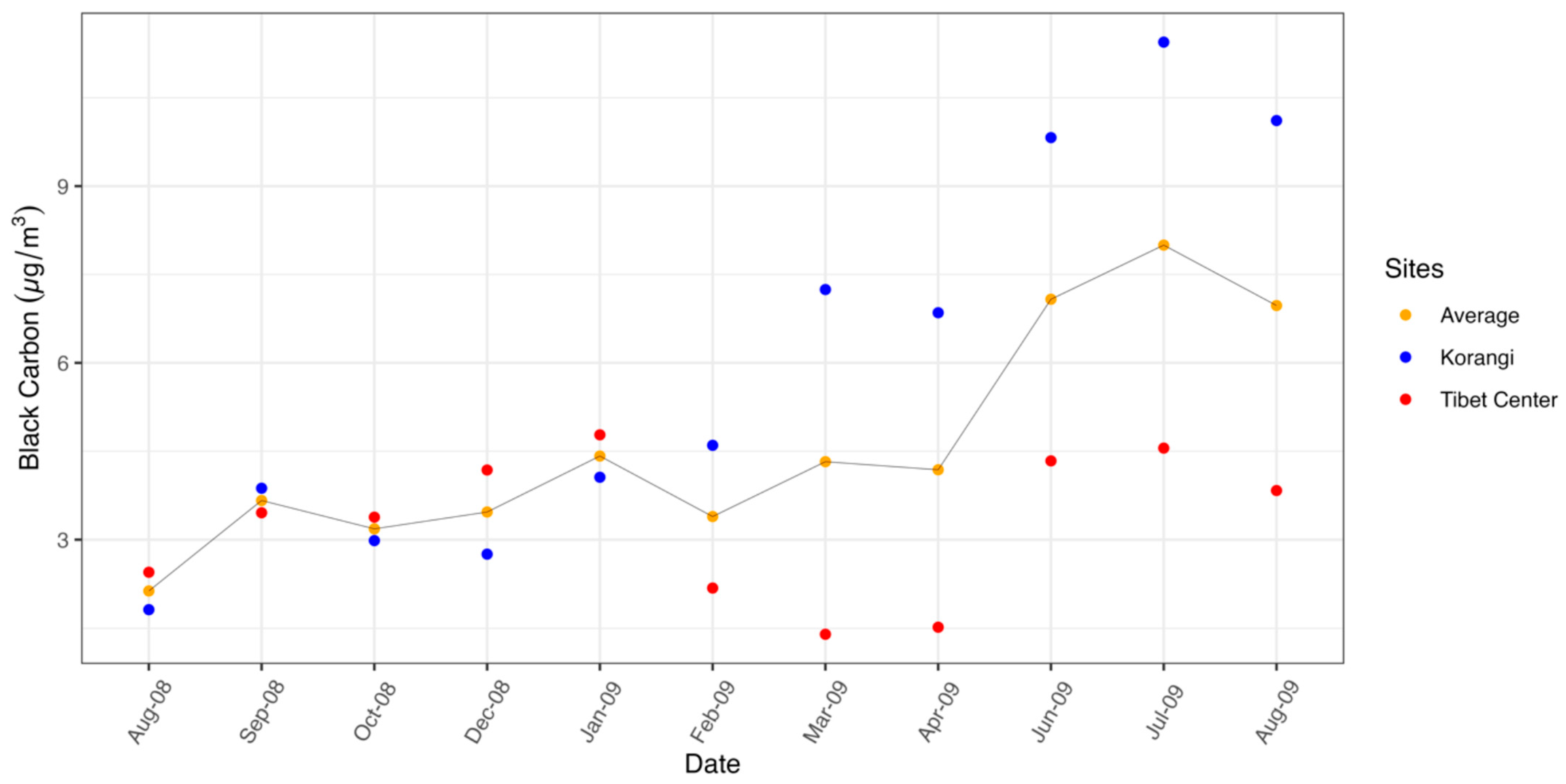
Black carbon is a key component of PM2.5 and a potent air pollutant. It strongly ab-sorbs incident solar radiation, contributing to positive radiative forcing, driving climate change, and impairing visibility [30,31,32]. Although BC is believed to be inert, the consequences of combustion processes are the coating of BC with carbonaceous species, which have been demonstrated to exhibit carcinogenic and mutagenic properties [33,34]. The International Agency for Research on Cancer (IARC) has classified BC as a group 2B carcinogen. Figure 3 illustrates the average monthly BC concentrations at the Korangi and Tibet Center sites during the campaigns of the present study. At the Korangi site, daily BC concentrations fluctuated significantly from 0.059 to 24.2 μg/m3 with an average of 5.53 ± 4.28 μg/m3, contributing, on average, 5.5% to the total PM2.5. Daily BC concentrations at the Tibet Center varied from 0.099 to 9.74 μg/m3 with an average of 3.44 ± 1.93 μg/m3, accounting for an average of 4.5% of the total PM2.5. This is indicative of a significant contribution of the total PM2.5 mass concentration. In general, the atmospheric loading of BC was higher in the Korangi samples than in the Tiber Center samples. A likely cause for the increased BC concentrations at the industrial Korangi site is the contribution of anthropogenic activities such as industrial and vehicular traffic.
Monthly average PM2.5 BC concentrations ranged from a low of 1.40 μg/m3 in March 2009 at the Tibet Center to a high of 11.4 μg/m3 in July 2009 at the Korangi site. In contrast to the trend observed at the Tibet Center, BC concentrations at Korangi were at their peak in the summer and at their lowest in the winter. This difference in seasonal behavior between BC and PM2.5 supports the idea that they have different dominant sources, with BC more tied to combustion from vehicular traffic and the use of generators and PM2.5 more influenced by dust and secondary aerosols that accumulate during stable winter conditions. This seasonal variation at Korangi is thought to be influenced by the operation of industrial power generators, which are heavily relied upon during citywide power outages.
Meteorological conditions contributed significantly to the observed seasonal patterns. Elevated PM2.5 concentrations in winter were linked to reduced atmospheric mixing, low boundary-layer heights, and temperature inversions that limited dispersion and trapped pollutants near the surface. In contrast, higher BC levels during summer were driven not only by the widespread use of diesel-powered generators during electricity shortages but also by prevailing southwesterly winds that transported industrial emissions into residential zones. These meteorological influences provide important context for interpreting seasonal variability, even though no formal meteorological normalization or regression analysis was applied in this study.
The BC levels in Karachi exceed those observed in cities across Europe and USA (0.64 < CBC < 2.1 μg/m3) [35,36,37,38] and are similar to or lower than the levels measured in urban centers of Asia and South America (1.6 < CBC < 10.6 μg/m3) [39,40,41].
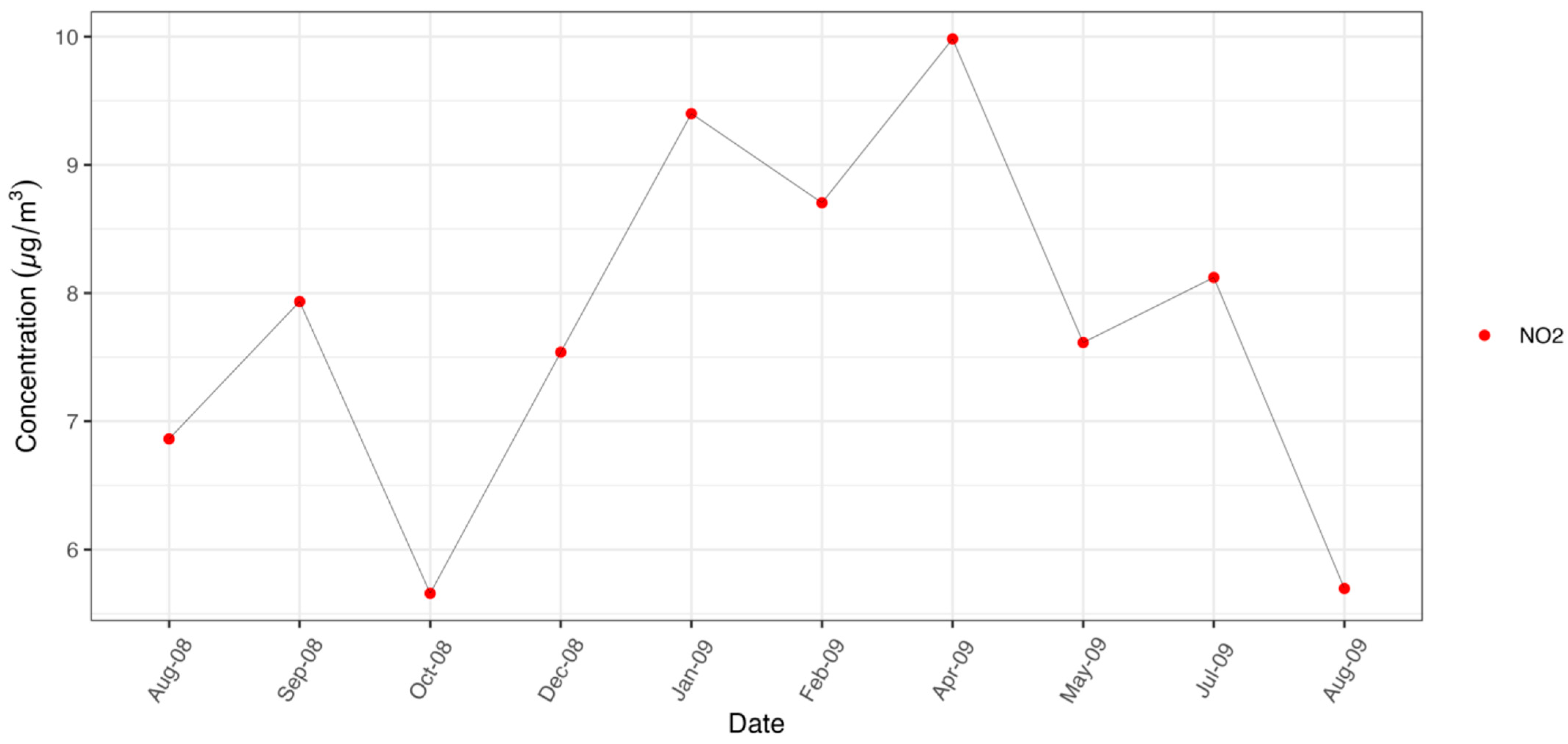
Epidemiological studies have shown that ambient gaseous air pollutants (e.g., NO2, SO2, O3) exacerbate emergency hospital admissions or mortality and are associated with cardiovascular, neurologic, preterm birth, and cardiopulmonary diseases [42,43,44,45]. Because NO2 monitoring was conducted only at the Tibet Center site, a central high-traffic urban corridor, the NO2 concentrations and associated PSC equivalent risks reported here should be interpreted as representative of exposure in a high-traffic setting rather than as citywide averages for Karachi. Temporal variations in NO2 concentrations at Tibet Center are depicted in Figure 4. Daily average of NO2 level ranged from 0.62 to 52.8 μg/m3 during the study period. Seasonally, monthly average concentrations of NO2 are higher in winter (9.1 ± 6.3 μg/m3) and lower in summer (7.1 ± 6.4 μg/m3) (Figure 4). The winter peak may be due to increased atmospheric stability and shallow boundary layer height with limited air dispersion. The daily maximum concentrations of NO2 in this study (52.8 μg/m3) are higher than the values in cities of Spain (16.9 μg/m3; [46]), Argentina (20.1 μg/m3; [47]), and Japan (34.8 μg/m3; [48]). However, NO2 levels are comparable to Sao Paolo, Brazil (47.0 μg/m3; [47]); Tokyo, Japan (54.5 μg/m3; [47]); London, UK (55.3 μg/m3; Jakarta, Indonesia (56.0 μg/m3; [49]); Mexico City, Mexico (56.4 μg/m3; [50]); Cairo, Egypt (58.3 μg/m3; [47]); and Bogota, Columbia (62.4 μg/m3; [45]).

3.2. Sources of PM2.5, BC, and NO2

PM2.5 can be directly released from both natural and human-made sources or formed by gas-phase reactions, condensation, coagulation, or gas-to-particle conversion. Consequently, it may contain a broad range of chemical compounds (crustal dust, organic and elemental carbon, inorganic ions formed from secondary reactions of gaseous precursors, and trace elements). Depending on the location and season, primary sources of PM2.5 include vehicle emissions, industrial discharges, coal, oil, biomass burning, and road dust. Earlier studies on source apportionment have been carried out to determine the contributors to air pollution in Karachi [14,51]. A total of five sources were determined from the Positive Matrix Factorization (PMF) analysis: oil combustion (25%); soil and resuspension of urban dust (28%); vehicular emission (23%); sea spray (13%); and industrial emissions (11%) [14]. Source apportionment was not performed as part of the present analysis. The PMF results summarized below were reported in prior Karachi studies and are included here only to contextualize likely contributors to the measured concentrations at our sampling locations. According to the PMF results of Mansha et al. [51], the primary contributors of PM2.5 were soil/road dust, industrial emissions, vehicular emissions, sea salt, and secondary aerosols. Although our study did not directly quantify secondary aerosols, previous work in South Asian megacities suggests that secondary formation can contribute approximately 20–30% of PM2.5 mass, and regional modeling studies indicate similar contributions for Karachi. The source apportionment study by Sharma et al. [52] in Delhi, India, revealed that secondary aerosols accounted for 21.3% of PM2.5, followed by soil dust at 20.5%, vehicle emissions at 19.7%, biomass burning at 14.3%, fossil fuel combustion at 13.7%, industrial emissions at 6.2%, and sea salt at 4.3%.
The common urban sources of BC are incomplete combustion of fossil fuels, exhaust of diesel-powered vehicles, two-stroke vehicles, industrial production, coal-fired power plants, biomass burning, and anthropogenic and naturally occurring soot [36,53,54]. BC in Karachi is primarily believed to originate from diesel vehicles and emissions from coal-based power plants [14]. Goel et al. [55] reported a reduction in BC concentration by 78% during the lockdown period (25 March–31 May 2020) in Delhi, India; fossil fuel burning was identified as the primary source of BC.
Human activities are responsible for most NO2 emissions, mainly from fossil fuel combustion (coal, gas, oil), traffic emissions, and biomass burning. Compressed natural gas (CNG) combustion, both outdoors and indoors, also produces NO2 [56]. Moyebi et al. [19] found that vehicle emissions from two-stroke engine motorbikes and autorickshaws, as well as cars, busses/minibusses, and trucks fueled by gasoline, CNG, and diesel, are presumed to be the most important air pollution sources for NO2 in the megacity Karachi. Seasonal source patterns in the region suggest that crustal dust and sea salt are more prominent during the dry months, while secondary aerosol formation and washout effects influence pollutant levels during the monsoon season.

3.3. Health Effects Due to PM2.5, BC, and NO2

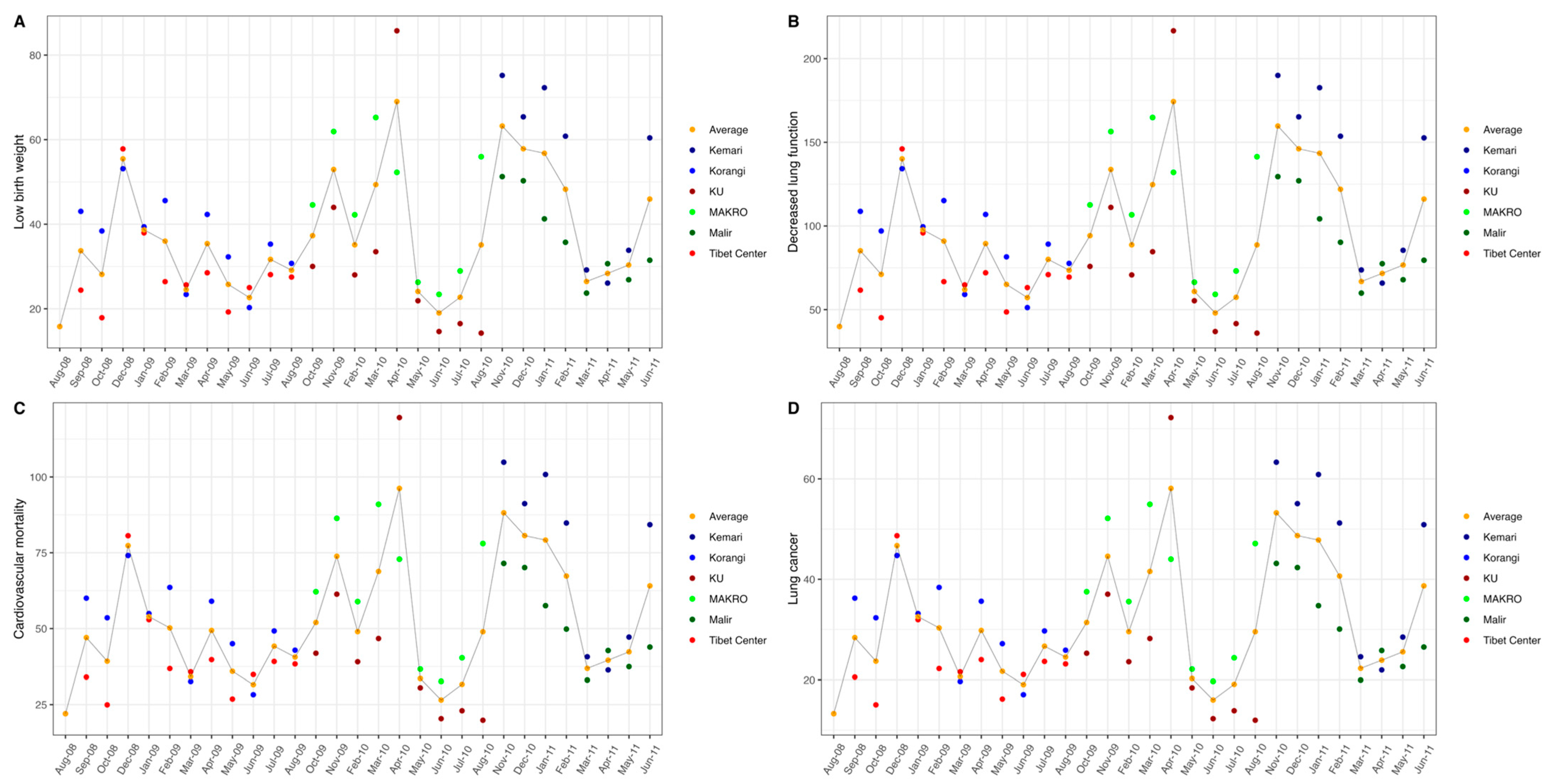
Using the model of Van der Zee et al. [1], we have assessed the health risks associated with PM2.5, BC, and NO2 for four health outcomes. The values described in this section are modeled estimates based on the Van der Zee et al. [1] exposure–response functions, except where explicitly stated as measured pollutant concentrations. The association between ambient PM2.5 and cardiopulmonary diseases has been well-documented in major cities worldwide [24,57,58]. Figure 5 represents the monthly fluctuations of health risks based on exposure to PM2.5 at the Kemari, Korangi, KU, MAKRO, Malir, and Tibet Center sites throughout the study period. Health risks of the residents of these areas are expressed in equivalent numbers of PSCs. As a result of applying the model of Van der Zee et al. [1], we found that based on exposure to PM2.5 at Kemari, Korangi, KU, MAKRO, Malir, and Tibet Center, the range of health risks for low birth weight (<2500 g at term) was 14.2–85.8; for decreased lung function, the range was 35.9–217. The cardiovascular mortality range was 19.9–120, and lung cancer health risk range was 12.0–72.2. The trend of risk follows the trend of PM2.5 pollution. The highest risk of all four health outcomes was due to the peak concentration of PM2.5 at the KU site in April 2010, as is evident in Figure 5. The lowest risk was found to be at the KU site in August 2010. Estimated risks at Kemari, Korangi, and MAKRO were generally higher than at other sites, suggesting that PM2.5 concentration is heavily influenced by industrial and port activities of the surrounding areas of these sites. Differences in health risk estimates between sites such as KU and Tibet Center reflect not only variations in the measured concentrations but also differences in dominant sources, surrounding land use, and local meteorological conditions that can influence pollutant composition and toxicity. Some sharp decreases in estimated risks, particularly for PM2.5, coincided with monsoon months when rainfall likely reduced ambient particle concentrations. No evidence was found for major policy changes during the study period that could explain these drops.
Table 1 summarizes the average monthly fluctuations of health risk expressed as PSCs for four health outcomes throughout the study period, with the highest level of PM2.5 (182 μg/m3) in April 2010 and the lowest level (41.6 μg/m3) in August 2008. As evident from Table 1, estimates for low birth weight (15.8–69.0), decreased lung function (39.9–174), cardiovascular mortality (22.0–96.2), and lung cancer (13.3–58.1) varied by a factor of four and more for PM2.5. The maximum and minimum risks for all health outcomes coincided with the highest and lowest PM2.5 concentrations in April 2010 and August 2008, respectively.
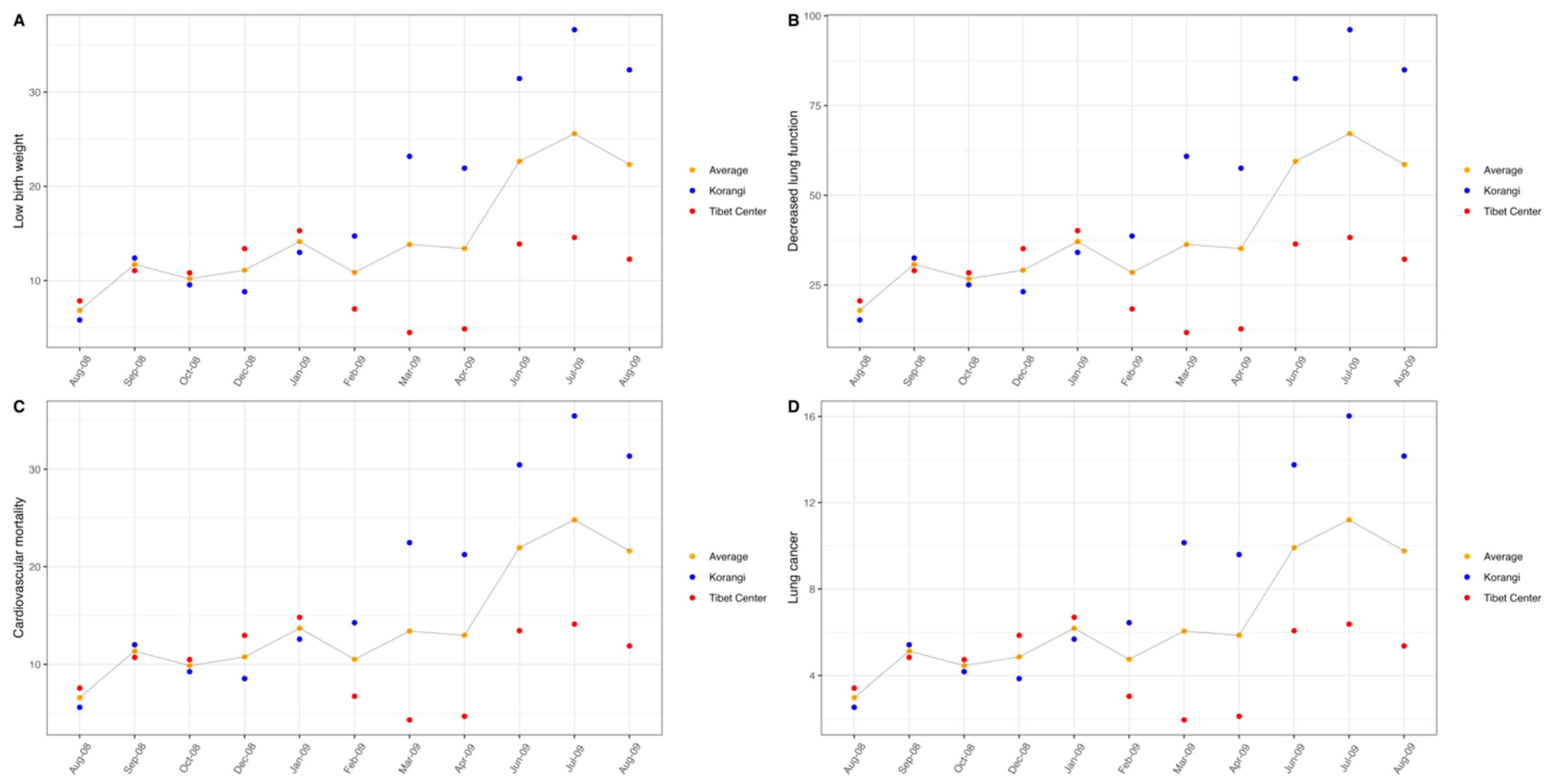
Exposure to ambient BC has been associated with cardiopulmonary diseases [59,60,61], decreased lung function [62], elevated risk of ventricular arrhythmia [63], and neurological effects [64]. Recently, studies have indicated that chronic exposure to BC alters the cell cycle through circulatory inflammation, leading to an increased risk of lung cancer [65]. The monthly variation in health risks based on exposure to BC at the Korangi and Tibet Center sites is graphically presented in Figure 6. The estimated risks varied as follows: low birth weight ranged from 4.48 to 36.6, decreased lung function from 11.8 to 96.1, cardiovascular mortality from 4.34 to 35.5, and lung cancer from 1.96 to 16.0. The risk of all four health outcomes was highest for Korangi in July 2009 and lowest for Tibet Center in March 2009. It is clear from Figure 6 that the health risks at Korangi are generally far higher than those found at the Tibet Center, indicating that BC sources are dominated by industrial emissions.
Table 2 presents the average health risks of people living in Korangi and Tibet Center that are expressed in equivalent numbers of PSCs based on exposure to BC. The Korangi and Tibet Center sites had the highest BC concentration (8.0 µg/m3) in July 2009 and the lowest level (2.13 μg/m3) in August 2008. Throughout the entire sampling period, results reveal that the risk for decreased lung function was the highest with 67.2 equivalent PSCs, followed by low birth weight (25.6 PSCs), cardiovascular mortality (24.8 PSCs), and lung cancer (11.2 PSCs). Similarly to BC concentration, the risk for four health outcomes was found to be highest in July 2009 (Table 2).
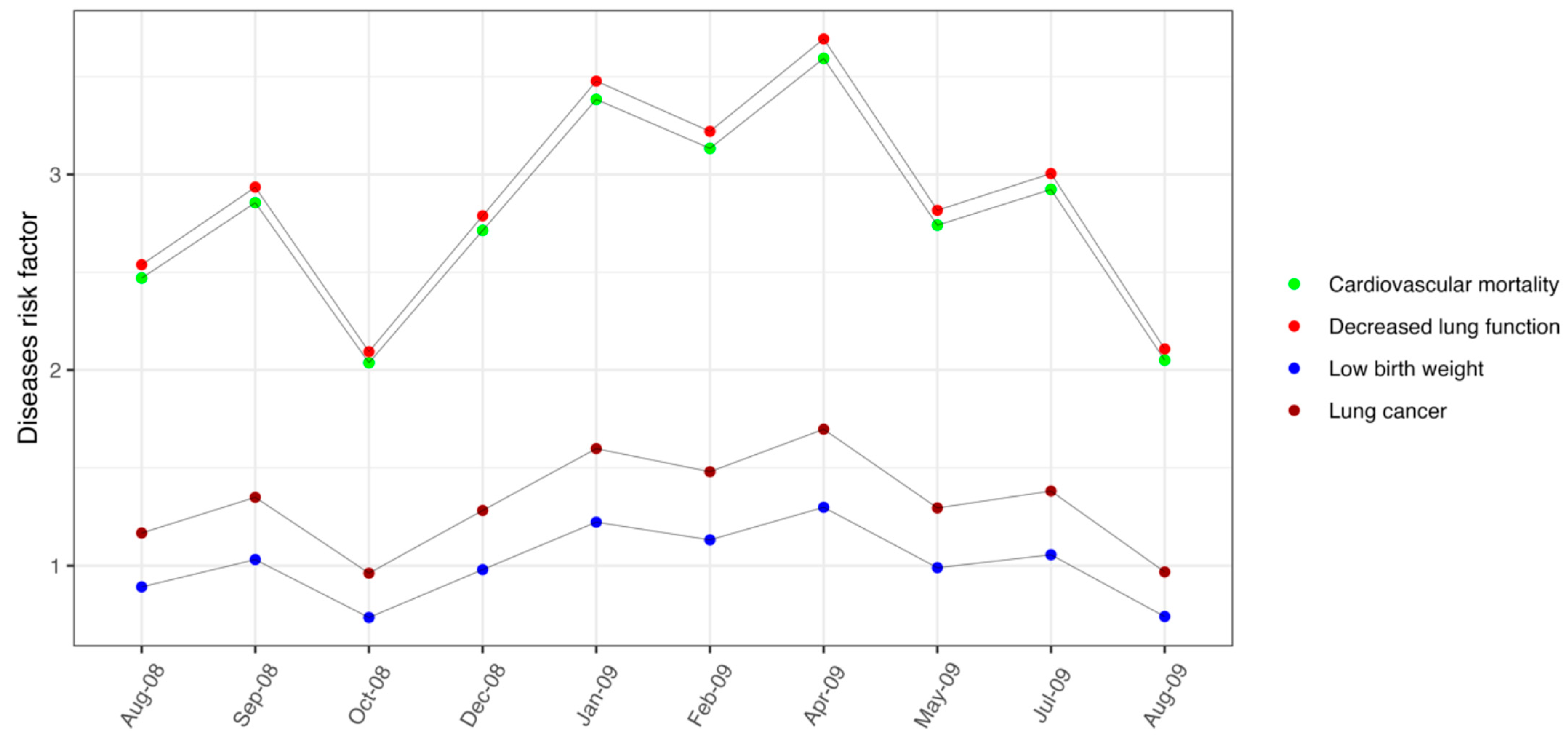
Numerous epidemiological studies have established a connection between rising levels of ambient NO2 and increased mortality, as well as cardiovascular and pulmonary diseases [66,67]. NO2-related PSC-equivalent risks were estimated using measurements from the Tibet Center high-traffic corridor site and therefore reflect a high-exposure urban traffic environment rather than the full spatial distribution of NO2 across Karachi. Since vehicular traffic has the greatest influence on NO2 concentration at Tibet Center, the health impact of NO2 pollutants was evaluated. Figure 7 depicts the monthly variation in health risks due to exposure to NO2 at Tibet Center. The risk for decreased lung function was found to be highest, followed by cardiovascular mortality, lung cancer, and low birth weight. Similar trends were observed among the four health issues across the sampling period, with peaks in September 2008, January 2009, April 2009, and July 2009. The risk was found to be greatest for April 2009 and least for October 2008.
The highest NO2 level was in April 2009 (9.98 μg/m3) and the lowest level was observed in October 2008 (5.66 μg/m3), as is shown in Figure 4 and Table 3. Figure 7 illustrates the health risks based on exposure to NO2 at Tibet Center. The health risk for low birth weight ranged from 1.3 to 0.74 PSCs. The range of health risks of impaired lung function, cardiovascular mortality, and lung cancer was 3.69–2.09 PSCs, 3.59–2.04 PSCs, and 1.7–0.96 PSCs, respectively, as is represented in Table 3. Findings indicated that all four health endpoints displayed similar patterns of NO2 concentration increases and decreases.
Our findings are consistent with epidemiological analyses on the relationship between PM2.5, BC, and NO2 exposure and lower birth weight [68,69,70,71]. The observation in the present study of higher pollutant concentration representing higher risk of health endpoints is similar to other epidemiological studies [72,73,74,75,76]. Van der Zee et al. [1] conducted research on the health impacts of PM2.5, BC, and NO2 in terms of PSCs in Amsterdam. The authors reported the risks of low birth weight, impaired lung function, cardiovascular mortality, and lung cancer due to PM2.5, BC, and NO2 as follows: For PM2.5, the risks were 3.8, 9.6, 5.3, and 3.2, respectively. For BC, the risks were 3.2, 8.4, 3.1, and 1.4. For NO2, the risks were 1.3, 3.7, 3.6, and 1.7. The present study reports average risks of low birth weight, decreased lung function, cardiovascular mortality, and lung cancer due to PM2.5, BC, and NO2. The present study reports the average risks for low birth weight, decreased lung function, cardiovascular mortality, and lung cancer due to PM2.5, BC, and NO2 as follows: for PM2.5, the risks were 37.2, 93.9, 51.9, and 31.3, respectively; for BC, the risks were 14.8, 38.8, 14.3, and 6.47; and for NO2, the risks were 1.01, 2.87, 2.79, and 1.32. The remarkably high risks in the present study compared to risks in Amsterdam are attributed to high concentrations of pollutants. It should be noted that residents of megacity Karachi suffer from one of the highest pollutant concentrations globally. In addition to concentration contrasts, differences between Karachi and European settings may reflect variations in baseline health status, demographic structure, background disease rates, smoking prevalence and secondhand smoke exposure, indoor infiltration and ventilation, occupational exposures, and time activity patterns. While our PSC equivalents were computed using published coefficients to support comparability, these factors should be considered when interpreting cross-city risk comparisons.

3.4. Passively Smoked Cigarettes and Health Diseases

To assess the strength of the relationship between air pollution concentrations and health impacts, exposure–response functions were employed. These functions were also used to evaluate the link between environmental tobacco smoke exposure and health outcomes. In this study, a high concentration of air pollutants poses a significantly elevated risk of low birth weight, reduced lung function, cardiovascular mortality, and lung cancer. The effects of the modeled air pollution would be additive with the effects of smoking on all of the outcomes.
In Pakistan, low birth weight affects around 19% of newborns [77], and several studies show that maternal smoking is a significant risk factor [78,79]. Smoking contributes to reduced fetal growth and increases the likelihood of premature birth due to placental complications and decreased oxygen supply to the fetus [80]. Approximately 16% of adults in Pakistan smoke, with a particularly high prevalence among men. Tobacco use in urban areas stands at 16.3%, compared to 11.7% in rural areas. In urban areas, 26.1% of men and 7.7% of women smoke, while in rural areas, the smoking rates are 24.1% for men and 3.1% for women [81]. This raises concerns, as pregnant women may also be exposed to secondhand smoke, further worsening the likelihood of low birth weight. We did not include individual-level variation in smoking status or secondhand smoke exposure in the PSC-based risk estimates, as these were modeled solely from ambient pollutant concentrations. Air pollution and tobacco smoke impacts were modeled separately using concentration–response functions, but in households with smokers the combined exposures could result in higher actual risks than presented here. We also did not account for maternal activity patterns, time spent indoors, or household fuel use, which could modify true exposure levels for sensitive groups such as pregnant women.
Our findings align with other studies that indicate a strong association between passive smokers and second-hand smoke and low birth weight [79,82]. Delcroix-Gomes et al. [83] reported a significant difference between passive smokers (2849 ± 677 g) and non-smokers (3331 ± 418 g) with regard to birth weights. Furthermore, epidemiology studies reveal that, in Pakistan, one of the risk factors for low birth weight is air pollution [84,85]. According to Akhmat et al. [86], air pollution and greenhouse gas emissions significantly influence low birth weight in Pakistan.
Passive smokers and second-hand smoke have been shown to have reduced lung function and lung cancer in other studies, which aligns with our findings [87,88,89]. According to Hackshaw et al. [90], women with no smoking history have a statistically significant excess risk of lung cancer (24%, 95% CI: 13–36%) if they are exposed to the spouse’s environmental tobacco smoke, and this risk grows with the quantity of cigarettes smoked and the length of the marriage. Moreover, epidemiology studies indicate that air pollution is a contributing factor to diminished lung function and lung cancer in Pakistan [91,92,93]. Air pollution in Pakistan has been estimated to be associated with 32% of lung cancer cases, 36% of ischemic strokes, 35% of ischemic heart disease, 40% of lower respiratory infections, and 57% of chronic obstructive pulmonary disease [94].
By applying the model of Van der Zee et al. [1], we found significant associations between passive smoking and cardiovascular diseases as well as mortality, which aligns with the findings of other research [95,96,97]. The model results were in line with earlier findings, which showed associations between measured air pollution levels and hospital admissions for cardiovascular disease [98,99,100]. Tobacco smoke contains heavy metals and certain persistent organic pollutants (POPs) that can increase the mortality rate for several diseases, including cancer and heart disease [101]. Similarly to this study’s main findings, other epidemiology studies have suggested that air pollution in Pakistan contributes to cardiovascular mortality [102,103,104].

3.5. Strengths and Limitations

To our knowledge, our study presents the first analysis of air pollution exposure and health risks in comparable amounts of passively smoked cigarettes among Karachi residents. For this research, we used data on PM2.5, NO2, and BC at six different sites over the four seasons of the year. Policymakers and public health leaders can gain valuable insights from this study, which reports the local distribution of air pollutant concentrations and evaluates various health outcomes.
A further limitation is that NO2 concentrations were monitored at only one central site (Tibet Center). While this site reflects conditions along a high-exposure urban corridor, it does not capture spatial gradients across industrial, residential, and coastal zones. Future studies should incorporate multi-site NO2 monitoring to provide a more comprehensive representation of citywide exposure. Accordingly, statements about NO2 in this manuscript refer to a high-traffic urban corridor context and should not be interpreted as representing citywide NO2 levels or population average exposure across all Karachi districts.
Another limitation is that meteorological normalization or regression modeling (e.g., including wind speed, temperature, and boundary-layer height as covariates) was not ap-plied. Formal meteorological normalization was not applied, as the primary objective was to characterize observed population exposures rather than to isolate source-specific contributions. This was due to the exploratory design of the study and limited meteorological time series. While daily meteorological data were considered qualitatively in interpreting pollutant patterns, a formal meteorological adjustment was beyond the aims and scope of this first multi-site assessment. Future studies should incorporate meteorological normalization to more precisely quantify the role of atmospheric conditions.
There are some limitations to the methods we used in this study. The PSC model assumes uniform susceptibility across populations, does not account for variations in indoor exposure, and simplifies the complex mixture of air pollutants into a single metric. While PSCs provide an accessible communication tool, they should be interpreted with caution. Despite the fact that the model was based on epidemiological evidence, it did not take into account the effect of confounders like household smoking status. Also, we did not collect information on people’s occupations or how they might otherwise be exposed to air pollutants. However, the results of this study offer some insight into the impact of an indoor pollution source. It may be more important to address indoor air pollution than outdoor air pollution, which we currently have relatively little control over.
A key limitation is that the exposure measurements were collected in 2008–2011 for PM2.5 and BC and in 2008–2009 for NO2. Therefore, the pollutant concentrations and PSC equivalent risks presented here should be interpreted as baseline estimates for the sampling years and should not be described as reflecting current (2025) air quality conditions. The primary contribution of this work is the translation of measured Karachi concentrations into PSC-equivalent risks using established exposure–response functions, which can serve as a reference point for future studies using more recent measurements.

3.6. Policy Relevance and Mitigation Strategies

Our findings have important policy implications for air quality management in Karachi. The consistently high PM2.5, BC, and NO2 levels highlight the urgent need for stricter emission control from industrial sources, improved vehicular emission standards, and enhanced public transportation efficiency. Urban planning interventions, such as zoning regulations to reduce residential exposure near industrial hubs, expansion of green buffers, and investment in low-emission transport, could significantly reduce health risks. Mitigation strategies should also address energy sector emissions and promote cleaner fuels. Public awareness campaigns could help communicate health risks using accessible metrics such as PSCs, fostering community support for air quality interventions. Recent work highlighted the ability of urban trees to mitigate atmospheric contamination through pollutant accumulation in foliage, reinforcing the potential role of urban greenery as part of air quality management strategies. However, the air quality benefits of vegetation can be highly context-dependent because vegetation placement and urban form can alter near-road dispersion, and certain street canyon settings may increase local pollutant concentrations if airflow is impeded. Therefore, vegetation-based interventions are most effective when implemented as a complementary strategy alongside emission reductions, with careful planning of species selection, canopy structure, and placement in relation to traffic corridors [105].

4. Conclusions

This is an exploratory analysis aimed at identifying potential associations between PM2.5, NO2, and BC exposure and four categories of health outcomes, using the approach of Van der Zee et al. [1]. The health impacts of air pollution were expressed in terms of equivalent passive smoking based on epidemiological evidence. In this study, low birth weight, decreased lung function, cardiovascular mortality, and lung cancer were reported to be remarkably high due to the extreme levels of pollution in Karachi, which has one of the highest concentrations of air pollutants on the planet. For NO2, these PSC-equivalent risks specifically reflect conditions at a central high-traffic corridor site and are presented as a high-exposure reference rather than a citywide estimate. As a result of our study, we can gain a clearer understanding of how local pollution sources affect human health and set a foundation for future research that will assist in forming air quality management initiatives. Identifying, monitoring, and prioritizing potential environmental issues can be achieved by understanding differences in air pollution between different sites and areas. To protect public health, there is a need for targeted, evidence-based interventions such as stricter emissions controls for industries and vehicles, expansion of air quality monitoring networks, and promotion of clean energy transitions. Where relevant, our findings can help support and inform ongoing or planned initiatives in Karachi aimed at reducing reliance on fossil fuels and increasing adoption of renewable energy sources. Urban planning policies should integrate green spaces and buffer zones to reduce human exposure, while public awareness campaigns can help drive behavioral change at the community level. Switching from fossil fuels to renewable fuels is an effective approach to reducing air pollution.
Additionally, we have compared our results to available data from other major cities in South Asia and neighboring regions, including Delhi, Mumbai, Dhaka, Colombo, and Beijing. This comparison indicates that Karachi’s PM2.5, NO2, and BC levels are among the highest in the region, with health risk estimates that are often greater than those reported in Delhi and Dhaka but comparable to some industrial zones in Beijing. Such comparisons highlight both common regional challenges, such as traffic-related and industrial emissions, and unique local factors, including coastal meteorology and port-related activities, which influence pollutant composition and dispersion. Understanding these similarities and differences can help guide regional cooperation in air quality management and public health protection. Our findings underscore the urgency of coordinated action between government agencies, industry stakeholders, and local communities to reduce pollutant levels and safeguard population health in Karachi.

Supplementary Materials

The following supporting information can be downloaded at: https://www.mdpi.com/article/10.3390/urbansci10020097/s1, Table S1: Summary of sampling sites, classification, coordinates, and sampling year during the study period.

Author Contributions

Conceptualization, data curation, visualization, investigation, statistical plan, statistical analysis, writing—review and editing, N.A.M.; writing—review and editing, D.O.C.; conceptualization, dataset assembly, investigation, writing—review and editing, and project administration, H.A.K.; All authors have read and agreed to the published version of the manuscript.

Funding

This work was supported by funding from the Pakistan–US Science and Technology Cooperative program (administered by the National Academy of Sciences) under the grant # PGA-7251-07-010.

Institutional Review Board Statement

Not applicable. This study used ambient air pollutant concentration measurements and did not involve human participants, personal health records, or identifiable data. Therefore, institutional ethical approval and informed consent were not required.

Informed Consent Statement

Not applicable.

Data Availability Statement

The authors affirm that the data supporting the results of this study are available within the article and the posted Supplementary Data.

Acknowledgments

The authors would like to express their gratitude to the Wadsworth Center, the New York State Department of Health, the University of Albany, the Higher Education Commission of Pakistan, and the University of Karachi. The sites were made available for the project through the generous support of Aftab Turabi. Our appreciation goes to Kim McClive-Reed for her assistance in editing the manuscript.

Conflicts of Interest

The authors declare no conflicts of interest.

References

  1. Van der Zee, S.C.; Fischer, P.H.; Hoek, G. Air pollution in perspective: Health risks of air pollution expressed in equivalent numbers of passively smoked cigarettes. Environ. Res. 2016, 148, 475–483. [Google Scholar] [CrossRef] [PubMed]
  2. HEI. State of Global Air: A Special Report on Global Exposure to Air Pollution and its Disease Burden; The Health Effects Institute (HEI): Boston, MA, USA, 2019. [Google Scholar]
  3. Shi, X.; Zheng, Y.; Cui, H.; Zhang, Y.; Jiang, M. Exposure to outdoor and indoor air pollution and risk of overweight and obesity across different life periods: A review. Ecotoxicol. Environ. Saf. 2022, 242, 113893. [Google Scholar] [CrossRef]
  4. Turner, M.C.; Andersen, Z.J.; Baccarelli, A.; Diver, W.R.; Gapstur, S.M.; Pope, C.A., 3rd; Prada, D.; Samet, J.; Thurston, G.; Cohen, A. Outdoor air pollution and cancer: An overview of the current evidence and public health recommendations. CA Cancer J. Clin. 2020, 70, 460–479. [Google Scholar] [CrossRef]
  5. GBD 2016 Risk Factors Collaborators. Global, regional, and national comparative risk assessment of 84 behavioural, environmental and occupational, and metabolic risks or clusters of risks, 1990–2016: A systematic analysis for the Global Burden of Disease Study 2016. Lancet 2017, 390, 1345–1422.
  6. Madani, N.A.; Carpenter, D.O. Patterns of emergency room visits for respiratory diseases in New York State in relation to air pollution, poverty and smoking. Int. J. Environ. Res. Public Health 2023, 20, 3267. [Google Scholar] [CrossRef]
  7. Jayaraj, R.L.; Rodriguez, E.A.; Wang, Y.; Block, M.L. Outdoor ambient air pollution and neurodegenerative diseases: The neuroinflammation hypothesis. Curr. Environ. Health Rep. 2017, 4, 166–179. [Google Scholar] [CrossRef] [PubMed]
  8. Xue, T.; Guan, T.; Geng, G.; Zhang, Q.; Zhao, Y.; Zhu, T. Estimation of pregnancy losses attributable to exposure to ambient fine particles in south Asia: An epidemiological case-control study. Lancet Planet. Health 2021, 5, e15–e24. [Google Scholar] [CrossRef]
  9. IQAir. World Air Quality Report, Region and City PM2.5 Ranking. IQAir’s Online Air Quality Information Platform, Staad 2022. Available online: https://www.iqair.com/world-most-polluted-countries (accessed on 18 December 2024).
  10. Ahmad, M.; Chen, J.; Yu, Q.; Tariq Khan, M.; Weqas Ali, S.; Nawab, A.; Phairuang, W.; Panyametheekul, S. Characteristics and risk assessment of environmentally persistent free radicals (EPFRs) of PM2.5 in Lahore, Pakistan. Int. J. Environ. Res. Public Health 2023, 20, 2384. [Google Scholar] [CrossRef]
  11. Anjum, M.S.; Ali, S.M.; Imad-Ud-Din, M.; Subhani, M.A.; Anwar, M.N.; Nizami, A.S.; Ashraf, U.; Khokhar, M.F. An emerged challenge of air pollution and ever-increasing particulate matter in Pakistan; A critical review. J. Hazard. Mater. 2021, 402, 123943. [Google Scholar] [CrossRef]
  12. Ullah, S.; Ullah, N.; Rajper, S.A.; Ahmad, I.; Li, Z. Air pollution and associated self-reported effects on the exposed students at Malakand division, Pakistan. Environ. Monit. Assess. 2021, 193, 708. [Google Scholar] [CrossRef]
  13. HEI. State of Global Air: A Special Report on Global Exposure to Air Pollution and Its Health Impacts; The Health Effects Institute (HEI): Boston, MA, USA, 2020. [Google Scholar]
  14. Lurie, K.; Nayebare, S.R.; Fatmi, Z.; Carpenter, D.O.; Siddique, A.; Malashock, D.; Khan, K.; Zeb, J.; Hussain, M.; Khatib, F.; et al. PM2.5 in a megacity of Asia (Karachi): Source apportionment and health effects. Atmos. Environ. 2019, 202, 223–233. [Google Scholar] [CrossRef]
  15. Shi, Y.; Matsunaga, T.; Yamaguchi, Y.; Zhao, A.; Li, Z.; Gu, X. Long-term trends and spatial patterns of PM2.5-induced premature mortality in South and Southeast Asia from 1999 to 2014. Sci. Total Environ. 2018, 631–632, 1504–1514. [Google Scholar] [CrossRef]
  16. Cohen, A.J.; Brauer, M.; Burnett, R.; Anderson, H.R.; Frostad, J.; Estep, K.; Balakrishnan, K.; Brunekreef, B.; Dandona, L.; Dandona, R.; et al. Estimates and 25-year trends of the global burden of disease attributable to ambient air pollution: An analysis of data from the Global Burden of Diseases Study 2015. Lancet 2017, 389, 1907–1918. [Google Scholar] [CrossRef]
  17. Giannadaki, D.; Lelieveld, J.; Pozzer, A. Implementing the US air quality standard for PM2.5 worldwide can prevent millions of premature deaths per year. Environ. Health 2016, 15, 88. [Google Scholar] [CrossRef]
  18. WHO. Ambient Air Pollution: A Global Assessment of Exposure and Burden of Disease; WHO: Geneva, Switzerland, 2016. [Google Scholar]
  19. Moyebi, O.D.; Sannoh, F.; Fatmi, Z.; Siddique, A.; Khan, K.; Zeb, J.; Hussain, M.M.; Carpenter, D.O.; Khwaja, H.A. State of gaseous air pollutants and resulting health effects in Karachi, Pakistan. Environ. Monit. Assess. 2023, 195, 266. [Google Scholar] [CrossRef] [PubMed]
  20. Bloomberg. The World’s Worst Public Transport System Attempts to Modernize. 2020. Available online: https://www.bloomberg.com/news/features/2020-11-02/pakistan-s-megacity-tries-to-modernize (accessed on 18 December 2024).
  21. Ambade, B.; Sankar, T.K. Source apportionment and health risks assessment of black carbon Aerosols in an urban atmosphere in East India. J. Atmos. Chem. 2021, 78, 177–191. [Google Scholar] [CrossRef]
  22. Pani, S.K.; Wang, S.-H.; Lin, N.-H.; Chantara, S.; Lee, C.-T.; Thepnuan, D. Black carbon over an urban atmosphere in northern peninsular Southeast Asia: Characteristics, source apportionment, and associated health risks. Environ. Pollut. 2020, 259, 113871. [Google Scholar] [CrossRef] [PubMed]
  23. Wu, J.; Lu, J.; Min, X.; Zhang, Z. Distribution and health risks of aerosol black carbon in a representative city of the Qinghai-Tibet Plateau. Environ. Sci. Pollut. Res. 2018, 25, 19403–19412. [Google Scholar] [CrossRef] [PubMed]
  24. Khwaja, H.A.; Fatmi, Z.; Malashock, D.; Aminov, Z.; Kazi, A.; Siddique, A.; Qureshi, J.; Carpenter, D. Effect of air pollution on daily morbidity in Karachi, Pakistan. J. Local Glob. Health Sci. 2012, 2012, 2–13. [Google Scholar] [CrossRef]
  25. Chang, L.; Scorgie, Y.; Duc, H.; Monk, K.; Fuchs, D.; Trieu, T. Major source contributions to ambient PM2.5 and exposures within the New South Wales Greater Metropolitan Region. Atmosphere 2019, 10, 138. [Google Scholar] [CrossRef]
  26. Squizzato, S.; Masiol, M.; Rich, D.Q.; Hopke, P.K. PM2.5 and gaseous pollutants in New York State during 2005–2016: Spatial variability, temporal trends, and economic influences. Atmos. Environ. 2018, 183, 209–224. [Google Scholar] [CrossRef]
  27. Narita, D.; Oanh, N.; Sato, K.; Huo, M.; Permadi, D.; Chi, N.; Ratanajaratroj, T.; Pawarmart, I. Pollution characteristics and policy actions on fine particulate matter in a Growing Asian Economy: The case of Bangkok Metropolitan Region. Atmosphere 2019, 10, 227. [Google Scholar] [CrossRef]
  28. Park, S.-H.; Ko, D.-W. Investigating the effects of the built environment on PM2.5 and PM10: A case study of Seoul Metropolitan City, South Korea. Sustainability 2018, 10, 4552. [Google Scholar] [CrossRef]
  29. Sicard, P.; Khaniabadi, Y.O.; Perez, S.; Gualtieri, M.; De Marco, A. Effect of O3, PM10 and PM2.5 on cardiovascular and respiratory diseases in cities of France, Iran and Italy. Environ. Sci. Pollut. Res. 2019, 26, 32645–32665. [Google Scholar] [CrossRef]
  30. Jacobson, M.Z. Strong radiative heating due to the mixing state of black carbon in atmospheric aerosols. Nature 2001, 409, 695–697. [Google Scholar] [CrossRef]
  31. Ramanathan, V.; Carmichael, G. Global and regional climate changes due to black carbon. Nat. Geosci. 2008, 1, 221–227. [Google Scholar] [CrossRef]
  32. Bond, T.C.; Doherty, S.J.; Fahey, D.W.; Forster, P.M.; Berntsen, T.; DeAngelo, B.J.; Flanner, M.G.; Ghan, S.; Karcher, B.; Koch, D.; et al. Bounding the role of black carbon in the climate system: A scientific assessment. J. Geophys. Res. Atmos. 2013, 118, 5380–5552. [Google Scholar] [CrossRef]
  33. Klaassen, C.D. Casarett and Doull’s Toxicology: The Basic Science of Poisons; McGraw-Hill: New York, NY, USA, 1996. [Google Scholar]
  34. Chaudhuri, I.; Fruijtier-Pölloth, C.; Ngiewih, Y.; Levy, L. Evaluating the evidence on genotoxicity and reproductive toxicity of carbon black: A critical review. Crit. Rev. Toxicol. 2018, 48, 143–169. [Google Scholar] [CrossRef] [PubMed]
  35. Na, K.; Sawant, A.A.; Song, C.; Cocker, D.R. Primary and secondary carbonaceous species in the atmosphere of Western Riverside County, California. Atmos. Environ. 2004, 38, 1345–1355. [Google Scholar] [CrossRef]
  36. Nguyen, H.T.; Roper, C. Black carbon concentrations, sources, and health risks at six cities in Mississippi, USA. Air Qual. Atmos. Health 2024, 17, 103–123. [Google Scholar] [CrossRef]
  37. Saha, A.; Despiau, S. Seasonal and diurnal variations of black carbon aerosols over a Mediterranean coastal zone. Atmos. Res. 2009, 92, 27–41. [Google Scholar] [CrossRef]
  38. Viidanoja, J.; Sillanpää, M.; Laakia, J.; Kerminen, V.-M.; Hillamo, R.; Aarnio, P.; Koskentalo, T. Organic and black carbon in PM2.5 and PM10: 1 year of data from an urban site in Helsinki, Finland. Atmos. Environ. 2002, 36, 3183–3193. [Google Scholar] [CrossRef]
  39. Esmaeilirad, S.; Lai, A.; Abbaszade, G.; Schnelle-Kreis, J.; Zimmermann, R.; Uzu, G.; Daellenbach, K.; Canonaco, F.; Hassankhany, H.; Arhami, M.; et al. Source apportionment of fine particulate matter in a Middle Eastern Metropolis, Tehran-Iran, using PMF with organic and inorganic markers. Sci. Total Environ. 2020, 705, 135330. [Google Scholar] [CrossRef]
  40. Feng, J.; Zhong, M.; Xu, B.; Du, Y.; Wu, M.; Wang, H.; Chen, C. Concentrations, seasonal and diurnal variations of black carbon in PM2.5 in Shanghai, China. Atmos. Res. 2014, 147–148, 1–9. [Google Scholar] [CrossRef]
  41. Tiwari, S.; Srivastava, A.K.; Bisht, D.S.; Parmita, P.; Srivastava, M.K.; Attri, S.D. Diurnal and seasonal variations of black carbon and PM2.5 over New Delhi, India: Influence of meteorology. Atmos. Res. 2013, 125–126, 50–62. [Google Scholar] [CrossRef]
  42. Guo, P.; Miao, H.; Chen, Y.; Fu, Y.; Wu, Y.; Zhao, Q.; Li, B. Maternal exposure to gaseous ambient air pollutants increases the risk of preterm birth in the Pearl River Delta, China 2014–2017. Sci. Total Environ. 2019, 671, 959–970. [Google Scholar] [CrossRef]
  43. Maji, S.; Ahmed, S.; Siddiqui, W.A.; Ghosh, S. Short term effects of criteria air pollutants on daily mortality in Delhi, India. Atmos. Environ. 2017, 150, 210–219. [Google Scholar] [CrossRef]
  44. Patel, S.; Leavey, A.; He, S.; Fang, J.; O’Malley, K.; Biswas, P. Characterization of gaseous and particulate pollutants from gasification-based improved cookstoves. Energy Sustain. Dev. 2016, 32, 130–139. [Google Scholar] [CrossRef]
  45. Rodríguez-Villamizar, L.A.; Rojas-Roa, N.Y.; Fernández-Niño, J.A. Short-term joint effects of ambient air pollutants on emergency department visits for respiratory and circulatory diseases in Colombia, 2011–2014. Environ. Pollut. 2019, 248, 380–387. [Google Scholar] [CrossRef]
  46. Zabalza, J.; Ogulei, D.; Elustondo, D.; Santamaría, J.M.; Alastuey, A.; Querol, X.; Hopke, P.K. Study of urban atmospheric pollution in Navarre (Northern Spain). Environ. Monit. Assess. 2007, 134, 137–151. [Google Scholar] [CrossRef] [PubMed]
  47. Gurjar, B.R.; Butler, T.M.; Lawrence, M.G.; Lelieveld, J. Evaluation of emissions and air quality in megacities. Atmos. Environ. 2008, 42, 1593–1606. [Google Scholar] [CrossRef]
  48. Chiwa, M. Characteristics of atmospheric nitrogen and sulfur containing compounds in an inland suburban-forested site in northern Kyushu, western Japan. Atmos. Res. 2010, 96, 531–543. [Google Scholar] [CrossRef]
  49. Gillett, R.W.; Ayers, G.P.; Selleck, P.W.; MHW, T.; Harjanto, H. Concentrations of nitrogen and sulfur species in gas and rainwater from six sites in Indonesia. Water Air Soil Pollut. 2000, 120, 205–215. [Google Scholar] [CrossRef]
  50. Astudillo-García, C.I.; Rodríguez-Villamizar, L.A.; Cortez-Lugo, M.; Cruz-De la Cruz, J.C.; Fernández-Niño, J.A. Air Pollution and Suicide in Mexico City: A Time Series Analysis, 2000–2016. Int. J. Environ. Res. Public Health 2019, 16, 2971. [Google Scholar] [CrossRef]
  51. Mansha, M.; Ghauri, B.; Rahman, S.; Amman, A. Characterization and source apportionment of ambient air particulate matter (PM2.5) in Karachi. Sci. Total Environ. 2012, 425, 176–183. [Google Scholar] [CrossRef] [PubMed]
  52. Sharma, S.K.; Mandal, T.K.; Jain, S.; Saraswati, S.A.; Saxena, M. Source apportionment of PM2.5 in Delhi, India using PMF model. Bull. Environ. Contam. Toxicol. 2016, 97, 286–293. [Google Scholar] [CrossRef]
  53. Nie, D.; Qiu, Z.; Wang, X.; Liu, Z. Characterizing the source apportionment of black carbon and ultrafine particles near urban roads in Xi’an, China. Environ. Res. 2022, 215, 114209. [Google Scholar] [CrossRef]
  54. Mir, K.A.; Purohit, P.; Ijaz, M.; Babar, Z.B.; Mehmood, S. Black carbon emissions inventory and scenario analysis for Pakistan. Environ. Pollut. 2024, 340, 122745. [Google Scholar] [CrossRef]
  55. Goel, V.; Hazarika, N.; Kumar, M.; Singh, V.; Thamban, N.M.; Tripathi, S.N. Variations in black carbon concentration and sources during COVID-19 lockdown in Delhi. Chemosphere 2021, 270, 129435. [Google Scholar] [CrossRef]
  56. Xu, J.; Niehoff, N.M.; White, A.J.; Werder, E.J.; Sandler, D.P. Fossil-fuel and combustion-related air pollution and hypertension in the Sister Study. Environ. Pollut. 2022, 315, 120401. [Google Scholar] [CrossRef]
  57. Raji, H.; Riahi, A.; Borsi, S.H.; Masoumi, K.; Khanjani, N.; Ahmadi, A.K.; Goudarzi, G.; Dastoorpoor, M. Acute effects of air pollution on hospital admissions for asthma, COPD, and bronchiectasis in Ahvaz, Iran. Int. J. Chron. Obs. Pulmon. Dis. 2020, 15, 501–514. [Google Scholar] [CrossRef]
  58. Yan, M.; Ge, H.; Zhang, L.; Chen, X.; Yang, X.; Liu, F.; Shan, A.; Liang, F.; Li, X.; Ma, Z.; et al. Long-term PM2.5 exposure in association with chronic respiratory diseases morbidity: A cohort study in Northern China. Ecotoxicol. Environ. Saf. 2022, 244, 114025. [Google Scholar] [CrossRef] [PubMed]
  59. Gong, T.; Sun, Z.; Zhang, X.; Zhang, Y.; Wang, S.; Han, L.; Zhao, D.; Ding, D.; Zheng, C. Associations of black carbon and PM2.5 with daily cardiovascular mortality in Beijing, China. Atmos. Environ. 2019, 214, 116876. [Google Scholar] [CrossRef]
  60. Hvidtfeldt, U.A.; Sørensen, M.; Geels, C.; Ketzel, M.; Khan, J.; Tjønneland, A.; Overvad, K.; Brandt, J.; Raaschou-Nielsen, O. Long-term residential exposure to PM2.5, PM10, black carbon, NO2, and ozone and mortality in a Danish cohort. Environ. Int. 2019, 123, 265–272. [Google Scholar] [CrossRef]
  61. Lequy, E.; Siemiatycki, J.; de Hoogh, K.; Vienneau, D.; Dupuy, J.-F.; Garès, V.; Hertel, O.; Christensen, J.H.; Zhivin, S.; Goldberg, M.; et al. Contribution of long-term exposure to outdoor black carbon to the carcinogenicity of air pollution: Evidence regarding risk of cancer in the Gazel Cohort. Environ. Health Perspect. 2021, 129, 037005. [Google Scholar] [CrossRef] [PubMed]
  62. Lepeule, J.; Litonjua, A.A.; Coull, B.; Koutrakis, P.; Sparrow, D.; Vokonas, P.S.; Schwartz, J. Long-term effects of traffic particles on lung function decline in the elderly. Am. J. Respir. Crit. Care Med. 2014, 190, 542–548. [Google Scholar] [CrossRef]
  63. Zanobetti, A.; Coull, B.A.; Gryparis, A.; Kloog, I.; Sparrow, D.; Vokonas, P.S.; Wright, R.O.; Gold, D.R.; Schwartz, J. Associations between arrhythmia episodes and temporally and spatially resolved black carbon and particulate matter in elderly patients. Occup. Environ. Med. 2014, 71, 201–207. [Google Scholar] [CrossRef]
  64. Suglia, S.F.; Gryparis, A.; Wright, R.O.; Schwartz, J.; Wright, R.J. Association of black carbon with cognition among children in a prospective birth cohort study. Am. J. Epidemiol. 2007, 167, 280–286. [Google Scholar] [CrossRef]
  65. Zhang, J.; Li, X.; Cheng, W.; Li, Y.; Shi, T.; Jiang, Y.; Wang, T.; Wang, H.; Ren, D.; Zhang, R.; et al. Chronic carbon black nanoparticles exposure increases lung cancer risk by affecting the cell cycle via circulatory inflammation. Environ. Pollut. 2022, 305, 119293. [Google Scholar] [CrossRef]
  66. Nejjari, C.; Marfak, A.; Rguig, A.; Maaroufi, A.; El Marouani, I.; El Haloui, A.; El Johra, B.; Ouahabi, R.; Moulki, R.; Azami, A.I.; et al. Ambient air pollution and emergency department visits among children and adults in Casablanca, Morocco. AIMS Public Health 2021, 8, 285–302. [Google Scholar] [CrossRef]
  67. Cerón, R.M.; Cerón, J.G.; Rangel, M.; Ruíz, A.; Aguilar, C.; Montalvo, C.; Canedo, Y.; Rocío García, R.; Uc, M.; Galván, A. Association between short-term exposure to criteria air pollutants and daily mortality in Mexico City: A time series study. Atmosphere 2023, 14, 955. [Google Scholar] [CrossRef]
  68. Bell, M.L.; Ebisu, K.; Belanger, K. Ambient air pollution and low birth weight in Connecticut and Massachusetts. Environ. Health Perspect. 2007, 115, 1118–1124. [Google Scholar] [CrossRef] [PubMed]
  69. Dong, S.; Abu-Awad, Y.; Kosheleva, A.; Fong, K.C.; Koutrakis, P.; Schwartz, J.D. Maternal exposure to black carbon and nitrogen dioxide during pregnancy and birth weight: Using machine-learning methods to achieve balance in inverse-probability weights. Environ. Res. 2022, 211, 112978. [Google Scholar] [CrossRef]
  70. Fu, Z.; Liu, Q.; Liang, J.; Huang, T.; Liang, G.; Zhou, Y.; Gu, A. Association of ambient air pollution exposure with low birth weight. Environ. Res. 2022, 215, 114164. [Google Scholar] [CrossRef]
  71. Hao, J.; Peng, L.; Cheng, P.; Li, S.; Zhang, C.; Fu, W.; Dou, L.; Yang, F.; Hao, J. A time series analysis of ambient air pollution and low birth weight in Xuzhou, China. Int. J. Environ. Health Res. 2022, 32, 1238–1247. [Google Scholar] [CrossRef]
  72. Raaschou-Nielsen, O.; Andersen, Z.J.; Beelen, R.; Samoli, E.; Stafoggia, M.; Weinmayr, G.; Hoffmann, B.; Fischer, P.; Nieuwenhuijsen, M.J.; Brunekreef, B.; et al. Air pollution and lung cancer incidence in 17 European cohorts: Prospective analyses from the European Study of Cohorts for Air Pollution Effects (ESCAPE). Lancet Oncol. 2013, 14, 813–822. [Google Scholar] [CrossRef]
  73. Lamichhane, D.K.; Kim, H.-C.; Choi, C.-M.; Shin, M.-H.; Shim, Y.M.; Leem, J.-H.; Ryu, J.S.; Nam, H.S.; Park, S.M. Lung cancer risk and residential exposure to air pollution: A Korean Population-Based Case-Control Study. Yonsei Med. J. 2017, 58, 1111. [Google Scholar] [CrossRef]
  74. Meng, X.; Liu, C.; Chen, R.; Sera, F.; Vicedo-Cabrera, A.M.; Milojevic, A.; Guo, Y.; Tong, S.; de Sousa Zanotti Stagliorio Coelho, M.; Saldiva, P.H.N.; et al. Short term associations of ambient nitrogen dioxide with daily total, cardiovascular, and respiratory mortality: Multilocation analysis in 398 cities. BMJ 2021, 372, n534. [Google Scholar] [CrossRef] [PubMed]
  75. Saucy, A.; de Hoogh, K.; Vienneau, D.; Tangermann, L.; Schäffer, B.; Wunderli, J.-M.; Probst-Hensch, N.; Röösli, M. Mutual effects of fine particulate matter, nitrogen dioxide, and fireworks on cause-specific acute cardiovascular mortality: A case-crossover study in communities affected by aircraft noise. Environ. Pollut. 2021, 291, 118066. [Google Scholar] [CrossRef]
  76. Madani, N.A.; Jones, L.E.; Carpenter, D.O. Different volatile organic compounds in local point source air pollution pose distinctive elevated risks for respiratory disease-associated emergency room visits. Chemosphere 2023, 344, 140403. [Google Scholar] [CrossRef] [PubMed]
  77. Badshah, S.; Mason, L.; McKelvie, K.; Payne, R.; Lisboa, P.J. Risk factors for low birthweight in the public-hospitals at Peshawar, NWFP-Pakistan. BMC Public Health 2008, 8, 197. [Google Scholar] [CrossRef]
  78. Zheng, W.; Suzuki, K.; Tanaka, T.; Kohama, M.; Yamagata, Z. Association between maternal smoking during pregnancy and low birthweight: Effects by maternal age. PLoS ONE 2016, 11, e0146241. [Google Scholar] [CrossRef]
  79. Delcroix, M.-H.; Delcroix-Gomez, C.; Marquet, P.; Gauthier, T.; Thomas, D.; Aubard, Y. Active or passive maternal smoking increases the risk of low birth weight or preterm delivery: Benefits of cessation and tobacco control policies. Tob. Induc. Dis. 2023, 21, 72. [Google Scholar] [CrossRef]
  80. Jaitner, A.; Vaudel, M.; Tsaneva-Atanasova, K.; Njølstad, P.R.; Jacobsson, B.; Bowden, J.; Johansson, S.; Freathy, R.M. Smoking during pregnancy and its effect on placental weight: A Mendelian randomization study. MedRxiv 2023. [Google Scholar] [CrossRef] [PubMed]
  81. Basit, A.; Younus, B.; Waris, N.; Fawwad, A. Prevalence of tobacco use in urban and rural areas of Pakistan; a sub-study from second National Diabetes Survey of Pakistan (NDSP) 2016–2017. Pak. J. Med. Sci. 2020, 36, 808. [Google Scholar] [CrossRef]
  82. Norsa’adah, B.; Salinah, O. The effect of second-hand smoke exposure during pregnancy on the newborn weight in Malaysia. Malays. J. Med. Sci. 2014, 21, 44–53. [Google Scholar] [PubMed]
  83. Delcroix-Gomez, C.; Delcroix, M.-H.; Jamee, A.; Gauthier, T.; Marquet, P.; Aubard, Y. Fetal growth restriction, low birth weight, and preterm birth: Effects of active or passive smoking evaluated by maternal expired CO at delivery, impacts of cessation at different trimesters. Tob. Induc. Dis. 2022, 20, 70. [Google Scholar] [CrossRef]
  84. Ali, M.U.; Yu, Y.; Yousaf, B.; Munir, M.A.M.; Ullah, S.; Zheng, C.; Kuang, X.; Wong, M.H. Health impacts of indoor air pollution from household solid fuel on children and women. J. Hazard. Mater. 2021, 416, 126127. [Google Scholar] [CrossRef]
  85. Siddiqui, A.R.; Gold, E.B.; Yang, X.; Lee, K.; Brown, K.H.; Bhutta, Z.A. Prenatal exposure to wood fuel smoke and low birth weight. Environ. Health Perspect. 2008, 116, 543–549. [Google Scholar] [CrossRef] [PubMed]
  86. Akhmat, G.; Zaman, K.; Shukui, T.; Abdul, M.I.; Begum, S.; Ahmed, A. A contemporary landscape of air pollution and greenhouse gas emissions leads to inevitable phenomena of low birthweight. Environ. Sci. Pollut. Res. 2014, 21, 9408–9414. [Google Scholar] [CrossRef]
  87. Kovesi, T.; Corey, M.; Levison, H. Passive smoking and lung function in cystic fibrosis. Am. Rev. Resp. Dis. 1993, 148, 1266–1271. [Google Scholar] [CrossRef]
  88. Islam, T.; Braymiller, J.; Eckel, S.P.; Liu, F.; Tackett, A.P.; Rebuli, M.E.; Barrington-Trimis, J.; McConnell, R. Secondhand nicotine vaping at home and respiratory symptoms in young adults. Thorax 2022, 77, 663–668. [Google Scholar] [CrossRef]
  89. Du, Y.; Cui, X.; Sidorenkov, G.; Groen, H.J.M.; Vliegenthart, R.; Heuvelmans, M.A.; Liu, S.; Oudkerk, M.; de Bock, G.H. Lung cancer occurrence attributable to passive smoking among never smokers in China: A systematic review and meta-analysis. Transl. Lung Cancer Res. 2020, 9, 204–217. [Google Scholar] [CrossRef]
  90. Hackshaw, A.K. Lung cancer and passive smoking. Stat. Methods Med. Res. 1998, 7, 119–136. [Google Scholar] [CrossRef]
  91. Rabbani, U.; Razzaq, S.; Irfan, M.; Semple, S.; Nafees, A.A. Indoor air pollution and respiratory health in a metropolitan city of Pakistan. J. Occup. Environ. Med. 2022, 64, 761–765. [Google Scholar] [CrossRef]
  92. Anwar, M.N.; Shabbir, M.; Tahir, E.; Iftikhar, M.; Saif, H.; Tahir, A.; Murtaza, M.A.; Khokhar, M.F.; Rehan, M.; Aghbashlo, M.; et al. Emerging challenges of air pollution and particulate matter in China, India, and Pakistan and mitigating solutions. J. Hazard. Mater. 2021, 416, 125851. [Google Scholar] [CrossRef] [PubMed]
  93. Bukhari, S.S.I.; Ali, Z. Characterization of bioaerosols and particulate matter (PM) in residential settings of asthmatic patients of Lahore, Pakistan. Iran. J. Allergy Asthma Immunol. 2021, 20, 147–159. [Google Scholar] [PubMed]
  94. Fatima, M.; Butt, I.; Nasar-u-Minallah, M.; Atta, A.; Cheng, G. Assessment of air pollution and its association with population health: Geo-statistical evidence from Pakistan. Geogr. Environ. Sustain. 2023, 16, 93–101. [Google Scholar] [CrossRef]
  95. Khoramdad, M.; Vahedian-azimi, A.; Karimi, L.; Rahimi-Bashar, F.; Amini, H.; Sahebkar, A. Association between passive smoking and cardiovascular disease: A systematic review and meta-analysis. IUBMB Life 2020, 72, 677–686. [Google Scholar] [CrossRef] [PubMed]
  96. Kvaavik, E.; Tverdal, A.; Batty, G.D. Biomarker-assessed passive smoking in relation to cause-specific mortality: Pooled data from 12 prospective cohort studies comprising 36 584 individuals. J. Epidemiol. Community Health (1978) 2021, 75, 794–799. [Google Scholar] [CrossRef]
  97. Whincup, P.H.; Gilg, J.A.; Emberson, J.R.; Jarvis, M.J.; Feyerabend, C.; Bryant, A.; Walker, M.; Cook, D.G. Passive smoking and risk of coronary heart disease and stroke: Prospective study with cotinine measurement. BMJ 2004, 329, 200–205. [Google Scholar] [CrossRef]
  98. Phosri, A.; Ueda, K.; Phung, V.L.H.; Tawatsupa, B.; Honda, A.; Takano, H. Effects of ambient air pollution on daily hospital admissions for respiratory and cardiovascular diseases in Bangkok, Thailand. Sci. Total Environ. 2019, 651, 1144–1153. [Google Scholar] [CrossRef]
  99. Vanoli, J.; Quint, J.K.; Rajagopalan, S.; Stafoggia, M.; Al-Kindi, S.; Mistry, M.N.; Masselot, P.; de la Cruz Libardi, A.; Fook Sheng Ng, C.; Madaniyazi, L.; et al. Association between long-term exposure to low ambient PM2.5 and cardiovascular hospital admissions: A UK Biobank study. Environ. Int. 2024, 192, 109011. [Google Scholar] [CrossRef] [PubMed]
  100. Tajudin, M.A.B.A.; Madaniyazi, L.; Seposo, X.; Sahani, M.; Tobías, A.; Latif, M.T.; Wan Mahiyuddin, W.R.; Ibrahim, M.F.; Tamaki, S.; Moji, K.; et al. Short-term associations of PM10 attributed to biomass burning with respiratory and cardiovascular hospital admissions in Peninsular Malaysia. Int. J. Epidemiol. 2024, 53, dyae102. [Google Scholar] [CrossRef]
  101. Kim, J.; Song, H.; Lee, J.; Kim, Y.J.; Chung, H.S.; Yu, J.M.; Jang, G.; Park, R.; Chung, W.; Oh, C.M.; et al. Smoking and passive smoking increases mortality through mediation effect of cadmium exposure in the United States. Sci. Rep. 2023, 13, 3878. [Google Scholar] [CrossRef]
  102. Yamamoto, S.S.; Phalkey, R.; Malik, A.A. A systematic review of air pollution as a risk factor for cardiovascular disease in South Asia: Limited evidence from India and Pakistan. Int. J. Hyg. Environ. Health 2014, 217, 133–144. [Google Scholar] [CrossRef]
  103. Lu, Y.; Lin, S.; Fatmi, Z.; Malashock, D.; Hussain, M.M.; Siddique, A.; Carpenter, D.O.; Lin, Z.; Khwaja, H.A. Assessing the association between fine particulate matter (PM2.5) constituents and cardiovascular diseases in a mega-city of Pakistan. Environ. Pollut. 2019, 252, 1412–1422. [Google Scholar] [CrossRef]
  104. Malashock, D.; Khwaja, H.; Fatmi, Z.; Siddique, A.; Lu, Y.; Lin, S.; Carpenter, D.O. Short-term association between black carbon exposure and cardiovascular diseases in Pakistan’s largest megacity. Atmosphere 2018, 9, 420. [Google Scholar] [CrossRef]
  105. Senila, M.; Varaticeanu, C.; Costiug, S.; Todor-Boer, O. An Evaluation of Mercury Accumulation Dynamics in Tree Leaves Growing in a Contaminated Area as Part of the Ecosystem Services: A Case Study of Turda, Romania. Land 2025, 14, 1529. [Google Scholar] [CrossRef]
Figure 1. Map of Karachi showing the sampling sites (Kemari, Korangi, Tiber Center (Saddar), Korangi, MAKRO, Malir, and Karachi University (KU)). Figure 1 is presented in its original format, and the industrial context is described in the Methods section using established industrial zones in Karachi (SITE, Korangi, Landhi, and North Karachi), which correspond to the industrial influence represented by sites such as Korangi, MAKRO, and Kemari.
Urbansci 10 00097 g001
Figure 2. Spatiotemporal variation in PM2.5 mass concentrations at six sites in Karachi (Kemari, Korangi, KU, MAKRO, Malir, and Tibet Center) during the study period.
Urbansci 10 00097 g002
Figure 3. Seasonal BC concentrations at the Korangi and Tibet Center sites during the study period.
Urbansci 10 00097 g003
Figure 4. Monthly average concentrations of NO2 pollutants at Tibet Center during the study period (months with sampling only).
Urbansci 10 00097 g004
Figure 5. Health risk for (A) low birth weight, (B) decreased lung function, (C) cardiovascular mortality, and (D) lung cancer based on exposure to PM2.5 at six sites in Karachi (Kemari, Korangi, KU, MAKRO, Malir, and Tibet Center) during the study period.
Urbansci 10 00097 g005
Figure 6. Health risk for (A) low birth weight, (B) decreased lung function, (C) cardiovascular mortality, and (D) lung cancer based on exposure to BC at Korangi and Tibet Center sites during the study period.
Urbansci 10 00097 g006
Figure 7. Health risk for low birth weight, decreased lung function, cardiovascular mortality, and lung cancer based on exposure to NO2 at Tibet Center during the study period.
Urbansci 10 00097 g007
Table 1. Average concentration of PM2.5 and average health risk of PM2.5 expressed into equivalent numbers of passively smoked cigarettes for four health outcomes in Karachi.
DatePM2.5Low Birth WeightDecreased Lung FunctionCardiovascular MortalityLung Cancer
Aug-0841.615.839.922.013.3
Sep-0888.733.785.247.028.4
Oct-0874.028.171.139.223.7
Dec-0814655.514077.446.7
Jan-0910238.797.753.932.6
Feb-0994.736.090.950.230.3
Mar-0964.524.561.934.220.6
Apr-0993.235.489.449.429.8
May-0967.825.865.135.921.7
Jun-0959.622.657.231.619.1
Jul-0983.431.780.044.226.7
Aug-0976.629.173.640.624.5
Oct-0998.137.394.252.031.4
Nov-0913952.913473.844.6
Feb-1092.435.188.749.029.6
Mar-1013049.412568.841.6
Apr-1018269.017496.258.1
May-1063.424.160.833.620.3
Jun-1050.019.048.026.516.0
Jul-1059.822.757.431.719.1
Aug-1092.435.188.748.929.6
Nov-1016663.216088.253.2
Dec-1015257.814680.748.7
Jan-1114956.814379.247.8
Feb-1112748.312267.340.6
Mar-1169.626.466.836.922.3
Apr-1174.628.471.739.623.9
May-1179.930.376.742.325.6
Jun-1112145.911664.138.7
Table 2. Average concentration of BC and average health risk of BC expressed into equivalent numbers of passively smoked cigarettes for four health outcomes in Karachi.
DateBCLow Birth WeightDecreased Lung FunctionCardiovascular MortalityLung Cancer
Aug-082.136.8317.96.612.99
Sep-083.6611.730.811.45.13
Oct-083.1810.226.79.874.46
Dec-083.4711.129.110.84.86
Jan-094.4214.137.113.76.19
Feb-093.3910.928.510.54.75
Mar-094.3213.836.313.46.05
Apr-094.1913.435.213.05.86
Jun-097.0822.759.521.99.91
Jul-098.0025.667.224.811.2
Aug-096.9722.358.621.69.76
Table 3. Average concentration of NO2 and average health risk of NO2 expressed into equivalent numbers of passively smoked cigarettes for four health outcomes in Karachi.
DateNO2Low Birth WeightDecreased Lung FunctionCardiovascular MortalityLung Cancer
Aug-086.860.892.542.471.17
Sep-087.931.032.942.861.35
Oct-085.660.742.092.040.96
Dec-087.540.982.792.711.28
Jan-099.401.223.483.381.60
Feb-098.701.133.223.131.48
Apr-099.981.303.693.591.70
May-097.610.992.822.741.29
Jul-098.121.063.002.921.38
Aug-095.700.742.112.050.97
Disclaimer/Publisher’s Note: The statements, opinions and data contained in all publications are solely those of the individual author(s) and contributor(s) and not of MDPI and/or the editor(s). MDPI and/or the editor(s) disclaim responsibility for any injury to people or property resulting from any ideas, methods, instructions or products referred to in the content.