
Article

Strategies for the Revalorization of the Natural Environment and Landscape Regeneration at La Herradura Beach, Chorrillos, Peru 2024

1
Faculty of Architecture and Urbanism, Ricardo Palma University (URP), Santiago de Surco, Lima 15039, Peru
2
Research Laboratory for Formative Investigation and Architecture Innovation (LABIFIARQ), Ricardo Palma University (URP), Santiago de Surco, Lima 15039, Peru
*
Author to whom correspondence should be addressed.
Urban Sci. 2026, 10(1), 2; https://doi.org/10.3390/urbansci10010002
Submission received: 2 October 2025 / Revised: 26 November 2025 / Accepted: 10 December 2025 / Published: 19 December 2025

Abstract

Since the 1960s and 1970s, urban expansion and pressure on the coastal ecosystem of Chorrillos caused the reduction in the sandy strip of La Herradura Beach, which was aggravated in 1980 by the dynamiting of the natural hill to allow access to La Chira, which accelerated coastal erosion. This research proposes strategies for the revalorization of the natural environment and landscape regeneration of La Herradura, Chorrillos, Peru. This study is developed in three phases: a literature review; a site analysis focused on climate, flora, and fauna; and the development of an integrated architectural proposal that is supported by digital tools such as Google Earth Pro 2024, SketchUp 2024, D5 Render, and Photoshop 2024. The design integrates regeneration and environmental education strategies, including ecological restoration zones, the use of eco-friendly materials such as stone, and the implementation of endemic plants like Schinus molle. The proposal combines strategic vegetation and sustainable technologies: A total of 30 Schinus molle specimens distributed along 240 m can capture approximately 12,336 kg of CO2 per year and reduce the ambient temperature by up to 6 °C, contributing significantly to the mitigation of urban climate change; 7 terraced beds with shrubs, herbaceous plants, and groundcovers generate cool microclimates and control erosion; 12 fog catchers collect ~1131 L of water per day, and solar-powered luminaires ensure continuous lighting. In conclusion, the integration of endemic vegetation, sustainable infrastructures, and eco-friendly materials demonstrates a replicable model of resilient coastal space, supporting SDGs 11, 13, 14, and 15.

1. Introduction

Beaches are dynamic ecosystems where the continuous interaction between the sea and the land gives rise to natural spaces of great importance. Beyond their recreational function, they play an essential role in climate regulation, coastal erosion defense, and the preservation of ecological balance [1]. They also have the capacity to capture carbon and contribute to the stability of both marine and terrestrial ecosystems, reaffirming their strategic importance for global sustainability [2,3]. Beaches are dynamic ecosystems where the ongoing interaction between the ocean and the land creates natural spaces of high value.
These essential functions are complemented by multiple benefits that span various dimensions. From a health perspective, as shown in Figure 1, beaches improve air quality, promote physical activities such as swimming and walking, and help reduce stress levels thanks to their therapeutic qualities [4,5]. Their positive influence on quality of life also extends to the economy by generating employment in the tourism sector, increasing real estate value in coastal areas, and supporting traditional activities [6].
In social terms, beaches become spaces that strengthen community cohesion through recreation, sports, and cultural preservation [7]. Finally, from an ecological perspective, they act as natural barriers against erosion, function as microclimate regulators, and provide essential habitats for marine biodiversity [8,9].
However, uncontrolled urbanization in coastal zones represents one of the main threats to beach ecosystems worldwide. On a global scale, it is estimated that around 24% of the planet’s sandy beaches exhibit erosion rates greater than 0.5 m per year, while approximately 28% show accretion processes and 48% remain stable. Altogether, these coastal erosion processes have led to the loss of approximately 28,000 km2 of coastal land surface over the past 30 years [10,11]. This phenomenon is even more critical in regions experiencing rapid tourism growth, where large-scale construction projects irreversibly alter natural sedimentary processes.
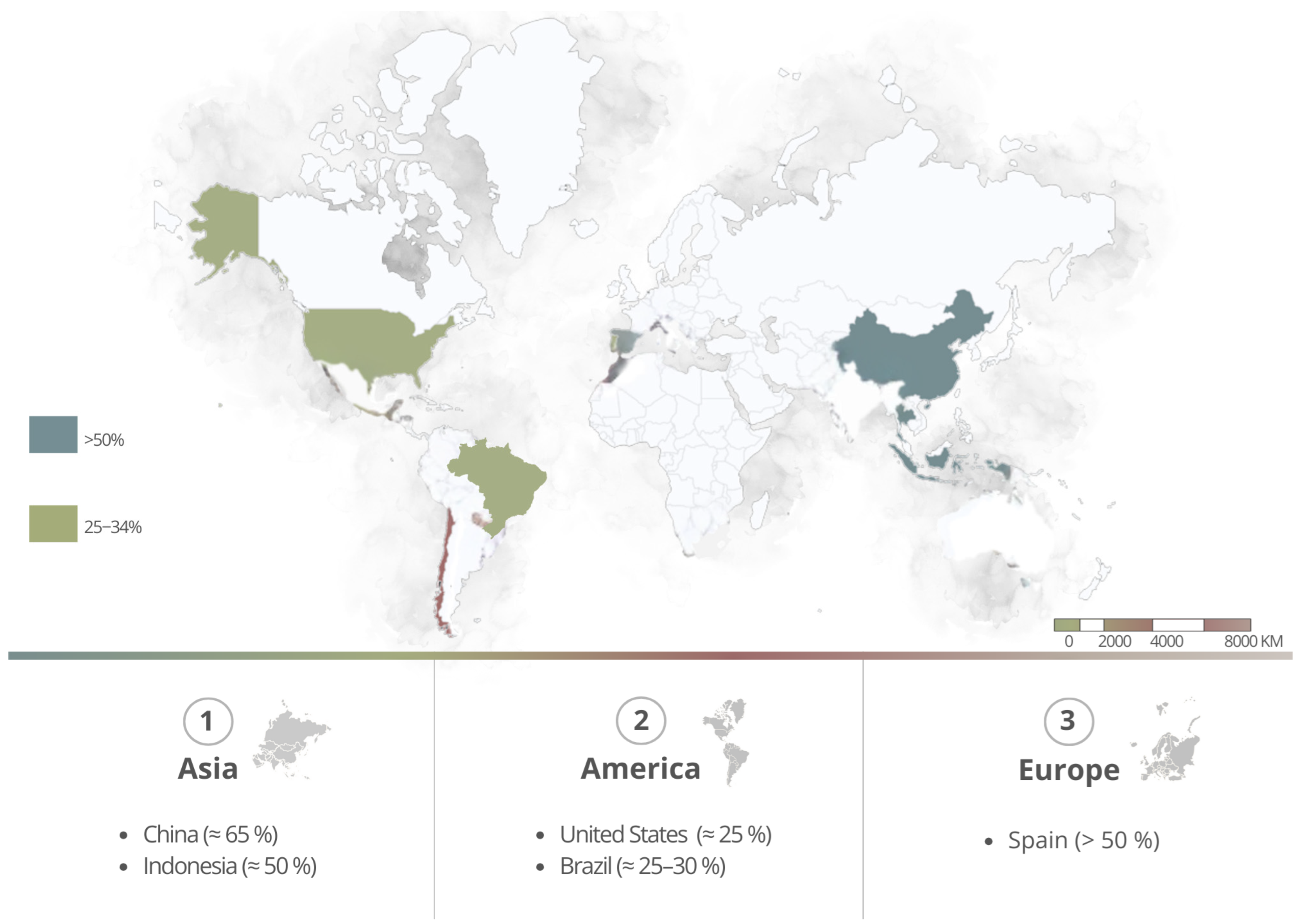
This global perspective is reflected in specific examples from Asia: in China, the proportion of natural coastline decreased from approximately 85.7% to 45.8% between 1980 and 2020 due to massive coastal artificialization; in Indonesia, the conversion of mangroves for coastal developments reduced by more than half their buffering capacity against tsunamis, depending on the width and density of the vegetation belt [12,13].
Similar patterns can be observed in Europe. Along Spain’s Mediterranean coast, more than 50% of the coastal strip shows high levels of urbanization and artificialization, while in Andalusia around 60% of the analyzed sections display active chronic erosion processes. These transformations, intensified by tourism and port infrastructure, generate average retreat rates between −0.3 and −0.7 m/year, which makes continuous artificial beach nourishment necessary as a maintenance measure [14,15,16].
The Americas are no exception to this issue. In Brazil, urban expansion and real estate speculation have caused the loss of nearly 23 km2 of coastline in the Rio de Janeiro area [17], while in the United States, river regulation and sediment extraction have reduced by about 25% the natural supply of sand and gravel to California’s coasts, affecting the stability and sustainability of its beaches [18].
Altogether, as shown in Figure 2, this accelerated loss of coastal, ecosystems not only endangers local biodiversity but also weakens the ability of coastal cities to adapt to the effects of climate change, increasing their vulnerability to sea-level rise, flooding, and extreme storms.
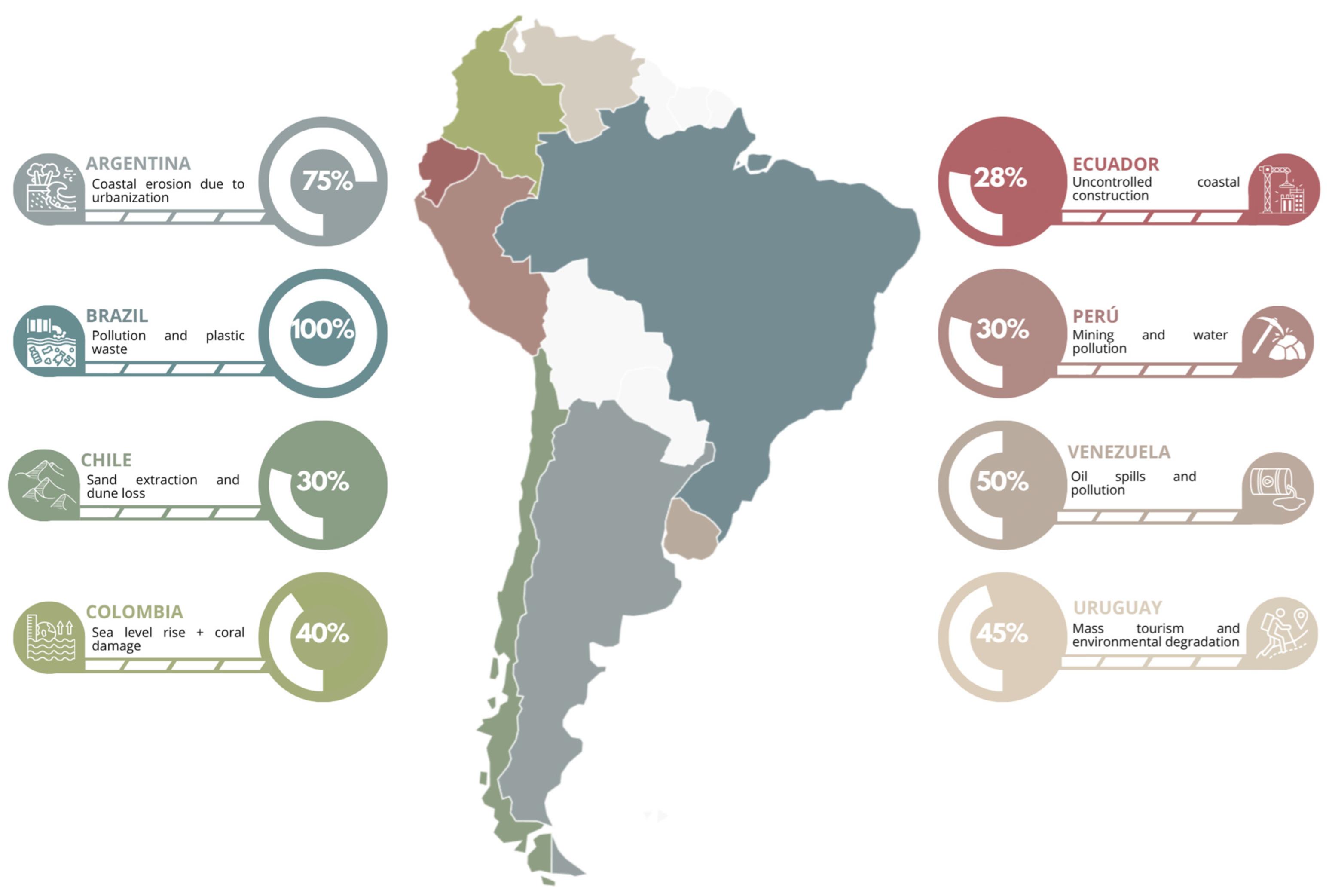
Latin America clearly reflects the magnitude of the coastal crisis, as shown in Figure 3: accelerated urbanization, plastic pollution, and tourism pressure are transforming coastal ecosystems beyond their natural capacity for regeneration. In Argentina, recent satellite studies show that 75% of the Mar del Plata coastline exhibits persistent erosive trends, with average retreat rates of −2 to −3 m/year over the past three decades [19]. In Brazil, monitoring conducted along more than 4600 km of coastline detected plastic waste on 100% of the 22 beaches surveyed, recording 3114 items in sediments—54% of which correspond to microplastics, confirming the extent of marine pollution along the Brazilian coast [20].
Likewise, illegal sand mining in Chile and Peru has reduced the sediment supply to beaches by 30%, intensifying erosion and threatening coastal habitats [21]. In Ecuador, the disappearance of 28% of its mangroves in just three decades has weakened natural coastal protection, while Colombia has experienced the loss of 40% of its coral reefs, which are fundamental for marine biodiversity [22].
Additional threats include oil spills affecting Venezuela 50%, particularly in Falcón State [23], and the pressure of mass tourism in Uruguay, where destinations such as Punta del Este show environmental degradation impacting 45% of their beaches during the high season [24].
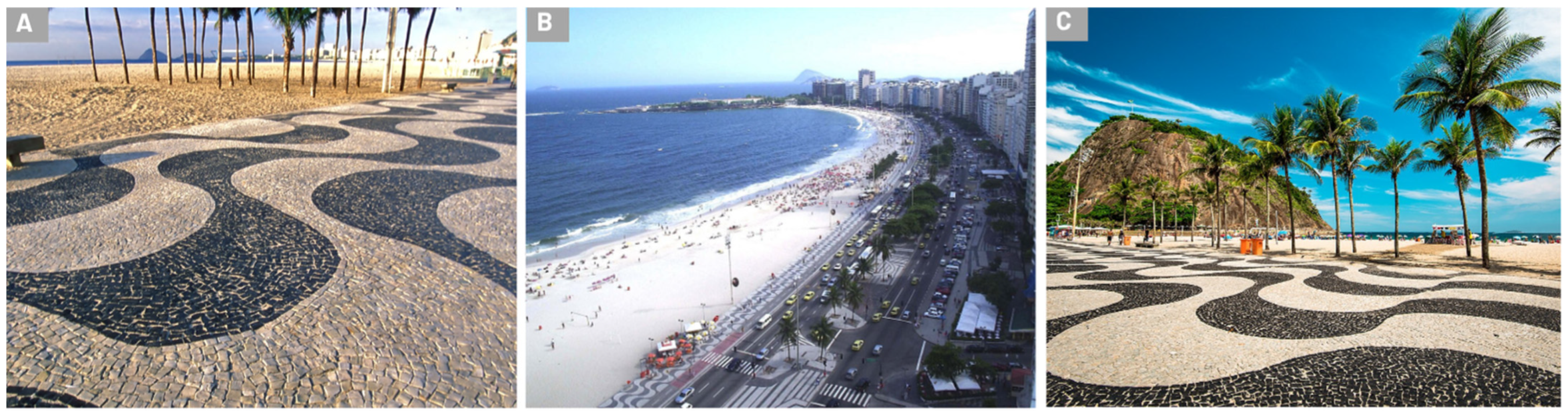
In this context, a landmark case in Latin America is Copacabana, in Brazil, considered a successful model of coastal regeneration by integrating environmental sustainability with urban development, as shown in Figure 4. The measures implemented include intensive marine cleaning and conservation programs, along with the modernization of various infrastructures such as renovated lifeguard stations, sports areas, and tourist information modules [25].
This comprehensive intervention is clearly reflected in its iconic elements. Figure 4A shows the famous seaside promenade designed by Burle Marx, featuring its distinctive wave-pattern pavement [26], which not only defines the visual identity of the area but also improves pedestrian circulation. Similarly, Figure 4B highlights advances in accessibility through wide sidewalks and ramps that promote inclusion, while Figure 4C presents the network of bike paths that strengthens a sustainable mobility system.
Figure 4. Coastal regeneration strategies in Copacabana, Rio de Janeiro. (A) Copacabana promenade with the wave-pattern pavement designed by Burle Marx, image from [27]; (B) accessible sidewalks and ramps along the coastal strip, image from [28]; (C) integrated bike-lane network along the waterfront, image from [29].
Urbansci 10 00002 g004
In Mexico, the lacustrine system of Xochimilco, located in the southern part of Mexico City, constitutes a biocultural landscape recognized as a UNESCO World Heritage Site (WHS), now affected by urbanization, water pollution, and the loss of traditional chinampa farming practices. These transformations have reduced the productive chinampa area from more than 120–400 km2 to about 22 km2, resulting in ecological fragmentation and the loss of the wetland’s environmental and social functions.
In response, the National Autonomous University of Mexico (UNAM), together with the Urban Resilience Office (O-RU) and SDSN Mexico, developed the Chinampa-Refugio Model (CRM) as a Green–Blue Infrastructure (GBI) strategy aimed at restoring hydrological and trophic balance through vegetative biofilters, tezontle (volcanic rock) barriers, ahuejote (Salix bonplandiana) plantations, and agroecological practices.
Each chinampa-refugio, approximately 300 m in length, can host between 200 and 300 axolotls (Ambystoma mexicanum), while monitoring conducted between 2020 and 2021 revealed greater diversity of microcrustaceans and improved physicochemical water conditions within the refuges compared to external canals. Moreover, the use of native vegetation reduces maintenance costs and enhances ecological efficiency, demonstrating that the CRM constitutes a replicable model of sustainable water infrastructure based on community participation and ecological land management [30,31,32,33].
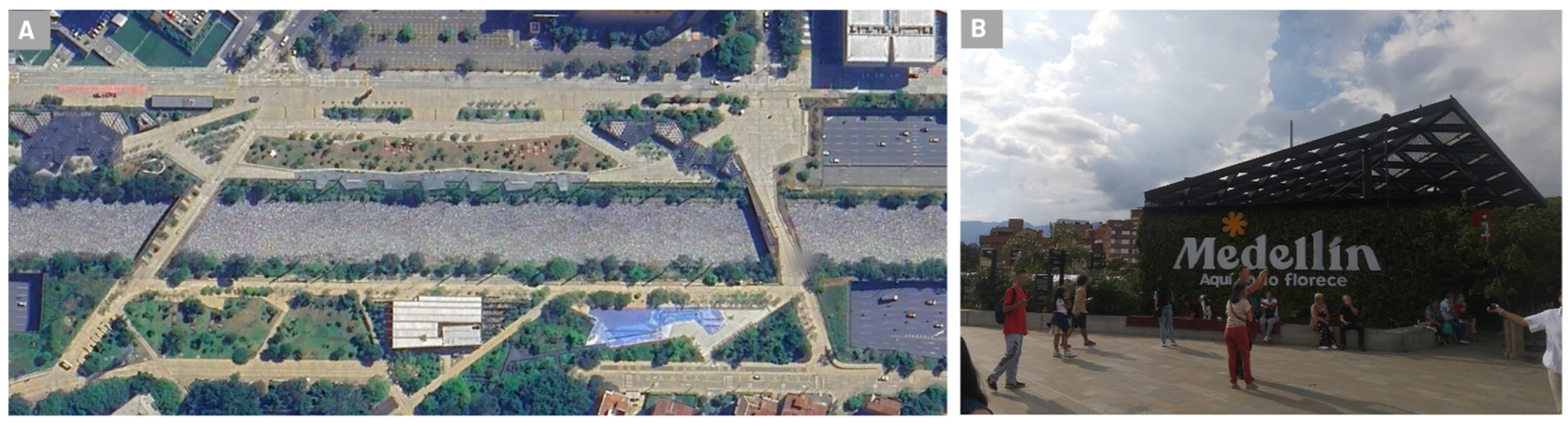
In Medellín, the “Parques del Río” project was designed to reconnect the city with the Medellín River through the restoration of its riverbank and the reconfiguration of the adjacent highway, including the partial undergrounding of road sections and the creation of linear parks, as shown in Figure 5A. The city faced a deficit of effective public space (EPS) of 3.7 m2 per inhabitant, compared to the target of 7 m2/inhabitant established by the “Plan de Ordenamiento Territorial” (POT, Territorial Development Plan). Additionally, 78.08 ha of EPS were occupied or invaded (approximately 10% of the total), revealing inequality in the distribution and accessibility of these spaces.
Between 2006 and 2014, 26.6 ha of new EPS were incorporated, and strategic projects such as Phase 1A of “Parques del Río” and the “Unidades de Vida Articulada” (UVA) were developed to expand the urban green network, as shown in Figure 5B. At the regulatory level, the POT integrates the Estructura Ecológica Principal (EEP, Main Ecological Structure) and Green–Blue Infrastructure (GBI) as key frameworks to promote ecological connectivity, multifunctionality, and water management through Sustainable Urban Drainage Systems (SUDS).
Thus, “Parques del Río” exemplifies the implementation of GBI in the Colombian context by combining river restoration, public space, and urban sustainability. However, studies warn that these strategies still need to strengthen citizen participation and social equity to prevent environmental benefits from becoming concentrated in specific sectors [34,35].
Figure 5. (A) Parques del Río project intervention, image from [36], edited by the author; and, (B) unidades de Vida Articulada (UVA), image from [37].
Urbansci 10 00002 g005
In this context, La Herradura represents a revealing case of how specific decisions can irreversibly transform a fragile coastal system. Between 1930 and 1960, it reached its peak as an exclusive destination for the capital’s elite, known for its wide sandy shoreline, distinctive waves, and sophisticated atmosphere. Its prestige was reinforced by private clubs such as “Regatas Lima” and “Waikiki”, which attracted Lima’s upper class. In 1938, its significance was such that the beach was included in the official route of the presidential motorcade during the inauguration of the Chorrillos Coastal Highway [38]. More broadly, the modernization of Lima’s seaside resorts during the early decades of the 20th century—through public policies that opened coastal areas to affluent sectors—consolidated the social status of Chorrillos and, by extension, of La Herradura [39].
During the 1960s and 1970s, la Herradura maintained strong recreational and sporting appeal, becoming an essential part of the emerging “Costa Verde” beach circuit. Its sandy strip, combined with the imposing cliff edge, gave it a unique scenic value, reinforced by the high seasonal influx of visitors that strengthened its social use. The inauguration of the “Circuito de Playas” in 1970 marked a milestone in road development, improving coastal connectivity and enhancing the urban and recreational character of the resort [40].
Subsequently, in the 1980s, La Herradura entered a stage of rapid deterioration. Uncontrolled urban expansion and increasing pressure on the coastal ecosystem caused the continuous reduction in its sandy beach. During the same decade, under Mayor Enrique Falconí Mejía’s administration, the natural promontory that protected the beach was demolished to open access toward La Chira, permanently altering marine currents and accelerating coastal erosion [41]. In 1990, the construction of the “La Herradura–La Chira” highway cut through the cliffs and dumped debris into the sea, interrupting the natural sand supply from the south and diverting sediments toward “El Frontón” and “San Lorenzo”. Added to this were urban growth and infrastructure that restricted windborne sediment circulation, reinforcing the erosive trend. Overall, the area was classified as having moderate coastal vulnerability (IVC ≈ 15.12) [42].
Between 2011 and 2014, various urban interventions were undertaken to rehabilitate the promenade. The Metropolitan Municipality of Lima implemented the recovery of the “La Herradura Promenade”, inaugurated in 2011 with an investment of approximately S/11.8 million, which included parking areas and urban furniture. Although these actions improved pedestrian and vehicular access, they failed to reverse the sediment deficit or reduce the vulnerability of the slope and beach to strong wave impacts [43,44].
Today, in 2024, the outlook is discouraging: a degraded beach with a minimal sandy strip, waste accumulation, and restricted access that reinforces its marginalization within Lima’s coastal circuit.
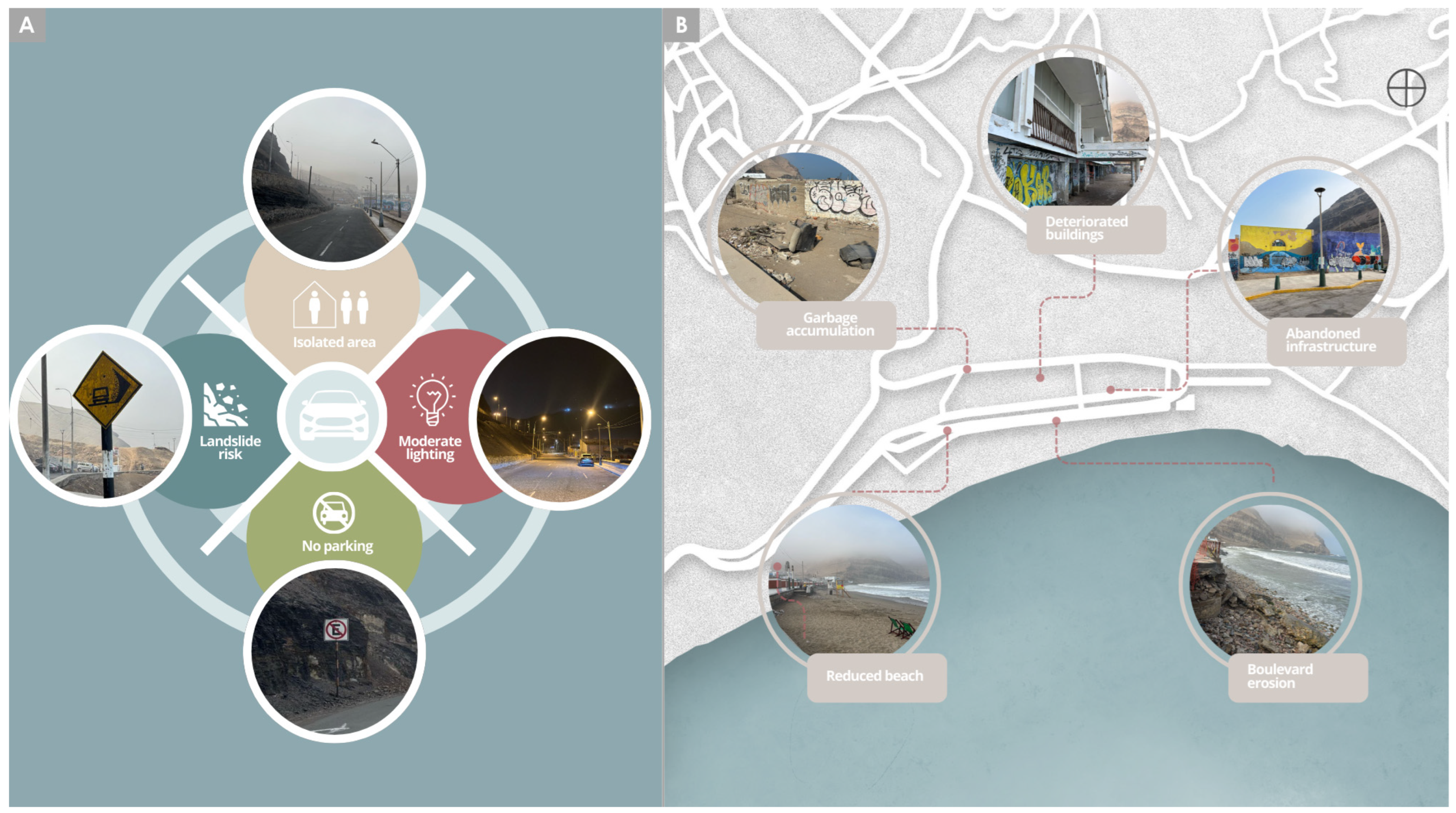
Regarding the problems faced by La Herradura Beach, access has become increasingly restricted. The most common option is by private vehicle, although parking on the road is prohibited; it is also possible to reach the area on foot or by bicycle, but the routes are long and uncomfortable. In addition, the area presents risks of rockfalls and suffers from poor nighttime lighting [45]. Altogether, these conditions limit visitor circulation and connectivity with surrounding areas, reinforcing its isolation and disconnection from the rest of the city, which reduces its visibility and attention from local authorities, as shown in Figure 6A.
The main issues affecting the coastal front of La Herradura include waste accumulation, erosion of the sandy strip, and the abandonment of buildings, all of which diminish both the functionality and the perception of the space by visitors, as illustrated in Figure 6B.
Regarding waste accumulation, the absence of a proper waste management system has turned the beach into an open dump, degrading the quality of the natural environment and creating a negative impact on visitors, who must constantly deal with the presence of debris.
Coastal erosion has significantly reduced the sandy area, affecting both its visual appeal and its functionality. The lack of sediment supply and past human interventions, such as the demolition of the protective promontory in the 1980s, have intensified this process. The retreating sea has begun to impact nearby structures, including the beachfront promenade, which shows signs of edge loss, cracks, and structural weakening that endanger circulation and access.
Finally, the abandonment of buildings such as the former nightclub Máquina del Sabor and the columbarium has worsened the deterioration of the coastal front. Rust has spread across railings, metal structures, and other elements exposed to the sea breeze, accelerating corrosion and the detachment of coatings. This combination of damages reduces the functionality of the waterfront, reinforces the perception of insecurity, and accelerates the landscape and urban decay of the area.
This leads to the following research question: To what extent do strategies for the revaluation of the natural environment and landscape regeneration contribute to the integral recovery of La Herradura Beach in Chorrillos, Peru? Therefore, given this situation, the present research aims to propose strategies for the revaluation of the natural environment and landscape regeneration for the comprehensive recovery of La Herradura Beach in Chorrillos, Peru, through a plan that integrates public spaces and open green areas equipped for recreational and cultural activities, improves access, and strengthens social connectivity, in order to revitalize its presence within Lima’s coastal circuit and consolidate it as an active, accessible, and sustainable space in harmony with the city of Lima.
In this sense, the hypothesis is that the implementation of comprehensive strategies for environmental and landscape revaluation, based on ecological restoration and the improvement of public space, will help reestablish the natural coastal processes, strengthen local identity, and contribute to the urban sustainability of the coastal edge. The relevance of this study lies in the advanced environmental and social deterioration of the coastal ecosystem of La Herradura, affected by erosion, pollution, and the loss of urban connectivity. These alterations have reduced its ecological and landscape value, weakening its role as a public space and its integration within Lima’s coastal circuit.
From a scientific perspective, the regeneration of the environment seeks to restore natural coastal processes such as thermal regulation, carbon capture, and soil stabilization through the incorporation of native species adapted to salinity and water deficits, such as Schinus molle and Distichlis spicata. At the same time, landscape revaluation promotes the creation of accessible, educational, and recreational public spaces that strengthen local identity and the community–landscape relationship. In this way, this research goes beyond a mere design proposal to become a methodological process that integrates environmental diagnosis, territorial analysis, and sustainable strategies applicable to other urban coastal fronts, contributing to the achievement of Sustainable Development Goals 11, 13, and 15.
In order to contextualize the environmental and landscape challenges observed in La Herradura, it is necessary to introduce the main theoretical foundations that guide contemporary coastal regeneration processes. These principles ranging from the recovery of natural sedimentary dynamics to the use of endemic vegetation, sustainable architecture, and climate-responsive landscape design provide the conceptual basis that supports the present proposal. For this reason, the following thematic components are integrated directly into the Introduction to establish a coherent scientific framework for understanding the strategies applied to La Herradura Beach.
  • Coastal regeneration
Coastal regeneration encompasses a set of strategies and actions aimed at restoring the ecological, social, and landscape values of degraded coastal environments. Its purpose is to recover natural processes such as sediment transport and dune formation, ensuring the resilience of coastal territories in the face of climate change [46].
Coastal regeneration requires an integrated vision that links territorial planning, urban design, and ecological systems, promoting a sustainable balance between built infrastructure and natural coastal processes, as well as strengthening the relationship between people and the sea [47].
  • Landscape restoration
Landscape restoration seeks to recover the ecological and visual functionality of an altered territory through vegetation incorporation, soil stabilization, and proper water management. This process not only improves the natural environment but also enhances quality of life and fosters a sense of local identity [48].
The restoration of degraded urban or natural landscapes must consider the ecological and cultural context, promoting an interdisciplinary approach that integrates architecture, ecology, and design [49].
  • Sustainable architecture
Sustainable architecture is based on bioclimatic strategies that prioritize energy efficiency, thermal comfort, and the use of local and ecological materials [50]. It is grounded in design principles that reduce environmental impact and optimize the use of natural resources throughout the building life cycle. In coastal contexts, its application helps mitigate the effects of climate change through passive comfort solutions, the use of renewable energy, and local materials [51].
  • Endemic vegetation and microclimate
Endemic vegetation plays a fundamental role in environmental regeneration processes, as it is adapted to local conditions and contributes significantly to biodiversity conservation. Its incorporation into landscape projects, particularly in coastal and urban contexts, promotes thermal regulation, water retention, and carbon dioxide capture, thereby enhancing the ecological functioning of the environment [52].
Various studies indicate that the use of native species in arid and semi-arid regions can reduce surface temperatures and improve thermal comfort in open spaces, constituting an effective strategy for addressing extreme climatic conditions [53].
  • Environmental design and climate adaptation
Environmental design promotes the harmonious integration between human activities and natural systems through solutions that foster sustainability and resilience. In coastal areas, this approach allows for the creation of spaces capable of withstanding erosive processes and climatic variations by combining natural and technological strategies [54].
In the Peruvian context, the causes and effects of climate change between 2001 and 2021, including temperature and rainfall variations as well as the loss of glacier mass, have been determining factors in the country’s territorial and environmental configuration [55]. In coastal areas, this approach allows for the creation of spaces capable of resisting erosive processes and climatic fluctuations by integrating both natural and technological strategies [54].

2. Materials and Methods

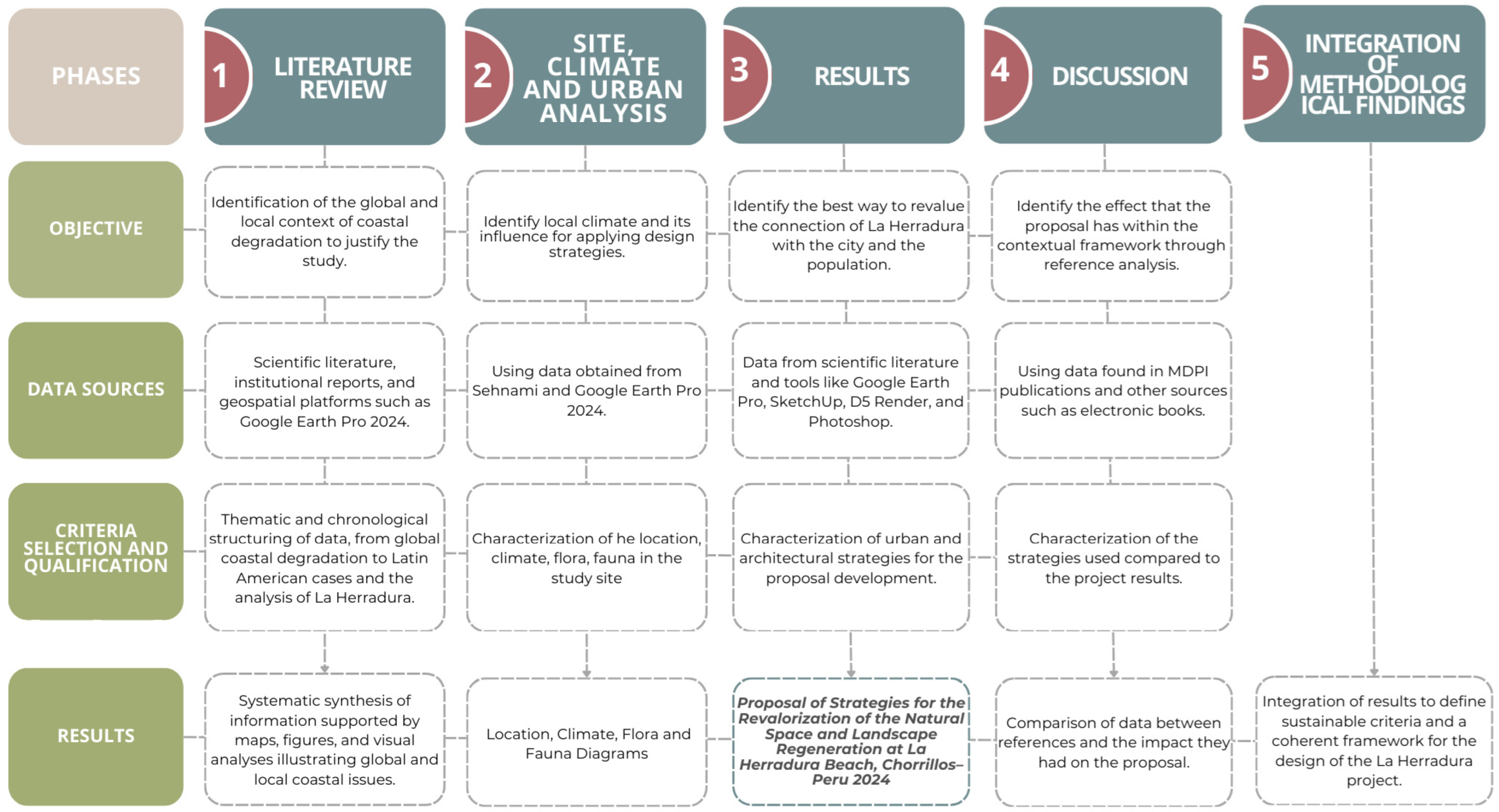
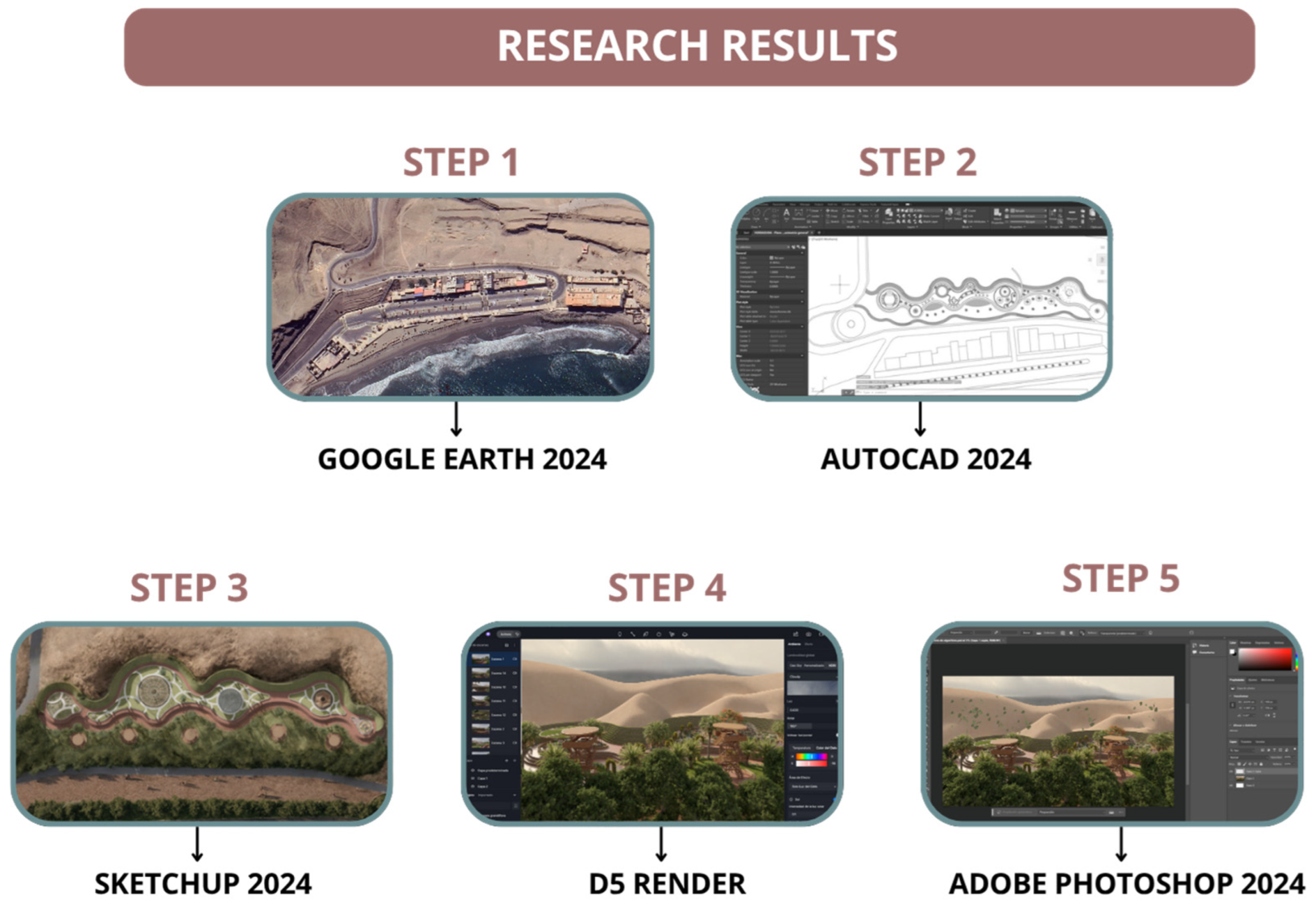
The methodology was structured in five interrelated phases, from the literature review to the conclusion, integrating spatial, climatic, and urban analyses for the landscape regeneration of La Herradura Beach, as shown in Figure 7.

2.1. Methodological Framework

For the site analysis, different software tools were used to facilitate the identification of geographic, climatic, and social information about the area. In addition, data provided by specialized coastal management organizations were considered. This preliminary research will make it possible to organize and determine the most appropriate strategies for the revaluation of the area, promoting a balance between environmental sustainability and the site’s connectivity with the city.

2.2. Methodological Process

2.2.1. Literature Review

During the first phase of the study, an exhaustive bibliographic analysis was carried out to gather relevant information on coastal ecosystems and sustainable regeneration practices. This process established a solid theoretical foundation for the environmental and landscape proposal developed for La Herradura Beach, located in the district of Chorrillos, Lima. This review allowed the identification of sustainable design principles applicable to coastal contexts, as well as relevant parameters for ecological planning, resource management, and environmental restoration.
Scientific research, technical reports, and publications from international organizations such as UN-Habitat, UNESCO, and the Intergovernmental Panel on Climate Change (IPCC), were analyzed, covering topics related to coastal erosion, sustainable urban development, and environmental restoration. Likewise, successful cases of beach regeneration were studied in Latin America and other regions of the world, such as the comprehensive recovery of Copacabana Beach in Brazil, the Chinampa-Refugio Model in Mexico, and the Parques del Río Medellín project in Colombia.
The literature review made it possible to identify sustainable design principles applicable to coastal contexts, defining parameters related to efficient waste management, the integration of native vegetation, the use of renewable energy, and the implementation of ecological corridors. It also contributed to understanding the challenges associated with the degradation of coastal ecosystems and the opportunities to promote urban resilience and community well-being through environmental restoration and sustainable tourism.

2.2.2. Site, Climate, Flora, and Fauna Analysis

During the second phase, the location and analysis of the intervention site were carried out using the Google Earth Pro (2025) tool. This tool made it possible to accurately identify the physical conditions of the terrain, geographic limitations, and specific environmental challenges of the Chorrillos area, facilitating the project’s bioclimatic planning [56].
Complementarily, a detailed analysis of climatological data was conducted, considered an essential step in sustainable design decision-making [57]. However, due to the critical role of climate in the project, certain difficulties arose in analyzing climatic factors because of the lack of specific data for the district of Chorrillos, as there is no meteorological station in the area of intervention. To overcome this limitation, hydrometeorological data were collected from the SENAMHI Pantanos de Villa Meteorological Station, corresponding to the year 2006. The records included maximum and minimum temperature (°C), maximum and minimum relative humidity (%), precipitation (mm), daily sunshine hours, and wind speed (km/h)—all essential information for the project’s climatic analysis and bioclimatic planning.
In addition, the average solar radiation in Peruvian territory was considered, ranging between 4.2 and 6.9 kWh/m2/day, according to the study by Mohammadi and Moazenzadeh [58].
Subsequently, a statistical analysis of the obtained variables was carried out to understand the influence of climatic conditions on thermal comfort, solar utilization, and the project’s energy sustainability. The results are represented through graphs prepared from the studied parameters, which made it possible to define bioclimatic strategies consistent with the site’s environmental conditions.
Finally, the local ecosystems were evaluated, focusing on the coastal flora and fauna present along the Chorrillos shoreline. A systematic monitoring of the environment was conducted, considering three domains: terrestrial (sand and dunes), aerial, and aquatic.
In the terrestrial domain, small invertebrates such as the crustacean known as “muy-muy “ were recorded, along with other organisms inhabiting rocks and moist areas, identifying their density and distribution.
In the aerial domain, the presence of birds such as seagulls, pigeons, and black vultures was documented, observing their behavior and their relationship with human activity and nearby urban structures.
In the aquatic environment, key fish species such as snook (Centropomus spp.), anchoveta (Engraulis ringens), and silverside (Odontesthes regia) were identified, assessing their role in the food chain as well as their ecological and economic importance.
The purpose of this analysis was to ensure that the design strategies and green infrastructure proposed in the project respected the ecological dynamics of the coastal ecosystem, promoting environmental sustainability and the conservation of local species.

2.2.3. Results

  • Spatial and urban analysis
This stage focused on identifying the territorial characteristics of the study area through geospatial analysis tools. Using Google Earth Pro 2024, the intervention area at La Herradura Beach was delineated, identifying the main access points, boundaries, and relationships with the coastal urban environment. This analysis made it possible to recognize the most significant environmental pressures and the immediate surroundings, such as pollution, erosion, and loss of vegetation cover, essential aspects for guiding ecological restoration and sustainable design strategies.
  • Geospatial mapping
The site was located and mapped using Google Earth 2024, allowing precise identification of its boundaries and connectivity with adjacent beaches and urban infrastructure.
  • Territorial diagnosis
Environmental pressures such as pollution, biodiversity loss, and urban encroachment were identified through visual analysis and background review, guiding the delimitation of the intervention zones.
  • Master plan and zoning analysis
During this phase, the project’s master plan was developed, integrating functional, ecological, and cultural aspects of the landscape. Based on the territorial diagnosis, five main areas were established: cultural and recreational workshops, ecological restoration zone, environmental education zone, yoga and wellness area, and panoramic viewpoint. The design was developed using Adobe Photoshop 2024, SketchUp 2024, and D5 Render, software that enabled spatial simulations and realistic visualizations to understand the relationship between architectural elements, the landscape, and site topography.
  • Ecological restoration and vegetation design analysis
This stage aimed to restore biodiversity and improve the local microclimate through the incorporation of native and drought-adapted species. Selected species included Schinus molle, Prosopis pallida, Caesalpinia spinosa, and Phoenix dactylifera, as well as xerophytic grasses such as Distichlis spicata. A system of seven ecological terraces was designed to promote natural ventilation, erosion control, and moisture retention. Ecological metrics were calculated based on the carbon capture capacity of Schinus molle, following methodologies proposed by the IPCC.
  • Water management and climate adaptation strategies analysis
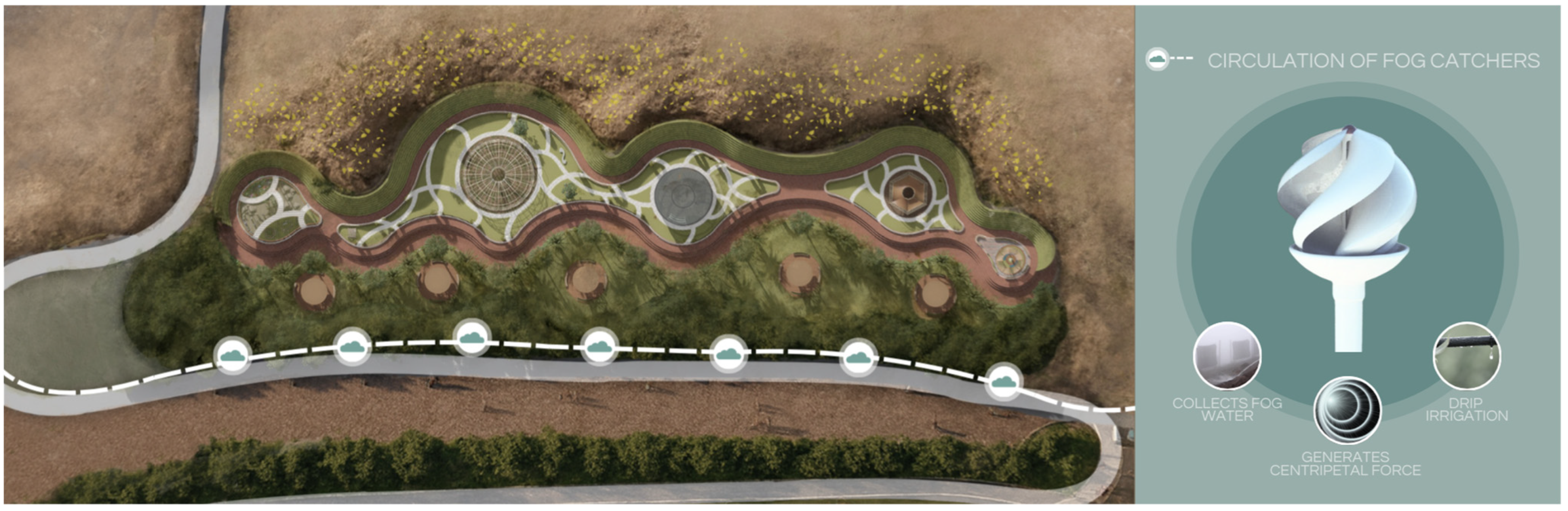
The project’s water sustainability was addressed through passive collection and efficient irrigation systems. Twelve fog catchers were strategically distributed across the upper terraces, designed to condense atmospheric humidity and provide water for green areas. The collection capacity was estimated using geometric calculations and relative humidity data, allowing the establishment of a water balance aligned with the needs of the selected plant species. This system contributes to the project’s water self-sufficiency and resilience to climate change.
  • Energy and sustainable lighting analysis
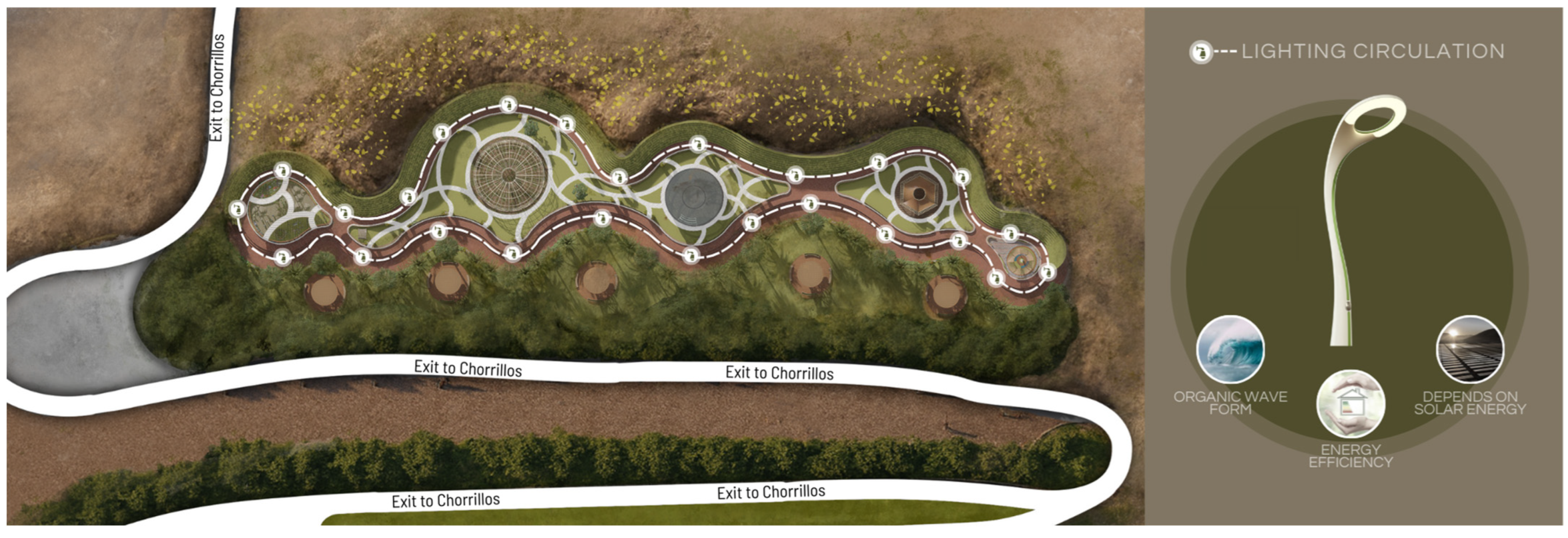
The energy component focused on achieving the operational autonomy of the complex through the use of solar energy. A lighting system consisting of 25 photovoltaic luminaires was designed along a 500 m pedestrian path. Energy production estimates were made considering panel efficiency, solar orientation, and distance between units, ensuring continuous operation with minimal environmental impact.
During the third phase of the study, key processes for the analysis and diagnosis of the study area were defined using digital tools. In the first stage, the intervention boundaries were established using Google Earth Pro (2024), allowing precise coordinates and specific site measurements to be obtained. In the second stage, the surrounding environmental elements, such as water bodies, green areas, access roads, and buildings, were identified and mapped using the same tool. In the third stage, a three-dimensional model of the terrain and its topography was developed using SketchUp (2024), which facilitated spatial understanding of the intervention area. Additionally, D5 Render was used for realistic visualization of the environment, and Adobe Photoshop (2024) for the final editing and presentation of plans, sections, and perspectives.
This phase, oriented toward project visualization and communication analysis, enabled the integration of spatial, environmental, and constructive aspects into a coherent graphic representation of the master plan, contributing to a comprehensive understanding of the proposed coastal regeneration and ecological restoration strategies, as shown in Figure 8.

2.2.4. Discussion

Finally, in the fourth stage, a comparative analysis is planned between Parques del Río in Medellín, Copacabana in Rio de Janeiro, Xochimilco in the southern area of Mexico City, and the proposed project for La Herradura Beach, with the aim of identifying common strategies and contextual differences that contribute to the development of sustainable proposals in coastal and urban environments.

2.2.5. Integration of Methodological Findings

In the fifth stage, the methodological process concludes with the integration of all analytical and design components developed in the previous stages. This synthesis allows the identification of key principles for sustainable intervention along La Herradura Beach, connecting spatial and ecological findings with urban and social objectives. The conclusion highlights the relevance of a multidisciplinary approach that combines territorial analysis, environmental restoration, and participatory design as fundamental tools for achieving resilient and inclusive coastal regeneration.

2.3. Location

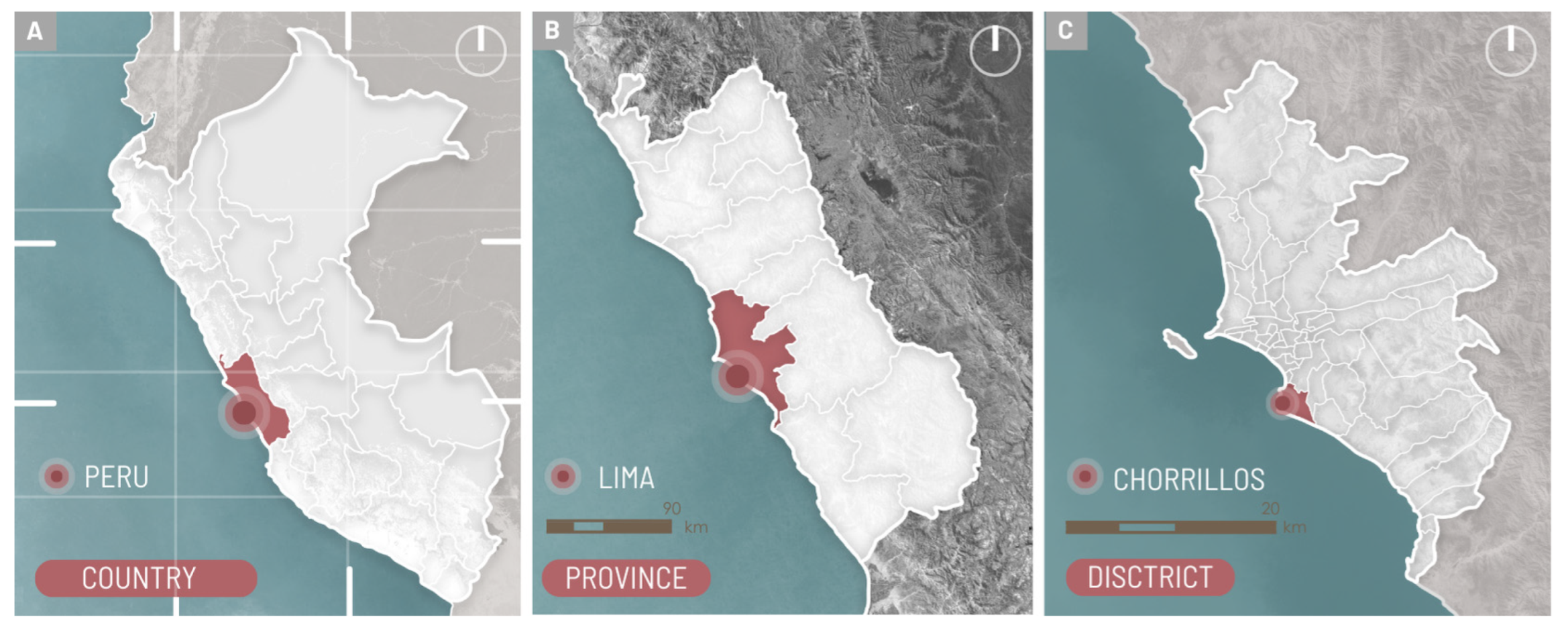
Figure 9 shows the location of Peru in South America, highlighting Lima as a key department, while Figure 9B outlines the district of Chorrillos, bordered to the north by Barranco, to the east by its urban sector, and to the south by the Pacific Ocean. The Morro Solar stands out as a natural barrier that defines the study area (150.952 km2) [59].

2.4. Climate

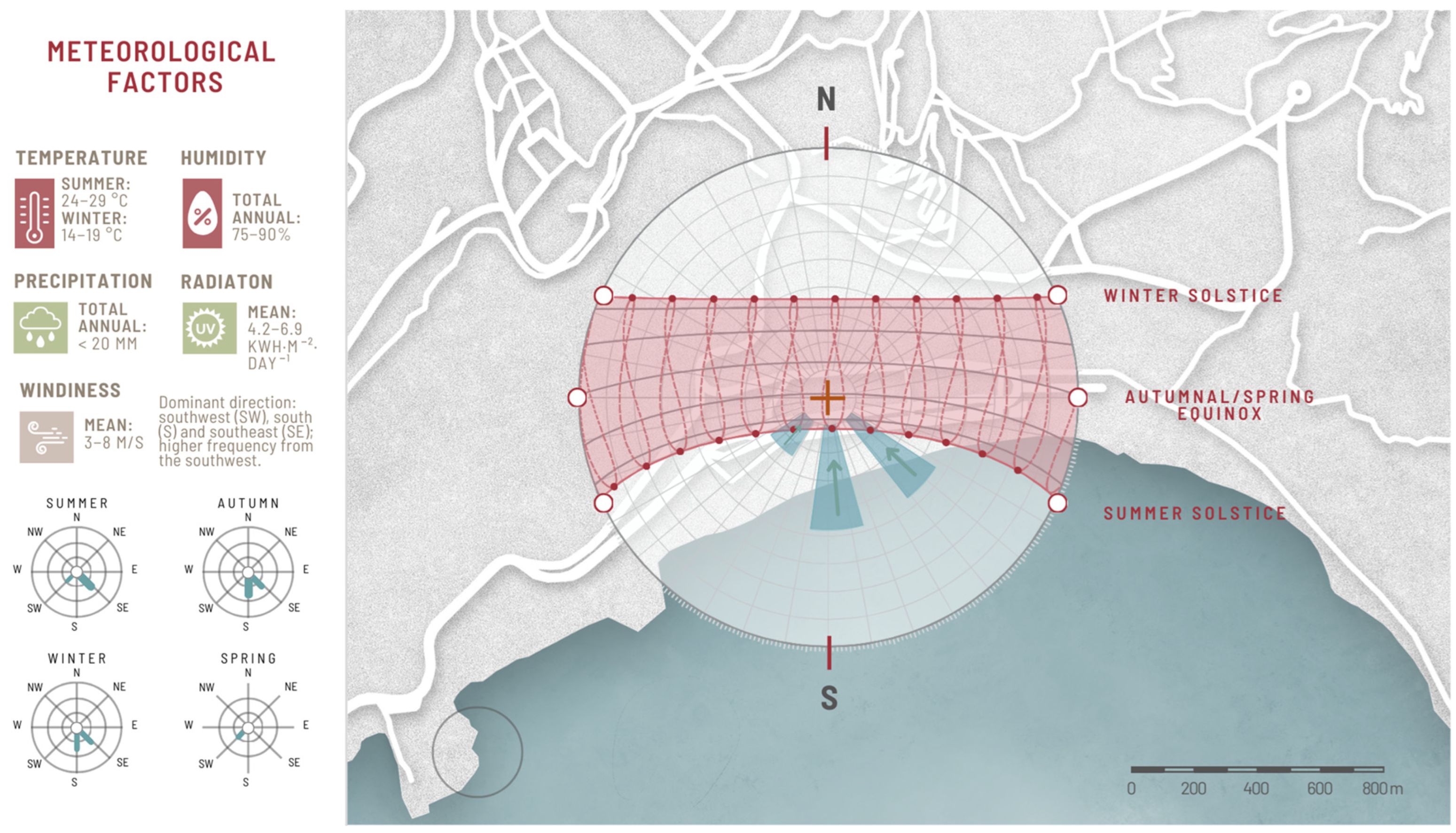
According to SENAMHI, the climate of La Herradura (Chorrillos, Lima, Peru), as shown in Figure 10, presents subtropical characteristics typical of Peru’s central coast, with a moderate maritime influence. Temperatures vary between a warm season from December to April, with average maximums reaching 26.82 °C, and a cooler season from May to November, with average minimums around 14 °C. Relative humidity is high, especially in winter (80–90%), favoring the formation of fog and low clouds that reduce direct solar radiation during the colder months. Solar radiation ranges between 4.2 and 6.9 kWh·m−2·day−1 [58], making it a determining factor for bioclimatic architectural design in the area. Rainfall is extremely scarce, with annual totals below 20 mm, which limits vegetation to xerophytic species adapted to coastal salinity.
The prevailing winds, as shown in the attached wind rose, come mainly from the southwest (SW) and southeast (SE), with speeds ranging between 3 and 8 m/s. The image indicates a higher frequency and intensity of winds from the southwest quadrant (SW), with the highest values (18 and 17) in that direction, followed by those from the southeast (SE). These wind patterns influence both fog dispersion and coastal erosion, as well as serving as a key resource for natural ventilation in buildings [60,61].

2.5. Fauna and Flora

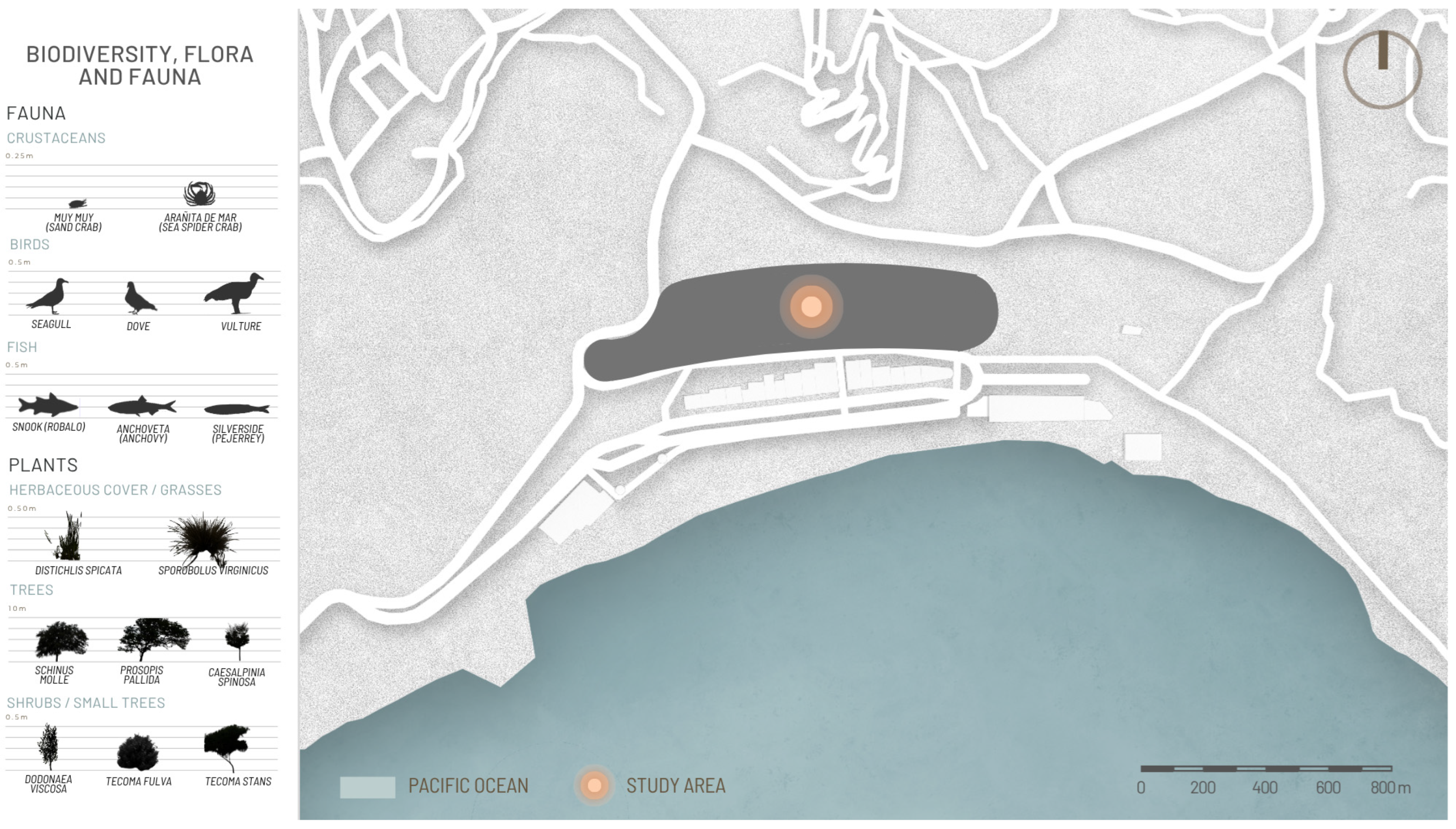
Figure 11 presents an analysis of the interaction between wildlife and the coastal environment within a strip shaped by the overlapping dynamics of the sea, the urban setting, and sandy areas. This zone constitutes a fragmented ecosystem where various species have managed to adapt, while others have been displaced due to landscape modifications and human activity.
In the lower strip, close to the sand, small invertebrates were recorded emerging among rocks and moist areas. As shown in Figure 11, the muy-muy, a small crustacean that burrows into the sand, not only plays an important ecological role but is also part of coastal gastronomy in traditional dishes such as chupes and parihuelas. According to monitoring conducted by the Ministry of the Environment in February 2022, a density of 0.6 kg/m2 of this species was recorded in La Herradura, confirming its strong presence along this coastal stretch.
More recently, in February 2025 a massive migration of sand crabs was reported [62]. Seagulls are observed perching on the ruins of the old building known as “La Máquina del Sabor”, along with a high concentration of pigeons along the coastline and the occasional presence of black vultures flying over the area.
In the aquatic environment, species such as snook, a common predatory fish in estuaries and river mouths; anchoveta, of great ecological and economic importance; and silverside, characteristic of the cold waters of the South Pacific, were identified. Together, these species form an essential part of the local marine food chain, reaffirming the ecological importance of this urban–coastal ecosystem [63,64].

3. Results

3.1. Place of Study

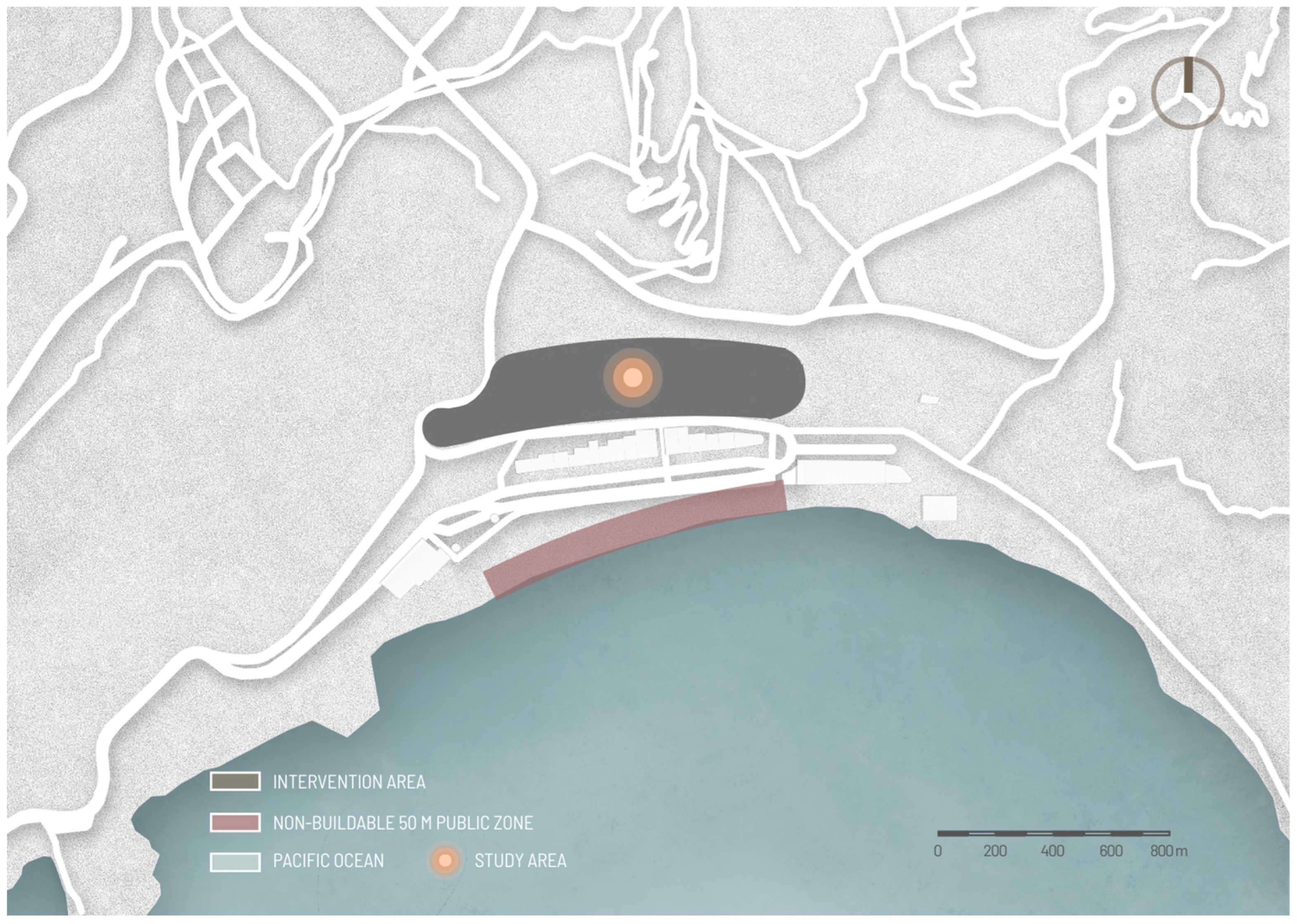
Figure 12 shows the intervention site of La Herradura Beach, located in the district of Chorrillos, city of Lima, Peru. The project covers a total area of 20 hectares, bounded by the current boulevard and the passage that extends from El Salto del Fraile to El Paso de la Araña. Its location is part of the Costa Verde system of promenades, connected to adjacent beaches such as Agua Dulce (to the north) and La Chira (to the south). The highlighted sector corresponds to La Herradura itself, situated at coordinates 12°10′28″ S 77°02′04″ W, between the beaches and the Morro Solar. This strategic position emphasizes its geographic and touristic importance along the Lima coastline, while also highlighting the potential for recovery and revaluation of the site’s natural and physical appeal, fostering the integration of the coastal landscape with the urban environment and promoting recreation in balance with ecosystem preservation [59].
Building upon this spatial characterization, it is essential to consider the regulatory and geomorphological conditions that define the coastal edge of La Herradura. According to Peruvian coastal legislation specifically Law No. 26856 and its regulatory framework the non-buildable public zone comprises a 50 m horizontal strip measured from the High Tide Line (HTL), a parameter that guides the territorial ordering of all beaches along the national littoral [65]. Within this context, the proposed intervention is located further inland than the existing built front, occupying a more stable platform beyond the legally established setback. This positioning ensures that the project remains outside the zone of direct wave action and active erosion, while reinforcing a coherent integration between the coastal landscape, the natural slope of the Morro Solar, and the network of public spaces envisioned for ecological and recreational purposes.

3.2. Diagnosis of the Study Area

  • User Demand Characterization
In the proposal for La Herradura, the planned spaces viewpoints, rest areas, light sports zones, cultural workshop areas, and environmental education points, were analyzed using a 600 m influence radius, a criterion associated with neighborhood-scale recreational and cultural facilities [66]. This radius was used to delineate the direct area of influence of the interventions and to identify the resident population contained within this boundary, yielding an estimated total of 5700 inhabitants, according to INEI census units corresponding to the analyzed sector [67]. Nonetheless, the user population of the project is not limited to the surrounding residents. Owing to its strategic location along the Morro Solar tourist corridor and the Costa Verde beach circuit, the regenerated area also receives a significant floating population from Chorrillos, Barranco, Miraflores, and recreational visitors along the coastal front. In particular, the Chorrillos shoreline hosts nearly 2 million bathers each summer, highlighting the metropolitan magnitude of seasonal demand in this coastal strip [68]. Therefore, the project will serve both the resident population within the direct influence radius and a metropolitan-scale visiting population attracted by the proposed landscape, cultural, and contemplative amenities.
2.
Urban Analysis
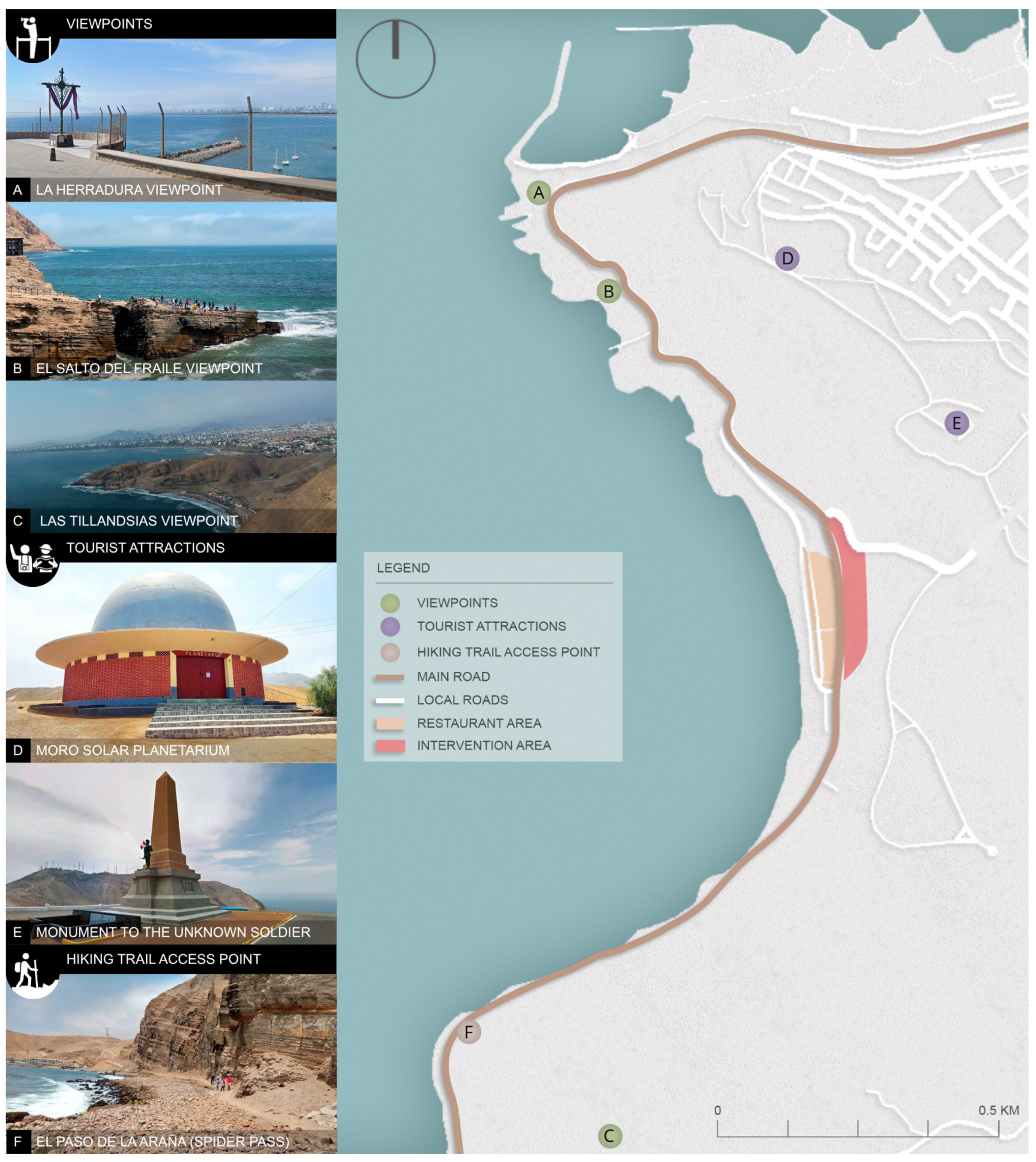
Figure 13 presents a spatial analysis of the surroundings of the intervention area located in the district of Chorrillos, where the main tourist, landscape, and urban elements that shape the study area are identified. The cartographic representation illustrates the relationship between viewpoints, tourist attractions, access routes, and projected intervention zones, highlighting their potential for sustainable urban and tourism development.
The viewpoints (Figure 13A–C) La Herradura, El Salto del Fraile, and Las Tillandsias are strategically located along the coastal elevations, offering panoramic observation points toward both the coastline and the city. These areas possess high scenic and recreational value, consolidating themselves as visual nodes within the territorial structure. The tourist landmarks (Figure 13D,E), composed of the Planetarium of Morro Solar and the Monument to the Unknown Soldier, represent cultural and symbolic landmarks that complement the recreational offer of the area. Their location strengthens the connection between historical heritage and the natural landscape. The hiking point (Figure 13F) marks the beginning of a pedestrian route that runs along the cliffs toward the south, integrating the landscape experience with leisure and active tourism activities. The Paso de la Araña fosters a direct interaction with the natural environment. The road network differentiates between the main road, which structures vehicular mobility and connects the various points of interest, and the local roads, which articulate secondary accesses and allow internal circulation. This road hierarchy is essential for managing tourist flows and organizing traffic in high-traffic areas.
Additionally, a restaurant area is identified along the coastal edge, functioning as a complementary service space within the tourist circuit. Its proximity to the waterfront makes it an area of interaction between visitors and the coastal landscape.
Finally, the intervention area highlights a strip adjacent to the main road, where an urban and landscape enhancement proposal is projected. This area represents a strategic opportunity to implement facilities, signage, and urban furniture aimed at improving accessibility and the overall quality of public space.

3.3. Concept

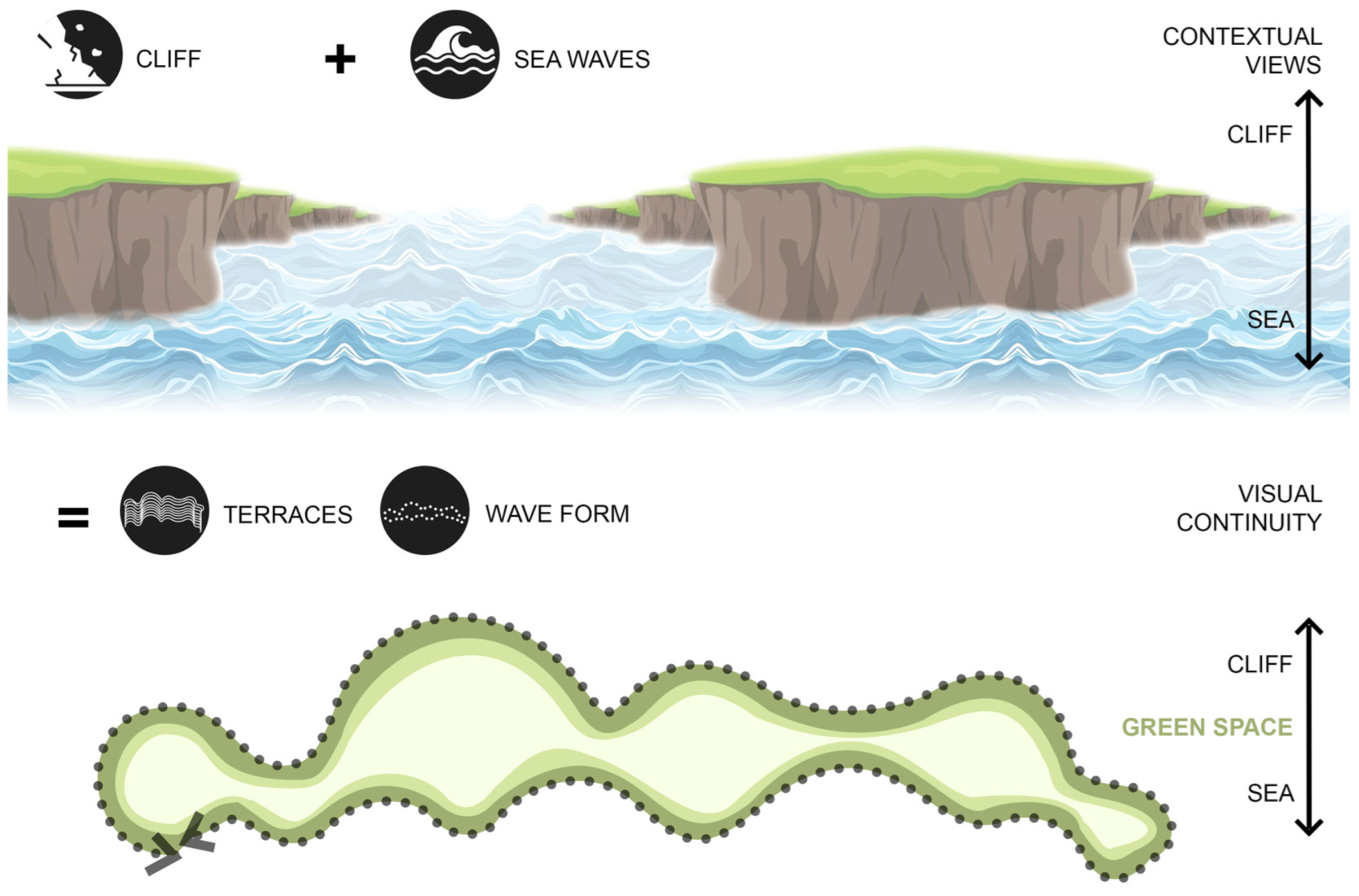
The concept of the project arises from the interaction between the cliff and the sea, where the dynamics of the waves inspire a wave-like form that naturally adapts to the existing topography, as shown in Figure 14. The unevenness of the cliff gives rise to a series of landscaped terraces that extend over the terrain, generating spaces that follow the morphology of the site. At the same time, the project seeks to maintain a visual continuity between the coastal relief and the marine horizon through a wide, undulating green area that echoes the movement of the sea and the folds of the terrain, integrating architecture and landscape into a single composition.

3.4. Master Plan Regeneration Strategies, Materiality, Accessibility, and Connectivity and Zoning

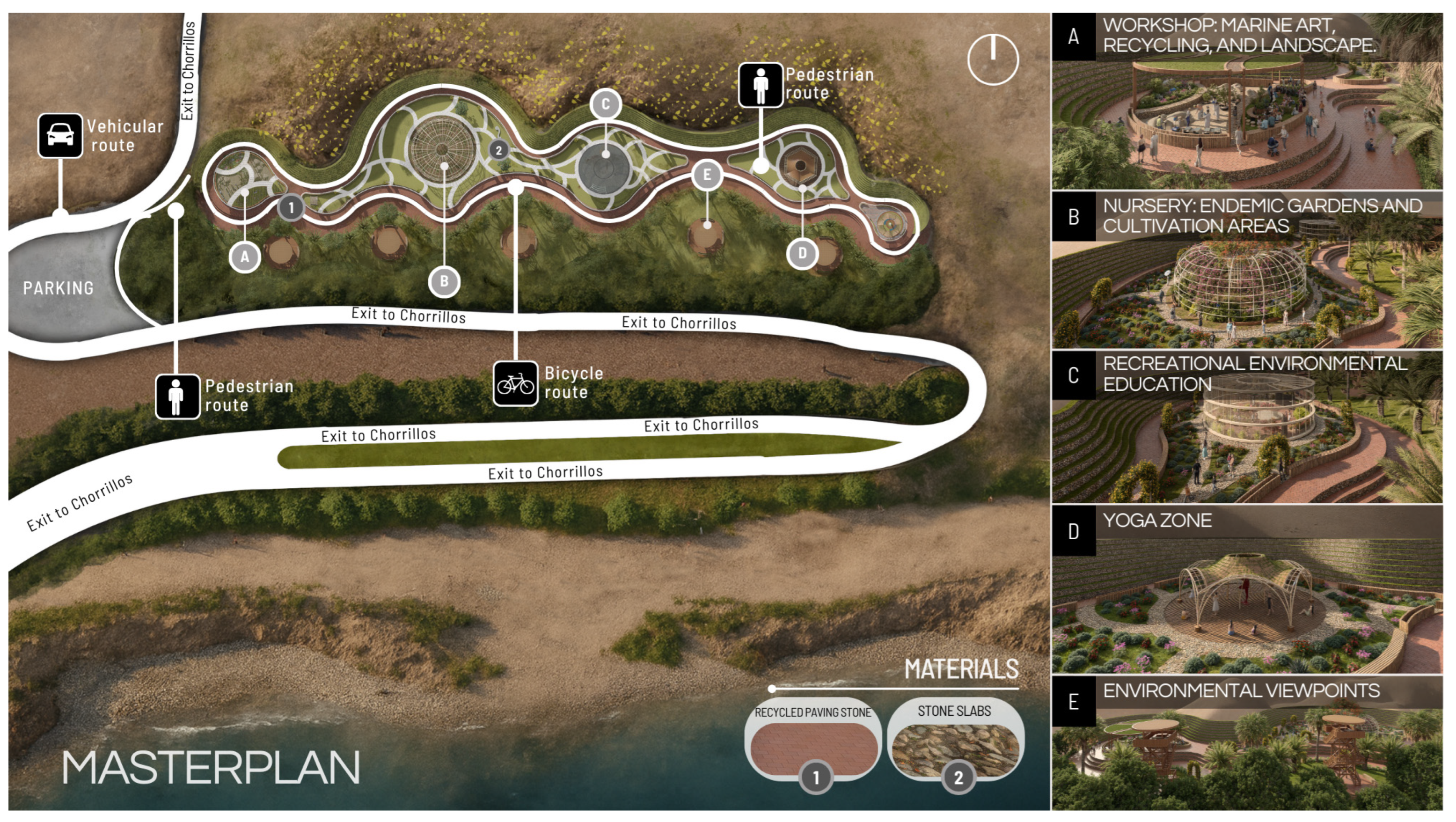
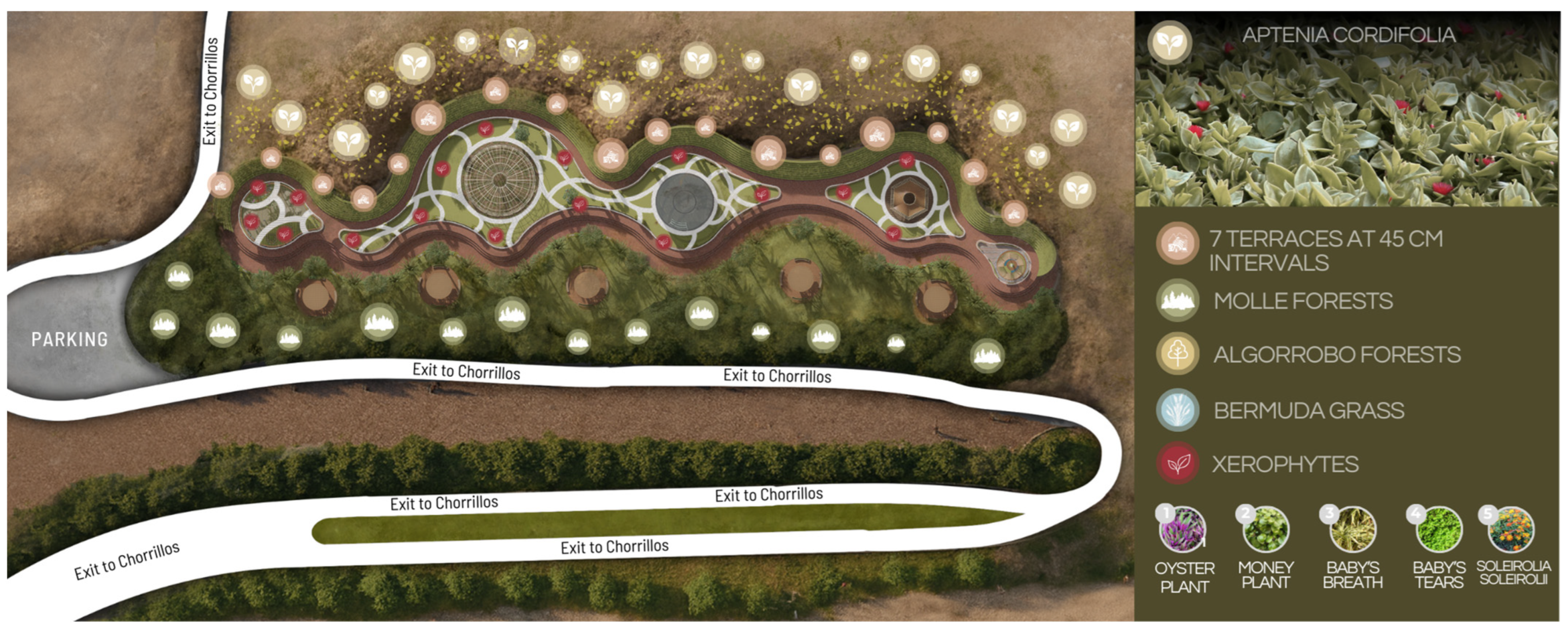
In this context, Figure 15 presents the comprehensive intervention proposal for La Herradura Beach, located in the district of Chorrillos (Lima, Peru). It was developed based on the territorial diagnosis that revealed a progressive deterioration of the coastal ecosystem caused by pollution, marine erosion, and unregulated urban occupation. The proposal seeks to reverse these impacts through an integral landscape regeneration approach that combines ecological, educational, recreational, and cultural functions, promoting environmental conservation and sustainable land use. The project is structured around pedestrian paths, bicycle lanes, and green areas that reconfigure the coastal public space into a resilient, healthy environment connected to the natural landscape. These routes link with the main access points to the Chorrillos promenade, fostering sustainable mobility through the inclusion of bicycle, pedestrian, and vehicle parking, as well as accessible routes that integrate the natural topography of the cliffs. In this way, the proposal aligns with Sustainable Development Goal (SDG) 11: Sustainable Cities and Communities, by promoting an inclusive, safe, and resilient coastal urban development model based on universal accessibility and the creation of high-quality public spaces that strengthen social cohesion and the relationship between the city and its natural environment.
Regarding materiality, the proposal uses sustainable and low-impact materials such as recycled pavers and flagstone (Figure 15, Materials 1 and 2) applied to pathways, ramps, and rest areas. Urban furniture is made from reused wood and bamboo, along with local stone aggregates that reinforce the coastal identity. In addition, the project incorporates bioconstruction techniques such as adobe, quincha, wood, and green roofs, which harmonize with the local environment and reduce environmental impact [75]. Passive and ecological systems are also implemented, such as fog catchers that capture atmospheric moisture for the irrigation of native species, photovoltaic solar panels that provide clean energy for the lighting system, and the planting of Schinus molle, a native species capable of capturing carbon and improving thermal comfort.
As for vegetation, the proposal includes a palette of xerophytic and native species adapted to marine salinity and low water requirements, such as molle (Schinus molle), huarango (Prosopis pallida), tara (Caesalpinia spinosa), huaranguay (Tecoma stans), and grasses such as zoysia, which facilitate pedestrian movement and reduce the need for intensive irrigation. These species improve CO2 capture, control erosion, and contribute to thermal comfort in outdoor spaces, strengthening local ecosystem services. Their implementation aligns with SDG 15: Life on Land, by promoting the restoration of degraded habitats, ecological resilience, and biodiversity in urban coastal environments. The recovery of native species also acts as a natural barrier against soil erosion and sea winds, reinforcing ecological regeneration processes.
Furthermore, Figure 15A–E show the spatial organization of the functional zones of the master plan, each with a specific ecological, educational, and social purpose. Figure 15A corresponds to the marine art, recycling, and landscape workshop, conceived as a community meeting space for artistic creation using natural and recycled materials, linked to environmental education programs. Figure 15B presents the endemic garden nursery, dedicated to the propagation of coastal flora and the teaching of sustainable gardening. Figure 15C represents the recreational environmental education area, where outdoor learning activities on composting, recycling, and renewable energy are conducted. Figure 15D shows the yoga and wellness area, designed to promote physical and mental health in direct contact with nature. Finally, Figure 15E illustrates the environmental viewpoints, elevated structures that allow contemplation of the seascape and environmental interpretation of the surroundings. Together, these areas form an integrated system of spaces that promote ecological education, responsible recreation, and climate resilience, consolidating a model of coastal regeneration aligned with the Sustainable Development Goals and the 2030 Agenda.

3.5. Public Spaces of the Master Plan

3.5.1. Cultural Activity and Recreational Workshop Zone

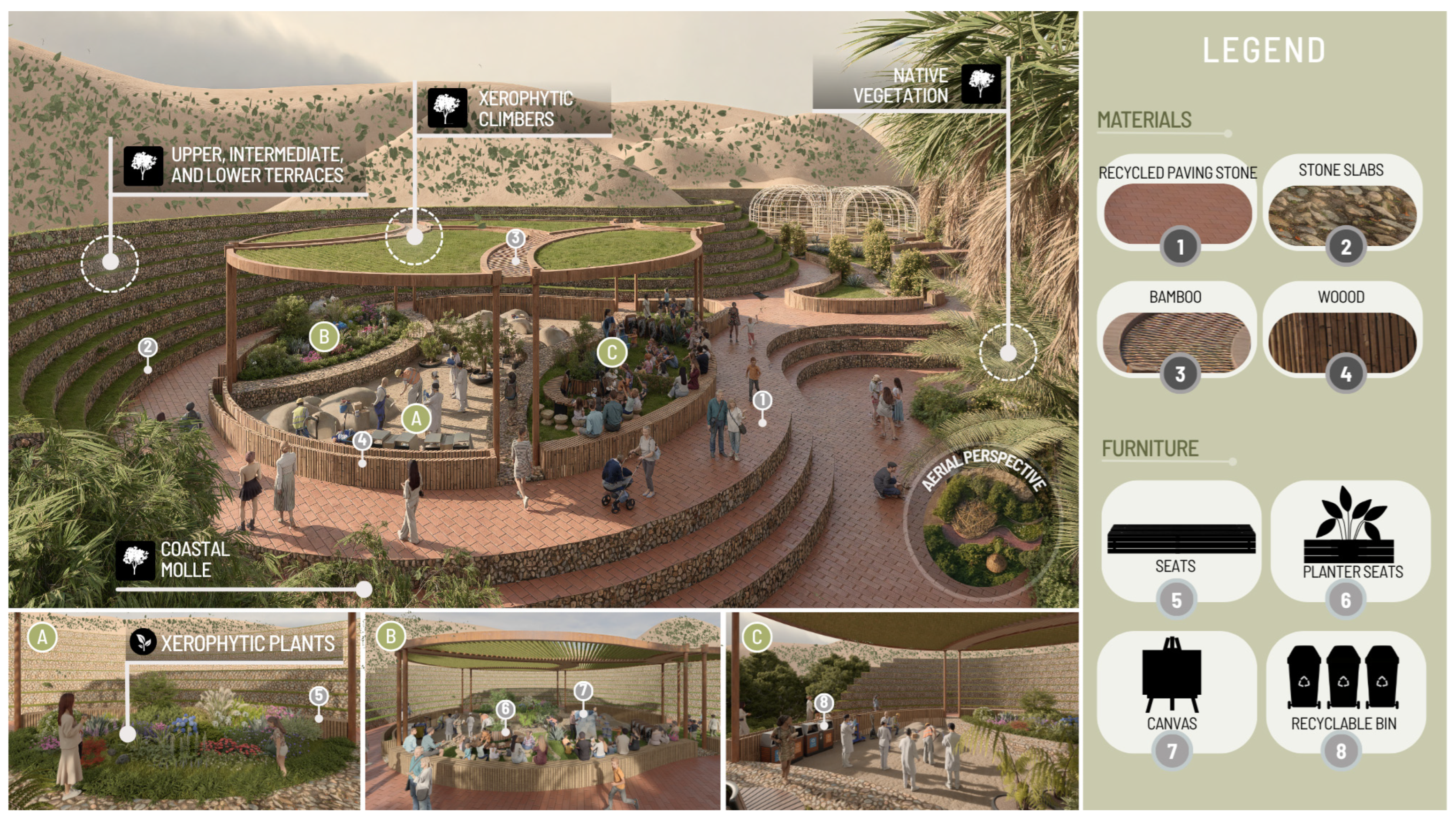
The area of cultural and recreational workshops is conceived as an integrative space where art, education, and community participation converge in direct contact with the natural landscape, as shown in Figure 16A. Wooden and bamboo pergolas covered with climbing plants provide shade and natural ventilation, while the terraced layout defines the spaces and creates a harmonious relationship between the structures and the vegetation.
The workshops are equipped with fixed and versatile furniture, including benches and planter-seats that encourage interaction and collective use, as illustrated in Figure 16B. In this area, groups can gather around central planters with xerophytic species that add color, identity, and low-maintenance vegetation, while the central pergola functions as a flexible meeting point for artistic and educational activities, complemented by painting canvases that promote creative expression and collaborative work.
Along the terraces, the use of stone and recycled pavements emphasizes the integration of natural and constructive materials, reinforcing both functionality and esthetic coherence. The surrounding vegetation, composed of native species such as Schinus molle and various xerophytes, enhances the sense of place and strengthens the ecological character of the project, providing an environment that fosters both community interaction and environmental awareness, as shown in Figure 16C.

3.5.2. Ecological Restoration Zone

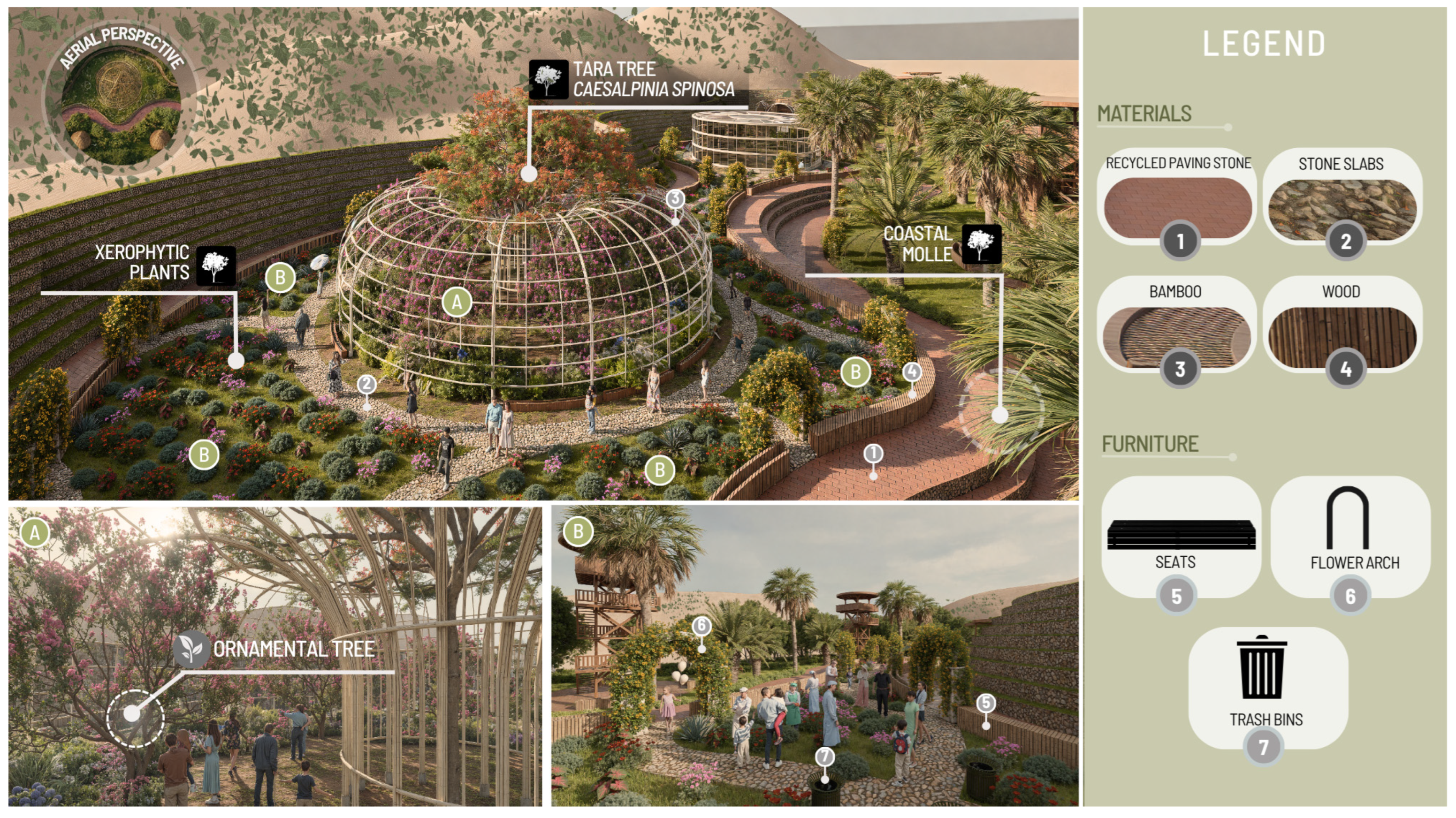
The ecological restoration zone is conceived as the environmental core of the project, aimed at restoring biodiversity and strengthening the native plant identity of the coastal landscape. The design incorporates low-maintenance xerophytic species that provide color, texture, and ecological stability, along with native trees such as molle (Schinus molle) and tara (Caesalpinia spinosa), selected for their resistance to salinity and their contribution to soil stabilization. These species promote measurable processes of environmental regeneration, such as the reduction in erosion, the increase in vegetation cover, and microclimatic improvement through temperature and surface humidity control.
At the center of the area is a lightweight dome-shaped nursery built with bamboo and wood, which functions as a space for the conservation and propagation of native vegetation (Figure 17A). This structure allows for the germination and cultivation of native species intended for the revegetation of the project’s borders, while also serving as a support point for educational and community activities related to ecological restoration. Its light, ventilated, and permeable structural configuration adapts to the climatic conditions of the coastline, allowing controlled entry of natural light and facilitating plant growth without the need for artificial climate systems.
Surrounding the area is a system of stone paths and recycled pavements that facilitate pedestrian circulation and define cultivation and observation sectors. The space is complemented by recycled wood benches, floral arches, and waste bins, elements that contribute to functionality and collective use without altering its ecological balance (Figure 17B). The use of recycled and low-impact materials reinforces the coherence between ecological function and the sustainable character of the project, ensuring proper integration with the coastal environment.
Overall, this zone functions as an experimental space for landscape restoration, where conservation and environmental education objectives are combined within a verifiable technical framework. Its implementation seeks to restore native vegetation, improve local environmental quality, and establish an active link between the community and the ecosystem, offering suitable conditions for observation, learning, and participation in coastal landscape regeneration processes.

3.5.3. Environmental Education Zone

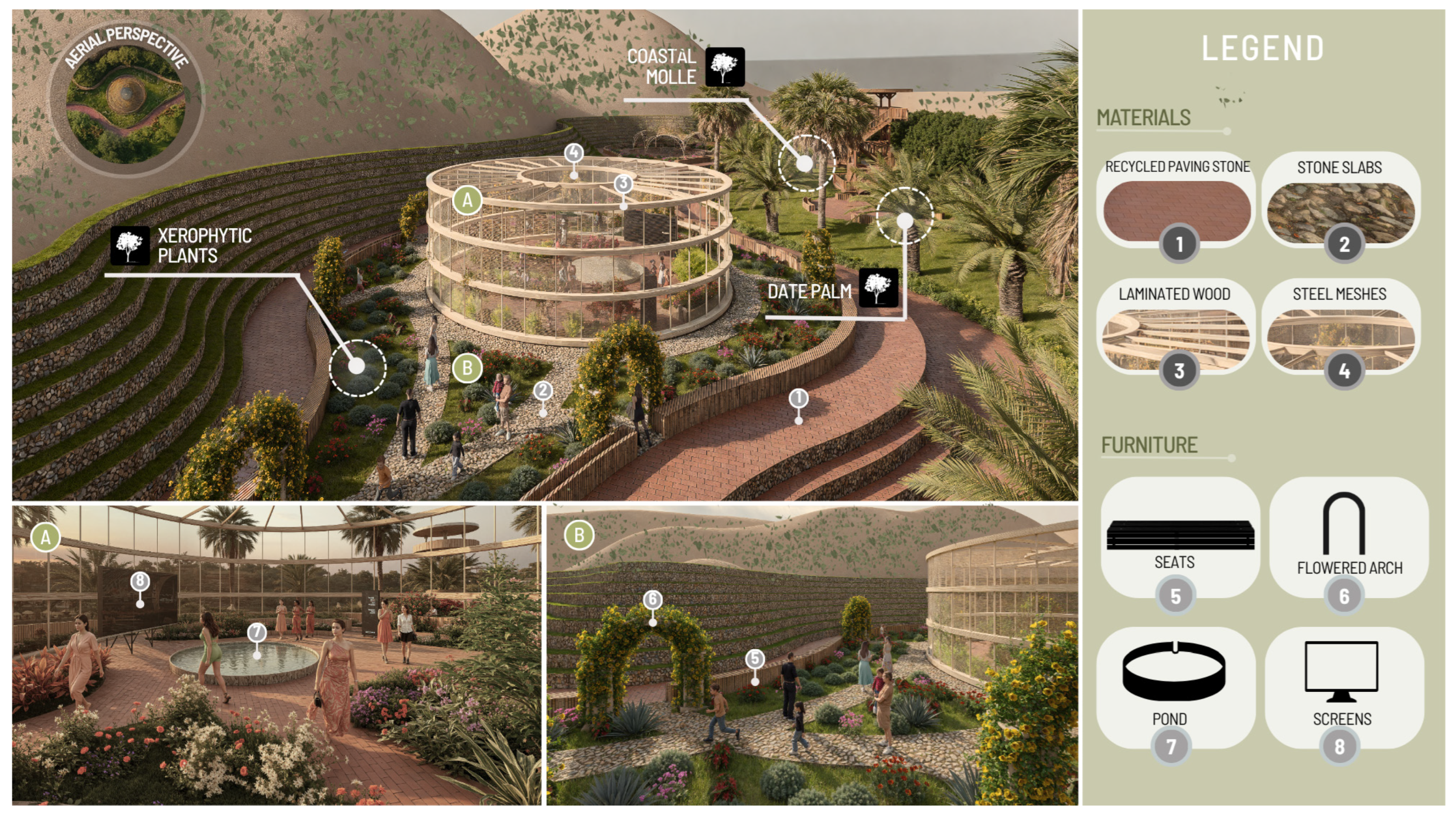
The environmental education zone is conceived as an open and participatory space designed to raise awareness among the community and visitors about the importance of preserving the coastal environment. Its central element is an ecological dome built with laminated wood and steel mesh, which allows visibility while hosting learning activities within a protected natural setting. Inside, a pond surrounded by ornamental vegetation and digital screens supports interactive educational experiences, reinforcing the understanding of topics related to biodiversity, water, and sustainability, as shown in Figure 18A.
The furniture is simple and functional, with collective seating and flexible spaces for group dynamics. The exterior pathways are framed by floral arches, gardens with xerophytic species, and native trees such as molle (Schinus molle) and the date palm, which provide shade, freshness, and a strong sense of local identity, as illustrated in Figure 18B. The use of stone and recycled pavements improves accessibility and community interaction without disturbing the vegetation. Altogether, this zone functions as a living laboratory for environmental education, where theory and practice are integrated within a didactic landscape that fosters ecological awareness and appreciation of the marine–coastal ecosystem.

3.5.4. Yoga and Wellness Zone

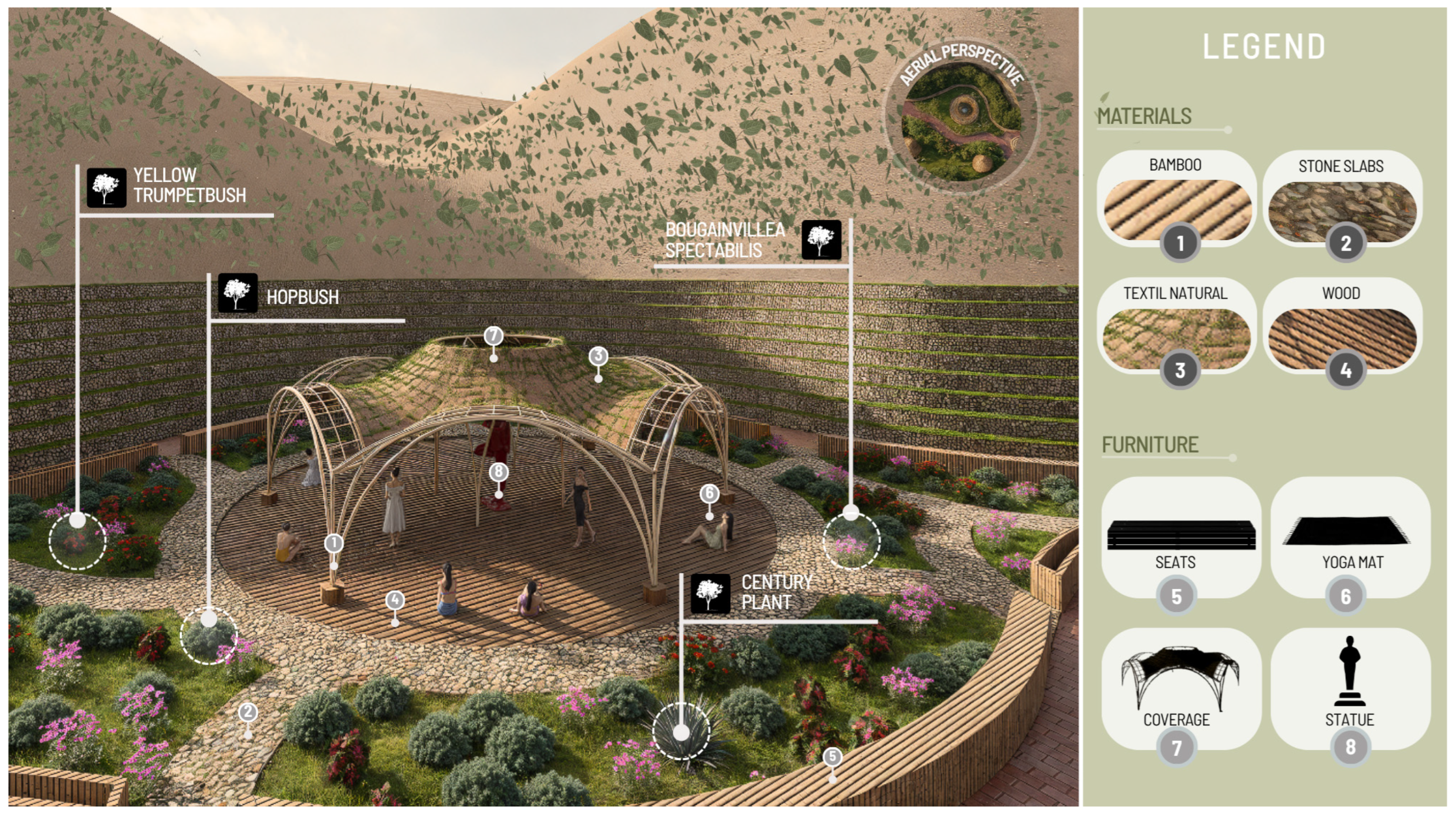
The yoga and wellness zone are conceived as a space of contemplation, harmony, and connection with nature, where physical and mental practices are integrated into an ecological environment. The central area is defined by a circular platform made of laminated wood, accompanied by a light bamboo structure that supports a natural textile canopy covered with climbing plants, providing shade and freshness, as shown in Figure 19.
Urban furniture is kept to a minimum so as not to interrupt the sensory experience: wooden benches and yoga mats allow both group and individual practice, while a sculpture is incorporated as a symbolic element that reinforces the spiritual character of the space. The vegetation consists of xerophytic species such as agave, Tecoma fulva, Dodonaea viscosa, and bougainvillea, which provide color, identity, and low maintenance. Stone paths and recycled pavements connect the different areas, naturally integrating into the landscape. Altogether, this zone creates an atmosphere of serenity, where vegetation, coastal breezes, and direct contact with nature become essential elements of physical and spiritual well-being.

3.5.5. Viewpoint Zone

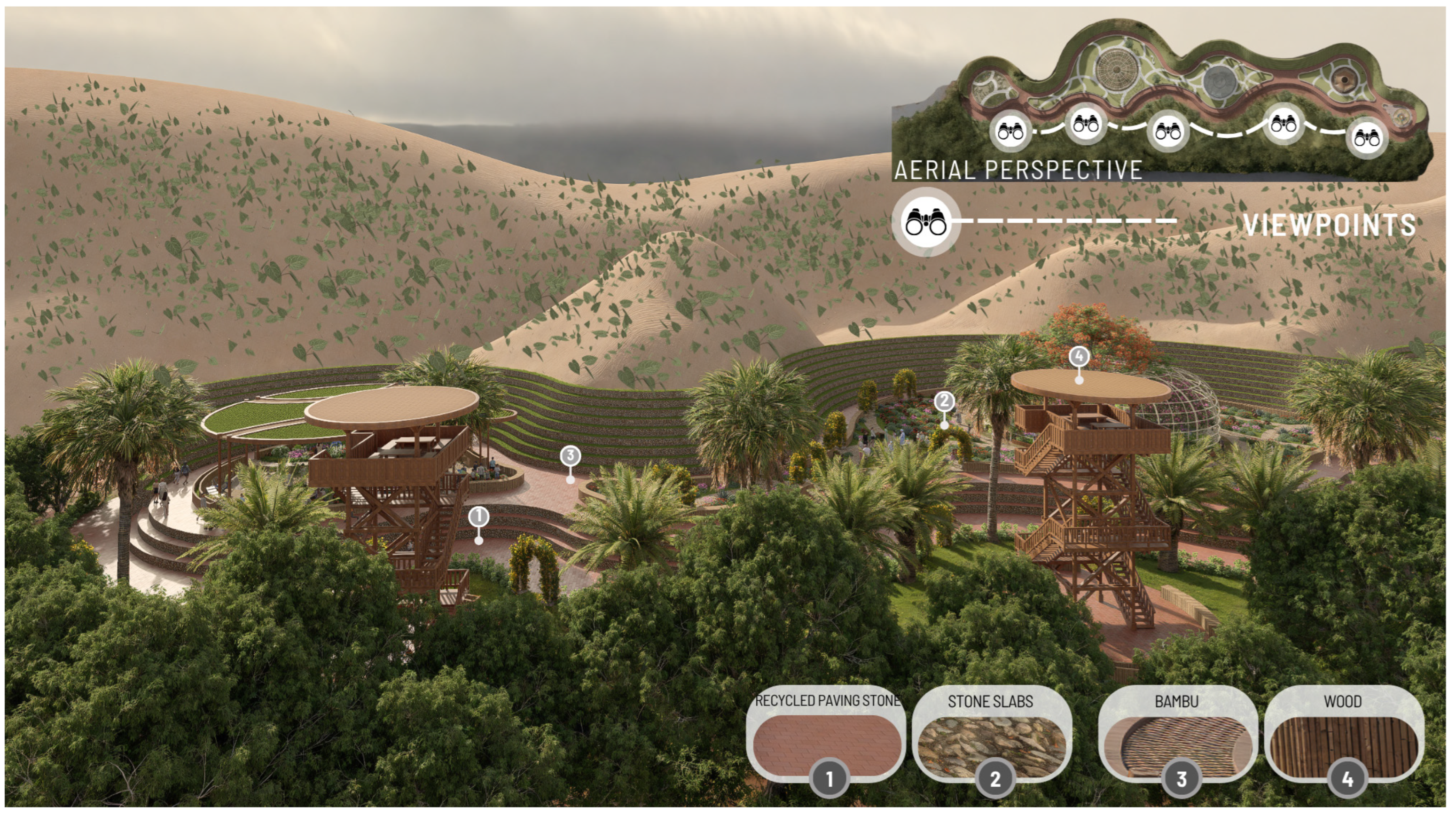
The viewpoint zone is conceived as a set of strategically located structures that allow visitors to appreciate the vastness of the natural landscape and provide spaces for contemplation, as shown in Figure 20. The use of materials such as wood and bamboo, in addition to blending with the landscape, helps reduce environmental impact and improves the thermal comfort of the structures [76]. Each viewpoint is built with wood and bamboo and features circular roofs that provide shade while harmoniously integrating with the surroundings.
The access routes are paved with recycled pavers and stone slabs, ensuring durability and a design that respects the natural terrain. The predominant vegetation in this area consists of native species such as molle (Schinus molle) and date palm (Phoenix dactylifera), which reinforce the landscape identity and provide freshness. Altogether, the viewpoints act as landmarks for contemplation, inviting visitors to observe calmly and strengthening their connection with the scenic beauty of the natural environment.

3.6. Comprehensive Ecological Restoration

For the ecological restoration of the marginal strip of the boardwalk, the proposal includes the planting of Schinus molle (coastal pepper tree) at intervals of 8 m between individuals, allowing the establishment of approximately 30 trees along the projected 240 linear meters, as shown in Figure 21. The evaluated specimen of Schinus molle presents a total height of 7.2 m and a crown diameter of 6.5 m, parameters obtained through experimental research. Based on these dendrometric data and considering biomass and carbon density factors, a carbon dioxide (CO2) capture of 7.2 kg was estimated, equivalent to an approximate annual fixation rate of 51.4 kg of CO2/year [77]. This value was obtained by applying allometric equations that relate the aboveground biomass of the individual to its structural dimensions, later converted to carbon equivalents using the conversion factors established by the Intergovernmental Panel on Climate Change (IPCC). This estimation makes it possible to quantify the contribution of the molle tree to climate change mitigation, highlighting its ecological importance in both urban and rural environments. In the context of this restoration effort, field observations also showed that the current environmental degradation of the area directly affects visitors’ sensory experience manifested in higher surface temperatures, diminished visual comfort, and odors associated with waste accumulation. These conditions emphasize the need for a landscape proposal that integrates ecological recovery with multisensory design criteria, in line with recent studies demonstrating how green interventions enhance environmental comfort, spatial legibility, and overall perception of coastal environments [78].
Complementarily, to reinforce soil stability and ensure the permanence of the tree species against wind and erosion, creeping vegetation of Aptenia cordifolia is incorporated. This species, already present in nearby coastal areas, acts as a living cover that reduces surface soil detachment and contributes to the hydric balance of the substrate. Moreover, it naturally adapts to environments with high relative humidity—between 70% and 99% during most of the year—a typical characteristic of Lima’s coastal edge. Its implementation is estimated at approximately USD 45,000 (250 plants per 12 h = 3000 m2). It is worth noting that the project area presents no risk of flooding due to its elevated geographical location facing the coastline.
Table 1 shows the annual CO2 uptake per species, which is 51.4 kg/year. The project also includes 240 species, which together would generate approximately 12,336 kg of O2 per year, contributing significantly to environmental sustainability and the reduction in air pollution.
A Peruvian pepper tree (Schinus molle) with a 7.4 m canopy corresponds to a tree of intermediate-to-high cooling capacity, similar to the umbrella or broad-canopy species analyzed [79].
  • According to the study ranges:
  • Air cooling reduction: ≈1–2.5 °C
  • Surface cooling reduction (soil or pavement under canopy): ≈3–6 °C
Perceived thermal equivalent (PET): up to −2.5 °C, depending on height and leaf density (Figure 22).
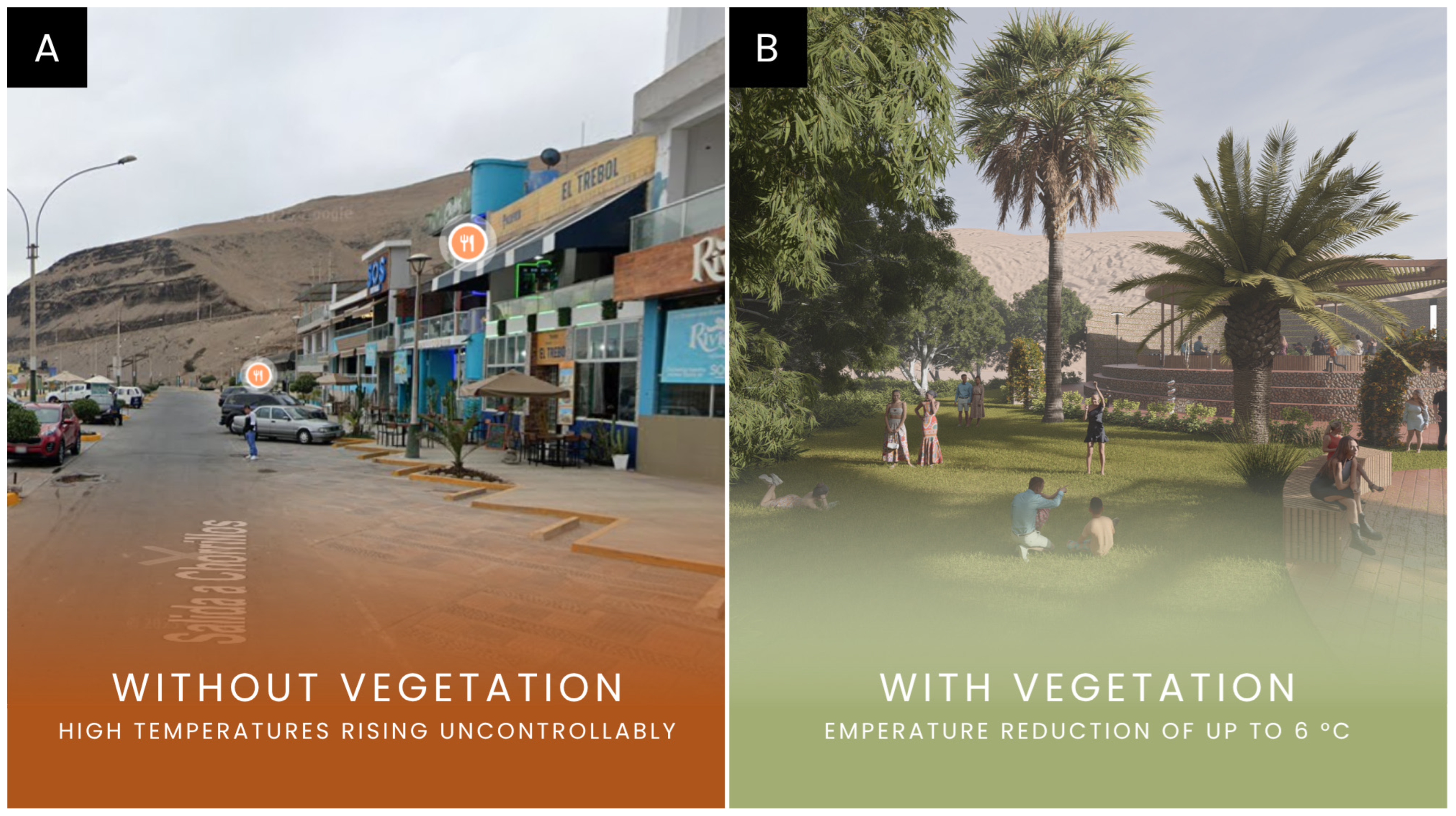
Scientific evidence on temperature reduction achieved by urban trees is highly relevant for the Malecón of Chorrillos, a space directly exposed to solar radiation and the influence of the coastal microclimate. In this context, the incorporation of Schinus molle (coastal pepper tree) at 8 m intervals along the 240 linear meters of the boardwalk not only provides shade and landscape value but also delivers a measurable impact on thermal regulation.
While the presence of individual trees generates localized benefits, the effect is amplified through the continuity and density of the tree canopy. On the boardwalk, where approximately 30 coastal pepper trees are planned, the developing canopy could create a bioclimatic corridor capable of significantly reducing thermal sensation and counteracting the urban heat island effect in a densely built-up district such as Chorrillos, as shown in Table 2.
Cucal (Distichlis spicata) is a perennial grass highly tolerant to saline soils, a characteristic that makes it an excellent option for the lower terraces facing the sea in Chorrillos, where salinity and sea winds pose constant challenges. Thanks to its vigorous rhizomes, it forms dense colonies and root mats that help stabilize the soil and prevent coastal erosion, thereby contributing to the conservation of sandy terrain against wave action. Its capacity to create a protective barrier makes it ideal for use in coastal restoration and resilient landscaping projects [81].

3.7. Sustainable Design Strategies

3.7.1. Terraces

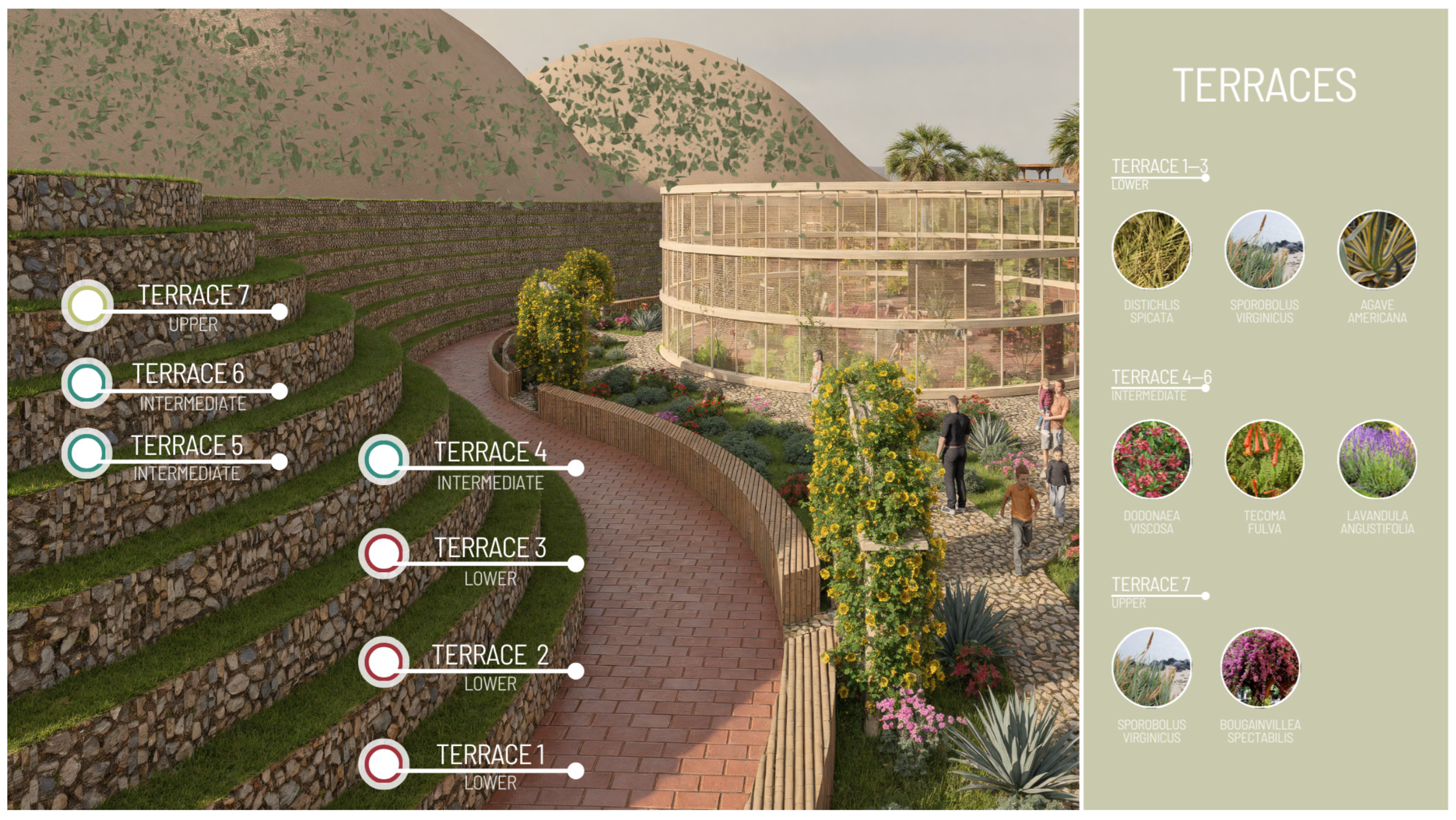
The project will include seven staggered terraces, each 0.45 m high (≈3.15 m total elevation difference), featuring a system of low terraces resembling stepped planters. These will incorporate shrub, herbaceous, and groundcover species that generate cool microclimates, partial shade, erosion control, and biodiversity, as shown in Table 3.
The implementation of groundcovers and herbaceous plants promotes passive cooling by reducing direct radiation on the soil, while the placement of shrubs on intermediate terraces acts as a progressive windbreak, filtering sea winds and providing protection to the upper levels. Complementarily, the incorporation of ecological diversity through the mix of native and xerophytic species enriches the landscape and attracts birds, insects, and pollinators, thereby strengthening the ecosystem services of the area, as shown in Figure 23.

3.7.2. Fog Catchers

The high levels of ambient humidity characteristic of the coastal strip of Chorrillos make it suitable for the installation of fog catchers devices capable of condensing atmospheric vapor and transforming it into usable water for irrigation or ecosystem recharge, as shown in Figure 24. This alternative water resource not only reduces pressure on conventional water sources but also strengthens green infrastructure by providing a steady supply for groundcovers, shrubs, and xerophytic species, thereby increasing landscape resilience against aridity and marine salinity [82]. Its implementation represents a technical strategy for climate adaptation and mitigation, aligned with successful experiences such as the projects carried out in the Pantanos de Villa, where fog catchers have proven effective in biodiversity conservation and in consolidating an ecological urban fabric that improves habitability and sustainability in coastal areas.
Fog catchers are systems designed to harness the humidity present in coastal mist, generating water that can be used for irrigating native species, supporting ecological restoration projects, and strengthening water security for local communities. The proposal envisions a wooden structure measuring 5.00 m in height and 1.0 m in diameter, covered with 30% Raschel mesh and equipped with a corrugated PVC channel that directs the water toward a storage tank at the base. This design is framed within humid-season conditions, with relative humidity levels close to 90% [83].
Capture surface. The effective capture surface is estimated from the lateral area of the cylindrical collector [84]:
Acapture = 2πrh
where r is the radius (1 m) and h is the height (5.0 m):
Acapture = 2π(1.0)(5.0) ≈ 31.42 m2
Estimated water collection. The amount of water collected depends on the efficiency of collection per square meter per day. An average value of 3 L/m2/day is assumed, based on previous regional studies [85,86].
Qdaily = Acapture × EQdaily = 31.42 m2 × 3 L/m2/day = 94.26 L/day
As detailed in Table 4, the arrangement of 12 fog catchers along the projected ecological border responds to a dual purpose: the capture of atmospheric water for ecological purposes and the strengthening of the educational component of the green belt. The 240 m linear section is complemented with areas of native vegetation adapted to arid conditions, reaching a total intervention area of 720 m2.
Table 5 presents the water requirements of the proposed vegetation. The botanical palette is composed of native and xerophytic species, with selection criteria focused on their low water demand. However, some species with moderate requirements are also included due to their symbolic, ecological, or functional relevance to the proposed vegetation. The botanical palette is composed of native and xerophytic species. Selection criteria are focused on their low water demand, although some species with moderate requirements are included due to their symbolic, ecological, or functional relevance.
The implementation of fog catchers in Lomas del Paraíso establishes a direct link between the availability of alternative water sources and ecological restoration in arid zones. Each unit, with an effective capture area of 31.42 m2 and an efficiency of 3 L/m2/day, allows the 12 projected devices to generate approximately 1131.12 L per day, equivalent to 33,933.6 L per month. This volume meets nearly 100% of the irrigation requirements of the selected vegetation during the humid season. The remaining deficit can be addressed through complementary techniques such as drip irrigation, seasonal water storage, and localized runoff collection, thereby maximizing resource-use efficiency.
The proposed approach combines technical efficiency, environmental restoration, and community participation, underscoring the importance of nature-based solutions in addressing water and climate challenges in fragile urban contexts. In addition to supporting reforestation processes and the preservation of native species resistant to xeric conditions, the model promotes a green infrastructure with educational value and replicable potential. This type of intervention contributes to the development of more resilient and self-sustaining landscapes, where water security is integrated with environmental quality and territorial identity.
In summary, the results show how the design and programmatic decisions of the green belt align with the principles of permaculture and circular economy. From landscape regeneration and adaptive construction to community involvement and sustainable resource management, the proposal integrates regenerative practices that strengthen both ecological and social resilience at the local level.

3.7.3. Lighting Powered by Clean Energy

The design of the proposed luminaires for La Herradura, Chorrillos, is inspired by the organic forms of Pacific Ocean waves, a symbolic representation of the site’s marine and recreational character. The incorporation of LED lighting helps reduce energy consumption and minimize environmental impact, reinforcing alignment with the principles of sustainability and clean energy. Figure 25 illustrates the design considerations for both fog catchers and lighting elements. In the case of the fog catchers, they are conceived as an ecological and technologically viable solution for the coast of Chorrillos, an area characterized by low rainfall and high atmospheric humidity from the sea, which makes it possible to harness coastal fog as an alternative water source. The joint implementation of fog catchers and sustainable lighting strengthens the green infrastructure of the coastal edge and contributes to climate resilience, landscape conservation, and the environmental revalorization of La Herradura.
In Figure 25, it can be seen that solar panels will be integrated into luminaires as part of a green infrastructure proposal. They present several features [93,94]: solar systems are characterized by their sustainability, harnessing a clean and renewable energy source that helps mitigate climate change. They are notable for their high energy efficiency, effectively converting solar radiation into electricity, and for their low maintenance, which reduces long-term operating costs [95,96].
Solar-powered luminaires will be installed along the green infrastructure route. Circuit 1 has a length of 500 m and includes the installation of 25 luminaires equipped with photovoltaic panels. Table 6 presents the proposal for an autonomous lighting system that offers an efficient, high-quality alternative for illuminating streets, common areas, and shared spaces at night. This system is designed to directly replace traditional sodium, mercury, and metal halide lamps.
This represents a 108% increase in power consumption, although the energy generated by the solar-powered lights does not depend on the electrical grid, resulting in a net energy saving of 100% compared to grid consumption.
They will be installed at an optimal height of between 11 and 12 m, maintaining a spacing of 20 to 25 m between poles to ensure uniform coverage. The solar panels powering this system feature high efficiency, capable of converting up to 23% of solar radiation into electrical energy. They will be strategically placed along the main route to maximize solar capture throughout the day.
The project proposes a modular and adaptable system that facilitates implementation in both urban and rural contexts, promoting efficient and environmentally responsible lighting. This solution not only fosters sustainability through the use of renewable energy but also reduces dependence on non-renewable sources, offering an ecological and cost-effective alternative. In addition, its versatility allows integration into different types of infrastructure and landscapes, optimizing energy consumption and reducing environmental impact [97,98].

4. Discussion

The strategies for the revalorization of the natural environment and landscape regeneration applied in La Herradura demonstrate the potential of sustainable architecture and urban planning to restore degraded coastal ecosystems and strengthen the relationship between the city and the sea. The proposal integrates native vegetation, ecological terraces, and fog-catching systems, configuring a model of green–blue infrastructure (GBI) adapted to the hyper-arid conditions of Lima’s coastline, following context-based environmental logics historically developed in territories exposed to climatic and topographic constraints [99]. Quantifiable results, such as the installation of twelve fog catchers with a capacity of 1131 L of water per day and the planting of 30 individuals of Schinus molle with an estimated annual carbon capture of 51.4 kg of CO2 per tree, confirm the project’s contribution to water self-sufficiency, thermal mitigation, and carbon compensation [75,77,87,88,89,90,91,92]. Likewise, the expansion of green areas and the rehabilitation of 20 ha of accessible public space improve the indicator of ecological space per inhabitant, which could reach 3.6 m2/hab, approaching the WHO’s recommended standard of 9 m2/hab and exceeding Lima’s current coastal average [33,34,35].
From a comparative perspective, the La Herradura proposal aligns with the same principles found in leading Latin American projects. In Medellín, the Parques del Río program reconnected the city with its river through the recovery of 26.6 ha of new effective public space (EPS) and the partial undergrounding of roadways, which increased the green surface from 3.7 to 4.2 m2/hab. However, the project faced accessibility inequalities due to 78.08 ha of invaded EPS, equivalent to 10% of the total [33,34,35]. In contrast, La Herradura proposes a network of continuous pedestrian paths and universal access points that ensure spatial equity and direct connection to the beach, addressing one of the most critical urban deficits of the Chorrillos district.
In Xochimilco, the Chinampa–Refugio Model (CRM) restored the symbiosis between traditional agriculture and the conservation of native species, creating 300 m ecological refuges that host 200–300 axolotls and improve water quality through biofilters and vegetated borders [30,31,32,33]. This case demonstrates that ecological restoration can be economically sustainable through the use of native vegetation and community-based maintenance management. La Herradura adopts a similar logic by employing xerophytic species such as *Caesalpinia spinosa* and Distichlis spicata, whose low water requirements reduce operational costs and enhance the resilience of the coastal ecosystem.
On the other hand, the case of Copacabana (Brazil) provides a benchmark for the integration of landscape, accessibility, and operational sustainability. The redesign of the promenade by Roberto Burle Marx expanded the pedestrian surface to 4.8 m2/hab and achieved a 12% reduction in annual maintenance costs between 2015 and 2020 [25,26,27,28,29]. La Herradura aligns with this approach by prioritizing recycled pavements, accessible ramps, and a photovoltaic lighting system along 500 m of pathways that ensure functionality and low energy consumption, extending the infrastructure’s life cycle.
Overall, the indicators obtained in La Herradura, including CO2 capture, alternative water provision, thermal reduction, accessible green surface, and maintenance efficiency, show significant progress toward a resilient and self-sufficient coastal model. Unlike the reference cases, the proposal stands out for its adaptation to the arid and saline context of the Peruvian Pacific, where water management and soil protection play a key role. This strategy not only reduces the project’s environmental footprint but also strengthens social resilience through educational, cultural, and recreational spaces that reactivate coastal identity and promote community appropriation of the landscape.
In conclusion, the comparative analysis with Parques del Río, Xochimilco, and Copacabana positions La Herradura as an innovative Latin American case of coastal regeneration based on measurable data. By integrating green–blue infrastructure, low maintenance costs, universal accessibility, and community participation, the project consolidates a replicable model of comprehensive restoration that combines ecological sustainability, social equity, and spatial efficiency within the objectives of sustainable urban development.

5. Conclusions

The regeneration of La Herradura Beach demonstrates that urban interventions on degraded coastal fronts can be addressed through an integrated approach combining ecological restoration, public space redesign, and nature-based technologies. The planting of native species and the implementation of atmospheric water capture systems directly contribute to SDG 15, life on land, by promoting the recovery of coastal biodiversity and the functionality of local ecosystems.
The insights derived from this intervention also offer transferable guidelines for urban and landscape designs in beaches with comparable geomorphological and environmental conditions. Strategies such as native vegetation restoration, low-impact public space infrastructure, and the incorporation of climate-responsive systems provide a replicable model for enhancing ecological stability and improving social use in other urban coastal settings.
From the perspective of urbanism and landscape design, the project establishes a framework that integrates mobility, ecological corridors, and programmed public spaces, treating the landscape as infrastructure. This strategy fosters environmental education and citizen engagement, contributing to SDG 11, sustainable cities and communities, through the creation of resilient, inclusive urban spaces that improve community well-being. At the same time, the optimization of resources, such as the use of fog water for irrigation and the sustainable management of vegetation, aligns with SDG 12, responsible consumption and production, by reducing reliance on external inputs and promoting sustainable practices that can be replicated in other urban contexts.
Methodologically, the developed procedure combines spatial analysis, ecological modeling, and architectural visualization, providing a replicable framework for medium-scale interventions in urban beaches. Applying this approach in other contexts across Peru and Latin America highlights the importance of integrated governance, community participation, and the use of local species as key factors for the success of socio-ecological regeneration.
In summary, La Herradura demonstrates that urban coastal regeneration is achievable when design decisions are linked to measurable ecological outcomes, the landscape is understood as infrastructure, and the public space functions as a tool for environmental education and social cohesion. This proposal contributes to a paradigm shift toward coastal coexistence, promoting cities by the sea that are more sustainable, resilient, and ecologically responsible.

Author Contributions

Conceptualization, F.L.P.G.; methodology, D.E. and J.V.C.; software, A.G. and E.P.; validation, J.P.; formal analysis, M.P.; investigation, A.A.P.S. and V.R.; resources, P.C. and L.C.; data curation, V.R.; writing—original draft preparation, A.A.P.S.; writing—review and editing, A.G.; visualization, J.V.C.; supervision, D.E.; project administration, P.C. All authors have read and agreed to the published version of the manuscript.

Funding

This research received no external funding.

Institutional Review Board Statement

Not applicable.

Informed Consent Statement

Not applicable.

Data Availability Statement

The original contributions presented in this study are included in the article.

Acknowledgments

We sincerely thank our colleagues for the opportunity to develop an architectural design proposal focused on strategies for the revalorization of the natural environment and landscape regeneration at La Herradura Beach, Chorrillos, Peru 2024.

Conflicts of Interest

The authors declare no conflicts of interest.

References

  1. Schernewski, G.; Konrad, A.; Roskothen, J.; von Thenen, M. Coastal Adaptation to Climate Change and Sea Level Rise: Ecosystem Service Assessments in Spatial and Sectoral Planning. Appl. Sci. 2023, 13, 2623. [Google Scholar] [CrossRef]
  2. Heckbert, S.; Costanza, R.; Poloczanska, E.S.; Richardson, A.J. Climate regulation as a service from estuarine and coastal ecosystems. In Ecological Economics of Estuaries and Coasts; Elsevier Inc.: Amsterdam, The Netherlands, 2011; pp. 199–216. [Google Scholar] [CrossRef]
  3. White, M.P.; Alcock, I.; Grellier, J.; Wheeler, B.W.; Hartig, T.; Warber, S.L.; Bone, A.; Depledge, M.H.; Fleming, L.E. Spending at least 120 minutes a week in nature is associated with good health and wellbeing. Sci. Rep. 2019, 9, 7730. [Google Scholar] [CrossRef]
  4. Bratman, G.N.; Anderson, C.B.; Berman, M.G.; Cochran, B.; de Vries, S.; Flanders, J.; Folke, C.; Frumkin, H.; Gross, J.J.; Hartig, T.; et al. Nature and mental health: An ecosystem service perspective. Sci. Adv. 2019, 5, eaax0903. [Google Scholar] [CrossRef]
  5. Gascon, M.; Zijlema, W.; Vert, C.; White, M.P.; Nieuwenhuijsen, M.J. Outdoor blue spaces, human health and well-being: A systematic review of quantitative studies. Int. J. Hyg. Environ. Health 2017, 220, 1207–1221. [Google Scholar] [CrossRef]
  6. OECD. The Ocean Economy in 2030. Organización para la Cooperación y el Desarrollo Económicos. Available online: https://www.oecd.org/ocean/The-Ocean-Economy-in-2030.pdf (accessed on 20 September 2025).
  7. Wolch, J.; Byrne, J.; Newell, J.P. Urban green space, public health, and environmental justice. Landsc. Urban Plan. 2014, 125, 234–244. [Google Scholar] [CrossRef]
  8. Barbier, E.B.; Hacker, S.D.; Kennedy, C.; Koch, E.W.; Stier, A.C.; Silliman, B.R. The value of estuarine and coastal ecosystem services. Ecol. Monogr. 2011, 81, 169–193. [Google Scholar] [CrossRef]
  9. Wang, Z.; Qi, G.; Wei, W. China’s Coastal Seawater Environment Caused by Urbanization Based on the Seawater Environmental Kuznets Curve. Ocean Coast. Manag. 2021, 213, 105893. [Google Scholar] [CrossRef]
  10. Mentaschi, L.; Vousdoukas, M.I.; Pekel, J.-F.; Voukouvalas, E.; Feyen, L. Global long-term observations of coastal erosion and accretion. Sci. Rep. 2018, 8, 12876. [Google Scholar] [CrossRef] [PubMed]
  11. Luijendijk, A.; Hagenaars, G.; Ranasinghe, R.; Baart, F.; Donchyts, G.; Aarninkhof, S. The State of the World’s Beaches. Sci. Rep. 2018, 8, 6641. [Google Scholar] [CrossRef] [PubMed]
  12. Cui, Y.; Yan, F.; He, B.; Ju, C.; Su, F. Characteristics of Shoreline Changes around the South China Sea from 1980 to 2020. Front. Mar. Sci. 2022, 9, 1005284. [Google Scholar] [CrossRef]
  13. Yanagisawa, H.; Koshimura, S.; Miyagi, T.; Imamura, F. Tsunami Damage Reduction Performance of a Mangrove Forest in Banda Aceh, Indonesia. J. Geophys. Res. Oceans 2010, 115, C06019. [Google Scholar] [CrossRef]
  14. Molina, R.; Anfuso, G.; Manno, G.; Gracia Prieto, F.J. The Mediterranean Coast of Andalusia (Spain): Medium-Term Evolution and Impacts of Coastal Structures (1956–2016). Sustainability 2019, 11, 3539. [Google Scholar] [CrossRef]
  15. Checa, J.; Nel·lo, O. Urban Intensities: The Urbanization of the Iberian Mediterranean Coast in the Light of Nighttime Satellite Images of the Earth. Urban Sci. 2018, 2, 115. [Google Scholar] [CrossRef]
  16. Martínez, C.; Rangel-Buitrago, N.; Williams, A.T. Coastal Urbanization and Its Effects on Ecosystem Services: Challenges for Marine and Coastal Management. J. Mar. Sci. Eng. 2025, 13, 319. [Google Scholar] [CrossRef]
  17. González Rodríguez, S.V.; Negro Valdecantos, V.; del Campo, J.M.; Torrodero Numpaque, V. Comparing the Effects of Erosion and Accretion along the Coastal Landscape of Rio de Janeiro and Guanabara Bay, Brazil. Sustainability 2024, 16, 5728. [Google Scholar] [CrossRef]
  18. Willis, C.M.; Griggs, G.B. Reductions in Fluvial Sediment Discharge by Coastal Dams in California and Implications for Beach Sustainability. J. Geol. 2003, 111, 167–182. [Google Scholar] [CrossRef]
  19. Billet, C.; Bacino, G.; Alonso, G.; Dragani, W. Shoreline Temporal Variability Inferred from Satellite Images at Mar del Plata, Argentina. Water 2023, 15, 1299. [Google Scholar] [CrossRef]
  20. Pegado, T.; Andrades, R.; Noleto-Filho, E.; Franceschini, S.; Soares, M.; Chelazzi, D.; Russo, T.; Martellini, T.; Barone, A.; Cincinelli, A.; et al. Meso- and microplastic composition, distribution patterns and drivers: A snapshot of plastic pollution on Brazilian beaches. Sci. Total Environ. 2024, 907, 167769. [Google Scholar] [CrossRef]
  21. Castillo, J.A.; Menéndez, Á.; Vázquez, J. Forest Fragmentation and Landscape Connectivity Changes in Ecuadorian Mangroves: Some Hope for the Future? Appl. Sci. 2023, 13, 5001. [Google Scholar] [CrossRef]
  22. López, L. Derrames de petróleo y sus efectos en el carbono orgánico de suelos y sedimentos. Boletín Acad. Cienc. Físicas Matemáticas Nat. 2021, 81, 25–28. [Google Scholar]
  23. Gadino, I.; Taveira, G. Ordenamiento y gestión del territorio en zonas costeras con turismo residencial: El caso de Región Este, Uruguay. Rev. Geogr. Norte Gd. 2020, 77, 233–251. [Google Scholar] [CrossRef]
  24. Coutinho, M.H. Un Análisis de la Evolución de Las Intervenciones Urbanas de Roberto Burle Marx en Río de Janeiro. ResearchGate. 2015. Available online: https://www.researchgate.net/publication/276182155 (accessed on 21 September 2025).
  25. Roca León, R. Burle Marx y su Intervención en el Paisaje Cultural de Copacabana: Documentación, Análisis y Protección de un Patrimonio Contemporáneo. 2024. Academia.edu. Available online: https://www.academia.edu/113983117 (accessed on 4 September 2025).
  26. Pérez, J. O PASSEIO DE COPACABANA COMO PATRIMÔNIO E PAISAGEM CULTURAL. Revista UFG 2017, 12, 8. Available online: https://revistas.ufg.br/revistaufg/article/view/48309 (accessed on 20 September 2025).
  27. Wikimedia Commons. Copacabana Promenade Pavement. Licensed Under CC BY-SA 2.0. Available online: https://commons.wikimedia.org/wiki/File:CopacabanaPavement.jpg (accessed on 29 October 2025).
  28. Wikimedia Commons. Copacabana Beach, Rio de Janeiro. Licensed Under CC BY-SA 2.0. Available online: https://commons.wikimedia.org/wiki/File:CopacabanaBeach_RiodeJaneiro.jpg (accessed on 29 October 2025).
  29. Wikimedia Commons. Copacabana Beach Mosaic and Palm Trees. Licensed Under CC BY-SA 2.0. Available online: https://commons.wikimedia.org/wiki/File:Copacabana_Beach_Mosaic_and_Palm_Trees.jpg (accessed on 29 October 2025).
  30. Narchi, N.E.; Canabal Cristiani, B. Percepciones de la degradación ambiental entre vecinos y chinamperos del Lago de Xochimilco, México. Soc. Ambiente 2016, 5, 5–29. [Google Scholar] [CrossRef]
  31. Mendoza Solís, V.A. Evaluación de la Calidad de Refugios a Partir de Especies Indicadoras de Microcrustáceos de Zooplancton para la Conservación de la Biodiversidad Acuática en Xochimilco. Master’s Thesis, Instituto de Ciencias del Mar y Limnología, Instituto de Biología, Universidad Nacional Autónoma de México, Mexico City, México, 2023. [Google Scholar]
  32. Oficina de Resiliencia Urbana (O-RU). Plan Maestro: Chinampa Refugio, Xochimilco. Año 2019–2020. Available online: https://www.o-ru.mx/chinampa-refugio (accessed on 23 August 2025).
  33. Universidad Nacional Autónoma de México. La Chinampa-Refugio Para la Conservación del Axolote en un Xochimilco Sostenible. SDSN México Banco de Proyectos, 2019–2020. Available online: https://sdsnmexico.mx/banco-de-proyectos/medio-ambiente-actividades-agropecuarias-y-alimentacion/la-chinampa-refugio-para-la-conservacion-del-axolote-en-un-xochimilco-sostenible/ (accessed on 23 August 2025).
  34. Cárdenas, M.F.; Giraldo-Ospina, T. Espacio público efectivo en Manizales y Medellín, Colombia: Evaluación cuantitativa de su generación y distribución en dos momentos normativos. Rev. Bras. Gestão Urbana 2021, 13, e20210075. [Google Scholar] [CrossRef]
  35. Pradilla, G.; Hack, J. An urban rivers renaissance? Stream restoration and green–blue infrastructure in Latin America—Insights from urban planning in Colombia. Urban Ecosyst. 2024, 27, 2245–2265. [Google Scholar] [CrossRef]
  36. Wikimedia Commons. Parques del Río Medellín—Medellín Aquí todo florece, 2022—01. Licensed Under CC BY-SA 4.0. Available online: https://commons.wikimedia.org/wiki/File:Parques_del_R%C3%ADo_Medell%C3%ADn_-_Medell%C3%ADn_Aqu%C3%AD_todo_florece,_2022_-_01.jpg (accessed on 29 October 2025).
  37. Google Earth. Unidades de Vida Articulada (UVA), Medellín, Colombia. Image © Google 2025. Available online: https://earth.google.com/ (accessed on 29 October 2025).
  38. América Noticias. Chorrillos: Vecinos Denuncian Descuido de la Playa La Herradura. América Televisión. 2017. Available online: https://www.americatv.com.pe/noticias/actualidad/chorrillos-vecinos-denuncian-descuido-playa-herradura-n259945 (accessed on 22 August 2025).
  39. Valle Villanueva, Á.F. Políticas Públicas Modernas en la Configuración Urbana de Los Balnearios de Lima a Inicios del Siglo XX: Miraflores. Investiga Territorios. 2020. Available online: https://revistas.pucp.edu.pe/index.php/investigaterritorios/article/view/26230/24648 (accessed on 22 August 2025).
  40. Castillo-García, R.F. Hacia el desarrollo urbano sostenible de la megalópolis Lima Callao, Perú, al 2050. Paideia XXI 2020, 10, 149–172. [Google Scholar] [CrossRef]
  41. Branizza, A. La Herradura: Una pausa en el paisaje para la vida urbana. Tesis de Licenciatura, Pontificia Universidad Católica del Perú. 2019. Available online: https://hdl.handle.net/20.500.12404/15559 (accessed on 22 August 2025).
  42. San Román Moscoso, C.G. Pérdida de playas por acción humana y fenómenos geodinámicos: Miraflores—La Herradura (Costa Verde), Lima-Perú. Rev. Científica Pakamuros 2023, 11, 41–52. [Google Scholar] [CrossRef]
  43. Redacción, R.P.P. Alcaldesa Villarán Inaugura Malecón de La Herradura en Chorrillos. RPP Noticias. 2011. Available online: https://rpp.pe/lima/actualidad/alcaldesa-villaran-inaugura-malecon-de-la-herradura-en-chorrillos-noticia-434245 (accessed on 22 August 2025).
  44. Andina. Alcaldesa de Lima Inauguró Malecón de Playa La Herradura en Chorrillos. Agencia Peruana de Noticias Andina. 2011. Available online: https://andina.pe/agencia/noticia-alcaldesa-lima-inauguro-malecon-playa-herradura-chorrillos-392109.aspx (accessed on 22 August 2025).
  45. Ayma, D. Chorrillos: Cierran Vía de Acceso a la Playa La Herradura Por Desprendimiento de Rocas. RPP Noticias. 2024. Available online: https://rpp.pe/lima/actualidad/chorrillos-cierran-via-de-acceso-a-la-playa-la-herradura-por-desprendimiento-de-rocas-noticia-1593085 (accessed on 4 September 2025).
  46. Smithwick, E.A.H.; Baka, J.; Bird, D.; Blaszscak-Boxe, C.; Cole, C.; Fuentes, J.; Gergel, S.E.; Glenna, L.L.; Grady, C.; Hunt, C.A. Regenerative Landscape Design: An Integrative Framework to Enhance Sustainability Planning. Ecol. Soc. 2023, 28, 5. [Google Scholar] [CrossRef]
  47. Mossop, E. Sustainable Coastal Design and Planning; CRC Press/Taylor & Francis: Boca Raton, FL, USA, 2019; Available online: https://www.taylorfrancis.com/books/edit/10.1201/9780429458057 (accessed on 8 November 2025).
  48. Brown, D.; Gabrys, J. Community-Led Landscape Regeneration: A Review of Initiatives and Outcomes. Ambio 2025. [Google Scholar] [CrossRef]
  49. Sack, C. Landscape Architecture and Novel Ecosystems: Ecological Restoration in an Expanded Field. Ecol. Process. 2013, 2, 35. [Google Scholar] [CrossRef]
  50. Cuya, N.; Estrada, P.; Esenarro, D.; Vega, V.; Vílchez Cairo, J.; Mancilla-Bravo, D.C. Comfort for Users of the Educational Center Applying Sustainable Design Strategies, Carabayllo-Peru-2023. Buildings 2024, 14, 2143. [Google Scholar] [CrossRef]
  51. Kibert, C. Sustainable Construction: Green Building Design and Delivery, 4th ed.; John Wiley & Sons: Hoboken, NJ, USA, 2022; Available online: https://www.wiley.com/en-us/Sustainable+Construction:+Green+Building+Design+and+Delivery,+4th+Edition-p-9781119706458 (accessed on 8 November 2025).
  52. Bolund, P.; Hunhammar, S. Ecosystem services in urban areas. Ecol. Econ. 1999, 29, 293–301. [Google Scholar] [CrossRef]
  53. Shashua-Bar, L.; Hoffman, M.E. Vegetation as a climatic component in the design of an urban street: An empirical model for predicting the cooling effect of urban green areas with trees. Energy Build. 2000, 31, 221–235. [Google Scholar] [CrossRef]
  54. Beatley, T. Biophilic Cities: Integrating Nature into Urban Design and Planning; Island Press: Washington, DC, USA, 2016; Available online: https://islandpress.org/books/biophilic-cities (accessed on 8 November 2025).
  55. Tafur Anzualdo, V.I.; Aguirre Chavez, F.; Vega-Guevara, M.; Esenarro, D.; Vílchez Cairo, J. Causes and Effects of Climate Change 2001 to 2021, Peru. Sustainability 2024, 16, 2863. [Google Scholar] [CrossRef]
  56. Esenarro, D.; Palomino Gutierrez, D.; Santa Cruz Peña, K.; Vílchez Cairo, J.; Tafur Anzualdo, V.I.; Veliz Garagatti, M.; Salas Delgado, G.W.; Alfaro Aucca, C. Water Efficiency in the Construction of Water Channels and the Ancestral Constructive Sustainability of Cumbemayo, Peru. Heritage 2025, 8, 345. [Google Scholar] [CrossRef]
  57. Esenarro, D.; Vílchez, J.; Adrianzen, M.; Raymundo, V.; Gómez, A.; Cobeñas, P. Management Techniques of Ancestral Hydraulic Systems, Nasca, Peru; Marrakech, Morocco; and Tabriz, Iran in Different Civilizations with Arid Climates. Water 2023, 15, 3407. [Google Scholar] [CrossRef]
  58. Mohammadi, B.; Moazenzadeh, R. Performance Analysis of Daily Global Solar Radiation Models in Peru by Regression Analysis. Atmosphere 2021, 12, 389. [Google Scholar] [CrossRef]
  59. Google Earth. Study Area. Available online: https://earth.google.com/earth/d/1nvQH1qjL9-2loWyTwe7nf14TSW9nkoWz?usp=sharing (accessed on 22 August 2025).
  60. Senamhi. Estación meteorológica Pantanos de villa [Internet]. Lima: Servicio Nacional de Meteorología e Hidrología del Perú. Available online: https://www.senamhi.gob.pe/?p=estaciones (accessed on 19 September 2025).
  61. Vilchez Cairo, J.; Baca Gaspar, A.J. Estrategias neuroarquitectónicas aplicadas a un Centro de Educación Básica Especial (CEBE) para la integración social de niños con Trastorno del Espectro Autista (TEA) en Lurín–Perú. Bachelor’s Thesis, Universidad Ricardo Palma, Lima, Peru, 2024. Available online: https://hdl.handle.net/20.500.14138/9270 (accessed on 4 September 2025).
  62. La República. Municipalidad de Chorrillos cierra la playa La Herradura por incremento de presencia de cangrejos. La República [Internet]. 2025. Available online: https://larepublica.pe/sociedad/2025/02/05/municipalidad-de-chorrillos-cierra-la-playa-la-herradura-por-incremento-de-presencia-de-cangrejos-hnews-117630 (accessed on 19 September 2025).
  63. Villacorta Calle, M.A.; Urquiaga Casahuaman, J.R.; Sagastegui Ruiz, V.E.; Barba Encarnación, R.A. Presencia de Microplásticos en Lorna (Sciaena deliciosa) y Pejerrey (Odontesthes regia) del Muelle Artesanal de Chorrillos, Lima–Perú. Bol. Inst. Mar Perú 2024, 39, e427. [Google Scholar] [CrossRef]
  64. Pulido Capurro, V.M.; Bermúdez Díaz, L. Patrones de estacionalidad de las especies de aves residentes y migratorias de los Pantanos de Villa, Lima, Perú. Arnaldoa 2018, 25, 1107–1128. [Google Scholar] [CrossRef]
  65. Dirección de Hidrografía y Navegación (DIHIDRONAV). Normas Técnicas Hidrográficas N.º 01: Determinación del Límite de la Franja de Cincuenta (50) Metros Paralela a la Línea de Más Alta Marea (LAM); Marina de Guerra del Perú: Lima, Perú, 2018; Available online: https://www.dhn.mil.pe/files/pdf/normas-tecnicas/NormasTecnicasHidrograficasN01.pdf (accessed on 25 November 2025).
  66. Jáuregui, E. Equipamientos urbanos y derecho a la ciudad. Un abordaje cuantitativo desde el análisis espacial, en el municipio de Ensenada (Buenos Aires). Estud. Socioterritoriales 2021, 30, 87. [Google Scholar] [CrossRef]
  67. Instituto Nacional de Estadística e Informática (INEI). Sistema de Información Distrital para la Gestión Pública—MAPA. Available online: https://estadist.inei.gob.pe/map (accessed on 25 November 2025).
  68. Institución Municipal Distrital de Chorrillos. Playas. Municipalidad Distrital de Chorrillos. Available online: https://portal.munichorrillos.gob.pe/distrito/playas (accessed on 25 November 2025).
  69. Google Street View. Mirador La Herradura, Chorrillos, Lima, Perú. Available online: https://www.google.com/maps/@-12.1680017,-77.0375087,3a,75y,317.17h,88.71t (accessed on 4 November 2025).
  70. Google Street View. Mirador El Salto del Fraile, Chorrillos, Lima, Perú. Available online: https://www.google.com/maps/place/Mirador+de+El+Salto+del+Fraile (accessed on 4 November 2025).
  71. Google Street View. Mirador de las Tillandsias, Chorrillos, Lima, Perú. Available online: https://www.google.com/maps/place/Mirador+de+las+tillandsias (accessed on 4 November 2025).
  72. Google Street View. Planetario del Morro Solar, Chorrillos, Lima, Perú. Available online: https://www.google.com/maps/place/Planetario+del+Morro+Solar (accessed on 4 November 2025).
  73. Google Street View. Monumento al Soldado Desconocido, Morro Solar, Chorrillos, Lima, Perú. Available online: https://www.google.com/maps/place/Monumento+al+Soldado+Desconocido (accessed on 4 November 2025).
  74. Google Street View. El Paso de la Araña (Spider Pass), Morro Solar, Chorrillos, Lima, Perú. Available online: https://www.google.com/maps/place/Morro+solar,+el+paso+de+la+ara%C3%B1a (accessed on 4 November 2025).
  75. Vilchez Cairo, J.; Rodriguez Chumpitaz, A.N.; Esenarro, D.; Ruiz Huaman, C.; Alfaro Aucca, C.; Ruiz Reyes, R.; Veliz, M. Green Infrastructure and the Growth of Ecotourism at the Ollantaytambo Archeological Site, Urubamba Province, Peru, 2024. Urban Sci. 2025, 9, 317. [Google Scholar] [CrossRef]
  76. Esenarro Vargas, D.; Arteaga Vega, D.J.; Vilchez Cairo, J.; Villena Móvil, M.F.; Raymundo Martínez, V.; Sánchez Medina, A.G. Structural system in wood and its impact on environmental design in the Surfer Bungalow in Canoas, Tumbes, Peru. In Lecture Notes in Networks and Systems, Proceedings of the 8th ASRES International Conference on Intelligent Technologies (ICIT 2023), Jakarta, Indonesia, 15–17 December 2025; Tripathi, V.K., Arya, K.V., Rodriguez, C., Eds.; Springer: Singapore, 2025; Volume 1031, pp. 431–451. [Google Scholar] [CrossRef]
  77. Yin, Y.; Li, S.; Xing, X.; Zhou, X.; Kang, Y.; Hu, Q.; Li, Y. Cooling Benefits of Urban Tree Canopy: A Systematic Review. Sustainability 2024, 16, 4955. [Google Scholar] [CrossRef]
  78. Balsas, C.J.L. Making Hidden Sustainable Urban Planning and Landscape Knowledge Visual and Multisensorial. Land 2025, 14, 1. [Google Scholar] [CrossRef]
  79. Quispe, A.; Cjuro, W. Estimación de la Captura de CO2 en Base a la Caracterización de las Especies Arbóreas Presentes en Los Parques en el Distrito de José Luis Bustamante y Rivero, Arequipa en El 2022. 2024. Available online: https://repositorio.continental.edu.pe/bitstream/20.500.12394/16173/8/IV_FIN_107_TE_Quispe_Cjuro_2024.pdf (accessed on 4 September 2025).
  80. Google Street View. Salida a Chorrillos, Chorrillos, Lima, Perú. Available online: https://maps.app.goo.gl/hJ8pEAEPCFBMijbQ8 (accessed on 4 November 2025).
  81. Seliskar, D.M.; Gallagher, J.L. Exploiting wild population diversity and somaclonal variation in the salt marsh grass Distichlis spicata (Poaceae) for marsh creation and restoration. Am J Bot. 2000, 87, 1416–1424. [Google Scholar] [CrossRef]
  82. Esenarro, D. Green Infrastructure as a Sustainability Strategy for Biodiversity Preservation: The Case Study of Pantanos de Villa, Lima, Peru. Urban Sci. 2024, 8, 156. [Google Scholar] [CrossRef]
  83. Esenarro, D.; Vasquez, P.; Ramos, P.; Acosta-Banda, A.; Gutierrez, L. Green Belt as a Strategy to Counter Urban Expansion in Lomas del Paraíso, Lima—Peru. Forests 2025, 16, 1310. [Google Scholar] [CrossRef]
  84. Ritter, A.; Regalado, C.M.; Guerra, J.C. Quantification of Fog Water Collection in Three Locations of Tenerife (Canary Islands). Water 2015, 7, 3306–3319. [Google Scholar] [CrossRef]
  85. Pinche-Laurre, C.P. Captación de agua de niebla en lomas de la costa peruana. Tecnol. Cienc. Agua. 1996, 11, 49–54. [Google Scholar]
  86. Albornoz, F.; del Río, C.; Carter, V.; Escobar, R.; Vásquez, L. Fog Water Collection for Local Greenhouse Vegetable Production in the Atacama Desert. Sustainability 2023, 15, 15720. [Google Scholar] [CrossRef]
  87. USDANRCS Saltgrass, Distichlis spicata (L.) Greene. Plant Fact Sheet. Washington (DC): U.S. Department of Agriculture, Natural Resources Conservation Service; [Fecha de Publicación Desconocida]. Available online: https://plants.usda.gov/DocumentLibrary/factsheet/pdf/fs_disp.pdf (accessed on 6 September 2025).
  88. National Parks Board. Tecoma fulva (DC.) J.R.I. Wood subsp. Guarume. Flora & Fauna Web [Internet]; National Parks Board: Singapore, 2021. Available online: https://www.nparks.gov.sg/florafaunaweb/flora/6/6/6684 (accessed on 21 September 2025).
  89. Singh, S.; Miller, C.T.; Singh, P.; Sharma, R.; Rana, N.; Dhakad, A.K.; Dubey, R.K. A comprehensive review on ecology, life cycle and use of Tecoma stans (Bignoneaceae). Bot. Stud. 2024, 65, 6. [Google Scholar] [CrossRef] [PubMed]
  90. Davis, S.C.; Abatzoglou, J.T.; LeBauer, D.S. Ampliación de la región de cultivo potencial y aumento del rendimiento de Agave americana con el clima futuro. Agronomía 2021, 11, 2109. [Google Scholar] [CrossRef]
  91. Yetik, A.K.; Şen, B. Optimización del rendimiento y la productividad hídrica de la lavanda (Lavandula angustifolia Mill.) con riego deficitario en climas semiáridos. Agronomía 2025, 15, 1009. [Google Scholar] [CrossRef]
  92. Houseplant Homebody. Bougainvillea [Internet]. Holly Dz. 2025. Available online: https://www.houseplant-homebody.com/post/bougainvillea (accessed on 21 September 2025).
  93. Cabezas-Maslanczuk, M.D.; Franco-Brazês, J.I.; Fasoli-Tolosa, H.J. Diseño y evaluación de un panel solar fotovoltaico y térmico para poblaciones dispersas en regiones de gran amplitud térmica. Ing. Investig. Tecnol. 2018, 19, 209–221. [Google Scholar] [CrossRef]
  94. Esenarro, D.; Montenegro, L.K.; Medina, C.; Cairo, J.V.; Legua Terry, A.I.; Veliz Garagatti, M.; Salas Delgado, G.W.; Escate Lira, M.M. Green Corridor Along the Chili River as an Ecosystem-Based Strategy for Social Connectivity and Ecological Resilience in Arequipa, Arequipa, Peru, 2025. Urban Sci. 2025, 9, 488. [Google Scholar] [CrossRef]
  95. Hernández, F.; Martínez, A.; Guzmán, V.; Giménez, M. Obtención de la máxima potencia en paneles fotovoltaicos mediante control directo: Corriente a modulación por ancho de pulsos. Univ. Cienc Tecnol. 2006, 10, 134–138. [Google Scholar]
  96. Novoa, J.E.; Alfaro, M.; Alfaro, I.; Guerra, R. Determinación de la eficiencia de un mini panel solar fotovoltaico: Una experiencia de laboratorio en energías renovables. Educ. Química 2020, 31, 22–37. [Google Scholar] [CrossRef]
  97. Gómez, A.; Esenarro, D.; Martinez, P.; Vilchez, S.; Raymundo, V. Thermal Calculation for the Implementation of Green Walls as Thermal Insulators on the East and West Facades in the Adjacent Areas of the School of Biological Sciences, Ricardo Palma University (URP) at Lima, Peru. Buildings 2023, 13, 2301. [Google Scholar] [CrossRef]
  98. Esenarro, D.; Rodriguez, C.; Arteaga, J.; Garcia, G.; Flores, F. Sustainable Use of Natural Resources to Improve the Quality of Life in the Alto Palcazu Population Center, Iscozazin-Peru. Int. J. Environ. Sci. Dev. 2021, 12, 146–150. [Google Scholar] [CrossRef]
  99. Esenarro, D.; Bacalla, S.; Chuquiano, T.; Vilchez Cairo, J.; Salas Delgado, G.W.; Bouroncle Velásquez, M.R.; Legua Terry, A.I.; Sánchez Medina, A.G. Ancestral Inca Construction Systems and Worldview at the Choquequirao Archaeological Site, Cusco, Peru, 2024. Heritage 2025, 8, 494. [Google Scholar] [CrossRef]
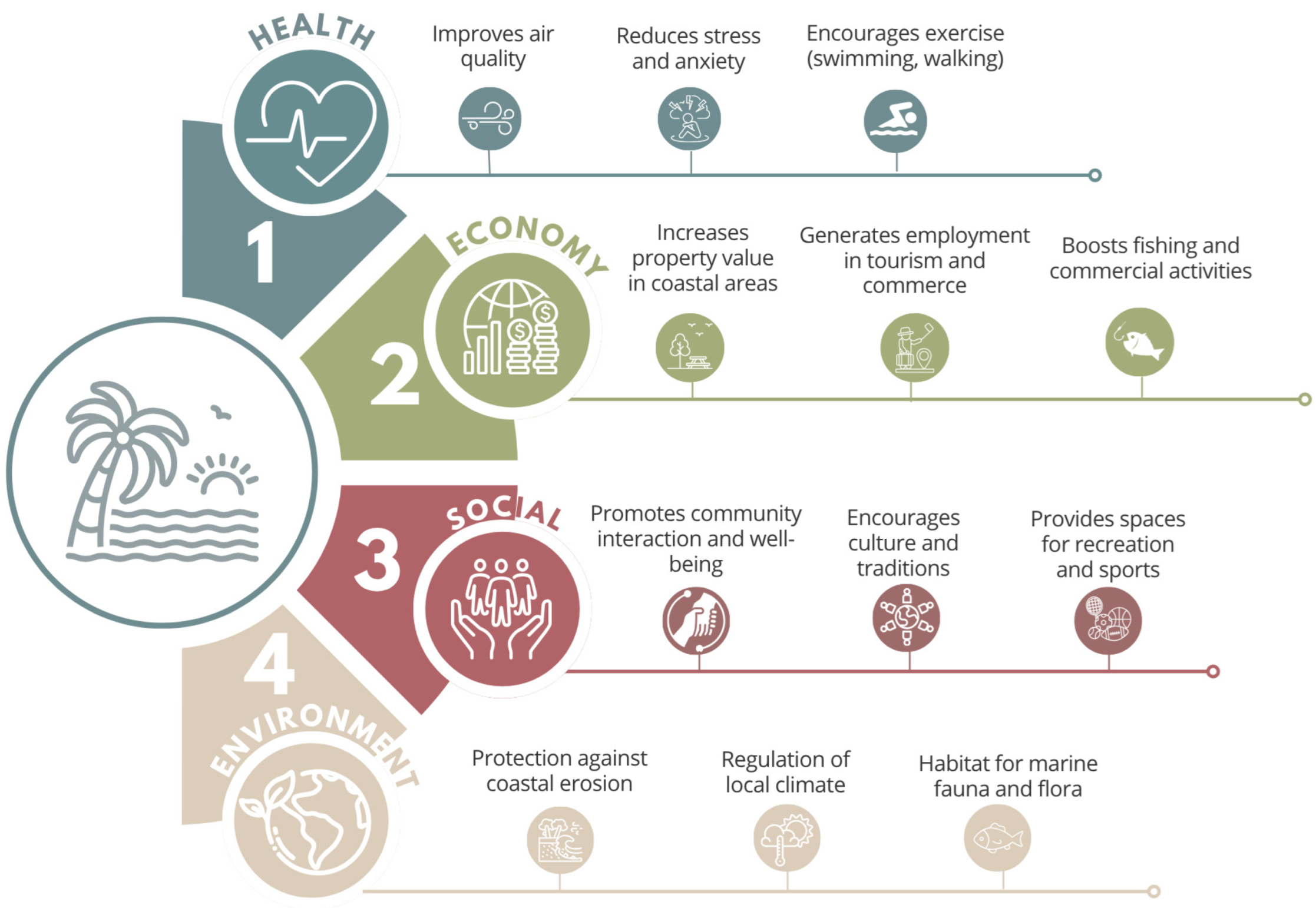
Figure 1. Integrated benefits of beaches for health, the economy, society, and the environment. Figure created by the authors based on digital editing.
Urbansci 10 00002 g001
Figure 2. Global loss of coastal ecosystems due to urban expansion and intensive exploitation. Figure created by the authors based on satellite imagery and digital editing.
Urbansci 10 00002 g002
Figure 3. Main threats to beaches in Latin America. Figure created by the authors based on satellite imagery and digital editing.
Urbansci 10 00002 g003
Figure 6. (A) Site accessibility and (B) analysis of environmental and urban issues, image from [37]. Photographs and figure created by the authors using a digital camera, satellite imagery, and digital editing.
Urbansci 10 00002 g006
Figure 7. Methodological research process. Figure created by the authors.
Urbansci 10 00002 g007
Figure 8. Methodological process. Figure created by the authors.
Urbansci 10 00002 g008
Figure 9. Location. (A) Country; (B) province; and (C) district. Figure created by the authors based on satellite imagery and digital editing.
Urbansci 10 00002 g009
Figure 10. Climatic analysis of La Herradura. Figure created by the authors based on satellite imagery and digital editing.
Urbansci 10 00002 g010
Figure 11. Fauna and flora. Figure created by the authors based on satellite imagery and digital editing.
Urbansci 10 00002 g011
Figure 12. Place of Study. Figure created by the authors based on satellite imagery and digital editing.
Urbansci 10 00002 g012
Figure 13. Viewpoints. (A) Mirador La Herradura, image from [69]; (B) Mirador El Salto del Fraile, image from [70]; (C) Mirador de las Tillandsias, image from [71]; (D) Planetario del Morro Solar, image from [72]; (E) Monument to the Unknown Soldier, image from [73]; and (F) El Paso de la Araña (Spider Pass), image from [74]. Figure created by the authors based on satellite imagery and digital editing.
Urbansci 10 00002 g013
Figure 14. The concept of the project. Figure created by the authors based on digital editing.
Urbansci 10 00002 g014
Figure 15. Master Plan Regeneration Strategies and Zoning. Conceptual illustrative design created by the authors (A) Workshop: Marine art, recycling and landscape; (B) Nursery: Endemic gardens and cultivation areas; (C) Recreational environmental education; (D) Yoga Zone; and (E) Environmental viewpoints. Figure created by the authors based on digital editing.
Urbansci 10 00002 g015
Figure 16. Cultural and recreational workshop area. (A) Educational area for planting; (B) Sculpture and painting workshop area; and (C) Community awareness area for waste management and environmental care. Figure created by the authors based on digital editing.
Urbansci 10 00002 g016
Figure 17. Ecological restoration zone. (A) Bamboo-covered bio-garden area; and (B) Open-air bio-garden. Figure created by the authors based on digital editing.
Urbansci 10 00002 g017
Figure 18. Environmental education zone. (A) Ecological dome for environmental education; and (B) Exterior gardens. Figure created by the authors based on digital editing.
Urbansci 10 00002 g018
Figure 19. Yoga and wellness zone. Figure created by the authors based on digital editing.
Urbansci 10 00002 g019
Figure 20. Viewpoint zone. Figure created by the authors based on digital editing.
Urbansci 10 00002 g020
Figure 21. Comprehensive ecological restoration. Figure created by the authors based on digital editing.
Urbansci 10 00002 g021
Figure 22. (A) Area without thermal regulation, image from [80]; and (B) Area with thermal regulation through the implementation of native vegetation Schinus molle (Coastal Pepper Tree), figure created by the authors based on digital editing.
Urbansci 10 00002 g022
Figure 23. Implementation of vegetation on terraces for passive cooling. Figure created by the authors based on digital editing.
Urbansci 10 00002 g023
Figure 24. Implementation of fog catchers enabling water generation. Figure created by the authors based on digital editing.
Urbansci 10 00002 g024
Figure 25. Implementation of luminaires that generate energy efficiency. Figure created by the authors based on digital editing.
Urbansci 10 00002 g025
Table 1. Characteristics of Schinus molle (Coastal Pepper Tree).
CharacteristicEstimated ValueAdditional Details
Average height7.2According to botanical sources
Annual CO2 capture51.4 CO2Generic estimate for mature trees
Monthly CO2 capture4.3 CO2Result of dividing the annual range by 12 months
Table 2. Thermal regulation through the implementation of Schinus molle (Coastal Pepper Tree).
Environment/ConfigurationObserved Temperature Reduction
Direct tree shade2.5 °C
Streets with high tree canopy cover6 °C
Table 3. Identification of species for each terrace.
TerracesTerrace NºDescriptionScientific NameCommon NameCharacteristic
Lower Terrace1closest to the sea—
higher salinity &
wind
Distichlis spicatacucalSoil-binding Grass, highly tolerant to salinity
2Sporobolus virginicussaline groundcoverSaline groundcover, helps control erosion.
3Agave americanasucculentLow water demand, soil protection.
Intermediate Terrace4transition—better moisture retentionDodonaea viscosachaparrilloNatural windbreak.
5Tecoma fulvatecomitaAttracts pollinators.
6Lavandula angustifolia.LavenderResistant aromatic plant.
Upper Terrace7near the urban promenade—resting areasSporobolus virginicusSaline groundcoverSaline groundcover, helps control erosion.
Bougainvillea spectabilisbugambiliaHardy ornamental.
Table 4. Daily, monthly, and annual water collection using fog catchers.
Capture UnitNumber of Fog CatchersDaily Collection (L)Monthly Collection (30 Days)Annual Collection (365 Days)
Cylindrical fog catcher = 31.42 m2Proposed: 12 units1131.12 L/day33,933.6 L/month *412,868 L/year
* Monthly averages are used for water collection and irrigation demand estimations.
Table 5. Botanical characteristics and estimated water requirements by area.
SpeciesLocationEstimated Area (m2)Estimated Water RequirementEstimated Monthly Consumption (L/Month)
Distichlis spicataLower terrace600 2.0 L/m2·day [87]36,000
Sporobolus virginicus600 1.5 L/day/m2 [88,89]27,000
Agave americana600 0.5 L/day/m2 [90]3000
Dodonaea viscosaIntermediate terrace600 1.5 L/day/m29000
Tecoma fulva600 1.5 L/day/m227,000
Lavandula angustifolia600 1.5 L/day/m2 [91]27,000
Bougainvillea spectabilisUpper terrace300 1.2 L/day/m2 [92]10,800
Sporobolus virginicus300 1.5 L/day/m213,500
Table 6. Installation of 25 solar luminaires within the green infrastructure.
CodeType of LuminairePower (W)Daily Usage Time (h)Traditional Monthly Energy (Wh/Month)Monthly Energy with Solar Panel (Wh/Month)Quantity (Units)Total Traditional Energy (Wh/Mont)Total Energy with Solar Panel (Wh/Mont)
C1Conventional solar luminaire120 12 1440 Wh/day × 30 days = 43,200 Wh/month3000 Wh/day × 30 days = 90,000 Wh/month251,080,000 Wh/month2,250,000 Wh/month
Total1,080,000 Wh/month2,250,000 Wh/month
Disclaimer/Publisher’s Note: The statements, opinions and data contained in all publications are solely those of the individual author(s) and contributor(s) and not of MDPI and/or the editor(s). MDPI and/or the editor(s) disclaim responsibility for any injury to people or property resulting from any ideas, methods, instructions or products referred to in the content.