Article

Comparative Mechanical Performance of Alkali-Treated Unidirectional Flax/Epoxy and Hemp/Epoxy Composite Manufactured via VARIM


1
Manipal Institute of Technology, Manipal Academy of Higher Education, Manipal, India
2
Department of Aeronautical Engineering, Srinivas Institute of Technology, Affiliated to Visvesvaraya Technological University, Belagavi 574143, India
*
Authors to whom correspondence should be addressed.
Sci 2026, 8(6), 133; https://doi.org/10.3390/sci8060133
Submission received: 19 February 2026 / Revised: 9 April 2026 / Accepted: 21 May 2026 / Published: 9 June 2026

Abstract

Fibre-reinforced polymer composites incorporating synthetic reinforcements such as glass and carbon fibres are widely used due to their superior mechanical performance. However, their energy-intensive production and end-of-life disposal contribute to an increased carbon footprint and significant environmental burden. Natural fibre-reinforced composites have emerged as promising low impact alternatives, but variability in their mechanical performance and the lack of controlled comparative studies limit their structural application. This study presents a controlled experimental comparison of alkaline-treated unidirectional flax/epoxy and hemp/epoxy composites fabricated using the vacuum-assisted resin infusion moulding (VARIM) process. Alkali treatment was employed to enhance the fibre–matrix interfacial bonding. Mechanical characterization was conducted through tensile, flexural, impact, interlaminar shear strength (ILSS), and Vickers microhardness testing in accordance with relevant ASTM and ISO standards. The flax/epoxy composites exhibited superior in-plane mechanical performance including, 9.1% higher tensile modulus, 13.8% higher flexural strength and 20.5% higher flexural modulus compared to hemp/epoxy composites. A significant improvement was observed in impact performance, with hemp composites showing 87.4% higher impact strength, indicating enhanced resistance to dynamic loading. Conversely, hemp/epoxy composites demonstrated a 10.6% higher ILSS, suggesting improved interfacial shear resistance and fibre interlocking. These findings confirm that the fibre type significantly influences composite performance, with flax fibres providing superior stiffness and strength, while hemp fibres offer better interlaminar shear behaviour and impact strength. Scanning Electron Microscopy (SEM) fractographic analysis was additionally conducted on fracture surfaces to characterize failure mechanisms and fibre–matrix interfacial morphology. The present study provides a reliable comparative framework for material selection and demonstrates the potential of flax- and hemp-based composites as sustainable alternatives for lightweight structural applications. This study supports the development of sustainable composite materials and contributes to the United Nations Sustainable Development Goals (SDGs), particularly SDG 12 (Responsible Consumption and Production), SDG 13 (Climate Action), and SDG 11 (Sustainable Cities and Communities).

1. Introduction

Composite materials have become essential elements in several high-performance industries such as aerospace and automotive, marine, and construction industries due to their high strength-to-weight ratios, increased corrosion resistance, and mechanical characteristics [1,2,3,4,5]. However, the widespread use of synthetic fibre-reinforced composites is also associated with high environmental impacts, both because of energy-intensive production methods, reliance on petroleum-based feedstocks, and difficulties with disposal at the end of life. All these factors lead to high carbon footprints [6].
To counter these negative effects, scientists and industry professionals are starting to focus more on natural fibres, including flax, hemp, jute, sisal and bamboo as renewable reinforcers in the polymer matrices. Early Life Cycle Assessment (LCA) studies indicate that the replacement of synthetic fibres with natural fibres can result in substantial decreases in the Global Warming Potential (GWP) and the number of resources being consumed throughout the entire fabrication-to-disposal cycle of the composite [7,8,9,10]. For example, the overall cumulative energy units used to manufacture a hemp fibre-reinforced inner lining to use in automotive applications are roughly 45% less than the total energy units used to manufacture a comparable ABS product with 73 MJ per component energy demands of hemp composites compared to 132 MJ per component energy demands of ABS components [11]. During the natural growth process, natural fibres capture carbon and are a viable and economical biodegradable alternative that can be easily incorporated into the already established resin systems.
The mechanical properties of the natural fibre depend on the geographical origin of the source plants. The tensile properties of bast or stem fibres are the highest, which is why fibres like flax and hemp are better than those made from jute and kenaf [12]. However, there is limited comparative understanding of how flax and hemp fibres, despite their growing popularity, differ in mechanical performance when processed under identical manufacturing and treatment conditions.
Flax and hemp fibres exhibit high tensile strength and stiffness while maintaining a lower density compared to most synthetic fibres. Hemp fibres possess a high aspect ratio (length-to-diameter), a characteristic that enhances stress transfer efficiency and makes them especially suitable for composite reinforcement [13,14]. Surface modification to natural fibres can also be used to increase their performance, either by alkaline or silane treatment, which increases the fibre–matrix adhesion in thermosetting systems, like epoxy [15]. Plant fibre cell walls are often covered by impurities on their external surface, such as waxes and natural oils, hindering the binding between fibres and the matrix. Chemical surface treatment is therefore regularly used to remove these contaminants and enhance interfacial adhesion. Of these, the most common treatment technique that is used on the surface of plant fibres is alkalization/mercerization through sodium hydroxide (NaOH) solution [16]. The most common methods of fabrication are wet lay-up, compression moulding and vacuum bagging. However, vacuum-aided resin infusion (VARIM) gives superior mechanical properties because of the high packing efficiency [17,18].
Flax and hemp fibre composites have received significant interest due to their exclusive combination of high specific strength, stiffness, and biodegradability in a wide variety of engineering applications. Flax and hemp fibre have tensile properties which are similar in applications of glass fibre [19,20]. Reported applications include lightweight automotive parts, sporting goods, marine panels, aerospace interior structures, and sustainable construction materials, where weight reduction and environmental performance are the main factors to consider when determining its suitability in both structural and semi-structural applications [21,22,23]. Recent studies have demonstrated the practical implementation of natural fibre composites in specific engineering components beyond generic laboratory investigations. Park et al. conducted a structural design and impact analysis of an automobile bonnet panel fabricated from flax/vinyl ester composite, showing that such natural fibre materials can meet structural safety criteria in automotive body components designed for crash and impact loads, highlighting potential for lightweight vehicle parts with reduced environmental footprint [24]. Similarly, Scarponi et al. demonstrated the feasibility of woven hemp/epoxy composites for a NACA engine cowling of an ultra-light aircraft, supported by tensile and flexural characterization to enable structural design and finite element analysis. Their study showed that hemp/epoxy laminates can achieve stiffness and structural integrity comparable to glass/epoxy systems, while highlighting the continued need for reliable mechanical property datasets to support broader structural adoption of natural fibre composites in aeronautical applications [25]. From a sustainability perspective, Zarafsh ani et al., reported that transitioning from fossil-based synthetic composites to hemp-based composites offers a significant opportunity to mitigate climate change and fulfil United Nations Sustainable Development Goals related to responsible production. Their Life Cycle Assessment (LCA) demonstrates that while natural fibres often require more mass to match the tensile strength of glass or carbon fibres, they generally result in a lower Global Warming Potential (GWP) due to biogenic carbon sequestration during hemp growth. Specifically, the study found that utilizing hemp-based reinforcements can reduce the GWP of an aircraft dashboard panel by up to 68% and an electric scooter monocoque by approximately 37% compared to conventional carbon fibre or steel benchmarks [26].
Despite this growing application interest and sustainability potential, the broader adoption of flax and hemp-based composites in structural and semi-structural applications remains constrained by variability in reported mechanical performance and the limited availability of controlled comparative data obtained under identical processing and fabrication conditions. In this context, the present work provides a systematic comparison of the tensile, flexural, interlaminar shear, and impact performance of alkaline-treated unidirectional flax/epoxy and hemp/epoxy composites manufactured using the vacuum-assisted resin infusion moulding (VARIM) process. By clarifying the relative mechanical performance of these materials under consistent manufacturing conditions, this study contributes toward the development of eco-efficient, high-performance composite materials for sustainability-driven engineering applications.
The present study employs identical in-house alkali treatment, fibre architecture, and VARIM fabrication for both systems, enabling a direct and controlled comparison across five mechanical properties, a dataset whose type remains limited in the existing literature.
Therefore, the specific objectives of this study are: (1) to compare the tensile and flexural properties, (2) to evaluate the impact and interlaminar shear performance, and (3) to provide a controlled comparative framework for material selection between alkali-treated unidirectional flax/epoxy and hemp/epoxy composites fabricated via VARIM. This controlled fabrication approach ensures comparable laminate quality and minimizes variability in fibre volume fraction and consolidation between the two systems.

2. Materials and Methodology

2.1. Materials

Unidirectional flax fibres (300 GSM) and unidirectional hemp fibres (300 GSM) were procured from Fibre Source, Chennai, India. The resin-hardener system employed was the BhorBond® EPCH system supplied by Bohr Chemicals, Ahmedabad, Gujarat, India. BhorBond® EPCH resin is a bisphenol A–based, low-viscosity liquid epoxy, while the corresponding BhorBond® EPCH hardener is a colourless, modified amine curing agent. Sodium hydroxide pellets (97% purity) and glacial acetic acid (100% concentration) were obtained from SRL Pvt. Ltd., Mumbai, Maharashtra, India.

2.1.1. Fibre Treatment

The fibres were cut into the required dimensions for the resin infusion process. Prior to infusion, the fibres underwent surface treatment to remove outer cell layers, cellulose, hemicellulose, lignin, waxes, and other impurities [27].
For the alkaline treatment, a 5 wt.% sodium hydroxide solution was prepared by dissolving NaOH pellets in distilled water, yielding an aqueous solution as represented by the following equation:
NaOH(s) + H2O(l) → Na+ (aq.) + OH (aq.) + H2O
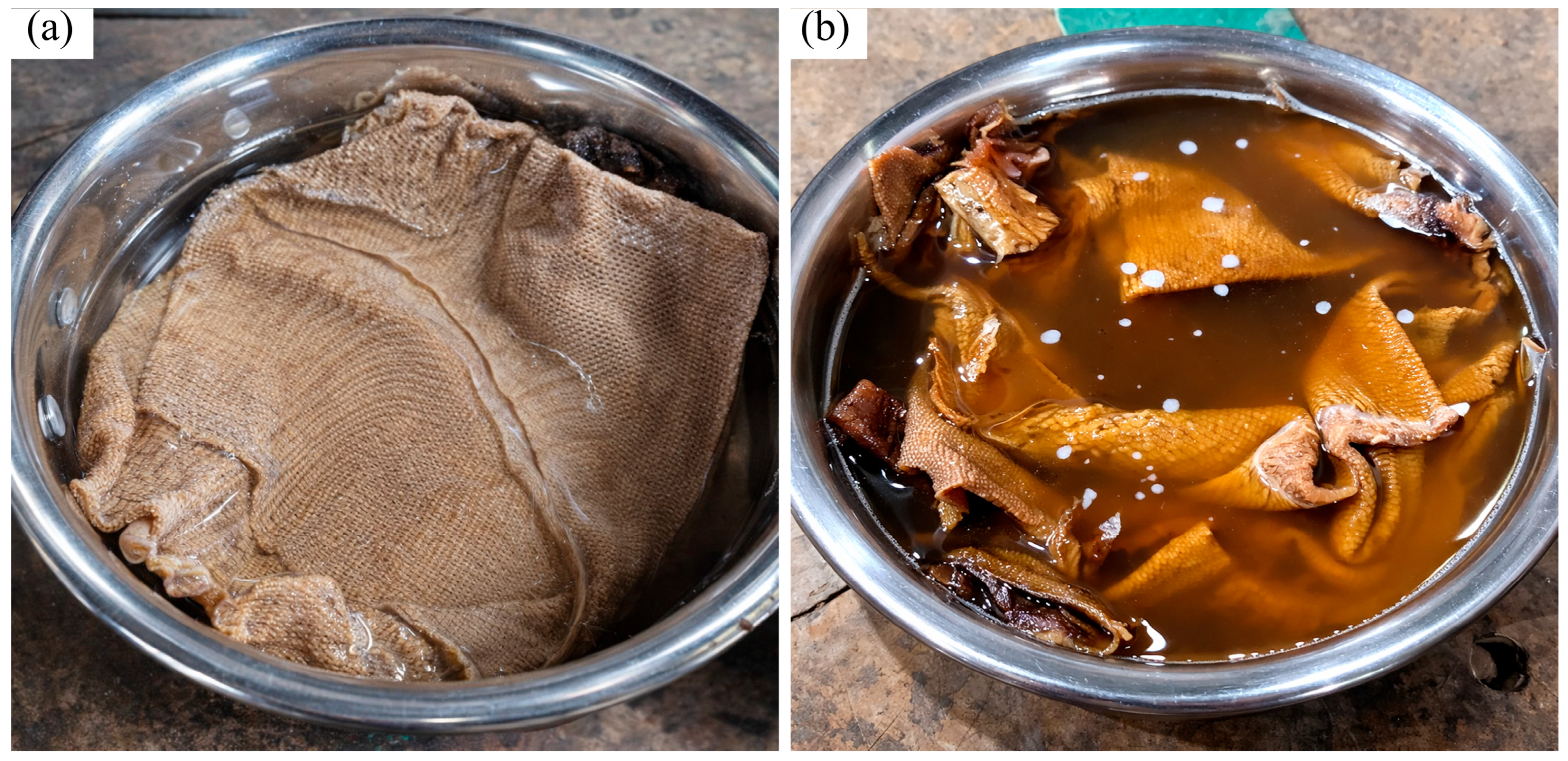
The fibres were immersed in the 5 wt.% NaOH solution at ambient temperature for 30 min. The fibres were washed several times using distilled water. An acetic acid solution of 25% (v/v) was then added to neutralize remaining alkali on the fibre surfaces to remove residual chemicals [28]. After that, the flax and hemp fibres were air-dried at room temperature over a period of 24 h. This process resulted in fibre surfaces that were rough, thereby enhancing interfacial bonding between the fibres and the polymer matrix. The weight loss of the flax and hemp fibre after alkaline treatment was measured to determine the effectiveness of the process. As illustrated in Table 1, weight reduction in both types of fibres was significantly reduced by the treatment. Figure 1 shows the pre-treatment and post-treatment visual observations.

2.1.2. Composite Fabrication

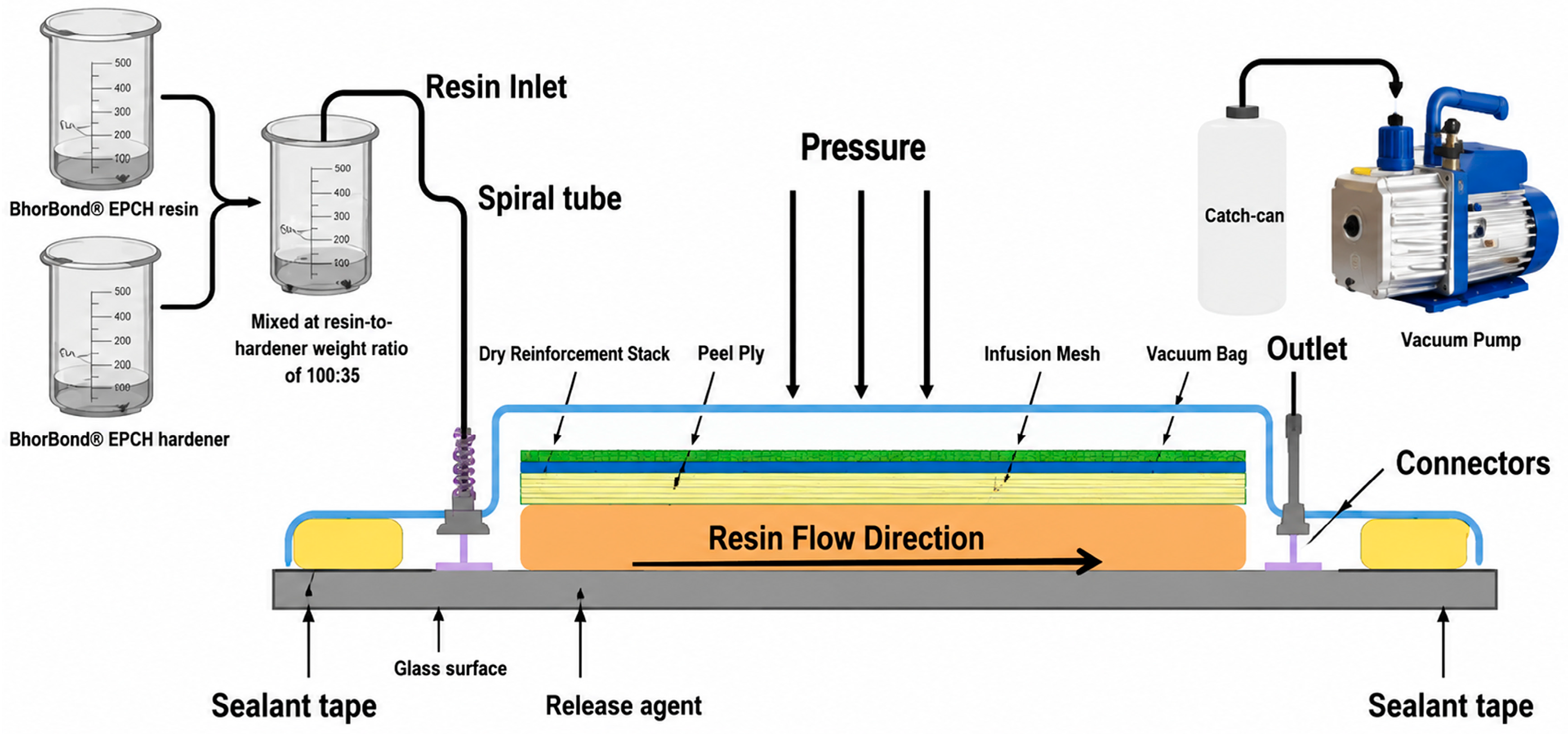
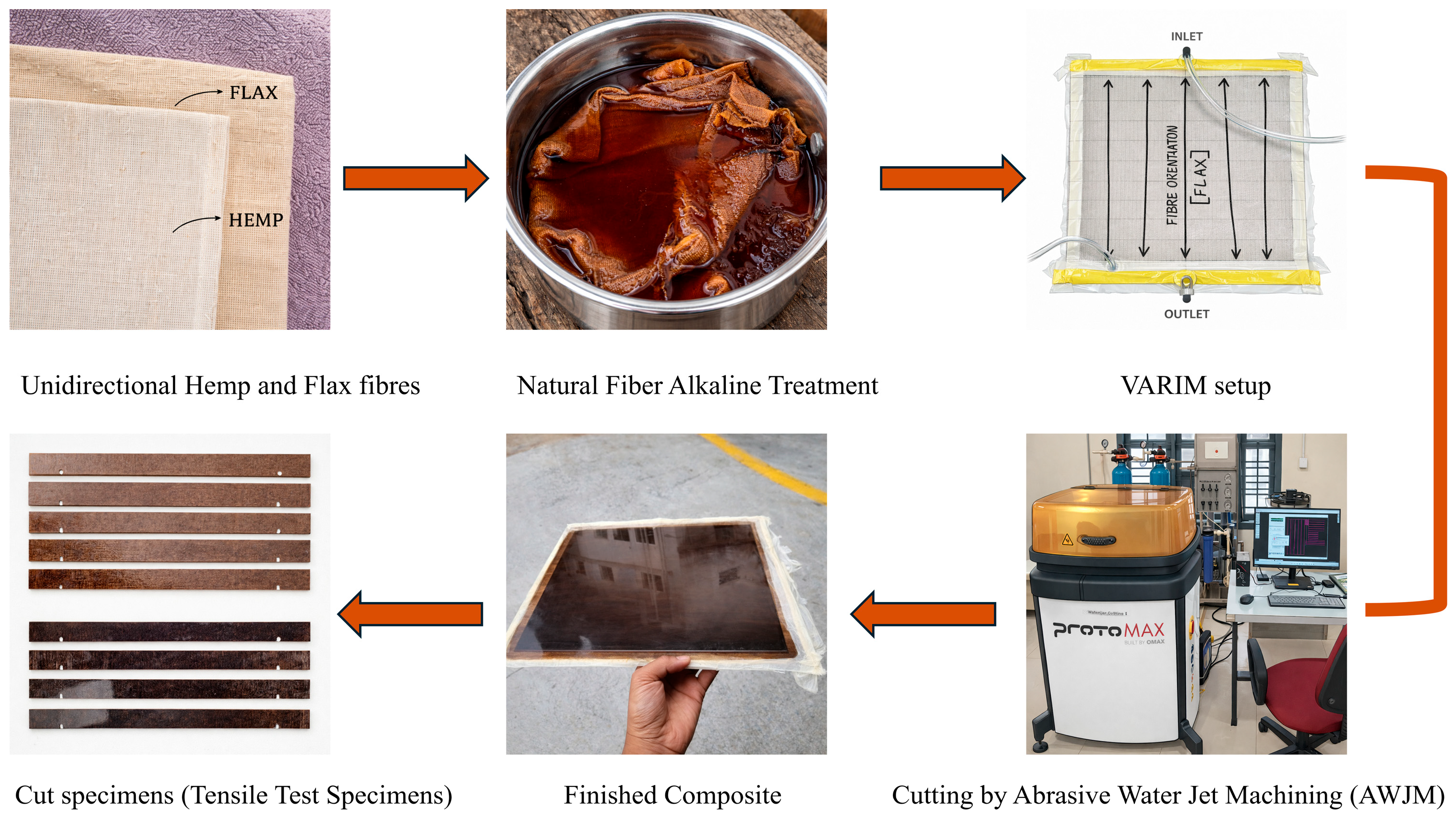
The vacuum-assisted resin infusion moulding (VARIM) process was used to manufacture composite laminates (300 mm × 300 mm) as shown in Figure 2. The mould was a flat plate of glass of 500 mm × 500 mm in size. The mould was first cleaned with acetone to remove dust and any other contamination on the plate. Polyvinyl alcohol (PVA) release agent was applied in five homogeneous layers in that order, whereby each layer was allowed to dry before the next layer was applied to make demoulding easy. Then five layers of treated unidirectional fabric were laid on the surface of the mould, all the plies running in the same direction, giving a stacking sequence of [0]5. The reinforcement stack was then coated with a layer of peel ply to prevent attachment between the vacuum bag and the laminate to ease further preparation of the specimen. The vacuum pressure was maintained at the maximum achievable level to ensure effective resin infiltration and laminate consolidation [29]. The vacuum infusion setup was arranged with resin inlet and outlet connections, a catch pot, and a vacuum pump. After preparing the BhorBond® EPCH (Bohr Chemicals, Ahmedabad, Gujarat, India) matrix with a resin-to-hardener weight ratio of 100:35, the mixture was infused under vacuum for 30 min, ensuring thorough impregnation of the fibre preform. The entire setup of the fabrication is illustrated in Figure 3. The laminate was then left under constant vacuum to cure at room temperature for 24 h. After curing, the composite plate was demoulded, the peel ply removed, and the laminate was cut into specimens via Abrasive Water Jet Machining (AWJM) according to relevant testing standards.
Both laminates were fabricated using identical 300 GSM unidirectional fibre fabrics with five plies in a [0]5 stacking sequence under consistent VARIM conditions. Fibre volume fraction was not explicitly determined in this study, as peripheral trimming of the cured laminate during specimen preparation via AWJM precluded reliable gravimetric Vf estimation. This is acknowledged as a limitation. Thickness uniformity was characterized across all specimens, with a mean thickness of 3.5 mm and a standard deviation of ±0.05 mm.

2.2. Composite Characterization

2.2.1. Tensile Testing

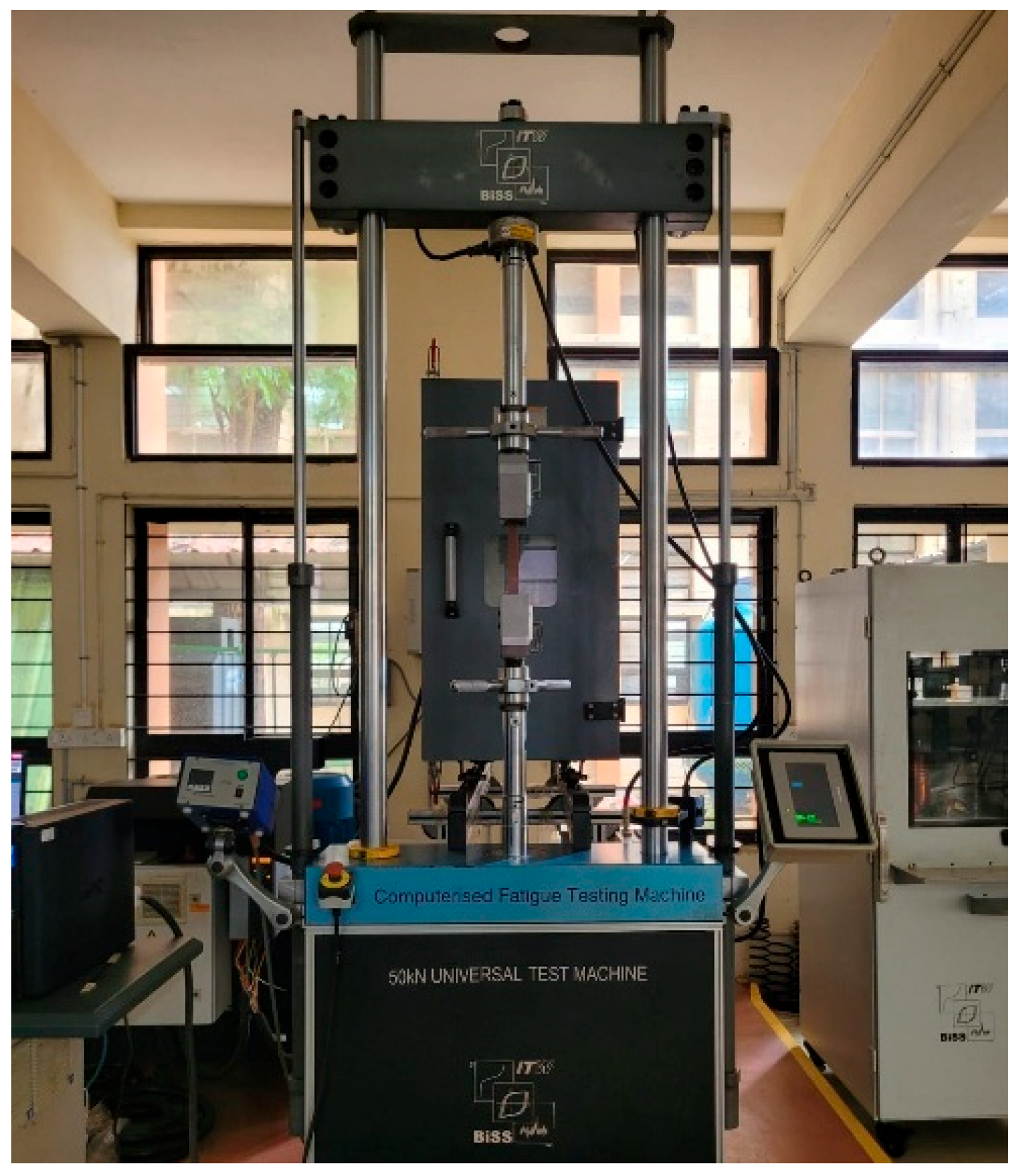
Tensile testing was carried out on fabricated specimens of planar dimensions 250 mm × 25 mm in accordance with ASTM D3039 [30]. The tests were performed using a Bi-7000 series universal testing machine (BiSS Research, Bengaluru, India) with a 50 kN load cell (Figure 4). A constant crosshead speed of 1 mm/min was maintained during the test. Strain was measured using a clip-on extensometer attached directly to the specimen gauge section during testing, in accordance with ASTM D3039 [30]. The values reported are derived from extensometer displacement data recorded during the test.
A total of five specimens were tested under identical conditions to account for variability in the fabrication process and to minimize the influence of localized defects or inconsistencies on the measured properties. The tensile strength and modulus values reported in this study correspond to the arithmetic mean of the five individual tests, thereby providing a more representative measure of the material performance.

2.2.2. Flexural Testing

Flexural testing was performed in accordance with ASTM D7264 [31]. The specimens had planar dimensions of 127 mm × 13 mm × 3.5 mm, with a support span of 56 mm, corresponding to a span-to-thickness ratio of 16:1, which is an alternative ratio explicitly permitted under ASTM D7264 [31]. The tests were carried out using the universal testing machine ZWICK ROELL Z020 (ZwickRoell GmbH & Co. KG, Ulm, Germany) equipped with a load cell of capacity of 20 kN. A constant crosshead speed of 1 mm/min was maintained throughout the test.
Similar to the tensile test, flexural testing in this study was performed on five specimens to account for variability arising from the fabrication process and to minimize the influence of localized defects on the measured results. The reported values therefore represent the arithmetic mean of the individual tests, providing a more reliable measure of true material performance.

2.2.3. Interlaminar Shear Strength

Interlaminar shear strength (ILSS) testing was carried out in accordance with ASTM D2344 [32] using specimens of dimensions 20 mm × 6 mm × 3.5 mm. The specimen width is slightly lower than the nominal ASTM recommendation (≈2 h) due to specimen preparation constraints; however, the span-to-thickness ratio was maintained in accordance with ASTM D2344 [32]. The test was conducted on five specimens the using universal testing machine ZWICK ROELL Z020 at a constant crosshead speed of 1 mm/min. During testing, the maximum load at failure Pmax was recorded. The ILSS was then calculated using the standard relation given in Equation (2).
ILSS = 0.75 × P m a x ( b × h )
where b denotes breadth of specimen, and h denotes height of specimen.

2.2.4. Impact Strength

Impact testing was conducted on notched specimens in accordance with ISO 179 [33] (Charpy Impact Test). The testing was conducted on a 25 J Hammer Maximum, HIT50P. The absorbed energy during fracture was measured and normalized with respect to the specimen cross-sectional area to obtain the impact strength. The reported values correspond to the average of 5 specimens to ensure reliability of the results.

2.2.5. Hardness Testing

Hardness testing of the two composites was carried out using the Vickers microhardness method. The testing was carried out using the hardness testing machine MMT-X7A by Matsuzawa Co., Ltd., Akita, Japan. A test load of 50 gf was applied with a dwell time of 10 s for each indentation, ensuring consistent loading conditions across all measurements. A total of five indentations were performed on each composite to account for material heterogeneity and possible local variations arising from fabrication-related defects. The reported hardness values therefore correspond to the arithmetic mean of five individual measurements. The Vickers hardness test was selected over macro-scale methods such as Rockwell or Brinell because it employs a low load and a small indenter, making it more suitable for thin polymer composite laminates and allowing localized surface hardness to be evaluated without inducing excessive damage or edge effects.
Statistical analysis was performed using independent two-sample t-tests assuming unequal variance, and p-values were used to assess the significance of differences between flax/epoxy and hemp/epoxy composites.

3. Results and Discussion

The values reported in the literature vary considerably due to differences in fibre architecture, surface treatment, fabrication methods, and testing conditions. The comparisons presented in Table 2, Table 3, Table 4 and Table 5 are therefore qualitative in nature and intended to contextualize the present results rather than establish direct numerical equivalence across studies. The results are presented in a structured manner to systematically compare the mechanical performance of flax/epoxy and hemp/epoxy composites across different loading conditions.

3.1. Tensile Properties

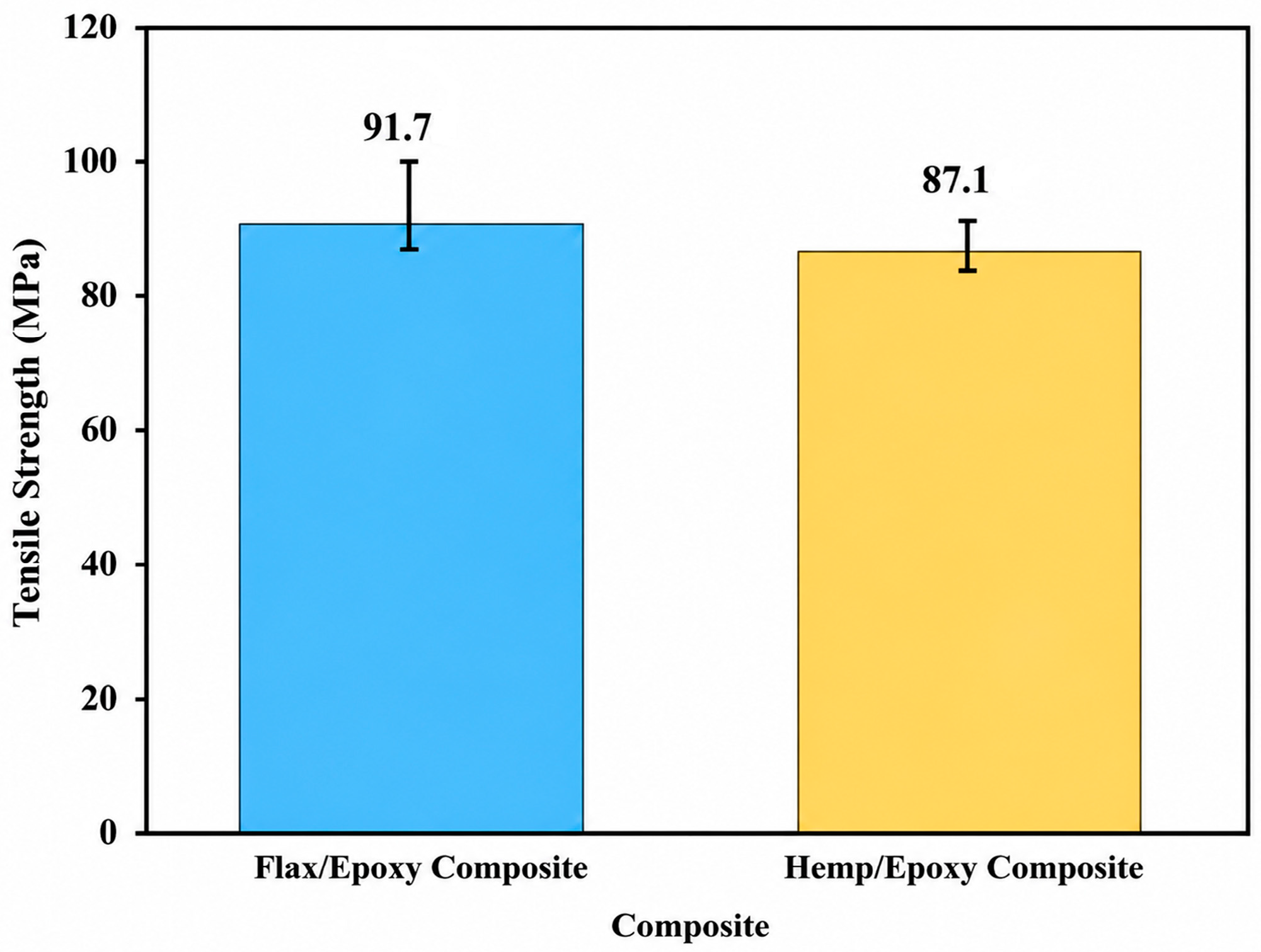
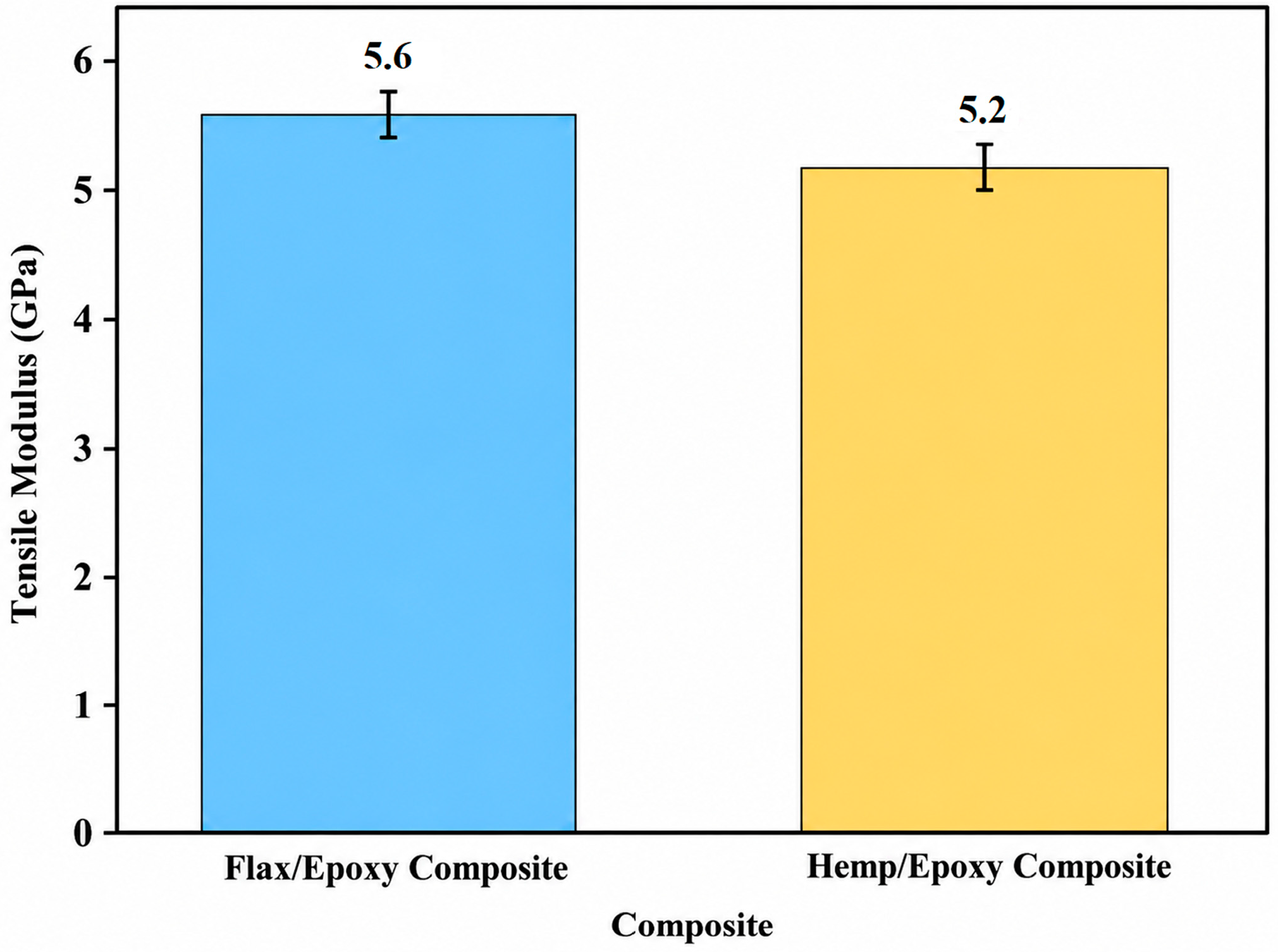
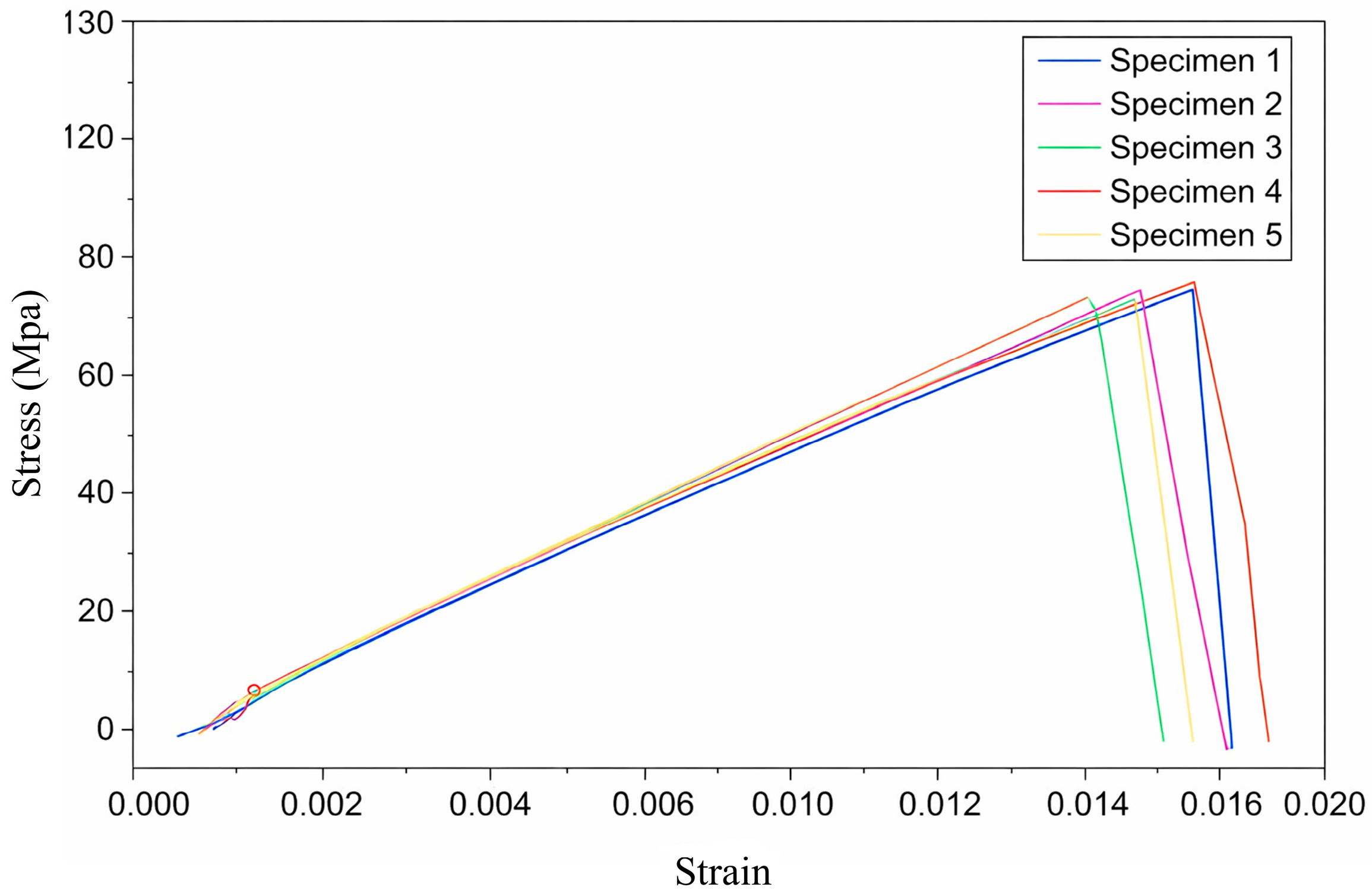
The flax-based laminate recorded a tensile strength of 92 ± 5 MPa, while the hemp-based laminate reached 87 ± 1 MPa. The recorded tensile modulus of flax/epoxy and hemp/epoxy composites were 5.6 ± 0.12 GPa and 5.2 ± 0.1 GPa respectively as shown in Figure 5 and Figure 6 respectively. Although the difference between the two materials is modest, the higher value observed for flax/epoxy composites indicates a slightly better load-transfer efficiency within the fibre–matrix system. Overall, both composites exhibited tensile strengths within a comparable range, highlighting their suitability for applications requiring moderate tensile performance.
The marginally higher tensile strength observed in flax/epoxy laminates (91.7 MPa) compared to hemp/epoxy (87.1 MPa) was not statistically significant (p = 0.133), indicating comparable tensile performance between the two systems. This similarity may be attributed to the comparable fibre areal weight and identical processing conditions employed, which minimized differences in fibre–matrix stress transfer efficiency. However, the tensile modulus showed a statistically significant difference (p = 0.002), with flax/epoxy (5.6 GPa) outperforming hemp/epoxy (5.2 GPa), which can be attributed to the lower microfibril angle and higher cellulose crystallinity of flax fibres, resulting in superior axial stiffness [34].
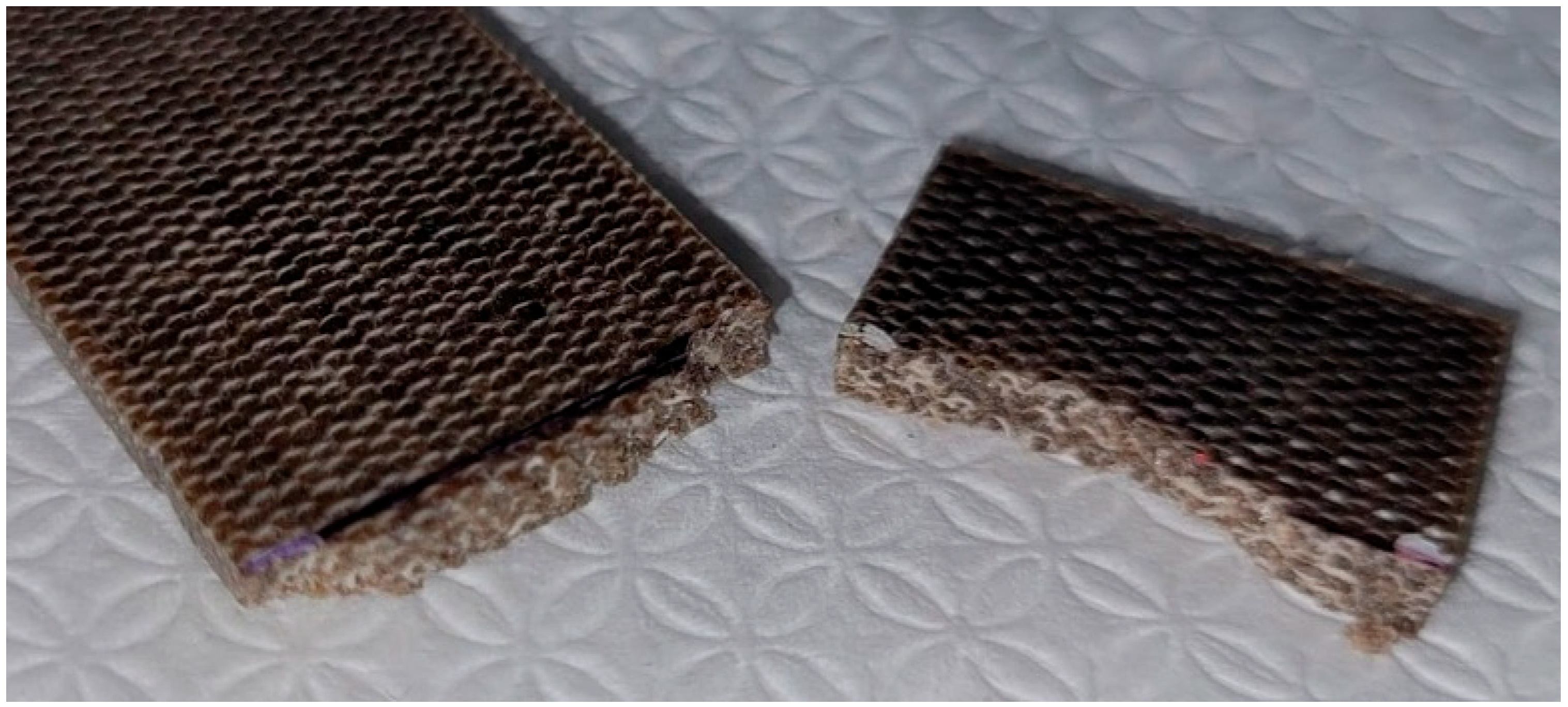
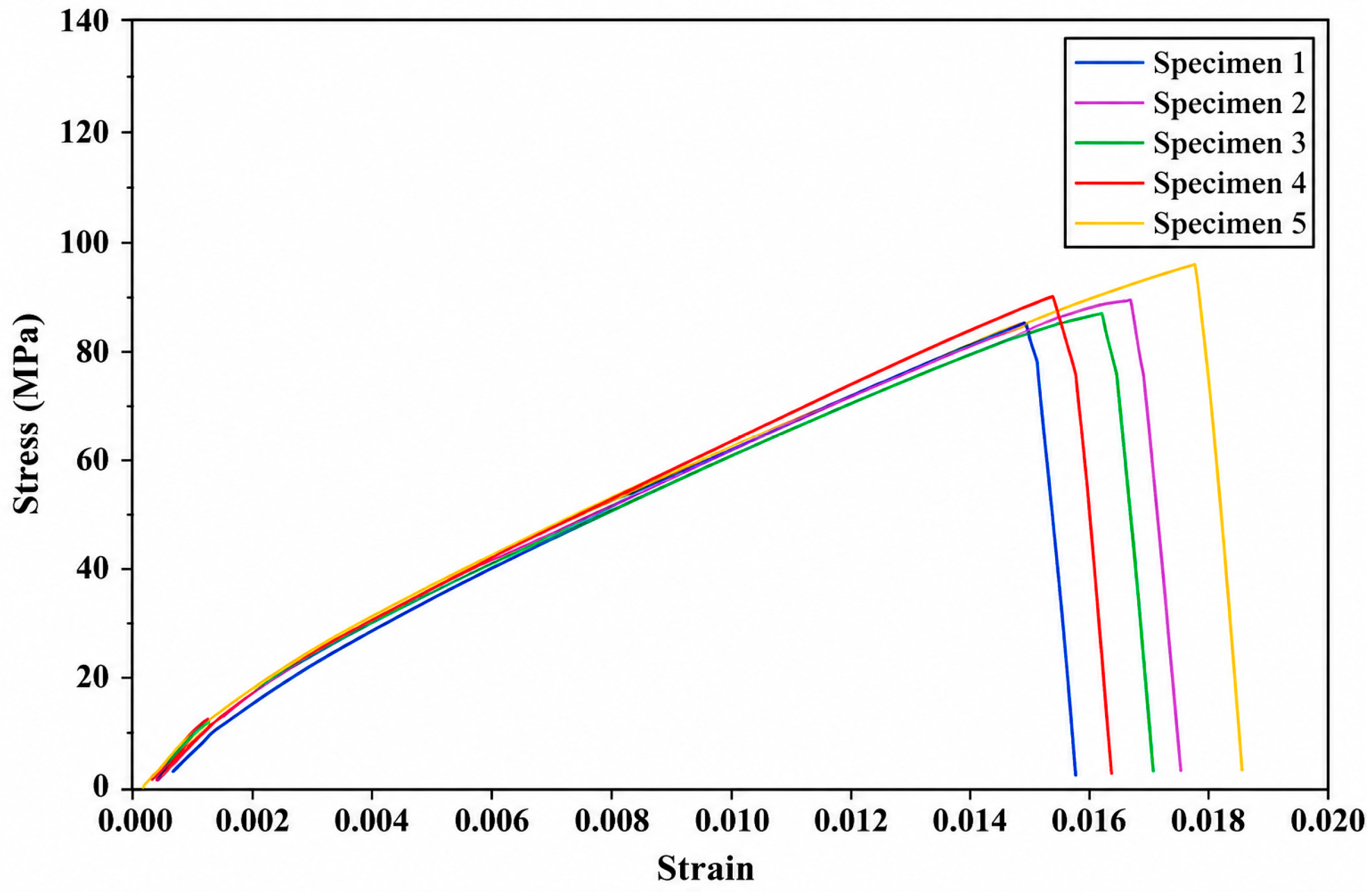
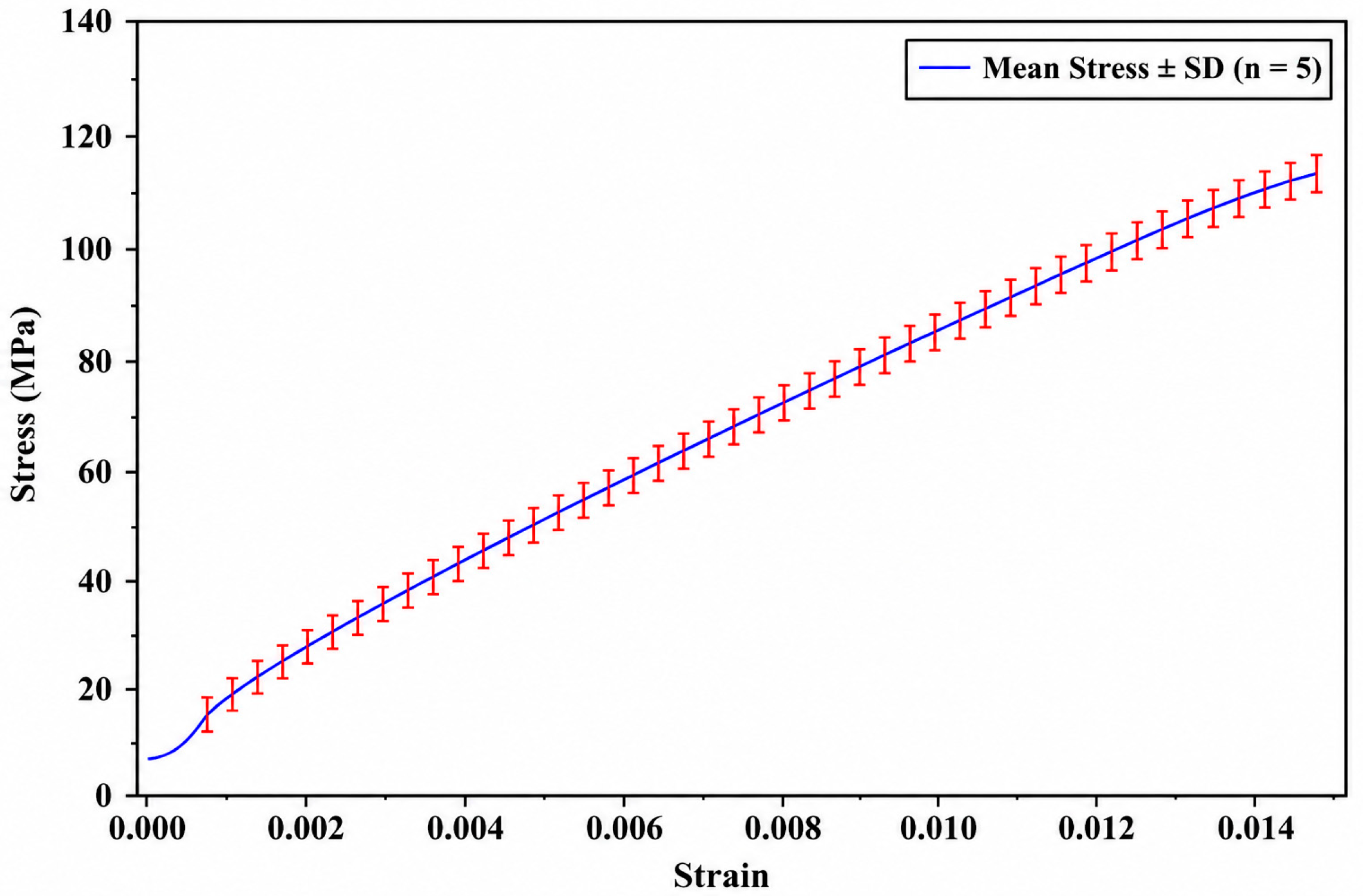
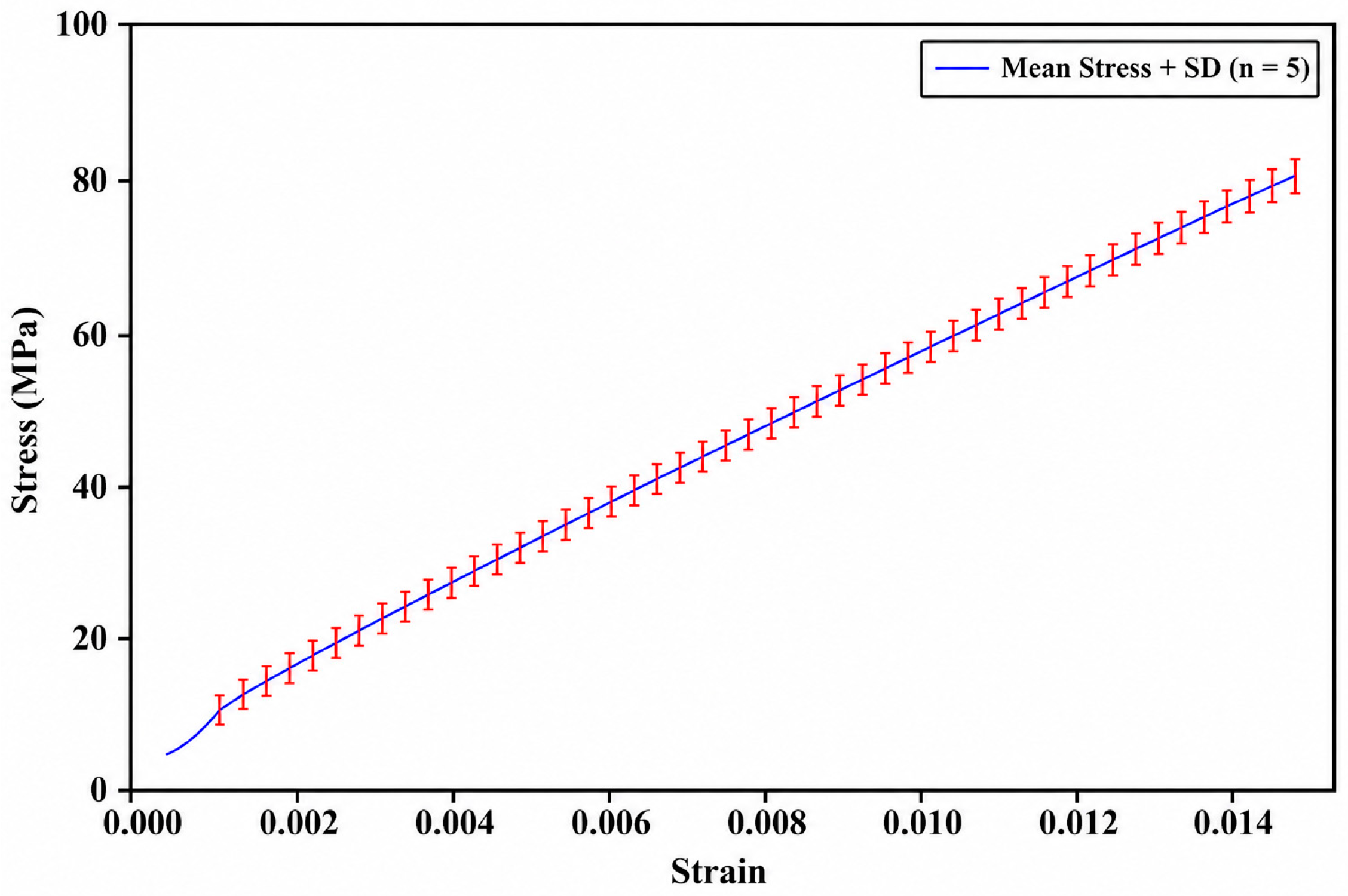
Figure 7 illustrates the brittle failure observed in the tested samples, which is consistent with the expected behaviour. Figure 8 and Figure 9 also represent this behaviour in flax/epoxy and hemp/epoxy composite respectively. Figure 10 and Figure 11 show the standard deviation of the values of stress in the five tests conducted for each of the specimens. Table 2 illustrates the comparison of the tensile properties of flax and hemp fibre-reinforced epoxy composites.
Table 2. Comparison of tensile properties of flax and hemp fibre-reinforced epoxy composites.
CompositeFibre Architecture Tensile Strength (MPa)Tensile Modulus (GPa)Fabrication MethodReference
Flax/bio-Epoxy[0/90°]269 ± 54.3 ± 0.6Hand Lay-up[35]
Flax/recycled HDPEFibre mat41.67.1Compression Moulding[36]
Flax/polypropyleneNon-woven mat821.71Compression Moulding[37]
Flax/EpoxyBidirectional plain weave 64 ± 25.9 ± 0.1Resin Infusion[38]
Flax/Paper/EpoxyUnidirectional 154 ± 1510.9 ± 0.6VARIM[39]
Flax/EpoxyUnidirectional92 ± 55.6 ± 0.2VARIMPresent Study
Hemp/Paper/EpoxyUnidirectional106 ± 238 ± 1VARIM[39]
Hemp/EpoxyBraided fibre structure83 ± 324 ± 2Resin Transfer Moulding[40]
Hemp/bio-epoxyBidirectional (plain weave)635.87Resin Transfer Moulding [41]
Hemp/EpoxyBidirectional39.13.2Hand Lay-up[42]
Hemp/EpoxyContinuous Aligned bundles50 ± 41.7 ± 0.1Compression Moulding [43]
Hemp/Epoxy 87 ± 15.2 ± 0.1VARIMPresent Study
Following the tensile response, flexural behaviour was evaluated to assess the bending performance of the composites.

3.2. Flexural Properties

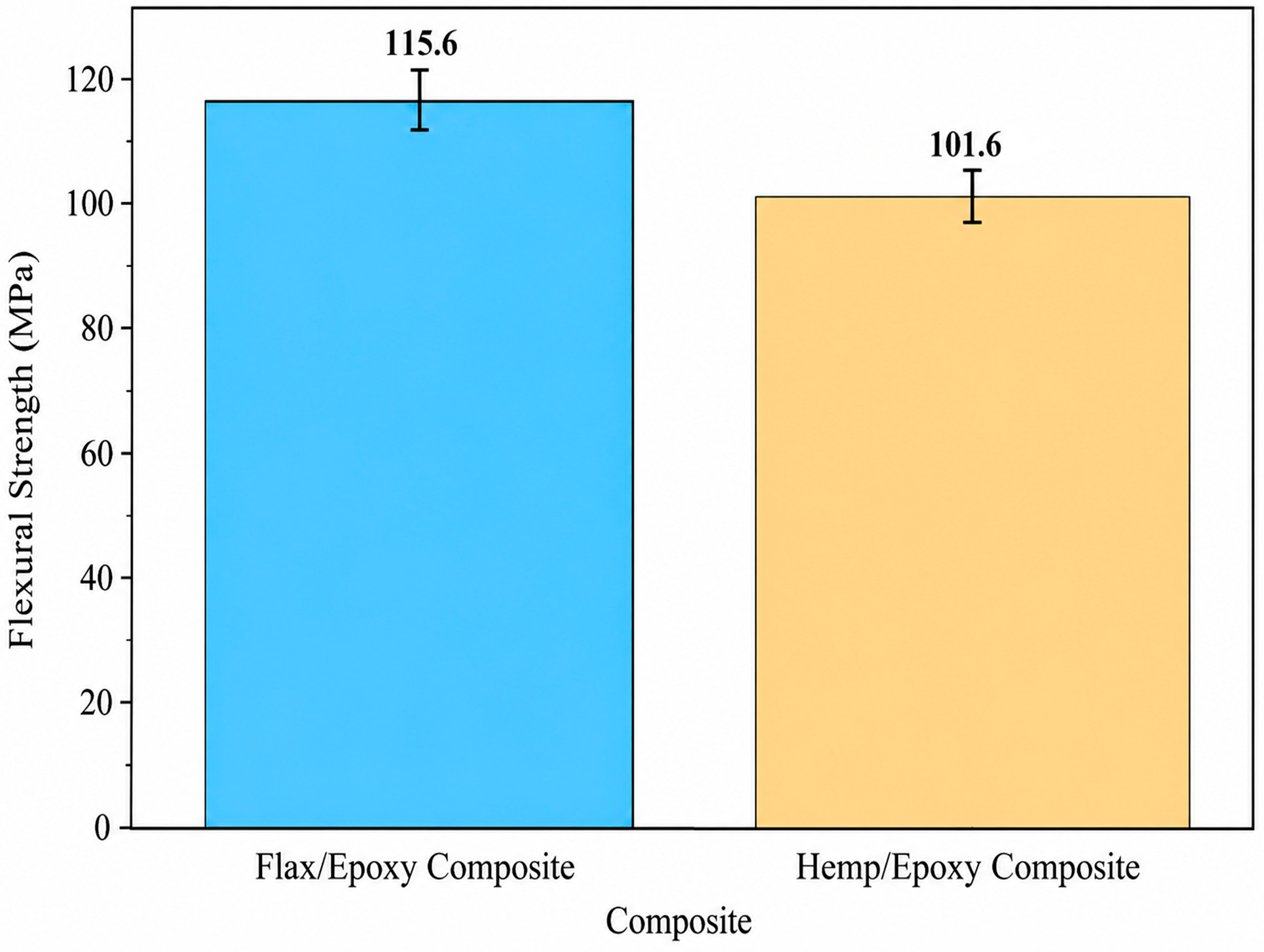
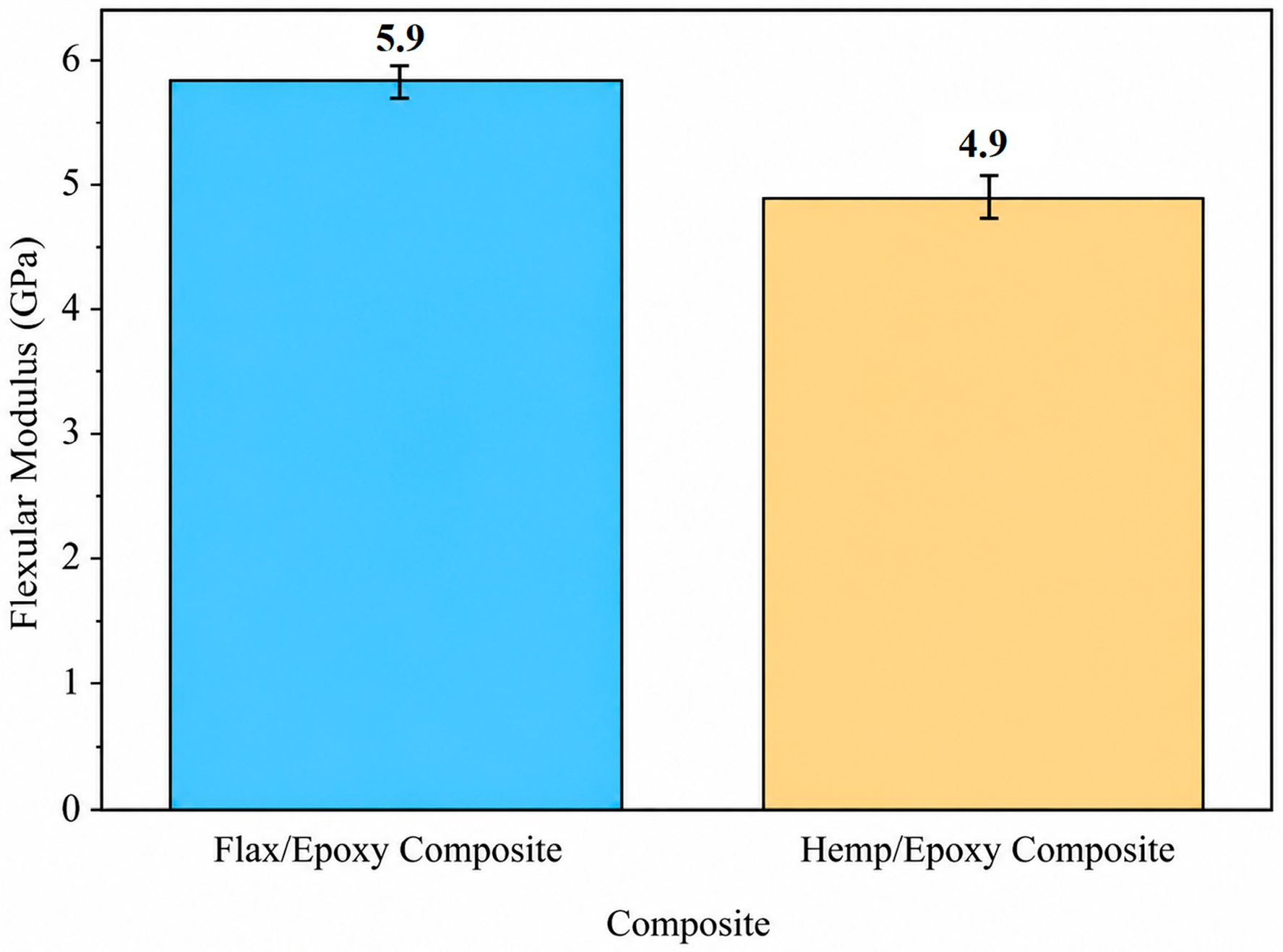
The flax composite exhibited a flexural strength of 116 ± 3 MPa and a flexural modulus of 5.9 ± 0.1 GPa, while the hemp composite showed a flexural strength of 102 ± 4 MPa and a flexural modulus of 4.9 ± 0.1 GPa. Figure 12 and Figure 13 show the mean flexural response from the three-point bending test conducted.
Statistical analysis confirmed a significant difference in flexural strength between the two composites (p = 0.0002). At the same time, the difference in flexural modulus was highly significant (p < 0.0001).
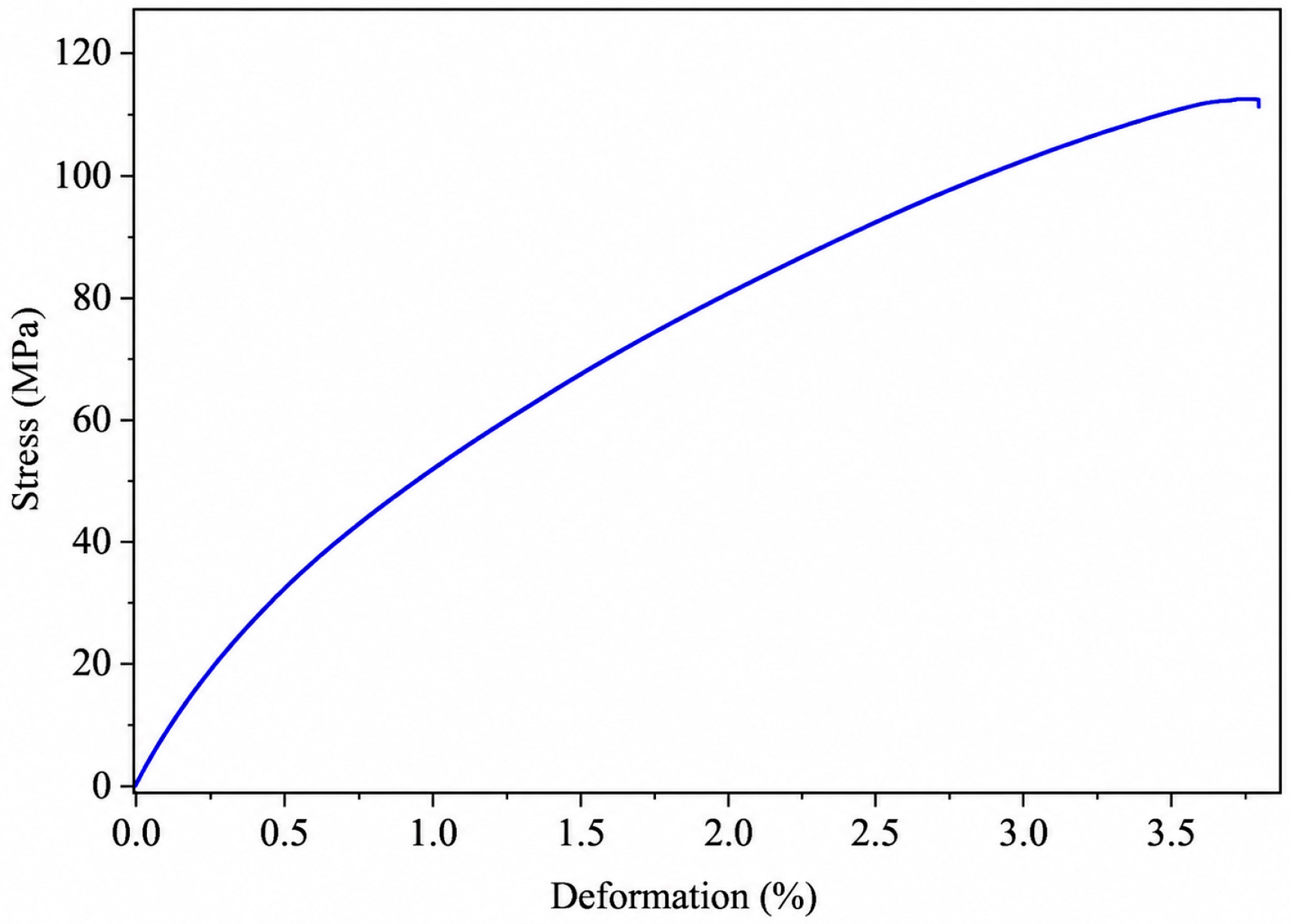
Figure 14 shows the stress versus deformation curve for the flax/epoxy composite. The curve indicates brittle failure, characterized by failure occurring without noticeable yielding during the test. The observed brittle failure behaviour suggests limited fibre pull-out and rapid crack propagation through the matrix-dominated regions, indicating strong but relatively stiff fibre–matrix interaction with minimal energy dissipation prior to failure.
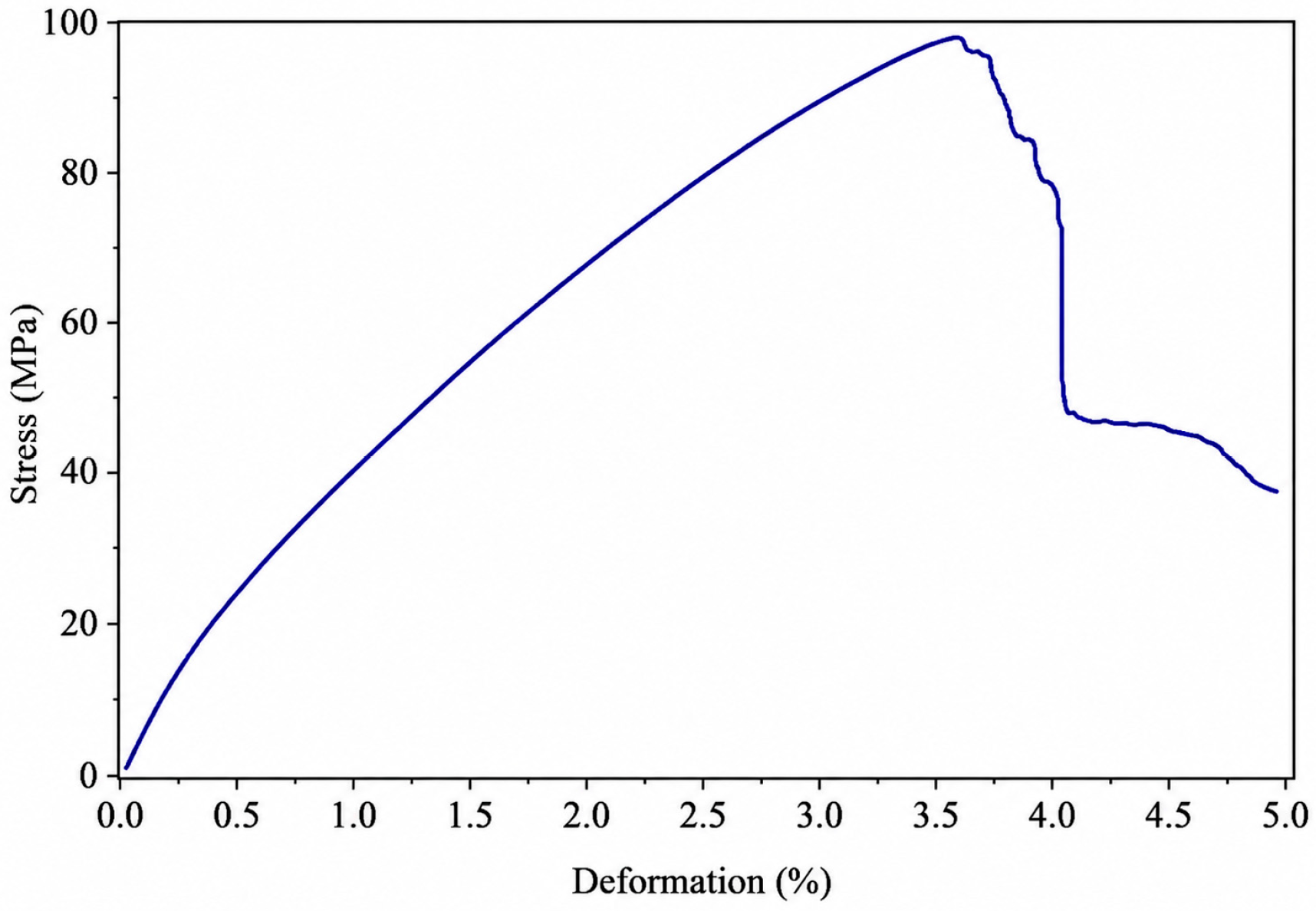
Figure 15 presents the stress versus deformation response of the hemp/epoxy composite. Similar to the flax/epoxy system, the material exhibits brittle behaviour, as evidenced by the abrupt failure observed in the curve. A slight increase in deformation toward the end of the curve in Figure 15 could possibly be attributed to inherent material randomness in natural fibre-reinforced composites.
The flexural performance difference between flax and hemp composites in the observed case can be explained by the relatively high tensile properties of the flax fibres as compared to those of the hemp fibres, which further translate to high composite level strength and stiffness during bending [44].
Table 3 shows the flexural strength and modulus obtained using the current study. Out of the different manufacturing paths investigated, the ones that were treated by the VARIM technique had the highest flexural strength and modulus. These values were higher than those of hand lay-up and vacuum-bagging methods; the latter showed reduced mechanical performance due to the presence of high resin content areas and high void levels. This is because the better behaviour of VARIM-processed laminates is attributed to improvements in fibre wet-out, distribution of resin and porosity, which is known to significantly enhance the interfacial bonding and load-transfer efficiency of fibre–matrix interfaces [17,18].
Table 3. Comparison of flexural properties of flax and hemp fibre-reinforced epoxy composites.
CompositeFibre Architecture/Lay-upFlexural Strength (MPa)Flexural Modulus (GPa)Fabrication MethodReference
Flax/Epoxy[0/900]73.84.3Hand Lay-up[35]
Flax/EpoxyWoven mat52.7-Hand Lay-up[36]
Flax/EpoxyTwill weave44 ± 37.3 ± 0.8Resin Infusion[45]
Flax/Polyester-501.9Hand Lay-up Followed by Static Compression[46]
Flax/Biobased-EpoxyTwill [0/900] and Biax [±450]72.9-Vacuum-Assisted Resin Transfer Moulding (VARTM)[47]
Flax/Epoxy30 mm Chopped fibres89.6-Compression Moulding[48]
Flax/Biobased-EpoxyTwill weave1094.2Vacuum Bagging[49]
Flax/EpoxyUnidirectional 116 ± 35.9 ± 0.1VARIMPresent Study
Hemp/Epoxy[0/900]81.26Hand Lay-up[35]
Hemp/EpoxyUnidirectional77 ± 63.8 ± 0.7Compression Moulding[43]
Hemp/EpoxyChopped fibres46.14.1Hand Lay-up Followed by Compression[50]
Hemp/EpoxyUnidirectional65.42.7Hand Lay-up Followed by Compression[51]
Hemp/EpoxyNon-woven short fibres78-Hand Lay-up Followed by Compression[52]
Hemp/EpoxyPlain Weave69.73.7Vacuum Bagging[53]
Hemp/EpoxyPlain Weave
[0/900]
1143.7Vacuum Infusion Process[54]
Hemp/EpoxyUnidirectional102 ± 44.9 ± 0.1VARIMPresent Study
To further understand interfacial behaviour, interlaminar shear strength (ILSS) was evaluated.

3.3. Interlaminar Shear Strength

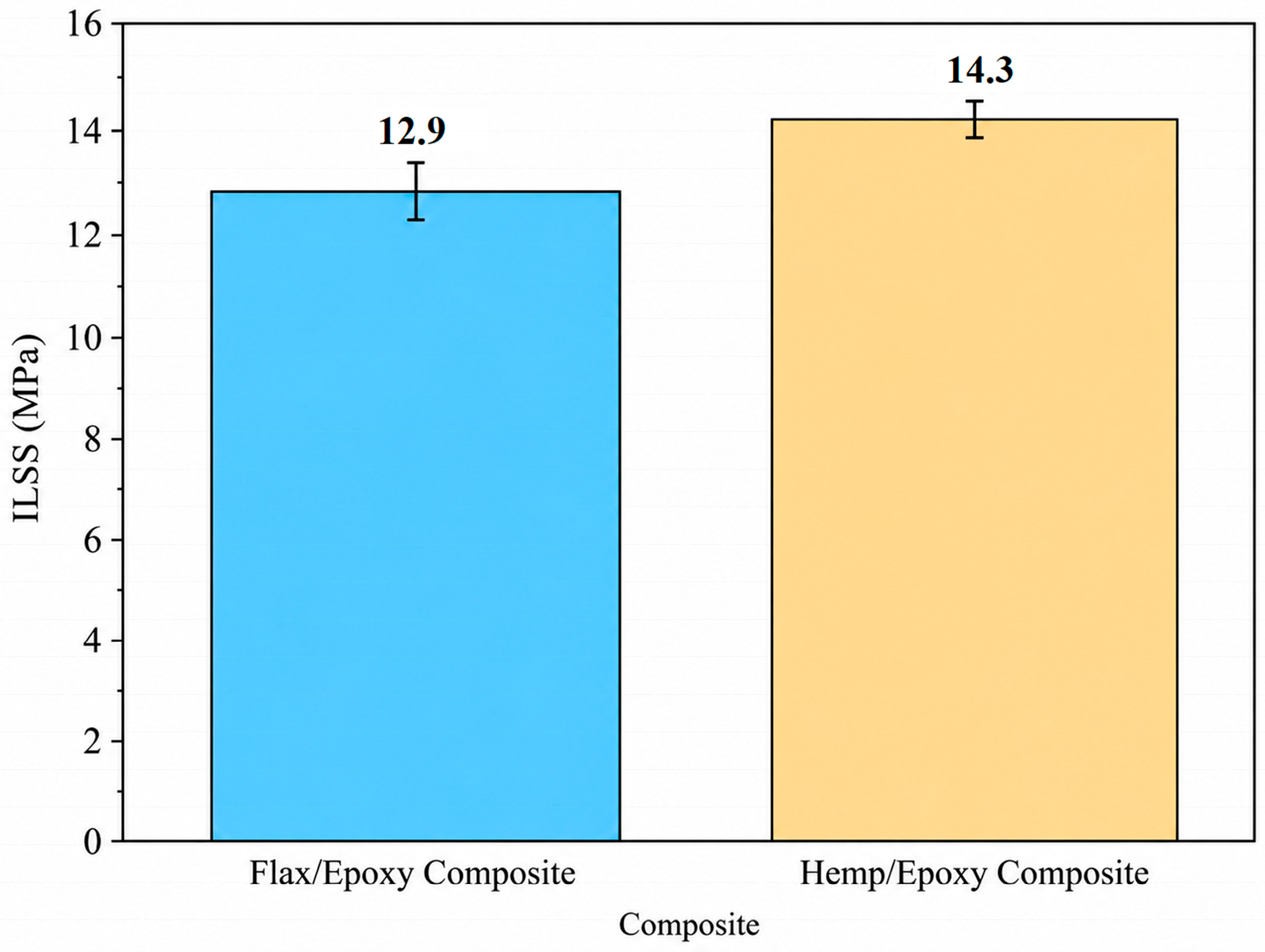
The interlaminar shear strength (ILSS) results for the flax and hemp fibre composites are presented in Figure 16. The hemp fibre composite exhibited a higher ILSS value of 14.3 ± 0.3 MPa, compared to the 12.9 ± 0.6 MPa recorded for the flax fibre composite.
The higher ILSS of hemp/epoxy was statistically significant (p = 0.002), indicating superior interlaminar shear resistance.
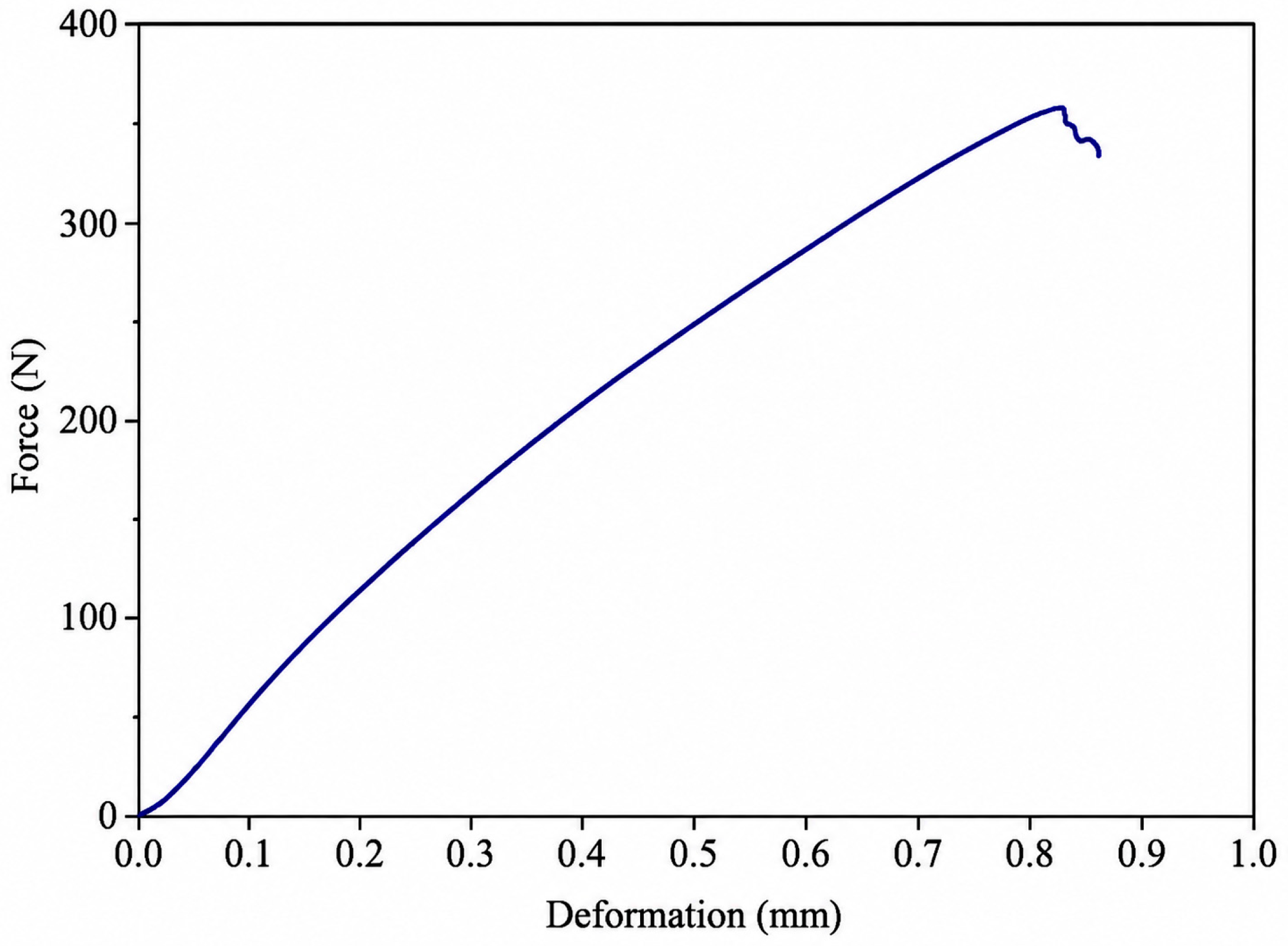
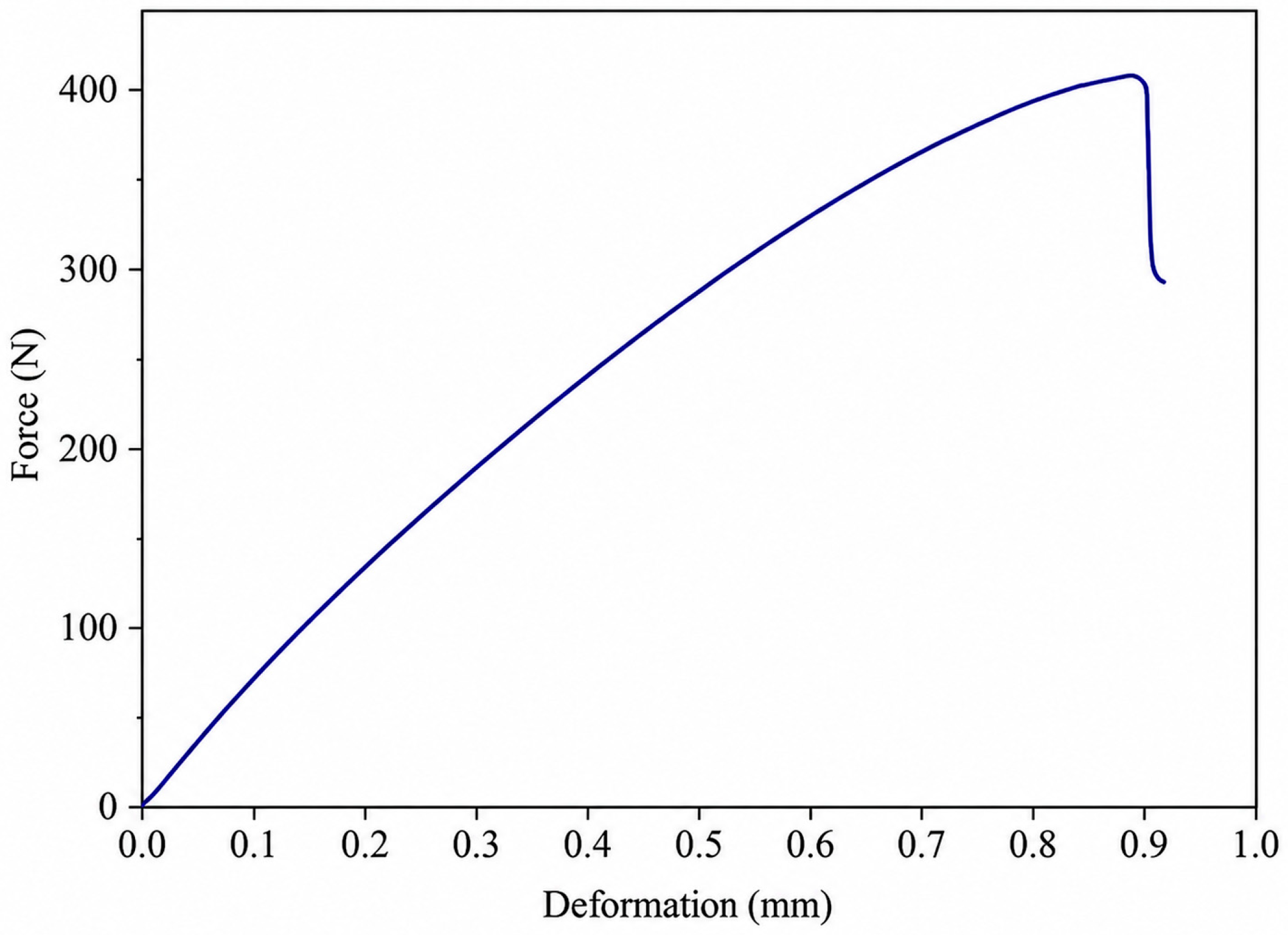
Figure 17 and Figure 18 show the force versus deformation response of the flax/epoxy and hemp/epoxy composites, respectively. In both figures, the force increases progressively with deformation until a peak value is reached, followed by a sudden drop, indicating brittle failure of the specimens. The absence of an extended deformation region after the peak load suggests limited plastic deformation prior to failure. Overall, both figures demonstrate similar failure characteristics consistent with brittle composite behaviour.
The relatively greater interlaminar shear strength (ILSS) of the hemp composite is indicative of a greater fibre–matrix bonding and consolidation, thus leading to easier shear transfer between plies during short-beam loading. ILSS is very sensitive to the voids and interfacial quality, the loss of porosity and the better wetting of the fibres increase the effective shear load transfer [44,55].
The fractographic evidence from SEM analysis, detailed in Section 3.6, directly corroborates these observations. The cohesive failure morphology observed on hemp fibre surfaces along with matrix resin adhering post-fracture, confirms superior interfacial bonding, consistent with the higher hemicellulose and pectin content of hemp fibres following alkali treatment promoting surface polarity and epoxy adhesion [27]. Table 4 compares the ILSS properties of flax and hemp fibre composites.
Table 4. Comparison of ILSS properties of flax and hemp fibre-reinforced epoxy composites.
CompositeFibre Architecture/Lay-upILSS (MPa)Fabrication MethodReference
Flax/Epoxy[0/900]10.4Hand Lay-up[35]
Flax/Biobased-EpoxyTwill weave13Vacuum Bagging[56]
Flax/EpoxyTwill weave21.8Hand Lay-up Followed by Hot Pressing[57]
Flax/EpoxyUnidirectional12.9 ± 0.6VARIMPresent Study
Hemp/Epoxy[0/900]9.3Hand Lay-up[35]
Hemp/Biobased-EpoxyBidirectional weave4.1Hand Lay-Up Followed by Hot Pressing[58]
Hemp/Epoxy-17.3 Hot Press Compression Moulding[59]
Hemp/EpoxyUnidirectional14.3 ± 0.3VARIMPresent Study
Impact testing was conducted to evaluate the dynamic energy absorption characteristics of the composites.

3.4. Impact Strength

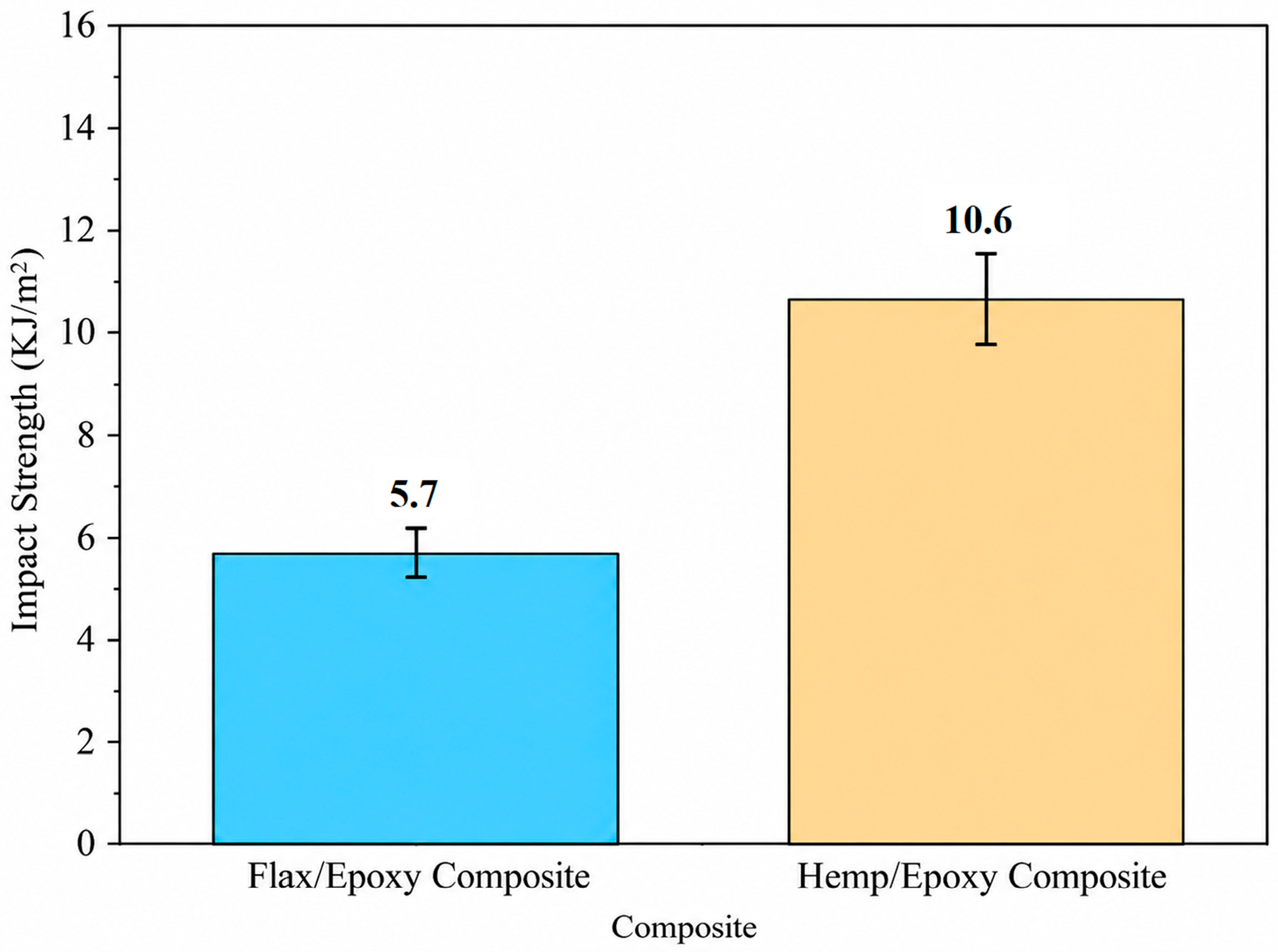
The impact strength values of flax and hemp fibre composites are shown in Figure 19. The hemp/epoxy composite exhibited a significantly higher impact strength of 10.6 ± 0.8 kJ/m2 compared to the 5.7 ± 0.3 kJ/m2 for the flax/epoxy composite. The difference in impact strength was highly significant (p < 0.0001), confirming the substantially greater energy absorption of hemp/epoxy composites.
The higher impact resistance observed in hemp composites can be attributed to their higher aspect ratio and superior stress transfer efficiency, which improves energy absorption capacity before fracture. The enhanced interfacial bonding of hemp fibres following alkali treatment facilitates effective energy dissipation during crack propagation and delays catastrophic failure. These characteristics enable hemp composites to absorb greater impact energy before fracture compared to flax composites. The higher impact resistance of hemp/epoxy composites suggests enhanced energy absorption mechanisms, likely involving fibre pull-out, interfacial debonding, and crack deflection, which contribute to delayed fracture under dynamic loading conditions.
Table 5. Comparison of impact properties of flax and hemp fibre-reinforced epoxy composites.
FibreFibre Architecture/Lay-upImpact Strength (kJ/m2)Fabrication MethodReference
Flax/Epoxy[0/900]1.72 (Absorbed energy, given in J)Hand Lay-up[35]
Flax/Biobased-EpoxyTwill weave6 ± 0.6Vacuum Bagging[49]
Flax/Bio-phenolic, epoxy blendPlain weave9.4Hand Lay-Up Followed by Hot Pressing[60]
Flax/PLANon-woven short fibres10Injection Moulding[61]
Flax/EpoxyUnidirectional5.7 ± 0.3VARIMPresent Study
Hemp/Epoxy[0/900]0.76 (Absorbed energy, given in J)Hand Lay-up[35]
Hemp/Biobased-Epoxy-12.1Compression Moulding[62]
Hemp/PolyesterNon-woven short fibres12.7Hand Lay-up Followed by Compression[63]
Hemp/EpoxyUnidirectional10.6 ± 0.8VARIMPresent Study

3.5. Hardness Test

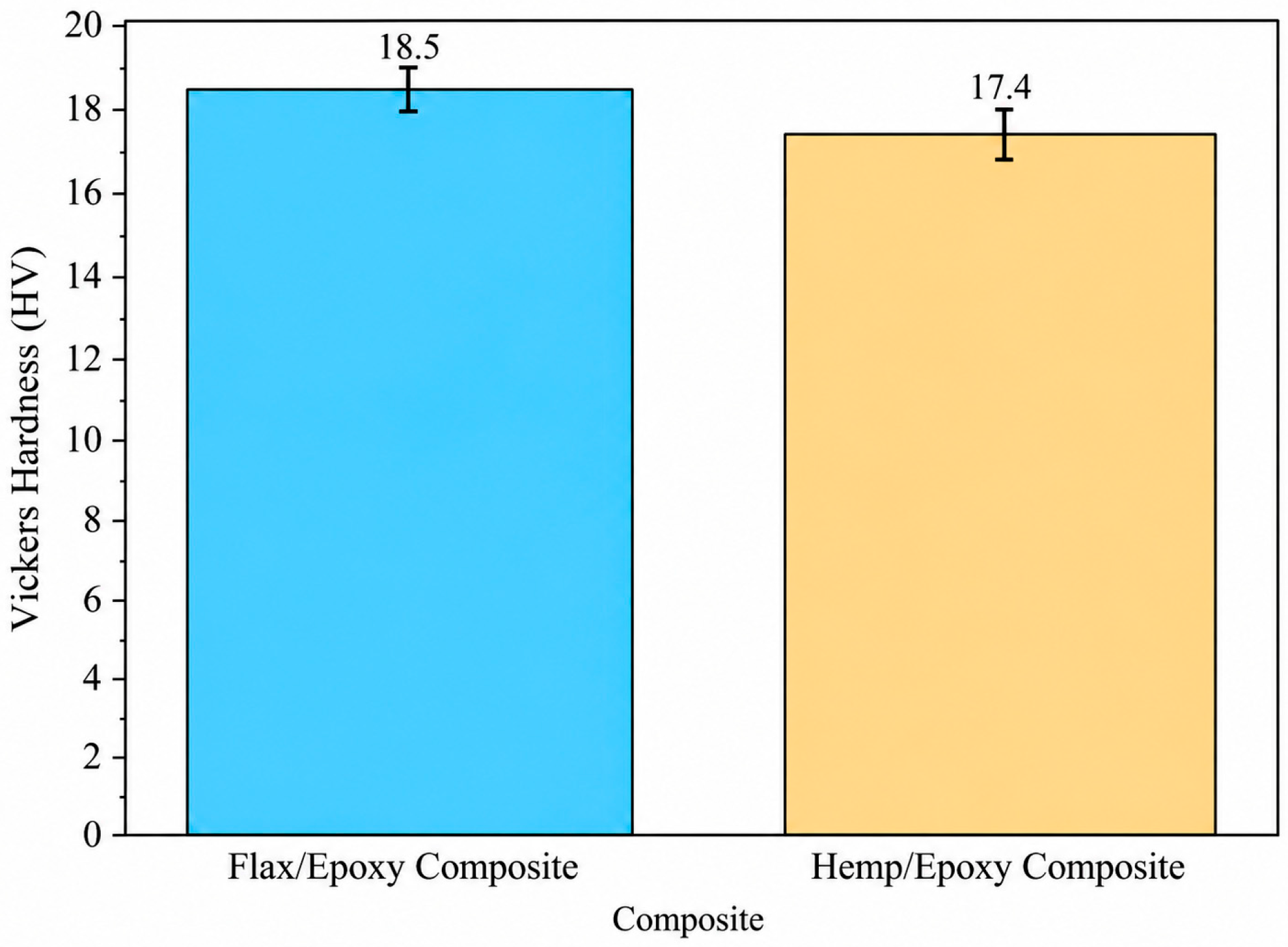
Figure 20 shows the Vickers hardness values of the flax/epoxy and hemp/epoxy composites. The flax/epoxy composite exhibits a higher average hardness of 18.5 ± 0.8 HV compared to the 17.4 ± 0.6 HV for the hemp/epoxy composite, indicating superior resistance to localized plastic deformation under indentation. This difference suggests that the flax fibre-reinforced composite provides a stiffer surface response when embedded in the epoxy matrix. The difference in hardness was statistically significant (p = 0.036), though the absolute difference between the two systems is small.
Overall, the results demonstrate that flax/epoxy composites possess slightly improved surface hardness characteristics compared to hemp/epoxy composites under identical testing conditions.

3.6. Fractographic Analysis

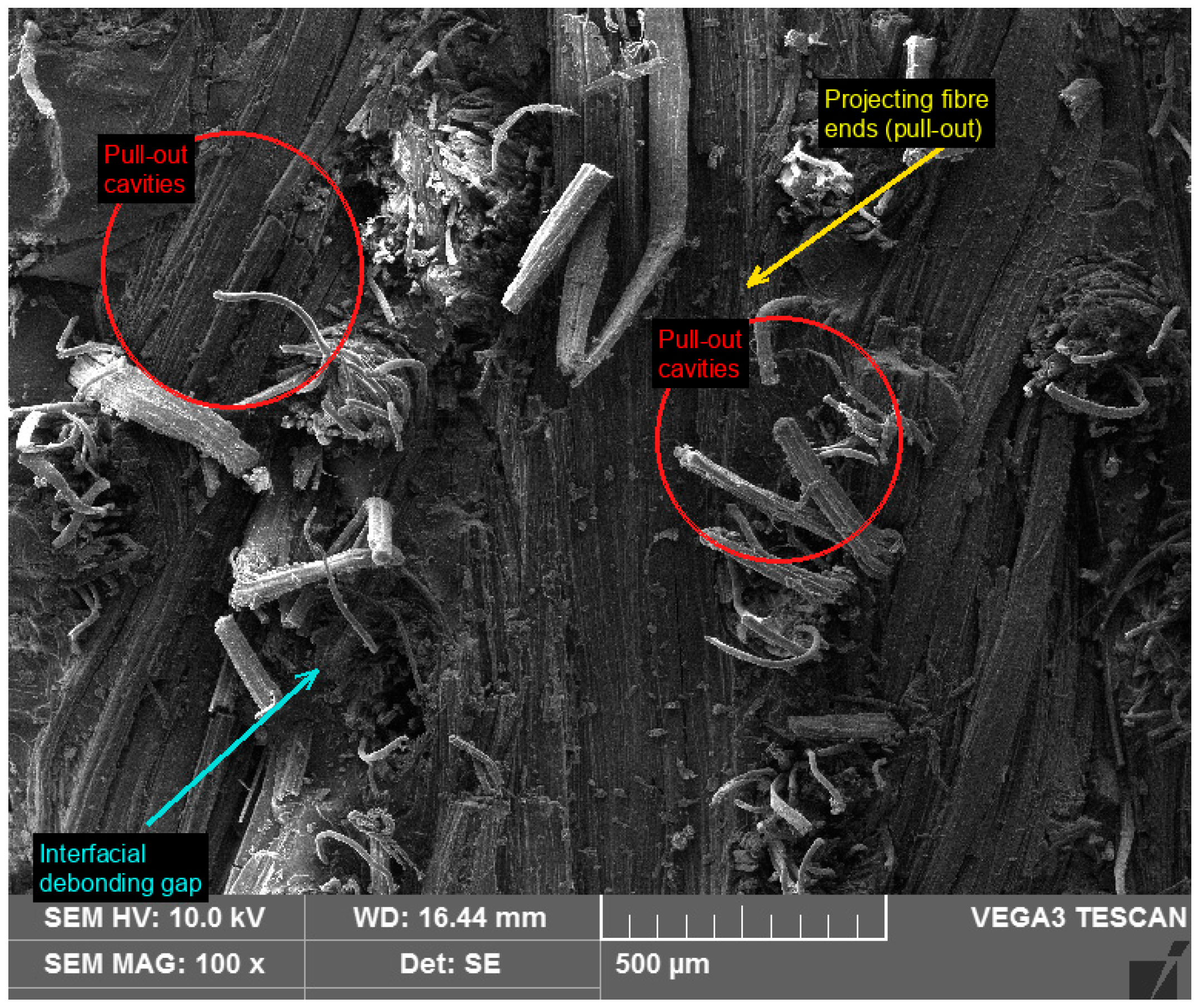
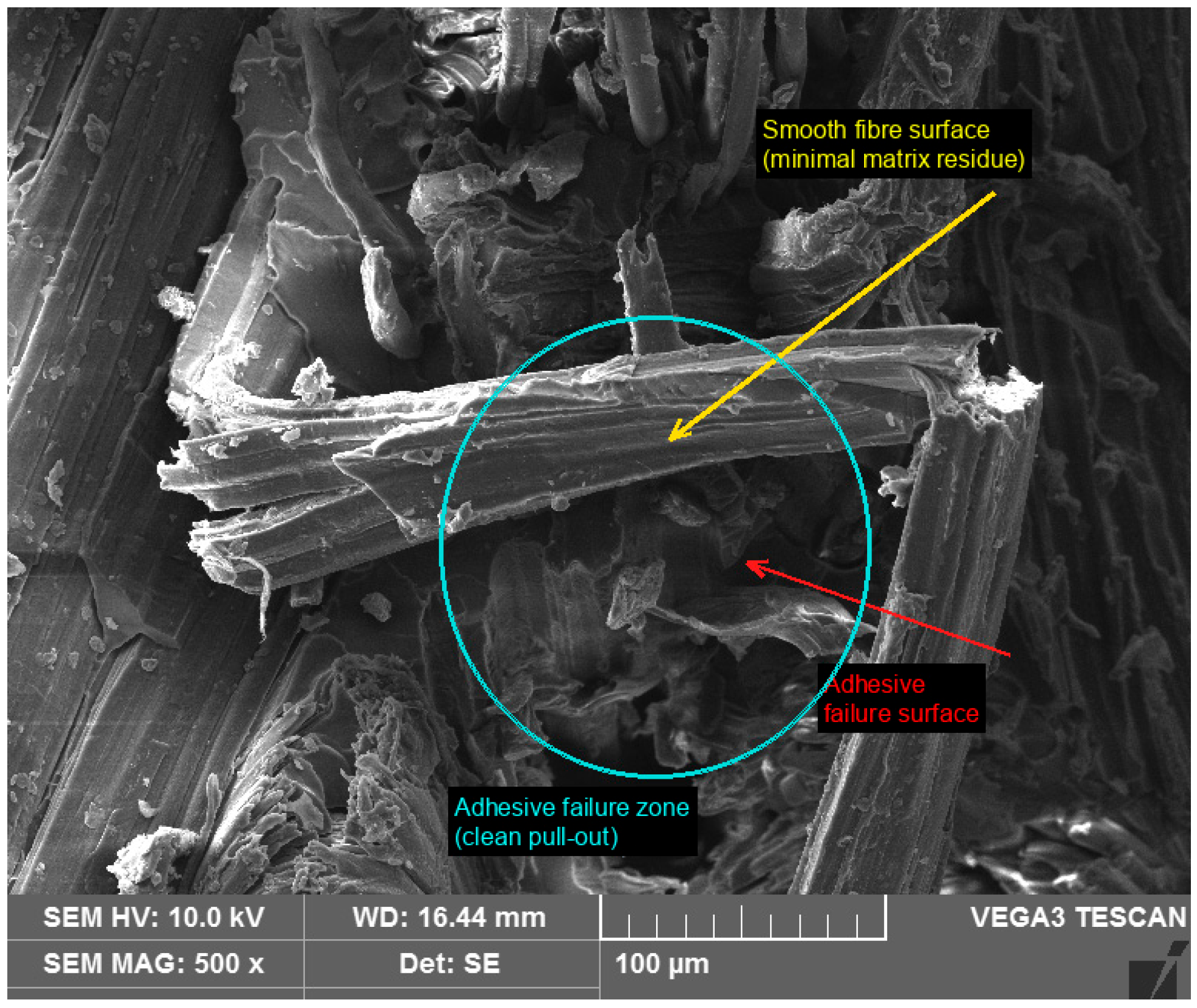
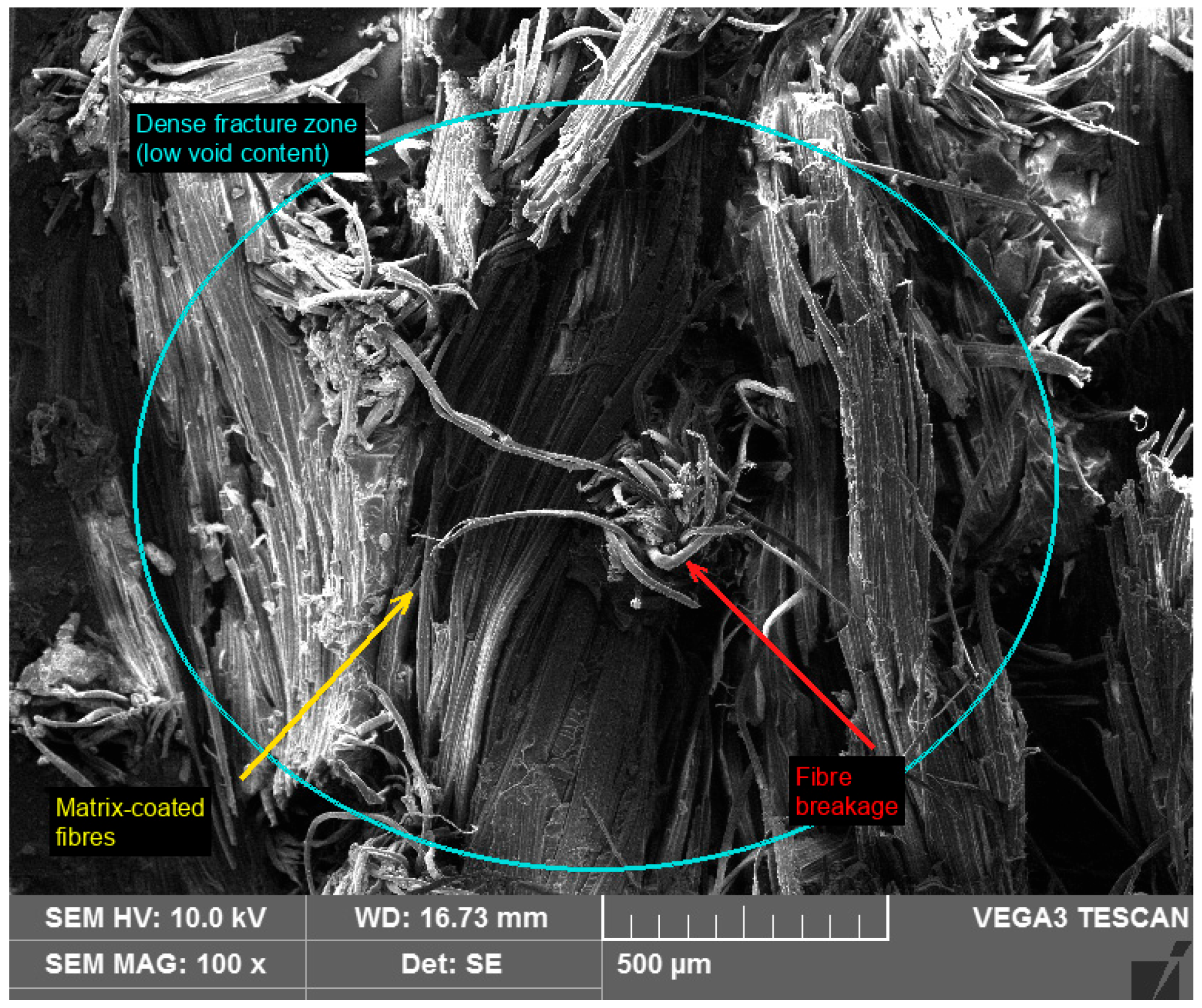
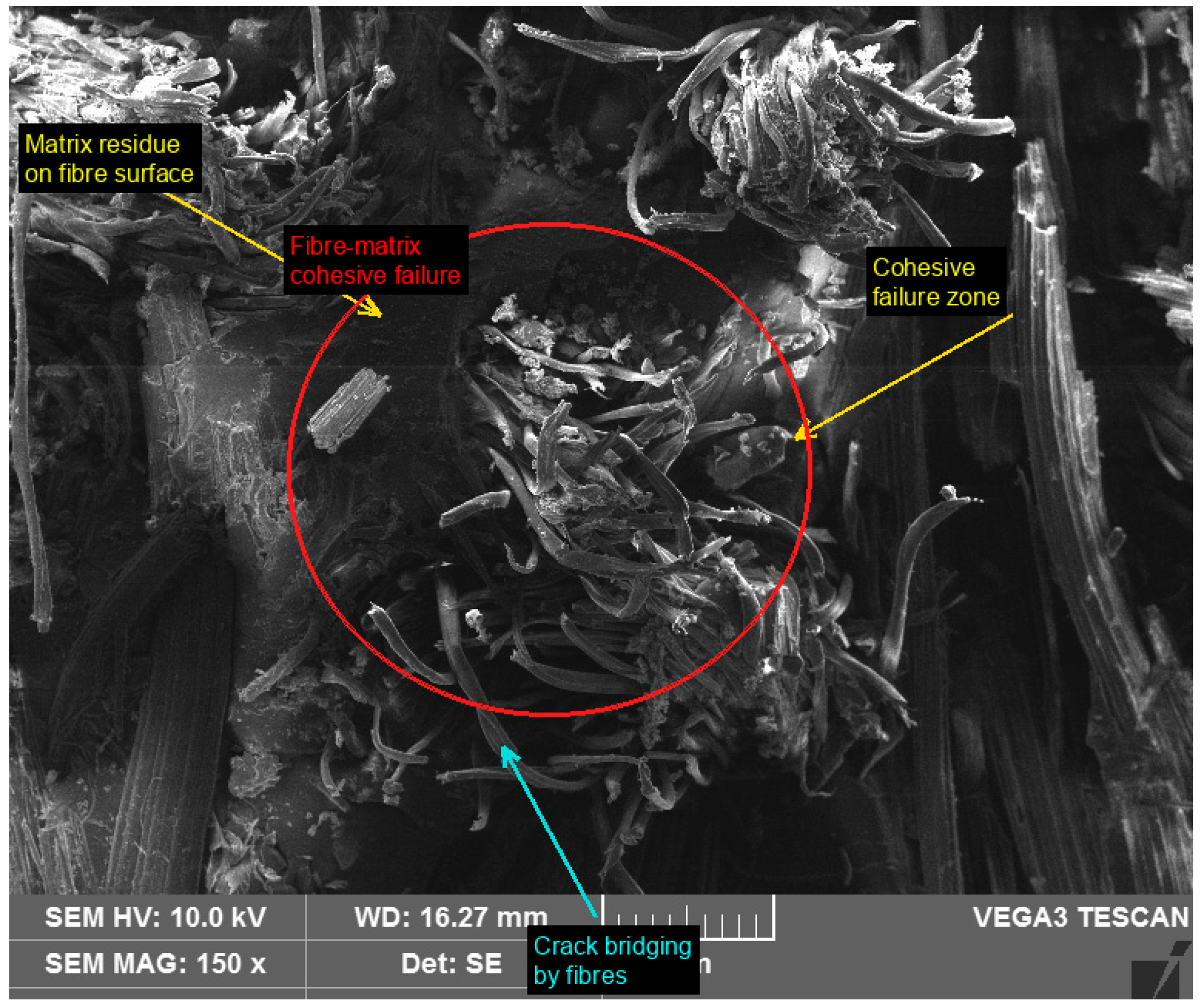
Scanning Electron Microscopy (SEM) was performed on the fracture surfaces of mechanically tested specimens to provide direct microstructural evidence of the failure mechanisms and to provide explanations to observed mechanical performance differences. Gold sputter coating was applied to all specimens prior to imaging. Representative micrographs for flax/epoxy and hemp/epoxy fracture surfaces are presented in Figure 21, Figure 22, Figure 23 and Figure 24.

3.6.1. Flax/Epoxy Fracture Morphology

The fracture surfaces of flax/epoxy specimens (Figure 21 and Figure 22) are dominated by fibre pull-out, evidenced by numerous empty cylindrical cavities in the epoxy matrix alongside projecting fibre ends. Critically, the pulled-out fibre surfaces exhibit a smooth, clean morphology with minimal matrix residue, indicating a predominantly adhesive failure mode at the fibre–matrix interface. This observation is consistent with the lower ILSS recorded for flax/epoxy composites (12.9 ± 0.6 MPa) and corroborates the weaker interfacial bonding inferred from the mechanical data. Interfacial debonding gaps are clearly visible between fibre walls and the matrix, and longitudinal fibre splitting at higher magnification is consistent with the brittle failure mode observed across all mechanical tests.

3.6.2. Hemp/Epoxy Fracture Morphology

Hemp/epoxy fracture surfaces (Figure 23 and Figure 24) present a visibly different morphology. The fracture zone is denser with significantly lower void content, and a higher proportion of fibre fracture relative to pull-out is observed. Most notably, matrix resin is seen adhering to the fibre surfaces after fracture which is an indication of cohesive epoxy matrix failure which are clear signs of superior fibre–matrix bonding. This microstructural observation directly validates the higher ILSS of hemp/epoxy composites (14.3 ± 0.3 MPa) and confirms the chemical reasoning attributing superior adhesion to the hemicellulose and pectin content of hemp fibres following alkali treatment [27]. Furthermore, evidence of crack bridging by fibres and matrix cracking propagating around intact fibres provides a direct microstructural basis for the substantially higher impact strength of hemp/epoxy composites (10.6 kJ/m2), as these mechanisms facilitate progressive energy dissipation prior to catastrophic fracture.
The comparative fractographic analysis thus provides direct microstructural corroboration for the key mechanical performance differences observed between the two composite systems, linking fibre–matrix interfacial morphology to macroscale ILSS, impact, tensile, and flexural responses.

4. Conclusions

This study presented a detailed experimental evaluation of unidirectional flax- and hemp-reinforced epoxy composites fabricated through the vacuum-assisted resin infusion moulding (VARIM) process. The investigation compared the influence of natural fibre type on the tensile, flexural, interlaminar shear, and impact performance of the resulting laminates. The results demonstrated that flax/epoxy composites consistently exhibited higher tensile modulus (5.6 GPa), flexural strength (116 ± 3 MPa) and flexural modulus (5.9 GPa), corresponding to improvements of 9.1%, 13.8% and 20.5%, respectively, when benchmarked against hemp/epoxy composites. In contrast, hemp/epoxy laminates showed a 10.6% higher ILSS (14.25 MPa), and an 87.4% higher impact strength (10.6 kJ/m2) compared to flax/epoxy composites. Vickers microhardness testing further revealed that flax/epoxy composites exhibited marginally higher surface hardness (18.5 HV) compared to hemp/epoxy (17.4 HV). The mechanical trends observed in this work indicate that flax-based composites offer superior in-plane stiffness and load-bearing capability, whereas hemp-based composites provide enhanced interlaminar shear resistance and energy absorption under dynamic loading. Overall, the findings confirm that both flax and hemp can function as viable, sustainable reinforcement alternatives within polymer composite systems. The comparative insights presented here provide a clear basis for material selection in natural fibre composite design, enabling optimization based on the tensile, flexural, impact, and interlaminar shear properties characterized in this study. These findings support the adoption of natural fibre composites as sustainable alternatives to synthetic fiber composites in lightweight polymer composite applications where the mechanical properties evaluated in this study are the primary design considerations. SEM fractographic analysis confirmed these trends at the microstructural level: flax/epoxy fracture surfaces exhibited extensive fibre pull-out with clean fibre surfaces (adhesive failure), while hemp/epoxy composites showed matrix resin adhering to fractured fibres (cohesive failure), directly validating the observed ILSS and impact performance differences.

Author Contributions

Conceptualization, methodology, writing—original draft, review and editing: S.K.Y. and M.S.; Methodology, writing—review and editing: N.N.P.; Supervision, project administration: K.K.P.; Conceptualization, methodology, writing—review and editing, project administration: N.S. All authors have read and agreed to the published version of the manuscript.

Funding

This research received no external funding.

Data Availability Statement

The original contributions presented in this study are included in the article. Further inquiries can be directed to the corresponding author.

Conflicts of Interest

The authors declare no conflicts of interest.

References

  1. Hsissou, R.; Seghiri, R.; Benzekri, Z.; Hilali, M.; Rafik, M.; Elharfi, A. Polymer Composite Materials: A Comprehensive Review. Compos. Struct. 2021, 262, 113640. [Google Scholar] [CrossRef]
  2. Hamzat, A.K.; Murad, M.S.; Adediran, I.A.; Asmatulu, E.; Asmatulu, R. Fiber-Reinforced Composites for Aerospace, Energy, and Marine Applications: An Insight into Failure Mechanisms under Chemical, Thermal, Oxidative, and Mechanical Load Conditions. Adv. Compos. Hybrid Mater. 2025, 8, 152. [Google Scholar] [CrossRef]
  3. Sarfraz, M.S.; Hong, H.; Kim, S.S. Recent Developments in the Manufacturing Technologies of Composite Components and Their Cost-Effectiveness in the Automotive Industry: A Review Study. Compos. Struct. 2021, 266, 113864. [Google Scholar] [CrossRef]
  4. Khodadadi, N.; Roghani, H.; Harati, E.; Mirdarsoltany, M.; De Caso, F.; Nanni, A. Fiber-Reinforced Polymer (FRP) in Concrete: A Comprehensive Survey. Constr. Build. Mater. 2024, 432, 136634. [Google Scholar] [CrossRef]
  5. Dunne, R.; Desai, D.; Sadiku, R.; Jayaramudu, J. A Review of Natural Fibres, Their Sustainability and Automotive Applications. J. Reinf. Plast. Compos. 2016, 35, 1041–1050. [Google Scholar] [CrossRef]
  6. Prasad, V.; Alliyankal Vijayakumar, A.; Jose, T.; George, S.C. A Comprehensive Review of Sustainability in Natural-Fiber-Reinforced Polymers. Sustainability 2024, 16, 1223. [Google Scholar] [CrossRef]
  7. Lopez-Arraiza, A.; Essamari, L.; Iturrondobeitia, M.; Boullosa-Falces, D.; Justel, D. Life Cycle Assessment of Glass Fibre versus Flax Fibre Reinforced Composite Ship Hulls. Sci. Rep. 2025, 15, 16283. [Google Scholar] [CrossRef] [PubMed]
  8. Ahmad, H.; Chhipi-Shrestha, G.; Hewage, K.; Sadiq, R. A Comprehensive Review on Construction Applications and Life Cycle Sustainability of Natural Fiber Biocomposites. Sustainability 2022, 14, 15905. [Google Scholar] [CrossRef]
  9. La Rosa, A.D.; Cozzo, G.; Latteri, A.; Recca, A.; Björklund, A.; Parrinello, E.; Cicala, G. Life Cycle Assessment of a Novel Hybrid Glass-Hemp/Thermoset Composite. J. Clean. Prod. 2013, 44, 69–76. [Google Scholar] [CrossRef]
  10. Yan, L.; Chouw, N.; Jayaraman, K. Flax Fibre and Its Composites—A Review. Compos. Part B Eng. 2014, 56, 296–317. [Google Scholar] [CrossRef]
  11. Wötzel, K.; Wirth, R.; Flake, M. Life Cycle Studies on Hemp Fibre Reinforced Components and ABS for Automotive Parts. Angew. Makromol. Chem. 1999, 272, 121–127. [Google Scholar] [CrossRef]
  12. Shah, D.U. Natural Fibre Composites: Comprehensive Ashby-Type Materials Selection Charts. Mater. Des. 2014, 62, 21–31. [Google Scholar] [CrossRef]
  13. Shahzad, A. Hemp Fiber and Its Composites—A Review. J. Compos. Mater. 2012, 46, 973–986. [Google Scholar] [CrossRef]
  14. Pil, L.; Bensadoun, F.; Pariset, J.; Verpoest, I. Why Are Designers Fascinated by Flax and Hemp Fibre Composites? Compos. Part A Appl. Sci. Manuf. 2016, 83, 193–205. [Google Scholar] [CrossRef]
  15. Sgriccia, N.; Hawley, M.C.; Misra, M. Characterization of Natural Fiber Surfaces and Natural Fiber Composites. Compos. Part A Appl. Sci. Manuf. 2008, 39, 1632–1637. [Google Scholar] [CrossRef]
  16. Aziz, S.H.; Ansell, M.P. Optimising the Properties of Green Composites. In Green Composites: Polymer Composites and the Environment; Woodhead Publisher: Cambridge, UK, 2004. [Google Scholar]
  17. Cucinotta, F.; Guglielmino, E.; Sfravara, F. Life Cycle Assessment in Yacht Industry: A Case Study of Comparison between Hand Lay-up and Vacuum Infusion. J. Clean. Prod. 2017, 142, 3822–3833. [Google Scholar] [CrossRef]
  18. Talabari, A.A.; Alaei, M.H.; Shalian, H.R. Experimental Investigation of Tensile Properties in a Glass/Epoxy Sample Manufactured by Vacuum Infusion, Vacuum Bag and Hand Layup Process. Rev. Compos. Mater. Av. 2019, 29, 179–182. [Google Scholar] [CrossRef]
  19. Elfaleh, I.; Abbassi, F.; Habibi, M.; Ahmad, F.; Guedri, M.; Nasri, M.; Garnier, C. A Comprehensive Review of Natural Fibers and Their Composites: An Eco-Friendly Alternative to Conventional Materials. Results Eng. 2023, 19, 101271. [Google Scholar] [CrossRef]
  20. Wambua, P.; Ivens, J.; Verpoest, I. Natural Fibres: Can They Replace Glass in Fibre Reinforced Plastics? Compos. Sci. Technol. 2003, 63, 1259–12164. [Google Scholar] [CrossRef]
  21. Shah, D.U. Developing Plant Fibre Composites for Structural Applications by Optimising Composite Parameters: A Critical Review. J. Mater. Sci. 2013, 48, 6083–6107. [Google Scholar] [CrossRef]
  22. Dittenber, D.B.; Gangarao, H.V.S. Critical Review of Recent Publications on Use of Natural Composites in Infrastructure. Compos. Part A Appl. Sci. Manuf. 2012, 43, 1419–1429. [Google Scholar] [CrossRef]
  23. Pickering, K.L.; Efendy, M.G.A.; Le, T.M. A Review of Recent Developments in Natural Fibre Composites and Their Mechanical Performance. Compos. Part A Appl. Sci. Manuf. 2016, 83, 98–112. [Google Scholar] [CrossRef]
  24. Park, G.; Park, H. Structural Design and Test of Automobile Bonnet with Natural Flax Composite through Impact Damage Analysis. Compos. Struct. 2018, 184, 800–806. [Google Scholar] [CrossRef]
  25. Scarponi, C. Hemp Fiber Composites for the Design of a Naca Cowling for Ultra-Light Aviation. Compos. Part B Eng. 2015, 81, 53–63. [Google Scholar] [CrossRef]
  26. Zarafsh ani, H.; Watjanatepin, P.; Lepelaar, M.; Verbruggen, J.; Ouagne, P.; De Luca, R.; Li, Q.; Scarpa, F.; Placet, V.; Van Acker, K. Environmental Assessment of Woven Hemp Fibre Reinforced Epoxy Composites and Potential Applications in Aerospace and Electric Scooter Industries. Results Mater. 2023, 20, 100474. [Google Scholar] [CrossRef]
  27. Bin Bakri, M.K.; Jayamani, E.; Hamdan, S.; Rahman, M.R.; Soon, K.H.; Kakar, A. Fundamental Study on the Effect of Alkaline Treatment on Natural Fibers Structures and Behaviors. ARPN J. Eng. Appl. Sci. 2016, 11, 8759–8763. [Google Scholar]
  28. Thandavamoorthy, R.; Devarajan, Y.; Kaliappan, N. Antimicrobial, Function, and Crystalline Analysis on the Cellulose Fibre Extracted from the Banana Tree Trunks. Sci. Rep. 2023, 13, 15301. [Google Scholar] [CrossRef]
  29. Shevtsov, S.; Chang, S.H.; Zhilyaev, I.; Chai, B.X.; Snezhina, N. Numerical Study of Thin-Walled Polymer Composite Part Quality When Manufactured Using Vacuum Infusion with Various External Pressure Controls. Polymers 2024, 16, 654. [Google Scholar] [CrossRef]
  30. ASTM D3039/D3039M-17; Standard Test Method for Tensile Properties of Polymer Matrix Composite Materials. ASTM International: West Conshohocken, PA, USA, 2017.
  31. ASTM D7264/D7264M-21; Standard Test Method for Flexural Properties of Polymer Matrix Composite Materials. ASTM International: West Conshohocken, PA, USA, 2021.
  32. ASTM D2344/D2344M-22; Standard Test Method for Short-Beam Strength of Polymer Matrix Composite Materials and Their Laminates. ASTM International: West Conshohocken, PA, USA, 2022.
  33. ISO 179-1:2010; Plastics—Determination of Charpy Impact Properties—Part 1: Non-Instrumented Impact Test. International Organization for Standardization: Geneva, Switzerland, 2010.
  34. Nuez, L.; Richely, E.; Perez, J.; Guessasma, S.; Beaugrand, J.; D’Arras, P.; Bourmaud, A.; Baley, C. Exploring the Effect of Relative Humidity on Dynamic Evolution of Flax Fibre’s Microfibril Angle through in Situ Tensile Tests under Synchrotron X-Ray Diffraction. Ind. Crops Prod. 2022, 188, 115592. [Google Scholar] [CrossRef]
  35. Haramina, T.; Hadžić, N.; Keran, Z. Epoxy Resin Biocomposites Reinforced with Flax and Hemp Fibers for Marine Applications. J. Mar. Sci. Eng. 2023, 11, 382. [Google Scholar] [CrossRef]
  36. Prasad, V.; Joseph, M.A.; Sekar, K.; Ali, M. Flexural and Impact Properties of Flax Fibre Reinforced Epoxy Composite with Nano TiO2 Addition. Mater. Today Proc. 2018, 5, 24862–24870. [Google Scholar] [CrossRef]
  37. John, M.J.; Anandjiwala, R.D. Chemical Modification of Flax Reinforced Polypropylene Composites. Compos. Part A Appl. Sci. Manuf. 2009, 40, 442–448. [Google Scholar] [CrossRef]
  38. Liu, Q.; Hughes, M. The Fracture Behaviour and Toughness of Woven Flax Fibre Reinforced Epoxy Composites. Compos. Part A Appl. Sci. Manuf. 2008, 39, 1644–1652. [Google Scholar] [CrossRef]
  39. Lebrun, G.; Couture, A.; Laperrière, L. Tensile and Impregnation Behavior of Unidirectional Hemp/Paper/Epoxy and Flax/Paper/Epoxy Composites. Compos. Struct. 2013, 103, 151–160. [Google Scholar] [CrossRef]
  40. del Borrello, M.; Mele, M.; Campana, G.; Secchi, M. Manufacturing and Characterization of Hemp-Reinforced Epoxy Composites. Polym. Compos. 2020, 41, 2316–2329. [Google Scholar] [CrossRef]
  41. Di Landro, L.; Janszen, G. Composites with Hemp Reinforcement and Bio-Based Epoxy Matrix. Compos. Part B Eng. 2014, 67, 220–226. [Google Scholar] [CrossRef]
  42. Behera, S.; Gautam, R.K.; Mohan, S.; Chattopadhyay, A. Hemp Fiber Surface Modification: Its Effect on Mechanical and Tribological Properties of Hemp Fiber Reinforced Epoxy Composites. Polym. Compos. 2021, 42, 5223–5236. [Google Scholar] [CrossRef]
  43. Neves, A.C.C.; Rohen, L.A.; Mantovani, D.P.; Carvalho, J.P.R.G.; Vieira, C.M.F.; Lopes, F.P.D.; Simonassi, N.T.; Luz, F.S.D.; Monteiro, S.N. Comparative Mechanical Properties between Biocomposites of Epoxy and Polyester Matrices Reinforced by Hemp Fiber. J. Mater. Res. Technol. 2020, 9, 1296–1304. [Google Scholar] [CrossRef]
  44. Atmakuri, A.; Palevicius, A.; Janusas, G.; Eimontas, J. Investigation of Hemp and Flax Fiber-Reinforced EcoPoxy Matrix Biocomposites: Morphological, Mechanical, and Hydrophilic Properties. Polymers 2022, 14, 4530. [Google Scholar] [CrossRef]
  45. Koronis, G.; Silva, A.; Foong, S. Predicting the Flexural Performance of Woven Flax Reinforced Epoxy Composites Using Design of Experiments. Mater. Today Commun. 2017, 13, 317–324. [Google Scholar] [CrossRef]
  46. Benkhelladi, A.; Laouici, H.; Bouchoucha, A. Tensile and Flexural Properties of Polymer Composites Reinforced by Flax, Jute and Sisal Fibres. Int. J. Adv. Manuf. Technol. 2020, 108, 895–916. [Google Scholar] [CrossRef]
  47. Saccone, M.; Stochino, F.; Valdes, M. Experimental Investigation of Flexural Performance in Flax Fiber-Reinforced Laminates. Discov. Mater. 2025, 5, 169. [Google Scholar] [CrossRef]
  48. Sathish, S.; Kumaresan, K.; Prabhu, L.; Vigneshkumar, N. Experimental Investigation on Volume Fraction of Mechanical and Physical Properties of Flax and Bamboo Fibers Reinforced Hybrid Epoxy Composites. Polym. Polym. Compos. 2017, 25, 229–236. [Google Scholar] [CrossRef]
  49. Dal Pont, B.; Gigante, V.; Panariello, L.; Canesi, I.; Aliotta, L.; Lazzeri, A. Investigation of Novel Flax Fiber/Epoxy Composites with Increased Biobased Content. Polymers 2023, 15, 4030. [Google Scholar] [CrossRef] [PubMed]
  50. Soni, P.; Sinha, S. Synergistic Effect of Alkali and Silane Treatment on Mechanical, Flammability, and Thermal Degradation of Hemp Fiber/Epoxy Composite. Polym. Compos. 2022, 43, 6204–6215. [Google Scholar] [CrossRef]
  51. Atmakuri, A.; Palevicius, A.; Siddabathula, M.; Vilkauskas, A.; Janusas, G. Analysis of Mechanical and Wettability Properties of Natural Fiber-reinforced Epoxy Hybrid Composites. Polymers 2020, 12, 2827. [Google Scholar] [CrossRef]
  52. Atmakuri, A.; Palevicius, A.; Vilkauskas, A.; Janusas, G. Numerical and Experimental Analysis of Mechanical Properties of Natural-Fiber-Reinforced Hybrid Polymer Composites and the Effect on Matrix Material. Polymers 2022, 14, 2612. [Google Scholar] [CrossRef]
  53. Erkliğ, A.; Kesen, E.; Doğan, N.F.; Bulut, M. Investigation of Mechanical and Impact Properties of Hemp Fiber Reinforced Epoxy-Based Nanocomposites. Polym. Compos. 2025, 46, 15369–15380. [Google Scholar] [CrossRef]
  54. Sepe, R.; Bollino, F.; Boccarusso, L.; Caputo, F. Influence of Chemical Treatments on Mechanical Properties of Hemp Fiber Reinforced Composites. Compos. Part B Eng. 2018, 133, 210–217. [Google Scholar] [CrossRef]
  55. Mehdikhani, M.; Gorbatikh, L.; Verpoest, I.; Lomov, S.V. Voids in Fiber-Reinforced Polymer Composites: A Review on Their Formation, Characteristics, and Effects on Mechanical Performance. J. Compos. Mater. 2019, 53, 1579–1669. [Google Scholar] [CrossRef]
  56. Millen, S.L.J.; Shaw, M.; Duckhouse, S.; Wahid, R.; Mcaleavy, E. Mechanical behaviour of thick flax and carbon-flax hybrid laminates under multiple load cases. J. Reinf. Plast. Compos. 2026. [Google Scholar] [CrossRef]
  57. Mabrouk, O.M.; Khair-Eldeen, W.; Hassanin, A.H.; Hassan, M.A. The Influence of Alkaline Treatment on Delamination Resistance of Woven Flax Fiber-Reinforced Epoxy Composite Laminates. Fibers Polym. 2024, 25, 4859–4872. [Google Scholar] [CrossRef]
  58. Thiagamani, S.M.K.; Krishnasamy, S.; Muthukumar, C.; Tengsuthiwat, J.; Nagarajan, R.; Siengchin, S.; Ismail, S.O. Investigation into Mechanical, Absorption and Swelling Behaviour of Hemp/Sisal Fibre Reinforced Bioepoxy Hybrid Composites: Effects of Stacking Sequences. Int. J. Biol. Macromol. 2019, 140, 637–646. [Google Scholar] [CrossRef]
  59. Umarfarooq, M.A.; Uppin, V.S.; Subhapriya, P.; Venkatesh, K.C.; Nivedhitha, K.S.; Joshi, A.; Banapurmath, N.R.; Gouda, P.S.S.; Shahapurkar, K.; Olekar, S.D.; et al. Influence of Water Absorption on the Interlaminar Shear Strength and Fracture Toughness of Hybrid Hemp–Banana Fiber-Reinforced Composites. J. Nat. Fibers 2025, 22, 2570084. [Google Scholar] [CrossRef]
  60. Ismail, A.S.; Jawaid, M.; Hamid, N.H.; Yahaya, R.; Sain, M.; Sarmin, S.N. Dimensional Stability, Density, Void and Mechanical Properties of Flax Fabrics Reinforced Bio-Phenolic/Epoxy Composites. J. Ind. Text. 2022, 52, 1–22. [Google Scholar] [CrossRef]
  61. Bax, B.; Müssig, J. Impact and Tensile Properties of PLA/Cordenka and PLA/Flax Composites. Compos. Sci. Technol. 2008, 68, 1601–1607. [Google Scholar] [CrossRef]
  62. Arockiasamy, F.S.; Logesh, K.; Rajan, J.A.; Ramesh, M.; Kannan, S.; Giri, J.; Alarfaj, A.A. Exploring the Strength and Durability of Hemp Fiber Reinforced Moringa Bioresin Composites for Skateboard Applications. AIP Adv. 2024, 14, 085119. [Google Scholar] [CrossRef]
  63. Shahzad, A. Comparison of Tensile Properties and Impact Damage Tolerance of Hemp and Glass Fiber Composites. J. Reinf. Plast. Compos. 2011, 30, 1877–1893. [Google Scholar] [CrossRef]
Figure 1. (a) The fibres in their untreated state and (b) after 30 min of immersion in the alkaline solution (right).
Sci 08 00133 g001
Figure 2. Schematic diagram of the vacuum-assisted resin infusion moulding (VARIM) process.
Sci 08 00133 g002
Figure 3. Fabrication process of the natural fibre composites, from raw materials to final test specimens.
Sci 08 00133 g003
Figure 4. Tensile testing machine.
Sci 08 00133 g004
Figure 5. Tensile strength.
Sci 08 00133 g005
Figure 6. Tensile modulus.
Sci 08 00133 g006
Figure 7. Brittle Failure of flax/epoxy composite.
Sci 08 00133 g007
Figure 8. Stress–strain curves for flax/epoxy composite (n = 5).
Sci 08 00133 g008
Figure 9. Standard deviation for stress–strain curve of flax/epoxy composite.
Sci 08 00133 g009
Figure 10. Stress–strain curves for hemp/epoxy composite (n = 5).
Sci 08 00133 g010
Figure 11. Standard deviation for stress–strain curve of hemp/epoxy composite.
Sci 08 00133 g011
Figure 12. Flexural strength.
Sci 08 00133 g012
Figure 13. Flexural modulus.
Sci 08 00133 g013
Figure 14. Stress v/s deformation curve for flax/epoxy composite.
Sci 08 00133 g014
Figure 15. Stress v/s deformation curve for hemp/epoxy composite.
Sci 08 00133 g015
Figure 16. Interlaminar shear strength.
Sci 08 00133 g016
Figure 17. Force v/s deformation curve for flax/epoxy composite.
Sci 08 00133 g017
Figure 18. Force v/s deformation curve for hemp/epoxy composite.
Sci 08 00133 g018
Figure 19. Impact strength.
Sci 08 00133 g019
Figure 20. Vickers hardness test.
Sci 08 00133 g020
Figure 21. SEM micrograph (100×) of flax/epoxy fracture surface showing fibre pull-out cavities, projecting fibre ends, and interfacial debonding gaps. Scale bar: 500 μm.
Sci 08 00133 g021
Figure 22. SEM micrograph (500×) of flax/epoxy fracture surface showing smooth clean fibre surfaces characteristic of adhesive (interfacial) failure. Scale bar: 100 μm.
Sci 08 00133 g022
Figure 23. SEM micrograph (100×) of hemp/epoxy fracture surface showing a dense fracture zone with lower void content, matrix-coated fibres, and fibre breakage. Scale bar: 500 μm.
Sci 08 00133 g023
Figure 24. SEM micrograph (150×) of hemp/epoxy fracture surface showing matrix residue adhering to fibre surfaces (cohesive failure) and crack bridging. Scale bar: 200 μm.
Sci 08 00133 g024
Table 1. Comparison of weight loss in flax and hemp fibres after alkaline treatment.
ParametersFlaxHemp
Weight before alkalization (in gm)174.5221.5
Weight after alkalization (in gm)144.5186.8
Percent loss of weight (%)17.2%15.7%
Disclaimer/Publisher’s Note: The statements, opinions and data contained in all publications are solely those of the individual author(s) and contributor(s) and not of MDPI and/or the editor(s). MDPI and/or the editor(s) disclaim responsibility for any injury to people or property resulting from any ideas, methods, instructions or products referred to in the content.