
Resistance Training Attenuates Oxidative Stress and Muscle Damage and Improves the Quality of Induced Skin Lesions in Rats

 ,
,  , ,
, , 
Abstract
1. Introduction
2. Materials and Methods
2.1. Animals
2.2. Experimental Groups
2.3. Training Protocol
2.4. Maximum Load Test
2.5. Induction of Skin Damage
2.6. Preparation of Biological Material
2.7. Tissue Damage Analysis
2.8. Determination of TBARS In Vivo
2.9. Determination of Total Sulfhydryls (Thiols)
2.10. Determination of Plasma Uric Acid
2.11. Histomorphological Analysis
2.12. Analysis of the Average Thickness of the Epidermis
2.13. Analysis of Collagen Deposition
2.14. Statistics
3. Results
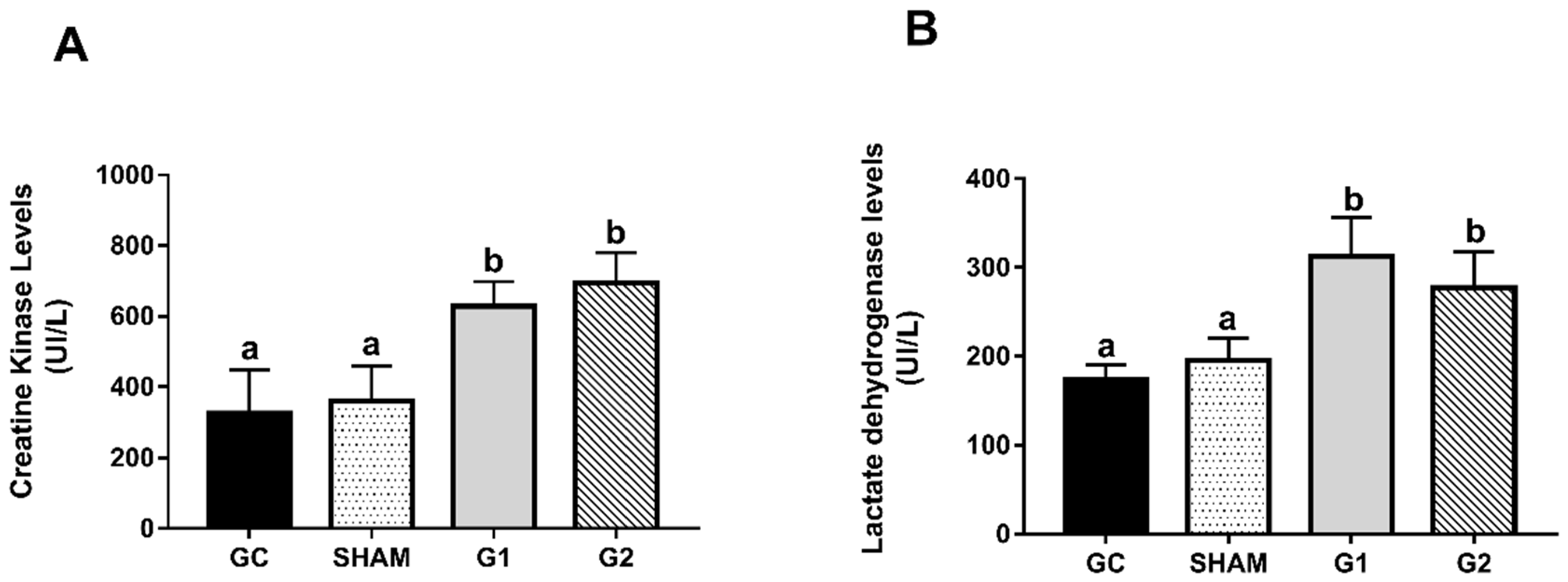
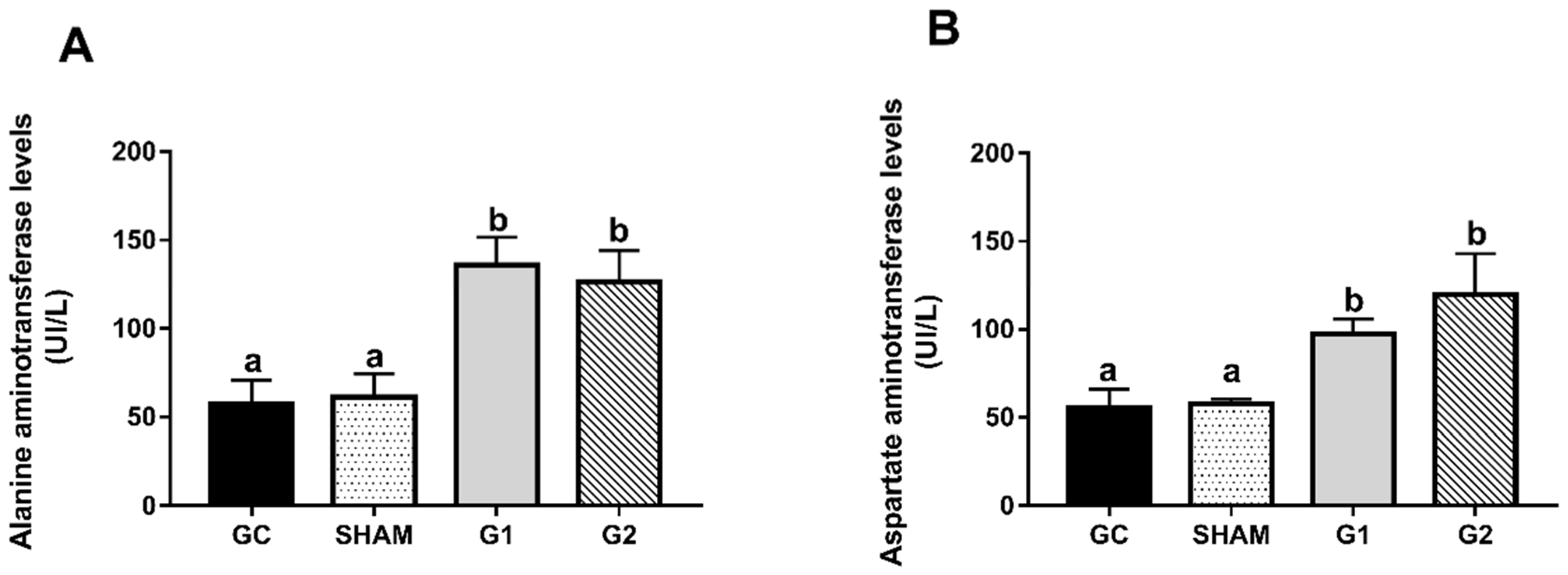
3.1. Tissue Damage Markers
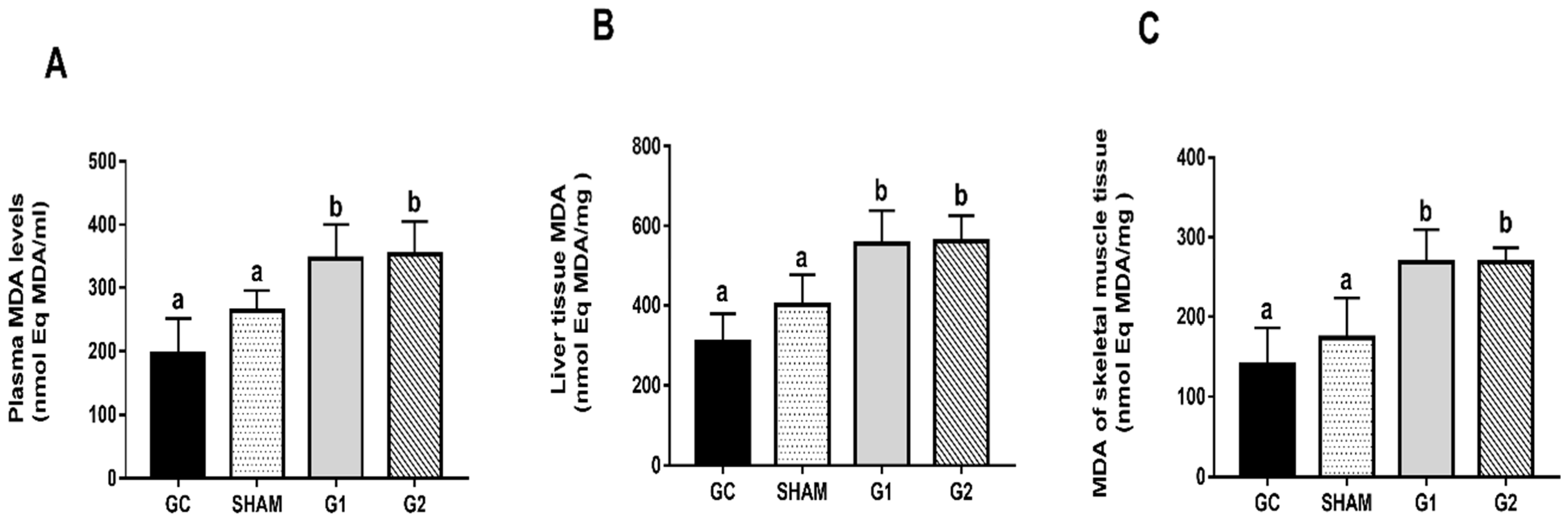
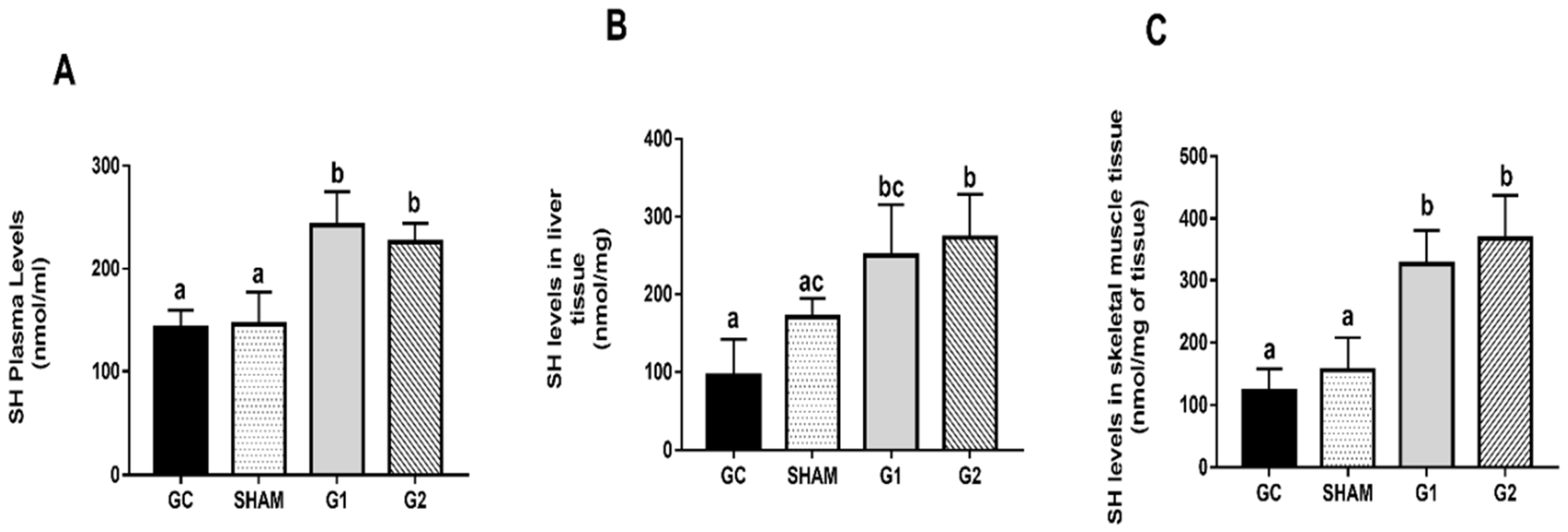
3.2. Oxidative Stress
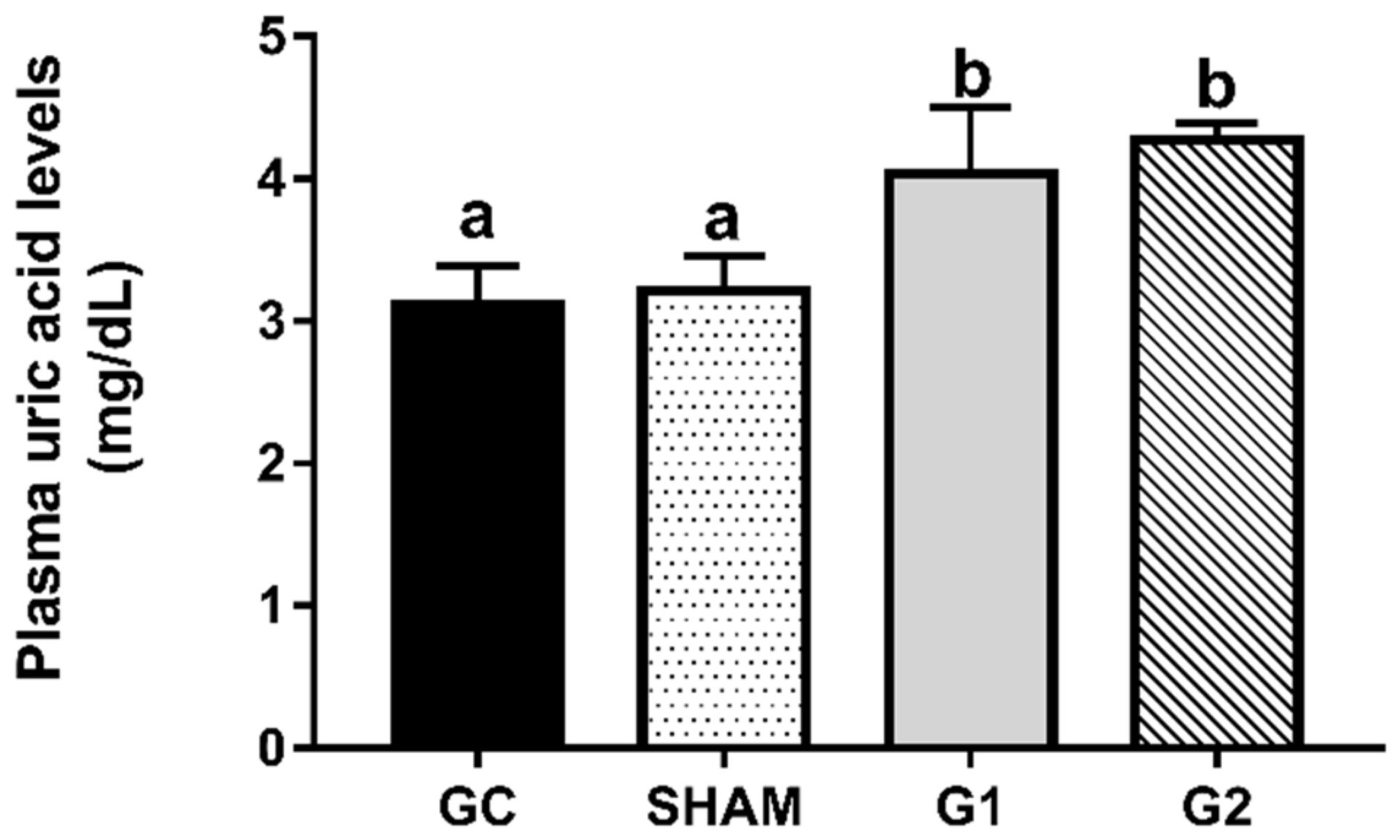
3.3. Plasma Uric Acid
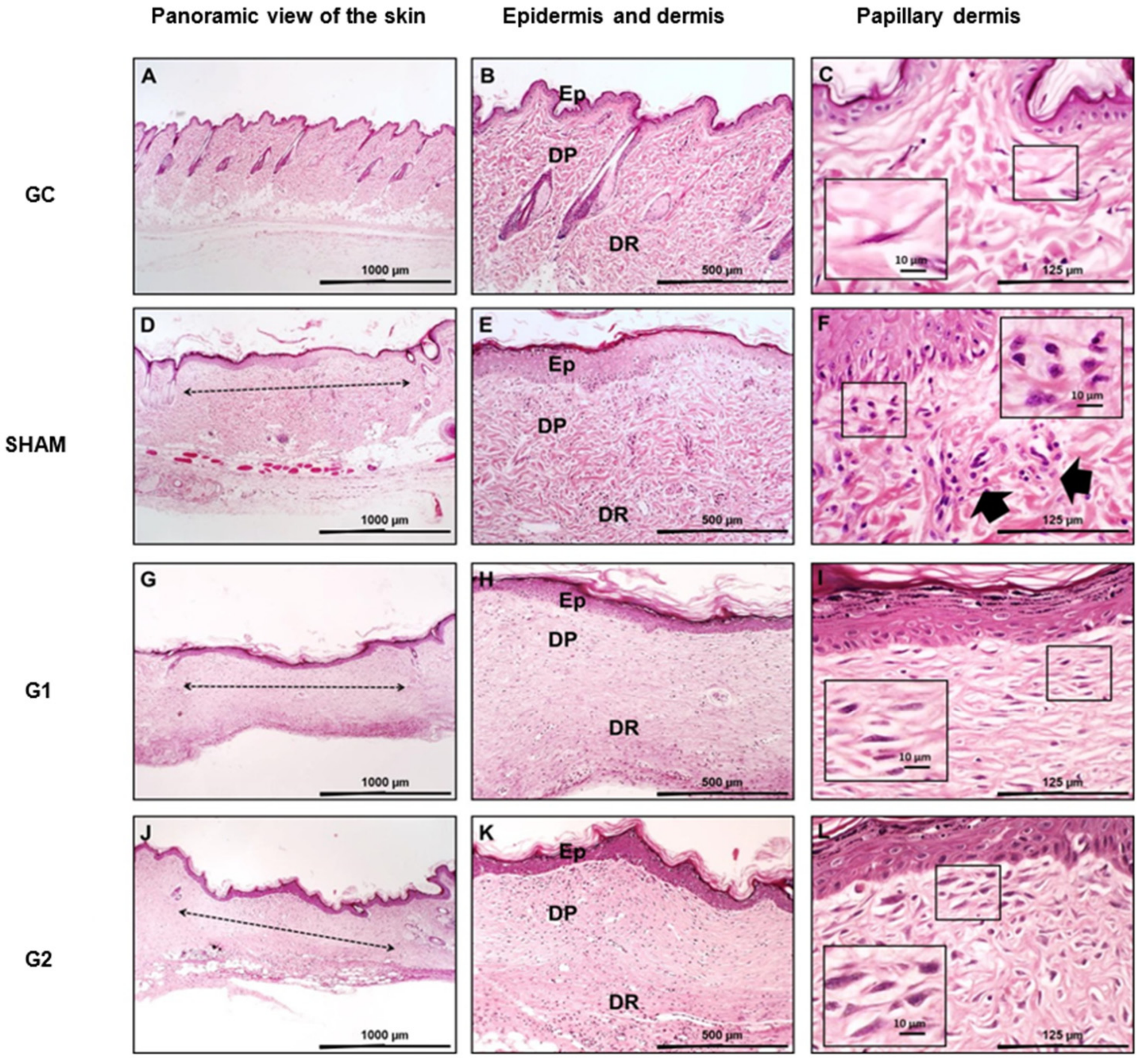
3.4. Histological Analysis
4. Discussion
5. Conclusions
Author Contributions
Funding
Institutional Review Board Statement
Informed Consent Statement
Data Availability Statement
Conflicts of Interest
References
- Neves, R.V.P.; Rosa, T.S.; Souza, M.K.; Oliveira, A.J.C.; Gomes, G.N.S.; Brixi, B.; Souza, L.H.R.; Deus, L.A.; Simões, H.G.; Stone, W.J.; et al. Not Isometric Resistance Training Improves Muscle Inflammation, Oxidative Stress and Hypertrophy in Rats. Front. Physiol. 2019, 10, 4. [Google Scholar] [CrossRef] [PubMed]
- Souza, R.R.; de França, E.; Madureira, D.; Pontes, C.C.; Santana, J.O.; Caperuto, E.C. Resistance training improves aortic structure in Wistar rats. Braz. J. Phys. Ther. 2017, 21, 244–250. [Google Scholar] [CrossRef]
- Lino, A.D.; Leite, R.D.; Prestes, J.; Pereira, G.B.; Frade, N.S.; Magosso, R.F.; de Oliveira Duarte, F.; Sene-Fiorese, M.; Stone, W.J.; de Oliveira Duarte, A.C.G.; et al. Resistance Training Decreases Lipid Content of Different Fat Deposits in Ovariectomized Rats. Asian J. Sports Med. 2018, 9, e62258. [Google Scholar] [CrossRef]
- Jansson, A.K.; Chan, L.X.; Lubans, D.R.; Duncan, M.J.; Plotnikoff, R.C. Effect of resistance training on HbA1c in adults with type 2 diabetes mellitus and the moderating effect of changes in muscular strength: A systematic review and meta-analysis. BMJ Open Diabetes Res. Care 2022, 10, e002595. [Google Scholar] [CrossRef]
- Amiri, E.; Sheikholeslami-Vatani, D. The role of resistance training and creatine supplementation on oxidative stress, antioxidant defense, muscle strength, and quality of life in older adults. Front. Public Health 2023, 11, 1062832. [Google Scholar] [CrossRef]
- Forman, H.J.; Zhang, H. Targeting oxidative stress in disease: Promise and limitations of antioxidant therapy. Nat. Rev. Drug Discov. 2021, 20, 689–709. [Google Scholar] [CrossRef]
- Ismaeel, A.; Holmes, M.; Papoutsi, E.; Panton, L.; Koutakis, P. Resistance training, antioxidant status, and antioxidant supplementation. Int. J. Sport Nutr. Exerc. Metab. 2019, 29, 539–547. [Google Scholar] [CrossRef] [PubMed]
- Sanchez, M.C.; Lancel, S.; Boulanger, E.; Neviere, R. Targeting oxidative stress and mitochondrial dysfunction in the treatment of impaired wound healing: A systematic review. Antioxidants 2018, 7, 98. [Google Scholar] [CrossRef]
- Bukowiecki, A.; Hos, D.; Cursiefen, C.; Eming, S.A. Wound-healing studies in cornea and skin: Parallels, differences and opportunities. Int. J. Mol. Sci. 2017, 18, 1257. [Google Scholar] [CrossRef]
- Gosain, A.; DiPietro, L.A. Aging and Wound Healing. World J. Surg. 2004, 28, 321–326. [Google Scholar] [CrossRef]
- Zhou, W.; Liu, G.H.; Yang, S.H.; Mi, B.B.; Ye, S.N. Low-intensity treadmill exercise promotes rat dorsal wound healing. J. Huazhong Univ. Sci. Technol. [Med. Sci.] 2016, 36, 121–126. [Google Scholar] [CrossRef] [PubMed]
- Hornberger, T.A.; Farrar, R.P. Physiological hypertrophy of the FHL muscle following 8 weeks of progressive resistance exercise in the rat. Can. J. Appl. Physiol. 2004, 29, 16–31. [Google Scholar] [CrossRef]
- Raizel, R.; Leite, J.S.M.; Hypólito, T.M.; Coqueiro, A.Y.; Newsholme, P.; Cruzat, V.F.; Tirapegui, J. Determination of the anti-inflammatory and cytoprotective effects of l-glutamine and l-alanine, or dipeptide, supplementation in rats submitted to resistance exercise. Br. J. Nutr. 2016, 116, 470–479. [Google Scholar] [CrossRef]
- Garros, I.D.C.; Campos, A.C.L.; Tâmbara, E.M.; Tenório, S.B.; Torres, O.J.M.; Agulham, M.Â.; Araújo, A.C.F.; Santis-Isolan, P.M.B.; de Oliveira, R.M.; Arruda, E.C.D.M. Extrato de Passiflora edulis na cicatrização de feridas cutâneas abertas em ratos: Estudo morfológico e histológico. Acta Cir. Bras. 2006, 21, 55–65. [Google Scholar] [CrossRef]
- Flecknell, P. Laboratory Animal Anaesthesia, 3rd ed.; Academic Press: London, UK, 2009; 298p. [Google Scholar]
- Lapenna, D.; Ciofani, G.; Pierdomenico, S.D.; Giamberardino, M.A.; Cuccurullo, F. Reaction conditions affecting the relationship between thiobarbituric acid reactivity and lipid peroxides in human plasma. Free Radic. Biol. Med. 2001, 21, 331–335. [Google Scholar] [CrossRef] [PubMed]
- Faure, P.; Lafond, J.L. Measurement of plasma sulfhydryl and carbonyl groups as a possible indicator of protein oxidation. In Analysis of Free Radicals in Biological Systems; Birkhäuser Basel: Basel, Switzerland, 1995; pp. 237–248. [Google Scholar]
- Cohen, J. Statistical power analysis. Curr. Dir. Psychol. Sci. 1992, 1, 98–101. [Google Scholar] [CrossRef]
- Machado, M.; Koch, A.J.; Willardson, J.M.; dos Santos, F.C.; Curty, V.M.; Pereira, L.N. Caffeine does not augment markers of muscle damage or leukocytosis following resistance exercise. Int. J. Sports Physiol. Perform. 2010, 5, 18–26. [Google Scholar] [CrossRef] [PubMed]
- Ramos, D.; Martins, E.G.; Viana-Gomes, D.; Casimiro-Lopes, G.; Salerno, V.P. Biomarkers of oxidative stress and tissue damage released by muscle and liver after a single bout of swimming exercise. Appl. Physiol. Nutr. Metab. 2013, 38, 507–511. [Google Scholar] [CrossRef]
- Liu, J.F.; Chang, W.Y.; Chan, K.H.; Tsai, W.Y.; Lin, C.L.; Hsu, M.C. Blood lipid peroxides and muscle damage increased following intensive resistance training of female weightlifters. Ann. N. Y. Acad. Sci. 2005, 1042, 255–261. [Google Scholar] [CrossRef]
- Cruzat, V.F.; Rogero, M.M.; Borges, M.C.; Tirapegui, J. Current aspects about oxidative stress, physical exercise and supplementation. Rev. Bras. Med. Esporte 2007, 13, 336–342. [Google Scholar] [CrossRef]
- Akmali, A.; Saghebjoo, M. High-intensity interval training with long duration intervals is more effective than short duration intervals for improving glycolytic capacity in the rats’ gastrocnemius muscle. Horm. Mol. Biol. Clin. Investig. 2019, 41, 20190035. [Google Scholar] [CrossRef] [PubMed]
- de Araújo, S.S.; Aidar, F.J.; de Matos, D.G.; Santos, J.L.D.; Vieira Souza, L.M.; Silva, A.N.D.; Dos Santos, R.M.; Marçal, A.C.; Mourão, D.M.; Júnior, A.L.; et al. Does Croton argyrophyllus extract has an effect on muscle damage and lipid peroxidation in rats submitted to high intensity strength exercise? Int. J. Environ. Res. Public Health 2019, 16, 4237. [Google Scholar] [CrossRef]
- Rech, A.; Radaelli, R.; De Assis, A.M.; Fernandes, J.R.; Longoni, A.; Vozari-Hampe, M.M.; Pinto, R.S.; Matté, C. The effects of strength, aerobic, and concurrent exercise on skeletal muscle damage in rats. Muscle Nerve 2014, 50, 79–86. [Google Scholar] [CrossRef]
- Dos Santos, J.L.; Dantas, R.E.A.; Lima, C.A.; de Araújo, S.S.; de Almeida, E.C.V.; Marçal, A.C.; dos Santos Estevam, C. Protective effect of a hydroethanolic extract from Bowdichia virgilioides on muscular damage and oxidative stress caused by strenuous resistance training in rats. J. Int. Soc. Sports Nutr. 2014, 11, 58. [Google Scholar] [CrossRef]
- Isik, O.; Dogan, I. Effects of bilateral or unilateral lower body resistance exercises on markers of skeletal muscle damage. Biomed. J. 2018, 41, 364–368. [Google Scholar] [CrossRef]
- Li, D.; Wang, X.; Liu, B.; Liu, Y.; Zeng, Z.; Lu, L.; Zheng, Z. Exercises in hot and humid environment caused liver injury in a rat model. PLoS ONE 2014, 9, e111741. [Google Scholar] [CrossRef]
- Kawamura, T.; Muraoka, I. Exercise-induced oxidative stress and the effects of antioxidant intake from a physiological viewpoint. Antioxidants 2018, 7, 119. [Google Scholar] [CrossRef]
- Powers, S.K.; Radak, Z.; Ji, L.L. Exercise-induced oxidative stress: Past, present and future. J. Physiol. 2016, 594, 5081–5092. [Google Scholar] [CrossRef] [PubMed]
- He, F.; Li, J.; Liu, Z.; Chuang, C.-C.; Yang, W.; Zuo, L. Redox mechanism of reactive oxygen species in exercise. Front. Physiol. 2016, 7, 486. [Google Scholar] [CrossRef]
- Ammar, A.; Chtourou, H.; Hammouda, O.; Turki, M.; Ayedi, F.; Kallel, C.; AbdelKarim, O.; Hoekelmann, A.; Souissi, N. Relationship between biomarkers of muscle damage and redox status in response to a weightlifting training session: Effect of time-of-day. Acta Physiol. Hung. 2016, 103, 243–261. [Google Scholar] [CrossRef] [PubMed]
- Hammouda, O.; Chtourou, H.; Chahed, H.; Ferchichi, S.; Chaouachi, A.; Kallel, C.; Souissi, N. High intensity exercise affects diurnal variation of some biological markers in trained subjects. Int. J. Sports Med. 2012, 33, 886–891. [Google Scholar] [CrossRef]
- Zhang, L.; Wang, X.; Cueto, R.; Effi, C.; Zhang, Y.; Tan, H.; Qin, X.; Ji, Y.; Yang, X.; Wang, H. Biochemical basis and metabolic interplay of redox regulation. Redox Biol. 2019, 26, 101284. [Google Scholar] [CrossRef]
- McLeay, Y.; Stannard, S.; Houltham, S.; Starck, C. Dietary thiols in exercise: Oxidative stress defence, exercise performance, and adaptation. J. Int. Soc. Sports Nutr. 2017, 14, 12. [Google Scholar] [CrossRef] [PubMed]
- Lin, K.-M.; Lu, C.-L.; Hung, K.-C.; Wu, P.-C.; Pan, C.-F.; Wu, C.-J.; Syu, R.-S.; Chen, J.-S.; Hsiao, P.-J.; Lu, K.-C. The paradoxical role of uric acid in osteoporosis. Nutrients 2019, 11, 2111. [Google Scholar] [CrossRef] [PubMed]
- Gherghina, M.-E.; Peride, I.; Tiglis, M.; Neagu, T.P.; Niculae, A.; Checherita, I.A. Uric acid and oxidative stress—Relationship with cardiovascular, metabolic, and renal impairment. Int. J. Mol. Sci. 2022, 23, 3188. [Google Scholar] [CrossRef]
- Zembron-Lacny, A.; Ostapiuk, J.; Slowinska-Lisowska, M.; Witkowski, K.; Szyszka, K. Pro-antioxidant ratio in healthy men exposed to muscle-damaging resistance exercise. J. Physiol. Biochem. 2008, 64, 27–35. [Google Scholar] [CrossRef]
- Leite, C.F.; Rombaldia, A.J. Renal response to maltodextrin and training at different intensities. Rev. Bras. Ciênc. Esporte 2015, 37, 80–86. [Google Scholar] [CrossRef]
- Louzada, R.A.; Bouviere, J.; Matta, L.P.; Werneck-de-Castro, J.P.; Dupuy, C.; Carvalho, D.P.; Fortunato, R.S. Redox signaling in widespread health benefits of exercise. Antioxid. Redox Signal. 2020, 33, 745–760. [Google Scholar] [CrossRef]
- Roy, S.; Khanna, S.; Nallu, K.; Hunt, T.K.; Sen, C.K. Dermal Wound Healing Is Subject to Redox Control. Mol. Ther. 2006, 13, 211–220. [Google Scholar] [CrossRef]
- Zunner, B.E.M.; Wachsmuth, N.B.; Eckstein, M.L.; Scherl, L.; Schierbauer, J.R.; Haupt, S.; Stumpf, C.; Reusch, L.; Moser, O. Myokines and Resistance Training: A Narrative Review. Int. J. Mol. Sci. 2022, 23, 3501. [Google Scholar] [CrossRef] [PubMed] [PubMed Central]
- Krzyszczyk, P.; Schloss, R.; Palmer, A.; Berthiaume, F. The Role of Macrophages in Acute and Chronic Wound Healing and Interventions to Promote Pro-wound Healing Phenotypes. Front. Physiol. 2018, 9, 419. [Google Scholar] [CrossRef] [PubMed] [PubMed Central]
- Mandelbaum, S.H.; Di Santis, É.P.; Sant’Ana Mandelbaum, M.H. Cicatrization: Current concepts and auxiliary resources—Part I. An. Bras. Dermatol. 2003, 78, 393–412. [Google Scholar] [CrossRef]
- Li, L.; Ma, Y.; He, G.; Ma, S.; Wang, Y.; Sun, Y. Pilose antler extract restores type I and III collagen to accelerate wound healing. Biomed. Pharmacother. 2023, 161, 114510. [Google Scholar] [CrossRef] [PubMed]




Disclaimer/Publisher’s Note: The statements, opinions and data contained in all publications are solely those of the individual author(s) and contributor(s) and not of MDPI and/or the editor(s). MDPI and/or the editor(s) disclaim responsibility for any injury to people or property resulting from any ideas, methods, instructions or products referred to in the content. |
© 2026 by the authors. Licensee MDPI, Basel, Switzerland. This article is an open access article distributed under the terms and conditions of the Creative Commons Attribution (CC BY) license.
Share and Cite
de Oliveira, J.U.; Aidar, F.J.; dos Santos, J.D.M.; Heiden, G.I.; Albuquerque-Júnior, R.L.C.d.; dos Santos, J.L.; Nikolaidis, P.T. Resistance Training Attenuates Oxidative Stress and Muscle Damage and Improves the Quality of Induced Skin Lesions in Rats. Sci 2026, 8, 131. https://doi.org/10.3390/sci8060131
de Oliveira JU, Aidar FJ, dos Santos JDM, Heiden GI, Albuquerque-Júnior RLCd, dos Santos JL, Nikolaidis PT. Resistance Training Attenuates Oxidative Stress and Muscle Damage and Improves the Quality of Induced Skin Lesions in Rats. Sci. 2026; 8(6):131. https://doi.org/10.3390/sci8060131
Chicago/Turabian Stylede Oliveira, José Uilien, Felipe J. Aidar, Jessica Denielle Matos dos Santos, Greice Itamaro Heiden, Ricardo Luiz Cavalcanti de Albuquerque-Júnior, Jymmys Lopes dos Santos, and Pantelis T. Nikolaidis. 2026. "Resistance Training Attenuates Oxidative Stress and Muscle Damage and Improves the Quality of Induced Skin Lesions in Rats" Sci 8, no. 6: 131. https://doi.org/10.3390/sci8060131
APA Stylede Oliveira, J. U., Aidar, F. J., dos Santos, J. D. M., Heiden, G. I., Albuquerque-Júnior, R. L. C. d., dos Santos, J. L., & Nikolaidis, P. T. (2026). Resistance Training Attenuates Oxidative Stress and Muscle Damage and Improves the Quality of Induced Skin Lesions in Rats. Sci, 8(6), 131. https://doi.org/10.3390/sci8060131