Systematic Review

Transforming Beekeeping Through Technology: A Systematic Review of Precision Beekeeping

by
Ashan Milinda Bandara Ratnayake
1,2,
Hazwani Suhaimi
1 and
Pg Emeroylariffion Abas
1,*
1
Faculty of Integrated Technologies, Universiti Brunei Darussalam, Jalan Tungku Link, Gadong BE1410, Brunei
2
Department of Computer Science & Informatics, Uva Wellassa University, Badulla 90000, Sri Lanka
*
Author to whom correspondence should be addressed.
Submission received: 31 December 2025 / Revised: 30 March 2026 / Accepted: 3 April 2026 / Published: 9 April 2026
(This article belongs to the Special Issue Feature Papers—Multidisciplinary Sciences 2025)

Abstract

Beekeeping is a profitable and mind-relaxing practice; however, monitoring beehives poses significant challenges, such as consuming time and potentially disturbing hive equilibrium, which may lead to colony collapse. Developing precision beekeeping (PB) systems is crucial to assist beekeepers in decision-making, automate redundant hive maintenance, and enhance the security and comfort of bee life. This review systematically explores research on PB systems, based on a keyword-driven search of Scopus and Web of Science databases, yielding 46 relevant publications. The analysis highlights a notable increase in research activity in the field since 2016. The integration of advanced technologies, including machine learning, cloud computing, IoT, and scenario-based communication methods, has proven instrumental in predicting hive states such as queen status, enemy attacks, readiness for harvest, swarming events, and population decline. Commonly measured parameters include hive weight, temperature, and relative humidity, with various sensors employed to ensure precision while minimizing bee disturbance. Additionally, bee traffic monitoring has emerged as a critical approach to assessing hive health. Most studies focus on honeybees rather than stingless bees and, in the context of enemy identification, Varroa destructor is the primary target. This review underscores the potential of novel technologies to revolutionize apiculture and enhance hive management practices.

1. Introduction

One of the main problems beekeepers experience is the collapse of a colony, when worker bees literally disappear from the hive. This problem leads to a loss of the whole investment of time and money for the hive by a beekeeper. Colonies collapse due to multiple internal and external factors including ecological situations near the hive (not enough food sources around the hive), degrading health of the hive due to pests, viruses, and other pathogens, inversion, and continuous intruder attacks. Apart from that, there are various internal and external factors that affect the productivity of honey production. Therefore, identifying these factors and implementing timely interventions is crucial for beekeepers aiming to achieve optimal yields. Although understanding the hive’s activities and the health of the hive and its bees are imperative to mitigate collapses and other beehive issues, they require experience and regular hive monitoring. On the contrary, regularly opening the hive and monitoring the process will disturb the hive, which might also lead to collapse since bees are a susceptible group [1,2].
A precision beekeeping (PB) or precision apiculture (PA) system is essential to enhance the productivity of beekeeping and lower the chances of colony collapse amongst beekeepers. PB employs online and offline resources to track the hives and their direct surroundings via sensors on a regular basis. It positively impacts the behavior of bees in relation to honey and other bee products’ production without being exposed to additional stress and unproductive activities [3]. Furthermore, PB has three stages that include data gathering, data analysis, and implementing choices on the basis of data to reduce the resources and to optimize the output of the bees [4].
PB systems reduce the requirement of skilled labor to monitor hives by addressing the problem of the lack of expert beekeepers, and these systems minimize the physical inspection of the hives, which disrupts the internal equilibrium of the colony and increases stress among the bees while declining productivity. Importantly, these systems allow remote monitoring of hives, thus addressing logistical issues in addition to supporting the daily operations of beekeepers [5].
This manuscript presents a comprehensive literature review focused on the use of various technologies in the development of PB systems, mainly considering honeybees and stingless bees. It starts with a bibliometric analysis which explores the authorship and citation patterns and thus clarifies research dynamics that describe this field [6].
The review systematically examines relevant studies to provide an in-depth analysis of the measured hive parameters, the technologies utilized to develop PB systems, decision-making based on these parameters, the usage of AI technologies in PB, and the identification of swarming and predators. By highlighting the current state of the field, identifying gaps, and pointing out emerging trends, this literature review aims to enhance our understanding and facilitate further advancements in the domain of bee species management. The ultimate goal is to equip researchers with the insights needed to navigate and contribute to this evolving field, thereby fostering the development of PB.
The manuscript is organized in the following way: Section 2 outlines the materials and methods used in the study explaining the study selection criteria and methods used to find the studies. In Section 3, a bibliometric analysis is provided and the role of various technologies, such as embedded and IoT platforms, and machine-learning algorithms in developing PB systems is discussed. Section 4 puts the empirical results into perspective. Section 5 gives the conclusions in the last part.

2. Materials and Methods

2.1. Search Strategy

A systematic search was conducted in the Web of Science (WoS) (https://mjl.clarivate.com/ (accessed on 14 June 2024)) and Elsevier Scopus (https://www.scopus.com/ (accessed on 14 June 2024)) databases, according to the Preferred Reporting Items for Systematic Reviews and Meta-Analysis (PRISMA) Statement [7]. For transparency, the PRISMA checklist is provided in the Supplementary Material S1. The WoS and Elsevier Scopus databases are considered two of the most extensive sources of scholarly research and their advanced publication search functions and capability to produce journal rankings according to productivity and citation measures, as a result, have yielded a strong foundation to bibliometric research.
The search protocol targeted original research manuscripts which are open access and in the English language that research developing PB systems or systems that are directly helpful to developing a PB system. To maintain a well-defined focus, the review omitted non-research sources, such as book chapters, conference abstracts, white papers, case reports, editorial and review papers, as well as technical reports. This selection process was conducted independently by two authors. The reviewers independently assessed the studies, and disagreements were resolved through discussion.
Since the identified studies were diverse and heterogeneous in terms of design, technologies, and reported outcomes, narrative synthesis was performed instead of a meta-analysis. The studies were clustered based on themes using their primary goals, processing boards, data visualization methods, artificial intelligence application, sensors and actuators, communication technologies, and power supply approaches, and the findings were summarized qualitatively within each theme. As most studies were qualitative, no quantitative synthesis (meta-analysis) or evaluation of publication bias (e.g., funnel plots or statistical tests) was conducted, and the certainty of evidence was not quantitatively assessed using models such as GRADE, as the included studies were predominantly qualitative and heterogeneous in design. Instead, a qualitative evaluation was employed, whereby findings consistently reported across multiple independent studies were considered to provide stronger evidence.
Keyword searches were conducted using the advanced search functionalities of the databases, focusing on titles, abstracts, and keywords only. The search terms, detailed in Table 1, were selected to capture studies related to the development of precision beekeeping (PB) systems, including applications involving stingless bees (Meliponini) and honeybees (Apis). Important information, including publication titles, abstracts, keywords, authors and their affiliations, publication years, and citation counts up to the date of the search, were extracted for the search results. Definitions used throughout this work are presented below.

2.1.1. Electronic Beehive Monitoring

The electronic beehive monitoring (EBM) system allows beekeepers to visualize gathered data from the hive using multiple sensors. Data is transferred via the internet or local area network. Finally, data is presented via web and/or mobile applications and/or small digital screens [8].

2.1.2. Smart Beehive

A smart beehive is an EBM module with advanced intelligence capabilities. It not only collects data from the hive but also processes it to make decisions, such as diagnosing health issues, detecting threats from predators, and identifying critical events like swarming. By integrating cutting-edge technologies, these smart beehives surpass traditional monitoring systems, providing proactive solutions to enhance hive management and ensure the health and sustainability of bee colonies [9].

2.1.3. Precision Beekeeping (PB)

Precision beekeeping (precision apiculture/precision meliponiculture), a branch of precision agriculture, was first introduced by Zacepins et al. [10] and is defined as “an apiary management strategy based on the monitoring of individual bee colonies to minimize resource consumption and maximize the productivity of bees.” PB addresses challenges by utilizing data gathered over time and operates across two main biological levels: the apiary level and the colony level. The apiary level encompasses multiple beehives, each housing a single colony within a shared geographical perimeter, where environmental conditions significantly influence bee behavior. On the other hand, the colony level focuses on an individual beehive, examining the organization of the colony, the lives of the bees, and their behaviors. By integrating insights from both levels, PB aims to optimize resource use and enhance bee productivity effectively.

2.1.4. Machine Learning

Machine learning (ML) methods are computational algorithms designed to learn, reason, and adapt without explicit programming [11]. Deep learning (DL), a subset of ML, utilizes artificial neural networks (ANNs) to process complex patterns. This review emphasizes the application of ML technologies for decision-making processes based on hive-related data, showcasing their potential to enhance precision and efficiency in apiculture.

2.2. Data Extraction from the Studies

Data extraction was performed using a standardized form (Microsoft Excel, version 2019, Microsoft Corporation, Redmond, WA, USA) and bibliographic data were extracted directly from the databases as CSV files. For each included study, the following data were systematically collected.
  • Bibliographic data: Authors, year of publication, title, journal, DOI, affiliation, author keywords, etc.
  • Main objective: Main goal of the research.
  • Communication technologies: Technologies utilized for communication between different devices, including mobile phones, edge devices and servers.
  • Main processing boards: Edge devices and other processing equipment utilized to gather and process data from the sensors.
  • Data visualization: Technologies utilized to visualize the data.
  • Sensors and actuator: Sensors and actuators and measured parameters.
  • Power: Technologies utilized to power the system (battery power, solar or other methods).
  • Use of AI: Purpose and AI model utilized.
The extracted data were organized into tables (Table A1 and Table A2).

2.3. Bibliographic Analysis

The search results underwent a thorough screening process to select suitable studies. The final set of selected studies from both databases was utilized for bibliographic analysis. Among these, the majority of studies (95.65%) were sourced from Scopus. The selected results from both databases were further analyzed for knowledge mapping, which was conducted using VOSviewer software (version 1.6.20). Fractional counting, rather than full counting, was employed during the analysis due to its ability to provide field-normalized results and proportionately allocate co-authorship contributions among authors.

2.4. Detailed Review of PB Systems

A detailed review of the selected studies was conducted, and the main emphasis was placed on the technologies used to come up with PB systems. The present review highlighted the importance of sensors, which were employed to measure different parameters, both externally and internally, as they play an important role in decision-making. Also, actuators and their role in the controlling hive parameters were investigated. Alternatively, the architecture of the proposed PB systems was also discussed with reference to the most important aspects of aspects, including the power supply, the form of communication, the visualization of the data, and the notification system to the beekeepers. Moreover, the means of monitoring the condition of the hives, in particular, swarming processes, were examined, and techniques for monitoring the danger of enemies of bees were developed. Another area of interest was the use of artificial intelligence (AI) in PB systems that demonstrated that the technology could be used to improve the efficiency and effectiveness of hive monitoring and management. The overall review was meant to give a glimpse into the present technological development of PB as well as its use in beekeeping.

3. Results

3.1. Search Selection

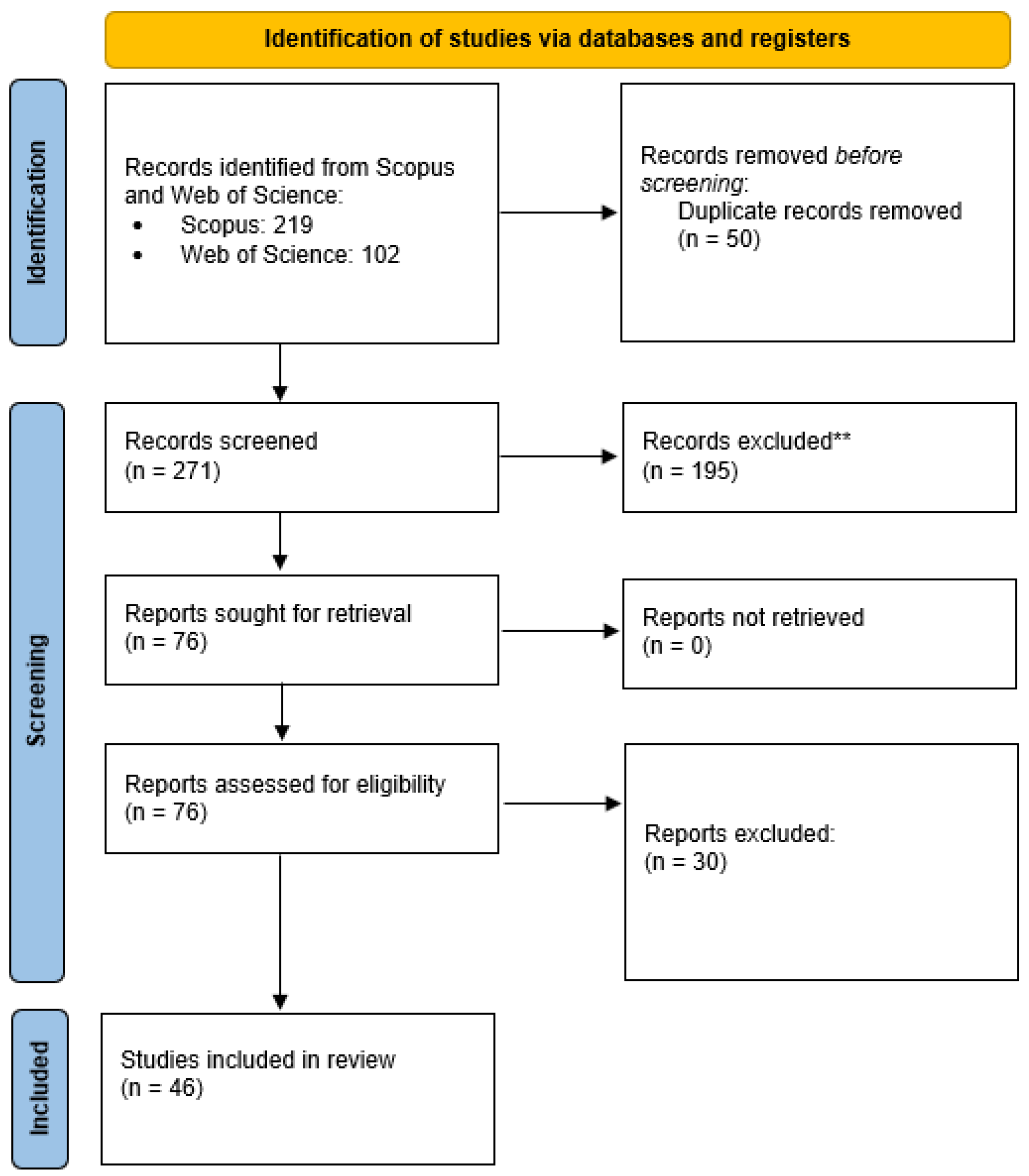
The search was performed on 14 June 2024, yielding 219 and 102 studies from the Scopus and WoS databases, respectively. Following the selection process illustrated in Figure 1, 46 studies were chosen for detailed analysis; these were listed in Table A2 along with their functionality and brief descriptions. Only studies indexed in WoS and Scopus were included in the review.
The included studies exhibit considerable diversity in their technological approaches and research objectives. Differences among studies were mainly due to variations in technologies such as IoT devices, communication methods, and different platforms, as well as machine learning models, hive monitoring parameters, bee species, and study objectives including honey harvest monitoring, enemy detection, swarming detection, and disease identification.

3.2. Bibliographic Analysis

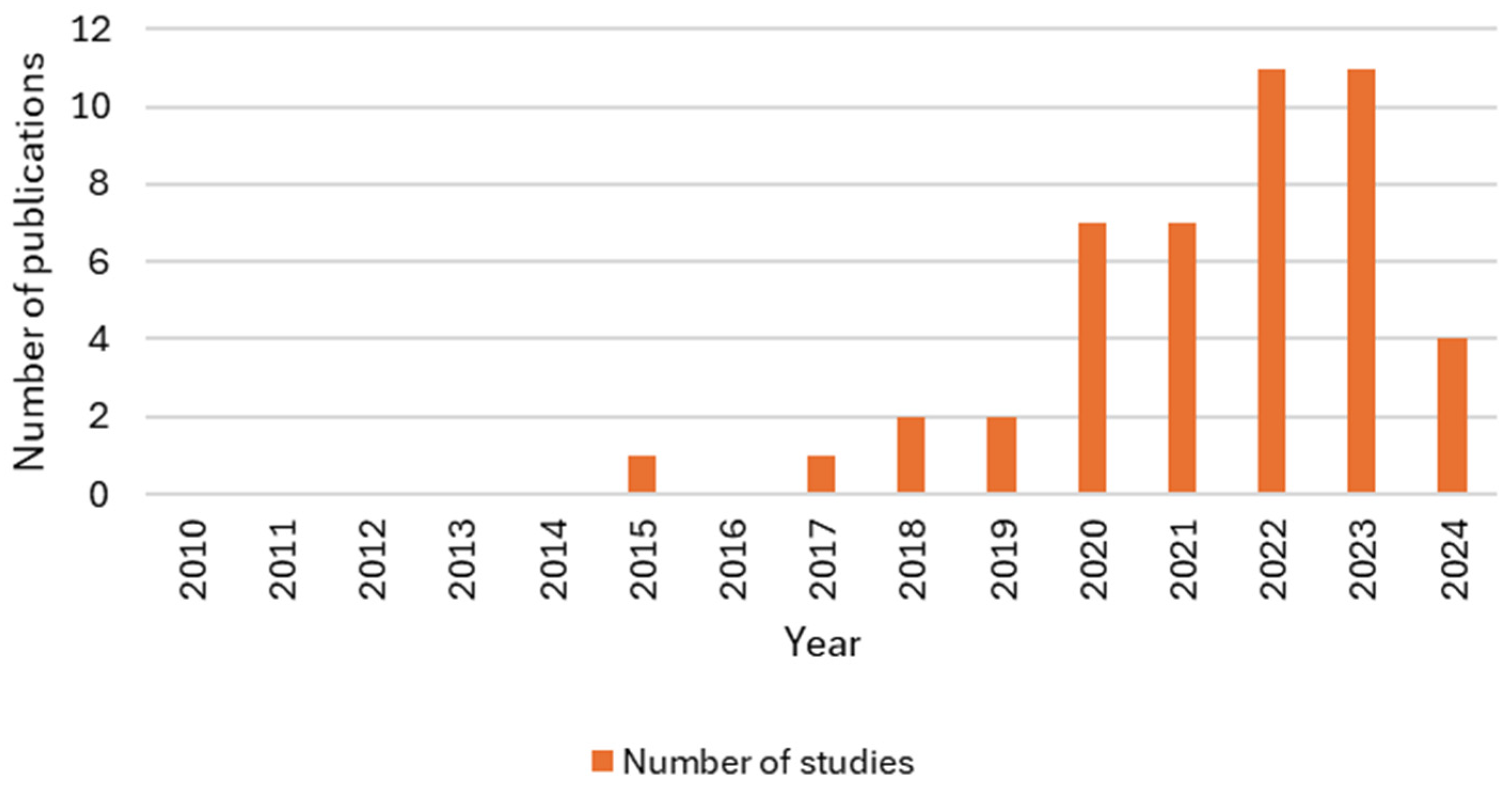
Figure 2 illustrates a temporal analysis of 46 studies on the development of PB systems, highlighting significant trends in research focus and methodologies starting from 2010. An increasing number of annual studies can be observed after 2017. This pattern reflects the growing interest in the development of PB systems.
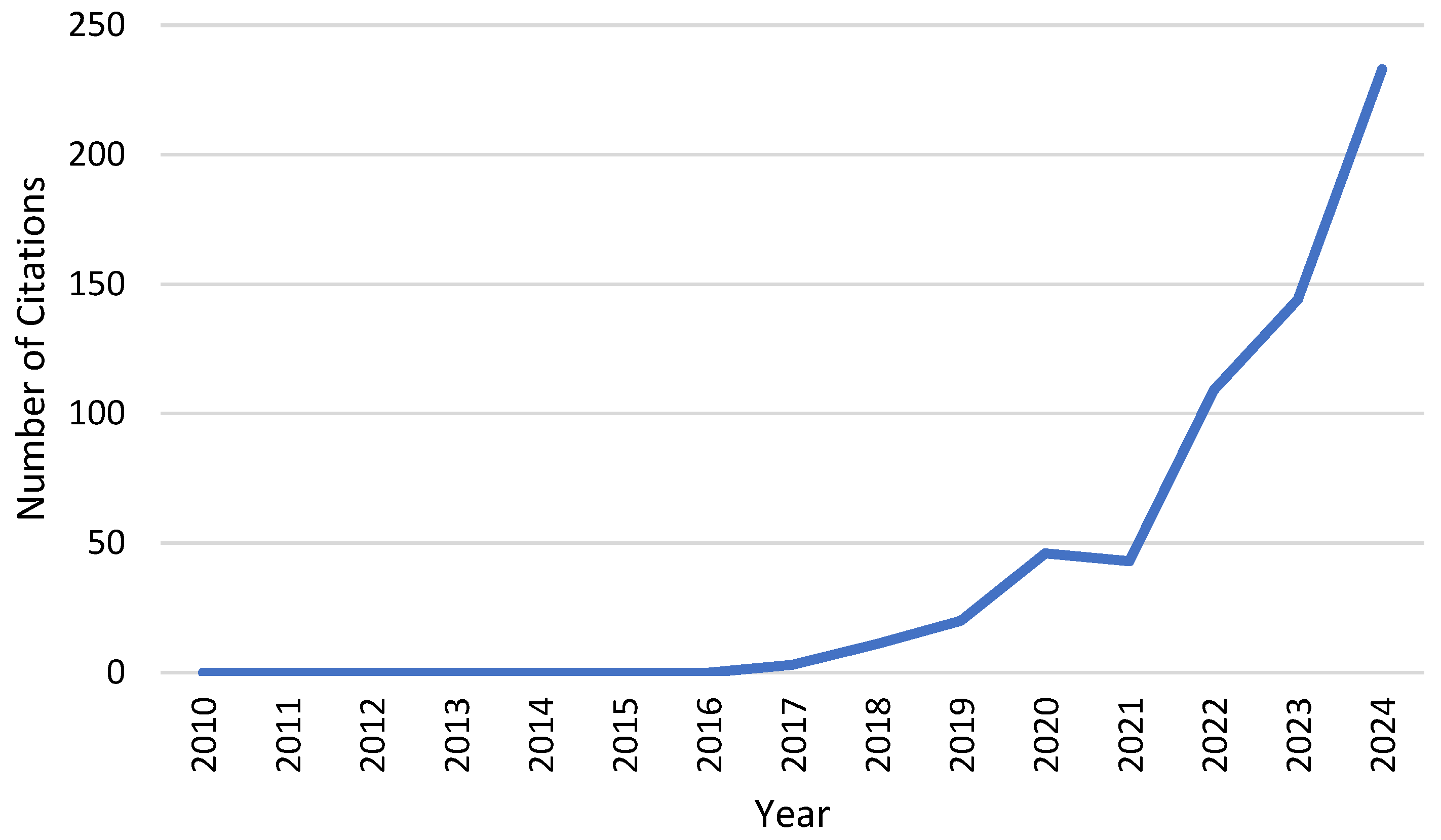
It is important to note that since the search was conducted in the middle of 2024, the publication data for 2024 remains incomplete in the databases. This upward trend is further supported by the annual citation data shown in Figure 3, which demonstrates substantial growth in interest after 2016, emphasizing the dynamic and emerging nature of the field.
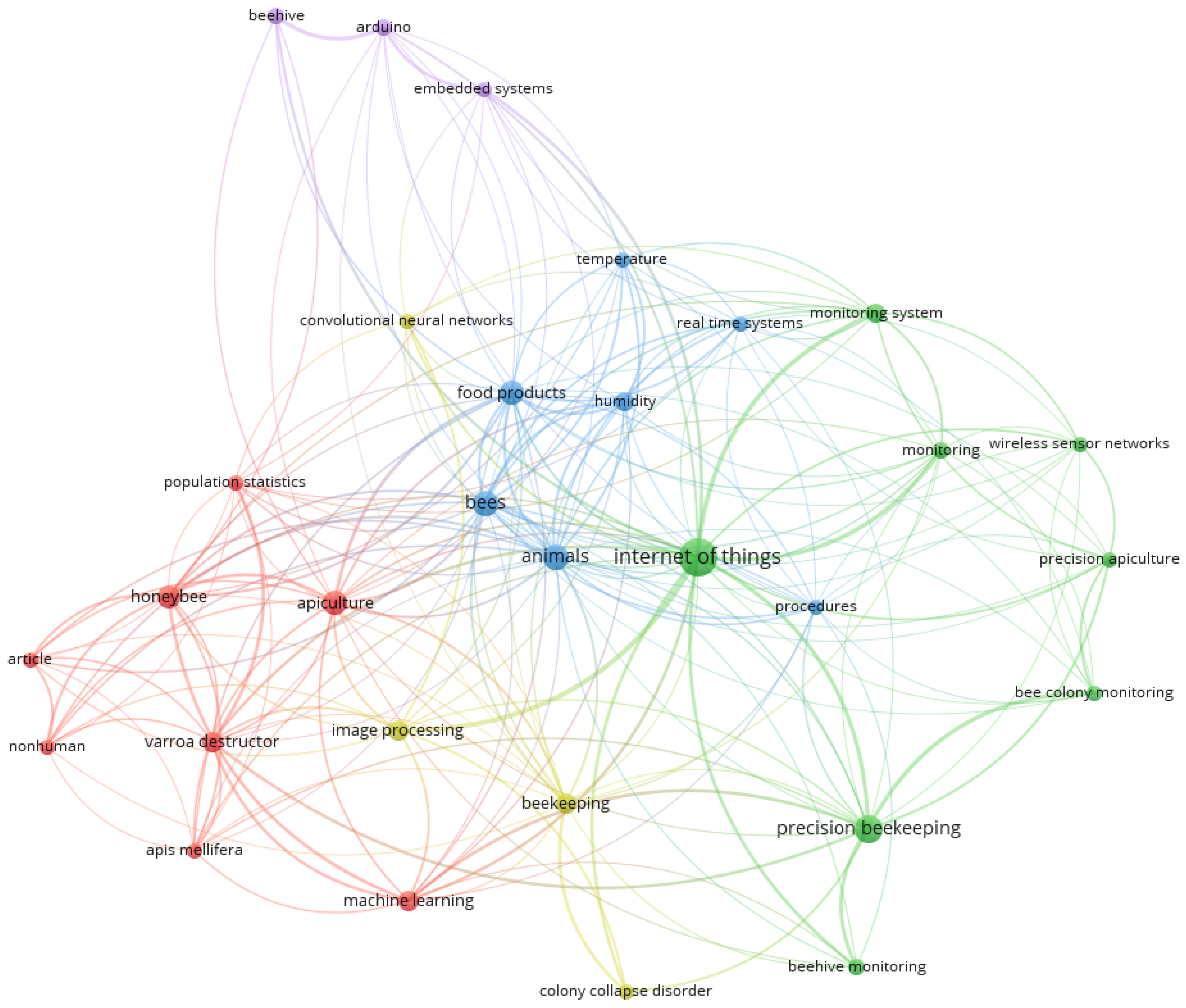
A comparison of author-defined and index keywords provides insight into research trends in the field [12]. Of the 434 identified keywords, only those with a minimum of three co-occurrences were analyzed, resulting in the 30 frequently occurring terms represented in the co-occurrence network in Figure 4, where node size corresponds to frequency whilst color cluster indicates thematic grouping. Five clusters were identified. The largest clusters emphasize the prominence of the Internet of Things (IoT) and monitoring-related terms, highlighting the central role of IoT-enabled monitoring in precision apiculture systems. Another significant cluster focuses on honeybee-related studies, including Apis mellifera and Varroa destructor, reflecting continued concern regarding bee health, with additional clusters relating to environmental sensing (temperature and humidity), AI-based methods such as image processing, convolutional neural networks, and machine learning, as well as embedded platforms including Arduino and other embedded systems. Overall, the keyword distribution indicates that IoT-based monitoring, sensor integration, and AI-driven analysis are the dominant research directions in the field.
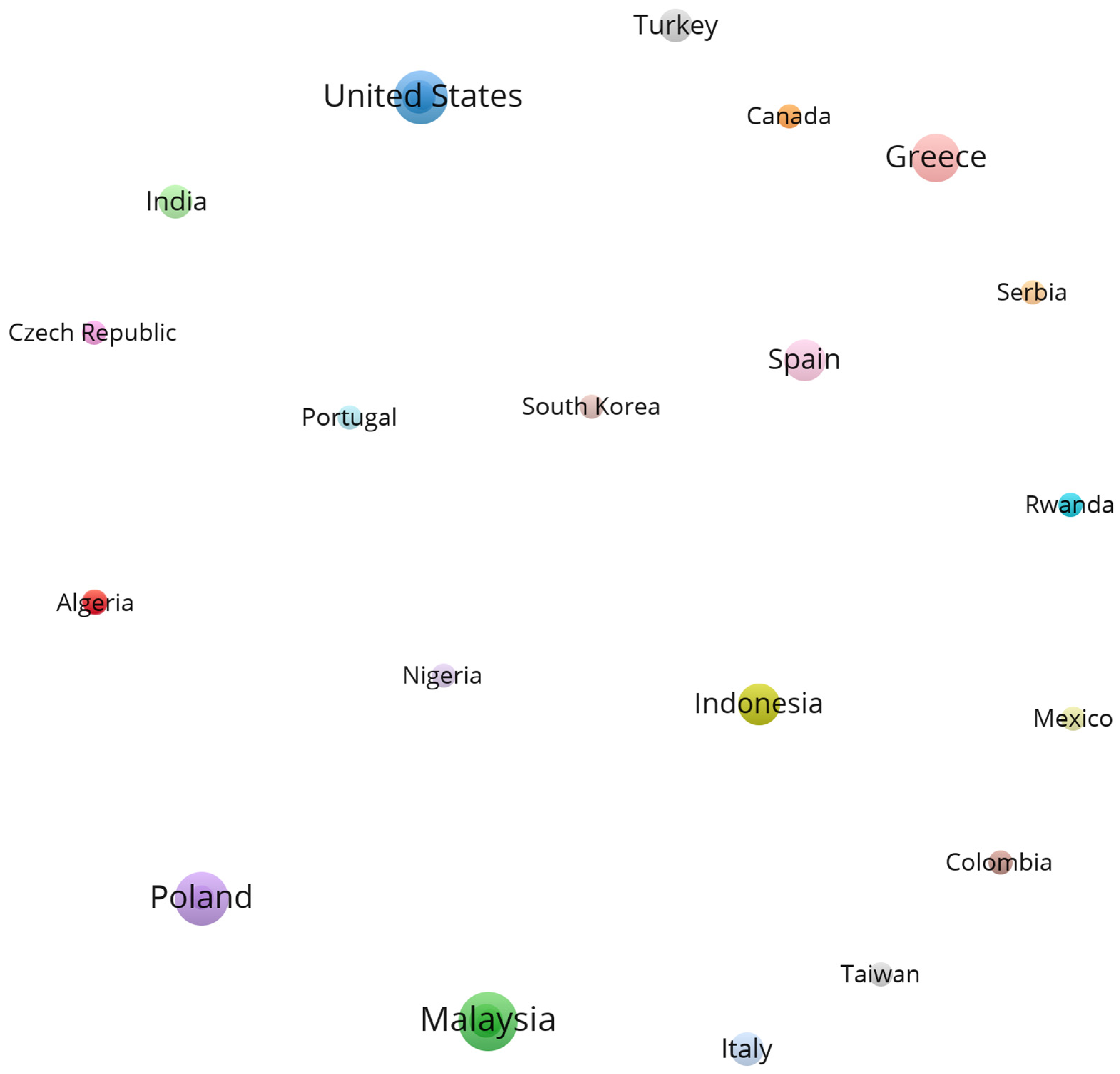
Selected studies have been published by researchers from 29 countries, with only 15 of these countries participating in collaborative research efforts. Figure 5 illustrates the global collaboration network, clearly indicating that collaboration between countries is minimal. The largest connected cluster consists of three countries, and there are three such clusters, as depicted in Figure 6a–c. Among these, the most collaborative work has been conducted by Morocco, Belgium, and Algeria, as shown in Figure 6b.
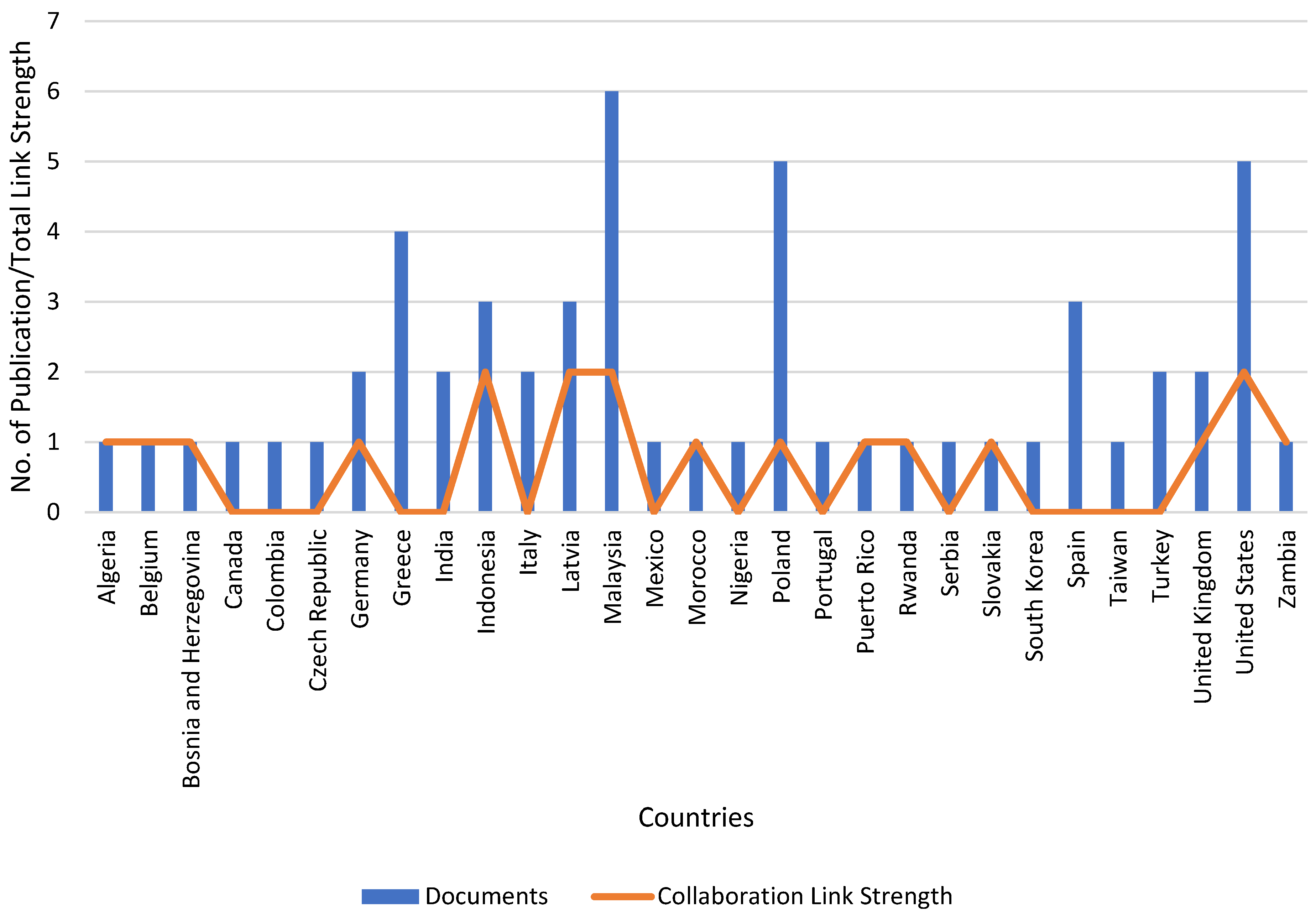
Figure 7 illustrates the distribution of publication output and collaboration link strength among contributing countries, indicating a relatively modest level of international collaboration. Malaysia has published the highest number of studies, with collaboration extending to far-away countries such as the United Kingdom and Bosnia and Herzegovina. This demonstrates that geographic distance and the indigenous nature of species do not necessarily limit collaborative research in this field. However, higher publication output does not automatically correspond to stronger international collaboration. Co-authorship patterns may be influenced by various factors, including funding structures, institutional networks, research capacity, and strategic partnerships. Therefore, the figure should be interpreted as a descriptive representation of bibliometric connectivity rather than a causal assessment of collaboration dynamics.

3.3. Current State of Precision Beekeeping Research

Beekeepers are required to monitor hives regularly and take necessary actions to improve the quality and quantity of bee products. Also, this is a skilled labor-intensive task, and regularly opening the hive for monitoring will disrupt the beehive. Therefore, researchers have taken various computer-based approaches to develop PB systems monitoring beehives individually and making necessary decisions. Moreover, the study of monitoring bees has been a subject of scientific inquiry for over a century. In 1914, B.N. Gates introduced the initial concept of a system capable of measuring both temperature and weight within beehives [13]. This section will explain different approaches to developing PB systems using technology, including IoT and ML.
Beehives are closed environments that only open to the outer world via hive entrance. That helps bees to secure against intruders as well as maintain a suitable environment with appropriate temperature and humidity for the broad and bee products. In addition, bees take necessary action to keep appropriate temperature, humidity, air quality and other factors by vaporing water and flapping their wings. Moreover, they use pheromone and thoracic vibrations for communication among hive mates. Hence, continued monitoring of sound, vibration, inside and outside temperature, inside and outside humidity, visual data, gases inside the hive and other factors using sensors helps to understand the status of beehives. Therefore, researchers have utilized different sensors to measure the abovementioned parameters and develop monitoring systems by allowing beekeepers to remotely monitor the hives. Then, research studies have utilized those data to understand the status and events of the hive such as the level of Varroa destructor appearance, swarming events, intruder attacks and loss of the queen using statistical and ML models which are helpful in determining the necessary actions by the beekeeper. Some researchers have proposed systems to take necessary actions using the decision proposed by the system using those data. The use of those systems reduces the intervention of beekeepers and also reduces the reaction time for actions that require beekeepers’ involvement whilst improving the bees’ products. Therefore, researchers have experimented with numerous strategies on data collection, processing, communication, visualization, and notification to beekeepers, which are elaborated in the following sections.

3.3.1. Humidity and Temperature

The monitoring of temperature and humidity within beehives has been a focal point, acknowledging that the microclimate inside a beehive, regulated by the bees, often differs significantly from external conditions. There exists a correlation between internal and external temperature, as well as a correlation between internal and external humidity [14]. This variance is not arbitrary; changes in temperature and humidity can signal critical hive events, such as the queen’s breeding status or the presence of disease [15]. Furthermore, a sudden drop in temperature and humidity could indicate the occurrence of swarming, as bees flutter their wings to raise their muscle temperature to around 35 °C for lift-off, which contributes to the observed decrease.
Honeybees require an internal hive temperature kept between 30 °C and 35 °C and a relative humidity of around 70%, or 18% to 20% humidity level [14,16,17]. The temperature inside the hive must be maintained for proper development of larvae [16]. If the humidity level is not maintained properly, the honey may lose its viscous nature, the texture of the honey will be different, or sugar crystals may form, affecting its chemical attributes [17]. On the other hand, to maintain temperature and humidity, bees require the workforce and energy which affects honey production as well as increasing honey consumption by the bees [18].
To capture these vital signs, researchers have employed a variety of sensors. The DHT11 [19] DHT22 [8,20,21,22], SHT15 [23], SHT35 [24] and Adafruit AM2302 (wired version of DHT22) [5,14,18] sensors are commonly used to monitor both the internal relative humidity and temperature of the hive. For external temperature readings, the DS18B20 [15,22,25,26,27] sensor is preferred due to its waterproof design, making it resilient against weather and unaffected by bee wax, a crucial feature when measuring temperature near the queen, as highlighted in [15]. Despite its slightly lesser accuracy, its resistance to hive conditions makes it invaluable. For a more precise assessment of the hive’s overall temperature, the SHT40 sensor is utilized by Havránek and Kufa [15]. In addition, the Sensirion SCD4x series sensor, including the SCD41 sensor, is capable of measuring relative humidity and temperature alongside carbon dioxide concentration, with CO2 measurement being the primary focus of this study [28].
The strategic placement of temperature sensors within a beehive plays a pivotal role in obtaining accurate readings, a factor that is especially critical in monitoring the conditions vital for honey production. The optimal sensor location is in the middle of the hive, close to the bee cluster, as this provides more accurate temperature readings compared to sensors placed on most left or right frames, particularly in smaller colonies [20,23]. More importantly, sensors kept inside need to be protected from wax and propolis. Hence, Debauche et al. [24] proposed to keep sensors inside the perforated queen expedition cages.
Monitoring these conditions closely ensures the health and productivity of the bee colony, highlighting the importance of both sensor placement and environmental control within the hive.

3.3.2. Weight

The practice of measuring the weight of the hive offers insights far beyond mere numbers; it serves as an indicator of the bee population inside the hive, as well as the rate of honey production and the consumption of honey and pollen during challenging times like winter and rainy days. This crucial data assists beekeepers in determining the optimal moments for honey harvesting and when it might be necessary to provide additional food sources to sustain the hive [15]. Additionally, the weight of the hive indicates bee movement during the daytime [29], which can be utilized to identify swarming events, as demonstrated by [18].
The measurement of the hive’s weight offers insights far beyond mere numbers. It is an indicator to the number of bees within it and the amount of honey produced, and the amount of honey and pollen used in difficult seasons such as winter and on rainy days. This vital information will help beekeepers to know when it is the right time to harvest honey and when further feeding supply may be required to keep the hive alive [15]. The weight of the hive can also be used to determine movement of the bees during the day time [29]; this can also be used to determine swarming events as shown by [18]. However, in stingless bees, particularly species of the genus Melipona, hive weight should not be considered a reliable standalone indicator of colony population or overall colony strength, because the substantial accumulation of geopropolis can significantly increase hive mass without accurately reflecting actual colony performance.
To achieve accurate measurements, a digital weighing scale (connected to UART of Waspmote via an adaptation circuit), load sensors such as the YZC-1B, the single-point load cell Bosche H30A [15,20,30] or PSD-S1 model [14], or four strain gauges arranged in a Wheatstone Bridge configuration are predominantly used [8,18]. Md Jani et al. [29] uses three bar load cells placed beneath the Heterotrigona itama Cockerell, 1918, hive log and calculates the average of the readings. Some methodologies employ a single load cell sensor [14,20,26], whereas others, like in the approach where four load cells are strategically placed at the four bottom corners of the hive, aim to measure the hive’s weight comprehensively [30]. Also, the HX711 amplifier is typically used to improve the precision of the readings of the weight sensors and convert analog to digital that can help beekeepers to get reliable information they can use to make informed decisions in their management [8,14,22,30,31]. Notably, some weight measurement devices are affected by changes in temperature variations [20]; hence in consideration of this fact, since the hive temperature keeps changing, it is important to either adjust for these changes or use sensors that are not affected by temperature shifts.

3.3.3. Sound and Vibration

Scientists have long come to understand how critical acoustic signals are in the communication and organization of activities within eusocial bee colonies. Although airborne sound can be recorded inside and outside the hive, bees do not “hear” sound in the human sense, but instead, they primarily detect substrate-borne mechanical vibrations transmitted through the comb and hive structure via mechanosensory organs. Many of the airborne sounds recorded from hives are byproducts of colony activity, such as wing beating and ventilation, with specific vibrational signals playing a direct communication role within the colony.
Bees are eusocial creatures that assign various tasks to the members of the colony and use sound as a means of orchestration. Notably, honeybees employ a waggle dance, accompanied by sound, to recruit hive mates for foraging, conveying vital information about food sources, the queen’s status, intruder attacks, and impending swarms. Moreover, the sound produced by bees acts as an indicator of the colony’s population and overall health [32]. For instance, honeybees produce sounds as follows (Table 2) [33].
To capture these acoustic signals, researchers have turned to microphones [34], which are strategically placed within the hive and connected to visualization dashboards. Utilizing electret microphones paired with amplifiers such as the MAX4466 [8,35] or general-purpose microphones [5], researchers aim to capture the nuanced sounds of the hive environment. These captured sounds are then visualized using techniques such as sound waves and spectrograms, allowing for detailed analysis of the hive’s acoustic landscape.
To mitigate interference from bees covering sensors with wax, protective measures such as metallic mesh covers, as employed in reference [35], are implemented, ensuring accurate sound data collection for comprehensive hive monitoring and management. Moreover, studies [18,36] select MEMS microphones due to their small size since it can be hidden by digging into the wood of the hive to minimalize the attention of the bees.
The work of Imoize et al. [37] and Cecchi et al. [18] shows the difference in the hive sound during swarming events. On the other hand, the work of [37] shows that there is reasonable correlation between sound intensity and the temperature in the hive, coupled with weather fluctuation during the daytime.
Similar to acoustic monitoring, vibration-based sensing provides biologically relevant information, as bees primarily detect substrate-borne vibrations. In honeybees, vibrational communication mechanisms such as queen piping and dorso-ventral abdominal vibration (DVAV) signals are transmitted through the hive structure. Recent studies also demonstrate that bees respond to artificially generated vibrational stimuli, further confirming the importance of substrate-borne vibration in colony communication [38]. Thus, some monitoring systems use SW420, LSM303DLHC (STMicroelectronics) accelerometer compass or ultra-high-performance accelerometer (Bru¨el and Kjær, 1000 mV/g) sensors to measure hive vibration and visualize it in the dashboard [3,31,39].

3.3.4. Gases

Pheromones play a vital role in bee communication, influencing various aspects of hive behavior and organization. Monitoring gases inside the hive can provide valuable insights into the presence and concentration of these chemical signals. Consequently, CO2 levels are closely monitored, as demonstrated in [18,40], offering beekeepers a glimpse into hive activity and potentially indicating stress or overcrowding within the colony. The authors of [28] show that CO2 levels indicate foraging activity inside the hive, while [18] highlights that CO2 levels decrease during the day as bees forage and increase in the evening when they return to the hive.
Measuring other substances such as organic solvent vapors, ammonia, chlorofluorocarbons, gaseous air contaminants, volatile organic compounds (VOCs), odorous gases, amine-series gases, and sulfurous odor gases can help to identify scenarios like the queen’s status or the presence of Varroa mites. Identifying queenless hives or assessing the status of the queen is essential, as the queen plays a pivotal role in the hive’s growth and development. The authors of [41] successfully utilized semiconductor gas sensors (Figaro TGS 832, TGS 2602, TGS 823, TGS 826, TGS 2603, and TGS 2600) to predict the rate of Varroa mite infestation. In practical hive monitoring, relative humidity and carbon dioxide (particularly using modern NDIR CO2 sensors) remain the most robust and widely deployable gaseous measurements, with only a limited number of gas sensors able to operate reliably in the harsh hive environment over extended periods without frequent calibration.
Moreover, assessing gases outside the hive serves a dual purpose, not only providing data on air quality but also gauging the suitability of the surrounding environment for bee habitation. Miskon et al. [31] employs an MQ135 sensor to measure gases outside the hive, capable of detecting a range of substances including NH3, NOx, alcohol, benzene, smoke, and CO2. Debauche et al. [24] utilized BME680 (Bosch Sensortec GmBH, Reutlingen, Germany) to measure gases with a precision of 2% for carbon monoxide and 5% for ethanol. Additionally, Havránek and Kufa [15] monitored air pressure using a BME280 sensor, contributing further to the comprehensive understanding of environmental conditions impacting bee colonies. This multifaceted approach to gas monitoring equips beekeepers with essential information to safeguard the health and productivity of their hives.

3.3.5. Location with Global Positioning System (GSP) and Other Sensors

Some beekeepers manage numerous hives located in different geographic regions. To assist in hive monitoring, Cota et al. [8] proposed attaching a GPS sensor alongside other sensors to gather location information. Similarly, Man et al. [42] utilized the GY NEO6MV2 module to collect GPS data, aiding in hive localization and theft prevention.
In addition, motion sensors (PIR sensors) are employed to detect the presence of wild animals or unauthorized activities, while outdoor infrared sensors such as KY-026 or flame sensors are used to detect fires near hives [27,43]. Detecting the opening of a hive lid is another crucial measure to identify unauthorized access to bee products. For this purpose, mechanical sensors [8] and magnetic sensors [44] have been implemented. Furthermore, Nurhiman et al. [45] recorded light intensity using the TSL2561 sensor, and an anemometer equipped with a three-arm cup rotor and a solid-state magnetic sensor was used to measure wind speed, which influences honey production [14].
Doppler radar is used not only as a motion detector but also to measure the speed of moving objects. In [46], a 24 GHz continuous-wave (CW) Doppler radar, commonly found in automobile collision avoidance systems, was utilized to observe bee flying activity. Notably, the total power in the Doppler spectrum, which serves as a good indicator of bee activity, is calculated as the root-mean-squared value of the raw Doppler signal. Although a frequency of 24 GHz is optimal due to the size of the bees, Souza Cunha et al. [47] utilized a 10.5 GHz Doppler radar HB-100®® (Shenzhen HLF Technology Co., Ltd., Shenzhen, China) to account for signal attenuation caused by the weatherproof box housing the Doppler unit.

3.3.6. Camera/Visualizing the Hive

Understanding the behavior of bees within the hive and the structure of the hive is crucial for beekeepers to take proactive actions to protect the hive and increase the harvest, necessitating the capability to visualize its interior. To address this need, a 5 MP CSI camera is employed by studies conducted by Voudiotis et al. [48,49]. Nevertheless, the size of the recorded videos and images is very high and requires a lot of bandwidth to transmit them and the end devices have problems with storage too. To address this, Voudiotis et al. [49] suggest using a 0.5 MP (800 by 600 pixels by 300 dpi) resolution and to compress the images to JPEG, but Hamza et al. [5] utilized Entropy Encoding as a method to reduce the size of video.
To track the movement of the bees in and out and to monitor them, it is possible to add a camera sensor (in this case, KEYENCE IV-HG300CA) to one of the gates. Such a setup allows us to obtain high-resolution images of bees that can be examined to identify possible problems. However, this method can only be applied to bees that come out and come back home, not those that are indoors.
In [50], the researchers suggest capturing videos of hives using an 8 MP Sony IMX219-77 camera to detect Varroa mites, and they also highlight the significance in identifying not only Varroa but also other predators of bees to eliminate colony collapse and lessen the negative effects on hives. Additionally, Jeon et al. [51] used a GoPro Hero 6 to take three images of the exterior of the hive every single second to be able to detect the Asian hornet.
Additionally, Arribas and Hortelano [26] installed 40 DS18B20 sensors to record the internal temperatures of four frames of a hive of honeybees, where a frame had ten strategically positioned sensors to generate a dedicated type of heatmap. This heatmap is a product of temperature measurements, which identify the regions of high bee population in the hive.

3.3.7. Power

Hives are commonly spread in wide geographical locations and sometimes remote compared to urban areas. As a result, the reliability of the power supply to monitor the hives becomes one of the most critical concern. Thus, researchers have suggested employing batteries [8,14,23,34,45,48] or power banks [20,35] to power these systems. However, the suitability of a given battery configuration depends strongly on the overall system architecture, including the types of sensors deployed, computational requirements, communication protocol, and data transmission frequency.
Low-power end devices such as Arduino, Raspberry Pi, and NodeMCU ESP8266-based systems are commonly used in hive monitoring applications and can often operate using standalone rechargeable batteries. These configurations typically support temperature, humidity, weight, or basic acoustic sensing with periodic data transmission, resulting in moderate energy demand. In contrast, systems incorporating more computationally intensive hardware, such as microprocessor control units based on quad-core 64-bit ARM architectures operating at 1 GHz with 512 MB LPDDR2 RAM, exhibit substantially higher power consumption, particularly when performing image processing, deep learning inference, or continuous wireless communication. In such cases, hybrid power configurations that combine rechargeable batteries with solar panels are frequently adopted to ensure long-term field deployment and operational stability [48].
In reference [45], a 1000 mAh Lithium-Polymer (Li-Po) battery was used along with a DC-DC converter to adjust the battery voltage to something suitable to the system developed. Even though lithium cells are smaller and lighter compared to a Nickel Metal Hydride (NiMH) cell, rechargeable NiMH Eneloop batteries were used by Zacepins et al. [22]. In order to prevent power outages and guarantee uninterrupted access to data, some of these arrangements are solar panels to charge the batteries [8,25,34,48,49]. Solar power provides a viable and environmentally-friendly energy and improves the self-sufficiency and reliability of hive monitoring systems, especially in off-grid or remote areas.
Man et al. [42] used the MT3608 boost converter (Aerosemi, Xi’an, China) to regulate and stabilize the power supplied by batteries and solar panels for small, low-power devices, including the Wemos D1 mini (Wemos Electronics, Shenzhen, China), GYneo6MV2 (u-blox, Thalwil, Switzerland), and DHT11 (Aosong Electronics, Guangzhou, China). This device enhances system reliability by incorporating several protective features. It provides an under-voltage lockout to prevent the system from operating below a certain voltage threshold, current limiting to avoid excessive current flow, and thermal overload protection, which helps to prevent damage that could occur due to output overload conditions. These features ensure that the system operates safely and efficiently, safeguarding both the hardware and the energy source.
Ntawuzumunsi et al. [43] proposed a novel strategy to power up the system using three energy harvesting technologies: piezoelectric transducer energy harvesting by using the weight of the hive, electromagnetic energy harvesting by using radio frequency energy harvesting devices which consist of a receiving antenna, a matching circuit, a rectifier, and a power management system, and energy harvesting from bees’ vibration by using a piezoelectric transducer.
Considering the multiple use cases for powering systems, some beehives are located near main power outlets, while others are situated in rural areas without easy access to electricity. Therefore, some researchers have developed their systems in a way that supports all three main methods of powering the system: mains power supply, battery, and solar panels [41].
Although there is a limitation of mobility, systems such as that proposed in [51] use the mains power supply.
On the one hand, power consumption needs to be carefully analyzed, especially in edge devices, as most of them are not powered by the mains power. According to the research conducted in [52], a client-server architecture was found to be more effective because the server can handle more processing tasks, as it is powered by the mains power supply. On the other hand, communication efficiency in terms of power consumption must also be critically assessed, as inefficient communication can lead to unnecessary power wastage.

3.3.8. Actuators

Not only did the researchers propose to monitor and determine the current status of the beehive but also proposed to utilize actuators to maintain suitable internal and external environment for the bees. Studies [43,44] have proposed to use a fan to help with ventilation to control the humidity and both a fan and thermoelectric heater (32 to 36 °C) to maintain appropriate temperature inside, while Kontogiannis [44] proposed to use thermo-pad cells actuator unit to provide thermal comfort and Peltier cells actuator units to reduce the inside temperature.
The authors of [27] proposed activating speakers and LED lights when the system detects movement near the hive to mitigate attacks and theft by animals and humans.

3.3.9. Main Processing Boards

All of the aforementioned sensors are connected with a processing board, which serves to temporarily store and preprocess or compress the gathered data [49] prior to transmission to the server [3]. Various boards are utilized for this purpose, including the Waspmote [23], LoPY [24], Arduino Uno [30], Arduino Mega 256 [3,14,31], ESP32 [3], or ESP8622 [37] boards. Notably, Arduino/ESP/Raspberry Pi (RPi)-based main boards are used for data collection from hives, with ESP32/RPi functioning as the gateway for data transfer to the server [3,30,31].
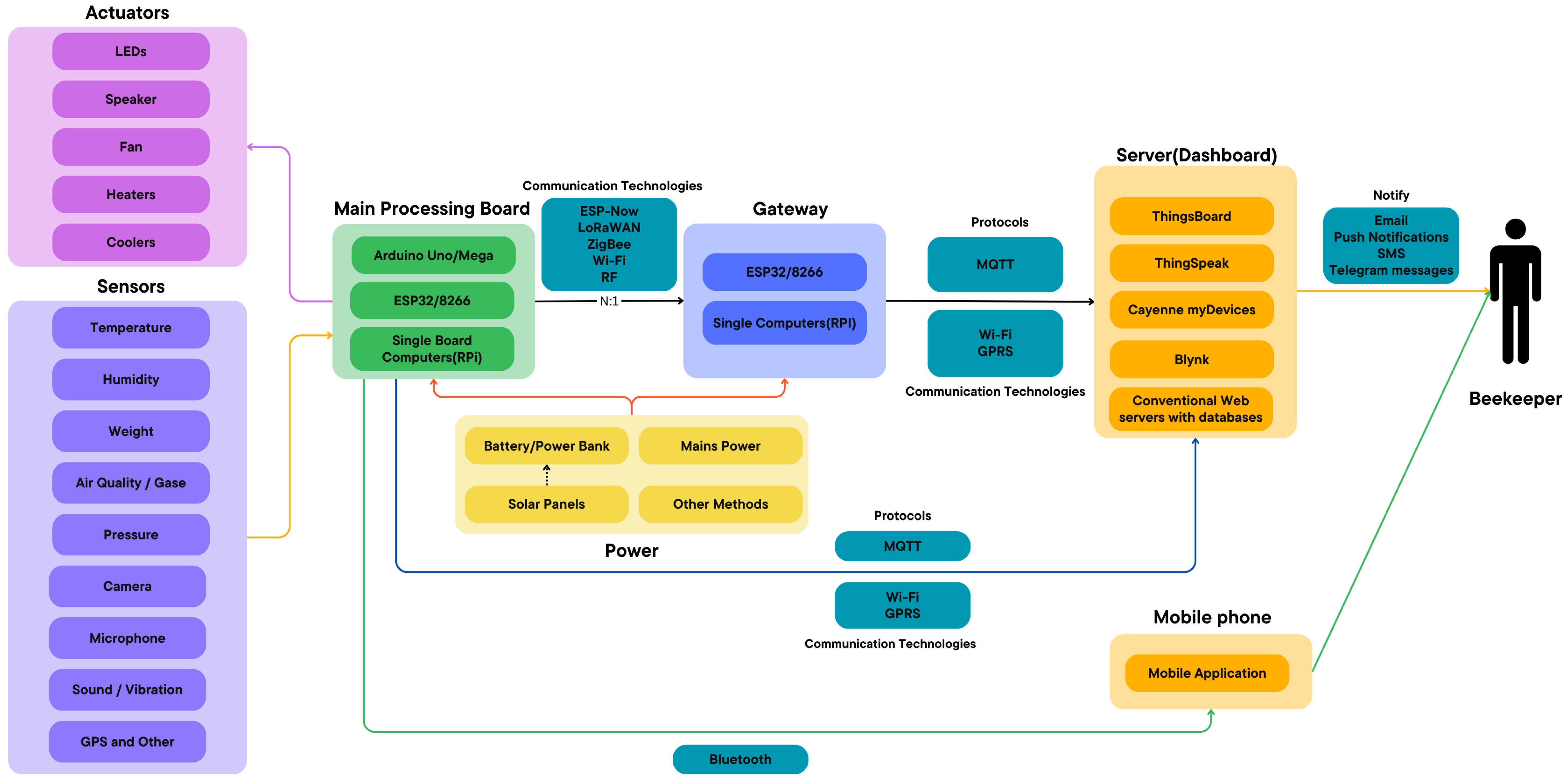
Conversely, some systems opt for a single-board computer approach, employing devices such as the RPi, as illustrated in the accompanying Figure 8. These versatile computing platforms offer robust processing capabilities, facilitating efficient data management and transmission within hive monitoring systems. When systems utilize DL models, the high performance of GPUs is leveraged, with devices like NVIDIA Jetson single-board computers being used. For instance [51], utilized the NVIDIA Jetson Xavier to run the YOLO v5 model and Jetson Nano to run DetectNet (CNN-based model) in [50]. On the other hand, to improve the processing power of the RPi, a Tensor Processing Unit (TPU) was connected via USB to efficiently run the ML model, as described in [53].
Moreover, parallel processing of some microcontrollers can be enabled using the FreeRTOS operating system. Since ESP8266 has two cores, one core was assigned to receive readings from the sensor and store them in a buffer, and the other core was assigned to send data in the buffer to the server using GSM/GPRS [25].
Apart from conventional microcontroller-based processing boards, ref. [54] proposed the use of FPGA due to its superior processing capabilities and system extensibility, allowing for upgrades without redesigning the controllers.

3.3.10. Architecture

Different architectures are employed for data gathering and sending feedback to beekeepers, based on factors such as the number of hives in the apiary, availability of technology, power consumption, considered hive parameters, and product cost. The simplest architecture is presented in Figure 8, depicted with green lines, where all collected data is stored on the main processing board. Data can be downloaded to a mobile app via Bluetooth when the user wishes to access the information. A disadvantage of this approach is that the user must visit the hives to view the data. Another architecture, represented by blue arrows, involves each hive having a main processing unit that sends data directly to a server (point to point) via the internet, using either Wi-Fi or GPRS. This architecture is suitable when hives are not nearby, although its disadvantages include a high data payload and significant energy consumption. A third architecture, shown with a black arrow, is based on a star topology. Here, the main processing units connected to the hives acquire and process the data. These units then transmit the processed data using less energy-intensive mediums such as LoRaWAN, ESP-NOW, and RF to the gateway. This gateway is also called the Concentrator [49]. The gateway collects all the preprocessed data, compresses it, and securely sends it to the server. This technique is efficient when hives are close to each other.
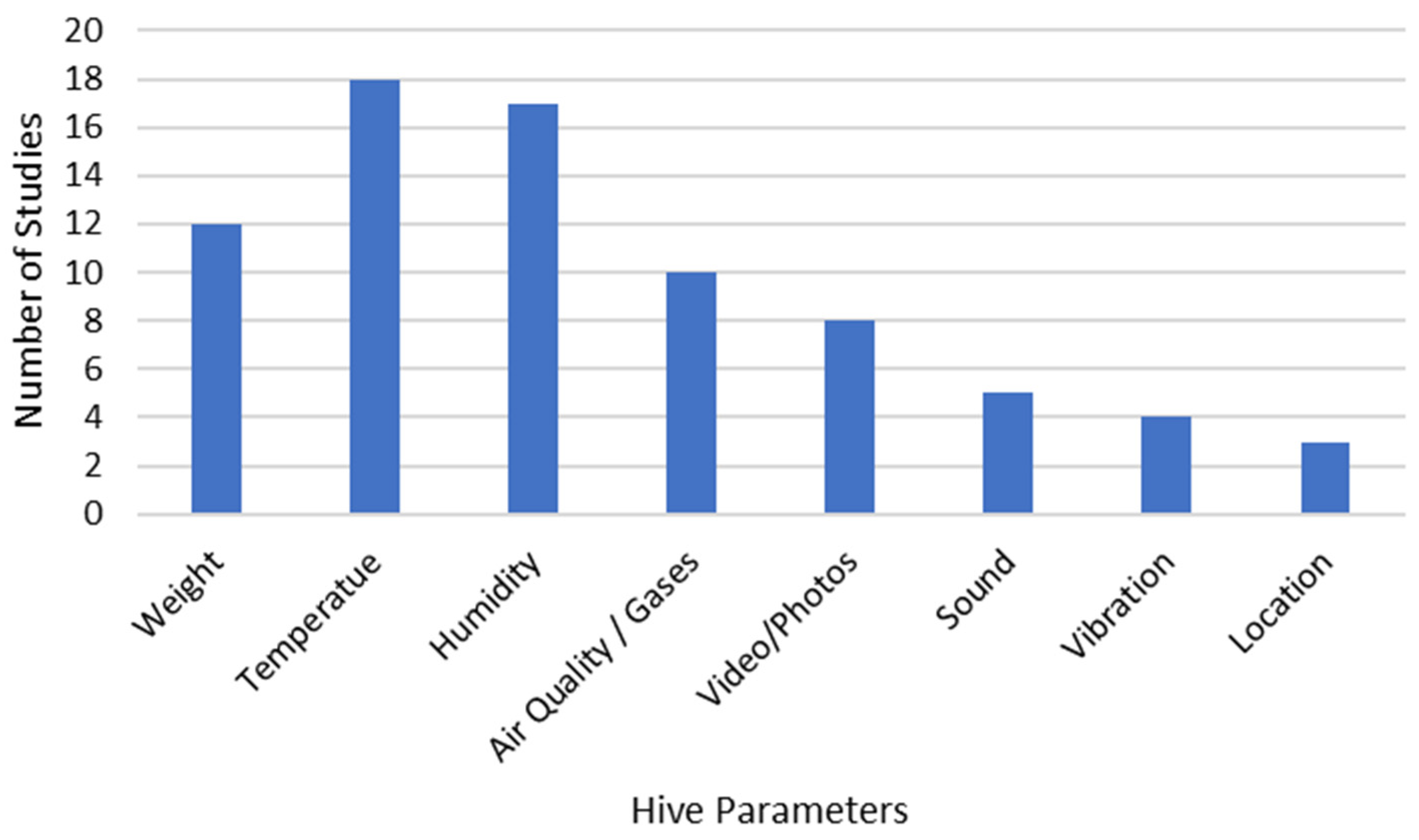
Multiple hive parameters are utilized to understand the current status of the hive, and Figure 9 shows the parameters monitored by more than two studies among 46 studies. Most of the proposed PB systems monitor temperature (18 studies), while only 2 studies monitor the location of the hive. Although weight is one of the most important parameters that indicate honey production, only twelve studies utilized it. On the other hand, the second most commonly measured parameter is relative humidity. One reason for this could be that most temperature sensors (DHT11, DHT22, BME280, AM2303, Adafruit AM2302, AM2315, and SHT15) are capable of measuring relative humidity.

3.3.11. Communication

Effective and efficient communication is essential to ensure timely access to information critical for decision-making processes while minimizing cost and energy. To achieve this, researchers have developed various communication methods tailored to the specific requirements of hive monitoring systems (Figure 8). These methods can be categorized into two main approaches.
1.
Direct Communication:
In this approach, data is transmitted directly between the hive node and the beekeeper’s device, such as a mobile phone or a computer. Applications installed on the devices enable the visualization of hive data or change settings of the hive node device or the downloading of this data using communication technologies such as Bluetooth [14]. Alternatively, beekeepers can view sensor values and other details using a display attached to the hive node [14,17].
2.
Server-Based Communication:
This approach involves the use of a server which is an arbitrator between the hive nodes and the device of the beekeeper. In addition to the conventional servers, other researchers use cloud services and platforms to create more scalable and flexible data-processing and data-storing solutions. These cloud-based applications can provide real-time monitoring, advanced data analytics, and remote access and consequently improve the overall efficiency of hive monitoring systems. As an example, Wachowicz et al. [50] utilizes AWS IoT, which sends events received from IoT modules in each hive to an AWS DynamoDB database.
In order to enhance the effectiveness of communication, a topology of stars is frequently used in the case of a number of hives being close to one another. All the hive data is transmitted to a gateway node, which processes it, compresses the data, and sends it to the server when a star topology is utilized. This method can be considered as a two-step communication process—sending data to a gateway and sending data to a server—with different technologies used in each step.
  • Communication Techniques for Sending Data to a Gateway
All the sensors are connected to the main processing unit within the hive which collects the data and sends it to the gateway node as illustrated in Figure 8. There are four main technologies for this communication that have been investigated by researchers and aimed at considering the energy consumption and distance between the hives and the gateway: Wi-Fi, Zigbee, LoRaWAN, and ESP-Now.
  • Wi-Fi is more energy-intensive compared to LoRa and ESP-Now.
  • ESP-Now is faster and supports longer distances compared to Wi-Fi.
  • LoRaWAN offers efficient communication for long ranges and low energy consumption.
  • Zigbee is energy-efficient and suitable for short-range applications.
Miskon et al. [31] highlighted the efficiency of using the LoRaWAN protocol with Cayenne Low Power Payload. Additionally, Kontogiannis [44] proposed using an RFMB 43 MHz transponder for communication, as radio frequency (RF) is effective for short-range nodes (less than 50 m). While LoRaWAN is ideal for long-range communication, ESP-Now and Zigbee are more appropriate for short-range setups.
  • Communication Techniques for Sending Data to a Server
In most studies, data is sent to a server for visualization, processing, decision-making, or user feedback. An exception is the use of Bluetooth to send data to a mobile app while storing it on an SD card. Although this method avoids internet dependence, it poses a high risk of data loss, making it suitable only for rural areas without internet access [14].
Wi-Fi and GSM/GPRS are commonly used to send data to servers, either directly from the main processing unit or via a gateway. However, cable connections are not utilized in these setups. The MQTT protocol is widely adopted for its efficiency and ease of implementation [26,49,55].
  • Frequently Utilized Communication Technologies
  • LoRaWAN: A low-power wide-area network (LPWAN) protocol designed for wireless communication among battery-operated devices. It uses LoRa (Long Range) modulation techniques, providing long-range, low-power communication with low bandwidth and adaptive data rates. LoRaWAN follows a star topology, with end nodes connected to a gateway that communicates with the server via internet protocol [56].
  • ESP-Now: A wireless protocol developed by Espressif Systems for low-power, low-latency communication between ESP-based systems on chips (SoCs). It works on the data-link layer, ensuring quick response times [57,58].
  • Message Queuing Telemetry Transport (MQTT): A lightweight publish-subscribe network protocol enabling secure communication between devices. MQTT supports SSL/TLS for encryption [50].
  • Cayenne Low Power Payload (CayenneLPP): A protocol for efficient data transfer over LoRaWAN networks. It uses a simple payload structure with a channel byte, type byte, and data value for sensor readings [31].
  • The Things Network (TTN): A free, open-source LoRaWAN network that allows users to connect gateways, register devices, and communicate without cost [31].
It should be noted that communication requirements and data transmission strategies may vary depending on hive management practices, bee species, and environmental context. Additionally, differences in colony dynamics between honeybees and stingless bees, as well as geographic deployment conditions, may influence the frequency and type of data transmitted. Consequently, communication architectures must be adaptable rather than universally standardized.

3.3.12. Data Visualization

Visualizing and presenting data plays a crucial role in facilitating informed decision-making and determining necessary actions. As such, hive monitoring systems have employed various IoT-based platforms such as ThingsBoard [5], ThingSpeak [15,19,21,37], Cayenne dashboard [21], and Blynk [30] to fulfill this need. These platforms offer versatile tools for visualizing data, whether through mobile applications [8], web interfaces, or a combination of both [30]. The authors of [17] use an LCD screen on the hive to display information about the system such as humidity level in real time.
Blynk platform: Blynk is an IoT-based platform that allows the development of a graphical user interface to control different microcontrollers and visualize data [29,30].
ThingsBoard: ThingsBoard is an open-source project for device management, data collection, processing and visualization for IoT-based systems. The rule chain in the ThingsBoard can be utilized to process incoming data [5,59].
ThingSpeak: ThingSpeak is a cloud-based analytics platform that allows real-time display, collection, and analysis of data and uses both MQTT and REST APIs. Notably, it supports ML algorithms [21,60].
Cayenne myDevices: Cayenne myDevices is a cloud solution that allows you to configure, personalize, monitor and control connected devices using MQTT. It uses widgets to show devices and their data, status and activities [21].
Node-Red: Node-Red is an open-source, graphical development tool for event-driven applications that links hardware devices, APIs, and web services. It focuses more on IoT, data processing and automation-based projects [31].
These systems plot the weight, relative humidity, and temperature to show the trends while GPS locations are given on a map [8]. Moreover, the work of [23,31,42] utilizes the MySQL database to store all the sensor readings and host web applications to show data and trends. In [25], data is stored in the InfluxDB and visualized as charts in Grafana, while SAMS UI is utilized to show the last reading, which is stored in the SAMS Data Warehouse. SAMS User Interface (SAMS UI) and SAMS Data Warehouse (SAMS DW) were developed under the International Partnership on Innovation in Smart Apiculture Management Services (SAMS) project, which created open-source solutions to promote apiculture in tropical regions by applying IoT systems and Information and Communication Technology (ICT) [61].
In addition to that, some systems utilize an LED display on the hive to show current readings [14,17]. This will help beekeepers to view the readings while inspecting the hive.
Whilst visualization dashboards enhance interpretability, the biological meaning of the displayed parameters may differ across bee species and climatic regions, with geographically varying phenological patterns, seasonal brood cycles, and colony behavior, affecting the interpretation of the visualized trends. Therefore, visualization frameworks should allow contextual calibration rather than relying on fixed interpretive assumptions.

3.3.13. Event Notification to Users

Innovative hive monitoring systems go beyond merely displaying data, extending their capabilities to actively notify beekeepers of critical events or conditions to support proactive decision making. These systems use multiple communication channels such as email [8], push notifications [34], and SMS alerts [17], which are triggered in accordance with predefined threshold values either set by the beekeeper or programmed in the rules set in the system [5]. The use of mobile applications for this purpose is particularly effective, as mobile phones are very close to the users [51,62]. These apps, such as the one developed by Sevin et al. [62], provide detailed information both verbally and visually, ensuring comprehensive notifications. An example of this is the application created by Sevin et al. [62] which provides detailed information as text and visual modalities which ensures comprehensive notifications.
The use of messaging platforms to provide user alerts is very simple to implement and effective for information dissemination. For example, OneSignal, an omnichannel customer messaging tool, has been used in [8] to send email and push notifications. Likewise, Wachowicz et al. [50] used the Amazon Simple Notification Service (AWS SNS) to send text messages and emails to beekeepers. Researchers have also explored the feasibility of instant messaging applications for this purpose. Camayo et al. [63] showed the application of Telegram to send direct notifications to beekeepers, offering another effective channel of communication.
Through such notification systems, the beekeepers will be able to be updated in near real time about anomalies in beehives, which will enable the beekeepers to take immediate action and provide proactive care to protect the healthy activities and survival of their colonies.
Automated alert systems often rely on predefined thresholds or pattern recognition models; however, alert thresholds may vary across bee species and environmental conditions. Behavioral variability and regional phenological differences can influence baseline activity patterns, potentially affecting the reliability of standardized alert rules. As such, adaptive or context-aware alerting mechanisms remain an important area for future refinement in precision beekeeping systems.
Collectively, the sensing and system-level components discussed in the literature demonstrate that precision beekeeping systems are built upon multiple interdependent technological layers, ranging from environmental sensing to communication, visualization, and notification mechanisms. Environmental parameters such as temperature and humidity remain the most consistently monitored variables due to their direct biological relevance and relatively simple sensor integration. Weight monitoring provides colony-level productivity indicators, whilst acoustic, vibration, and gas sensing approaches offer deeper insights into hive dynamics but introduce greater complexity in signal interpretation and long-term stability. Imaging and machine-learning-based methods further enhance diagnostic capabilities, particularly in detecting events such as swarming, intruder presence, or queen loss; however, they demand higher computational resources and energy consumption. Communication protocols and cloud-based platforms enable remote accessibility and data-driven decision support, though system reliability ultimately depends on power management and hardware robustness. Overall, the reviewed literature reveals a progressive shift from basic parameter monitoring toward integrated, intelligent systems, highlighting ongoing trade-offs between cost, system complexity, energy requirements, and actionable biological insight in both honeybee and stingless bee applications.

3.4. Monitoring the Movement of the Bees

Hive entrance activity is a key indicator of colony health and includes general activities—orientation flights by ~20-day worker bees, guarding, and fanning for temperature and nectar dehydration—and foraging activities involving nectar and pollen collection. Reduced general activity signals colony distress, while fewer orientation flights indicate a declining future workforce. Bee traffic reflects colony activity and exposure to stressors such as queen failure, predatory mites, and airborne toxicants [63], and foraging behavior reveals bee fitness, habitat degradation, and food competition [46,64]. Therefore, diverse remote monitoring strategies using multiple sensors and devices have been proposed [65,66]. Camera-based approaches detect and track bees from images/video: a tracking-by-detection method generates pose trajectories per bee and uses the Hungarian algorithm with thorax, antennae, and head keypoints for temporal matching; unassigned tracks/detections are handled accordingly, tracks shorter than five frames are removed, and entrance/exit events are classified using two reference lines to distinguish entering, exiting, and ramp-walking bees, with optional pollen/tag data and exclusion of irrelevant tracks [67]. Another vision method tags bees with odorless colored paint dots, processes images in HSV space with color thresholds, extracts contours, and determines positions and movement direction [44]. Sensor-based systems include paired photoreflective resistors per gate to count and determine direction with multiple single-bee gates (e.g., 24) [3] and IR LED/photodiode passageways (e.g., 20) that detect bees as close as 1 mm apart, with FPGA processing enabling efficient scaling [53]. IR entrance sensors can also count entries/exits and flag low movement for inspection [19]. Inside-hive monitoring captures behavior and swarming indicators [48,68] using barcode-tagged bees with IR-lit cameras and CNNs to detect individuals, trophallaxis, and egg-laying [68]; motion-triggered internal imaging with Faster-RCNN-Inception v2 to detect and count bees [48]; and numbered tags with camera and RPi systems to reconstruct trajectories and better recognize waggle dance and hive dynamics [46]. Doppler radar focused on flying bees shows a positive correlation between bee traffic and Doppler RMS values, which can serve as a reliable indicator of colony population and hive health [46].

3.5. Detection of Swarming Events

A swarming event is an unmated queen elimination process; this involves the old queen bee escaping with a high number of worker bees and the young queen residing inside the hive. In addition, diseases, extreme environmental conditions, and even low pollen or honey supplies can lead to swarming events. Moreover, due to swarming, half of the worker bees leave the hive, which affects honey production [49,64]. Hence, researchers pay special attention to detecting swarming events.
Cecchi et al. [18] discovered that a sudden and significant weight drop of approximately 3 to 4 kg occurs, along with an increase in sound activity within the hive during swarming events. Therefore, monitoring changes in both temporal weight and sound can be helpful for detecting swarming events.
Cota et al. [8] proposed a fully fledged system for bee monitoring which senses temperature, humidity, weight and sound. The sound is captured using an Adafruit electret microphone (20–20 KHz) with a MAX4466 amplifier and adjustable gain, and when the sound of the beehive produces a particular frequency (set by the beekeeper), the system considers a potential swarming event and notifies a user about these events via email. The authors of [34] also use sound to detect swarming events, and sounds were recorded using a lavalier microphone. To detect swarming events, its narrows down sound to 300 Hz to 600 Hz and splits it into 10–25 Hz frequency bins. These bins consist of the sum of the amplitude of one (1) minute; when the amplitude increases more than 70% in more than 5/10 bins, it is considered a swarming event.
Voudiotis et al. [49] detected swarming events by monitoring bee concentration on the last empty frame inside the hive. Images of the frame were captured using a 5 MP camera equipped with a fisheye lens (180–200°) and LEDs for brightness adjustment. Bee objects in the captured images were detected using the Faster-RCNN-Inception v2 model. The authors classified an event as swarming when the number of bees in the image exceeded 50.
A novel method for detecting swarming events was proposed by Aumann et al. [46] using two types of sensors. The first is a 24 GHz continuous-wave Doppler radar, which monitors bee flight activity, functioning as an outward-looking sensor. The second is a piezoelectric transducer, which differs from conventional microphones by detecting incidental vibrations transmitted through the hive structure, rather than directly capturing the sounds produced by the bees. The root-mean-squared powers of simultaneous radar and vibration measurements were found to be highly correlated during honeybee swarming and robbing events. To minimize false alarms, principal component analysis was applied to the data.

3.6. Detection Status of the Hive

Furthermore, detection of the hive status is very important for beekeepers since they need to take suitable actions to maintain and protect the hive. Researchers define the status of the hive in different ways based on their research.
One approach focuses on humidity and temperature status. The authors of [16] utilized an ANN to detect the hive status as good, stable, or bad. A good status indicates normal conditions, while a stable status suggests that the expected weight increment is not being achieved, and temperature and humidity are fluctuating, prompting the beekeeper to investigate further by opening the hive. A bad status occurs when the weight is not increasing or is decreasing, the hive’s temperature and humidity are unsuitable, and larval growth is insufficient. In such cases, immediate beekeeper intervention is required to prevent hive loss. The ANN analysis used normalized weight, temperature, and humidity data to classify these conditions.
Sound-based hive status detection has also been explored. In [34], sounds were recorded using a lavalier microphone. The audio was filtered to frequencies between 300 Hz and 600 Hz, then divided into 10–25 Hz frequency bins. Each bin represented the sum of amplitudes over one minute. If the amplitude increased by more than 70% in more than 5 out of 10 bins, the event was classified as either swarming or queen loss. Another study [35] recorded hive sounds using an omnidirectional electret microphone (MAX4466) and applied mel-frequency cepstral coefficients (MFCC) to the recordings, calculating the mean values of the first 12 mel coefficients to generate 12 features. These features were then used in ML models, including support vector machine (SVM) and neural network (NN) models, to classify the hive status into queenright colonies, queenless colonies, and low-population queenless colonies.
Another important aspect of hive status is determining whether it is ready for harvest. For honeybees, this requires 75% of the cells to be capped. The authors of [17] proposed a PA system that informs the beekeeper via SMS when the hive is ready for harvest. This system calculates the number of capped cells using OpenCV and images of the hive captured by a camera.

3.7. Role of the Machine Learning in Precision Beekeeping Systems

Machine learning has become a featured ingredient of the precision beekeeping (PB) systems, which provide more sophisticated predictive and classification solutions to better manage the hive and contribute to the proper health of the colony. Machine-learning methods have been used in forecasting to predict significant trends like population trends and hive activity. As an example, ref. [65] used a temporal neural network to predict the loss of bee population on the next day using weather information and internal hive indicators such as humidity and relative humidity. Long short-term memory (LSTM) networks have also shown great capability of predicting the number of bees going out and coming back to the hive. In [3], LSTMs with weather parameters, air quality, atmospheric pressure, and acoustic characteristics were more effective than traditional time-series models like ARIMA and Facebook Prophet.
In the classification and decision-making tasks of PB systems, various machine-learning models have been used to detect hive health, anomalies, and threats. The data fed to feed-forward neural networks, as in [16], were temperature, humidity and hive weight to classify the hive status into the three categories, good, stable and bad. Anomaly detection is also another critical area of use; the authors of [36] used contrastive autoencoders, which were trained on mel-spectrograms of bee sounds and temperature dynamics. With the blending of these characteristics into an Isolation Forest model, the research was able to detect hive anomalies. Although most studies utilized humidity as a parameter, in this study, the authors did not consider humidity as a parameter since sugar syrup was kept inside the hive to cause an anomaly in the hive, which impacted the humidity of the hive.
Machine-learning approaches have also been valuable in the detection of such pests as Varroa destructor. CNN-based architectures, including DetectNet and Faster R-CNN, have been used to identify these mites with high precision. Study [50] achieved an 89% precision rate with DetectNet, while study [53] trained a model using Google AutoML Vision and deployed it on RPi with a TPU. Moreover, study [48] utilized an R-CNN model to detect Varroa mites in images. In addition to DL models, shallow learning models, such as the Partial Least Squares (PLS) regression model, were also effective in determining the Varroa destructor infestation rate [41]. The PLS regression achieved a root mean square error of less than 0.5% using the values from a gas sensor array. Study [63] used temperature, humidity, CO2, and Total Volatile Organic Compound (TVOC) variables to predict Varroa infestation. Each variable was assigned a weight based on its relevance, and a score was calculated for each. The sum of these individual scores served as the basis for detecting the hive’s alert level using a Weighted Multi-Criteria Aggregation Algorithm. Various ML models, including Decision Tree, Random Forest, XGBoost, and NN, were employed, with the NN achieving the highest accuracy at 98.90%
Trophallaxis is a crucial social behavior in which two adult worker honeybees interact by touching each other with their antennae while exchanging liquid containing food and signaling molecules. The authors of [66] employed a CNN model to classify instances of trophallaxis by identifying when two bees, marked with barcodes, were in close proximity based on their distances. Additionally, another CNN model was trained to detect egg-laying bees.
In [52], the presence of the queen was detected using audio recordings from the hive. A total of 164 audio samples were initially selected, and 1647 audio samples labeled with the presence of the queen were used for training SVM and CNN models. The training features were mel-scaled spectrogram features computed from 10 s audio recordings sampled at 22,050 Hz. For spectrogram computation, the fast-Fourier transform (FFT) window length was set to 2048, the hop length (number of audio samples between adjacent short-time Fourier transform columns) was 512, and 128 mel-bands were generated.
For the SVM model, the vector features were used directly, while for the CNN model, the features were converted into images. The chosen DL architecture for the CNN model was ResNet18. Both models achieved an impressive accuracy of 99%.
Similarly, behavioral analysis and hive activity classification have utilized image-based ML models. The authors of [15], for instance, successfully classified bee behaviors like trophallaxis interactions and egg-laying using CNNs, while [49] focused on identifying swarming events through image classification. VGG19 CNN models have enabled the exact detection of body parts of honeybees, which is crucial in tracking hive exit and entrance as shown in [67].
Acoustic data and sensor-based inputs have also been effective in the development of hive monitoring systems. Mel-frequency cepstral coefficients (MFCCs) have been used by researchers to analyze bee sounds and categorize hive status. In [35], SVM and NN were used to classify colonies in to queen-right, queenless, and low-population queenless configurations on resource-limited systems like RPi. An additional use case, reported in [68], used gas sensors and k-nearest neighbors (KNN) models to determine the degree of Varroa mite infestation. Likewise, ref. [32] used MFCC acoustic features and CNNs to forecast colony strength and size by which the researchers could obtain the necessary information about hive health.
Machine learning has been used to recognize external threats, in addition to helping to maintain the health of hives. In [51], YOLOv5 was used to detect Vespa velutina Lepeletier, 1836, with an accuracy of 83.3%, which improved the ability of the algorithm to detect predatory species. The integration of these ML technologies into apiculture shows the transformative potential of data-driven approaches to enhance the apiculture. Machine learning offers an innovative approach to the practice of beekeeping and opens up the possibilities of the sustainable practice of apiculture by ensuring effective monitoring and management, as well as reaction to challenges.

3.8. Detection of Enemies of Bees

The impact of enemies of the bees, such as Varroa mites, is the major threat of apiculturists, and many cases have ended with the Colony Collapse Disorder. In addition, beekeepers have reported feedback that has highlighted the need for theft detection [20]. Therefore, scientists have come up with solutions to curb this challenge. Detection based on images or video has been often suggested; however, some researchers have come up with new approaches to detecting bee enemies, thus recognizing the significance of this challenge.
Based on these efforts, the research article [62] developed a dedicated gateway that was specific to the honeybee hive’s entrance. The gate is combined with a KEYENCE IV-HG300CA sensor to take images of bees on entry and exit. The images are analyzed by the template filters using KEYENCE IV-HG10 processor to identify the bees with mites. Having a mite, the system sends the data to a mobile application using Wi-Fi; thus, the beekeeper is informed both orally and visually with the help of the corresponding image. An average processing latency of 0.1 s is obtained by the system, which makes it a feasible tool in real-time monitoring and mitigation.
Wachowicz et al. [50] proposed using a camera to capture video of the hive environment and, through video processing and the DetectNet (a CNN-based model), were able to detect Varroa mites on the bees.
The authors of [48] proposed to attach a camera with an LED light to take images inside the hive. A Faster R-CNN is utilized to detect bees and their bounding boxes (RoIs) in the image. Those RoIs were extracted and converted to HSV images. An HSV mask is applied based on the color of the Varroa mite. Next, images are converted to binary images, and Hough transformation is applied to detect circular areas with a lower-upper threshold of 10–90 px2. Those circulars are considered the Varroa mites on the bee by the system.
On the other hand, König [68] developed Bee-Nose which is capable of indicating population of Varroa mites in beehive by using a metal oxide gas sensor (Sensirion SPG30 and the Bosch Sensortec BME680). Ground truth was measured every three days by fallen Varroa mites on the Varroa board. Moreover, the authors of this study suggest that it is better to use meaningful invariant features rather than instantaneous sensor values. Finally, the authors trained a KNN from the calculated features from the sensor values to predict Varroa mite status (no varroa mites, low varroa mite, mid varroa mites, and treated for varroa mites).
Another gas-sensor-based system was proposed by [41] to predict the rate of infestation. The developed system was capable of extracting air from the hive using polythene tubes and measuring the gases using semiconductor sensors manufactured by Figaro Engineering. The sensors included TGS832 (organic solvent vapors), TGS2602 (ammonia), TGS823 (chlorofluorocarbons), TGS826 (air contaminants), TGS2603 (VOCs and odorous gases), and TGS2600 (amine series and sulfurous gases).
The infestation rate was calculated using the flotation method, a manual technique. In this method, a sample of bees was taken from the honeycombs containing the brood. The bees were anesthetized by freezing and then shaken in a mixture of water with detergent or alcohol to separate Varroa mites from the bees. The mites were separated using sieves, and their numbers were counted. Finally, the infestation rate was calculated by dividing the number of mites by the number of bees in the sample.
Using the eight values obtained from the gas sensors and the infestation rates from multiple hives, a PLS regression model was trained. The trained regression model was able to predict the infestation rate with a 0.6% error rate, demonstrating a strong relationship between the measured gases and the infestation rate.
Some enemies of bees cannot directly enter from the hive entrance like bees. Thus, attaching a force-sensitive resistor on the hive surface and detecting the pressure produced on the hive by the enemies will help to indicate the presence of enemies. The authors of [30] proposed to use the FSR402 sensor, a force-sensitive resistor, on the surface of a beehive log to detect the hit of an intruder. The authors of this research employed the Blynk platform and activated Blynk notification based on a threshold value. However, this may produce false signals since all the hits are considered an intrusion.
Another approach to detecting the presence of predators is the use of a motion sensor (PIR sensor). Motion sensors are capable of detecting the movements of wild animals and humans. Moreover, this is helpful to identify stealing from the hives by humans [27]. Furthermore, the proposed system consists of a speaker and LED lights, which are activated when the system determines the movement of an animal or human near the hive. This will help to protect the animals from enemies.
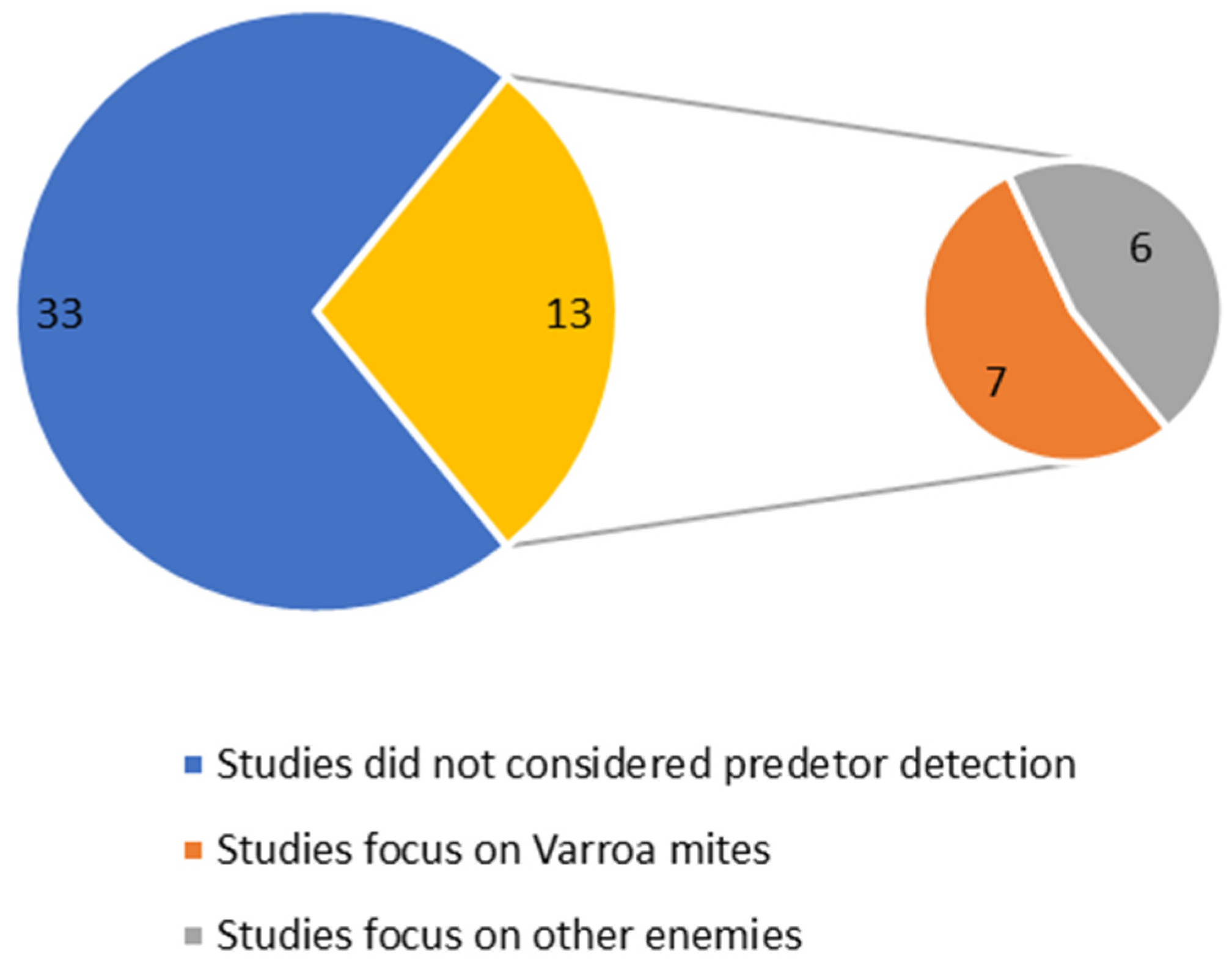
Ntawuzumunsi et al. [43] detected bees’ enemies by using a digital camera and recognized birds or moths who were entering the hive. Although there are numerous approaches proposed to detect various enemies of bees, most of them focused on Varroa mites considering their negative impact on honeybee hives. The Asian hornet (V. Velutina) is causing a decline in honeybee populations, as it preys on honeybees, with 85% of its diet consisting of honeybees, particularly in Korea. Therefore, the authors of [51] trained a YOLOv5 model to detect Asian hornets and developed an NVIDIA Jetson Xavier-based system equipped with a camera that captures three images per second outside the hive. The trained YOLO model was deployed on the Jetson system, which sends notifications to a mobile application installed on the beekeeper’s phone. The mobile app alerts the beekeeper when the system detects an Asian hornet. However, the system is affected by blurry images of the hornets and faces high processing requirements, as each object in the image must be processed individually due to the lack of object tracking support.
Another problem bees face is that stronger hives may attack weaker hives and steal honey during times of poor honey flow. This may happen throughout the day and is usually characterized by high noise levels and continuous frenzied flying activity in front of the hive. The authors of [46] employed radar and vibration sensors to identify robbing events, and they claim that normal day values and values of robbing events can be distinguished.
Although numerous studies have proposed different methods to mitigate threats from bee enemies, there is no fully developed system or method for this purpose which covers all enemies. On the other hand, nearly 28% of the studies focus on developing such systems, as shown in Figure 10, highlighting the importance of mitigating these threats. However, most of these studies mainly consider Varroa destructor, despite threats from other animals like apes, bears, and various insects and parasites. Moreover, the impact of Varroa destructor is limited to certain bee species, such as A. mellifera. Therefore, it is essential to conduct further research to address threats posed by other bee predators.

3.9. Targeted Species for Precision Beekeeping System

Analyzing the development of PB systems in terms of species is crucial, as different bee species exhibit distinct hive structures, behaviors, and threats. The hive structures within the Apini tribe are relatively similar, allowing a single PB system to be used across most species with minor modifications. However, for the Meloponini tribe, significant variations in hive structure and other characteristics need a more species-specific approach. In addition, the fact that body size and ranges of sensory thresholds differ significantly across Meliponini species may necessitate sensor adaptation, since sensor size and sensitivity will have to be adjusted to satisfy the specific needs of stingless bees. Models that are used in decision-making procedures might require retraining or incorporating transfer learning techniques to customize the PA systems to different bee taxa. According to Figure 11, most studies are conducted on honeybees, but only six studies are directed specifically to stingless bees. Two of these focus on the species H. itama and four do not specify target species. In honeybee studies, 22 articles do not mention the species, 12 are focused on the Apis mellifera Linnaeus, 1758, and 3 on Apis cerana Fabricius, 1793. These findings emphasize the critical need for increased research and development of PA systems specifically designed for stingless bees.

4. Discussion

The Internet of Things (IoT) is an emerging field which has had a significant impact on technological advancement in a wide range of industries. Its major developments include optimizing sensors designed to gather a high density of data, the expansion of communication networks that enable the transmission of low-energy data in an efficient way, and the creation of advanced methods of data visualization and storage. The following technological advances have been found especially beneficial in the field of precision beekeeping (PB) systems. Using the IoT technologies, PB systems are able to build large datasets that are particularly useful in apicultural settings. An example is that the research of data obtained through IoT-connected devices placed in beehives would allow researchers and beekeepers to gain a more profound understanding of the way bees behave and what happens in hives. Such an improved understanding helps in developing plans on how bee production can be increased, thus helping in efficient beekeeping and better farming results. However, the transition from data collection to actionable insight remains dependent on system robustness, data reliability, and contextual interpretation across different bee species and environments.
Systematic research studies have been done on PB systems and have reported significant advances in all the concerned areas. The attempts go beyond the simple improvement of sensor technology; there is an overall intention to improve sensor positioning to ensure a higher accuracy of data collection. Moreover, the communication protocols used by PB systems are changing to more secure and efficient protocols, like LoRa, ESP-NOW, and MQTT, the last being the most commonly used protocol in internet-based communication. The development of cloud-based IoT platforms, such as ThingSpeak, ThingsBoard, and Blynk, has brought together a strong reinforcement of the data visualization and shortened the time of project development. The sites have easy-to-use interfaces and powerful analytical software that makes data analysis fast and enables better management of gathered data. These developments illustrate a clear shift from isolated monitoring devices toward integrated, cloud-connected architectures that support scalable and remote hive management. Nevertheless, increased connectivity and computational capacity may introduce higher energy consumption and maintenance requirements, particularly in field deployments.
Studies related to PB are growing exponentially and have already delivered significant results in terms of quality of bee products and the effectiveness of beekeeping activities. This has been supported by new projects like the SAMS project and the Open Source Beehives Project. Both programs are meant to reduce time spent and improve the management of hives by coming up with programs that can monitor and help in data analysis in real time, hence allowing beekeepers to make better decisions. The SAMS project is focused on intelligent technologies to track the statuses of hives, and the Open Source Beehives Project provides open-access tools and resources such as hive designs that are modular and sensor-based systems. All of these efforts aim to make keeping bees easier and keep interventions prompt and sustainable, thereby developing the modern practice of apiculture. Despite these promising advancements, the translation of research prototypes into durable and economically viable commercial systems remains a critical challenge. Long-term stability, calibration needs, and contextual adaptation across regions continue to influence real-world adoption.
Additionally, there is a small amount of attention to the effect caused by natural predators and pests on the bee population, which pose serious threats to beehives. Although most of the literature deals with the Varroa destructor mite which is the most common parasite inflicting honeybees, there is still a significant gap in the literature dealing with other dangers of thieves, mammals and other predators. The existence of this gap highlights the dire necessity of more focused studies that could fill the gap of understanding the specific challenges of stingless bees and widen the scope of the inspection of the broader spectrum of risks that may damage the health and productivity of bees. Addressing these broader ecological and species-specific challenges will be essential for developing more adaptive and context-aware precision beekeeping systems in the future.
Overall, the results of this review are consistent with the available evidence on smart agriculture and IoT-based monitoring systems, showing that sensor networks, low-power communication protocols, and cloud platforms can support real-time monitoring of hives and enable data-driven decision-making in precision beekeeping. However, the existing evidence has several limitations. Most studies are based on prototype systems or short-term experiments, with limited long-term field validation. In addition, a significant proportion of research focuses on honeybee monitoring and the specific predator Varroa destructor, while other predators, environmental hazards, and bee species remain less studied. Moreover, this review also has methodological limitations, including the use of selected databases and fixed search terms, which may have excluded relevant studies or grey literature. The heterogeneity in study designs and evaluation methods further restricted the analysis to qualitative synthesis rather than quantitative comparison.
In addition to research prototypes, a variety of commercial precision apiculture systems demonstrate the practical adoption of key technologies identified in the literature. In particular, core parameters widely studied in academic work, such as temperature, humidity, and hive weight, are consistently implemented across most commercial platforms; indicating their maturity and reliability for field deployment. More advanced sensing modalities, including acoustics and bee activity monitoring, are selectively integrated in systems such as BeeHero and BeePrecise. This reflects their growing but still evolving role in real-world applications. Furthermore, recent developments such as BeeWise illustrate the transition toward fully automated hive management, combining robotics, computer vision, and AI-driven decision-making; highlighting a clear progression from fundamental environmental sensing toward integrated, intelligent systems, with trade-offs between cost, complexity, and energy consumption continuing to influence commercial adoption. To contextualize the translation of research into practice, selected commercial systems are compared in Table A3 based on sensing capabilities and system functionality.

5. Conclusions

The Internet of Things (IoT) has revolutionized technology across various sectors, including PB, by enhancing sensors, communication methods, and data visualization tools. IoT integration in PB systems enables extensive data collection from beehives, offering insights into bee behavior and hive conditions, which improve productivity and efficiency. Efforts in PB research have focused on optimizing sensor placement and advancing secure communication protocols like LoRa, ESP-NOW, and MQTT. Additionally, cloud-based IoT platforms such as ThingSpeak, ThingsBoard, and Blynk have accelerated data analysis and management. Projects like SAMS and the Open Source Beehives Project have further contributed by providing real-time monitoring and open-access tools, simplifying hive management. However, while significant strides have been made, there is limited research on natural predators and pests beyond the Varroa destructor mite, highlighting the need for a broader investigation into threats affecting bee health and productivity, particularly in stingless bees.
Furthermore, although numerous sensing technologies have been explored in academic research, their practical adoption in commercial smart hive systems depends on robustness, long-term stability, cost-effectiveness, and power efficiency. A future study integrating patent landscape analysis with commercial technology assessment could provide deeper insight into innovation trends, intellectual property activity, and the market readiness of precision beekeeping technologies.

Supplementary Materials

The following supporting information can be downloaded at: https://www.mdpi.com/article/10.3390/sci8040087/s1.

Author Contributions

Conceptualization, A.M.B.R. and P.E.A.; data curation, A.M.B.R.; formal analysis, A.M.B.R. and H.S.; investigation, A.M.B.R.; methodology, A.M.B.R. and P.E.A.; visualization, A.M.B.R. and H.S.; writing—original draft preparation, A.M.B.R. and P.E.A.; funding acquisition, P.E.A.; resources, H.S. and P.E.A.; supervision, P.E.A.; project administration, P.E.A.; validation, P.E.A. and H.S.; writing—reviewing and editing, P.E.A. and H.S. All authors have read and agreed to the published version of the manuscript.

Funding

This work was supported by the grant titled “Monitoring System for Bee-colonies” reference number UBD/RSCH/URC/NIG/3.0/2022/002, awarded by the Universiti of Brunei Darussalam.

Data Availability Statement

Not applicable.

Conflicts of Interest

The authors declare no conflicts of interest.

Appendix A

Table A1. Components utilized to develop PB systems.
PurposeSensor/TechnologyStudy
WeightYZC-1B[15]
Four strain gauges connected in a Wheatstone Bridge configuration were used with an HX711[8,18]
A bar load cell is used to weigh up to 20 kg with an HX711 amplifier[29,30]
Single-point load cell Bosche H30A[20]
Load cell with HX711[14,20,21,31]
BOSCHE Wagetechnik single-point load cell H30A (200 kg)[22]
RS232[23]
PSD-S1 model[14]
BEEP hive scaler[28]
TemperatureDS18B20[15,22,25,26,27]
DHT11[19,22,42]
SHT40[15]
SHT15[23]
SHT35 (measure temp. in the brood)[24]
AM2303[3,14]
AM2315[24]
BME280[15]
DHT22[8,18,19,20,21,22,27,63]
Adafruit AM2302[5]
Sensirion SCD41 [28]
SHT31[36]
HumidityBME280[15]
DHT22
DHT11[19,30,43]
AM2303[3,14]
Adafruit AM2302[5]
AM2315[24]
SHT15[23]
Sensirion SCD41 [28]
SHT31[36]
Air pressureBME280[15]
Air quality/gasesMQ135[3,31,43]
MICS6814[3]
MICS5524[3]
Sensirion SPG30[5]
Bosch Sensortec BME680[5]
BME680[24]
Semiconductor gas sensors manufactured by Figaro Engineering, Japan (TGS832,
TGS2602, TGS823, TGS826, TGS2603 and TGS2600)
[41]
Telaire TL6615 sensor[18]
SGP30[63]
Sensirion SCD41 to measure CO2[28]
Capture video or images29 MP camera[66]
5 MP camera[48,49]
5 MP 160 fisheye lens camera[48]
4 MP GESS IP camera[67]
ArduCam OV5647 5 Mpx camera with a LS-2718 CS lens[53]
KEYENCE IV-HG300CA[62]
IP Camera[55]
Camera Sony IMX219-77[50]
Capture soundAdafruit electret microphone (20–20 KHz), with a MAX4466 amplifier[8,35]
UMIK-1 microphone[5]
ADMP401 MEMS microphones[18]
SPH0645[36]
Capture vibrationSW420[3]
Piezoelectric module[43,46]
LSM303DLHC[24]
Main processing unitESP32[3,26,49]
ESP8266[8,20,21,22,29,30,34,46]
Arduino Uno[30,34,37]
Arduino Mega 256[3,14,31]
Raspberry Pi[5,18,26,27,31,35,36,45,53]
Waspmote[23]
LoPy[24]
Microcontroller Wemos D1 Mini[42]
Keyence IV-HG10[62]
NVIDIA Jetson TX2[65]
NVIDIA Jetson Xavier NX[51]
NVIDIA Jetson Nano[50]
FPGA[54]
Teensy 3.5 [28]
Adafruit Feather board[47]
Communication equipmentGSM modem[53]
HC05 Bluetooth module[14]
3G router Huawei E5330[22]
433 MHz RFM12B[44]
SIM800L[15,25]
RFM69HCW®® radio link [47]
LocationGNSS (Global Navigation Satellite System) module[8]
GY NEO6MV2[42]
Air800_M4[17]
Pressure and forceFSR402[11]
Energy source7 V photovoltaic cell with a 3.3 V–1500 mAh Lithium-Polymer (Li-Po) battery[8]
PV panel 20 w/12 v and battery[53]
Lithium-ion battery and 50 w solar power[19]
Power bank of 30,000 mAh[53]
Li-Po battery (1000 mAh/2000 mAh)[45,47,52]
3.7 V 18,650 3000 mAh battery[42]
USB Solar Panel Portable 5 W 5 V[42]
100 A battery[14]
Movement of beesIR Sensor[19]
FireFlame sensor[43]
Outside motionsPIR (motion sensor)[43]
ActuatorsThermoelectric heater (heat the hive)[43]
Speakers[27]
LEDs[27]
Fan[43,44]
Thermo-pad cells (heat the hive)[44]
Peltier cells actuator (cool the hive)[44]
Weather parameters The anemometer is equipped with a 3-arm cup rotor with solid-state magnetic sensor (Wind speed)[14]
sensor BMP 280 (Bosch) and a weather meter SparkFun (measure wind speed, wind direction and rainfall)[24]
To indicate hive openMagnetic sensor[44]
Detect shifts and falls of hiveGyroscopic sensor[44]
MMA7361 (Measure attitude of the hive)[17]
Table A2. PB systems and their functionalities.
TitleYearReferenceWeightTemperatureHumidityAir Quality/GasesSoundVibrationLocationImages/VideoEnemy DetectionActuatorsDetails About Enemy DetectionObjectiveOverall Risk
Weight sensing of beehives with IOT connectivity2022[15] Measure the parameters including air pressure, shown in ThingSpeak.Medium
Automated monitoring of honey bees with barcodes and artificial intelligence reveals two distinct social networks from a single affiliative behavior2023[66] Monitoring bees’ movement inside the hive using camera and barcode attached on bees with help of CNN.
BHiveSense: An integrated information system architecture for sustainable remote monitoring and management of apiaries based on IoT and microservices2023[8] Theft detection using lid opening.Measured parameters including lid openings are sent via RESTful APIs and stored in MongoDB database. The system triggers events based on the threshold values, notified using OneSignal.
IoT Monitoring and Prediction Modeling of Honeybee Activity with Alarm2022[3] Data collected includes weather information, light intensity, UV index, air pressure, and altitude. This module consists of a bee counter based on photoresistors and utilizes RNN to forecast bee moment based on the inhive and outside parameters.
An Internet of Living Things based device for a better understanding of the state of the honey bee population in the hive during the winter months2023[26] Generates heatmap using 40 temp. sensors to observe the location of the bees, and external temp. and humidity also measured.
IoT Based Monitoring System for Stingless Bees Colony in IIUM2022[30] Force-sensitive resistor utilized to detect presence of intruders and notify users.Collects data display in the Blynk. Additionally, force-sensitive resistor utilized to detect presence of intruders and notify users.
Bee Sound Detector: An Easy-to-Install, Low-Power, Low-Cost Beehive Conditions Monitoring System2022[34] Detects swarming or queen loss using sound (without ML) and sends push notification based on that.
Proposed smart monitoring system for the detection of bee swarming2021[49] To detect bee-clustering events that may lead to swarming using images inside the beehive (uses DL).
Deep Learning Beehive Monitoring System for Early Detection of the Varroa Mite2022[48] Camera/capture inside the brood box to detect Varroa mites using DL.Captures inside the brood box to detect Varroa Mites using DL.
A Lora-based Testbed Development for Stingless Bee Monitoring System2022[31] Collected data shown in TTN with help of Node-Red.
Development of Artificial Stingless Bee Hive Monitoring using IoT System on Developing Colony2024[21] Collects data display using ThingSpeak and Cayenne Dashboard. Proposes to use PVC and PET-G to create the hive.
Automated Video Monitoring of Unmarked and Marked Honey Bees at the Hive Entrance2022[67] Monitoring bees at the hive entrance using DL. Able to detect pose, pollen and entrance and exits.
An IoT-Based Beehive Monitoring System for Real-Time Monitoring of Apis cerana indica Colonies2023[19] Monitors entering and leaving of the bees using IR sensor. Collected data displayed using ThingSpeak and MatLab.
Comparative Study of Machine Learning Models for Bee Colony Acoustic Pattern Classification on Low Computational Resources2023[35] Detects colony health status (queenright colony, queenless, colony, low-population queenless colony) based on sound.
Bee colony remote monitoring based on IoT using ESP-NOW protocol2023[25] Collected data displayed using Grafana and SAMS UI.
The Importance of Context Awareness in Acoustics-Based Automated Beehive Monitoring2023[32] Measuring beehive strength using sound.
An in-hive soft sensor based on phase space features for Varroa infestation level estimation and treatment need detection2022[68] Using gas sensor.Detects Varroa infestation level and the treatment need level.
Design of a beehive monitoring system with GPS location tracking2023[27] Use motion sensor.Data collected including external temp., pressure, infrared light emitted by flames, rain, and humidity and based on threshold values; user notified via email/SMS. Based on the motion sensor values, loudspeaker or lighting devices activated.
BeeLive: The IoT platform of Beemon monitoring and alerting system for beehives2023[5] Collected data transferred to ThingsBoard; based on defined rules, alerts the beekeeper.
Edge-based detection of varroosis in beehives with iot devices with embedded and tpu-accelerated machine learning2021[53] Use video.Detection of Varroa destructor infection using videos captured at hive entrance with help of Google AutoML.
Self-powered smart beehive monitoring and control system (Sbmacs)†2021[43] Use motion sensors.Data collected includes value of flame and motion sensors and control temperature and humidity using electric fan and thermo-electronic heater. System powered by energy harvesting technologies.
Automatic monitoring system of Apis cerana based on image processing2021[45] Data collected including light intensity and number of bees flying in and out. Camera utilized to count the red, green, blue and yellow marked bees’ entrance and exit.
Web Monitoring of Bee Health for Researchers and Beekeepers Based on the Internet of Things2018[24] Collect data including weather using Lamda architecture.
Honey bee colonies remote monitoring system2017[23] Collected data including temperature and relative humidity of the beehive in three different spots sends to global server via a local server.
An internet of things-based low-power integrated beekeeping safety and conditions monitoring system2019[44] Gyroscope sensor to detect animal or theft intrusion.Collected data transfer to server and data can be view using mobile app. Magnetic sensor in the lid and gyroscope sensor to detect animal or theft intrusion. Actuators utilized to control temp. and humidity.
Monitoring system for remote bee colony state detection2020[22] Collected data including environmental humidity and temperature stored in the SAMS DW.to display users.
An intelligent stingless bee system with embedded IOT technology2019[42] Collected data upload to a webserver.
Development of a low-cost wireless bee-hive temperature and sound monitoring system2020[37] Collected data upload to ThingSpeak server. Discuss about the relation between collected data and swarming events.
Temperature and Weight Monitoring of the Apis Cerana Bee Colony Indonesia2020[20] Collected data including external temp. and humidity (the system is based on SAMS) uploaded to SAMS DW. Inside temp. and humidity collected from three places.
Application of a precision apiculture system to monitor honey daily production2020[14] Collected data including external temp., wind speed and humidity stored in the Arduino. Data can be downloaded via Bluetooth to mobile app.
Detection of Varroa mites from honey bee hives by smart technology Var-Gor: a hivemonitoring and image processing device2021[62] Taking pictures when bees passing the hive entrance and identify the bees and Varroa mites by matching the template filters.Detection of Varroa mites using images when bees enter to the hive and notifies the beekeepers.
Detecting varroosis using a gas sensor system as a way to face the environmental threat2020[41] Semiconductor gas sensors measure and Partial Least Squares regression predict the infestation rate of bee colony.Detection of Varroa mite infestation rate using gas sensors.
A novel non-invasive radar to monitor honey bee colony health2020[47] The objectives are to assess colony activity and health using visual methods and Doppler radar measurements at the hive entrance.
The Determination of the Developments of Beehives via Artificial Neural Networks2018[16] Predict the status of hive by monitoring temp., humidity and weight by using NN.
Stingless Bee Colony Health Sensing Through Integrated Wireless System2015[55] Measures the internal temperature, humidity, light intensity, and the growth of honey pots using a camera. External light intensity and VOCs (volatile organic compounds) are also measured. The module includes sensors for detecting NH3, CO2, O2, VOC, NO2, and CO, which are used for hazardous gas detection.
Honey Bee Colony Population Daily Loss Rate Forecasting and an Early Warning Method Using Temporal Convolutional Networks2021[65] To forecast the following data bee population loss rate using temporal convolutional neural network (TCN).
A Smart Sensor-Based Measurement System for Advanced Bee Hive Monitoring2020[18] Monitors the temp. relative humidity, weight and sound intensity parameters of the beehive.
Real-Time IoT-Blynk Application for Log Hive Weight Monitoring in Stingless Bees2024[29] Weight monitoring system deploying an IoT-based weight monitoring system with the Blynk application.
FPGA-Based Bee Counter System 2024[54] Monitors bee traffic using double photodiode with FPGA
Deep Learning-Based Portable Image Analysis System for Real-Time Detection of Vespa velutina2023[51] Identify the V. velutina using Yolo.Identifies V. velutina using Yolo and notifies beekeepers.
Detection of anomalies in bee colony using transitioning state and contrastive autoencoders2022[36] Inferring the bee colony state using a sensitive contrastive autoencoder and an anomaly detection model using temperature, humidity and sound.
A Monitoring System for Carbon Dioxide in Honeybee Hives: An Indicator of Colony Health2023[28] Measures weight, CO2, temp. and humidity and check the relation of the CO2 and colony health.
Effective and Efficient Honey Harvest Alert System for Bee Farms2022[17] Alerts the beekeeper when better to harvest based on capped honey cells (75%) and humidity (18%).
Edge Computing in IoT-Enabled Honeybee Monitoring for the Detection of Varroa Destructor2022[50] Detect Varroa mites using video processing.Detects Varroa mites.
Janus: A Combined Radar and Vibration Sensor for Beehive Monitoring2021[46] Proposed method to detect swarming events using values recorded by using radar and vibration sensors.
ApIsoT: An IoT Function Aggregation Mechanism for Detecting Varroa Infestation in Apis mellifera Species2024[63] Detect Varroa mites using temperature, humidity, CO2 level and Total Volatile Organic Compounds (TVOCs).Detection of Varroa mites.
Table A3. Sample of existing production-level precision apiculture/beehive monitoring products used by commercial or research beekeepers.
ProductCompanyTemperatureHumidityHive WeightSound/AcousticsBee Activity/TrafficOther MeasurementsKey CapabilitiesApprox. PriceWebsite
BeeHero In-Hive SensorBeeHeroColony health analyticsAI-based colony monitoring to predict colony issues and measures bee activity and pollination efficiency to transform them into valuable, actionable insights.Custom (enterprise)https://www.beehero.io (accessed on 2 April 2026)
BeePrecise Hive Monitoring SystemBeePreciseForaging activitySolar-powered IoT sensors with cloud dashboard and cellular connectivity to early detection of swarming, queen health and activity, colony stress and pest presence and disease detectionCustomhttps://www.beeprecise.io
(accessed on 2 April 2026)
BroodMinder Pro Kit K1BroodMinderAmbient weatherIntegrated hive scale + brood temperature/humidity sensors with mobile analytics~$696 kithttps://www.broodminder.com
(accessed on 2 April 2026)
Apic.ai MonitorApic.aiPollen colorVisual Intelligence: Camera at entrance identifies pesticide exposure and pollen diversity.Quote-basedhttps://www.apic.ai (accessed on 2 April 2026)
HiveScaleBeeSageLid alarm, GPSNectar Flow Analytics: High-precision scales for tracking honey flow and hive security.€390+https://www.beesage.eu (accessed on 2 April 2026)
HM-6H (Heavy)SolutionbeeNFC taggingMigratory Logistics: Ruggedized scale (350 kg capacity) for palletized commercial operations.$459–$1199https://www.solutionbee.com (accessed on 2 April 2026)
HiveMind HubHiveMindSatellite link, bee population entering and leaving the hive, rain gaugeRemote Monitoring: Satellite-enabled for wilderness/outback areas without cell signal.Quote-basedhttps://www.hivemind.nz (accessed on 2 April 2026)
BroodMinder T2 Hive MonitorBroodMinderDetect brood temperature changes and swarm events (there are other kits).~$48https://broodminder.com (accessed on 2 April 2026)
Bee Army Smart Hive SensorsBee ArmyHive movement/securityWireless sensors measuring temperature, humidity, sound frequencies and hive displacement.~$99–$150https://bee-army.com (accessed on 2 April 2026)
GoBuzzr Smart Hive SystemGoBuzzrExternal environment, GPSIoT monitoring of hive conditions and bee traffic with cloud dashboard.Customhttps://www.gobuzzr.com (accessed on 2 April 2026)
BeeWise Beehome Monitoring PlatformBeeWiseComputer vision, pest detectionAutonomous robotic hive management and AI monitoring with capabilities of Thermoregulated environment to help protect against extreme weather and automated feeding, Varroa treatment, and pesticide protection.Enterprise-scalehttps://beewise.ag (accessed on 2 April 2026)

Appendix B

Due to the heterogeneous nature of the included studies—spanning IoT architectures, embedded sensing systems, and machine-learning-based approaches—traditional risk-of-bias frameworks developed for clinical or experimental research were not applicable. These conventional tools assume standardized study designs and comparable outcome measures, which are absent in this domain. Therefore, a domain-specific risk-of-bias framework was adopted to more appropriately evaluate the technical quality and rigor of the proposed systems.
The assessment was based on five criteria: Sensing Coverage Bias (SCB), which evaluates the diversity of sensing modalities employed (with multi-modal systems considered lower risk than single-sensor approaches); Methodological Rigor Bias (MRB), which reflects the sophistication of analytical methods, favoring validated machine learning or signal processing techniques over simple threshold-based rules; Validation Bias (VB), which assesses the presence and quality of experimental validation, including real-world testing and quantitative performance metrics; System Integration Bias (SIB), which considers whether the study presents a complete end-to-end system (from sensing to communication and actuation) versus a partial or conceptual implementation; and Application Clarity Bias (ACB), which evaluates the specificity of the study objective, with clearly defined applications (e.g., Varroa detection or swarm prediction) considered lower risk.
Table A4. Summary of risk-of-bias assessment of included studies.
Bias DomainLowMediumHigh
Sensing Coverage201214
Methodological Rigor22213
Validation3880
System Integration35101
Application Clarity4060

References

  1. VanEngelsdorp, D.; Evans, J.D.; Saegerman, C.; Mullin, C.; Haubruge, E.; Nguyen, B.K.; Frazier, M.; Frazier, J.; Cox-Foster, D.; Chen, Y.; et al. Colony Collapse Disorder: A Descriptive Study. PLoS ONE 2009, 4, e6481. [Google Scholar] [CrossRef] [PubMed]
  2. Papachristoforou, A.; Rortais, A.; Sueur, J.; Arnold, G. Attack or Retreat: Contrasted Defensive Tactics Used by Cyprian Honeybee Colonies under Attack from Hornets. Behav. Process. 2011, 86, 236–241. [Google Scholar] [CrossRef]
  3. Andrijević, N.; Urošević, V.; Arsić, B.; Herceg, D.; Savić, B. IoT Monitoring and Prediction Modeling of Honeybee Activity with Alarm. Electronics 2022, 11, 783. [Google Scholar] [CrossRef]
  4. Zacepins, A.; Brusbardis, V.; Meitalovs, J.; Stalidzans, E. Challenges in the Development of Precision Beekeeping. Biosyst. Eng. 2015, 130, 60–71. [Google Scholar] [CrossRef]
  5. Hamza, A.S.; Tashakkori, R.; Underwood, B.; O’Brien, W.; Campell, C. BeeLive: The IoT Platform of Beemon Monitoring and Alerting System for Beehives. Smart Agric. Technol. 2023, 6, 100331. [Google Scholar] [CrossRef]
  6. Shareefa, M.; Moosa, V. The Most-Cited Educational Research Publications on Differentiated Instruction: A Bibliometric Analysis. Eur. J. Educ. Res. 2020, 9, 331–349. [Google Scholar] [CrossRef]
  7. Azis, F.A.; Rijal, M.; Suhaimi, H.; Abas, P.E. Patent Landscape of Composting Technology: A Review. Inventions 2022, 7, 38. [Google Scholar] [CrossRef]
  8. Cota, D.; Martins, J.; Mamede, H.; Branco, F. BHiveSense: An Integrated Information System Architecture for Sustainable Remote Monitoring and Management of Apiaries Based on IoT and Microservices. J. Open Innov. Technol. Mark. Complex. 2023, 9, 100110. [Google Scholar] [CrossRef]
  9. Hadjur, H.; Ammar, D.; Lefèvre, L. Toward an Intelligent and Efficient Beehive: A Survey of Precision Beekeeping Systems and Services. Comput. Electron. Agric. 2022, 192, 106604. [Google Scholar] [CrossRef]
  10. Zacepins, A.; Stalidzans, E.; Meitalovs, J. Application of Information Technologies in Precision Apiculture. In Proceedings of the 13th International Conference on Precision Agriculture (ICPA 2012), Indianapolis, IN, USA, 15–18 July 2012; International Society of Precision Agriculture: Monticello, IL, USA, 2012; Volume 7. [Google Scholar]
  11. Ben-Israel, D.; Jacobs, W.B.; Casha, S.; Lang, S.; Ryu, W.H.A.; de Lotbiniere-Bassett, M.; Cadotte, D.W. The Impact of Machine Learning on Patient Care: A Systematic Review. Artif. Intell. Med. 2020, 103, 101785. [Google Scholar] [CrossRef]
  12. Zhang, X.; Estoque, R.C.; Xie, H.; Murayama, Y.; Ranagalage, M. Bibliometric Analysis of Highly Cited Articles on Ecosystem Services. PLoS ONE 2019, 14, e0210707. [Google Scholar] [CrossRef]
  13. Gates, B.N. The Temperature of the Bee Colony; U.S. Department of Agriculture: Washington, DC, USA, 1914. [Google Scholar]
  14. Catania, P.; Vallone, M. Application of A Precision Apiculture System to Monitor Honey Daily Production. Sensors 2020, 20, 2012. [Google Scholar] [CrossRef]
  15. Havránek, D.; Kufa, J. Weight Sensing of Beehives with Iot Connectivity. In Proceedings of the of the 28th Conference STUDENT EEICT 2022, Brno, Czech Republic, 26 April 2022; Brno University of Technology, Faculty of Electrical Engineering and Communication: Brno, Czech Republic, 2022; pp. 92–95. [Google Scholar]
  16. Bayir, R.; Albayrak, A. The Determination of the Developments of Beehives via Artificial Neural Networks. Teh. Vjesn. 2018, 25, 553–557. [Google Scholar] [CrossRef]
  17. Albert Raj, A.; Kavin Jeeva, T.; Kiran, L.K. Effective and Efficient Honey Harvest Alert System for Bee Farms. In Journal of Physics: Conference Series; IOP Publishing: Bristol, UK, 2022; Volume 2325. [Google Scholar]
  18. Cecchi, S.; Spinsante, S.; Terenzi, A.; Orcioni, S. A Smart Sensor-Based Measurement System for Advanced Bee Hive Monitoring. Sensors 2020, 20, 2726. [Google Scholar] [CrossRef]
  19. Krishnasamy, V.; Sridhar, N.; Niranjan, L. An IoT-Based Beehive Monitoring System for Real-Time Monitoring of Apis Cerana Indica Colonies. Sociobiology 2023, 70, 1–12. [Google Scholar] [CrossRef]
  20. Kviesis, A.; Zacepins, A.; Komasilovs, V.; Paramita, A.M.; Muhammad, F.R. Temperature and Weight Monitoring of the Apis Cerana Bee Colony Indonesia. Rural. Sustain. Res. 2020, 44, 54–60. [Google Scholar] [CrossRef]
  21. Ali, M.A.A.C.; Ilias, B.; Rahim, N.A.; Shukor, S.A.A.; Adom, A.H.; Saad, M.A.-H.; Hassan, M.F.A. Development of Artificial Stingless Bee Hive Monitoring Using IoT System on Developing Colony. J. Adv. Res. Appl. Sci. Eng. Technol. 2024, 33, 254–268. [Google Scholar] [CrossRef]
  22. Zacepins, A.; Kviesis, A.; Komasilovs, V.; Rido Muhammad, F. Monitoring System for Remote Bee Colony State Detection. Balt. J. Mod. Comput. 2020, 8, 461–470. [Google Scholar] [CrossRef]
  23. Poposki, R.; Gjorgjevikj, D. Precision Apiculture—IoT System for Remote Monitoring of Honeybee Colonies. In Proceedings of the ETAI Conference 2020, Ohrid, North Macedonia, 17–19 September 2020. [Google Scholar]
  24. Debauche, O.; Moulat, M.E.; Mahmoudi, S.; Boukraa, S.; Manneback, P.; Lebeau, F. Web Monitoring of Bee Health for Researchers and Beekeepers Based on the Internet of Things. Procedia Comput. Sci. 2018, 130, 991–998. [Google Scholar] [CrossRef]
  25. Kviesis, A.; Komasilovs, V.; Ozols, N.; Zacepins, A. Bee Colony Remote Monitoring Based on IoT Using ESP-NOW Protocol. PeerJ Comput. Sci. 2023, 9, e1363. [Google Scholar] [CrossRef] [PubMed]
  26. Arribas, F.A.; Hortelano, M.R. An Internet of Living Things Based Device for a Better Understanding of the State of the Honey Bee Population in the Hive during the Winter Months. Comput. Electron. Agric. 2023, 212, 108026. [Google Scholar] [CrossRef]
  27. Bohušík, M.; Císar, M.; Bulej, V.; Bartoš, M.; Stenchlák, V.; Wiecek, D. Design of a Beehive Monitoring System with GPS Location Tracking. Transp. Res. Procedia 2023, 74, 916–923. [Google Scholar] [CrossRef]
  28. Bencsik, M.; McVeigh, A.; Tsakonas, C.; Kumar, T.; Chamberlain, L.; Newton, M.I. A Monitoring System for Carbon Dioxide in Honeybee Hives: An Indicator of Colony Health. Sensors 2023, 23, 3588. [Google Scholar] [CrossRef]
  29. Md Jani, M.M.; Hairuddin, M.A.; Ja’afar, H.; Rustam, I.; Almisreb, A.A.; Khirul Ashar, N.D. Real-Time IoT-Blynk Application for Log Hive Weight Monitoring in Stingless Bees. Instrum. Mes. Metrol. 2024, 23, 93–102. [Google Scholar] [CrossRef]
  30. Rosli, H.A.; Abdul Malik, N.; Ahmad, Y.A. IoT Based Monitoring System for Stingless Bees Colony in IIUM. In Journal of Physics: Conference Series; IOP Publishing: Bristol, UK, 2022; Volume 2312. [Google Scholar]
  31. Miskon, M.T.; Razak, M.A.A.; Jaafar, H.; Hassan, N.; Mahmood, R. A Lora-Based Testbed Development for Stingless Bee Monitoring System. TEM J. 2022, 11, 712–718. [Google Scholar] [CrossRef]
  32. Abdollahi, M.; Henry, E.; Giovenazzo, P.; Falk, T.H. The Importance of Context Awareness in Acoustics-Based Automated Beehive Monitoring. Appl. Sci. 2023, 13, 195. [Google Scholar] [CrossRef]
  33. Zgank, A. Bee Swarm Activity Acoustic Classification for an Iot-Based Farm Service. Sensors 2020, 20, 21. [Google Scholar] [CrossRef] [PubMed]
  34. Kiromitis, D.I.; Bellos, C.V.; Stefanou, K.A.; Stergios, G.S.; Katsantas, T.; Kontogiannis, S. Bee Sound Detector: An Easy-to-Install, Low-Power, Low-Cost Beehive Conditions Monitoring System. Electronics 2022, 11, 3152. [Google Scholar] [CrossRef]
  35. Robles-Guerrero, A.; Saucedo-Anaya, T.; Guerrero-Mendez, C.A.; Gómez-Jiménez, S.; Navarro-Solís, D.J. Comparative Study of Machine Learning Models for Bee Colony Acoustic Pattern Classification on Low Computational Resources. Sensors 2023, 23, 460. [Google Scholar] [CrossRef]
  36. Cejrowski, T.; Szymański, J. Detection of Anomalies in Bee Colony Using Transitioning State and Contrastive Autoencoders. Comput. Electron. Agric. 2022, 200, 107207. [Google Scholar] [CrossRef]
  37. Imoize, A.L.; Odeyemi, S.D.; Adebisi, J.A. Development of a Low-Cost Wireless Bee-Hive Temperature and Sound Monitoring System. Indones. J. Electr. Eng. Inform. 2020, 8, 476–485. [Google Scholar] [CrossRef]
  38. Bencsik, M.; McVeigh, A.; Claeys Bouuaert, D.; Capela, N.; Penny, F.; Newton, M.I.; Sousa, J.P.; de Graaf, D.C. Quantitative Assessments of Honeybee Colony’s Response to an Artificial Vibrational Pulse Resulting in Non-Invasive Measurements of Colony’s Overall Mobility and Restfulness. Sci. Rep. 2024, 14, 3827. [Google Scholar] [CrossRef]
  39. Ramsey, M.; Bencsik, M.; Newton, M.I. Long-Term Trends in the Honeybee Whooping Signal’ Revealed by Automated Detection. PLoS ONE 2017, 12, e0171162. [Google Scholar] [CrossRef]
  40. Jegan, S.; Padmapriya, L.; Manjari, P.V.; Shanmathi, R. Honey Hive Monitoring Using IoT. In AIP Conference Proceedings; AIP Publishing LLC: Melville, NY, USA, 2021; Volume 2387. [Google Scholar]
  41. Szczurek, A.; Maciejewska, M.; Bąk, B.; Wilk, J.; Wilde, J.; Siuda, M. Detecting Varroosis Using a Gas Sensor System as a Way to Face the Environmental Threat. Sci. Total Environ. 2020, 722, 137866. [Google Scholar] [CrossRef]
  42. Man, M.; Bakar, W.A.W.A.; Razak, M.A.B.B.A. An Intelligent Stingless Bee System with Embedded IOT Technology. Int. J. Recent Technol. Eng. 2019, 8, 264–269. [Google Scholar] [CrossRef]
  43. Ntawuzumunsi, E.; Kumaran, S.; Sibomana, L. Self-Powered Smart Beehive Monitoring and Control System (Sbmacs). Sensors 2021, 21, 3522. [Google Scholar] [CrossRef]
  44. Kontogiannis, S. An Internet of Things-Based Low-Power Integrated Beekeeping Safety and Conditions Monitoring System. Inventions 2019, 4, 52. [Google Scholar] [CrossRef]
  45. Nurhiman, A.; Almira, A.; Raffiudin, R.; Indro, M.N.; Maddu, A.; Sumaryada, T. Automatic Monitoring System of Apis Cerana Based on Image Processing. In IOP Conference Series: Earth and Environmental Science; IOP Publishing: Bristol, UK, 2021; Volume 948. [Google Scholar]
  46. Aumann, H.M.; Aumann, M.K.; Emanetoglu, N.W. Janus: A Combined Radar and Vibration Sensor for Beehive Monitoring. IEEE Sens. Lett. 2021, 5, 1–4. [Google Scholar] [CrossRef]
  47. Souza Cunha, A.E.; Rose, J.; Prior, J.; Aumann, H.M.; Emanetoglu, N.W.; Drummond, F.A. A Novel Non-Invasive Radar to Monitor Honey Bee Colony Health. Comput. Electron. Agric. 2020, 170, 105241. [Google Scholar] [CrossRef]
  48. Voudiotis, G.; Moraiti, A.; Kontogiannis, S. Deep Learning Beehive Monitoring System for Early Detection of the Varroa Mite. Signals 2022, 3, 506–523. [Google Scholar] [CrossRef]
  49. Voudiotis, G.; Kontogiannis, S.; Pikridas, C. Proposed Smart Monitoring System for the Detection of Bee Swarming. Inventions 2021, 6, 87. [Google Scholar] [CrossRef]
  50. Wachowicz, A.; Pytlik, J.; Małysiak-Mrozek, B.; Tokarz, K.; Mrozek, D. Edge Computing in IoT–Enabled Honeybee Monitoring for the Detection of Varroa Destructor. Int. J. Appl. Math. Comput. Sci. 2022, 32, 355–369. [Google Scholar] [CrossRef]
  51. Jeon, M.-S.; Jeong, Y.; Lee, J.; Yu, S.-H.; Kim, S.-B.; Kim, D.; Kim, K.-C.; Lee, S.; Lee, C.-W.; Choi, I. Deep Learning-Based Portable Image Analysis System for Real-Time Detection of Vespa Velutina. Appl. Sci. 2023, 13, 7414. [Google Scholar] [CrossRef]
  52. Hadjur, H.; Ammar, D.; Lefevre, L. Services Orchestration at the Edge and in the Cloud for Energy-Aware Precision Beekeeping Systems. In 2023 IEEE International Parallel and Distributed Processing Symposium Workshops (IPDPSW), Rio de Janeiro, Brazil, 15–19 May 2023; IEEE: Piscataway, NJ, USA, 2023; pp. 769–776. [Google Scholar]
  53. Mrozek, D.; Gȯrny, R.; Wachowicz, A.; Małysiak-Mrozek, B. Edge-Based Detection of Varroosis in Beehives with Iot Devices with Embedded and Tpu-Accelerated Machine Learning. Appl. Sci. 2021, 11, 11078. [Google Scholar] [CrossRef]
  54. Quiles-Latorre, F.J.; Ortiz-López, M.; Rodriguez-Lozano, F.J.; Brox, M.; Flores, J.M. FPGA-Based Bee Counter System. IEEE Access 2024, 12, 30362–30381. [Google Scholar] [CrossRef]
  55. Harun, A.; Zaaba, S.K.; Kamarudin, L.M.; Zakaria, A.; Mohamed Farook, R.S.; Ndzi, D.L.; Shakaff, A.Y.M. Stingless Bee Colony Health Sensing through Integrated Wireless System. J. Teknol. 2015, 77, 85–90. [Google Scholar] [CrossRef][Green Version]
  56. Haxhibeqiri, J.; De Poorter, E.; Moerman, I.; Hoebeke, J. A Survey of LoRaWAN for IoT: From Technology to Application. Sensors 2018, 18, 3995. [Google Scholar] [CrossRef]
  57. Pasic, R.; Kuzmanov, I.; Atanasovski, K. ESP-NOW Communication Protocol with ESP32. J. Univers. Excell. 2021, 6, 53–60. [Google Scholar] [CrossRef]
  58. ESP-NOW. Wireless Communication Protocol. Espressif Systems. Available online: https://www.espressif.com/en/solutions/low-power-solutions/esp-now (accessed on 10 March 2024).
  59. ThingsBoard—Open-Source IoT (Internet of Things) Platform. Available online: https://thingsboard.io/ (accessed on 10 March 2024).
  60. IoT Analytics—ThingSpeak Internet of Things. Available online: https://thingspeak.com/ (accessed on 10 March 2024).
  61. SAMS Project—Horizon 2020 Project—SAMS. Available online: https://sams-project.eu/ (accessed on 5 February 2026).
  62. Sevin, S.; Tutun, H.; Mutlu, S. Detection of Varroa Mites from Honey Bee Hives by Smart Technology Var-Gor: A Hive Monitoring and Image Processing Device. Turk. J. Vet. Anim. Sci. 2021, 45, 487–491. [Google Scholar] [CrossRef]
  63. Camayo, A.I.C.; Muñoz, M.A.C.; Corrales, J.C. ApIsoT: An IoT Function Aggregation Mechanism for Detecting Varroa Infestation in Apis Mellifera Species. Agriculture 2024, 14, 846. [Google Scholar] [CrossRef]
  64. Cejrowski, T.; Szymański, J. Buzz-Based Honeybee Colony Fingerprint. Comput. Electron. Agric. 2021, 191, 106489. [Google Scholar] [CrossRef]
  65. Ngo, T.-N.; Rustia, D.J.A.; Yang, E.-C.; Lin, T.-T. Honey Bee Colony Population Daily Loss Rate Forecasting and an Early Warning Method Using Temporal Convolutional Networks. Sensors 2021, 21, 3900. [Google Scholar] [CrossRef] [PubMed]
  66. Gernat, T.; Jagla, T.; Jones, B.M.; Middendorf, M.; Robinson, G.E. Automated Monitoring of Honey Bees with Barcodes and Artificial Intelligence Reveals Two Distinct Social Networks from a Single Affiliative Behavior. Sci. Rep. 2023, 13, 1541. [Google Scholar] [CrossRef] [PubMed]
  67. Rodriguez, I.F.; Chan, J.; Alvarez Rios, M.; Branson, K.; Agosto-Rivera, J.L.; Giray, T.; Mégret, R. Automated Video Monitoring of Unmarked and Marked Honey Bees at the Hive Entrance. Front. Comput. Sci. 2022, 3, 769338. [Google Scholar] [CrossRef]
  68. König, A. An In-Hive Soft Sensor Based on Phase Space Features for Varroa Infestation Level Estimation and Treatment Need Detection. J. Sens. Sens. Syst. 2022, 11, 29–40. [Google Scholar] [CrossRef]
Figure 1. PRISMA flow diagram for the systematic identification, screening, eligibility, and inclusion of publications.
Sci 08 00087 g001
Figure 2. Yearly publications on developing PB systems.
Sci 08 00087 g002
Figure 3. Annual citations of the publications.
Sci 08 00087 g003
Figure 4. Co-occurrence network of keywords.
Sci 08 00087 g004
Figure 5. Co-authorship between countries.
Sci 08 00087 g005
Figure 6. Largest connected networks in co-authorship between countries: (ac) represent the three different clusters.
Sci 08 00087 g006
Figure 7. The contributions of various countries.
Sci 08 00087 g007
Figure 8. Bird’s eye view of all proposed architecture.
Sci 08 00087 g008
Figure 9. Frequently monitored hive parameters by studies.
Sci 08 00087 g009
Figure 10. Studies focus on developing detecting enemies of the bees.
Sci 08 00087 g010
Figure 11. Bee species focus in studies.
Sci 08 00087 g011
Table 1. Keywords used in the search.
FocusKeyword
Precision apicultureSearch (precision AND
(meliponiculture OR apiculture OR beekeeping))
Smart beehiveSearch ((smart OR intelligent) AND
(beehive OR apiculture OR meliponiculture OR apiary))
Electronic beehive monitoringSearch ((electronic OR automat *) AND {bee} AND
(hive OR apiary OR colony) AND monitoring)
Honeybee or stingless beeSearch ((beehive OR “Stingless Bee” OR honeybee) AND
(monitoring AND system))
* Wildcard character that can be substituted with any character(s).
Table 2. Sound generated by honeybees.
SoundReason for SoundFrequency
FlyingSound generated due to flapping wingsNearly 250 Hz
Piping soundChallenge signal produced by a queen bee for any potential new queen bee340 to 450 Hz
Hissing soundDefensive reaction when an intruder approaches the colony, produced by worker beesNearly 3000 Hz
Fanning soundSound generated when worker (female) bees are trying to ventilate the beehive due to worse environmental
conditions, mainly temperature
225–285 Hz
Disclaimer/Publisher’s Note: The statements, opinions and data contained in all publications are solely those of the individual author(s) and contributor(s) and not of MDPI and/or the editor(s). MDPI and/or the editor(s) disclaim responsibility for any injury to people or property resulting from any ideas, methods, instructions or products referred to in the content.