Article

Unveiling the HIV Landscape in Oman: A Retrospective Study of Prevalence, Risk Factors, Treatment Efficacy and Clinical Outcomes


1
Department of Microbiology, College of Medicine and Health Sciences, National University of Science and Technology, Sohar Campus, Sohar P.O. Box 391, Oman
2
Department of Pathology & Blood Bank, Sohar Hospital, Sohar P.O. Box 49, Oman
3
Department of Pediatrics, College of Medicine and Health Sciences, National University of Science and Technology, Sohar Campus, Sohar P.O. Box 391, Oman
4
Department of Pathology, College of Medicine and Health Sciences, National University of Science and Technology, Sohar Campus, Sohar P.O. Box 391, Oman
5
Department of Community Medicine, All India Institute of Medical Sciences, Mangalagiri 522503, India
6
Department of Infection Control and CSSD (HIV and AIDS Unit), Sohar Hospital, Sohar P.O. Box 49, Oman
*
Author to whom correspondence should be addressed.
Submission received: 23 November 2025 / Revised: 29 December 2025 / Accepted: 6 January 2026 / Published: 13 January 2026
(This article belongs to the Section Biology Research and Life Sciences)

Abstract

Introduction: The sustained global epidemic of Human Immunodeficiency Virus (HIV) necessitates comprehensive, region-specific surveillance to inform public health policy. This 30-year retrospective observational cohort study delineated the epidemiological patterns, transmission dynamics, treatment efficacy, and long-term clinical outcomes of HIV infection in Oman to strategically align preventative and therapeutic programs with Oman’s Vision 2040 framework. Methods: We analyzed the clinical and epidemiological data of 429 confirmed HIV-positive patients with a minimum follow-up period of six months, registered at a secondary care facility in North Batinah, Oman, between January 1995 and December 2024. Predictors of mortality were rigorously assessed utilizing Kaplan–Meier survival analysis and Cox proportional hazards regression models. Continuous variables were evaluated using independent sample t-tests or Mann–Whitney U tests, while categorical variables employed chi-square or Fisher’s exact tests. Results: The cohort exhibited a male predominance (70.6%) with a mean age at diagnosis of 32.8 years (SD ± 12.17). Heterosexual contact constituted the predominant mode of acquisition (56%), followed by bisexual (17%) and homosexual (12%) contacts. Although 67.1% of patients presented with early, asymptomatic disease (WHO Stage 1), opportunistic infections were evident in 28.1% of the cohort, with recurrent sepsis (8.4%) and bacterial pneumonia (3.5%) being the most frequent complications. The WHO clinical stage at presentation was confirmed as a highly significant predictor of survival (p < 0.0001). Stage 1 patients achieved excellent long-term prognosis (approximately 75% survival beyond 30 years), markedly contrasting with Stage 4 patients, whose survival declined sharply (median survival of approximately 8 years, and only 10–15% surviving past 20 years). The tenofovir/emtricitabine/efavirenz regimen showed superior efficacy, achieving 75% survival at 30 years, relative to zidovudine-based regimens, which showed significantly poorer performance (15–20% survival at 20 years). Conclusions: This investigation substantiates the shift toward predominant heterosexual transmission and emphasizes the critical prognostic significance of the clinical stage at diagnosis. Optimal long-term survival mandates prompt diagnosis, timely initiation of contemporary antiretroviral therapies, and sustained viral suppression. These findings offer crucial evidence to strengthen HIV prevention and treatment programs within Oman.

1. Introduction

1.1. Global HIV Epidemic

The Human Immunodeficiency Virus (HIV) epidemic persists as a significant global health challenge. The World Health Organization (WHO) projected that 40.8 million people were living with HIV (PLHIV) worldwide at the close of 2024, with two-thirds of this population residing within the African region [1]. Notwithstanding considerable advances in HIV prevention and treatment achieved over the past two decades, disparities persist concerning disease burden, transmission dynamics, and treatment efficacy, particularly within the Middle East and North Africa (MENA) region [2,3].

1.2. Mena Region: Unique Challenges

Recent epidemiological assessments indicate that HIV prevalence remains relatively low in the MENA region, approximately 0.1% of the adult population. However, the true burden is potentially masked by substantial data gaps and underreporting [4,5]. Despite exhibiting the lowest reported HIV prevalence globally, the MENA region has witnessed a concerning 33% surge in new HIV cases over the last decade [6,7]. This trend is exacerbated by the region’s lowest global HIV treatment coverage (50%), where delayed diagnoses contribute to poor clinical outcomes and a comparatively slow decline in AIDS-related mortality. Furthermore, only 67% of PLHIV in the MENA region are aware of their HIV-positive status, and treatment coverage is lowest among women (49%) [6]. Key high-risk populations, including sexually active youth engaging in unprotected sexual contact with multiple partners and people who inject drugs (PWID), contribute to more than 80% of new infections in the region [6]. International migration represents a critical factor, with migrants, particularly those from African nations, asylum seekers, and undocumented migrants, exhibiting notably high HIV prevalence ratios [8]. Socioeconomic and political dynamics increase vulnerability among migrant workers due to family separation, substandard living conditions, and exploitative employment environments [9]. Increased global travel among youth to nations where sexual activity is authorized is posited as another significant risk factor in Oman and other Middle Eastern nations [7].

1.3. HIV Epidemiology in Oman

The Sultanate of Oman maintains a low-prevalence HIV epidemic according to WHO classification criteria [7]. The first HIV case was identified in 1984, followed by the launch of the National AIDS Programme (NAP) in 1996. A total of 3060 Omanis were diagnosed with HIV between 1984 and 2018 [6]. Oman’s evolving HIV epidemiology is influenced by its status as a maritime trading center, shifting demographics, and expanded global connectivity. The age distribution has transitioned toward younger adults (20–40 years), suggesting evolving transmission dynamics. Transmission patterns have shifted considerably, with sexually transmitted infections increasing from 56% (1984–1996) to 81% (2013–2018) [7]. Heterosexual transmission accounts for the majority of new infections, followed by injection drug use (nearly 25%). Non-sexual transmission routes, such as vertical transmission and blood transfusion, are rare due to strict screening procedures [4,10].

1.4. Challenges in Hiv Diagnosis and Management

A major challenge in Oman is the high incidence of late diagnoses, which has correlated with an alarming rise in short-term mortality over the last two decades. Late diagnoses are associated with a ten-fold elevated risk of death within one year and simultaneously amplify transmission risk and treatment costs. These delays predominantly stem from pervasive HIV-related stigma and discrimination, which impede access to testing services. Prevention initiatives targeting key populations and their partners remain scarce, with social stigma and punitive legal frameworks being particularly pronounced against individuals engaged in sex work, injection drug use, and men who have sex with men [10,11].

1.5. Treatment Evolution and Drug Resistance

The advent of highly active antiretroviral therapy (HAART) has transformed HIV from an incurable disease to a treatable chronic illness. Modern antiretroviral regimens, especially integrase strand transfer inhibitor-based therapies, offer enhanced efficacy and better tolerability [12]. The WHO’s “treat all” recommendation, which advocates for immediate ART initiation irrespective of CD4 cell count, has globally enhanced clinical outcomes and reduced transmission rates [13]. However, acquired resistance to antiretroviral drugs affects treatment outcomes. In the MENA region, common mutations have been documented in NRTIs (M184V, D67N, V75M, M41L, T69N), NNRTIs (K103N, K101E, V106A, G190S), and PIs (M36I, H69K) [14]. A prior study from Oman revealed that treatment failure was mainly due to factors other than drug resistance, including nonadherence to therapy and treatment interruptions [15]. However, comprehensive longitudinal data examining HIV clinical outcomes, treatment efficacy, and survival patterns in Oman remain limited.

1.6. Opportunistic Infections and Clinical Outcomes

Opportunistic infections (OIs) continue to be significant contributors to HIV-related morbidity and mortality, particularly in settings with limited resources and among patients presenting late in the disease course [16]. The spectrum of OIs exhibits geographical variability, being determined by endemic pathogens, healthcare infrastructure, and the availability of ART [17]. Wide range of opportunistic infections such as tuberculosis, atypical mycobacterial infection, Pneumocystis pneumonia, chronic cryptosporidial diarrhea, toxoplasmosis, cryptococcal meningitis, oropharyngeal candidiasis, recurrent bacterial sepsis, recurrent bacterial pneumonia, and malignancies including Kaposi sarcoma and lymphomas are linked to HIV depending on the CD4 lymphocyte count [18]. Recent MENA studies have identified tuberculosis, candidiasis, and Pneumocystis jirovecii pneumonia as primary OIs, although extensive regional surveillance data are limited [19,20,21].
Treatment outcomes for HIV-positive patients are influenced by the clinical stage at diagnosis, viral load fluctuations, adherence behavior, and comorbidities. Survival analysis studies consistently demonstrate that early initiation of ART, prolonged viral suppression, and the absence of AIDS-defining symptoms significantly enhance long-term survival [22,23]. However, geographical disparities in healthcare systems, treatment protocols, and patient demographics necessitate context-specific outcome evaluations.

1.7. Strategic Health Goals and Study Rationale

Oman’s Vision 2040 prioritizes the reinforcement of healthcare infrastructure, improvement of disease surveillance systems, and achievement of universal health coverage. Comprehensive understanding of local HIV epidemic characteristics, identification of high-risk demographics, and assessment of treatment program efficacy are crucial prerequisites for attaining these strategic health objectives. This comprehensive retrospective investigation was undertaken to delineate the HIV epidemic in Oman by examining demographic patterns, transmission dynamics, clinical manifestations, treatment outcomes, and survival trends over a three-decade interval from 1995 to 2024.

2. Methodology

2.1. Study Design and Study Settings

This retrospective observational cohort study analyzed clinical and epidemiological data from HIV-positive patients registered at a secondary care hospital situated in the North Batinah region of Oman. The hospital’s dedicated HIV Centre provides extensive care services, including diagnosis, treatment initiation, clinical monitoring, and management of opportunistic infections, ensuring comprehensive coverage of the national HIV-positive population. Data pertinent to the study population diagnosed with HIV at Sohar hospital between January 1995 and December 2024 were extracted from the hospital’s electronic healthcare records.

2.2. Sample Size Calculation

For this 30-year retrospective analysis, the required sample size was calculated using the formula for estimating population proportions with finite population correction. Assuming an estimated HIV-positive population in Oman (N) of approximately 2000, an expected proportion of key outcome (p) of 0.5 for maximum variability, and a margin of error (e) of 0.05 at a 95% confidence level (/2 = 1.96), the calculated minimum sample size was 323 patients. To account for potential exclusions and incomplete records, the target sample size was increased by 30%, yielding a final target of 420 patients. The actual recruited sample of 429 patients exceeded this requirement, thus ensuring adequate statistical power.

2.3. Inclusion and Exclusion Criteria

Inclusion criteria mandated: (1) confirmed HIV cases diagnosed by fourth-generation immunoassay or molecular diagnosis (e.g., Reverse transcriptase PCR); (2) availability of baseline clinical data, including WHO staging and initial viral load; and (3) a minimum follow-up period of 6 months. Exclusion criteria comprised: (1) incomplete medical records lacking essential variables; (2) patients transferred out within 6 months of diagnosis; and (3) duplicate registrations.

2.4. Data Collection

Data extraction was performed using a standardized form designed to capture demographic variables (age, gender, nationality), clinical parameters (WHO stage, viral load), transmission risk factors, opportunistic infections, antiretroviral regimens, and survival outcomes. Data extraction was executed by two independent reviewers, with any discrepancies resolved through consensus or third-party arbitration.

2.5. Statistical Analysis

Data were managed in MS Excel® and analyzed using R software (R studio ver. 2023.06.1 Build 524). Descriptive statistics reported categorical variables using frequencies and percentages, while continuous variables were summarized using means (standard deviation, SD) or medians (interquartile range, IQR), based on distribution characteristics. Normality assessment utilized Shapiro–Wilk tests and visual inspection of histograms.
Comparative analyses employed independent sample t-tests or Mann–Whitney U tests for continuous variables, dependent on normality assumptions. Categorical variables were assessed using chi-square tests or Fisher’s exact tests when expected cell counts were less than five. Survival analysis, the primary analytical approach, utilized Kaplan–Meier methods to estimate survival probabilities, stratified by WHO stage, treatment regimen, and opportunistic infection status. The Survminer package facilitated the visualization of survival curves with 95% confidence intervals. Statistical significance was defined as p < 0.05 for all analyses. Missing data patterns were assessed, with complete case analysis performed for primary outcomes and sensitivity analyses conducted to evaluate potential bias from missing data.

3. Results

3.1. Demographic and Clinical Characteristics

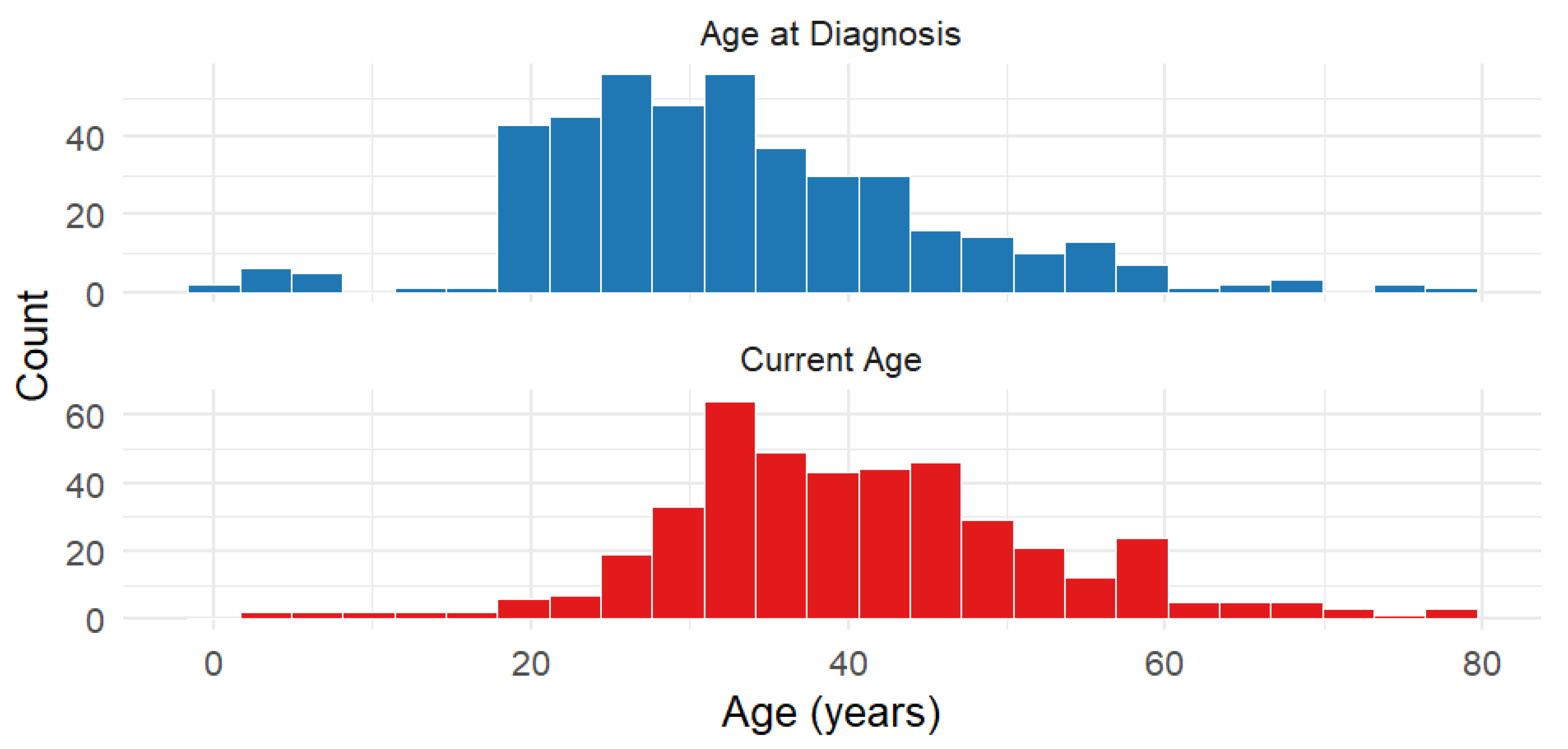
The study cohort comprised 429 HIV-positive patients, with a marked male predominance (n = 303, 70.6%) compared to females (n = 126, 29.4%) as represented in Table 1. The age distribution showed a predominant concentration within the 31–60 years age (n = 327, 76.2%), with a mean current age of 40.5 years (SD ± 11.98) and median of 39 years (IQR 15). A statistically significant age differential was observed between mean age at diagnosis (32.8 years, SD ± 12.17) and current mean age (40.5 years, SD ± 11.98; p < 0.001), indicating a mean survival duration of approximately 7.7 years’ post-diagnosis (Figure 1).
Co-infection surveillance identified hepatitis C virus in 11 patients (2.6%), hepatitis B virus in 11 patients (2.6%), and syphilis in 8 patients (1.9%), with no other documented co-infections. WHO clinical staging at presentation revealed predominant asymptomatic disease, with 288 patients (67.1%) classified as Stage 1, while 39 (9.1%), 40 (9.3%), and 56 (13.1%) patients presented with Stages 2, 3, and 4 respectively (Table 1).

3.2. Transmission Risk Factors

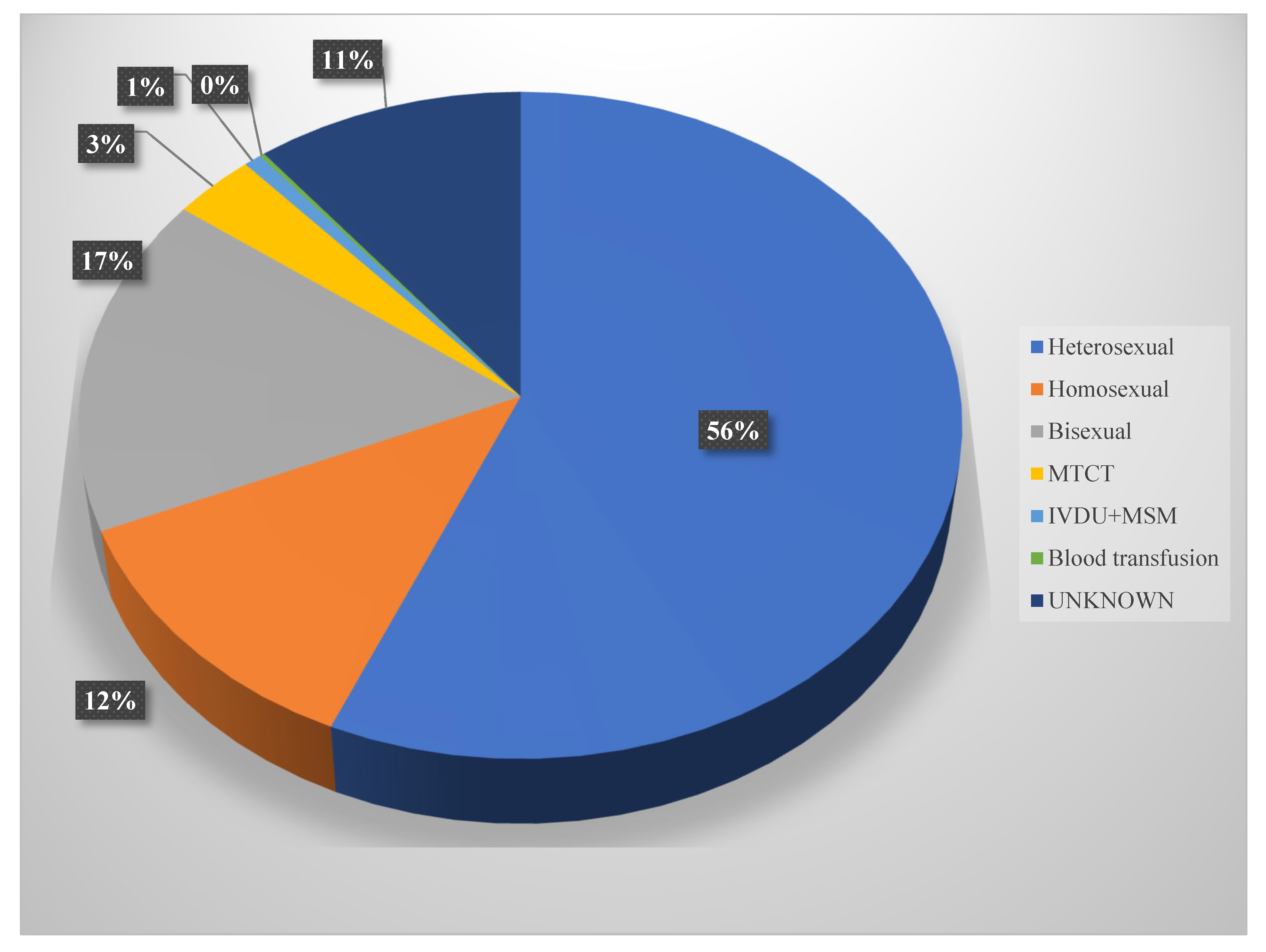
Analysis of HIV transmission routes revealed sexual contact as the predominant mode of acquisition, collectively accounting for 85% of all cases. Among participants who acquired HIV through sexual transmission, the distribution by self-reported sexual orientation was: heterosexual (56%), bisexual (17%), and homosexual/men who have sex with men (MSM, 12%). Mother-to-child transmission (MTCT) accounted for 3% of cases, while transmission through intravenous drug use (IVDU) was negligible (Figure 2).

3.3. Opportunistic Infections and Aids-Defining Conditions

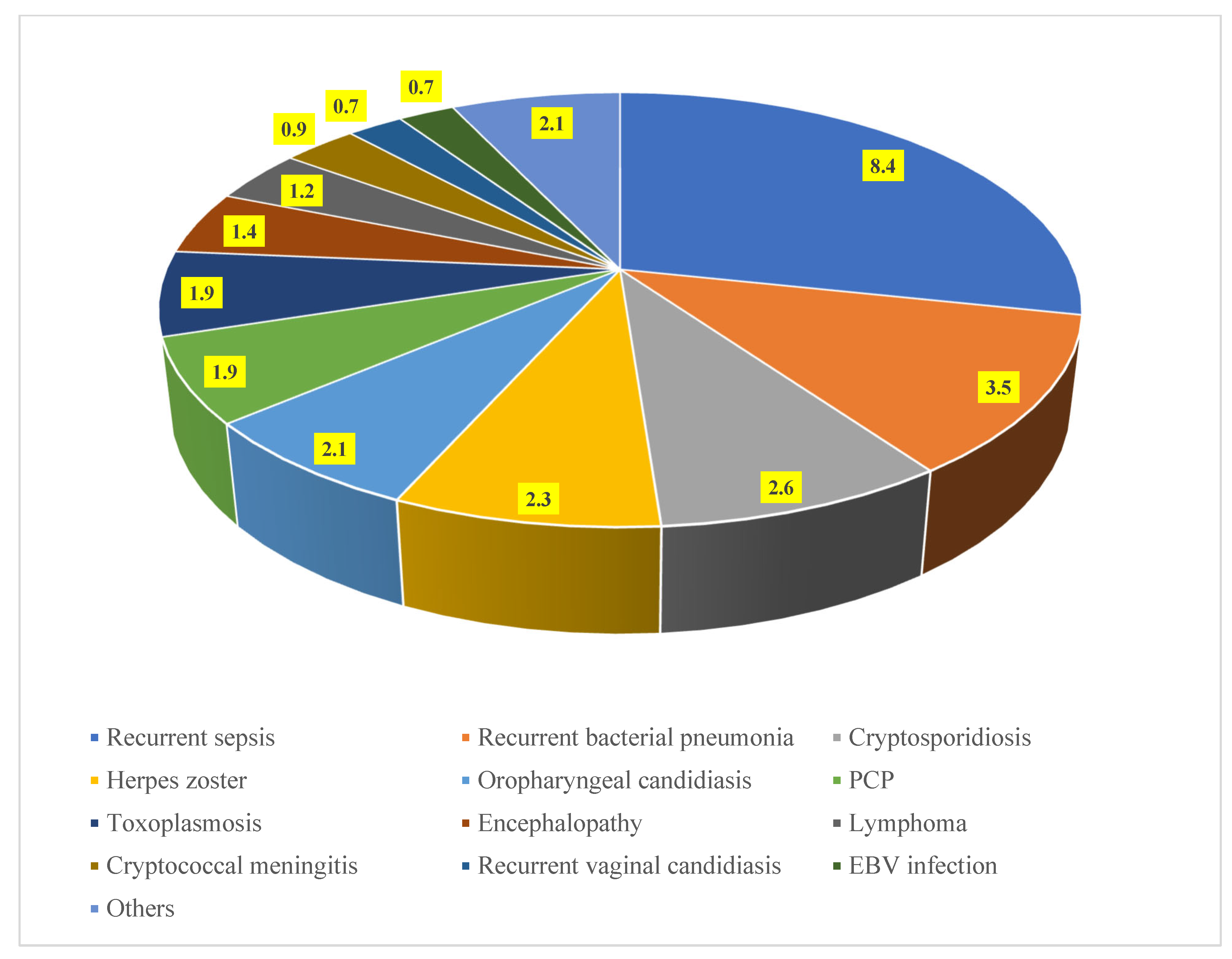
The prevalence of opportunistic infections ranged from 0.7% to 8.4% across different pathological entities (Figure 3). Recurrent sepsis showed the highest prevalence (n = 36, 8.4%), followed by recurrent bacterial pneumonia (n = 15, 3.5%), collectively representing 11.9% of infectious complications. Other significant opportunistic infections included cryptosporidiosis (2.3%), herpes zoster (2.6%), oropharyngeal candidiasis (2.1%), Pneumocystis jirovecii pneumonia (PCP, 1.9%), toxoplasmosis (1.9%), lymphoma (1.2%), cryptococcal meningitis (0.9%), recurrent vaginal candidiasis (0.7%), and Epstein–Barr virus (EBV)-related complications including oral hairy leukoplakia (0.7%). AIDS-defining conditions directly attributable to HIV included HIV-associated encephalopathy (1.4%). Additional opportunistic conditions, including tuberculosis, Kaposi sarcoma, atypical mycobacterial infection, esophageal candidiasis, and Hodgkin’s lymphoma, collectively comprised 2.1% of cases.

3.4. Temporal Trends in Case Detection

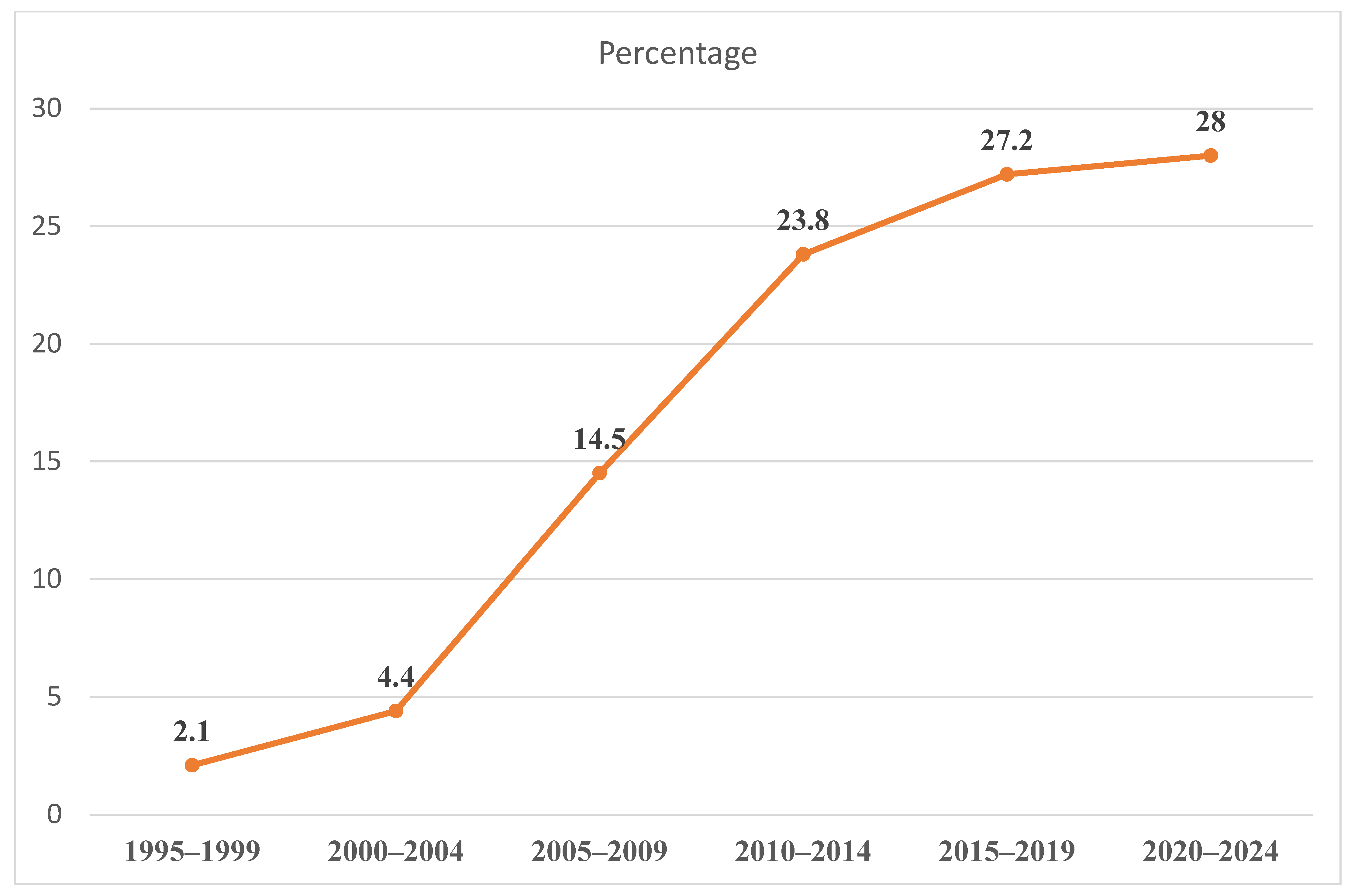
Longitudinal analysis showed a progressive increase in HIV case detection over successive five-year intervals (Figure 4). The earliest period (1995–1999) accounted for 2.1% of cases, with subsequent increases to 4.4% (2000–2004), 14.5% (2005–2009), 23.8% (2010–2014), 27.2% (2015–2019), and 28% (2020–2024). This upward trajectory may reflect enhanced diagnostic capacity, improved surveillance systems, and potentially prolonged survival attributable to therapeutic advances.
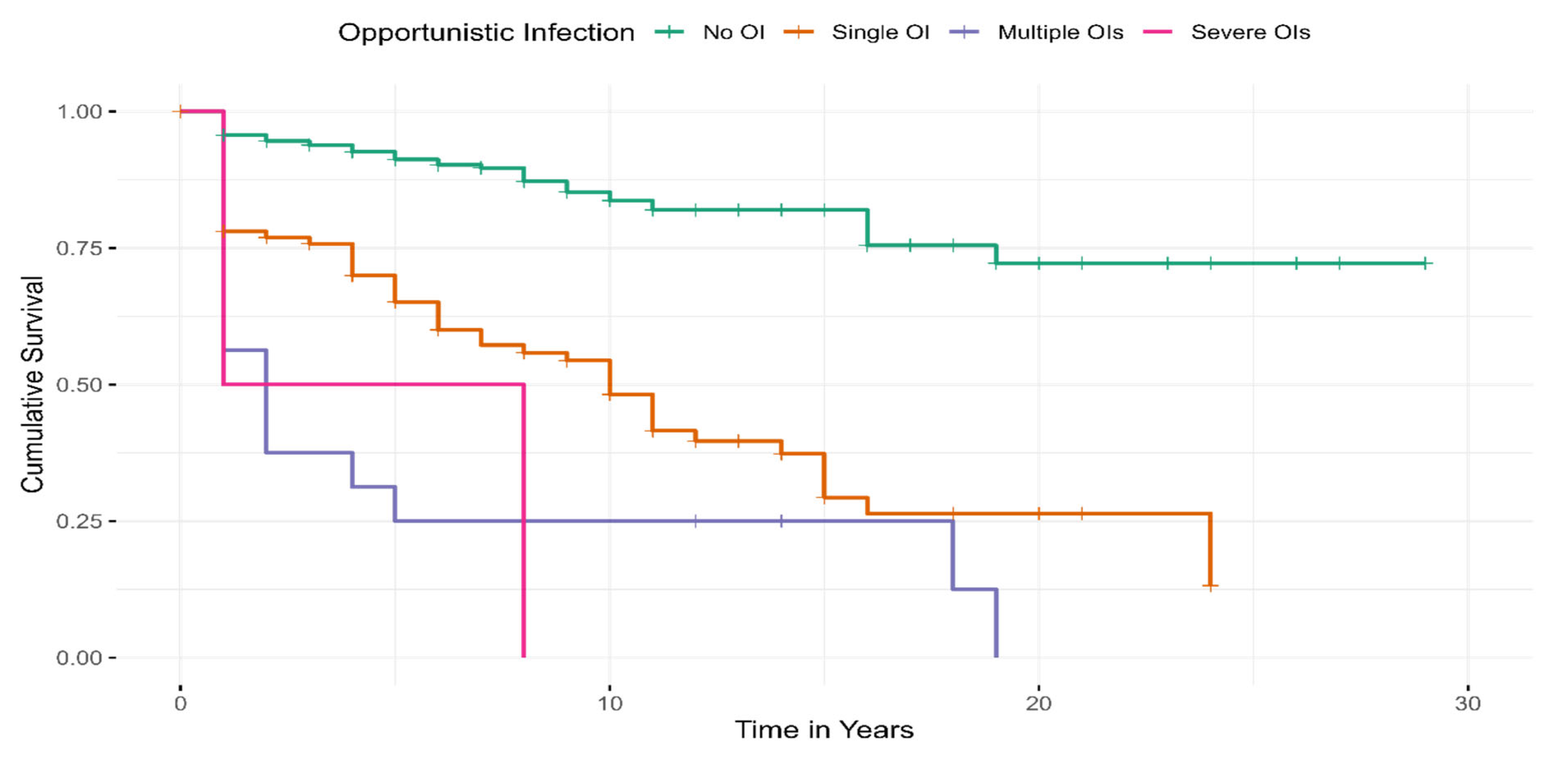
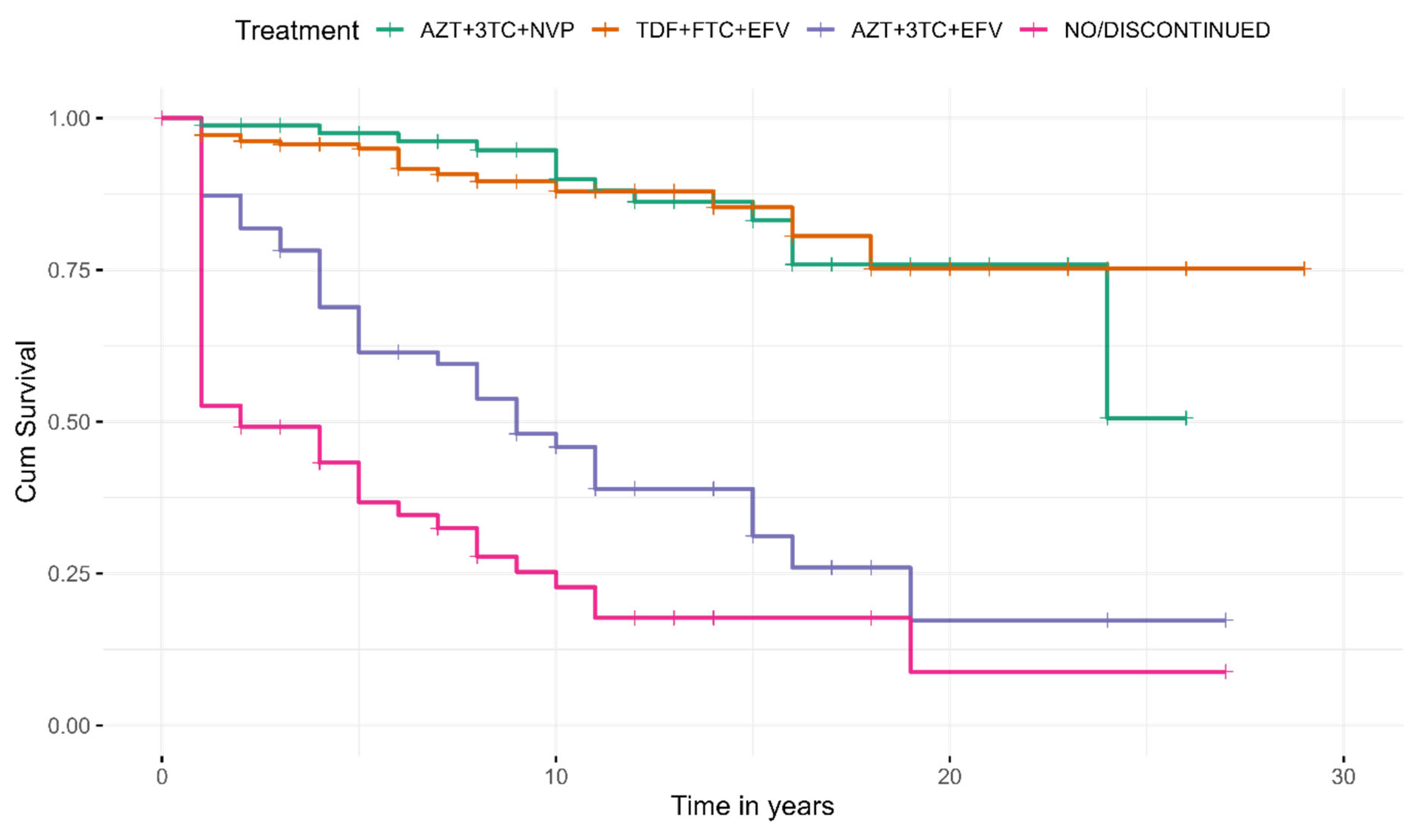
Opportunistic infections (OI) had a definite prognostic implication on the survival of patients. Those without infection survived the best, with even one OI causing the KM curve to steeply veer away (Figure 5). Multiple OIs were associated with poorer survival, with severe OIs causing very short survival among all. Treatment combinations evolving over the years also had a prognostic significance (Figure 6).

3.5. Treatment Regimen Efficacy

Comparative analysis of antiretroviral therapy (ART) regimens showed significant variations in treatment outcomes. The tenofovir disoproxil fumarate + emtricitabine + efavirenz (TDF + FTC + EFV) combination exhibited superior efficacy, with survival curves approaching 75% at 30 years. In contrast, the zidovudine + lamivudine + efavirenz (AZT + 3TC + EFV) regimen showed the poorest performance, with survival probability declining to approximately 15–20% by 20 years, indicating a high treatment failure rate and increased mortality. Patients receiving AZT + 3TC + NVP showed intermediate outcomes. As anticipated, patients who did not initiate or discontinued ART exhibited the worst prognosis, with survival curves showing rapid decline and minimal long-term survival.

3.6. Virological Correlates of Mortality

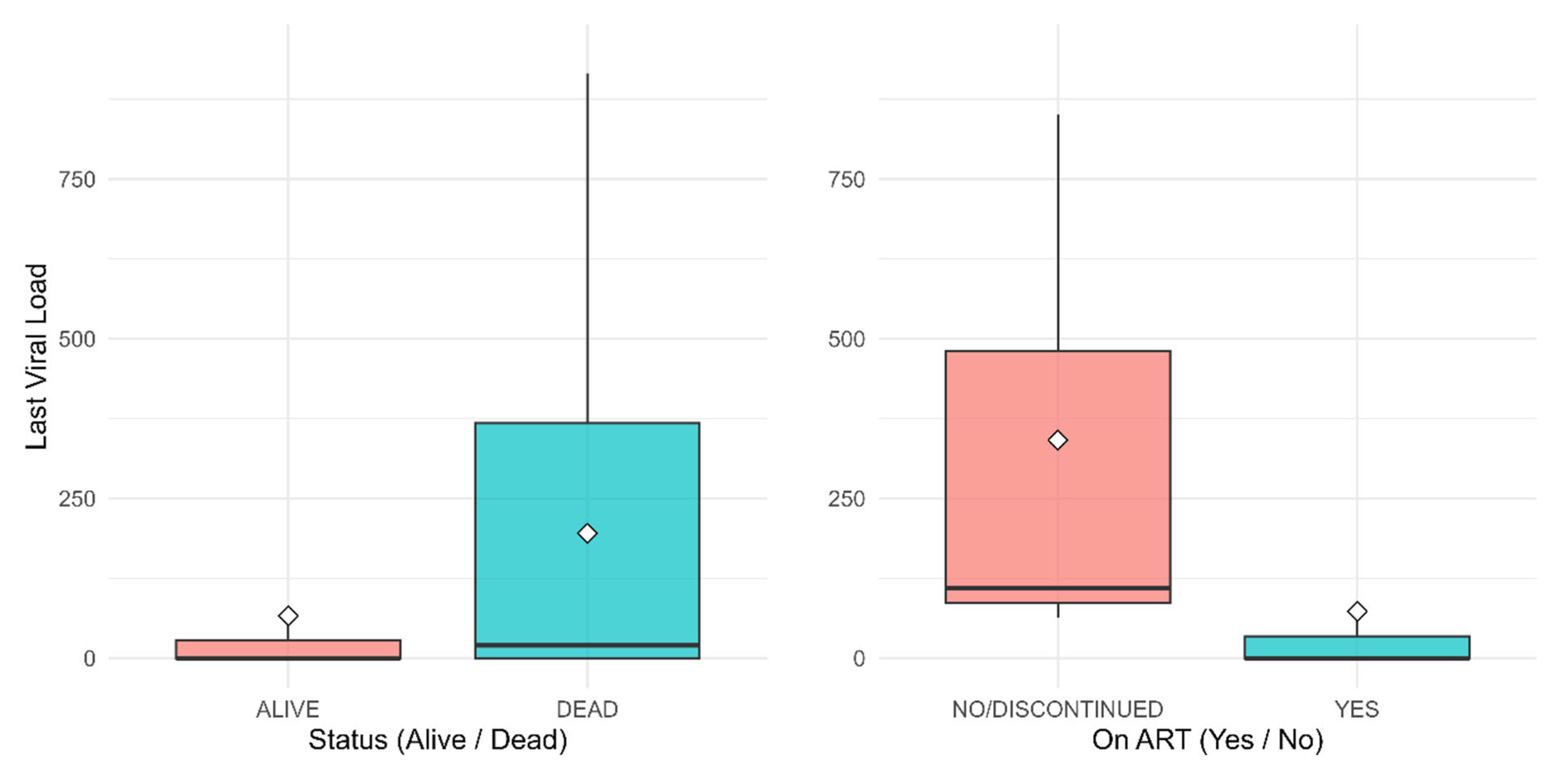
Comparative analysis of final HIV viral loads showed significant differences between outcome groups (Figure 7). Deceased patients exhibited substantially elevated median viral loads (approximately 350 copies/mL, with upper quartile exceeding 500 copies/mL) compared to survivors (median approaching undetectable levels with minimal variance). Similarly, patients who discontinued or never initiated ART showed markedly higher final viral loads (median approximately 350–400 copies/mL) compared to those maintained on continuous therapy (median approaching undetectable levels), underscoring the critical importance of sustained viral suppression for survival.

3.7. Who Clinical Stage and Mortality Risk

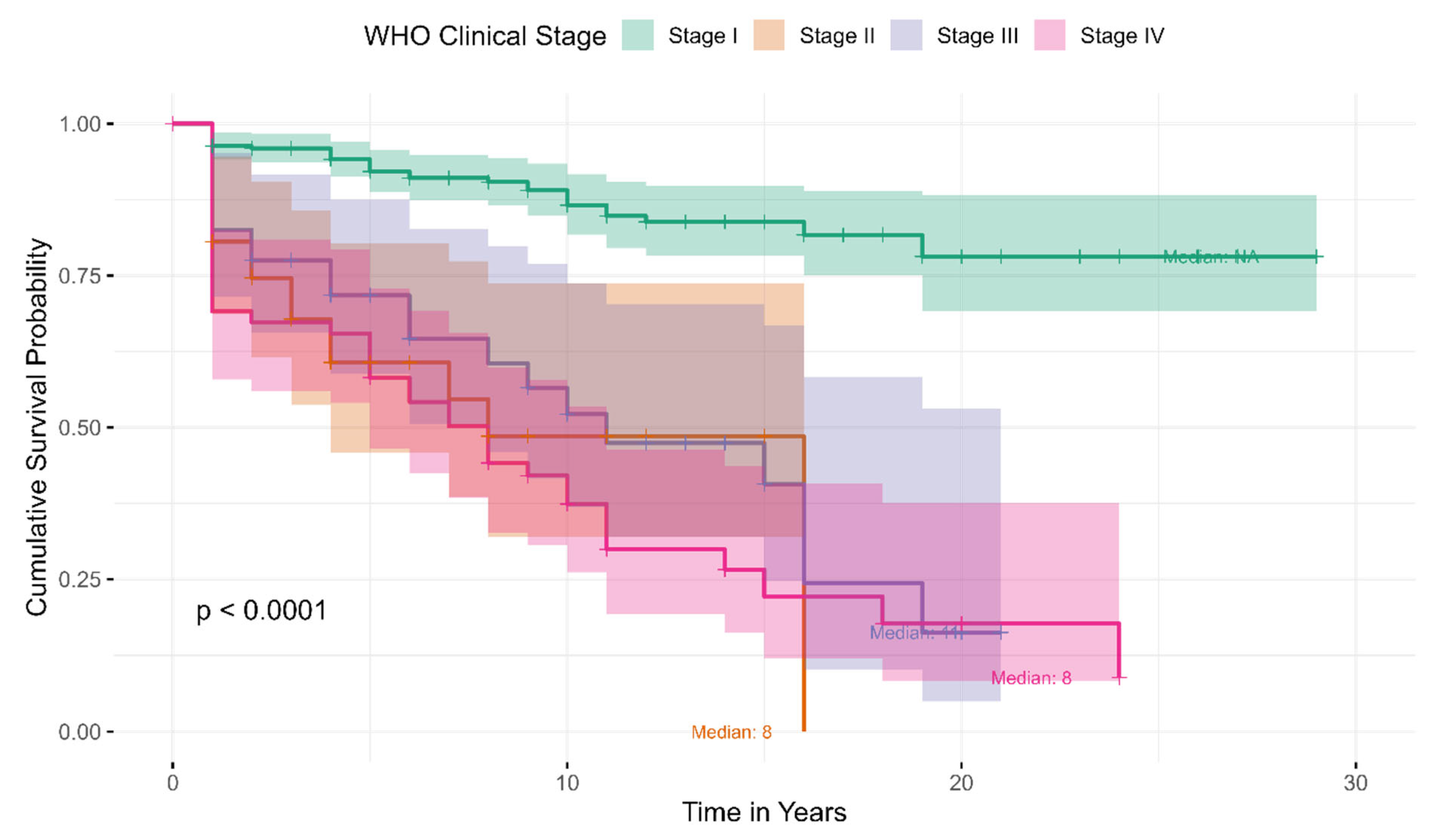
Kaplan–Meier analysis stratified by WHO clinical stage revealed highly significant differences in survival probability (p < 0.0001; Figure 8). Patients classified as WHO Stage 1 showed excellent long-term survival, with approximately 75% surviving beyond 30 years (median survival not reached). Stage 2 patients exhibited intermediate outcomes with median survival approximately 8 years. Patients progressing to WHO Stage 3 showed accelerated mortality, with median survival of approximately 8 years and 50% mortality by 15 years. WHO Stage 4 patients experienced the most severe outcomes, with median survival of approximately 8 years and only 10–15% surviving beyond 20 years. This analysis confirms that disease progression to WHO Stages 3 and 4 confers significantly elevated mortality risk compared to earlier stages (Stages 1 and 2).

4. Discussion

This extensive 30-year retrospective analysis provides essential insights into HIV epidemiology, transmission dynamics, clinical outcomes, and treatment effectiveness in Oman. The observed male predominance (70.6%) aligns with regional trends documented in Kuwait and Saudi Arabia, potentially reflecting cultural influences or gender-specific disparities in healthcare-seeking behavior [7,24]. This gender gap may also indicate under diagnosis in females resulting from sociocultural barriers to HIV testing, especially in conservative nations [25,26]. The mean age at diagnosis (32.8 years) corresponds with peak periods of sexual engagement, highlighting the urgency for targeted interventions during these years [27,28]. This finding highlights the urgent need for age-targeted interventions during their peak sexual activity years. Future strategies must tackle unique regional barriers such as stigma, punitive legal frameworks against key populations, and having the lowest global ART coverage at 50%. Additionally, implementing culturally appropriate prevention programs, including self-testing, community-based methods, and youth-friendly services, is essential to decreasing high rates of late diagnoses that contribute to continued transmission within this demographic [7]. Furthermore, creating awareness among youth regarding the modes of HIV transmission and changing their high-risk behavior plays a vital role in reducing the HIV burden [29].
The predominance of heterosexual transmission (56%) in our cohort is consistent with recent MENA regional studies indicating changing transmission dynamics [30,31]. The low proportion attributed to high-risk groups (e.g., intravenous drug use combined with men who have sex with men, <1%) and the high percentage of unknown transmission modes (11%) suggest significant underreporting, particularly within conservative sociocultural contexts [2,32,33]. This underreporting compromises the accuracy of HIV surveillance, impedes effective resource allocation, and perpetuates stigma, leading to 30–50% lower testing rates among stigmatized groups due to fear of discrimination. To address these gaps, anonymous and confidential testing via digital platforms and community-based organizations has shown success, with such implementations resulting in 2–3 fold increases in case detection among key populations [34]. Future strategies should focus on integrated bio-behavioral surveillance systems, employing respondent-driven sampling and venue-based time-space sampling, along with molecular surveillance technologies and pharmacy-based data integration, to better identify transmission clusters and engage populations avoiding traditional healthcare due to stigma or legal concerns [35].
HIV-positive individuals with high-risk behaviors are at an elevated risk of acquiring sexually transmitted infections (STIs) such as syphilis, and blood-borne infections including HBV and HCV [36,37]. Pre-exposure prophylaxis (PrEP) has emerged as a highly effective HIV prevention strategy for high-risk populations, including MSM, serodiscordant couples, and individuals with multiple sexual partners [38]. Studies have demonstrated that daily oral PrEP with tenofovir-based regimens can reduce HIV acquisition risk by up to 99% when taken consistently, while doxycycline post-exposure prophylaxis has shown efficacy in decreasing syphilis and chlamydia infections [39]. Furthermore, routine STI screenings, integration of pre-exposure prophylaxis, vaccination initiatives, and endeavors toward the triple elimination of mother-to-child transmission are essential public health priorities [40]. Additionally, Effective strategies for mitigating high-risk behaviors in sexually active youth encompass comprehensive behavioral counseling interventions that educate on STI transmission and offer skills training [41]. Harm reduction programs, such as syringe service programs, are helpful for injectable drug users to mitigate the transmission of HIV and hepatitis [42].
The spectrum of opportunistic infections observed in this study differs from cohorts in sub-Saharan Africa, where tuberculosis is generally dominant. The high prevalence of recurrent sepsis (8.4%) and bacterial pneumonia (3.5%) may indicate local antimicrobial resistance patterns and elevated healthcare-associated infection risks [17,43]. These findings underscore the necessity for enhanced infection prevention protocols and antimicrobial stewardship programs aligned with Oman 2040 Vision. Furthermore, health planners must prioritize the implementation of pathogen-specific prophylaxis regimens based on CD4 count [44,45]. The CD4 cell count is critical for determining prophylaxis initiation against OIs, with specific thresholds established for preventing Pneumocystis jirovecii pneumonia (CD4 < 200 cells/μL) and toxoplasmosis (CD4 < 100 cells/μL) [46]. In the present study, we observed missing data of CD4 count in many patients at the time of diagnosis and frequent values thereafter.
Treatment outcome analysis revealed striking efficacy differences between antiretroviral regimens in our study. The superior performance of TDF + FTC + EFV aligns with international data demonstrating its favorable efficacy and tolerability [47,48]. Conversely, the poor outcomes associated with AZT-containing regimens reflect their limitations, including mitochondrial toxicity and inferior virological potency [49]. However, global trends in HIV drug resistance have shown evolving patterns [50]. Therefore, periodic anti-retroviral drug susceptibility surveillance and modifying drug regimen is crucial for effective therapy.
The WHO clinical staging system classifies the progression of HIV disease into four stages based on clinical signs. Stages 3 and 4 represent advanced HIV disease, which is marked by the emergence of certain opportunistic infections and AIDS-defining conditions that are linked to progressive immunosuppression. Clinicians must comprehend these clinical stages to anticipate, prevent, and promptly deal with opportunistic infections, even in circumstances lacking CD4 count or viral load monitoring. This comprehension enables appropriate clinical management and the initiation of prophylaxis solely based on symptomatology [11,51]. In the present study, the strong correlation between baseline WHO stage and long-term survival underscores early diagnosis and treatment initiation’s critical importance [52]. Patients presenting with advanced disease (Stages 3–4) experienced substantially worse outcomes despite ART availability, consistent with global studies demonstrating late presentation’s adverse prognostic impact. This emphasizes expanding HIV testing services and reducing diagnostic delays through community-based screening programs.
Higher baseline HIV viral loads are consistently related with increased mortality risk in HIV-positive persons, with non-survivors often displaying significantly elevated viral loads compared to survivors, reflecting greater immune system damage and disease progression [53]. The substantial viral loads among deceased and treatment-discontinued patients in our study underscores the critical importance of routine viral load monitoring and early antiretroviral therapy initiation to achieve viral suppression, as sustained virologic control is directly linked to improved survival outcomes and reduced AIDS-related mortality.
Our findings have critical implications for Oman’s HIV response within the 2040 Vision framework. The high rates of heterosexual transmission require comprehensive prevention efforts aimed at both the general population and key populations. Additionally, the prevalence of late presenters highlights the need for innovative testing strategies, such as self-testing and community-based approaches, to encourage earlier diagnosis. Optimizing treatment programs should focus on contemporary first-line regimens while enhancing adherence support mechanisms. Future research should delve into molecular epidemiology to clarify transmission networks, evaluate the feasibility of pre-exposure prophylaxis, and investigate long-term complications like cardiovascular and metabolic conditions. By integrating HIV services into primary healthcare, as outlined in Oman 2040, treatment accessibility could increase and stigma could diminish. Furthermore, establishing regional research collaborations would facilitate comparative effectiveness studies and strengthen evidence-based policy development. These findings also hold relevance for other MENA countries experiencing similar epidemiological challenges. The successful treatment outcomes seen with appropriate regimens counter the belief that resource-limited settings face insurmountable prognoses. Our comprehensive survival analysis methodology serves as a replicable framework for assessing HIV program effectiveness across varied contexts.

5. Limitations

Our study has several limitations warranting consideration. Firstly, the retrospective design inherently limits causal inference and may introduce selection bias. Missing data for certain variables, particularly CD4 counts, baseline HIV viral loads at the time of diagnosis, and resistance testing results, precluded comprehensive immunological and virological analyses. Additionally, data on whether the reported antiretroviral regimens represented first-line therapies, information on treatment switches during follow-up and their potential impact on mortality, and the time interval between HIV diagnosis and initiation of antiretroviral therapy were not consistently documented, limiting detailed treatment trajectory analyses. Secondly, the single-center nature, despite serving as a national referral facility, may not fully capture HIV epidemic heterogeneity across all governorates. Thirdly, underreporting of stigmatized transmission routes likely influenced risk factor distribution accuracy. Fourthly, the absence of detailed adherence data limited our ability to distinguish virological failure from poor adherence. Finally, evolving treatment guidelines over the 30-year study period introduced temporal heterogeneity in management approaches. Loss to follow-up, particularly among mobile populations, may have biased survival estimates.

6. Conclusions

This comprehensive retrospective analysis offers important insights into the dynamics of the HIV epidemic in Oman over the past two decades. The study identifies shifting transmission patterns, specifically the predominance of heterosexual contact, a significant burden of late clinical presentations, and variability in treatment outcomes linked to the selection of antiretroviral regimens. Key determinants for favorable long-term survival include early diagnosis, timely initiation of contemporary regimens, and sustained viral suppression. The analysis highlights the urgent need for expanded HIV testing services, improved surveillance systems, and optimized treatment protocols adhering to international guidelines. Integrating these evidence-based strategies into Oman’s Vision 2040 framework is crucial for enhancing HIV prevention and treatment outcomes. The documented feasibility of achieving excellent long-term survival with appropriate management dispels fatalistic views regarding HIV and underscores the importance of investing in comprehensive care programs.

Author Contributions

Conceptualization, M.B.S. and V.N.; Data Curation, R.A.; Formal Analysis, R.A.; Funding Acquisition, M.B.S.; Investigation, M.B.S., V.N., S.A.-M., E.S.A.-R., M.H., C.D. and K.A.-H.; Methodology, M.B.S., V.N. and R.A.; Project Administration, M.B.S.; Resources, M.B.S., M.H., C.D. and K.A.-H.; Software, R.A.; Supervision, M.B.S., S.A.-M., V.N., C.D., M.H. and E.S.A.-R.; Validation, M.B.S., R.A., C.D. and K.A.-H.; Visualization, M.B.S., R.A., C.D. and M.H. All authors have read and agreed to the published version of the manuscript.

Funding

The authors declare that this research study was conducted without any external financial support or funding.

Institutional Review Board Statement

The study received approval from Centre for Research Studies which is the Research Ethical Review and Approval Committee of the Ministry of Health, Oman (Approval No: MOH/CSR/23/2572/31-10-2023 Requirement for patient consent was waived owing to the retrospective study design and use of de-identified data. The study adhered to the principles of the Declaration of Helsinki, 2013.

Data Availability Statement

Data collected for this study may be made available on request. Data archive will be held at Mohan’s office, College of Medicine and Health Sciences, Sohar. Requests can be sent to drmohan123@gmail.com.

Acknowledgments

Authors express sincere gratitude to the dean of the college of medicine and health sciences, National University, and the director of Sohar hospital for their continued support and helping us to complete the study.

Conflicts of Interest

The authors declare no conflicts of interest.

References

  1. World Health Organization. HIV and AIDS; World Health Organization: Geneva, Switzerland, 2025; Available online: https://www.who.int/news-room/fact-sheets/detail/hiv-aids (accessed on 2 October 2025).
  2. Karbasi, A.; Fordjuoh, J.; Abbas, M.; Iloegbu, C.; Patena, J.; Adenikinju, D.; Vieira, D.; Gyamfi, J.; Peprah, E. An Evolving HIV Epidemic in the Middle East and North Africa (MENA) Region: A Scoping Review. Int. J. Environ. Res. Public Health 2023, 20, 3844. [Google Scholar] [CrossRef]
  3. Shakiba, E.; Ramazani, U.; Mardani, E.; Rahimi, Z.; Nazar, Z.M.; Najafi, F.; Moradinazar, M. Epidemiological features of HIV/AIDS in the Middle East and North Africa from 1990 to 2017. Int. J. STD AIDS 2021, 32, 257–265. [Google Scholar] [CrossRef]
  4. Awaidy, S.A.; Ghazy, R.M.; Mahomed, O. Progress of the Gulf Cooperation Council (GCC) Countries Towards Achieving the 95-95-95 UNAIDS Targets: A Review. J. Epidemiol. Glob. Health 2023, 13, 397–406. [Google Scholar] [CrossRef]
  5. Sallam, M.; Al-Khatib, A.O.; Sabra, T.; Al-Baidhani, S.; Al-Mahzoum, K.; Aleigailly, M.A.; Sallam, M. Challenges in Elucidating HIV-1 Genetic Diversity in the Middle East and North Africa: A Review Based on a Systematic Search. Viruses 2025, 17, 336. [Google Scholar] [CrossRef]
  6. Joint United Nations Programme on HIV/AIDS (UNAIDS). Middle East and North Africa—Regional Factsheet; UNAIDS: Geneva, Switzerland, 2025; Available online: https://thepath.unaids.org/wp-content/themes/unaids2023/assets/files/regional_fs_east_north_africa.pdf (accessed on 2 October 2025).
  7. Elgalib, A.; Shah, S.; Al-Habsi, Z.; Al-Fouri, M.; Lau, R.; Al-Rawahi, B.; Al-Abri, S. Recent Increase in HIV cases in Oman. Sultan Qaboos Univ. Med. J. 2023, 23, 285–287. [Google Scholar] [CrossRef]
  8. Santoso, D.; Asfia, S.K.; Mello, M.B.; Baggaley, R.C.; Johnson, C.C.; Chow, E.P.; Fairley, C.K.; Ong, J.J. HIV prevalence ratio of international migrants compared to their native-born counterparts: A systematic review and meta-analysis. eClinicalMedicine 2022, 53, 101661. [Google Scholar] [CrossRef]
  9. Shaw, M.L. Part 1: Addressing migrant workers’ vulnerability to HIV. Am. J. Manag. Care 2024, 30, S343–S346. [Google Scholar]
  10. Elgalib, A.; Shah, S.; Al-Habsi, Z.; Al-Fouri, M.; Lau, R.; Al-Kindi, H.; Al-Rawahi, B.; Al-Abri, S. The cascade of HIV care in Oman, 2015-2018: A population-based study from the Middle East. Int. J. Infect. Dis. 2020, 90, 28–34. [Google Scholar] [CrossRef]
  11. Lourinho, J.; Miguel, M.J.; Gonçalves, F.; Vale, F.; Franco, C.S.; Marques, N. Missed Opportunities for HIV Diagnosis and Their Clinical Repercussions in the Portuguese Population—A Cohort Study. Pathogens 2024, 13, 683. [Google Scholar] [CrossRef]
  12. Ford, N.; Migone, C.; Calmy, A.; Kerschberger, B.; Kanters, S.; Nsanzimana, S.; Mills, E.J.; Meintjes, G.; Vitoria, M.; Doherty, M.; et al. Benefits and risks of rapid initiation of antiretroviral therapy. AIDS 2018, 32, 17–23. [Google Scholar] [CrossRef] [PubMed]
  13. World Health Organization. Updated Recommendations on HIV Prevention, Infant Diagnosis, Antiretroviral Initiation and Monitoring: March 2021; World Health Organization: Geneva, Switzerland, 2021; Available online: https://apps.who.int/iris/bitstream/handle/10665/340190/9789240022232-eng.pdf (accessed on 2 October 2025).
  14. Khodadad, N.; Hashempour, A.; Nazar, M.M.K.A.; Ghasabi, F. Evaluating HIV drug resistance in the middle East and North Africa and its associated factors: A systematic review. Virol. J. 2025, 22, 112. [Google Scholar] [CrossRef]
  15. Al Dhahry, S.H.; Scrimgeour, E.M.; Al Suwaid, A.R.; Al Lawati, M.R.; El Khatim, H.S.; Al Kobaisi, M.F.; Merigan, T.C. Human immunodeficiency virus type 1 infection in Oman: Antiretroviral therapy and frequencies of drug resistance mutations. AIDS Res. Hum. Retroviruses 2004, 20, 1166–1172. [Google Scholar] [CrossRef]
  16. Puplampu, P.; Asafu-Adjaye, O.; Harrison, M.; Tetteh, J.; Ganu, V.J. Opportunistic Infections among newly diagnosed HIV patients in the largest tertiary facility in Ghana. Ann. Glob. Health 2024, 90, 13. [Google Scholar] [CrossRef]
  17. Aemiro, A.; Girma, A.; Beletew, D. Prevalence of Opportunistic Infections and Determinants Among HIV-Positive Patients in Ethiopia: A Systematic Review and Meta-Analysis. Health Sci. Rep. 2025, 8, e70418. [Google Scholar] [CrossRef]
  18. de Figueiredo, I.R.; Martins, M.; Midões, C.; Ferrão, J.B. Opportunistic Infections in the Immunocompromised: Hiv Vs Non-Hiv Patients—A Narrative Review. Med. Res. Arch. 2022, 10. [Google Scholar] [CrossRef]
  19. Barry, M. TB Incidence Trends in the Kingdom of Saudi Arabia within the GCC, EMR, and MENA Regions, to Achieve the WHO and UN’s SDG End TB Strategy Targets. J. Epidemiol. Glob. Health 2025, 15, 96. [Google Scholar] [CrossRef] [PubMed]
  20. Osman, M.; Al Bikai, A.; Rafei, R.; Mallat, H.; Dabboussi, F.; Hamze, M. Update on invasive fungal infections in the Middle Eastern and North African region. Braz. J. Microbiol. 2020, 51, 1771–1789. [Google Scholar] [CrossRef] [PubMed]
  21. Kaplan, S.; Nteso, K.S.; Ford, N.; Boulle, A.; Meintjes, G. Loss to follow-up from antiretroviral therapy clinics: A systematic review and meta-analysis of published studies in South Africa from 2011 to 2015. S. Afr. J. HIV Med. 2019, 20, a984. [Google Scholar] [CrossRef] [PubMed]
  22. Chen, H.; Tao, R.; Wu, L.; Chen, C.; He, J. Rapid antiretroviral therapy and treatment outcomes among people living with HIV: Exploring the mediating roles of medication adherence. Front. Public Health 2024, 12, 1420609. [Google Scholar] [CrossRef]
  23. Zerihun, E.; Tesema, K.; Abera, F. Virological treatment failure and associated factors among adults on first-line antiretroviral therapy in West Hararghe, Ethiopia. Front. Public Health 2025, 13, 1440504. [Google Scholar] [CrossRef]
  24. Abu-Raddad, L.J.; Akala, F.A.; Semini, I.; Riedner, G.; Wilson, D.; Tawil, O. HIV in the Middle East and North Africa: Cultural and political challenges. Int. J. Infect. Dis. 2016, 44, 142–146. [Google Scholar] [CrossRef]
  25. Suzuki, K.; Ochiai, R.; Opiyo, R.O.; Tokunaga, Y.; Imazu, Y.; Watabe, S. Gender differences in HIV testing service visits and its related factors among adults: A cross-sectional study in Homa Bay, Kenya. Pan Afr. Med. J. 2021, 40, 217. [Google Scholar] [CrossRef]
  26. Katirayi, L.; Maphosa, T.; Chilikutali, L.; Chamanga, R.K.; Petersson, J.; Khatib, S.; Munthali, B.; Nyirenda, R.; Matiya, E.; Nyirenda, L.; et al. Understanding gender differences of people with HIV newly diagnosed or returning to care with advanced HIV disease in Malawi: A qualitative study. BMC Public Health 2023, 23, 2382. [Google Scholar] [CrossRef] [PubMed]
  27. Mitsch, A.; Singh, S.; Li, J.; Balaji, A.; Linley, L.; Selik, R. Age-Associated Trends in Diagnosis and Prevalence of Infection with HIV Among Men Who Have Sex with Men—United States, 2008–2016. MMWR Morb. Mortal. Wkly. Rep. 2018, 67, 1025–1031. [Google Scholar] [CrossRef] [PubMed]
  28. United Nations Children’s Fund (UNICEF). Ending the AIDS Epidemic Among Young People in the Middle East and North Africa. Middle East & North Africa Regional Office. 30 May 2024. Available online: https://www.unicef.org/mena/reports/ending-aids-epidemic-among-young-people. (accessed on 25 September 2025).
  29. Srivastava, S.; Chauhan, S.; Patel, R.; Kumar, P. A study of awareness on HIV/AIDS among adolescents: A Longitudinal Study on UDAYA data. Sci. Rep. 2021, 11, 22841. [Google Scholar] [CrossRef]
  30. Li, R.; Gao, Y.; Song, T.; Li, N.; Deng, R.; Jiao, F.; Yan, C.; Chen, Y. Global and regional molecular epidemiology of HIV-1 among men who have sex with men: A systematic review and meta-analysis. AIDS Res. Ther. 2025, 22, 86. [Google Scholar] [CrossRef]
  31. Khamis, F.; Al Noamani, J.; Al Naamani, H.; Al-Zakwani, I. Epidemiological and Clinical Characteristics of HIV Infected Patients at a Tertiary Care Hospital in Oman. Oman Med. J. 2018, 33, 291–298. [Google Scholar] [CrossRef] [PubMed]
  32. Joint United Nations Programme on HIV/AIDS (UNAIDS). The Path That Ends AIDS: 2024 UNAIDS Global AIDS Update; UNAIDS: Geneva, Switzerland, 2024. [Google Scholar]
  33. Sulistina, D.R.; Martini, S.; Prasetyo, B.; Rahman, F.S.; Adji, A.S.; Li, C.Y.; Lusida, M.I. A systematic review and meta-analysis of HIV transmission risk behaviors, genetic variations, and antiretroviral (ARV) resistance in LGBT populations. J. Public Health Res. 2024, 13, 22799036241239464. [Google Scholar] [CrossRef]
  34. Kee, M.K.; Yoo, M.; Seong, J.; Choi, J.Y.; Han, M.G.; Lee, J.S.; Jee, Y.; Kim, K.; Kim, S.S.; Kang, C. Influence of anonymous HIV testing on national HIV surveillance in the Republic of Korea (2000 to 2015): A retrospective analysis. BMC Public Health 2019, 19, 1563. [Google Scholar] [CrossRef]
  35. World Health Organization Regional Office for the Eastern Mediterranean (WHO EMRO). HIV Surveillance in the Eastern Mediterranean Region: Progress and Challenges; WHO EMRO: Cairo, Egypt, 2023. [Google Scholar]
  36. Amanzo-Vargas, M.P.; Arellano-Veintemilla, T.; González-Lagos, E.; Echevarría, J.; Mejía, F.; Graña, A.; Gotuzzo, E. Socio-Demographic, Clinical, and Mortality Differences between HIV-Infected and HIV/HTLV-1 Co-Infected Patients in Peru. Pathogens 2023, 12, 869. [Google Scholar] [CrossRef]
  37. Edwards, R.J.; Todd, S.; Edwards, J.; Jack, N.; Boyce, G. Prevalence of HTLV-1 and Hepatitis B Surface Antigen (HBsAg) Positivity among MSM Attending a Large HIV Treatment Centre in Trinidad. Viruses 2024, 16, 1169. [Google Scholar] [CrossRef]
  38. Wu, T.-Y.; Lin, K.-Y.; Su, L.-H.; Sun, H.-Y.; Huang, Y.-S.; Liu, W.-D.; Liu, W.-C.; Chang, L.-H.; Chang, S.-Y.; Hung, C.-C. Sexually transmitted coinfections among at-risk HIV-positive MSM: Implications for optimal preemptive treatment. Front. Med. 2024, 11, 1328589. [Google Scholar] [CrossRef]
  39. Bachmann, L.H.; Barbee, L.A.; Chan, P.; Reno, H.; Workowski, K.A.; Hoover, K.; Mermin, J.; Mena, L. CDC Clinical Guidelines on the Use of Doxycycline Postexposure Prophylaxis for Bacterial Sexually Transmitted Infection Prevention, United States, 2024. MMWR Recomm. Rep. 2024, 73, 1–8. [Google Scholar] [CrossRef] [PubMed]
  40. World Health Organization. New Report Flags Major Increase in Sexually Transmitted Infections, Amidst Challenges in HIV and Hepatitis. 21 May 2024. Available online: https://www.who.int/news/item/21-05-2024-new-report-flags-major-increase-in-sexually-transmitted-infections---amidst-challenges-in-hiv-and-hepatitis (accessed on 2 October 2025).
  41. U.S. Preventive Services Task Force. Behavioral counseling interventions to prevent sexually transmitted infections: U.S. Preventive Services Task Force recommendation statement. JAMA 2020, 324, 674–681. [Google Scholar] [CrossRef] [PubMed]
  42. World Health Organization Regional Office for the Eastern Mediterranean (WHO EMRO). Drug-Related Harm Reduction [Internet]. 2025. Available online: https://www.emro.who.int/asd/health-topics/drug-related-harm-reduction.html (accessed on 2 October 2025).
  43. Assefa, M.; Amare, A.; Tigabie, M.; Girmay, G.; Setegn, A.; Wondmagegn, Y.M.; Tamir, M.; Belete, D.; Aynalem, M.; Belachew, T.; et al. Burden of multidrug-resistant bacteria among HIV-positive individuals in Ethiopia: A systematic review and meta-analysis. PLoS ONE 2024, 19, e0309418. [Google Scholar] [CrossRef]
  44. Anyimadu, H.; Pingili, C.; Sivapalan, V.; Hirsch-Moverman, Y.; Mannheimer, S. The Impact of Absolute CD4 Count and Percentage Discordance on Pneumocystis Jirovecii Pneumonia Prophylaxis in HIV-Infected Patients. J. Int. Assoc. Provid. AIDS Care 2018, 17, 2325958218759199. [Google Scholar] [CrossRef]
  45. Federal HIV/AIDS Prevention & Control Office. HIV/AIDS National Strategic Plan for Ethiopia 2021–2025; FHAPCO: Addis Ababa, Ethiopia, 2021; Available online: https://www.prepwatch.org/wp-content/uploads/2022/07/Ethiopia-HIVAIDS-National-Strategic-Plan-2021-25.pdf (accessed on 2 October 2025).
  46. Spach, D.H. Opportunistic Infections: Prevention. Module 4: Co-Occurring Conditions; Lesson 2. In National HIV Curriculum; University of Washington: Seattle, WA, USA, 2025; Available online: https://www.hiv.uw.edu/go/co-occurring-conditions/opportunistic-infections-prevention/core-concept/all (accessed on 2 October 2025).
  47. Terefe, A.; Feyissa, M.; Shibeshi, W. Treatment outcomes of tenofovir versus zidovudine-based first-line antiretroviral therapy regimens at Zewditu Memorial Hospital: A retrospective cohort study. J. AIDS HIV Res. 2020, 12, 45–54. [Google Scholar] [CrossRef]
  48. Dadi, T.L.; Kefale, A.T.; Mega, T.A.; Kedir, M.S.; Addo, H.A.; Biru, T.T. Efficacy and Tolerability of Tenofovir Disoproxil Fumarate Based Regimen as Compared to Zidovudine Based Regimens: A Systematic Review and Meta-Analysis. AIDS Res. Treat. 2017, 2017, 5792925. [Google Scholar] [CrossRef]
  49. Margolis, A.M.; Heverling, H.; Pham, P.A.; Stolbach, A. A review of the toxicity of HIV medications. J. Med. Toxicol. 2014, 10, 26–39. [Google Scholar] [CrossRef]
  50. Chen, X.; Chen, X.; Lai, Y. Development and emerging trends of drug resistance mutations in HIV: A bibliometric analysis based on CiteSpace. Front. Microbiol. 2024, 15, 1374582. [Google Scholar] [CrossRef]
  51. World Health Organization. Consolidated Guidelines on the Use of Antiretroviral Drugs for Treating and Preventing HIV Infection: Recommendations for a Public Health Approach, 2nd ed.; World Health Organization: Geneva, Switzerland, 2016. Available online: https://www.ncbi.nlm.nih.gov/books/NBK374293/ (accessed on 25 October 2025).
  52. Cosentino, F.; Marino, A.; Anile, L.; Moscatt, V.; Gussio, M.; Boscia, V.; Bruno, R.; Nunnari, G.; Pulvirenti, A.; Privitera, G.F.; et al. Long-Term Survivors in a Cohort of People Living with HIV Diagnosed between 1985 and 1994: Predictive Factors Associated with More Than 25 Years of Survival. Infect. Dis. Rep. 2023, 15, 70–83. [Google Scholar] [CrossRef] [PubMed]
  53. Zhao, F.; Yuan, D.; Liu, S.; Liu, Y.; Yan, H.; Liu, L.; Li, L.; Moog, C.; Wang, B.; Su, B. Association between baseline HIV-1 DNA levels and clinical outcomes in people living with HIV: A meta-analysis of cohort studies. Emerg. Microbes Infect. 2025, 14, 2508759. [Google Scholar] [CrossRef] [PubMed]
Figure 1. Comparative Age Distribution of HIV Patients: At Diagnosis vs. Current Age.
Sci 08 00016 g001
Figure 2. Risk factors for HIV transmission. Abbreviations: MTCT: Mother-to-child-transmission, IVDU: Intravenous drug use. MSM: Men who have sex with men.
Sci 08 00016 g002
Figure 3. Opportunistic infections/conditions in HIV patients (%). Abbreviations: PCP: Pneumocystis jirovecii pneumonia, EBV: Epstein–Barr Virus.
Sci 08 00016 g003
Figure 4. Year-wise distribution of HIV cases (%).
Sci 08 00016 g004
Figure 5. Kaplan–Meier Survival Analysis Stratified by Opportunistic Infection Burden.
Sci 08 00016 g005
Figure 6. Comparative Survival Analysis by Antiretroviral Therapy Regimen.
Sci 08 00016 g006
Figure 7. Virological Correlates of Mortality.
Sci 08 00016 g007
Figure 8. WHO Clinical Stage and Mortality Risk.
Sci 08 00016 g008
Table 1. Demographic and clinical characteristics.
Demographic Characteristics Number Percentage
Variable
Gender distribution
  Male30370.6
  Female12629.4
Age distribution
  0–30 years8118.9
  31–60 years32776.2
  >60 years214.9
  Mean age and SD40.511.98
  Median age and IQR3915
Coinfections
  Hepatitis C112.6
  Hepatitis B112.6
  Syphilis81.9
  Others00
WHO Staging of HIV
  Stage 1 (Asymptomatic)28867.1
  Stage 2 (Mild symptomatic) 399.1
  Stage 3 (advanced symptomatic disease)409.3
  Stage 4 (Severe symptomatic disease)5613.1
Disclaimer/Publisher’s Note: The statements, opinions and data contained in all publications are solely those of the individual author(s) and contributor(s) and not of MDPI and/or the editor(s). MDPI and/or the editor(s) disclaim responsibility for any injury to people or property resulting from any ideas, methods, instructions or products referred to in the content.