
Article

Impact of Pseudo-Random Number Generators on Dosimetric Parameters in Validation of Medical Linear Accelerator Head Simulation for 6 MV Photons Using the GATE/GEANT4 Platform

1
Subatomic Research and Applications Team, Laboratory of the Physics of Condensed Matter (LPMC-ERSA), Faculty of Sciences Ben M’Sick, Hassan II University, Casablanca BP 7955, Morocco
2
Laboratory of Sciences and Health Technologies, High Institute of Health Sciences (ISSS), Hassan I University, Settat BP 555, Morocco
3
Faculty of Medicine and Pharmacy, Hassan II University, Casablanca BP 9154, Morocco
*
Author to whom correspondence should be addressed.
Quantum Beam Sci. 2025, 9(2), 16; https://doi.org/10.3390/qubs9020016
Submission received: 7 December 2024 / Revised: 22 March 2025 / Accepted: 21 April 2025 / Published: 5 May 2025
(This article belongs to the Section Radiation Scattering Fundamentals and Theory)

Abstract

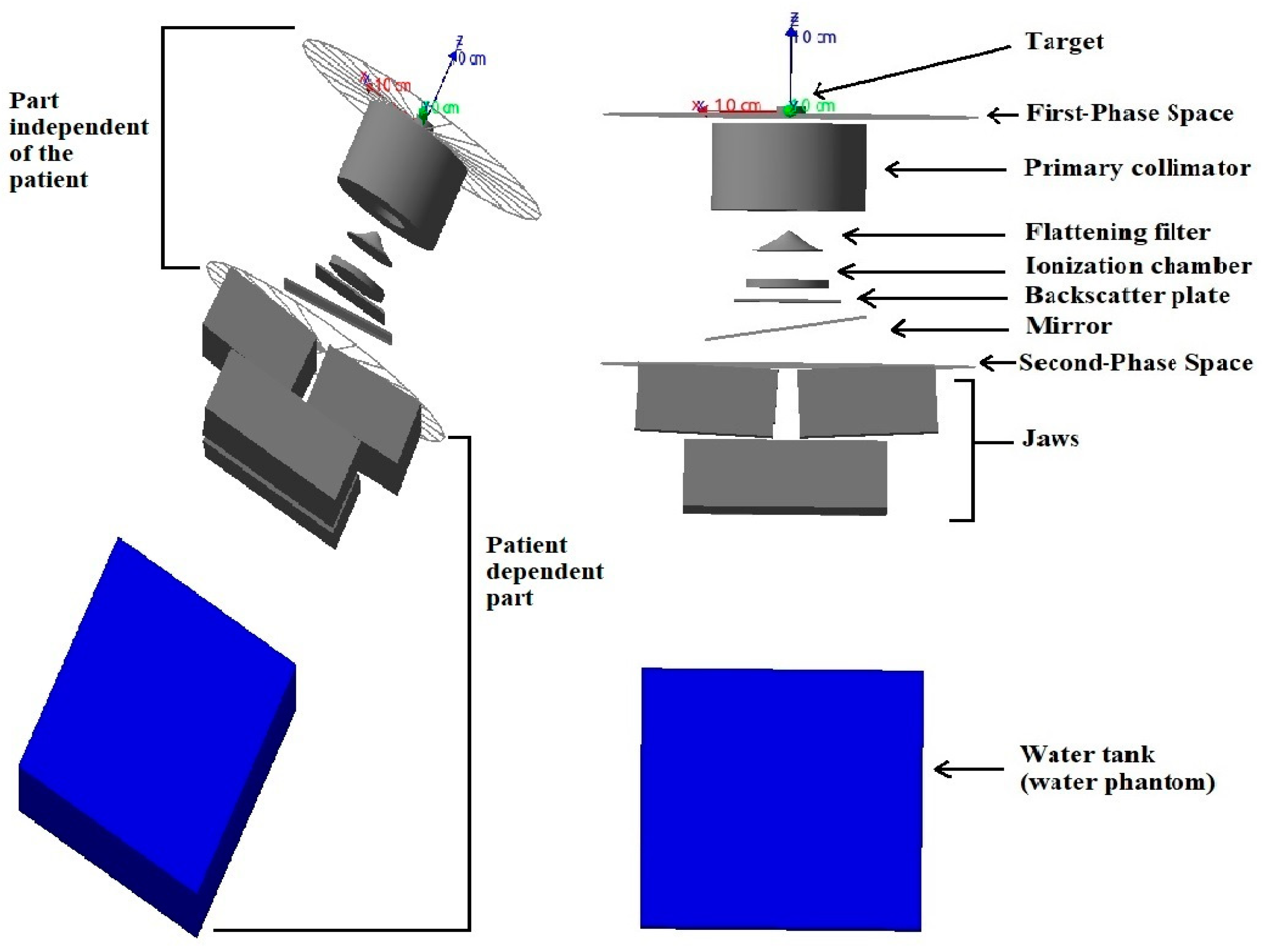
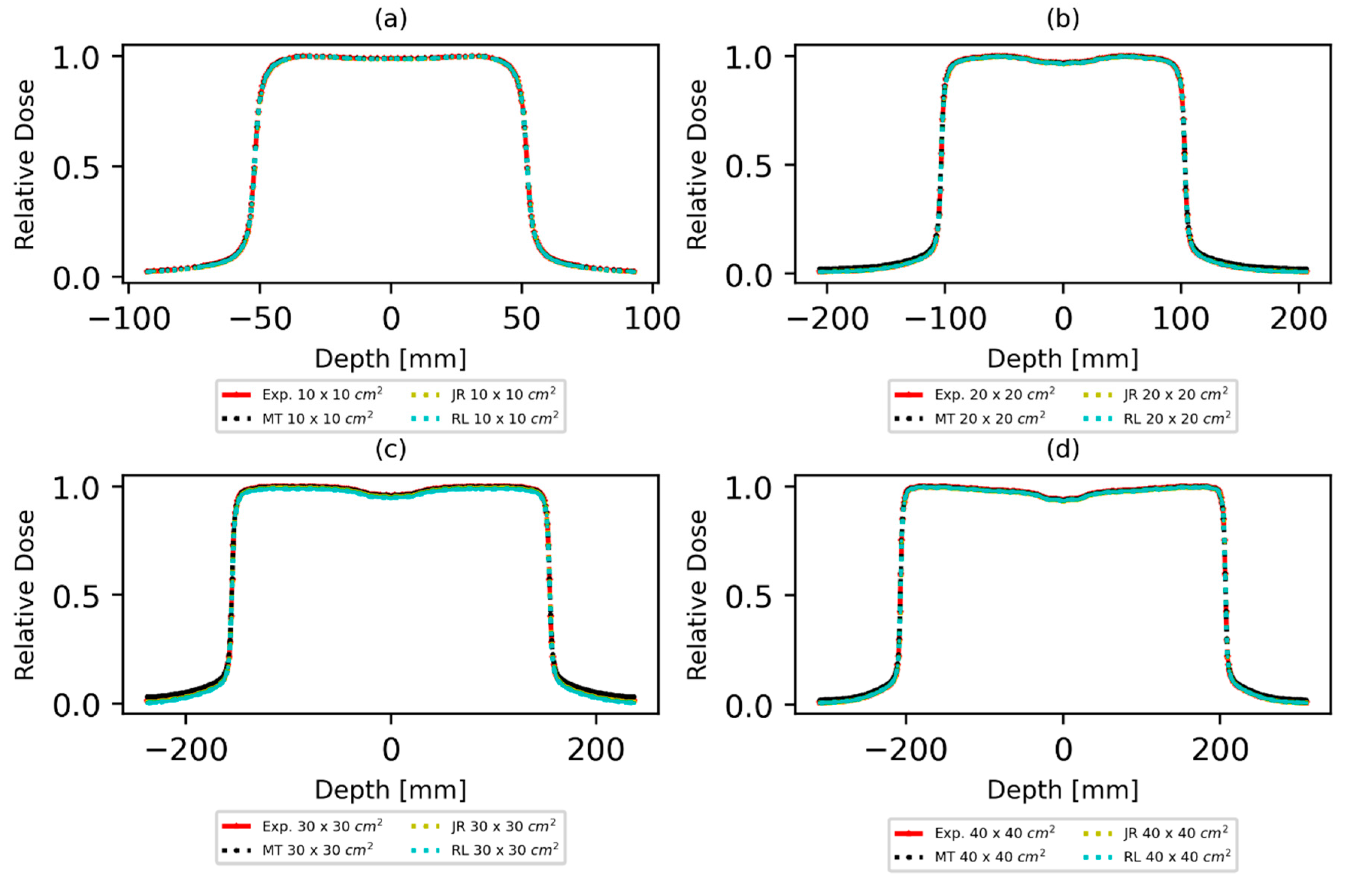
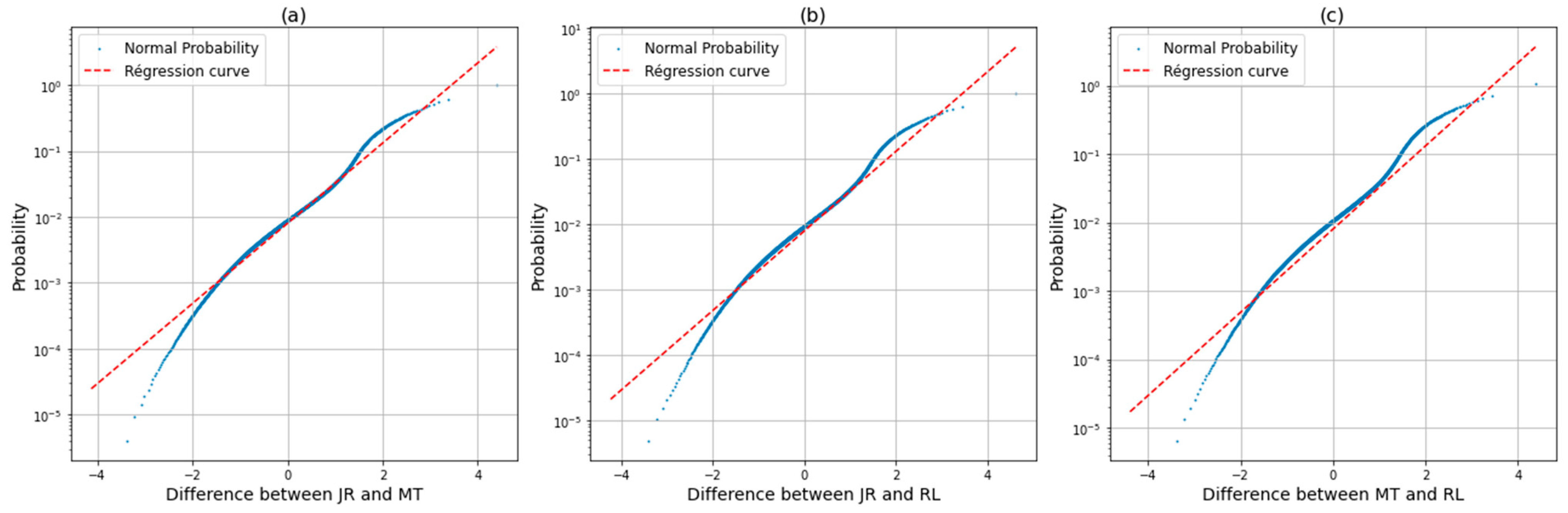
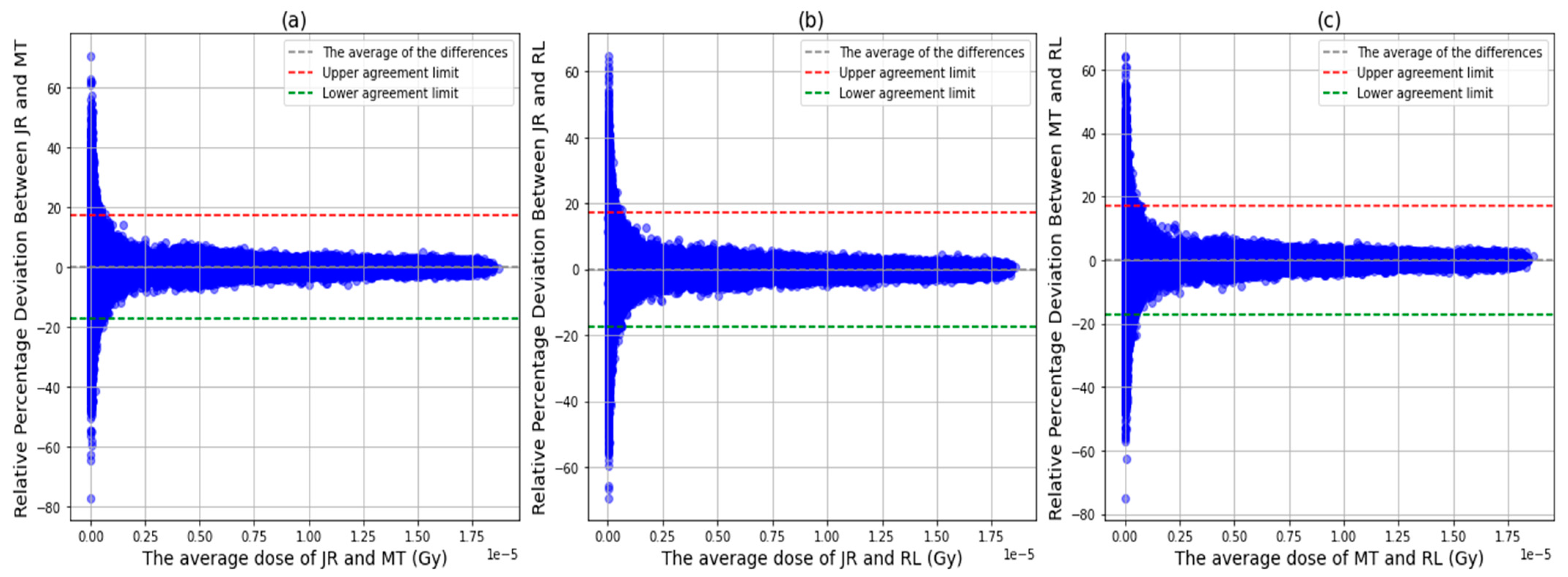
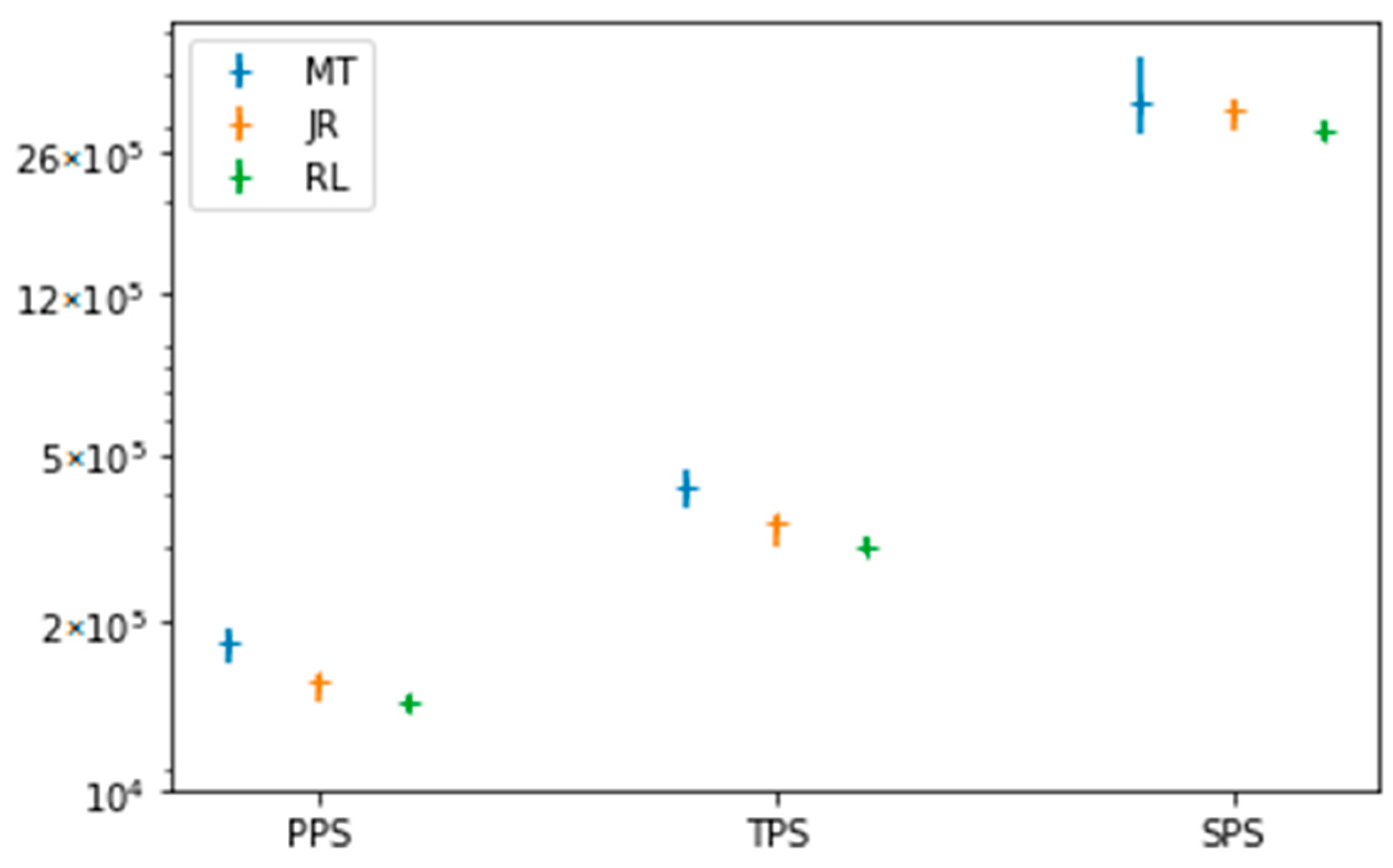
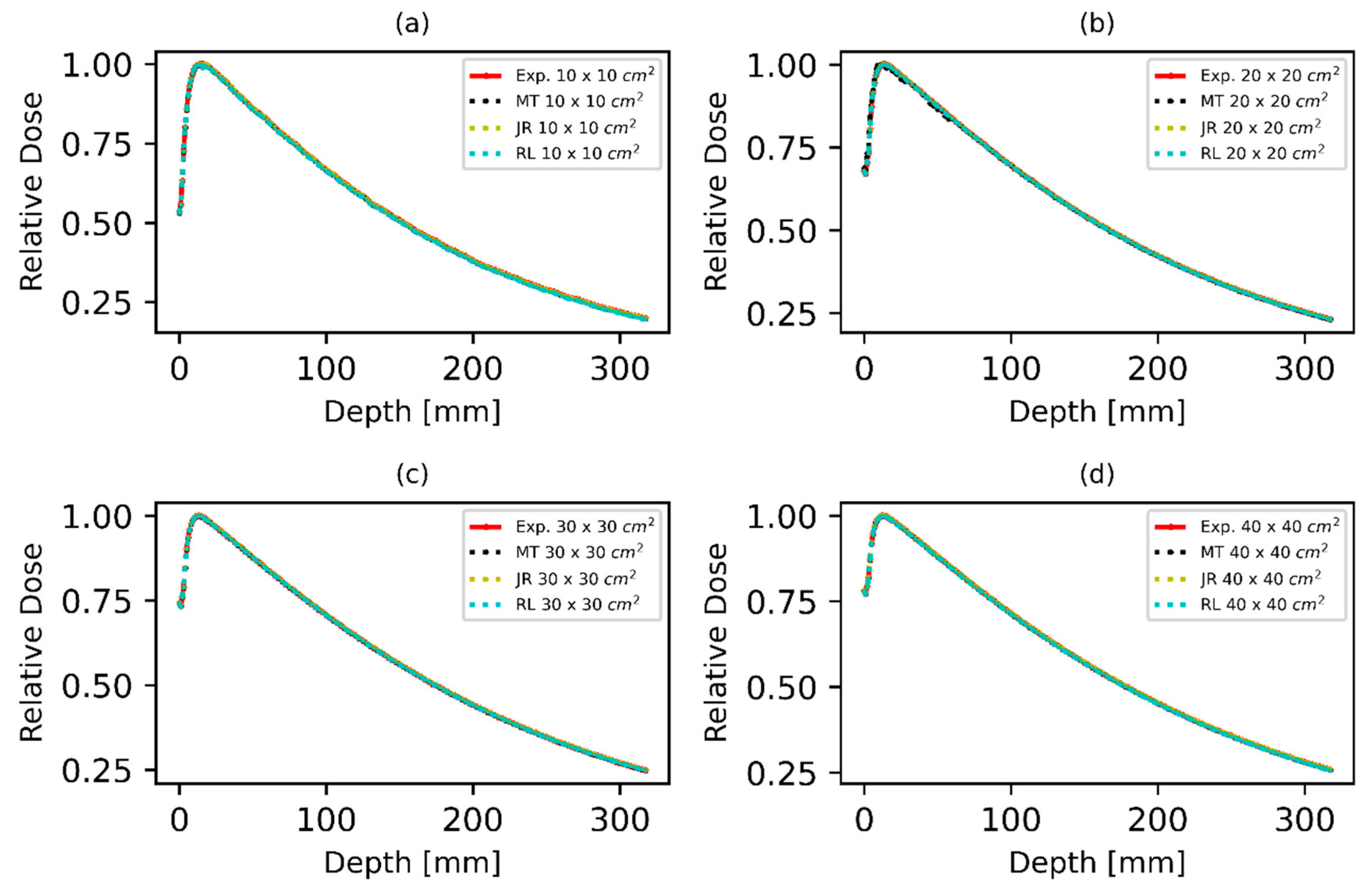
Monte Carlo simulation relies on pseudo-random number generators. In general, the quality of these generators can have a direct impact on simulation results. The GATE toolbox, widely adopted in radiotherapy, offers three generators from which users can choose: Mersenne Twister, Ranlux-64, and James-Random. In this study, we used these generators to simulate the head of a medical linear accelerator for 6 MV photons in order to assess their potential impact on the results obtained in radiotherapy simulation. Simulations were conducted for four different field openings. The simulations included a linac head model and a water phantom, all components of the head of the medical linear accelerator, and a water phantom placed at a distance of 100 cm from the electron source. Statistical analysis based on normal probability and Bland–Altman plots were used to compare dose distributions in the voxelized water phantom obtained by each generator. Experimental data (dose profiles, percentage dose at depth, and other dosimetric parameters) were measured using an appropriate quality assurance protocol for comparison with the different simulations. The evaluation of dosimetric criteria shows significant variations, particularly in the physical penumbra of the dose profile for large fields. The gamma index analysis highlights significant distinctions in generator performance. In all simulations, the average time of the primary particle generation rate, number of tracks, and steps in the simulation of different random number generators showed differences. The Mersenne Twister generator was distinguished by high performance in several aspects, particularly in terms of execution time, primary particle production, track and step production flow rate, and coming closer to the experimental results. Regarding computational time, the simulation using the Mersenne Twister generator was about 18% faster than the one using the James-Random generator and 27% faster than the simulation using the Ranlux-64 generator. This suggests that this generator is the most reliable for accurate and fast modeling of the medical linear accelerator head for 6 MV energy.
Keywords: pseudo-random number generator; medical linear accelerator head; 6 MV energy; Monte Carlo simulation method; GATE; radiotherapy simulation pseudo-random number generator; medical linear accelerator head; 6 MV energy; Monte Carlo simulation method; GATE; radiotherapy simulation