1. Introduction
The fiber optic gyroscope (FOG) is an angular velocity sensor widely used in aircraft navigation and geophysical monitoring [
1,
2,
3,
4]. In medium- and low-precision FOGs, superluminescent diode (SLD) sources are commonly employed, whereas for high-precision applications, amplified spontaneous emission (ASE) sources are preferred. ASE sources operate on the principle of spontaneous emission. The energy level structure of the rare earth elements in ASE sources is more stable than that of semiconductor-based sources. Consequently, ASE sources show lower susceptibility to temperature-induced fluctuations and can thus meet the stringent performance requirements of high-precision FOGs. In addition, ASE sources also offer other merits, including broad spectral width, low coherence, and easy coupling with fiber systems. Therefore, ASE sources have become a core component in this field [
5,
6,
7,
8]. In practical FOG applications, the key performance metrics of an ASE source are its temperature-dependent characteristics and power conversion efficiency. Notably, the temperature-dependent behavior of the erbium-doped fiber (EDF), which acts as the gain medium, directly determines the stability of the ASE output.
Currently, research on the thermal stability of ASE sources has predominantly focused on the mean wavelength characteristics of the broadband spectrum [
9,
10,
11,
12,
13]. However, in practical high-precision FOGs, the ASE broadband spectrum typically requires filtering, yet studies regarding the temperature dependence of such filtered output spectra remain relatively scarce. The two commonly employed filtering methods are flat-top filtering and Gaussian filtering. While the former yields a broader spectral width, fluctuations in pump power can induce variations in the power when the length of the EDF is fixed, thereby compromising spectral stability and flatness [
14]. In contrast, Gaussian filtering yields a slightly narrower bandwidth. However, its single-peak structure offers distinct engineering advantages, including lower sensitivity to pump power fluctuations and a reduced response of the spectral shape to ambient temperature variations. Consequently, this approach effectively suppresses fluctuations in the output signal power, significantly enhancing the long-term stability of the source’s mean wavelength [
15].
This paper systematically investigates the influence of Er3+ doping concentration and EDF length on the temperature stability of the mean wavelength in the 1530 nm band by filtering the broad ASE spectrum. A double-pass forward-pumping configuration was employed in the experiments. A comparative analysis was performed on the commercially standard EDF1 (with an absorption coefficient of 19.3 dB/m at 1530 nm) and a self-developed EDF2 (with an absorption coefficient of 5.4 dB/m at 1530 nm). Under strictly controlled pump power conditions, the output characteristics of these two EDFs with different doping concentrations and lengths were systematically examined at varying fiber lengths.
2. Principle of System and Materials
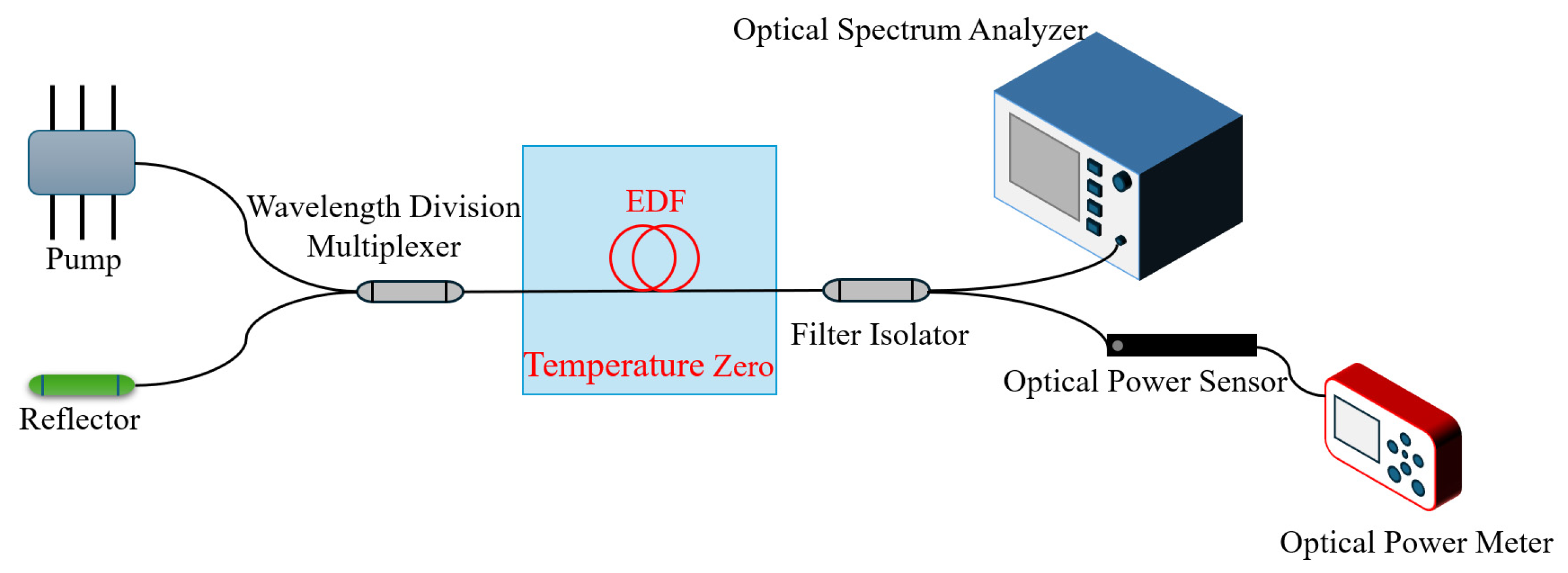
The experimental setup is shown in
Figure 1. A double-pass forward ASE optical path was adopted, and a Gaussian filter isolator with a center wavelength of 1530 nm was placed at the output end. In this setup, a 980 nm pump laser was injected into the EDF via a wavelength division multiplexer (WDM). The erbium ions absorbed the pump energy and transitioned to a high energy level. This process formed a population inversion. Signal photons originating from spontaneous emission were continuously amplified as they propagated through the gain medium. The backward-propagating signal light was reflected by a reflector. It was converted into forward-propagating light and re-entered the EDF for further amplification. Ultimately, the original ASE light was formed. The Gaussian filter isolator was connected at the end of the EDF. It prevented reflected light from the rear optical path from re-entering the EDF and forming a lasing output. It also reshaped the output spectrum into a symmetric, near-Gaussian profile after the signal light passed through. This effectively enhanced the thermal stability of the average wavelength of the output light. The spectral and power data of the ASE source were collected using an optical spectrum analyzer (OSA, Yokogawa AQ6370D, sourced from Yokogawa Electric Co., Ltd., Musashino, Japan) and an optical power meter (Thorlabs PM100D, sourced from Thorlabs, Inc., Newton, NJ, USA).
The specific parameters of the two EDFs are listed in
Table 1. EDF1 is a widely commercialized product, using M12 980/125 fiber sourced from Fibercore Ltd. (Southampton, UK). EDF2 was fabricated using a production method that combines the inorganic metal chloride Vapor-Phase Deposition (VPD) technique with the Modified Chemical Vapor Deposition (MCVD) process. The process enables precise control over the deposition process and doping concentration. By optimizing the deposition conditions of the porous layer, a uniform porous structure can be formed, which effectively adsorbs rare-earth ions and avoids cluster formation, improved doping homogeneity compared to conventional commercial fibers [
16,
17,
18].
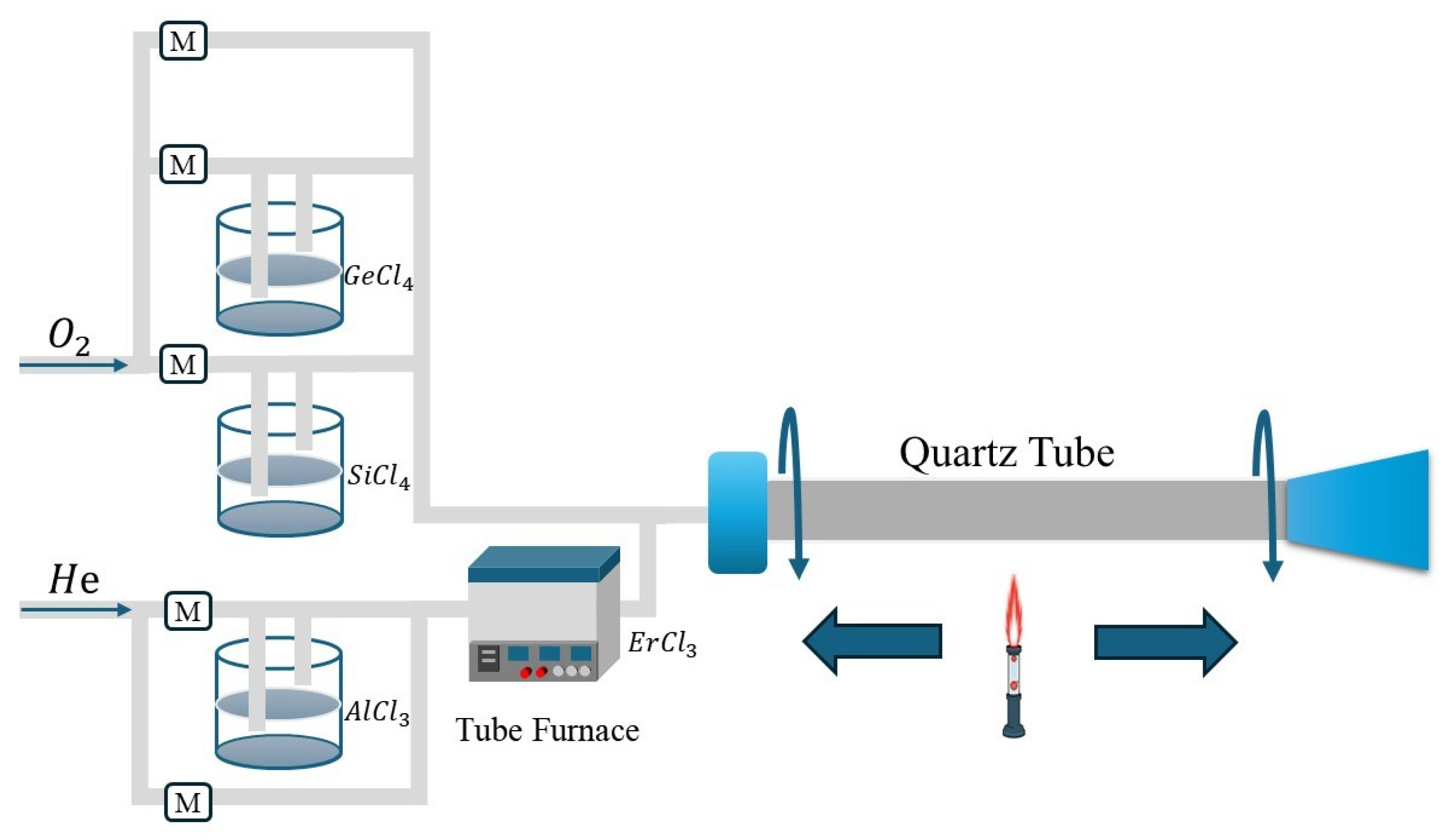
The reaction setup and process are illustrated in
Figure 2. Aluminum chloride, chromium chloride, and silicon chloride were heated in an internal heating furnace. They were carried into a high-purity quartz tube by helium and oxygen. The gas flow rate in the oxygen channel was higher than that in the helium channel. Anhydrous erbium chloride was heated to a high temperature in an internal tube furnace. Part of the solid sublimated into vapor. The vapor was carried into a high-purity quartz substrate tube by helium. Inside the tube, these precursors reacted with oxygen. Their corresponding oxides deposited on the inner wall of the quartz tube. Unreacted by-products were collected by an exhaust box at the tube outlet and then expelled. Each precursor was delivered to the reaction zone through its own dedicated conduit. This prevented chemical reactions or cross-contamination between them. By controlling the temperature and gas flow rate in the corresponding regions, the desired high-precision deposition structure was achieved. The quartz substrate tube was then collapsed to form a preform. Finally, the preform was drawn into an EDF. The basic parameters of the two EDFs are listed in
Table 1.
For each EDF type, the fiber length was systematically varied from well below to well above the pump absorption length. This approach fully captures the transition from incomplete pump absorption to signal reabsorption. EDF1 and EDF2 differ slightly in numerical aperture, cutoff wavelength, and mode field diameter (
Table 1). These parameters primarily affect the pump-to-signal overlap and the absolute power efficiency. Compared with the doping concentration, however, they exert only a second-order influence on the relative temperature dependence. In the experiment, the pump wavelength and fiber coil orientation were kept identical for both fibers. The optimal fiber length was determined individually for each EDF, which effectively normalizes their absorption efficiencies. Any significant difference in the mean-wavelength temperature drift between the two fibers may therefore be primarily attributed to differences in Er
3+ concentration.
During the experiment, only the EDF was placed inside the temperature chamber (ATH-80L-6D), while all other components were maintained at room temperature (20 °C). The pump drive current was set to 120 mA, corresponding to a pump power of 66.1 mW, which was determined based on the typical operating power of EDF in practical applications. Under these conditions, the temperature of the chamber was varied from −50 °C to 75 °C in steps of 5 °C or 10 °C, covering the entire operational range expected for inertial-grade FOGs. And both the optical spectrum and output signal power were measured at each temperature point. Once the temperature stabilized at each target point, an optical spectrum analyzer and an optical power meter were used to collect the spectral data and power data of the ASE source, respectively.
At each stabilized temperature, the spectrum and power were recorded three times, and the mean values are reported. The standard deviation of the mean wavelength determination was less than ±0.4 ppm, and that of the power measurement was below ±0.05 mW. The entire temperature cycle was repeated twice for the optimum fiber lengths to verify repeatability; the resulting mean-wavelength drift curves overlapped within the measurement uncertainty.
3. Experimental Results and Discussion
In a Gaussian-filtered ASE source, the output mean wavelength and power are governed by the temperature-dependent gain profile and the fixed filter passband. The gain spectrum shifts with temperature at a rate dependent on the Er
3+ doping concentration and fiber length [
19]. High doping concentrations tend to broaden the gain spectrum and accelerate its red shift, leading to a mismatch with a given Gaussian filter. Moreover, ion pairs and clusters increase non-radiative decay, thereby reducing overall efficiency [
20]. From a design perspective, doping concentration is a key parameter: an appropriately low doping level allows the use of a longer fiber that fully absorbs pump power while yielding a gain spectrum whose temperature-induced drift may partially compensate for filter-passband shift. This compensation requires a suitable match between the filter edge slope and the gain temperature coefficient. Hence, clarifying the conditions for such compensation is essential for developing highly temperature-stable filtered ASE sources. The practical realization of this compensation depends on the specific filter transfer function and the actual gain profile, which will be examined in subsequent experiments.
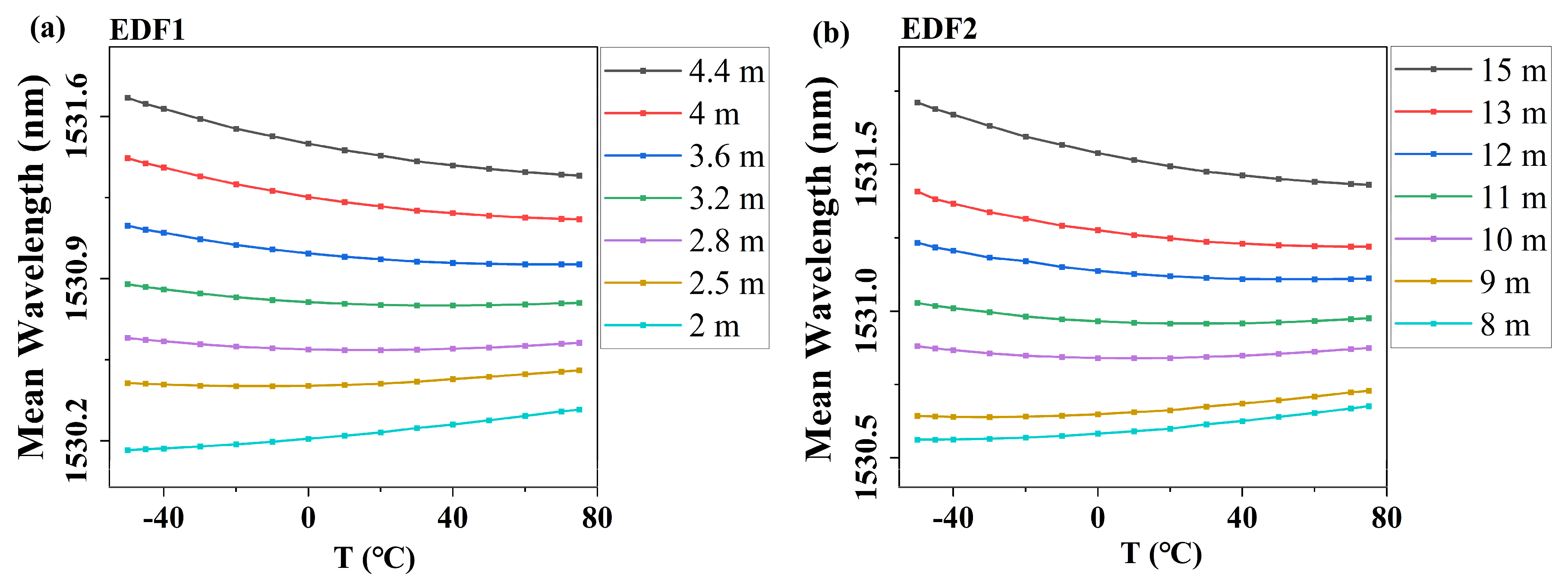
As shown in
Figure 3, the spectral variation of the two fibers with different doping concentrations exhibits generally similar trends with temperature. When the fiber length is too short, the pump light is not fully absorbed. This results in an excessively high and unstable population inversion level. Consequently, the wavelength increases as the temperature rises. As the fiber length increases, the pump light becomes completely absorbed. However, the signal light generated can be reabsorbed by the excessively long fiber [
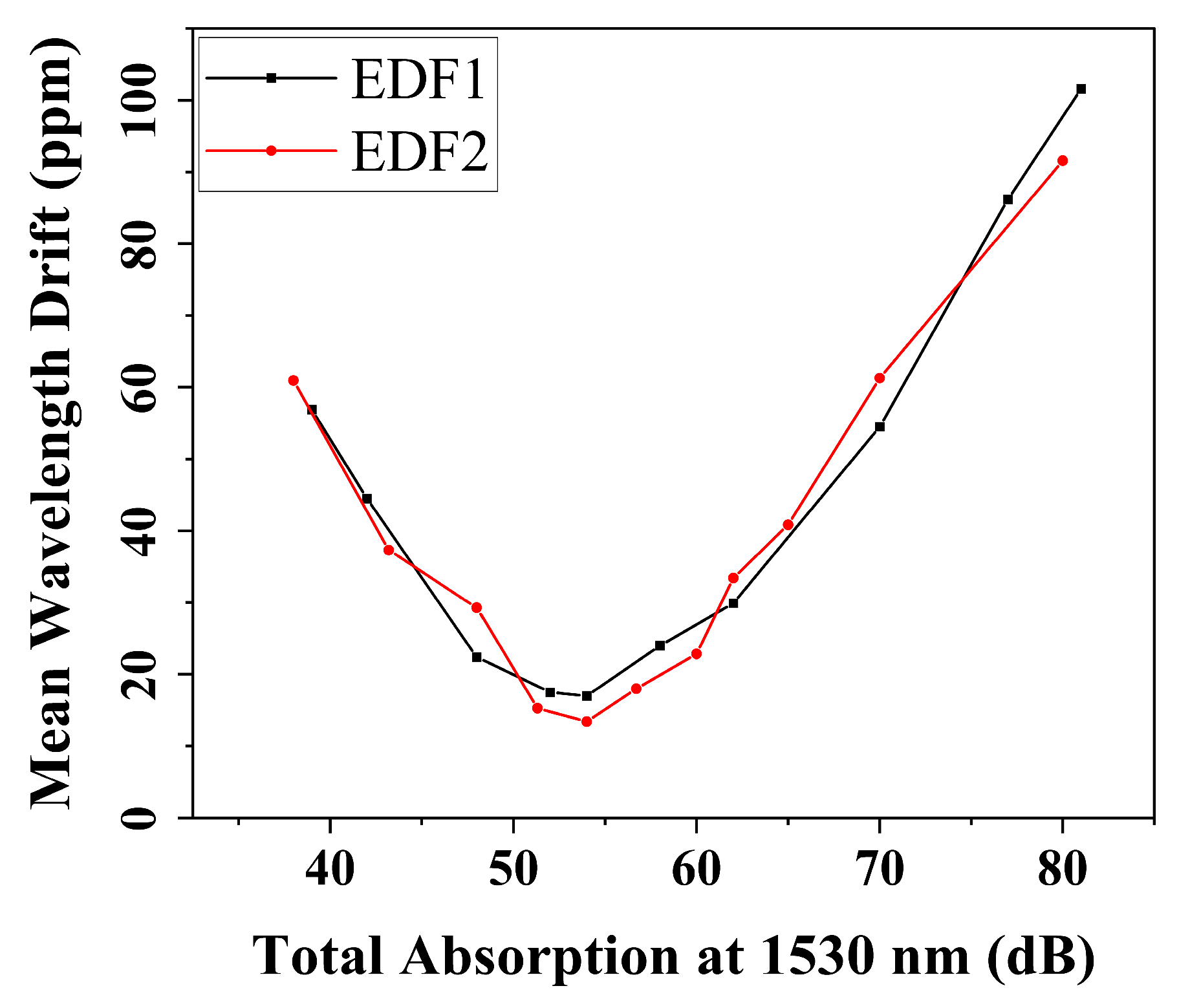
21]. This process shifts the entire ASE spectrum toward longer wavelengths. The mean wavelength initially increases gently and then steeply, creating a minimum point in the thermal drift of the mean wavelength. This phenomenon is clearly visible in
Figure 4. At the same temperature, the mean wavelength of the ASE source for both types of EDFs increases with the length of the fiber.
Figure 4 shows the variation in the mean wavelength drift of the ASE source as a function of the length for EDF1 and EDF2, respectively, where the total absorption on the horizontal axis equals the fiber length multiplied by the absorption coefficient. The optimum lengths are 2.8 m for EDF1 and 10 m for EDF2, which exhibit the best temperature stability with drifts of 17.0 ppm and 13.4 ppm, respectively; the significantly lower drift of EDF2 demonstrates its superior thermal stability. This minimum-drift behavior can be understood from the interplay between the temperature-dependent ASE gain profile and the fixed Gaussian filter passband. In a broadband ASE source, the mean wavelength shift with temperature originates primarily from the thermal redistribution of the erbium emission cross-section. After Gaussian filtering, only the spectral portion within the filter passband is transmitted. As temperature increases, the ASE gain spectrum shifts toward longer wavelengths, and the leading edge of the filter attenuates the rising spectral wing, thereby reducing the net mean wavelength drift. The strength of this compensation depends on the temperature coefficient of the gain peak and the slope of the filter edge. Since both the gain coefficient and its temperature derivative are strongly influenced by Er
3+ doping concentration through concentration-dependent ion–ion interactions, tailoring the doping level allows the temperature-induced gain shift to be better matched to the fixed filter characteristic, yielding superior thermal stability. This mechanism explains why the low-concentration EDF2, when combined with the 1530 nm Gaussian filter isolator, achieves a lower mean wavelength drift than the high-concentration EDF1 at their respective optimum lengths.
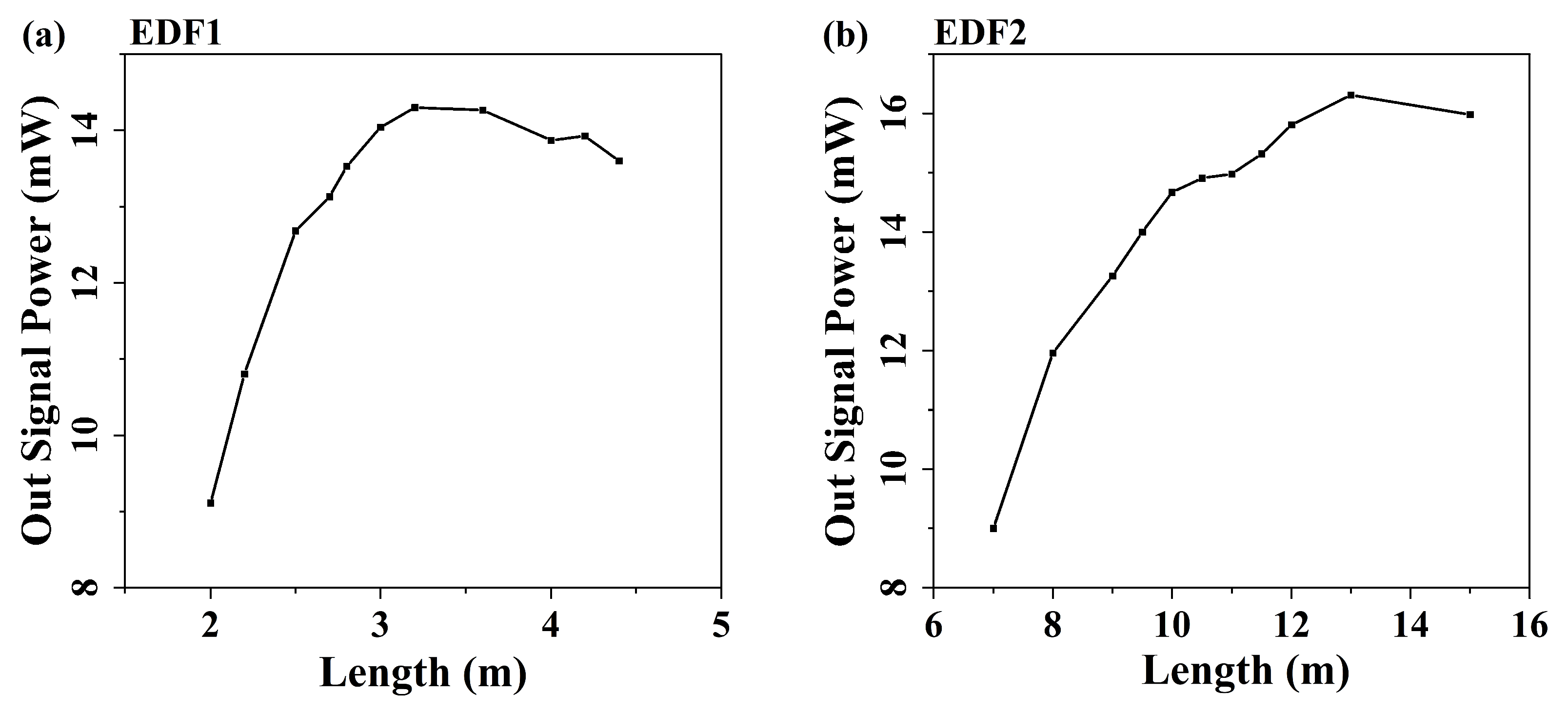
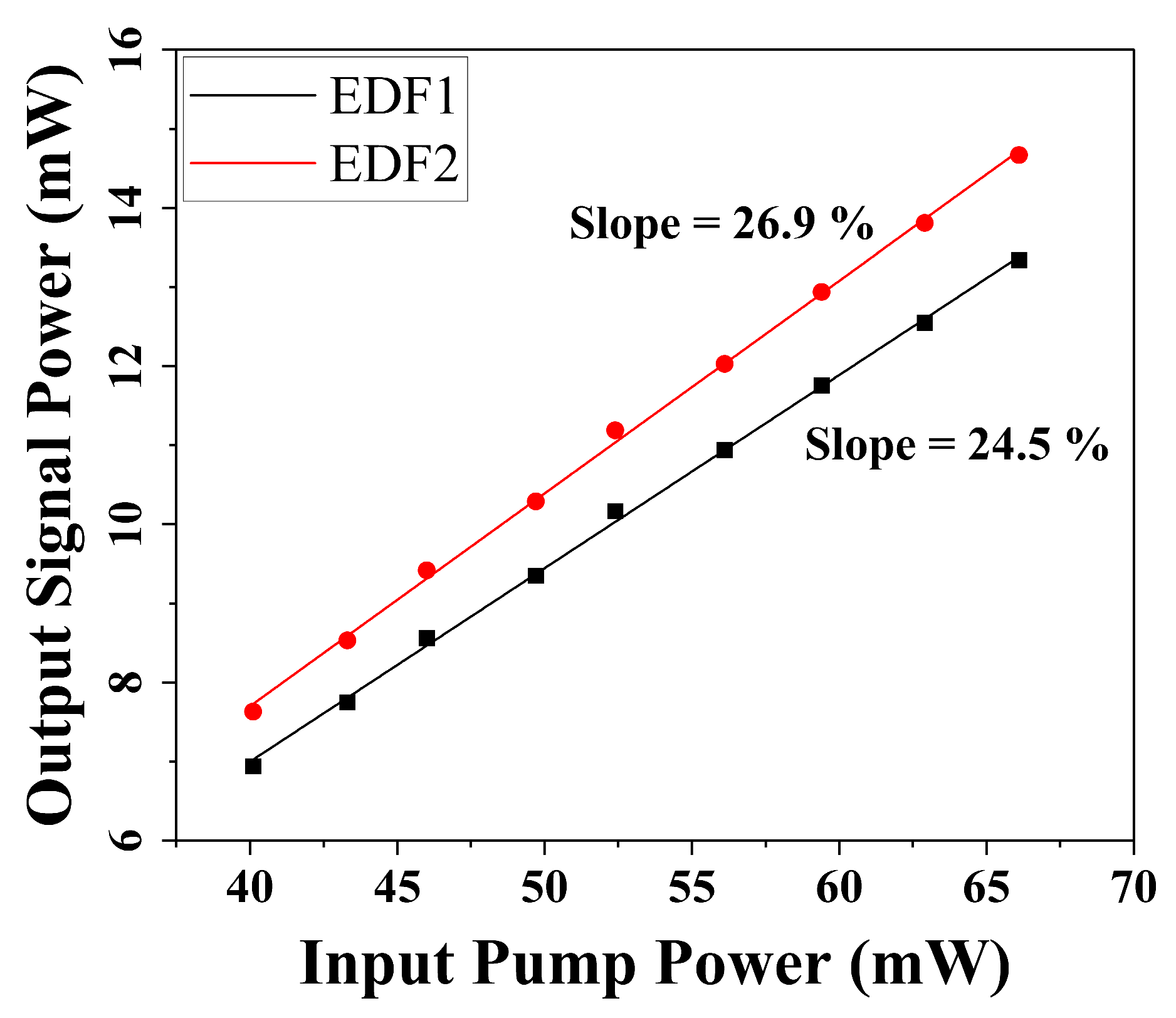
A comparison of
Figure 5 intuitively reveals the variation in output power of the ASE sources using the two types of fiber. When the ASE power reached its maximum, the lengths of EDF1 and EDF2 were 3.2 m and 13.0 m, respectively. Beyond these optimal lengths, the output power decreases. This occurs because the pump light is absorbed in the front section of the fiber. When the fiber is too long, signal saturation and pump depletion occur. These effects can lead to a region with low population inversion at the end of the EDF. Consequently, energy near 1530 nm is reabsorbed by a large number of ground-state erbium ions in the tail section. The ASE source used a 3.2 m length of EDF1 and a 13 m length of EDF2. Under these conditions, the maximum output power of the low-concentration EDF2 was 16.31 mW. In contrast, the maximum output power of the high-concentration EDF1 was 14.30 mW. The lower conversion efficiency observed in EDF1 may be partially attributable to concentration quenching effects, such as ion-pair or cluster formation, which are commonly encountered in heavily EDF [
22]. In addition, slight differences in the background loss and the degree of pump excited-state absorption between the two fibers could also contribute to the efficiency disparity.
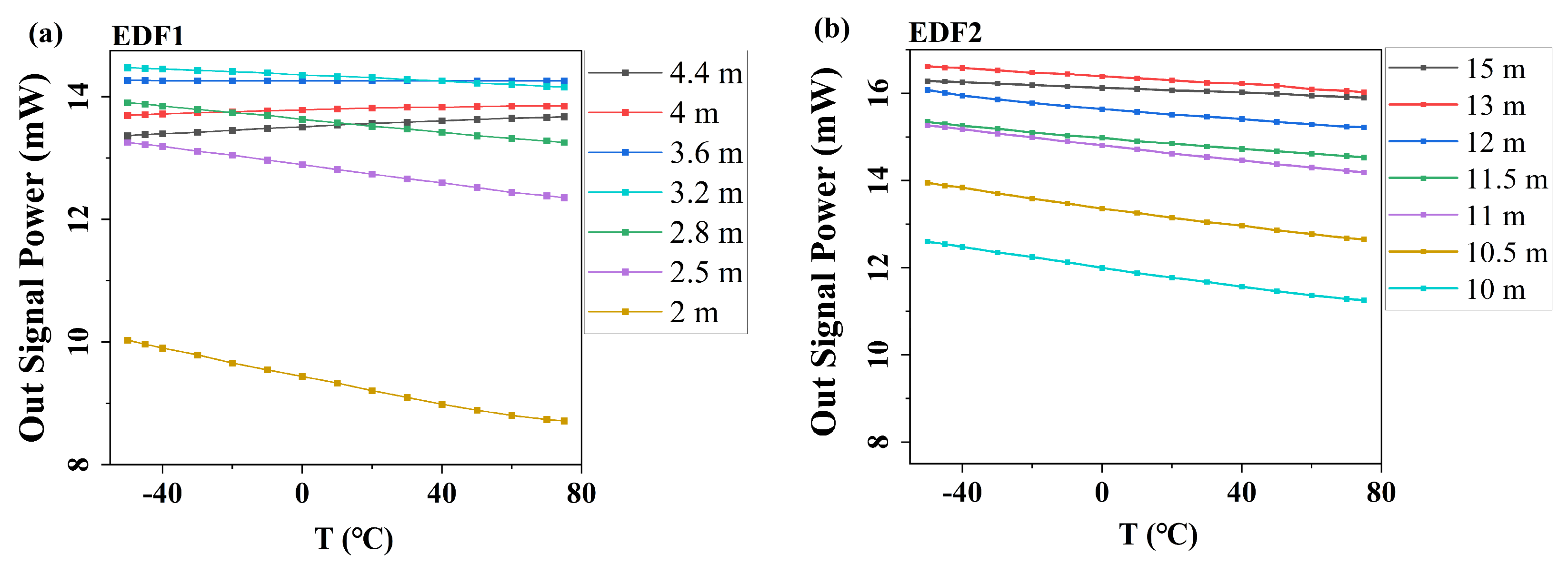
Figure 6 shows the output signal power versus temperature for ASE sources using EDF1 and EDF2 at different lengths. The output signal power of ASE sources using EDF2 decreases with increasing temperature. An increase in temperature reduces the fluorescence lifetime of Er
3+, which in turn causes the absorption coefficient to decrease linearly with rising temperature [
23]. Within a certain length range, this manifests as a decrease in output signal power with increasing temperature. When the fiber length is excessive, the reabsorption of signal light becomes more pronounced, causing the overall spectrum to drift toward longer wavelengths [
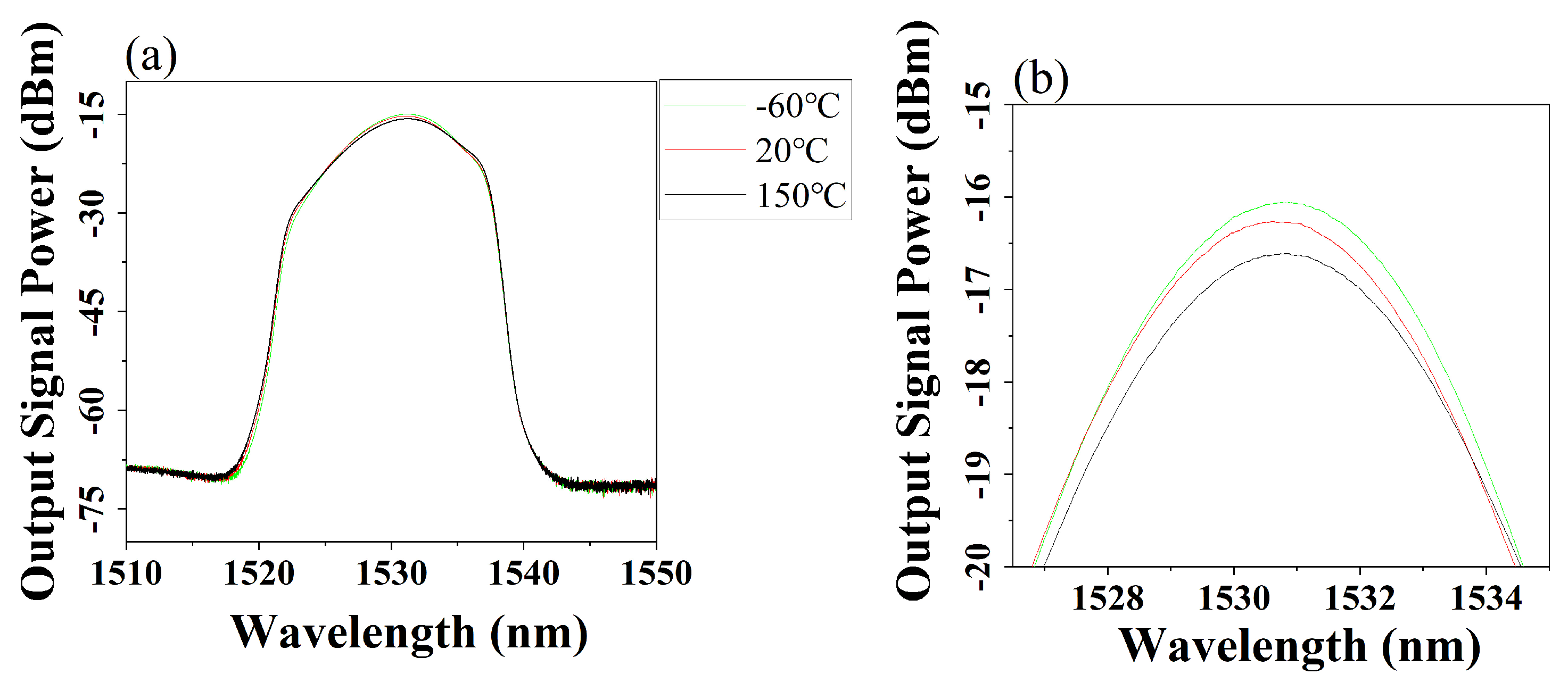
24]. The Gaussian filter isolator removes a portion of the main peak around 1530 nm. After this filtering, the ASE spectrum drifts toward shorter wavelengths as temperature rises. As shown in
Figure 7, this drift causes a greater portion of the output spectrum to fall within the filter’s passband. Consequently, the output signal power increases with temperature.
As shown in
Figure 8, when the average wavelength temperature drift of the ASE sources is minimized, the lengths of EDF1 and EDF2 are 2.8 m and 10 m, respectively, and the corresponding output signal powers are 13.90 mW and 15.27 mW. The power conversion efficiency of ASE sources using EDF2 is 26.9%, which is higher than that of EDF1 at 24.5%. Furthermore, when a fiber longer than the optimal length is combined with the Gaussian filter isolator, the output signal power variation with temperature becomes minimal. For instance, the ASE source using EDF1 at 3.6 m exhibits a power temperature drift of only 0.04%, and the source using EDF2 longer than 13 m shows a similar trend.
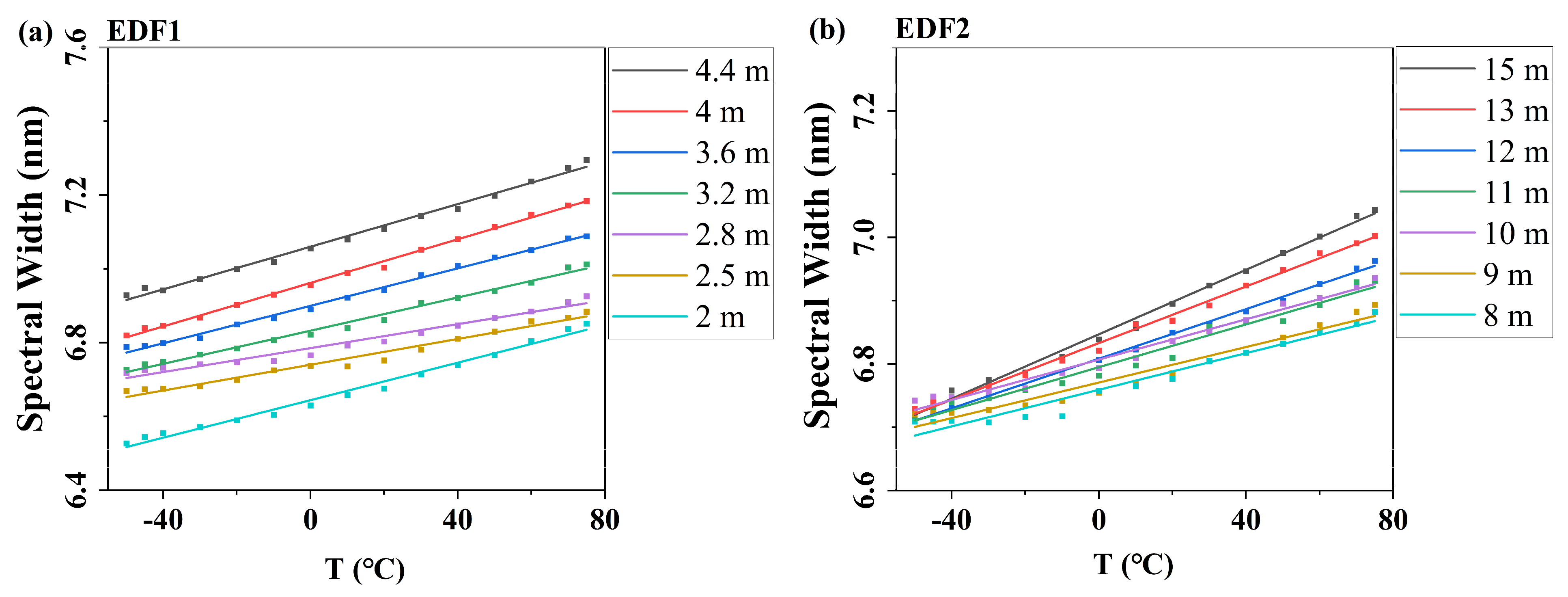
Figure 9 illustrates the relationship between the spectral width and temperature for ASE sources using EDF1 and EDF2 of different lengths. The spectral width of ASE sources using fibers increases with rising temperature, while EDF2 exhibits an overall larger spectral width than EDF1 does under the same total absorption condition. The broader spectral width and near-Gaussian-shaped spectrum result in a smaller coherence length and decoherence length for the ASE source [
25]. When the mean wavelength drift is minimized, the temperature-dependent variation in the spectral width of ASE sources using EDF1 is approximately 1.5%, whereas that of EDF2 is about 1.4%, slightly lower than that of EDF1.
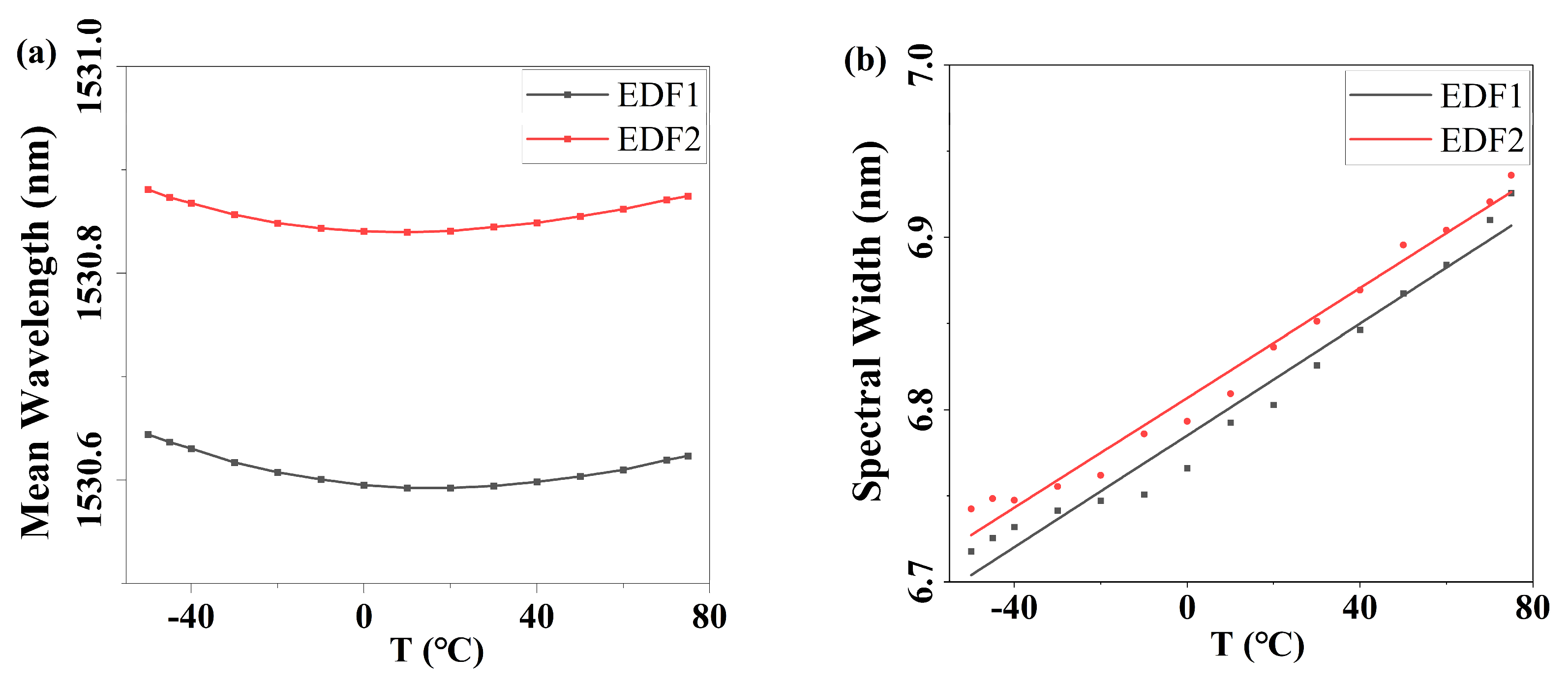
Experimental results indicate that the output signal power of the ASE sources using high-doped EDF1 exhibits lower sensitivity to temperature variations compared to that of the ASE sources using low-doped EDF2. Moreover, by optimizing the length of the erbium-doped fiber, a light source with relatively low temperature drift can be realized, which is critical for enhancing the accuracy of FOGs. Detailed temperature-drift data are presented in
Table 2 and illustrated in
Figure 10. Specifically, when the lengths of EDF1 and EDF2 used in the ASE sources are 2.8 m and 10 m, respectively, they achieve their minimum mean wavelength temperature drifts of 0.107 ppm/°C and 0.136 ppm/°C. Under these optimized lengths, the temperature stability of the ASE output signal power for EDF1 is slightly superior to that of EDF2, while the mean wavelength drift of EDF2 is considerably lower than that of EDF1, and also outperforms the temperature drift of EDF [
13] under similar optical paths.