1. Introduction
Austenitic stainless steel SS316L and the titanium alloy Ti-6Al-4V are widely used in biomedical applications due to their high mechanical strength, corrosion resistance, and biocompatibility. SS316L is widely used for both temporary and permanent implants, such as fixation plates, screws, stents, and surgical instruments, due to its good formability, low cost, and resistance to pitting corrosion in physiological settings [
1,
2]. Ti-6Al-4V, on the other hand, is favored for long-term load-bearing implants such as orthopedic prostheses and dental implants due to its superior strength-to-weight ratio, relatively low elastic modulus (similar to cortical bone), and excellent fatigue and corrosion resistance [
3]. Both materials are increasingly being used in high-precision biomedical components, where dimensional accuracy and surface integrity are essential for functional reliability and long-term clinical performance [
4,
5].
Conventional micro-drilling of these difficult-to-machine alloys poses substantial hurdles due to small tool diameters, high aspect ratios, and undesirable material characteristics [
6]. Their high strength, strain-hardening propensity, low thermal conductivity, and chemical reactivity contribute to rapid tool wear, adhesion, and early tool failure. Micro-drills (<500 µm diameter) have poor flexural stiffness, making them prone to deflection and fracture. In Ti-6Al-4V, the poor thermal conductivity concentrates heat at the tool–work interface, accelerating flank wear and adhesion, whereas severe strain hardening in SS316L increases cutting forces and tool loading. Chip evacuation is further hampered by a limited flute capacity, leading to chip clogging, built-up edge development, increased thrust force, and dimensional inaccuracies [
7,
8]. Elevated localized temperatures and mechanical instability can cause burr development, taper, overcut, residual stresses, and micro-cracks, reducing fatigue strength, corrosion resistance, and biocompatibility. Tight tolerances (±5–10 µm) necessitate applying intelligent techniques to determine optimal cutting parameters, using advanced tool coatings and improved cooling/lubrication strategies (e.g., MQL or cryogenic assistance) or implementing modern/hybrid micromachining techniques.
In this regard, the micro-version of electric discharge machining (EDM), i.e., micro-EDM, has emerged as an efficient non-contact thermoelectric approach for creating high-aspect-ratio micro-holes in conductive biomaterials. In this process, material is removed using regulated electrical discharges between a microelectrode and a workpiece immersed in a dielectric liquid [
9]. When the applied voltage exceeds the dielectric breakdown strength, a transient plasma channel forms within the inter-electrode gap, generating localized temperatures of around 8000–12,000 K due to the occurrence of sparks for microseconds, resulting in rapid melting and vaporization of material [
10]. This mechanism allows for precision micro-hole production while reducing mechanical stress, making it ideal for cutting SS316L and Ti-6Al-4V for advanced biomedical applications.
Previous studies on micro-EDM drilling of titanium alloys demonstrated that capacitance, discharge voltage, and feed rate control machining performance by modulating discharge energy [
11]. PCA-based multi-response optimization allowed for an effective trade-off between high MRR and minimized OC, taper, and surface damage. The dielectric composition significantly impacts µ-EDM performance [
12]. Deionized water showed a high MRR and a thinner recast layer than kerosene due to greater flushing and discharge stability. Powder-mixed dielectrics improved spark dispersion, plasma channel expansion, and machining performance. Adding B
4C powder to deionized water improved MRR and micro-hole quality in Ti-6Al-4V. In contrast, kerosene-based dielectrics reduced TWR while forming thicker white layers. Another study used a Taguchi L18 orthogonal array with four control factors, capacitance (C), voltage, feed rate (FR), and tool rotation speed (TRS), to drill µEDM micro-holes in SS304 [
13]. ANOVA was used to assess performance in terms of MRR and geometric accuracy, including circularity, OC, and tapering. The desirability function achieved optimum settings (C = 103 pF, voltage = 150 V, FR = 20 µm/s, and TRS = 2800 rpm) that yielded a 10.47% increase in overall desirability. µ-EDM of Ti-6Al-4V with tungsten carbide (WC) electrodes was primarily controlled by electrical discharge parameters, particularly voltage, which significantly affected MRR, TWR, and OC [
14]. Integrated GRA and ANOVA were successfully used for multi-objective optimization, resulting in improved machining efficiency and dimensional accuracy. In µ-EDM of Ti-6Al-4V, MRR increased with peak current (0.5–2.0 A), with Cu-powder-mixed deionized water achieving the highest MRR but at the cost of higher TWR [
15]. At lower currents, deionized water improved surface integrity, while Cu-mixed dielectrics improved micro-hole accuracy and minimized white layer formation at higher discharge energies. Capacitance, voltage, and FR all had a substantial impact on MRR, LTWR, and hole quality in micro-EDM Ti Grade 2 drilling using a Cu electrode [
16]. Higher discharge settings increased MRR, whilst lower settings reduced tool wear. The highest MRR (368,261 µm
3/s) was achieved at higher parameter levels, whereas the lowest LTWR (0.00335 µm/s) occurred at lower settings. The best combination of C at 100 pF, voltage at 120 V, and FR at 10 µm/s was determined by PCA-based multi-response optimization, resulting in increased surface integrity and dimensional accuracy. Micro-drilling of AISI 304 with 0.8 mm WC tools revealed that cutting speed primarily influences exit burr height (P ≈ 6.04 × 10
−5), while feed per tooth significantly affects roundness (P ≈ 1.25 × 10
−5), highlighting a trade-off between surface integrity and dimensional accuracy [
17]. Recent studies on micro-drilling of SLM-fabricated Ti-6Al-4V revealed that FR had a substantial impact on thrust force and hole-wall surface quality, with as-built additively created material having higher thrust force and roughness due to intrinsic microstructural flaws [
18]. Compared to AM settings, forged Ti-6Al-4V produces larger exit burrs up to 34.28% greater than as-built and 8.73% higher than heat-treated samples, while lower FR and higher spindle speeds effectively minimize burr production.
Although there have been some sincere previous attempts at electric discharge micro-drilling of SS316L and Ti-6Al-4V, some future interventions can possibly contribute to establishing the field further. In this regard, the current research comprehensively investigates spark-plasma-based micro-drilling of SS316L and Ti-6Al-4V over a wide range of discharge energy combinations. Machining time (MT) and OC were assessed as major performance measures. The main objective is to provide a deeper understanding of material erosion behavior, at various levels of plasma formulation and spark occurrence, for hole-making in SS316L and Ti-6Al-4V.
2. Materials and Methods
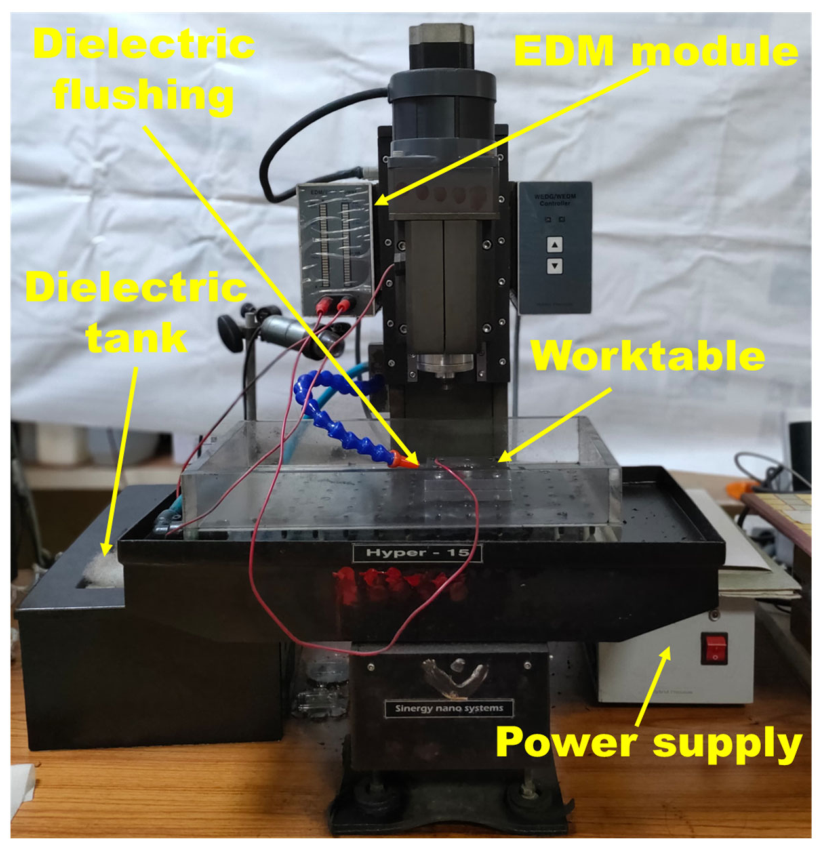
As shown in
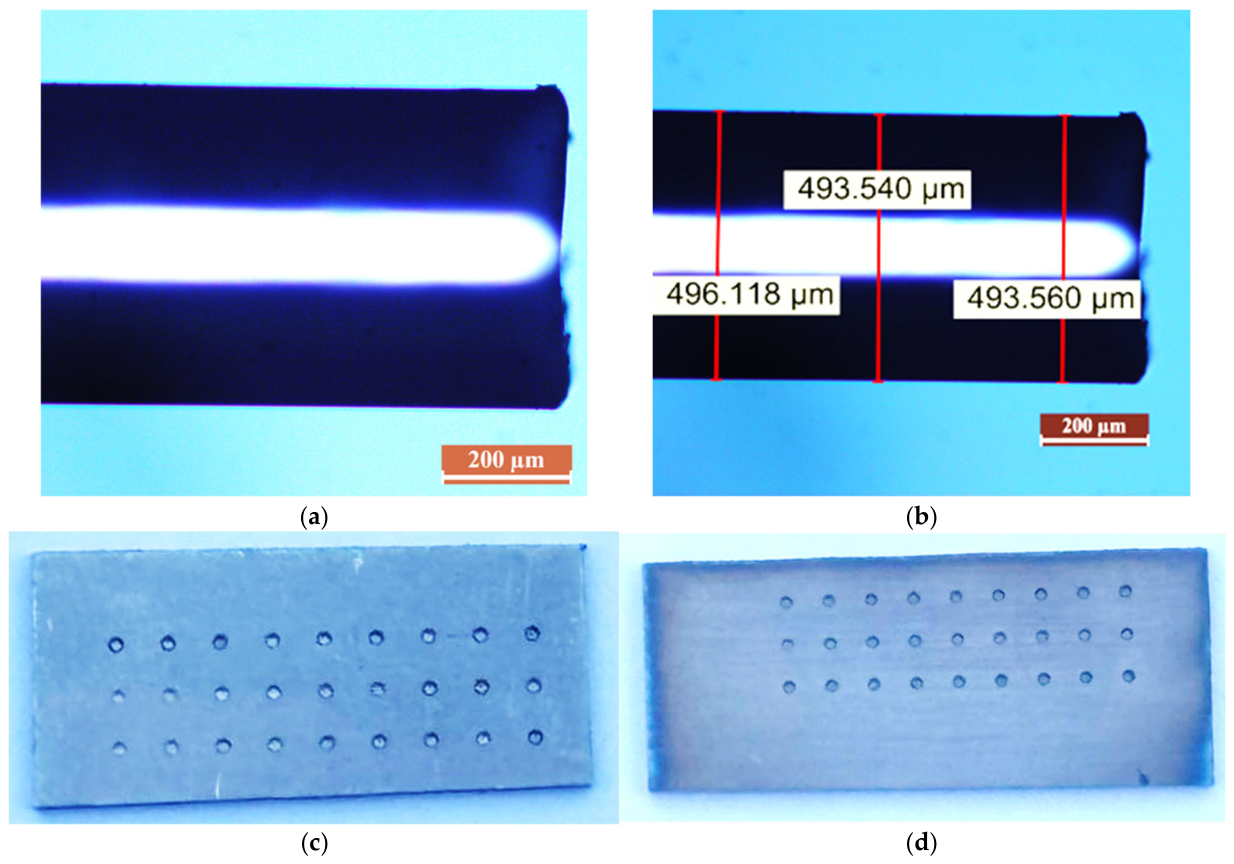
Figure 1, the micro-hole drilling experiments were performed utilizing a table-top micro-EDM system from Sinergy Nano Systems, Mumbai, India (model: Hyper-15). The tool used was a tungsten carbide (WC) electrode with a diameter of approximately 494 µm, as shown in
Figure 2a. The measured WC tool after machining is shown in
Figure 2b. WC was chosen for its high melting temperature, outstanding hardness, and remarkable resistance to thermal and mechanical degradation at high plasma temperatures [
19]. Its sufficient electrical conductivity allows for consistent spark generation and controlled plasma channel development, while its high modulus of elasticity reduces electrode deflection and taper during micro-hole fabrication. Furthermore, the electrode wear rate is minimal, resulting in increased dimensional stability and better overcut control, especially when machining difficult-to-machine biomedical alloys such as SS316L and Ti-6Al-4V.
SS316L stainless steel and Ti-6Al-4V original alloy were selected as work materials, supplied by Parshwamani Metals, Mumbai, India, due to their widespread use in biomedical and precision engineering applications, as displayed in
Figure 2c and
Figure 2d, respectively. The influences of major process parameters, namely discharge voltage, capacitance, and FR, on performance indicators such as MT and OC were carefully evaluated.
Table 1 shows the chemical (elemental) compositions of raw SS316L stainless steel and Ti-6Al-4V, as provided by the supplier. These compositions have been verified against the reported literature to ensure consistency and reliability for the present study [
20,
21].
The size, shape, and surface condition of the experimental samples are crucial to the precision and reliability of micro-hole drilling in SS316L and Ti-6Al-4V alloys. Specimens in the current investigation were designed with well-defined dimensions and simple geometries to ensure uniform stress distribution and ease of clamping during machining. The sample surfaces were meticulously honed and polished to provide a consistent surface roughness, reducing the impact of surface defects on hole quality and tool performance. Before drilling, necessary preparation treatments, such as cleaning and degreasing, were performed to remove impurities and oxide layers, ensuring consistent contact between the cutting tool and the work material. Surface condition has a substantial impact on chip formation, tool wear, and heat generation, especially in hard-to-machine materials such as SS316L and Ti-6Al-4V. As a result, maintaining comparable surface features across all samples is critical for achieving repeatable data and accurately measuring micro-hole drilling performance. At first, a few pilot experiments were conducted to determine the most suitable parameter ranges. Based on these trials, assigning positive polarity to the workpiece resulted in better material removal; the workpiece was kept at positive polarity and the tool at negative polarity throughout the experiment. The dielectric medium used was hydrocarbon oil. To aid in the efficient evacuation of debris from the machining zone, a directed jet was used for flushing. To avoid tool deflection and bending, the nozzle tip was moved slightly away from the immediate discharge zone. Every experiment was conducted thrice to reduce experimental variability and enhance statistical reliability.
Table 2 summarizes the details of fixed and variable factors. During the experimentation, machining time and tool travel distance were recorded for every experiment. To assess the selected response characteristics, the manufactured micro-holes were thereafter characterized using an optical microscope (make: Leica Microsystems, Germany; model: DM 2500 M). OC was determined by measuring the diameter of the drilled micro-holes and comparing it to the nominal tool diameter, as specified in Equation (1). The difference between the measured hole diameter and the electrode diameter quantifies the dimensional error caused by the micro-EDM process.
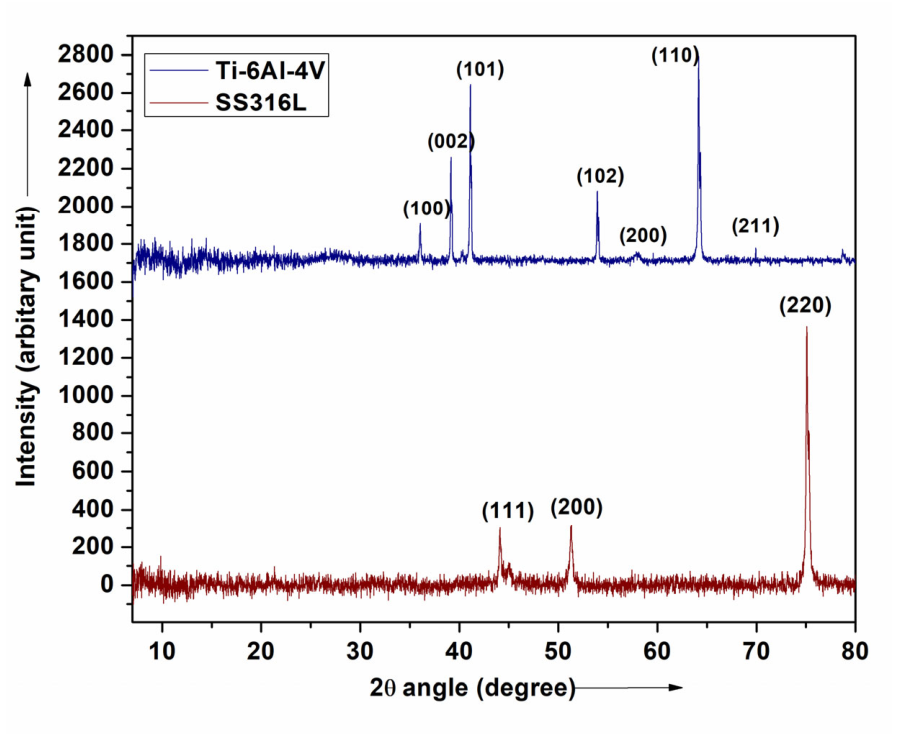
Before machining, SS316L and Ti-6Al-4V were phase-identified by X-ray diffraction (XRD) (make:Rigaku, Japan) to confirm their crystalline structures.
Figure 3 illustrates the related diffraction patterns. SS316L’s XRD profile verifies its fully austenitic structure with a face-centered cubic (FCC) γ-Fe phase. The major reflections at 2θ = 43.5°, 50.6°, and 74.6° correspond to the (111), (200), and (220) crystallographic planes, respectively. The absence of additional peaks associated with ferritic or martensitic phases suggests that the material has a single-phase austenitic microstructure, which is consistent with the nominal composition of SS316L.
In comparison, the Ti-6Al-4V alloy has a biphasic microstructure (α + β). The diffraction pattern shows peaks at 35.1°, 38.4°, 40.2°, 53.0°, and 63.0°, corresponding to the (100), (002), (101), (102), and (110) planes of the hexagonal close-packed (HCP) α-Ti phase. The alloy’s dual-phase nature is supported by its strong α-Ti reflections and weaker β-Ti peaks. β-Ti reflections were obtained at 2θ = 56° (200) and 69.5° (211). The major peaks in the diffraction pattern appear to be associated with the α-phase, while the β-phase peaks are very faint, overlap with α peaks, or are not definitely resolved due to the comparatively low β-phase volume fraction in Ti-6Al-4V at ambient temperature. These pre-machining XRD measurements demonstrate that both materials exhibit the expected phase structures prior to further experimental testing.
3. Results and Discussion
The experimental trials were designed using a full-factorial combination of the selected process parameters.
Table 3 summarizes the experimental combinations and the corresponding responses, i.e., MT and OC, for both materials. The following subsections provide a detailed overview of the influence of process parameters on performance measures, revealing material erosion during hole making under the spark-plasma formation mechanism.
The micro-EDM drilling system utilized in this investigation is powered by a resistance–capacitance (RC) pulse generator. In an RC circuit, the discharge energy is mostly determined by the applied voltage and capacitance [
22]. At lower capacitance and voltage levels, the stored energy is negligible, resulting in a short pulse duration and low discharge energy. The capacitor stores electrical energy until the dielectric breaks down across the inter-electrode gap (IEG), at which point a spark discharge begins. The breakdown threshold is directly affected by the applied voltage and gap conditions [
23].
Increased capacitance and voltage result in a proportional increase in discharge energy. Higher discharge energy intensifies the plasma channel formed between the tool electrode and the workpiece, increasing the column’s height and diameter [
24]. As a result of increased localized melting and evaporation, larger and deeper craters form on the machined surface. The increased effective spark gap at higher energy levels also enhances debris evacuation because the wider inter-electrode spacing allows for more efficient flushing [
25]. This combination of impacts increases the material removal rate while decreasing machining time in RC-type micro-EDM. However, the development of larger craters at higher discharge energy significantly impacts dimensional accuracy and surface integrity, particularly in precision micro-hole-drilling applications [
26].
3.1. Effect of Process Parameters
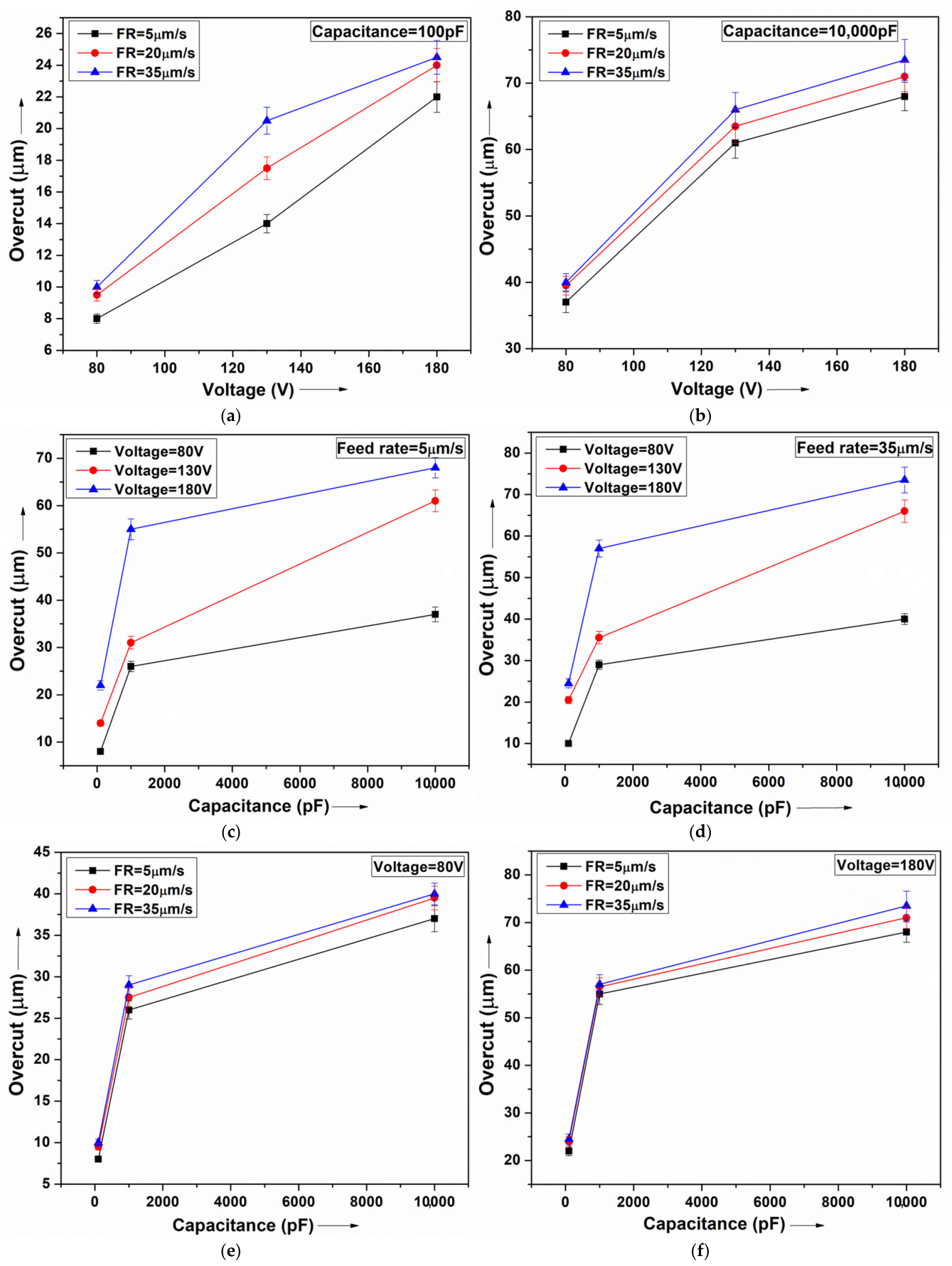
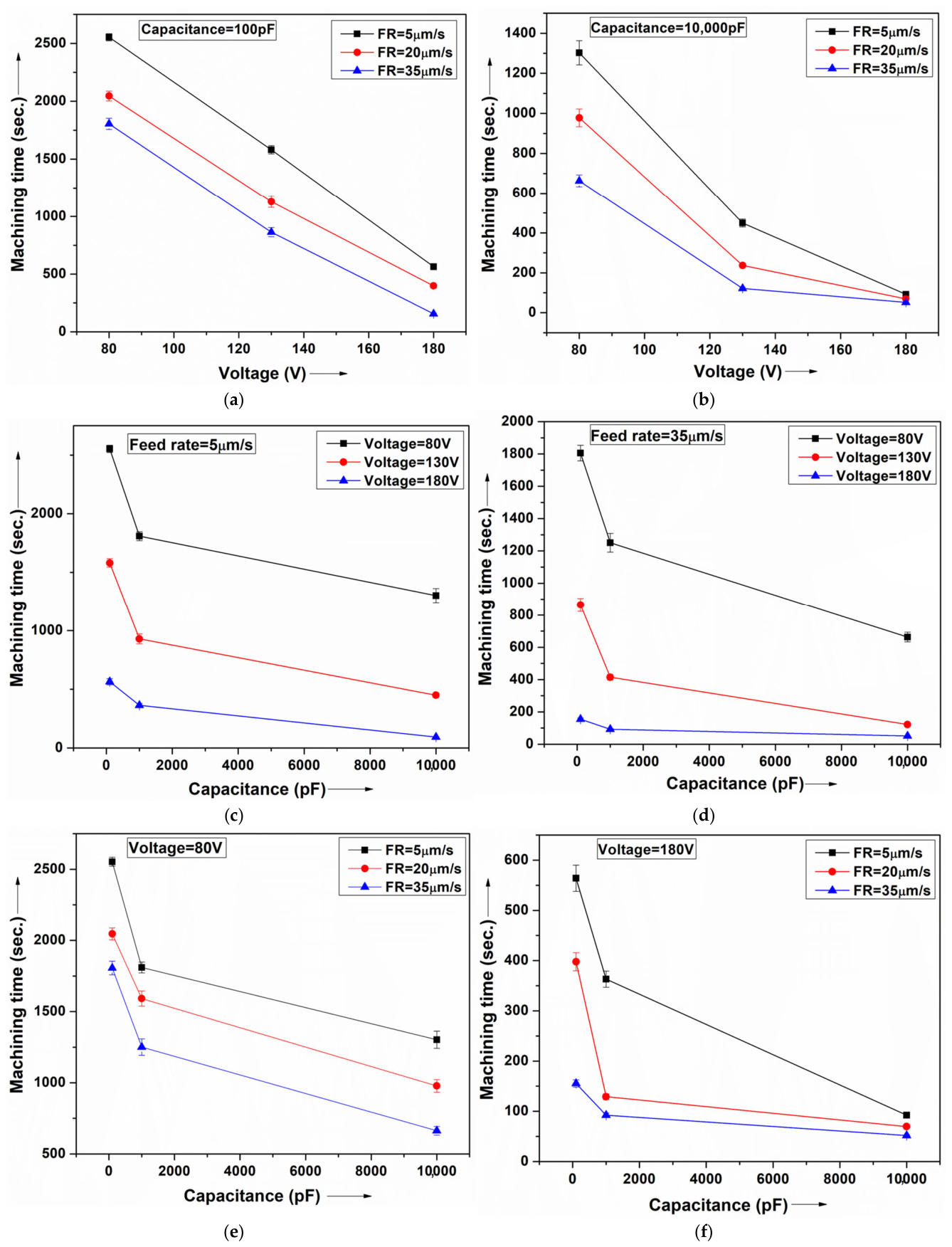
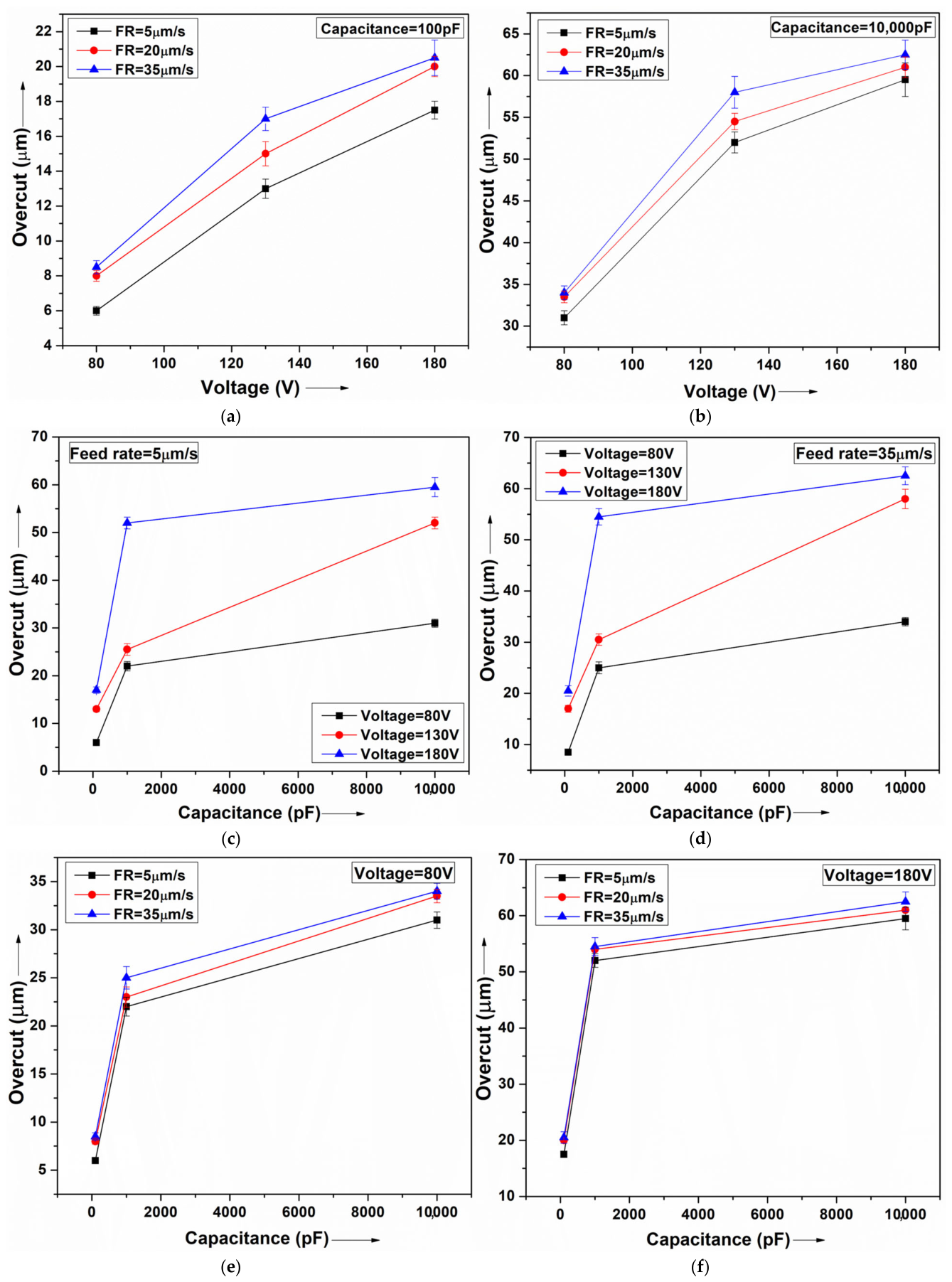
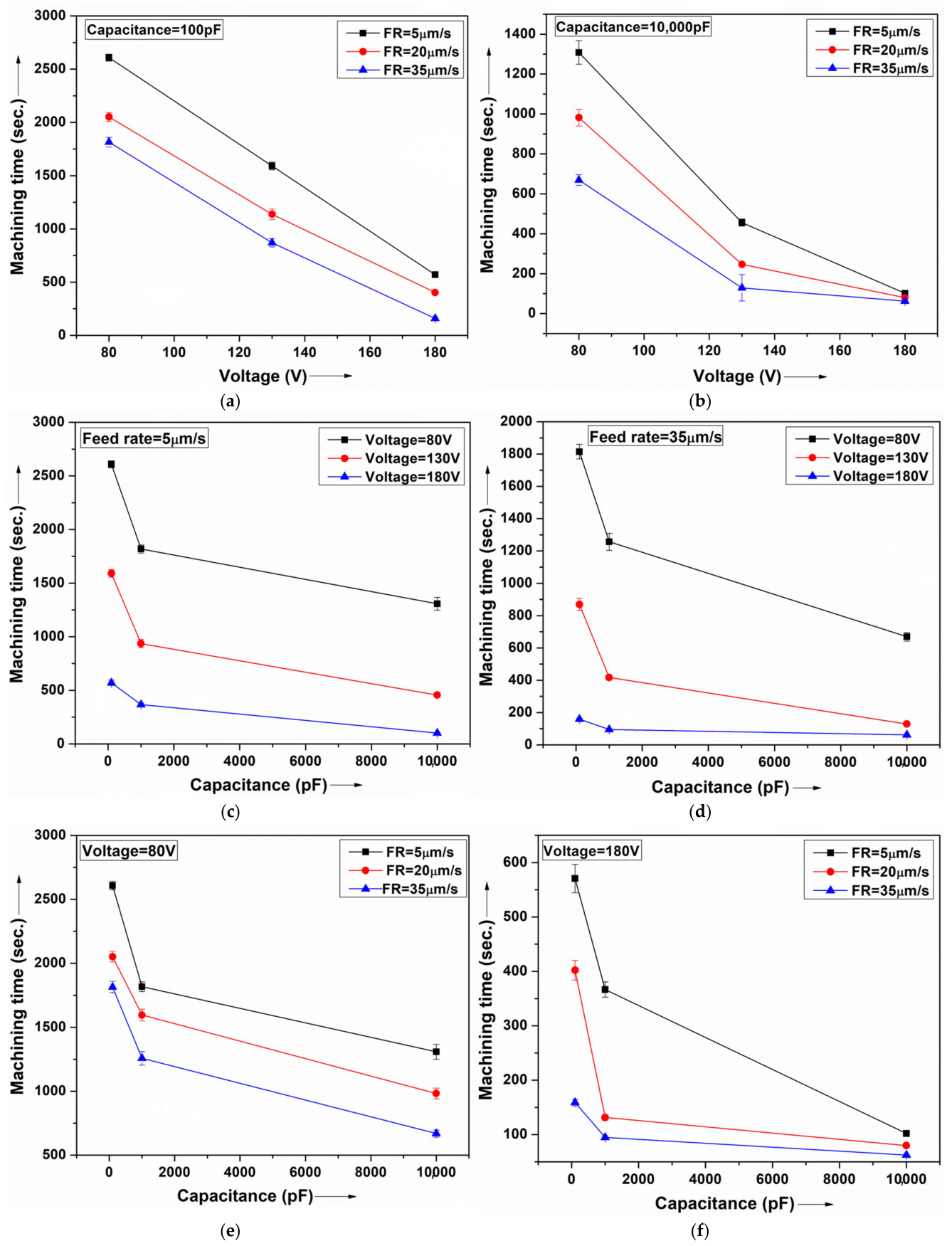
The effects of process parameters on MT and OC clearly show that discharge energy, driven primarily by voltage and capacitance, is the dominant governing element, but FR influences flushing efficiency and spark stability. Increasing voltage (80–180 V) and capacitance (100–10,000 pF) significantly increases discharge energy, resulting in a large reduction in MT due to increased spark erosion. At 100 pF and 5 µm/s, boosting voltage from 80 to 180 V lowered MT from 2553 s to 564 s for SS316L and from 2608.2 s to 570.6 s for Ti-6Al-4V. Higher discharge energy leads to larger spark gaps and greater thermal erosion, increasing OC from 6 µm to 17.5 µm for SS316L and from 8 µm to 22 µm for Ti-6Al-4V under the same conditions. Increasing FR (5–35 µm/s) reduces MT by improving debris removal and machining stability but may significantly increase OC due to shorter spark confinement time.
Figure 4,
Figure 5,
Figure 6 and
Figure 7 show the effects of voltage (V), capacitance (C), and FR on MT and OC in SS316L and Ti-6Al-4V during hole fabrication. The interaction graphs between V and FR for SS316L (
Figure 4 and
Figure 5) and Ti-6Al-4V (
Figure 6 and
Figure 7) at low (100 pF) and high (10,000 pF) capacitance clearly show that both MT and OC are primarily determined by discharge energy. As displayed in
Figure 4a,b and
Figure 6a,b, raising voltage at both capacitance levels dramatically reduces MT due to increased material melting and vaporization per discharge, resulting in faster material removal.
Figure 5a,b and
Figure 7a,b demonstrate that the same high-energy conditions result in higher OC. At high discharge energies, the larger plasma channel diameter and accelerated lateral thermal erosion cause excessive sidewall melting, leading to dimensional inaccuracies [
27].
The interaction effects between V and C at low and high FR (5 and 35 µm/s) indicate that discharge energy is the predominant factor in determining machining performance for both SS316L and Ti-6Al-4V.
Figure 4c,d and
Figure 6c,d show that capacitance considerably amplifies the effect of voltage on MT, especially under extreme discharge conditions. MT falls significantly as capacitance increases, with the effect of voltage becoming more obvious at 10,000 pF than at 100 pF.
Figure 5c,d and
Figure 7c,d demonstrate the interaction trend for OC. Under high-energy conditions, enhanced plasma channel expansion and increased lateral heat diffusion led to severe sidewall erosion, thereby increasing OC [
28]. At low FR (5 µm/s), the effect is more prominent due to the longer spark duration and increased heat accumulation. At a higher FR (35 µm/s), the enhanced flushing slightly moderates OC levels, but discharge energy still dominates.
Overall, at low capacitance (100 pF), increasing the voltage greatly increases OC due to higher discharge energy per pulse, resulting in broader plasma channels and greater lateral material melting [
29]. The impact of FR is relatively minor, with increased FR marginally increasing OC due to unreliable sparking and insufficient debris clearance. At high capacitance (10,000 pF), voltage has a greater impact as the combination of high energy causes excessive side sparking, resulting in significant overcut. Under these conditions, FR increases OC because higher tool advancement reduces effective flushing time. At low FR (5 µm/s), flushing is rather steady, and OC rises systematically with voltage and capacitance as spark energy increases. At high FR (35 µm/s), the combination of high capacitance and high voltage leads to secondary discharges and debris deposition, resulting in a steeper rise in OC. As a result, OC is predominantly energy-driven, yet increased FR exacerbates the situation.
The interaction plots of capacitance and FR at low (80 V) and high (180 V) voltage levels provide additional insight into the relative contributions of process factors to machining performance.
Figure 4e,f and
Figure 6e,f for MT and
Figure 5e,f and
Figure 7e,f for OC show that FR has a greater influence on flushing efficiency and discharge stability than the direct C-V combination under fixed-voltage conditions.
At both 80 V and 180 V, increasing capacitance increases discharge energy, improving material removal per spark and lowering overall MT. FR, however, has a significant impact on how successfully this energy is utilized. Prolonged spark residence time at low FR (5 µm/s) can lead to stable discharges but also debris deposition within the inter-electrode gap, increasing the risk of secondary discharges and unstable machining. At higher FR (35 µm/s), enhanced debris evacuation and reduced heat concentration lead to stable machining conditions, allowing for modest MT despite increased capacitance. In contrast to OC, where higher capacitance leads to greater lateral thermal degradation due to increased spark energy, the extent of OC is largely influenced by FR [
30]. Efficient flushing at higher FR inhibits plasma channel formation and uncontrolled sidewall melting, whereas poor flushing at lower FR promotes severe lateral erosion and geometry errors [
31].
At low voltage (80 V), OC steadily increases with capacitance, even though discharge energy remains small. At high voltage (180 V), the increase in capacitance significantly increases the plasma channel diameter and the heat-affected zone, leading to severe lateral erosion. Higher FR below 180 V raises OC due to unsteady discharge concentration at the sidewalls. At 100 pF, MT is quite high due to the low spark energy and lower material removal per pulse. Increasing voltage lowers MT by improving melting and vaporization efficiency. MT drops dramatically at 10,000 pF due to increased spark energy. Higher FR further reduces MT as tool development improves, albeit at the expense of dimensional accuracy.
At low FR of 5 µm/s, MT decreases gradually as voltage and capacitance increase due to a higher discharge intensity. At a high FR of 35 µm/s, MT decreases more steeply because increased feed promotes penetration, particularly in high voltage–capacitance combinations. At 80 V, an increase in capacitance reduces MT considerably because the additional energy increases. At 180 V, MT decreases greatly with increasing capacitance, indicating that high-energy discharges significantly improve MRR. Higher FR at 180 V shortens MT while increasing dimensional deviation.
During spark-plasma erosion drilling of both SS316L and Ti-6Al-4V, a similar parametric pattern was observed, indicating that discharge energy is the primary factor regardless of material. OC in both alloys increased with voltage and discharge energy. This increased the plasma channel diameter and lateral heat flux, facilitating sidewall melting and secondary discharges. Excess energy density at higher capacitance–voltage combinations exacerbated debris formation and unstable sparking, particularly at high FR, exacerbating OC. MT lowered significantly with increasing voltage and capacitance for both materials, as higher spark energy improved melting and vaporization. Increased FR further reduced MT by accelerating tool penetration; however, this benefit came at the expense of dimensional precision due to poor flushing efficiency and unstable sparks. Although Ti-6Al-4V has lower thermal conductivity and different thermophysical properties compared to SS316L, the direction of response is the same, with only differences in magnitude. Overall, the results reveal that discharge energy regulates OC, whereas MT is highly impacted by the combined effect of discharge energy and feed rate. This demonstrates a continuous trade-off between productivity and geometrical precision in spark-plasma erosion drilling of both alloys.
3.2. Analysis of Variance (ANOVA)
To investigate the statistical significance of machining parameters, ANOVA was performed at the 95% confidence level. A parameter was considered statistically significant if the
p-value was less than or equal to 0.05. The ANOVA results for response measures for Ti-6Al-4V and SS316L are presented in
Table 4 and
Table 5, respectively. The ANOVA results show that voltage is the most important factor influencing MT, accounting for 63.98% and 63.95% of the total variation in SS316L and Ti-6Al-4V, respectively. Capacitance, on the other hand, was discovered to be the most significant factor influencing OC, accounting for 64.28% and 68.75% of the total variation in SS316L and Ti-6Al-4V, respectively. This demonstrates that MT is mostly determined by discharge intensity, whereas OC is strongly dependent on spark energy stored in the capacitor.
The appropriateness of the regression models was evaluated using the coefficient of determination (R2) and the adjusted coefficient of determination (R2(adj). MT had R2 values of 93.55% (SS316L) and 93.27% (Ti-6Al-4V), with corresponding R2(adj) values of 91.61% and 91.26%, respectively. The OC models showed good explanatory power and reliability, with equivalent R2 and R2(adj) values. The selected process parameters account for almost 92% of the response diversity, demonstrating the robustness of the statistical models.
3.3. Hole Quality Analysis (Optical and SEM Images)
Under controlled discharge conditions, micro-EDM drilling of SS316L and Ti-6Al-4V resulted in much higher micro-hole integrity. ANOVA shows that capacitance and discharge voltage significantly influence performance parameters, such as MT and OC, whereas FR has a comparatively minor impact. As a result, for comprehensive optical and SEM evaluation, FR is kept constant, while capacitance and voltage are varied to separate their thermoelectrical effects on hole shape.
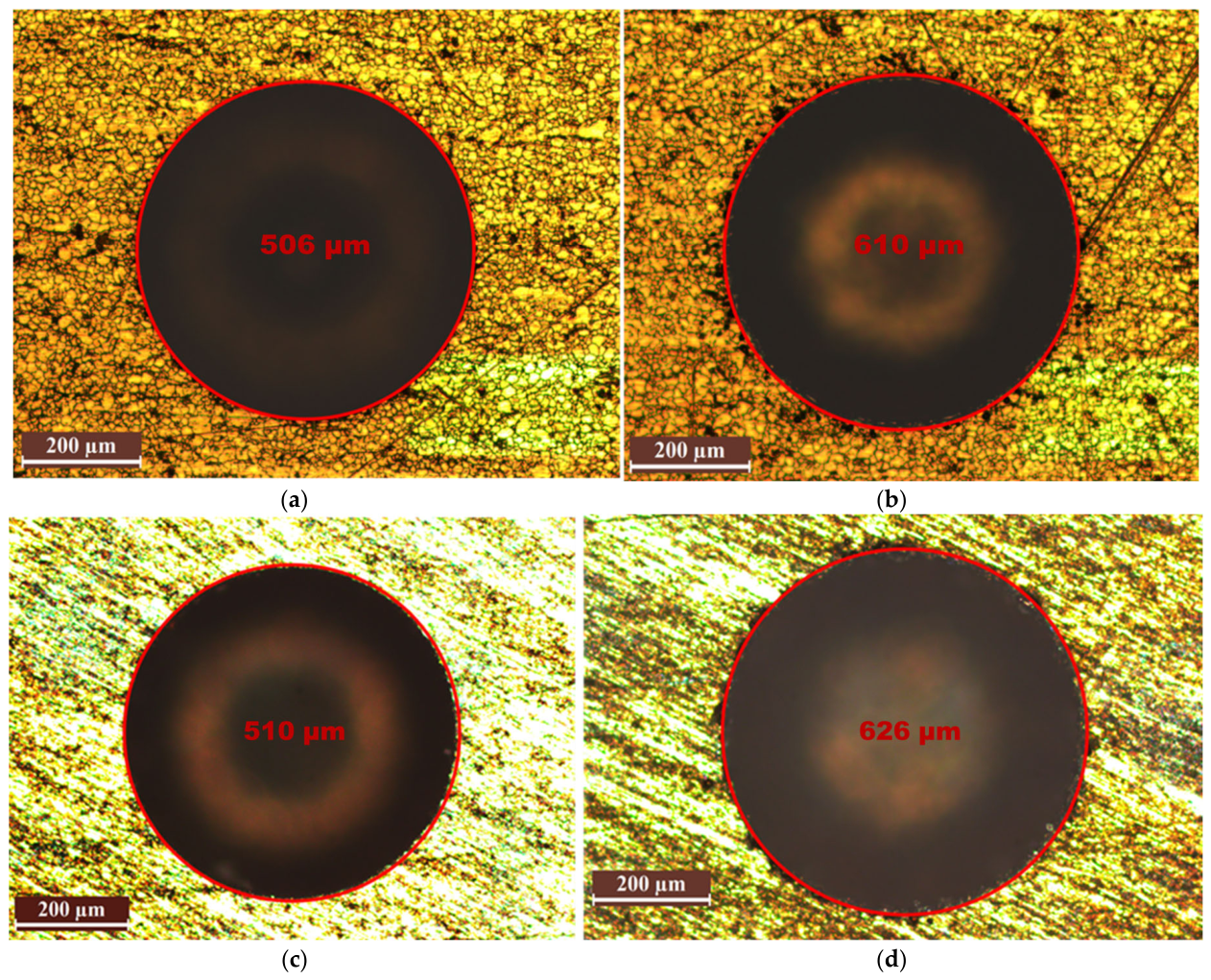
Figure 8a–d show optical micrographs of micro-drilled holes fabricated at low (experiment 1) and high (experiment 25) voltage–capacitance settings for SS316L and Ti-6Al-4V, illustrating the effect of discharge energy on hole quality. At low energy (experiment 1), regulated plasma formation produced smoother hole edges, less burr formation, less overcut, and uniformly distributed craters with thinner recast layers. In contrast, high-energy conditions (experiment 25) resulted in larger craters, thicker recast layers, resolidified debris, peripheral material buildup, and higher circularity error due to intensified, unstable plasma expansion. Ti-6Al-4V suffered more severe thermal degradation due to its weaker thermal conductivity.
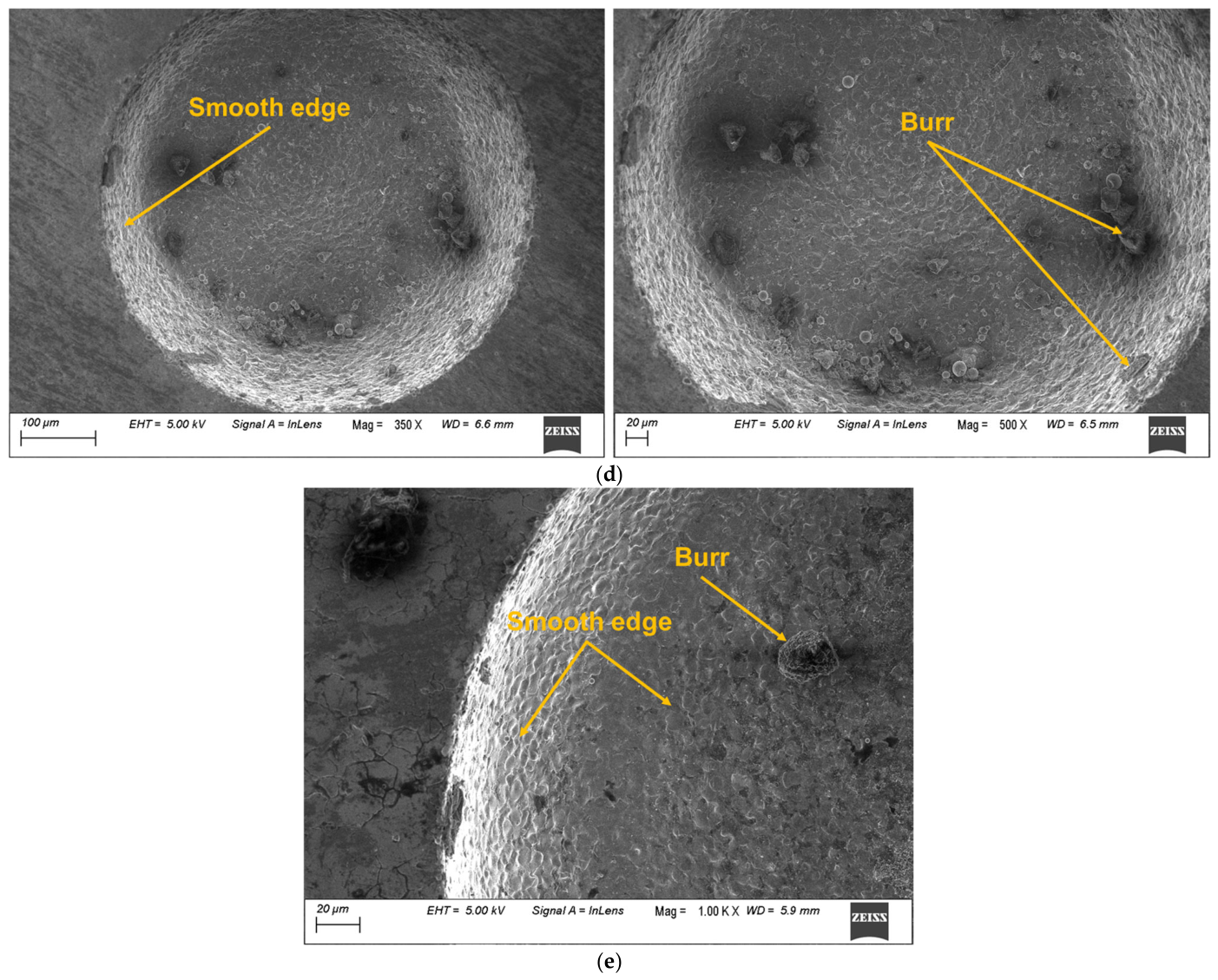
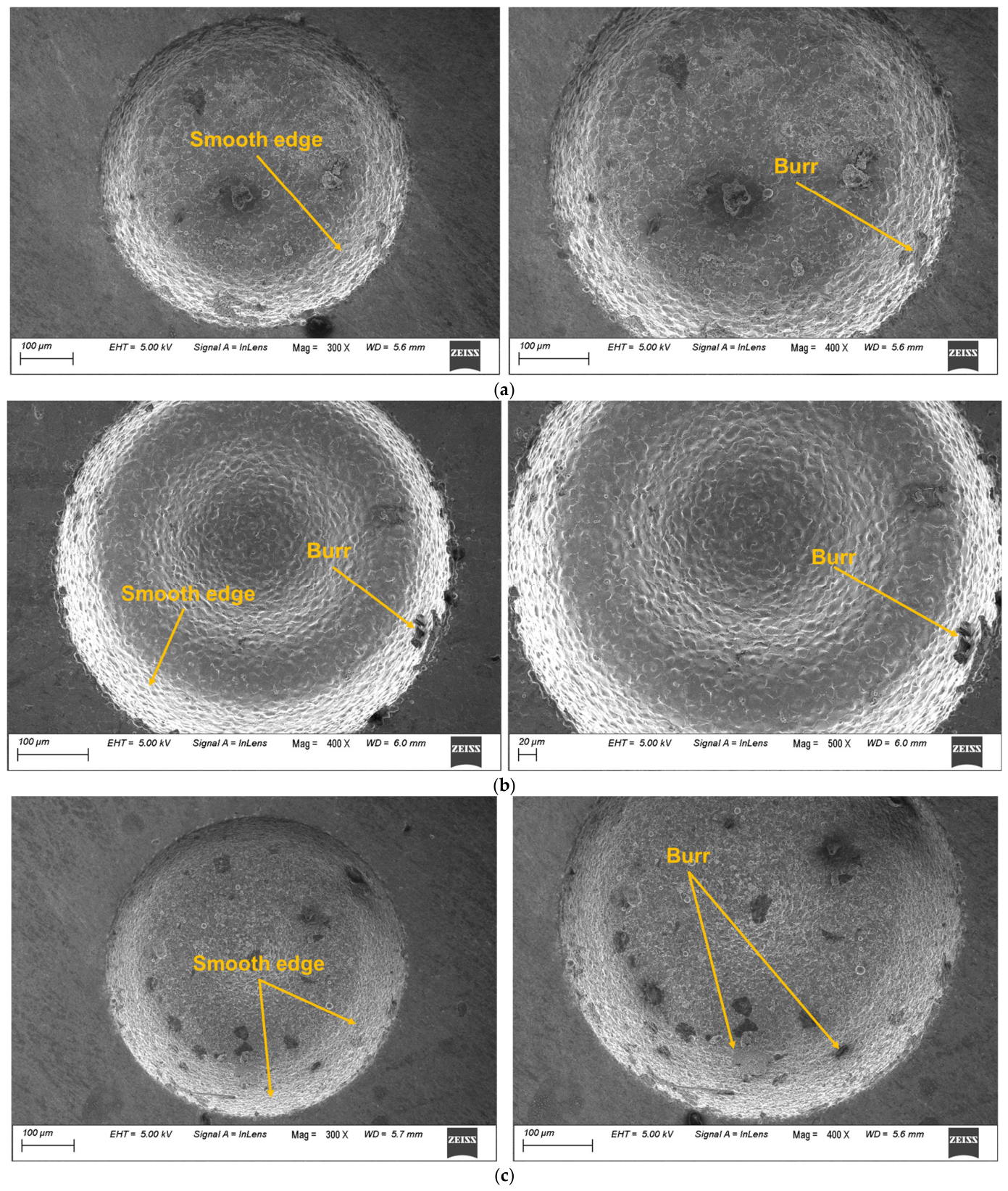
Figure 9a–d show SEM micrographs comparing the morphology of micro-drilled holes for SS316L and Ti-6Al-4V under two extreme discharge conditions, i.e., experiment 1 (low voltage–capacitance) and experiment 25 (high voltage–capacitance). In addition,
Figure 9e presents a magnified view of the micro-drilled surface after machining SS316L, revealing the edge morphology and surface texture characteristics. The image shows a relatively smooth cutting edge with minimal debris adhesion, indicating stable machining conditions.
Figure 9 overall demonstrates the impact of variations in discharge energy on surface properties and overall hole integrity. Higher discharge energy levels led to noticeable burr formation and deviations from circularity. These flaws were probably caused by the formation of a resolidified, i.e., recast, layer at the periphery of the micro-hole. Increased capacitance and voltage in micro-EDM boost discharge energy, resulting in plasma channel expansion and spark erosion. The increased thermal flow caused deeper, broader craters due to localized melting and partial evaporation of the work materials [
32]. At high discharge energy, molten material was released from the crater core and redeposited along the rim of the micro-hole before being completely flushed. This process led to the accumulation of peripheral material, which contributes to burr formation and dimensional inaccuracies [
33]. Although higher energy input lowered MT by accelerating material removal, it also increased OC and reduced geometric fidelity. SEM observations show that increases in capacitance and voltage led to noticeable burr formation and greater circularity error, thereby affecting micro-hole quality despite increased productivity.
The functional performance of SS316L and Ti-6Al-4V is particularly sensitive to surface and subsurface variations, which are governed by discharge energy intensity, which in turn depends on process parameter settings [
14,
17]. Machining parameters (voltage, capacitance, and FR) control the heat input during spark-plasma erosion, thereby altering the grain structure and phase composition in the near-hole region through rapid melting and quenching. The lower MT and reduced overcut in SS316L are attributed to its single-phase austenitic (γ-Fe, FCC) structure with uniform equiaxed grains (
Figure 3), which enables consistent melting during spark discharge. Its increased thermal conductivity improves heat dissipation, reduces localized melting, and ensures stable plasma-material interaction with low temperature gradients. In contrast, Ti-6Al-4V exhibits a dual-phase (α + β) microstructure, typically consisting of α-phase (HCP) lamellae and a retained β-phase (BCC), as per the XRD analysis presented in
Figure 3. Probably, this variable grain shape produced phase boundaries and anisotropic thermal behavior, both of which have a substantial influence on spark erosion. The lower thermal conductivity of Ti-6Al-4V led to localized heat accumulation, encouraging deeper melting and material expulsion, thereby increasing overcut. Furthermore, the stronger interatomic bonding and higher mechanical strength of both α- and β-phases require greater discharge energy for material removal, thereby increasing the MT of Ti-6Al-4V. Overall, not only process parameters variations but also microstructural properties such as phase composition (single-phase versus dual-phase) helped to study MT and overcut.
3.4. Comparison of Micro-Hole Drilling in SS316L and Ti-6Al-4V
The micro-drilling performance of SS316L and Ti-6Al-4V for biomedical precision applications differs significantly in terms of machinability, surface integrity, and temperature responsiveness. SS316L, an austenitic stainless steel with lower yield strength and higher thermal conductivity, provides superior dimensional stability and lower tool wear during micro-drilling due to its intermediate hardness [
1]. Ti-6Al-4V has higher strength, lower thermal conductivity, and higher hardness, leading to higher cutting temperatures, faster tool wear, and adhesion-induced built-up edges [
2].
The micro-drilling performance of SS316L and Ti-6Al-4V under variable capacitance (100–10,000 pF), voltage (80–180 V), and FR (5–35 µm/s) exhibited consistent material-dependent changes in MT and OC. Ti-6Al-4V had a slightly higher MT than SS316L under the same circumstances in all 27 trials. For example, at 100 pF, 80 V, and 5 µm/s (expt. 1), MT increased from 2553 s (SS316L) to 2608.2 s (Ti-6Al-4V). At the highest energy setting of 10,000 pF, 180 V, and 35 µm/s (expt. 27), MT increased from 51.6 s to 62.4 s, indicating ~20% longer machining time for Ti-6Al-4V. At 100 pF and 180 V (expt. 9), OC increased from 20.5 µm (SS316L) to 24.5 µm (Ti-6Al-4V), while at 10,000 pF, 180 V, and 35 µm/s (expt. 27), OC increased from 62.5 µm to 73.5 µm. Higher capacitance and voltage resulted in higher MT and OC, confirming the main role of discharge energy, whereas increasing the feed rate reduced MT but increased OC. Overall, SS316L has better machining efficiency and dimensional control (lower MT and OC), but Ti-6Al-4V has more overcut and slightly longer machining time, especially at higher energy settings.
Higher discharge energy, achieved by increasing capacitance, voltage, and FR, reduced MT and encouraged overcutting. Elevated energy levels have been demonstrated to result in more burrs and uneven surfaces, as observed in the SEM investigation. Material properties played an important role in determining energy distribution and dissipation during the spark erosion process. SS316L exhibited more efficient heat dissipation, due to its higher thermal conductivity, resulting in less thermal accumulation, a smaller heat-affected zone (HAZ), and better dimensional control with minimal overcut. On the other hand, Ti-6Al-4V showed localized heat concentration and deeper thermal penetration due to its lower thermal conductivity, resulting in an extended HAZ and, eventually, increased overcut.