Article

Quantifying Air Movement Induced by Natural Forces in an Isolated Structure in the Subsurface Infrastructure


1
Northwest Occupational Health & Safety, North Vancouver, BC V7K1P3, Canada
2
Programa de Engenharia Ambiental, Universidade Federal do Rio de Janeiro, Rio de Janeiro 21941-972, Brazil
3
Escola Politécnica, Universidade Federal do Rio de Janeiro, Rio de Janeiro 21941-972, Brazil
*
Author to whom correspondence should be addressed.
Infrastructures 2021, 6(1), 3; https://doi.org/10.3390/infrastructures6010003

Submission received: 2 December 2020 / Revised: 21 December 2020 / Accepted: 23 December 2020 / Published: 25 December 2020

Abstract

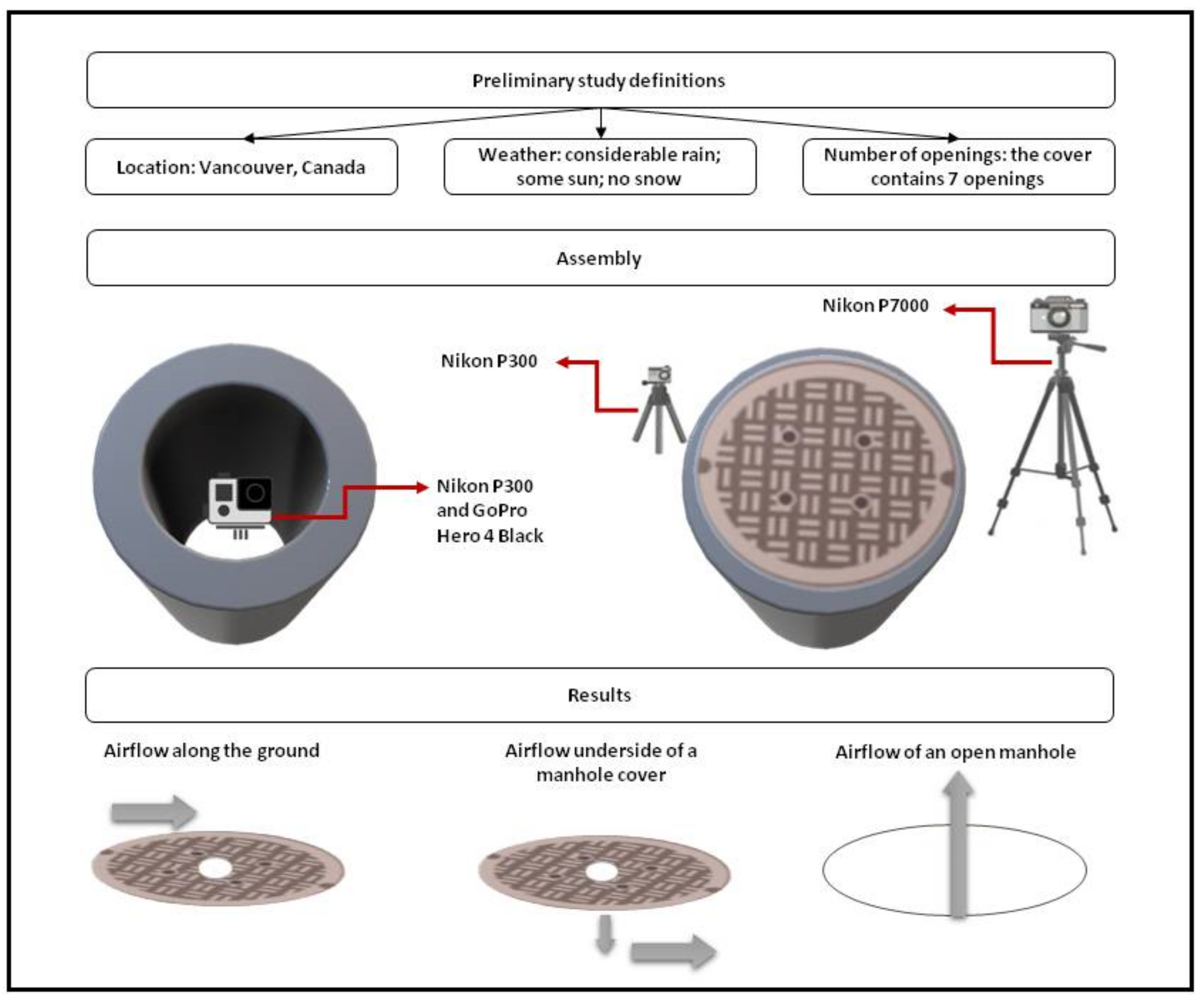
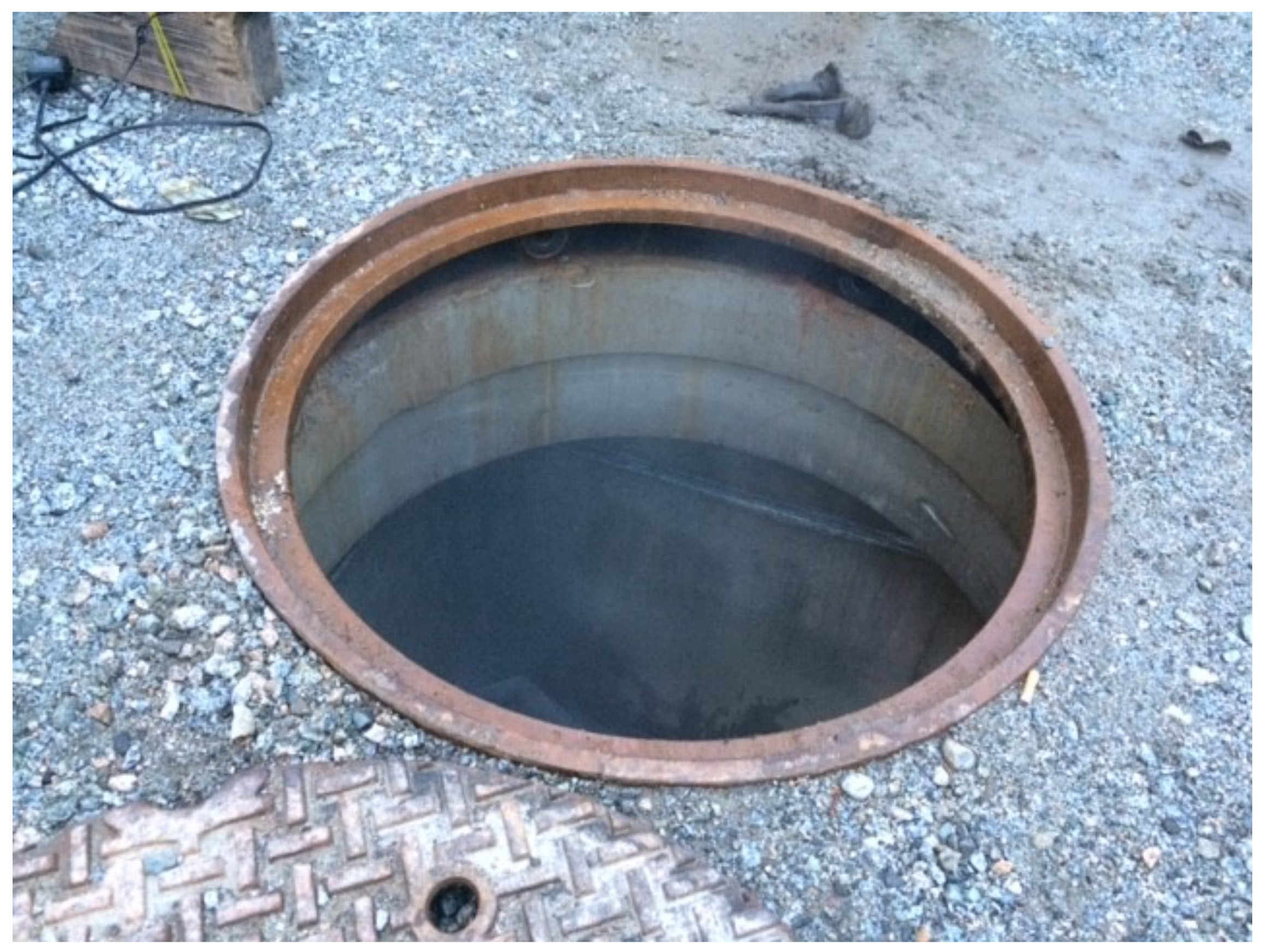
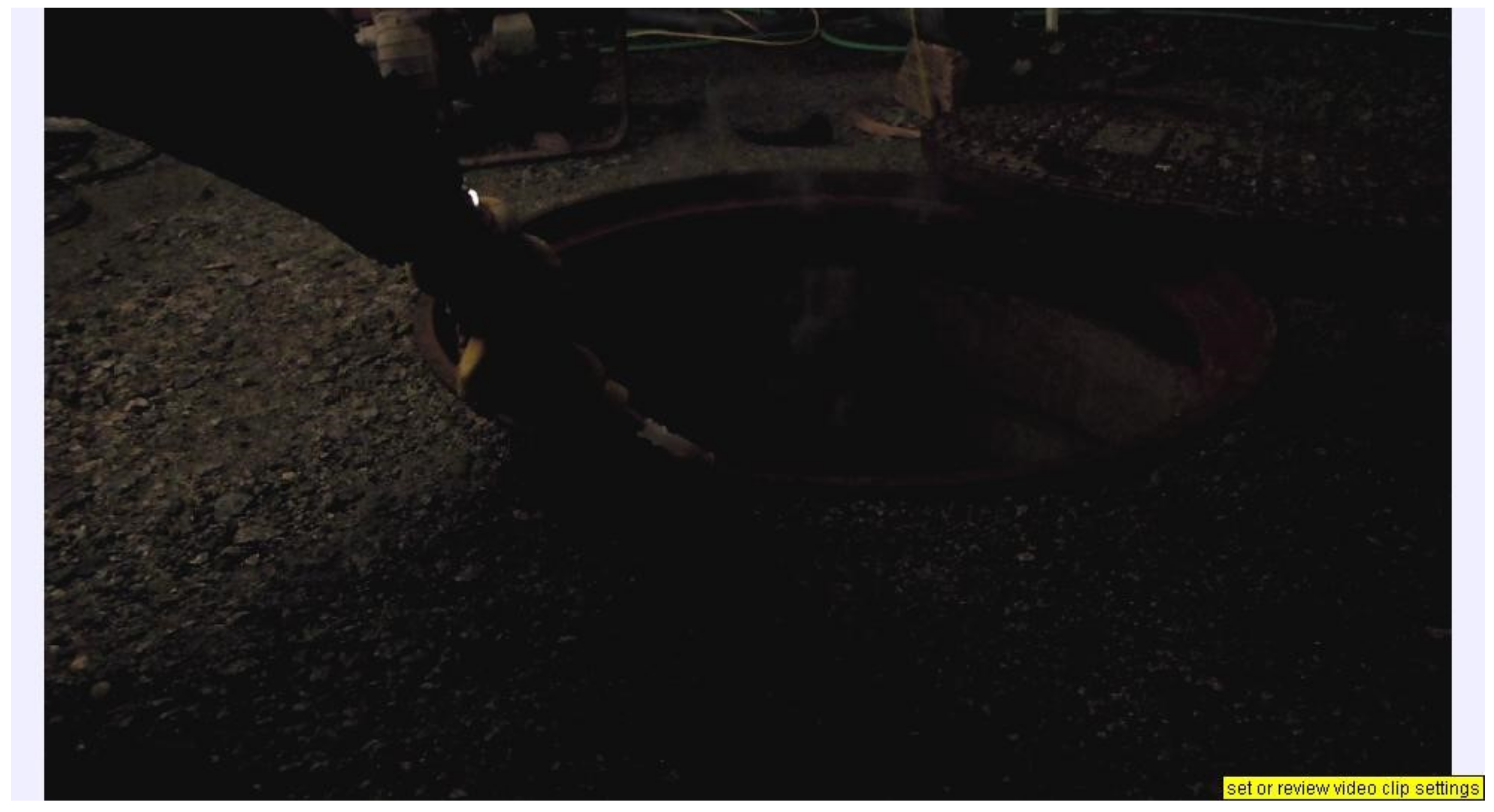
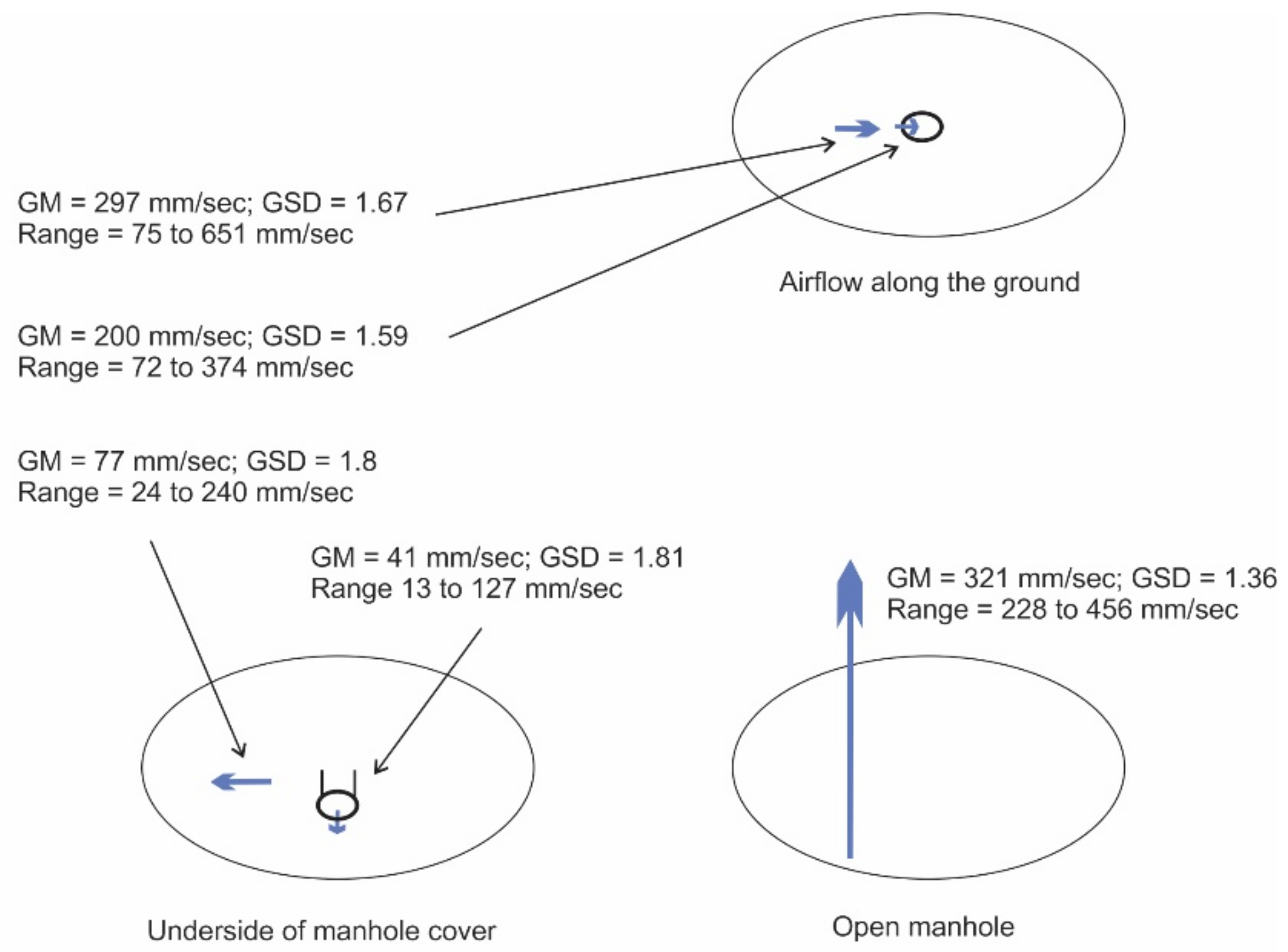
This article describes the development and demonstration of a non-intrusive method for the quantitative determination of speed of air movement along the ground and inside an isolated subsurface structure, a type of confined space. Natural ventilation occurs continuously and reduces risk to entrants from contact with a hazardous atmosphere. One of the most important parameters still undetermined was the speed of air movement during the process. Small puffs of artificial “smoke” were used to visualize air movement. Tracker, an open-source physics program, provided the capability to analyze this movement. Measurement of air speed requires access to individual frames in the video, capability to move forward and backward, and the means to manipulate the image to highlight the “smoke”. Background subtraction, control of brightness and contrast, and conversion of color to greyscale were essential for obtaining these measurements. Measurements for a single opening indicated that flow along the ground was borderline turbulent (Reynolds number ~3000) and in the opening and inside the airspace, within the bounds of laminar flow (Reynolds number <2250). Video obtained during this work showed behavior observable in laboratory studies of Helmholtz resonators. Results provide the basis for a larger study of the ventilation process to facilitate design improvements.
Keywords: air speed measurements; confined space; flow classification; Helmholtz resonator; isolated subsurface structure; laminar flow; motion capture software; Tracker; turbulent flow air speed measurements; confined space; flow classification; Helmholtz resonator; isolated subsurface structure; laminar flow; motion capture software; Tracker; turbulent flow