1. Introduction
Shrinkage has substantial impacts on the long-term performance of concrete. It contributes to structural deformation, crack initiation, and redistribution of internal stresses, ultimately leading to both recoverable and permanent volume alterations in the material [
1,
2,
3,
4]. Considerable scholarly attention has been devoted to controlling shrinkage-induced deterioration in cementitious composites. Approaches explored include the incorporation of chemical admixtures and supplementary cementitious materials [
5,
6,
7], the use of superabsorbent polymers or lightweight aggregates for internal curing [
8,
9], as well as the application of expansive cements [
10] and reinforcing fibers [
11].
More recently, the utilization of carbon nanotubes (CNTs) has been introduced as an innovative solution to combat shrinkage-related challenges in concrete structures [
12,
13,
14,
15,
16,
17,
18,
19]. Capillary pores with diameters up to approximately 50 nm are largely responsible for shrinkage in hardened concrete due to the significant capillary tension they generate [
20,
21]. In contrast, larger pores have a stronger influence on concrete’s strength and permeability [
4,
20]. The extent of cement hydration is directly linked to the presence of gel pores, which predominantly possess diameters below 10 nm [
4]. The incorporation of CNTs serves as a potent filling mechanism, effectively minimizing the void space associated with sub-50 nm capillary pores [
22,
23]. The introduction of CNTs is expected to impact shrinkage by refining the cement paste microstructure, considering that shrinkage primarily develops within the hydrated cement matrix while aggregates act as a constraining framework. This improvement is related to the filler and nucleation effects that increase matrix density, as well as the bridging effect, which helps inhibit microcrack development [
12,
14].
The mechanical behavior of cement pastes has been the principal focus of extensive investigations conducted over the past decade, aimed at upgrading cement-based materials with carbon nanotubes [
13,
22,
23]. Owing to their exceptional characteristics, particularly their extremely high tensile strength, reaching values between 100 and 150 GPa [
24], CNTs have emerged as strong contenders for reinforcing cement matrices. They play a role in limiting the growth of microcracks [
14,
25,
26], thereby enhancing the material’s overall durability. The observed improvements in CNT-modified cement composites are largely attributed to the effects of particle filling [
23], the promotion of cement hydration through nucleation [
20,
26], and the bridging of microcracks [
14,
25]. Consequently, incorporating CNTs is also anticipated to reduce long-term deformation and enhance the crack resistance of concrete over time.
The specific role of carbon nanotubes in mitigating shrinkage has received comparatively less attention than their mechanical contributions, leaving a notable gap in the literature. Research addressing this issue has been conducted by Li et al. [
17] and Hawreen et al. [
16], focusing on mortar systems, alongside investigations into cement pastes by Konsta et al. [
18] and Hawreen et al. [
14], which focused on CNT-reinforced cement pastes. Li et al. [
15] studied shrinkage in mortars with a composition of 0.3% of CNTs over six days of curing. Reportedly, shrinkage was significantly reduced, from 0.112% in the control mortar to 0.085% when using nanotubes, and this was attributed to decreased porosity with a well-formed microstructure and enhanced production of C-S-H gel, which blocked the migration of water and eliminated routes of moisture movement. Konsta et al. [
16] investigated autogenous shrinkage of pastes containing 0.025–0.08% CNTs, reporting a 35% shrinkage reduction when compared with control samples, which was linked to a reduced number of fine pores smaller than 20 nm. For a year, the shrinkage of mortars and cement pastes using the same types of CNTs 0.1–1% was monitored by Hawreen et al. [
12,
19]. Their findings consistently demonstrated shrinkage reductions at all tested ages, with decreases of up to 21%, regardless of CNT type or water-to-cement ratio. To evaluate how different CNT varieties affect the time-dependent shrinkage of concrete, Hawreen et al. [
13] conducted an extensive experimental program. Their mix designs featured 0.05–0.5% dosages of both functionalized and unfunctionalized nanotubes with varying aspect ratios, combined with w/c ratios between 0.35 and 0.55. The investigation encompassed not only the monitoring of time-dependent deformations but also the assessment of fresh and hardened mechanical properties. Mechanically, the nanocomposites exhibited up to a 21% improvement in compressive strength, accompanied by negligible changes in the modulus of elasticity. Most importantly, the incorporation of CNTs proved highly effective in mitigating volumetric changes, achieving reductions of 15–18% in long-term shrinkage and a remarkable 54% decrease in early-age shrinkage compared to plain concrete.
While several experimental studies have investigated the shrinkage of CNT-modified cementitious materials, predictive modeling in this specific domain remains limited. Existing computational approaches for nanomodified composites primarily focus on micromechanical modeling to evaluate mechanical or electro-mechanical properties at the nano-/microscale [
27,
28,
29,
30]. While highly valuable for fundamental material science, such micromechanical models are computationally intensive and require complex nanoscale input parameters that are difficult to determine for practical structural design. Furthermore, while macroscopic empirical models have been developed for concrete modified with other nanomaterials, such as graphene oxide (GO) nanosheets [
31], these models are specific to the geometry and mechanism of GO and cannot capture the unique characteristics of CNTs. To the best of the authors’ knowledge, there is currently no macroscopic, design-oriented predictive model based on standard international codes (such as CEB MC90) that systematically integrates the coupled effects of CNT content, aspect ratio, and functionalization type for concrete-level total shrinkage prediction. The proposed framework bridges this gap by providing a practical, code-based tool for engineers, distinct from complex micromechanical approaches.
To predict the drying shrinkage behavior of plain concrete, several widely recognized mathematical models have been proposed in the literature. Among these is the CABR model [
32], the ACI 209 series [
33], CEB-FIP model [
32], CEB MC90 model [
32], the BP series [
1], the B3 model [
34], and the GL2000 model [
35]. Each of these frameworks incorporates various internal and external parameters such as environmental relative humidity, the concrete’s elastic modulus at 28 days, and the age at which drying initiates.
At present, there is no available macroscopic, design-oriented model based on standard international codes for estimating the total shrinkage behavior of concrete incorporating CNTs. While the foundational methodology of modifying the CEB MC90 model was previously introduced by the authors for modeling the drying shrinkage of graphene oxide concrete [
31], the current study significantly extends this approach to predict the total shrinkage of CNT-reinforced concrete. Furthermore, unlike the previous deterministic model [
31], this work introduces a comprehensive Monte Carlo-based probabilistic framework to evaluate reliability under uncertainty. Although the individual effects of CNT variables (content, aspect ratio, and type) have been experimentally tested in previous studies such as Hawreen et al. [
13], a unified predictive mathematical model incorporating these parameters to calculate total shrinkage strain has not been reported in prior literature. The current research discusses a new predictive model to compute the shrinkage strain of concrete containing CNTs. The foundation of the new model is the famous CEB MC90 [
36], known for its reliability in describing the past behavior of plain concrete. CEB MC90 has numerous advantages that make it very applicable and well-adjusted model for moisture-related shrinkage estimates in normal concrete. The mathematical expressions used in this model are easy to understand and can be easily calculated. The estimation technique is based on several parameters such as relative humidity, type of cement used, and the compressive strength of concrete after 28 days. The shrinkage evolution is tracked with the aid of the function defining the shrinkage coefficient, which allows the model to keep abreast of the construction process. In addition, the model is flexible enough to operate with various types of cement and is accurate enough because it takes into account the changing conditions of the environment. Thanks to its simplicity of application and information on its use in specifications; the CEB MC90 model continues to be used when constructing different objects out of traditional concrete.
Therefore, the primary objective of this study is to develop a comprehensive predictive framework for estimating the total shrinkage strain of CNT-reinforced concrete by extending the well-established CEB MC90 model. To achieve this goal, the following specific objectives are pursued: (1) modifying the CEB MC90 model to systematically incorporate critical CNT-related parameters, including CNT content, aspect ratio, and type, alongside the water-to-cement ratio; (2) validating the developed model against a comprehensive experimental dataset to ensure its predictive accuracy; (3) employing Monte Carlo simulation [
37] to evaluate the probabilistic performance of the model, quantify the success probability of meeting design shrinkage criteria, and assess the influence of uncertainties in CNT-related parameters on long-term shrinkage control. The outcomes of this research aim to provide structural engineers with a reliable, code-based tool for the rational design and optimization of CNT-modified concrete mixtures. Importantly, the new model accurately captures the time-dependent shrinkage behavior of concrete composites containing CNTs across various mix designs, providing a reliable predictive tool for structural applications.
2. Theoretical Framework and Methodology
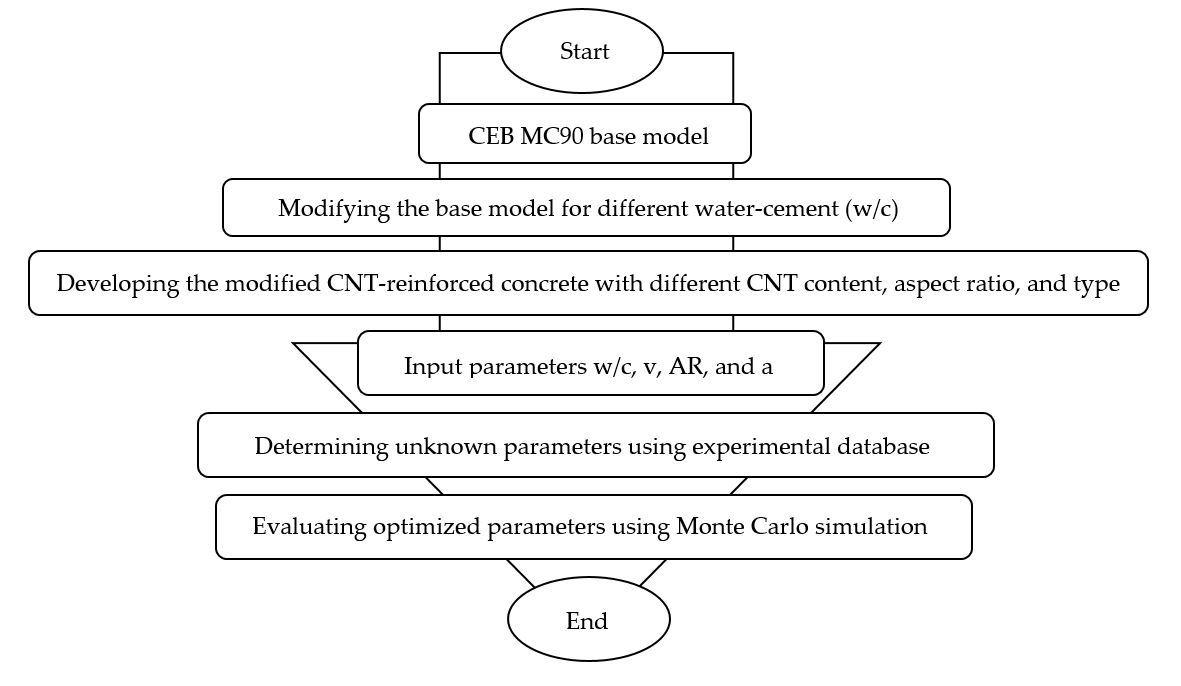
The overall methodology of this study is schematically illustrated in
Figure 1. The framework begins with the standard CEB MC90 base model, which is subsequently modified to account for the influence of varying water-to-cement (
w/
c) ratios on the shrinkage behavior of unmodified concrete. Following this, the model is further redeveloped to incorporate the specific effects of CNT reinforcement, including CNT content (
ν), aspect ratio (
AR), and type (
α). These input parameters, alongside the
w/
c ratio, are then utilized to determine the unknown empirical coefficients through a curve-fitting procedure applied to the comprehensive experimental database provided by Hawreen et al. [
13]. Finally, the calibrated model is integrated with a Monte Carlo simulation to evaluate the optimized parameters and assess the probabilistic performance and reliability of the CNT-reinforced concrete mixtures under uncertainty.
2.1. Predicting Total Shrinkage Strain in Plain Concrete Using the CEB MC90 Model
CEB MC90 model predicts the total shrinkage strain of plain concrete,
, as [
36]:
The parameters in the aforementioned equation are defined as follows:
is the notional shrinkage coefficient, and
characterizes the time-dependent evolution of shrinkage. Furthermore,
t represents the concrete age (in days) at the specific moment of interest,
indicates the age at which the drying process commences (in days), and
defines the total drying time (in days). To evaluate the notional shrinkage coefficient, the subsequent formula is applied:
with
and
In these expressions,
denotes the mean compressive cylinder strength of the concrete at 28 days of age (measured in MPa or psi), while the reference constant
is set to 10 MPa (1450 psi). The parameter β
SC refers to the coefficient that relies on the type of cement, the value of which was used in this study as 5. Furthermore,
h refers to the relative humidity of the surrounding atmosphere expressed as a decimal, i.e.,; reference value
h0 was assigned as 1. The temporal evolution of the shrinkage strain is formulated as follows:
All terms in the above equation have the following meaning: is the length of the drying process (in days), t1 is equal to 1 day, () is the ratio of the volume to the surface of the object (in mm or in), and ()o = 50 mm (two inches).
The next section aims to provide the details of the original CEB MC90 model by introducing the effects of the water–cement ratio in the case of normal concrete and by also including specific effects of the CNT amount, its dimensions, and the type of CNT used in nanocomposite concrete.
In the context of this study, ‘total shrinkage’ refers to the combined macroscopic deformation measured under unsealed drying conditions (RH ≈ 50%), which primarily comprises drying shrinkage (dominant at later ages due to moisture loss) and autogenous shrinkage (dominant at early ages due to self-desiccation during hydration). The proposed CEB MC90-based framework is designed to predict this combined total shrinkage strain, consistent with the standard scope of the CEB MC90 model.
2.2. Development of the CEB MC90 Model for Unmodified Concrete: Considering Different Water–Cement Ratios
One of the most significant disadvantages of the original CEB MC90 model is the omission of the water–cement ratio; indeed, the latter is recognized as one of the most important parameters controlling total shrinkage strain in concrete. To address this gap, the present section proposes a modified version of the CEB MC90 framework that explicitly accounts for the influence of the w/c ratio on the shrinkage behavior of unreinforced concrete. Following the approach outlined in [
13], the parameter
appearing in Equation (5) is adjusted according to the following expression:
Equation (4) is also modified in the following form:
is the water–cement ratio. By performing a fitting procedure of the experimental data using Equation (1), the empirical parameters a1, a2, a3, and a4 are derived. The selection of the exponential functional forms in Equations (6) and (7) is physically justified by the asymptotic nature of moisture loss and microstructural densification in cementitious materials. Statistically, these forms were derived through non-linear regression analysis of the experimental dataset, optimizing the coefficients to minimize the sum of squared residuals. Alternative linear and polynomial models were evaluated but resulted in higher prediction errors and unphysical extrapolations, confirming the necessity of the exponential terms to accurately capture the non-linear influence of the w/c ratio.
2.3. Re-Developing the CEB MC90 Model for Concrete with CNT: Considering Different CNT Content, Aspect Ratio, and Types
Currently, the CEB MC90 model has been redeveloped to predict the total shrinkage strain of concrete for different CNT content, aspect ratio, and types. To accurately capture the time-dependent microstructural evolution specific to CNT-modified concrete without violating the physical definition of the constant 28-day compressive strength (
), an empirical time-correction factor,
γ(
t), is introduced into the notional shrinkage coefficient. While the standard time-evolution function
governs the macroscopic drying kinetics, the nanoscale interactions, such as continuous C-S-H gel nucleation, progressive pore-filling by CNTs, and interfacial transition zone (ITZ) densification, exhibit a distinct time-dependent trajectory that requires additional mathematical representation. Therefore,
is defined as an empirical time-dependent function (derived from non-linear regression of the experimental data) to modify the magnitude of the base notional shrinkage
. By decoupling the time-dependent microstructural refinement from the fixed 28-day mechanical properties, this formulation ensures both physical consistency with the CEB MC90 framework and high predictive accuracy. The modified equation for the total shrinkage strain of CNT-reinforced concrete is expressed as:
The empirical time-correction factor is mathematically defined as:
, where
n and
r are empirical time-exponents calibrated through the curve-fitting process of the experimental dataset.
b1 and
b2 are the empirical parameters that are evaluated by fitting Equation (1) with experimental data.
ν is the content of CNT.
AR is the CNT aspect ratio. The physical justification for the functional form in Equation (8), particularly the term
, lies in the asymptotic shrinkage mitigation effect of CNTs. As CNT content and aspect ratio increase, the shrinkage reduction approaches a saturation limit due to finite pore availability and potential nanotube agglomeration. The multiplicative combination of CNT content (
ν), aspect ratio (
AR), and the type parameter (
α) reflects the synergistic nature of the underlying mechanisms, as the total restraint depends simultaneously on the nanofiller volume, geometric bridging efficiency, and interfacial bond strength. Statistically, this form was validated through non-linear regression, achieving high predictive accuracy (5% error on the test set) compared to alternative linear models, which failed to capture the complex, non-linear trends of the experimental data. To quantify the CNT types, the parameter
α is defined as follows:
is the shrinkage strain of the plain concrete at time . is the shrinkage strain of the corresponding concrete containing CNT at time . n is the number of ages. It is important to clarify the theoretical role and practical application of the parameter α. Rather than being a continuously predicted variable, α acts as a CNT-type-specific efficiency factor that accounts for the unique surface chemistry, functionalization, and dispersion characteristics of a given nanotube type. Because the model is semi-empirical, applying it to a completely new, untested CNT type requires a minimal baseline calibration. Specifically, a single preliminary experimental test (e.g., a standard reference mix design) is sufficient to back-calculate the α value for that specific new CNT type. Once α is established through this minimal baseline test, the proposed framework can then predict the total shrinkage strain for that CNT type across all other untested conditions, including varying water-to-cement ratios, different dosages, and long-term curing ages. To achieve a fully predictive model without any prior testing, future research should focus on correlating α directly with the intrinsic physical and chemical properties of the CNTs, such as their degree of functionalization, specific surface area, or surface energy.
2.4. Reliability Assessment: Monte Carlo Simulation
A probabilistic Monte Carlo framework is employed to assess the influence of parameter variability on total shrinkage in CNT-modified concrete. This approach accounts for the variabilities in the input design parameters and evaluates the probability of successful performance, meaning the system stays within specified safety and functional boundaries. Continuous uniform probability distributions are applied to the essential physical parameters: time, water–cement ratio, CNT content, and aspect ratio. For the categorical variable ‘CNT type’, a discrete uniform distribution is applied, assigning an equal probability of occurrence to each of the considered CNT categories. This approach, grounded in the principle of maximum entropy, represents a conservative, non-informative prior bounded by the known experimental minimum and maximum limits, preventing the introduction of unwarranted statistical bias while enabling rigorous parametric sensitivity analysis.
In order to perform rigorous statistical analysis, the investigators generate 100,000 samples with the assumption that all inputs are statistically independent of each other. The limits of such distributions are determined based on the existing experimental information for each of the variables. To ensure transparency and reproducibility of the probabilistic framework, the specific input variables, their assigned probability distribution types, and their respective bounds used in the Monte Carlo simulation are summarized in
Table 1. These bounds are strictly defined by the minimum and maximum values available in the experimental dataset by Hawreen et al. [
13].
In the absence of extensive statistical data (such as variance and covariance matrices) across multiple independent studies, continuous uniform distributions are assigned to the physical parameters, and a discrete uniform distribution is applied to the categorical CNT type. In preliminary reliability assessment and design-space exploration, the uniform distribution represents a conservative, non-informative prior (maximum entropy) bounded by the known experimental minimum and maximum limits, preventing the introduction of unwarranted statistical bias.
4. Discussion
4.1. Interpretation of Results in Light of Working Hypotheses
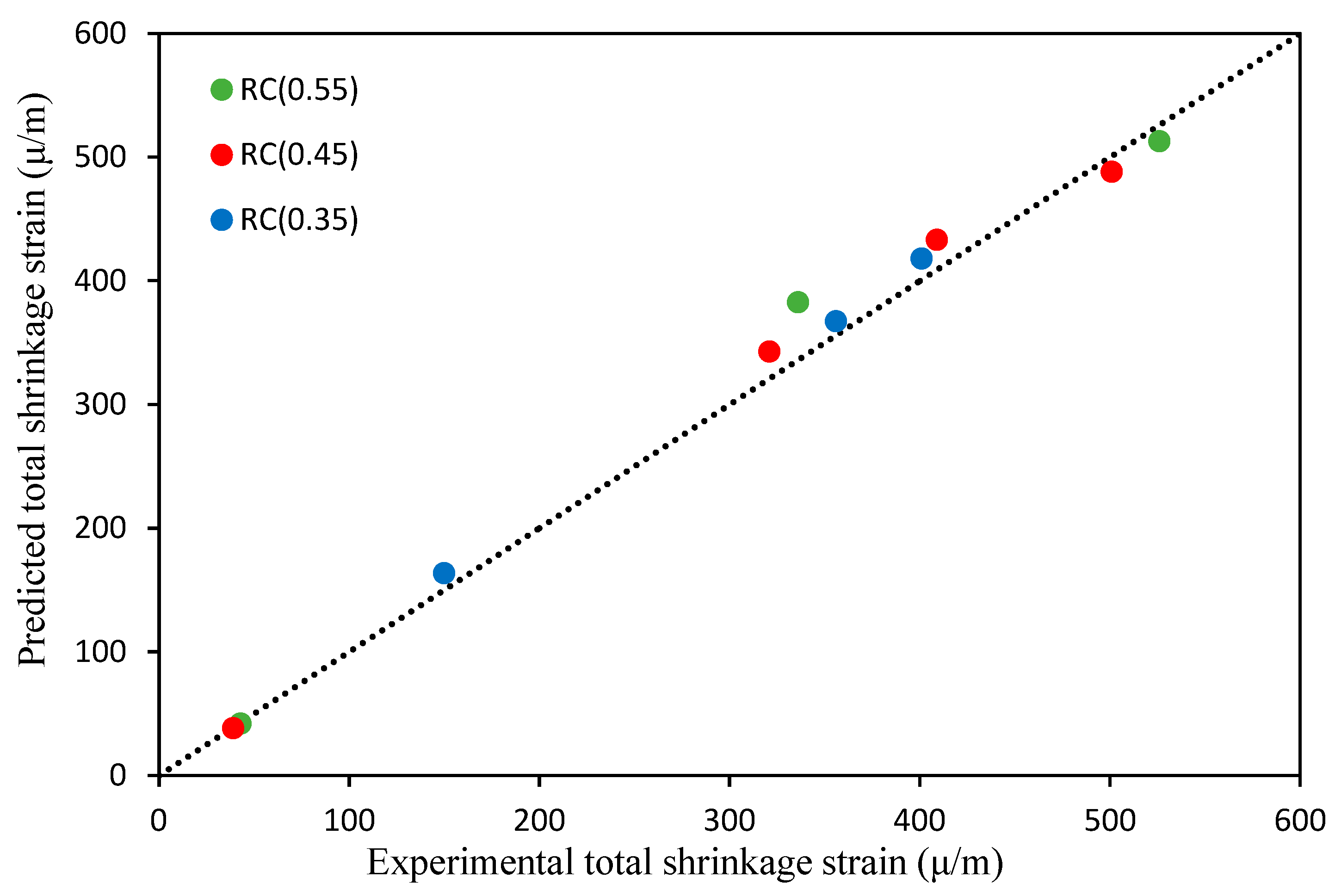
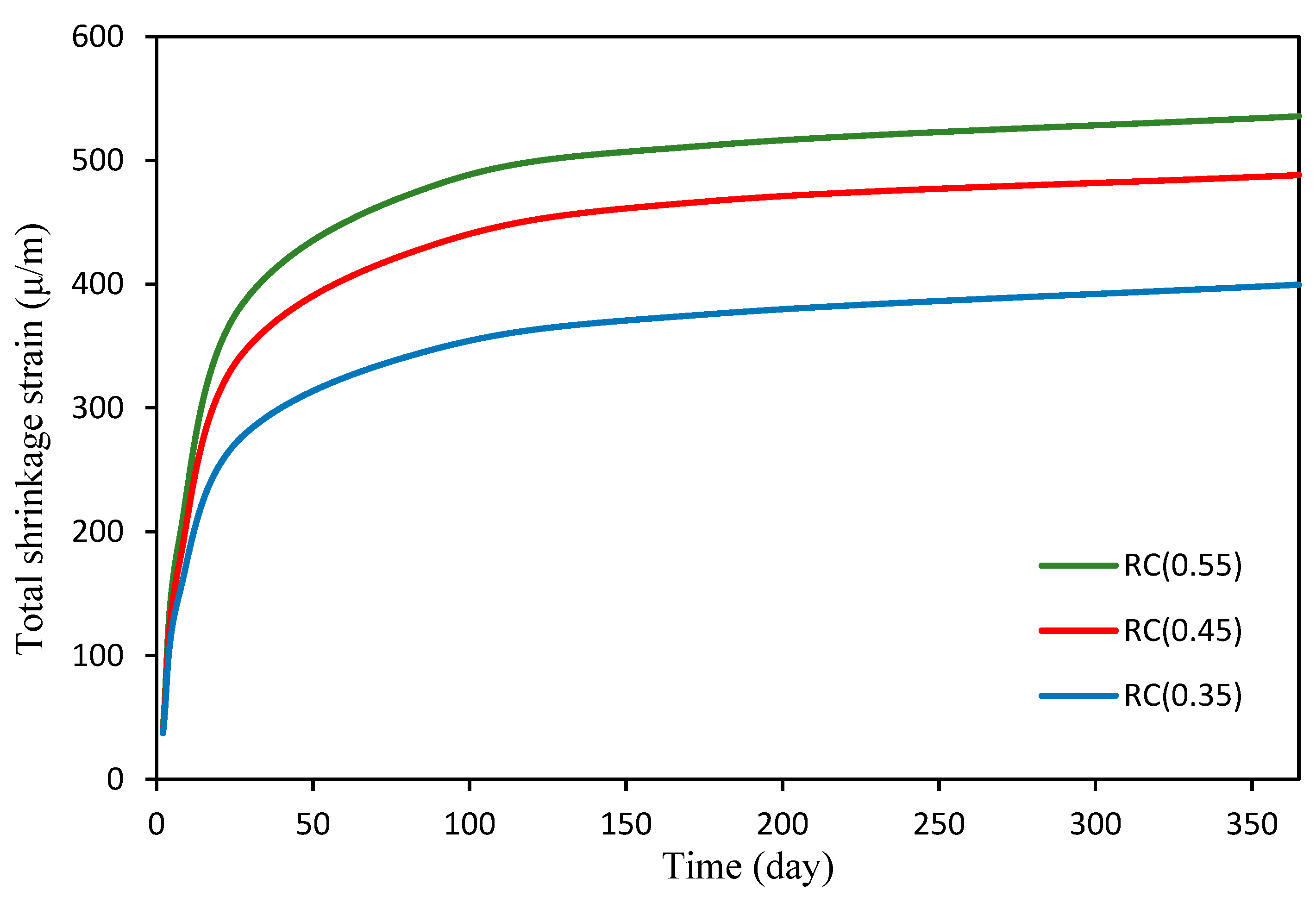
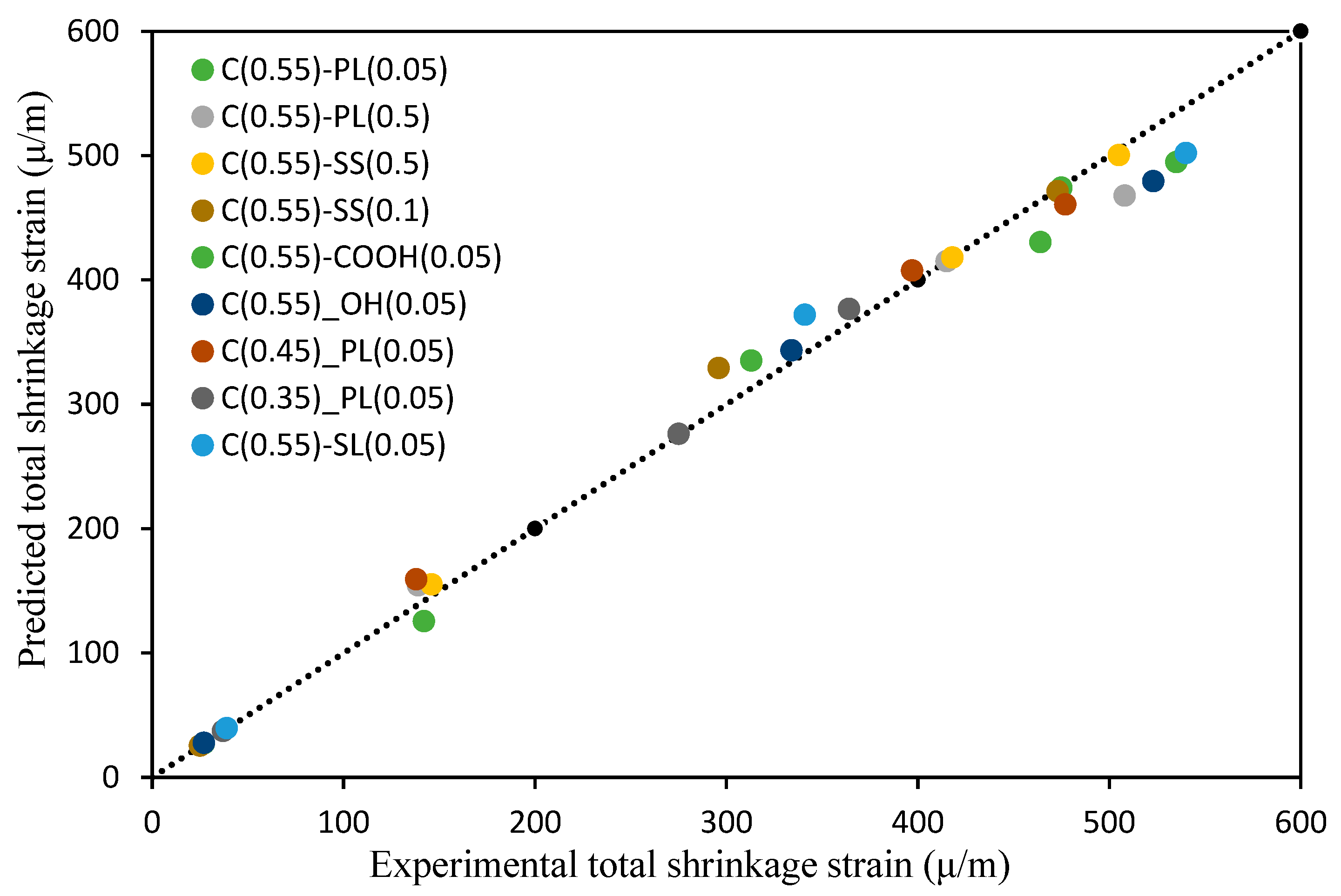
The main hypothesis for this research was that the CEB MC90 model, which was developed primarily for unmodified concrete, could be successfully modified in order to incorporate parameters specific to the nanomaterial in order to describe time-dependent shrinkage behavior in CNT-reinforced concrete. The findings from the analysis have confirmed this assumption since the modified model has proven to be very accurate (with errors reaching as low as 2% for plain concrete and 5% for CNT-modified concrete). The study confirmed that it is sufficient to apply altered empirical relations from the CEB MC90 model in order to consider the volume changes caused by nanomaterial reinforcement. In addition, it is worth noting that the increase in total shrinkage with the increased w/c ratio is in line with poromechanics principles and the initial research assumptions.
4.2. Microstructural Mechanisms and Comparison with Previous Studies
The results obtained from the experimental data reported in the literature [
13] and the calculations made in this study support the conclusion that CNTs can effectively reduce the shrinkage of concrete mixtures at levels of shrinkage as high as 19% or more. Based on previous experimental studies [
13,
14,
15,
16], the mechanism of shrinkage reduction can be attributed to a combination of three basic microstructural effects: (i) the filler effect of nanotubes in pores smaller than 50 nm; (ii) the nucleation effect that stimulates C-S-H gel formation and improves pore structure; (iii) the crack-bridging effect that exploits the significant tensile strength of CNTs (100–150 GPa) to hinder the spread of microcracks. While the present study did not conduct direct microstructural characterization, these mechanisms have been extensively documented in the literature through SEM, MIP, and other experimental techniques [
13,
14,
15,
16]. The conclusions are in line with the former studies made by other researchers. In particular, Li et al. [
15] found that the addition of 0.3% CNTs leads to a dramatic decrease in drying shrinkage of mortar due to increased densification of pore structures and blocking the paths for the escape of moisture. Likewise, Konsta-Gdoutos et al. [
16] revealed that the drying shrinkage decreased by 35% for pastes consisting of 0.025–0.08% CNTs, as it happened because of the fine pore reduction below 20 nm. Hawreen et al. [
13,
14] have proven a reduction of the shrinkage to approximately 15–21% for various types of nanotubes and different
.
While quantitative validation across multiple independent laboratories is ideal, the current model’s predictions align well with the broader qualitative trends reported in the literature. For instance, the model’s prediction that functionalized CNTs (like CNTCOOH) and higher aspect ratios yield superior shrinkage mitigation is consistent with the microstructural findings of Konsta-Gdoutos et al. [
16] and Li et al. [
15], who attributed such improvements to enhanced C-S-H nucleation and superior crack-bridging at the nanoscale. Furthermore, the model’s capture of the non-linear relationship between CNT dosage and shrinkage reduction reflects the well-documented threshold effects and potential agglomeration issues at higher dosages reported across various independent studies.
It is important to note that the present study focuses on predictive modeling and probabilistic reliability assessment rather than experimental microstructural characterization. Therefore, the mechanistic explanations discussed in this section (including crack-bridging, interfacial bonding, pore refinement, and microstructural densification) are interpretations based on comprehensive experimental findings reported in the previous literature [
13,
14,
15,
16], rather than direct observations from the current study. These literature-based mechanisms are invoked to provide physical context and rationale for the shrinkage trends predicted by the proposed model.
4.3. Influence of CNT Characteristics: Content, Aspect Ratio, and Type
According to the results of the parametric study, it was found that the composition and aspect ratio of CNTs were both important in minimizing shrinkage. The results of the Monte Carlo analysis showed that at 0.5%, the success rate was 100% because of the use of CNTs. CNTs with high-aspect ratios are believed to have better pull-out strength and bonding effects than shorter CNTs due to their ability to transfer stress through microcracks more effectively. There were some interesting findings about the types of CNTs because the functionalized CNTs were shown to successfully reduce shrinkage, but when doing the probabilistic reliability analysis it became evident that the addition of pristine CNTs resulted in better results than the use of the functionalized CNTs.
It should be noted that the current experimental dataset does not allow for the complete decoupling of CNT type and aspect ratio effects, as these variables often change concurrently in the available literature. Future experimental campaigns employing full factorial designs (e.g., testing the identical CNT type at varying aspect ratios) are highly recommended to isolate and quantify the individual contribution of each parameter.
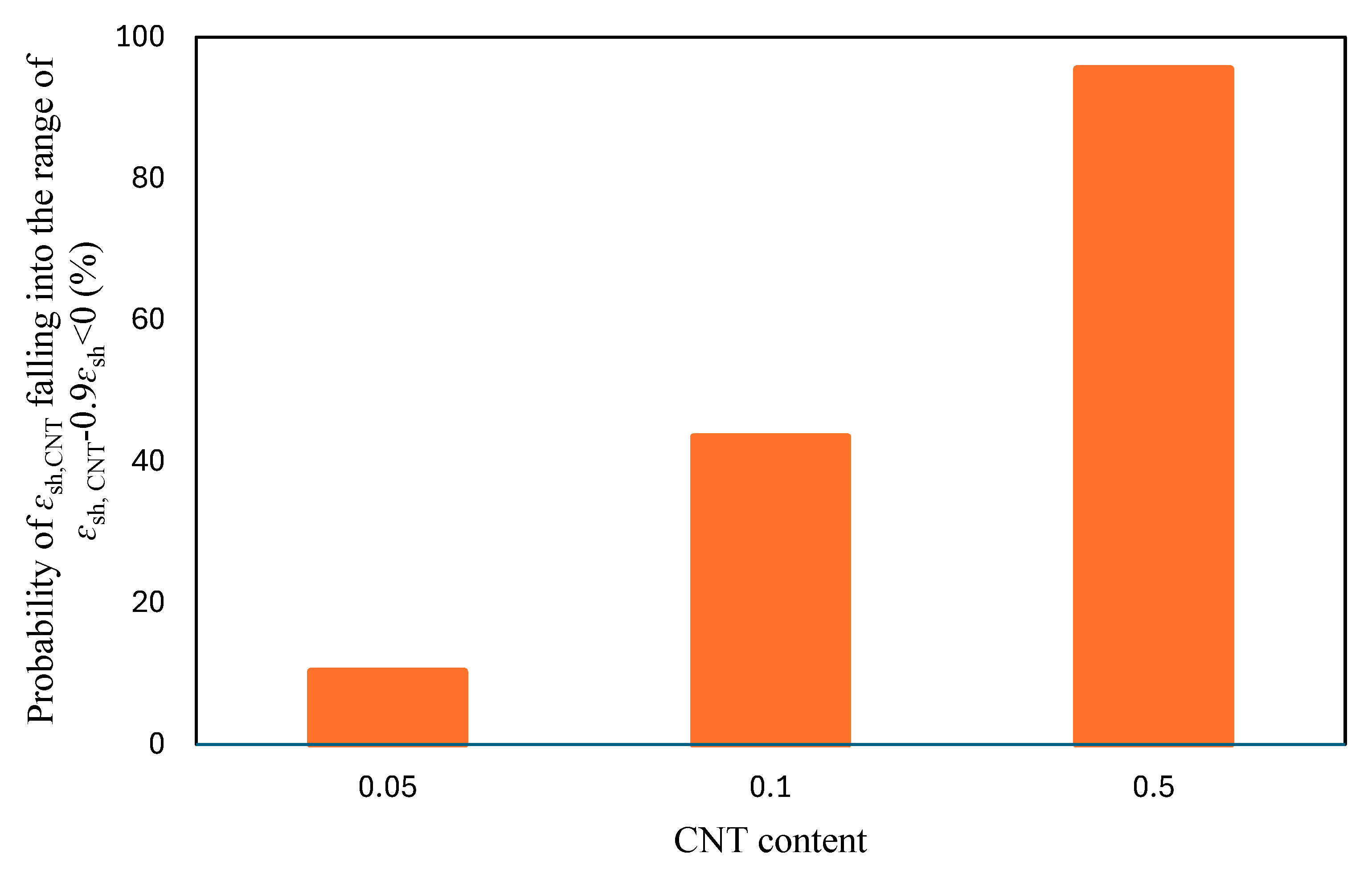
The results of the Monte Carlo analysis showed that at 0.5% CNT content, the success rate approached 100% within the defined parameter space, indicating highly effective shrinkage mitigation. However, it is crucial to emphasize that this does not imply 0.5 wt% is a universally optimal dosage. The experimental dataset utilized in this study contains only a limited number of discrete CNT content levels. In practical applications, higher CNT dosages may introduce challenges such as severe agglomeration, reduced workability, and increased costs. Therefore, the true ‘optimal’ dosage must be determined through multi-criteria optimization that balances shrinkage reduction with fresh-state properties, dispersion feasibility, and economic constraints.
It is important to acknowledge the methodological limitations of the current probabilistic assessment. First, the model calibration and validation rely on a single, albeit highly comprehensive, experimental database, as larger datasets systematically varying all CNT parameters over time are not yet available in the literature. Second, the current Monte Carlo framework focuses on parametric sensitivity and design-space exploration using uniform distributions, rather than a full statistical Uncertainty Quantification (UQ) that would incorporate residual model errors, experimental measurement noise, and parameter covariance. Future research must focus on compiling larger, multi-source experimental databases and implementing advanced Bayesian UQ frameworks to refine these probabilistic bounds and validate the model’s universal applicability.
4.4. Findings in the Broadest Context: Sustainability, Durability, and Practical Engineering
The results of this research present important implications within the broader context of sustainable infrastructure and durability-based design. While the demonstrated findings confirm the model’s predictive accuracy for shrinkage within the investigated dataset, the practical application of this framework has the potential to offer engineers a probabilistic tool for optimizing CNT-containing mixtures. If successfully implemented and validated in the field, this could lead to structures with higher operational stability, potentially reducing maintenance expenses and extending the service life of infrastructure objects such as bridges and marine facilities. Furthermore, this Monte Carlo-based reliability analysis could help prevent over-engineering and unnecessary expenditure on expensive nanomaterials, promoting a cost-effective approach. However, it is important to emphasize that these broader practical implications—such as actual durability enhancement, service-life extension, and cost reduction—should be viewed as potential applications requiring further independent experimental and field validation before being adopted in standard engineering practice.
It is important to acknowledge a methodological limitation regarding the probabilistic assessment. The Monte Carlo simulation assumes statistical independence among the input variables (time, w/c ratio, CNT content, aspect ratio, and CNT type) to explore the theoretical design space. However, the underlying experimental dataset utilized for model calibration does not represent a full factorial design and contains restricted combinations of these variables. Consequently, while the proposed model successfully captures the dominant macroscopic trends of each parameter, the probabilistic outcomes for novel, untested combinations of variables should be interpreted as theoretical design guidelines rather than absolute empirical certainties. Future experimental campaigns employing full factorial designs are highly recommended to refine these probabilistic bounds and validate the model’s predictions for entirely new mix configurations. Moreover, the reported prediction errors of approximately 2% for plain concrete and 5% for CNT-reinforced concrete are strictly valid for the specific experimental dataset utilized in this study. This dataset is characterized by a specific set of conditions, including 13 distinct mix designs, a single specimen geometry (450 × 100 × 100 mm3), and a constant relative humidity level (50%). Consequently, these error margins reflect the model’s predictive performance under these specific constraints. The accuracy may vary when the model is applied to concrete mixtures with different specimen geometries, curing regimes, or environmental humidity levels, highlighting the necessity for future validation across broader, multi-source experimental databases.
It is important to clarify the scope and limitations of the probabilistic assessment presented in this study. The Monte Carlo simulation was primarily designed as a parametric sensitivity and design-space exploration tool to evaluate the influence of variabilities in the input design parameters (e.g., w/c ratio, CNT content, aspect ratio). It does not constitute a full statistical uncertainty propagation framework. Specifically, the current analysis does not assign probability distributions to the fitted empirical coefficients, nor does it incorporate a residual model-error term or account for experimental measurement uncertainties (e.g., the standard deviation of the experimental shrinkage data). Incorporating these advanced statistical features would require a Bayesian updating approach and extensive experimental replication data with documented standard deviations, which is beyond the scope of this foundational study. Future research will focus on developing a comprehensive probabilistic framework that integrates the covariance of the fitted parameters, residual model errors, and experimental measurement noise to provide a more rigorous reliability assessment.
Although the model provides reliable predictions in the laboratory, future research including practical implementation and validation through field testing should include considerations of different environmental conditions. Coupling it with a multi-criteria optimization of the parameters of CNTs would allow us to increase the applicability of the model in real-life design practices.
5. Conclusions
The total shrinkage has a great impact on the future performance and longevity of concrete structures. In this research work, the modified framework based on the CEB MC90 model has been established with the introduction of some key parameters of CNTs such as their content, aspect ratios, and types along with the content of water-to-cement ratio to study the extent of total shrinkage strain produced in CNT-reinforced concrete. In order to take into account the variabilities in the input design parameters coming from the properties of materials and the environmental factors, the Monte Carlo simulation is used for defining the probability of total shrinkage falling under the limits that are considered appropriate in terms of its parameters of CNT content, aspect ratios, and types, as well as the water-to-cement ratio.
The developed CEB MC90-based model predicts total shrinkage strain with promising accuracy within the scope of the investigated dataset, achieving Mean Absolute Percentage Errors (MAPEs) of approximately 2% for plain concrete and 5% for CNT-reinforced concrete.
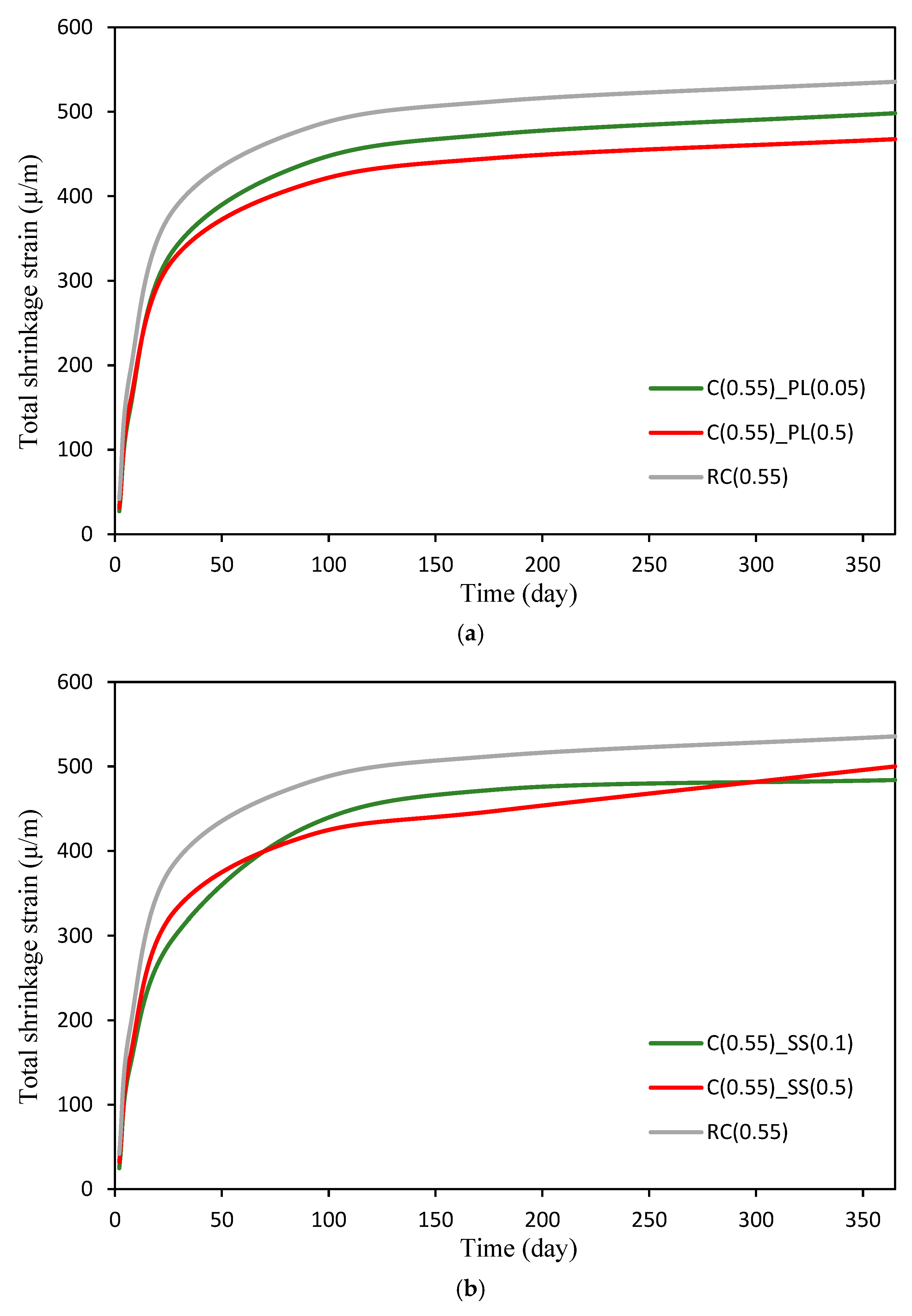
Incorporation of CNTs reduces the total shrinkage strain of concrete.
Increasing the water–cement (w/c) ratio results in higher total shrinkage strain.
High-aspect-ratio CNTs are more effective in mitigating shrinkage strain.
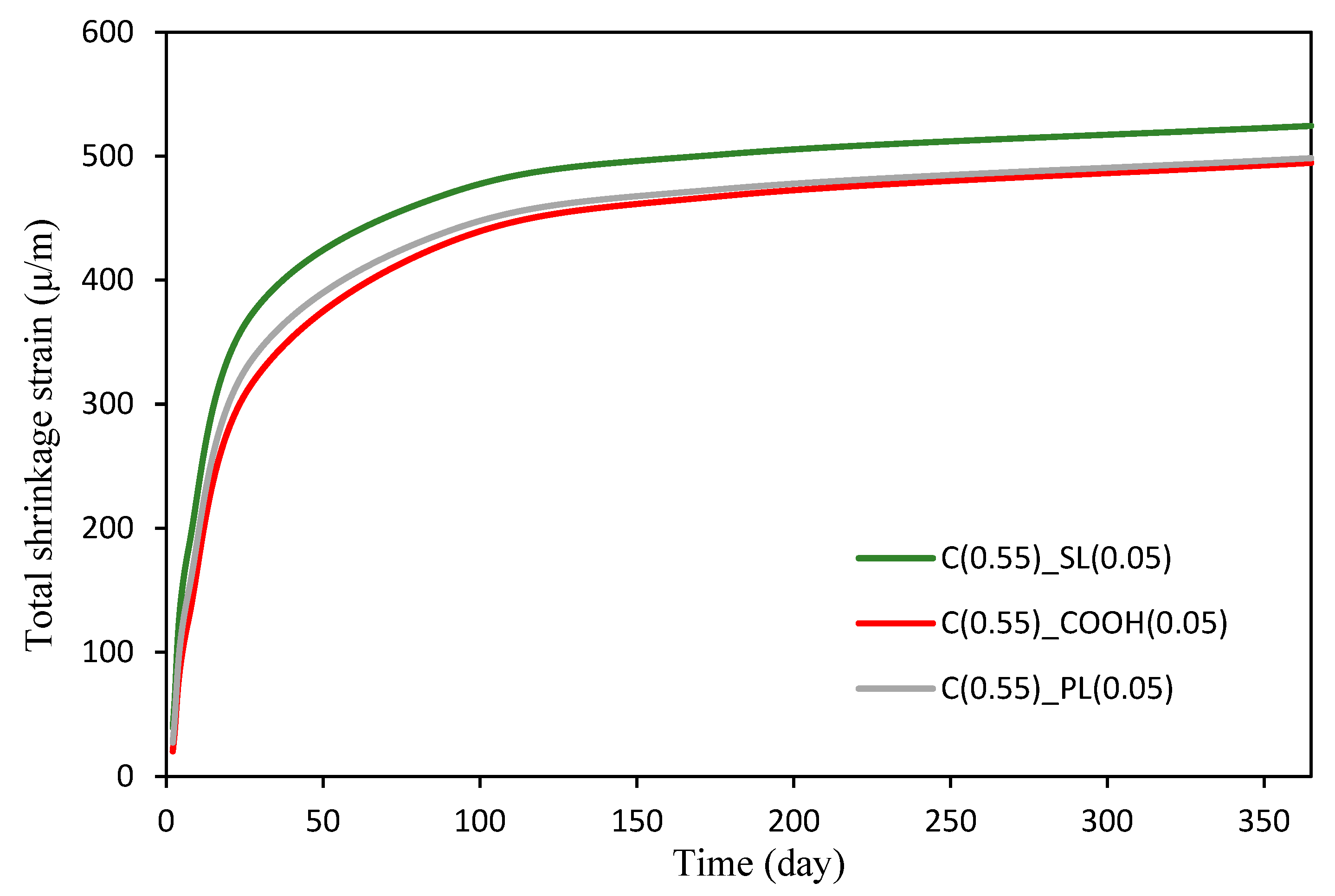
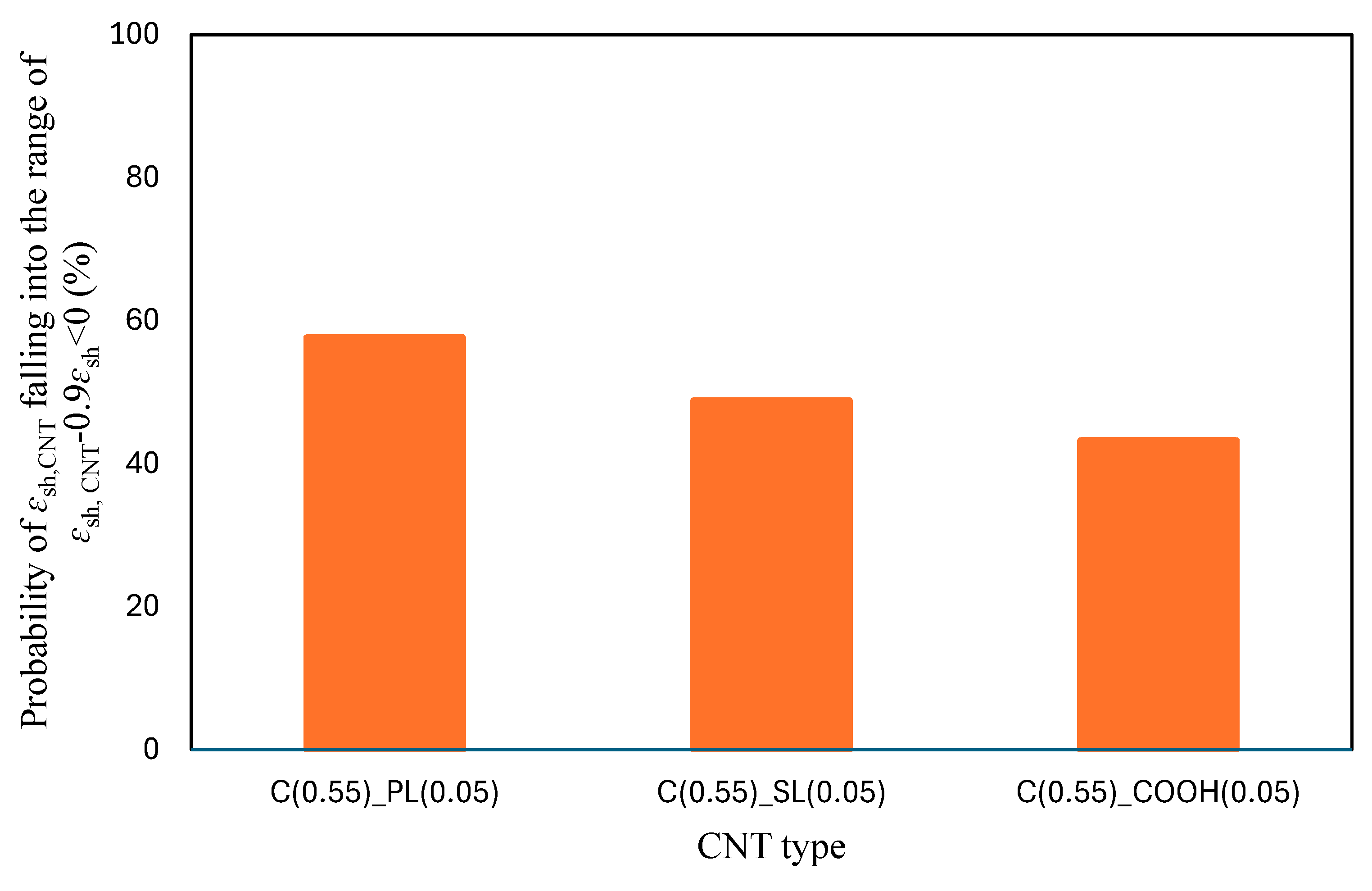
Among CNTSL, CNTPL, and CNTCOOH (aspect ratio 667, content 0.05 wt%), pristine CNTs (CNTPL) exhibit the greatest reduction in total shrinkage strain, which perfectly aligns with the probabilistic findings showing that CNTPL achieves the highest success probability.
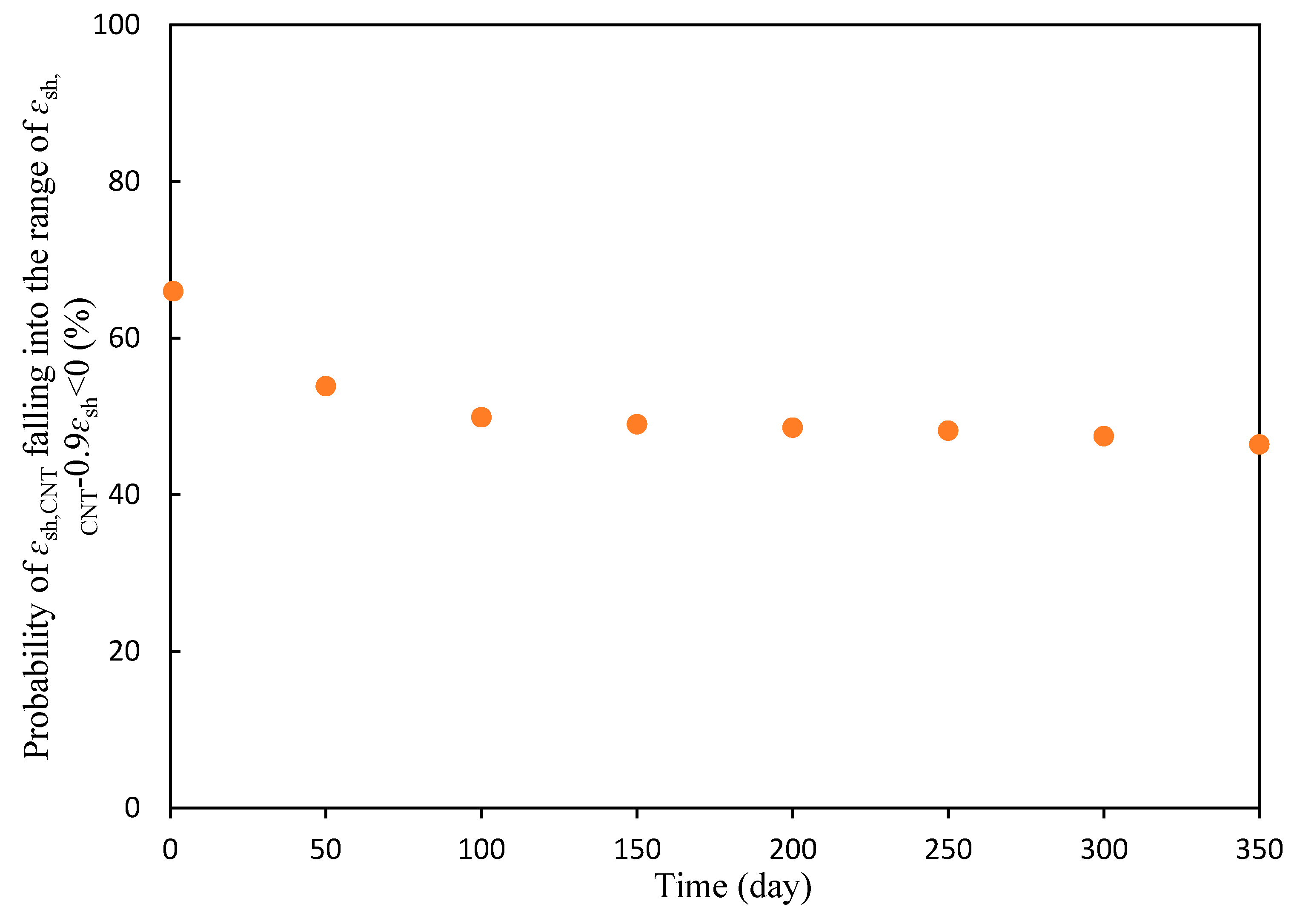
At early ages, the success probability of meeting shrinkage criteria is approximately 66%, which decreases to ~52% sharply within the first 50 days and gradually stabilizes around 46% after ~150 days.
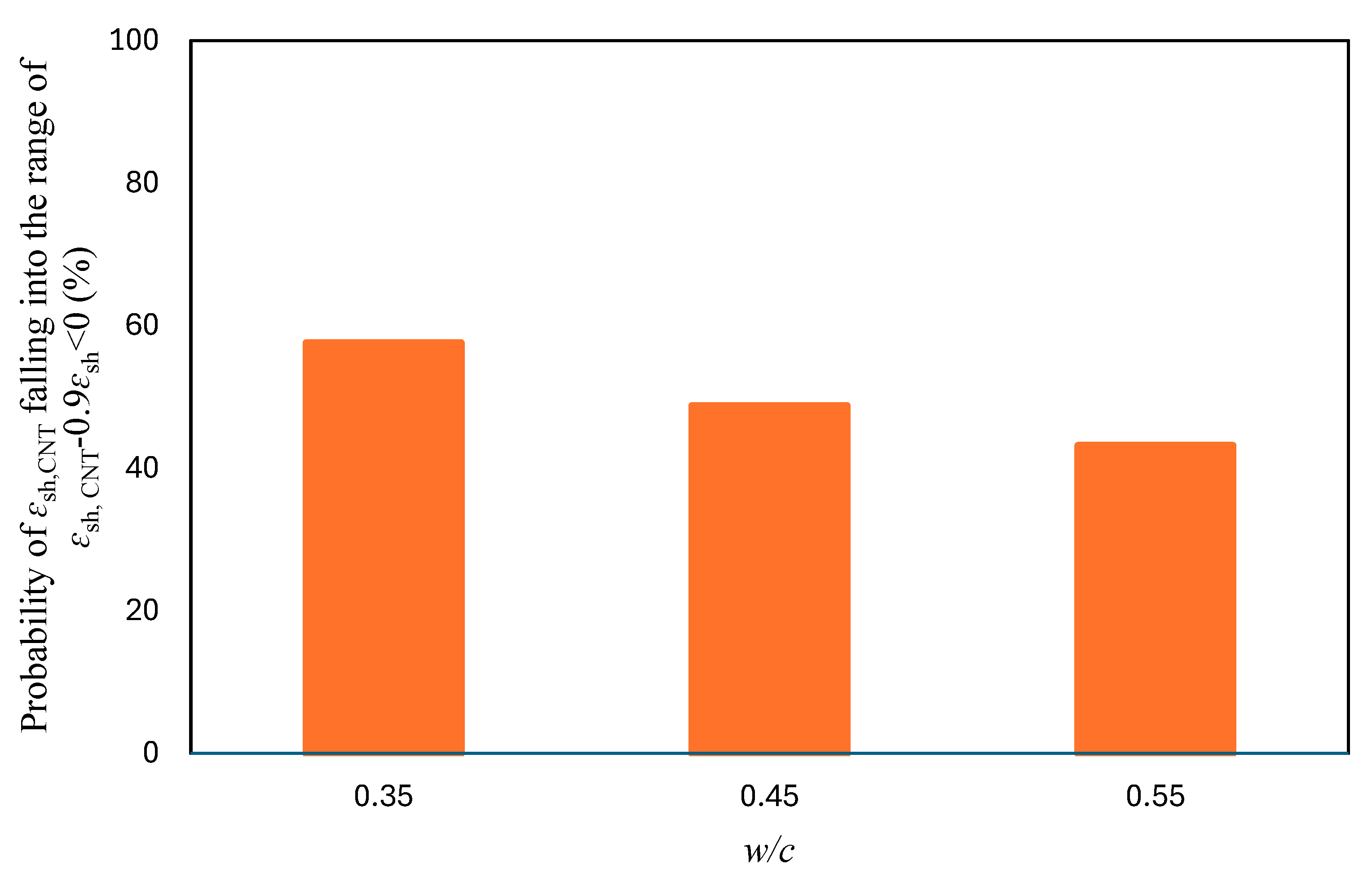
Success probability decreases with increasing w/c ratio: ~58% at 0.35, ~50% at 0.45, and ~46% at 0.55.
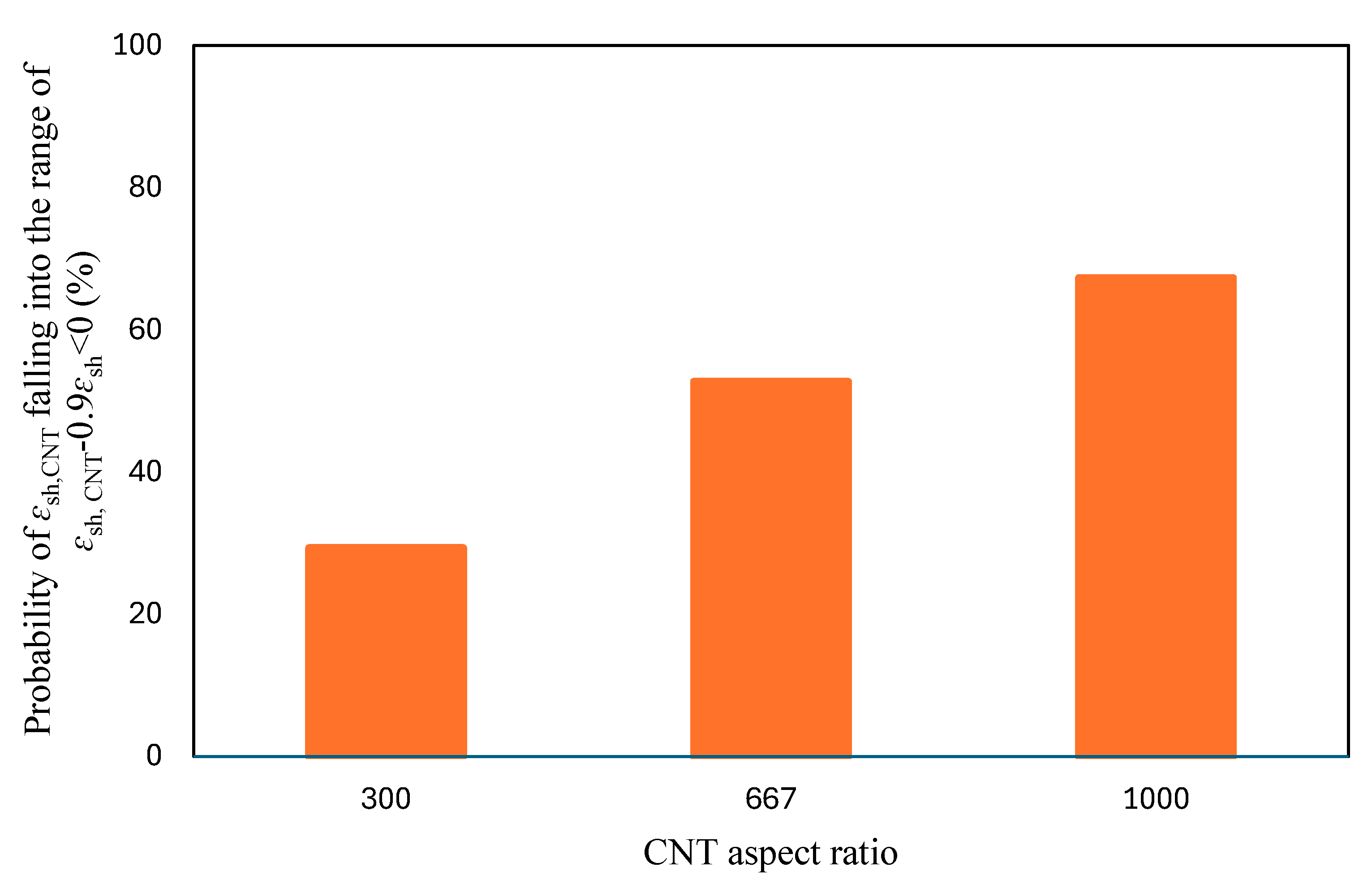
CNT content significantly affects shrinkage control within the studied range: 0.05% yields ~11% probability of meeting the criterion, 0.1% increases it to ~45%, and 0.5% approaches ~100%. However, this high probability at 0.5% should be interpreted as a theoretical outcome within the model’s bounds, not as evidence of universal optimality, as practical limitations like agglomeration and cost must be considered. The aspect ratio is essential: a low aspect ratio (300) has a success probability of about 30%, while higher aspect ratios (667 and 1000) are associated with success probabilities of about 55% and 68%, respectively.
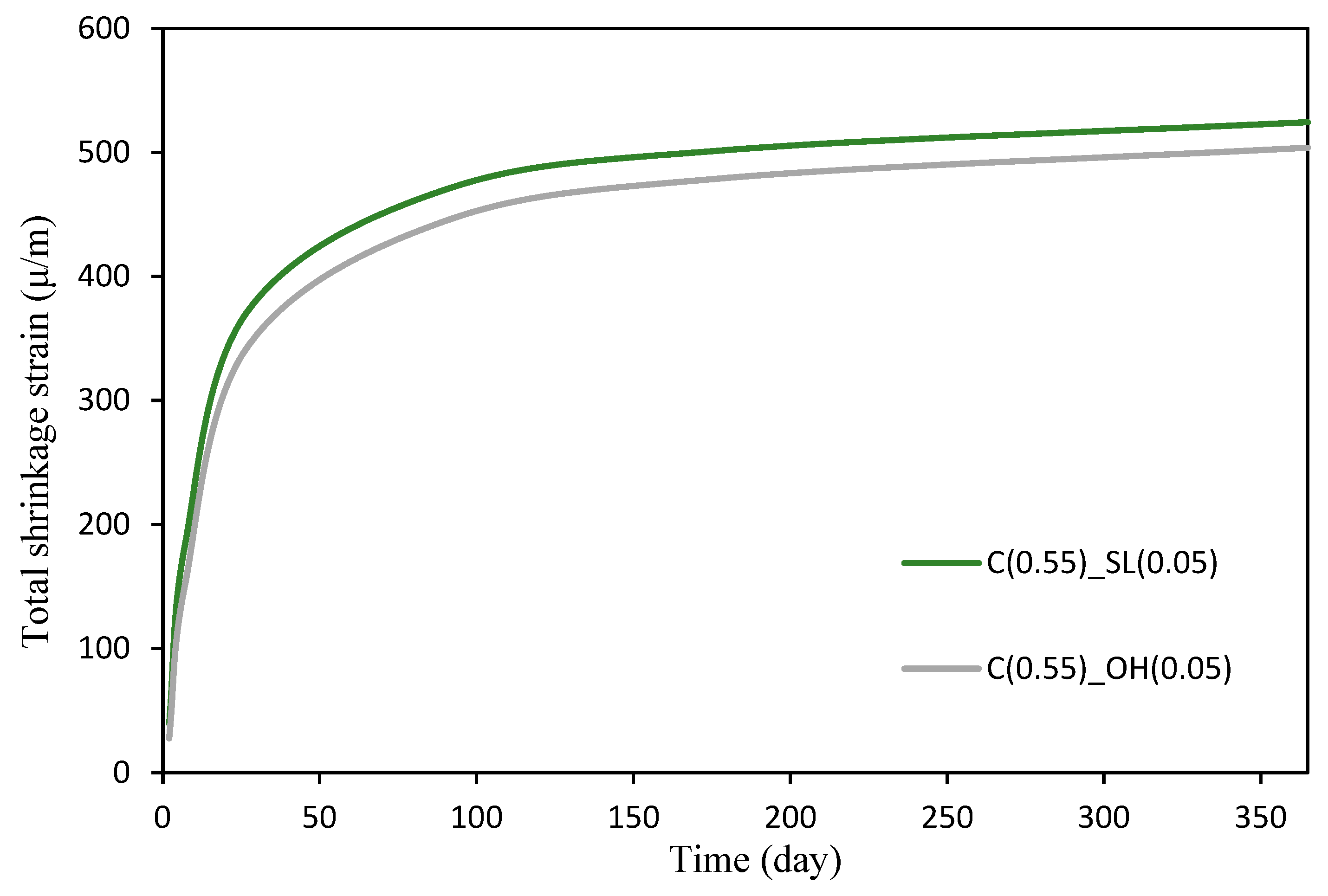
Under identical conditions of w/c ratio (0.55), CNT content (0.05 wt%), and aspect ratio (667), the mixtures exhibit distinct probabilities of success. Specifically, C(0.55)_PL(0.05) achieves the highest probability of success, followed by C(0.55)_SL(0.05) and C(0.55)_COOH(0.05), respectively.
It is important to acknowledge the methodological limitations of the current probabilistic assessment. The Monte Carlo simulation serves primarily as a parametric sensitivity and design-space exploration tool, assuming statistical independence among variables and uniform distributions, rather than a full statistical Uncertainty Quantification (UQ) framework that incorporates residual model errors, experimental measurement noise, or parameter covariance. Furthermore, a primary limitation is that the model calibration and validation rely on a single, albeit highly comprehensive, experimental database [
13]. Due to the scarcity of publicly available datasets that simultaneously report long-term shrinkage for concrete with varying CNT types, aspect ratios, and dosages, multi-laboratory quantitative validation was not feasible in this foundational study. Future research must prioritize the compilation of multi-source experimental databases and the implementation of advanced Bayesian UQ frameworks to rigorously validate the model’s generalizability and refine its error margins across diverse environmental and material conditions.
While the proposed mechanisms for shrinkage reduction (pore filling, C-S-H nucleation, and crack bridging) are strongly supported by existing literature, future experimental studies incorporating direct microstructural characterization (e.g., SEM, MIP) are recommended to validate these mechanisms specifically for the CNT-modified concrete mixtures modeled in this study.
In the practical engineering realm, the presented probabilistic approach shows promise as a reliability-based tool for the preliminary optimization of CNT-reinforced concrete mixes. By assessing the likelihood of meeting shrinkage criteria, structural engineers could potentially determine the most effective CNT type, aspect ratio, and dosage. While the model suggests that this technique could provide long-term stability and represent an economical option by preventing unnecessary expenditure, translating these theoretical outcomes into actual service-life extension and cost reduction requires further independent experimental and field validation. Ultimately, integrating this framework into the design flow has the potential to improve the durability of large-scale civil engineering structures, provided its real-world applicability is confirmed through future practical implementation.
Despite the high predictive accuracy achieved, a primary limitation of the current study is that both the calibration and validation of the proposed framework rely on a single, albeit highly comprehensive, experimental program [
13]. Consequently, the immediate generalization of the model to other concrete compositions, alternative CNT dispersion methods, different curing conditions, varied specimen geometries, distinct cement types, or extreme environmental humidities requires further investigation. Future research will focus on expanding the experimental database to include diverse material and environmental variables, which will allow for the refinement of the empirical coefficients and the robust validation of the model’s universal applicability in practical engineering scenarios.
It should be noted that this study focused on developing a predictive modeling framework and probabilistic reliability assessment. The mechanistic interpretations provided are based on comprehensive experimental findings from previous literature [
13,
14,
15,
16], as direct microstructural characterization was beyond the scope of the present investigation.